Brewing
Gongfu brewing
- Water temperature
- 93 °C
- Tea amount
- 5 g
- Water volume
- 100 ml
- First steep
- 10 s
- Time added per infusion
- 5 s
- Infusions
- 4

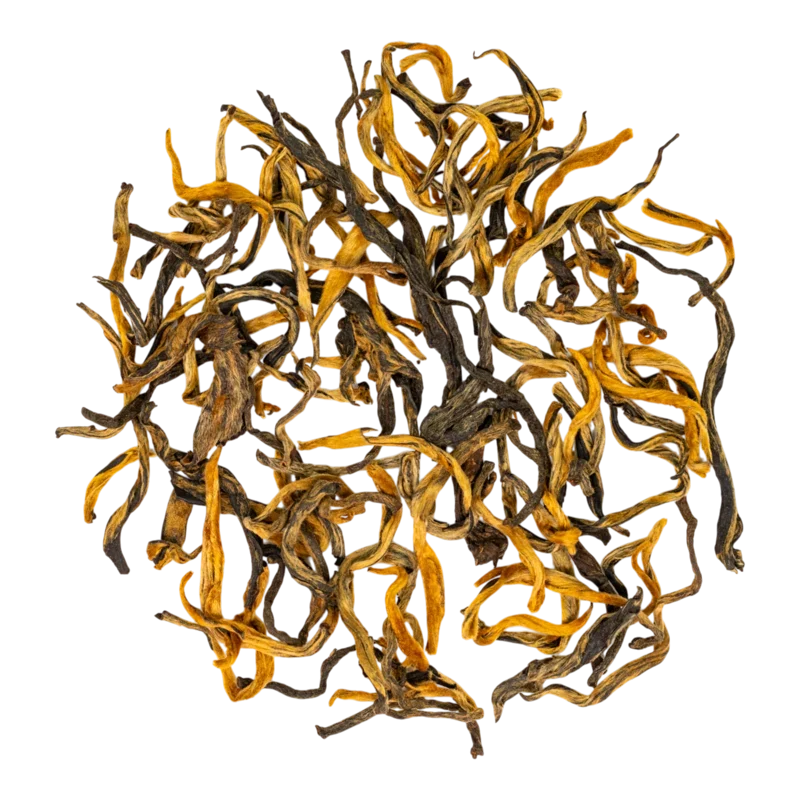

Diānhóng jīn yá
Choose a brewing method. Start with the recommended quantities and time, then adjust to taste.
Brewing
Brewing
Taste
Tea encyclopedia
Category: Elite bud red tea (black tea) of the Diān Hóng (滇红, Diānhóng) group. Belongs to the category of «ming you hong cha» (名优红茶, míngyōu hóngchá) — famous high-quality red teas (black tea).
Category: Elite bud red tea (black tea) of the Diān Hóng (滇红, Diānhóng) group. Belongs to the category of «ming you hong cha» (名优红茶, míngyōu hóngchá) — famous high-quality red teas (black tea).
Coordinates: Fengqing — approximately 24°35′ N, 99°55′ E. Yunnan Province as a whole is located between 21° and 29° N and 97° and 106° E.
Origin: China, Yúnnán Province (云南省, Yúnnán shěng). Main production regions: Fèngqìng County (凤庆县, Fèngqìng xiàn) in Líncāng City (临沧市, Líncāng shì), as well as areas of Bǎoshān (保山, Bǎoshān), Déhóng (德宏, Déhóng) and Xīshuāngbǎnnà (西双版纳, Xīshuāngbǎnnà). Fengqing is considered the «homeland of Dian Hong» (滇红之乡, Diānhóng zhī xiāng) and the main center for production of the highest quality bud varieties.
Type: Red tea (black tea) (红茶, hóngchá), fully oxidized (by European classification — black tea). Degree of oxidation — 80–95%.
Shops focusing on Chinese teas with established reputation and ability to provide detailed information about origin and producer.
Fengqing tea factories and cooperatives offering direct sales with quality guarantees.
Companies with official import licenses and quality certificates.
Opportunities to taste and purchase directly from producers.
Reputable sellers with detailed product descriptions, customer reviews and return policies.
Cultural Significance: Dian Hong Jin Ya occupies the position of an elite gift tea in China. Yunnan red teas (black tea) gained particular fame in 1986, when Yúnnán Governor Hé Zhiqiang (和志强) presented golden buds of Dian Hong as a gift to Queen Elizabeth II of Great Britain during her visit to China. Since 1959, the best Diān Hongs have been approved as state tea for diplomatic receptions (外事礼茶, wàishì lǐchá) and supplied to the State Council of the PRC.
History: The history of Yunnan red tea (black tea) began in 1938, at the height of the anti-Japanese war, when traditional tea regions of eastern China were occupied. The China Tea Corporation (中茶公司, Zhōngchá gōngsī) sent renowned tea specialist Fēng Shàoqiú (冯绍裘, Féng Shàoqiú, 1900–1987) to Yunnan to search for new sources of export tea. In autumn 1938, Fēng Shàoqiú arrived in Shùnníng County (顺宁, Shùnníng — the old name for Fengqing) and was amazed by the power of local tea trees: large, fleshy buds with abundant golden down. He made trial samples of red and green tea and described the red sample thus: «A full tray of golden down, the liquor red, rich, bright, the leaf base red, shining, the aroma dense — such was not found among small-leaf red teas (black tea) from other provinces». In 1939, the Shùnníng Experimental Tea Factory (顺宁实验茶厂, Shùnníng shíyàn cháchǎng) was established, and the first batch — 500 dan (about 16.7 tons) — was sent via Hong Kong to London, where it sold at a record price of 800 pence per pound. The tea received the name «Dian Hong» (滇红) — «red tea (black tea) from Dian», after the ancient name of Yunnan.
In the 1950s, the export of Yunnan red tea to the USSR was so important for young China that it was said: one ton of Dian Hong was exchanged for ten tons of steel.
Cultivar: For production, the large-leaf variety Yúnnán Dǎ Yè Zhǒng (云南大叶种, Yúnnán Dàyèzhǒng) — Camellia sinensis var. assamica is used. This is a group of varieties including several nationally recognized cultivars:
Picking: Early spring, predominantly March — early April, when the very first tender buds appear. Spring harvest (春茶, chūnchá) is valued most highly for maximum content of amino acids and aromatic substances. Summer and autumn harvests are also possible but are inferior to spring in fineness and sweetness.
Pluck Standard: Exclusively unopened, tightly closed buds (tips) covered with abundant golden down are collected. This is the strictest standard among all Dian Hongs.
Raw Material: Extremely high. Only whole, undamaged buds of uniform size are selected, without the slightest defects. Harvesting is conducted exclusively by hand, in dry weather, in morning hours after dew has dried. To produce 1 kg of finished tea requires about 50,000–60,000 selected buds.
Altitude: Tea gardens are located at altitudes of 1,000–2,000 m above sea level. High-altitude plantations produce raw material with higher content of aromatic compounds and amino acids due to slowed growth in conditions of large temperature fluctuations.
Climate: Subtropical mountain, with characteristic features: high humidity (about 70%), abundant precipitation (1,200 mm/year in Fengqing), frequent fogs, mild winter and significant diurnal temperature fluctuations (10–15°C). Average annual temperature 13–18°C depending on altitude. The principle operates «rain and heat come together, dryness and coolness — together» (雨热同期,干凉同季), which creates ideal conditions for accumulation of aromatic compounds and amino acids in young buds.
Soil: Predominantly red and yellow lateritic soils (red earth and yellow earth), acidic (pH 4.5–5.5), rich in organic matter and minerals. Deep humus layer forms thanks to abundant forest vegetation.
Located in southwestern China, on the border with Myanmar, Laos and Vietnam. Yunnan is considered the cradle of the tea tree (Camellia sinensis): here grows «Jinxiu Chazun» (锦秀茶尊) — the oldest known cultivated tea tree over 3,200 years old in Fengqing County. In 2015, 100 g of red tea from its leaves were produced. The province is distinguished by exceptional biological diversity and unique mountain relief of the Yunnan-Guizhou Plateau.
Exclusively manual, very careful. Buds are picked with a gentle movement, without squeezing or damaging the tender down.
Collected buds are spread in a thin layer on bamboo trays or nets in shade, in a well-ventilated room. Duration — from 8 to 18 hours depending on temperature and air humidity. Goal — reduce moisture content to 55–60%, make buds soft and pliable, initiate initial enzymatic processes. At this stage, aroma precursors begin to form.
For bud Dian Hongs, rolling is minimal or absent altogether. If conducted, it is extremely careful and brief, with the goal of only slightly disrupting cellular structure to initiate oxidation, without damaging the bud shape and golden down. This fundamentally distinguishes Jin Ya from leaf Dian Hongs, where rolling is one of the key shaping stages.
Buds are placed on special trays or in baskets in a room with controlled temperature (22–28°C) and high humidity (90–95%). Duration — 3–5 hours. During oxidation, catechins transform into theaflavins and thearubigins, forming the characteristic reddish-brown color of raw material and honey-fruity aroma. The master controls the process, guided by the color and smell of raw material, achieving optimal degree of oxidation — sufficient for flavor formation, but not excessive, to preserve sweetness and mildness.
Conducted in several stages with gradual temperature reduction. Primary drying at 100–110°C stops oxidation, secondary at 80–90°C brings moisture to 4–6%. Often slow low-temperature drying (慢烘, màn hōng) is used for maximum preservation of delicate aromatic notes.
Finished tea is carefully sorted by hand, selecting buds by size, shape and quality, removing any defective specimens, fragments and foreign inclusions.
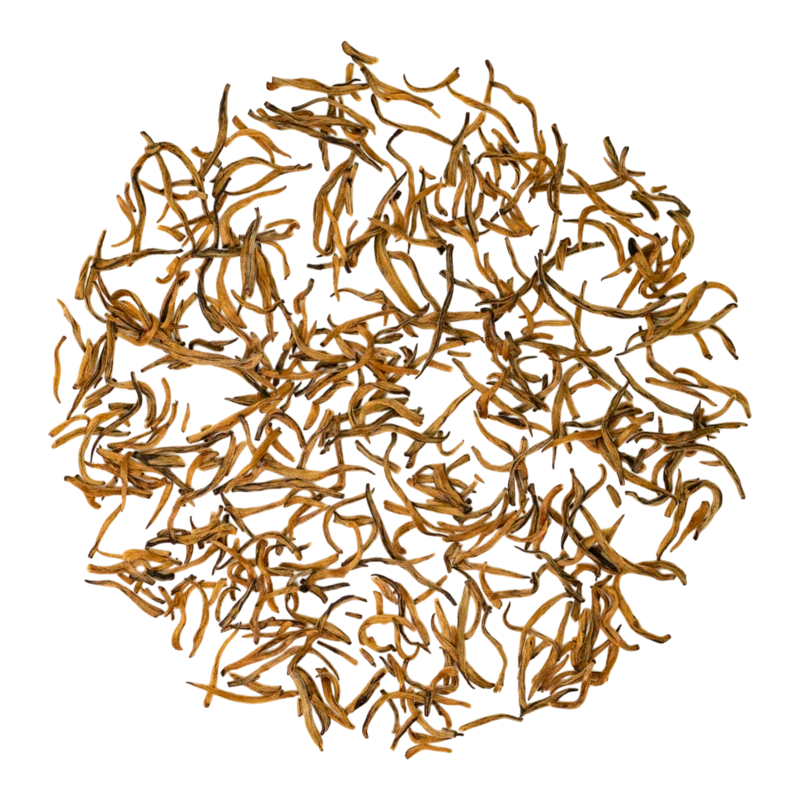
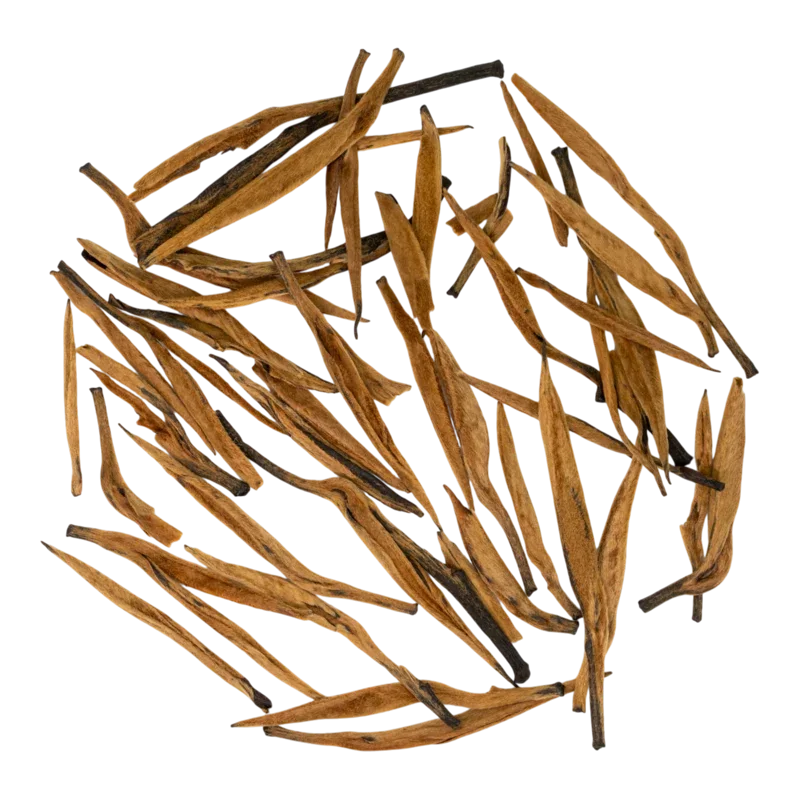
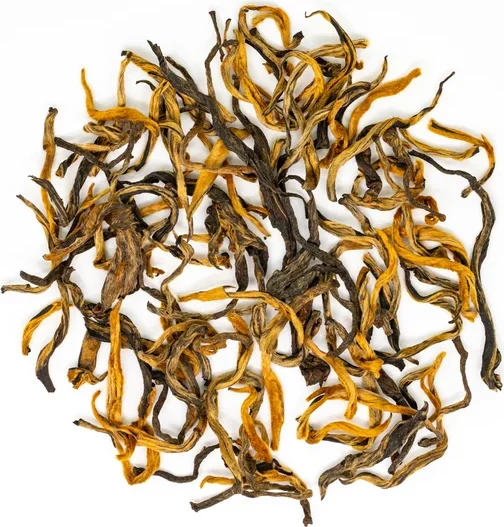
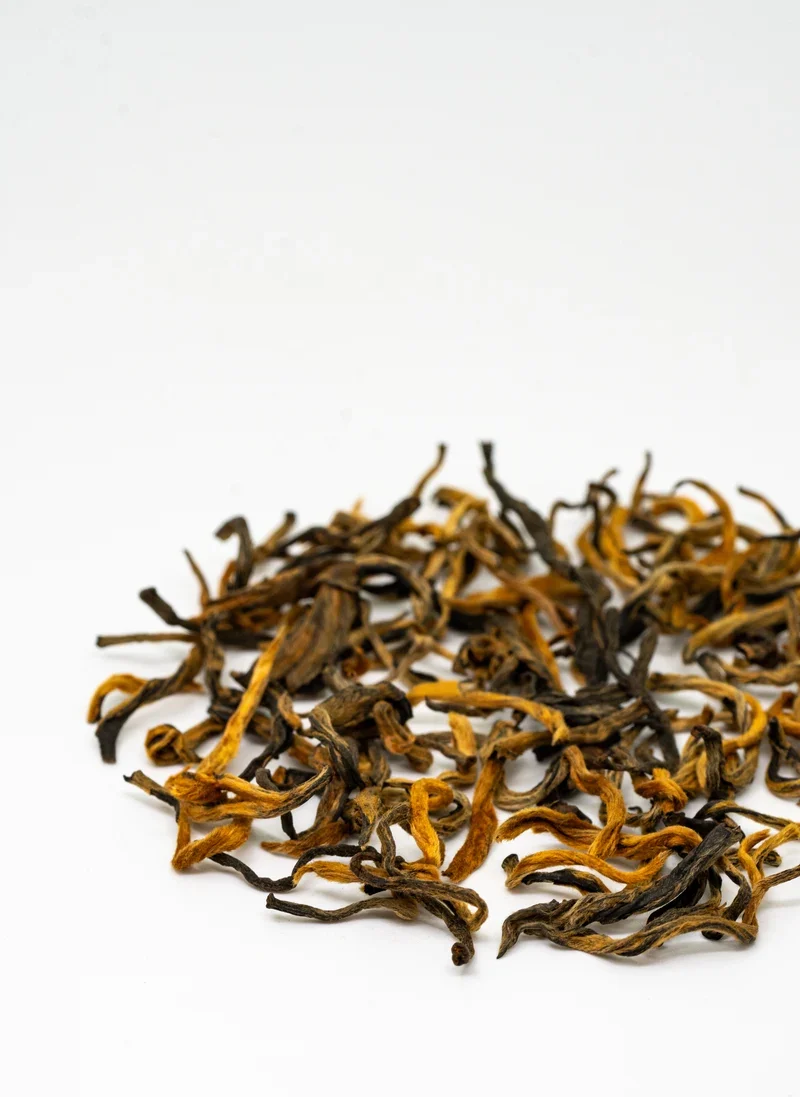
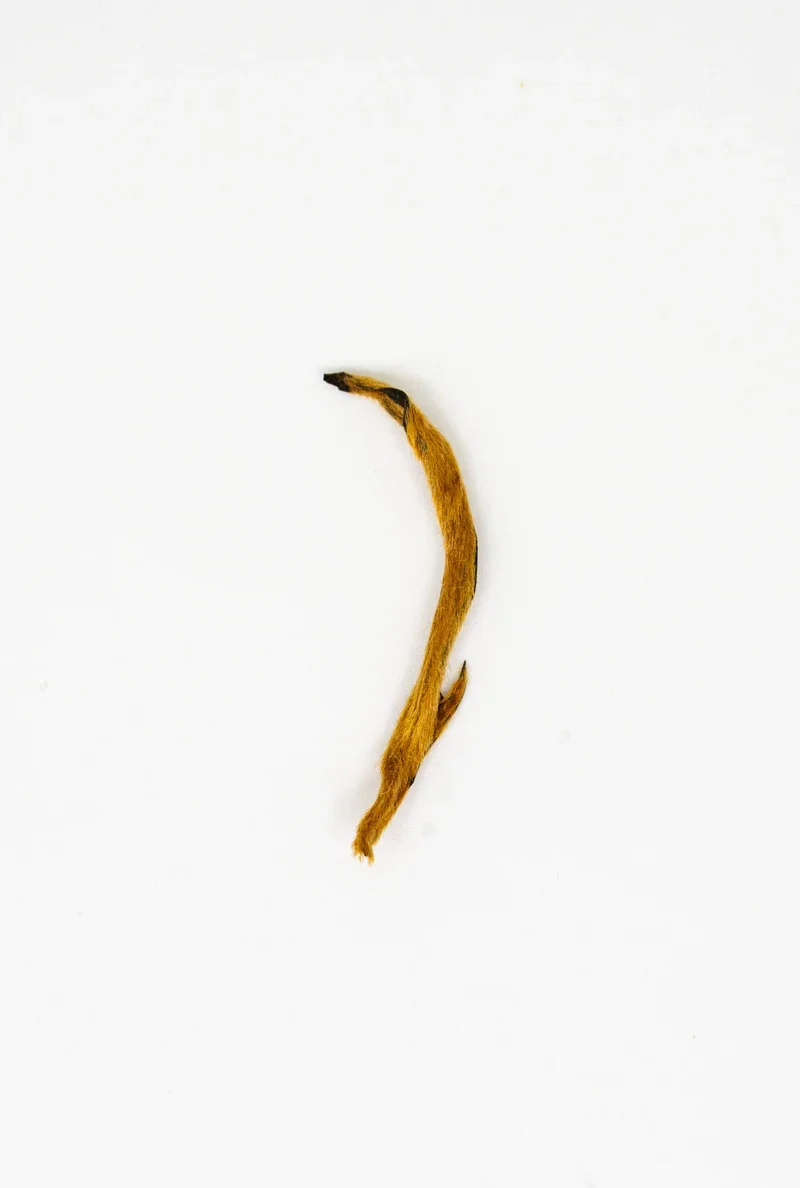
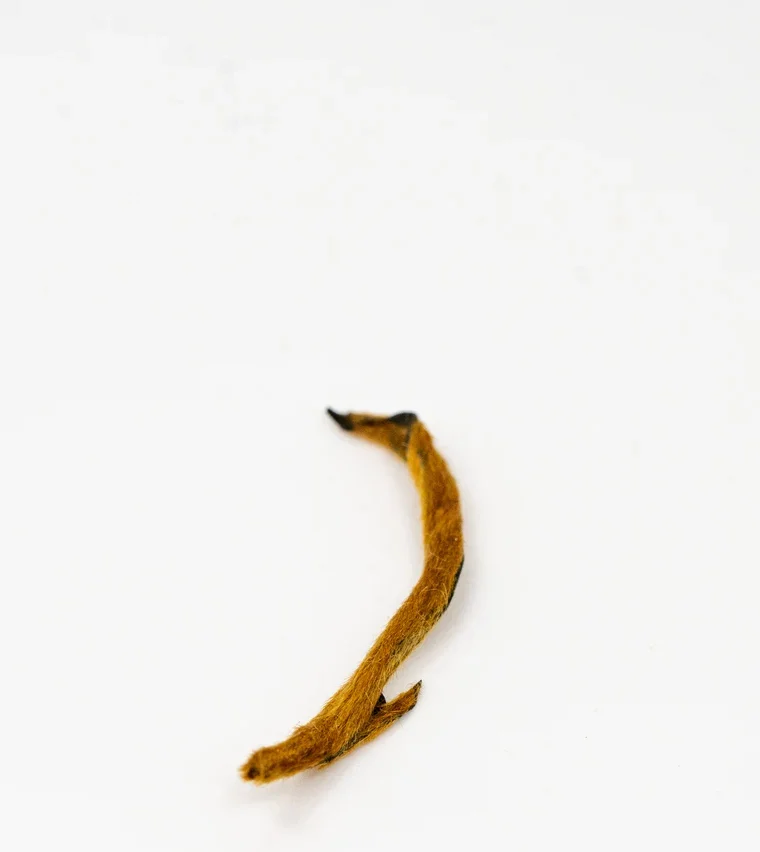
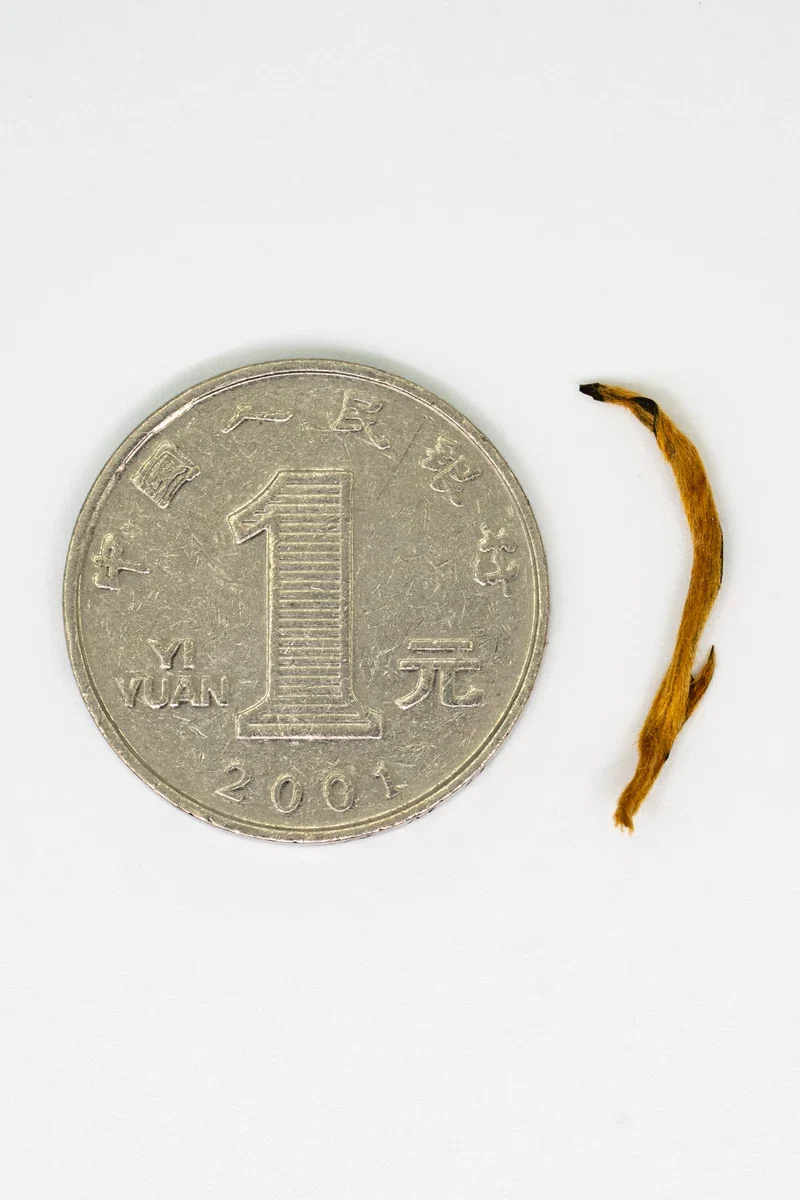
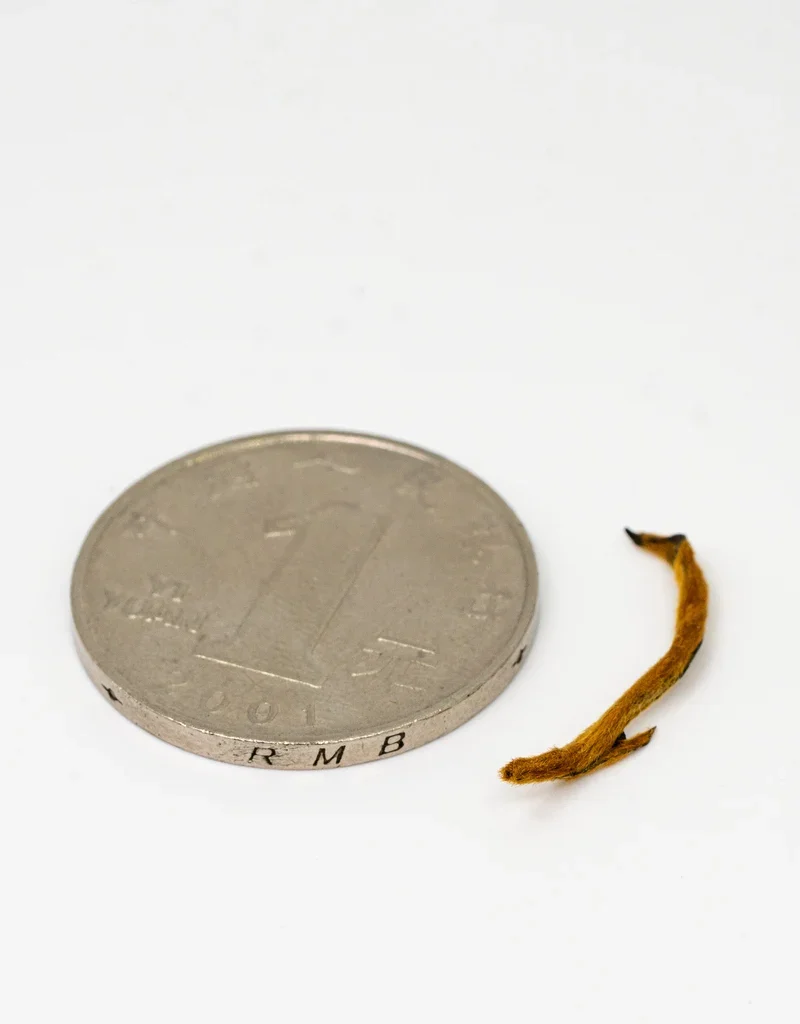
Dry Leaf Appearance: Exclusively whole buds (tips), covered with dense golden or golden-reddish down. Shape — slightly curved, smooth, resembling an eyebrow or spindle. Color — from golden-brown to warm reddish with red tint. Buds are uniform in size (length 1.5–2.5 cm), whole and undamaged. Overall impression — a scattering of golden grains with soft noble luster.
Dry Leaf Aroma: Rich, deep and sweet. Floral honey, malt and dried fruit notes (longan, lychee, apricot) dominate. Nuances of chocolate, vanilla, spices, light woody tones are present. Aroma is persistent, enveloping, unfolds gradually.
Liquor Aroma: Deep, multi-layered. Honey-fruity notes interweave with tones of malt, chocolate, caramel, flowers (orchid, rose). Upon cooling, nuances of peach and candied fruits may appear.
Liquor Color: Bright, clear, golden-amber with orange-red tint. Deep, clean, with characteristic luster and «golden ring» (金圈, jīnquān) around the cup edge — a sign of high theaflavin content.
Spent Leaves: Whole, elastic, unopened or slightly opened buds that retained their shape and are covered with golden down. Color — even, reddish-brown with copper tint. Uniformity of spent leaves is an indicator of high quality.
Taste: Exceptionally mild, tender, smooth, enveloping. Bitterness and astringency are completely absent with proper brewing. Honey, fruity (longan, lychee, peach), malty, chocolate notes predominate. Liquor body — velvety, oily, with pronounced sweetness. Aftertaste (回甘, huígān) — very prolonged, sweet, with honey-fruity trail lasting in the throat for several minutes.
Alkaloids: Caffeine (咖啡碱, kāfēijiǎn) — about 2–4% (approximately 14–15 mg/g in finished tea), theobromine and theophylline in trace amounts. Synergy of caffeine and L-theanine provides mild, prolonged alertness without sharp stimulating effect.
Amino Acids: Free amino acid content — about 3–4% of dry matter. L-theanine content (L-茶氨酸, L-chá'ānsuān) is especially high, comprising more than 50% of the total amino acid pool. L-theanine is responsible for characteristic sweetness, «umami» and sensation of mildness, as well as relaxing effect.
Bud raw material is distinguished by increased content of amino acids and aromatic compounds compared to leaf material, which explains the exceptional mildness and sweetness of Jin Ya.
Essential Oils: High content of aromatic compounds. Key components: linalool, geraniol, phenylethanol, β-ionone, methyl salicylate — form the characteristic honey-floral-fruity bouquet.
Minerals: Potassium (K), magnesium (Mg), manganese (Mn), fluorine (F), iron (Fe), zinc (Zn), selenium (Se). Water extract of Yunnan large-leaf teas reaches 41–48% — one of the highest indicators among all tea varieties.
Polyphenols: In raw material of large-leaf Yunnan varieties, polyphenol content reaches 30–34% — one of the highest among all tea cultivars. During full oxidation, a significant part of catechins oxidizes and transforms into theaflavins (茶黄素, cháhuángsù, 0.4–0.8%), thearubigins (茶红素, cháhóngsù, 5–8%) and theabrownins (茶褐素, cháhèsù). Polyphenol content in finished tea is about 15–17%. Theaflavins are responsible for brightness and clarity of liquor, while thearubigins — for body and richness of taste.
Vitamins: C (partially preserved despite oxidation), B group (B₁, B₂, B₆), E, K, PP.
Combination of caffeine and L-theanine provides steady alertness, improved concentration and cognitive functions without anxiety and «caffeine crash».
As a fully oxidized tea, Dian Hong Jin Ya possesses «warm nature» (性温, xìng wēn) in terms of traditional Chinese medicine. Improves blood circulation, good in cold weather.
Theaflavins and thearubigins are powerful antioxidants, protecting cells from free radical damage and slowing cellular aging processes.
Tea stimulates gastric juice secretion, improves intestinal peristalsis, helps digest fatty food. The warm nature of red tea (black tea) acts more gently on gastric mucosa than green tea.
Tea polyphenols help reduce LDL cholesterol levels and increase HDL, strengthen vessel walls. Thearubigins bind with cholesterol, promoting its elimination.
L-theanine stimulates alpha-wave production in the brain, promoting a state of relaxed concentration, reducing anxiety and improving mood.
Polyphenols and vitamin C support the body's protective functions, possess antibacterial and antiviral properties.
High content of antioxidants and vitamins E and C helps improve skin condition, increase its elasticity and slow photoaging processes.
Tea Amount: 3–5 g per 150–200 ml water. Due to bud compactness, you can start with 3 g and adjust to taste.
Teaware: Ideal is porcelain or glass gaiwan (盖碗, gàiwǎn) volume 100–150 ml. Glass allows enjoying the mesmerizing spectacle of «dancing» golden buds and observing liquor color. Also suitable is thin-walled porcelain teapot or Yíxīng teapot (宜兴壶, Yíxīng hú) from zhuni (朱泥) — clay well-suited for red teas (black tea).
Water Temperature: 85–90°C. Bud tea is extremely delicate; too hot water worsens taste, causing excessive astringency.
Container: Airtight opaque container — tin can with tight lid, foil bag with zip-lock or vacuum packaging.
Enemies: Moisture, light, heat, foreign odors, oxygen.
Shelf Life: Under proper conditions — 2–3 years. Red tea (black tea) flavor somewhat «smooths» 6–8 months after production — many connoisseurs believe Dian Hong reveals best not immediately, but after 1–3 months, when the «fire» from drying disappears.
Dry, cool, dark, without foreign odors. Optimal temperature — 15–25°C, humidity — no more than 60%.
Unlike green teas, refrigerator storage for red teas (black tea) is not recommended — condensation upon removal can harm tea. Room temperature away from heat sources is sufficient.
Elite bud red tea from Wǔyí Mountains (武夷山), Fujian Province. Made from small-leaf variety (C. sinensis var. sinensis), unlike the large-leaf Yunnan variety. Jin Jun Mei is distinguished by more pronounced floral, fruity and spicy notes, delicate body and refined aroma. Jin Ya is more "dense," oily, with predominant honey-malt and chocolate undertones.
Famous "Keemun" from Anhui Province, one of the "world's three great red teas." Distinguished by characteristic "Keemun aroma" (祁门香, Qímén xiāng) — complex orchid-fruity note. Made from leaves (not purely bud). Compared to Jin Ya, lighter, with emphasis on aromatics, less "bodied" and sweet.
"Lapsang Souchong" — the world's oldest red tea, from Wuyi Mountains. Traditional version is distinguished by characteristic smoky aroma from drying over pine wood fires. Produced from leaves, not buds. Fundamentally different flavor profile — where Jin Ya offers honey sweetness, Xiao Zhong provides smoky-fruity depth.
Classic Yunnan red tea from mixture of buds and 2–3 leaves. More astringent, rich, with pronounced malty and spicy notes. Cheaper and more accessible than Jin Ya, but inferior in softness, sweetness and refinement.
"Golden Needles" — related variety from buds and one leaf, rolled into needle shape. Slightly more astringent and rich than Jin Ya, allows higher brewing temperature (90–95°C). Excellent price-quality ratio for introduction to the bud line of Dian Hongs.
For 1 kg of finished tea requires 50,000–60,000 hand-picked buds.
Hand selection of buds is a painstaking process requiring great care and experience. Harvest period — only a few weeks per year.
Due to strict quality requirements, a significant part of raw material is rejected.
Delicate processing of tender raw material requires high master qualification.
Specialized tea shops with reputation, able to confirm origin, year and season of harvest, as well as specific producer.
Buds should be whole, uniform in size and color, covered with dense golden down. Presence of many fragments, «sticks», dull or uneven color — warning signs.
Dry tea should emit rich, natural, sweet aroma with honey and dried fruit notes. Sharp, «screaming», synthetic or musty smell — sign of counterfeit or spoilage.
Color should be bright, clear, golden-amber. Cloudy, dark or lifeless liquor indicates low quality.
Suspiciously low price for «elite» Jin Ya practically guarantees raw material substitution — use of non-bud but leaf tea or raw material from other, lower quality regions.
No reviews yet. Tell us what you think of this tea.
Rate this tea and share your impressions. We review each submission before publishing it.