Brewing
Gongfu brewing
- Water temperature
- 93 °C
- Tea amount
- 5 g
- Water volume
- 100 ml
- First steep
- 10 s
- Time added per infusion
- 5 s
- Infusions
- 4

Qímén Hóngchá
Choose a brewing method. Start with the recommended quantities and time, then adjust to taste.
Brewing
Brewing
Taste
Tea encyclopedia
Alt Names: Qíhóng (祁紅, Qíhóng) — commonly accepted abbreviation; Keemun (Keemun) — international trade name; "The Most Fragrant of All" (群芳最); "Prince of Teas" (Prince of Teas — in British tradition); "Red Queen" (紅茶皇后).
Alt Names: Qíhóng (祁紅, Qíhóng) — commonly accepted abbreviation; Keemun (Keemun) — international trade name; "The Most Fragrant of All" (群芳最); "Prince of Teas" (Prince of Teas — in British tradition); "Red Queen" (紅茶皇后).
Category: Famous Teas of China (中國十大名茶). One of the "world's three high-fragrance red teas." Intangible Cultural Heritage of China (國家級非物質文化遺產, inscribed in 2008, project № 932). In 2022, as part of "Traditional Chinese Tea Processing Techniques," it was included in UNESCO's Representative List of the Intangible Cultural Heritage of Humanity. Protected by geographical indication (地理標誌保護產品). Provincial standard DB34/T 1086-2009 "Qimen hongcha" and national standard GB/T 13738.2-2017 "Gongfu hongcha" are in effect.
Coordinates: approximately 29°51′ N, 117°43′ E (Qimen County).
Origin: China, Ānhuī Province (安徽省, Ānhuī Shěng). Main area — Qímén County (祁門縣, Qímén Xiàn), as well as adjacent territories of Yī County (黟縣, Yī Xiàn), Dōngzhì County (東至縣, Dōngzhì Xiàn), Shítái County (石臺縣, Shítái Xiàn), Guìchí District (貴池區, Guìchí Qū) of Ānhuī Province and Fúliáng County (浮梁縣, Fúliáng Xiàn) of Jiangxi Province. The highest quality teas come from the Lìkǒu (歷口, Lìkǒu), Shǎnlǐ (閃裏, Shǎnlǐ) and Pínglǐ (平裏, Pínglǐ) areas in Qimen County.
Type: Red tea (紅茶, hóngchá), fully oxidized. By European classification — black tea. Belongs to the category of gōngfu hóngchá (工夫紅茶, gōngfu hóngchá) — "red tea of masterful work," characterized by complex, multi-stage processing.
The word "Keemun" was included in the "Oxford English Dictionary" as early as 1892 and in "Webster's Dictionary" as an independent lexical unit — extremely rare case for a specific tea name, testifying to the depth of Qihong's penetration into English-speaking culture.
It is believed that the gold medal at the Panama-Pacific Exhibition was won by a batch from the "Tonghechang" workshop in Likou — the heart of "Zheng Shan" Qimen.
Qihong has two parallel "fathers": Yu Ganchen from Yi — transferred "minhong" technology from Fujian; and Hu Yuanlong from Pingli — local entrepreneur who independently created "Rishun" factory. Both deserve the title "founder of Qihong."
Unlike most elite Chinese teas valued as "single origins," traditional Qímén Gōngfū is always a blend (拼配, pīnpèi) from batches of different villages and plots. Blending mastery is the pinnacle of Qihong profession.
In 2005, the famous Qímén Tea Factory (祁門茶廠), founded with Soviet assistance in the 1950s and equipped with German equipment, was closed; buildings demolished, machinery sold for scrap. Masters scattered to private workshops. In 2022, state holding "Anhui Qimen Hongcha Chanye Jituan" was created for a new stage of industry development.
Despite numerous gas chromatographic studies, the complete formula of "Qimen fragrance" has never been deciphered — this is one of the most complex aromatic profiles among all teas in the world.
Unlike Zheng Shan Xiao Zhong (400+ years), Qihong is relatively young tea: first batch was produced in 1875–1876. However, in less than half a century it entered the elite ten famous teas of China.
In 2024, Zhu Ye Zhong seeds were sent to orbit aboard the "Shijian-19" satellite for space mutagenesis experiment — first such experience with tea seeds in Anhui Province history.
Cultivar: Qímén Zhū Yè Zhǒng (祁門櫧葉種, Qímén Zhū Yè Zhǒng) — "Oak-leaf variety from Qimen," Camellia sinensis var. sinensis. Registered as Huacha-22 (華茶22號). This is a local population of small-leaf tea bush, distinguished by: high content of aromatic compounds (particularly geraniol and linalool — key components of "Qimen fragrance"); increased activity of polyphenol oxidase (the enzyme responsible for oxidation); medium-sized leaves of oblong-oval shape with dark green dense leaf blade. This cultivar is the foundation of "Qimen fragrance"; attempts to reproduce it with other raw material do not yield analogous results. The cultivar has been introduced to dozens of countries worldwide. Based on Zhu Ye Zhong, breeders from the Anhui Academy of Agricultural Sciences have developed 5 national asexual clonal varieties.
Picking: Spring (March–April) — highest grade; summer (June–July) and autumn (September) — standard grades. Early spring harvest before Gǔyǔ (穀雨, ~April 20) is considered best.
Pluck Standard: One bud with two-three leaves (一芽二三葉). For premium varieties (Mao Feng, Xiang Luo) — one bud with one-two tender leaves.
Raw Material: Whole, undamaged shoots, without coarse petioles. Harvest in dry weather, rapid delivery to workshop. According to DB34/T 1086-2009: "fresh color, without degradation and foreign odors, without pest-damaged leaves."
Altitude: 100–800 m above sea level. Main tea plantation zone — 100–350 m (in valleys and on gorge slopes). Average altitude — ~600 m.
Climate: Subtropical monsoon with clearly defined seasons. Average annual temperature — 15–16°C. Precipitation — ~1600 mm/year. Humidity — 80%+. Frequent fogs (especially in spring and autumn). Moderate insolation (shortened daylight hours due to mountain terrain). Significant diurnal temperature variation. All these conditions — slowed growth, diffused light, high humidity — contribute to the accumulation of aromatic substances and amino acids in the leaf.
Soil: Red and yellow mountain soils formed by weathering of phyllites (千枚岩) and purple shales (紫色頁岩). Fertile, rich in aluminum and iron oxides, with sufficient water capacity. Weakly acidic (pH 4.5–6.0) — optimal for tea plants.
Located in the southernmost part of Anhui Province, at the foot of Huángshān Mountains (黃山, "Yellow Mountains"). Huangshan massif from the east, Dahongling ridge (大洪嶺) from the northwest, Líshān mountains (歷山) — the terrain forms numerous micro-valleys and gorges with unique microclimate. Mountain territory area — ~90% of the entire county. Forest coverage — over 80%.
Hand-picking "one bud — two-three leaves."
Natural (solar or shade) or indoors with heating. Duration — 12–24 hours. Goal — loss of 60–70% moisture, leaf softening, initiation of primary enzymatic processes. Leaf becomes soft, with light aroma of fresh fruits.
Manual or mechanical. Breaking cell walls, juice extraction, forming characteristic "wiry" shape of tea particles. For Qihong, rolling is intensive but careful: particles should be thin, dense, with "tip" (鋒苗, fēngmiáo).
In cool, humid room, at ~25°C, 3–5 hours. Leaf transitions from green to purple-copper (紫銅紅色). Master controls by color and aroma — at full oxidation stage, characteristic fruity-floral "Qimen" spirit appears.
Slow, at moderate temperature (文火, wénhuǒ — "gentle fire"). Fixation of oxidation, formation of final aroma. Product of this stage — "red tea crude" (紅毛茶, hóng máochá).
Primary separation by size.
Separation of small fractions and dust.
Division into precise size grades.
Control of fraction uniformity.
Additional sorting by weight.
Trimming overly long particles.
Removal of light impurities by air flow.
Manual removal of stems, defective particles, foreign inclusions.
Light "drying" to stabilize moisture and enhance aroma.
Bringing to room temperature.
Mixing batches of different grades and/or different areas to achieve stable "Qimen" profile. Blending is the key skill of a Qihong master: finished tea is always a blend composed of 5–10+ components.
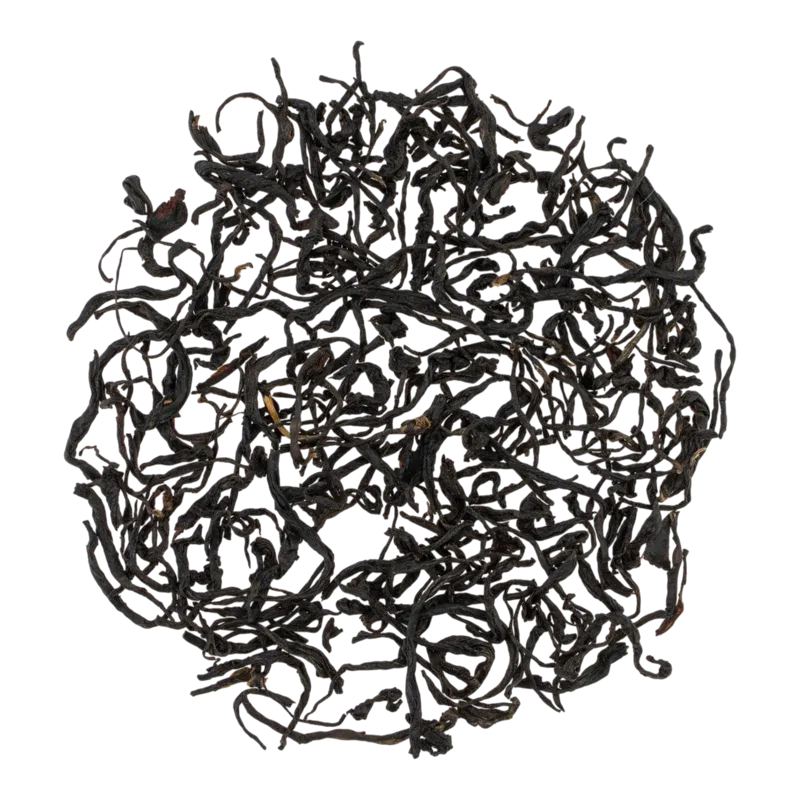
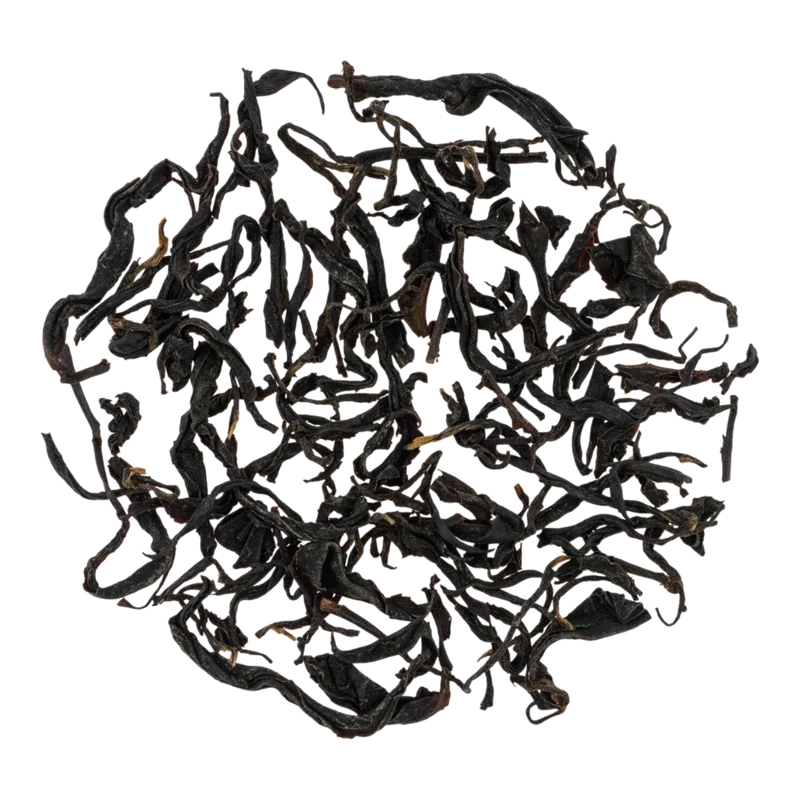
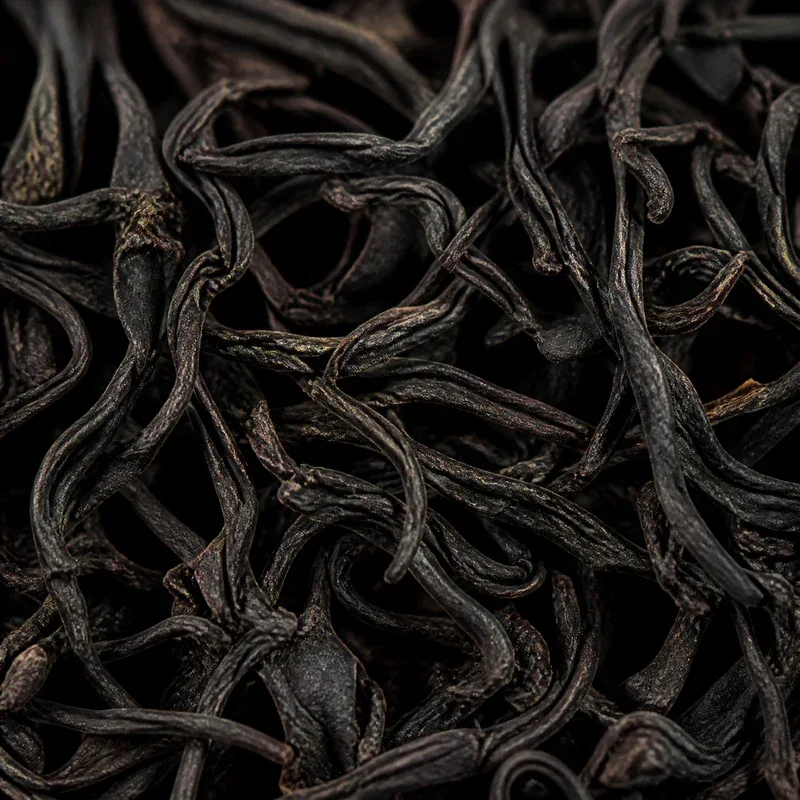
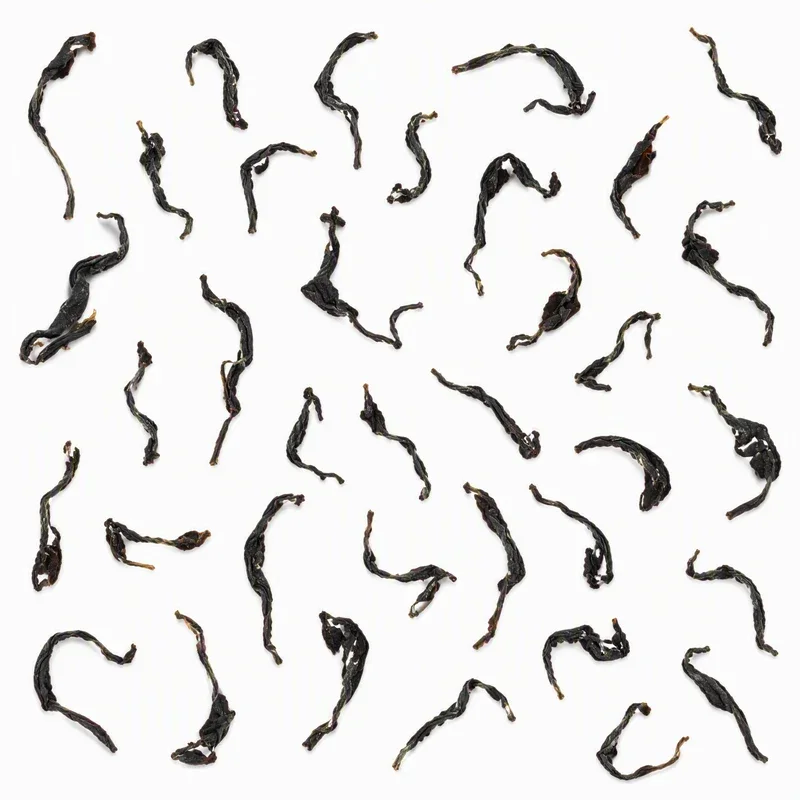
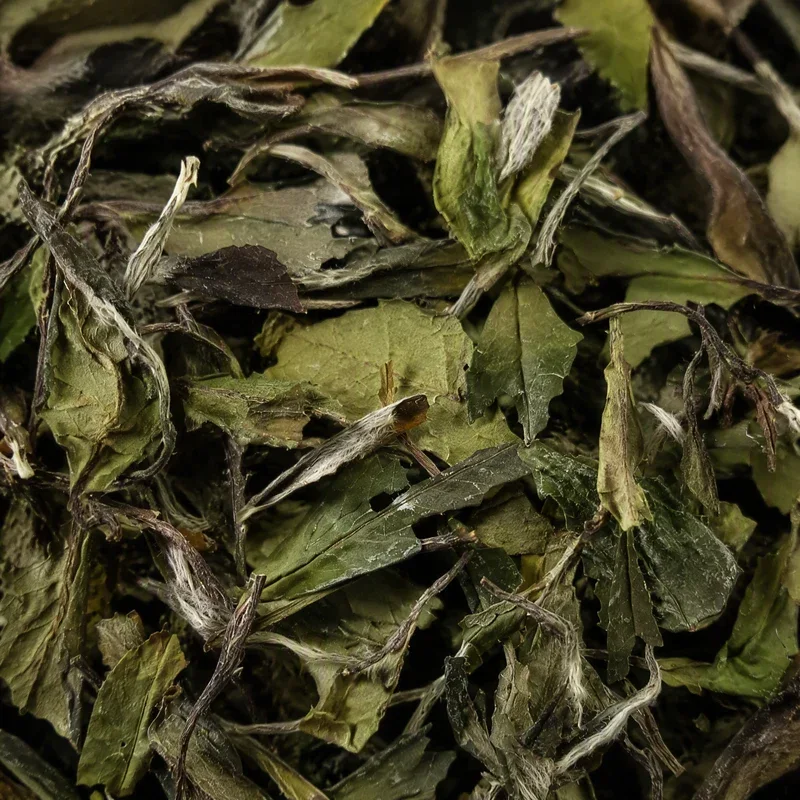
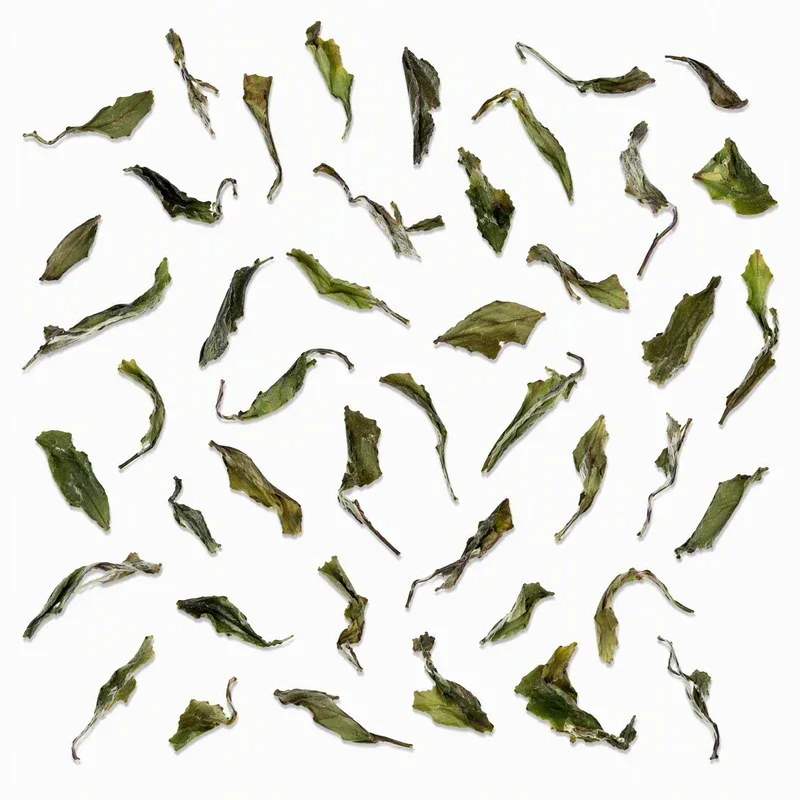
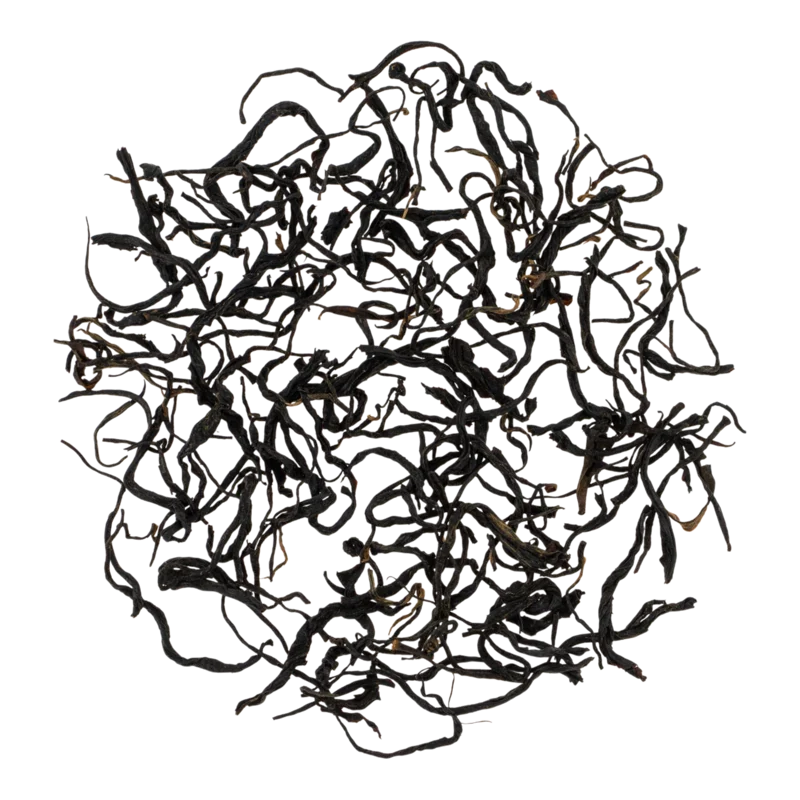
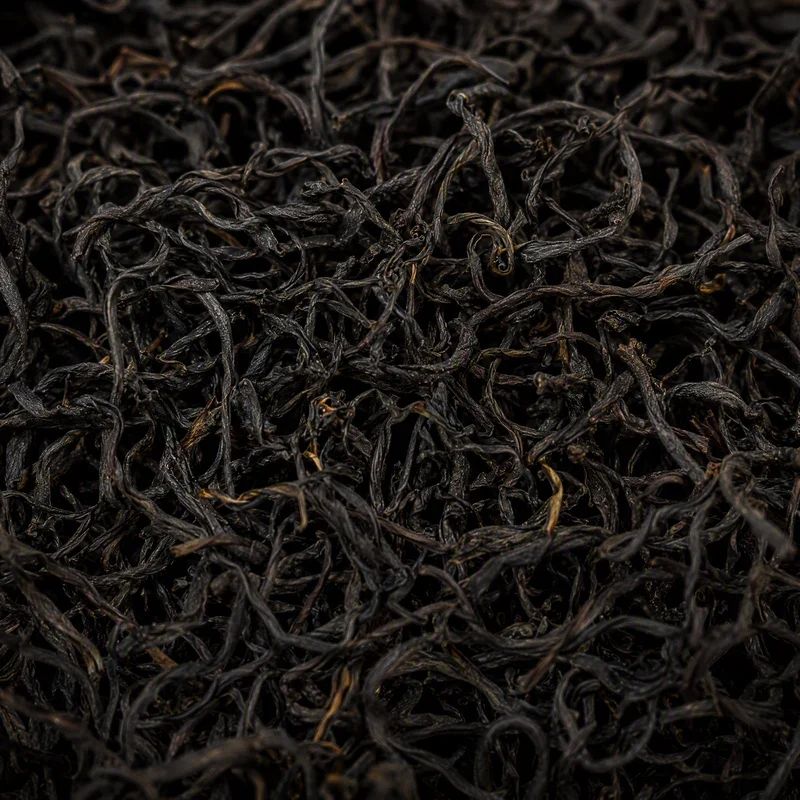
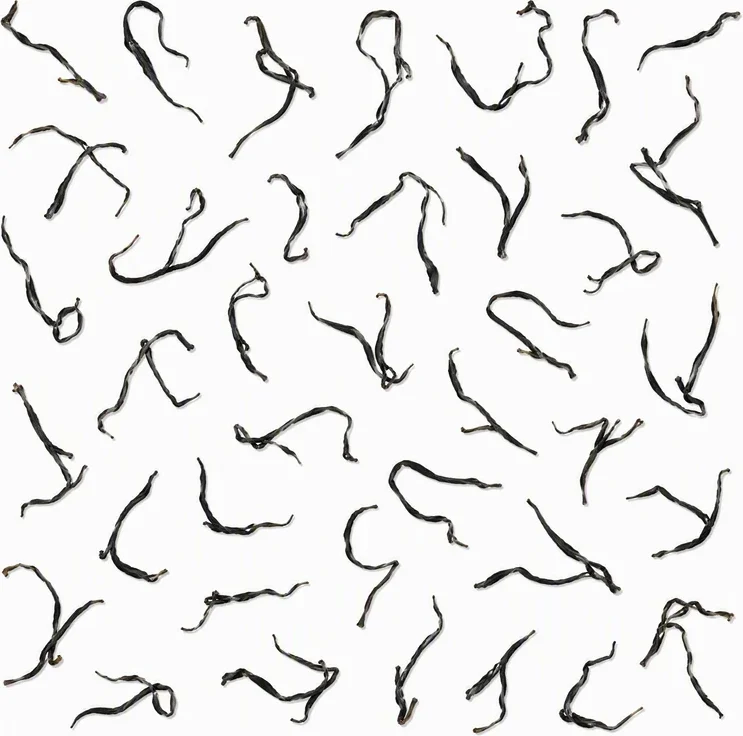
Dry Leaf Appearance: Thin, tightly twisted, even particles with elegant "tip" (鋒苗秀麗). Color — deep black with characteristic "precious luster" (寶光, bǎoguāng) — oily, slightly iridescent sheen. Higher grades have golden tips. Particles are uniform in size and shape — result of multi-stage refining.
Dry Leaf Aroma: Famous "Qimen fragrance" (祁門香) — delicate, elegant, not "hitting the nose" but enveloping. Orchid, rose, honey, powdered sugar, apple, dried fruits. Light undertones of spicy wood. Aroma is persistent, "increases" when heated. Distinctive feature — it is not bright and loud (like Darjeeling), but contained, "introverted," revealing gradually.
Liquor Aroma: Complex, multi-layered. Base — floral-honey complex (rose, orchid, honey). Top notes — apple, dried fruits. Middle — sugar, malt, light "gingerbread" undertone. Base — delicate woody note. International tea experts describe it as "sugar aroma" (砂糖香, shātáng xiāng) or "apple aroma" (蘋果香).
Liquor Color: Bright, ruby-red with orange undertone, transparent, clear. At the cup's edge — characteristic "golden ring" (金圈, jīnquān) — sign of high theaflavin content and quality indicator.
Spent Leaves: Whole, soft, elastic leaves of even red-brown color, glossy. Buds — golden. Uniformity of spent leaves — indicator of proper refining.
Taste: Full, velvety, rounded. Sweetness (honey, malt) dominates, but in balance with gentle, "silky" astringency. Fruity notes (apple, dried fruits), floral (rose), light "cocoa" depth. Aftertaste — long, clean, honey-floral, with characteristic "Qimen sweetness" (祁紅甜, Qíhóng tián). Body — medium, but very "smooth."
Alkaloids: Caffeine — 3–4% of dry weight. Content is lower than Assam, providing gentler tonic effect.
Amino Acids: 1.5–3.5%. L-theanine is responsible for sweetness and smoothness.
Over 300 identified volatile components — one of the most complex aromatic profiles among all red teas (black teas). Key ones: geraniol (floral note), linalool (flowers, citrus), phenylacetaldehyde (honey), cis-3-hexenol (freshness), methyl salicylate (mint). According to standard DB34/T 1086-2009, characteristic aromatic markers of "Qimen fragrance" are geraniol (香葉醇), benzyl alcohol (苯甲醇) and 2-phenylethanol (2-苯乙醇). The high geraniol content distinguishes Qihong among other red teas and creates its signature "rose-orchid" character.
Soluble sugars — 2–4%, pectin — 1–2%.
Minerals: Potassium, phosphorus, calcium, magnesium, iron, manganese, fluorine, zinc, selenium.
Polyphenols: 10–20% of dry weight. During oxidation, catechins convert to theaflavins (0.5–2%), thearubigins (5–11%) and theabrownins — they form ruby color, "golden ring" and "velvety" taste.
Vitamins: C (partially), B₁, B₂, B₃, E, K.
Reduced (compared to Assam) caffeine content combined with L-theanine provides steady, "intelligent" tone — without anxiety and spikes.
Theaflavins and thearubigins — effective antioxidants protecting cells from oxidative stress.
Polyphenols improve vascular elasticity, contribute to cholesterol level normalization.
Gently stimulates gastric juice secretion. Traditionally recommended after fatty and heavy food.
"Warm" nature by TCM (中醫, zhōngyī) — ideal for cold season, for people with "cold" constitution.
Tannins suppress pathogenic oral microflora.
L-theanine promotes calm concentration, stimulates alpha-wave production in the brain.
Rare quality for Chinese teas — Qihong excellently "holds" milk and sugar addition without losing "Qimen fragrance." This made it the foundation of British tea drinking.
Classic, traditional style — finely twisted, thin particles, result of full refining cycle with blending. Most recognizable and exported type of Qihong. Dense, rich, with pronounced "Qimen fragrance." According to DB34/T 1086-2009, divided into 7 grades: Tè Míng (特茗), Tè Jí (特級), 1st, 2nd, 3rd, 4th and 5th.
"Downy peaks" — more tender raw material (one bud + one-two leaves), minimal cutting during refining. Particles larger and more elegant than Gongfu. Taste — more "fresh," light, with pronounced floral notes. Divided into 3 grades: Te Ji, 1st and 2nd.
"Fragrant spirals" — leaf twisted into spiral shape (resembles Biluochun). Dense, aromatic, with bright "Qimen" profile. Relatively new style (since 2000s). 3 grades.
"Downy curves" — uses predominantly tips, twisted into curved shape. Tender, sweet, with increased amino acid content.
"Golden needles" — handmade: thin, straight, "needle-like" particles with abundance of golden tips. Premium grade. Style introduced by standard T/KBTA 0001-2020.
Lìkǒu (歷口) — considered best terroir; Shǎnlǐ (閃裏), Pínglì (平裏), Róngkǒu (溶口), Guìxī (貴溪) — historical sub-regions with individual taste nuances.
Qihong is excellent in "European" format too — 3–4 g per large cup, 3–5 minutes steeping. This is how it's drunk in England — with or without milk. For pure tasting of "Qimen fragrance," gongfu method without milk is recommended.
Tea Amount: 3–5 g per 100–120 ml (gongfu method); 3–4 g per 200–250 ml (European method).
Teaware: Porcelain gàiwǎn (蓋碗) or thin-walled porcelain teapot — neutral material reveals "Qimen fragrance" without distortion. Yíxīng teapot (宜興紫砂壺) — good option for traditional Qimen Gongfu. Glass teaware allows admiring the "golden ring" of the liquor.
Water Temperature: 90–95°C. For highest grades (Mao Feng, Xiang Luo) — 85–90°C. Boiling water is acceptable only for low grades.
Container: Airtight, opaque container — tin can, foil bag with zip closure, ceramic vessel. Aluminum foil — optimal barrier against light and moisture.
Enemies: Light, moisture, oxygen, high temperature, foreign odors (especially spices and perfumery — "Qimen fragrance" is extremely sensitive to contamination).
Shelf Life: Not less than 24 months (according to DB34/T 1086-2009) under proper conditions. "Qimen fragrance" is most vivid in first 6–12 months after production. Over time, floral top notes fade, but base caramel-honey tones remain for 2–3 years.
Dry, cool, dark place, away from foreign odors. Temperature 10–25°C, humidity not above 60%.
Red tea (black tea) preserves excellently at room temperature provided airtightness.
Authentic Qihong — from Qimen County and adjacent counties (Yi, Dongzhi, Shitai, Fuliang). Best quality — from Likou, Shanli, Pingli areas. Demand information about producer and region.
Authentic Qihong dry leaf — black with characteristic oily luster. Dull, gray or brown leaf — sign of low quality or substitution.
"Qimen fragrance" — delicate, elegant, "introverted." If instead — crude "tea bag" smell, harshness or mustiness — tea is not from Qimen.
Bright, ruby-red, transparent, with "golden ring" at cup edge. Cloudy, dark or pale liquor — reason for doubt.
Special class Qihong cannot cost less than 500 yuan/500 g.
Qimen Mao Feng and Xiang Luo — not counterfeits, but legitimate varieties with different leaf shape and more delicate profile.
Not recommended to drink strong Qihong on empty stomach — theaflavins and caffeine may cause discomfort, nausea or dizziness.
With caffeine content 3–4% of dry weight, recommended to limit consumption in second half of day. Recommended daily dose — 5–8 g dry leaf.
People with acute gastritis or peptic ulcer recommended to drink Qihong weak and after meals.
Recommended to limit consumption to 2–3 g per day or consult doctor.
Qihong tannins may reduce absorption of iron preparations and some medicines. Recommended to separate tea and medicine intake by 1–2 hours.
Should avoid consuming liquor above 65°C — this is general WHO recommendation to reduce risk of thermal esophageal damage.
No reviews yet. Tell us what you think of this tea.
Rate this tea and share your impressions. We review each submission before publishing it.