Brewing
Gongfu brewing
- Water temperature
- 75 °C
- Tea amount
- 5 g
- Water volume
- 100 ml
- First steep
- 10 s
- Time added per infusion
- 5 s
- Infusions
- 4

shòu méi
Choose a brewing method. Start with the recommended quantities and time, then adjust to taste.
Brewing
Brewing
Taste
Tea encyclopedia
Category: Fujian white teas. According to national standard GB/T 22291—2017 "White Tea" (白茶, Báichá), Shòu Méi is one of four official categories of white tea alongside Bái Háo Yín Zhèn (白毫银针), Bái Mù Dān (白牡丹), and Gōng Méi (贡眉). Shou Mei is the most affordable in price and largest in production volume among them. According to the standard, it is divided into two grades: first grade (一级) and second grade (二级).
Category: Fujian white teas. According to national standard GB/T 22291—2017 "White Tea" (白茶, Báichá), Shòu Méi is one of four official categories of white tea alongside Bái Háo Yín Zhèn (白毫银针), Bái Mù Dān (白牡丹), and Gōng Méi (贡眉). Shou Mei is the most affordable in price and largest in production volume among them. According to the standard, it is divided into two grades: first grade (一级) and second grade (二级).
historical birthplace of white tea, a county-level city within Níngdé Prefecture (宁德, Níngdé). Key production villages — Pánxī (磻溪, Pánxī), Guǎnyáng (管阳, Guǎnyáng), Diǎntóu (点头, Diǎntóu).
county within Nánpíng Prefecture (南平, Nánpíng), the second classical center of white tea, distinguished by a more continental microclimate.
Coordinates: approximately 27°00'–27°30' N, 119°30'–120°00' E (for the main Fuding and Zhenghe districts).
Origin: China, Fújiàn Province (福建, Fújiàn). Main production regions:
Type: White tea (微发酵茶, wēi fājiào chá — lightly oxidized, oxidation degree ~5–10%).
Cultural Significance: Shou Mei occupies a special place in the everyday tea culture of Fujian and southern China. In Guangdong and Hong Kong, it is traditionally served in dim sum restaurants (饮茶, yǐnchá — "drink tea") as an everyday white tea — rich, aromatic, and harmoniously complementing rich Cantonese cuisine. In recent decades, with the growing popularity of aged white tea (老白茶, lǎo báichá), Shou Mei has become the most sought-after tea for home aging — its example makes it easiest to trace the transformation from a fresh herbal profile to "compote" sweetness. In Chinese tea circles, the expression "一年茶,三年药,七年宝" (yī nián chá, sān nián yào, qī nián bǎo — "one year — tea, three years — medicine, seven years — treasure") is common, and it manifests most clearly with Shou Mei.
History: White tea has a centuries-long history in Fujian Province. The famous tea master and researcher Zhāng Tiānfú (张天福, Zhāng Tiānfú, 1910–2017) succinctly described the evolution of white tea with the formula: "First appeared Xiǎo Bái (小白, Xiǎo Bái — 'little white'), then Dà Bái (大白, Dà Bái — 'big white'), and then Shuǐxiān Bái (水仙白, Shuǐxiān Bái — 'white from water narcissus')." By "little white" is meant tea from the local bush variety caicha (菜茶, càichá), from which historically both the predecessor of modern Gong Mei and early forms of Shou Mei were made. With the spread of large-leaf cultivars Fuding Da Bai and Fuding Da Hao in the second half of the 19th – early 20th century, Shou Mei came to be produced predominantly from these high-yielding varieties, which established its position as a mass and accessible category. During the Qīng era (清朝, Qīng cháo), Shou Mei produced in Zhenghe County and surrounding areas (under the name "寿眉白茶") was supplied to the court — it was from these supplies that the separate name Gōng Méi (贡眉 — "tribute-brows") subsequently arose. Throughout the 20th century, Shou Mei remained the main export white tea, especially popular in the markets of Hong Kong, Macau, and Southeast Asian countries. In Fuding villages, the tradition of storing leaf white tea for several years as a household "medicine" for colds has long been preserved — this practice became the precursor to the modern boom in aged white tea.
longevity, long life. The character is often used as a blessing and appears in names associated with health and longevity.
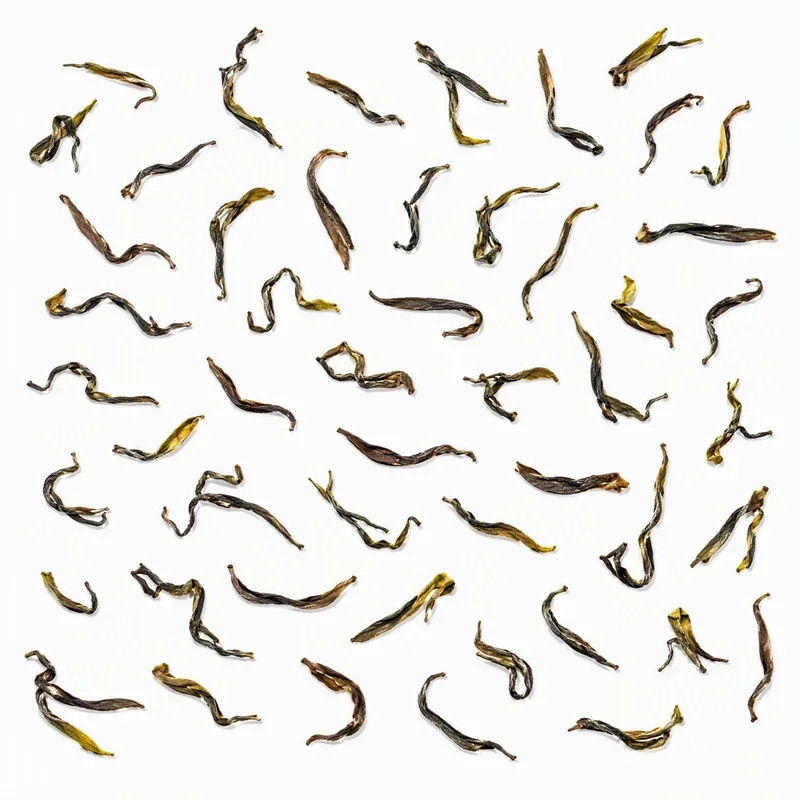
eyebrow. Refers to the characteristic shape of the dry leaf — curved, elongated, resembling an elder's eyebrow.
According to GB/T 22291—2017, the following varieties are permitted for Shou Mei production:
"Big white tea from Fuding" — the main cultivar for Fuding Shou Mei. Belongs to Camellia sinensis var. sinensis. Characterized by large, dense buds with abundant white down.
"Big downy tea from Fuding" — the second key cultivar, producing especially dense silvery down.
"Big white tea from Zhenghe" — the preferred cultivar for Zhenghe style.
"Water narcissus" — used less frequently, produces denser leaf and characteristic "meaty" liquor.
local bush variety (群体种, qúntǐzhǒng) — permissible for Shou Mei, but under the new standard, tea made exclusively from caicha is more often classified as Gong Mei.
Picking: Shou Mei is harvested later than other categories of white tea — typically in late April – May (spring harvest, 春寿眉, chūn shòuméi) and again in autumn in September – October (autumn harvest, 秋寿眉, qiū shòuméi). Spring Shou Mei is considered more aromatic and refined, with floral notes; autumn — denser and sweeter, with honey-fruity tones. Autumn tea is more often laid down for aging due to its greater density.
Pluck Standard: One shoot with two to three opened leaves (一芽二叶至一芽二、三叶, yī yá èr yè zhì yī yá èr, sān yè), more mature leaves and stems are permitted. The presence of buds is not mandatory but welcomed. Compared to Bai Hao Yin Zhen (buds only) and Bai Mu Dan (bud + one-two young leaves), the raw material for Shou Mei is significantly more mature.
Raw Material: Leaves must be healthy, without mechanical damage and signs of disease. The high proportion of leaf and stems ensures increased content of pectins and water-soluble sugars, which forms the characteristic "density" and sweetness of Shou Mei liquor, as well as excellent potential for aging: it is precisely the pectins and polysaccharides of stems that transform during multi-year storage into "compote" sweetness and date aroma.
Altitude: from 300 to 900 m above sea level. High-altitude tea gardens (600+ m) produce more aromatic and delicate raw material with pronounced "misty" notes, lowland — denser and more astringent leaf.
Climate: Subtropical monsoon climate of eastern Fujian with abundant precipitation (1400–2000 mm per year), high relative humidity (75–85%), and mild winters. Average annual temperature 18–20 °C. Humid air allows for slow, gentle withering, especially important for mature Shou Mei leaf.
Soil: Acidic red soils and yellow soils (pH 4.5–5.5), well-drained, rich in organic matter. Mountain slopes provide natural drainage and soil saturation with mineral elements.
Proximity to the sea (Sansha Bay, 三沙湾) creates characteristic sea breezes, softening daily temperature fluctuations. Fuding Shou Mei is distinguished by a more floral and fresh profile. Sǔn withering (日光萎凋) is the calling card of Fuding style.
More distant from the sea, located higher (average garden altitude 400–700 m). Zhenghe Shou Mei typically produces deeper, denser, and "darker" character liquor. Here indoor withering (室内萎凋) is more often used, more prolonged (up to 48–72 hours), creating deep honey-sweet character.
Hand or mechanized harvest of mature shoots. For quality Shou Mei, hand harvest is preferable, excluding leaf damage: damaged areas of large leaf quickly darken and introduce coarseness.
The central stage of white tea production. Harvested leaves are spread in a thin layer on bamboo sieves (水筛, shuǐshāi) or special racks. Withering is conducted in open air under diffused sunlight (日光萎凋, rìguāng wěidiāo — Fuding style), indoors with natural ventilation (室内萎凋, shìnèi wěidiāo — Zhenghe style), or by combined method. Duration — from 24 to 72 hours depending on weather conditions and leaf thickness. During withering, the leaf loses 60–70% moisture, gentle oxidative processes are initiated, characteristic aroma is formed. Poor withering (too fast or at high temperature) gives mature leaf coarse grassy bitterness — a defect that cannot be corrected by subsequent aging.
Withered leaf is dried to residual moisture ≤8.5%. Natural sūn drying (晒干, shàigān) or low-temperature air drying (烘干, hōnggān) at 40–50 °C is used. Overheating is unacceptable — it gives the tea baked notes and destroys delicate aromatic compounds.
Removal of coarse stems, broken leaves, foreign inclusions. Finished tea is divided into grades (一级 and 二级 according to GB/T 22291—2017).
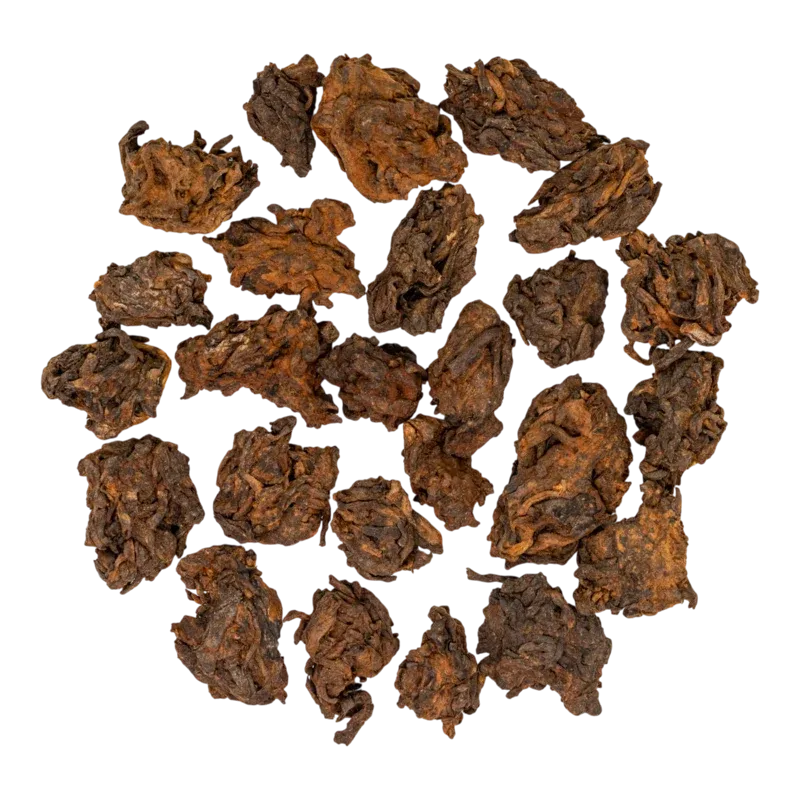
A significant portion of Shǒu Méi is pressed into cakes (饼, bǐng) weighing 100, 200, or 357 g, as well as into bricks (砖, zhuān). Before pressing, tea is steamed, then shaped and dried. Pressed Shou Mei is more convenient for transportation and aging: compact form ensures more uniform transformation during storage. During steaming, there is a slight increase in tea pigment content and increased extraction fullness.
Multi-year storage under controlled conditions (details in sections 10 and 13). During aging, slow natural transformations occur: catechin polymerization, pectin breakdown, aromatic profile restructuring — these transform "grassy" Xin Cha into "compote" Lao Cha.
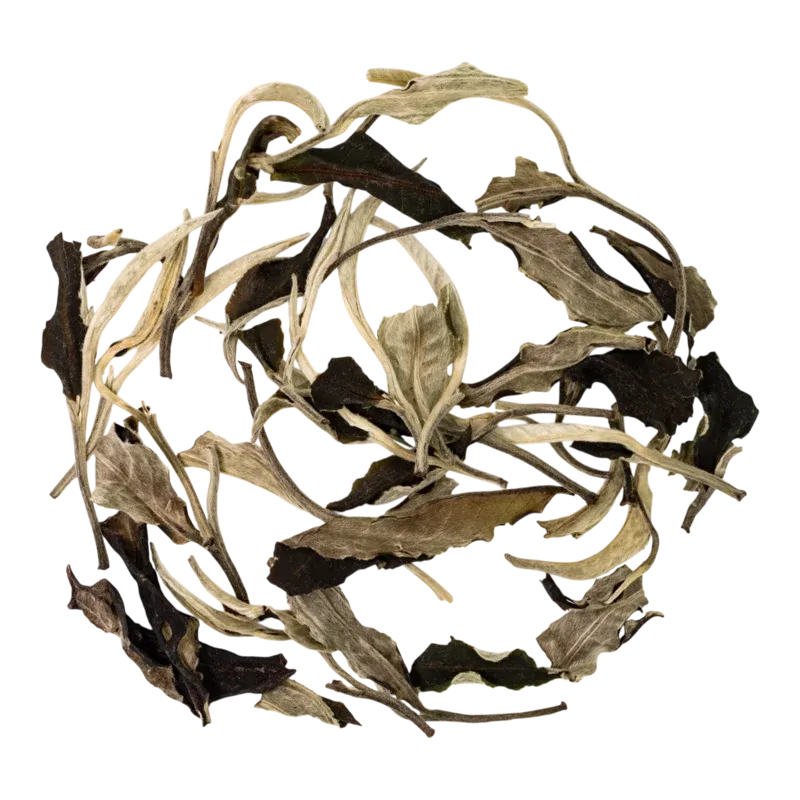
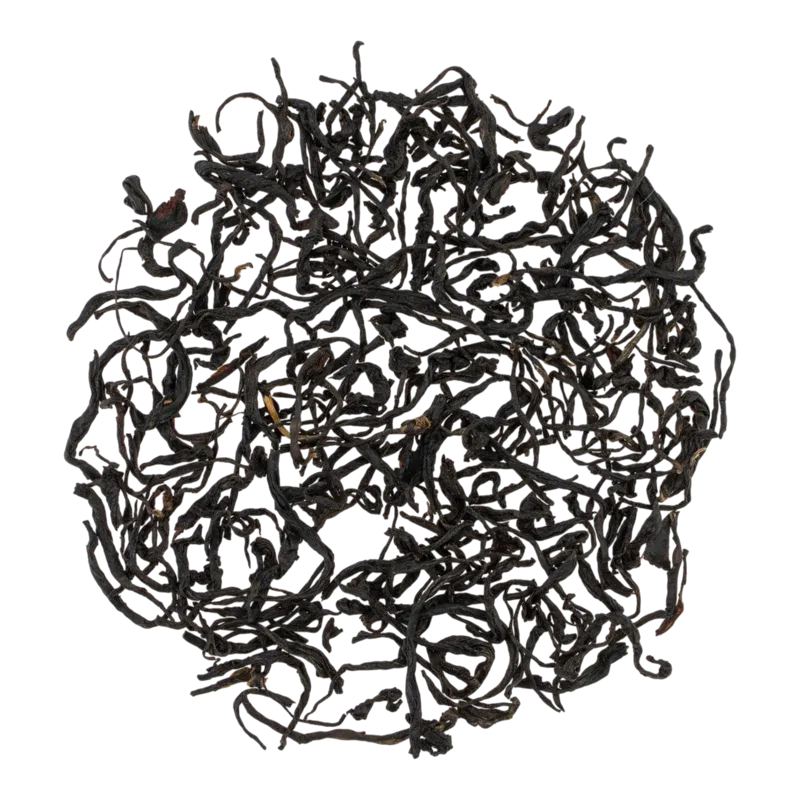
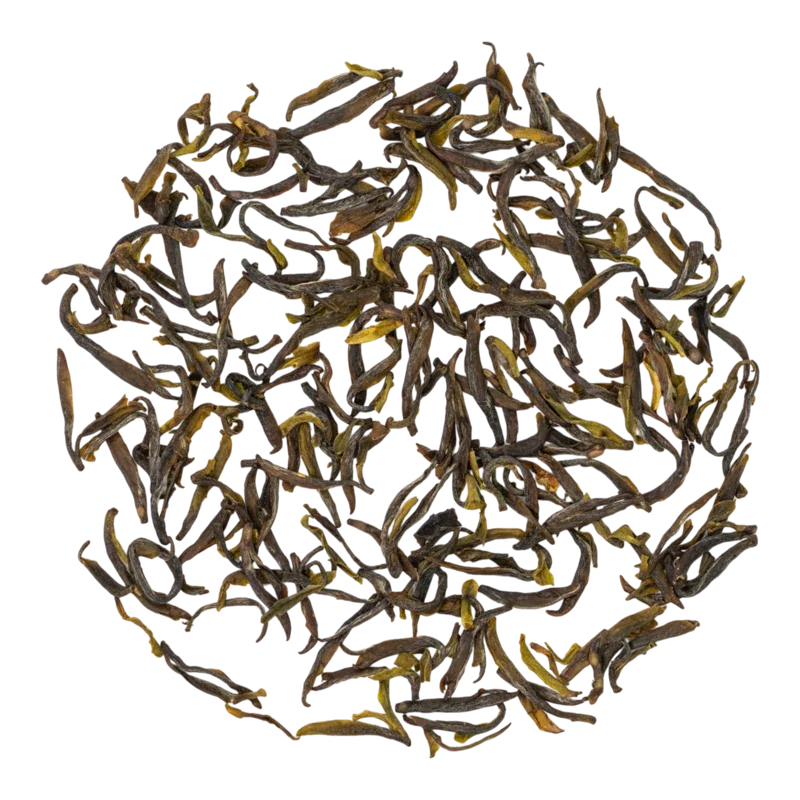
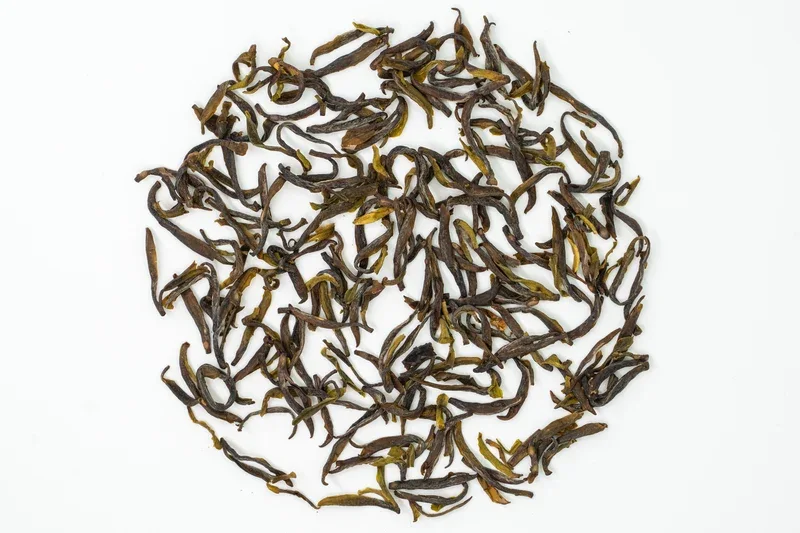
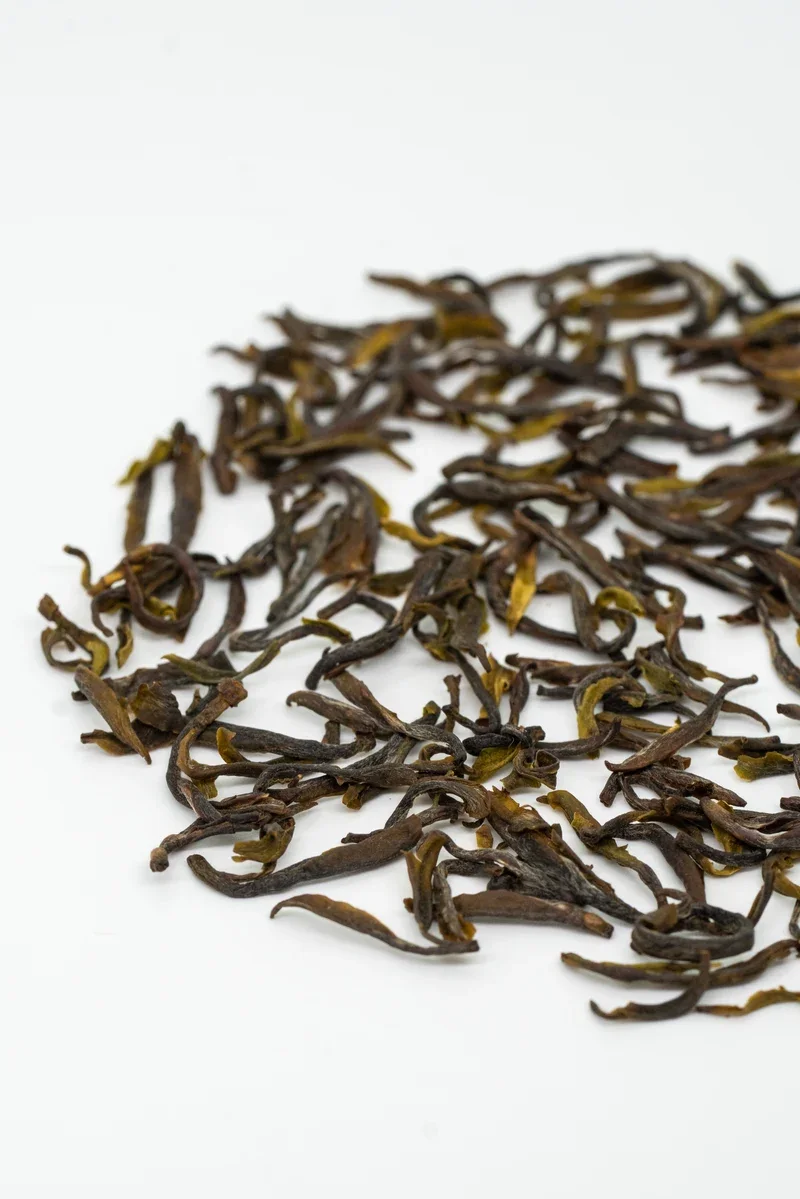
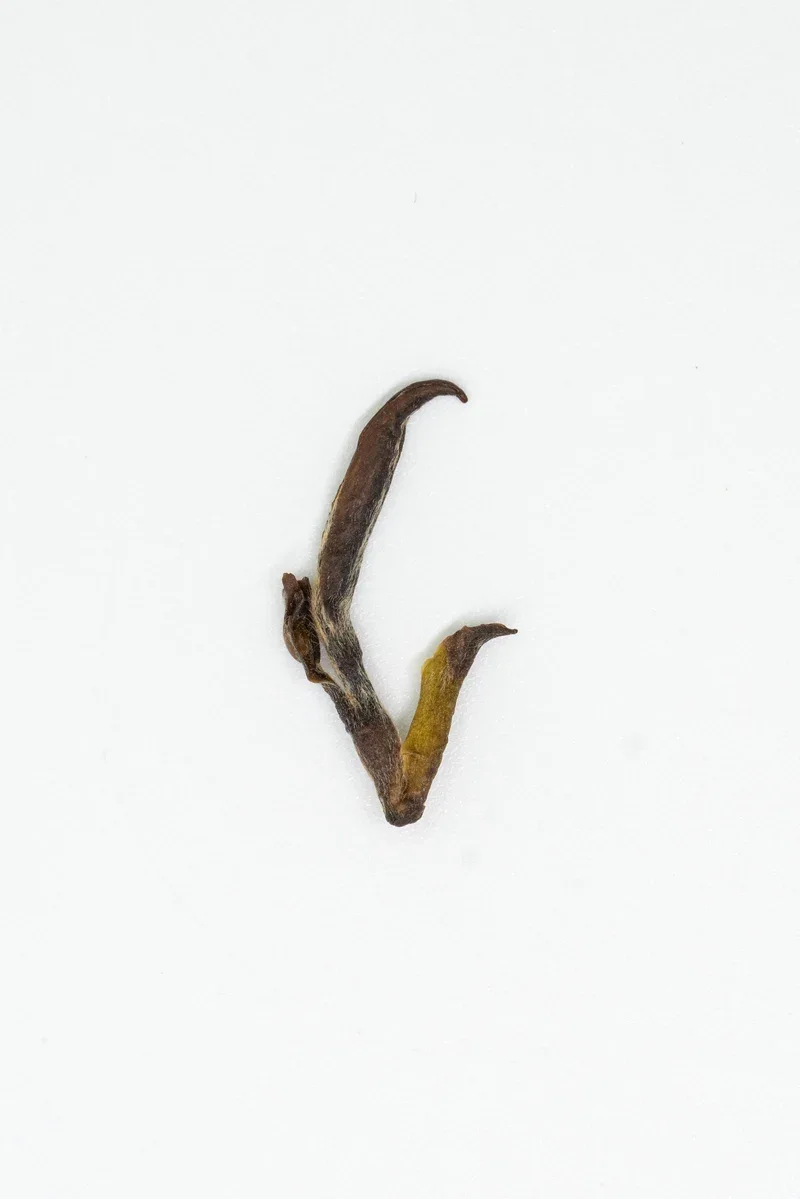
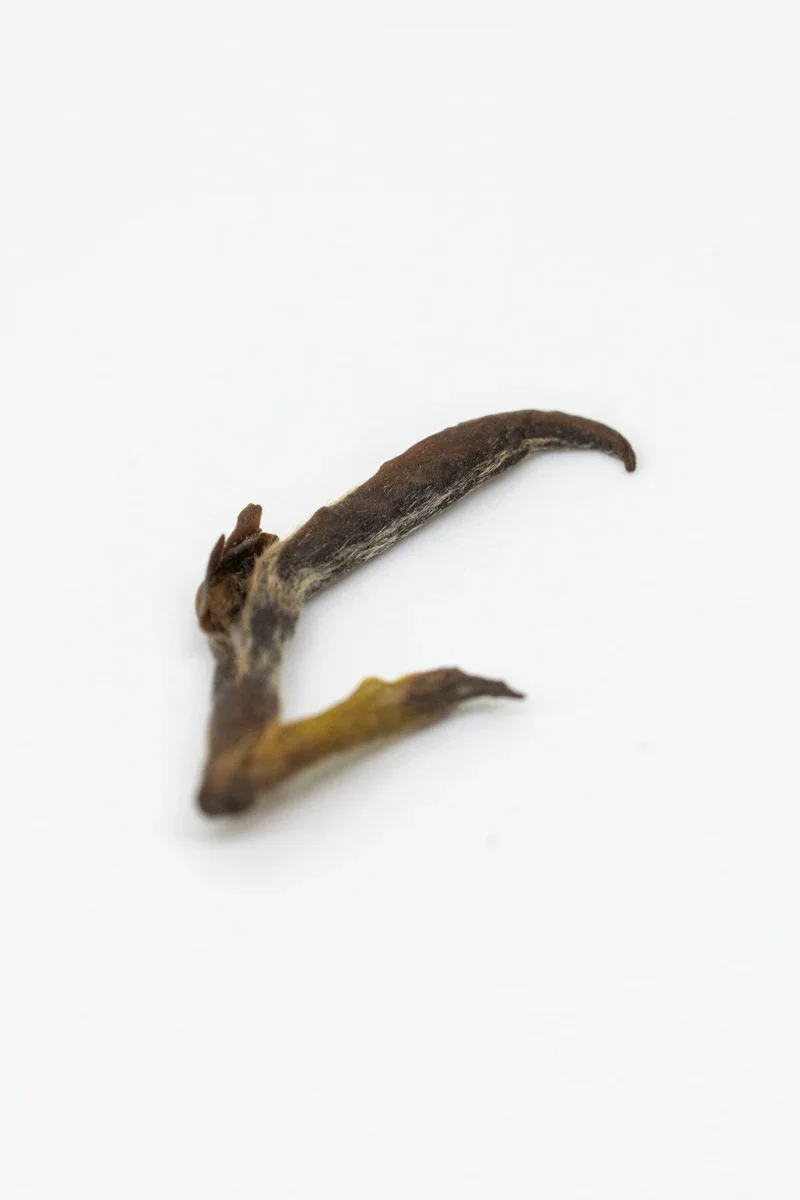
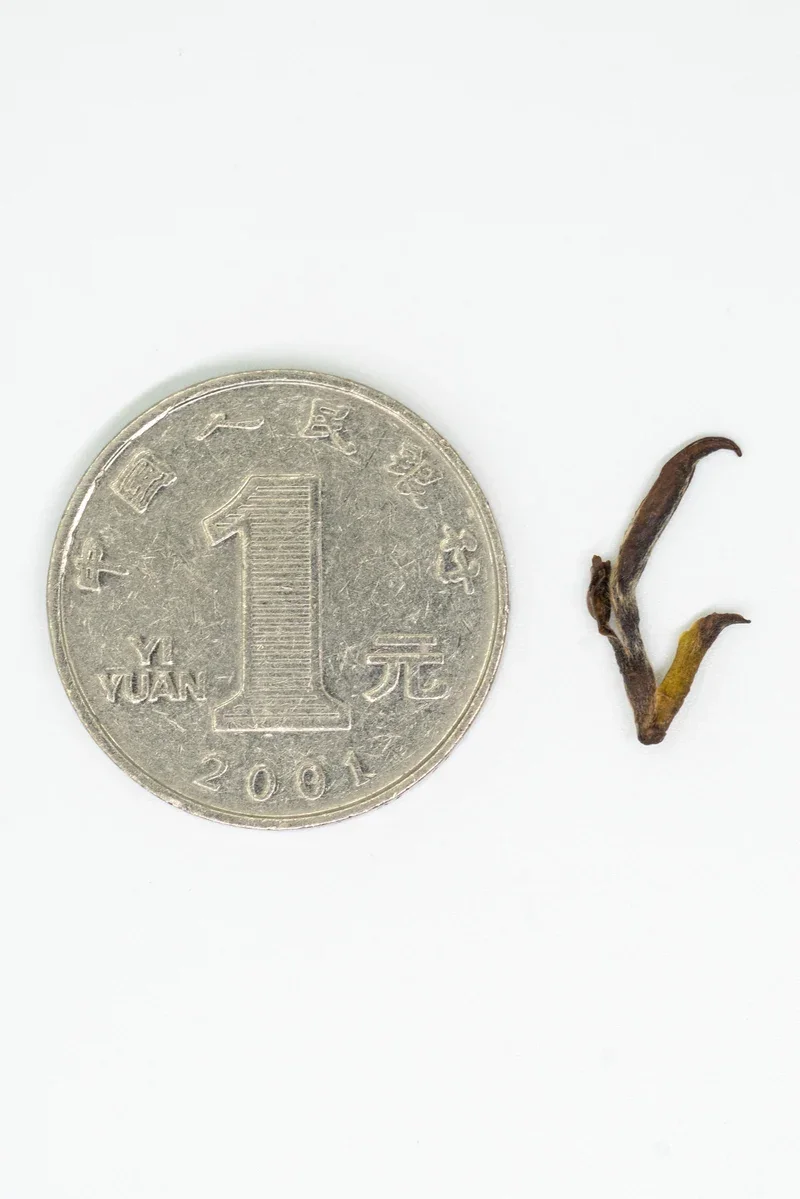
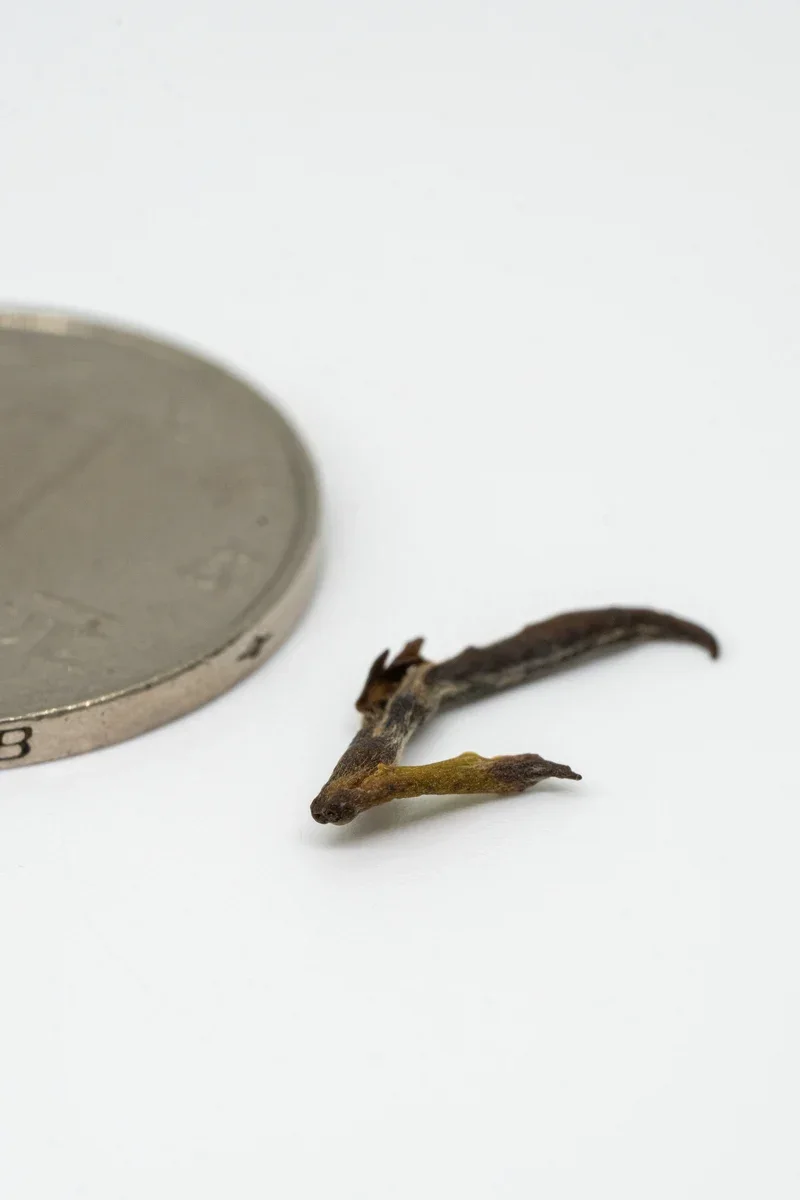
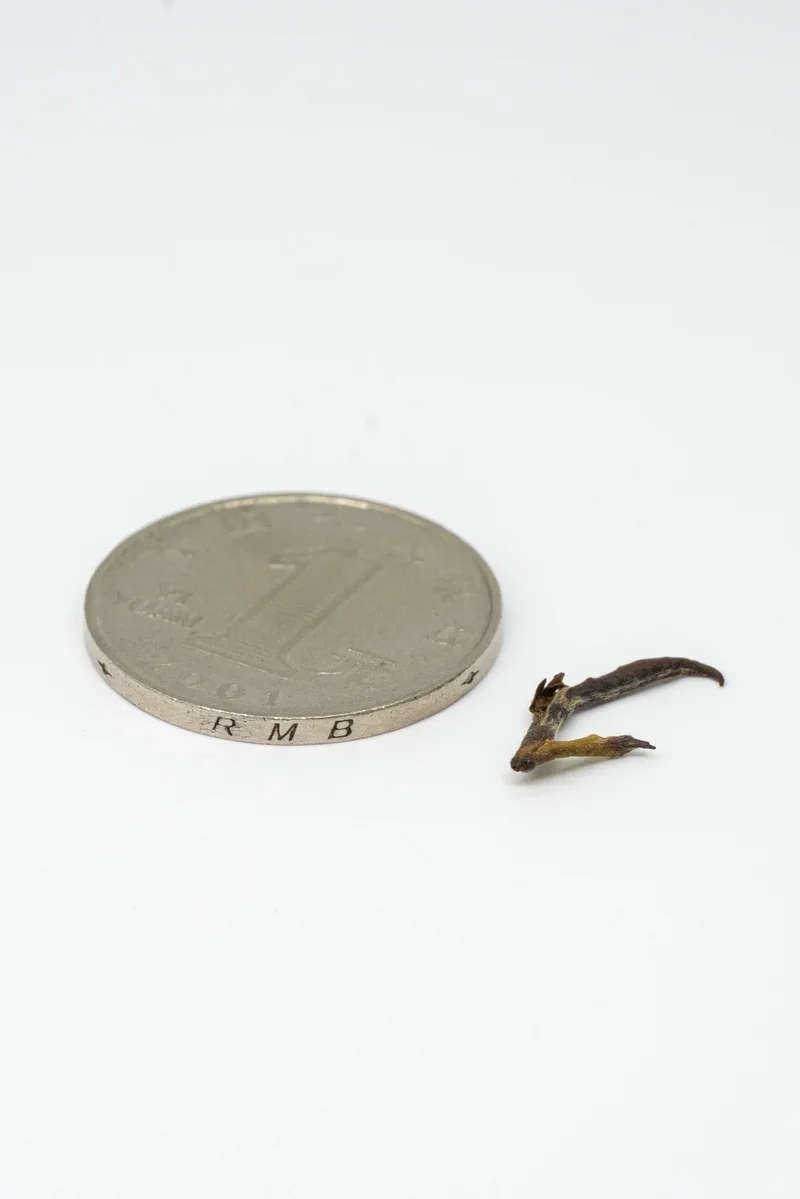
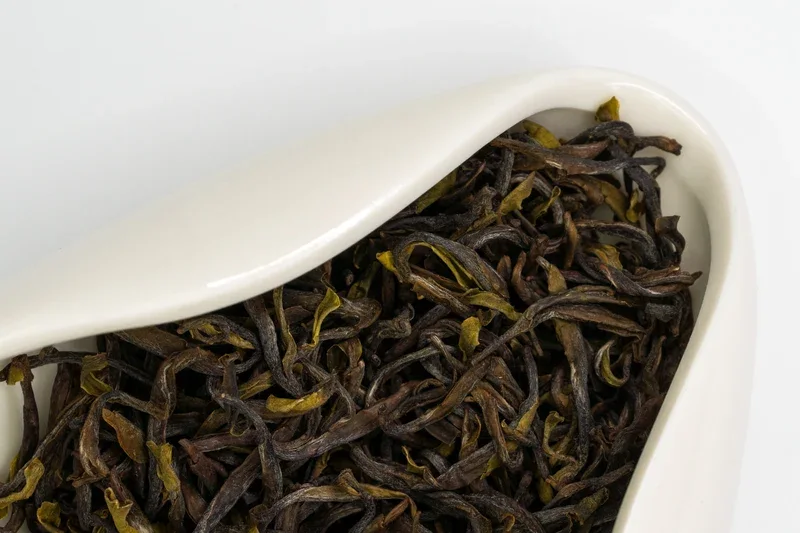
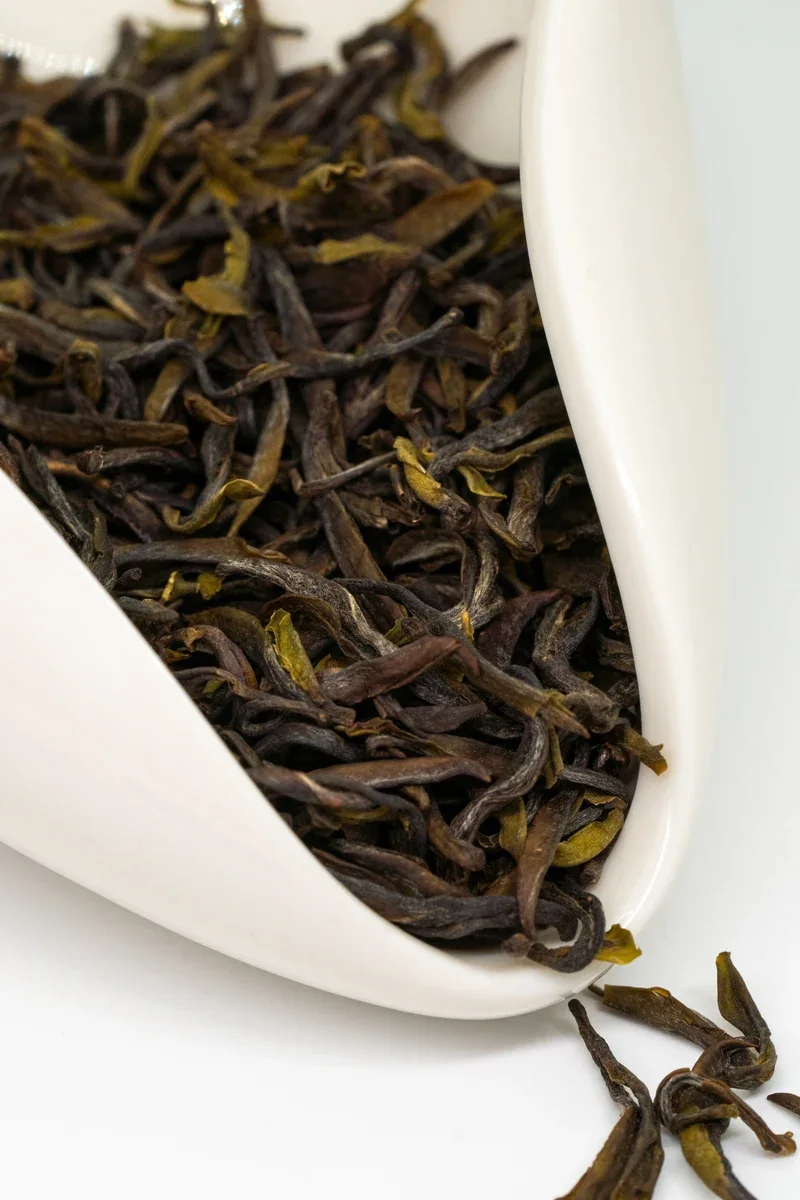
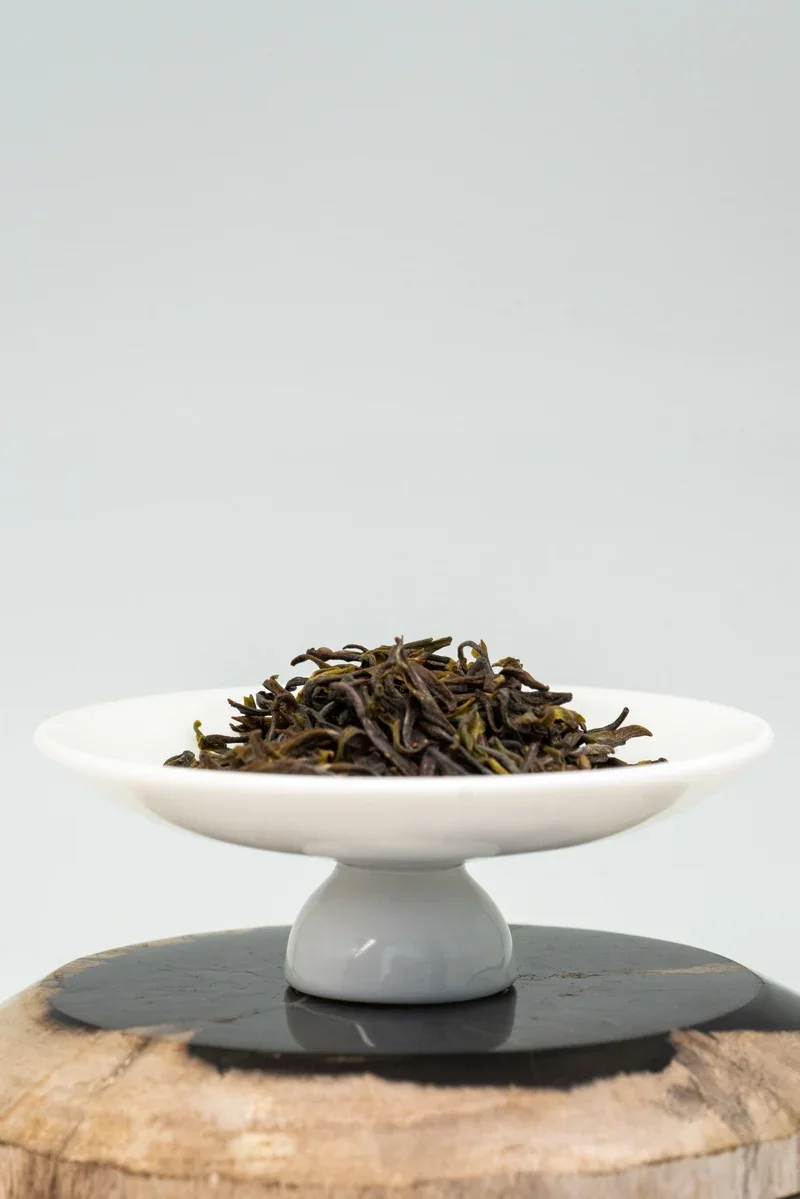
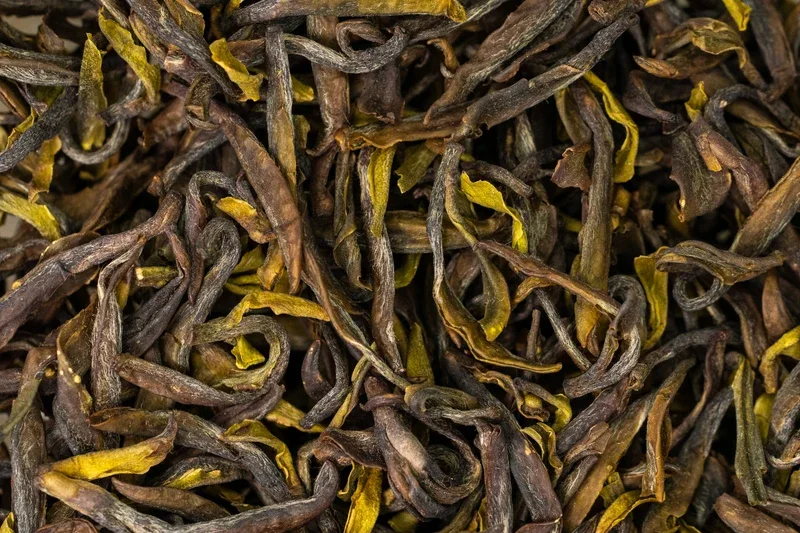
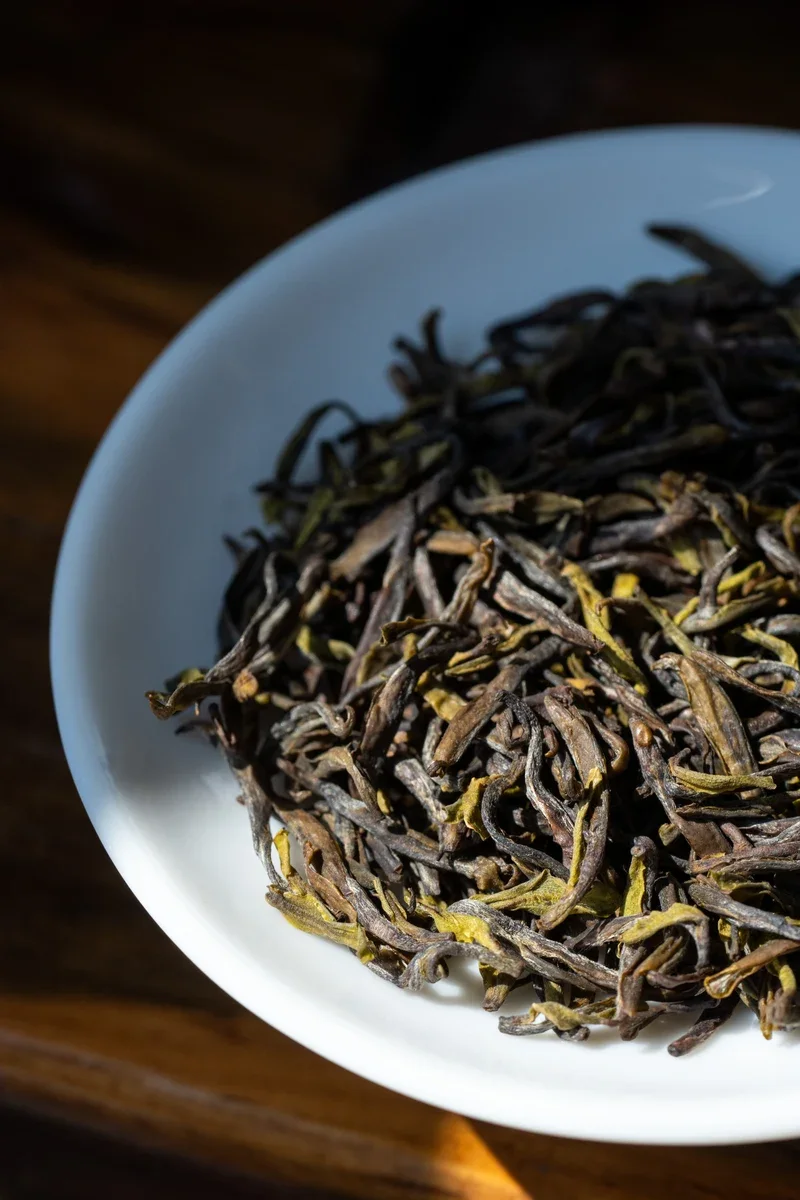
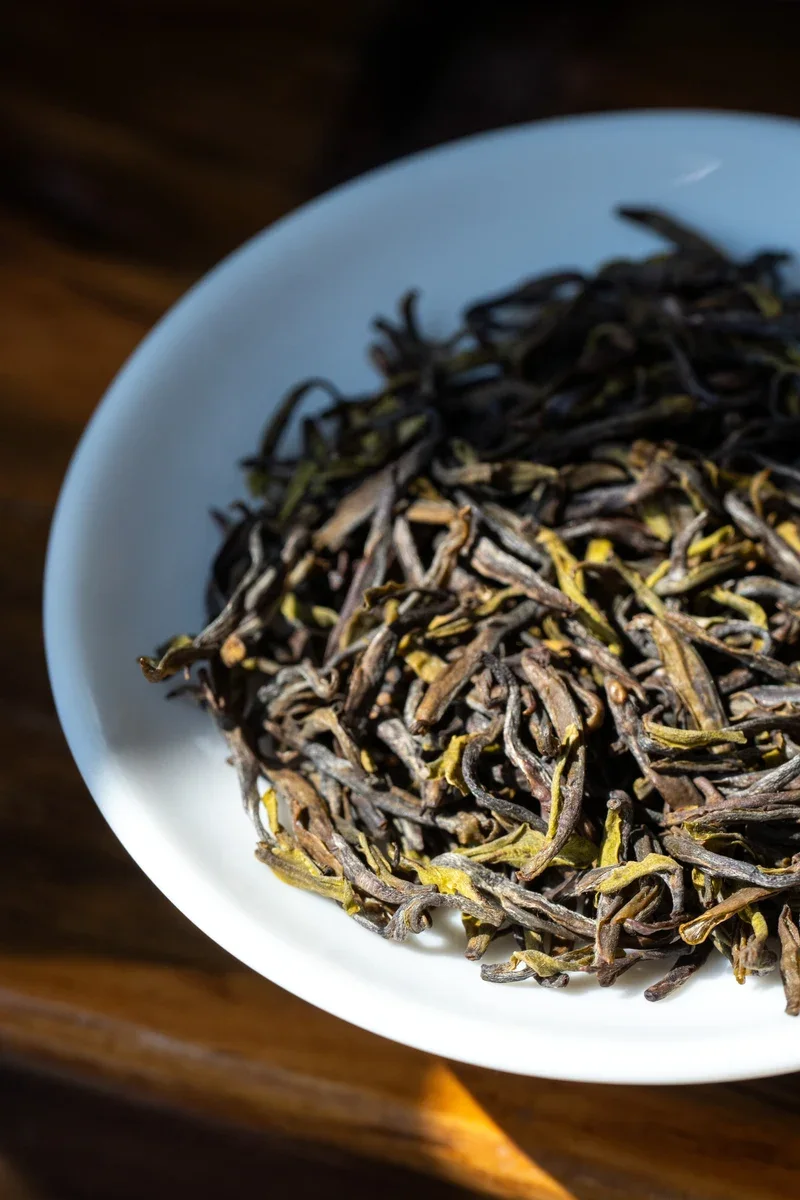
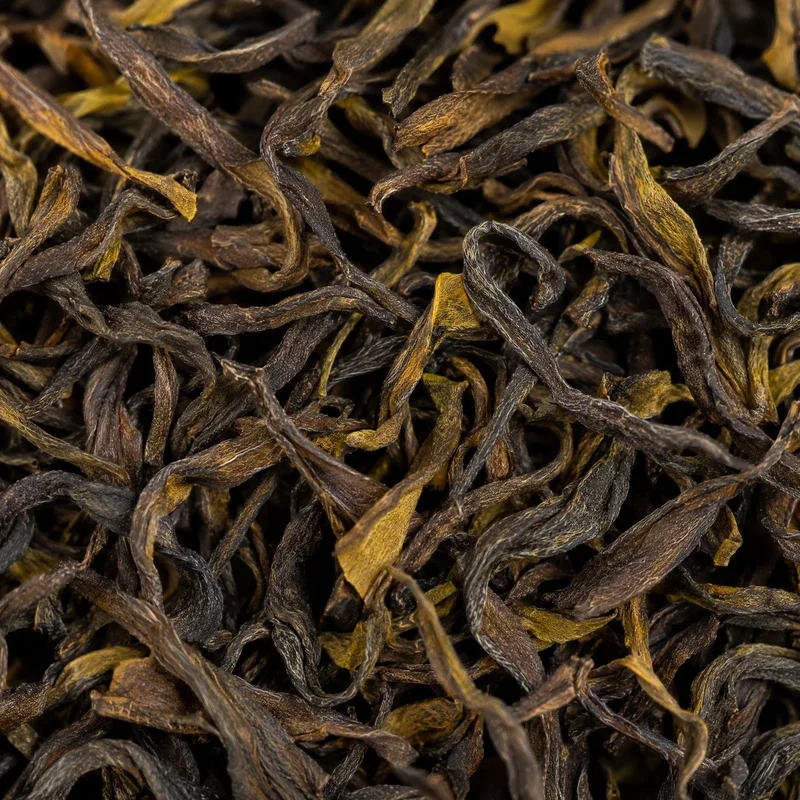
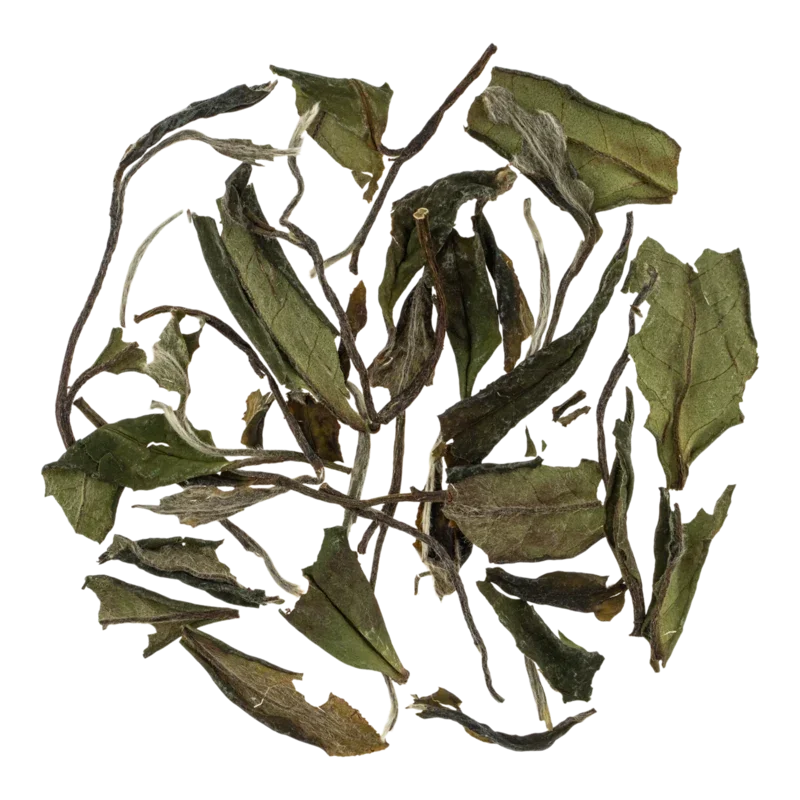
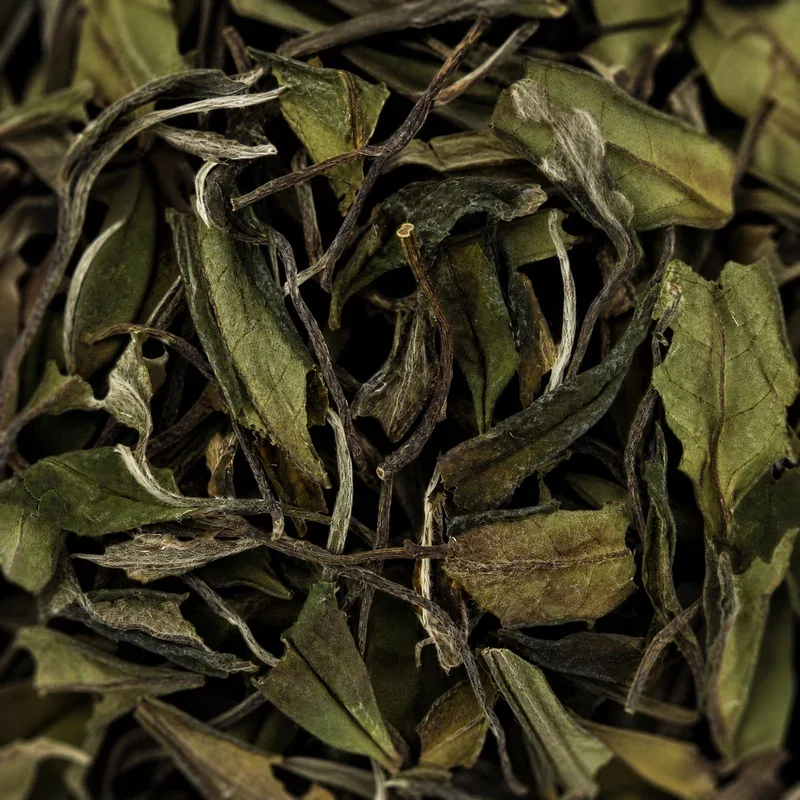
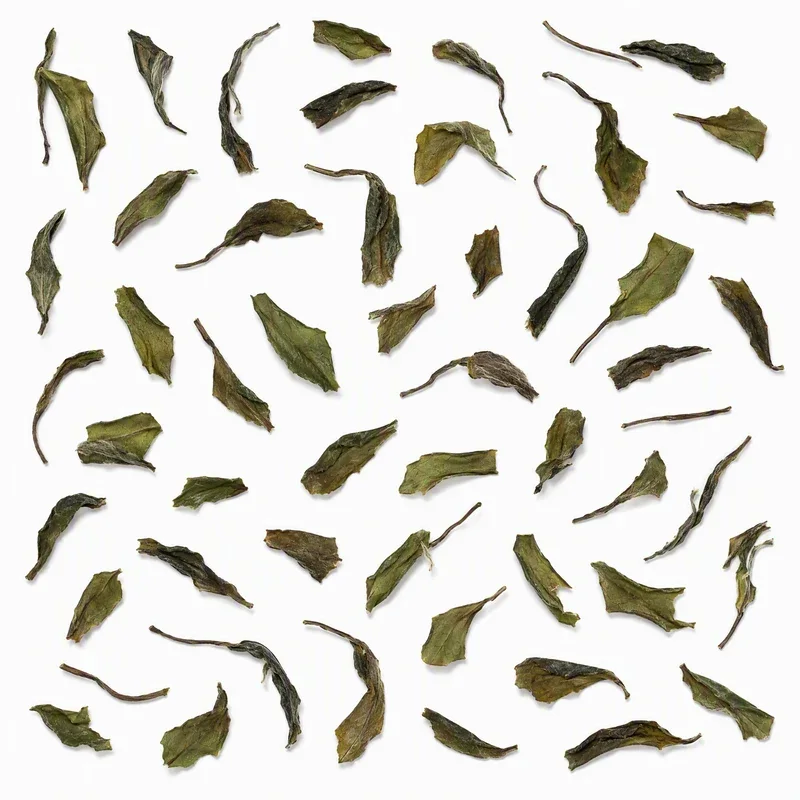
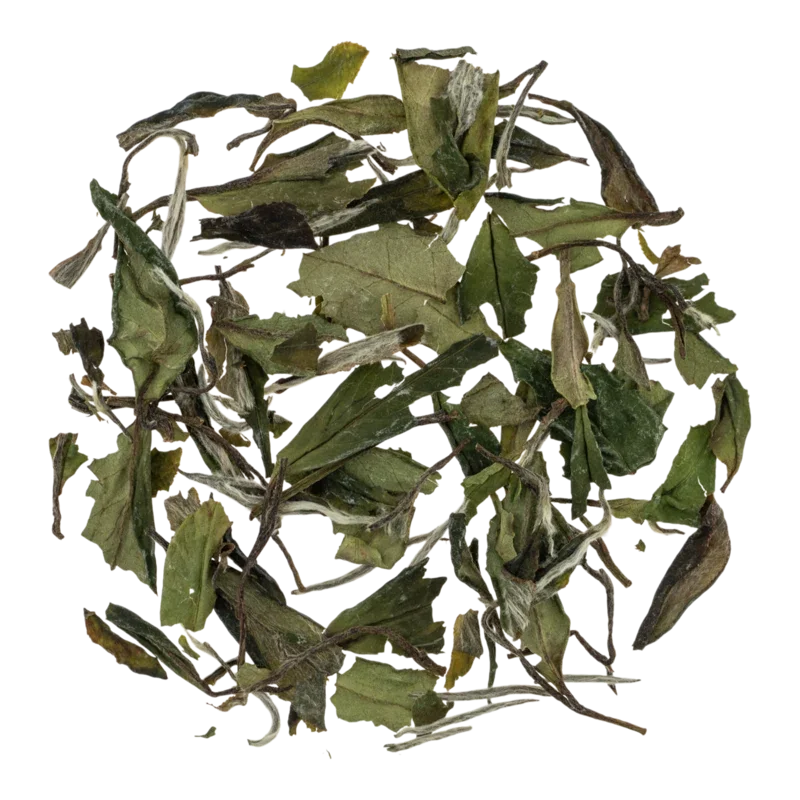
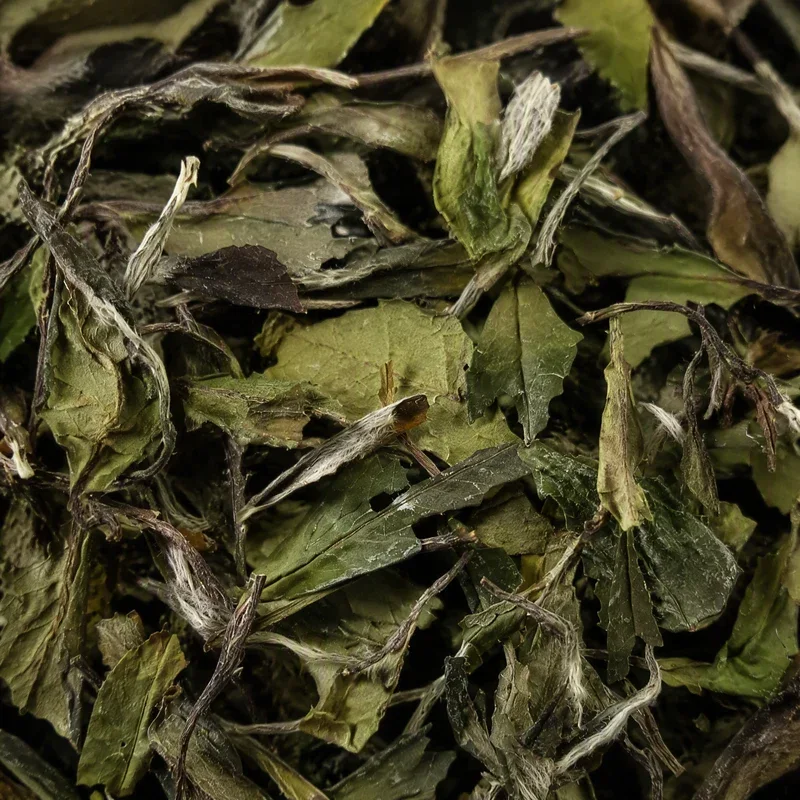
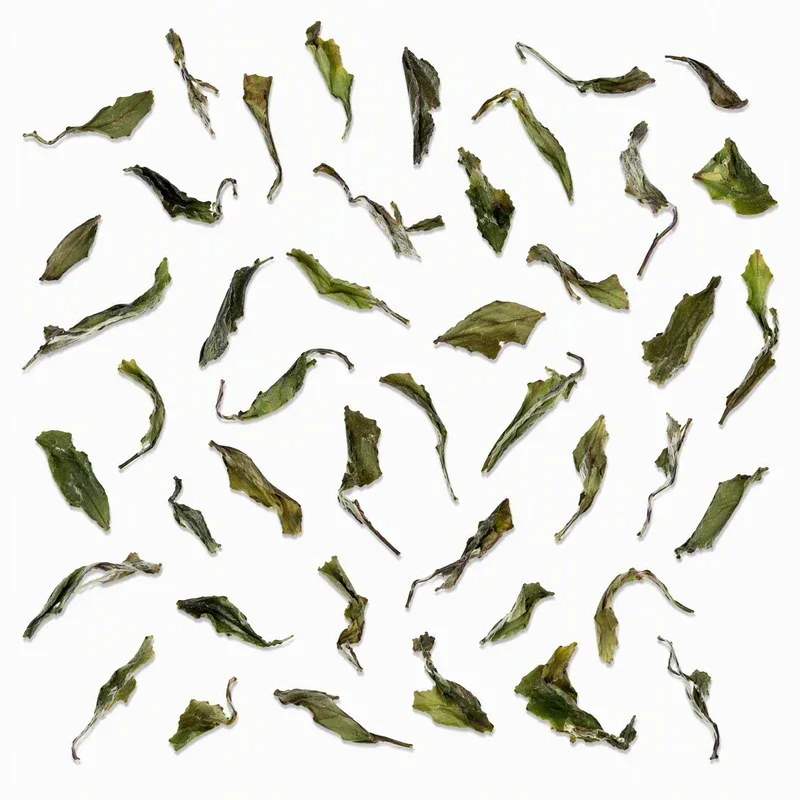
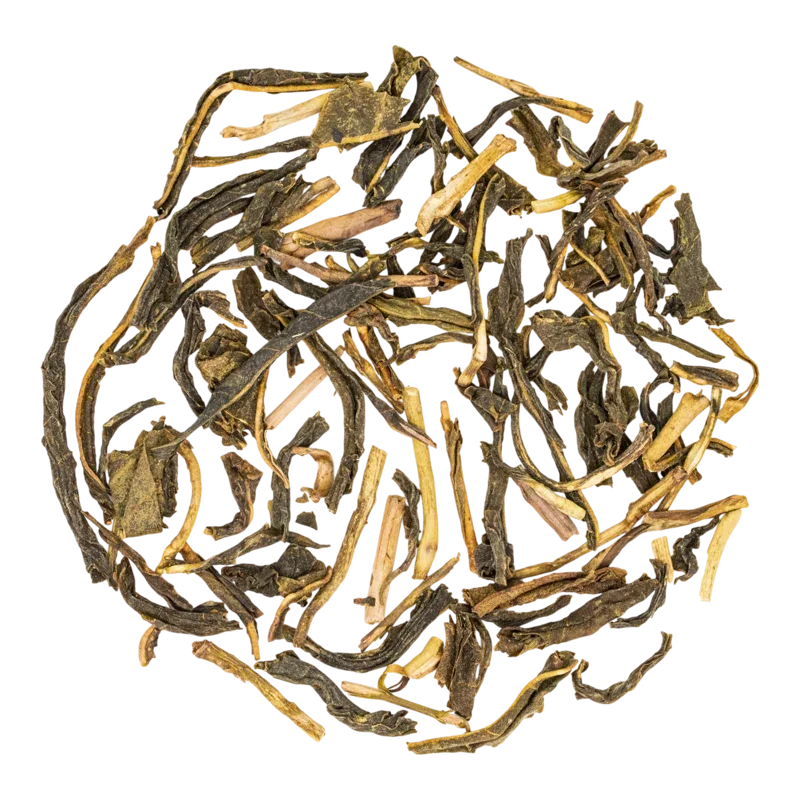
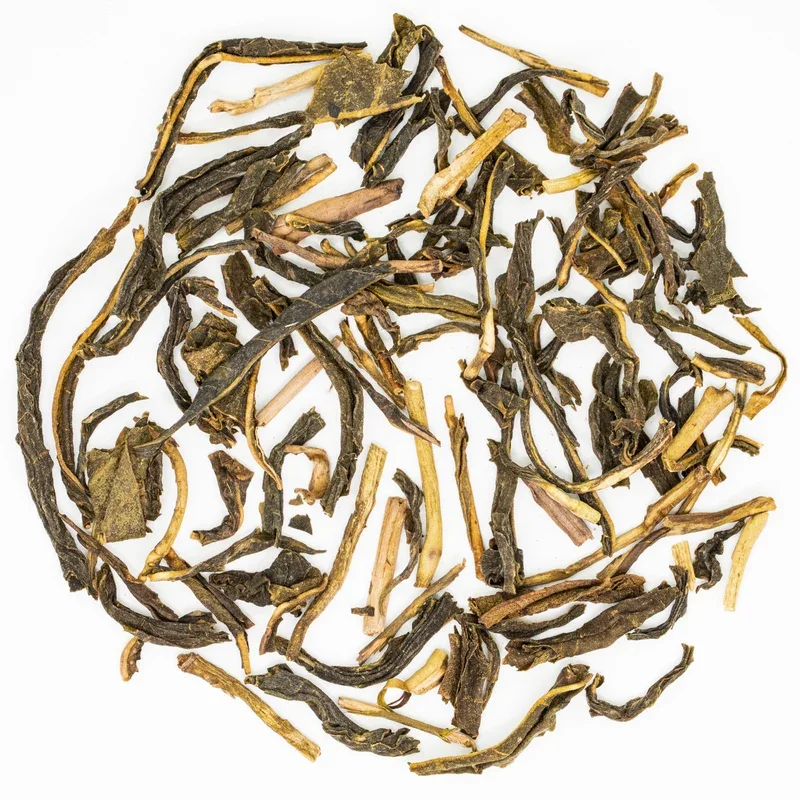
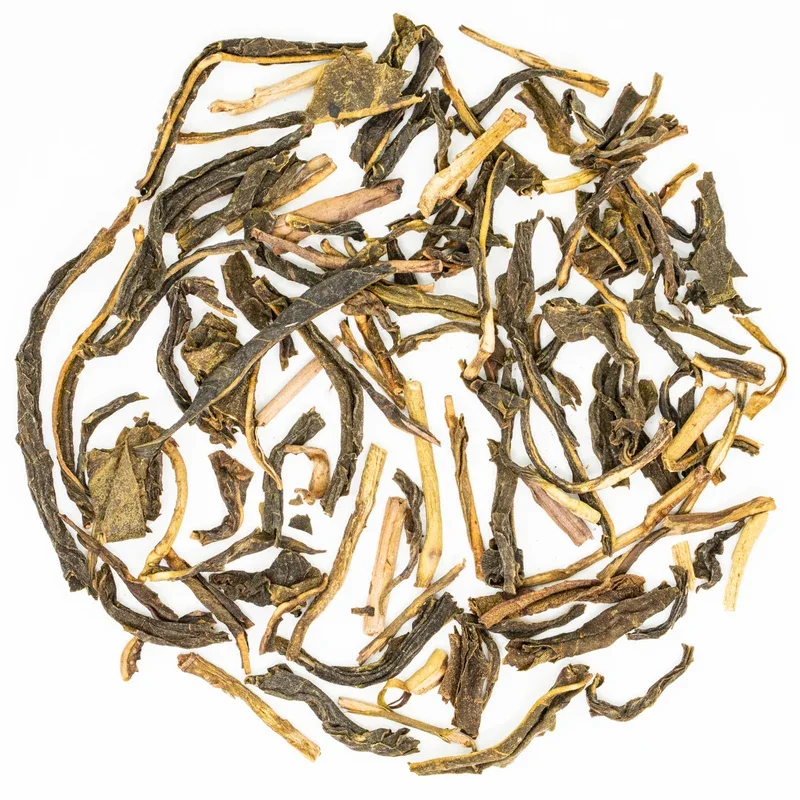
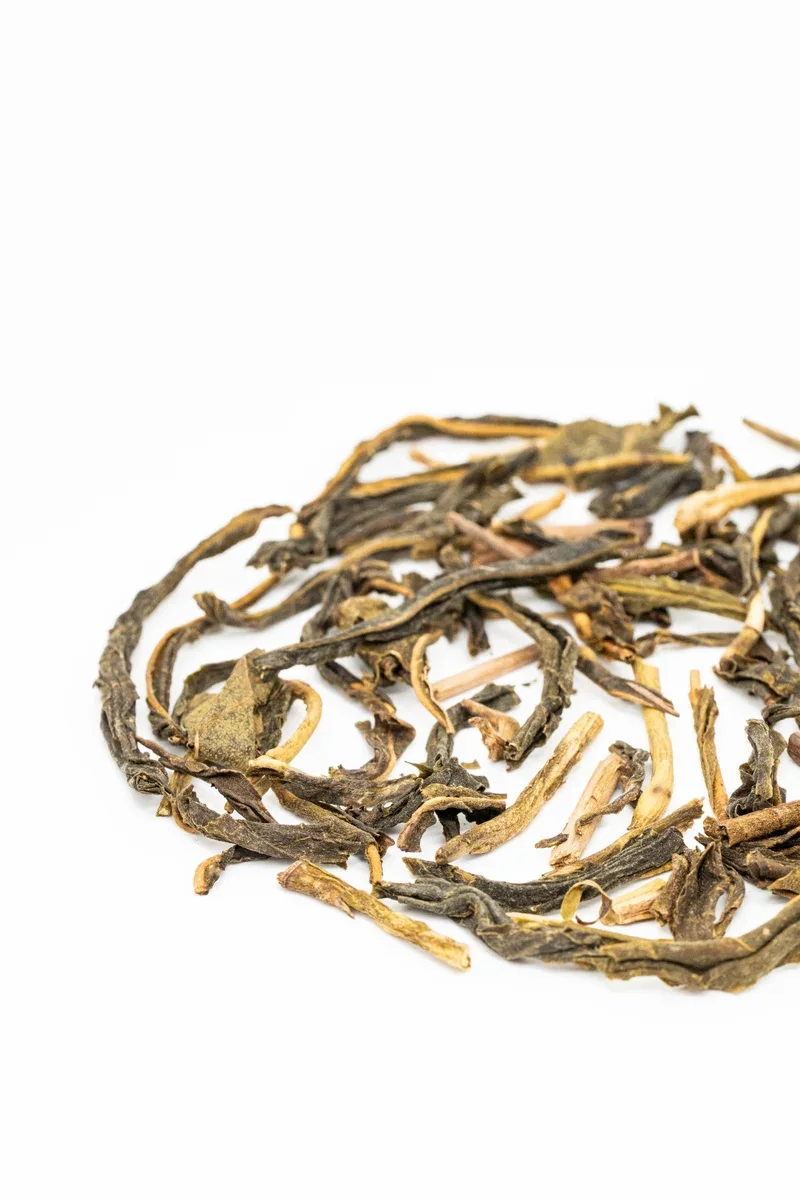
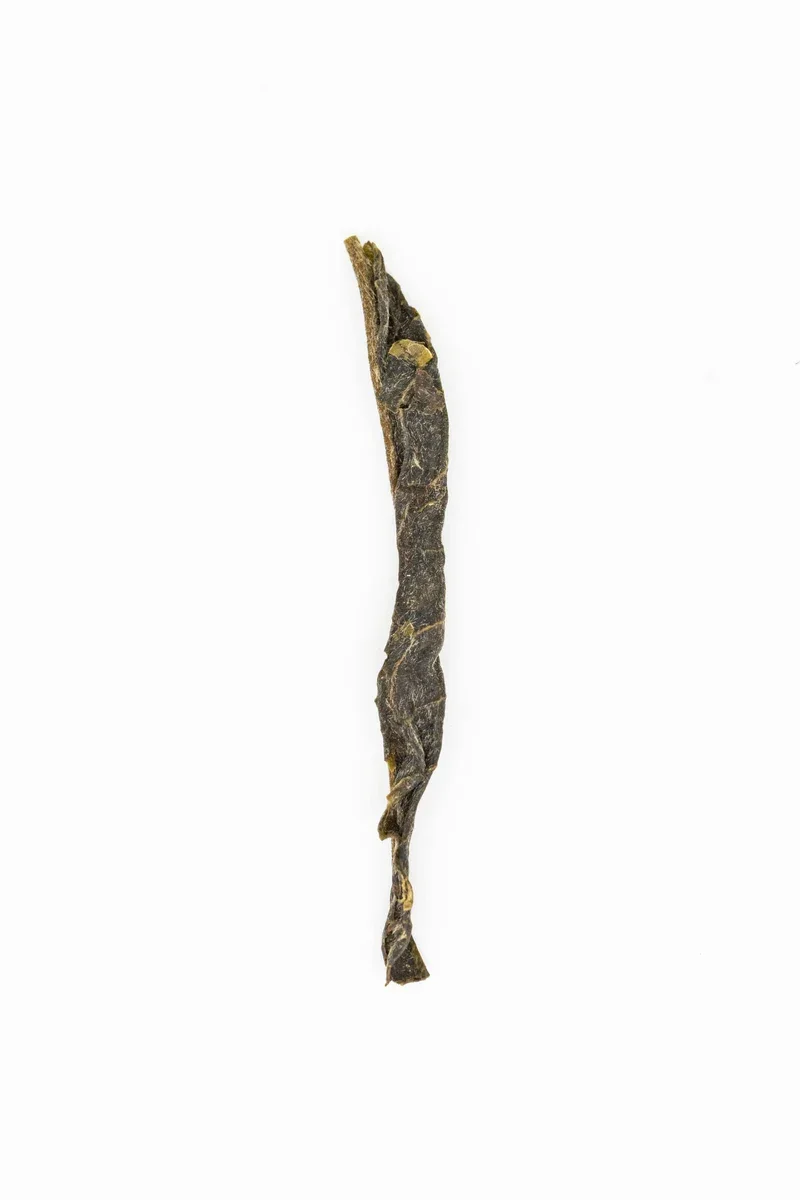
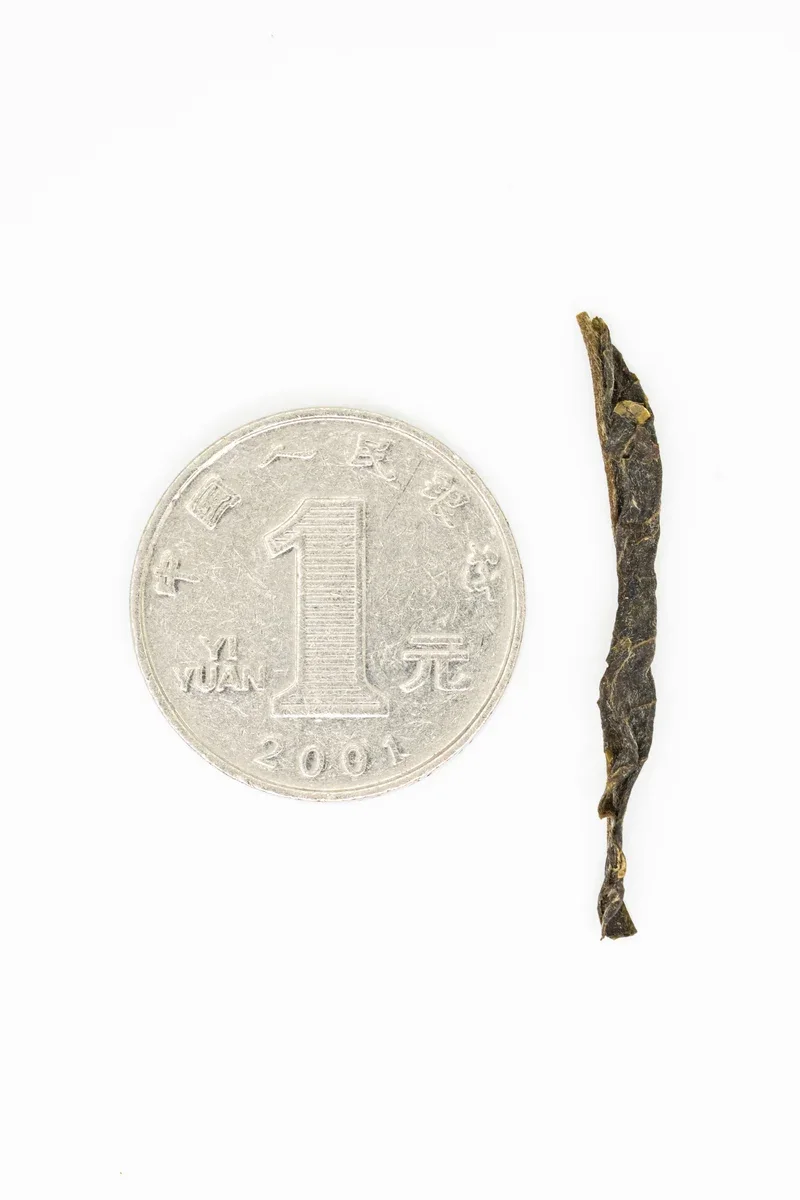
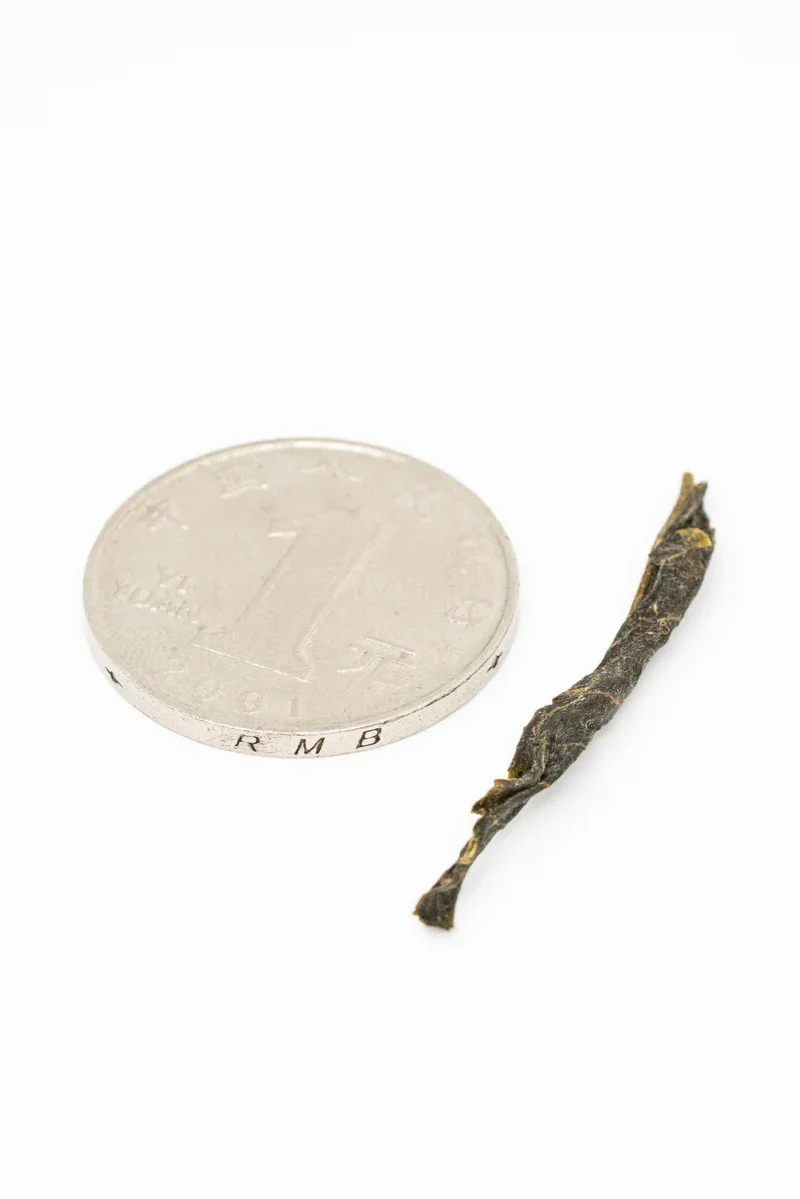
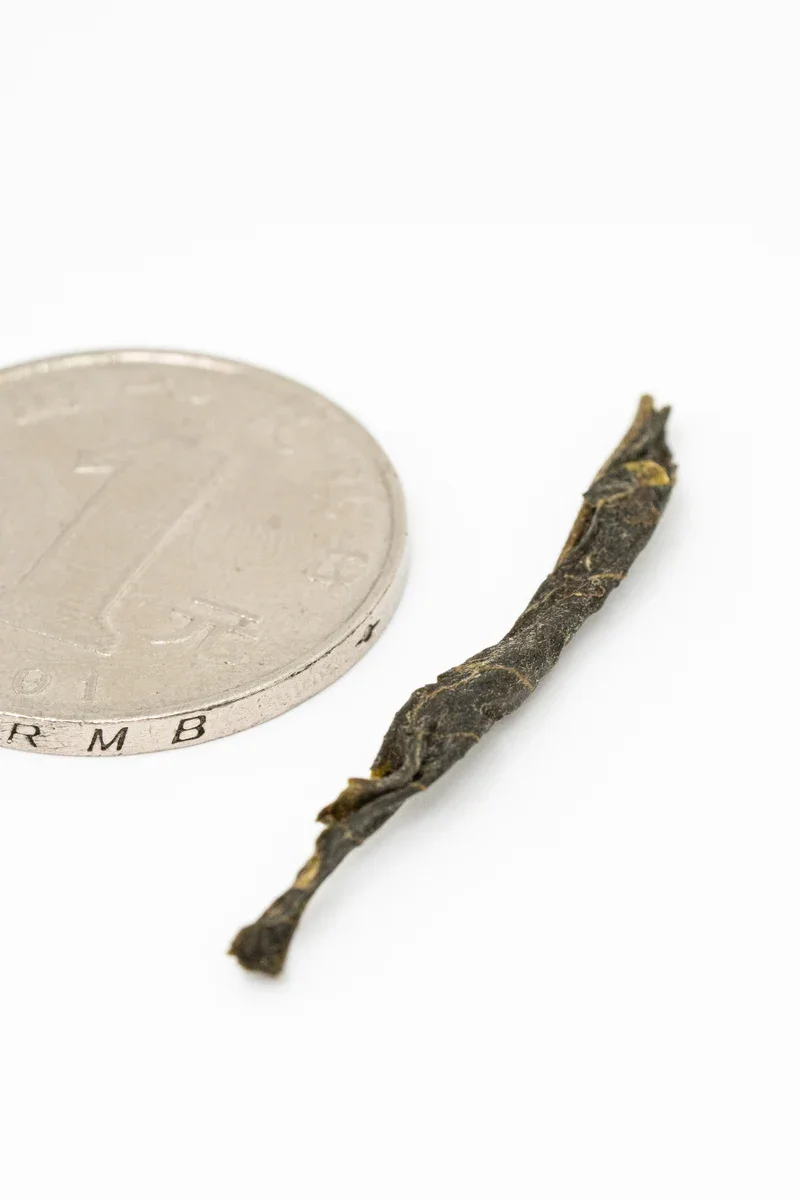
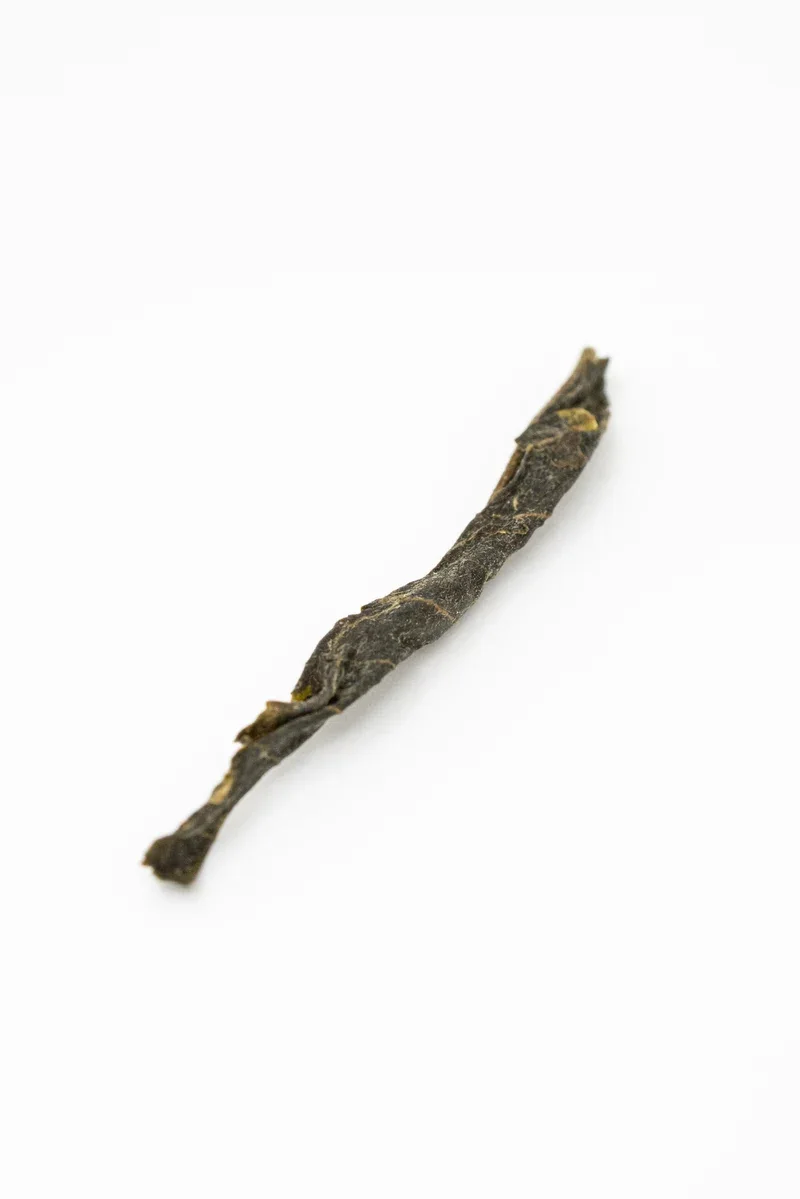
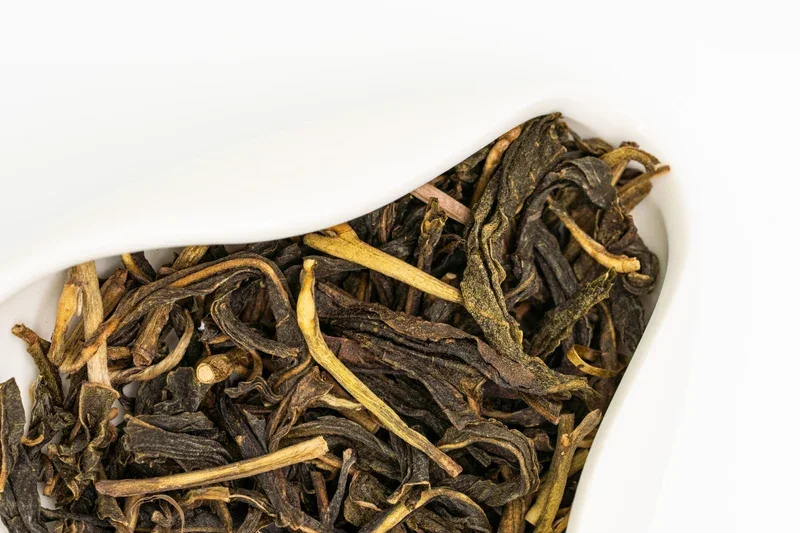
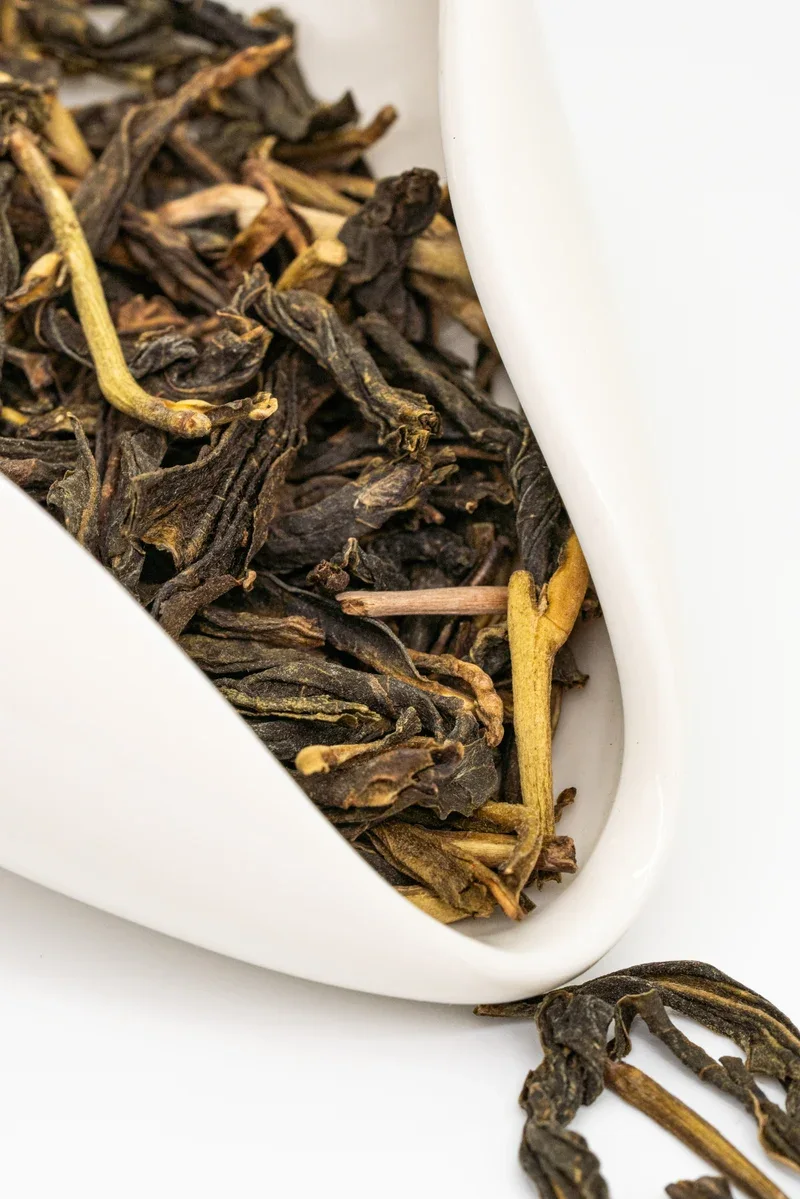
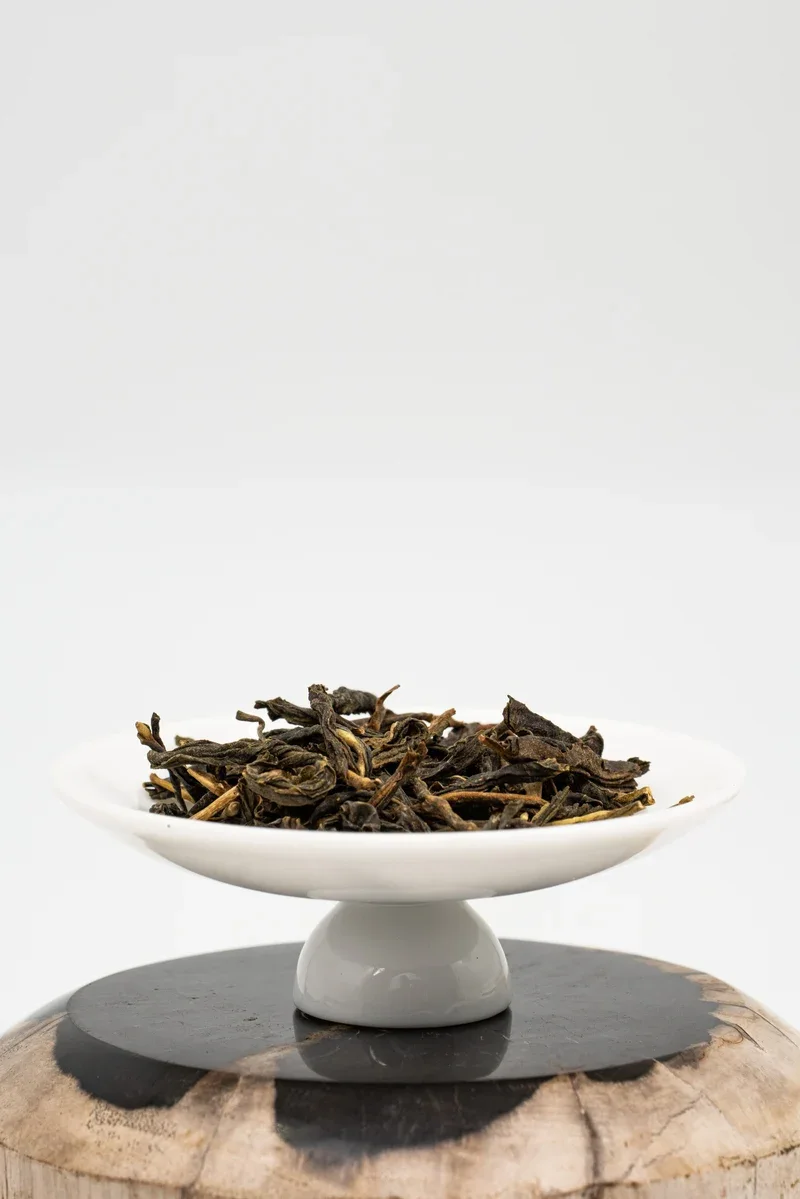
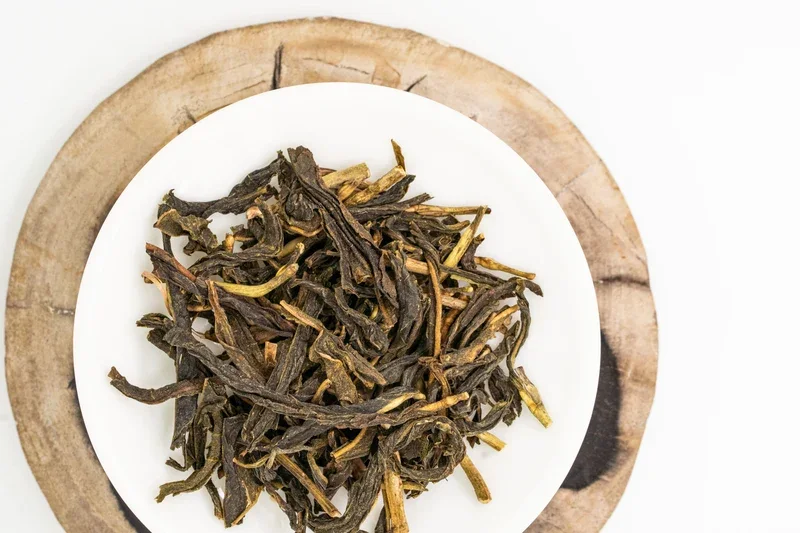
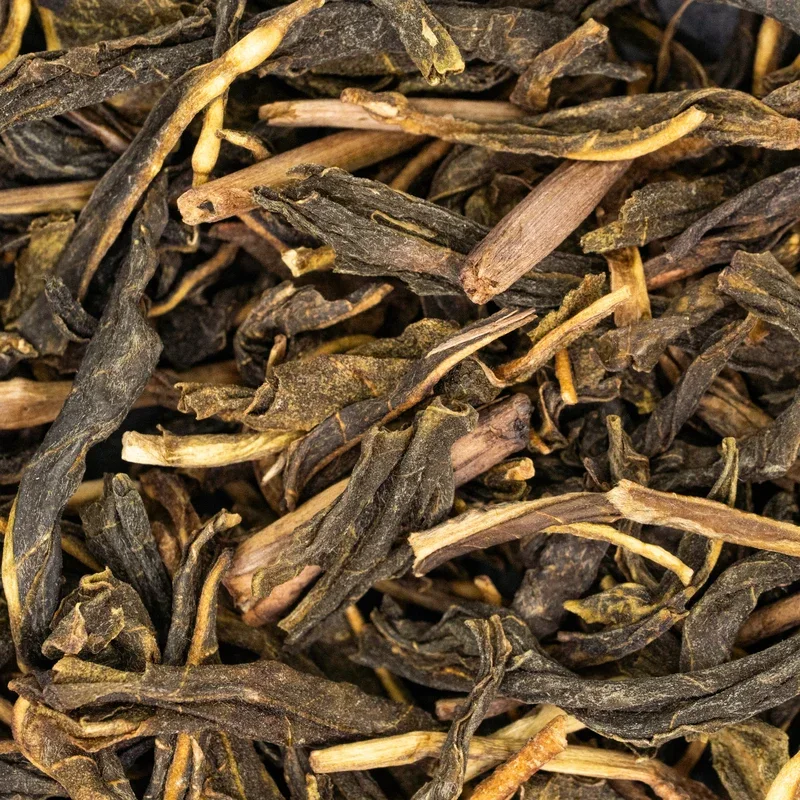
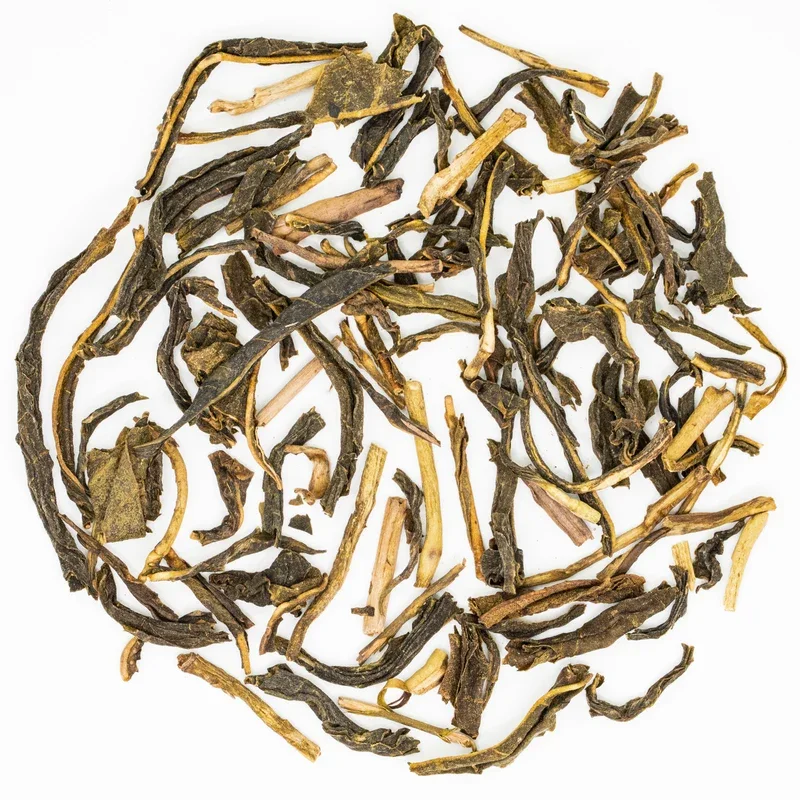
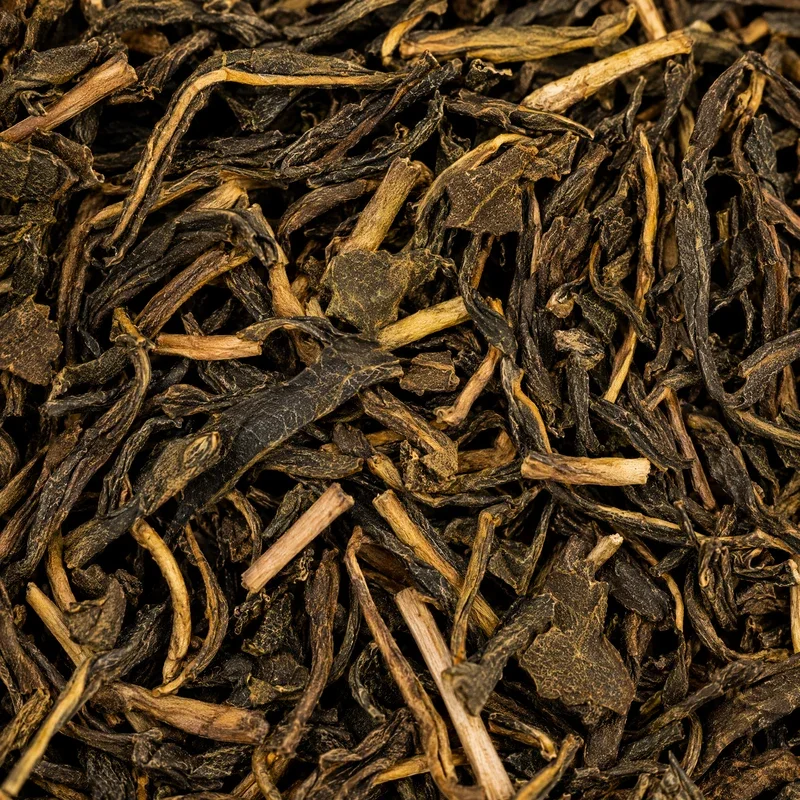
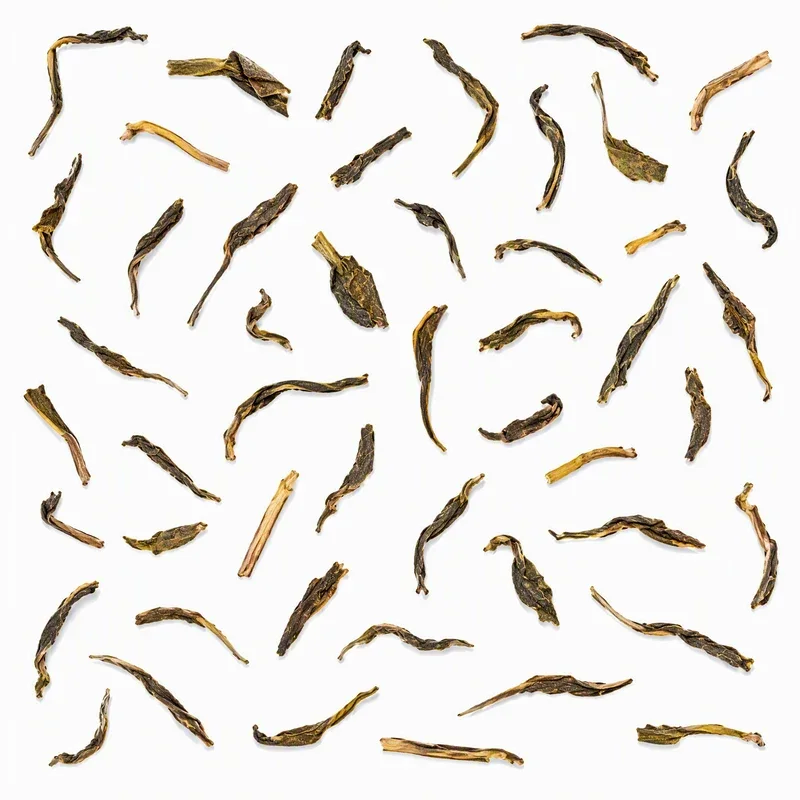
Dry Leaf Appearance: Large, wide leaves with noticeable stems, often with natural twist. Xin Cha: color from gray-green to olive-green with silvery down inclusions. Lao Cha (3–7+ years): color shifts to beige-brown and dark brown; green tint completely disappears. Pressed Shou Mei has the appearance of dense cakes or bricks with well-distinguishable leaf structure.
Dry Leaf Aroma: Xin Cha: fresh grass, meadow hay, light honey, apple peel tones; spring harvests have floral nuances, autumn — more mature fruitiness. Lao Cha: honey, dried fruits (date, raisin, apricot), warm herbs, light woodiness; with 7+ years aging — delicate "medicinal" note (药香, yàoxiāng).
Liquor Aroma: Xin Cha: bright, lively — field herbs, fresh-cut hay, honey, flower pollen, green apple. Lao Cha: deep, multi-layered — honey, dates, spiced herbs, autumn forest; when boiled, aroma becomes intensely "compote-like."
Liquor Color: Xin Cha: light golden, transparent, with slightly greenish tint in first steeps. Lao Cha: from rich amber to reddish-chestnut. Liquor in both cases should be transparent and clear — cloudiness is a sign of defect.
Spent Leaves: Leaves of varied size, well-opened, elastic. Xin Cha: gray-green to olive. Lao Cha: dark brown, soft but not falling apart. Healthy spent leaves — without dark spots, mold, and unpleasant odor.
Taste: Xin Cha: dense, sweetish, with clean herbal line and moderate soft astringency. Aftertaste is long, with sweet herbal trail. Lao Cha: thick, rounded, velvety, with minimal astringency. Pronounced "compote" sweetness — dates, figs, caramelized pear. Tactilely — sensation of oiliness and "silk." Aftertaste warm, enveloping (回甘, huígān — "returning sweetness").
Amino Acids: Total content in white tea — 5.97–8.89% (highest indicator among six tea types). L-theanine (茶氨酸) in Shou Mei — average 2.5 mg/g (lower than in Bai Hao Yin Zhen — 10.1 mg/g, due to leaf maturity). White tea in general is characterized by increased content of γ-aminobutyric acid (GABA). During aging, free amino acids are gradually consumed in Maillard reactions (interaction with sugars), forming brown pigments and "caramel" aromatic notes.
~0.070 mg/ml — significantly higher than Bai Hao Yin Zhen (~0.020 mg/ml). Total content in white tea — 8.54–12.93 mg/g dry matter. Unique feature of white tea: flavonoid content increases during storage — unlike most other tea types where this indicator decreases over time. Quercetin glycosides predominate.
2.2–4.9% of dry weight — close to other white tea categories. During aging, content is relatively stable, but the subjective caffeine effect of aged tea is perceived as milder.
Key feature of Shou Mei, distinguishing it from bud categories. Pectins form the "silky" texture of the liquor. During multi-year storage, pectins slowly break down, releasing water-soluble sugars — this creates "compote" sweetness and characteristic date aroma (枣香, zǎoxiāng), especially pronounced when boiled.
Content (~0.46 mg/ml) significantly higher than in Bai Hao Yin Zhen (~0.19 mg/ml). Quinic, tartaric, malic, and citric acids predominate, forming subtle "juiciness" and light acidity.
In fresh tea, terpenoid alcohols dominate (linalool, geraniol — "grassy" notes). During aging, they transform into less volatile aldehydes and esters with honey, dried fruit, and spicy-woody characteristics.
Vitamins C, B₁, B₂, E (vitamin C significantly decreases during prolonged aging); mineral elements — potassium, magnesium, fluorine, zinc, selenium — remain stable.
Polyphenols: Content in fresh Shou Mei liquor — about 0.75 mg/ml (lower than Bai Hao Yin Zhen ~1.0 mg/ml and Bai Mu Dan ~1.04 mg/ml). Catechin content — ~0.135 mg/ml; among them EGCG (epigallocatechin-3-gallate) — the main antioxidant. During aging, catechin content decreases due to polymerization into thearubigins and theabrownins, which reduces astringency and increases taste roundness, while liquor darkens from golden to amber-reddish.
High content of flavonoids (which grows with aging) and polyphenols provides pronounced antioxidant activity. Studies have shown correlation with EGCG, flavonoid, and quinic acid content.
Balance of caffeine and L-theanine provides smooth, prolonged alertness. Fresh Shou Mei — good option for morning tea drinking; aged — for calm evening.
Liquor rich in pectins gently coats gastric mucosa. Aged Shou Mei is considered especially comfortable after heavy meals.
White tea polyphenols contribute to lipid metabolism normalization. Animal model studies showed reduction in cholesterol and triglyceride levels.
Complex of polyphenols, amino acids, and trace elements supports body's protective functions.
Polyphenolic profile shows moderate bacteriostatic activity, beneficially affecting oral hygiene. Fluorine content supports tooth enamel health.
In folk medicine of Fujian and Southeast Asia, aged white tea is traditionally used for cold conditions. In Vietnam, the practice of using Shou Mei as a fever reducer for children is preserved.
Antioxidant properties of polyphenols and flavonoids contribute to cell protection from oxidative stress.
With caffeine sensitivity, late evening consumption is not recommended. For gastrointestinal diseases and pregnancy, it is advisable to coordinate regimen with a doctor.
Buds only. Most delicate, refined, and expensive white tea. Light liquor with subtle floral notes and pronounced umami. Brewed at 70–80 °C. Shou Mei is complete opposite: denser, richer, more "grounded," but significantly more accessible.
Bud + one-two young leaves. Balance between elegance and density. More floral and "transparent" than Shou Mei, but less resistant to boiling water. Brewed at 80–90 °C. If Shou Mei is "everyday tea," then Bai Mu Dan is for contemplative tea drinking.
According to GB/T 22291—2017, produced exclusively from group variety caicha (菜茶). Smaller in leaf, with more pronounced buds, more delicate in aroma, with "rice-honey" note. Production volume significantly smaller.
Not separate category, but age characteristic. Any white tea with 3+ years aging can be so called, but Shou Mei is the most popular base for aging due to accessibility, stability, and bright transformation.
Pour 2–3 g tea with cold water (400–500 ml), bring to boil, simmer on low heat 3–8 minutes. Boiling releases pectins and sugars, creating maximally thick "compote" profile. Can repeatedly add water and boil 1–2 more times.
2–3 g per 300–500 ml boiling water, 10–20 minutes. Shou Mei is one of the most "friendly" teas for thermos: mature leaf perfectly tolerates prolonged contact with hot water.
Tea Amount: 5–7 g per 150–200 ml (gongfu method). For boiling — 2–3 g per 400–500 ml. For thermos — 2–3 g per 300–500 ml.
Teaware: Porcelain gàiwǎn (盖碗, gàiwǎn) — universal option, especially for fresh tea: neutral material doesn't "steal" delicate aroma. Glass teapot — convenient for observing leaf opening. Clay teapot — acceptable for aged, but should be neutral and clean. For boiling — glass teapot on fire, ceramic pot, or cast iron tetsubin.
Water Temperature: 90–100 °C for fresh; 95–100 °C for aged. Shou Mei tolerates boiling water well due to leaf maturity. Under-heating aged Shou Mei (below 85 °C) is a common mistake: liquor becomes "empty." For fresh, it's acceptable to reduce to 85–90 °C with excessive astringency.
Container: Three-layer packaging — aluminum foil + polyethylene + cardboard box. For pressed cakes — paper wrapper in cardboard or wooden box. "Breathing" packaging allows more intensive transformation; airtight — slows the process but minimizes risks.
Humidity: Critically important parameter. Optimum — 40–65%. Dampness (>70%) — main enemy: mold, acidity, mustiness. Below 30% — tea "dries out" and ages too slowly.
Airtight container (foil bag, tin can with tight lid), dry cool place without temperature fluctuations, away from sunlight and foreign odors. For delicate spring batches with high bud content, refrigerator storage (0–5 °C) with perfect airtightness is acceptable.
Absolute isolation from spices, coffee, incense, household chemicals.
Every 3–6 months visually and aromatically check tea condition.
Fresh grass, hay, light honey, flowers. Liquor light golden.
Grassy greenness softens, honey and fruity notes increase. Taste rounds out, sharp astringency decreases.
Liquor darkens to deep amber. Dried fruits, spiced herbs dominate, "compote" line begins. Characteristic date aroma appears (枣香, zǎoxiāng).
Deep, warm profile — dry herbs, woodiness, date, raisin, light "medicinal" note. Ideal for boiling.
Dry storage and absence of odors. With damp storage, "age" becomes a defect (mold, acidity).
Temperature: Room temperature (15–28 °C), without sharp fluctuations.
Xin Cha has higher content of free catechins (astringency, freshness) and amino acids (sweetness, umami). Lao Cha has higher content of flavonoids (antioxidant activity), polymerized polyphenols (roundness), and water-soluble sugars (compote sweetness). Caffeine is relatively stable in both states.
If you want to start home white tea aging — fresh Shou Mei is the most practical and accessible candidate. It costs reasonable money, forgives moderate storage errors, and demonstrates bright transformation dynamics within 1–2 years.
Whole leaves with minimum crumbs and dust, natural color palette. Suspiciously uniform dark color without variation — sign of artificial "aging" (做旧, zuòjiù): over-firing or intentional storage at high humidity.
Clean, without mustiness, mold, "basement," chemical and perfume notes. Fresh should have grass and honey; aged — dried fruits and warm herbs. Baked notes — sign of over-firing.
"10-year Shou Mei" at fresh tea price — almost certainly counterfeit. Real aged tea has clean honey-dried fruit aroma, thick aftertaste, not "emptiness" and bitterness.
No reviews yet. Tell us what you think of this tea.
Rate this tea and share your impressions. We review each submission before publishing it.