Brewing
Gongfu brewing
- Water temperature
- 78 °C
- Tea amount
- 5 g
- Water volume
- 100 ml
- First steep
- 10 s
- Time added per infusion
- 5 s
- Infusions
- 4

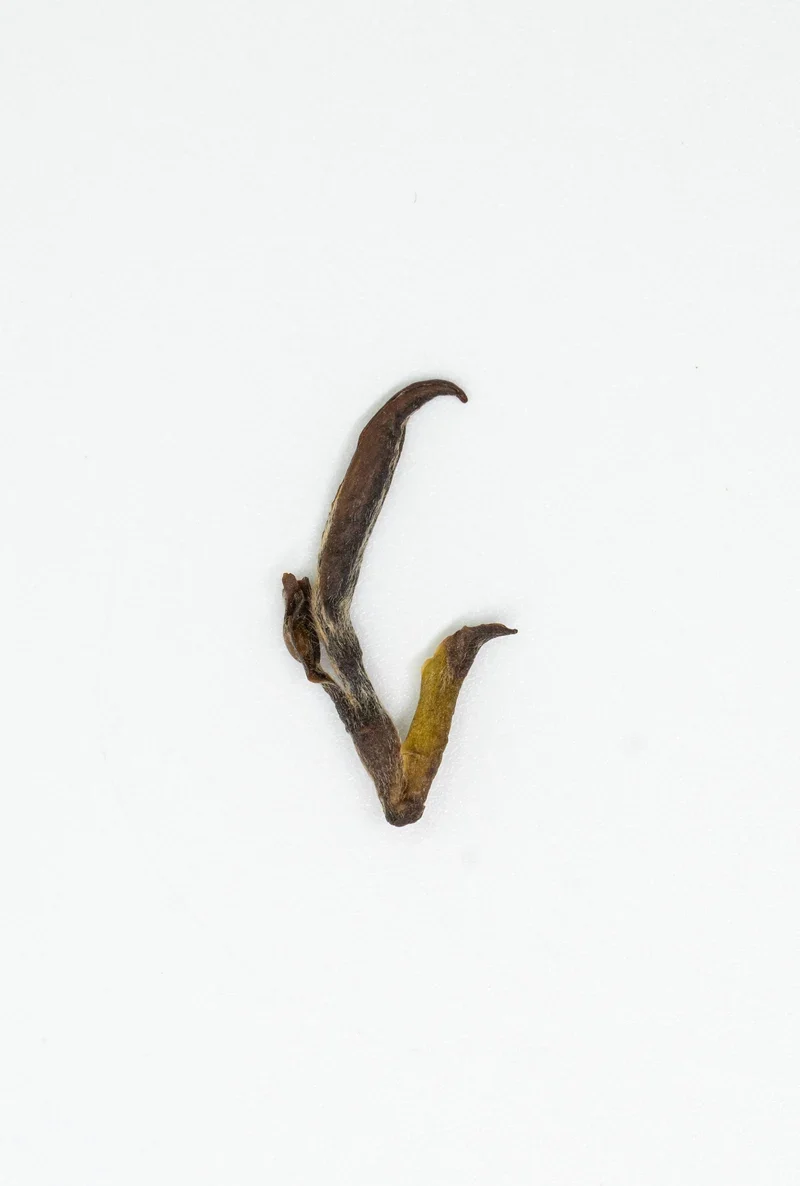

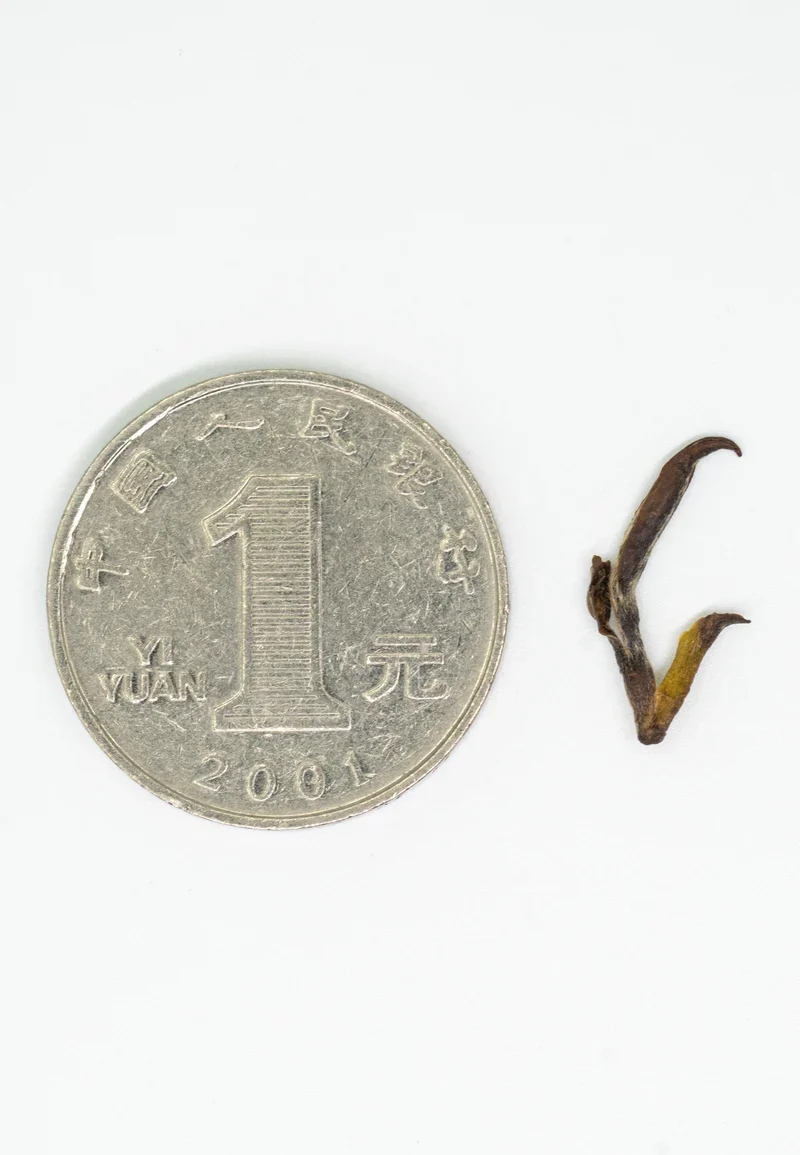
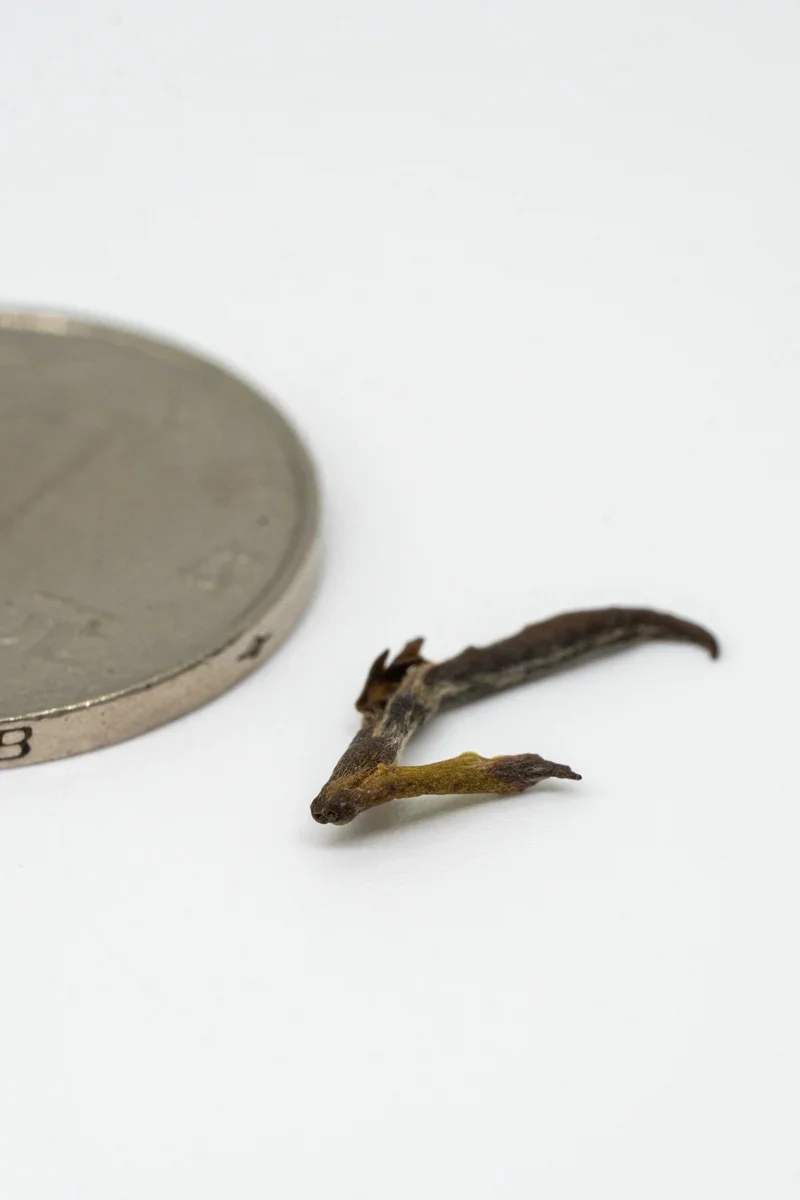

Mògān huáng yá
Choose a brewing method. Start with the recommended quantities and time, then adjust to taste.
Brewing
Brewing
Taste
Tea encyclopedia
Category: Historical tea of Zhejiang Province, one of the first provincial "famous teas" (名茶, míngchá). In 1982, it was included in the first group of provincial famous teas alongside Xihu Longjing and Jingshan Cha.
Category: Historical tea of Zhejiang Province, one of the first provincial "famous teas" (名茶, míngchá). In 1982, it was included in the first group of provincial famous teas alongside Xihu Longjing and Jingshan Cha.
Coordinates: East longitude 119°45′–119°57′, North latitude 30°26′–30°42′.
Origin: China, Zhèjiāng Province (浙江, Zhèjiāng), Húzhōu Prefecture (湖州, Húzhōu), Déqīng County (德清县, Déqīng Xiàn), Moganshan Mountain (莫干山, Mògān Shān) and adjacent territories. The geographical indication zone covers Moganshan Township (莫干山镇), Wukang Street (武康街道), Wǔyáng Street (舞阳街道), and Fùxī Street (阜溪街道) — 4 administrative units, 26 villages.
Type: Yellow tea (黄茶, huángchá), lightly oxidized. Belongs to the subcategory "yellow bud tea" (黄芽茶, huáng yá chá). Note: a significant portion of production (up to 80%) is actually produced using green tea technology, without the menhuang stage. This article focuses primarily on the traditional yellow version.
Cultural Significance: Mogan Huang Ya is not merely tea, but a cultural symbol of Deqing County, standing alongside three other historical layers of Moganshan: the sword culture of Spring and Autumn, the Buddhist culture of the Southern Dynasties, and the architectural culture of colonial villas from the late Qing to early Republic periods. Since 2003, the annual "Mogan Huang Ya Tea King Competition" (莫干黄芽茶王赛) has been held in Deqing, becoming an important event in tea tourism. The brand motto is "Mogan Huang Ya — tea gathered from bamboo groves" (莫干黄芽——是采自竹林中的茶).
During the era of Buddhist flourishing, monks began building hermitages on Moganshan and planting tea bushes. The Southern Dynasties monk Fǎyáo (释法瑶, Shì Fǎyáo), mentioned by Lu Yu in the "Tea Classic" (《茶经》, Chájīng), lived in Xiaoshan Temple (小山寺) in present-day Deqing County and drank tea daily — one of the earliest documentary evidence of tea culture in the region.
Lu Yu in the "Tea Classic" designated Wukang (武康, historical name of Deqing) as one of the tea districts of Zhexi region (浙西). Moganshan tea gained fame among officials and literati.
The Qianlong edition of the "Wukang County Gazetteer" (《武康县志》) recorded: "On Moganshan there is wild tea, mountain tea, earth tea... Tea from the northwest of the mountain is valued most highly." The Daoguang edition of the same gazetteer noted: "Tea from Tashan is especially good; monks cultivate it on the peak; the tea absorbs clouds and mist, and its aroma is ten times superior to ordinary tea." During the same years, Qīng literatus Tāng Jǐng (唐靖) described four production stages: "zhi" (炙, heating), "ruo" (挼, rolling), "bei" (焙, roasting), "tai" (汰, sorting) — which completely corresponds to the modern sequence: shaqing, rounian, hongmen, jianti.
Professor Zhuāng Wǎnfāng (庄晚芳, Zhuāng Wǎnfāng) of Zhejiang Agricultural Institute, while vacationing on Moganshan, purchased mountain tea from a woman on Yinshan Street. After tasting it, he was delighted and composed a poem: "I'll brew yellow buds with spring water — the aroma is pure, the taste beautiful, the reputation is not false. Where is the ancient tea from Tashan Mountain? From where the vendor comes — truly unclear."
Professor Zhāng Tangheng (张堂恒, Zhāng Tángháng) from Zhejiang Agricultural University led an expedition to Moganshan. The scholars surveyed high-mountain tea farms in Meigaou, Henglin, Shuangqiao, Biyu, and Fushui, after which they jointly restored and standardized the yellow tea technology with local tea growers. It was then that Zhuang Wanfang proposed the official name "Mogan Huang Ya."
Mogan Huang Ya received the title of provincial "famous tea" first category (浙江省首批一类名茶) — alongside Xihu Longjing and Jingshan Cha.
Due to low demand for yellow tea (consumers mistook the yellowish color as a sign of staleness), producers massively switched to green technology. The yellow version was preserved only by a few masters.
In 2009, the trademark "Mogan Huang Ya — Geographical Indication" was registered. In 2013, a team from Zhèjiāng University led by Professor Gōng Shuying (龚淑英) optimized yellow tea technology and introduced partial mechanization. In 2017, "National Geographical Indication of Agricultural Products" certification (国家农产品地理标志) was obtained.
The production technology of Mogan Huang Ya was included in the registry of intangible cultural heritage of Zhejiang Province. The tradition keeper is master Shěn Yúnhè (沈云鹤, Shěn Yúnhè), one of the developers of the national yellow tea standard.
Cultivar: The main cultivar is the local group population (当地群体种, dāngdì qúntǐ zhǒng) from sexual reproduction (有性系, yǒuxìng xì), growing on Moganshan for centuries. The key breeding variety is Henglin variety (横岭种, Hénglǐng zhǒng), also known as Henglin No. 1 (横岭1号): asexual (clonal) reproduction, bush type, medium-leaf class, early maturity, diploid. The mother tree is located at Henglin Plantation (横岭茶场) in Moganshan Township, over 100 years old. The leaves are dense, fleshy, with high amino acid content (3–6%, with the best specimens reaching 6%, twice the average for green teas). Also permitted are varieties Longjing 43 (龙井43) and Yíngshuāng (迎霜, Yíngshuāng).
Picking: Main harvest is early spring, from Qīngmíng (清明, ~April 5) to Gǔyǔ (谷雨, ~April 20). Historically distinguished: "yacha" (芽茶, bud tea, picked at Qingming), "meijian" (梅尖, summer picking), "qiubai" (秋白, autumn picking in July–August), and "xiaochun" (小春, October picking). The highest value is the spring "yacha."
Pluck Standard: For supreme grade (特级) — exclusively whole buds or bud with one just emerging leaflet (一芽一叶初展, yī yá yī yè chū zhǎn). For first grade — bud and one to two leaves. For second grade — bud and two leaves.
Raw Material: Buds must be whole, undamaged, succulent, uniform in size, with abundant down. Picking is conducted in dry weather. After picking — immediate sorting and culling (芽叶拣剔, yá yè jiǎn tī) with separation by grades.
Altitude: 200–758 meters above sea level. Core plantations (Henglin, Tashan, Meigaou) are located at 500–700 meters elevation.
Climate: Subtropical monsoon, with clearly defined seasonality. Average annual temperature 15.2°C. Annual precipitation 1400–1800 mm. Cloudy and foggy days exceed 180 per year, diffused light proportion exceeds 70%. This provides ideal conditions for amino acid and aromatic compound accumulation: spring tea from Moganshan contains up to 6% free amino acids — an exceptional indicator.
Soil: Acidic yellow and yellow-gray loams (黄泥沙土, pH 5.5–6.5) based on weathered mountain rocks. Organic matter content ≥2.5%. Soils are enriched with iron, zinc, and selenium. Deep humus horizon, loose structure, excellent water permeability.
Moganshan is ān eastern spur of the Western Tiānmù Mountains (西天目山, Xī Tiānmù Shān). The mountain massif is surrounded by bamboo forests with up to 92% coverage, creating a unique microclimate: natural shade from bamboo slows tea bush growth, prolonging the amino acid accumulation period. Moganshan has long been called the "Cool World" (清凉世界, Qīngliáng Shìjiè) — average summer temperature does not exceed 28.7°C.
Bamboo groves play the role of natural "shading" (analogous to the kabuse technique in Japanese tea cultivation), filtering direct sunlight. Water in the region meets first-class national quality standards. Industrial enterprises are absent.
Freshly picked buds are spread in thin layers on bamboo sieves or in ventilated trays for 4–6 hours. Mass loss during withering is 13–18%. The task is to partially remove moisture, activate enzymes, and prepare the leaf for processing. Direct sunlight must be avoided. Different grades are withered separately.
Hand pan-firing (手工抛炒, shǒugōng pāo chǎo) at approximately 180°C. The principle is "high temperature, quick processing" while preserving the green color of the leaf. Mass loss is 40–45%. Tender buds require especially gentle handling: red stems, burned edges, or uneven heating are unacceptable. Immediately after shaqing — spreading for cooling.
Light rolling following the principle of "light → medium → light" (轻—重—轻) pressure, resembling the "taiji baoqiu" (太极抱球, "embrace the taiji ball") movement. The task is to give buds the form of tight spirals without damaging the tender tissue. The percentage of proper twist formation for supreme grade is 85–95%.
The key stage distinguishing the yellow version from green. Rolled buds are wrapped in cotton cloth, forming compact "tea bundles" (茶团, chá tuán). The bundles are placed in bamboo sieves (竹制大箩筐) over a source of gentle heat — smoldering coals from tea tree trunks or gantan charcoal (冈炭, gāng tàn). Temperature is strictly controlled: 60–70°C. Stewing time is about 40 minutes, during which the master constantly turns the bundles, monitoring color and aroma. During menhuang, non-enzymatic chlorophyll breakdown and partial polyphenol oxidation occur under heat and moisture influence, forming the characteristic yellow color and sweet-clean aroma. Over-stewing threatens bitterness and murky liquor; under-stewing doesn't achieve the "yellow" character. This stage cannot be mechanized — only manual work by a master.
Quick drying to reduce moisture content.
Giving final form — tight, thin spirals resembling "lotus heart" (似莲心, sì liánxīn).
Bringing moisture to ≤6.5%. Exclusively gantan charcoal heat is used, without electric dryers — this requirement is enshrined in intangible heritage standards. Low-temperature charcoal drying ensures clean sweetness of aroma.
Sifting, culling, grading.
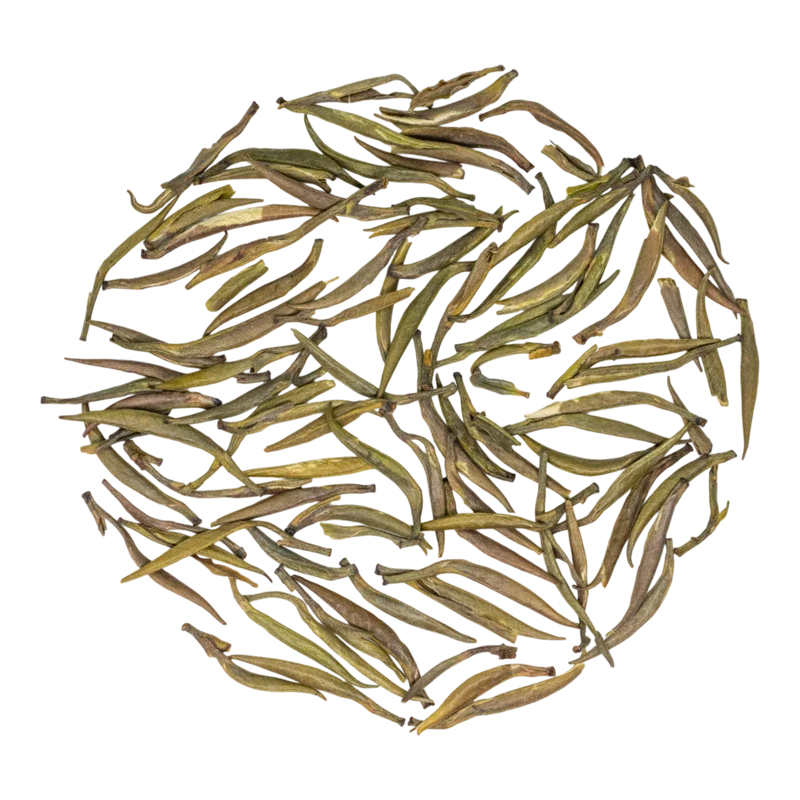
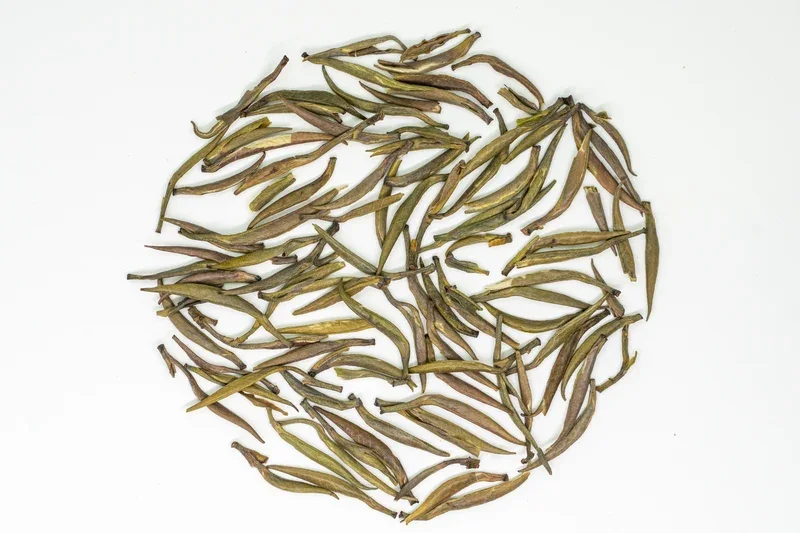
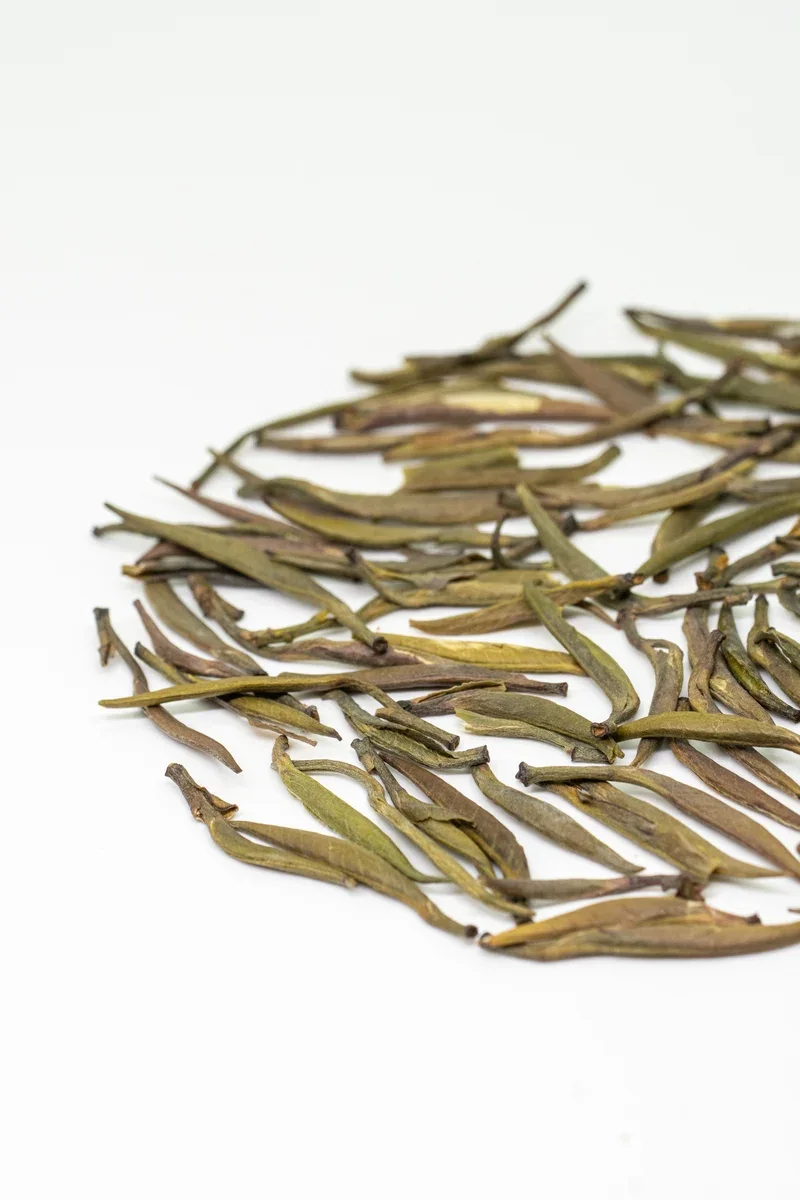
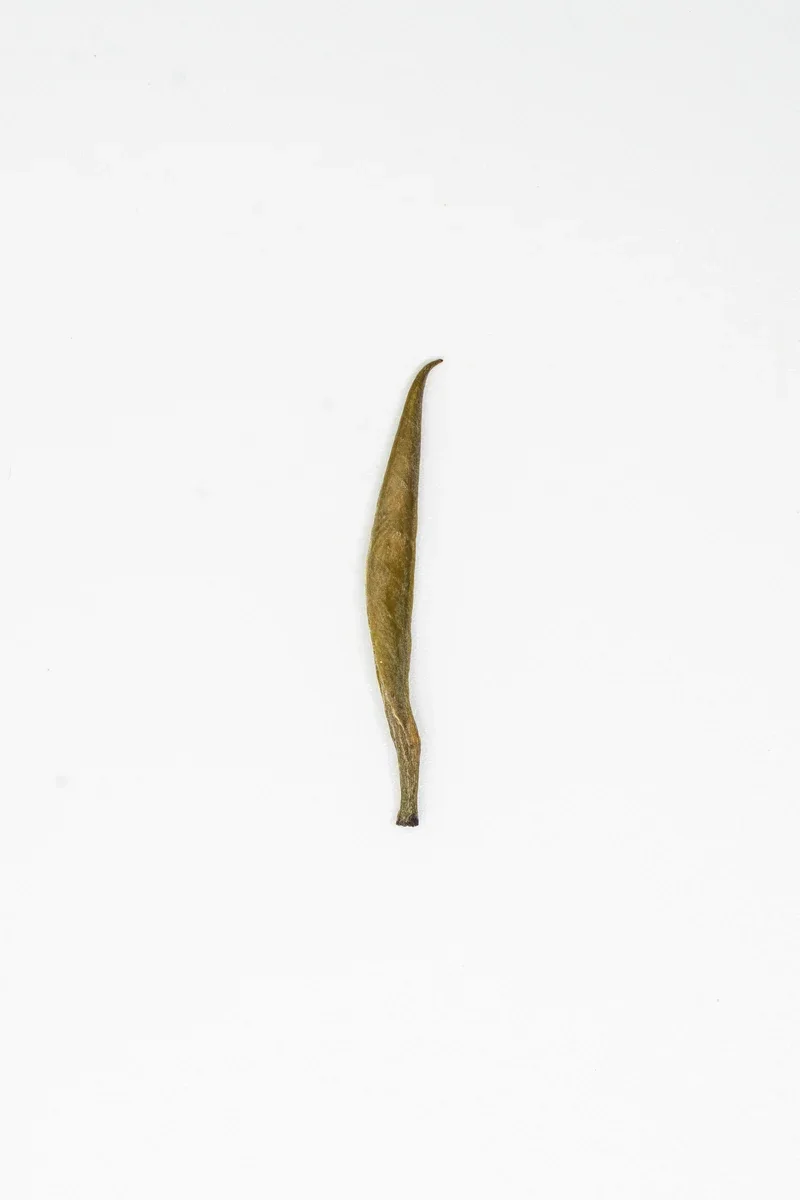
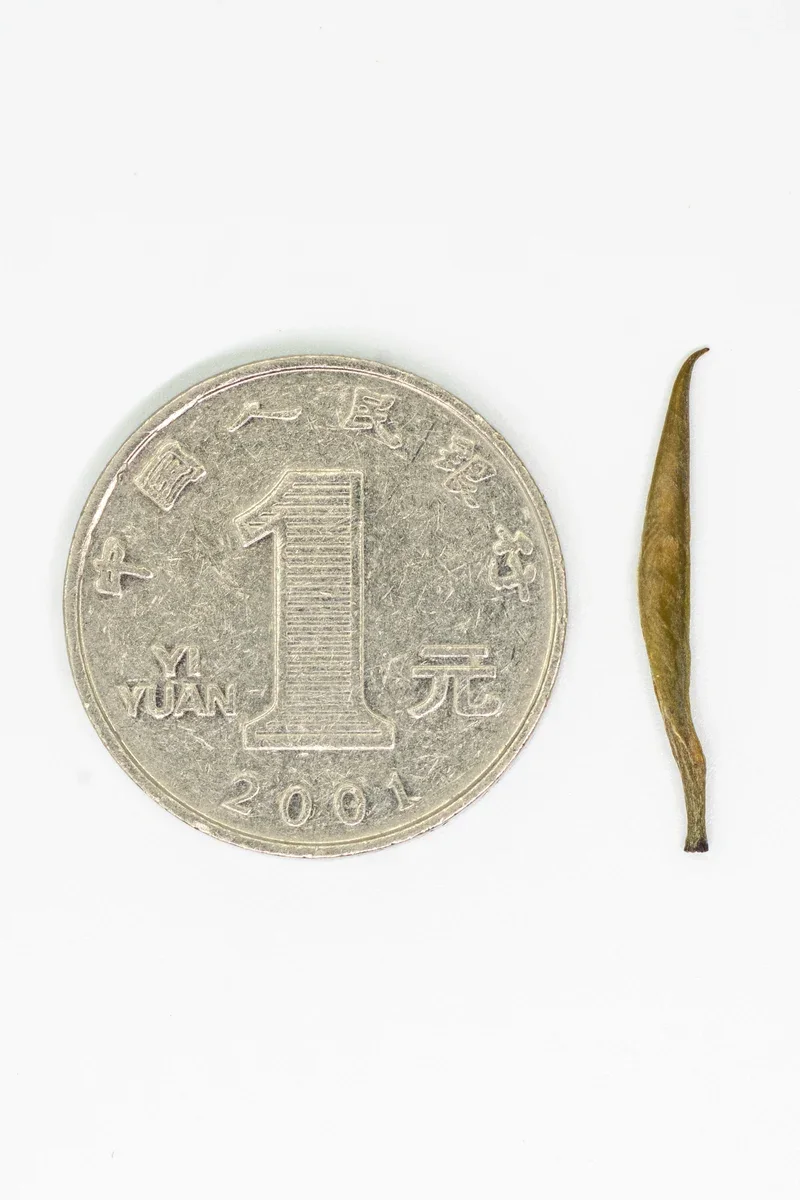
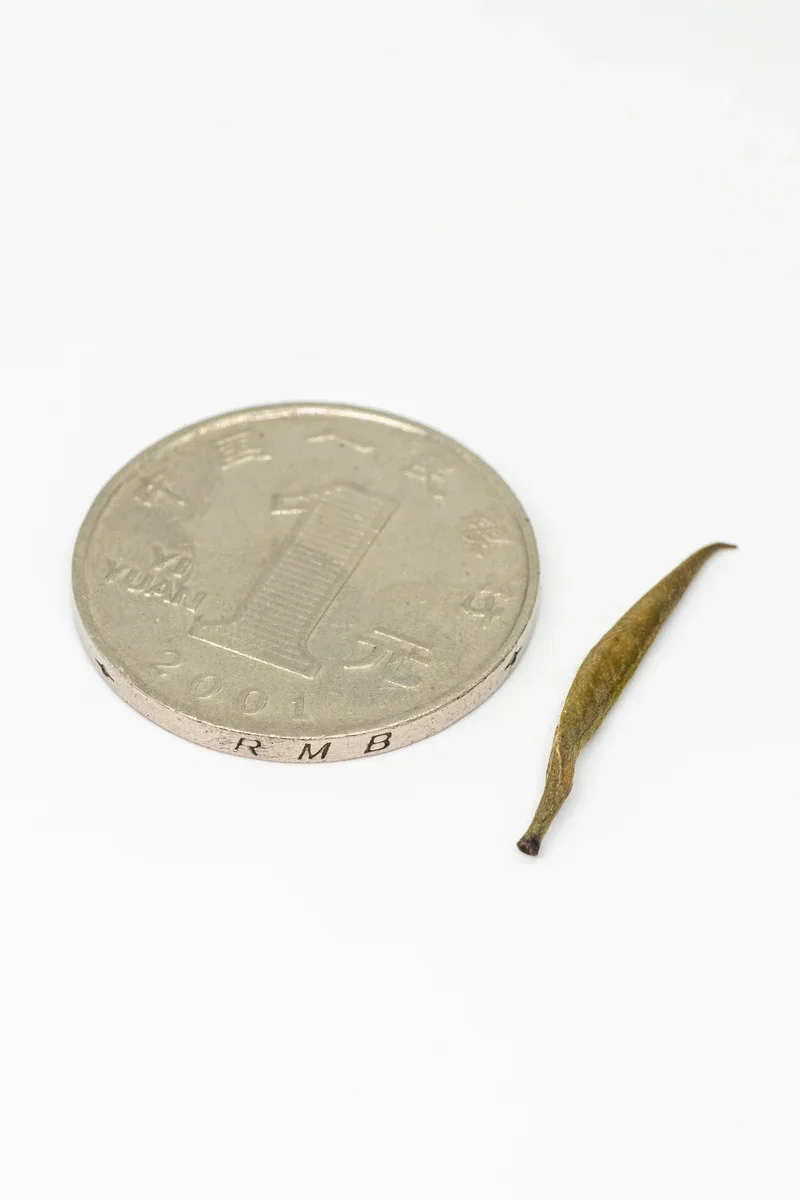
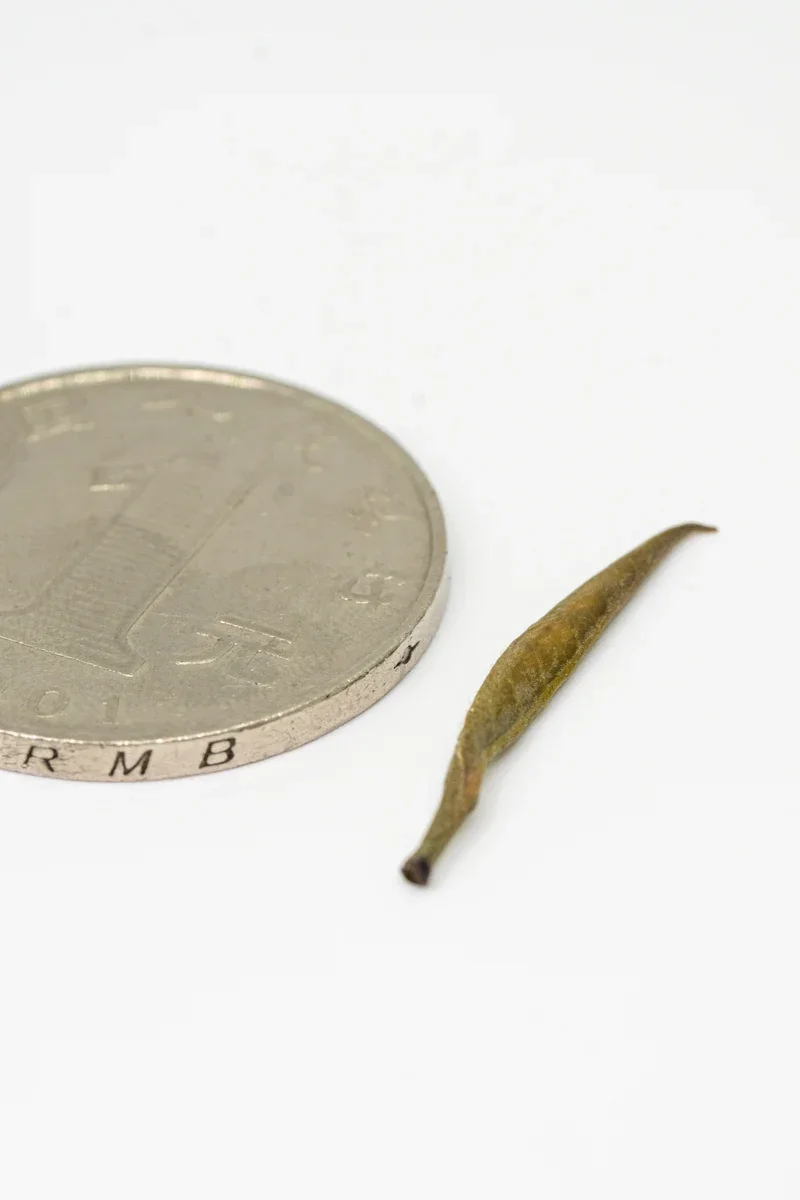
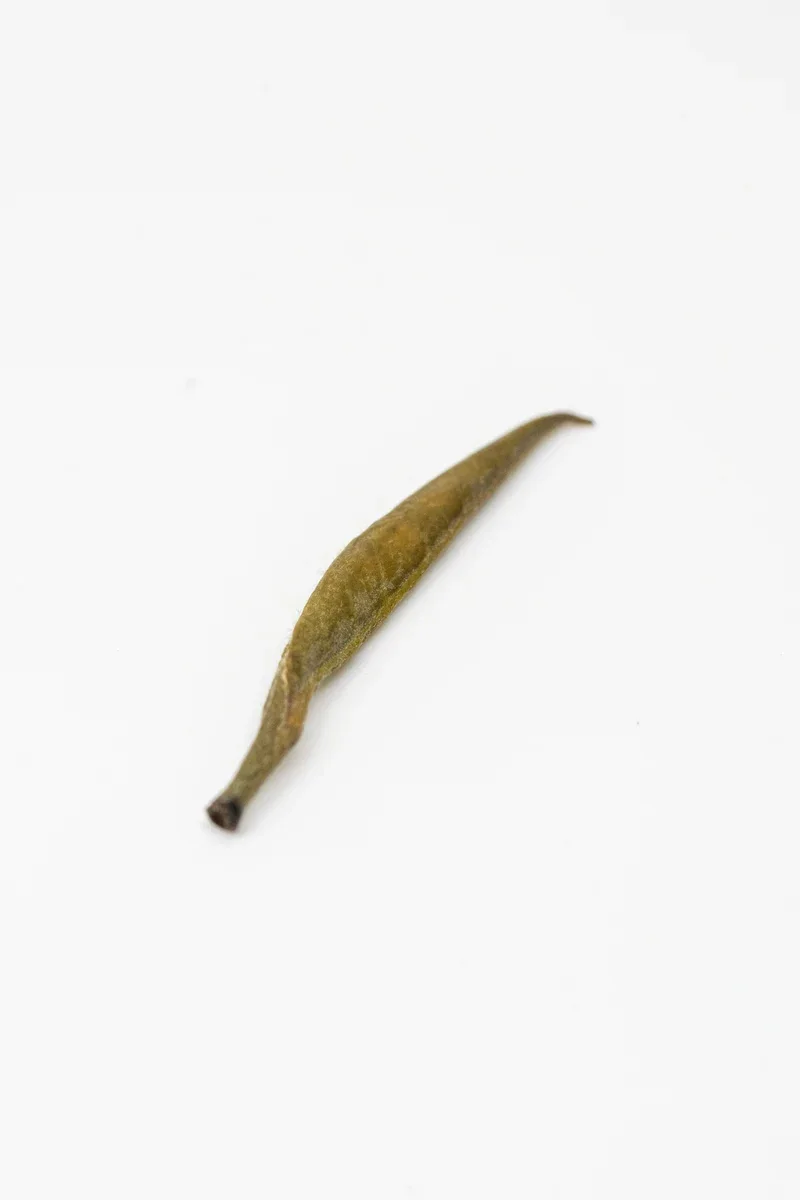
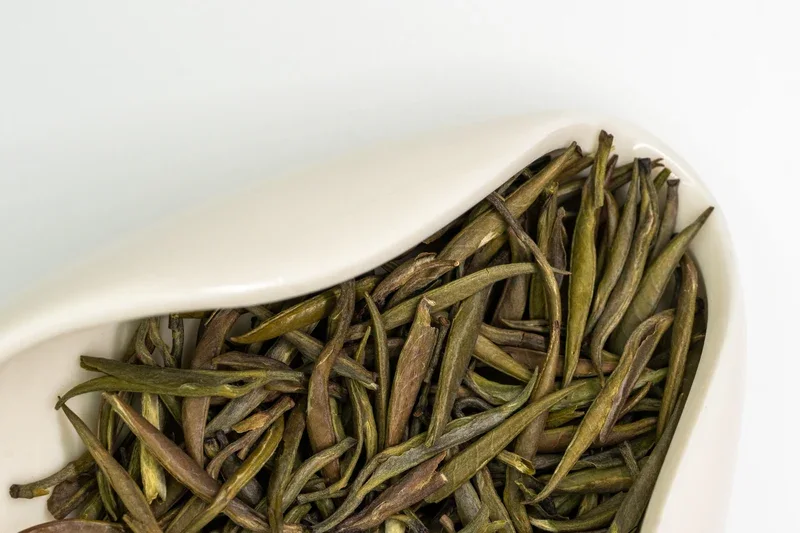
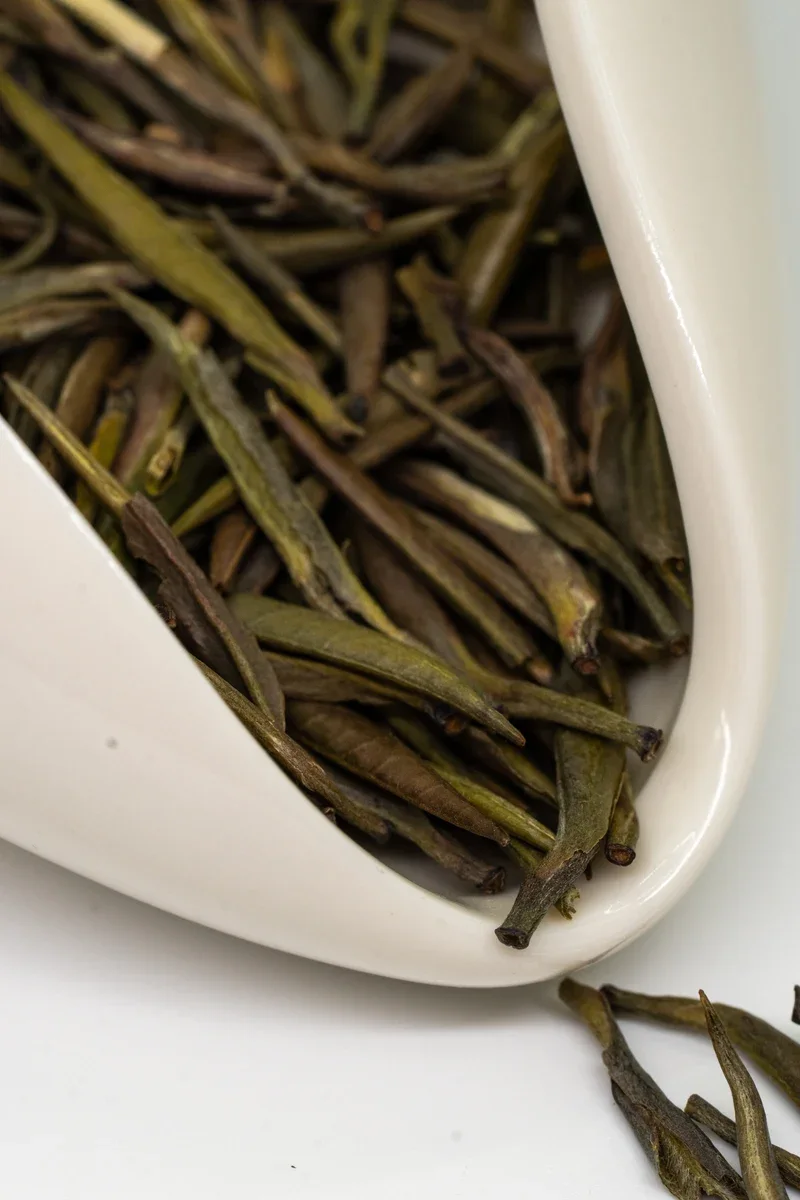
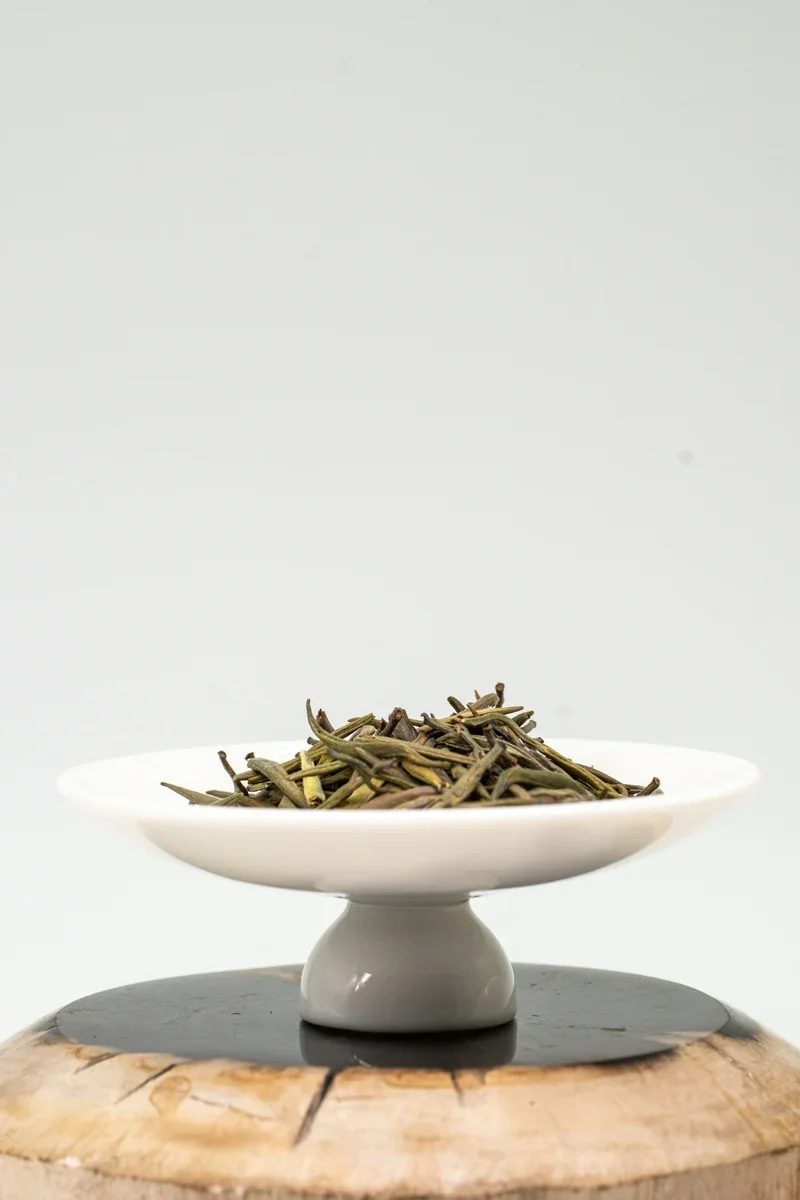
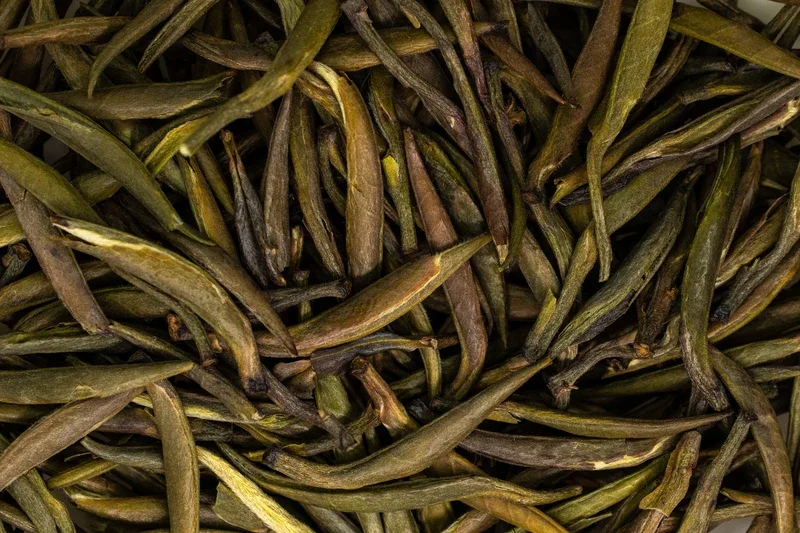
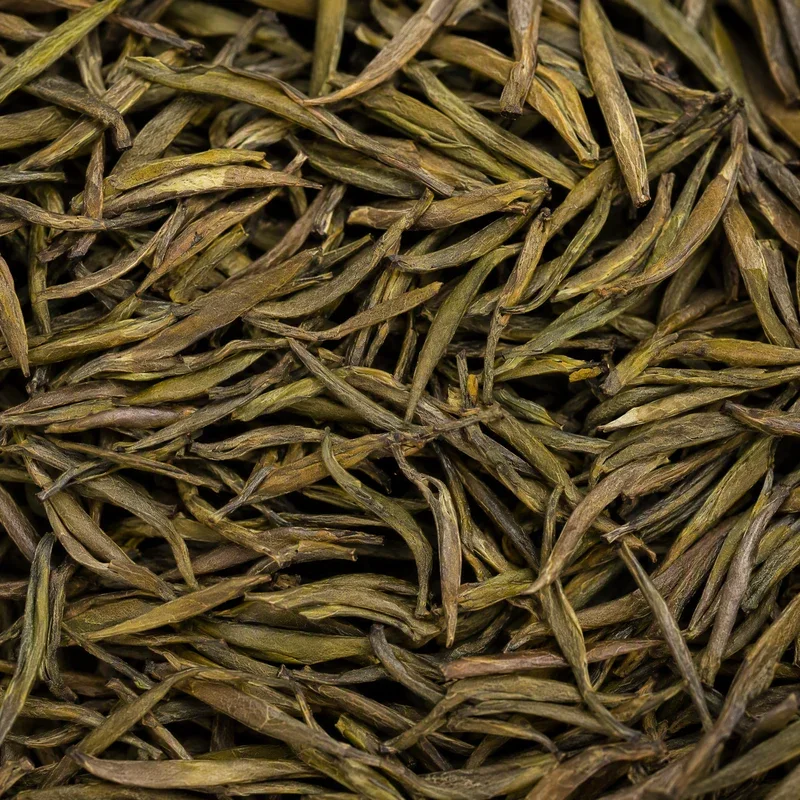
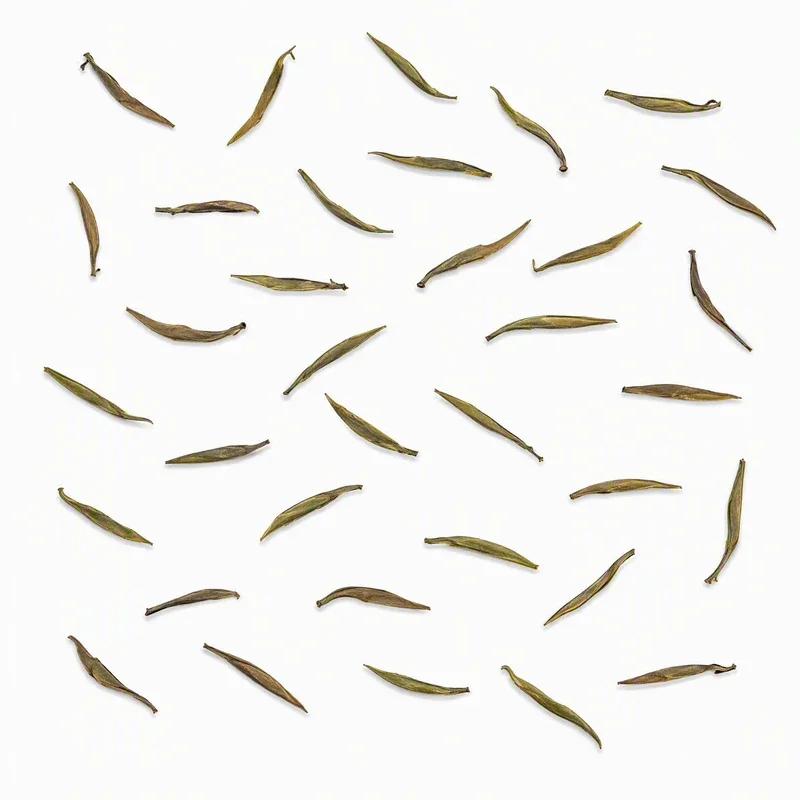
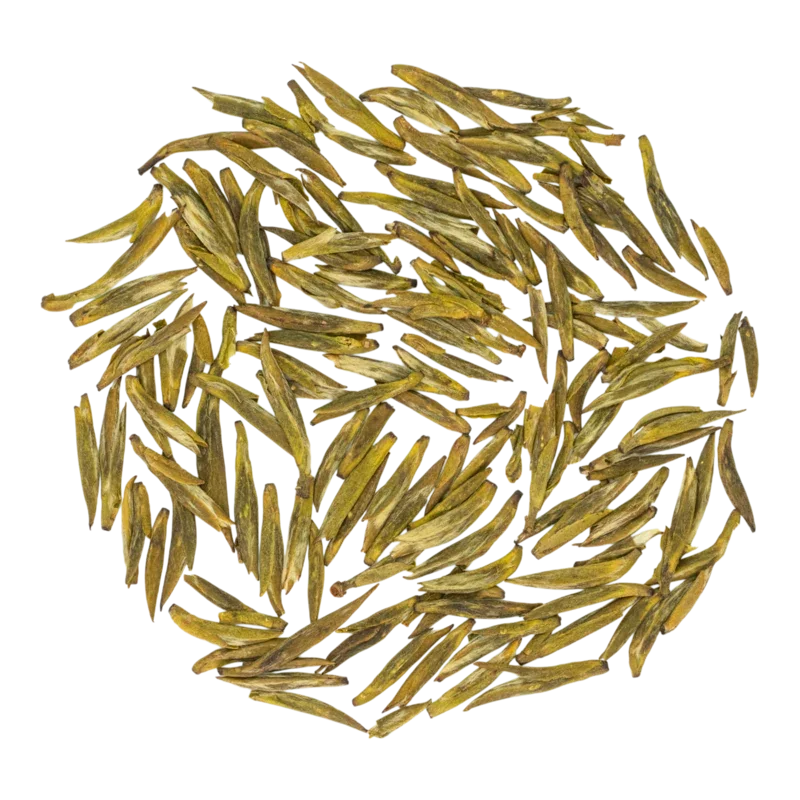
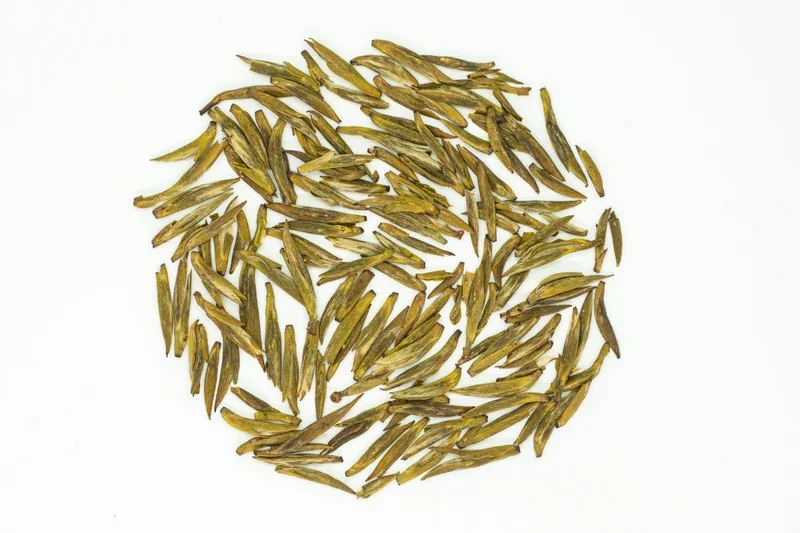
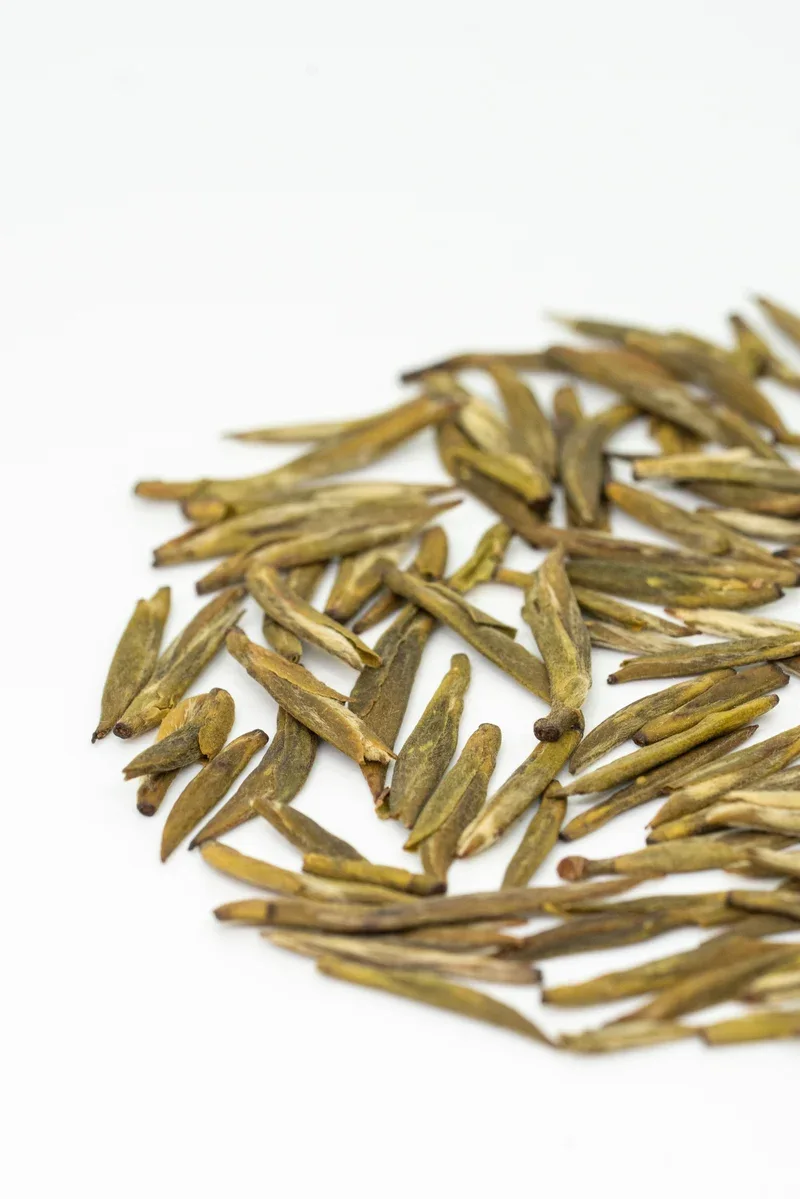
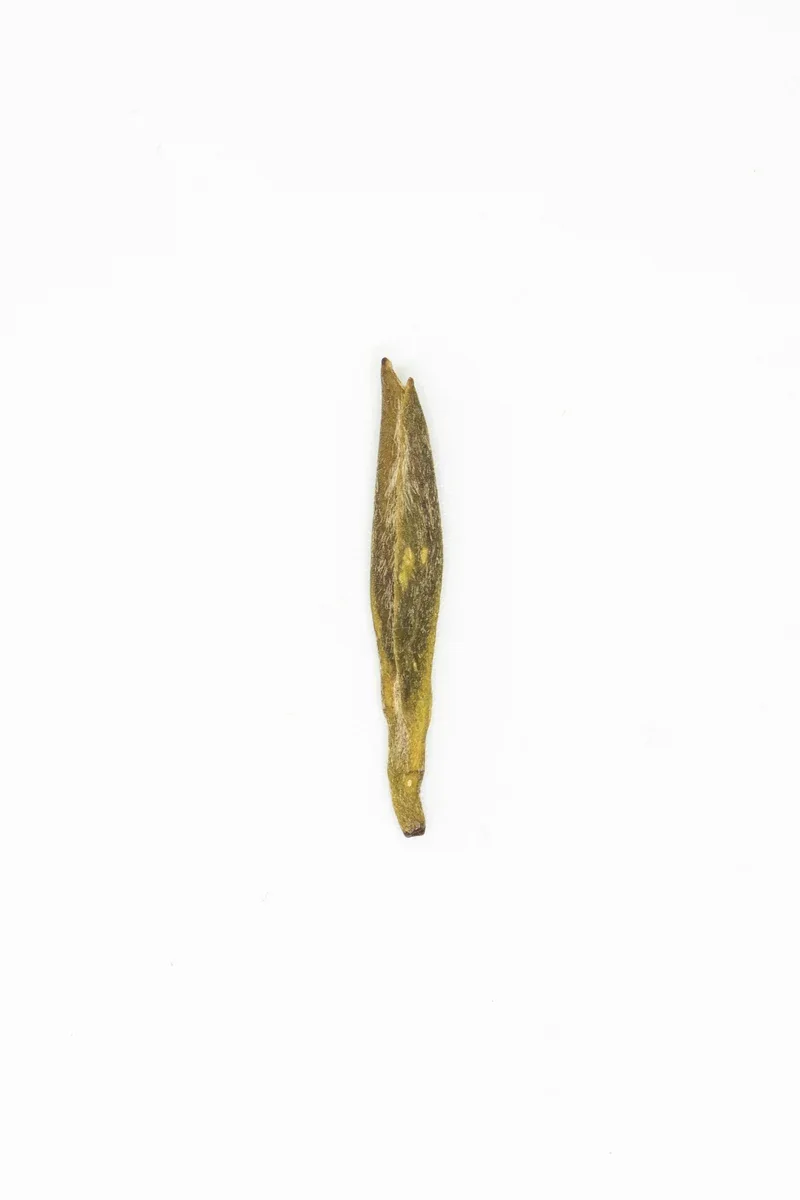
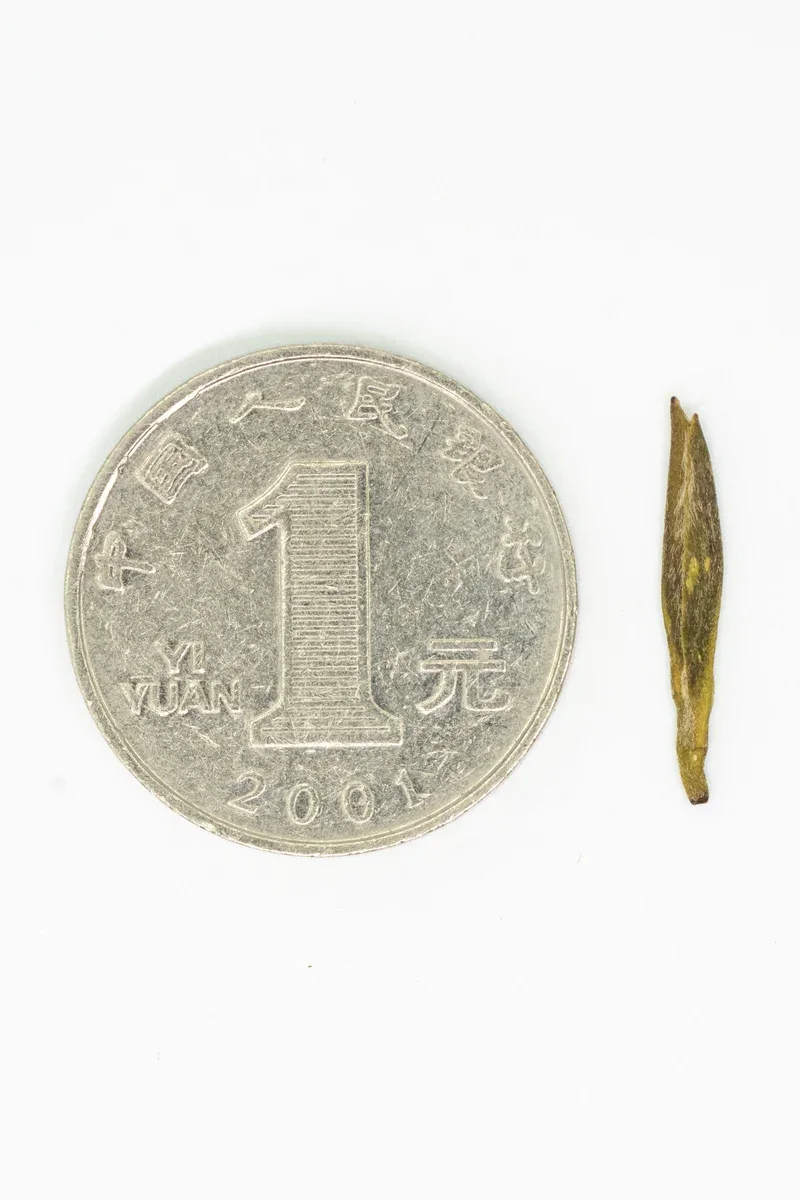
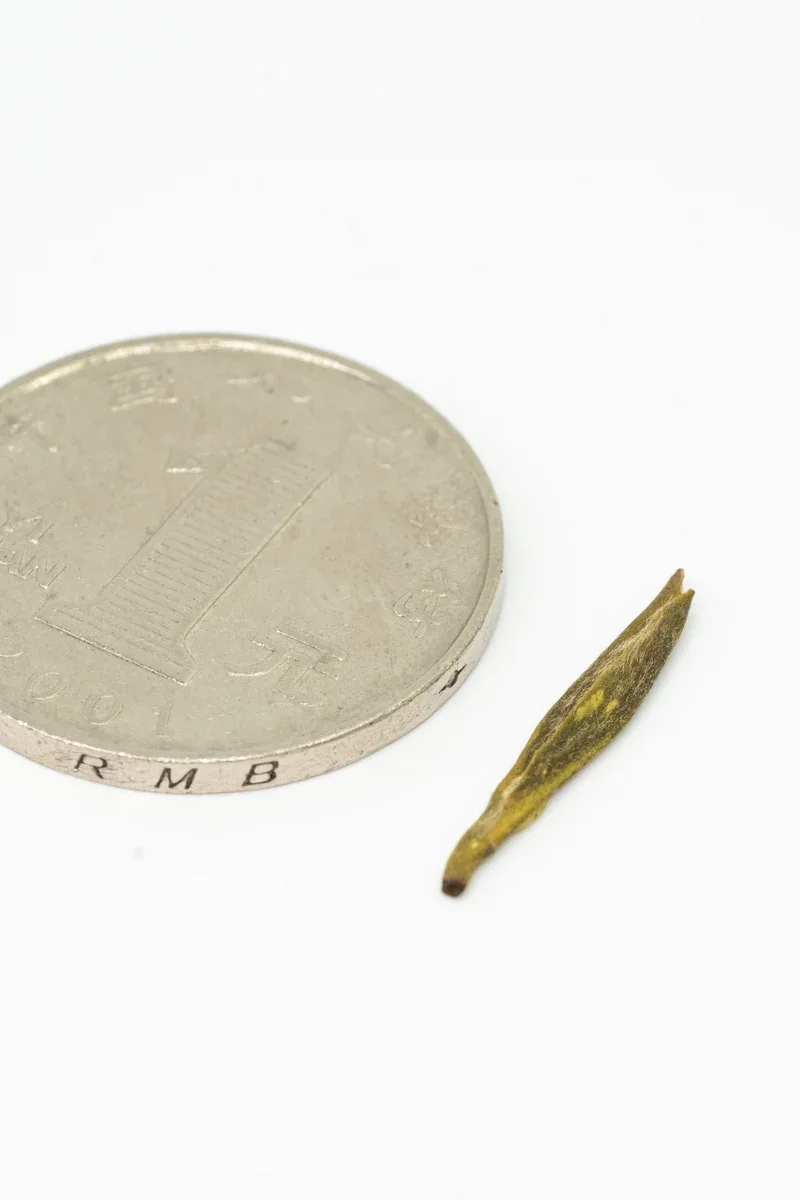
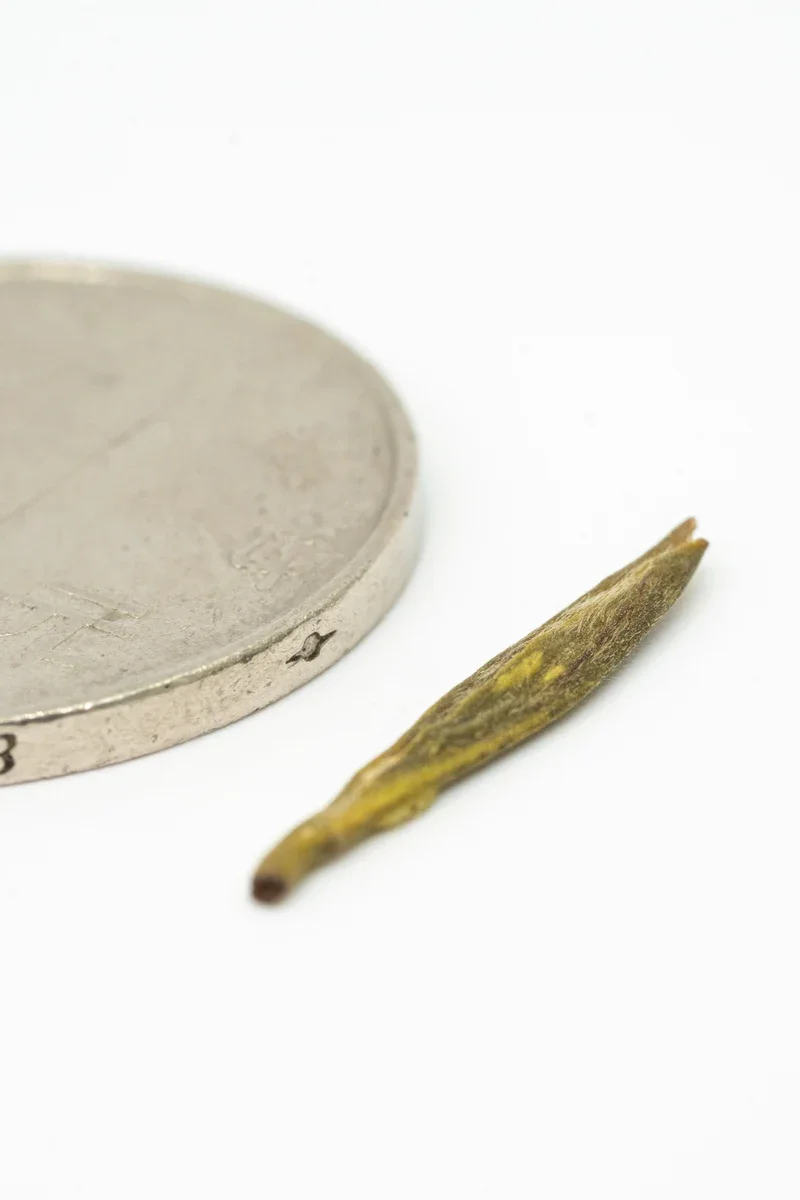
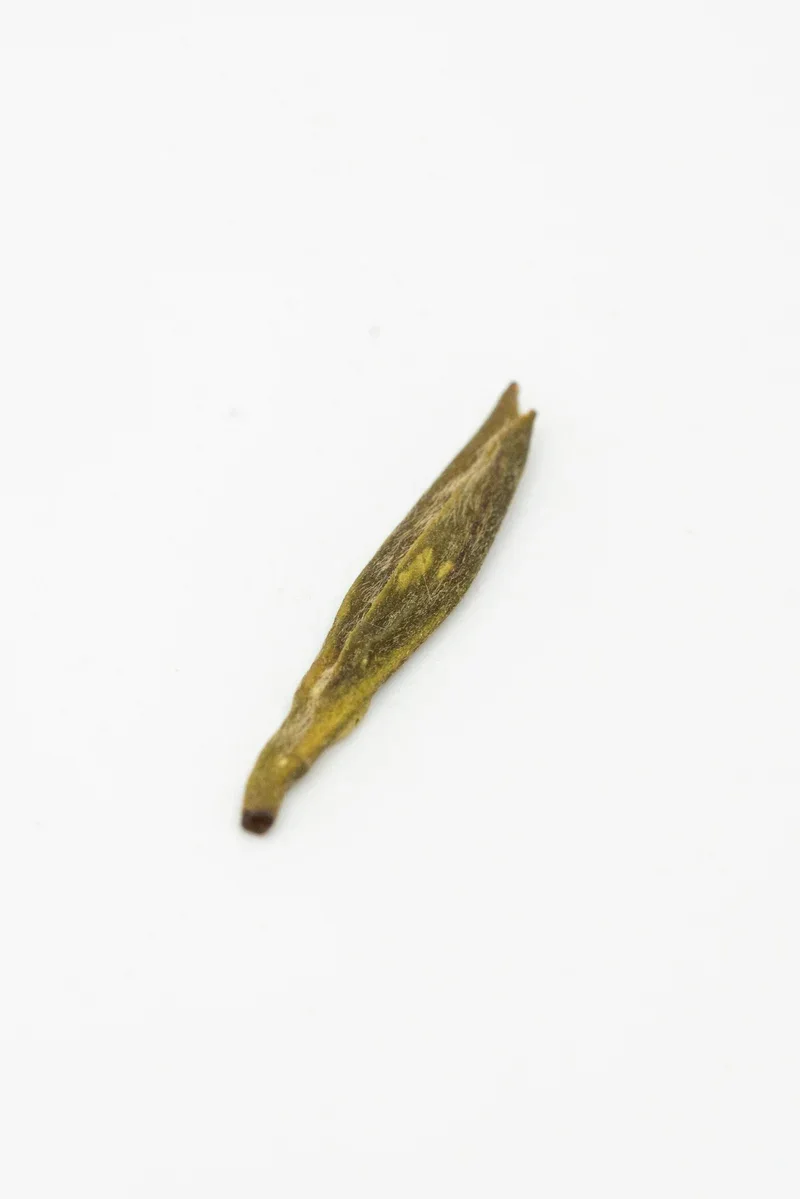
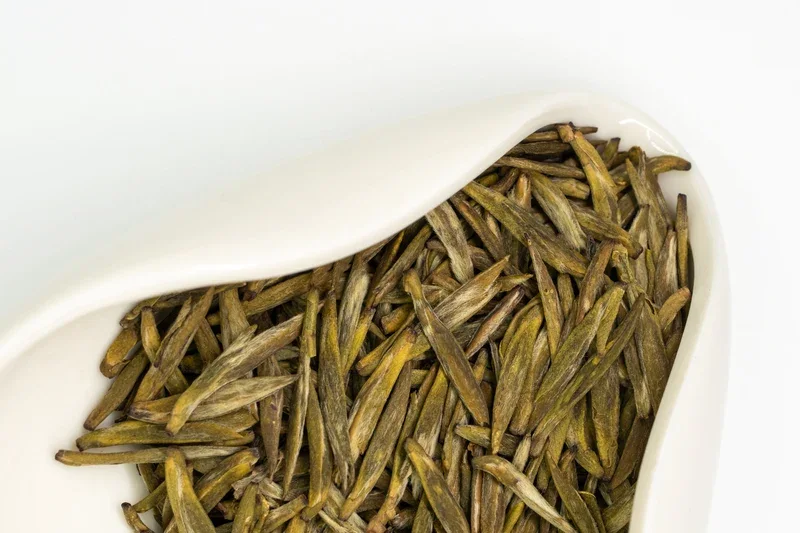
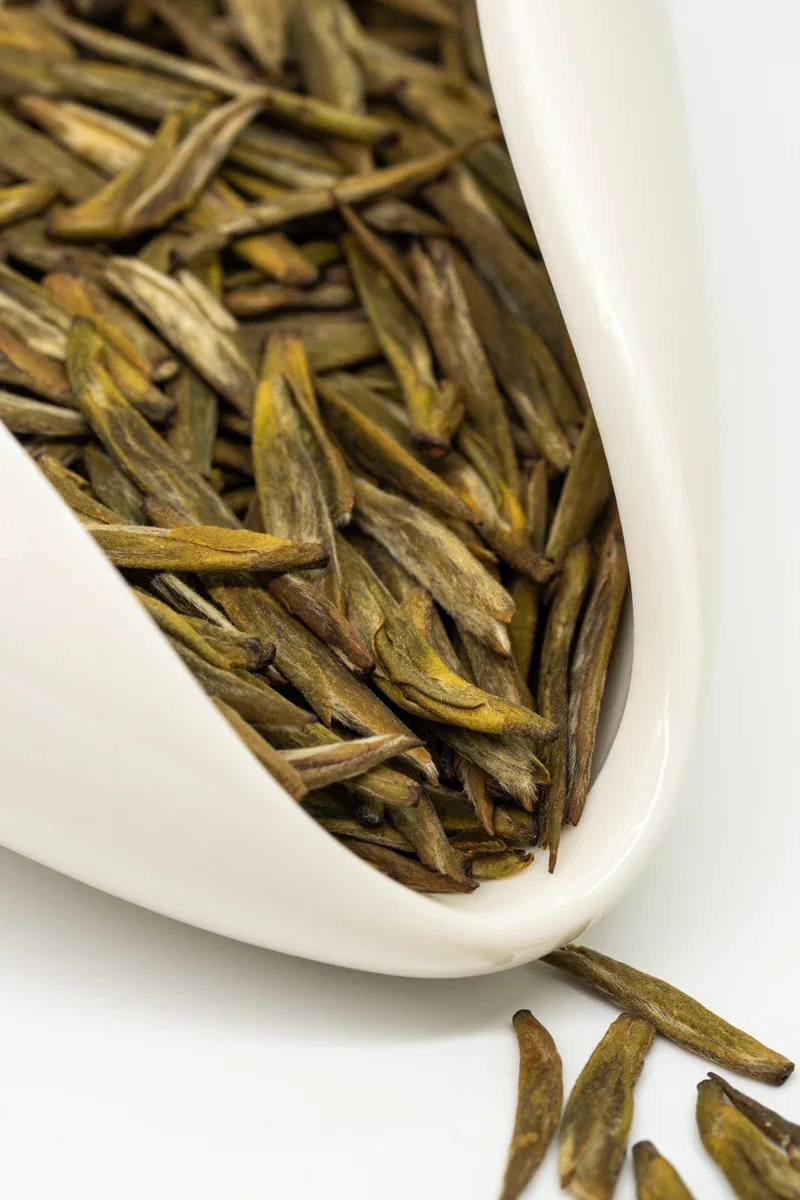
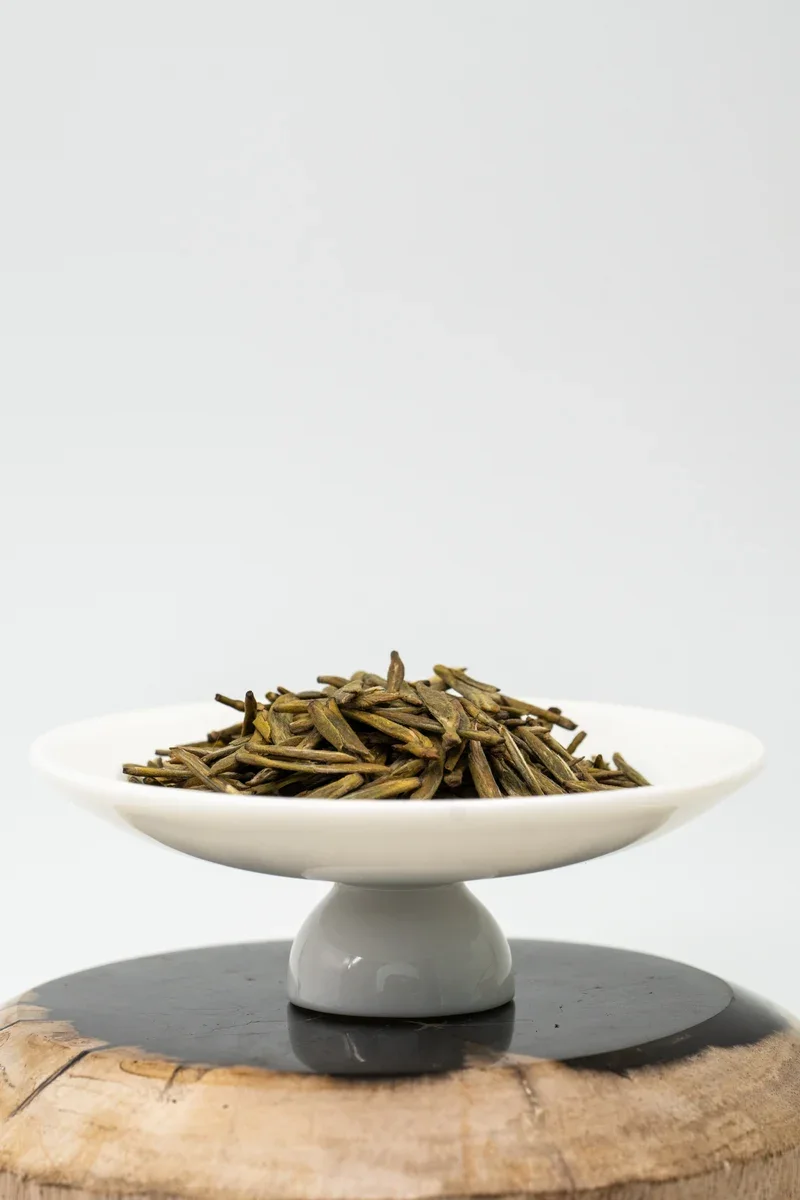
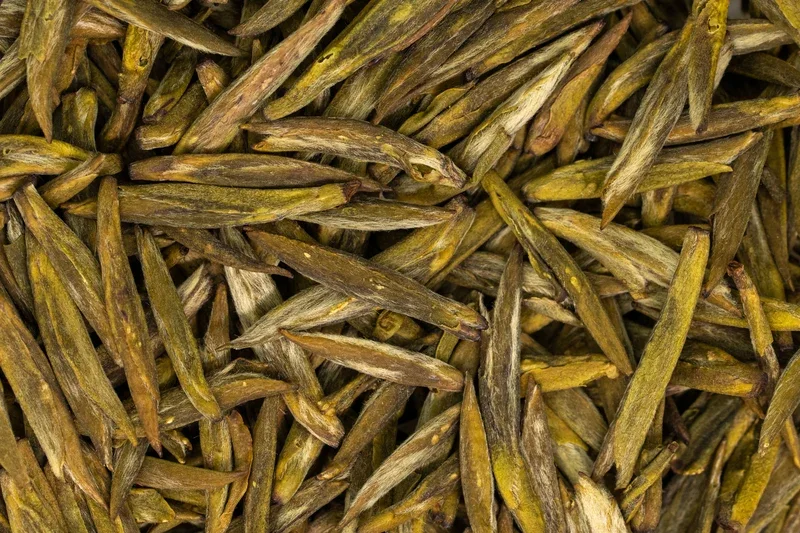
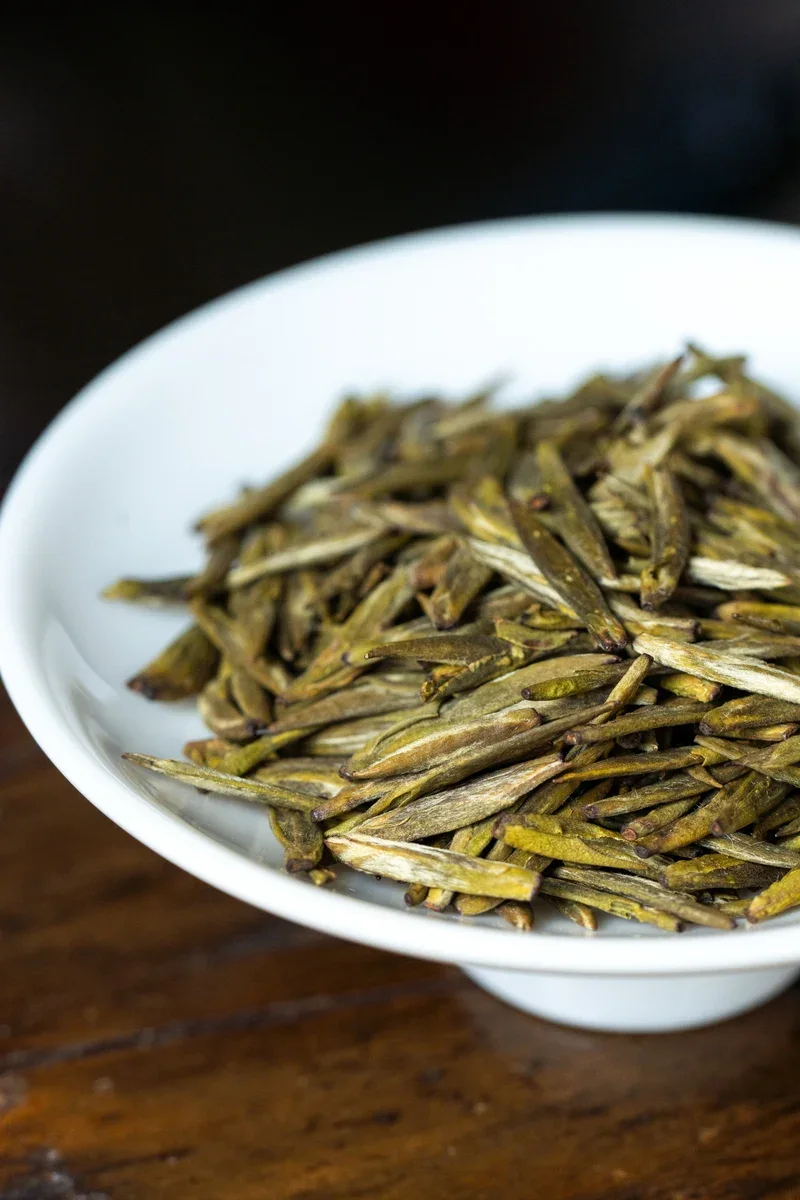
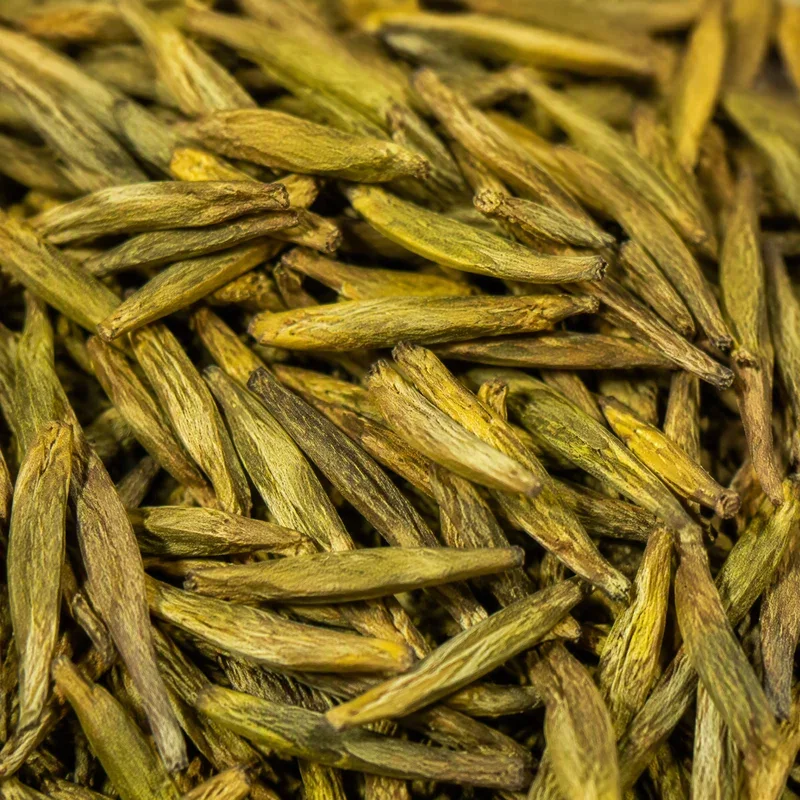
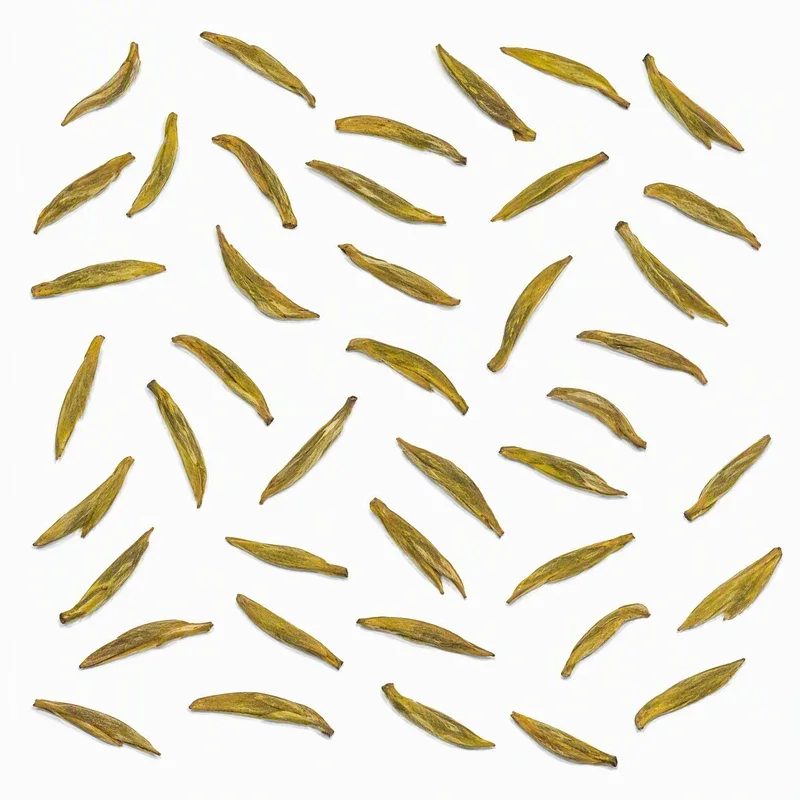
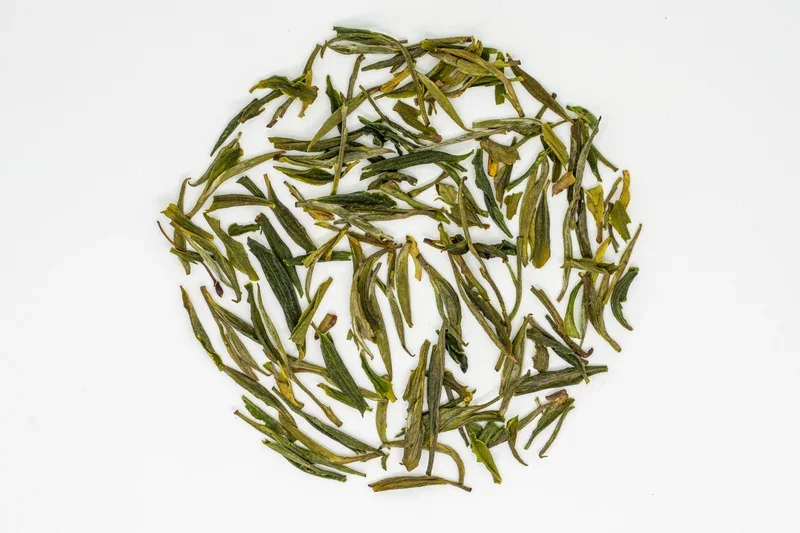
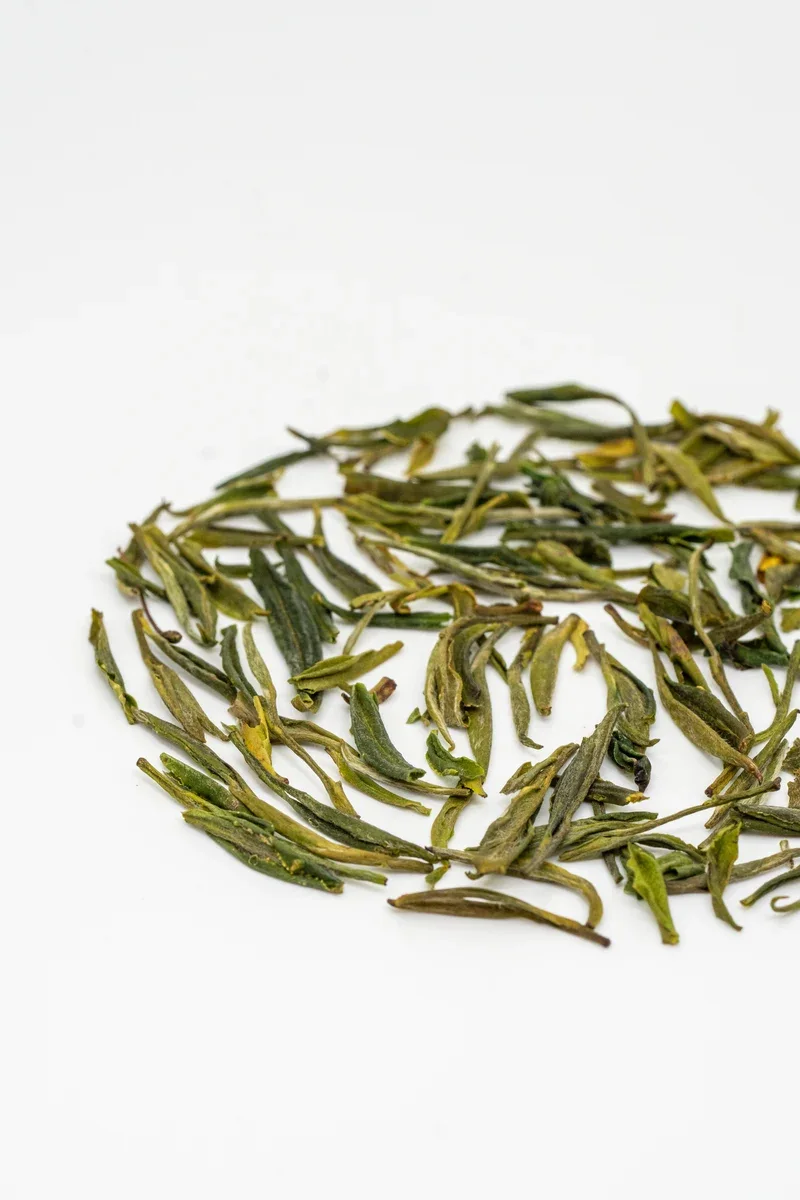
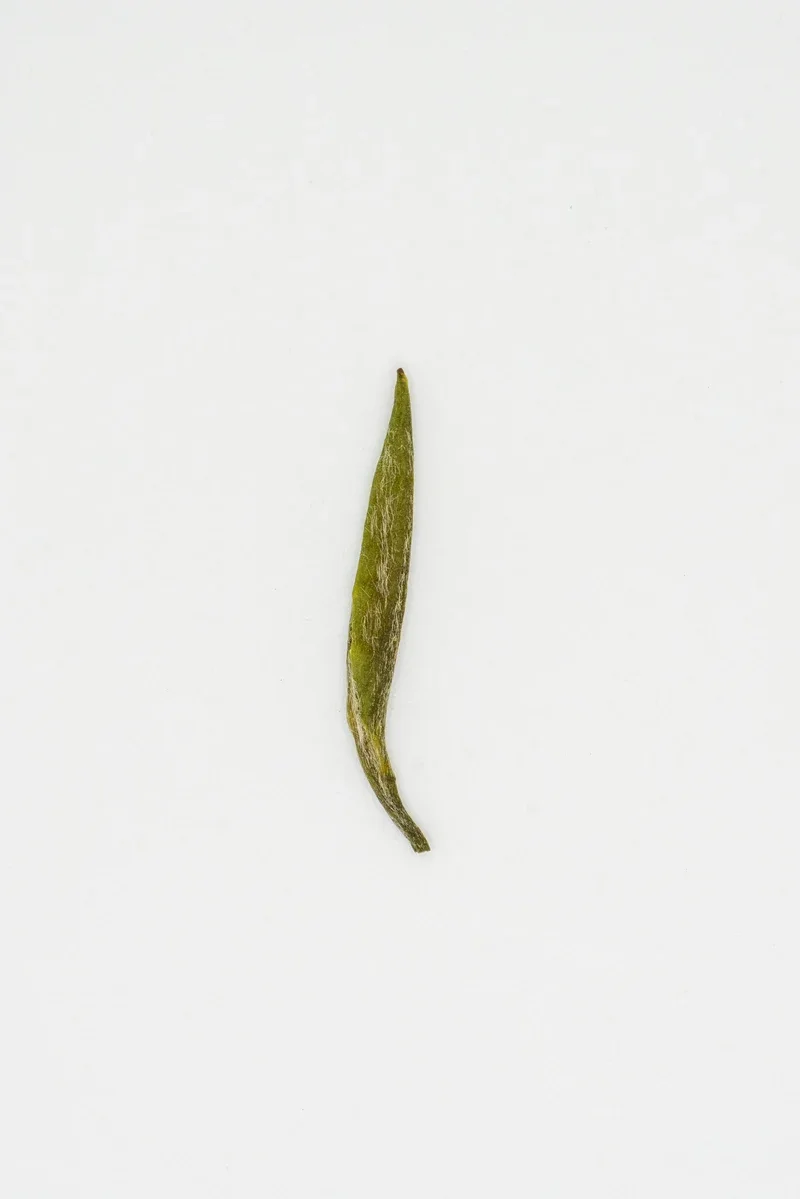
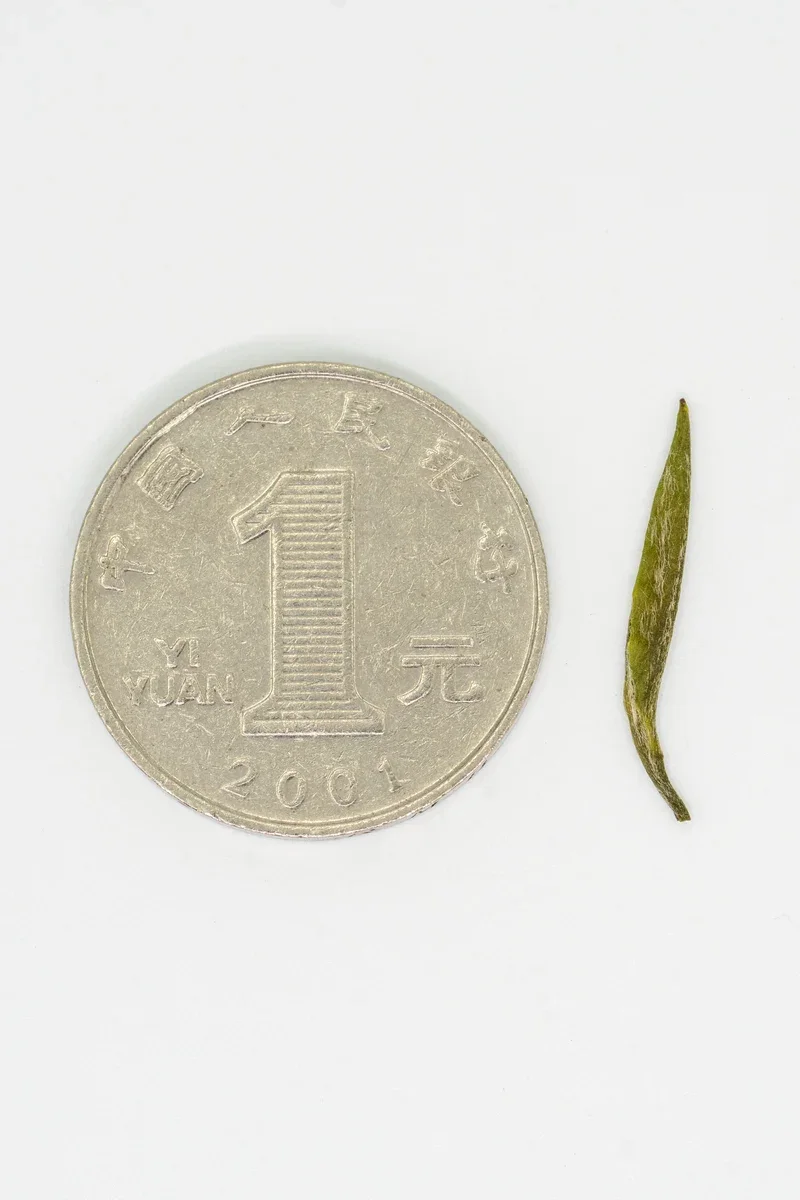
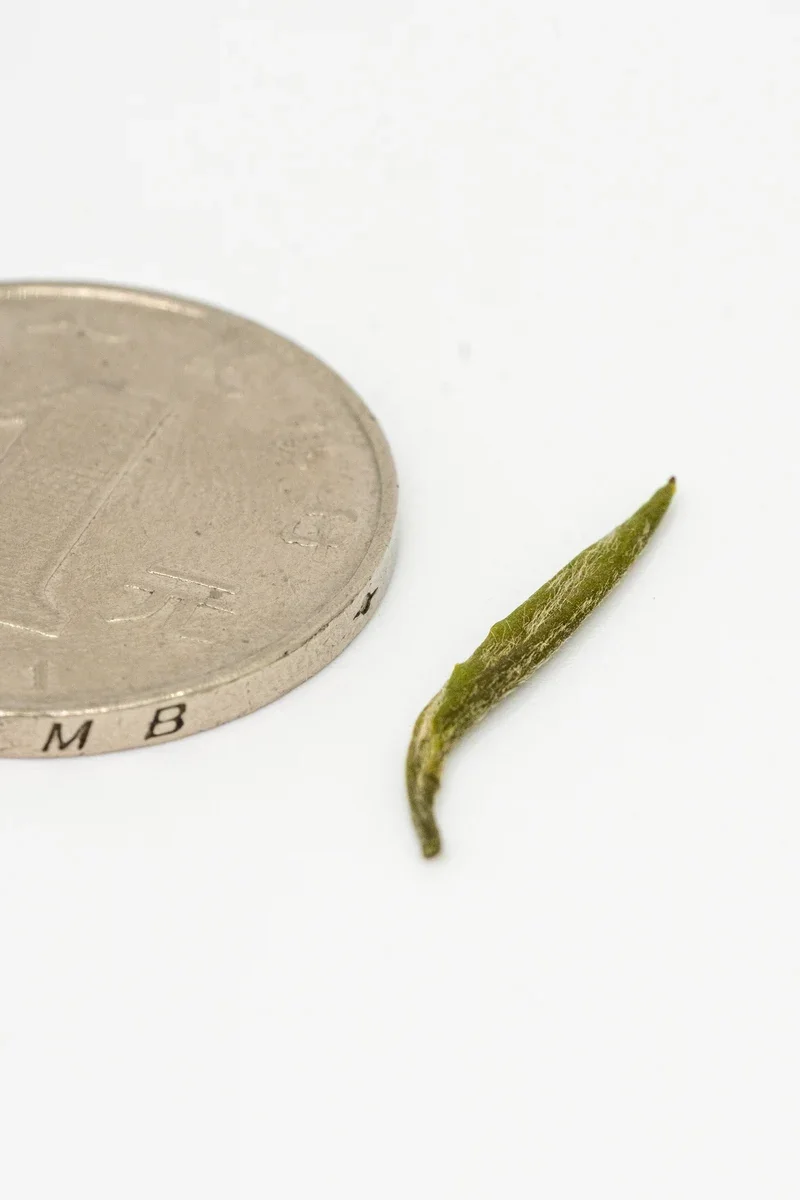
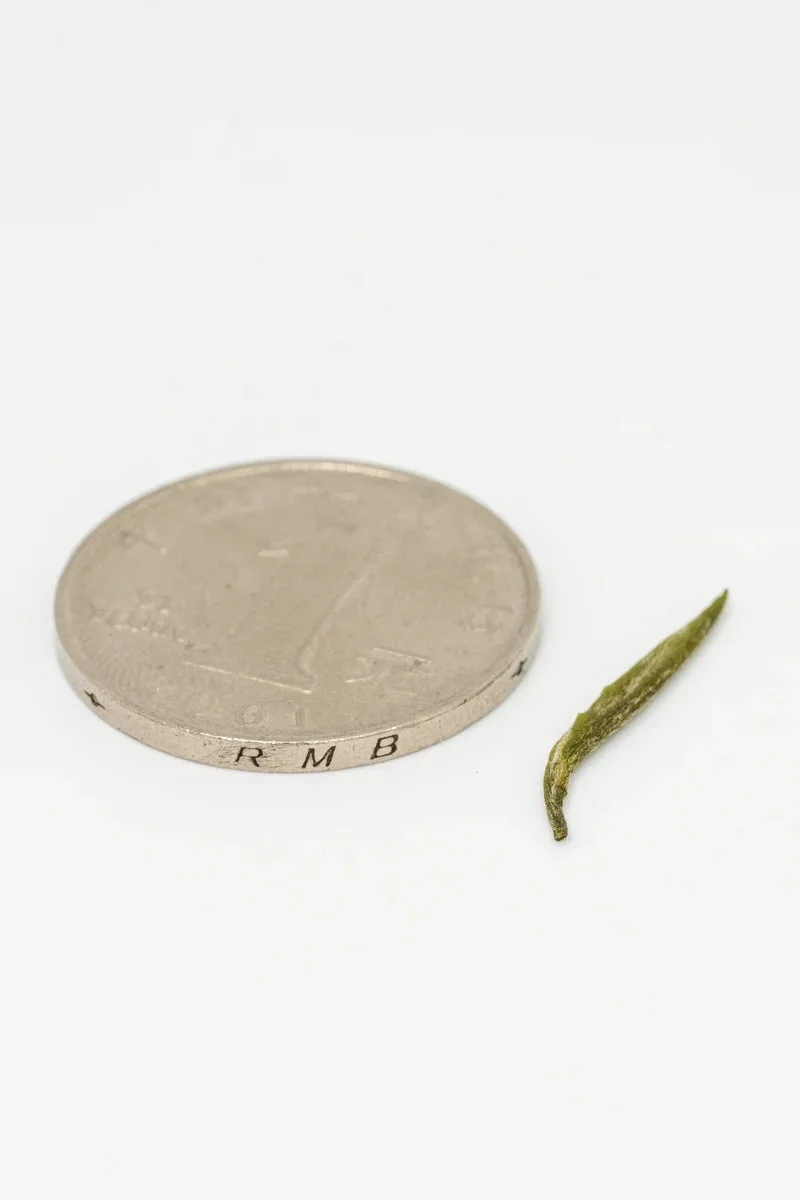
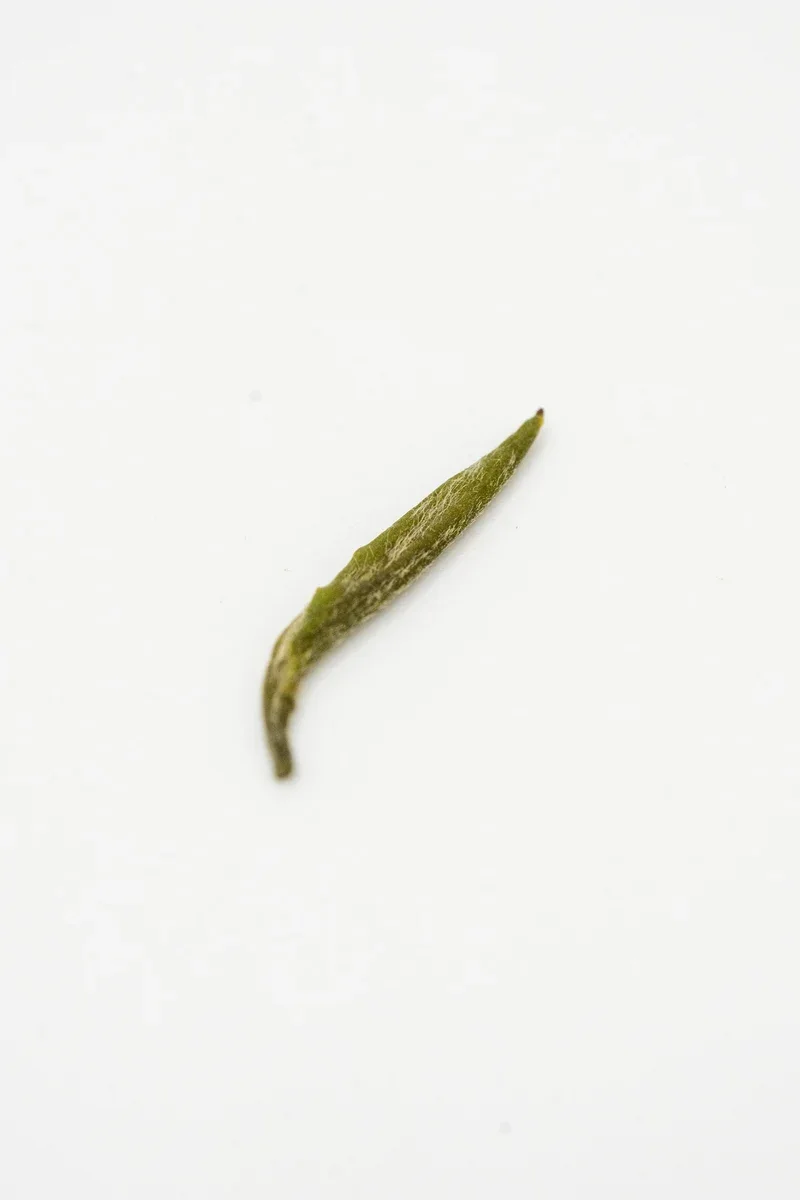
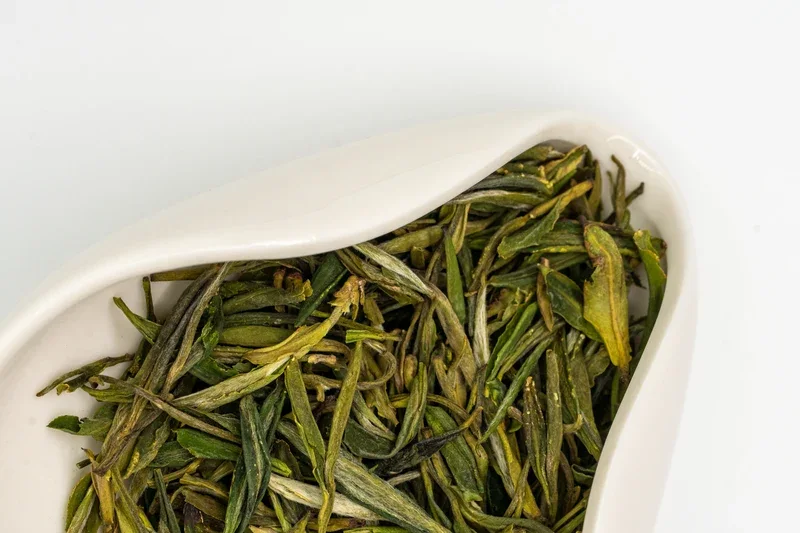
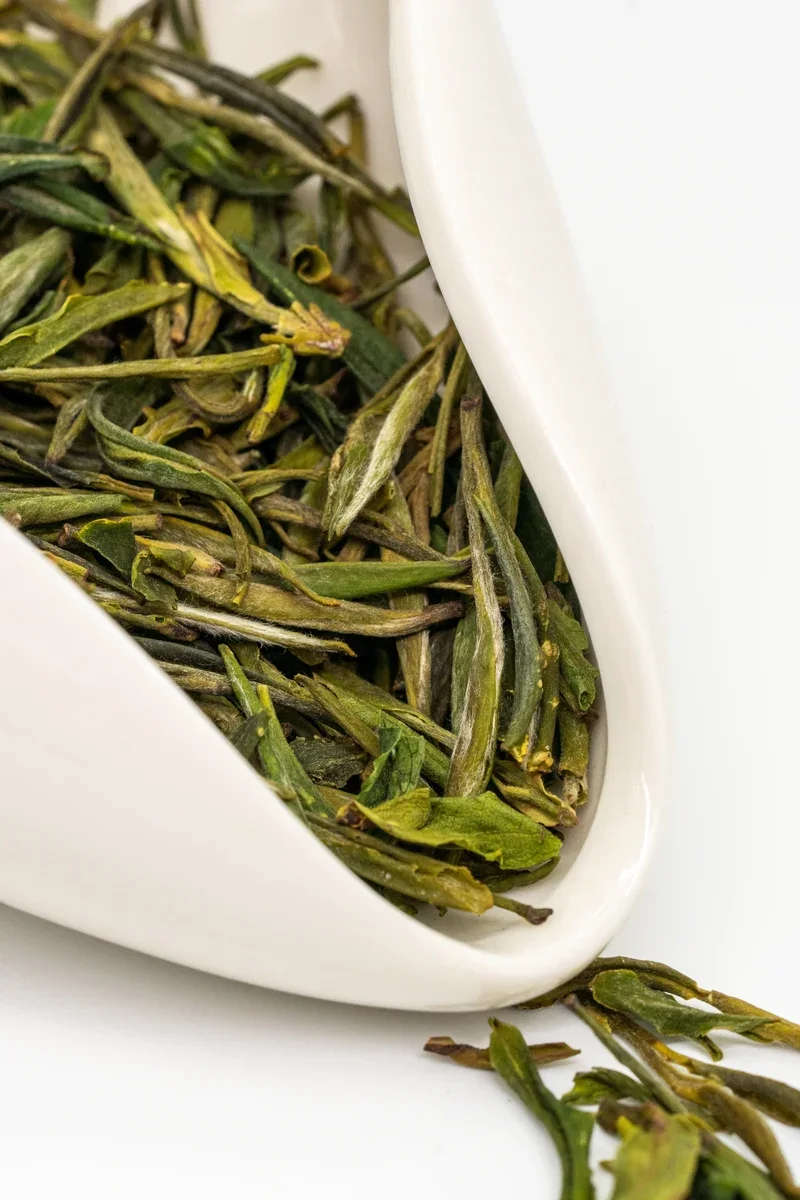
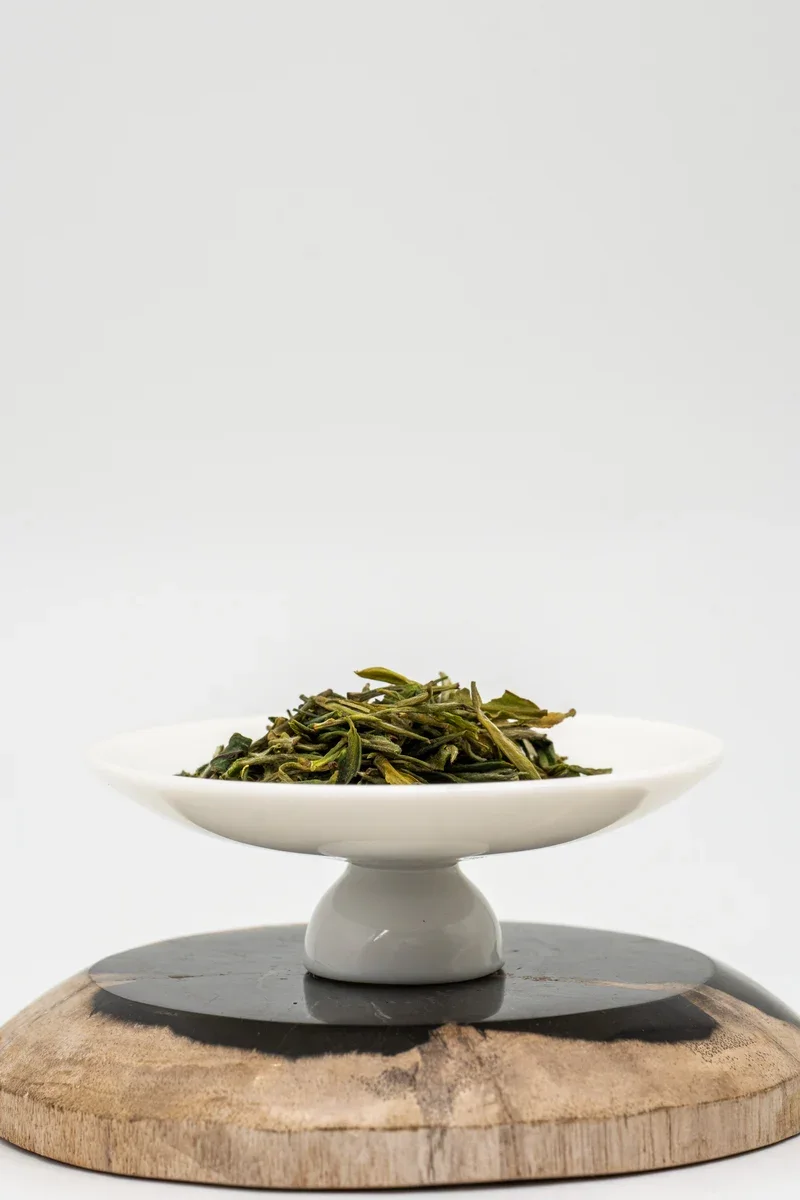
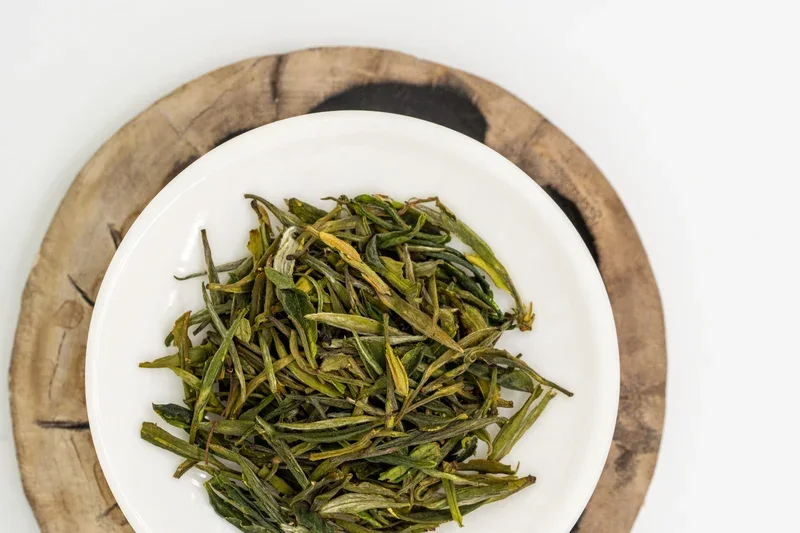
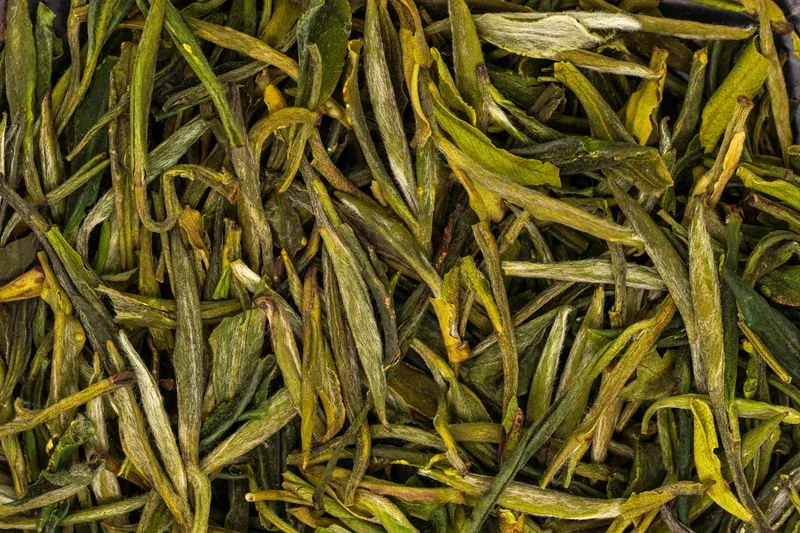
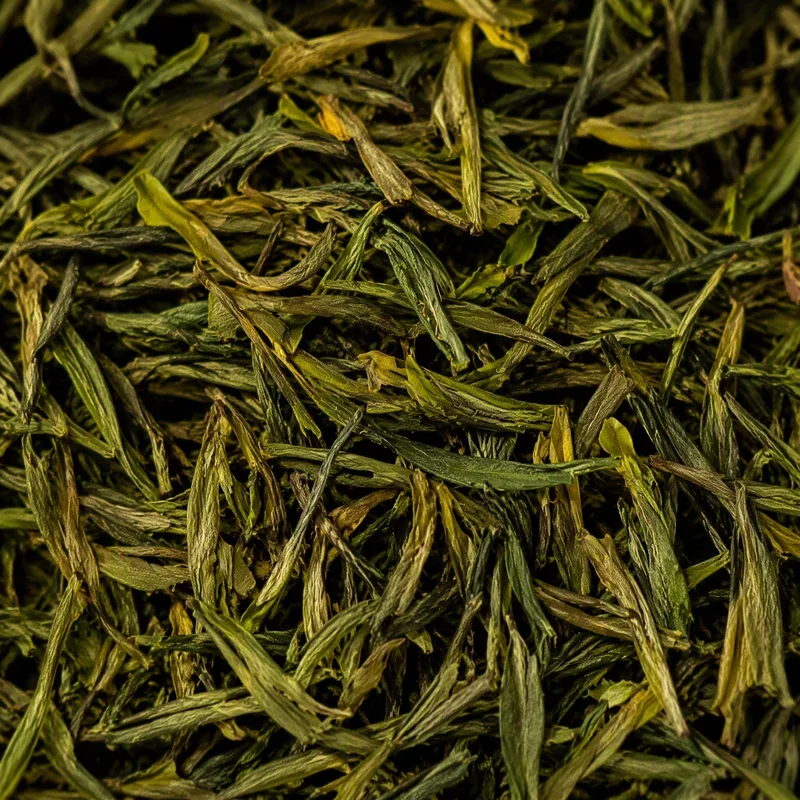
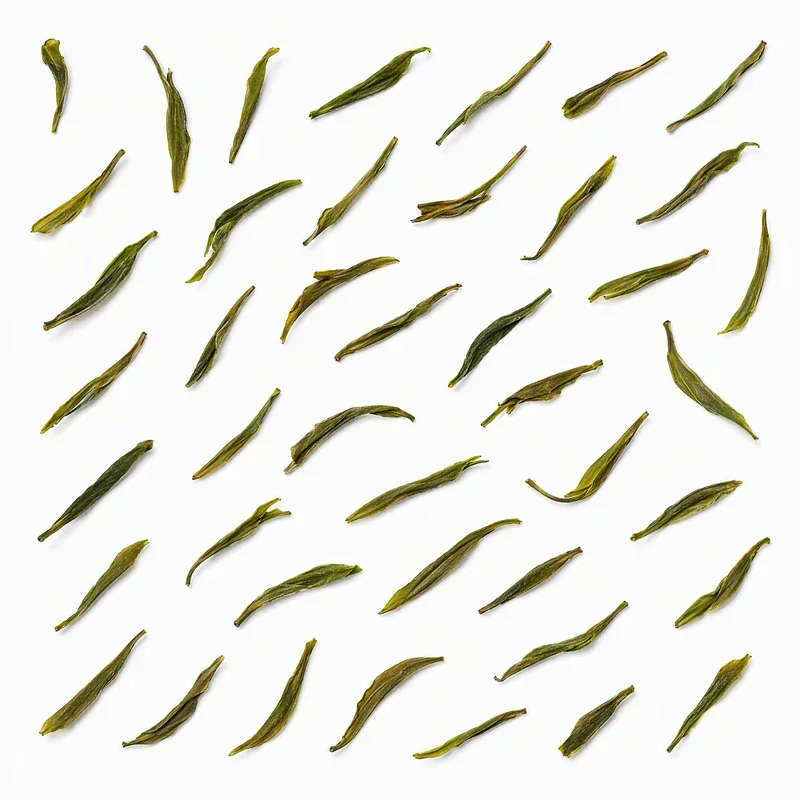
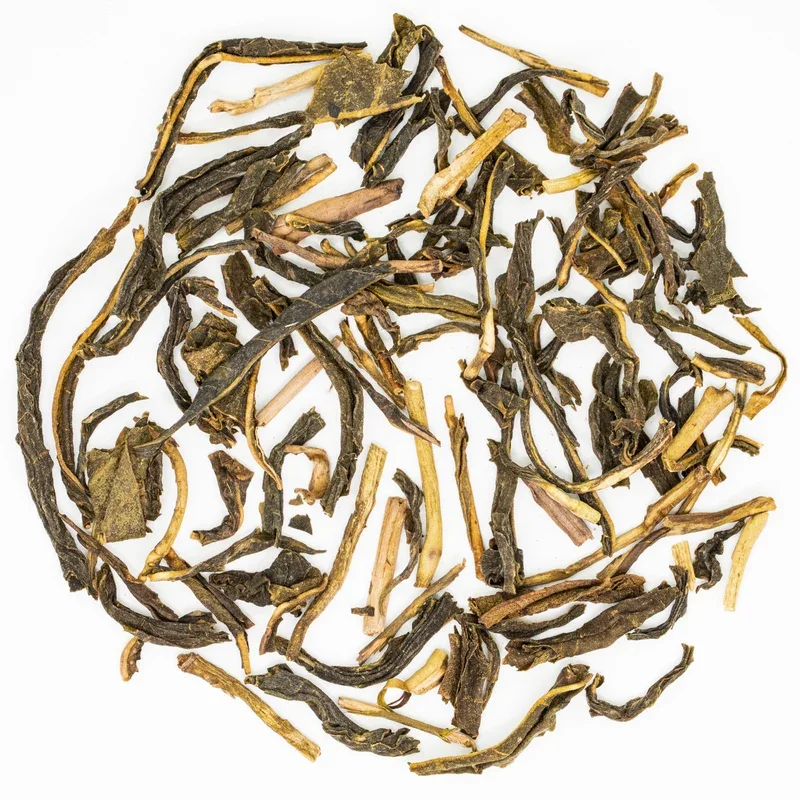
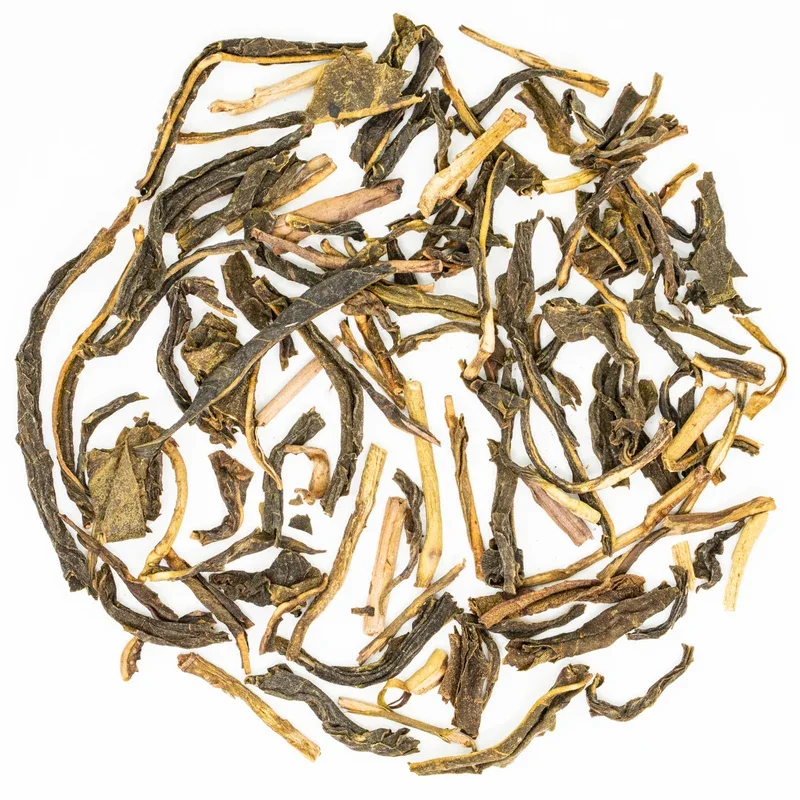
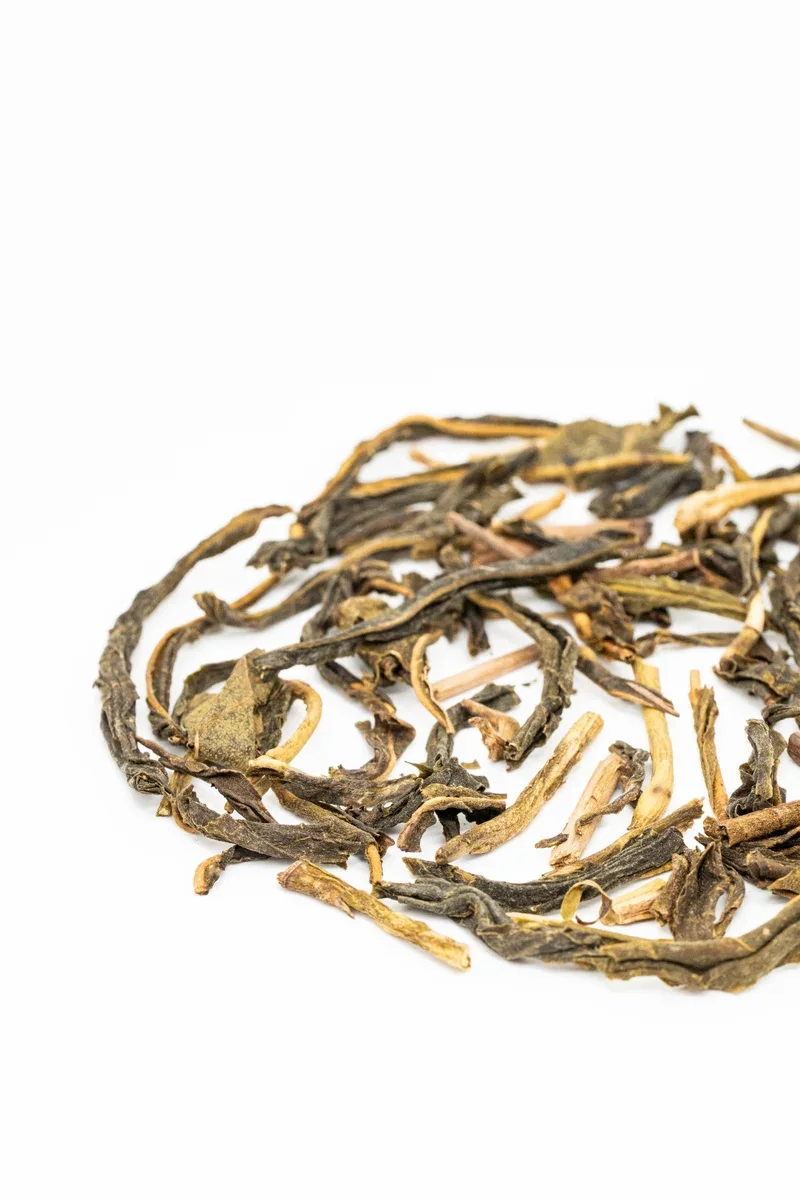
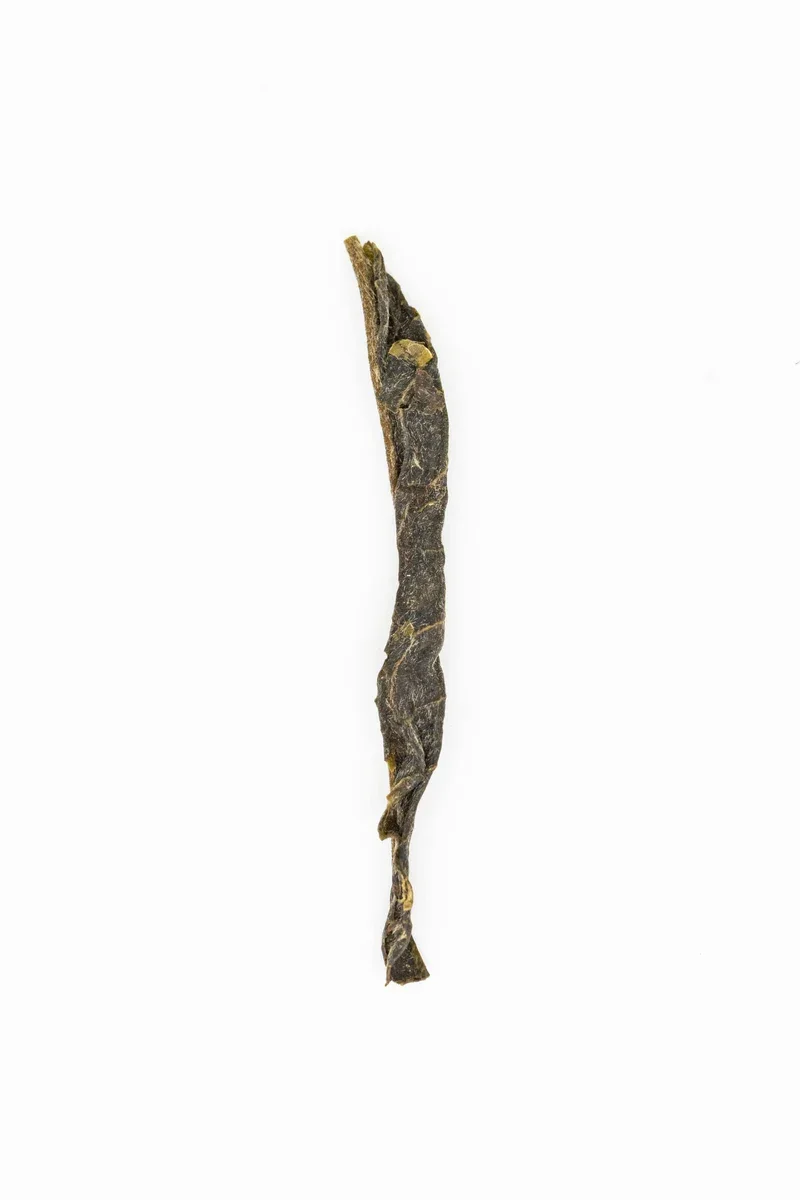
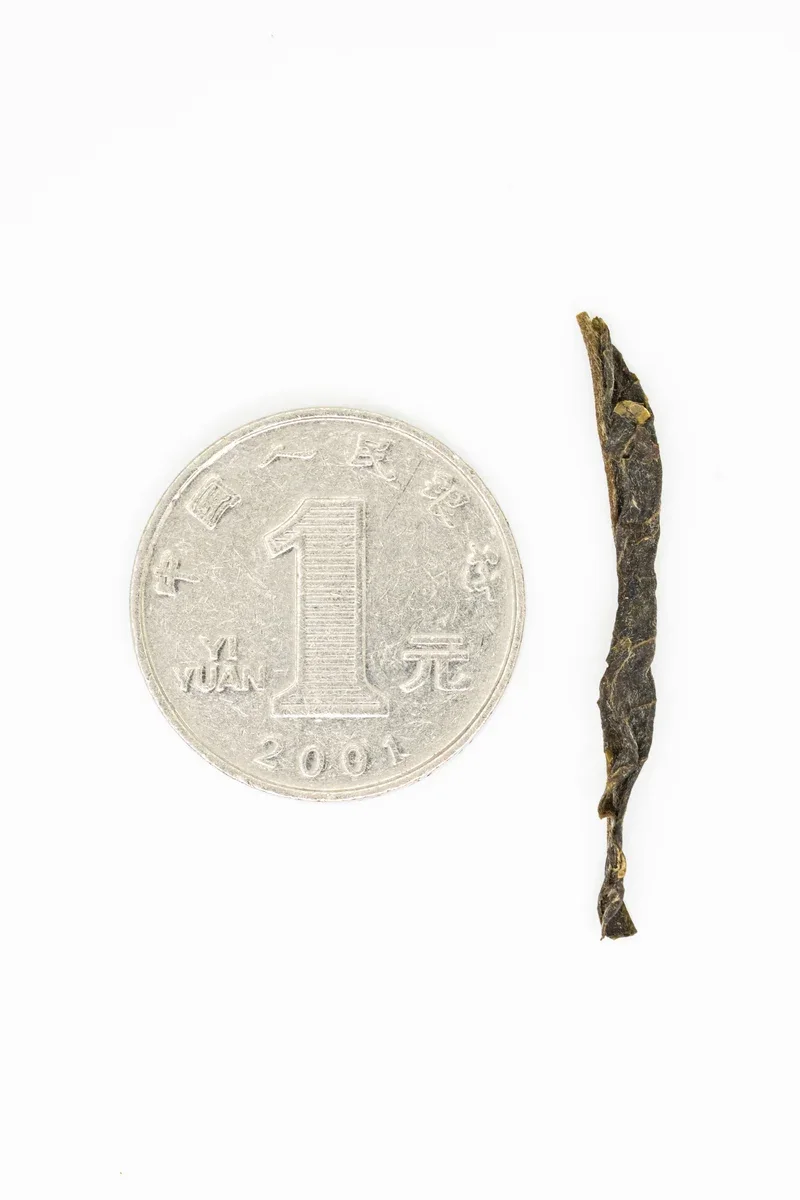
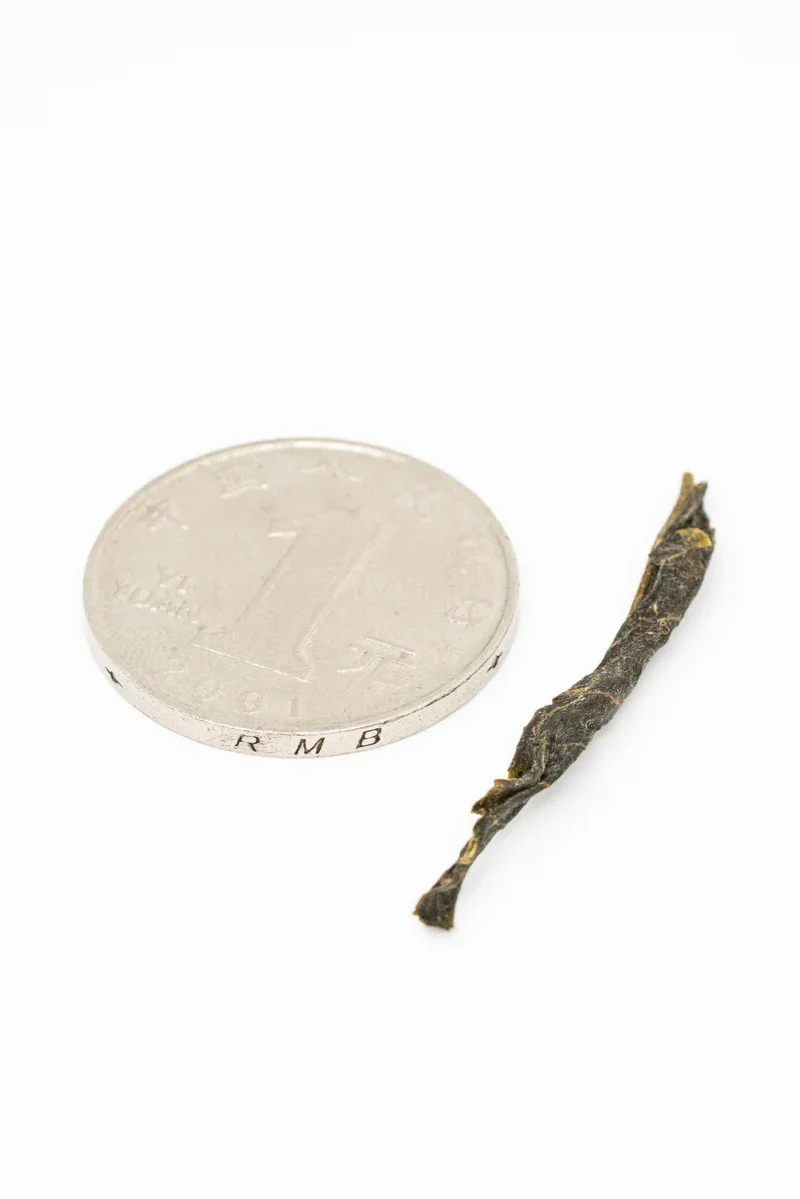
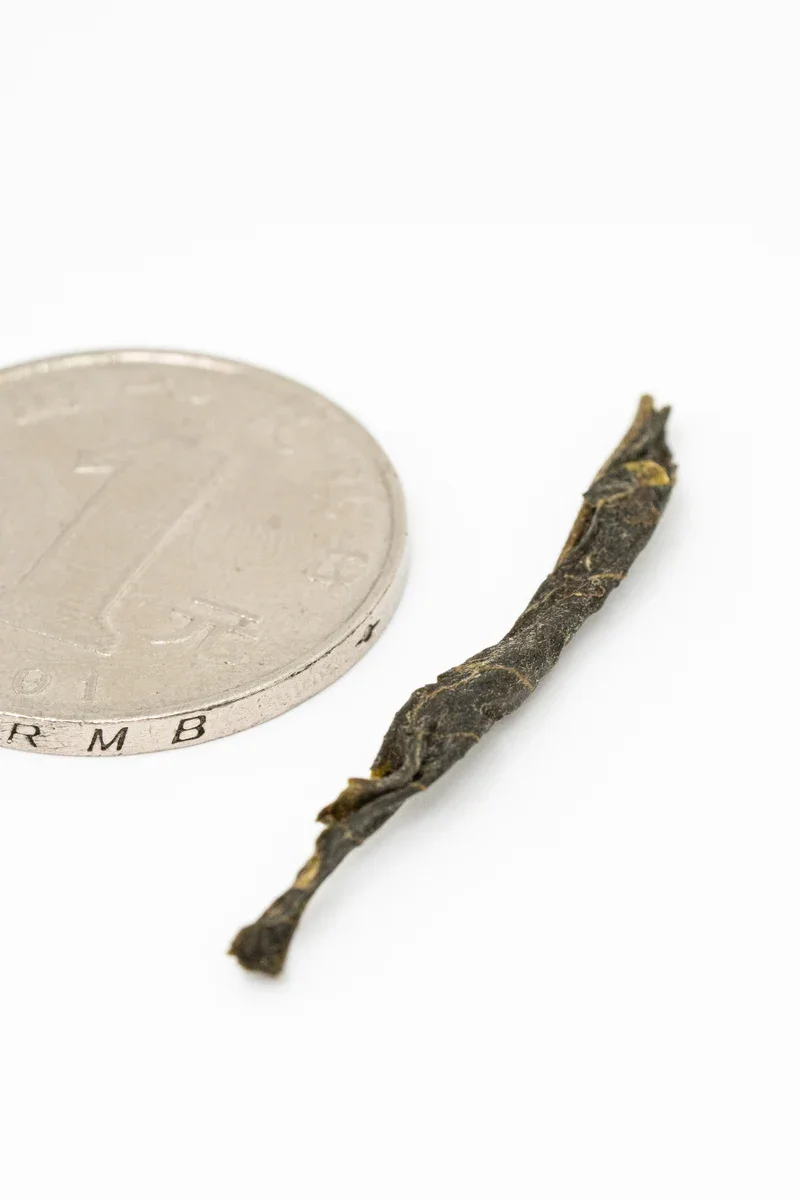
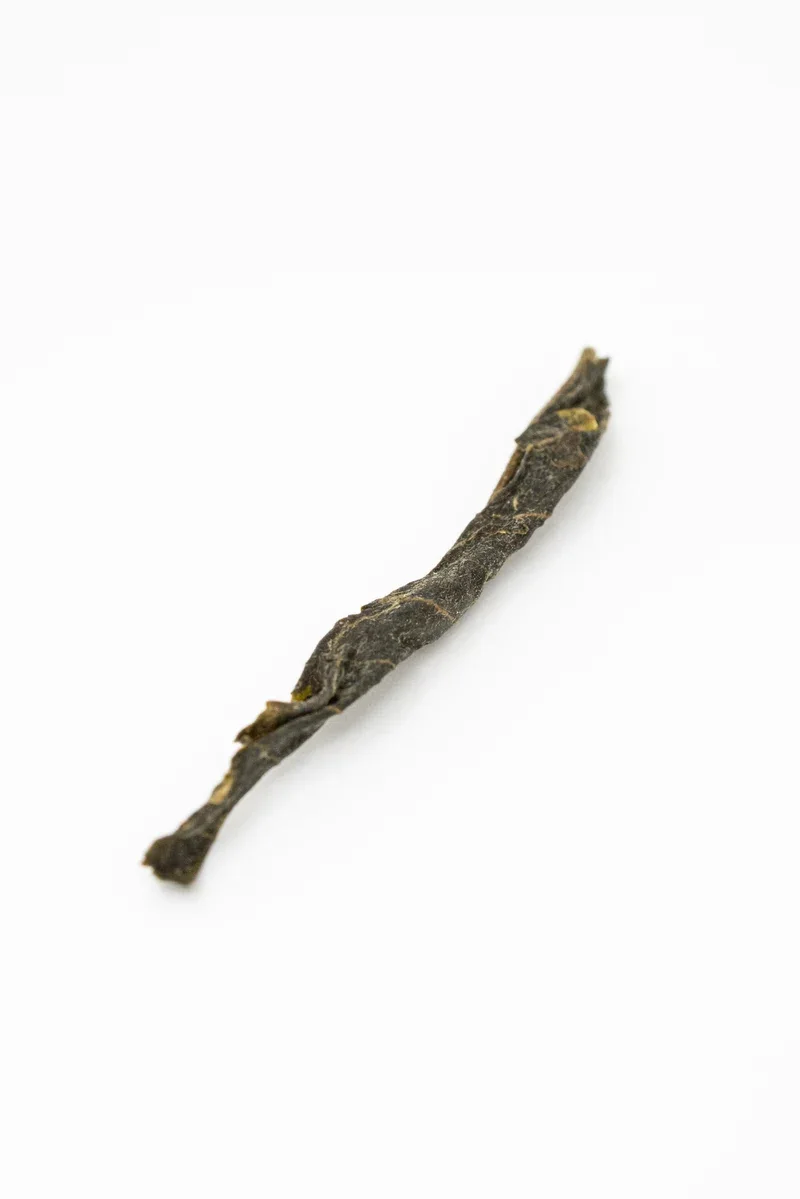
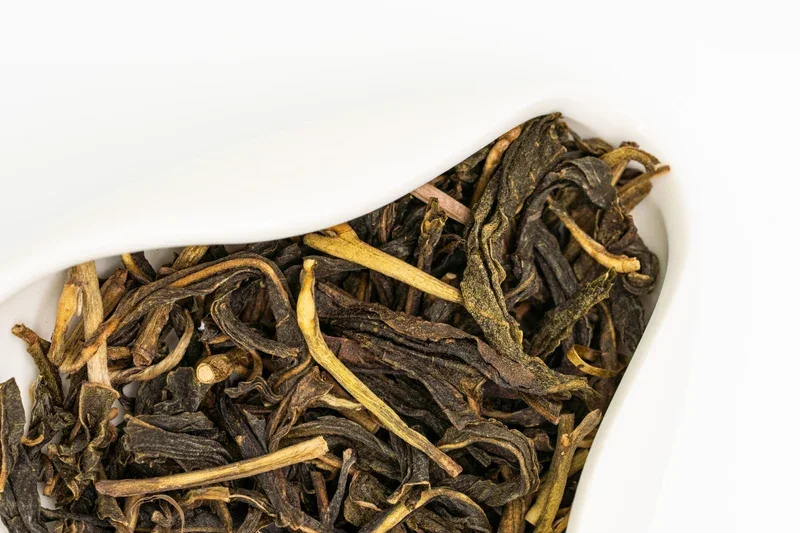
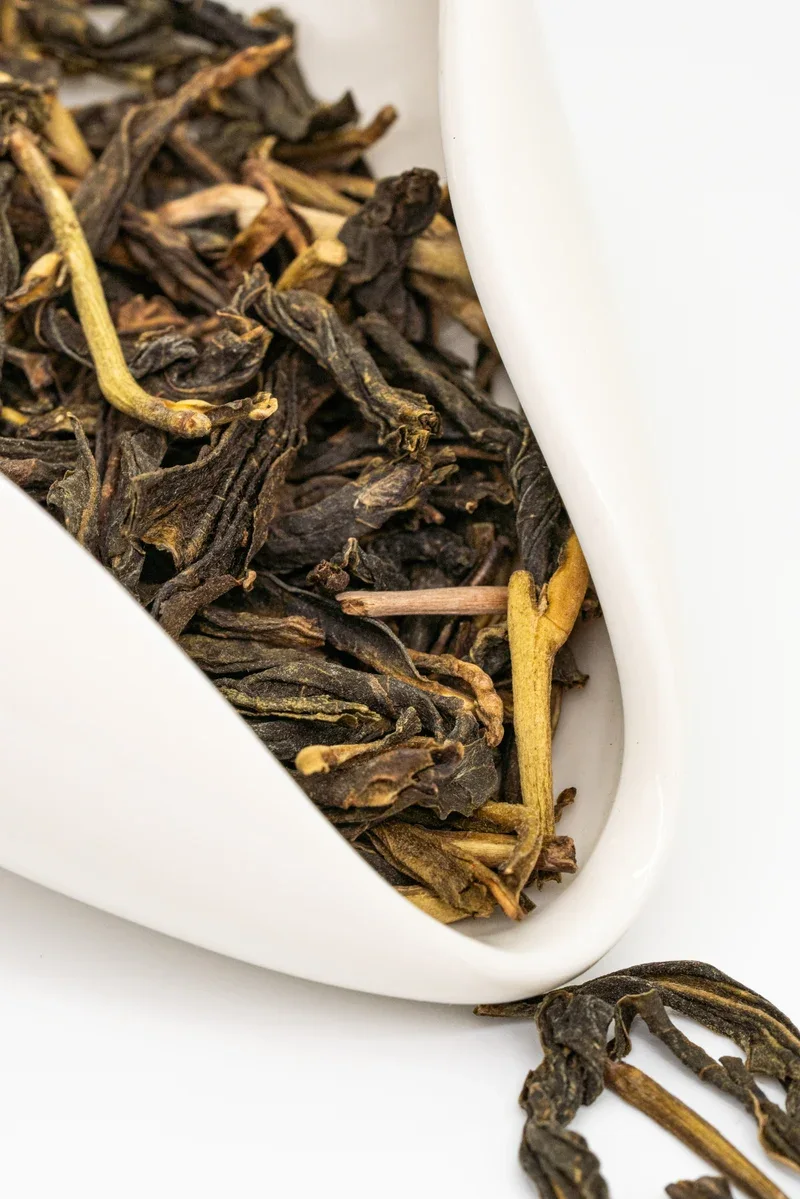
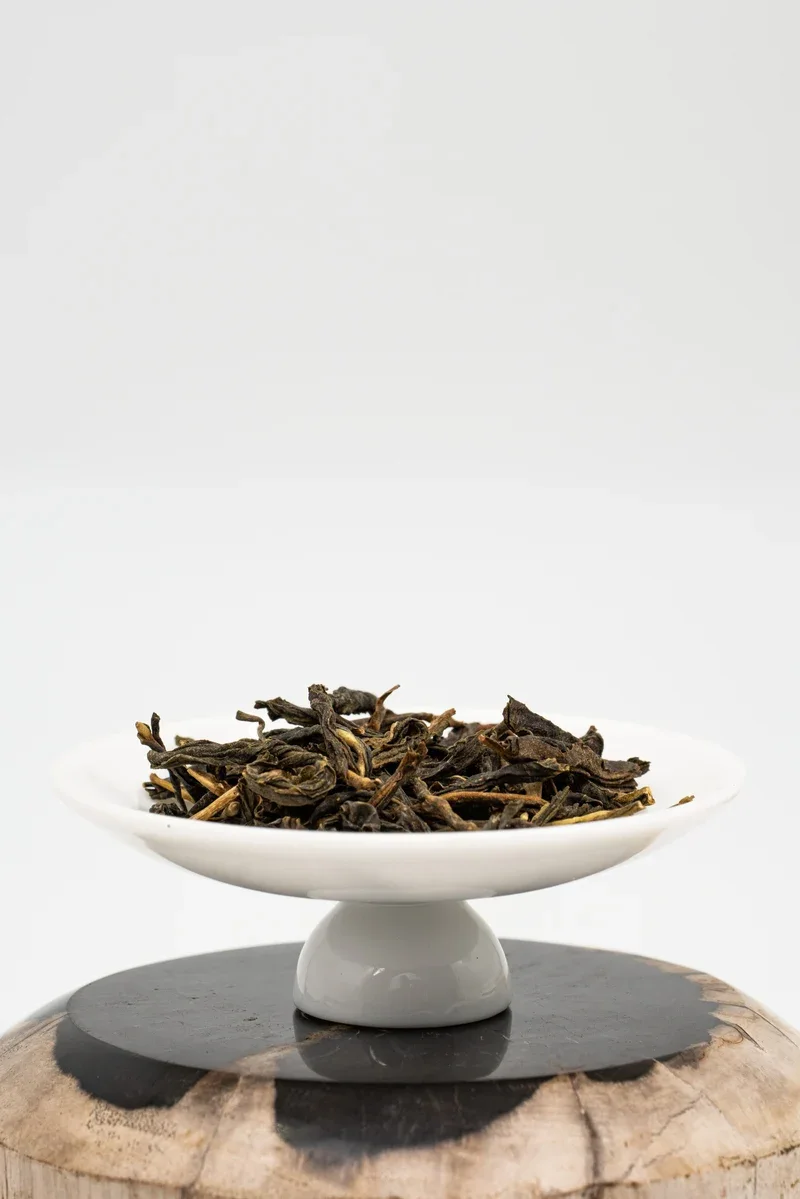
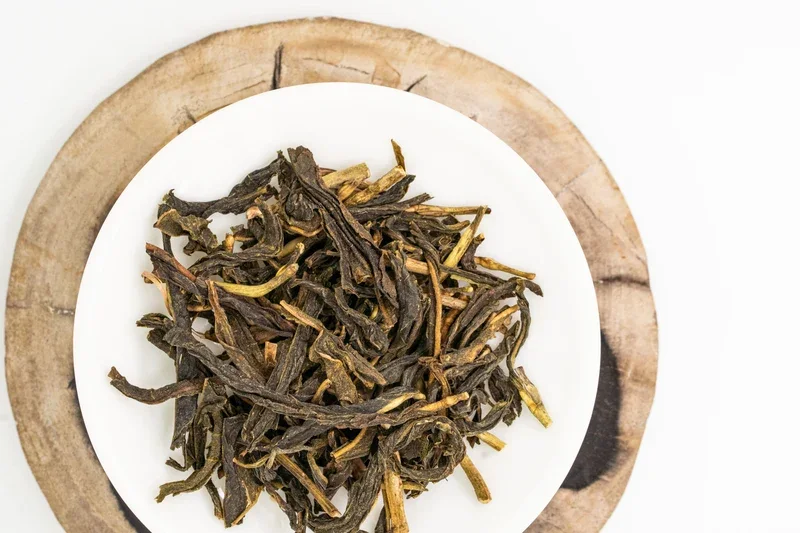
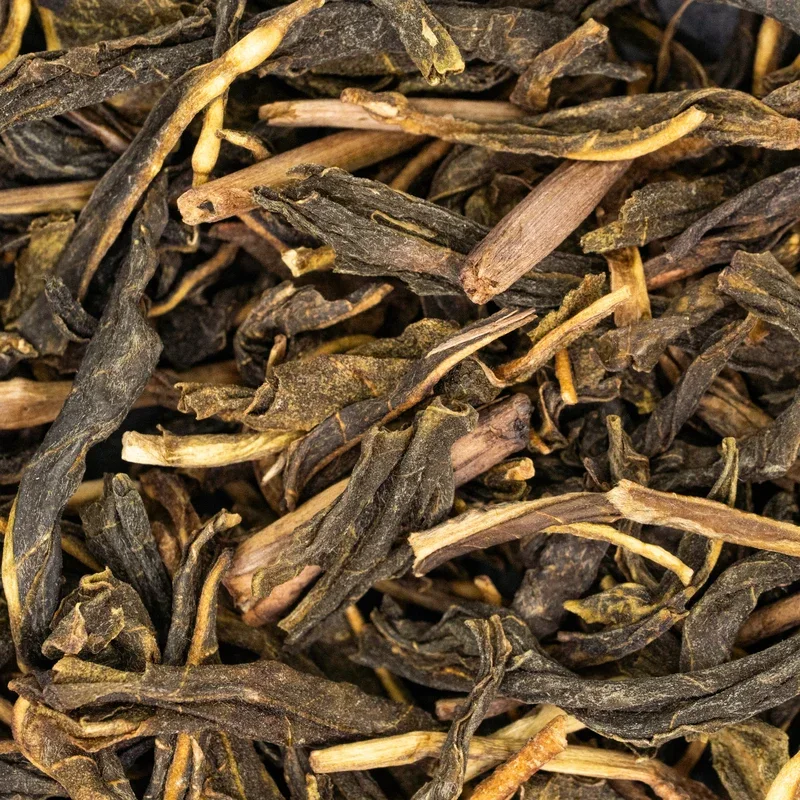
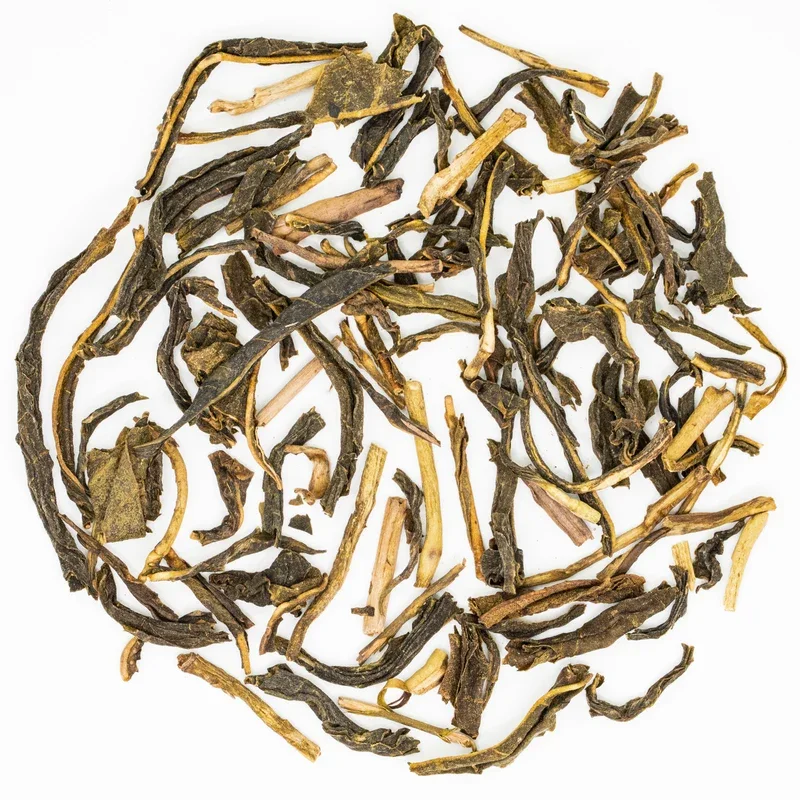
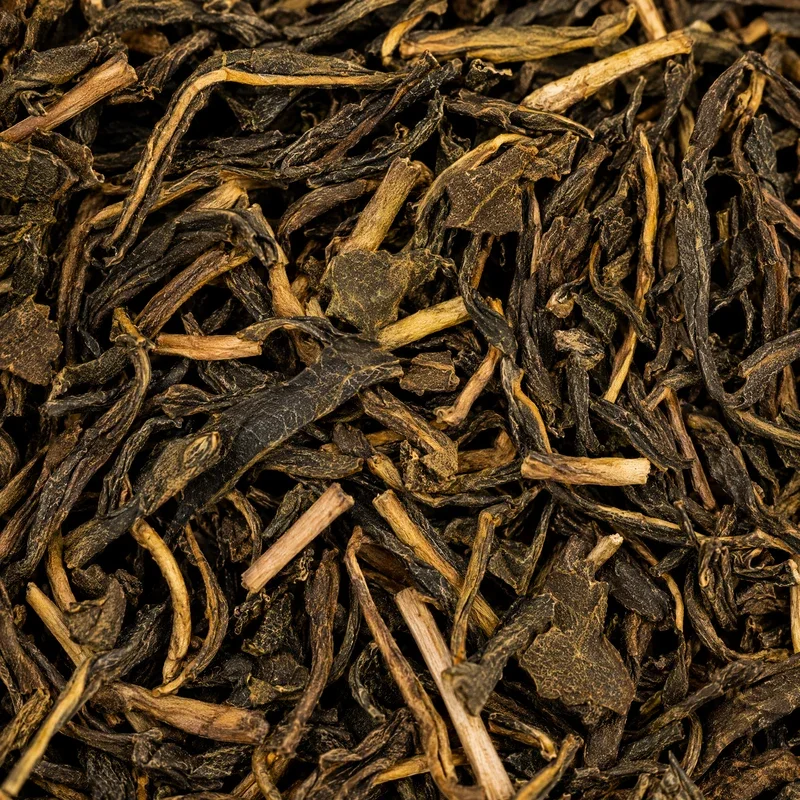
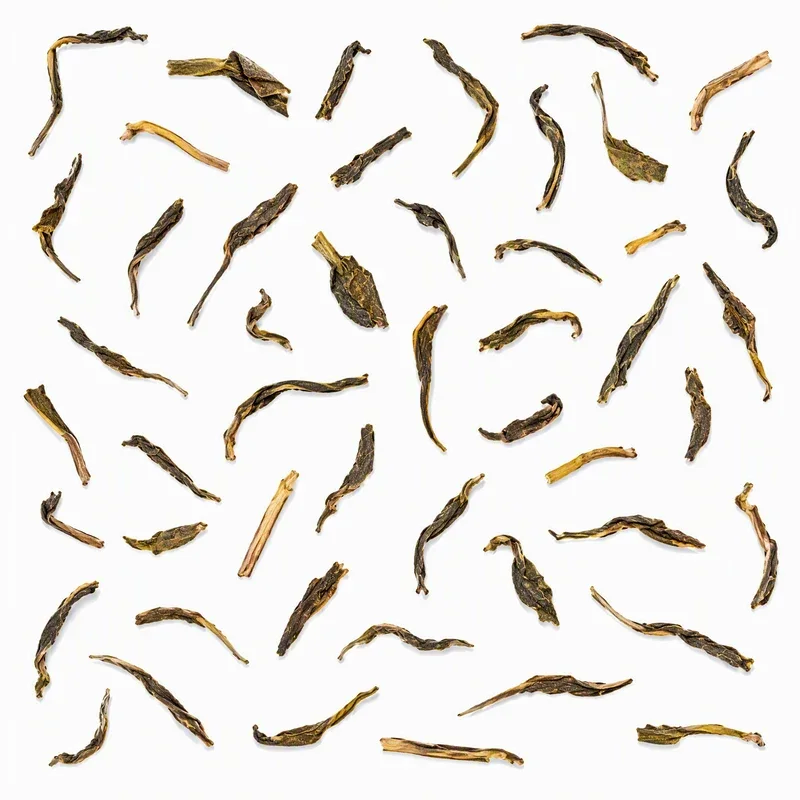
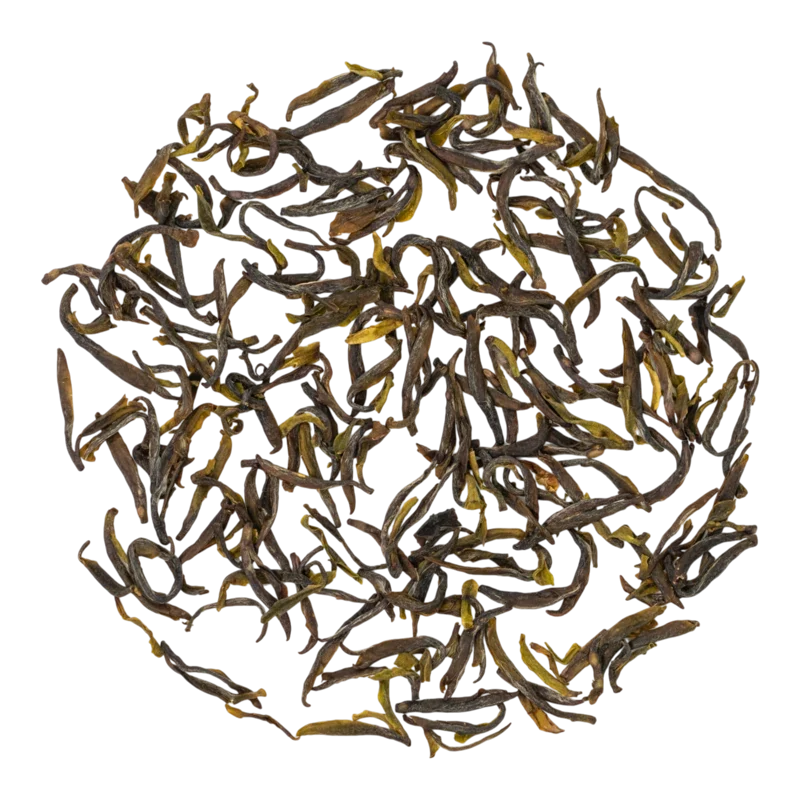
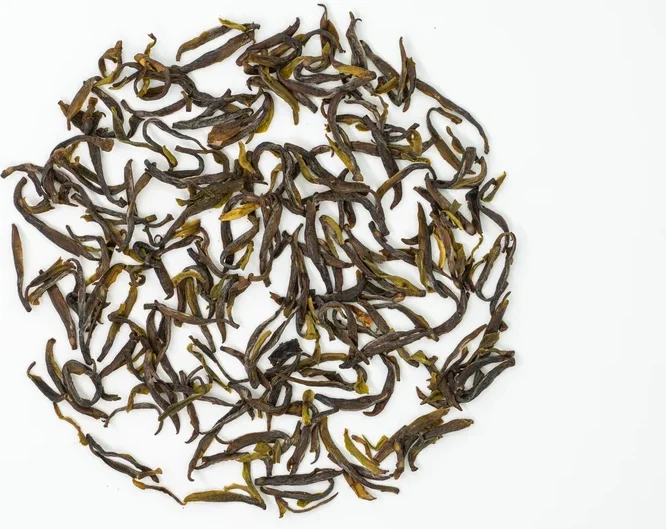
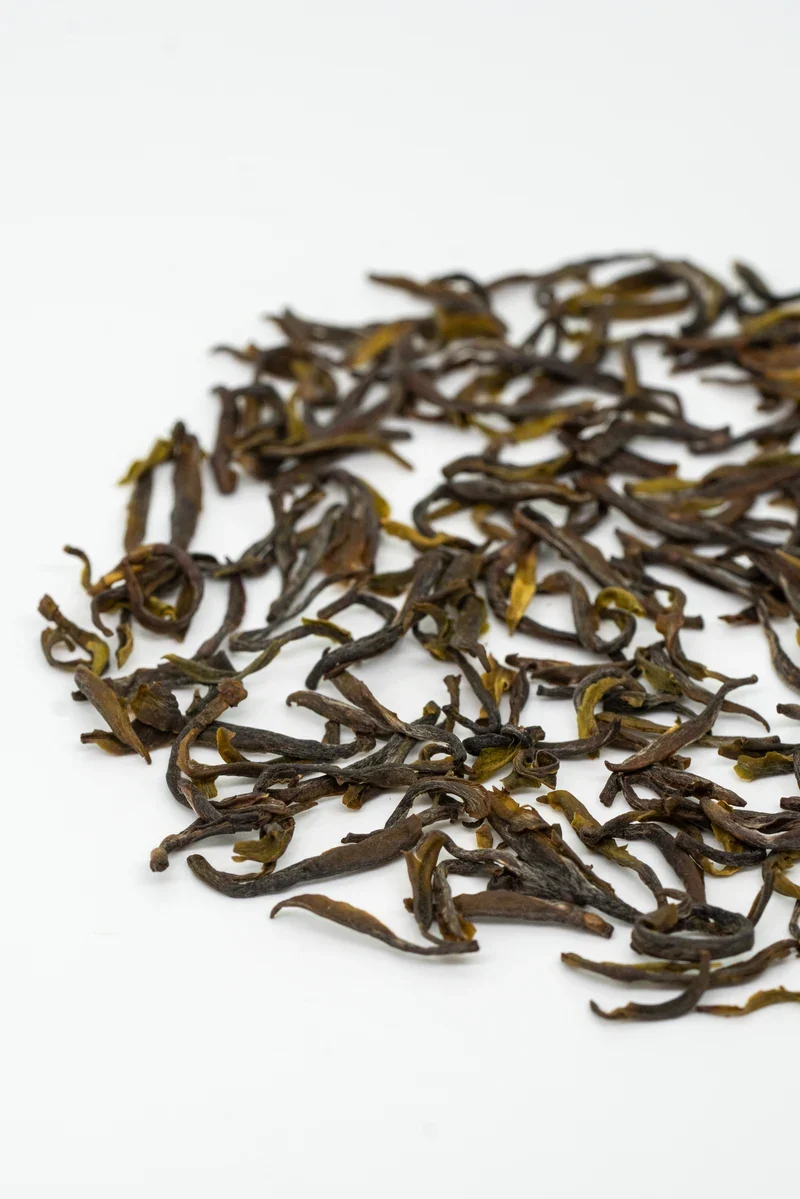
Dry Leaf Appearance: Thin, tight, slightly curved spirals resembling lotus heart form (细紧略曲似莲心). Abundant white and golden down (显毫). Color is tender yellow with oily luster (嫩黄油润).
Dry Leaf Aroma: Pure, sweetish, with tones of fresh bamboo, honey, and light nutty notes.
Liquor Aroma: Delicate, "qingtianxiang" (清甜香) — pure and sweet. In supreme grades — pronounced "nenxiang" (嫩香), aroma of tender greenery. In aged specimens, a warm tone of "yumixiang" (玉米香) — milky corn aroma appears.
Liquor Color: Tender yellow, clear, with bright luster (嫩黄明亮). Significantly lighter than large-leaf yellow teas (Dayeqing, Huangdacha).
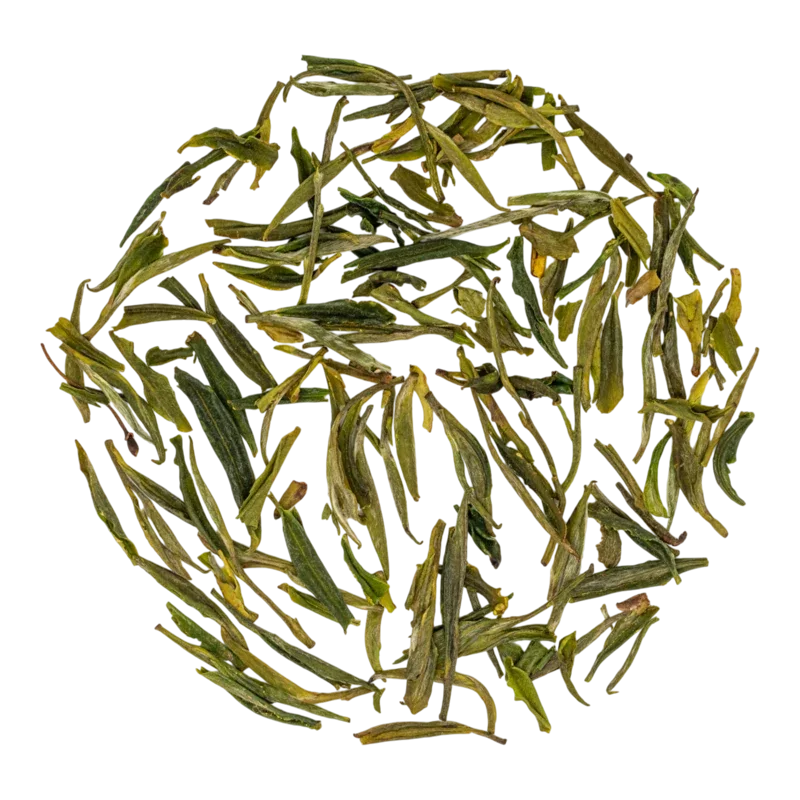
Spent Leaves: Whole, resilient buds of tender yellow color, arranged in neat "rosettes" (嫩匀成朵、嫩黄明亮). Uniformity of spent leaves is a sign of proper grading.
Taste: Gānchún (甘醇) — sweet-mellow, with pronounced silky texture. High amino acid content provides distinct umami notes, rare for Chinese yellow teas. Astringency is practically absent: the menhuang stage softens catechins without destroying L-theanine sweetness. The aftertaste is prolonged, with sweet "return" (回甘). The taste is described by the formula "鲜醇甘爽" — fresh, mellow, sweet, brisk.
Alkaloids: Caffeine — 2–3.5% of dry matter. Synergy with L-theanine provides mild, prolonged tonic effect without sharp stimulation.
Amino Acids: 3–6% of dry matter — an exceptionally high indicator due to bamboo shading influence and high-mountain microclimate. The main component is L-theanine, responsible for sweetness, umami, and relaxing effect. Spring harvest from Henglin plantation can reach 6% — twice the average for green teas (2–3%).
The mēnhuáng stage promotes formation of digestive enzymes (消化酶), preserved in the finished tea.
Minerals: Potassium, zinc, selenium, fluorine, magnesium. Selenium comes from Moganshan mountain soils.
Polyphenols: Tea polyphenol content ≥25% of dry matter. The menhuang stage partially transforms catechins, reducing astringent impact while preserving antioxidant activity. The "polyphenols/amino acids" ratio is lower than in green teas, explaining the taste mellowness.
Vitamins: Vitamin C (content higher than most yellow teas due to gentle processing of tender buds), B-group vitamins.
Digestive enzymes formed during menhuang help food breakdown. Traditionally, Mogan Huang Ya is recommended for feelings of heaviness after meals, bloating, and poor appetite.
High L-theanine concentration combined with moderate caffeine provides prolonged concentration enhancement without anxiety — a state that can be described as "calm alertness."
Compared to green teas, menhuang reduces aggressive catechin content, making the yellow version of Mogan Huang Ya more suitable for people with sensitive stomachs.
Polyphenols and catechins neutralize free radicals, supporting cellular health.
In traditional Chinese medicine, Mogan Huang Ya belongs to teas with "cool nature" (凉性), promoting excess heat dissipation. Historically recommended for "qingre jieshu" (清热解暑) — refreshing and heat relief in hot weather.
Vitamin C and polyphenols are considered beneficial for eye health. In traditional medicine, yellow tea is associated with "clearing liver and brightening vision" (清肝明目).
Polyphenols promote lipid metabolism acceleration.
Tea Amount: 3 g per 150 ml water (1:50 ratio).
Teaware: Glass tumbler (玻璃杯, bōlí bēi) — for observing the "dance of buds": when brewing, they float up, sink, and rise again, creating a mesmerizing spectacle. White porcelain gàiwǎn (白瓷盖碗) is also suitable, better concentrating and revealing aroma.
Water Temperature: 85–90°C for yellow version, 80–85°C for green version. Boiling water is not recommended: tender buds cannot tolerate excessively high temperature, which destroys amino acids and provokes bitterness.
Both are "huang ya cha" (bud teas), but Junshan Yin Zhen is produced on Dongting Lake in Hunan, uses large straight buds, and is brewed with the famous "dance of three rises and falls." Junshan Yin Zhen taste is more oily and rich; Mogan Huang Ya is more elegant, fresh, with more pronounced floral-bamboo notes.
Sichuan "sibling," also from buds. Mengding Huang Ya has more pronounced sweetness and chestnut aroma, while Mogan Huang Ya is fresher and more floral, with "bamboo" character. Mengding has imperial tea status, Mogan is the tea of scholar-researchers.
Anhui yellow tea, also from buds and young leaves. Compared to Mogan — somewhat more astringent and "grassy," with less pronounced sweetness. Huoshan is less subject to the "yellow vs. green" problem, its identity as yellow tea is more stable.
Guangdong yellow tea from large leaf (huang da cha). Fundamentally different stylistically: dense, heavy, malty, with toasted crust notes — the antithesis of delicate, floral Mogan. Comparing these two teas vividly demonstrates the range of the "yellow tea" category.
No reviews yet. Tell us what you think of this tea.
Rate this tea and share your impressions. We review each submission before publishing it.