Brewing
Gongfu brewing
- Water temperature
- 78 °C
- Tea amount
- 5 g
- Water volume
- 100 ml
- First steep
- 10 s
- Time added per infusion
- 5 s
- Infusions
- 4

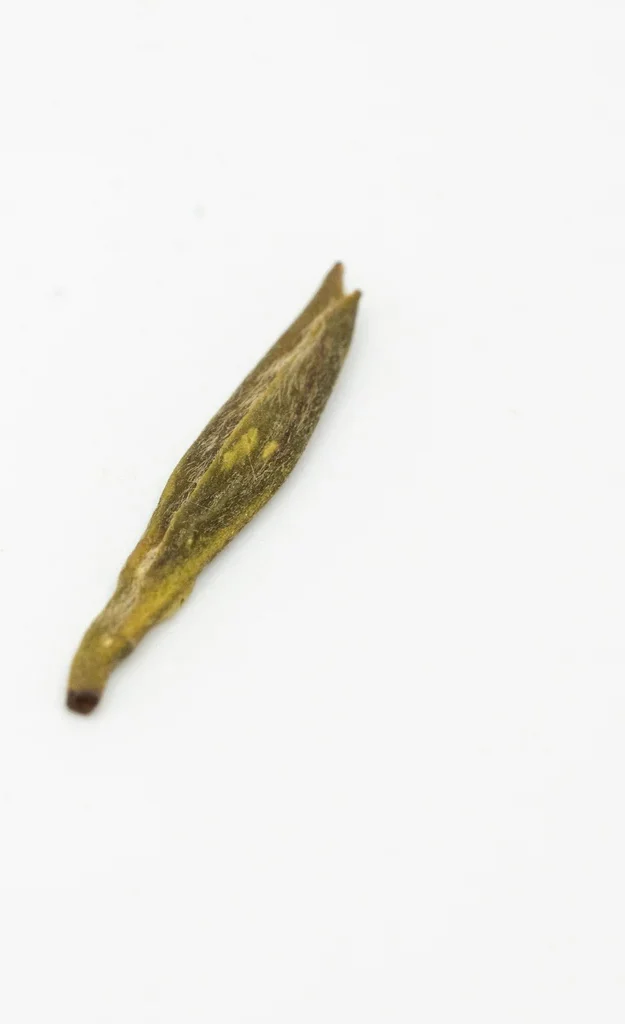
Méngdǐng huáng yá
Choose a brewing method. Start with the recommended quantities and time, then adjust to taste.
Brewing
Brewing
Taste
Tea encyclopedia
Category: Historical imperial tea of China. In 1959 included in the list of «Ten Famous Teas of China» (中国十大名茶). Product with protected geographical indication.
Category: Historical imperial tea of China. In 1959 included in the list of «Ten Famous Teas of China» (中国十大名茶). Product with protected geographical indication.
Coordinates: Approximately 30° North latitude, 103° East longitude. Located in the «golden belt» of tea cultivation along the 30th parallel.
Origin: China, Sìchuān Province (四川, Sìchuān), Ya'an Prefecture (雅安, Yǎ'ān), Míngshān District (名山区, Míngshān Qū), Mount Méngdǐngshān (蒙顶山, Méngdǐng Shān), also called Méngshān (蒙山, Méng Shān). Core zone — five peaks of Mount Mengding: Shàngqīng (上清峰), Gānlù (甘露峰), Língjiǎo (菱角峰), Píluó (毗罗峰) and Jǐngquán (井泉峰).
Type: Yellow tea (黄茶, huángchá), lightly oxidized. Belongs to the subcategory of «yellow bud tea» (黄芽茶, huáng yá chá) — the highest quality in terms of raw material.
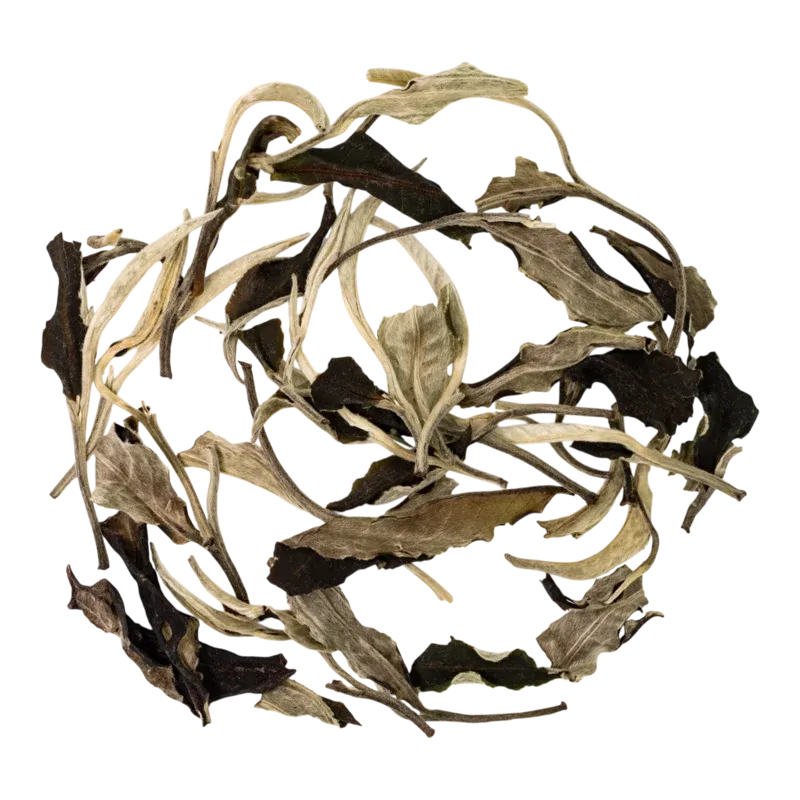
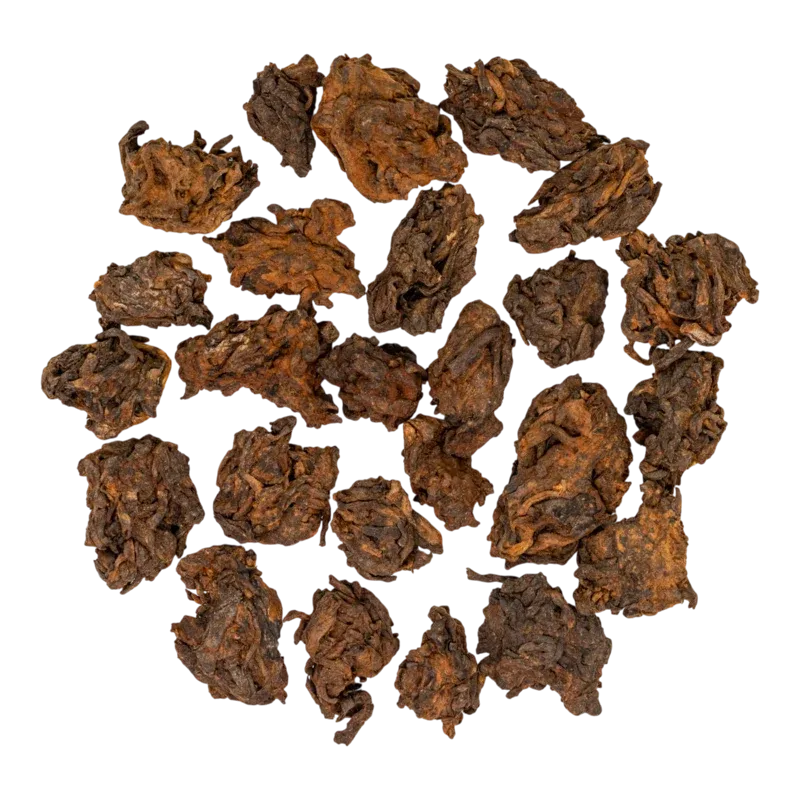
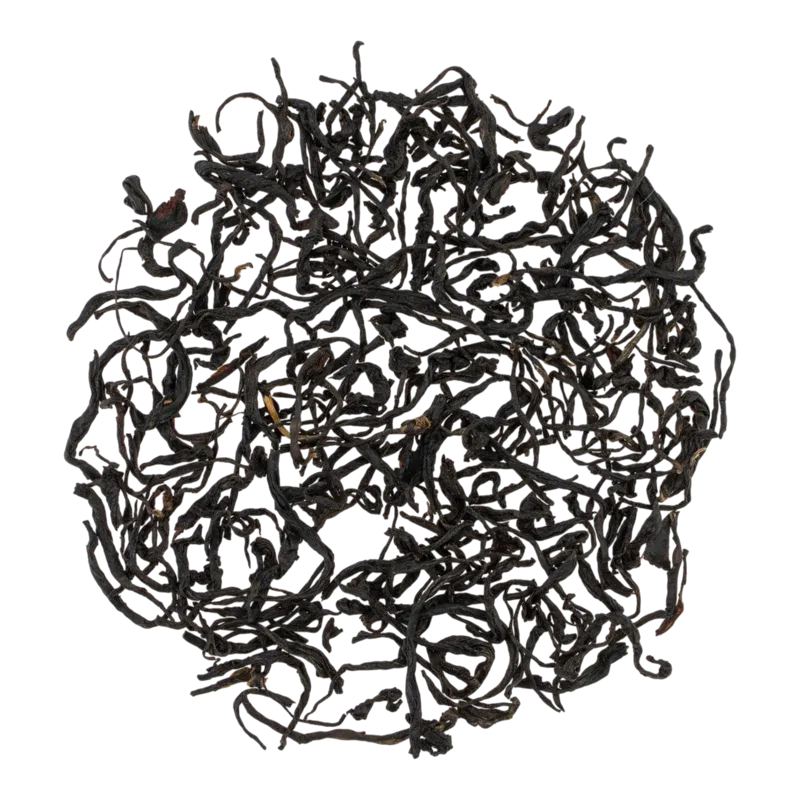
Both are «huang ya cha» from buds, both are imperial teas. Junshan Yin Zhen differs in more straight, needle-like shape (versus flat, sword-like in Mengding), more pronounced oily body and less complex technology (without «three firings — three sealings» system). Mengding Huang Ya is more elegant, drier in texture, with more distinct chestnut-honey aromatics.
Zhejiang «brother». Mogan is fresher, more floral, with «bamboo» character; Mengding is sweeter, deeper, with chestnut base. Mogan is connected with scholar-reformers of the 20th century; Mengding with emperors and Taoist myths. Mogan technology is simpler (one sealing), Mengding more complex (three cycles).
Anhui yellow tea, also from buds. Huoshan is more astringent, «green» in character, with pronounced minerality. Mengding is sweeter, milder, with deeper «yellow» character. Huoshan Huang Ya received Gold Medal at Panama Exhibition 1915 — each of these teas has its own glory.
Guangdong large-leaf yellow tea — stylistic antipode of Mengding. Dayeqing is heavy, malty, with note of toasted crust; Mengding is refined, sweet, honey-like. Comparison demonstrates how wide the spectrum of yellow teas is.
Cultural Significance: Mengding Huang Ya occupies an exceptional position in world tea culture. Mengdingshan is recognized as «three worlds»: birthplace of tea culture (世界茶文化发源地), cradle of tea civilization (世界茶文明发祥地) and sacred mountain of tea (世界茶文化圣山). On the mountain are located: Huangchayuan — the most ancient tea garden, Mengquan-jing (蒙泉井) — Wu Lizhen's well, Tiangai-si temple (天盖寺) with the altar of the Tea Ancestor, as well as the World Tea Culture Museum (世界茶文化博物馆, opened in 2005). Mengdingshan is an integral part of the «Chamagudao» (茶马古道, Ancient Tea Horse Road), which connected Sichuan with Tibet.
In 53 BCE (according to traditional dating) physician and Taoist Wú Lǐzhēn (吴理真, Wú Lǐzhēn) planted seven tea bushes on a terrace between the five peaks of Mount Mengding — this is considered the first documented act of tea cultivation in world history. Later this place was enclosed with a stone wall and received the name «Huangchayuan» (皇茶园, Huángchá Yuán) — «Imperial Tea Garden». The Qing «Mingshan County Gazetteer» (《名山县志》) testifies about the seven trees: «Two thousand years they neither wither nor grow; their leaves are thin and long, taste sweet and pure, color yellow and jade-green; when brewed in a cup, an aromatic cloud rises above the liquor and does not dissipate for a long time». These trees received the name «xiancha» (仙茶, «celestial tea»). In 1186 Song Emperor Xiaozong posthumously granted Wu Lizhen the title «Ganlu Puhui Miaoji Dashi» (甘露普惠妙济大师, «Great Master of Sweet Dew, Universal Benefit and Miraculous Healing»). Wu Lizhen is revered as «Chazu» (茶祖) — «Tea Ancestor».
In 742 (1st year of Tianbao, reign of Xuanzong) tea from Mount Méngdǐng was included in the registry of court tributes as tea for imperial sacrificial offerings to Heaven (祭天祀祖专用贡茶). Lì Zhào (李肇) in «Supplements to State History» (《国史补》) wrote: «In Jiannan there is Mengding Shihua — sometimes in small cakes, sometimes loose buds; called the first» (剑南有蒙顶石花,或小方,或散芽,号为第一). Pei Wēn (裴汶) in «Discourse on Tea» (《茶述》) placed Mengding tea on par with Guzhu Zisun: «In all Under Heaven tributes are numerous, but Guzhu, Qiyang and Mengshan — are above all». Bai Juyi sang its praises: «In qin sounds I know only 'Green Water', among teas my old friend is Mengshan» (琴里知闻惟渌水,茶中故旧是蒙山).
The tribute ritual remained unchanged throughout the centuries. Annually 12 monks (symbolizing 12 months) collected exactly 360 leaf buds (by the number of days in the lunar year) in Huangchayuan. The collected raw material was fired according to traditional technology, placed in two silver vases and sent to the capital as «zhenggong» (正贡, «main tribute»). The emperor could drink only «peigong» (陪贡, «accompanying tea») — 28 jin (斤), collected by girls on slopes outside Huangchayuan. This system was maintained until 1911 — a total of 1169 years of continuous imperial status.
At the CCP Central Committee working meeting in Chengdu, Mao Zedong tasted Mengding Huang Ya and ordered: «Mengshan tea must be developed, it should meet the people» (蒙山茶要发展,要与群众见面). In 1959 Méngdǐng Gānlù (蒙顶甘露) — the «green brother» of Huang Ya — entered the list of «Ten Famous Teas of China».
The production technology of Mengding Huang Ya is included in the registry of intangible cultural heritage of Sichuan Province. In 2022 the Palace Museum (故宫博物院) conducted an inventory of preserved samples of court tea: of 11 Sichuan varieties, 8 turned out to be of Mengding origin. In 2025 a new industry standard «Mengding Huang Ya» (《蒙顶黄芽》团体标准) was published with the introduction of grade «zhenpin» (珍品, «treasure»). The brand «Mengdingshan cha» (蒙顶山茶) is valued at 43.99 billion yuan (2022), for six years running it has been among the top ten strongest regional tea brands in China.
Cultivar: Méngshān group population (蒙山群体种, Méngshān qúntǐ zhǒng) — small-leaf variety of Camellia sinensis var. sinensis. Bush type, high frost resistance, adaptation to high-altitude conditions and constant cloudiness. Leaves are small, dense, with high amino acid content. Age of the oldest trees in Huangchayuan — according to legend, about 2000 years (actual age of modern plantings is significantly less, but the genetic line is maintained continuously).
Picking: Main season — period from Chūnfēn (春分, spring equinox, ~March 20) to Gǔyǔ (谷雨, ~April 20). Harvest beginning is determined by the opening of scales on approximately 10% of buds on the bush. Highest grade «zhenpin» is collected exclusively before Qīngmíng (清明, ~April 5).
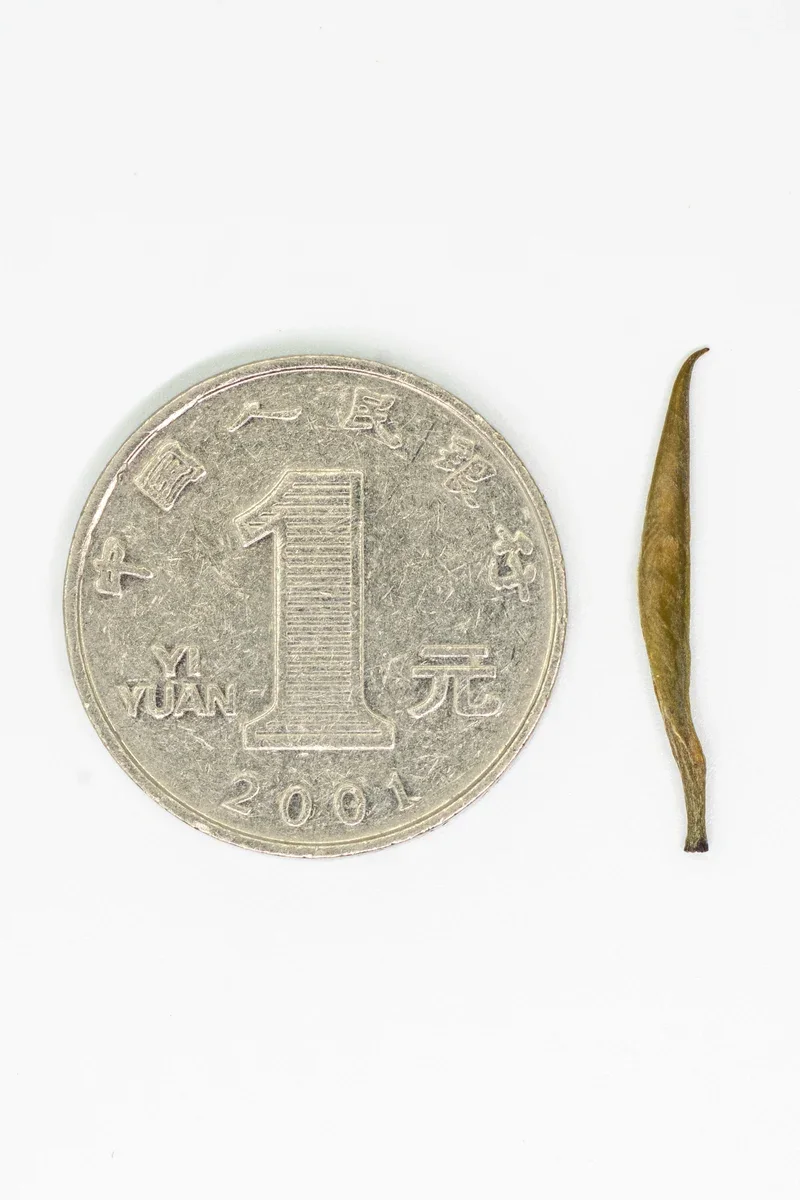
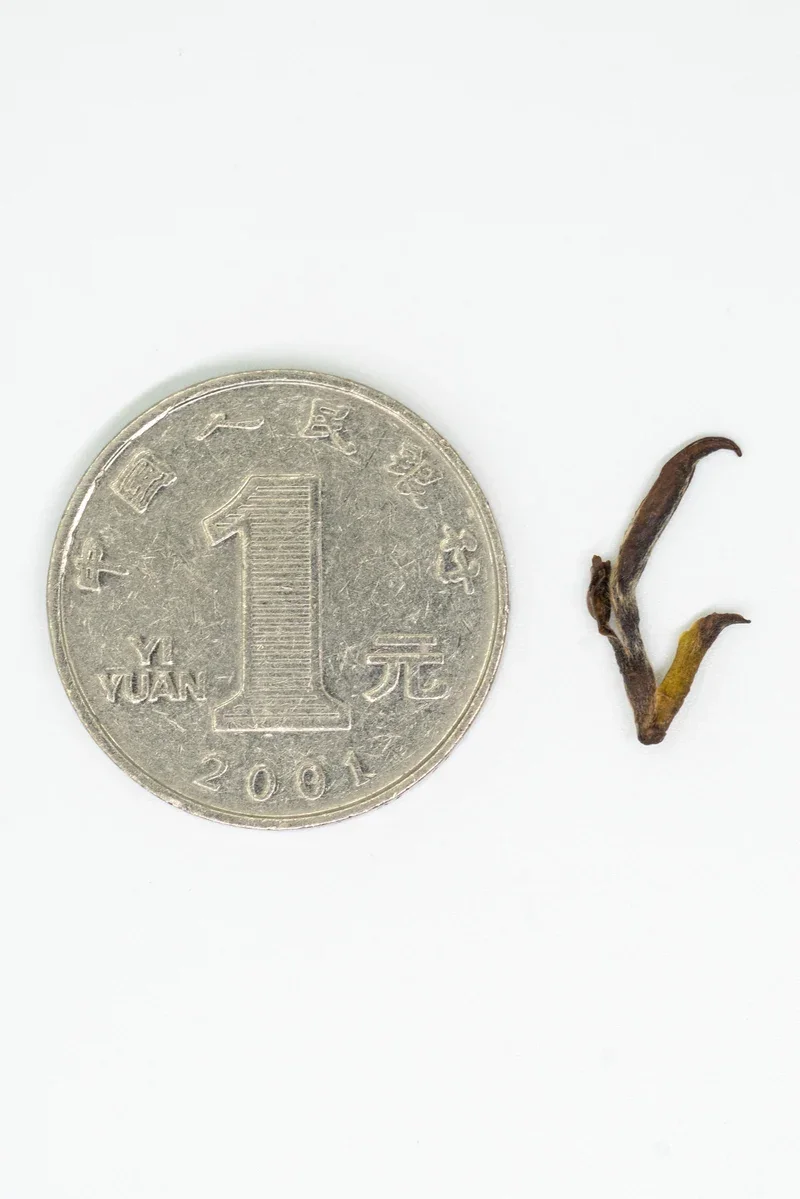
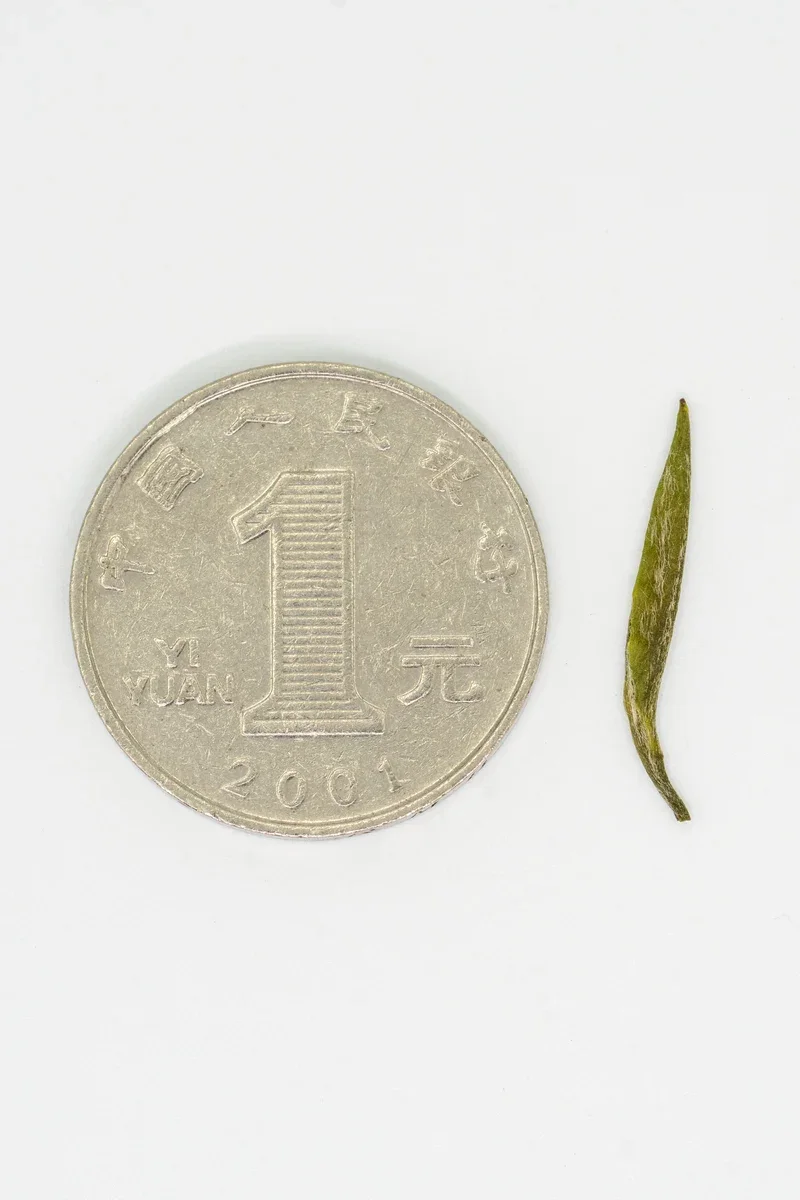
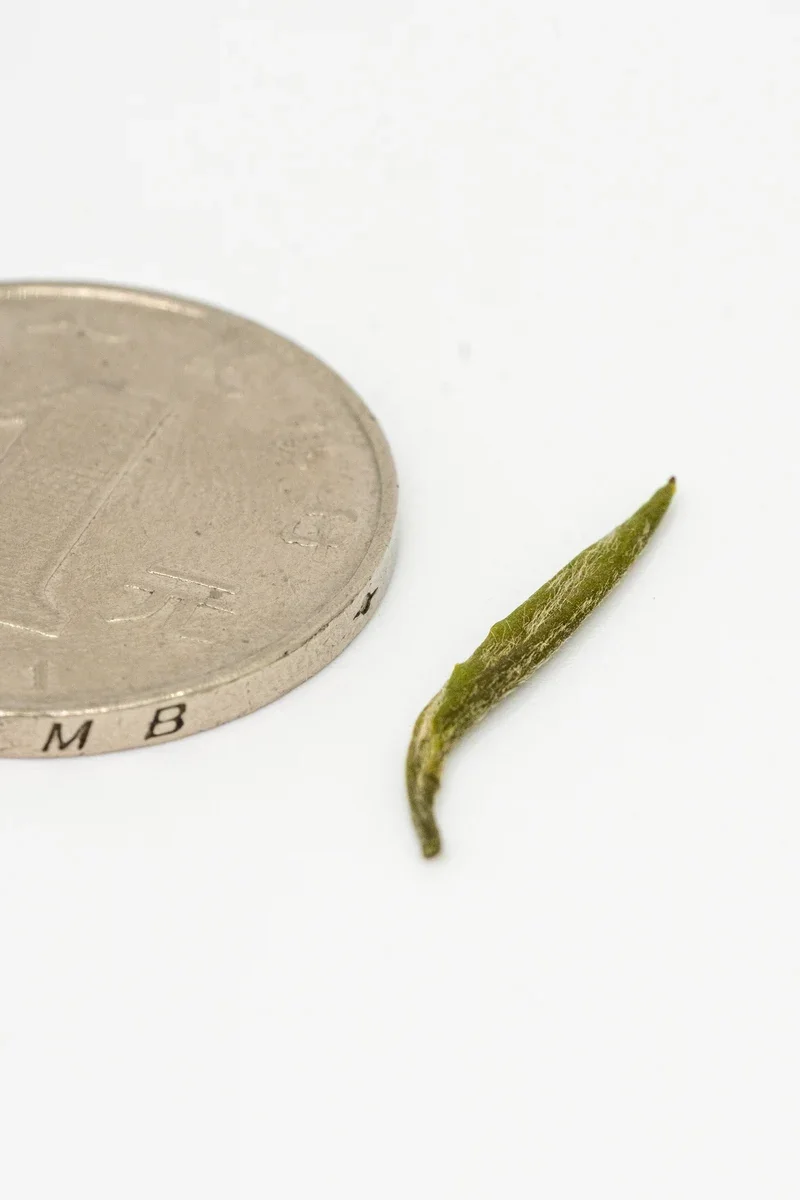
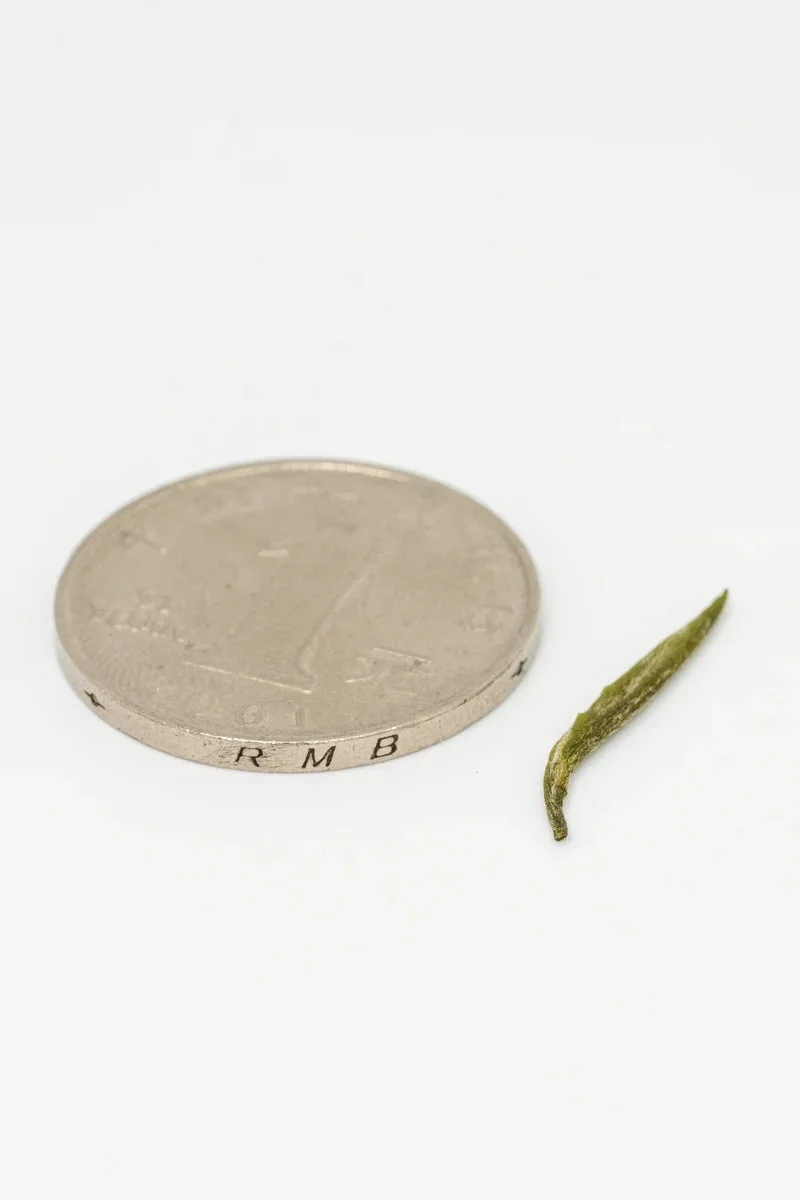
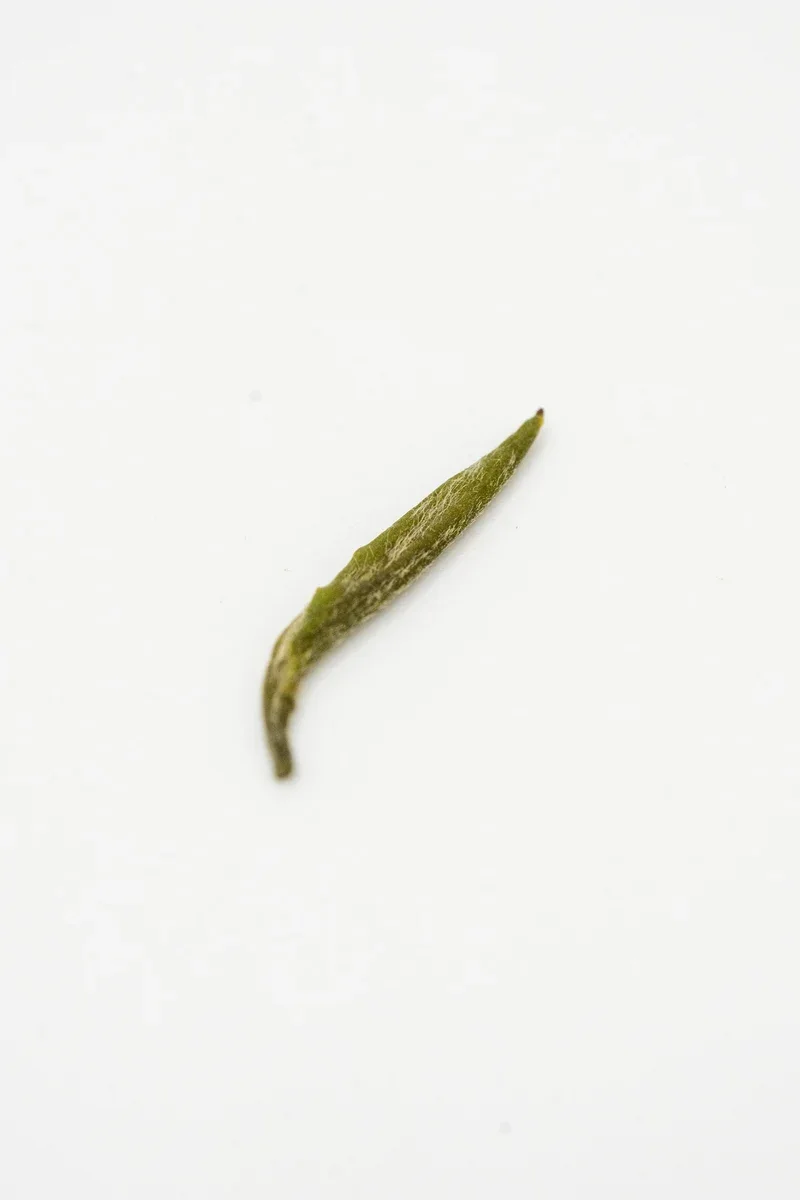
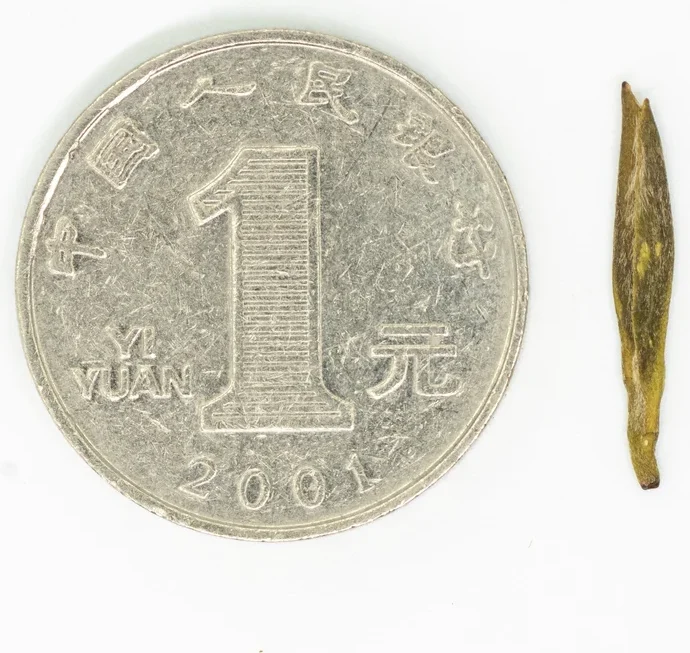
Pluck Standard: For grades «zhenpin» and «teji» (特级) — exclusively whole, round, full single buds (单芽, dān yá) without scale and fish-like leaflets. Bud length ≤2.5 cm. For first grade — bud with one barely emerging leaflet (一芽一叶初展). For 500 g of dry tea of highest grade, 40,000–50,000 buds are required.
Raw Material: The rule of «five prohibitions of harvest» (五不采, wǔ bù cǎi) applies: do not collect purple buds, do not collect pest-damaged ones, do not collect dew-wet ones, do not collect thin ones, do not collect hollow ones. Raw material is immediately spread and sorted after delivery to the factory.
Altitude: Peak of Mengdingshan — 1456 m above sea level. Tea gardens are located at altitude 800–1450 m. Huangchayuan is situated at approximately 1200 m.
Climate: Northern subtropical humid, with the characteristic nickname «Tianlou» (天漏, «Hole in the sky») — the Ya'an region is famous as one of the rainiest places in China. Average annual temperature 14–15°C. Annual precipitation ≥2000 mm. Number of foggy days — 280–300 per year (record among tea regions of China). Relative humidity ≥85%. Proportion of diffused light is exceptionally high. These conditions — constant cloudiness, high humidity, moderate temperature — are ideal for slow bud growth and maximum accumulation of amino acids and aromatic substances.
Soil: Yellow-brown mountain soils (黄棕壤, huáng zōng rǎng), acidic (pH 4.5–5.6), deep, loose, with high organic matter content. Enriched with selenium, zinc and other trace elements. Parent rock — weathered sandstones and shales.
Mengdingshan is located on the western edge of the Sichuan Basin, in the transition zone between the Qinghai-Tibet Plateau and the plains of Western Sichuan. The mountain belongs to the Qiónglái range (邛崃山脉, Qiónglái Shānmài). Five peaks form a «bowl», protecting tea gardens from wind and forming a unique microclimate of constant cloudiness.
Ecological purity: Mengdingshan is remote from industrial zones, surrounded by forests, air and water quality meet the highest standards. The terroir formula — «high altitude + clouds + rain + acidic soil» — creates conditions that cannot be reproduced elsewhere.
A flat pan (平锅) with diameter ~50 cm is used, coated with a thin layer of white wax to prevent sticking. Pan temperature — about 130°C. Load — 120–150 g buds per pan. Time — 4–5 minutes. Buds are fired with quick, light movements until the color darkens, tea aroma appears, and moisture content decreases to 55–60%. Overheating is inadmissible: delicate single buds require exceptionally gentle handling.
Fired buds are wrapped in kraft paper (草纸, cǎo zhǐ) — traditional material that allows air passage but retains heat and moisture. The bundle is placed at the edge of the stove (灶边), where gentle residual heat is maintained. Temperature inside the bundle — 28–32°C, humidity — about 90%. Time of first sealing — about 60 minutes. During chubao non-enzymatic yellowing begins: chlorophyll partially breaks down, catechins oxidize, yellow pigments and characteristic sweetness begin to form.
Buds are extracted from the bundle and re-fired in the pan at lower temperature than during shaqing. Task — to dry the surface, fix the intermediate result of sealing and prepare the leaf for the next stage.
Buds are again wrapped in kraft paper and held under similar conditions. Time — about 60 minutes. Yellowing deepens, aroma becomes more pronounced.
Another cycle of light firing to control moisture and fix color.
After the third firing, buds are spread in a low pile and left in conditions of increased humidity. This is the stage of «wet sealing» (湿闷发酵), completing the formation of «three yellows». Total time of all sealing stages is 8–12 hours.
Final firing to give the final shape — flat, straight, sword-like strips (扁平挺直似剑).
Low-temperature final drying to bring moisture to standard level (≤6.5%) and fix aroma.
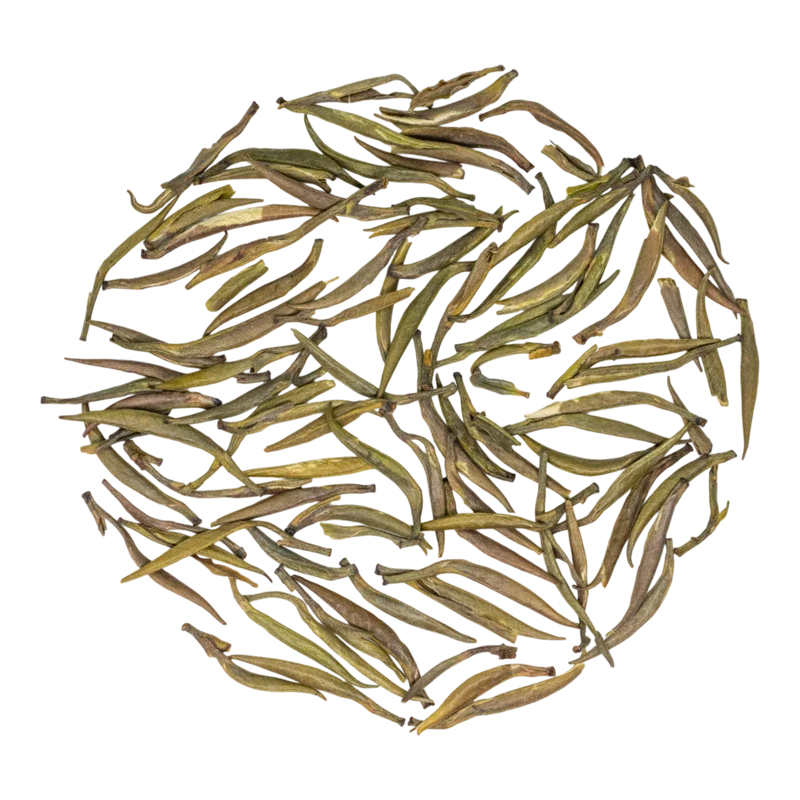
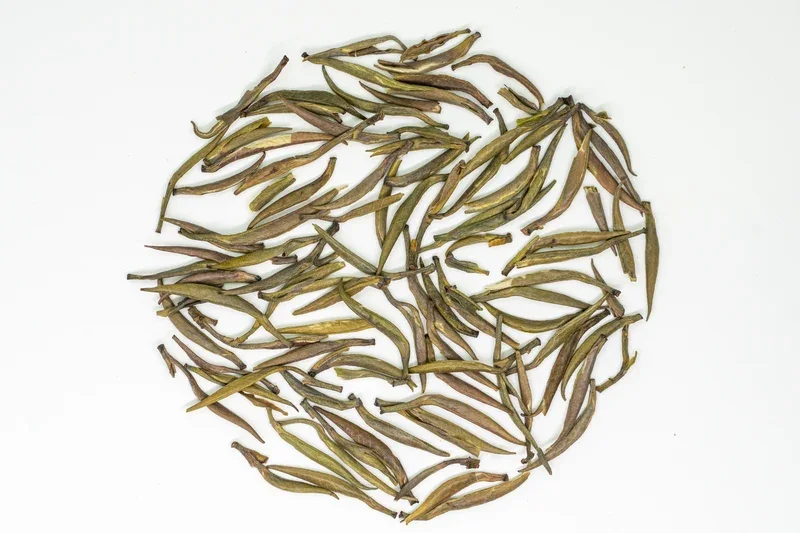
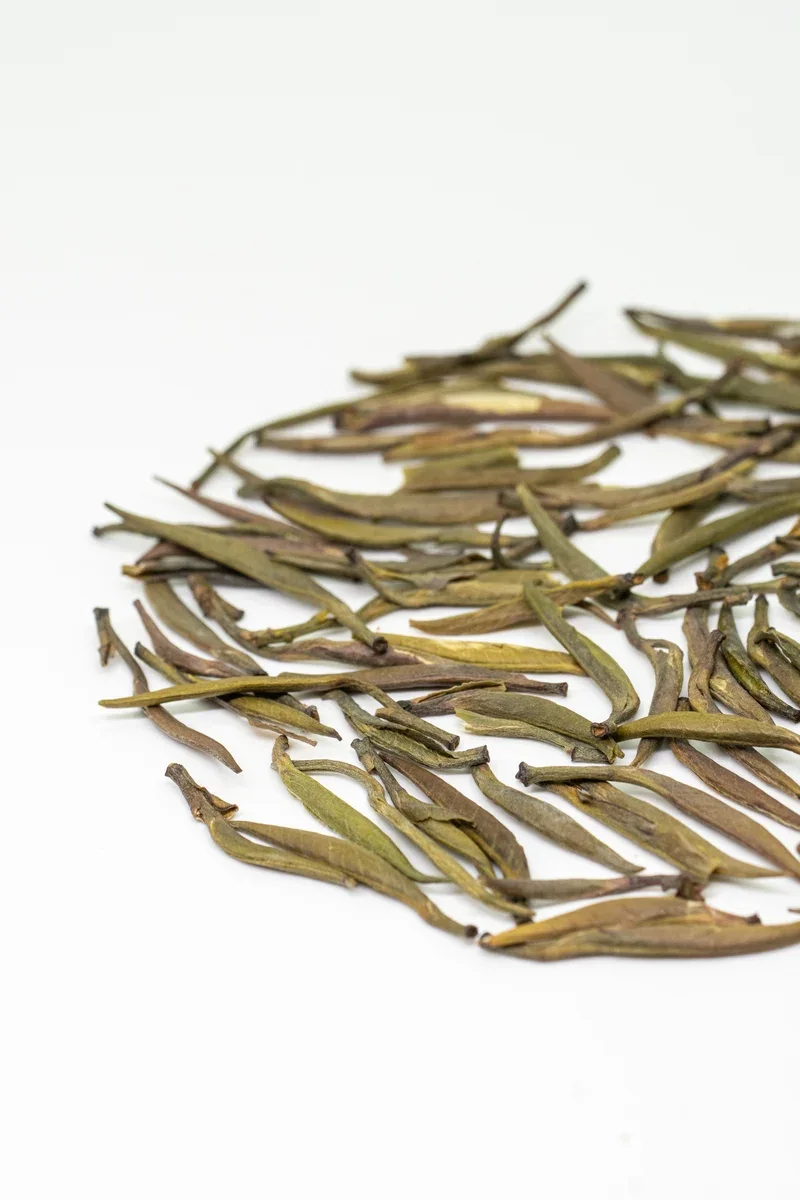
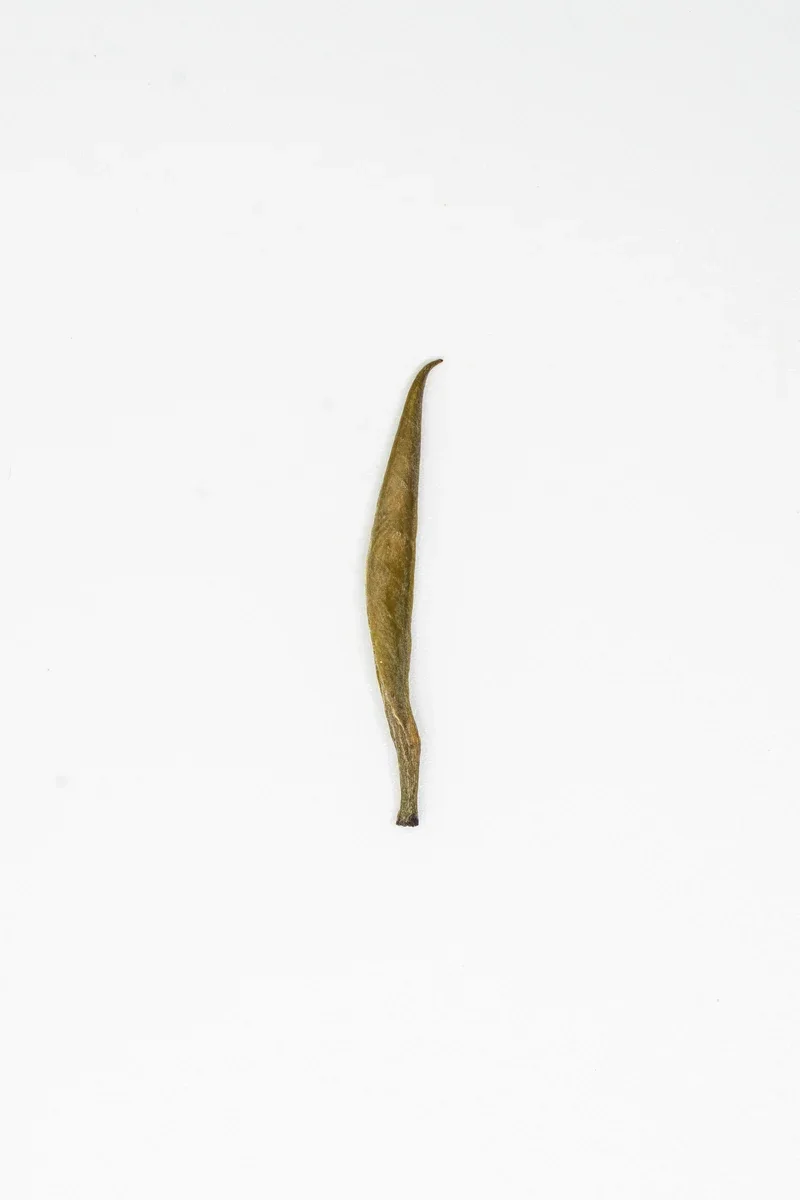
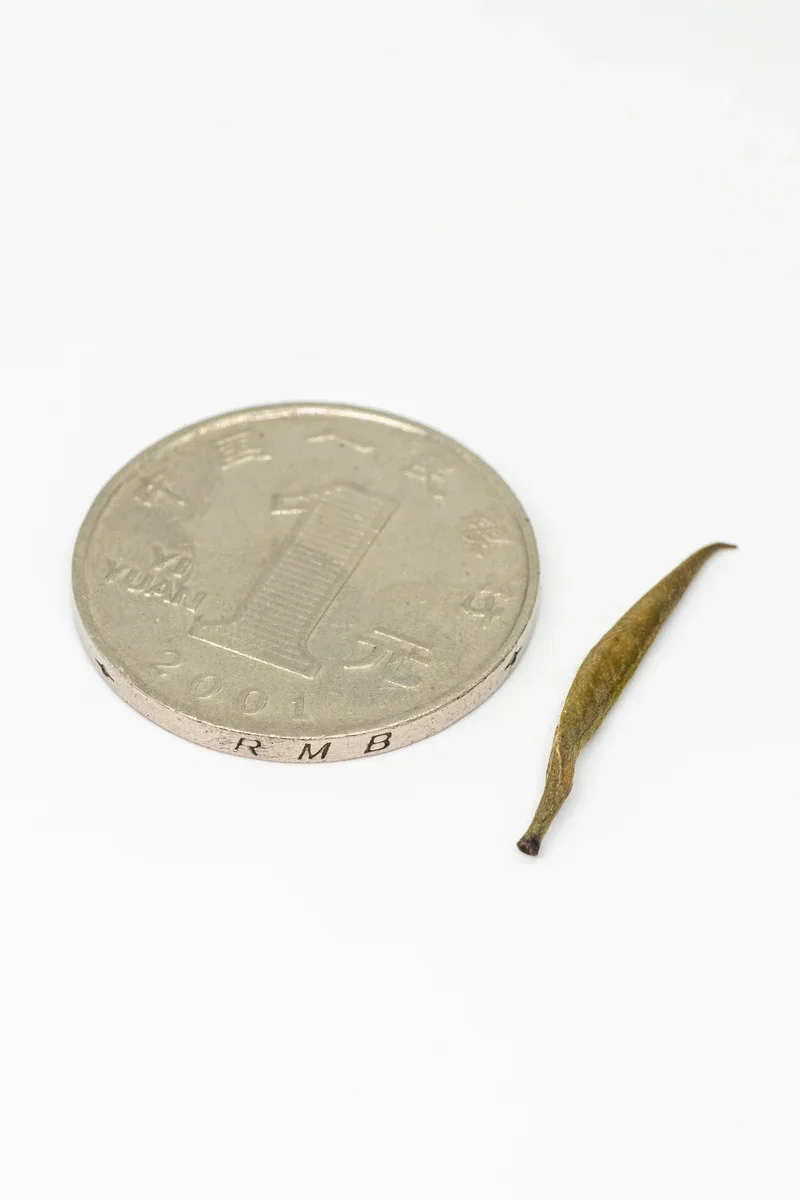
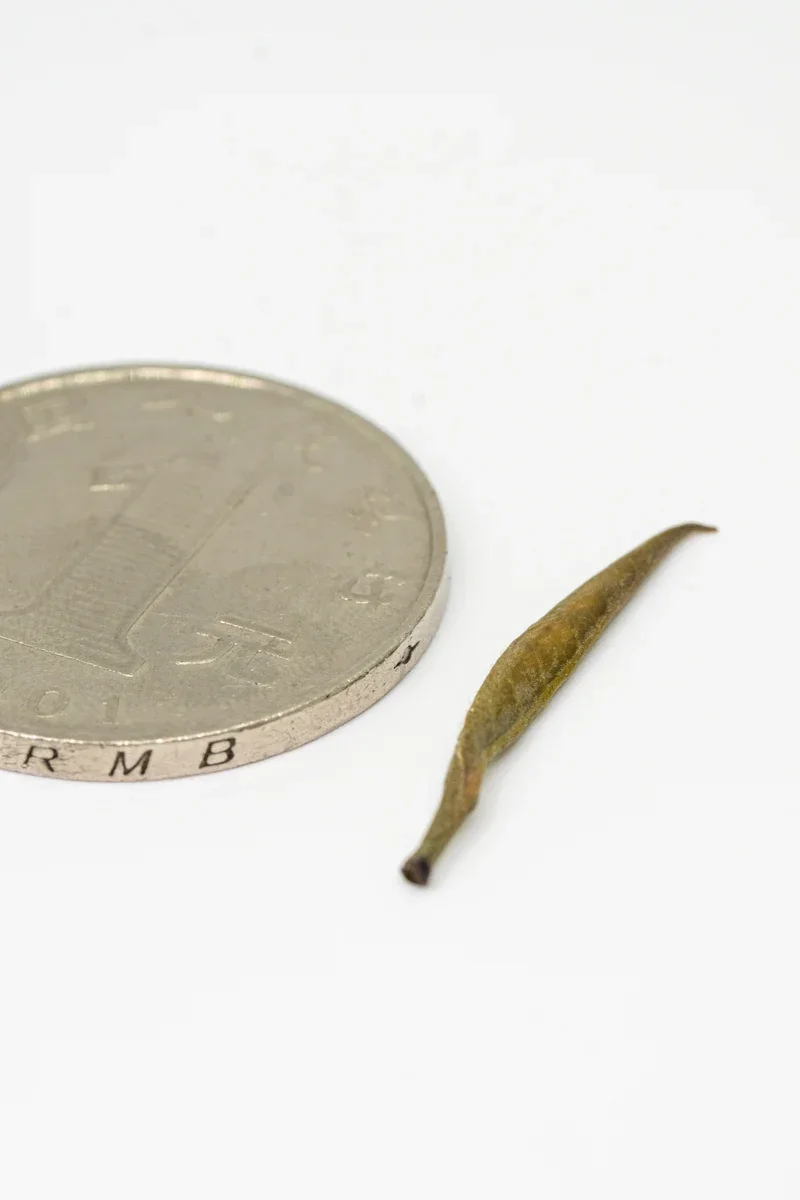
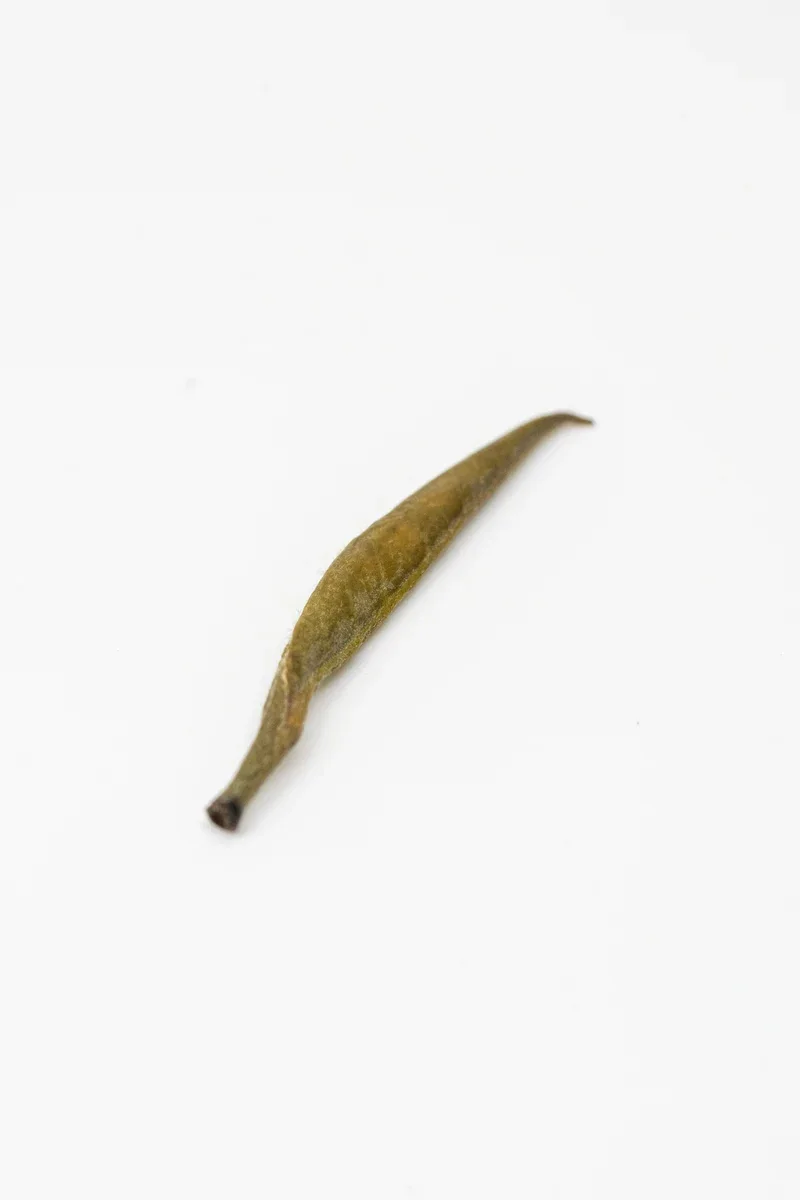
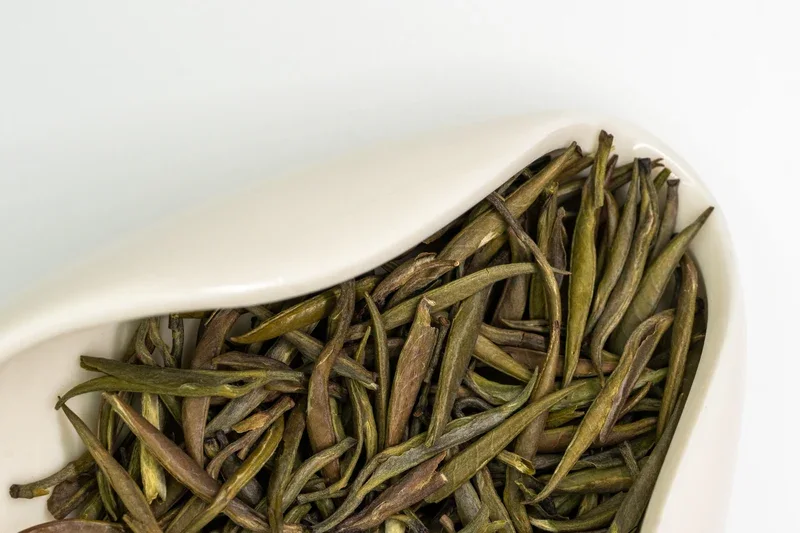
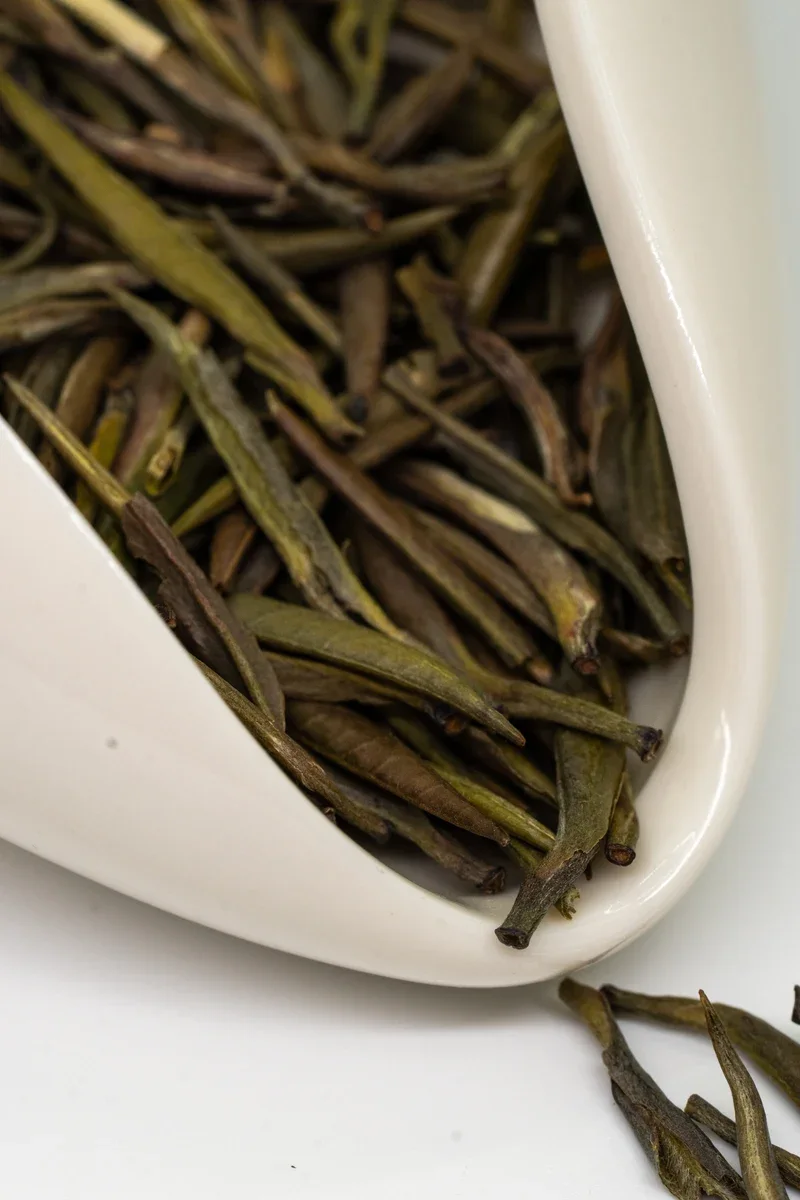
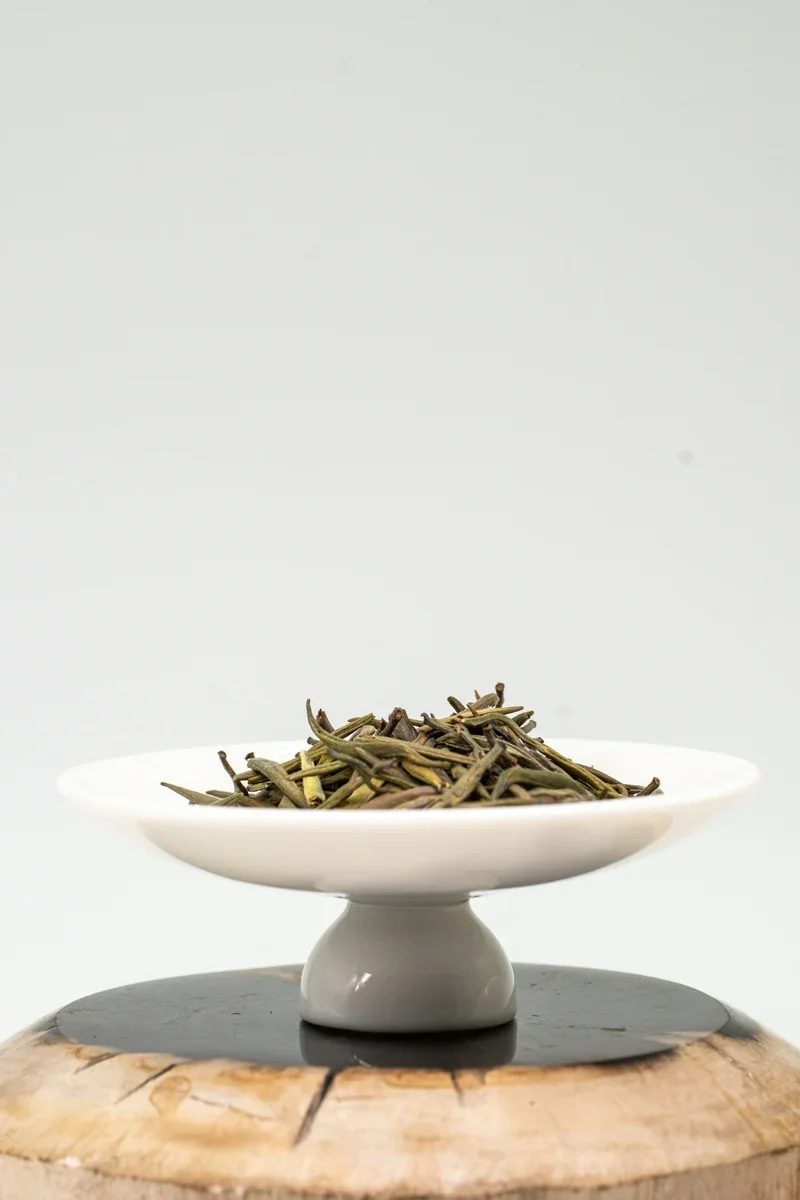
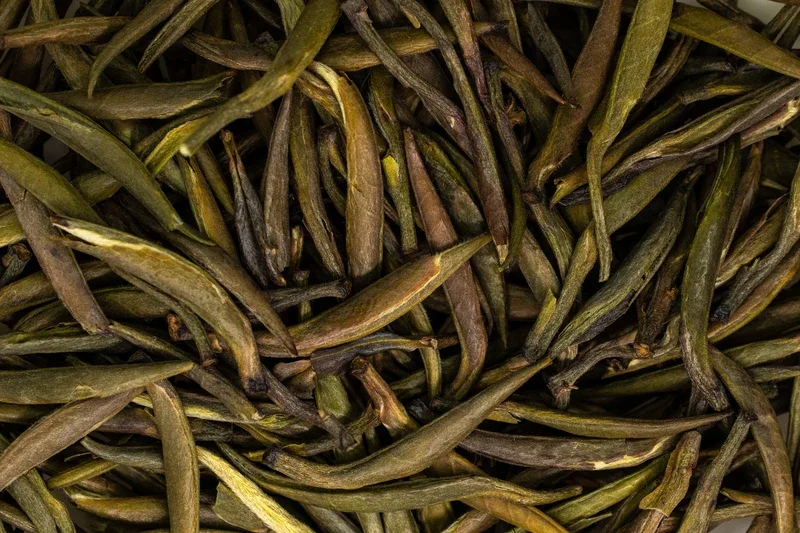
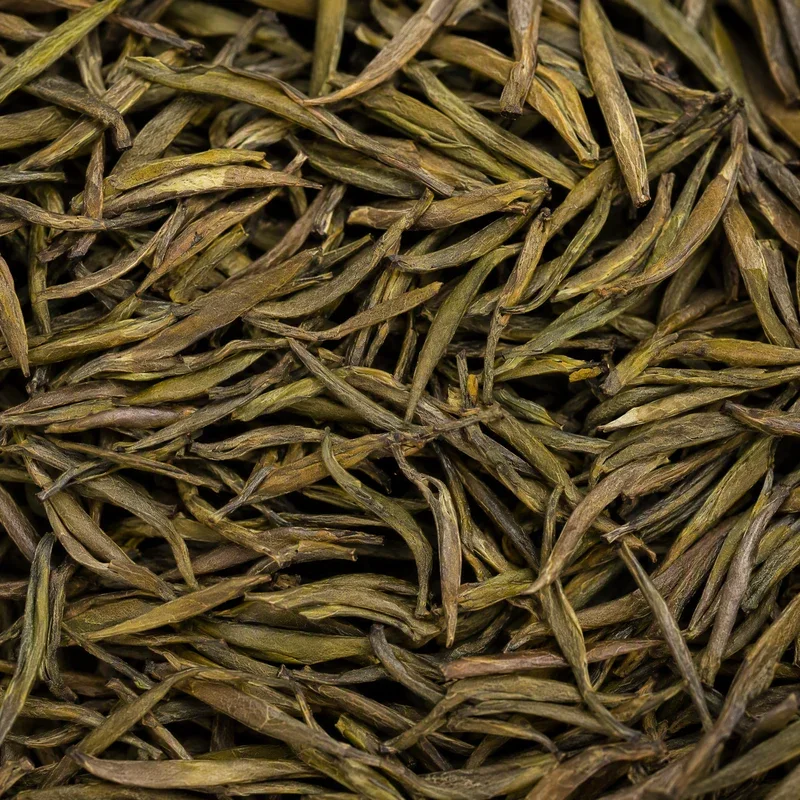
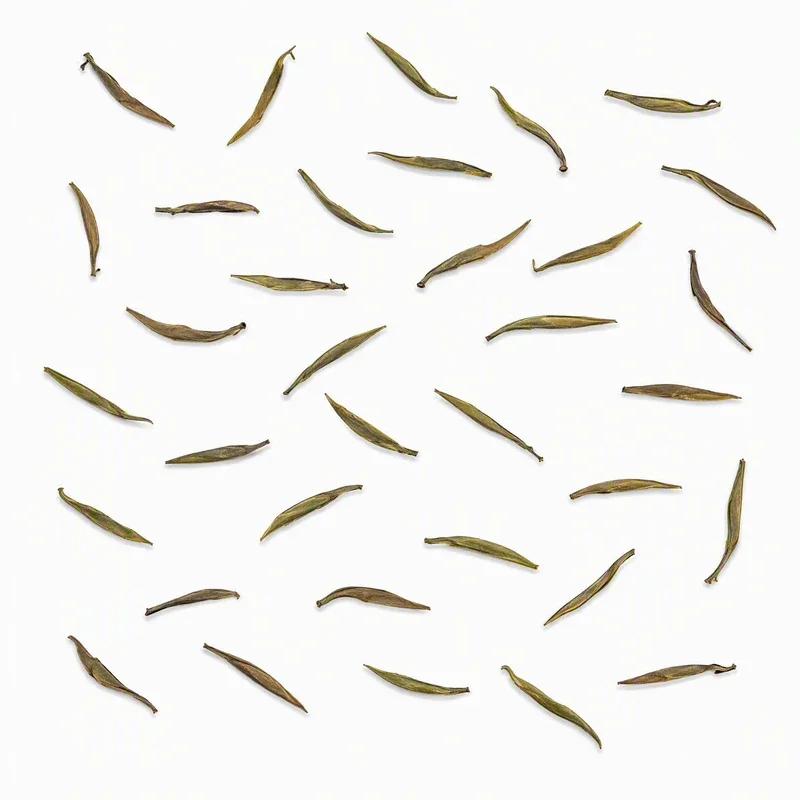
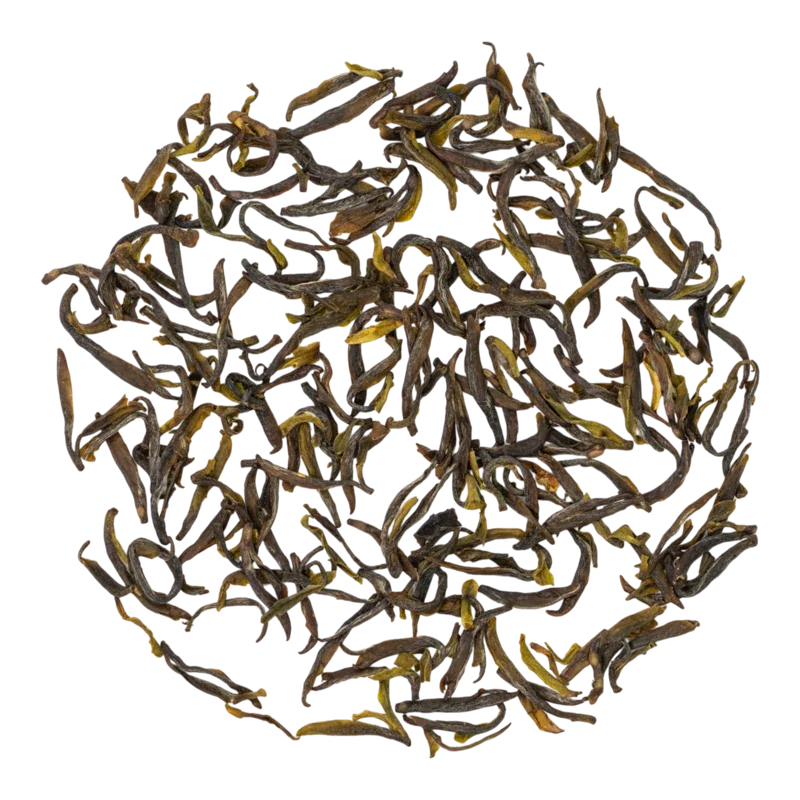
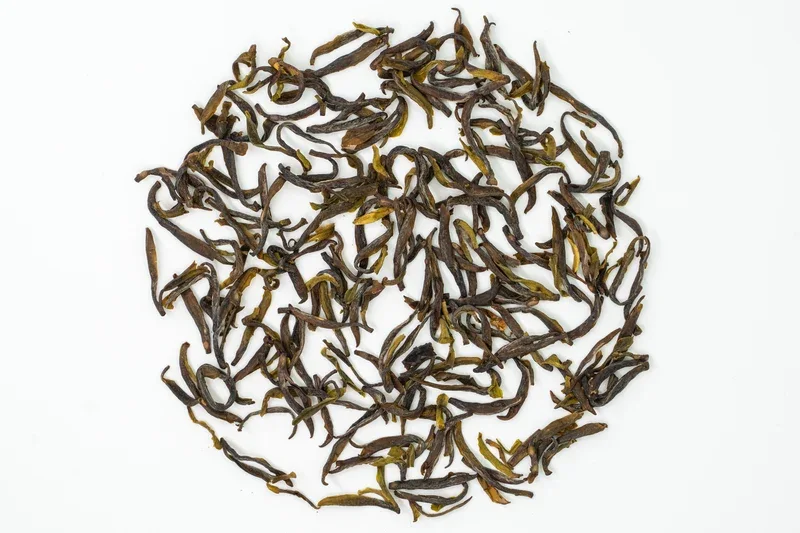
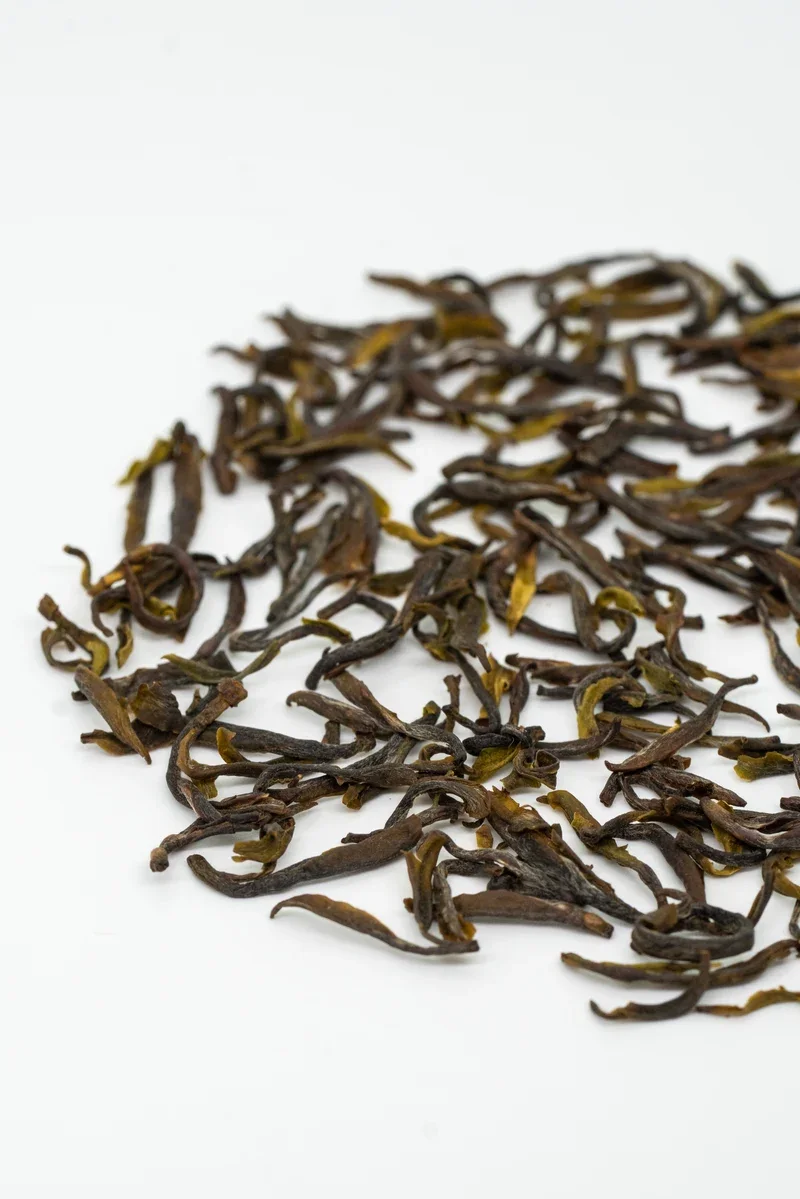
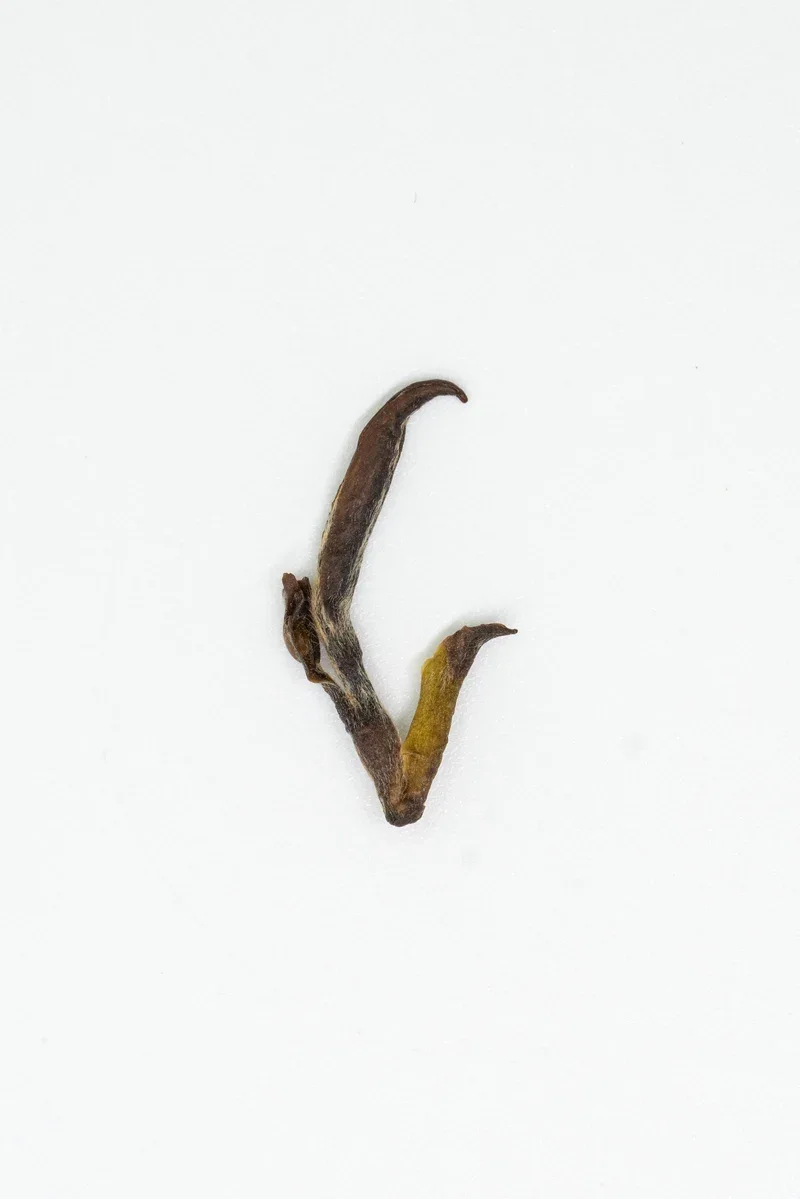
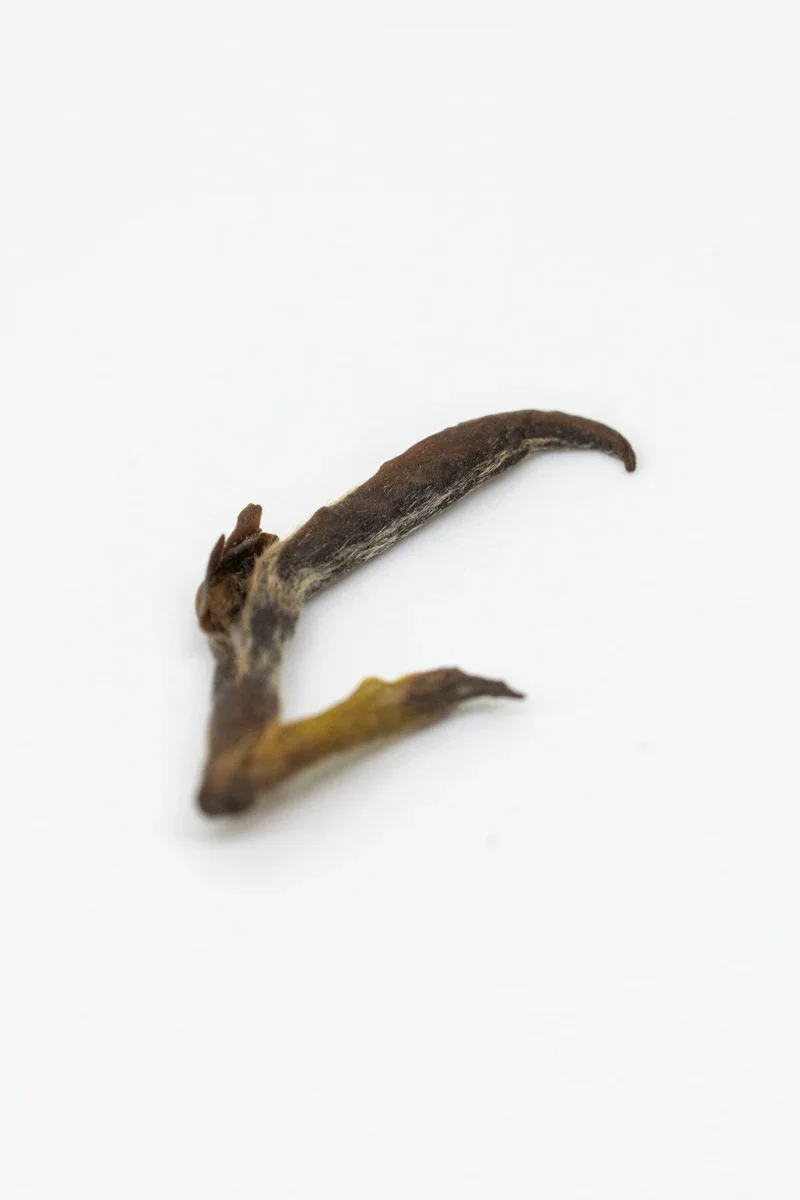
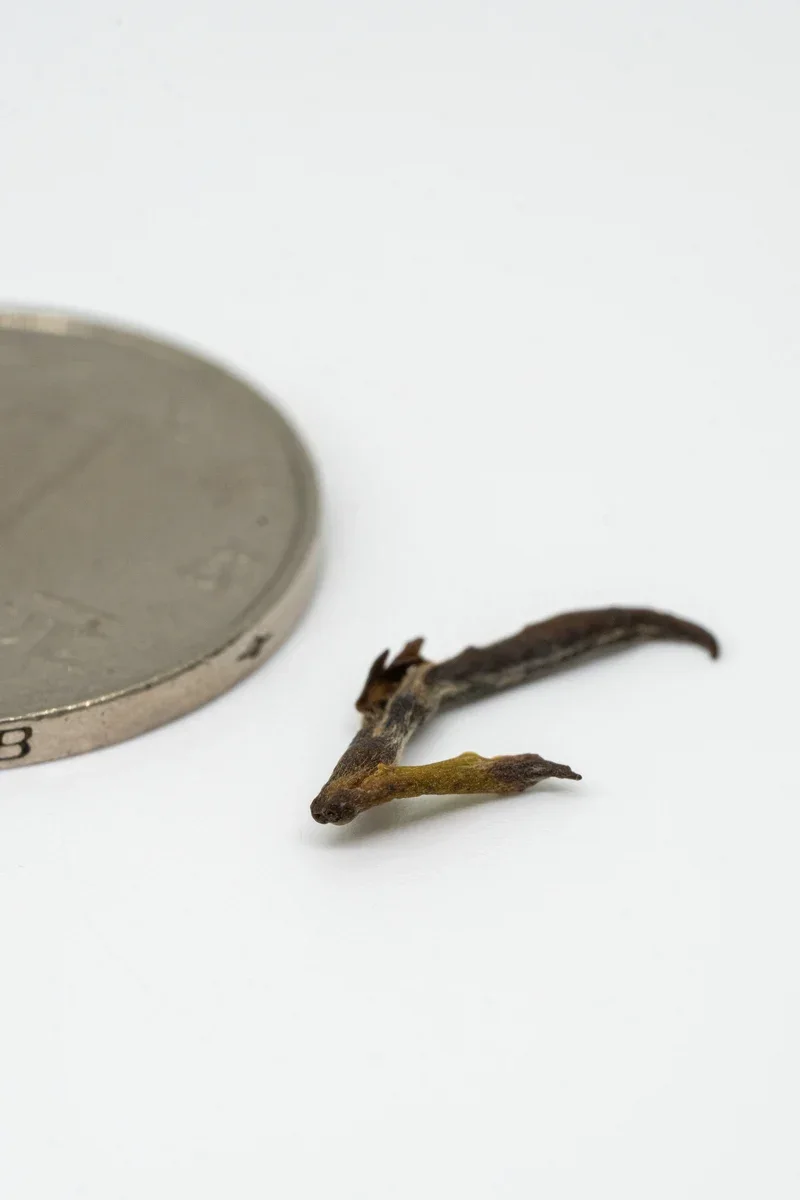
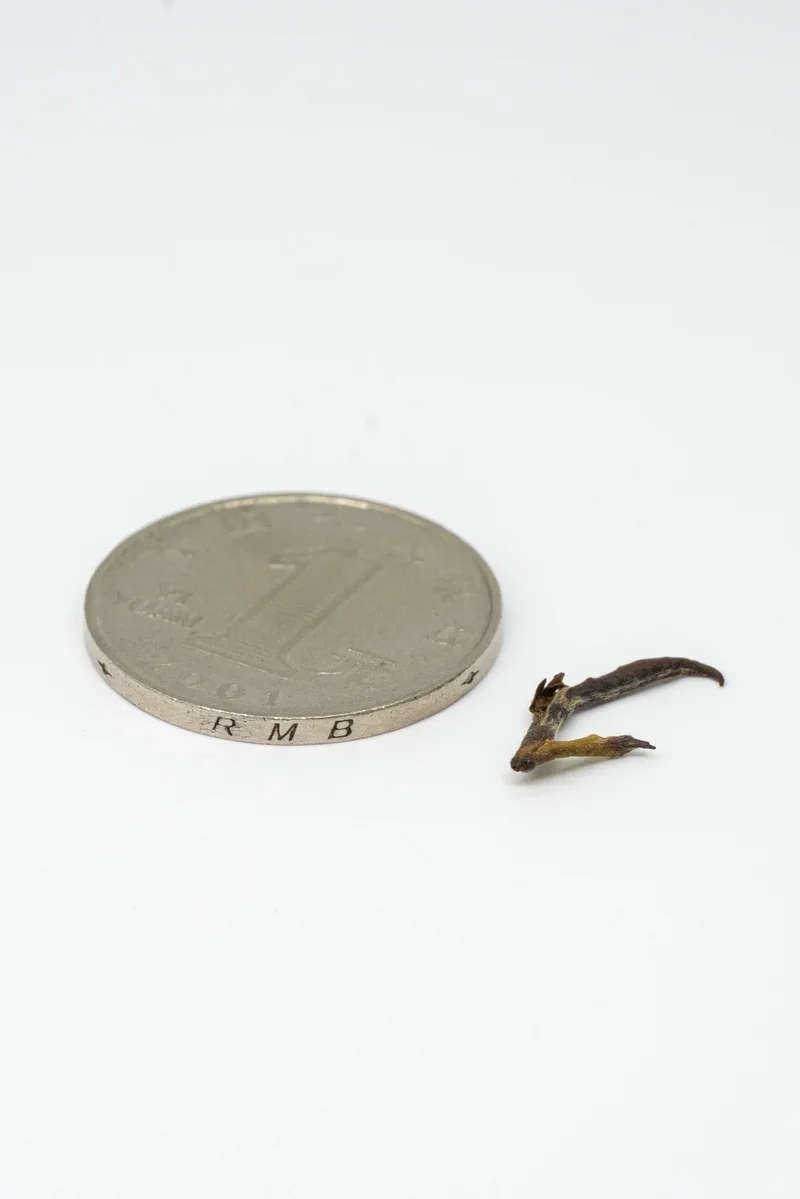
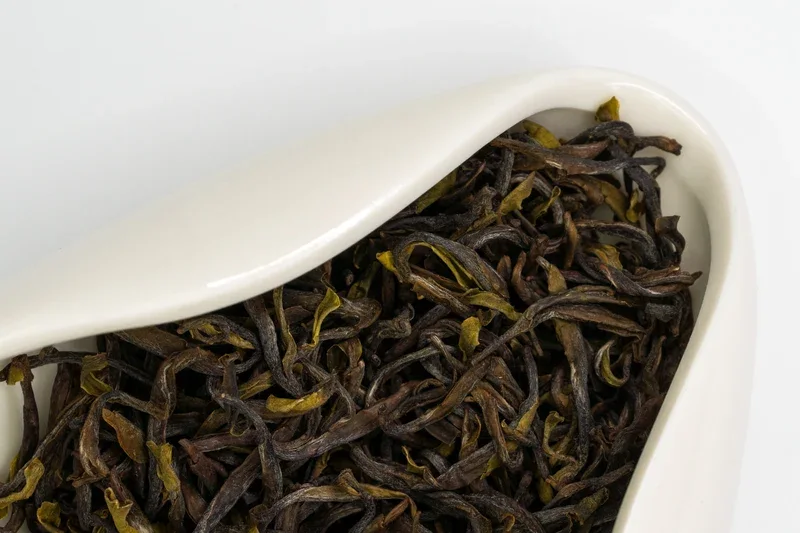
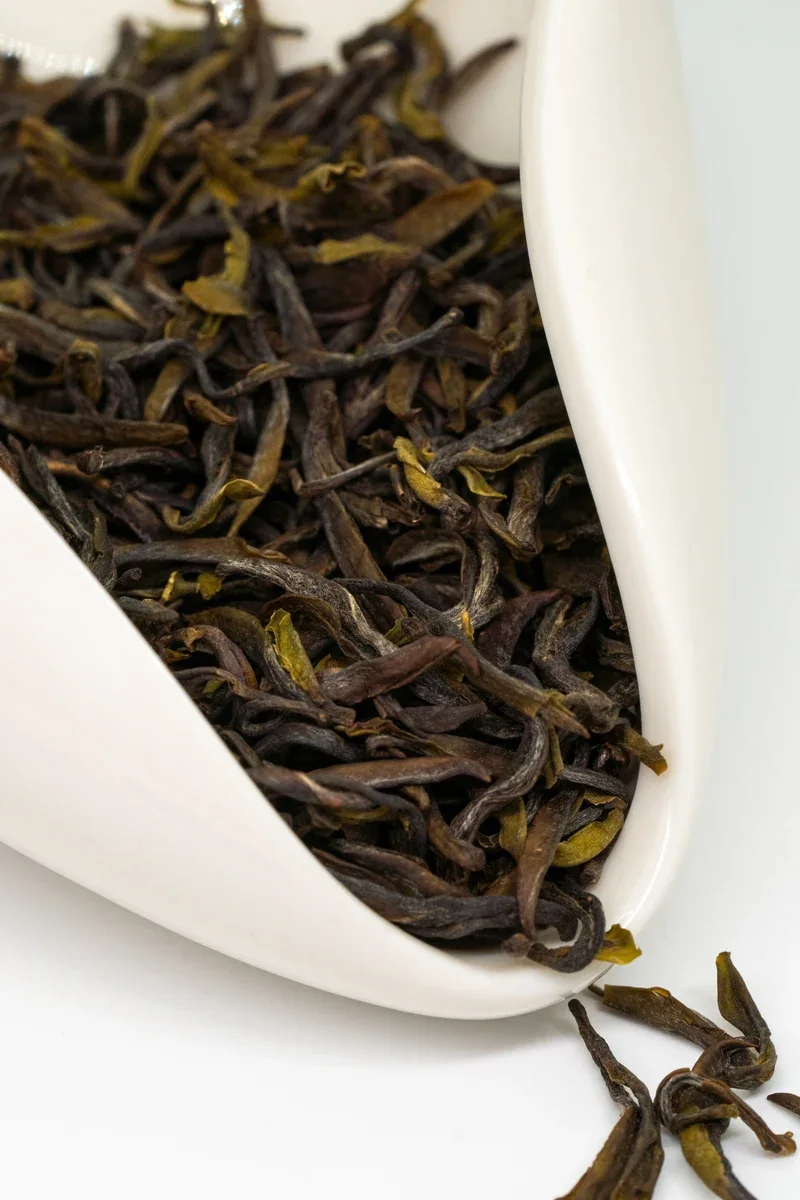
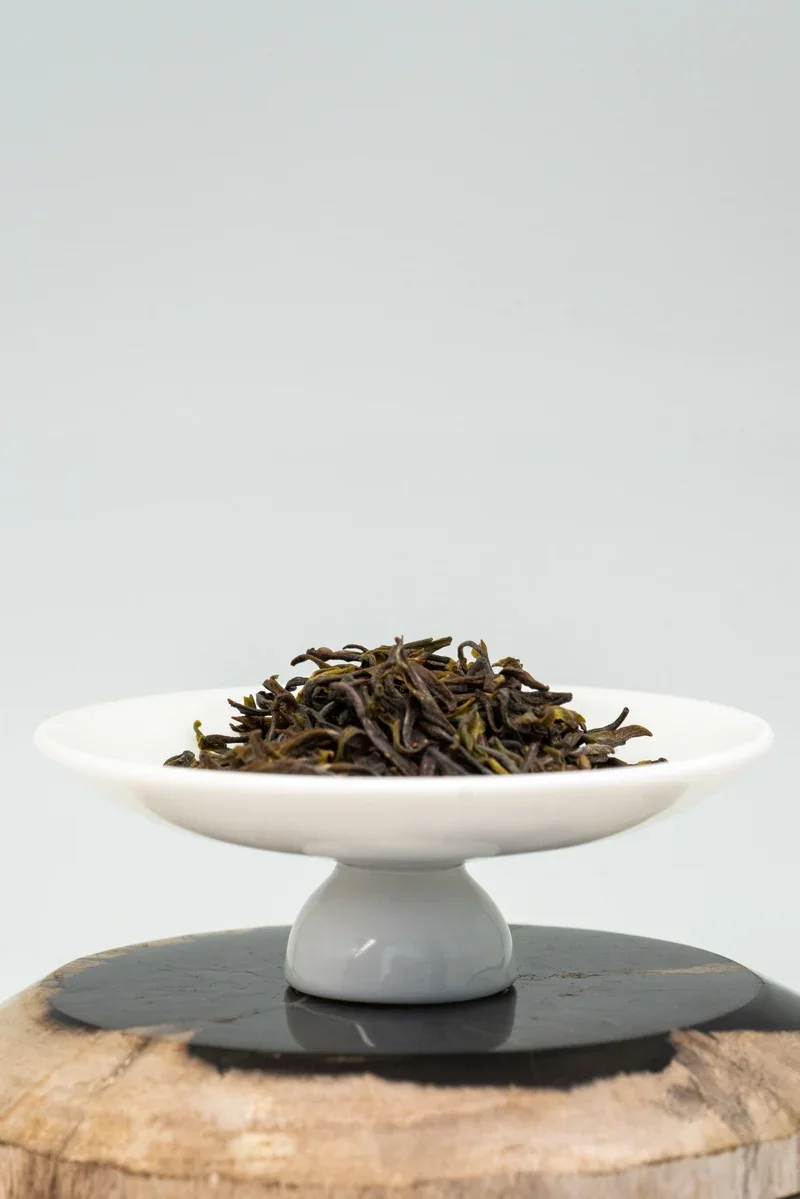
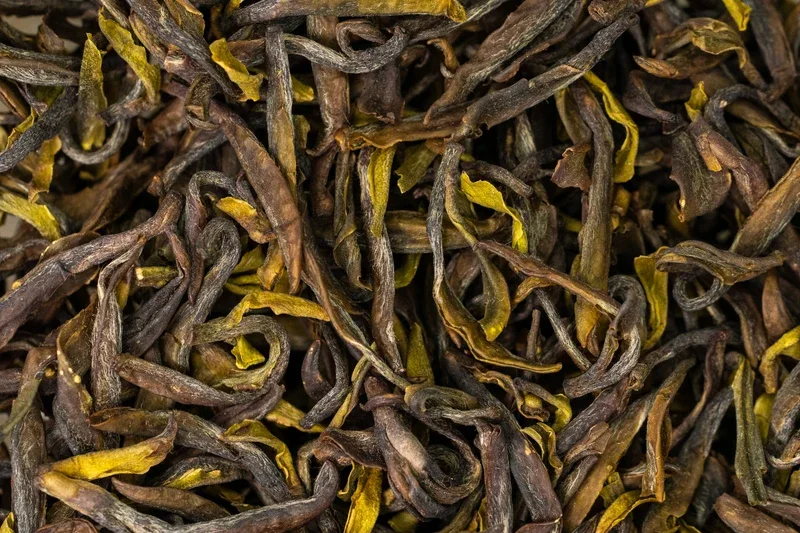
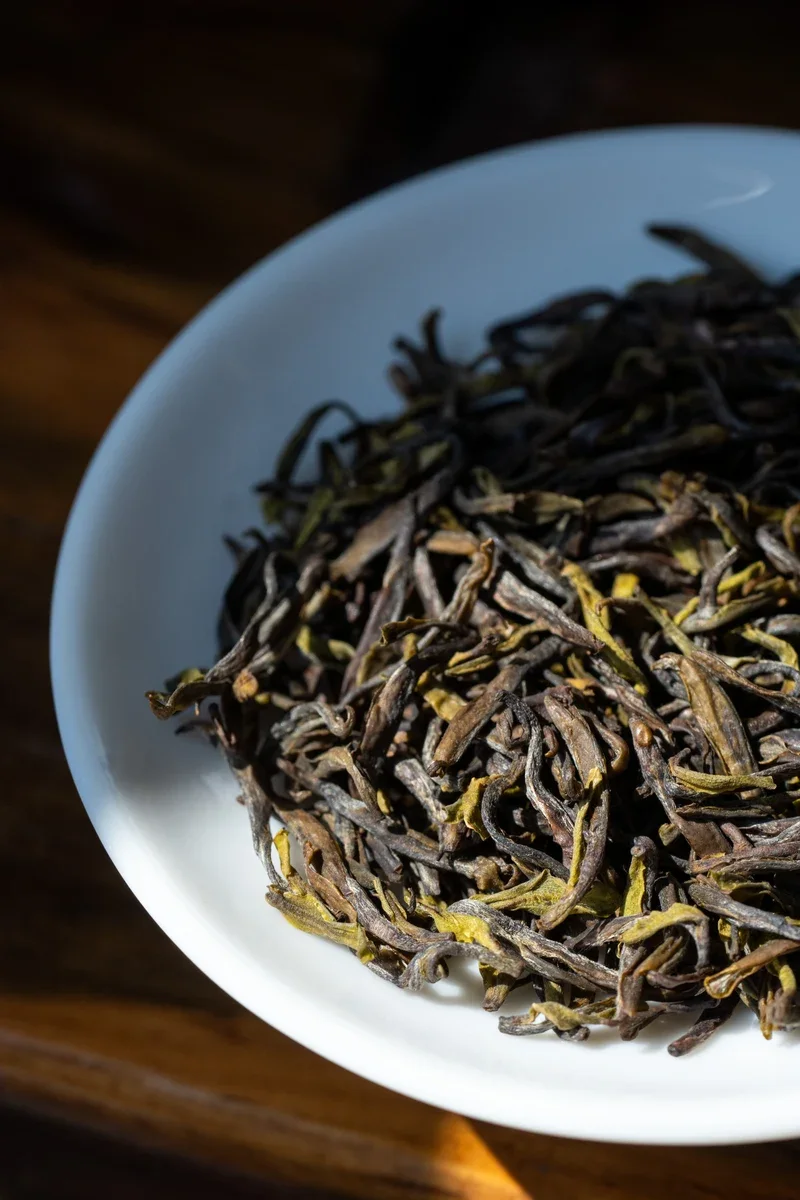
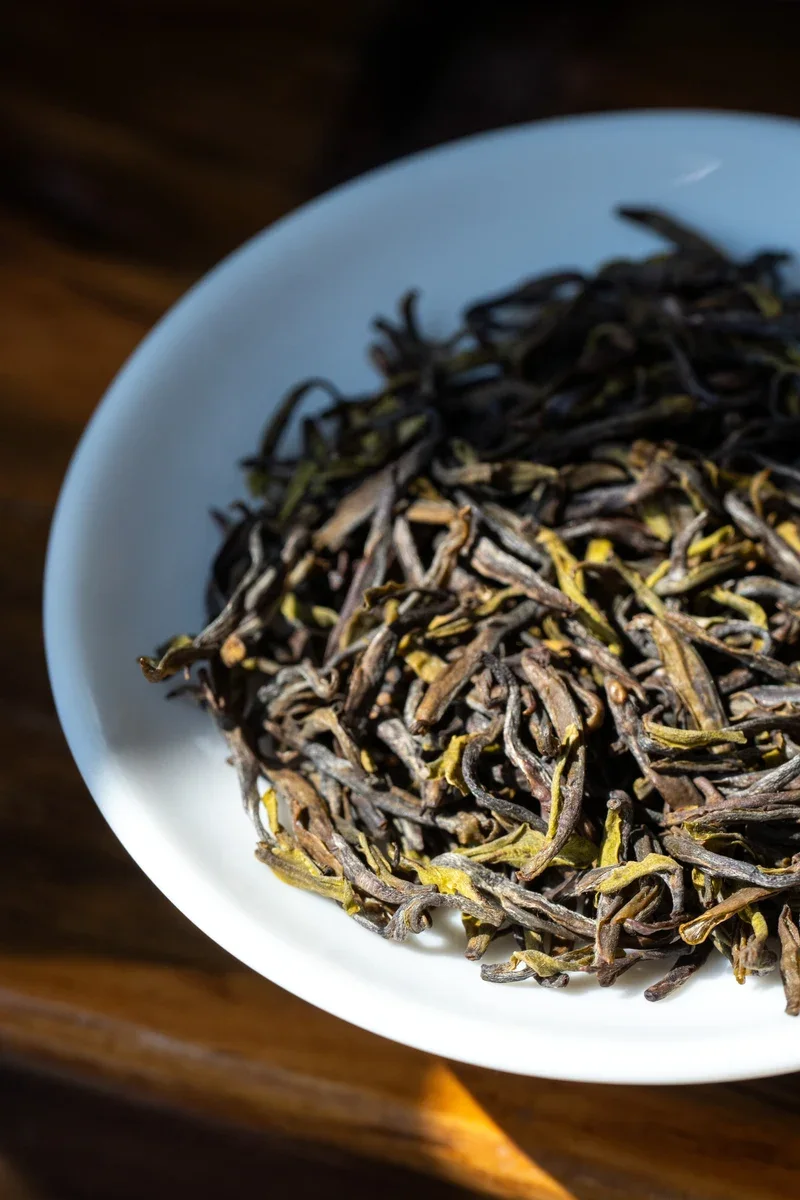
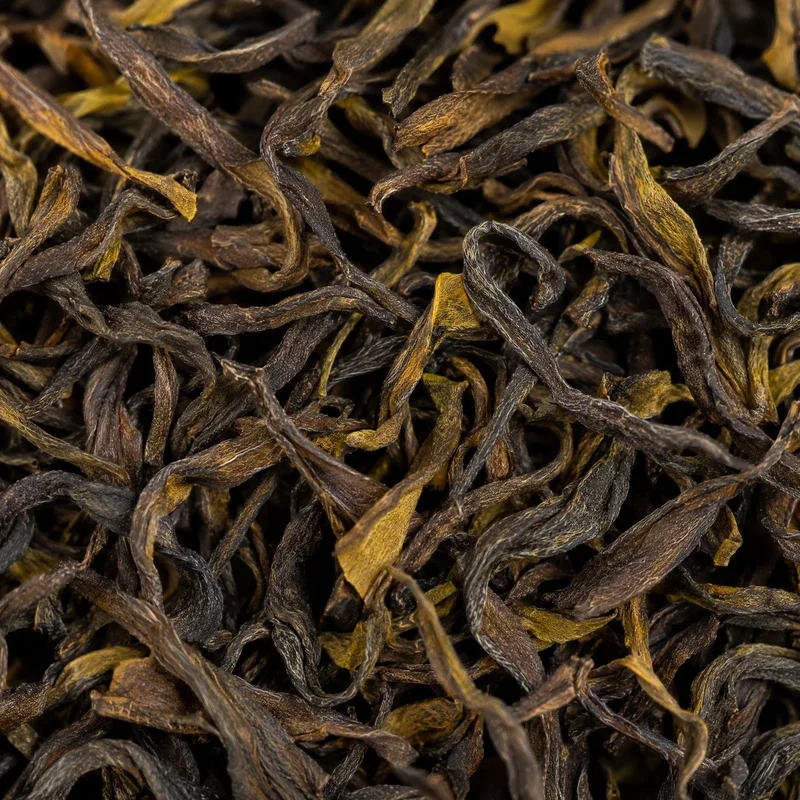
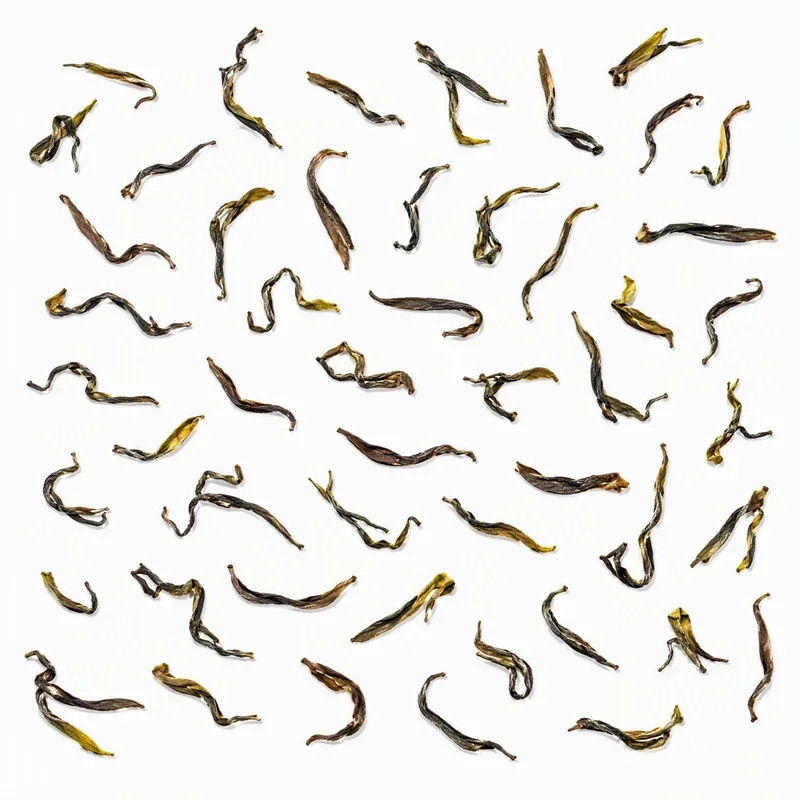
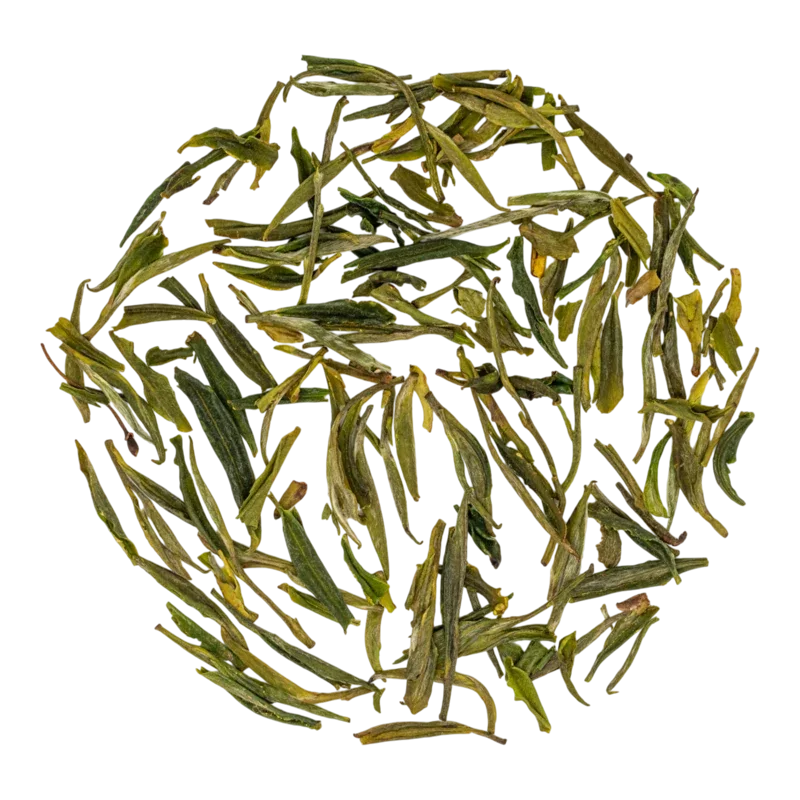
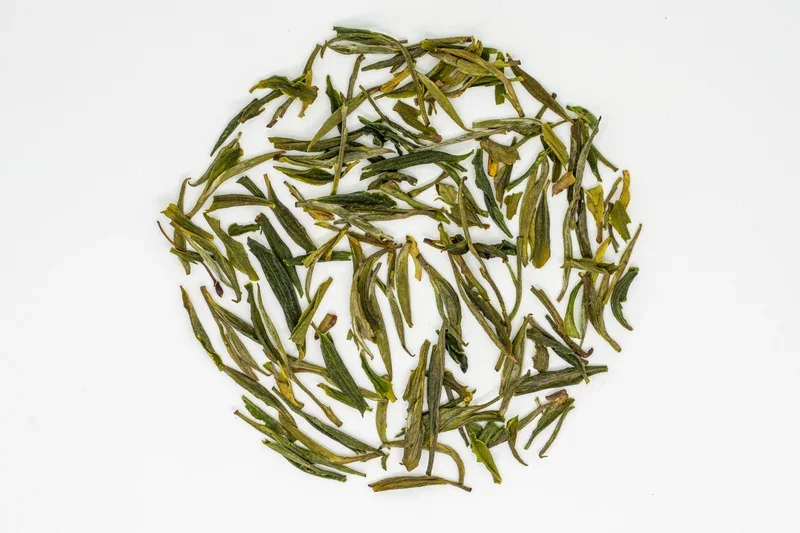
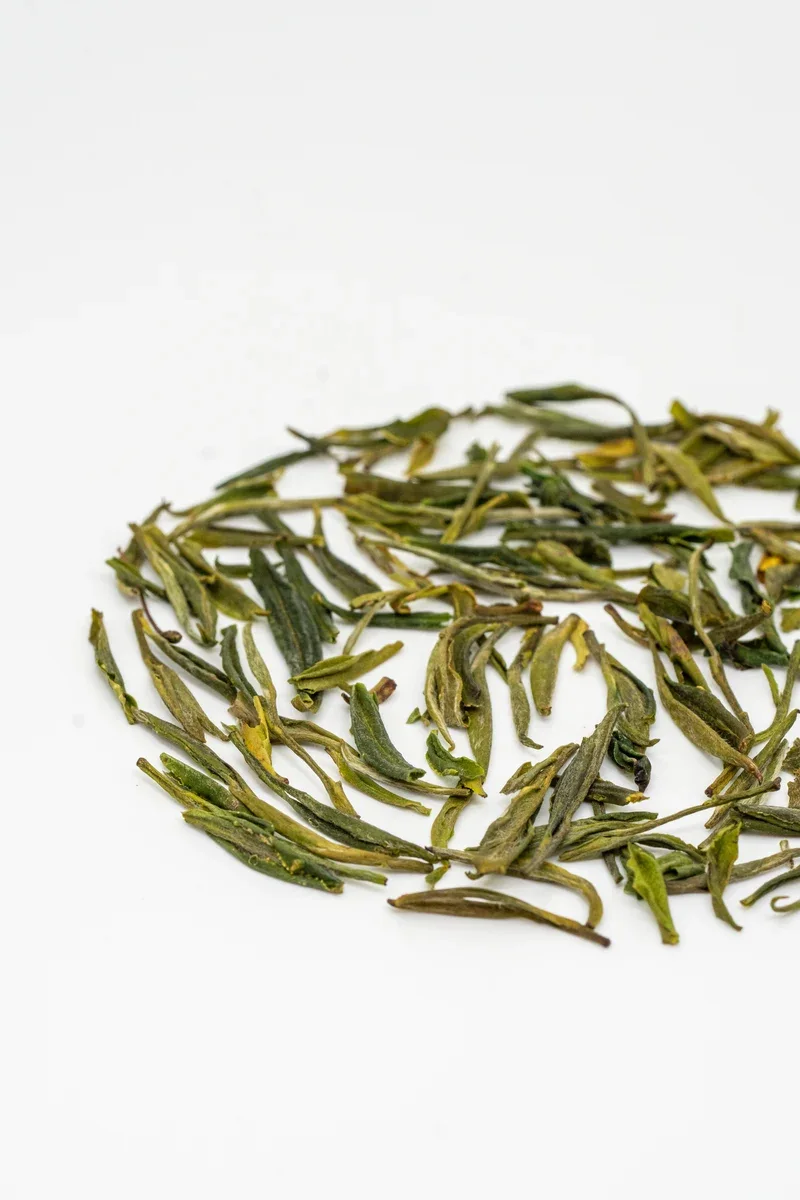
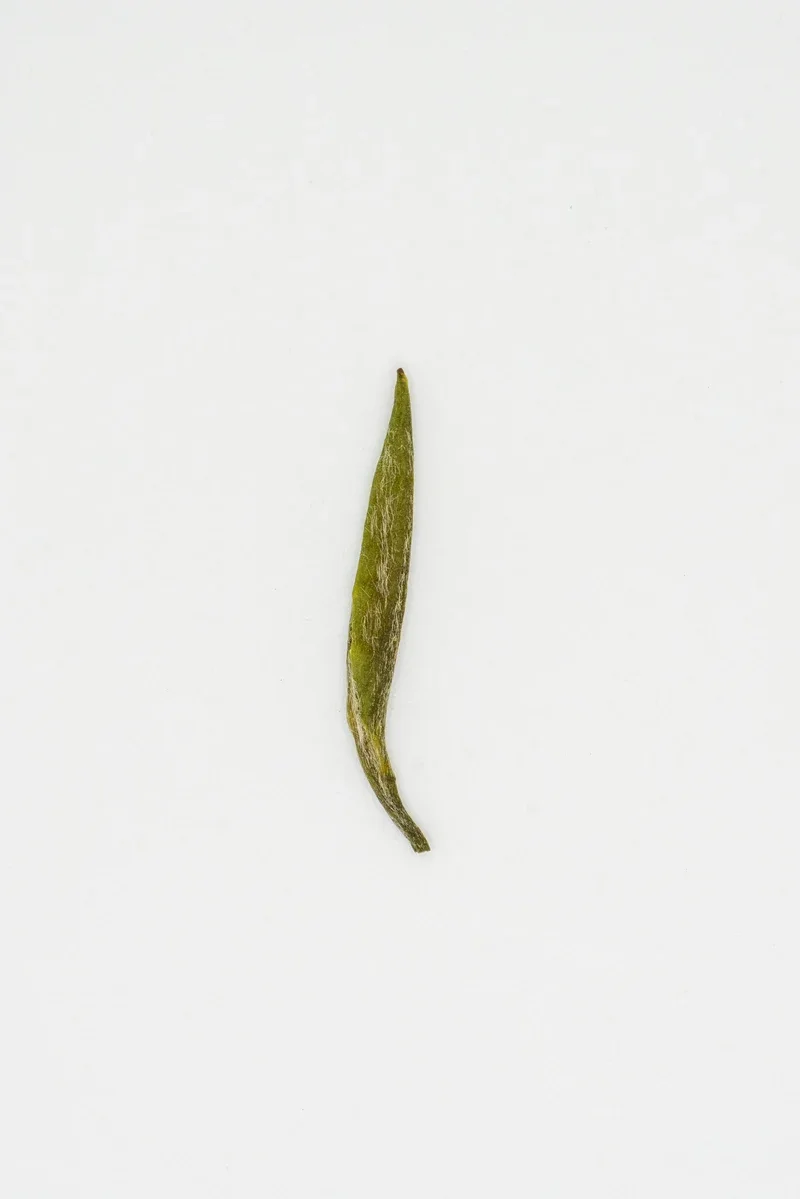
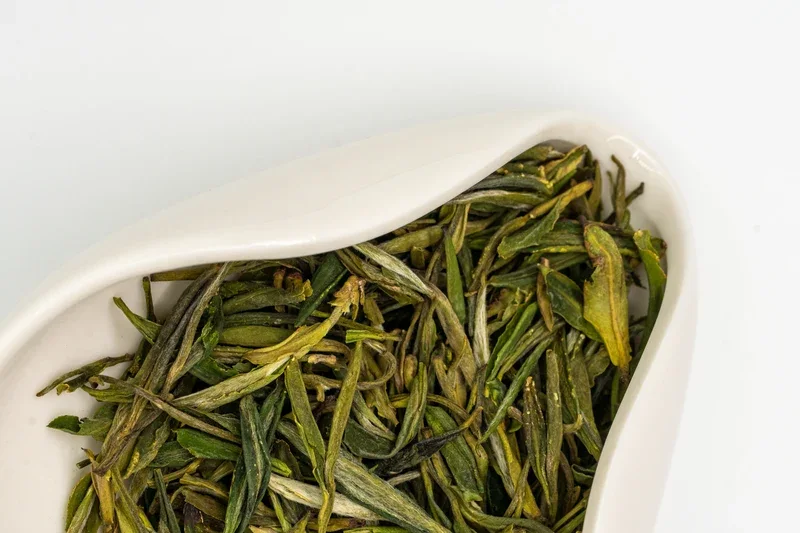
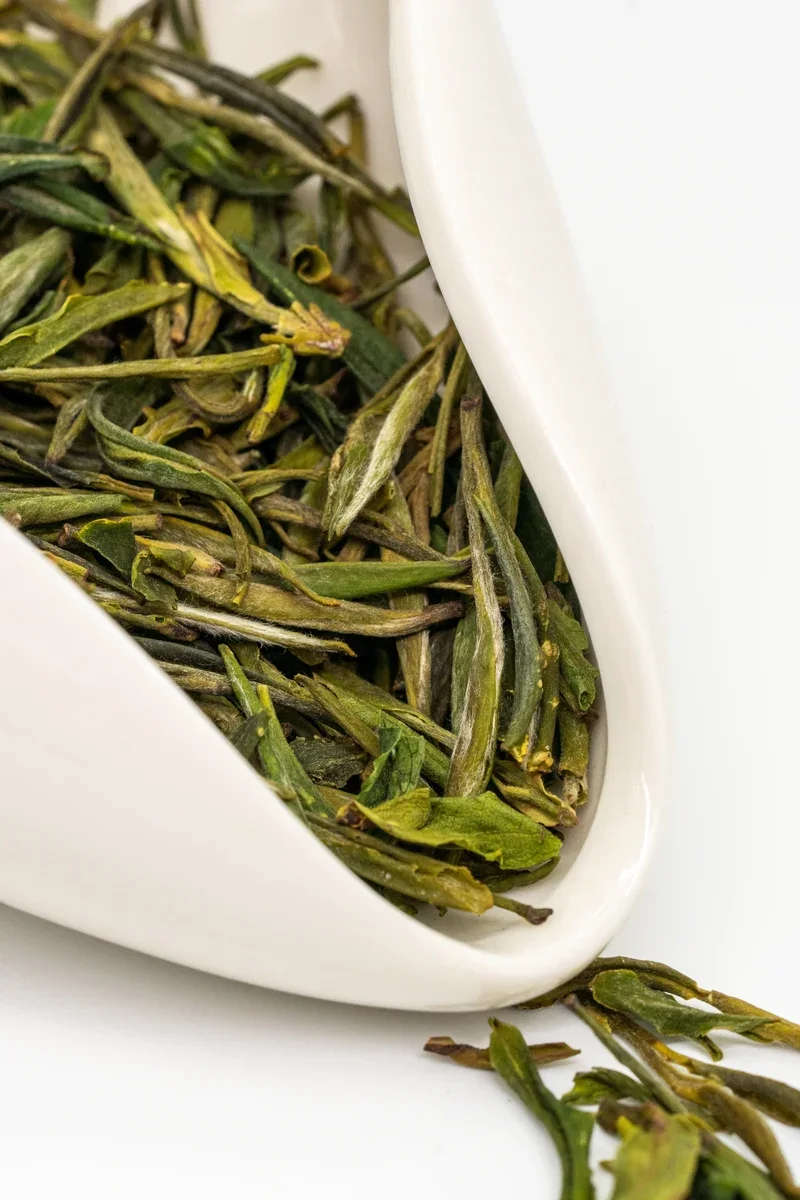
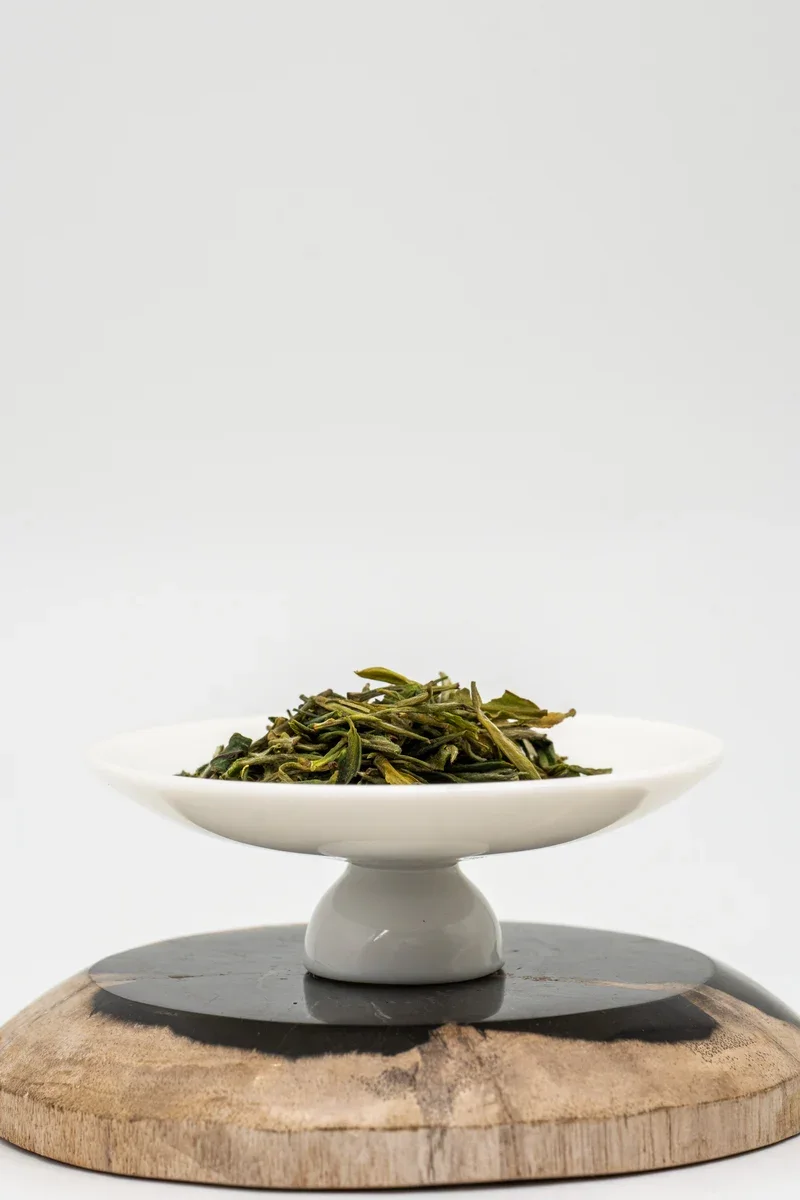
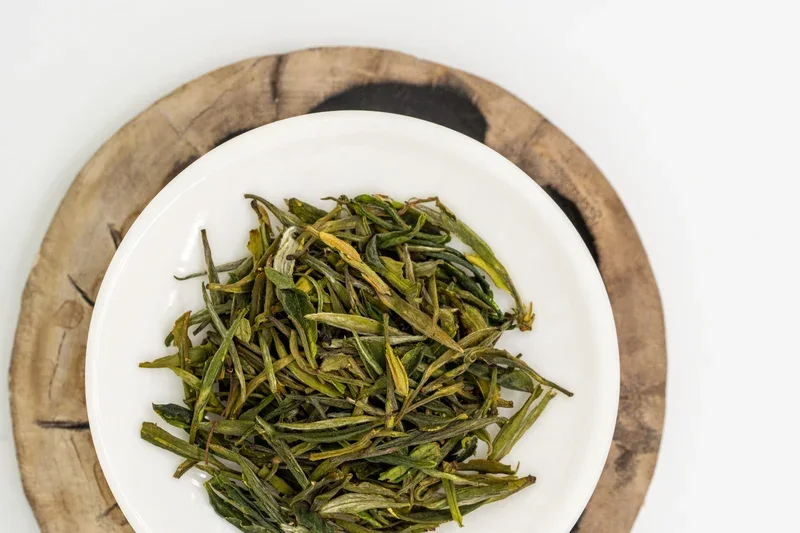
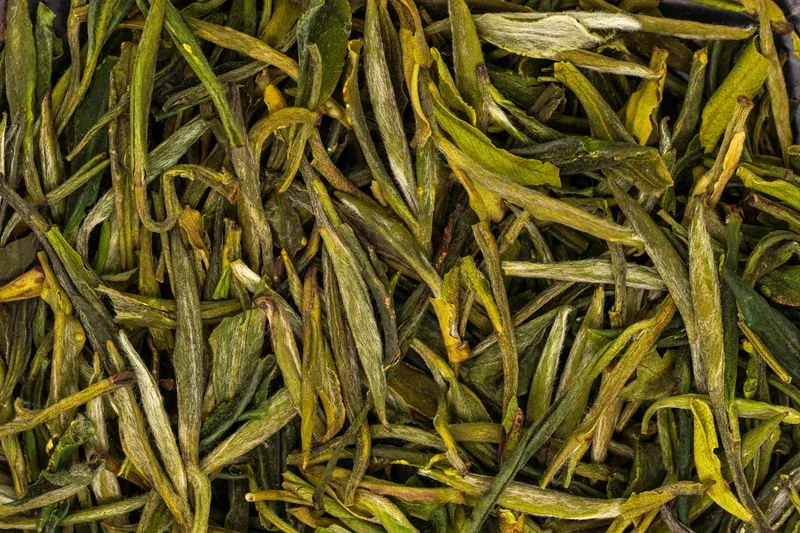
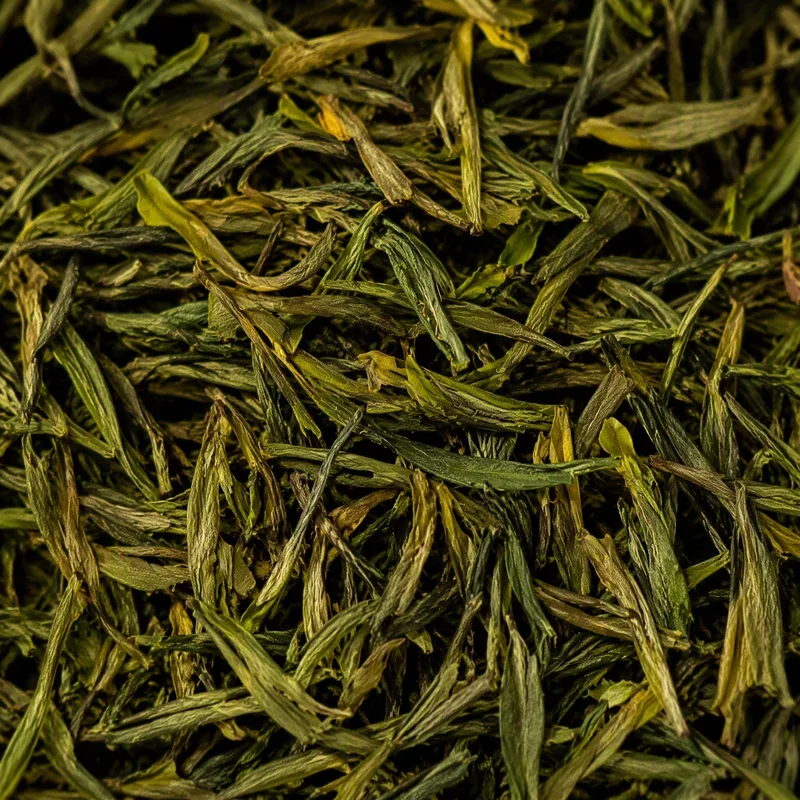
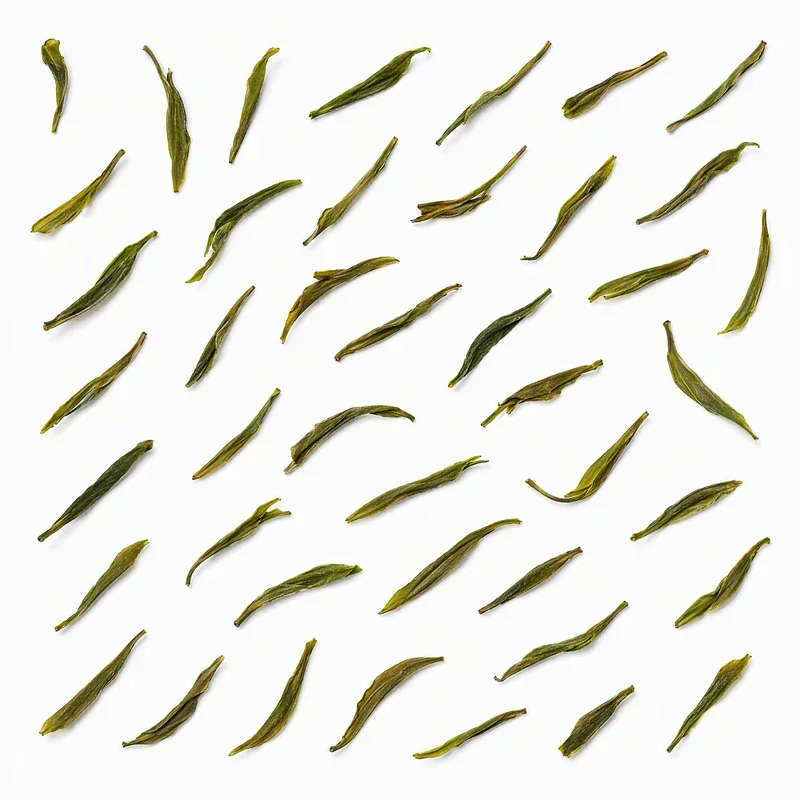
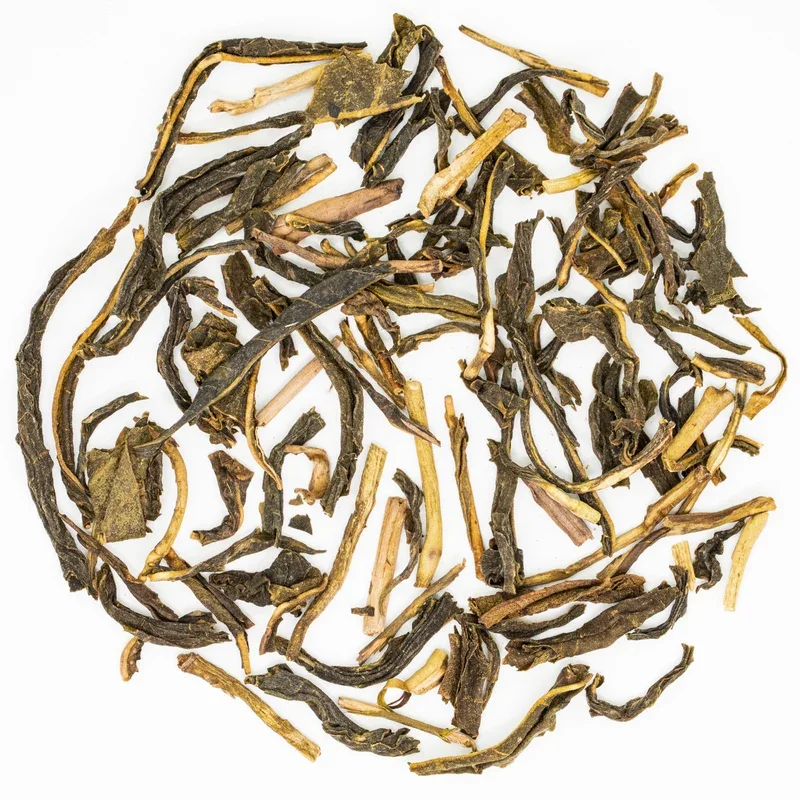
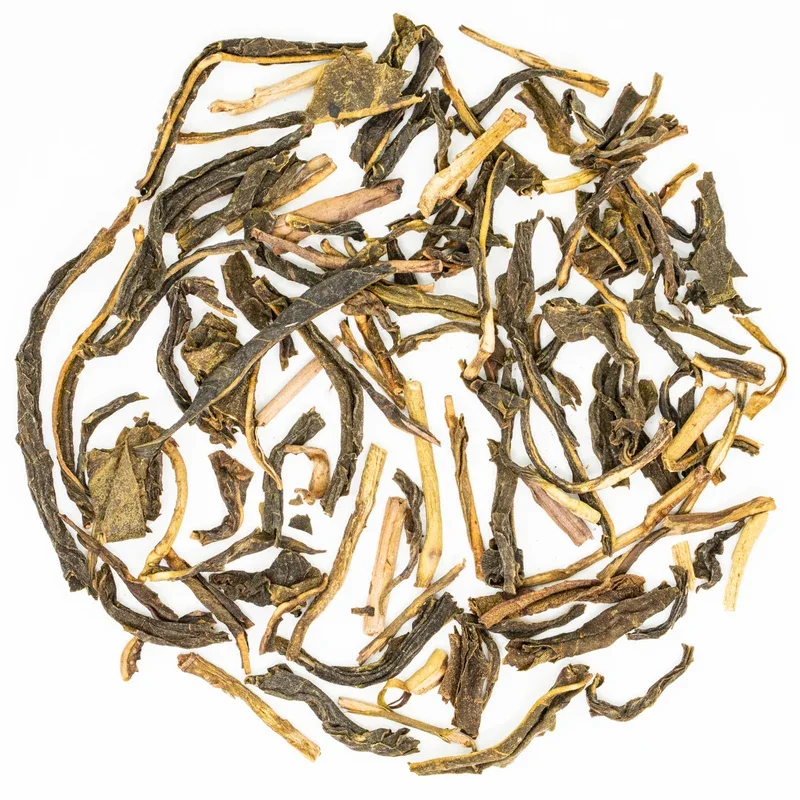
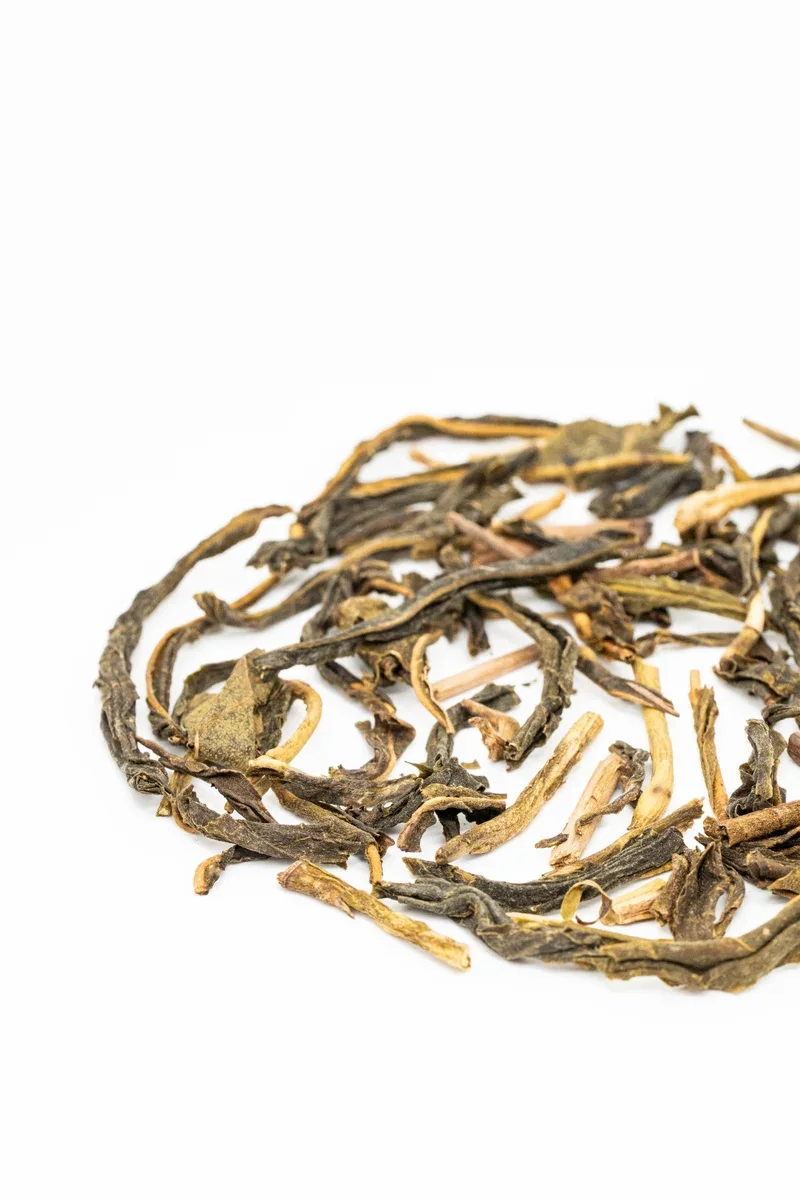
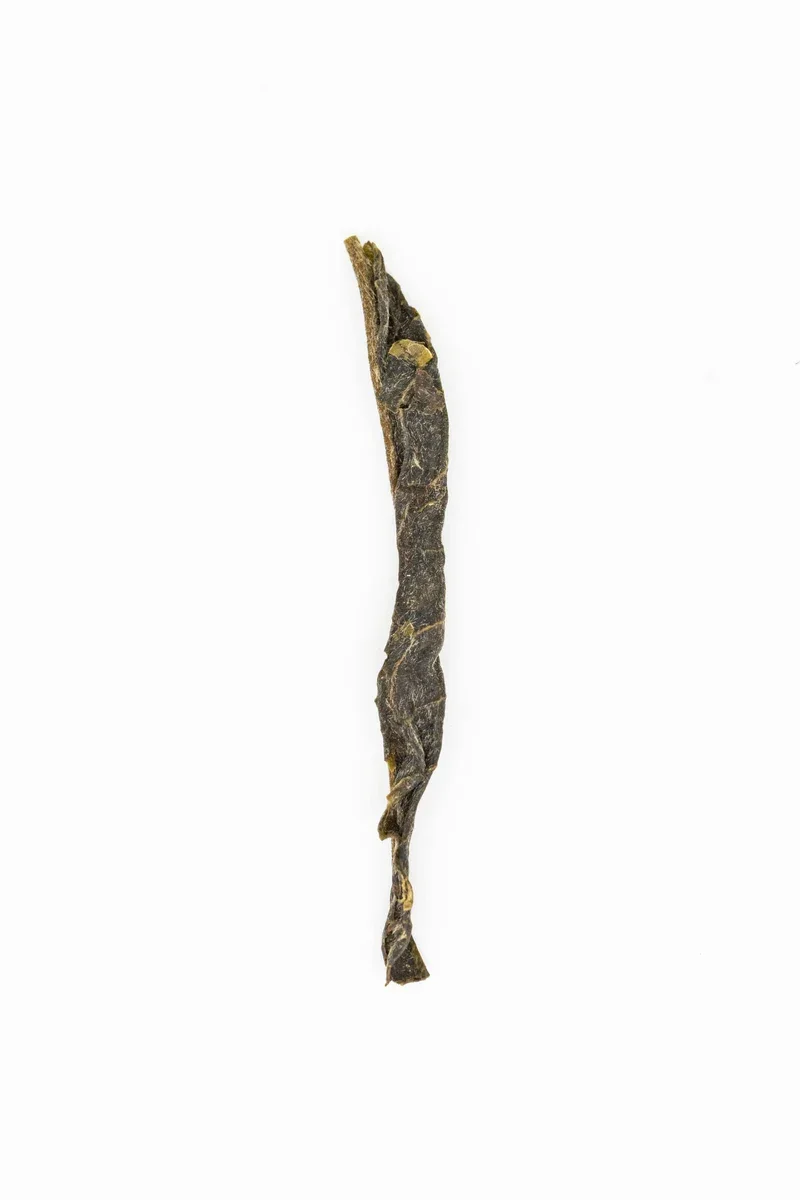
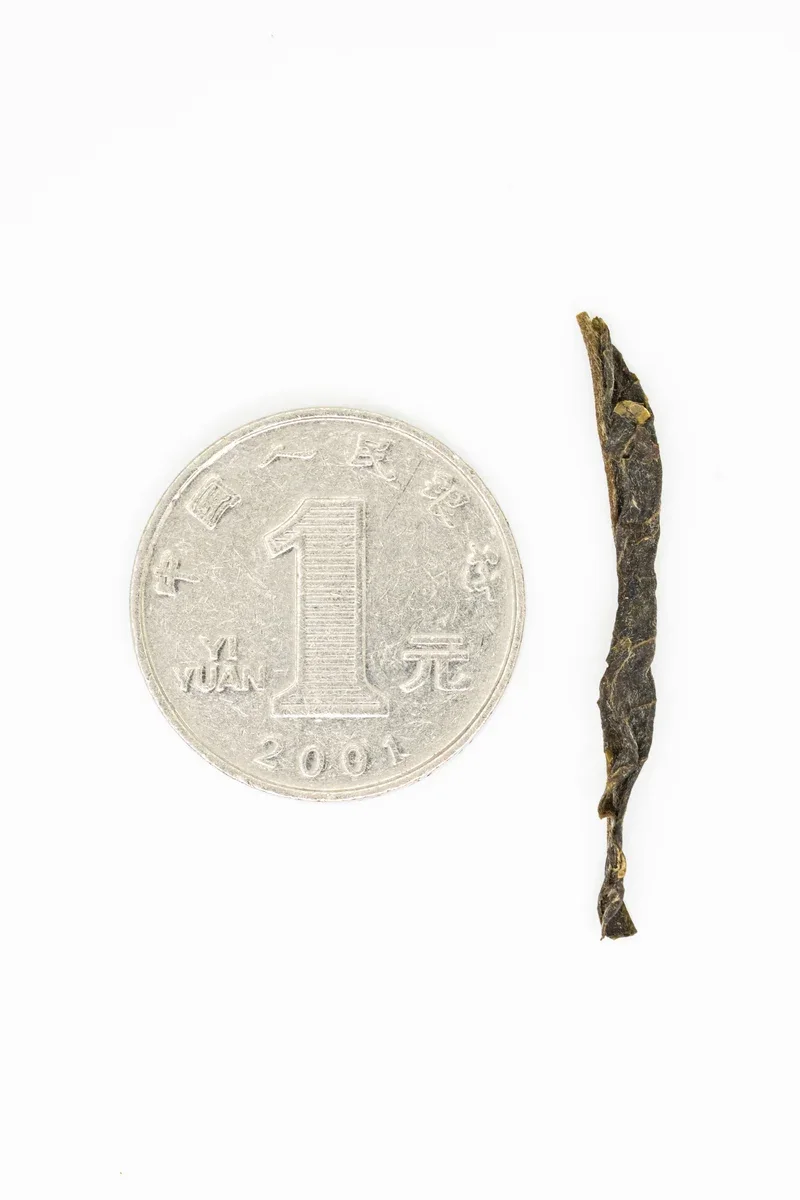
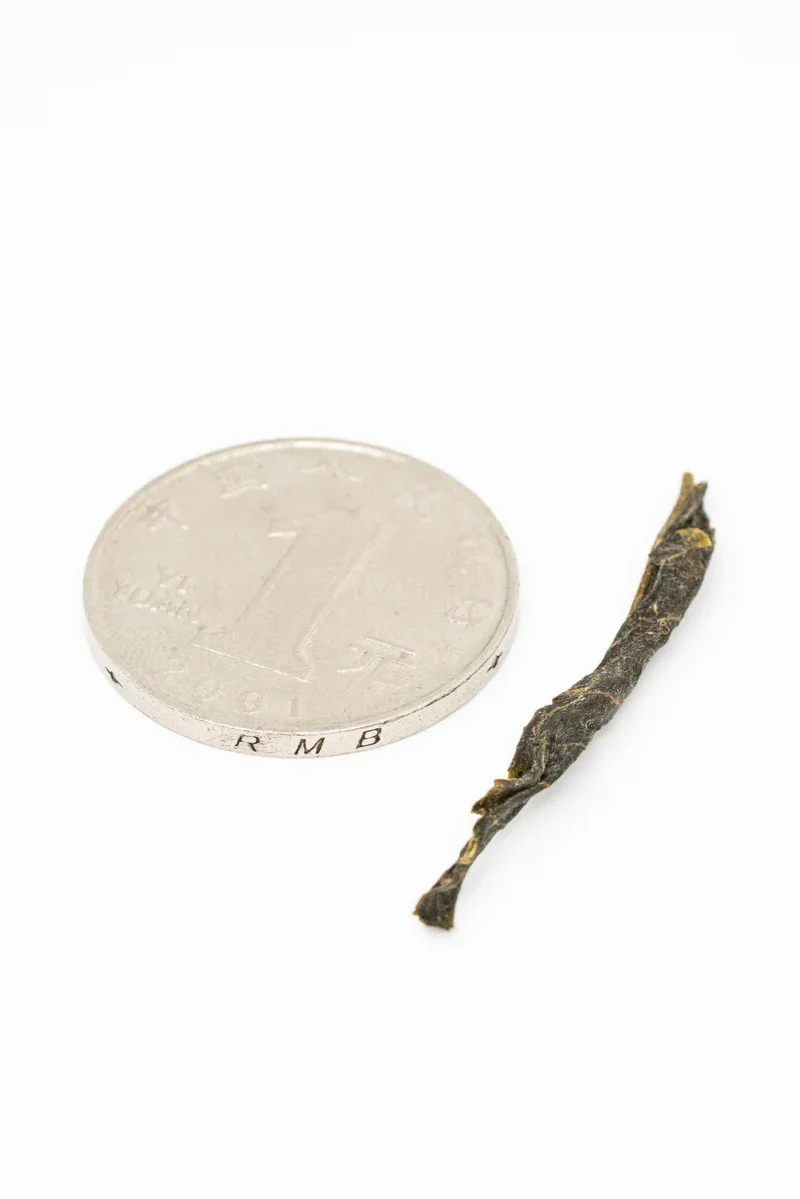
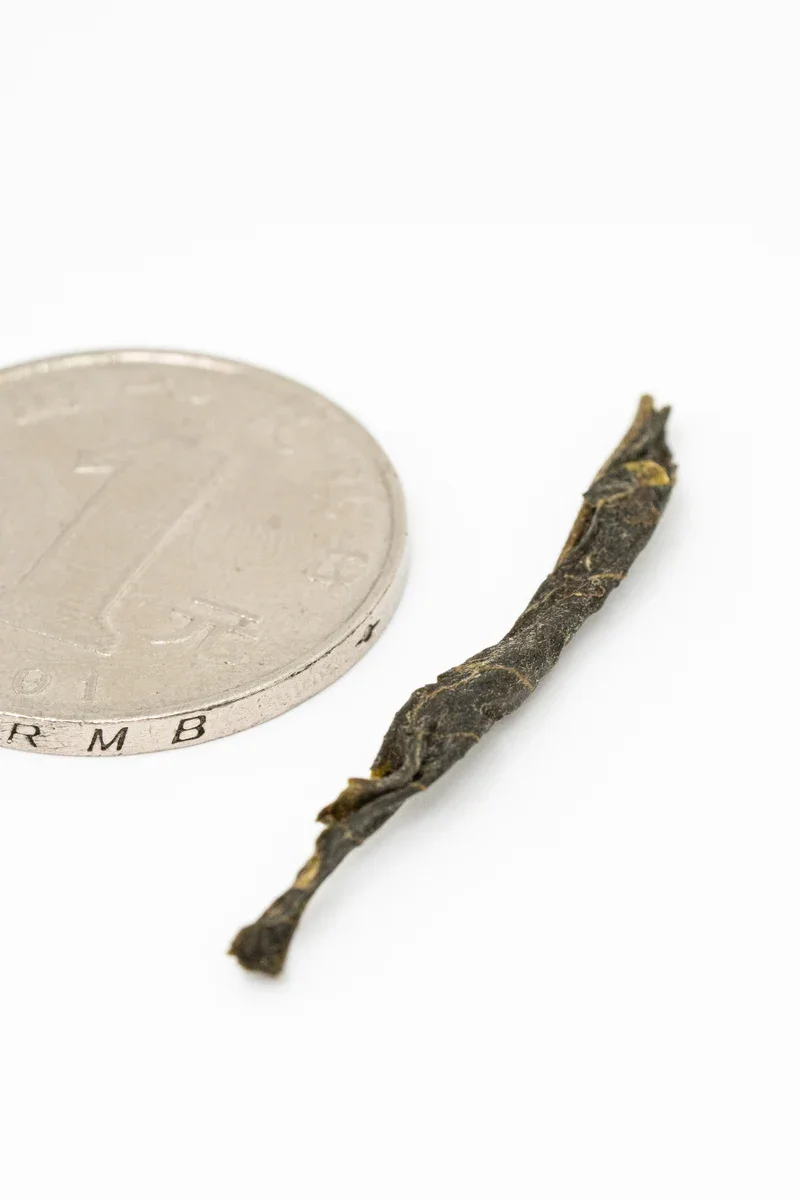
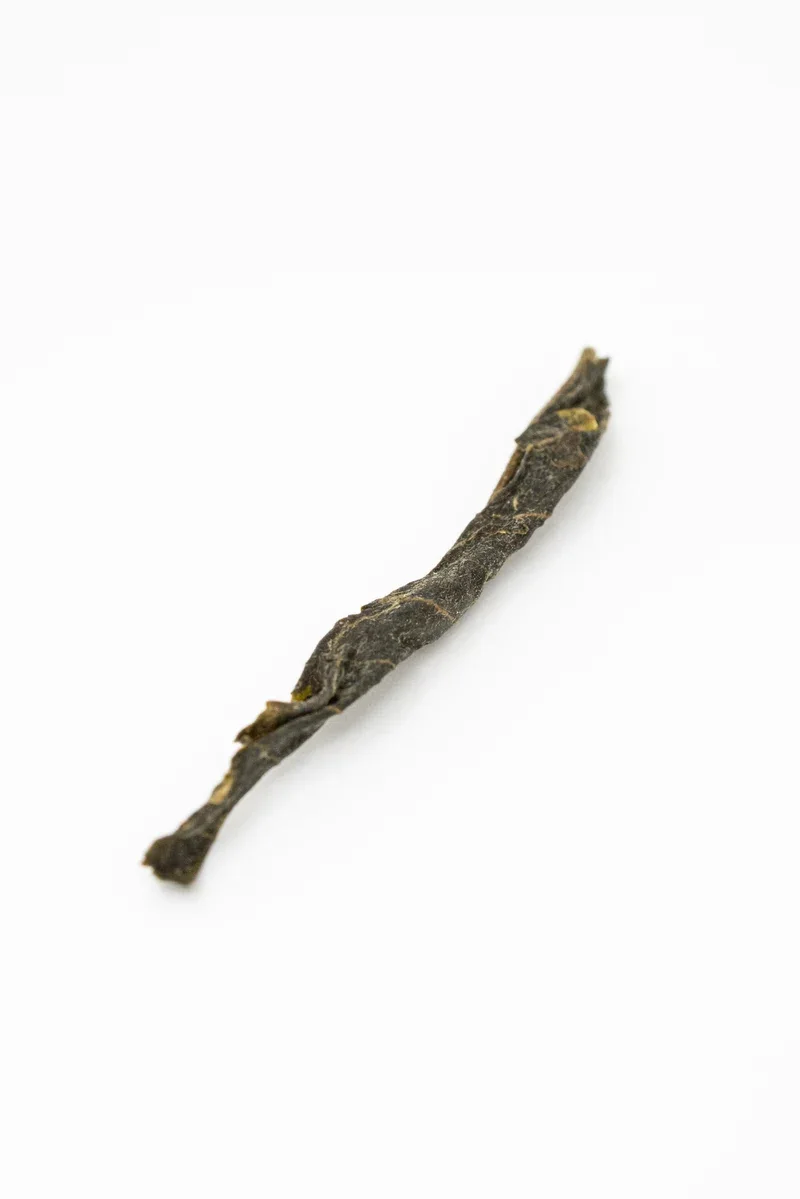
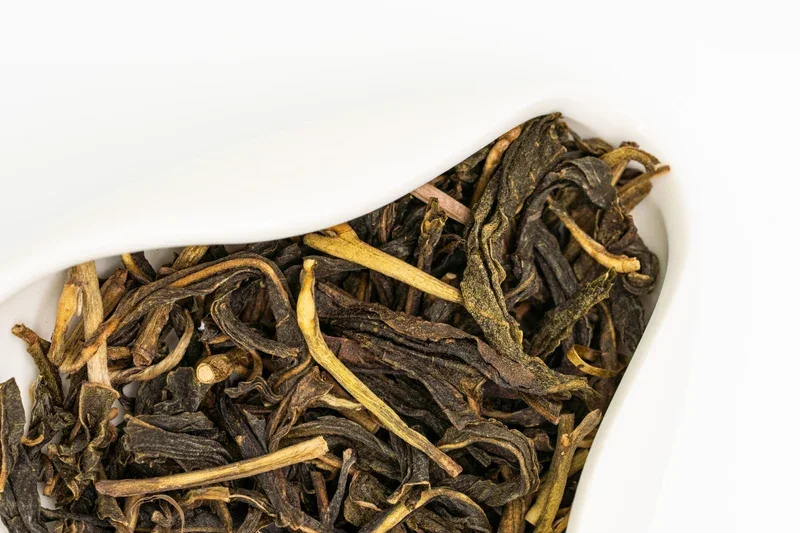
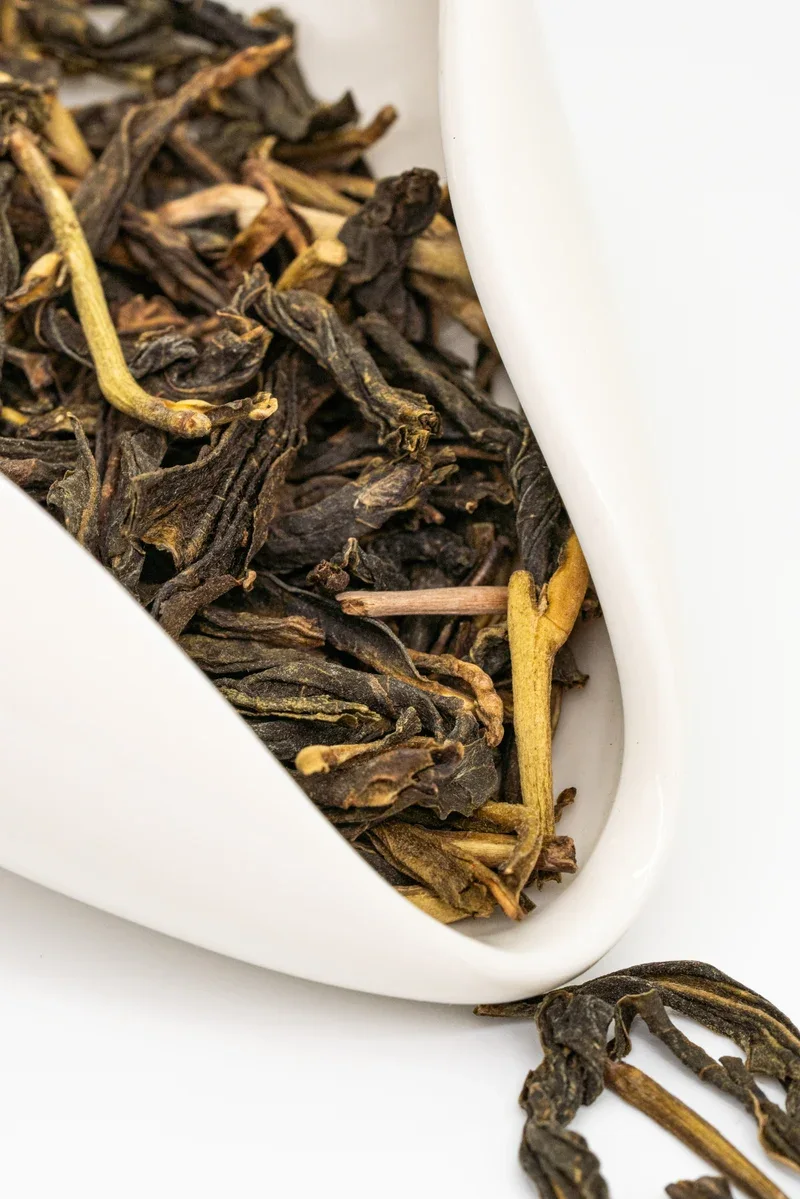
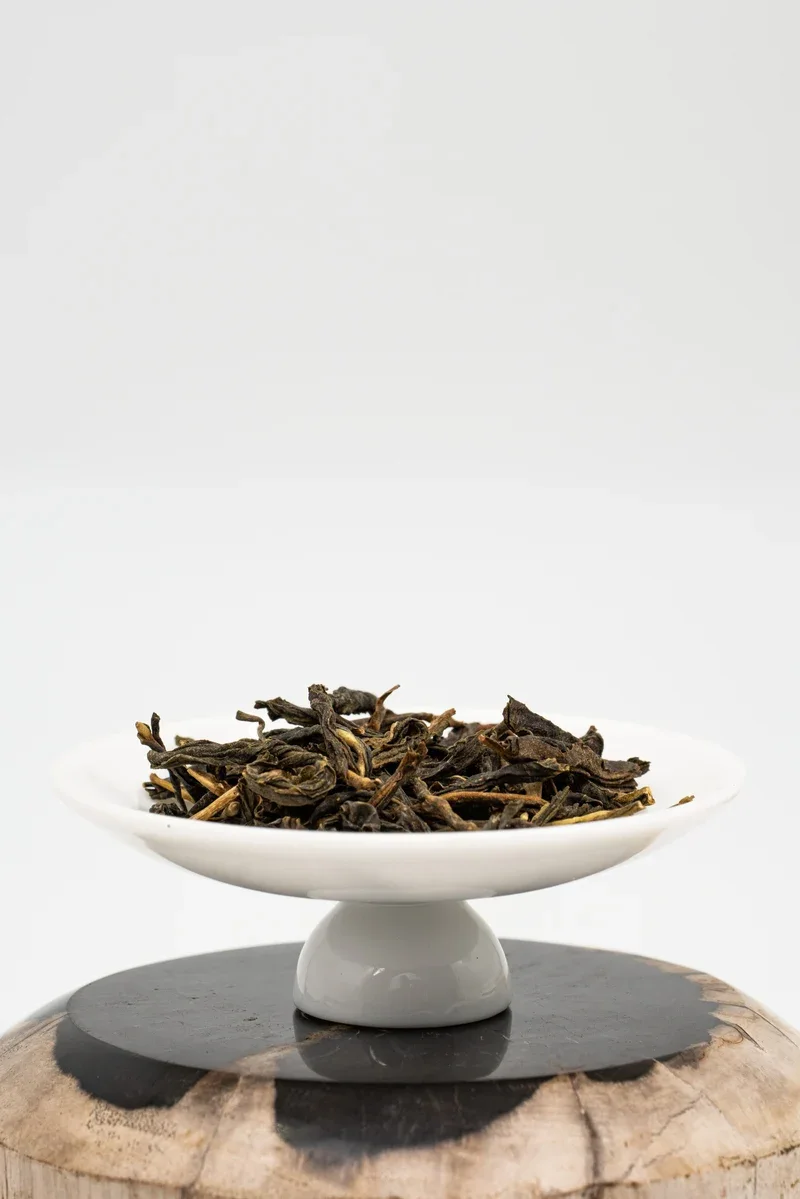
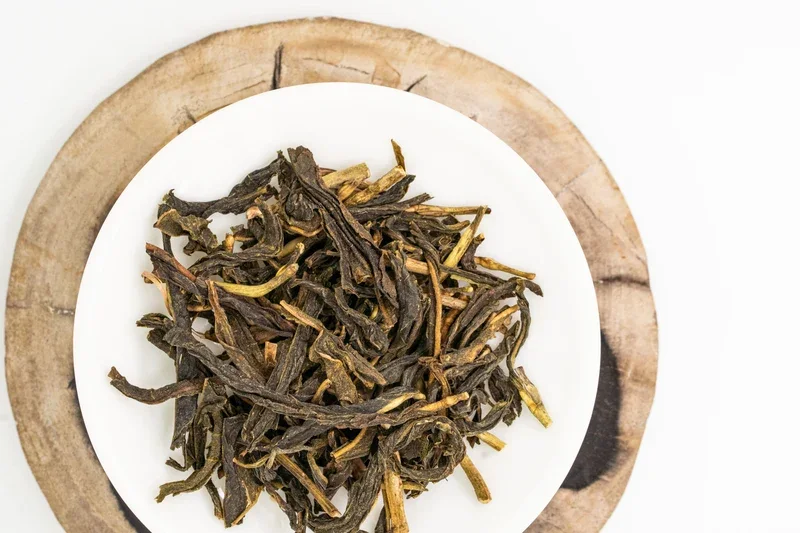
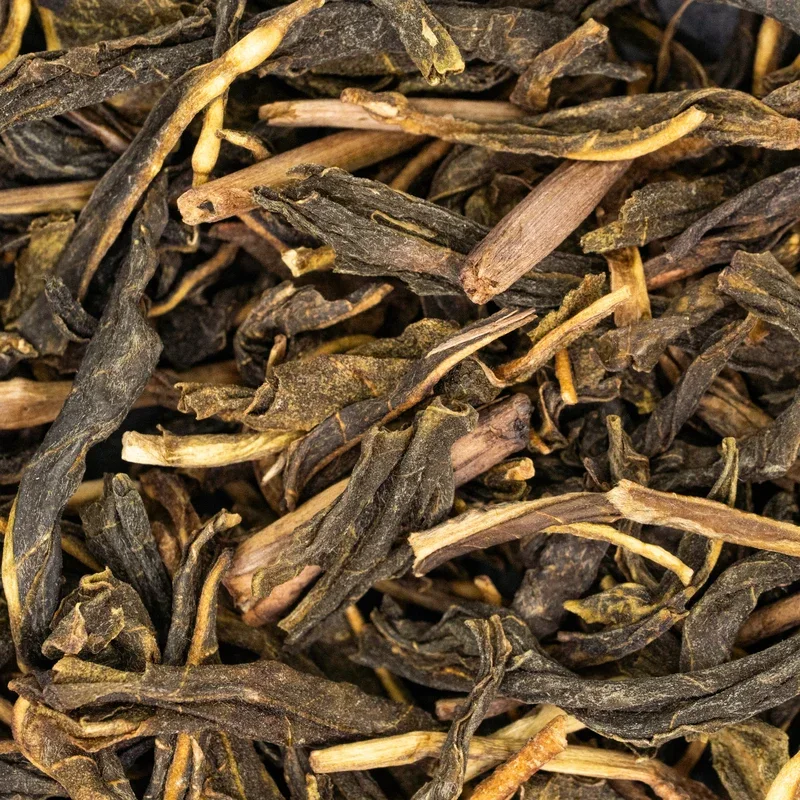
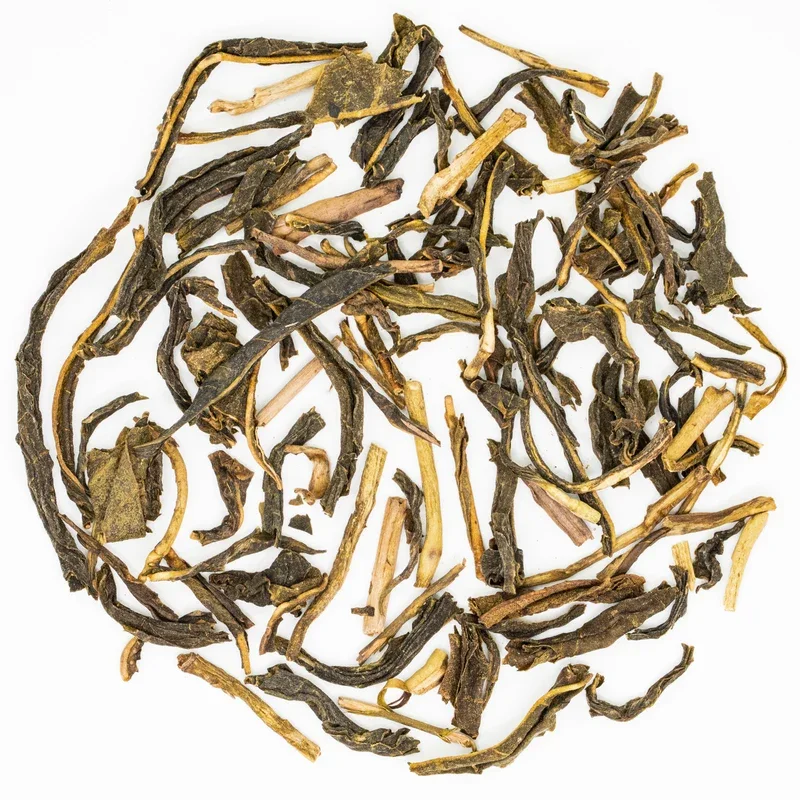
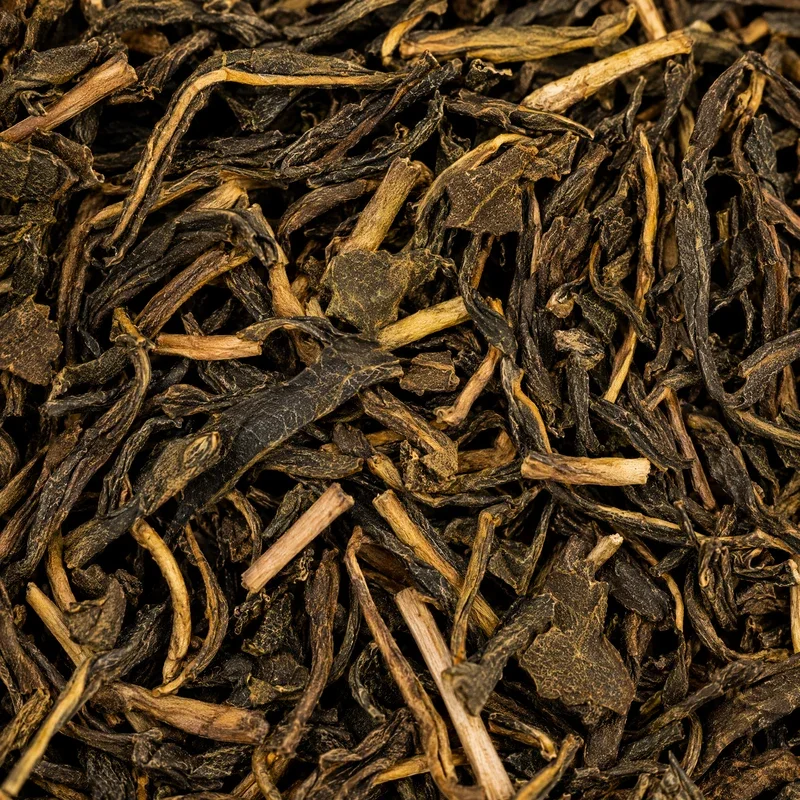
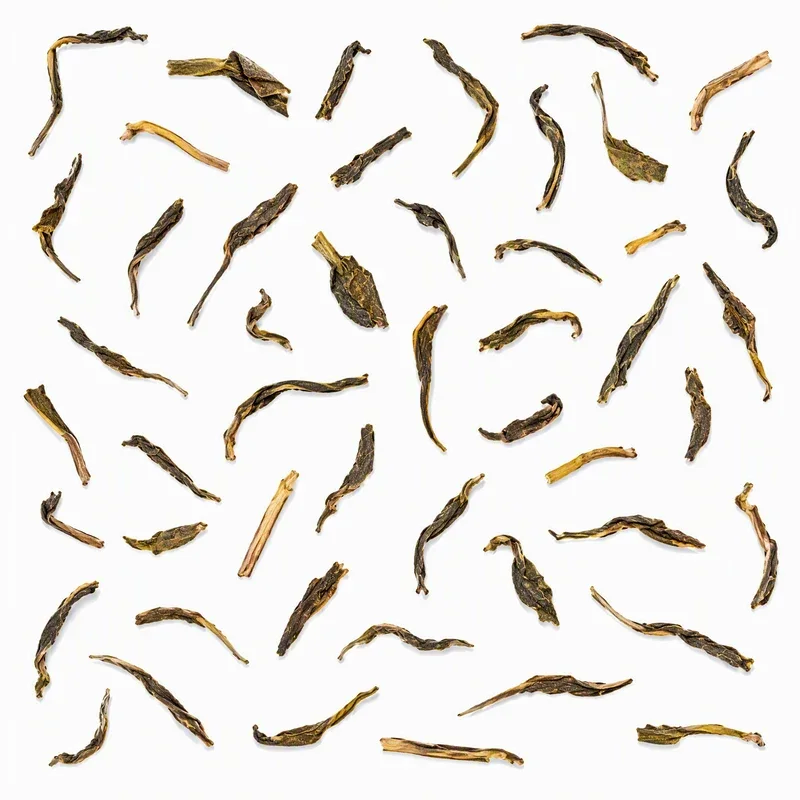
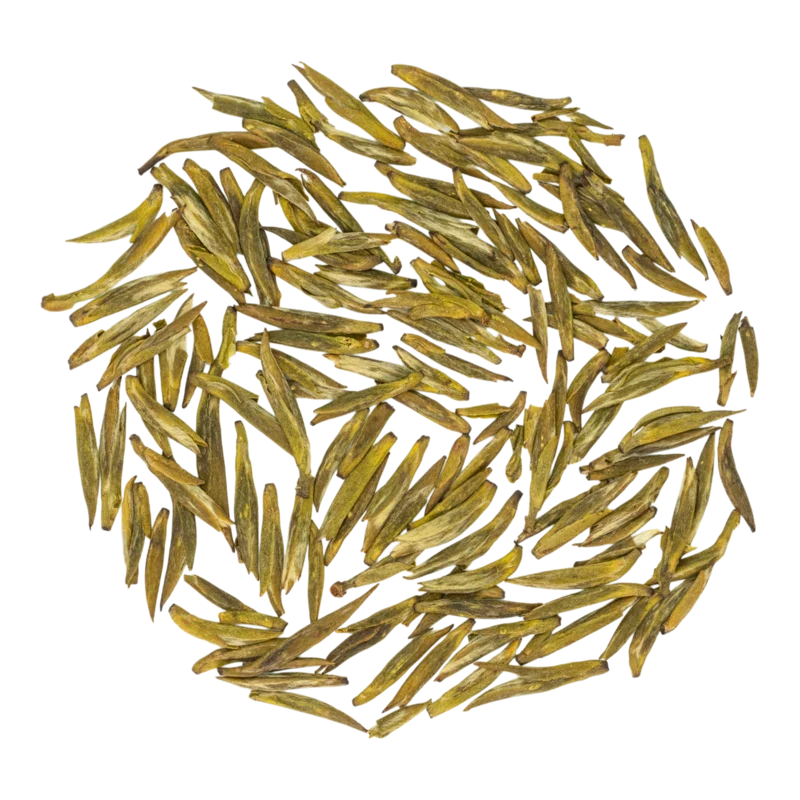
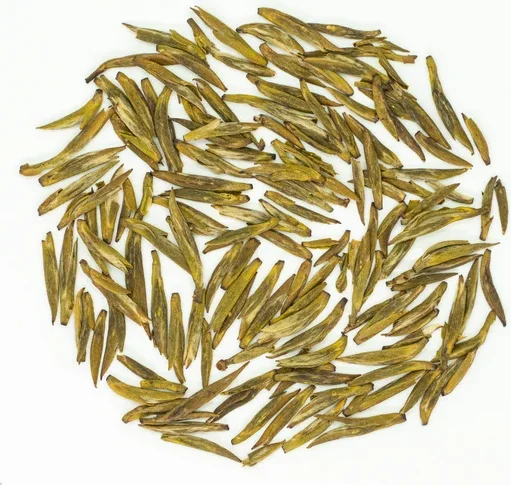
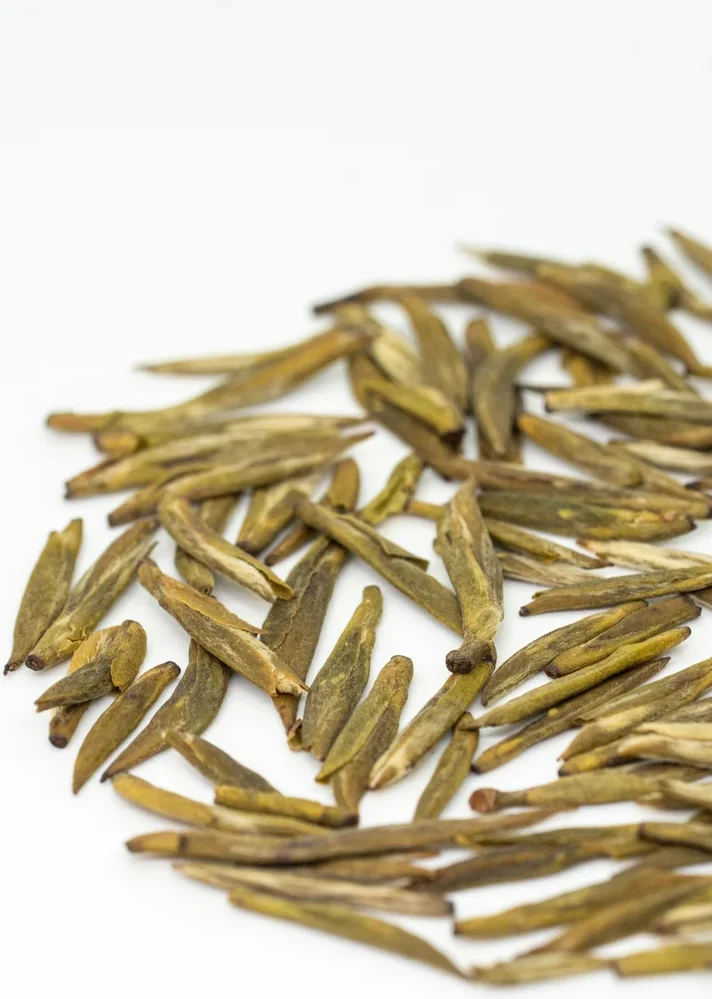
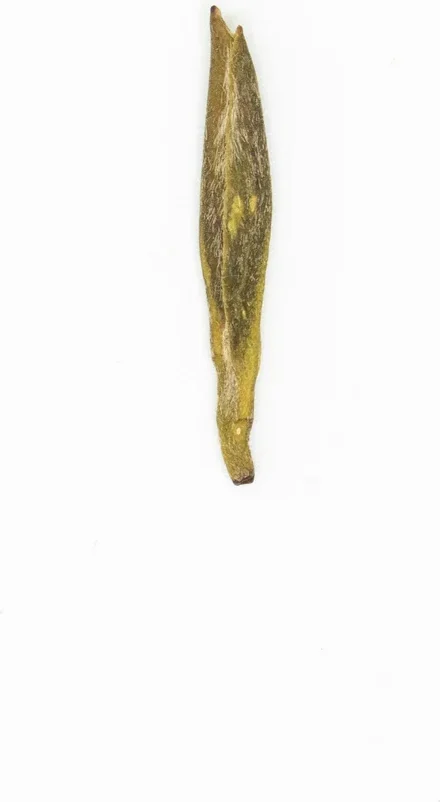
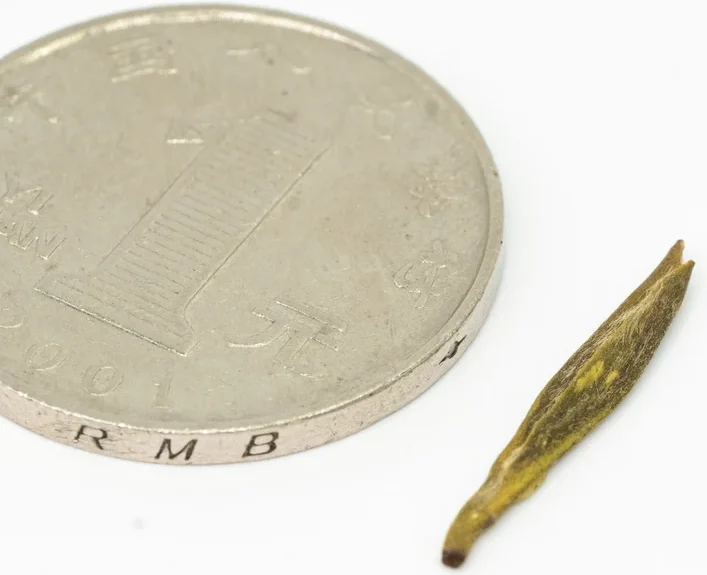
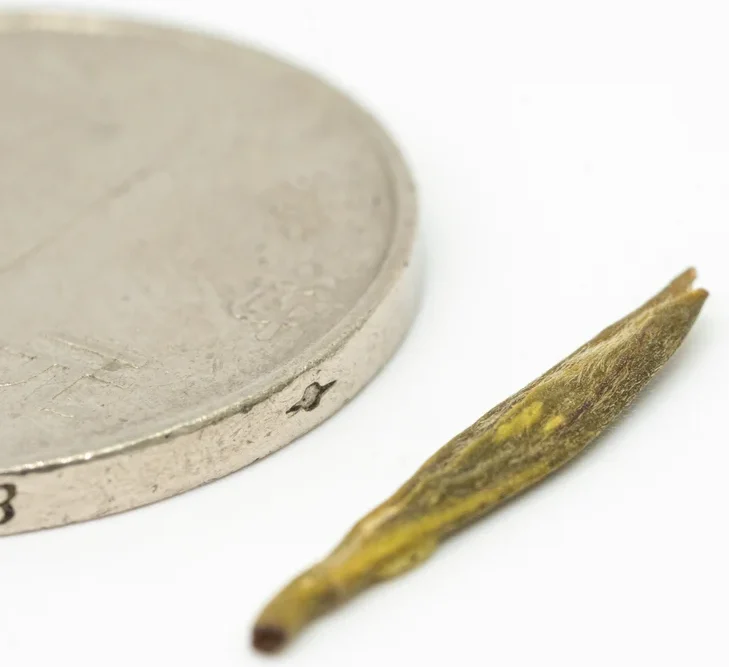
Dry Leaf Appearance: Flat, straight, sword-like buds (扁平挺直似剑, biǎnpíng tǐngzhí sì jiàn), uniform in size. Abundant golden down (金毫显露). Color — warm brownish-yellow with oily luster (褐黄油润, hè huáng yóu rùn). In grade «zhenpin» buds are exceptionally even, select.
Dry Leaf Aroma: Delicate, sweetish, with pronounced note of «nenlixiang» (嫩栗香) — aroma of young chestnut. Also present are honey and sweet-cereal overtones.
Liquor Aroma: Tiánxiāng nóngyù (甜香浓郁) — rich, sweet, with chestnut base and honey top. In subsequent infusions fruity and creamy nuances unfold. In grade «zhenpin» «mixiang» (蜜韵) is expressed — persistent honey overtone.
Liquor Color: «Huangliang toubi» (黄亮透碧) — bright yellow with turquoise-greenish gleam, transparent, with clear luster. This is the calling card of Mengding Huang Ya, described already in Qing chronicles.
Spent Leaves: Whole, tender, uniform buds of delicate yellow color (全芽嫩黄匀整). All buds are opened evenly, without damage.
Taste: Xiānchún huígān (鲜醇回甘) — fresh, mellow, with prolonged sweet return. Texture is silky-oily. Bitterness and astringency are practically absent thanks to multiple sealing. Taste is described by the formula «三甜» (three sweetnesses): sweetness of aroma, sweetness of taste, sweetness of aftertaste. Characteristic sign of quality Mengding Huang Ya — «lenghohun» (冷后浑) — clouding of cooled liquor, indicating high content of polyphenolic complexes.
Alkaloids: Caffeine — 2.5–3.5% of dry matter. Synergy with L-theanine provides prolonged, calm alertness.
Amino Acids: 3–5% of dry matter. L-theanine — leading component, responsible for sweetness, umami and mild tonic effect. High-altitude origin and constant cloudiness contribute to increased theanine content.
Multi-stage sealing generates significant amounts of digestive enzymes (消化酶). According to some data, fat breakdown efficiency in yellow tea is 1.5 times higher than in green tea from similar raw material.
Minerals: Potassium, magnesium, zinc, selenium, fluorine. Selenium and zinc — characteristic feature of Mengdingshan soils.
Polyphenols: Tea polyphenol content — about 27.5% of dry matter. Thanks to multi-stage sealing, part of catechins transforms into less astringent forms, which explains the mildness of taste. At the same time, up to ≥85% of biologically active compounds of the original raw material are preserved.
Vitamins: Vitamin C, B-group vitamins (B1, B2), vitamin E.
Abundance of digestive enzymes makes Mengding Huang Ya one of the best teas for consumption after meals. Traditionally recommended for feelings of heaviness, bloating, slow digestion.
High L-theanine content combined with caffeine gives a state of «calm concentration» — alertness without nervousness. Effect is more prolonged and even than with green teas.
Multiple sealing significantly reduces content of aggressive catechins, making Mengding Huang Ya noticeably milder for the stomach than green teas. Recommended for people who love tea but experience discomfort from green varieties.
Polyphenols (preservation of ≥85% native compounds) provide powerful antioxidant activity, comparable to green teas.
Polyphenols and digestive enzymes promote fat breakdown and cholesterol reduction.
Catechins and theaflavins possess moderate anti-inflammatory activity.
Tea Amount: 3 g per 150 ml water.
Teaware: Glass tumbler (玻璃杯) — ideal for observing liquor color and «dance of buds». White porcelain gàiwǎn (盖碗) — for maximum aroma revelation.
Water Temperature: 85°C — optimal for revealing sweetness and aroma without provoking bitterness. Boiling water is not recommended: delicate single buds poorly tolerate excessively high temperature.
Both are "huang ya cha" made from buds, both are imperial teas. Junshan Yin Zhen differs in its more straight, needle-like shape (versus the flat, sword-like shape of Mengding), more pronounced oily body and less complex technology (without the system of "three roastings — three smotherings"). Mengding Huang Ya is more elegant, drier in texture, with more distinct chestnut-honey aromatics.
A Zhejiang "brother." Mogan is fresher, more floral, with a "bamboo" character; Mengding is sweeter, deeper, with a chestnut foundation. Mogan is connected with 20th-century scholar-reformers; Mengding with emperors and Daoist myths. Mogan's technology is simpler (one smothering), Mengding's is more complex (three cycles).
An Anhui yellow tea, also made from buds. Huoshan is more astringent, "green" in character, with pronounced minerality. Mengding is sweeter, softer, with a deeper "yellow" character. Huoshan Huang Ya received the Gold Medal at the 1915 Panama Exhibition — each of these teas has its own glory.
A Guangdong large-leaf yellow tea — the stylistic antithesis of Mengding. Dayeqing is heavy, malty, with notes of toasted crust; Mengding is refined, sweet, honeyed. The comparison demonstrates how broad the spectrum of yellow teas is.
No reviews yet. Tell us what you think of this tea.
Rate this tea and share your impressions. We review each submission before publishing it.