Brewing
Gongfu brewing
- Water temperature
- 78 °C
- Tea amount
- 5 g
- Water volume
- 100 ml
- First steep
- 10 s
- Time added per infusion
- 5 s
- Infusions
- 4

dàyèqīng
Choose a brewing method. Start with the recommended quantities and time, then adjust to taste.
Brewing
Brewing
Taste
Tea encyclopedia
Category: Regional specialty of Guangdong Province, representative of the huang da cha class.
Category: Regional specialty of Guangdong Province, representative of the huang da cha class.
Coordinates: Approximately 24°–25° North latitude, 112°–114° East longitude.
Origin: China, Guǎngdōng Province (广东, Guǎngdōng). Main production areas: prefectural-level cities of Sháoguān (韶关, Sháoguān), Zhàoqìng (肇庆, Zhàoqìng), Zhànjiāng (湛江, Zhànjiāng), as well as a number of counties in Méizhōu (梅州, Méizhōu) and Qīngyuǎn (清远, Qīngyuǎn).
Type: Yellow tea (黄茶, huángchá), lightly oxidized. Belongs to the subcategory "yellow large-leaf tea" (黄大茶, huáng dà chá) — alongside Huangshan Huangdacha from Anhui Province.
Closest relative to Dayeqing by class (both — huang da cha). Produced in Anhui Province. Key difference: Huangdacha does not undergo withering stage, processing begins directly with kill-green in wok. Huangdacha taste is simpler and more straightforward, with pronounced "jiaoxiang" (焦香, toasted aroma), while Dayeqing possesses greater depth and oily texture thanks to withering.
Famous yellow tea from buds (huang ya cha). Fundamentally differs from Dayeqing in raw material (pure buds vs. large leaf), texture (delicate, silky vs. dense, rich) and flavor profile (delicate sweetness vs. malty strength). Junshan Yin Zhen — tea for meditative tea drinking, Dayeqing — for those who value body and power in taste.
Another tea from buds, from Sichuan. Compared to Dayeqing — significantly lighter, floral, with pronounced sweetness and minimal astringency. Dayeqing in this comparison acts as the "heavyweight" of yellow tea.
Yellow tea from Zhejiang, belonging to huang xiao cha category (small-leaf). Lighter and more refreshing than Dayeqing, with characteristic chestnut aroma. Dayeqing noticeably surpasses it in body density and aftertaste duration.
Cultural Significance: Dàyèqīng is a symbol of the tea culture of Lǐngnán (岭南, Lǐngnán) — the historical-cultural region "south of the ridges," encompassing Guangdong and neighboring territories. This tea is one of the few yellow teas produced in southern China, making it an important element of regional tea heritage. In recent years, Dayeqing has been positioned as a tea tourism product, especially in the Dānxiá (丹霞, Dānxiá) area near Shaoguan — a UNESCO World Heritage site.
History: The creation of Dayeqing dates to the Ming era, during the reign period under the motto Longqing (隆庆, Lóngqìng, 1567–1572). Guangdong tea growers, relying on large-leaf raw material from local and Yunnan tea trees, developed a special technology combining withering with subsequent sealed yellowing. Throughout the Qīng dynasty (清, Qīng, 1644–1912), production reached its peak: Dayeqing, alongside Junshan Yin Zhen, took its place among the most famous yellow teas of China. In the 20th century, production volumes decreased under pressure from market competition from green and red teas (black teas). Revival began in the 2010s: in 2014, Dayeqing received certification as a "National Geographic Indication" (国家地理标志, Guójiā dìlǐ biāozhì). In 2021, the production technology was included in the registry of intangible cultural heritage of Guangdong Province.
Cultivar: The raw material used is predominantly the Yunnan large-leaf variety of tea tree — Camellia sinensis var. assamica, known in China as Yúnnán Dàyè Zhǒng (云南大叶种, Yúnnán dàyè zhǒng). This is ān arboreal (乔木型, qiáomù xíng) large-leaf form, distinguished from small-leaf bush varieties of central and eastern China. Leaves reach 10–15 cm in length and 5–7 cm in width, containing elevated amounts of tea polyphenols (≥30% of dry matter). Additionally, local Guǎngdōng group varieties (群体种, qúntǐ zhǒng) are used.
Picking: The main picking season falls in spring (March — April) and summer (May — June). Spring picking yields more aromatic and refined raw material, summer — stronger and more robust.
Pluck Standard: One bud and two-three leaves (一芽二三叶, yī yá èr sān yè). For highest grades, one bud and two leaves is acceptable.
Raw Material: Leaves must be fresh, healthy, without mechanical damage. Shoots with noticeable down (显毫, xiǎn háo) are preferred. Picking is conducted in dry weather, predominantly in the morning after dew has dried.
Altitude: Tea gardens are located at altitudes from 300 to 800 meters above sea level. The highest quality raw material comes from plantations at 500–800 meters.
Climate: Subtropical and tropical monsoon. Average annual temperature ≥22°C, in mountainous areas — about 20.5°C. Annual precipitation 1500–1800 mm. High humidity, frequent fogs (up to 200 days per year in mountainous areas), significant diurnal temperature variations contribute to slow leaf growth and accumulation of aromatic substances.
Soil: Red and red-brown lateritic soils (红壤, hóng rǎng) predominate, formed on the basis of weathered granitic and volcanic rocks. Soils are acidic (pH 4.5–5.5), well-drained, with high iron and aluminum content. In the Shaoguan Danxia area — unique soils based on red sandstone, enriched with selenium (0.15–0.35 mg/kg).
Guangdong Province is located in southern China. The northern border of the region is outlined by the Nánlǐng ridge (南岭, Nánlǐng), which protects the territory from cold northern winds. The Tropic of Cancer passes through the central part of the province.
Tea plantations are located on mountain slopes and in hilly foothills (山地和低山丘陵), which provides natural drainage and diffused lighting. A number of farms practice ecological agriculture with a closed cycle "pig farm — biogas — tea garden."
Freshly picked leaves are spread in a thin layer on bamboo trays or in open air and held for 4–8 hours. During this time, leaves lose part of their moisture, become softer and more pliable. Withering activates enzymes, initiates initial oxidative processes and promotes aroma development. This is a key difference of Dayeqing from other yellow teas, where processing begins directly with kill-green.
Withered leaves are processed in hot woks (锅, guō) at 220–240°C. A combination of methods is applied: alternating "transparent" heating (透炒, tòu chǎo) and "sealed" steaming (闷炒, mèn chǎo). This stage inactivates enzymes, stopping uncontrolled oxidation, fixes color and aroma. The "tou-men" technique (透闷结合) allows achieving balance between freshness and depth of flavor.
Leaves are rolled on mechanical rollers (or by hand) for approximately 45 minutes. The process is divided into two phases: first — 30 minutes (15 minutes without pressure, 10 minutes with light pressure, 5 minutes rest), second — 15 minutes (10 minutes with medium pressure, 5 minutes rest). The goal is to give the leaf a characteristic tight cord shape, destroy cell walls for better extraction during brewing, while preserving leaf integrity and white down.
The key stage forming yellow tea qualities. Rolled leaves are laid in a layer 30–40 cm thick in bamboo baskets, covered with damp cloth and left in a closed room. Leaf temperature is maintained at about 35°C. Holding time depends on ambient temperature: at room temperature below 25°C — 4–5 hours; above 28°C — about 3 hours. During sealed yellowing, non-enzymatic auto-oxidation occurs: polyphenols and chlorophyll are partially destroyed under the influence of heat and moisture (without enzyme participation), forming characteristic yellow pigments and eliminating sharp green astringency. Readiness indicator: leaf acquires yellow-green color with noticeable luster, "qingqi" (青气) — sharp grassy smell — disappears, rich, clean aroma appears.
Conducted in two stages. First heating — "maohuo" (毛火, máo huǒ) — at 110–120°C for rapid moisture reduction. Second heating — "zuhuo" (足火, zú huǒ) — at about 90°C for final aroma fixation and bringing moisture to ≤6%. Two-stage drying ensures tea stability during long storage.
Finished máochá (毛茶) is sorted by size, shape and leaf quality. When necessary, culling and sieving are conducted, striving to preserve leaf integrity. Sorted tea is blended according to standards of the assigned grade (from 1st to 5th grade).
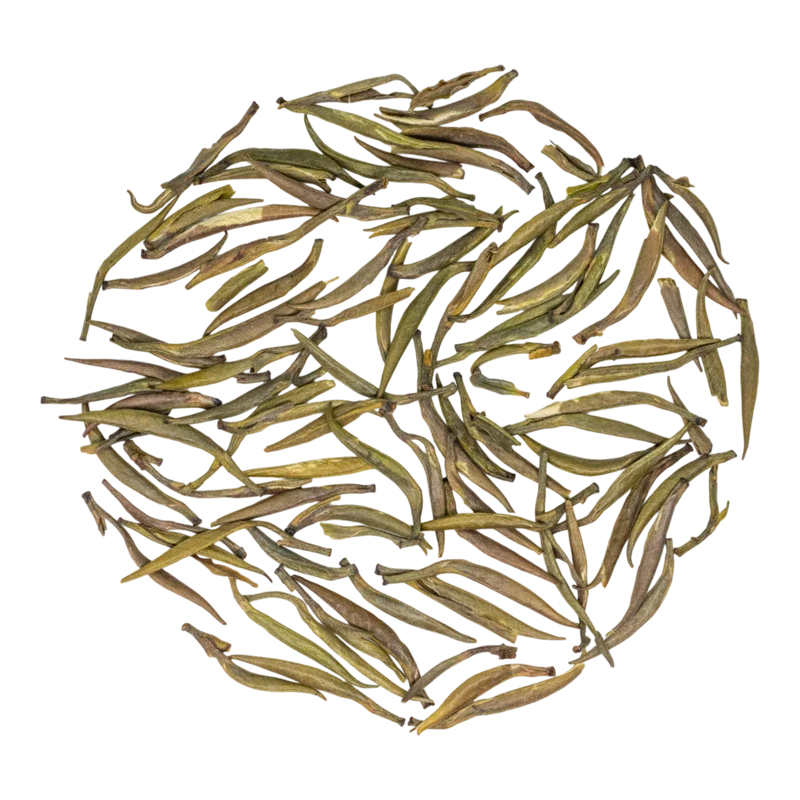
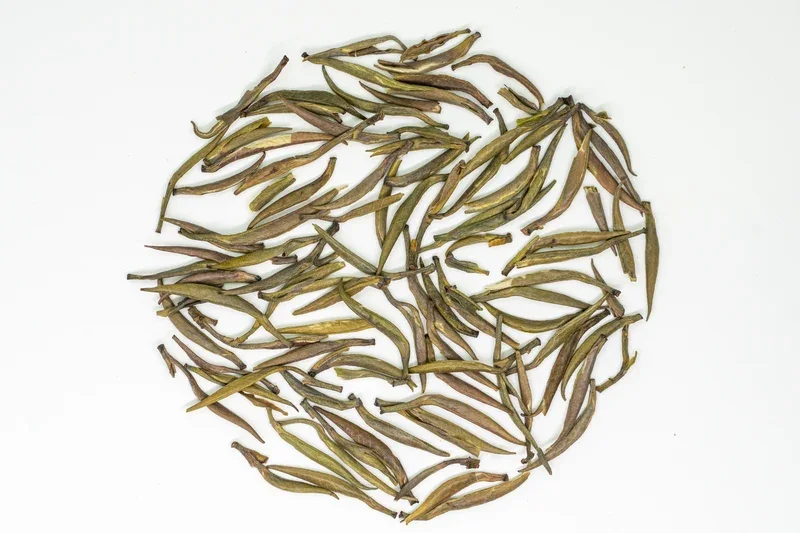
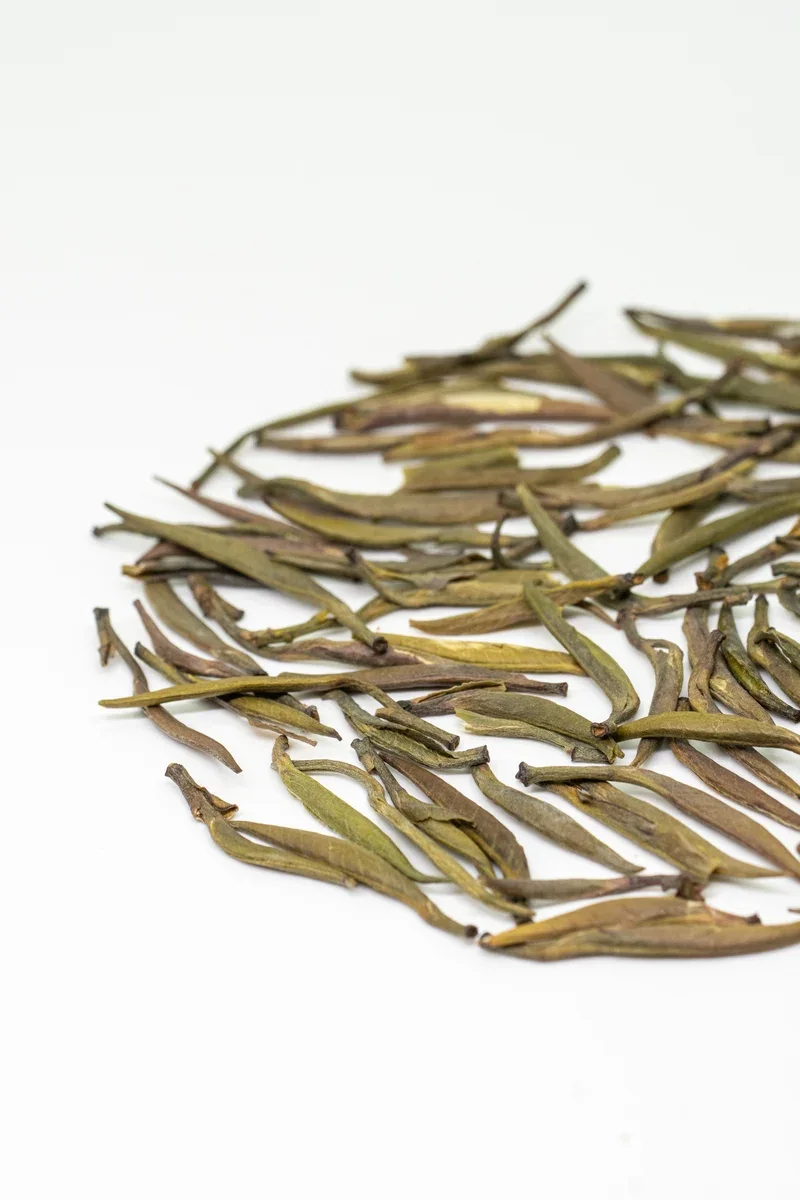
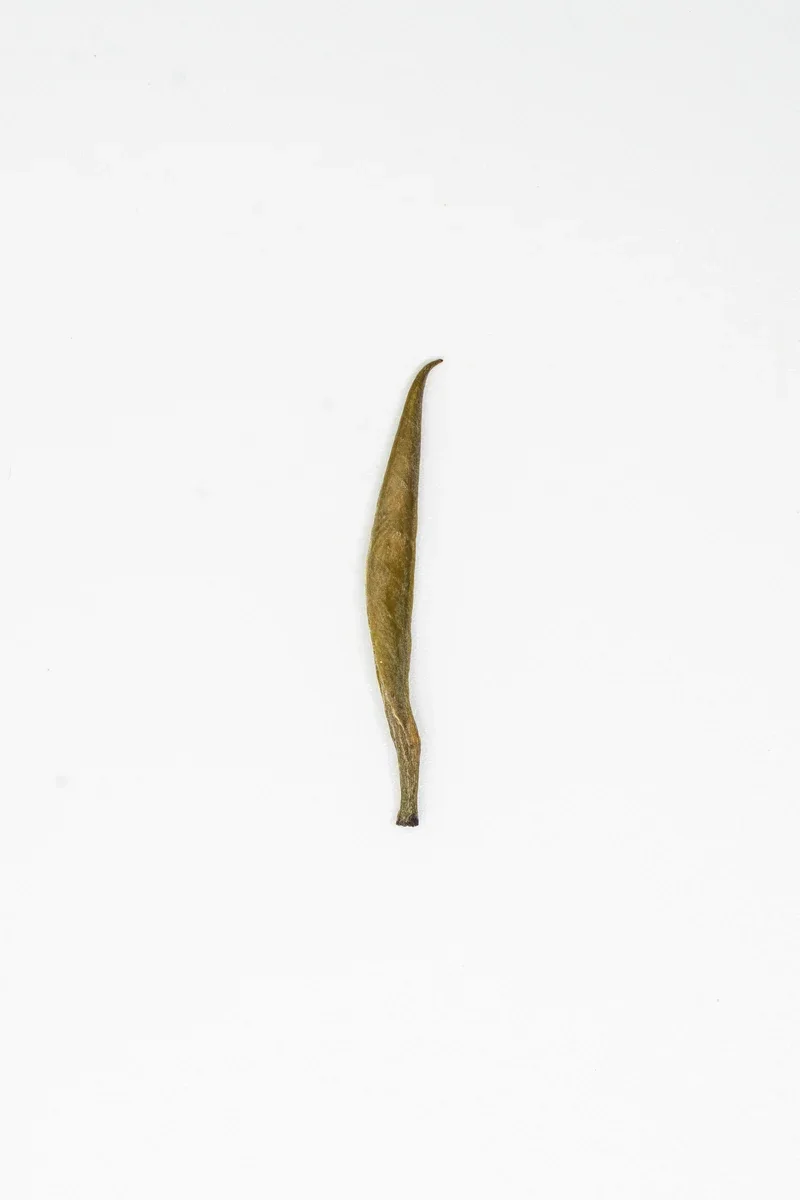
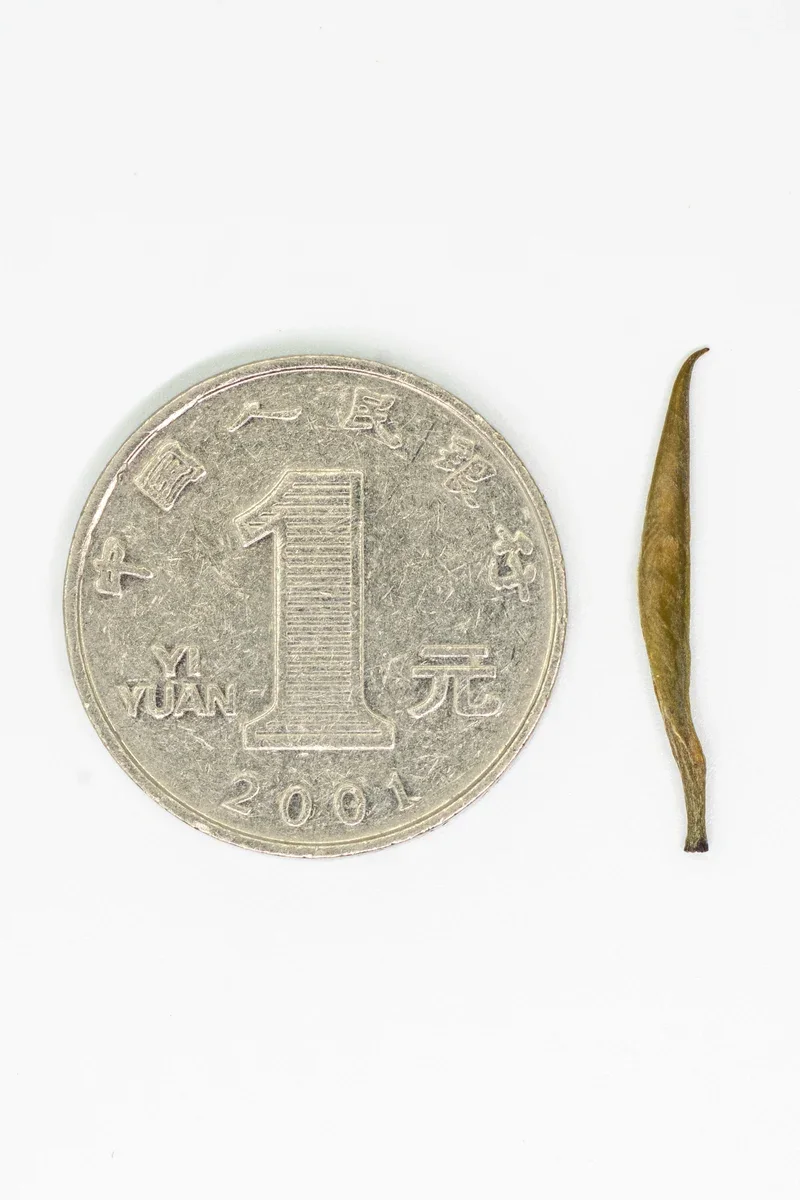
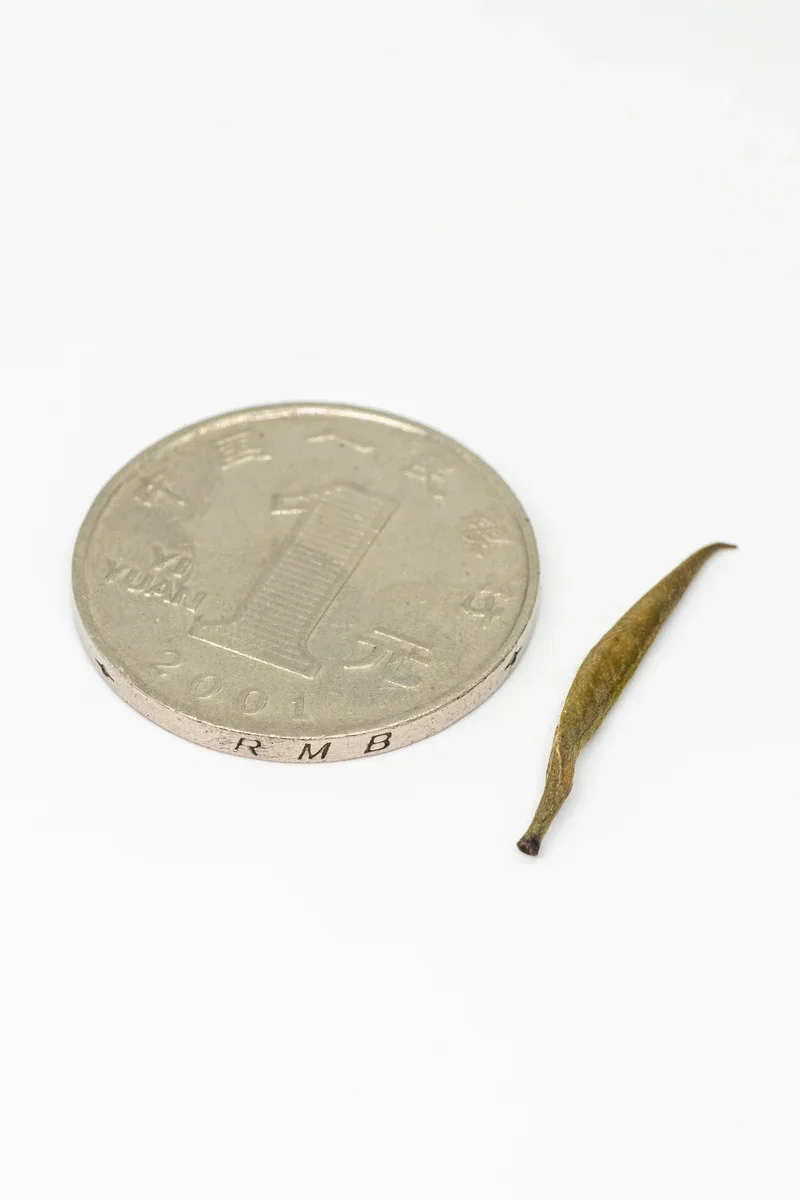
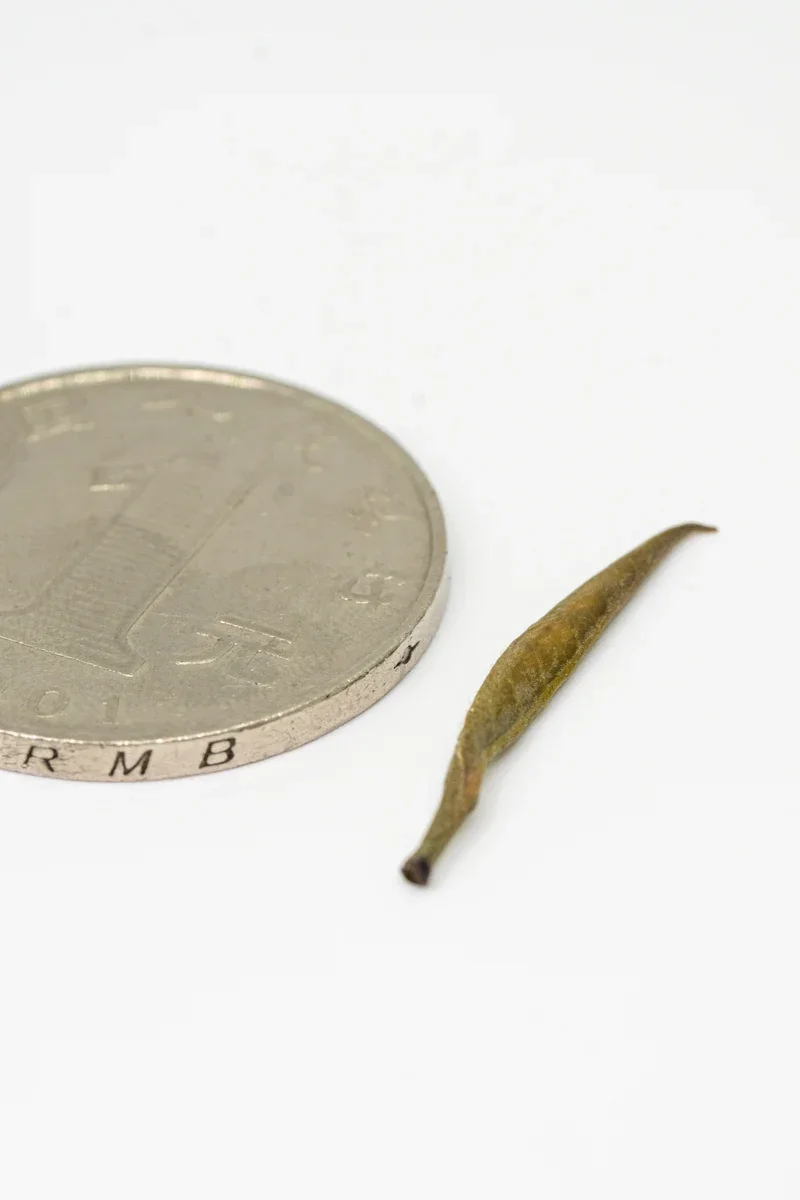
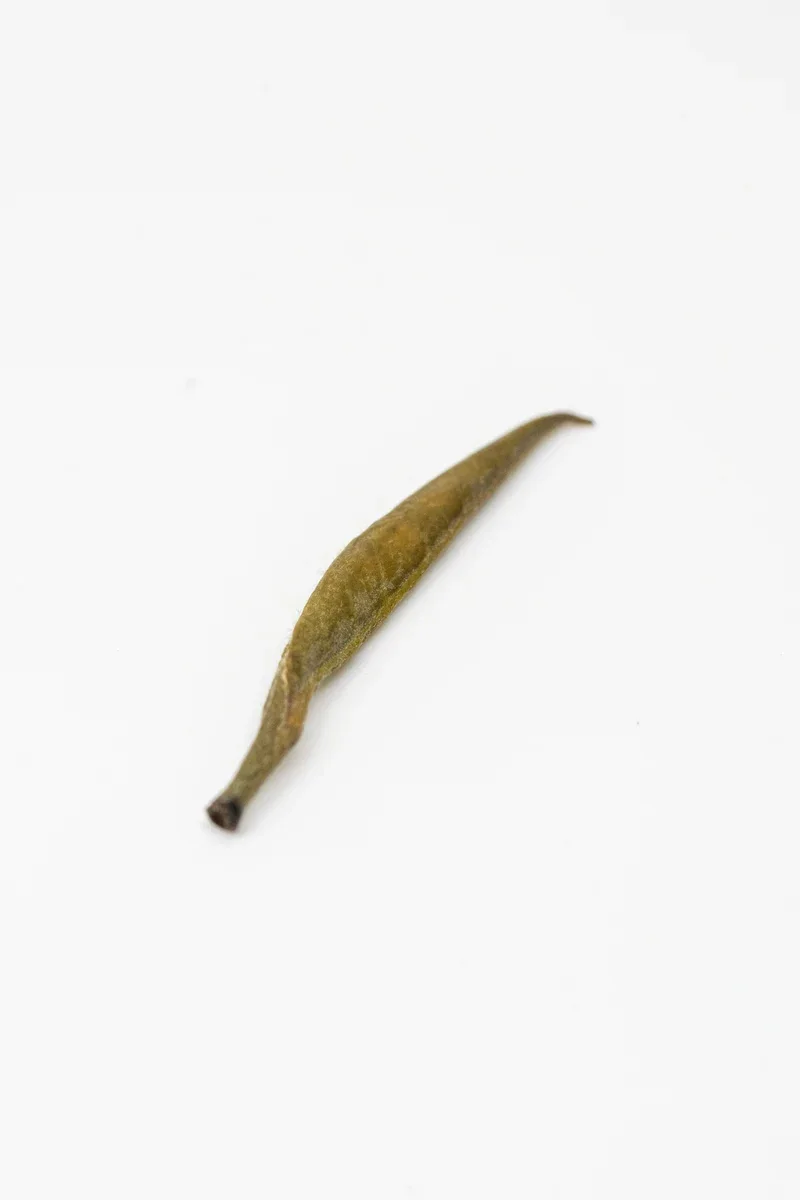
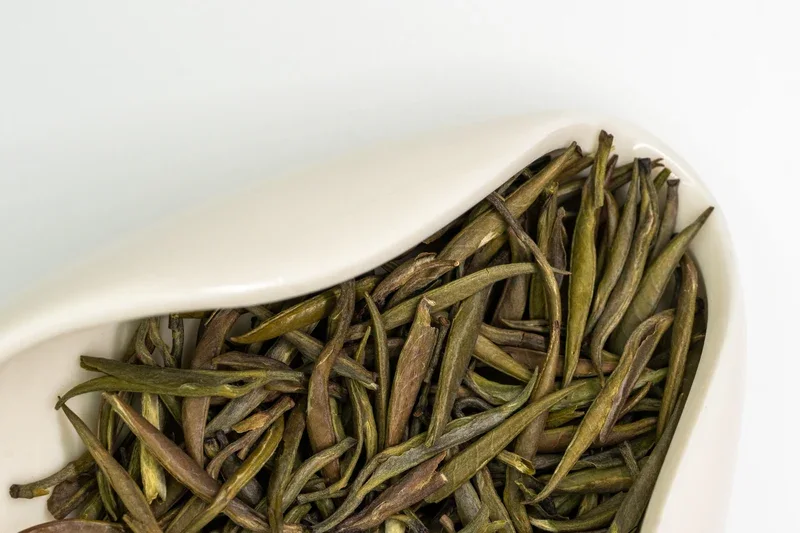
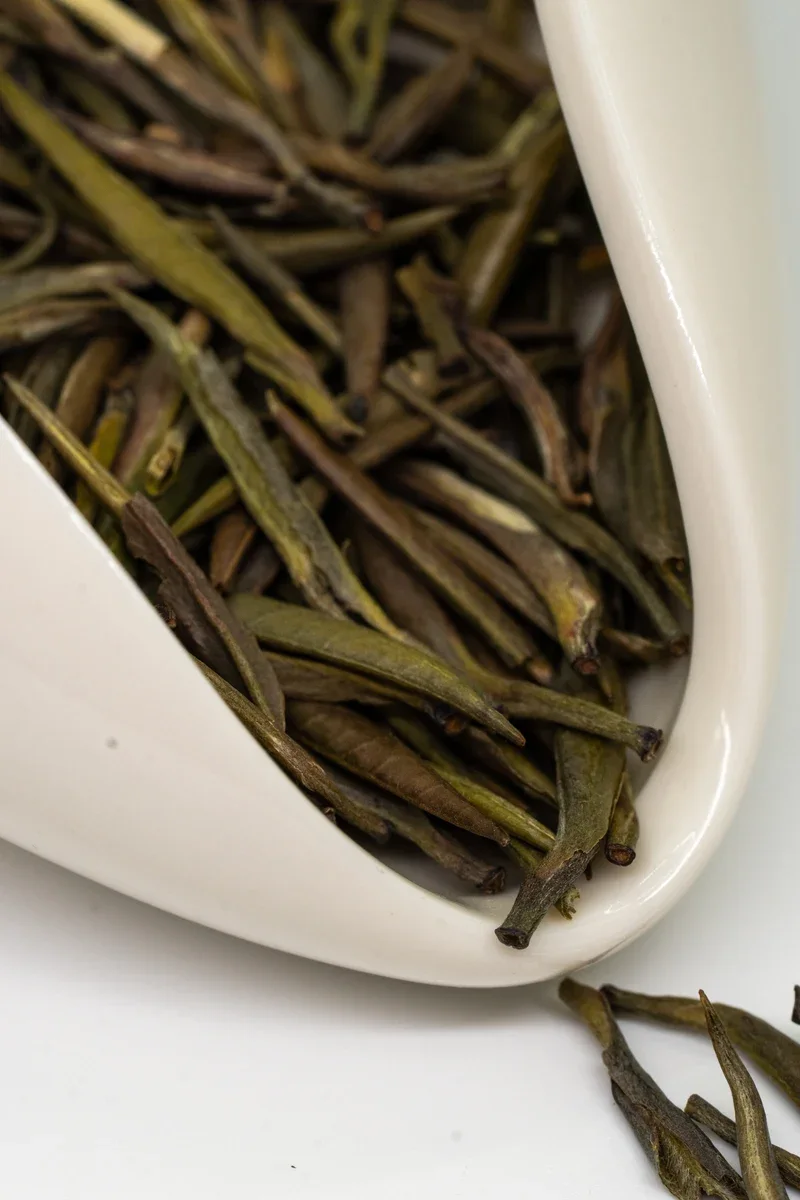
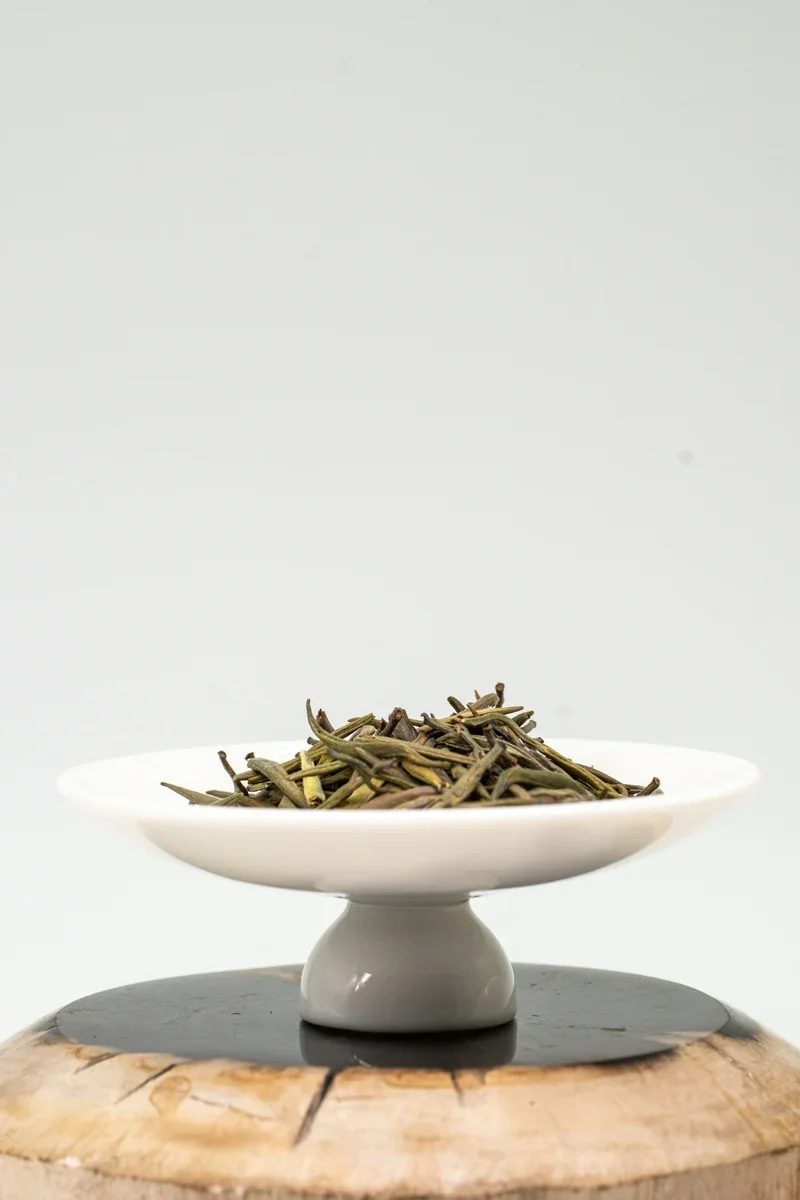
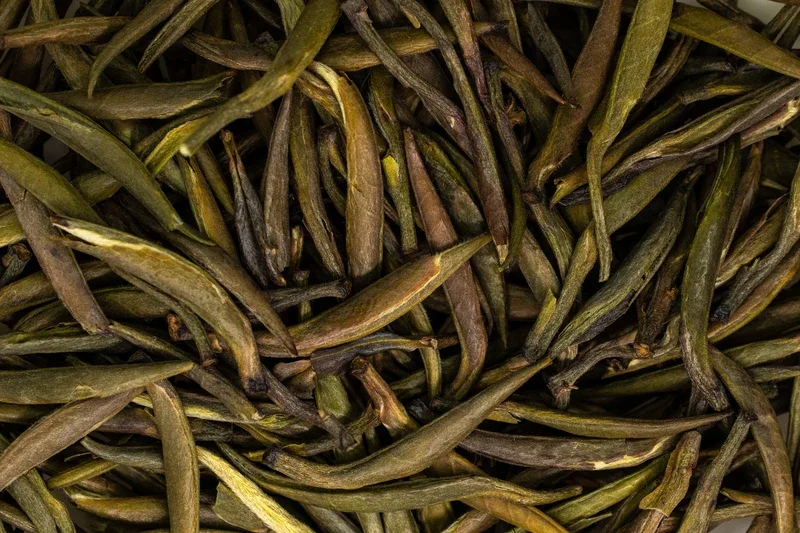
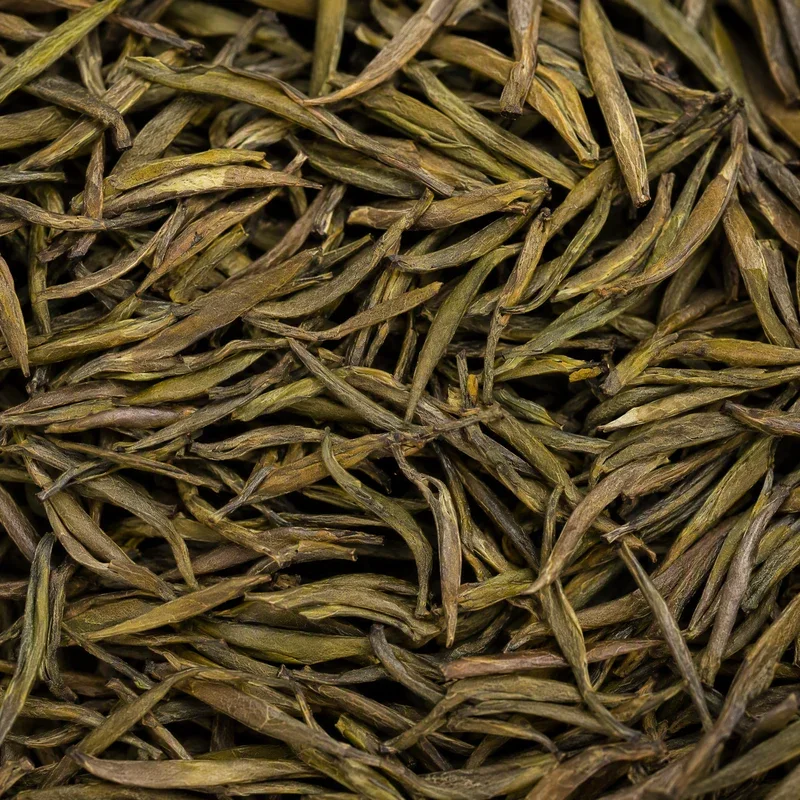
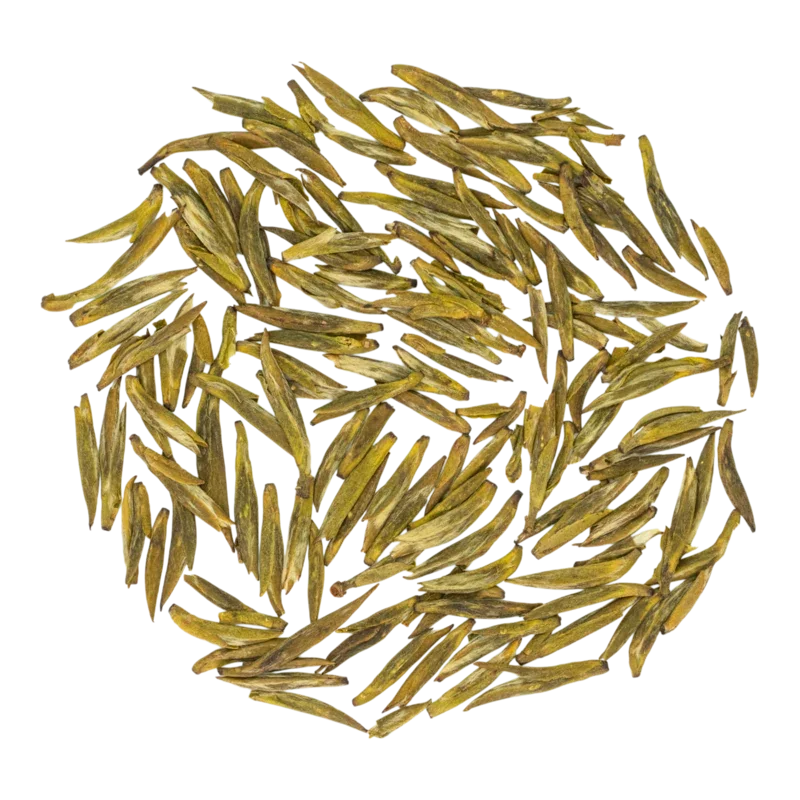
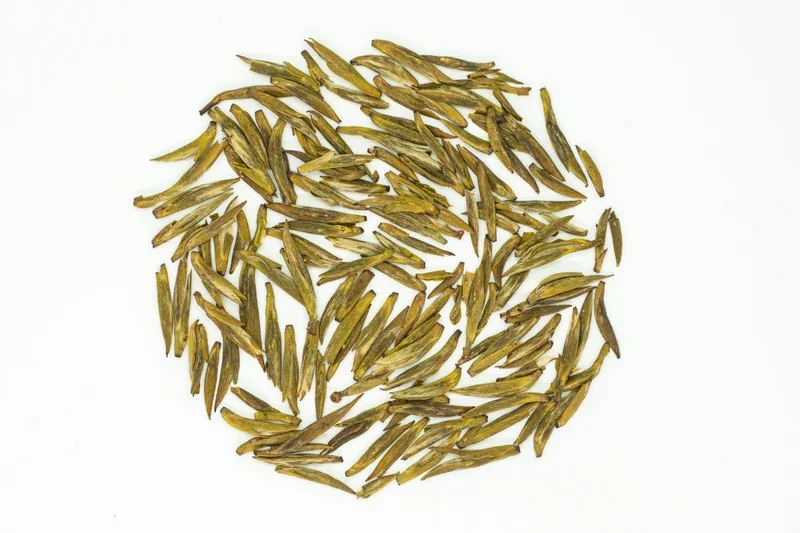
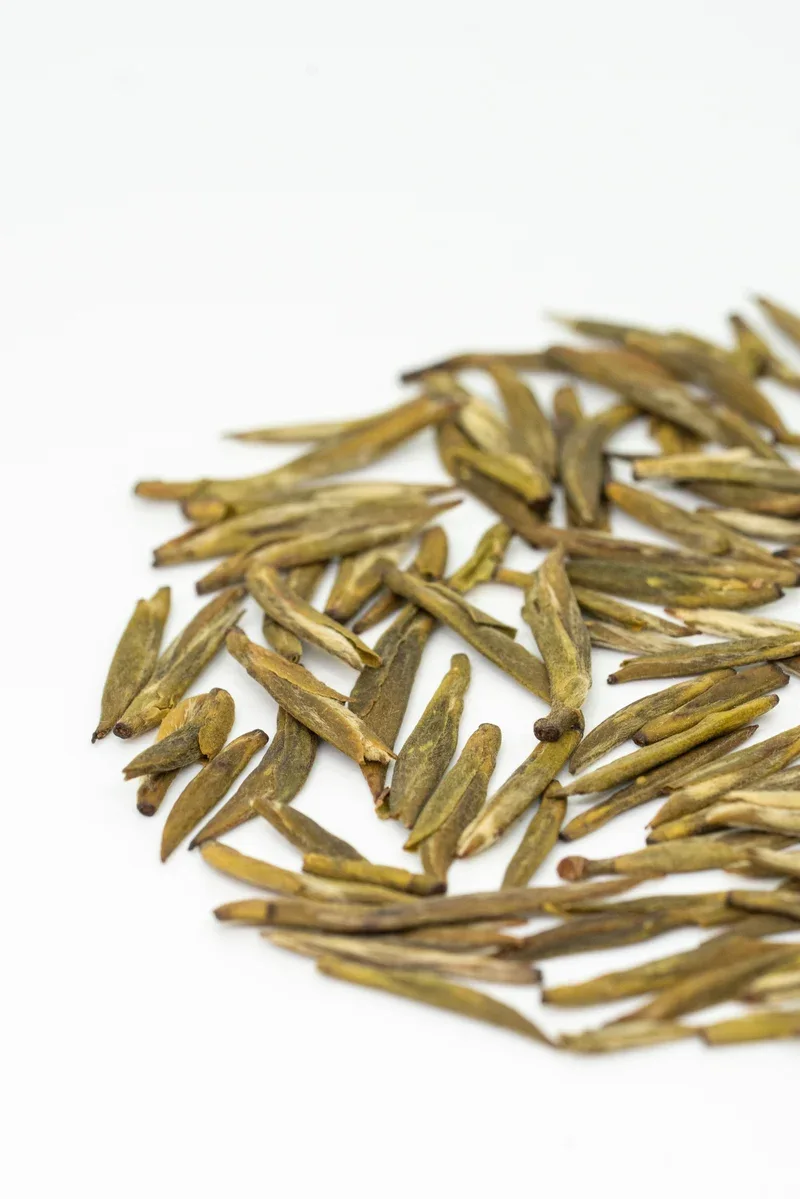
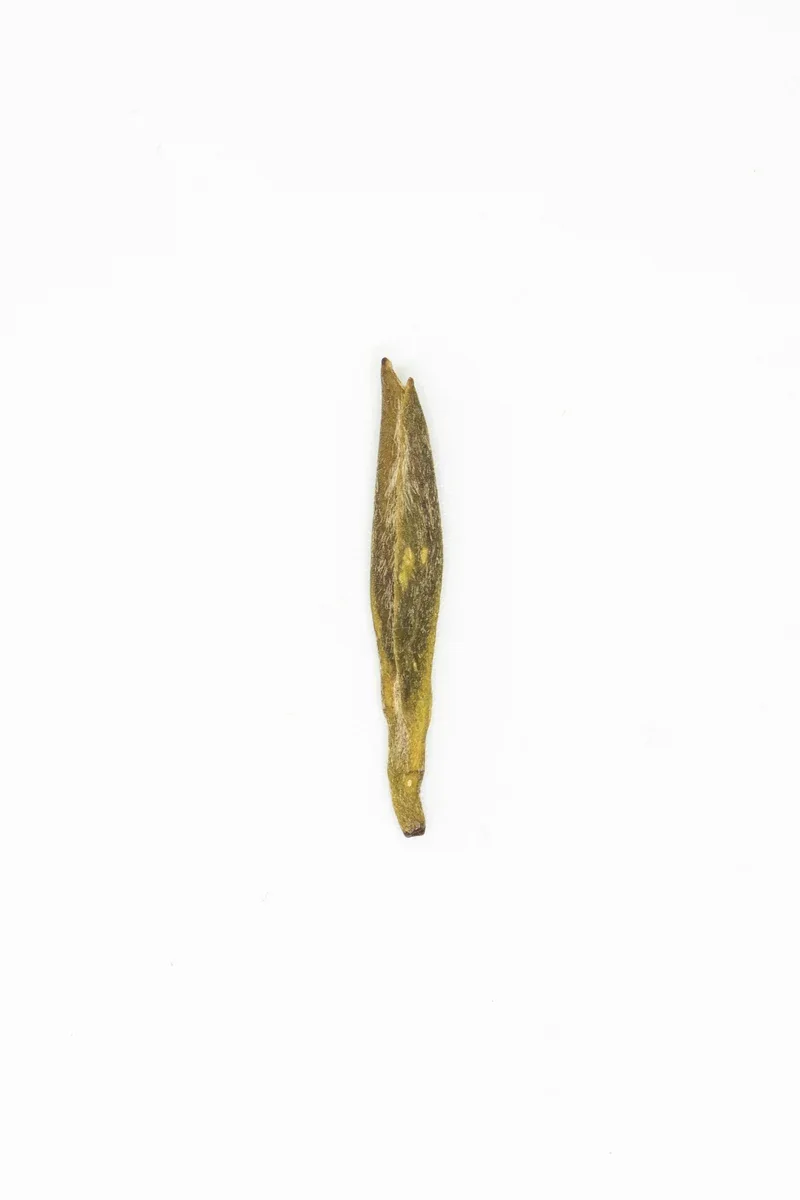
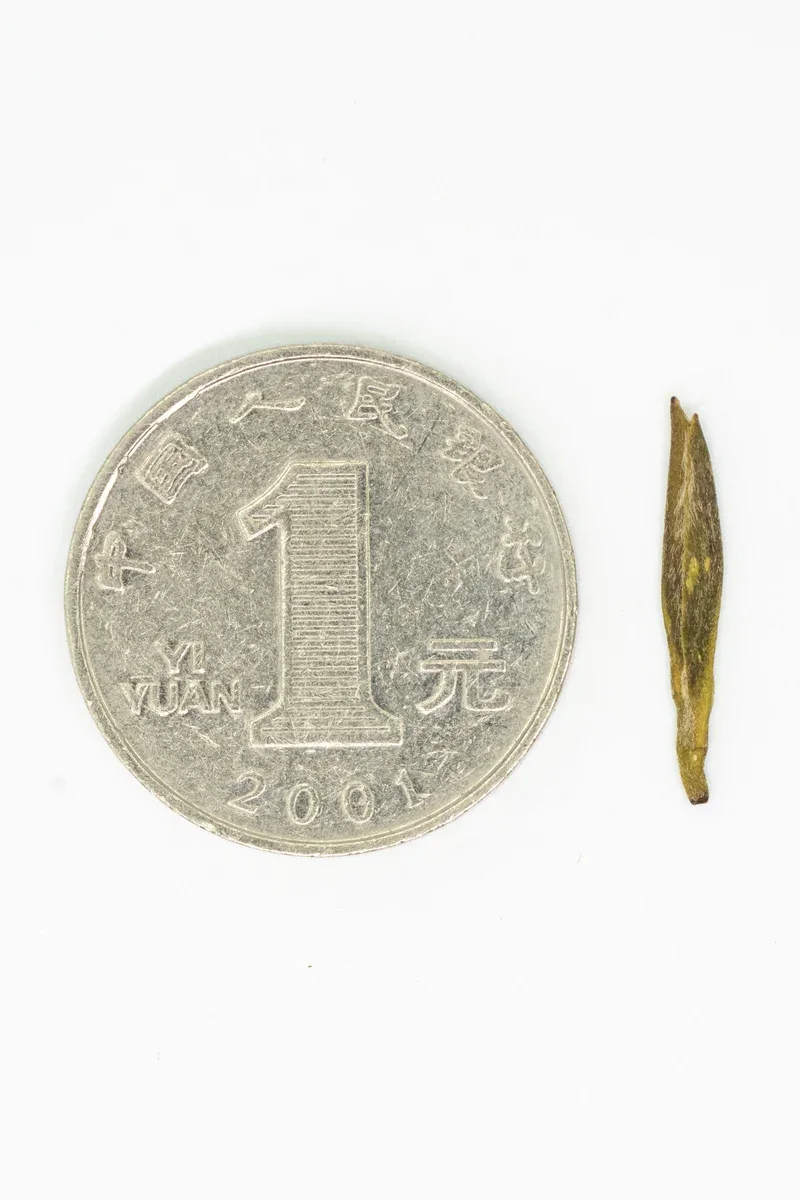
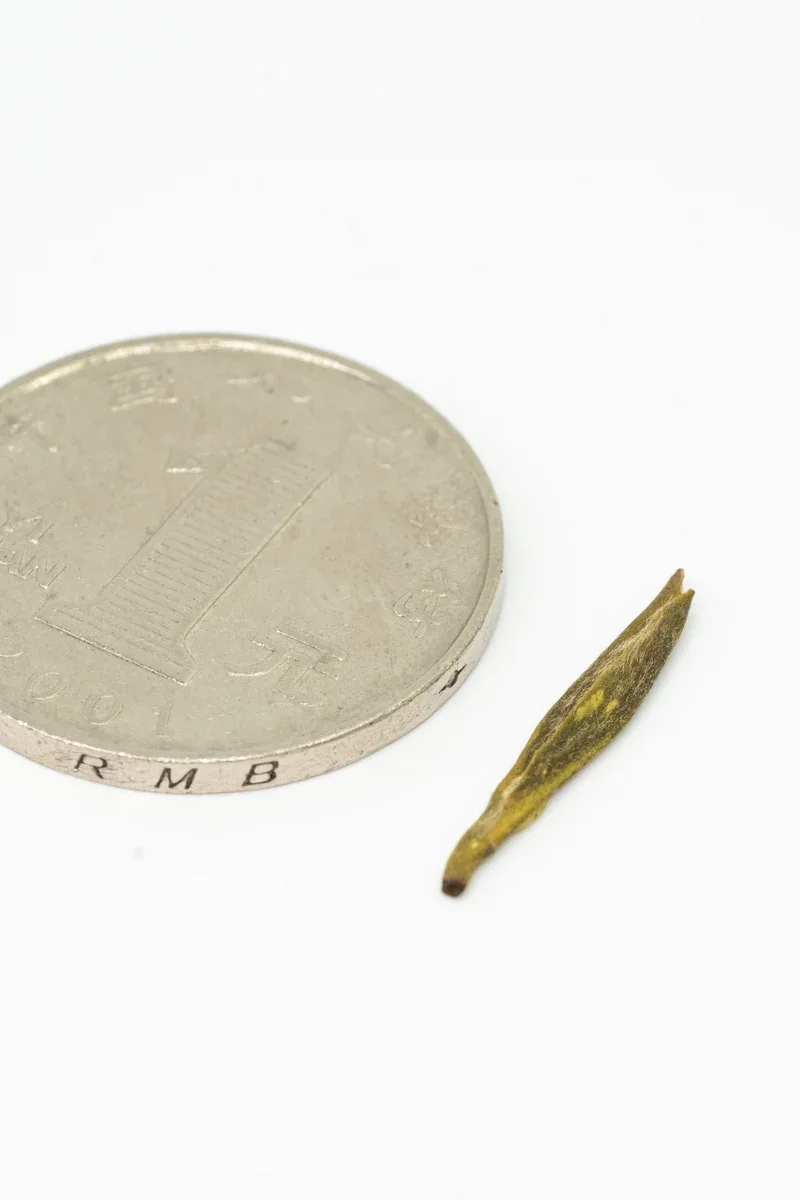
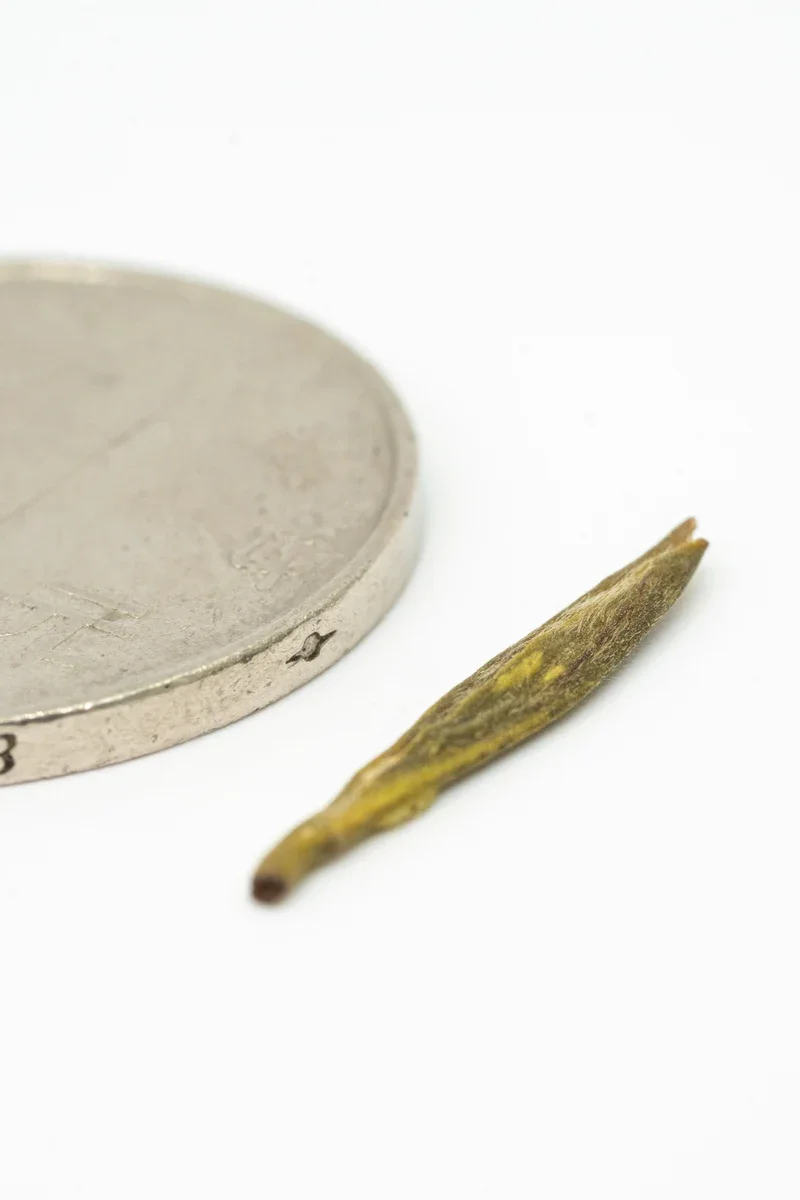
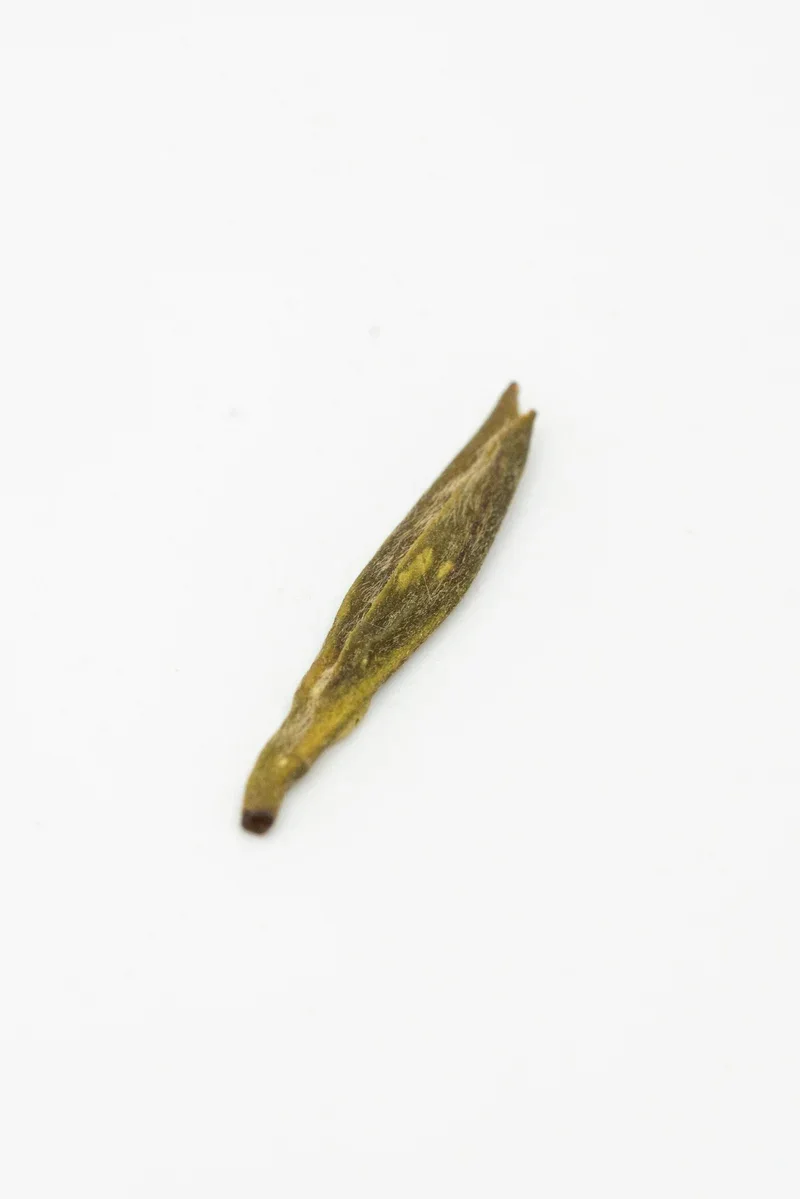
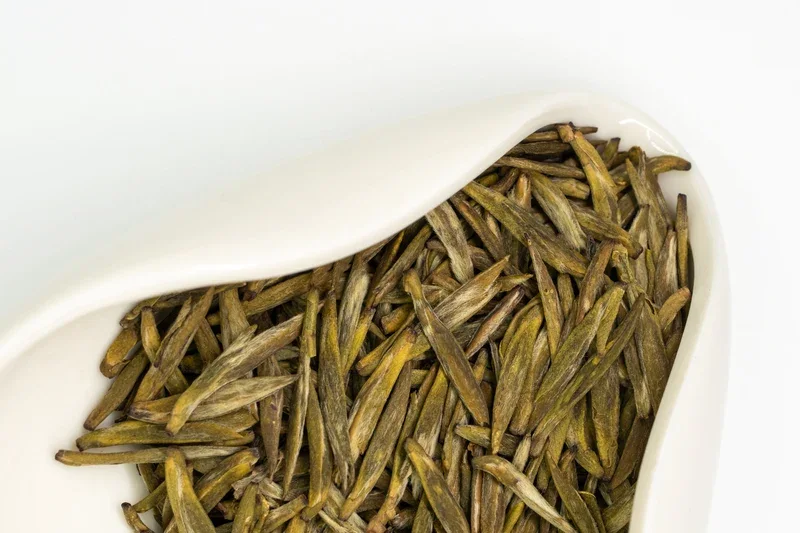
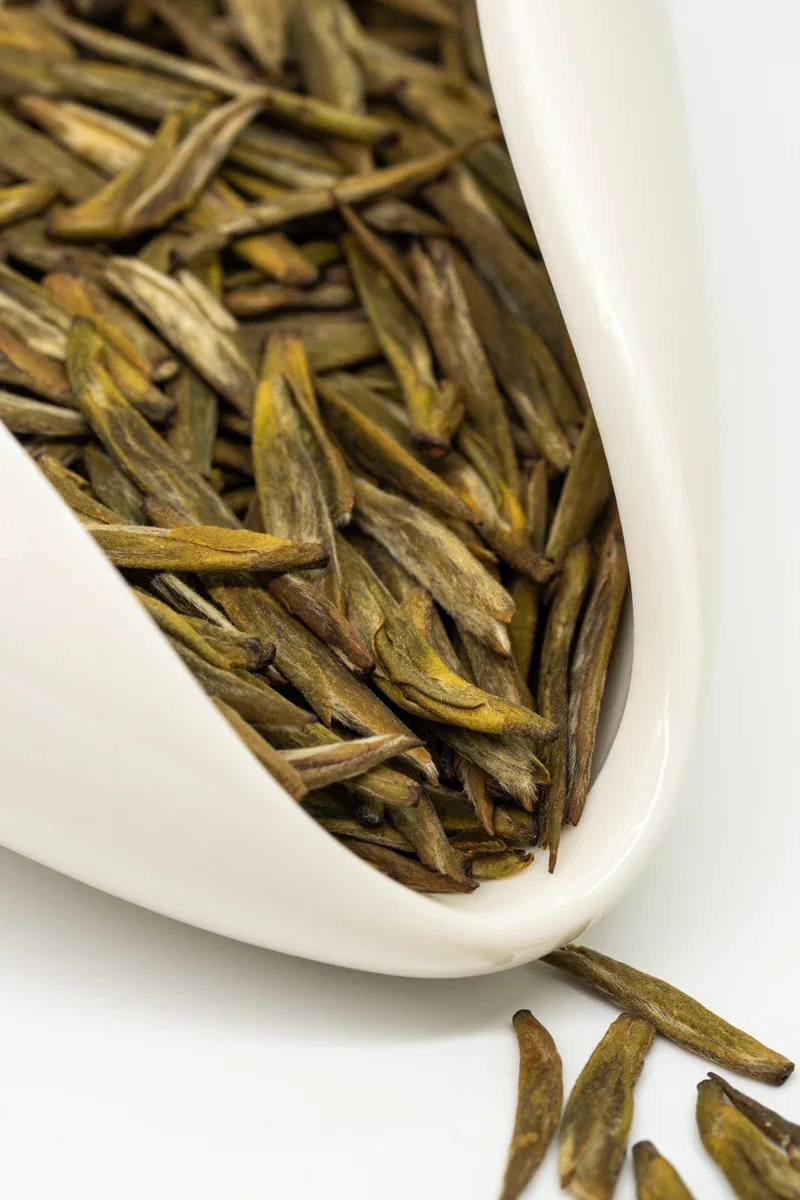
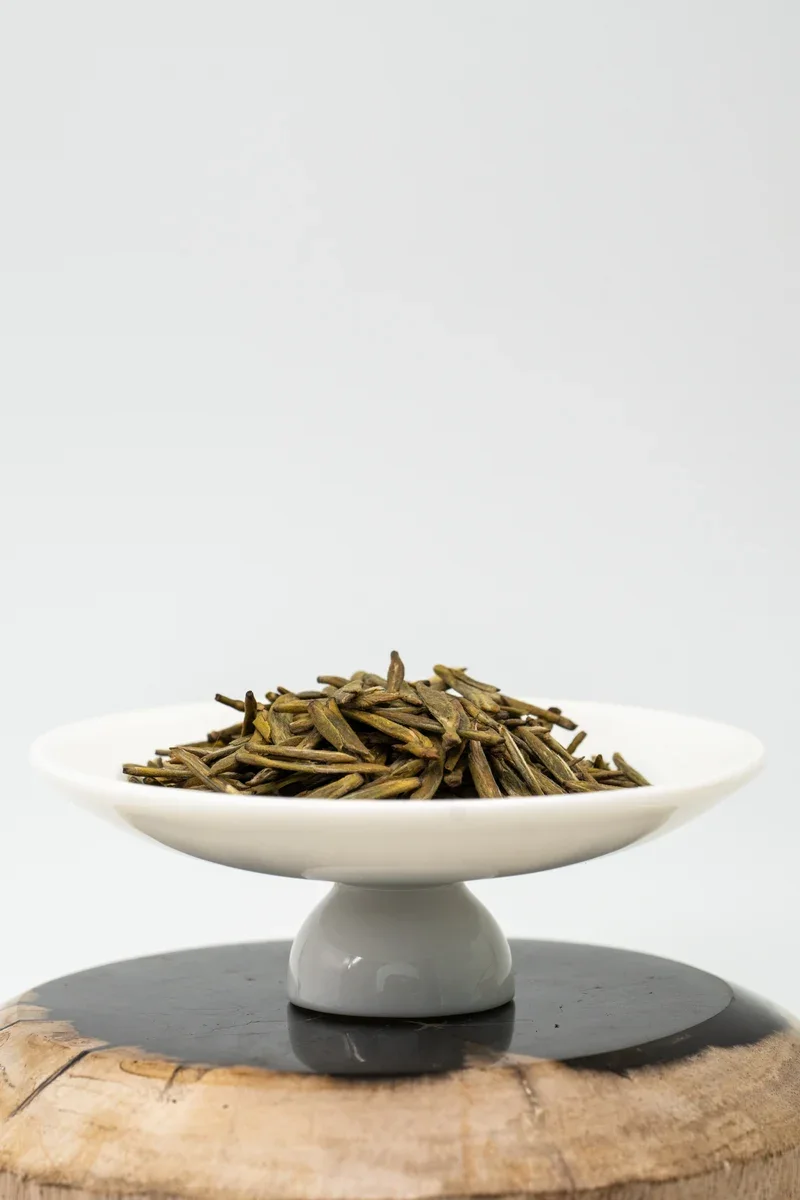
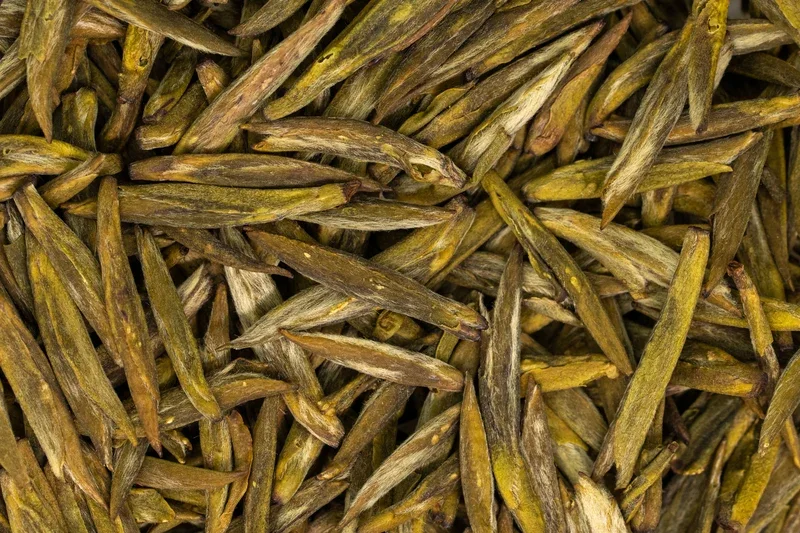
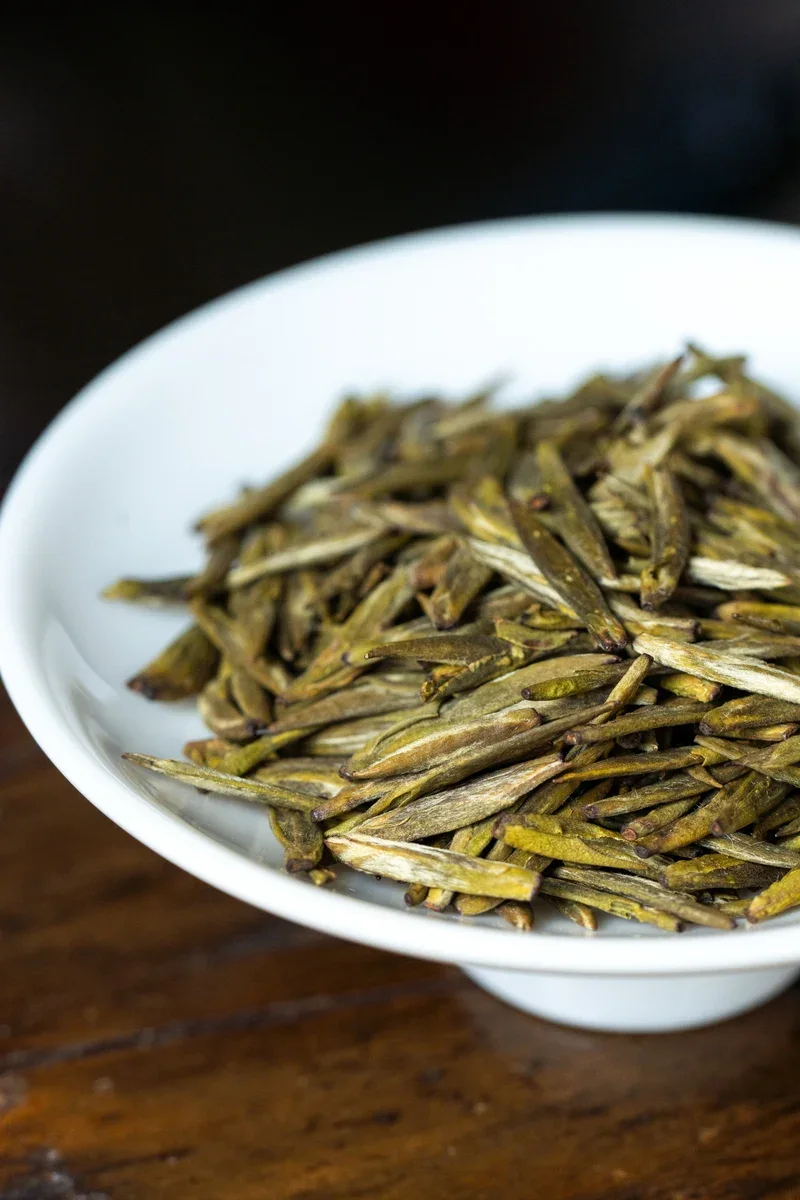
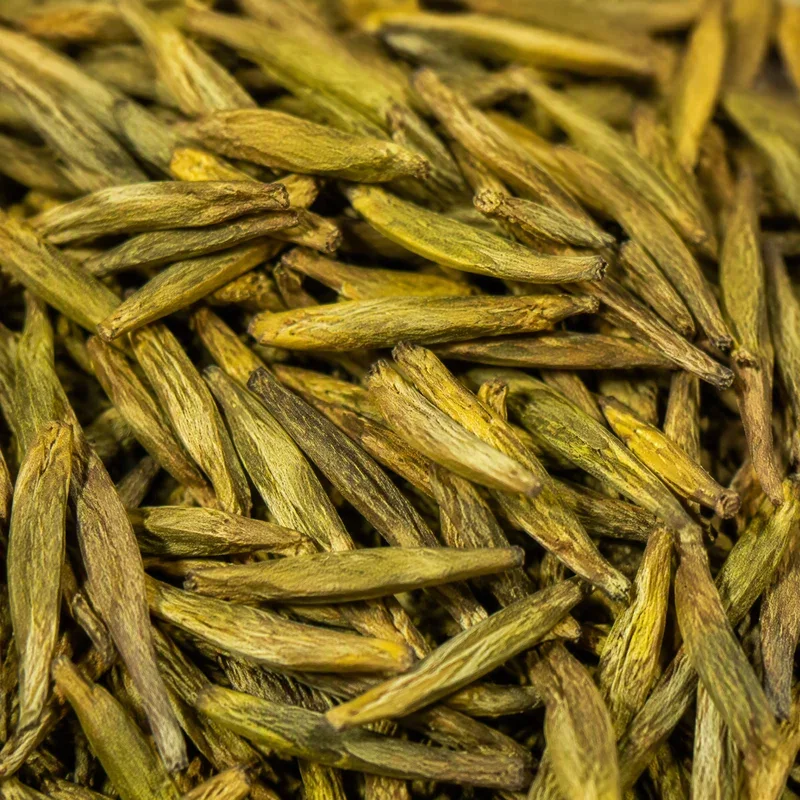
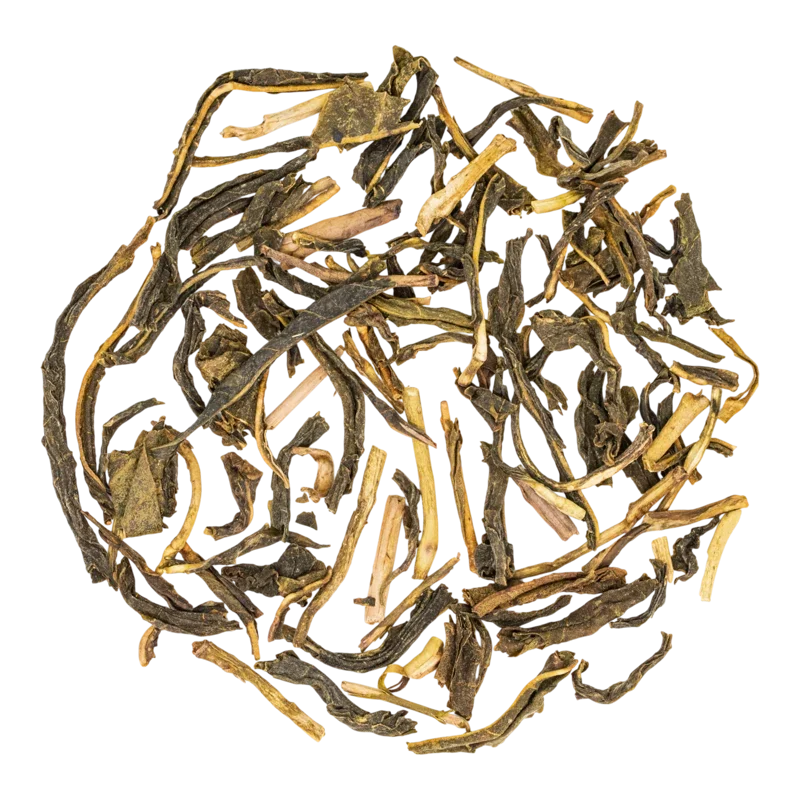
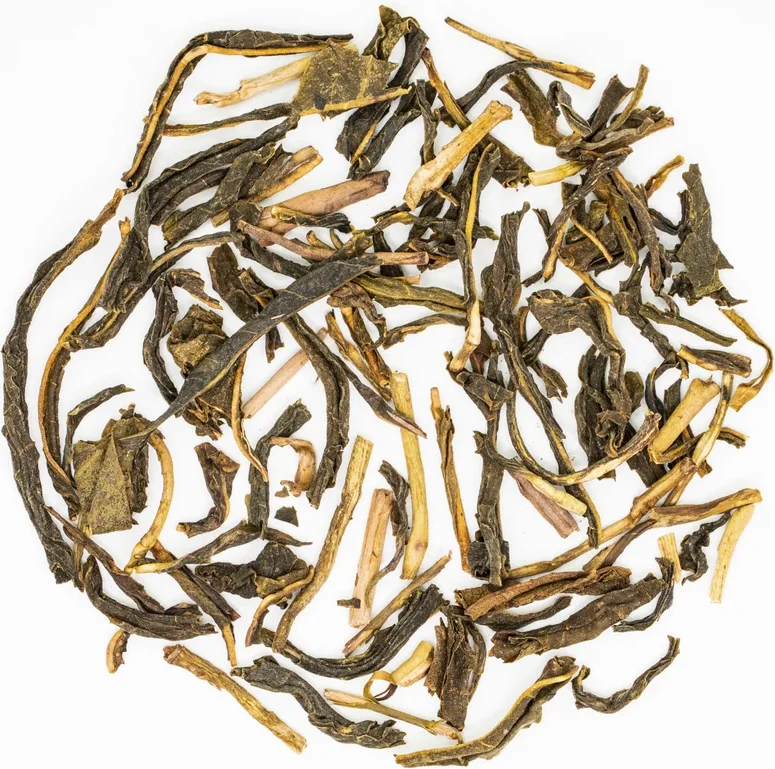
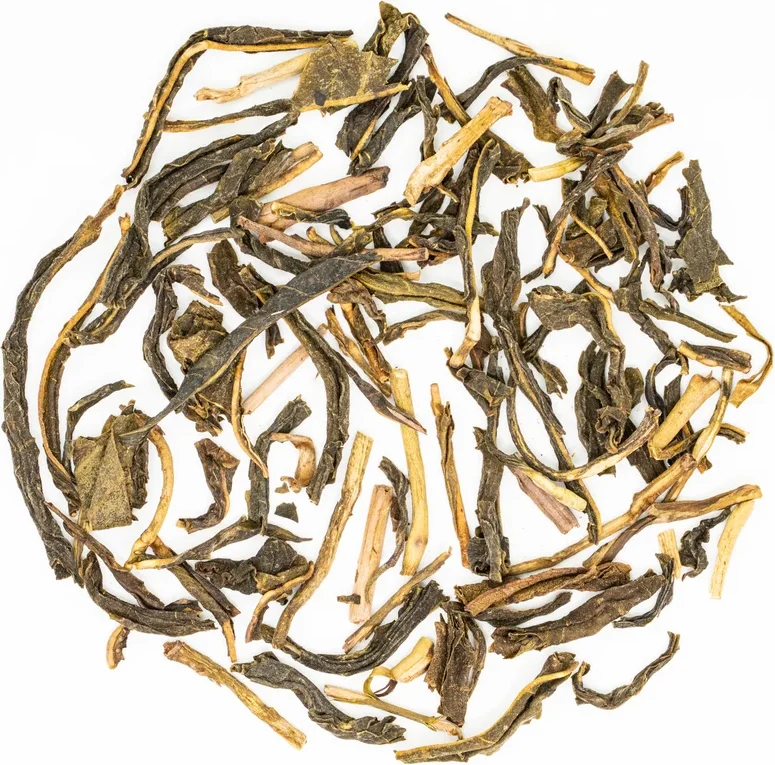
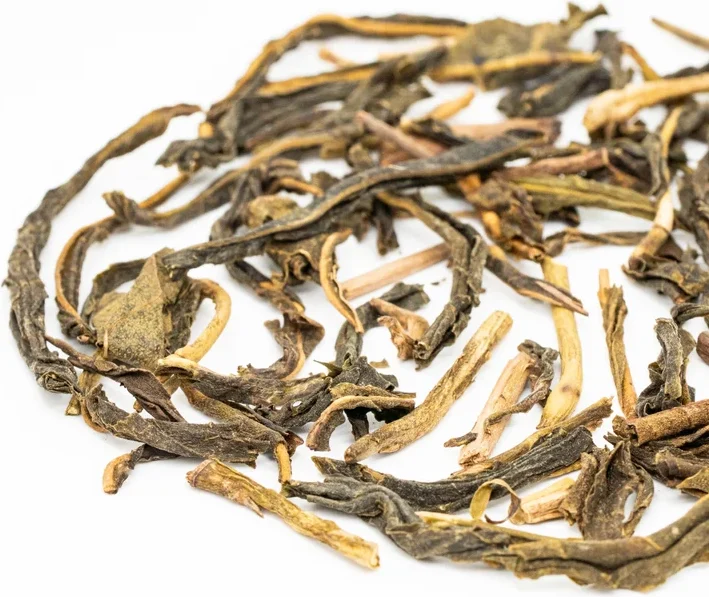
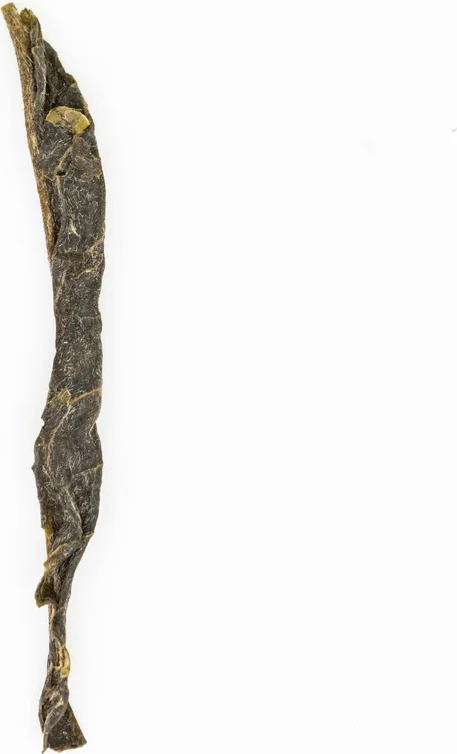
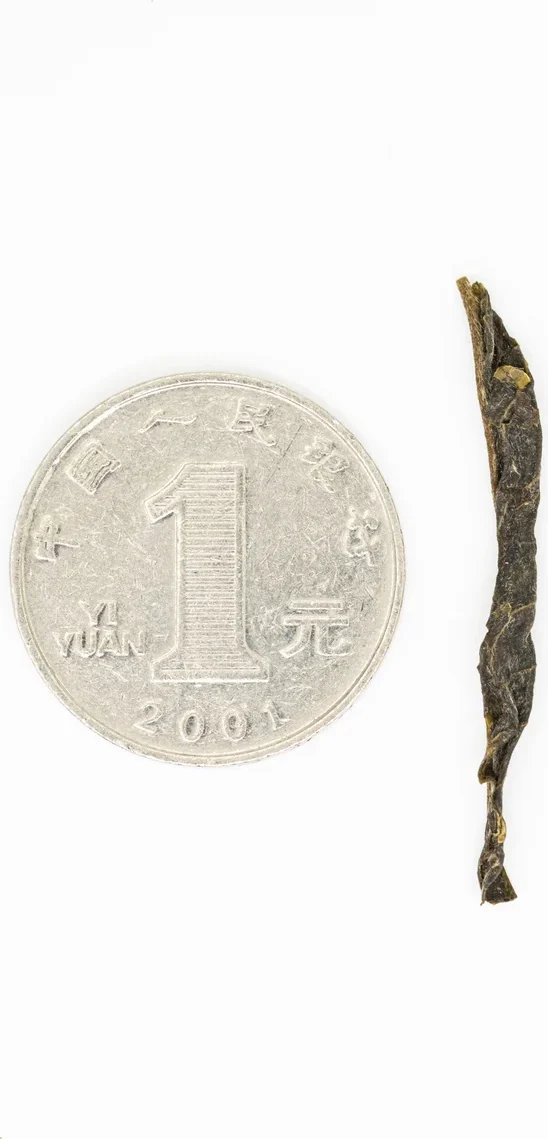
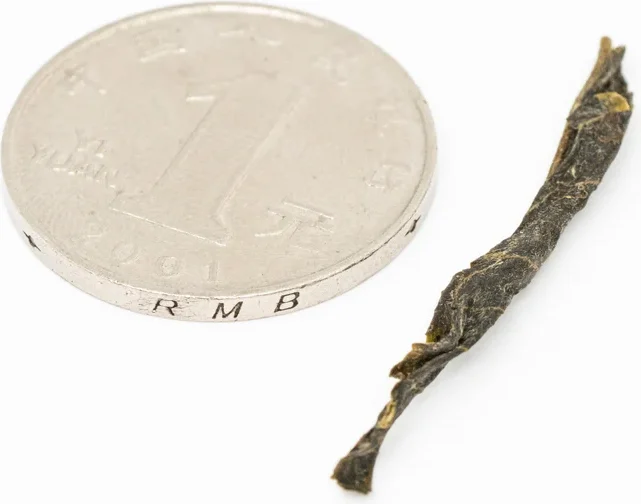
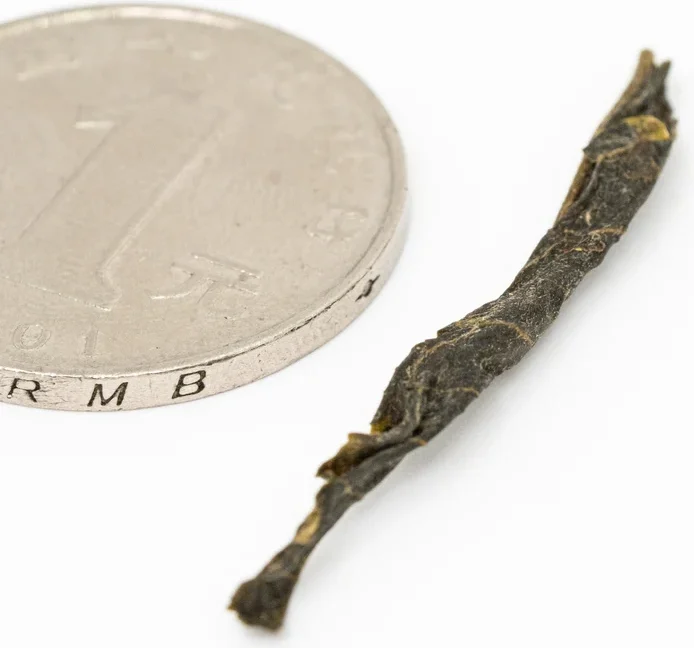
Dry Leaf Appearance: Large, full, tight cord-like leaves (条索肥壮紧结, tiáo suǒ féi zhuàng jǐn jié). Leaf is heavy, dense, whole, with well-visible white down. Leaf size significantly exceeds most yellow teas. Color — dark green with distinct yellowish tint (青润显黄).
Dry Leaf Aroma: Clean, restrained, with characteristic note of "gobasiang" (锅耙香, guō bā xiāng) — warm aroma reminiscent of toasted rice crust. Depending on processing degree, light floral-fruity notes may be present.
Liquor Aroma: Clean, pronounced, with predominance of toasted, bread notes. Unfolds gradually: first steeps give fresher, vegetal aroma, subsequent ones — deeper and warmer. In aged samples, tones of "chenxiang" (陈香) — noble maturity — appear.
Liquor Color: Bright, clear, rich orange-yellow color (橙黄明亮, chéng huáng míng liàng). With tea age, liquor may acquire deeper, amber shade.
Spent Leaves: Leaves of uniform light yellow color (淡黄匀整), soft, elastic, well-opened. In quality samples, distinct reddish edge around leaf margin (红边, hóng biān) is noticeable, indicating properly conducted withering stage.
Taste: Rich, dense (浓醇, nóng chún), with pronounced oily texture. Taste is dominated by tones of malt, roasted grain, chestnut. Astringency is moderate, quickly transforms into sweet aftertaste (回甘, huí gān). Bitterness is minimal thanks to the mendui stage, which reduces free catechin content. Aftertaste is prolonged, with light mineral nuance.
Alkaloids: Caffeine — 3–4% of dry matter (content above average among yellow teas, explained by use of large-leaf variety var. assamica). Theobromine and theophylline are present in trace amounts.
Amino Acids: Free amino acid content — 2–4%. L-theanine is the leading amino acid, providing umami note and relaxing effect. High-mountain raw material from core zones (especially spring picking) may contain up to 6% amino acids.
During mendui, digestive enzymes (消化酶, xiāohuà méi) are formed, which are preserved in finished tea and promote digestion improvement. This property is characteristic of yellow teas in general.
Minerals: Potassium, magnesium, manganese, zinc, fluorine. Raw material from Danxia area may contain elevated selenium concentrations.
Polyphenols: Tea polyphenol content in Dayeqing is about 14–18% of dry matter — significantly lower than in original raw material (≥30%), which is explained by partial catechin destruction during mendui. Main component — epigallocatechin gallate (EGCG), although its concentration is lower than in green teas from similar raw material. The sealed yellowing stage promotes conversion of part of catechins into theaflavins and thearubigins, forming liquor color and taste.
Vitamins: Vitamin C (although its content decreases with heat treatment), B vitamins (B1, B2, B6), vitamin E.
Digestive enzymes formed during mendui promote food breakdown and normalization of gastrointestinal tract function. Traditionally recommended after heavy meals.
Polyphenols and catechins neutralize free radicals, slowing cellular aging processes.
Elevated caffeine content provides pronounced invigorating effect, while L-theanine softens it, making stimulation gentle and prolonged.
Polyphenols promote acceleration of fat breakdown and reduction of "bad" cholesterol levels in blood.
Tea polysaccharides and catechins may promote slowing of carbohydrate absorption and glucose level normalization.
Polyphenolic compounds possess moderate anti-inflammatory activity.
Regular moderate consumption may support immune system function through complex action of antioxidants, amino acids and minerals.
Tea Amount: 5 g per 150 ml water (1:30 ratio).
Teaware: Gàiwǎn (盖碗, gàiwǎn) made of porcelain or glazed ceramics — optimal choice, allowing extraction control and leaf opening observation. Yíxīng teapot made of purple clay (紫砂壶, zǐshā hú) is also suitable, which will emphasize density and depth of taste. Glass teaware allows liquor color evaluation.
Water Temperature: 95–100°C. Dayeqing, unlike delicate yellow teas from buds (Junshan Yin Zhen, Mengding Huang Ya), withstands and requires high temperature for full flavor development of large leaf.
The closest relative to Daqing by class (both are huang da cha). Produced in Anhui Province. Key difference: Huangdacha does not undergo the withering stage, processing begins directly with "kill-green" in the wok. The taste of Huangdacha is simpler and more straightforward, with pronounced "jiaoxiang" (焦香, roasted aroma), while Daqing possesses greater depth and oily texture thanks to withering.
Famous yellow tea made from buds (huang ya cha). Fundamentally differs from Daqing in raw material (pure buds vs. large leaf), texture (tender, silky vs. dense, rich) and flavor profile (delicate sweetness vs. malty strength). Junshan Yin Zhen is a tea for meditative tea drinking, Daqing is for those who value body and power in taste.
Another bud tea, from Sichuan. Compared to Daqing — significantly lighter, floral, with pronounced sweetness and minimal astringency. Daqing in this comparison stands as the "heavyweight" of yellow tea.
Yellow tea from Zhejiang, belonging to the huang xiao cha (small leaf) category. Lighter and more refreshing than Daqing, with characteristic chestnut aroma. Daqing notably surpasses it in body density and aftertaste duration.
No reviews yet. Tell us what you think of this tea.
Rate this tea and share your impressions. We review each submission before publishing it.