Brewing
Gongfu brewing
- Water temperature
- 93 °C
- Tea amount
- 5 g
- Water volume
- 100 ml
- First steep
- 10 s
- Time added per infusion
- 5 s
- Infusions
- 4

jīn jùn méi
Choose a brewing method. Start with the recommended quantities and time, then adjust to taste.
Brewing
Brewing
Taste
Tea encyclopedia
Alt Names: In the "Jun Mei" series (骏眉) there are three grades: Jīn Jùn Méi (金骏眉, "Golden Eyebrows") — buds only; Yín Jùn Méi (银骏眉, "Silver Eyebrows") — one bud with one leaf; Tóng Jùn Méi (铜骏眉, "Bronze Eyebrows") — one bud with two leaves.
Alt Names: In the "Jun Mei" series (骏眉) there are three grades: Jīn Jùn Méi (金骏眉, "Golden Eyebrows") — buds only; Yín Jùn Méi (银骏眉, "Silver Eyebrows") — one bud with one leaf; Tóng Jùn Méi (铜骏眉, "Bronze Eyebrows") — one bud with two leaves.
Category: Elite bud red tea. Since 2013, "Jin Jun Mei" has been recognized as a generic name (通用名称, tōngyòng míngchēng) — alongside Tie Guanyin, Biluochun, and Da Hong Pao — by decision of the Beijing Higher People's Court.
Coordinates: approximately 27°44′ N, 117°38′ E.
Origin: China, Fújiàn Province (福建省, Fújiàn Shěng), Nánpíng City (南平市, Nánpíng Shì), Wuyishan County-level City (武夷山市, Wǔyíshān Shì), Tóngmù Village (桐木村, Tóngmù Cūn) within the Wǔyíshān National Nature Reserve (武夷山国家级自然保护区). Tongmu is the historical birthplace of all red teas in the world: it was here more than 400 years ago that Zheng Shan Xiao Zhong (Lapsang Souchong) was created.
Type: Red tea (红茶, hóngchá), fully oxidized. By European classification — black tea. Degree of oxidation — 80–90%.
Historically, the first trial batch of Jin Jun Mei (June 2005) comprised just under 250 grams of dry tea. The next day masters tried to repeat success — and "ruined" the batch: pure bud raw material processing technology proved extremely capricious. Only on the third day did they achieve stable results.
In the tea's second year of existence, total Jin Jun Mei production volume was ~68.5 kg. Beijing tea merchant Sǔn Lianquan (孙连泉) bought more than half — 40+ kg — and distributed throughout Beijing, introducing the capital elite to the novelty. This became the catalyst for "gold rush."
According to calculations by Yan Yifeng, participant in first batch creation, one jin (500 g) of dry Jin Jun Mei contains about 48,000 tea buds.
Battle for "Jin Jun Mei" trademark (2007–2013) involved dozens of tea companies and divided Tongmu producers into three camps. Final decision — recognition as generic name — repeated the fate of Tie Guanyin and Da Hong Pao.
Before Jin Jun Mei's appearance, many Tongmu tea gardens were being converted to oolong production due to stagnant domestic hong cha demand. Jin Jun Mei's success stopped this process and stimulated appearance of dozens of new elite red teas throughout China.
Cultural Significance: The appearance of Jin Jun Mei radically changed the landscape of China's red tea market. Before 2005, the vast majority of quality Chinese hong cha was exported; the domestic market was oriented toward green teas and oolongs. Jin Jun Mei proved that red tea could be equally refined and multifaceted, and launched a wave of "hong cha revival" (红茶复兴). The tea became a desired gift, collectible item, and symbol of the new status of Chinese red tea.
History: Jin Jun Mei is one of China's youngest famous teas. Its history begins in summer 2005, when a group of Beijing tea enthusiasts — Zhāng Mengjiang (张孟江), Yán Yifeng (阎翼峰), and Mǎ Bǎoshān (马宝山) — proposed to Jiāng Yuánxūn (江元勋), director of Zhèngshān Tea Company (正山茶业), to produce "the best red tea, surpassing the highest grade of Zheng Shan Xiao Zhong." Jiang Yuanxun, heir to Zheng Shan Xiao Zhong in the 24th generation, assigned the task to a group of tea masters — Jiāng Junsheng (江骏生), Jiāng Junfa (江骏发), Liàng Jùndé (梁骏德), Wēn Yongsheng (温永胜), and others. The first trial batch — about half a jin (250 g) of dry tea from 1.5 jin (750 g) of fresh buds — was made by Liang Junde on June 21–22, 2005. The result exceeded expectations: the tea possessed an unprecedented honey-fruity aroma and silky sweetness for hong cha. In 2006, under the guidance of tea patriarchs Zhāng Tiānfú (张天福) and Luó Shaojun (骆少君), the technology was refined and stabilized. In 2008, Jin Jun Mei officially entered the market and instantly became a sensation, reviving interest in red tea throughout China. From 2007 to 2013, the "trademark dispute" lasted: ultimately, the Beijing court ruled that "Jin Jun Mei" is a generic name, not subject to registration as an exclusive trademark.
Name Breakdown: Each character carries semantic meaning:
Cultivar: Local wild or semi-wild population of small-leaf tea bush, known as Qízhǒng (奇种, Qízhǒng) or Càichá (菜茶, Càichá) — Camellia sinensis var. sinensis. This is a heterogeneous (seed-grown) population that has grown for centuries in the highlands of Wuyishan Reserve. Each bush is genetically unique, creating an unrepeatable aromatic profile. Small-leaf forms are distinguished by increased amino acid content and reduced tea polyphenols and caffeine compared to large-leaf varieties (var. assamica), which provides Jin Jun Mei with its signature sweetness and absence of bitterness.
Picking: Early spring — from early April (after Qingming) to early May (before Lixia). Optimal time — second-third decade of April. Harvest of later buds (June) gives noticeably lighter and less concentrated liquor. Harvest is conducted exclusively by hand, in dry weather, during morning hours.
Pluck Standard: Only unopened, dense, fleshy buds (单芽, dān yá), covered with fine down. This is the key distinction of Jin Jun Mei from the vast majority of red teas. For 500 g of finished tea, 60,000 to 80,000 fresh buds are required (according to Yan Yifeng's calculations — about 48,000 per 1 jin of dry tea).
Raw Material: Buds must be whole, undamaged, uniform in size, without traces of mechanical injuries and darkening. Minimal delay between harvest and start of processing.
Altitude: 1000–1800 m above sea level. Best batches — from heights of 1200–1500 m.
Climate: Subtropical mountain monsoon. Average annual temperature ~11–18°C (depending on altitude). Average annual precipitation — 2000–2300 mm. Relative humidity — 80–85%. Fog is observed more than 100 days per year. Winters are mild, summers are not hot — maximum temperature rarely exceeds 33°C. Significant diurnal temperature variation promotes accumulation of amino acids and aromatic compounds.
Soil: Mountain red and mountain-yellow soils, acidic (pH 4.5–5.5), rich in organics and minerals, with high iron and manganese content. Well-drained, with inclusions of weathered sandstone and gravel. Acidic soil reaction is optimal for tea plants.
National nature reserve with an area of 565 km², located at the junction of Fujian and Jiangxi provinces. Included in the UNESCO World Heritage List (1999) as a mixed natural-cultural heritage site. Mountains are composed primarily of red sandstone and volcanic rocks; landscape — steep gorges, waterfalls, rivers, and subtropical forests with exceptional biodiversity.
Historical heart of red tea cultivation, located deep within the reserve. Tea trees grow in semi-wild and wild conditions under forest canopy, on steep mountain slopes.
Hand picking of only unopened buds. Pickers work on steep mountain slopes; in one day an experienced worker can collect no more than several hundred grams of fresh raw material.
Collected buds are spread in a thin layer on bamboo trays in a well-ventilated room. Key innovation — temperature and humidity control (温湿调控, wēn shī tiáokòng): the master alternates natural and warm withering, achieving ~60–65% moisture loss. Duration — 8–14 hours depending on weather. Buds become soft, elastic, primary aroma formation begins.
Exclusively manual, very delicate. Goal — not so much to twist the dry leaf as to slightly damage cell walls for uniform oxidation. Pressure is minimal, movements — gentle circular. Over-rolling is unacceptable: damaged buds will give rough taste and dull color.
Rolled buds are placed on trays or in bamboo baskets and left at controlled temperature (~25–28°C) and humidity (~90–95%) for 3–5 hours. The master determines readiness by color (transition from greenish to copper-red) and by aroma (appearance of pronounced honey-fruity notes, characteristic "honey aroma" already at the oxidation stage — a distinguishing feature of authentic Tongmu Jin Jun Mei).
Traditional drying in bamboo baskets over acacia charcoal (槐炭, huái tàn). Between charcoal and tea, Liansizhi paper (连四纸) from Yanshan County (Jiangxi Province) is laid. Drying proceeds in two stages: Máohuǒ (毛火, "preliminary fire") — at ~110°C for ~1.5 hours with subsequent cooling; and Zúhuǒ (足火, "sufficient fire") — at ~130°C for ~30 minutes. Residual moisture of finished tea — 3–4%. Charcoal roasting fixes aroma and gives tea a clean, "transparent" taste without smokiness.
Manual final culling — removal of broken buds, foreign inclusions. Batch standardization by size, shape, and color.
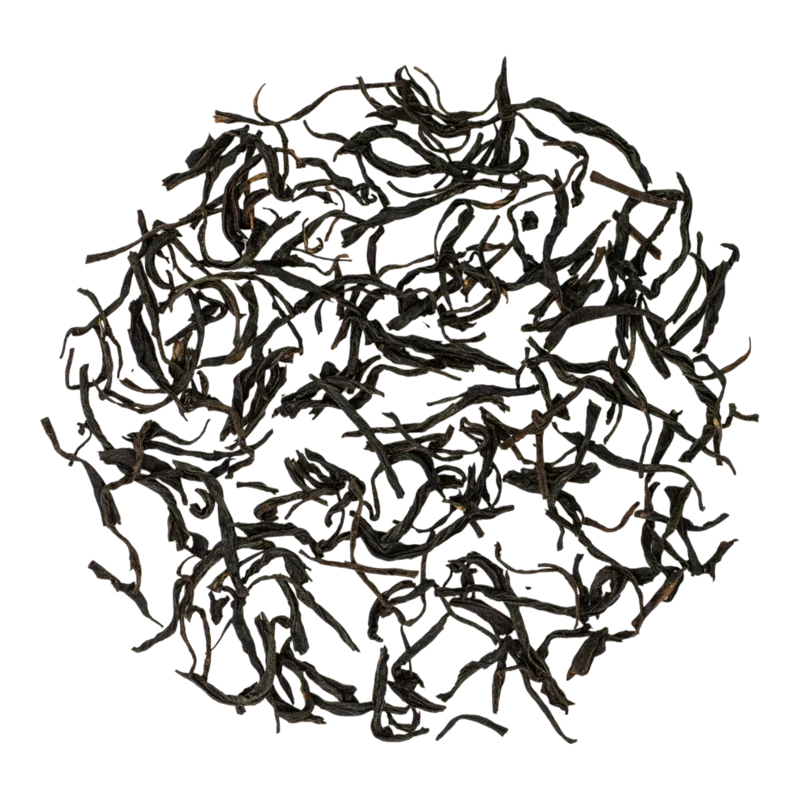
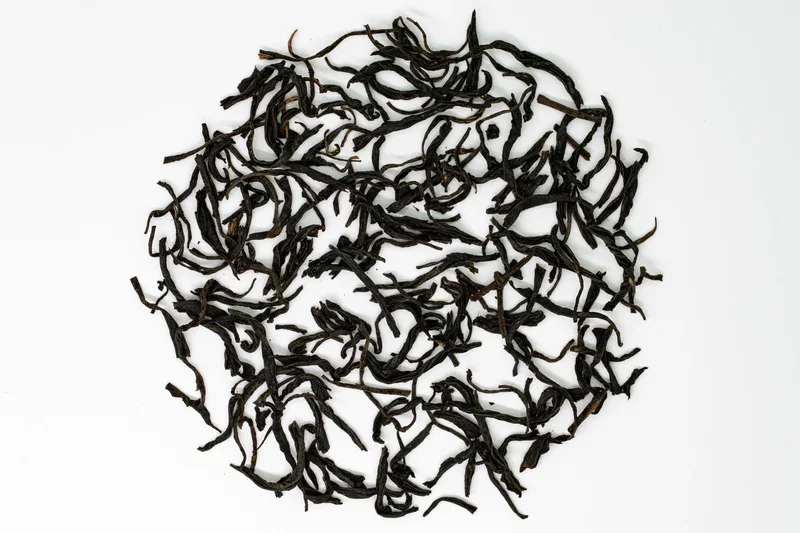
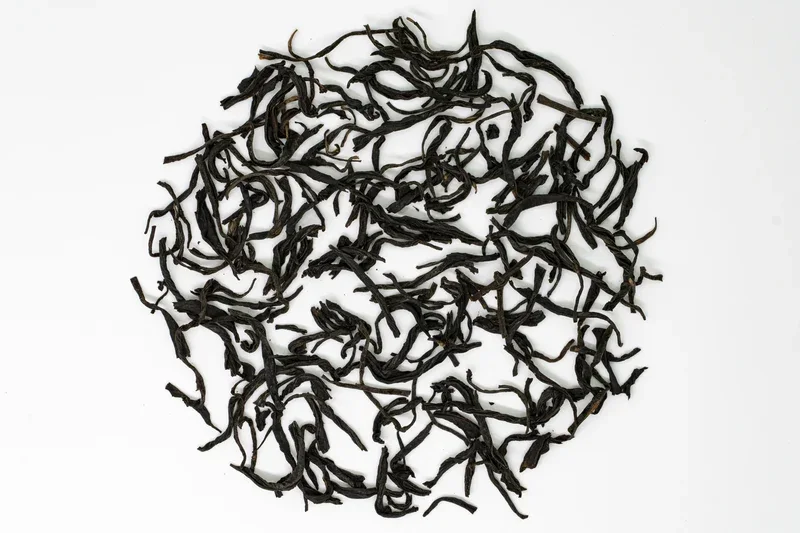
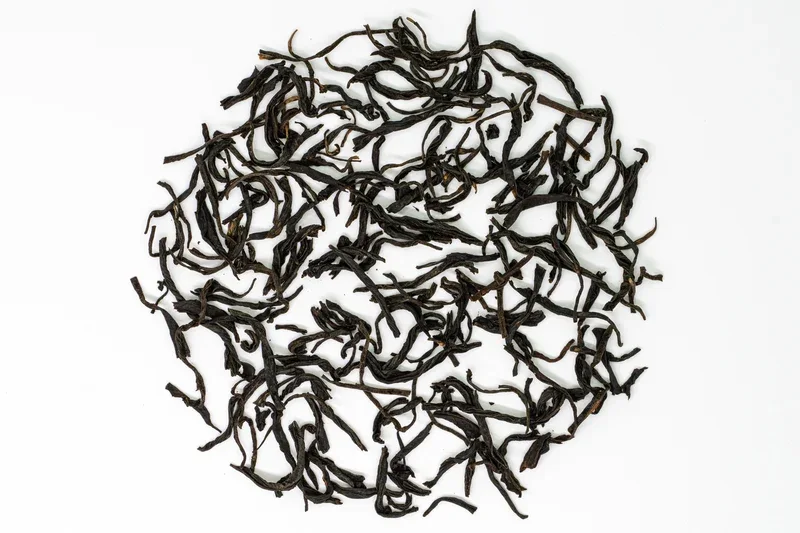
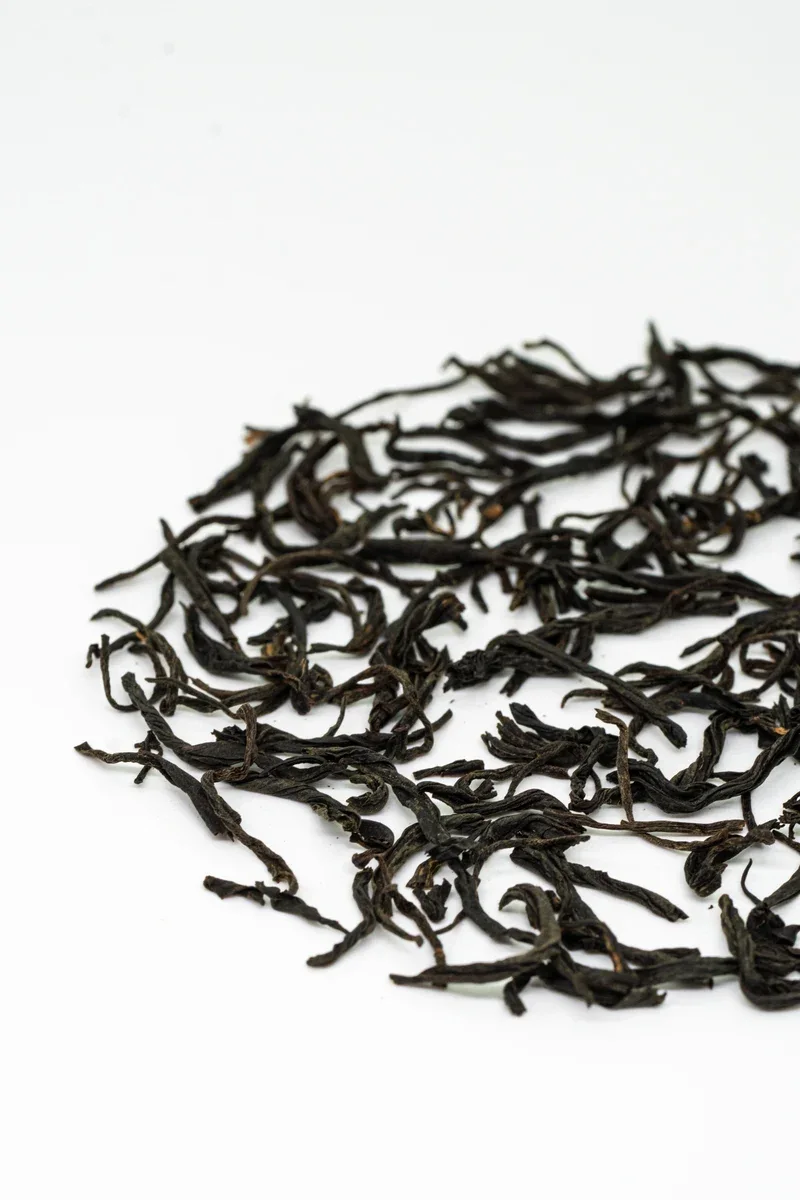
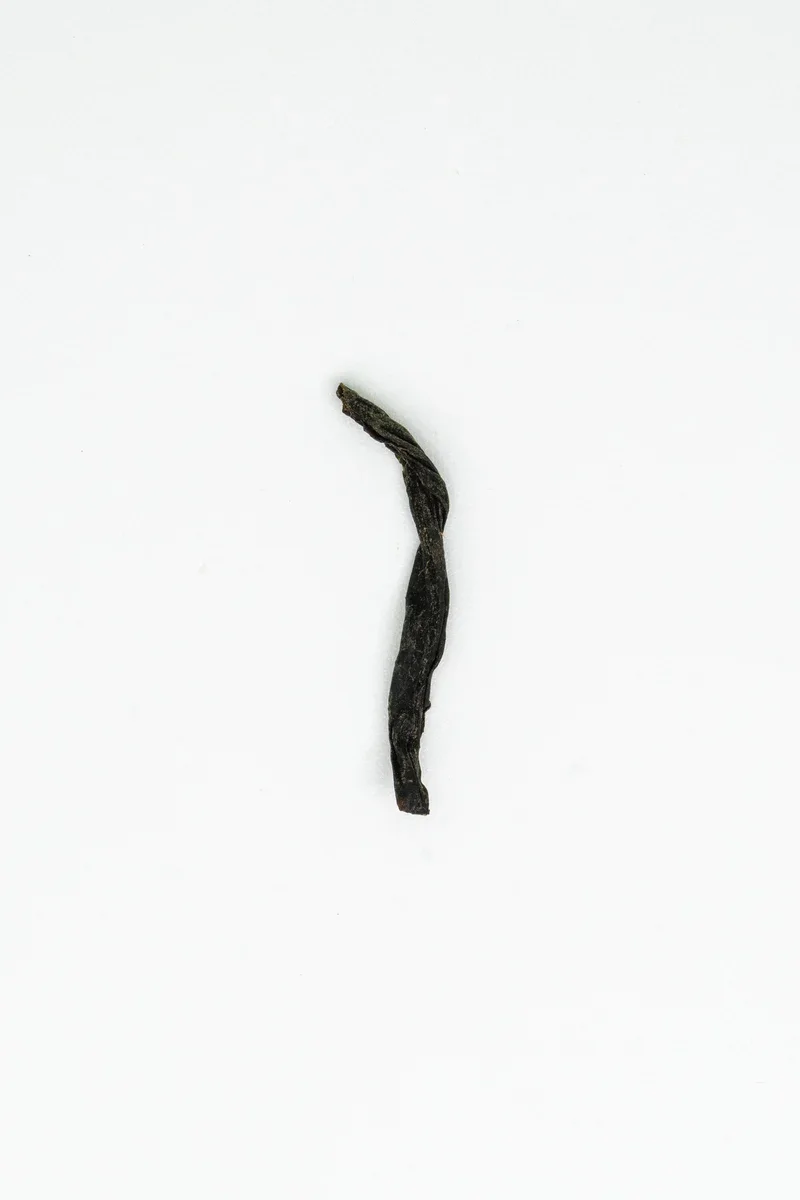
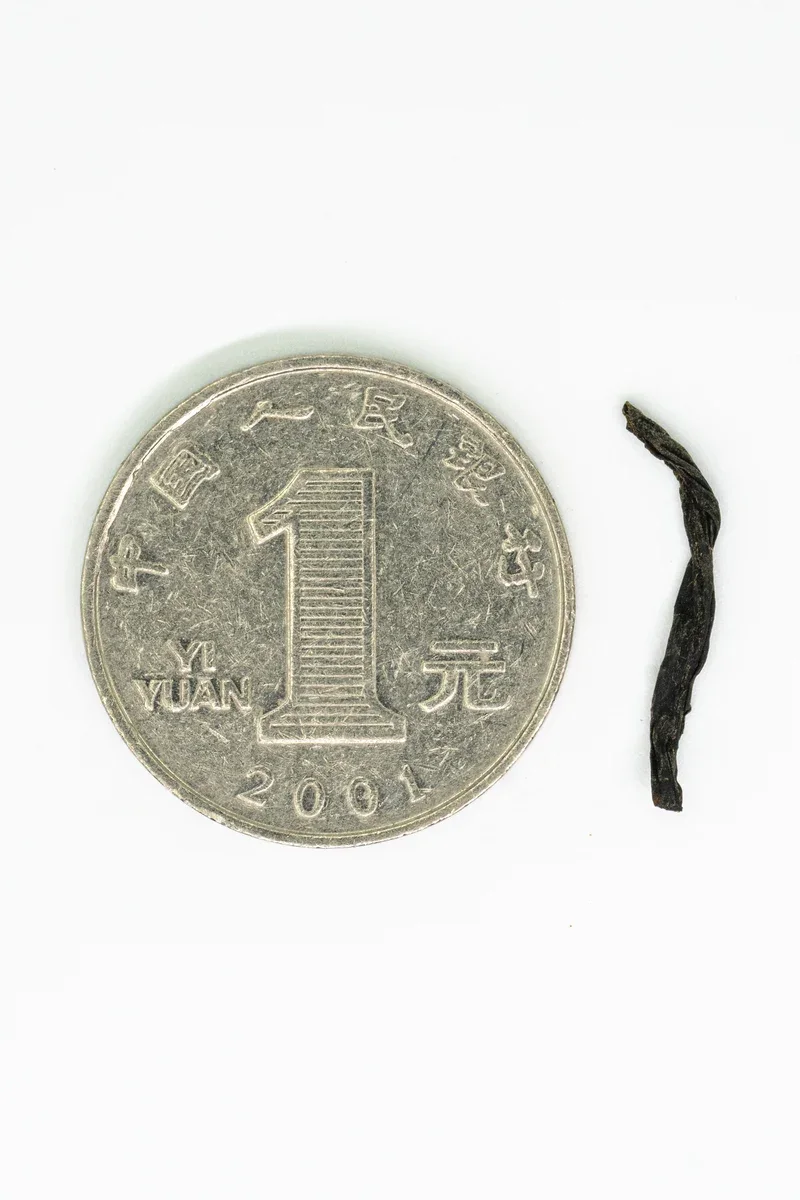
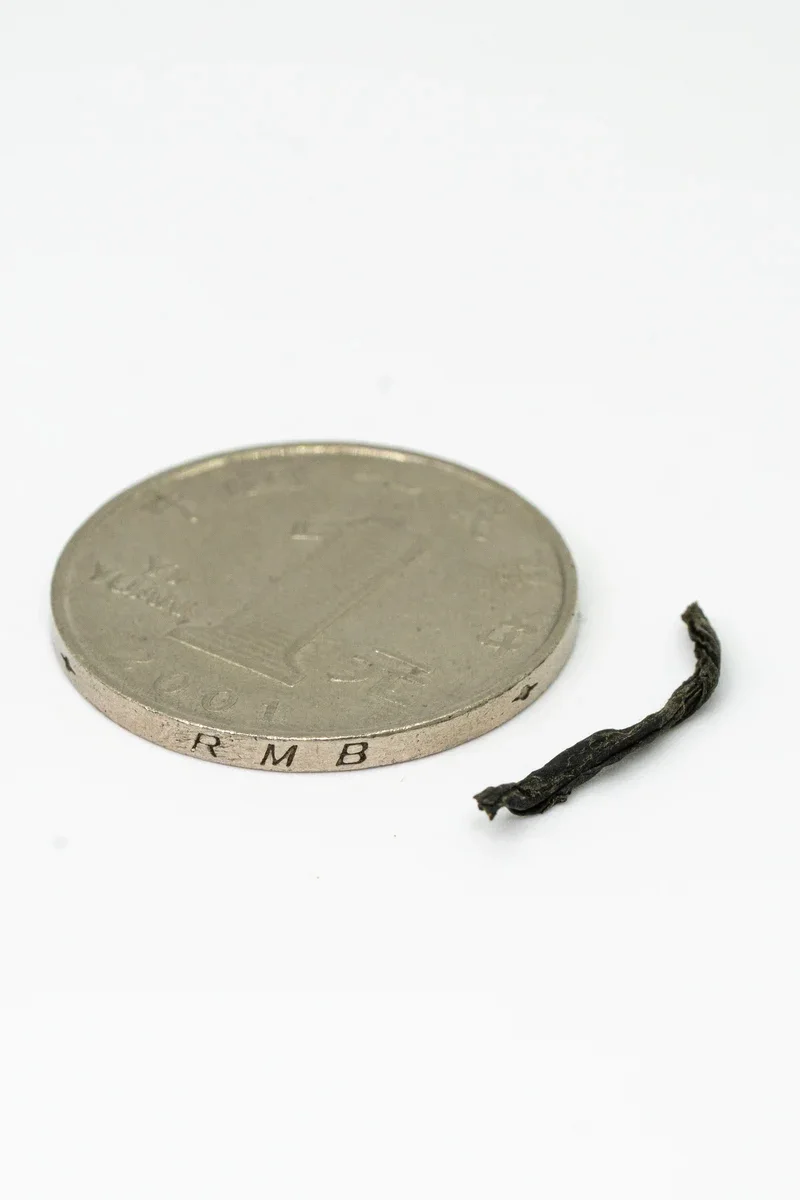
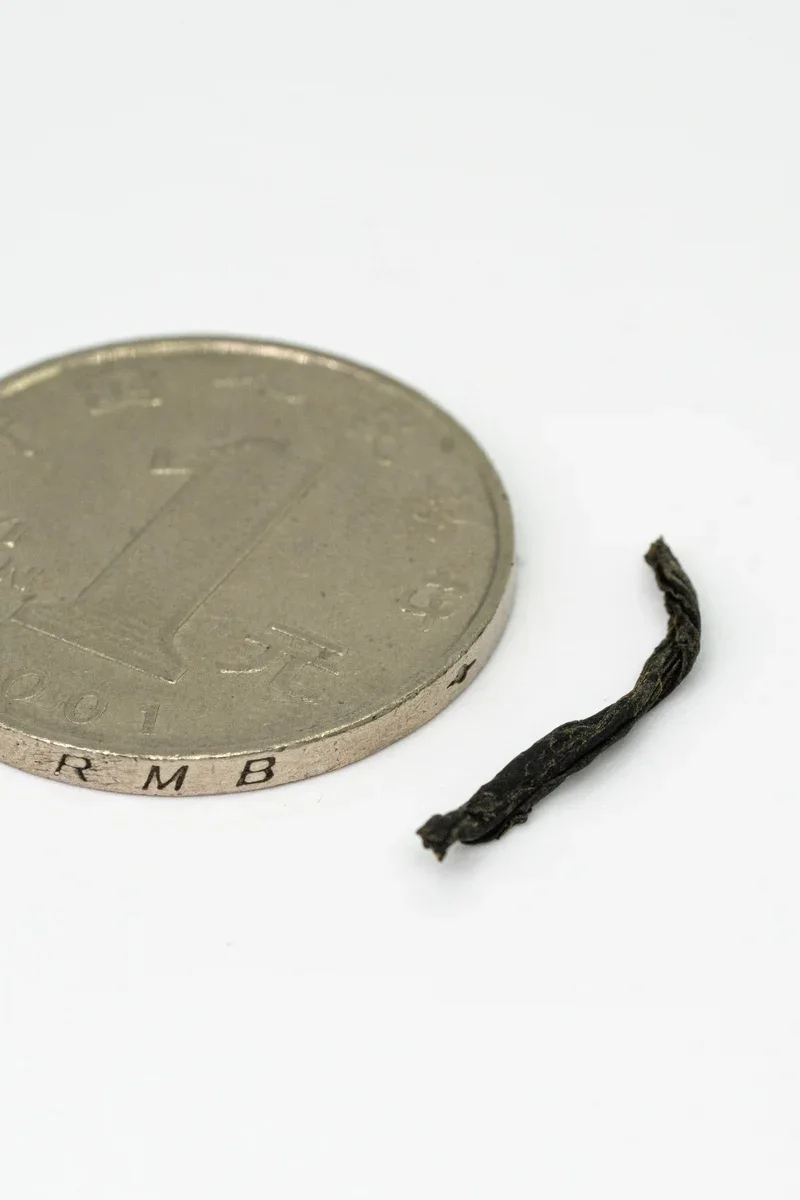
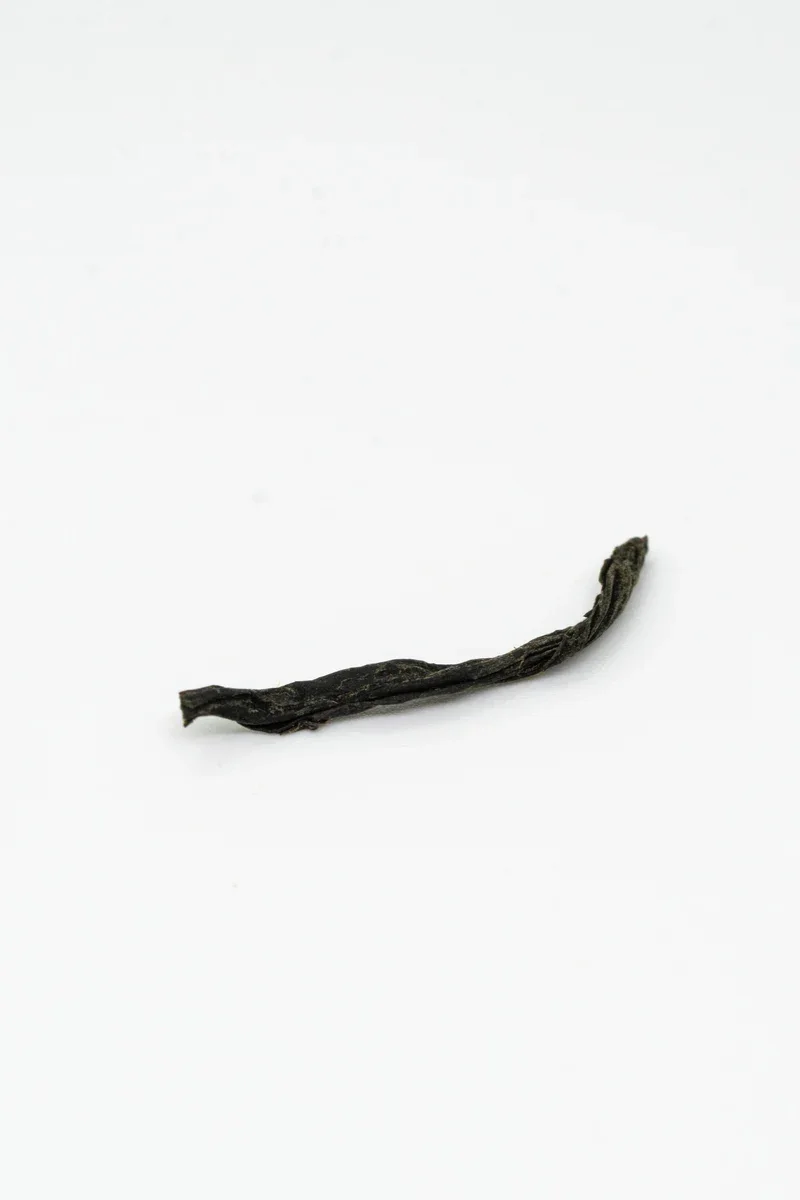
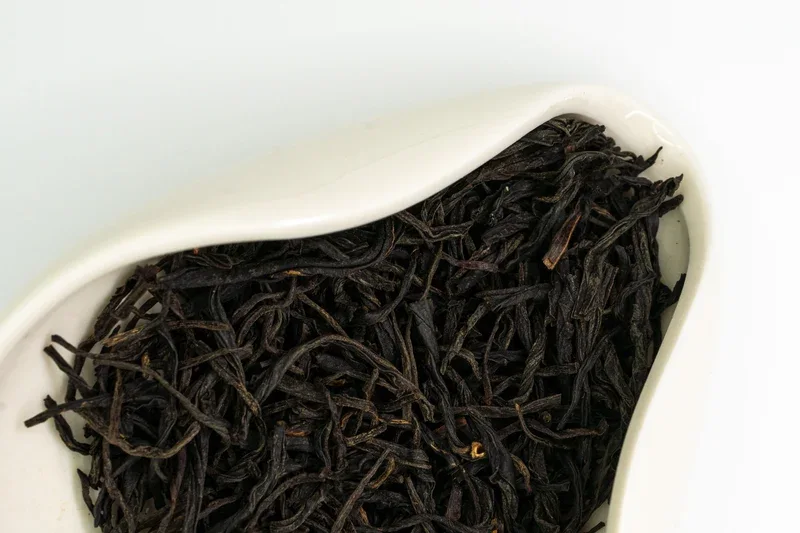
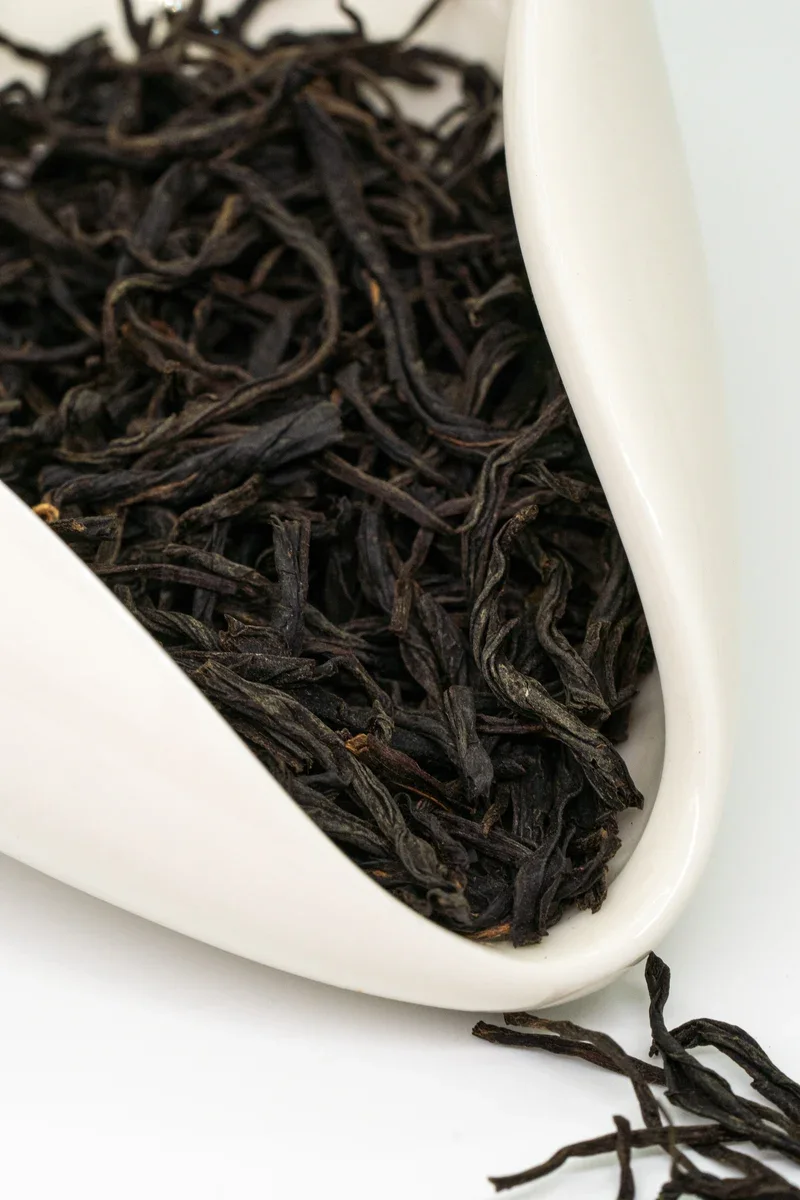
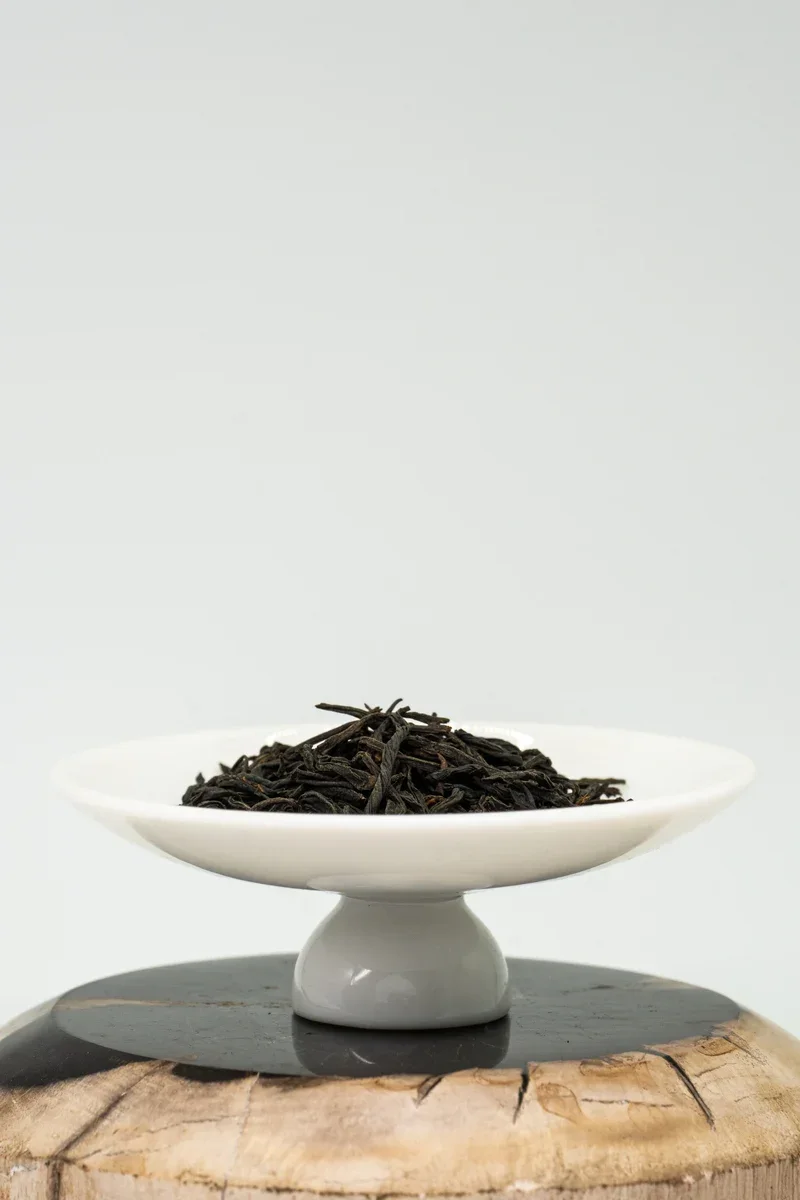
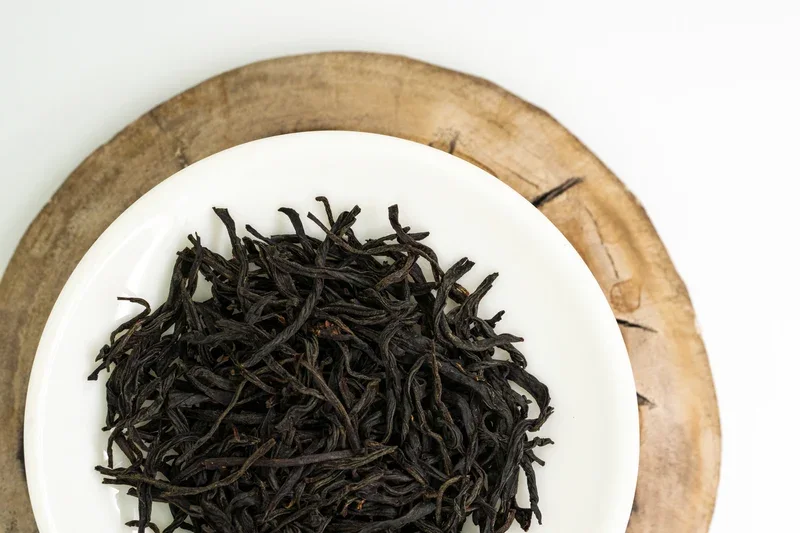
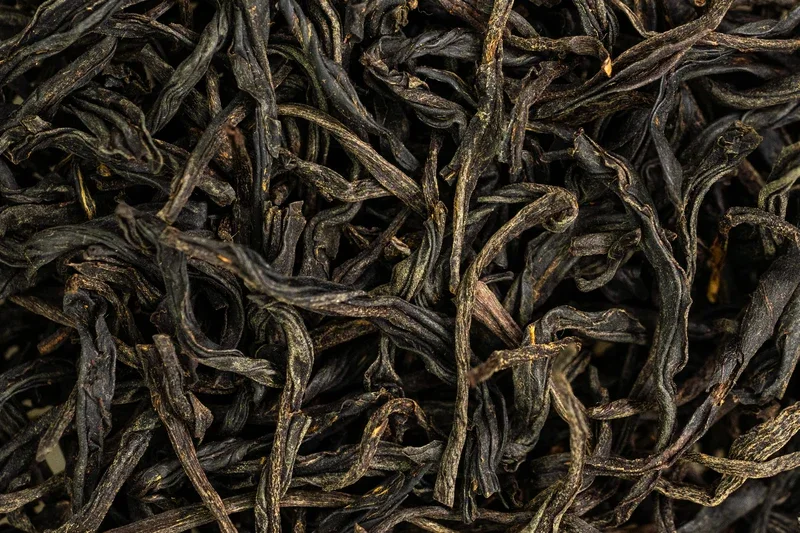
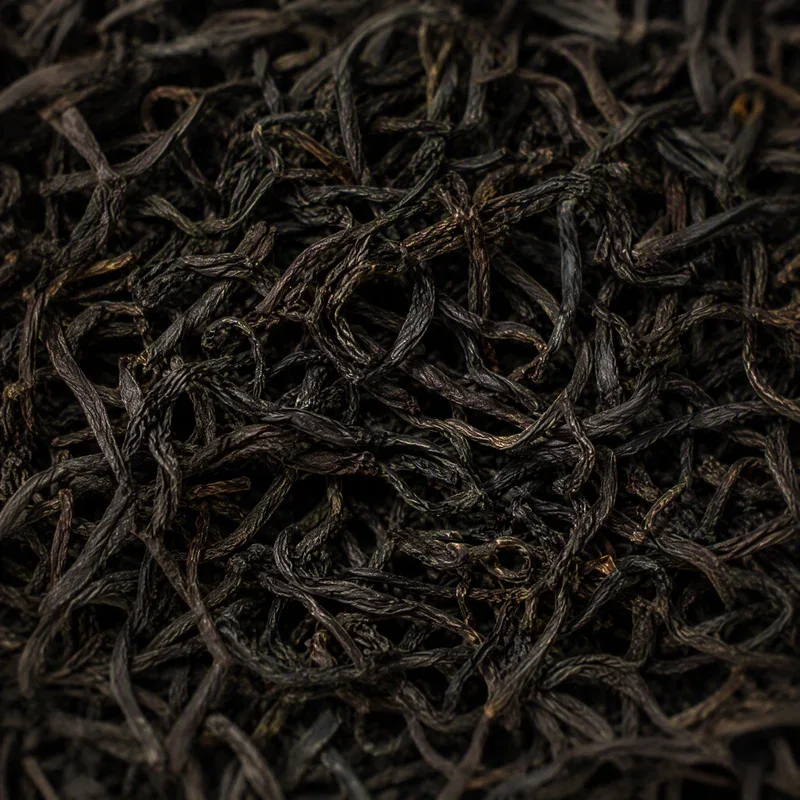
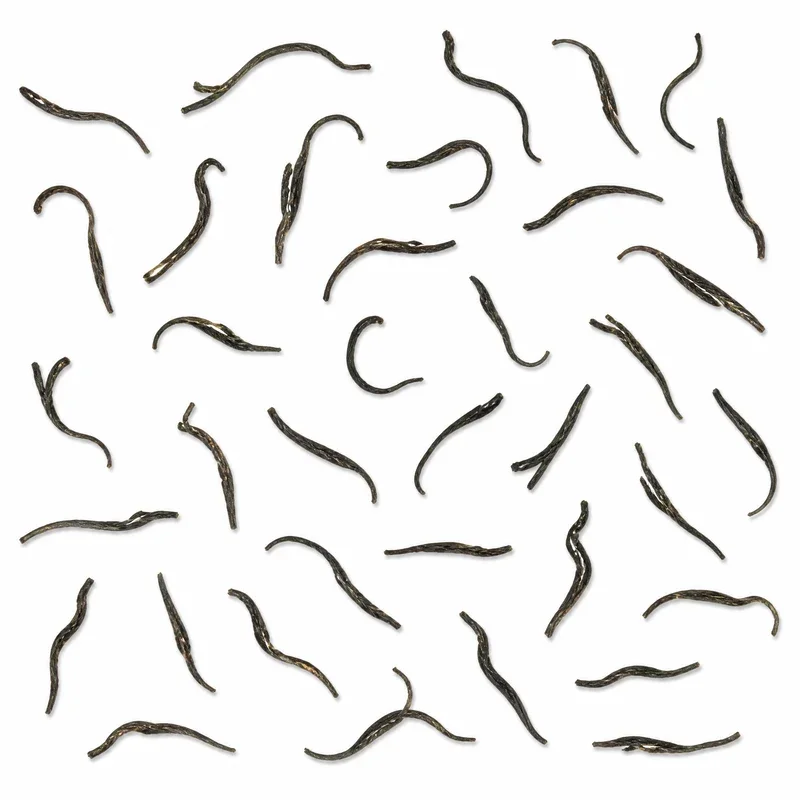
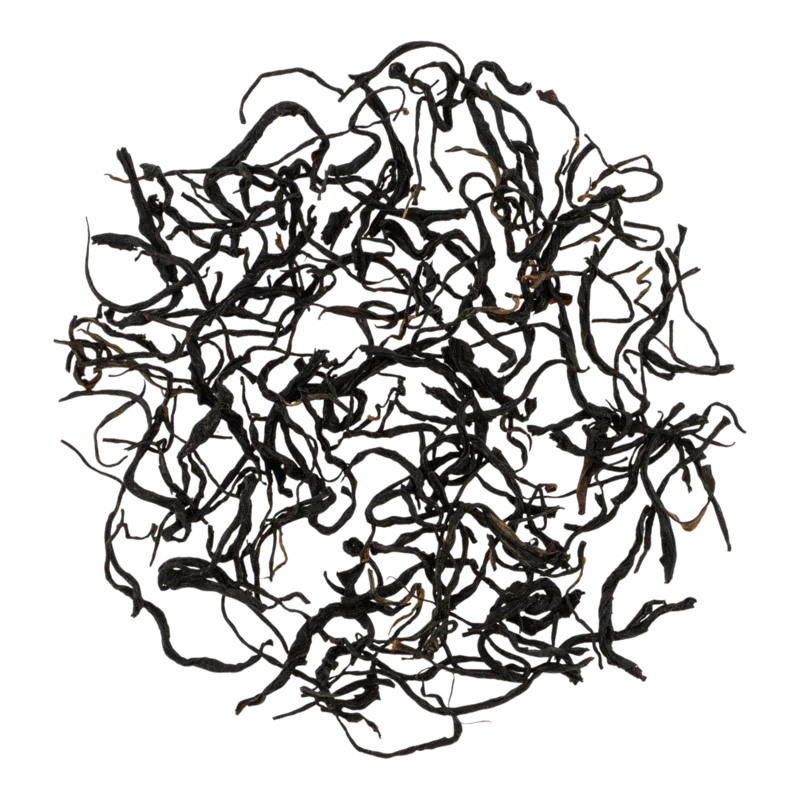
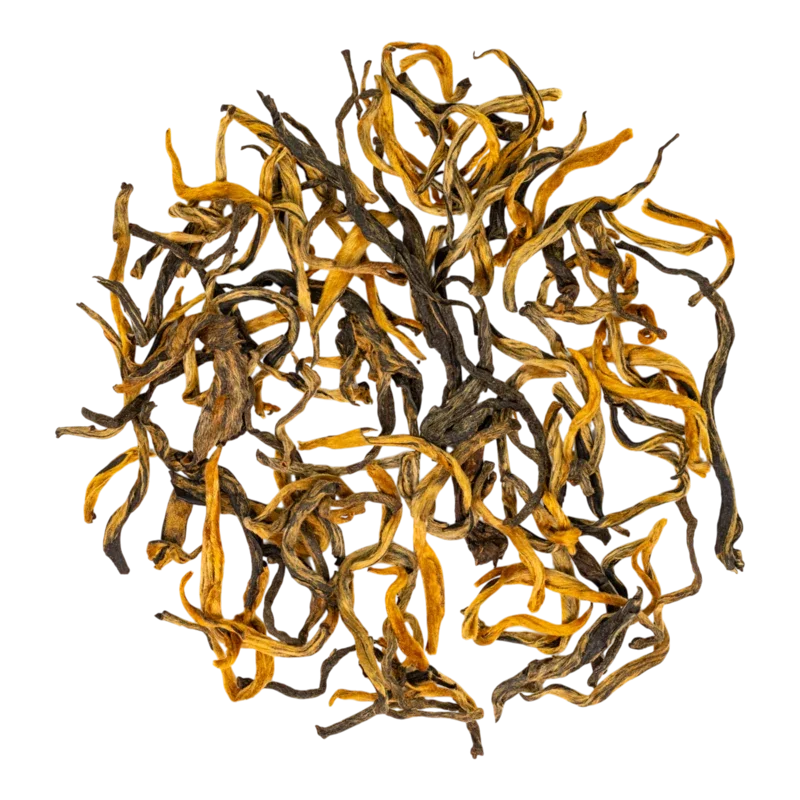
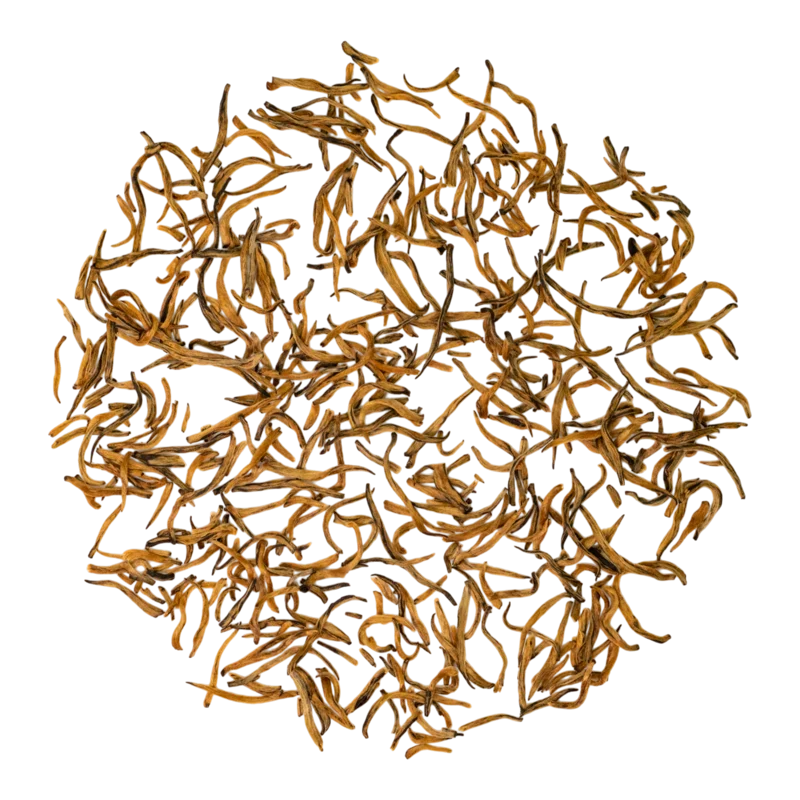
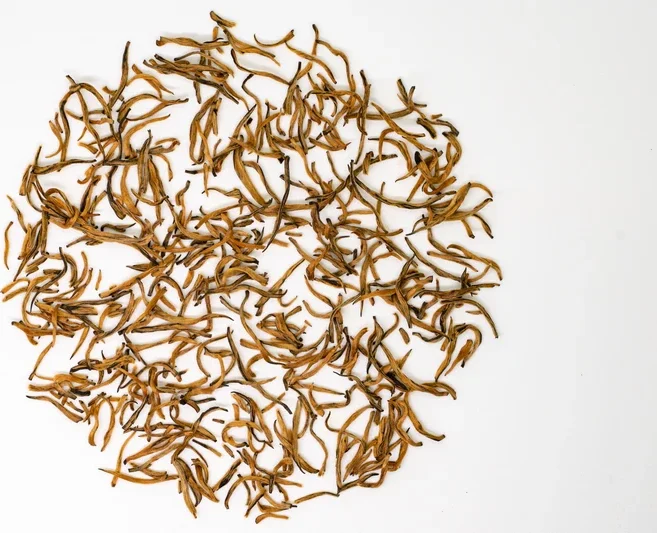
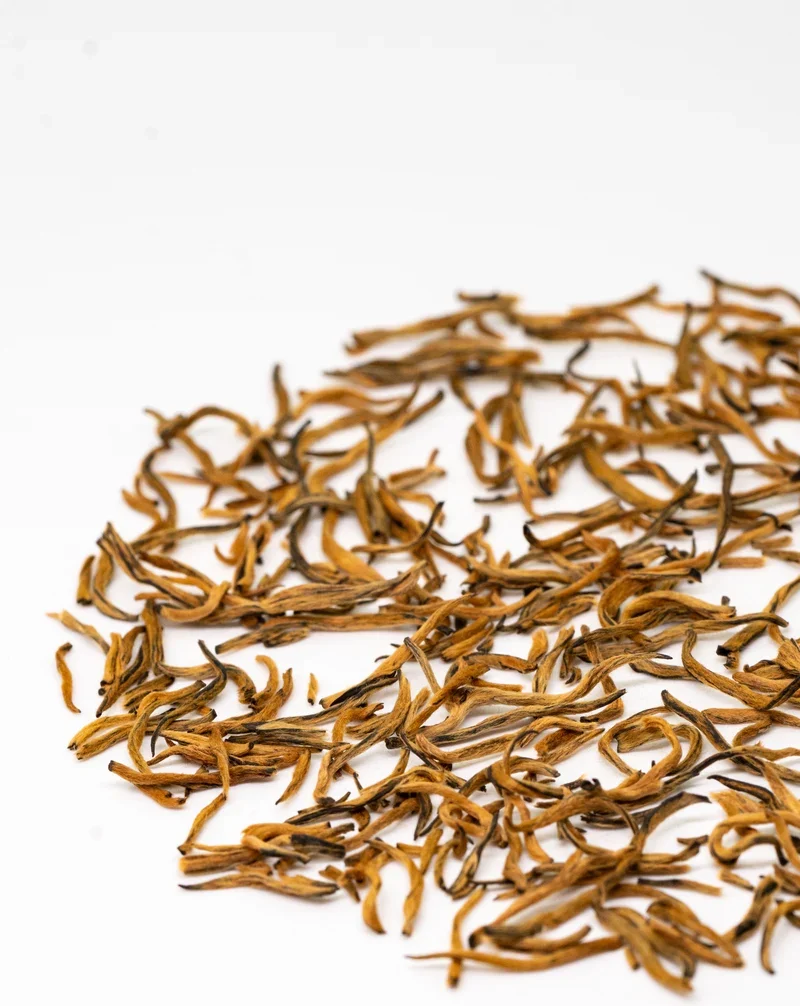
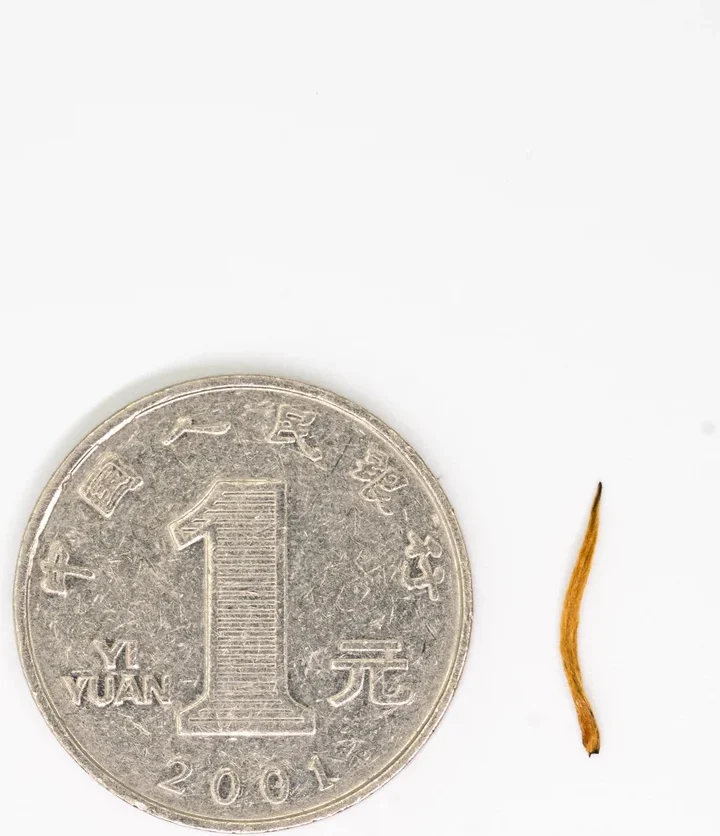
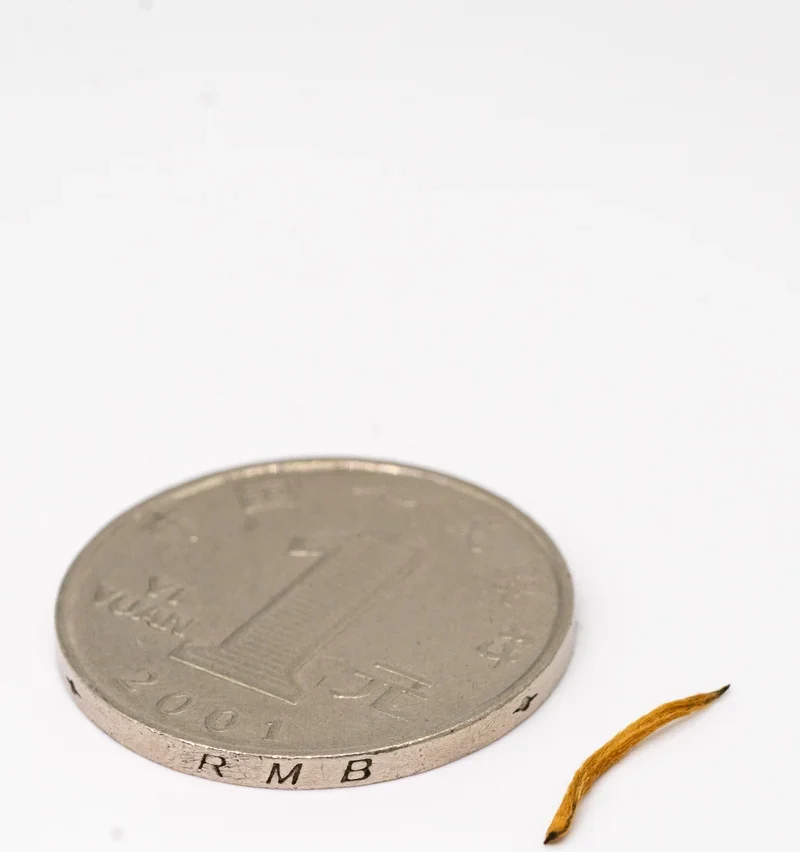
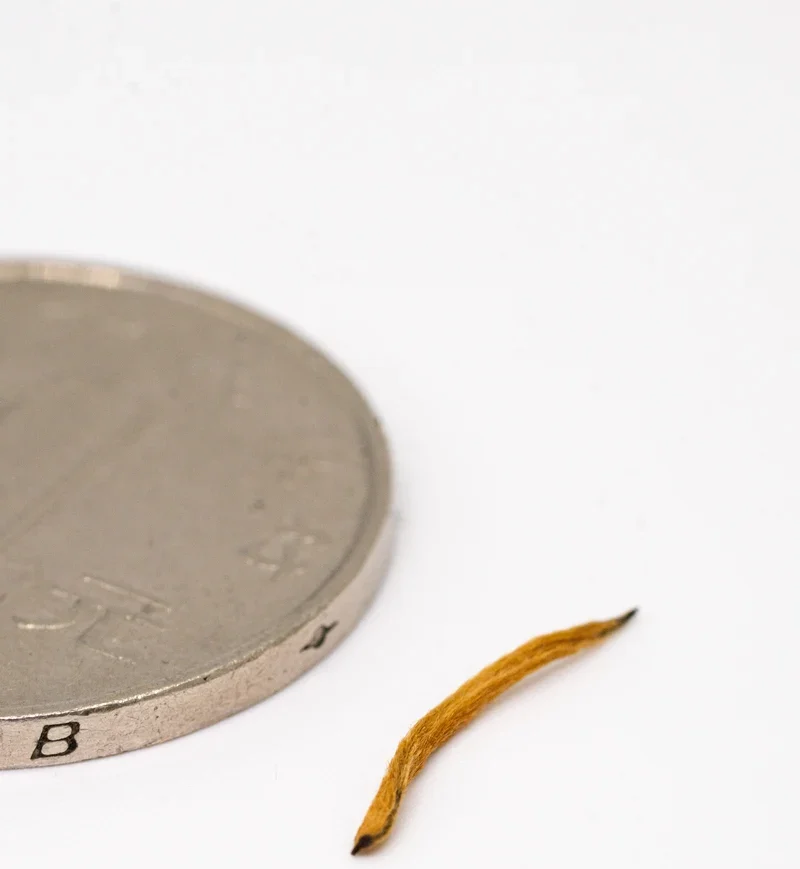
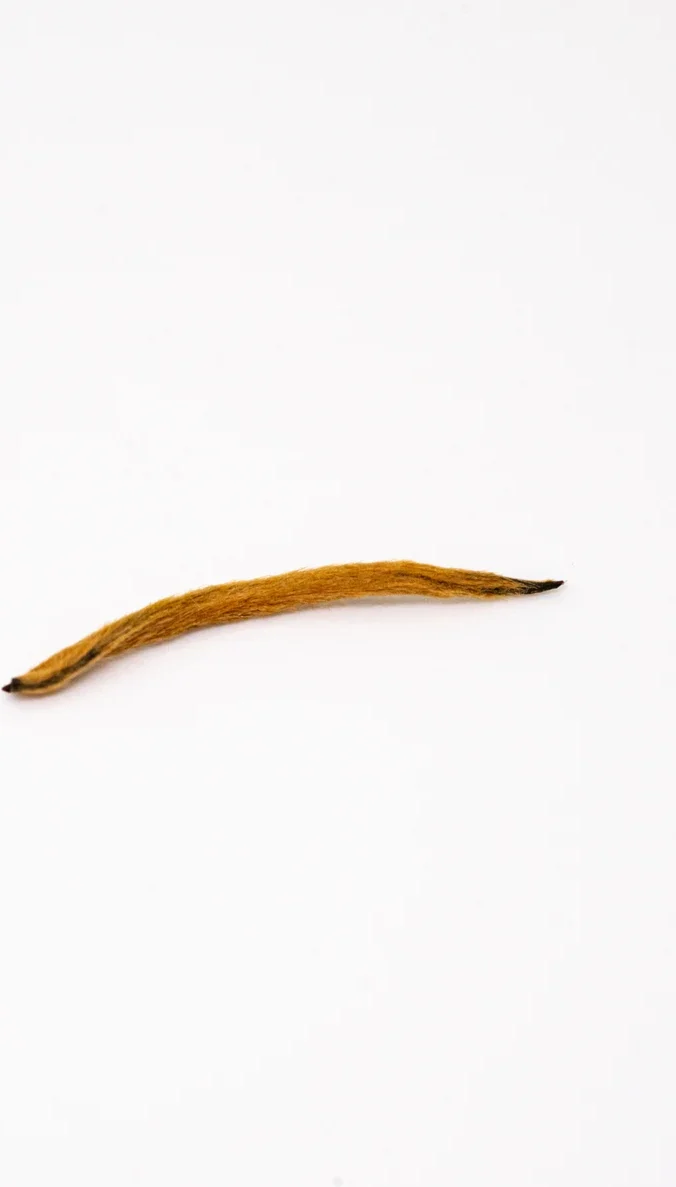
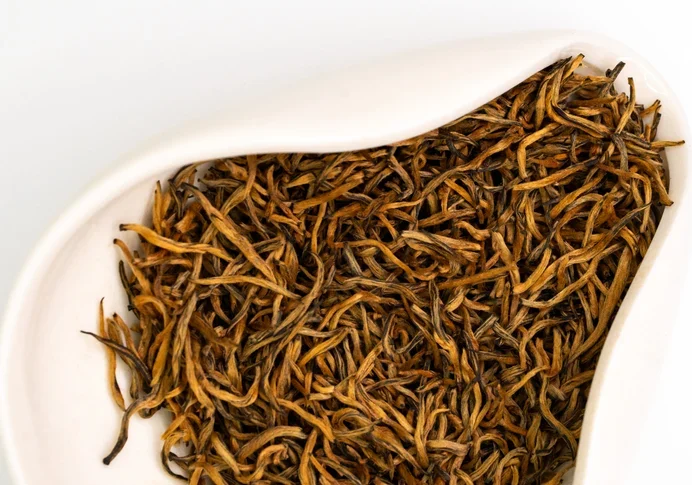
Dry Leaf Appearance: Thin, dense, whole bud-tips with distinct "eyebrow-like" shape (海马状, "seahorse-shaped" — Jiang Yuanxun's authorial description). Key sign of authentic Tongmu Jin Jun Mei — three-color nature of each individual bud: golden (from down), yellow-brown, and black — all three shades present simultaneously. Completely golden buds — usually a sign of tea from other regions, not from Tongmu.
Dry Leaf Aroma: Clean, rich, sweet, with pronounced honey notes, longan (龙眼), lychee, ripe peach, floral (rose, orchid) overtones. Subtle chocolate and malty undertones. Aroma is persistent, unfolds gradually. Sign of authenticity — honey is felt already in dry leaf.
Liquor Aroma: Deep, enveloping. On first steeps — bright fruity-honey complex (longan, lychee). On middle steeps — floral tones, warm caramel. On final steeps — pure sweetness with light woody note. Cup aroma (挂杯香, guà bēi xiāng) — persistent, long, honey-floral.
Liquor Color: Bright golden-amber, sometimes with orange-copper shade, clear and transparent. On cup walls when cooling, characteristic "golden ring" may appear — sign of high theaflavin content.
Spent Leaves: Whole, elastic, unopened buds that retained their shape. Color — even, copper-red with golden sheen. Buds are elastic, uniform in size. Absence of broken or darkened fragments — sign of quality.
Taste: Incredibly soft, smooth, silky. Complete absence of bitterness and rough astringency. Dominants — natural floral-honey sweetness, fruity notes (longan, lychee, peach, dried apricot), light malty and chocolate overtones. Body — medium density, but very round, "oily." Pronounced "returning sweetness" (回甘, huígān). Aftertaste — long, clean, honey-fruity, with cooling sensation in throat. With proper brewing, sweetness persists through 12 and more steeps.
Alkaloids: Caffeine (咖啡碱) — 3–5% of dry weight (in cup ~20–60 mg depending on dosage and extraction time). Also present are theobromine and theophylline in small quantities.
Amino Acids: 1.5–4% of dry weight, more than 20 types. Special significance has L-theanine (L-茶氨酸) — 1.5–2.2%, which provides pronounced sweetness and taste softness, as well as relaxing effect. High-mountain origin increases amino acid to polyphenol ratio.
~0.02% — form unique fruity-honey-floral profile. Linalool, geraniol, phenylacetaldehyde, methyl salicylate, and other components.
Soluble sugars — 2–4%, water-soluble pectin — 1–2%, organic acids — ~1%.
Minerals: About 30 elements. Main ones: potassium (~50% of total mineral fraction), phosphorus (~15%), calcium, magnesium, iron, manganese, fluorine. Trace elements: zinc, copper, selenium.
Polyphenols: 10–20% of dry weight. During full oxidation, significant portion of catechins transforms into theaflavins (茶黄素, 0.4–2%) and thearubigins (茶红素, 5–11%) — these form the golden-amber liquor color, "velvety" taste, and ability to form "golden ring." Theabrownin content (茶褐素) — 3–9%.
Vitamins: C, B₁, B₂, B₃ (PP), E, K. Vitamin C partially preserved despite oxidation thanks to delicate processing regime.
Caffeine combined with L-theanine provides even, sustained tone without anxiety — so-called "calm alertness" effect. Improves concentration and cognitive function.
Theaflavins and thearubigins possess pronounced ability to neutralize free radicals, protecting cells from oxidative stress.
Polyphenolic compounds promote vascular elasticity, may affect LDL cholesterol levels and contribute to blood pressure normalization. Theaflavins dilate capillaries and improve microcirculation.
Fully oxidized red tea gently affects gastric mucosa, stimulates peristalsis and digestive enzyme secretion. Traditionally recommended after heavy meals.
Tea polyphenols and tannins suppress pathogenic bacteria growth, support oral health.
High L-theanine content stimulates α-brain wave generation, promoting relaxed concentration state.
Fully oxidized red tea possesses "warm" nature according to traditional Chinese medicine canons, suitable for people with "cold" constitution and winter tea drinking.
Tea Amount: 3–5 g per 100–120 ml (gongfu method); 2–3 g per 200–250 ml (European method).
Teaware: Ideally — porcelain gaiwan (盖碗) volume 100–120 ml: neutral material doesn't absorb aroma and allows precise steeping time control. Glass gaiwan or teapot allows observing dance of opening buds. Yíxīng teapot (宜兴紫砂壶) is also appropriate, but new teapot should be dedicated specifically to this tea to avoid aroma mixing. Fairness cup (公道杯, "pitcher") is mandatory.
Water Temperature: 90–100°C. High-quality Tongmu Jin Jun Mei "doesn't fear" boiling water — precisely full heating reveals aroma depth and sweetness. For delicate batches or first acquaintance, starting with 85–90°C is acceptable.
Container: Airtight, opaque container — tin can, foil bag with zip closure, ceramic tea vessel. Maximum limitation of air contact.
Enemies: Light, moisture, oxygen, high temperature, foreign odors. Don't store near spices, coffee, perfumery.
Shelf Life: Optimally consume within 12–18 months. High-quality batches with proper storage retain properties up to 2–3 years, though fresh tea is preferable.
Dry, cool place, away from direct sunlight, heat sources, and strong odors. Temperature 10–25°C. Humidity — no higher than 60%.
Unlike green and yellow teas, refrigerator storage of Jin Jun Mei is not mandatory and not recommended without reliable airtight packaging — red tea preserves well at room conditions.
Direct "ancestor" of Jin Jun Mei. Produced from mature leaf (one bud with two-three leaves), traditionally smoked over pine wood (smoky Lapsang Souchong) or without smoking. Taste is denser, with pronounced caramel-malty note and light astringency. Jin Jun Mei is significantly more delicate and sweet.
Famous red tea from Qimen County (Anhui). Renowned for unique "Qimen aroma" (祁门香) — orchid, honey, dried fruits. Differs from Jin Jun Mei with darker, ruby liquor color and slightly more pronounced astringency. Made from leaf, not buds.
Yunnan red tea from golden buds of large-leaf cultivar (var. assamica). Visually similar to Jin Jun Mei (golden buds), but differs significantly: denser, more concentrated, with caramel-chocolate-spicy profile, noticeable "body." Jin Jun Mei by contrast — thinner, airier, with fruity-honey elegance.
"Younger brother" from same series — one bud with one leaf. More accessible in price, slightly less exquisite in aroma, with somewhat more pronounced structure and light astringency. Excellent alternative for daily tea drinking.
60,000–80,000 buds per 500 g dry tea, each hand-picked on steep mountain slope.
Authentic raw material — only from Tongmu protected zone area of 565 km².
All key stages performed by master by hand.
2–3 weeks per year.
Jin Jun Mei is one of China's most sought-after gift and status teas.
Specialized tea shops with documented origin, ideally — directly from Tongmu producer.
Authentic Tongmu Jin Jun Mei — golden, yellow-brown, and black on one bud. Completely golden buds — often tea from other regions (Yunnan, Sichuan, Guizhou), where large-leaf varieties are used.
In dry form — clean honey, no chemical harshness, mustiness, or smokiness. Honey aroma should persist in every steep.
Golden-amber, clear, with "golden ring" around cup edge. Murky or dark red liquor — sign of substitution.
Authentic Tongmu Jin Jun Mei cannot be cheap. Tea offered for 200–500 yuan/500 g is almost certainly produced from raw material from other regions.
No reviews yet. Tell us what you think of this tea.
Rate this tea and share your impressions. We review each submission before publishing it.