Brewing
Gongfu brewing
- Water temperature
- 93 °C
- Tea amount
- 5 g
- Water volume
- 100 ml
- First steep
- 10 s
- Time added per infusion
- 5 s
- Infusions
- 4

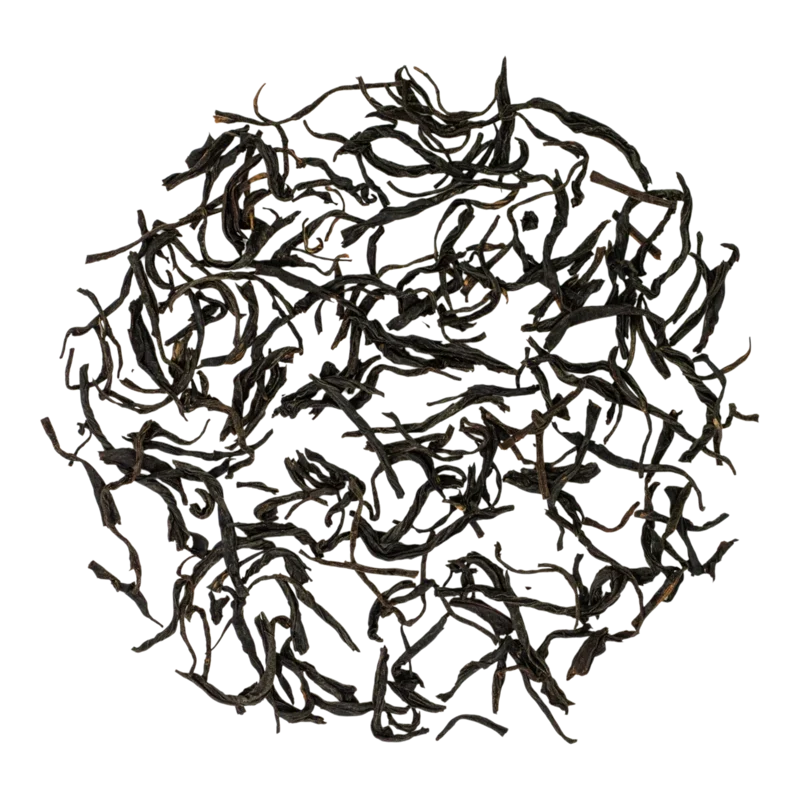
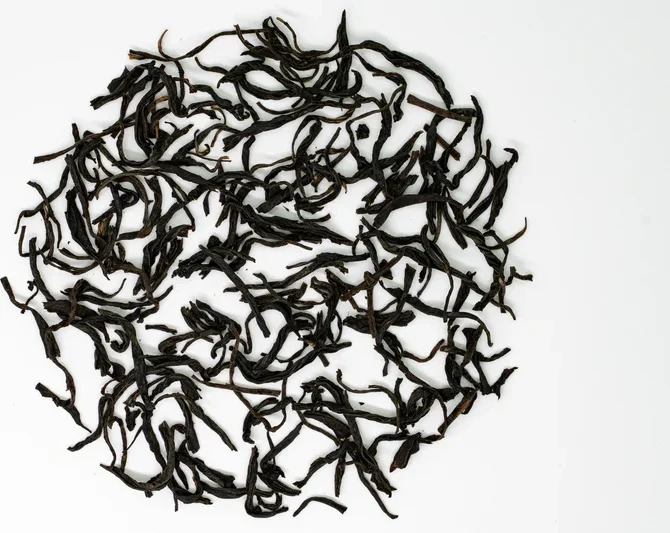
zhèng shān xiǎo zhǒng
Choose a brewing method. Start with the recommended quantities and time, then adjust to taste.
Brewing
Brewing
Taste
Tea encyclopedia
Alt Names: Lapsang Souchong — European trade name; Tóngmù Guān Xiǎozhǒng (桐木关小种) — "small variety from Tongmu"; Xīngcūn Xiǎozhǒng (星村小种) — named after the trading town through which tea historically went for export. In European sources of the 17th–18th centuries — BOHEA (from Wuyi, 武夷 — "Bohea").
Alt Names: Lapsang Souchong — European trade name; Tóngmù Guān Xiǎozhǒng (桐木关小种) — "small variety from Tongmu"; Xīngcūn Xiǎozhǒng (星村小种) — named after the trading town through which tea historically went for export. In European sources of the 17th–18th centuries — BOHEA (from Wuyi, 武夷 — "Bohea").
Category: Famous Teas of China (中国名茶). Recognized as the progenitor of all red teas in the world. Since 2010, protected by geographical indication (地理标志, dìlǐ biāozhì).
Coordinates: E 117°38′6″–117°44′30″, N 27°41′35″–27°49′00″.
Origin: China, Fújiàn Province (福建省, Fújiàn Shěng), Nánpíng Prefecture (南平市, Nánpíng Shì), Wǔyíshān City (武夷山市, Wǔyíshān Shì), Tóngmù Village (桐木村, Tóngmù Cūn) — the core of Wǔyíshān National Nature Reserve (武夷山国家级自然保护区, 565 km²). Tongmu is the historical and only authentic birthplace of Zhengshan Xiaozhong. "Zhengshan" (正山) — "Original Mountains," meaning Tongmu and adjacent areas of the same altitude zone. Teas produced outside this area are called "Waishan" (外山, "outer mountains") and cannot bear the name "Zhengshan."
Type: Red tea (black tea) (红茶, hóngchá), fully oxidized. According to European classification — black tea. Degree of oxidation — 80–95%. Exists in two main varieties: traditional smoked (传统烟熏正山小种, chuántǒng yānxūn) — with drying/smoking over maosong pine wood (马尾松, Pinus massoniana); and unsmoked / "new technology" (新工艺正山小种, xīn gōngyì) — without smoking, emphasizing the natural honey-fruity profile.
Exact date of Zhengshan Xiaozhong creation is not recorded in any historical document. First mention of "small variety" (小种) as red tea (black tea) type — in "Qing dai tongshi" (《清代通史》): "In 13th year of Chongzhen [1640] red tea (black tea) (工夫茶, 武夷茶, 小种茶, 白毫 etc.) began arriving from Holland to England."
In 1662, Portuguese Princess Catherine brought several chests of "zhengshan xiaozhong" as wedding gift to English court. According to legend, English queen began each morning with cup of this tea.
Unique architectural structure for withering and smoking tea. Oldest surviving Qinglou in Tongmu — about 100 years, though construction is considered significantly more ancient.
From Tongmu, red tea (black tea) fermentation technology spread: to Jiangxi (Keemun, 1876 — through county magistrate Yu Ganchen), to Yunnan (Dian Hong), to India (through Robert Fortune, 1848), to Sri Lanka and further — worldwide.
In 1980s, when production nearly ceased, tea patriarch Zhang Tianfu's appeal to Fujian authorities saved Zhengshan Xiaozhong from disappearance.
Cultural Significance: Zhengshan Xiaozhong is not just tea, but a cultural artifact of global scale. It stands at the origins of European tea tradition, inspired the emergence of afternoon tea, influenced the geopolitics of the colonial era (Opium Wars, "tea race"), and remains a symbol of the four-century connection between East and West through a cup of tea.
History: Zhengshan Xiaozhong is the first red tea (black tea) in human history; its age is over 400 years. The exact date of creation is not recorded, but according to comprehensive data (research by Zou Xinqiu — 邹新球, "Wuyishan zhengshan xiaozhong hongcha" — 《武夷正山小种红茶》), its emergence dates to the mid-to-late 16th century (approximately 1567–1600). A widely known legend states: at the end of the Míng dynasty (明, 1368–1644), during military unrest, a detachment of soldiers moving from Jiāngxī to Fújiàn stopped for the night in a tea workshop in Miaowan village (庙湾, now part of Tongmu). The soldiers settled directly on tea leaves laid out for processing. By morning, the leaves began to ferment, turning red. To save the harvest, the master (according to Zhengshan Tang — 正山堂 — ancestor of the Jiang clan) rolled the darkened leaves and dried them over a fire of local maosong pine (马尾松, Pinus massoniana). The resulting tea with black leaf color and intense pine smoky aroma was not accepted in Tongmu itself, but when it was brought to the market in Xīngcūn town (星村, 45 km away), a merchant from southern Fujian bought it at a bargain price. The next year he returned and offered two to three times more — demand for this unusual tea proved to be high. Thus began the history of red tea (black tea).
Around 1604, Dutch merchants brought zhengshan xiaozhong to Europe — this was the first Chinese red tea (black tea) to reach the West. In Holland and England, it was initially sold in pharmacies as a medicinal remedy. In 1662, Portuguese Princess Catherine of Braganza, marrying English King Charles II, brought several chests of "Zhengshan Xiaozhong" in her dowry — and red tea (black tea) entered the customs of the British court. Queen Anne subsequently popularized tea in high society, laying the foundations of the afternoon tea tradition. In the 17th–18th centuries, the term BOHEA (from "Wuyi" — Wuyi) was synonymous with "Chinese tea" in general in Europe. English Romantic poet George Byron mentioned "red Bohea tea" (BOHEA) in the poem "Don Juan" (1819–1824). In the 19th century, the share of zhengshan xiaozhong in Chinese red tea (black tea) exports reached 85% (Jiaqing period, 嘉庆, 1796–1820).
In 1848, British botanical spy Robert Fortune, on assignment from the East India Company, infiltrated the Wuyi Mountains disguised as a Chinese man and smuggled out samples of tea bushes and secrets of red tea (black tea) processing. This act of industrial espionage laid the foundation for the tea industry in India (Assam, Darjeeling) and Sri Lanka.
During World War II and civil wars, production of Zhengshan Xiaozhong almost stopped. In the 1980s, under conditions of export stagnation and the threat of complete production cessation, outstanding Chinese tea expert Zhāng Tiānfú (张天福, 1910–2017) appealed to provincial authorities: "Zhengshan Xiaozhong is a unique export product of Fujian, it must be preserved." The tea was saved. In 2005, based on the zhengshan xiaozhong tradition, Jin Jun Mei was created, which launched the "red renaissance" and restored prestige to red tea (black tea) in China's domestic market.
Cultivar: Local population of small-leaf tea bush — Qízhǒng (奇种, Qízhǒng) / Càichá (菜茶, Càichá), Camellia sinensis var. sinensis. Seed heterogeneous population that grew in the Tongmu Mountains for centuries. Each bush is genetically unique. Small-leaf forms provide a higher ratio of amino acids to polyphenols, ensuring the characteristic sweet taste with longan notes.
Picking: Due to high-altitude location (cold climate), the season begins late: spring harvest — from early May (around Lixia, 立夏) to late May; summer harvest — in late June. One year — two seasons. Hand-picked.
Pluck Standard: One bud with two to three leaves (一芽二三叶, yī yá èr sān yè). For highest grades — "one bud with two leaves"; for standard — more mature leaf is acceptable. Unlike Jin Jun Mei (buds only) and Yin Jun Mei (bud + 1 leaf), Zhengshan Xiaozhong uses more mature raw material, providing density and "body."
Raw Material: Whole, clean leaf without coarse stems. Quick delivery to workshop after picking.
Altitude: 700–1800 m above sea level. Main zone — 1200–1500 m.
Climate: Subtropical montane. Average annual temperature ~18°C at the foot, ~11°C at peaks. Precipitation — over 2300 mm/year. Relative humidity — 80–85%. Fog — more than 100 days per year. CO₂ in atmosphere — 0.026% (significantly below urban level). Short daylight hours, long frost period. All these factors slow growth and promote accumulation of aromatic substances and amino acids.
Soil: Mountain red and mountain-yellow, slightly acidic (pH 4.5–5.5), rich in humus, loose, well-drained. Soil layer — 30–90 cm.
565 km², UNESCO World Heritage site (1999). Mountains of red sandstone and volcanic rocks; steep gorges, waterfalls, rivers, subtropical forests with exceptional biodiversity. Forest cover — 96.3%.
Historical core of "Zhengshan." Located deep in the reserve at 700–1800 m altitude. Tea bushes grow under forest canopy, in semi-wild and wild state, often among bamboo and pines. Boundaries of "Zhengshan": east — Mali (麻栗), west — Guidun (挂墩), south — Pikeng (皮坑), Guwangkeng (古王坑), north — Tóngmù Pass (桐木关).
Hand picking "one bud — two to three leaves."
Key stage determining tea style.
Traditionally — by foot (脚揉, jiǎo róu): master kneads leaves with feet in wooden barrel; now rollers are more often used, but hand/foot rolling is preserved by premium producers. Goal — extract cellular juice and prepare leaf for fermentation.
Rolled leaf is placed in bamboo baskets, covered with damp cloth, kept at ~25–28°C until copper-red color and characteristic fruity aroma appear. Master controls process organoleptically.
Unique stage for Zhengshan Xiaozhong, lost in mid-20th century and restored by master Liàng Jùndé (梁骏德). Fermented leaf is briefly pan-fired in heated wok, stopping fermentation and fixing aroma. Not all producers apply this stage; it is characteristic of premium batches.
Hand final sorting by size and quality.
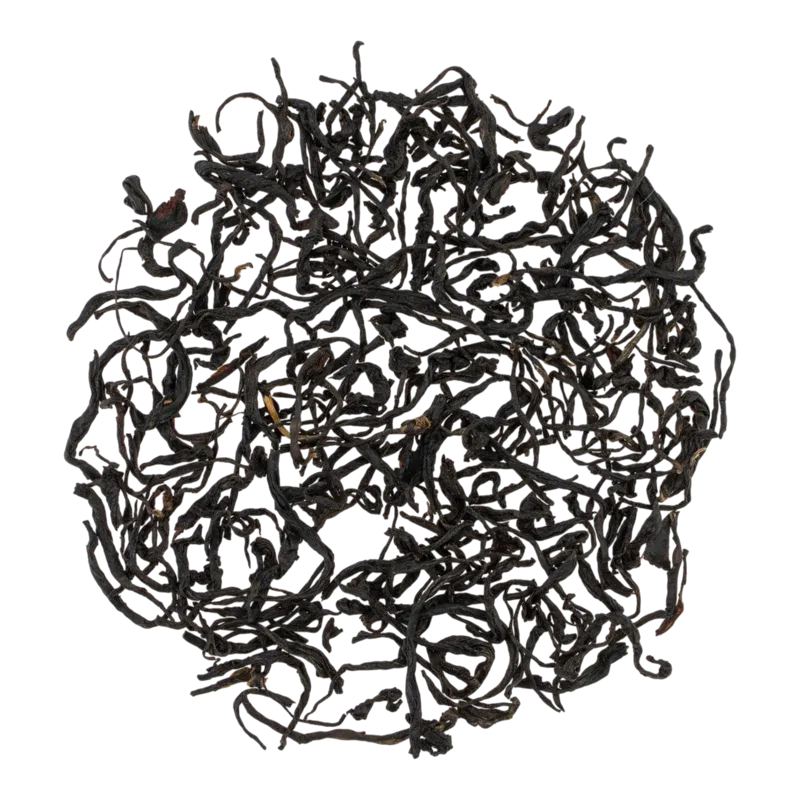
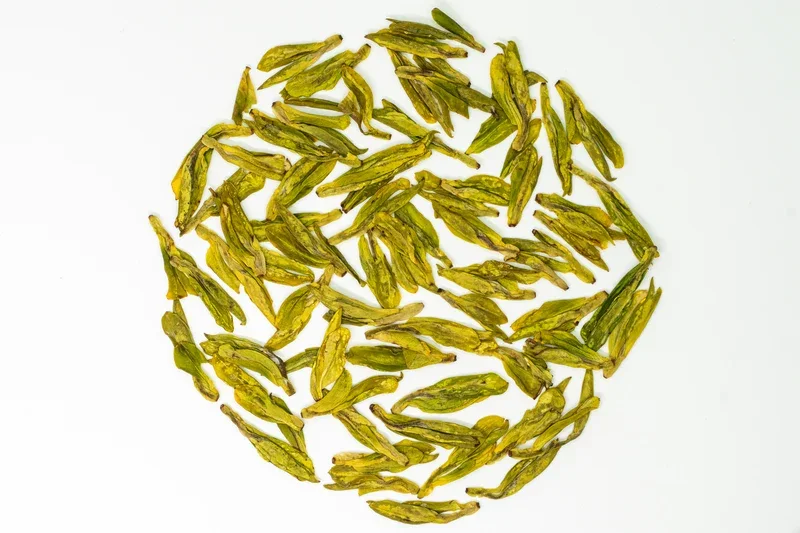
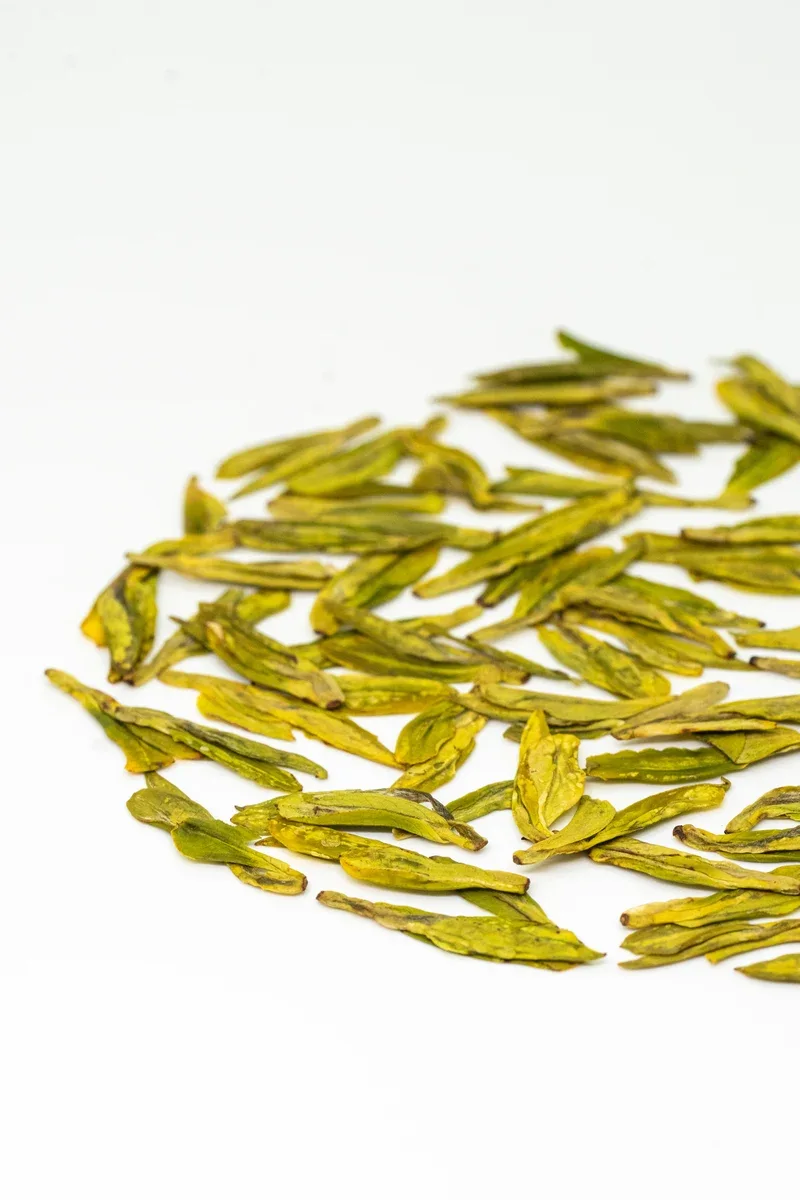
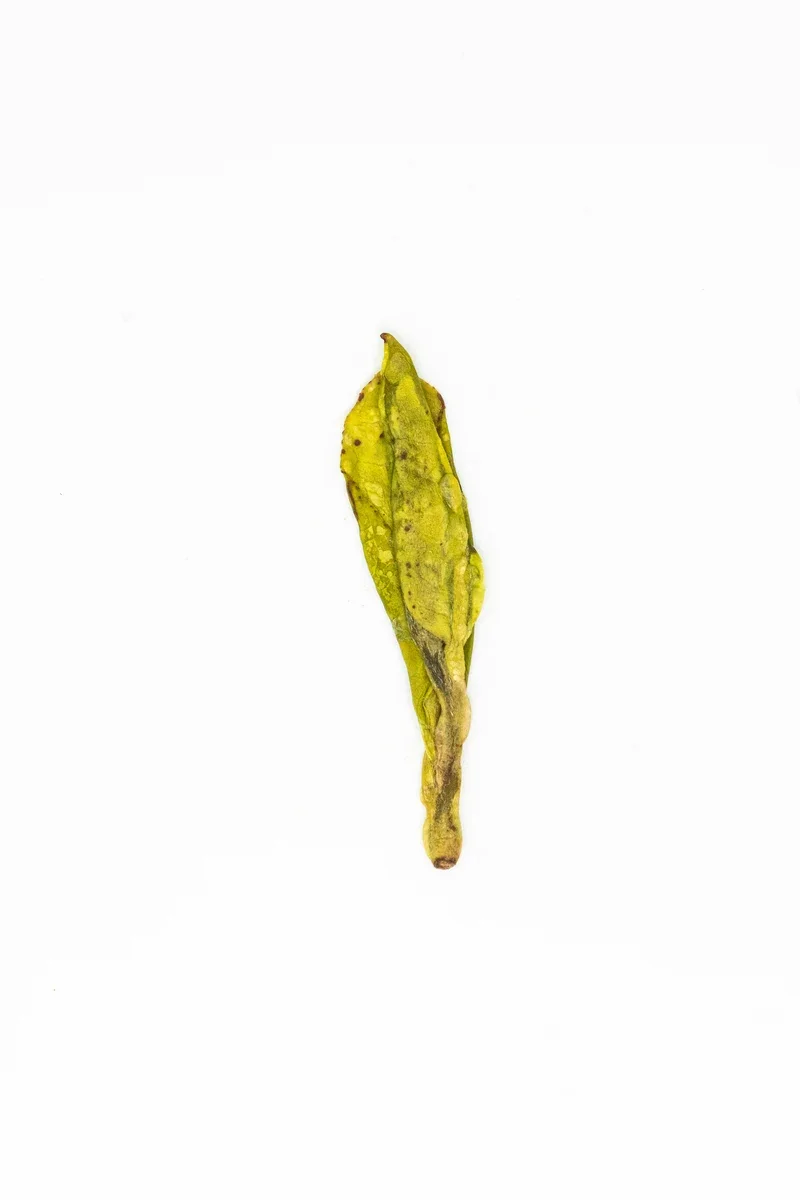
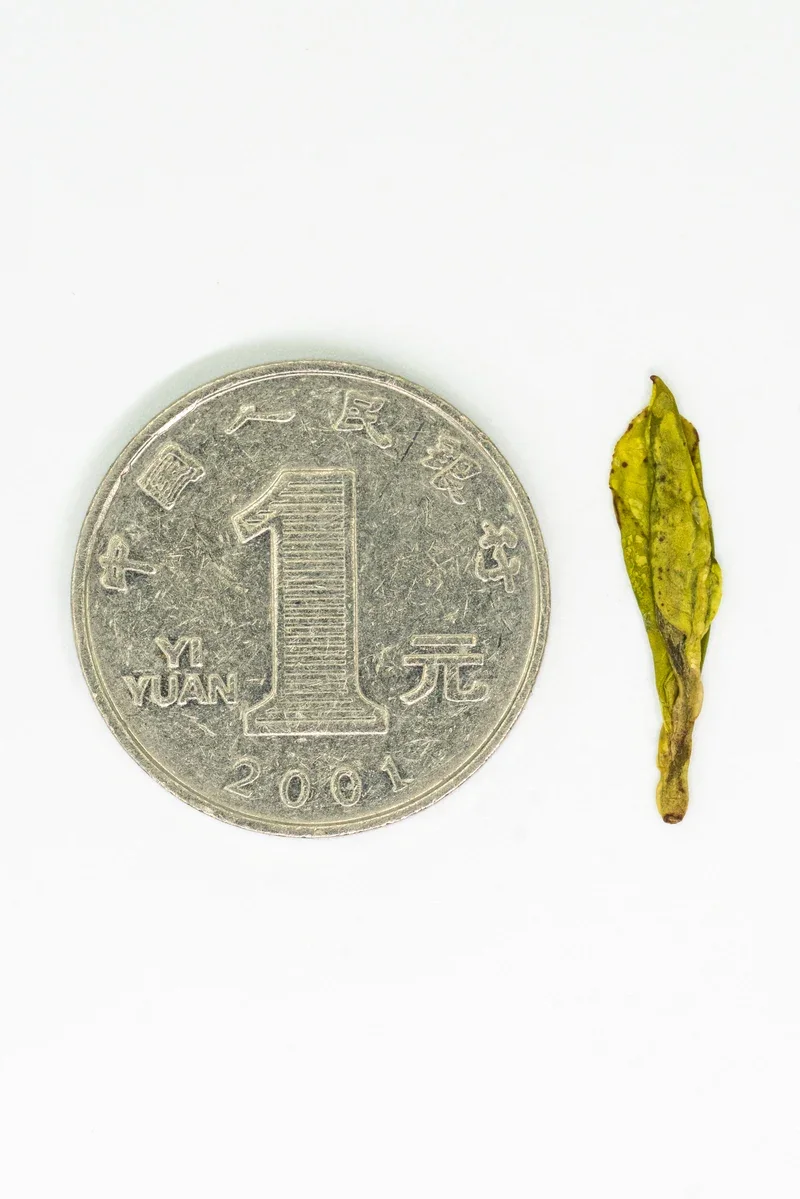
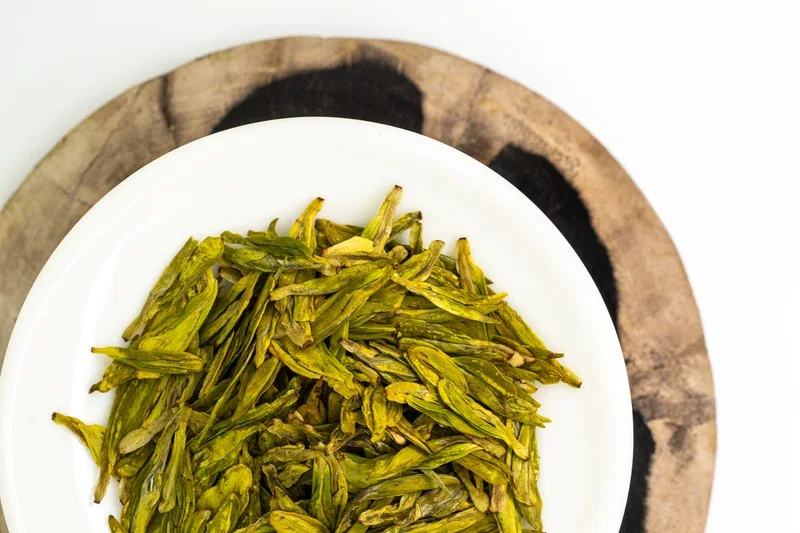
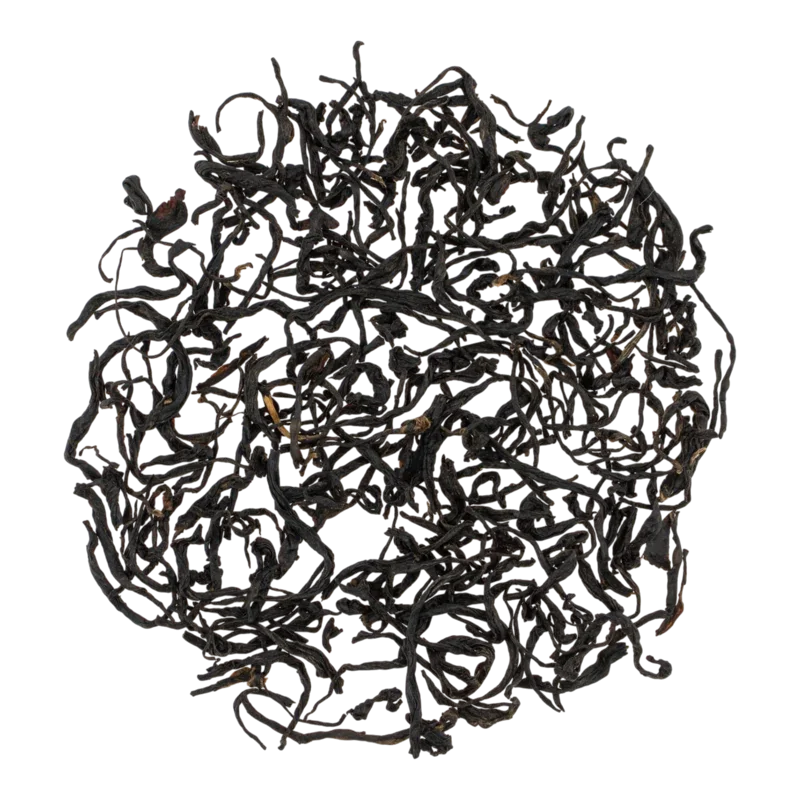
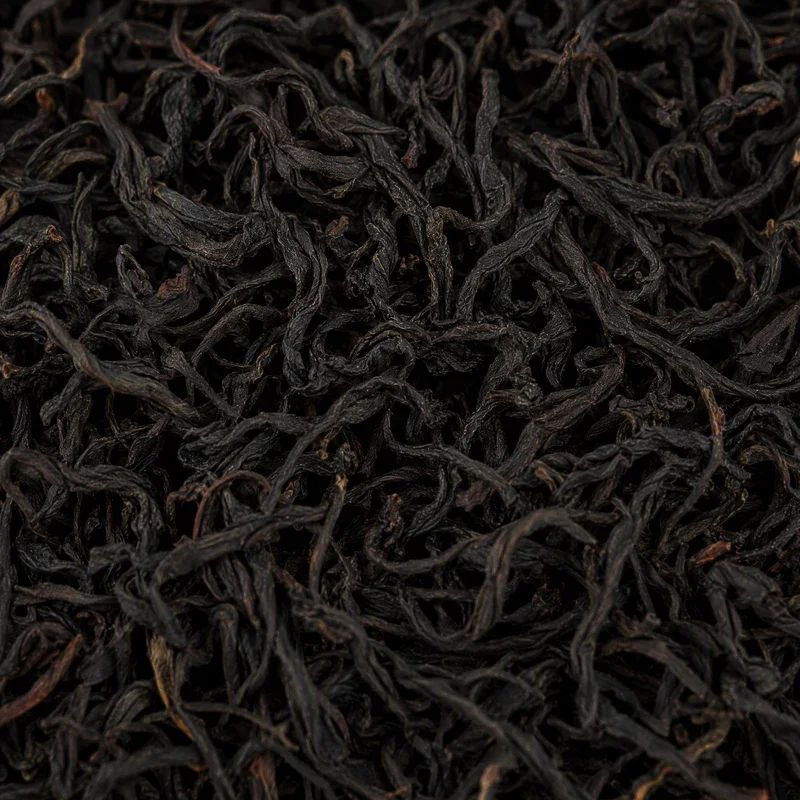
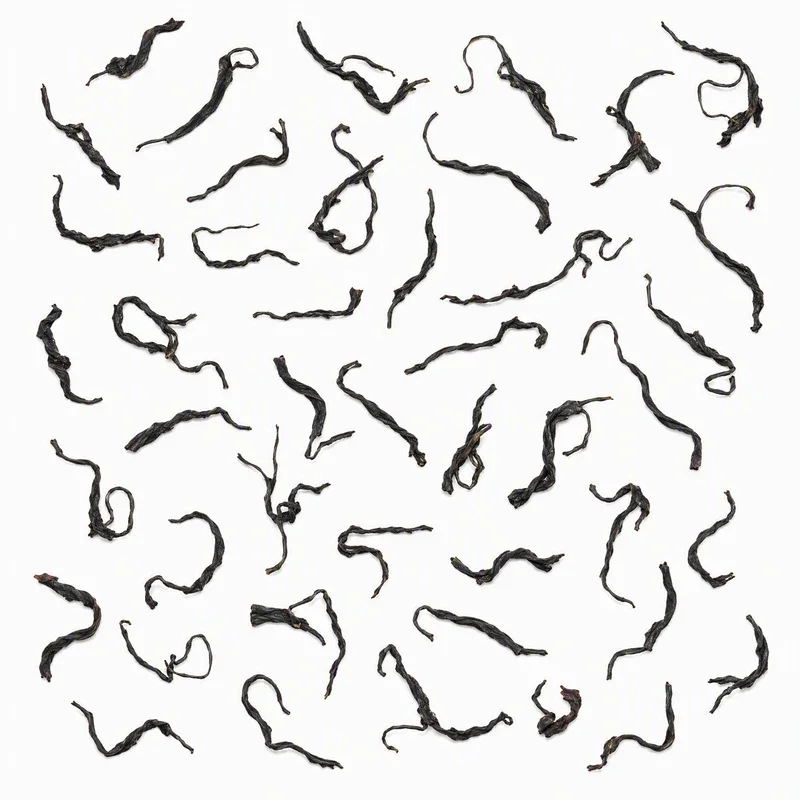
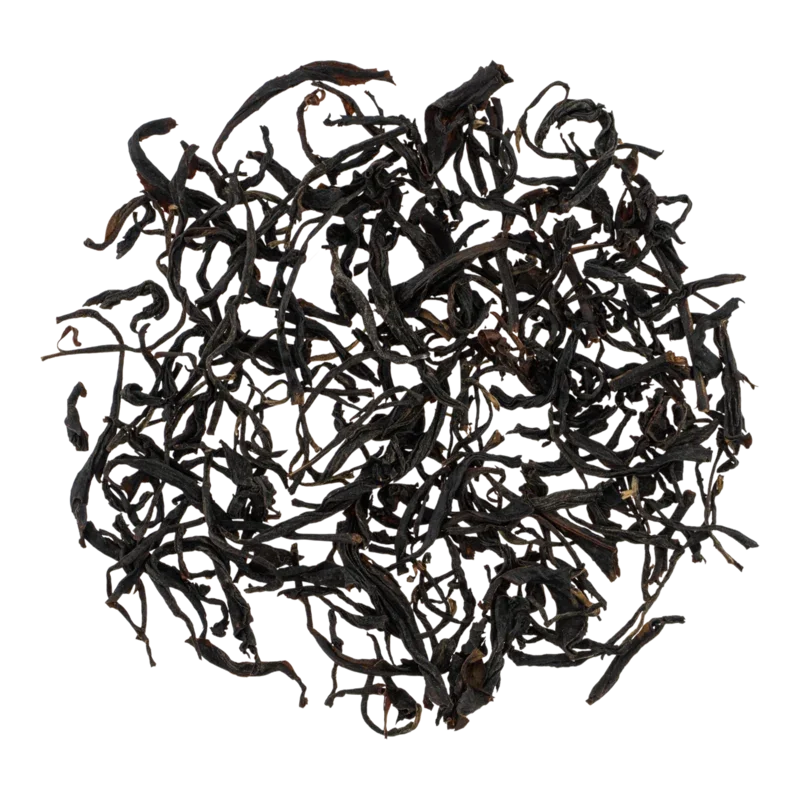
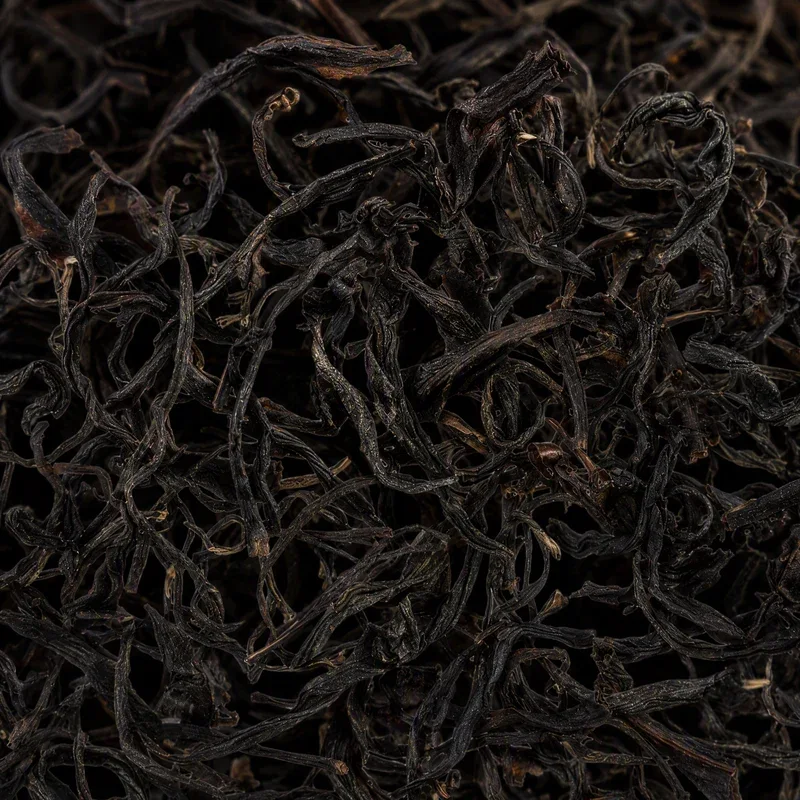
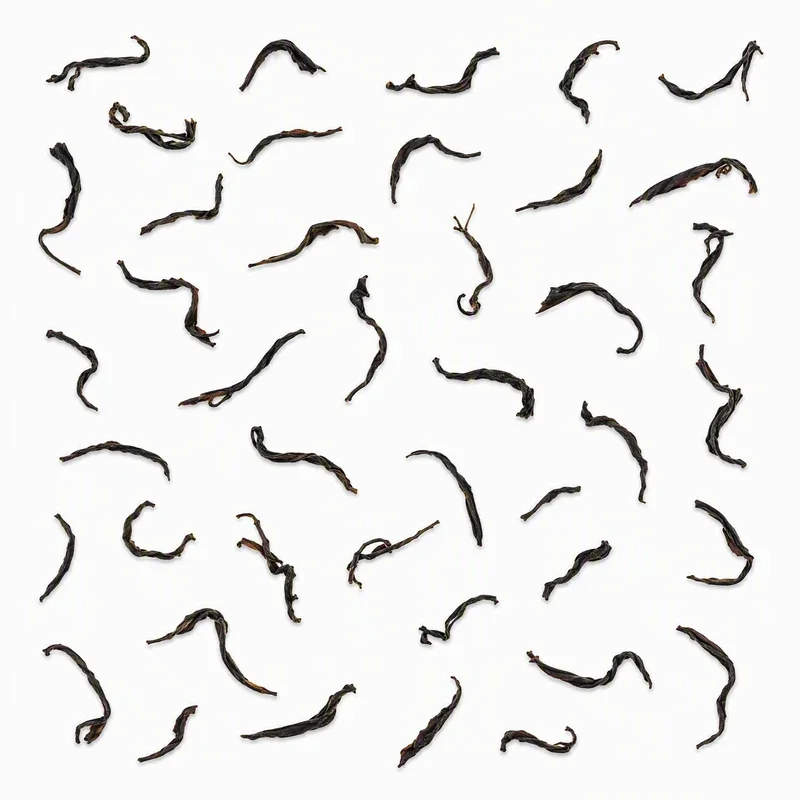
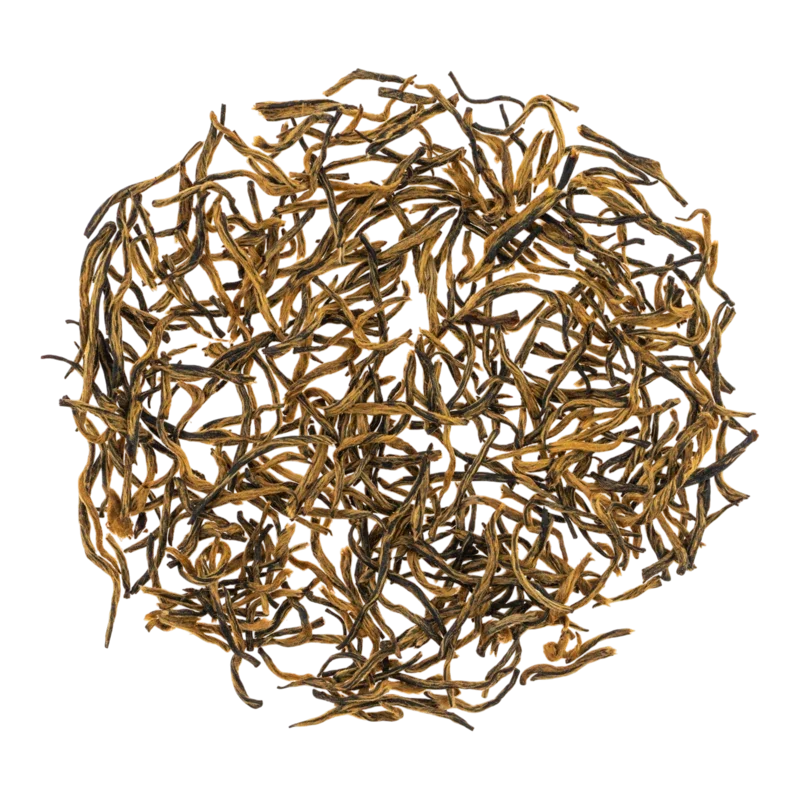
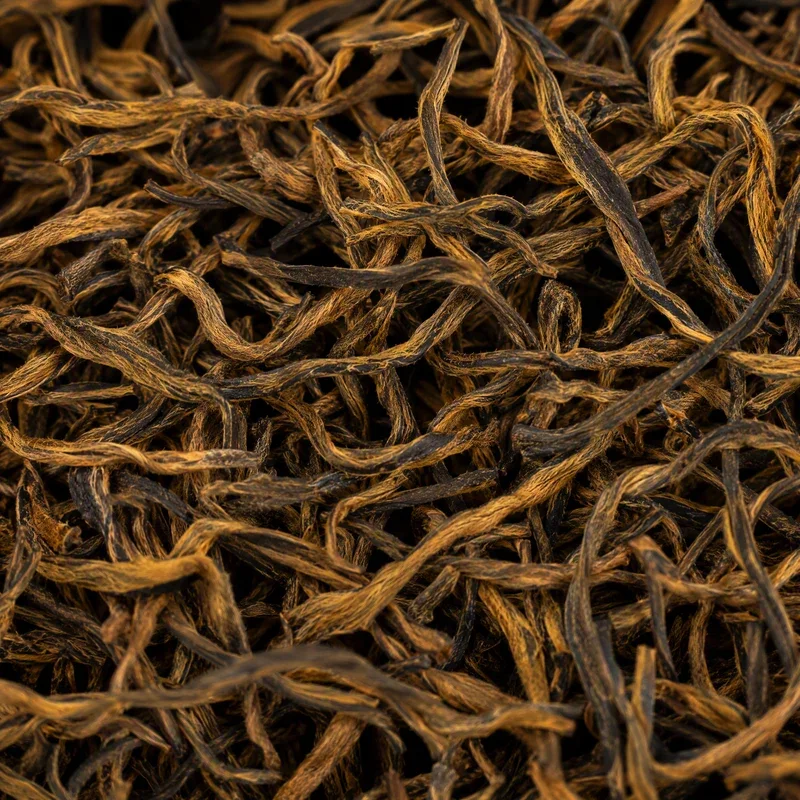
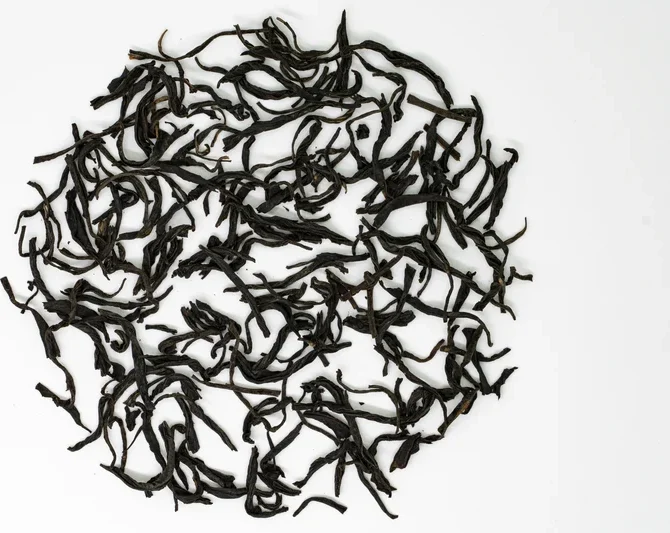
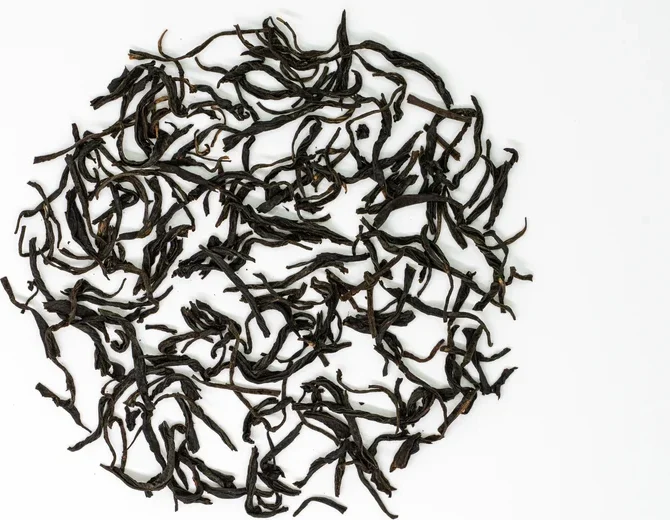
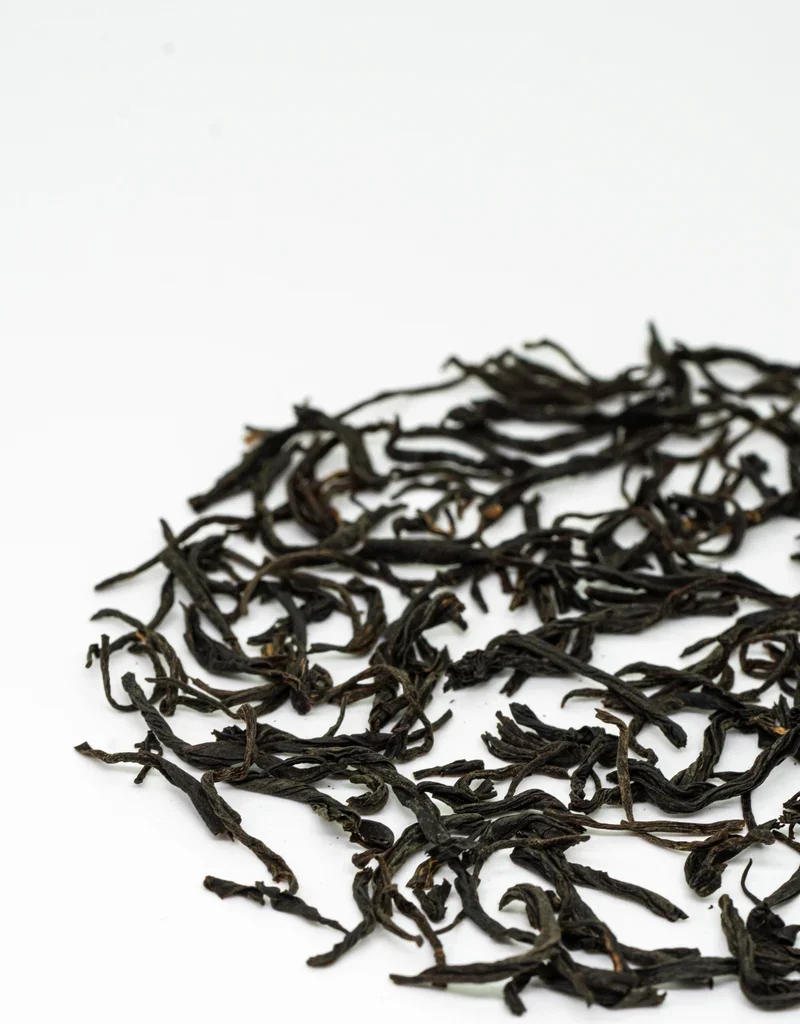
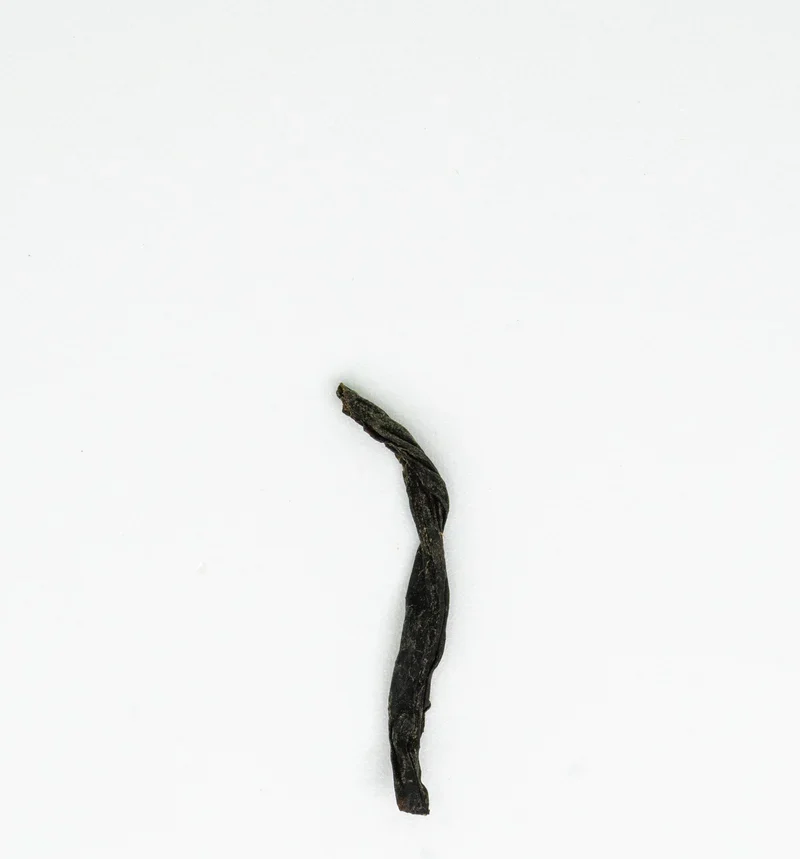
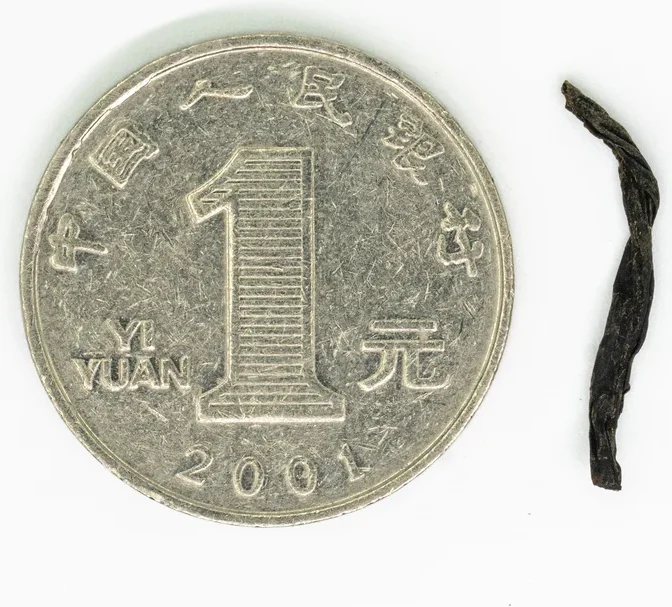
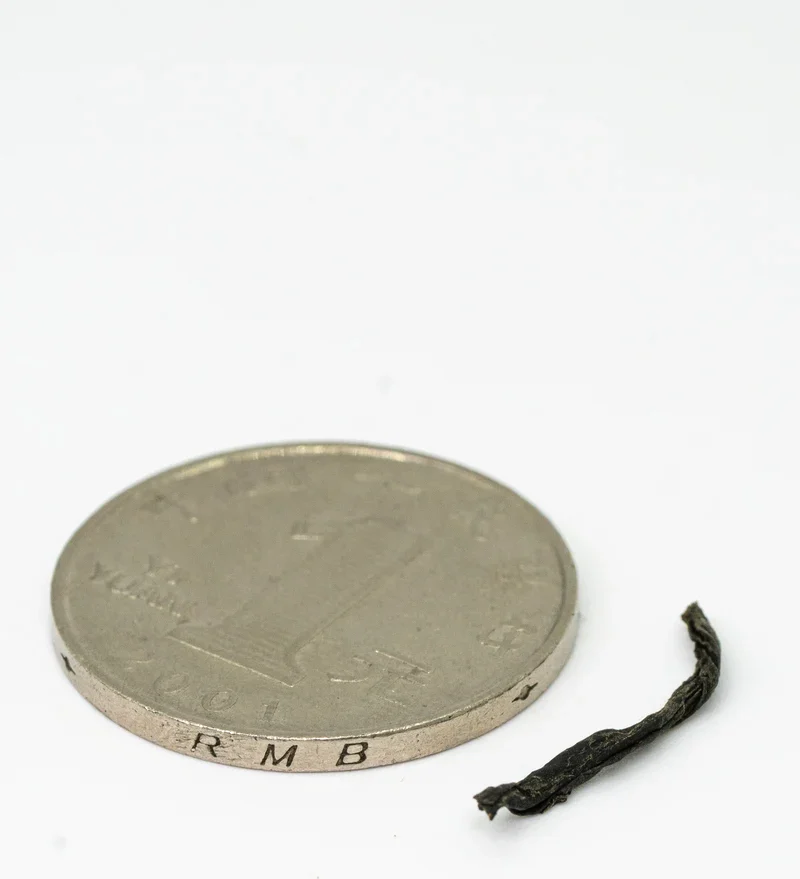
Dry Leaf Appearance: Tightly twisted strips, dark brown with reddish tint (not coal-black).
Dry Leaf Aroma: Floral-fruity, honey, with longan and dried fruit notes. Without smokiness.
Liquor Aroma: Clean, floral-honey, longan, honey, light sweet potato (薯香). Closer to Jun Mei series profile.
Liquor Color: Golden-amber, orange-red, clear.
*
*
Spent Leaves: Copper-red, whole, elastic leaves.
Taste: Softer than smoked, but with pronounced "body." Longan sweetness, honey, caramel, light fruity notes. Less astringency.
Alkaloids: Caffeine — 3–5%. Theobromine, theophylline — in small amounts.
Amino Acids: 1.5–3% dry weight. L-theanine — main component, providing sweetness (longan note) and relaxing effect.
Soluble sugars 2–4%, pectin 1–2%, organic acids ~1%.
Essential Oils: ~0.02%. In smoked style — additionally volatile compounds of pine resin (α-pinene, β-pinene, camphene), giving characteristic smoky aroma.
Minerals: ~30 elements — potassium, phosphorus, calcium, magnesium, iron, manganese, fluorine, zinc, copper, selenium.
Polyphenols: 10–20% dry weight. Catechins fermented into theaflavins (0.4–2%), thearubigins (5–11%), and theabrownins (3–9%), responsible for color, "body," and "velvet" of liquor.
Vitamins: C (partially preserved), B₁, B₂, B₃, E, K.
Fully fermented red tea (black tea) has "warm" nature according to TCM. Ideal in cold season, especially smoked variant — creates sensation of "internal warmth."
Combination of caffeine and L-theanine provides steady, sustained tone without anxiety.
Gently stimulates gastric juice secretion, helps after heavy food.
Theaflavins and thearubigins — powerful antioxidants.
Polyphenols improve vascular elasticity.
Tea polyphenols and tannins suppress pathogenic microflora.
L-theanine promotes relaxed concentration.
Tea Amount: 5–6 g per 100–120 ml (gongfu); 3–4 g per 200–250 ml (European method).
Teaware: Porcelain gàiwǎn (盖碗) 100–120 ml — optimal choice for unsmoked variant. For smoked — Yíxīng teapot (宜兴紫砂壶) is acceptable, which smooths smoke intensity. Fairness cup (公道杯) mandatory.
Water Temperature: 90–100°C. Smoked Zhengshan Xiaozhong opens well with boiling water; for unsmoked — 90–95°C.
Container: Airtight, opaque — tin can, foil bag, ceramic vessel.
Dry, cool, dark place, away from foreign odors. 10–25°C, humidity up to 60%.
12–24 months for optimal taste. Smoked variant stores longer (up to 3 years), with age smokiness softens, revealing fruity base. Some connoisseurs purposefully age smoked Zhengshan Xiaozhong 2–5 years.
Refrigerator not needed — red tea (black tea) stores perfectly at room temperature.
Classic Lapsang Souchong — with intense pine smoke. In demand on European market and among "old style" connoisseurs.
Without pine smoke, emphasis on natural honey-fruity profile of raw material. Popular on Chinese domestic market since 2005 (parallel with Jun Mei series development).
From old tree leaves (50–100+ years). Deeper, "mineral" taste, pronounced "high-altitude" coolness. Premium grade.
Formally — subtype of "new style," but distinguished as separate line by harvest standard: Jin Jun Mei (buds only), Yin Jun Mei (bud + 1 leaf), Tong Jun Mei / Chigan (bud + 2 leaves). All three — derivatives of Zhengshan Xiaozhong tradition.
Tea produced outside Tongmu reserve zone. Not authentic "Zhengshan," but widely represented on market. Quality — from acceptable to low.
Authentic Zhengshan Xiaozhong — only from Wǔyíshān Reserve (桐木). Demand information about producer and region.
Signature marker — sweet dried longan taste (桂圆汤味). If longan note is absent and there's only "crude smoke" — likely "Waishan" or artificially smoked tea.
Authentic smoked has soft, enveloping pine aroma merging with fruity sweetness. Counterfeits have sharp, chemical, "burnt" smoke.
Clear, deep amber-ruby shade. Muddy, dark, or "dirty" liquor — sign of low quality.
Zhengshan Xiaozhong for 50–100 yuan/500 g — almost certainly not from Tongmu.
No reviews yet. Tell us what you think of this tea.
Rate this tea and share your impressions. We review each submission before publishing it.