Brewing
Gongfu brewing
- Water temperature
- 93 °C
- Tea amount
- 5 g
- Water volume
- 100 ml
- First steep
- 10 s
- Time added per infusion
- 5 s
- Infusions
- 4

Zhāopíng hóngchá
Choose a brewing method. Start with the recommended quantities and time, then adjust to taste.
Brewing
Brewing
Taste
Tea encyclopedia
Category: Gōngfū hóng chá (工夫红茶, gōngfū hóngchá) — masterful red tea (black tea) with multi-stage production cycle. Regional tea of Guangxi Province.
Category: Gōngfū hóng chá (工夫红茶, gōngfū hóngchá) — masterful red tea (black tea) with multi-stage production cycle. Regional tea of Guangxi Province.
Coordinates: approximately 24°10′ N, 110°48′ E.
Origin: China, Guǎngxī Zhuāng Autonomous Region (广西壮族自治区, Guǎngxī Zhuàngzú Zìzhìqū), Hezhou Prefecture-level City (贺州市, Hèzhōu Shì), Zhaopin County (昭平县, Zhāopíng Xiàn). Main production zones: Zhaoping Township, Zǒumǎ (走马镇), Nánlǐng (南岭镇), and tea gardens of Xiangqishan Mountain (象棋山). The key enterprise creating the brand is Xiangqishan Tea Company (象棋山茶叶有限公司).
Type: Chinese red tea (black tea) (红茶, hóngchá), fully oxidized.
Cultural Significance: The creation of Zhaopin Hong in 2009 became a pivotal event for the county's tea industry, breaking the centuries-old monopoly of green tea. Zhaopin holds the titles "Zhongguo ming cha zhi xiang" (中国名茶之乡, "Hometown of Famous Teas of China"), "Zhongguo youji cha zhi xiang" (中国有机茶之乡, "Hometown of Organic Tea of China"), and is also among the "National Priority Tea-Producing Counties." The county is simultaneously known as "Zhongguo changshou zhi xiang" (中国长寿之乡, "Land of Longevity"), which is marketed in connection with the ecological purity of local tea gardens.
History: Zhaopin is one of the most ancient tea-producing counties in southern China: written mentions of local teas appear in county chronicles from the Ming and Qing dynasties; by the early 20th century, county teas are described in "Zhaopin Xianzhi" (《昭平县志》). Until 2009, the region was known exclusively for green teas; in 1988, the variety "Lü cha Erhao" (绿茶2号) won the gold award "Lu Yu Cup" (陆羽杯, Lùyǔ Bēi) and was included in "Zhongguo Cha Jing" (《中国茶经》). Red tea (black tea) "Zhaopin Hong" was first successfully produced by Xiangqishan Company in July 2009 using raw material from the Fuyun Liuhao cultivar. In 2010, the new product received a gold award at the Shanghai International Tea Exhibition, and expert-academician Chén Zōngmào (陈宗懋, Chén Zōngmào) gave it high praise. In 2013, "Zhaopin Cha" (including red and green tea) received the status of a product with geographical indication protection (地理标志产品保护) from the General Administration of Quality Supervision of the PRC. By 2017, the area of tea gardens in the county reached 21,500 mu (approximately 14,300 hectares), and annual dry tea production amounted to 11,600 tons.
Name Breakdown: "Zhaopin" (昭平) is a toponym, literally "bright and level"; the county name dates back to the Song dynasty (12th century): in 1124 (Xuanhe 6th year), Emperor Huīzōng (徽宗, Huīzōng) renamed Lóngpíng County (龙平) to Zhaopin, replacing the character "zhao" (招, "to summon, recruit") with "zhao" (昭, "bright, luminous"), considering the first variant inauspicious. "Hong cha" (红茶) means red tea (black tea). "Gongfu" (工夫) in the context of tea production means "masterful, labor-intensive work," indicating complex multi-stage processing technology requiring special skill at each stage — from fermentation control to final refinement.
Cultivar: The main cultivar for Zhaopin Hóng is Fúyún Liùhào (福云六号, Fúyún Liùhào), also known as "Fuyun No. 6," belonging to Camellia sinensis var. sinensis. This is a small- to medium-leaf cultivar originally developed in Fujian Province and well adapted to the subtropical climate of Guangxi. Local population varieties (群体种, qúntǐzhǒng) and other regionalized small- and medium-leaf cultivars are also used — Wūniú Zǎo (乌牛早, Wūniú Zǎo), Huángjīn Chá (黄金茶, Huángjīn Chá), Yuanxiao Lü (元宵绿, Yuánxiāo Lǜ).
Picking: Zhaopin is famous for its early season start — harvesting begins as early as late February, thanks to which local teas are called "the first early spring tea of mainland China" (中国大陆早春第一茶). Spring harvest (March-April) provides the highest quality raw material; summer harvest is also practiced but is inferior in taste characteristics.
Pluck Standard: 1 bud + 1 leaf or 1 bud + 2 leaves (一芽一叶, 一芽二叶). For higher grades, a proportion with predominant tips is preferred.
Raw Material: whole, fresh leaf without mechanical damage and coarse stems; minimal delay between picking and the start of withering to preserve enzymatic activity.
Altitude: main tea gardens are located at 400–1000 m above sea level; organic gardens of Xiangqishan Mountain — around 700 m.
Climate: subtropical monsoon, mild and humid. Average annual temperature 19.8–19.9°C; frost-free period more than 310 days; average annual precipitation about 2046 mm — one of the rainiest regions in Guangxi. Average annual sunshine ~1440 hours, characterized by frequent cloudiness and high humidity.
Soil: yellow and red-yellow soils (黄壤, huáng rǎng) predominate, acidic, pH 4.5–6.5, with high organic matter content thanks to abundant forest litter.
Zhaopin County is located in mountainous terrain: mountains occupy over 87% of the territory, forest coverage exceeds 87.6%. The region lies within the Nánlǐng (南岭, "Southern Ridge"), characterized by deeply incised river valleys, high humidity, and frequent fogs.
the area of tea gardens with "green food" certification (绿色食品) is 7,900 mu; 16 enterprises have passed certification or conversion to organic production. The absence of large industry and high forest coverage ensure air purity and absence of acid precipitation.
Water: the territory is crossed by the Guìjiāng River (桂江, Guìjiāng), the length of internal waterways is 1624 km. Water is clean, without industrial pollution — the county is among the "Hundred Best Towns for Deep Breathing" (深呼吸小城) thanks to minimal industrial presence.
hand picking of "1 bud + 1–2 leaves" standard in early morning hours.
leaves are spread in a thin layer in a ventilated room; moisture content decreases to ~60%, leaves become soft and elastic. Duration 4–6 hours depending on air humidity.
mechanical rolling breaks cell walls, bringing cell juice to the surface and ensuring uniform oxidation. Leaves acquire characteristic tight spiral shape.
conducted at controlled temperature and humidity. Enzymatic oxidation of catechins leads to formation of theaflavins and thearubigins, forming red color and sweet profile. For Fuyun Liuhao, particularly careful control is required to avoid uneven fermentation.
with hot air at 100–110°C to stop oxidation.
includes sifting (筛分, shāifēn), winnowing (风选, fēngxuǎn), hand sorting (挑拣, tiāojiǎn), final heating (复火, fùhuǒ), and blending (拼装, pīnzhuāng). It is precisely the multi-stage nature of this stage that gave the name "gongfu" — "masterful work."
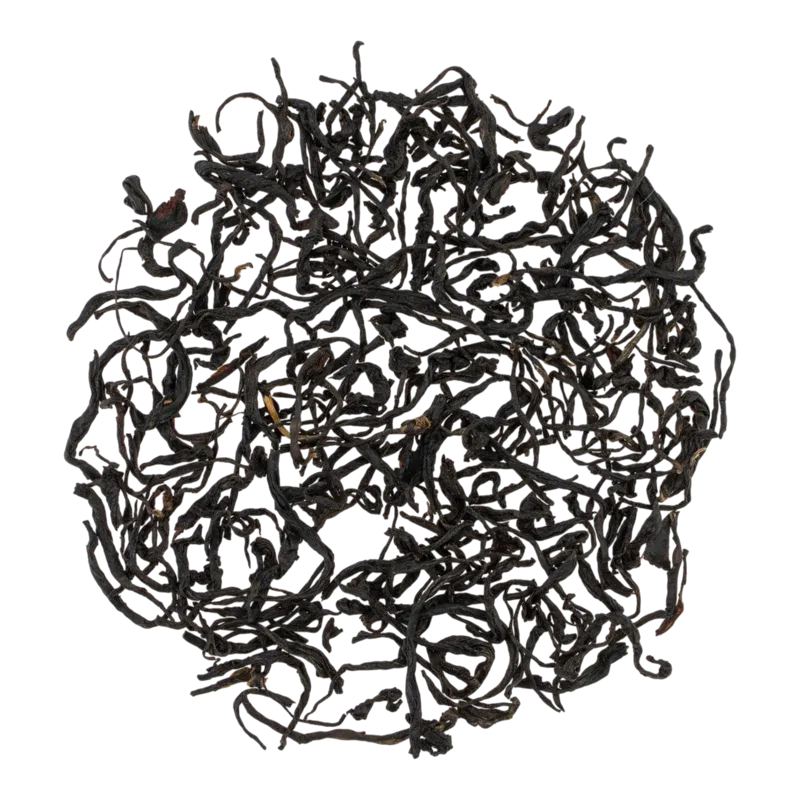
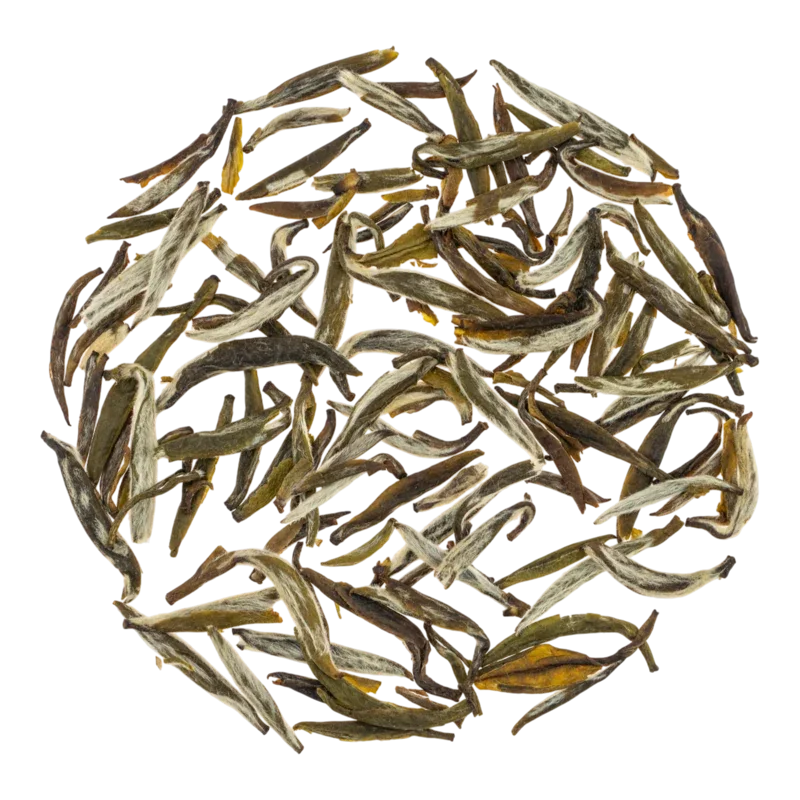
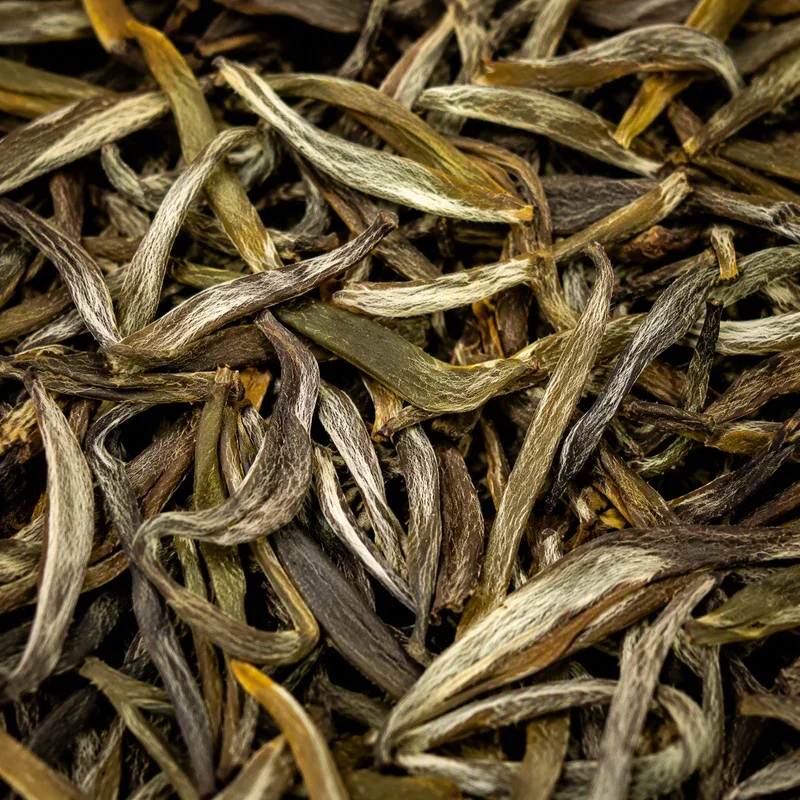
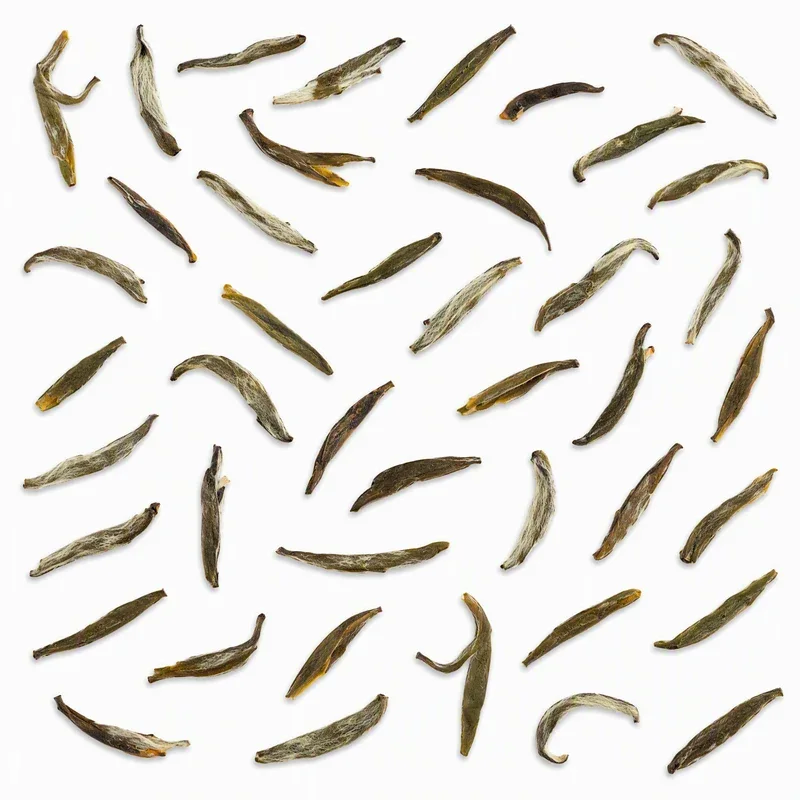
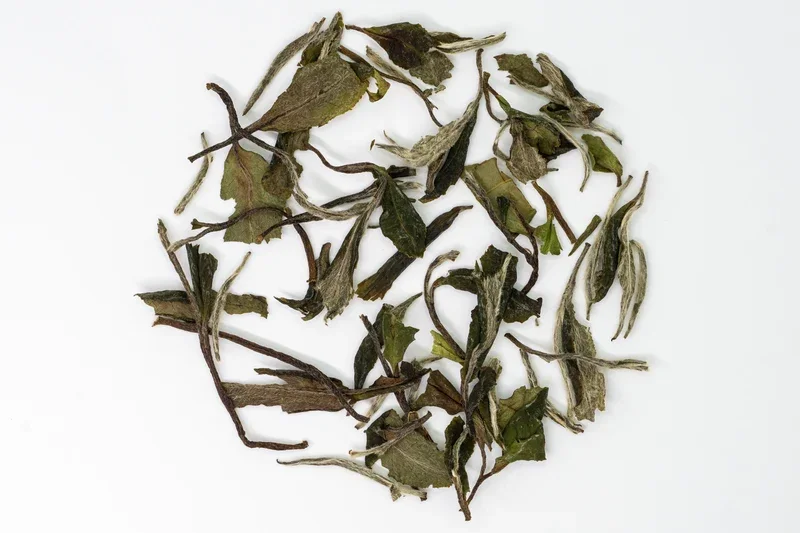
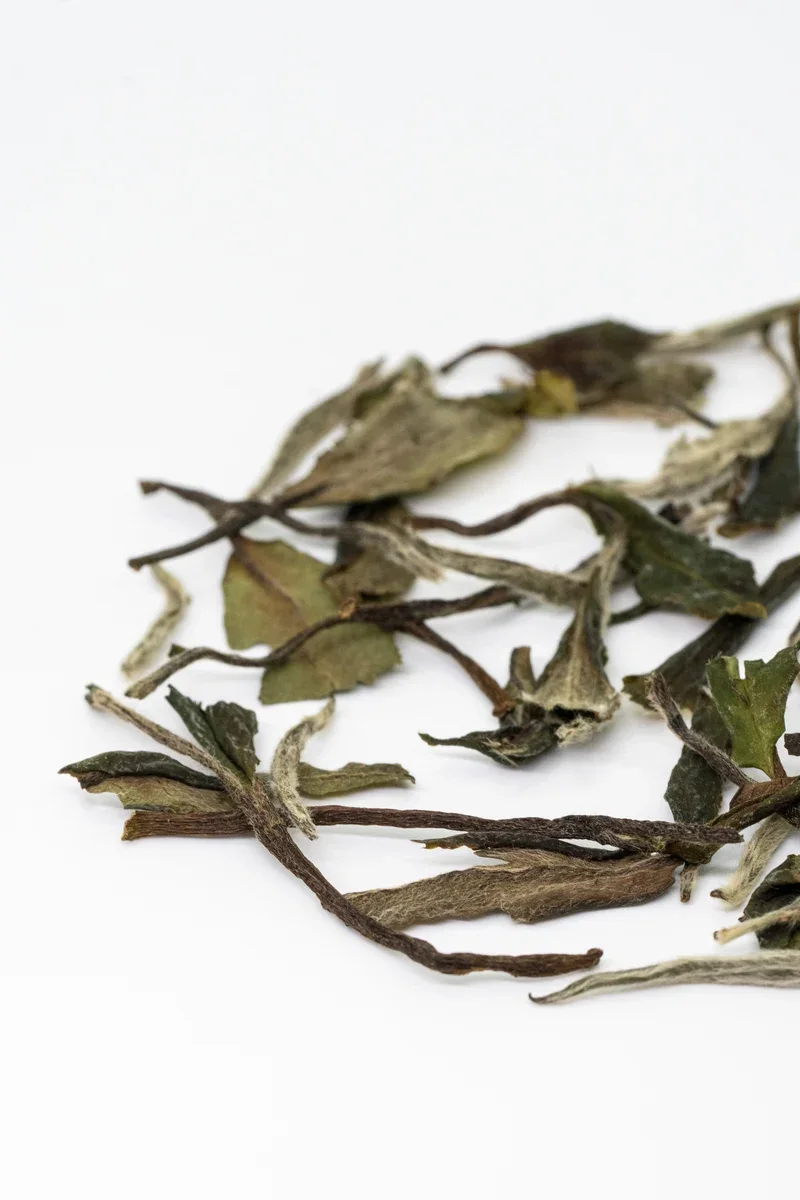
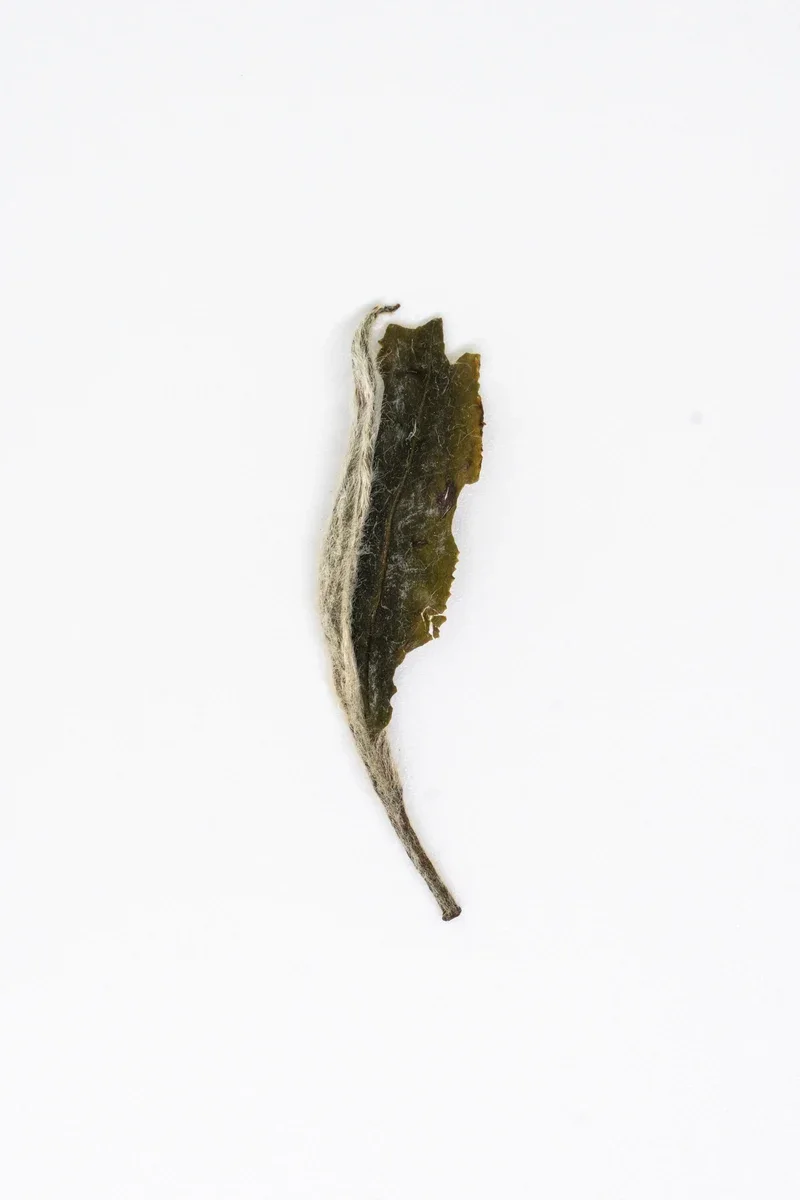
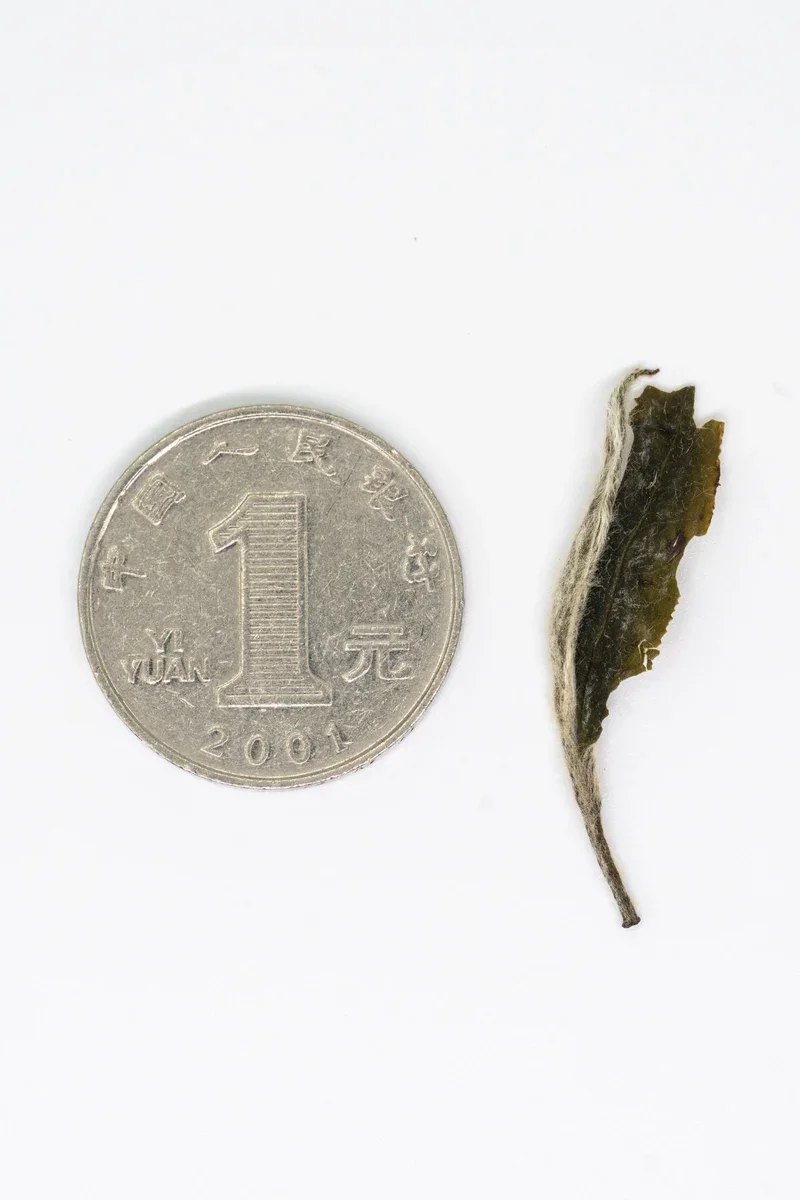
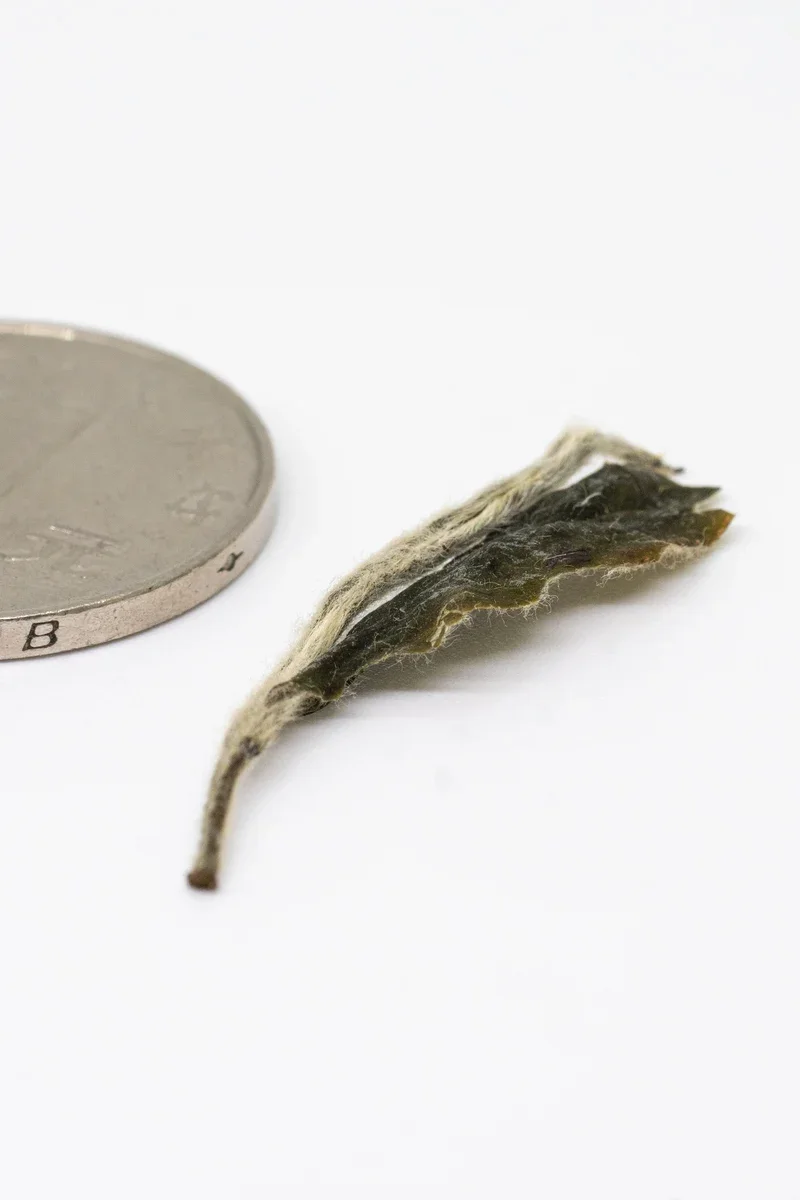
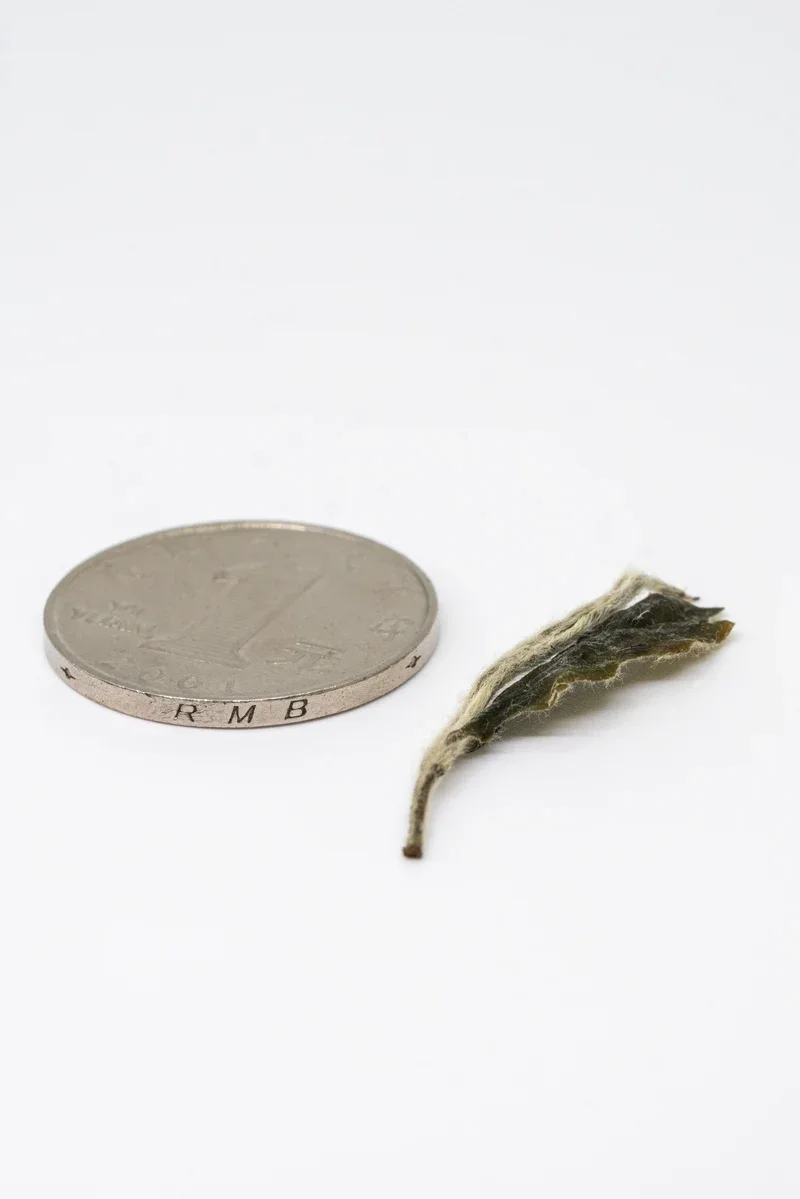
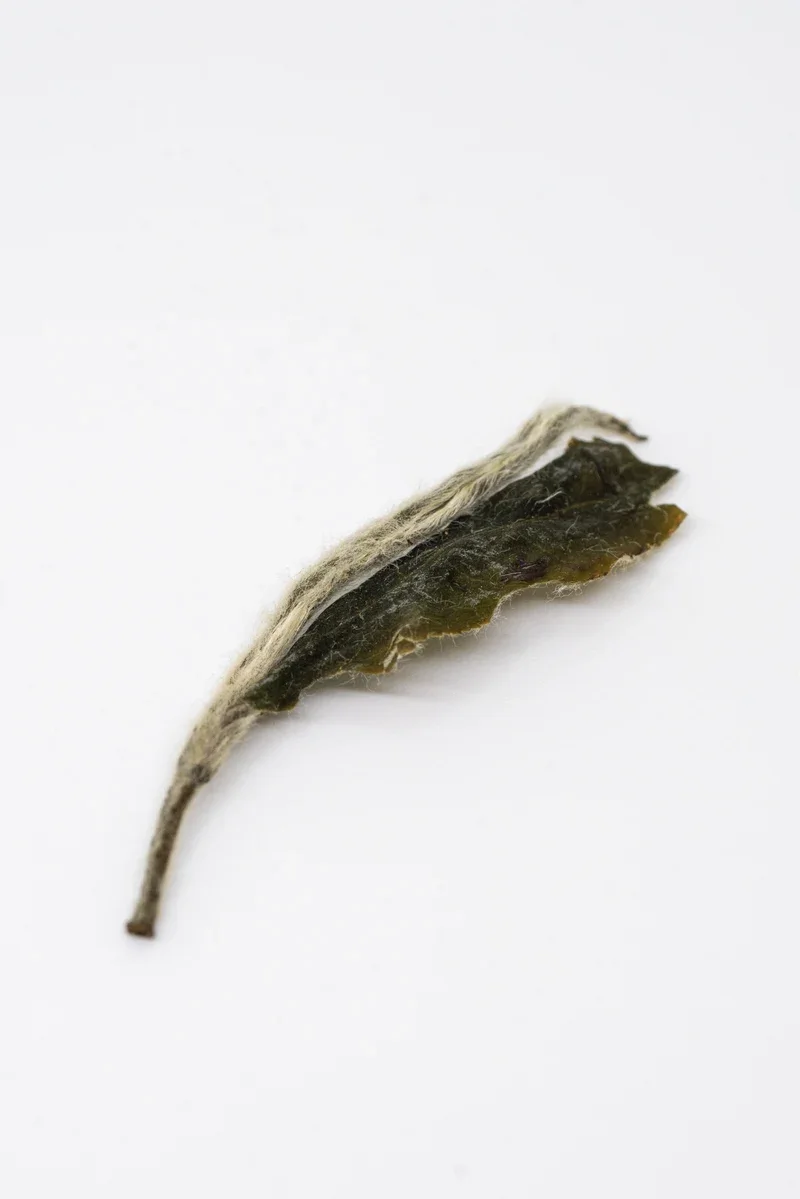
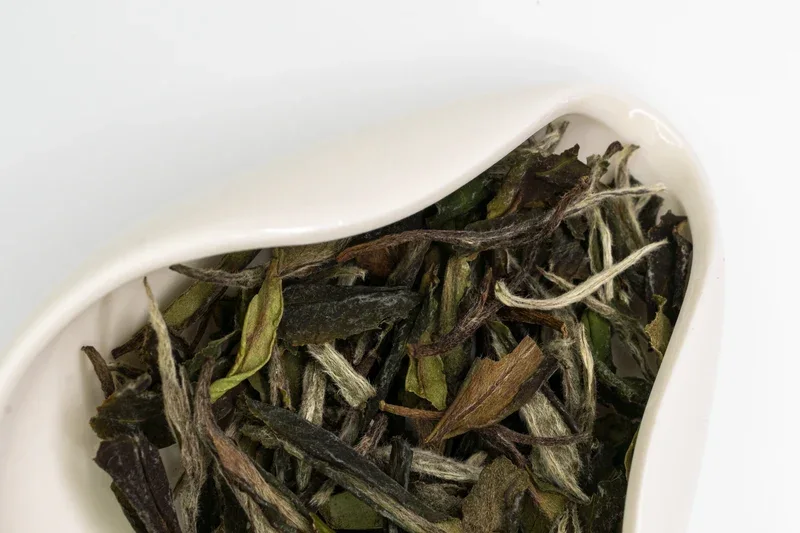
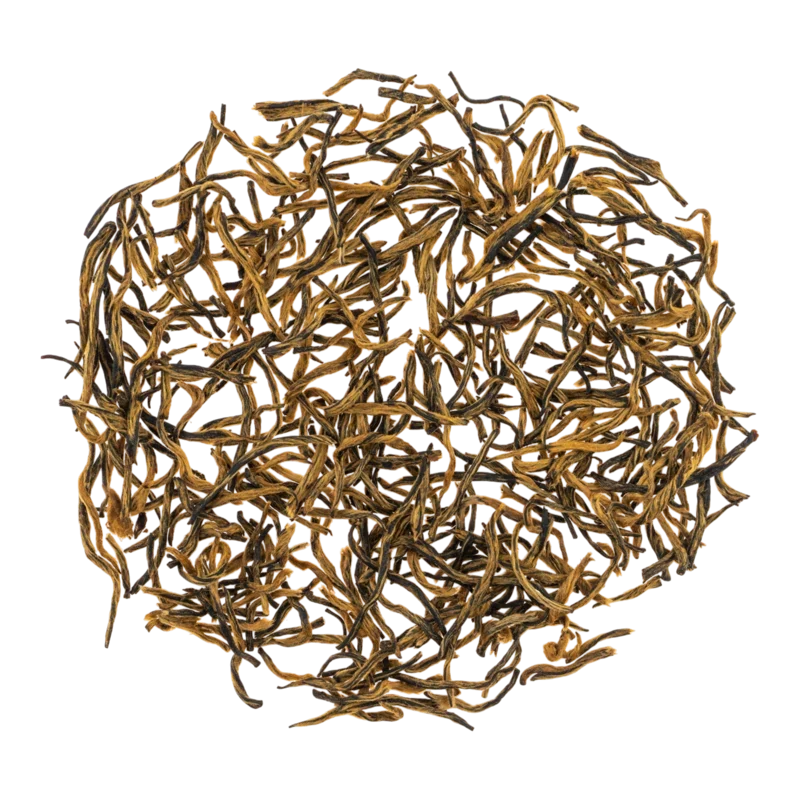
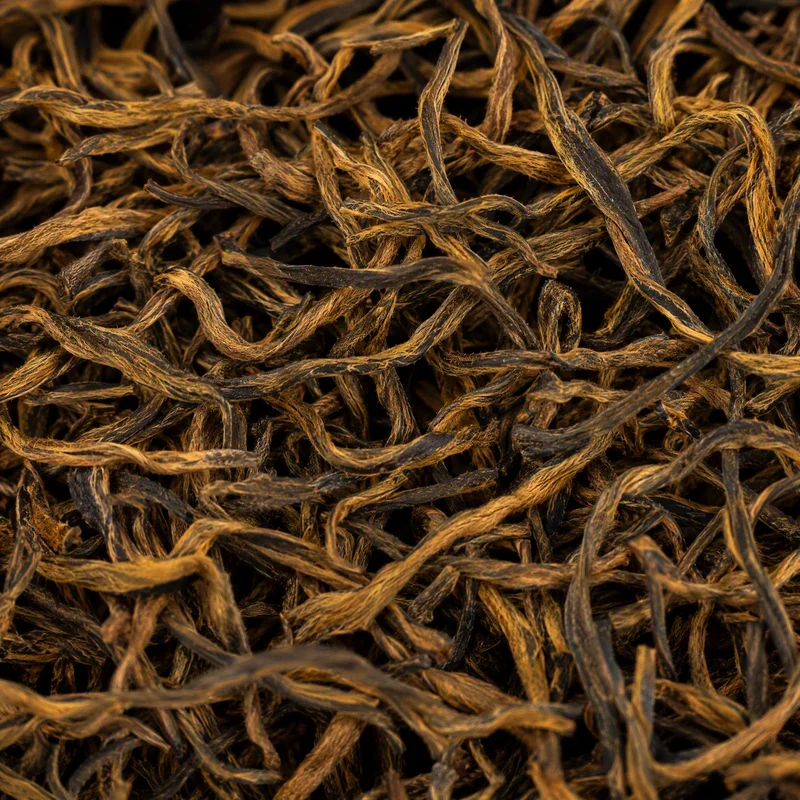
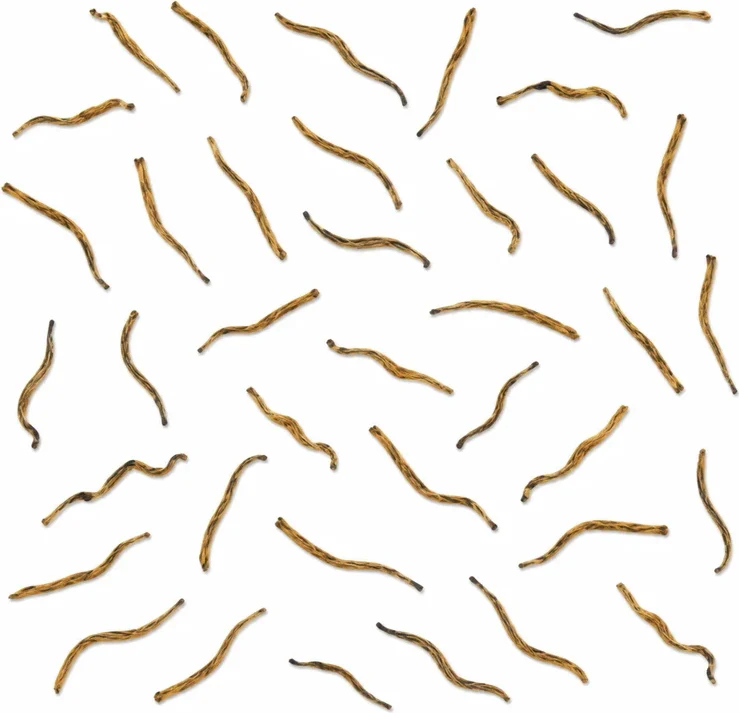
Dry Leaf Appearance: thin, tightly twisted spiral strands (卷曲成螺, juǎnqū chéng luó), even and elastic granules. Dark color with oily luster (乌润, wūrùn) and pronounced golden tips (金毫显露, jīnháo xiǎnlù).
Dry Leaf Aroma: clean, high and persistent; floral and fruity tones dominate, supported by notes of honey and warm caramel. The highest grade is distinguished by pronounced floral-fruity aroma (花果香, huāguǒ xiāng).
Liquor Aroma: rich and multi-layered, sweet-honey with distinct floral top notes; as it cools, shades of dried fruits and light caramel emerge.
Liquor Color: rich red, bright and clear (红艳明亮, hóngyàn míngliàng), with characteristic golden ring around the edge of the cup (金圈, jīnquān) — a sign of high theaflavin content.
Spent Leaves: red-copper, evenly colored (红匀明亮, hóngyún míngliàng), leaves are plump, tender, with abundance of whole buds.
Taste: full, round and juicy (醇厚甘爽, chúnhòu gānshuǎng), with pronounced sweetness on early steeps, soft velvetiness in the center and long sweet return (回甘, huígān). Astringency is minimal, aftertaste is clean and long.
Alkaloids: caffeine (~2–4% of dry mass) provides tonic effect; theobromine and theophylline are present in trace amounts.
Amino Acids: L-theanine is present in noticeable quantities, providing softness and sweetness of taste, as well as synergistic "calm-tonic" effect with caffeine.
linalool, geraniol, benzaldehyde and other terpenoids and aldehydes form the characteristic floral-fruity aroma. Energy value: less than 1244 kJ per 100 g of dry tea.
Minerals: calcium, copper, sodium, phosphorus, zinc and other trace elements.
Polyphenols: during fermentation, more than 90% of original catechins are converted to theaflavins (tea "golden" pigments responsible for liquor brightness and golden ring), thearubigins (form depth of red color and "velvet" taste), and theabrownins.
Vitamins: significant vitamin C content (red tea (black tea) preserves it better than commonly thought, thanks to protective action of polyphenols).
caffeine combined with theanine provides gentle and prolonged concentration enhancement without sharp "peaks" of excitement.
theaflavins and thearubigins have pronounced ability to neutralize free radicals, supporting cellular health.
polyphenol oxidation products gently stimulate secretion of digestive enzymes and promote comfortable food digestion, especially after abundant meals.
regular moderate consumption of red tea (black tea) is associated with maintaining vascular elasticity and normalizing cholesterol levels.
caffeine combined with aromatic substances gently stimulates diuresis.
red tea (black tea) is traditionally classified as a "warm" beverage in Chinese dietetics; it is comfortable for the stomach and recommended in cold seasons.
warm sweet aroma and gentle taste create pronounced "sensory" calming effect, promoting stress relief.
Tea Amount: 4–6 g per 100–120 ml (gongfu method); 2–3 g per 200–250 ml (European steeping method).
Teaware: porcelain gaiwan (盖碗, gàiwǎn) with 100–120 ml capacity — optimal choice allowing full aroma development; porcelain or glass teapot for visual enjoyment of liquor color. For dense batches, clay teapot is acceptable.
Water Temperature: 90–95°C for standard batches; 85–90°C for delicate high-tip grades.
No reviews yet. Tell us what you think of this tea.
Rate this tea and share your impressions. We review each submission before publishing it.