Brewing
Gongfu brewing
- Water temperature
- 78 °C
- Tea amount
- 5 g
- Water volume
- 100 ml
- First steep
- 10 s
- Time added per infusion
- 5 s
- Infusions
- 4

Éméi huáng yá
Choose a brewing method. Start with the recommended quantities and time, then adjust to taste.
Brewing
Brewing
Taste
Tea encyclopedia
Category: Rare regional yellow teas of China. Monastic tea of Buddhist tradition.
Category: Rare regional yellow teas of China. Monastic tea of Buddhist tradition.
Coordinates: Approximately 29°33′ North latitude, 103°20′ East longitude.
Origin: China, Sìchuān Province (四川省, Sìchuān shěng), Lèshān City (乐山市, Lèshān shì), Mount Éméishān (峨眉山, Éméi shān).
Type: Yellow tea (黄茶, huángchá), lightly oxidized. Belongs to the subcategory of yellow bud teas (黄芽茶, huáng yá chá) — the most elite grade of yellow teas, for the production of which exclusively tender buds or buds with one barely opened leaf are used. It should be noted that due to the extremely small production volume and limited commercial recognition, Emei Huang Ya is erroneously classified as green tea in some sources. However, the very name "Huang Ya" (黄芽, "yellow buds") unambiguously indicates its belonging to the yellow category and the presence of the key sealed yellowing stage (闷黄, mèn huáng) in the technological cycle.
Cultural Significance: Éméi Huáng Yá embodies the concept of chán chá (禅茶, chánchá) — "tea and Zen are one" (禅茶一味, chán chá yī wèi). For centuries, monks of Mount Emeishan regarded tea cultivation as a form of spiritual practice: cultivating tea gardens, collecting buds at dawn, unhurried processing, and contemplative tea drinking were integral parts of monastic life. Mount Éméishān is one of the four sacred Buddhist mountains of China (四大佛教名山, sì dà fójiào míngshān), the abode of Bodhisattva Samantabhadra (普贤菩萨, Pǔxián púsà), and every tea born on its slopes bears the imprint of this centuries-old spiritual tradition. The mountain was inscribed on the UNESCO World Heritage List (1996) simultaneously as a natural and cultural site — a rare dual status.
History: Mount Emeishan is one of the most ancient centers of tea cultivation in China, whose tea history spans more than three millennia. According to the "Huayang Guozhi" (《华阳国志》, Huáyáng guózhì) — a historical-geographical treatise by Cháng Qú (常璩, Cháng Qú) from the Jin era (4th century CE), the Nan'an (南安, Nán'ān, modern Leshan) and Wǔyáng (武阳, Wǔyáng) regions were famous for producing excellent tea, and to the south of them rose Mount Emeishan. During the Tāng dynasty (唐, Táng, 618–907), scholar Lǐ Shàn (李善, Lǐ Shàn) recorded in annotations to "Zhaoming Wenxuan" (《昭明文选注》) that Mount Emeishan grows many medicinal herbs, and the tea is especially good and "has no equal under Heaven" (茶尤好,异于天下). At the Buddhist monastery Heishuisi (黑水寺, Hēishuǐ sì), monks cultivated tea on steep cliffs, noting an amazing property: for two consecutive years the buds were covered with white down, and in the third year — smooth and green.
Cultivar: For the production of Emei Huang Ya, leaves of local small-leaf varieties of tea bush (Camellia sinensis var. sinensis) are used, adapted to the high-altitude conditions of Mount Emeishan over centuries. These endemic populations are distinguished by small, dense leaf blades, abundant bud pubescence, and high amino acid content, which is conditioned by the long winter dormancy period and slow spring awakening in mountain climate conditions. In some farms, the cultivar Fúdǐng Dà Bái (福鼎大白, Fúdǐng Dà Bái) and its local selections are also used, valued for large, fleshy buds.
Picking: Early spring, typically from mid-March to early April, depending on plantation altitude and weather conditions of the particular year. The optimal period is 5–10 days before and after the Qīngmíng festival (清明, Qīngmíng), that is, before April 5. Tea harvested before Qīngmíng (明前茶, míngqián chá) is especially highly valued.
Pluck Standard: Single unopened buds (单芽, dān yá) or bud with one barely unfolded leaf (一芽一叶初展, yī yá yī yè chū zhǎn). For the production of one jīn (斤, jīn, 500 g) of finished tea, approximately 40,000–50,000 select buds are required.
Raw Material: Exceptionally high. Buds must be uniform in size, whole, without mechanical damage, covered with dense silvery down. Harvest is carried out by hand in early morning hours after dew has dried.
Altitude: Tea plantations are located predominantly at 800–1500 m above sea level, in the zone around monasteries Wànniánsì (万年寺, Wànniánsì), Qīngyīngé (清音阁, Qīngyīngé), Báilóngdòng (白龙洞, Báilóngdòng) and Heishuisi. This altitudinal belt provides optimal balance between sufficient insolation and regular cloud cover.
Climate: Subtropical monsoon, with pronounced vertical zonation — from subtropics at the foot to subarctic conditions at the summit. Average annual temperature at tea plantation level (800–1500 m) is 10–15°C. Average annual precipitation at the foot — about 1555 mm, at the summit — up to 1923 mm. Air humidity — about 85%. Mount Emeishan is in the zone of the so-called "Western Sichuan Rain Screen" (华西雨屏, Huáxī yǔ píng) — an area of increased precipitation formed by the collision of warm air masses with mountain barriers. Characterized by abundant fogs (at the summit — up to 322 foggy days per year), minimal direct sunlight and significant difference between day and night temperatures (12–18°C), which slows tea bush growth, promotes amino acid accumulation and formation of delicate, complex aroma.
Soil: Acidic mountain yellow and brown soils (黄壤, huáng rǎng) predominate, formed on basaltic rocks of the Permian period. pH ranges from 4.5–6.0 — the ideal range for tea bushes. Soils are rich in organic matter, have good water permeability and high content of iron, manganese and zinc, which directly affects the mineral profile of tea leaves.
Located on the southwestern edge of the Sichuan Basin, in the transition zone from the Yangtze River basin to the Tibetan Plateau. Maximum height — Wànfó Peak (万佛顶, Wànfó dǐng), 3099 m above sea level. The mountain extends north to south for 105 km, total area of the mountain massif — about 154 km². Mount Emeishan is among the four sacred Buddhist mountains of China and is a UNESCO World Cultural and Natural Heritage site. Unique biodiversity: more than 3700 plant species and 2300 animal species, including relict and endemic species.
Hand picking of single buds or "bud + one leaf" in early morning hours.
Harvested raw material is spread in a thin layer in a shaded, well-ventilated room for 1–2 hours for partial evaporation of surface moisture and activation of enzymatic processes.
Brief pan-firing in a cast iron wok at 180–200°C for 1–2 minutes. Purpose — inactivation of enzymes (primarily polyphenol oxidase), stopping uncontrolled oxidation, removing grassy smell and softening leaf structure for subsequent stages.
The central and defining stage that distinguishes yellow tea from green tea. Hot buds after kill-green are wrapped in kraft paper or cotton cloth and placed in a warm place (by the hearth or in special wooden boxes) for 30–60 minutes. Under the action of residual heat and moisture, non-enzymatic oxidation of polyphenols and chlorophyll decomposition occurs, as a result of which buds acquire a golden-yellow shade, astringency decreases and a soft, sweetish taste is formed.
Light heating at lower temperature (100–120°C) to even out moisture and further fix the shape.
Repeated wrapping and holding under similar conditions, which deepens the characteristic "yellow" flavor-aromatic profile of yellow tea.
Multi-stage drying at sequentially decreasing temperature — from 80–90°C to 50–60°C. This method of "first high then low temperature" (先高后低, xiān gāo hòu dī) fixes the aroma, brings moisture to standard 5–6% and gives the tea the light "bread" note (锅巴香, guōba xiāng) characteristic of Sichuan yellow teas.
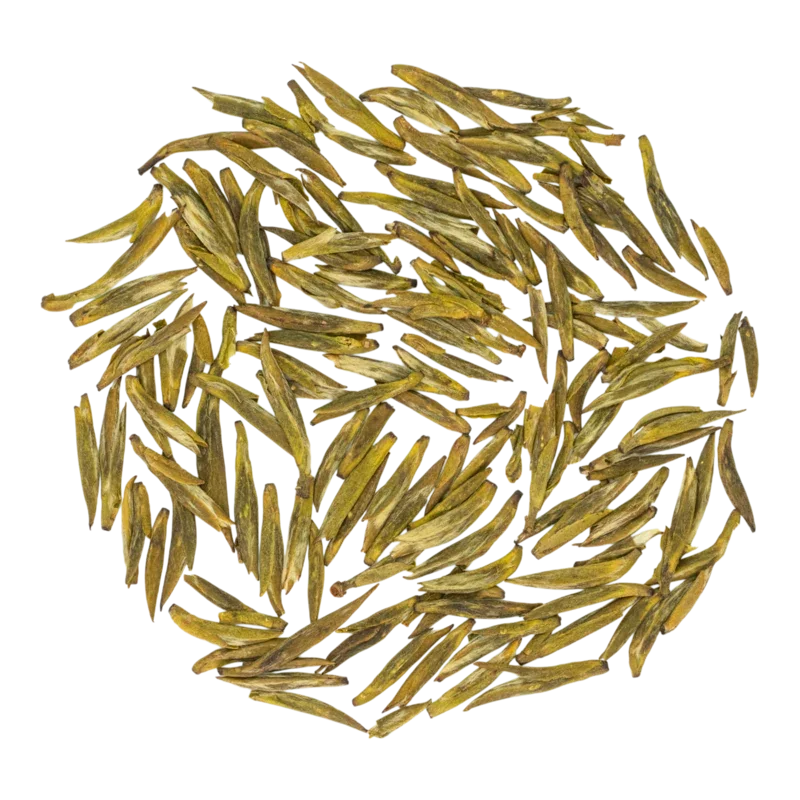
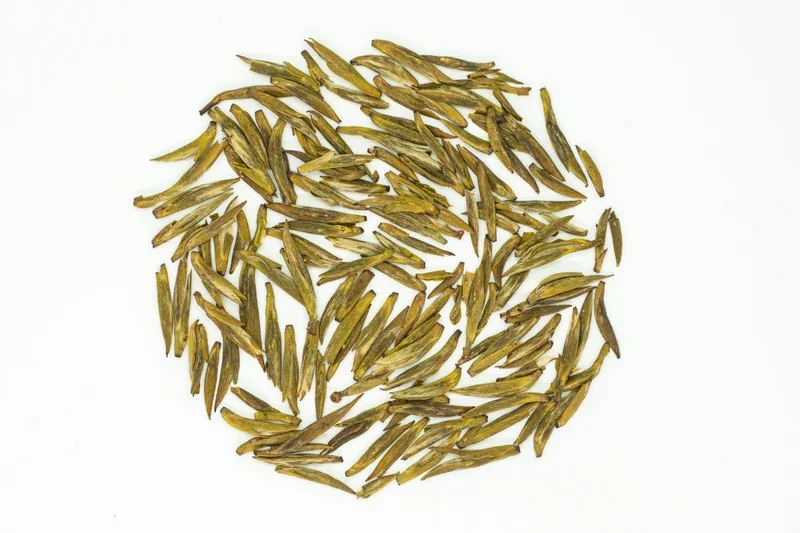
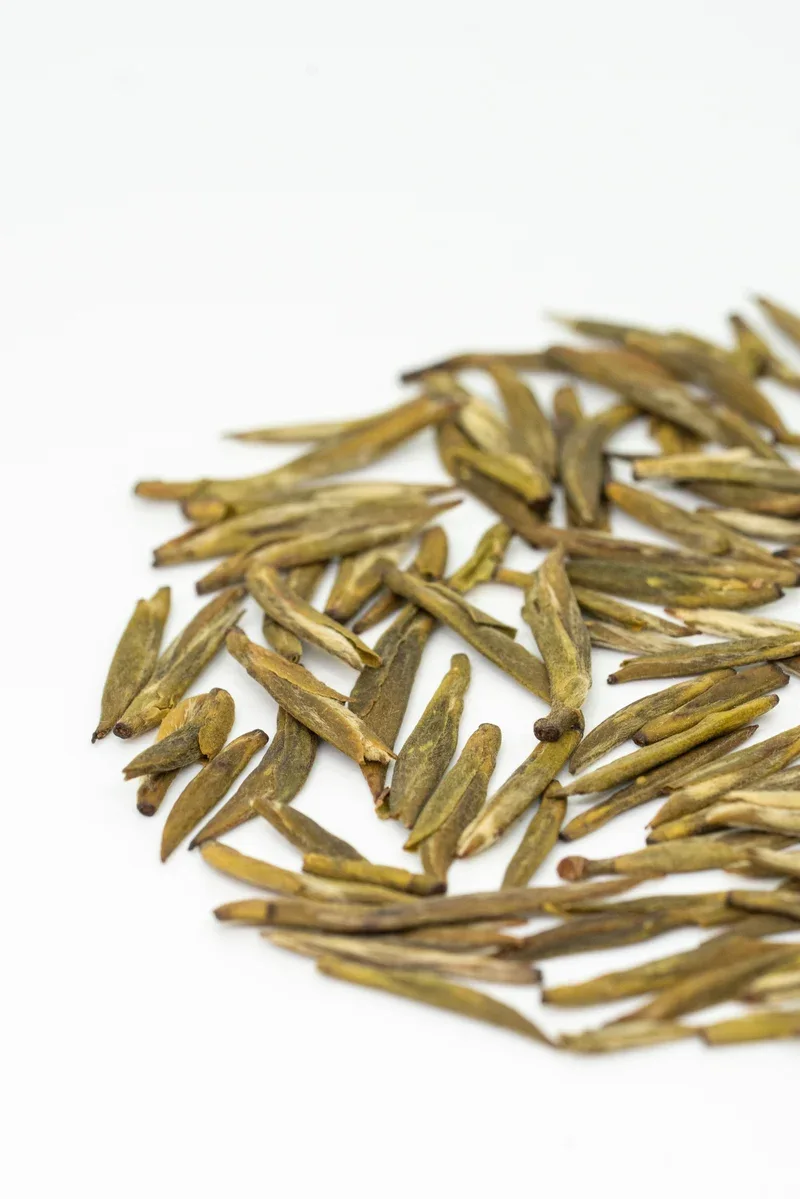
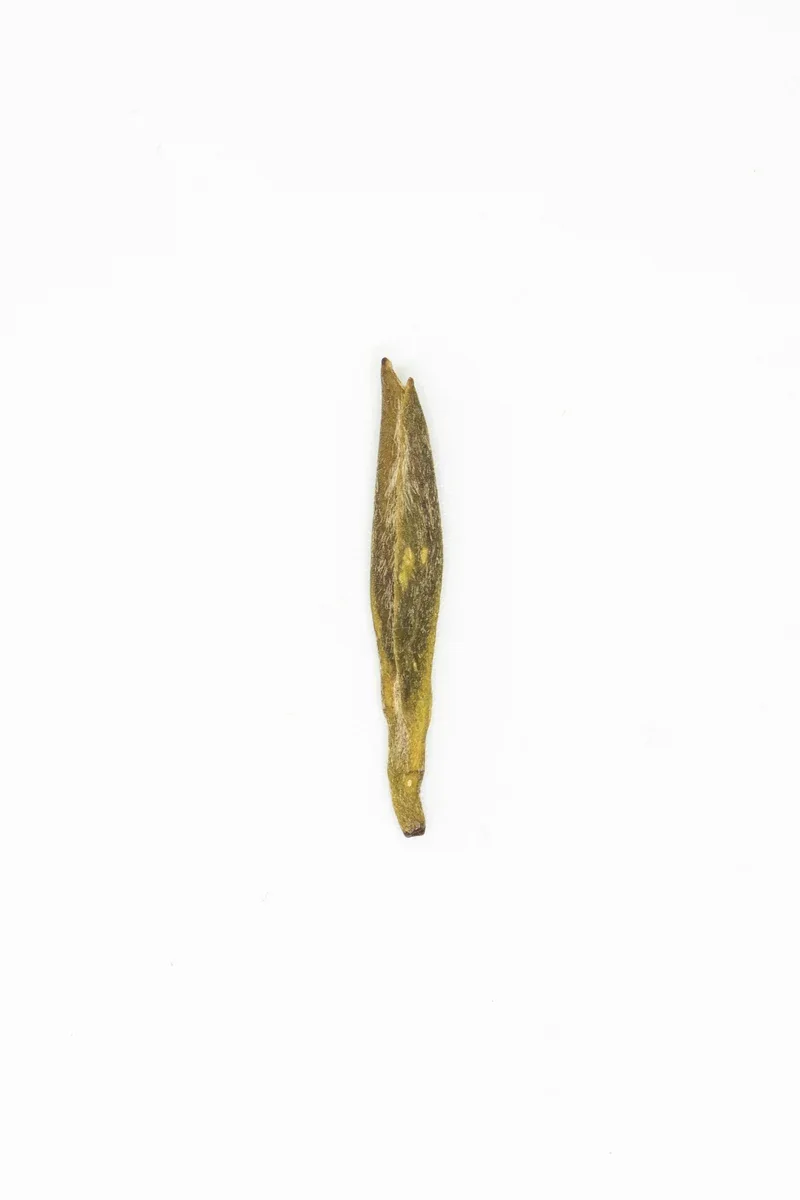
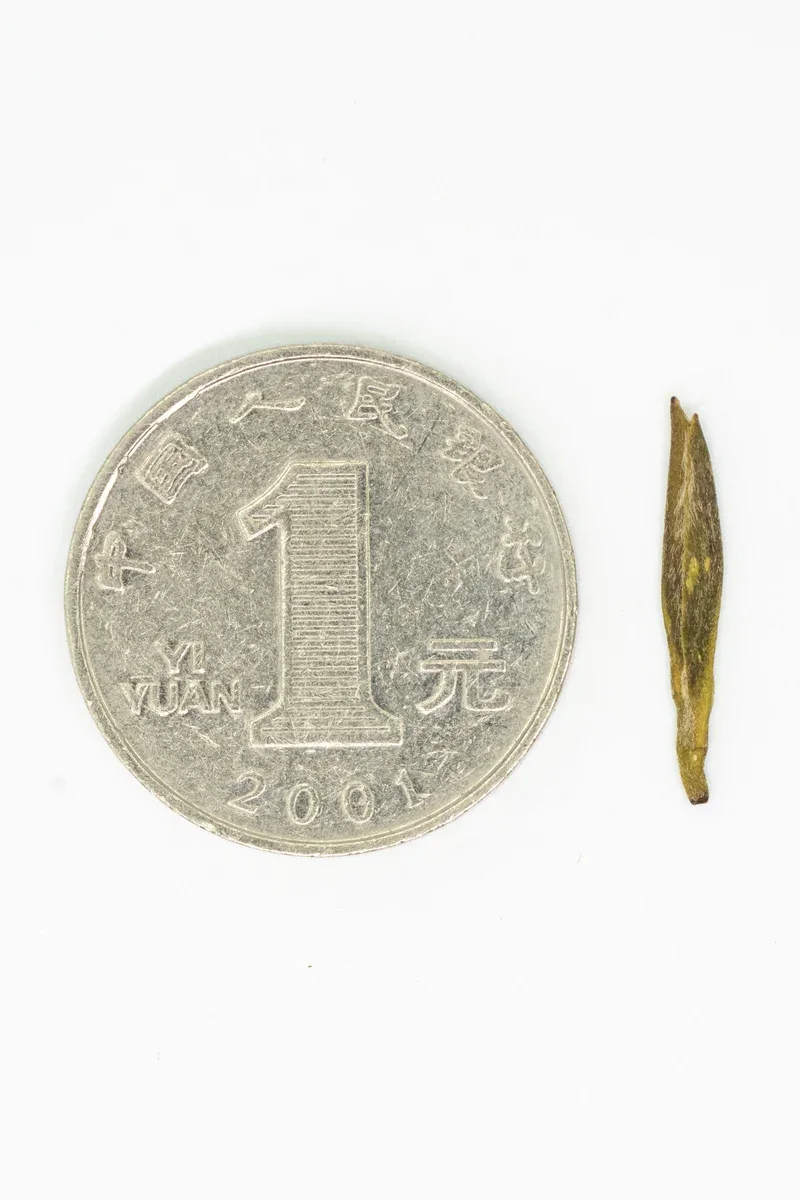
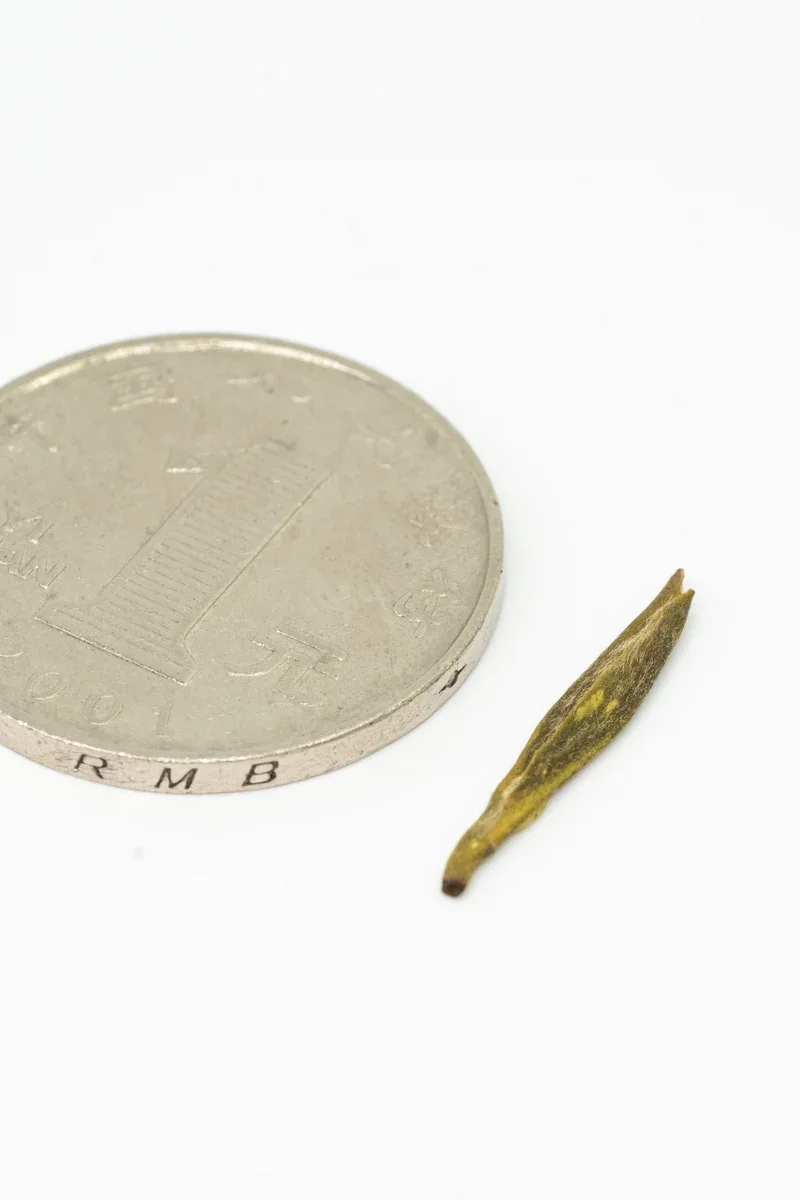
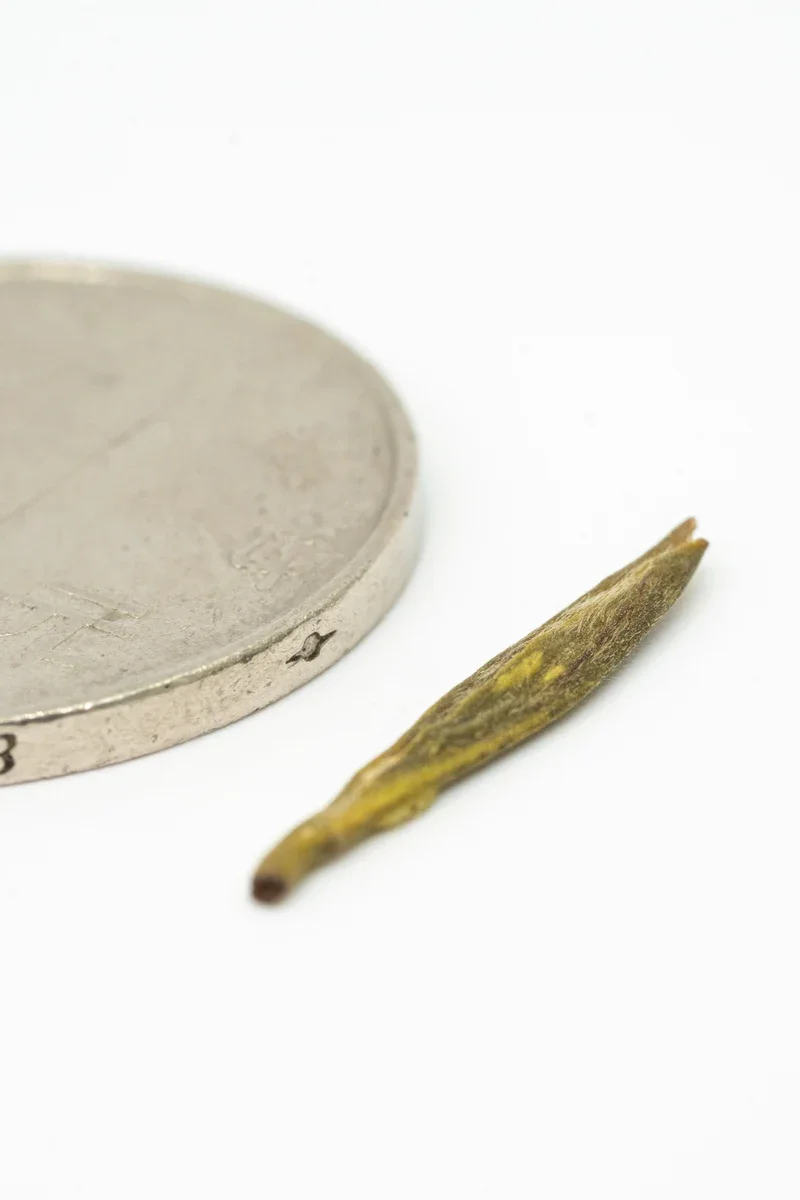
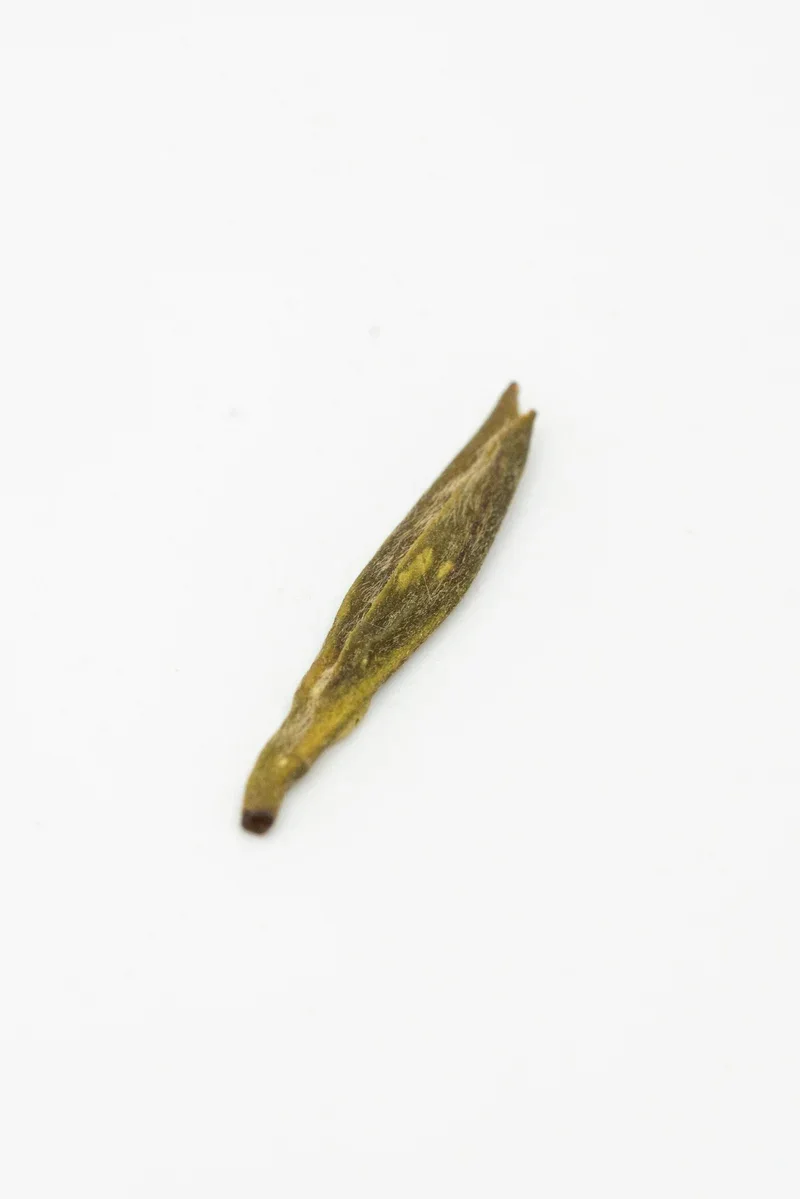
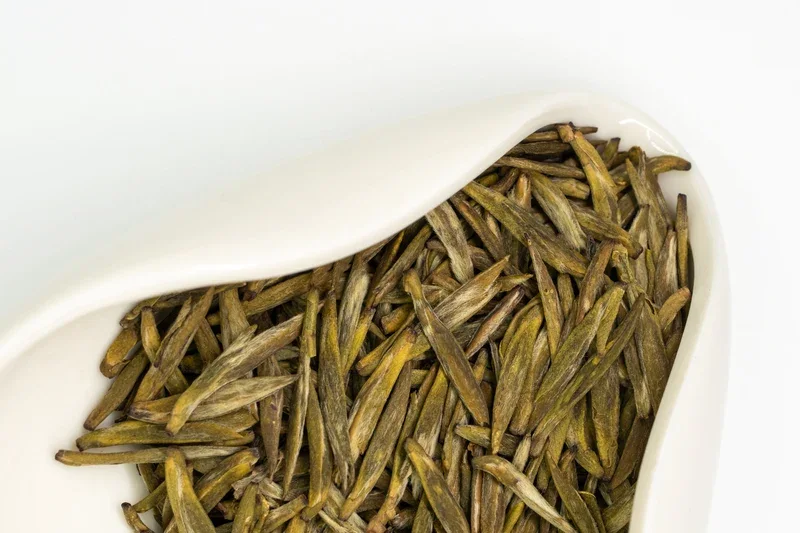
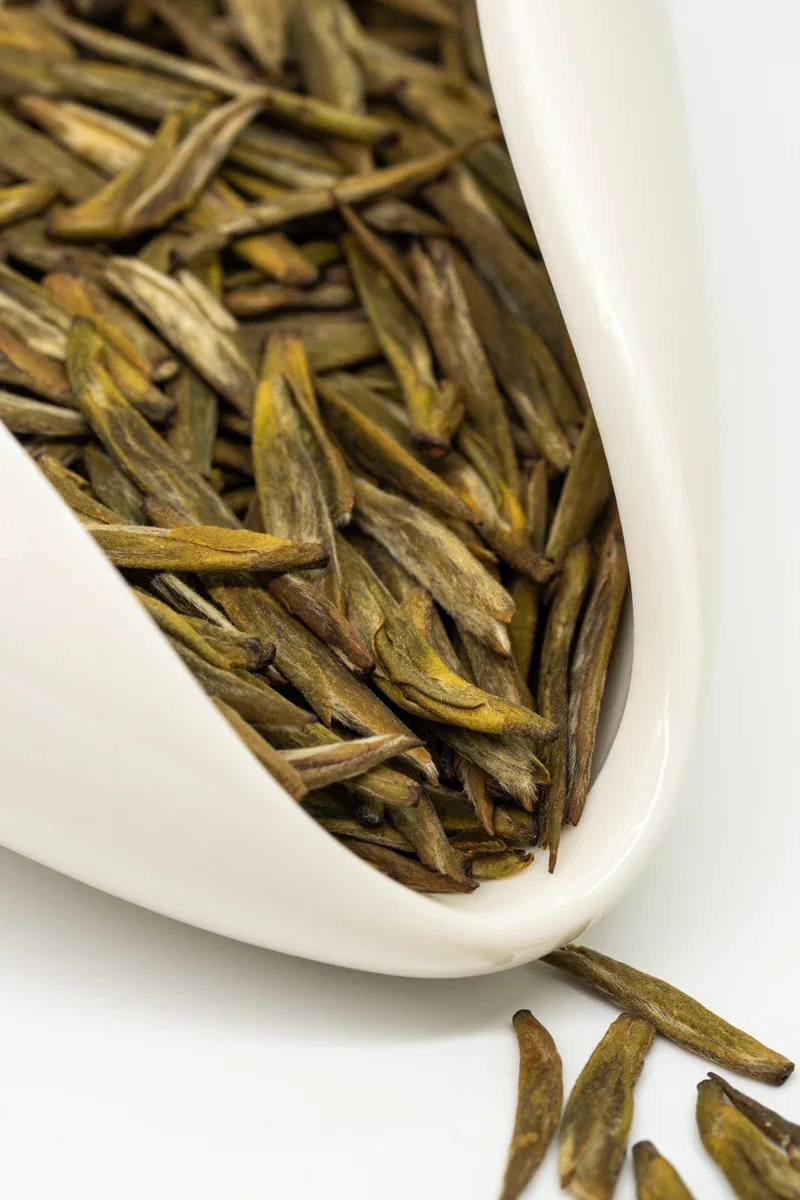
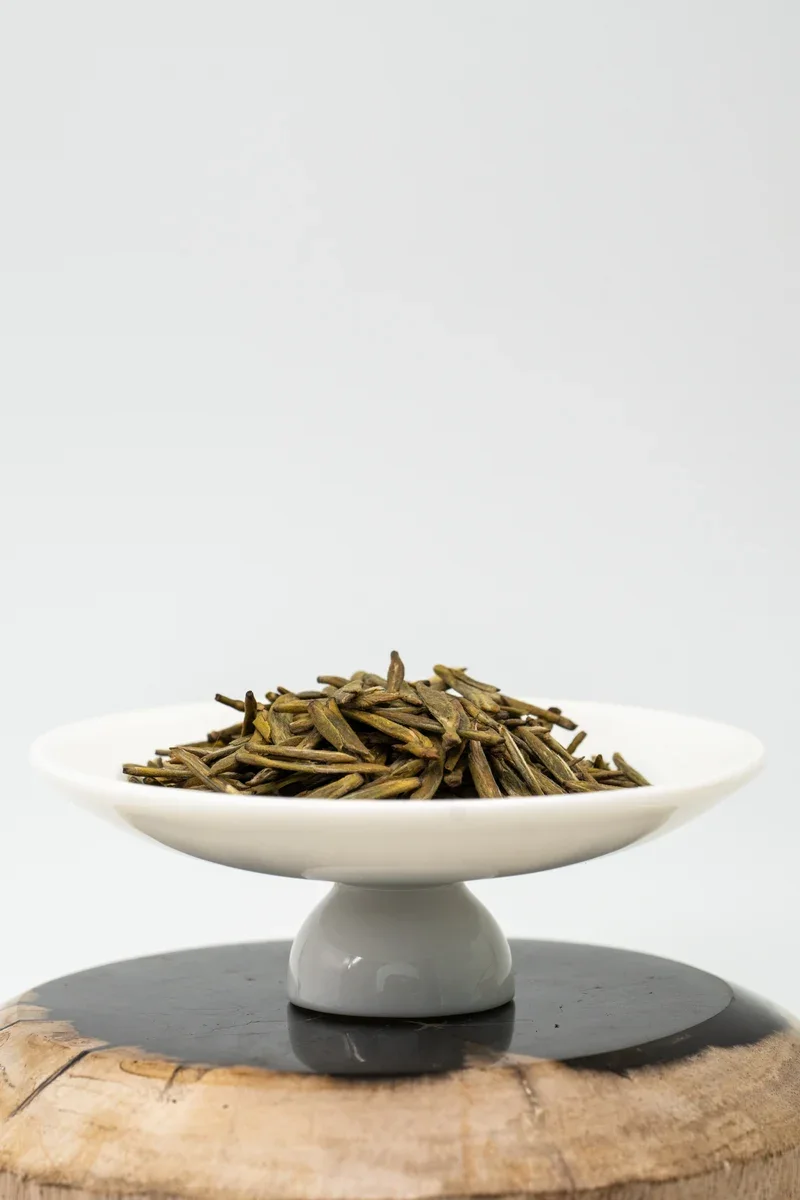
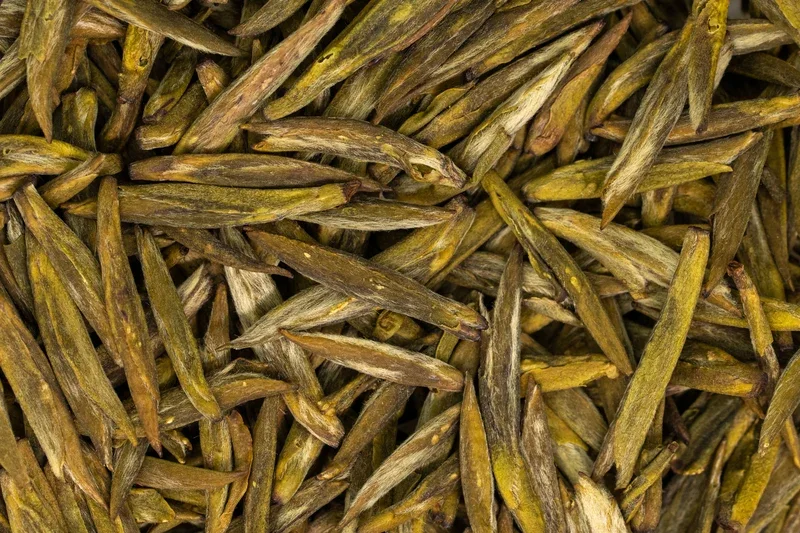
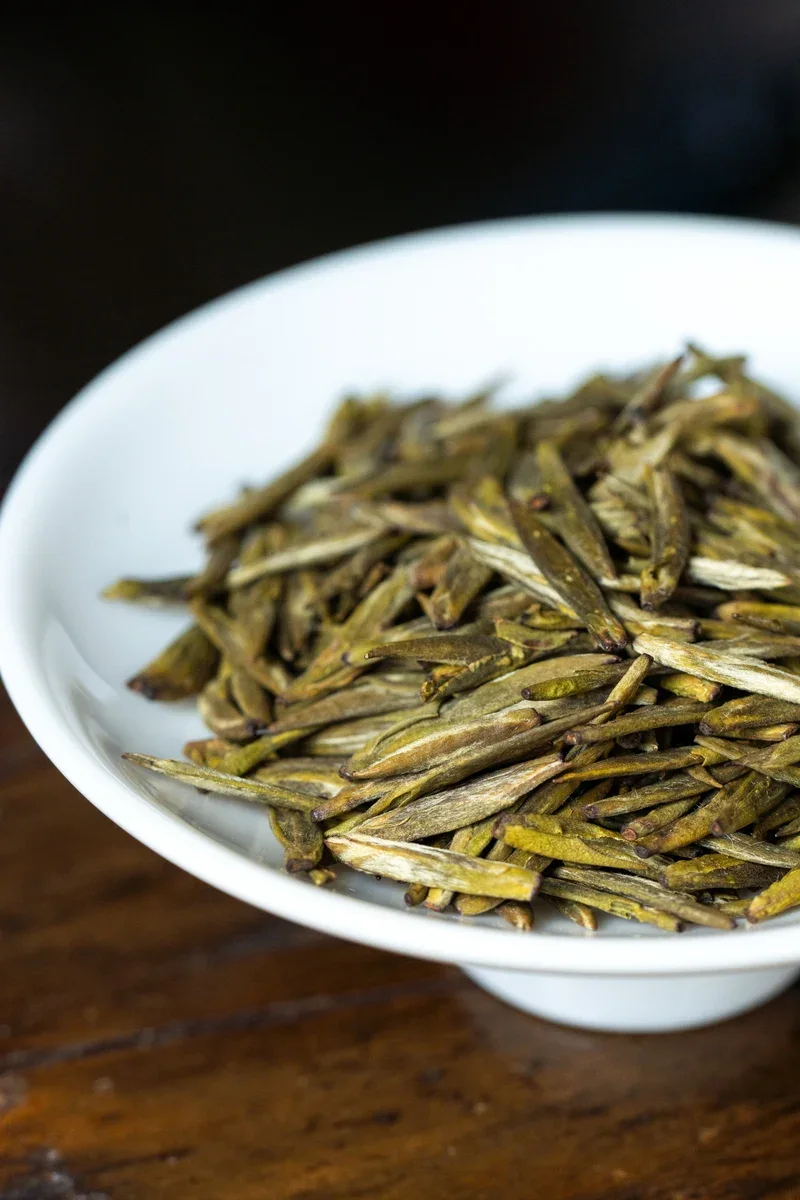
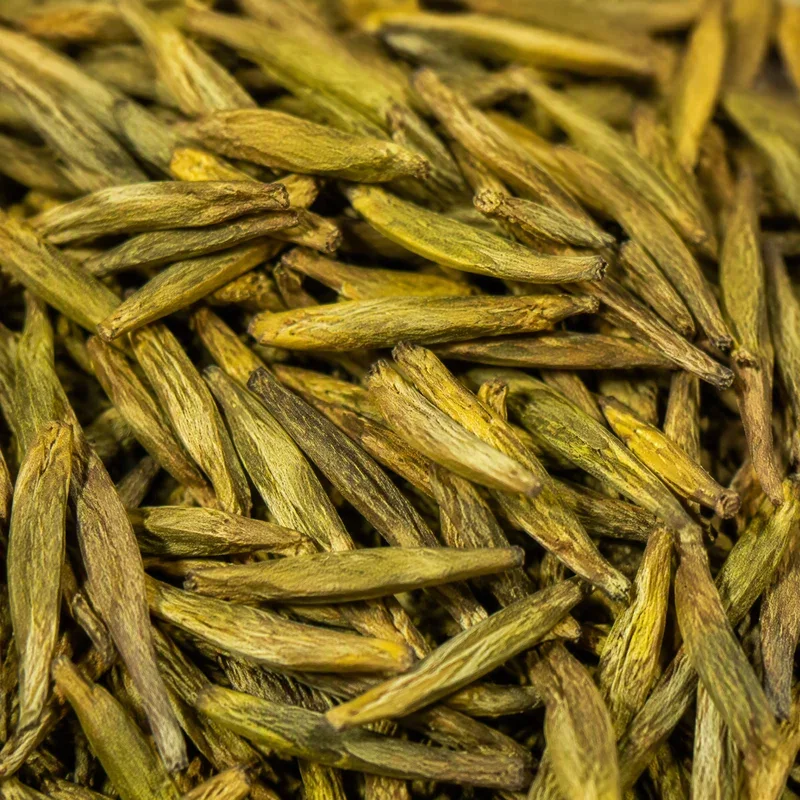
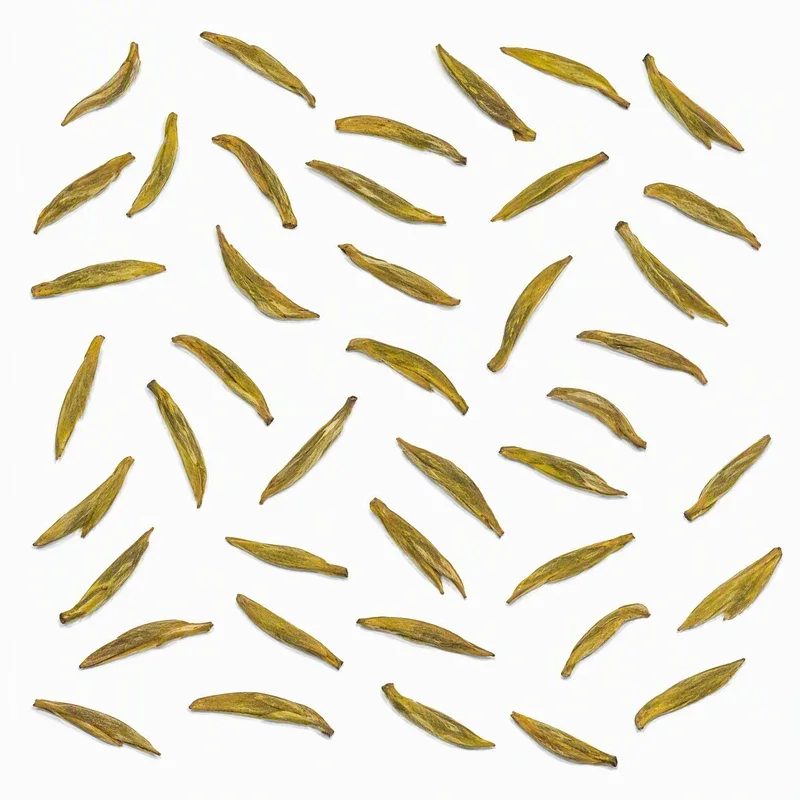
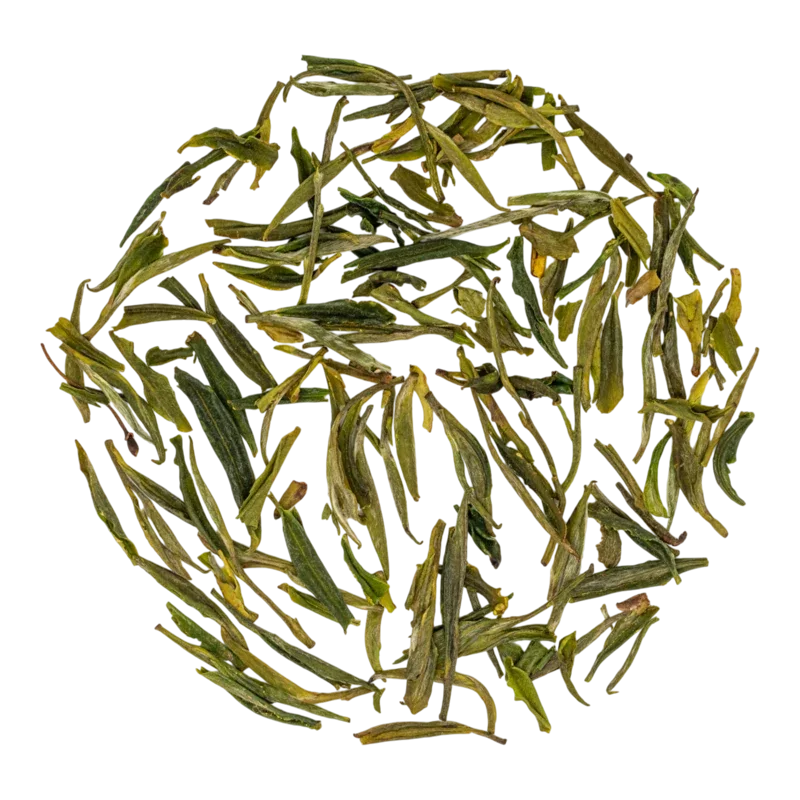
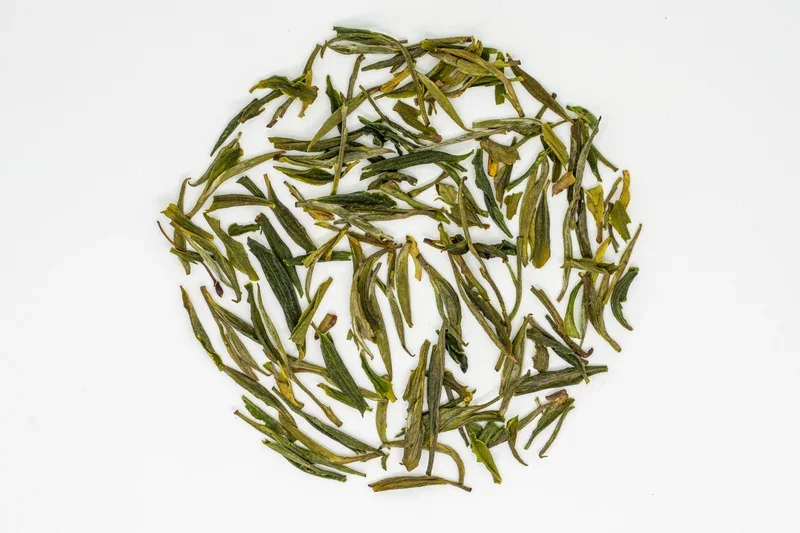
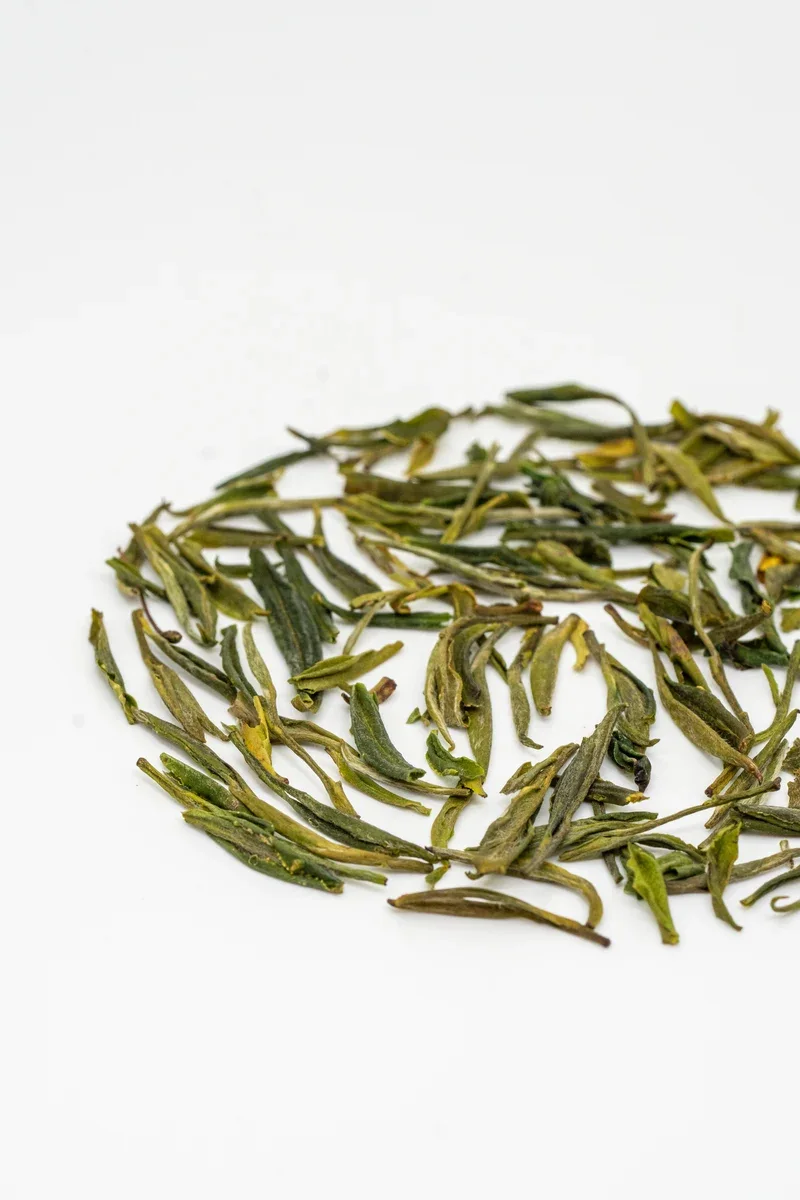
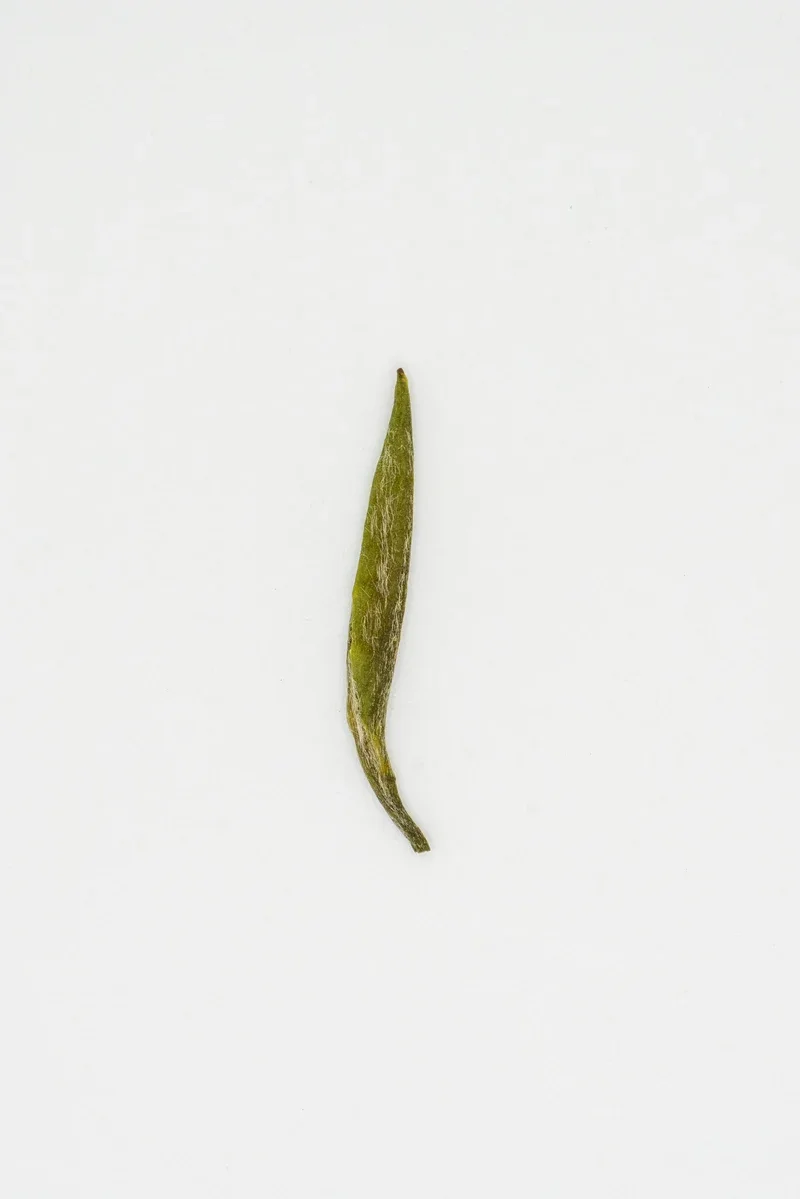
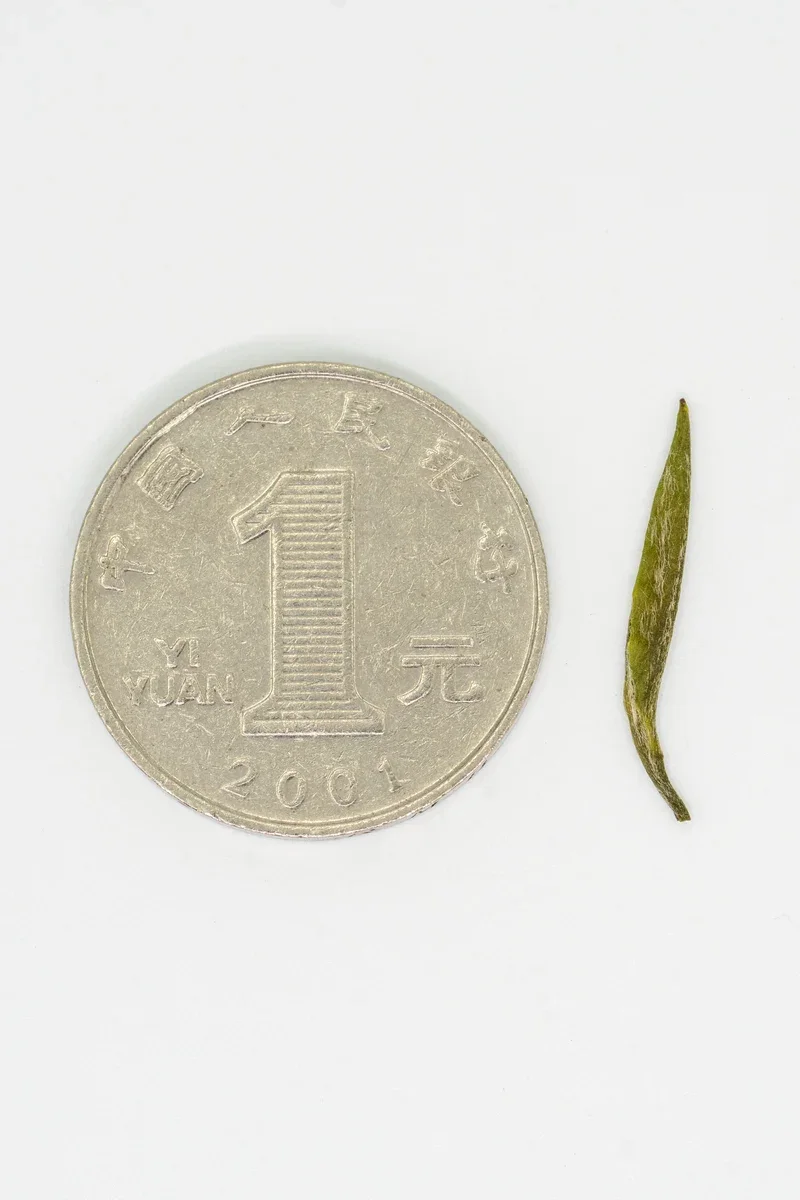
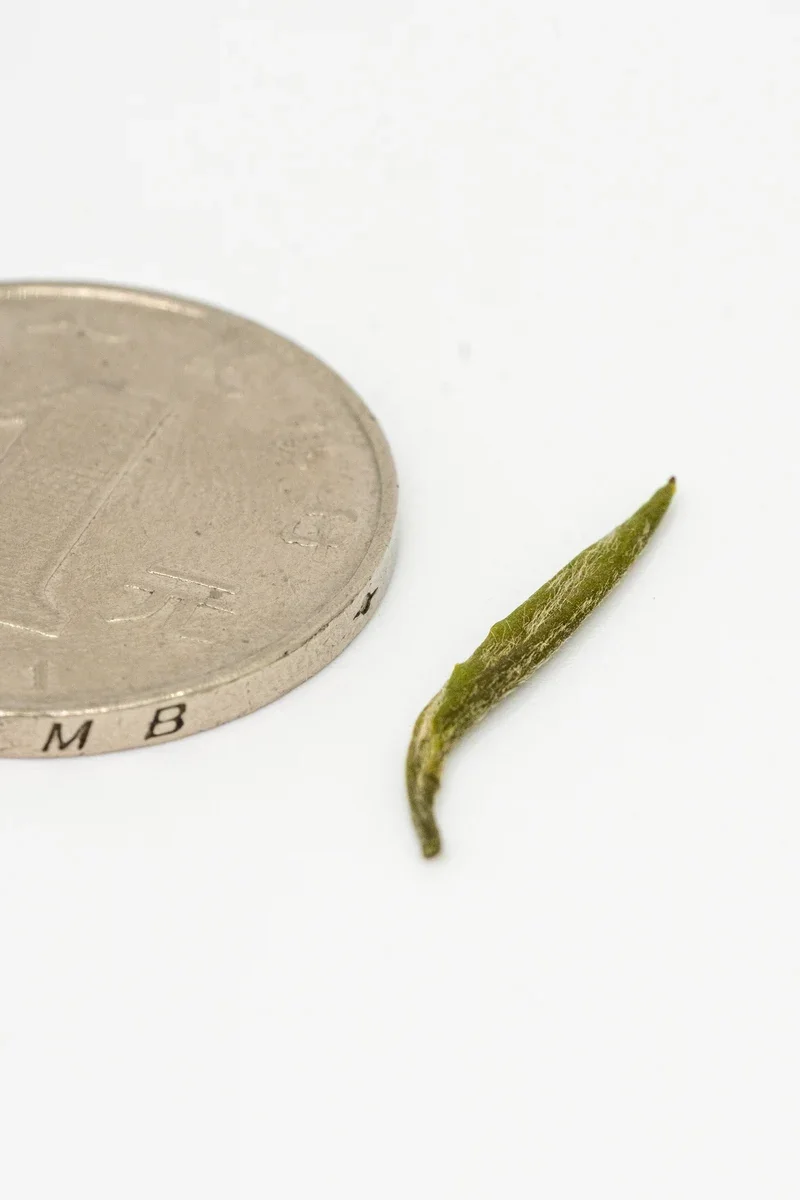
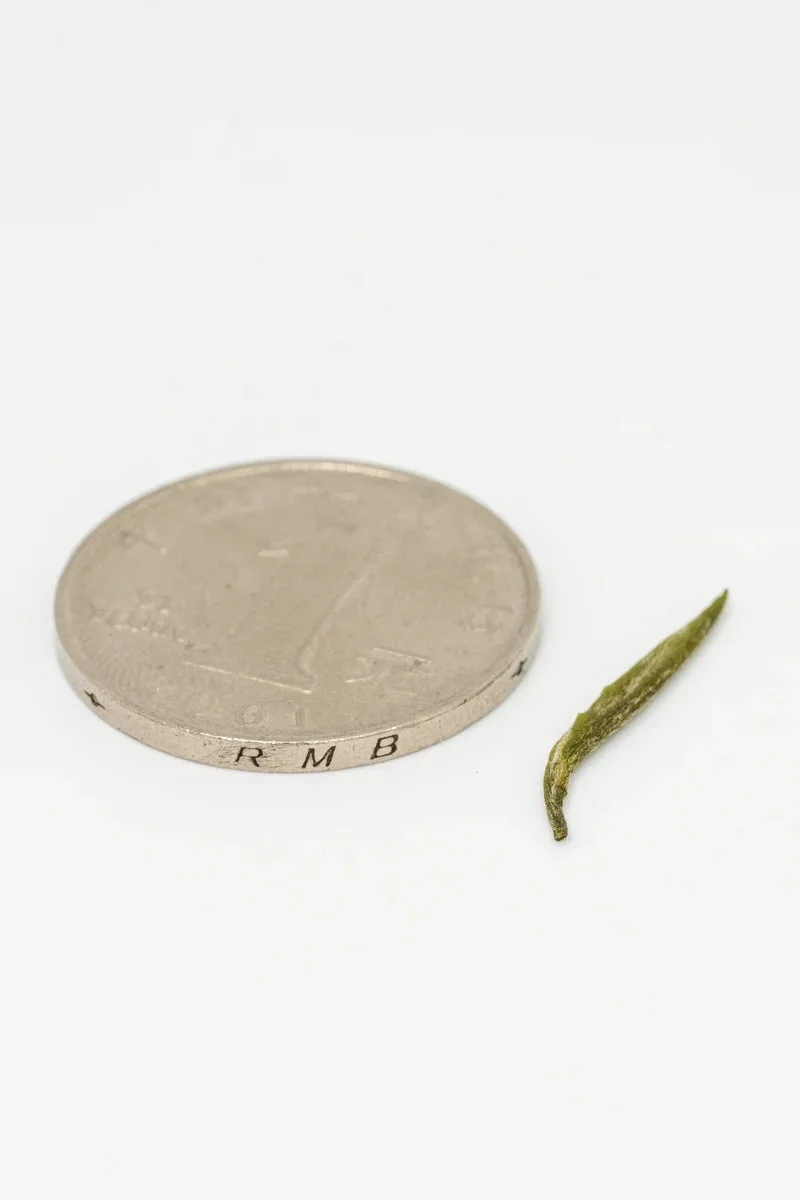
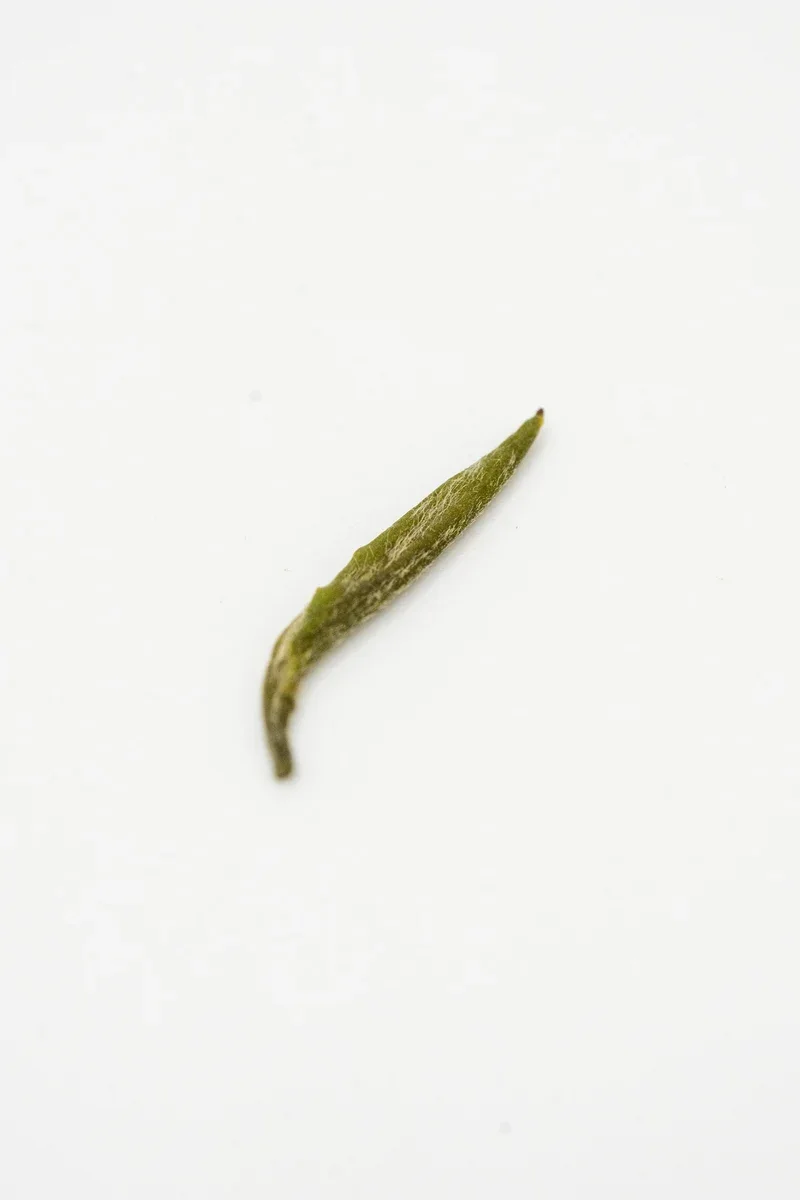
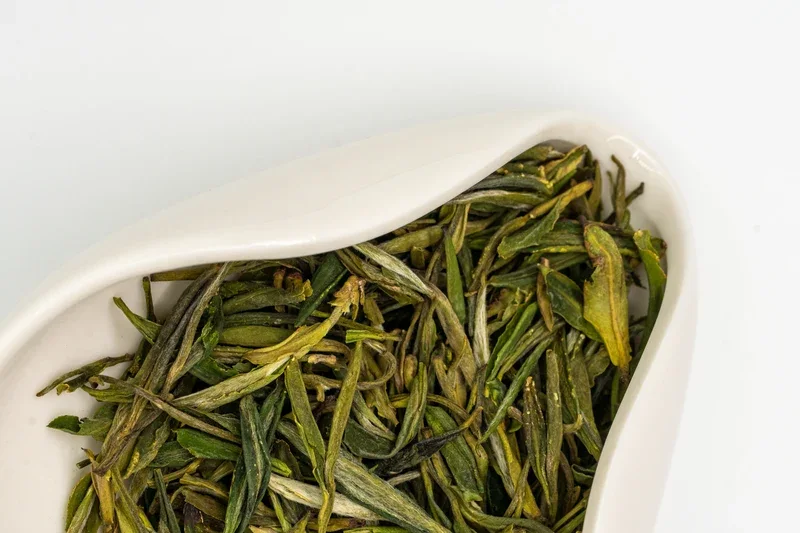
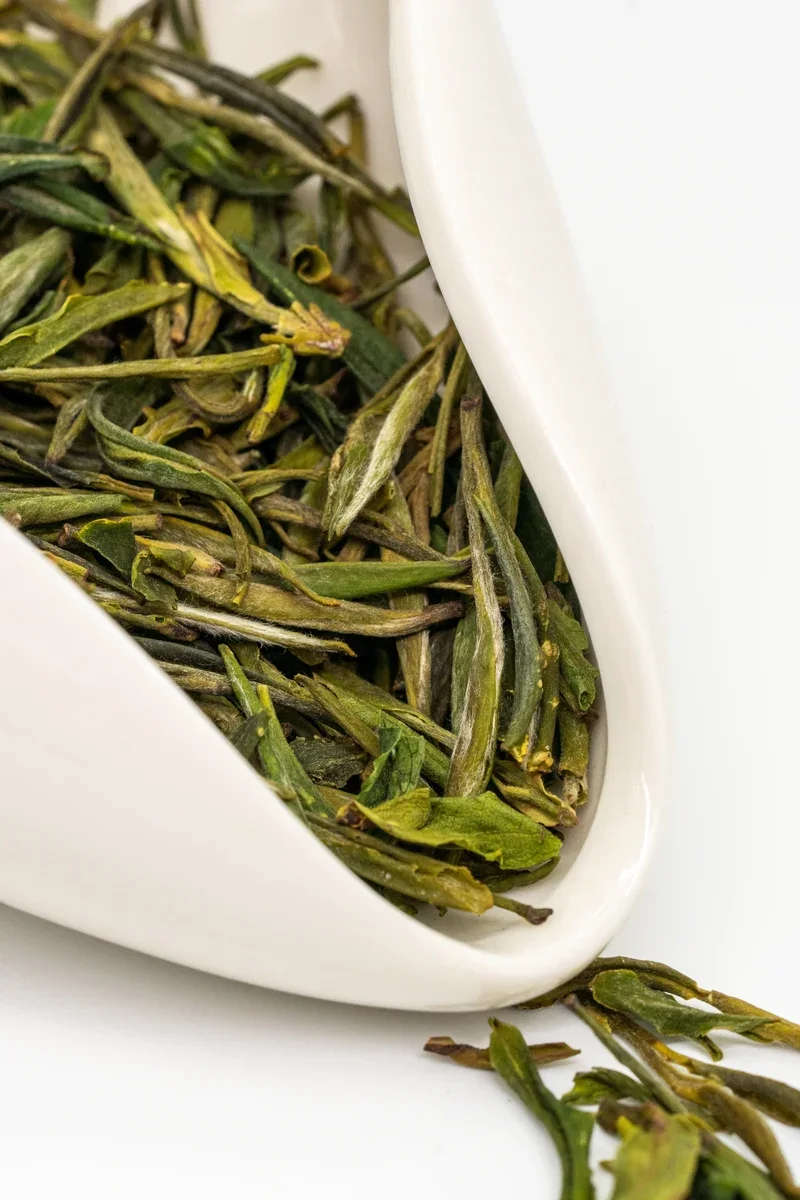
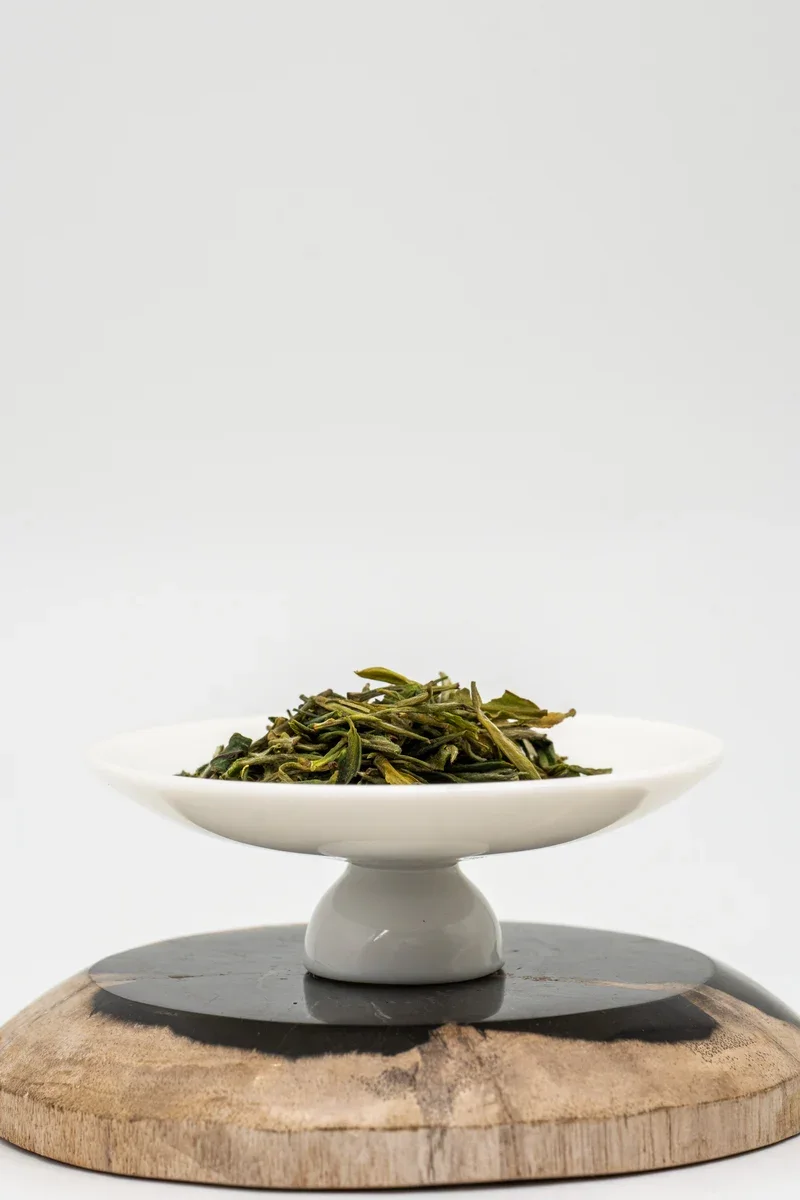
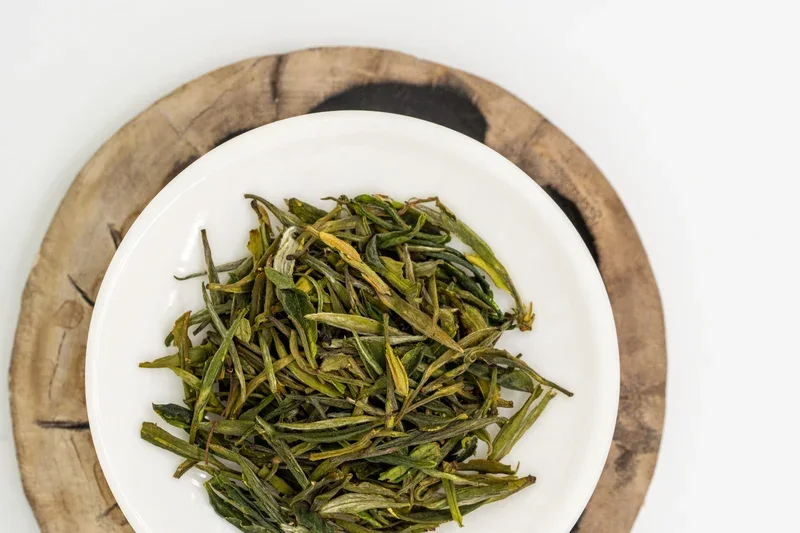
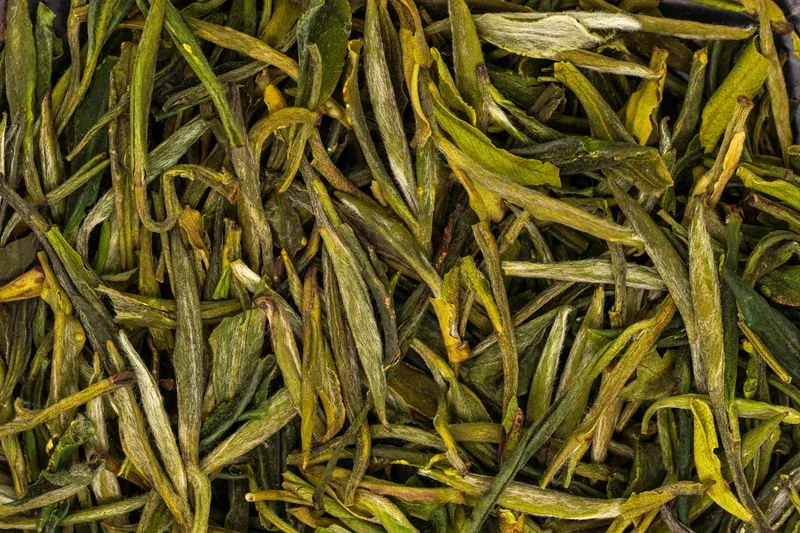
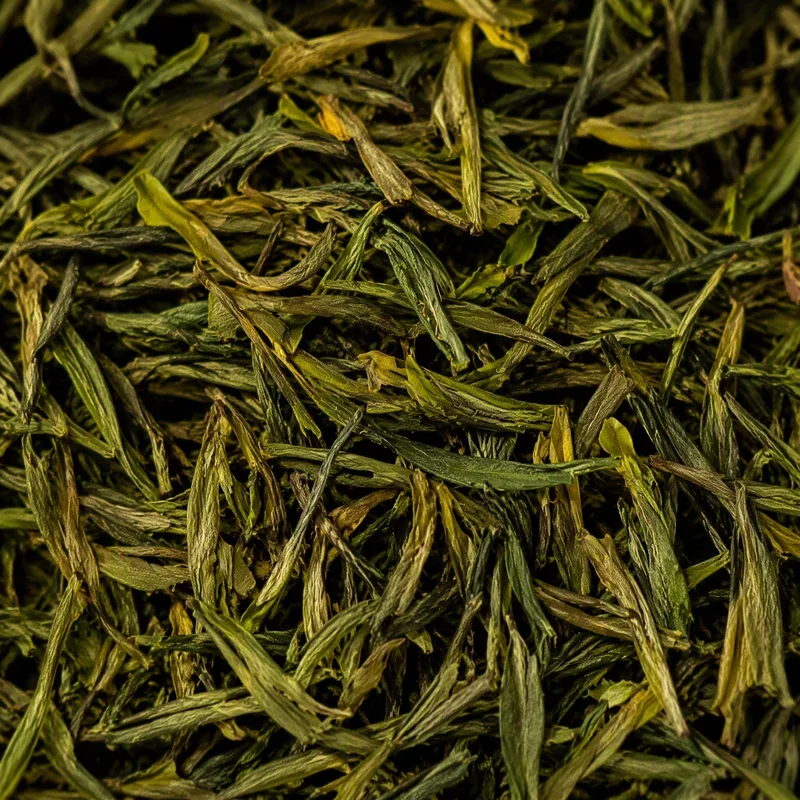
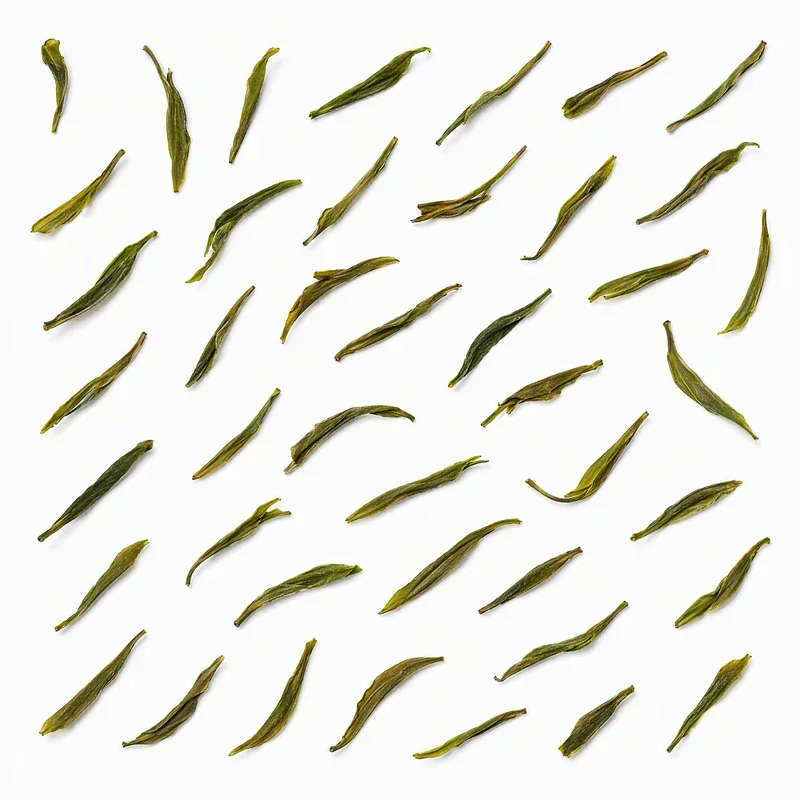
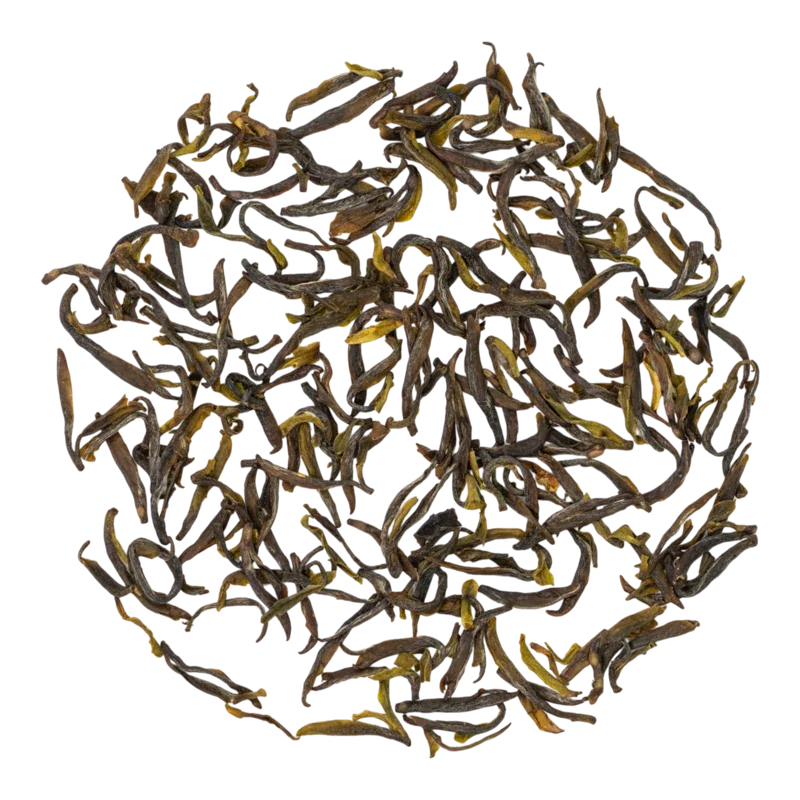
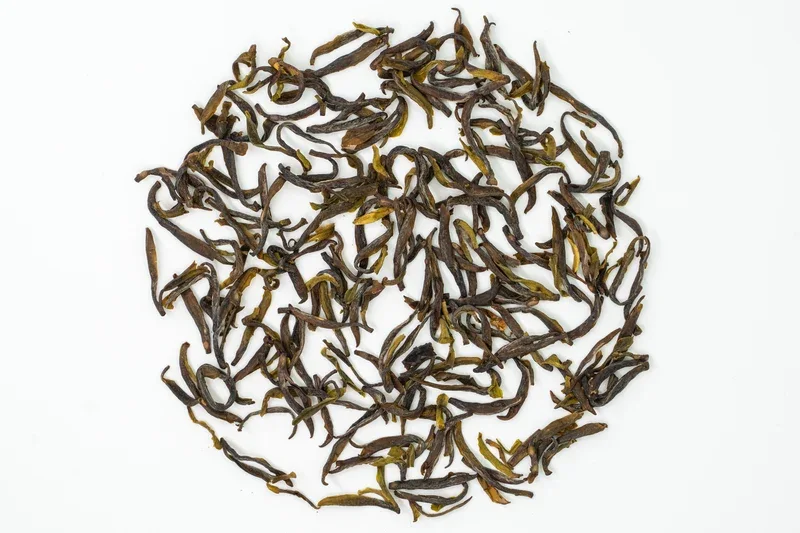
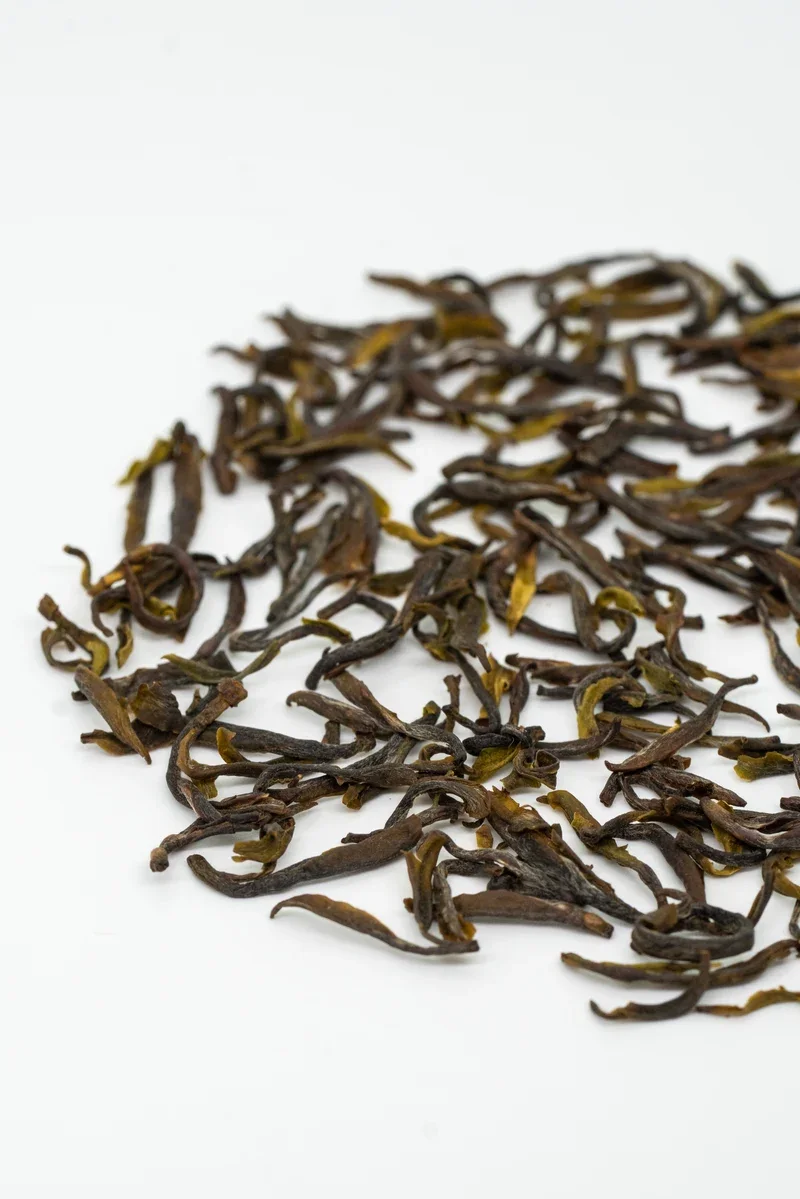
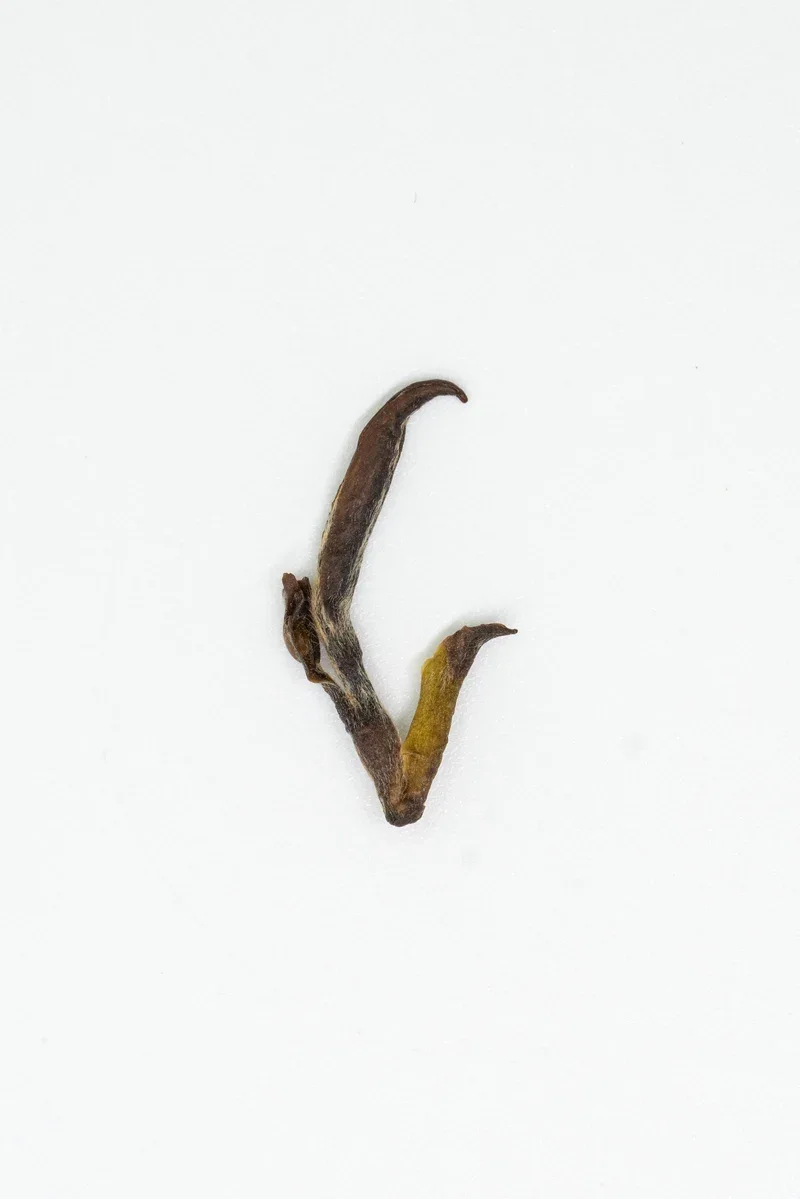
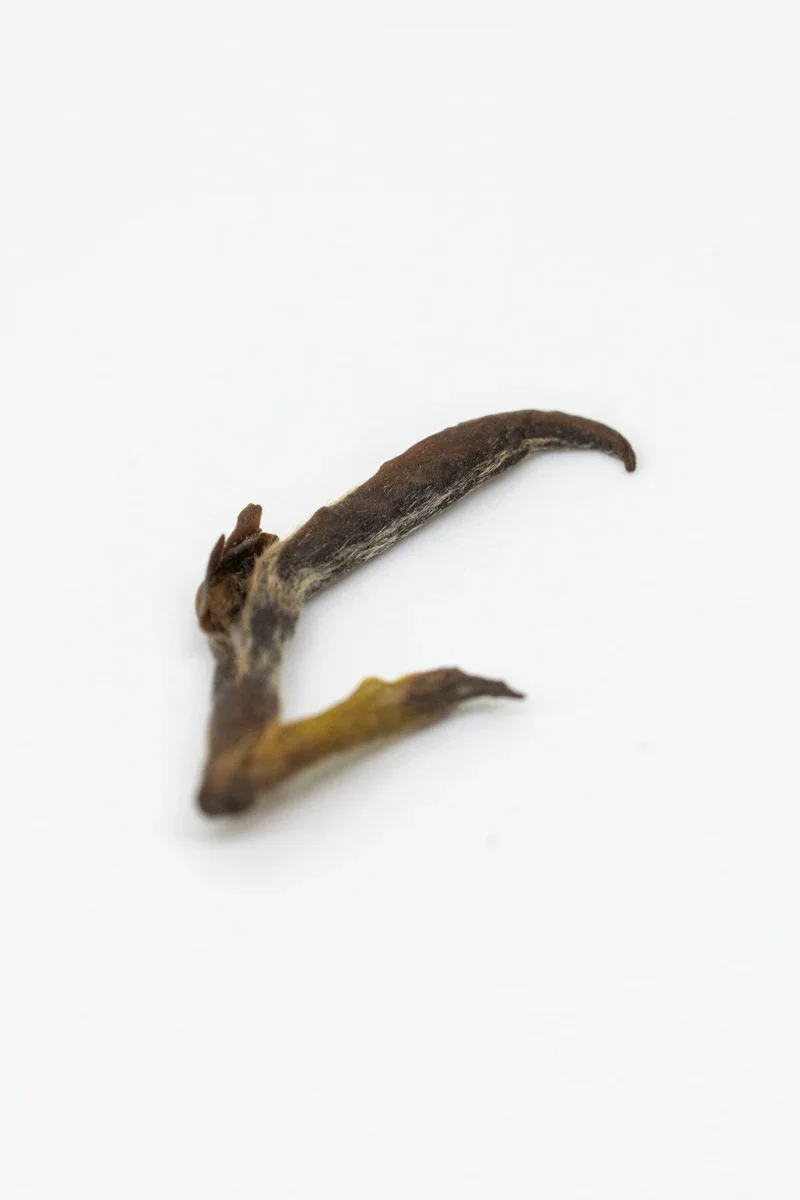
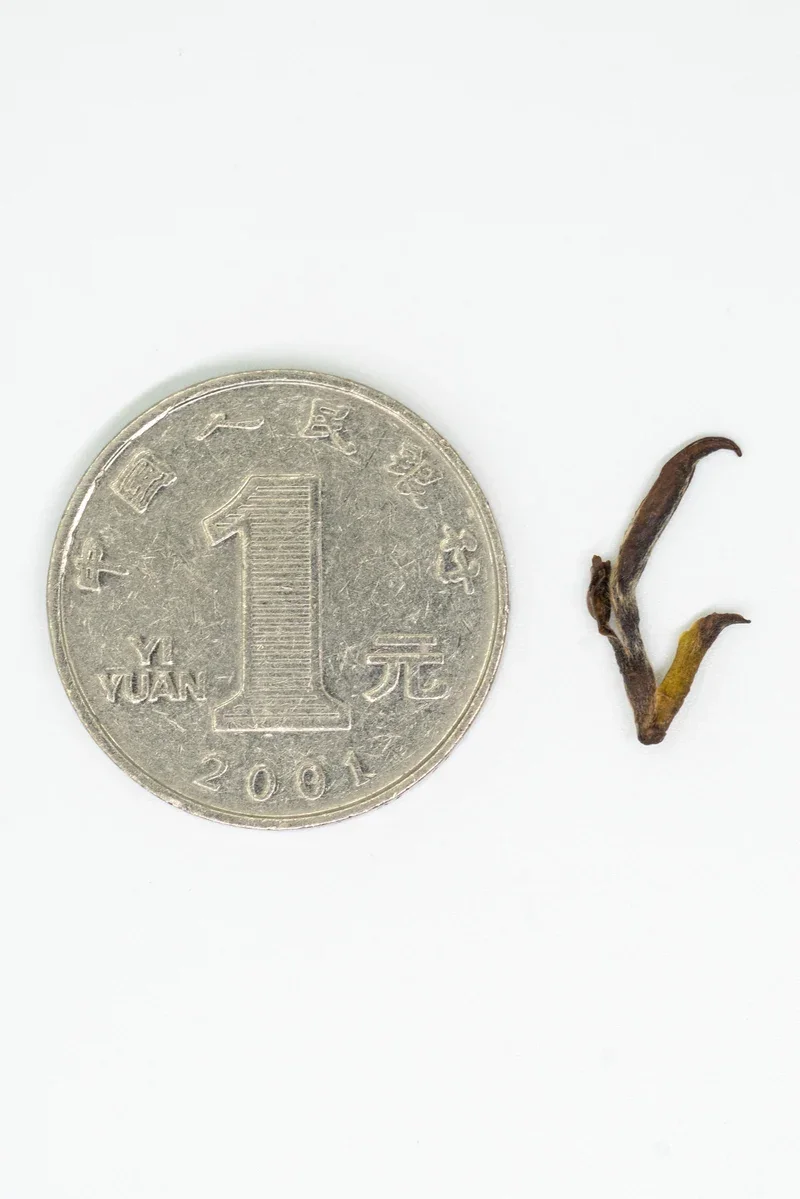
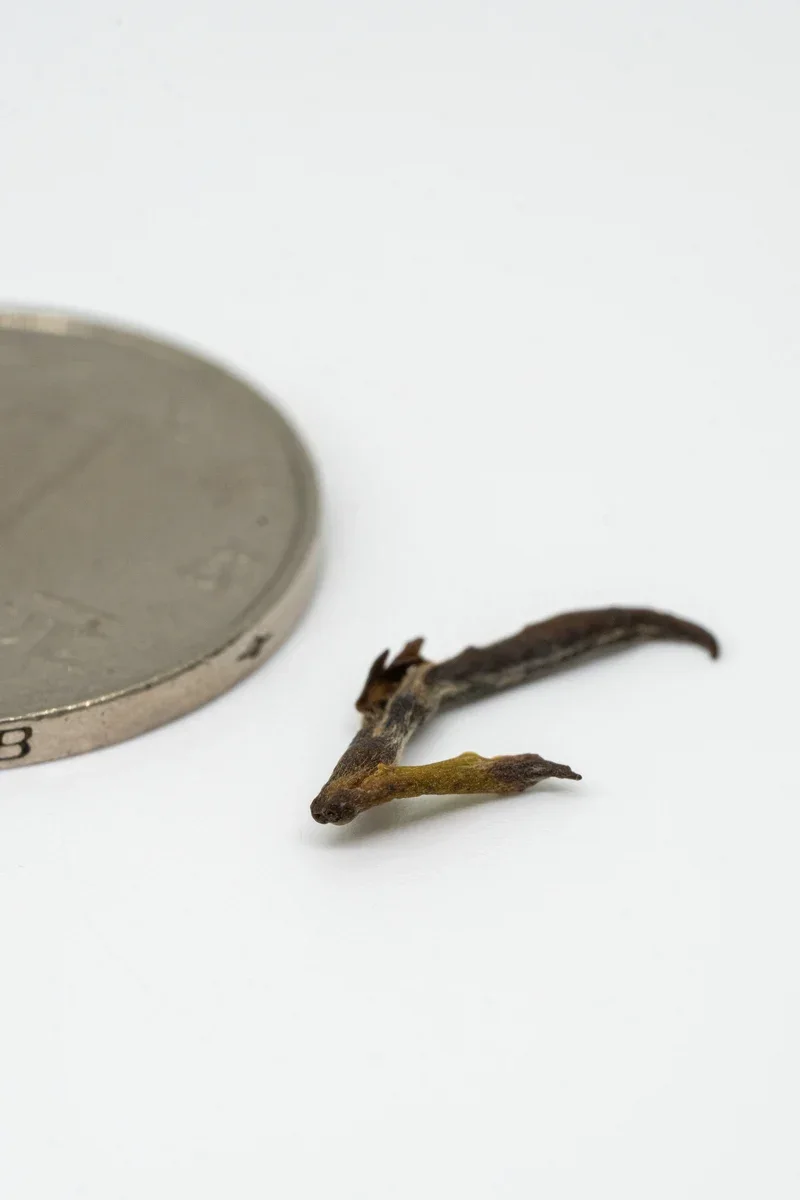
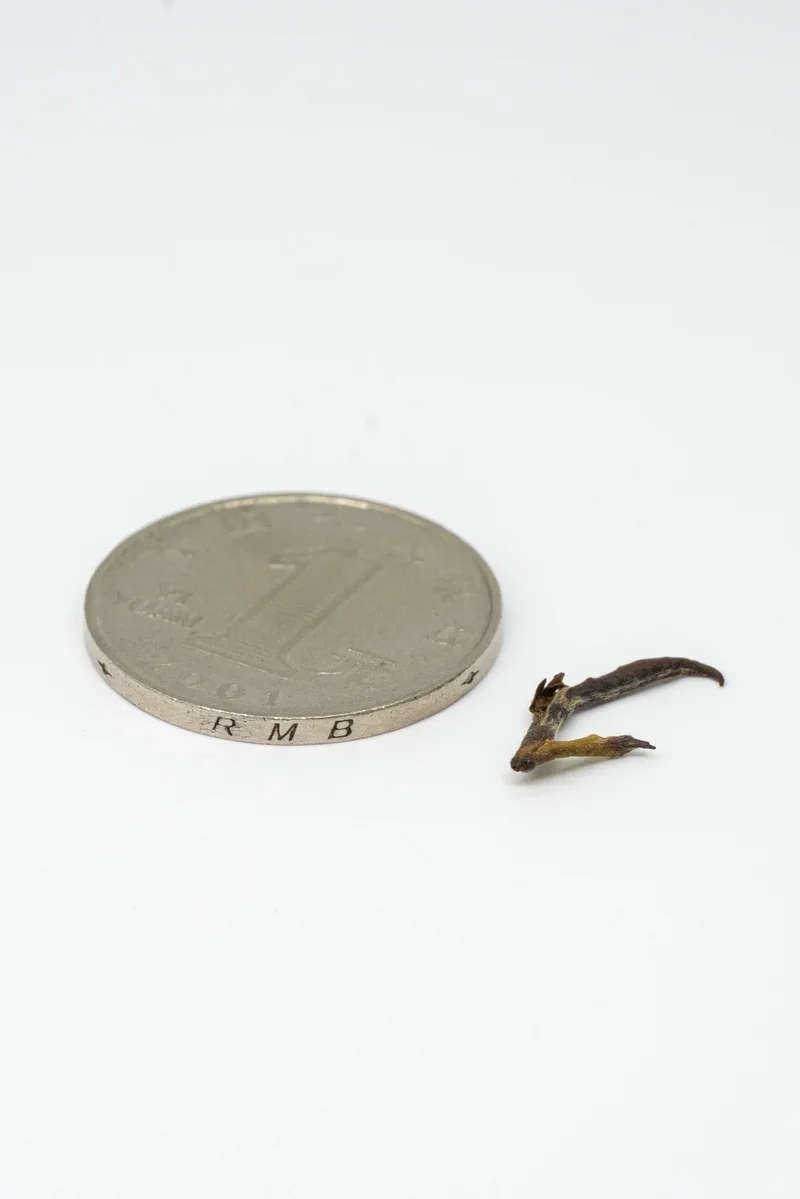
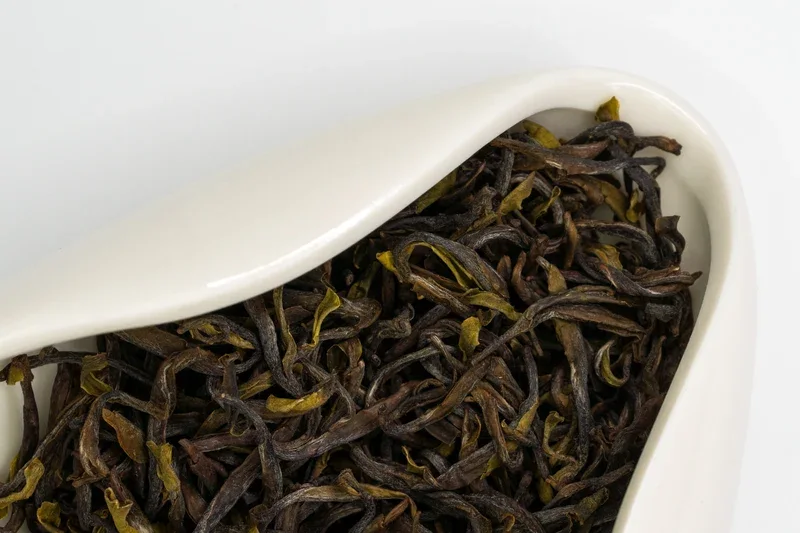
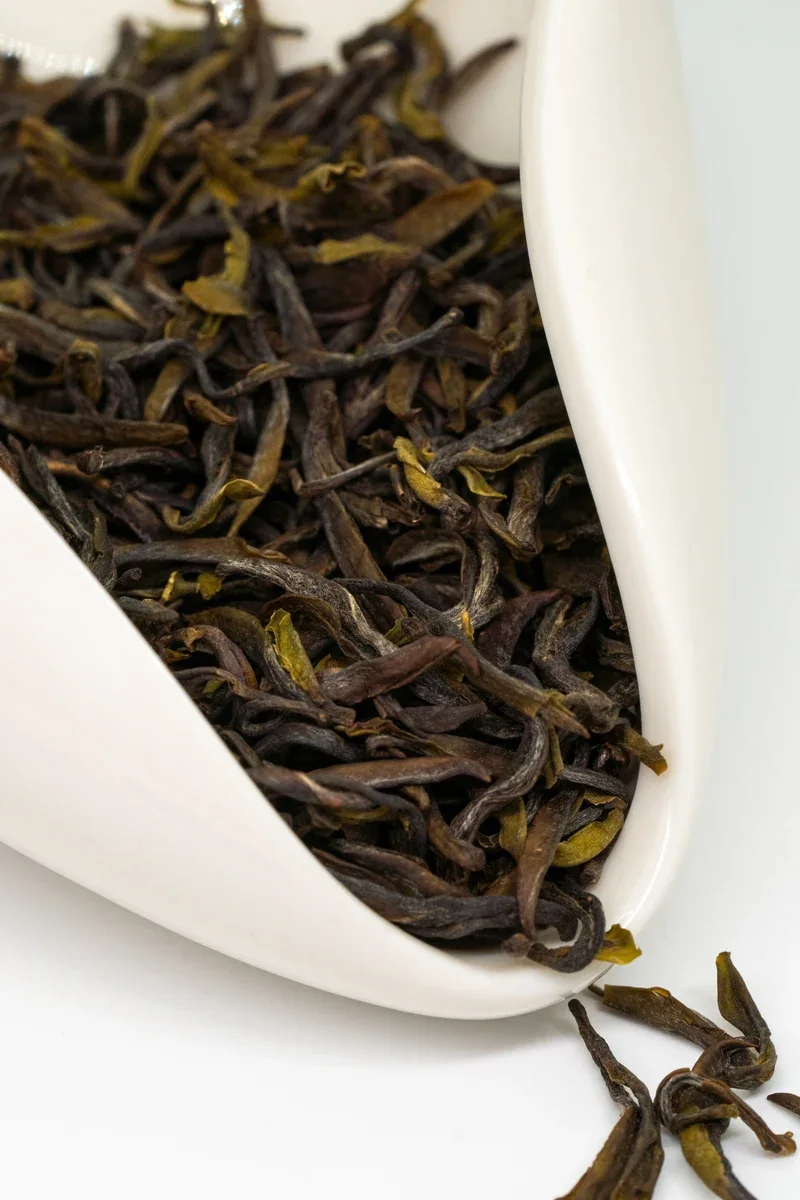
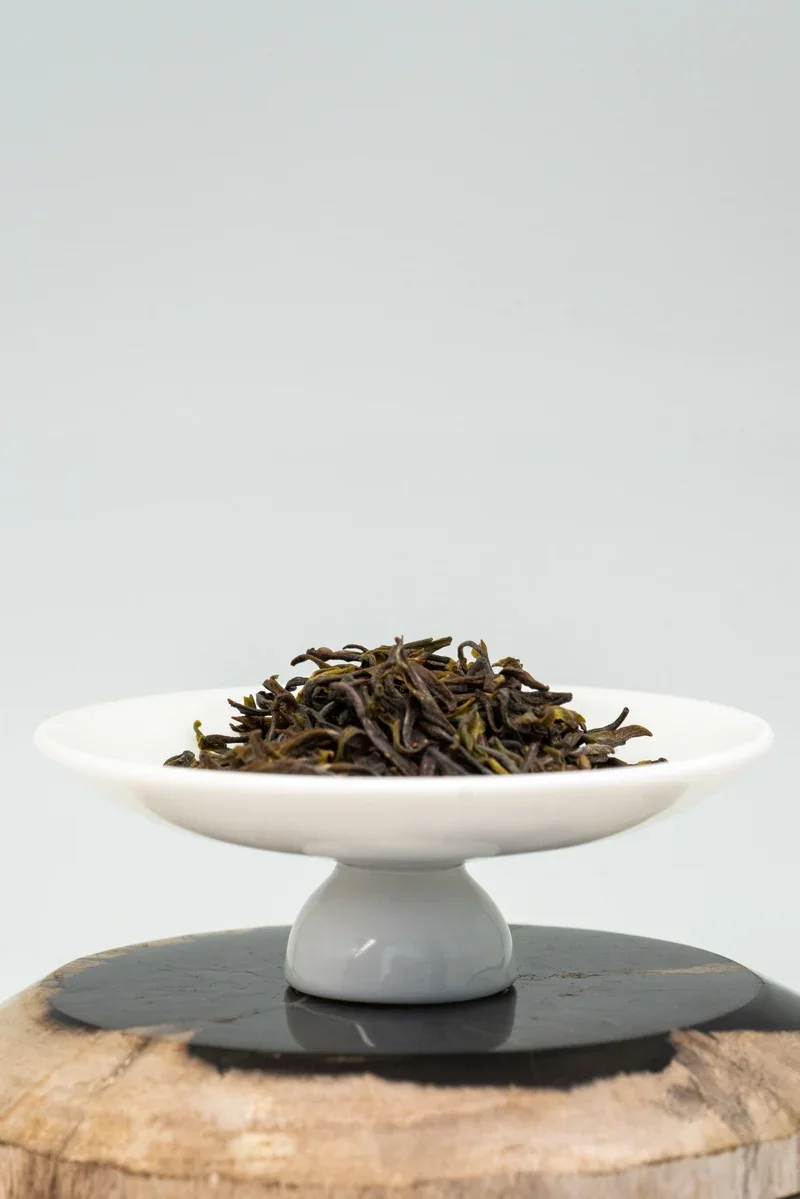
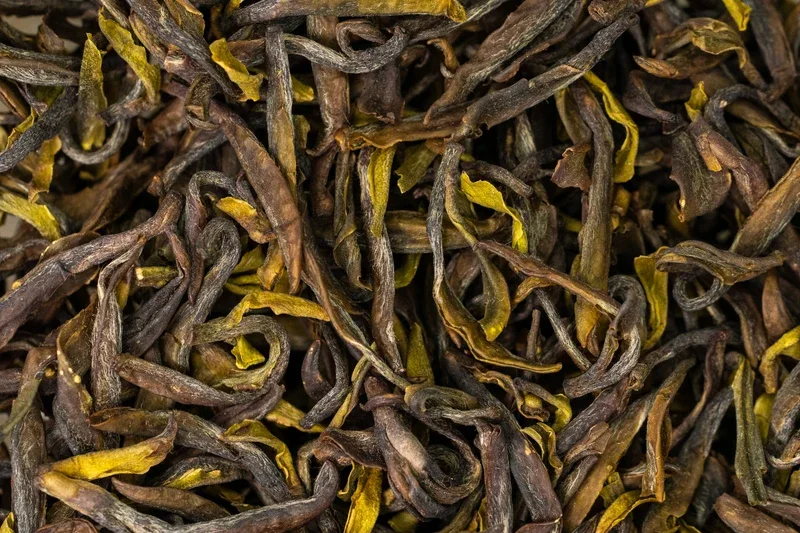
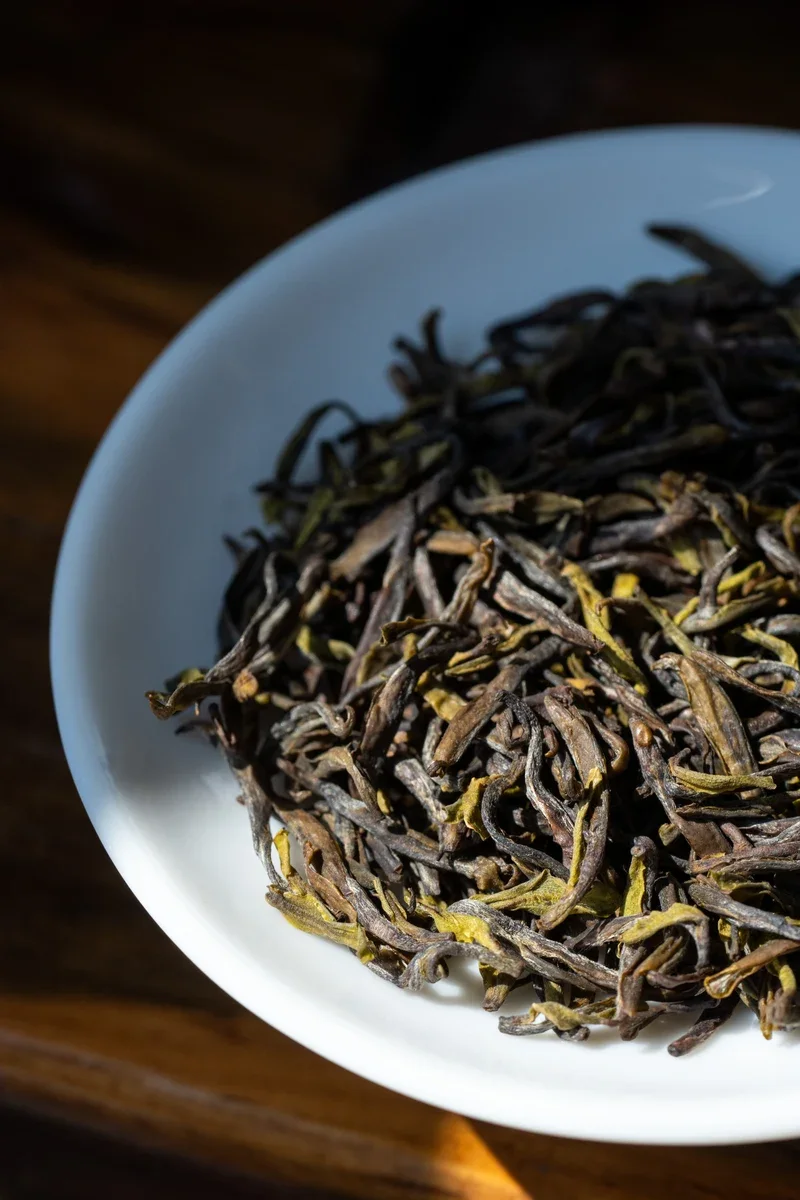
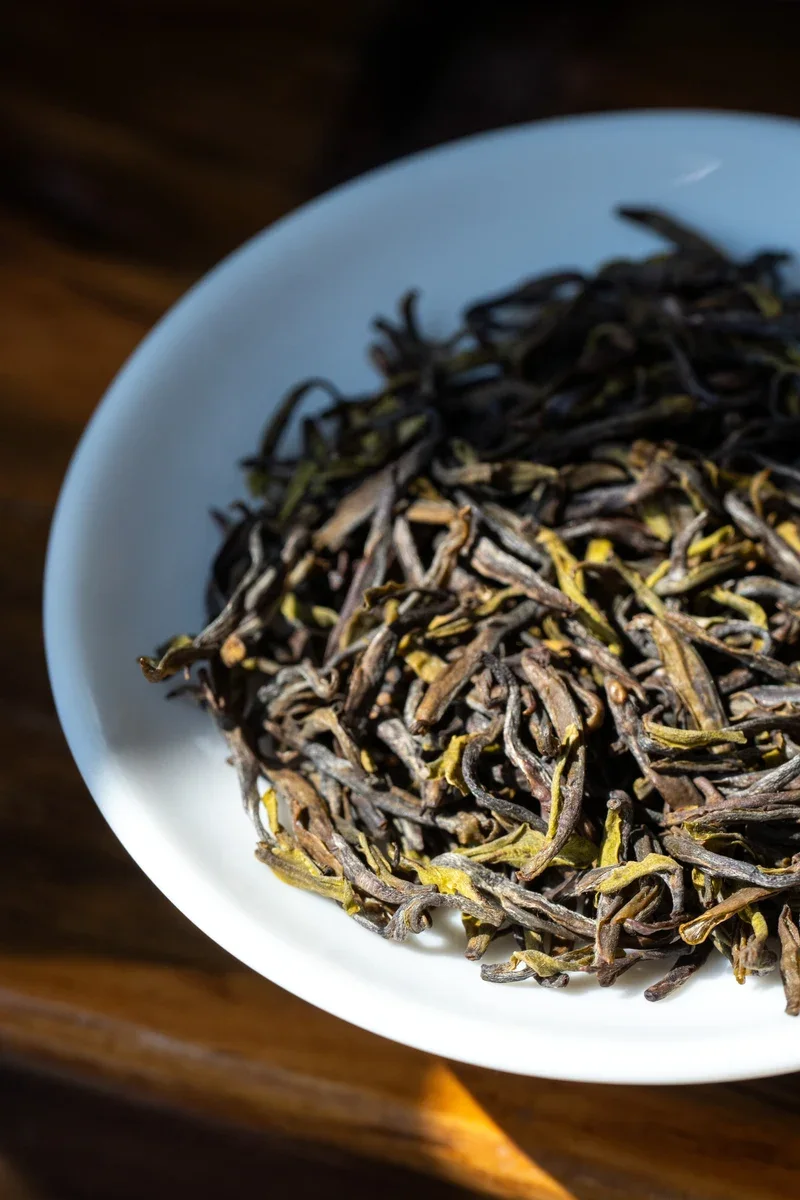
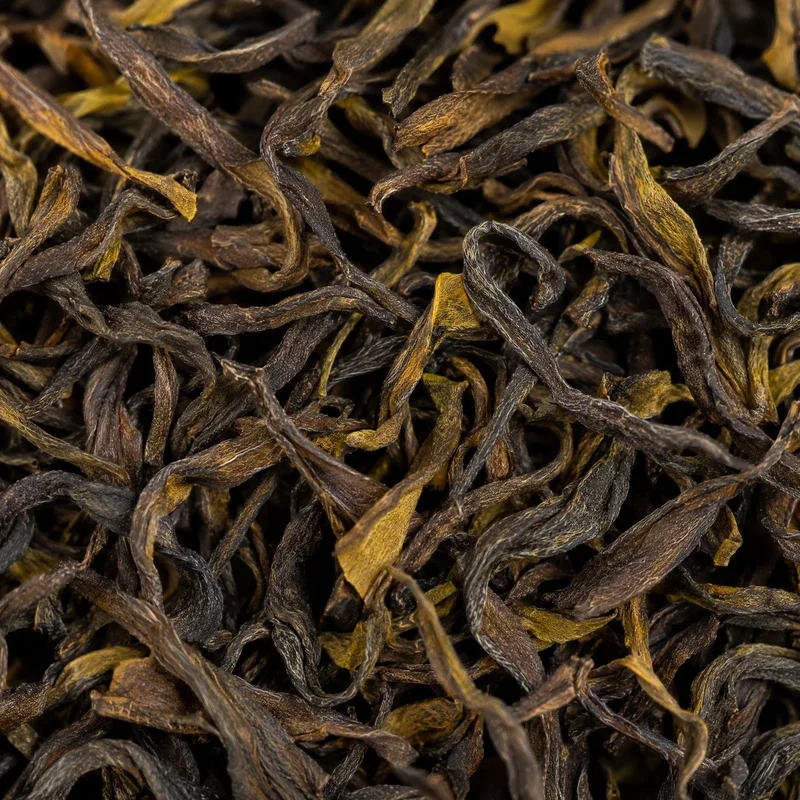
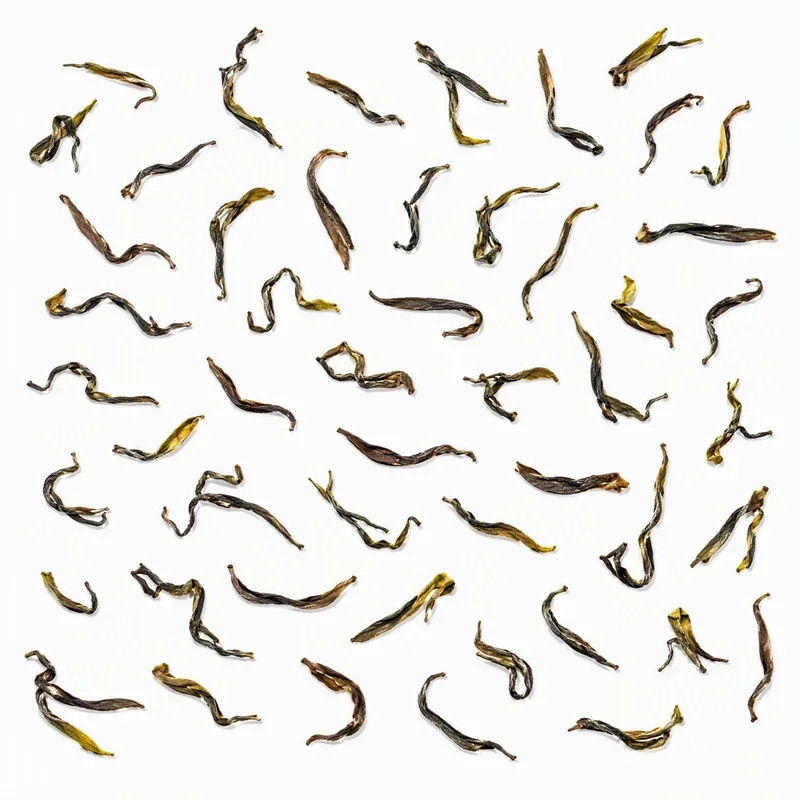
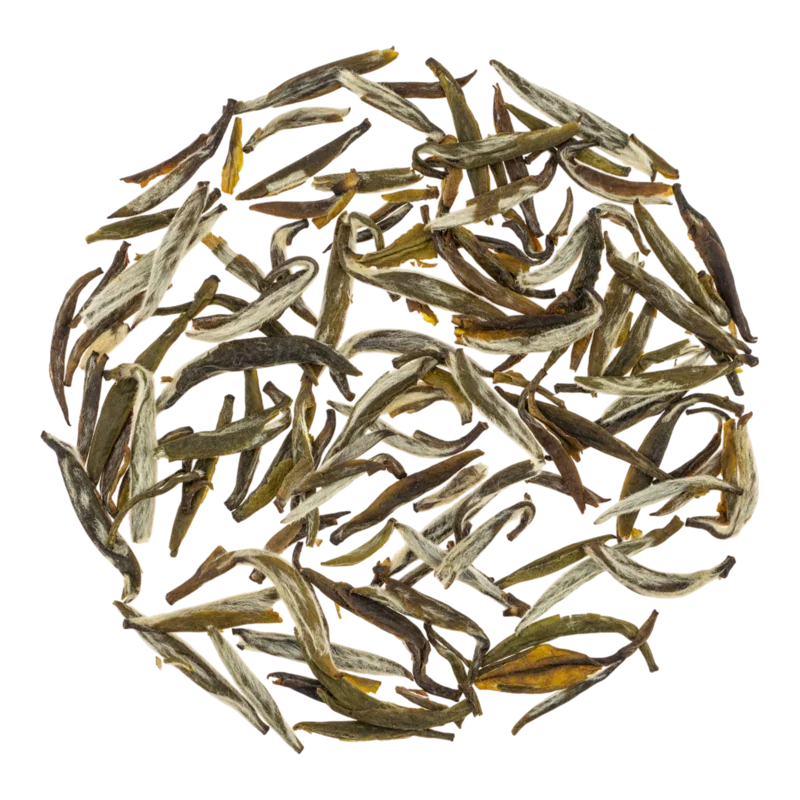
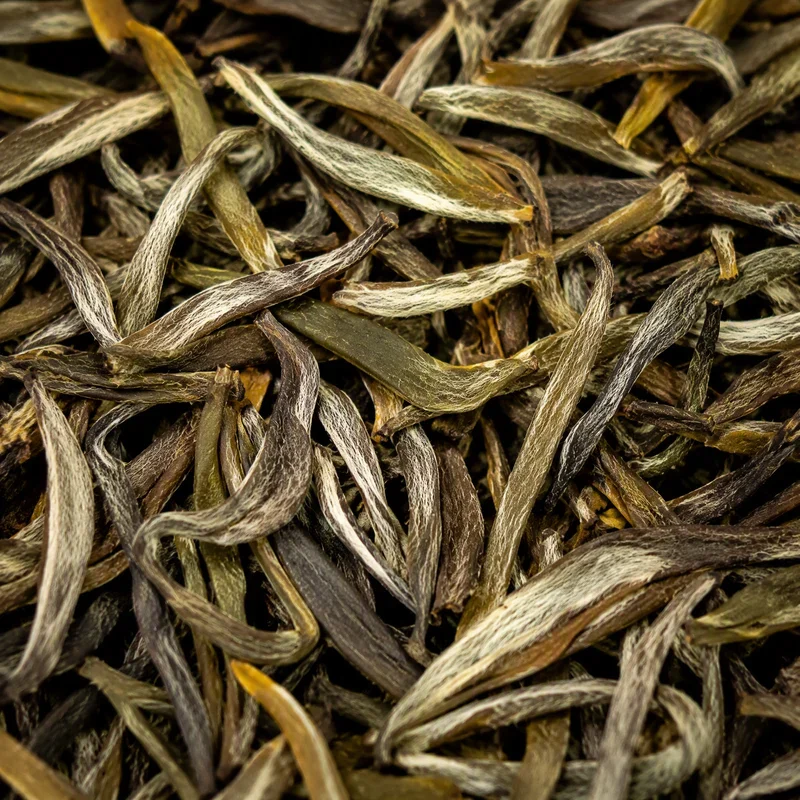
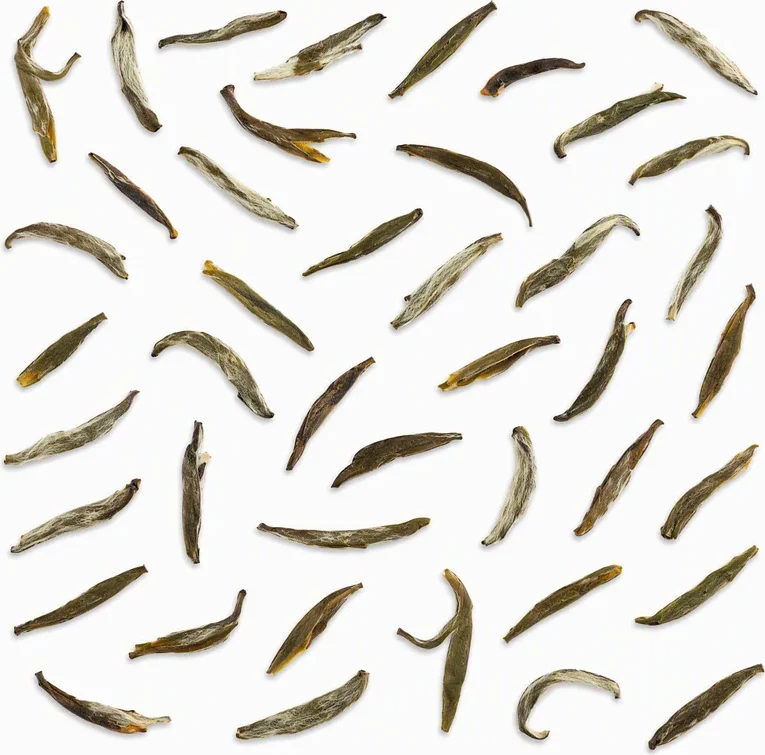
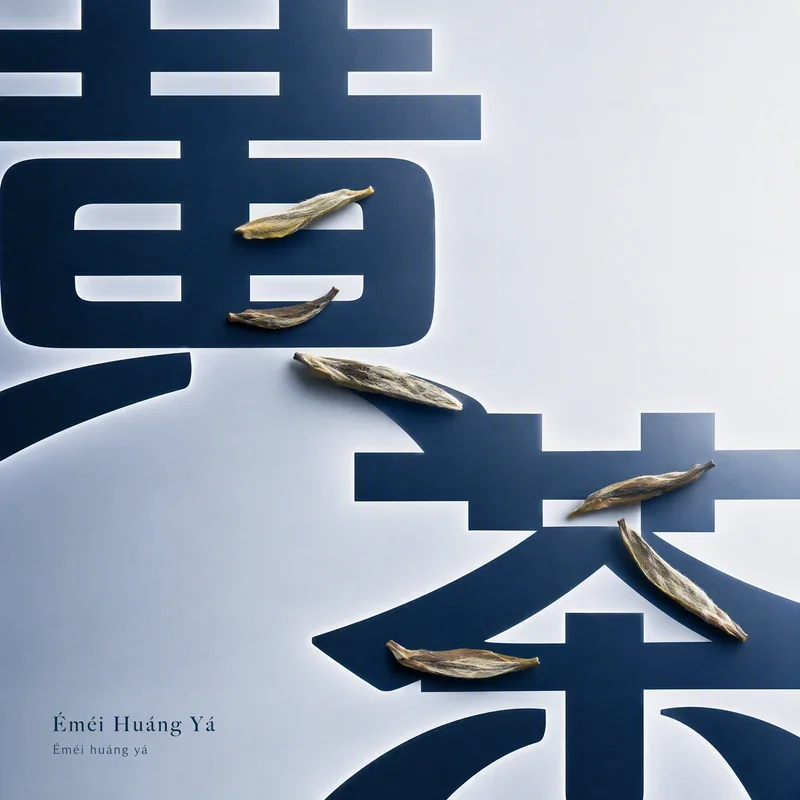
Dry Leaf Appearance: Buds are straight, even, slightly flattened, 1.5–2 cm long, covered with abundant silvery-golden down. Color — from warm yellowish-green to tender golden with a light olive tint. Raw material is uniform, whole, without broken fragments.
Dry Leaf Aroma: Warm, sweetish, with tones of freshly cut hay, chestnuts and a barely perceptible floral note. Absent is the sharp "green" grassy smell characteristic of unprocessed raw material — a result of sealed yellowing.
Liquor Aroma: Delicate, enveloping, with dominance of roasted chestnut (板栗香, bǎnlì xiāng) and tones of field flowers, honey and weak vanilla sweetness. When cooling, light cereal notes appear.
Liquor Color: Light yellow with warm apricot shade, transparent, bright. With repeated infusions, color may lighten to pale straw.
Spent Leaves: Whole, swollen buds of uniform yellow-green color, tender and elastic to the touch. When brewed in a glass, buds slowly sink and rise in water, creating a mesmerizing visual effect — "dance of buds" (芽舞, yá wǔ).
Taste: Soft, enveloping, with pronounced natural sweetness and almost complete absence of bitterness and astringency — a distinguishing feature of quality yellow bud teas. The taste is clean, with a distinct note of sweet grain and tender nut. Aftertaste is long, honey-sweet (回甘, huígān), with light minerality characteristic of the high-mountain terroir of Mount Emeishan.
Alkaloids: Caffeine (咖啡碱, kāfēi jiǎn) — approximately 2–3% of dry mass, which corresponds to moderate level (20–30 mg per standard brewing portion). Theobromine and theophylline are present in trace amounts.
Amino Acids: Increased content of free amino acids — about 4–5%, which is significantly higher than the average indicator for teas. Especially high is the proportion of L-theanine (L-茶氨酸, L-chá ānjī suān), responsible for the relaxing effect and sweetish "umami" flavor note. The high level of amino acids is due to a combination of three factors: high-mountain terroir (reduced insolation inhibits conversion of amino acids to catechins), early spring bud harvest and the effect of the sealed yellowing stage.
Characteristic of yellow teas: hydrocarbon, alcohol, ketone and ester components predominate, forming the typical "sweetish-bread" note (锅巴香). Chlorophyll content is reduced compared to green teas, which determines the golden shade.
Minerals: Potassium, calcium, magnesium, phosphorus, iron, manganese, zinc, fluorine, selenium. The mineral profile is enriched thanks to the volcanic basaltic soils of Mount Emeishan.
Polyphenols: Content is lower than in green teas of comparable raw material standard (approximately 12–18% in dry matter), which is due to partial destruction of catechins during sealed yellowing. This is precisely what makes the taste softer and less astringent.
Vitamins: Vitamin C (ascorbic acid) — in moderate amounts (lower than in green teas due to partial destruction during sealed yellowing); B vitamins (B1, B2, B6); vitamin E (tocopherols).
The combination of moderate caffeine content and high L-theanine level provides calm, sustained alertness without sharp peaks and subsequent decline — so-called "clear wakefulness" (清醒, qīngxǐng).
Catechins and polyphenols neutralize free radicals, slowing cellular aging processes and reducing oxidative stress risk.
Yellow teas are traditionally considered the most "stomach-nourishing" (养胃, yǎng wèi) among all tea categories. The sealed yellowing process reduces the content of aggressive catechins, making Emei Huang Ya a suitable beverage for people with sensitive gastrointestinal tract.
L-theanine promotes generation of alpha brain waves, improves concentration, memory and learning ability.
Tea polyphenols contribute to cholesterol level normalization and maintaining vascular elasticity.
The complex of vitamins, minerals and antioxidants increases overall body resistance.
High theanine content has anxiolytic action, reduces cortisol levels and promotes a state of calm concentration — a quality especially valued by Buddhist monks of Mount Emeishan for meditative practices.
Tea Amount: 3–4 g per 150 ml water (for gaiwan) or 2–3 g per 200 ml (for glass).
Teaware: Glass cup or tumbler (玻璃杯, bōlí bēi) — allows observing the "dance of buds"; porcelain gaiwan (盖碗, gàiwǎn) — for fuller aroma development; small porcelain teapot.
Water Temperature: 80–85°C. Boiling water should not be used — too high temperature will destroy the delicate aroma and enhance unwanted bitterness.
Container: Airtight, opaque. Ideal — vacuum packaging from multi-layer foil, divided into portion packets. Tin cans or ceramic tea caddies with tight lids are acceptable.
Enemies: Light, moisture, foreign odors, oxygen, high temperature. Yellow tea is especially sensitive to oxidation and aroma loss.
Shelf Life: Under proper conditions (vacuum, refrigerator) — up to 12–18 months. With room storage, recommended to consume within 6–8 months. Fresh tea of the current year is always preferable.
Temperature: Optimally — in refrigerator at 0–5°C. Storage at room temperature in a cool room (no higher than 20°C) is acceptable, but shelf life is reduced.
Closest analogue — also a Sichuan yellow bud tea, but produced on Mount Mendingshan (蒙顶山) in Míngshān County (名山). Mengding Huang Ya is significantly more famous, has tribute tea status from the Tang era, standardized technology and wide commercial production. By taste — more "dense" and rich, with pronounced nutty note. Emei Huang Ya, in contrast, is finer, more airy and has a more noticeable floral shade, which is explained by terroir differences (higher humidity and cloudiness of Mount Emeishan).
Famous Húnán yellow tea from Jūnshān Island on Dòngtíng Lake (洞庭湖). Raw material — exclusively single buds. Differs from Emei Huang Ya in more elongated, needle-like shape, golden color and characteristic sweet-apricot taste. The sealed yellowing technology at Junshan is longer and multi-stage.
Yellow tea from Ānhuī Province (安徽). Raw material — bud with one leaf. Aroma is fresher, more "green," with less sealed yellowing influence than Sichuan yellow teas. Taste is drier and "cleaner," with noticeable minerality.
Yellow tea from Zhèjiāng Province (浙江), Mount Moganshan. Relatively mild, with pronounced "corn" sweetness (嫩玉米味), which distinguishes Zhejiang yellow teas. Emei Huang Ya in comparison is more complex, with deeper chestnut profile.
Price Category: High. Emei Huang Ya is a rare tea with minimal production volume, which determines its cost above average for yellow teas. Approximate retail price on China's domestic market — from 800 to 3000 yuan per 500 g, depending on harvest year, raw material standard and producer reputation. Outside China, finding authentic Emei Huang Ya is extremely difficult — it is practically not represented in international trade.
No reviews yet. Tell us what you think of this tea.
Rate this tea and share your impressions. We review each submission before publishing it.