Brewing
Gongfu brewing
- Water temperature
- 75 °C
- Tea amount
- 5 g
- Water volume
- 100 ml
- First steep
- 10 s
- Time added per infusion
- 5 s
- Infusions
- 4

mǔdān wáng
Choose a brewing method. Start with the recommended quantities and time, then adjust to taste.
Brewing
Brewing
Taste
Tea encyclopedia
Category: Premium grade (特级) of Bái Mǔdān (白牡丹) tea. In national standard GB/T 22291-2017, Bai Mudan is subdivided into four grades: premium (特级), first (一级), second (二级), and third (三级). Mudan Wang corresponds precisely to the premium grade — with the largest, most plump buds and highest quality raw material. It should be emphasized: Mudan Wang is not an independent type of white tea; it is a commercial name absent from state classification.
Category: Premium grade (特级) of Bái Mǔdān (白牡丹) tea. In national standard GB/T 22291-2017, Bai Mudan is subdivided into four grades: premium (特级), first (一级), second (二级), and third (三级). Mudan Wang corresponds precisely to the premium grade — with the largest, most plump buds and highest quality raw material. It should be emphasized: Mudan Wang is not an independent type of white tea; it is a commercial name absent from state classification.
Historical birthplace of Bai Hao Yin Zhen, one of two main centers of white tea production. Fuding Mudan Wang is distinguished by a sweeter, "silky" taste with pronounced milky and creamy notes. The Tàimǔ Shān (太姥山, Tàimǔ Shān) district yields the most valuable raw material.
The second key center, whose white teas traditionally differ with a more "full-bodied" character and pronounced floral profile. Zhenghe Mudan Wang possesses a deeper, richer taste and larger leaf blade.
Sōngxī (松溪, Sōngxī), Jiànyáng (建阳, Jiànyáng) also produce white teas of Bai Mudan category, including premium grade.
Coordinates: Approximately 26°50'–27°30' North latitude, 119°00'–120°10' East longitude (Fuding — Zhenghe regions).
Origin: China, Fújiàn Province (福建, Fújiàn). Produced in the same regions as other types of Bai Mudan:
Type: White tea (lightly oxidized, oxidation degree approximately 5–10%). Technology — classic for white tea: withering and drying, without kill-green and rolling.
Cultural Significance: Mudan Wang is considered an elite tea, a "bridge" between the ascetic refinement of Bai Hao Yin Zhen and the more "earthly" fullness of standard Bai Mudan. Thanks to this intermediate position, Mudan Wang is beloved among connoisseurs who seek balance: haoxiang (毫香) (毫香, háoxiāng — "aroma of down") of silver needles and the floral brightness of peony. Often used as a gift tea — aesthetically it is one of the most beautiful white teas: large silvery buds with two tender green "wings" of leaves.
History: The history of Mudan Wang is inseparable from the history of Bai Mudan. White tea Bai Mudan first began to be produced in the early 20th century. Its creation is considered to date to the 1920s: in 1922, Bai Mudan production from Zhenghe began to be supplied for export to Hong Kong. Historically, Bai Mudan occupied second place in the hierarchy of white teas after Bai Hao Yin Zhen and was valued for the harmonious combination of the tenderness of bud teas with more pronounced flavor contributed by young leaves. The designation of "Mudan Wang" as a separate commercial category occurred later, in the process of increasingly fine gradation of white teas by the market. Formally, standard GB/T 22291-2017 does not use the term "Mudan Wang," describing the premium grade of Bai Mudan as "特级": haoxin (毫心, "downy heart") numerous and plump, reverse side of leaf densely covered with down, aroma tender, haoxiang pronounced, taste clean, sweet, chunshuang (醇爽). However, folk and commercial tradition has firmly established the epithet "Wang" — "King" — for this grade.
Cultivar officially registered in 1985 as "national excellent variety" (国家级良种). Belongs to Camellia sinensis var. sinensis. Bush medium-sized, leaves elliptical, buds large, plump, densely covered with long silvery down. Considered most suitable for producing Bai Hao Yin Zhen and Mudan Wang.
Distinguished by even longer and denser down on buds. Yields tea with particularly pronounced háoxiāng (毫香).
Zhenghe cultivar yielding larger buds and leaves. Bai Mudan from this variety is distinguished by more "full-bodied" taste and darker color of leaf blade.
Used less frequently but also encountered in Bai Mudan production.
Cultivar: For Mudan Wang production, the same large-leaf cultivars are used as for other premium white teas:
Picking: Early spring, usually from late March to early-mid April, immediately after the end of raw material harvest for Bai Hao Yin Zhen. For Mudan Wang, a very narrow time window is allocated — literally 2–3 days when the bud has already begun to open, but its accompanying leaves are still very small, have not fully unfolded and remain tightly pressed to the bud (stage "旗枪", "flag and spear": one unfolded leaf — "flag", unopened bud — "spear").
Pluck Standard: One plump, large bud with one, maximum two tiny, not yet fully opened upper leaves (一芽一叶初展, yī yá yī yè chū zhǎn — "one bud, one leaf in initial opening"). Leaves must be tightly pressed to the bud, not standing away from it. Key difference from standard Bai Mudan: in Mudan Wang the bud is significantly larger, more plump and longer, while the leaves are smaller and narrower, which visually brings it closer to Bai Hao Yin Zhen.
Raw Material: Exceptionally strict. Only the earliest, largest, undamaged shoots of uniform size, harvested in dry weather after dew has lifted, are used. Harvest — only manual. The slightest defect (break, darkening, mechanical damage) — and the shoot is rejected.
Altitude: 300–1000 m above sea level. For Mudan Wang, the elevation factor matters: high-altitude raw material (600+ m) usually contains more amino acids and yields more "silky," sweet taste.
Subtropical monsoon climate: warm winter (average January temperature — 8–12°C), hot humid summer, abundant precipitation (1400–1800 mm per year). Hilly and low-mountain terrain creates numerous microclimatic zones.
Coastal district, average plantation elevation 300–800 m above sea level. Proximity to Taiwan Strait provides high air humidity and frequent sea fogs that diffuse sunlight. Soils — acidic red earths with volcanic mineral inclusions (pH 4.5–5.5). The Tàimǔ Mountain (太姥山, 917 m) district — most prestigious growing location: here increased mineral content in soil is noted, affecting the minerality and sweetness of tea.
More continental district, average elevation 400–1000 m. Climate somewhat cooler, with greater diurnal temperature variations, promoting slower shoot growth and amino acid accumulation. Soils — acidic yellow earths and red earths. Bai Mudan from Zhenghe traditionally differs with denser "body" and darker shade of leaf blade.
Manual harvest of shoots meeting the standard "one bud, one-two leaves in initial opening stage." Conducted in morning hours, after dew has lifted, in dry weather. Harvested raw material is immediately delivered to processing facility in bamboo baskets without compression.
Key stage determining finished tea quality. Fresh shoots are spread in single layer on bamboo sieves or trays, avoiding leaf overlap. Withering is conducted by one of the methods:
Trays are placed outdoors under diffused sunlight. Method yields the most "clean," natural result but depends on weather.
In well-ventilated room. Applied during unfavorable weather conditions.
Combination of solar and indoor withering.
Final drying at low temperature (40–55°C) to residual moisture of 4–6%. Oven drying (烘干, hōnggān) in special cabinets or traditional solar finish-drying is applied. For Mudan Wang, slow, gentle drying preserving the integrity of large buds and their down is preferable.
At the sorting stage, shoots meeting premium grade standard (特级) are selected from the general mass of Bai Mudan: the largest, most plump buds with tightly pressed leaves, without defects, with the greatest amount of down. These selected shoots are precisely what gets marked as "Mudan Wang." Everything else is distributed among first, second, and third grades.
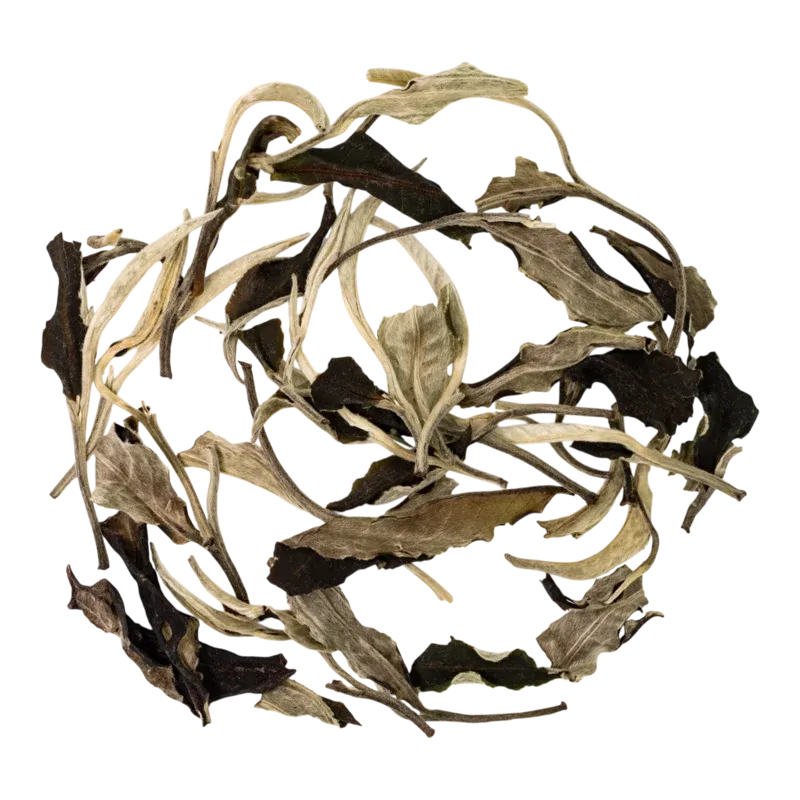
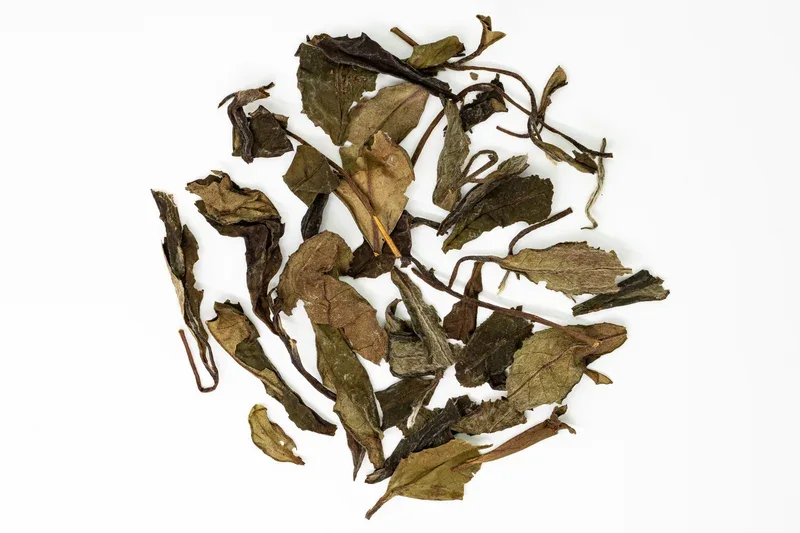
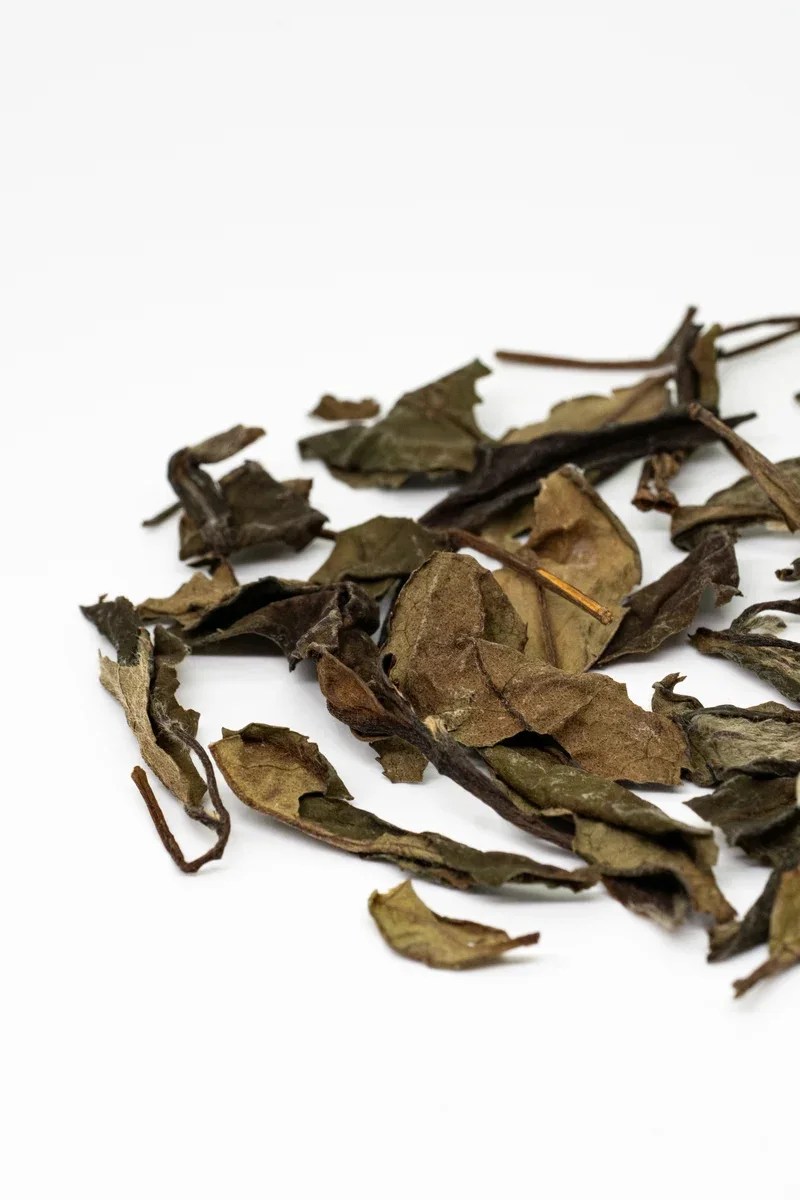
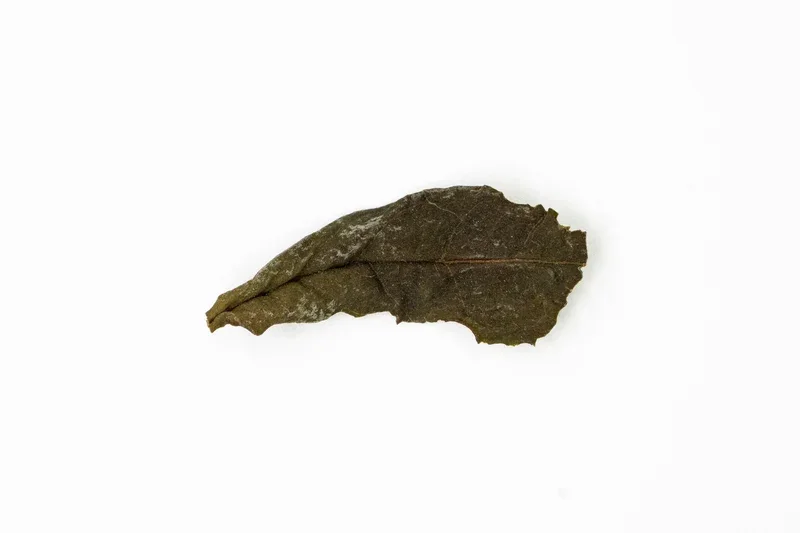
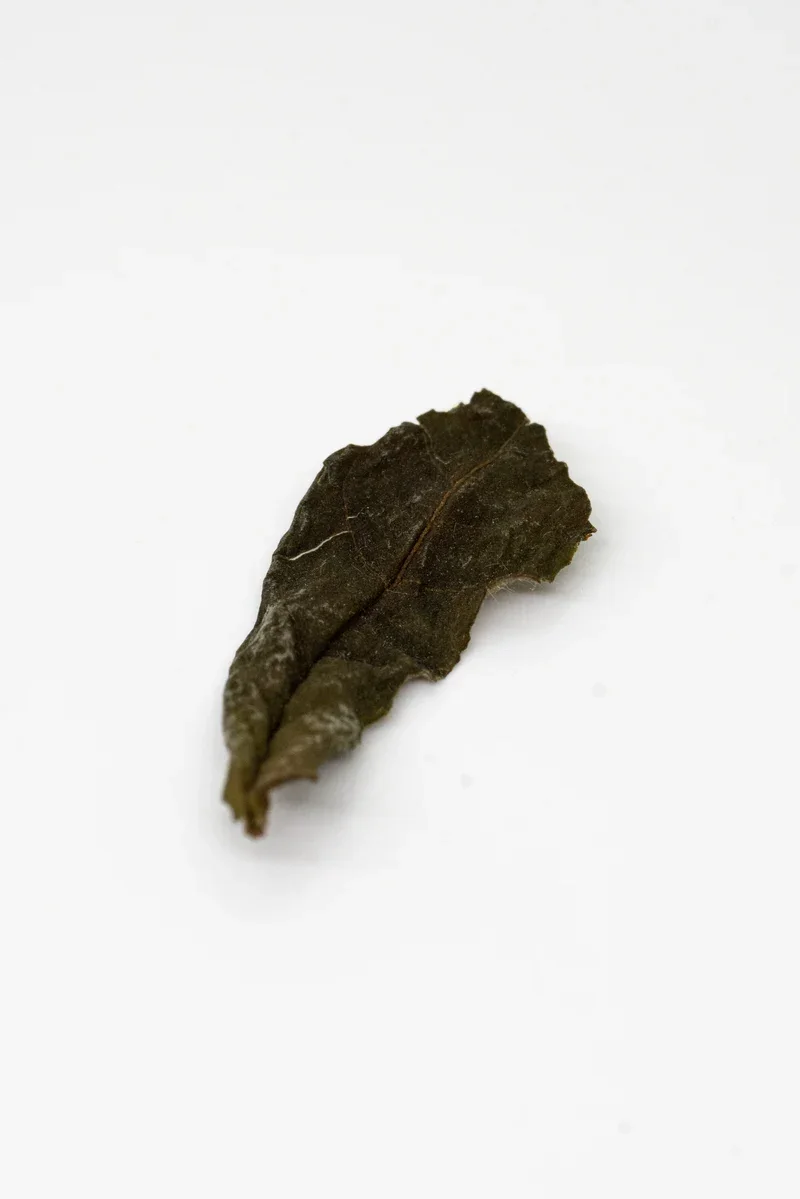
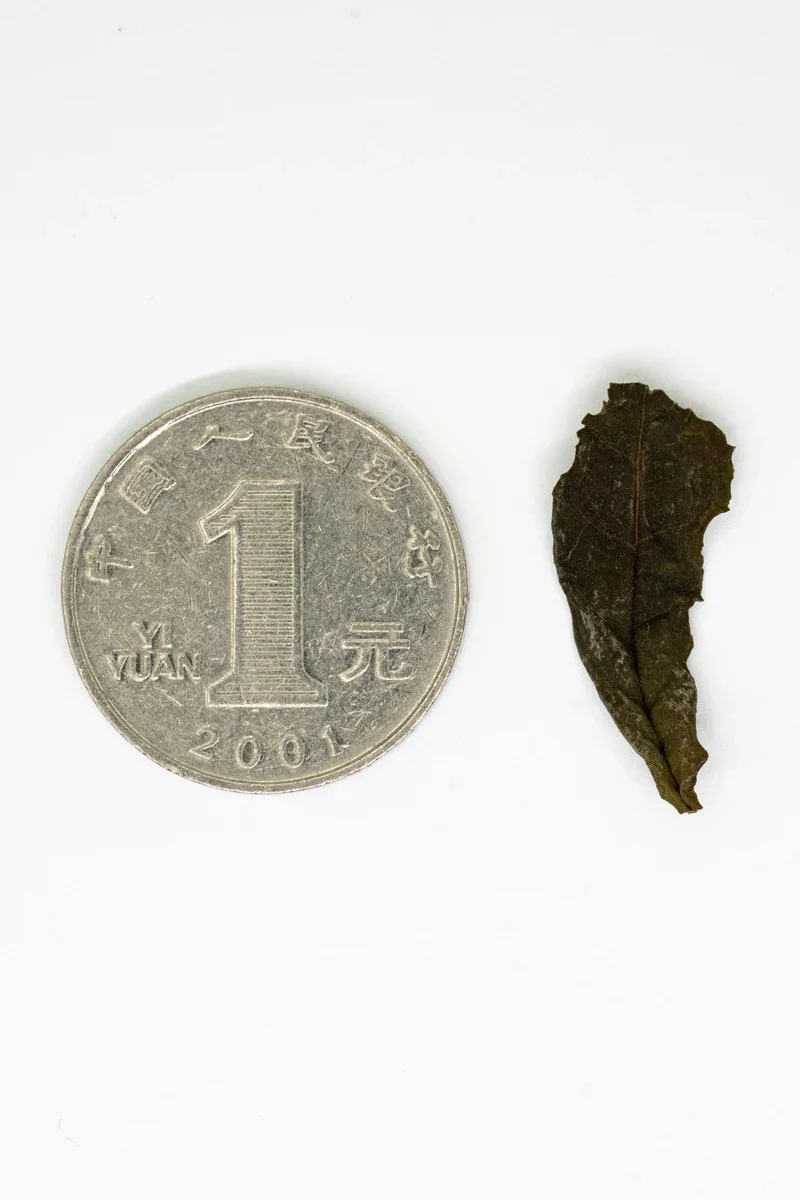
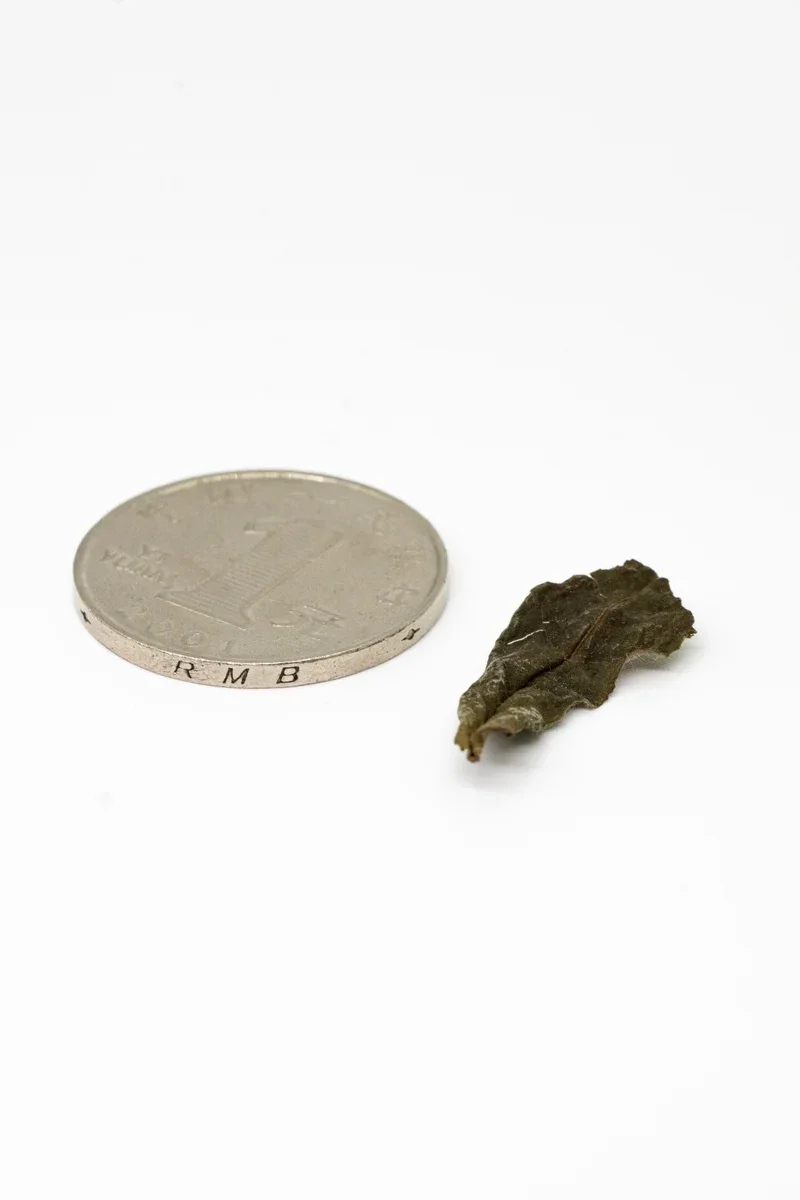
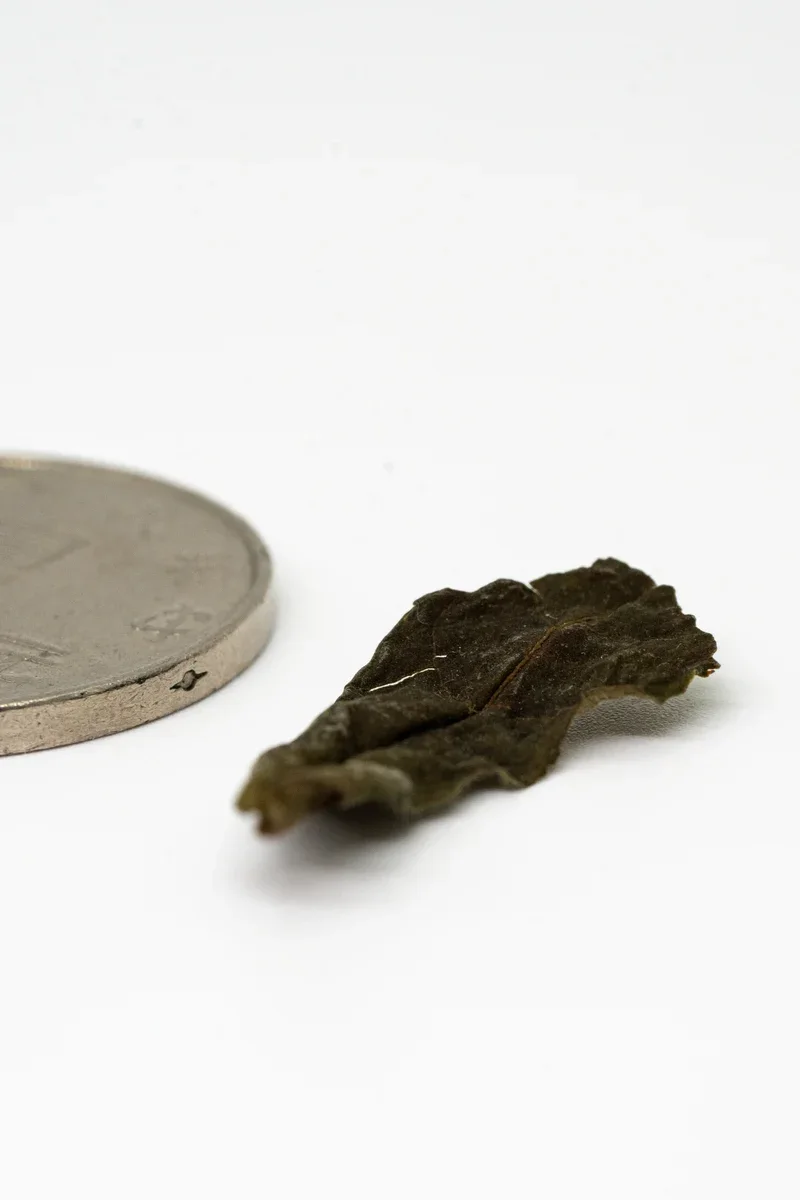
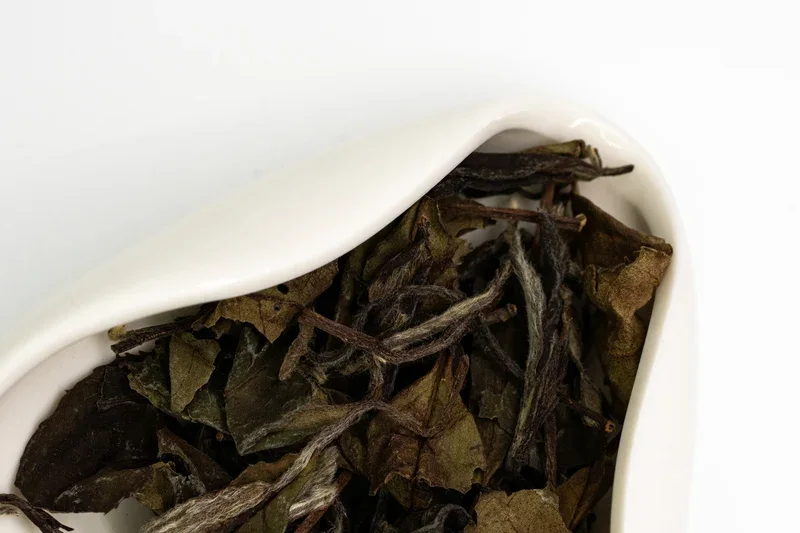
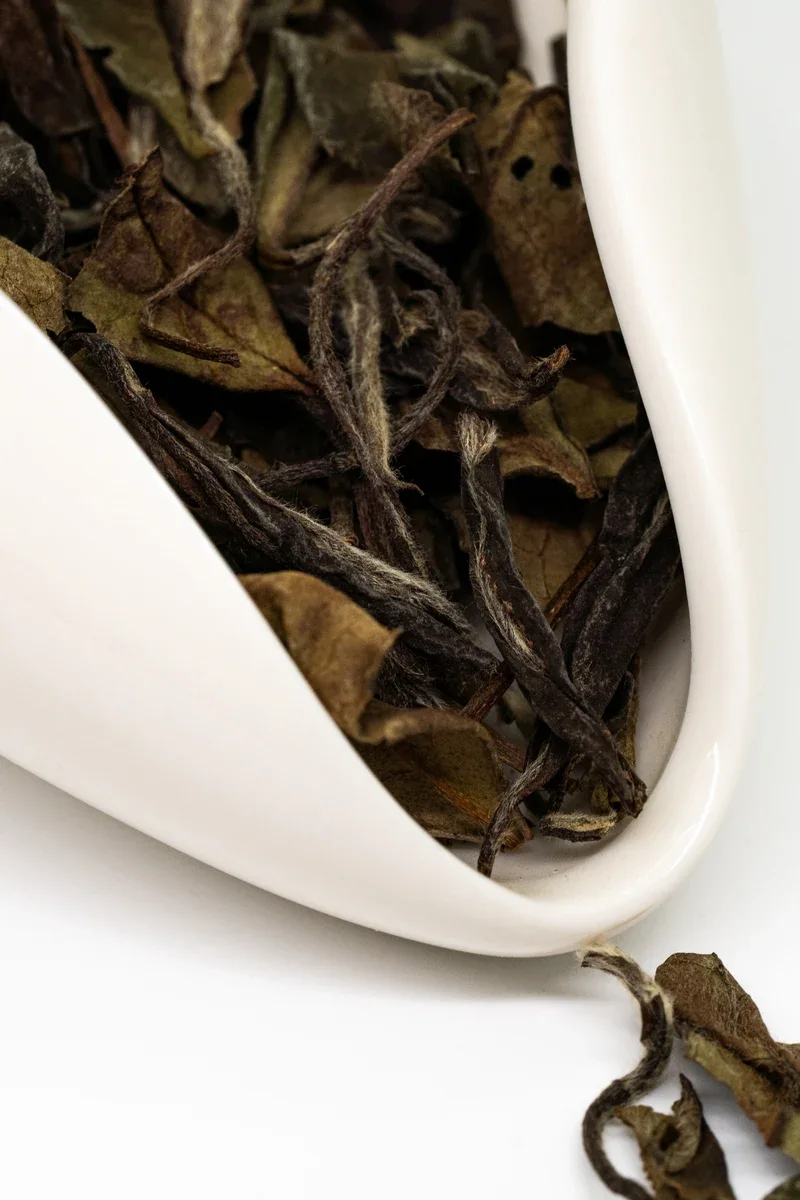
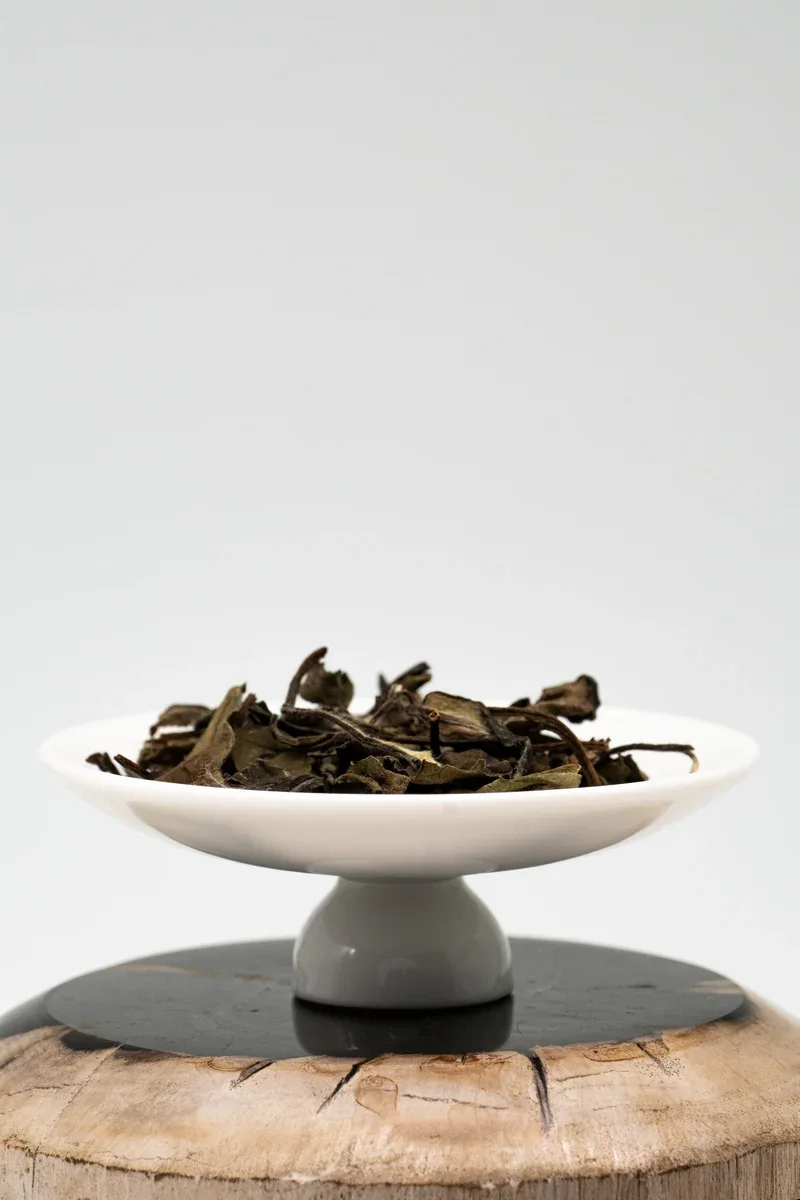
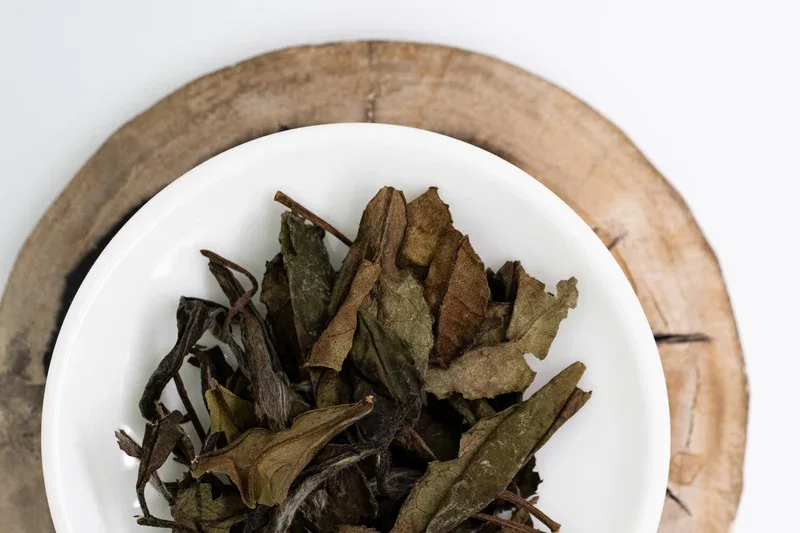
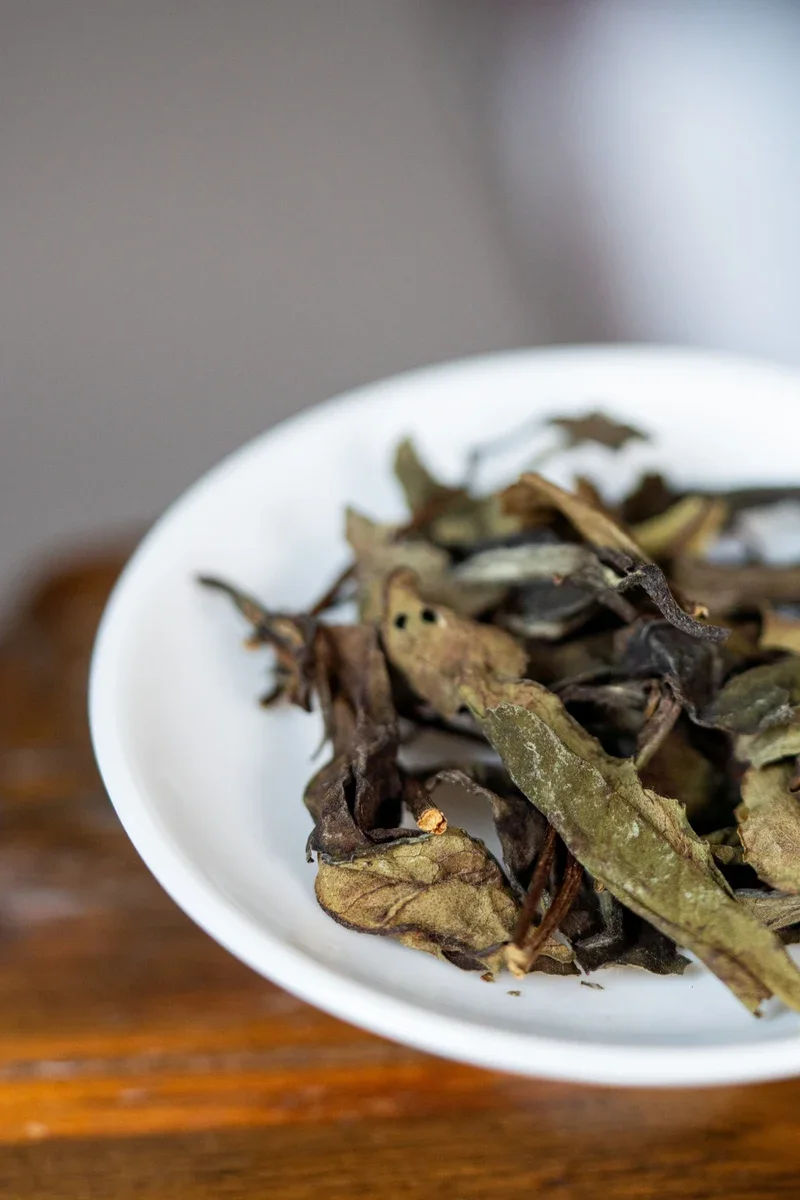
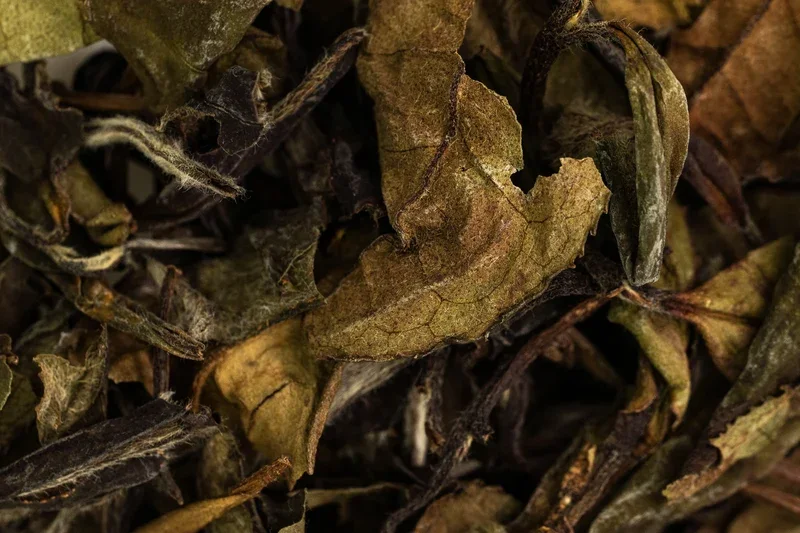
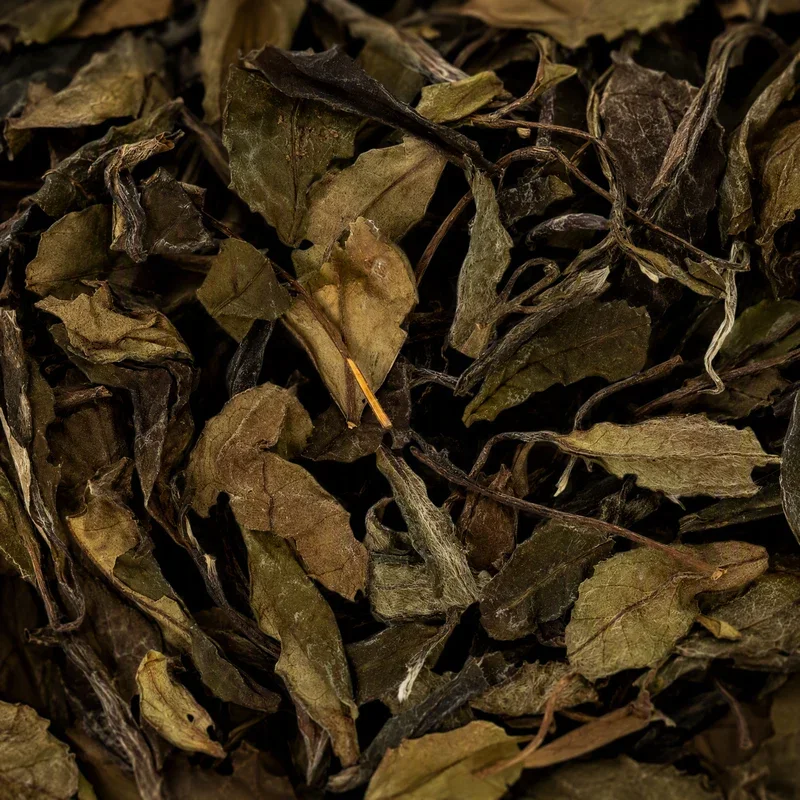
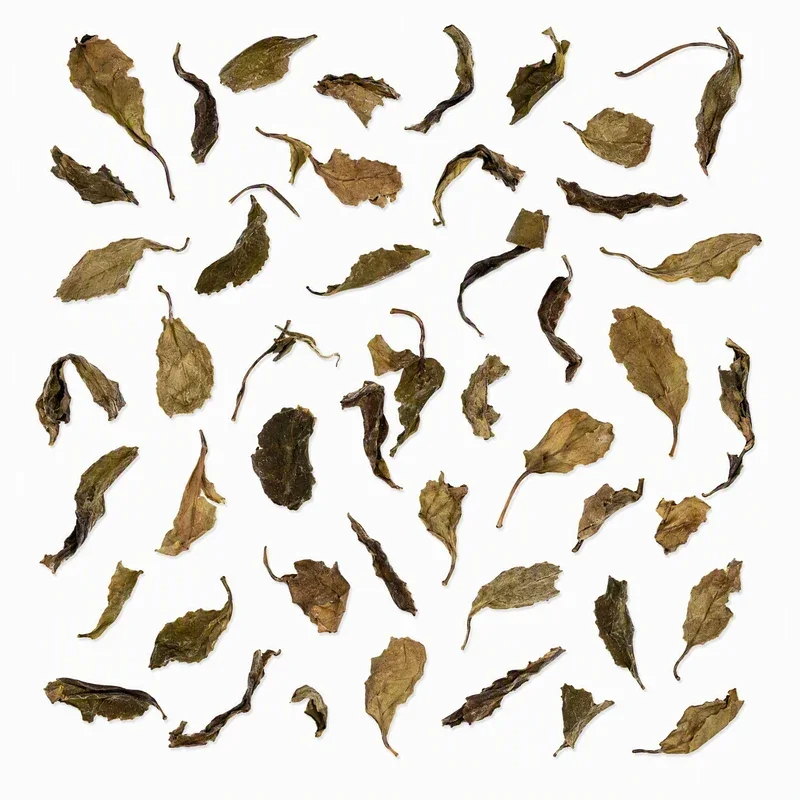
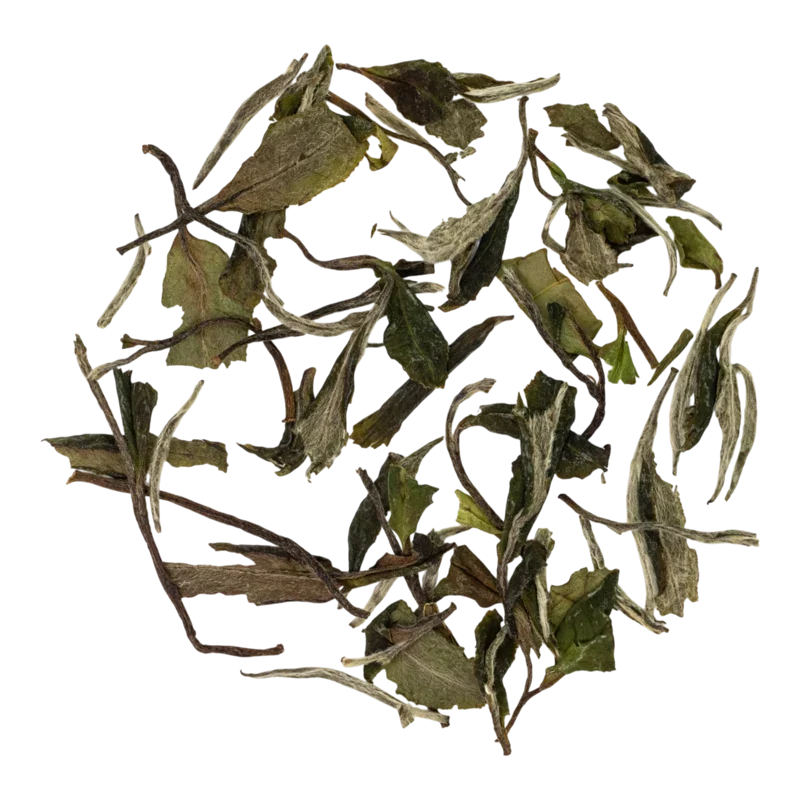
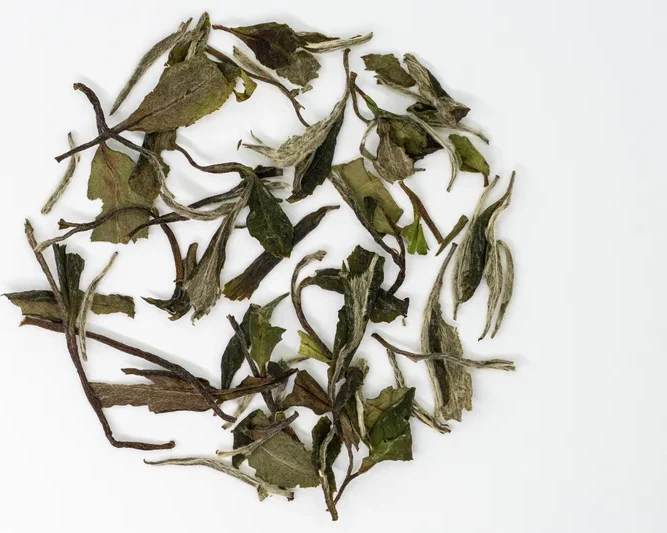
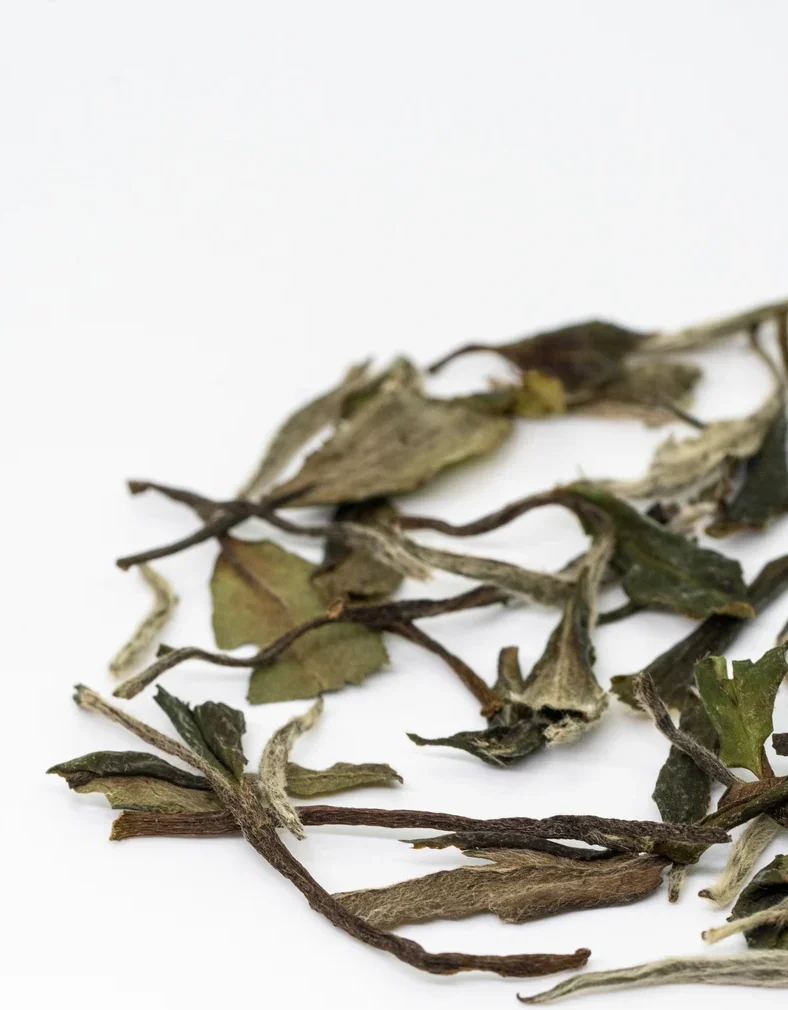
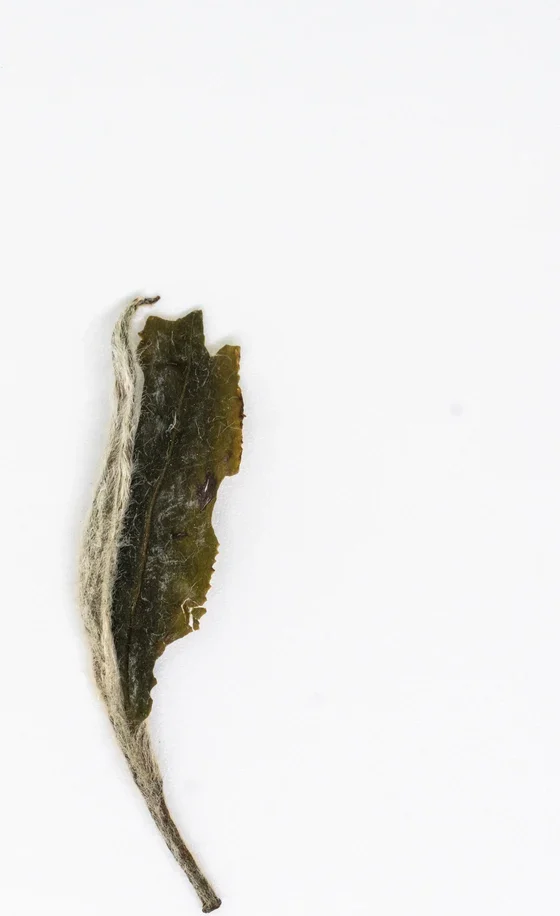
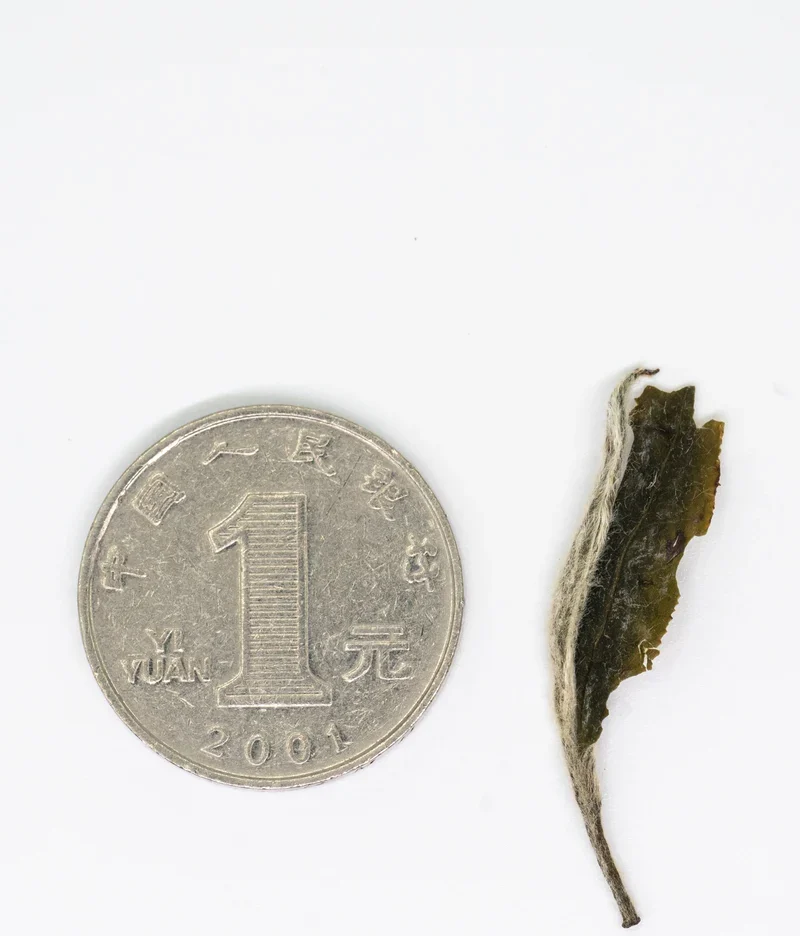
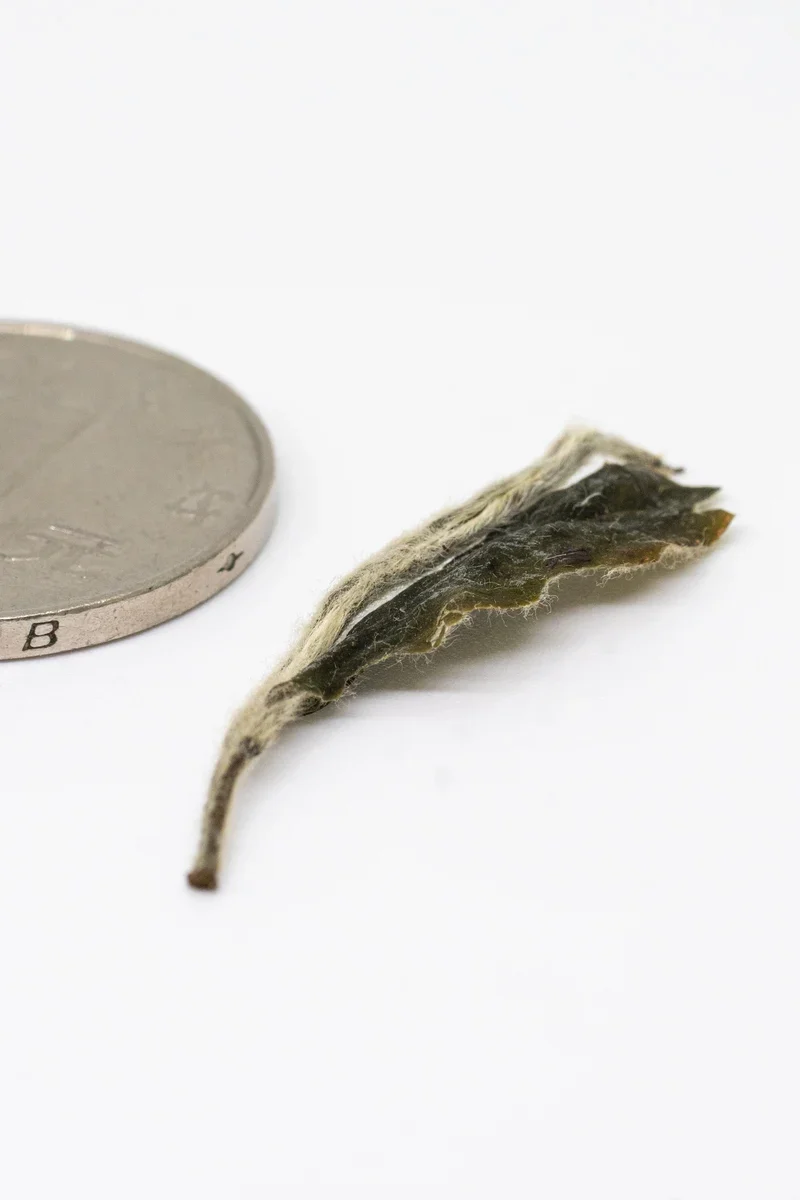
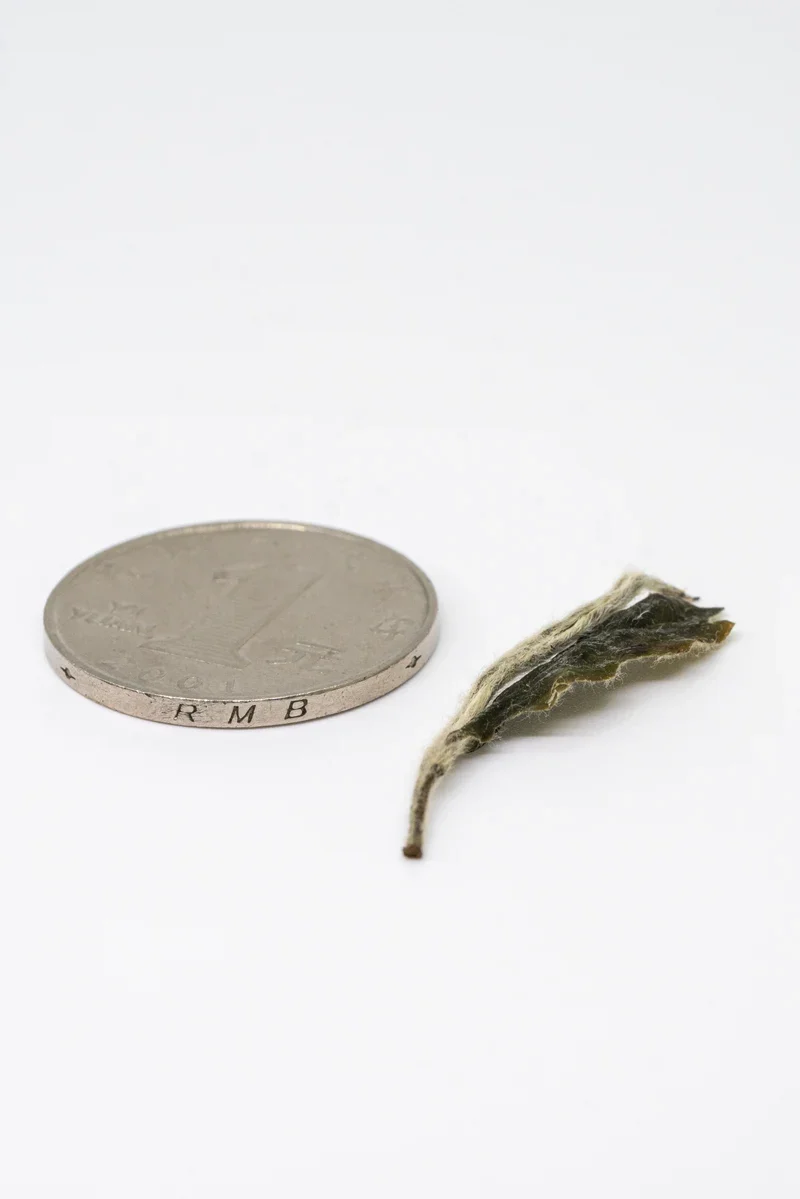
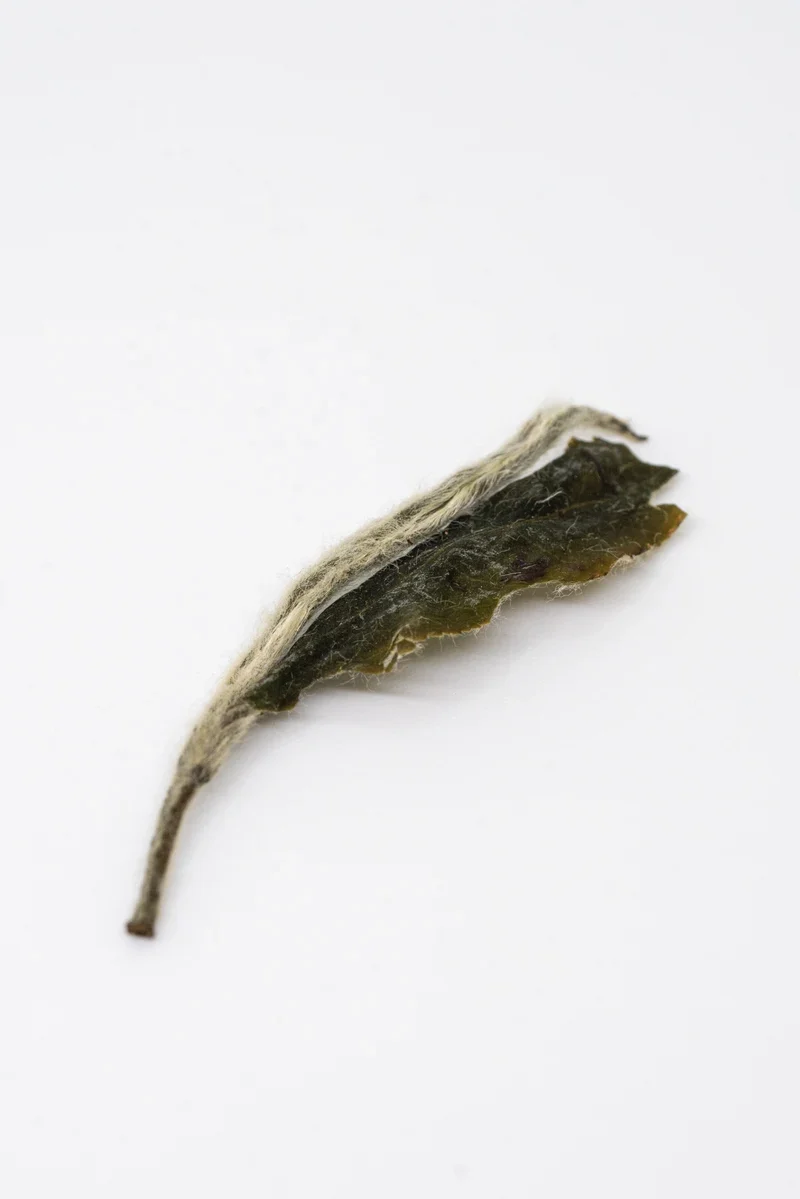
Dry Leaf Appearance: Large, plump shoots — silvery-white bud densely covered with long silky down, with one-two small leaves tightly pressed to it. Overall silhouette resembles an unopened flower bud. Color — silvery-green: buds — silvery-white, leaves — gray-green with dark green or brownish inclusions (traces of light oxidation). Compared to standard first-grade Bai Mudan, Mudan Wang has noticeably larger buds, smaller and narrower leaves, and higher down proportion.
Dry Leaf Aroma: Intense, fresh, sweetish. Dominated by háoxiāng (毫香) (háoxiāng) — aroma of silvery down: tender, milky-creamy, slightly honeyed. Second layer — floral notes (peony, jasmine, lily of the valley) and light fruity nuances (white peach, melon).
Liquor Aroma: Bright, multi-layered: in foreground — pronounced haoxiang (毫香) and floral note (peony), then — honey, fruity (peach, melon, pear) and light creamy shades. Gàiwǎn lid aroma after pouring (盖香, gàixiāng) — intense, floral-honey, long-lasting.
Liquor Color: Light yellow with slight golden tint, transparent, clean, with soft luster. Somewhat lighter than standard Bai Mudan.
Spent Leaves: Large, whole, resilient shoots preserving bud form — silvery bud with one-two green leaves. Buds covered with silvery down. Color — from light green to gray-green. Mudan Wang spent leaves are one of the most aesthetically beautiful tea bottoms in the white tea world.
Taste: Full, rich, yet tender and "silky." Pronounced sweetness (回甘, huígān) and refreshing effect are felt. Light pleasant astringency — fine, not intrusive. Aftertaste — long, "enveloping," with notes of flowers and honey. The bouquet is dominated by: milky-creamy notes (from down), floral "peony" profile, shades of white peach and melon. Compared to Bai Hao Yin Zhen, Mudan Wang possesses more "full" taste thanks to leaf presence; compared to standard Bai Mudan — more "refined" and "silky."
Alkaloids: Caffeine — about 3.5–5.5% (caffeine content correlates with raw material tenderness: the younger the shoot, the more caffeine). Theobromine and theophylline — in insignificant amounts.
Amino Acids: High free amino acid content — about 6–9% of dry mass (according to research on six white tea varieties conducted by Huang Yong). L-theanine — dominant amino acid (about 70% of total amount), determining characteristic sweetness and "umami"-like taste softness.
White tea is distinguished by high flavonoid content — 8.5–13 mg/g. Dihydromyricetin is especially important — a natural hepatoprotector characteristic precisely of white tea.
Theaflavins — 0.03–0.11%, thearubigins — 0.73–2.48% (low values characteristic of lightly oxidized tea).
Linalool, geraniol, β-ionone, cis-jasmone — form floral-fruity aroma. Thanks to high down content, Mǔdān Wáng possesses particularly pronounced háoxiāng (毫香), determined by volatile compounds characteristic of white down.
Minerals: Potassium, calcium, magnesium, phosphorus, zinc, fluorine, manganese, iron. Mineral profile depends on terroir.
Polyphenols: Total content — 20–26% of dry mass. Main catechins — EGCG, ECG, EGC, EC. Polyphenol content somewhat lower than in standard grade Bai Mudan (due to bud predominance over leaves), but higher than in purely bud Bai Hao Yin Zhen.
Vitamins: C (preserved better than in green tea thanks to absence of high-temperature processing), B₁, B₂, PP, carotenoids.
High EGCG and other catechin content provides pronounced free radical neutralization ability. White tea demonstrates one of the highest antioxidant activities among all tea types.
High L-theanine content stimulates α-brain wave production, creating a state of calm concentration. Theanine also softens caffeine's stimulating action, providing gentle tonification without "nervous" excitement.
Dihydromyricetin, a flavonoid characteristic of white tea, exerts protective effect on liver, reducing alcohol's toxic influence and accelerating hepatocyte regeneration.
White tea polyphenols and flavonoids promote cholesterol level normalization, vessel elasticity improvement, and blood pressure reduction.
Complex of polyphenols, vitamin C, and amino acids stimulates immune system. Research confirms white tea's antibacterial and antiviral properties.
Caffeine combined with L-theanine improves attention concentration, reaction speed, and working memory — without the characteristic coffee "spike and crash" of energy.
White tea antioxidants protect skin from photoaging, improve its elasticity and tone. Traditional Chinese medicine recommends white tea for "cooling internal heat" and improving complexion.
White tea fluorine and catechins show antibacterial action, reducing caries risk and gum disease.
Tea Amount: 5–7 grams per 100–150 ml water (gongfu method). For large teapot: 3–4 grams per 200–300 ml.
Teaware: White porcelain gàiwǎn (盖碗) — ideal choice: light walls allow full appreciation of liquor color, and lid — concentration and evaluation of aroma (盖香). Glass teapot suitable for aesthetic enjoyment — observing the "dance" of silvery buds in water. Yixing teapot not recommended for young Mudan Wang: porous clay may muffle delicate aroma.
Water Temperature: 80–90°C. Cannot brew with boiling water — too high temperature will "burn" tender buds, destroy down, and bring out bitterness. Optimal — 85°C for maximum sweetness and haoxiang (毫香) development.
Enemies: Excessive humidity, direct sunlight, foreign odors, sharp temperature changes.
Dry, cool, dark place, airtight packaging, away from foreign odors. Temperature — 15–25°C, humidity — no higher than 60%. To preserve maximum freshness and aroma of young Mudan Wang, refrigerator storage (0–5°C) in hermetically sealed foil-lined bag is acceptable.
Like all white teas, Mudan Wang can be stored and improve with age, though its transformation potential is somewhat lower than Gong Mei or Shou Mei (due to bud predominance over mature leaves). Conditions: temperature 18–28°C, humidity 40–65%, absence of direct sunlight and foreign odors. Container — three-layer packaging (foil + kraft paper + cardboard) or ceramic vessels.
Standard Bai Mudan — one bud, two leaves. Leaves more unfolded, bud — less plump. Taste — more "full" and floral than Mudan Wang, but less "silky." Háoxiāng (毫香) less pronounced. Price significantly lower.
Third step of white tea hierarchy. One bud, two-three leaves, more mature raw material. Taste — dense, rich, with grassy and honey notes. Completely different character: "earthy" and "warm" compared to "airy" and "floral" Mudan Wang. Price 2–5 times lower.
Most "coarse" category — mature leaves, minimum buds. Densest, most "full-bodied" taste among white teas. Complete opposite of Mudan Wang's "airiness."
Unscrupulous sellers pass off standard first or even second-grade Bai Mudan as Mudan Wang. Key visual criterion: in genuine Mudan Wang the bud is significantly larger than leaves, leaves are tightly pressed to it and not fully opened. If leaves are wide, unfolded, and noticeably longer than the bud — you have standard Bai Mudan, not "Wang."
Genuine Mudan Wang should be densely covered with silvery-white long down, especially on buds. Dull, sparse, short down — sign of lower grade.
Pronounced háoxiāng (毫香) (milky-creamy down aroma) and floral notes — mandatory signs. Absence of háoxiāng (毫香) — alarming signal.
Color — light yellow, golden, necessarily transparent and clean. Taste — silky, sweet, with light astringency. Coarse, intrusive astringency indicates lower grade.
If Mudan Wang is offered at standard Bai Mudan price — this is almost certainly grade substitution.
No reviews yet. Tell us what you think of this tea.
Rate this tea and share your impressions. We review each submission before publishing it.