Brewing
Gongfu brewing
- Water temperature
- 75 °C
- Tea amount
- 5 g
- Water volume
- 100 ml
- First steep
- 10 s
- Time added per infusion
- 5 s
- Infusions
- 4

báiháo yínzhēn
Choose a brewing method. Start with the recommended quantities and time, then adjust to taste.
Brewing
Brewing
Taste
Tea encyclopedia
Category: Famous Teas of China (中国名茶, Zhōngguó Míngchá). Highest grade among white teas, second place in the list of 30 national famous teas of the PRC (Ministry of Commerce, 1982). According to GB/T 22291-2017, subdivided into two classes: special (特级, tèjí) and first (一级, yījí).
Category: Famous Teas of China (中国名茶, Zhōngguó Míngchá). Highest grade among white teas, second place in the list of 30 national famous teas of the PRC (Ministry of Commerce, 1982). According to GB/T 22291-2017, subdivided into two classes: special (特级, tèjí) and first (一级, yījí).
Coordinates: approximately 27°20′ North latitude, 119°50′–120°10′ East longitude.
Origin: China, Fújiàn Province (福建, Fújiàn). Two main regions:
Type: White tea (白茶, báichá) — lightly oxidized, degree of oxidation approximately 5–10%. According to national standard GB/T 22291-2017, white tea is defined as a product made from buds, leaves and tender stems of the tea plant Camellia sinensis (Linnaeus) O.Kuntze through withering (萎凋, wěidiāo), drying (干燥, gānzào) and sorting (拣剔, jiǎntī). Due to the absence of kill-green (杀青, shāqīng) and mechanical rolling, the tea preserves active natural enzymes, which determines its capacity for long-term "living" aging.
Cultural Significance: For centuries, Yin Zhen was supplied to the imperial court and was accessible only to the chosen few. In traditional medicine of Northern China, silver needles were traditionally considered a fever-reducing remedy. The Fujian saying "一年茶,三年药,七年宝" (yī nián chá, sān nián yào, qī nián bǎo — "one year tea, three years medicine, seven years treasure") reflects the tradition of aging white tea, which gained particular popularity in the 2000–2010s. Fresh Yin Zhen of the new harvest remains one of the most prestigious spring gifts in Fujian tea culture.
History: Bái Háo Yìn Zhèn has documented history dating back to the early Qīng dynasty (清, Qīng):
Exclusively unopened buds (tips). Only hand-picking, in dry weather. For 1 kg of finished tea — from 20,000 to 40,000 buds.
Cultivar: Exclusively large-bud varieties of Camellia sinensis var. sinensis, propagated vegetatively:
Picking: Early spring (late March — early April, before Qingming, 清明). The season is extremely short — from several days to two weeks. There exists a rule of "ten prohibitions on picking" (十不采, shí bù cǎi): do not pick in rain, with undried dew, thin, purple, damaged by wind/insects, opened, hollow, diseased buds and those damaged during processing.
Climate: Subtropical monsoon. Average annual temperature in Fuding ~18.5 °C, precipitation ~1660 mm/year. Frequent fogs and diffused light slow bud growth and stimulate amino acid accumulation.
Mountains occupy ~91% of Fuding territory; plantations — at altitudes of 500–900 m. Red soils (红壤, hóng rǎng) with good drainage predominate in Fuding; in Zhenghe — more diverse soils with yellow clays and weathered shales.
Fuding's proximity to the sea provides increased humidity and abundant fogs; tea — sweeter, with honey and creamy notes, buds — more plump. Zhenghe — farther from the sea, cooler; tea — more floral and dense, buds — more elongated. In fresh tea, differences are most pronounced; with years of aging, the stylistics gradually smooth out.
At higher altitudes, daily temperature fluctuations and UV intensity increase, growth slows — this stimulates accumulation of L-theanine and aromatic compounds. High-altitude areas (Taimu Shan, Panxi, Guanyang) are considered most prestigious.
Hand selection of buds observing the rule of "ten prohibitions."
Key stage. Buds are spread in a thin layer on bamboo trays (水筛, shuǐshāi). Three methods:
At 40–50 °C to residual moisture ~5–6%. Traditionally — over smokeless coals; modern productions use electric chambers. For fresh tea (Xin Cha) no pronounced "roasting" — baked notes are considered a defect.
Removal of damaged and non-standard buds, evening out the batch.
Not a mandatory production stage, but represents an important part of Yin Zhen's life cycle. Under controlled dry storage, slow natural transformation occurs in the tea: polymerization of catechins, restructuring of aromatic profile, increasing liquor density. Some producers conduct light stabilizing drying before laying down for long-term storage.
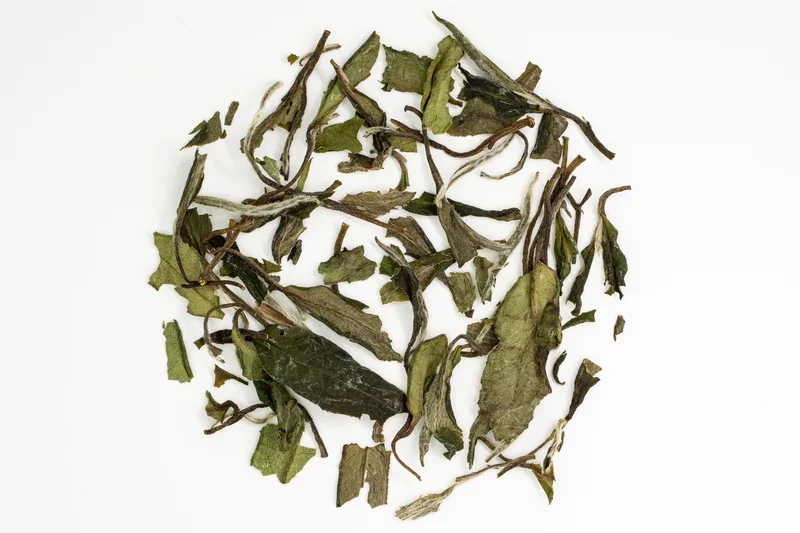
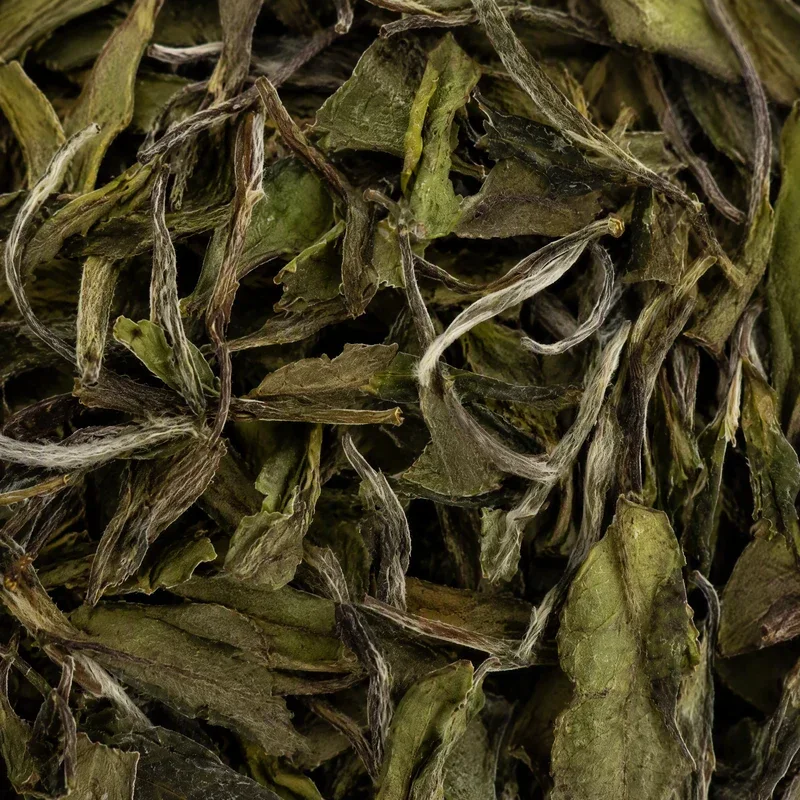
Dry Leaf Aroma: Very delicate — white flowers (peony, lily of the valley), fresh hay, light honey, sometimes melon and white peach, delicate creamy nuances.
Liquor Aroma: Exquisite, with pure floral notes, hints of honey and fresh greenery.
Liquor Color: Golden (3–5 years), amber (5–7 years), rich amber to copper (7+ years). Clear.
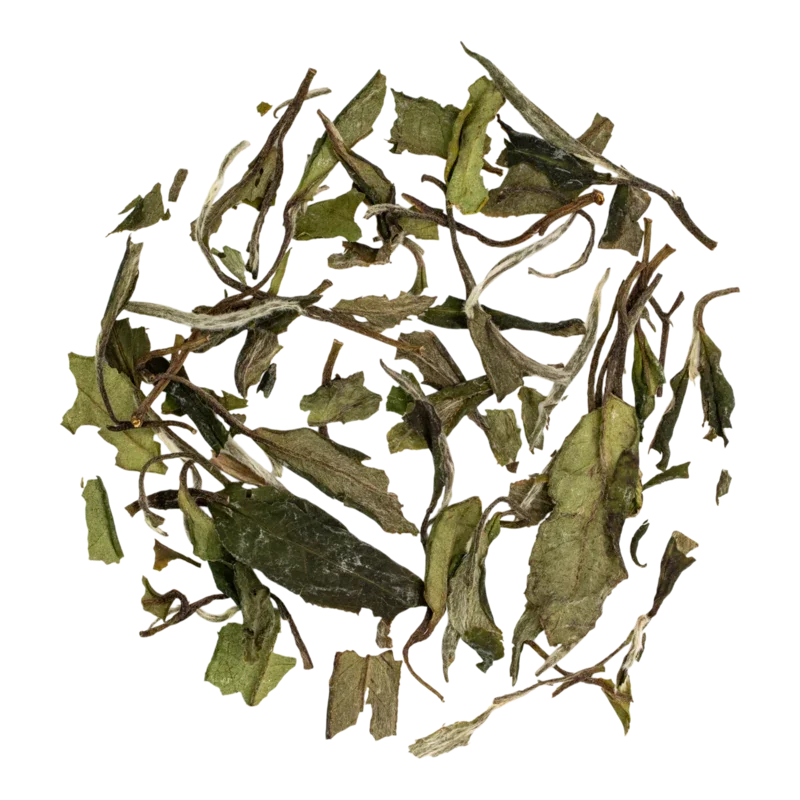
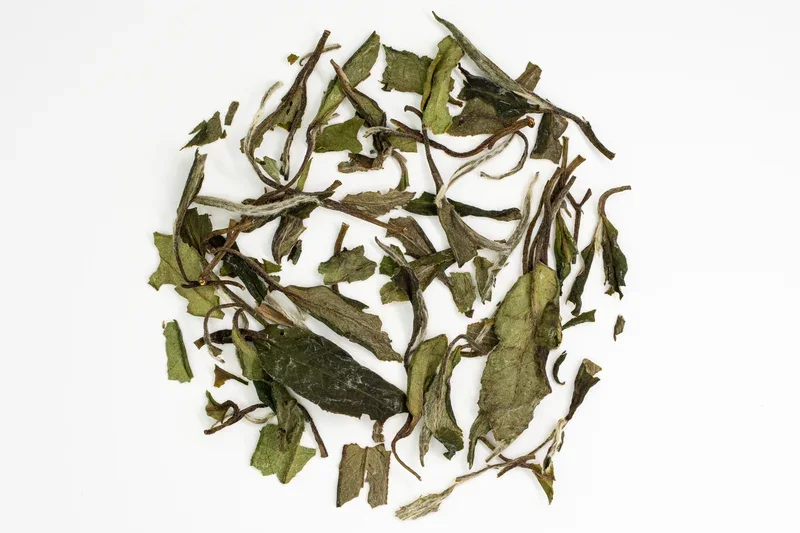
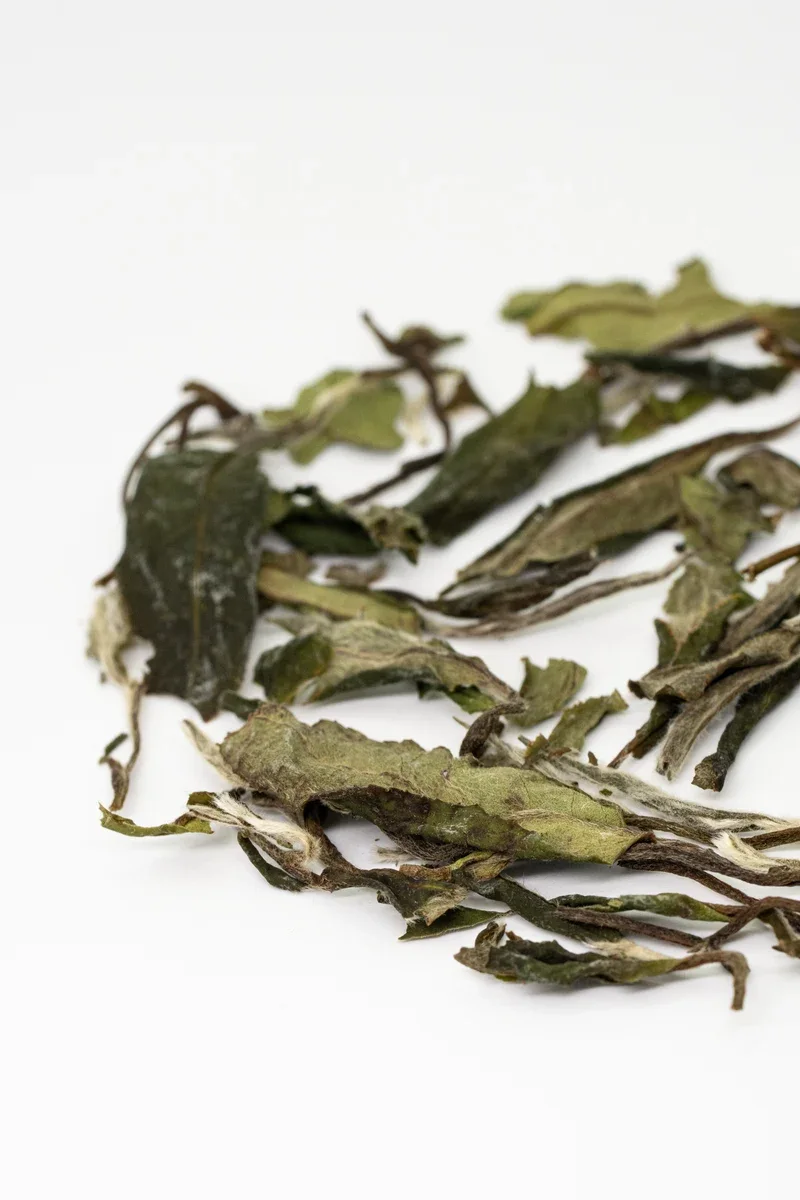
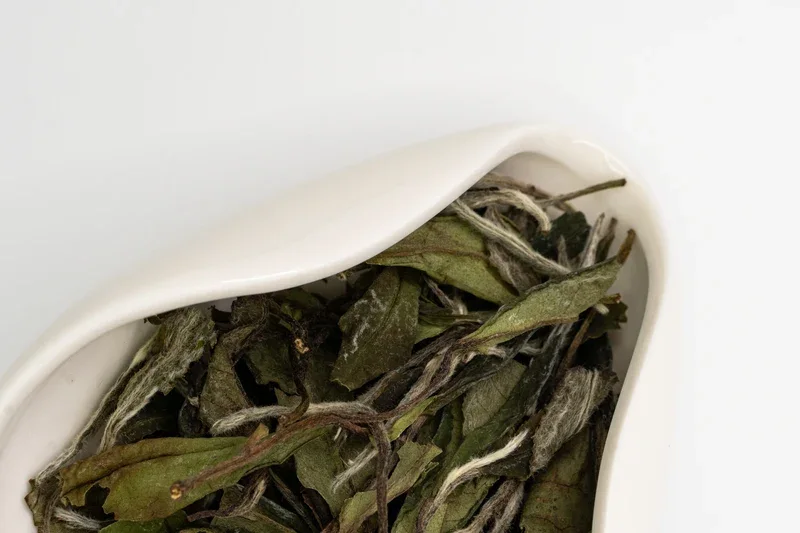
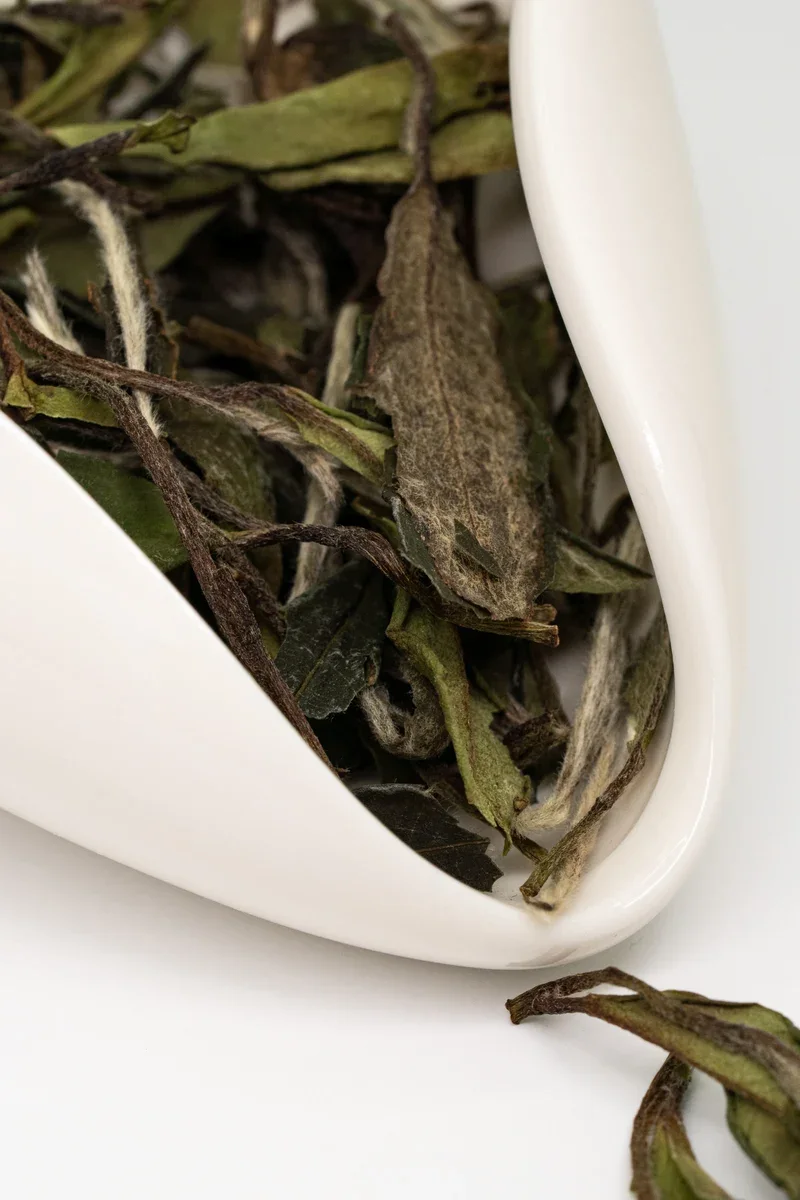
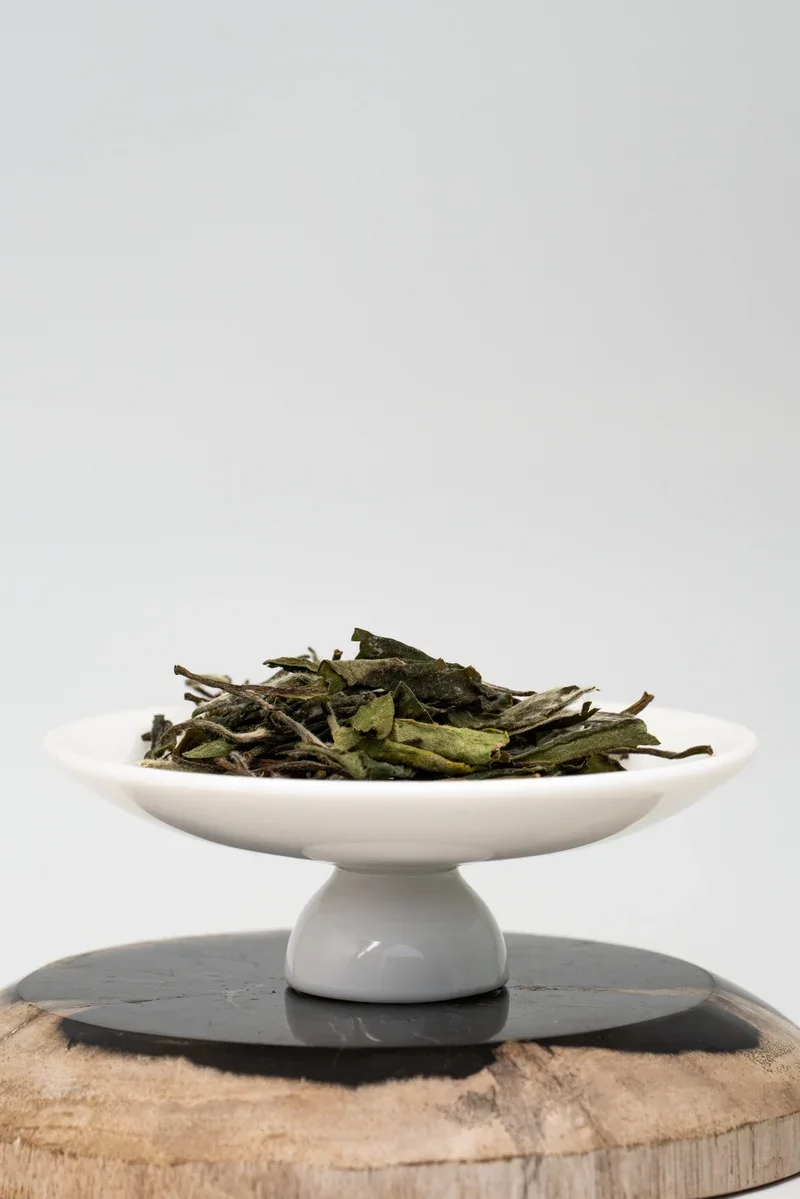
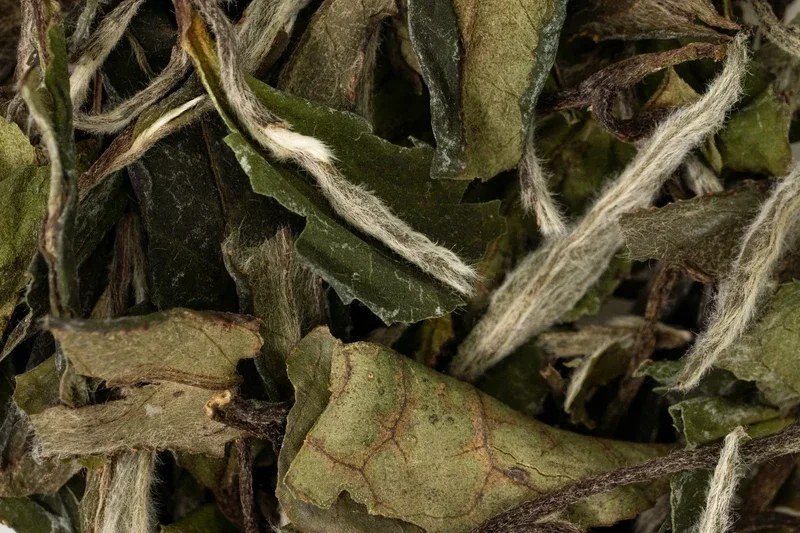
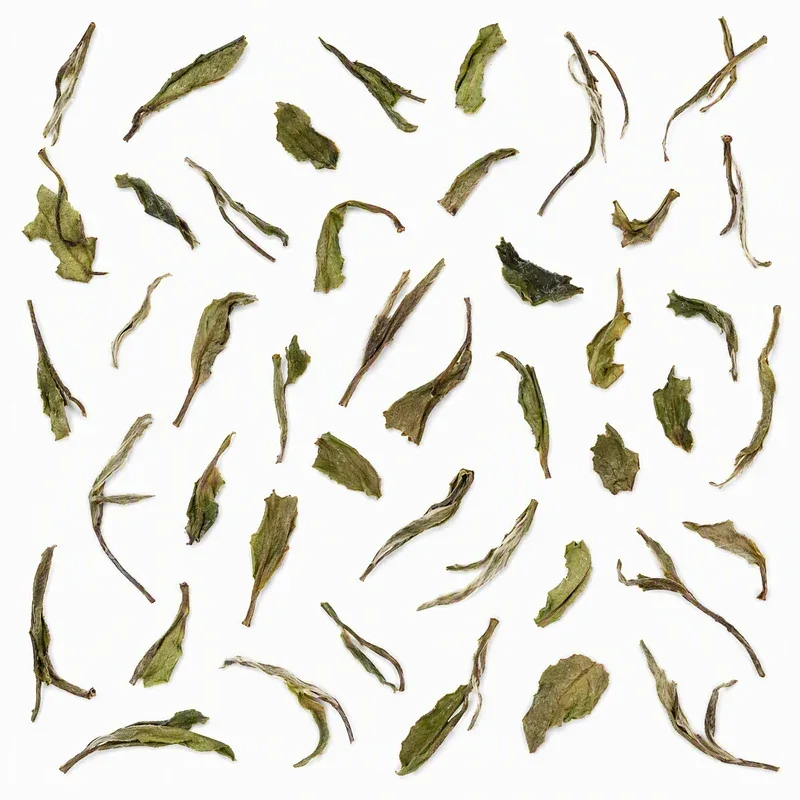
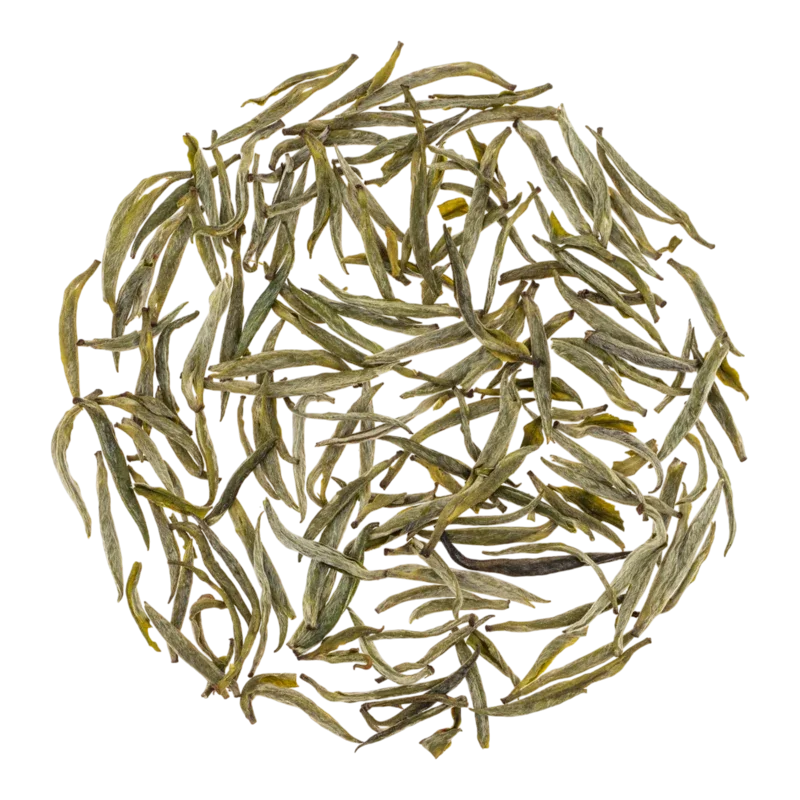
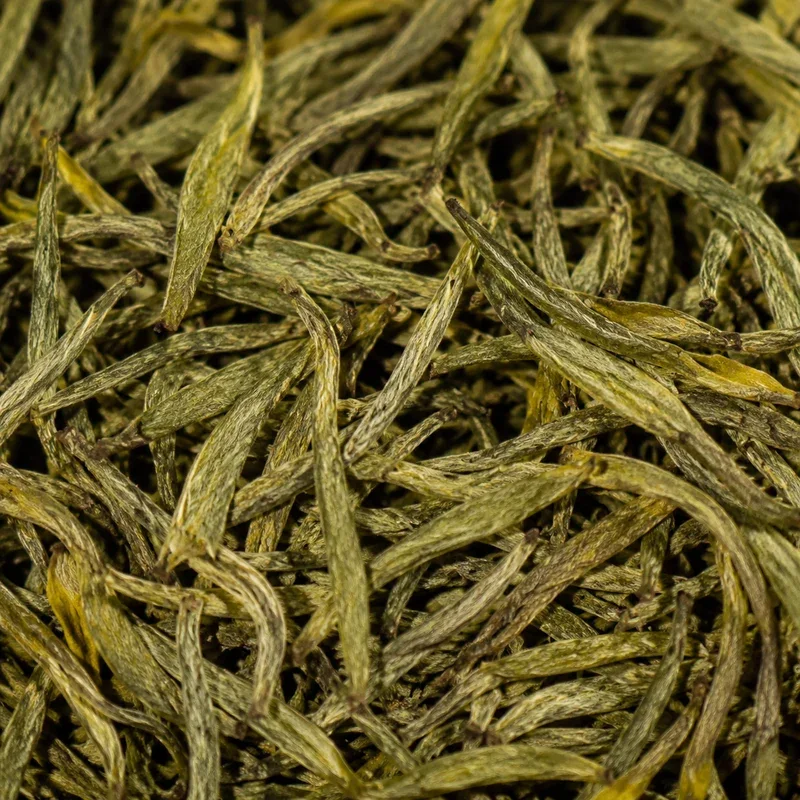
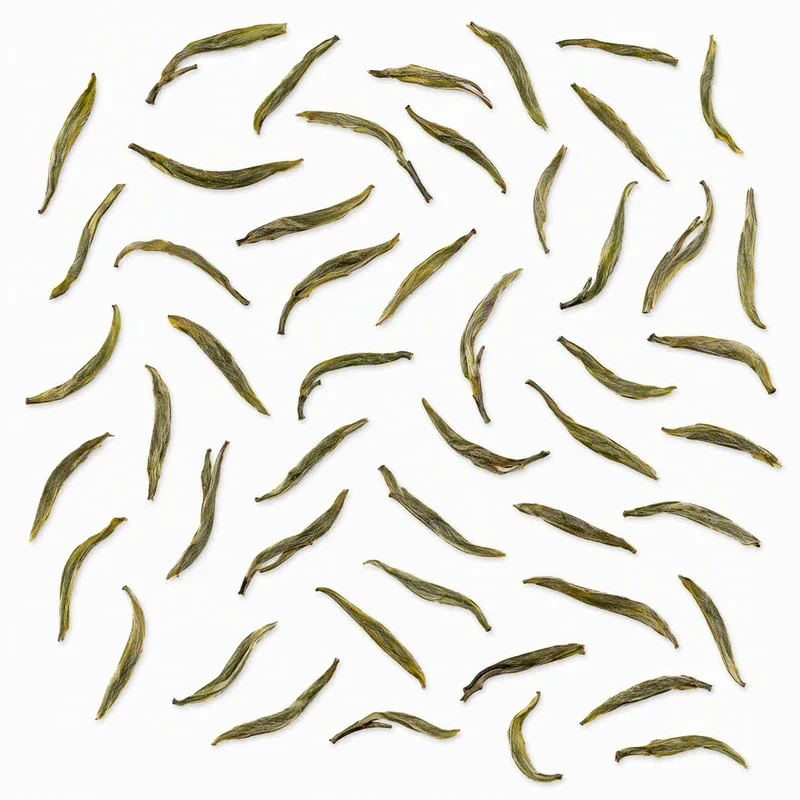
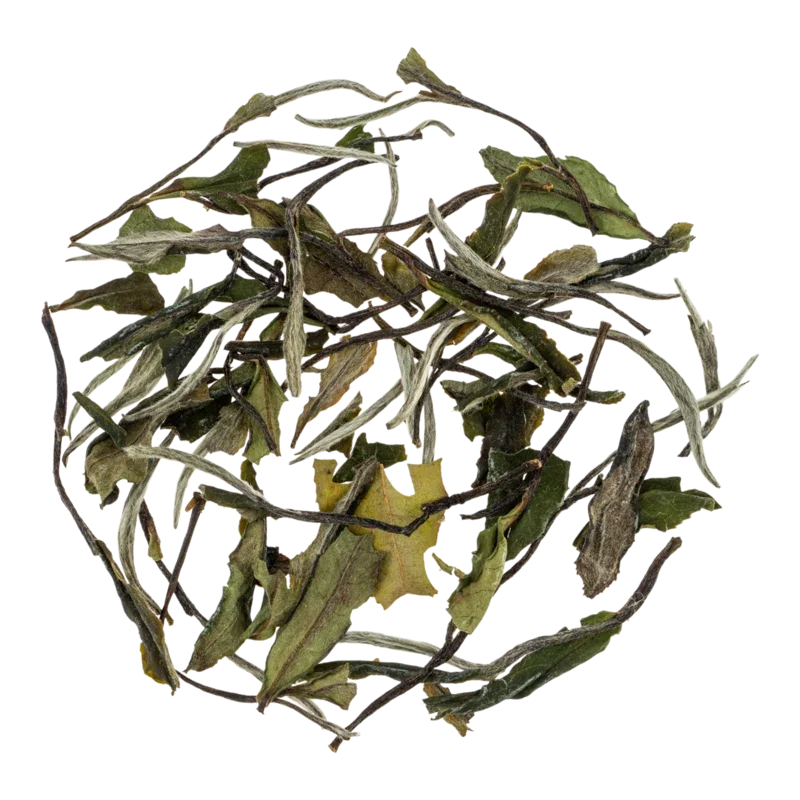
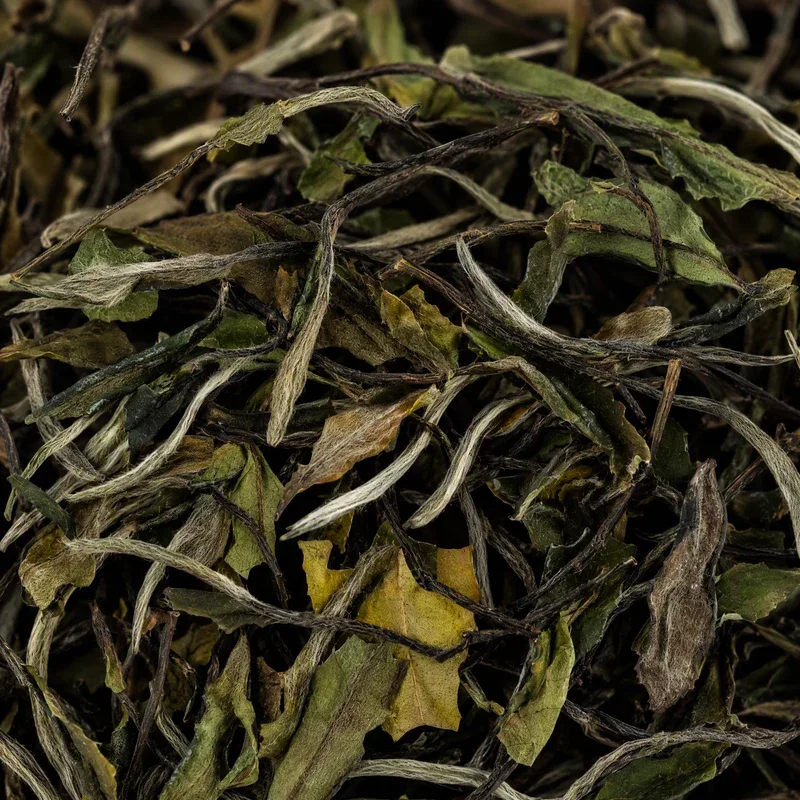
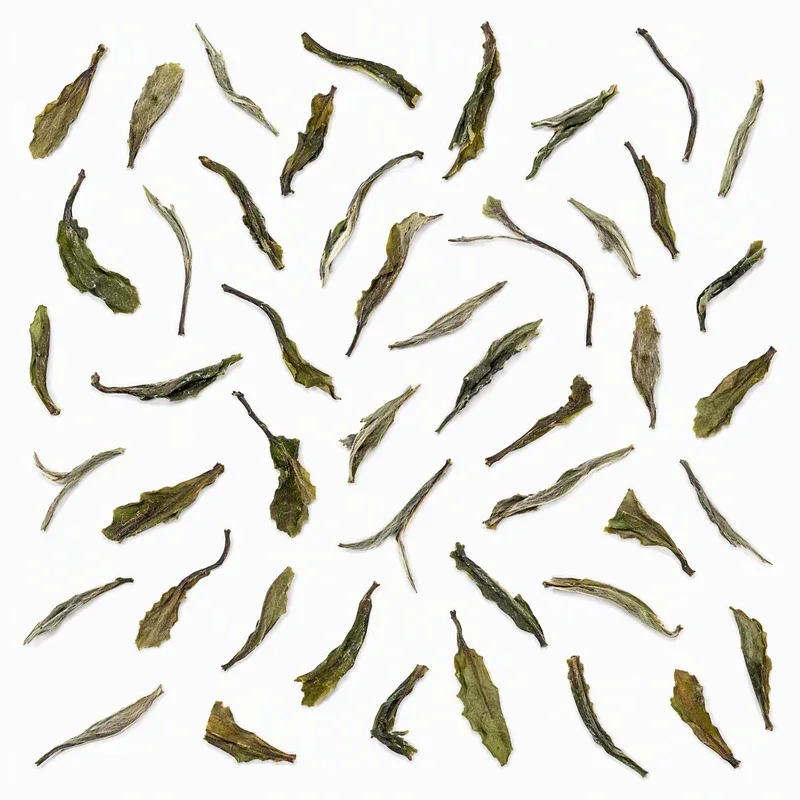
Straight silvery bud-"needles" ~3 cm, with dense velvety down and silky luster. Color — silvery-white with greenish tint at the base.
Buds darken from silvery to beige, straw-colored, with long aging — to gray-brown. Down is preserved but less bright.
Honey, dry herbs, dried fruits (apricot, date, raisin), light woodiness. Fresh floral notes fade.
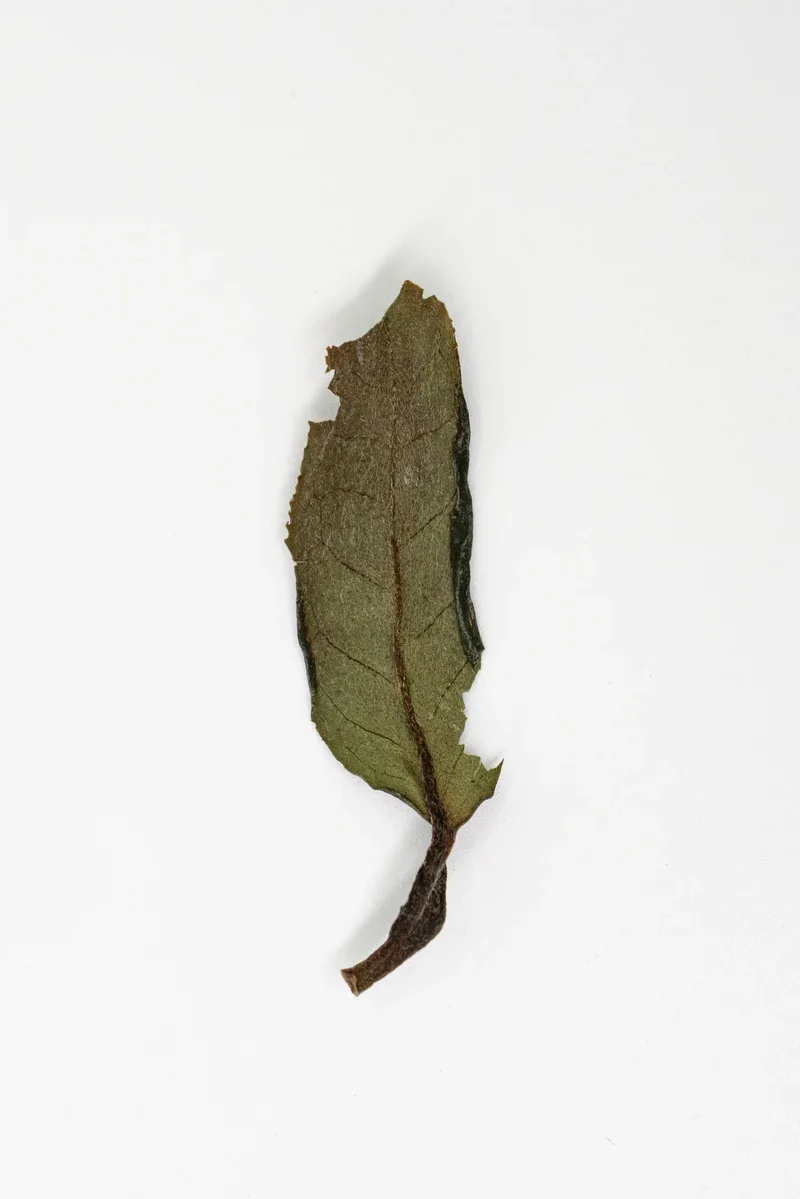
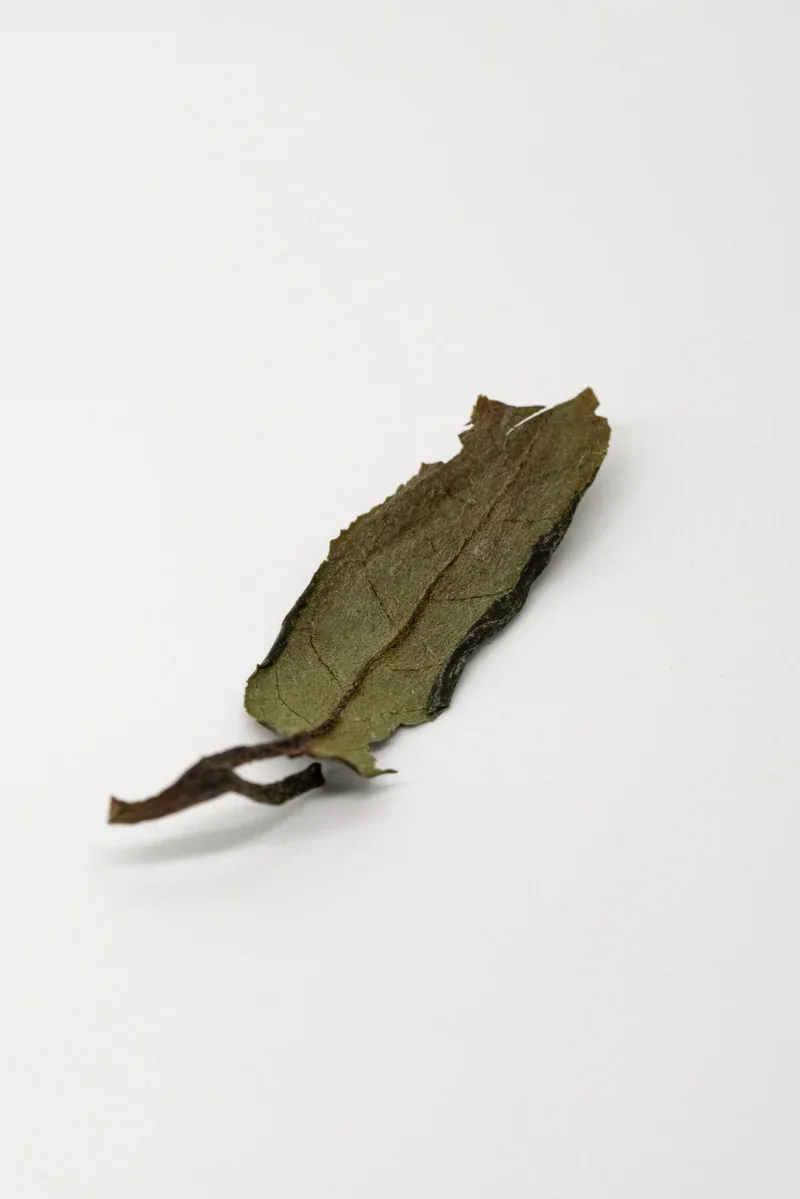
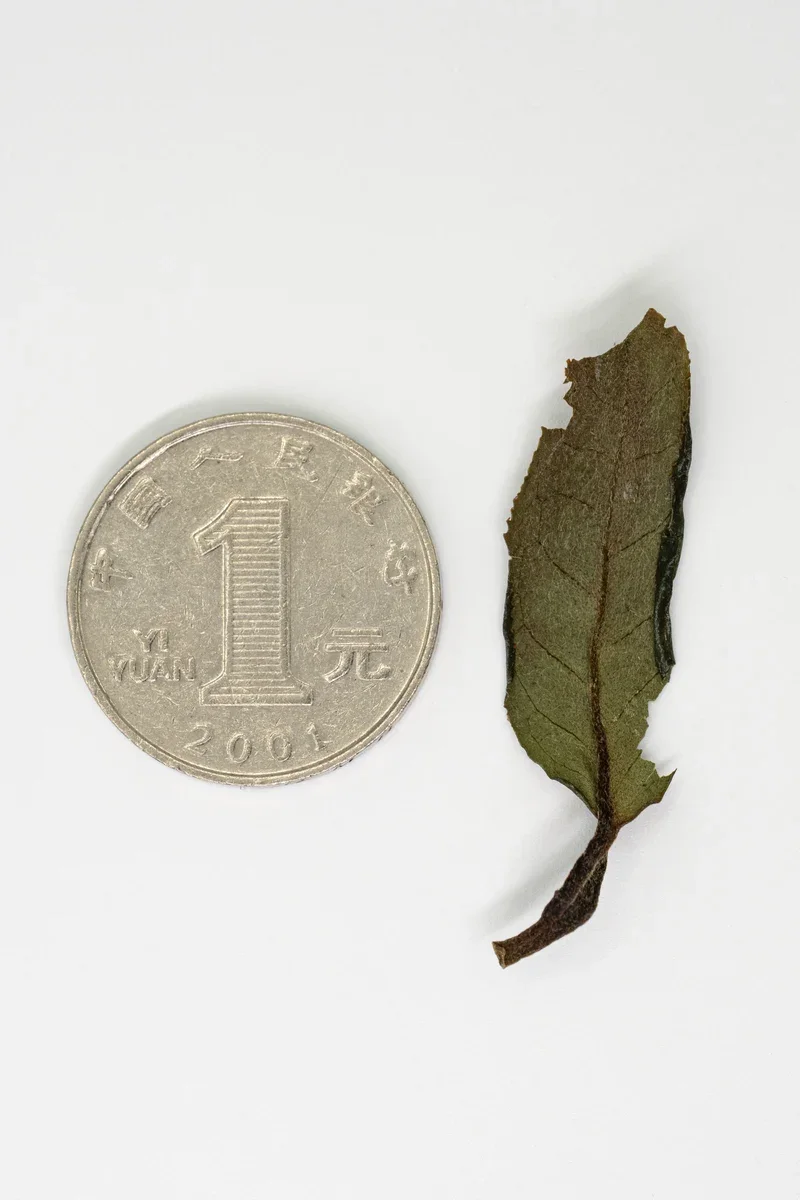
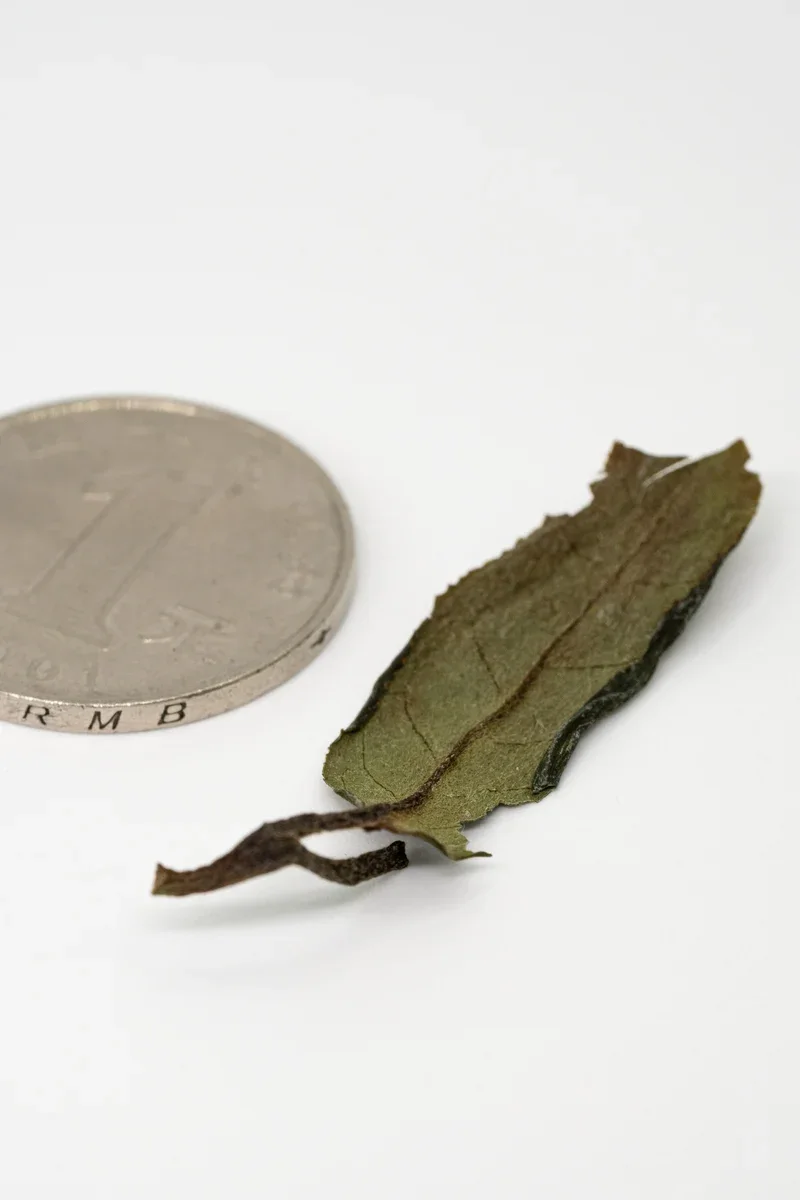
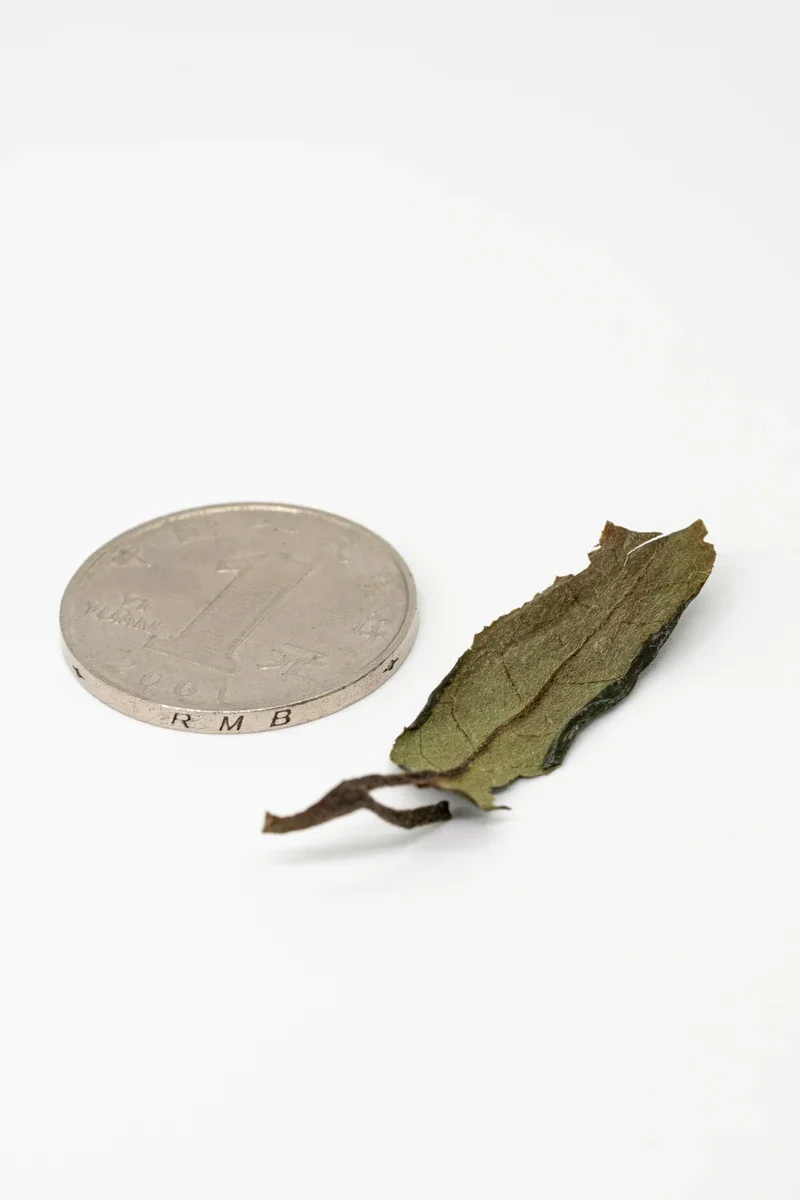
Spent Leaves: Whole elastic buds, light yellow to pale green, with silvery down.
Taste: More rounded, dense and "bodied." Astringency — soft, "velvety." Sweetness is preserved but changes character: instead of floral freshness — honey depth. Aftertaste — warm, with date-honey line.
Amino Acids: Exceptionally high content — 3–5% (up to 7% in the best batches). L-theanine (茶氨酸) dominates, responsible for sweetness, umami and relaxing effect. With aging, content decreases but remains significant even in 5–7-year batches.
~2–4%. Relatively stable during storage. Subjectively perceived as mild due to synergy with L-theanine.
Activity of oxidases and peroxidases is significantly higher than in pan-fired teas — this is precisely what makes Yin Zhen "alive" and capable of multi-year transformation.
In fresh tea — linalool, geraniol, nerolidol (flowers, fresh greenery). With aging — restructuring to more stable "warm" compounds (honey, dried fruits, herbs, woodiness).
According to research, total flavonoid content in white tea increases with storage time (8.5–13 mg/g in fresh; higher — in aged), which is a characteristic feature of white tea's chemical transformation.
Minerals: Potassium, fluorine, magnesium, zinc, selenium, manganese.
Polyphenols: ~15–22% calculated on dry matter. Main ones — EGCG and ECG. In fresh tea, catechins are represented in native form, providing high antioxidant potential. Over years, polymerization occurs with formation of theaflavins and thearubigins, responsible for liquor darkening and appearance of "honey" shades.
Vitamins: C, B₁, B₂, E, PP, folic acid. Minimal heat treatment ensures better preservation of thermolabile vitamins. Over years, vitamin C content decreases.
Catechins and polyphenols provide cellular protection from oxidative stress. In aged tea, antioxidant potential is preserved thanks to polymerized phenolic compounds.
Synergy of caffeine and L-theanine creates calm alertness and steady focus without sharp "spike" and decline.
L-theanine stimulates generation of brain alpha waves, improving concentration and memory.
Polyphenols and vitamin C increase body resistance. In traditional Chinese medicine, fresh white tea is considered "cooling" (性寒凉), while aged — more "neutral" and gentle for the stomach.
Yin Zhen extract is used in premium cosmetics industry (particularly Chanel) due to antioxidant properties.
Regular consumption is associated with improved lipid profile and vascular elasticity.
Especially aged white tea — one of the gentlest teas for the stomach; in Fujian folk medicine "old white" was recommended as a warm drink after meals.
Fluorine and polyphenolic complex suppress pathogenic microflora growth.
70–80 °C. Boiling water — main enemy: destroys delicate aromatic molecules, gives coarseness.
5–7 g per 150–200 ml.
Don't leave tea "floating" between infusions.
90–100 °C. Hot water better reveals aged tea depth.
5–7 g per 150–200 ml for infusions; 2–3 g per 500 ml for boiling.
Especially good for Lao Cha 5+ years. Pour 2–3 g with cold water (500 ml), bring to boil, simmer 3–8 minutes on low heat. Reveals maximum density and "honey" profile.
Process: Full vessel warming → tea addition → quick rinse (5 sec) → first infusion 15–25 sec → 6–10 infusions. Bud material releases liquor quickly — control timing.
Teaware: Porcelain gaiwan, dense ceramics. If tea was stored long in tight packaging — let it "breathe" 10–20 minutes before brewing.
Container: "Breathing" — paper wrapper + cardboard/wooden box. With airtight container, tea ages slower.
Humidity: Key parameter. High humidity = mold, acidity, mustiness — irreversible defects. Optimal — below 45–50%.
Dry, dark, stable temperature. Best revelation — in first 6–12 months.
Every few months — visual and aromatic inspection.
Temperature: Room temperature (15–25 °C), without overheating and direct sun.
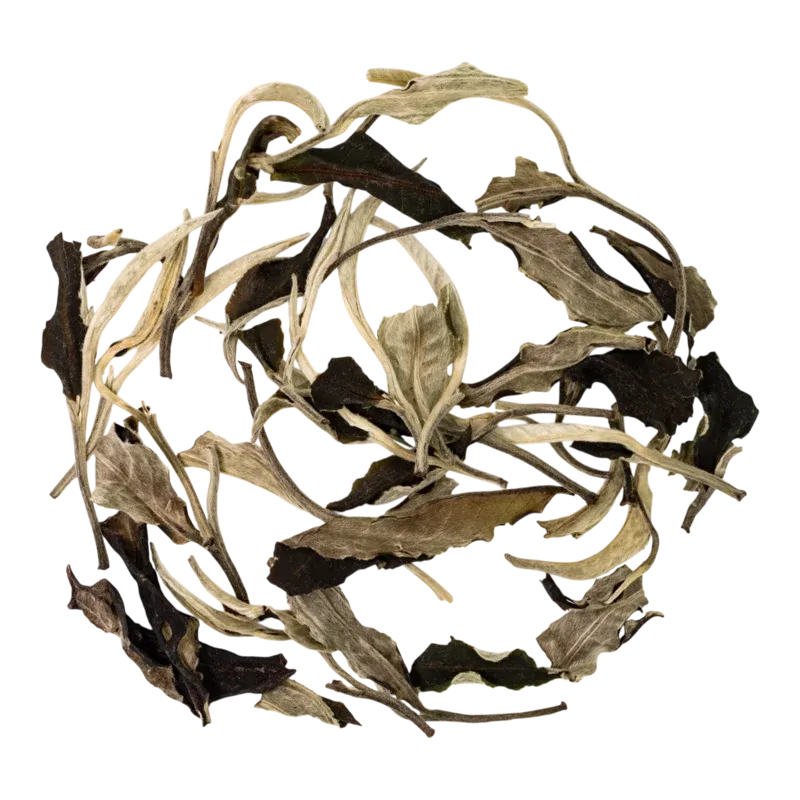
Raw material — bud with one-two leaves. More saturated and multifaceted taste, pronounced fruity and herbal notes. Liquor slightly darker. More affordable in price. In aging gives more "bodied" and dense liquor.
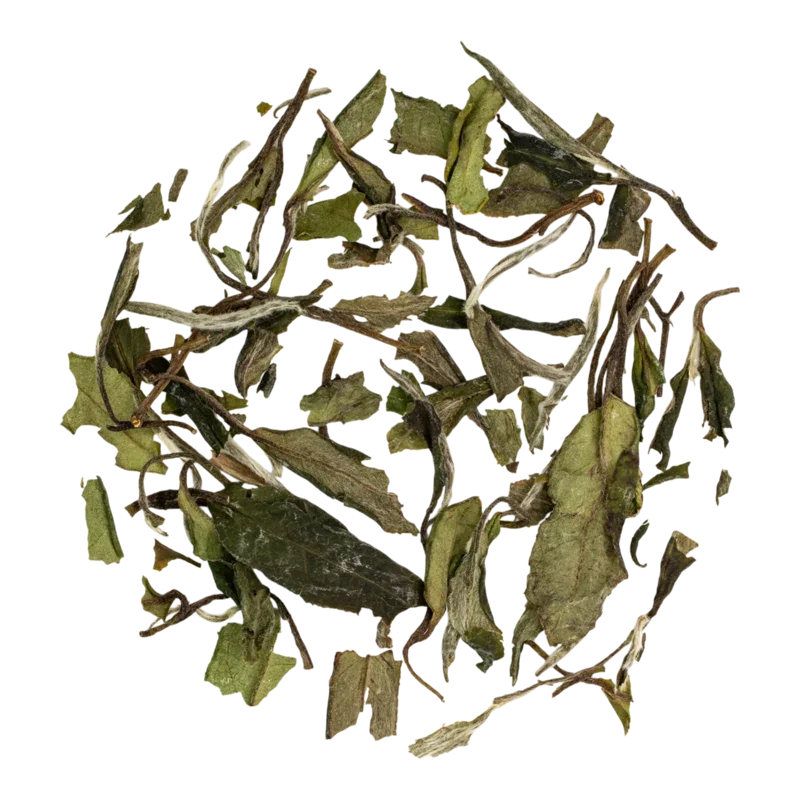
Bud with two-three leaves, from Caicha or Da Bai variety. Intermediate position between Bai Mu Dan and Shou Mei. Denser liquor.
Mature leaves. Most affordable white tea. Somewhat coarse but honest taste. Especially good in aging and boiling — dense "compote" liquor. Main mass of aged white tea on market — precisely Shou Mei.
Yunnan interpretation from Camellia sinensis var. assamica. Characteristic appearance: upper leaf side white, lower — dark. Profile more fruity and honey, less "clean" than Fujian Yin Zhen.
Whole, straight buds with dense down. Crumbs, dust, broken fragments — signs of low quality.
Sharp smell of vanillin, synthetic fruits — sign of flavoring.
Light, clear, with clean sweet aftertaste. Acidity, mustiness, cloudiness — signs of problems.
Ask about storage conditions. Mold and acidity — irreversible defect, not "characteristic note."
No reviews yet. Tell us what you think of this tea.
Rate this tea and share your impressions. We review each submission before publishing it.