Brewing
Gongfu brewing
- Water temperature
- 78 °C
- Tea amount
- 5 g
- Water volume
- 100 ml
- First steep
- 10 s
- Time added per infusion
- 5 s
- Infusions
- 4

Yuèyáng huáng yá
Choose a brewing method. Start with the recommended quantities and time, then adjust to taste.
Brewing
Brewing
Taste
Tea encyclopedia
Category: Core subcategory of the product with protected geographical indication "Yueyang Yellow Tea" (岳阳黄茶). Yueyang Yellow Tea includes four subcategories: Jūnshān Yín Zhèn (君山银针), Yuèyáng Huáng Yá (岳阳黄芽), Yuèyáng Huáng Yè (岳阳黄叶, "yellow leaf"), and compressed yellow tea (紧压黄茶, pressed yellow tea). Yueyang Huang Ya is positioned as the "benchmark of Chinese yellow bud tea" (中国黄芽茶标杆).
Category: Core subcategory of the product with protected geographical indication "Yueyang Yellow Tea" (岳阳黄茶). Yueyang Yellow Tea includes four subcategories: Jūnshān Yín Zhèn (君山银针), Yuèyáng Huáng Yá (岳阳黄芽), Yuèyáng Huáng Yè (岳阳黄叶, "yellow leaf"), and compressed yellow tea (紧压黄茶, pressed yellow tea). Yueyang Huang Ya is positioned as the "benchmark of Chinese yellow bud tea" (中国黄芽茶标杆).
Coordinates: Approximately 29°24′ North latitude, 113°00′ East longitude.
Origin: China, Húnán Province (湖南, Húnán), Yuèyáng Prefecture (岳阳, Yuèyáng), Jūnshān District (君山区, Jūnshān Qū). Core zone — Jūnshān Island (君山岛, Jūnshān Dǎo) in the western waters of Dòngtíng Lake (洞庭湖, Dòngtíng Hú) and adjacent coastal territories. In 2011, Yueyang received official status as "Hometown of Chinese Yellow Tea" (中国黄茶之乡).
Type: Yellow tea (黄茶, huángchá), lightly oxidized. Belongs to the subcategory "yellow bud tea" (黄芽茶, huáng yá chá) — the highest quality raw material category according to national standard GB/T 21726-2008.
The expression "金镶玉" (jīnxiāngyù) originally is a term from jade studies and jewelry art, denoting the technique of gold inlay in jade. Applied to tea, it describes the contrast of golden down on the light base of the bud. The same epithet is borne by Junshan Yin Zhen — related tea from the same island.
When brewing in glass cup, Yueyang Huang Ya buds (like Junshan Yin Zhen) demonstrate spectacular "三起三落" — thrice rise to the surface and thrice sink to the bottom, resembling now a school of fish, now bamboo shoots. This spectacle is considered one of the "tea wonders" and is a sign of properly processed tea.
Junshan is possibly the smallest by area (0.96 km²) island in the world where world-class tea is produced. For comparison: the area of tea gardens of all Yueyang is 265,000 mu, but the core zone of Huang Ya on Junshan occupies only a tiny fraction of this territory.
The technology of "双闷黄" — two-stage controlled fermentation — was first developed precisely in Yueyang and is considered a key innovation that allowed Yueyang yellow tea to reach a new quality level: more persistent aroma, brighter liquor, deeper sweetness.
Junshan tea figures not only in "Dream of the Red Chamber." The great calligrapher and gourmet Yuán Méi (袁枚, XVIII century) in his "Menu from the Garden of Contentment" (《随园食单》) noted: "The taste and color [of Junshan tea] are similar to Longjing, the leaf is slightly wider and greener; but its harvest is the scarcest."
Cultural Significance: Yueyang Huang Ya is inextricably linked with the mythopoetic heritage of Junshan Island — one of the most celebrated places in Chinese literature and mythology. According to legend, the island is named after Xiangjun (湘君) and Xiangfuren (湘夫人) — deities of the Xiang River from "Nine Songs" (《九歌》, Jiǔ Gē) by the great poet Qu Yuan. On the island is the tomb of the Two Consorts (二妃墓) — Éhuáng (娥皇) and Nüying (女英), daughters of the legendary Emperor Yao and wives of Emperor Shun, who, according to legend, mourned their husband's death and planted the first tea bushes on the island. Liu Yi's Well (柳毅井) is a monument to the Tang novella of the same name about love. Qin Shihuang, according to legend, left his seal on Jūnshān (封山印), and on the "Platform for Shooting Dragons" (射蛟台) Emperor Wu-di of the Han Dynasty hunted mythical creatures. The literary connection of tea with Junshan is also immortalized in the novel "Dream of the Red Chamber" (《红楼梦》): the tea "Lao Jun Mei" (老君眉, "Eyebrows of the Old Lord"), which is drunk in Chapter 41, according to the outstanding tea scholar Zhuàng Wǎnfāng (庄晚芳), represents precisely Junshan yellow tea.
The first documentary evidence of Yuèyáng tea is contained in the treatise by Lǐ Zhào (李肇, Lǐ Zhào) "Supplement to National History" (《唐国史补》, Táng Guóshǐ Bǔ, c. 825): "Customs revere tea, famous teas are ever more numerous... from Yuezhou — 灉湖之含膏" (岳州有灉湖之含膏, Yuèzhōu yǒu Yōnghú zhī Hángāo). "Yonghu hangao" — literally "containing the fat [of tea juice] from Yong Lake" — represented a thick, paste-like tea form obtained through prolonged steaming of tea leaves. This very technique of "menhuang" (闷黄) became the technological ancestor of modern Yueyang yellow tea. In the same treatise, Yuezhou tea is listed alongside Mengding, Gushu, and other great teas of the era.
Tea cultivation on Junshan and around Dongting Lake developed continuously. In the Ming "Tea Manual" (《茶谱》, Chá Pǔ) it is recorded: "Yuezhou yellow buds, golden down covers the body" (岳州黄芽,金毫披身) — the first mention of precisely "huang ya" (yellow buds) as a separate product type from this region.
The modern technology of Yueyang Huang Ya took shape in the 1980s. Masters of the Jūnshān Tea Factory (君山茶厂), building on the classical technology of "two dryings — two steamings" (二烘二闷) of Junshan Yin Zhen, created the innovative method of "梯次增湿发酵法" (tīcì zēngshī fājiào fǎ) — "stepwise moistening during fermentation," allowing more precise control of the depth of menhuang and achieving a sweeter, honey-like profile.
Yueyang Huang Ya was separated from the Junshan Yin Zhen assortment as an independent product oriented toward the premium bud tea market.
As part of "Yueyang Yellow Tea," it received national protection of geographical indication (国家地理标志产品). In the same year, the geographical indication trademark was registered. According to 2014 data, the production volume of Yueyang yellow tea was 40,000 tons with a product value of 1.6 billion yuan; about 1,000 specialized farms, processing enterprises, and trading companies operated in the region, tea garden area reached 265,000 mu (approximately 17,700 hectares), and up to 100,000 tea growers were employed in the industry.
Yueyang Huang Ya won a gold award at the All-China Yellow Tea Competition (中国黄茶斗茶大赛) as an independent category.
Cultivar: Local populations of small- and medium-leaf varieties of Camellia sinensis var. sinensis, cultivated on Junshan and around Dongting Lake for centuries. The tea bushes of Junshan grow in an island ecosystem with high humidity, which promotes amino acid accumulation and forms a soft, sweet base. The root system in the sandy soils of the island can reach depths exceeding 6 meters, providing access to mineral horizons.
Picking: Strictly before the Qīngmíng festival (清明, Qīngmíng, ~April 5) or at the very beginning of the Qingming season, when buds are most tender and saturated with amino acids. Active harvest period — about 7–10 days.
Pluck Standard: Single buds (单芽, dān yá) or bud with one barely opened leaf (一芽一叶初展, yī yá yī yè chū zhǎn). Raw material must be resilient, undamaged, harvested in dry weather.
Raw Material: The principle analogous to the classical "nine prohibitions" (九不采, jiǔ bù cǎi) of Junshan Yin Zhen is applied: do not harvest in rain, do not harvest frost-damaged, do not harvest opened, do not harvest purple, do not harvest hollow, do not harvest crooked, do not harvest insect-damaged, do not harvest too thin, do not harvest off-standard. Harvested raw material is immediately delivered to the factory and sorted.
Climate: Average annual temperature — 16.5°C. Number of foggy days in the core zone — more than 200 per year (significantly higher than the average for Yueyang — 180 days). Relative humidity — over 85%. Average annual sunshine duration — about 1,740 hours. The proportion of diffused (reflected from the water surface) light exceeds 80%, which suppresses catechin synthesis and promotes L-theanine and other amino acid accumulation.
Soil: Alluvial fine sandy (sandy-loamy) soils, loose and permeable, with high heat capacity. pH 5.0–5.8. Organic matter content ≥ 2.3% (average for the Yueyang tea zone — 1.5%). Selenium content — 0.85 mg/kg, which is 1.2 times higher than the regional average. The humid ecosystem of Dongting Lake forms a unique mineral profile that tea specialists describe as "lake minerals" (湖韵矿物质, hú yùn kuàngwùzhì).
A miniature island with an area of only 0.96 km² in the western part of Dongting Lake, with the highest point 63.5 m above sea level. Historical names — Xiāngshān (湘山) and Dòngtíngshān (洞庭山). The island is surrounded by water on all sides, creating a unique buffer microclimate: the lake softens daily air temperature fluctuations, but the temperature difference of the soil surface day and night remains significant, stimulating deep root system development. Forest coverage — about 90%, over 310 species of higher plants are registered on the island.
Eastern Dòngtíng Lake (东洞庭湖) is one of six international wetlands of global significance, a national nature reserve. The ecological purity of the environment directly affects the purity of tea taste.
In early spring, before Qingming, single buds or bud with barely emerging leaf are hand-picked. Harvest is conducted only in dry weather, in morning hours after dew has dried.
Harvested buds are spread in a thin layer in a cool, ventilated room for 4–6 hours. Moisture content decreases to 68–72%, buds become soft, green grassy smell gives way to a light aroma of freshness.
"Kill-green" — heating in a wok at 180–220°C to deactivate enzymes and stop oxidation. Buds acquire a dark green tint, become soft and slightly sticky.
Key stage. Hot buds after shaqing are wrapped in special cloth or placed in wooden boxes lined with paper and kept in conditions of elevated temperature and humidity. This is "湿坯闷黄" (shīpī mènhuáng — "menhuang of wet semi-finished product"). Under the action of residual heat and moisture, non-enzymatic reactions occur: chlorophyll breaks down, polyphenols partially oxidize, amino acids undergo Maillard reactions, forming characteristic yellow color and sweetish aroma.
Drying at moderate temperature to moisture content of about 50–60%. This stage fixes the intermediate result of the first steaming.
Semi-dried buds are wrapped again and kept. The steaming temperature is lower than in the first menhuang, and the time is longer. It is at this stage that the main depth of yellow color and "mixiang" (蜜香) — honey aroma — is formed.
Moisture content decreases to ~25–30%.
The final cycle of steaming-drying brings the process to completion. The tea acquires stable golden-yellow color, rich aroma, and final dryness.
Delicate final drying at 40–50°C to residual moisture ≤ 6%.
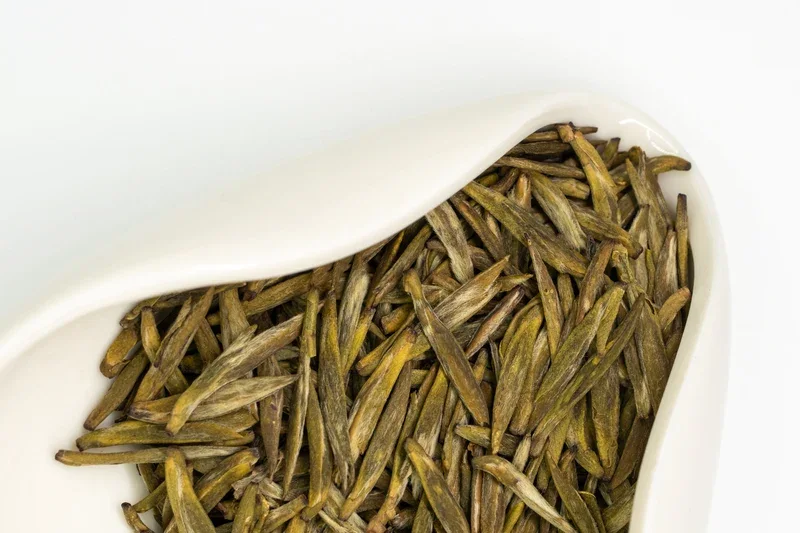
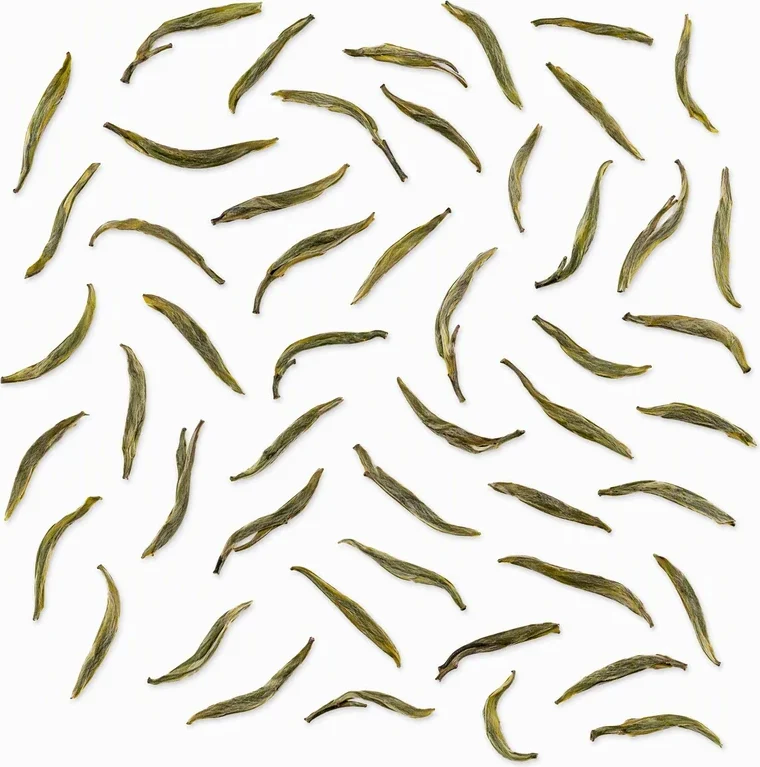
Finished tea is sorted by size, shape, and color of buds. The standard is considered large, straight, evenly golden buds with abundant down.
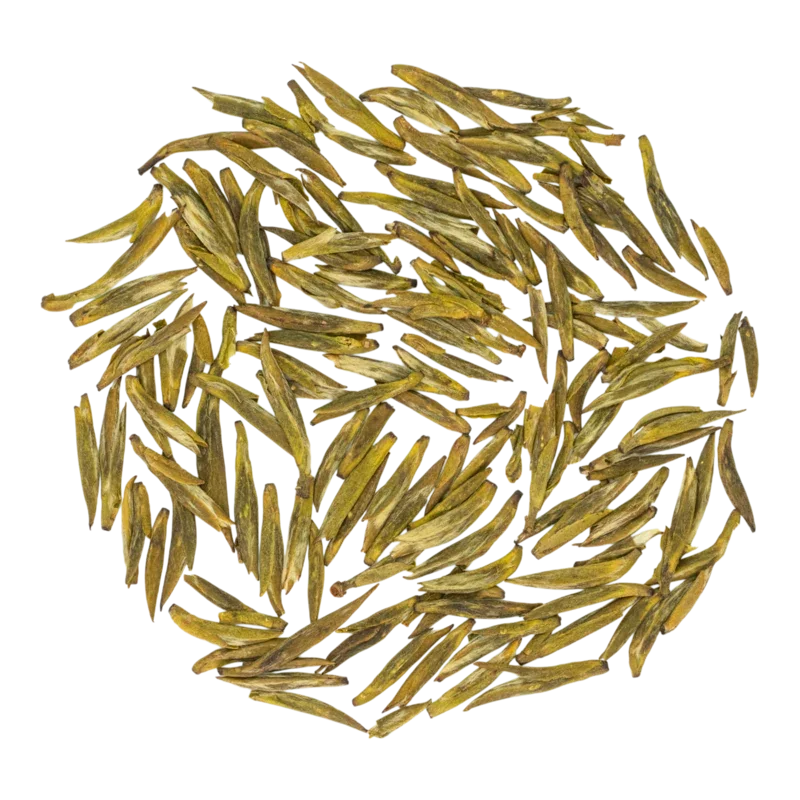
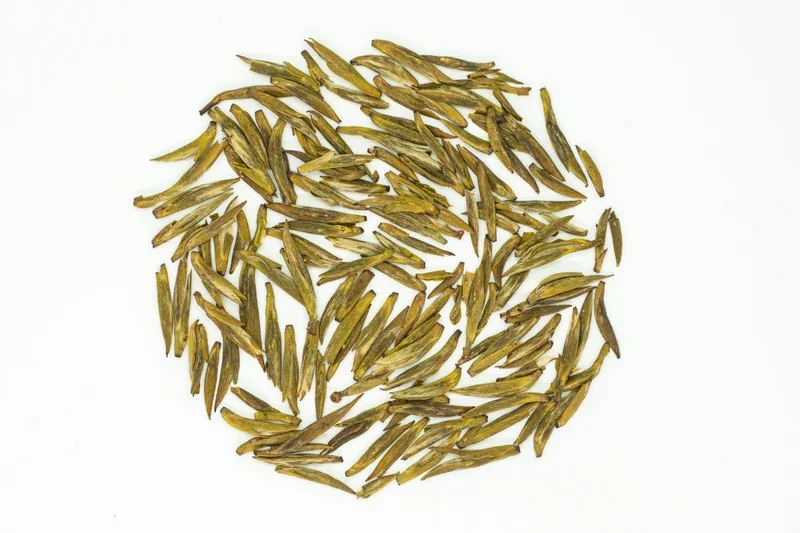
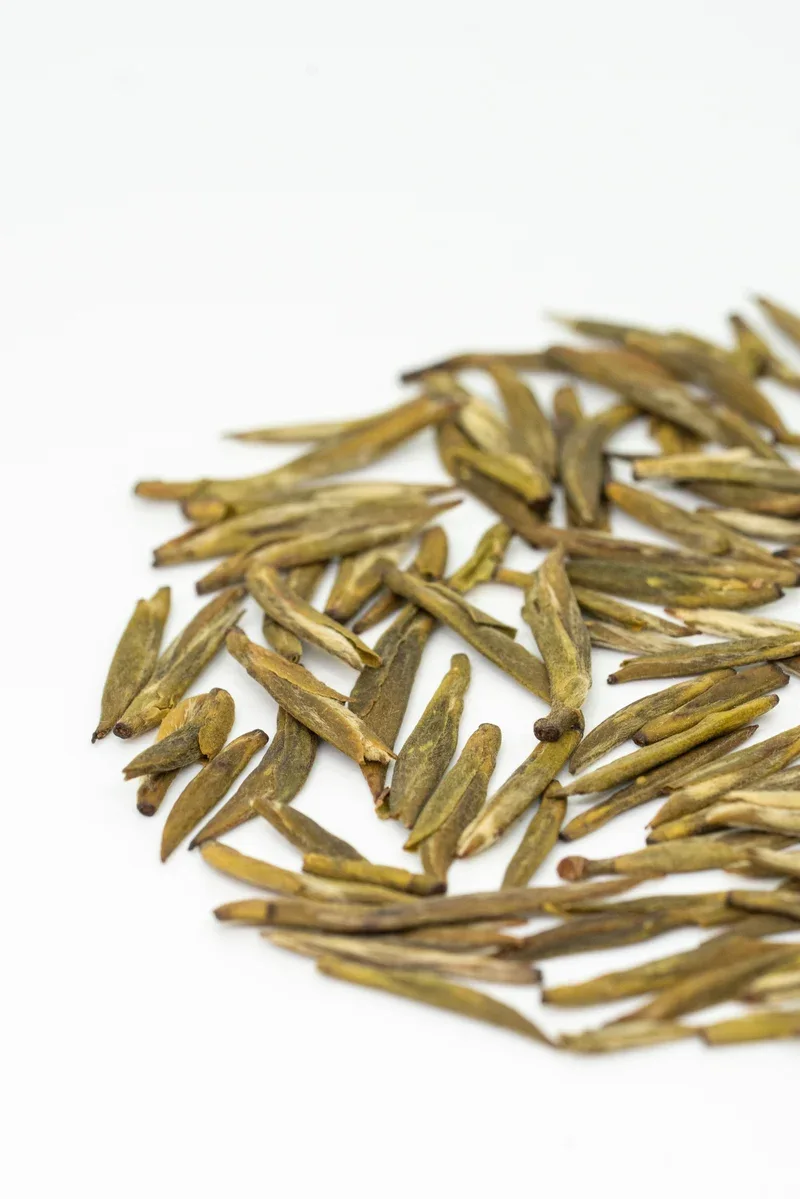
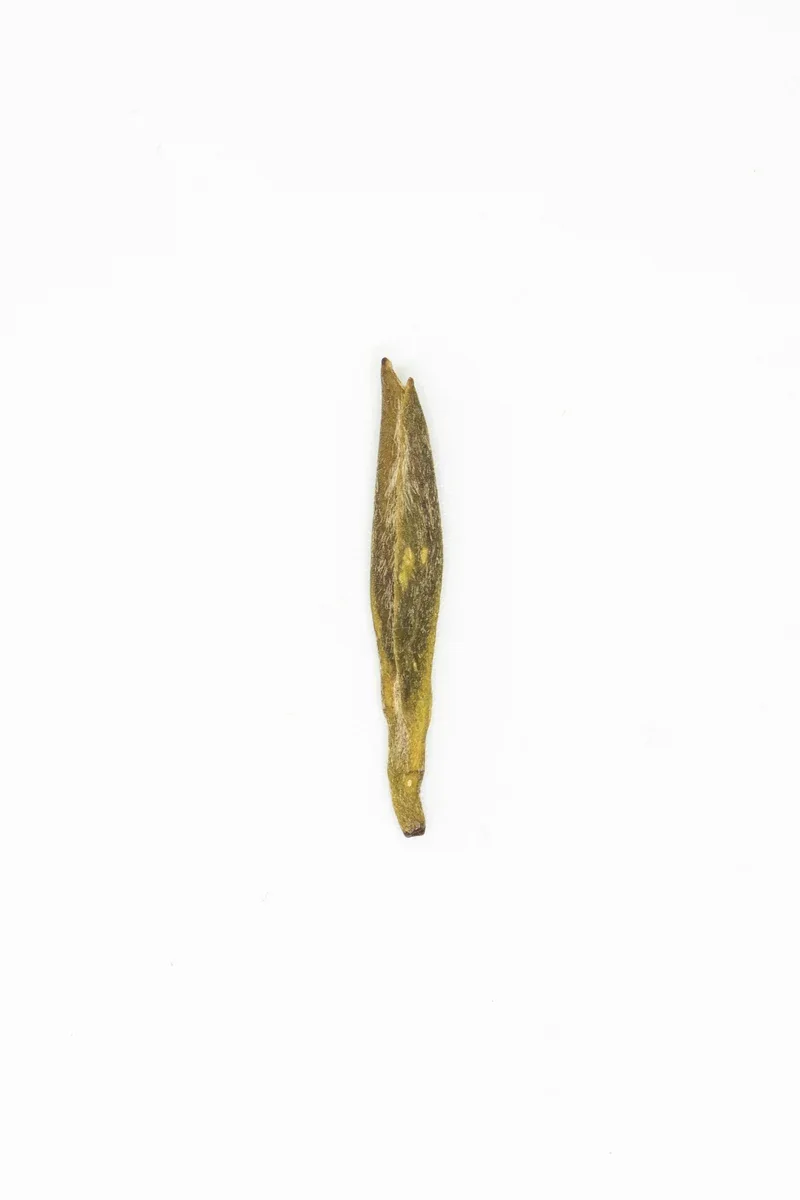
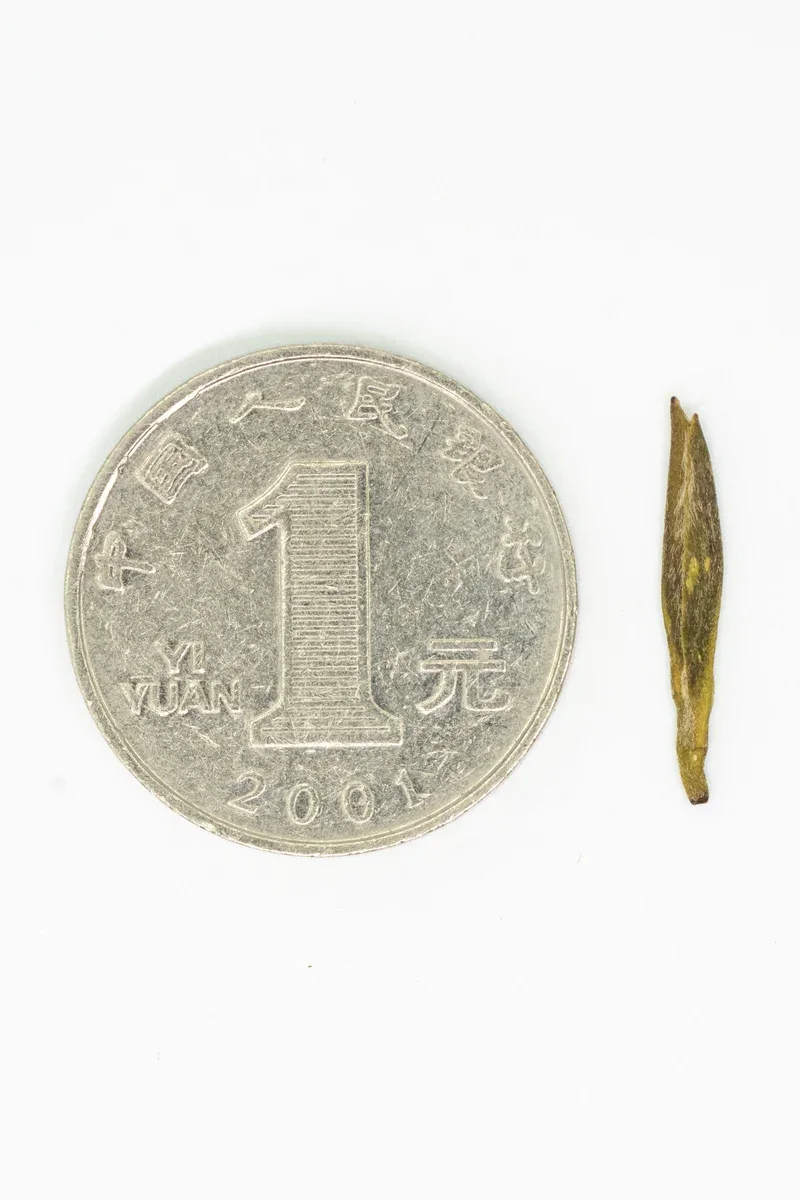
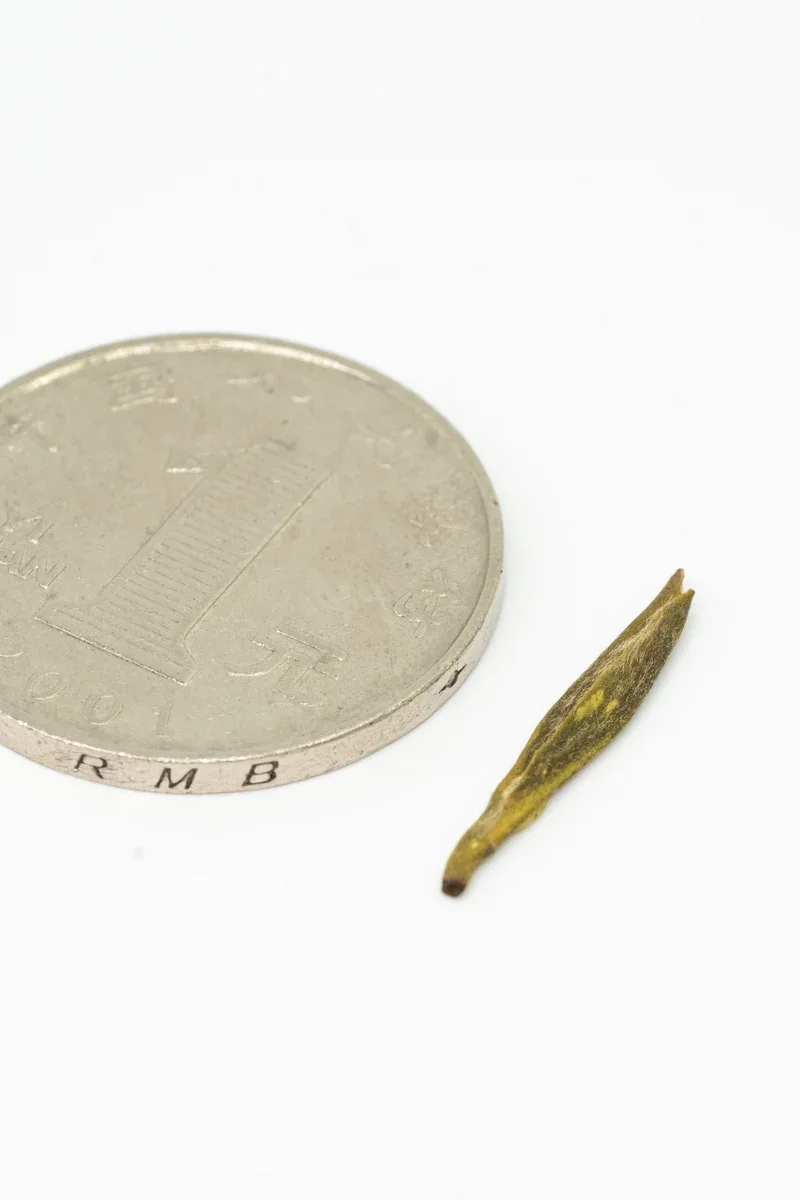
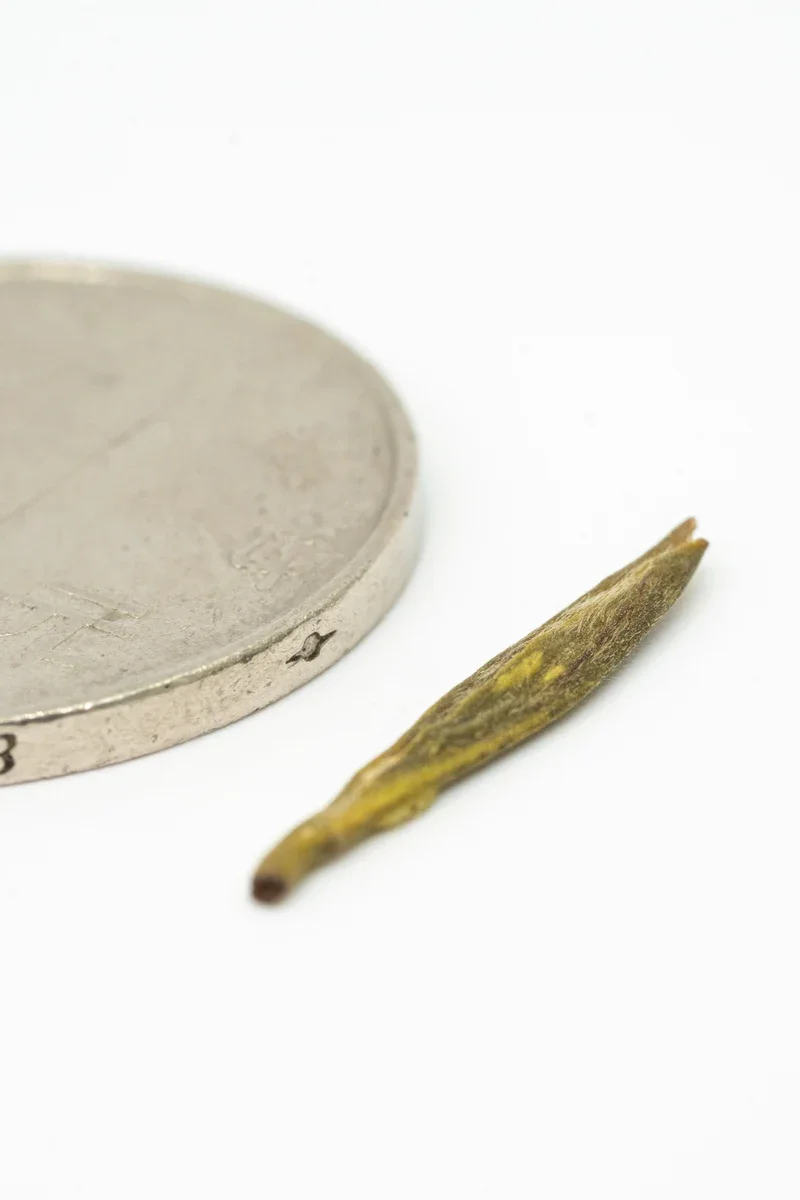
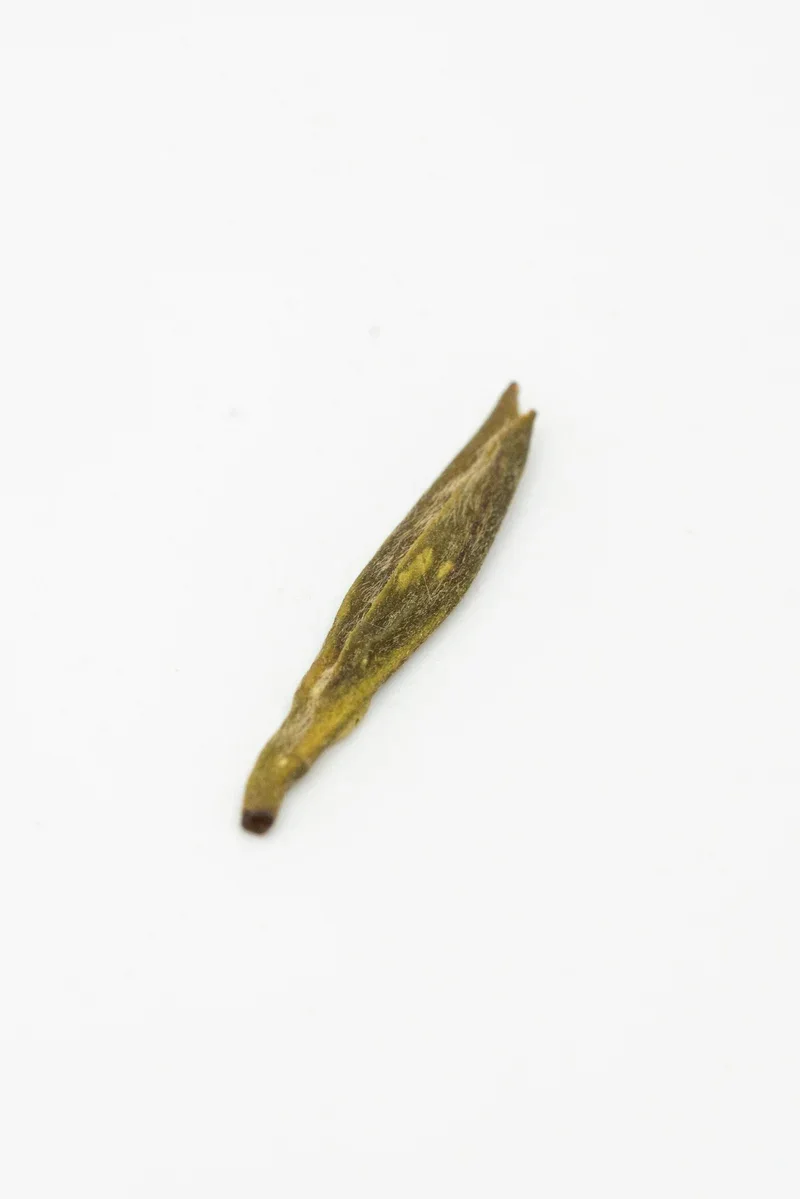
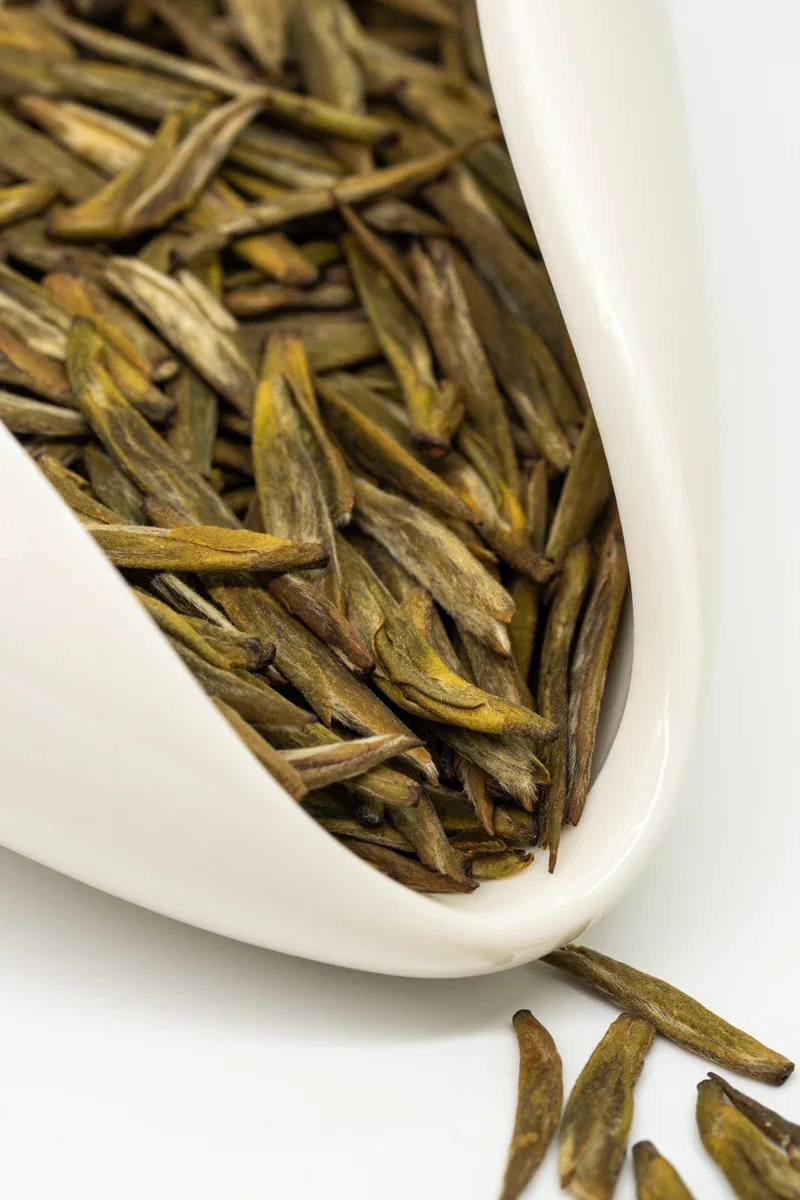
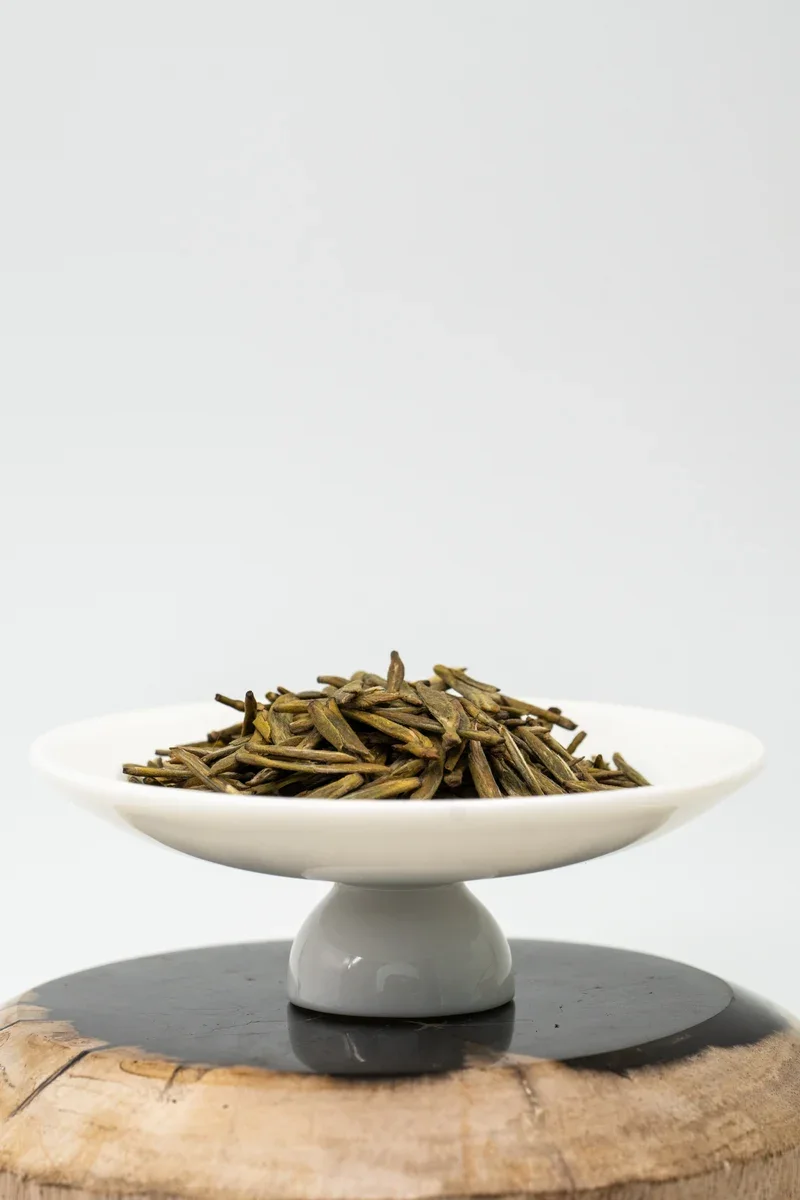
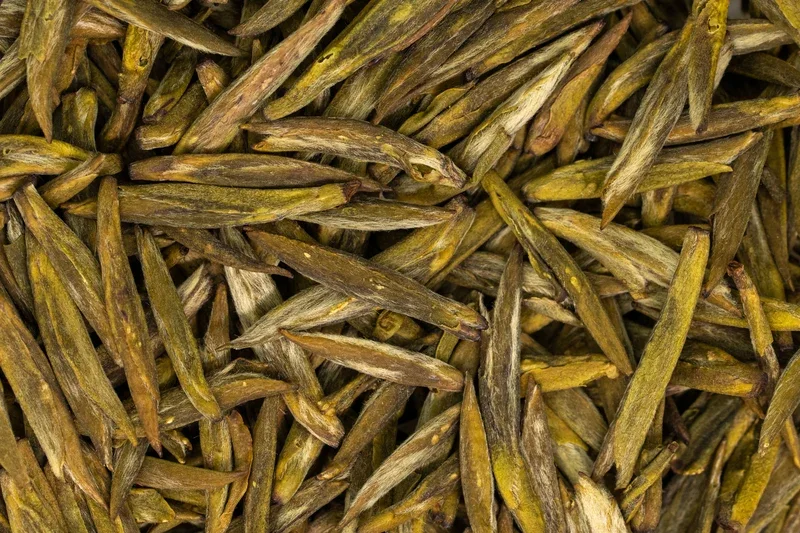
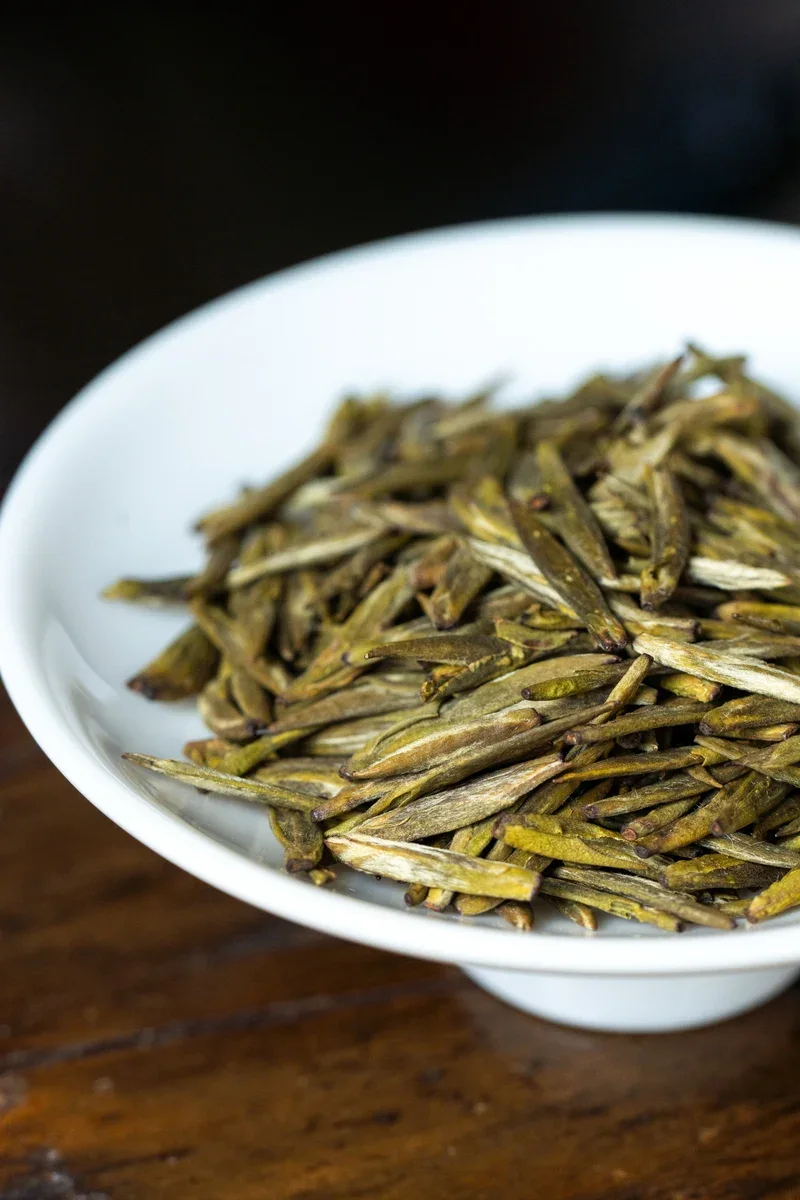
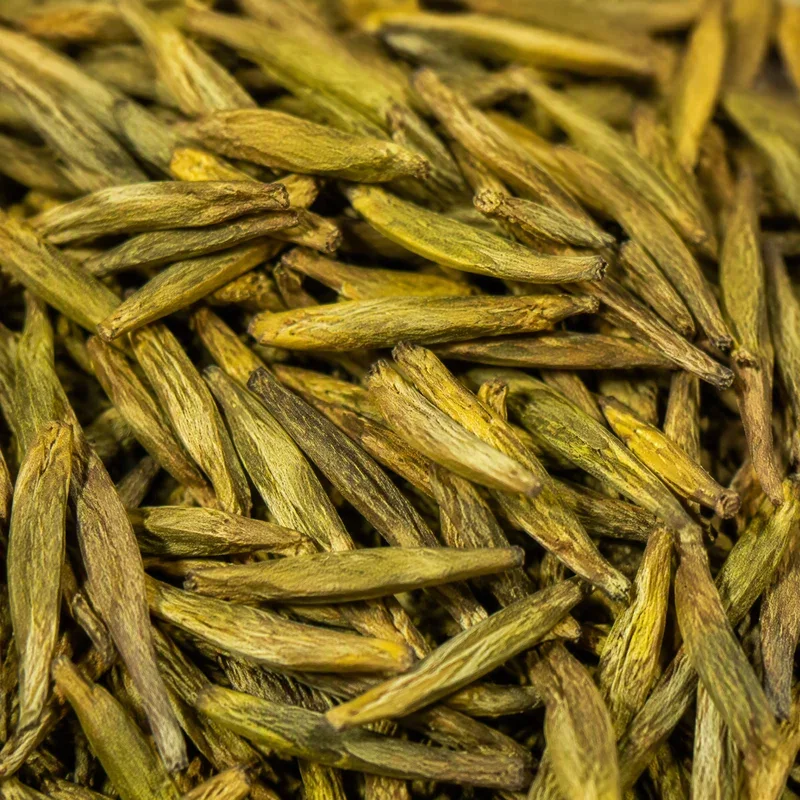
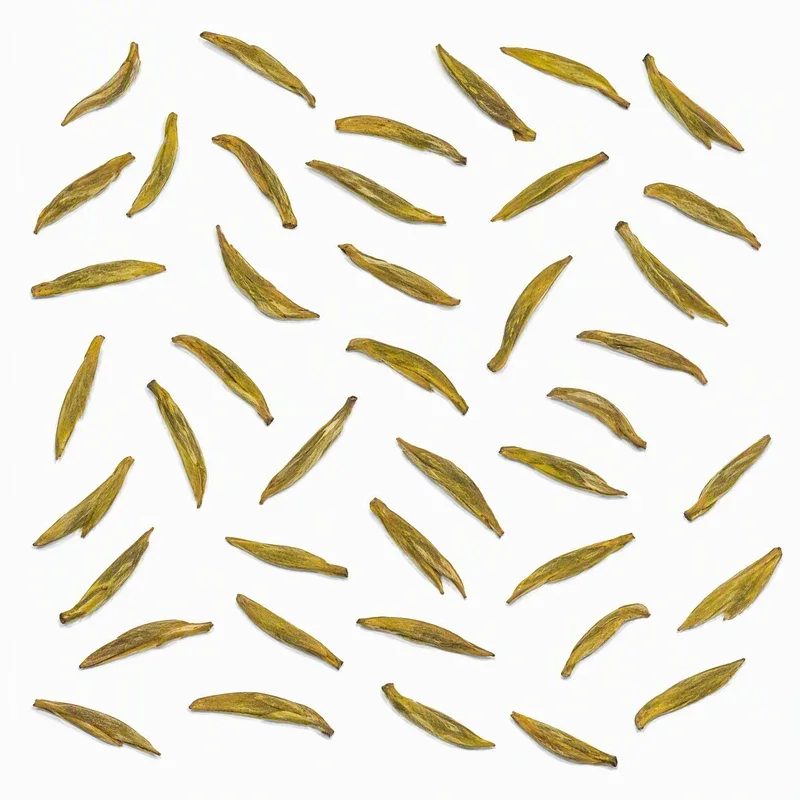
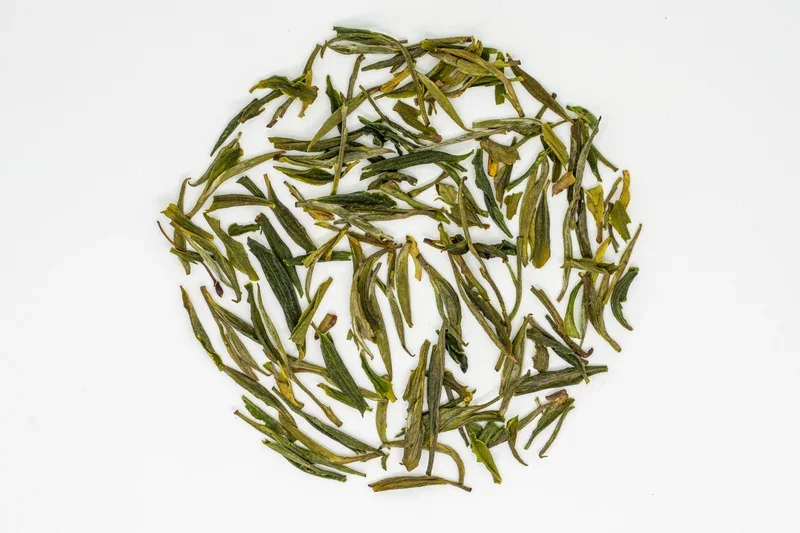
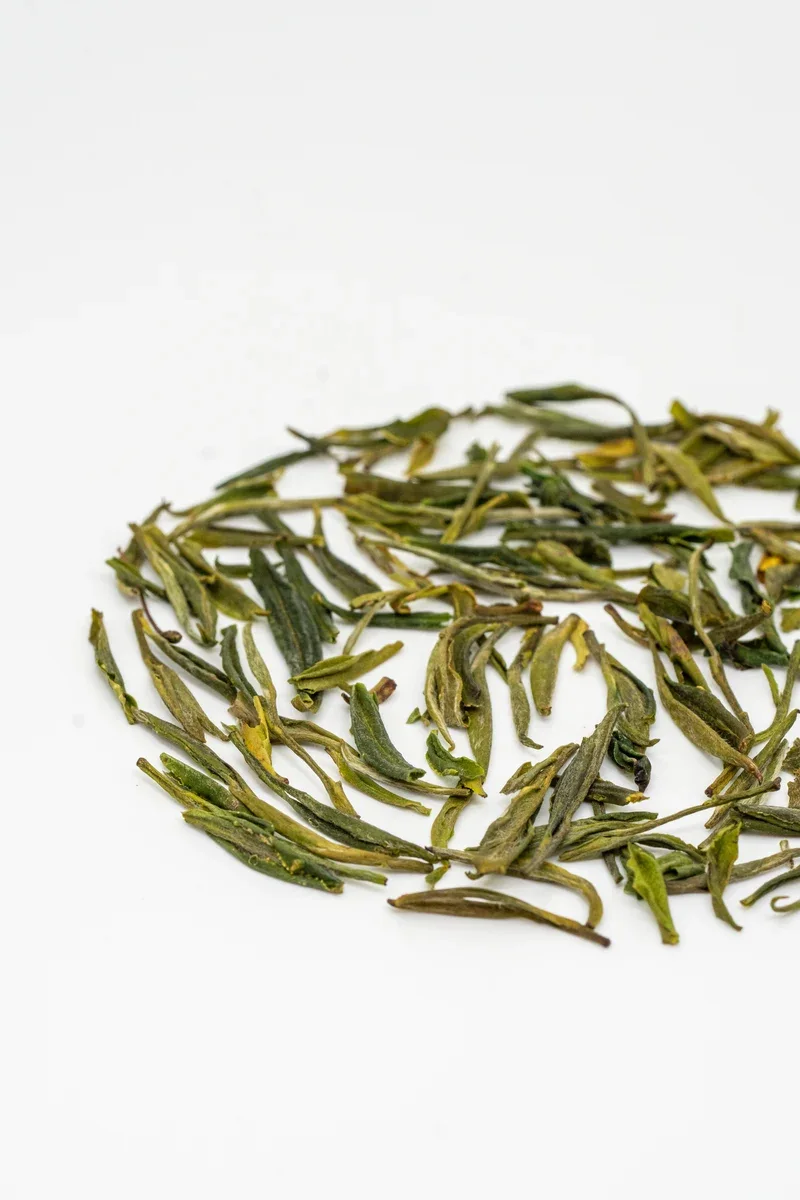
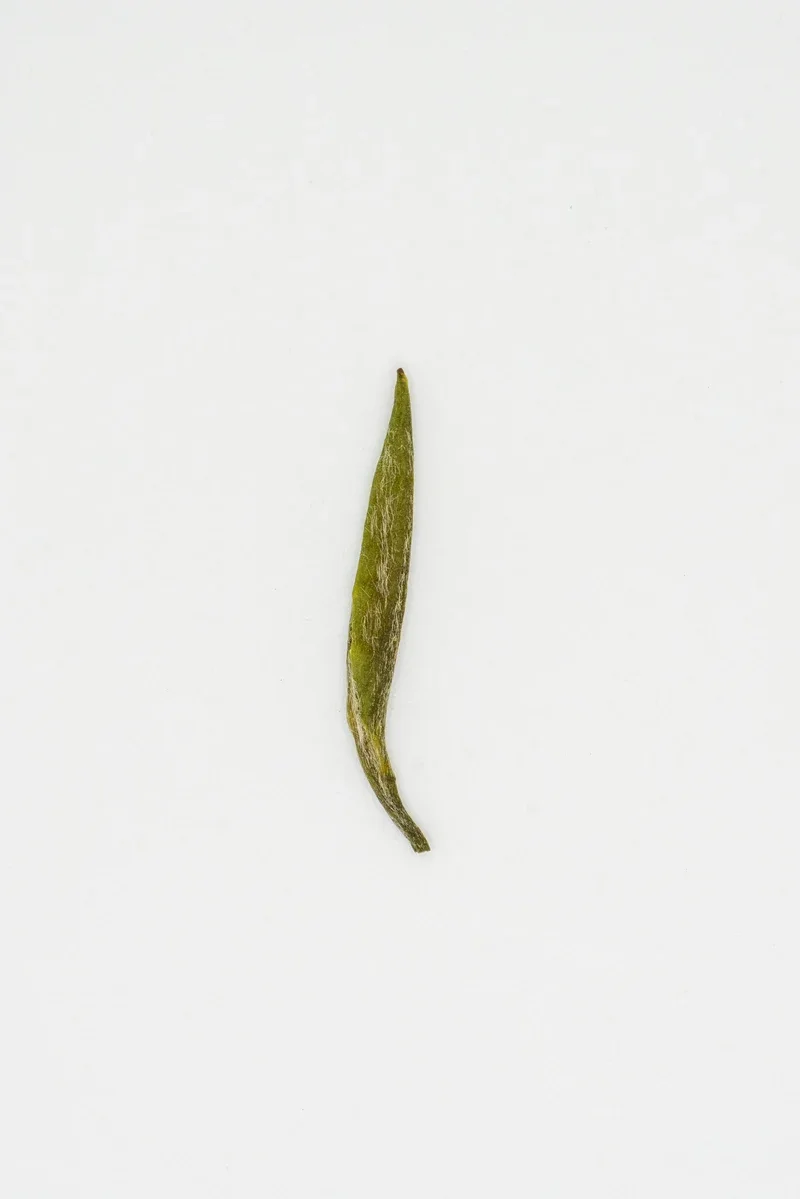
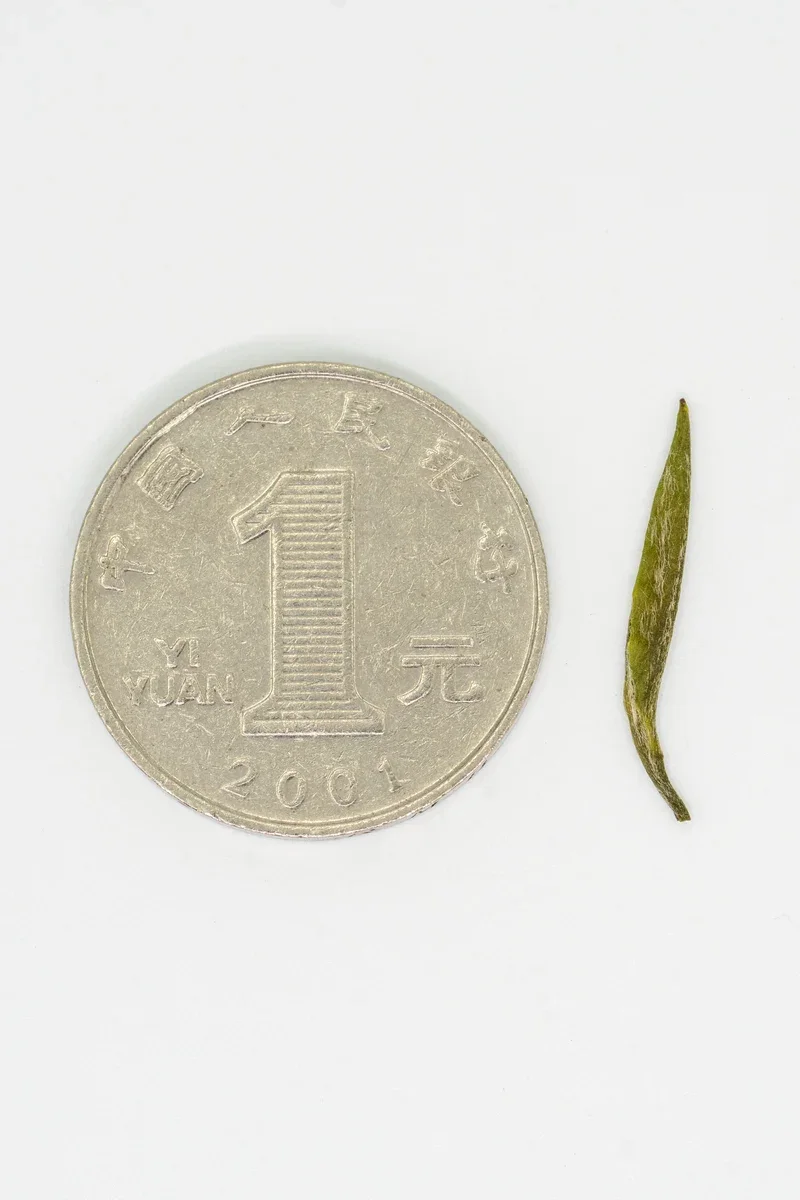
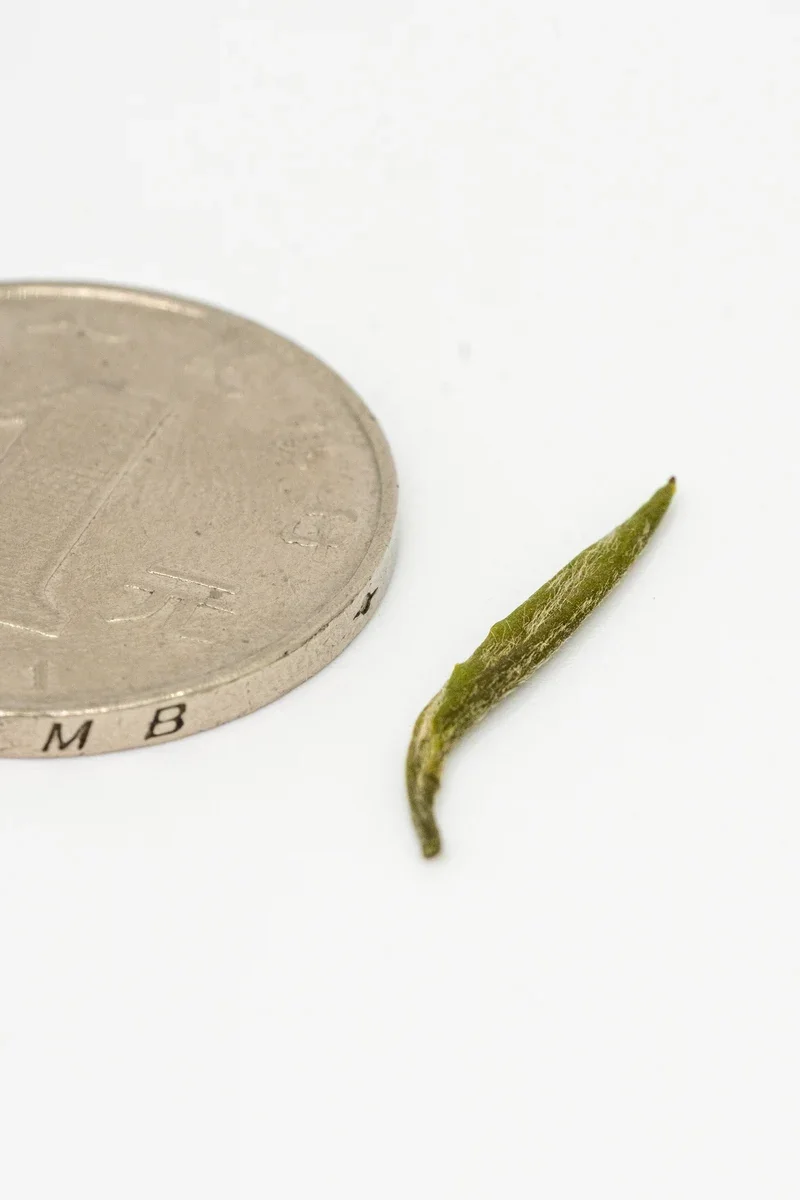
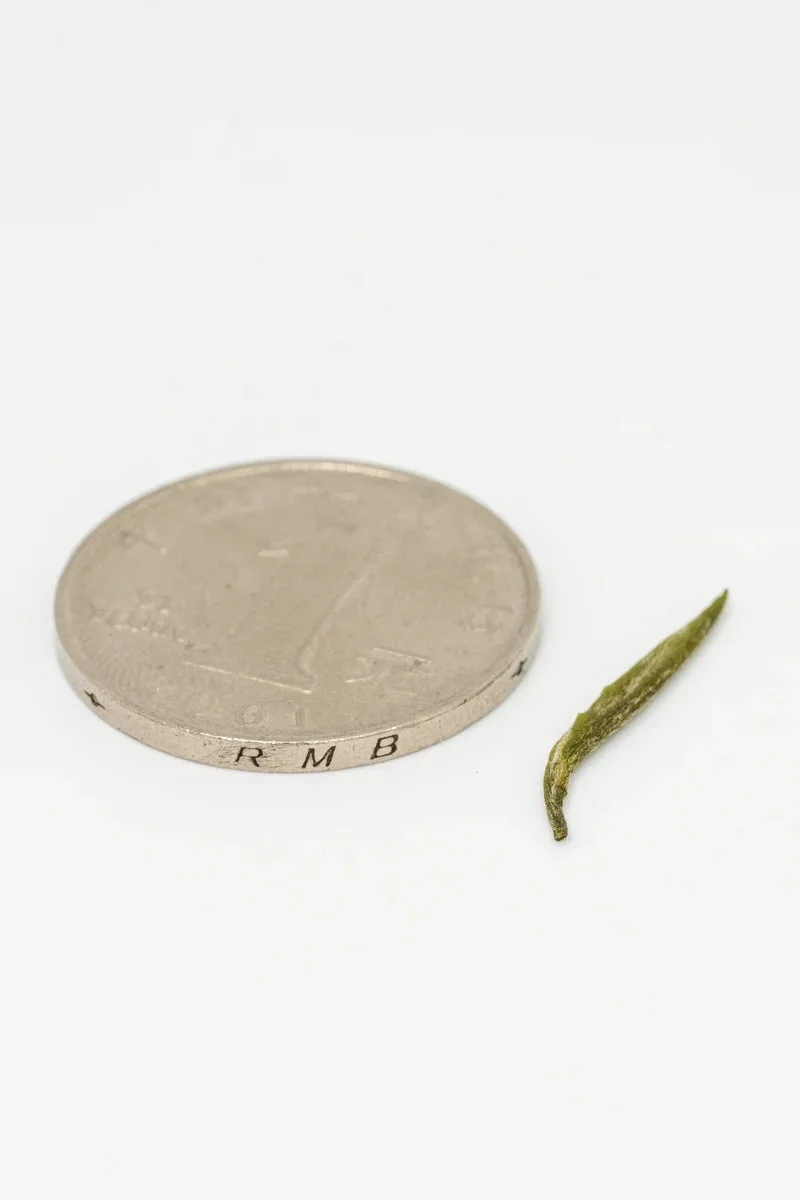
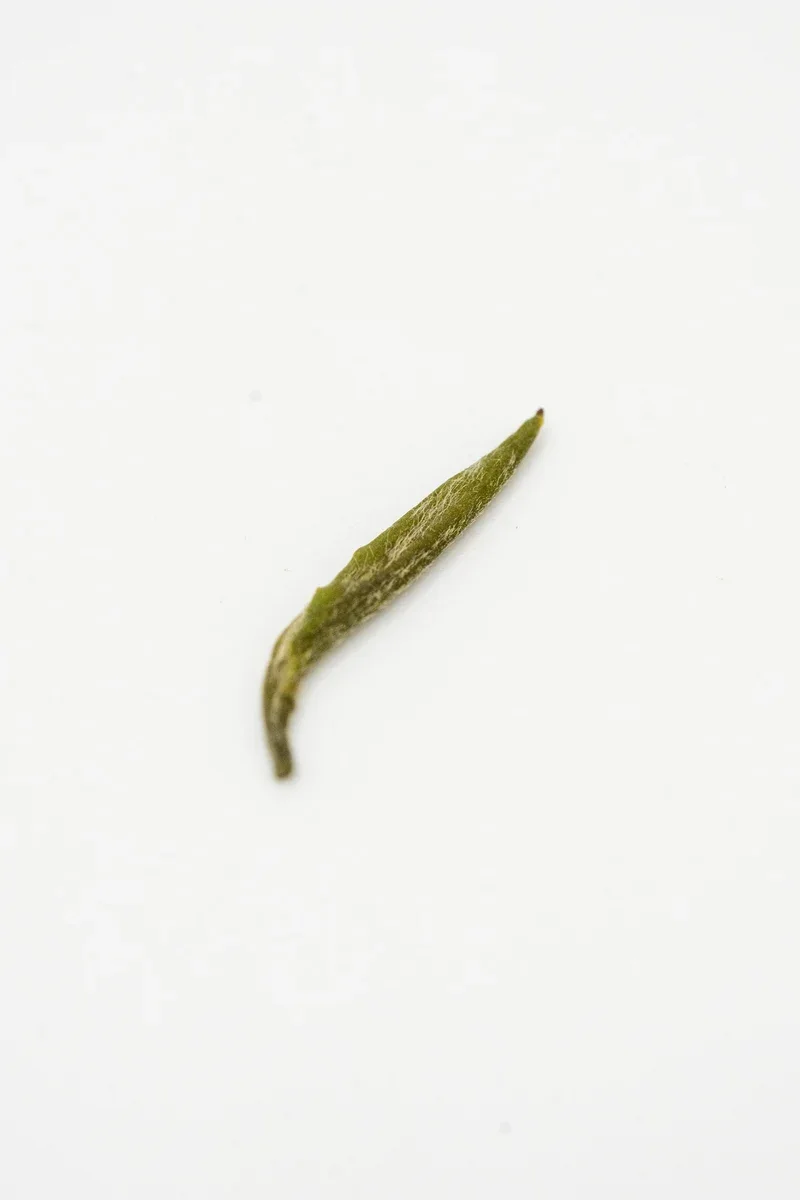
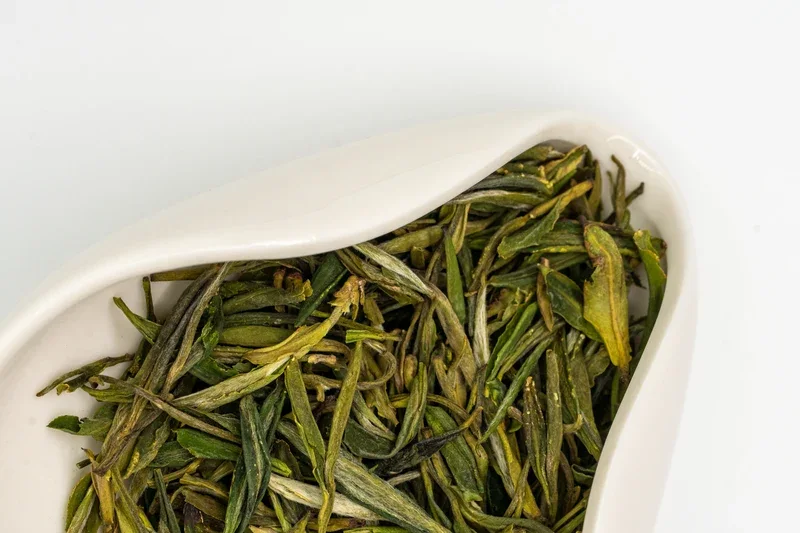
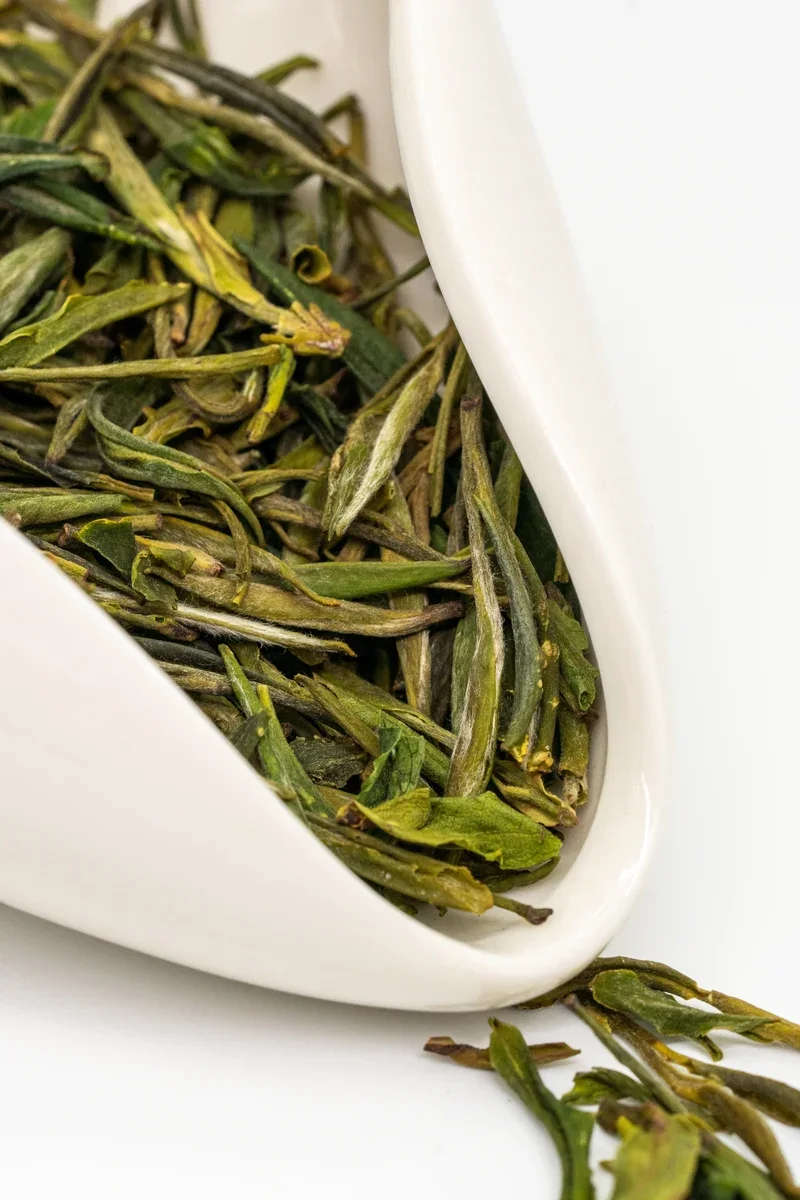
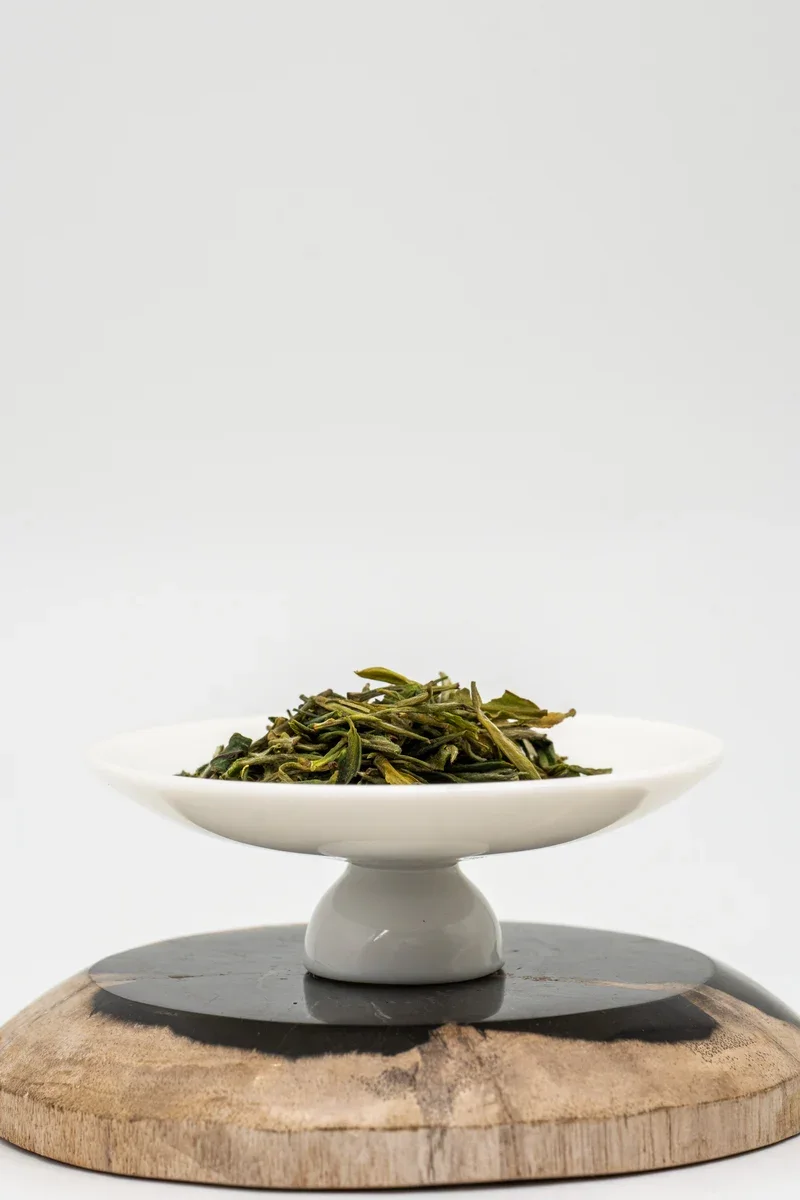
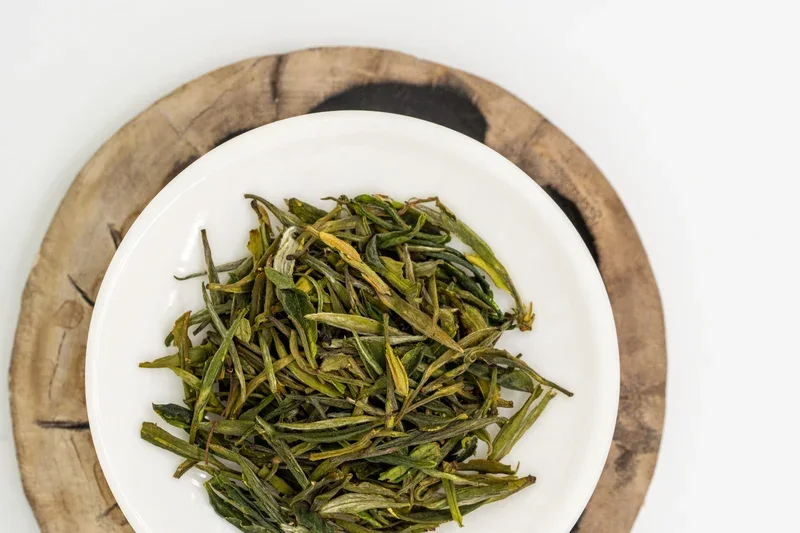
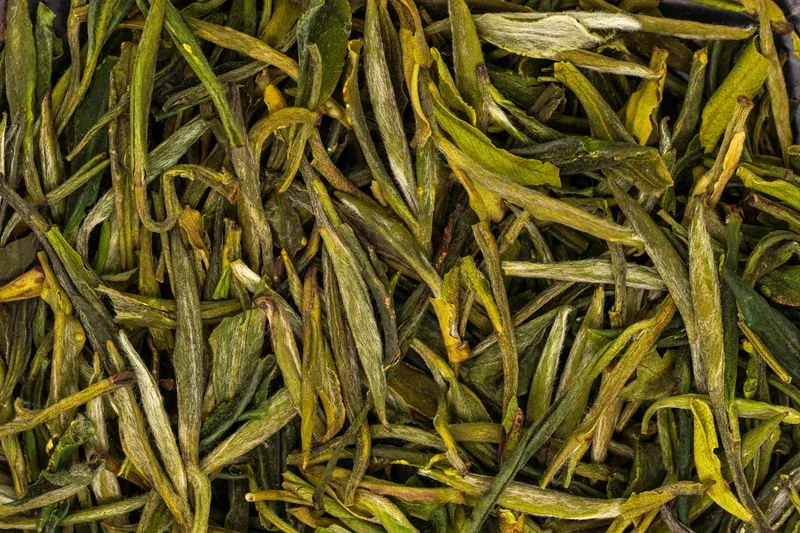
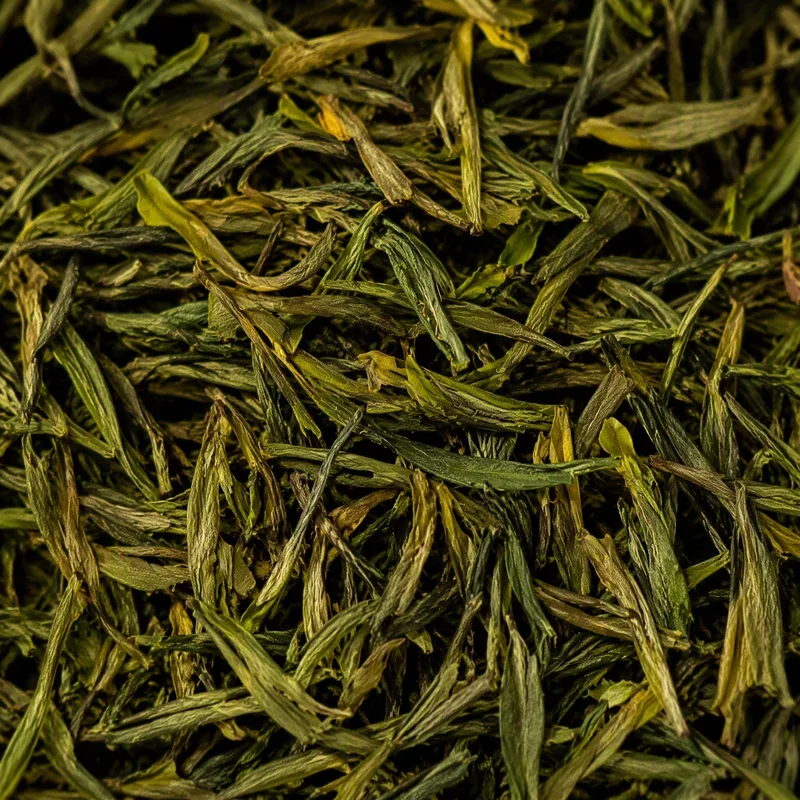
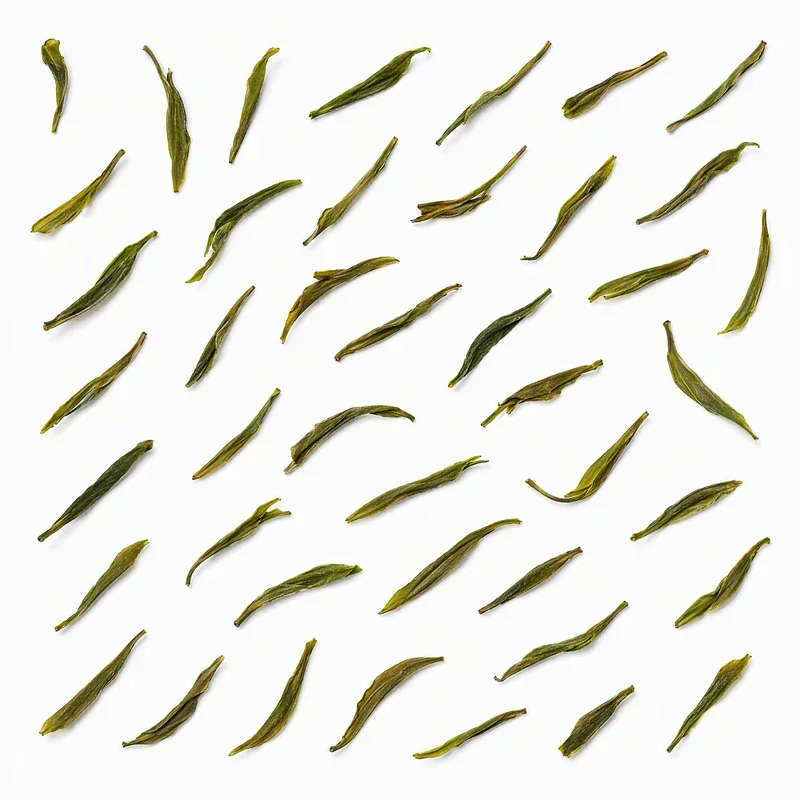
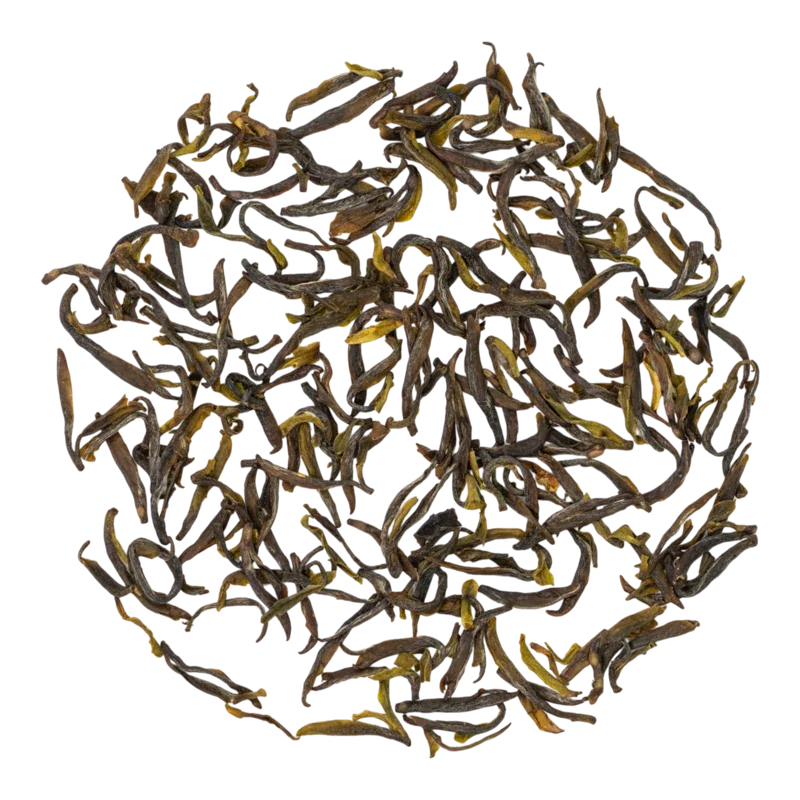
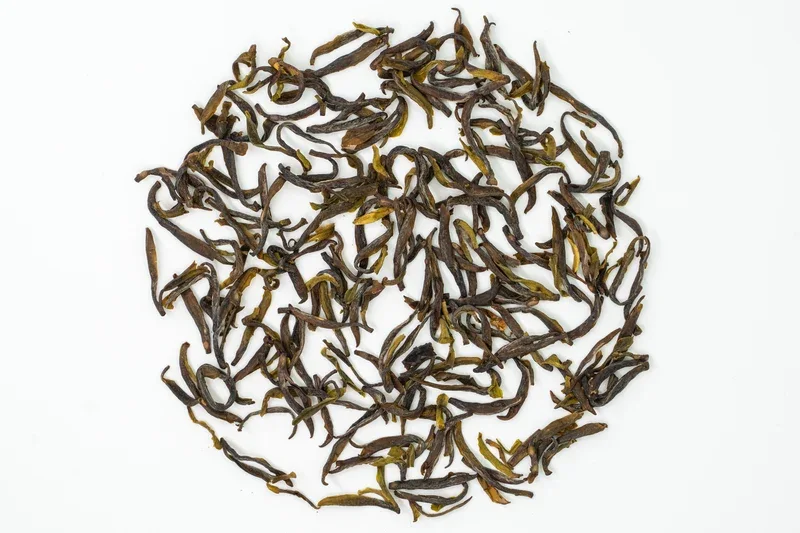
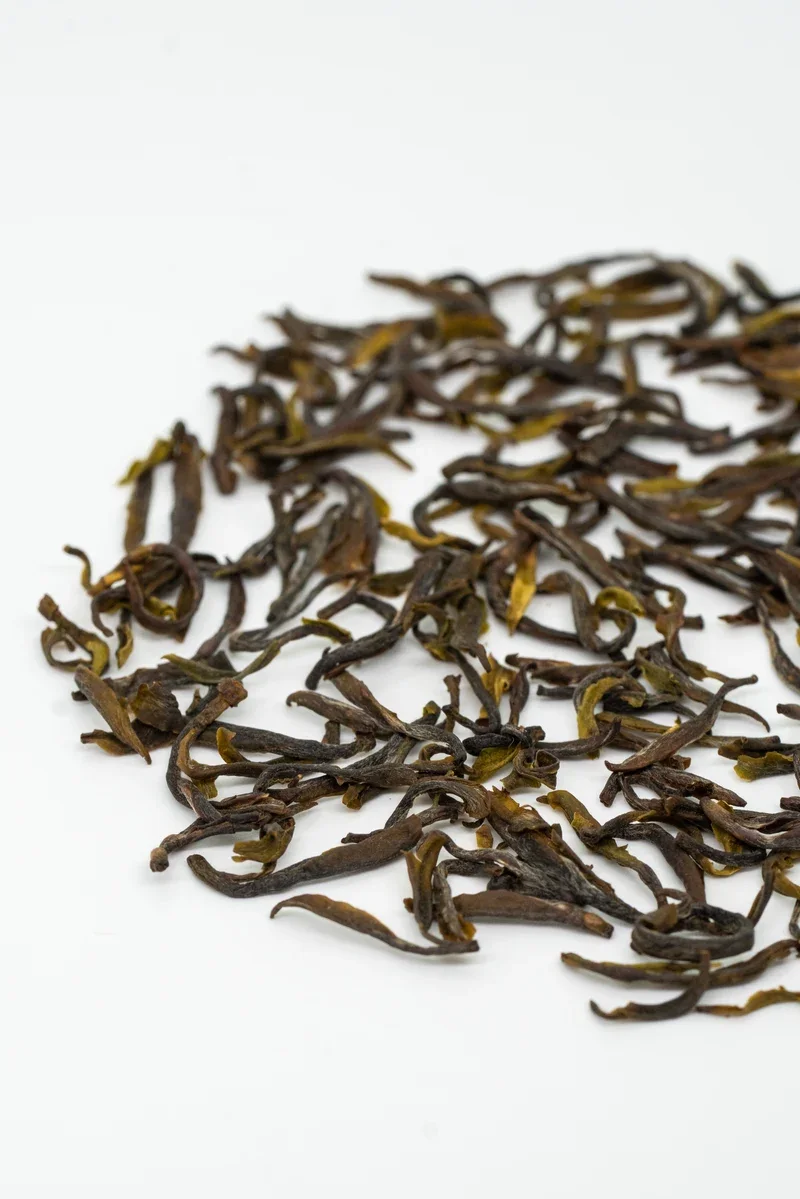
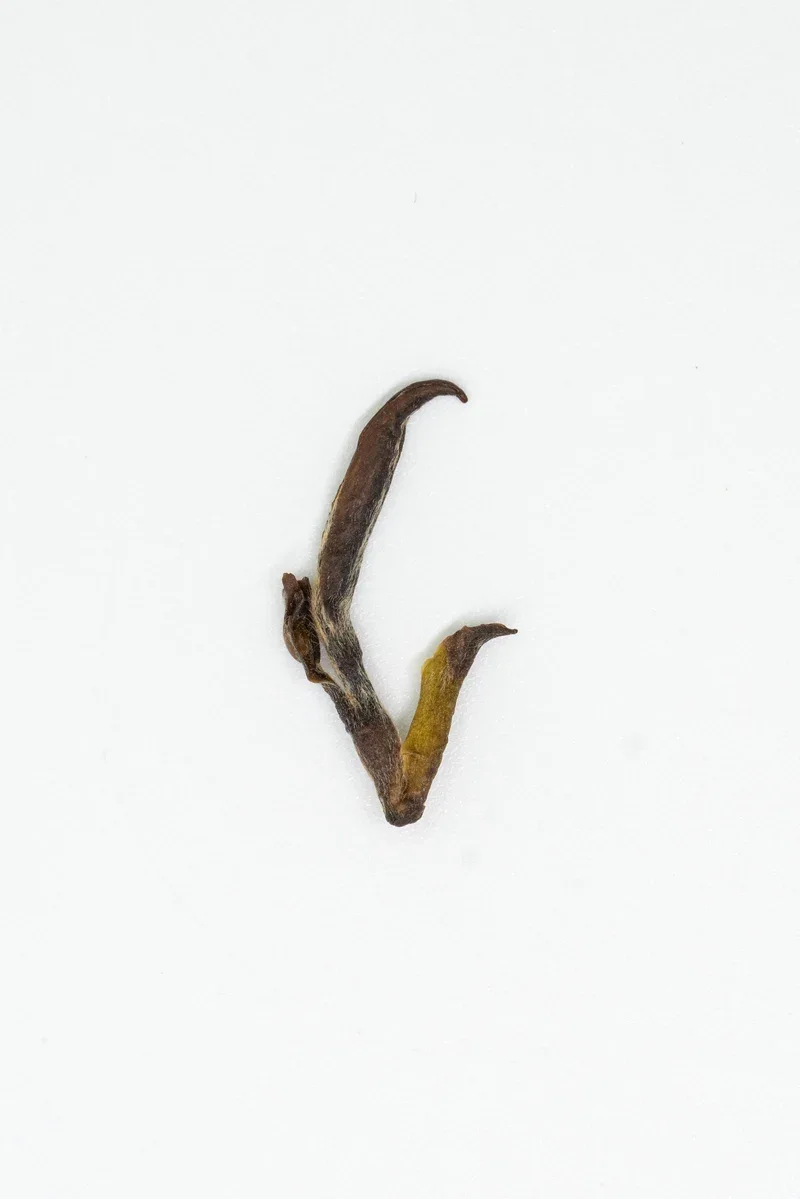
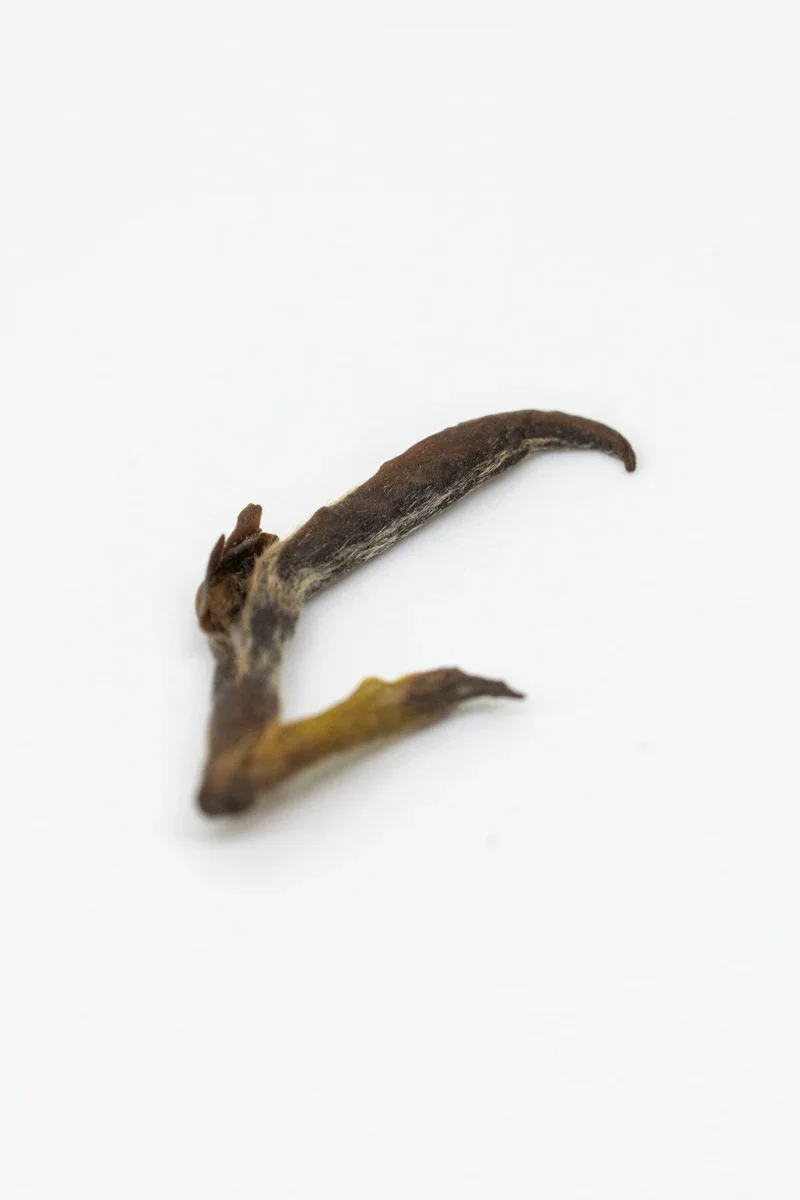
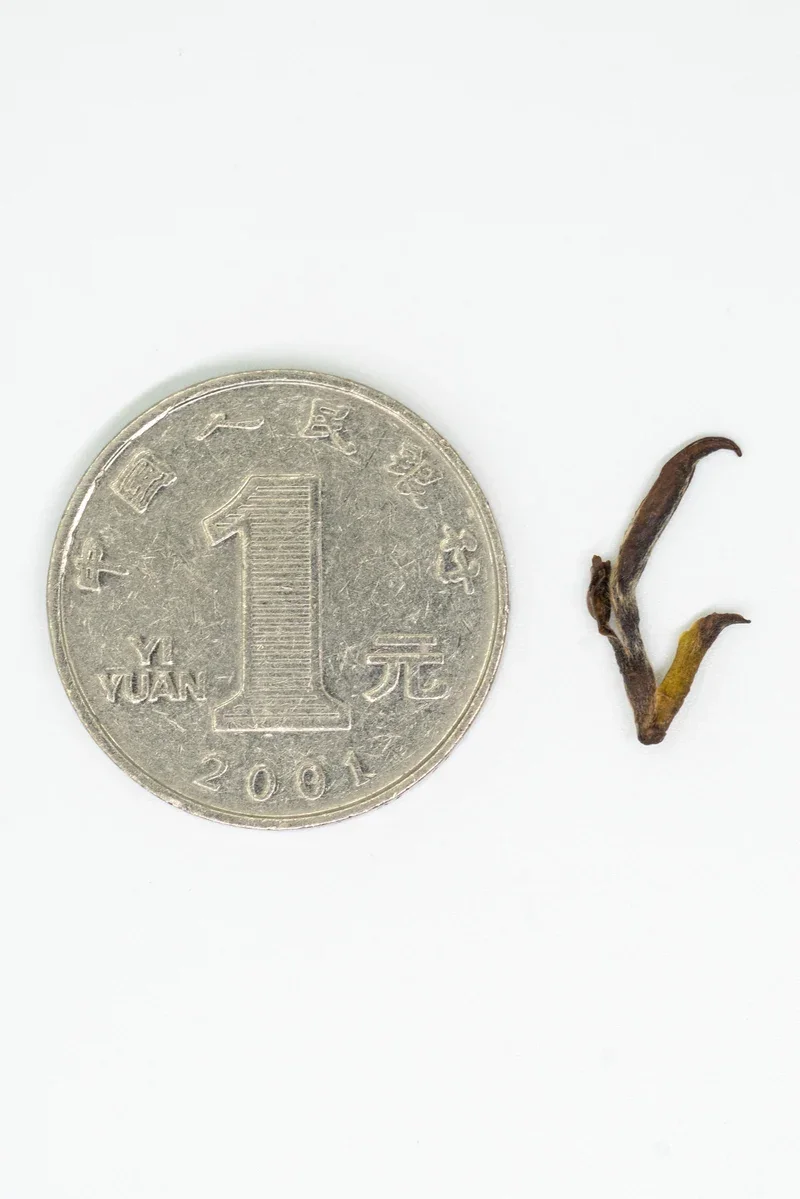
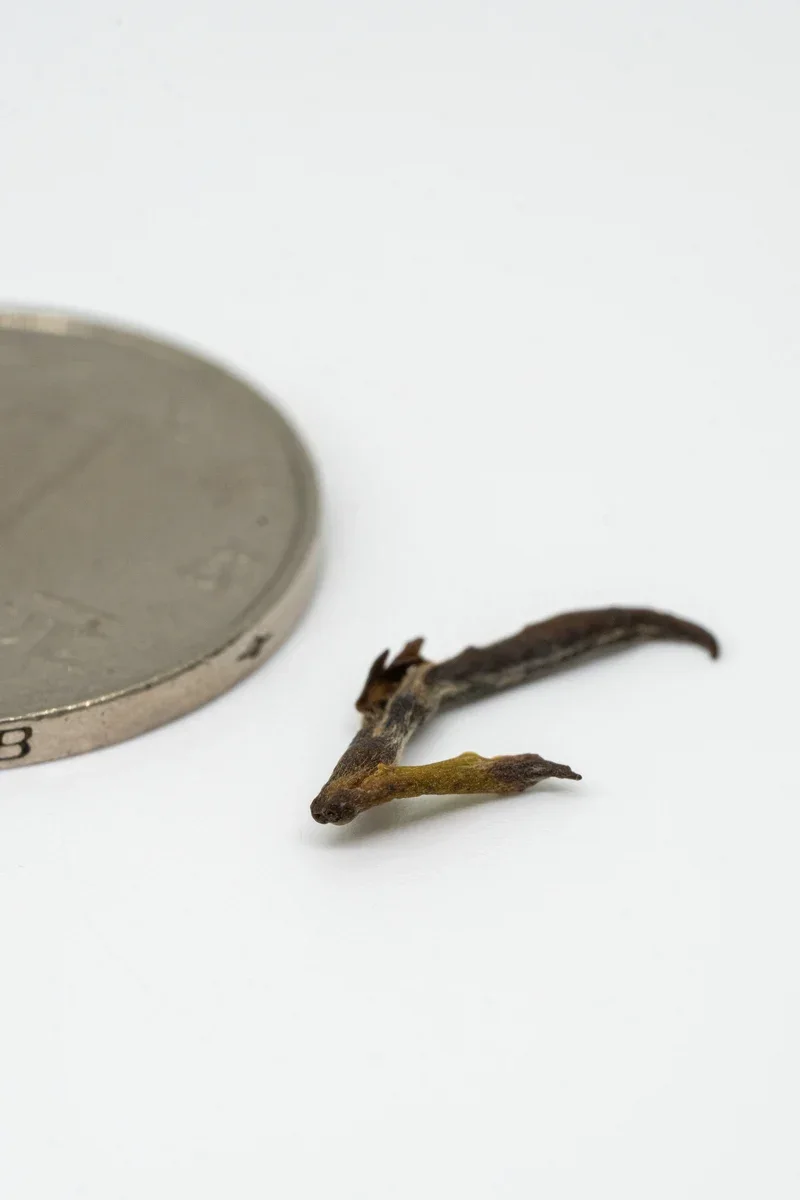
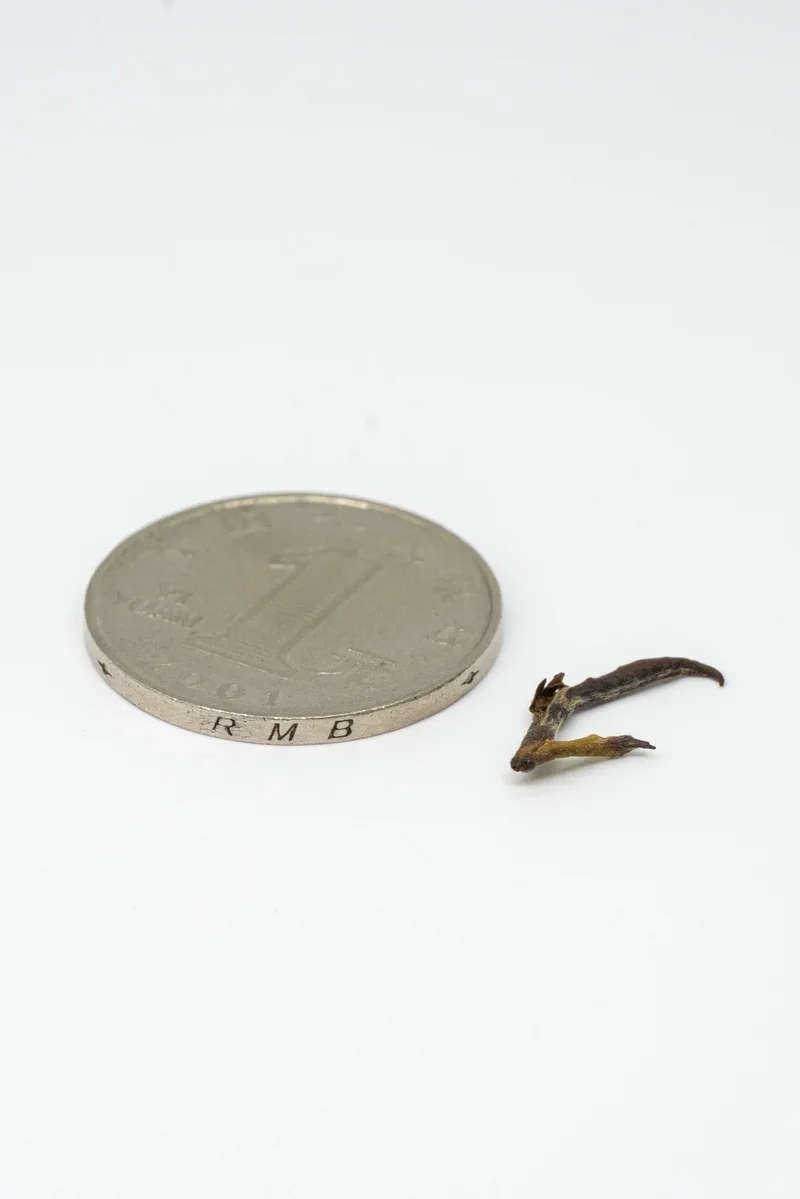
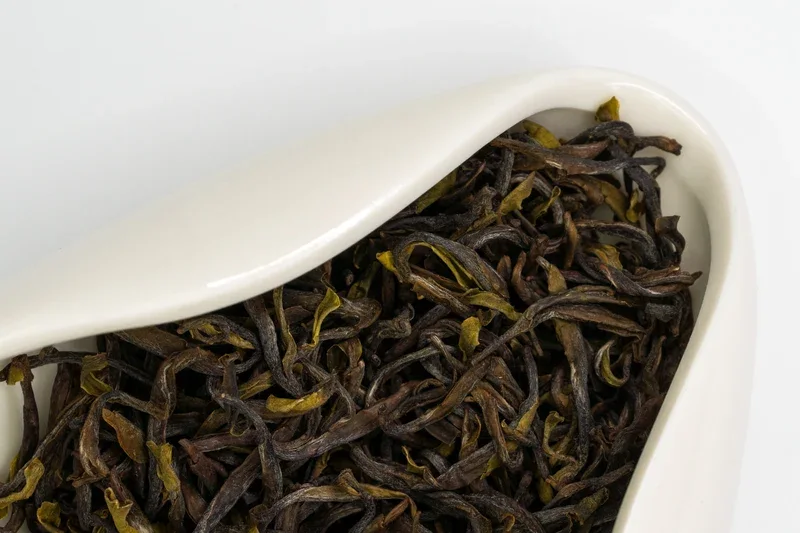
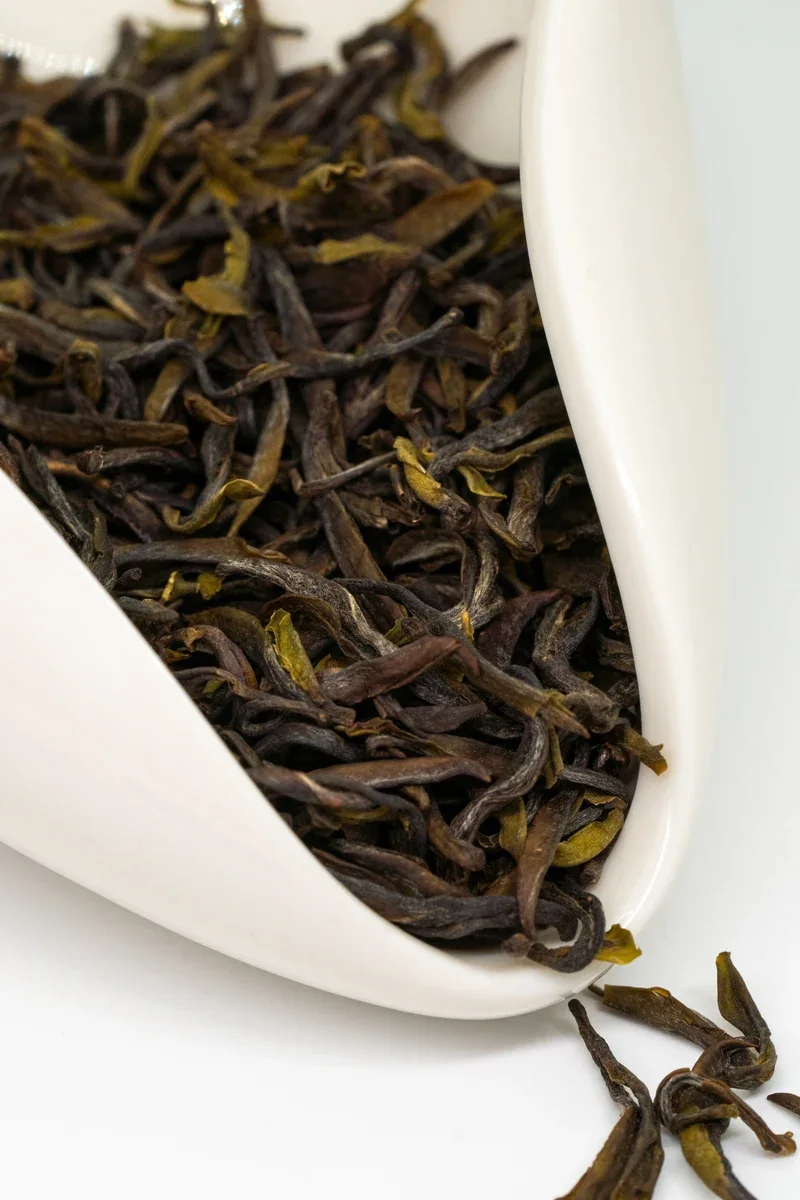
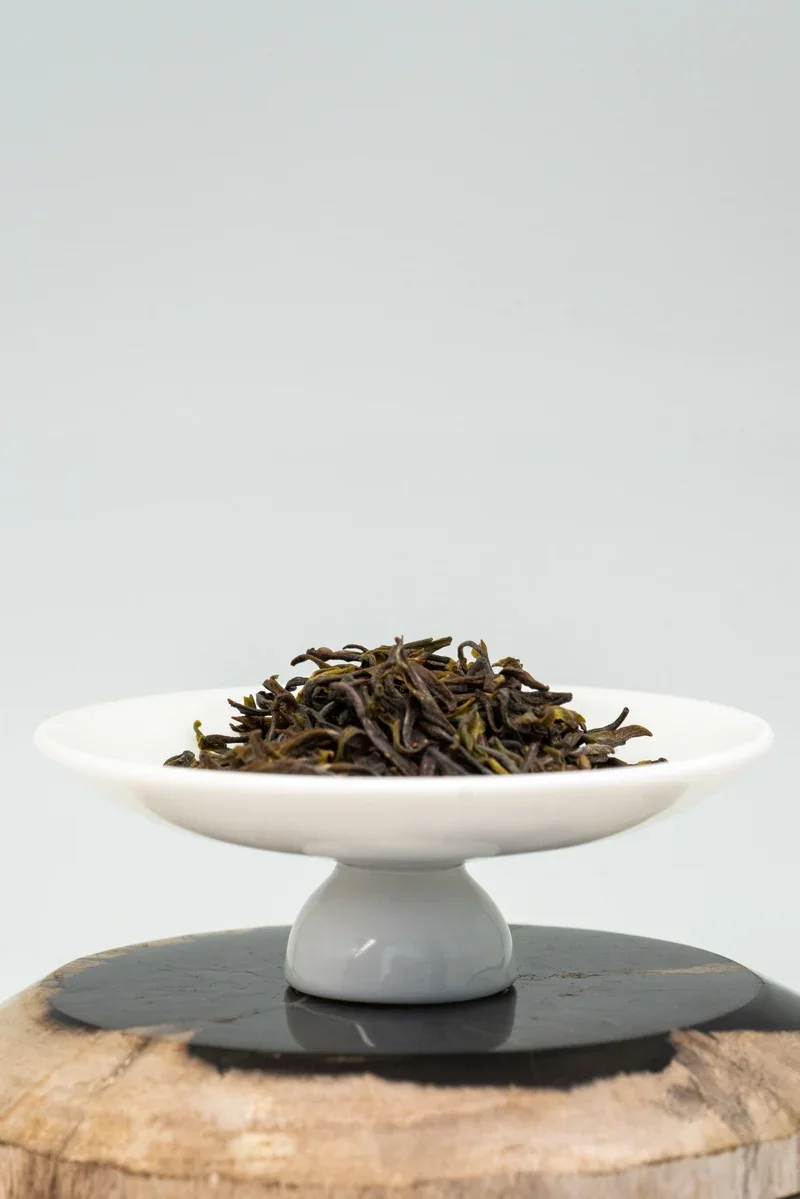
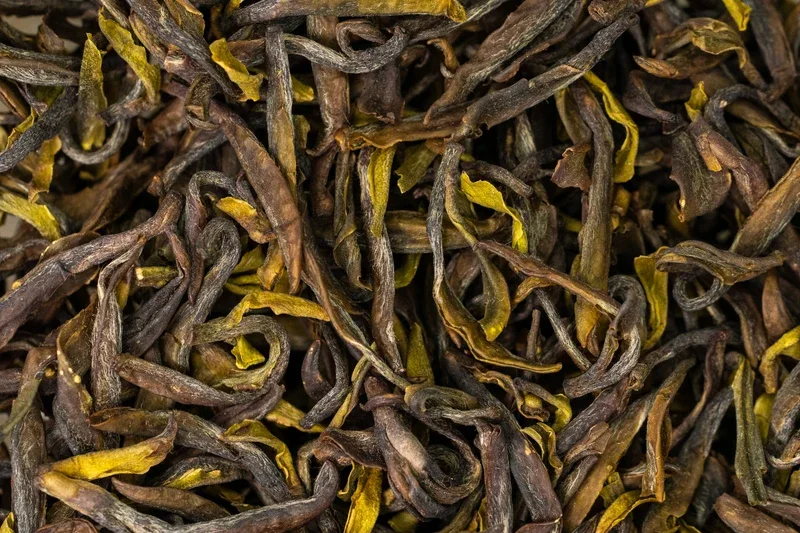
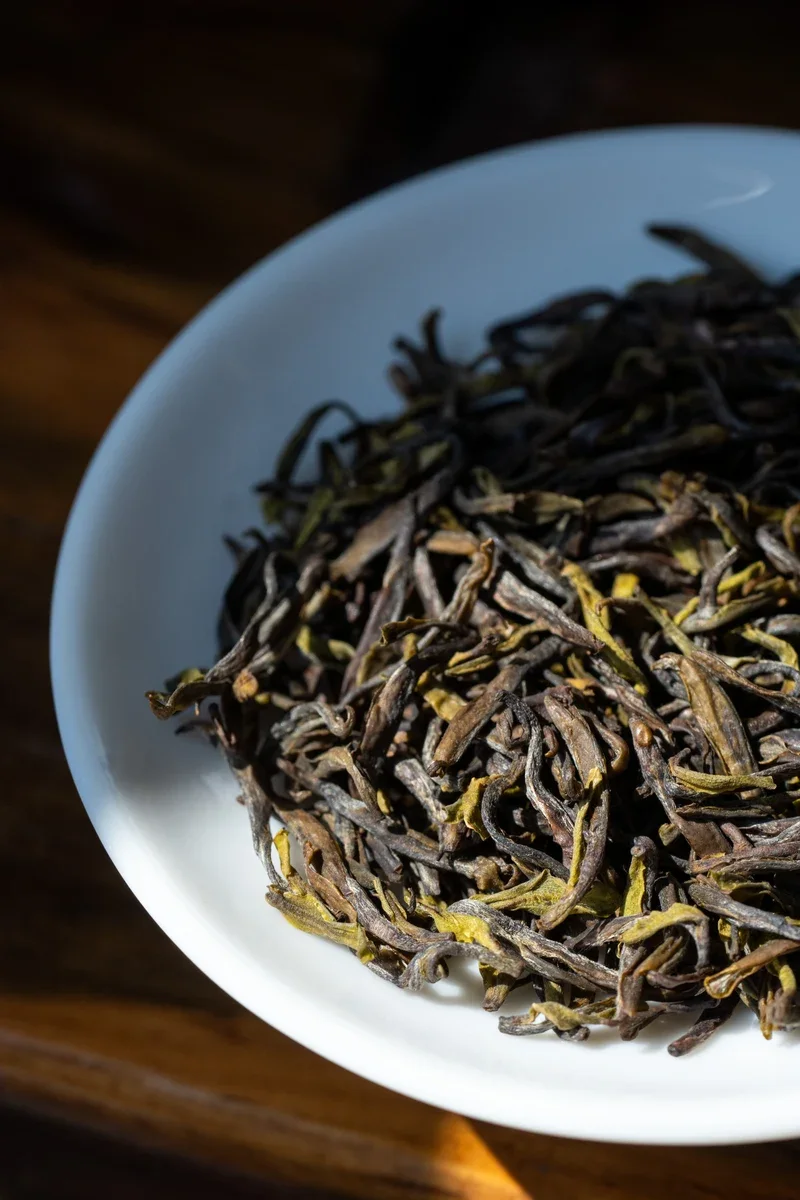
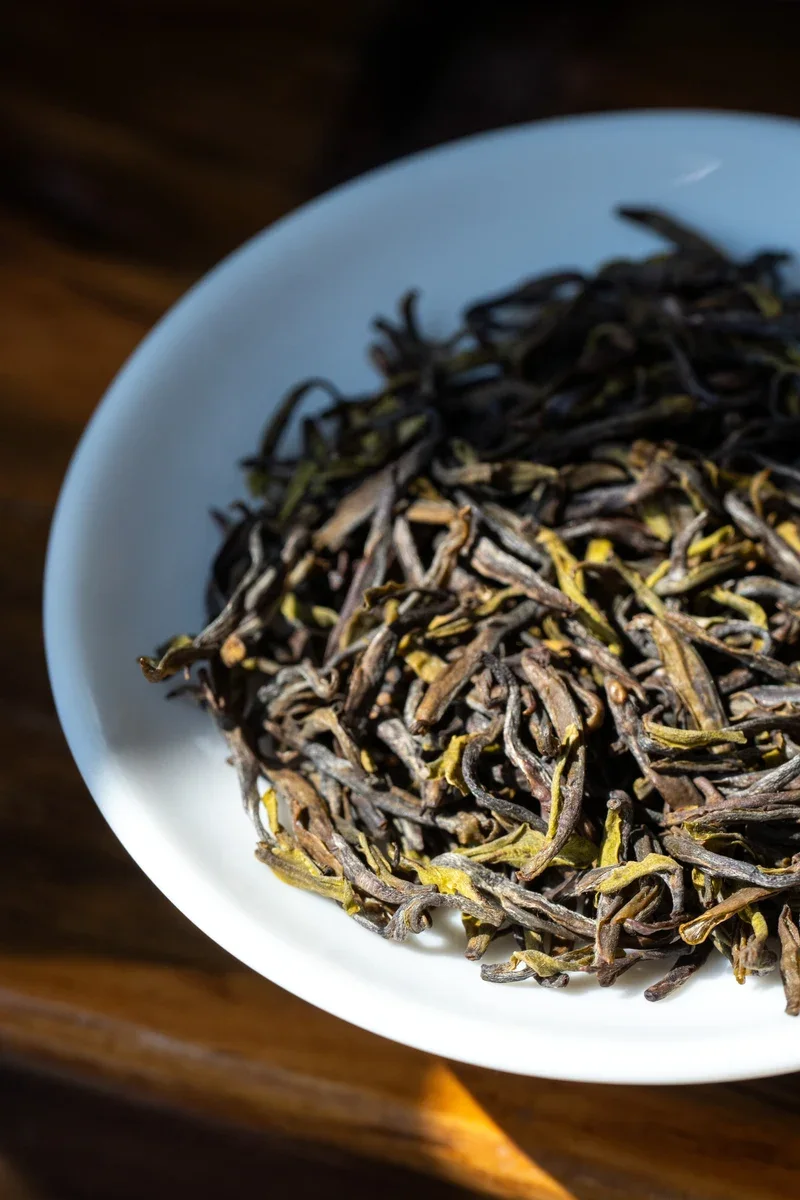
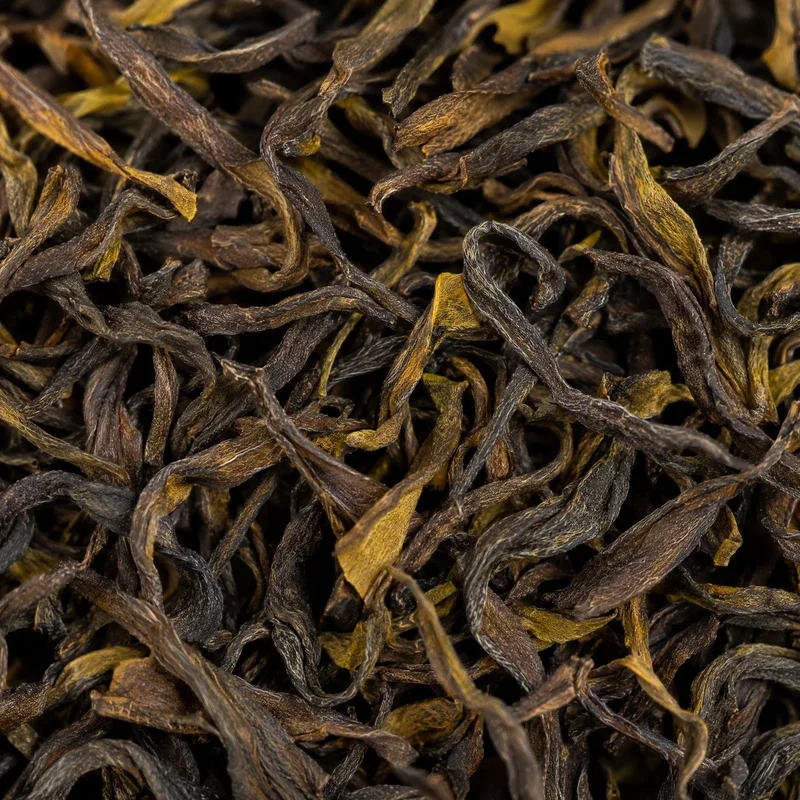
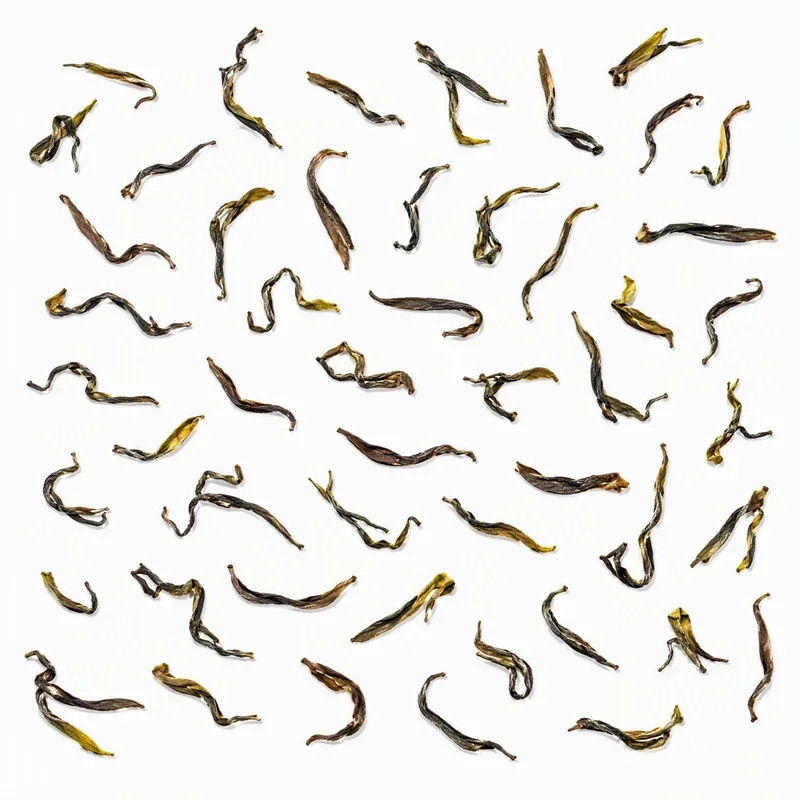
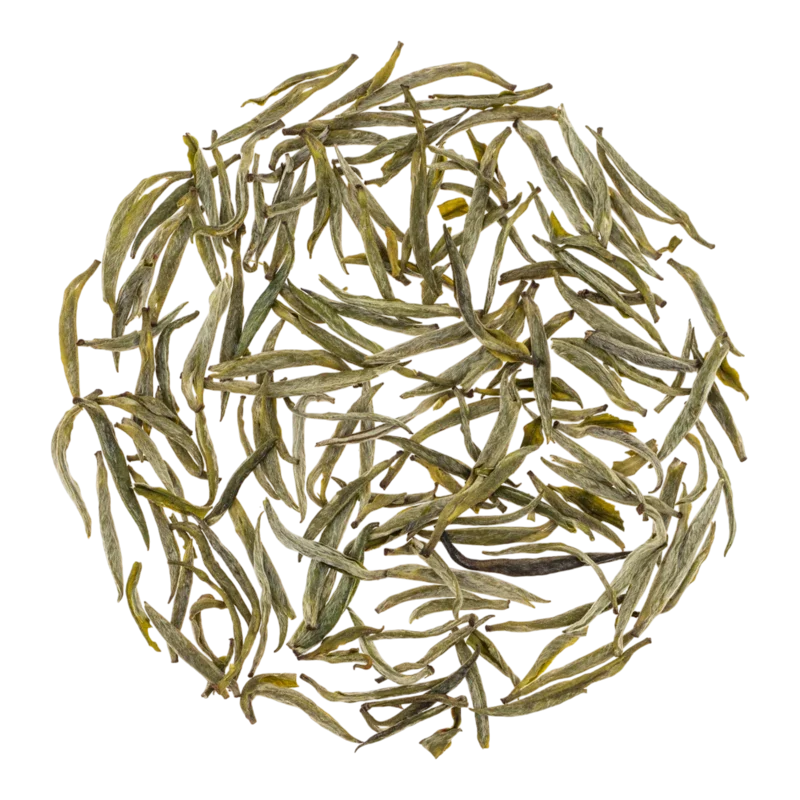
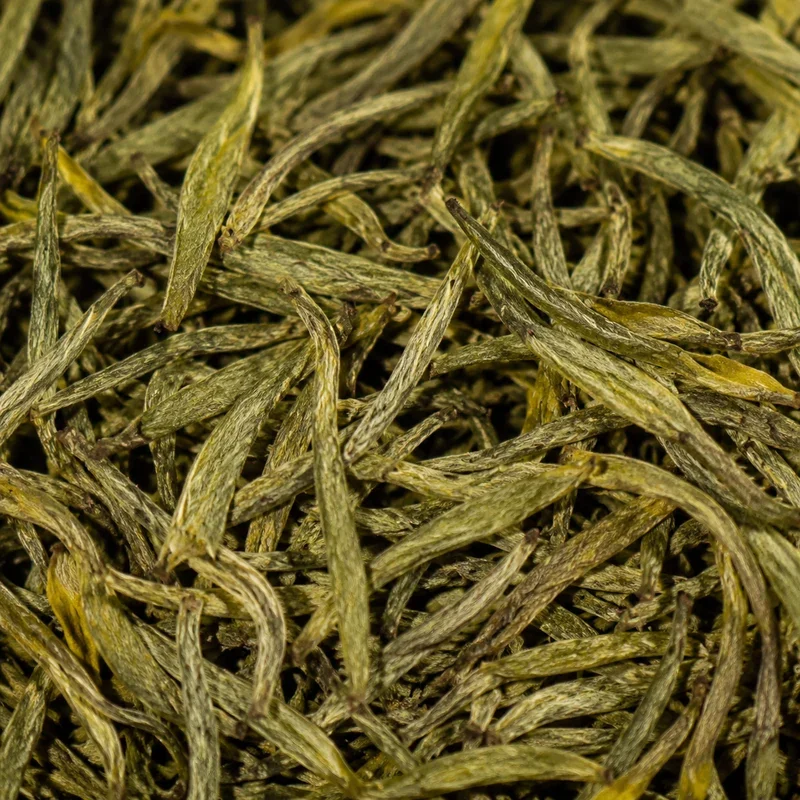
Dry Leaf Appearance: Form of "golden buds in jade setting" (金芽玉叶, jīn yá yù yè): buds large, straight, dense, thickly covered with golden down (金毫密披). Dry tea resembles small golden ingots framed by soft, tender fuzz — hence the legendary nickname "gold inlaid with jade" (金镶玉).
Dry Leaf Aroma: Delicate, with pronounced note of "nenlixiang" (嫩栗香) — young chestnut aroma. Sweetish cereal undertones are present.
Liquor Aroma: Base — "fermentation aroma" (酵香, jiào xiāng), formed by the menhuang process: soft chestnut and bread tones. Over them — delicate "honey-orchid" (蜜兰香, mì lán xiāng), a feature that specialists associate with "lake fog" (湖雾) and rich mineralization of Junshan soils.
Liquor Color: Xinhuang (杏黄) — "apricot-yellow," transparent, with amber brilliance, resembling liquid honey in transparency. Noticeably brighter and cleaner than standard Yueyang yellow tea (which varies from apricot-yellow to orange-yellow).
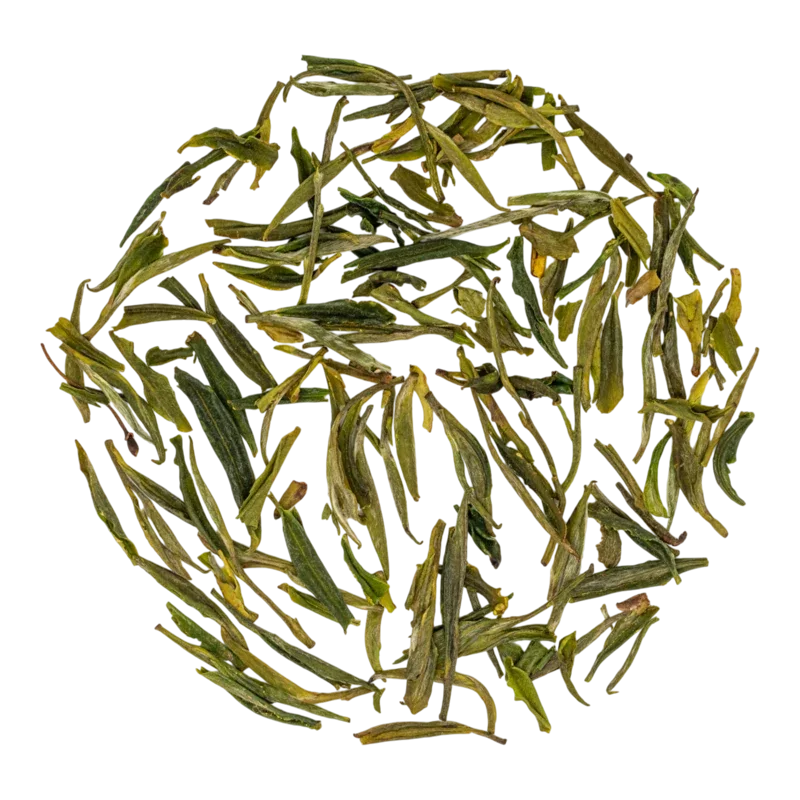
Spent Leaves: Tender yellow, uniformly bright (嫩黄匀亮). Buds open and gather into small "bouquets," resembling magnolia flowers (芽叶成朵如玉兰). Yueyang Huang Ya spent leaves are more tender and "sculptural" than ordinary Yueyang yellow tea, where leaves form a flatter mass.
Taste: Xiānchún (鲜醇) — fresh and mellow, with distinct amino acid sweetness-umami (with amino acid content ≥ 4.2%). "Honey charm" (蜜韵, mì yùn) — enveloping, smooth sweetness due to high content of tea polysaccharides (6.5%). Aftertaste — cool, with light mineral note described as "lakeside freshness" (houyun qingliang, 喉韵清凉), caused by soluble minerals from alluvial soils.
Alkaloids: Caffeine — approximately 2.5–3.5% of dry matter. In synergy with L-theanine provides calm, prolonged alertness without sharp peaks.
Amino Acids: Content ≥ 4.2% of dry matter — significantly higher than the average for Yueyang yellow tea (3.8%). L-theanine is the dominant component, providing sweetness, umami, and mild relaxing effect. Elevated content is due to the predominance of diffused light (>80% from the lake surface), which suppresses photosynthetic conversion of theanine to catechins.
6.5% — exceptionally high indicator for bud tea. Polysaccharides form the characteristic "honey smoothness" of taste and possess pronounced immunomodulating and hypoglycemic potential.
Multi-stage steaming promotes generation of digestive enzymes (消化酶, xiāohuà méi). By analogy with other yellow teas, fat breakdown efficiency may be 1.2–1.5 times higher than green tea from similar raw material.
Minerals: Potassium, magnesium, zinc, fluorine. Feature — elevated selenium content (up to 0.85 mg/kg in raw material), due to alluvial soils of the Dongting delta. Selenium is a microelement with antioxidant activity.
Polyphenols: Thanks to multi-stage menhuang, a significant part of esterified catechins (EGCG, ECG) undergoes non-enzymatic oxidation and degradation, which reduces the overall polyphenolic load compared to green tea from similar raw material. This explains the mildness and absence of astringency in taste. However, the biological activity of polyphenols remains at a high level.
Vitamins: Vitamin C (ascorbic acid), B-group vitamins (B₁, B₂), vitamin E. Gentle processing during menhuang allows better preservation of the vitamin profile than high-temperature pan-firing of green teas.
Synergy of caffeine and L-theanine provides mild, prolonged alertness and cognitive function improvement without the characteristic coffee "spike-crash."
Polyphenols (even in partially transformed form), selenium, and vitamin E work together as an antioxidant complex neutralizing free radicals.
Yellow tea is traditionally considered more "stomach-friendly" than green tea. Digestive enzymes formed during menhuang promote fat breakdown. High polysaccharide content (6.5%) supports the gastrointestinal mucosa.
Tea polysaccharides slow glucose absorption and may contribute to glycemic profile normalization.
Polyphenols and amino acids promote vascular elasticity, gentle cholesterol reduction, and blood pressure normalization.
Tea polysaccharides stimulate macrophage and other immune cell activity.
High L-theanine content promotes alpha-wave generation in the brain, associated with calm concentration.
Catechins even in partially transformed state retain the ability to suppress certain pathogenic bacteria.
Despite relatively mild caffeine action combined with L-theanine, persons with increased caffeine sensitivity are recommended to limit consumption, especially in the second half of the day.
During pregnancy and breastfeeding, it is recommended to limit consumption to 1–2 cups per day and consult a doctor.
Like any tea, Yueyang Huang Ya should not be drunk on an empty stomach — tannins may cause discomfort.
Tea polyphenols may reduce iron supplement absorption. It is recommended to maintain an interval of at least 1–2 hours between tea consumption and medication intake.
Improperly stored or expired yellow tea may lose beneficial properties and acquire rancid taste. Damp tea should be disposed of.
Tea Amount: 3–5 g per 150–200 ml water.
Teaware: Ideal option — transparent glass cup or flask (glass allows observing the famous "dance of buds"). Also suitable: porcelain gaiwan (盖碗, gàiwǎn) for more concentrated liquor, porcelain teapot. Yixing clay is not recommended — it may "muffle" the delicate aroma.
Water Temperature: 75–80°C. Most tender buds require delicate handling — too hot water will destroy amino acids and give the liquor unnecessary bitterness.
Container: Opaque, airtight: tin can, vacuum foil packaging, ceramic vessel with tight lid.
Enemies: Moisture (hygroscopicity of buds is very high), light (destroys chlorophyll and vitamins), foreign odors (tea instantly absorbs aromas), high temperature (accelerates oxidation).
Shelf Life: Recommended to consume within 12–18 months after production for full revelation of "fresh" profile. With proper refrigerator storage maintains quality up to 2 years, but over time chestnut and honey notes may give way to more "mature" tones.
Temperature: Ideally — refrigerator, 0–5°C, in separate airtight container. This slows oxidation and preserves freshness of aroma and taste.
Closest "relative" — both are produced on Junshan. However, Yin Zhen consists exclusively of single buds processed by the classical scheme of "two dryings — two steamings" (二烘二闷). Huang Ya allows bud with leaf and undergoes three menhuang cycles, giving a more saturated, honey profile. Yin Zhen is more "mineral" and austere, Huang Ya is more "sweet" and rounded.
Imperial yellow tea from Sichuan, from Mount Mendingshan. The technique of "three pan-firings — three steamings" (三炒三闷) includes pan-firing (chao) unlike Yueyang drying (hong), giving the Sichuan tea a more "toasted," cereal profile. Terroir is completely different: mountain (1,400 m) vs. lake-plain (63 m). Mengding Huang Ya is more "turquoise-yellow" in liquor, Yueyang Huang Ya is more "amber-apricot."
Yellow tea from Anhui, Mount Huoshan. Undergoes mēnhuáng after initial drying (干坯闷黄 — "menhuang of dry semi-finished product"), taking 1–2 days. Flavor profile — more pronounced "banlixiang" (板栗香, chestnut aroma), less sweet than Yueyang Huang Ya. Also differs in more greenish liquor tint.
Yellow tea from Zhejiang. Steaming in cotton cloth over charcoal heat (60–70°C, ~40 min) — short, intensive menhuang. Profile — more floral and light, less "honey" and mineral than Yueyang Huang Ya.
Price Category: Yueyang Huang Ya is a premium tea. Cost is determined by limited core zone area (Junshan Island — less than 1 km²), extremely short harvest season (7–10 days), labor-intensive hand processing (72 hours), and high domestic market demand. Price for 500 g of highest grade may range from 800 to 3,000 yuan and higher depending on producer and year.
Genuine Yueyang Huang Ya consists of large, even, straight buds with abundant golden down, without fragments and dust. "Gold inlaid with jade" is not a metaphor but literal description.
Authentic tea emits soft chestnut aroma with honey undertone. Sharp "roasted" smell indicates imitation (high-temperature pan-firing of green tea to give yellow color — common counterfeit).
Color should be clean apricot-yellow, transparent, without cloudiness. Taste — mild, sweet, without pronounced bitterness and astringency. If tea is bitter — most likely it's "green tea-ized" (绿茶化) yellow tea that lost menhuang.
Yueyang Huang Ya cannot be cheap. Price below 500 yuan per 500 g for highest grade is reason for doubt.
No reviews yet. Tell us what you think of this tea.
Rate this tea and share your impressions. We review each submission before publishing it.