Brewing
Gongfu brewing
- Water temperature
- 75 °C
- Tea amount
- 5 g
- Water volume
- 100 ml
- First steep
- 10 s
- Time added per infusion
- 5 s
- Infusions
- 4

gòngméi
Choose a brewing method. Start with the recommended quantities and time, then adjust to taste.
Brewing
Brewing
Taste
Tea encyclopedia
Category: Traditional white teas of China. Occupies third place in the hierarchy of white teas after Bái Háo Yìn Zhèn (白毫银针, Báiháo Yínzhēn) and Bái Mǔ Dàn (白牡丹, Bái Mǔdān). Is one of the four main types of white tea established in national standard GB/T 22291-2017 "White Tea" (《白茶》).
Category: Traditional white teas of China. Occupies third place in the hierarchy of white teas after Bái Háo Yìn Zhèn (白毫银针, Báiháo Yínzhēn) and Bái Mǔ Dàn (白牡丹, Bái Mǔdān). Is one of the four main types of white tea established in national standard GB/T 22291-2017 "White Tea" (《白茶》).
Historical birthplace of Gong Mei, specifically — Zhāngdūn township (漳墩, Zhāngdūn) and its surroundings, including Nánkēng village (南坑, Nánkēng). It was here during the Qing era that the prototype of modern Gong Mei was created from the local variety of tea bush — caicha (菜茶).
One of the largest modern centers of white tea production, including Gong Mei and Shou Mei. Zhenghe white teas are distinguished by more pronounced body and floral-fruity notes.
Additional production centers that, together with Jianyang and Zhenghe, form the main area of traditional Gong Mei.
Gong Mei is also produced here, although Fuding is historically more associated with Bai Hao Yin Zhen and Bai Mu Dan.
Coordinates: Approximately 27°00'–27°30' North latitude, 117°30'–120°00' East longitude (Jianyang — Zhenghe — Fuding regions).
Origin: China, Fújiàn Province (福建, Fújiàn). Main production regions:
Type: White tea (lightly oxidized, oxidation level approximately 5–10%). Produced using classical white tea technology — without kill-green (杀青, shāqīng), without rolling — only withering, drying and sorting.
Cultural Significance: Gong Mei occupies an important place in the everyday tea culture of Fujian. This is white tea with the most accessible price-to-quality ratio, offering a flavor profile that occupies an intermediate position between delicate, floral Bai Mu Dan and coarser, richer Shou Mei. In Fuding, Gong Mei (along with Shou Mei) historically served the role of "daily tea" (口粮茶, kǒuliáng chá) for tea farmers. Thanks to the high content of mature leaves and stems, Gong Mei is perfectly suited for long-term storage and aging, acquiring a more complex and deep profile over the years — with proper storage, its taste is enriched with notes of dried fruits, dates, spices and honey. It is precisely about such teas that they say: "One year — tea, three years — medicine, seven years — treasure" (一年茶,三年药,七年宝).
History: Gong Mei has deep historical roots, closely intertwined with the history of white tea as a whole. Its prototype — the so-called "small white" (小白, xiǎo bái), or "Nankeng white" (南坑白, Nánkēng bái) — was created during the reign of Emperor Qiánlóng of the Qīng dynasty (清, Qīng), approximately between 1772 and 1782, by the Xiǎo family (肖) in Zhangdun township of Jianyang County. The local variety of tea bush — caicha — was used for production, and the technology consisted of simple withering and drying. As noted by the outstanding Chinese tea expert Zhāng Tiānfú (张天福, Zhāng Tiānfú): "First appeared xiao bai, then da bai, and after — shuixian bai" (先有小白,后有大白,再有水仙白), — which emphasizes the primacy of "small white" (future Gong Mei) in the history of Fujian white tea. Historically, caicha was also used for producing Bai Hao Yin Zhen, however after the spread of large-leaf cultivars (Fuding Da Bai, Zhenghe Da Bai) in the late 19th century, roles were divided: large-leaf varieties became the basis for "silver needles" and Bai Mu Dan, while caicha — exclusively for Gong Mei. The name "Gong Mei" itself appeared later — in the 20th century: in documents from the 1940s, white teas from the Shuǐjí (水吉) watershed area were divided only into "Bai Mu Dan" and "Shou Mei" without a separate "Gong Mei" category. According to one version, the name arose after particularly high-quality batches of Shǒu Méi from Zhāngdūn began to be purchased by the Qīng imperial court as tribute (贡品, gòngpǐn), fro
Cultivar: The key botanical distinction of Gong Mei from other white teas — the use of caicha (菜茶, càichá), also called "group variety" (群体种, qúntǐ zhǒng). This is a local semi-wild variety of Camellia sinensis var. sinensis, propagated by seeds (sexually), unlike vegetatively propagated cultivars. Caicha represents a low shrub with small leaves, genetically diverse within the population, which conditions a richer and more multi-layered flavor profile of the finished tea. According to the definition of national standard GB/T 22291-2017, Gong Mei is white tea produced precisely from shoots of tea trees of group variety. However, in practice, since areas under caicha are shrinking, in modern commercial production for Gong Mei they often use large-leaf cultivars: Fúdǐng Dǎ Bái Chá (福鼎大白茶, Fúdǐng Dàbáichá), Fúdǐng Dǎ Háo Chá (福鼎大毫茶, Fúdǐng Dàháochá), Zhènghé Dǎ Bái Chá (政和大白茶, Zhènghé Dàbáichá), as well as Fu'an Dǎ Bái Chá (福安大白茶, Fú'ān Dàbáichá). Traditional Gong Mei from caicha is now preserved mainly in Jianyang. Researcher of tea genetic resources Yǔ Fulian (虞富莲) noted that inbred group varieties possess increased vitality and biochemical complementarity between individual plants, which gives the tea a fuller, richer taste and high durability when brewing.
Picking: Spring harvest — primary, conducted later than the harvest of raw material for Bai Hao Yin Zhen and Bai Mu Dan, usually from late March to April. Autumn harvest is also practiced (approximately in September — October), which gives tea with more pronounced aroma (so-called "autumn fragrance," 秋香, qiū xiāng), while spring harvest — with fuller and more "rounded" taste (春水, chūn shuǐ, "spring water"). This duality is described by the formula "Spring — water, autumn — fragrance" (春水秋香).
Pluck Standard: One bud with two-three leaves (一芽二三叶). Unlike Bai Hao Yin Zhen (only buds) and Bai Mu Dan (bud with one-two leaves), in Gong Mei more mature raw material with a greater number of leaves is permitted. The bud must be present (毫心明显), but its size and proportion relative to leaves is smaller than in higher categories of white tea.
Raw Material: Leaves must be undamaged, without mechanical defects, harvested in dry weather. Shoots are picked by hand, selecting shoots of uniform size and degree of maturity.
Altitude: 200–900 m above sea level, depending on the specific region. The elevation factor is less critical for Gong Mei than for Bai Hao Yin Zhen, since more mature raw material is used.
The Gong Mei production area represents hilly and low-mountain terrain in the northwest of the province, where the subtropical monsoon climate provides warm winters and hot, humid summers. Average annual temperature is 17–19°C, annual precipitation — 1400–1800 mm, relative humidity — about 78–82%.
Historical core of Gong Mei production. Located in the Jianxi River (建溪) basin, southeast of the Wuyi Mountains massif. Relief — hilly, with elevations of 200–600 m above sea level for main tea plantations. Soils — predominantly yellow and red earth, acidic (pH 4.5–5.5), rich in organic matter and providing good drainage.
More mountainous area, plantations at elevations of 400–900 m. Climate is somewhat cooler than in Jianyang, which slows shoot growth and promotes amino acid accumulation. Soils — acidic red earth and yellow earth.
Coastal area, average plantation elevation 300–700 m, higher humidity due to proximity to the sea. Red earth with volcanic mineral inclusions gives the tea characteristic sweetness.
Hand picking of shoots of "one bud, two-three leaves" standard. Conducted in morning hours in dry weather, after dew has cleared. Fresh shoots are placed in bamboo baskets, trying not to damage or compress the tender leaves.
Central stage of production, determining the quality of finished tea. Harvested shoots are spread in a thin, even layer on bamboo trays or bamboo sieves. Withering is conducted by one of two methods (or their combination):
Trays are placed in sunlight (diffused or direct, depending on solar radiation intensity). This method allows leaves to slowly lose moisture.
Trays are placed in a well-ventilated room. This method is used in unfavorable weather conditions (rain, excessive humidity).
After withering, tea undergoes final drying to remove residual moisture to a level of 4–6%. Two methods are used:
Traditional method where withered leaves are dried in the sun.
Drying in special cabinets or on bamboo trays over charcoal braziers at low temperature (40–55°C). This method provides more stable results.
Finished tea is sorted, removing defective leaves, stems and foreign inclusions. According to standard GB/T 22291-2017, Gong Mei is divided into four grades: supreme (特级, tèjí), first (一级, yī jí), second (二级, èr jí) and third (三级, sān jí). The supreme grade is distinguished by the highest proportion of buds, more tender raw material and lighter leaf color.
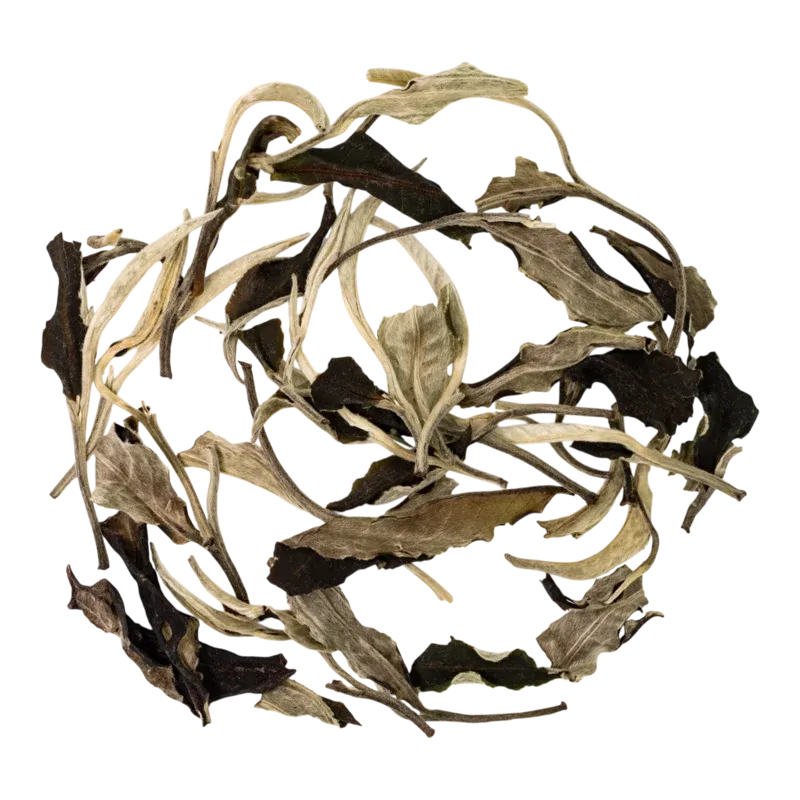
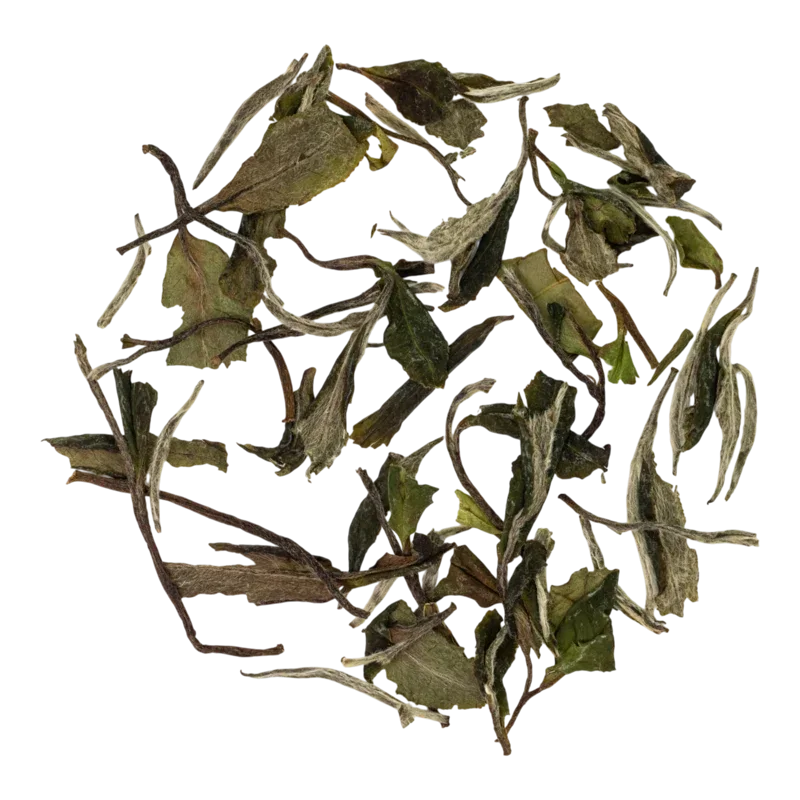
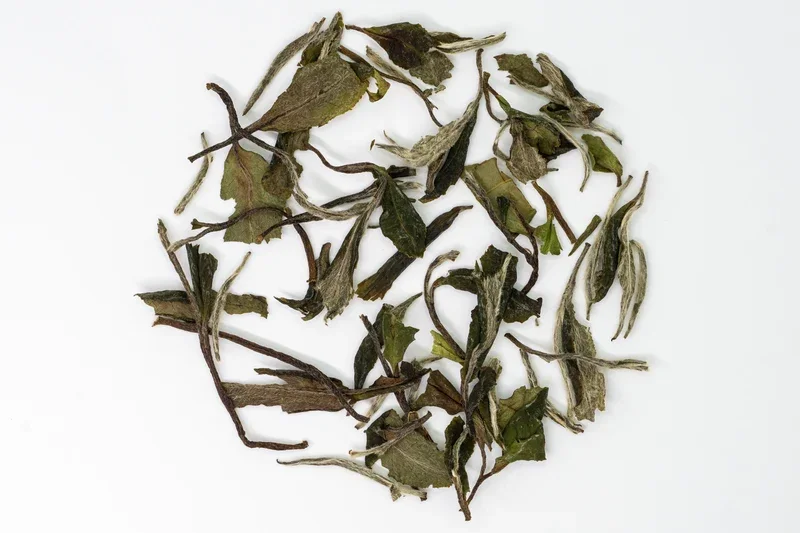
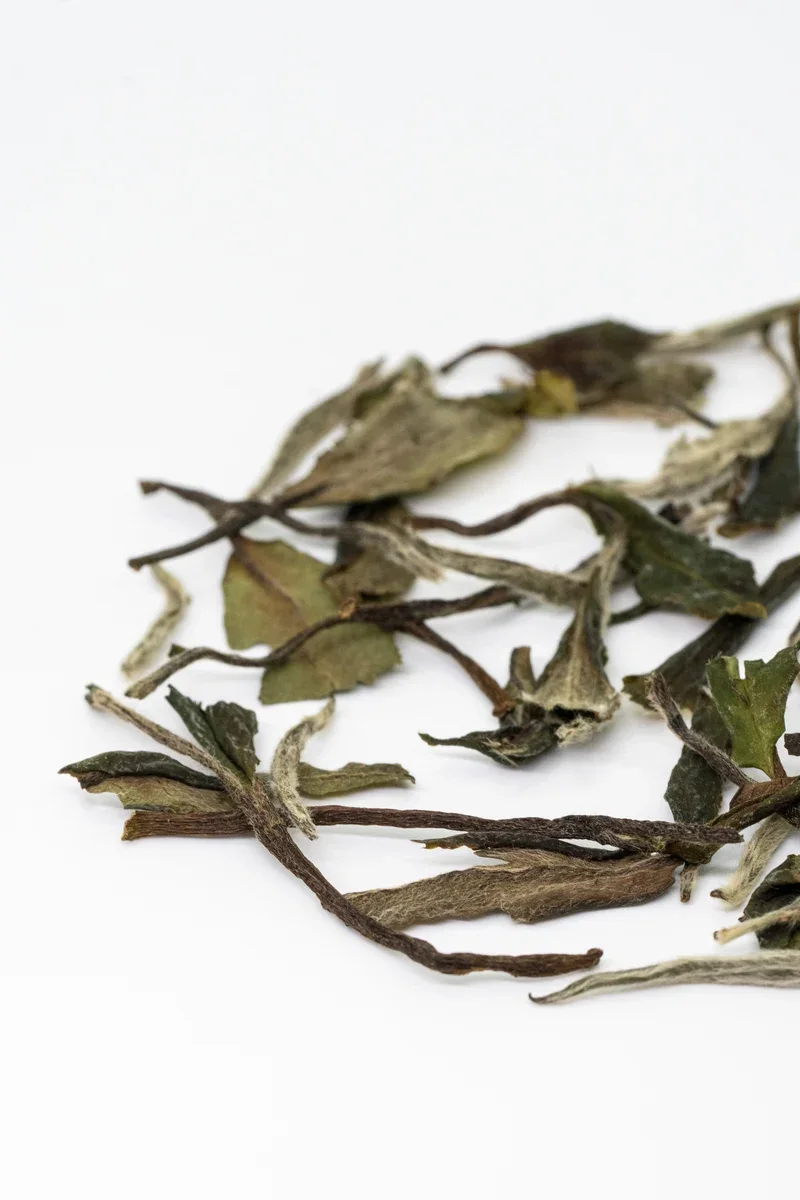
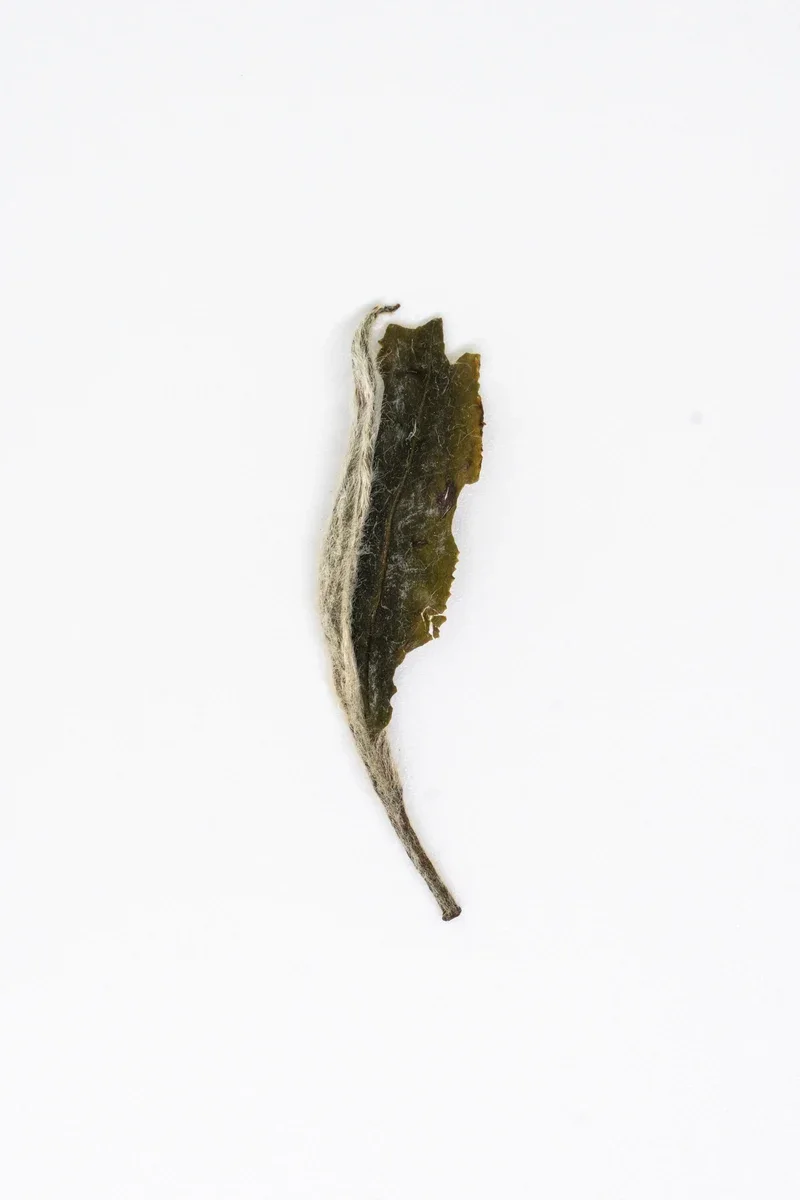
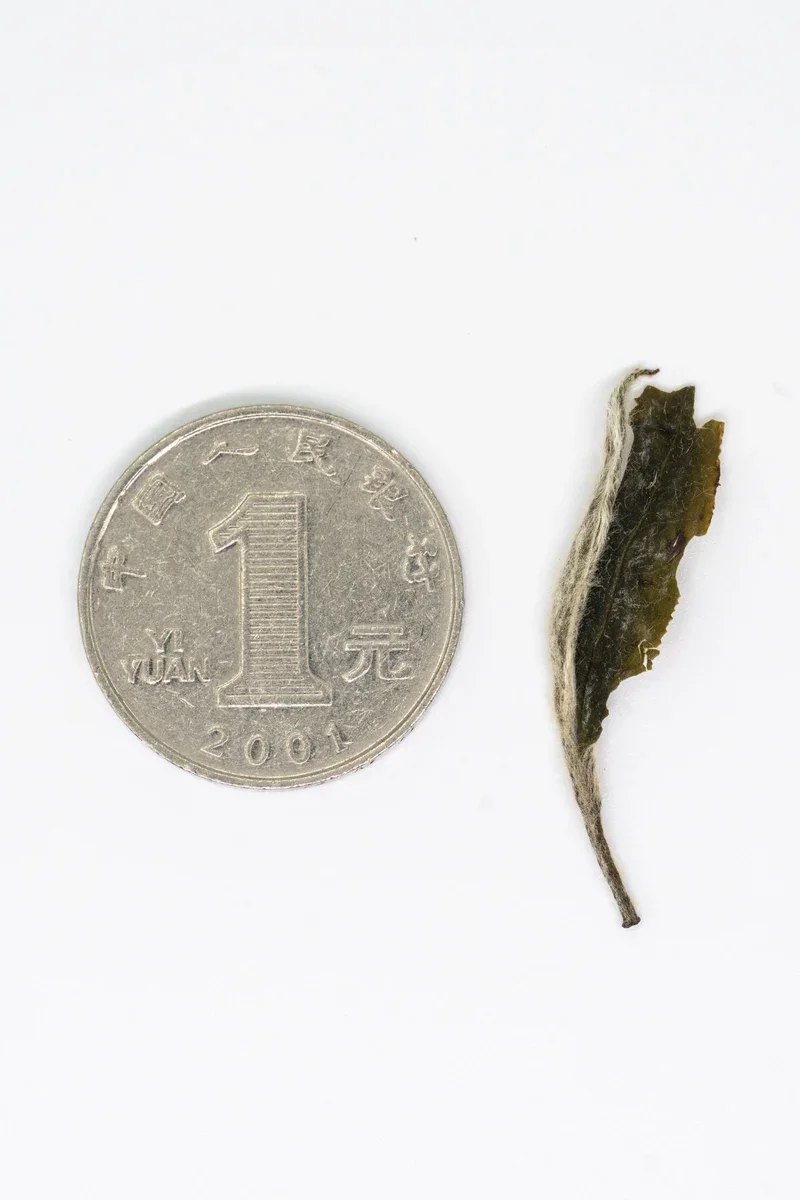
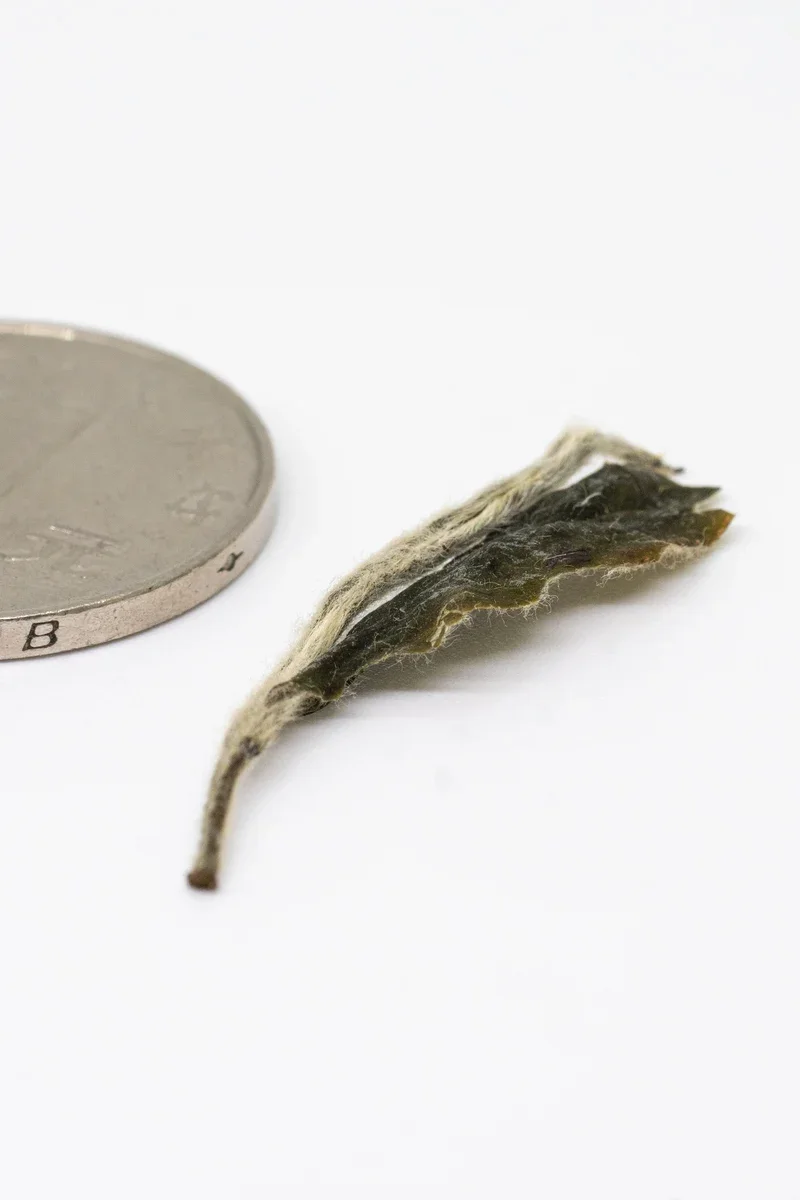
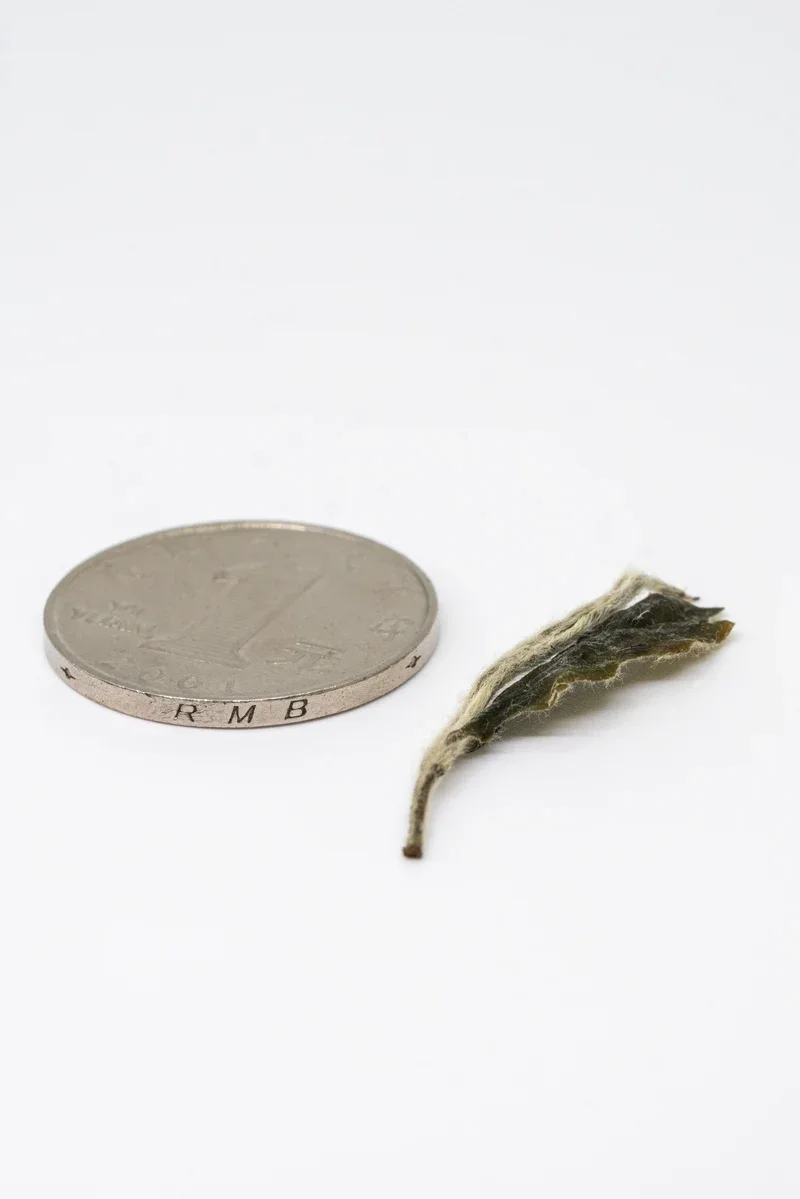
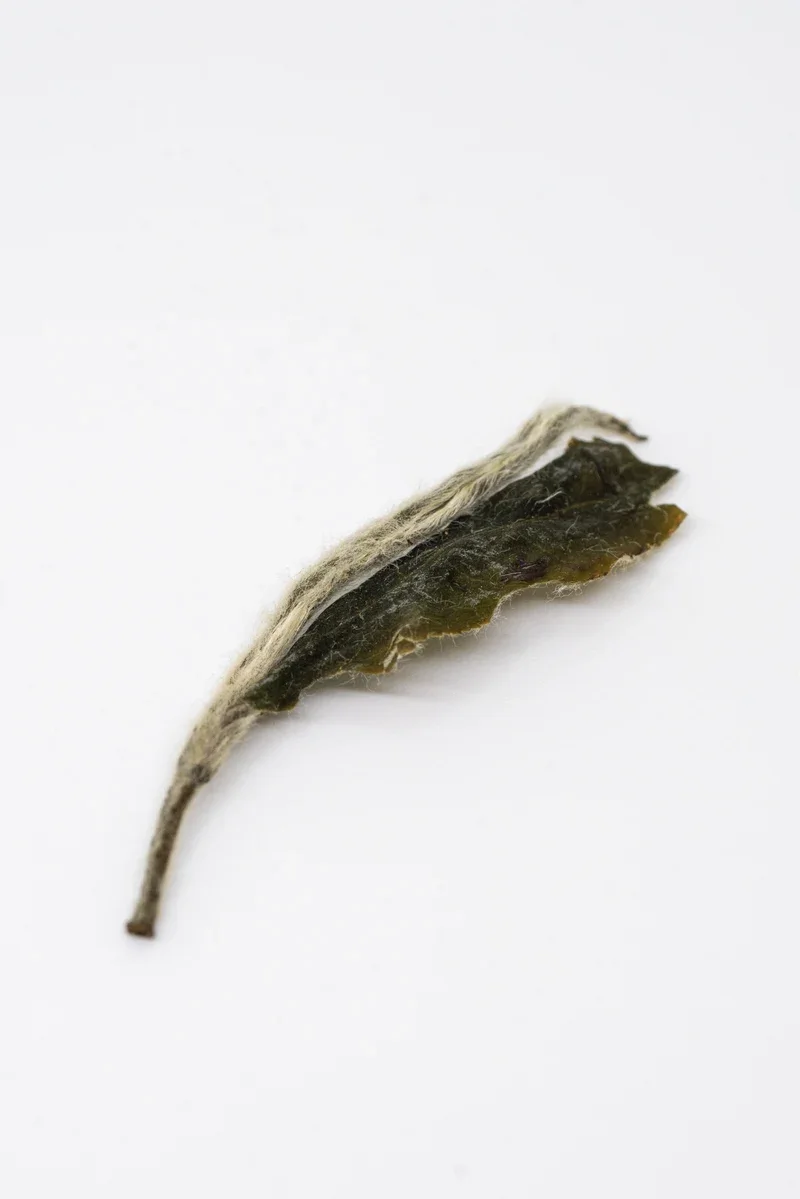
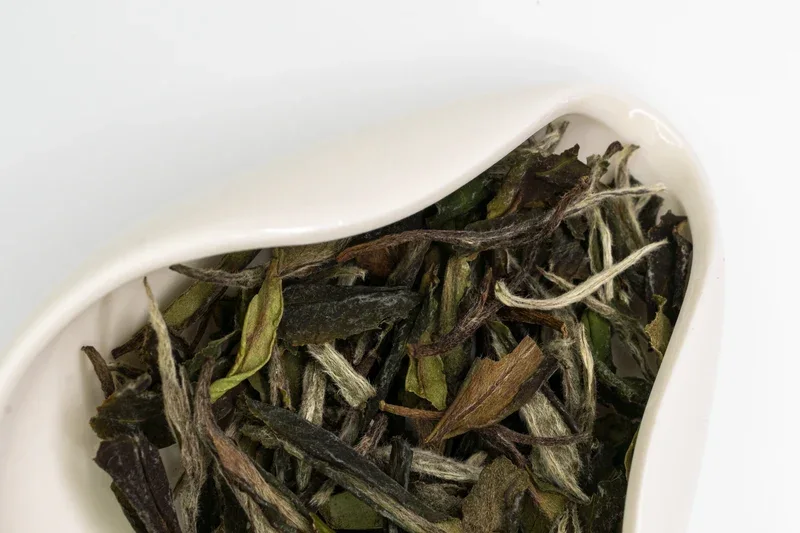
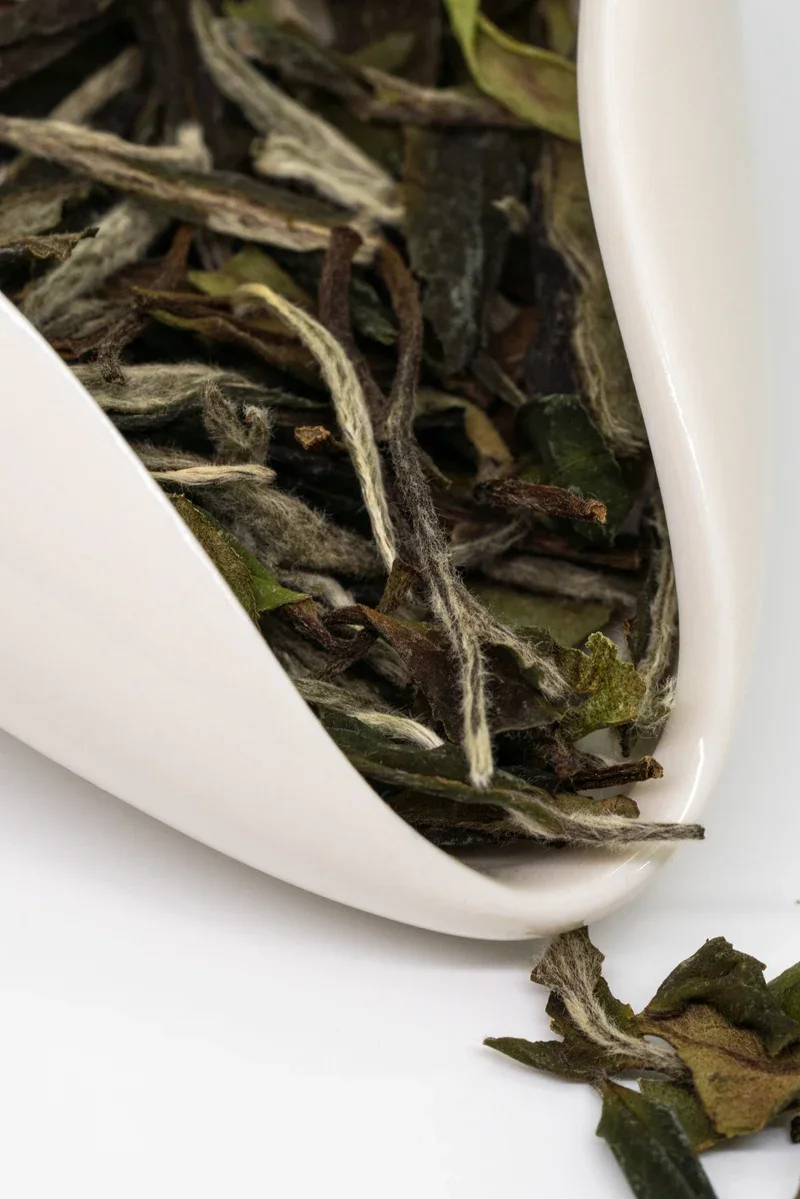
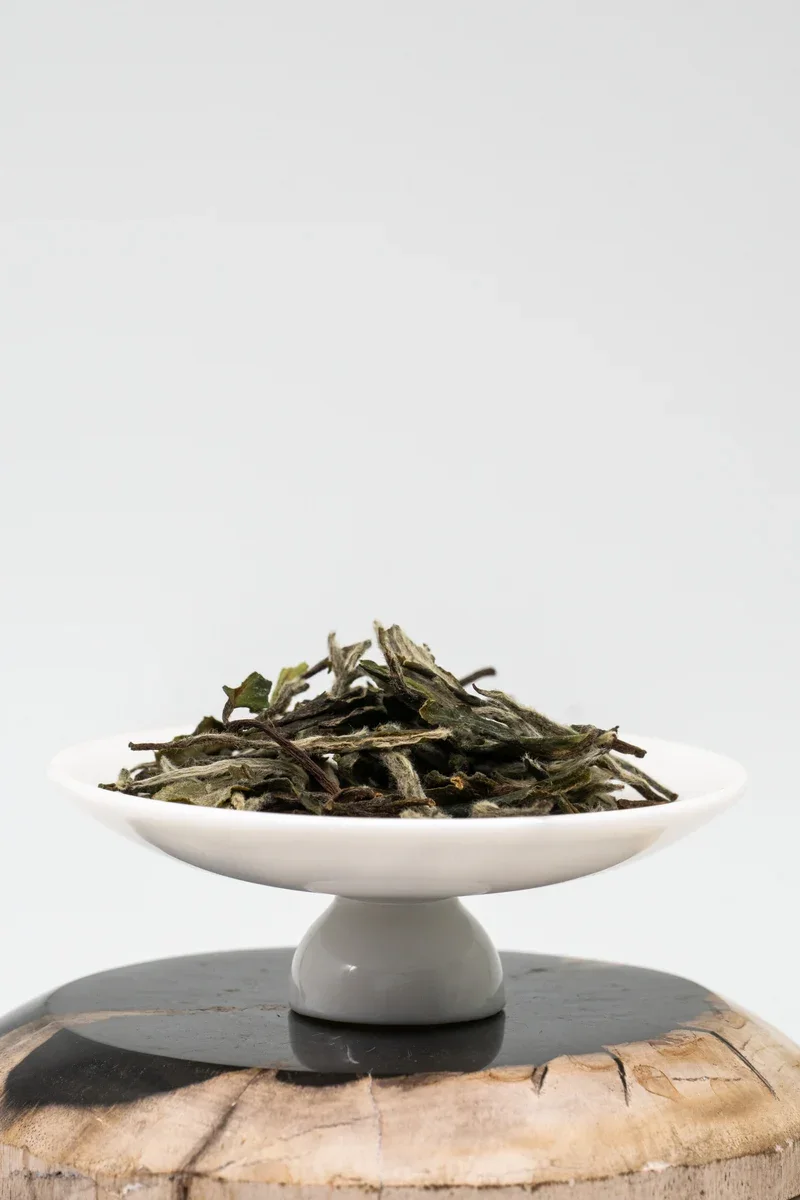
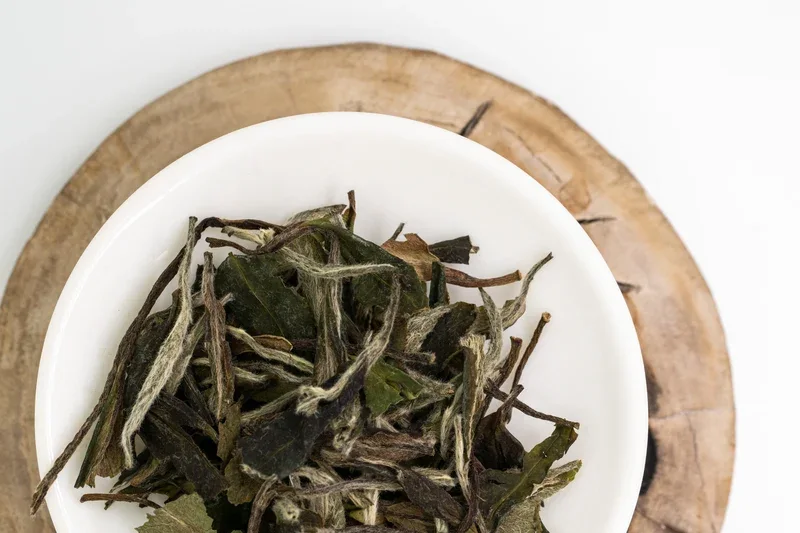
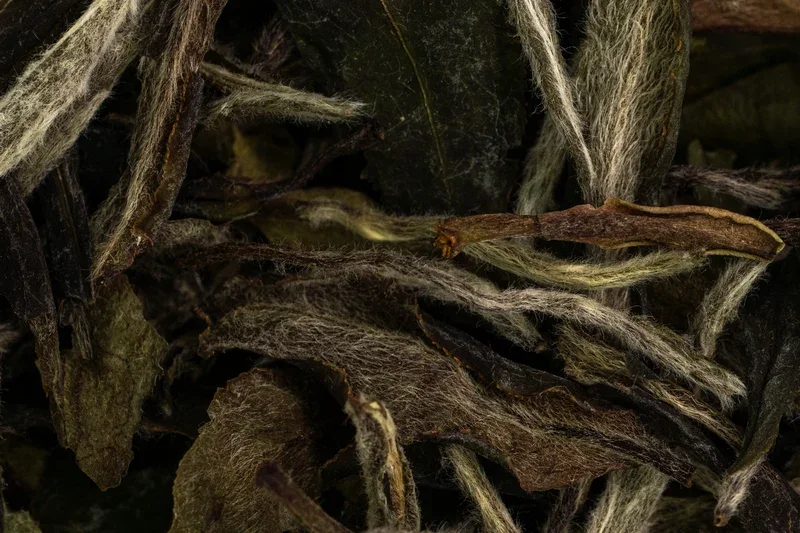
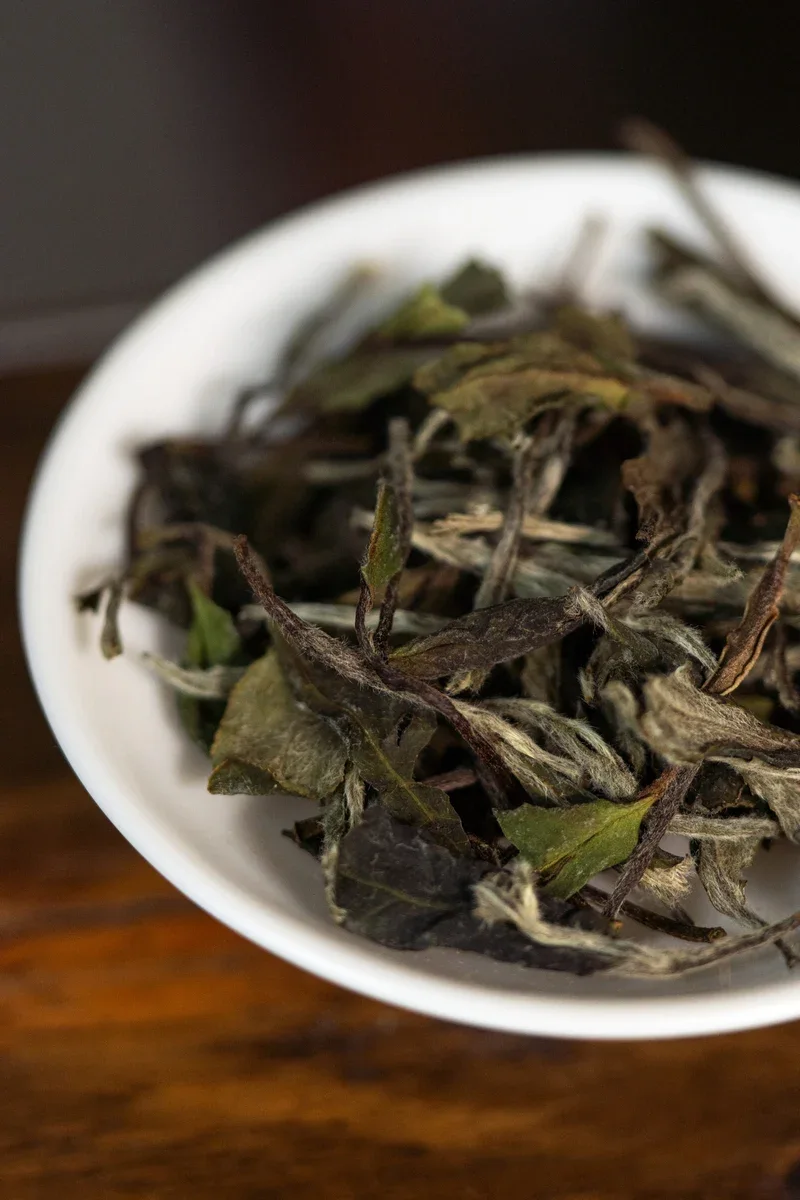
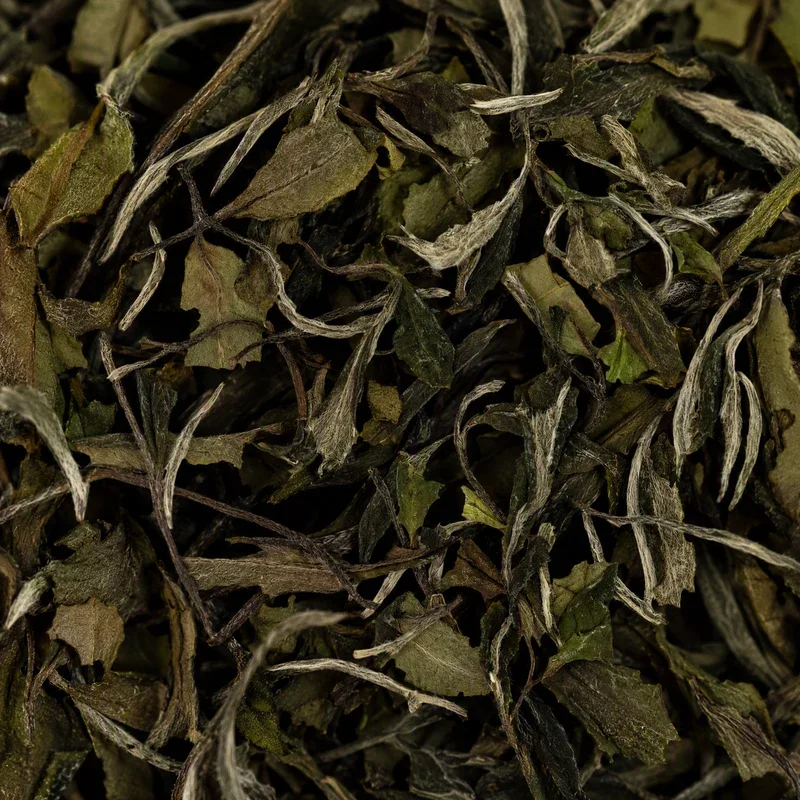
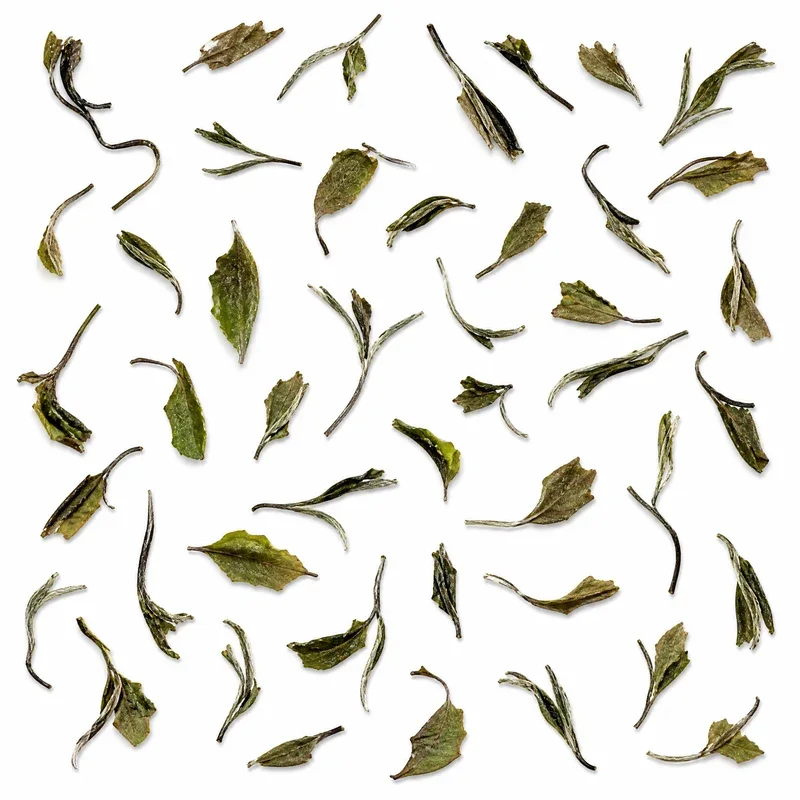
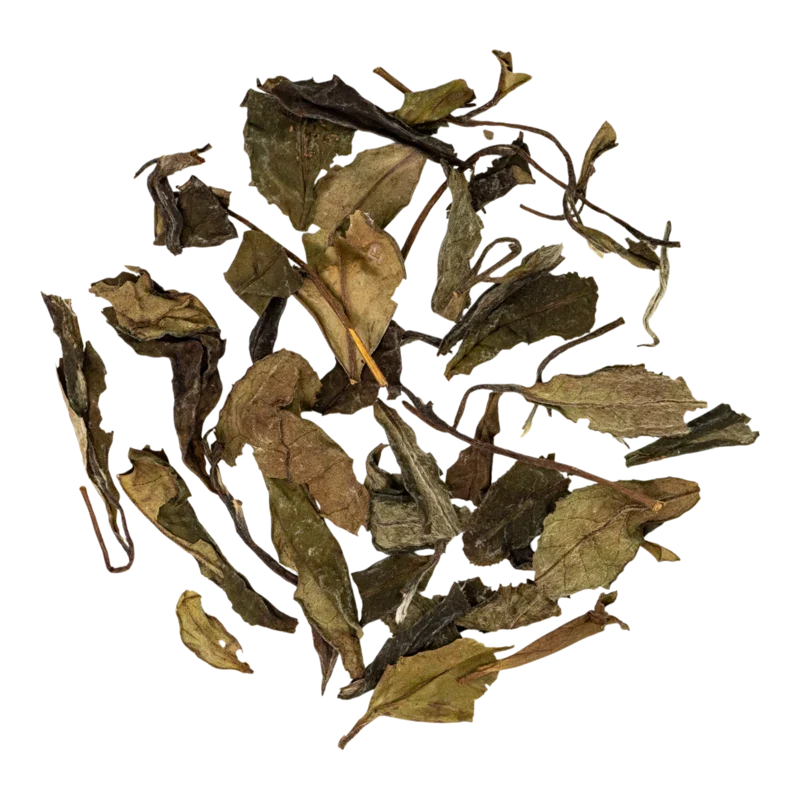
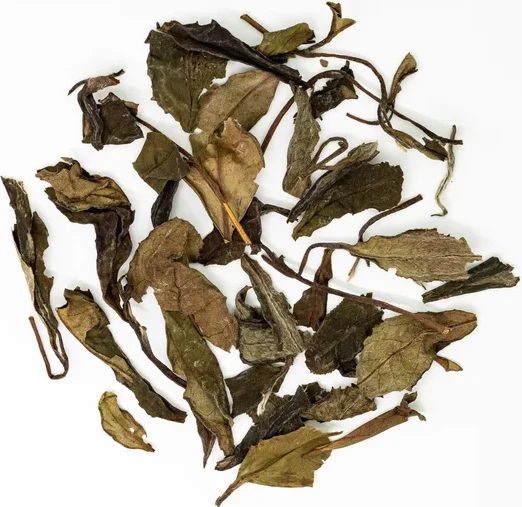
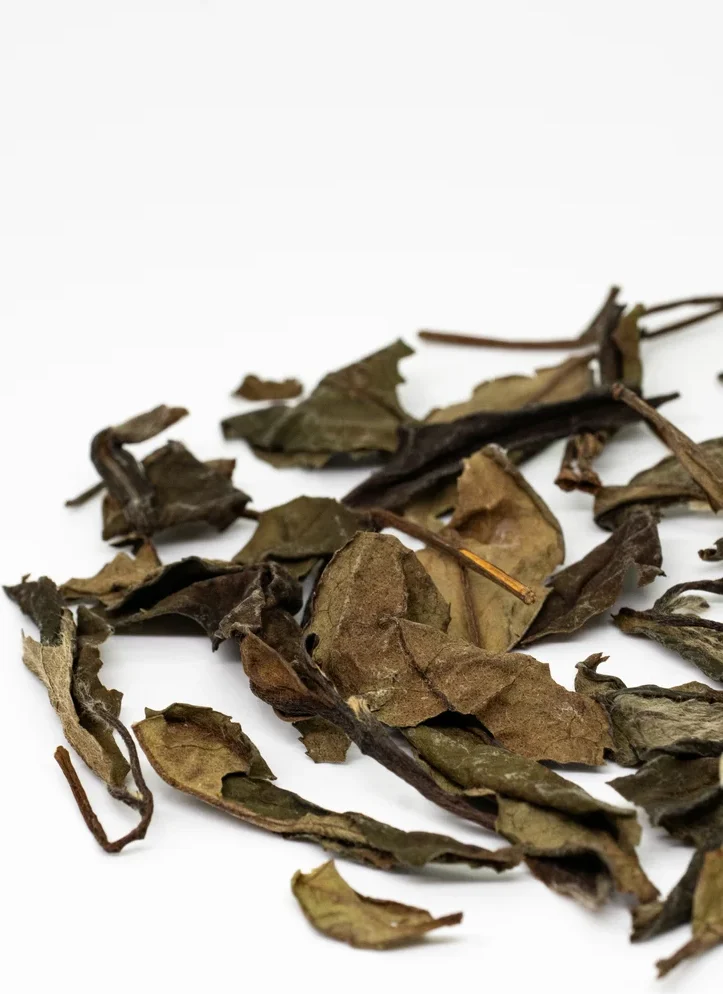
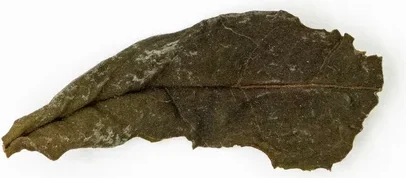
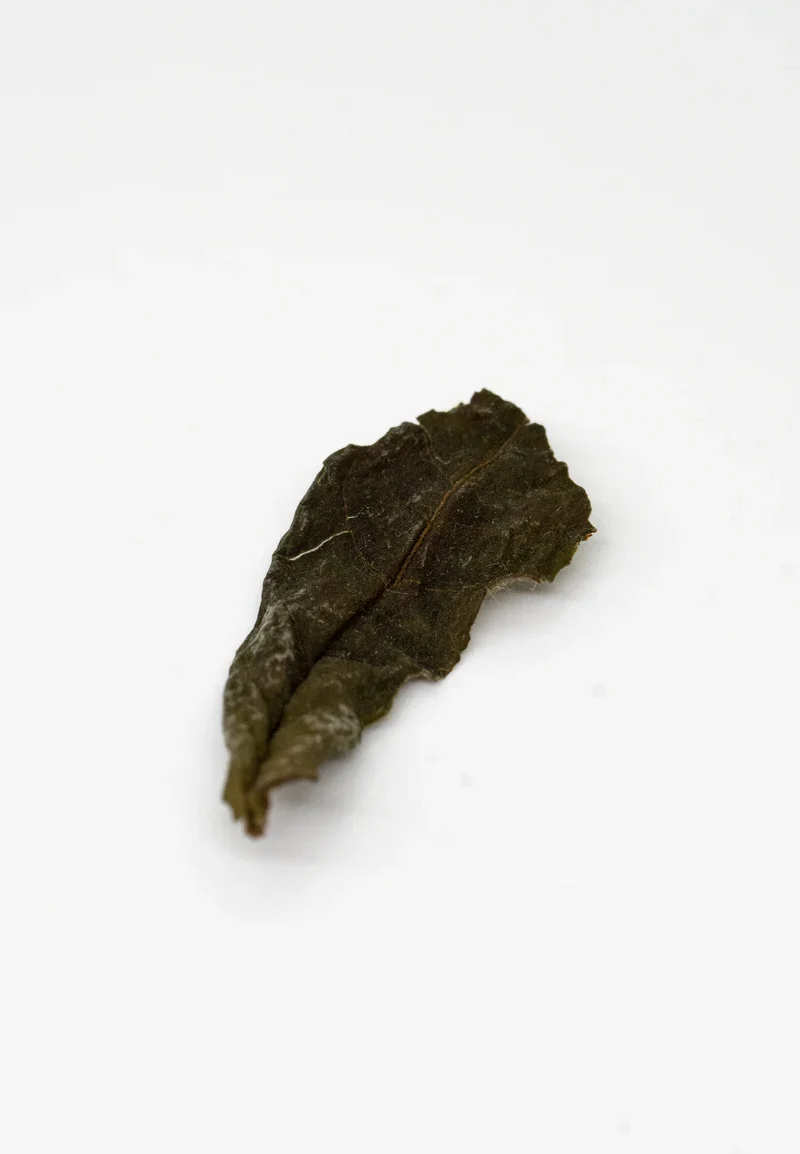
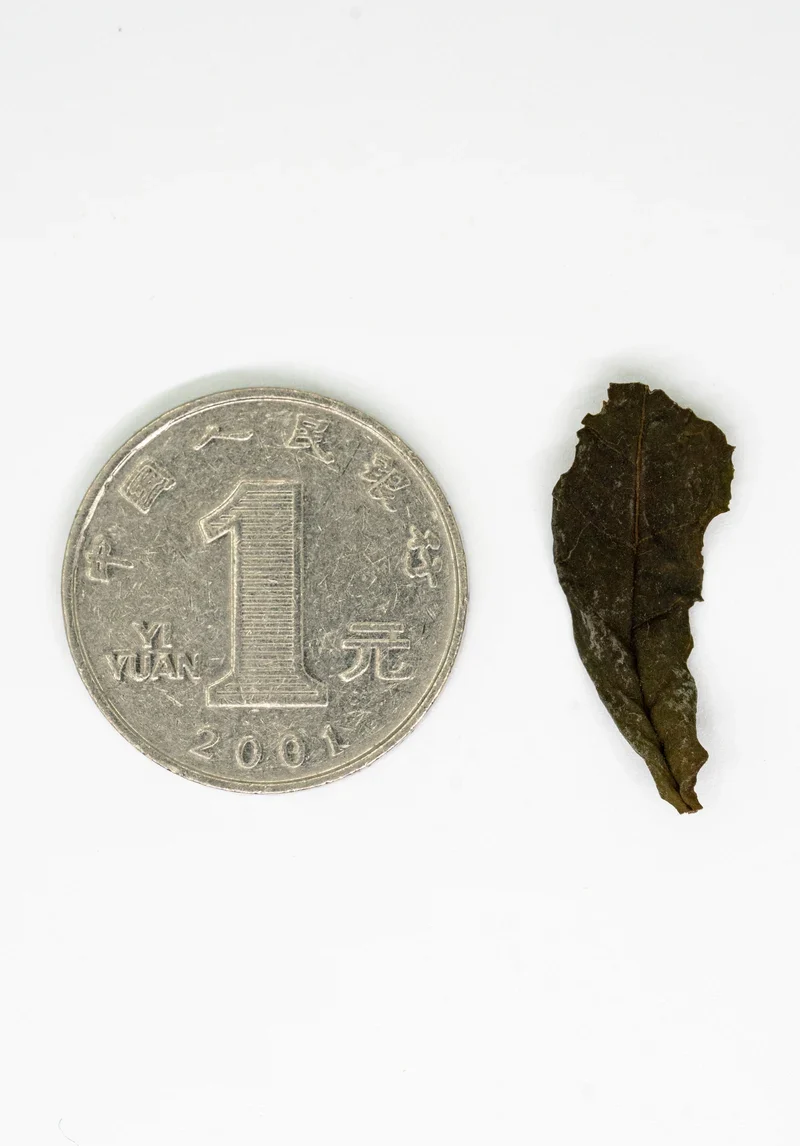
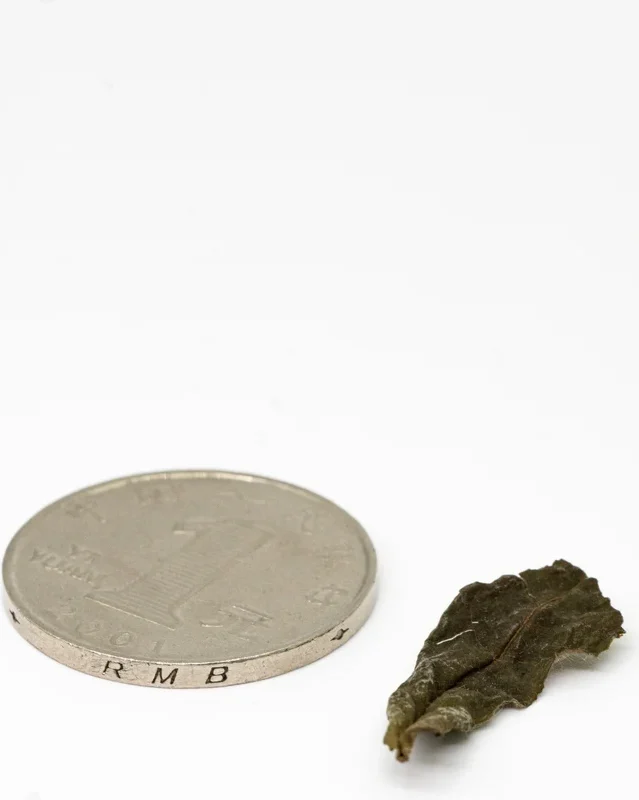
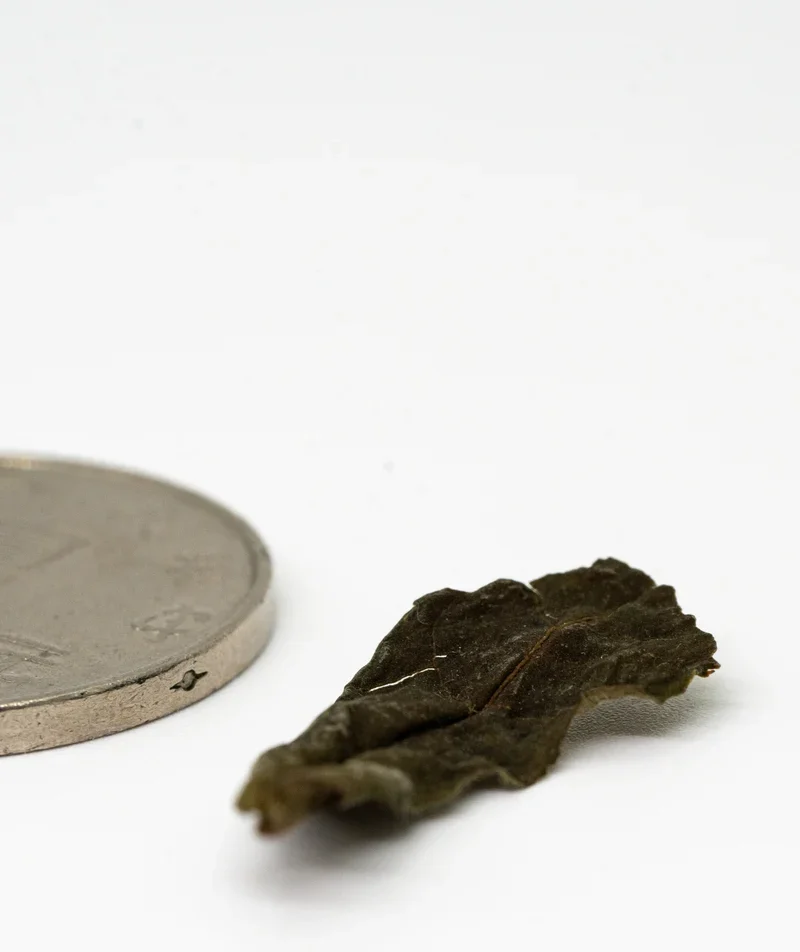
Dry Leaf Appearance: Mixture of buds and leaves with noticeable presence of silvery-white down (bai hao). Leaves are elongated, slightly curved, resembling eyebrow contours (hence the name "mei"). Color — from gray-green to brownish-green with silvery buds. Compared to Bai Mu Dan, in Gong Mei more mature leaves visually predominate, and the proportion of buds is smaller. Leaves are slightly thick, fleshy (叶张稍肥嫩), with visible stems.
Dry Leaf Aroma: Fresh, sweetish, with distinct floral notes, complemented by honey and fruity shades. Compared to Bai Mu Dan, the aroma is more "mature" — with more pronounced grassy and woody nuances, sometimes with tones of dry herbs and foliage.
Liquor Aroma: Rich, multi-layered: in young tea — floral-honey, with fruity notes and a hint of greenness; in aged Gong Mei (lao Gong Mei) — warm, "enveloping" aroma with notes of dates, longan, candied fruits, cinnamon and old wood.
Liquor Color: Young tea — light yellow with greenish tint, transparent and clear; with age (during aging) the liquor deepens to amber, honey, and in old specimens — to reddish-amber tone.
Spent Leaves: Whole, elastic shoots that have retained their shape — bud with two-three leaves on a branch. Color — from gray-green to brownish-green, when backlit the leaf blade shows reddish veins (characteristic sign of quality Gong Mei).
Taste: More rich, dense and "bodied" than Bai Mu Dan, but softer and more elegant than Shou Mei. Sweetish, refreshing, with light pleasant astringency and prolonged, "enveloping" aftertaste (回甘, huígān). In the bouquet of young Gong Mei, floral, honey and fruity notes predominate with nuances of green herbs. With aging (from 3 years and more), the taste deepens, tones of dates and dried fruits appear, sweetness becomes more "mature" and "honey-like," and astringency practically disappears. Well-brewed old Gong Mei can withstand 10–15 and more steeps without noticeable flavor decline.
Alkaloids: Caffeine — about 2.5–4% of dry mass. Caffeine content in Gong Mei is somewhat lower than in Bai Hao Yin Zhen and Bai Mu Dan, since more mature leaves contain less caffeine than young buds. Theobromine and theophylline are also present in insignificant quantities.
Amino Acids: Free amino acid content in white tea is one of the highest among all tea types — according to research data, it is 1–2 times higher than indicators of other tea types prepared from the same raw material. L-theanine (茶氨酸) comprises about 70% of the total amount of free amino acids and conditions the characteristic sweetness and softness of taste.
White tea contains an exceptionally high level of flavonoids — 8.5–13 mg/g, which significantly exceeds indicators of other tea types. Particularly noteworthy is the presence of dihydromyricetin (二氢杨梅素, èrqīng yángméisù) — a natural hepatoprotector. With increasing storage time, flavonoid content increases, which explains the increased value of aged white tea.
Thanks to more mature raw material with stems and petioles, Gong Mei contains an increased level of tea polysaccharides compared to Bai Hao Yin Zhen.
Essential Oils: Aromatic profile is formed by a complex of volatile compounds: linalool, geraniol, cis-jasmone, β-ionone, benzaldehyde and others. During aging, the aromatic profile significantly transforms.
Minerals: Potassium, calcium, magnesium, phosphorus, zinc, fluorine, manganese, iron. Mineral profile depends on soil composition of specific terroir.
Polyphenols: Total polyphenol content in white tea — 18–26% of dry mass, which is higher than in some green teas. Main catechins — EGCG (epigallocatechin-3-gallate), ECG (epicatechin-3-gallate), EGC (epigallocatechin) and EC (epicatechin). White tea is distinguished by high EGCG content, second only to green tea. During long-term storage, catechin content gradually decreases, but simultaneously the level of flavonoids increases.
Vitamins: C, B₁, B₂, PP, as well as carotenoids. Due to the absence of high-temperature processing, vitamin C in white tea is preserved better than in green tea.
High content of polyphenols and flavonoids provides powerful antioxidant activity, helping neutralize free radicals and slow cellular aging processes. Studies show that white tea brewed at room temperature shows even higher antioxidant activity than when brewed with hot water.
Polyphenols, amino acids and vitamin C together stimulate the immune system and increase the body's resistance to infections. Studies confirm antiviral and antibacterial properties of white tea.
Dihydromyricetin (flavonoid characteristic of white tea) has a protective effect on liver cells, promoting their recovery and reducing the toxic influence of alcohol and other harmful substances.
White tea contains active enzymes that promote fat breakdown and normalization of carbohydrate metabolism. Polyphenols and caffeine jointly stimulate lipid metabolism, which may contribute to body weight control.
Catechins and flavonoids in white tea help reduce "bad" cholesterol (LDL) levels, normalize blood pressure and improve vascular elasticity.
L-theanine in white tea has a unique property — it simultaneously gently tones and relaxes, stimulating the production of α-brain waves. This provides a state of calm concentration without excessive excitement.
Fluorides and catechins in white tea show pronounced antibacterial action in the oral cavity, reducing the risk of caries and maintaining gum health.
White tea antioxidants protect skin from photodamage and slow age-related changes. Traditional Chinese medicine recommends white tea for "internal heat" and inflammatory processes.
Tea Amount: 5–7 grams per 100–150 ml water (for gongfu brewing); 3–5 grams per 200–300 ml (for brewing in teapot or large cup).
Teaware: Gàiwǎn (盖碗, gàiwǎn) made of white porcelain — optimal choice, allowing control of steeping time and full appreciation of aroma. Glass teapot (for observing the "dance" of leaves) and ceramic ware are also suitable. For aged Gong Mei, Yíxīng teapot (紫砂壶, zǐshā hú) can be used — porous clay will emphasize the softness and depth of old tea. Old Gòng Méi is also perfectly suited for boiling (煮, zhǔ) in glass or ceramic teapot over fire.
Water Temperature: 85–95°C. Young Gong Mei (up to 1–2 years) is better brewed at 85–90°C to avoid "burning" the tender leaf; aged Gong Mei (3 years and more) can be brewed with 90–95°C water and even boiling water — higher temperature better reveals deep, "aged" notes.
Container: For long-term storage, three-layer packaging is recommended: inner layer — aluminum foil, middle — kraft paper, outer — cardboard box. Storage in ceramic or clay containers with tight lids is permitted. It is important not to use plastic and polyethylene — they create a greenhouse effect and prevent tea "breathing."
Enemies: Excessive humidity (leads to mold appearance), direct sunlight (destroys chlorophyll and aromatic substances), foreign odors (tea easily absorbs them), sharp temperature fluctuations.
Dry room with relative humidity 40–65%, without direct sunlight, without sharp temperature fluctuations (optimally 18–28°C), away from foreign odors. Under such conditions, post-fermentation processes slowly occur in the tea — flavonoid content increases, taste softens, aromatic profile becomes more complex.
Quality Gong Mei can be stored and improved for 10–20 years and more. Tea aged 3–5 years is considered "young-aged" with pleasantly softened profile; 7–10 years — classic "old white tea" with deep tones of dates and longan; over 10 years — collectible tea with unique character.
The highest category of white tea. Only buds, maximum white down. Taste — exceptionally delicate, "silky," with dominance of milky, creamy and fresh grassy notes. Price is 3–10 times higher than Gong Mei. Less durable when brewing (3–5 infusions). Lower aging potential.
Bud with one to two leaves. More pronounced floral profile (peony, lily of the valley) than Gong Mei, but less rich and "full-bodied" taste. Price — 1.5–3 times higher than Gong Mei. Medium aging potential.
Premium grade Bai Mu Dan with particularly large buds. Intermediate link between Bai Hao Yin Zhen and standard Bai Mu Dan. More intense floral aroma and creamy notes.
The "coarsest" category of white tea — mature leaves, minimum buds. Taste — denser, "earthy," grassy, with woody notes. Price lower than Gong Mei. Excellent potential for aging and boiling.
Yunnan white tea from large-leaf variety (Camellia sinensis var. assamica). Noticeably different from Fujian white teas: more "powerful" taste, honey-fruity profile with characteristic notes of honey, dried apricot and flowering herbs. Different terroir and different cultivar create a completely different tea experience.
Specialized tea shops with reputation or verified suppliers from Fujian. Pay attention to the presence of information about region of origin and year of production.
Genuine Gong Mei should contain visible buds with white down among mature leaves. Complete absence of buds indicates rather Shou Mei or low-grade raw material. Leaves should be whole, not crushed.
Dry tea should smell fresh and pleasant — flowers, honey, dry herbs. Musty, sour or moldy smell indicates violation of storage conditions.
Liquor color — from light yellow to amber (depending on age), necessarily transparent and clear. Cloudy liquor — sign of poor-quality tea or technology violation.
The aged white tea market is flooded with fakes — "artificially aged" teas that have undergone accelerated processing with moisture and heat. Genuine aged Gong Mei is distinguished by clean, "transparent" taste without mustiness and dampness.
No reviews yet. Tell us what you think of this tea.
Rate this tea and share your impressions. We review each submission before publishing it.