Brewing
Gongfu brewing
- Water temperature
- 80 °C
- Tea amount
- 5 g
- Water volume
- 100 ml
- First steep
- 10 s
- Time added per infusion
- 5 s
- Infusions
- 4

bái mǔdān
Choose a brewing method. Start with the recommended quantities and time, then adjust to taste.
Brewing
Brewing
Taste
Tea encyclopedia
Category: Famous Teas of China; historical Fujian specialty. Included in the four main commercial categories of white tea defined by national standard GB/T 22291-2017 (alongside Bai Hao Yin Zhen, Gong Mei, and Shou Mei). Bai Mu Dan is also subdivided by the market into fresh — Xīn Chá (新茶, Xīn Chá) and aged — Lǎo Chá (老茶, Lǎo Chá, usually from 3 years), although there is no formal standard for this division in GB/T 22291-2017.
Category: Famous Teas of China; historical Fujian specialty. Included in the four main commercial categories of white tea defined by national standard GB/T 22291-2017 (alongside Bai Hao Yin Zhen, Gong Mei, and Shou Mei). Bai Mu Dan is also subdivided by the market into fresh — Xīn Chá (新茶, Xīn Chá) and aged — Lǎo Chá (老茶, Lǎo Chá, usually from 3 years), although there is no formal standard for this division in GB/T 22291-2017.
located in northeastern Fujian, considered the birthplace of white tea in general. Bai Mu Dan from Fuding is distinguished by pronounced sweetness and a soft, delicate aroma. Main micro-regions: Tàimǔ Shān (太姥山, Tàimǔ Shān), Pánxī (磻溪, Pánxī), Diǎntóu (点头, Diǎntóu), Báilín (白琳, Báilín).
mountainous area in northwestern Fujian, historically the main producer of Bai Mu Dan specifically. Tea from Zhenghe possesses more pronounced floral notes and dense flavor. Tea master Zhāng Tiānfú (张天福, Zhāng Tiānfú) noted: "Bai Mu Dan from Zhenghe is unique in form, color, aroma, and taste."
small production area that experienced a flourishing of Bai Mu Dan production in the 1960s.
considered the first place where Bai Mu Dan was created as an independent commercial category (Shuiji village, 水吉, Shuǐjí).
Coordinates: approximately 27°00'–27°30' N, 119°00'–120°00' E (for the main Fuding and Zhenghe areas).
Origin: China, Fújiàn Province (福建, Fújiàn). Four main production areas:
Type: White tea (微发酵茶, wēi fājiào chá — lightly oxidized tea, oxidation degree about 5–10%). Production does not include the kill-green stage (杀青, shāqīng) characteristic of green teas; the flavor profile is formed predominantly by withering and gentle drying.
Cultural Significance: Bai Mu Dan occupies the position of "accessible aristocrat" among white teas. It is significantly cheaper than Bai Hao Yin Zhen, but maintains the refinement characteristic of white tea, enriched with fuller flavor due to the presence of leaves. In Fujian tradition, fresh Bai Mu Dan is a typical "summer tea": it is drunk in hot weather for its refreshing and fever-reducing effect (退热祛暑, tuì rè qū shǔ). Aged Bai Mu Dan, conversely, is considered a "winter" and "warming" beverage. In modern tea culture, Bai Mu Dan is often recommended as the first "serious" white tea for introduction to the category — it forgives brewing mistakes and well demonstrates the character of the region. Its exceptional ability for elegant transformation during aging adds another dimension: the same tea offers "spring transparency" in youth and "honeyed depth" after years.
History: Bai Mu Dan as a commercial category of white tea was formed in the early 20th century. According to Zhang Tianfu's research "Investigation of Fujian White Tea" (《福建白茶的调查研究》, 1963), the chronology of white tea development looks as follows: in 1857, trees of the Fuding Da Bai Cha cultivar were discovered in Fuding, and from 1885, Bai Hao Yin Zhen began to be made from their buds; in 1880, the Zhenghe Da Bai Cha cultivar was identified in Zhenghe, and in 1889, production of silver needles from this material started. Bai Mu Dan was created before 1922 in Shuiji village, Jianyang County (now administratively part of Nanping City). In 1922, Zhenghe County began mass production of Bai Mu Dan and exported it to Vietnam, subsequently becoming the main production center for this tea. In the 1960s, Songxi County actively joined the production.
registered as Hua Cha No. 2 (华茶2号), introduced into production from the late 1950s. Valued for particularly long and dense down on buds and high yield. Currently, Hua Cha No. 1 and No. 2 account for over 95% of Fuding's tea plantations.
discovered in 1879 in Tiěshān village (铁山村, Tiěshān cūn) of Zhenghe County. Vigorous bush, shoots with less down compared to Fuding cultivars, but with more pronounced aromatic profile. Leaf blade wider, produces denser liquor.
Cultivar: Three main groups of tea cultivars are used for Bai Mu Dan production:
Picking: In spring, typically from late March to early April, exclusively by hand. Harvest of the first spring flush (春茶第一轮嫩梢, chūnchá dì yī lún nènshāo). Summer and autumn material is not used for quality Bai Mu Dan — shoots are too coarse. Harvest has a very limited "window": according to Fuding tea growers, they work "from rooster's crow to ghost's cry" (鸡叫做到鬼叫) — from dawn to deep twilight, because each day of delay moves material from the Yin Zhen category to Bai Mu Dan, then to Shou Mei.
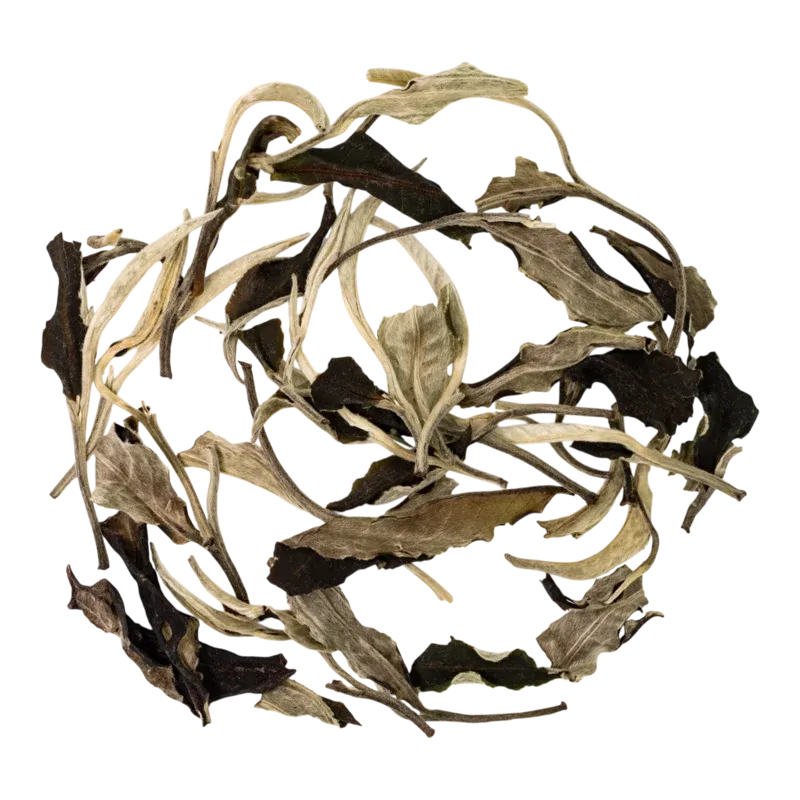
Pluck Standard: Bud and one to two upper young leaves (一芽一二叶, yī yá yī-èr yè). Traditional standard requires "three whites" (三白, sān bái): white down must cover the bud and both sides of each of the two leaves. Length of bud and leaves should be approximately equal. The presence of leaves is the key difference from Bai Hao Yin Zhen, where only unopened buds are harvested. The balance of bud and leaf determines the tea's character: too many buds — style approaches Yin Zhen; too coarse leaf — approaches Shou Mei.
Raw Material: Exceptionally high. Buds and leaves must be whole, juicy, undamaged, without signs of disease and pests. Harvest conducted only in dry weather.
Altitude: Optimal — 600–1,000 m above sea level. Mountain lots (800+ m) generally possess more delicate aroma and are valued higher.
Climate: Fujian Province — zone of subtropical monsoon climate with abundant precipitation, warm winter and hot summer. Precipitation in the white tea production zone — 1,500–1,900 mm per year; average annual temperature in Fuding — about 18.5°C, in Zhenghe — about 16°C.
Mountainous terrain with characteristic fogs creating diffused sunlight. Soils predominantly red-yellow lateritic, rich in iron and minerals. Forest coverage in the Zhenghe area reaches 71.7%, ensuring optimal air humidity and ecological purity.
located closer to the coast (maritime influence), at altitudes of 500–800 m. Climate more humid and warm, soils predominantly red earth. Mountain areas (Taimu Shan, Panxi) produce more delicate, "crystalline" aromatic profile; warmer and lower areas (Diantou) — denser, honeyed.
mountain area at altitudes of 200–1,200 m (average about 800 m), nestled between the Wǔyí (武夷) and Jiǔfēng (鹫峰) mountain ranges. Unique microclimate of "cool summer and warm winter." Tea from Zhenghe is denser and more saturated, with bright floral notes.
Bai Mu Dan is one of the most "sensitive" teas to the character of the year. In cool spring — more transparent florality; in warm — more honey and fruits. This makes each vintage unique.
Hand picking of shoots meeting the "bud + one-two leaves" standard. Conducted in the morning in dry weather.
Key and most critical stage. Harvested material is spread in a thin layer on bamboo trays-sieves (水筛, shuǐshāi) without leaf overlap. Two main methods exist, differing by region:
Leaves are placed in diffused sunlight in favorable weather, otherwise moved indoors. If sun is too intense, black netting is stretched over trays. Duration — 24–48 hours.
Trays are placed in ventilated tea rooms (special tea "lou" — multi-story building with good ventilation) without direct sunlight. Duration — 48–72 hours.
Withered material is placed on bamboo frames (烘笼, hōnglóng) and dried at 90–100°C to 4–5% residual moisture. Important not to over-dry the leaf to preserve aroma and biologically active substances.
Finished tea is sorted, removing coarse fragments, broken leaves, foreign matter. Size fraction is standardized.
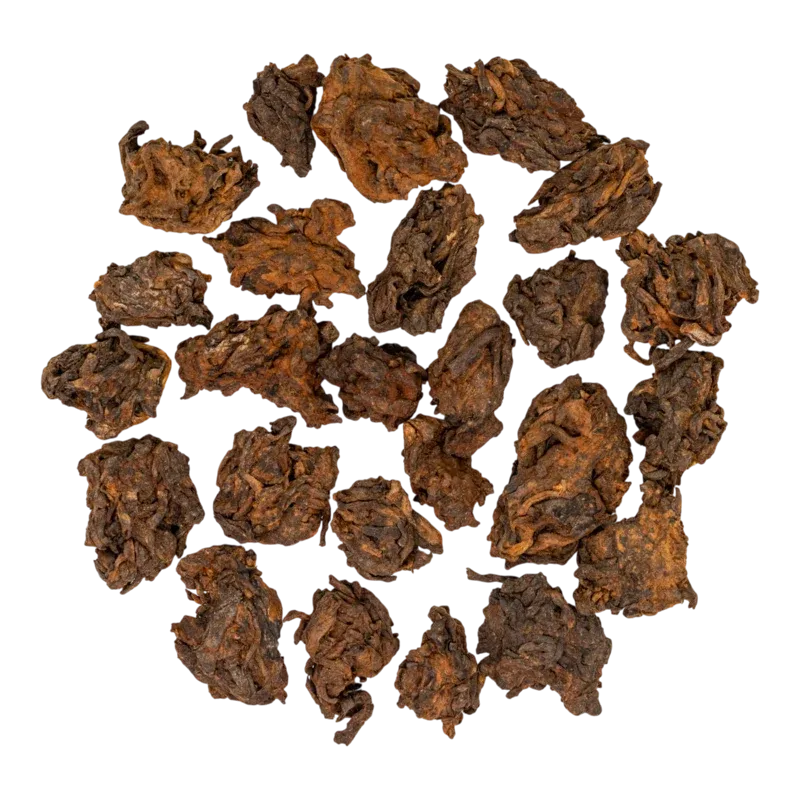
Part of batches after primary processing are stored for multi-year aging. Some producers conduct light stabilizing drying before this to reduce mold risk. Some batches are pressed into cakes (饼, bǐng) or bricks (砖, zhuān) before aging — pressing slows and evens aging.
Bai Mu Dan is released in loose and pressed forms. Fresh tea (Xin Cha) is more often sold loose to preserve aromatics; pressing is used predominantly for tea intended for long-term aging.
Dry Leaf Appearance: Noticeably darkens: from gray-green to beige-brown, sometimes with dark chestnut tones. Silvery down on buds is preserved but appears softer and more muted. Leaves may be slightly brittle in loose format.
Dry Leaf Aroma: Honey, dried fruits (apricot, date, raisin), warm herbs (thyme, sage), light spice. In old batches (7+ years) — sandalwood, dry bark overtones. Aroma deep, warm, "voluminous."
Liquor Aroma: Pronounced honey-dried fruit bouquet with grassy-spicy background. In boiling — "compote-like," enveloping character.
Liquor Color: Golden-amber (琥珀色, hǔpò sè — "amber color"), in aged batches (7+ years) — dark amber to copper. Transparent and clean — turbidity indicates storage defects.
Spent Leaves: Leaves open more slowly, especially in pressed cakes. Color — olive-brown to dark chestnut.
Taste: Round, dense, with pronounced "compote" sweetness and "oily" texture. Astringency soft, smoothed by years. Notes of honey, date, caramel, warm herbs. Aftertaste — very long, warm, sweet, with sensation of "inner warmth."
Amino Acids: Total free amino acid content in fresh tea — 5.97–8.89% (data for six cultivars). Key component — L-theanine (茶氨酸, chá ānjīsuān), providing sweet and "umami"-like taste, and stimulating α-wave generation in the brain. During aging, amino acid content gradually decreases, explaining replacement of "fresh sweetness" with more "mature" flavor notes.
Content — 5.37–5.78% (for various cultivars). Relatively high indicator due to raw material tenderness. Caffeine is chemically stable and remains stable during aging. Subjectively, stimulating effect is softened by high theanine content.
Enhance "silkiness" and roundness of liquor texture. Water-soluble extractive substance content — about 44–46%. With aging, their extractability increases, forming "compote" sweetness, especially noticeable when boiled.
In young tea, cis-3-hexenol and linalool (floral-grassy notes), 2-phenylethanol (rose tones), geraniol predominate. During aging, profile shifts to furfural, benzaldehyde (almond overtones), methyl salicylate; in old batches (7+ years) — woody terpene compounds.
With age, theaflavin and theabrownin content grows, explaining liquor darkening from light golden to amber.
White tea is distinguished by elevated dihydromyricetin content (二氢杨梅素) — a natural flavonoid with pronounced hepatoprotective activity, not characteristic in such quantities for other tea types.
Minerals: Potassium, magnesium, zinc, fluorine, manganese, selenium.
Polyphenols: Content in dry leaf of fresh tea — about 19%. Main group — catechins, among which epigallocatechin-3-gallate (EGCG) dominates. During aging, total catechin content decreases, but polymerized phenolic compounds form, increasing "roundness" and flavor density. Total flavonoid content — 8.5–12.9 mg/g, with concentration tending to increase with aging years — this is one of the characteristic features of white tea's chemical evolution.
Vitamins: C, B group (B1, B2), E, P (rutin). Due to absence of high-temperature processing, vitamin C is preserved better than in green teas.
High polyphenol and flavonoid content ensures free radical neutralization. White tea's antioxidant activity is comparable to green tea, and exceeds it in some indicators. In aged tea, antioxidant potential is preserved due to increased flavonoid and polymerized phenolic compound content.
Combination of caffeine and L-theanine creates unique alertness profile — even, without sharp peaks and drops, with improved cognitive functions. Fresh Bai Mu Dan — excellent "morning tea"; aged — softer and "warmer" in action.
White tea polyphenols help reduce LDL cholesterol levels and strengthen vessel walls, may improve blood pressure indicators.
White tea extract (particularly Bai Mu Dan) is used in cosmetology due to proanthocyanidin, kaempferol, quercetin, and myricetin content, protecting skin from photoaging and improving microcirculation.
Warm white tea infusion — comfortable beverage after meals. Aged Bai Mu Dan in traditional medicine is considered especially gentle for the stomach.
High dihydromyricetin content may contribute to liver cell protection.
Catechins and vitamin C possess antiviral and antibacterial activity.
Fresh Bai Mu Dan — tea of "cool nature" (性凉), excellently quenching thirst. Aged belongs to "neutral" or "warm" (性温) and is good in cold weather.
Soft or medium mineralization, without chlorine, plastic, metal odors. Hard water suppresses sweetness; too soft (distilled) gives "emptiness."
Especially recommended for aged Bai Mu Dan (3+ years) and pressed cakes. 2–3 g per 500 ml water, bring to boil, simmer on low heat 3–8 minutes. Reveals maximum "compote" sweetness and density. For pressed tea: don't crumble cake — carefully separate needed piece with tea needle (茶针, cházhēn) and give it time to separate naturally.
Well suited for fresh Bai Mu Dan. 3–5 g per 500 ml cold water, 4–8 hours in refrigerator. Crystal clear, sweet, refreshing beverage.
Tea Amount: 5–7 g per 150–200 ml for gongfu method; 2–3 g per 500 ml for boiling aged tea.
Teaware: Porcelain or glass gàiwǎn (盖碗, gàiwǎn) — ideal universal option. Glass allows observing "peony opening" in water. For aged Bai Mu Dan, dense neutral ceramics acceptable. Clay teapots — with caution: white tea easily absorbs foreign odors.
Water Temperature: 80–90°C for fresh; 90–100°C for aged (3+ years). For bud-heavy batches (牡丹王) — closer to lower range; for leafy and pressed — to upper range. Most common mistake: overheating fresh tea (getting harsh astringency), underheating aged tea (getting "empty" taste).
Airtight container (porcelain, tin can, foil bag with ziplock). Dry, cool, dark place without temperature fluctuations. For particularly delicate batches, refrigerator acceptable (0–5°C) with perfect airtightness. "Peak freshness" of aromatics — first 3–6 months.
"Breathing" packaging (paper wrapper + cardboard/wooden box). Room temperature (15–30°C), without direct sunlight. Optimal relative humidity — 40–65%. Complete absence of foreign odors. Periodic checking (every 3–6 months).
Clean honey-herbal/dried fruit aroma, transparent amber liquor, round dense taste.
Mustiness, "basement" smell, mold, acidity, turbid liquor — always storage defects, not "characteristic age notes."
Buds only. Liquor lighter, more "ethereal," with pronounced sweetness and aroma fineness, but less flavor fullness. Price substantially higher. Brewing at lower temperatures (70–85°C). When aged — less "compote-like" than Bai Mu Dan, but more refined in aromatics.
From shoots of local populations (群体种 / 菜茶). Leaves smaller, taste more astringent and "grassy." Lower price.
More mature leaves. Taste densest among white teas, with pronounced pectins. When aged and boiled — "honey compote." Most accessible price.
It is fuller and more "gastronomic" than Yin Zhen, but cleaner and more aromatic than Shou Mei. Balance of bud and leaf ensures both fineness and depth — in both fresh and aged versions. This is the only white tea equally convincing in both incarnations.
Honest seller indicates harvest year, season, region, bush variety. For aged — also storage conditions. Vague formulations without specifics — reason for caution.
Whole, neat shoots with uniform fraction, minimal crumbs. Buds covered with silvery down, leaves — gray-green (fresh) or beige-brown (aged), without burn marks.
Clean, without mustiness, "basement" and harsh perfumery. For fresh — floral-honey brightness; for aged — clean dried fruit-herbal notes. If tea smells of vanillin, bright fruits, or "perfume" — likely flavoring.
Transparent and clean — without turbidity. Aftertaste — sweet and long. Acidity, bitterness, "dirt" — signs of raw material or storage defects.
Artificial "aging" (accelerated aging at high temperature and humidity) imitates age profile but gives empty taste and short aftertaste. Mold and acidity — always defects, not "medicinal notes."
No reviews yet. Tell us what you think of this tea.
Rate this tea and share your impressions. We review each submission before publishing it.