Brewing
Gongfu brewing
- Water temperature
- 78 °C
- Tea amount
- 5 g
- Water volume
- 100 ml
- First steep
- 10 s
- Time added per infusion
- 5 s
- Infusions
- 4

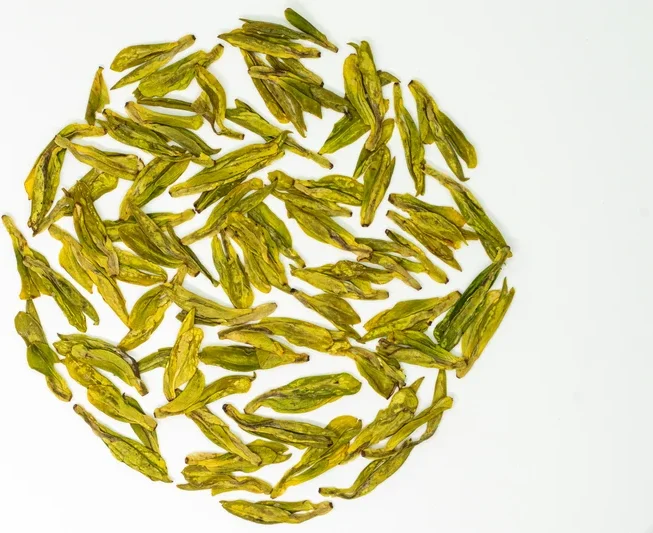
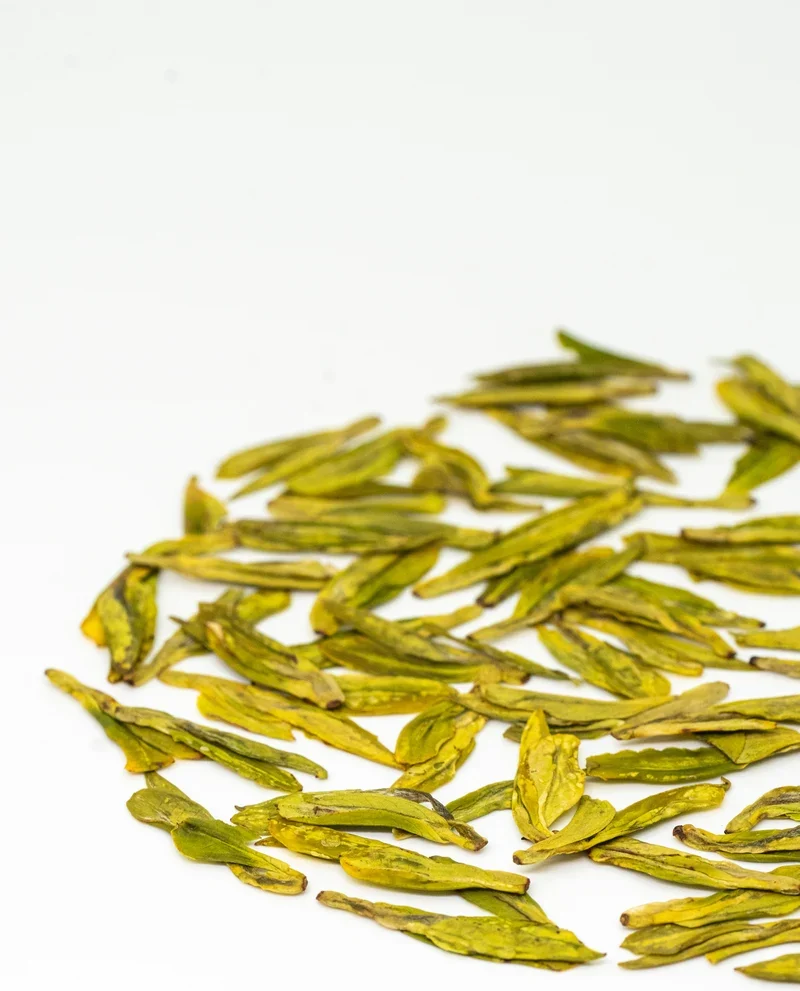
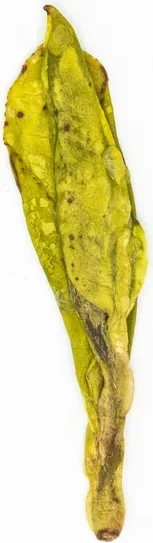
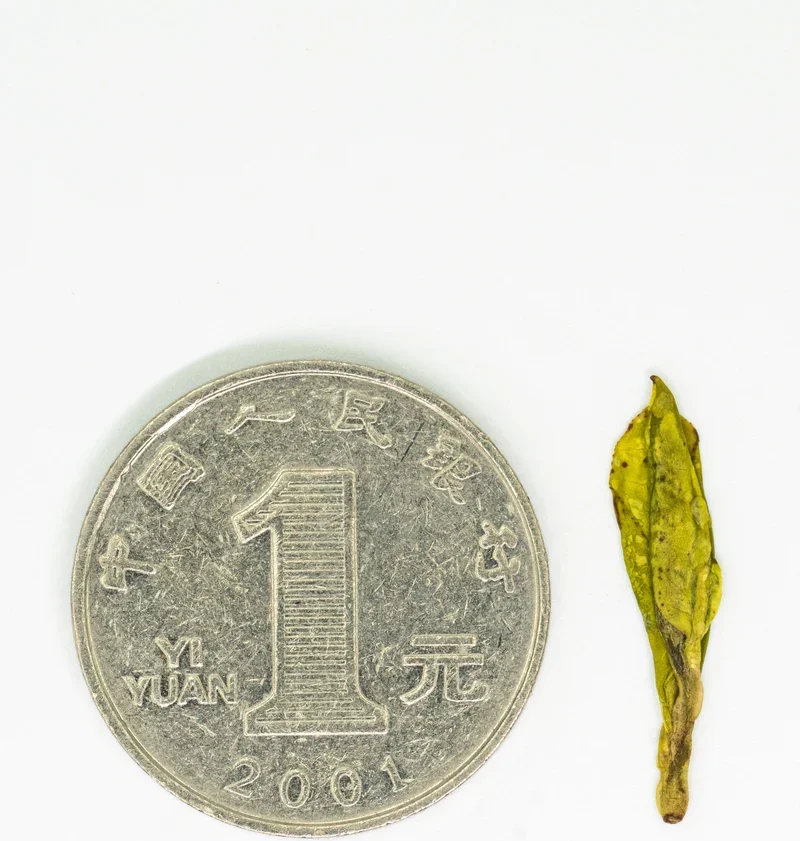
Tiāntái huángchá
Choose a brewing method. Start with the recommended quantities and time, then adjust to taste.
Brewing
Brewing
Taste
Tea encyclopedia
Category: Regional tea with protected designation of origin. National geographical certification trademark (国家地理标志证明商标, Guójiā dìlǐ biāozhì zhèngmíng shāngbiāo). Included in the first batch of "special souvenirs of Zhejiang" (浙江特色伴手礼). In 2022, the cultivar Zhonghuang 1 (中黄1号) passed verification by the National Agricultural Standardization Demonstration Zone.
Category: Regional tea with protected designation of origin. National geographical certification trademark (国家地理标志证明商标, Guójiā dìlǐ biāozhì zhèngmíng shāngbiāo). Included in the first batch of "special souvenirs of Zhejiang" (浙江特色伴手礼). In 2022, the cultivar Zhonghuang 1 (中黄1号) passed verification by the National Agricultural Standardization Demonstration Zone.
Coordinates: 29°05′ N, 121°01′ E (central part of Tiantai County).
Origin: China, Zhèjiāng Province (浙江省, Zhèjiāng Shěng), Táizhōu Prefecture (台州市, Táizhōu Shì), Tiāntái County (天台县, Tiāntái Xiàn).
Type: Formally — green tea (unoxidized), produced from a yellow-leaf cultivar. The commercial name "huang cha" (黄茶, "yellow tea") refers not to the type of processing, but to the natural color of the raw material. Important not to confuse with classical yellow teas (Junshan Yinzhen, Mengding Huang Ya, etc.), whose technology requires the "sealed yellowing" stage (闷黄, mèn huáng). Tiantai Huang Cha is produced without this stage — following the scheme "spreading → fixation → shaping → drying," characteristic of green teas. Oxidation level is minimal (less than 5%).
Cultural Significance: Tiantai Huang Cha has become the calling card of modern Tiantai tea cultivation and a symbol of the revival of the region's tea traditions. Tiantai County has 10,300 mu (about 687 ha) of high-mountain tea gardens and has built a system of four product lines: green, yellow, red, and white tea. Tiantai Huang Cha occupies a special place among them — it is the flagship of the "yellow" line, closely connected with the ancient tea heritage of Ge Xuan and the Buddhist formula "tea and Chan are of one taste" (茶禅一味, chá chán yī wèi), which was born precisely here.
History: The tea history of Mount Tiāntái (天台山, Tiāntái Shān) spans more than 1,800 years and is inextricably linked with religious tradition. At the end of the Eastern Han period, the Taoist Gě Xuān (葛玄, Gě Xuán, 164–244 CE) established a tea garden near Guiyun Cave (归云洞) on Huádǐng Peak (华顶, Huádǐng), creating, according to some researchers, one of the first artificial tea plantations in China. To this day, within the Huading National Forest Park, the "Ge Xian Tea Garden" (葛仙茗圃, Gě Xiān Míng Pǔ) is preserved — a symbol of ancient tea cultivation. During the Southern and Northern Dynasties period, the poet Xiè Língyùn (谢灵运, Xiè Língyùn) transferred Tiāntái tea seeds to Lingyin Temple (灵隐寺) in Hangzhou, from where, according to Su Shi's (苏轼, Sū Shì) version, the famous Longjing originates. This is evidenced by the "General History of Tea Industry" (《茶业通史》, Cháyè Tōngshǐ): "Tea was transmitted from Tiantai to Qingyuan and further to Fujian."
Cultivar: Zhonghuang 1 (中黄1号, Zhōnghuáng 1 Hào), formerly known as "Tiantai Huang" (天台黄). Represents a natural yellow (chlorophyll-deficient) mutation selected from the local population of tea bushes in Tiantai County. The key botanical feature is pronounced yellow pigmentation of young shoots: spring new shoots are goose-yellow (鹅黄色, é huáng sè), summer and autumn shoots are pale yellow. Mature leaves in the lower and inner parts of the crown are green. Even one-year-old cutting seedlings retain yellow coloration. Trichomes (hairs) on shoots are sparse. Bud density is high, tenderness retention ability (持嫩性, chí nèn xìng) is good. Unlike most yellow and white mutant cultivars, Zhonghuang 1 possesses enhanced resistance to cold and drought, comparable to ordinary green-leaf varieties, which explains its wide distribution.
Picking: Predominantly in spring (March–April), when yellow pigmentation is maximal. For premium batches — early spring harvest (before Qingming, 清明, early April). Summer and autumn harvests are possible, but shoot color is paler and the amino acid profile weaker.
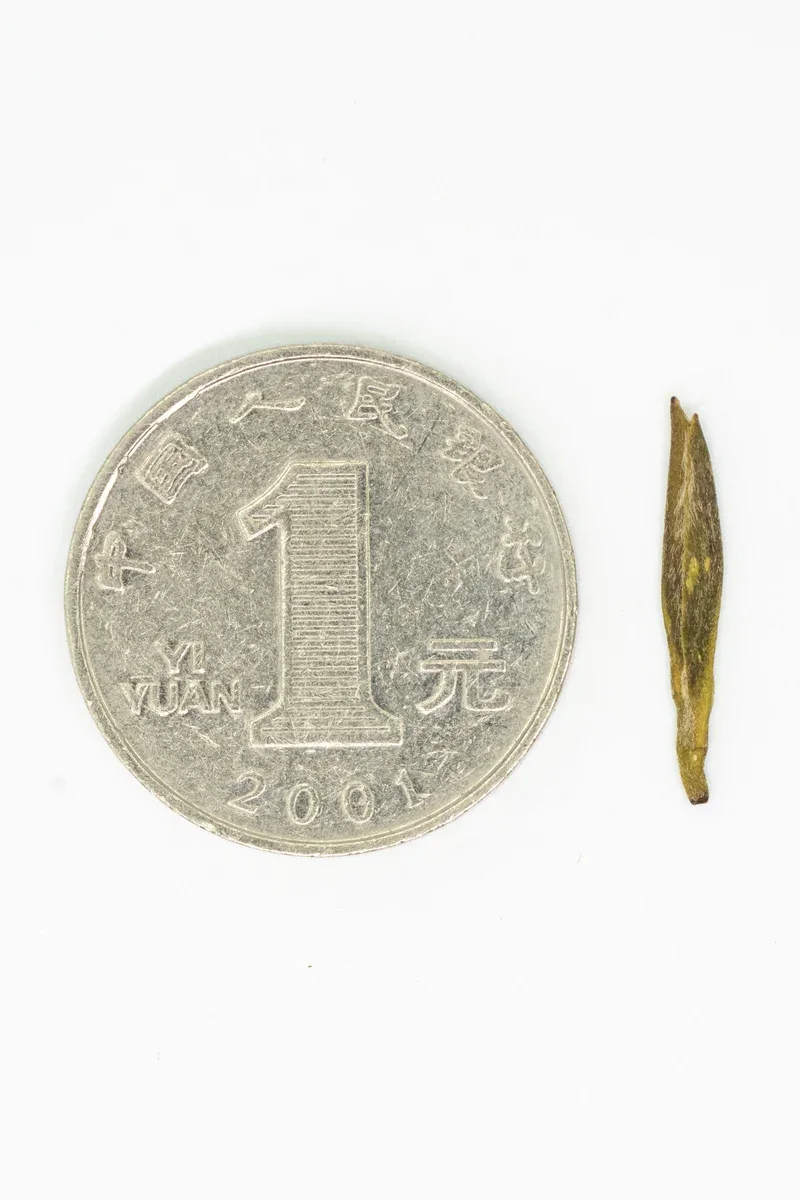
Pluck Standard: According to standard T/ZNZ 055-2021 ("Tiantai Huang Cha"): supreme grade (特级) — predominantly one bud and one leaf, up to 30% opening of the second leaf is permitted; shoot length no more than 3.5 cm. Raw material must be whole, fresh, uniform.
Raw Material: Freshly picked shoots are delivered to the factory in bamboo baskets with minimal mechanical damage. Overheating or withering during transport is not permitted. Raw material below first grade or showing signs of spoilage is not used for Tiantai Huang Cha production.
Altitude: Tea gardens are located at altitudes from 100 to 600 m above sea level. The most valuable raw material comes from plantations at 300–600 m altitude, where "mountain character" is expressed: frequent fogs, large diurnal temperature variations, and diffused light.
Climate: Mid-latitude subtropical monsoon, with features of basin climate. Four distinct seasons. Average annual temperature 16.5–17.1°C. Average annual precipitation — about 1,350 mm, with the main share during the meiyu period (梅雨, plum rain season, April–June) and typhoon rains (July–October). Average annual relative humidity — 80%. Average annual number of foggy days — 19, creating favorable diffused light for tea. Sunshine — about 1,875 hours per year. Frost-free period — about 232 days.
Soil: Red soils (红壤, hóng rǎng) and yellow-red soils (黄红壤) predominate on hilly and low-mountain areas, yellow soils (黄壤, huáng rǎng) in mid-mountains. Acidic reaction (pH 4.5–6.5), good drainage, rich in organic matter. Parent rocks — predominantly Mesozoic volcanic (Jurassic and Cretaceous), ensuring mineral diversity.
Tiantai County is located in the eastern part of Zhejiang Province, at the junction of four prefectures — Taizhou, Ningbo, Shaoxing, and Jinhua. Topography — "eight mountains, half water, half fields" (八山半水分半田): 81% of the territory is occupied by low mountains and hills, 19% by river valleys and terraces. The Tiantai mountain system is one of Zhejiang's main mountain chains, running from southwest to northeast; the highest point is Huádǐng Peak (华顶山, 1,098–1,138 m, according to different sources). The central valley of the Shīfēng River (始丰溪) lies at an altitude of 50–250 m.
According to the standard, for establishing Tiantai Huang Cha plantations, sites with slopes up to 25° and soil profile depth of at least 50 cm are selected. Recommended shading — 20–30% (windbreaks on the windward side). Striving for ecological management: organic fertilizers, manual weeding, pest control by biological methods. Products must meet "Green Food" standards (绿色食品, NY/T 391).
Freshly picked shoots are evenly spread in a clean, well-ventilated room in a layer no more than 3 cm thick. Time — from 4 to 12 hours (no more than 20). Purpose — moisture equalization, beginning of grassy smell dissipation, preparation for fixation. Periodically leaves are gently turned for even withering.
Key stage: high-temperature treatment for complete enzyme (oxidase) inactivation, stopping oxidation and forming the aroma foundation. Temperature — high, processing quick. Purpose — destroy enzyme activity while preserving bright yellow color and tender texture.
Hot leaves are given characteristic shape — usually flat or slightly twisted, emphasizing compactness and uniformity of shoots. Simultaneously, partial cell juice release occurs, enhancing flavor potential.
Final stage — bringing moisture to standard level (≤6.0% according to standard). Temperature moderate, drying gentle, to preserve delicate aroma and not damage chestnut notes. At this stage, the characteristic lixiang (栗香, lì xiāng) — roasted chestnut aroma — is finally formed.
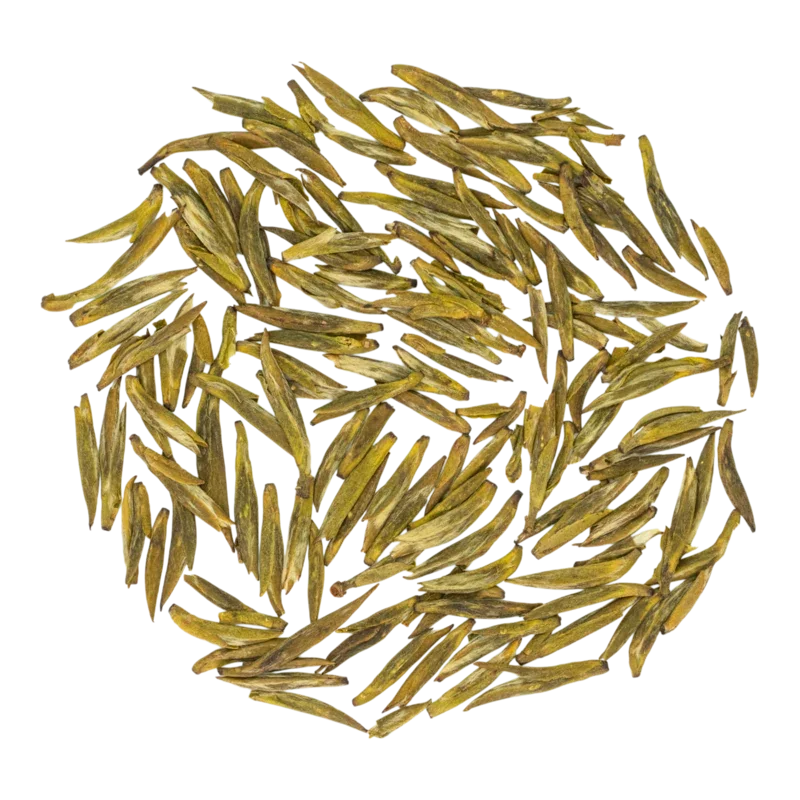
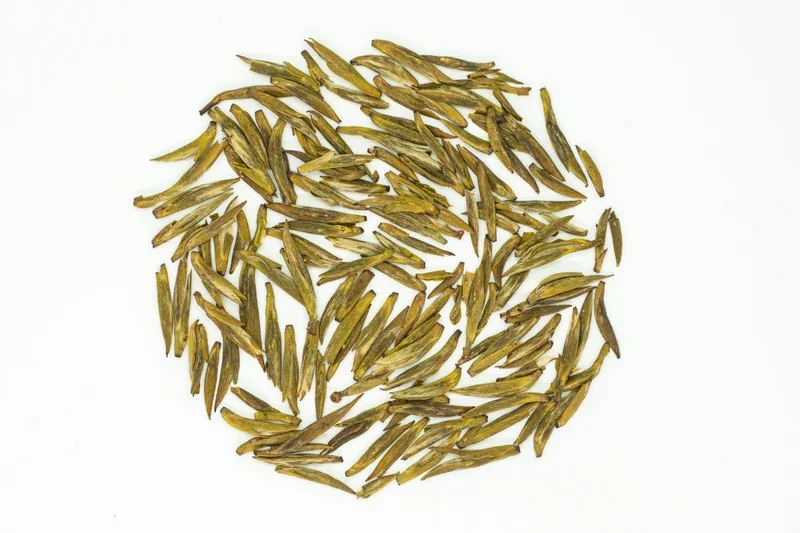
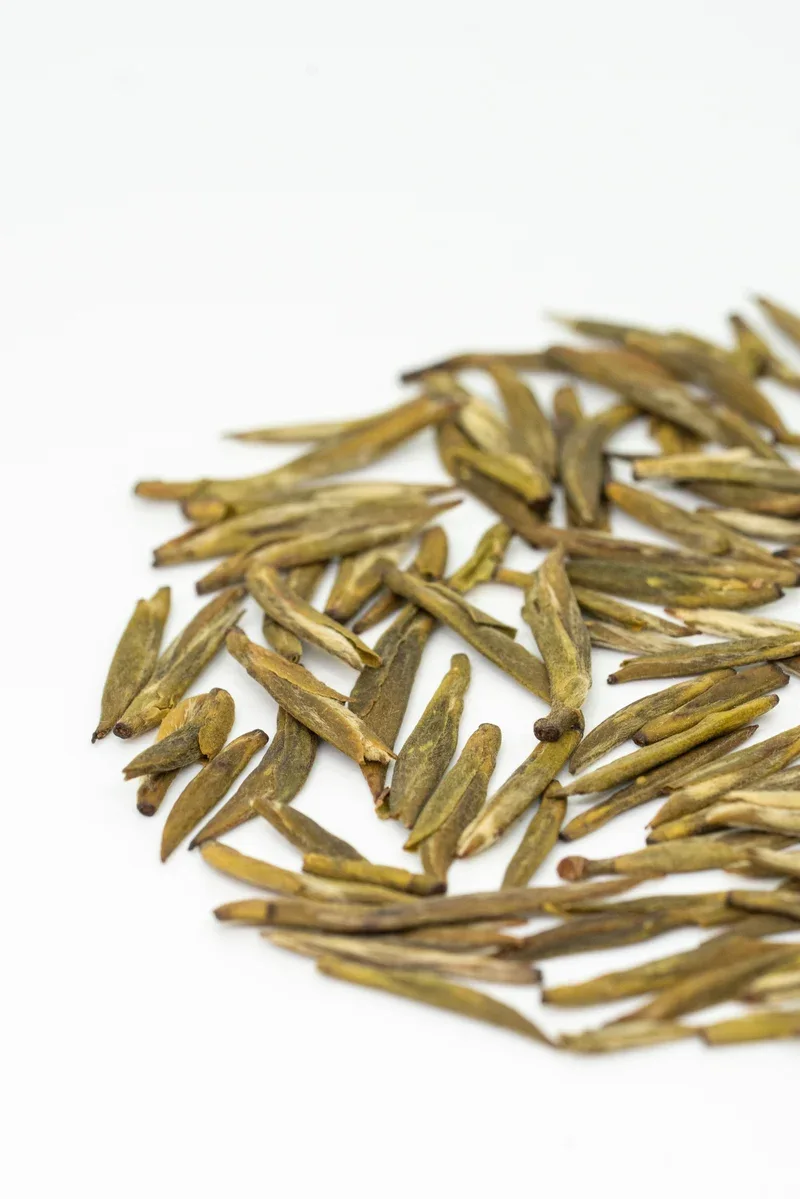
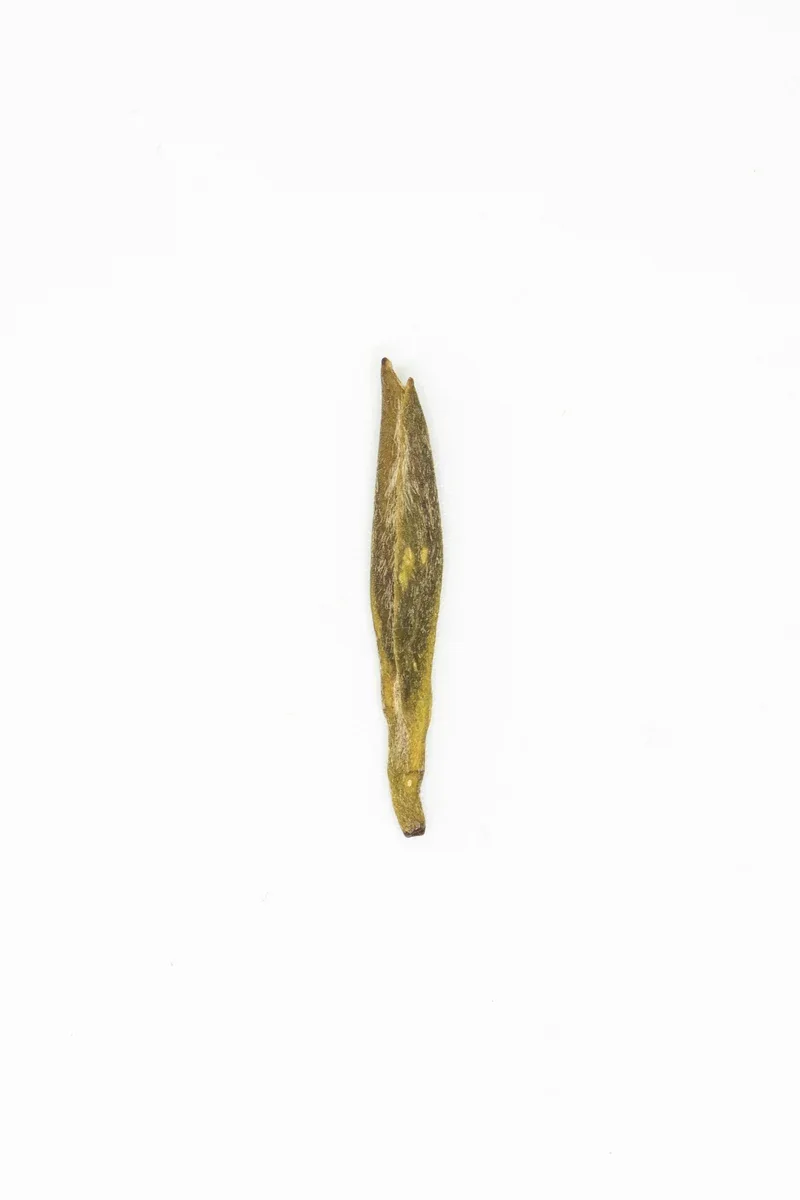
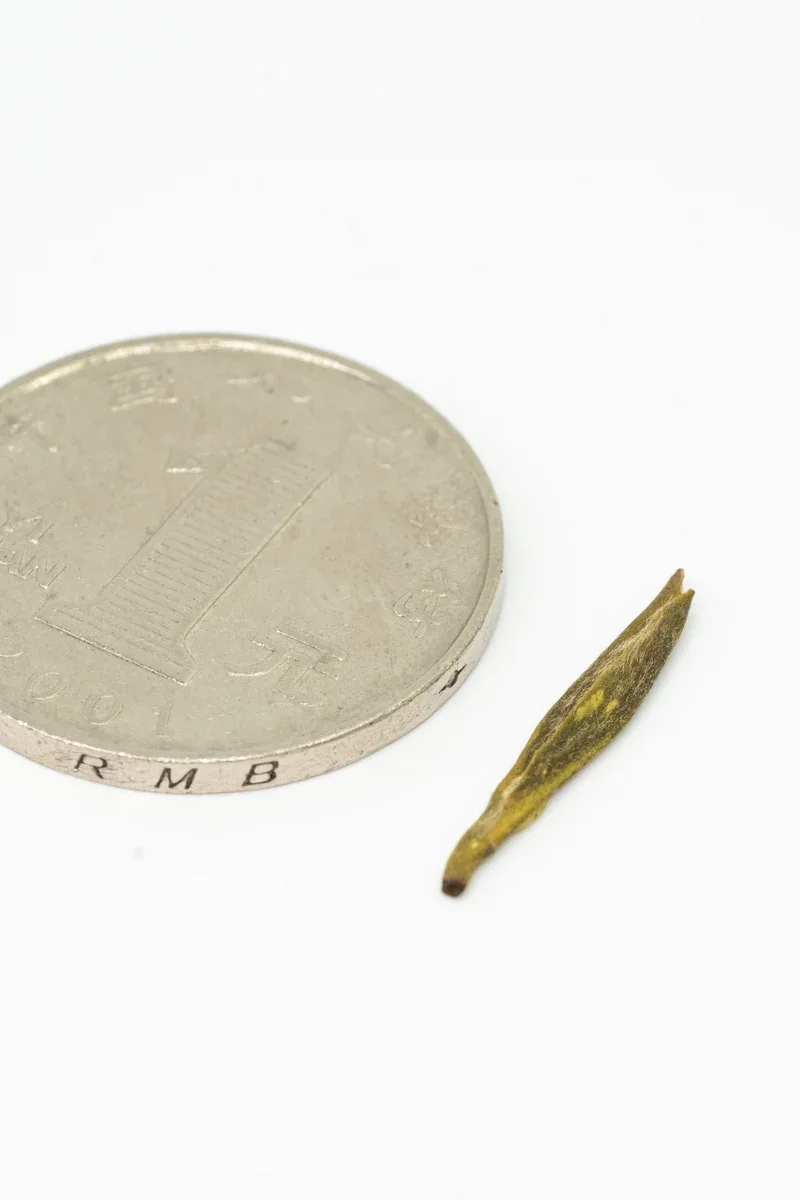
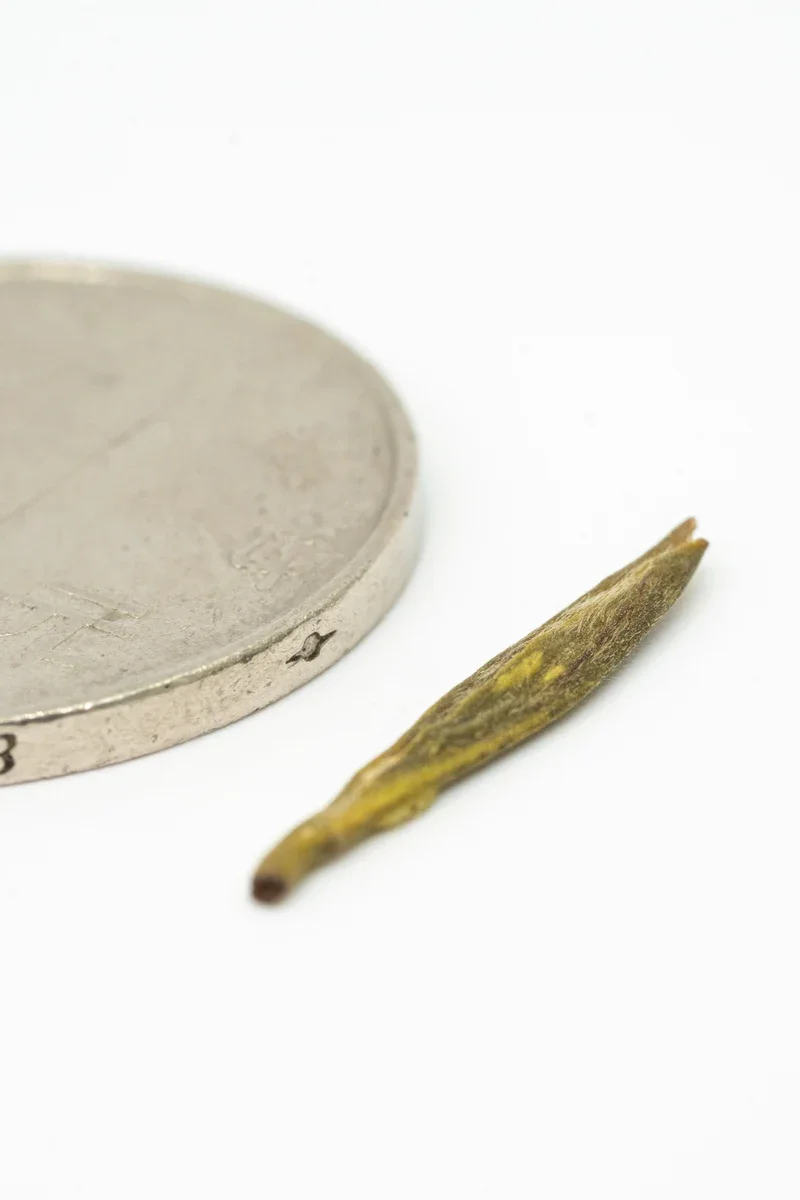
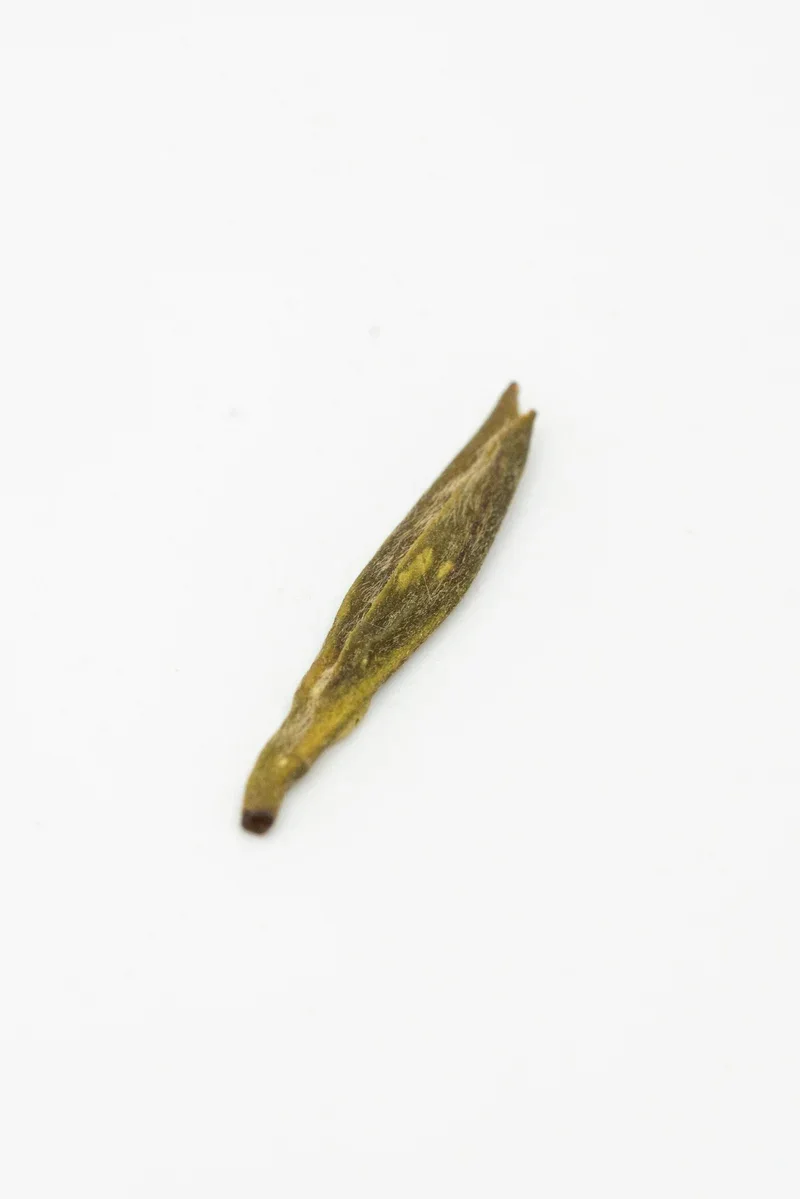
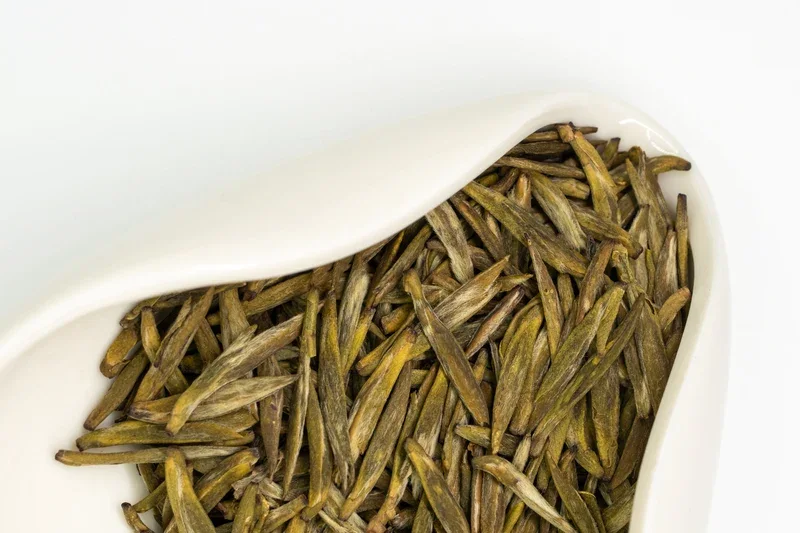
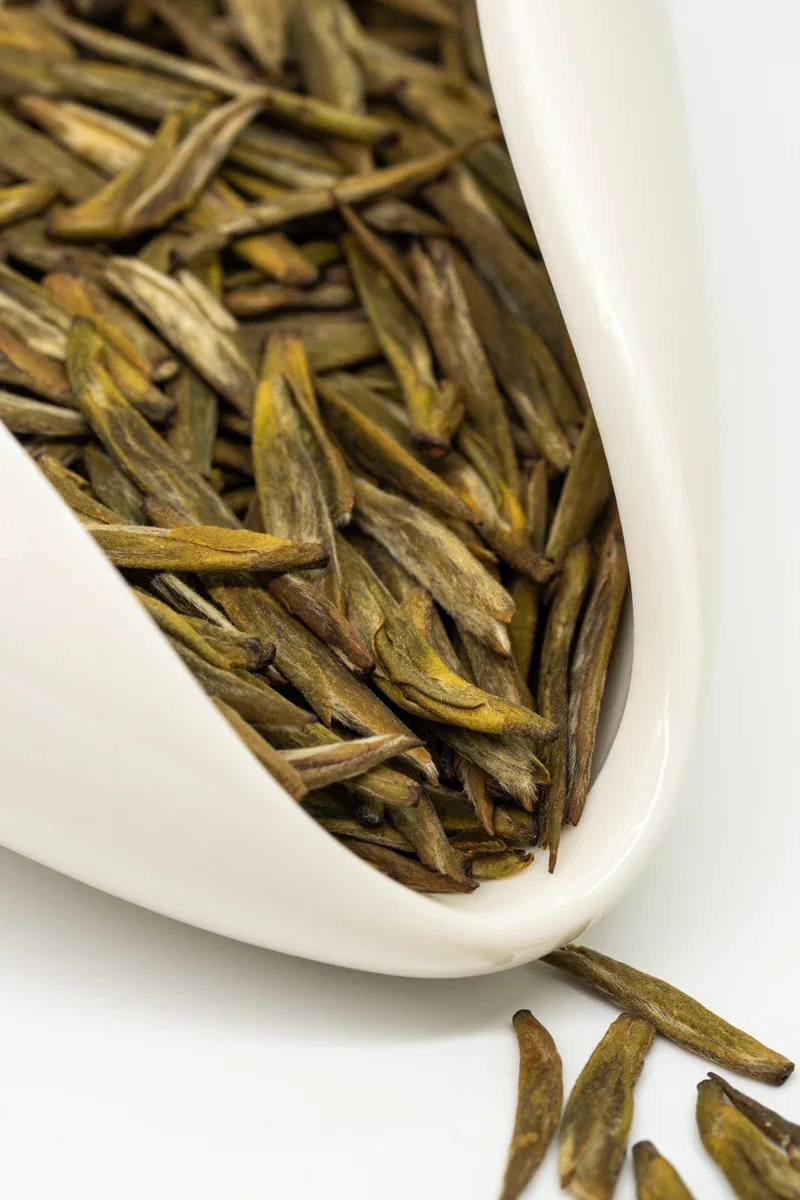
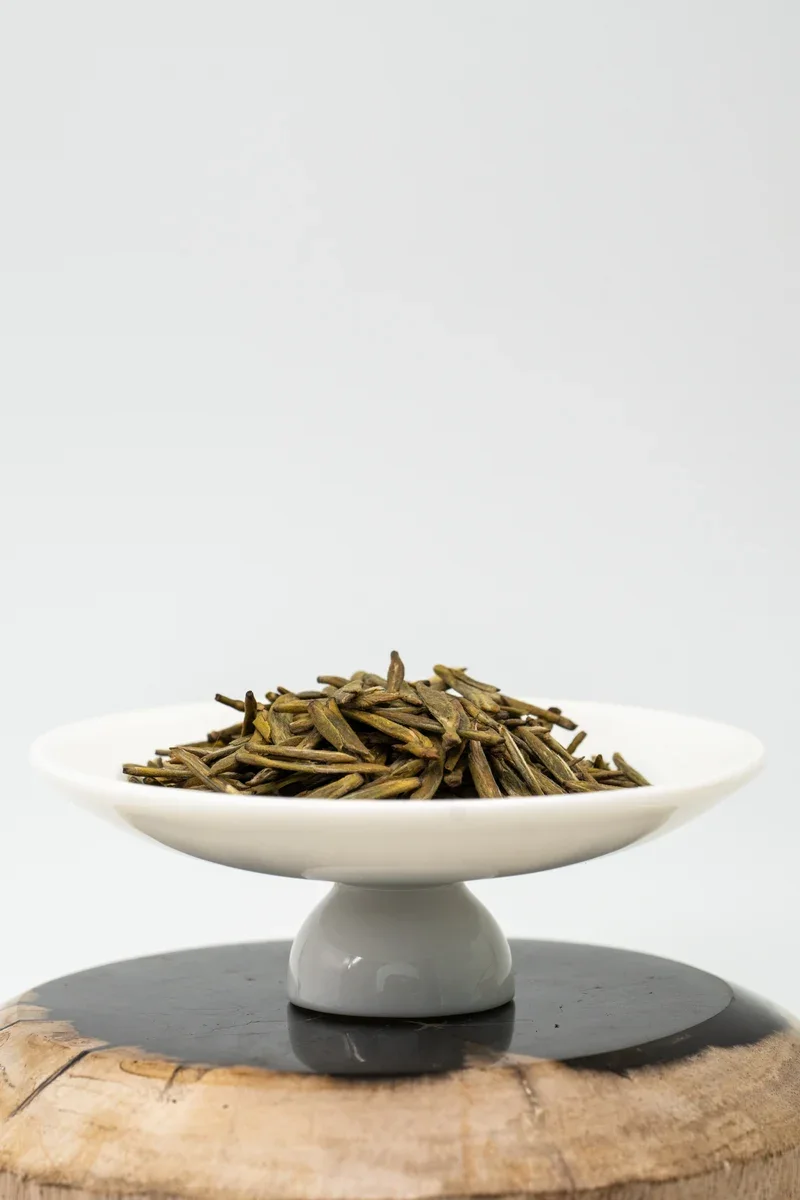
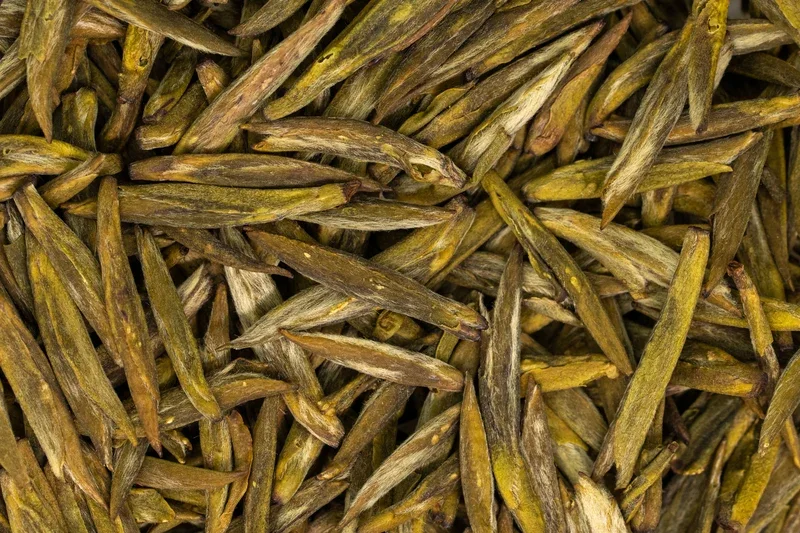
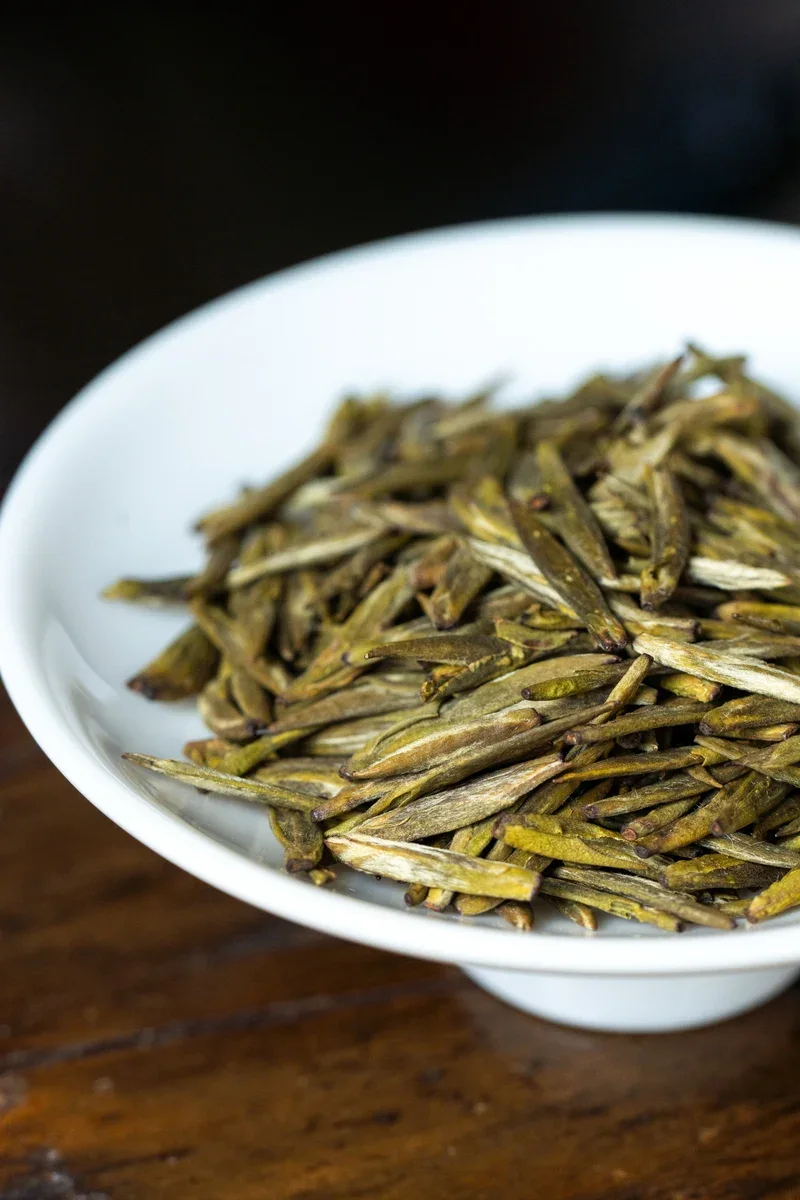
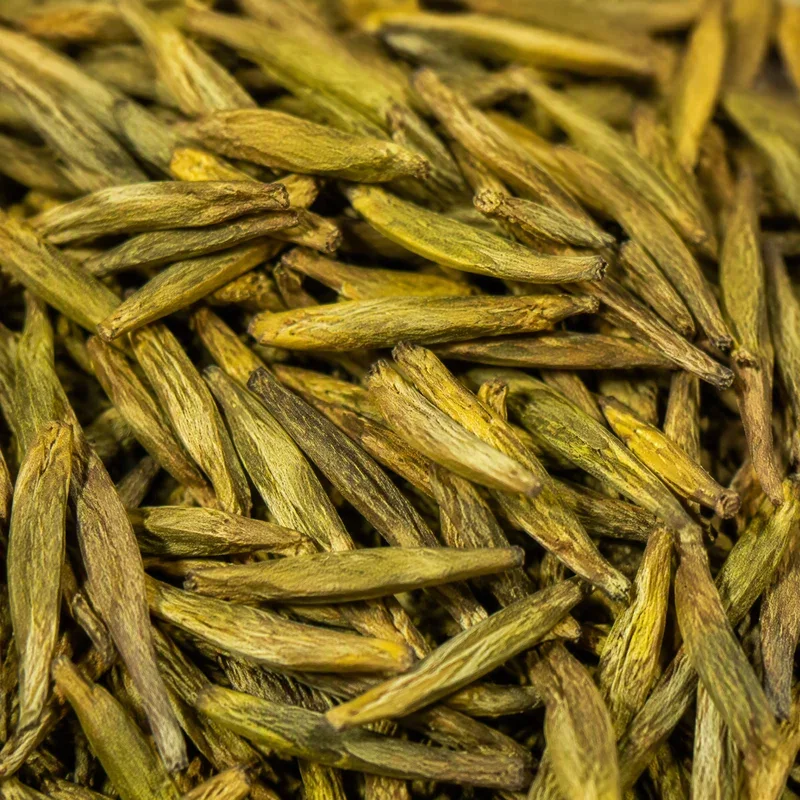
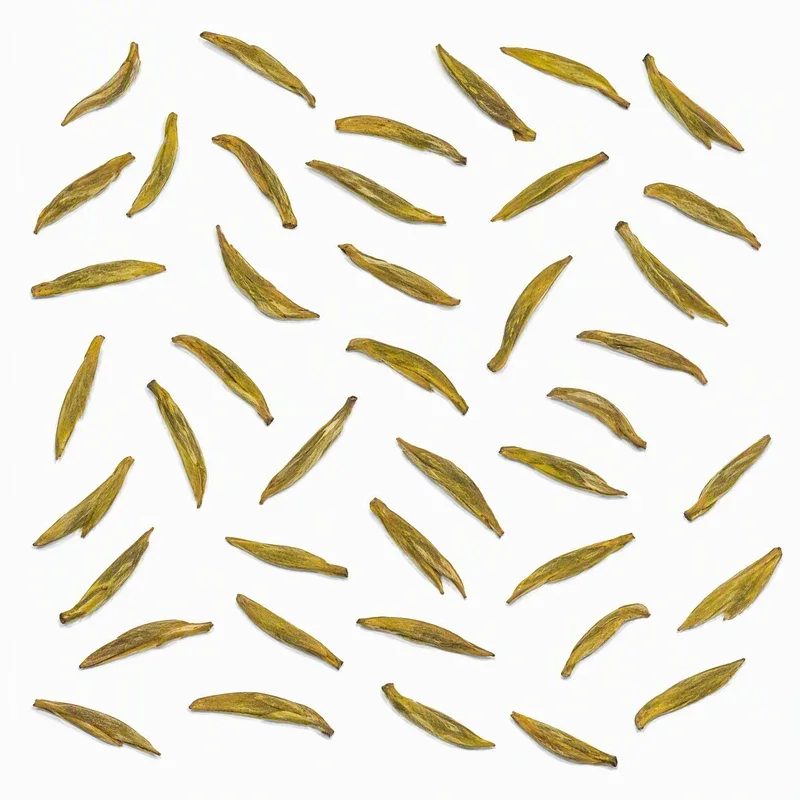
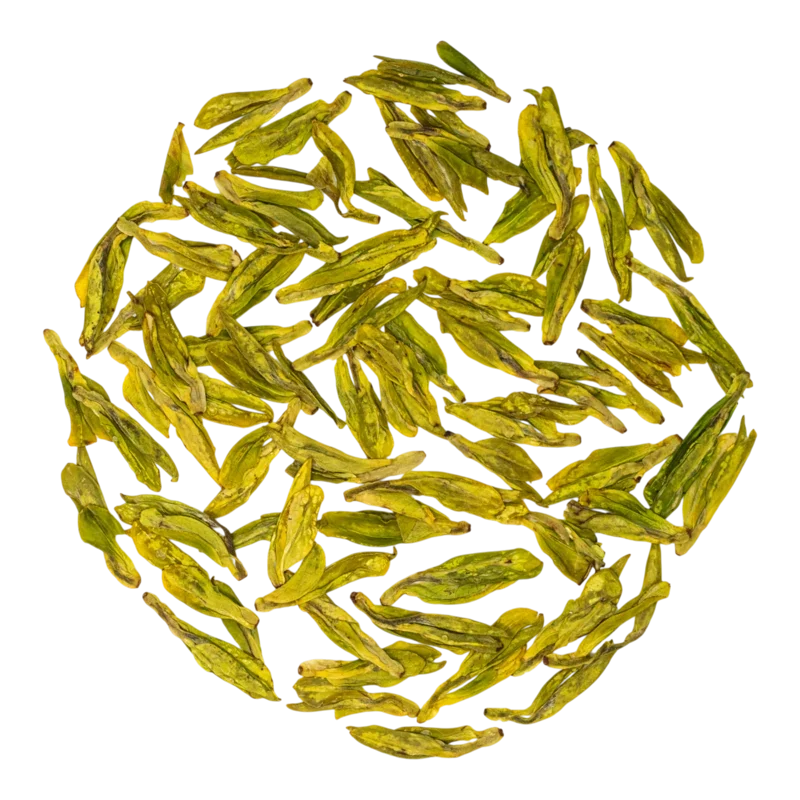
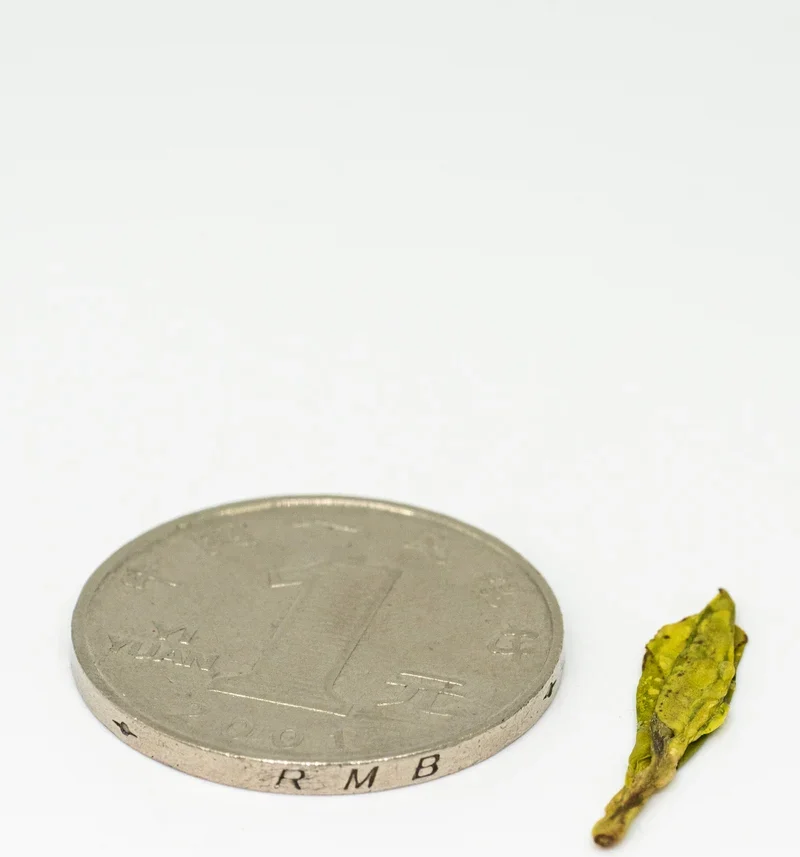
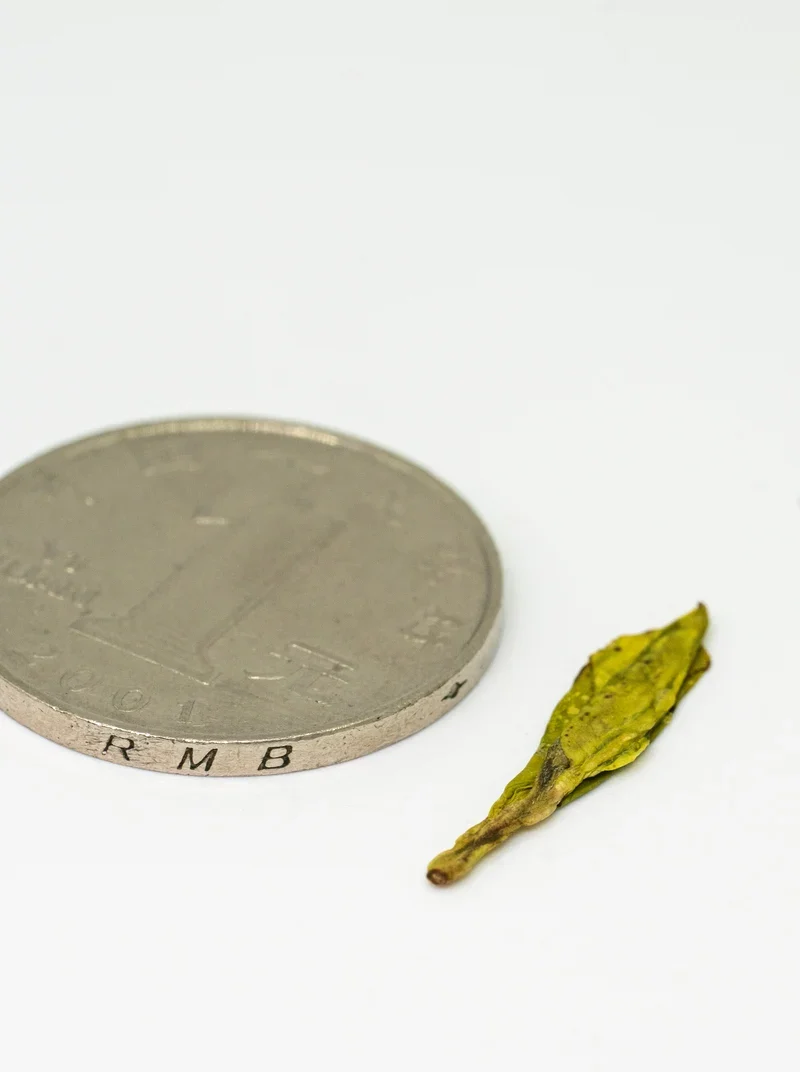
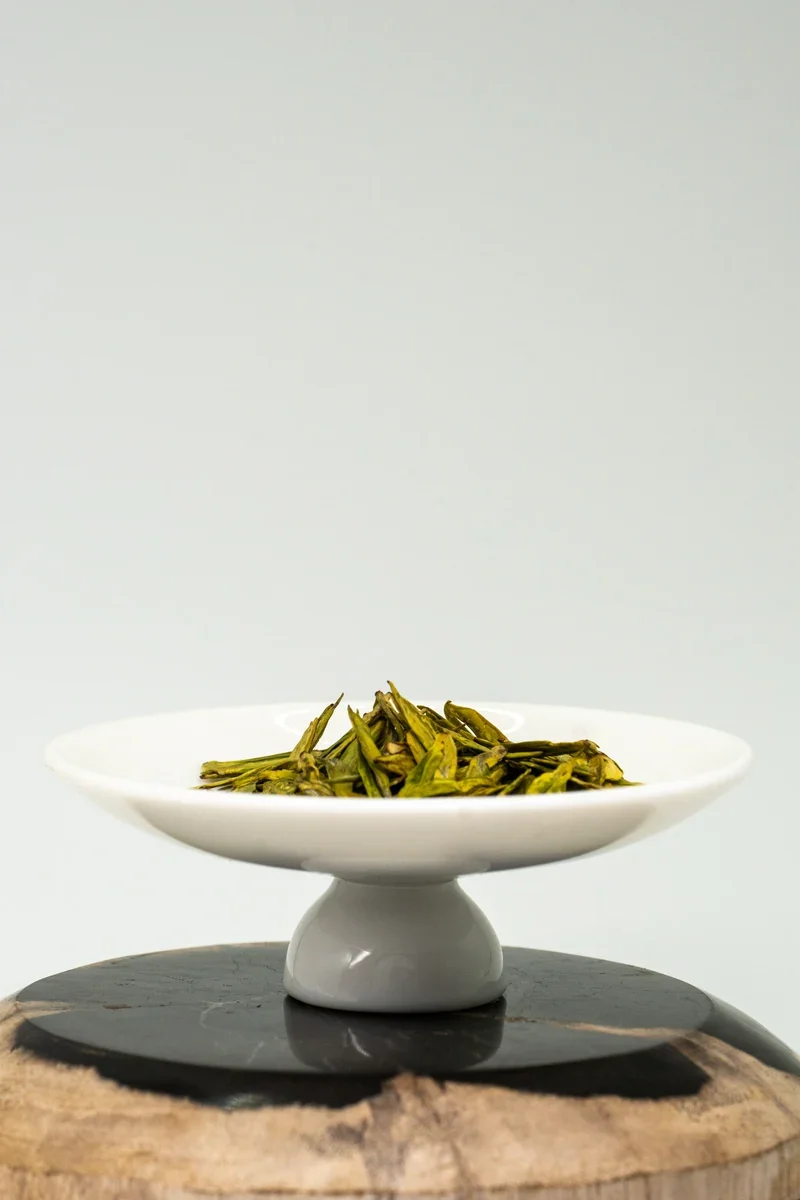
Dry Leaf Appearance: Compact, neatly shaped shoots with pronounced golden-yellow coloration penetrated by green tones. Leaf even, uniform in size, slightly lustrous. Trichomes insignificant. Supreme grade (特级) — predominance of whole, unopened buds with one leaf.
Dry Leaf Aroma: Fresh, clean, with distinct chestnut note (熟板栗香, shú bǎnlì xiāng) — the signature of this tea. Light floral undertones possible in the background.
Liquor Aroma: High, bright, and lasting. Gentle chestnut tone dominates, complemented by floral-honey undertone. Aroma is persistent and remains in the empty cup (盖香, gàixiāng). According to professional tasters, 栗香 (chestnut aroma) for Tiantai Huang Cha is what "orchid aroma" is for Tie Guanyin — the main quality marker.
Liquor Color: Tender green, clear, with bright golden-yellow cast (嫩绿清澈, nènlǜ qīngchè). With repeated infusions shifts toward warm yellow-green.
"Three greens penetrated by three yellows" (三绿透三黄) — dry leaf green with golden transparency; liquor green with yellow tint; spent leaves green with yellow predominance.
Spent Leaves: Leaves unfold completely, demonstrating whole, tender shoots of bright yellow color (嫩黄鲜亮, nèn huáng xiān liàng). Uniformity and juiciness of spent leaves are key quality indicators.
Taste: Fresh (鲜爽, xiānshuǎng), mellow (醇和, chúnhé), with pronounced juiciness and body fullness. Initial gentle sweetness quickly transitions to long, even aftertaste — huigan (回甘, huígān). Bitterness and roughness are absent, due to high amino acid content and relatively low polyphenol levels. Phenol-amino acid ratio (酚氨比, fēn'ān bǐ) is only 2.3 — an exceptionally low indicator, speaking of pronounced "tenderness" and "freshness" of taste.
Alkaloids: Caffeine (咖啡碱, kāfēi jiǎn) — 3.3%, theobromine, theophylline. Caffeine level is typical for Camellia sinensis var. sinensis.
Amino Acids: Content — 7.1% of dry weight (spring harvest, "bud and two leaves" standard). This is 4–5 times higher than ordinary green teas of the region (typically 1.5–3.0%). L-theanine (L-茶氨酸, L-chá ānjīsuān) predominates — an amino acid responsible for sweet taste, pronounced "freshness" (鲜, xiān) and mild calming effect. The exceptionally high level of amino acids is the main biochemical characteristic of this tea.
2.3 — an exceptionally low indicator. For comparison: Fuding Da Bai variety — about 3.7, Huang Jin Ya — about 2.7. Low ratio means pronounced dominance of "freshness" and "sweetness" over bitterness.
43.3% — high indicator, testifying to liquor density and richness.
Elevated content of carotenoids — lutein (叶黄素, yè huángsù), cryptoxanthin (隐黄素), β-carotene. These give shoots and finished tea their characteristic golden-yellow color. Chlorophyll content is reduced compared to green-leaf varieties, which is a genetic feature of the mutation.
Minerals: Potassium (K), magnesium (Mg), manganese (Mn), zinc (Zn), fluorine (F), selenium (Se). Mineral profile is determined by volcanic soils of the region.
Polyphenols: Content — 13.3%, which is lower than typical green teas (18–30%). Main components — catechins: epigallocatechin gallate (EGCG), epicatechin gallate (ECG), epicatechin (EC). Relatively low polyphenol content explains taste mildness and absence of pronounced bitterness and astringency.
Vitamins: Vitamin C (ascorbic acid) — preserved thanks to rapid fixation; B-group vitamins (B₁, B₂); vitamin E (tocopherols).
Exceptionally high L-theanine content (amino acid that crosses the blood-brain barrier) promotes improved concentration, memory, and state of "calm alertness" — combination with caffeine provides mild, prolonged stimulation without anxiety.
Catechins (especially EGCG) effectively neutralize free radicals. Carotenoids additionally enhance antioxidant potential.
Moderate caffeine content combined with high L-theanine provides tone without sharp peaks — ideal daytime drink for intellectual work.
High content of lutein and β-carotene promotes retinal protection from photo-oxidative damage.
Low polyphenol content makes the tea delicate for the stomach — it is less aggressive than most green teas. Suitable for people with sensitive digestion.
L-theanine stimulates alpha-wave production in the brain, promoting a state of relaxed attention.
Catechins and flavonoids contribute to vascular elasticity and blood pressure normalization with regular consumption.
Optimal choice. White porcelain doesn't absorb aromas, emphasizes delicate chestnut tone and allows appreciation of golden liquor color.
Excellent option for visual enjoyment — one can observe golden shoots unfolding in water, creating the effect of "dancing leaves" (茶舞, chá wǔ).
Suitable for more voluminous brewing.
Tea Amount: 2–3 g per 100 ml water (gongfu method) or 3–5 g per 200–250 ml (European method). When brewing in glass cup — 3 g per 200 ml.
Water Temperature: 75–85°C. For supreme grades (especially tender raw material) — 75–80°C. Higher temperature can "burn" tender shoots and cause bitterness uncharacteristic of this tea.
Container: Airtight, opaque — aluminum pouches with zipper, tin cans, or vacuum packaging.
Enemies: Light (destroys chlorophyll and carotenoids, causing loss of characteristic color), moisture (provokes oxidation and molding), high temperature (accelerates amino acid degradation and aroma loss), foreign odors (tea leaf is a powerful absorbent).
Shelf Life: For maximum freshness, recommended to consume within 6–12 months after production. After opening package — within 2–3 months.
Temperature: Optimally — 0–5°C (refrigerator), with strict sealing to prevent odor absorption. Acceptable storage at 5–10°C in dry, dark place.
Classical yellow tea from Hunan with mandatory menhuang stage. Needle shape (buds only). Taste — mild, sweetish, with honey notes. Liquor — light yellow. Key difference from Tiantai Huang Cha — presence of "sealed yellowing" in technology and absence of natural yellow pigmentation in raw material.
Another yellow-leaf mutant cultivar, also processed as green tea. Discovered in Yúyáo County (余姚), Zhejiang, in the 1990s. Amino acid content somewhat lower than Zhonghuang 1, and phenol-amino acid ratio higher (2.7 vs. 2.3). Competition score — 92.4 (lower than Zhonghuang 1).
Classical yellow tea from Sichuan with ancient history (Tang dynasty). Production includes multiple "sealed yellowing." Taste — honey, rounded, without bitterness. Key difference — this is true "process" yellow tea, not "cultivar."
Similar "name vs. reality" situation — called "white tea" but produced as green, from white-leaf mutant cultivar. Amino acid content also elevated (up to 6.5%), but mechanism different: white mutation (chlorophyll deficiency at low temperatures) vs. yellow mutation (elevated carotenoid content) in Tiantai Huang Cha.
Price Category: Medium-high for Zhejiang green teas. Price depends on season (early spring "before Qingming" — significantly more expensive), grade (高级 vs. 一级), specific farm, and authenticity of origin. Cultivar uniqueness and regional brand increase price relative to ordinary Zhejiang green teas.
Buy tea from certified producers from Tiantai County, paying attention to geographical indication marking.
Authentic Tiantai Huang Cha possesses characteristic golden-yellow color with green tint. Even, artificially colored yellow color is a suspicious sign.
True chestnut aroma (栗香) is natural, persistent, and clean. Artificial flavoring gives sharp, quickly disappearing smell.
Clear green-yellow liquor with natural golden tint. Turbid or unnaturally bright liquor is cause for doubt.
Suspiciously low price may indicate substitution with raw material from other regions (Zhonghuang 1 is grown in many provinces, but "Tiantai Huang Cha" only from Tiantai County) or use of ordinary green tea passed off as cultivar yellow.
No reviews yet. Tell us what you think of this tea.
Rate this tea and share your impressions. We review each submission before publishing it.