Brewing
Gongfu brewing
- Water temperature
- 100 °C
- Tea amount
- 7 g
- Water volume
- 100 ml
- First steep
- 10 s
- Time added per infusion
- 5 s
- Infusions
- 12

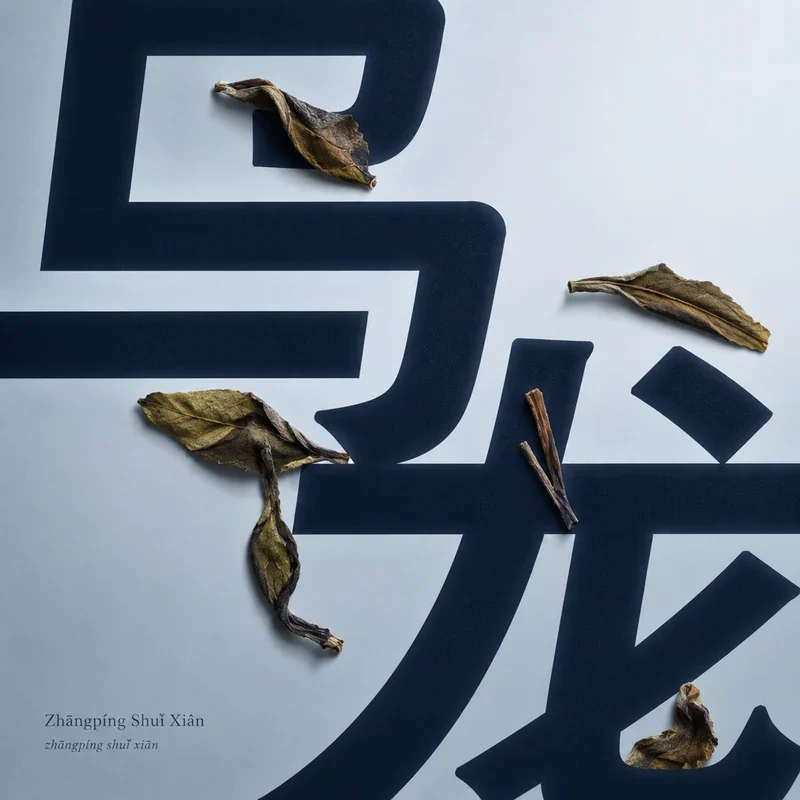
Zhāngpíng shuǐ xiān
Choose a brewing method. Start with the recommended quantities and time, then adjust to taste.
Brewing
Brewing
Taste
Tea encyclopedia
Category: Famous teas of Fújiàn Province (福建名茶). Product with protected geographical indication (国家地理标志产品, guójiā dìlǐ biāozhì chǎnpǐn). Alternative names: "water immortal tea cake" (水仙茶饼, Shuǐxiān chábǐng), "paper-wrapped tea" (纸包茶, zhǐ bāo chá), "square tea" (四方茶, sìfāng chá).
Category: Famous teas of Fújiàn Province (福建名茶). Product with protected geographical indication (国家地理标志产品, guójiā dìlǐ biāozhì chǎnpǐn). Alternative names: "water immortal tea cake" (水仙茶饼, Shuǐxiān chábǐng), "paper-wrapped tea" (纸包茶, zhǐ bāo chá), "square tea" (四方茶, sìfāng chá).
Coordinates: 117°10′–117°45′ E, 24°54′–25°47′ N. The core production area — the cloud zone along Jiǔpéng Creek (九鹏溪, Jiǔpéng xī) at elevations of 600–800 m.
Origin: China (中国), Fújiàn Province (福建省, Fújiàn shěng), Longyan Prefecture-level City (龙岩市, Lóngyán shì), Zhangping County-level City (漳平市, Zhāngpíng shì). The production zone covers 9 townships and towns: Nányáng (南洋镇, Nányáng zhèn) — the core of production (about 80% of total volume), Shuāngyáng (双洋镇, Shuāngyáng zhèn) — the historical birthplace of tea bricks, as well as Chìshuǐ (赤水镇), Xinqiao (新桥镇), Wuci (吾祠乡), Lingdi (灵地乡), Xinan (溪南镇), Xianghu (象湖镇) and Yǒngfú (永福镇).
Type: Oolong (semi-oxidized tea, oxidation level ~30–50%). The only representative of the compressed oolong category (紧压乌龙茶, jǐnyā wūlóng chá). Often subjected to charcoal roasting (炭焙, tàn bèi).
Zhangping Shui Xian is the world's only traditionally compressed oolong. In the colossal diversity of oolong teas — from Taiwanese high-mountain to Guangdong dancongs — Zhangping Shui Xian remains absolutely unique: no other oolong in the world is produced in compressed form.
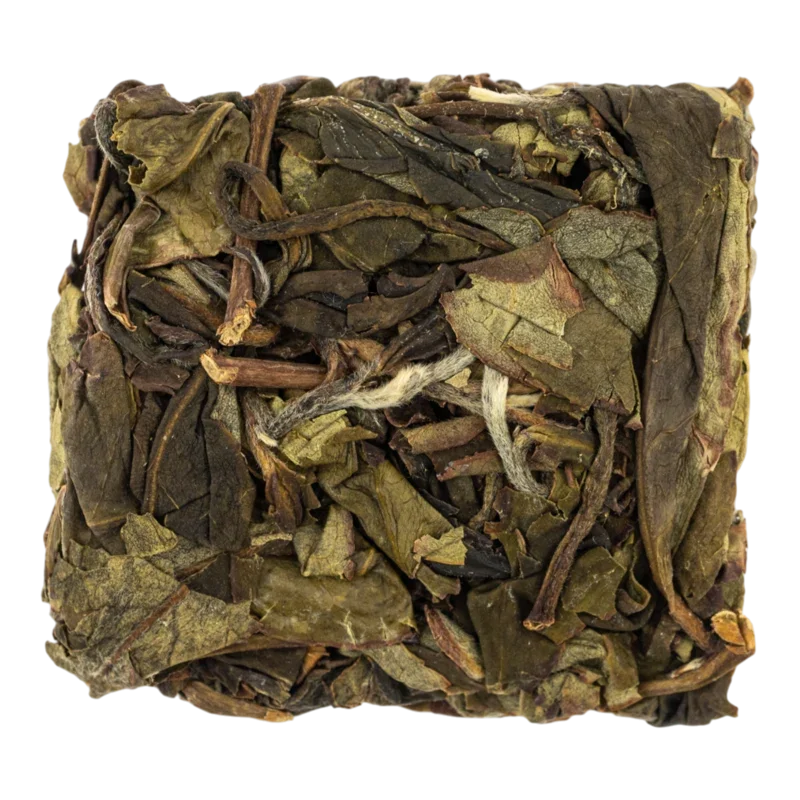
Standard 6 × 6 cm square is designed so its weight (5–8 g) corresponds to one portion of gongfu brewing. This makes the tea extraordinarily convenient for storage, transportation and dosing.
Throughout the entire process — from shaking to pressing — exclusively bamboo and wooden tools are used. Contact with metal is considered harmful to aroma, as it provokes unwanted oxidation.
Before 1914, Zhangping water immortal tea existed first in twisted "scroll" form (条索形), then — in spherical form (圆球形). Square pressing — Deng Guanjin's invention — became the third and final form, unchanged for over a hundred years.
In 2018, testing of 201 tea samples from Zhangping showed complete absence of pesticide residues — result of consistent ecological policy and biological plant protection methods.
Cultural Significance: Zhangping Shui Xian is the world's only traditionally compressed oolong and one of the symbols of Zhangping County. The tea enjoyed the patronage of famous figures: according to local sources, Premier Zhou Enlai was a connoisseur of water immortal tea and in 1956 recommended it to Japanese guests. The famous master of comic dialogue xiāngshēng (相声) Jiāng Kǔn (姜昆) left a calligraphic inscription for Zhangping Shui Xian: "Tea fragrance for ten thousand li" (茶香万里). The tea traditionally enjoys demand in Western Fujian, Guangdong, Xiamen and Southeast Asian countries. The annual harvest opening festival (开采节) in Nanyang is accompanied by a ritual of paying homage to the "tea sage" Lù Yǔ (陆羽, Lù Yǔ).
History: Tea cultivation in Zhāngpíng dates back to the Yuán dynasty (元, 1271–1368): it was then that tea trees began to be cultivated in these places. By the Míng (明, 1368–1644) and Qīng (清, 1644–1912) periods, the tea industry had already reached significant scale, as evidenced by a Ming-era Yixing teapot discovered during excavations — direct evidence of a developed tea culture. In 1914, tea grower Dèng Guānjīn (邓观金, Dèng Guānjīn) from Shuangyang town created a globally unique technology for compressed water immortal tea — tea bricks (水仙茶饼, Shuǐxiān chábǐng), combining processing methods of Northern and Southern Fujian oolongs. It is also believed that during the Guāngxù reign period (光绪, 1875–1908), "Taichang" tea (泰昌茶庄, Tàichāng cházhuāng) from Zhangping received a gold award at the Panama Exhibition. From the 1980s, a new stage began: the government initiated a branding program for Zhangping Shui Xian. In 1995, the tea won a gold medal at the Second Chinese Agricultural Exhibition, and in 2000 it was accepted into the collection of the China National Tea Museum (中国茶叶博物馆) and included in the "Registry of Famous Chinese Teas" (《中国名茶志》). In 2005, Zhangping Shui Xian received the title "Five-Star International Tea King" at the China-Japan-Korea Tea Culture Forum. In 2008, it was registered as a collective trademark with geographical indication, and in 2009, the Ministry of Agriculture of the PRC officially granted the tea the status of a protected product with geographical indicatio
Cultivar: Fújiàn Shuì Xiān (福建水仙, Fújiàn Shuǐxiān), also known as Shuǐjí Shuǐ Xiàn (水吉水仙) or Wǔyí Shuǐ Xiàn (武夷水仙). Latin name: Camellia sinensis cv. Fujian-shuixian. National standard cultivar of the first rank (国家级良种), registered in 1985 under number GS13009-1985. First among 48 national tea cultivars and first among 41 semi-arboreal large-leaf cultivars. Belongs to asexual reproduction (无性系, wúxìngxì), semi-arboreal type (半乔木型 / 小乔木型, xiǎo qiáomù xíng), large-leaf (大叶, dà yè), late-maturing (晚生种, wǎnshēng zhǒng) variety. Historically, the cultivar originates from Dahu Village (大湖村) in Xiaohu Township (小湖镇), Jiànyáng County (建阳, Jiànyáng), Fujian Province. Botanical characteristics: leaf blade large (one and a half to two times larger than ordinary small-leaf cultivars), thick, fleshy, leathery; internodes elongated; main vein wide and flat.
Picking: Main harvest — spring (April — early May); autumn harvest is also possible. Spring tea is valued higher due to nutrients accumulated over winter.
Pluck Standard: Shoot of one bud and two to three leaves (一芽二叶至三叶, yī yá èr yè zhì sān yè) for spring tea. For premium grades, a finer standard is allowed — one bud and one leaf.
Raw Material: Leaves must be healthy, undamaged, of uniform maturity, without foreign odors and excessive coarseness. According to the standard, fresh raw material for Zhangping Shui Xian must contain at least 25.0% polyphenols and at least 4.0% amino acids.
Altitude: From 400 to 1000 m above sea level; the core of production — 600–800 m in the Jiupeng Creek zone.
Climate: Subtropical monsoon. Average annual temperature 16.9–20.7°C. Precipitation — 1450–2100 mm per year. Frost-free period — 251–317 days. Average annual sunshine hours — about 1853 h. Number of foggy days — more than 200 per year. Pronounced difference between day and night temperatures promotes amino acid accumulation and formation of complex aromatic profile. Forest cover in the core production area exceeds 70%.
Soil: Red-yellow lateritic soils (红黄壤, hóng huáng rǎng) with acidic reaction (pH 4.5–6.0), high organic matter content (≥ 6.01%), enriched with microelements — selenium and zinc predominate. The core production area is a water conservation zone: chemical fertilizers and pesticides are prohibited here, an ecological "pig-biogas-tea" system (猪-沼-茶) is practiced.
Zhangping is located in the central-southern part of Fujian, in the east of Western Fújiàn (闽西, Mǐnxī), at the northern border of the "golden triangle" of Southern Fujian. The terrain is nine-tenths mountainous — "nine mountains, half water, half fields" (九山半水半分田). The topography is hilly-mountainous, dissected by valleys, rivers and streams. The core of tea plantations stretches along Jiǔpéng Creek (九鹏溪), which irrigates the slopes and forms the microclimate of the cloud-mist zone.
Top shoots are collected in clear weather and promptly delivered to the workshop, avoiding overheating and mechanical damage.
Relatively intensive sūn withering (较重, jiào zhòng) — a characteristic feature of specifically Zhangping technology. Activates enzymatic activity of the leaf and lays the foundation for aroma development.
Withered leaf is moved to shade, where it "rests" and cools. The principle of "thin spreading and frequent moving" (薄摊多晾, báo tān duō liàng) is applied.
Key stage of taste and aroma formation. Cycles of shaking (摇青, yáoqīng) and resting alternate. In early stages, bamboo sieve (水筛, shuǐshāi) with light shaking is used; in later stages — mechanical shaker with more intensive processing. Principle: "light shaking, many repetitions" (轻摇多次). Precisely the method of "shaking with thin spreading" (摇青薄摊) forms the characteristic orchid aroma.
Heating at high temperature stops enzymatic processes and fixes the achieved aromatic profile.
Rolling forms the external appearance of the leaf and promotes destruction of cell walls, increasing extraction during brewing.
Unique stage. Rolled tea is placed in special wooden forms (木模, mù mó), made from dense local "huangdumu" wood (黄椟木, huáng dú mù) — odorless, with high density. Standard form size: 6 × 6 × 2.5 cm (internal section ~5 × 5 cm). Tea is pressed with a wooden mallet (木槌, mù chuí) 25 cm long with a square base 4.5 × 4.5 cm. Each brick is wrapped in food-grade filter paper (historically — in colorless, tasteless "maobianzhi" paper, 毛边纸), which serves to fix the shape. A red character — wishing happiness, good luck or place name — is often applied to the paper.
Final drying-roasting is performed on charcoal braziers (焙笼, bèilóng) at temperatures not exceeding 60°C. Slow charcoal roasting gives the tea depth, stability and storage durability.
Finished bricks are sorted by quality into three main classes.
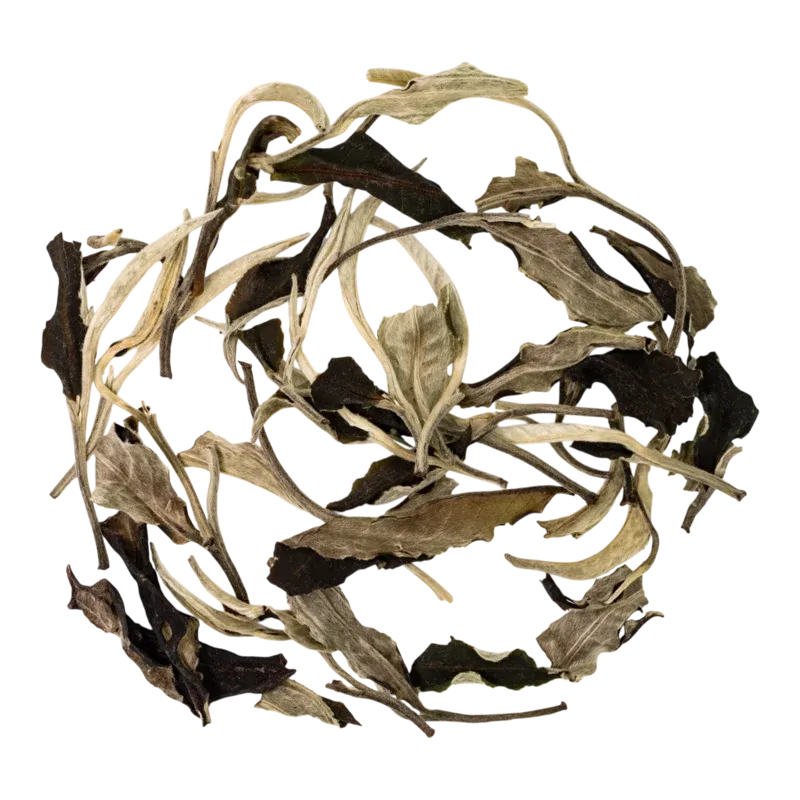
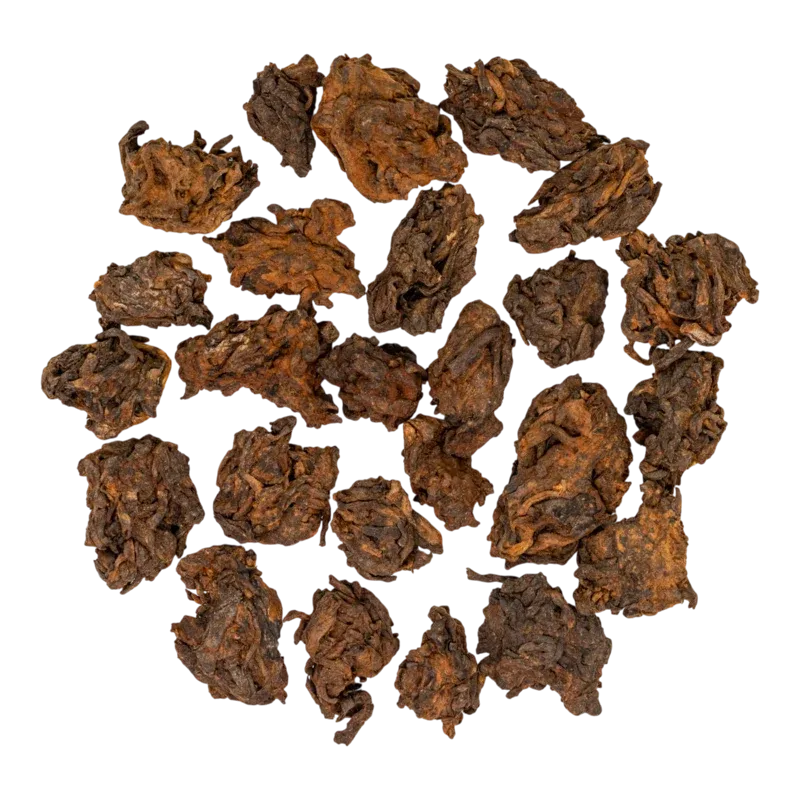
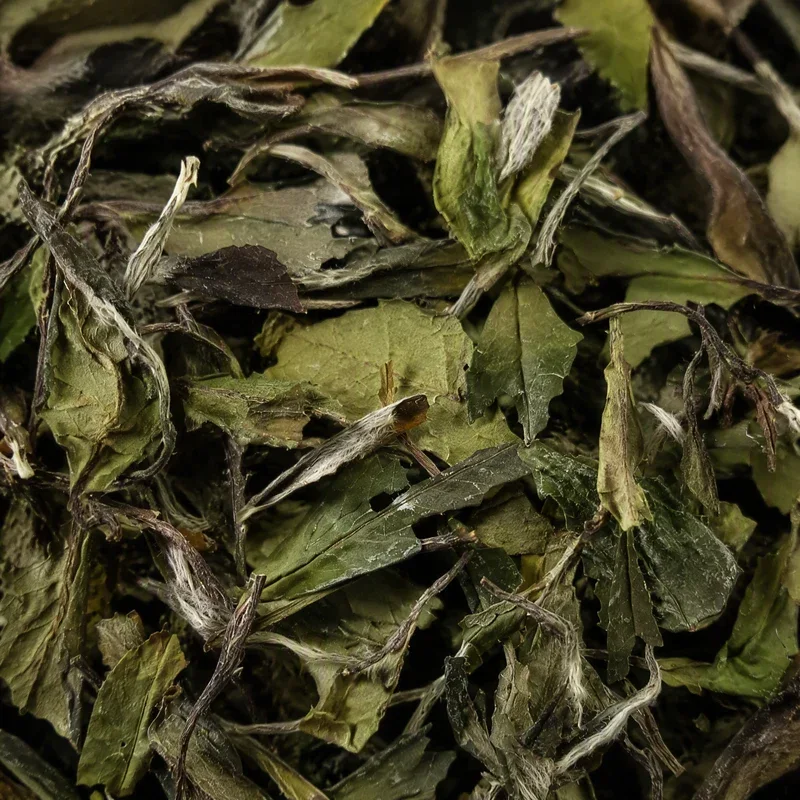
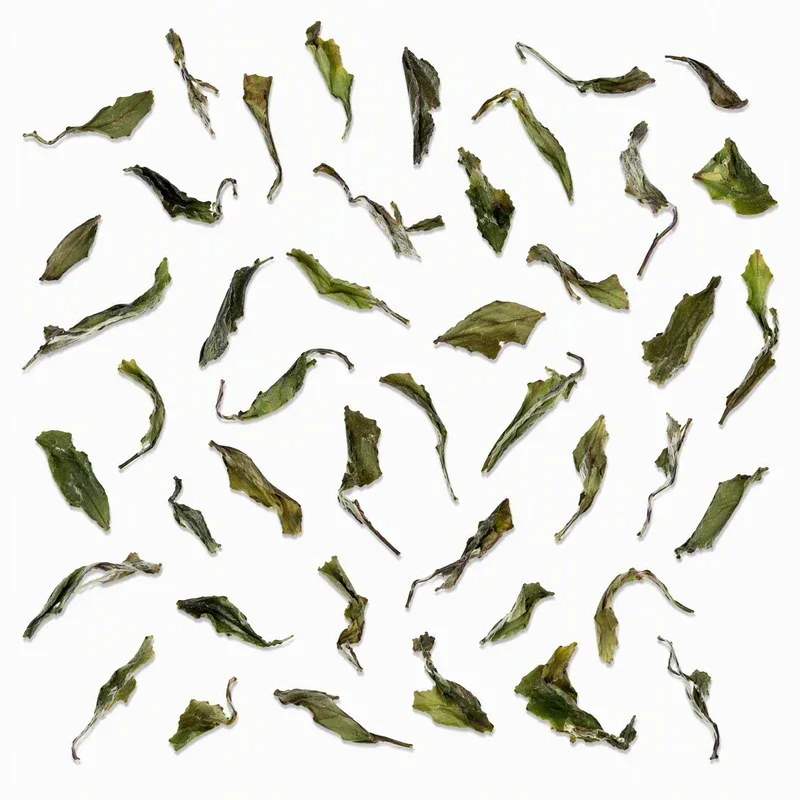
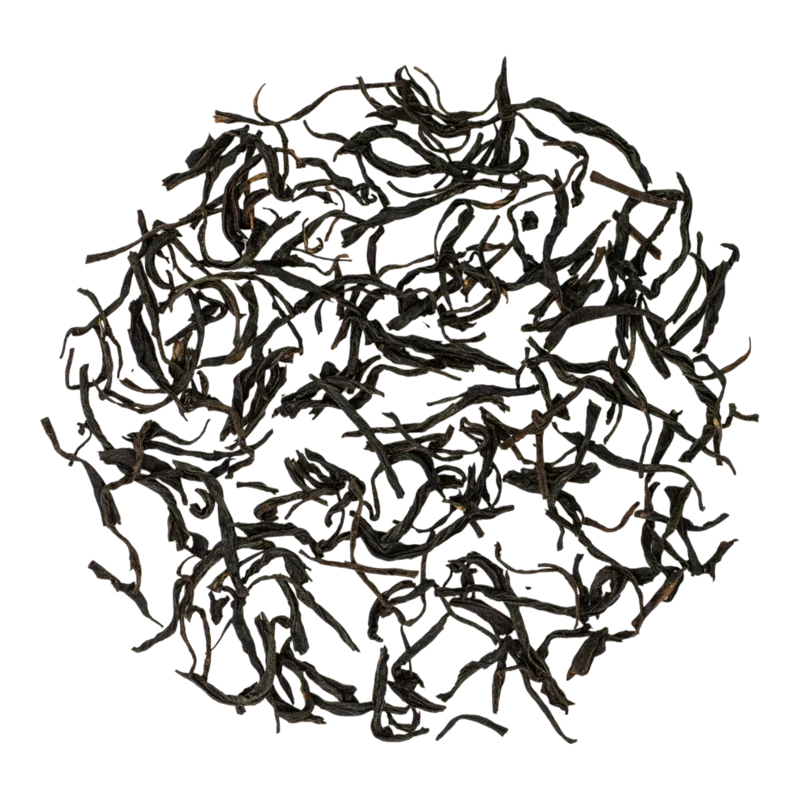
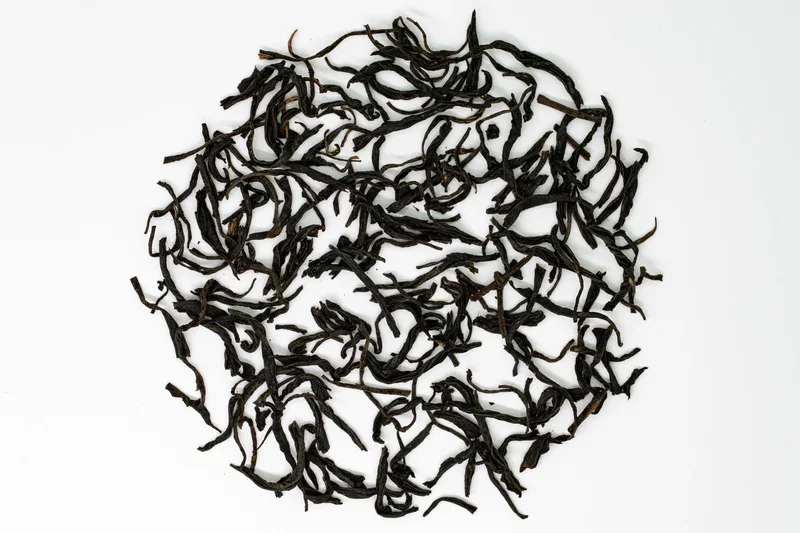
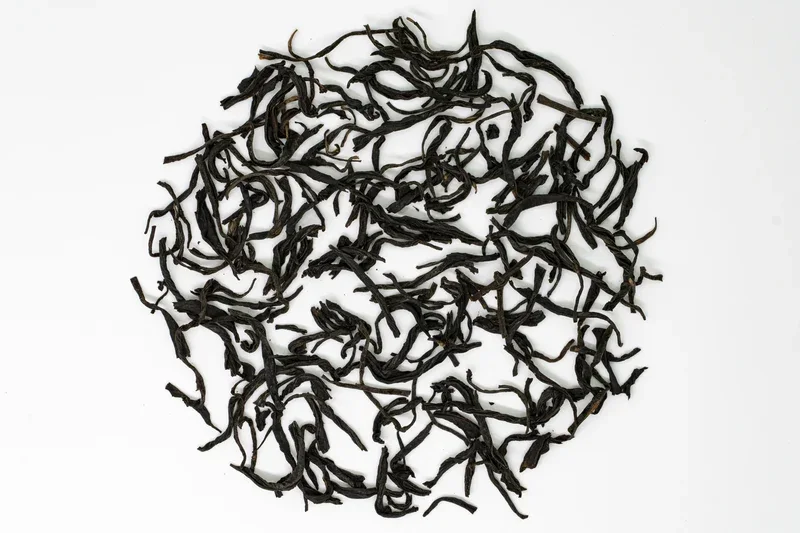
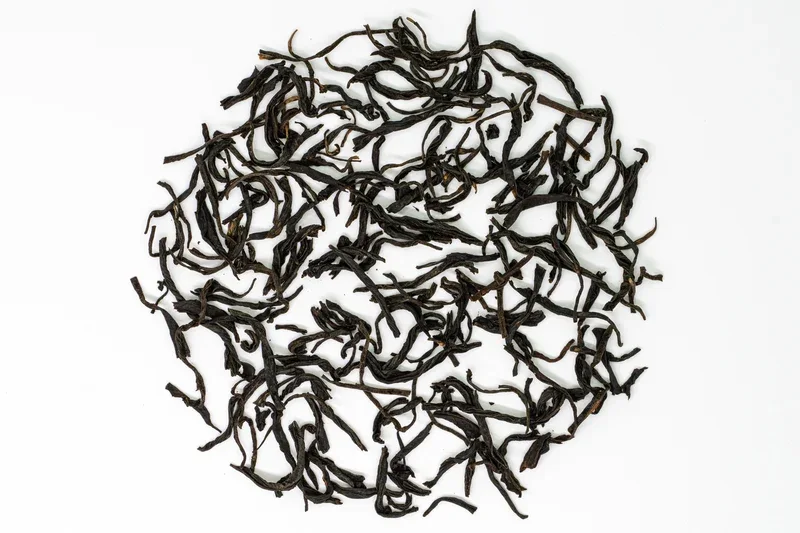
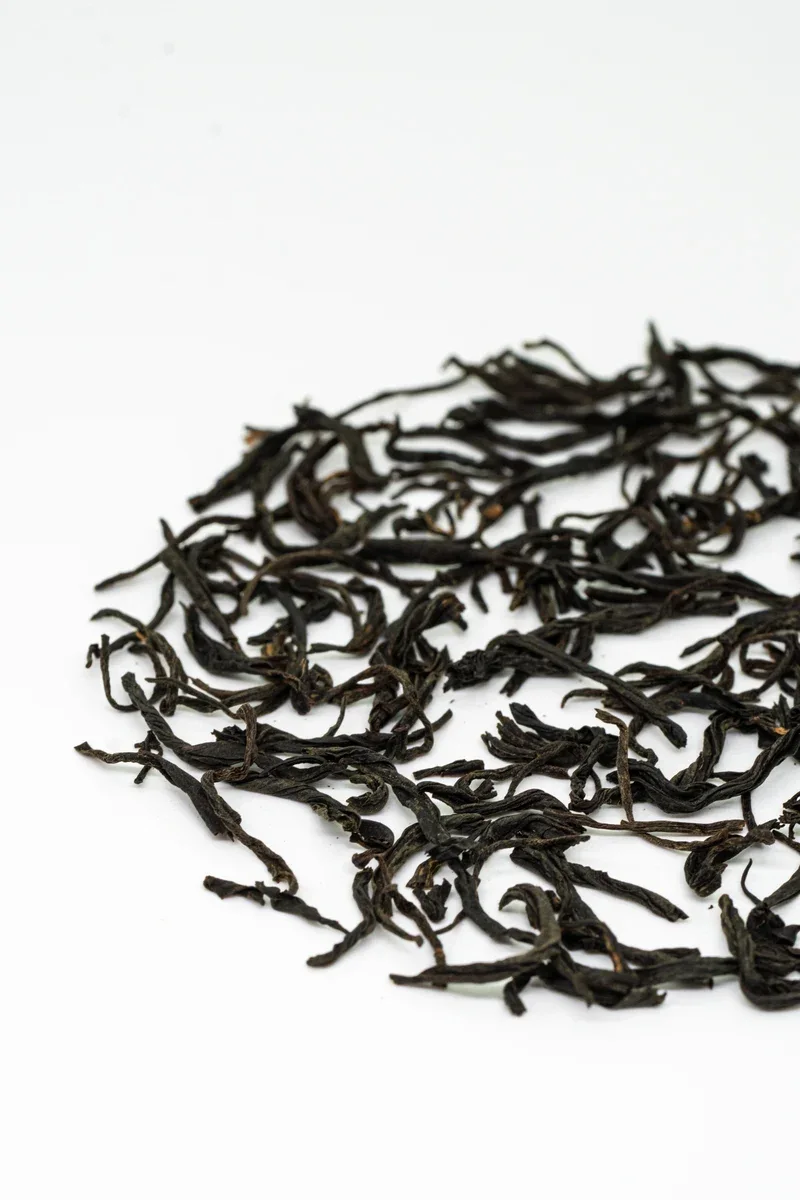
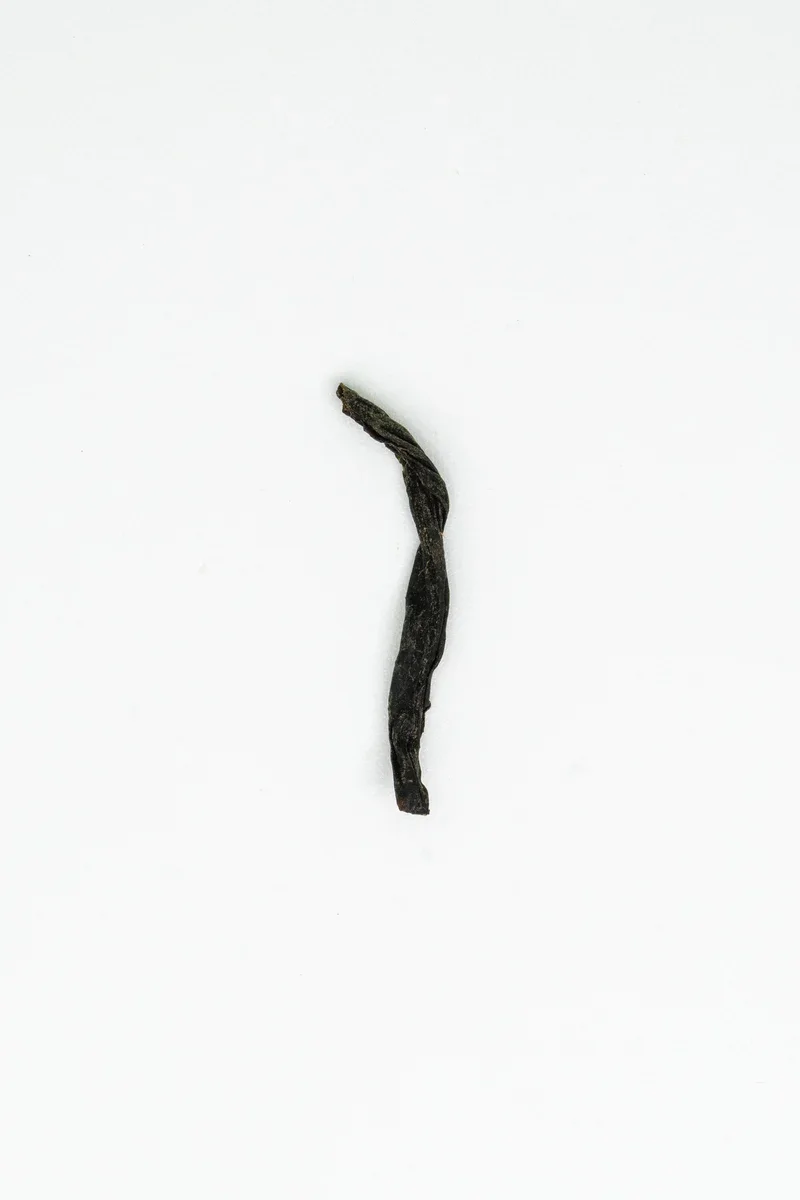
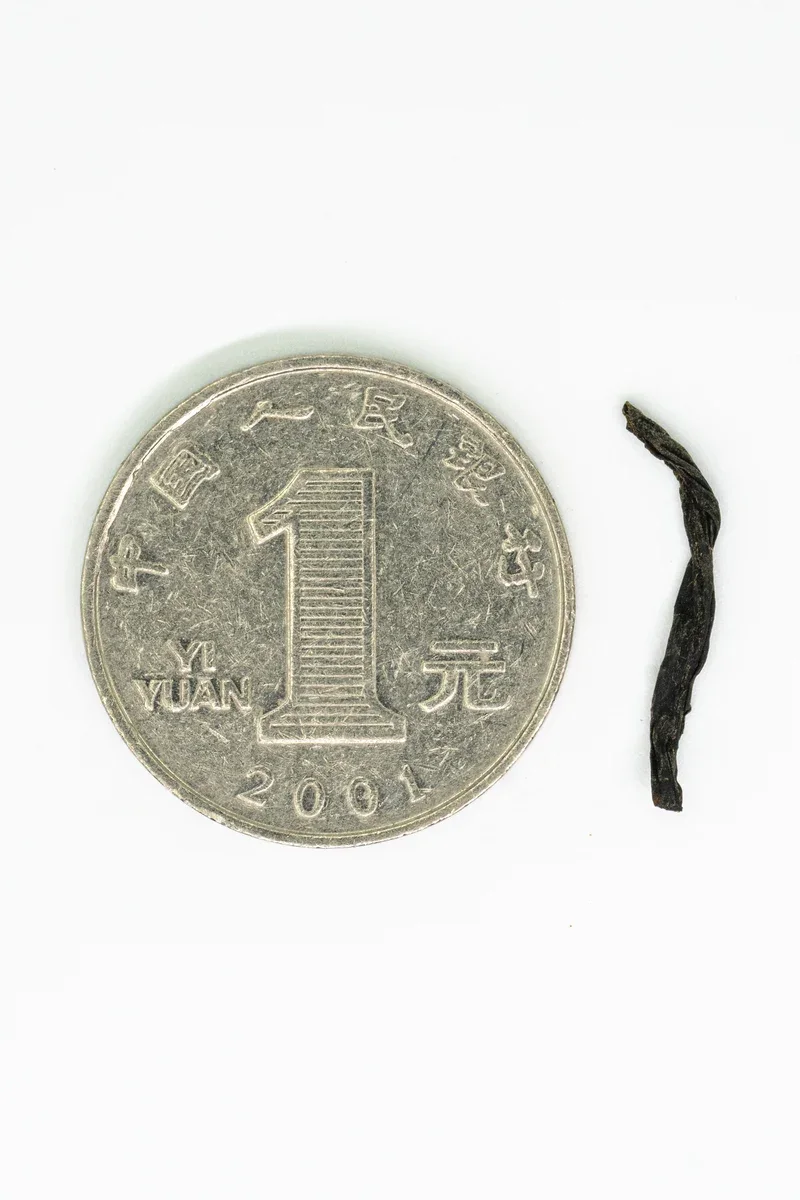
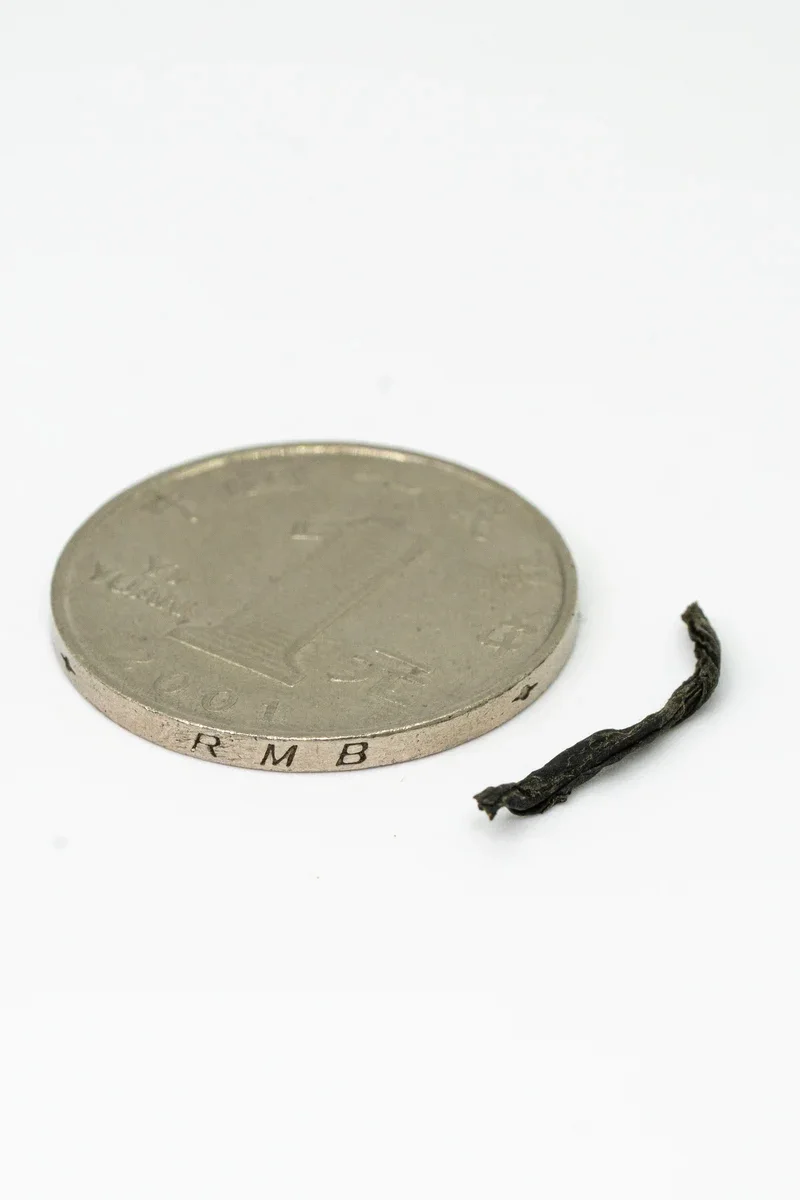
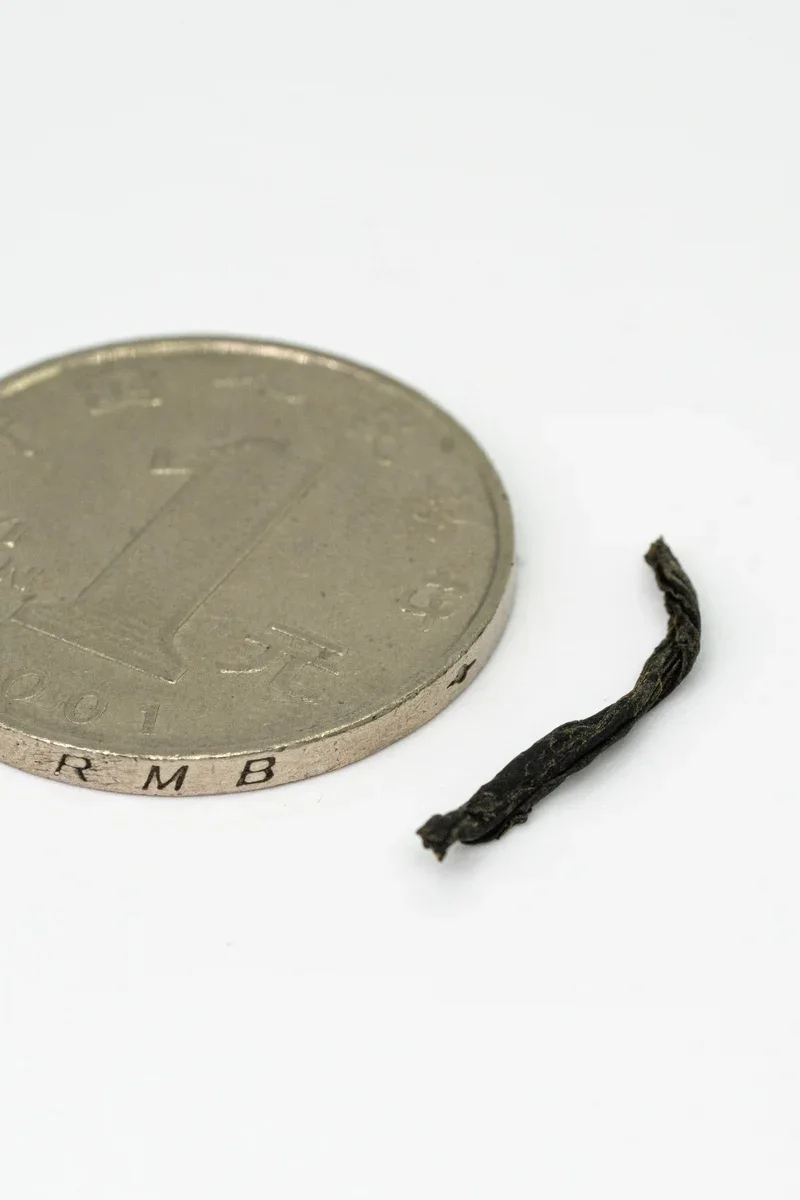
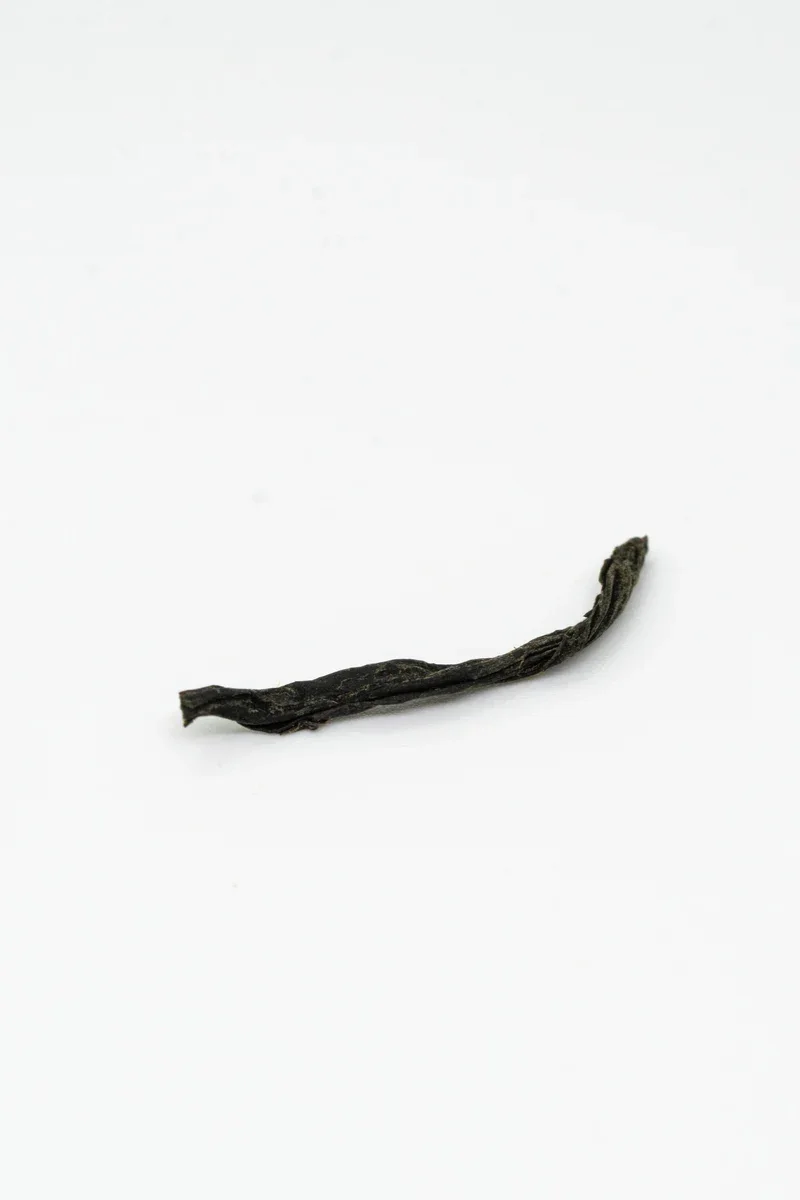
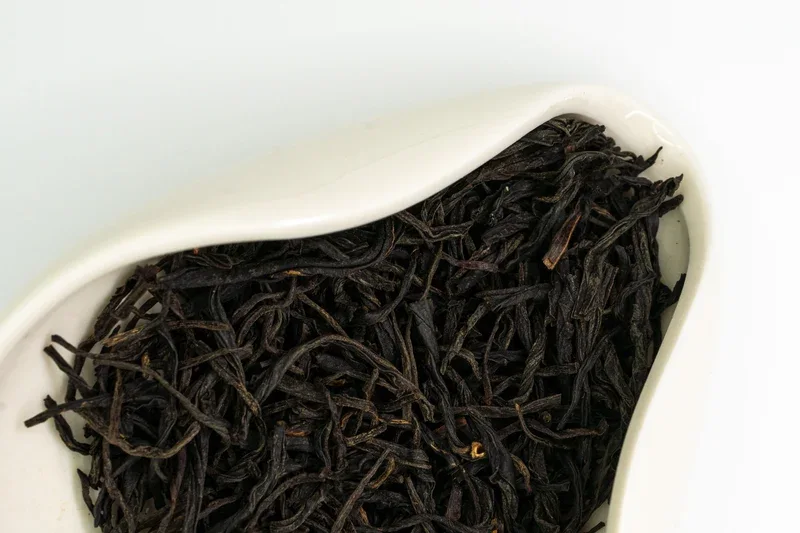
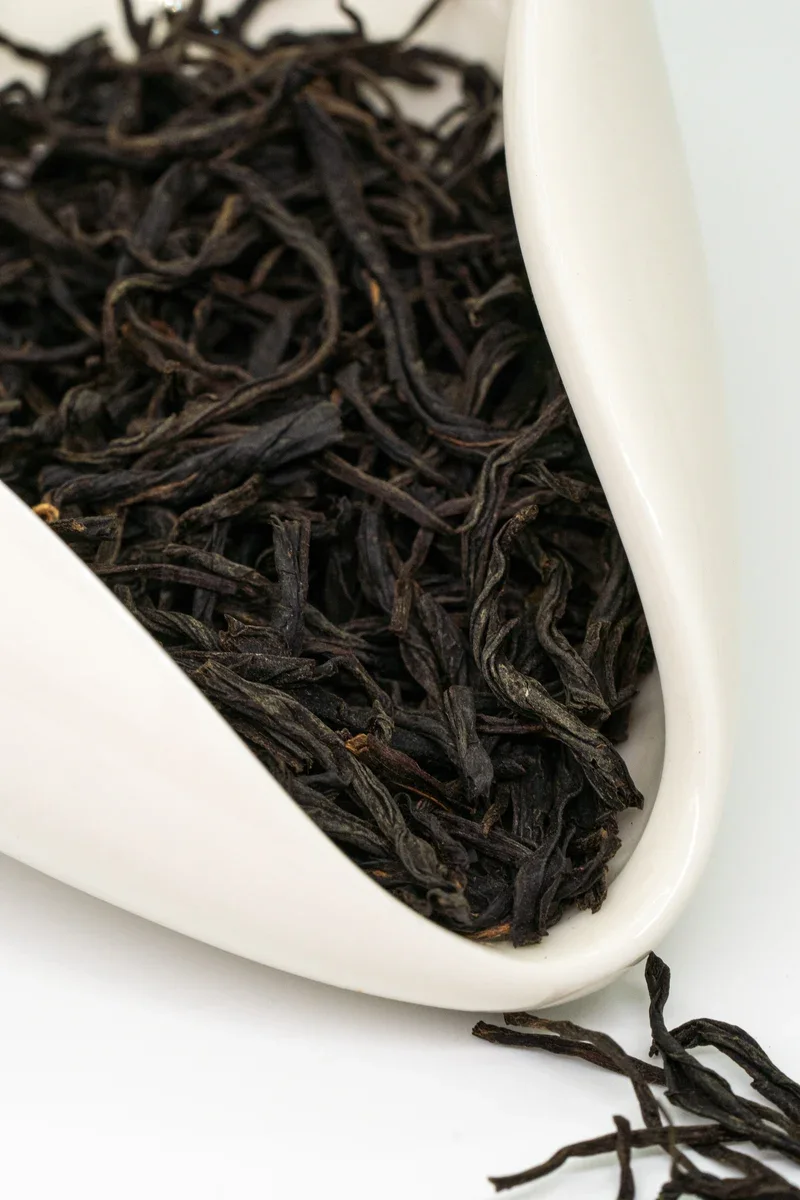
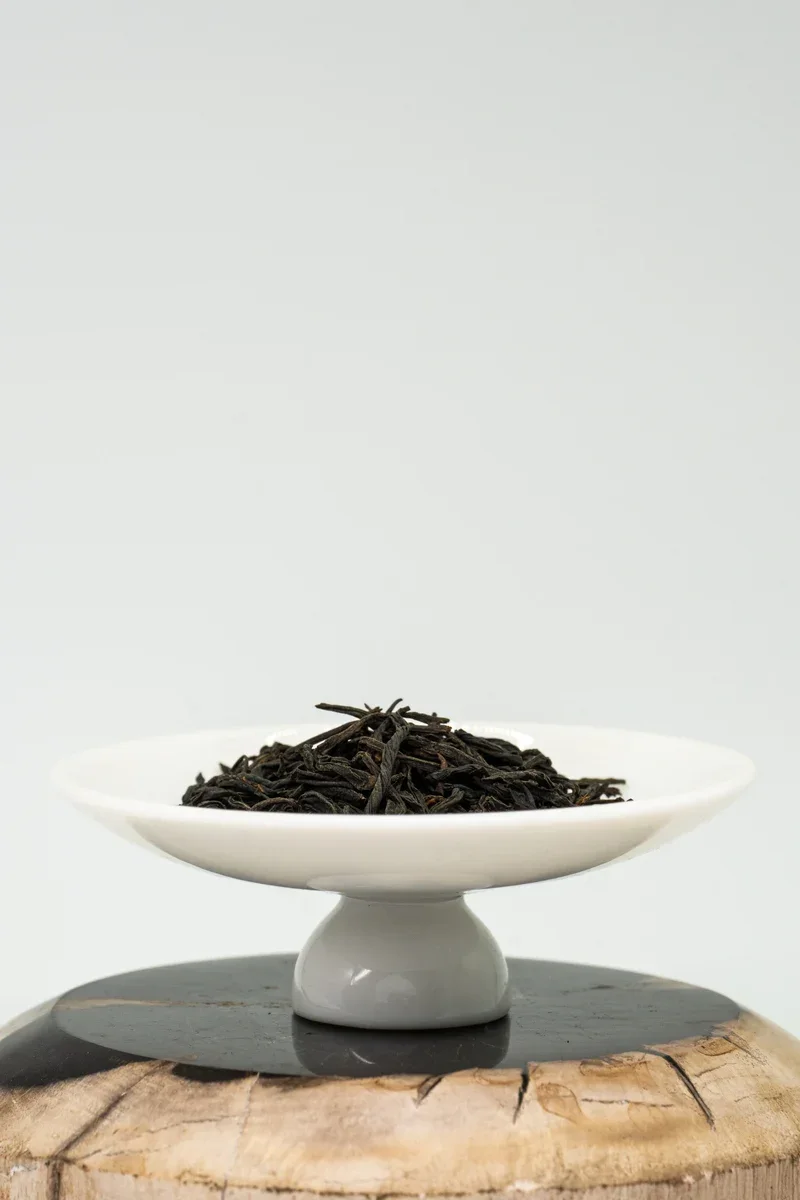
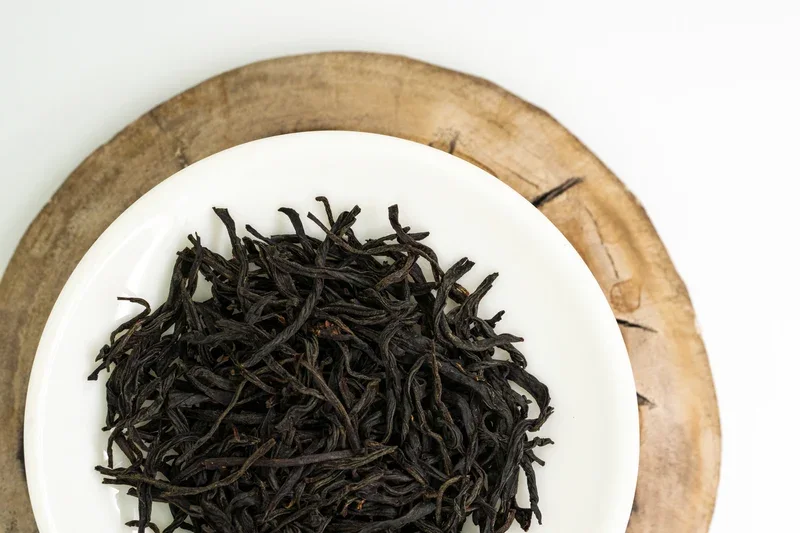
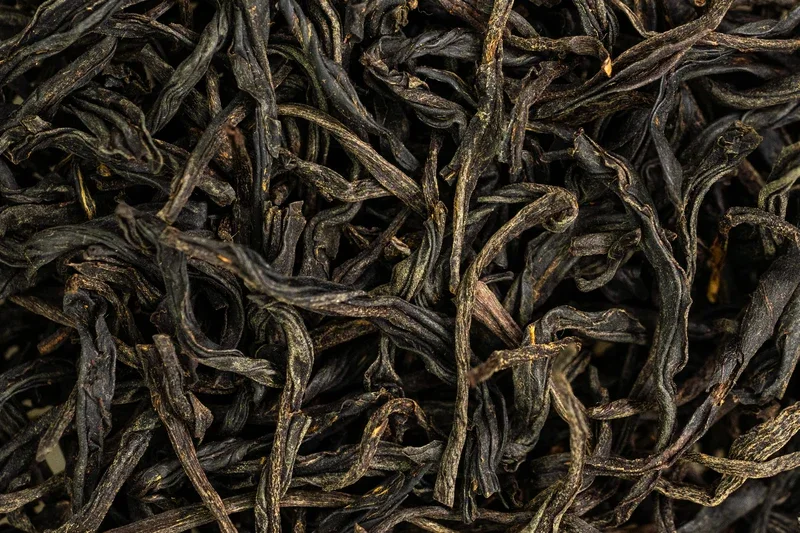
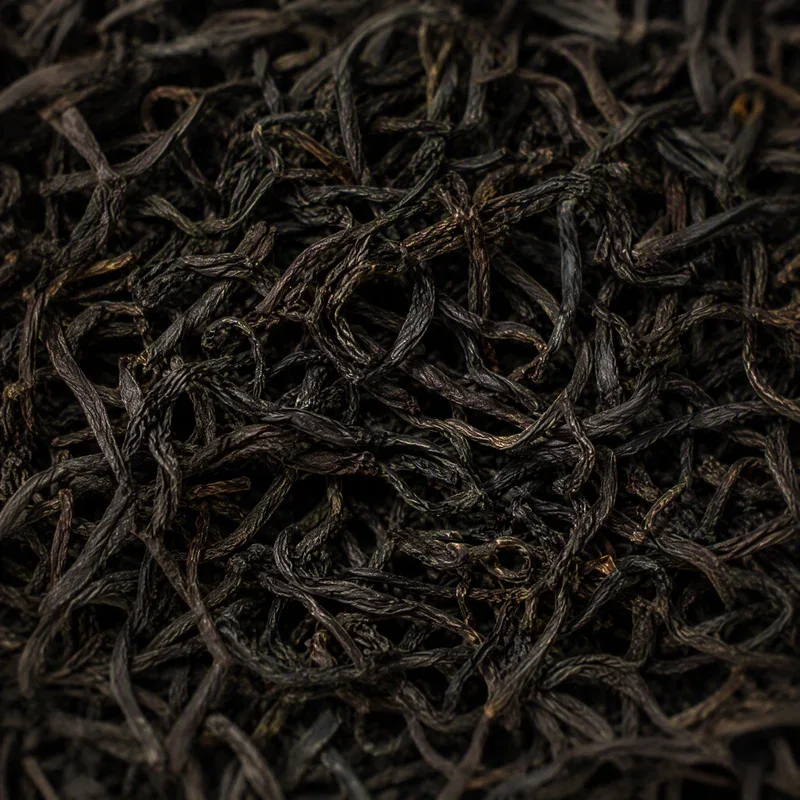
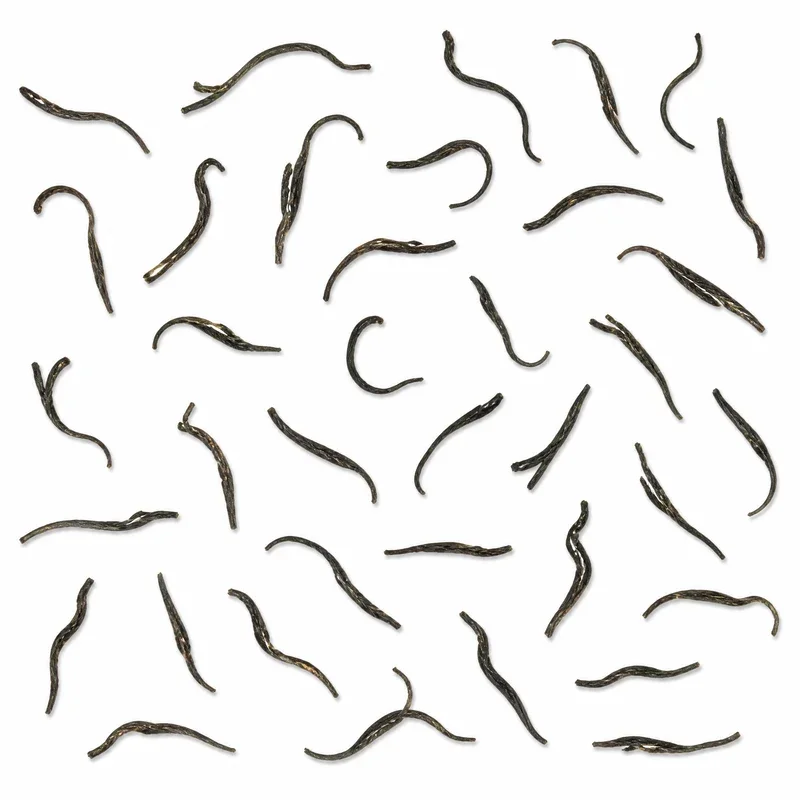
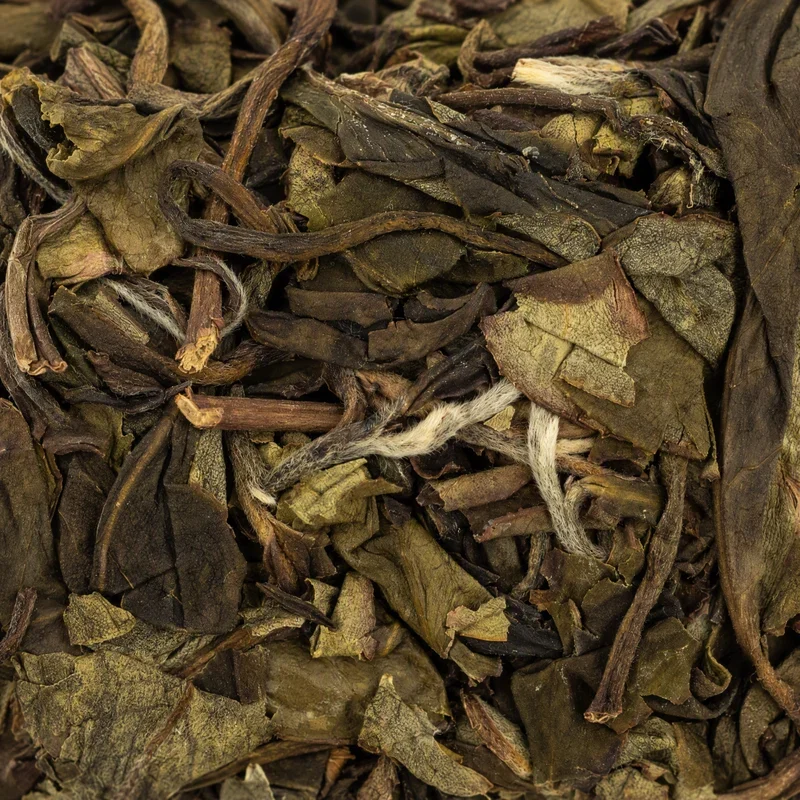
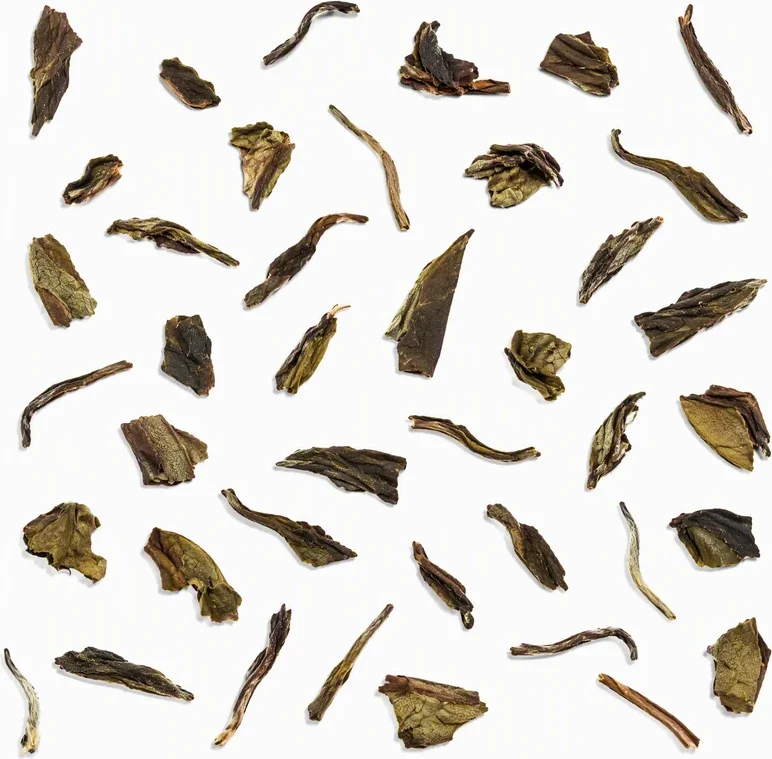
Dry Leaf Appearance: Dense square bricks (方形, fāngxíng) weighing from 5 to 15 g, neatly wrapped in paper. Surface even, flat. Color of dry leaf — dark green with brownish-yellow tint, resembling the color of ripe banana (似香蕉色). The loose version (散茶, sǎn chá) has tight longitudinal twist — "staff shape" (拐杖形, guǎizhàng xíng) or "carrying pole shape" (扁担形, biǎndan xíng), characteristic "three-section color" (三节色, sān jié sè) of the stem and four-sided petiole (四方梗, sìfāng gěng).
Dry Leaf Aroma: Clean, high and lingering. Natural orchid aroma (兰花香, lánhuā xiāng) dominates — "like orchid and osmanthus" (如兰似桂). In new tea, fresh floral tone (清香, qīngxiāng) is more pronounced; with aging, osmanthus notes (桂花香, guìhuā xiāng) develop. Light honey and fruity nuances may be present.
Liquor Aroma: Bright, floral-sweet, high and lasting. Natural "orchid character" sounds distinctly; in roasted versions, nutty and caramel tones are added. Aroma builds and unfolds from infusion to infusion.
Liquor Color: Orange-yellow (橙黄) or golden-yellow (金黄), transparent and clear (清澈明亮). With increased roasting degree, the shade shifts toward amber.
Spent Leaves: Large, fleshy, soft and glossy leaves (肥厚软亮). Characteristic "red rim" (红边, hóng biān) — consequence of edge oxidation. Main vein wide and yellow (主脉宽黄). Tone — from yellow-green to copper-brown.
Taste: Full, soft, 醇爽 (chún shuǎng) — "pure and refreshing," simultaneously soft and lively (鲜灵活泼, xiānlíng huópō). Bitterness and astringency are minimal. Pronounced returning sweetness (回甘, huígān) — long and distinct. In the aroma-taste palette: flowers (orchid, narcissus), honey, fresh and baked fruits, light spicy notes. With deep drinking, "aroma within taste" (味中透香) is felt. Throat aftertaste is soft, enveloping (喉润, hóu rùn).
Alkaloids: Caffeine (咖啡碱, kāfēi jiǎn) — moderate level, typical for semi-oxidized teas. Theobromine (可可碱, kěkě jiǎn) and theophylline (茶碱, chá jiǎn) — in trace amounts.
Amino Acids: Content in fresh raw material — at least 4.0%. Main component — L-theanine (L-茶氨酸, L-chá'ānjī suān), providing freshness (鲜爽度) and characteristic umami-like sweetness. High amino acid content is due to the foggy climate and diffused light of Jiupeng Creek.
Antioxidant activity of Zhangping Shui Xian, according to Chinese sources, exceeds vitamin E effectiveness by 18 times in free radical neutralization capacity.
Essential Oils: Determine the characteristic persistent floral aroma. Component composition includes nerol, linalool, geraniol and their esters — typical carriers of the "orchid" profile.
Minerals: Potassium (K), magnesium (Mg), manganese (Mn), iron (Fe), fluorine (F). Regional soils are enriched with selenium (Se) and zinc (Zn), which is reflected in the tea's mineral profile.
Polyphenols: Content in fresh raw material — at least 25.0% (by standard). Represented by catechins and products of their partial oxidation. According to Chinese sources, polyphenols of Zhangping Shui Xian accelerate fat breakdown more effectively than ordinary oolongs by approximately 30%.
Vitamins: Vitamin C, B-group vitamins (B₁, B₂), vitamin E, vitamin K.
Combination of caffeine and L-theanine provides alertness without sharp surge: L-theanine softens caffeine action, forming a state of calm concentration.
High polyphenol content promotes cell protection from oxidative stress and slowing of aging processes.
Tea polyphenols assist fat breakdown and may contribute to lowering "bad" cholesterol (LDL) levels.
Stimulates digestive enzyme secretion, helps with bloating. Characteristic feature: with prolonged and regular consumption does not irritate gastric mucosa (久饮多饮而不伤胃), which favorably distinguishes Zhangping Shui Xian from many green teas.
May contribute to strengthening vessel walls and maintaining their elasticity.
Promotes gentle elimination of metabolic products.
L-theanine supports cognitive activity, improves attention and contributes to stress reduction.
Roasted versions are especially good in cold weather — they warm without overloading the body.
"Yan yun" is often associated with a sensation of minerality in the taste and aroma of tea. This sensation can be compared to the cool freshness of stone, earthiness, slight saltiness.
"Yan yun" manifests in a long, lasting aftertaste that remains on the tongue and in the throat even after the tea has been consumed.
This concept describes the structure, density and richness of flavor. Tea with pronounced "yan yun" feels "strong," "powerful," "having a core."
Some tea connoisseurs describe "yan yun" as a special energy, force that the tea transmits to a person.
Rocky, mineral-rich soils of the Wuyi Mountains.
High humidity, frequent fogs, diffused sunlight.
The older the tea bush, the more pronounced the "yan yun" will be in its leaves.
Traditional production technology, including prolonged roasting over charcoal, also contributes to the formation of "yan yun."
Tea Amount: One brick (5–8 g) per 75–100 ml water when brewing gongfu method. Ratio 1:15 (5 g per 75 ml) is considered classic.
Teaware: Porcelain gàiwǎn (盖碗, gàiwǎn) — universal option, well revealing floral notes. Yíxīng clay teapot (宜兴紫砂壶, Yíxīng zǐshā hú) — for roasted versions, to which clay adds additional velvety texture.
Water Temperature: 95–100°C. Not recommended to exceed 100°C: according to Chinese specialists, too high temperature destroys theanine and reduces freshness (鲜味, xiānwèi) of the liquor.
Price Category: Zhangping Shui Xian belongs to medium and medium-high price segment of Fujian oolongs. Approximate prices (according to Chinese market data): special grade (特级, tèjí) — from 700 yuan per jin (500 g) and higher; first grade (一级, yījí) — 350–700 yuan per jin; second grade (二级, èrjí) — 160–240 yuan per jin. Factors affecting price: harvest season (spring more expensive), growing elevation, age of tea trees, reputation of master and region, degree of manual labor, presence of aging.
No reviews yet. Tell us what you think of this tea.
Rate this tea and share your impressions. We review each submission before publishing it.