Brewing
Gongfu brewing
- Water temperature
- 92 °C
- Tea amount
- 6 g
- Water volume
- 100 ml
- First steep
- 10 s
- Time added per infusion
- 5 s
- Infusions
- 8

Yúnnán Jǐngmài wūlóng
Choose a brewing method. Start with the recommended quantities and time, then adjust to taste.
Brewing
Brewing
Taste
Tea encyclopedia
Category: Special artisanal oolongs; experimental teas of Yunnan.
Category: Special artisanal oolongs; experimental teas of Yunnan.
Coordinates: ~22°12' N, ~99°58'–100°00' E. Elevation 1250–1600 m a.s.l.
Origin: Yúnnán Province (云南省), Pu'er City (普洱市), Láncāng Lahu Autonomous County (澜沧拉祜族自治县), Jǐngmài Mountain area (景迈山). Production concentrated in villages of Mángjǐng (芒景), Jǐngmài Dazhai (景迈大寨) and Nuogan (糯岗).
Type: Oolong (semi-oxidized tea).
Master when forming balls strives to arrange exactly 108 twisted leaves — a sacred number in Buddhism.
"I leave you livestock — disaster will destroy it. I leave gold — it will run out. I leave tea gardens — they will feed you forever." Observed for >1000 years.
Producing oolong from var. assamica — technological paradox: this variety is "designed by nature" for pu-erh.
When old trees were cut down throughout Yunnan for plantation bushes, Jingmai residents didn't do this — partly for cultural reasons, partly due to lack of roads.
Leaves from two varieties are used:
The UNESCO site contains over 1.13 million tea trees older than 100 years (according to other data — 3.2 million on 12,900 ha), average age ~200 years, oldest ~1400 years. Leaves from both young bushes (from 5 years) and centennial "ancient trees (gǔ shù)" (古树) are used.
Pluck Standard: Bud + 2–3 leaves (一芽二叶). For "Light Roasting" — mature three-leaf flushes. Main harvest — spring (March–May); autumn (September–October) — for more oxidized batches.
Climate: Subtropical monsoon. Average annual temperature ~18–21°C, precipitation 1400–1800 mm/year, humidity 75–85%. Dense morning mists. Daily temperature variation up to 15°C — stimulates L-theanine and aromatic precursor accumulation.
Soil: Lateritic red soils rich in iron oxides and quartz, pH 4.5–5.5. Stimulate polyphenol accumulation and impart mineral notes to the aftertaste.
1250–1600 m (main part of old gardens — 1400–1550 m).
Unique "forest understory" tea cultivation (林下茶, lín xià chá): trees grow in natural forest under canopy of chestnuts, camphor laurels, bamboo. Pesticides and mineral fertilizers completely prohibited — norm enshrined in local statutes and legislation.
Topography: Southwestern Yunnan, near the border with Myanmar. System of gentle peaks and gorges covered with subtropical forest.
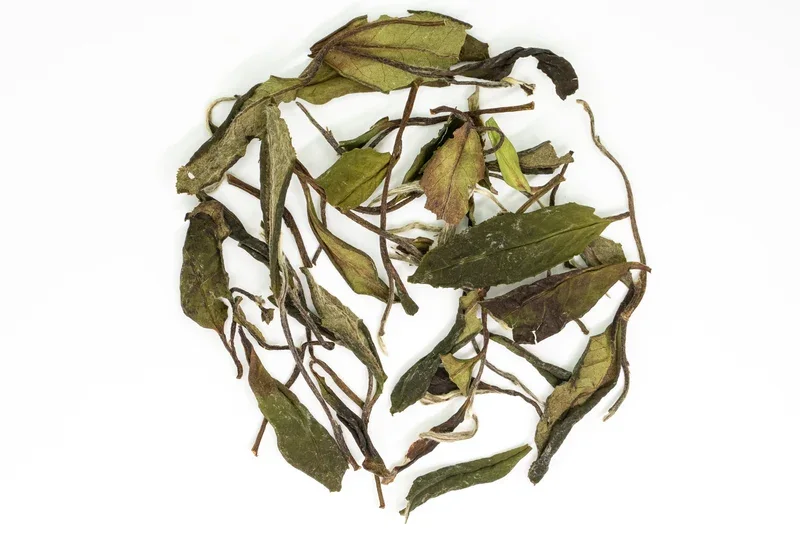
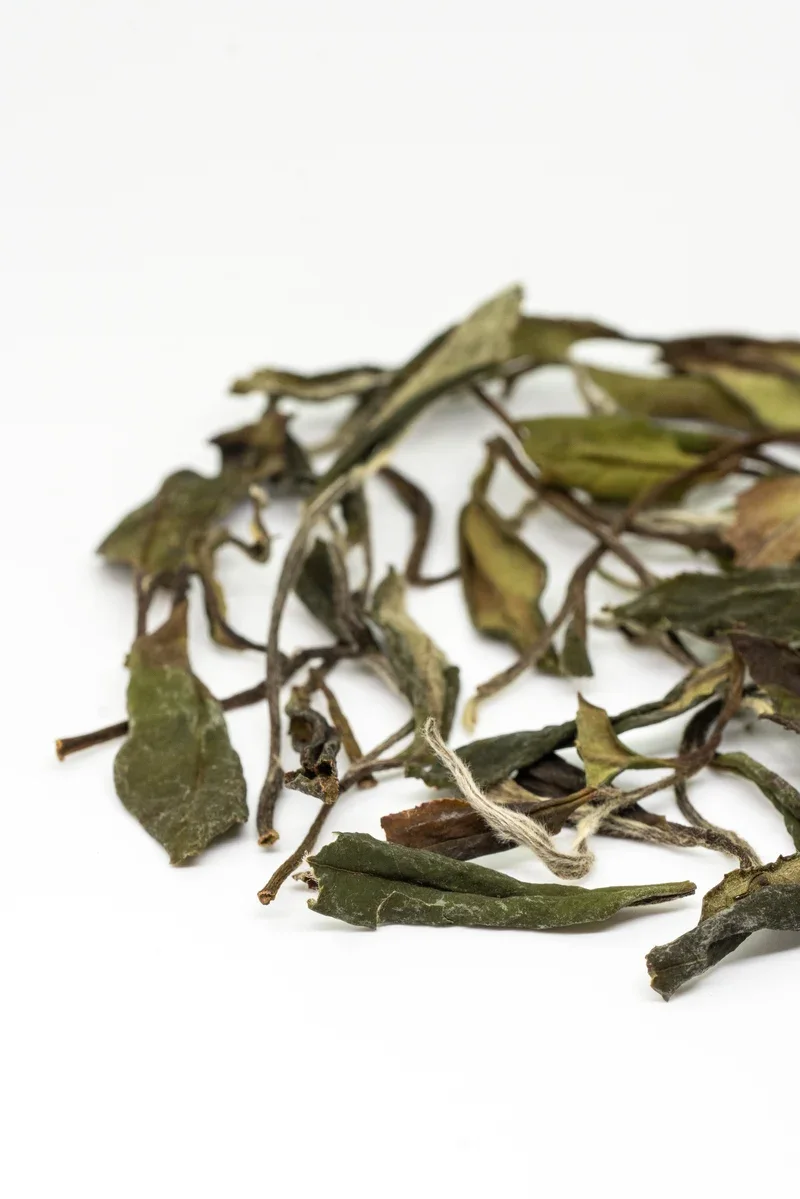
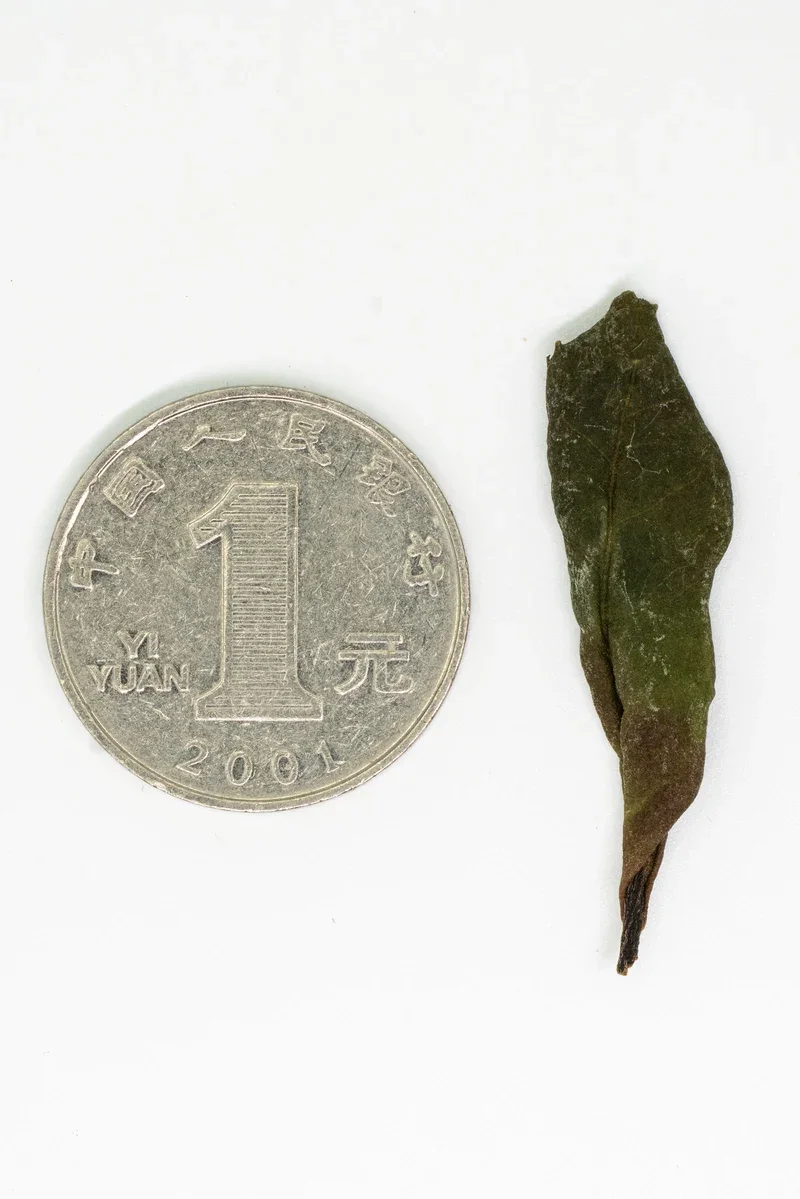
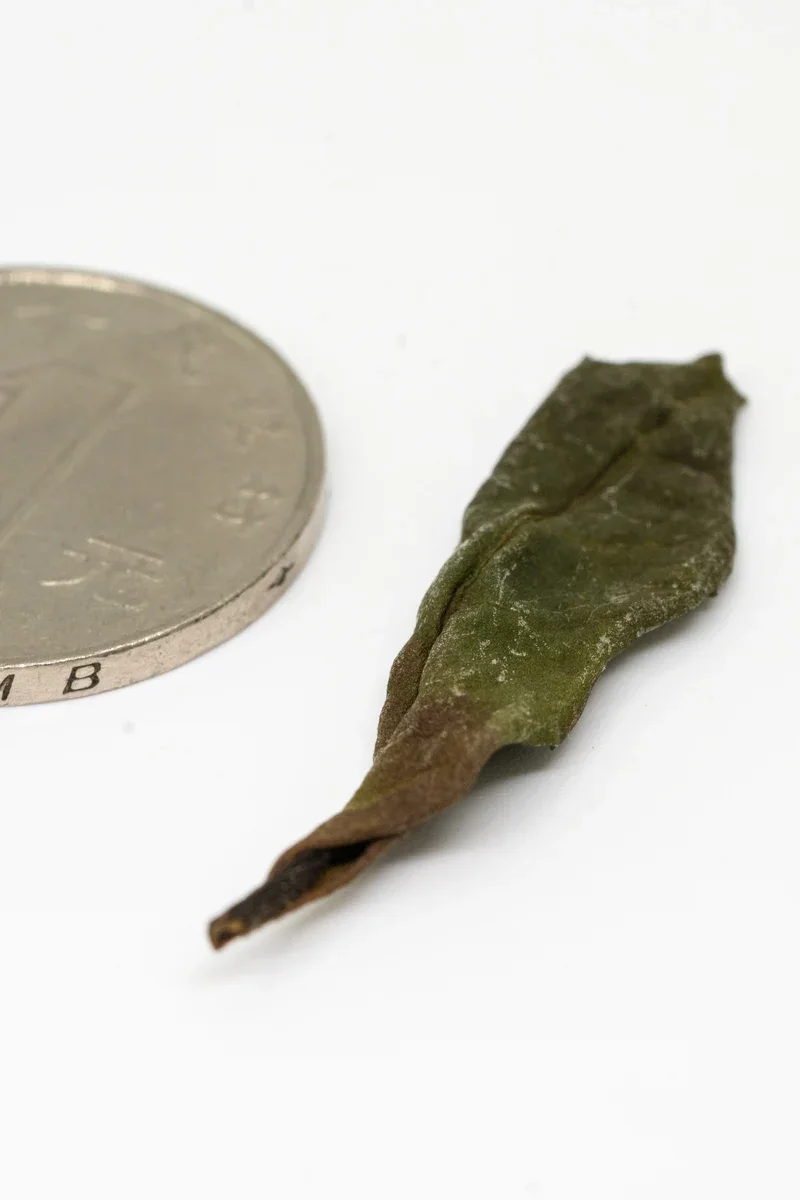
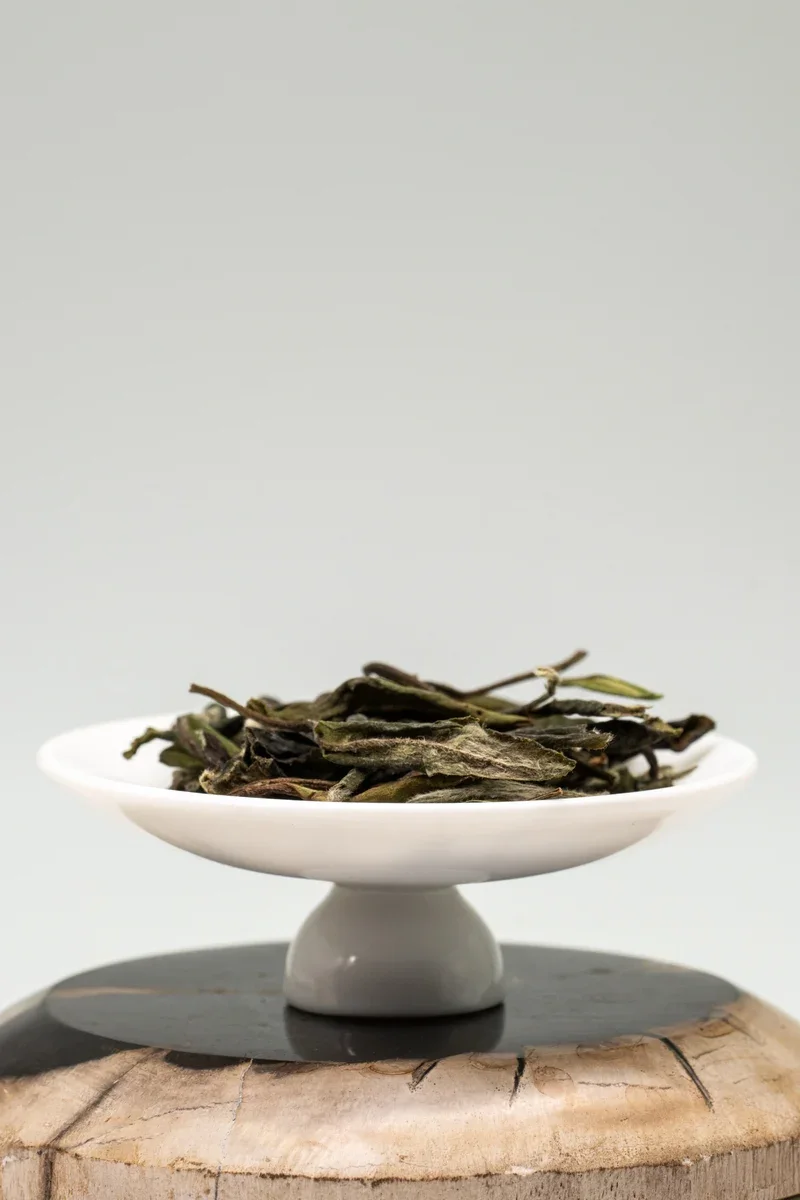
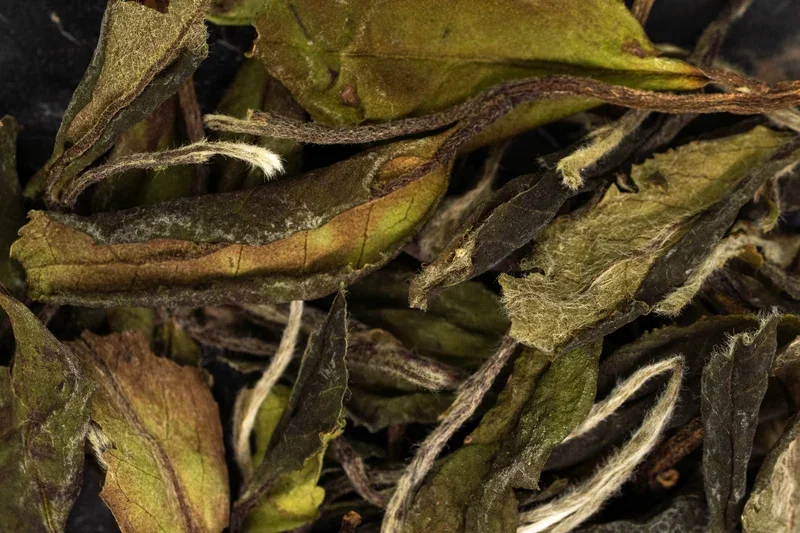
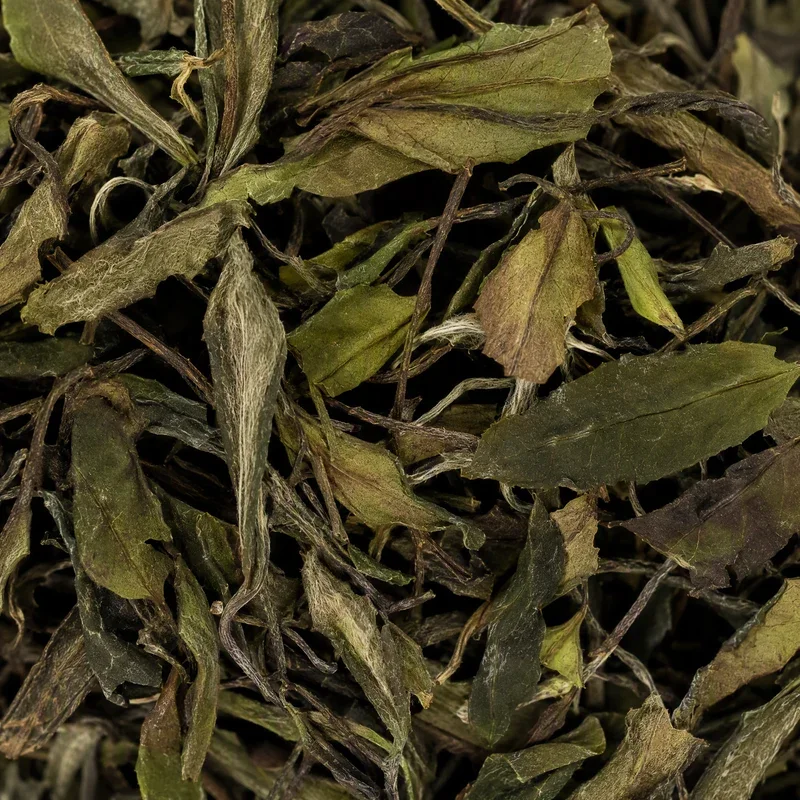
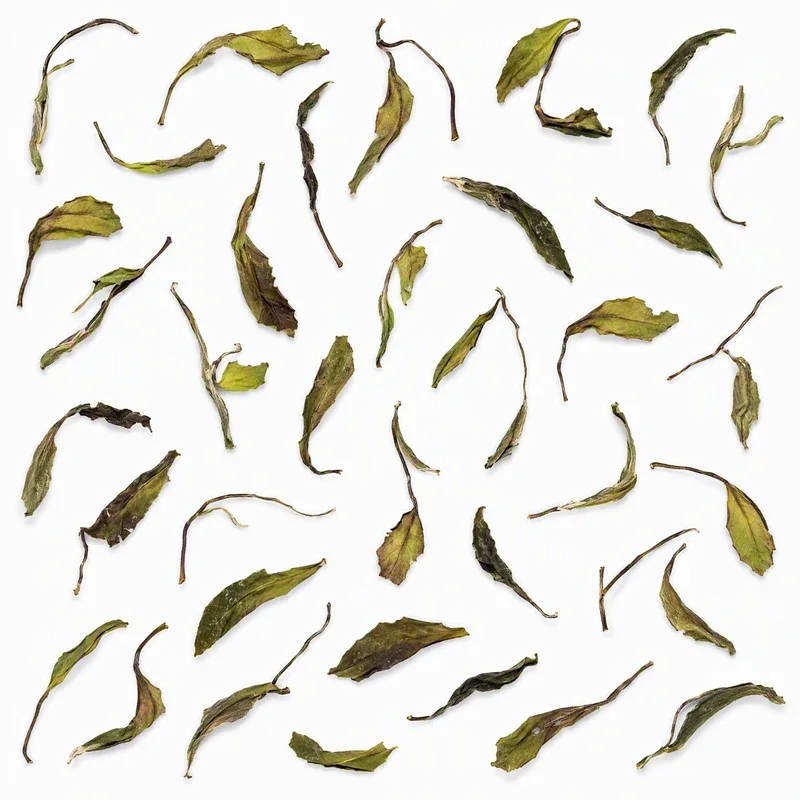
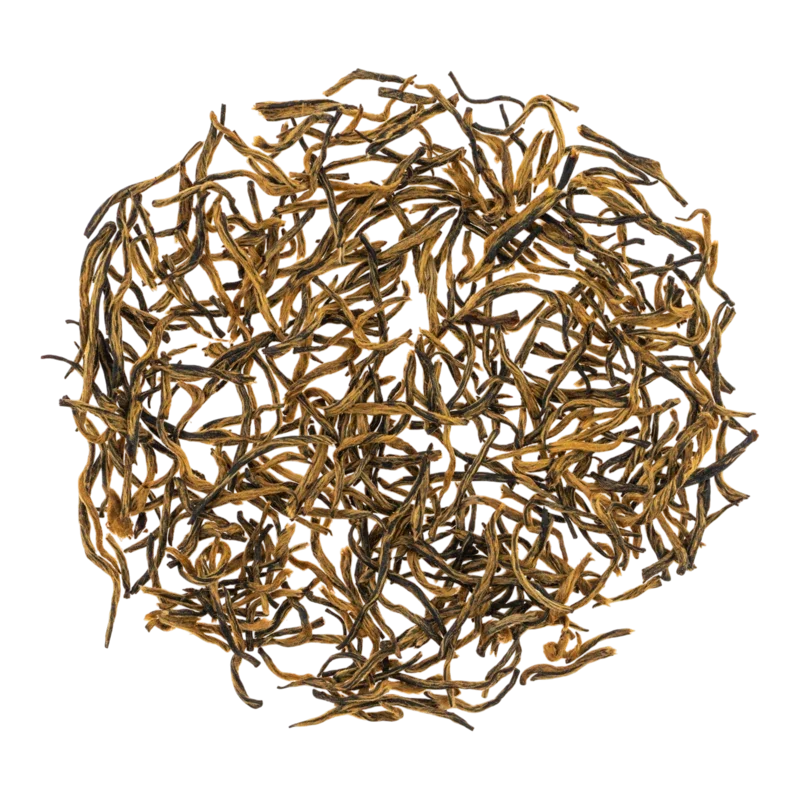
Tight balls/hemispheres of dark green, olive color with silvery trichomes.
Living orchid, fresh tree bark, wild honey, unripe peach. "Mountain" forest scent.
Amber-golden with greenish tint → rich warm amber.
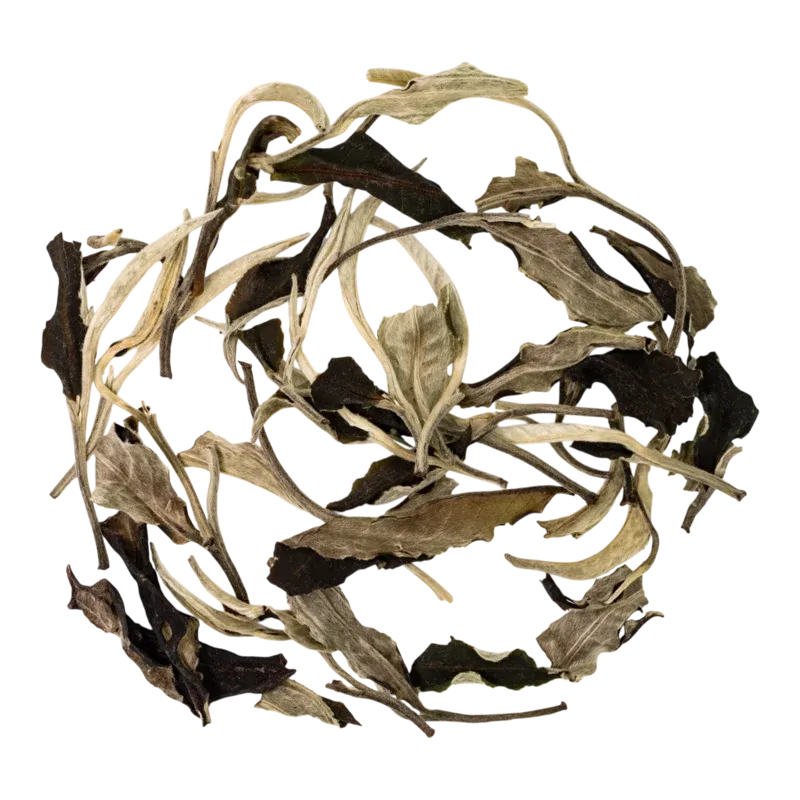
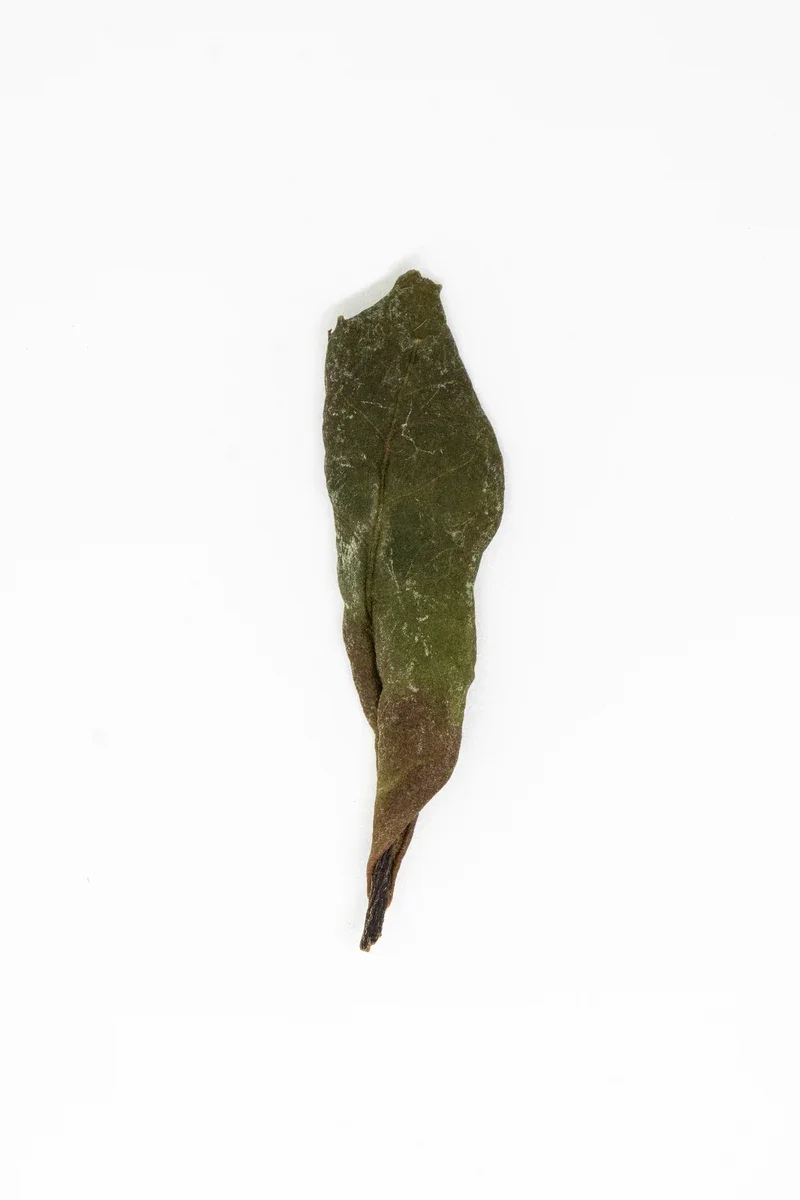
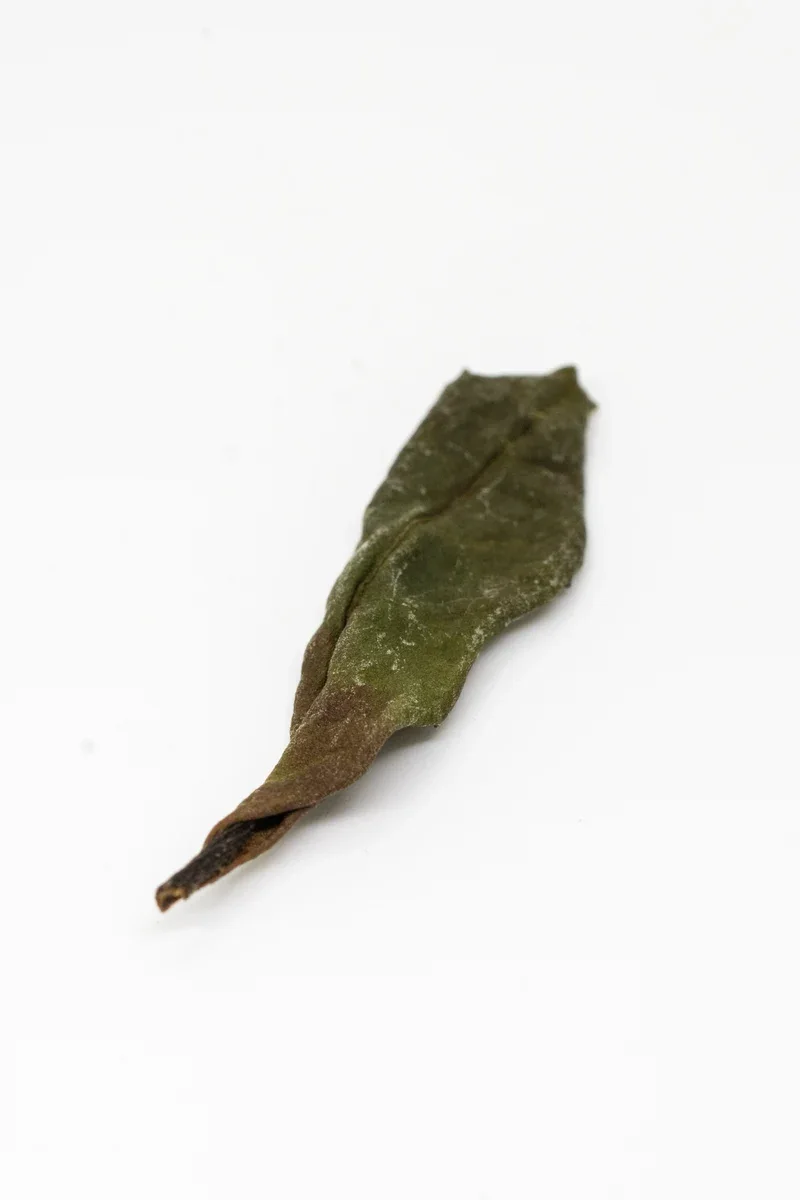
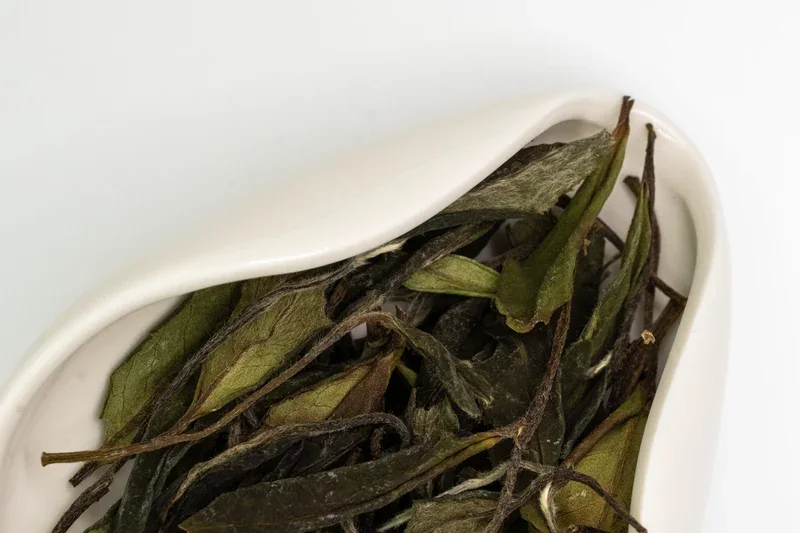
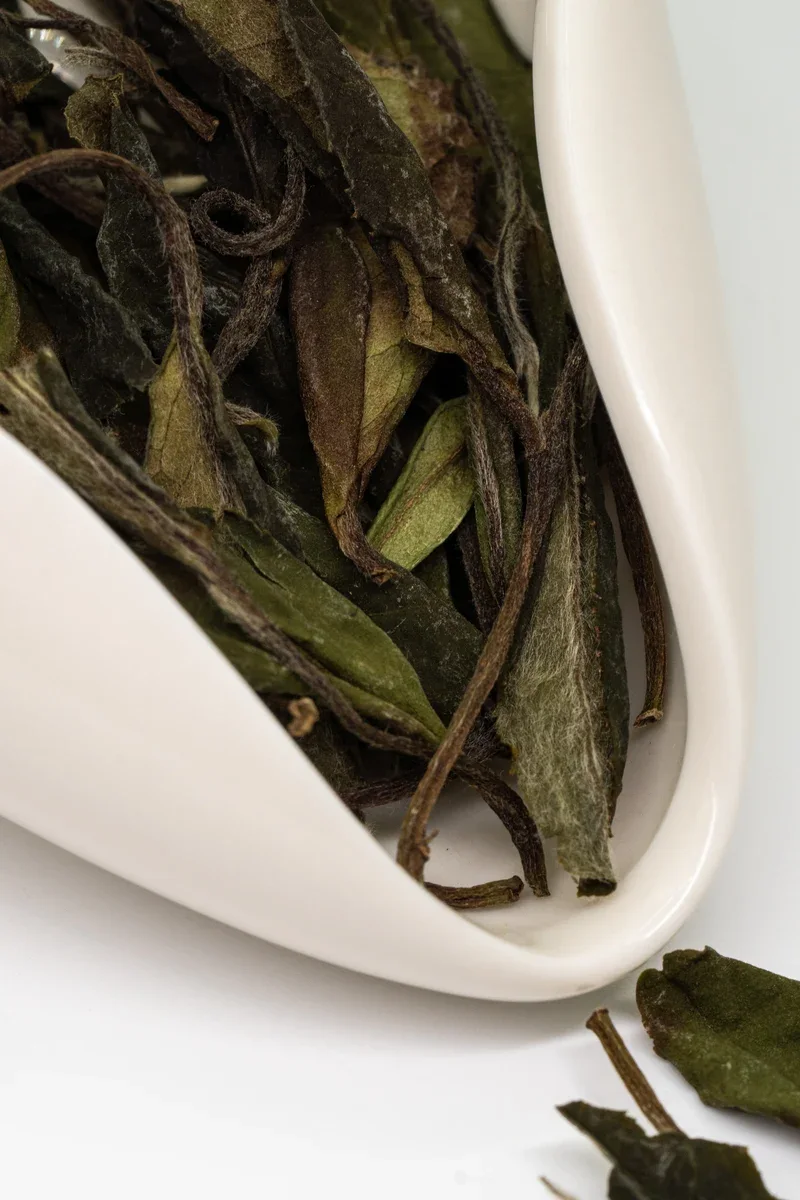
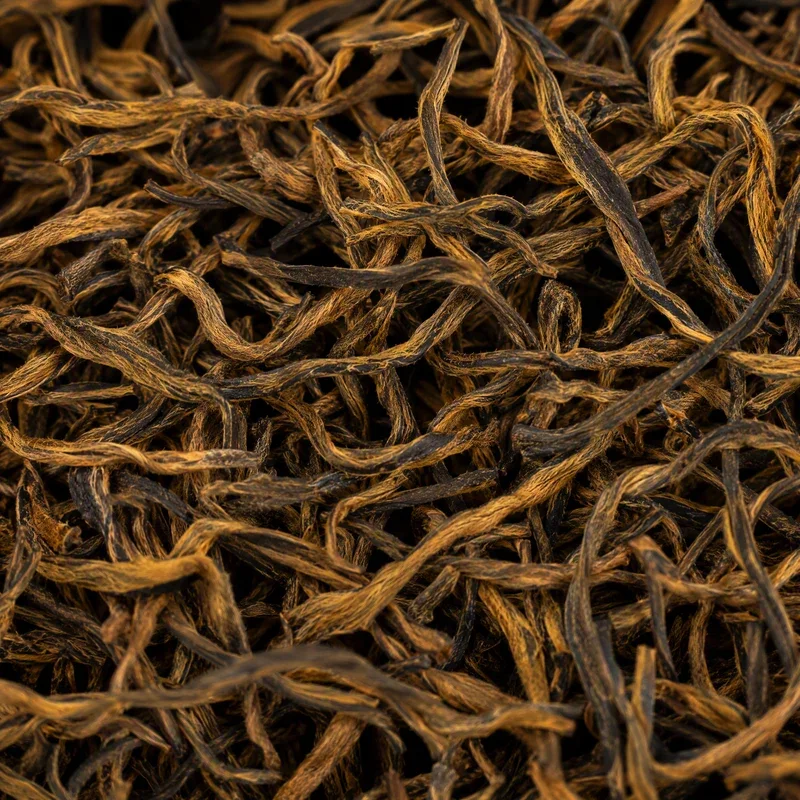
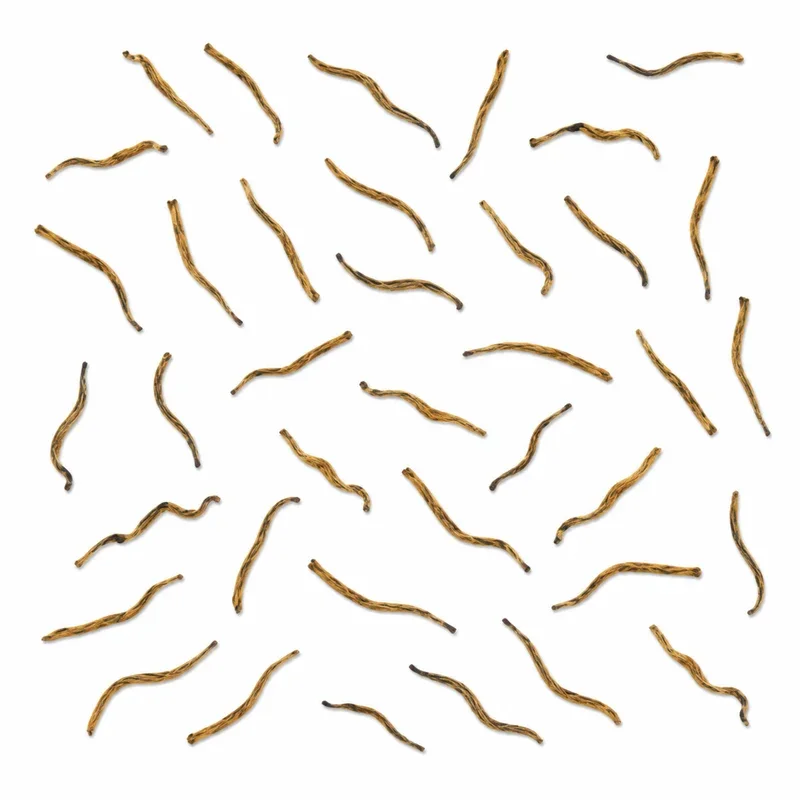
Large twisted leaves of dark green color with brownish edges. Noticeably larger than Fujian oolongs.
Warm smoky notes, roasted almonds, forest herbs, honey sweetness → wild orchid, blooming peach → caramel and nutty accents → mineral of wet mountain stone.
Clear amber with golden-orange reflections.
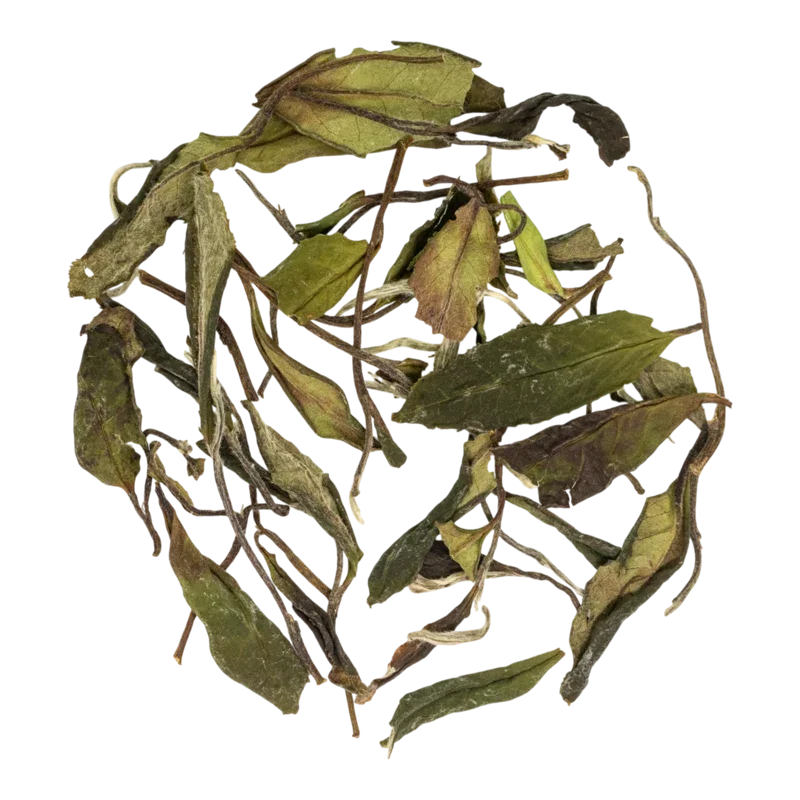
Spent Leaves: Large leaves with pronounced "red edge, green center," resilient.
Taste: Full-bodied, oily mouthfeel. Honey sweetness → hazelnut, burnt sugar → light "pu-erh" bitterness → prolonged returning sweetness (huí gān). Pronounced "Yunnan" mineral density.
Alkaloids: Caffeine ~30–40 mg/g (moderate).
Amino Acids: L-theanine 12–15 mg/g (unroasted) / ~6% of dry mass (roasted). Provides umami and "calm alertness."
Elevated content (up to 120–150 mg/100 g) — temperature stress of mountain nights + short-term aging. Approaches GABA teas.
~22% (roasted) — explains oily mouthfeel.
Triterpene lactones (associated with symbiotic "crab legs" — Viscum liquidambaricolum). Rare flavonol Fisetinidol-(4α→8)-catechin, characteristic of archaic genotypes.
Essential Oils: Nerol, linalool, geraniol, ocimene, nonanal (floral notes); guaiacol, phenols (smoky roasting notes). Steam fixation (unroasted style) preserves maximum volatiles.
Minerals: Potassium, fluorine, manganese, zinc, calcium, magnesium, selenium.
Polyphenols: 18–22% (unroasted) / ~12% catechins (roasted). EGCG — main antioxidant. Theaflavins, thearubigins.
Synergy of caffeine, L-theanine and GABA — "alert concentration" without nervousness.
EGCG + gallic acid + melanoidins (in roasted version). ORAC ~12,000–13,000 μmol TE/g.
LDL reduction, improved vascular elasticity.
α-glucosidase inhibition. Polysaccharides slow glycemic response.
Polyphenols stimulate bile secretion, support microflora. Traditionally — after fatty food.
BDNF synthesis stimulation.
EGCG + polysaccharides (~22% in roasted) — immunomodulation.
Steam fixation, shade drying, 15–30% oxidation, short-term aging. Living, fresh, with aging potential.
Charcoal roasting in 4 cycles, 35–40% oxidation. Nutty, caramel tones. More stable in storage.
Most valuable. Minimal oxidation, bright floral sweetness.
Slightly more oxidized, honey and caramel tones, denser.
Current season.
From 3 years. Warm spices, wood, dried fruits — approaches young sheng pu-erh. Rarity.
Leaf partially eaten by cicadas — honey, peach, muscat notes (analogy with Dongfang Meiren). Extremely limited volume.
No reviews yet. Tell us what you think of this tea.
Rate this tea and share your impressions. We review each submission before publishing it.