Brewing
Gongfu brewing
- Water temperature
- 75 °C
- Tea amount
- 5 g
- Water volume
- 100 ml
- First steep
- 10 s
- Time added per infusion
- 5 s
- Infusions
- 3

Yǒngchuān xiù yá
Choose a brewing method. Start with the recommended quantities and time, then adjust to taste.
Brewing
Brewing
Taste
Tea encyclopedia
Category: National Geographical Indication Product (国家地理标志商标, 2011). Brand in China Agricultural Brand Catalog (中国农业品牌目录, 2019). Six-star gold award "Zhongcha Cup" (2024). Brand value — 34.32 billion yuan. Patented technology (国家发明专利, 2004).
Category: National Geographical Indication Product (国家地理标志商标, 2011). Brand in China Agricultural Brand Catalog (中国农业品牌目录, 2019). Six-star gold award "Zhongcha Cup" (2024). Brand value — 34.32 billion yuan. Patented technology (国家发明专利, 2004).
Coordinates: Approximately 29°23′ North latitude, 105°53′ East longitude.
Origin: China, Chóngqìng Municipality (重庆, Chóngqìng), Yǒngchuān District (永川区, Yǒngchuān Qū). Tea gardens are located on five mountain ranges: Yunwushan (云雾山), Yínshān (阴山), Bayueshan (巴岳山), Jishan (箕山) and Huangguashan (黄瓜山). Terroir core: Cháshān Zhúhǎi (茶山竹海, "Tea Mountain — Bamboo Sea") — demonstration base, Yongrongzhen Township (永荣镇) and Shisunshan Mountain (石笋山) of Hegeng Township (何埂镇), elevations 300–500 m — "cloud zone".
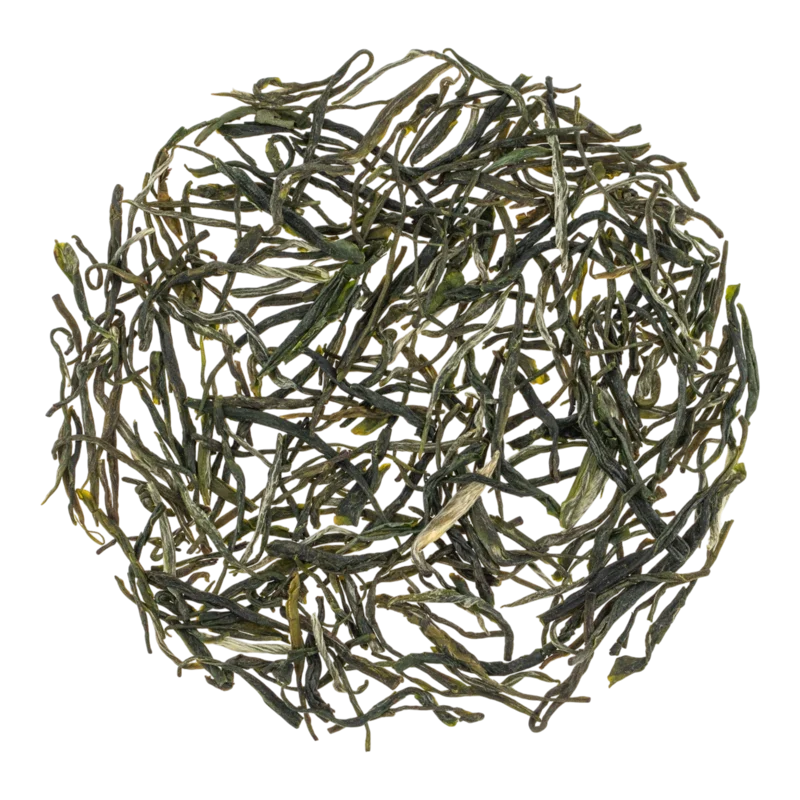
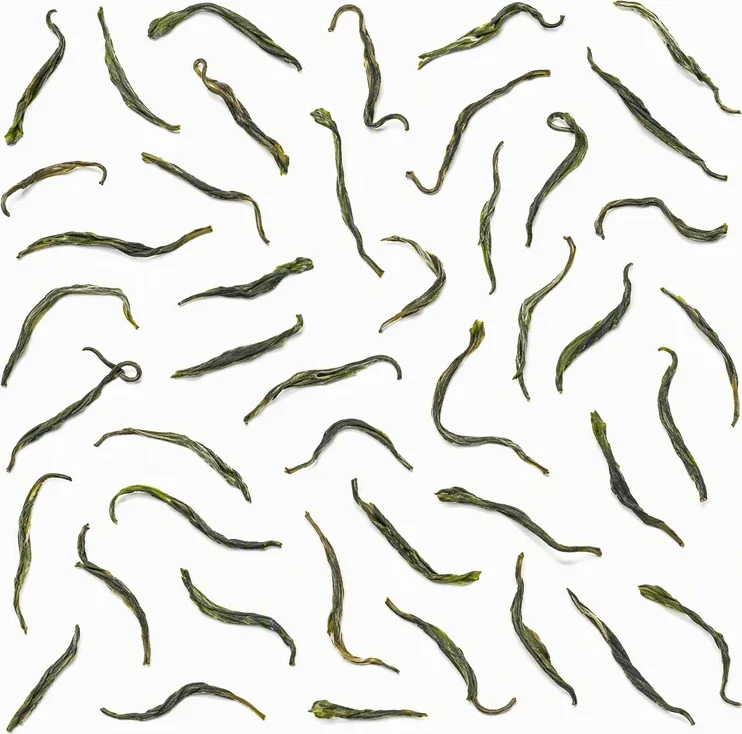
Type: Green tea (non-oxidized). By shape — needle-like, slightly flattened, "sword-like" (针芽状,挺直略扁似剑). By technology — pan-firing and roasting with proprietary method of "three roastings and four pan-firings" (三烘四炒, sān hōng sì chǎo).
From Nanjing. Also "needle", also created for anniversary. Yu Hua — more floral; Xiu Ya — more chestnut, with "sword-like" shape and "Underwater Forest".
From Hunan. Also "needle", also 1959. Song Zhen — more "round in cross-section"; Xiu Ya — more "flat sword-like".
From Sichuan. Flat, "bamboo leaf". Zhu Ye Qing — lighter; Xiu Ya — more "sword-like" and chestnut, with «微涩速化» (dissolving astringency).
From Sichuan (Dujiangyan). Straight, "snowy". Xue Ya — Daoist, with 20-hour down development; Xiu Ya — Chongqing, with «三烘四炒» and "Underwater Forest".
Cultural Significance: Yongchuan Xiu Ya — the tea symbol of Chongqing, a municipality with a population of 30+ million people. The landscape "Chashan Zhuhai" (茶山竹海, "Tea Mountain — Bamboo Sea") — a famous tourist attraction: endless tea plantations flowing into bamboo groves. The ecological model «猪-沼-茶» (pig — biogas — tea) — closed cycle of organic farming — is considered exemplary.
History: In 1959, the Chongqing Agricultural Research Institute, Tea Research Division (重庆市农科院茶研所, formerly Sichuan Tea Experimental Station) on Jishan Mountain (箕山) in Yongchuan created a new needle-shaped green tea. In 1963, Chairman of the Standing Committee of the National People's Congress Zhú Dé (朱德), while inspecting Yongchuan, tasted the tea and praised its quality. In 1964, the famous tea scholar, Professor of Anhui Agricultural University Chén Chuán (陈椽) — creator of the six types of Chinese tea system — officially gave the tea the name "Yongchuan Xiu Ya" (永川秀芽, "Elegant Shoot from Yongchuan").
Full buds ≥95%. Pure, high aroma. From 2000 yuan per jin.
One bud with one leaf. Rich taste. 1000–1500 yuan.
One bud with two leaves. Good price/quality ratio. 300–800 yuan.
Cultivar: Local Group Variety (本地群体种, běndì qúntǐzhǒng) — indigenous small-leaf and medium-leaf variety of Camellia sinensis var. sinensis bush form.
Picking: Spring. Standard — one bud with one leaf in initial opening stage (一芽一叶初展). Picking hours: 9:00–16:00. Not picked: diseased buds, purple shoots.
Altitude: 300–500 meters above sea level. Core — "cloud zone" of five mountain ranges.
Climate: Subtropical humid monsoon. Average annual temperature — 17–20°C, humidity ≥75%, average annual number of foggy days — >200. Daily temperature fluctuations — significant. Diffused light stimulates amino acid accumulation: spring tea — ≥4.0%.
Soil: Red-yellow soils (红黄壤), pH 4.5–6.0, with high organic content. Core tea gardens — water conservation areas (水源保护区): use of chemical fertilizers and pesticides prohibited. Ecological model «猪-沼-茶» implemented — closed cycle: pig farming → biogas plant → organic fertilizer → tea gardens.
Manual spring picking.
6 hours — one of the longest spreading times among green teas, ensuring deep development of aromatic precursors.
In rolling drum (滚筒) at 160–180°C. Formula: "medium fixation with tendency toward tenderness" (杀青中度偏嫩) — gentler than most teas, for maximum preservation of amino acids.
"Two-handed ball rolling" (双手滚球揉, shuāngshǒu gǔnqiú róu) — unique technique: master rolls the tea mass like a ball with both hands, ensuring uniform shaping without breaking.
Intermediate moisture evaporation.
At 60–70°C — manual straightening and "rolling into shape" (理条搓形). Creating characteristic "sword-like" shape.
Moisture content — ≤5%.
Complete cycle — on bamboo and wooden tools (全程竹木器具避金属氧化).
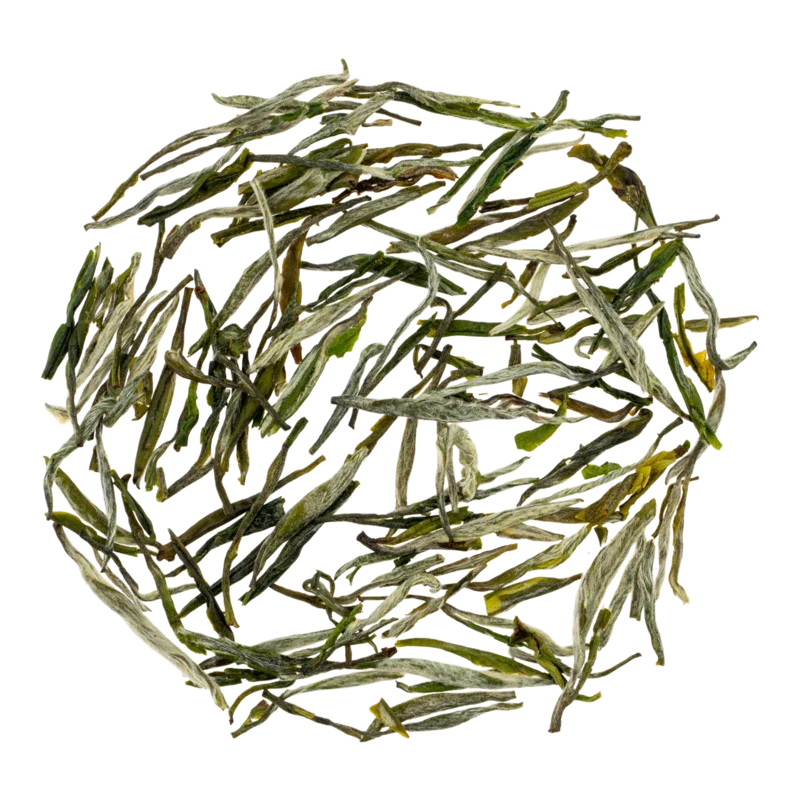
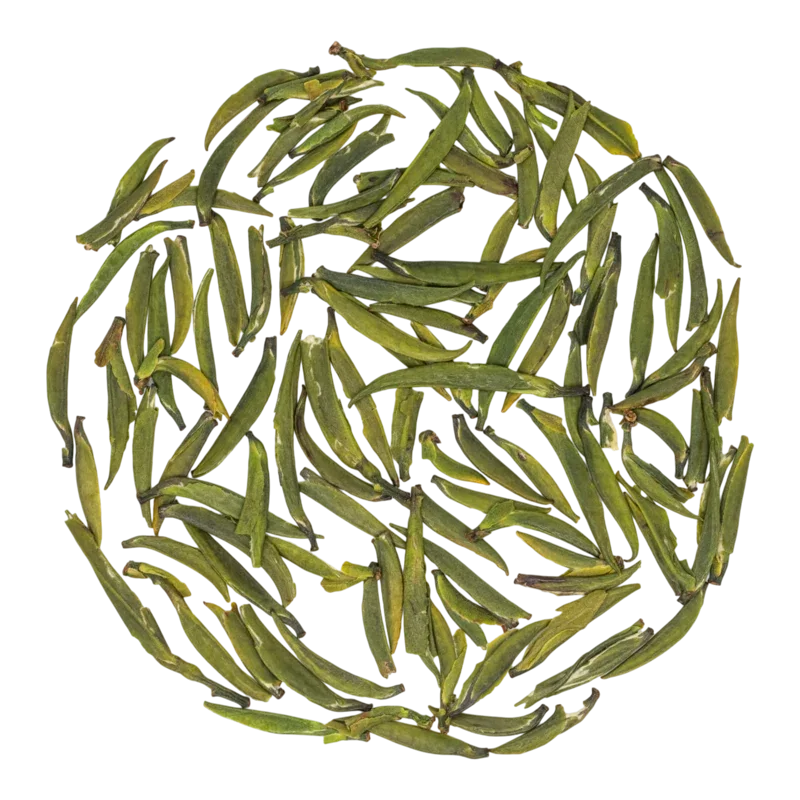
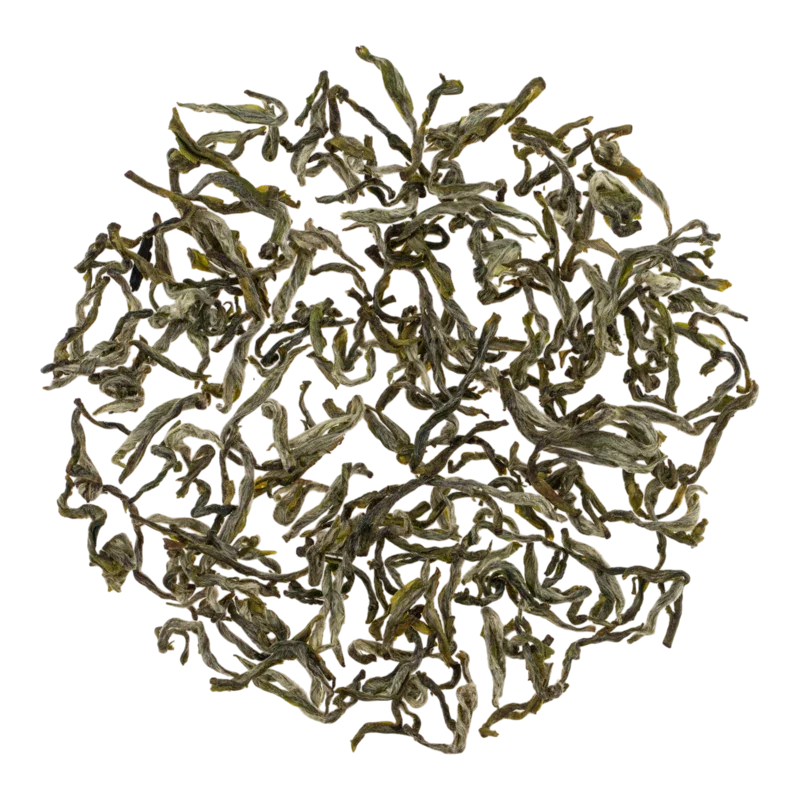
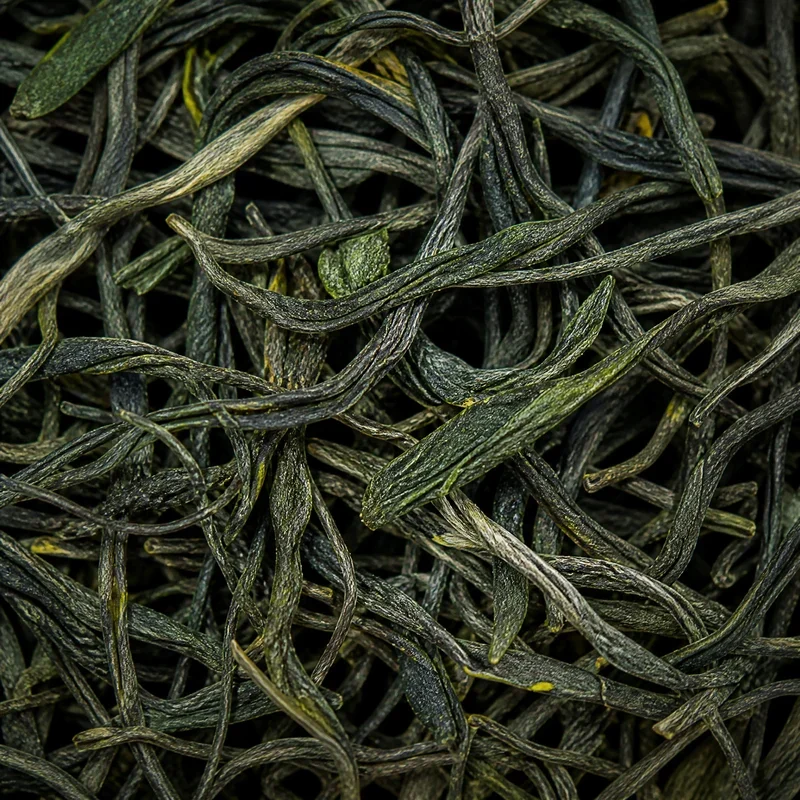
Dry Leaf Appearance: Straight, slightly flattened shoots, "sword-like" (挺直略扁似剑). Light silvery down (茸毛依稀). Color — "silver and emerald shimmer" (银翠交辉, yíncuì jiāohuī). In highest grades — "sandy green with frost" (砂绿起霜, shālǜ qǐshuāng).
Dry Leaf Aroma: Pure (清香) — main note. Chestnut (栗香) — in highest grades. Orchid (兰花香) — in fresh tea.
Liquor Aroma: Fresh, rich, persistent (鲜嫩浓郁, xiānnèn nóngyù).
Liquor Color: Emerald green, clear and transparent (碧绿清澈).
When brewed in a glass cup, buds stand vertically and sink to the bottom tips down — "Underwater Forest" effect (海底森林, hǎidǐ sēnlín) — one of the most spectacular "tea shows" among needle teas.
Spent Leaves: Tender, uniform, bright shoots (嫩匀明亮), with buds standing vertically (芽尖竖立下沉).
Taste: Fresh and brisk (鲜爽) — amino acids ≥4.0%. Sweet and beautiful (甘美, gānměi) — persistent sweetness. "Light astringency, instantly dissolving" (微涩速化, wēisè sùhuà) — unique characteristic: initial micro-astringency disappears within seconds, giving way to pure sweetness.
Alkaloids: Caffeine — moderate content.
Amino Acids: ≥4.0% — provides freshness and umami.
Notable content — tooth protection (防龋健齿).
Polyphenols: Significant content. Free radical neutralization efficiency — 18 times higher than vitamin E.
Vitamins: Vitamin C, carotenoids.
Polyphenols — efficiency 18 times higher than vitamin E.
Fluoride suppresses bacteria, reduces plaque.
Catechins accelerate fat breakdown by 30%.
Caffeine and L-theanine.
not medical advice.
do not use boiling water (>85°C). After opening — consume within 7 days.
From Nanjing. Also a "needle," also created for an anniversary. Yu Hua is more floral; Xiu Ya is more chestnut-like, with a "sword-like" shape and "Underwater Forest."
From Hunan. Also a "needle," also from 1959. Song Zhen is more "round in cross-section"; Xiu Ya is more "flat and sword-like."
From Sichuan. Flat, "bamboo leaf." Zhuyeqing is lighter; Xiu Ya is more "sword-like" and chestnut-like, with "微涩速化" (dissolving astringency).
From Sichuan (Dujiangyan). Straight, "snowy." Xue Ya is Daoist, with 20-hour down manifestation; Xiu Ya is from Chongqing, with "三烘四炒" and "Underwater Forest."
Buy with GI marking from Yongchuan district; evaluate "sword-like" shape and "silver-emerald" luster; check "Underwater Forest" when brewing.
No reviews yet. Tell us what you think of this tea.
Rate this tea and share your impressions. We review each submission before publishing it.