Brewing
Gongfu brewing
- Water temperature
- 75 °C
- Tea amount
- 5 g
- Water volume
- 100 ml
- First steep
- 10 s
- Time added per infusion
- 5 s
- Infusions
- 3

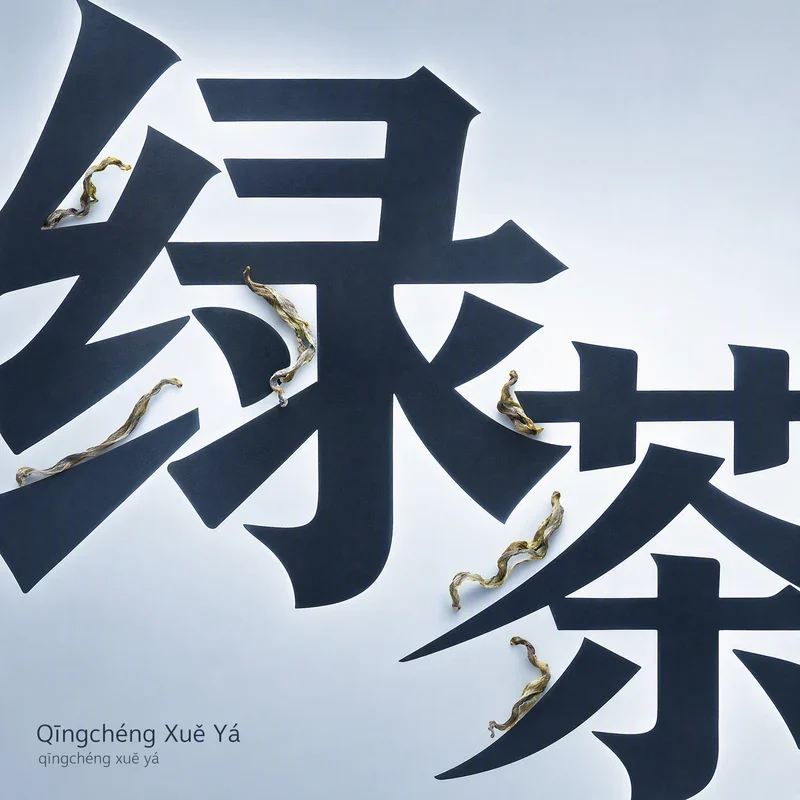
Qīngchéng xuě yá
Choose a brewing method. Start with the recommended quantities and time, then adjust to taste.
Brewing
Brewing
Taste
Tea encyclopedia
Category: National Geographical Indication Product (国家地理标志产品). In 1982 — "Optimal Product of Sichuan Province" (四川省优质产品). Historical "tribute tea" (贡茶) of Tang and Song dynasties.
Category: National Geographical Indication Product (国家地理标志产品). In 1982 — "Optimal Product of Sichuan Province" (四川省优质产品). Historical "tribute tea" (贡茶) of Tang and Song dynasties.
Coordinates: 103°33′ East longitude, 30°54′ North latitude.
Origin: China, Sìchuān Province (四川, Sìchuān), Dūjiāngyàn City (都江堰市, Dūjiāngyàn Shì), Qingchengshan Mountain (青城山). Core terroir — ancient tea gardens at elevations of 600–1200 m, in areas of Fengkeng (枫坑), Pankeng (盘坑) and Shijingkeng (石井坑), as well as surroundings of Zhangrenfeng Peak (丈人峰, "Peak of the Elder") — where relict tea trees are located.
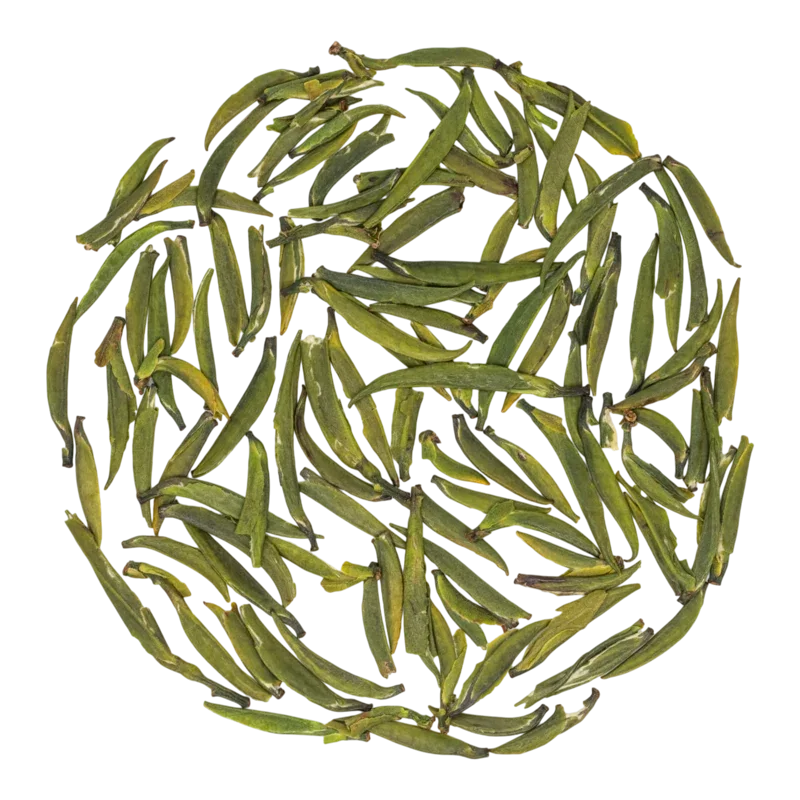
Type: Green tea (non-oxidized). By technology — pan-fired with charcoal final drying: "three firings and three rollings" (三炒三揉, sān chǎo sān róu) + warming charcoal drying (竹笼炭烘). By shape — straight with slight curve (直条形,秀丽微曲).
Cultural Significance: Qingcheng Xue Ya is a tea with dual aura: Buddhist teas are associated with meditation, while Qingcheng Xue Ya is the only famous green tea among renowned teas inextricably linked with Daoism rather than Buddhism. Qingchengshan is the "Cradle of Daoism," birthplace of one of the largest Daoist schools. Tea here is part of Daoist practice of "nourishing life" (养生, yǎngshēng), not Buddhist meditation. This is a fundamentally different philosophical framework: Daoist tea — for harmony with nature and longevity, Buddhist tea — for enlightenment.
History: Qingchengshan — "Cradle of Daoism," the place where legendary Zhāng Dàolíng (张道陵, Zhāng Dàolíng) in the 2nd century CE founded the school of "Celestial Masters" (天师道, Tiānshī Dào). Tea cultivation here has been documented since the Tang dynasty: Lu Yu in "The Classic of Tea" mentioned that Qingcheng County produces both loose and tribute tea. During the Five Dynasties period (五代, 10th century) Mao Wenxi in "Treatise on Tea" described in detail the forms of Qingcheng tea.
Three levels:
Full buds or one bud with one leaf. Down ≥90%. Delicate chestnut aroma. From 800 yuan per jin.
One bud with one leaf. Even, slightly curved. Soft taste.
With admixture of one bud with two leaves. Clean aroma, returning sweetness.
Cultivar: Fúdǐng Dàbáichá (福鼎大白茶) — main cultivar providing abundant down. Mingshan Tezao 213 (名山特早213) — small-leaf early-ripening variety. Additionally — Sichuan Medium-leaf Group Variety (四川中叶群体种). In the core terroir territory, relict tea trees (原生茶树群落) are preserved around Zhangrenfeng Peak.
Picking: Strictly before Qīngmíng (清明). Standard — one bud with one leaf in initial opening stage (一芽一叶初展), length ≤2.5 cm. For 500 g of highest grade — 40,000–50,000 buds.
Altitude: 600–1200 meters above sea level. Core — 800–1200 m.
Climate: Subtropical humid. Average annual temperature — 15.2°C, annual precipitation — 1225.2 mm. Average annual number of foggy days — >280 — one of the highest indicators among tea-growing regions worldwide. Humidity — ≥80%. Abundance of diffused light.
Soil: Acidic yellow-brown "purple clay" soils (酸性黄棕紫泥), deep profile, high fertility, rich in organic matter. Forest coverage — 93%. Water resources — tributaries of Qiandaohu system (千岛湖, but here — Dujiangyan irrigation system), with first-class national water quality.
Qingchengshan — UNESCO World Heritage site (since 2000, jointly with Dujiangyan irrigation system). Mountain massif with dense vegetation.
In raw material — 484.29 mg/100 g (= 4.84%) — above average for green teas. Result: 280+ days of fog + diffused light + acidic soils.
4–6 hours.
At 140°C in flat pan (平锅). Alternating "tossing" and "smothering" (抖闷, dǒumèn).
Light shaping.
At 80–100°C — aroma development and further drying.
Structure consolidation.
Final "tempering."
Moisture redistribution.
Temperature — "first high, then low" (锅温先高后低). Master spends 20 hours (!) manually "extracting" silvery down, forming characteristic "white down like snow" (白毫似雪, báiháo sì xuě). This is the longest shaping stage among Sichuan green teas.
Drying in bamboo baskets over charcoal.
Final sorting and brief firing to fix aroma.
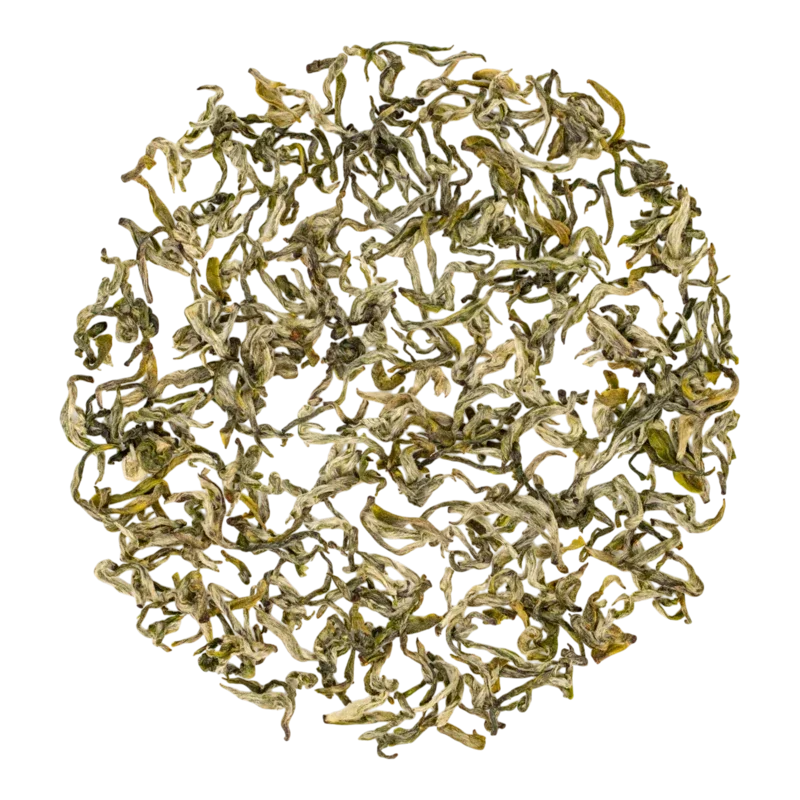
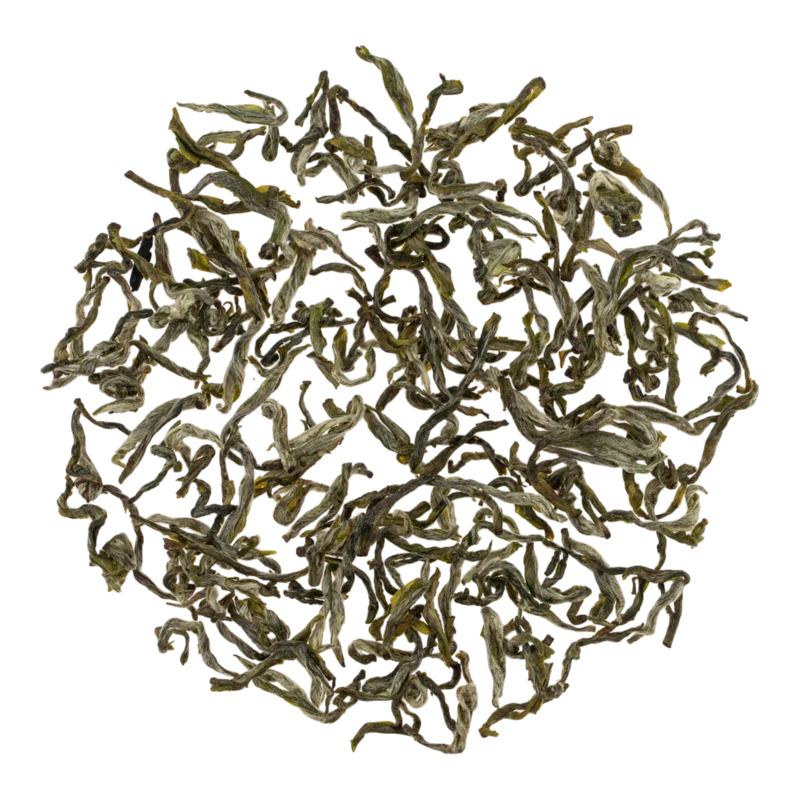
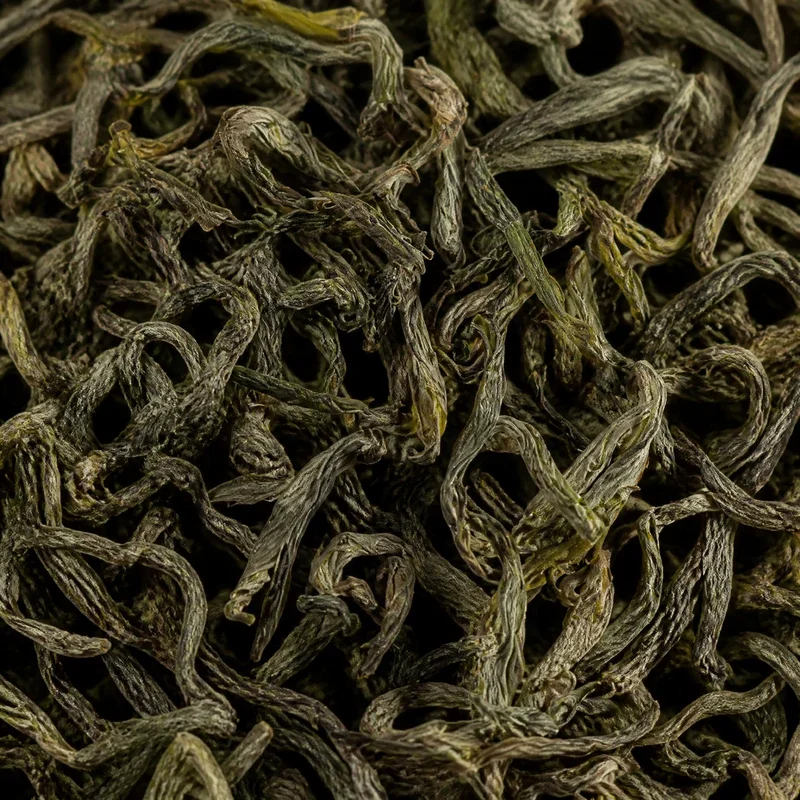
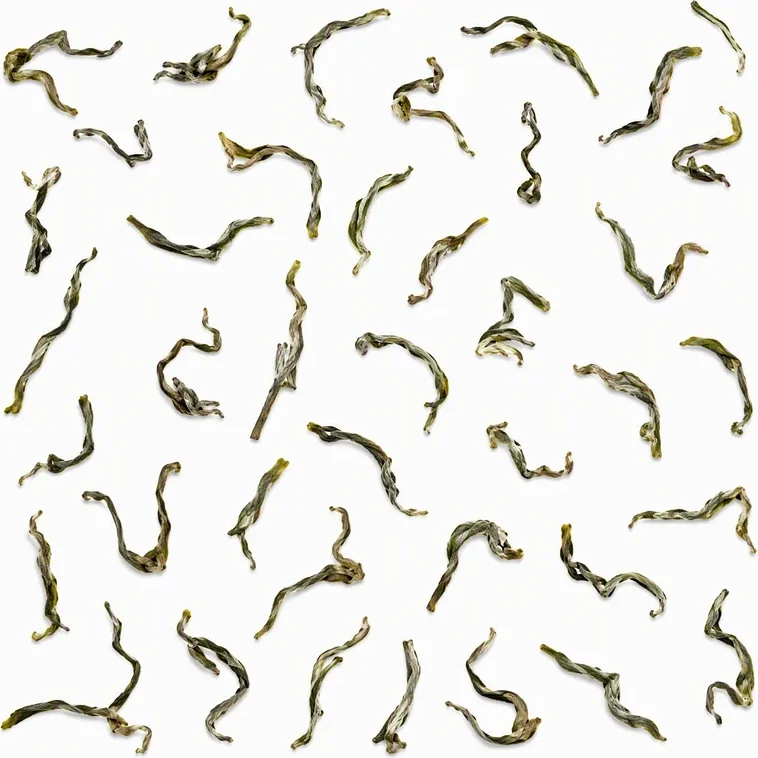
Dry Leaf Appearance: Straight, elegant shoots with slight curve (秀丽微曲). Silvery-white down covers surface, creating effect of "snow buds" (白毫显露). Color — silvery-emerald (银翠交辉, yíncuì jiāohuī — "silver and emerald shimmer together").
Dry Leaf Aroma: Delicate chestnut (嫩栗香, nèn lì xiāng) — main note. Clean green freshness (清香). Floral-fruity overtone (花果香).
Liquor Aroma: Chestnut-fresh, persistent, with floral nuances.
Liquor Color: Yellow-green, bright and clear (黄绿明亮).
Spent Leaves: Tender, uniform shoots, gathered in "buds" (嫩绿匀整成朵).
Taste: Fresh and brisk (鲜爽). Mellow and rich (醇厚). Returning sweetness — stable and long-lasting (回甘持久). Amino acid note (鲜, xiān — "umami") — pronounced.
Alkaloids: Caffeine — moderate content.
Amino Acids: 484.29 mg/100 g (≈4.84%) — significantly above average. Key factor of freshness and sweetness.
200 ppm — tooth enamel protection.
Content — one of the highest among Sìchuān teas (居川茶前列).
Minerals: Potassium, magnesium, zinc, manganese, fluorine.
Polyphenols: Significant content. Free radical neutralization efficiency — 10 times higher than vitamin E.
Catechins suppress fat synthesis with 30% higher efficiency than ordinary green tea.
Polyphenols — efficiency 10 times higher than vitamin E.
Fluorine (200 ppm) strengthens enamel; vitamin C supports eye health.
Caffeine and L-theanine.
listed properties are based on publicly available data and are not medical recommendations.
Tea Amount: 3 g per 150 ml (1:50 ratio).
Teaware: Glass cup — top-down method (上投法).
Water Temperature: 80–85°C.
From Buddhist Mount Emei. Flat, emerald. Zhuyeqing — more "light" and "bamboo-like"; Xue Ya — more "snowy" and chestnut.
From Mengdingshan Mountain. Twisted, orchid-sweet. Gan Lu — more floral; Xue Ya — more chestnut-fresh, with pronounced "snow down."
Two great Sichuan brands — "Bamboo Green" from Buddhist mountain and "Snow Buds" from Daoist mountain. Buddhism vs. Daoism, flat vs. straight, Emei vs. Qingcheng.
Anti Counterfeit: Buy with GI marking from Dujiangyan City; evaluate "snow down" and silvery-emerald color; check chestnut-fresh aroma.
No reviews yet. Tell us what you think of this tea.
Rate this tea and share your impressions. We review each submission before publishing it.