Brewing
Gongfu brewing
- Water temperature
- 75 °C
- Tea amount
- 5 g
- Water volume
- 100 ml
- First steep
- 10 s
- Time added per infusion
- 5 s
- Infusions
- 3

Méngdǐng gān lù
Choose a brewing method. Start with the recommended quantities and time, then adjust to taste.
Brewing
Brewing
Taste
Tea encyclopedia
Category: Famous Teas of China (中国十大名茶, Zhōngguó shí dà míngchá). Historical imperial tribute (贡茶, gòngchá). Geographically protected product — protected as a "product with designation of origin" since 2001, and included in the EU geographical indications register in 2020.
Category: Famous Teas of China (中国十大名茶, Zhōngguó shí dà míngchá). Historical imperial tribute (贡茶, gòngchá). Geographically protected product — protected as a "product with designation of origin" since 2001, and included in the EU geographical indications register in 2020.
National standard for Mengshan tea — GB/T 18665-2008; industry standard for Mengding Ganlu tea — GH/T 1232-2018. According to the standard definition, Mengding Ganlu is a green tea produced from spring buds and first leaves of medium-leaf and small-leaf varieties of Camellia sinensis var. sinensis in Ya'an City territory, having undergone kill-green, rolling, shaping, and drying stages and possessing characteristic quality: "tightly rolled with abundant down, tender green with oily luster, taste of 'chungan huigan' (醇甘回甘)."
Coordinates: Approximately 30°05′ N, 103°12′ E.
Origin: China, Sìchuān Province (四川, Sìchuān), Ya'an City (雅安市, Yǎ'ān Shì), Míngshān District (名山区, Míngshān Qū), Mount Méngdǐngshān (蒙顶山, Méngdǐng Shān), also called Méngshān (蒙山, Méng Shān). The core area comprises five peaks of Mengdingshan: Shàngqīng (上清峰, Shàngqīng Fēng), Língjiǎo (菱角峰, Língjiǎo Fēng), Píluó (毗罗峰, Píluó Fēng), Jǐngquán (井泉峰, Jǐngquán Fēng), and Gānlù (甘露峰, Gānlù Fēng). The historical epicenter is considered to be Shangqing Peak, where the famous Huangchayuan — "Imperial Tea Garden" (皇茶园, Huáng Chá Yuán) is located.
Type: Green tea (non-oxidized). Belongs to the subtype of rolled (卷曲形, juǎnqū xíng) pan-fired green teas (炒青绿茶, chǎoqīng lǜchá).
Look for shops with good reputation, ability to provide certificates of origin and quality. Prefer shops with knowledgeable staff who can explain differences between grades and harvests.
Some Mengshan tea gardens offer direct sales, ensuring authenticity and freshness. Contact information can be found through Mingshan District tea association.
Choose sellers with high ratings, detailed product descriptions, and return policies. Be wary of prices that seem too good to be true.
Mengding tea is often presented at major Chinese tea exhibitions, providing opportunity to taste before buying and meet producers directly.
Cultural Significance: Mengding Ganlu occupies a unique place in Chinese tea culture — it is a tea that permeates all key stages of its development. Mount Mengdingshan is revered as the "World Sacred Mountain of Tea Culture" (世界茶文化圣山, shìjiè chá wénhuà shèng shān). Bái Jūyì (白居易, Bái Jūyì) sang: "Among teas, an old friend — Mengshan" (茶中故旧是蒙山). Poet Lì Yangwang (黎阳王) wrote: "If Lu Yu were to render a fair verdict — this should be the first tea under Heaven" (若教陆羽持公论,应是人间第一茶). Wén Tóng (文同, Wén Tóng) summarized: "Shu tea is called sacred, Meng taste is truly precious" (蜀土茶称圣,蒙山味独珍). The famous phrase "Water from the heart of the Yangtze, tea from the summit of Mengshan" (扬子江中水,蒙山顶上茶) became one of China's most recognizable tea proverbs. Mount Mengdingshan is associated with unique tea traditions: the elegant ceremony "Heavenly Wind, Twelve Grades" (天风十二品, Tiānfēng Shí'èr Pǐn) and the dynamic serving style "Eighteen Movements of the Dragon" (龙行十八式, Lóng Xíng Shíbā Shì).
single bud or bud with one barely opened leaf (单芽或一芽一叶初展).
predominantly bud with one leaf (一芽一叶为主).
bud with two just beginning to open leaves (一芽二叶初展).
Cultivar: Camellia sinensis var. sinensis (small-leaf and medium-leaf varieties). Main cultivars: Fúdǐng Dàbáichá (福鼎大白茶, Fúdǐng Dàbáichá), Mingshan Tezao 213 (名山特早213, Míngshān Tèzǎo 213), Mingxuan 311 (名选311, Míngxuǎn 311), Mingxuan 131 (名选131, Míngxuǎn 131). Historically valued were local Sichuan medium-leaf groups (川茶中小叶群体种, Chuānchá zhōngxiǎoyè qúntǐ zhǒng), Míngshān Báiháo (名山白毫, Míngshān Báiháo), Mengshan 101 (蒙山101号). Tea bushes typically grow at altitudes above 1000 m above sea level; young shoots are distinguished by high tenderness retention capacity (持嫩性, chí nèn xìng), containing elevated concentrations of amino acids and tea polyphenols.
Picking: Spring picking, beginning around the spring equinox (春分, Chūnfēn), end of March. Raw material of highest grades is picked before the Qīngmíng festival (清明, Qīngmíng, ≈ April 5), so-called "pre-Qingming tea" (明前茶, míngqián chá). Picking is exclusively manual.
Raw Material: Shoots must be succulent, intact, uniform in size, without mechanical damage. Picking is done in dry weather. Defective, overripe, and damaged shoots are rejected.
Altitude: Main plantations — from 800 to 1500 m above sea level; core terroir — around 1000–1400 m.
Climate: Subtropical monsoon, mild and humid. Average annual temperature 14–15°C. Mild winters, moderately warm summers. Key feature — extremely high number of foggy days: 280–300 per year. Frequent mists create natural "shading": diffused light predominates over direct light, which slows photosynthesis and promotes accumulation of amino acids (especially L-theanine) while simultaneously reducing catechin content — this ensures the characteristic sweet, mild taste with minimal bitterness.
Soil: Fertile, acidic (pH 4.5–5.6), rich in organic matter. By character — yellow-brown mountain soils with good drainage. Acidic reaction and mineral composition of soils are optimal for tea bushes and give the tea a pronounced mineral profile.
Mount Mengdingshan is located in the western part of the Sichuan Basin, within the Qiónglái mountain system (邛崃山脉, Qiónglái Shānmài). To its east rises Éméishān (峨眉山), to the south — the Daxiangling ridge (大相岭), to the west — Jiajinshan (夹金山), to the north extends the Chéngdū Plain (成都盆地). At the foot of the mountain flows the Qīngyījiāng River (青衣江, Qīngyī Jiāng).
More than 2000 mm/year — one of China's most humid tea regions.
Manual picking of tender buds and upper leaves according to grade standard (see section 3). Performed in early morning in dry weather.
Picked shoots are spread in a thin layer in a well-ventilated shaded room for 4–8 hours. Purpose — remove excess surface moisture, initiate light intracellular processes, soften leaves and prepare them for firing.
Main fixation stage. Wok temperature: 140–160°C. Load — about 400 g fresh leaves. Technique — predominantly tossing (抖炒, dǒu chǎo) with a short period of covered steaming (闷炒, mèn chǎo) in the middle of the stage (1–2 min). Duration — 5–8 minutes. Purpose — inactivate oxidases, stop oxidation, remove grassy smell and fix green color. Moisture content at exit — about 60%.
First straight rolling (推揉, tuī róu) for 2–3 minutes to form basic "strip" shape; then circular rolling (团揉, tuán róu) — about 10 rotations. Light pressure to avoid damaging tender buds.
Wok temperature: 100–120°C. Tossing until moisture content reduces to approximately 45%.
Alternating straight and circular rolling for 6–8 minutes. At this stage tea strips begin to roll tightly. Pressure — from medium to increased.
Wok temperature: 60–80°C. Tossing until moisture ~35%.
First light, then strong; alternating circular and straight rolling 3–4 times for 6–7 minutes. At this stage all tea strips roll tightly, degree of cell wall destruction reaches 60–70%.
Rolled tea is transferred back to the wok (50–70°C), first tossed for 3–4 minutes to separate clumps. When moisture drops to ~25%, the master takes the tea with both hands and performs manual rolling (搓揉, cuō róu) — 4–5 rotations, then scatters back into the wok. Operation is repeated many times. When shape is fixed and moisture is 15–20%, temperature is raised to ~70°C and quick final rolling (~1 min) is performed until abundant white down (白毫, báiháo) appears on the surface of tea leaves. After which tea is removed and cooled.
Two-stage: primary (初烘, chū hōng) and secondary (复烘, fù hōng). After primary drying, tea is spread, arranged in small piles and dried to moisture content ~5%. Historically, charcoal (炭火烘焙, tànhuǒ hōngbèi) was used for drying, which enhances notes of roasted chestnut and beans.
Finished tea is blended for uniformity, sorted by size and quality, assigned grade.
The key distinction of Mengding Ganlu from most Chinese green teas is precisely the method of "three firings — three rollings." Sequential alternation of heating and rolling with gradual temperature reduction ensures: (a) tight, compact rolling without breaking tender raw material; (b) abundant manifestation of white down; (c) gradual formation of complex aroma; (d) special "warm" nature of tea, noted by Li Shizhen. Deviation from this technology (reducing the number of firings and rollings) leads to the appearance of "chestnut" versions of Ganlu on the market, losing the classic floral-fresh profile.
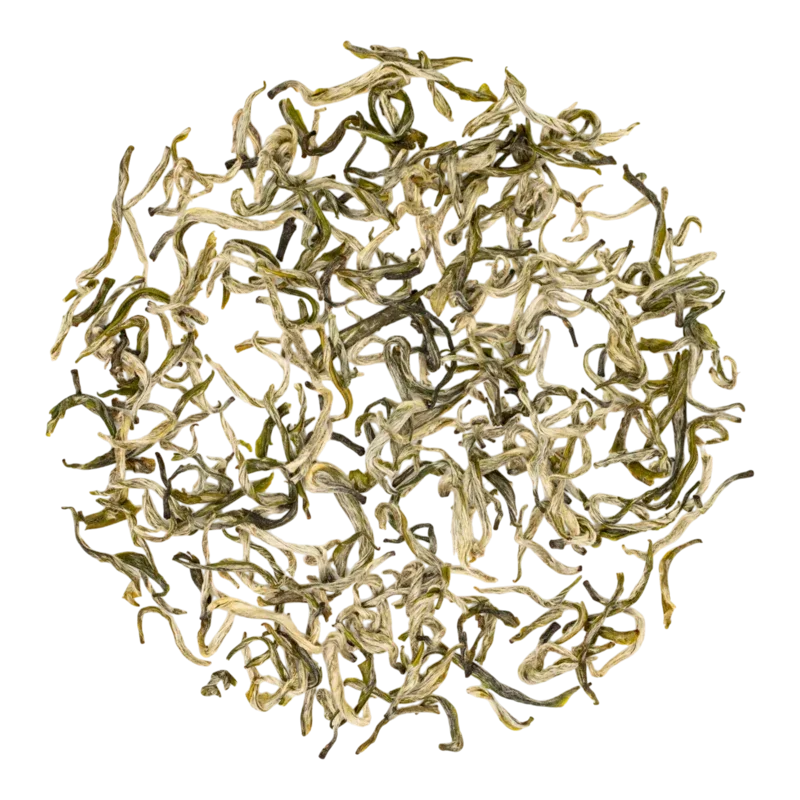
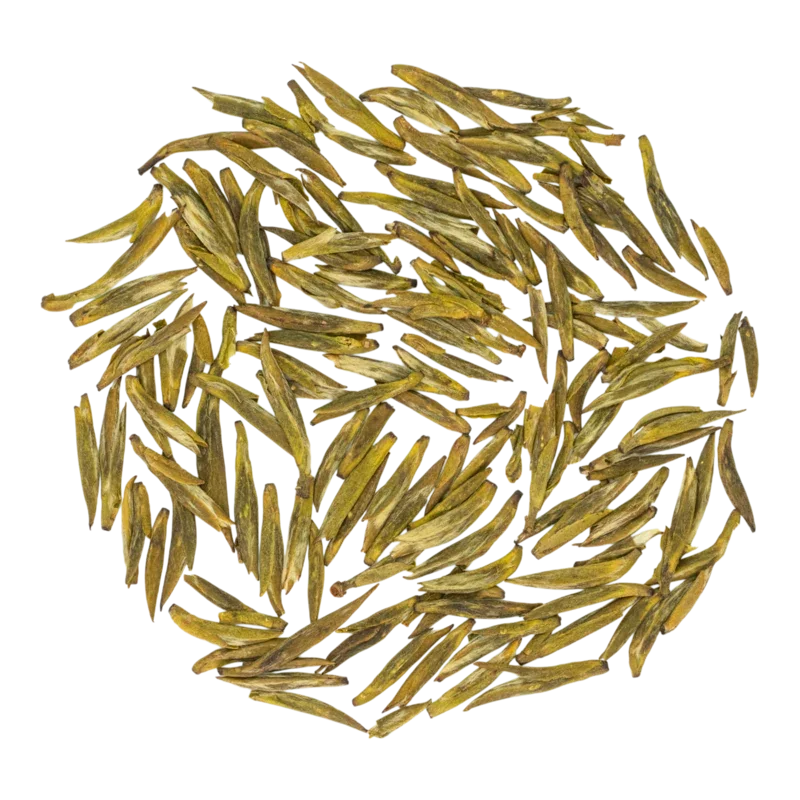
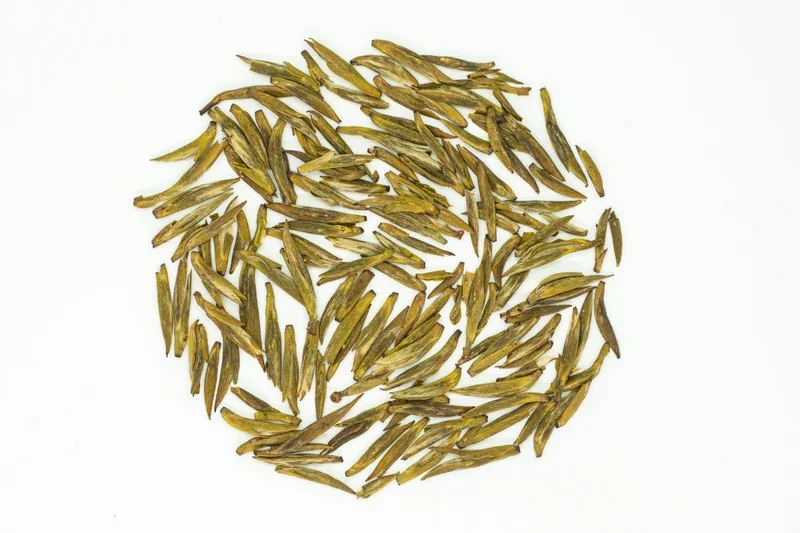
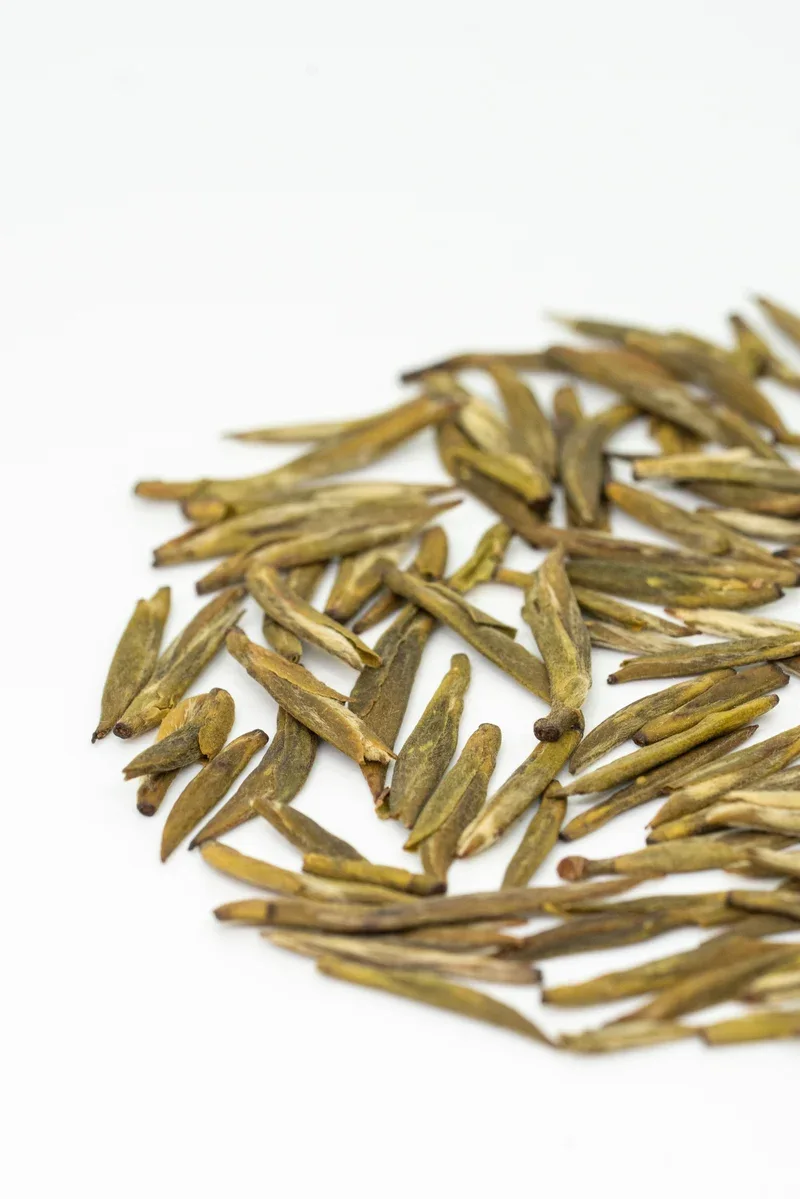
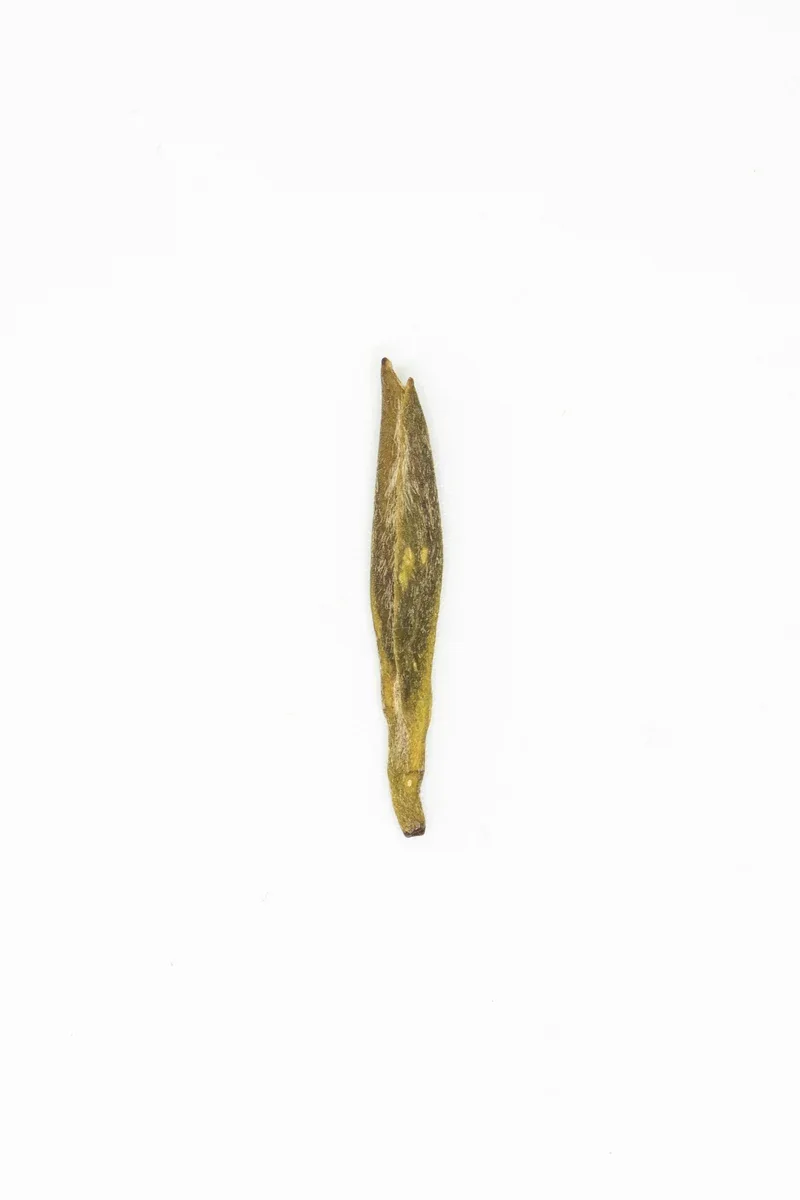
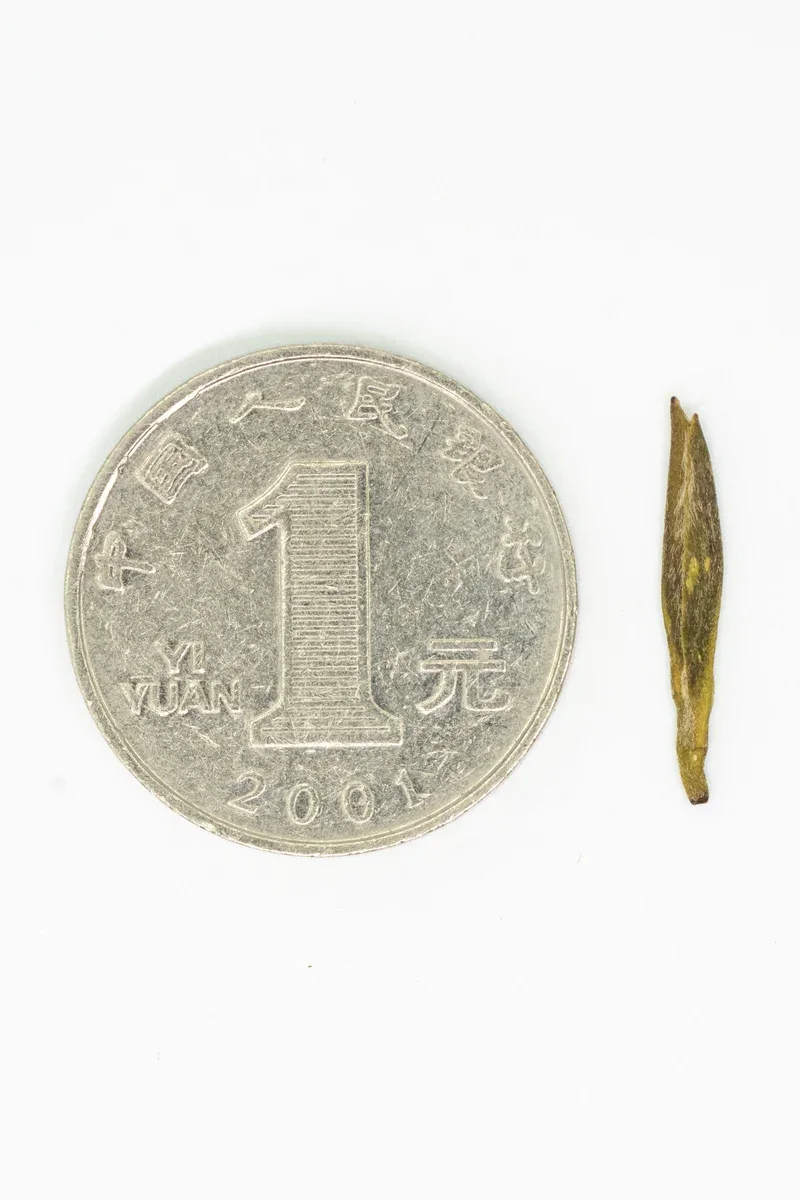
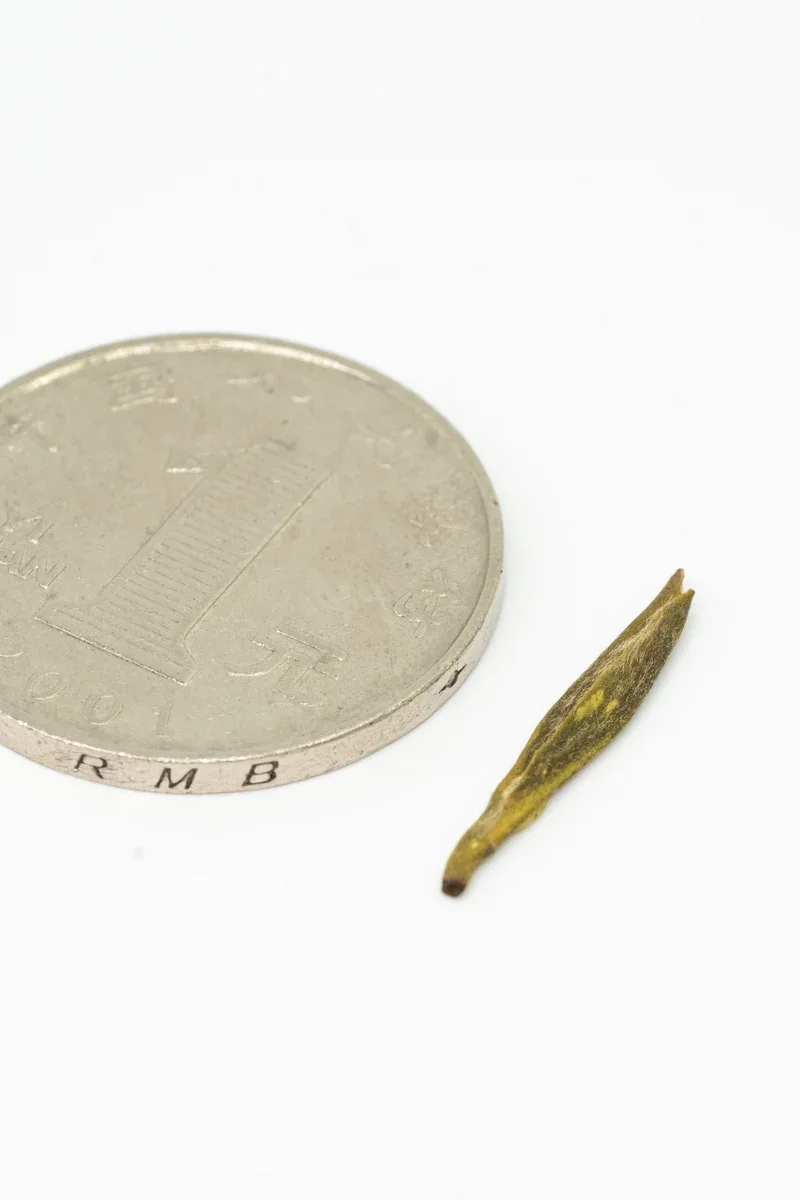
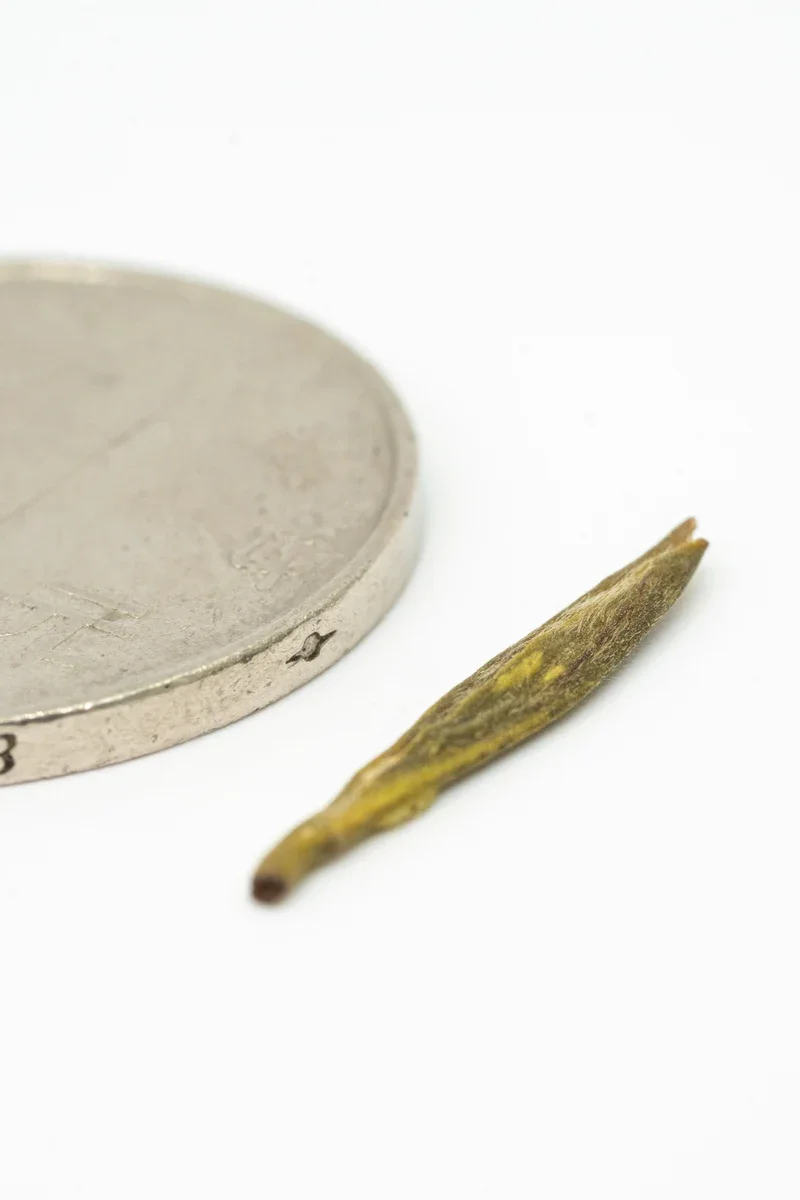
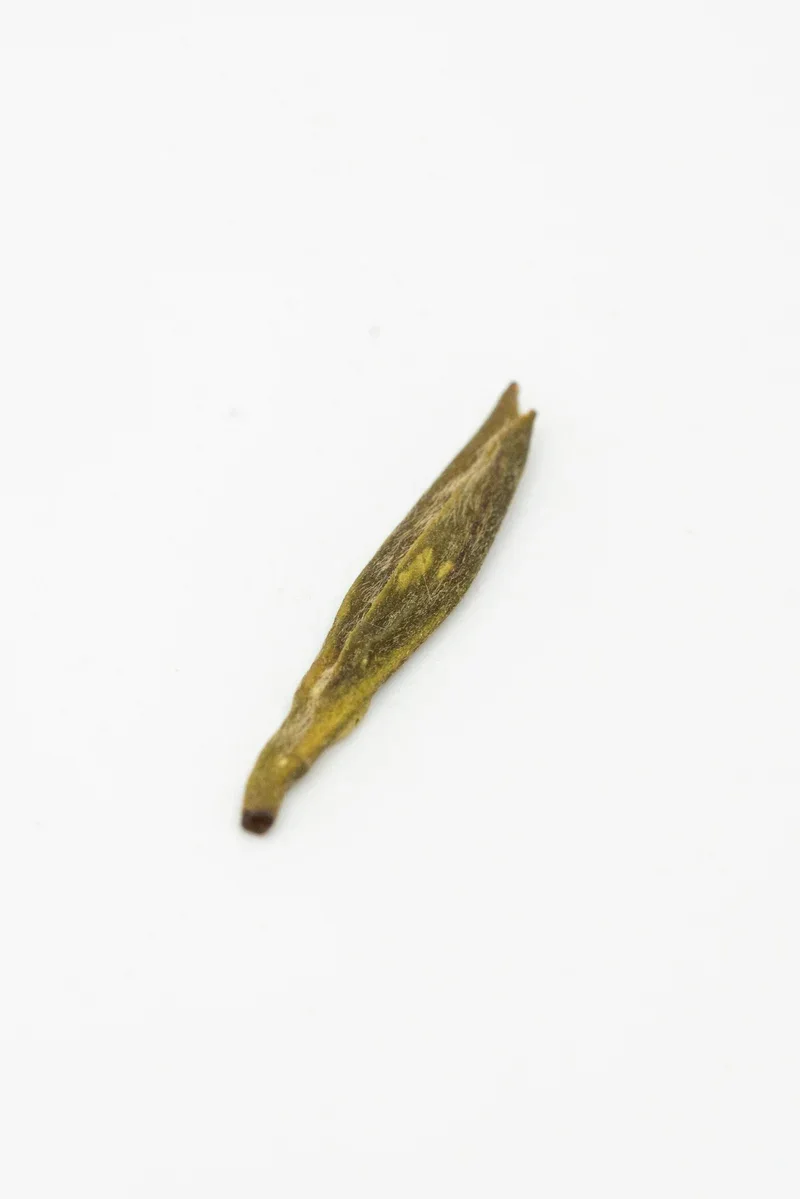
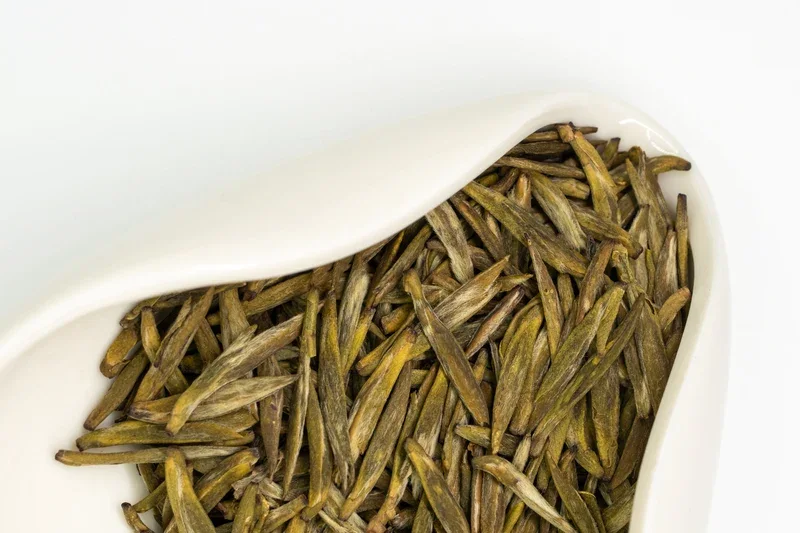
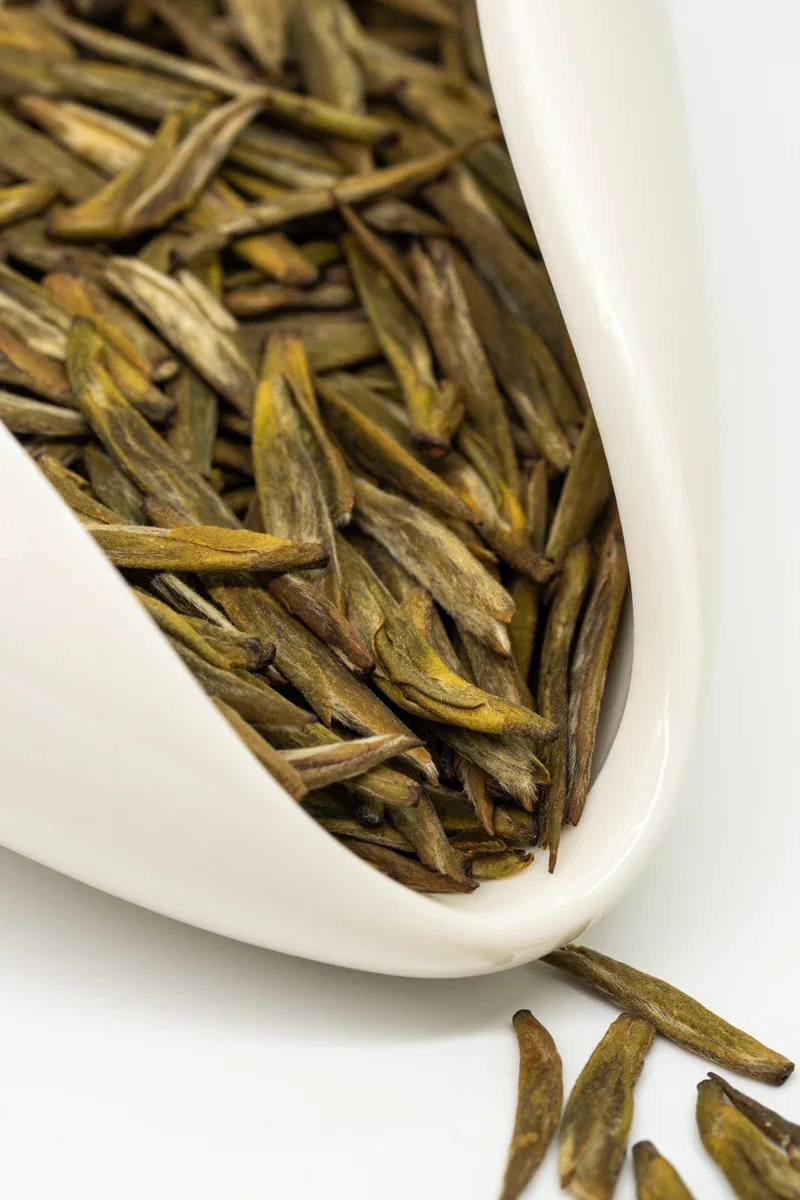
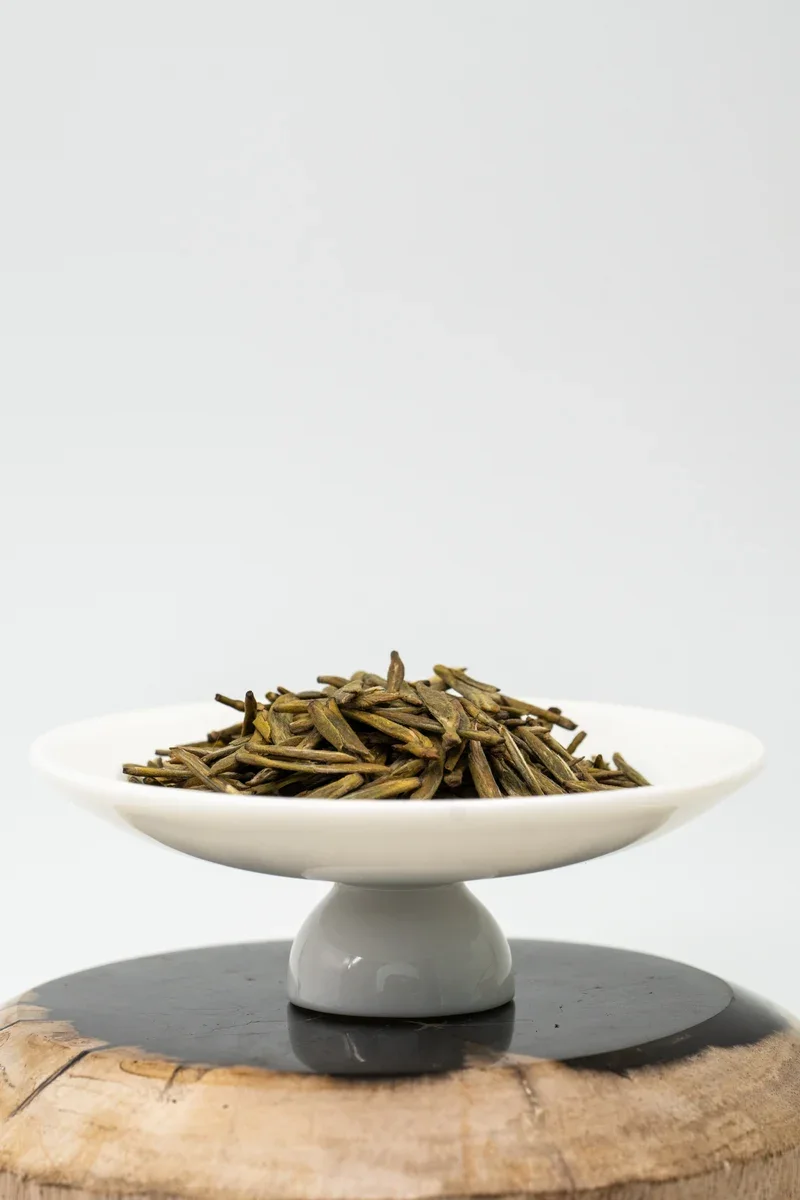
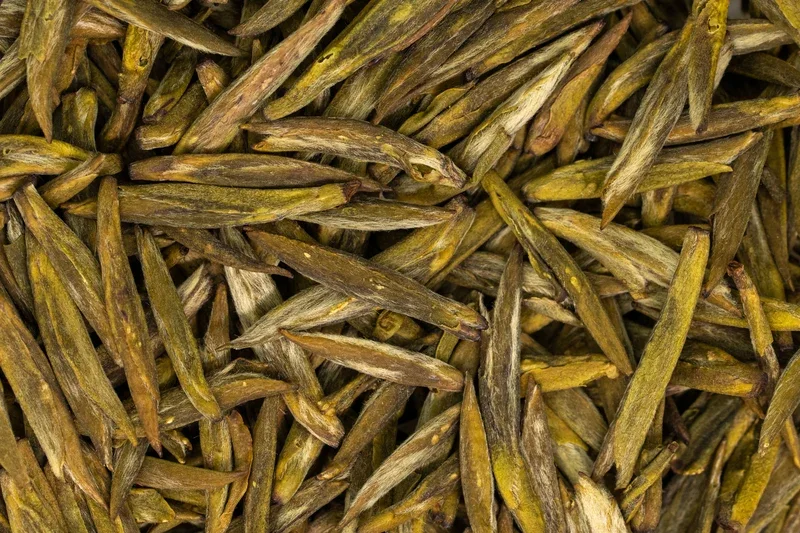
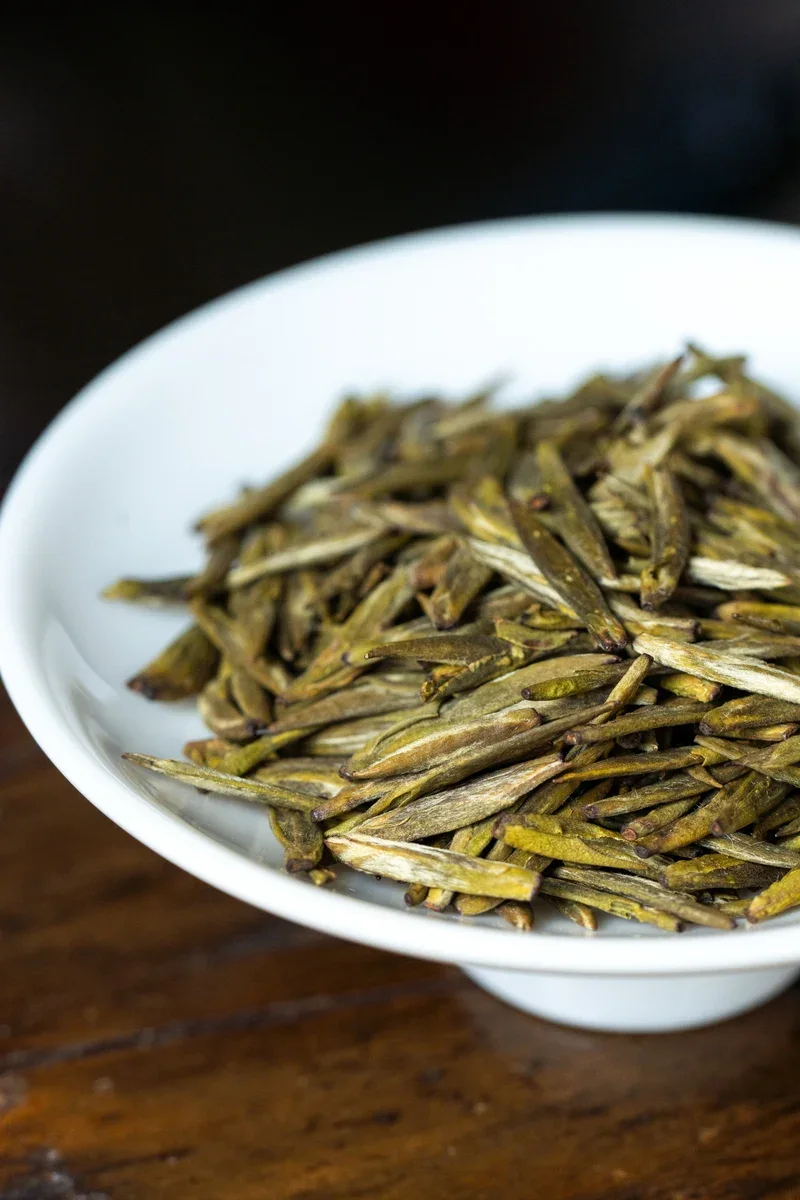
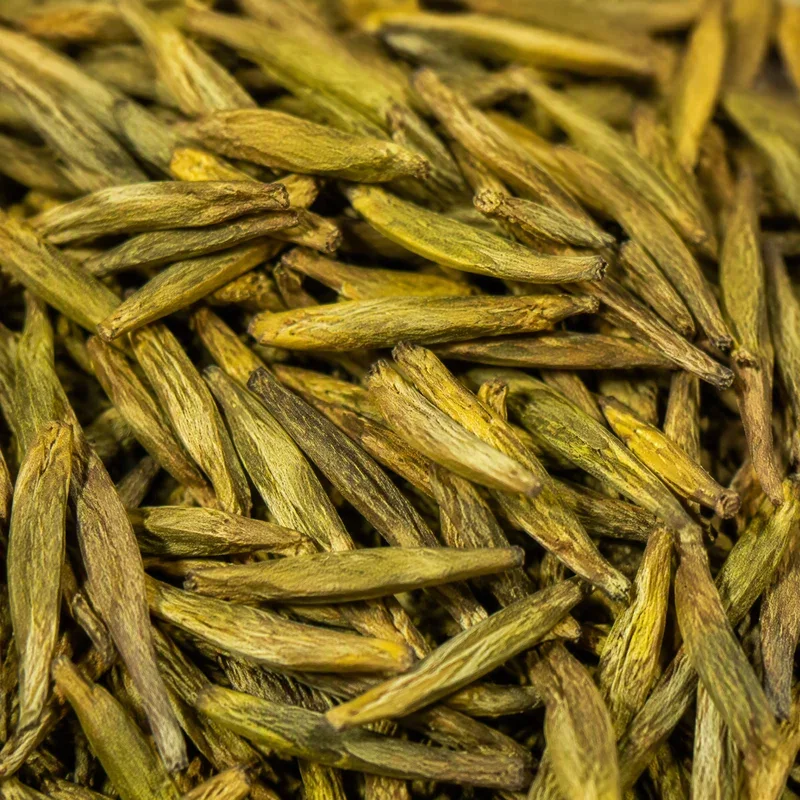
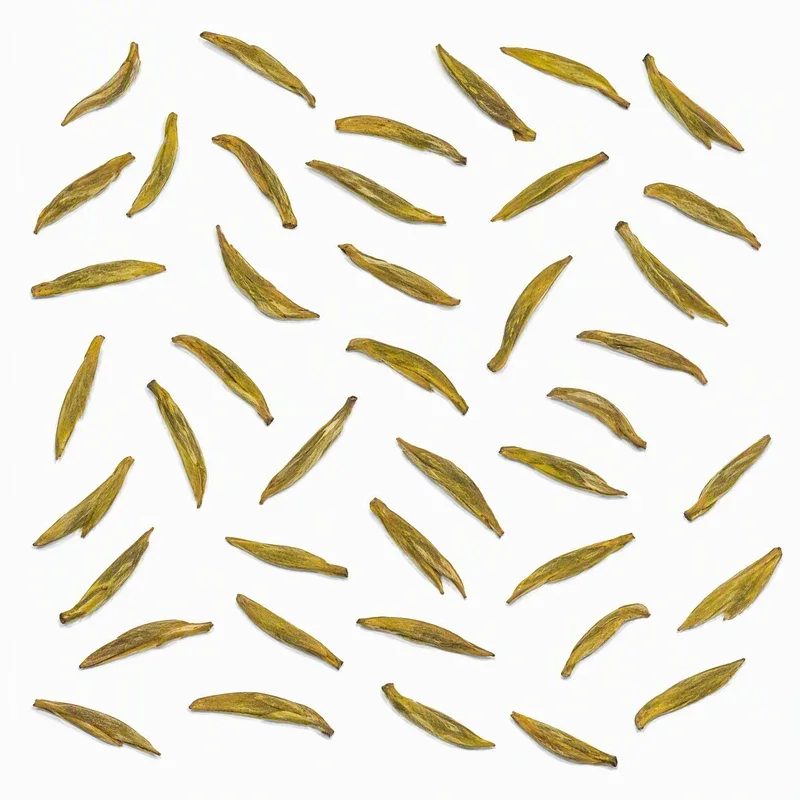
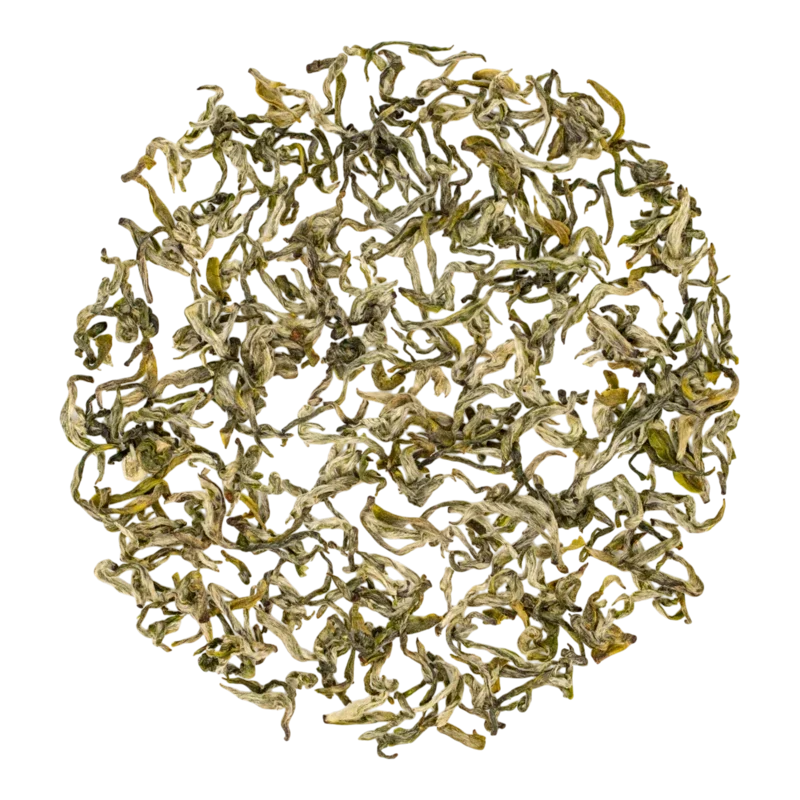
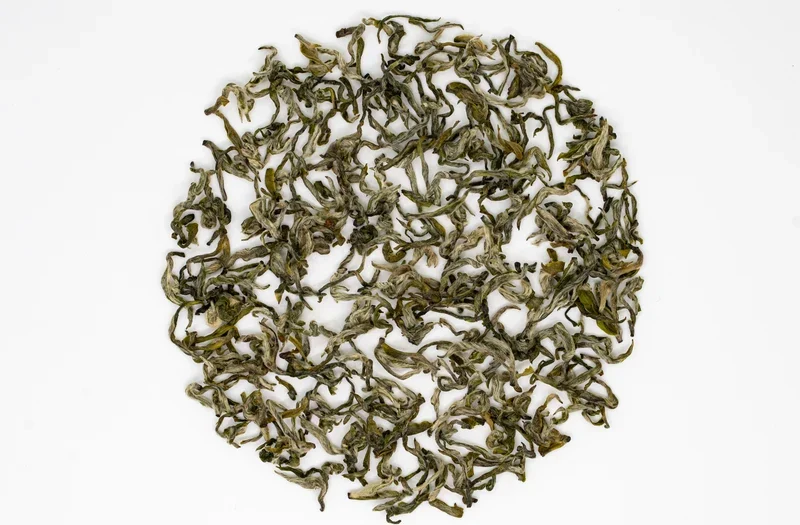
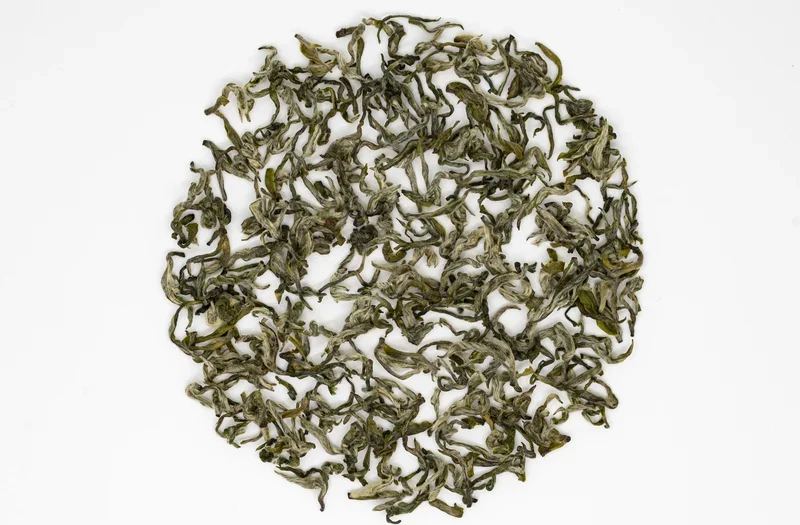
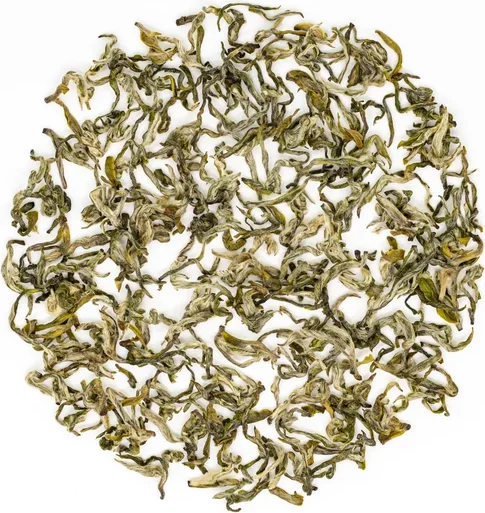
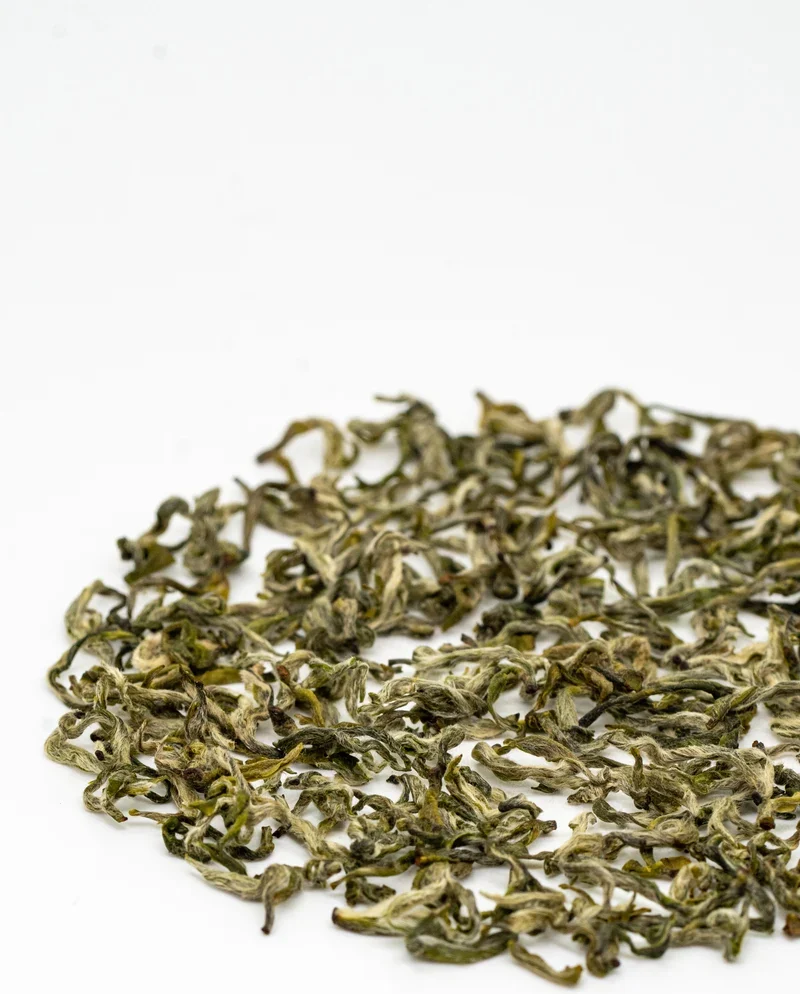
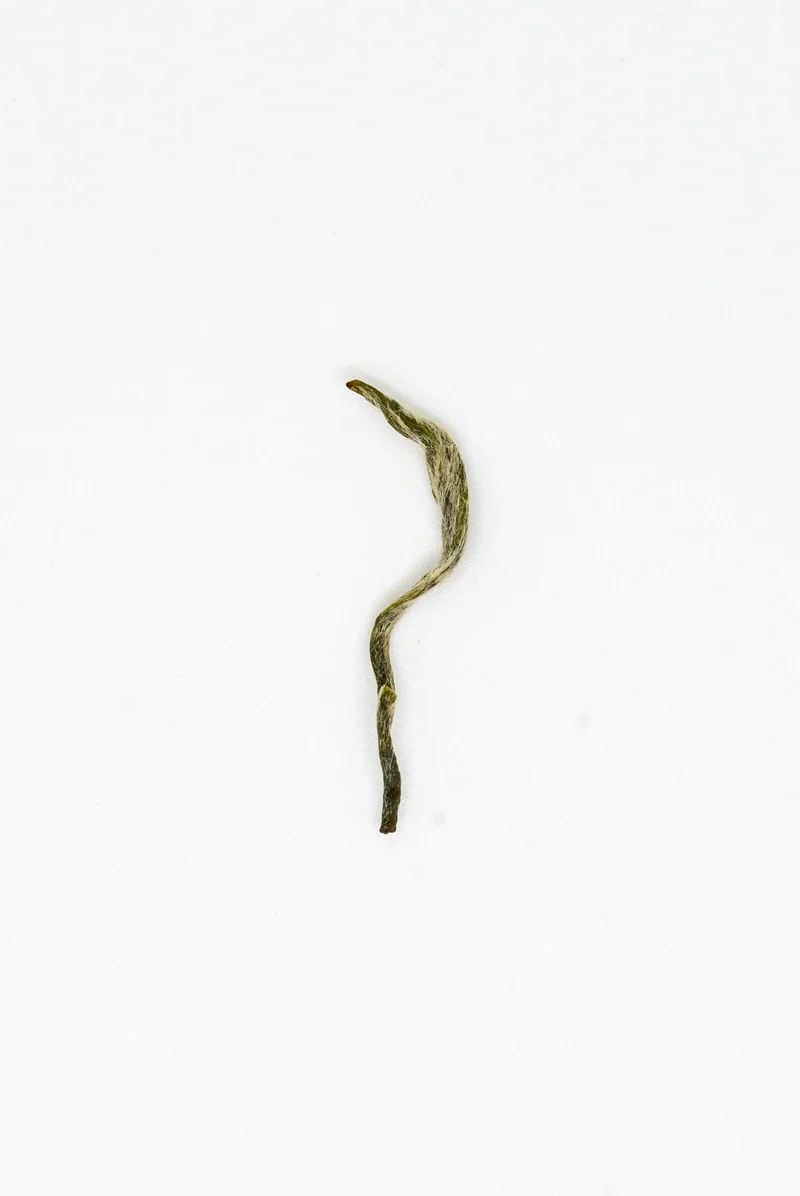
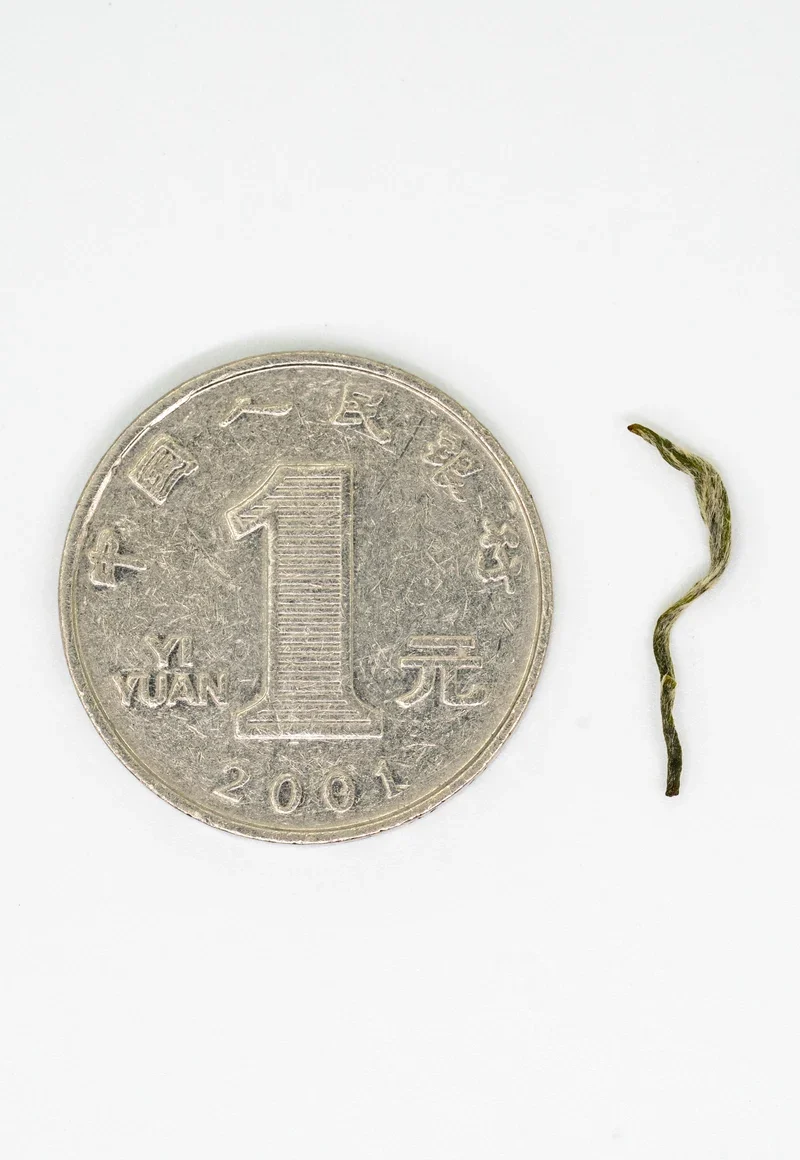
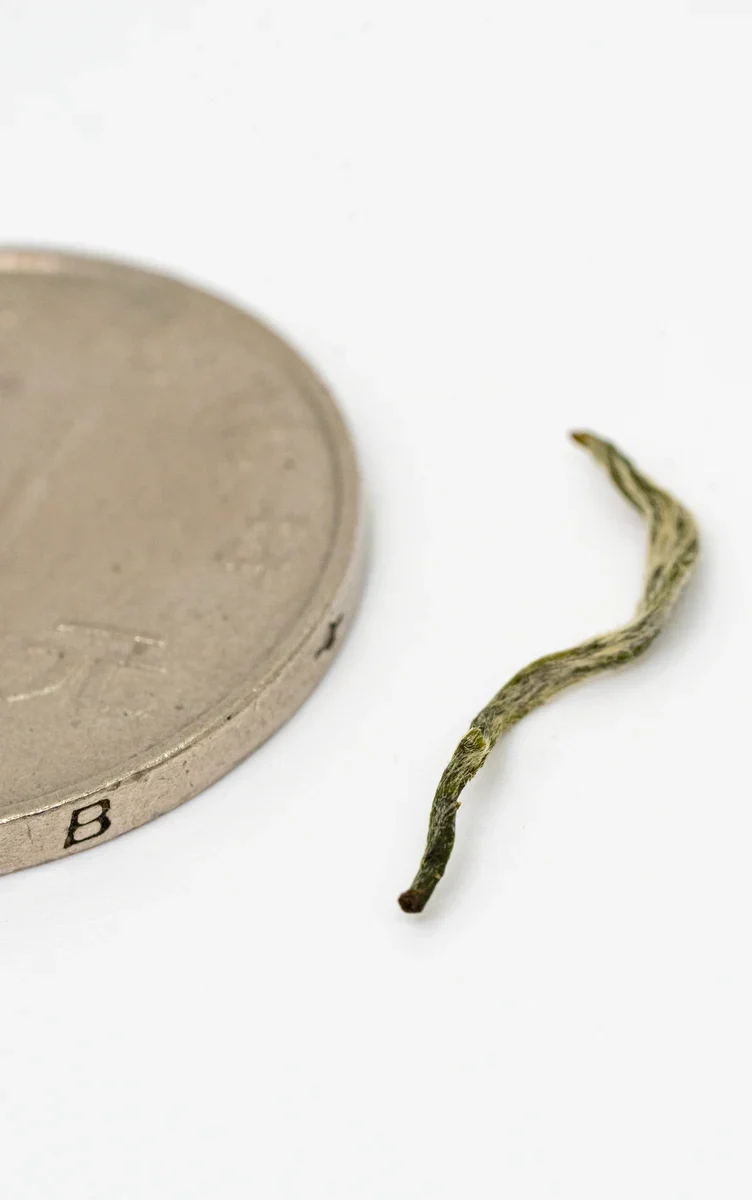
Dry Leaf Appearance: Tightly rolled thin strips (卷曲形, juǎnqū xíng), covered with abundant silvery-white down (银毫满披, yín háo mǎn pī). Color — tender green with oily luster (嫩绿油润, nèn lǜ yóu rùn). Leaf intact, bud large, raw material uniform. Externally resembles tightly curled "eyebrows" or "sparrow tongues."
Dry Leaf Aroma: Fresh, distinctly floral — orchid notes dominate (兰花香, lánhuā xiāng), complemented by fresh fruit tones (鲜果香, xiānguǒ xiāng) and clean greenness (清香, qīng xiāng). In teas dried over charcoal, there is a warm background of roasted chestnut and young beans.
Liquor Aroma: Bright, high, fresh — orchid floral notes unfold most fully, accompanied by light fruity sweetness and clean "green" tone. Aroma is delicate yet persistent (嫩香馥郁, nèn xiāng fùyù), has the property of "lingering" in the cup.
Liquor Color: Yellow-greenish (黄碧, huángbì), transparent, clear, with bright luster (清澈明亮, qīngchè míngliàng). For special grade — color of "green apricot" (杏绿鲜亮, xìng lǜ xiān liàng). White down, separating from leaves, floats in the infusion, creating characteristic silvery "haze."
Spent Leaves: Tender yellow with greenish tint (嫩黄匀亮, nèn huáng yún liàng), intact, elastic, uniform. Buds and leaves are well distinguishable, bright green. Appearance of reddish-brown areas may indicate spoilage or technology violation.
Taste: Mild, refreshing, with pronounced sweetness and fullness (鲜爽甘醇, xiānshuǎng gānchún). In first steeps — delicate and light; in 4th–7th steeps taste reaches maximum richness and roundness. Clearly perceptible returning sweet aftertaste (回甘, huígān) — long-lasting, clean, making the mouth "fill with saliva" (生津, shēngjīn). Bitterness and astringency are minimal with proper brewing. Body of infusion — medium, with silky mouthfeel. Overall balance leans toward "freshness and tasting brightness" (鲜度, xiāndù) with moderate "density" (浓醇度, nóngchúndù).
Alkaloids: Caffeine — moderate content (characteristic for green teas, approximately 20–35 mg/g); TAV = 546.84, contributing significantly to bitter notes. Also present are theobromine and theophylline in small amounts.
Amino Acids: High content — key characteristic of Mengding terroir. L-theanine (茶氨酸, cháānjīsuān) — leading component of "umami" and sweetness; TAV = 8.01. Also significant contribution from glutamic acid (TAV = 5.14) and aspartic acid (TAV = 3.43). Presence of γ-aminobutyric acid (GABA) detected, which enhances the sensation of infusion freshness. Water extract of Mengshan teas reaches 42–46% (with norm for green teas 38%+), indicating exceptionally high concentration of soluble substances.
Elevated content, contributing to pronounced sweetness and taste density.
Thanks to abundant mists and diffused light, the amino acid-polyphenol ratio (酚氨比, fēn'ān bǐ) in Mengding teas is shifted toward amino acids — this determines the dominance of sweetness and freshness over bitterness and astringency. Research by Chongqing Academy of Agricultural Sciences showed that even tea varieties from other regions, when planted in Mingshan, produce leaves with higher amino acid content and lower phenol-amino acid ratio.
Essential Oils: Form the floral-fruity aromatic profile; their diversity is due to the multi-stage technology of "three firings."
Minerals: Fluorine, potassium, magnesium, zinc, manganese, selenium (content depends on specific site).
Polyphenols: Tea polyphenol content is moderately high (typical for mountain green teas with partial natural shading). Main components: EGCG (epigallocatechin gallate — main source of bitter taste and antioxidant activity), ECG, EGC, EC. According to research (Yunnan University, 2020), EGCG is the leading component of bitterness with TAV = 1093.37; ECG — with TAV = 245.08. Polyphenol content is somewhat lower than teas from sunnier regions, thanks to frequent mists of Mengdingshan.
Vitamins: Vitamin C (ascorbic acid) — relatively high content thanks to gentle processing; B-group vitamins.
Catechins (especially EGCG) and polyphenols neutralize free radicals, slowing oxidative stress and cellular aging.
Caffeine combined with L-theanine provides smooth, prolonged alertness without sharp stimulation. L-theanine simultaneously reduces anxiety and increases concentration.
Polyphenols stimulate gastric juice secretion, aid in breaking down fatty foods. The "warm nature" of Mengding tea, noted in "Bencao Gangmu," makes it gentler on the stomach than many other green teas.
Catechins and tea polysaccharides help maintain normal blood lipid levels, help control cholesterol levels.
Complex of polyphenols, vitamin C and trace elements increases body resistance.
Fluorine and catechins have antibacterial action, beneficial for gums and tooth enamel. Traditional Chinese medicine attributes beneficial effects on vision to Méngdǐng tea (护齿明目, hù chǐ míng mù).
Caffeine stimulates kidney function, promotes toxin elimination; infusion excellently quenches thirst in hot weather.
Antioxidant action of polyphenols combined with vitamin C may contribute to improved skin tone.
Tea Amount: 3–5 g per 150–200 ml water (tea:water ratio approximately 1:50–1:60). For gaiwan brewing with short steeps — 5–6 g per 100–120 ml.
Teaware: Ideally — transparent glass cup (玻璃杯, bōli bēi), allowing appreciation of the "dance" of opening leaves and silvery haze of down in the infusion. Also suitable are porcelain gàiwǎn (盖碗, gàiwǎn) for precise timing control, or porcelain teapot. Water — soft, with low mineralization; mountain spring water is considered ideal.
Water Temperature: 80–85°C (never boiling water — tender raw material is easily "burned," causing bitterness and killing floral aroma).
Long Jing has a flat pressed leaf shape and a pronounced "roasted" bean-chestnut aroma. Mengding Gan Lu has a twisted form with abundant down and a dominant floral (orchid) profile. Long Jing's taste is more buttery and nutty; Gan Lu is sweeter and more "dewy."
Both teas are twisted and downy, and they are often confused. Differences: Biluochun is twisted into tighter spirals and has a pronounced fruity-floral aroma with stone fruit notes. Gan Lu has a looser twist, pure orchid florality, and a distinct "chestnut valley" in the aftertaste. It is known that Mengding raw material is often used to imitate Biluochun.
A "neighbor" on the mountain, but belongs to yellow teas. Huang Ya undergoes an additional "smothering" stage (闷黄, mèn huáng), which gives a more rounded, buttery taste with reduced astringency and a yellowish infusion. Gan Lu is brighter, fresher, with more pronounced floral aromatics.
The most commercially successful Sichuan green tea (brand of Zhuyeqing company). Flat leaf, soft, somewhat "simple" compared to the multifaceted Gan Lu. Gan Lu has more textural complexity due to its twist and down.
Price Category: Mengding Ganlu belongs to medium-high to premium category. Cost is determined by: earliness of picking (pre-Qingming batches — most expensive), grade (特级 — most expensive), amount of manual labor, reputation of specific producer. Among known brands: Weiduzheng (味独珍), Huangmingyuan (皇茗园), Yuehua (跃华), Lǐzhēn (理真) — the latter positions itself as official brand of Mengding heritage.
No reviews yet. Tell us what you think of this tea.
Rate this tea and share your impressions. We review each submission before publishing it.