Brewing
Gongfu brewing
- Water temperature
- 100 °C
- Tea amount
- 6 g
- Water volume
- 100 ml
- First steep
- 10 s
- Time added per infusion
- 5 s
- Infusions
- 10

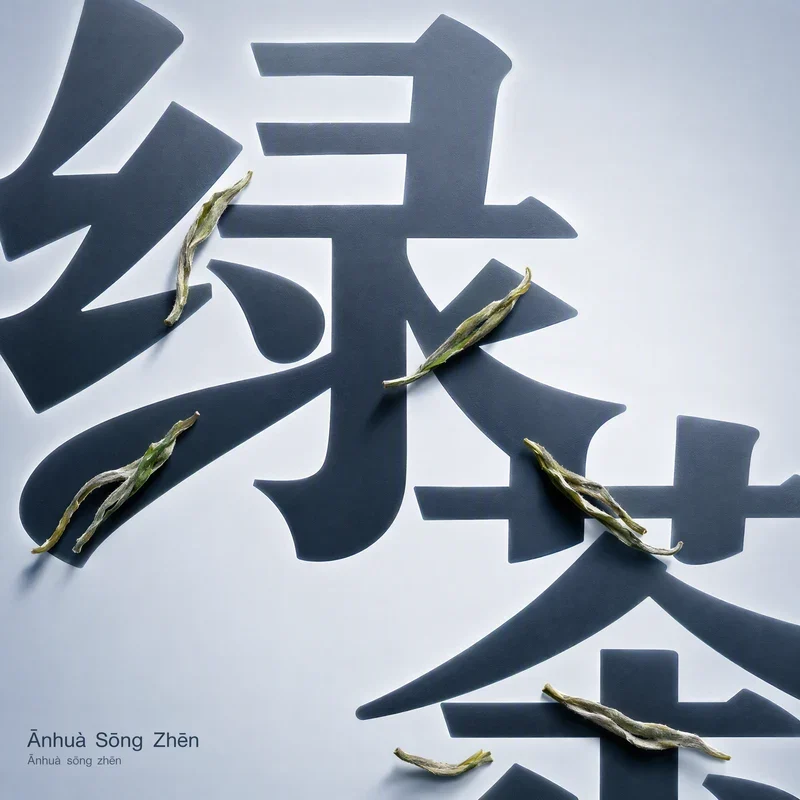
Ānhuà sōng zhēn
Choose a brewing method. Start with the recommended quantities and time, then adjust to taste.
Brewing
Brewing
Taste
Tea encyclopedia
Category: One of the "Three Famous Needles of China" (中国三针). One of the "Three Great Teas of Hunan" (湖南省三大名茶, 1962). Multiple winner of international awards, including the gold medal of the Ulaanbaatar International Exhibition (乌兰巴托国际博览会金奖). In 2021, the technology was included in the registry of intangible cultural heritage of Hunan Province.
Category: One of the "Three Famous Needles of China" (中国三针). One of the "Three Great Teas of Hunan" (湖南省三大名茶, 1962). Multiple winner of international awards, including the gold medal of the Ulaanbaatar International Exhibition (乌兰巴托国际博览会金奖). In 2021, the technology was included in the registry of intangible cultural heritage of Hunan Province.
Coordinates: Approximately 28°23′ North latitude, 111°13′ East longitude.
Origin: China, Húnán Province (湖南, Húnán), Ānhuà County (安化县, Ānhuà Xiàn). The core terroir is Mount Yúntáishān (云台山, Yúntái Shān) — a mountain range at elevations above 500 m, constantly shrouded in clouds. It is precisely on Yúntáishān that the Bāojiāchōng Tea Station (褒家冲茶场, Bāojiāchōng Cháchǎng) is located — the birthplace of Anhua Song Zhen.
Type: Green tea (non-oxidized). Belongs to special pan-fired green teas (特种炒青绿茶, tèzhǒng chǎoqīng lǜchá) of needle shape (针形茶, zhēnxíng chá). The standard of needle shaping among Chinese green teas.
Cultural Significance: Anhua is a county that gave the world two great types of tea: the famous Ānhuà Hēichá (安化黑茶, "Anhua Dark Tea") — one of the six great types of Chinese tea — and Anhua Song Zhen — the standard of needle-shaped green tea. Two teas from one county, two poles of the tea world — from dark fermented to the most delicate green. Interestingly, it is precisely Anhua that uses the system of "tea-fruit intercropping" (茶果间作) — joint cultivation of tea with fruit trees (loquat, bayberry) — analogous to the famous Dongtingshan system of Biluochun.
History: Anhua County is one of the oldest tea-growing regions of Hunan with a history dating back to the Tang era. Tang sources mention "Thin Slices from Qujiang" (渠江薄片, Qújiāng Bópián) — an early Anhua tea. During the Song era, tea from Ānhuà was included in the list of imperial tribute (贡茶).
Cultivar: Two types:
Picking: Strictly before the Qīngmíng festival (清明, ~April 5). Standard — one bud with one leaf in initial opening stage (一芽一叶初展). Rejected: leaves damaged by pests, purple shoots, leaves with dew (露水叶). Only fresh, tender, flawless raw material.
Raw Material: Exceptionally high — standard "无虫伤叶、紫叶、露水叶" (without damage, purpleness and dew). Processing — on the day of harvest.
Altitude: Above 500 meters above sea level. The core — Mount Yuntaishan, constantly shrouded in clouds (hence the name: 云台 — "cloud platform").
Climate: Mid-subtropical monsoon. Average annual temperature — 16.2°C, annual precipitation — 1682 mm. Abundant cloudiness, significant daily temperature fluctuations.
Soil: Red and yellow soils (红壤、黄壤), developed on shale rocks (板页岩风化), rich in phosphorus and selenium. Acidity — moderate. Deep profile, good water permeability.
Northern slope of the Xuěfēng Mountain range (雪峰山脉, Xuěfēng Shānmài). Mountainous terrain with deep gorges and numerous streams.
Like on Dongtingshan (birthplace of Biluochun), tea bushes in Anhua are historically planted in mixed plantings with fruit trees — loquat (枇杷) and bayberry (杨梅). Tea bushes absorb aromatic substances from flowers and fruits, forming a characteristic "natural floral-fruity aroma" (天然花果香韵).
Brief spreading for withering.
In cast iron wok at 140°C or in roller drum. Quick stopping of oxidation.
Three-stage — "light → heavy → light" (轻-重-轻).
At 70–80°C — moisture evaporation and beginning of aroma formation.
Intermediate cooling and moisture redistribution.
Key and most complex stage. At 50–70°C, the master manually rolls each shoot for 40 minutes, giving it perfect form according to the standard "圆、紧、直" — "round (in cross-section), tight, straight". This stage is called by masters "绝世武功" — "unparalleled martial art", since it requires absolute precision: too strong pressure breaks the shoot, too weak — doesn't give straight form; overheating — kills aroma, underheating — leaves moisture.
Low-temperature slow warming drying at 35–40°C — one of the lowest final drying temperatures among green teas. Slowness is the guarantee of persistent, deep aroma.
Final sorting, removal of non-standard shoots.
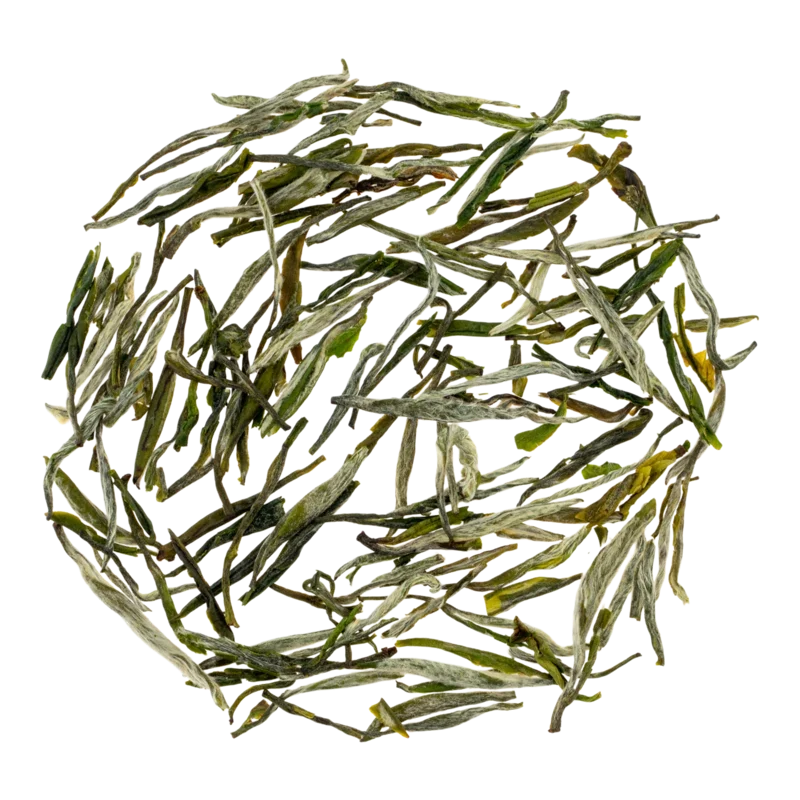
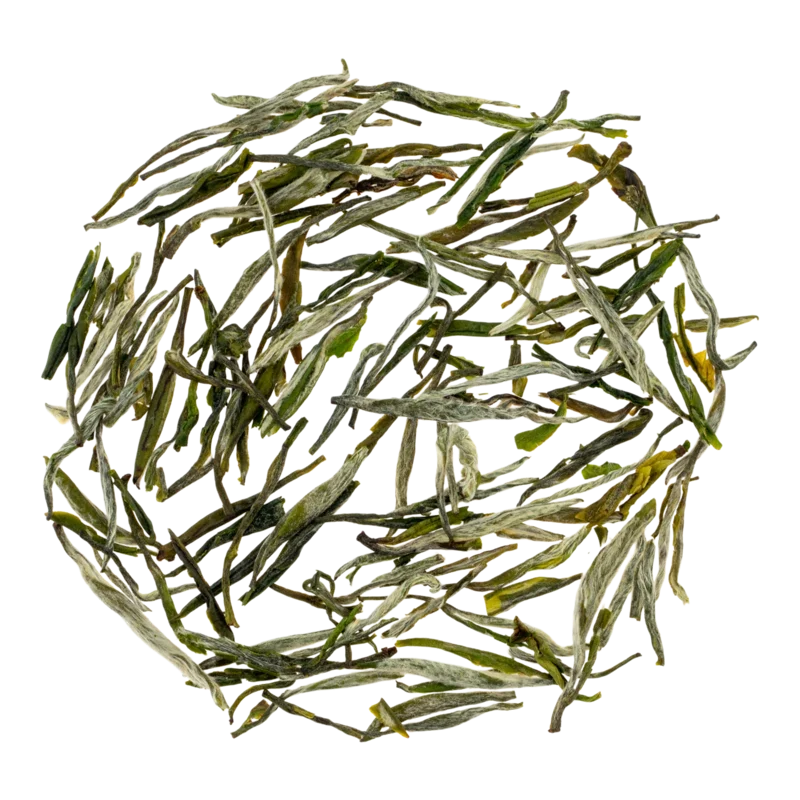
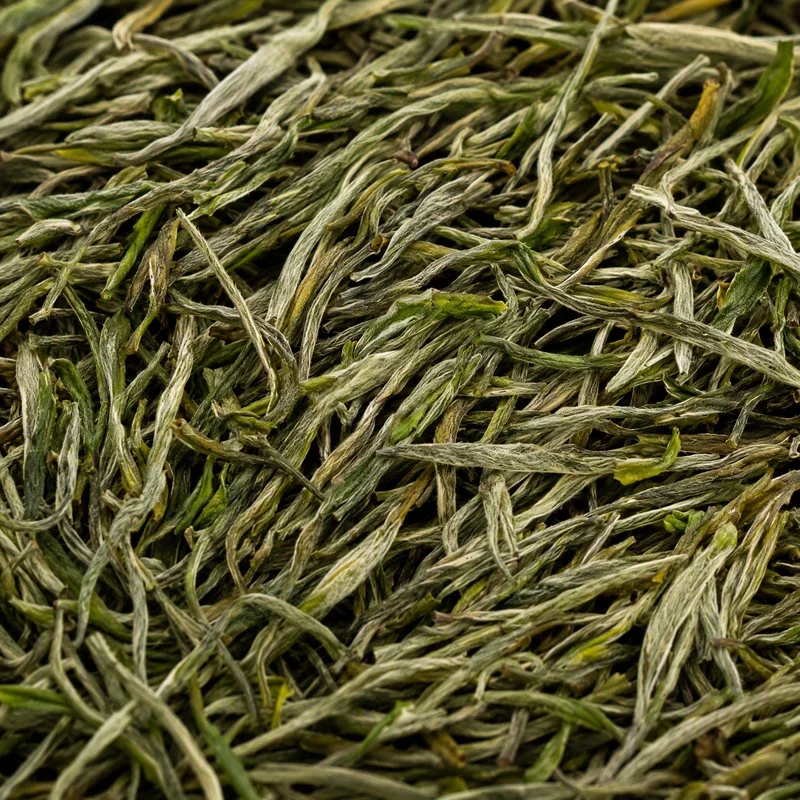
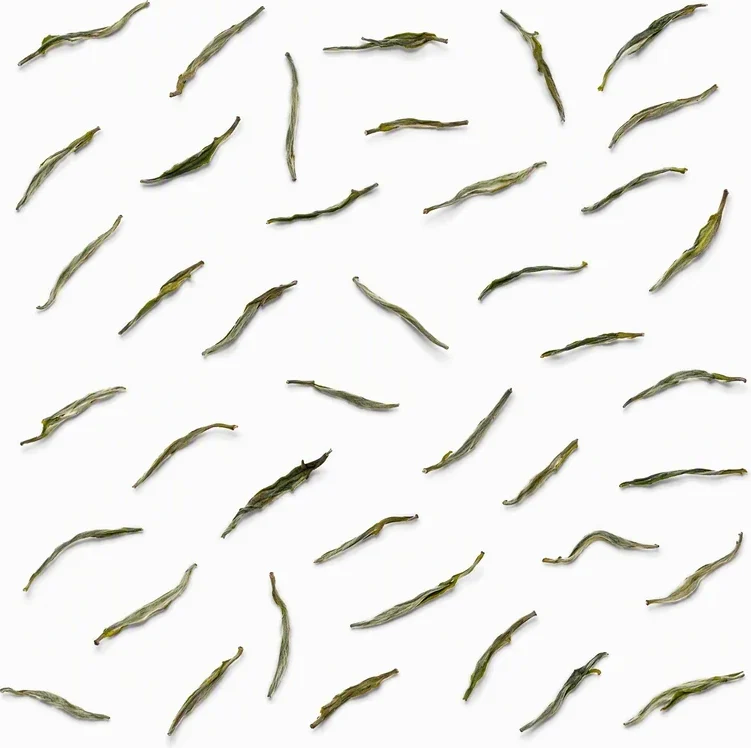
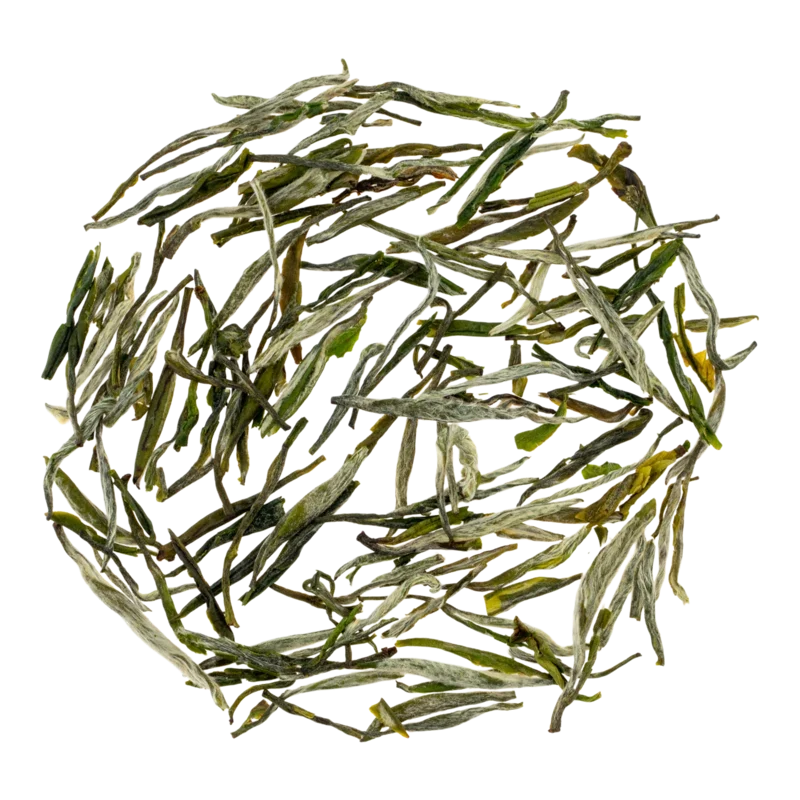
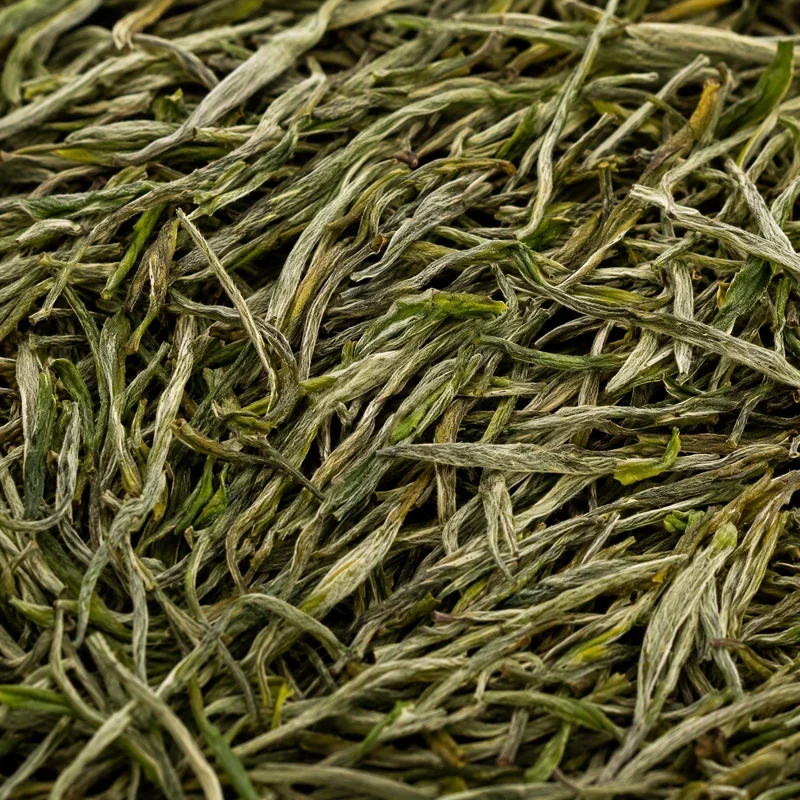
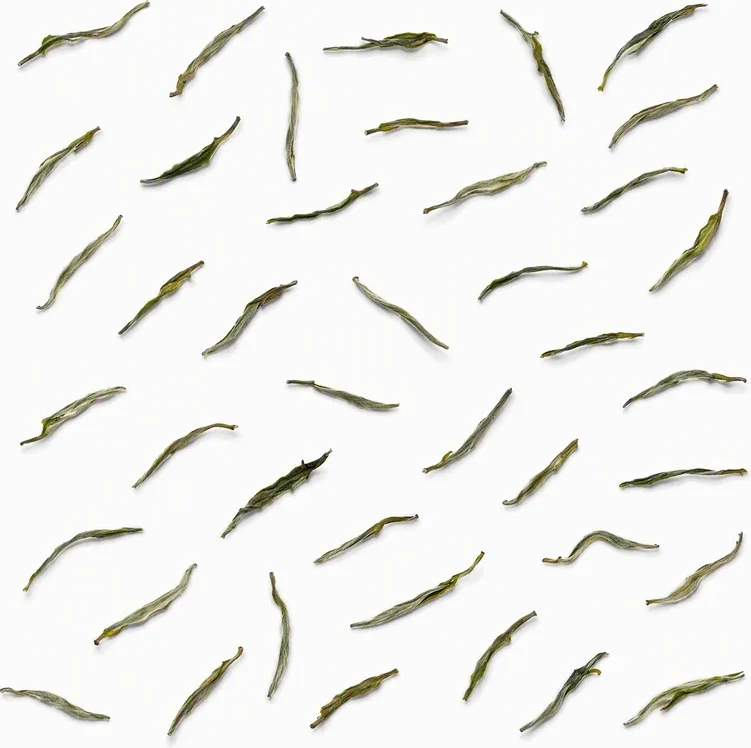
Dry Leaf Appearance: Straight, thin, slender shoots, in form — perfect "pine needles" (细直挺秀似松针). Length — uniform. "Long, straight, round, smooth, tight and thin" (长直圆浑紧细, cháng zhí yuán hún jǐn xì) — complete formula of form. Color — emerald green, uniform (翠绿匀整). Silver down — noticeable (白毫显露).
Dry Leaf Aroma: Pure, high, persistent (清香高雅持久). Chestnut note (栗香) — formed at the semi-finished product firing stage. Delicate aroma of young shoots (嫩香). Floral-fruity overtone — consequence of intercropping system with fruit trees.
Liquor Aroma: Pure, fragrant (香气馥郁, xiāngqì fùyù). Chestnut-fresh profile. Persistent.
Liquor Color: Tender green, pure, bright and clear (嫩绿透亮).
When pouring water into a glass, shoots slowly descend and stand vertically, forming a miniature "pine forest" — one of the most visually impressive effects among needle teas.
Spent Leaves: Tender, slender, uniform shoots of bright green color. Leaf whole, without damage.
Taste: Fresh and brisk (鲜爽, xiānshuǎng) — increased amino acid content. Sweet and mellow (甜醇, tiánchún) — pronounced returning sweetness (回甘明显). Rich (醇厚) — rich internal composition. Characteristic tasting formula: initial light bitterness (微苦) instantly transforms to sweetness (迅速转甘甜) — one of the fastest "switches" among green teas.
Alkaloids: Caffeine — moderate content. Theobromine, theophylline.
Amino Acids: Increased content — result of high altitude and abundant diffused light. Provides freshness and quick returning sweetness.
Increased content — provides vision support (明目).
Minerals: Potassium, magnesium, phosphorus, selenium, manganese.
Polyphenols: Significant content. Provides antioxidant potential and taste structure.
Vitamins: Vitamin C, B-group vitamins, vitamin A.
Traditionally recommended in hot weather.
Catechins neutralize free radicals.
Catechins accelerate fat metabolism.
Rich in carotenoids and vitamin A.
Caffeine and L-theanine.
Polyphenols stimulate enzymes.
the listed properties are based on publicly available data and are not medical recommendations.
pour water along the glass wall (沿杯壁缓流), not directly on the tea — otherwise the needles will "lie down" and not stand vertically. Watch how the shoots slowly descend and stand as a "pine forest" — this spectacle is worth several minutes of waiting.
Tea Amount: 3 g per 150 ml water (1:50 ratio).
Teaware: Glass tumbler — mandatory choice for observing the "pine forest": vertically standing needles — the main visual show of this tea.
Water Temperature: 80–85°C.
From Nanjing. Also "needle", also from "Three Famous". Yu Hua is more floral, with "revolutionary" symbolism; Song Zhen is more chestnut-fruity, with "pine" imagery.
From Hubei. Also "needle", also from "Three Famous". Yǔ Lù is steamed (蒸青), with "Japanese" character; Song Zhen is pan-fired (炒青), with Hunan chestnut note.
Fellow from Hunan. Also 1959, also "gift for the tenth anniversary". Yin Feng is more "silvery" and twisted; Song Zhen is more "piney" and straight.
From Henan. Also needle-shaped, also chestnut. Xinyang is more dense and "northern", with "double wok" technique; Song Zhen is more slender, with 40-minute hand-shaping and fruity overtone.
perfect straight "needles" — "long, straight, round, smooth". Crooked, broken or non-uniform — sign of counterfeit.
when brewing in glass tumbler, needles should stand vertically.
pure, chestnut-fresh, with floral-fruity overtone.
suspiciously low — sign of counterfeit.
No reviews yet. Tell us what you think of this tea.
Rate this tea and share your impressions. We review each submission before publishing it.