Brewing
Gongfu brewing
- Water temperature
- 75 °C
- Tea amount
- 5 g
- Water volume
- 100 ml
- First steep
- 10 s
- Time added per infusion
- 5 s
- Infusions
- 3

Gāoqiáo yín fēng
Choose a brewing method. Start with the recommended quantities and time, then adjust to taste.
Brewing
Brewing
Taste
Tea encyclopedia
Category: Famous Tea of China (中国名茶, 1989). Winner of the Húnán Scientific Conference Award (湖南省科学大会奖, 1978). Repeatedly used as a state gift (国礼) to foreign guests. Praised by Mao Zedong and Zhou Enlai.
Category: Famous Tea of China (中国名茶, 1989). Winner of the Húnán Scientific Conference Award (湖南省科学大会奖, 1978). Repeatedly used as a state gift (国礼) to foreign guests. Praised by Mao Zedong and Zhou Enlai.
Coordinates: 113°19′ East longitude, 28°29′ North latitude.
Origin: China, Húnán Province (湖南, Húnán), Chángshā City (长沙, Chángshā), Chángshā County (长沙县, Chángshā Xiàn), Gāoqiáo Town (高桥镇, Gāoqiáo Zhèn). The core terroir consists of experimental tea gardens of the Húnán Provincial Tea Research Institute (湖南省茶叶研究所), covering approximately 800 mu (53 hectares), located at the foot of Yuhuangfeng Peak (玉皇峰, Yùhuáng Fēng — "Jade Emperor Peak").
Type: Green tea (non-oxidized). Special pan-fired green tea (特种炒青绿茶, tèzhǒng chǎoqīng lǜchá) — a category of "artisanal" teas created based on scientific developments.
Cultural Significance: Gaoqiao Yin Feng is a symbol of "scientific tea cultivation" of the new era: a tea created not by centuries-old peasant tradition, but by purposeful work of a tea research institute. Praise from Mao Zedong, Zhou Enlai, and Guo Moruo's poem secured its status as a "politically famous" tea — one of the few to receive attention from several founders and cultural leaders of the PRC simultaneously.
History: Gaoqiao Yin Feng is a tea with a precise birth date and specific creation purpose. In 1959, for the tenth anniversary of the founding of the PRC, the Hunan Provincial Tea Research Institute (established in 1935 — one of China's oldest tea research institutes) received the task of creating a "new famous tea" worthy of an anniversary tribute. Tea scientists developed an original technology with a key innovative stage — "提毫" (tí háo, "down manifestation"): a special technique where silvery down is not pressed to the leaf surface (as with most teas), but "raised" vertically, creating the effect of silvery "mountain peaks." The tea was named "Yin Feng" (银峰, "Silver Peaks"), and the geographic reference — Gāoqiáo Town (高桥, "High Bridge") — provided the first part of the name.
Cultivar: Several asexual (clonal) cultivars of Camellia sinensis var. sinensis are used, specially selected for maximum manifestation of silvery down:
Picking: Early spring. For highest grade — one bud with one barely opened leaf (一芽一叶初展), shoot length — about 2.5 cm. To produce 1 kg of highest grade dry tea requires 12,000–13,000 shoots.
Raw Material: Tender, uniform, undamaged shoots. Processing — on the day of picking.
Altitude: Hilly zone at the foot of Yuhuangfeng, low and medium mountains.
Climate: Subtropical monsoon humid climate. Average annual temperature — 16.6°C, annual precipitation — 1441 mm, frost-free period — 275 days. The institute's territory at the foot of Yuhuangfeng is often shrouded in clouds and mist.
Soil: Red soils (红壤, hóng rǎng), developed on purple shales (紫色板页岩), rich in phosphorus. pH around 5.0. Deep profile, high fertility.
Tea gardens are located in the picturesque area of "rivers and lakes at the foot of the Jade Emperor" (玉皇峰下河湖掩映). Daily temperature fluctuations are significant. Industrial pollution is absent. Conditions favor accumulation of amino acids and aromatic compounds.
Hand picking of spring shoots meeting "one bud — one leaf" standard.
Brief spreading.
At 120–130°C — relatively mild temperature, preserving tenderness of raw material and down.
Unique stage: after fixation, leaves are winnowed (扬簸, yángbǒ), removing foreign matter and fine debris. This technique ensures cleanliness of the finished product.
Light shaping.
Preliminary drying.
Hand shaping of shoots into tight, slightly curved "needles."
Key and most characteristic stage — an original innovation by Gaoqiao Yin Feng creators. At 45–50°C, the master uses special "搓揉" (cuōróu, "rolling-rubbing") movements to "raise" silvery down from the leaf surface, making it stand vertically. Result — shoots are covered with characteristic silvery "frost" that does not fall off during storage and brewing. This stage gave the tea its name — "Silver Peaks."
Intermediate cooling.
Two-stage: first at 70°C, then at 60°C. Gentle heating fixes the down and forms the final aroma.
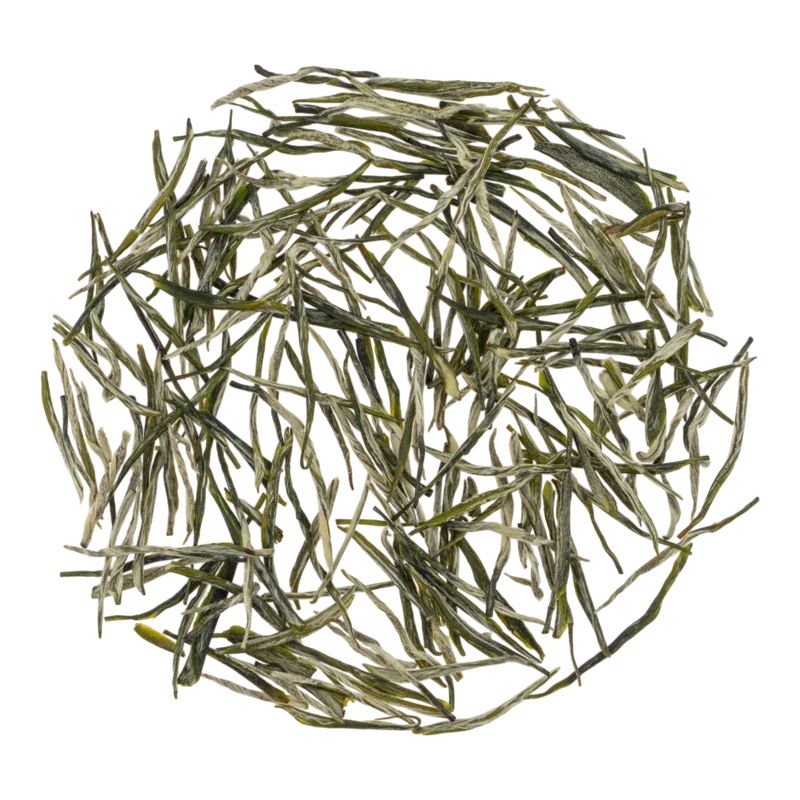
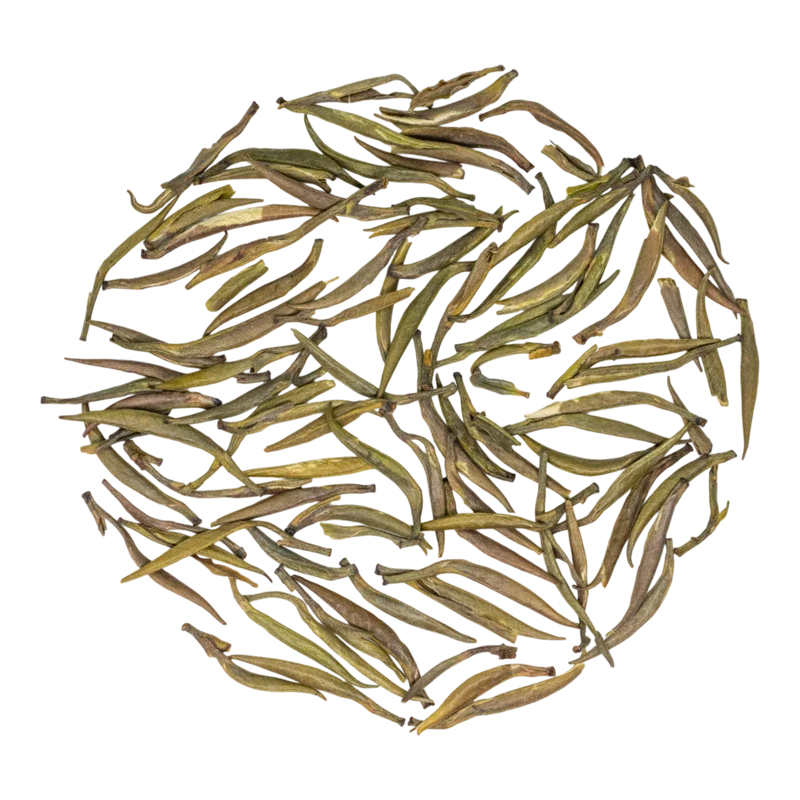
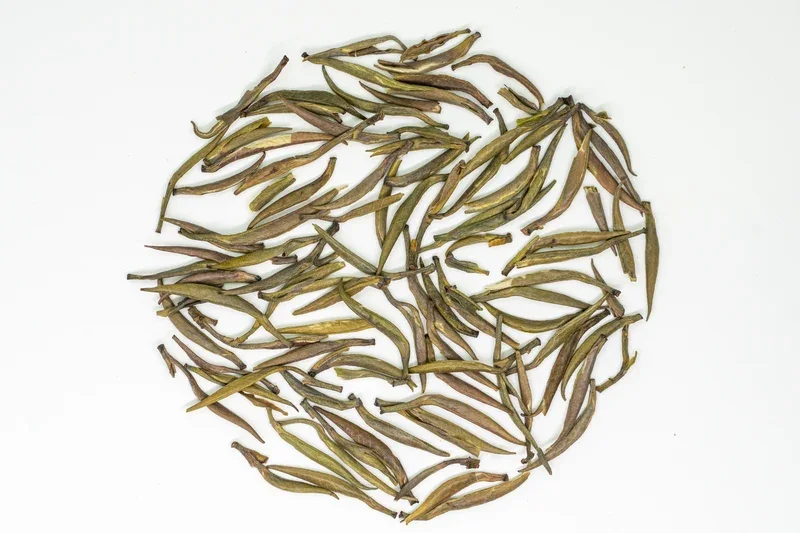
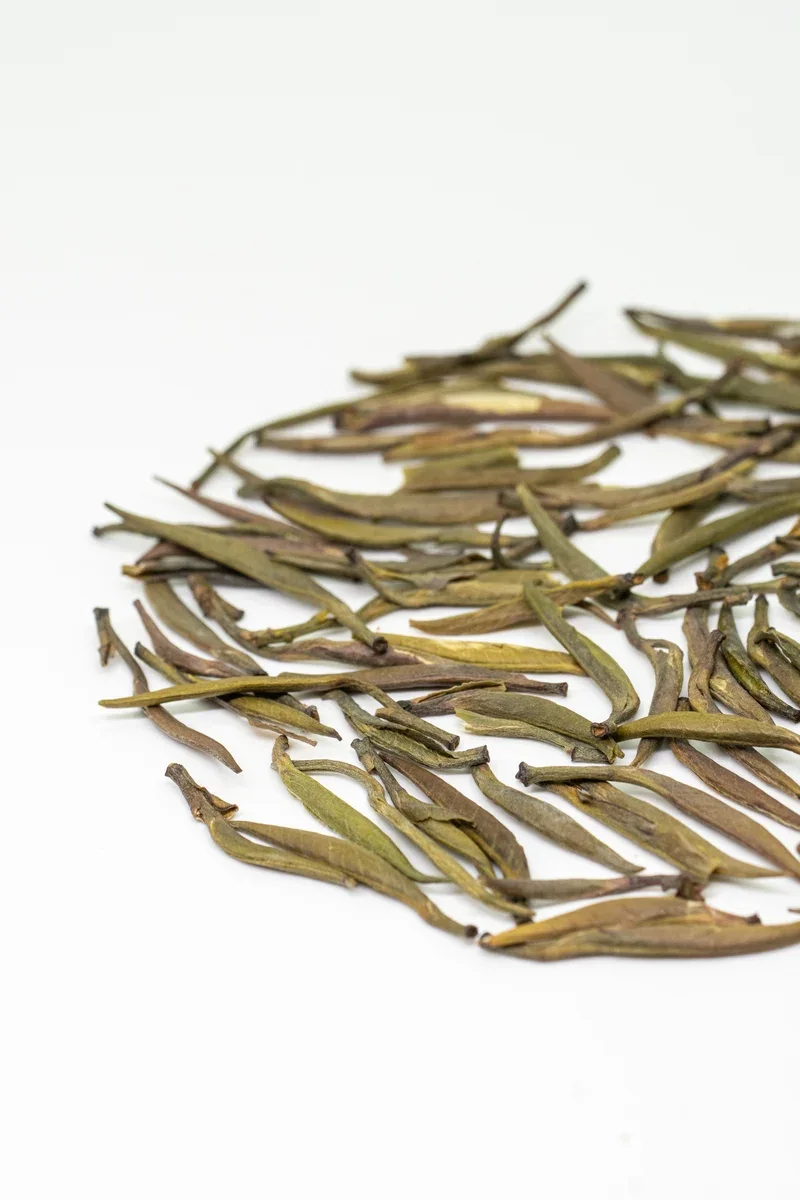
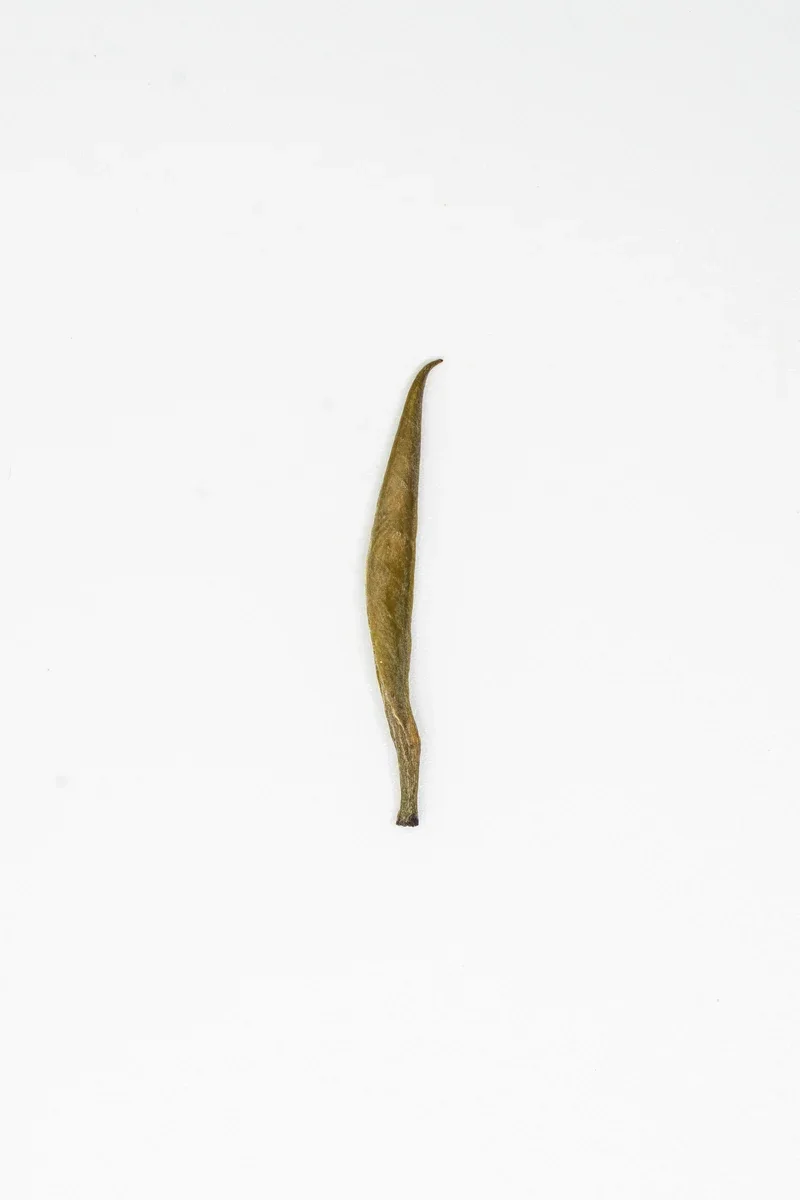
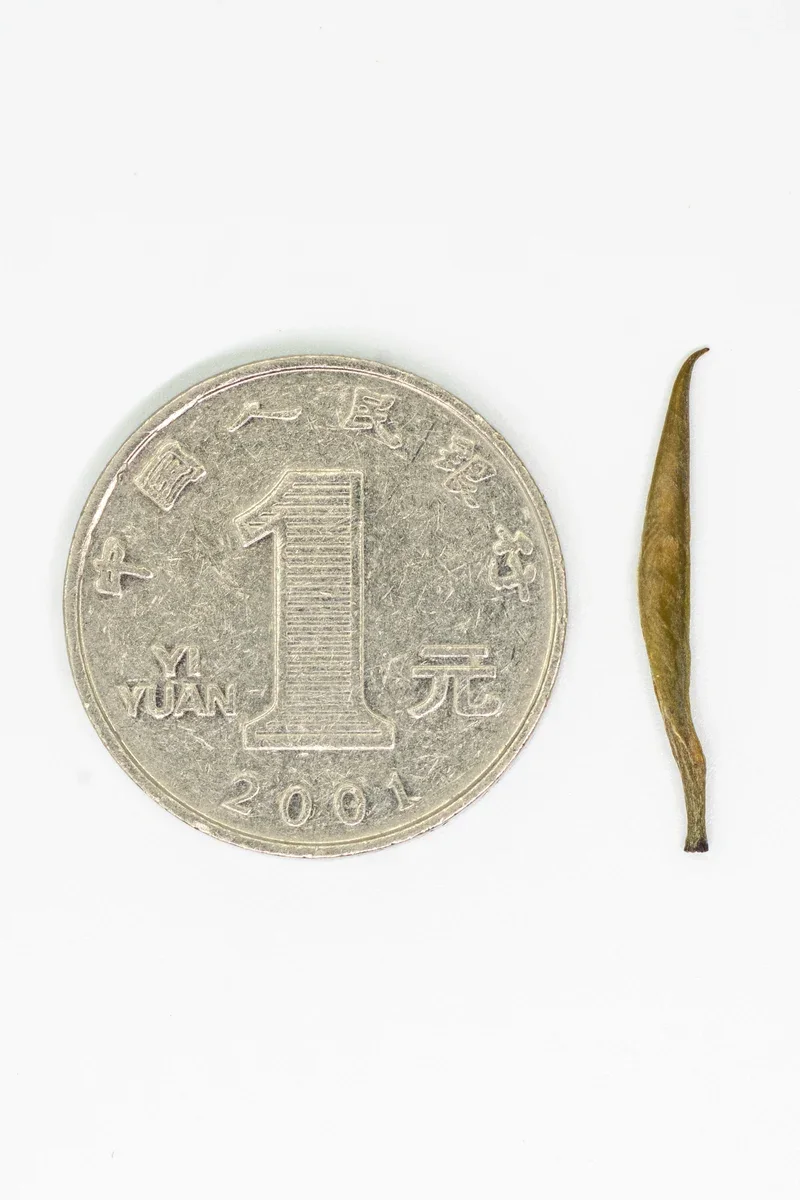
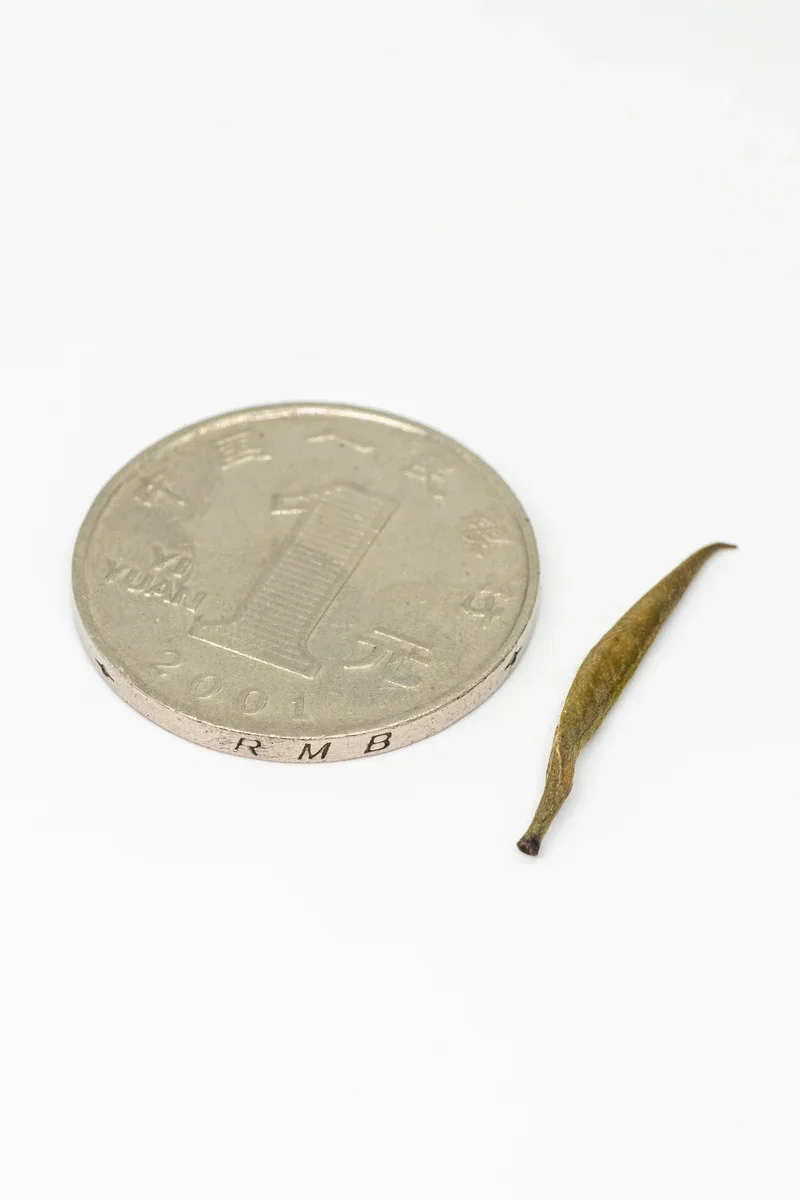
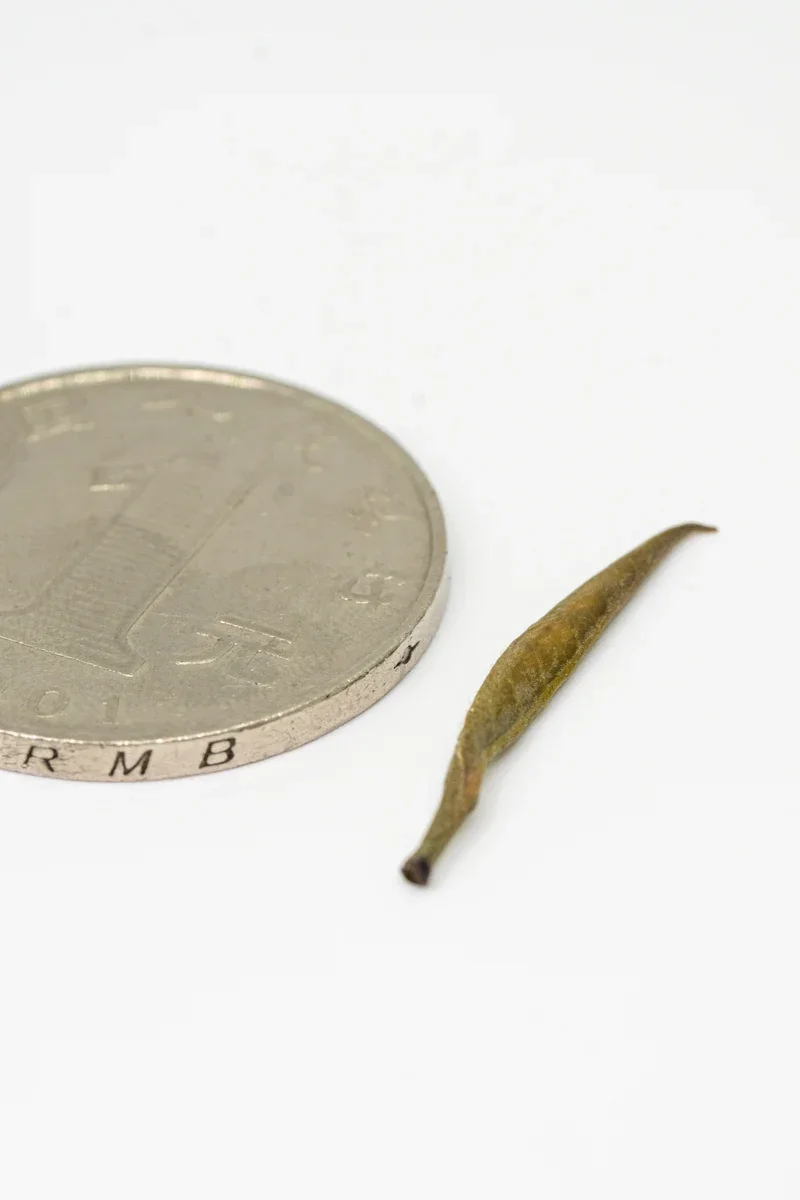
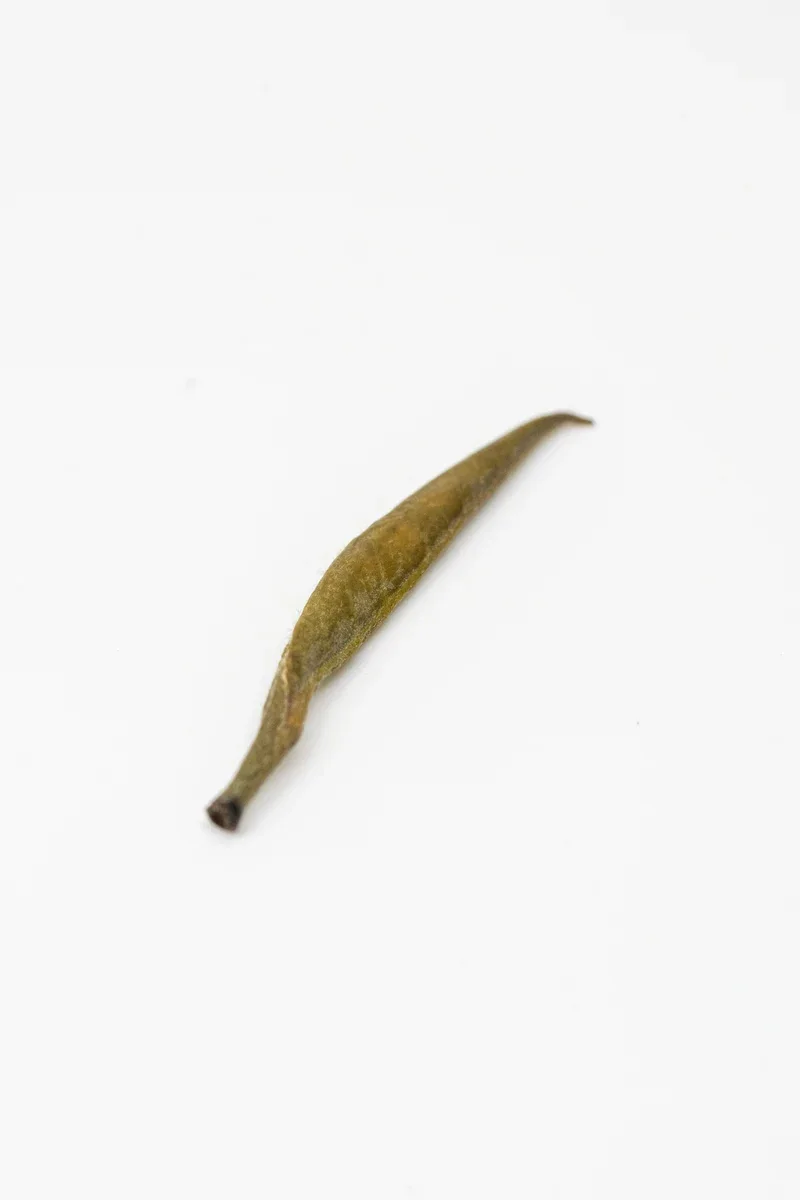
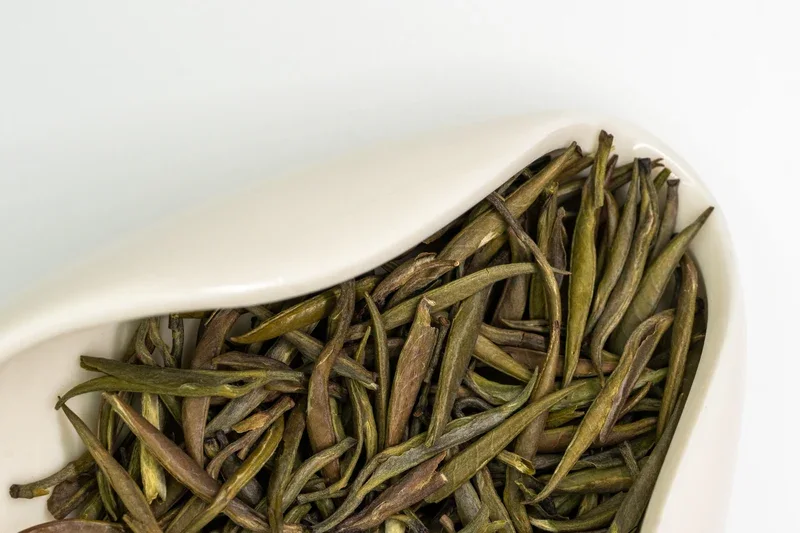
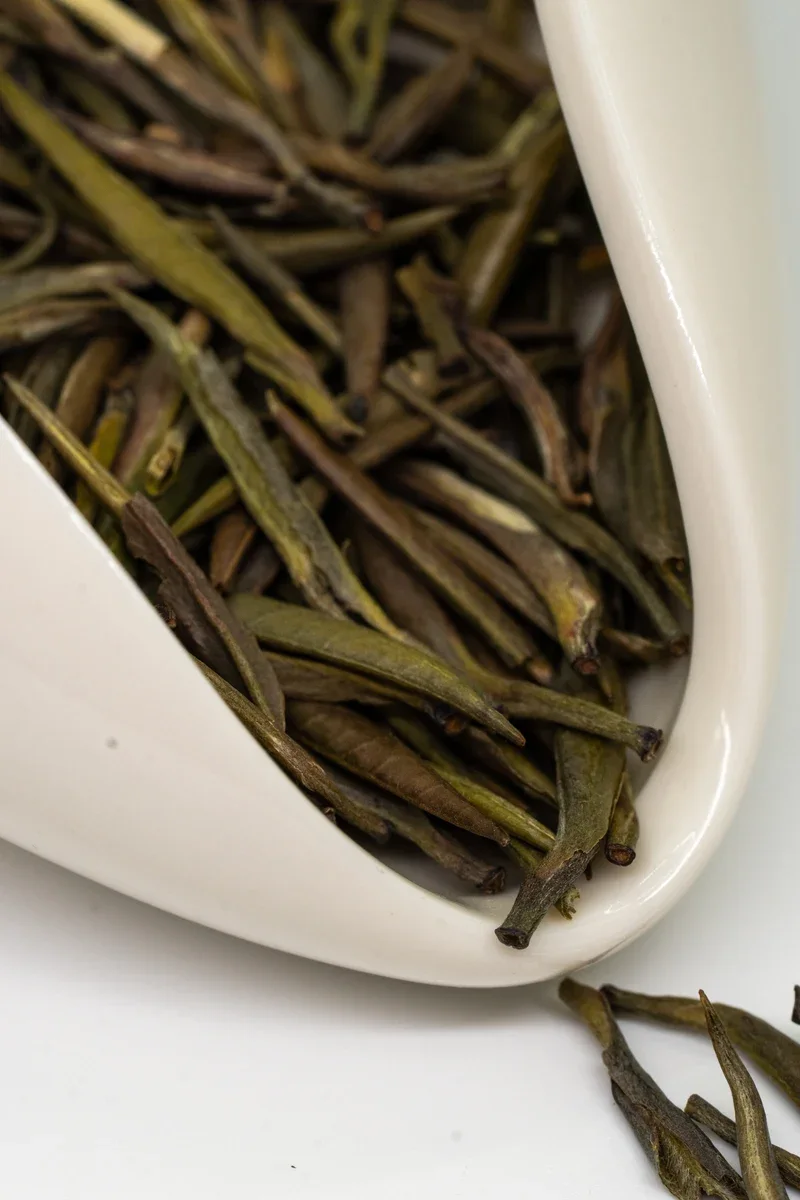
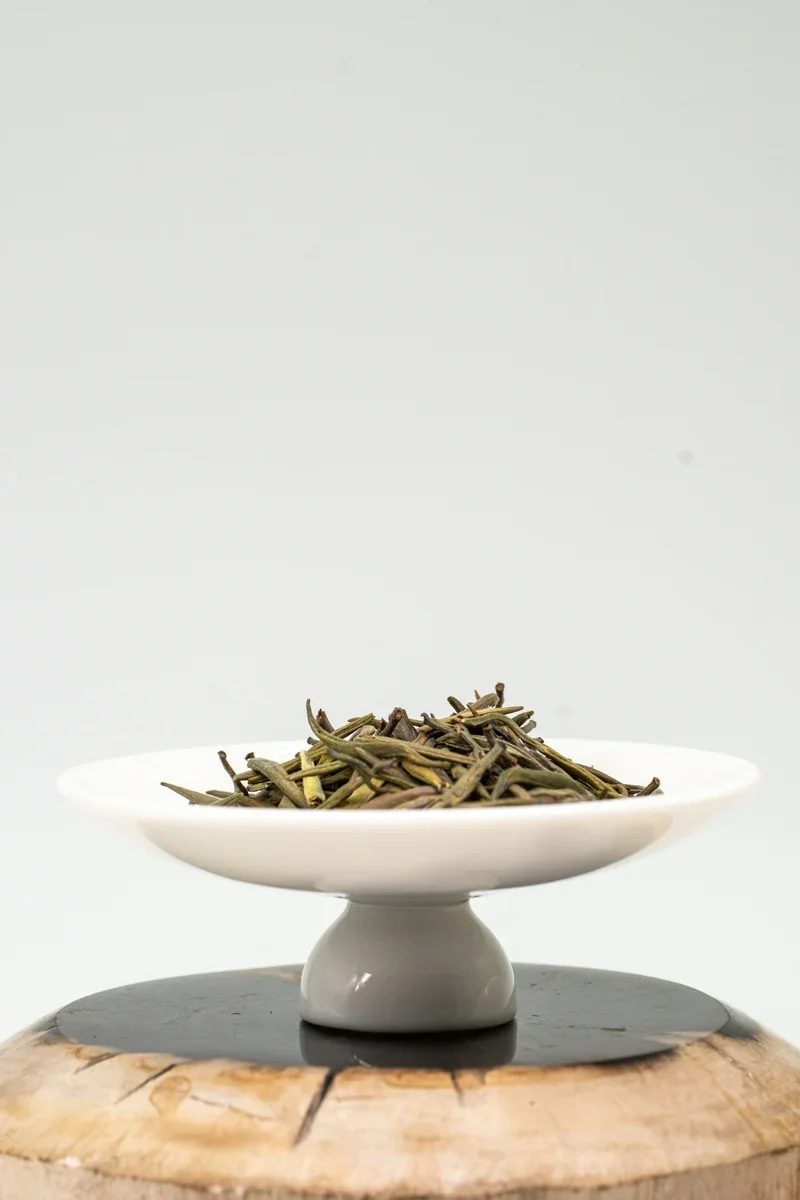
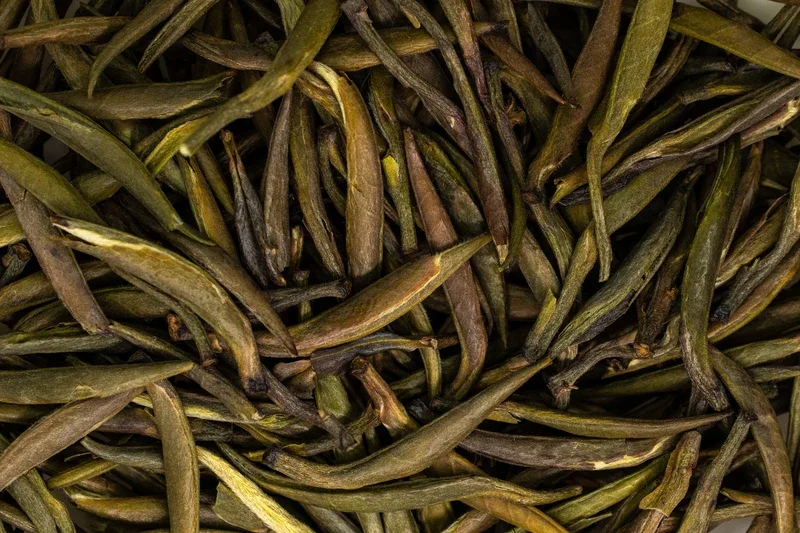
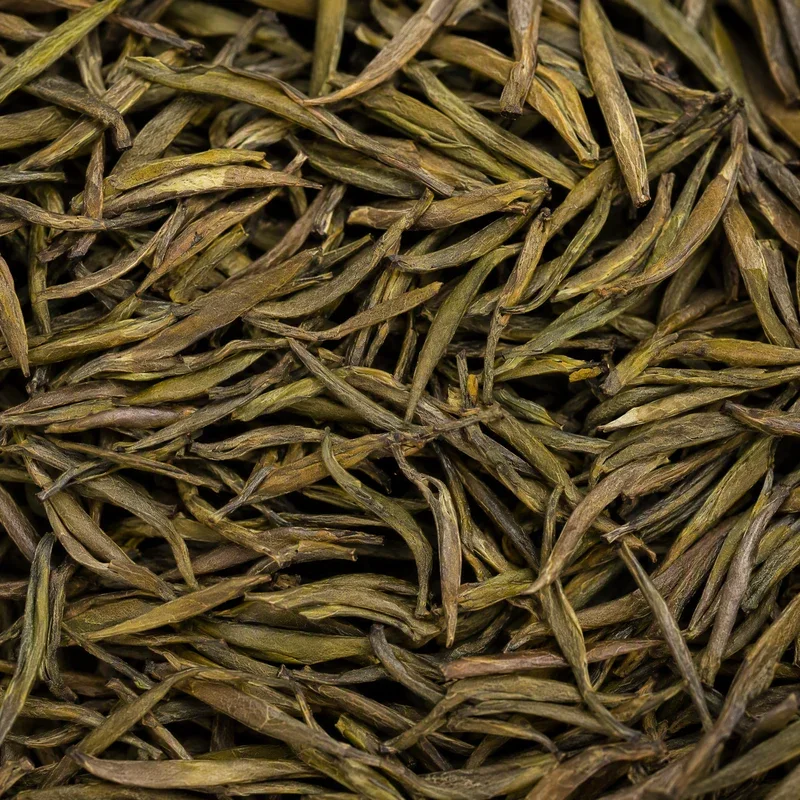
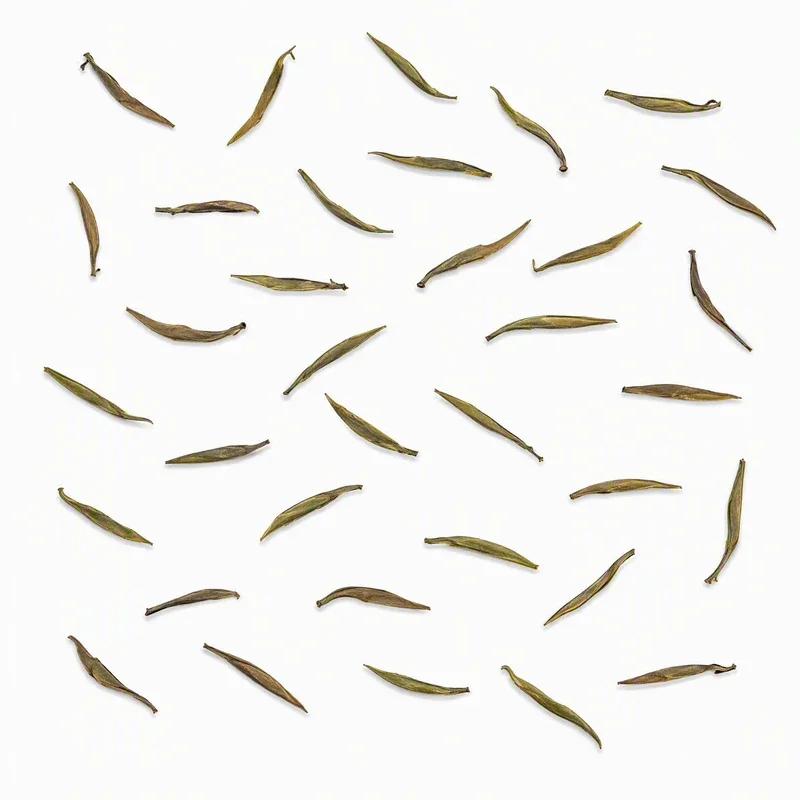
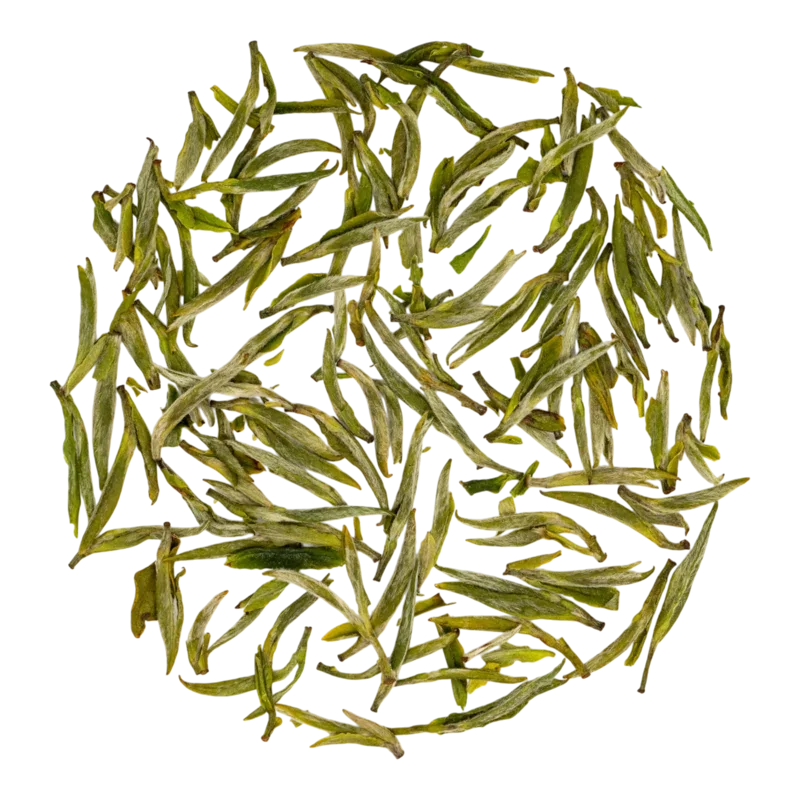
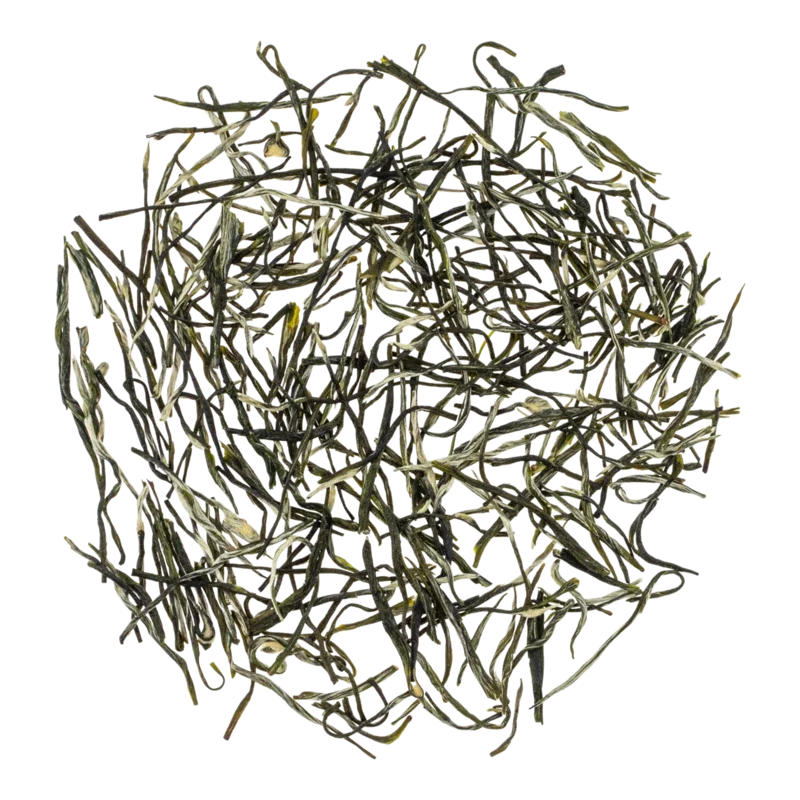
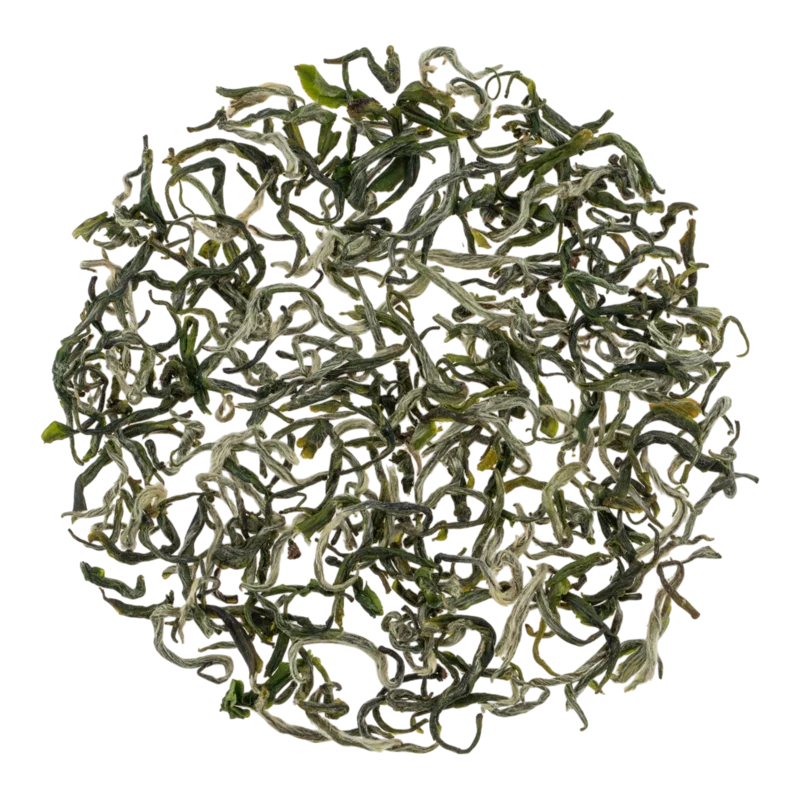
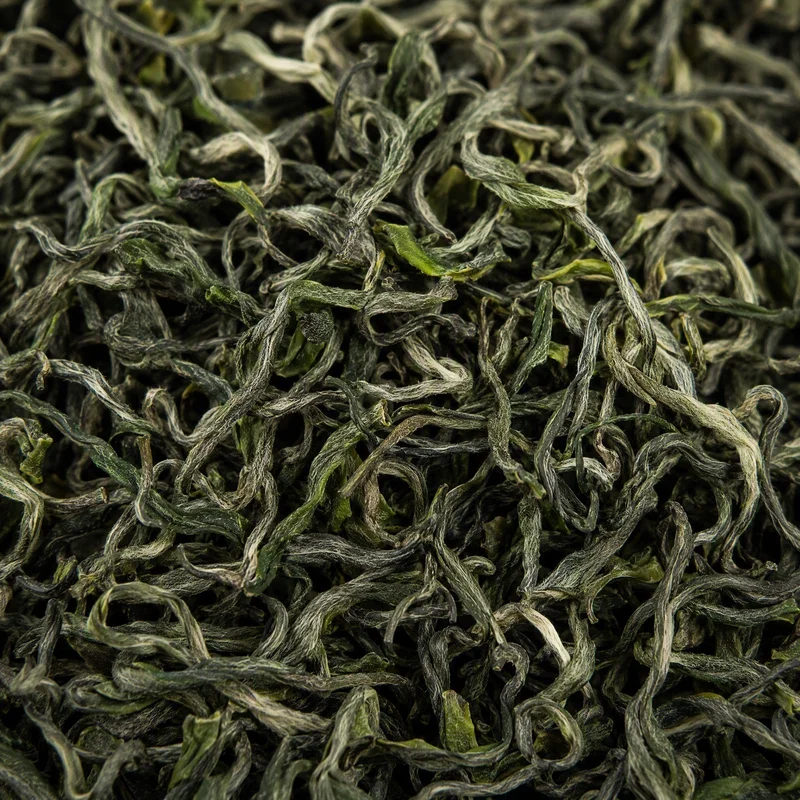
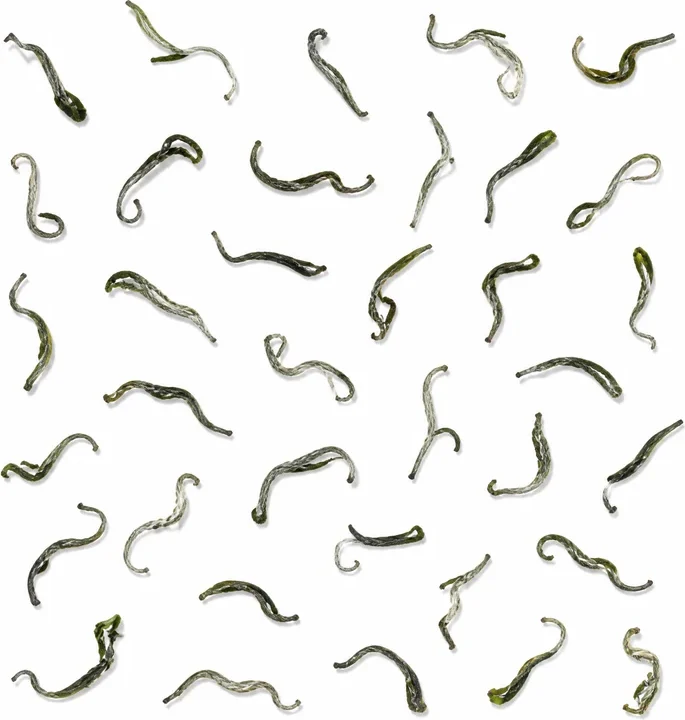
Dry Leaf Appearance: Tight, thin, slightly curved shoots (条索紧细微曲). Densely covered with silvery vertically standing down (满披银毫) — the main visual characteristic. Color — emerald green showing through silvery "frost" (翠绿隐毫).
Dry Leaf Aroma: Tender, persistent (嫩香持久). Pure green freshness (清香). Chestnut note (栗香).
Liquor Aroma: Fresh, persistent, with chestnut-green profile.
Liquor Color: Light green, clear and transparent (汤清).
Spent Leaves: Tender, uniform shoots of green color. Whole, resilient.
Taste: Fresh and mellow (鲜醇, xiānchún), with pronounced returning sweetness (回甘). Body — medium-full, round. Astringency minimal. Aftertaste — clean, refreshing.
Alkaloids: Caffeine — moderate content.
Amino Acids: Elevated content — Baimao Zao cultivar contains 4.1% amino acids, higher than average for green teas.
High content — promotes dental enamel protection.
Minerals: Potassium, magnesium, phosphorus, zinc, manganese, fluorine.
Polyphenols: High content — provides antioxidant potential.
Vitamins: Vitamin C, B-group vitamins.
Catechins neutralize free radicals.
Caffeine and L-theanine provide gentle alertness.
Catechins help reduce cholesterol levels.
Fluorine strengthens enamel; carotenoids support eye health.
Vitamin-mineral complex supports immune function.
the listed properties are based on publicly available data and are not medical recommendations.
recommended to drink hot, one hour after meals. Liquor should be consumed within 30 minutes of brewing — when cooled and oxidized, taste deteriorates.
Tea Amount: 3 g per 150 ml water (1:50–1:60 ratio).
Teaware: Glass tumbler or white porcelain cup — for observing silvery down and evaluating liquor clarity.
Water Temperature: 80–85°C.
From Xiangxi, Hunan. Also Hunanese, also downy, but needle-shaped and with exceptional durability (up to 15 infusions). Guzhang is more durable and "robust"; Yin Feng is more tender and "silvery."
From Hunan, but yellow tea, not green. Both are "silvery," both Hunanese, but technologically and taste-wise belong to different types.
From Anhui. Baked green tea with "sparrow tongue" shape. Mao Feng is more orchid-like; Yin Feng is more "scientifically pure," with vertically standing down.
From Henan. Also downy, but needle-shaped, with pronounced chestnut aroma of "double wok." Xinyang is denser and more "northern"; Yin Feng is more tender and "southern."
characteristic silvery down should stand vertically without falling off. Pressed or absent down is a sign of counterfeit.
tender, fresh, chestnut. Coarse or "hay-like" smell is cause for doubt.
clean, transparent, light green. Cloudy is suspicious.
authentic Gaoqiao Yin Feng from the core zone cannot be cheap.
No reviews yet. Tell us what you think of this tea.
Rate this tea and share your impressions. We review each submission before publishing it.