Brewing
Gongfu brewing
- Water temperature
- 80 °C
- Tea amount
- 5 g
- Water volume
- 100 ml
- First steep
- 10 s
- Time added per infusion
- 5 s
- Infusions
- 3

Huángshān máo fēng
Choose a brewing method. Start with the recommended quantities and time, then adjust to taste.
Brewing
Brewing
Taste
Tea encyclopedia
Category: Famous Teas of China (中国十大名茶). Included in the "top ten" since 1955. It is a product of geographical indication (地理标志产品, dìlǐ biāozhì chǎnpǐn) according to national standard GB/T 19460-2008 "Huangshan Maofeng Tea" (黄山毛峰茶).
Category: Famous Teas of China (中国十大名茶). Included in the "top ten" since 1955. It is a product of geographical indication (地理标志产品, dìlǐ biāozhì chǎnpǐn) according to national standard GB/T 19460-2008 "Huangshan Maofeng Tea" (黄山毛峰茶).
Coordinates: Approximately 30.13° N, 118.16° E (reference point — Huangshan Mountain area).
Origin: China, Ānhuī Province (安徽省, Ānhuī Shěng), Huángshān City (黄山市, Huángshān Shì). The geographical indication protection zone covers the districts of Huīzhōu (徽州区, Huīzhōu Qū), Huángshān (黄山区, Huángshān Qū), and the counties of Shè (歙县, Shè Xiàn), Xiūníng (休宁县, Xiūníng Xiàn), and Yī (黟县, Yī Xiàn). The historical birthplace and production core is Fùxī Township (富溪乡, Fùxī Xiāng) in She County, particularly the village of Chongtou Yuán (充头源, Chōngtóuyuán, now the Chongchuan 充川 group in Xintian Village 新田村).
Type: Green tea (non-oxidized). Subcategory — hongqing (烘青, hōngqīng), meaning green tea that has undergone final drying by the heating method (as opposed to chaoqing/炒青 — pan-fired green teas like Longjing).
Cultivar: According to national standard GB/T 19460-2008, local variety-populations are used for Huangshan Maofeng production: Huángshān zhǒng (黄山种, Huángshān zhǒng) — the basic local cultivar with small leaves; Zhūyè zhǒng (槠叶种, Zhūyè zhǒng) — medium-leaf variety characteristic of southern Anhui; Dishuixiang (滴水香, Dīshuǐxiāng, "drop of fragrant water") — local cultivar valued for pronounced aromatics; Míngzhōu zhǒng (茗洲种, Míngzhōu zhǒng) — rare local variety. Traditional "tuzhong" (土种, "soil varieties") are distinguished by late onset of vegetation but produce deeper flavor. Some farms use improved clones for earlier harvests, which should be considered when selecting tea.
Picking: Predominantly spring. Premium batches are picked before the Qīngmíng festival (清明, Qīngmíng, ~April 5) — this is called "mingqian cha" (明前茶). The main harvest falls between Qīngmíng and Gǔyǔ (谷雨, Gǔyǔ, ~April 20). Harvesting is done by hand, predominantly in morning hours. The principle applies: "picked in the morning — processed in the afternoon, picked in the afternoon — processed at night."
Pluck Standard: For special class (特级一等) — one bud and one leaf in initial opening stage (一芽一叶初展, yī yá yī yè chū zhǎn). For special class second and third categories — one bud and one to two leaves. For first grade — one bud and two leaves in initial opening stage. For second and third grades — one bud and two to three leaves.
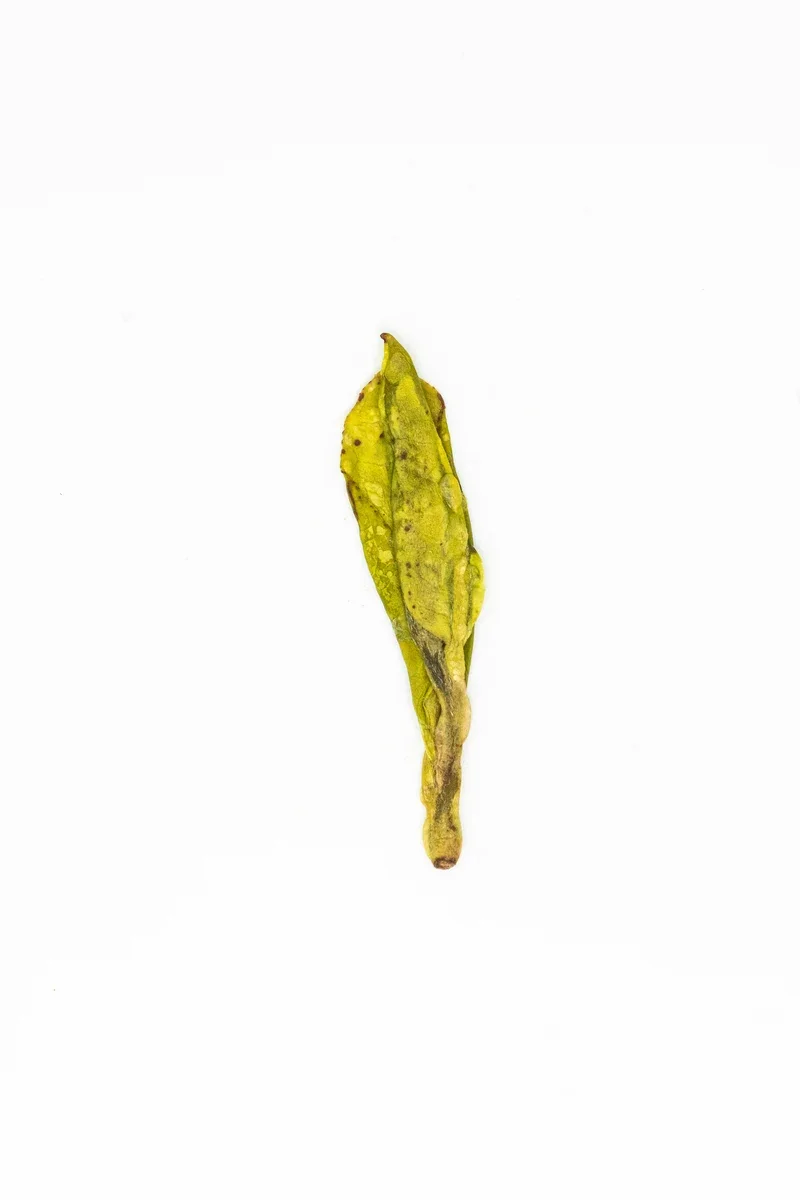
Raw Material: Buds must be full, elastic, uniform in size. Raw material must be delivered to the processing workshop as quickly as possible after picking, without mechanical damage, overheating, or withering. Particularly valued is the presence of "golden fish leaf" (鱼叶金黄, yúyè jīnhuáng) — a small protective leaf at the base of the bud that acquires a characteristic golden hue after processing. This feature, along with "ivory color" (色似象牙, sè sì xiàngyá), is the calling card of genuine high-grade Huangshan Maofeng.
Altitude: Main plantations are located at altitudes from 600 to 800 m above sea level. The most valuable batches come from gardens above 700 m. High-altitude position ensures slowed shoot growth and accumulation of aromatic substances and amino acids.
Soil: Acidic and weakly acidic (pH 4.5–5.5) mountain yellow and yellow-brown soils formed on granite and gneiss rocks predominate. High organic content and good water permeability ensure optimal mineral composition. Abundant forest litter (pines, bamboo, rhododendrons) enriches the soil.
The region is distinguished by abundant cloudiness and fog. A local saying states: "In clear weather morning and evening — fog everywhere, in rainy weather — mountains in clouds all day" (晴时早晚遍地雾,阴雨成天满山云). Average annual temperature is about 15–16°C. Precipitation — 1500–2000 mm per year. Air humidity is consistently high (>80%). Diffused light penetrating through clouds and tree canopies promotes increased synthesis of amino acids (especially L-theanine) and reduces catechin content, forming a mild, sweetish flavor profile.
Plantations are often located among mixed forests with wild orchids (兰花, lánhuā) — their aroma, according to local tea growers, directly influences the tea's character, giving it the signature "orchid" note (兰花香, lánhuā xiāng). Huangshan is home to relict coniferous species, and phytoncides from mountain forests create a unique atmosphere beneficial for tea bushes.
Hand picking is conducted in early morning hours. The master selects shoots of strictly defined standards. For special class — only buds with one barely opened leaf. Picked material is placed loosely in bamboo baskets without pressing and delivered to the processing workshop in the shortest time.
Freshly picked material is spread in a thin layer (5–7 cm) on bamboo trays in a ventilated room. Holding time — from 5 to 10 hours, with 1–2 turnings. During this time, part of the surface moisture evaporates, initial formation of aromatic compounds occurs, the leaf becomes soft and ready for fixation. Mass loss is about 15–20%.
Key stage. Conducted in a cylindrical wok (桶锅, tǒngguō) about 50 cm in diameter. Wok temperature — 130–150°C (initially higher, then decreases). For special class, 200–250 g of raw material is loaded into the wok at one time; for lower grades — 400–500 g. The master quickly tosses and mixes the leaves for 3–4 minutes. Goal — inactivation of enzymes (polyphenol oxidase), stopping oxidation, fixing green color, and forming basic aroma notes. Properly conducted fixation — "leaves are picked up easily, shaken freely, extracted cleanly from the wok" (带得轻、捞得净、抖得开).
Immediately after fixation, while the leaf is still hot, shaping is conducted. Depending on the master's tradition, one of two methods is applied: light rolling (揉捻, róuniǎn) — gives a slightly curved shape, or straightening (理条, lǐtiáo) — gives a more linear silhouette. Pressure — minimal, so as not to damage tender buds. Goal — partial opening of cellular structures to improve extraction during brewing and imparting the characteristic "sparrow tongue" shape (雀舌, quèshé).
Shaped leaf is placed on bamboo sieves or in heating dryers at about 90°C. Dried until moisture content drops to approximately 15–20%. This stage fixes the shape and begins forming the final aroma. Batches are periodically turned for evenness.
After primary drying, tea is spread for cooling and redistribution of residual moisture from stem to leaf. Time — about 1 hour.
Conducted at lower temperature (60–70°C) until achieving residual moisture of less than 5%. This stage — double, sometimes triple re-drying (初烘 + 复烘) — is the "signature" distinction of Huangshan Maofeng from other green teas. Thanks to multi-stage gentle heating, the tea acquires stable aroma, storage stability, and characteristic chestnut-orchid notes.
Finished tea is sorted by grades: special class (特级) first, second, and third categories, as well as first, second, and third grades — six levels total.
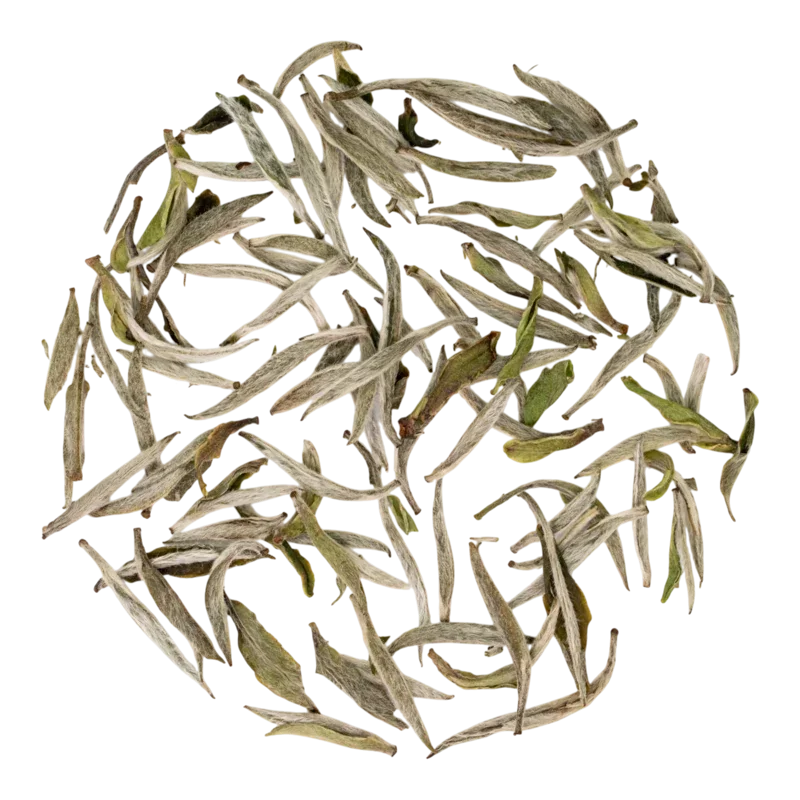
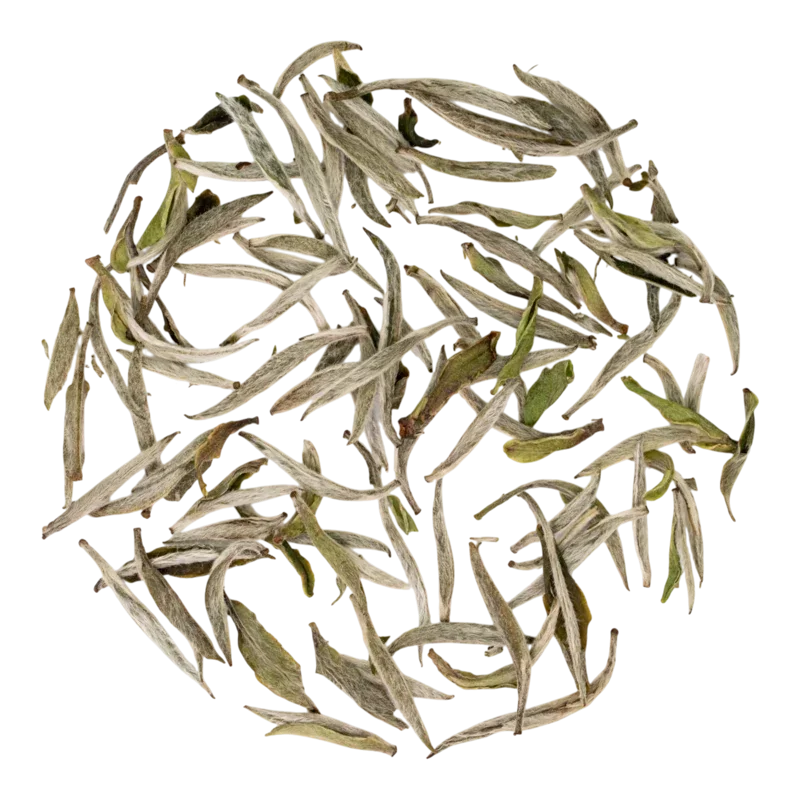
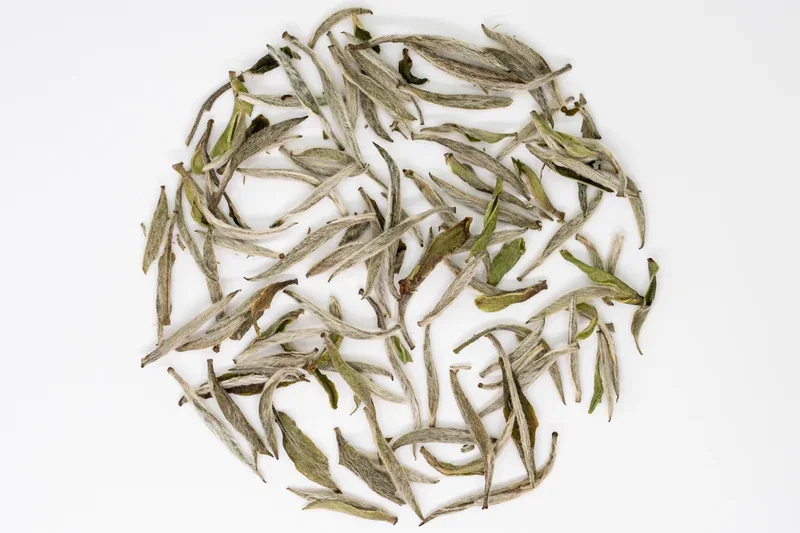
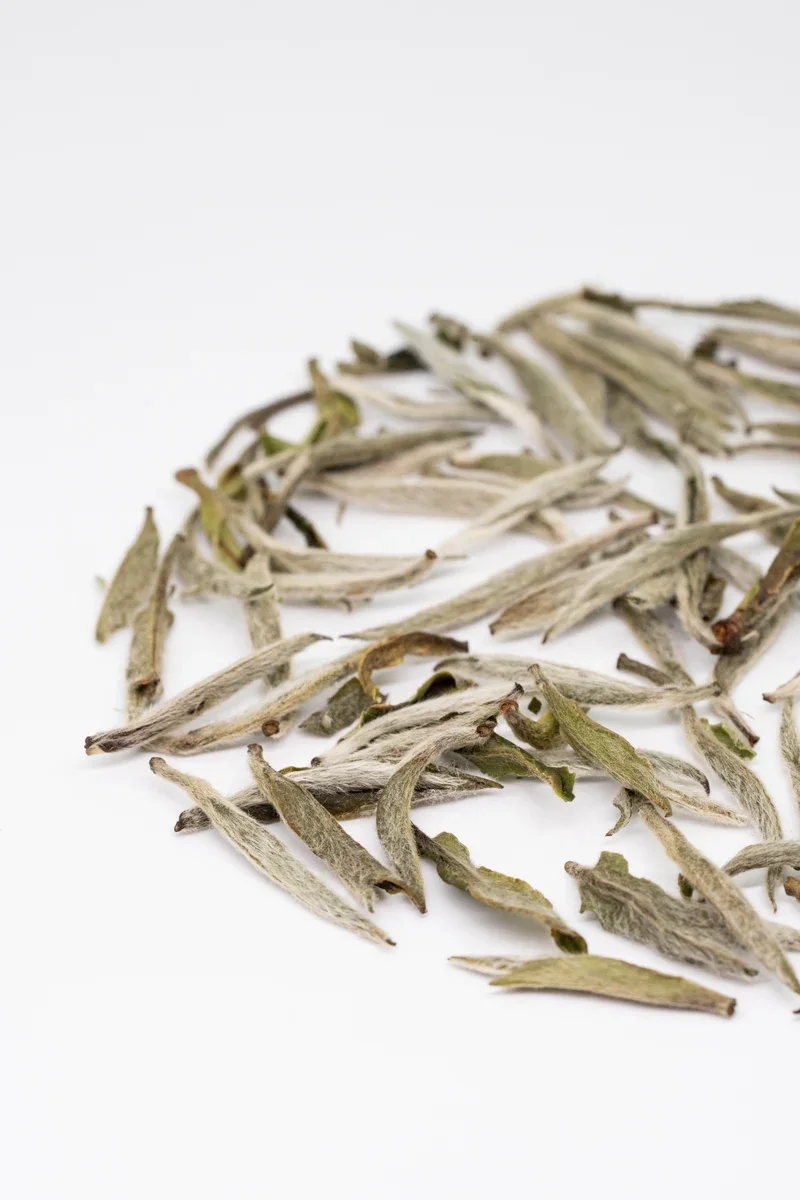
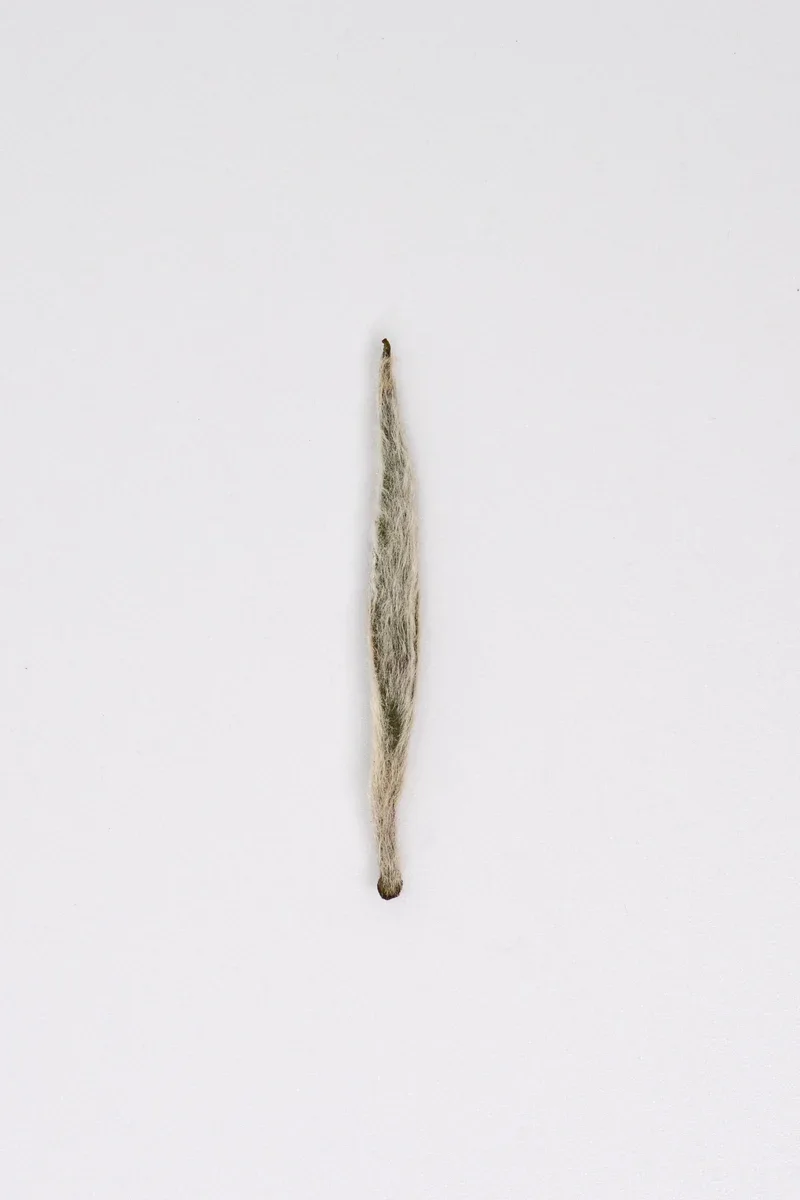
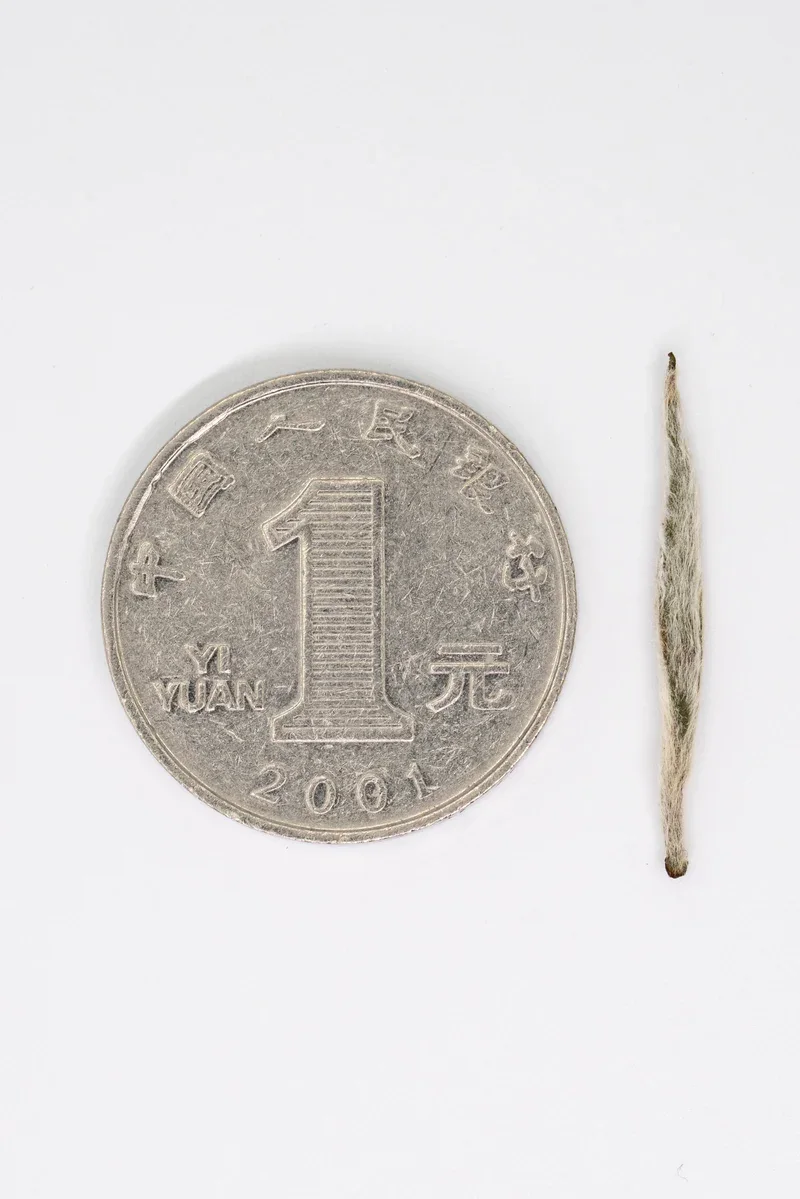
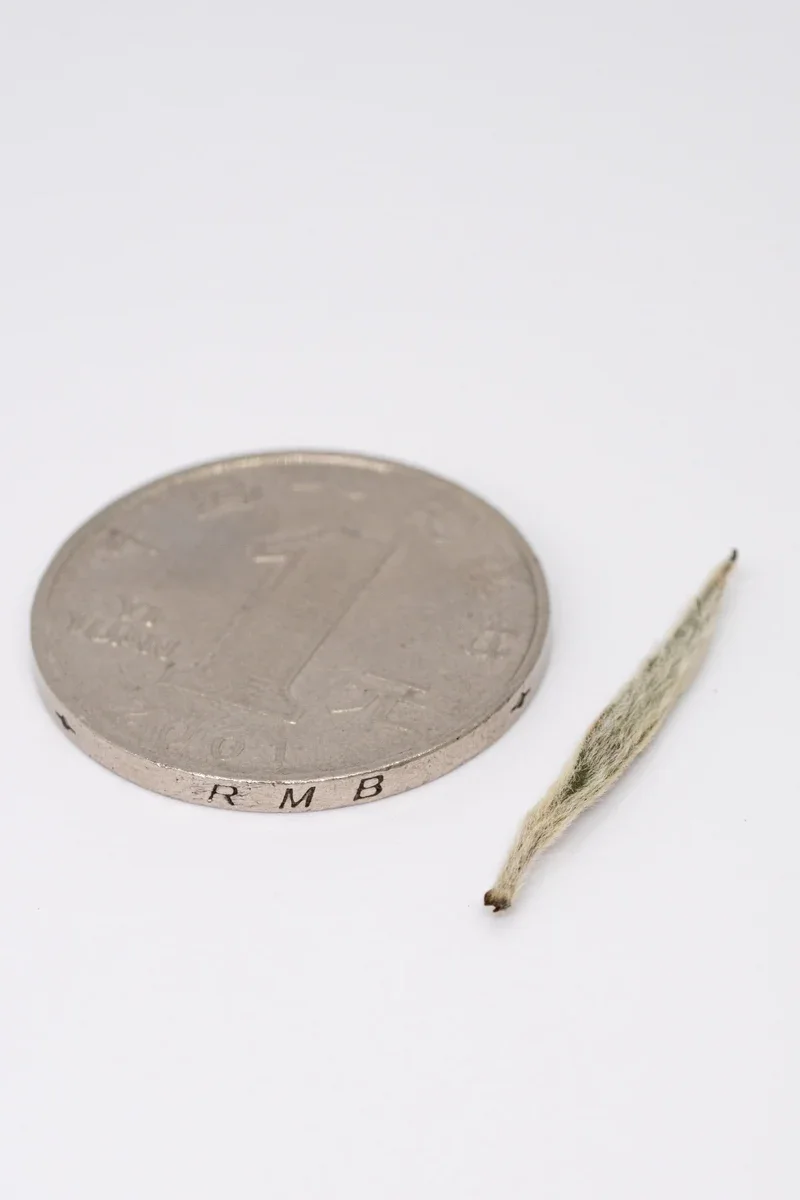
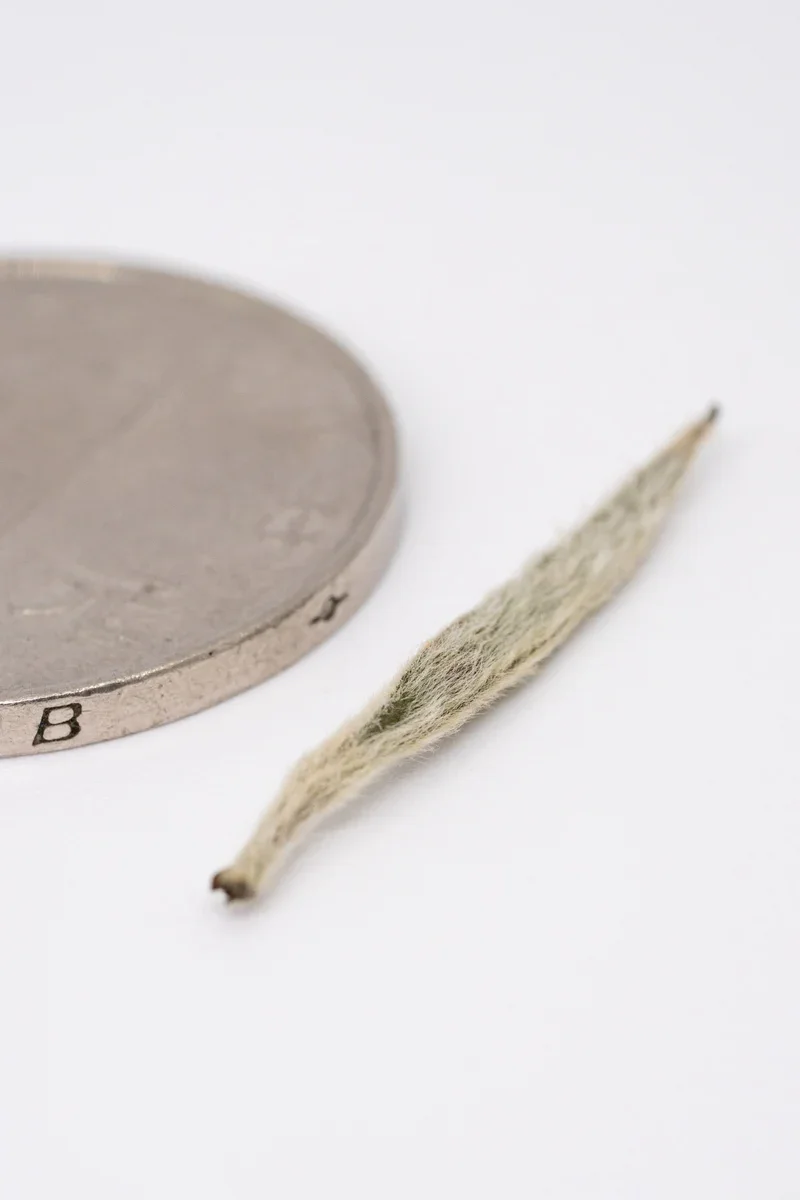
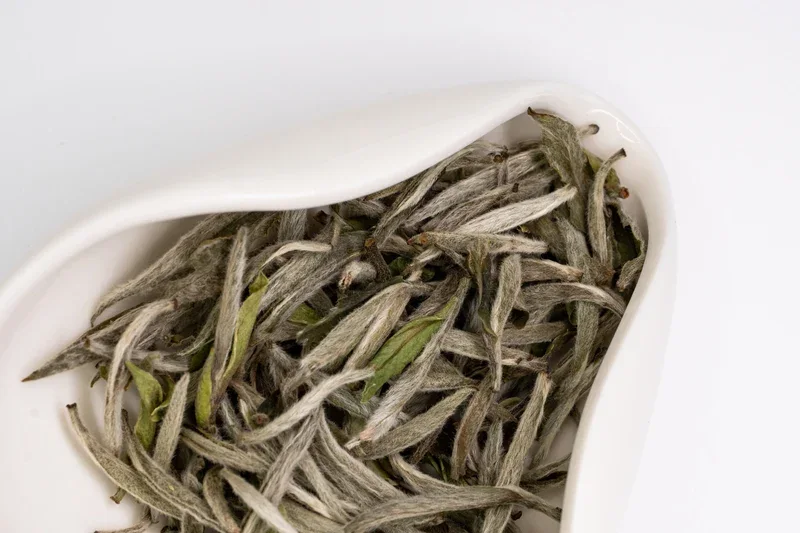
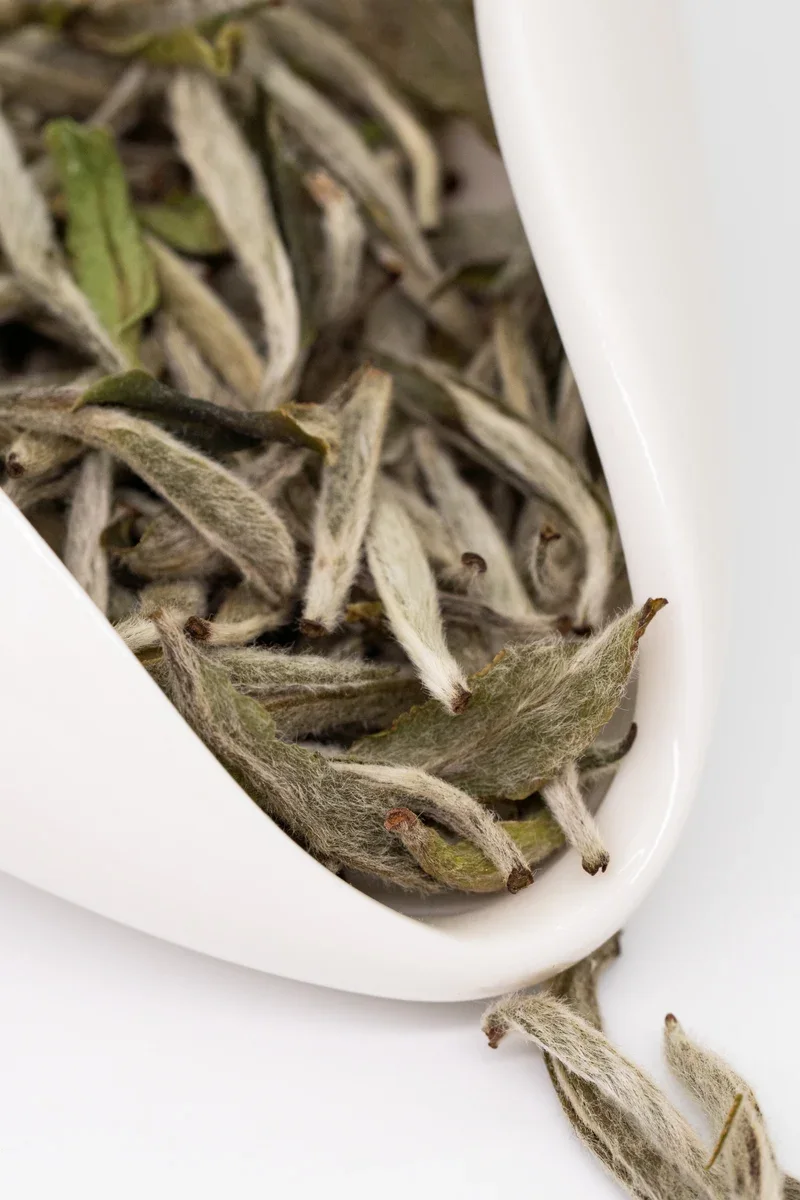
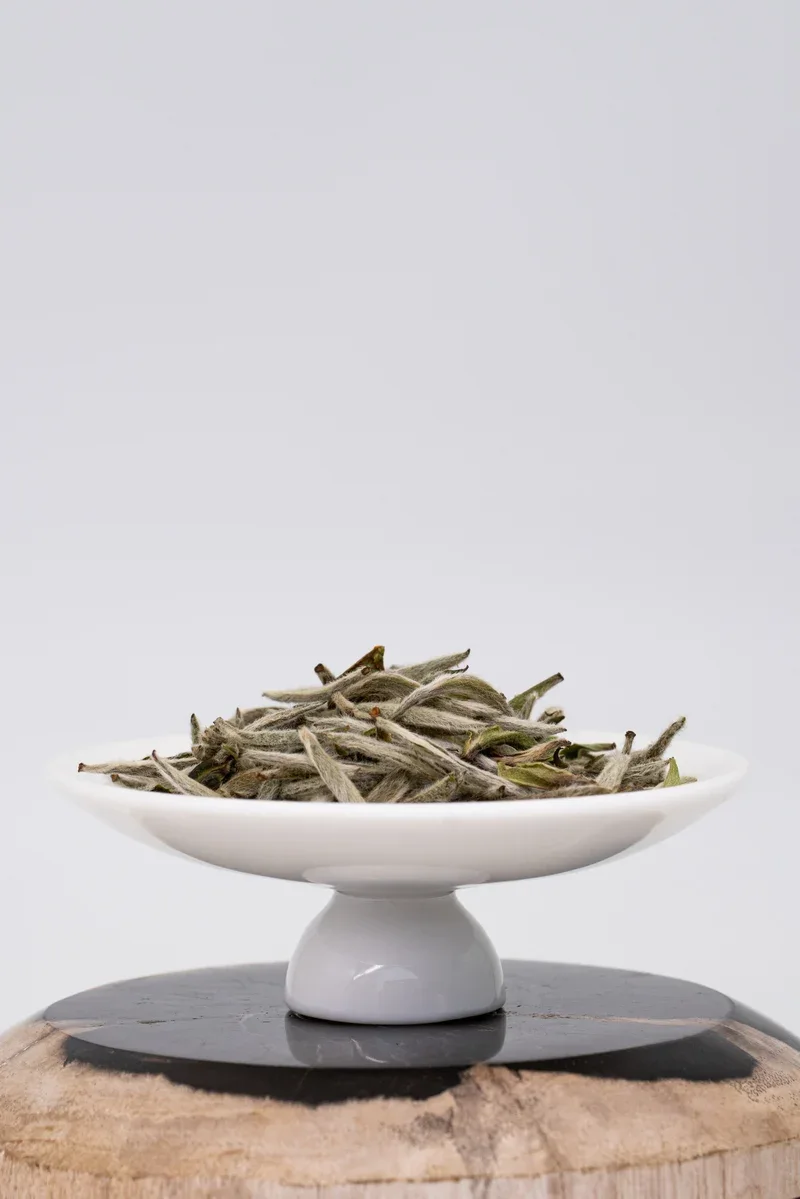
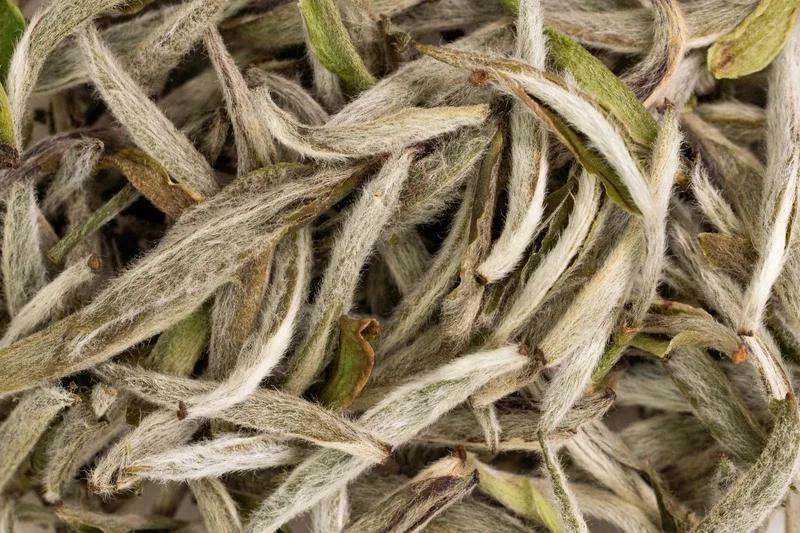
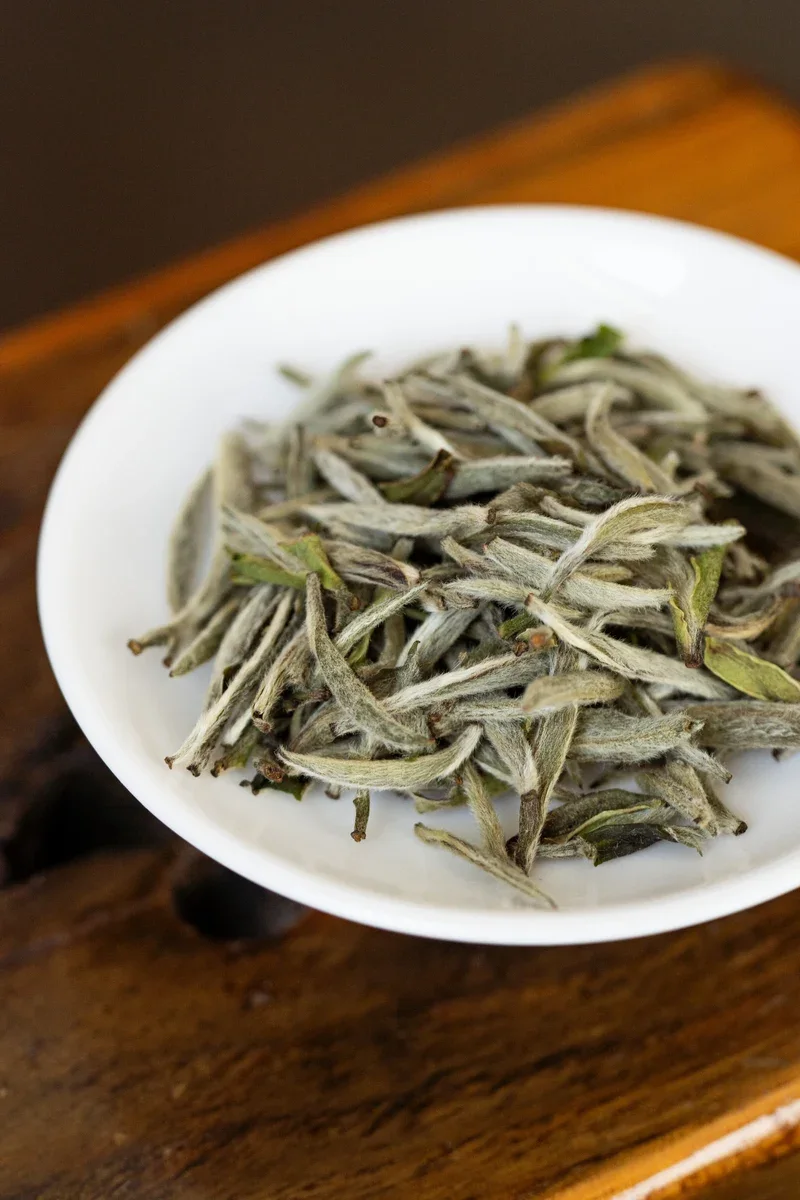
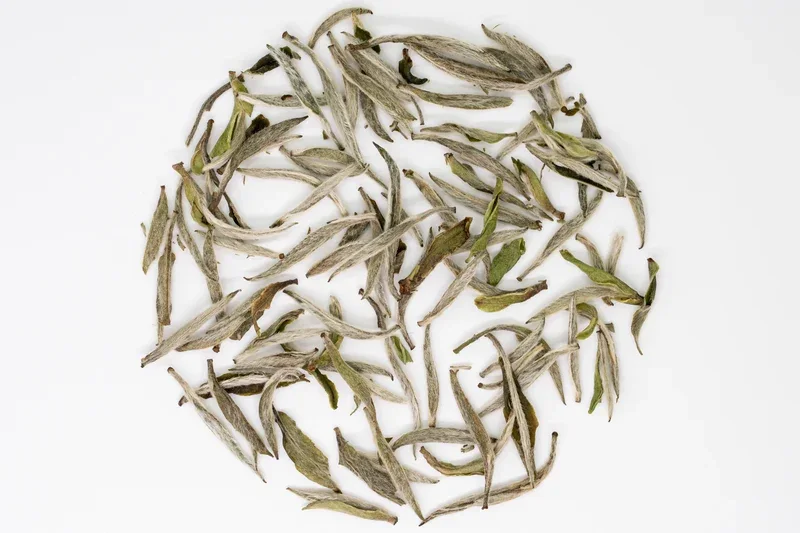
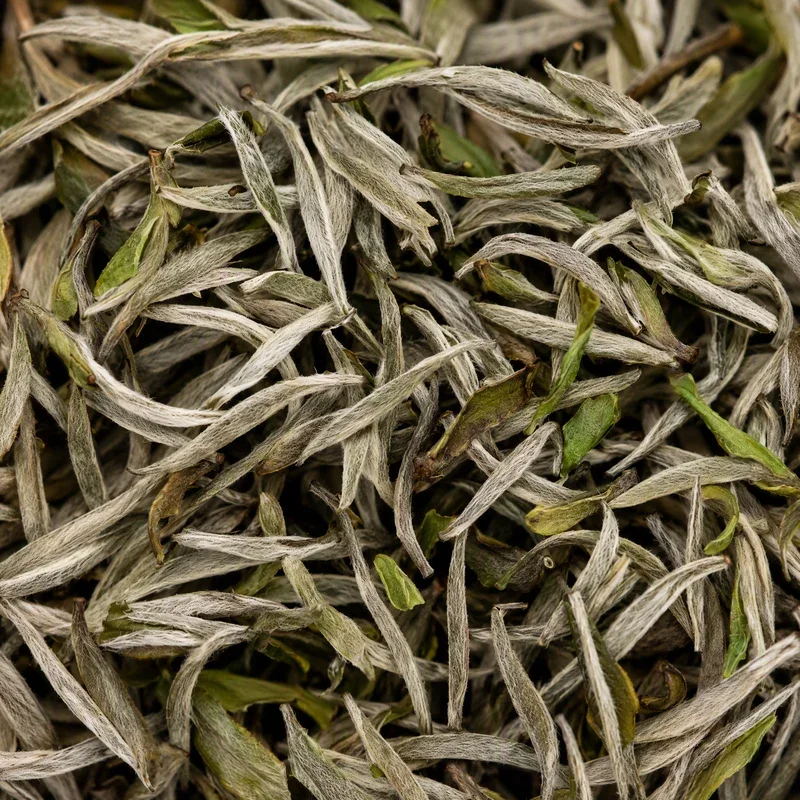
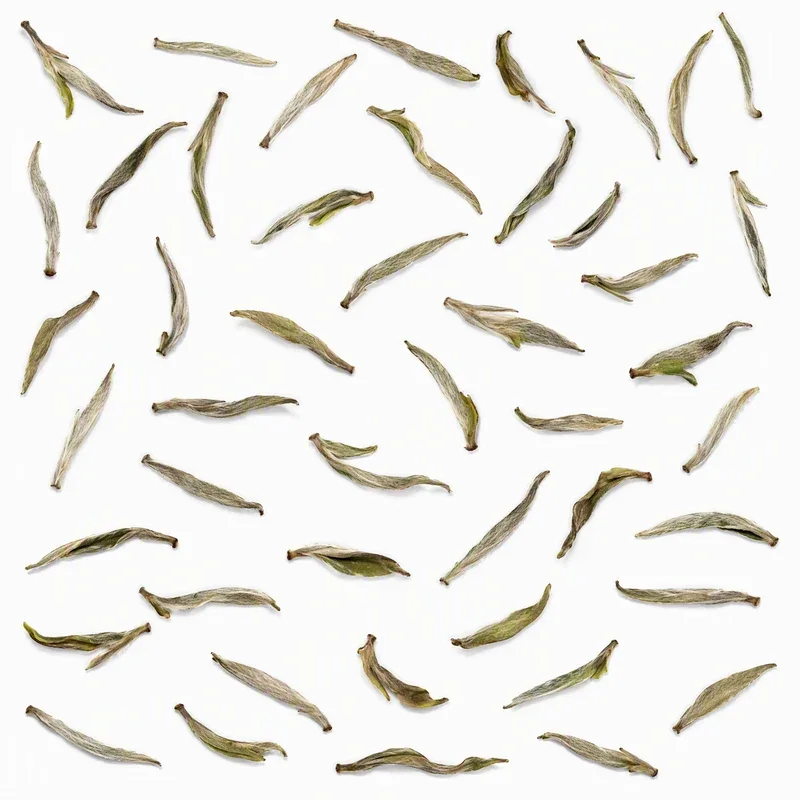
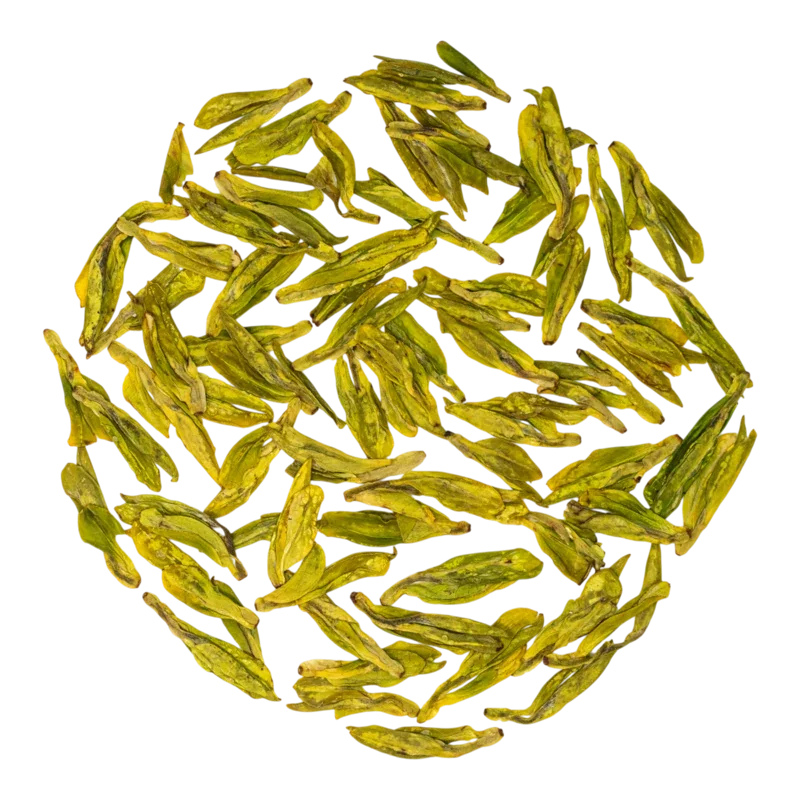
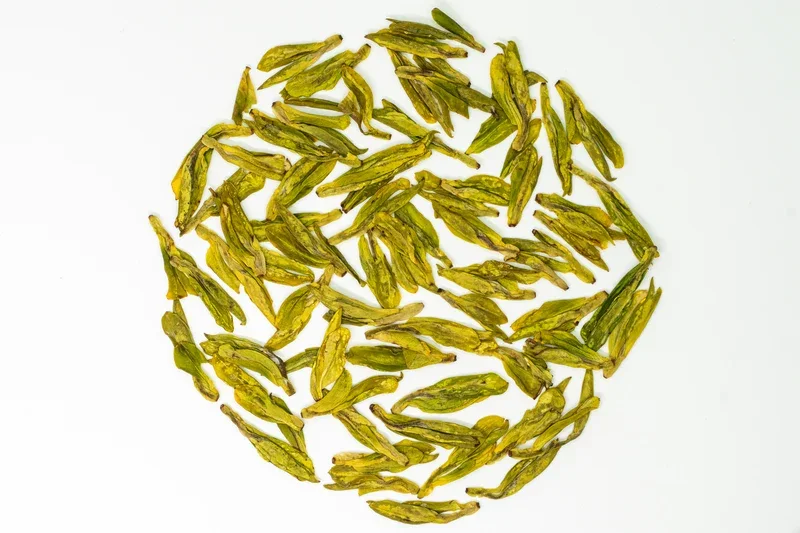
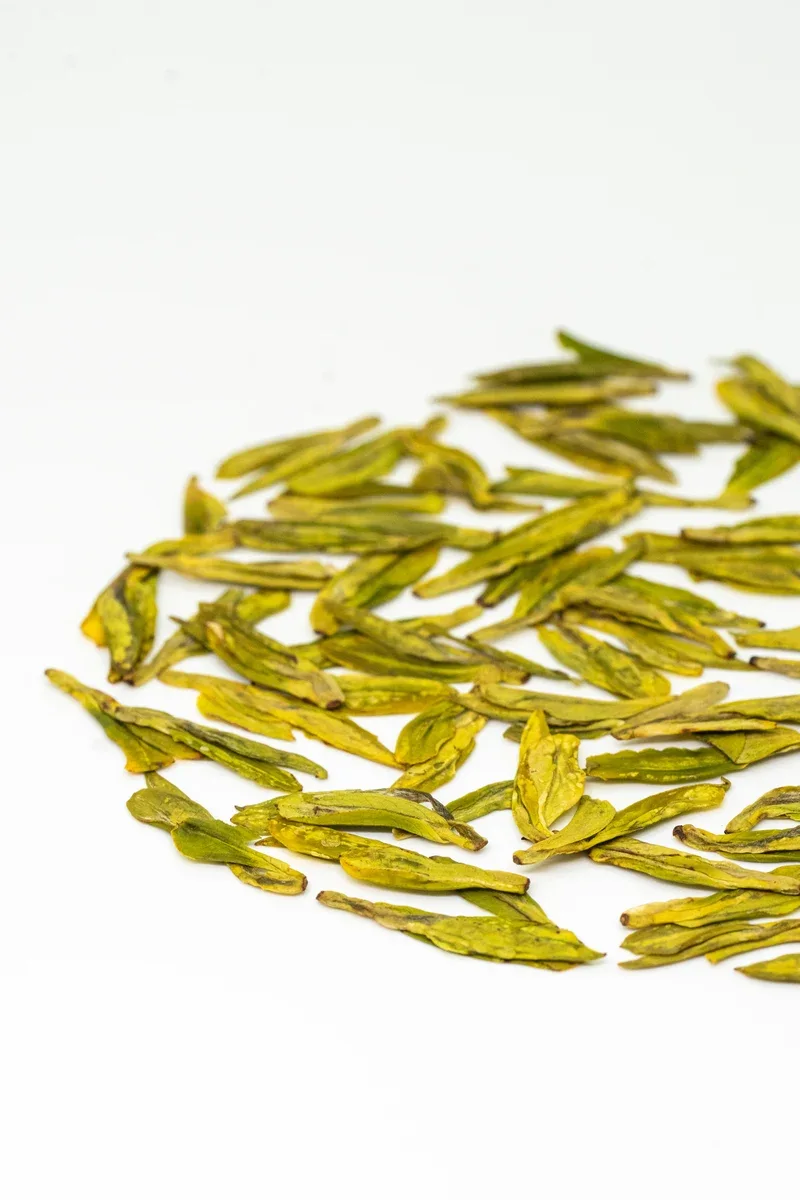
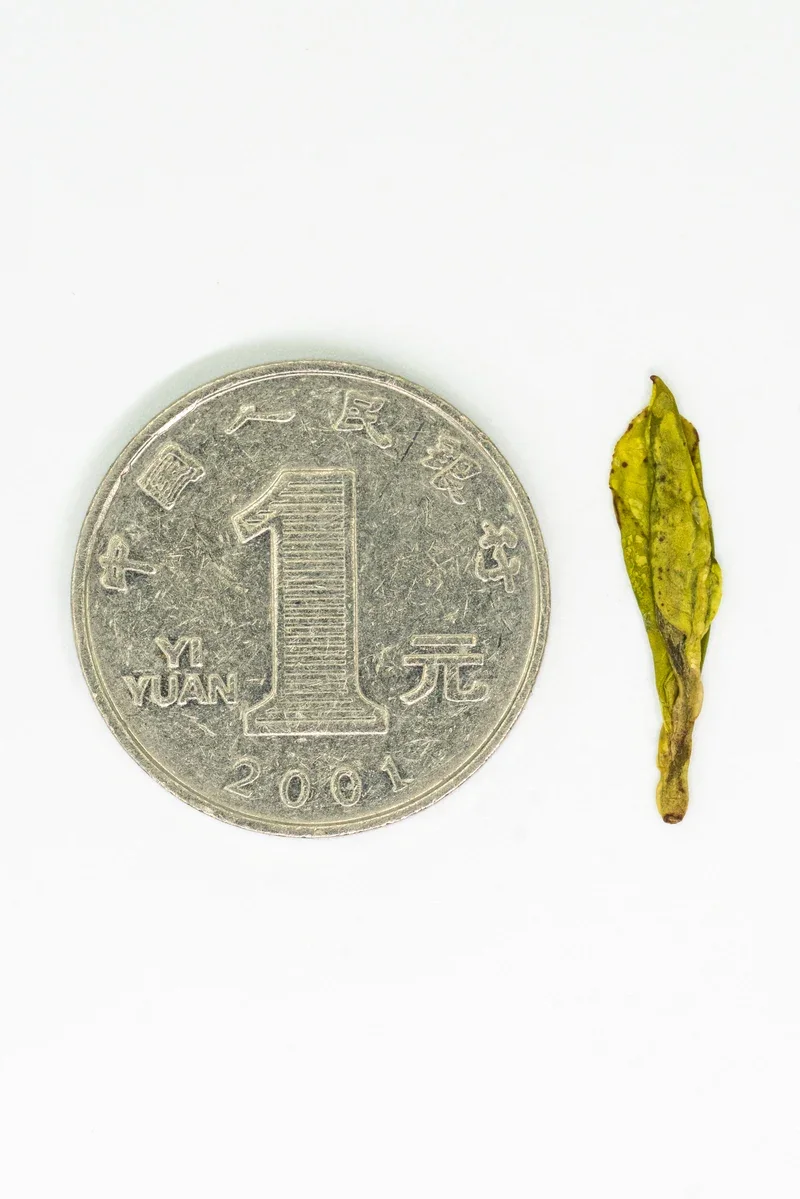
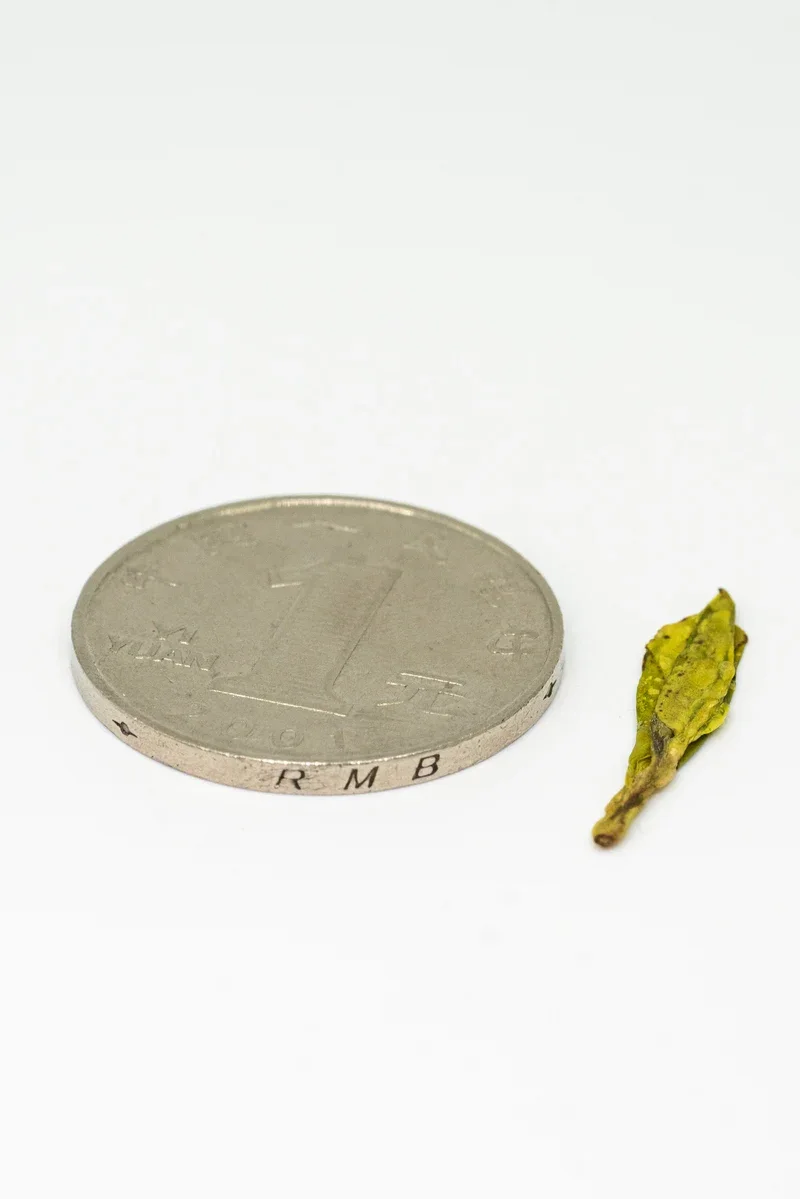
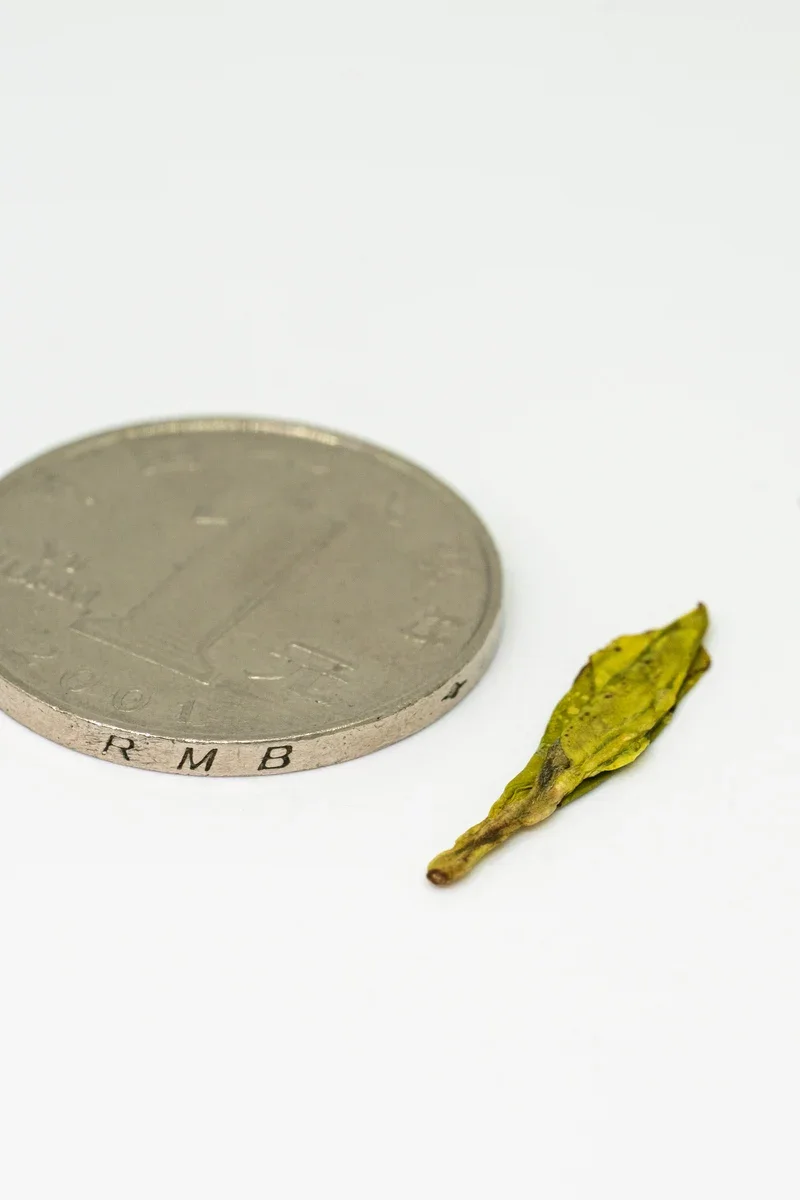
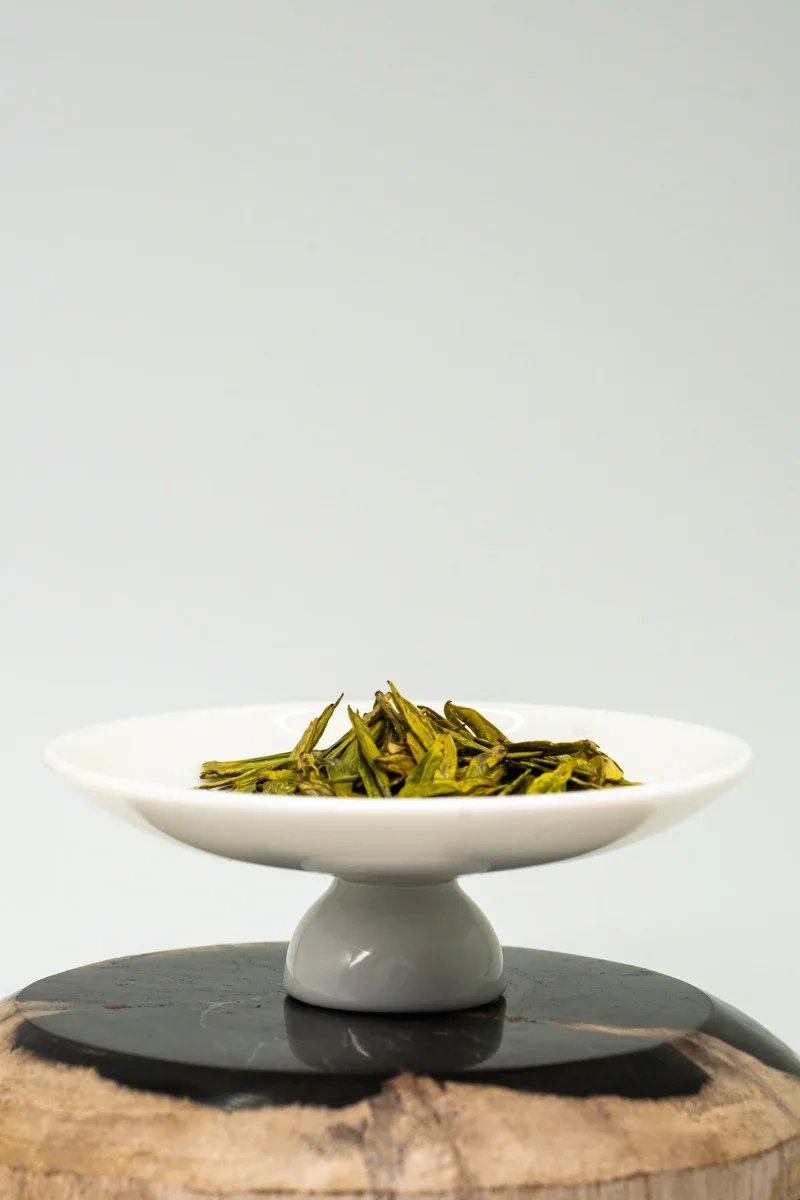
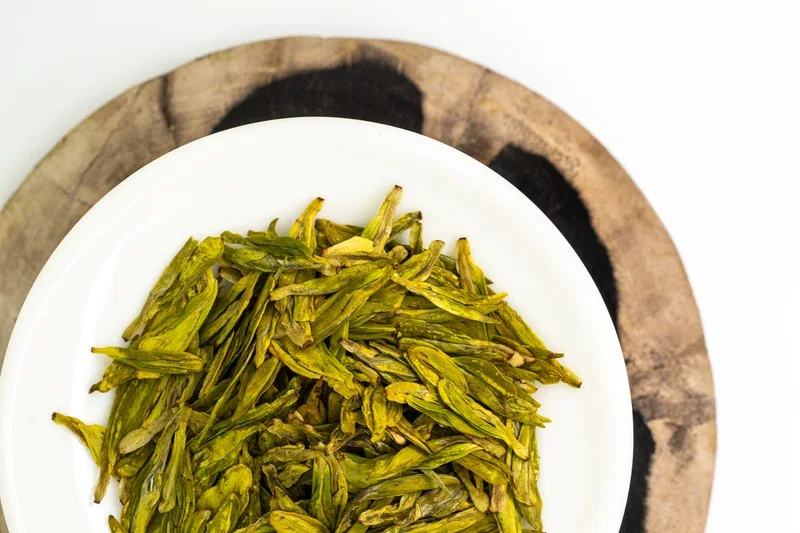
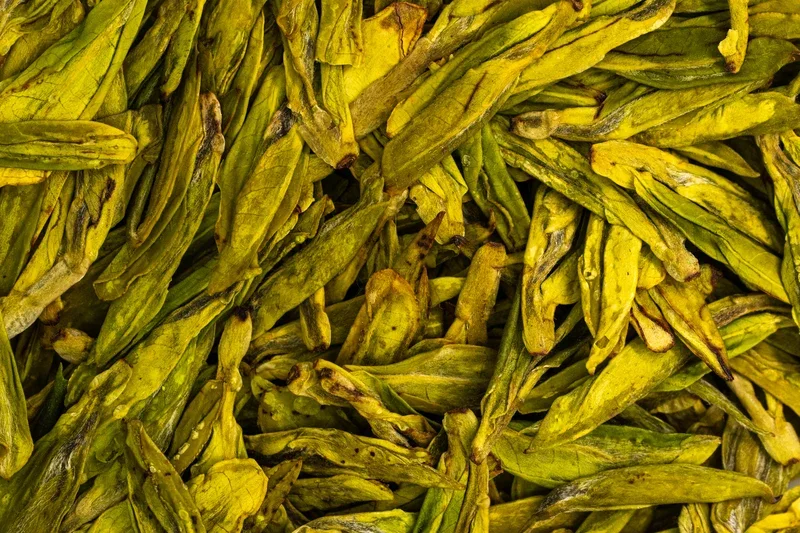
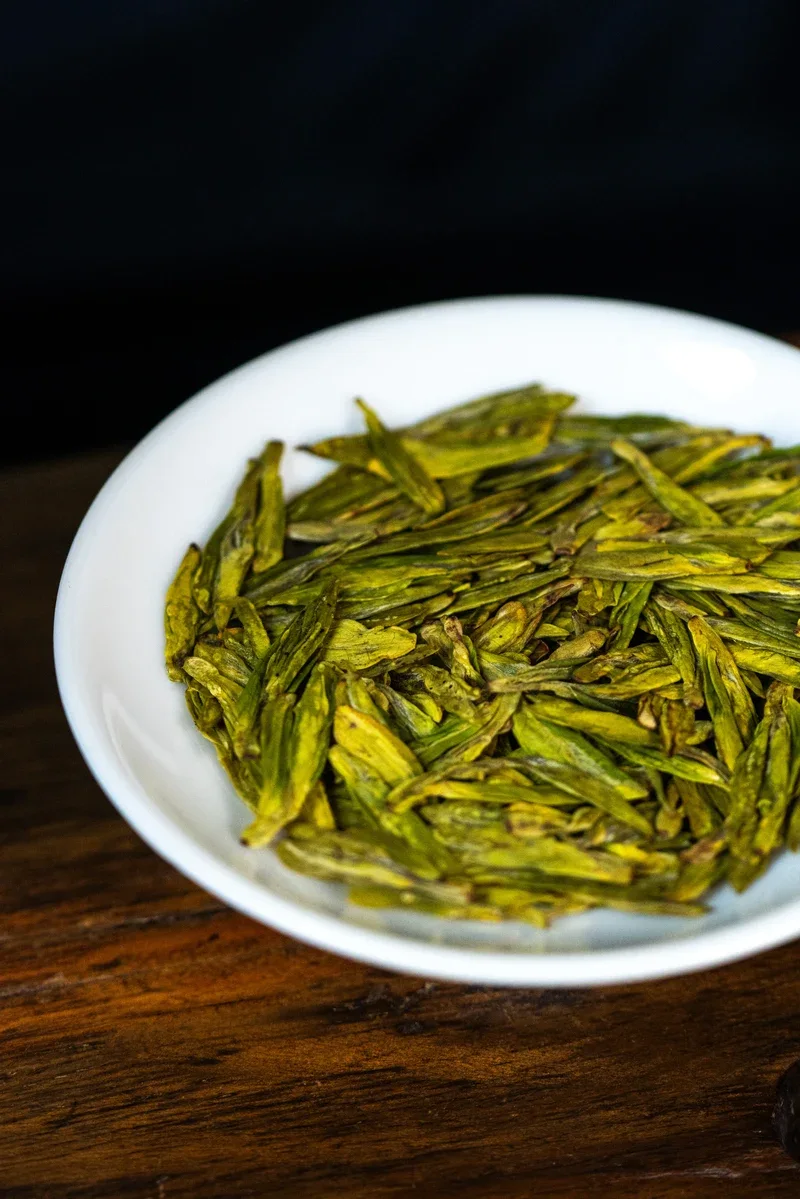
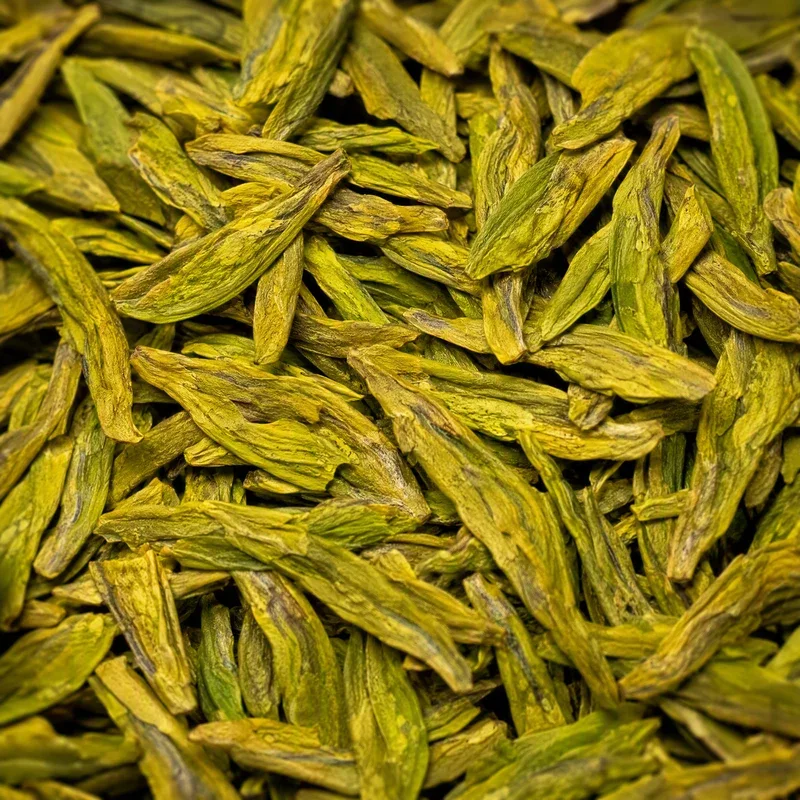
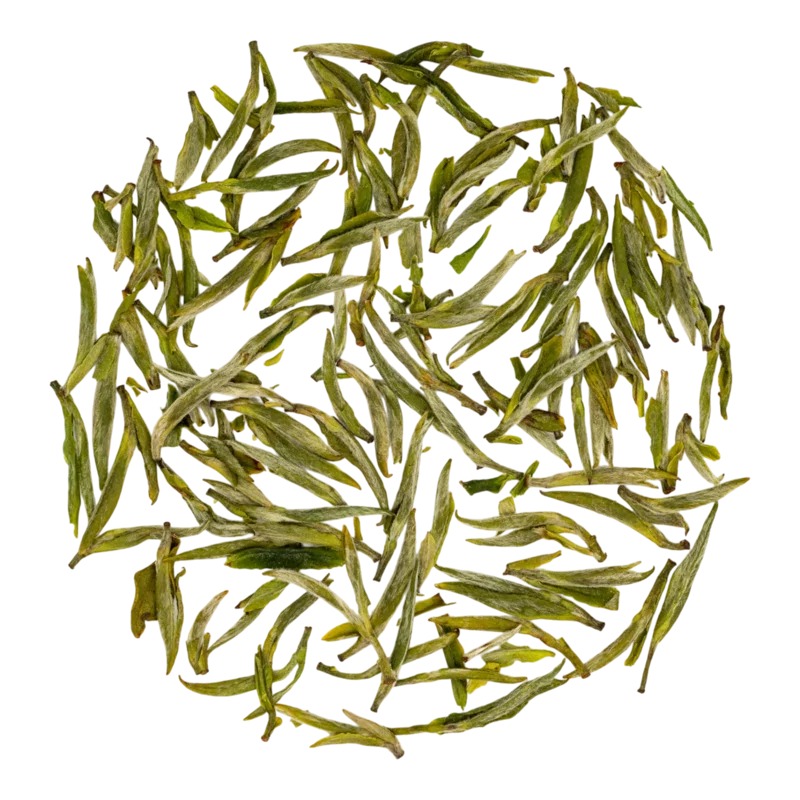
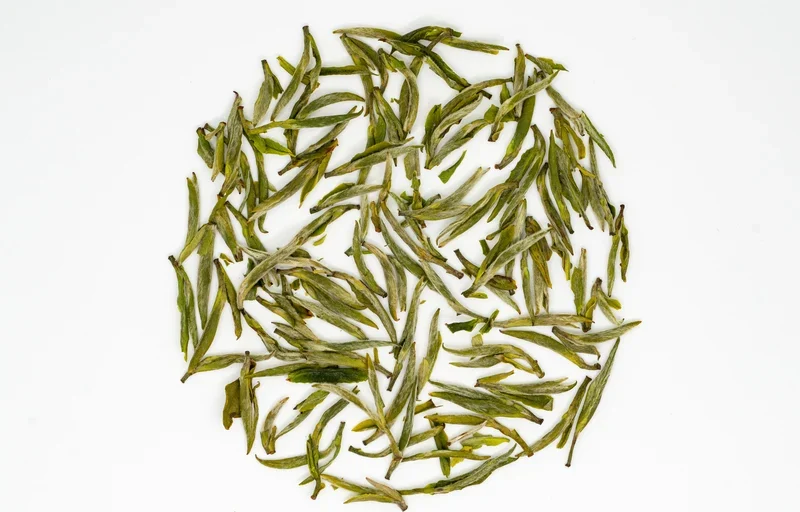
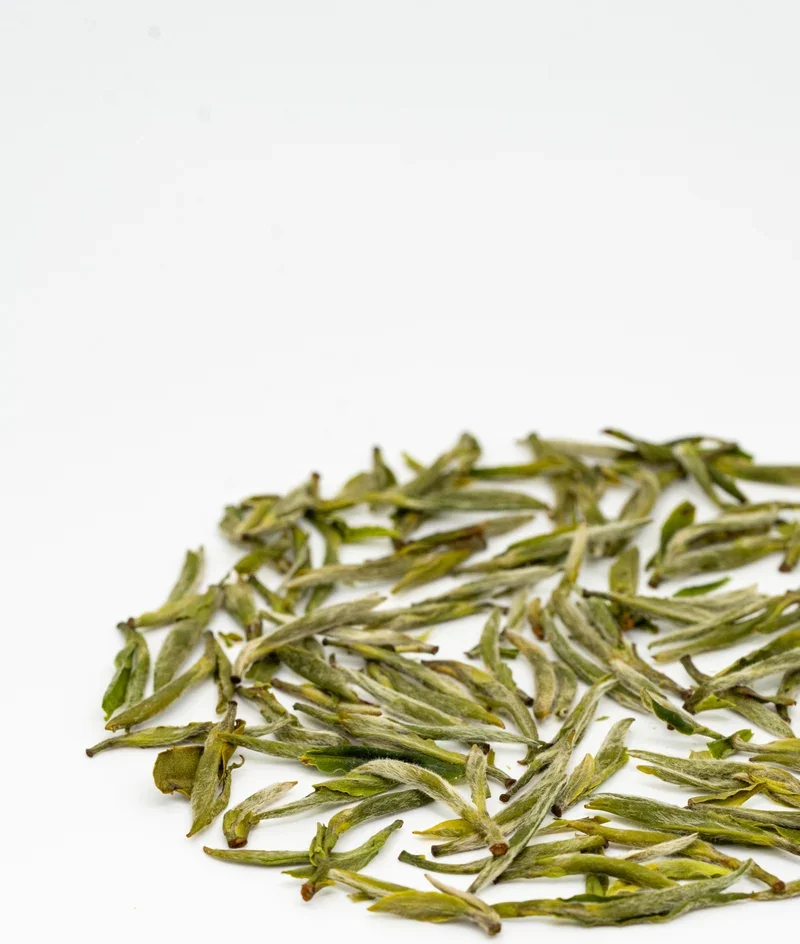
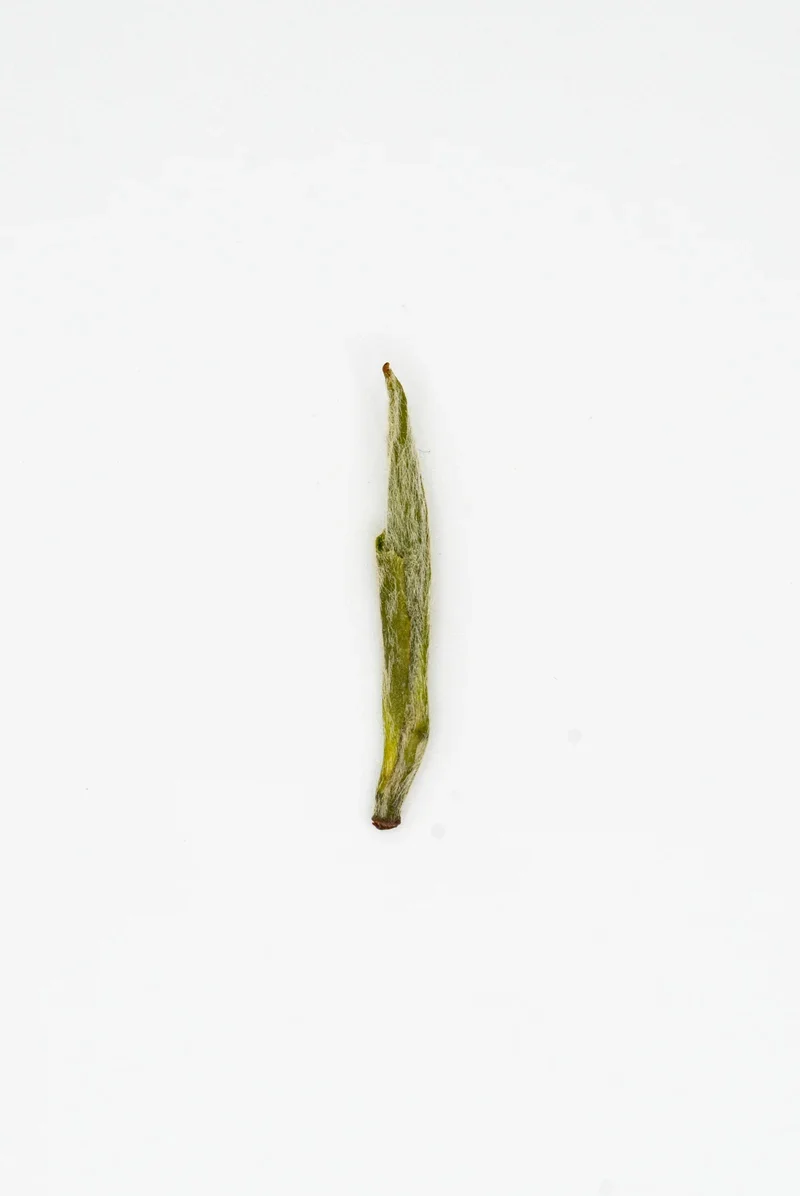
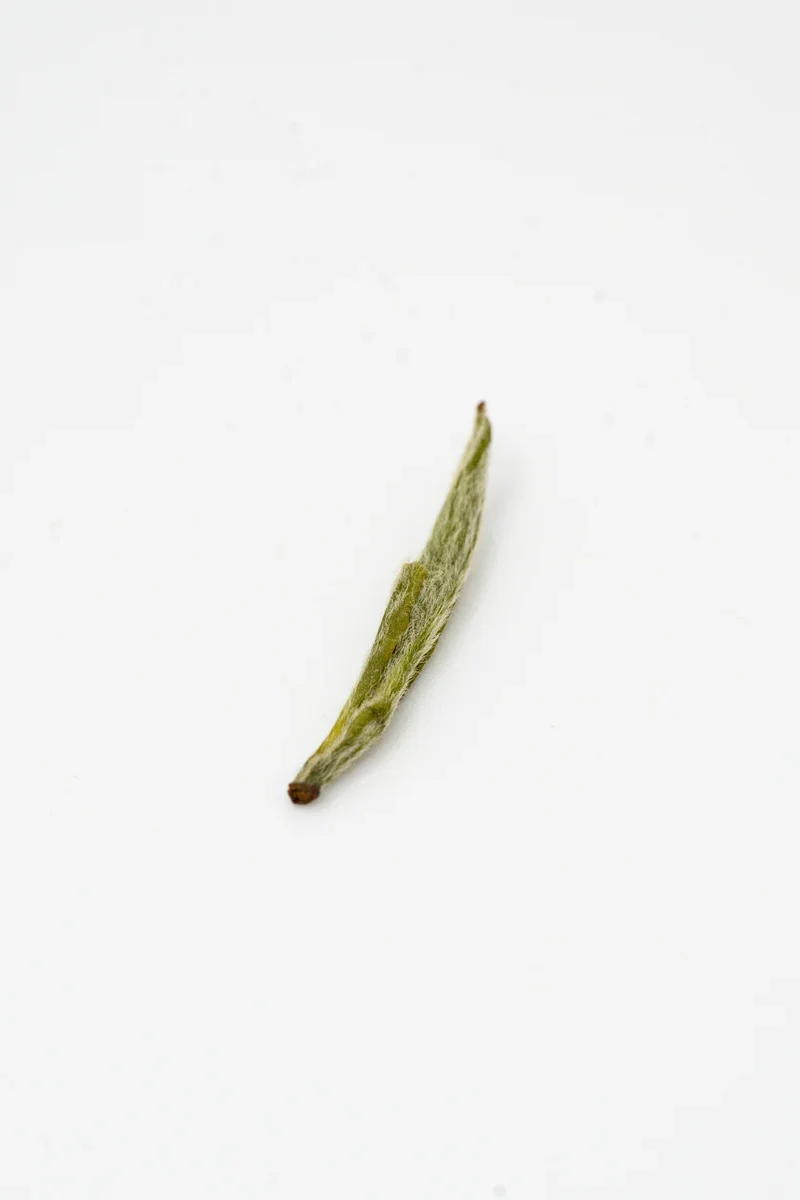
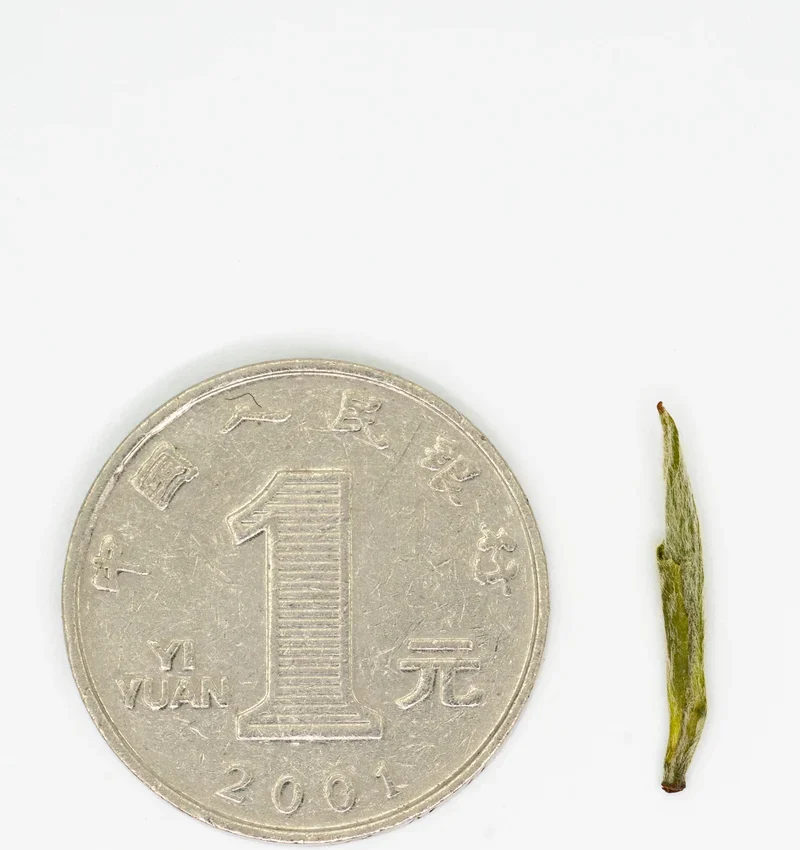
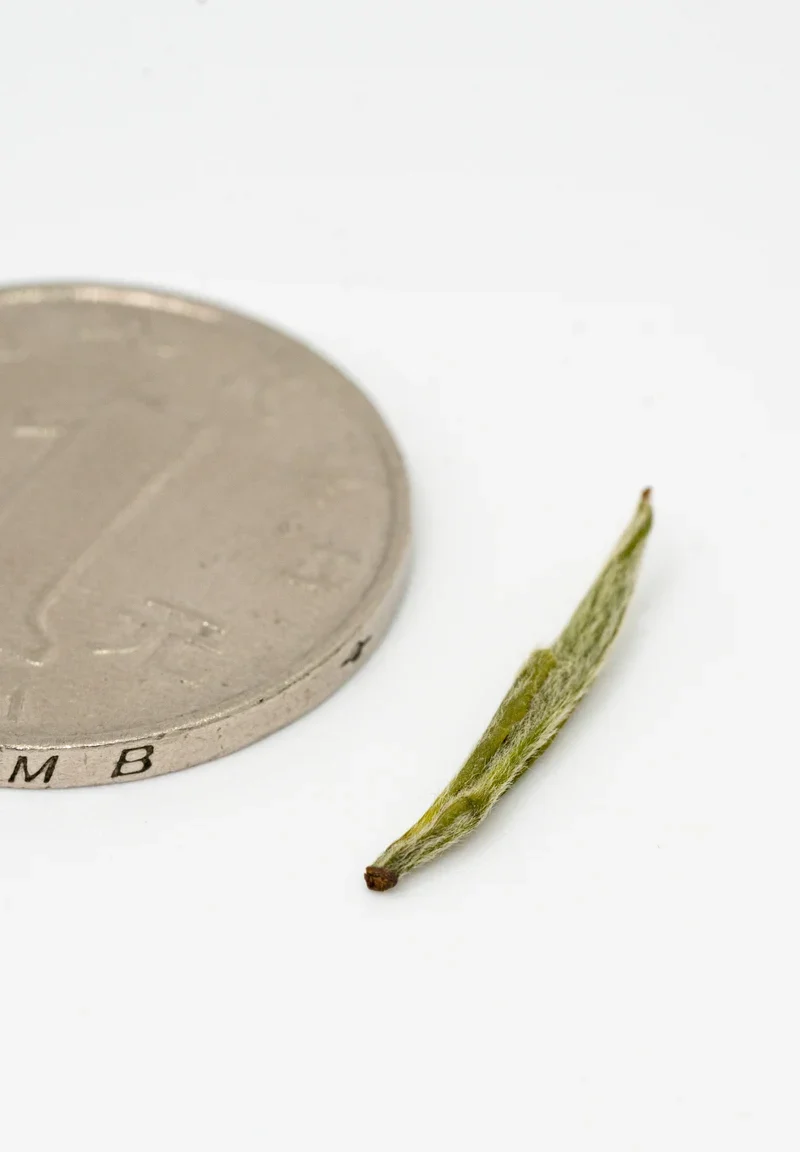
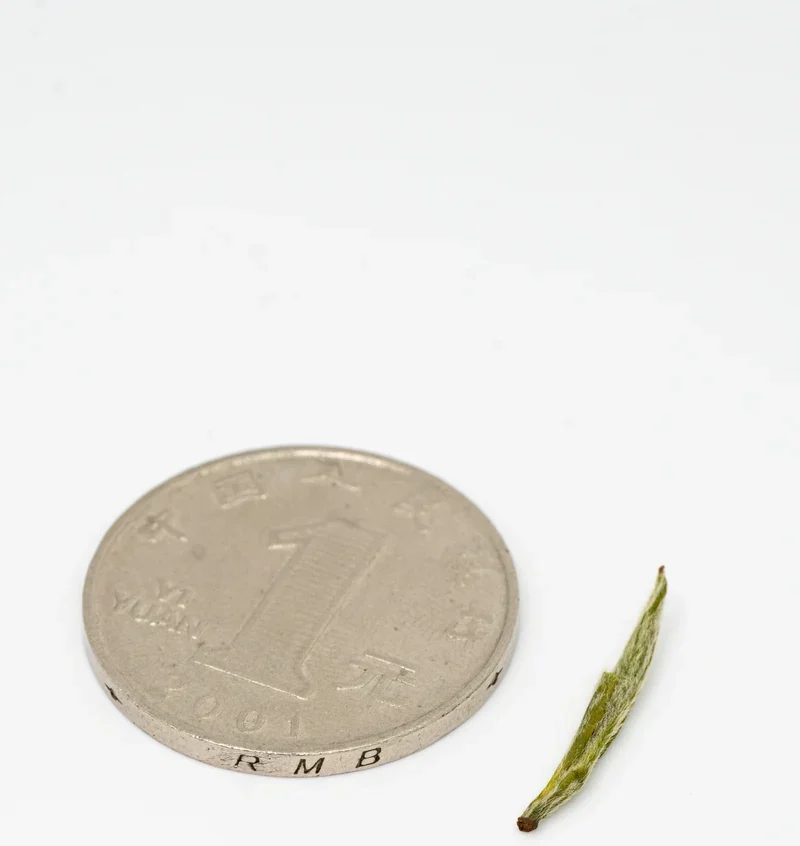
Dry Leaf Appearance: Special class — thin, slightly curved leaves shaped like sparrow tongues (雀舌). Color — greenish-yellow, "ivory color" (象牙色, xiàngyásè) with light golden hue. Abundant white down (白毫, báiháo) covers the buds. At the base of many buds, a small golden-yellow "fish leaf" (鱼叶金黄) is visible — the calling card of genuine high-grade Maofeng. Leaf is dense, elastic, without brittleness. In lower grades, the leaf is larger, twist less tight, golden fish leaf absent.
Dry Leaf Aroma: Clean, fresh, with distinct notes of roasted chestnut (栗香, lìxiāng). In higher grades — delicate floral orchid overtones (兰花香, lánhuā xiāng). No grassiness or "raw" tones.
Liquor Aroma: High and lasting (香高持久, xiāng gāo chíjiǔ). Gentle orchid note dominates, complemented by chestnut and light honey overtones. Aroma is clean, without smokiness. As the cup cools, sweetish creamy tones unfold.
Liquor Color: Transparent, clean, light green with noticeable yellow hue (清碧微黄, qīng bì wēi huáng). When brewed in a glass, characteristic mist rises above the water surface — "mist at the peak" (雾气结顶, wùqì jiédǐng).
Spent Leaves: Tender yellow with green hue leaves, elastic, full of life (嫩黄肥壮成朵, nèn huáng féizhuàng chéng duǒ — "tender yellow, plump, opening in clusters"). Buds and leaves are whole, without damage. Size uniformity indicates quality picking.
Taste: Fresh, lively (鲜爽, xiānshuǎng), with pronounced sweetness and rounded body (醇厚, chúnhòu). Astringency is minimal — even with slight over-brewing, the tea does not become harsh. A soft "juiciness" is felt (鲜醇甘甜, xiān chún gāntián — "fresh, mellow, sweet"). Aftertaste is long, with growing returning sweetness (回甘, huígān) and light coolness in the throat.
Alkaloids: Caffeine (咖啡碱, kāfēi jiǎn) — 2–3.5% of dry mass (approximately 30–50 mg per 150 ml cup with standard brewing). Theobromine and theophylline are also present in trace amounts.
Amino Acids: Total content — about 3–5% of dry mass, which is above average for green teas. High L-theanine content (L-茶氨酸, L-chá'ānsuān) is explained by mountain conditions (altitude, fog, diffused light) — theanine is responsible for characteristic sweetness, umami-like fullness, and relaxing-tonic effect.
Dozens of volatile components have been found in Huangshan Maofeng aroma, including linalool, geraniol, nerolidol, cis-jasmone — they form the characteristic orchid-chestnut profile. The hongqing method (heating drying) promotes formation of pyrazines responsible for roasted chestnut notes (栗香).
Thanks to high-altitude origin and early harvest, Huangshan Maofeng is distinguished by increased amino acid content with moderate catechin levels — hence its pronounced sweetness and mildness compared to lowland green teas.
Minerals: Potassium, phosphorus, magnesium, calcium, zinc, manganese, fluorine, selenium. Acidic mountain soils of Huangshan ensure good microelement uptake.
Polyphenols: Catechin content (primarily EGCG — epigallocatechin-3-gallate) is typical for early harvest green teas — approximately 12–18% of dry mass. Catechins provide antioxidant action and light pleasant astringency.
Vitamins: Vitamin C (ascorbic acid) — one of the most significant; content in fresh green tea reaches 100–250 mg/100 g dry matter, but decreases during storage. B vitamins (B1, B2, B3/niacin), vitamin E (tocopherols), vitamin K.
High catechin content (especially EGCG) provides powerful antioxidant action — neutralization of free radicals and reduction of oxidative stress.
The combination of caffeine and L-theanine creates a state of "calm alertness" — increased concentration without nervousness and sharp fluctuations. Theanine softens caffeine's stimulating effect.
Green tea catechins help reduce "bad" cholesterol (LDL) levels, improve vascular elasticity, and may have moderate hypotensive effects.
Moderate green tea consumption stimulates digestive enzyme secretion, helps fat breakdown. Huangshan Maofeng, thanks to its mildness, is suitable for accompanying light meals.
Polyphenols and vitamin C have immunomodulating effects. Catechins possess antibacterial properties.
L-theanine promotes alpha brain wave generation, improves memory, attention, and learning ability. Regular green tea consumption is associated with maintaining cognitive functions.
Green tea antioxidants (polyphenols, vitamin E) help protect skin cells from photodamage and slow aging processes.
Catechins combined with caffeine enhance thermogenesis and may contribute to maintaining healthy weight with balanced nutrition.
Tea Amount: 3 g per 150 ml water (flash brewing method: gaiwan) or 2–3 g per 200 ml (steeping method: glass cup). When using a teapot — 5–7 g per 200–250 ml.
Teaware: Glass cup (玻璃杯, bōlí bēi) — best choice for visual enjoyment: allows observing how buds unfold and "dance" in water, while characteristic "mist" rises above the surface. Gàiwǎn (盖碗, gàiwǎn) of white porcelain — for subtle aroma and taste evaluation. Porcelain teapot — for daily tea drinking. Yixing teapot from zisha clay is not recommended for this tea — porous clay may absorb the delicate aroma.
Water Temperature: 80–85°C for standard grades; 75–80°C for special class first and second categories (more delicate material requires gentler temperatures). Do not use boiling water — it will "burn" tender buds and produce bitterness.
Container: Airtight, light-proof packaging. Optimal — vacuum foil bags or tin cans with tight lids. When opened — transfer to a jar with silicone seal.
Shelf Life: For best taste, recommended to consume within 6–12 months after production. With each month of storage, green tea loses freshness, aroma brightness, and sweetness. Previous year's tea (陈茶, chénchá) may still be suitable but significantly inferior to fresh.
Before opening a package from the refrigerator, let it warm to room temperature (30–60 minutes) to avoid moisture condensation on cold leaves.
Temperature: Ideally — in refrigerator at 0–5°C, in vegetable compartment, necessarily in airtight container (tea instantly absorbs refrigerator odors). Room temperature storage in a dark cool place is acceptable, but shelf life is reduced.
Pan-fired (炒青) green tea, flat leaf. Longjing has a more "roasted," beany aroma; Maofeng — more floral and sweet. Longjing — flat blade, Maofeng — voluminous twisted bud with down. Longjing liquor — greener; Maofeng — more yellow.
Also chaoqing, with tight spiral twist and abundant down. Biluochun is distinguished by fruity-floral aroma (plantations among fruit trees), higher astringency. Maofeng — milder, more "chestnutty," less fruity.
Fellow from the same Huangshan, but from Taiping district. Radically different in appearance — large flat leaves up to 7 cm. Houkui is more orchid-like, with deep "mineral" taste. Maofeng — more delicate and easily drinkable.
The only famous green tea made exclusively from leaf blade (without buds). Profile is more intense, with noticeable bitterness. Maofeng — contrastingly gentler and sweeter due to bud material.
Also covered with down (毛) and has "tip" (尖), but from Henan Province. Maojian is smaller, more tightly twisted, with more pronounced fresh astringency. Maofeng — larger, milder, more aromatic.
Price Category: Wide range. Special class first category (特级一等) from renowned producers from the Fuxi zone core can reach 5000–9000 yuan per jin (500 g). Special class third category — 800–2000 yuan. First grade — from 300 yuan. Mass grades (second-third) — accessible for daily consumption, from 100 yuan. Key price factors: harvest season (mingqian > yuqian > summer), grade, specific origin (Fuxi > other areas), producer reputation.
No reviews yet. Tell us what you think of this tea.
Rate this tea and share your impressions. We review each submission before publishing it.