Brewing
Gongfu brewing
- Water temperature
- 75 °C
- Tea amount
- 5 g
- Water volume
- 100 ml
- First steep
- 10 s
- Time added per infusion
- 5 s
- Infusions
- 4



Sāngzhí báichá
Choose a brewing method. Start with the recommended quantities and time, then adjust to taste.
Brewing
Brewing
Taste
Tea encyclopedia
Category: Regional white teas of Hunan; modern «growth point» of white tea outside Fujian.
Category: Regional white teas of Hunan; modern «growth point» of white tea outside Fujian.
the designation «桑植白茶» is known as a geographical mark/brand; public sources indicate the receipt of geographical indication status as a certification trademark (2019).
Coordinates: approximately 29.4° North latitude, 110.2° East longitude.
Origin: China, Húnán Province (湖南, Húnán), Zhangjiajie Prefecture-level City (张家界, Zhāngjiājiè), Sangzhi County (桑植县, Sāngzhí Xiàn).
Type: White tea (lightly oxidized).
Cultural Significance: Sangzhi Bai Cha is an example of how local authorities and industry build a regional brand around a product, establishing unified standards for quality, packaging, and promotion.
Hunan is a province with strong tea culture (including red and dark teas), while the development of white tea here is a more modern stage. For Sangzhi, the combination of natural ecology (forests, mountains, humidity) and market positioning as «regional white tea» is important.
the region may use both local tea populations and introduced cultivars of «white profile». Without data from producers, it is more correct to speak of technological style rather than specific bushes.
mountain conditions and humid air often form leaves with good «juiciness» and potential for gentle withering.
Picking: in spring; for high categories — bud/bud+leaf, hand-picked.
Climate: humid subtropical. For white tea this means:
from successful batches, one expects clean sweetness, gentle herbal-floral line, and comfortable «cool» aftertaste.
Topography: Sangzhi County is located in a mountainous zone; there are many forests and natural massifs around, providing stable humidity and mistiness.
careful hand-picking to preserve integrity.
key stage — often conducted in well-ventilated rooms, sometimes with brief solar exposure.
gentle, to stable condition. Overheating makes tea coarse and «baked».
removal of coarse fragments, leveling.
more often loose tea; pressing occurs for aging and transportation.
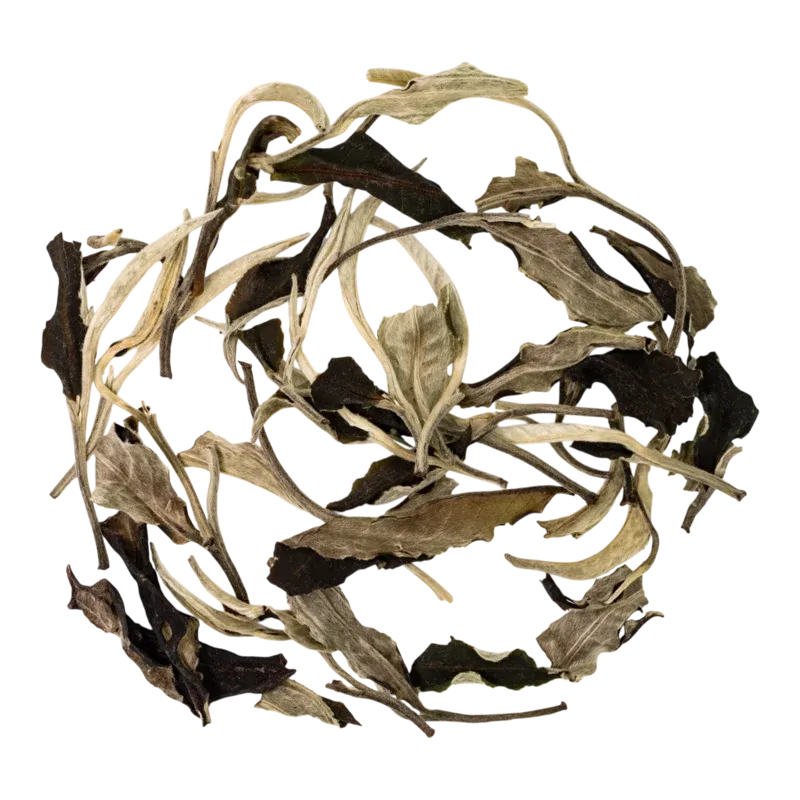
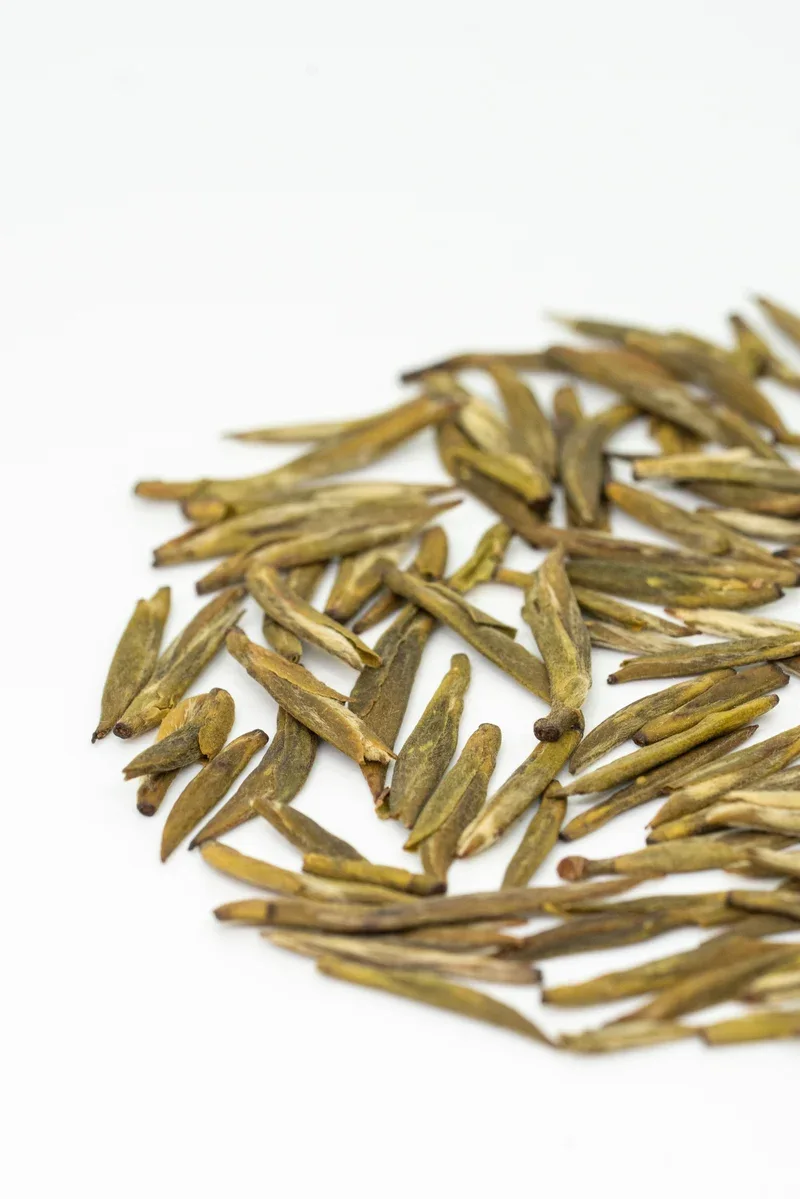
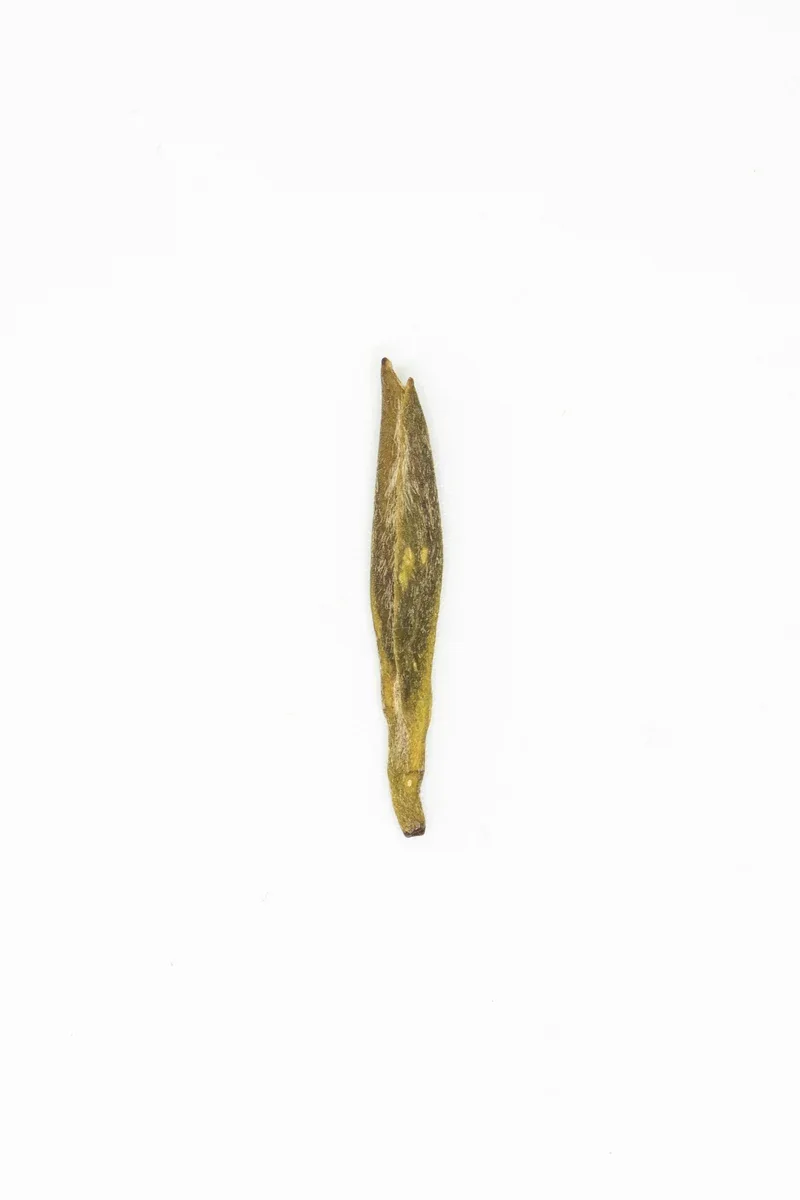
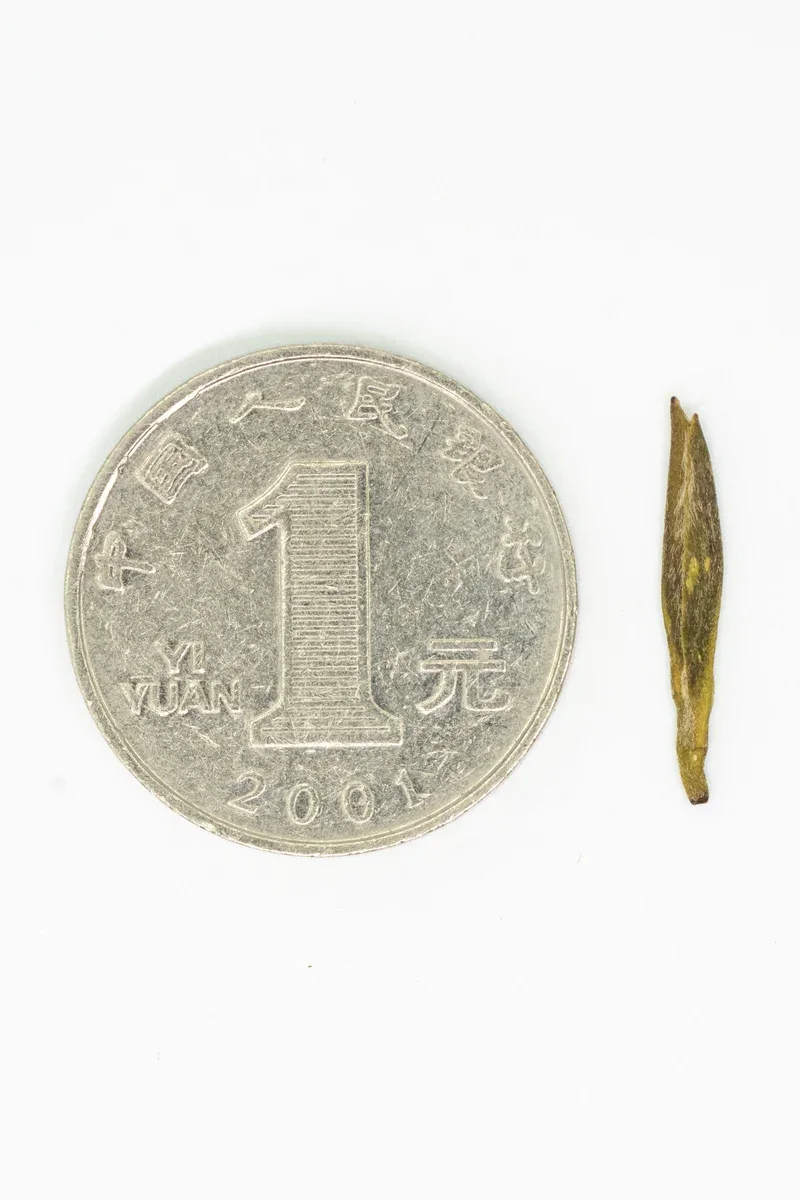
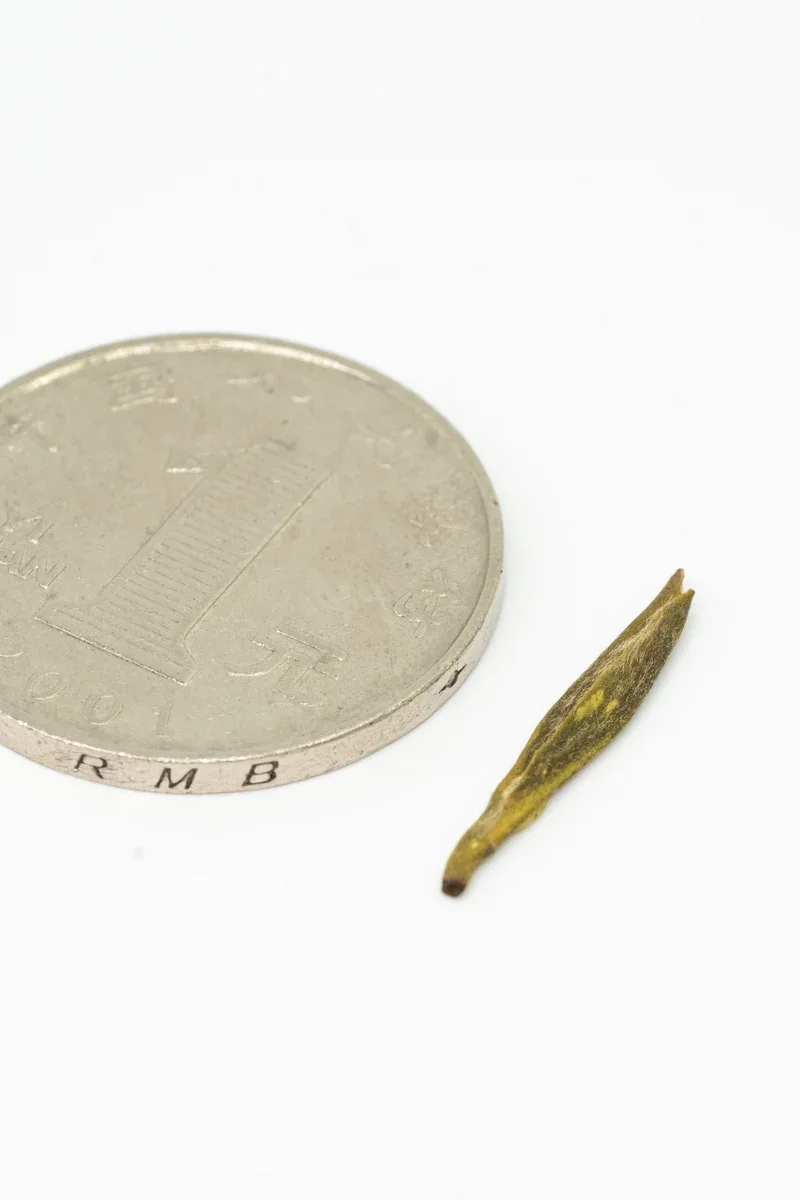
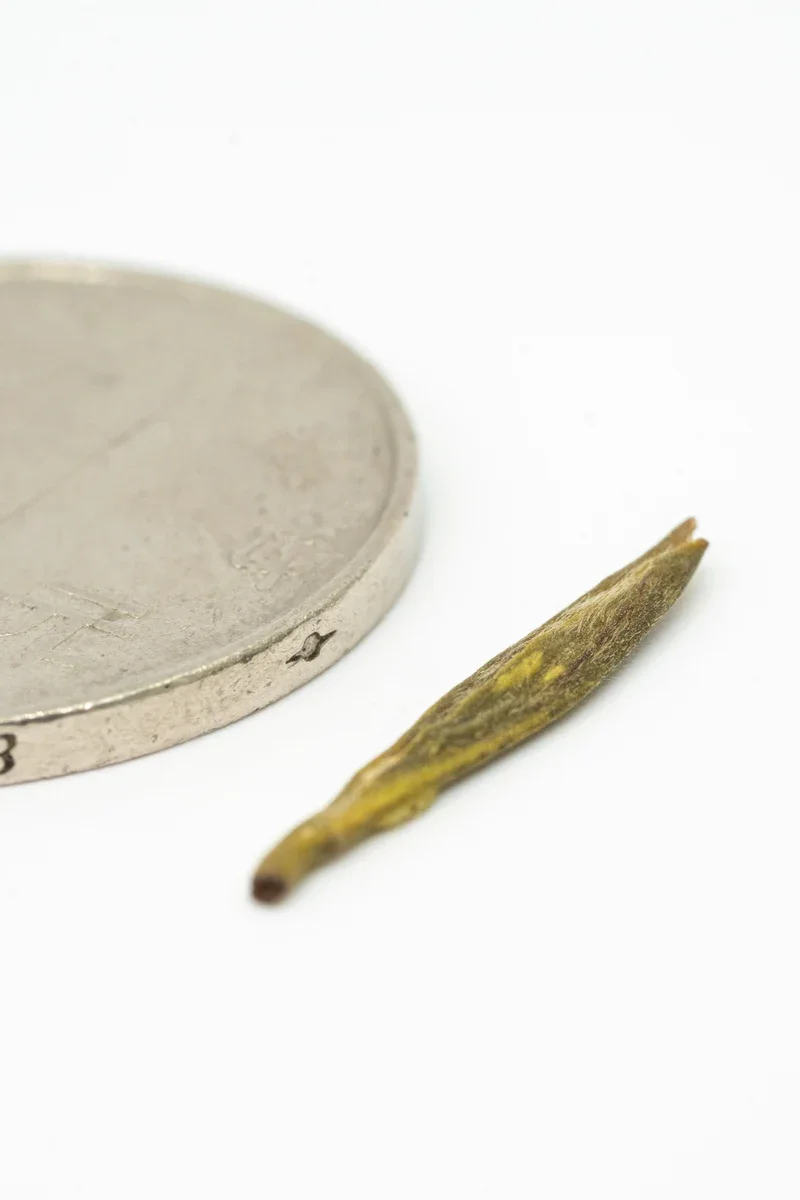
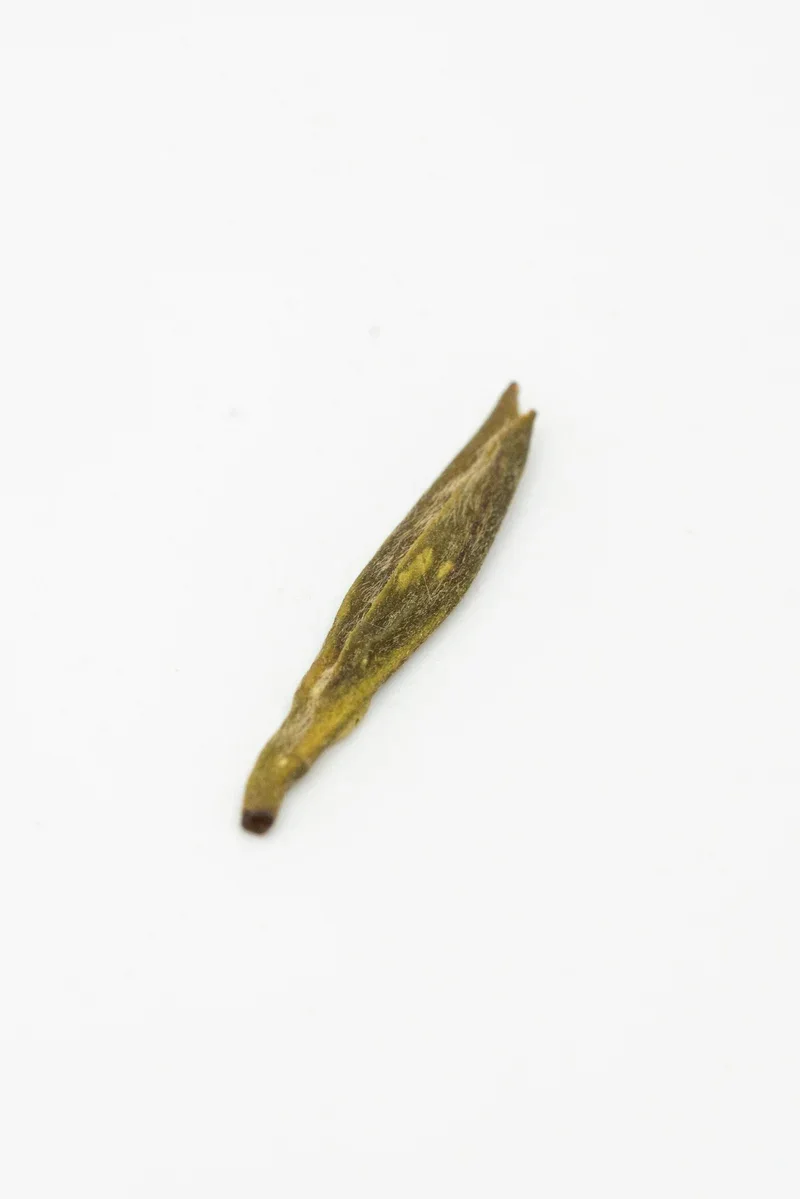
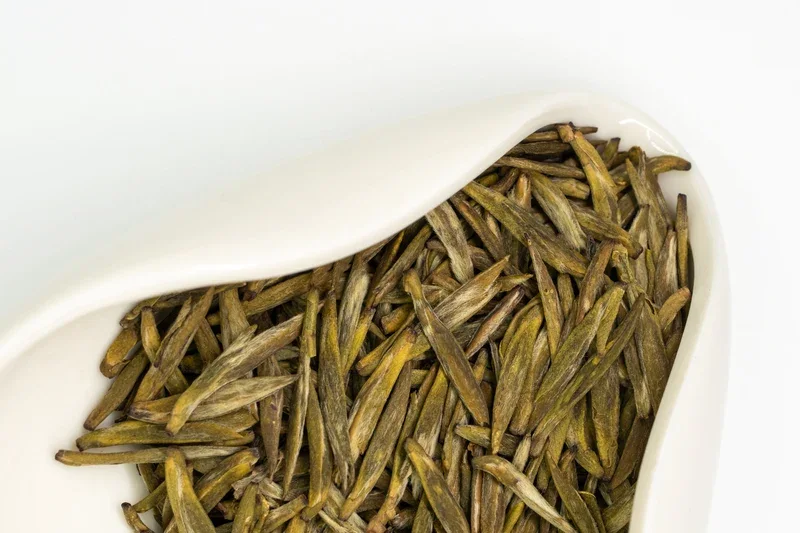
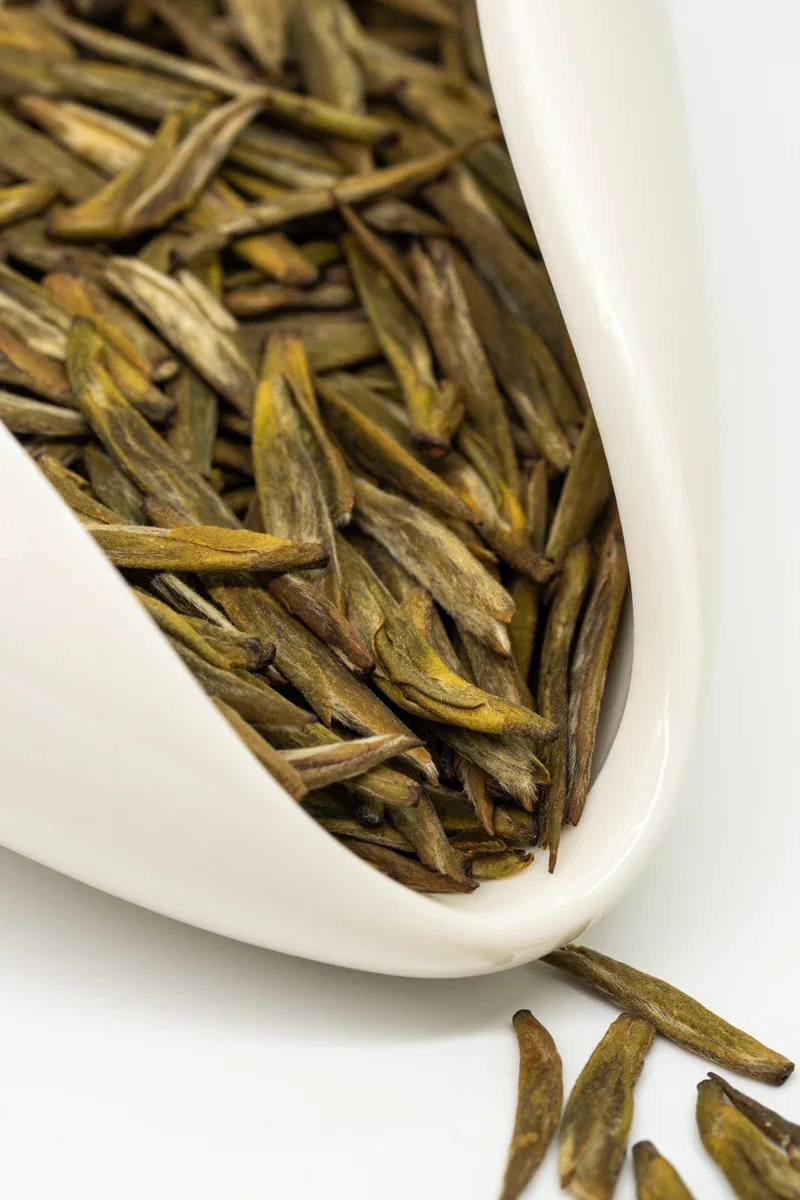
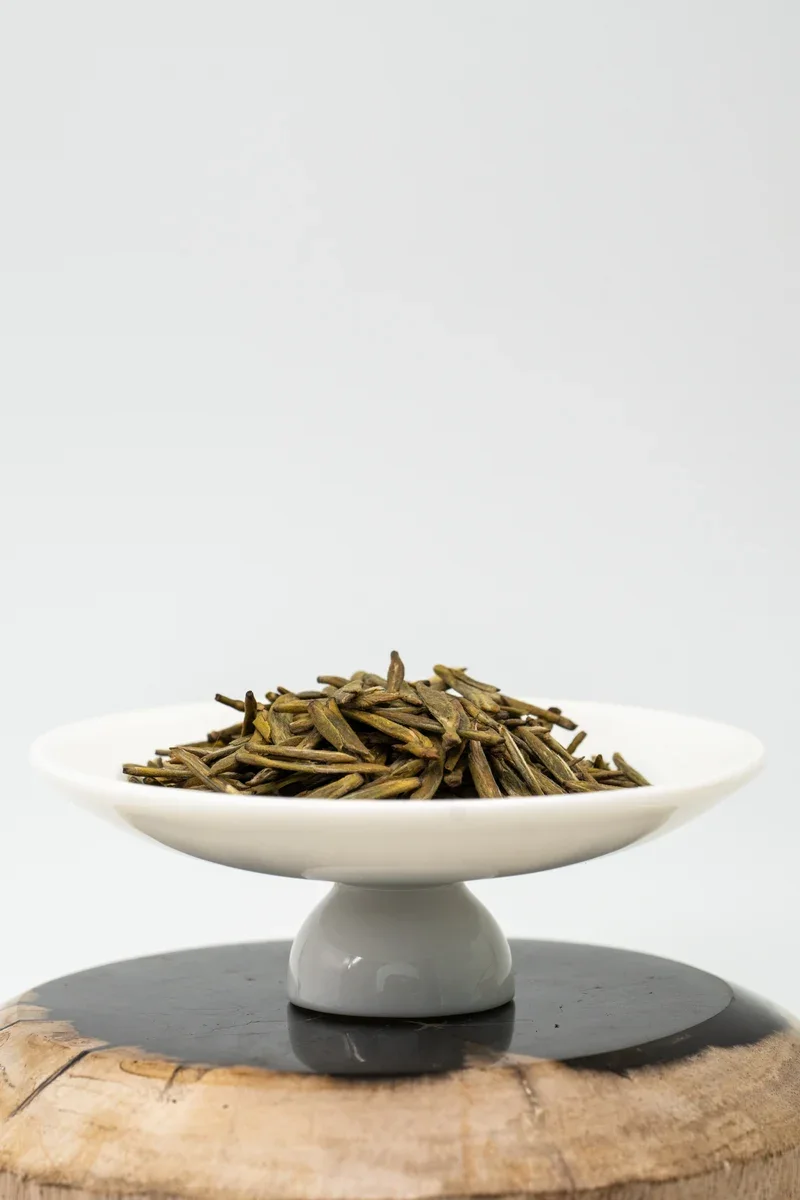
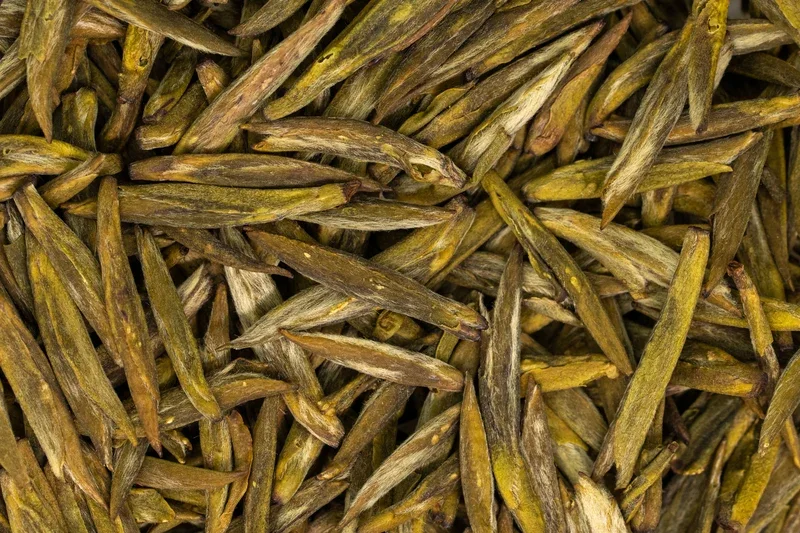
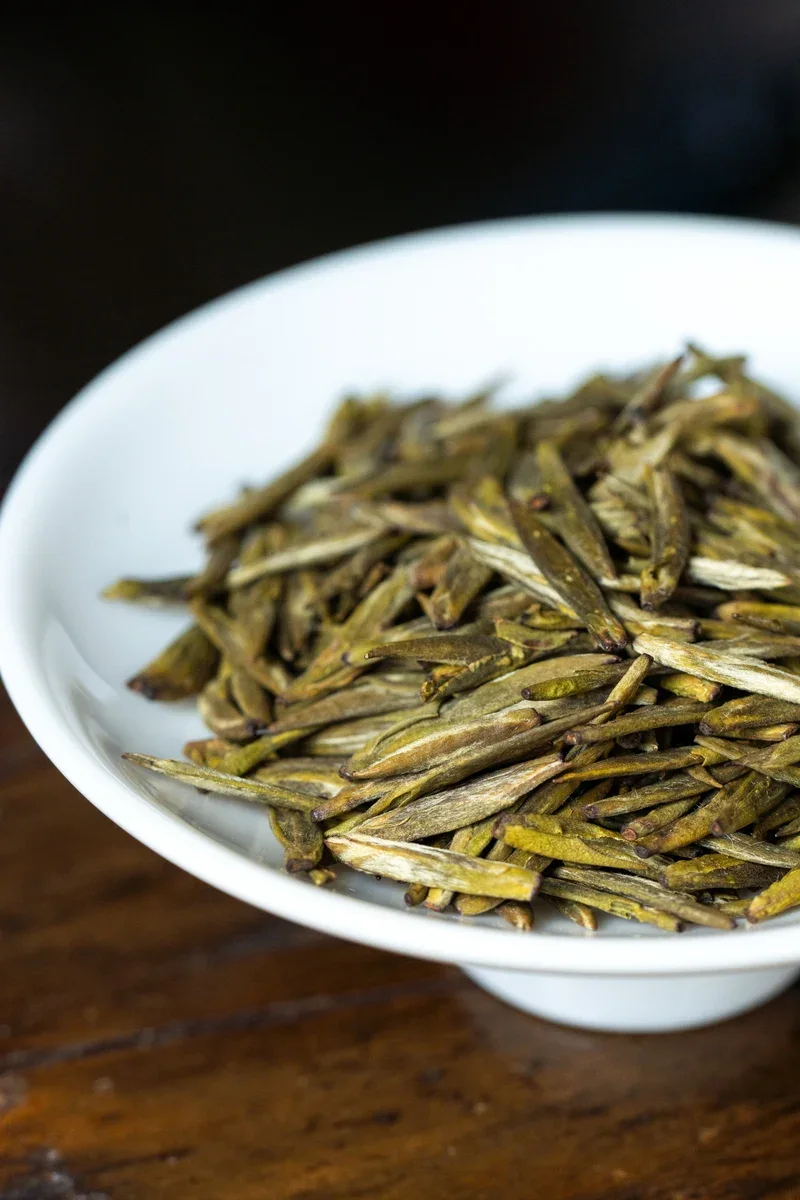
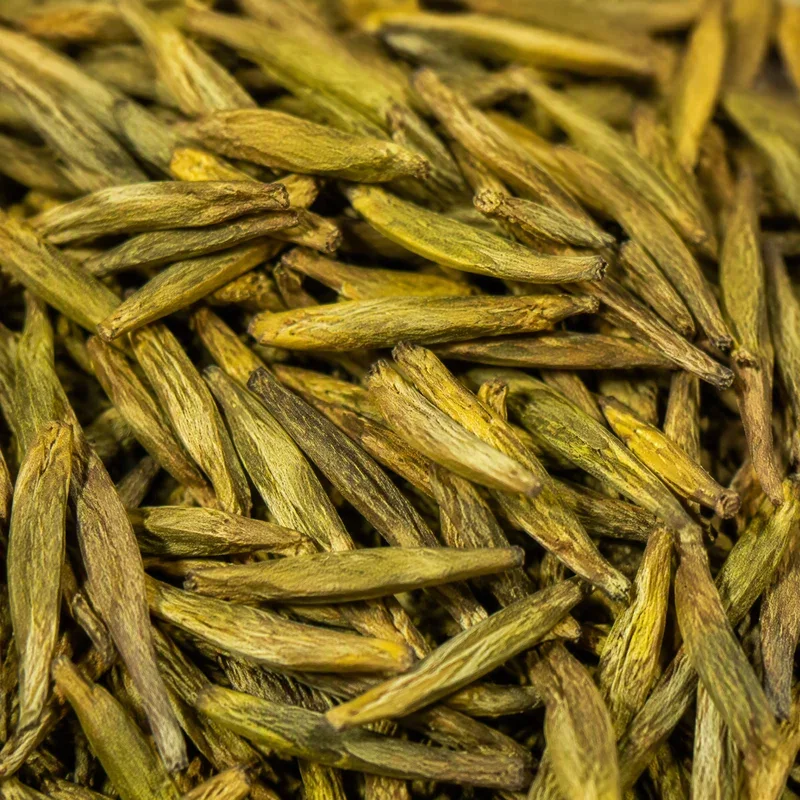
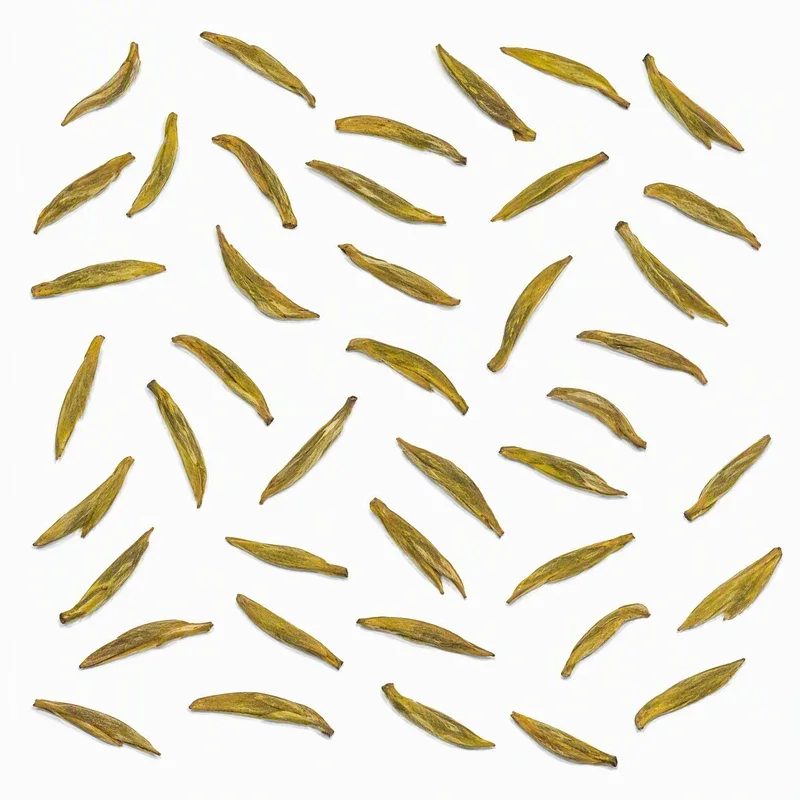
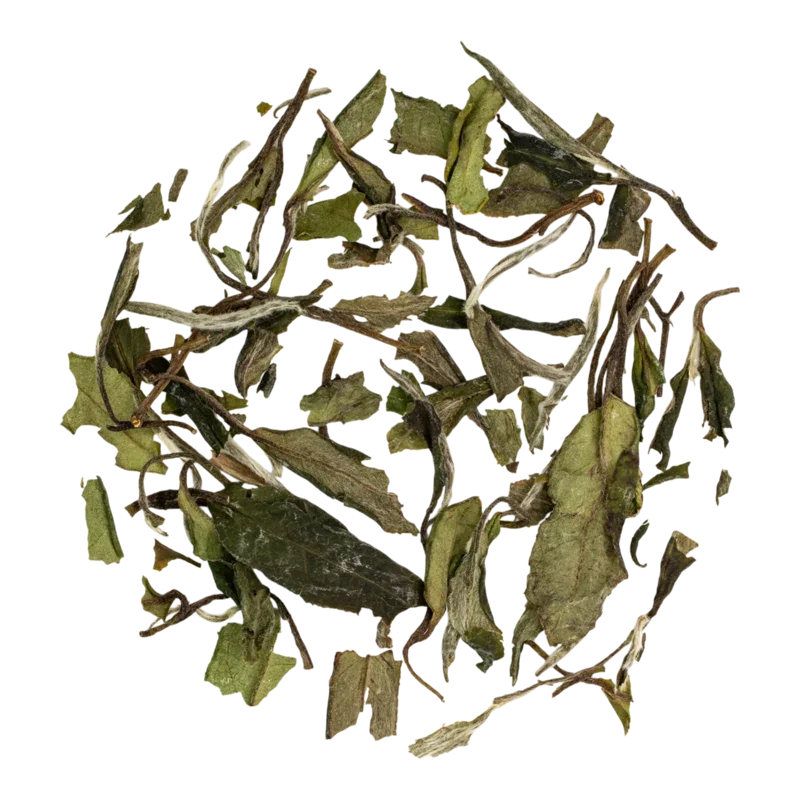
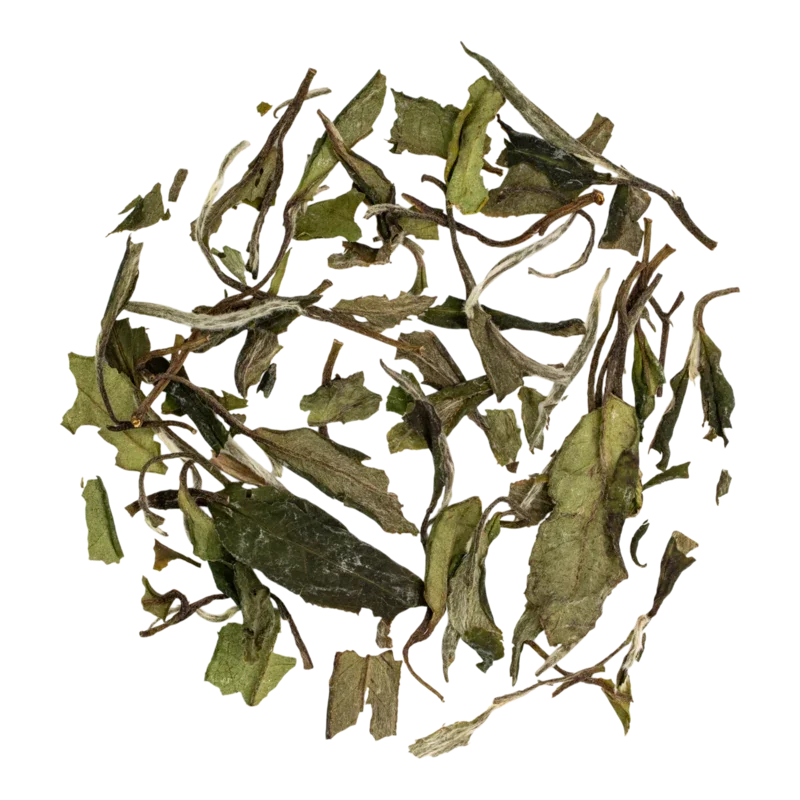
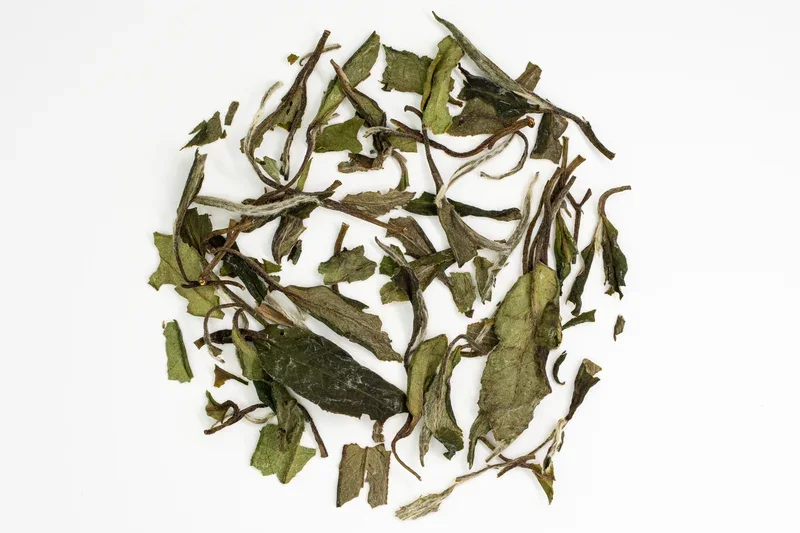
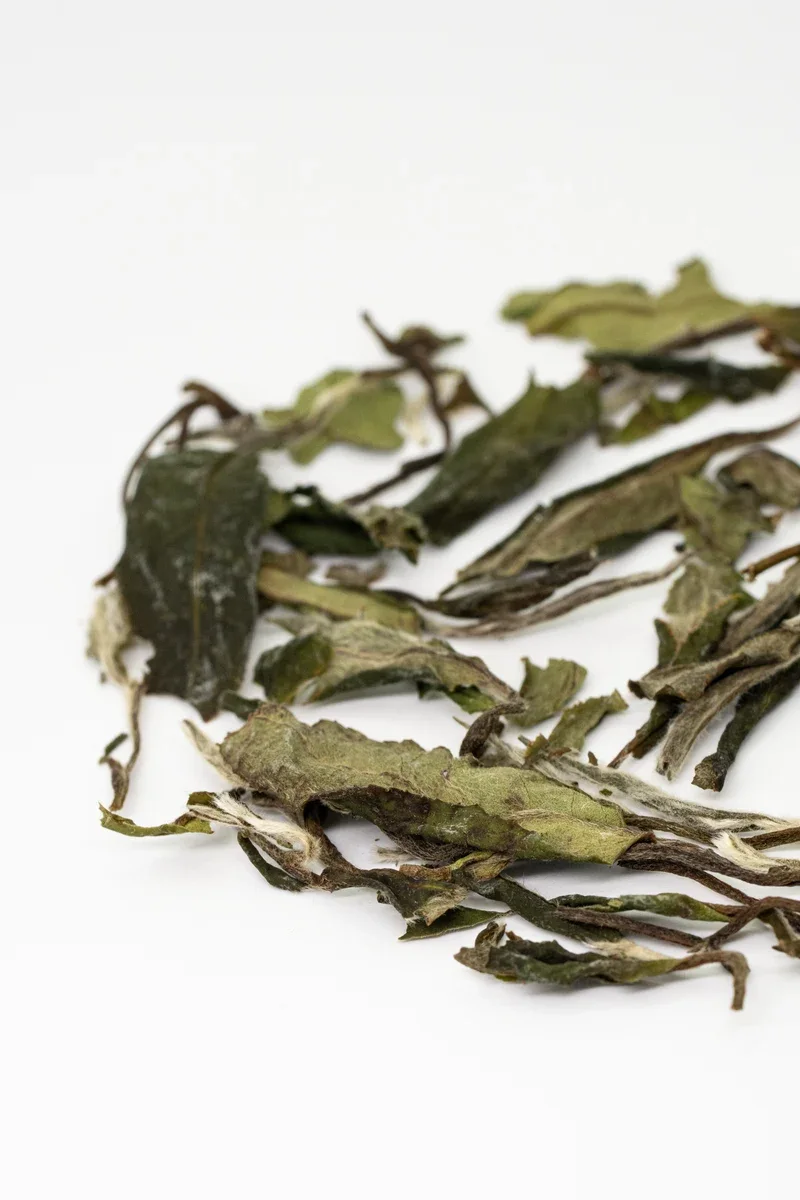
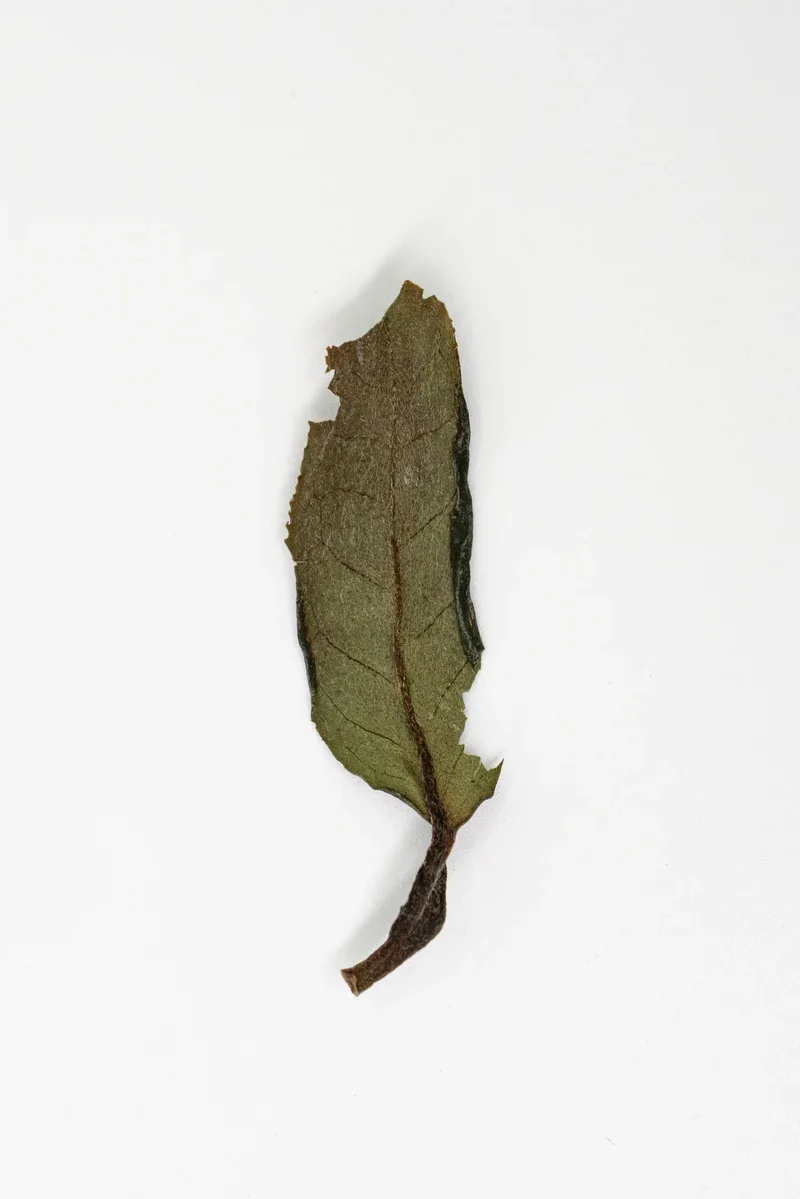
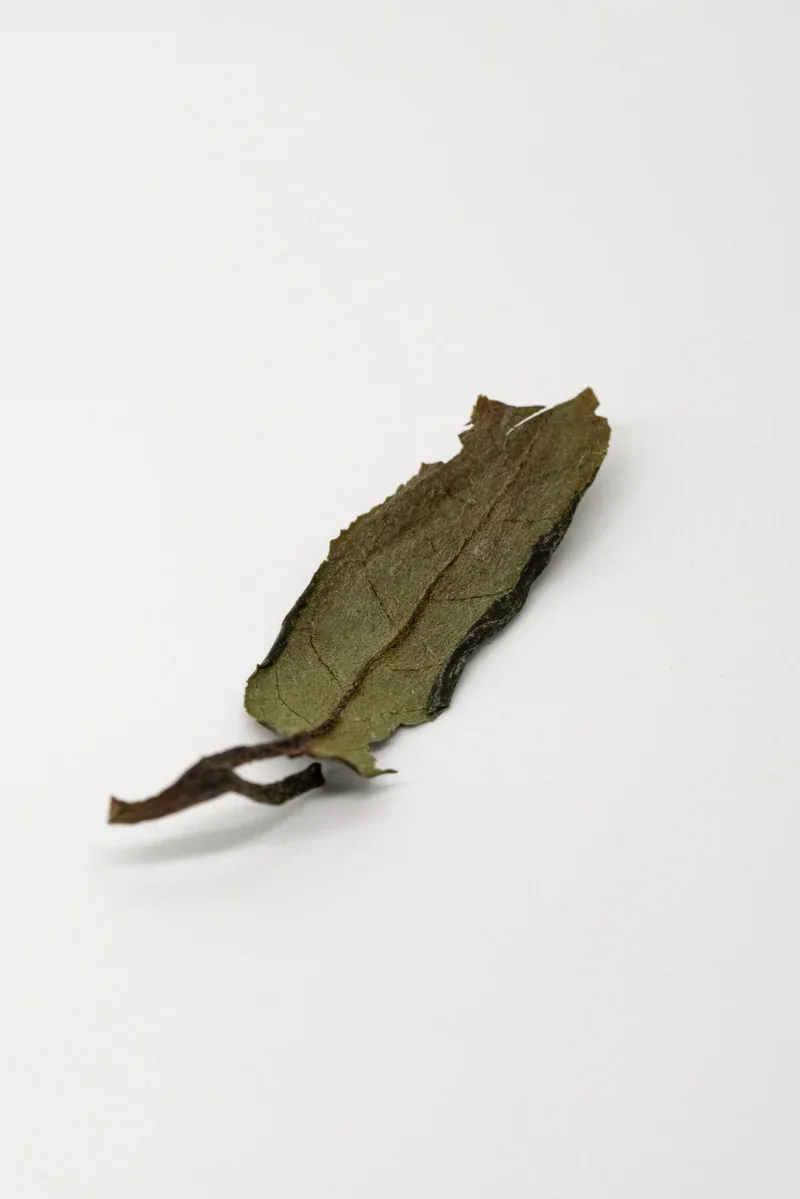
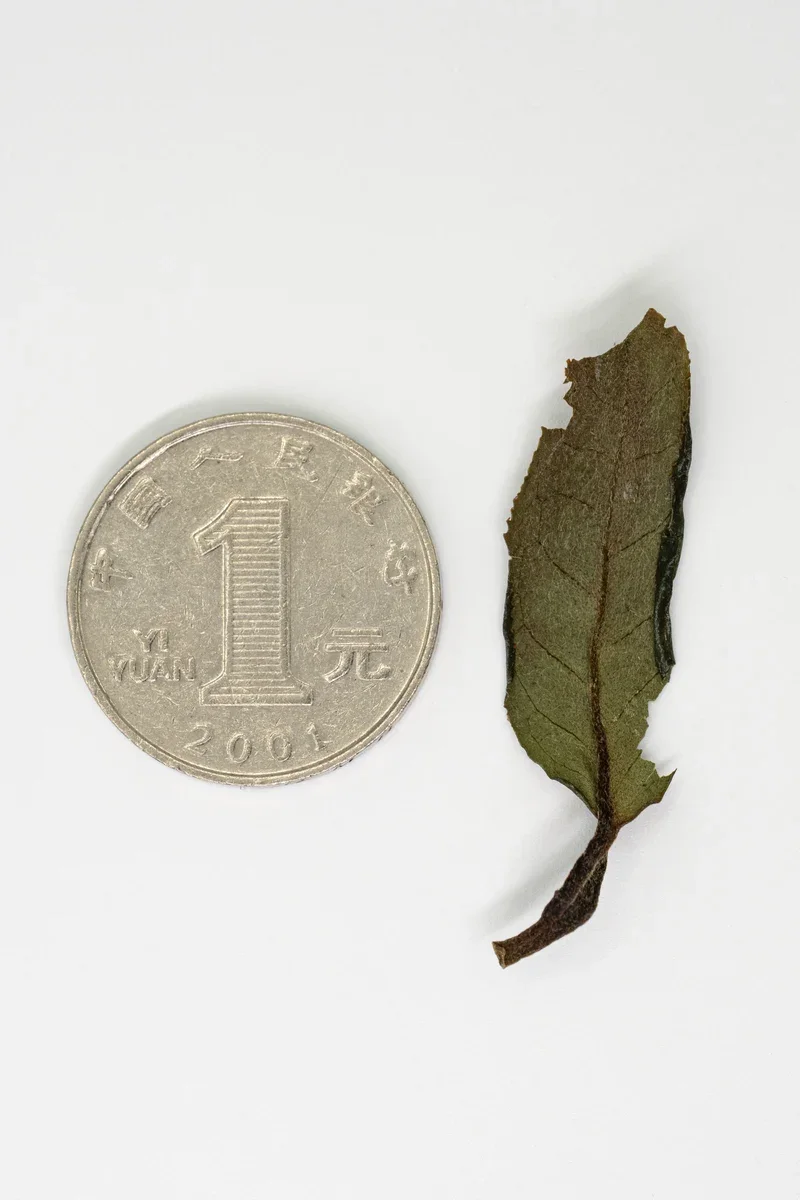
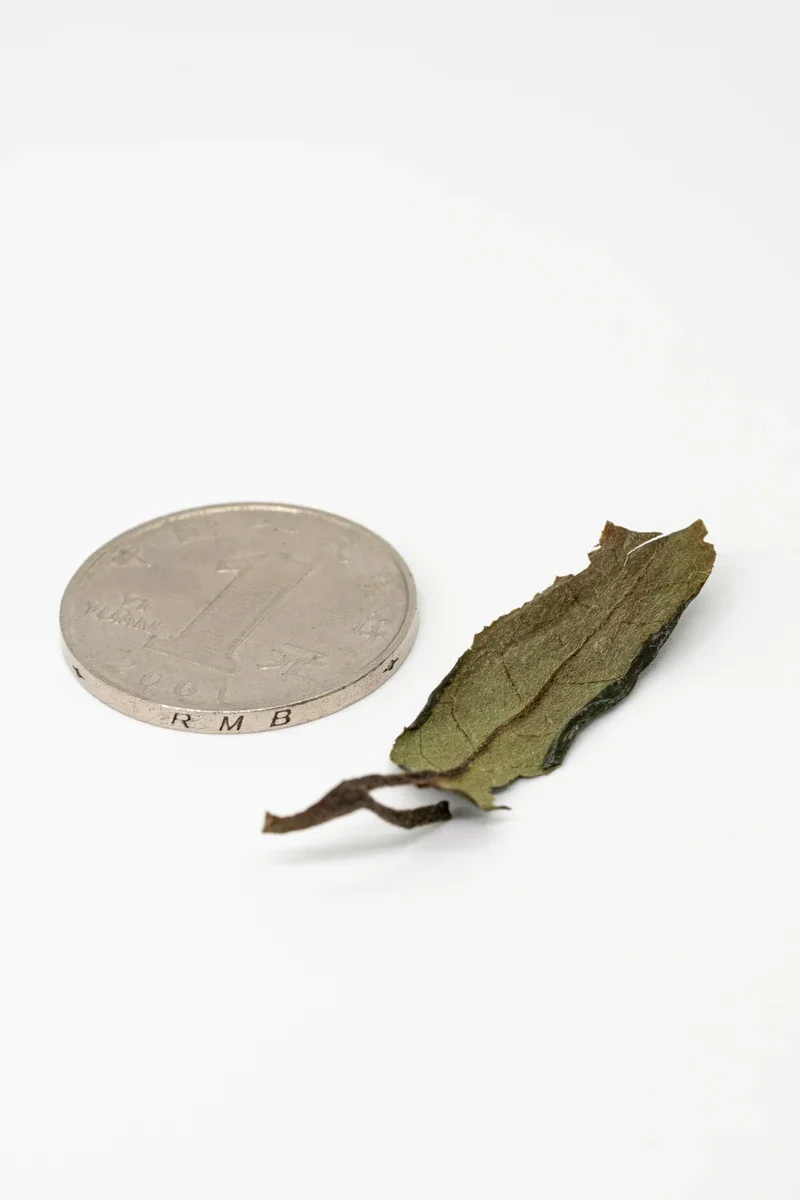
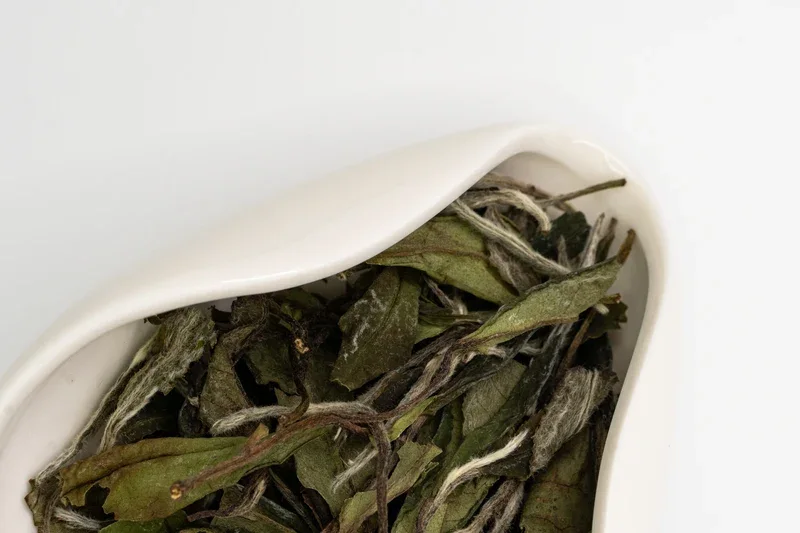
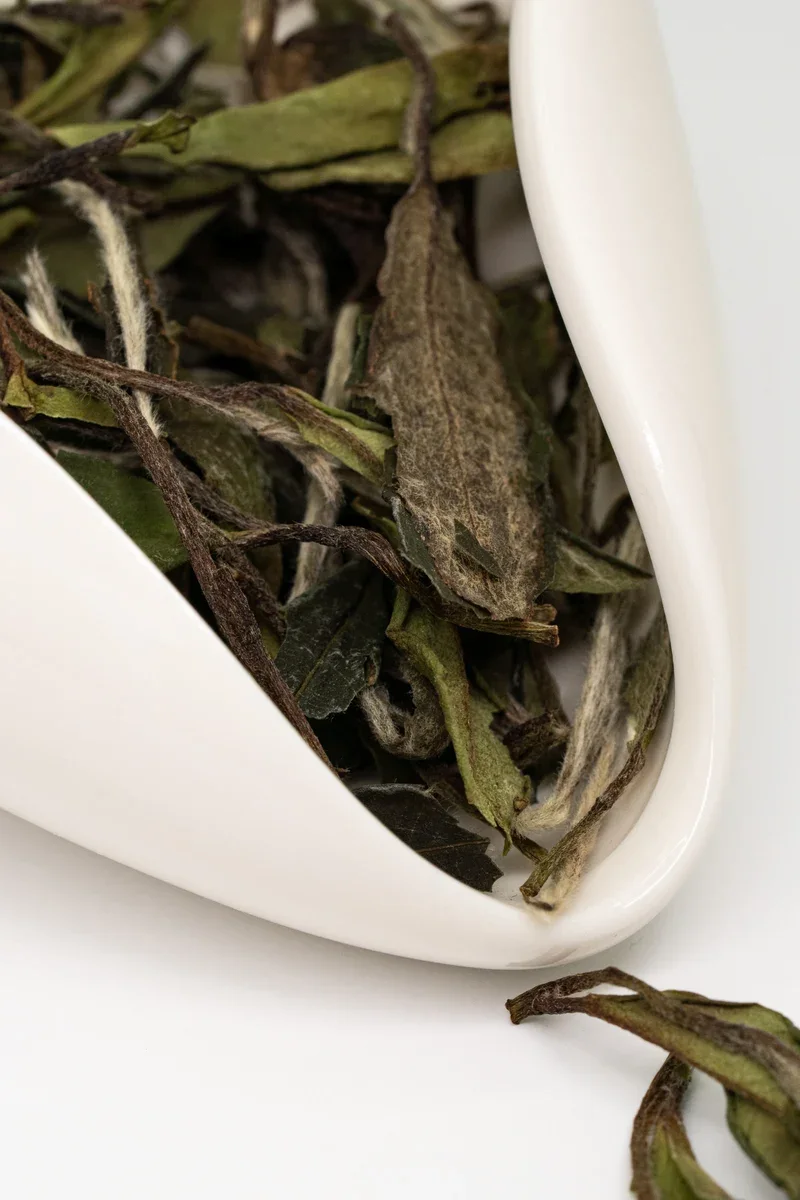
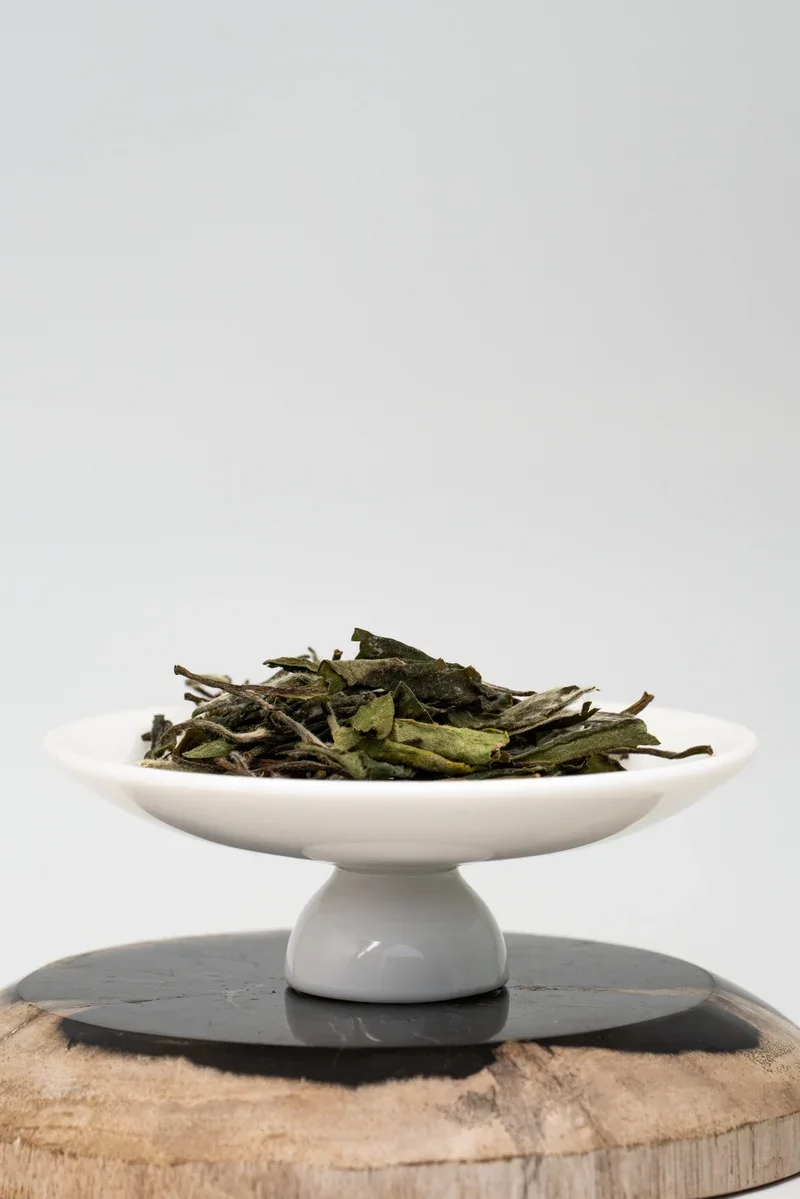
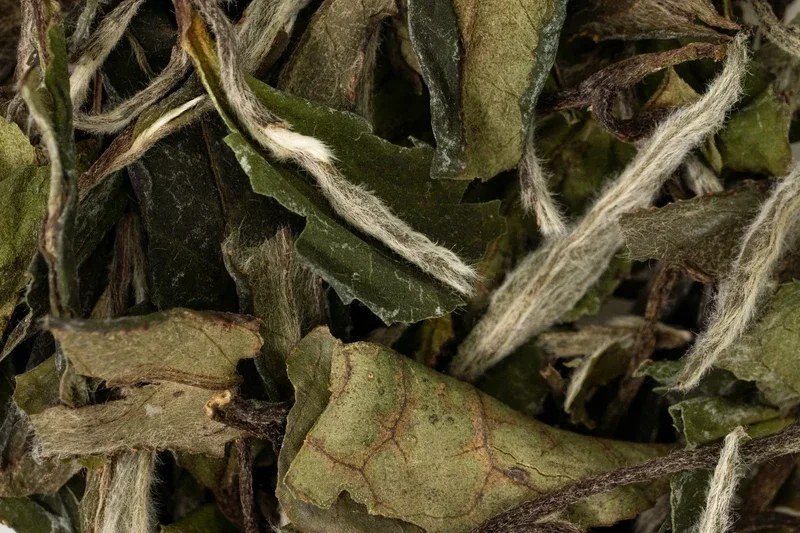
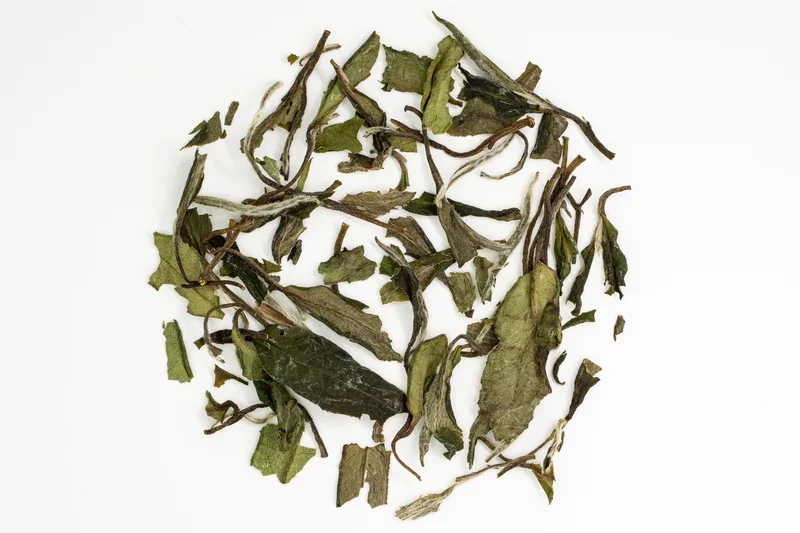
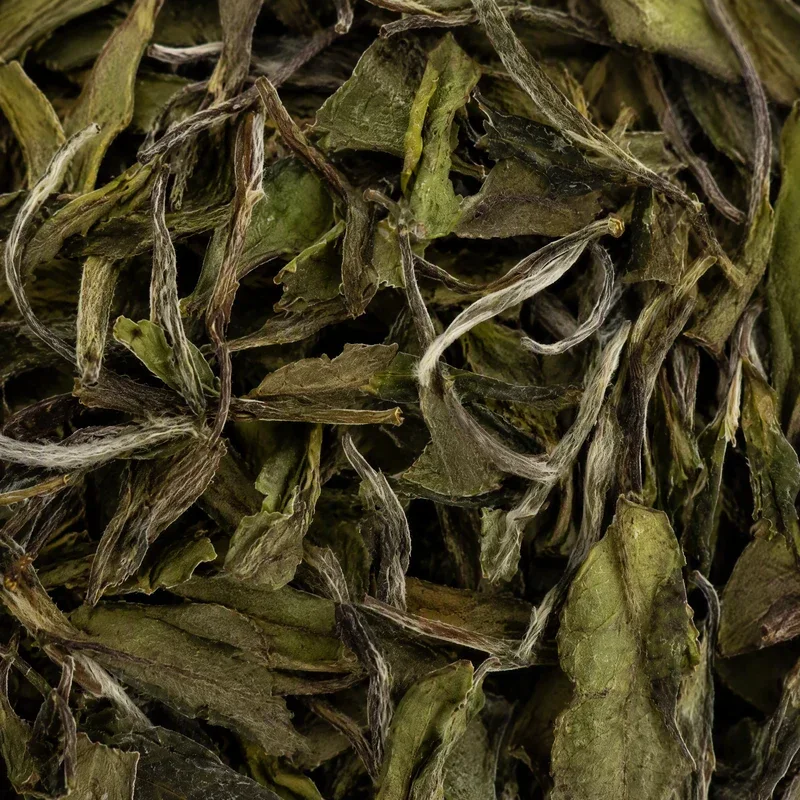
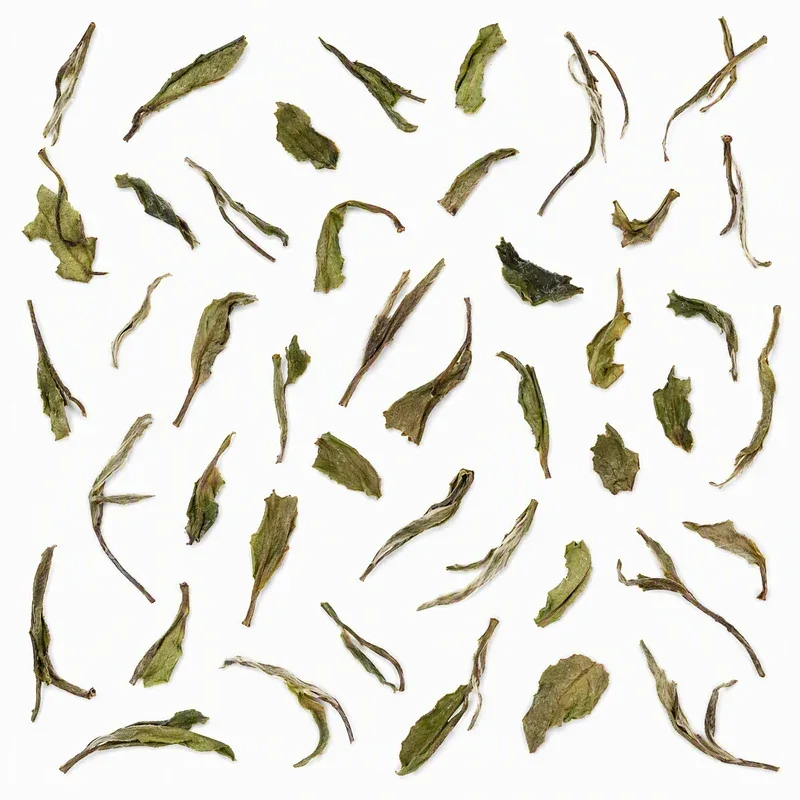
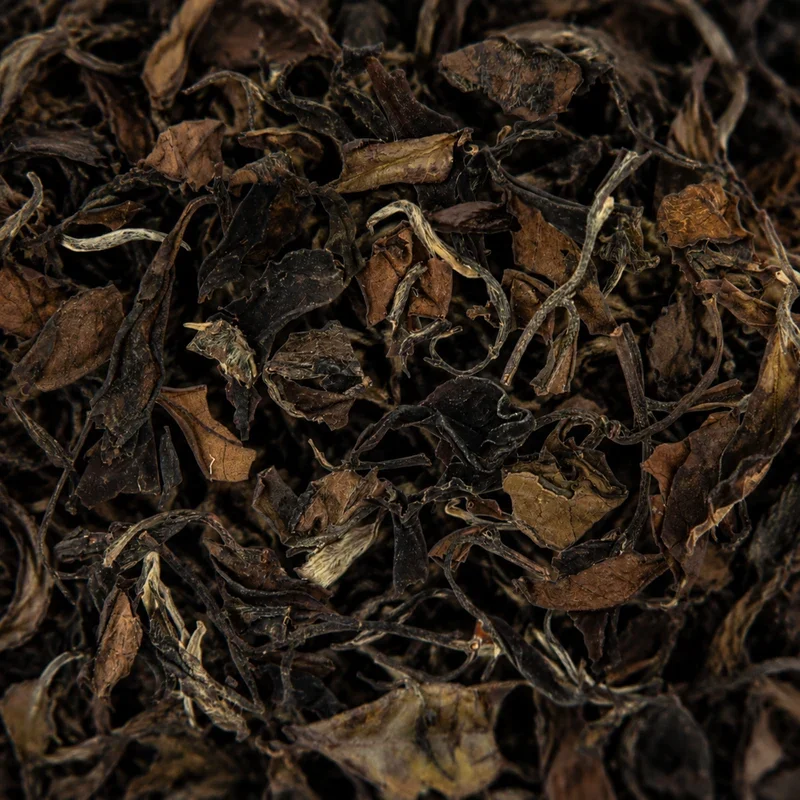
neat, without dust; in higher categories, down on buds is noticeable.
white flowers, fresh herbs, light honey; in more leafy batches — notes of hay and fruit peel.
light, straw-colored, sometimes golden.
clean, long, with herbal-honey trail.
Taste: soft, sweetish, with moderate astringency when water is overheated.
Amino Acids: responsible for sweetness, softness, and «umami» sensation.
usually acts more gently than in green and red teas, but the level depends on the proportion of buds and leaf youth.
in young tea give notes of field flowers, fresh hay, green apple; with aging shift to honey, dried fruits, and herbs.
enhance «silkiness» and roundness of taste (especially in varieties with a greater proportion of leaves and stems).
Polyphenols: form antioxidant potential and light astringency.
polyphenols help reduce oxidative stress.
the combination of caffeine and theanine gives many people steady focus.
warm liquor is often perceived as comfortable after meals (especially aged whites).
regular tea drinking may support hygiene due to polyphenolic profile.
less volume, less crumbs.
in pressing, tea ages slower and often more «cohesively» because leaf has less contact with air.
pressing often has more «compote» density and fewer sharp top notes.
4–6 g per 150–200 ml for gaiwan/teapot; for a glass, 2–3 g per 200–250 ml is possible.
start with 10–20 seconds, then gradually increase time. Quality white tea withstands 5–8 infusions.
white tea «loves air» — don't be afraid to briefly air the dry leaf in a warmed gaiwan before the first infusion.
Teaware: porcelain/glass. Glass is convenient if you want to observe leaf opening.
Water Temperature: 75–90 °C (the more buds and «delicacy» — the lower the temperature).
Container: airtight (jar, zip-lock bag/foil bag), without «aromatic» materials.
dry, cool, dark, without temperature fluctuations.
separate from spices, coffee, incense.
possible for very delicate batches (especially with high bud content), but only with perfect sealing, otherwise tea quickly picks up odors and moisture.
bud teas (especially Yin Zhen) on boiling water lose florality and give harsh astringency.
white tea opens gradually; better to make short infusions and increase time.
conversely, old white and dense pressing often require 95–100 °C, otherwise taste will be flat.
white tea quickly «absorbs» kitchen, spices, and household chemicals.
expecting «spring greenness» from old white is a mistake; its value is in honey, dried fruits, and soft density.
white tea is a seasonal beverage. «Spring» is usually finer in aroma, «summer/autumn» — denser and more herbal.
for Fujian classics, Fuding/Zhenghe and specific township/village are important. For new regions — specific growing area.
Yin Zhen / Bai Mu Dan / Gong Mei / Shou Mei (or analog). This is more honest than abstract «premium».
minimum crumbs and dust, neat fraction.
even size and color — sign of stable sorting.
clean, without «basement», dampness, chemicals, and sharp perfumery.
good white tea usually gives clean, not muddy liquor.
should be sweet and long, without unpleasant acid and «dirt».
70–80 °C.
80–90 °C.
90–100 °C.
any musty, sour, «dusty» notes usually indicate storage or raw material problems.
good white tea beautifully changes from infusion to infusion; «flat» taste is more often a sign of mediocre batch.
white tea can be astringent, but bitterness shouldn't dominate.
strong batches have sensation of «oiliness» or «silk» — don't confuse with bitterness.
good with fruits (pear, apple), light biscuits, nuts, soft cheeses. Also excellent as «morning tea» — gently invigorating.
especially harmonious with dried fruits, warm pastries, nut desserts, porridges; in winter often drunk as «warming» tea. Shou Mei in boiling is almost «compote», it befriends home cooking.
spicy dishes, strong garlic/onion, bright spices, and very sweet cream desserts — they easily «overwhelm» white tea's delicate aroma.
No reviews yet. Tell us what you think of this tea.
Rate this tea and share your impressions. We review each submission before publishing it.