Brewing
Gongfu brewing
- Water temperature
- 75 °C
- Tea amount
- 5 g
- Water volume
- 100 ml
- First steep
- 10 s
- Time added per infusion
- 5 s
- Infusions
- 3

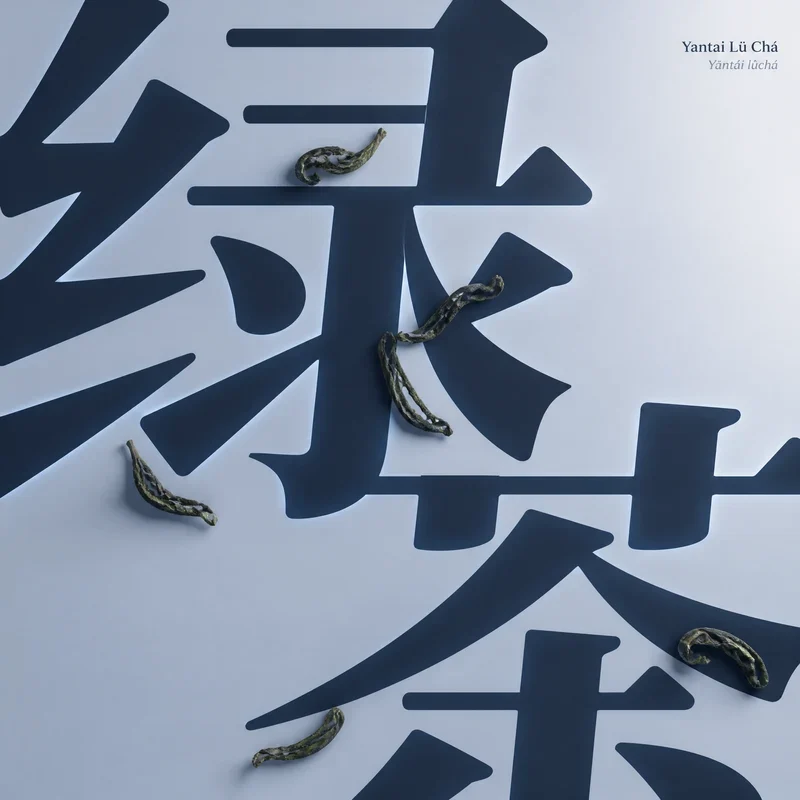
Yāntái lǜchá
Choose a brewing method. Start with the recommended quantities and time, then adjust to taste.
Brewing
Brewing
Taste
Tea encyclopedia
Category: Regional Chinese green teas; "northern teas" (北茶, běi chá), arising from the "Southern Tea Goes North" program (南茶北引, nán chá běi yǐn). Product with geographical indication.
Category: Regional Chinese green teas; "northern teas" (北茶, běi chá), arising from the "Southern Tea Goes North" program (南茶北引, nán chá běi yǐn). Product with geographical indication.
Coordinates: 36°16′–38°23′ N, 119°34′–121°57′ E — the highest-latitude tea region in China.
Origin: China, Shāndōng Province (山东省, Shāndōng Shěng), Yantai Prefecture-level City (烟台市, Yāntái Shì). The production zone covers the entire territory of the prefecture-level city.
Type: Green tea (绿茶, lǜchá) — non-oxidized; oxidation level minimal (less than 5%). Primary technologies include chǎoqīng (炒青, chǎoqīng, wok-firing) and hongqing (烘青, hōngqīng, hot-air drying); part of the range includes a final charcoal roasting stage (木炭烘焙, mùtàn hōngbèi).
Yantai Lü Cha plantations located at 36–38° N — absolute record for industrial tea cultivation in China. For comparison: famous Longjing grows at 30° N, Xinyang Mao Jian — at 32°, and Shaanxi Shannan Quan Ming — at 33°. Yantai shifts the boundary 5–8 degrees further north.
Medieval tea plantings of Jin era (12th–13th centuries) on Kunyu Mountain — one of earliest evidence of tea cultivation in present-day Shandong territory. Wild relics of these plantations discovered by "tourists" (驴友, lǘyǒu) in 1960s — seven centuries later.
According to Tea Product Quality Control Center of Ministry of Agriculture, Yantai teas contain 56% more amino acids, 64% more L-theanine, and 170% more chlorophyll than southern counterparts. This makes Yantai "freshness champion" among all 21 tea regions of PRC.
"Yancha 7-hao" and "Yancha 9-hao" — first tea bush cultivars bred directly in Yantai and passing national certification. This means Yantai overcame dependence on southern introductions and formed own breeding base.
Final charcoal roasting (木炭烘焙) — technological "feature" of Yantai tea growers, not characteristic of Laoshan Lücha (崂山绿茶) or Rizhao Lücha (日照绿茶) — two other famous Shandong green teas. This is responsible for characteristic "roasted bean" tone (焙豆香), becoming Yantai Lü Cha's signature.
Picking: Main season runs from late April to late June. Spring tea (春茶, chūnchá) is most valuable. Compared to southern regions, timing is shifted 4–6 weeks later due to late vegetation start.
Pluck Standard: Special grade (特级): single buds (单芽) — not less than 90%. First grade: bud with one leaf (一芽一叶) — not less than 80%. Second grade: bud with two leaves (一芽二叶). The "five prohibitions on picking" standard applies (五不采): do not pick in rain, with dew, purple shoots, damaged leaves, or substandard material.
Raw Material: Hand-picked. All production passes European organic certification.
Altitude: Up to 300 m a.s.l. (Zhaohushan (招虎山), Buheshan (步鹤山) and other mountains).
Climate: Warm temperate, marine monsoon (暖温带海洋性季风气候). Average annual temperature — 12.4°C (significantly lower than any traditional Chinese tea region). Annual precipitation — 650–900 mm. Daily temperature range — over 8°C. Abundant diffused light stimulates amino acid accumulation in leaves: amino acid content in spring tea — not less than 3.0%.
Soil: Brown earths (棕壤, zōng rǎng), pH 5.5–7.0, organic matter content over 1.0%. Soils enriched with zinc (锌, xīn), selenium (硒, xī) and other microelements.
Forest coverage — 81%. Negative air ion concentration — 50 times higher than urban norm. The area is certified as "China's Natural Oxygen Bar" (中国天然氧吧).
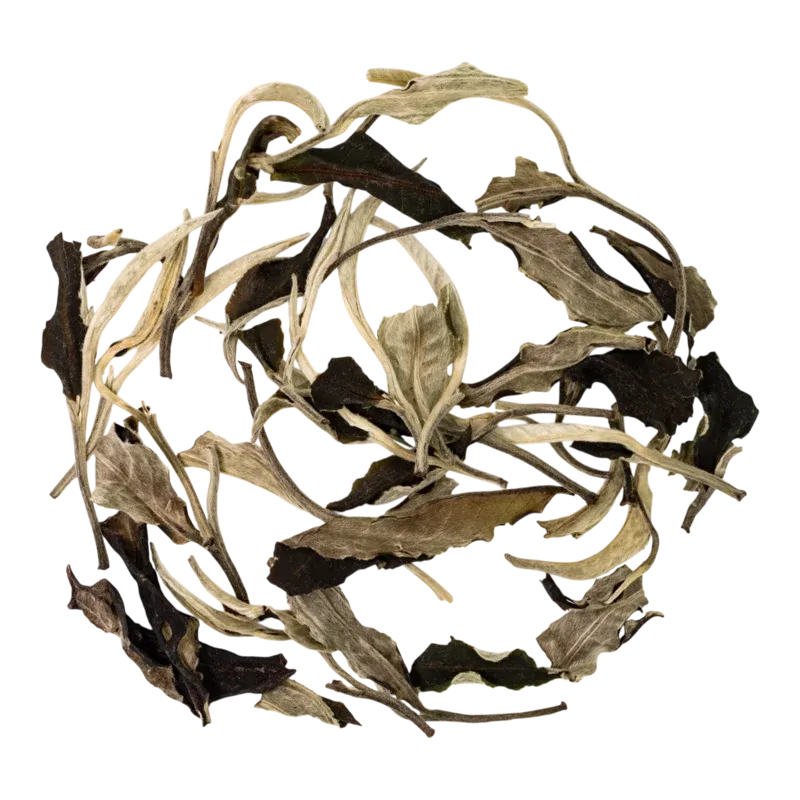
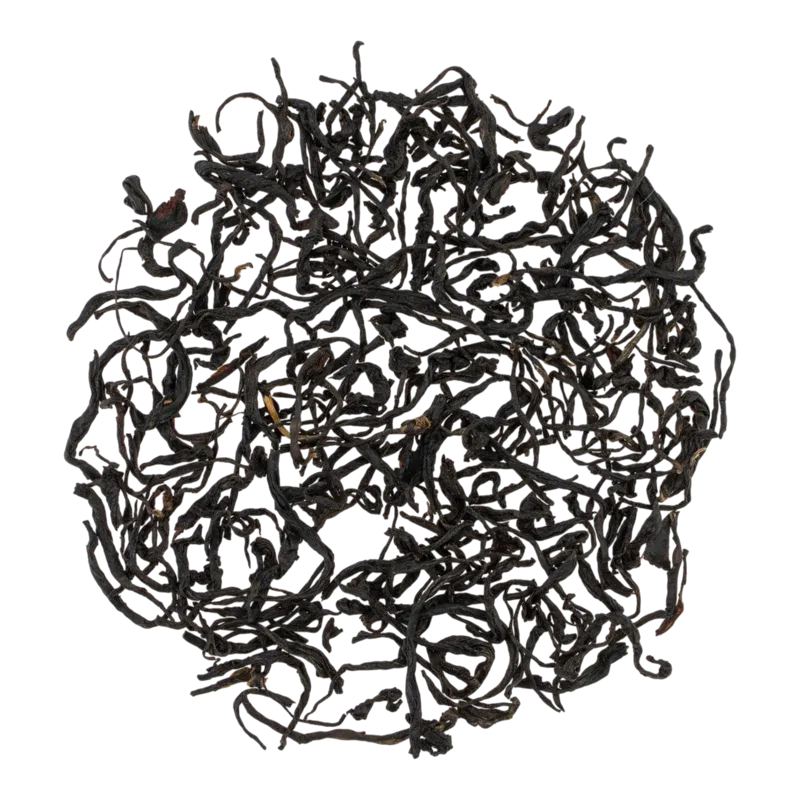
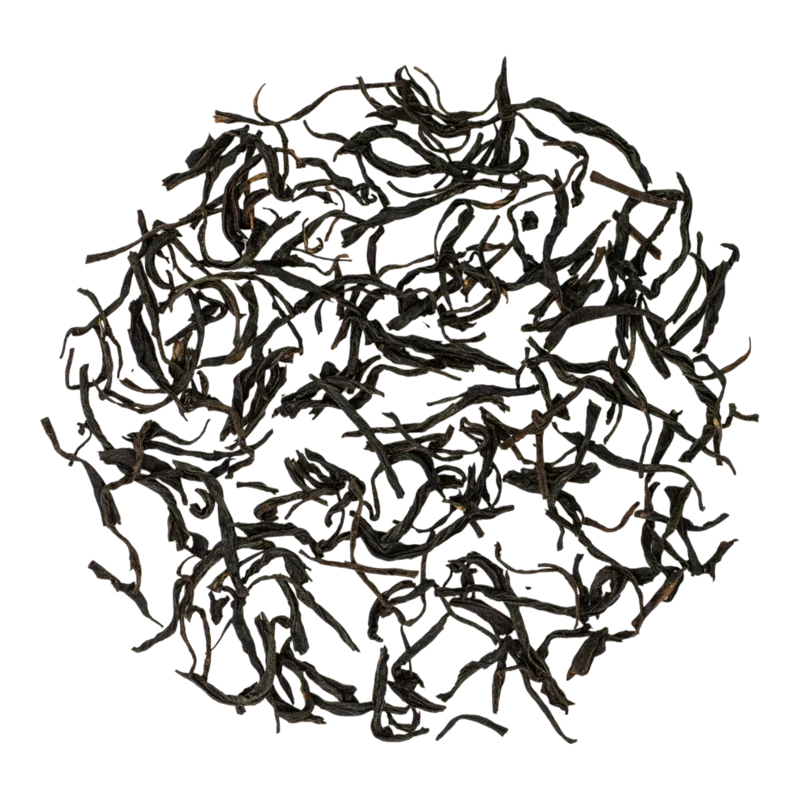
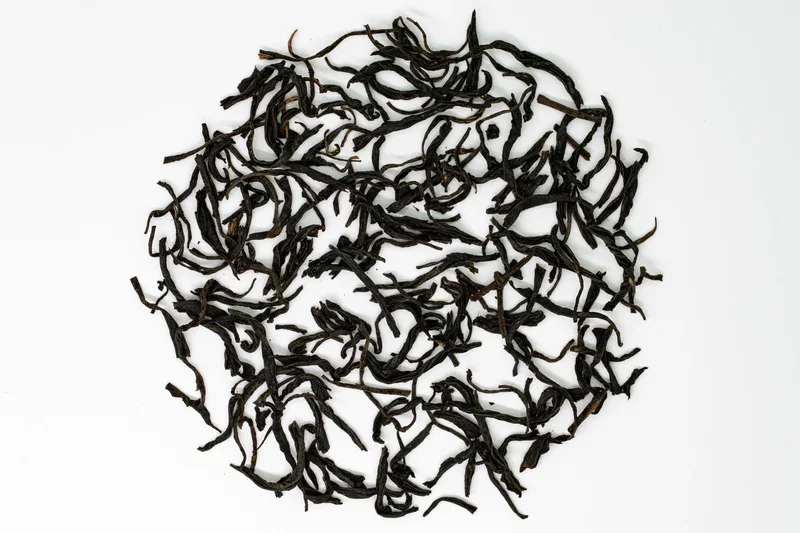
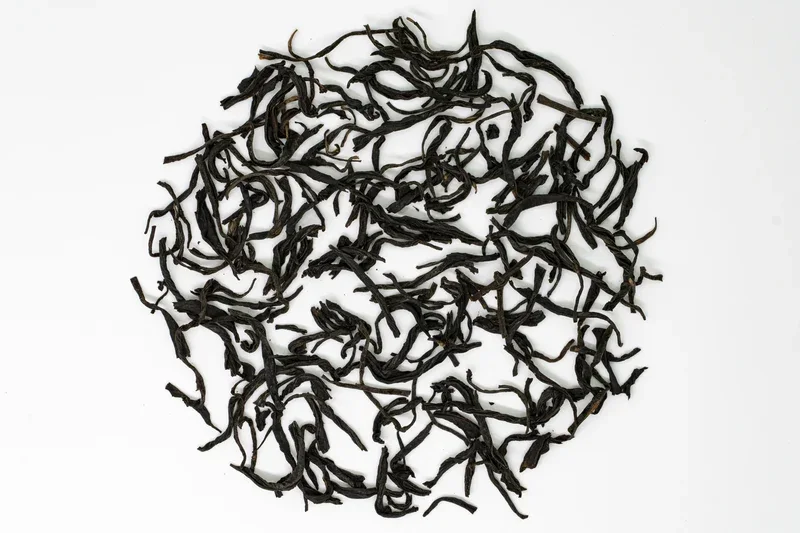
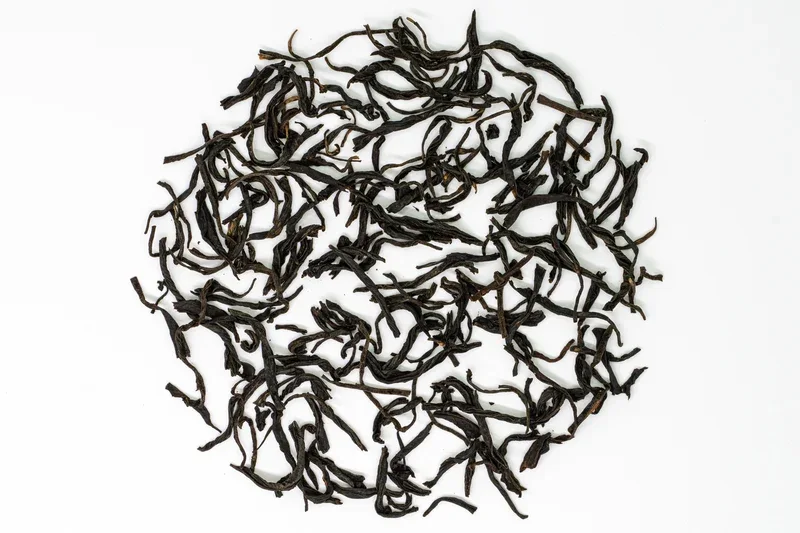
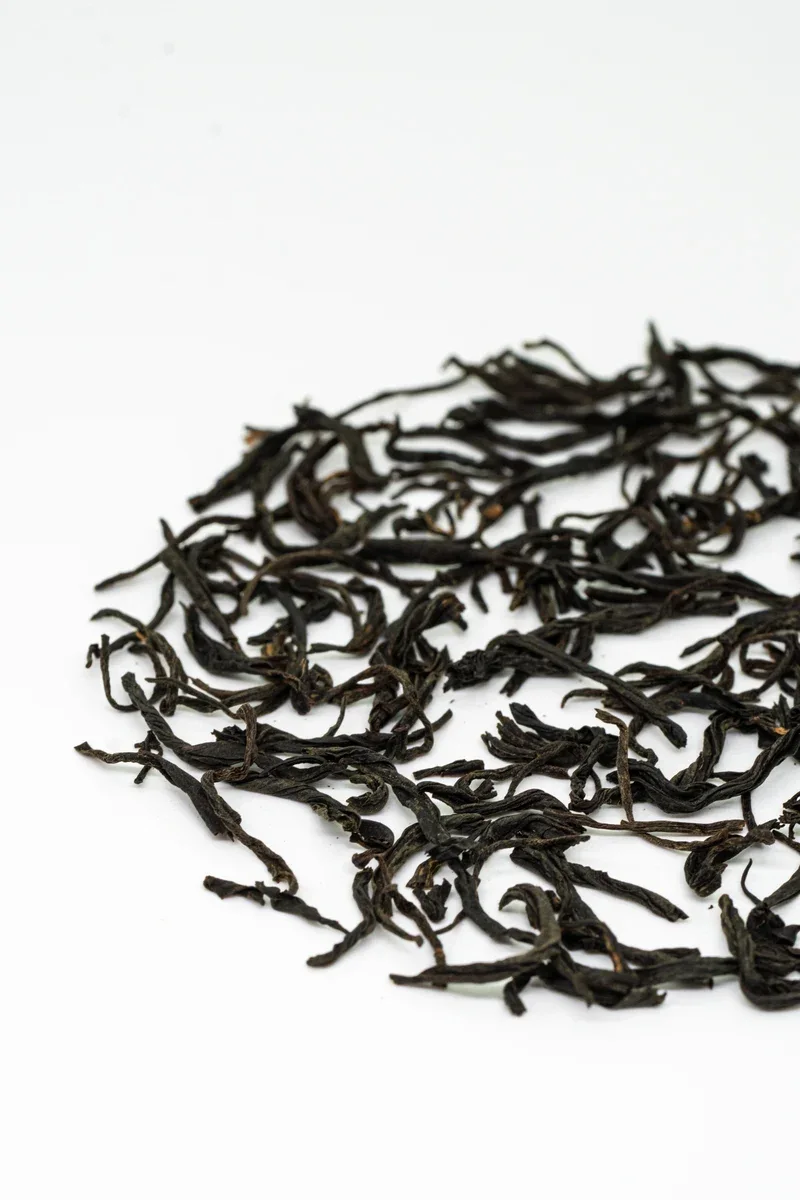
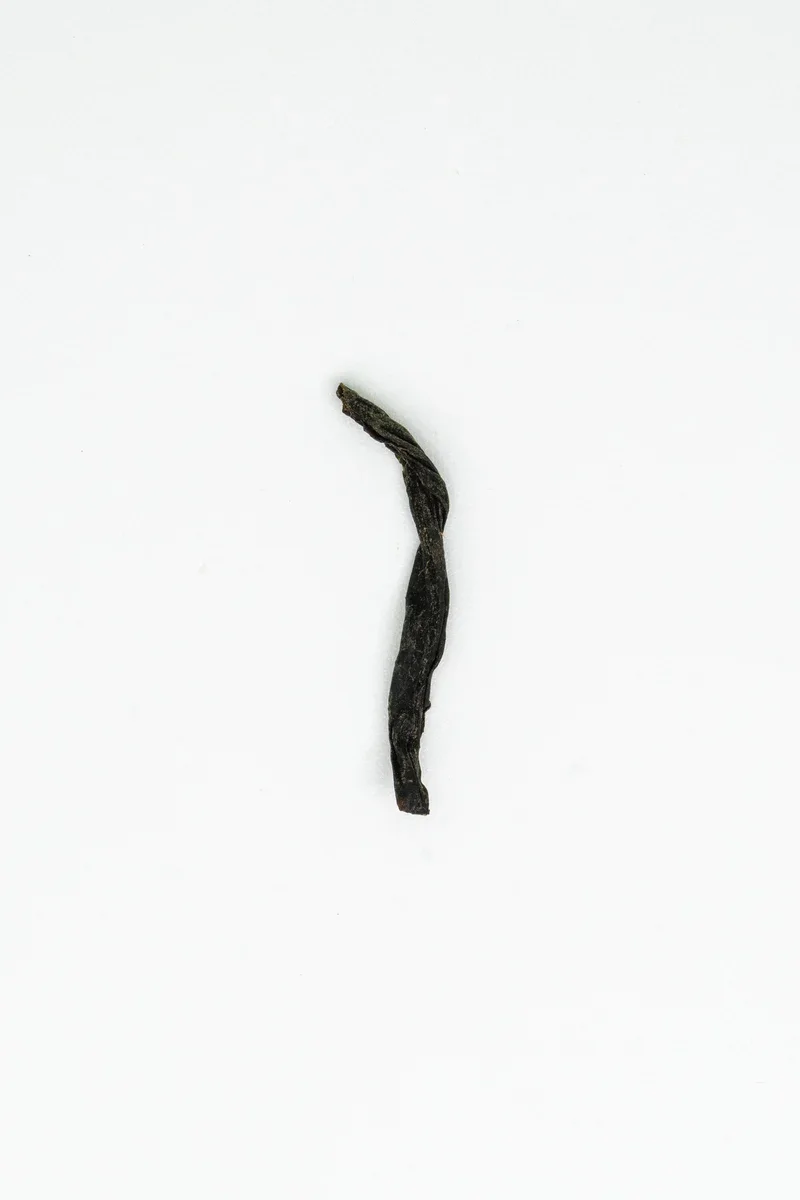
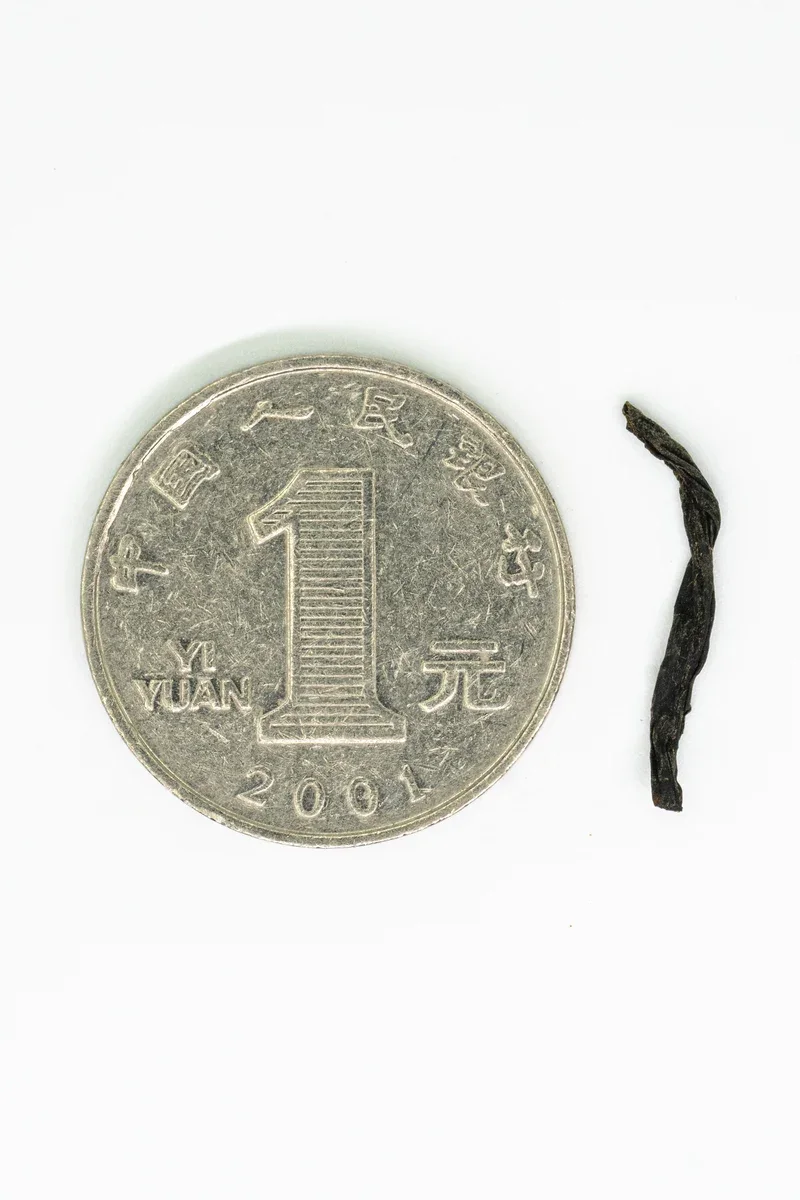
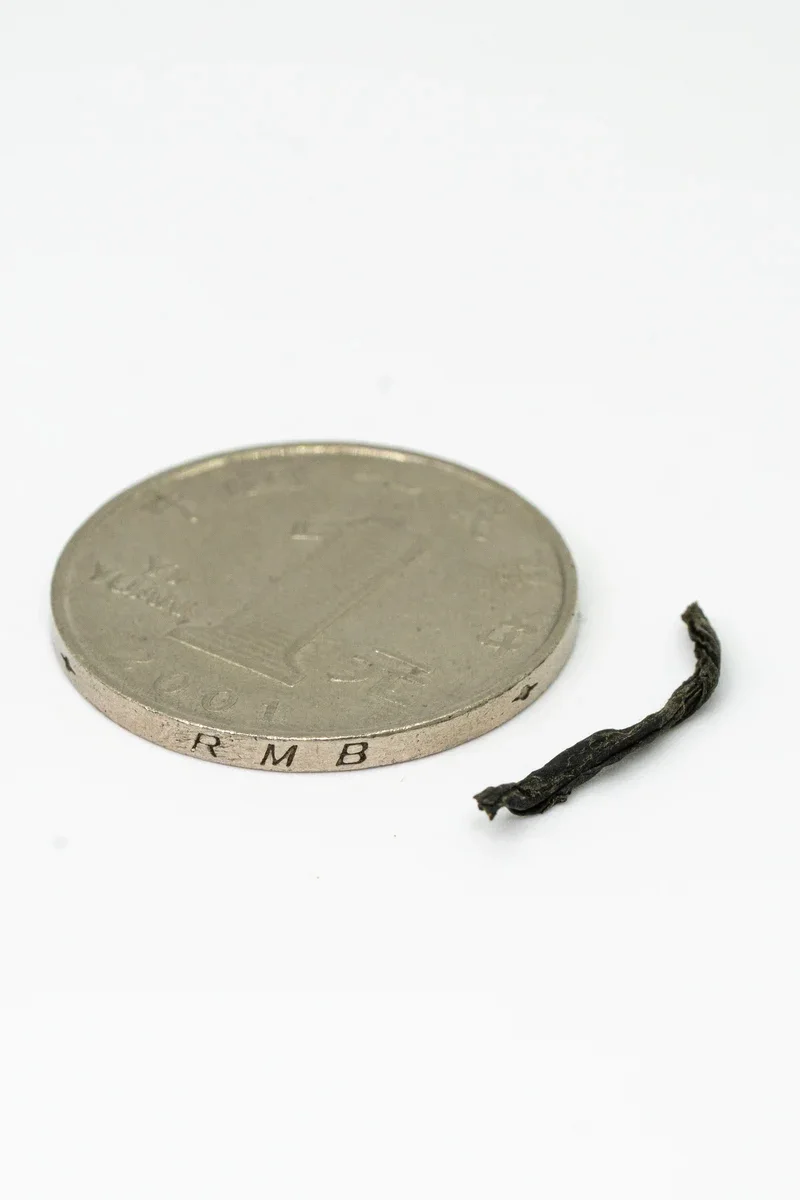
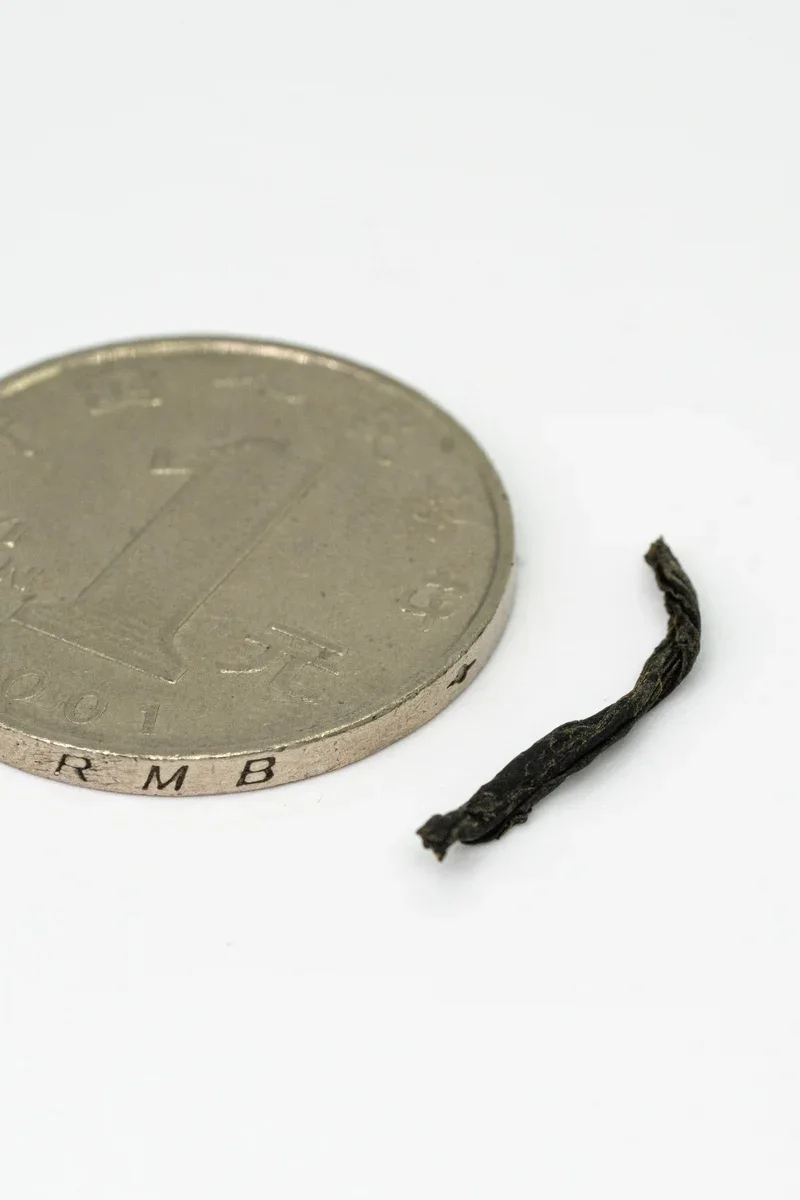
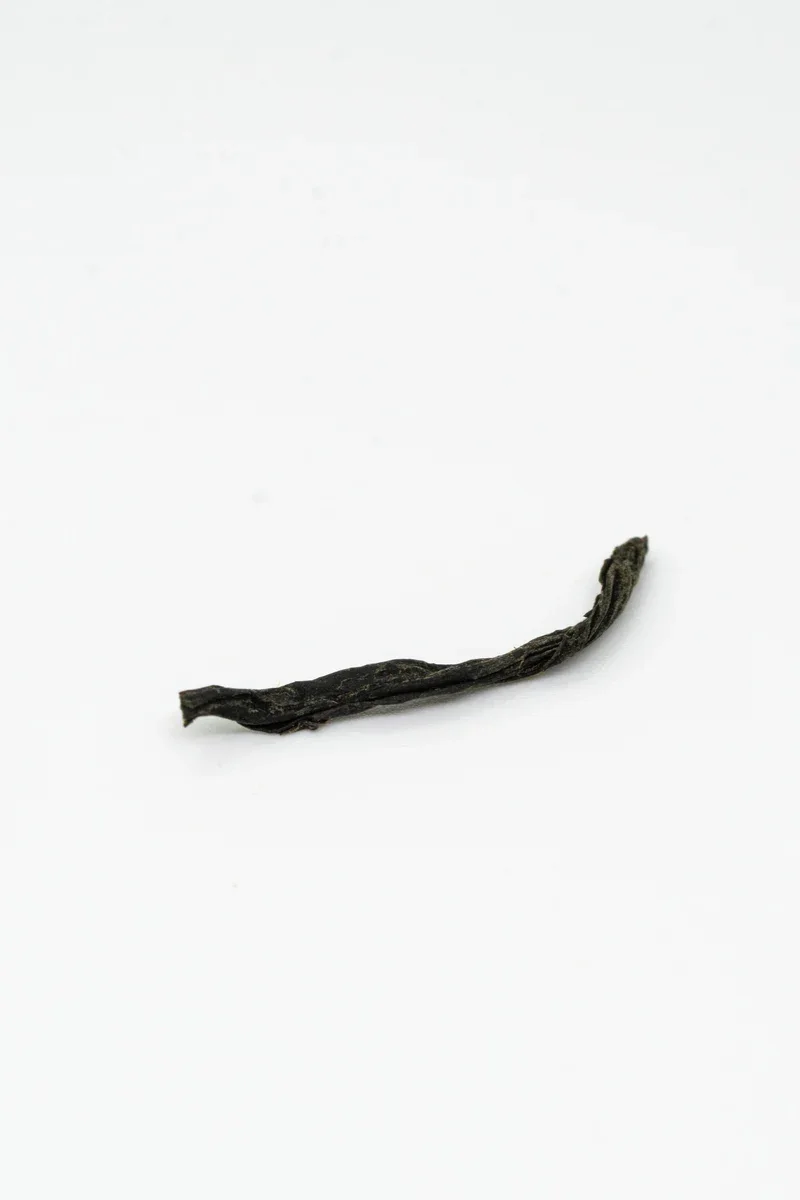
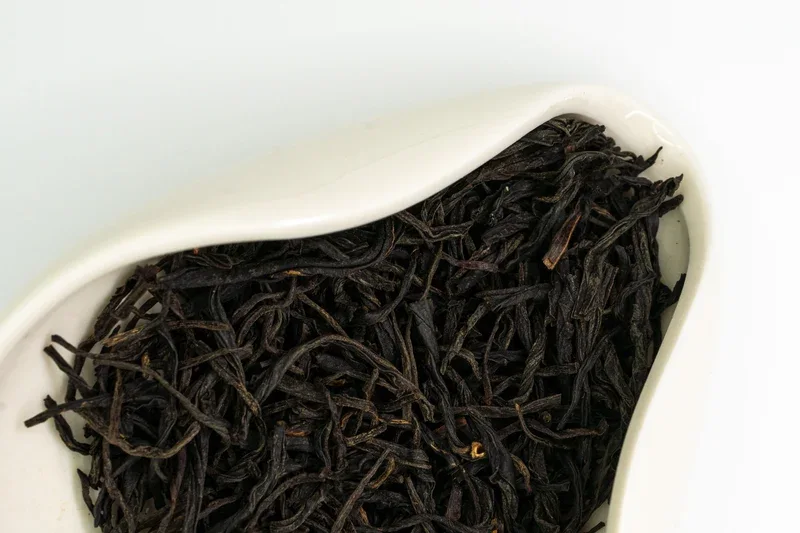
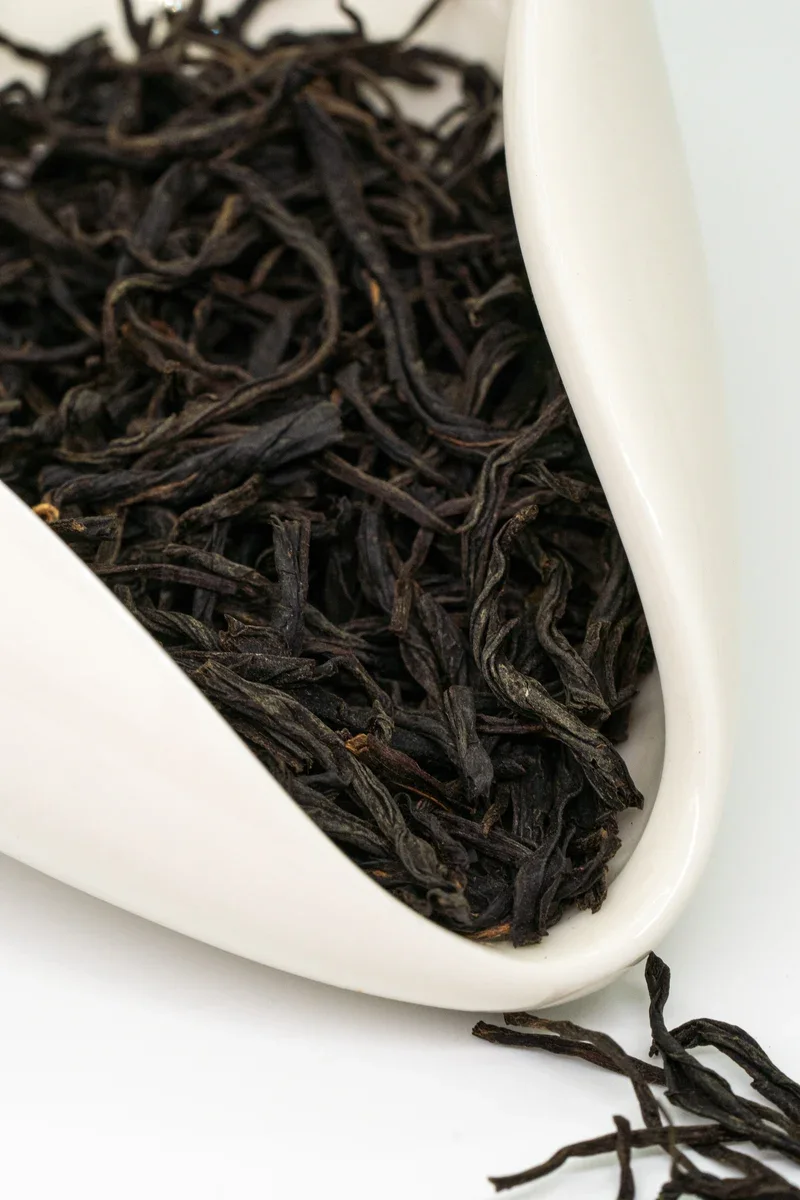
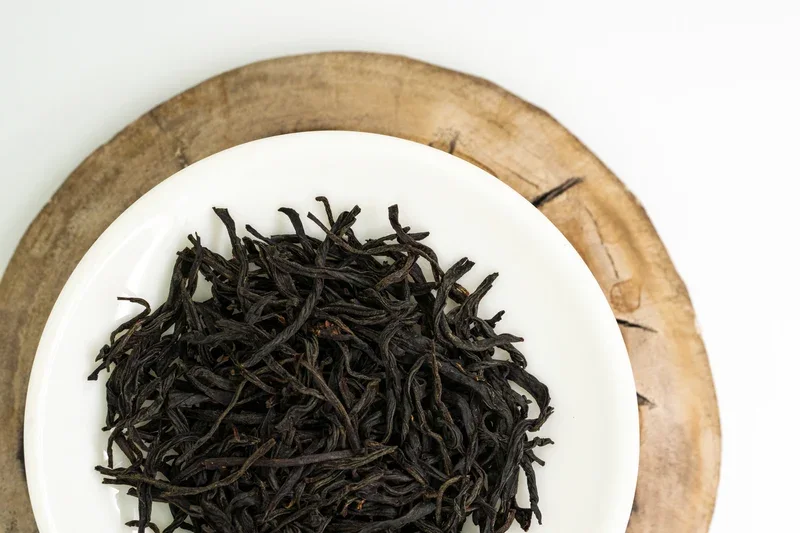
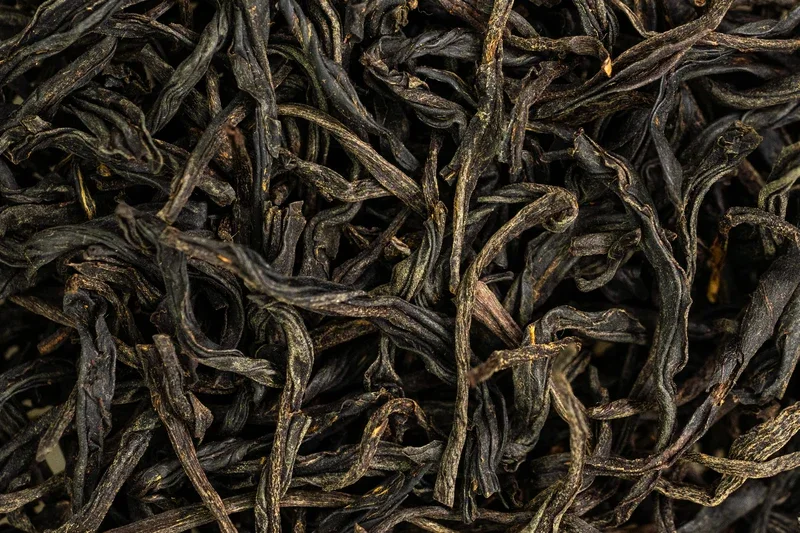
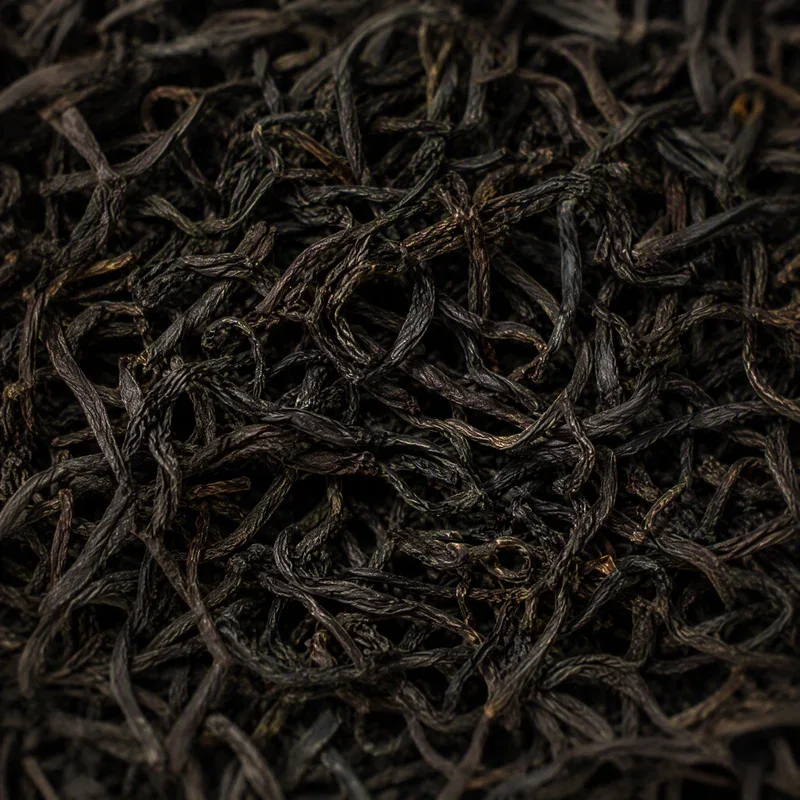
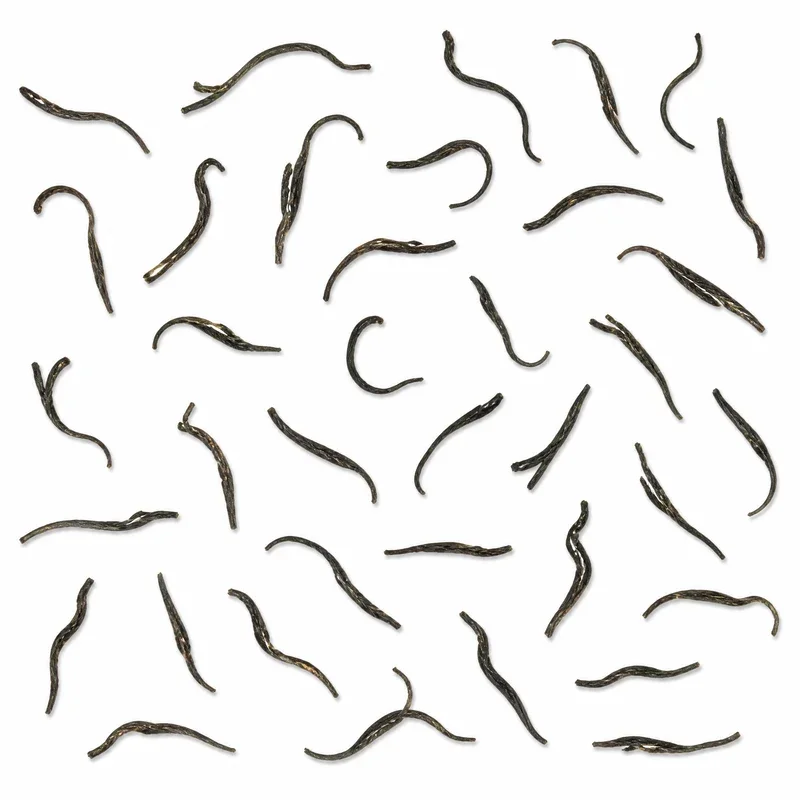
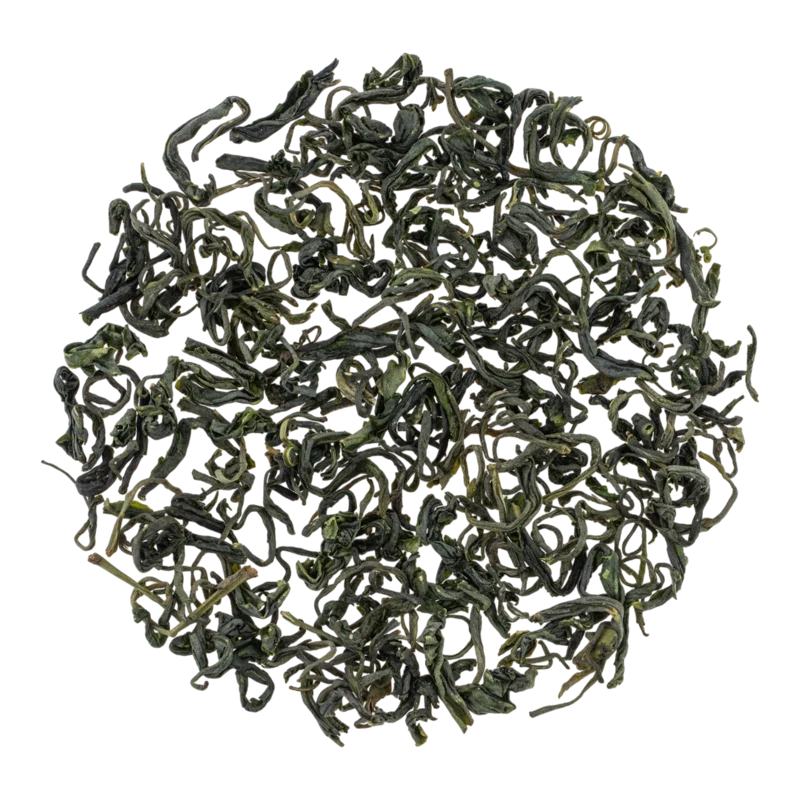
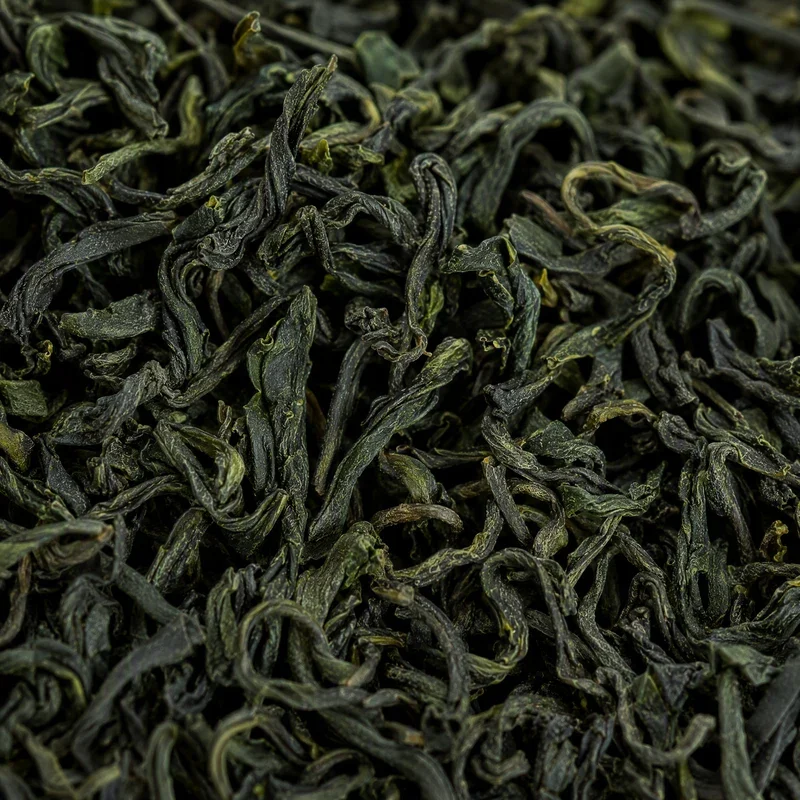
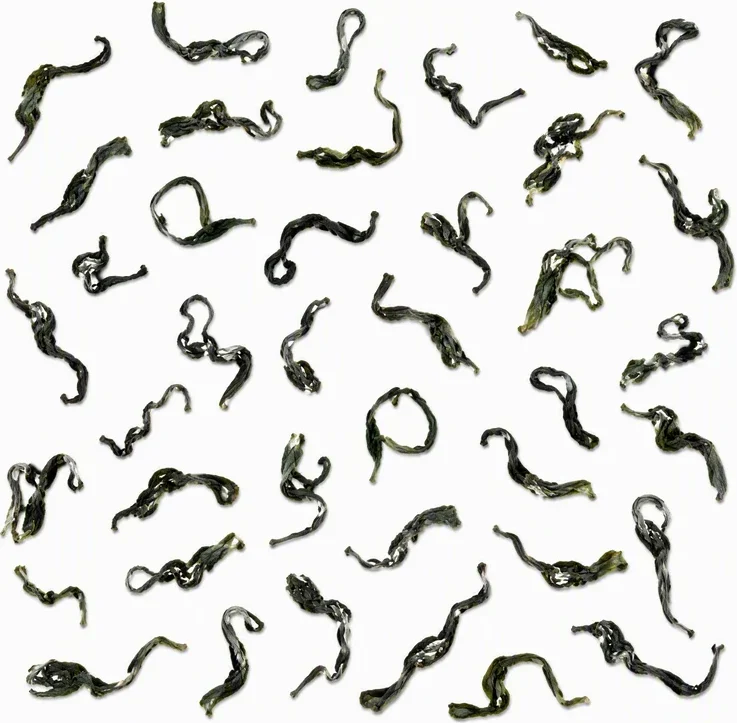
Dry Leaf Appearance: Depends on form: curled — dense tight spirals, dark green with matte "frost"; flat — even, straight, emerald-green; needle — thin, straight, with silvery down. Common feature — noticeable thickness and fleshiness of tea particles (叶片肥厚), distinguishing Yantai tea from thin-leaf southern counterparts.
Dry Leaf Aroma: Dense, intense. Flat teas — expressive pea note (豌豆香, wāndòu xiāng), signature of Yantai flat tea. Curled — chestnut tone (栗香, lì xiāng). Needle — pure freshness (清香, qīngxiāng).
Liquor Aroma: Persistent, rich, with deep "roasted bean" background (焙豆香, bèidòu xiāng), transitioning to chestnut or floral tone. Aroma persists even after 4–5 steeps.
Liquor Color: Bright green (碧绿明亮, bìlǜ míngliàng) for curled teas; yellow-green, clear (黄绿清澈) for needle teas. Generally described as "amber" (琥珀, hǔpò) — with golden-green shades.
Spent Leaves: Thick, fleshy (肥厚嫩绿, féihòu nèn lǜ), uniform, leaves lively and fresh. Thickness of opened leaf — first thing distinguishing Yantai tea from southern counterparts.
Taste: Powerful, full-bodied (醇厚, chúnhòu), with pronounced amino acid "meatiness" (鲜爽, xiānshuǎng). Sweetness — persistent, long-lasting (回甘, huígān). Liquor body — medium and above medium, noticeably denser than most southern green teas. Good endurance: 5 or more steeps.
Alkaloids: Caffeine — standard content for green tea (2–4%). Theobromine, theophylline in trace amounts.
Amino Acids: Not less than 3.0% in spring tea. According to certification tests, amino acid content 56% higher, and L-theanine 64% higher than southern counterparts. This is record level among all 21 tea regions of China.
48.6% — 14% higher than average southern green tea. This means maximum richness and extractability when brewing.
Content 170% higher than southern teas — hence characteristic deep "ink-jade green" color (墨玉绿, mòyù lǜ) of dry leaf.
Anomalously high amino acid to polyphenol ratio (low "phenol-amino index," 酚氨比) — ideal formula for highest quality green tea. Combination of record amino acid, chlorophyll, and water extract content with moderate polyphenols — profile not reproducible in any southern tea region.
Essential Oils: Pyrazines (formed during charcoal roasting, responsible for "roasted bean" note), linalool, geraniol.
Minerals: Zinc (锌), selenium (硒), fluorine (氟), potassium, magnesium, manganese. Zinc and selenium enrichment — consequence of Shandong brown earth geochemistry.
Polyphenols: Not less than 21% (special grade). Moderate content for green tea — result of lower temperatures and abundant diffused light slowing polyphenol synthesis. Main component — catechins, primarily EGCG.
Vitamins: Vitamin C (high content due to minimal oxidation), vitamins B₁, B₂, E, K.
Green tea catechins neutralize free radicals 18 times more effectively than vitamin E. High water extract (48.6%) ensures maximum antioxidant extraction when brewing.
Catechins regulate cholesterol metabolism, reducing atherosclerosis risk. Research shows catechin content in Yantai tea 30% higher than southern counterparts.
High fluorine content suppresses cariogenic microorganisms and strengthens enamel. Anti-caries effectiveness estimated 40% above average level for green teas.
Record L-theanine content (64% higher than southern counterparts) provides deep and prolonged nootropic effect: enhanced brain α-waves, improved concentration and memory, anxiety reduction — without side "caffeine agitation."
L-theanine stimulates γδ-T-cell activity, strengthening innate immune response.
Polyphenols suppress pathogenic GI microflora, improving digestion and overall intestinal condition.
Antioxidants slow cellular aging, support skin and vascular condition.
Natural zinc and selenium content enhances overall antioxidant and immunomodulating potential of tea.
Tea Amount: 3 g per 150 ml (1:50 ratio). Mountain spring water (山泉水) — best choice.
Teaware: Glass tumbler (玻璃杯) or white porcelain gaiwan (白瓷盖碗).
Water Temperature: 80–85°C. For special grade needle tea — 80°C. Boiling water contraindicated: temperature above 85°C destroys L-theanine and increases bitterness.
Container: Vacuum foil bags, tin cans.
Airtight, light-proof packaging. Optimal — refrigerator (0–5°C). Exclude contact with foreign odors, moisture, sunlight.
New tea recommended to "awaken" (醒茶, xǐng chá) in shaded place 7 days to remove "fire" (火气) from charcoal roasting. After opening — store airtight in refrigerator, consume within 1 month.
Most expressive in first 6–12 months.
Price Category: Medium and upper segment. Special grade flat teas — 1,000–3,000 yuan/jin. Curled — 400–800 yuan/jin. Needle (明前) — from 800 yuan/jin. Price determined by form, grade, harvest season.
No reviews yet. Tell us what you think of this tea.
Rate this tea and share your impressions. We review each submission before publishing it.