Brewing
Gongfu brewing
- Water temperature
- 100 °C
- Tea amount
- 6 g
- Water volume
- 100 ml
- First steep
- 10 s
- Time added per infusion
- 5 s
- Infusions
- 10

Yǎ'ān hēichá
Choose a brewing method. Start with the recommended quantities and time, then adjust to taste.
Brewing
Brewing
Taste
Tea encyclopedia
Alt Names: Ya'an Zàng Chá (雅安藏茶, Yǎ'ān Zàngchá — "Ya'an Tibetan Tea"), Nán Lù Biān Chá (南路边茶, Nánlù Biānchá — "Southern Border Tea"), as well as historical variants: hei cha (黑茶), wu cha (乌茶, "black tea"), da cha (大茶, "big tea"), ya cha (雅茶, "Ya'an tea").
Alt Names: Ya'an Zàng Chá (雅安藏茶, Yǎ'ān Zàngchá — "Ya'an Tibetan Tea"), Nán Lù Biān Chá (南路边茶, Nánlù Biānchá — "Southern Border Tea"), as well as historical variants: hei cha (黑茶), wu cha (乌茶, "black tea"), da cha (大茶, "big tea"), ya cha (雅茶, "Ya'an tea").
Category: Sichuan dark teas; southern border tea (南路边茶, Nánlù Biānchá). Historically — a key representative of "边销茶" (biānxiāo chá, "border trade tea"), intended for supplying western regions of China and Tibet.
Coordinates: approximately 29°51'–30°56' N, 101°56'–103°23' E.
Origin: China, Sìchuān Province (四川省, Sìchuān Shěng), Ya'an Prefecture-level City (雅安市, Yǎ'ān Shì). Main production is concentrated in Yǔchéng District (雨城区, Yǔchéng Qū) — the historic core of Ya'an's tea industry, as well as in Míngshān District (名山区, Míngshān Qū), Tiānquán County (天全县, Tiānquán Xiàn), Yíngjīng County (荥经县, Yíngjīng Xiàn), and Lúshān County (芦山县, Lúshān Xiàn).
Type: Post-fermented tea (dark tea, hei cha — 黑茶, Hēichá). Belongs to one of the six basic categories of Chinese tea classification. Characterized by deep microbial fermentation (渥堆, wòduī), multiple cycles of moistening and pressing, and capacity for long-term aging.
Cultural Significance: Ya'an dark tea is not merely a beverage, but a genuine civilizational bond between Han China and the Tibetan world. For more than a thousand years, it has served as an economic, political, and cultural link, binding peoples on both sides of the Tibetan Plateau. A Tibetan proverb states: "Better three days without grain than one day without tea" (宁可三日无粮,不可一日无茶). For nomads whose diet consisted predominantly of meat and dairy products, tea was an irreplaceable source of vitamins, minerals, and fiber, as well as a means of normalizing digestion. Tea served as the basis for preparing butter tea (酥油茶, sūyóu chá), milk-salt beverages, and other traditional Tibetan treats. Caravans of porter-carriers-beifu (背夫, bèifū), who carried two to three hundred jin of tea on their backs across passes over four thousand meters high, became a legendary symbol of the Tea Horse Road.
History: The history of Ya'an dark tea is inextricably linked with the history of tea-horse trade between China and Tibet. The origins of production date back to the Tāng dynasty (唐朝, Tángcháo, 618–907): according to the Tibetan historical compilation "Tibet Political and Religious Mirror Appendix" (《西藏政教鉴附录》), tea reached Tibet with Princess Wénchéng (文成公主, Wénchéng Gōngzhǔ), who was married to Tibetan king Songtsen Gampo (松赞干布, Sōngzàn Gānbù) in 641. Ya'an, located at the junction of the Sichuan Basin and the Tibetan Plateau, became the main center for tea production and dispatch to the west.
Cultivar: The Ya'an region traditionally cultivates local Sichuan small-leaf and medium-leaf populations (Camellia sinensis var. sinensis), adapted to the humid subtropical climate of western Sichuan. Modern plantations also feature introduced cultivars selected for increased yield and disease resistance.
Picking: Harvesting is conducted predominantly from late spring to summer (May–August). For border pressings, more mature raw material is acceptable — up to the standard of "1 bud + 4–5 leaves" and including partially lignified shoots (红苔, hóngtái — "red shoots"). Traditional harvesting principle: "above don't break the tip, below don't break the base" (上不断尖,下不断本) — don't cut the tender bud and don't break the lignified stem, to preserve bush health.
Pluck Standard: Mature leaves and upper stem sections of the current year (当年生成熟茶叶). Raw material for border teas is traditionally coarser than for green or red teas, which relates to functional requirements: large leaves and stems better withstand multiple fermentation, pressing, and long transportation, and also provide high content of fiber and minerals.
Raw Material: Only freshly picked leaves are used (dried or stale raw material is not permitted). Part of the production is made from raw material collected at high-altitude sites (above 1000 m above sea level), which is valued for richer mineral content.
Altitude: Tea plantations are located at altitudes from 600 to 1800 m above sea level. Main massifs — in the range of 700–1200 m. The legendary Méngdǐng Mountain (蒙顶山, Méngdǐng Shān) — considered the birthplace of world tea culture — rises here to 1456 m.
Climate: Subtropical monsoon humid (亚热带湿润季风气候). Ya'an bears the historic nickname "Rain City" (雨城, Yǔchéng) — the average annual number of rainy days in Yucheng District reaches 218. Average annual temperature — about 15–16 °C (in northern areas about 15 °C, in southern — up to 17–18 °C). Winters are mild, without severe frosts; summer is warm, without scorching heat. Frost-free period — about 298 days.
Soil: Acidic mountain-forest brown and yellow-brown soils predominate, developed on sandstones and shales. In Yucheng District, purple soils (紫色土) on red-colored Mesozoic argillites are also found. Soils are characterized by weakly acidic or acidic reaction (pH 4.5–6.0), which is optimal for tea bushes, and are enriched with microelements thanks to high forest cover (forest coverage of the prefecture — over 64%).
Ya'an is located on the western edge of the Sichuan Basin, in the transition zone to the Tibetan Plateau. Mountain ranges (Daxiangling — 大相岭, Erlangshan — 二郎山, Jiajinshan — 夹金山) create complex multi-tiered topography: mountains occupy 94% of the prefecture's territory, plains — only 6%. The Qīngyī River (青衣江, Qīngyījiāng) crosses the central part of the prefecture.
Average annual precipitation in main tea-producing areas — 1200–1750 mm, in Yucheng District — up to 1732 mm. Relative air humidity — on average 79%, and in summer-autumn months (July–October) — above 84%. Frequent night rains and abundant cloudiness provide diffused soft light. Average annual sunshine duration — only about 1019 hours, which is one of the minimum indicators among subtropical regions of China.
In tradition, ecological tea gardens (生态茶园, shēngtài cháyuán), integrated into forest ecosystems, are highly valued. Modern farms actively implement organic practices. The stable humid climate and abundant cloudiness create conditions for slow leaf growth, which promotes accumulation of soluble extractive substances, amino acids, and mineral salts.
Manual or mechanized harvest of mature shoots of the current year. Freshness of raw material — critical requirement: only leaves picked the same day are used.
Quick high-temperature roasting to inactivate oxidative enzymes and prepare the leaf for subsequent stages. Conducted in a wok or rotary drum.
Mechanical kneading of the leaf to break cellular membranes and release cellular juice, which provides the basis for subsequent fermentation and extraction during brewing.
Key and most characteristic stage. The rolled leaf is laid in piles, where under the influence of its own moisture (without adding water — a fundamental difference from some other hei cha) at controlled temperature and humidity, microbial fermentation proceeds. Traditionally conducted for up to four piling cycles. It is at this stage that characteristic warm, woody-herbal aroma notes and taste softness are formed. Modern production uses rotational drums (滚筒发酵), which increases hygiene and process stability while preserving traditional parameters.
Steam treatment to soften the leaf and prepare for shaping. May be repeated several times at different stages.
Traditional operation of compacting and leveling the tea mass.
Can be carried out in the sūn (晒干, shàigān), in drying chambers, or on special tea stoves-kang (茶炕, chákàng), used since the Ming era.
Dried semi-finished product (毛茶, máochá) is sifted, cut, winnowed, and sorted to remove impurities and separate into fractions. Then blending is conducted: "洒面" (sǎmiàn, "covering layer" — higher quality leaves) is distributed on the surface, and "里茶" (lǐchá, "inner tea" — coarser fraction) is placed inside.
The finished blended mass is steamed and pressed into forms — rectangular bricks (砖, zhuān) or other standard configurations. The surface should be smooth, density — uniform.
Pressed forms are stored under controlled conditions for continued slow fermentation and formation of "陈香" (chénxiāng) — mature aged aroma.
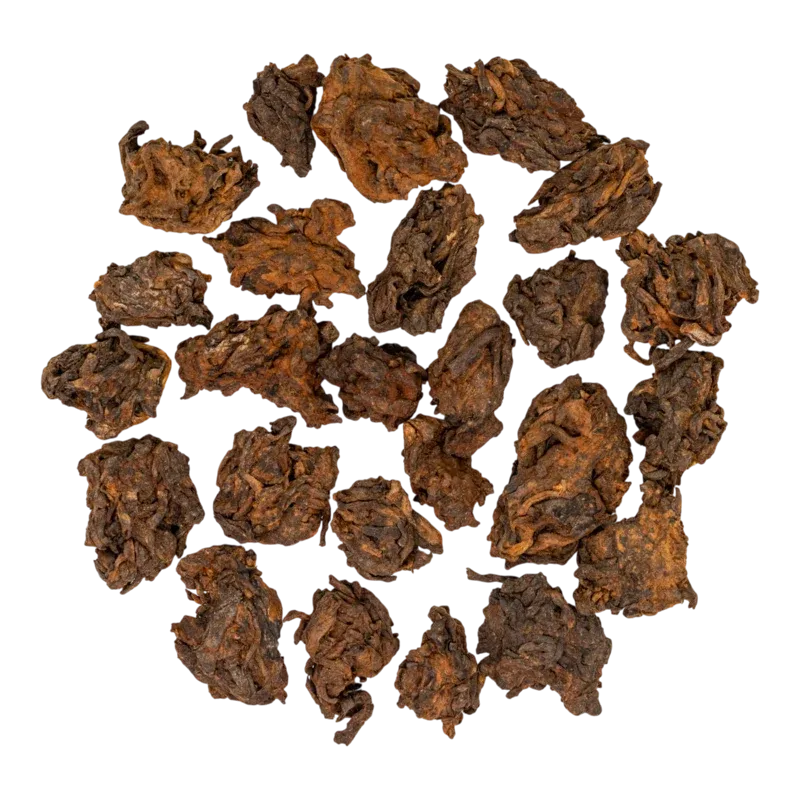
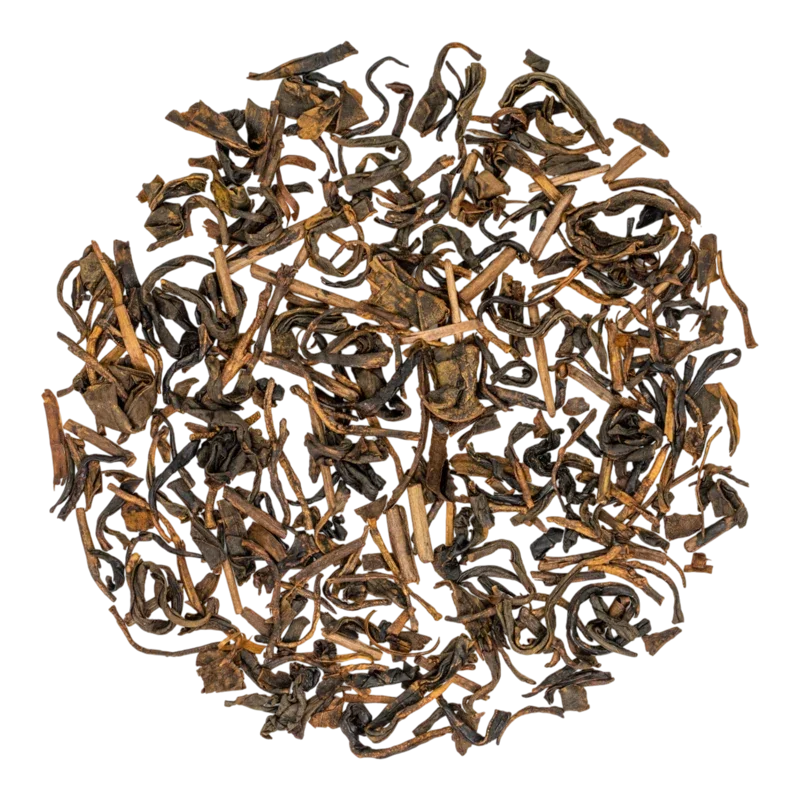
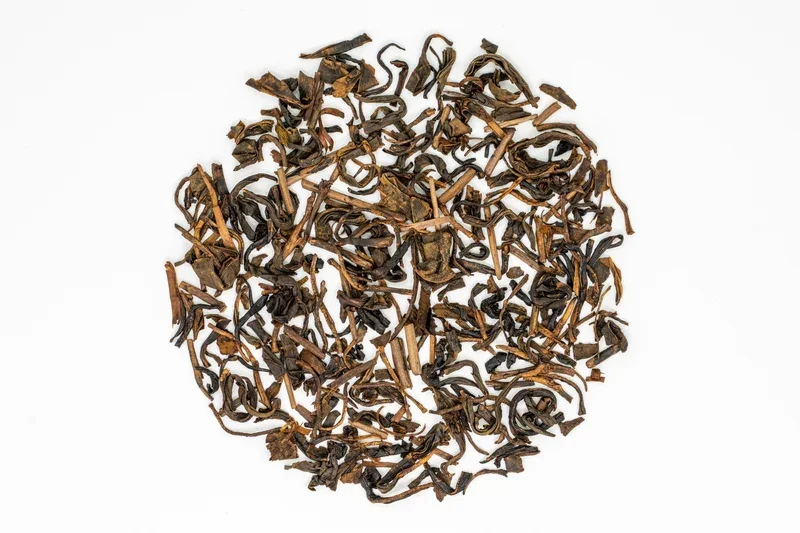
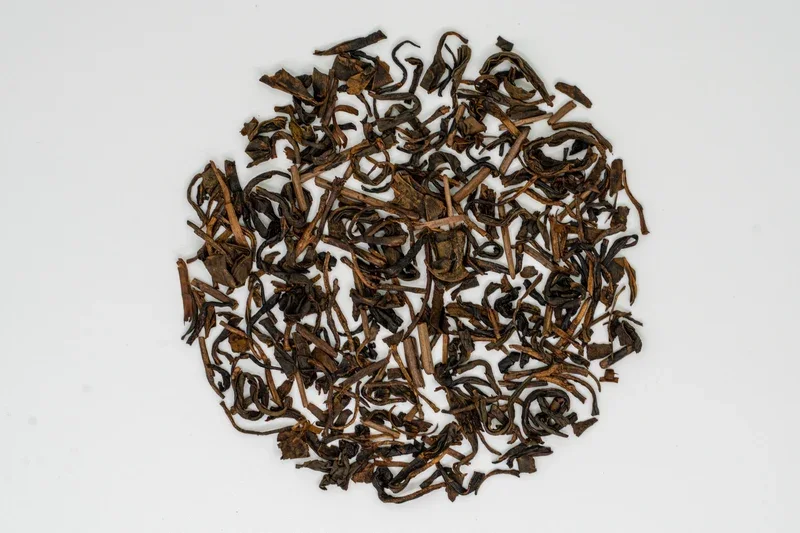
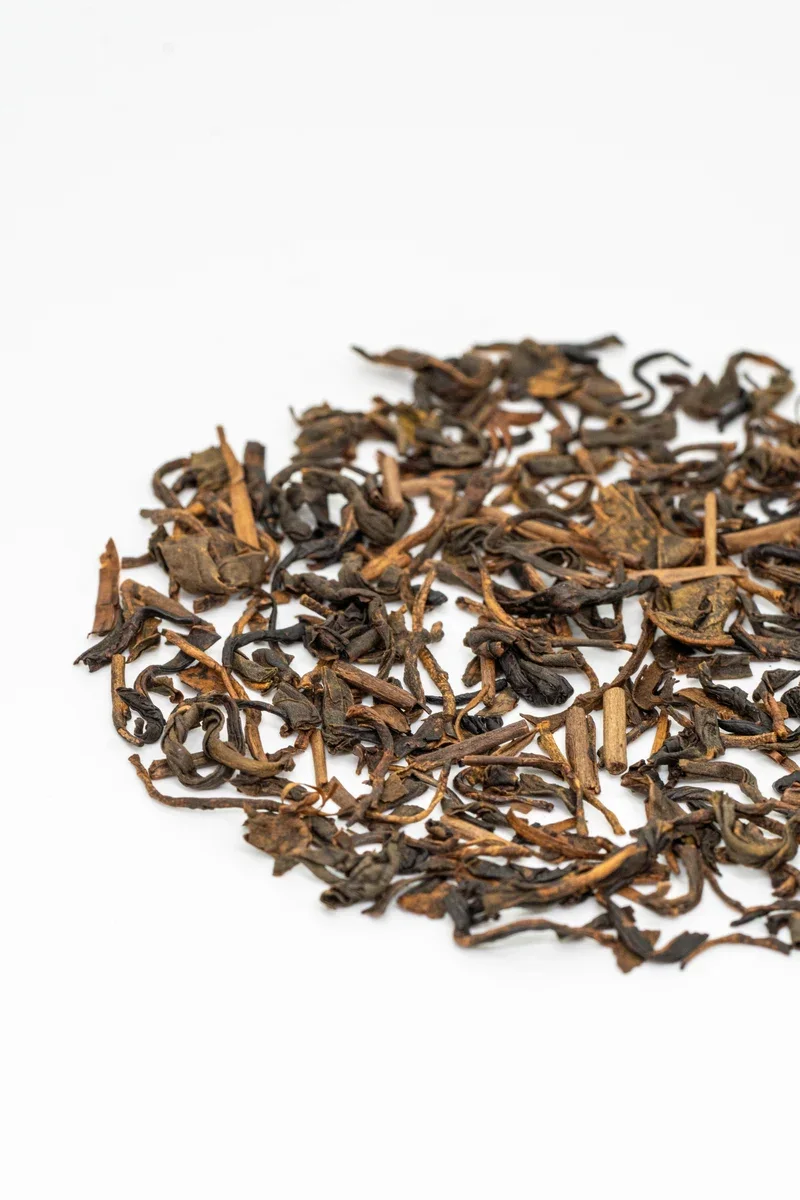
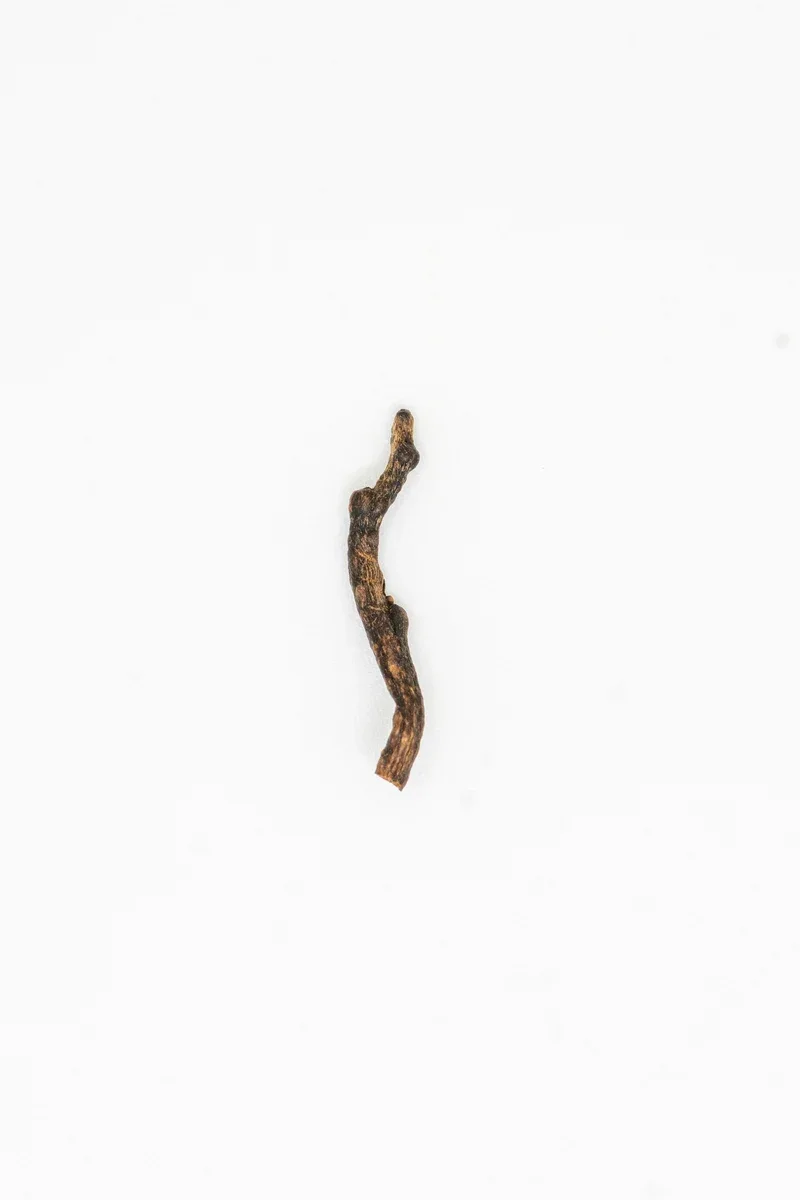
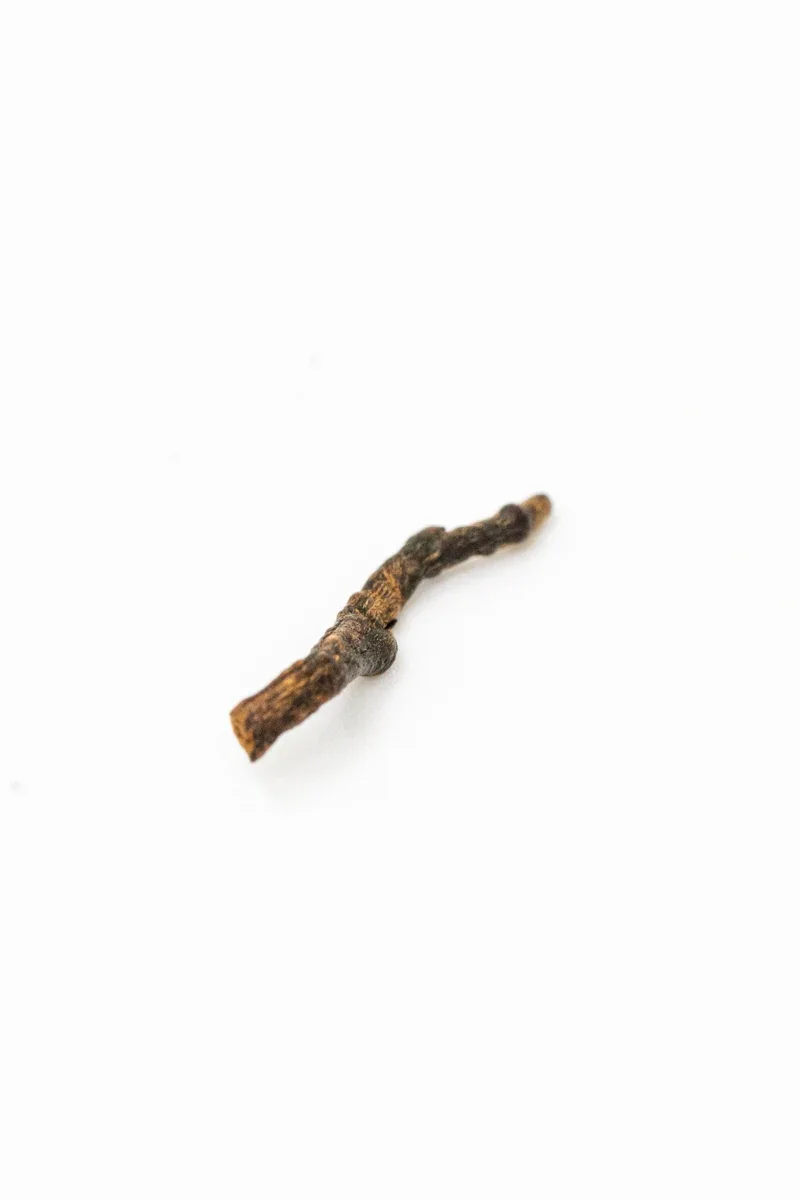
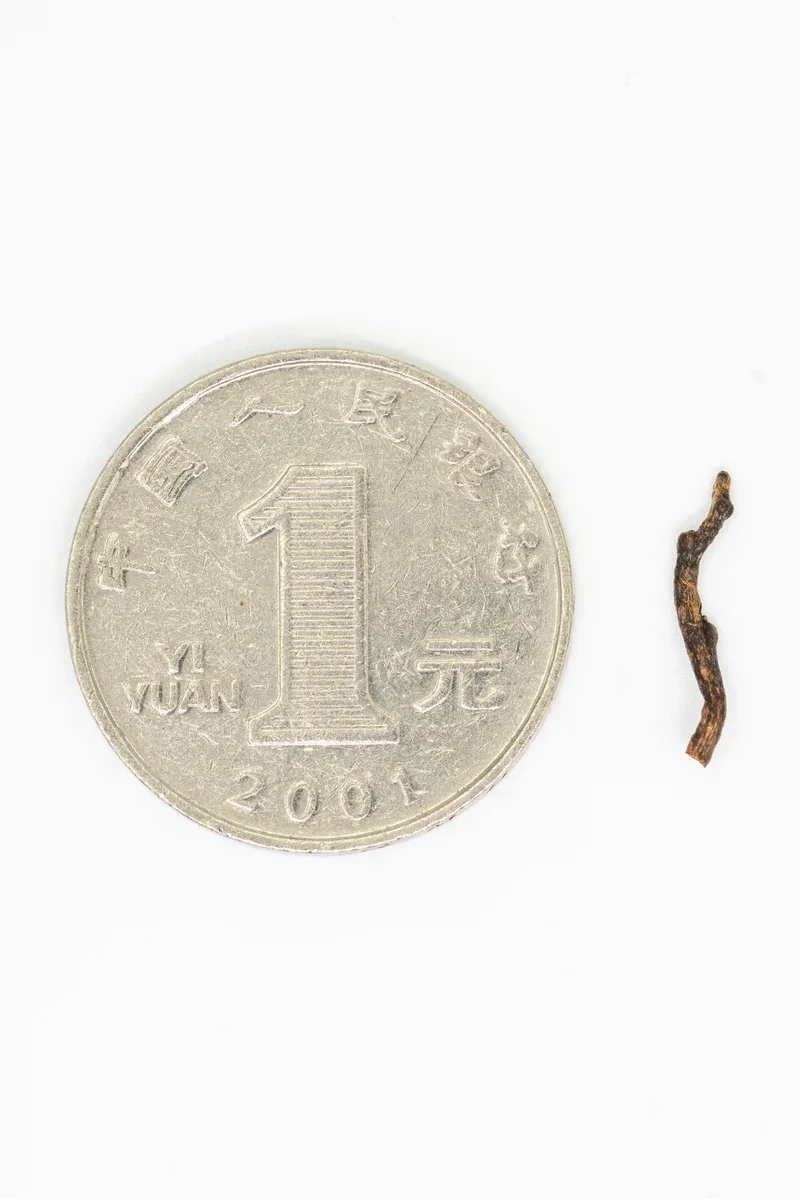
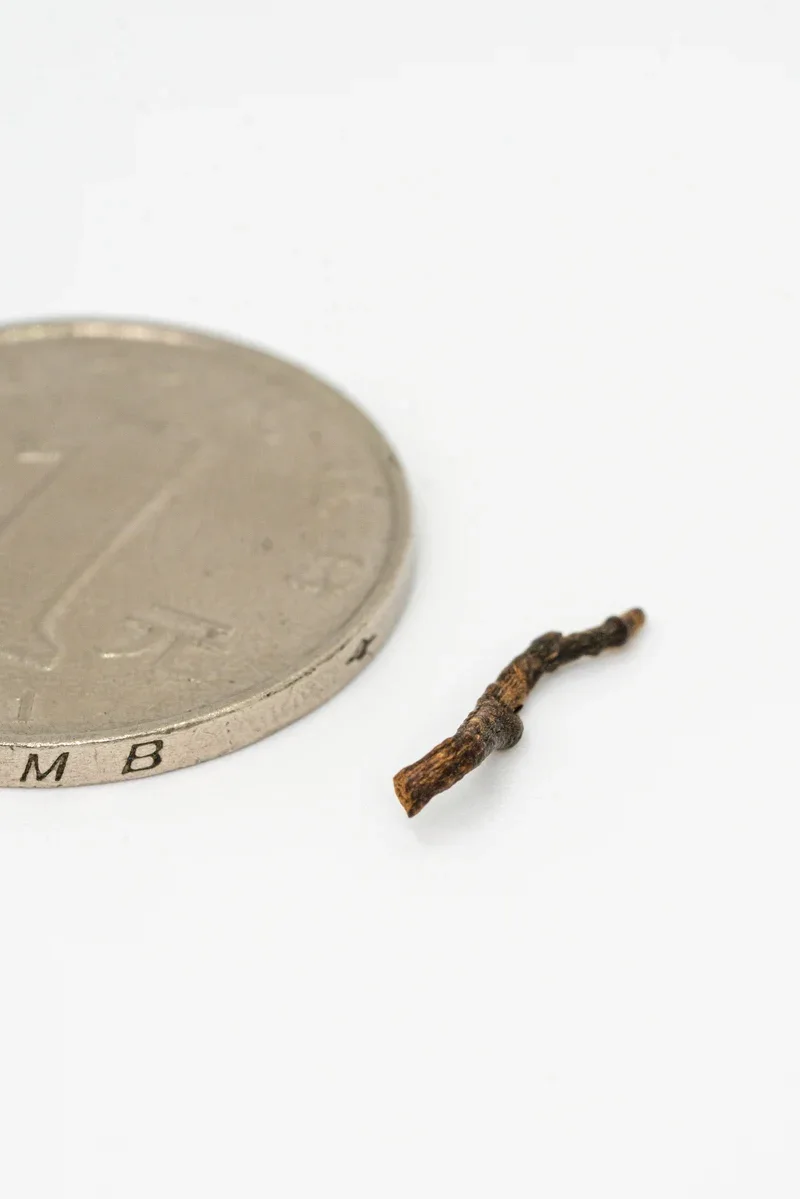
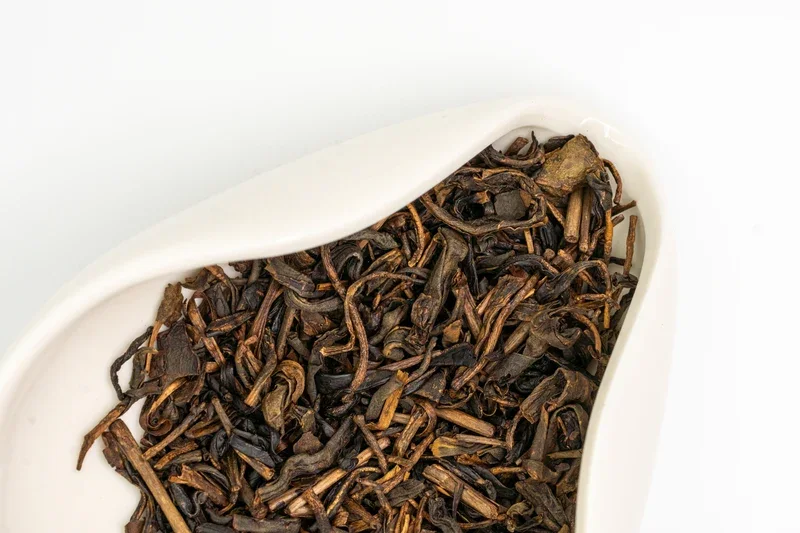
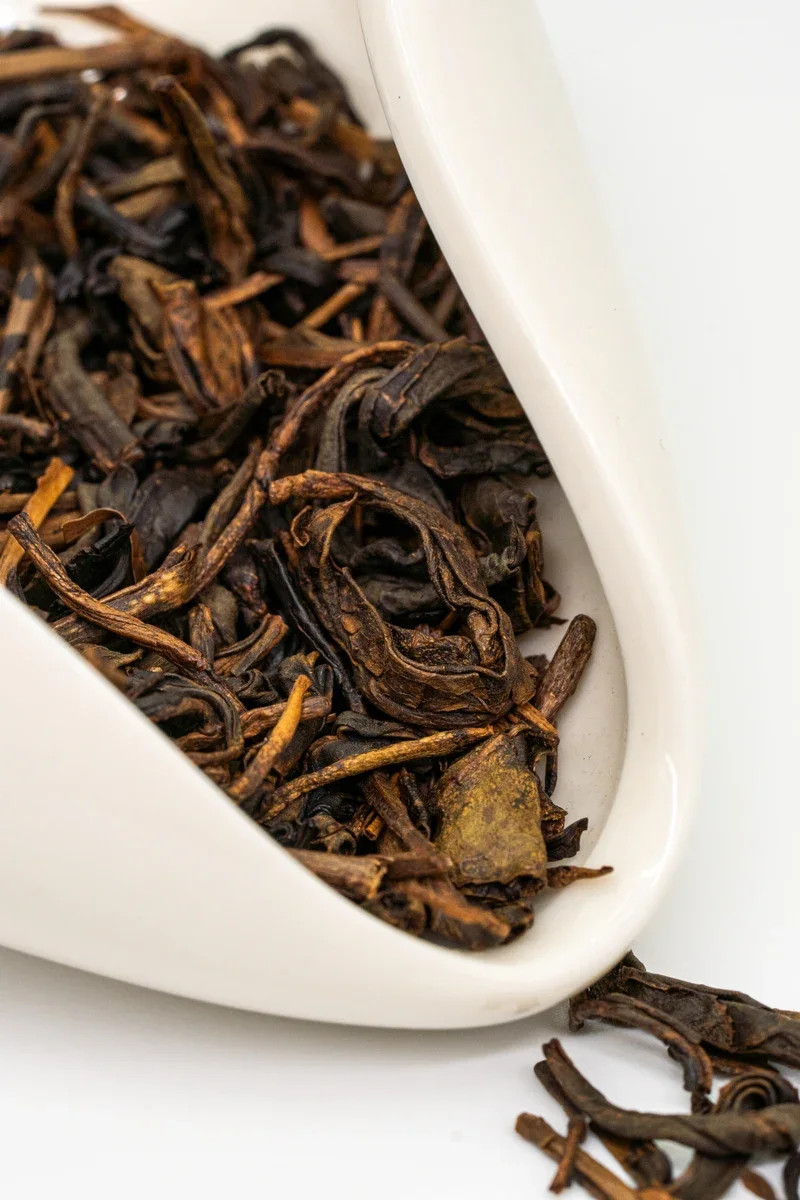
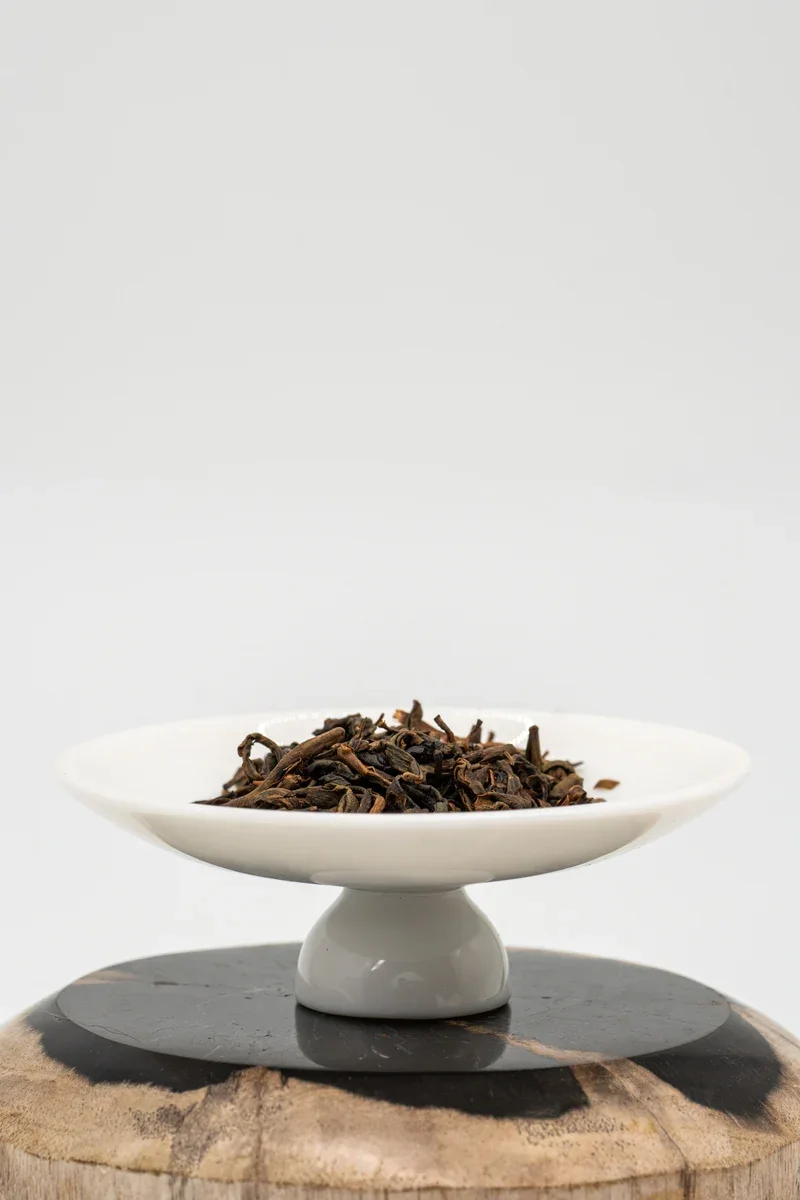
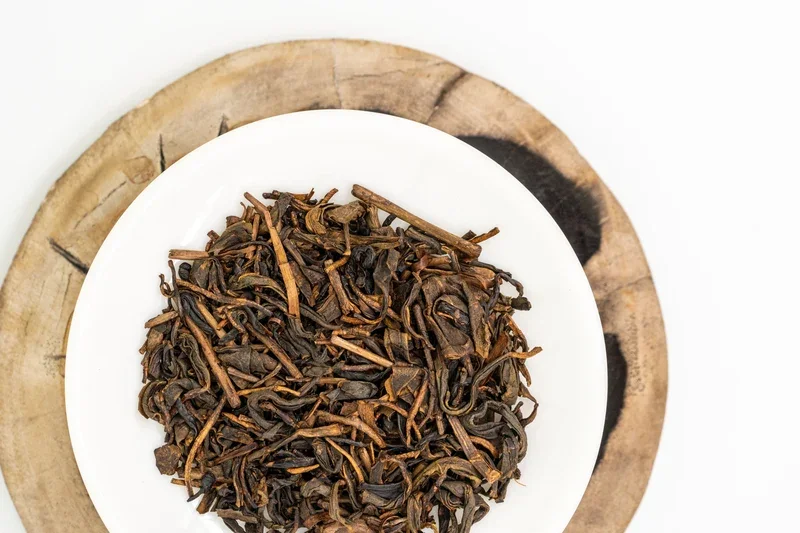
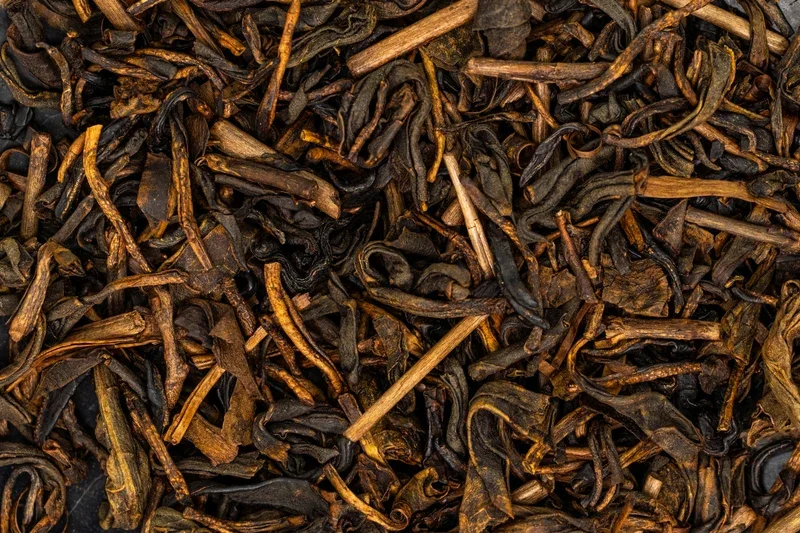
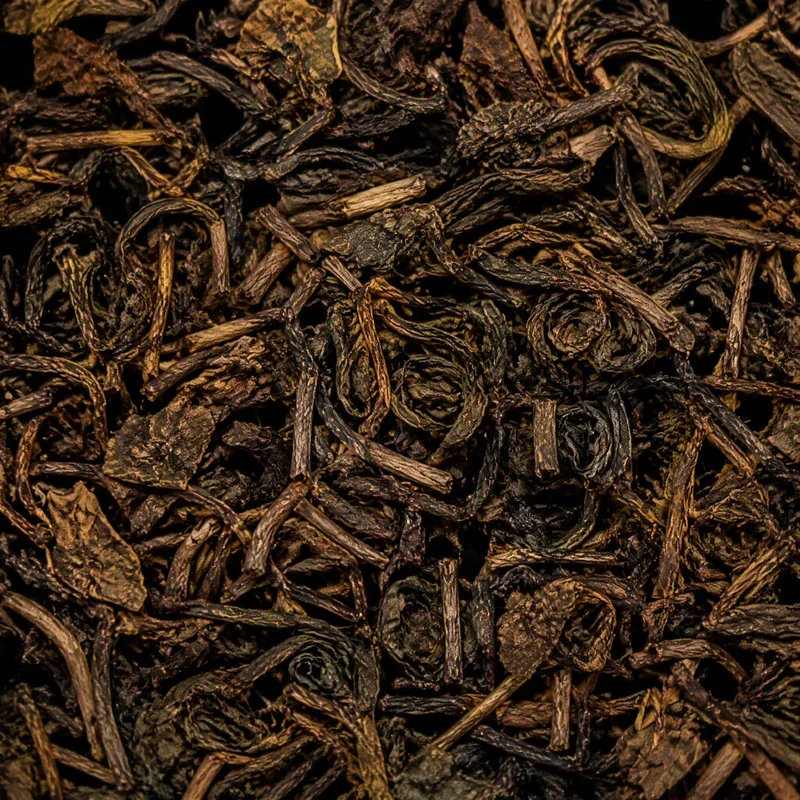
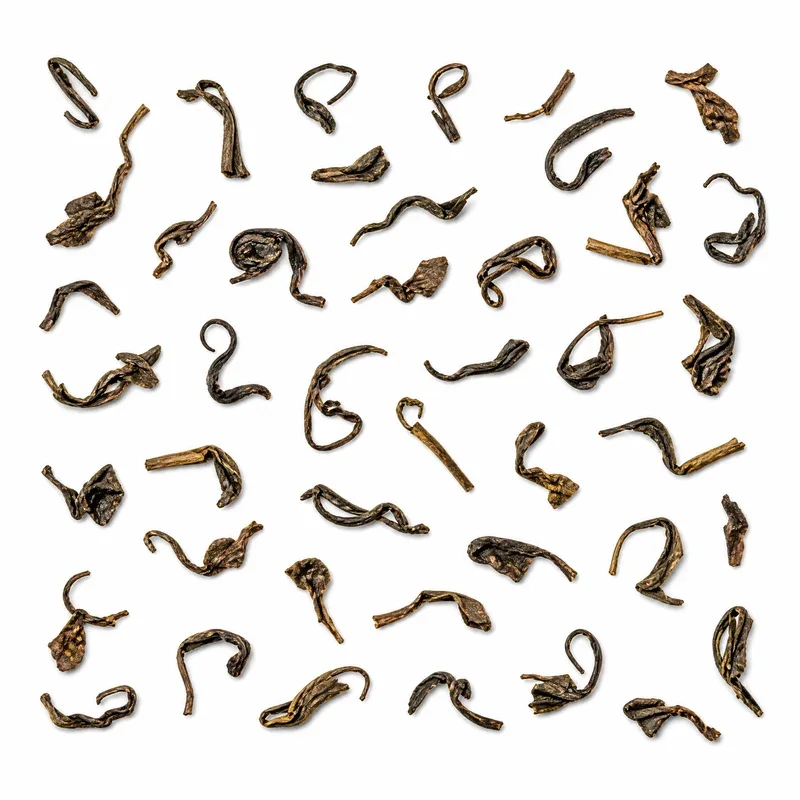
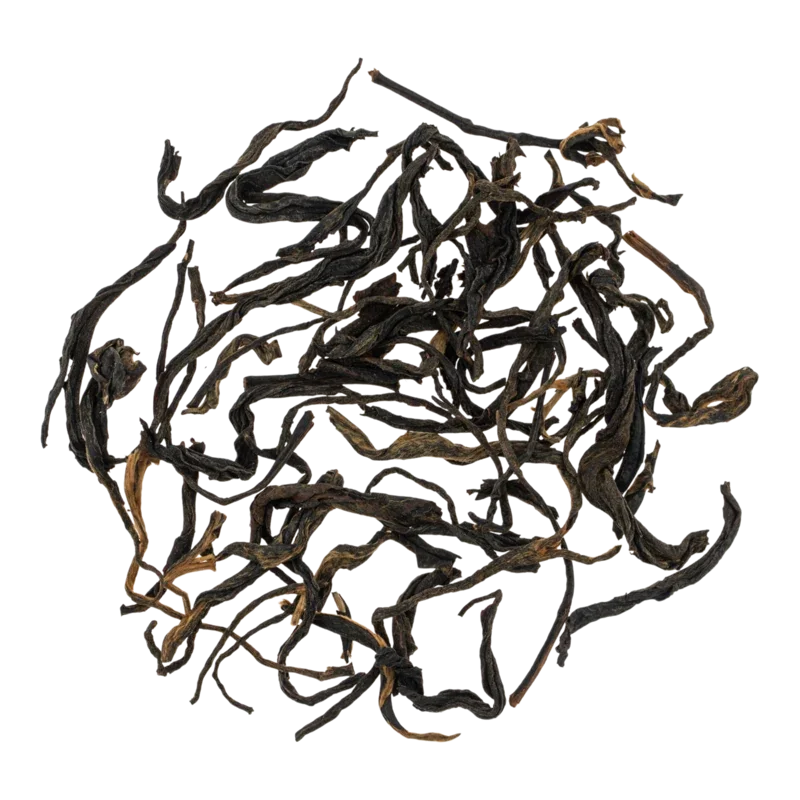
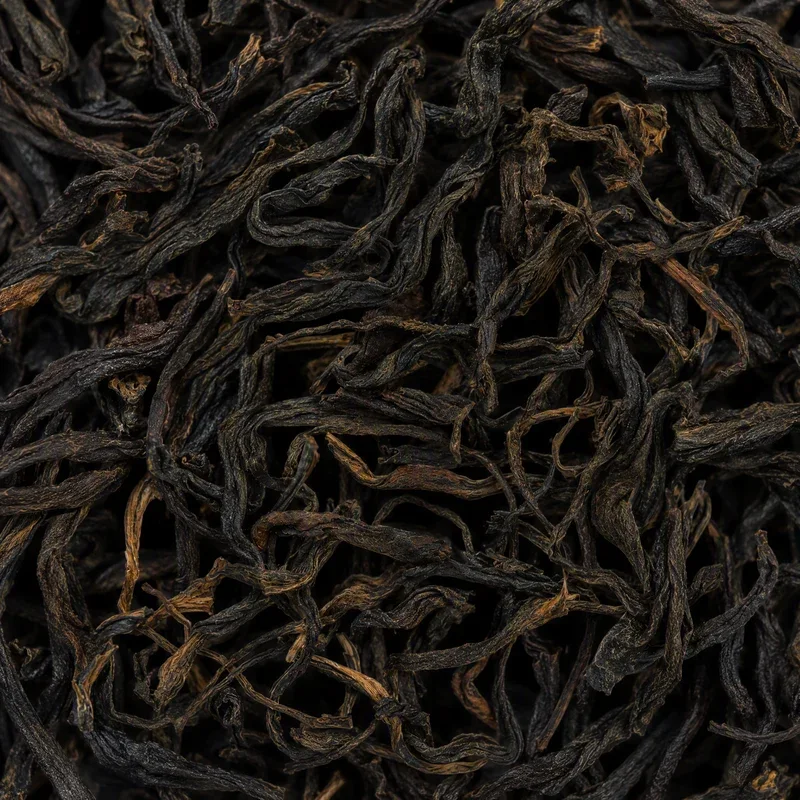
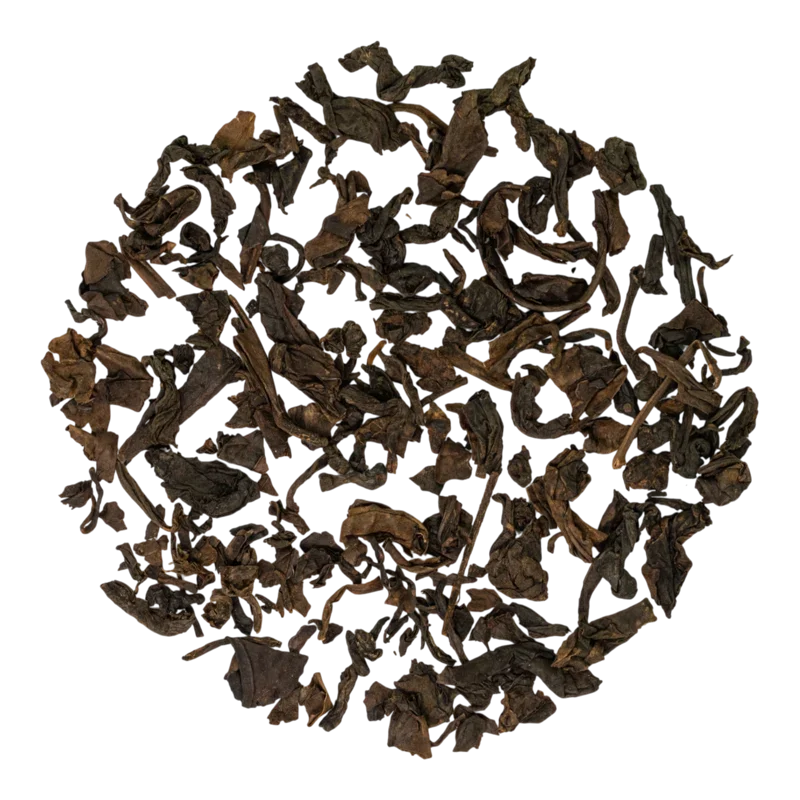
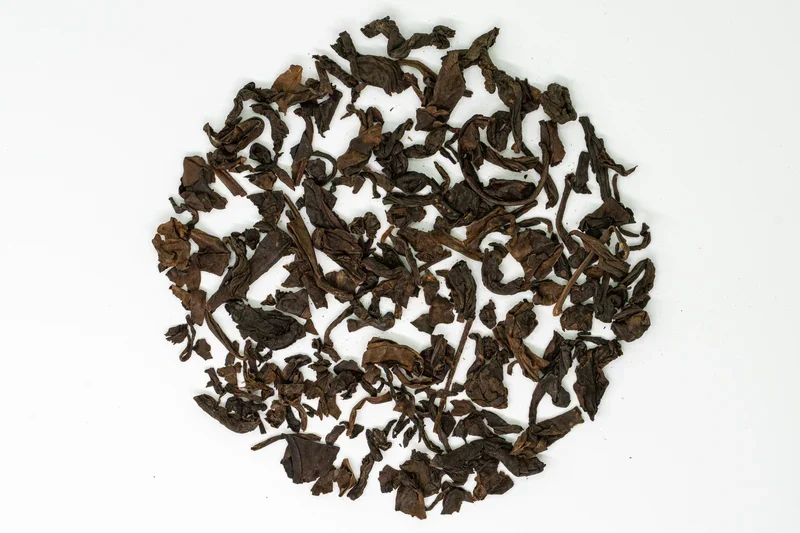
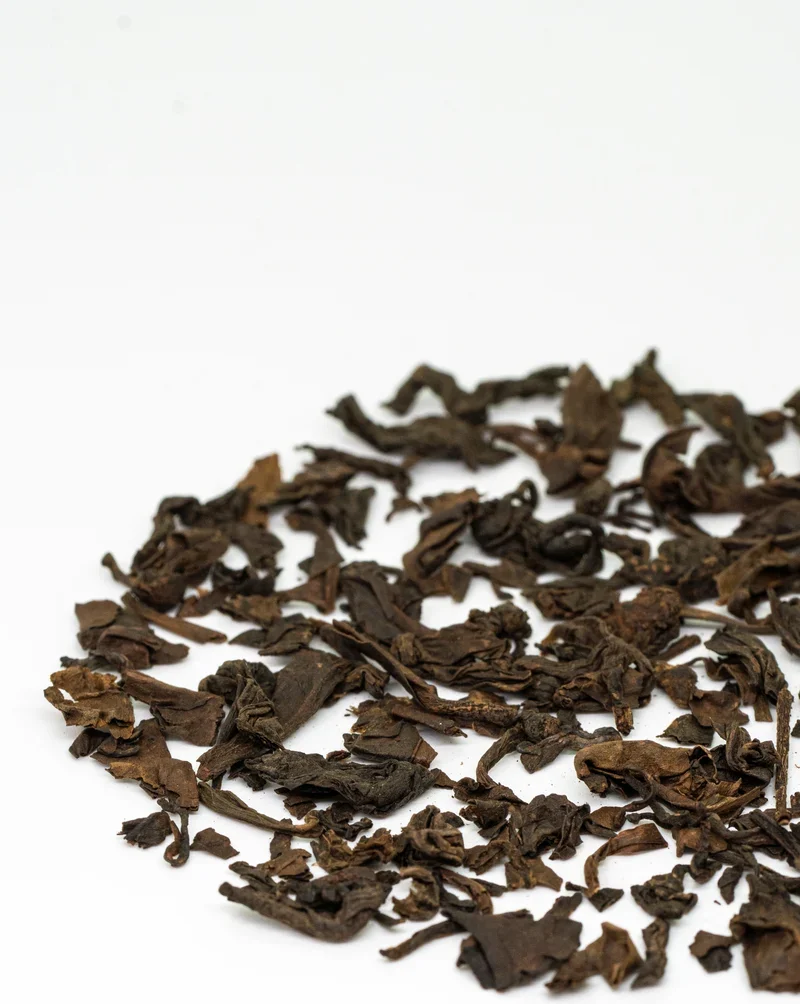
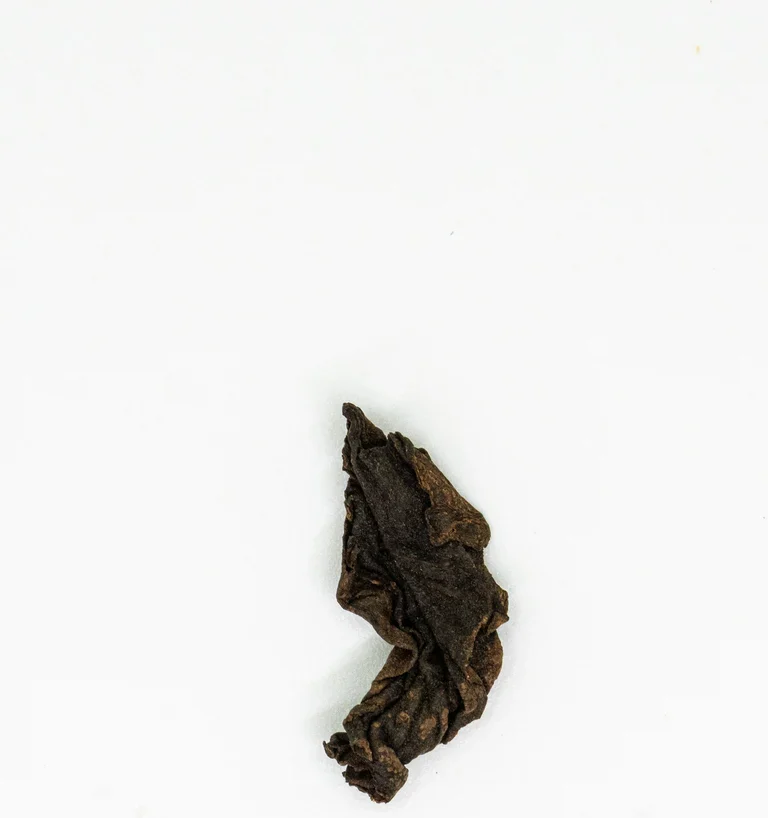
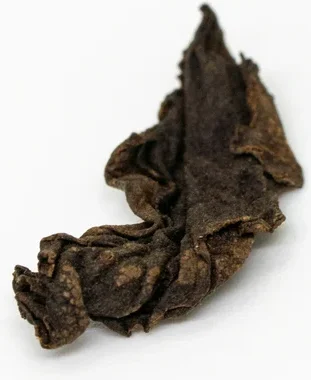
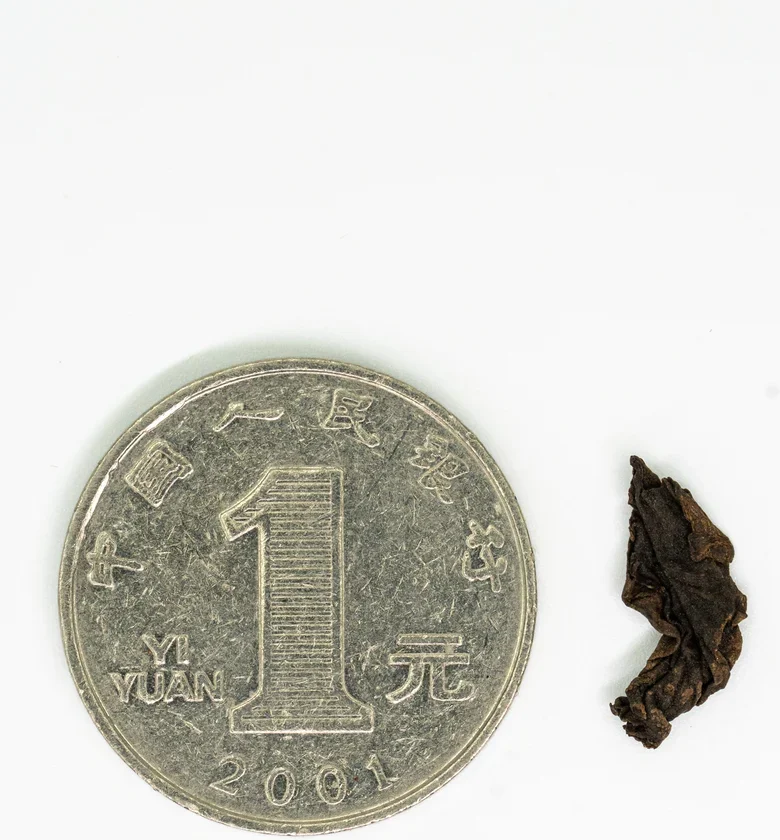
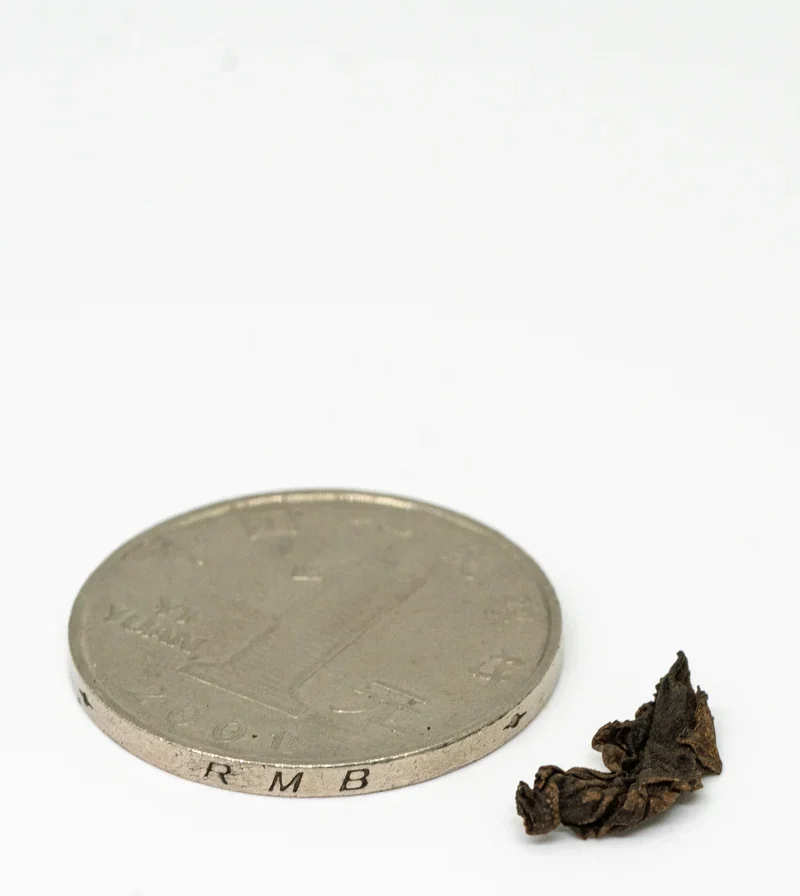
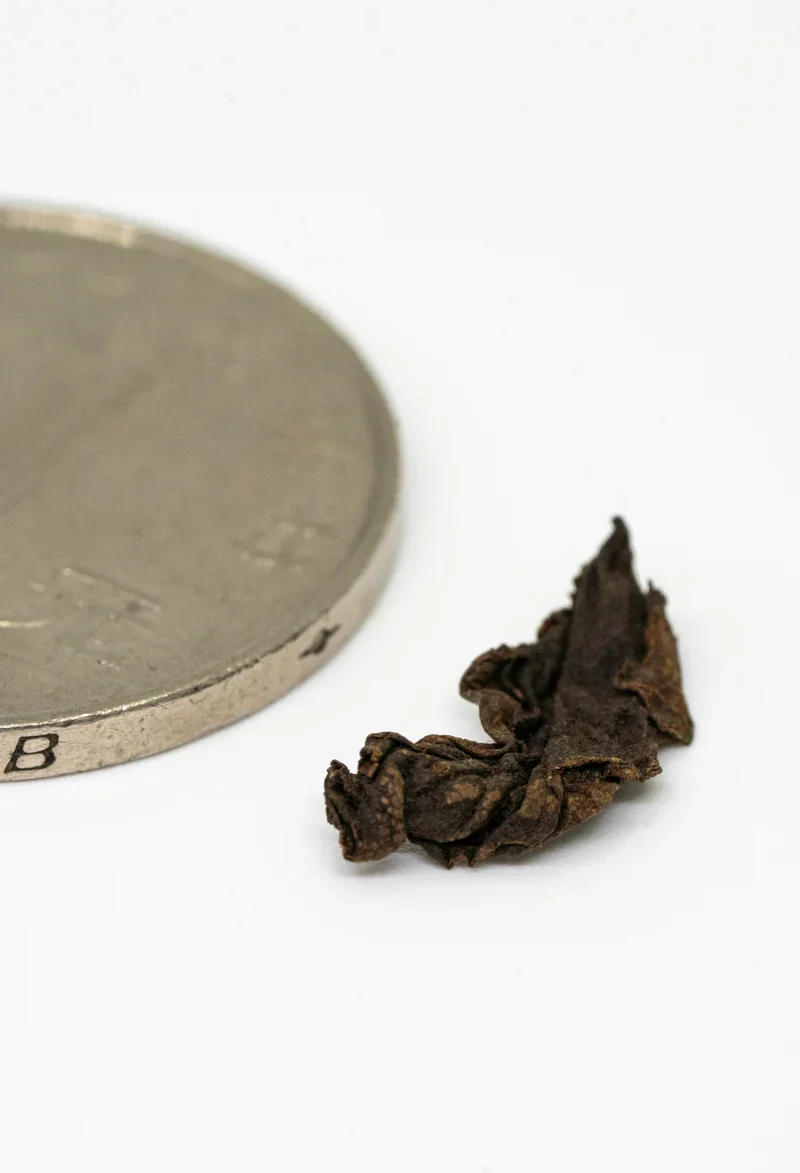
Dry Leaf Appearance: Pressed forms have correct geometry: Kàng Zhuān bricks (康砖, Kāngzhuān) — rectangular, with rounded corners, size approximately 17×9×6 cm, weight 0.5 kg; Jìn Jiān bricks (金尖, Jīnjiān) — larger, about 24×19×12 cm, weight 2.5 kg. Color of outer surface — dark brown to black-brown, with glossy oily tint (乌黑油亮). The structure may include petiole fragments — this is a normal characteristic of border pressings.
Dry Leaf Aroma: Clean, without foreign odors, with a warm base of aged tea. Fresh production — light grassy notes; aged batches — dried fruit sweetness and woody depth.
Liquor Aroma: Multi-layered: aged "chenxiang" (陈香) base — mature, warm, enveloping tone, complemented by shades of medicinal herbs, dry wood, sometimes — light nutty nuance. Old batches reveal notes of dried dates, prunes, and camphor.
Liquor Color: From amber-red to deep red-brown (褐红明亮, hèhóng míngliàng), clear and dense, in the best samples — with characteristic ruby shine, resembling amber color.
Spent Leaves: Brown to dark brown, leaf dense, often with petiole inclusions. Texture soft but resilient — sign of complete fermentation.
Taste: Strong but surprisingly soft and rounded (醇和, chúnhé). Absence of bitterness and astringent roughness — a sign of quality deep fermentation. Pronounced returning sweetness (回甘, huígān), long aftertaste with warm woody-herbal tones. Liquor body — dense, "oily." The tea pairs excellently with milk, butter, and salt, without losing its character.
Alkaloids: Caffeine (咖啡碱, kāfēijiǎn) — content moderate, lower than in green teas, thanks to partial degradation during prolonged fermentation. Theobromine and theophylline are also present.
Amino Acids: Including L-theanine (L-茶氨酸) — an amino acid characteristic of tea leaf, providing mild relaxing effect. Total free amino acid content is moderate, since part of them is consumed in Maillard reactions during fermentation.
Polysaccharide content in Ya'an hei cha is elevated compared to non-fermented teas. Polysaccharides form during fermentation from cellular carbohydrates and are associated with effects of regulating blood glucose and cholesterol levels.
Potassium, magnesium, phosphorus, zinc, as well as selenium (硒, xī) — a trace element whose content is elevated thanks to geochemical features of western Sichuan soils. Manganese, iron, and chromium are also present.
High fiber content — a characteristic feature of teas from mature raw material. This component made border teas indispensable for peoples whose diet was poor in plant foods.
Formed during microbial fermentation and contribute to taste softness.
Formed during fermentation, participate in flavor profile formation and have positive effects on digestion.
Polyphenols: During multiple piling, a significant portion of catechins (epigallocatechin gallate, etc.) oxidizes and condenses into heavier pigments — theaflavins (茶黄素, cháhuángsù), thearubigins (茶红素, cháhóngsù), and especially theabrownins (茶褐素, cháhèsù). Theabrownins — the most characteristic class of Ya'an tea compounds — give the liquor dark color, velvety texture and, according to Sichuan Agricultural University research, possess pronounced antioxidant activity.
Vitamins: B-group vitamins (B₁, B₂, B₆), vitamin C (in small amounts, partially destroyed during fermentation), vitamin PP (nicotinic acid).
Traditionally, dark teas are valued primarily for their ability to facilitate digestion of fatty and heavy foods. Tea polysaccharides, polyphenols, and fermentation microorganisms stimulate digestive enzyme secretion and improve intestinal peristalsis. This property made Ya'an tea vitally necessary for Tibetan peoples.
Several studies link regular moderate consumption of Ya'an hei cha with favorable changes in blood cholesterol and triglyceride indicators. Theabrownins and tea polysaccharides can suppress cholesterol synthesis and reduce fat deposits on vessel walls.
Theabrownins, flavonoids, and the trace element selenium provide pronounced ability to neutralize free radicals. Sichuan Agricultural University research demonstrated protective effects of Ya'an tea theabrownins against oxidative stress.
Tea polysaccharides promote improved insulin sensitivity, which may be beneficial for predisposition to carbohydrate metabolism disorders.
Microbial fermentation products and organic acids support intestinal microbiota balance, suppress pathogenic bacteria growth, and promote gastrointestinal health.
Content of B-group vitamins, minerals (potassium, zinc, selenium), and fiber makes Ya'an tea a source of nutrients, especially valuable in conditions of limited access to fresh vegetables and fruits.
Thanks to moderate caffeine content combined with L-theanine, the tea provides calm alertness without sharp peaks and crashes.
Acceptable and traditional for aged pressings. Bring water to boil, add tea, reduce heat and boil 3–5 minutes. Don't boil too long to avoid excessive astringency. Boiled Ya'an tea acquires special velvety fullness.
For preparing Tibetan butter tea (酥油茶) or milk-salt tea — brewed or boiled liquor is mixed with yak butter and salt or with milk to taste.
Tea Amount: Gongfu method — 4–6 g per 100–120 ml; teapot steeping — 2–3 g per 250 ml; boiling — 5–7 g per 600 ml.
Teaware: Gàiwǎn (盖碗, gàiwǎn), Yíxīng teapot (宜兴紫砂壶), or porcelain teapot. For boiling, heat-resistant glass or ceramic vessel is suitable. Yixing teapot with porous walls — ideal for regular brewing of the same hei cha, as walls absorb aromas and enhance flavor over time.
Water Temperature: 95–100 °C. Ya'an hei cha — tea from mature, dense raw material that has undergone deep fermentation and pressing; it fully opens only when using boiling water.
Container: Paper or cardboard packaging providing minimal air exchange — optimal. Airtight packaging is suitable only for short-term storage of already stabilized batches. Pressed forms can be stored on wooden shelves.
Humidity: Moderate — about 50–70%. At too low humidity (<40%) tea "freezes" and maturation process slows; at excessive (>75%) — mold risk increases.
Dark, well-ventilated room, away from strong odors (hei cha easily absorbs foreign aromas — kitchen, perfume, chemical).
Ya'an hei cha — classic tea for long-term aging. Pressed bricks develop and improve over years, acquiring increasingly soft, deep, and multi-layered taste. Tasting every 3–6 months helps track evolution. Tea with 3+ years aging is considered significantly more harmonious than young.
Temperature: 15–25 °C, without overheating and direct sunlight. Sharp temperature fluctuations are undesirable.
Hunan's Anhua hei cha is the closest "sibling" in category, but with a different character. Anhua more often yields a honey-sweet, more "warm" and rounded profile when aged; Ya'an tea is more direct, woody-herbal, with pronounced strength and richness. Ya'an was historically oriented toward border needs (砖/尖 for Tibet), Anhua has a broader range of varieties and addressees.
Fu brick is famous for its "golden flowers" (金花, jīnhuā) — colonies of the fungus Eurotium cristatum, which impart a characteristic mushroom aroma and additional sweetness. Ya'an tea usually does not contain "golden flowers" and differs with a cleaner woody-herbal profile emphasizing strength and depth.
Both teas undergo wet piling (渥堆), but with significant differences: shu pu'er is produced from Yunnan large-leaf raw material (C. sinensis var. assamica), fermented with added water and yields a more "earthy," "cocoa-chocolate" profile. Ya'an tea is made from small-leaf raw material, fermented in its own juices and forms a more "direct," woody-herbal taste with pronounced richness.
Hubei green brick is another border tea, but with less deep fermentation and a more "green," coarse profile. Ya'an tea is significantly softer and more complex thanks to multiple fermentation.
Guangxi Liu Bao differs with a bright betel nut aroma and lighter, more elegant body of infusion. Ya'an tea is denser, stronger and more "straightforward," intended for more intensive use, including boiling and adding milk.
Price Category: Significant price range — from affordable mass-market border-class bricks to collectible aged premium batches. Key cost factors: aging period (老茶, lǎochá — old teas cost substantially more), season and raw material quality (spring valued higher than summer), factory reputation, and storage conditions. Approximately: second-grade tea — about 140 yuan per 500 g, first grade — about 300 yuan, special class — from 500 yuan and higher.
No reviews yet. Tell us what you think of this tea.
Rate this tea and share your impressions. We review each submission before publishing it.