Brewing
Gongfu brewing
- Water temperature
- 78 °C
- Tea amount
- 5 g
- Water volume
- 100 ml
- First steep
- 10 s
- Time added per infusion
- 5 s
- Infusions
- 4




Huòshān huáng dà chá
Choose a brewing method. Start with the recommended quantities and time, then adjust to taste.
Brewing
Brewing
Taste
Tea encyclopedia
Category: Also known as "Wanxi Huangdacha" (皖西黄大茶, "Large-leaf Yellow Tea of Western Anhui"). Historical regional tea mentioned in Ming sources. Product with protected geographical indication (2010). 2020 — inclusion in the National Catalog of Outstanding Regional Products (全国名特优新农产品名录).
Category: Also known as "Wanxi Huangdacha" (皖西黄大茶, "Large-leaf Yellow Tea of Western Anhui"). Historical regional tea mentioned in Ming sources. Product with protected geographical indication (2010). 2020 — inclusion in the National Catalog of Outstanding Regional Products (全国名特优新农产品名录).
Coordinates: Approximately 31° North latitude, 116° East longitude (center of area — Huoshan).
Origin: China, Ānhuī Province (安徽), Huòshān County (霍山县), Jīnzhài (金寨县), Lu'an (六安), Yuèxī (岳西) and adjacent territories. Also historically produced in neighboring Hubei (Yingshan) and Henan (Shangcheng, Gushi). Core zone — the same as Huoshan Huang Ya: Dàhuàpíng (大化坪镇), Manshuihe (漫水河镇), as well as Yanzihe (燕子河) in Jinzhai. Upper reaches of the Pi River above Foziling Reservoir — zone of best quality.
Type: Yellow tea (黄茶, huángchá), lightly oxidized. Belongs to the subcategory "yellow large-leaf tea" (黄大茶, huáng dà chá) — the "coarsest" in raw material among the three subcategories of yellow tea.
Cultural Significance: Huangdacha is the tea of the working people of Western Anhui. Unlike elite Huang Ya, which went to court and governors, Huangdacha was the tea of miners, peasants, soldiers and traders in northern markets. Its function is practical: to break down fat after meat dishes, invigorate during heavy work, quench thirst in heat. Precisely Huangdacha formed the basis of tea trade on the "Dabie Mountains Tea Corridor" (大别山茶叶走廊), supplying Shanxi, Shaanxi, Henan — provinces where they drank heavy, fatty tea from the pot. Huoshan, Jinzhai and neighboring counties — former base of the Hubei-Henan-Ānhuī Soviet Area (鄂豫皖苏区) of the 1930s; tea was one of the few goods connecting the mountain region with the outside world.
Huangdacha is a product of the Ming era, born simultaneously with the transition from steaming to pan-firing. Xú Cìshū (许次纾) in "Tea Notes" (《茶疏》, 1597) left the most detailed description, which with surprising accuracy matches modern technology: "North of the Great River, in Huoshan tea is produced most abundantly, and its fame spreads even to the south. People from Shanxi and Shaanxi all drink it. In the south they say it removes fat and eliminates stagnation, and also highly value it. But in those mountains they don't know how to process well: directly in the cooking pot on large firewood they roast and dry, not having time to remove from the pot — already over-roasted. Moreover, from bamboo they make large baskets and while hot immediately pack, and although there are green shoots and purple sprouts, they immediately yellow and wilt." Xu Cishu, a southern aesthete, criticizes the crude technology — but precisely the "over-roasting" (焦) and "yellowing in hot packing" (萎黄) is the essence of Huangdacha: roasted aroma and sealed yellowing (menhuang) in one process.
"Huoshan County Gazetteer" (《霍山县志》, 1776) lists local teas by quality: "Best — Yin Zhen [silver needles], then — Queshe [sparrow tongues], further — Meihua Pian [plum petals], Bailanhua Tou — Sunluo..." — Huangdacha is not mentioned among the "best," but precisely it provided the mass volume of Huoshan tea export to the north.
Tea scientist Wáng Zenong (王泽农) and tea studies classic Chén Chuán (陈椽) contributed to documenting and restoring the technology. Chen Chuan in "Anhui Tea Canon" (《安徽茶经》) confirmed: "Among Huangdacha the most famous and most abundant — Huoshan." By the 21st century Huangdacha remains the main tea by volume in Huoshan — significantly exceeding the delicate and expensive Huang Ya.
Cultivar: Huòshān Jinji Zhǒng (霍山金鸡种) — the same cultivar used for Huang Ya, but here its other qualities work: large leaves, thick petiole, high content of polyphenols (14.9%) and amino acids (4.97%) — "double high" (双高). Leaves are dark green, shoots thick, slowly opening (芽叶开展慢), which ensures accumulation of flavor substances in mature leaf.
Picking: Significantly later than Huang Ya. Spring picking begins only after Lìxià (立夏, "Beginning of Summer," ~May 6) — that is, 2–3 weeks later than most yellow teas. Spring tea is picked in 3–4 batches, summer — in 1–2 batches.
Pluck Standard: One bud with four to five leaves (一芽四五叶), and the shoot, petiole and leaves must be connected as one (枝叶相连). Shoots — thick, robust (粗壮肥大). On one shoot there must be no less than 4–5 leaves to obtain quality Huangdacha. This is deliberately "coarse" raw material — complete opposite of the solitary bud of Huang Ya.
Raw Material: Tree must be healthy, actively growing. Leaf — large, with long petiole. Picked leaves are immediately spread to prevent reddening (red oxidation). All daily picking must be processed the same day.
Altitude: 300–700 m above sea level — lower than the core zone of Huang Ya (≥600 m), but with excellent conditions at medium altitudes.
Climate: Average annual precipitation — 1800 mm (more than in the core zone of Huang Ya). Relative humidity — 78%. Number of foggy and cloudy days — up to 181 per year. Day-night temperature difference — 8–10°C. Forest cover — ≥76%. Zone free from industrial pollutants.
Soil: Yellow-brown sandy loam mountain soils (黄棕壤沙壤土), in local parlance — "usha tu" (乌沙土, "dark sandy soil"). pH 4.5–6.2. Organic matter content — ~3%. Loose, well-drained.
Western Anhui, Dàbié Mountains (大别山). Northern slope — Huai River basin. Territory significantly wider than Huang Ya: besides Huoshan, includes Jinzhai, Lu'an, Yuexi — extensive mountain massif. Dabie Mountains — "eastern boundary of China's tea-producing zone" (我国东部茶叶产区的北缘).
Three woks work sequentially, without break:
Temperature 180–200°C. High-temperature kill-green (杀青) — rapid enzyme inactivation. For large, coarse leaf requires higher temperature than for tender buds.
Rolling into strips (揉条) — giving leaf characteristic elongated form.
Final shaping — leaf and petiole roll together, forming characteristic "fishing hook" shape (似钓鱼钩): curved petiole with leaf at the end.
Drying to 70–80% dryness.
Key sealed yellowing (menhuang) stage for Huangdacha. Partially dried tea, still hot, is placed in large bamboo baskets (篓) or on mats (圈席), lightly compacted, forming a pile ~1 m high, and placed in a dry, warm room (烘房, hongfang — drying room). Heat from the drying room accelerates yellowing. Duration — 5–7 days. During this time deep transformation occurs: leaf completely yellows, chlorophyll breaks down, catechins oxidize, characteristic "yellow" pigments form, aroma and taste density. Readiness criterion: leaf acquired yellow-brown color, and aroma "manifested" (叶色黄变,香气透露).
Most dramatic stage. Uses open fire on oak charcoal (栎炭明火, lì tàn míng huǒ). Temperature — 130–150°C. Tea is repeatedly turned (翻烘) for 40–60 minutes, until petioles become brittle with characteristic crunch, and "golden frost" (金霜, jīn shuāng) appears on leaf surface — finest crystals of released sugars and amino acids. Precisely "old fire pulling" forms the main aromatic signature of Huangdacha — "gobaxiang" (锅巴香, aroma of burnt rice crust), as well as caramel and bread notes.
Quality equalization.
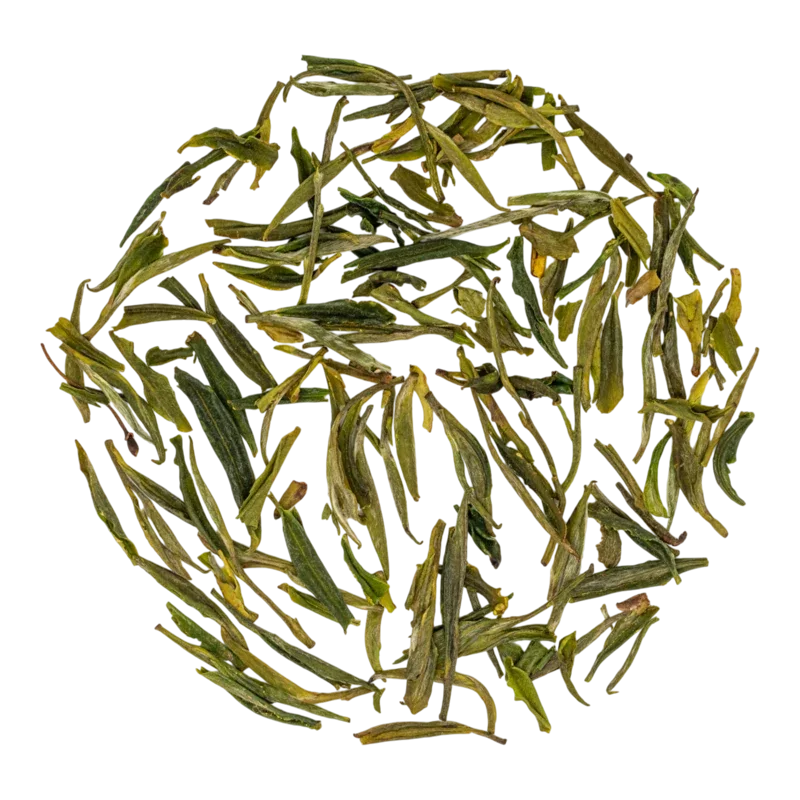
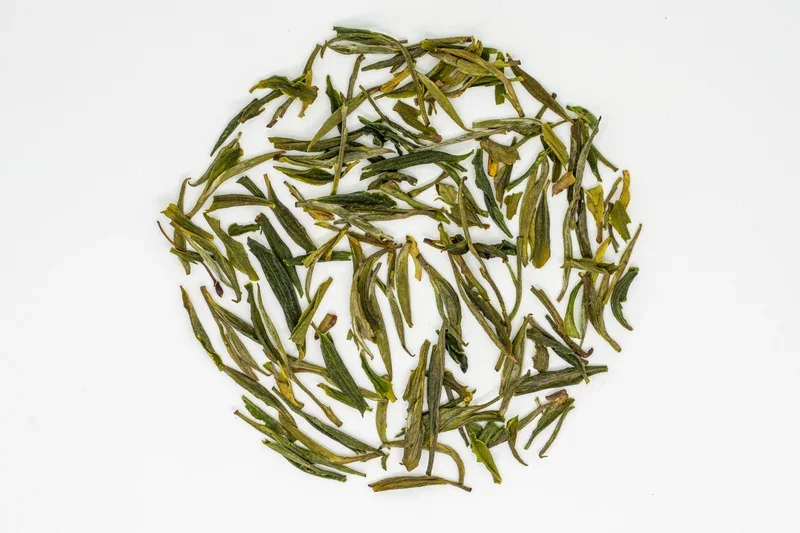
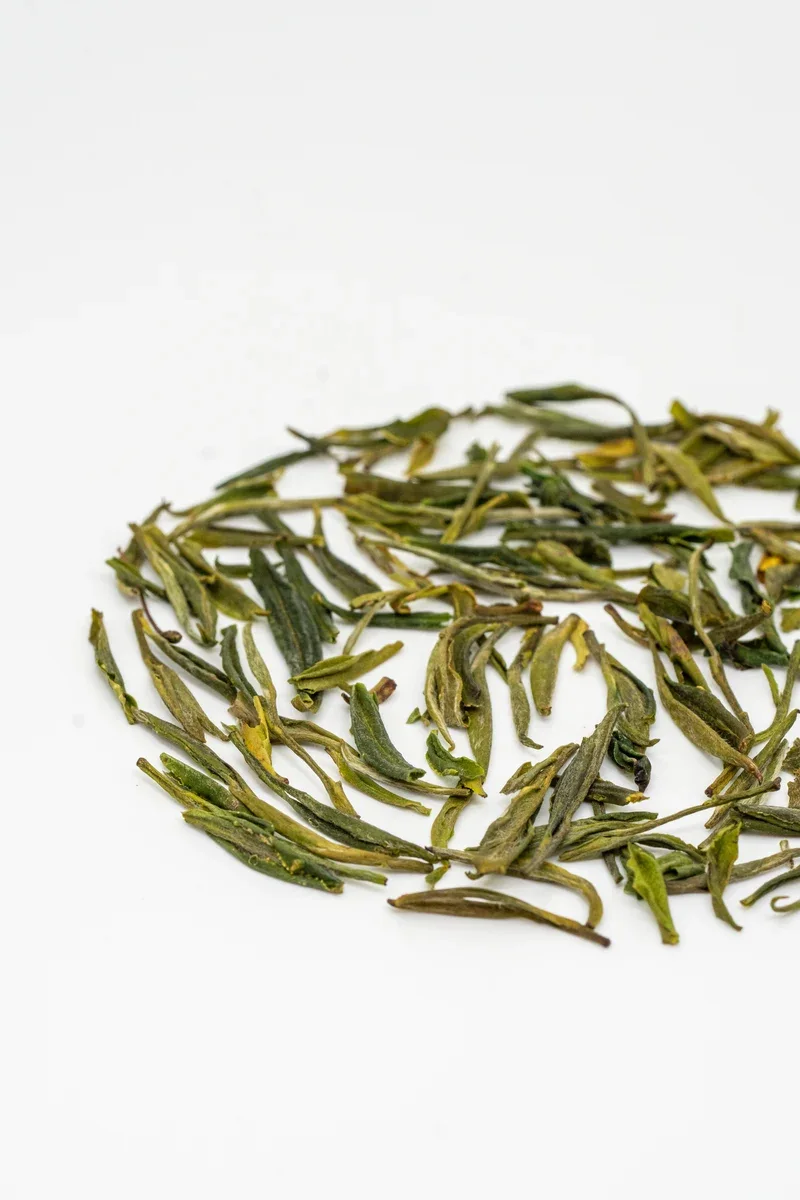
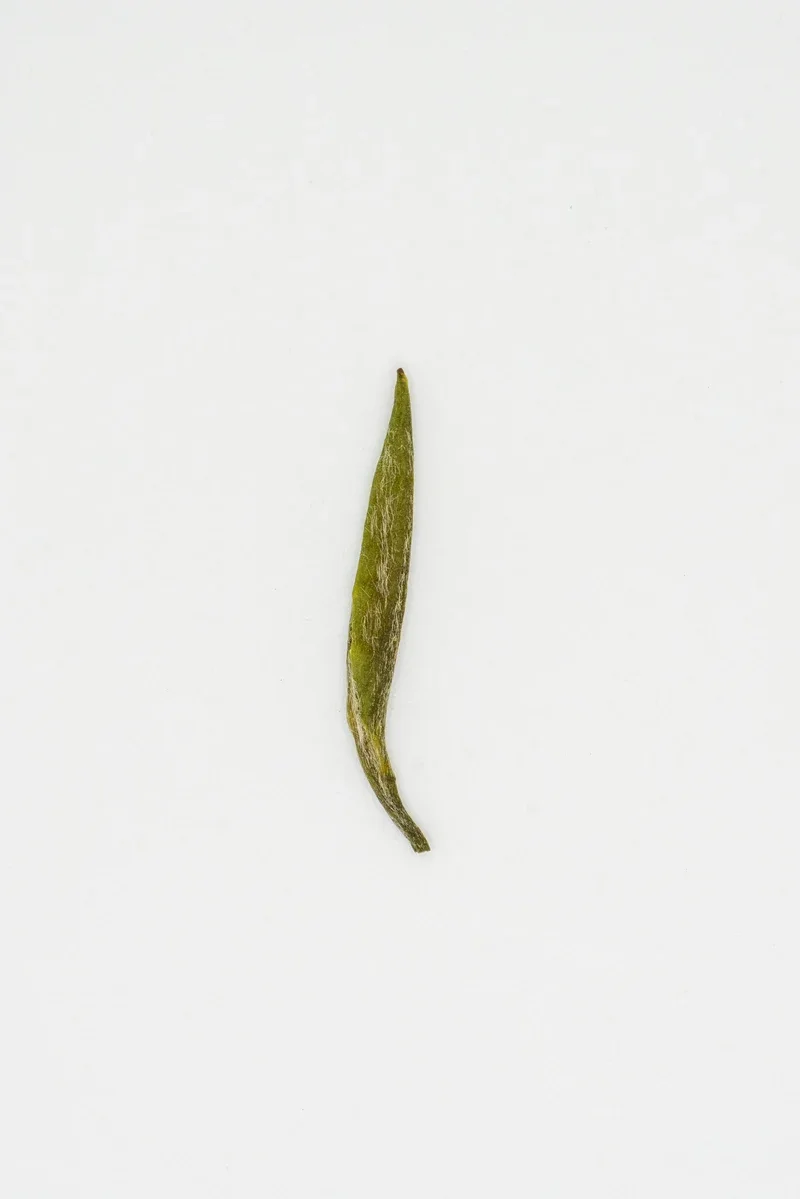
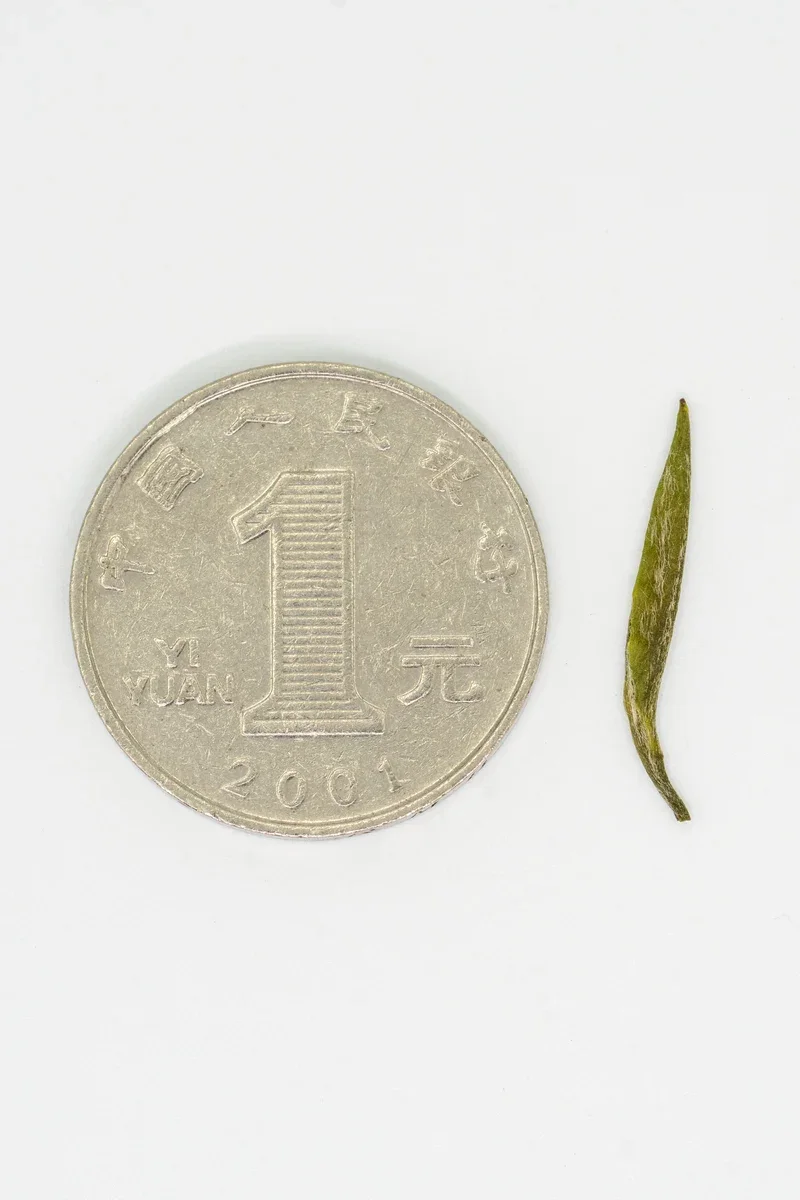
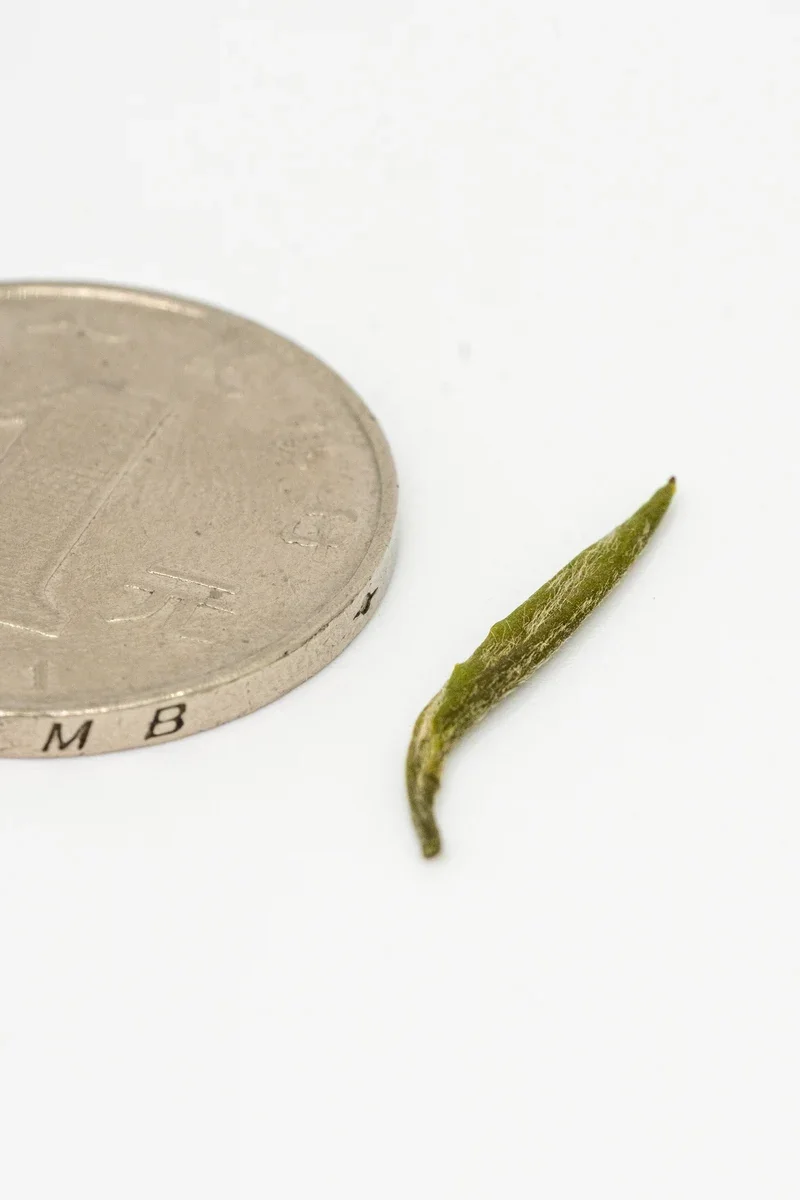
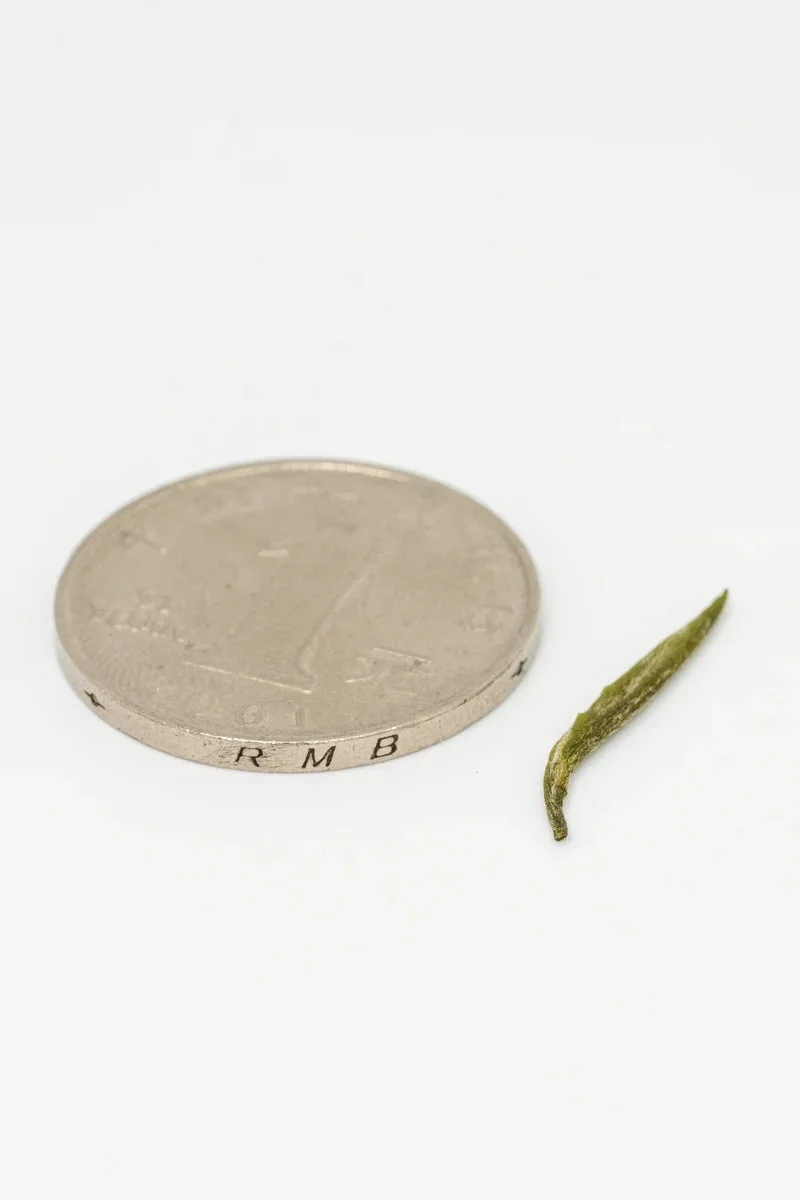
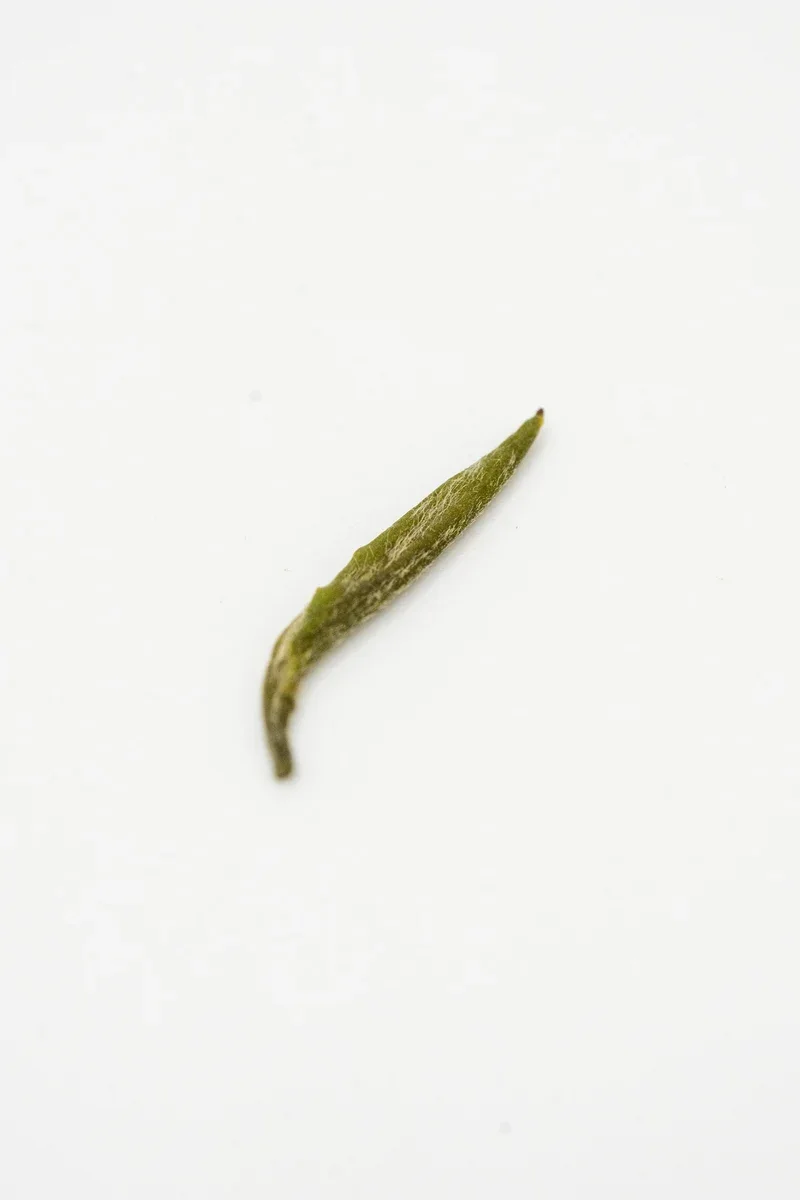
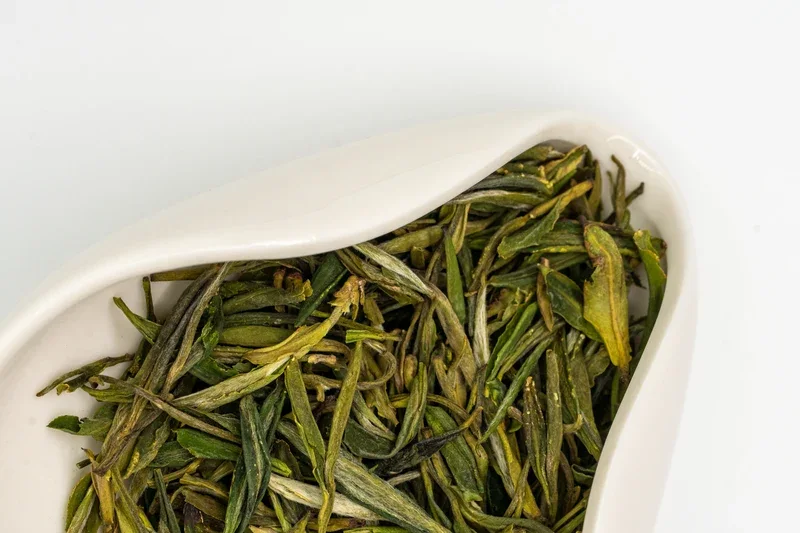
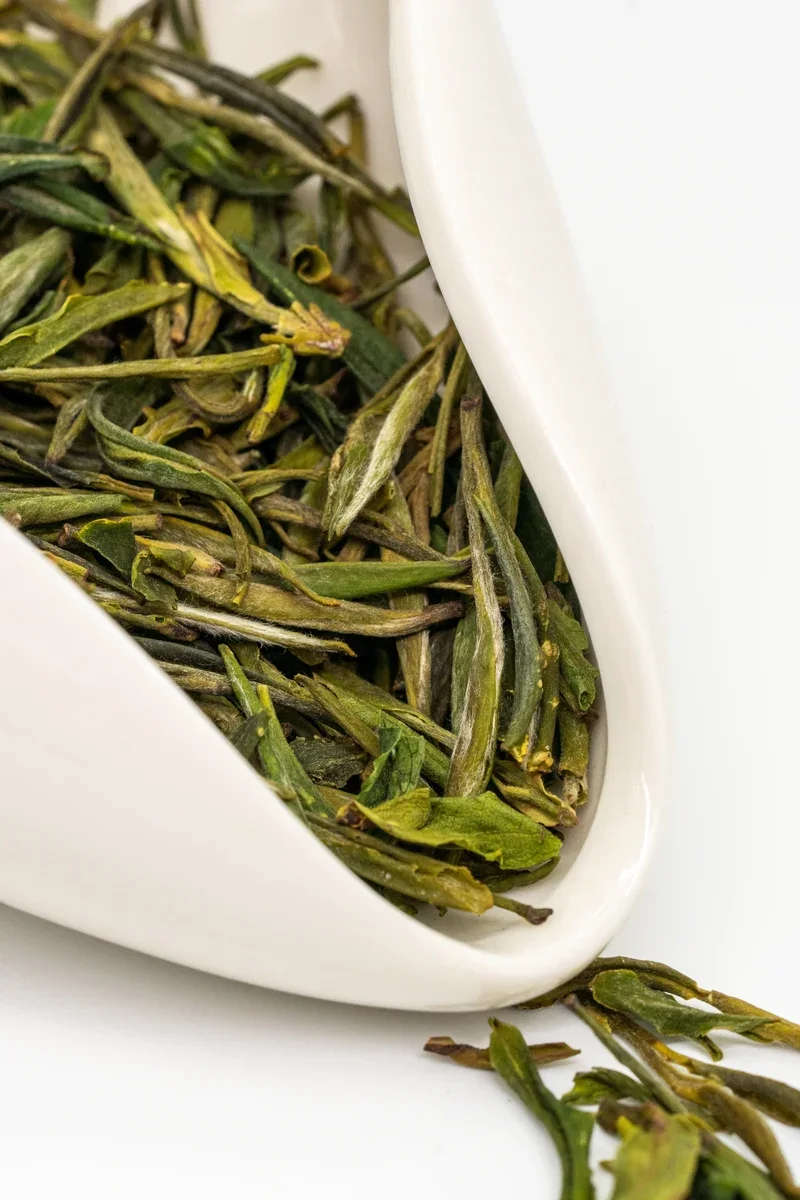
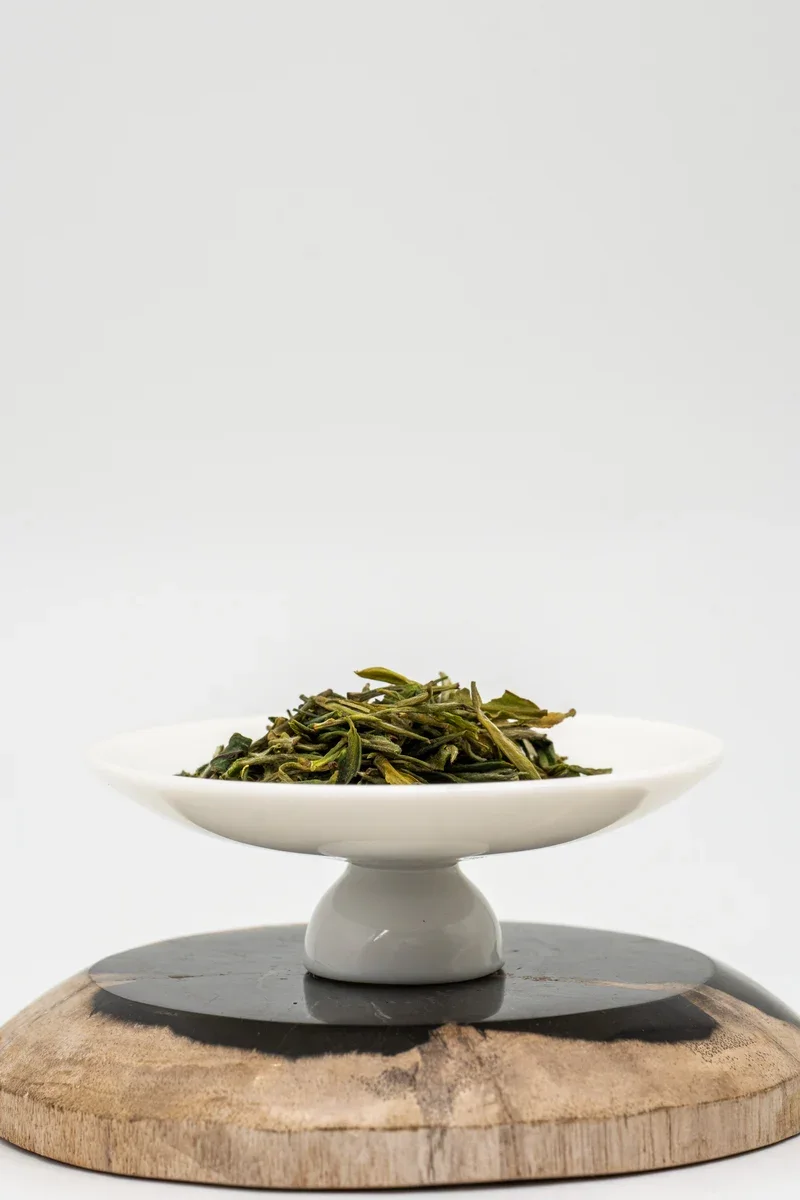
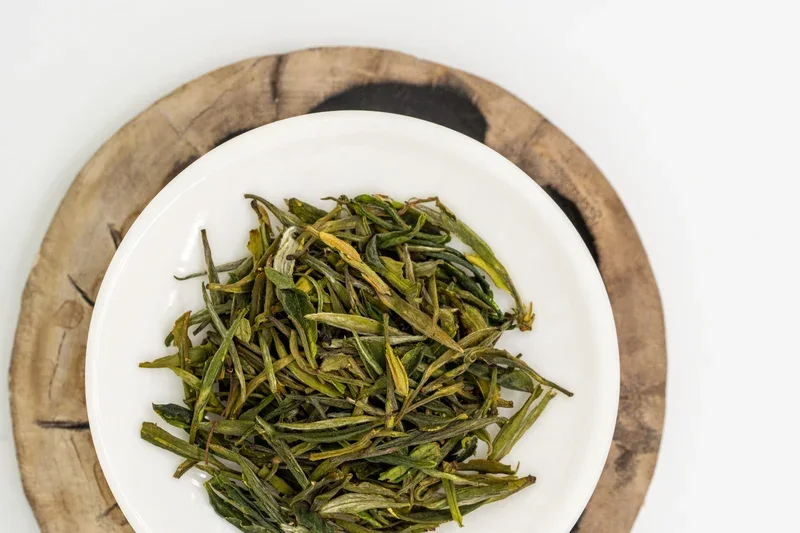
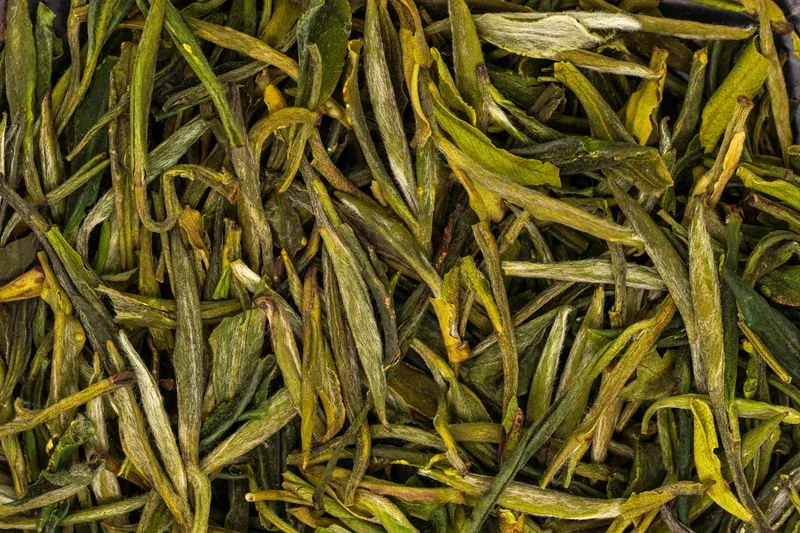
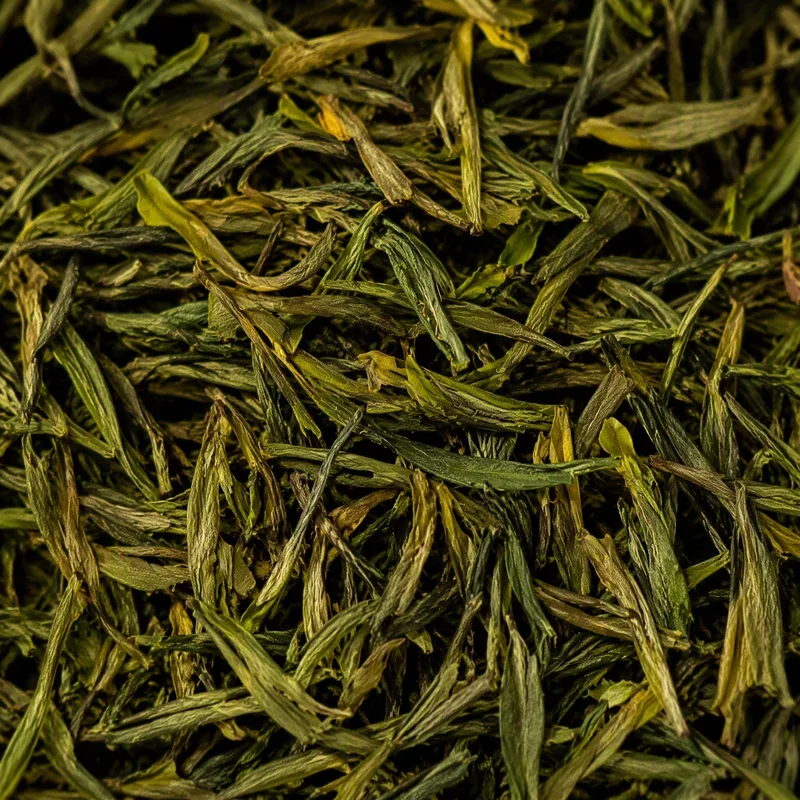
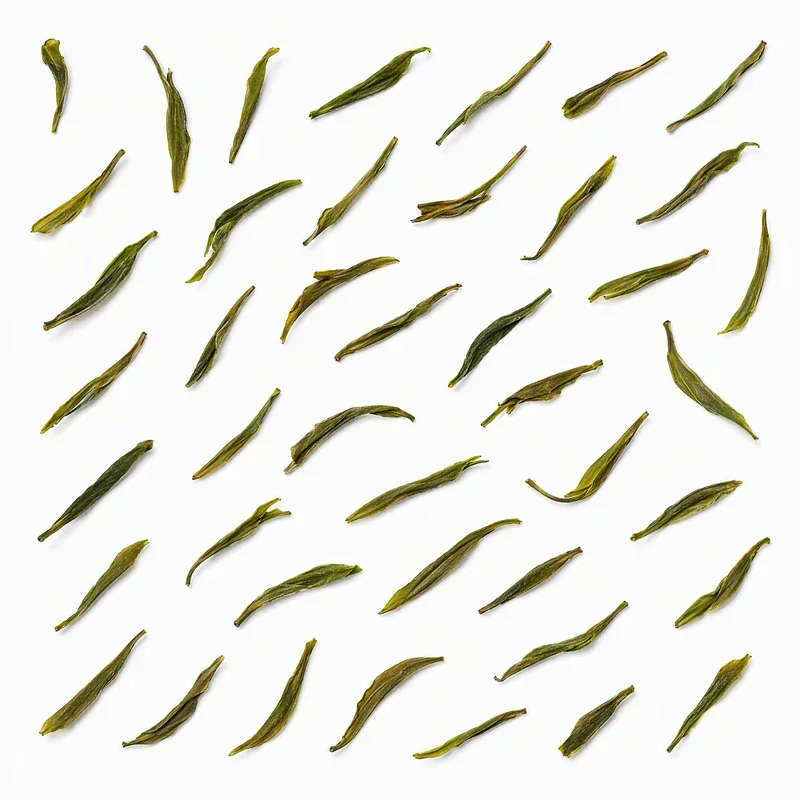
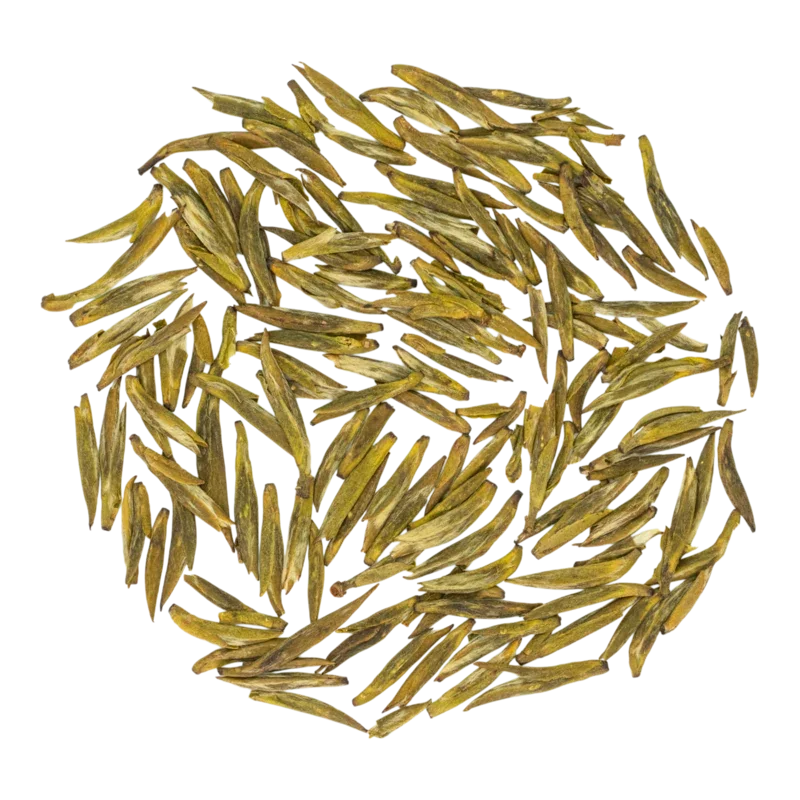
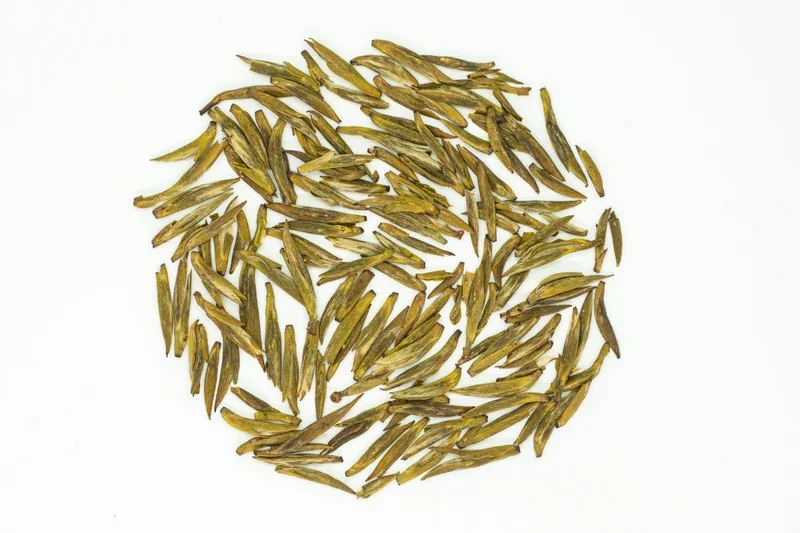
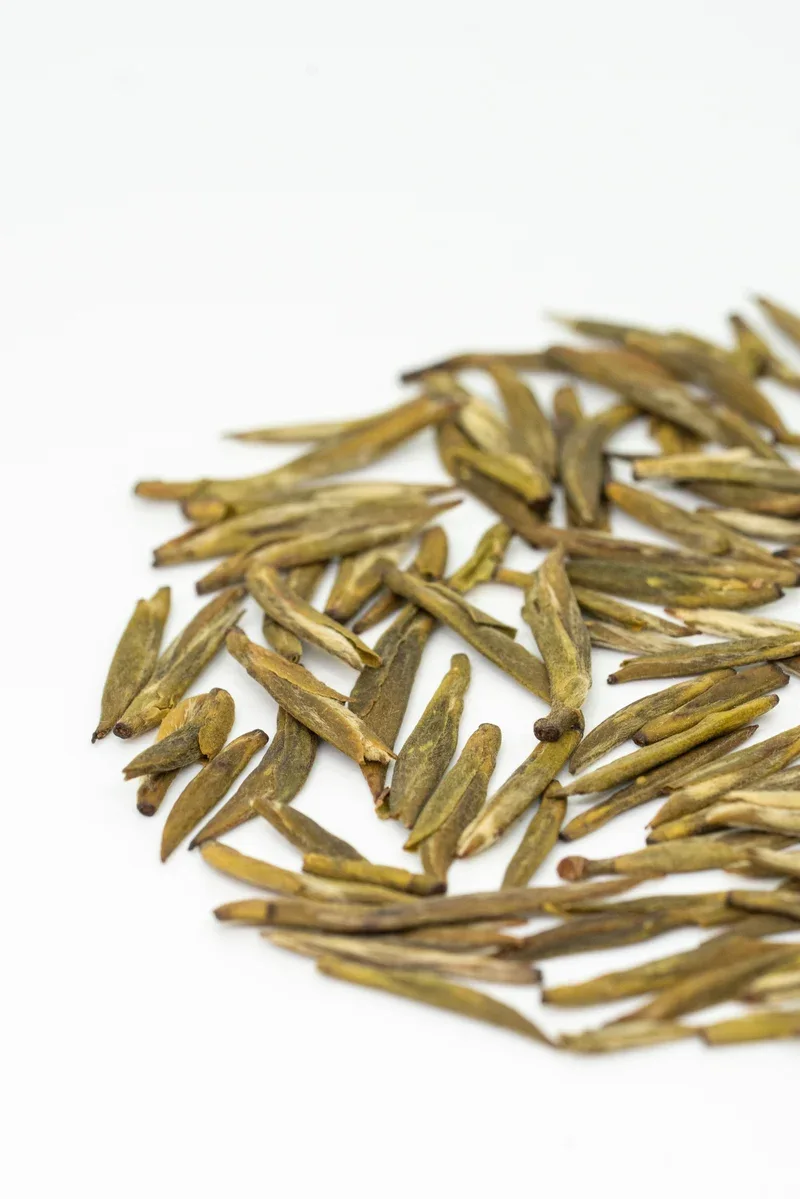
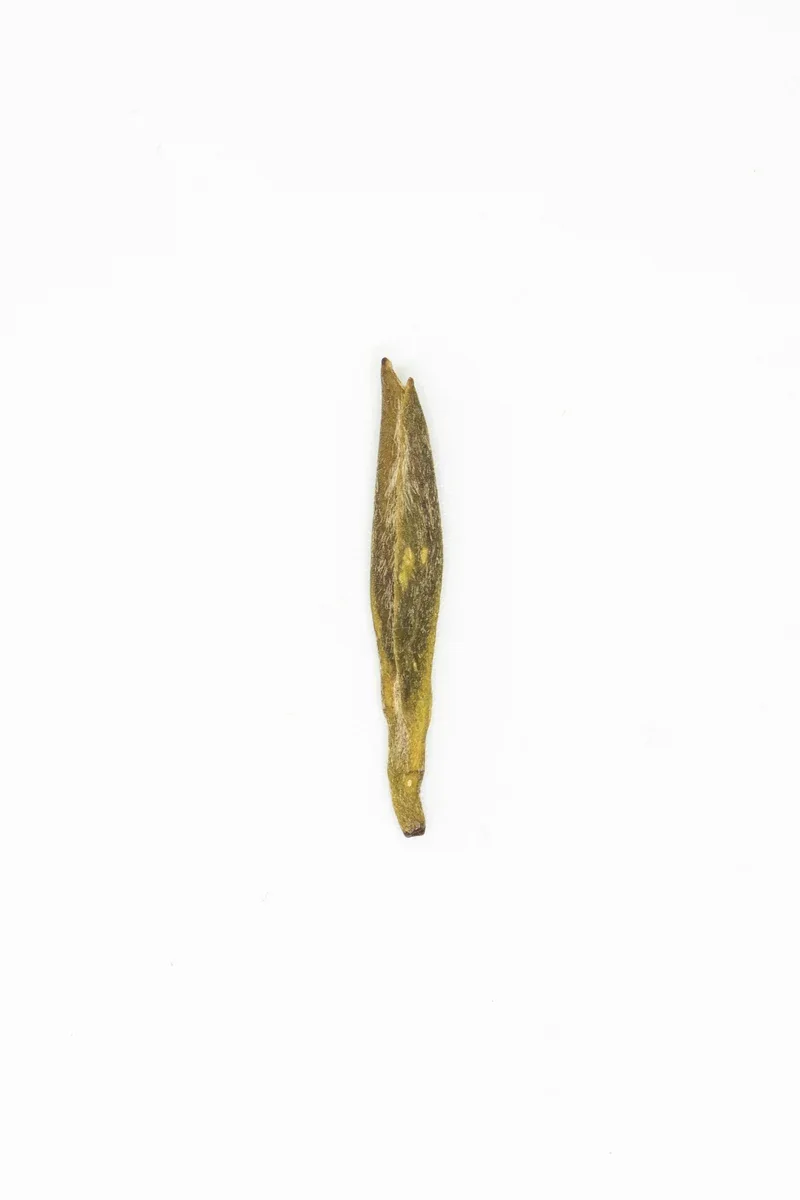
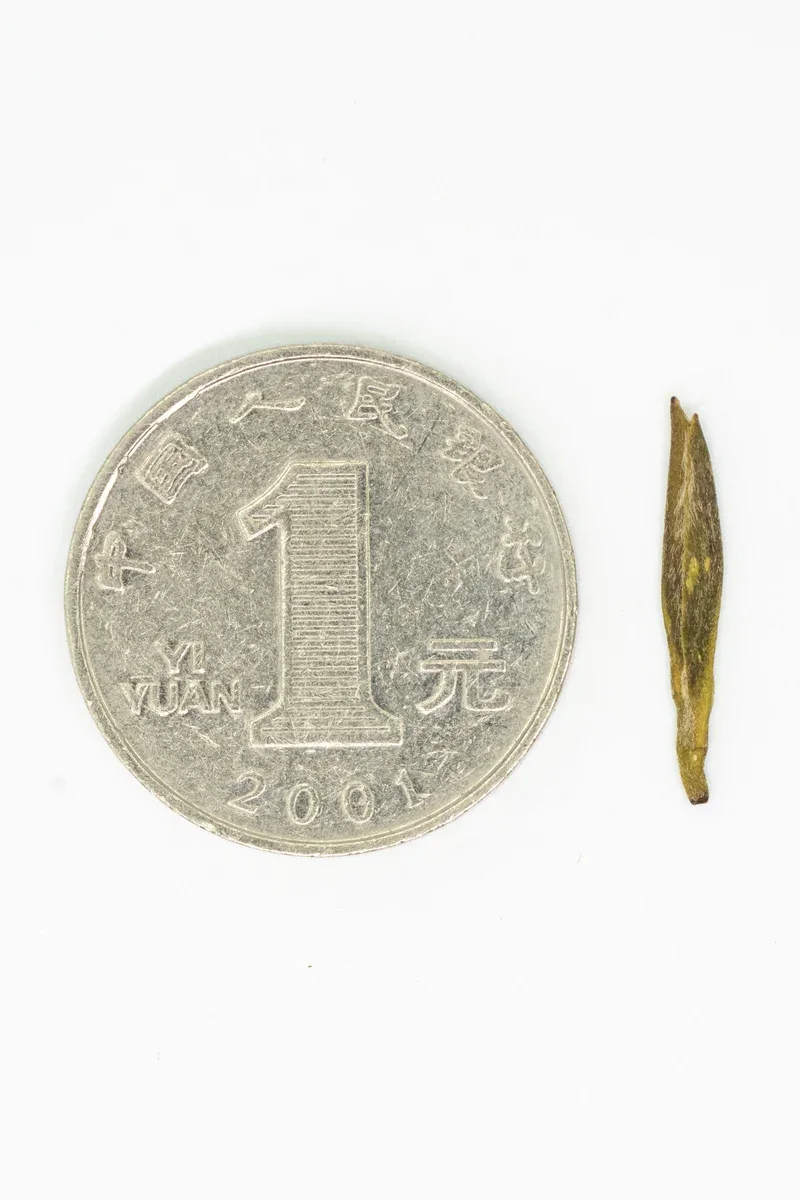
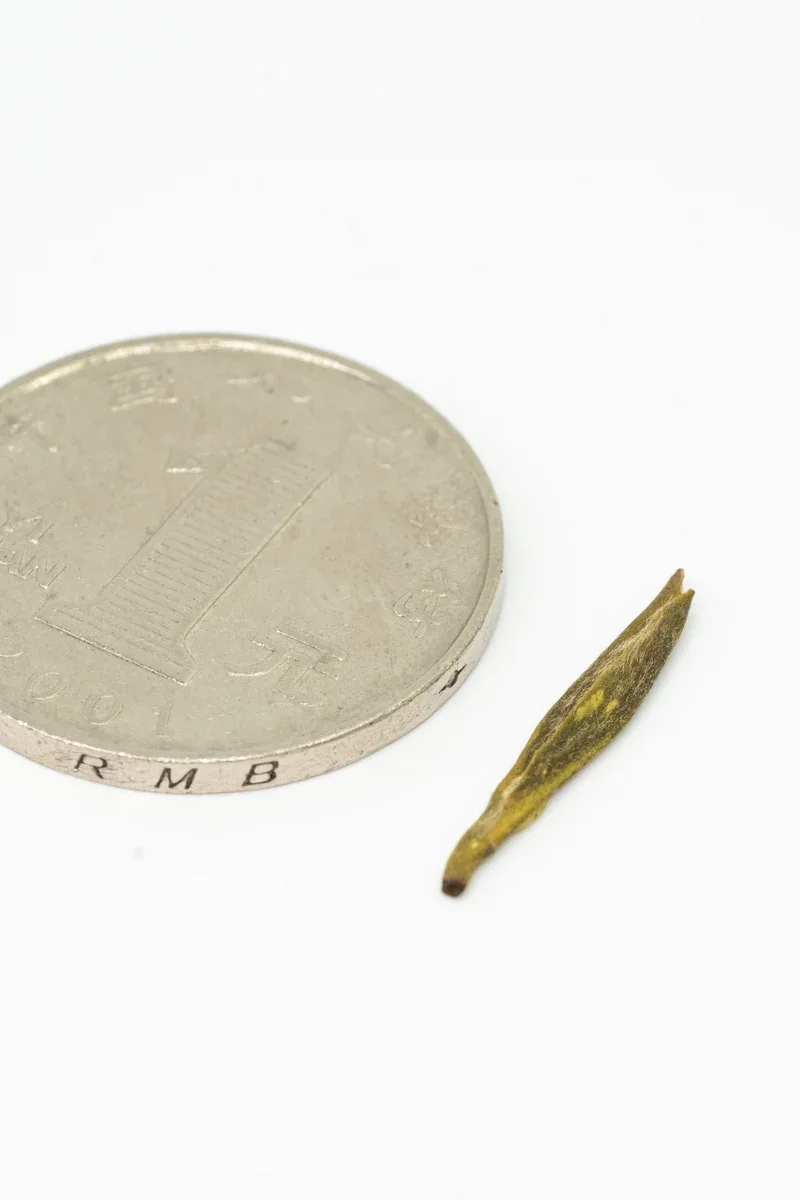
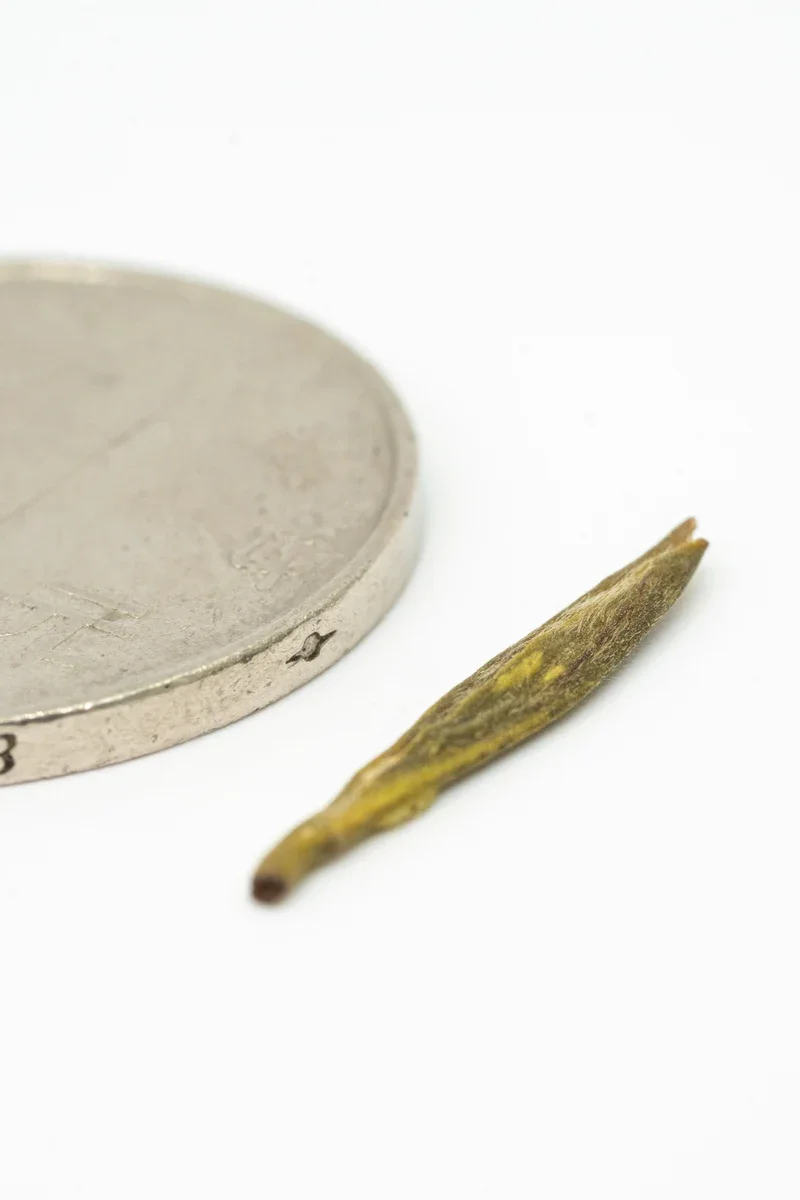
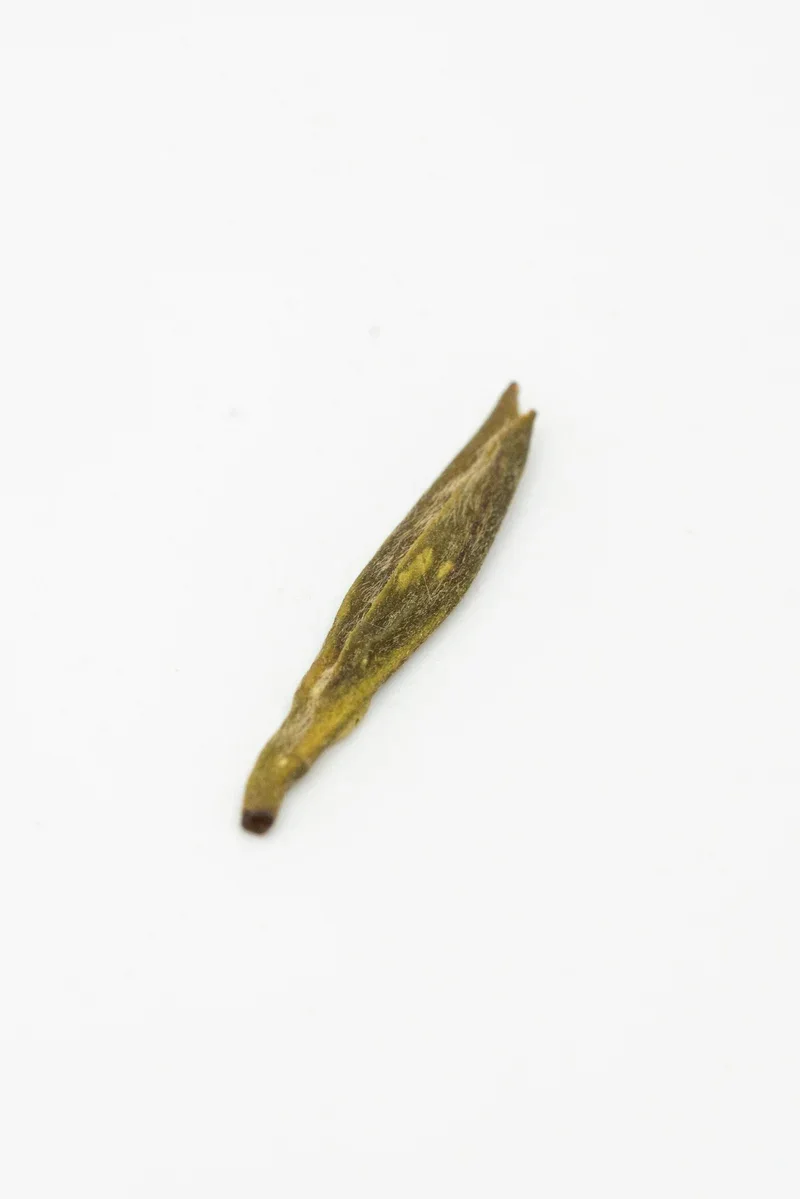
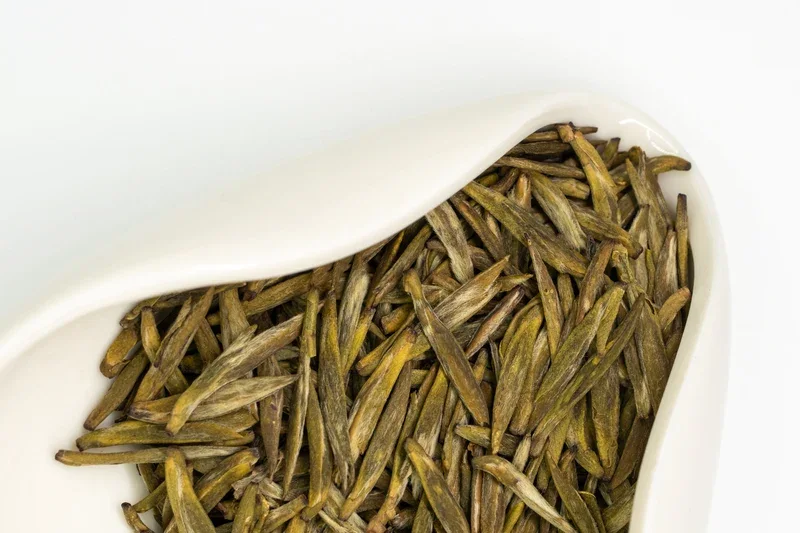
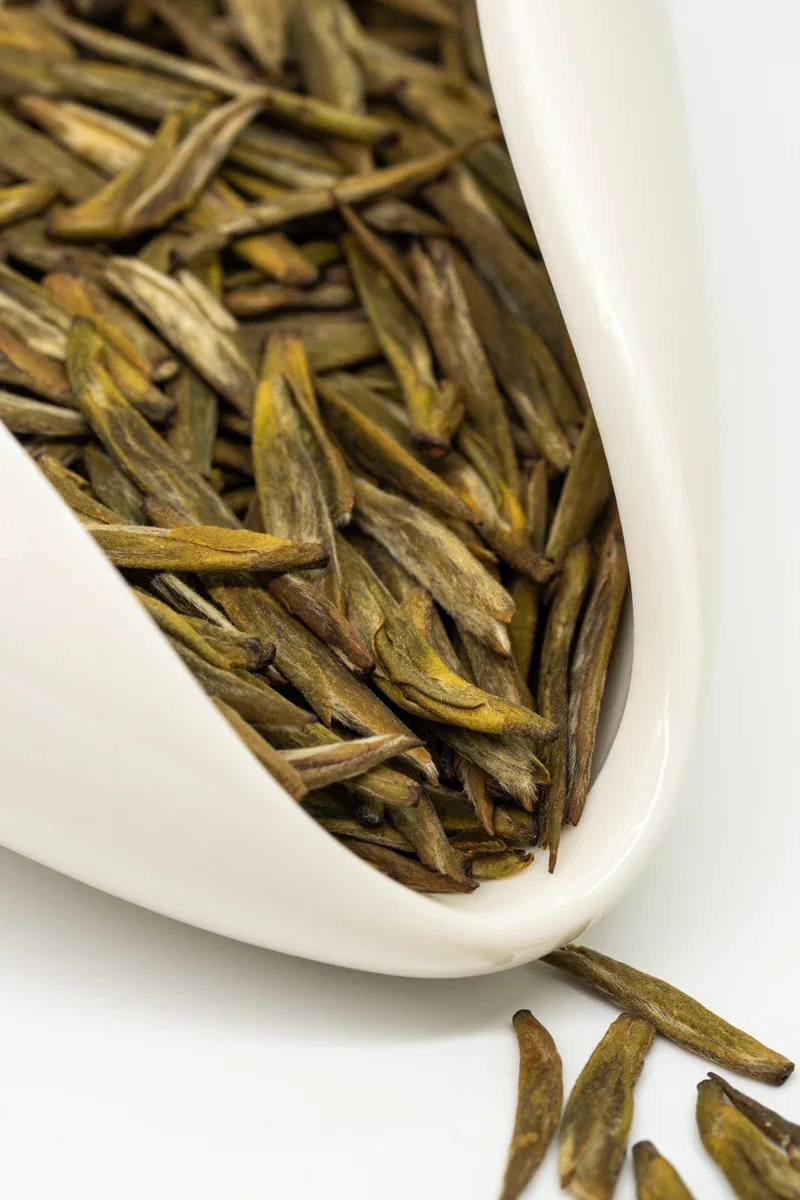
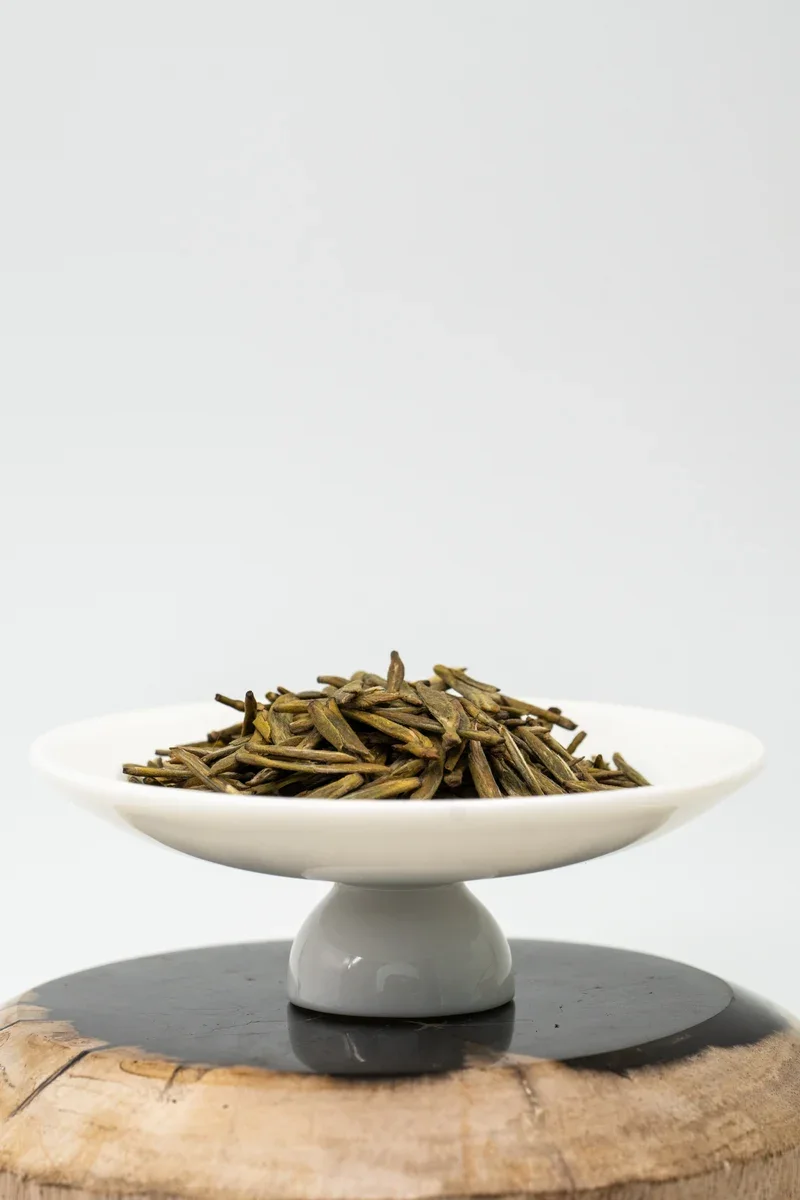
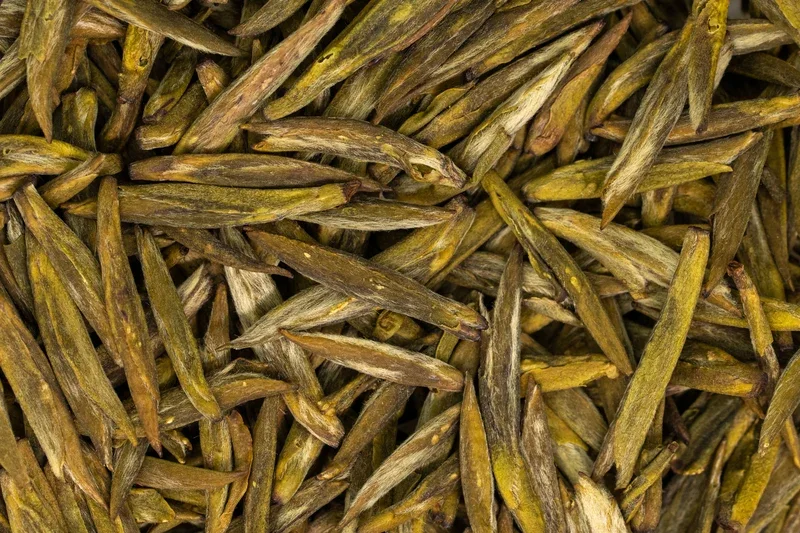
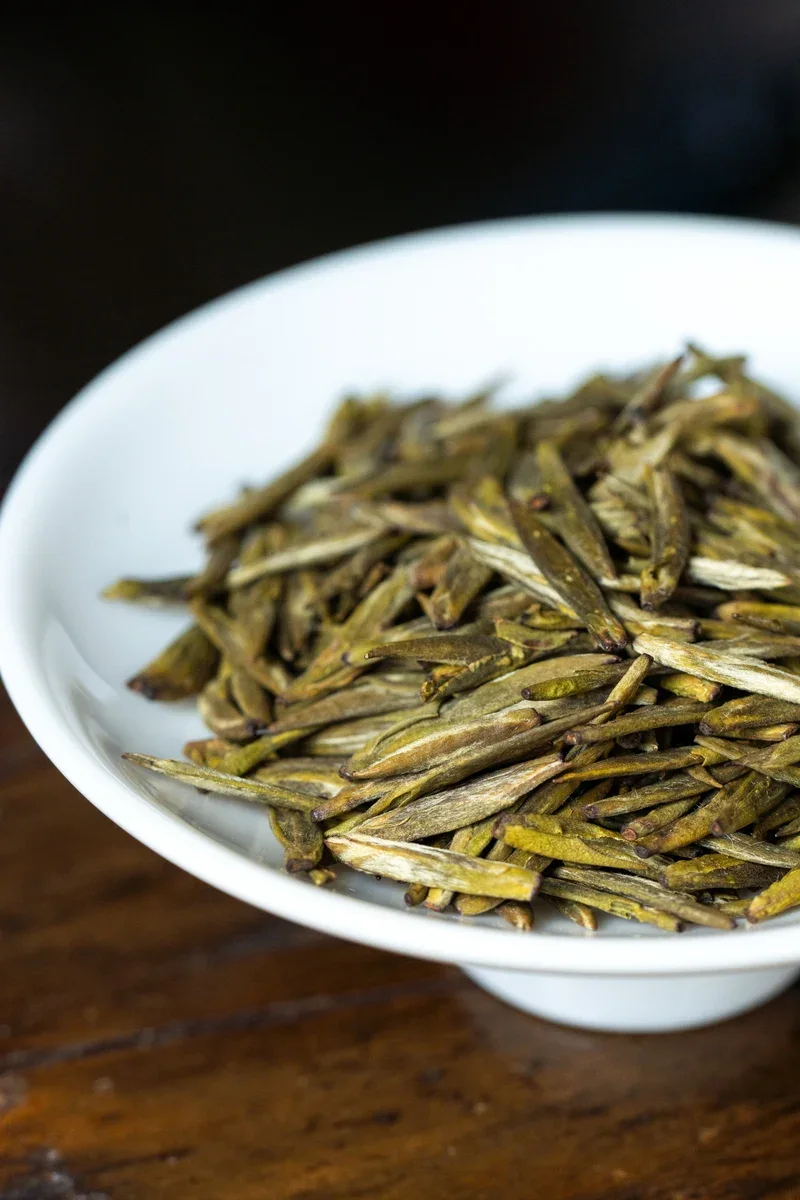
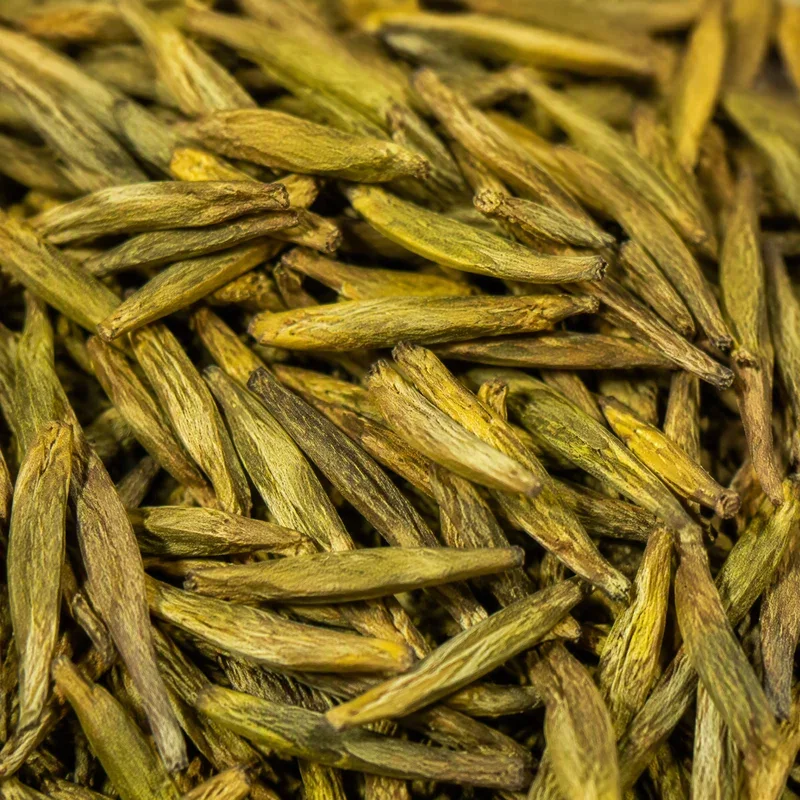
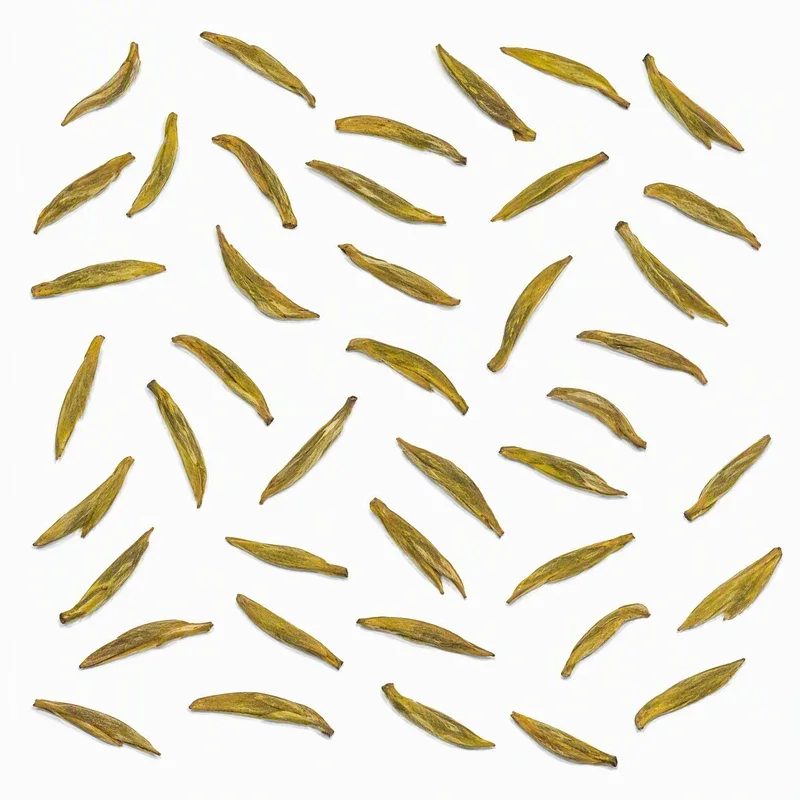
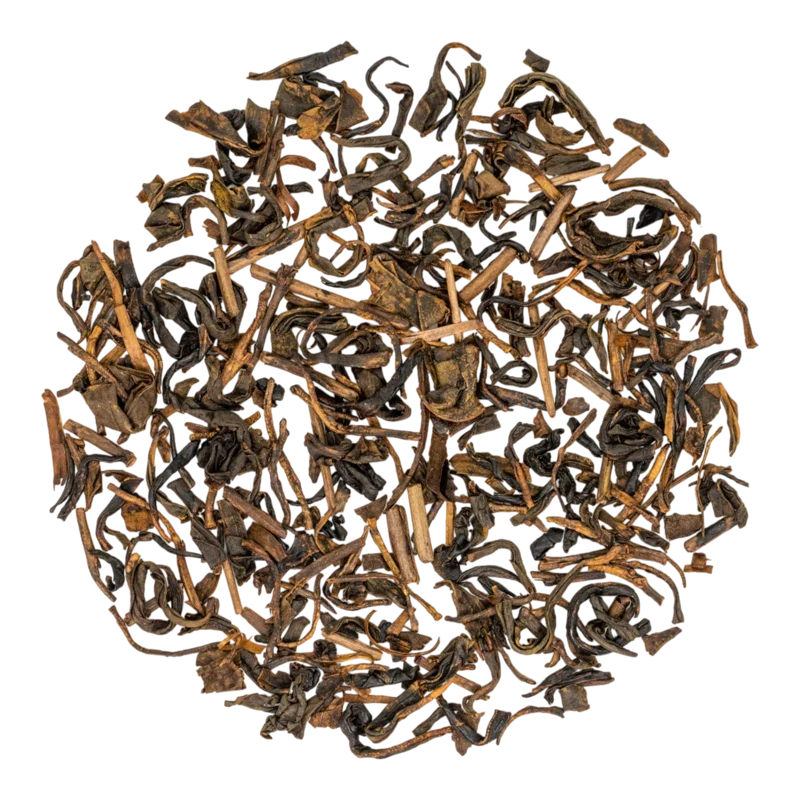
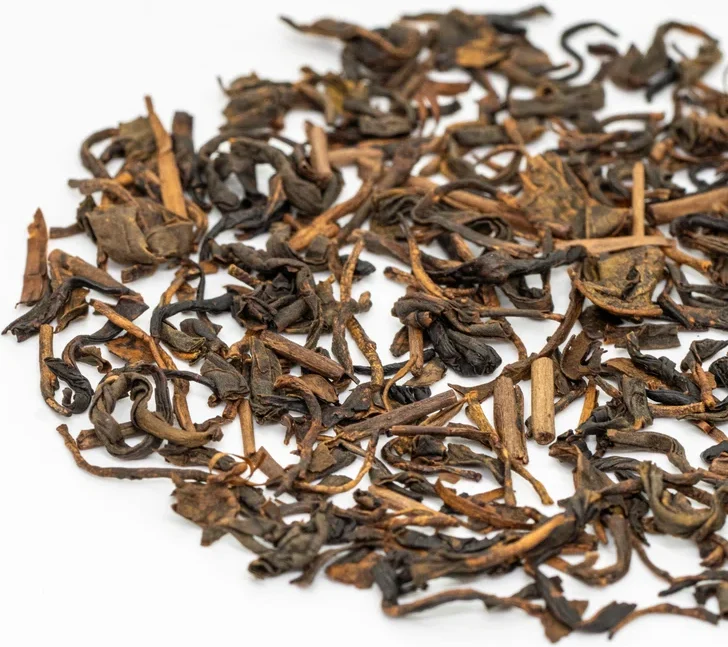
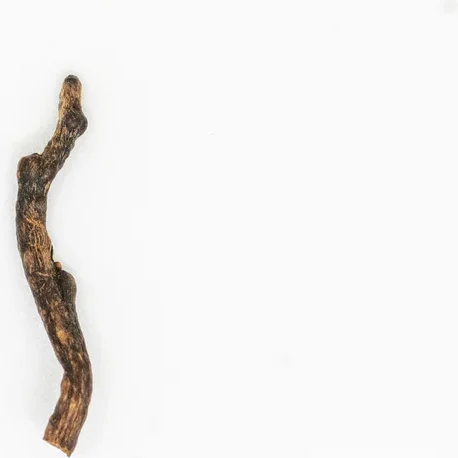
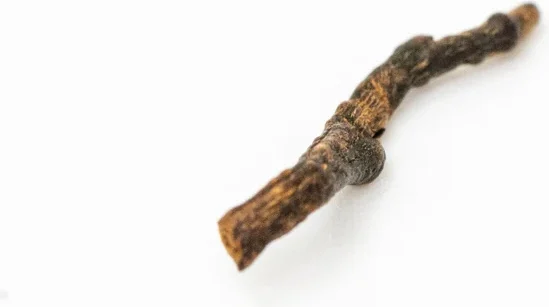
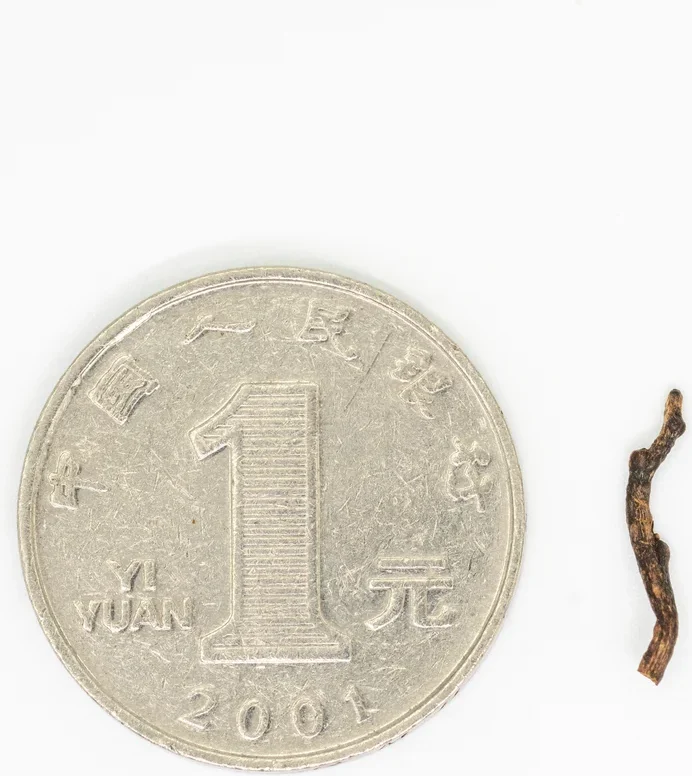
Dry Leaf Appearance: Large leaves and thick petioles, rolled into elongated strips. Petiole and leaf connected as one, forming "fishing hook" shape (梗叶相连似钓鱼钩). Color — golden-yellow with brown tint (金黄显褐), oily luster (油润). "Golden frost" (金霜) may be visible on surface. Overall impression — "ancient bronze" (古铜色, gǔ tóng sè).
Dry Leaf Aroma: High, roasted, "bread-like." Dominant — "gobaxiang" (锅巴香): aroma of burnt rice crust from bottom of pot. Also: caramel, roasted notes. Yellow tea with most "fiery" aroma.
Liquor Aroma: "Gaoshuang jiaoxiang" (高爽焦香) — high, brisk, roasted. Caramel, roasted rice, light bread notes. Persistent — maintained through 5–6 infusions.
Liquor Color: "Shenhuang xian he" (深黄显褐) — deep yellow with brown tint. Significantly darker than any other yellow tea. Clear, with oily luster.
Spent Leaves: Yellow-brown, soft, uniform large leaves with visible petioles (黄中显褐,柔软带茎). Leaf — full, unbroken.
Taste: "Nonghou chunhe" (浓厚醇和) — thick, dense, mellow, with clear returning sweetness (回甘). Astringency and bitterness — minimal or absent. Taste — "heavy," rich, enveloping; complete opposite of "light" yellow teas from buds. High content of water-soluble extractive substances provides "body" to the liquor.
Amino Acids: 4.97% in raw material. L-theanine provides sweetness and "umami" even in coarse leaf.
Unusual combination for tea cultivar of high polyphenols and high amino acids simultaneously. This provides both astringency (which is then softened by fermentation) and natural sweetness.
High content thanks to mature, large leaf with thick petiole. Petiole — not defect, but source of additional polysaccharides and sugars.
Minerals: Potassium, magnesium, fluorine, zinc. Selenium (from Huoshan soils on glacial tillite).
Polyphenols: Jinji Zhong cultivar — 14.9%. This is moderate indicator, but combined with deep transformation during week-long pile fermentation catechins are significantly softened. Polyphenols provide pronounced ability to break down fats.
Vitamins: C, B group.
Main traditional application, known since Ming era. Xu Cishu emphasized precisely this property. Digestive enzymes formed during week-long pile fermentation actively break down fats.
Mature leaf contains sufficient caffeine for pronounced but not sharp tonic effect.
Traditional summer drink of mountain regions of Anhui, Shanxi and Shaanxi.
Polyphenols combined with amino acids and vitamin C.
Week-long pile fermentation deeply transforms catechins, making tea gentle on stomach — significantly milder than green tea from similar raw material.
Tea Amount: 5 g per 150 ml water — dosage higher than for Huang Ya, due to large leaf.
Teaware: Gaiwan (porcelain) or glass cup. Gaiwan preferable — allows revealing thick aroma.
Water Temperature: 85–90°C. Huangdacha from coarse leaf doesn't fear high temperatures — on contrary, they reveal its "bread-like" aroma.
"Younger brother" from same county. Huang Ya — from buds, chestnut, delicate, "gubernatorial"; Huangdacha — from large leaf, roasted, coarse, "popular." Huang Ya — 1–2 days "dry spreading"; Huangdacha — 5–7 days pile fermentation + "fire pulling" at 150°C. Huang Ya — light yellow liquor; Huangdacha — deep yellow-brown. Same Jinji Zhong cultivar gives two completely different teas.
Both — large-leaf yellow teas. Dayeqing — from large-leaf Yunnan or Guangdong cultivar, with "malty" character, more humid wet piling (wòduī). Huangdacha — from medium-leaf Anhui cultivar, with "bread-like" character and extreme final roasting. Dayeqing — heavier and "darker"; Huangdacha — drier and more "roasted."
Diametrical opposite. Mengding — most delicate buds, honey-chestnut, silky, "imperial." Huangdacha — coarsest leaf, bread-roasted, thick, "soldier's." Different poles of one category, united only by word "yellow."
Pingyang — corn-like, apricot, marine. Huangdacha — bread-like, caramel, mountain. Pingyang — from tender raw material with 72-hour fermentation; Huangdacha — from coarse raw material with week-long fermentation and "fire pulling." Different worlds of yellow tea.
No reviews yet. Tell us what you think of this tea.
Rate this tea and share your impressions. We review each submission before publishing it.