Brewing
Gongfu brewing
- Water temperature
- 75 °C
- Tea amount
- 5 g
- Water volume
- 100 ml
- First steep
- 10 s
- Time added per infusion
- 5 s
- Infusions
- 3

wūniú zǎo
Choose a brewing method. Start with the recommended quantities and time, then adjust to taste.
Brewing
Brewing
Taste
Tea encyclopedia
Category: Regional famous tea (名茶, míngchá) with protected geographical origin (地理标志产品, dìlǐ biāozhì chǎnpǐn). National standard — GB/T 20360-2006 «Wuniu Zao Cha». Product protected by original designation of place of origin since 2004 (approved by the State Administration for Quality Supervision of PRC).
Category: Regional famous tea (名茶, míngchá) with protected geographical origin (地理标志产品, dìlǐ biāozhì chǎnpǐn). National standard — GB/T 20360-2006 «Wuniu Zao Cha». Product protected by original designation of place of origin since 2004 (approved by the State Administration for Quality Supervision of PRC).
Coordinates: Approximately 28.15° N, 120.69° E (Wuniu area, Yongjia County).
Origin: China, Zhèjiāng Province (浙江省, Zhèjiāng Shěng), Wēnzhōu City (温州市, Wēnzhōu Shì), Yǒngjiā County (永嘉县, Yǒngjiā Xiàn). Main production areas: Wūniú Town (乌牛镇, Wūniú Zhèn, now — Wuniu Street, 乌牛街道), Luōdōng Township (罗东乡), Sānjiāng District (三江街道) and adjacent territories in the lower reaches of the Nánxī River (楠溪江, Nánxī Jiāng), on the northern bank of the Ōu River (瓯江, Ōu Jiāng).
Type: Green tea (绿茶) (non-oxidized, 绿茶, lǜchá). Processing by «shaqing» (杀青) type — fixation by pan-firing (chaojing, 炒青).
Cultural Significance: In Yǒngjiā County there exists a colorful legend connecting the origin of the tea with the bodhisattva Guānyīn (观音). According to tradition, in the bamboo grove of Guanyin on Putuo Island grew a divine tea tree of wondrous aroma. Once a heavenly ox, attracted by the fragrance, stole a branch and fled. Guanyin pursued it to the picturesque bank of the Ou River, where she struck the ox and turned it to stone, and the stolen branch fell into the mountains and gave rise to the Wuniu tea trees. Yongjia bears the honorary title «Homeland of Chinese Wuniu Zao Tea» (中国乌牛早之乡). Xingchan Village (行禅村) in Sanjiang District became a UNESCO research object as an example of successful peasant emergence from poverty through tea cultivation.
History: Wuniu Zao has more than 300 years of documented cultivation history. According to local chronicles, about two hundred years ago this was a wild tea tree discovered on the Changjialing Ridge (长夹岭) between Banling Village (半岭村) of Ōuběi Township and Lingxia Village (岭下村) of Wuniu Town. A peasant named Jīn Zéhóng (金则洪) from Lóngtóu Village (龙头村) of Oubei Township, during a New Year visit to relatives, noticed on the slope a particularly vigorous and early-awakening bush, dug it up with a clump of earth and transplanted it to his plot. Since this plant began producing shoots by the Chūnfēn festival (春分) — 15 days earlier than other varieties — it received the name «Wuniu Zao» (乌牛早, «early from Wuniu»). Local residents also called it «Lingxia Cha» (岭下茶, «tea from under the ridge»).
Name Breakdown: The name consists of three characters: «乌» (wū) — «black, dark» and «牛» (niú) — «ox» form the toponym Wūniú (乌牛) — the name of a town (now street) in Yongjia County, originating, according to legend, from a rock on the bank of the Ou River resembling a black ox; «早» (zǎo) — «early» — indicates the main feature of the variety: exceptionally early awakening in spring.
Cultivar: Wūniú Zǎo (乌牛早), also registered under the name Jiaming-1 (嘉茗1号, Jiāmíng yī hào) — clonal (无性系, wúxìngjì) variety, developed by individual selection from the local population of Yongjia County. Botanical characteristics: shrub type (灌木型), medium leaf size (中叶类), extra early (特早生种, tè zǎo shēng zhǒng) vegetation period. Habit semi-spreading (半开展), branching moderately dense. Leaf elliptical, green, with pronounced luster, surface slightly convex. Shoots and buds large, fleshy. Flowers solitary or in false racemose inflorescences, corolla diameter ~35 × 29 mm, 6–7 petals, 4–5 sepals. Fruiting weak. Winter hardiness increased.
Picking: Exceptionally early: harvest beginning — from late February (around February 25), ending — no later than April 5 (Qingming, 清明). The entire harvest is «pre-Qingming tea» (明前茶, míngqián chá). Total duration of harvest season — about 50 days. Dormant buds begin awakening at stable average daily temperature from 8°C. Wuniu Zao precedes Xi Hu Long Jing by 30–40 days.
Pluck Standard: For supreme grade (特级) — one bud and one leaf in initial opening stage (一芽一叶初展). For first and second grades — one bud and two leaves in initial opening stage (一芽二叶初展). Hand picking, by «lifting pluck» method (提手采). Shoots must be uniform in size, without fish leaves (鱼叶), petioles and foreign inclusions. For 500 g of supreme grade finished tea, about 22,000 fresh shoots are required.
Raw Material: Freshly picked, whole, without mechanical damage and overheating. Delivery from plantation to factory — maximally prompt, to avoid onset of spontaneous oxidation.
Altitude: Main plantations are located on low hills and gentle slopes along the Nanxi and Ou rivers at altitudes from 50 to 300 m above sea level.
Climate: Subtropical monsoon. Average annual temperature — 18.3°C, annual temperature range — about 20°C. Sum of active temperatures above 8°C — 5742.5°C. Average temperature of coldest month — 8.1°C. Frost-free period — 282 days. Annual precipitation — about 1500–1800 mm, distributed relatively evenly.
Soil: Predominantly red-yellow lateritic (红壤/黄壤), acidic and weakly acidic (pH 4.5–5.5), with high organic matter content, well-drained. Mountain slopes with forest litter provide natural soil enrichment.
Average annual sunshine duration — 1798.9 hours (average 4.9 hours per day), percentage of sunshine — about 41%, which is favorable for accumulation of nitrogen-containing and aromatic substances in tea leaf.
Proximity to the East China Sea provides high air humidity. Mountains surrounding the Nanxi valleys create frequent fogs and diffused lighting — conditions ideal for quality tea leaf. Spring arrives early, which explains the phenomenal precocity of Wuniu Zao.
Plantations are located on well-aerated slopes. Ecological farming is practiced: organic fertilizers, wood chip mulching, regular formative pruning. In recent years, agrotechnical methods for additional acceleration of vegetation have been introduced: thick layer of sawdust mulch, optimized pruning and scientifically based application of organic supplements.
Hand picking, from early morning. Picked raw material is immediately delivered to factory in bamboo baskets without compaction.
Fresh leaves are spread in thin layer (about 1 kg/m²) on clean bamboo trays in ventilated shaded room. Duration — until loss of 20% mass, usually within 6–12 hours. Purpose — moisture equalization, leaf softening, initial aroma formation. Leaf is considered ready when it becomes soft to touch, slightly darkens and acquires light floral shade. Critically important not to allow reddening, overheating and leaf crushing.
Main stage of «kill-green» (杀青, shāqīng) — firing in hot wok at high temperature to inactivate enzymes and stop oxidation. Simultaneously begins imparting flat shape with characteristic movements of master's palms: pressing, sliding and smoothing. Basic aroma is formed: chestnut and nutty notes.
Continuation of firing at lower temperature. Leaf is finally dried, flattened, acquires characteristic luster and smoothness. Master controls pressure and speed of movements, achieving uniformity of shape.
Finished tea is sifted to remove tea dust, fragments and leaf pieces, then sorted by grades.
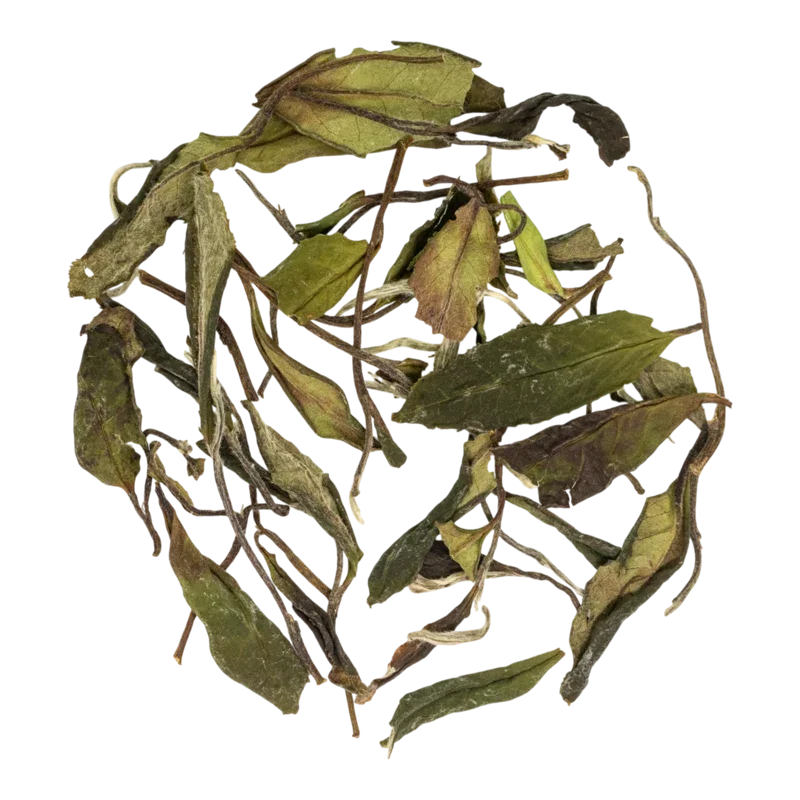
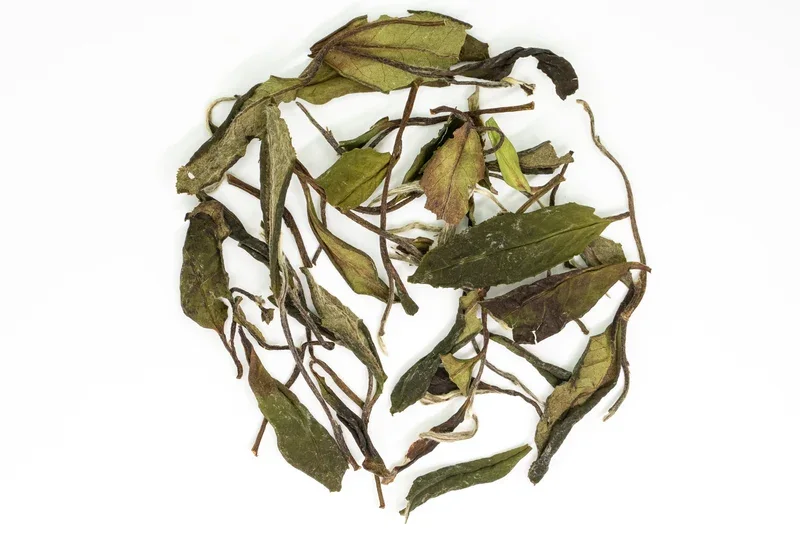
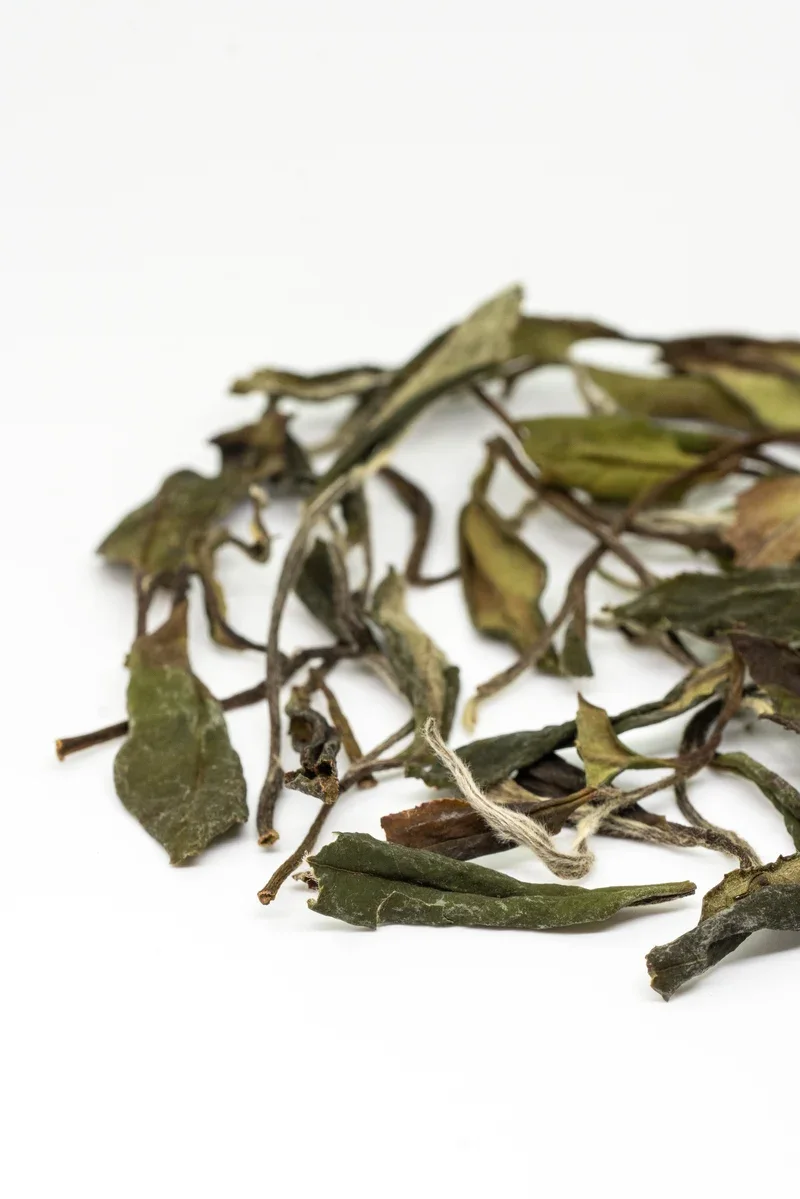
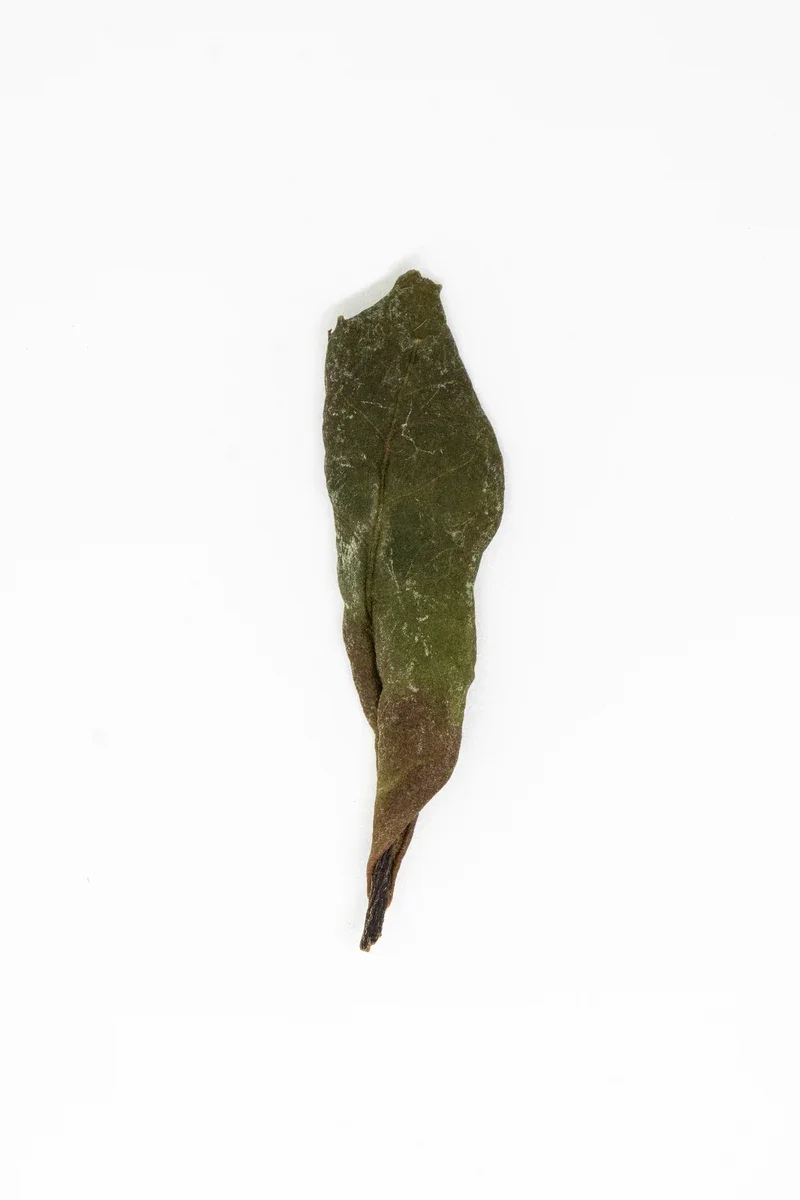
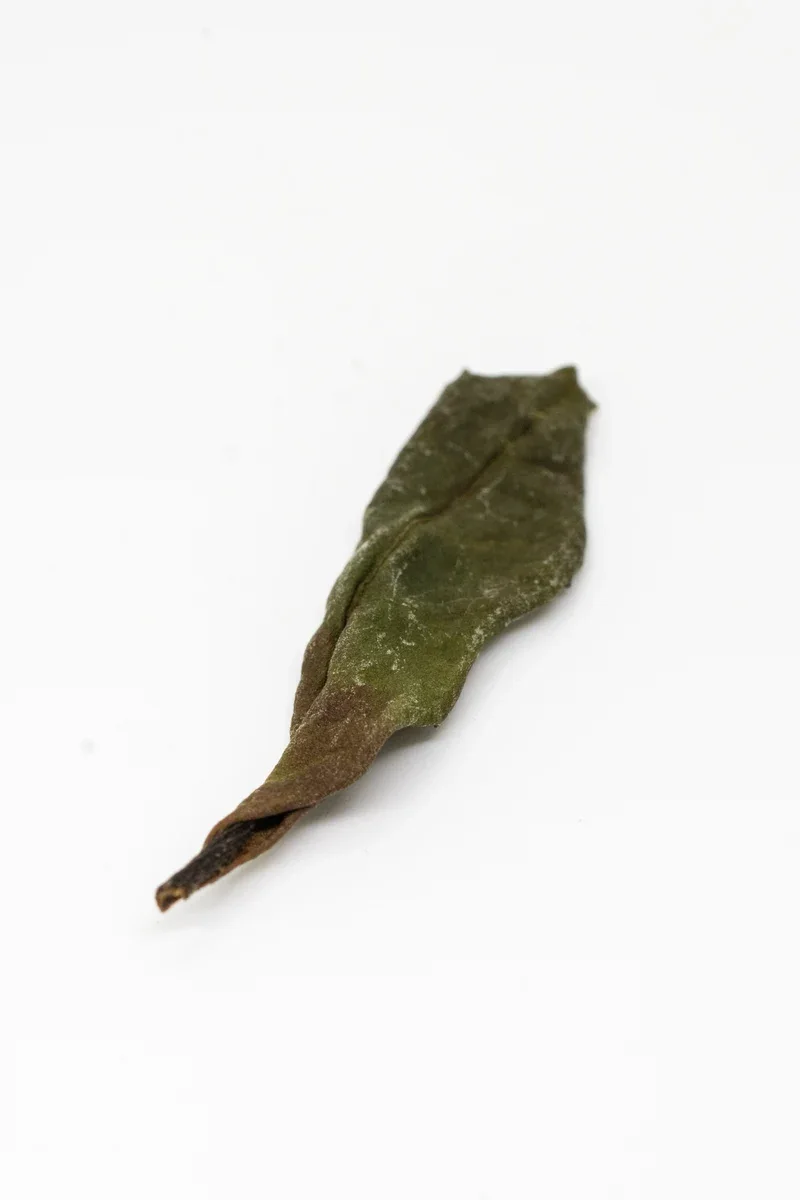
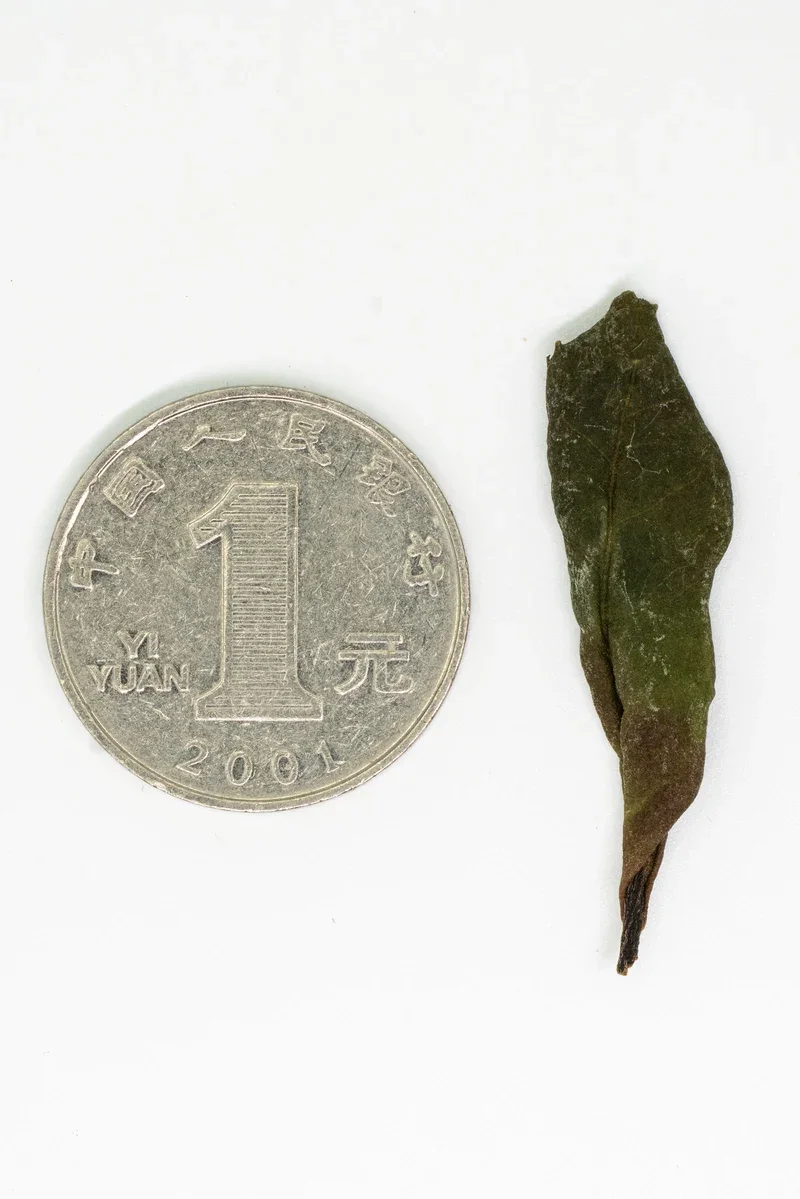
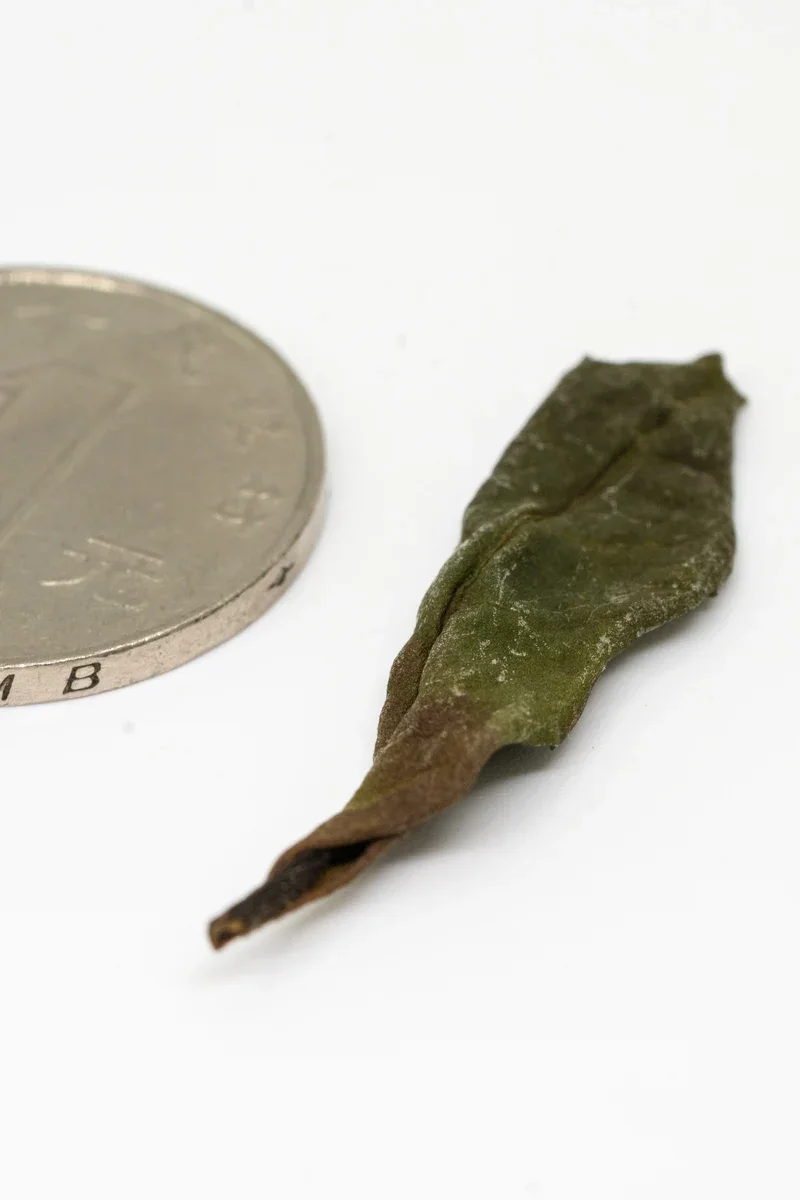
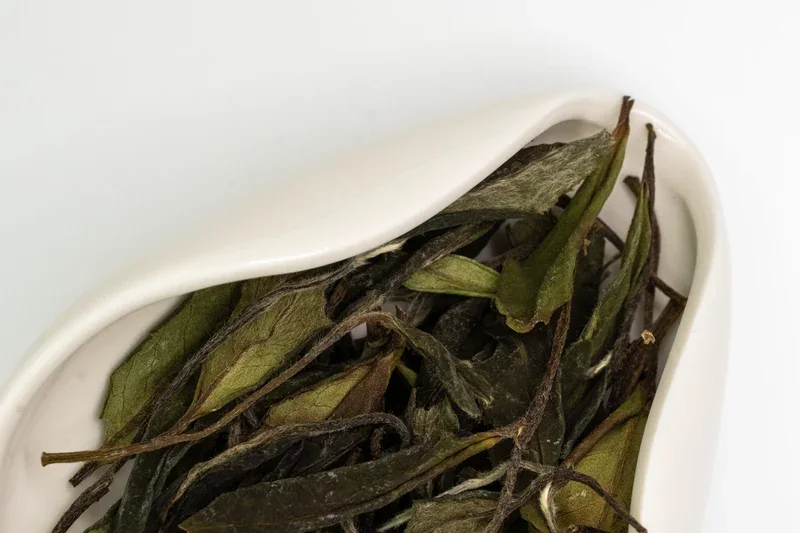
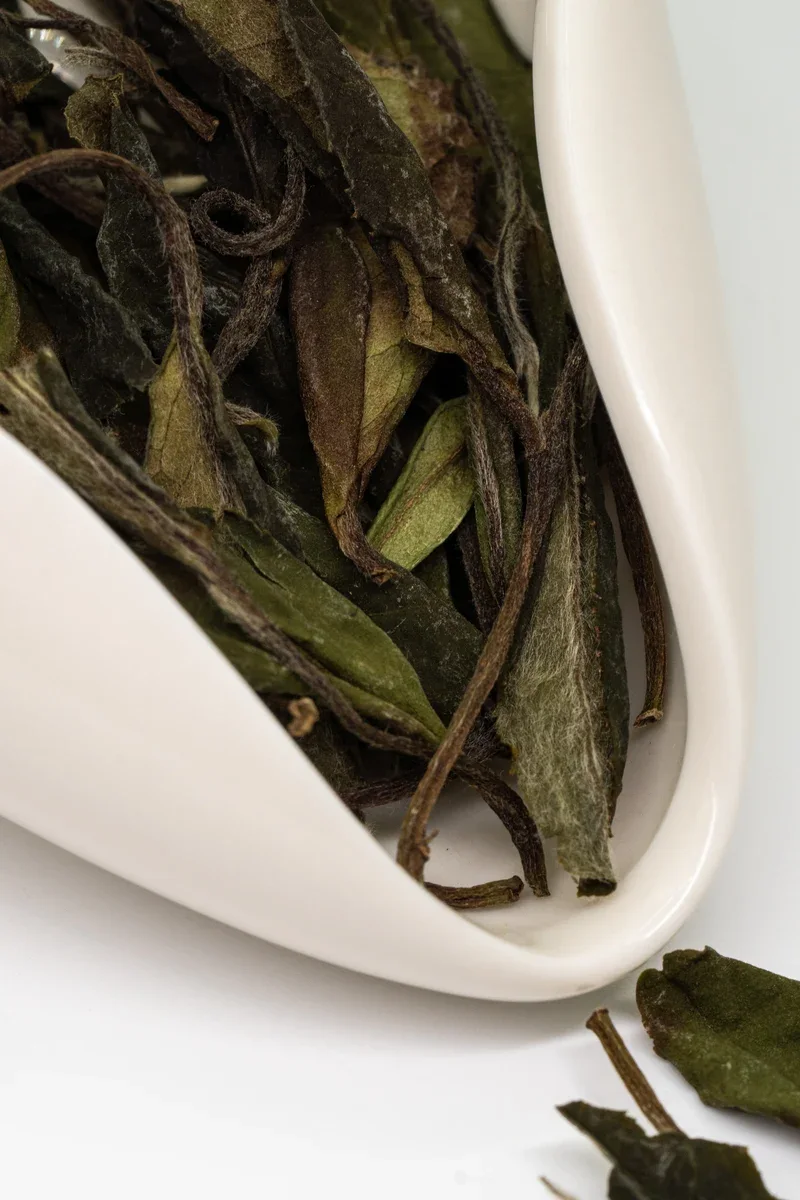
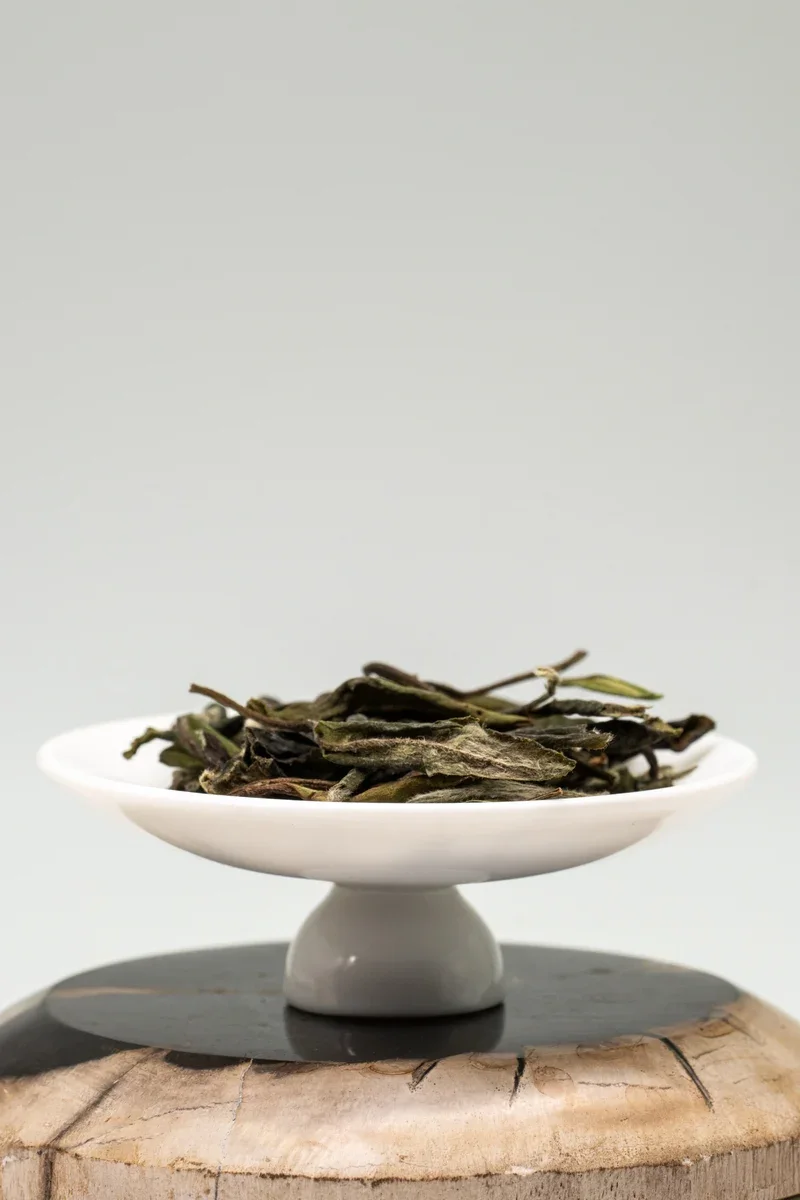
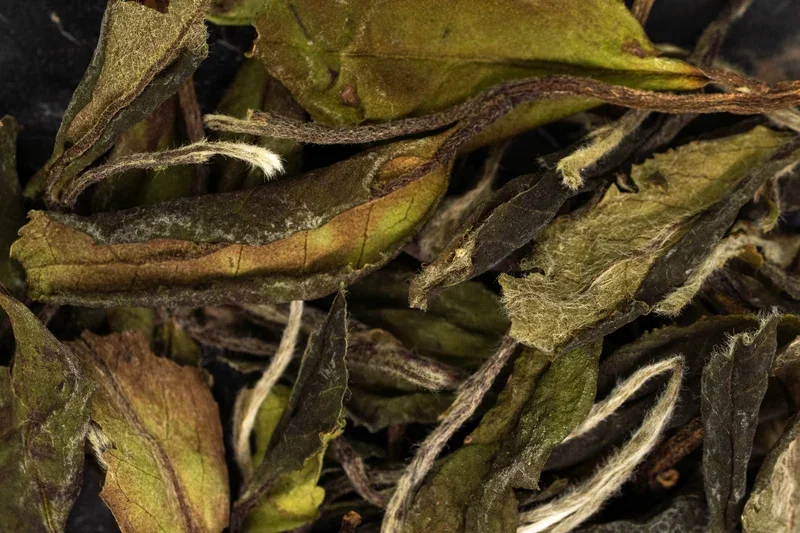
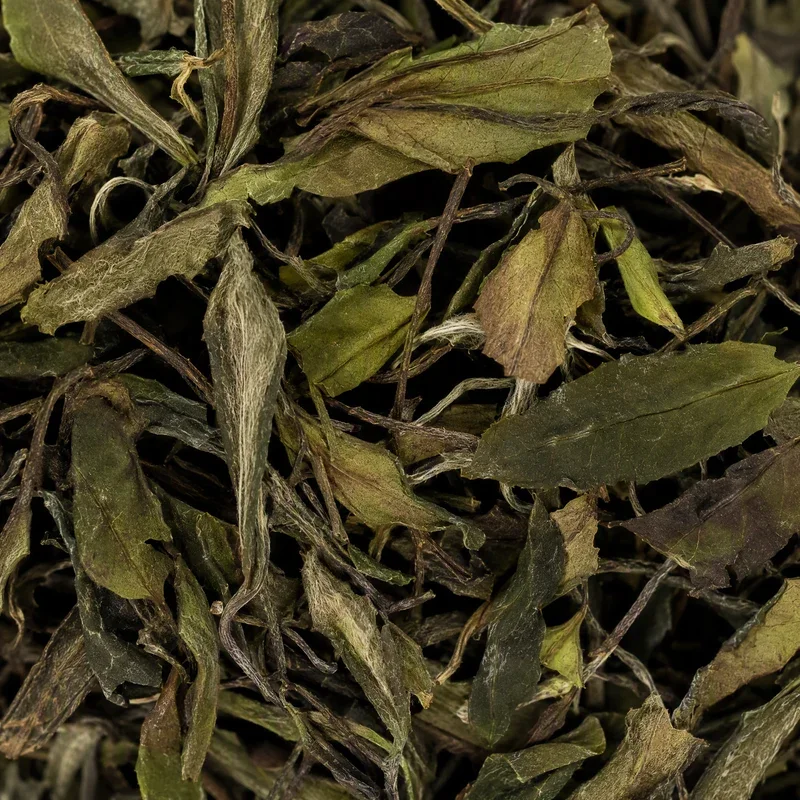
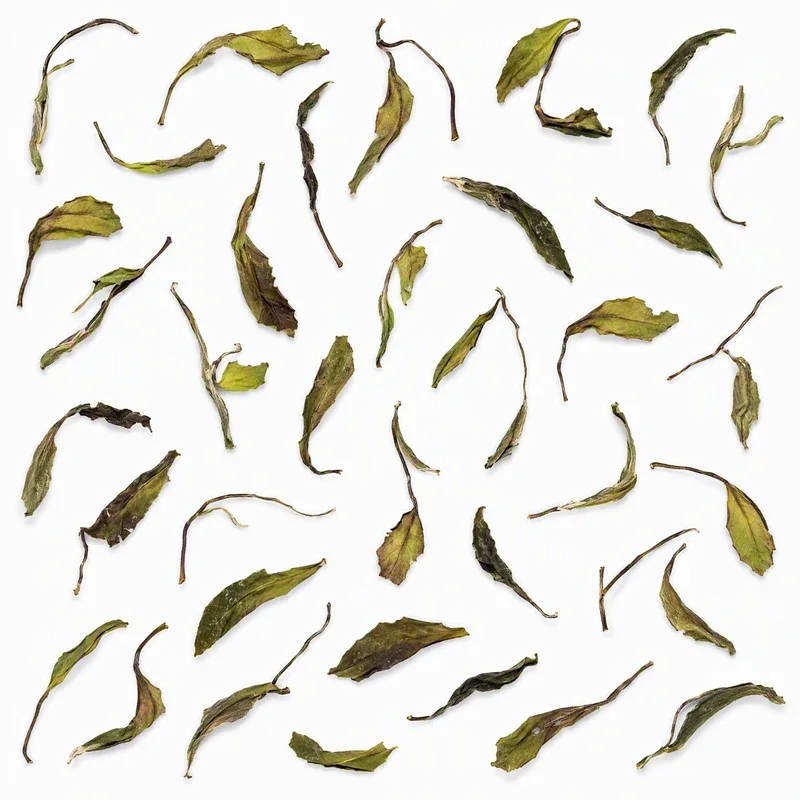
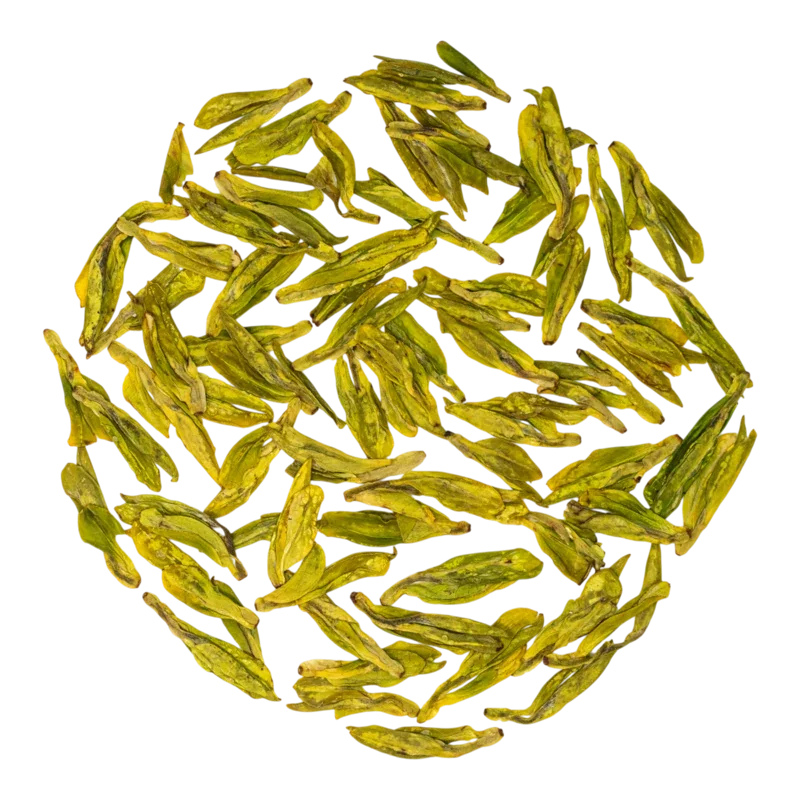
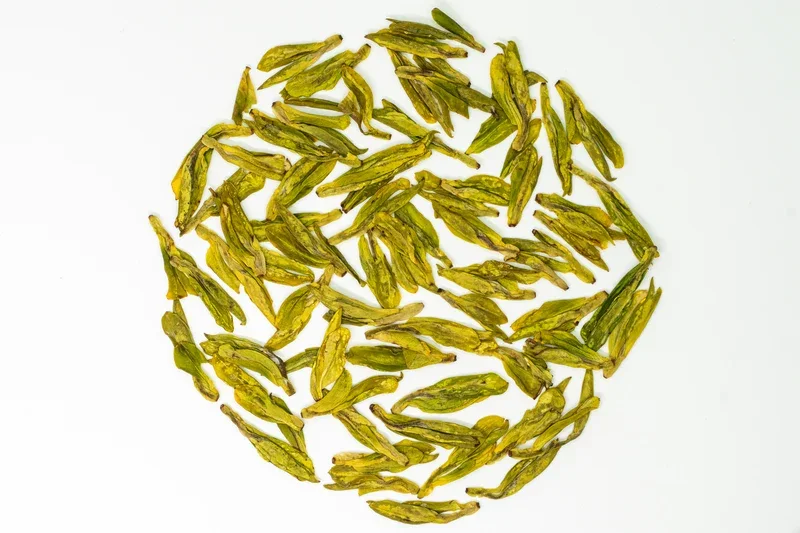
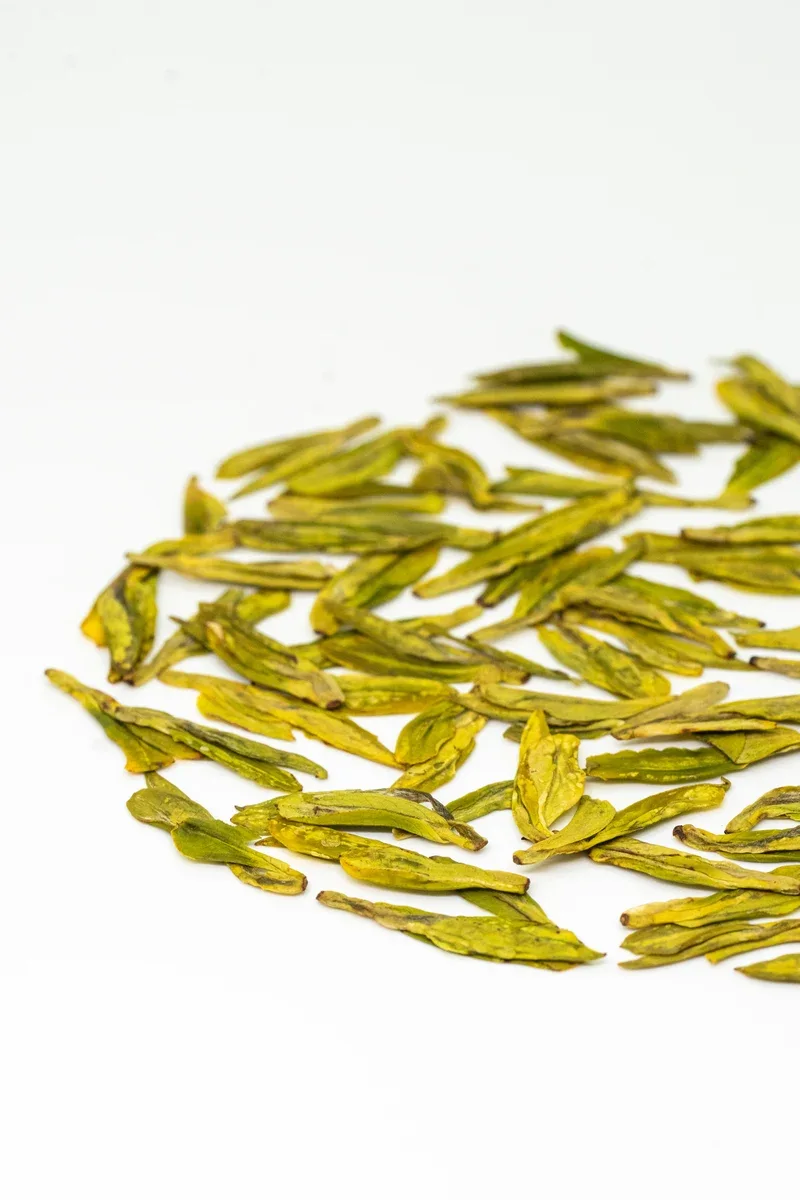
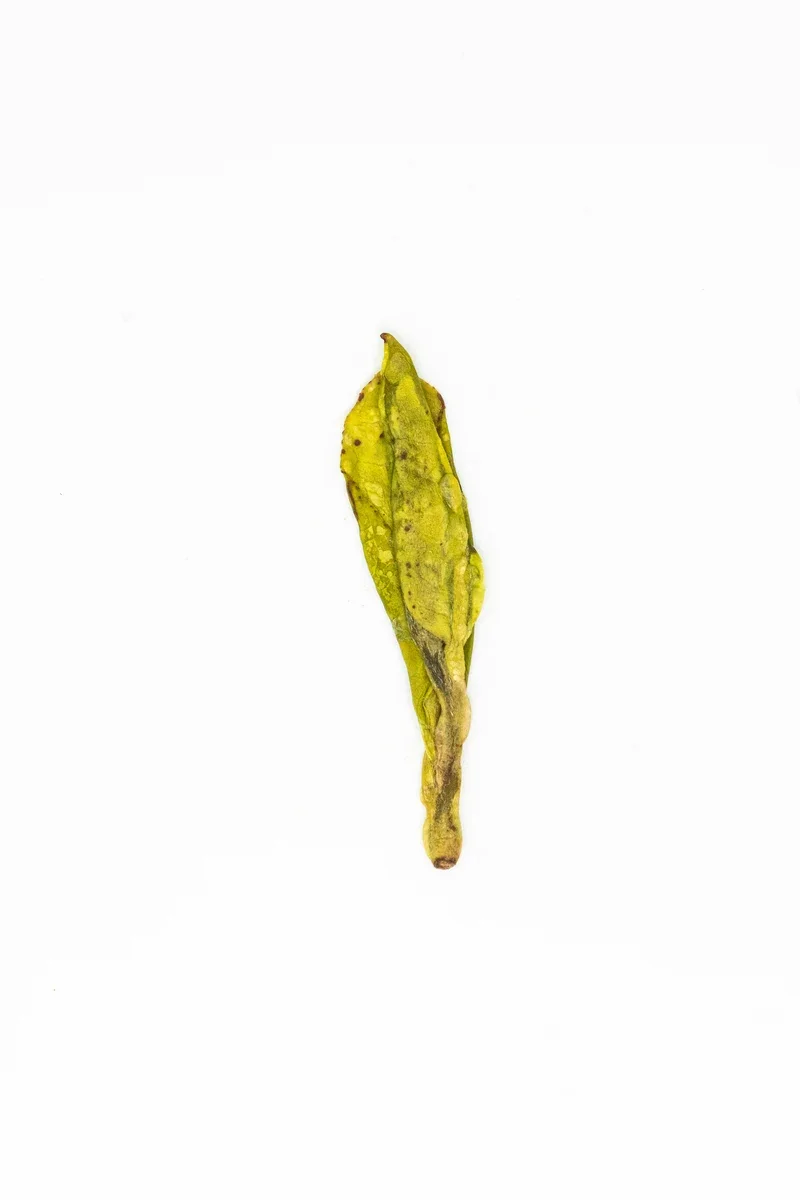
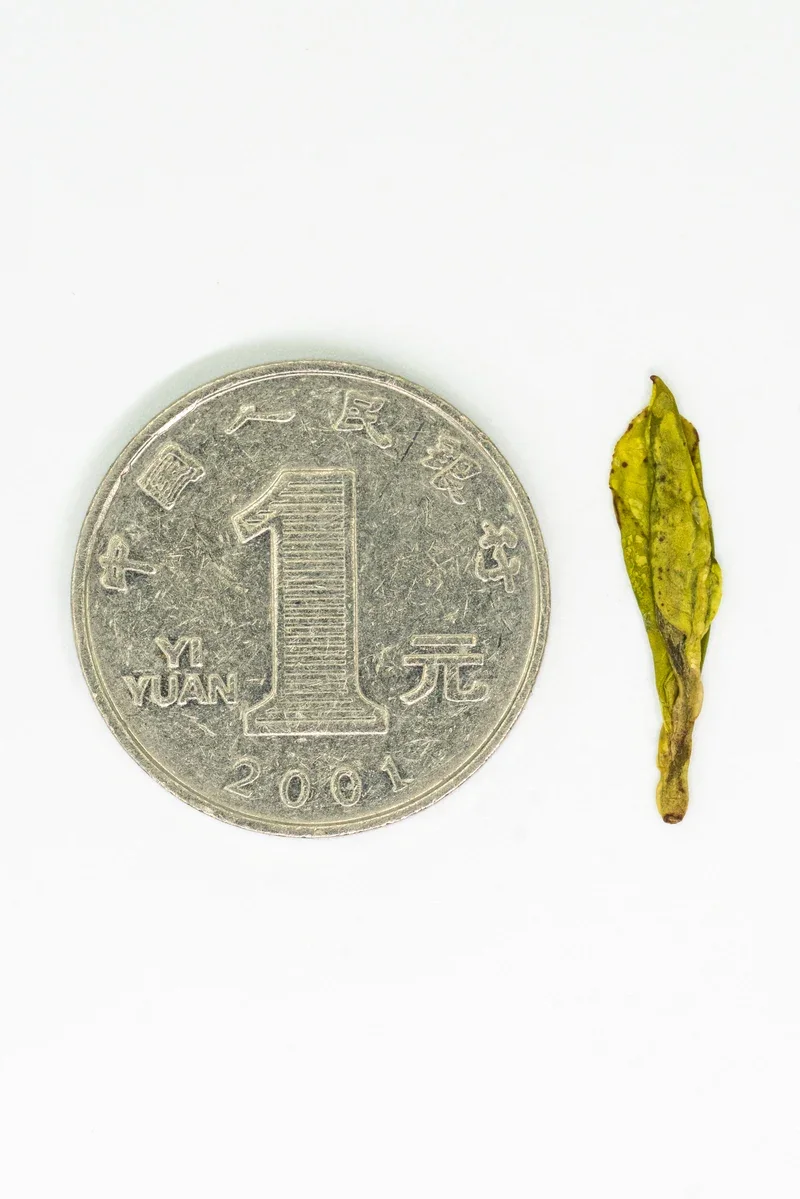
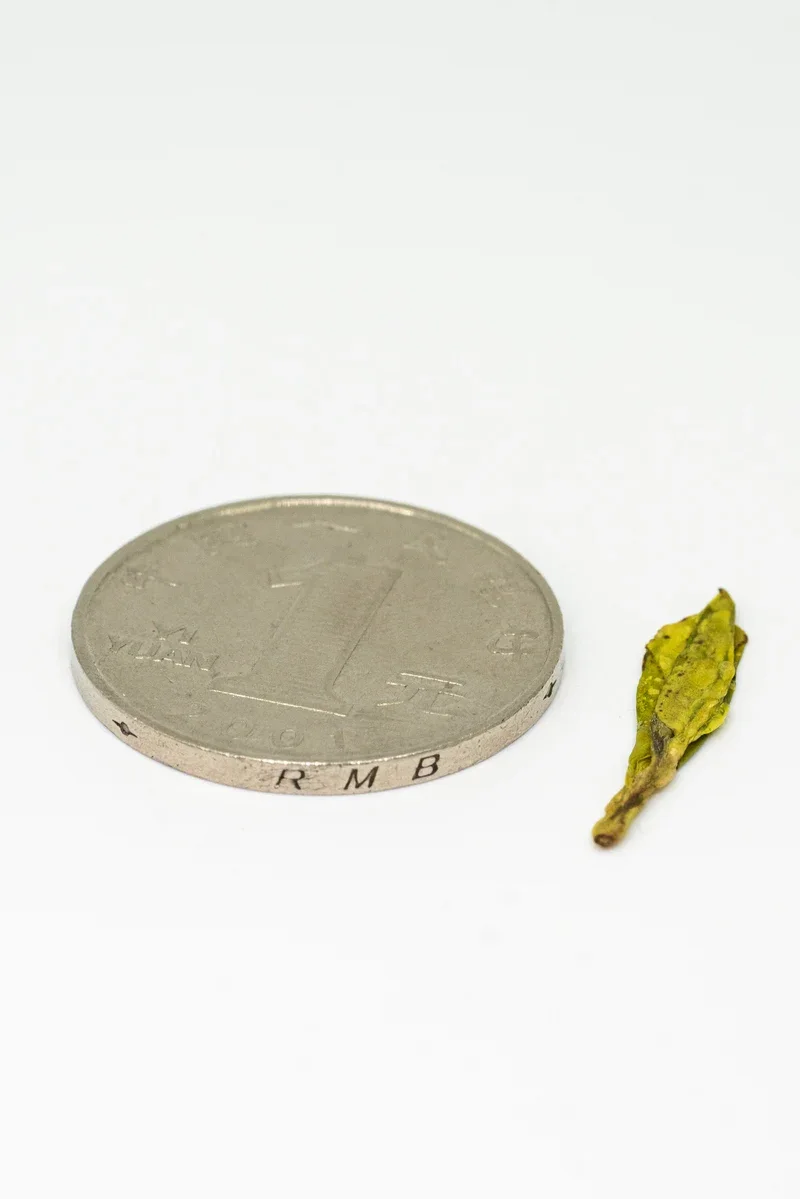
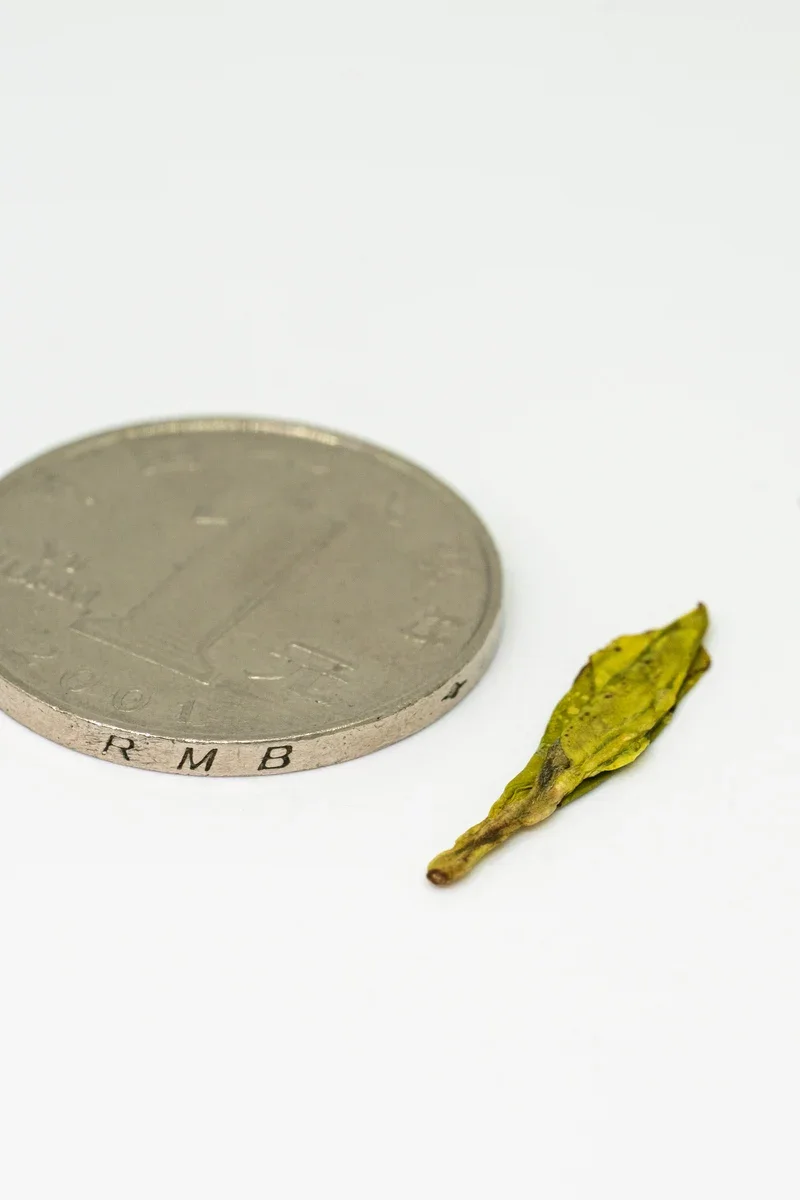
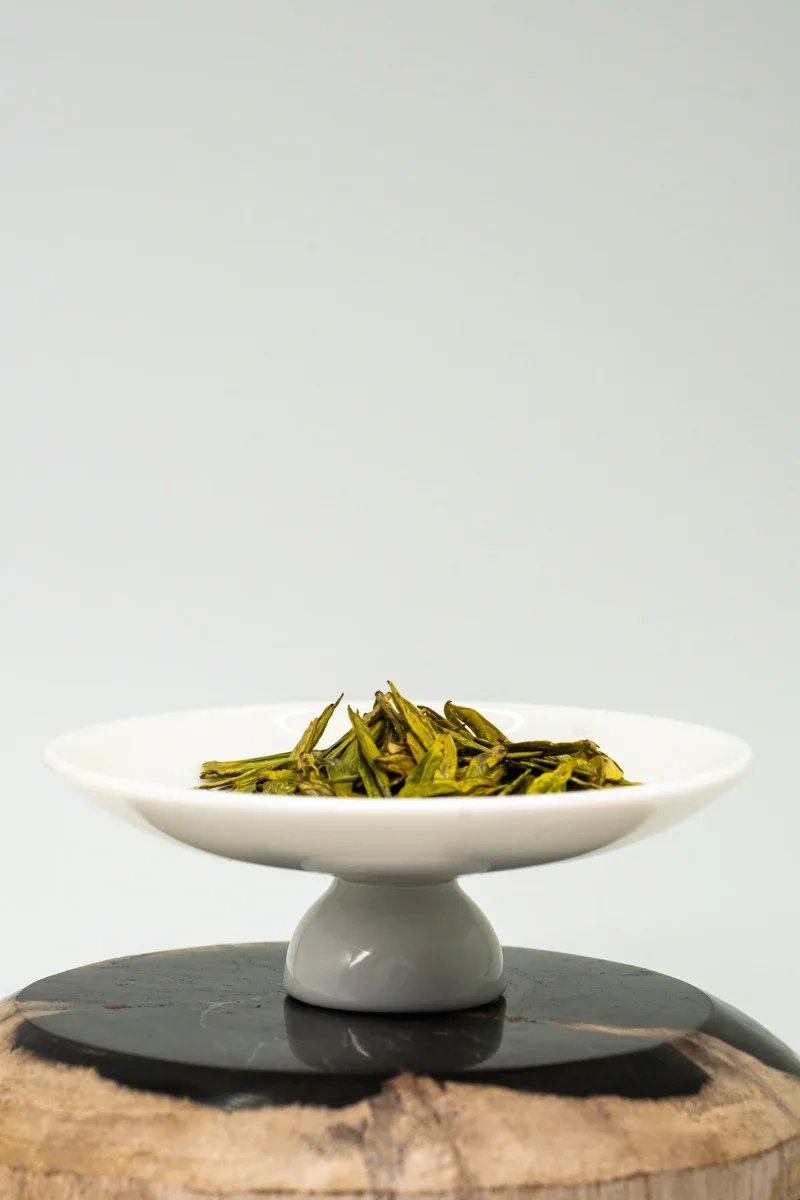
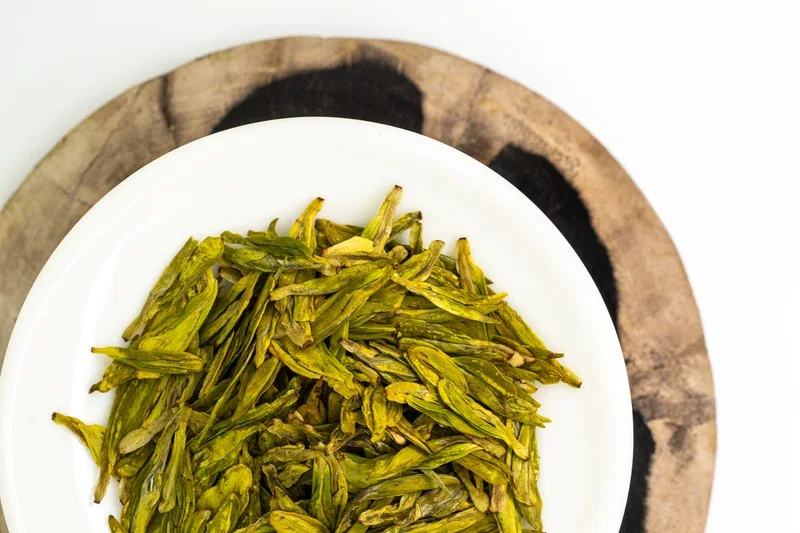
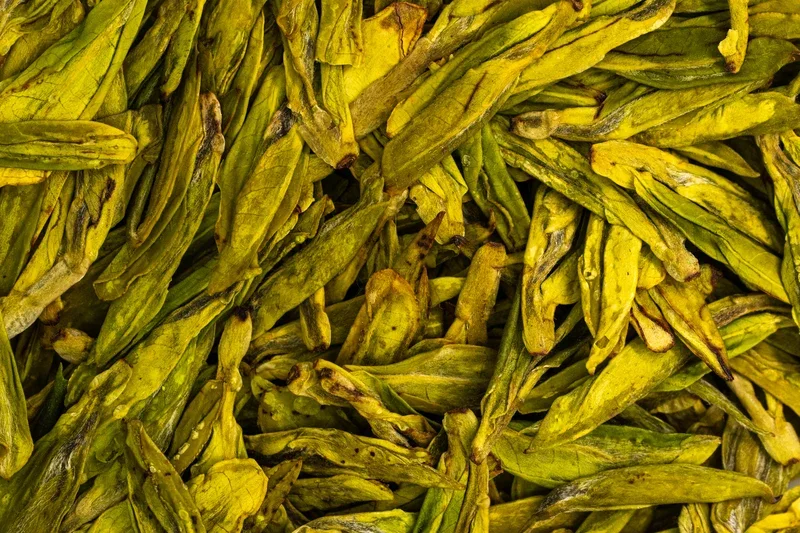
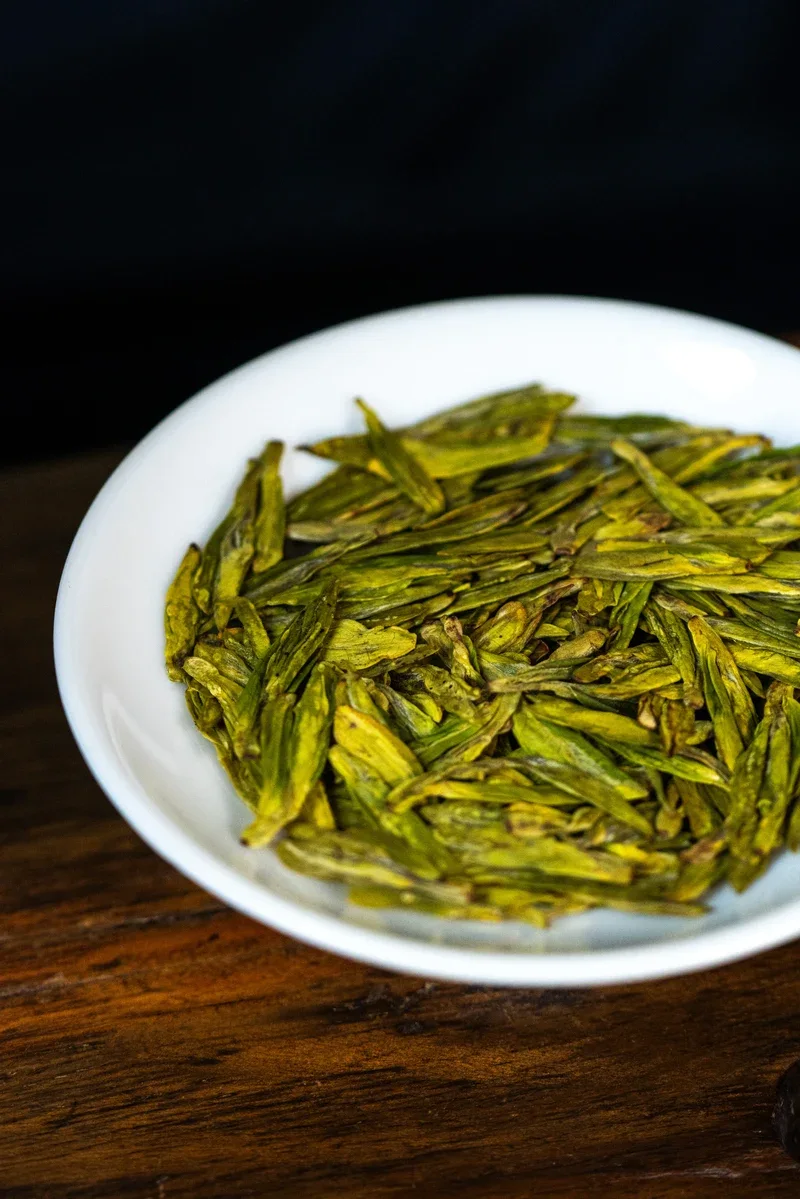
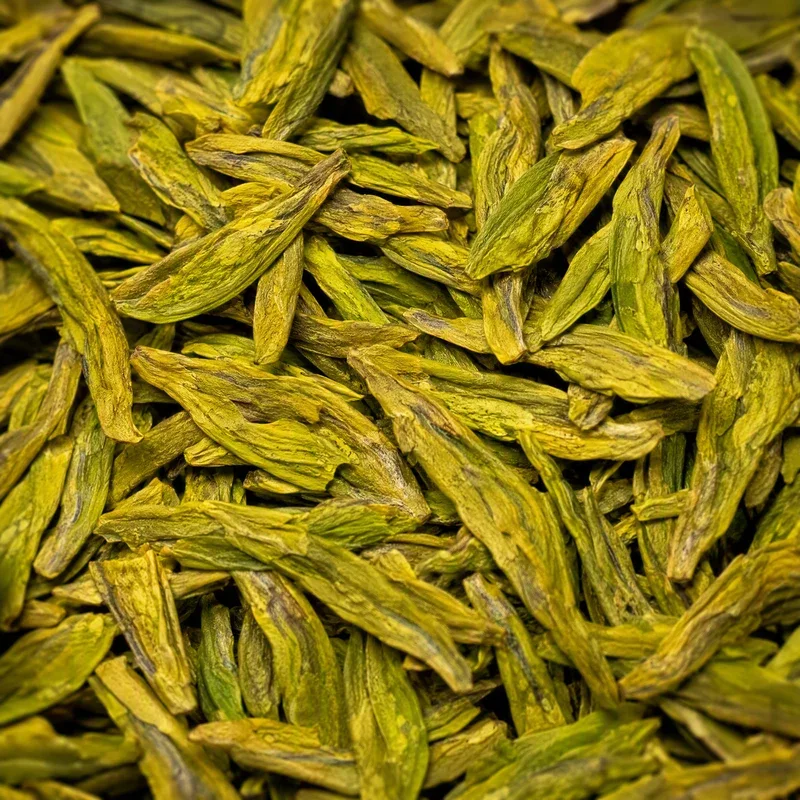
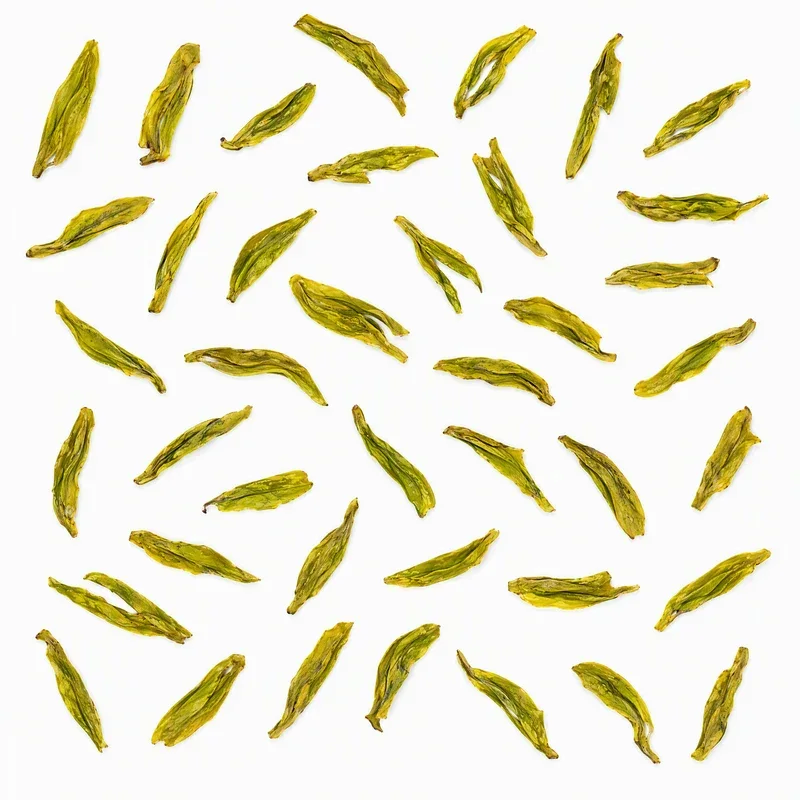
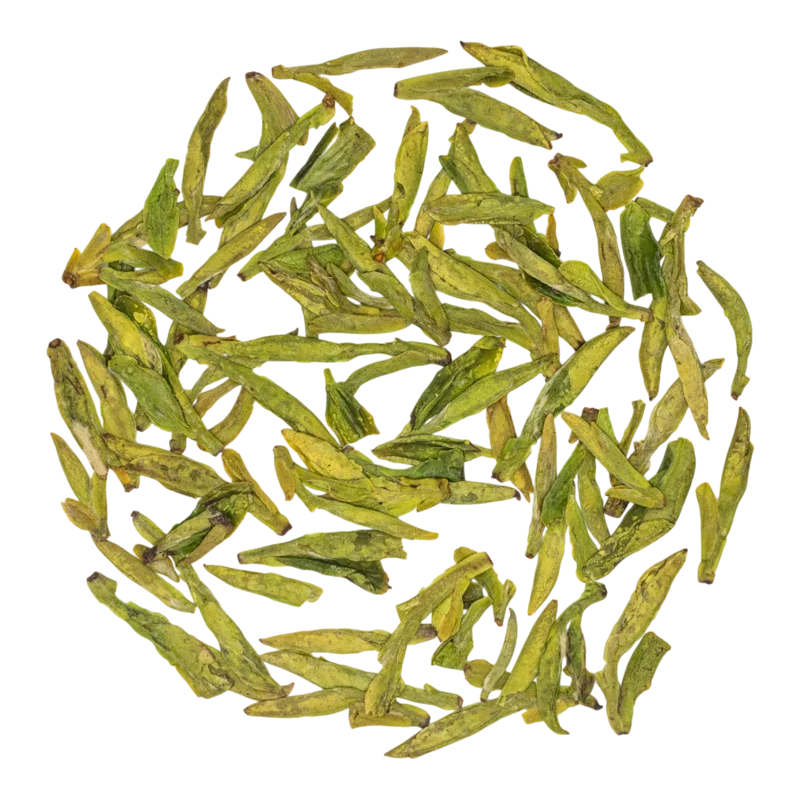
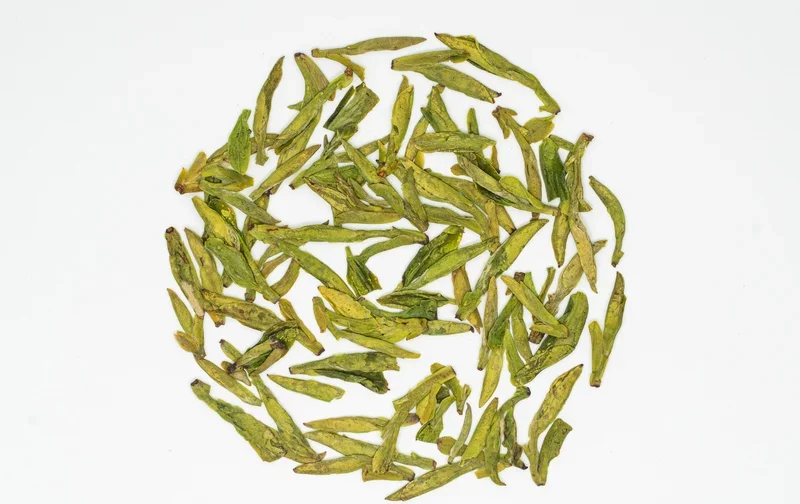
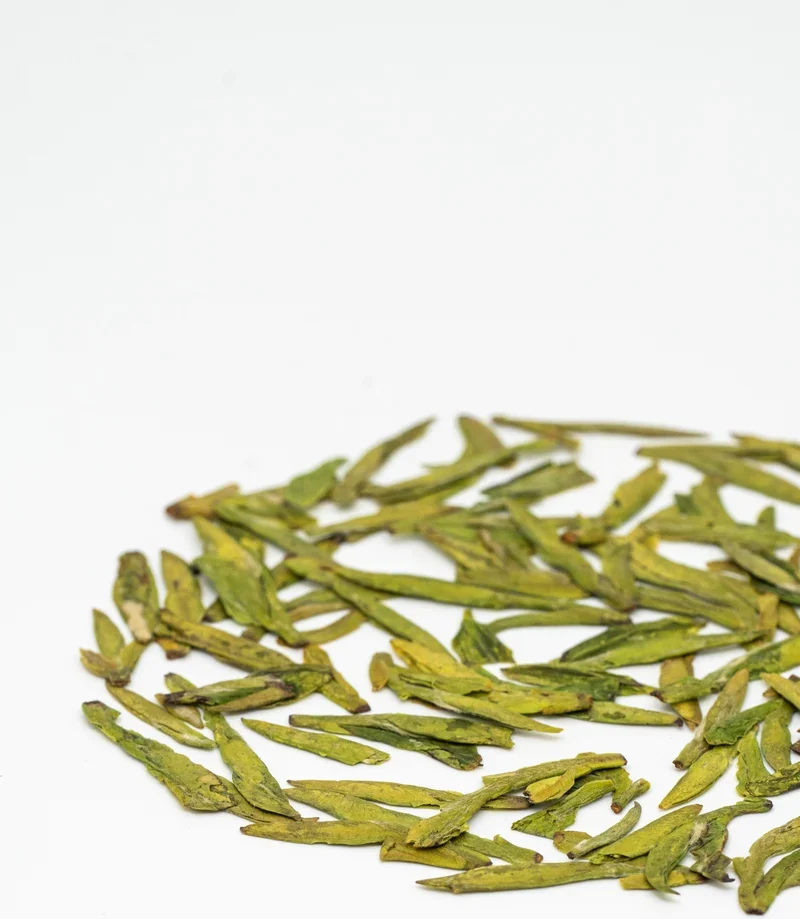
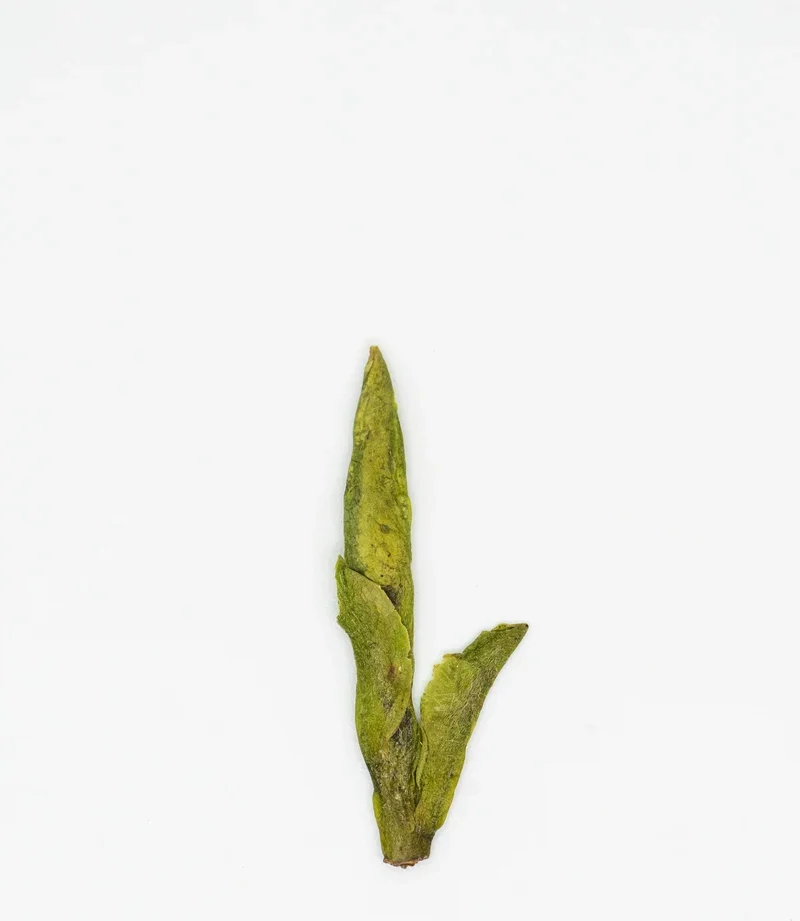
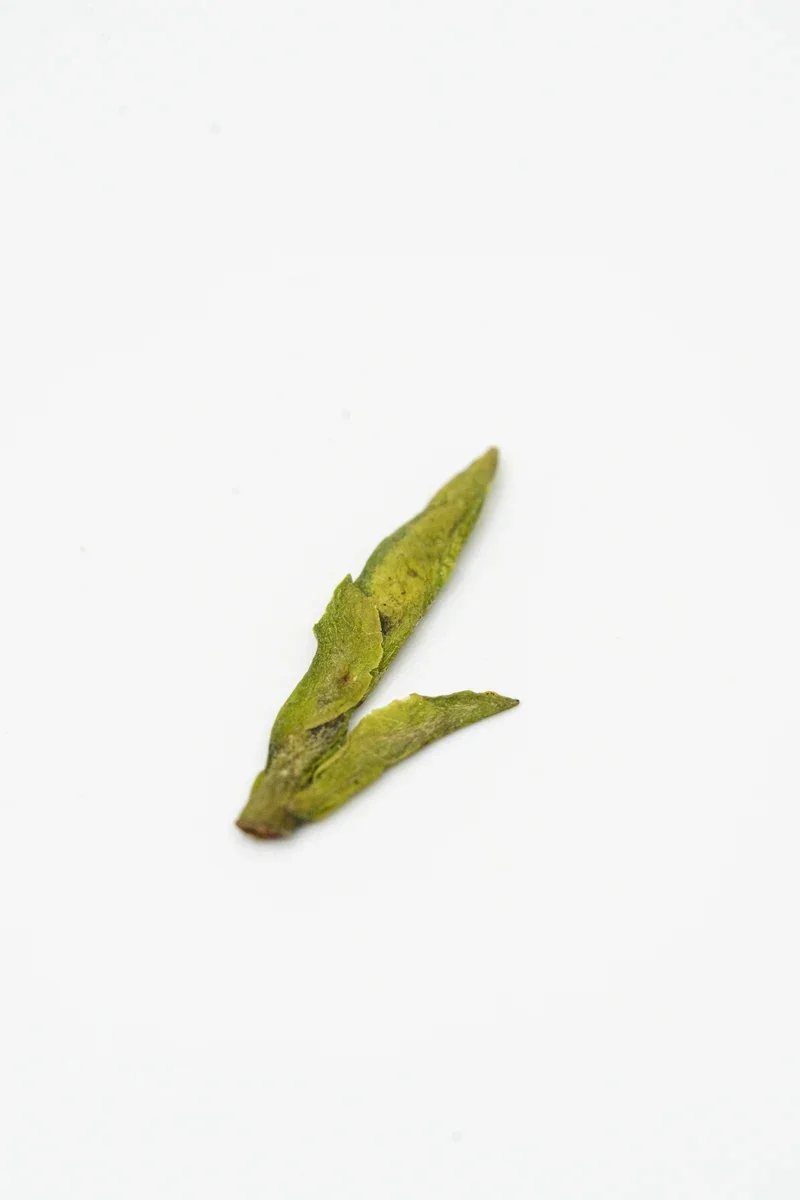
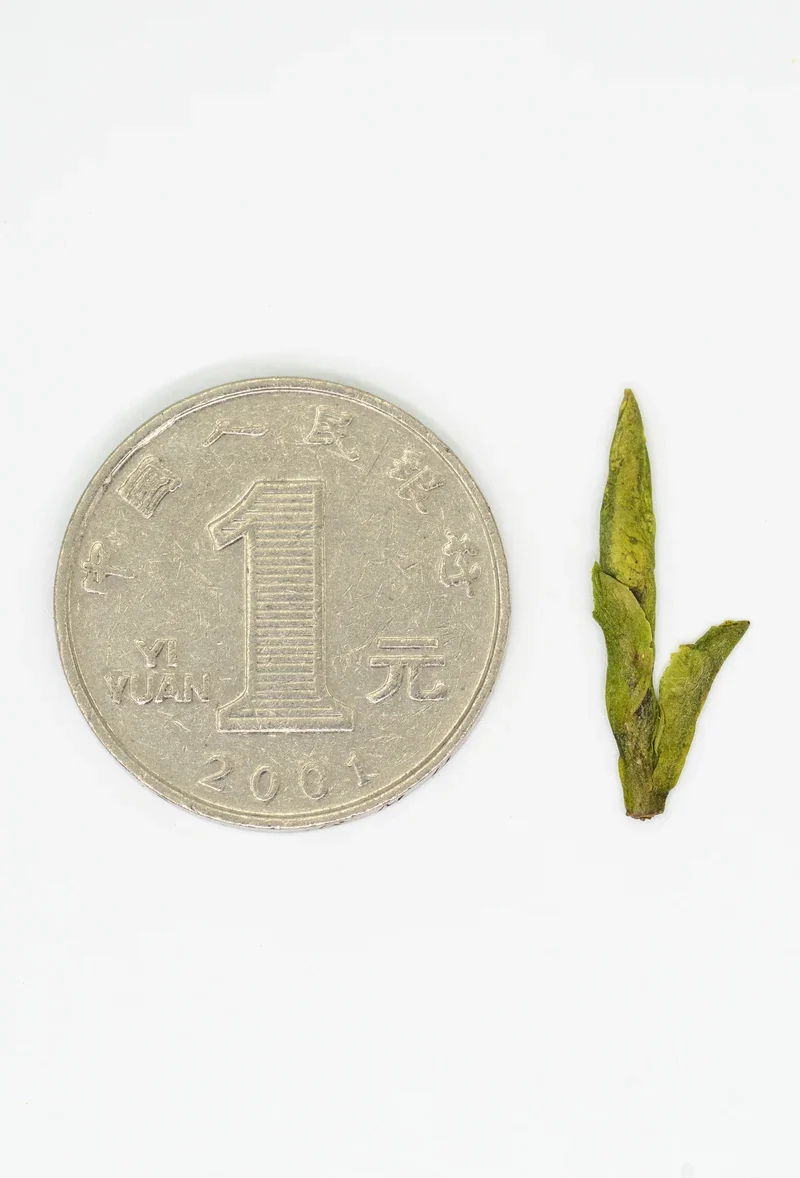
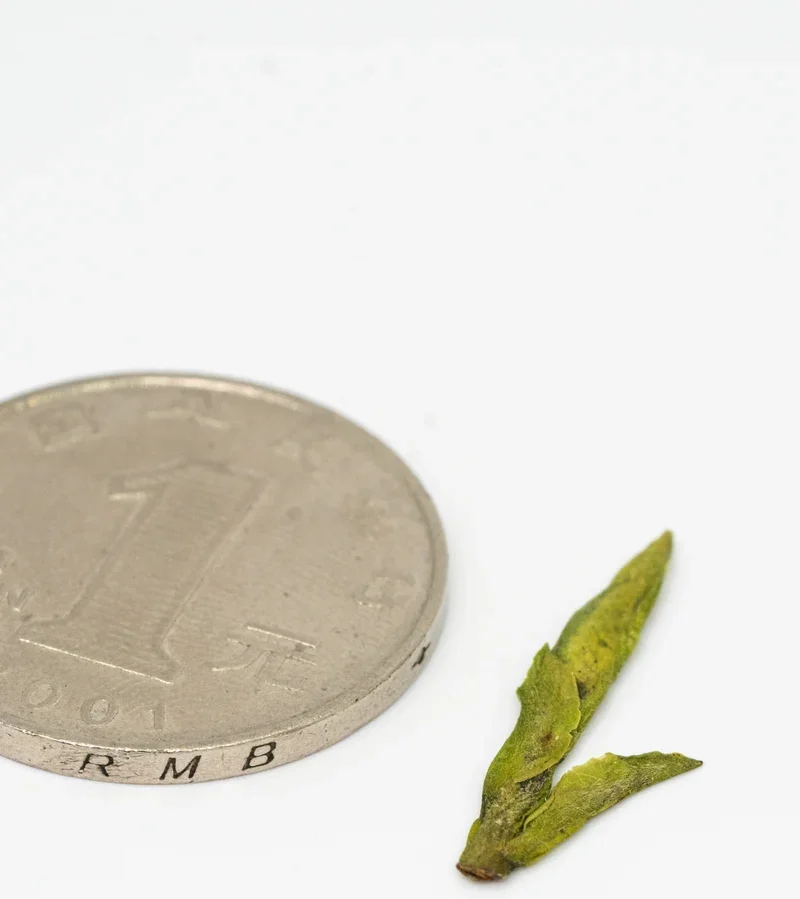
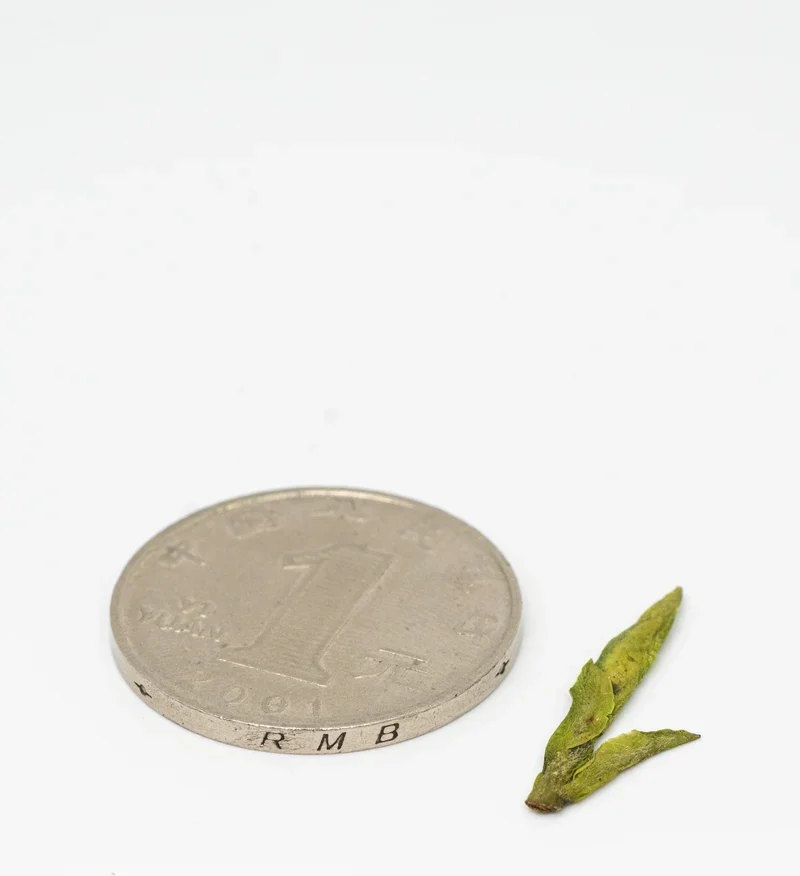
Dry Leaf Appearance: Flat, smooth, straight, compact (扁平光滑, 挺秀匀齐). Bud tips distinctly expressed (芽锋显露), with light whitish down (微显毫). Color — bright jade-green with oily luster (嫩绿光润). Shoots fleshy, shaped like sparrow tongues (雀舌, quèshé). Characteristic feature: at the lower end (at petiole cut) a dark brownish shade may appear — so-called «black tail» (黑屁股), caused by cell sap exudation during firing of fleshy leaf; this is a varietal sign of Wuniu Zao, not a defect.
Dry Leaf Aroma: Clean, fresh, with distinct chestnut notes (栗香, lìxiāng). When rubbed in palms, light grassy and sweetish overtones unfold.
Liquor Aroma: High, bright, persistent (高鲜持久). Dominated by notes of roasted chestnut and beans (豆花香), with delicate floral background. Aroma remains in empty cup, gradually transitioning to subtle sweetness.
Liquor Color: Tender green, transparent and bright (嫩绿明亮), with crystalline luster (清澈). As it cools may slightly yellow.
Spent Leaves: Bright emerald-green, fleshy, uniform. Leaves unfold whole, forming neat «buds» (匀齐成朵). Buds and leaves dense, elastic to touch, indicating high nutrient content.
Taste: Sweet-soft, fresh, with pronounced juiciness (甘醇鲜爽). Medium body, well-filled. Bitterness and astringency minimal, quickly transitioning to returning sweetness (回甘, huígān). Aftertaste — long, clean, refreshing, with cool mineral note.
Alkaloids: Caffeine (咖啡碱) — typical for green tea 2–4% dry mass. Theobromine and theophylline — in trace amounts. Caffeine/theanine ratio favorable for mild toning without pronounced stimulation.
Amino Acids: 4.3–5.3% — substantially higher than average for green teas (usually 2–4%). High L-theanine content (L-茶氨酸) conditions pronounced umami-like taste component and calming effect. According to Chinese Academy of Agricultural Sciences (CAAS), amino nitrogen content in fresh leaf — 565.0 mg%.
About 103.81 mg/g (according to CAAS data for fresh leaf). Main fractions: EGCG, EGC, ECG, EC.
Key: linalool, β-ionone, nonanal, geraniol, benzaldehyde. These form the characteristic chestnut-floral bouquet. High content of soluble sugars contributes to sensation of natural sweetness.
Low polyphenol-amino acid coefficient (酚氨比 < 5) — classic marker of high-quality green tea from early harvest.
Minerals: Potassium, magnesium, phosphorus, zinc, manganese, fluorine, selenium.
Polyphenols: According to national standard GB/T 20360-2006, polyphenol content in finished tea — 20.1–29.5%. For extra early harvest, lower values are characteristic (closer to 20%), which explains the softness and low astringency.
Vitamins: Ascorbic acid (vitamin C) — increased content, characteristic of extra early harvests; B vitamins (B₁, B₂), vitamin E, β-carotene.
Favorable ratio of caffeine and L-theanine provides sustained but mild toning effect — improved concentration without nervousness and «caffeine crash».
Catechins (especially EGCG) are powerful antioxidants, neutralizing free radicals and slowing oxidative stress.
Green tea polyphenols help reduce «bad» cholesterol (LDL) levels and maintain vascular elasticity.
Regular consumption of green tea with high theanine content is associated with mild hypotensive action.
Moderate astringency stimulates gastric juice secretion and facilitates digestion after meals.
Complex of vitamin C, catechins and trace elements (zinc, selenium) supports body's protective functions.
Contained fluorine and catechins have bacteriostatic action, preventing caries and freshening breath.
EGCG and other polyphenols reduce levels of pro-inflammatory markers.
Tea Amount: 3–4 g per 150–200 ml water (glass brewing); 5 g per 100–120 ml (gaiwan, flash steeps method).
Teaware: Glass tumbler (玻璃杯) — ideal for observing shoot opening and liquor color; porcelain gaiwan (盖碗) — for more controlled and multiple brewing; porcelain teapot — for everyday tea drinking.
Water Temperature: 80–85°C for standard batches; 75–80°C for supreme grades with tender buds. Do not use boiling water — it «burns» the leaf and intensifies bitterness.
Container: Airtight — aluminum foil bag with removed air, placed in tin or pewter jar with tight lid.
Enemies: Light, moisture, foreign odors, heat. Tea actively absorbs aromas — store separately from products with strong smell.
Shelf Life: For optimal taste — consume within 6–12 months after production. With proper refrigerated storage — up to 18 months without significant quality loss. Not subject to aging — over time loses freshness and aroma brightness.
Temperature: Optimally — in refrigerator at 0–5°C (vegetable compartment). Room temperature storage acceptable only for volume that will be consumed within 1–2 weeks.
Price Category: Medium and above medium among Chinese green teas. Price strongly depends on harvest timing: earliest batches (late February — early March) cost substantially more. Price of fresh tea raw material (茶青) at peak of early harvest reaches 400 yuan/kg and more, decreasing by 100+ yuan/kg already after a week. Finished tea of supreme grade — from 800 to 2000+ yuan/kg depending on producer, year and batch.
Since Wuniu Zao appearance is very similar to Xi Hu Long Jing, this variety is often sold as expensive Long Jing. Reverse situation also occurs: tea from other regions substitutes for «genuine» Yongjia Wuniu Zao. Main types of falsification:
Wuniu Zao — bright green with yellowish tint and characteristic dark «tail» at cut; Long Jing — with «rice-yellow» (糙米色) tint and reddish dot at petiole.
Wuniu Zao — grassy-chestnut, somewhat lighter; Long Jing — dense bean-chestnut with lanceolate notes.
Real Long Jing cannot appear on market in February — this is definitely Wuniu Zao.
No reviews yet. Tell us what you think of this tea.
Rate this tea and share your impressions. We review each submission before publishing it.