Brewing
Gongfu brewing
- Water temperature
- 92 °C
- Tea amount
- 6 g
- Water volume
- 100 ml
- First steep
- 10 s
- Time added per infusion
- 5 s
- Infusions
- 8

tiě guānyīn
Choose a brewing method. Start with the recommended quantities and time, then adjust to taste.
Brewing
Brewing
Taste
Tea encyclopedia
Category: Famous Teas of China. Mǐnnán oolongs (闽南乌龙, Mǐnnán Wūlóng).
Category: Famous Teas of China. Mǐnnán oolongs (闽南乌龙, Mǐnnán Wūlóng).
Xīpíng (西坪, Xīpíng) — historical birthplace of the cultivar; Gǎndé (感德, Gǎndé) — "tea capital" of Anxi, standard of "proper" classical style; Xiánghuá (祥华, Xiánghuá) — high-altitude area with pronounced minerality.
Coordinates: ~25° N lat., ~118° E long.
Origin: China, Fújiàn Province (福建, Fújiàn), Ānxī County (安溪县, Ānxī Xiàn), Quánzhōu Prefecture (泉州市, Quánzhōu Shì).
Type: Oolong (semi-oxidized tea). Oxidation level varies from 15% (Huaxiang / Qing Xiang style) to 40–50% (Tang Bei, Lao styles).
Běn Shān (本山), Huáng Jīn Guì (黄金桂) — for more accessible batches.
Spring (most valuable, especially before Qingming festival and Grain Rain season Gu Yu), summer, autumn. For aged Lao Tieguanyin, autumn harvest is often preferred.
Cultivar: Tiěguānyīn (铁观音) — Camellia sinensis var. sinensis. Medium-sized bush with dense, fleshy leaves of elliptical shape, leathery, with characteristic luster. Shoots are purple-red. The leaf is ideally suited for oolong production due to high content of aromatic precursors.
Pluck Standard: Bud and two-three upper leaves (一芽二三叶, yī yá èr-sān yè). For Wang grade — bud and one-two leaves, selection particularly strict.
Altitude: 500–1000 m above sea level. High-altitude plantations of Gande (600–1000 m) and Xianghua produce the most valuable raw material.
Climate: Subtropical monsoon. Average annual temperature 16–18°C, precipitation 1700–1900 mm/year, high humidity, frequent fogs. Sufficient sunny days.
Soil: Red and yellow lateritic soils, rich in iron oxides, manganese and mineral substances. Good drainage on steep slopes.
Topography: Hilly and mountainous terrain of southeastern Fujian.
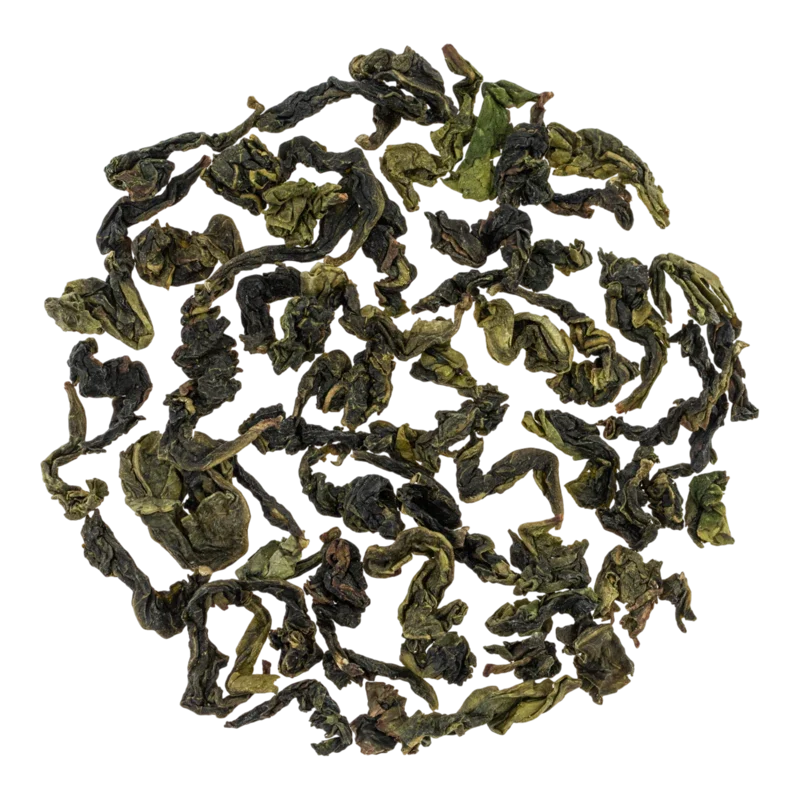
Dense semi-spheres, emerald-green, with luster.
Bright, fresh — lilac, orchid, lily of the valley, light creamy notes.
Light green, golden-green.
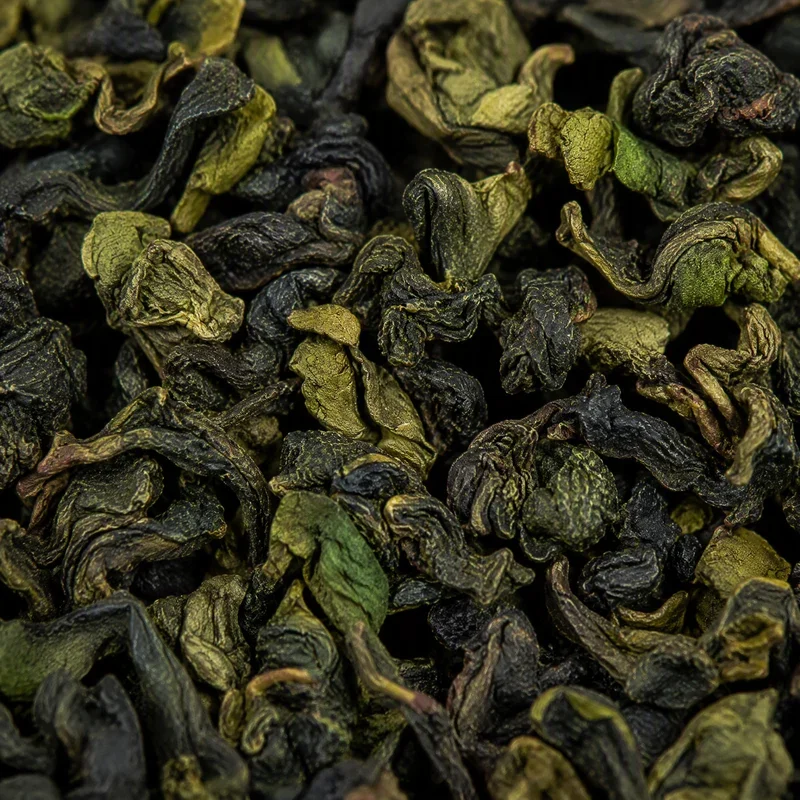
Semi-spheres, from dark green to brownish-green.
Peach, apricot, tropical fruits, honey nuances.
Golden-yellow, amber.
Dark green to brown semi-spheres, dense, heavy, sometimes with reddish tint.
"Fiery" — nuts (walnut, almond), dried fruits (dried apricot, prunes), caramel, light floral and honey notes.
Golden-yellow to amber-red.
Dark brown, almost black tea particles, may be covered with "tea dust."
Deep, complex — dried fruits, caramel, chocolate, spices, tobacco, old wood.
Dark amber, red-brown, cognac-like.
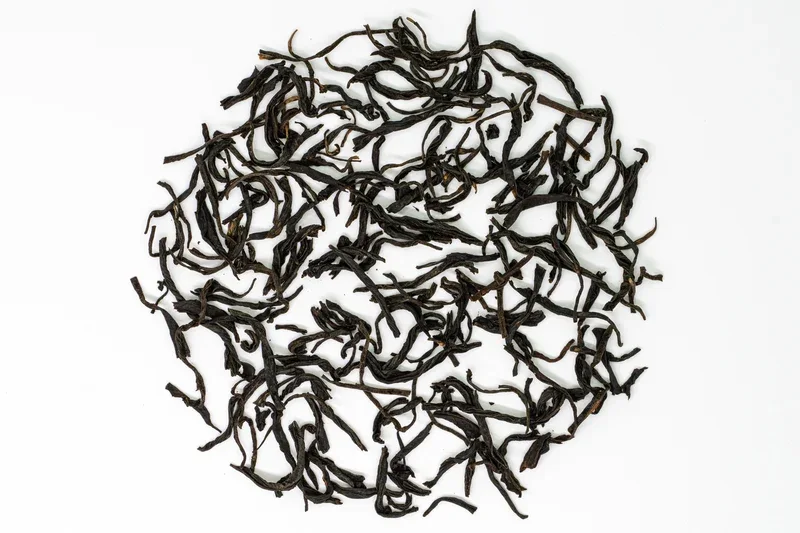
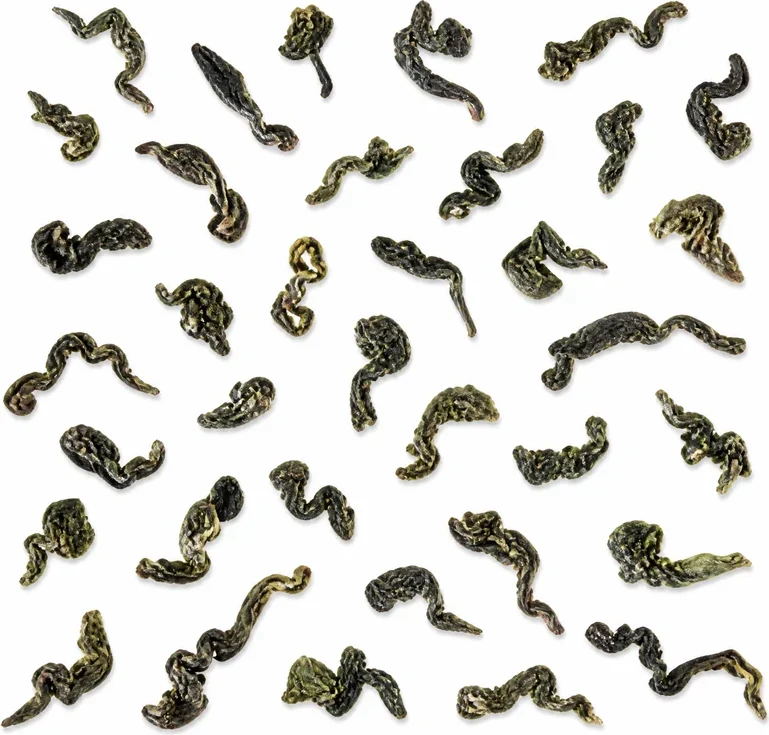
Heterogeneous, unsorted semi-spheres with stems, from green to brownish-green.
Fresh, grassy-floral, less intense.
Light yellow.
Perfectly even, uniform dense semi-spheres with characteristic luster. Tea particles larger than average.
Exceptionally intense, rich — orchid, lilac, cream, peach, lychee, honey.
Light yellow with greenish tint, bright luster.
Taste: Full but soft and smooth, oily. Orchid, cream, fruits. Very long enveloping aftertaste.
Alkaloids: Moderate caffeine content.
Amino Acids: High L-theanine content, especially in spring harvests and Wang grade. Responsible for sweet taste (umami) and relaxing effect.
Essential Oils: Linalool, nerol, geraniol — basis of floral, fruity and "fiery" aromas.
Minerals: Potassium, fluorine, magnesium, manganese, iron (elevated due to red soils of Anxi).
Polyphenols: Powerful antioxidants; profile changes depending on oxidation and roasting. In Lao Tieguanyin, catechins partially convert to theaflavins and thearubigins.
Vitamins: C, B group, E, K.
Catechins and polyphenols neutralize free radicals.
Synergy of caffeine and L-theanine provides "alert concentration" without nervousness.
Stimulates gastric juice secretion, promotes fatty food digestion. Tang Bei and Lao Tieguanyin especially good after meals.
Helps reduce LDL, strengthen vessel walls.
Tang Bei and Lao Tieguanyin have pronounced warming effect, ideal in cold weather.
Huaxiang and Guo Xiang excellently quench thirst in heat.
No reviews yet. Tell us what you think of this tea.
Rate this tea and share your impressions. We review each submission before publishing it.