Brewing
Gongfu brewing
- Water temperature
- 95 °C
- Tea amount
- 7 g
- Water volume
- 100 ml
- First steep
- 10 s
- Time added per infusion
- 5 s
- Infusions
- 10

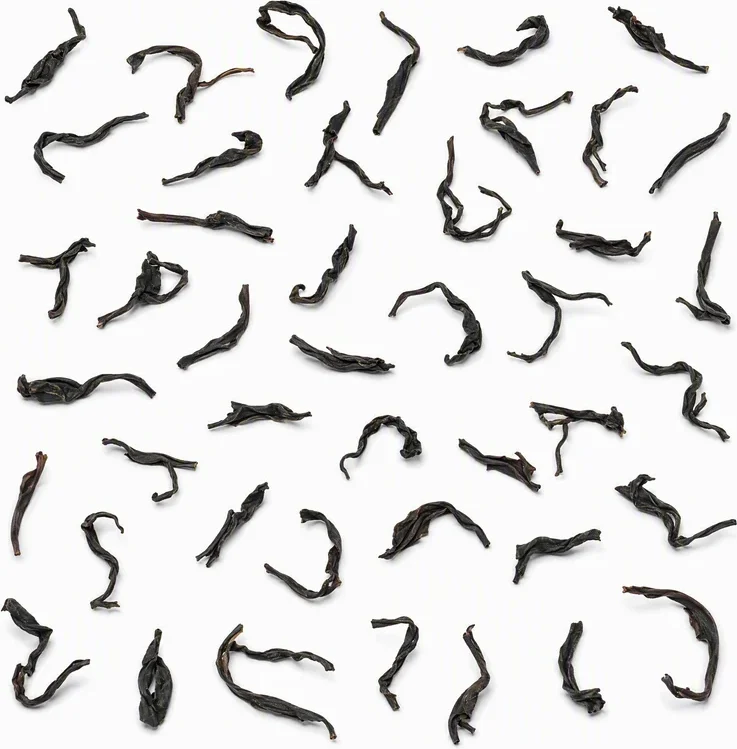
Táiwān yěshēng shānchá hóngchá
Choose a brewing method. Start with the recommended quantities and time, then adjust to taste.
Brewing
Brewing
Taste
Tea encyclopedia
Category: Rare wild Taiwanese red tea (black tea). Mono-territorial endemic species.
Category: Rare wild Taiwanese red tea (black tea). Mono-territorial endemic species.
Coordinates: ≈ 23.85° N, 120.92° E (Sun Moon Lake area, main commercial zone).
Origin: Táiwān (臺灣, Táiwān), Nántóu County (南投縣, Nántóu Xiàn), Yúchí Township (魚池鄉, Yúchí Xiāng), vicinity of Sūn Moon Lake (日月潭, Rìyuè Tán). Wild populations of Camellia formosensis are also found in mountainous areas of Chiayi County (嘉義縣, Jiāyì Xiàn), Kaohsiung (高雄市, Gāoxióng Shì) and Taitung County (臺東縣, Táidōng Xiàn), along the Central Mountain Range (中央山脈, Zhōngyāng Shānmài) at elevations of 600–1600 m.
Type: Red tea (black tea) (紅茶, hóngchá) — fully oxidized.
Cultural Significance: Shan Cha symbolizes Taiwan's connection to the deep botanical history of tea — proof that the island possesses its own tea genetics, independent of continental China. This tea is part of Taiwan's biodiversity conservation program and a source of national pride, uniting science, ecology, and gastronomy.
History: Wild tea Shan Cha is Taiwan's most ancient tea, whose history extends far beyond any human cultivation. Camellia formosensis is a relict species that has survived since the last ice age.
Name Breakdown: Shān Chá (山茶) literally means "mountain tea." Yè Shěng (野生) means "wild-growing." Hóng Chá (紅茶) means "red tea." The full name describes the origin: "Taiwanese red tea from wild mountain tea."
Central Mountain Range of Taiwan, Nantou, Chiayi, Kaohsiung, Taitung counties. The Táiwān Tea Research and Extension Station (茶業改良場, TRES) identifies several local populations: Meiyuan Shān Chá (眉原山茶), Déhuà Shān Chá (德化社山茶), Fènghuáng Shān Chá (鳳凰山茶), Lèyè Shān Chá (樂野山茶), Lóngtóu Shān Chá (龍頭山茶), Minghai Shān Chá (鳴海山茶), Nanfeng Shān Chá (南鳳山茶), Yongkang Shān Chá (永康山茶) — each with unique characteristics.
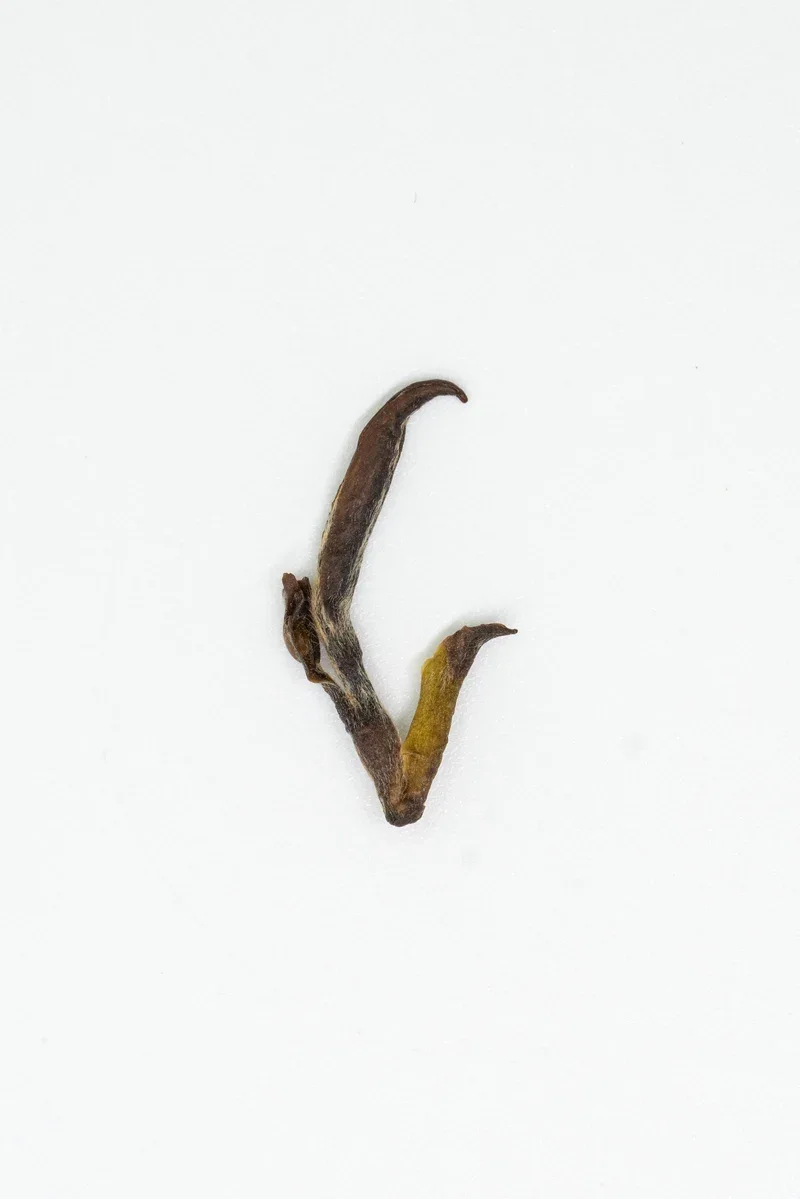
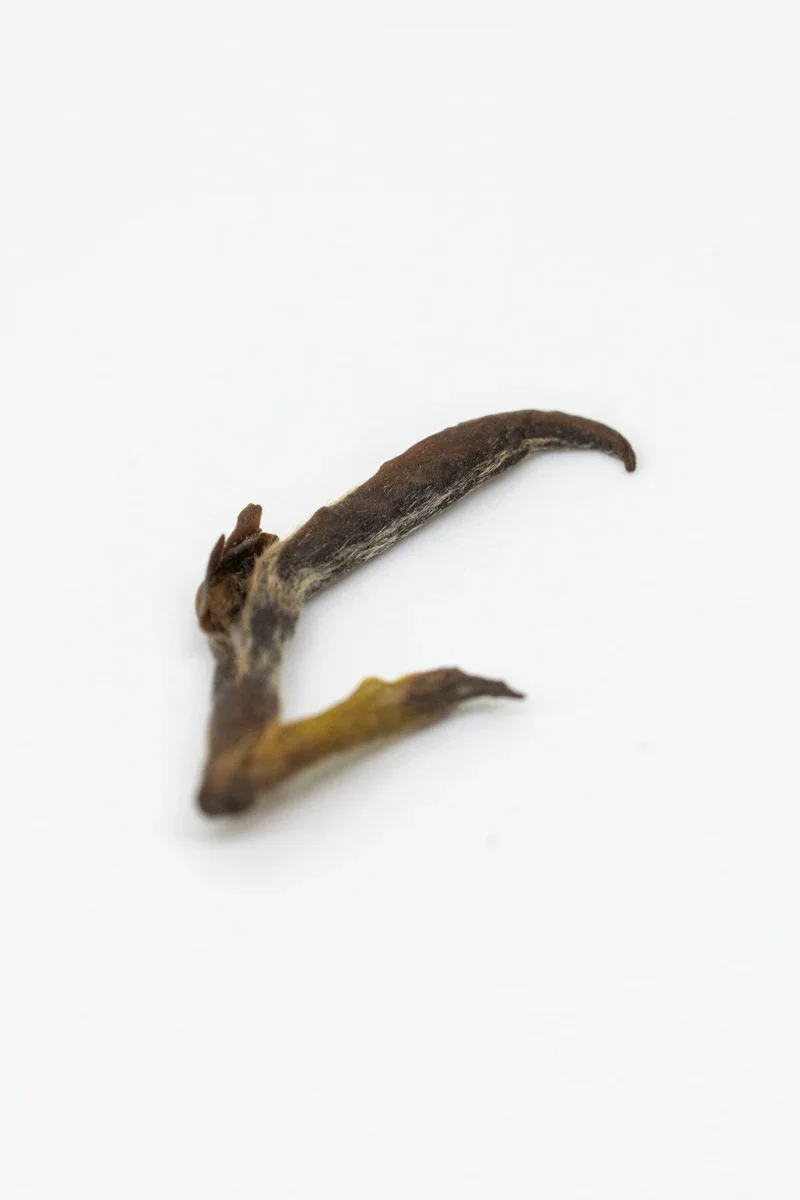
Cultivar: Camellia formosensis (Masamune et Suzuki) M. H. Su, C. F. Hsieh et C. H. Tsou. Endemic to Taiwan, genetically isolated from C. sinensis and C. sinensis var. assamica. Externally resembles the Assam variety but differs in a key morphological feature: the terminal bud is smooth, without pubescence (in the Assam type, the bud is covered with down). Trees reach heights of 10 m and more; in southern areas of the island, specimens up to 35 m are known. Leaves are large and dense, root system is powerful, resistance to harsh mountain conditions is high. The age of individual trees is estimated at several hundred years.
Picking: Conducted by hand, typically once per year (summer — early autumn). Young shoots from wild trees. Harvesting is strictly regulated to preserve the population; a number of territories are under legal protection. Production volume is extremely limited.
Raw Material: Only leaves from wild or semi-wild trees growing in ecologically clean mountain forests without use of pesticides, fertilizers, or other agrochemicals are used.
Altitude: 600–1600 m above sea level. Main commercial populations — 700–1000 m (lake area); wild trees are found at higher elevations as well.
Climate: Humid subtropical with pronounced mountain influence. Frequent fogs, high humidity (80–90%), stable temperatures (average annual ~18–20°C in the lake area). Mild climate promotes slow growth and accumulation of aromatic substances.
Soil: Volcanic soils, rich in minerals, with good water permeability and high organic content. Acidity — moderate.
Yuchi area, vicinity of Sun Moon Lake — main commercial production zone. The lake is located at an elevation of about 748 m in a basin among the mountains of the Central Range.
Tea trees grow in a natural forest ecosystem, under the canopy of tall trees, without any human intervention. This is organic tea in the most literal sense — not because the plantation was certified, but because not a single bottle of fertilizer has ever touched the tree. Harvesting is limited to preserve the population, and this is the key factor determining the rarity and price of the product.
Harvested leaves are spread for slow moisture loss and activation of enzymatic processes. Large, dense leaves of C. formosensis require extended withering (up to 18–24 hours) to achieve the necessary elasticity.
Leaves are crushed and rolled to break cell walls and release juice. The large size of C. formosensis leaves does not allow tight rolling — the finished leaf remains large and lightly twisted.
Key stage. Oxidation of tea juice under oxygen action develops a deep, honey-fruity profile. Interestingly, in certain seasons, C. formosensis leaves are naturally affected by tea jassids (小綠葉蟬, Jacobiasca formosana), whose bites trigger protective biochemical reactions in the leaf, leading to formation of characteristic honey and muscat notes — a mechanism analogous to that which forms the bouquet of the famous Dōngfāng Měirén (東方美人, Dōngfāng Měirén, "Oriental Beauty"). The presence of the "jassid effect" is inconsistent and depends on the specific site and season, making each batch unique.
Stopping oxidation and fixing achieved characteristics through thermal treatment. Gentle drying at moderate temperature to preserve delicate aroma.
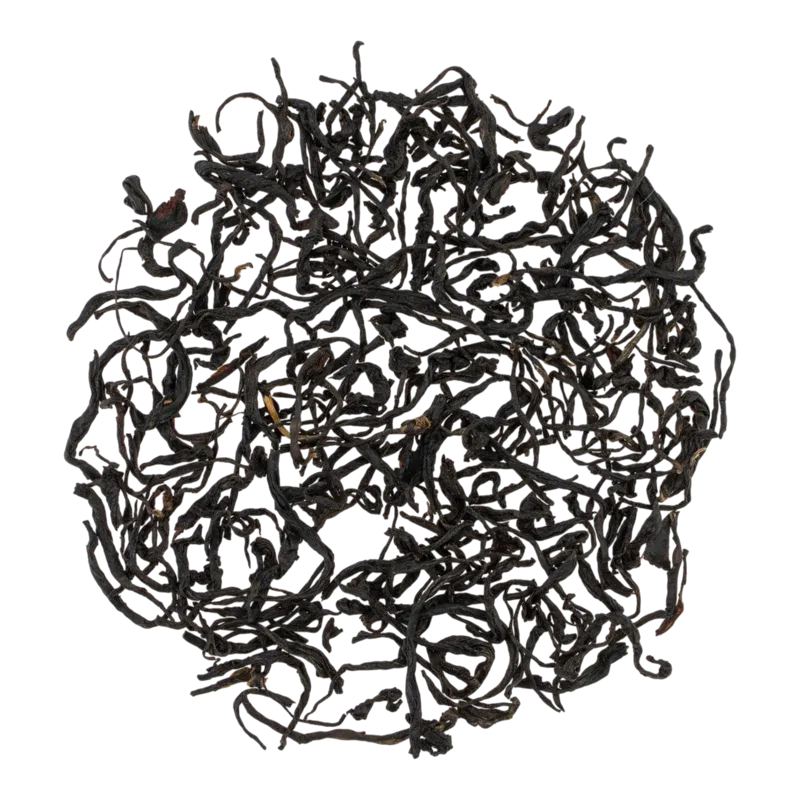
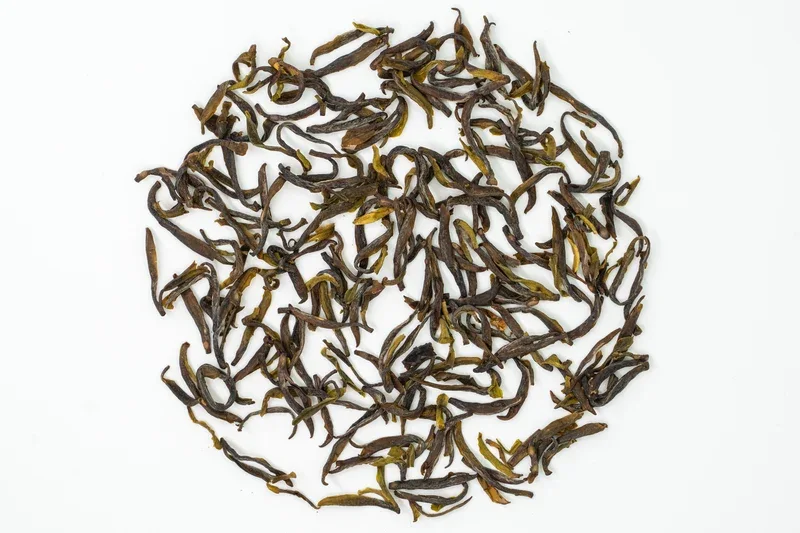
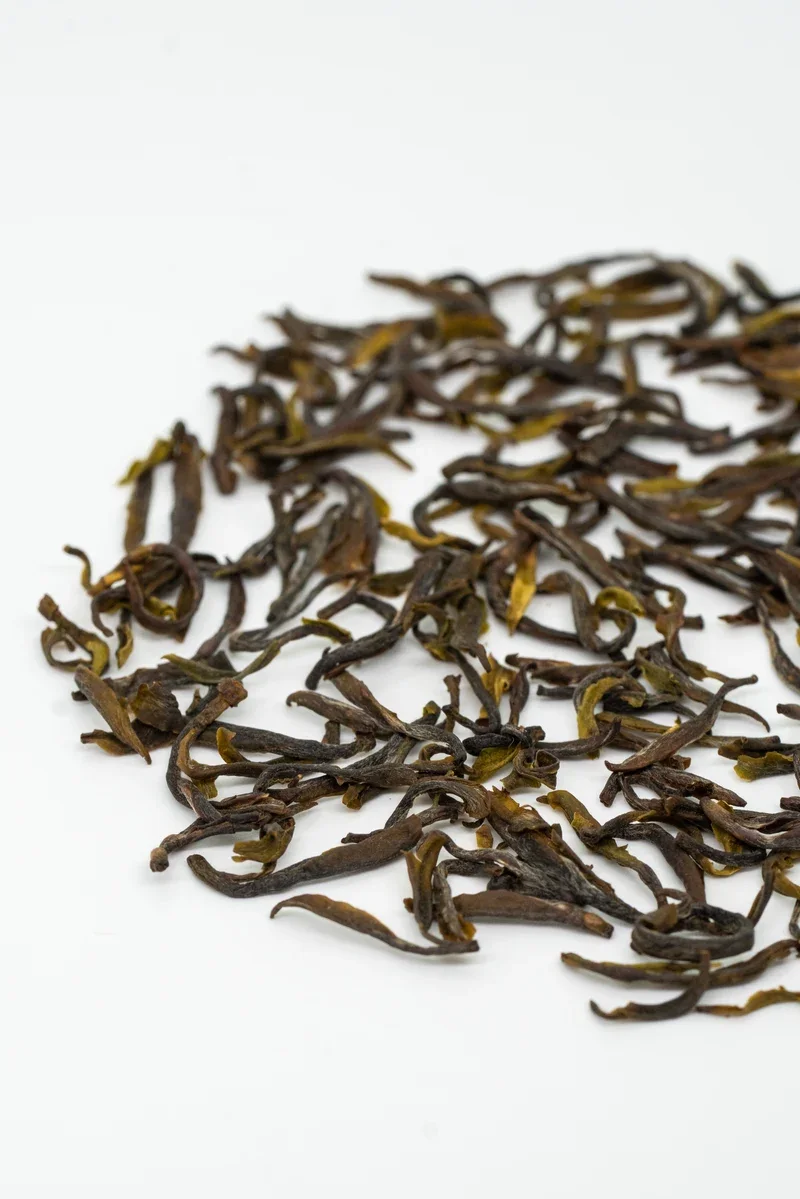
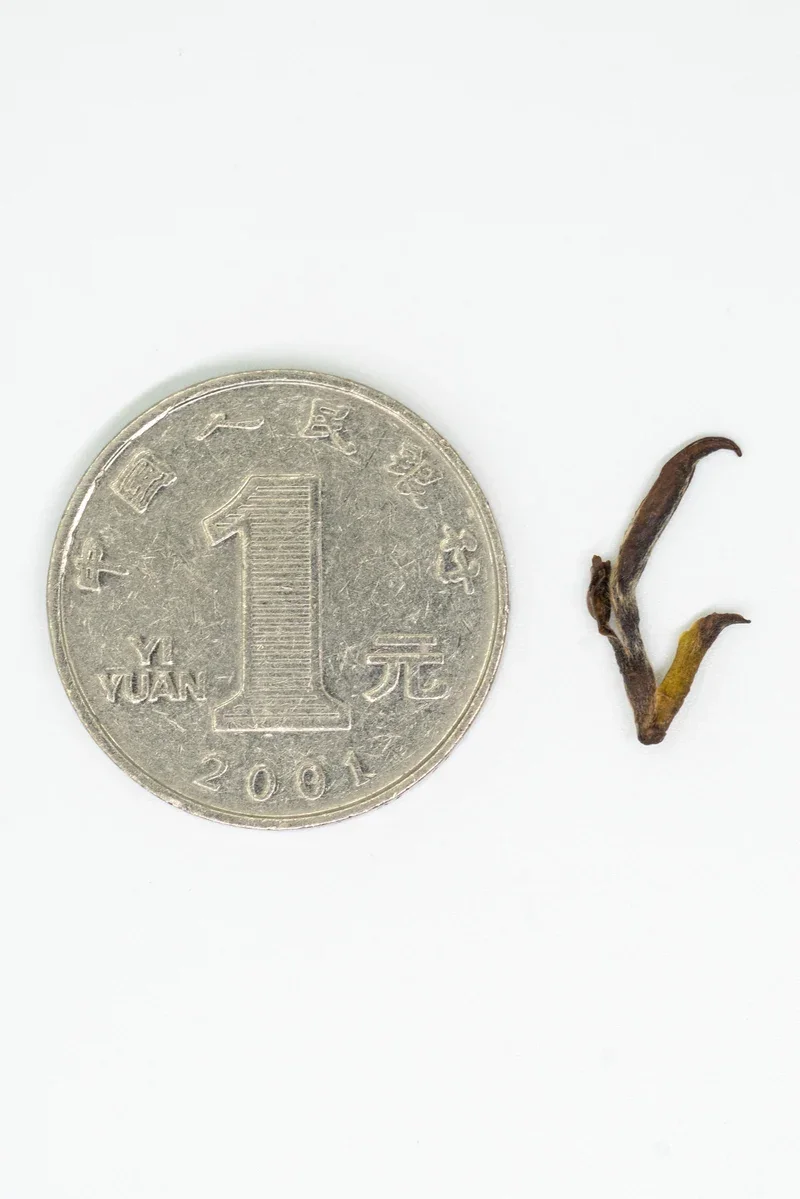
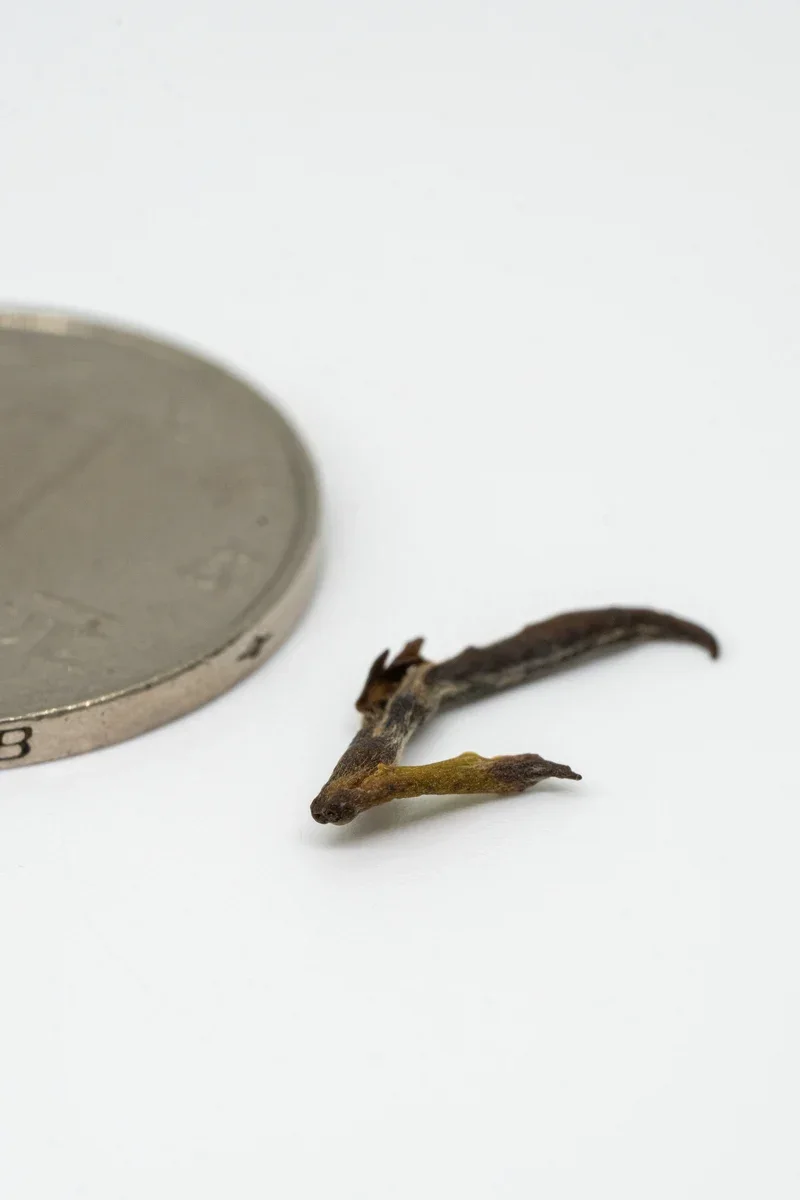
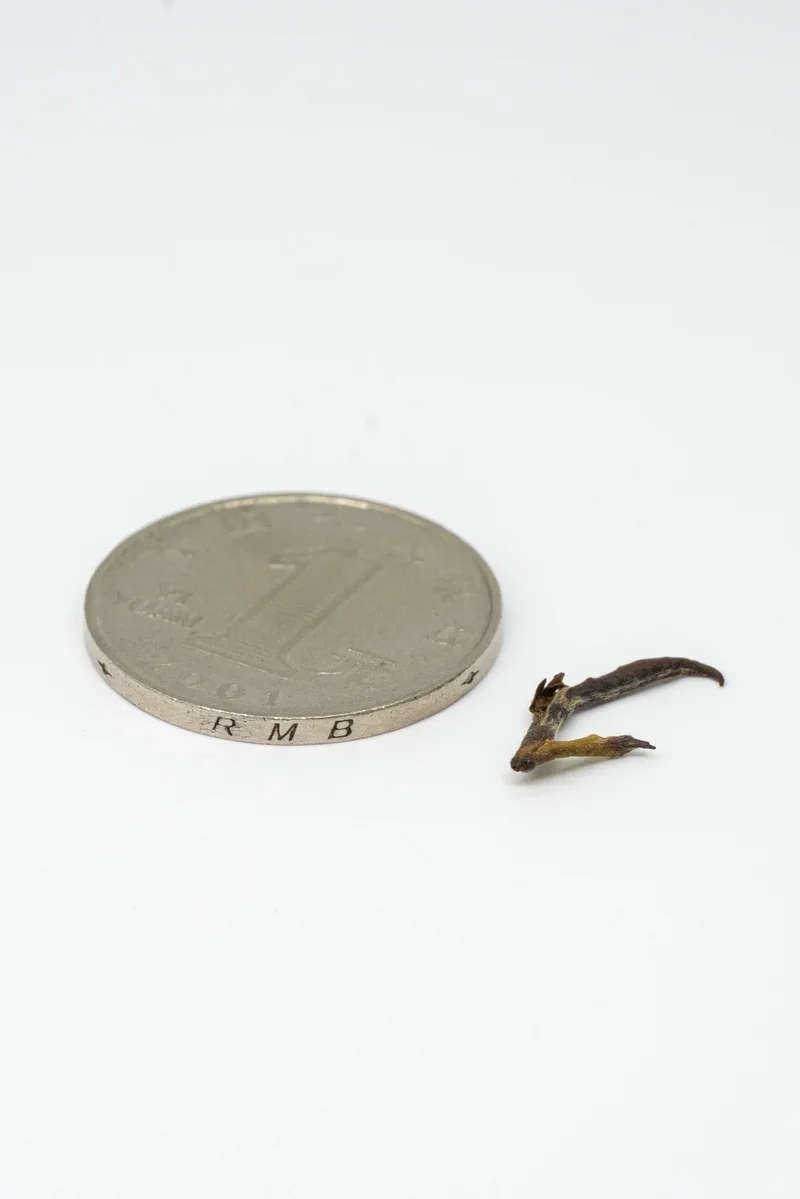
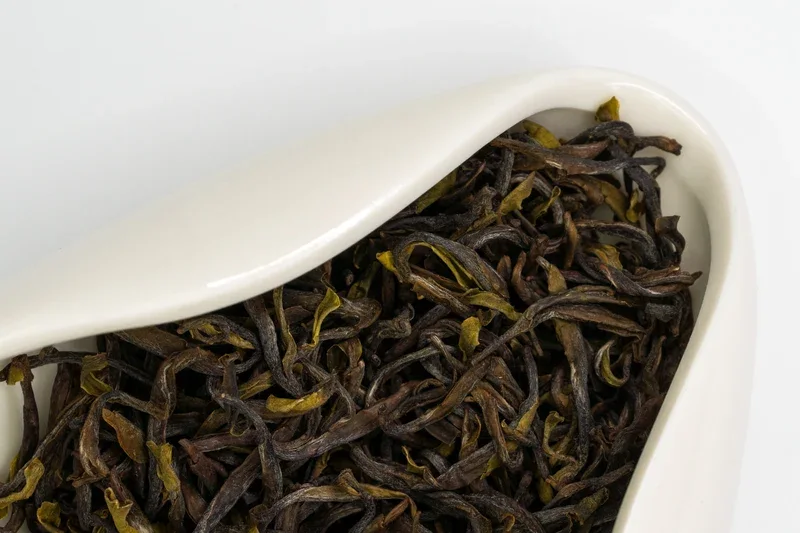
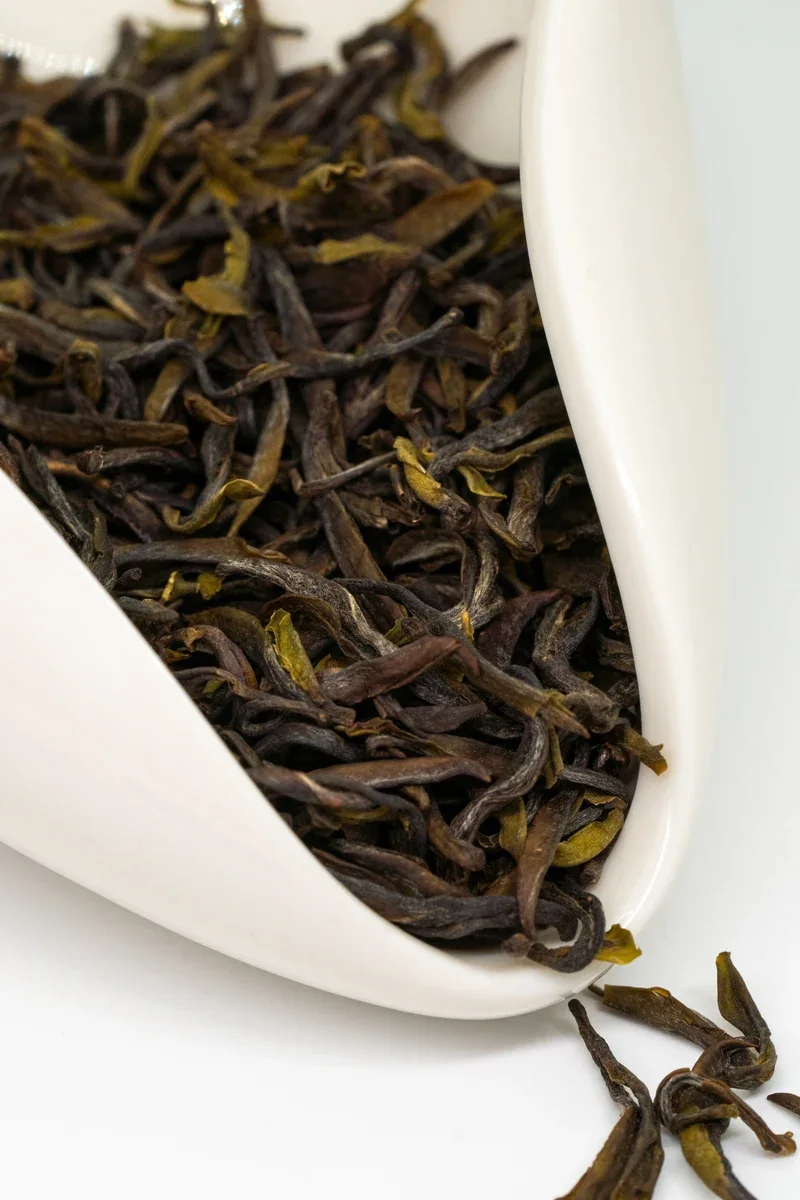
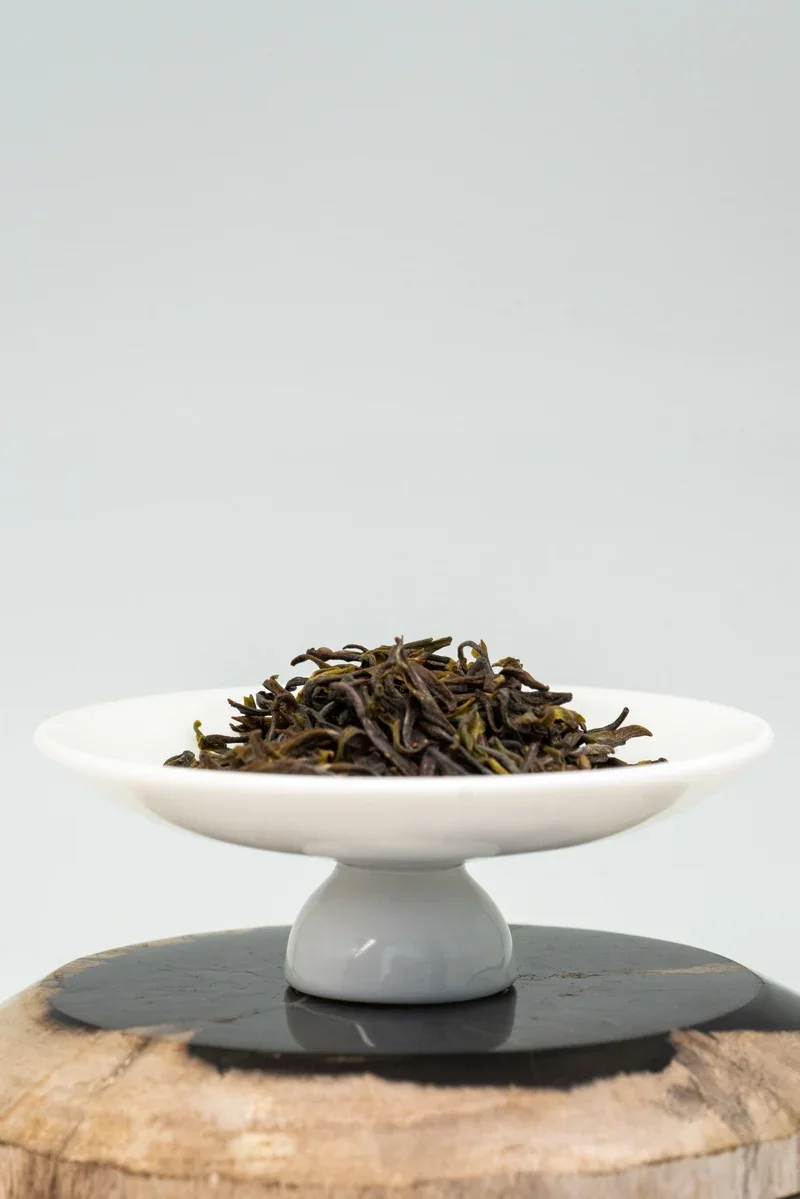
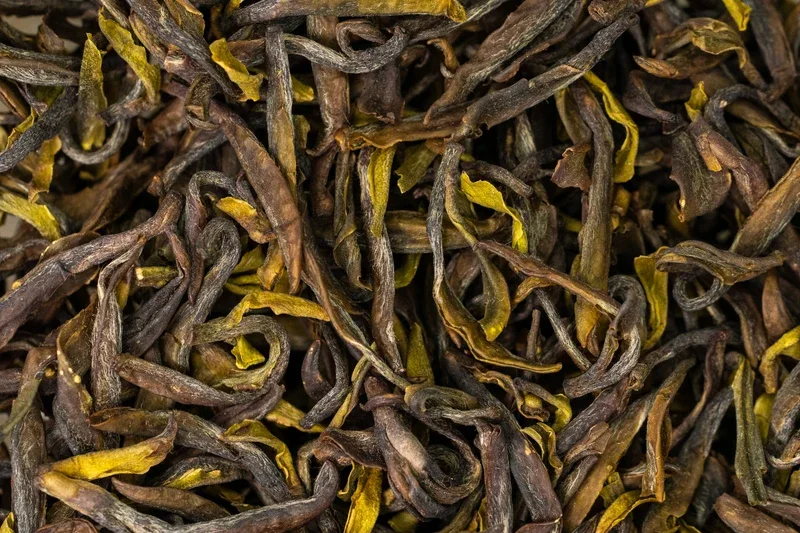
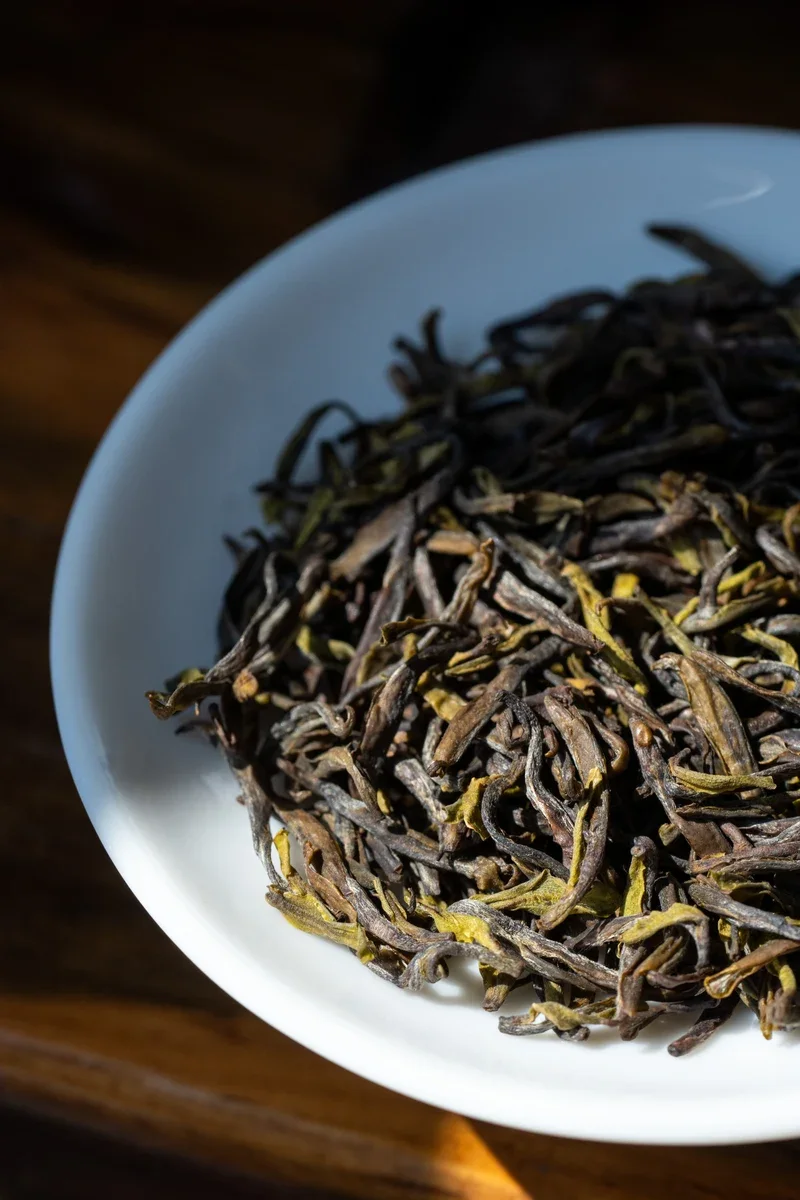
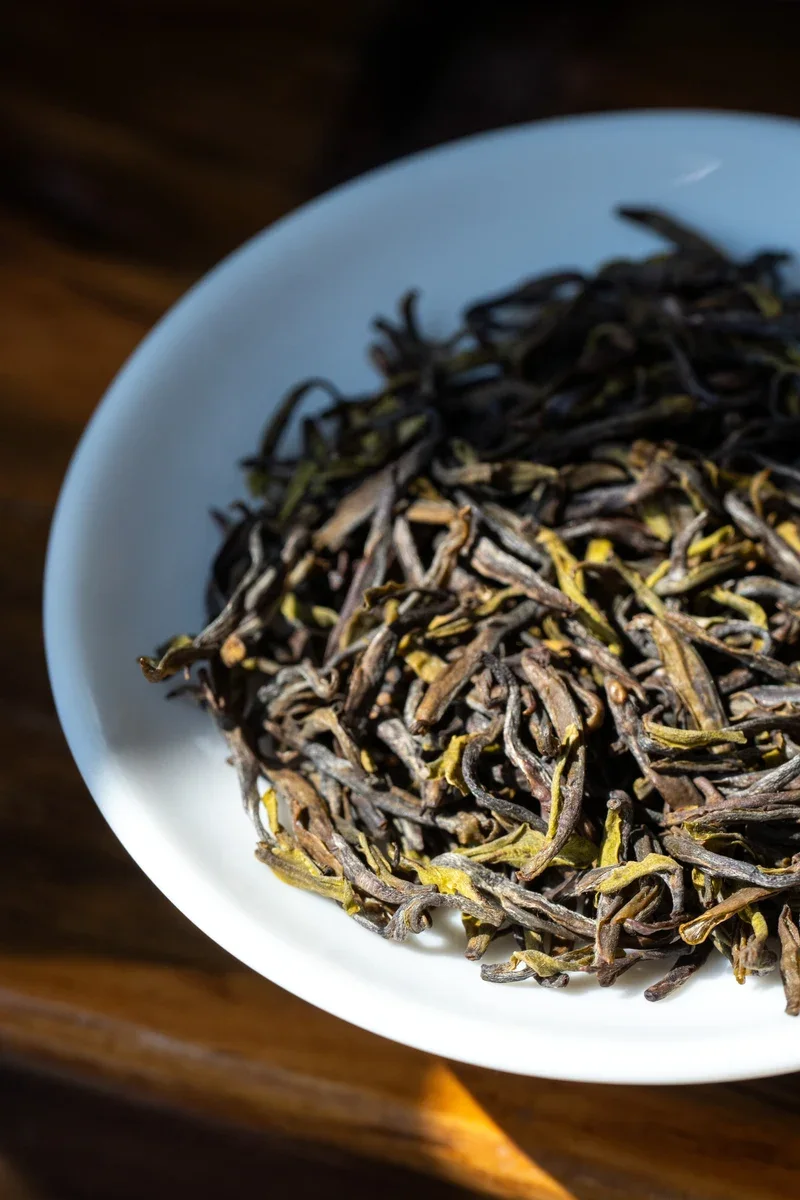
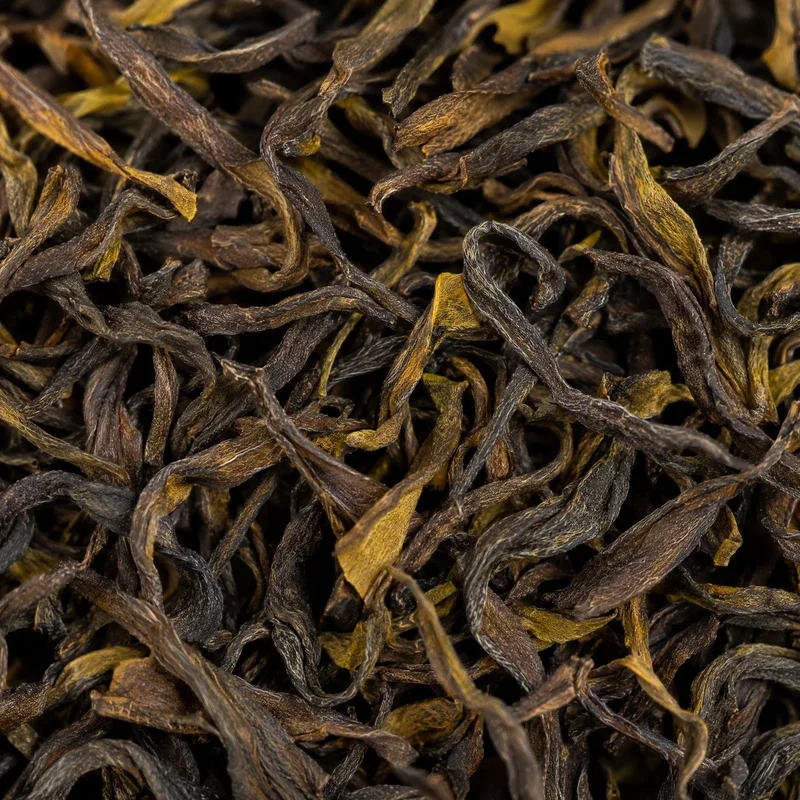
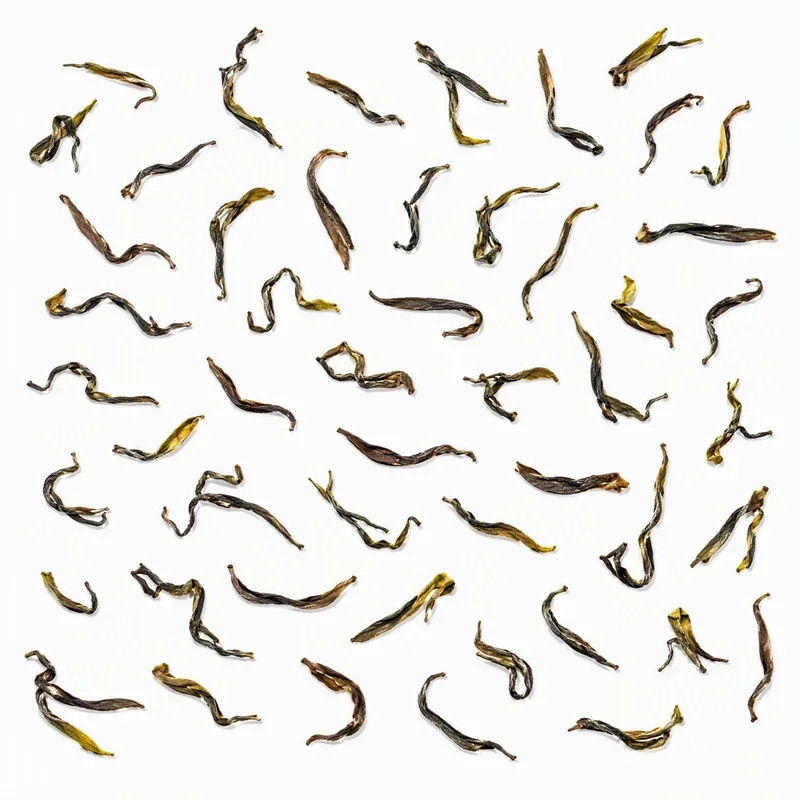
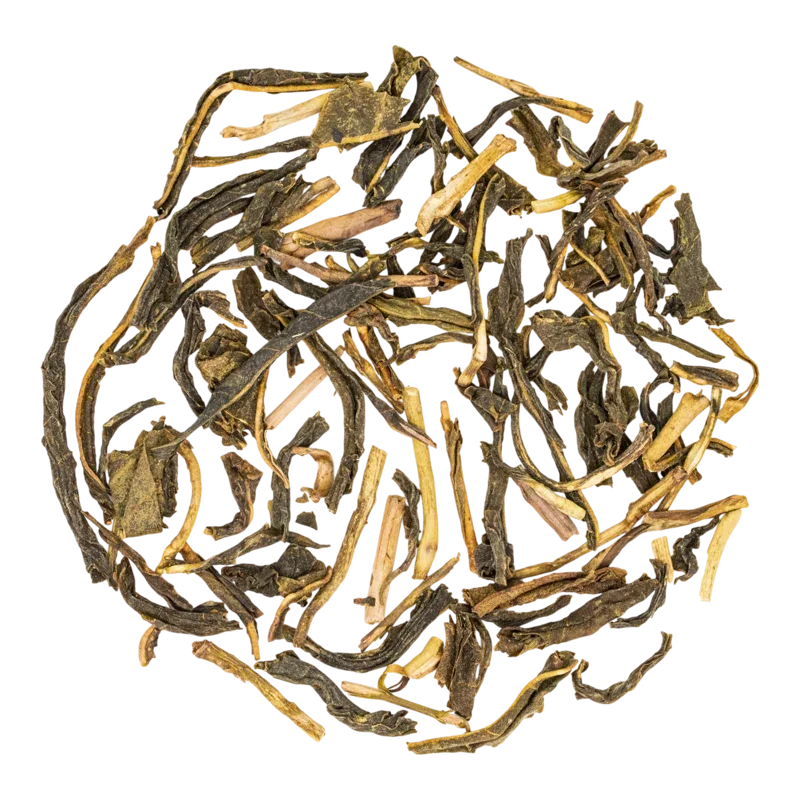
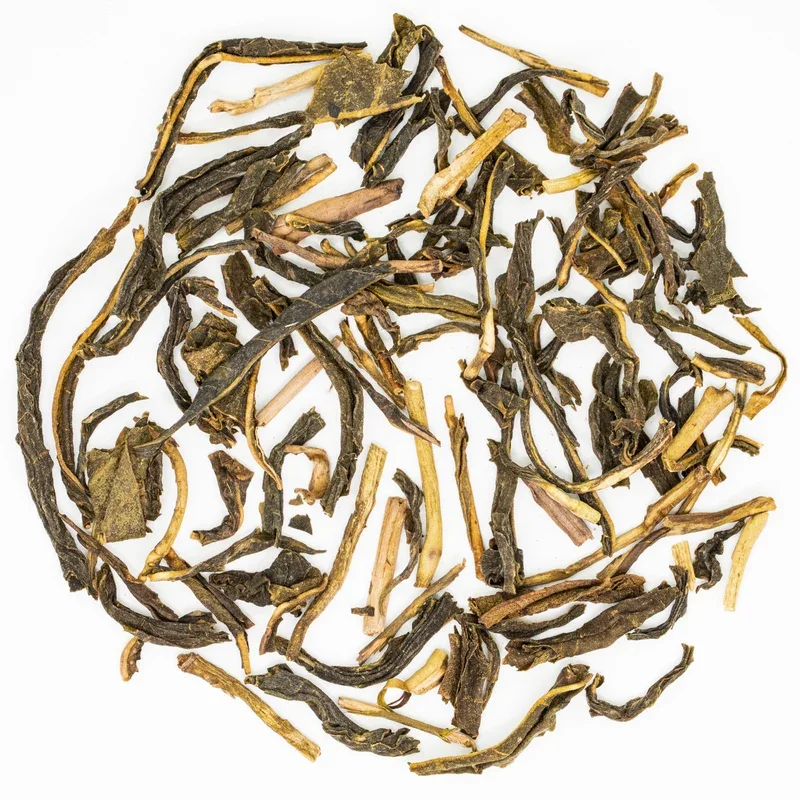
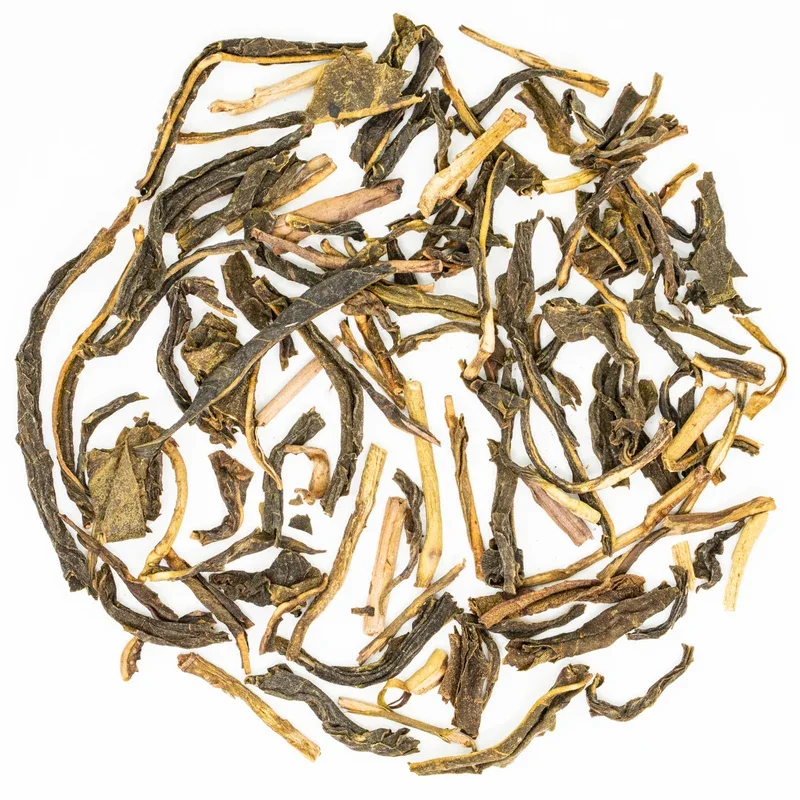
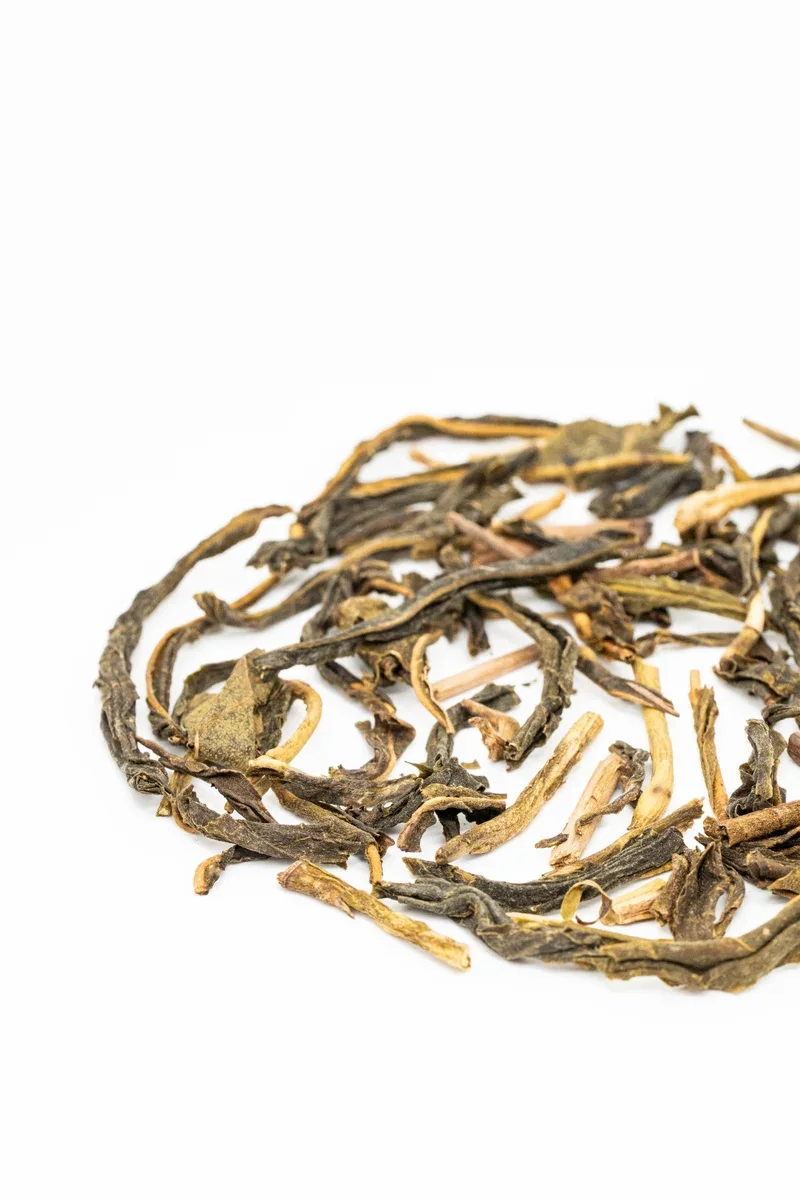
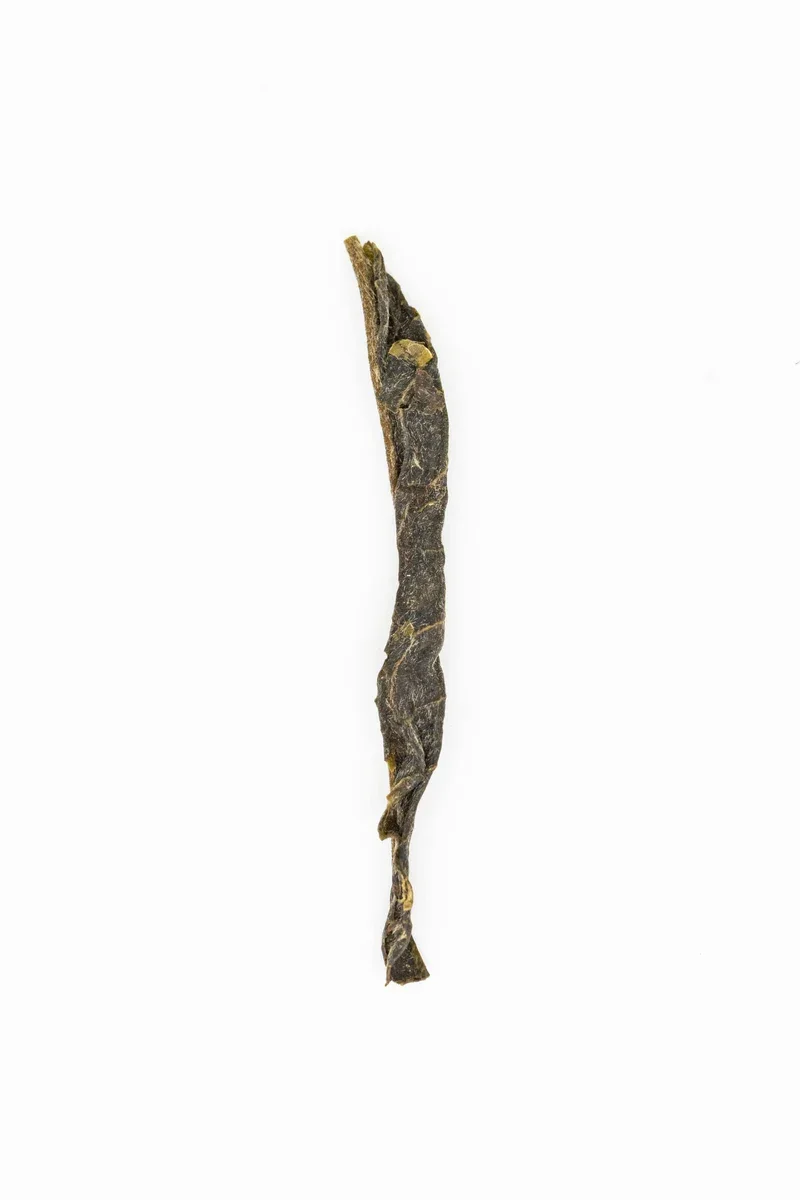
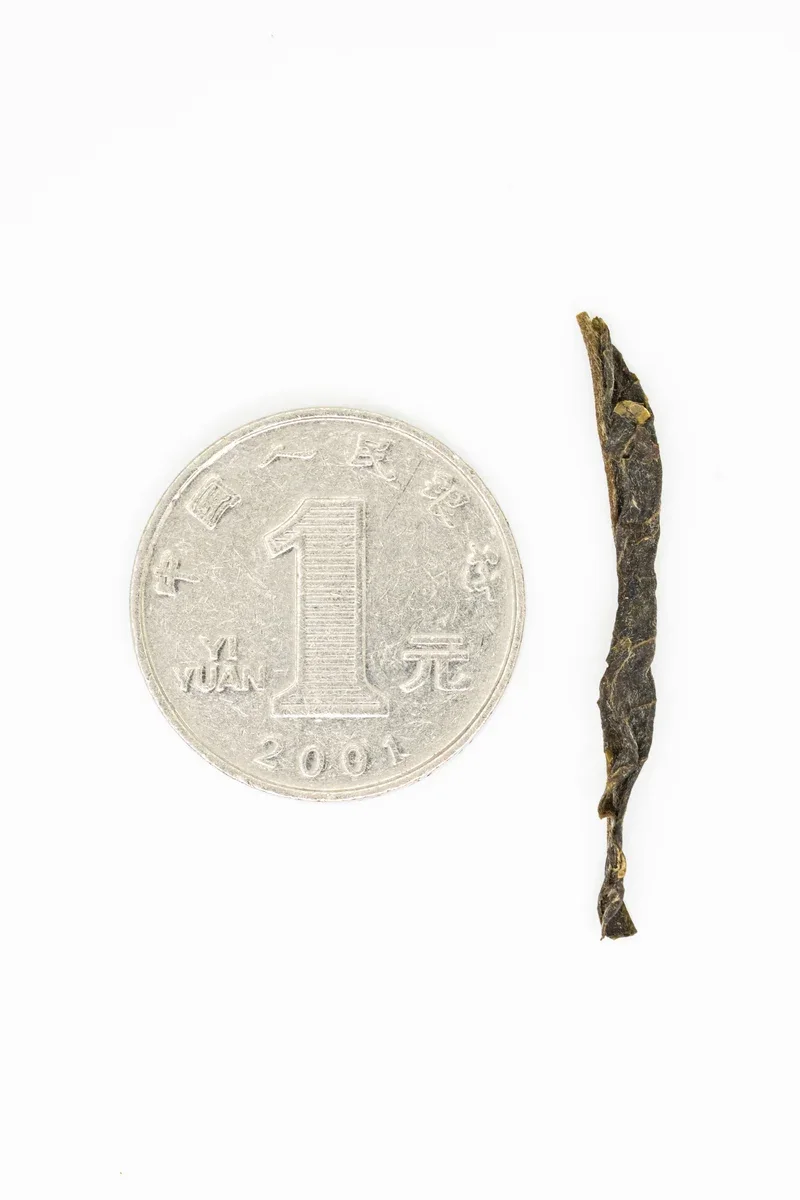
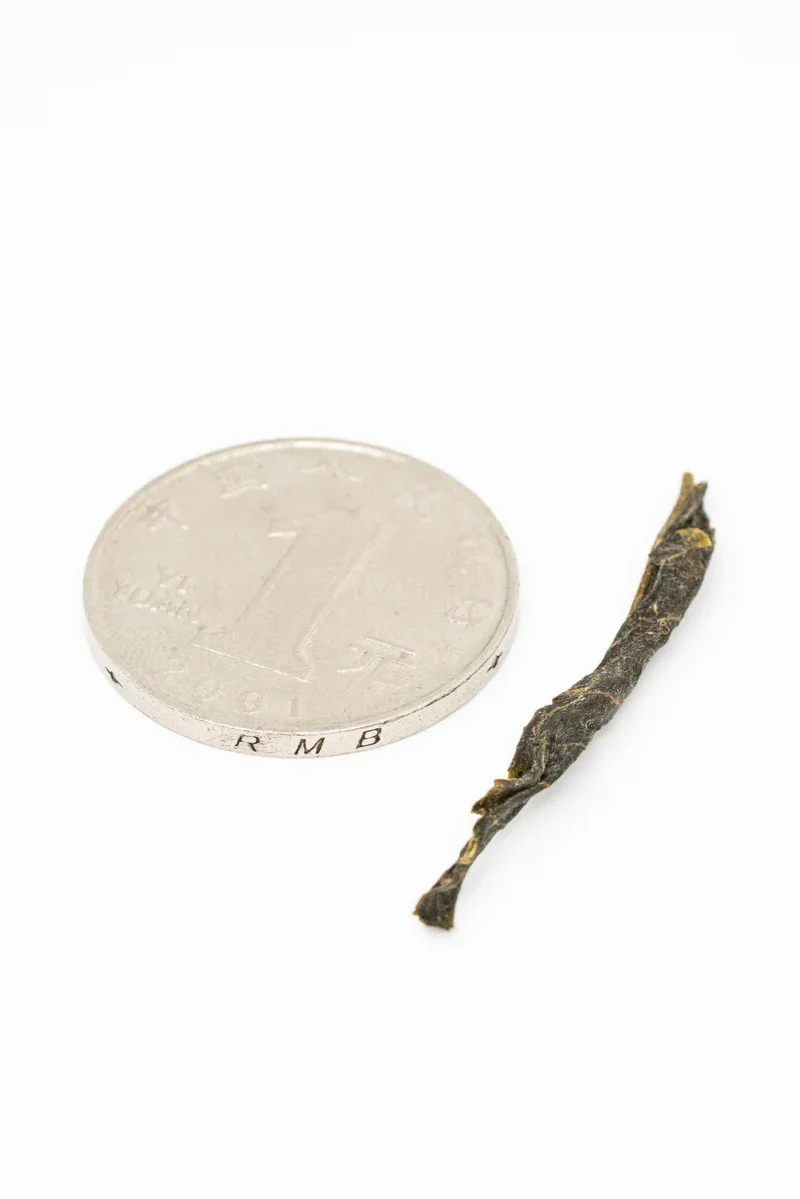
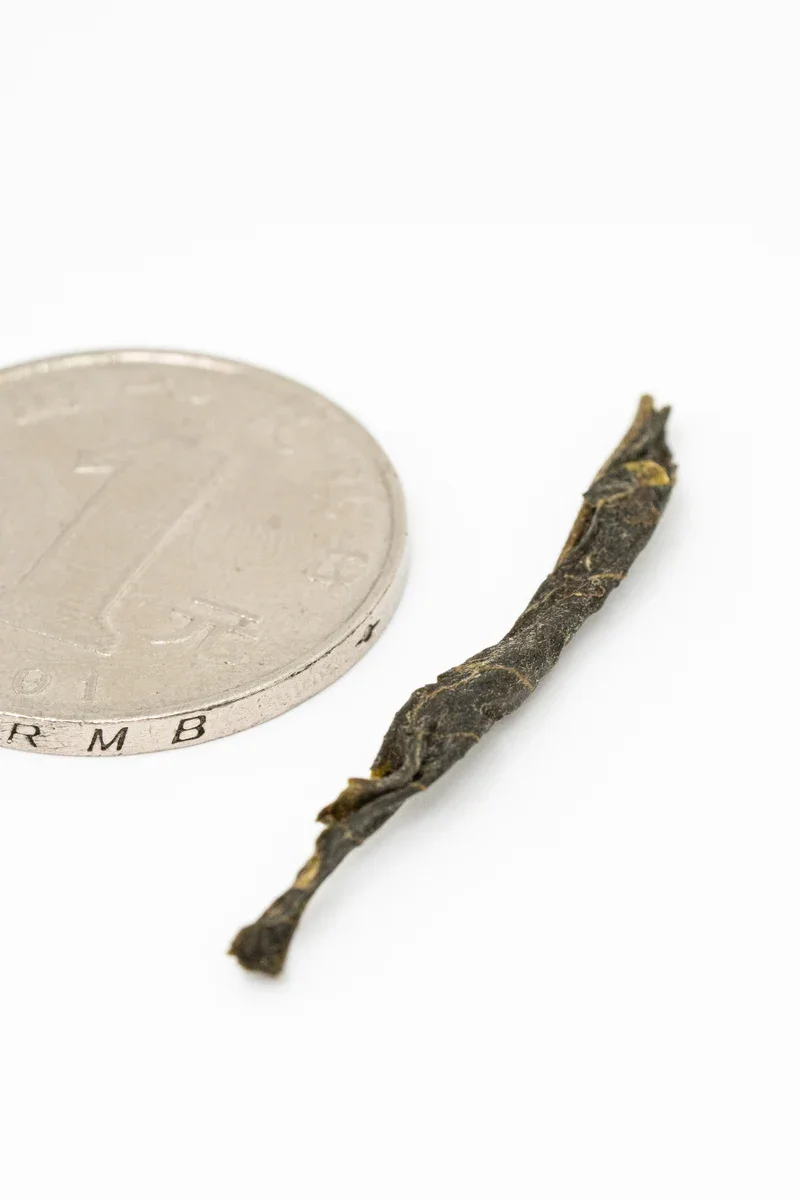
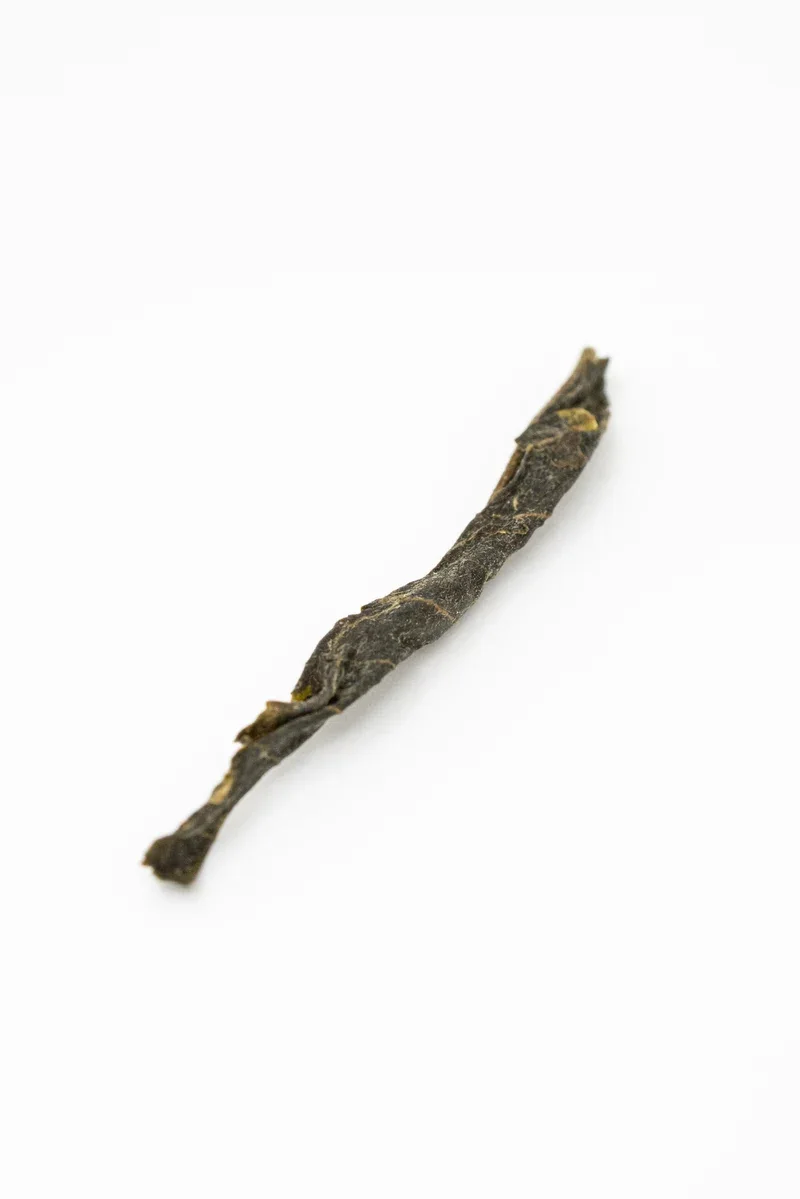
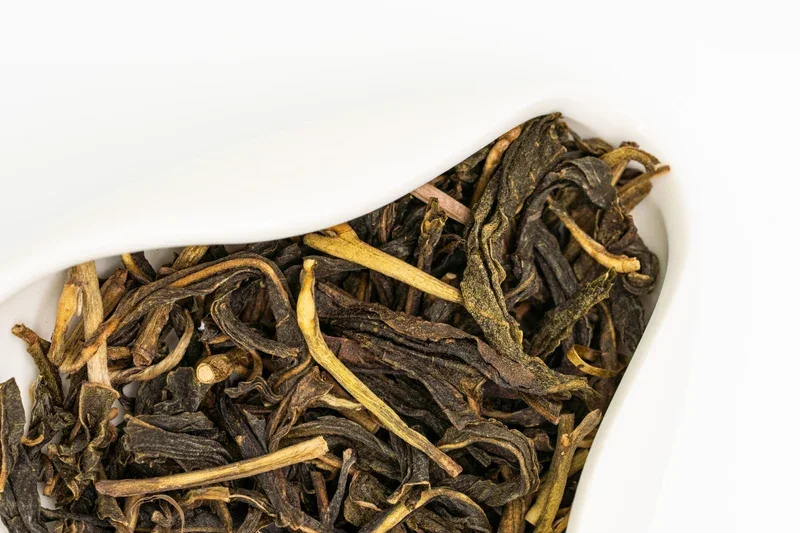
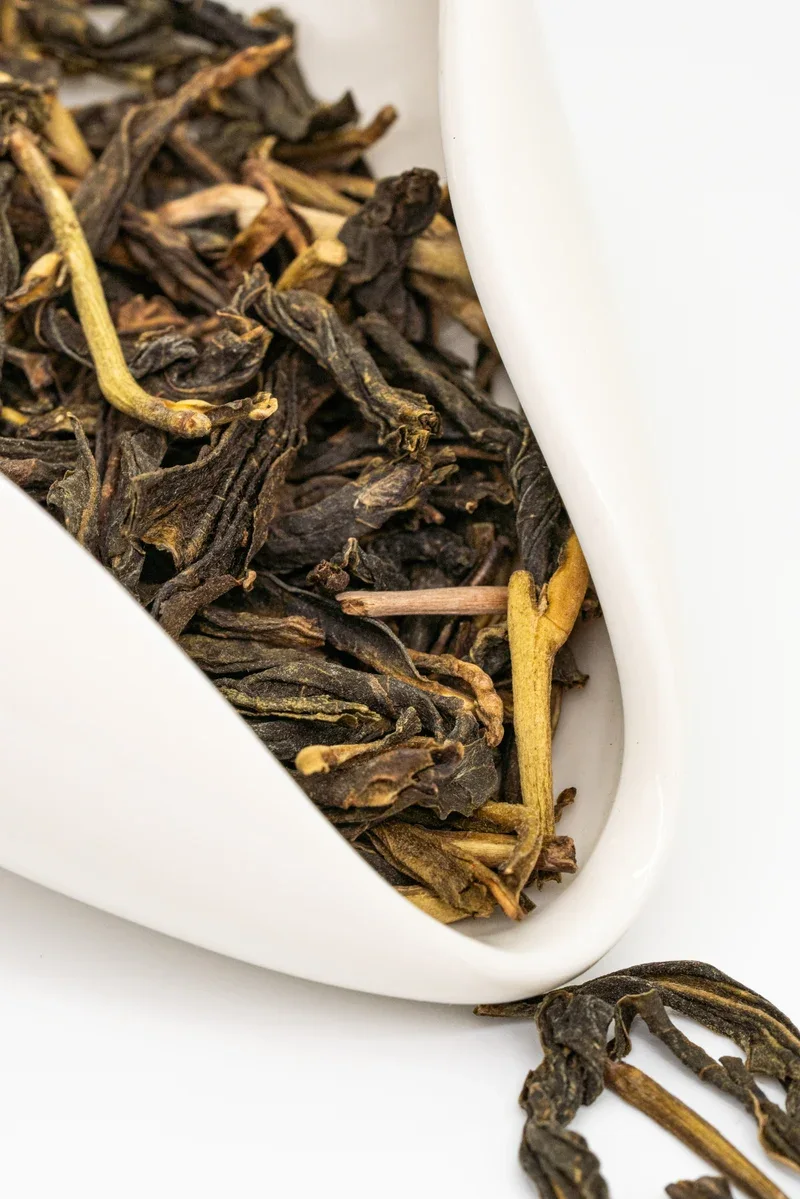
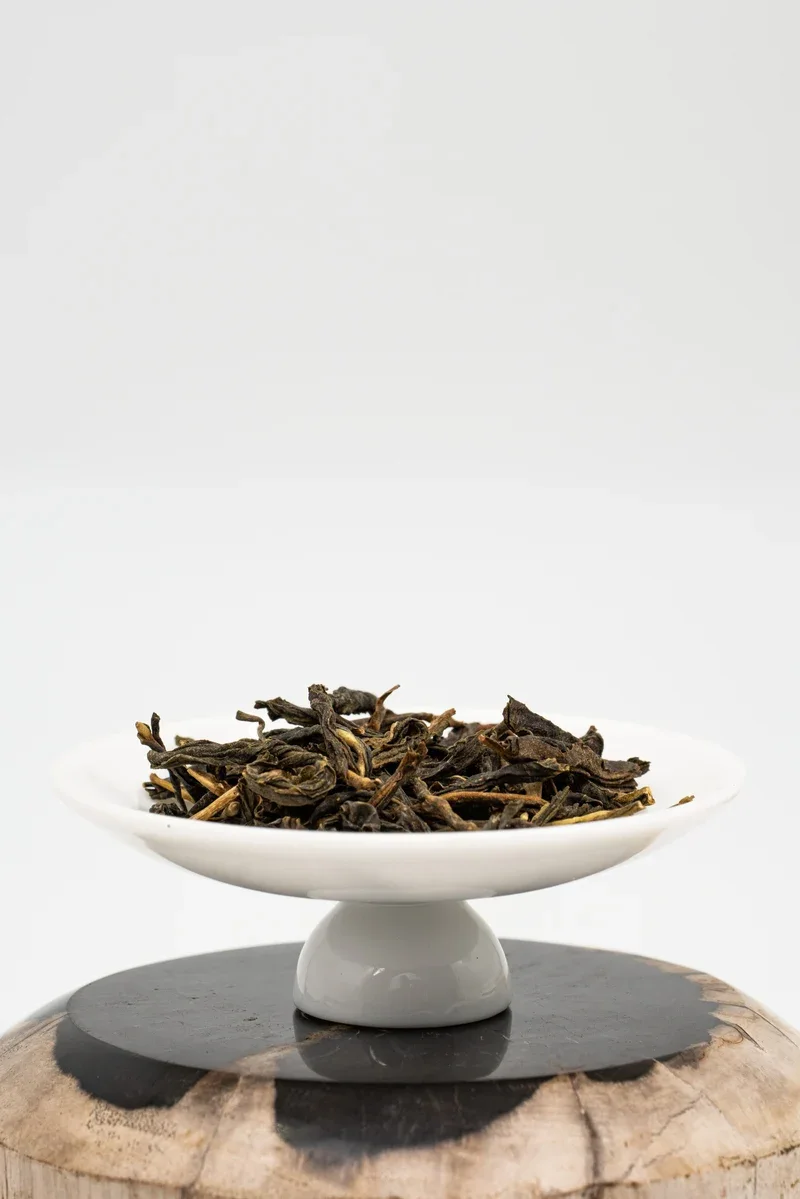
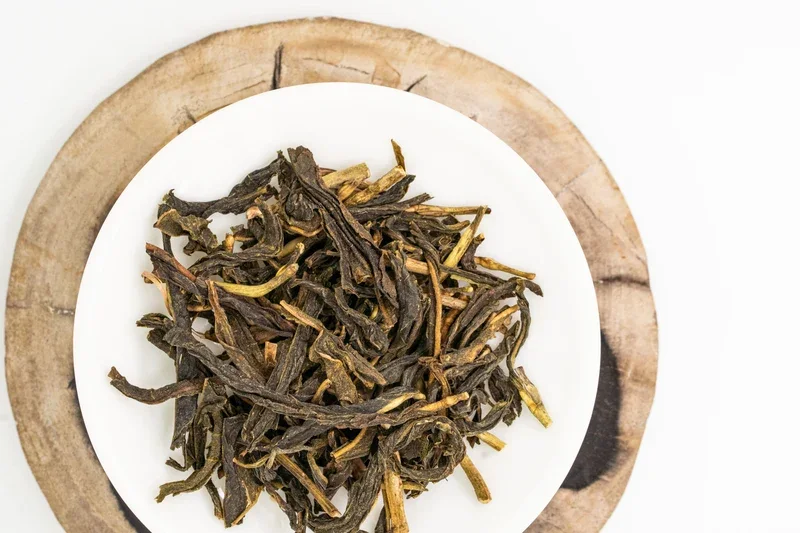
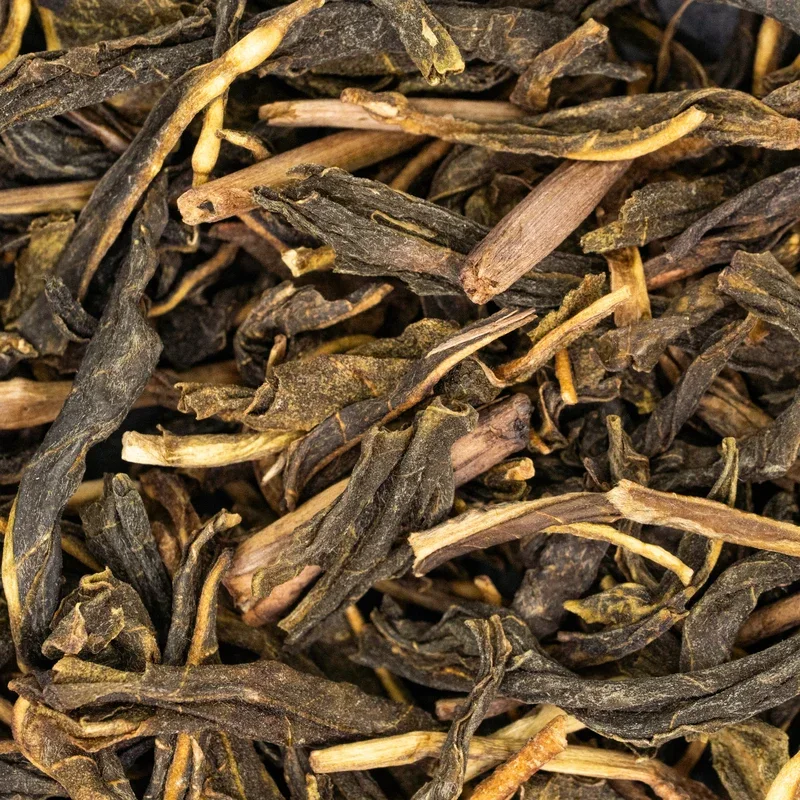
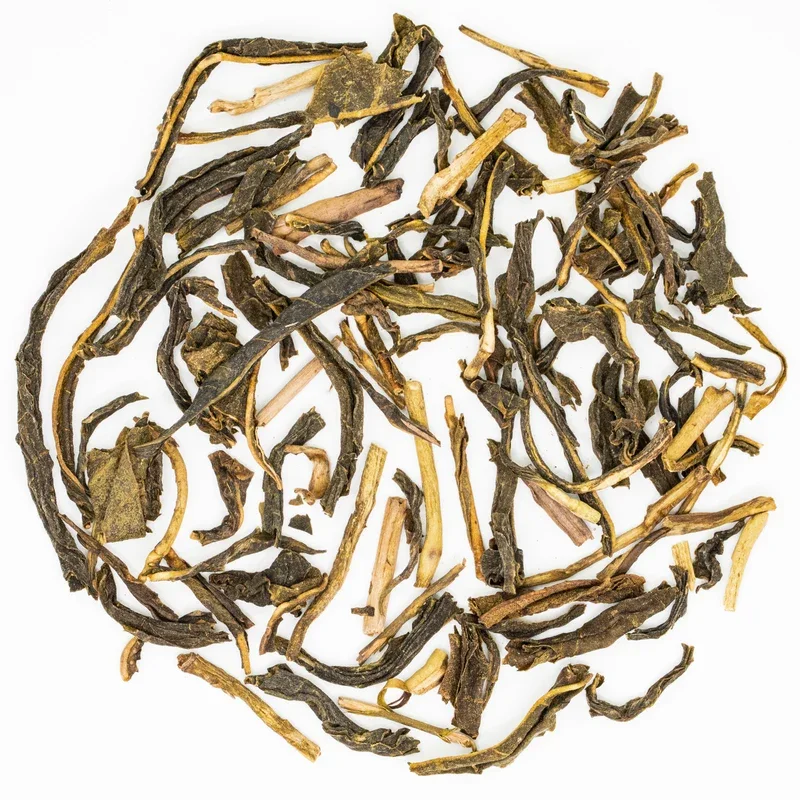
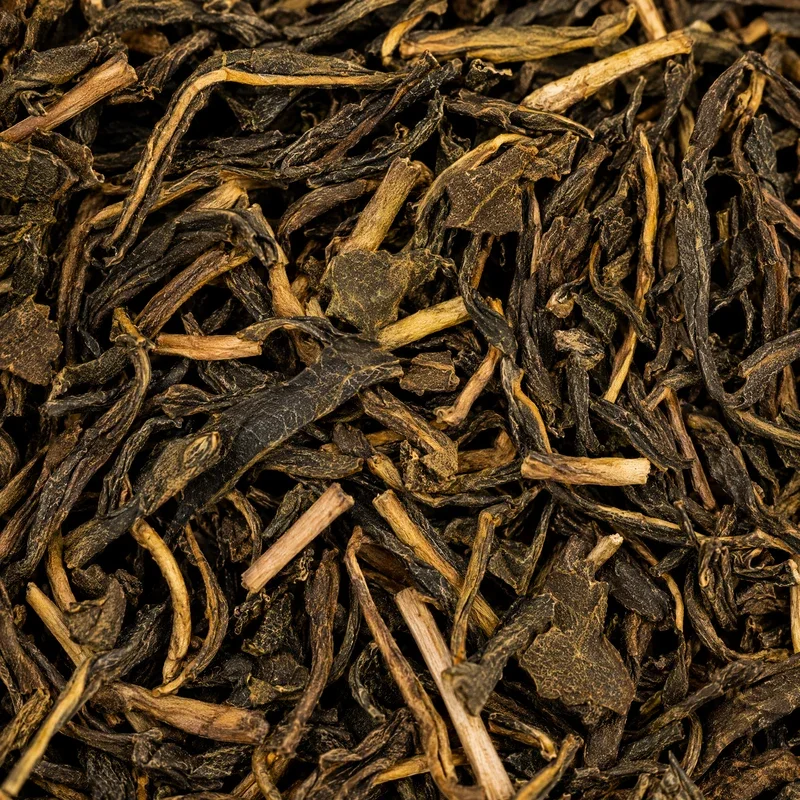
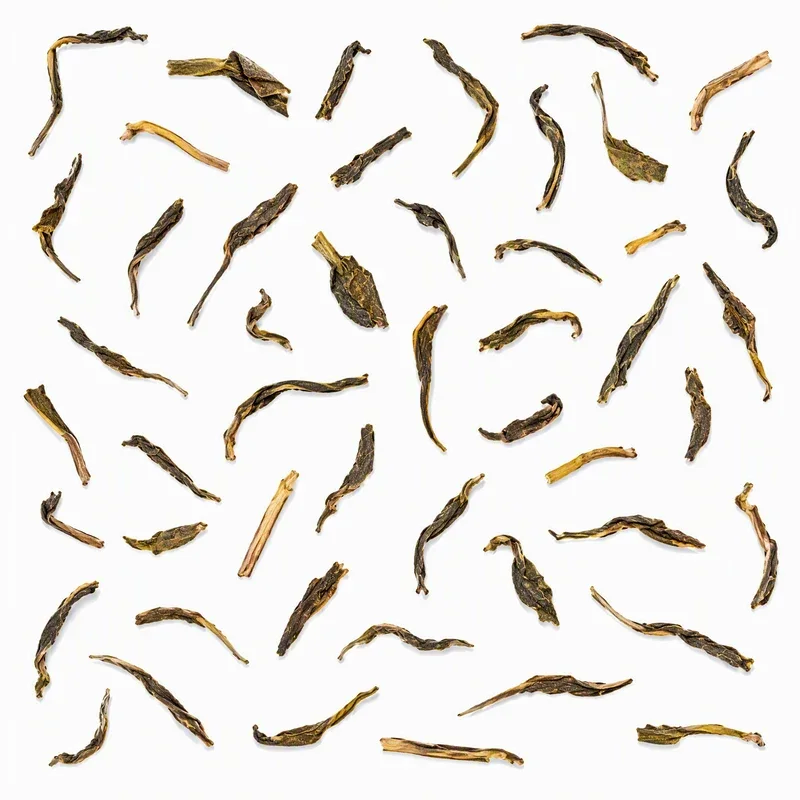
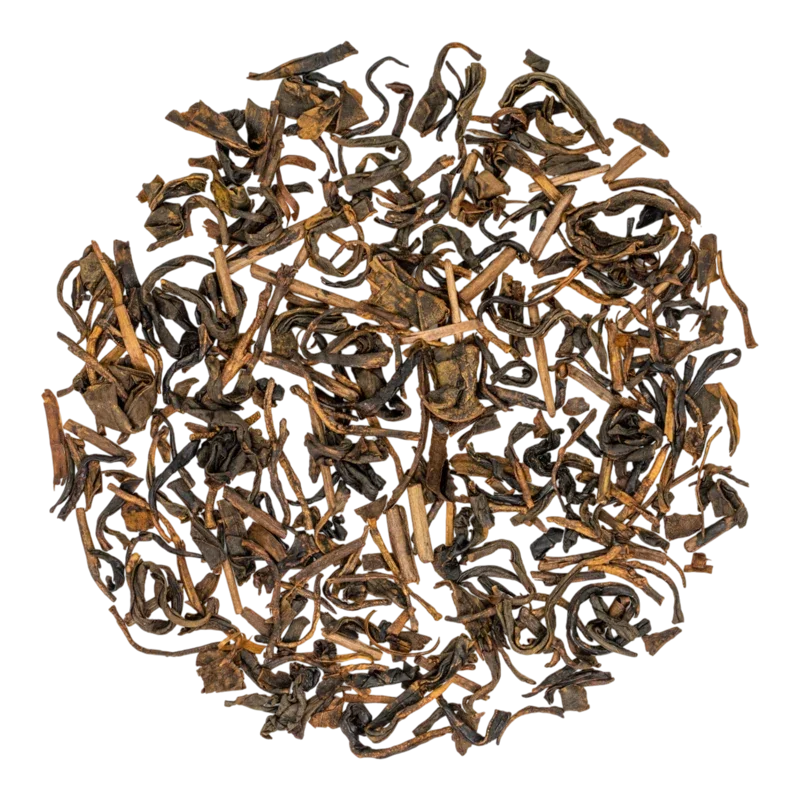
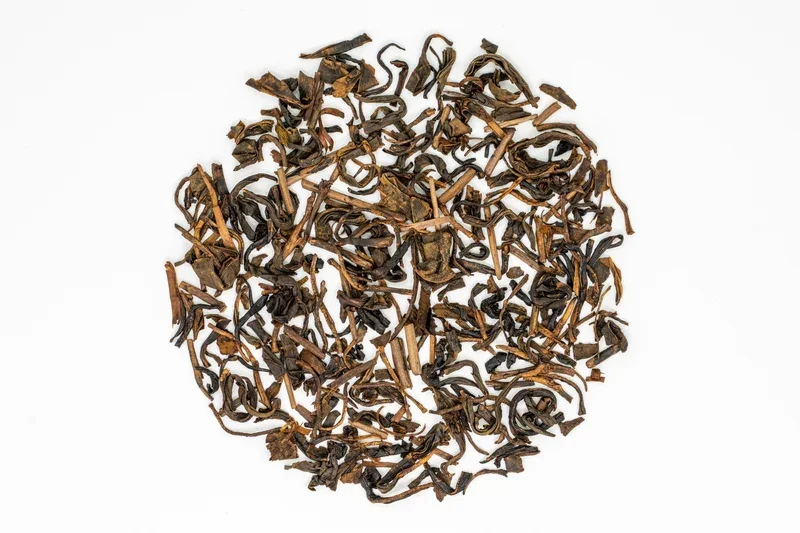
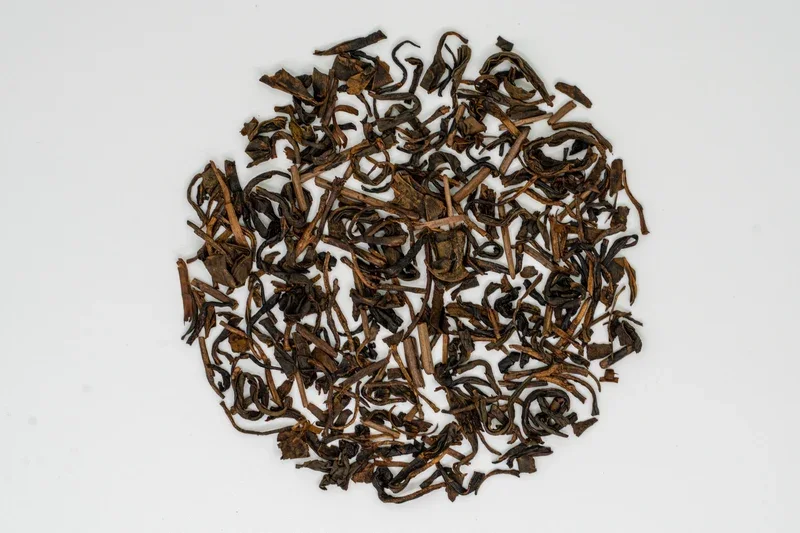
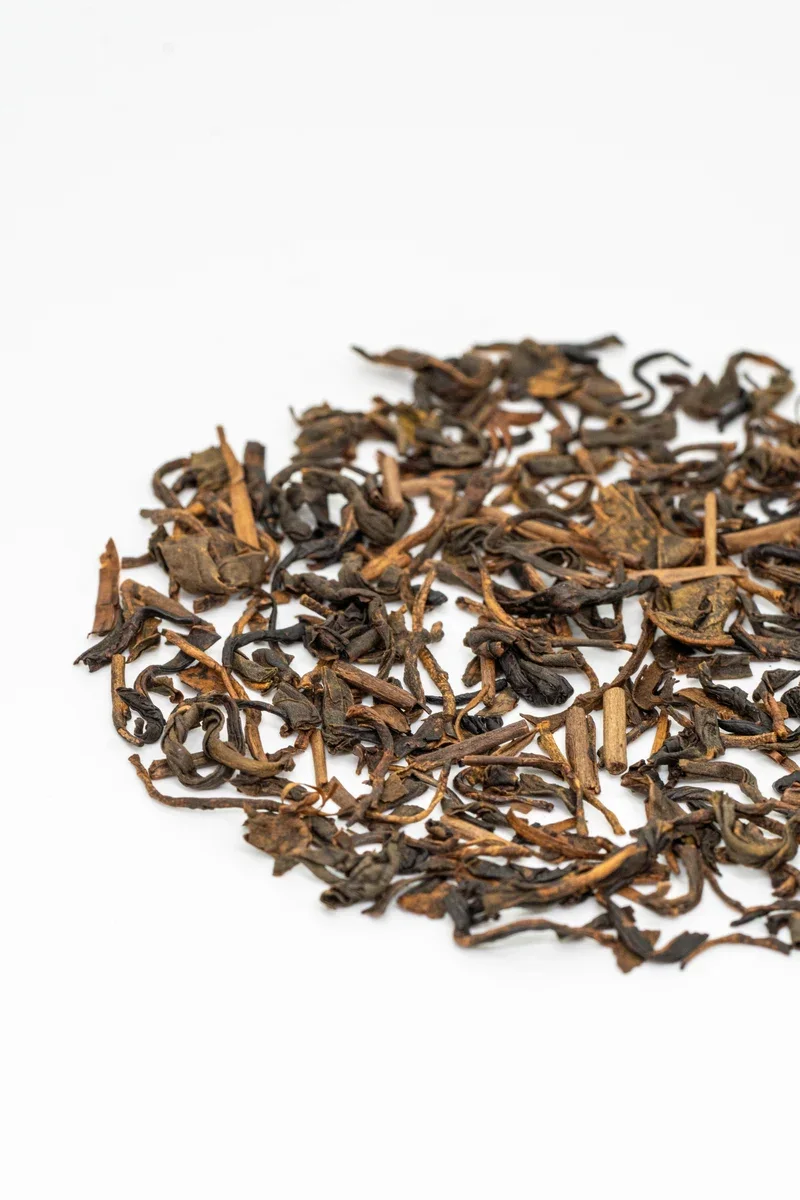
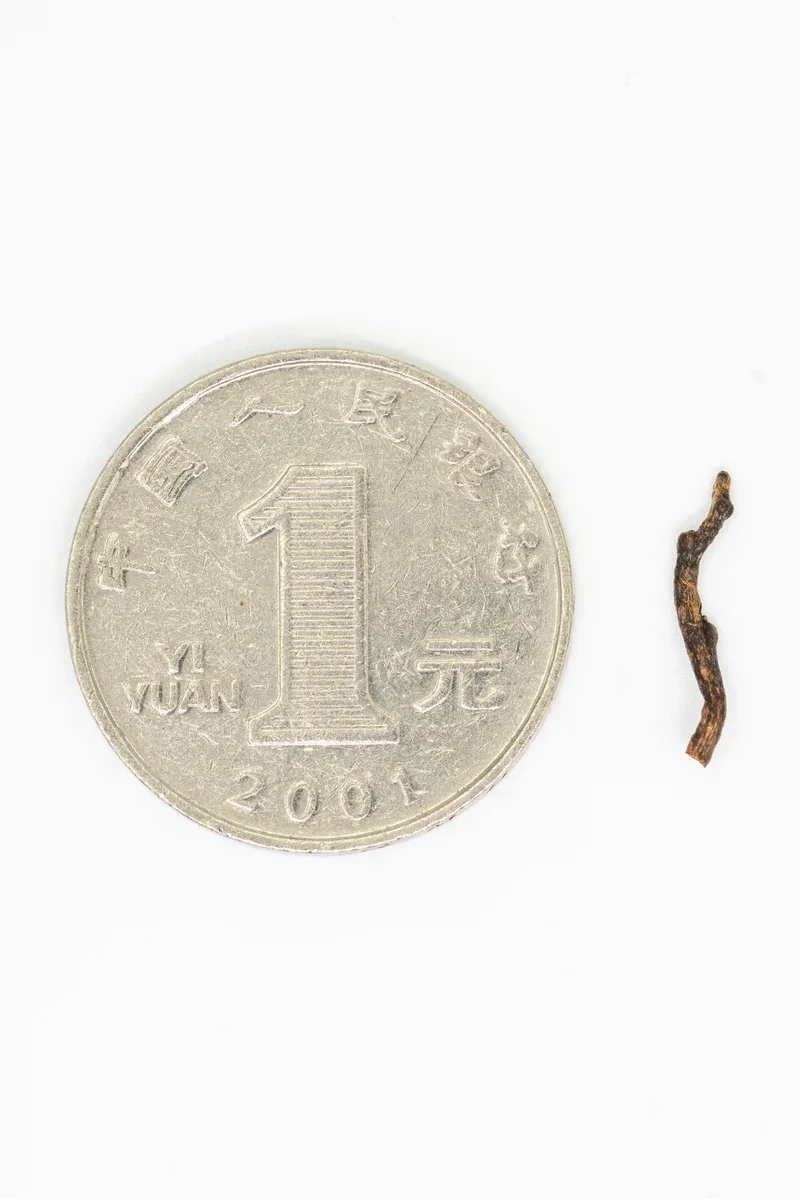
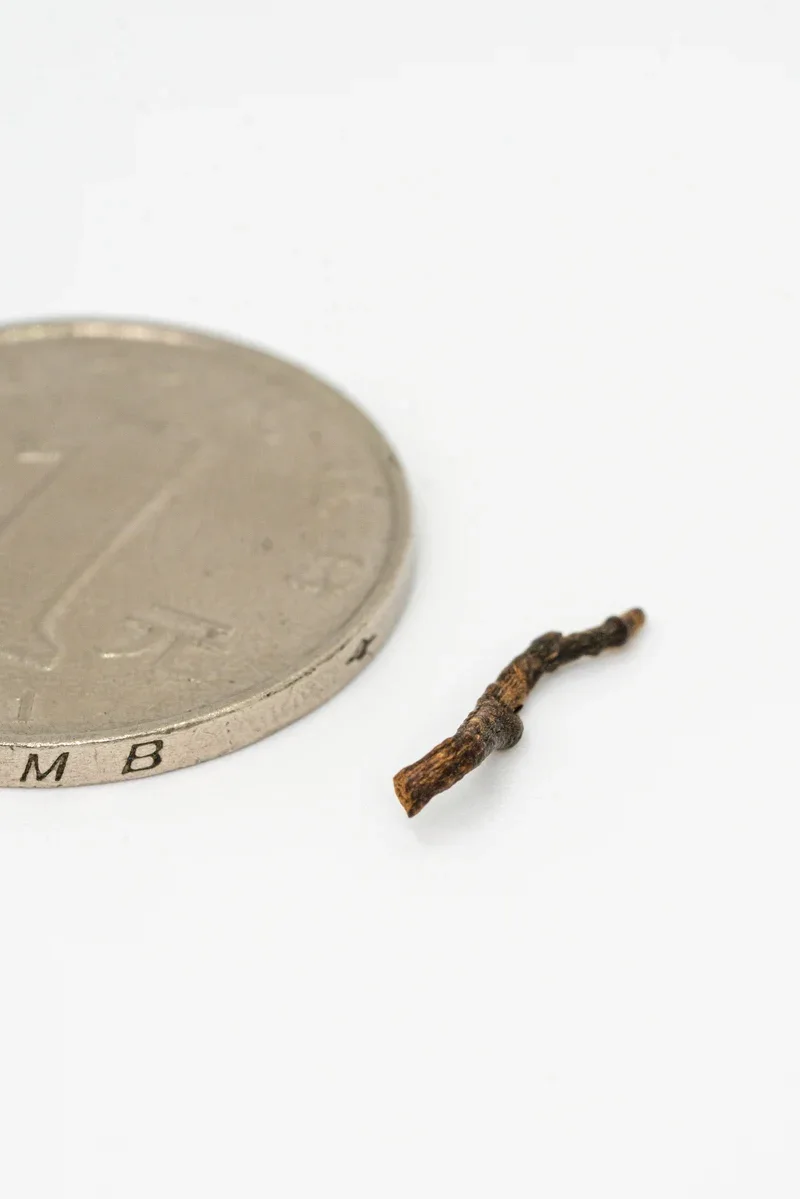
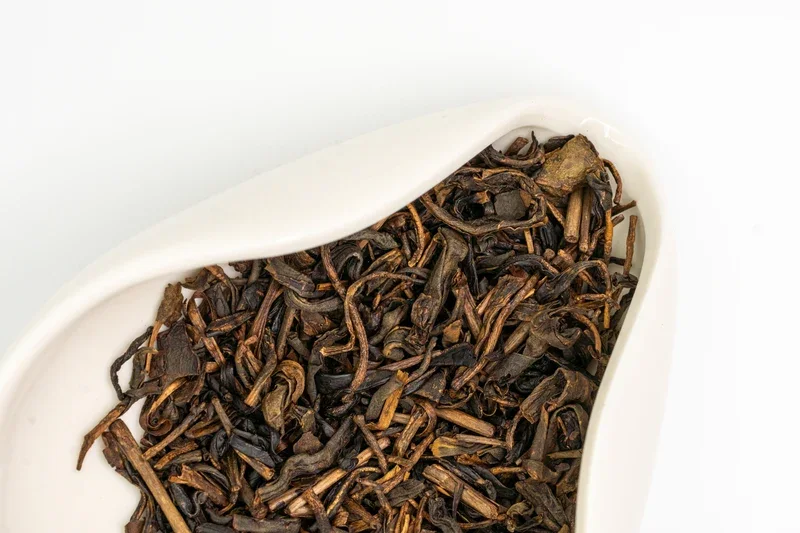
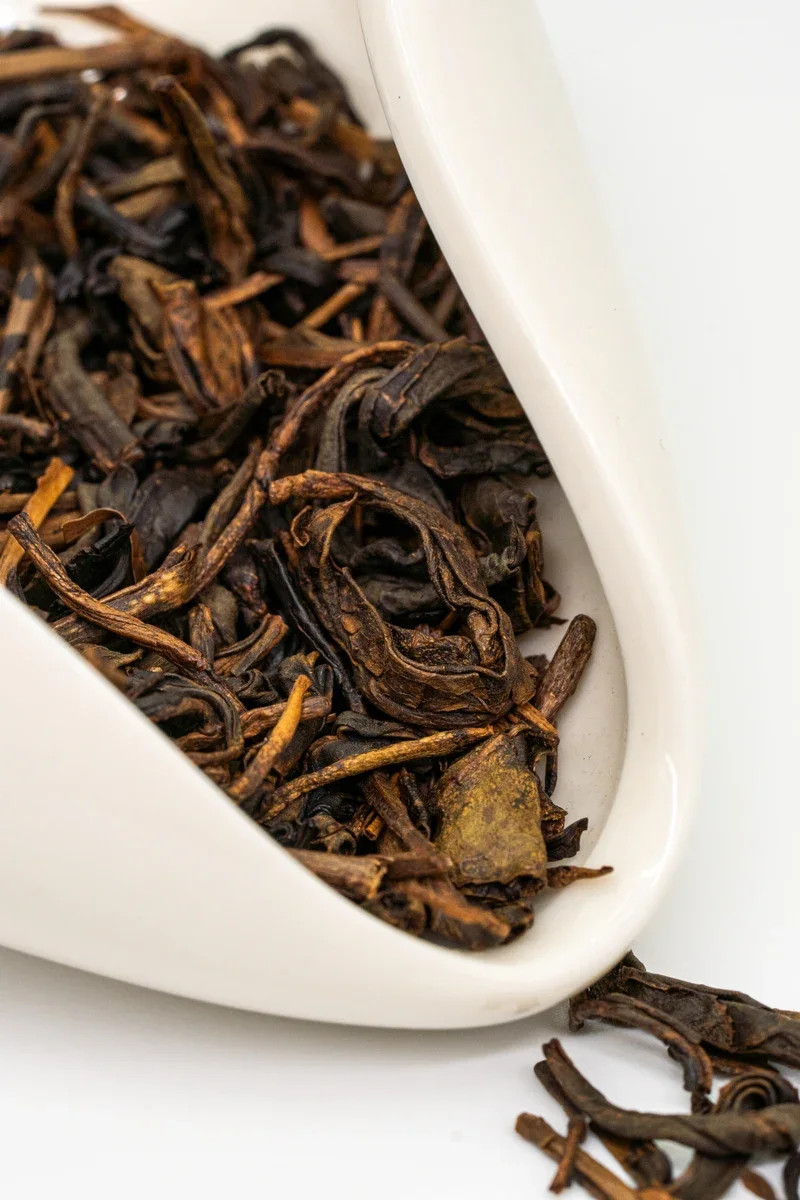
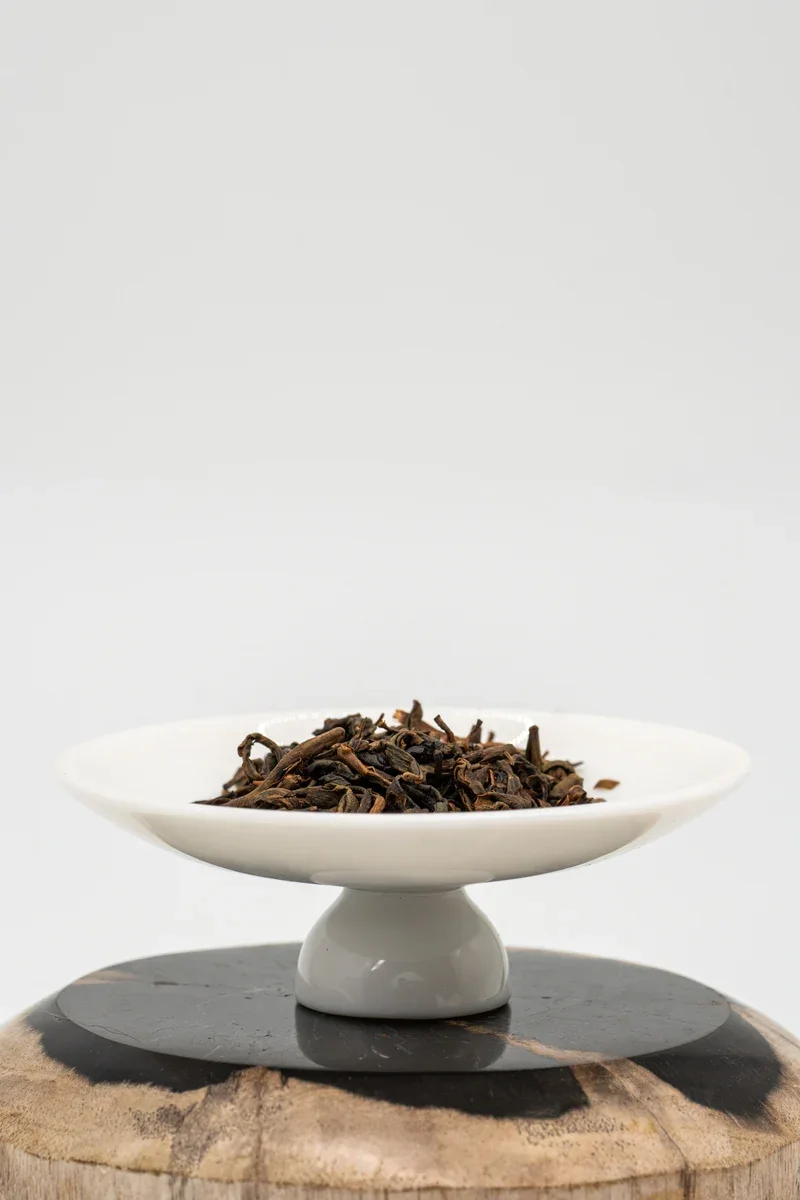
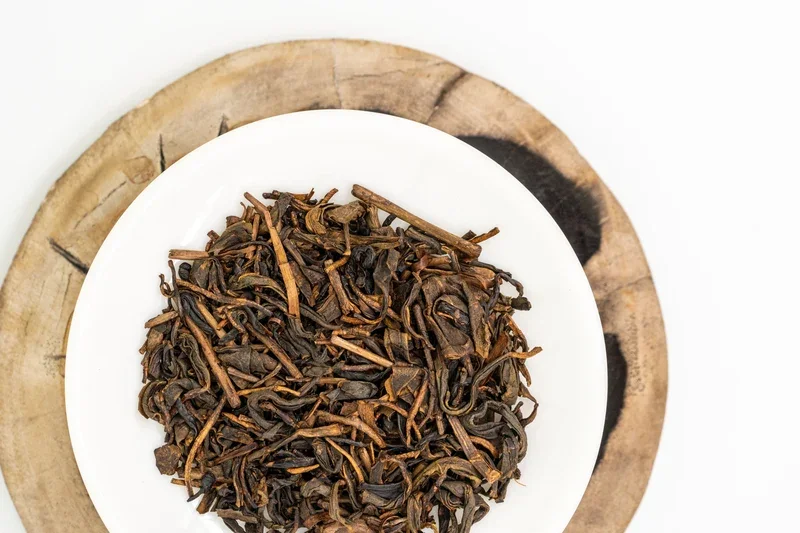
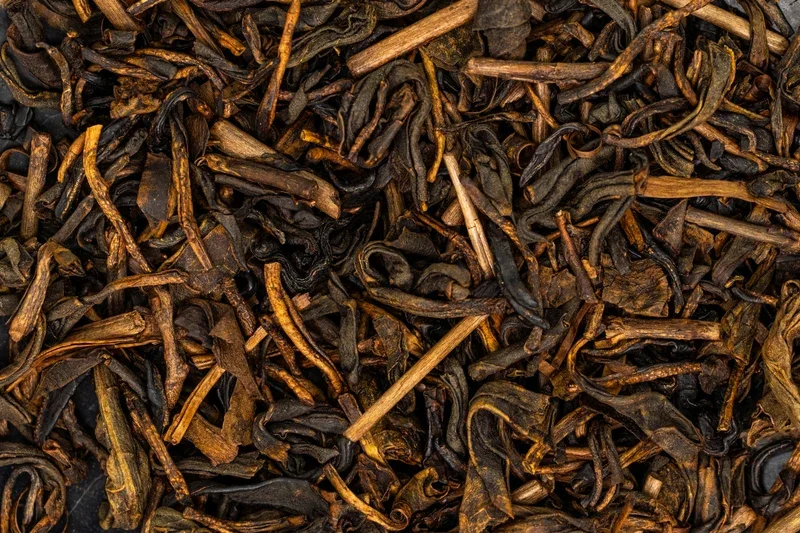
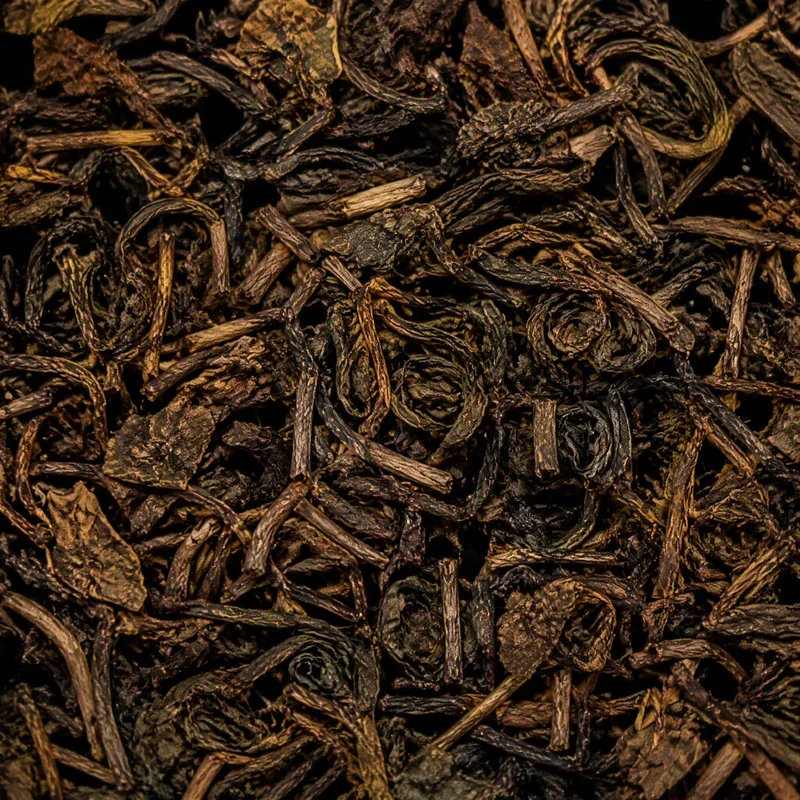
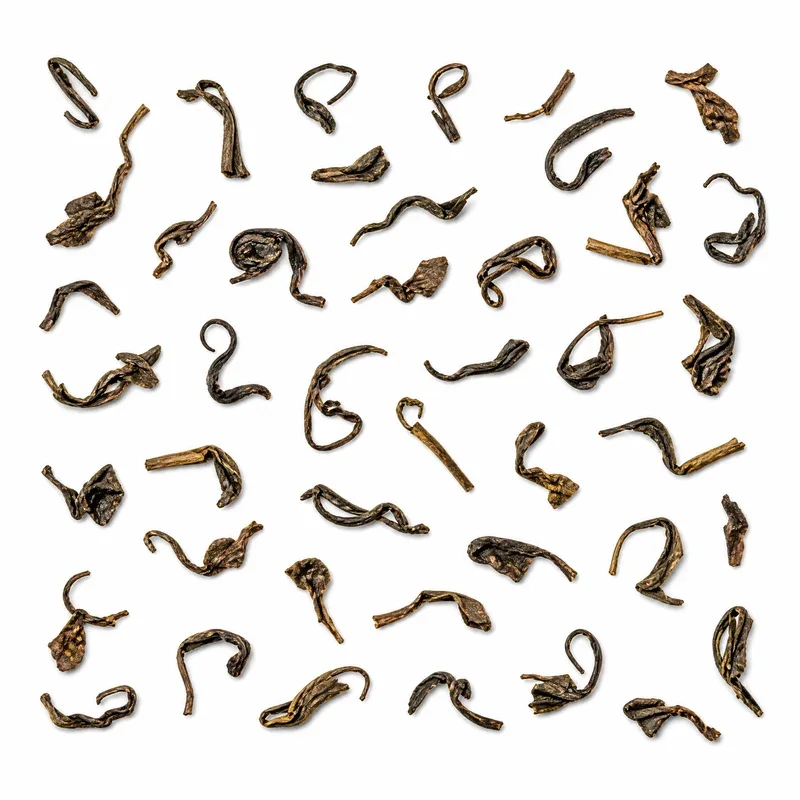
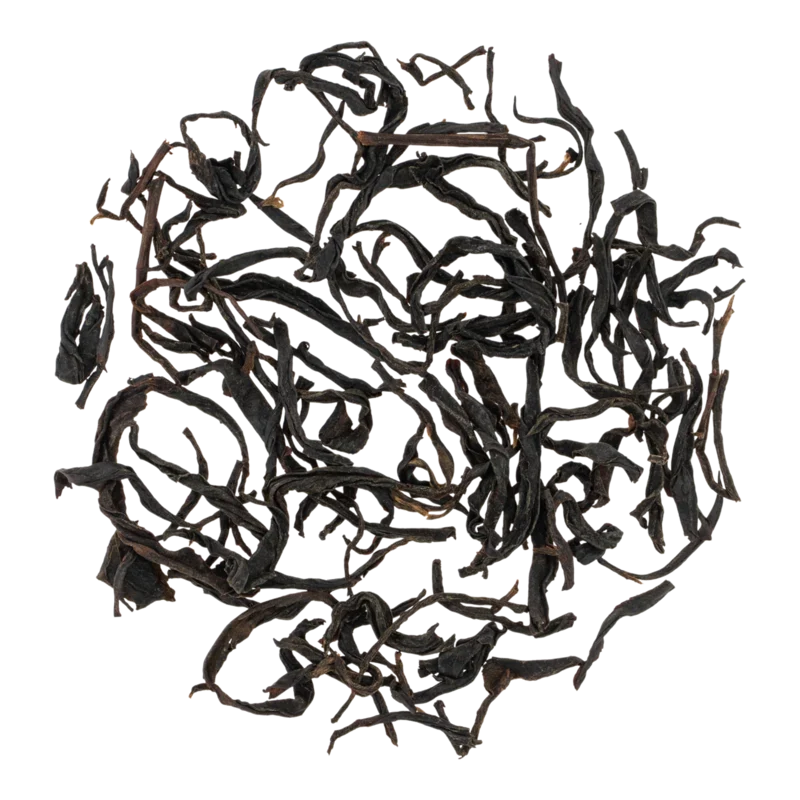
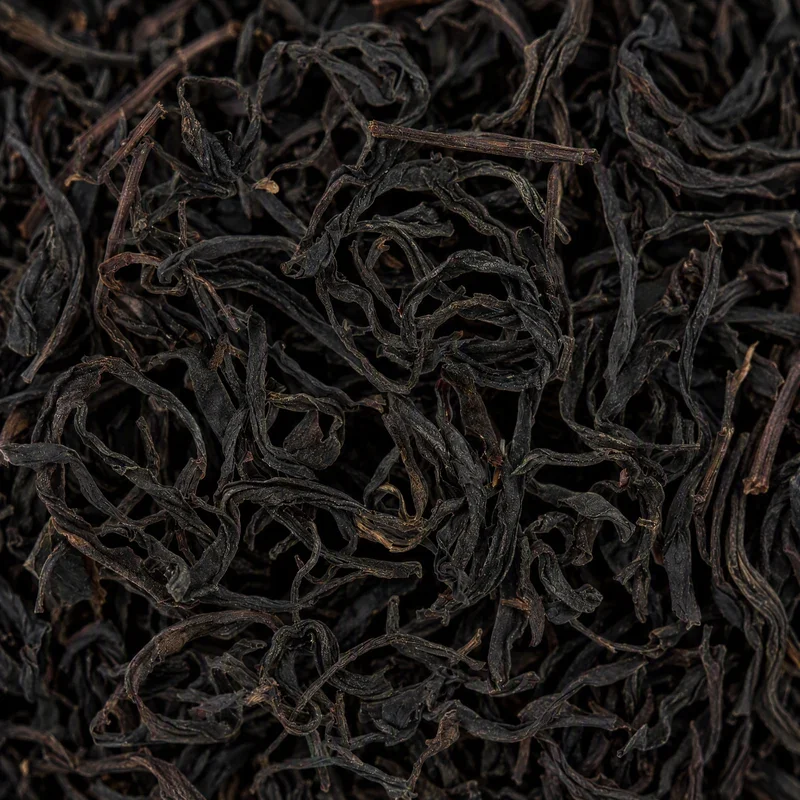
Dry Leaf Appearance: Large, dark brown, lightly twisted leaves — noticeably larger than standard Taiwanese red teas (black teas). Dry leaf texture is somewhat coarse, "wild," without the neat plantation uniformity.
Dry Leaf Aroma: Complex, multi-layered. Wild honey and forest berry notes dominate. In the background — cinnamon, light camphor, hint of baking and dry herbs. "Forest" aroma with a sense of mountain freshness.
Liquor Aroma: Intense, sweet, honey-fruity. Floral (orchid, osmanthus) and berry (blueberry, blackberry) nuances. Woody tones (sandalwood, cedar) emerge as it cools. In batches affected by jassids — characteristic muscat-honey "silkiness."
Liquor Color: Bright, red-amber, transparent, with high color "clarity."
Spent Leaves: Large, whole leaves open fully, demonstrating the characteristic C. formosensis form — lanceolate, without down on the tip. Color — copper-red with olive tint.
Taste: Soft, enveloping, without bitterness or astringency — one of the most delicate textures among red teas (black teas). Pronounced natural sweetness with distinct notes of ripe fruits (peach, blueberry, baked pear), honey, and light minerality of volcanic soils. Aftertaste — long, refreshing, sweetish, with a menthol-camphor finish (the latter is a genetic trait of C. formosensis, inherited by its hybrid Taicha No. 18, Hong Yu).
Alkaloids: Caffeine is notably lower than in C. sinensis: less than 2% in mature leaves (in standard cultivars — 2–4%). This makes Shan Cha one of the lowest-caffeine red teas (black teas) of natural origin.
Amino Acids: Total free amino acid content is elevated, especially in mature leaves. Cultivar Taicha 24 (臺茶24號, Shānyùn, "Mountain Aroma"), bred from the Yongkang variety of C. formosensis, demonstrates some of the highest amino acid levels among Taiwanese teas. L-theanine forms "umami"-like smoothness of taste.
Linalool (floral notes), geraniol (rose tones), nerol (sweet tones), menthol and camphor (minty-camphor finish — genetic trait of C. formosensis), methyl salicylate, furfural. Jassid impact activates formation of 2,6-dimethyl-3,7-octadien-2,6-diol (hotrienol) — key component of the "muscat-honey" aroma characteristic of Dongfang Meiren.
Low caffeine with high amino acid content and reduced catechins creates a profile that can be described as "softness without compromise" — absence of bitterness and astringency is not compensated but is a natural property of the species.
Minerals: Potassium, magnesium, manganese, zinc, iron. Volcanic soils contribute a rich mineral profile.
Polyphenols: Camellia formosensis differs from C. sinensis in polyphenol profile. Total catechin content is lower than in the Assam type, which accounts for the absence of bitterness and astringency. However, the polyphenol spectrum is broader and includes compounds not characteristic of cultivated varieties — a result of the species' independent evolution.
Vitamins: B-group vitamins, vitamin C (reduced due to oxidation), vitamin K.
High polyphenol content (though with a different profile than C. sinensis) provides pronounced antioxidant activity, helping neutralize free radicals.
Reduced caffeine content combined with L-theanine provides calm, unobtrusive alertness — ideal for evening tea drinking and people sensitive to caffeine.
Mild, non-aggressive polyphenol profile makes this tea gentle on the stomach, suitable for consumption both after meals and on a relatively empty stomach.
High amino acid content (especially L-theanine) stimulates alpha-rhythm brain activity, promoting a state of relaxed attention.
Regular moderate consumption of red tea (black tea) is associated with maintaining vascular elasticity.
Volcanic soils provide rich mineral composition of the infusion.
Do not add sugar, milk, or lemon — the natural sweetness, camphor finish, and fruity bouquet of this tea are self-sufficient and need no "support."
Tea Amount: 5–7 g per 150–200 ml (gongfu tea method); 3–4 g per 250 ml (European style).
Teaware: Gàiwǎn (蓋碗, gàiwǎn) — optimal choice for revealing the full aroma spectrum. Porcelain or clay teapot — for a softer, more "rounded" profile.
Water Temperature: 90–95°C. Boiling water is not recommended — it may overemphasize the already delicate camphor notes.
Container: Airtight, opaque — tin cans, foil-lined bags.
Shelf Life: With proper storage, retains its properties for up to 2 years. Thanks to its mild profile and low caffeine, this tea does not require long aging — it is excellent fresh.
Dry cool place, 15–25°C, away from strong odors and direct sunlight.
Hybrid of C. formosensis × Burmese assamica. More accessible and productive. Pronounced menthol, cinnamon, and mint. More "spicy" and structured than Shan Cha. Shan Cha is softer, more "forest-like," without pronounced spiciness, but with deeper natural sweetness.
Pure assamica, adapted for Sun Moon Lake area. Dense, rich, with pronounced "malty" profile. Significantly "heavier" than Shan Cha in body and tannins. Shan Cha is a completely different weight class: lightness, tenderness, absence of bitterness.
Cultivar from Yongkang variety of C. formosensis. More standardized and productive than wild Shan Cha. Characteristic mushroom (truffle) aroma. Low caffeine. If Shan Cha is a "wild beast," then Shan Yun is "its domesticated cousin."
Red teas (black teas) from small-leaf raw material (usually C. sinensis var. sinensis — oolong cultivars processed by red tea technology). Light, floral, "northern" in character. Shan Cha is more "southern" and "wilder," with a completely different botanical basis.
Price Category: Shan Cha belongs to the most expensive red teas (black teas) of Taiwan, and not without reason: wild origin, hand-picking from limited populations, extremely small production volume. Price may exceed standard Taiwanese red tea (black tea) (e.g., Taicha No. 18 "Hong Yu") by 5–10 times.
No reviews yet. Tell us what you think of this tea.
Rate this tea and share your impressions. We review each submission before publishing it.