Brewing
Gongfu brewing
- Water temperature
- 75 °C
- Tea amount
- 5 g
- Water volume
- 100 ml
- First steep
- 10 s
- Time added per infusion
- 5 s
- Infusions
- 4

Táichá 23 hào qíyùn báichá
Choose a brewing method. Start with the recommended quantities and time, then adjust to taste.
Brewing
Brewing
Taste
Tea encyclopedia
Category: Experimental Taiwanese white tea from small-leaf red tea cultivar. Niche product of extremely limited production.
Category: Experimental Taiwanese white tea from small-leaf red tea cultivar. Niche product of extremely limited production.
TTES No. 23 (臺茶23號, Táichá 23 Hào), commercial name—Qǐ Yùn (祁韻, Qíyùn). Small-leaf variety Camellia sinensis var. sinensis, developed from seeds of tea plants from the Keemun (祁門, Qímén) tea region, Anhui Province, China.
Coordinates: ~23.84° N, 120.70° E (Mingjian area).
Origin: Taiwan, Nántóu County (南投縣, Nántóu Xiàn). Main production area—Míngjiān Township (名間鄉, Míngjiān Xiāng) and vicinity of Yúchí Township (魚池鄉, Yúchí Xiāng).
Type: White tea (lightly oxidized, oxidation level less than 12%).
Cultural Significance: Qi Yun Bai Cha symbolizes a new wave of Taiwan's tea renaissance—the transition from mass production to creating unique, high-quality niche products. This tea embodies the idea of transcontinental genetic continuity: Keemun seeds, having passed through decades of Taiwanese breeding, acquired a completely new identity. Annual production volume of Qi Yun white tea is extremely small—around 200 kg, making it one of the rarest Taiwanese teas.
History: The lineage of cultivar TTES No. 23 begins in 1938 (27th year of the Showa era), when Professor Ryō Yamamoto (山本亮, Yamamoto Ryō) from Taihoku Imperial University (台北帝國大學, Táiběi Dìguó Dàxué) brought seeds from the Keemun tea region of Ānhuī Province and transferred them to the experimental red tea station in Yúchí (臺灣總督府中央研究所魚池紅茶試驗支所), now the Yuchi Branch of the Taiwan Tea Research and Extension Station (TRES 魚池分場). The Keemun seeds were selected to create Taiwanese red tea capable of competing with world standards. For decades, the station conducted observations and experimental work. In 2001–2002, a promising line "Qi Ban 1" (祁辦1) was selected from the accumulated material, demonstrating outstanding qualities. In 2015–2017, comparative trials were conducted with the control cultivar Qīng Xīn Oolong (青心烏龍, Qīngxīn Wūlóng), confirming the superiority of the new variety in several parameters. In 2018 (107th year of the Republic), the cultivar was officially registered under number TTES No. 23. The commercial name "Qi Yun" (祁韻, "Keemun Melody" / "Echo of Keemun") was chosen by voting at a ceremonial event dedicated to the 116th anniversary of TRES on May 18, 2019, winning among four variants—"Hongyue" (紅悅), "Qi Yu" (祁玉), "Qi Yun" (祁韻), and "Hong Qi" (紅祁).
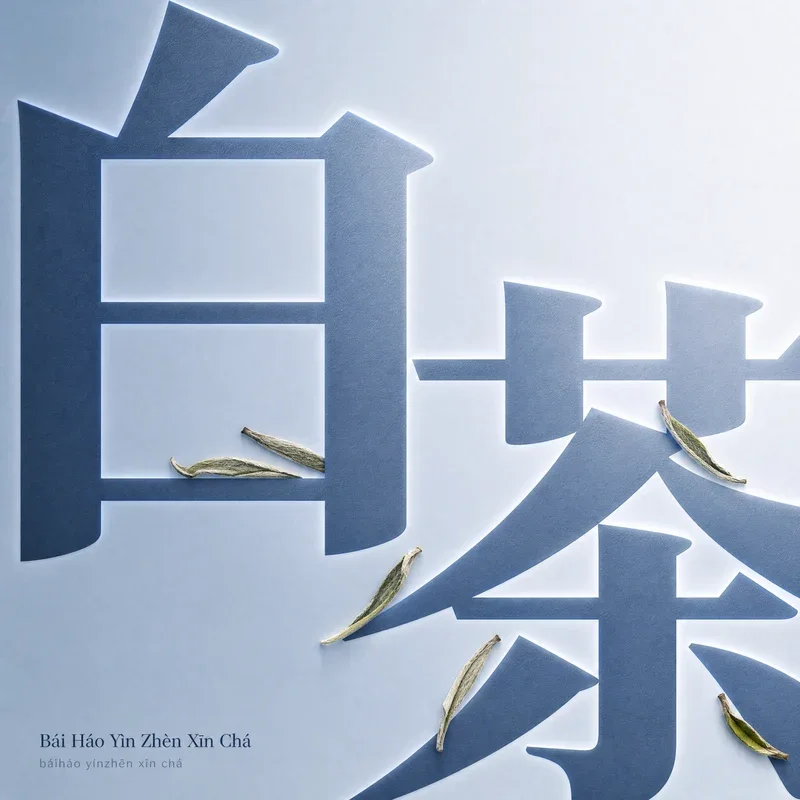
Name Breakdown: "Taicha 23 Hao" (臺茶23號)—"Taiwan Tea Number 23," the cultivar's registration number. "Qi Yun" (祁韻)—"Keemun Melody" or "Echo of Keemun": the character "Qi" (祁) refers to Keemun—the region of origin of the parent seeds, while "Yun" (韻) means "melody," "rhythm," "aftertaste"—a concept central to Taiwanese tea aesthetics, denoting depth and resonance of flavor. "Bai Cha" (白茶)—"white tea."
Shoots reach heights up to 120 cm. Mature leaves are elongated-elliptical, 8–10 cm long, 3–4 cm wide, with finely serrated edges and slightly wavy surface, matte gray-green color. Young shoots have characteristic white-yellow-red gradient coloration; buds are densely covered with silvery trichomes up to 0.2 mm thick—a key characteristic of high-quality white tea raw material. Spring awakening occurs approximately 2 weeks earlier than the control cultivar Qing Xin Oolong.
Uses exclusively the first spring harvest—"pre-Qingming" (明前, Míngqián, before the Qingming festival). Harvest period—late February to early March (in the Nantou area—early April). Harvest standard—hand-picked young flushes (bud and one-two top leaves) no longer than 4 cm, without mechanical damage. Optimal ratio of buds to young leaves—approximately 70/30 by weight. Finished product yield—around 25% of fresh-picked raw material weight.
Cultivar: Camellia sinensis var. sinensis, cultivar TTES No. 23 (Qi Yun). Small-leaf shrub type (灌木型, guànmù xíng) variety, medium-height, with vertical growth pattern of shoots. Possesses strong vegetative energy, high bud density, and increased yield per unit area. Distinguished by pronounced resistance to diseases and drought.
Climate: Subtropical, with abundant precipitation (~1800 mm/year, maximum in summer months) and average annual temperature ~21°C. Characteristic feature—frequent and abundant fogs (more than 150 days per year), which slow tea bush growth, reducing photosynthesis intensity and promoting accumulation of amino acids and aromatic substances in young shoots. Diurnal temperature amplitudes are 8–10°C, additionally stimulating biochemical processes in leaves.
Soil: Acidic red soils (pH 4.5–5.5), formed on granitic alluvial deposits of the Zhuóshuǐ River (濁水溪, Zhuóshuǐ Xī)—Taiwan's largest river. These soils provide excellent drainage, moderate organic matter content, and a specific mineral profile affecting tea flavor.
Míngjiān Township (名間鄉), Nantou County, central Taiwan. Also cultivated in the vicinity of Yuchi Township and adjacent areas.
300–350 m above sea level.
Tea bushes are grown under partial shade created by natural plantings of camellias and other trees, mimicking forest conditions of wild tea growth and promoting L-theanine accumulation. Organic fertilizers (compost) are applied, though the farm may not have formal organic certification. The pioneer of TTES No. 23 cultivation for white tea is a farmer surnamed Yǔ (余), processing less than 0.5 hectares of plantations of this cultivar. Location of plantations in the Zhuoshui River valley ensures stable water supply, and river fogs additionally protect young shoots from direct solar radiation, which is an important factor in white tea raw material quality.
Harvested leaves are spread in a thin layer (≤5 cm) under diffused sunlight at temperature ~28°C for ~45 minutes, until moisture drops to ~65%. This stage initiates initial oxidative processes and forms the foundation of the aromatic profile.
Tea is moved to a room with controlled temperature (~25°C) and humidity (~85%), where it continues withering in rotating bamboo drums for another 18 hours. Light mechanical stirring ensures even withering. The process is stopped when polyphenol oxidation degree reaches less than 12%.
Tea undergoes double drying with hot air at temperature ~105°C until reaching final moisture content of no more than 5%. Double drying ensures flavor stability during storage and complete cessation of enzymatic processes.
Fundamental feature—complete absence of rolling stage (揉捻, róuniǎn), which allows preservation of leaf integrity, silvery buds, and maximum amount of trichomes.
Each batch undergoes laboratory control with catechin level verification (must be >18% of dry weight) using IR spectroscopy. This guarantees consistently high content of biologically active substances.
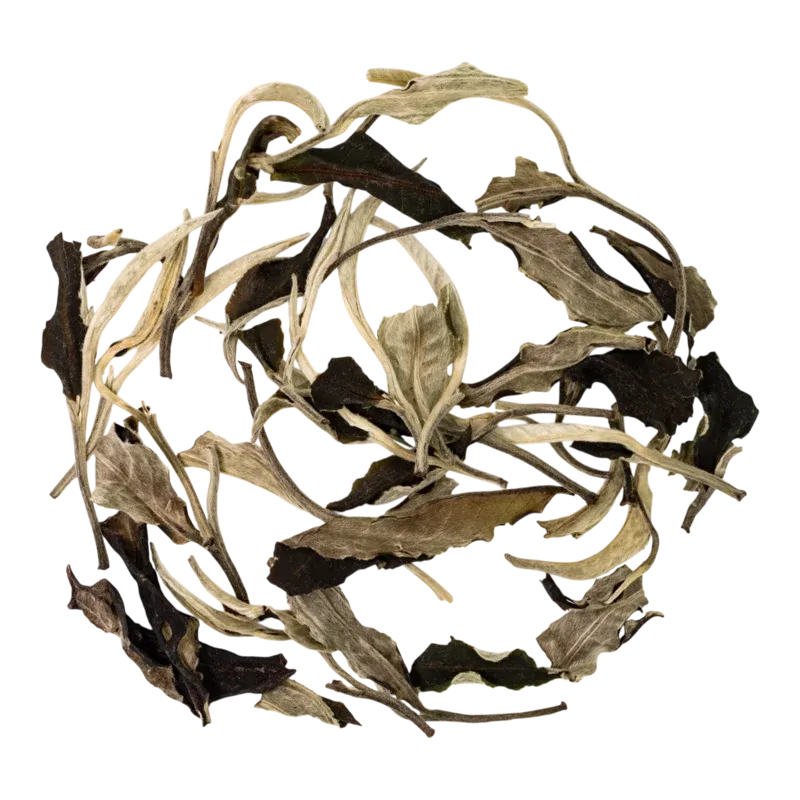
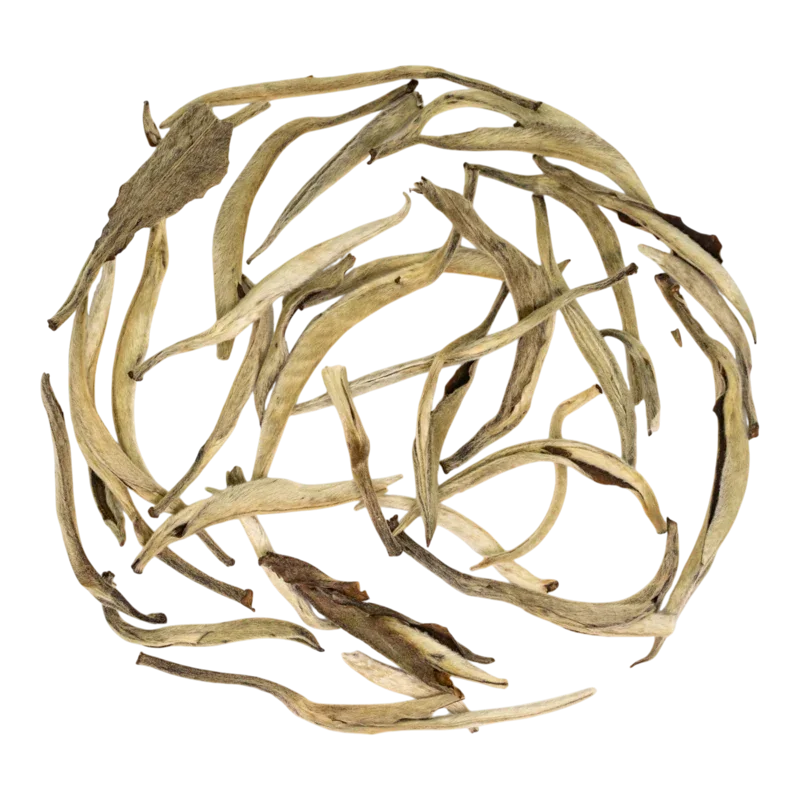
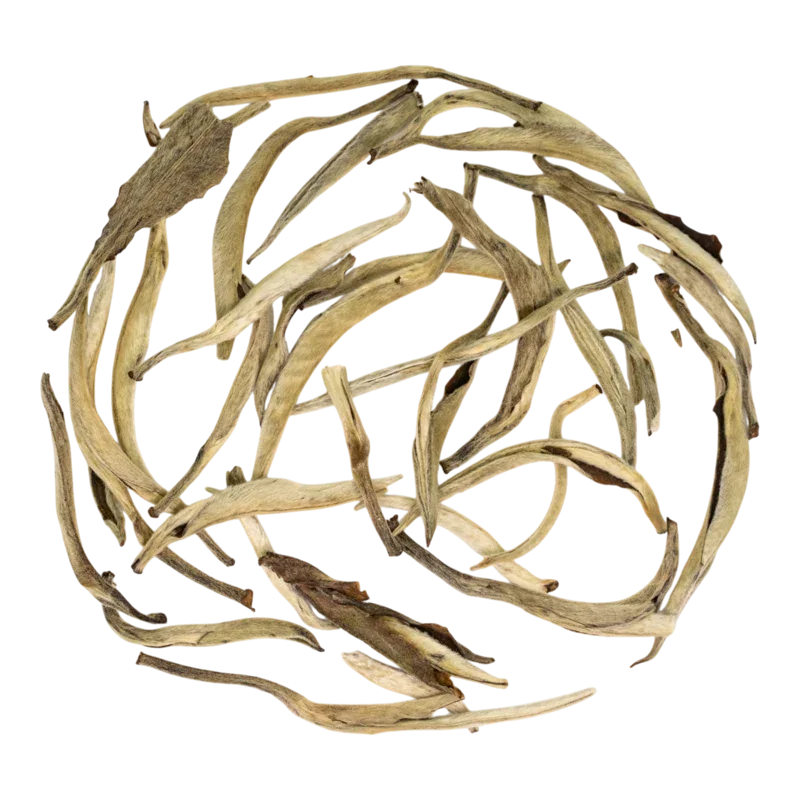
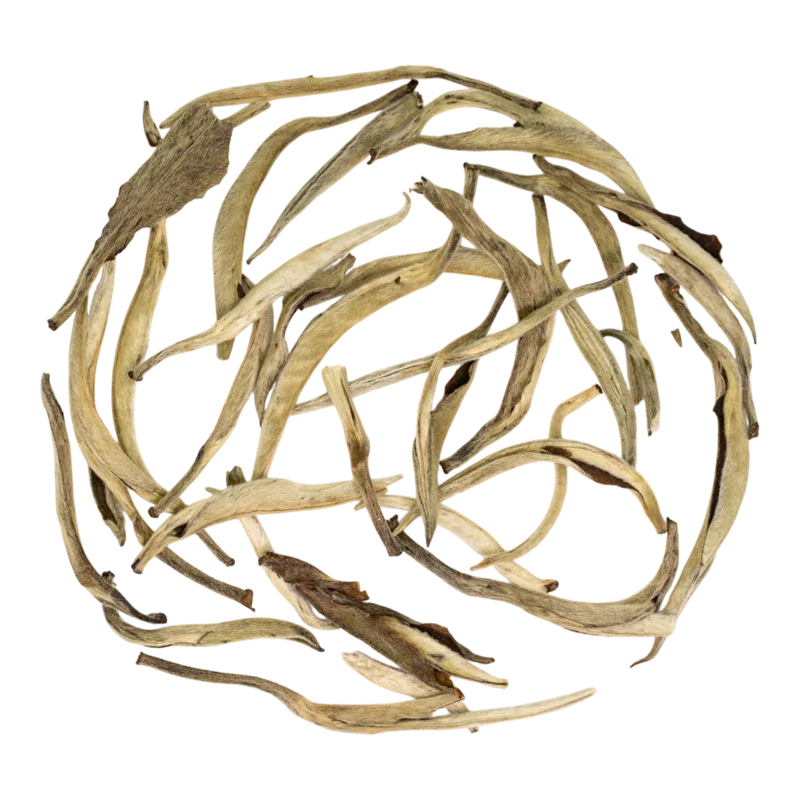
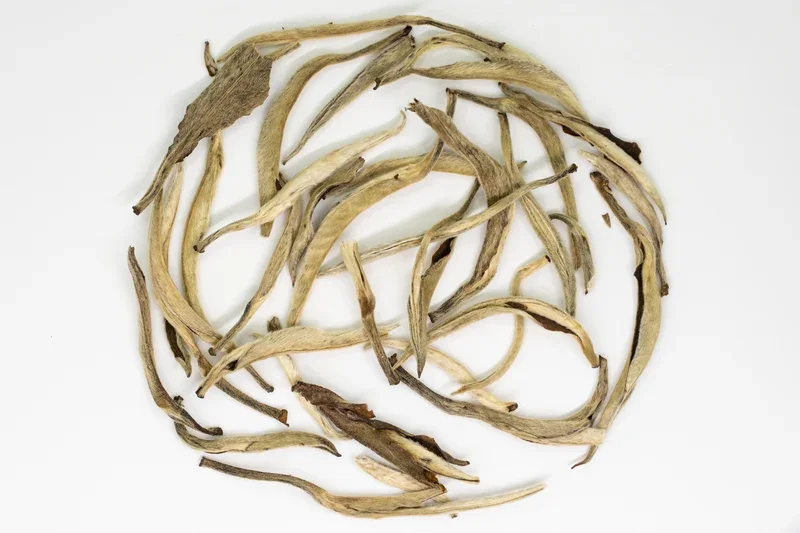
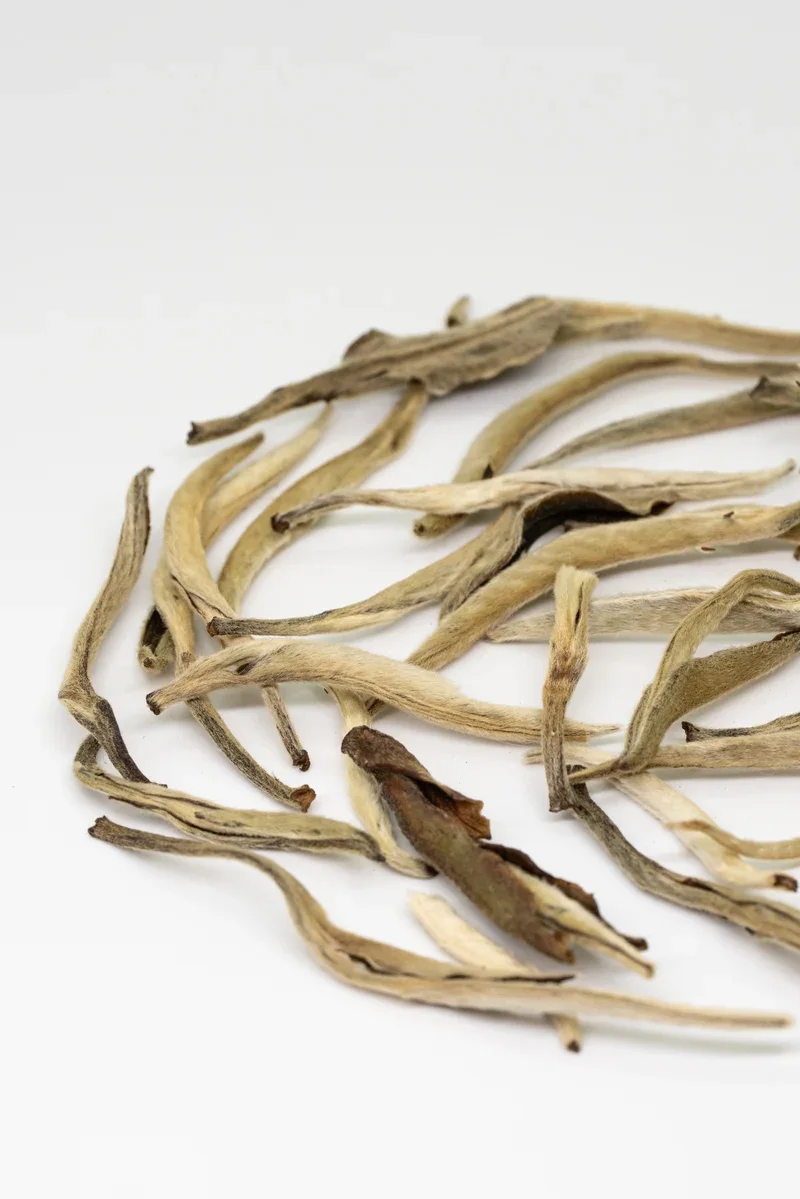
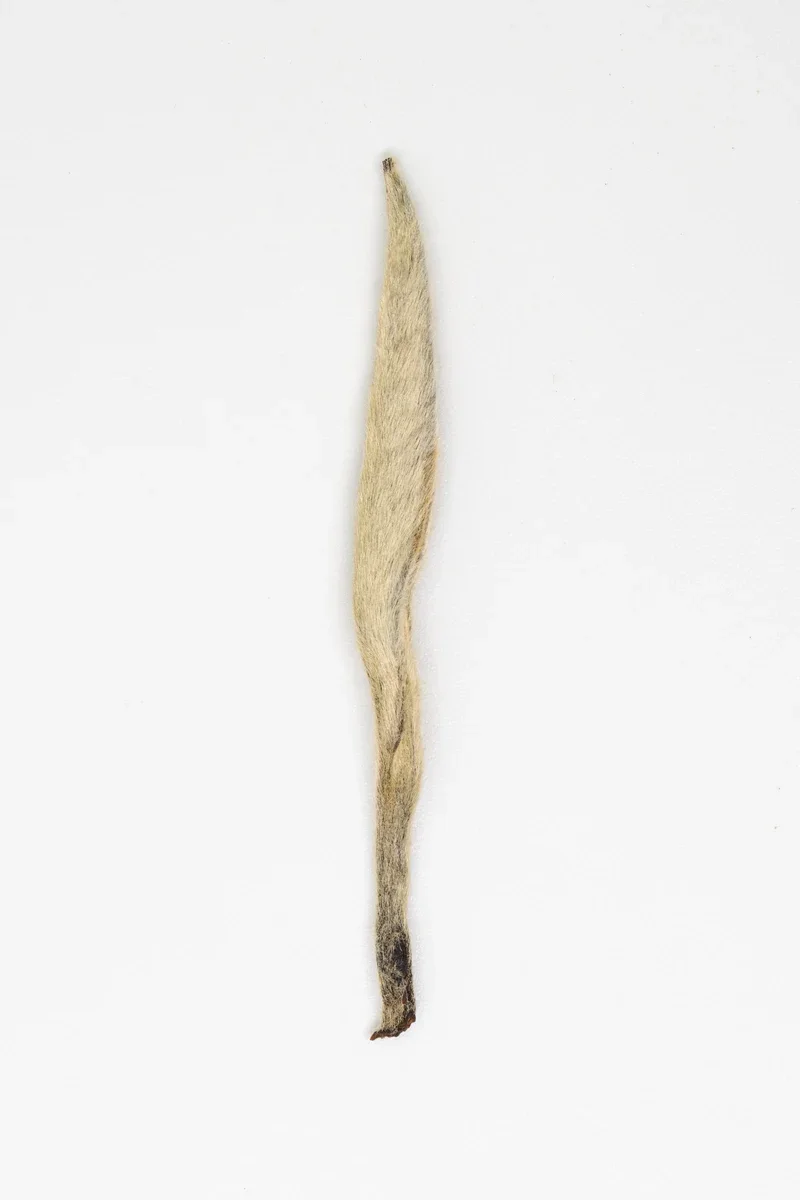
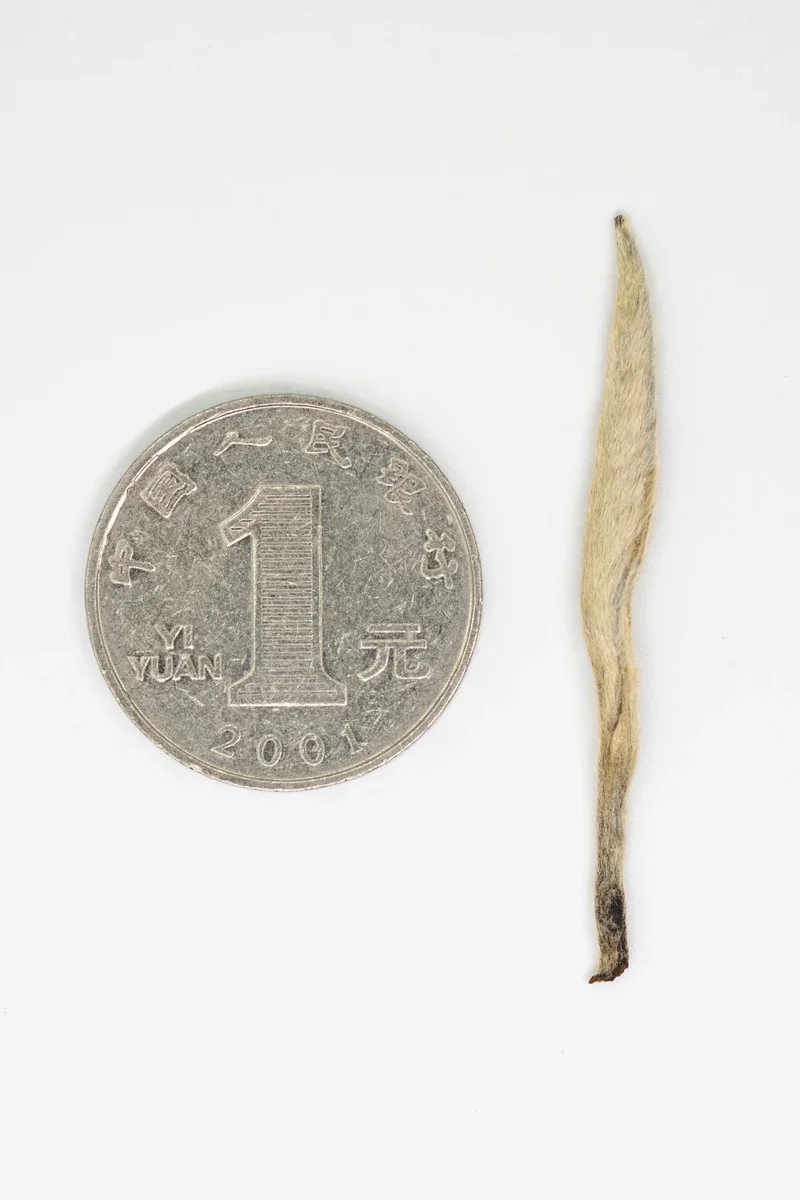
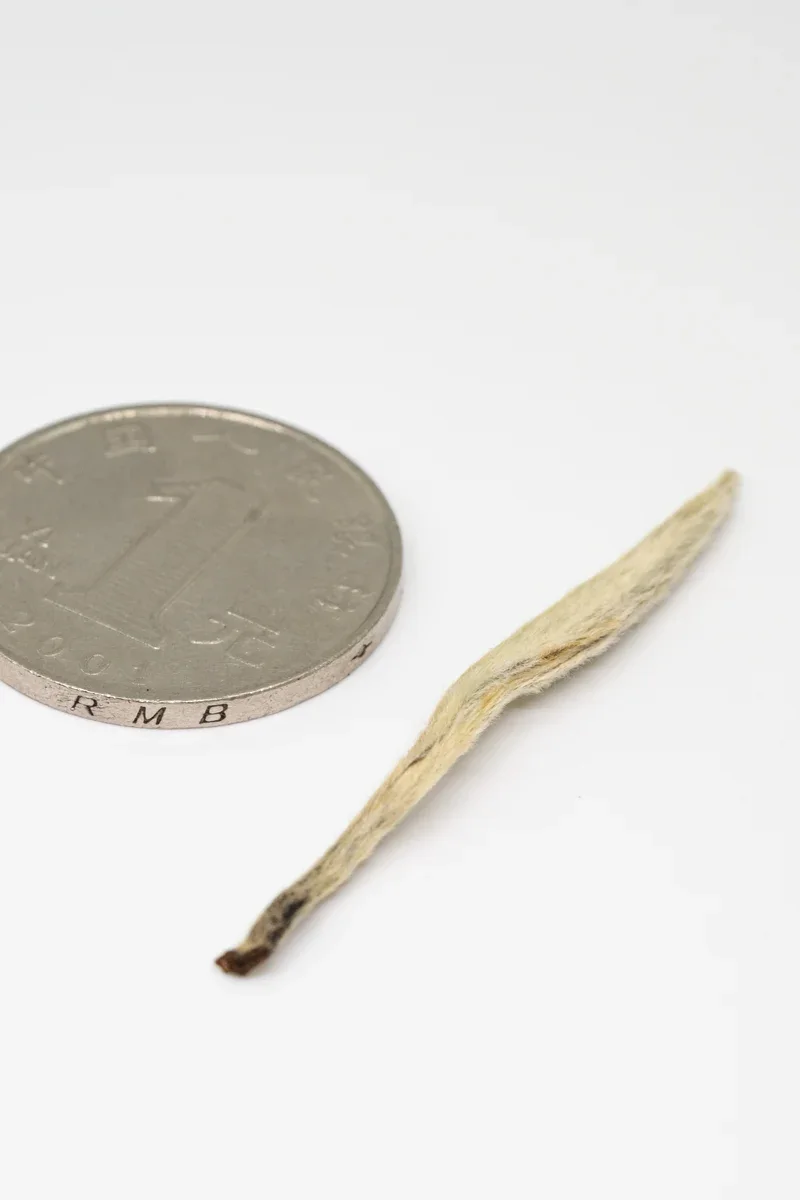
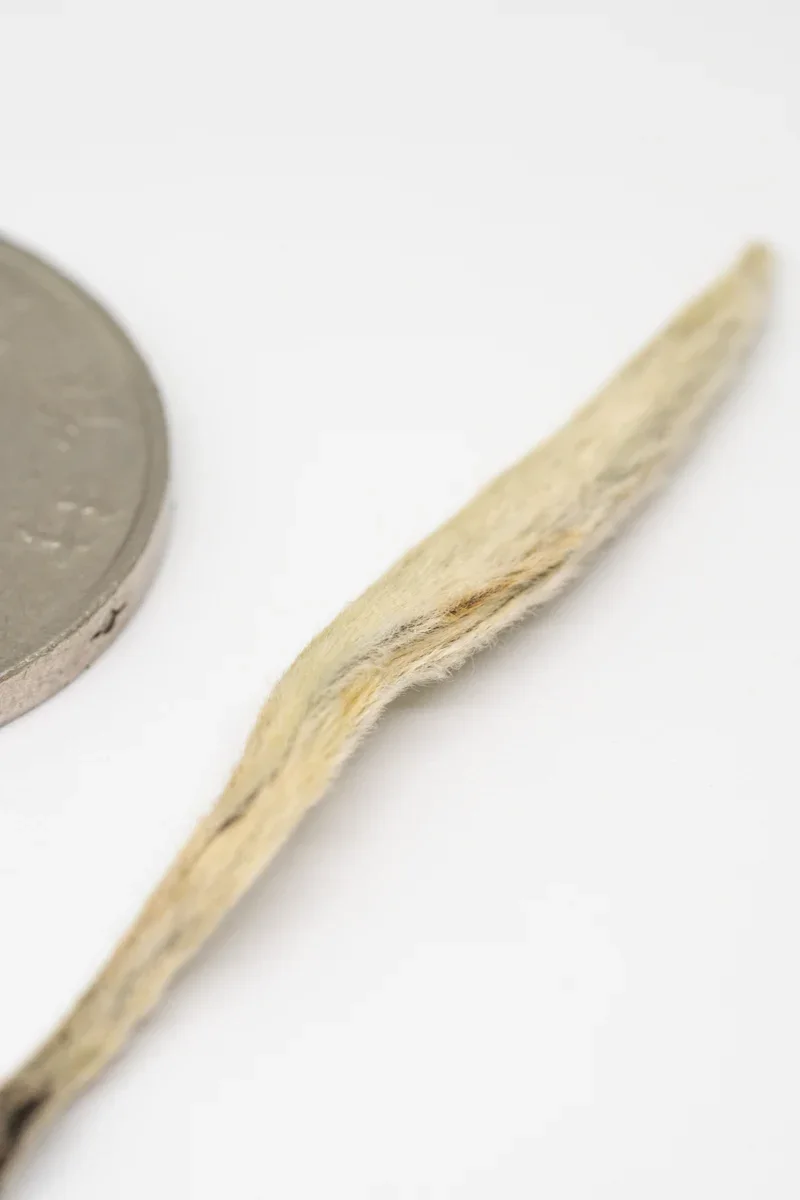
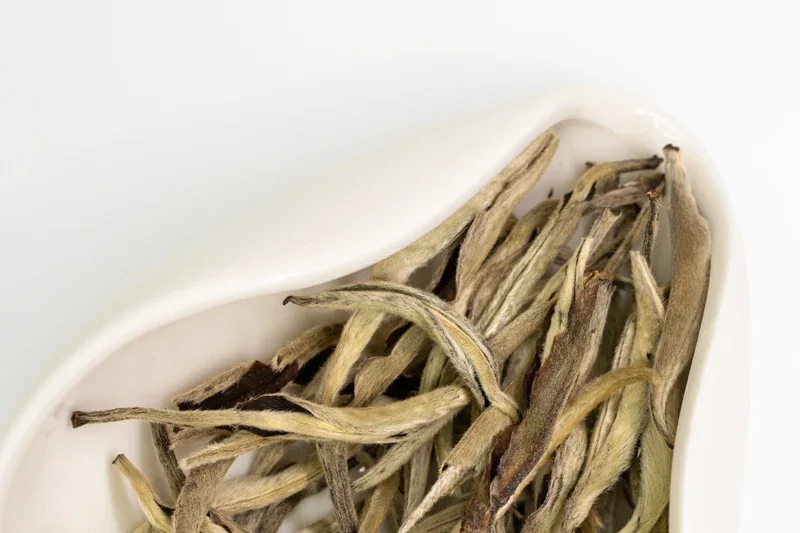
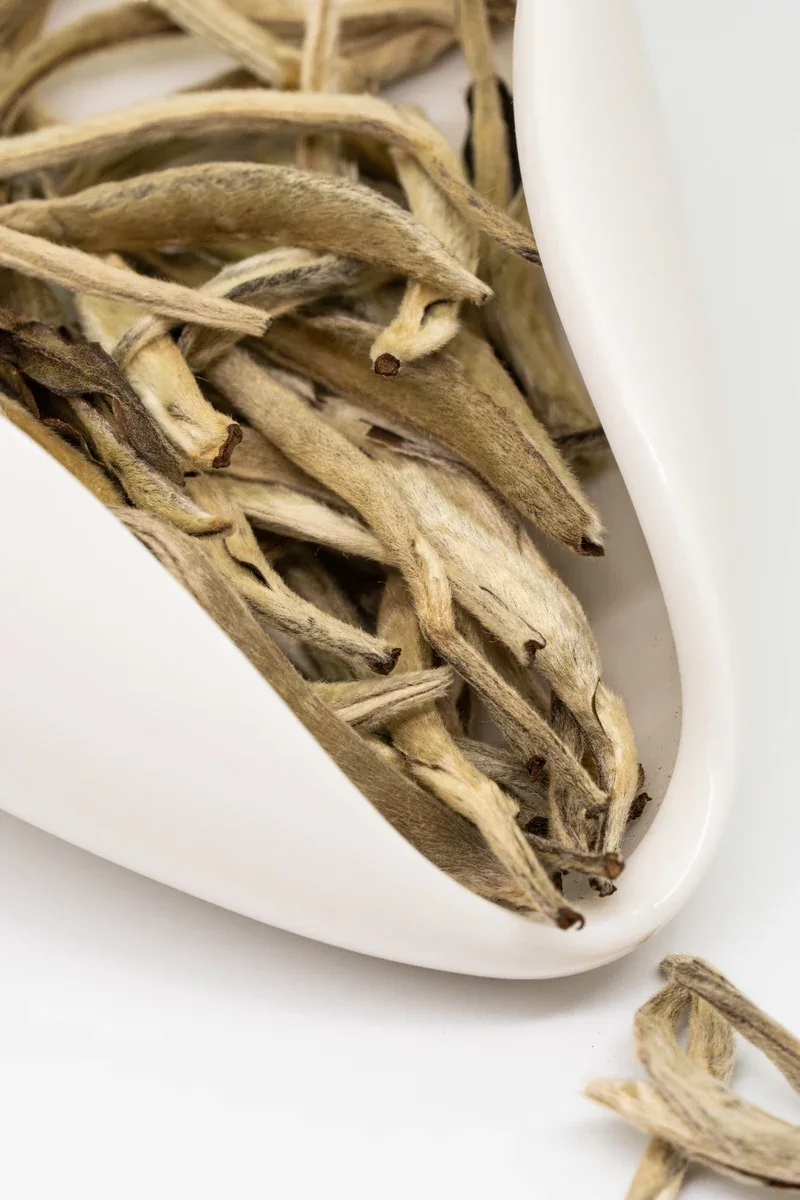
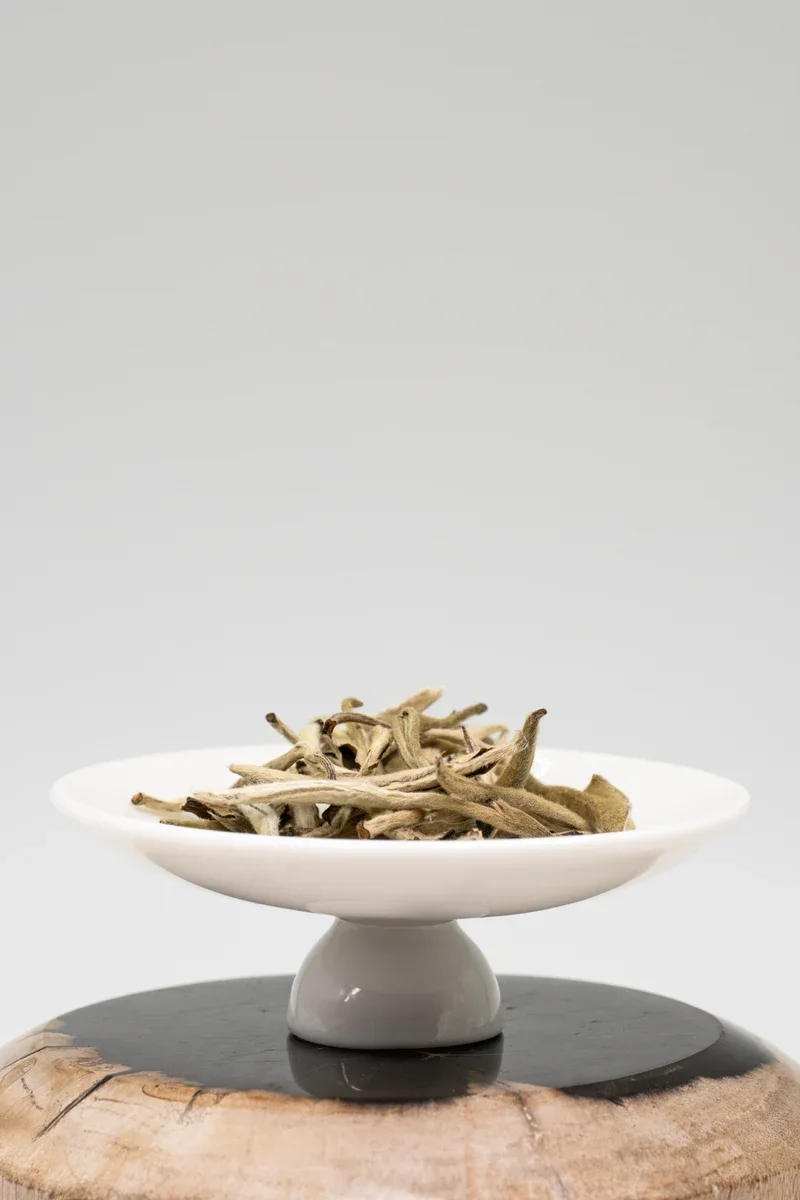
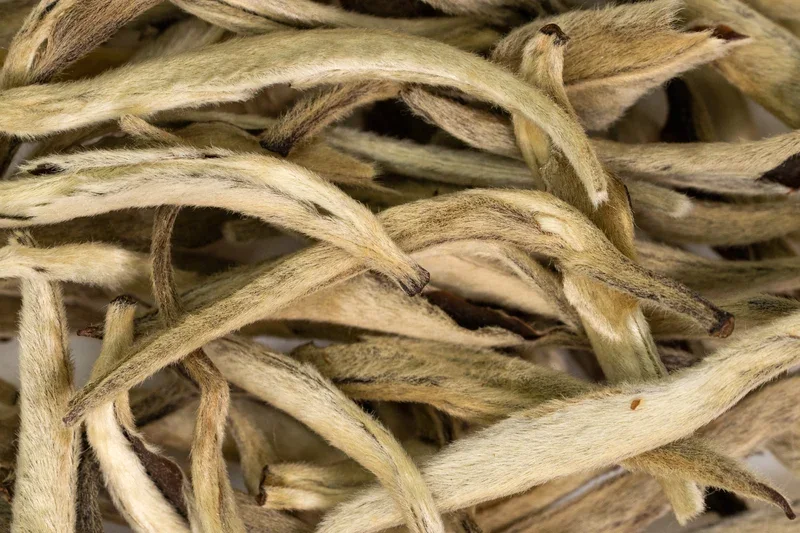
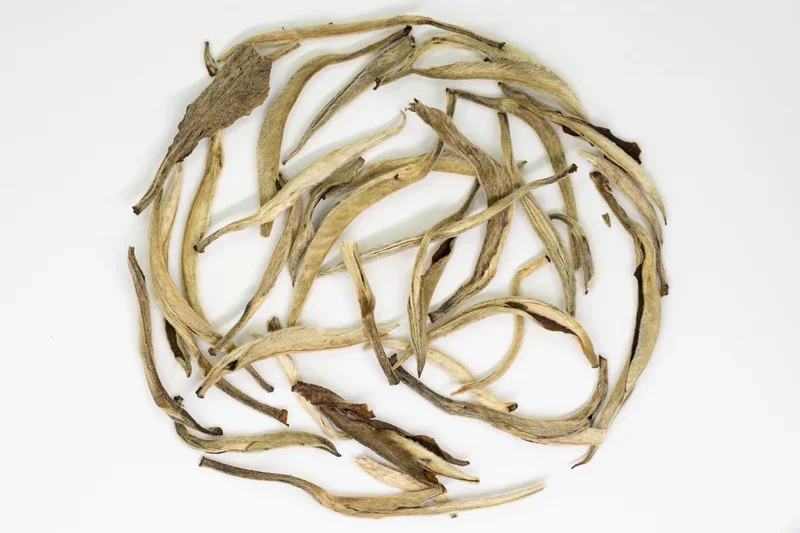
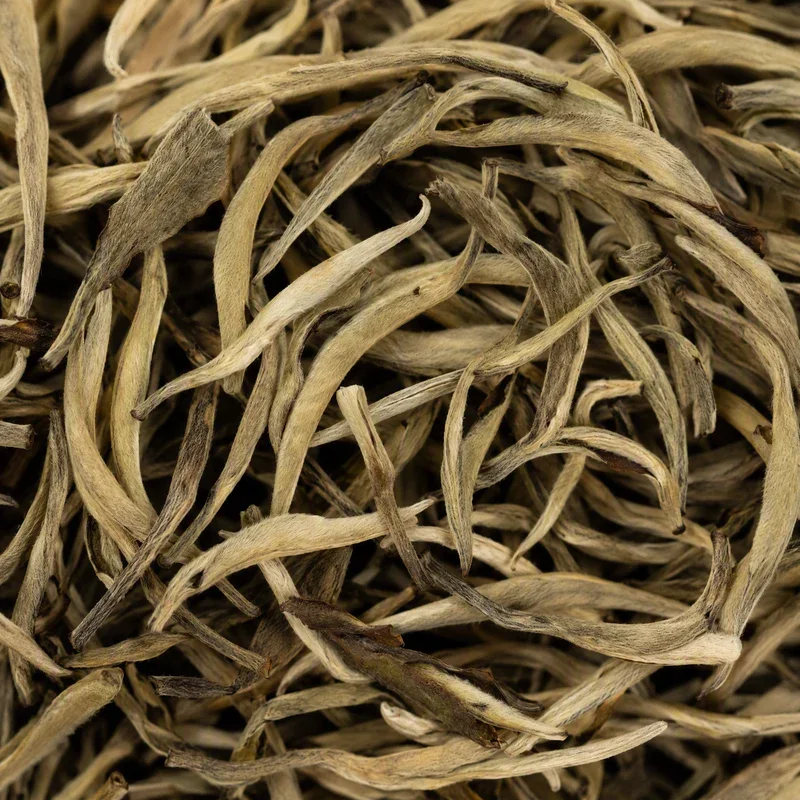
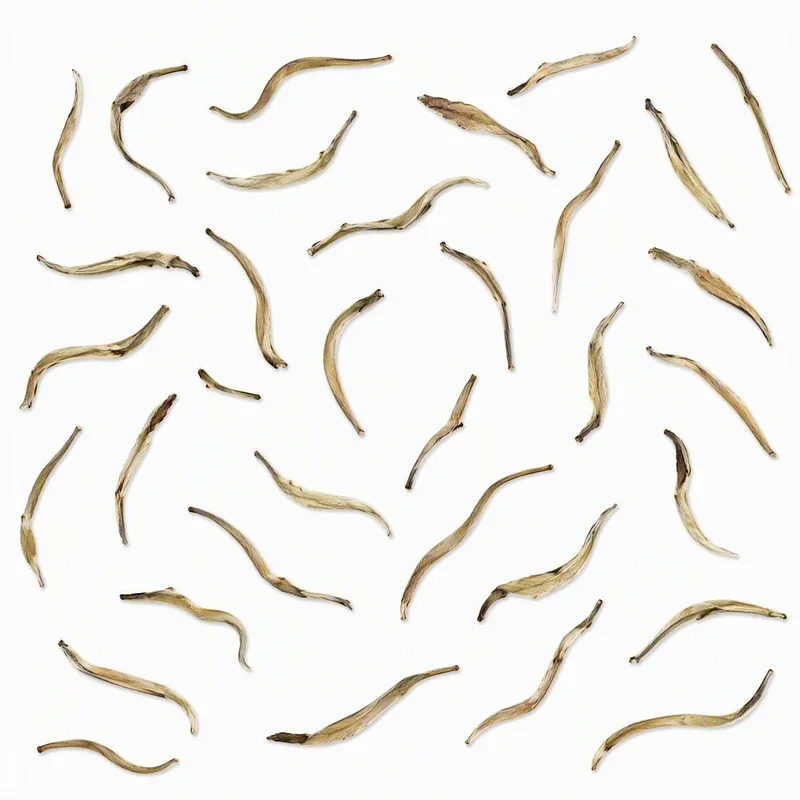
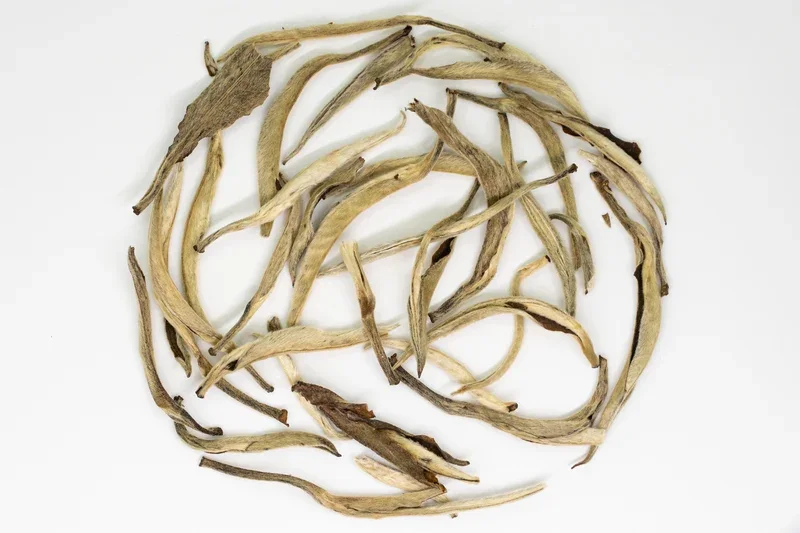
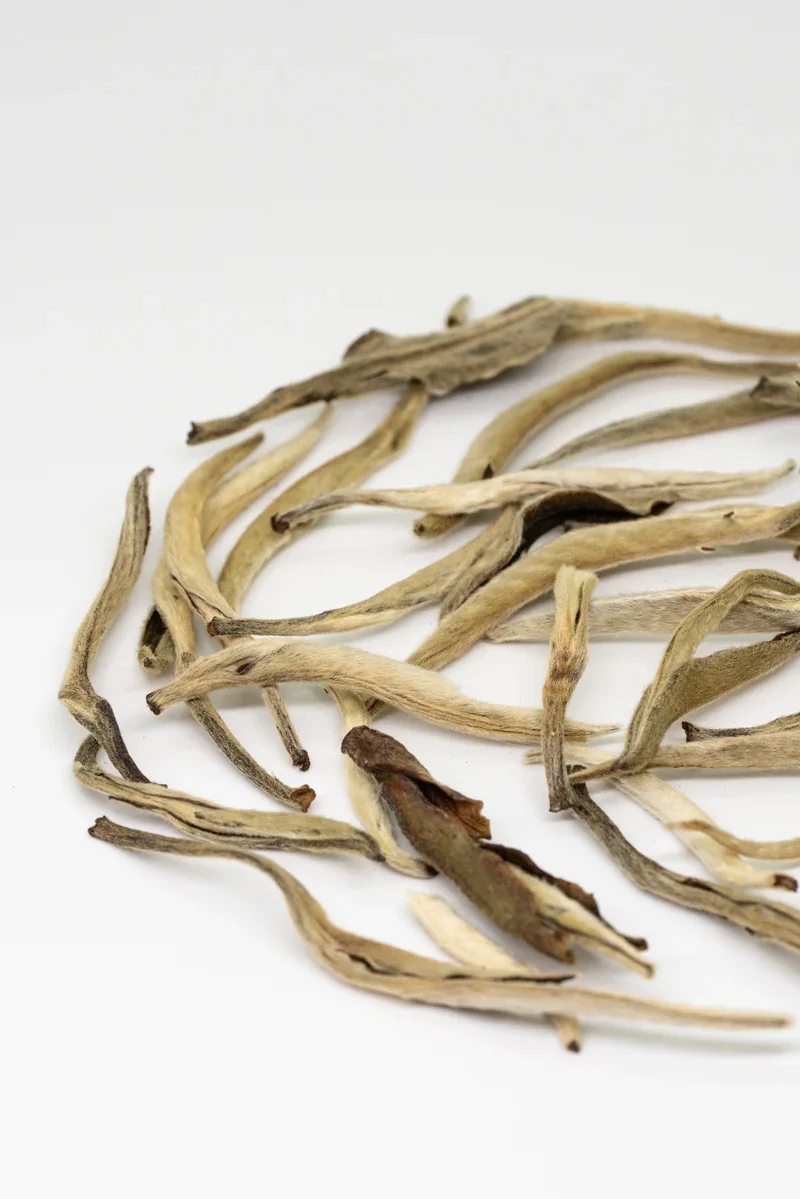
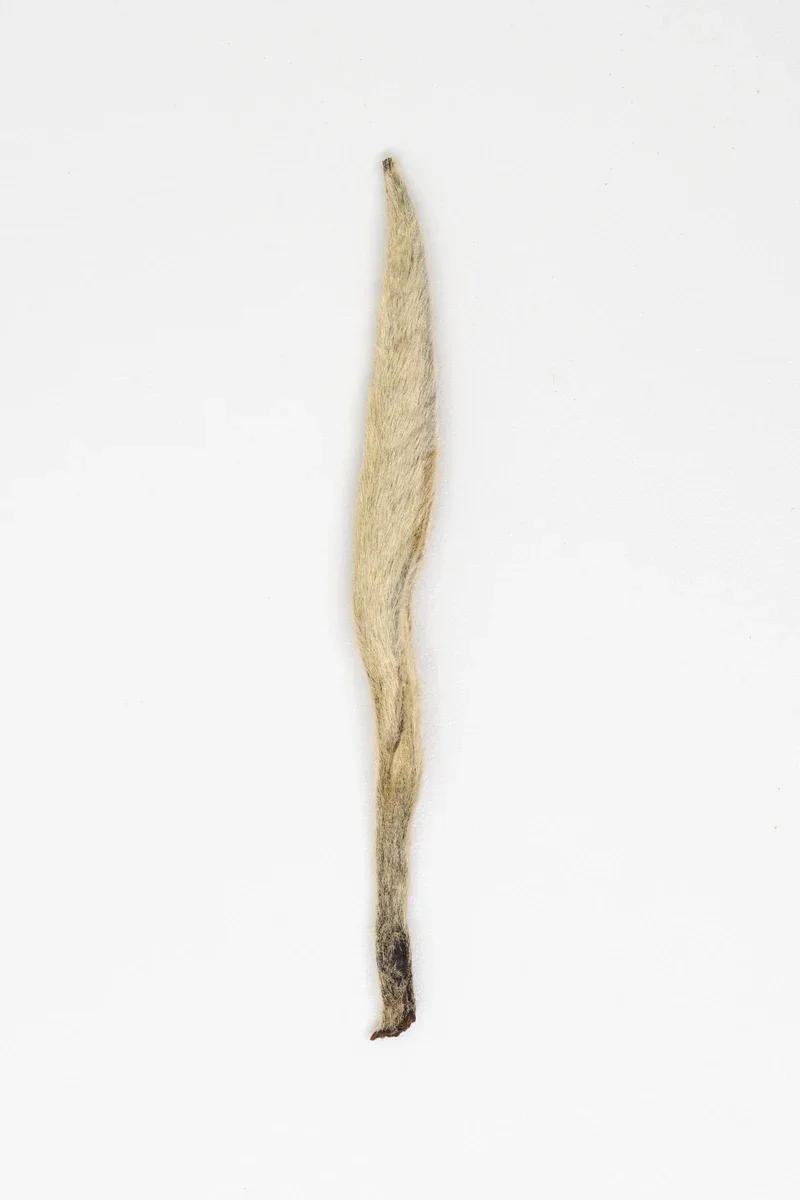
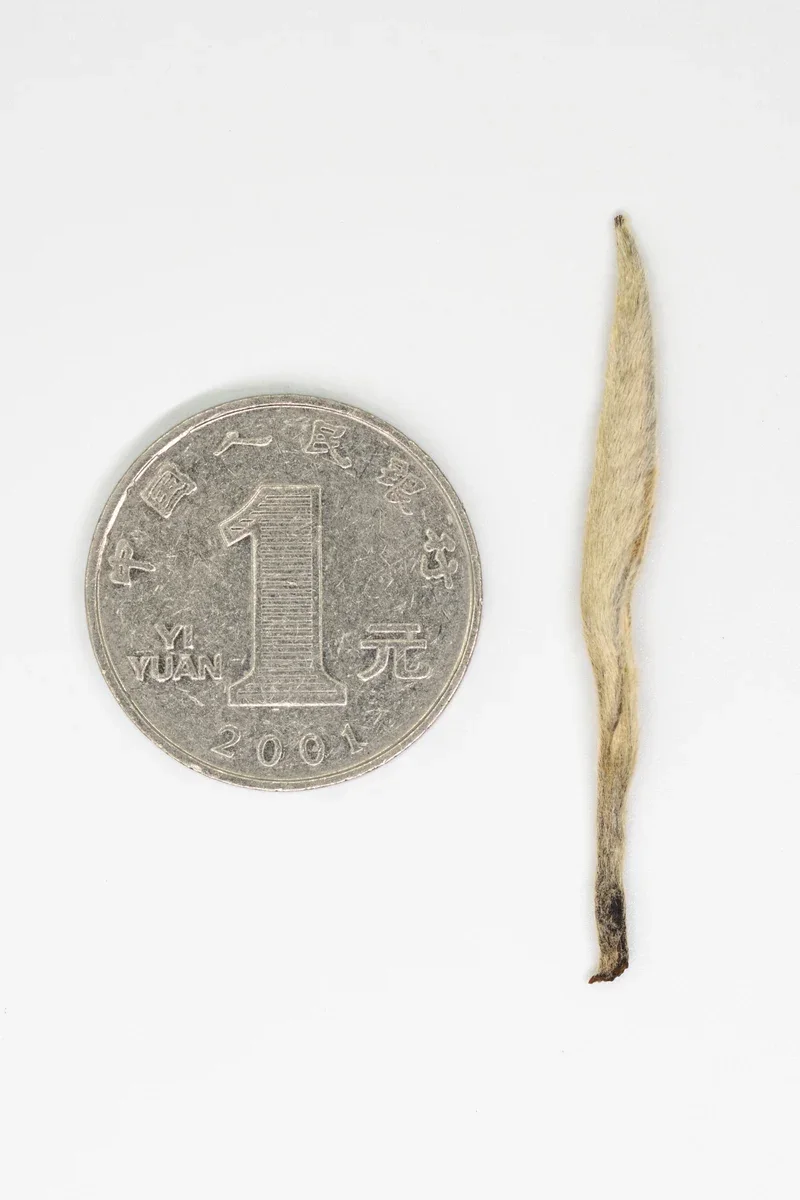
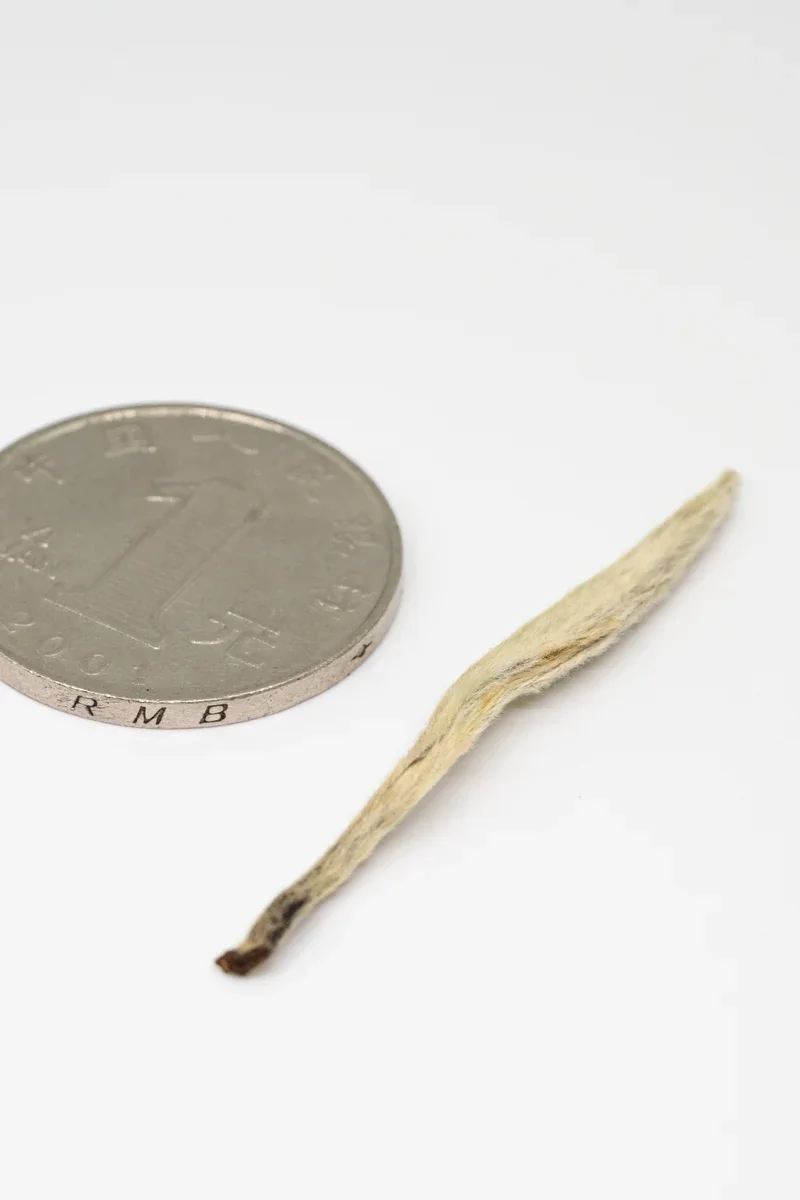
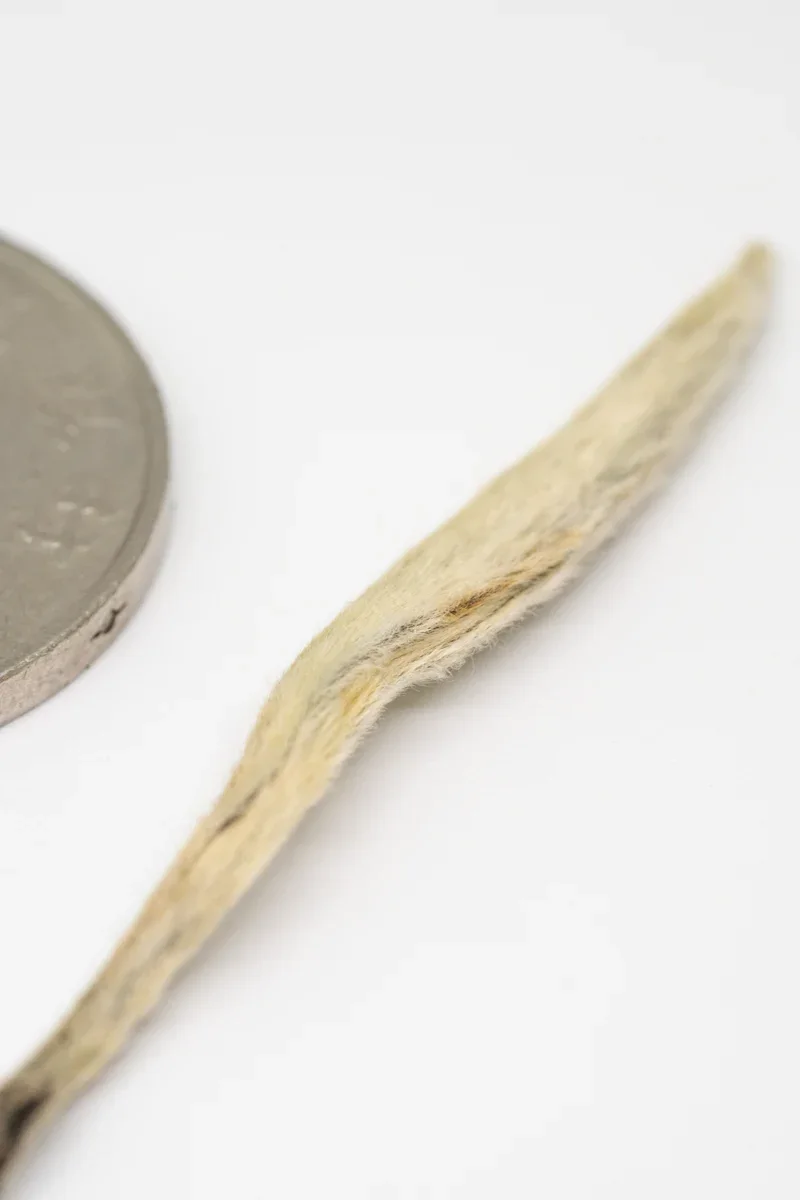
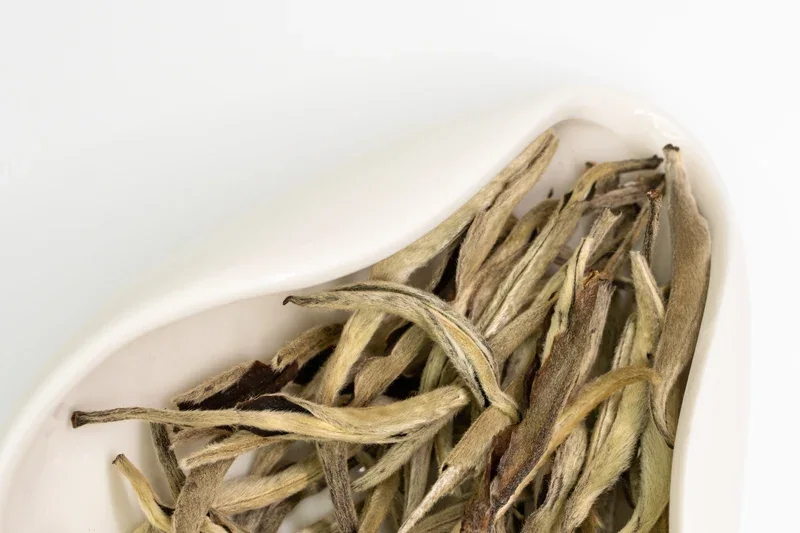
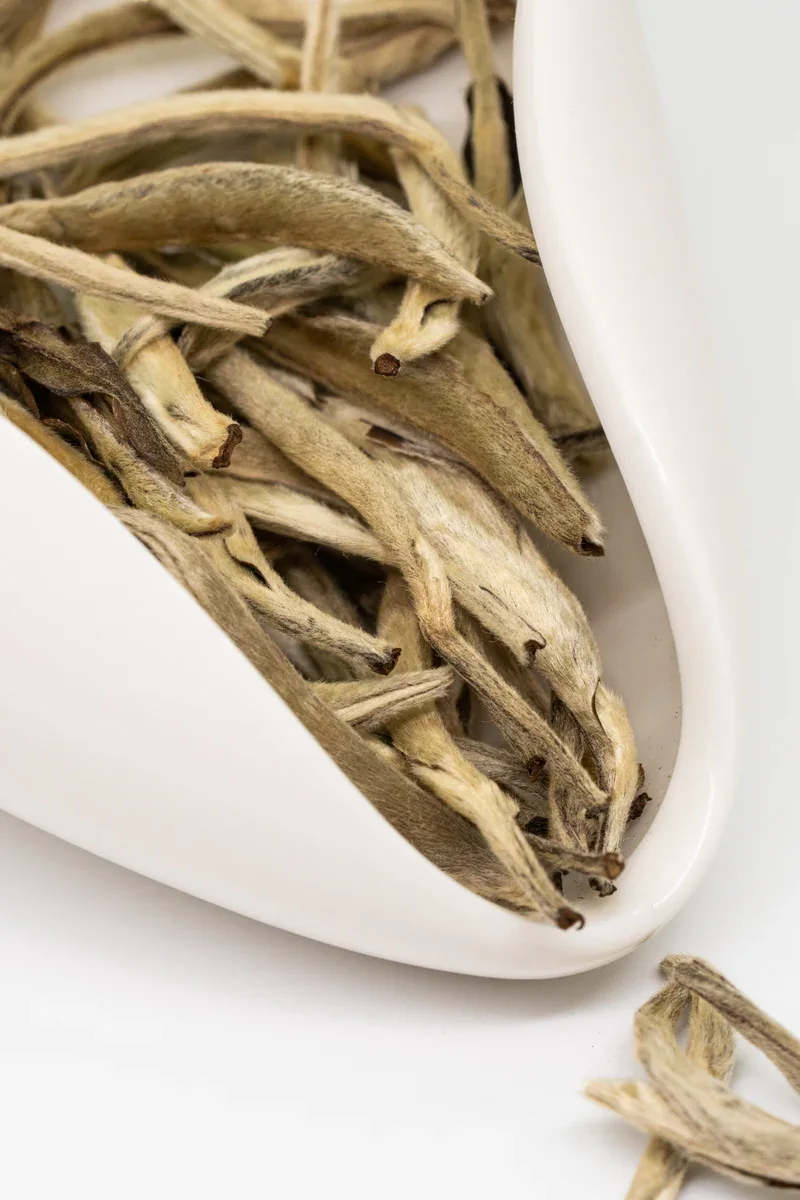
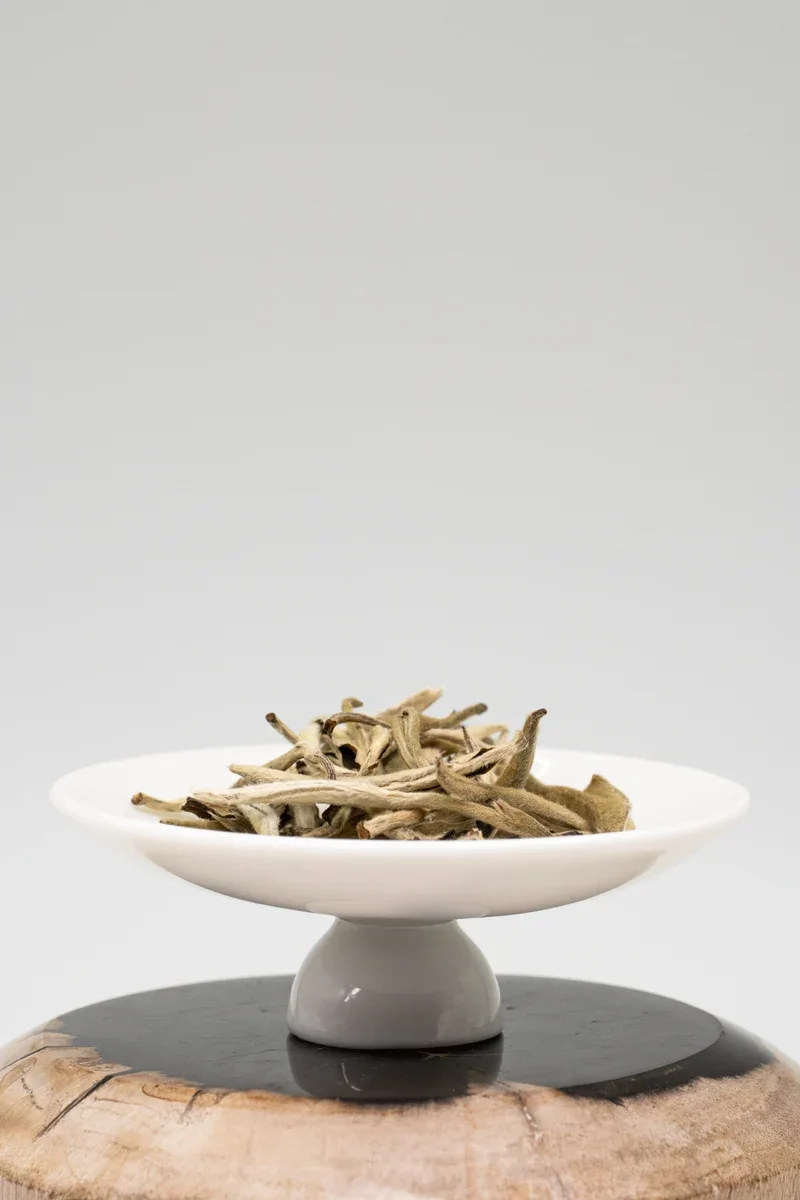
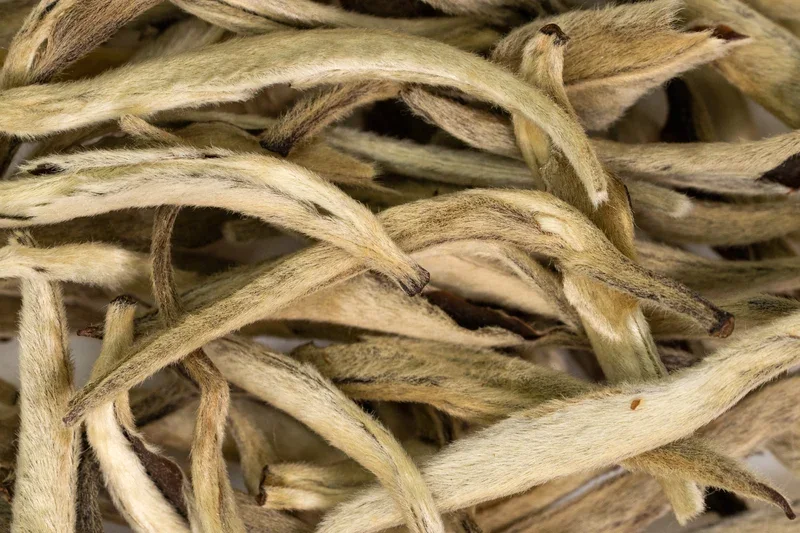
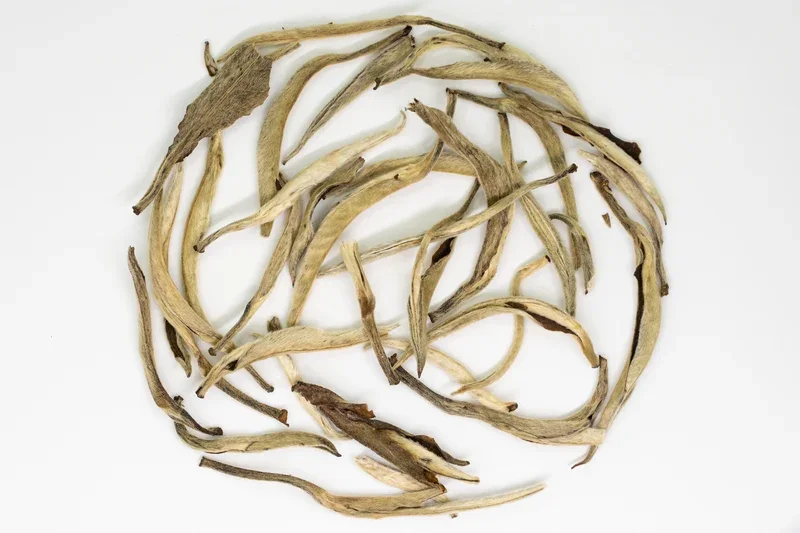
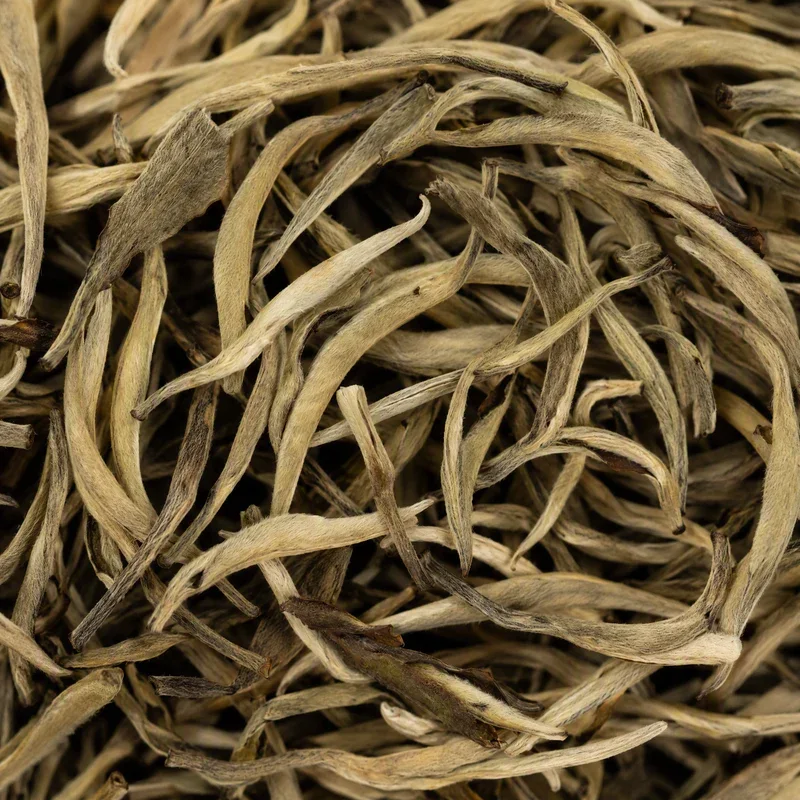
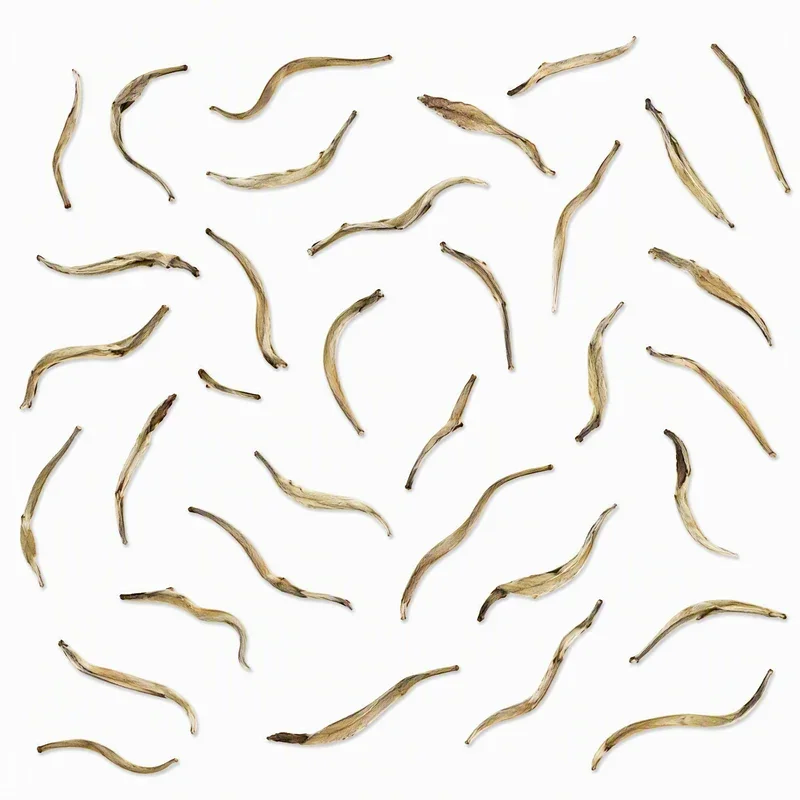
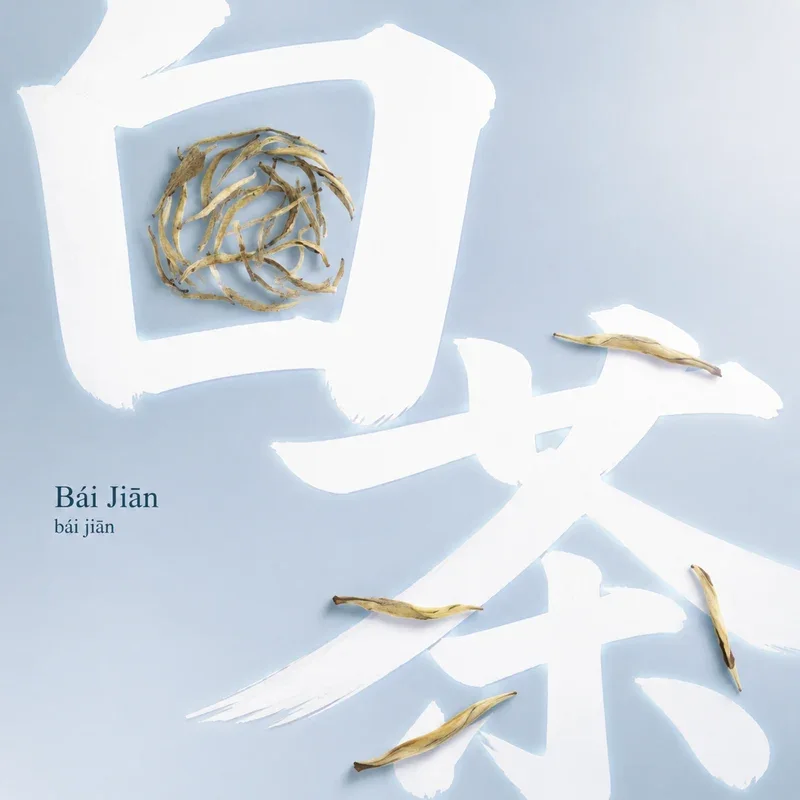
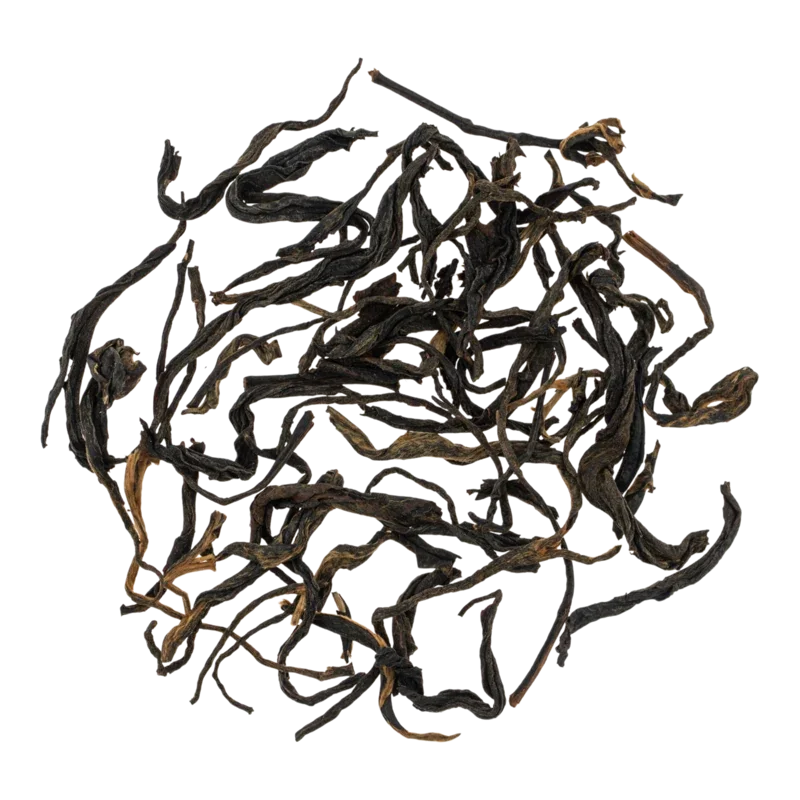
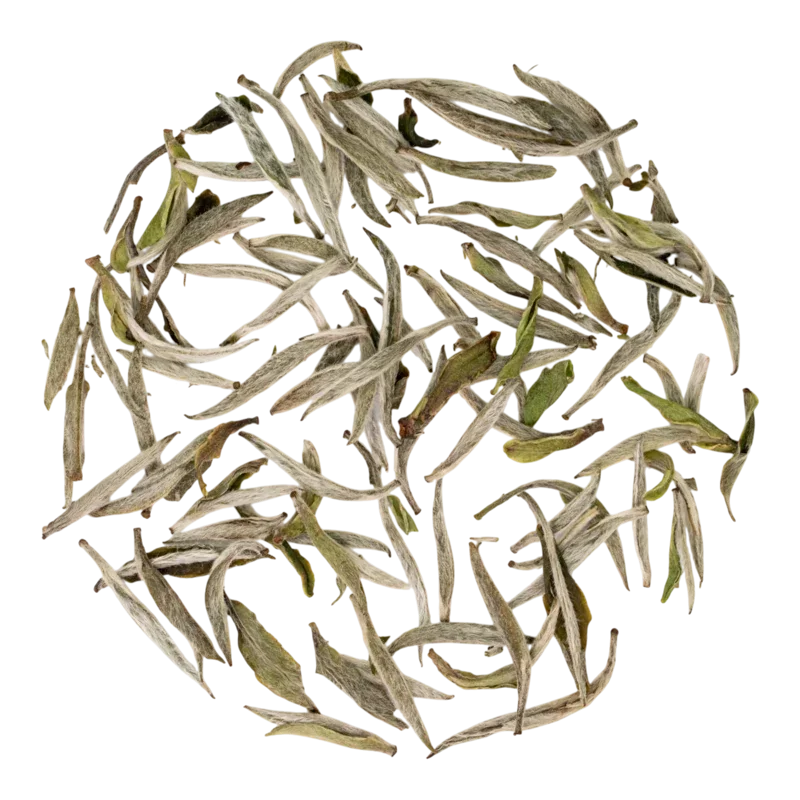
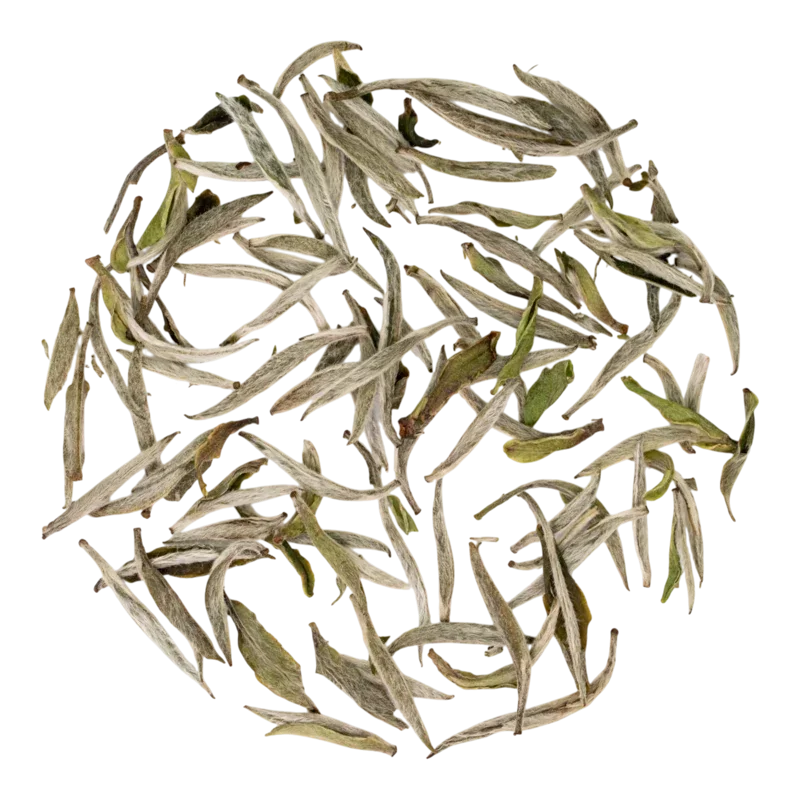
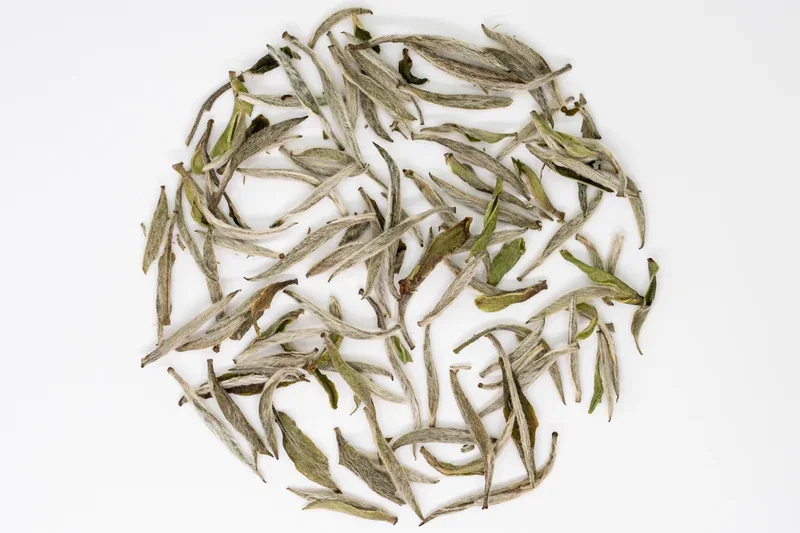
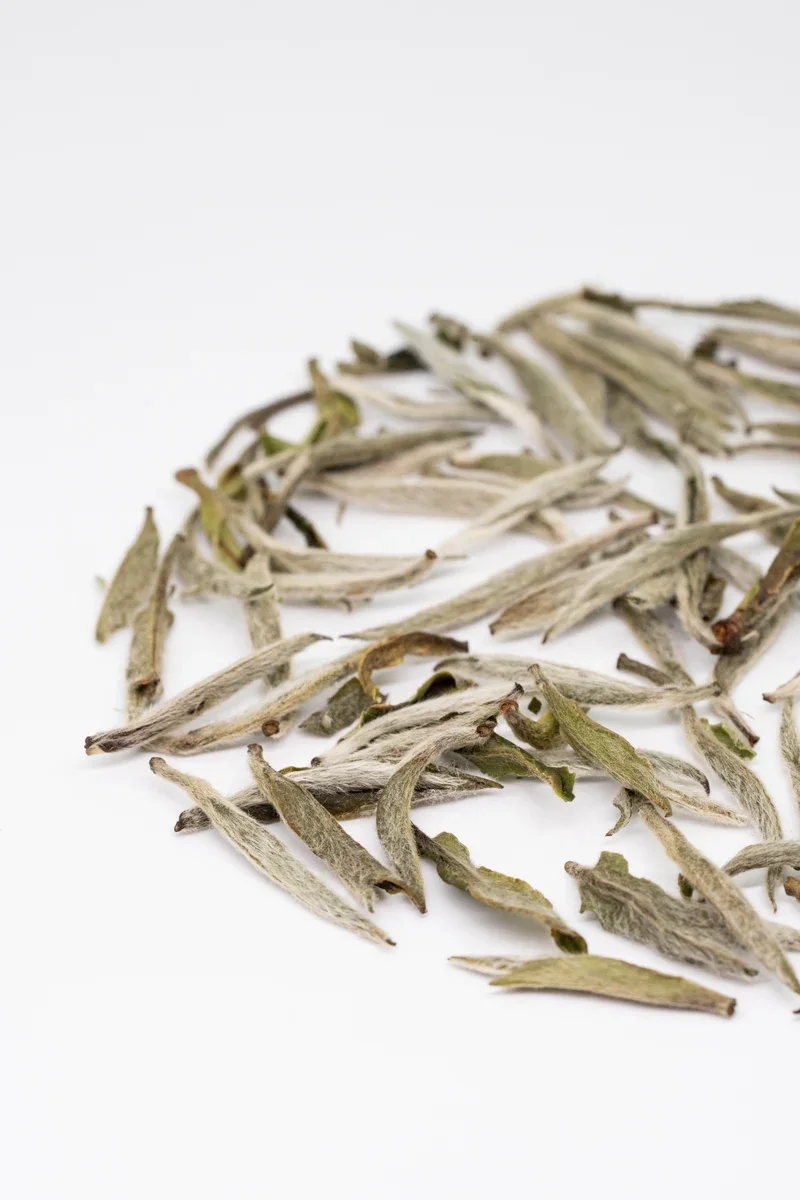
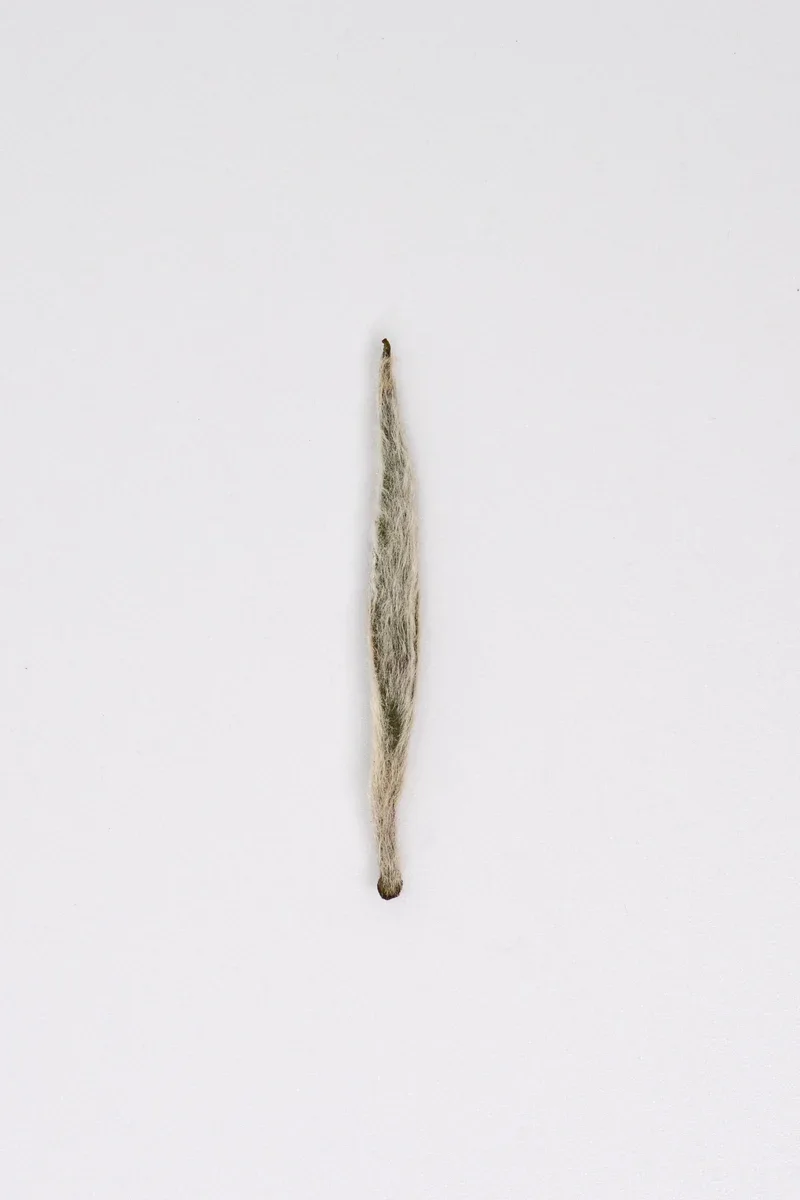
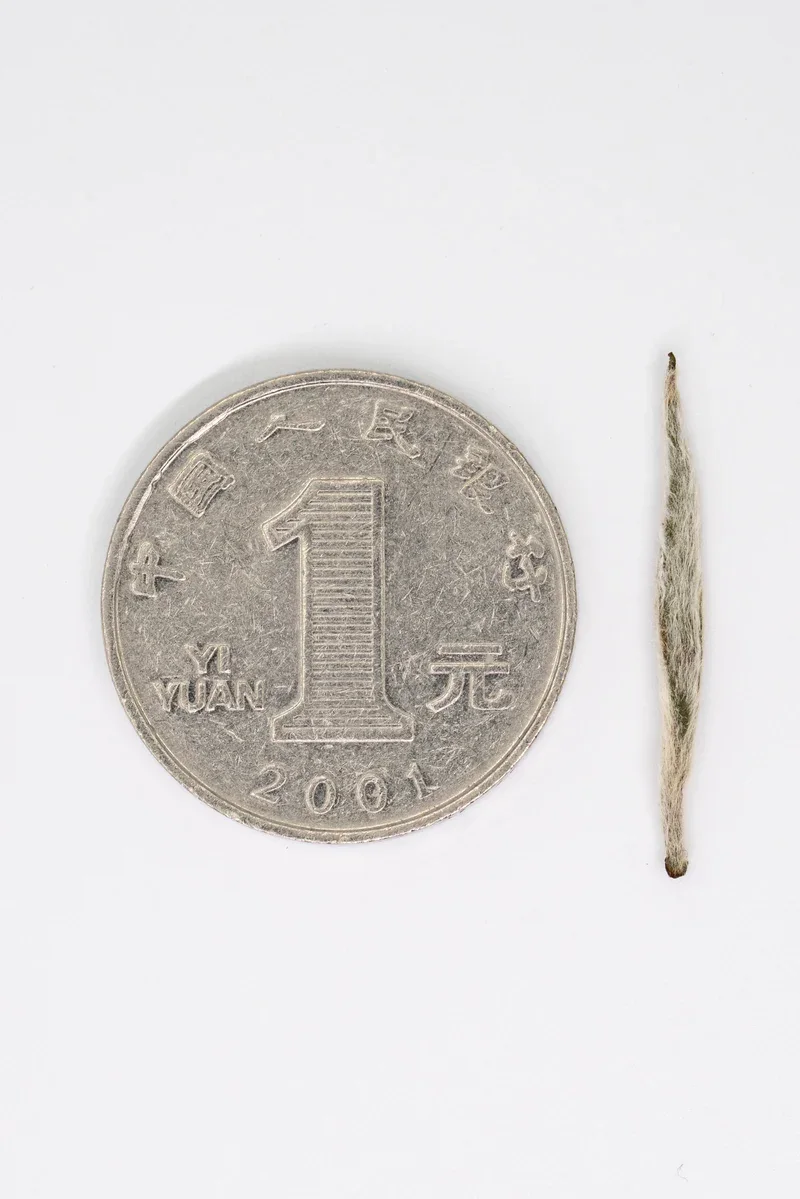
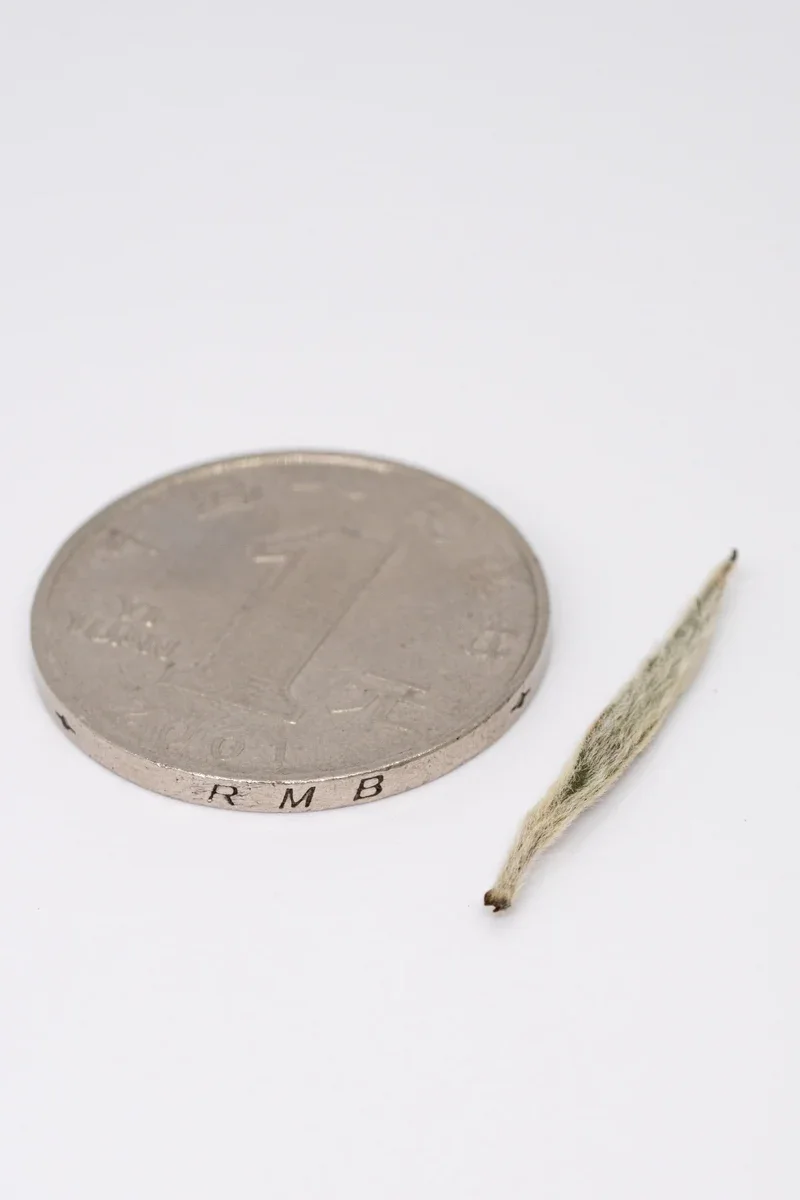
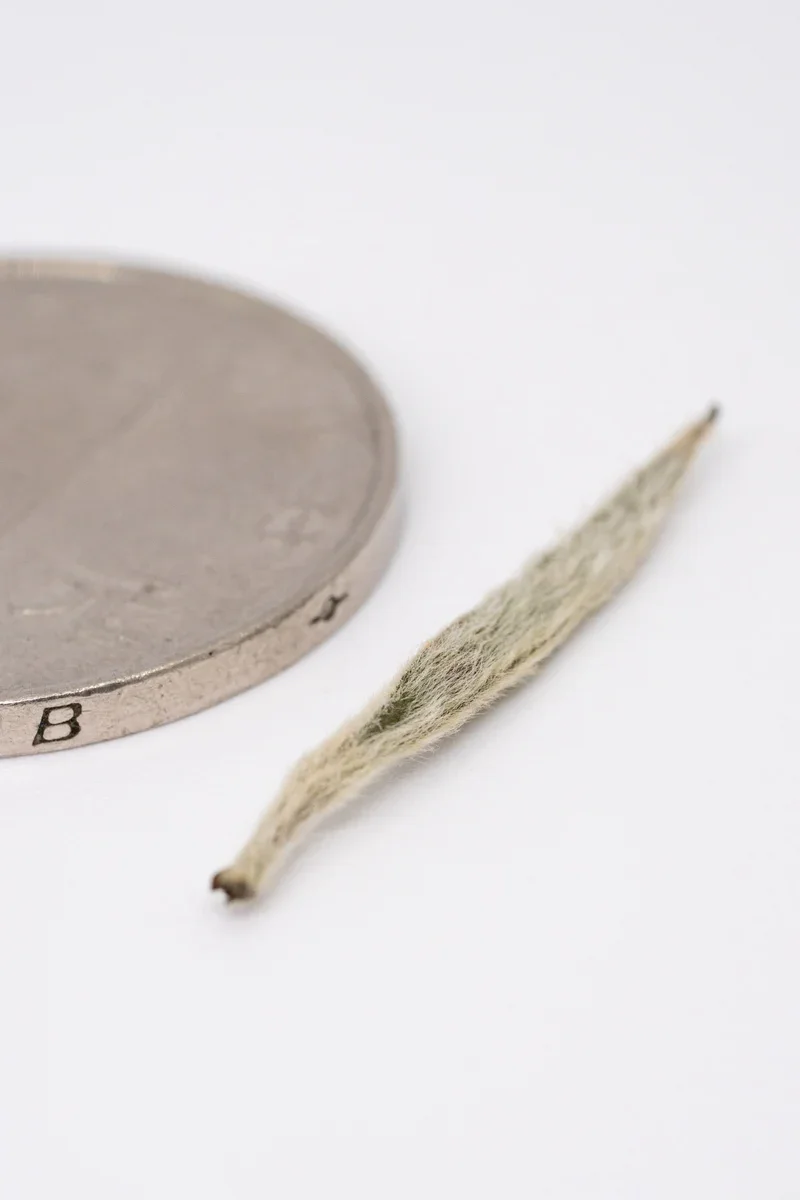
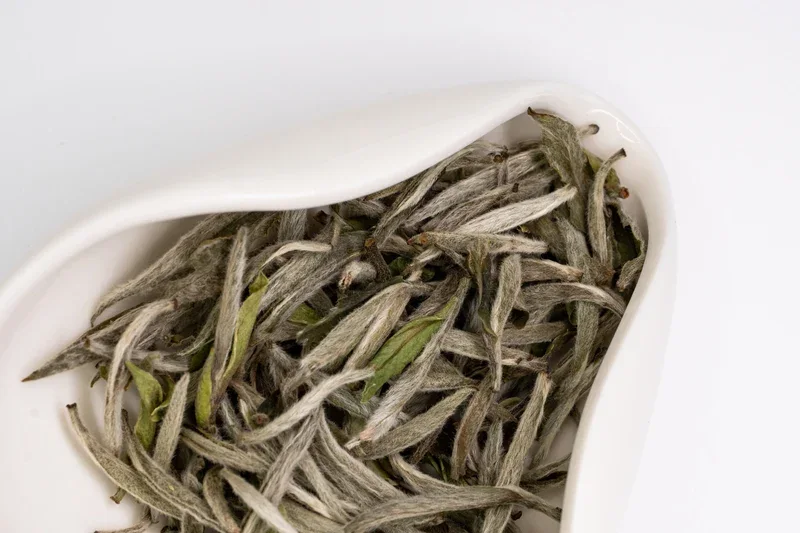
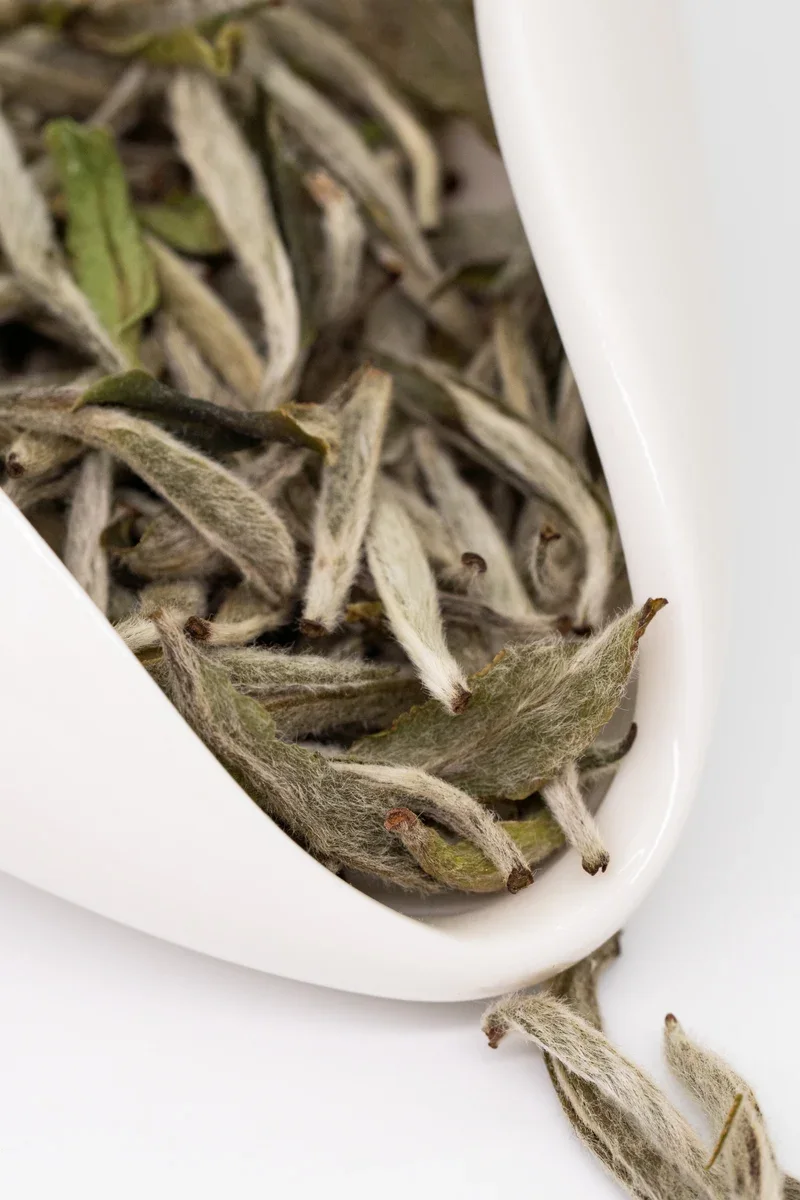
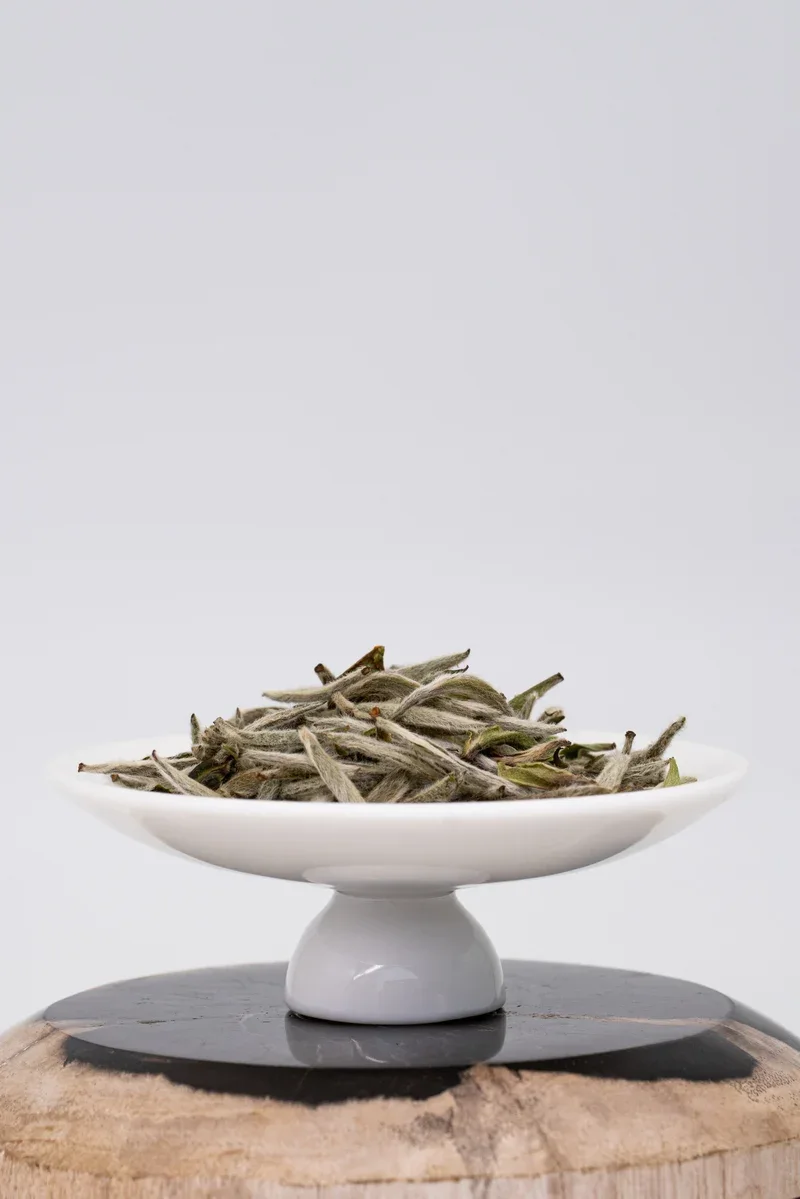
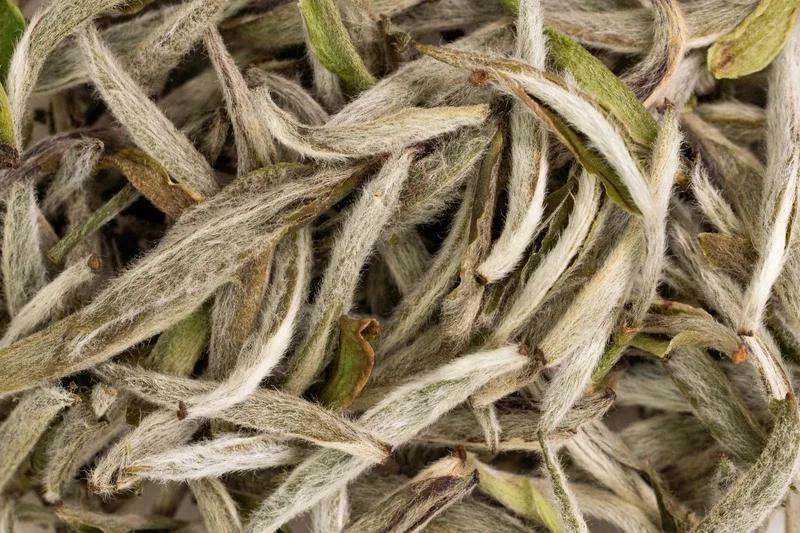
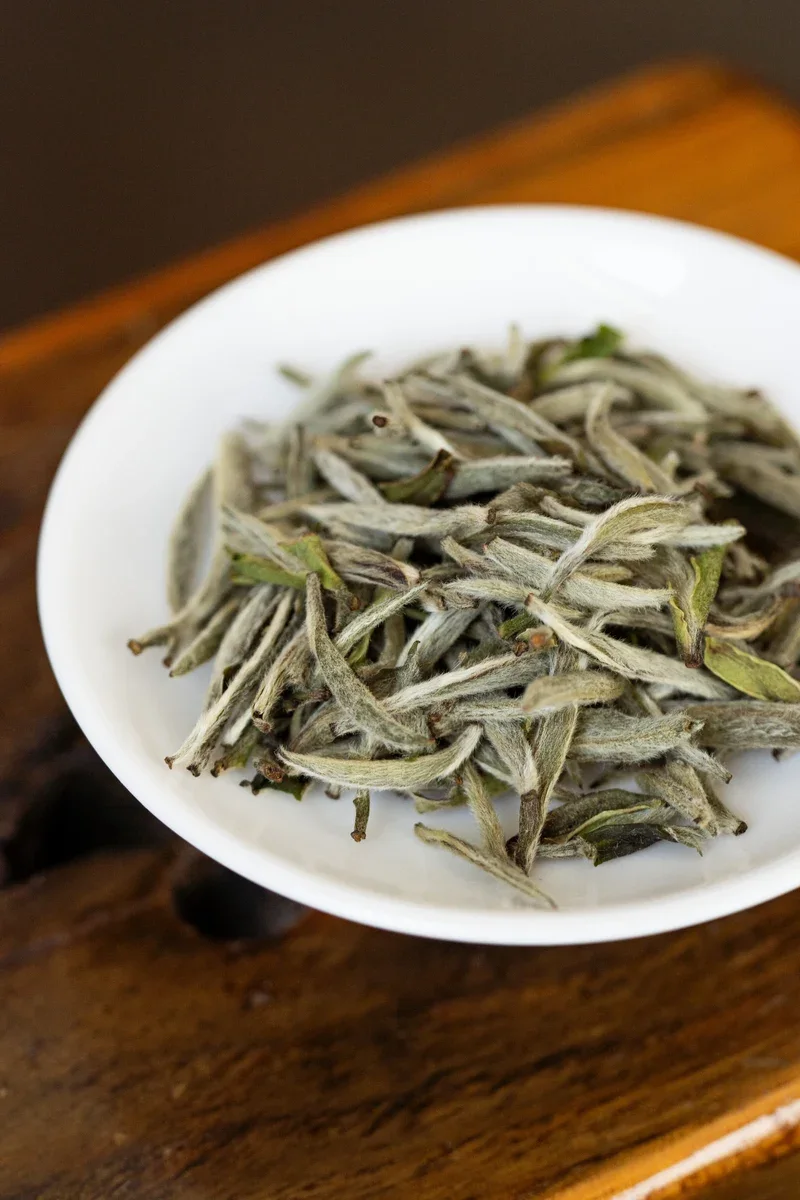
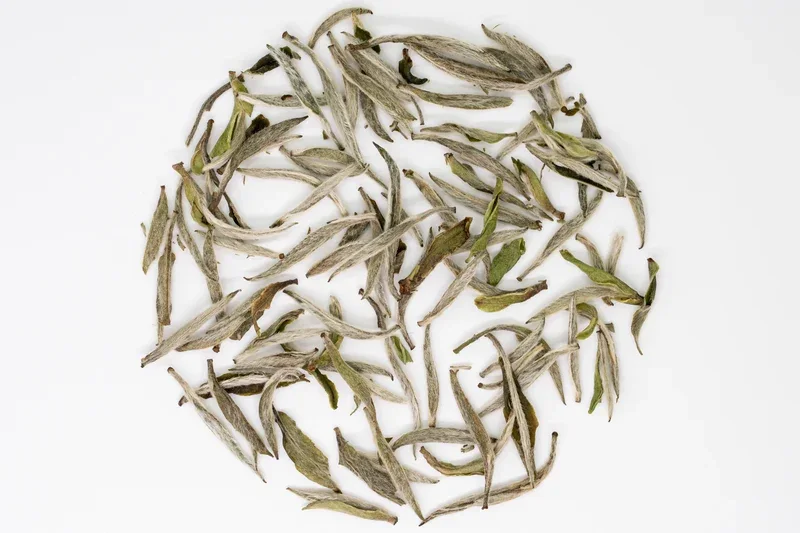
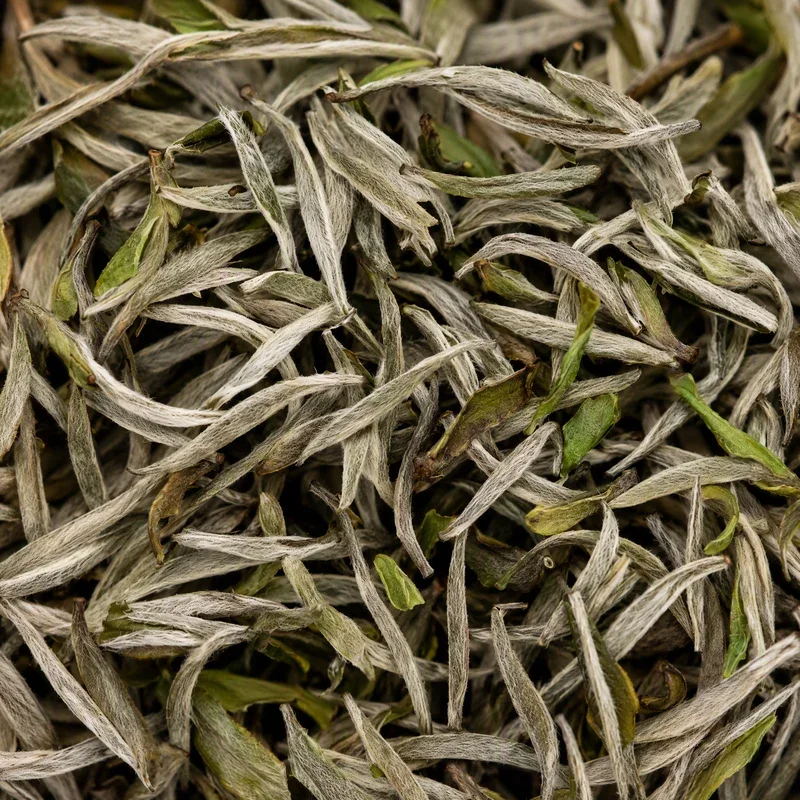
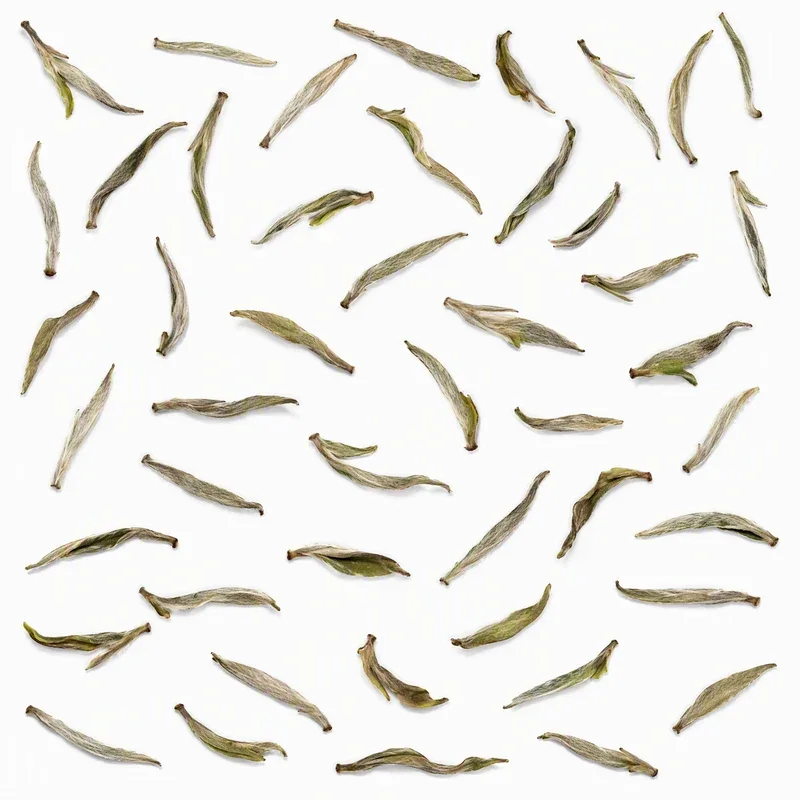
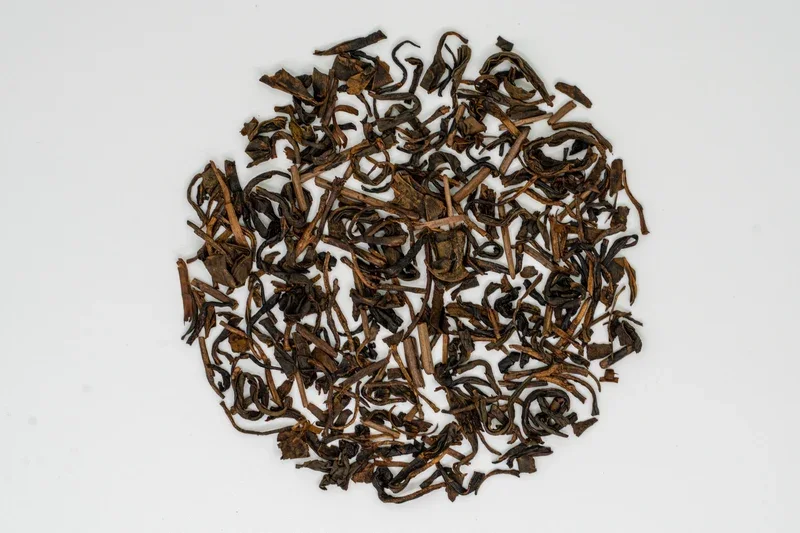
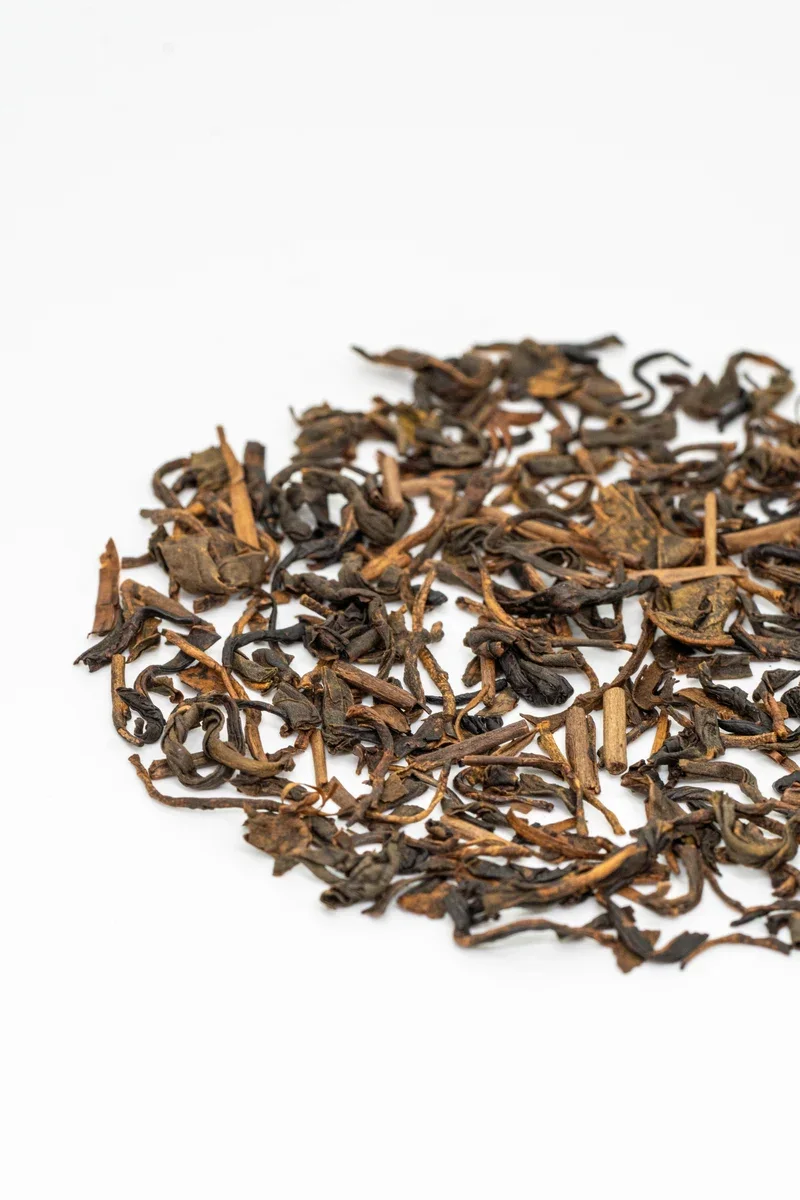
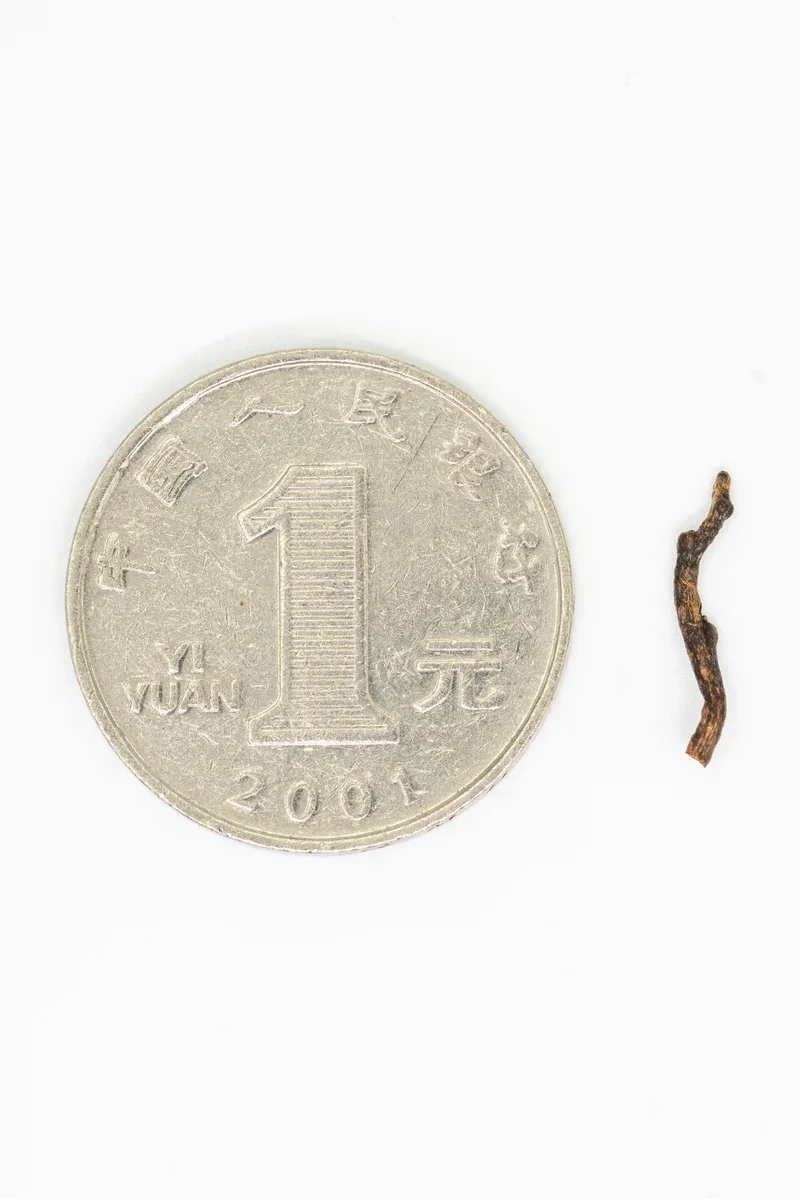
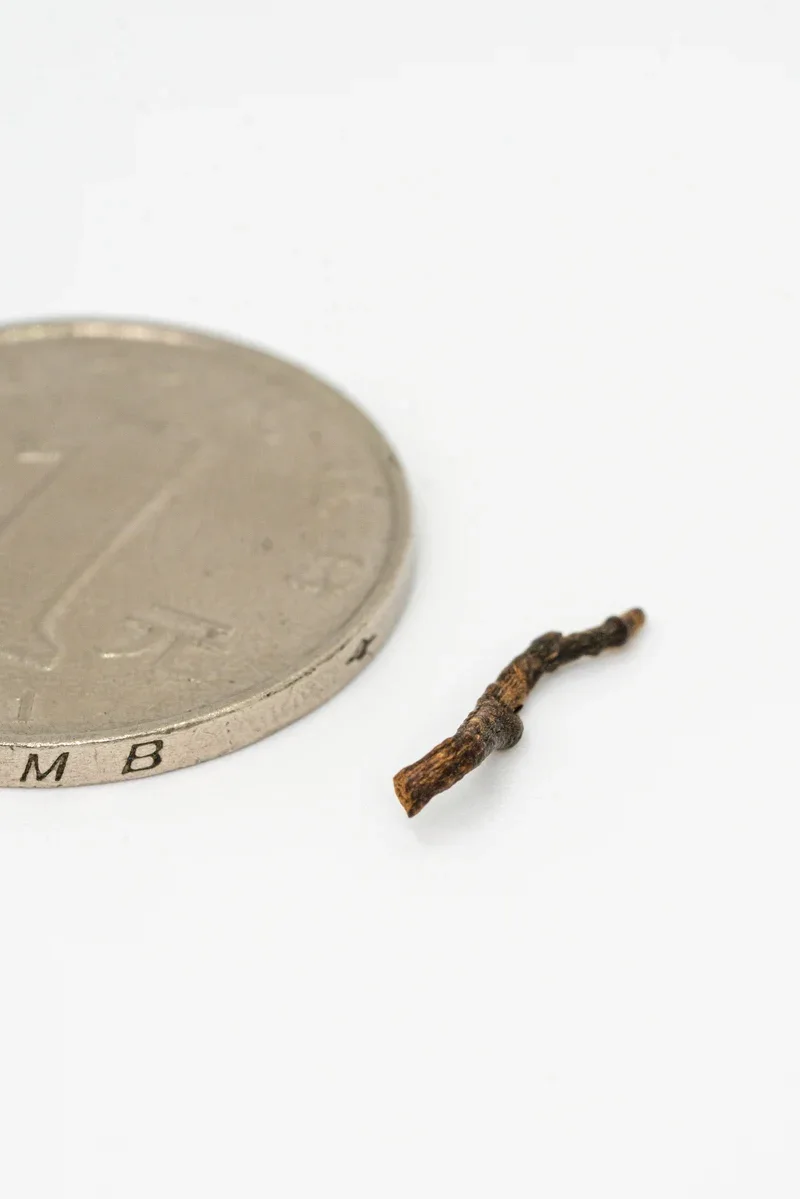
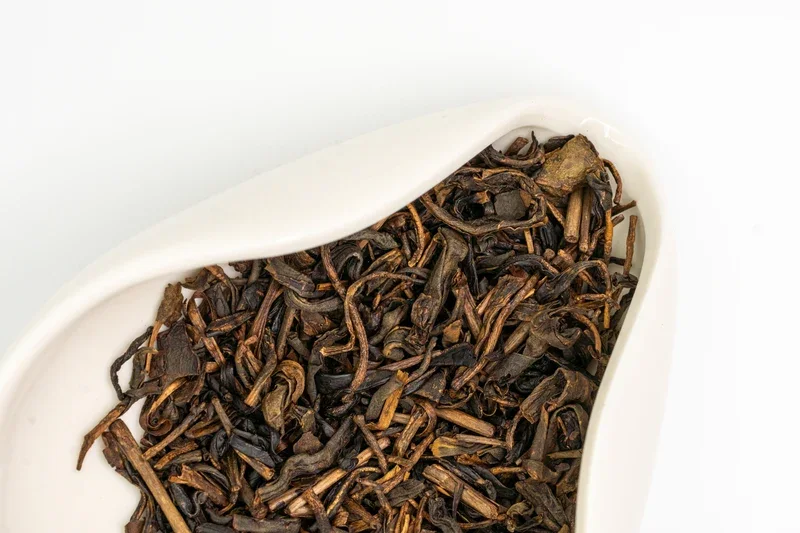
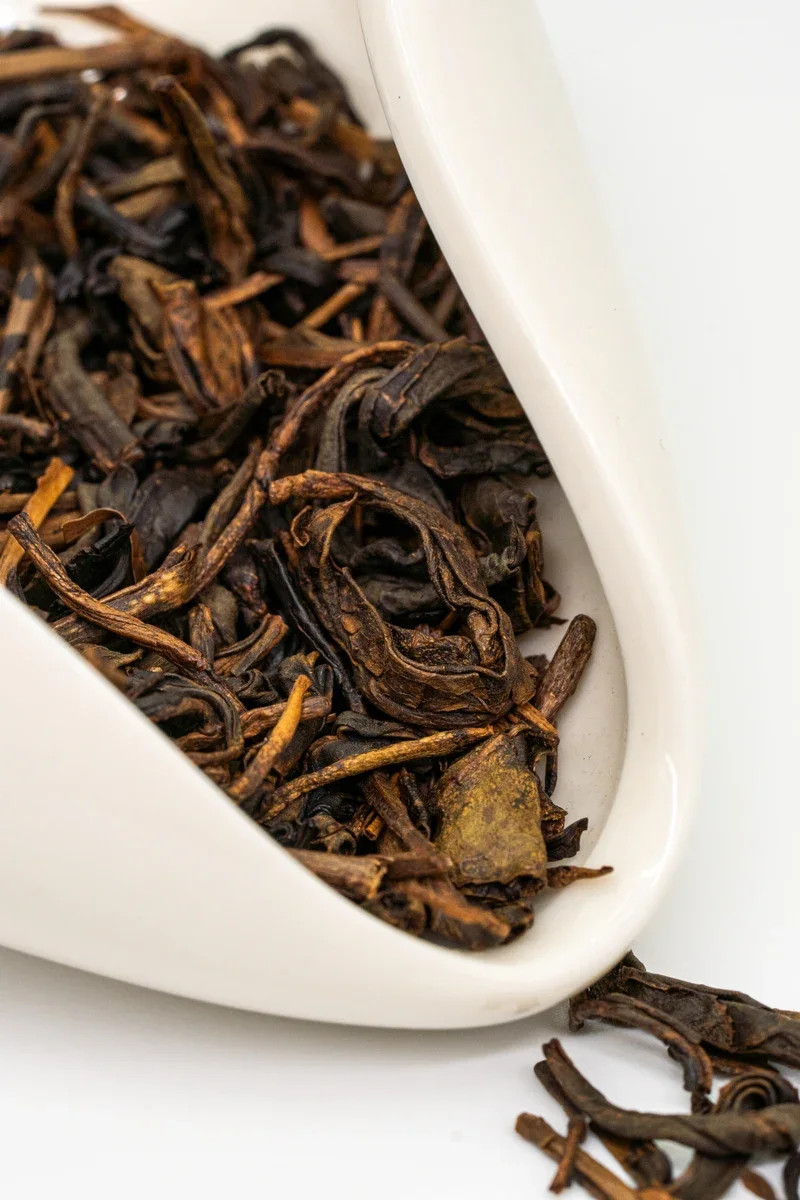
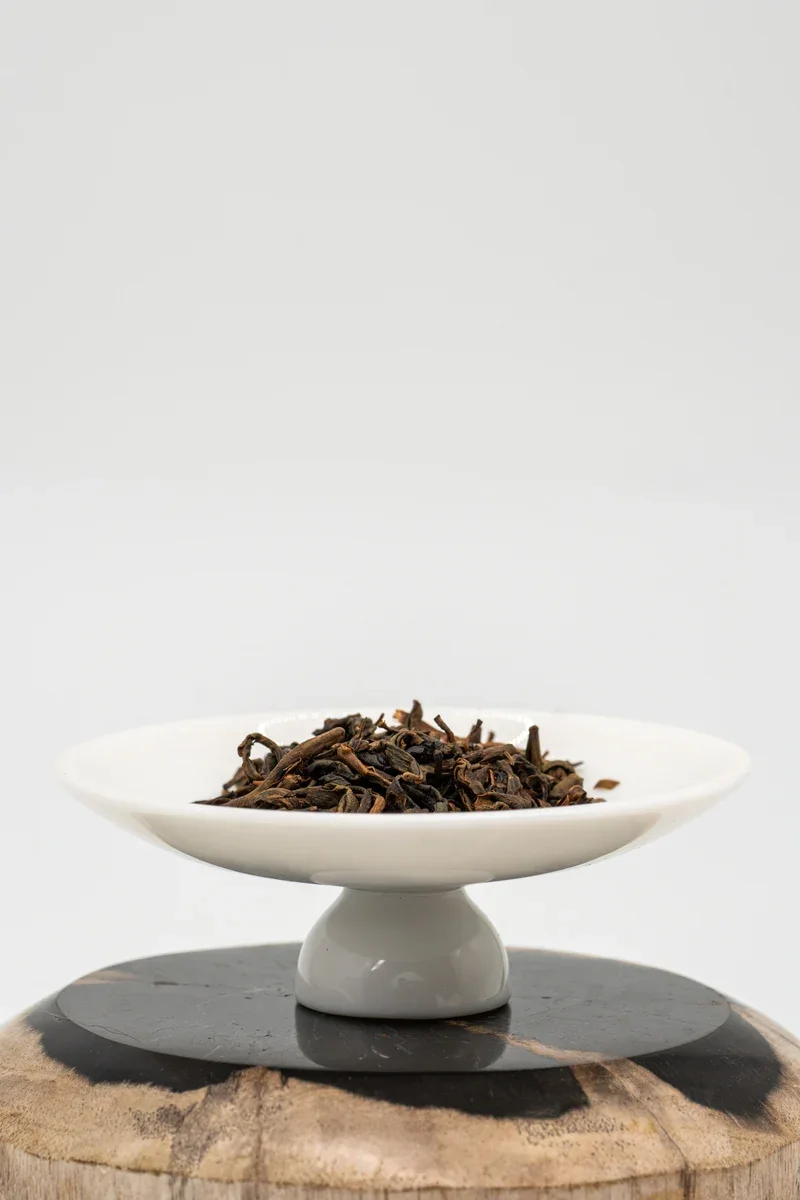
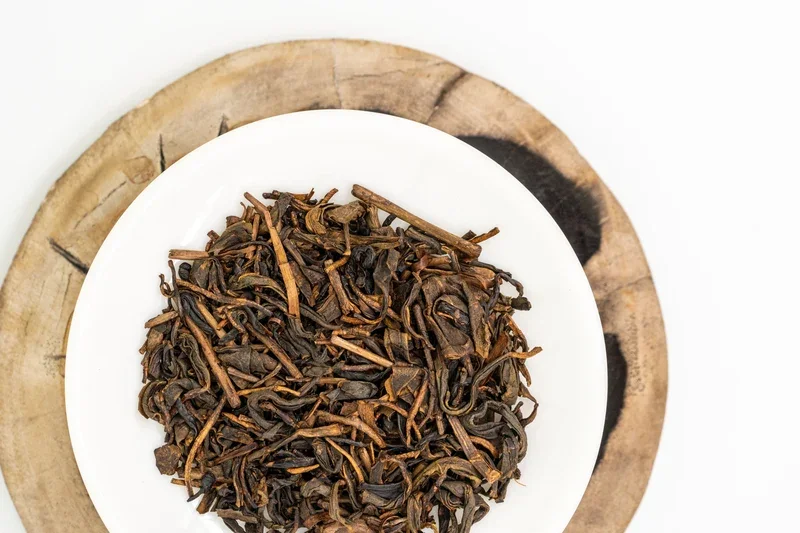
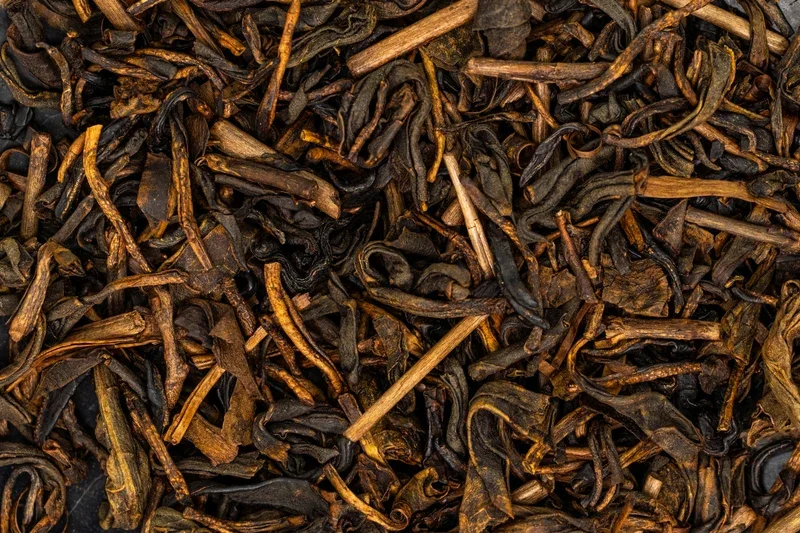
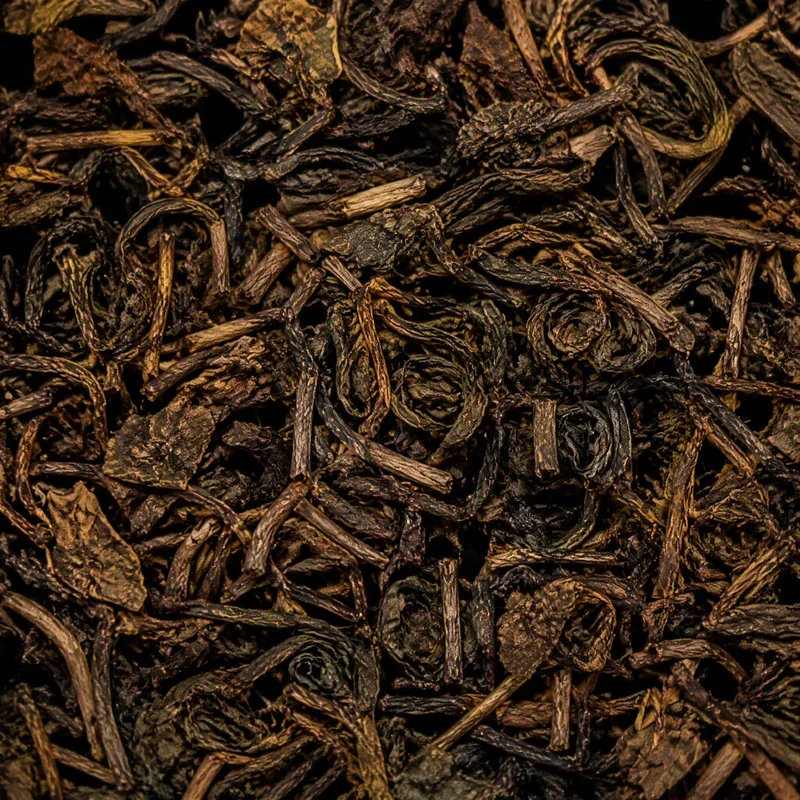
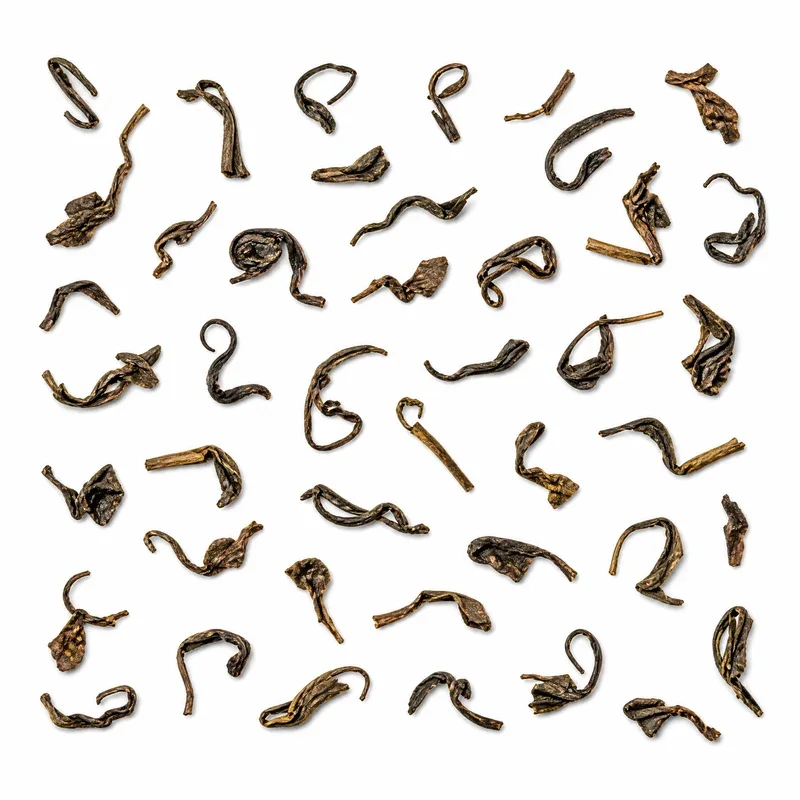
Dry Leaf Appearance: Unrolled, whole, needle-like buds of silvery-green color 15 mm long, with minimal amount of broken particles. Silvery down—dense and well-expressed.
Dry Leaf Aroma: Complex, multi-layered. Dominated by jasmine and fresh-cut meadow grass (timothy) notes, complemented by a subtle mineral undertone reminiscent of wet granite after rain. In mature leaves of the cultivar, woody-citrus tones are also noted, but in white tea raw material from early buds, the floral spectrum predominates.
Liquor Aroma: Develops and deepens the floral notes of dry leaf—jasmine, magnolia, light fruity undertones. Upon cooling, fresh apple (Fuji variety), tulip, and floral honey notes emerge.
Liquor Color: Clear, brilliant yellow, with light golden tint.
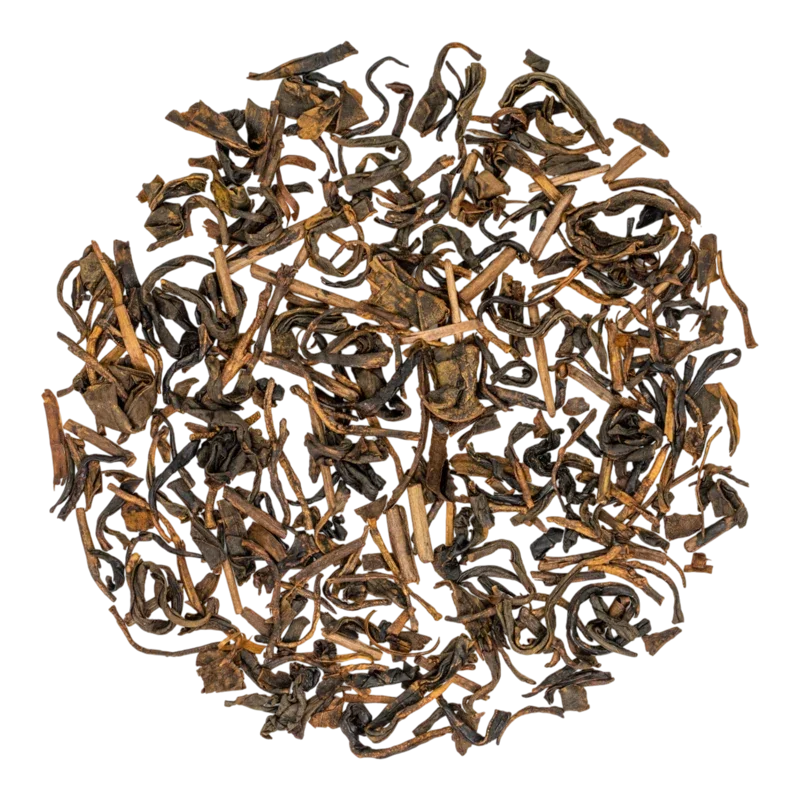
Spent Leaves: Whole, elastic leaves and buds of light green color, well-preserved in form. Trichomes on buds remain visible.
Taste: Multi-faceted, unfolding in waves. First wave—floral sweetness of magnolia with subtle mineral foundation. Middle part—nutty-creamy tones of hazelnut, soft texture. Finish—light ginger root sharpness and delicate astringency reminiscent of unripe persimmon. Texture—smooth, enveloping, with perceptible density for white tea. Aftertaste (回甘, huígān)—long, with sweet floral-honey overtones.
Alkaloids: Moderate caffeine content—~2% of dry weight. Theobromine and theophylline—in trace amounts.
Amino Acids: Markedly high L-theanine level—more than 5% of dry weight, significantly exceeding average indicators for white teas. Gentle drying preserves more than 80% of original amino acids from fresh leaf. High amino acid to polyphenol ratio determines pronounced sweetness and mildness of taste.
White tea processing allows fullest revelation of Qi Yun varietal aroma—spectrum of volatile compounds includes linalool (floral notes), nerolidol (fruity undertones), benzyl acetate (jasmine), as well as tones characteristic of Keemun genetic heritage, creating recognizable "Sri Lankan" aromatic foreground.
Minerals: Fluoride content—~0.03%. Potassium, magnesium, manganese, zinc. Mineral composition enriched due to specificity of alluvial red soils of Zhuoshui River valley.
Polyphenols: High catechin content, especially EGCG (epigallocatechin gallate)—~14% of dry weight. Total catechin level—over 18% (laboratory controlled). For comparison: Fujian Silver Needles usually contain 8–12% EGCG.
Vitamins: Significant vitamin C content—more than 150 mg per 100 g dry matter, higher than most green teas. B-group vitamins are present.
High antioxidant activity—ORAC indicator around 980 µmol TE/g, exceeding values of many products traditionally considered "superfoods" (blueberries, pomegranate). EGCG provides pronounced free radical neutralization.
Ability to inhibit alpha-amylase enzyme may contribute to slowing starch breakdown and reducing postprandial glucose levels. Relevant for metabolic syndrome prevention.
Preliminary studies indicate potential nerve cell protection by L-theanine and polyphenol complex, which may be significant for neurodegenerative condition prevention.
High L-theanine content (>5%) promotes alpha brain wave generation, providing "calm alertness"—relaxed concentration without sedative effect.
Catechins, polysaccharides, and vitamin C in complex provide general strengthening and immunostimulating action.
High vitamin C and antioxidant polyphenol content promotes collagen production and protects skin from ultraviolet damage.
Like any tea, may cause individual reactions.
Despite moderate content (~2%), people with increased caffeine sensitivity, sleep disorders, or heart rhythm disturbances should control consumption volume.
Medical consultation recommended; moderate consumption (1–2 cups daily) usually considered acceptable.
Tea polyphenols may affect metabolism of certain medications. When taking prescription drugs, specialist consultation advisable.
Soft, filtered, with low mineral content.
Tea Amount: 3–5 g per 150–200 ml water.
Teaware: Porcelain gàiwǎn (蓋碗, gàiwǎn)—optimal choice, allowing control of steeping time and observation of leaf opening. Glass teapot also suitable. Unglazed clay teaware not recommended as it absorbs delicate aroma.
Water Temperature: 80–85°C. Higher temperature may extract excessive bitterness and destroy delicate aromatic compounds.
Taiwanese white tea from large-leaf hybrid TTES No. 18. Bright menthol-camphor profile, fruity sweetness, oily texture. Qi Yun, in contrast—floral, elegant, with mineral foundation and without menthol tones. If Hongyu is exoticism and character, then Qi Yun is refinement and depth.
Fujian standard of silver needles. Fresh, mineral, with bamboo and haystack notes. Qi Yun differs with more pronounced floral sweetness, nutty overtones, and "warm" overall character, while Fuding Yin Zhen is more "cool" and laconic.
Red tea from the same TTES No. 23 cultivar—the main product for which the variety was developed. Fully oxidized, with orange-red liquor, sweet floral-fruity notes, and moderate astringency. According to TRES official description, Qi Yun red tea possesses "orange-red, bright and glossy liquor, refined aroma with sweet flower and fruit notes, sweet-rich taste with pleasant astringency." Compared to white tea version—denser, more structured, but less "airy" and with lost portion of delicate floral nuances preserved by minimal processing.
White tea from wild C. taliensis. Even softer and more "forest-like" in character, with orchid and magnolia notes. Qi Yun—more structured, with nutty middle part and ginger sharpness in finish.
Price Category: Ultra-premium. Due to extremely limited production volume (~200 kg/year), hand harvesting, and highest quality, price significantly exceeds cost of other Taiwanese white teas and many oolongs. Retail price—from 60 to 120+ USD per 100 g, depending on batch and sales channel.
Extreme rarity of cultivar (less than 0.5 ha plantations at pioneer producer), manual labor, ultra-small batches, variety novelty, controlled quality with laboratory verification.
No reviews yet. Tell us what you think of this tea.
Rate this tea and share your impressions. We review each submission before publishing it.