Brewing
Gongfu brewing
- Water temperature
- 75 °C
- Tea amount
- 5 g
- Water volume
- 100 ml
- First steep
- 10 s
- Time added per infusion
- 5 s
- Infusions
- 4

bái jiān
Choose a brewing method. Start with the recommended quantities and time, then adjust to taste.
Brewing
Brewing
Taste
Tea encyclopedia
Category: Yunnan white tea from large-leaf raw material. According to the Yunnan Tea Circulation Association standard T/YNTCA 007-2021 «Yunnan Large-leaf White Tea» (云南大叶种白茶), it belongs to the category of Yunnan white teas. Functionally equivalent to Bái Háo Yínzhēn (白毫银针, «Silver Needles») — pure buds — however, formally standard GB/T 22291-2017 reserves this term for Fujian cultivars.
Category: Yunnan white tea from large-leaf raw material. According to the Yunnan Tea Circulation Association standard T/YNTCA 007-2021 «Yunnan Large-leaf White Tea» (云南大叶种白茶), it belongs to the category of Yunnan white teas. Functionally equivalent to Bái Háo Yínzhēn (白毫银针, «Silver Needles») — pure buds — however, formally standard GB/T 22291-2017 reserves this term for Fujian cultivars.
Coordinates: Approximately 23°28′ N, 100°42′ E (Jinggu/Minle area).
Origin: China, Yúnnán Province (云南省, Yúnnán Shěng), Pu'er City (普洱市, Pǔ'ěr Shì), Jǐnggǔ Dǎi and Yī Autonomous County (景谷傣族彝族自治县, Jǐnggǔ Dǎizú Yízú Zìzhìxiàn). Main area — Mínlè Township (民乐镇, Mínlè Zhèn), Yāngtǎ Village (秧塔, Yāngtǎ) — the historical birthplace of the Jinggu Dabaicha cultivar. Also produced in other areas of Yunnan where the cultivar has been introduced: Líncāng (临沧), Xīshuāngbǎnnà (西双版纳) and others.
Type: White tea (白茶, báichá) — lightly oxidized (5–10% oxidation). Technology: withering and drying, without fixation shaqing (杀青) and without rolling.
Cultural Significance: Bai Jian is one of the faces of the «new Yunnan wave» of white tea that emerged in the 21st century. Along with Yuè Guāng Bái (月光白), it demonstrates that Yunnan large-leaf terroir is capable of producing white teas qualitatively different from Fujian ones — denser, sweeter, with pronounced «body» and aging potential. For Yunnan producers, Bai Jian is a way of diversification: the same cultivar from which sheng pu-erh and red tea are made, when processed as white tea, gives a completely different product.
Name Breakdown: «Bai» (白, bái) — white, indicates the silvery down and white tea category. «Jian» (尖, jiān) — point, tip, apex — indicates the pointed shape of the buds. Not to be confused with «剑» (jiàn, «sword»). The Russian name «White-downy Blades» is a figurative translation emphasizing the visual similarity of silvery buds to thin blades.
Cultivar: Jǐnggǔ Dàbáichá (景谷大白茶, Jǐnggǔ Dàbáichá), also known as Yāngtǎ Dàbáichá (秧塔大白茶). Group-population variety (有性群体品种, yǒuxìng qúntǐ pǐnzhǒng), since 2022 also registered as a clonal variety (登记编号 GPD茶树 (2022) 530052). Plant — tree (乔木, qiáomù), height 3–5 m, semi-spreading crown, sparse branching. Leaf large: length 13–17 cm, width 5.7–7.8 cm, elliptical, with 11–13 pairs of lateral veins, soft, green. Buds large, fleshy, abundantly covered with long, dense silvery-white down (trichomes) — distinctive feature of the variety: unlike most Yunnan cultivars, where down is noticeable only on young shoots in a certain season, in Dabaicha the down covers buds and leaves constantly and abundantly.
Picking: Spring — main, before Qīngmíng (清明) or slightly later. Only large unopened buds (单芽, dān yá) are picked. Strict requirements are applied to buds: they must be large, fluffy, white — without purple or green tinge; crushed, damaged or too «thin» buds are not allowed (thin buds produce less sweet tea).
Raw Material: One bud 0.67 g (average for one bud with two leaves; pure bud — ~0.3–0.4 g). Color — yellow-green, down — silvery-white, dense. Hand-picked.
Altitude: 1100–1780 m. Main zone — Yangta, ~1700–1750 m.
Climate: Subtropical monsoon, with pronounced vertical zonality. Mountains high, often shrouded in fog. Climate cool for the latitude: average annual temperature ~18–20 °C. Precipitation ~1200–1500 mm/year. Relative humidity >80%. Significant diurnal temperature variations promote amino acid accumulation.
Soil: Red soils and yellow soils, acidic (pH 4.5–5.5), deep, loose, rich in organic matter. Good drainage on mountain slopes.
Jǐnggǔ County (景谷县), Pu'er City, southwest Yunnan. Located south of the Tropic of Cancer (北回归线 crosses the county). Landscape — mountains, deep valleys, elevation differences from 600 to 2900 m. On the county territory, a fossilized broad-leaf magnolia imprint aged ~35.4 million years (景谷宽叶木兰化石) was discovered — the only one in the world, confirming the antiquity of the region as a center of origin of flowering plants.
Jinggu County is one of the least industrially developed in Yunnan. Dabaicha plantations are part of a mountain landscape with high biodiversity. Certified ~80,000 mu (~5,300 ha) of organic tea gardens. Yangta is a historic village where more than 400 ancient Dabaicha trees are preserved (largest — circumference 1.22 m, height 5.8 m, trunk diameter 0.28 m).
Hand-picking of large, undamaged buds. Careful transport without crushing — down is fragile.
Buds are spread in a thin layer on bamboo sieves. Combined or shade withering is used: initial phase in gentle sun (日光萎凋) or under diffused light, then — in a ventilated room (室内萎凋). Yunnan practice often includes an element of sun-drying (晒青, shài qīng), giving a characteristic «sunny» shade. Duration — 48–72 hours. At this stage, moisture loss occurs (~30%), light oxidation, formation of aroma and taste.
Gentle — in the sun or at low temperature (~40–55 °C). Residual moisture — 5–6%. Absence of shaqing — key difference from sheng pu-erh from the same raw material.
Removal of damaged, broken or «naked» buds.
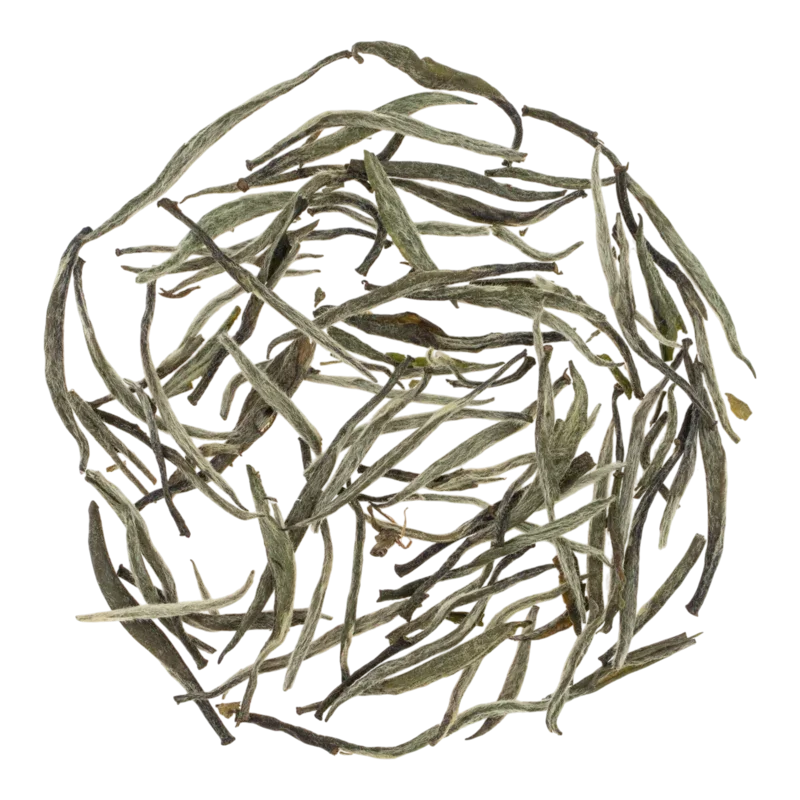
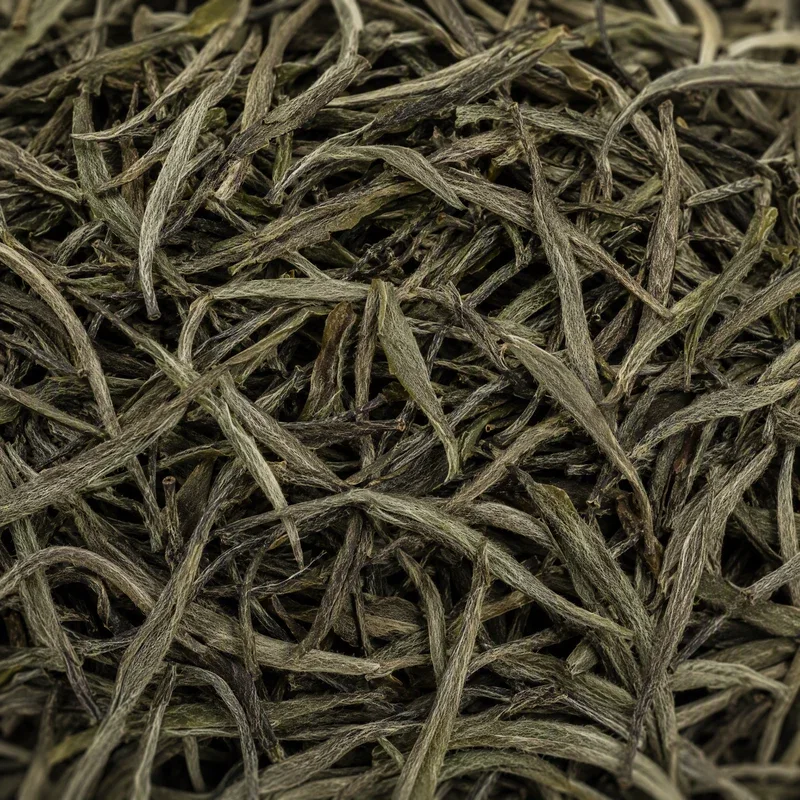
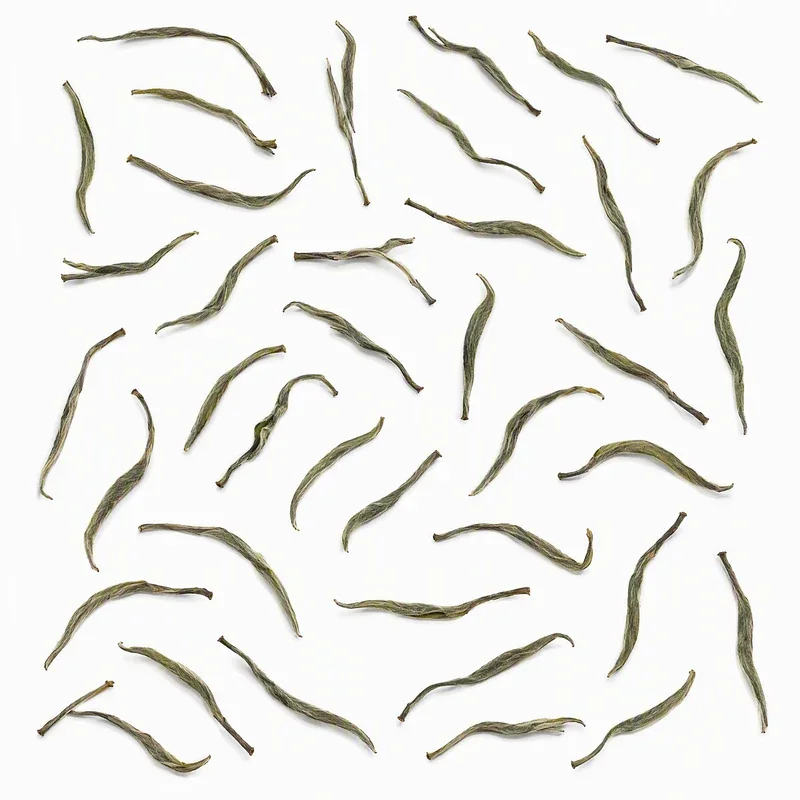
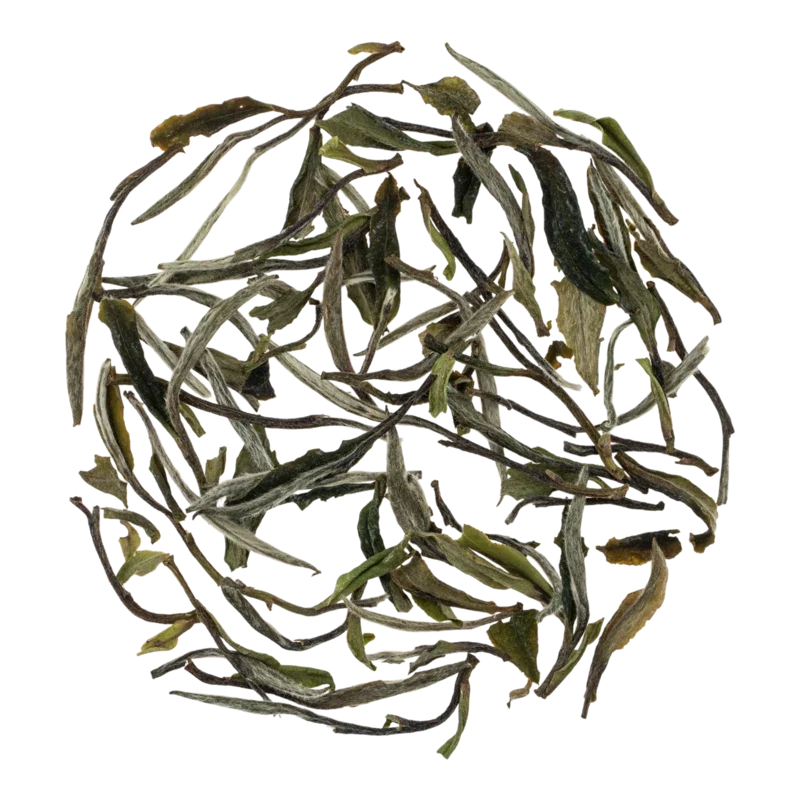
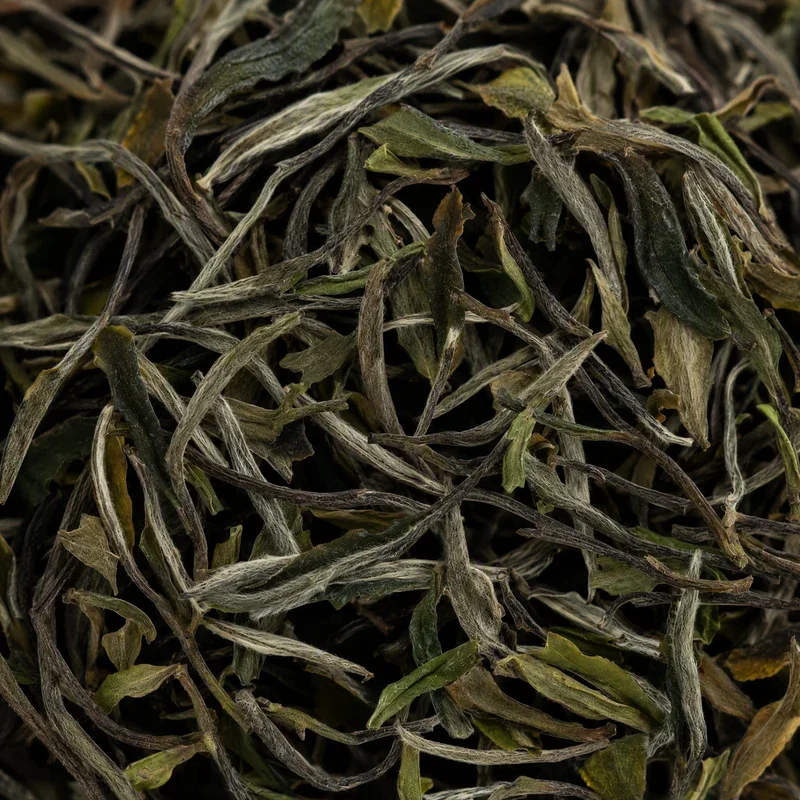
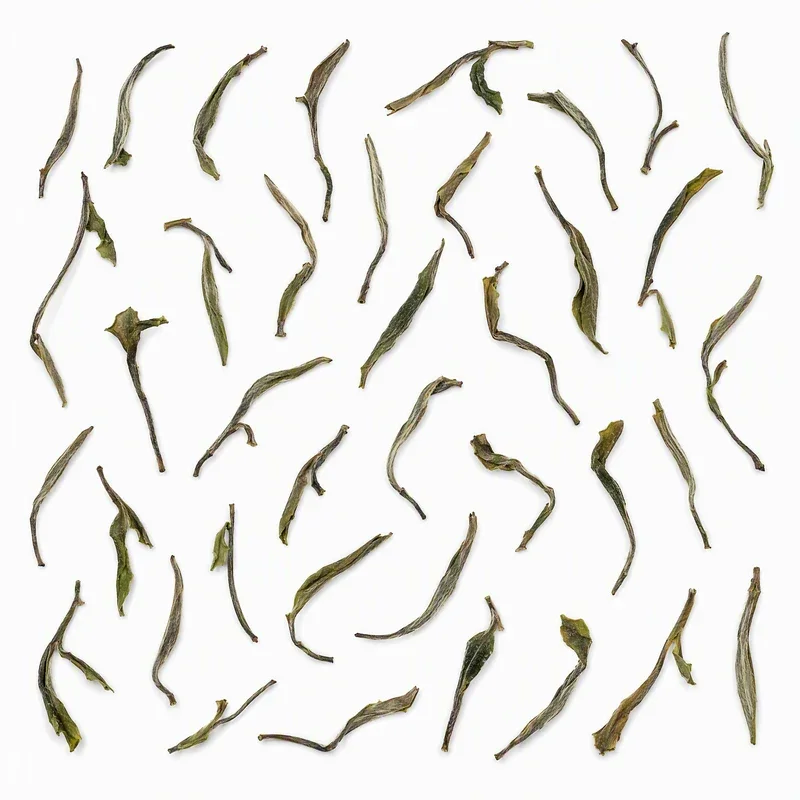
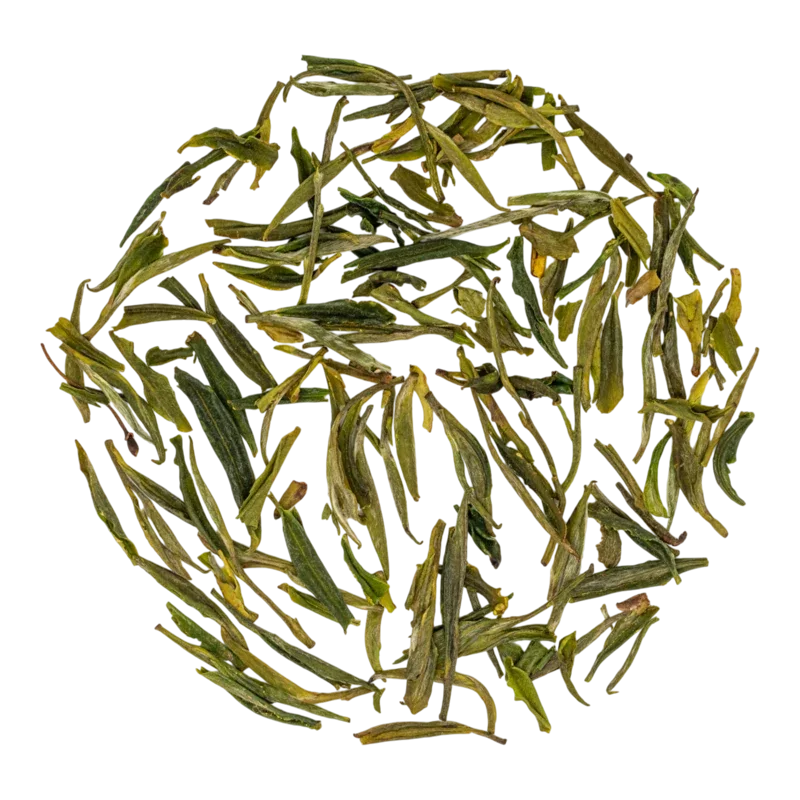
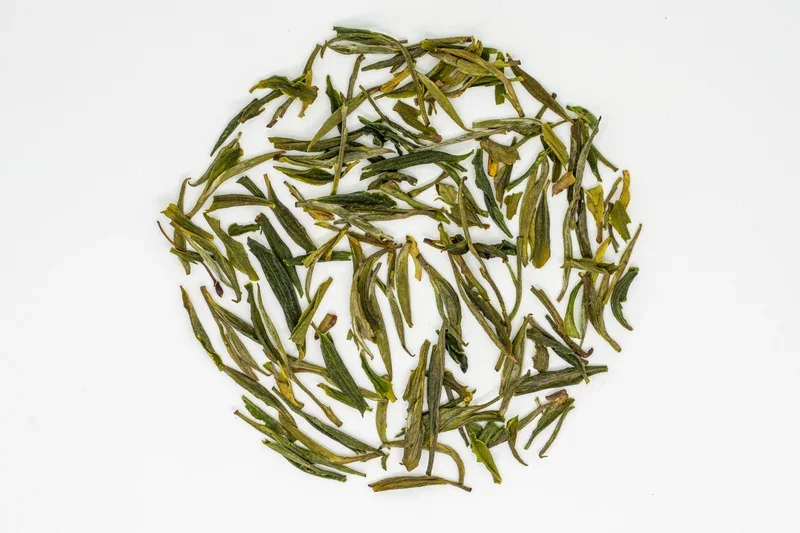
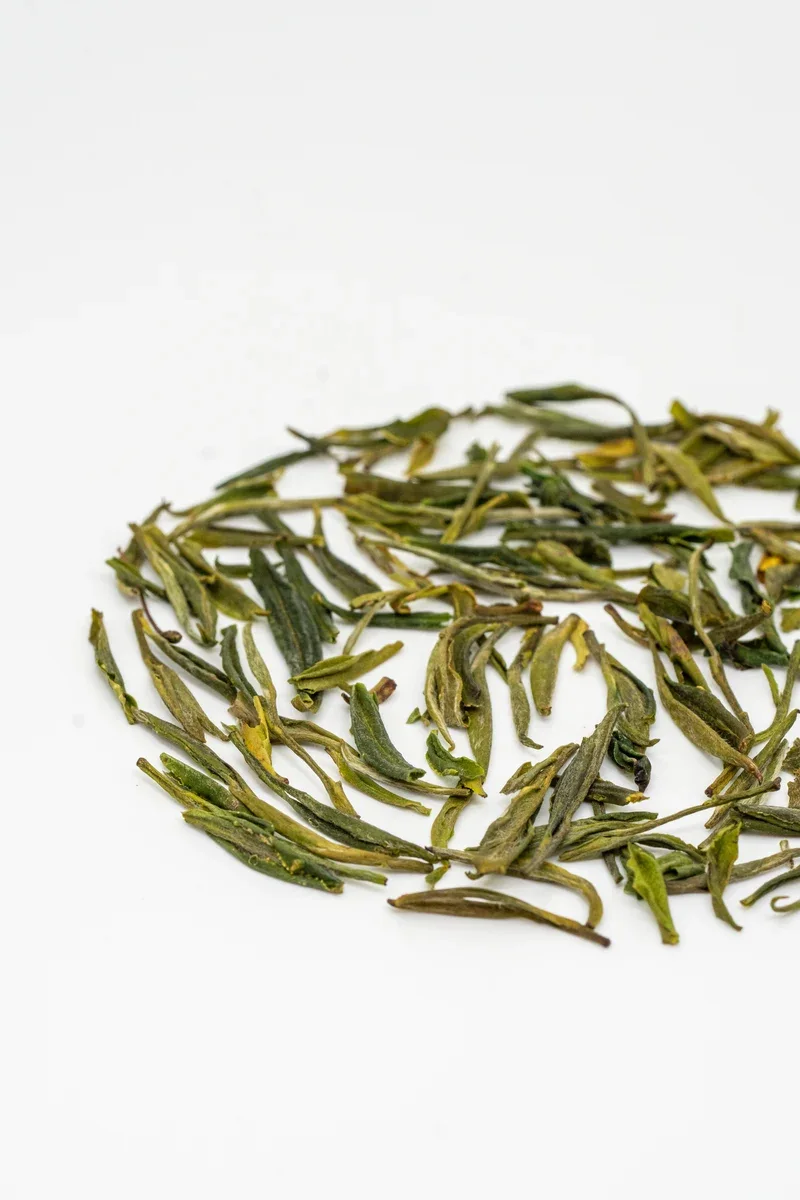
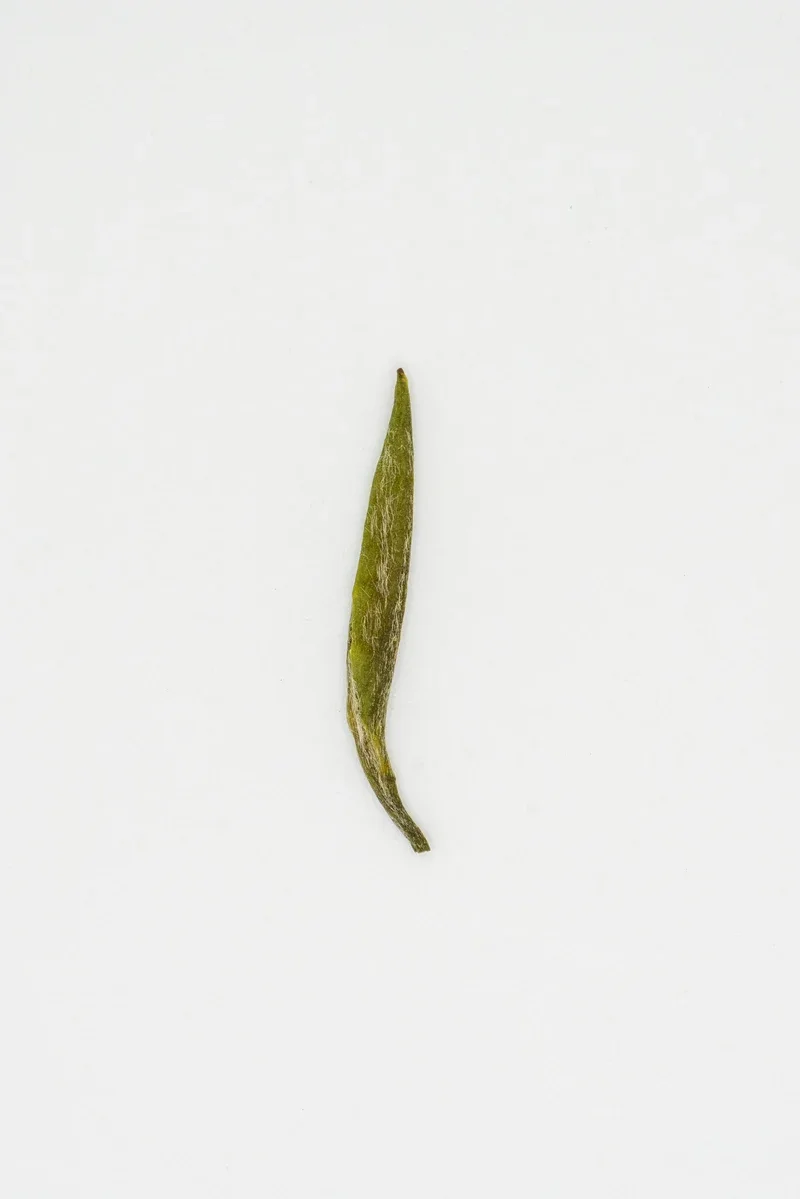
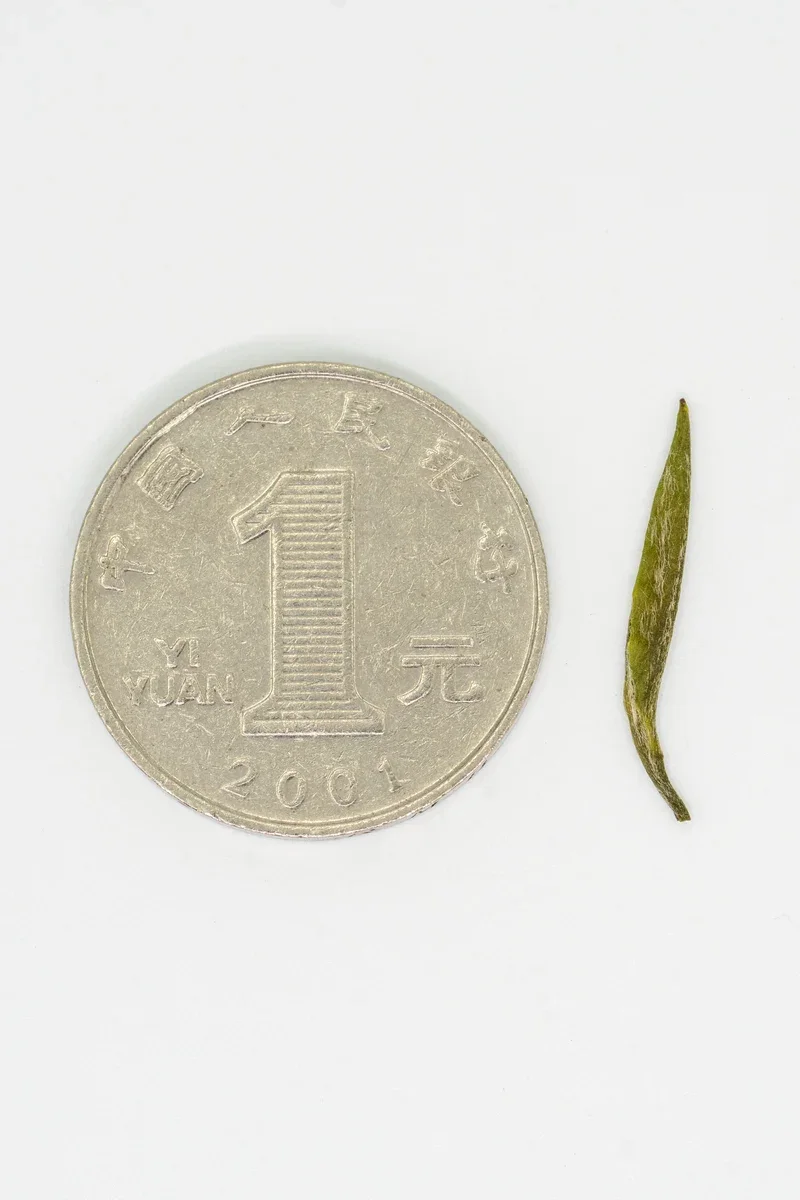
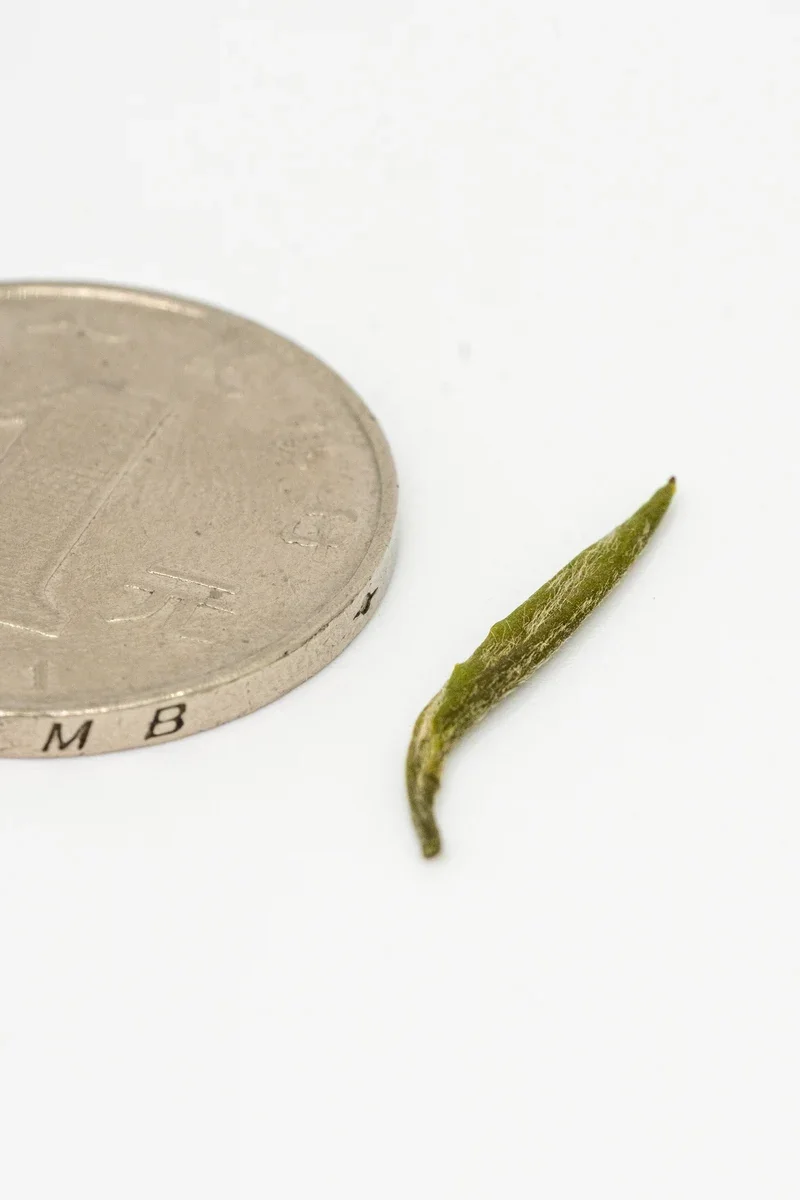
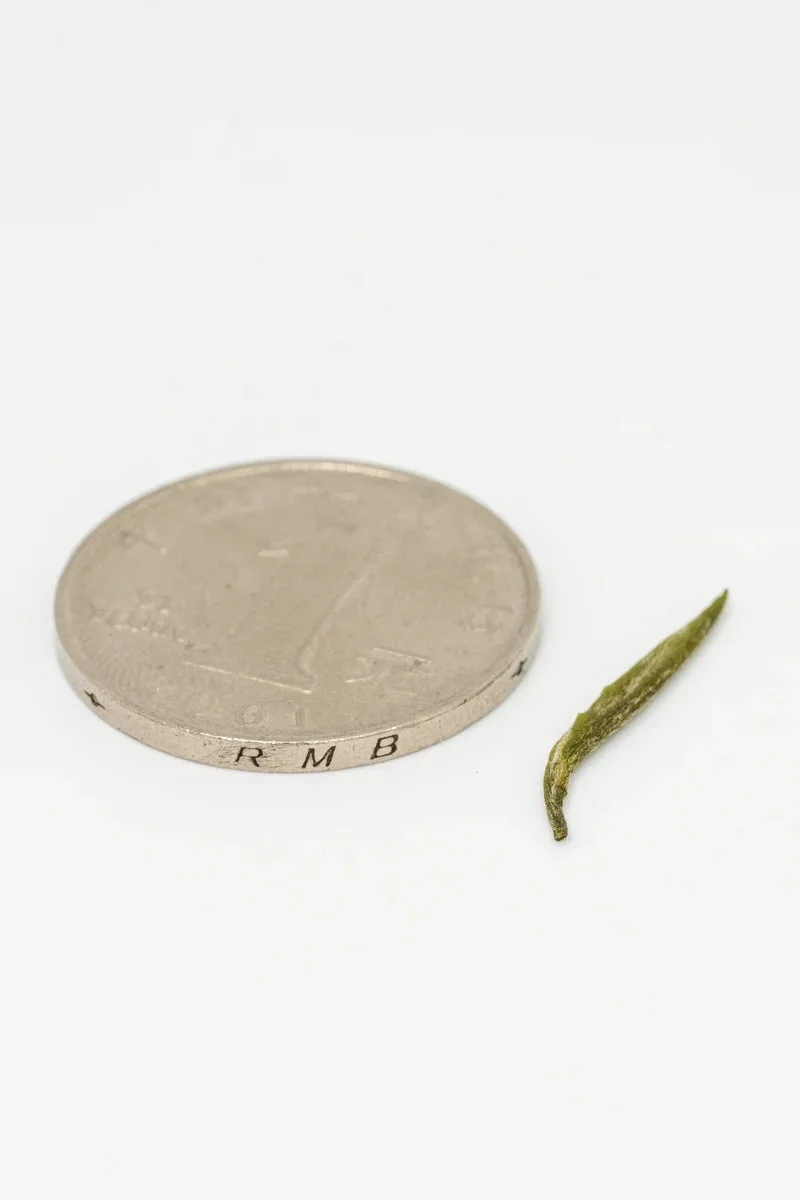
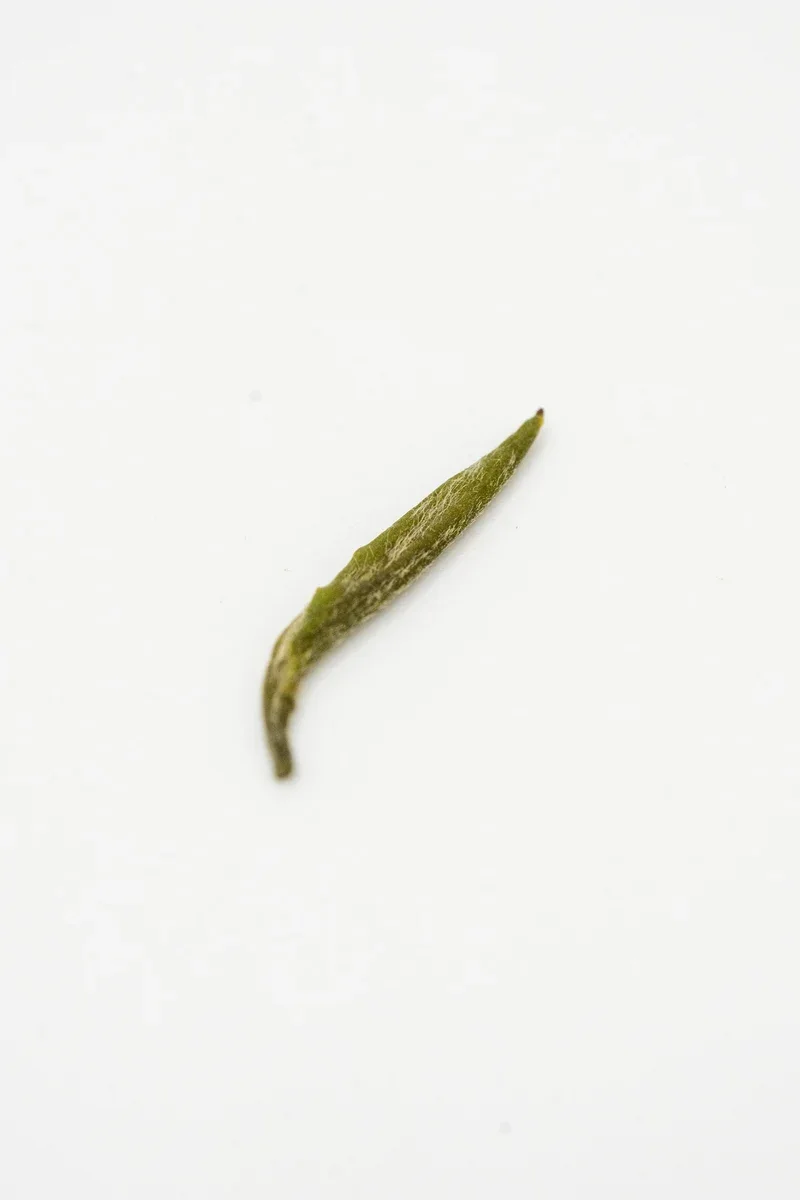
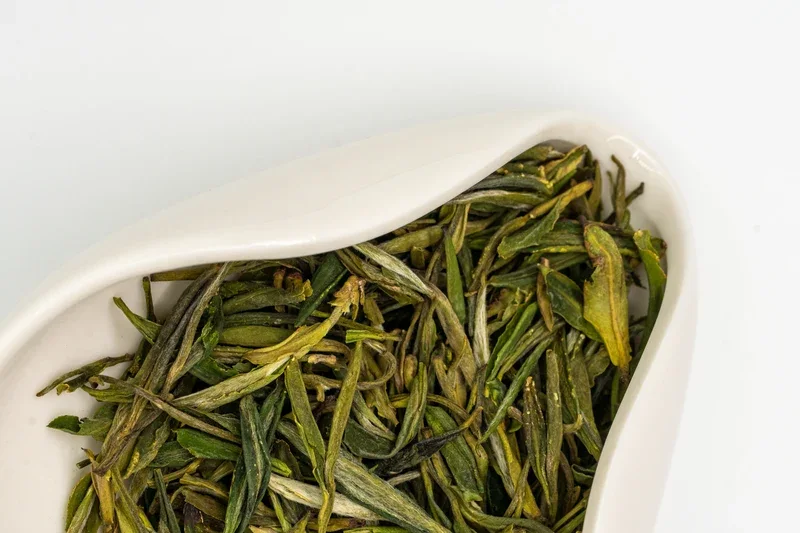
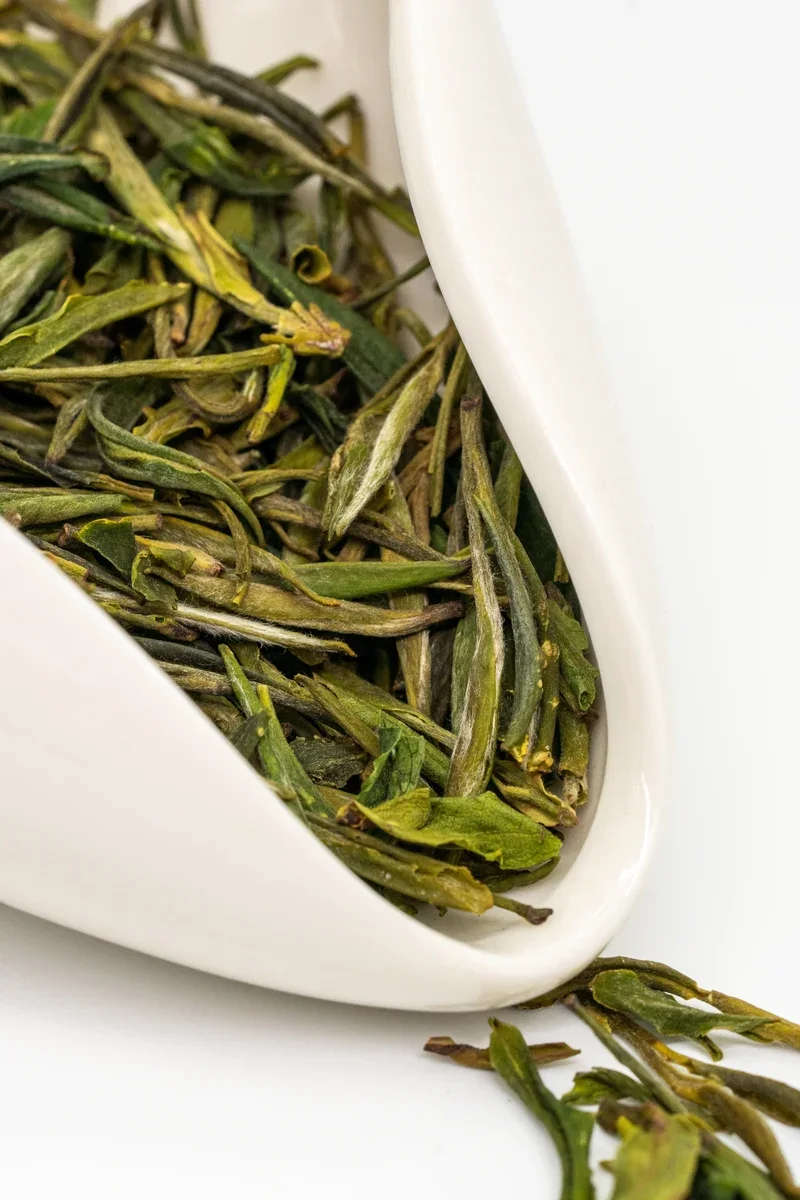
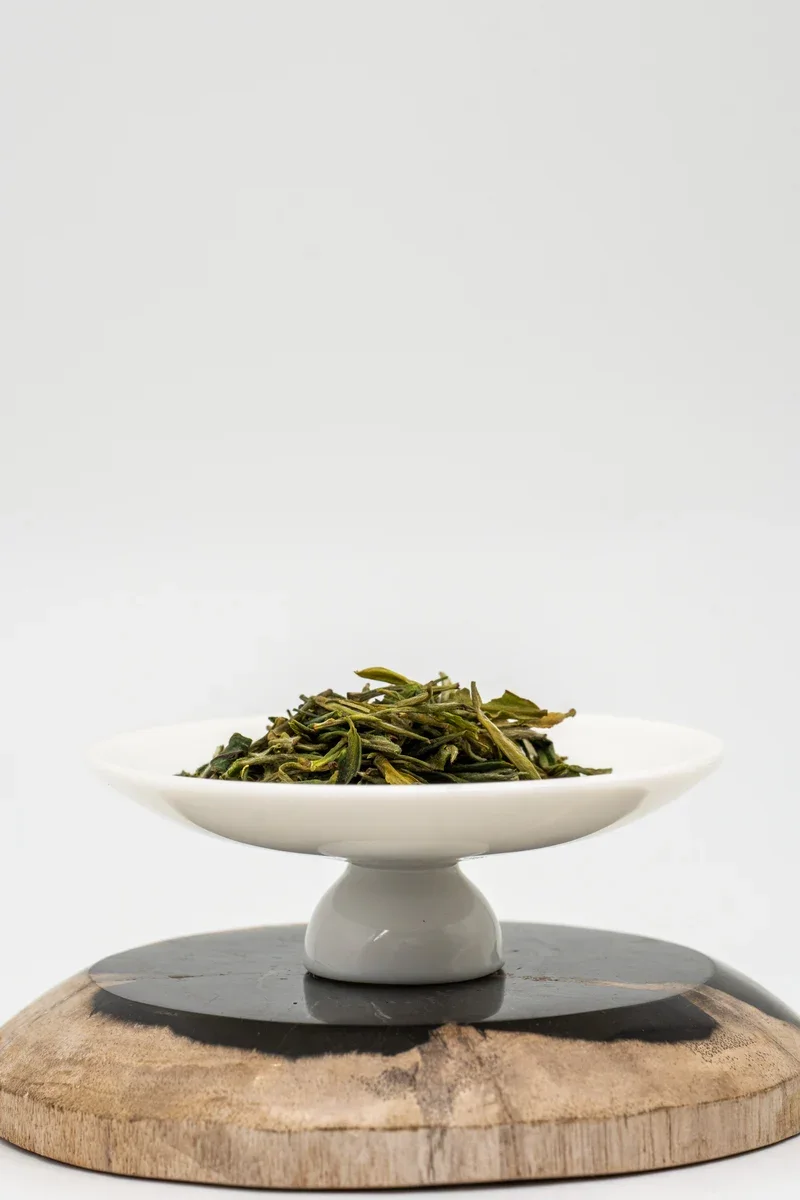
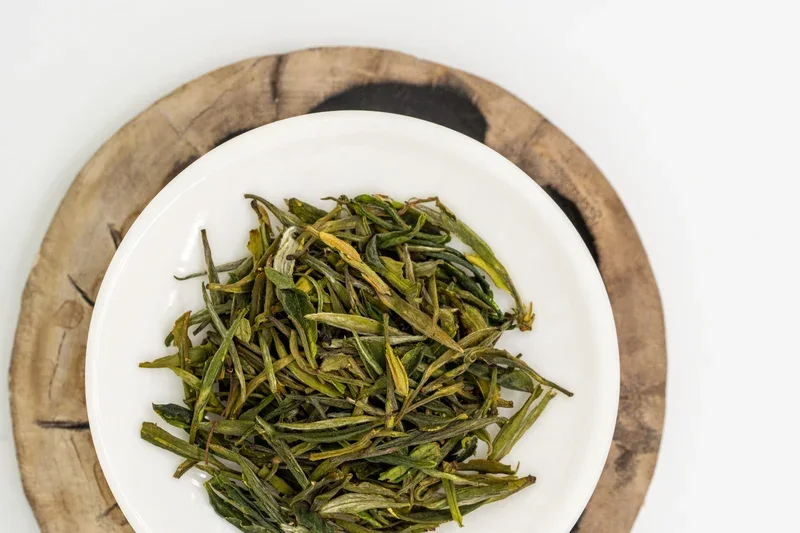
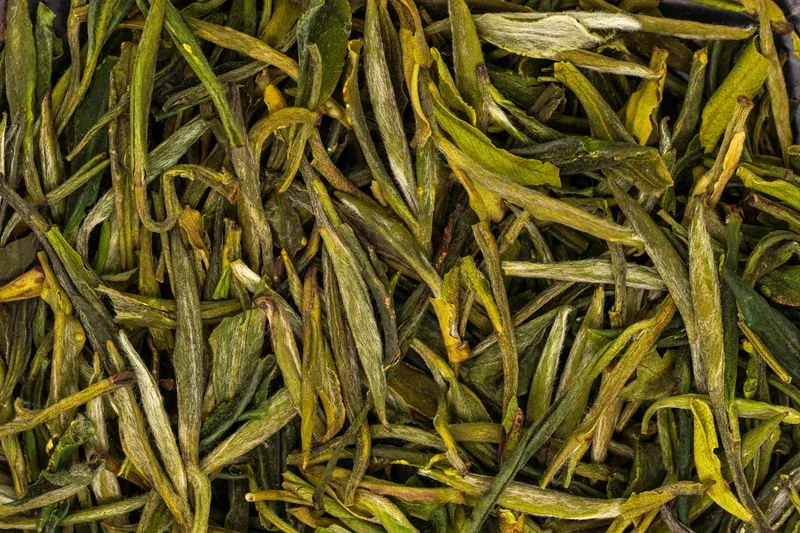
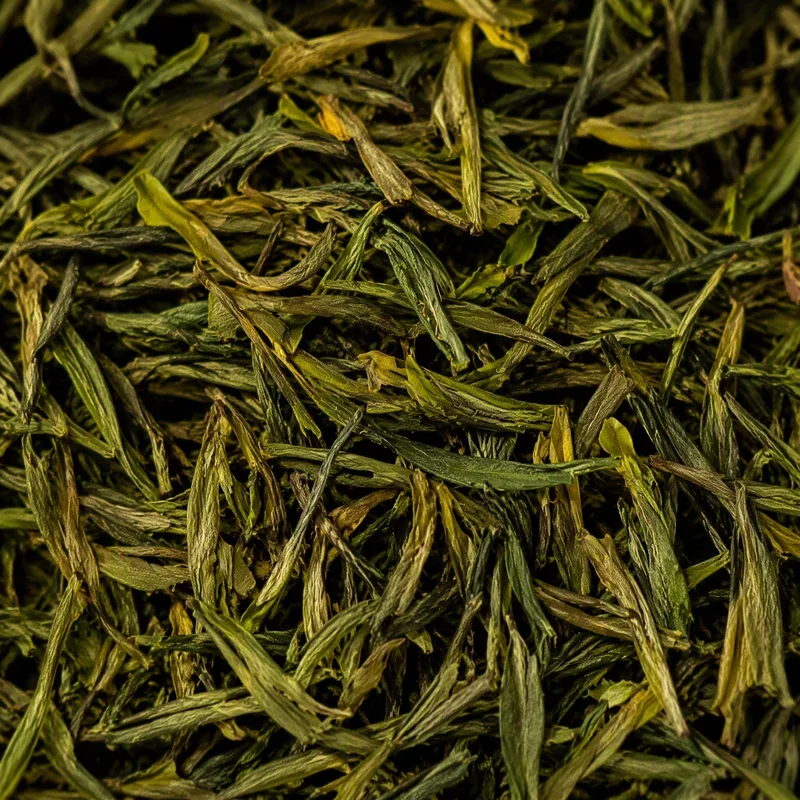
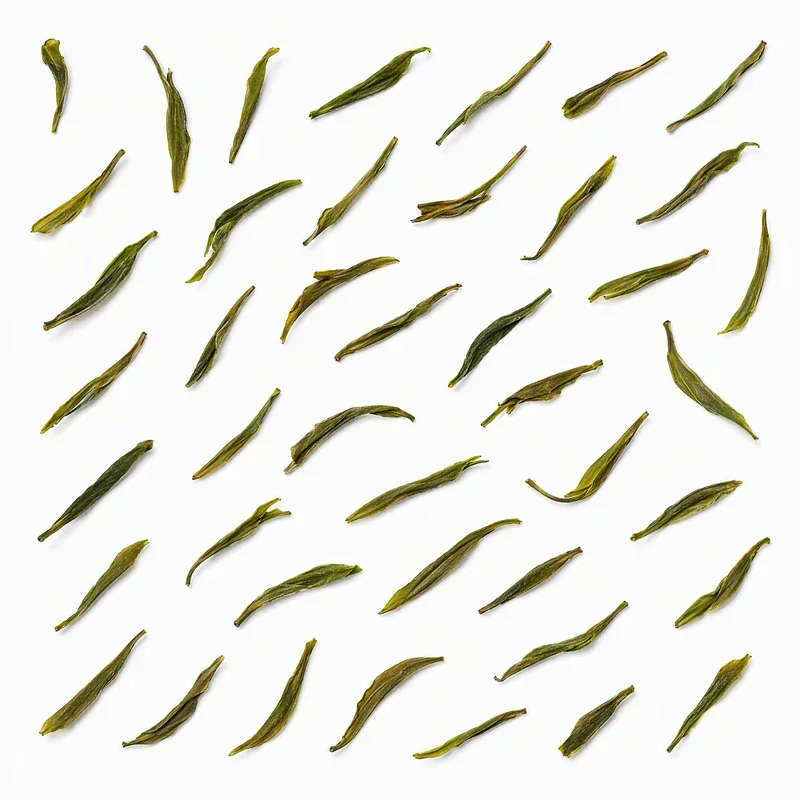
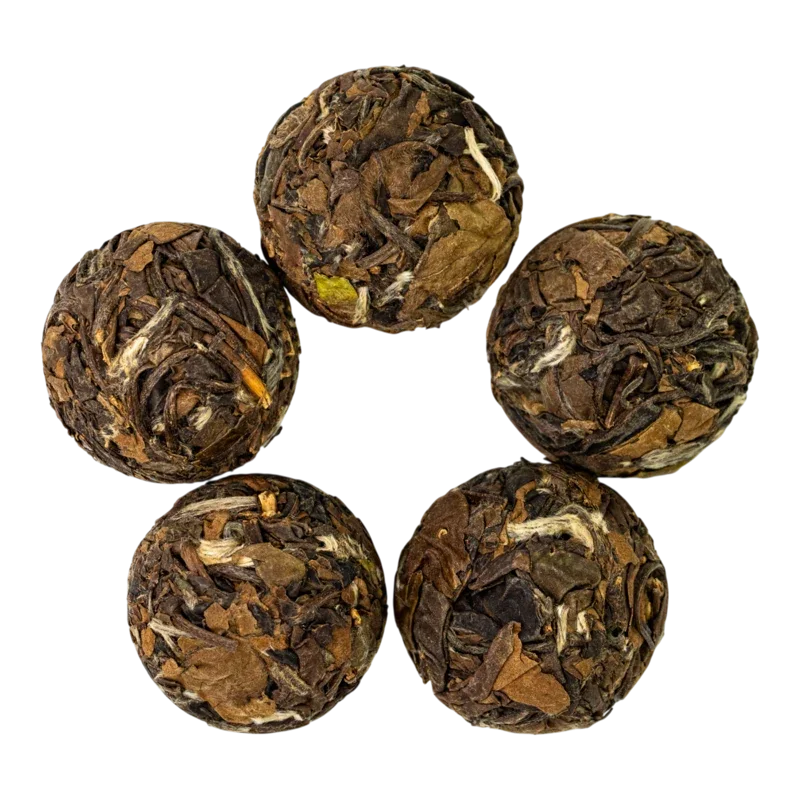
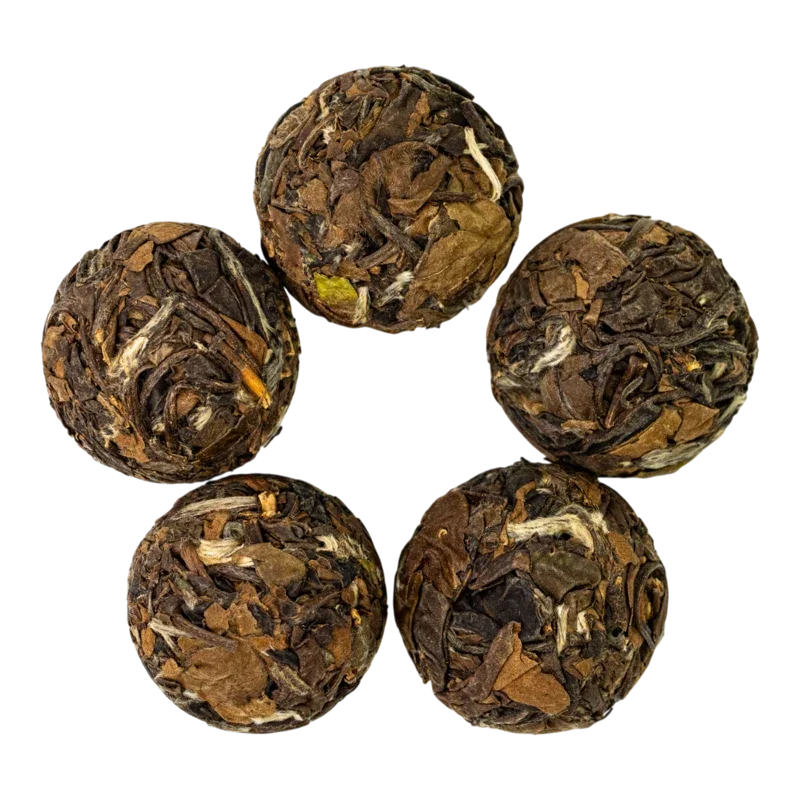
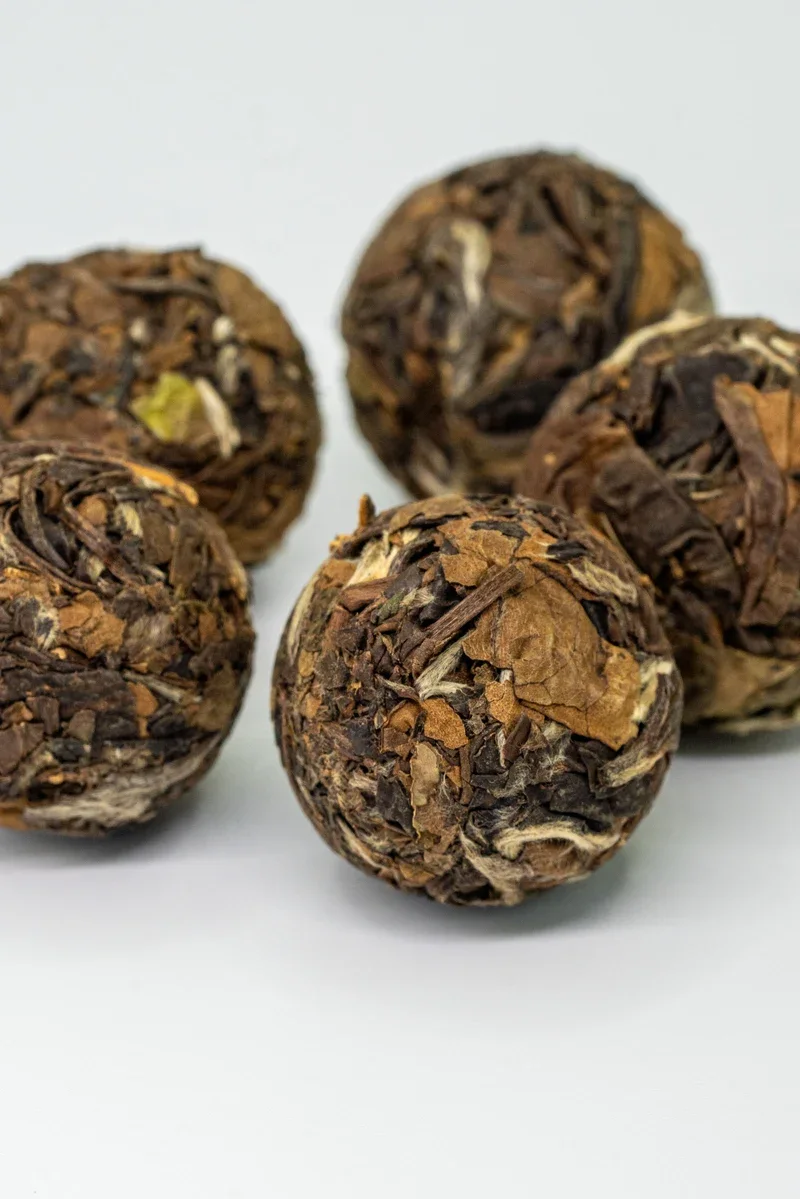
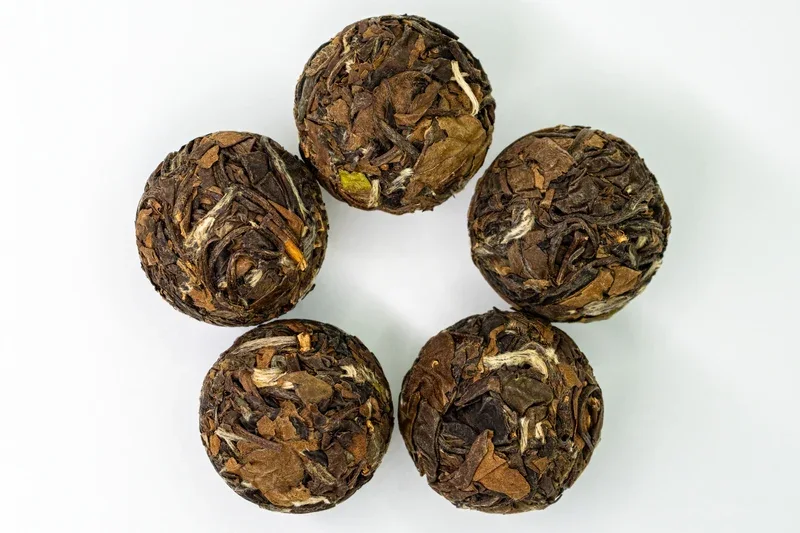
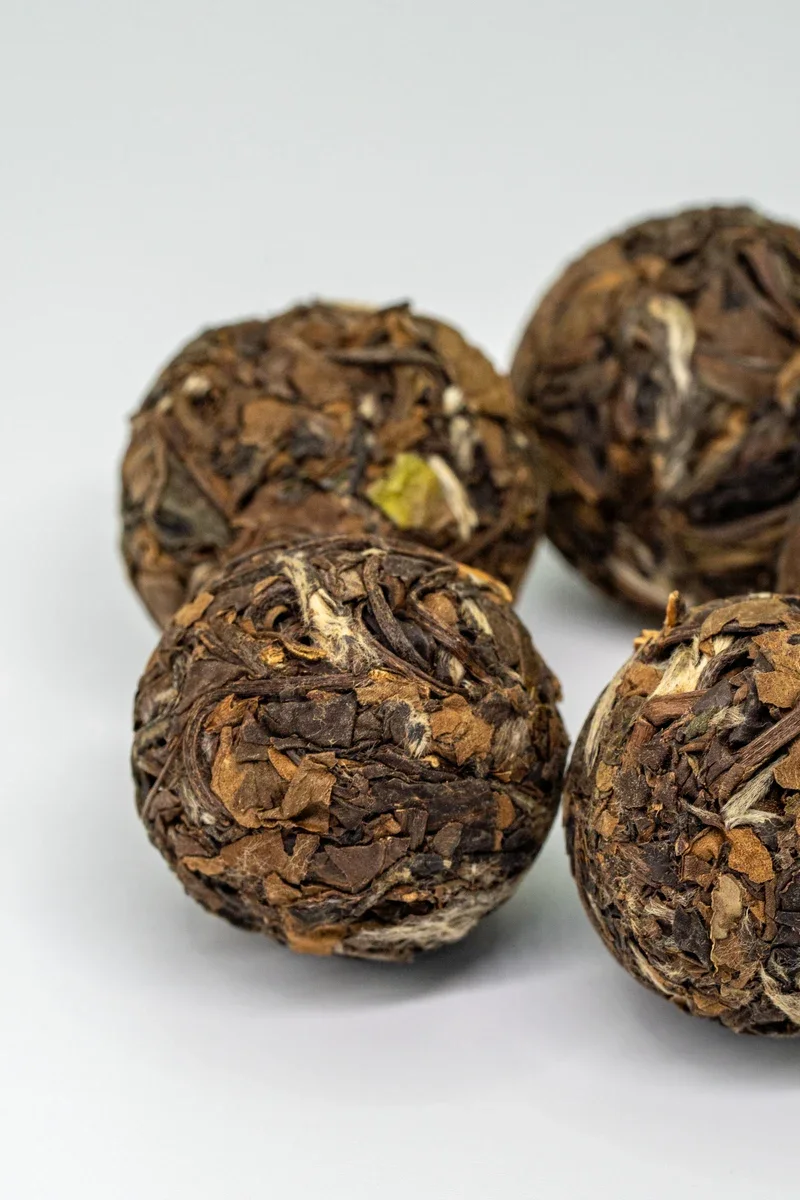
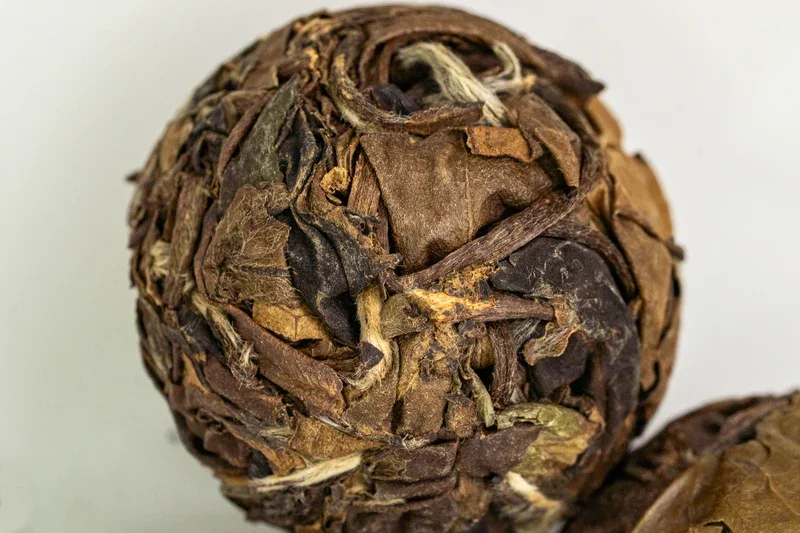
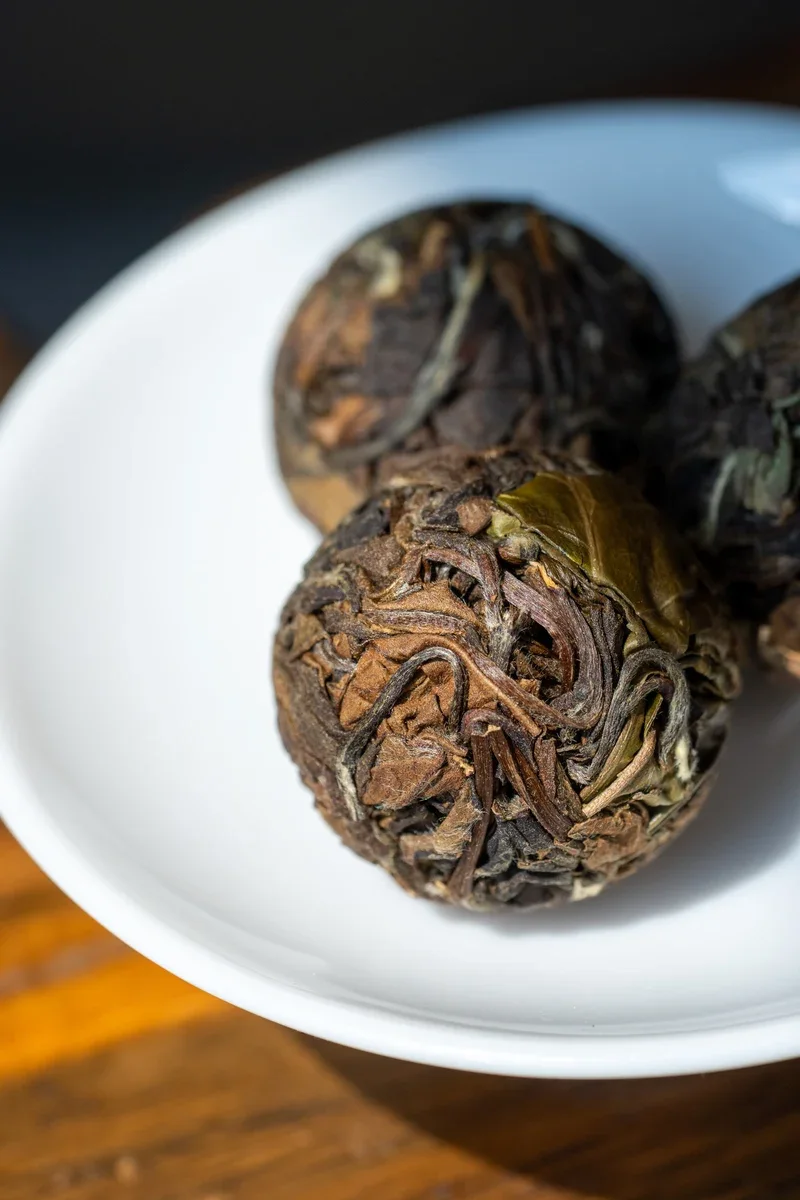
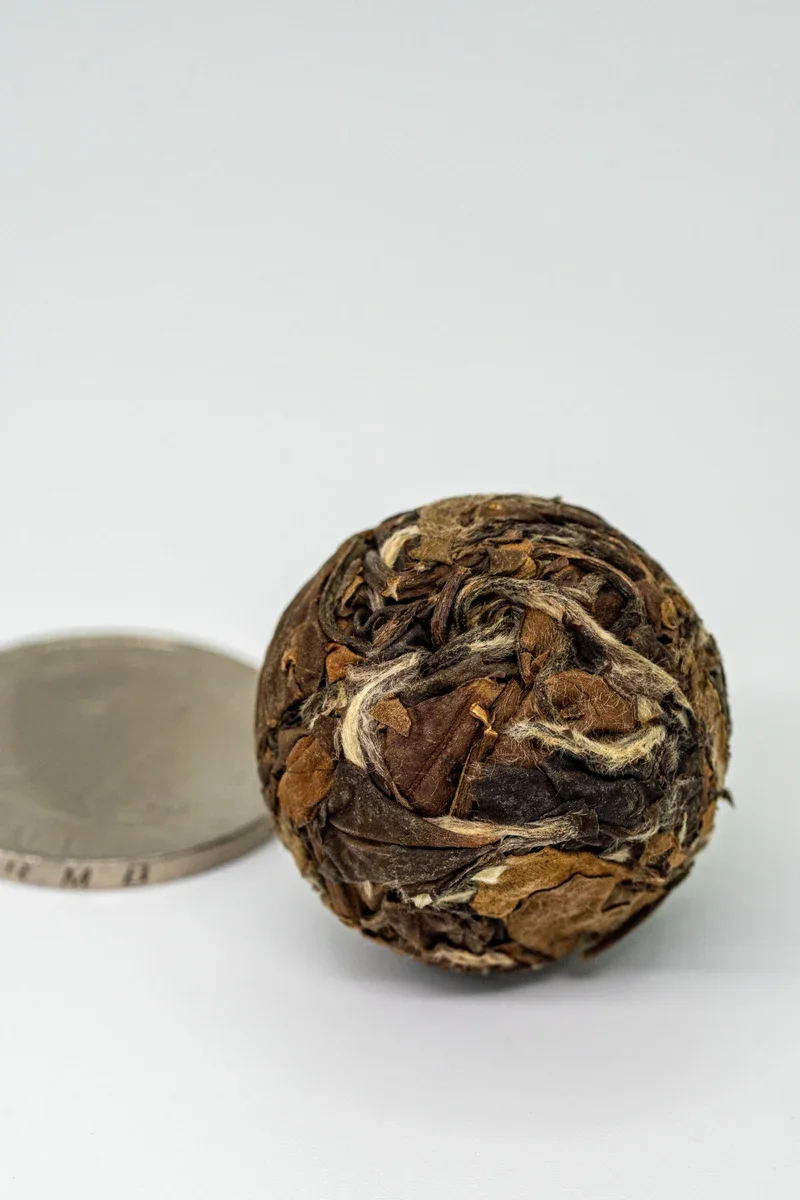
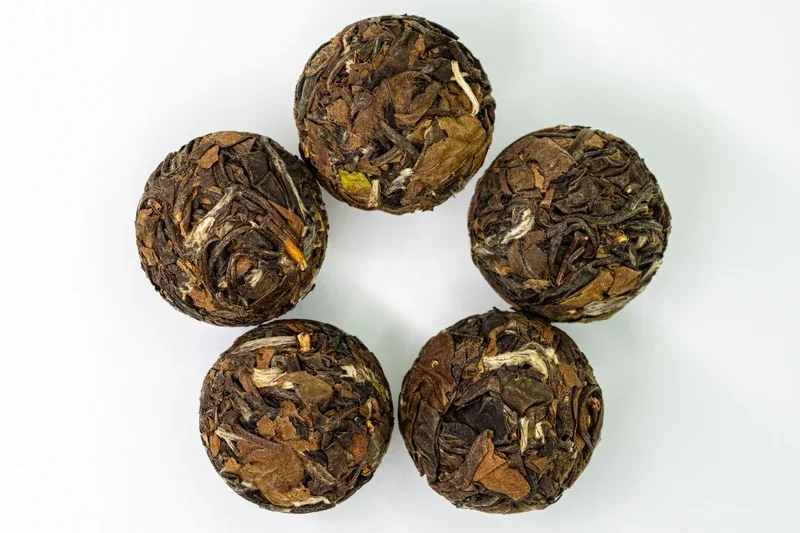
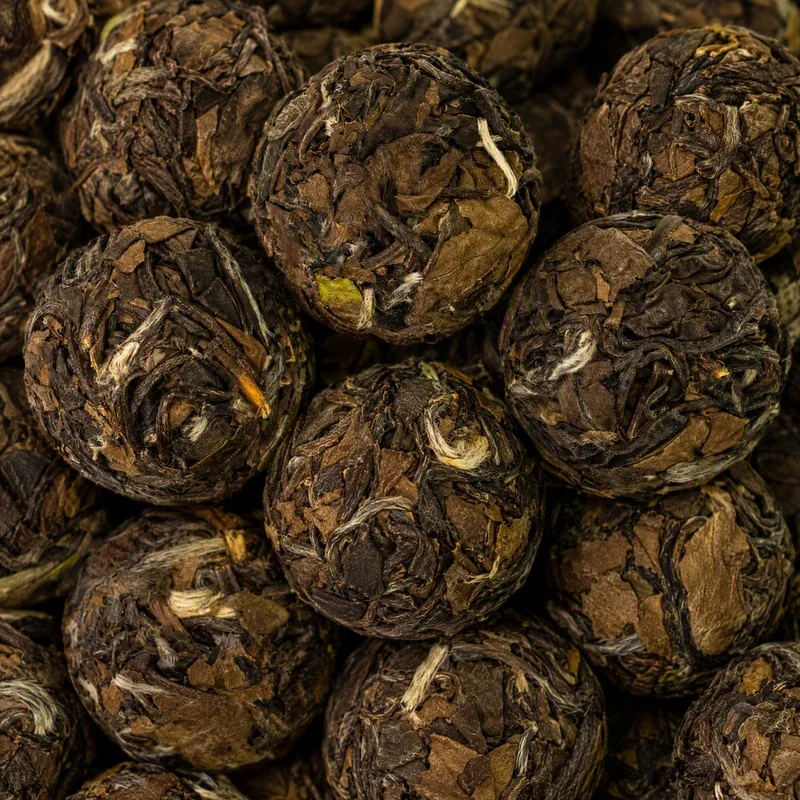
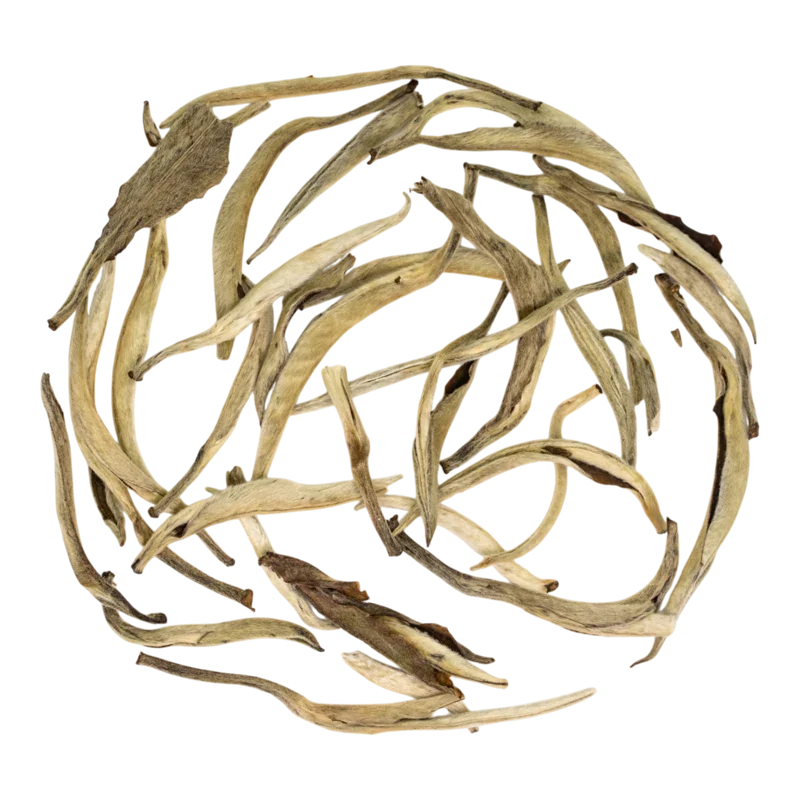
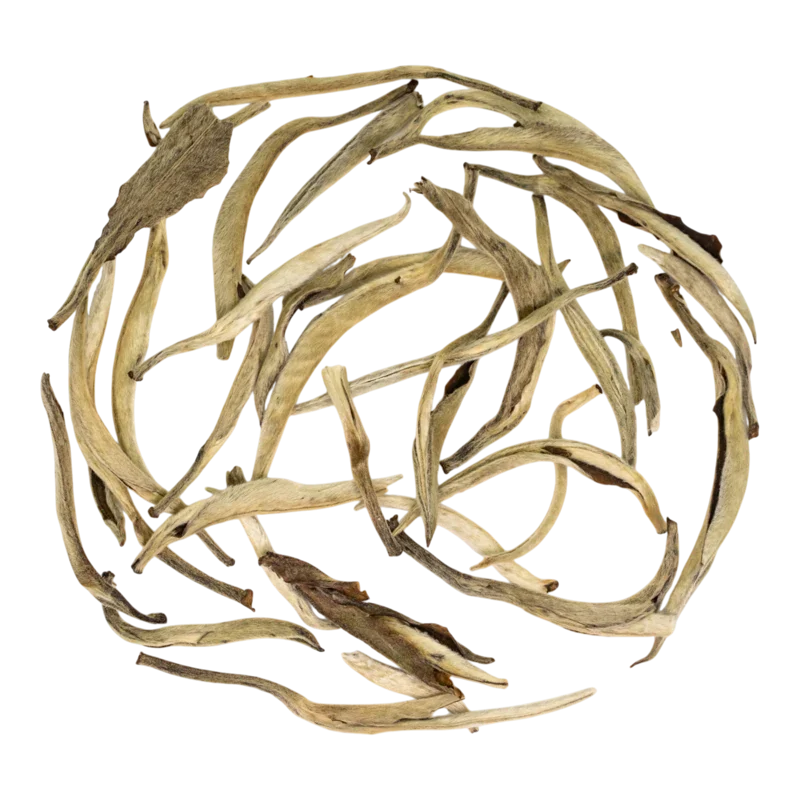
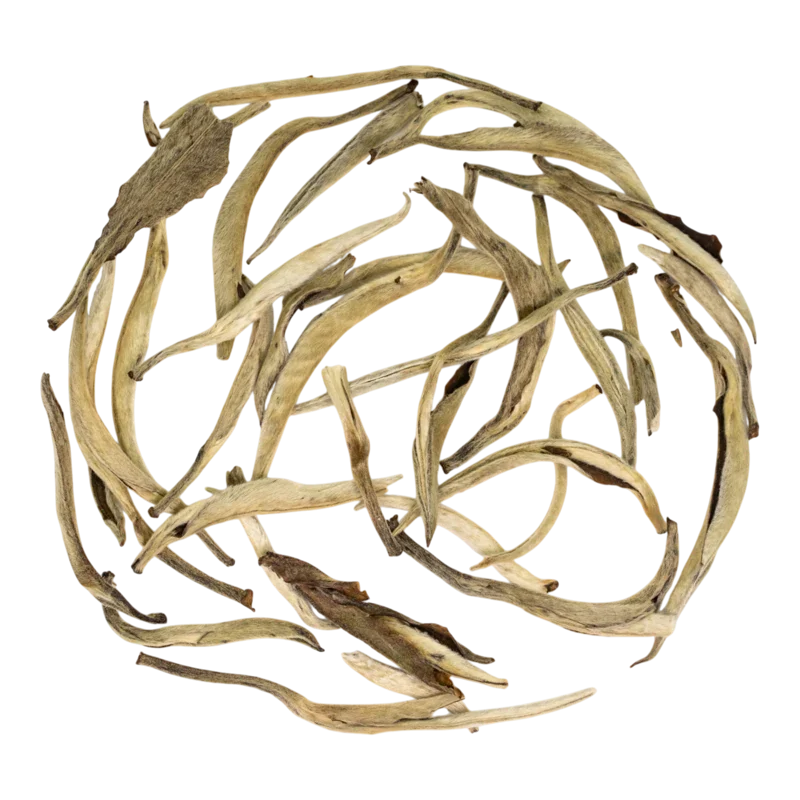
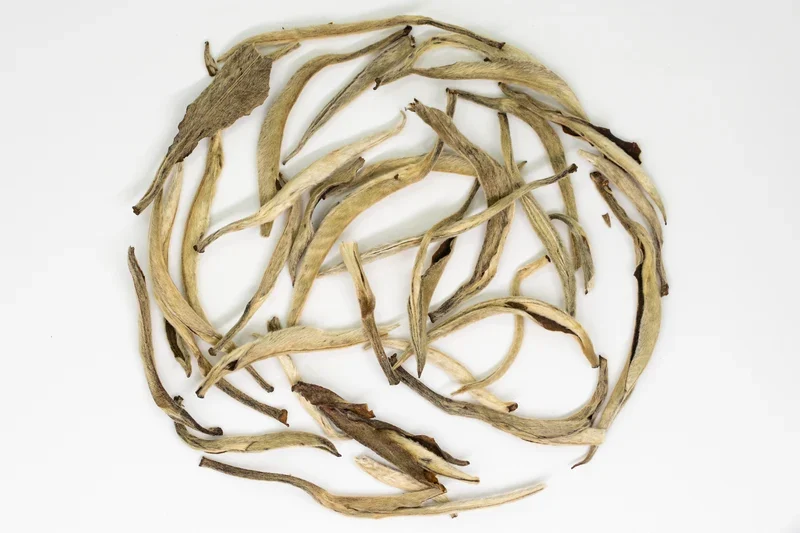
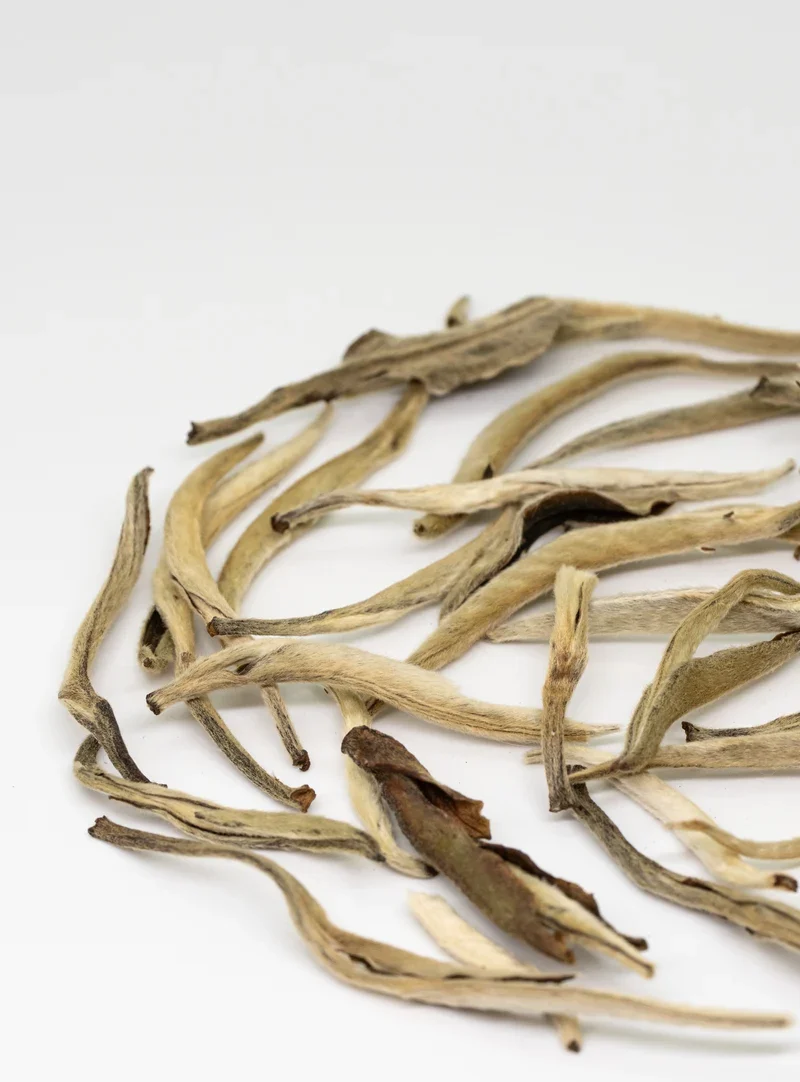
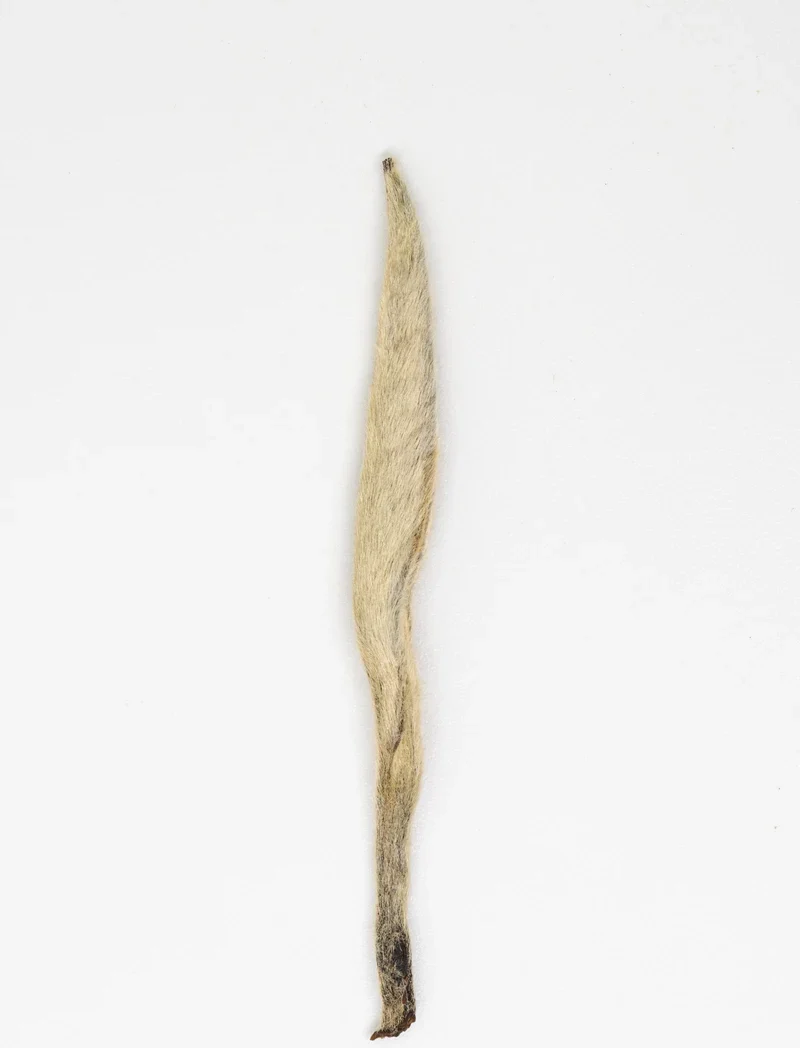
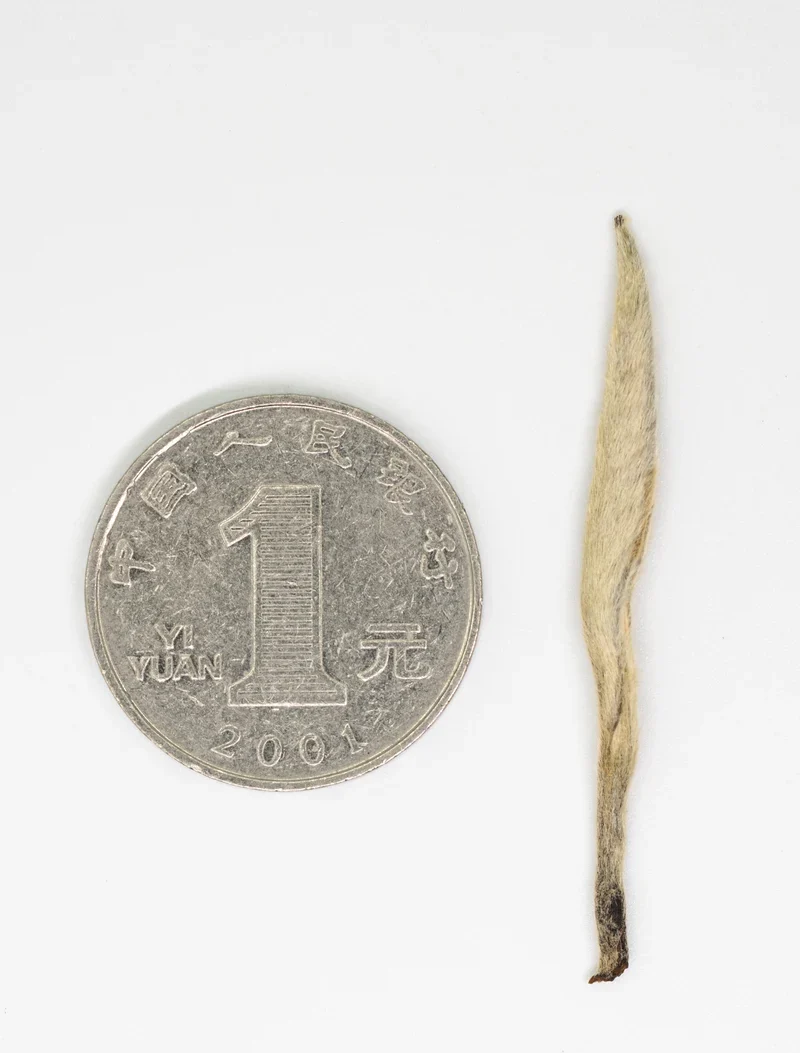
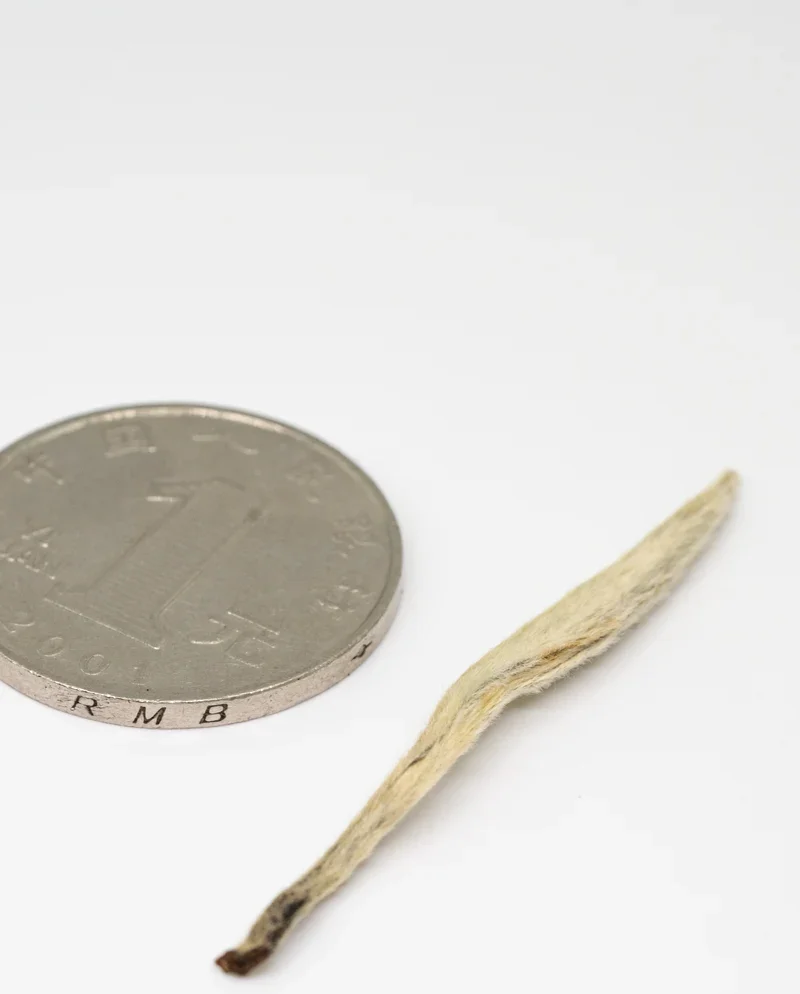
Dry Leaf Appearance: Large, dense, straight or slightly curved buds, abundantly covered with dense silvery-white down. Shape — pointed, resembling blades or needles (hence the name «尖»). Size — significantly larger than Fuding «Silver Needles». Color — silvery-white with greenish-yellow base.
Dry Leaf Aroma: Sweet, honey-like, with notes of dried flowers, apricot and light «sunny» dryness.
Liquor Color: Light yellow to golden, transparent, clear. More saturated than Fuding Yinzhen.
Spent Leaves: Large, fleshy, opened buds of yellow-green color. Size — noticeably larger than Fujian ones. Elastic, whole.
Taste: Dense, rich, significantly more «bodied» than Fuding Yinzhen. Fresh sweetness — honey-like, with notes of melon, apricot, floral nectar. Light fruity acidity. Absence of bitterness and astringency. Long, warm, honey aftertaste. Compared to Fuding «Silver Needles» — more «powerful», «rounded», with greater depth and «body», due to large-leaf Yunnan raw material.
Amino Acids: ≥1.5% (standard); actually with bud picking — ~3–5%. L-theanine dominates. Provides sweetness and «silkiness».
≥35% — very high indicator, conditioning dense, «bodied» liquor.
~3–4%. Bud raw material concentrates alkaloids.
Dihydromyricetin — hepatoprotector, characteristic of white teas.
Linalool, damascenone (大马士酮) — key components of Yunnan white tea aroma, forming floral-sweet bouquet.
Minerals: Potassium, calcium, magnesium, manganese, zinc, fluorine.
Polyphenols: ≥20% (according to Jinggu Dabaicha standard for white tea). Yunnan large-leaf is one of the most polyphenol-rich in the world. Main catechins — EGCG, ECG, EGC, EC.
Vitamins: C (well preserved), B₁, B₂, carotenoids.
High polyphenol content + flavonoids. White tea preserves native catechins better than other processing types.
Dihydromyricetin protects liver cells.
L-theanine + caffeine = calm, focused alertness.
Polyphenols + vitamin C — antibacterial and antiviral properties.
Large-leaf Yunnan raw material with high content of polysaccharides and pectins gently affects the GI tract.
Food product, not medicine. With caffeine sensitivity — do not drink in the evening. 3–5 g/day.
3–5 g per 150–200 ml.
Teaware: Porcelain gàiwǎn (盖碗) — ideal for precise tasting. Glass vessel — for visual enjoyment. Yixing teapot acceptable — large-leaf Yunnan raw material is less «capricious» than Fujian buds.
Water Temperature: 80–90 °C. Yunnan large-leaf raw material is «stronger» than Fujian and withstands hotter water. For maximum sweetness — 80–85 °C; for full aroma — up to 90 °C.
Enemies: Moisture, light, foreign odors, temperature fluctuations.
Airtight container, cool dark place. Storage in refrigerator (0–5 °C) in foil packaging acceptable.
Bai Jian from Yunnan large-leaf raw material has excellent aging potential — significantly greater than Fuding Yinzhen. Under proper conditions (18–28 °C, humidity 40–65%, without light and odors, three-layer packaging), taste evolves from «fresh-floral» to «honey-date» (5–7 years) and further to «medicinal» (药香, yào xiāng, 10+ years). High content of polysaccharides and polyphenols ensures deep transformation during storage.
Standard «Silver Needles» from small-leaf C. sinensis var. sinensis. Buds — short, plump, with «bamboo» multi-layered structure. Taste — delicate, «airy», with nutty notes. Bai Jian — large-leaf, buds longer and thicker, taste denser, more «bodied», honey-fruity. Bai Jian significantly more multi-infusion.
Yunnan white tea from the same Jinggu Dabaicha, but with one-two leaves (not pure buds). Dry leaves — black-white (face white, back black), resembling moonlight. Taste — more «full», floral-honey. Bai Jian — only buds, more delicate and sweet.
«Silver needles» from wild C. taliensis. Completely different botanical species, more «wild» and mineral taste. Bai Jian — from cultivated Jinggu Dabaicha, more «rounded» and sweet.
From Zhenghe Dabaicha — buds larger than Fuding, taste more «mature». Bai Jian — even larger, even denser and more honey-like.
From introduced Fuding Dabai Hao in Guangxi. Closer to Fuding style — delicate, floral. Bai Jian — Yunnan, from large-leaf, completely different «heavyweight» character.
No reviews yet. Tell us what you think of this tea.
Rate this tea and share your impressions. We review each submission before publishing it.