Brewing
Gongfu brewing
- Water temperature
- 75 °C
- Tea amount
- 5 g
- Water volume
- 100 ml
- First steep
- 10 s
- Time added per infusion
- 5 s
- Infusions
- 4

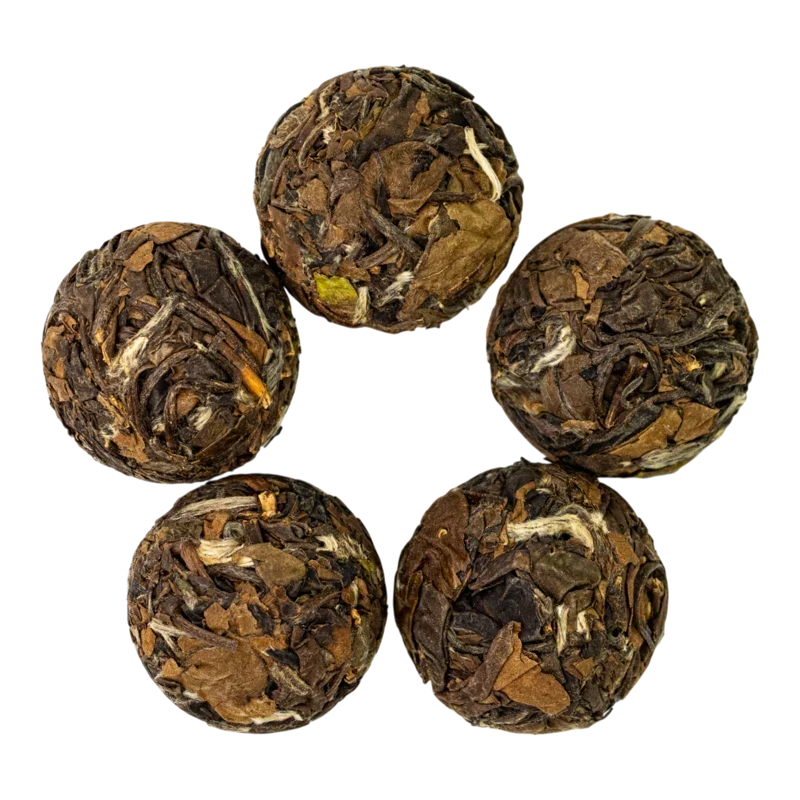
báichá lóngzhū
Choose a brewing method. Start with the recommended quantities and time, then adjust to taste.
Brewing
Brewing
Taste
Tea encyclopedia
Category: High-quality white tea of artistic form (工艺白茶, gōngyì báichá). Belongs to the so-called "bound" or "shaped" teas, where form is an integral part of the tea experience.
Category: High-quality white tea of artistic form (工艺白茶, gōngyì báichá). Belongs to the so-called "bound" or "shaped" teas, where form is an integral part of the tea experience.
Coordinates: Approximately 27°20′ North latitude, 120°12′ East longitude (for the Fuding region).
Origin: China, Fújiàn Province (福建, Fújiàn), predominantly Fúdǐng County (福鼎, Fúdǐng)—the birthplace of most famous white teas. Also produced in Zhènghé County (政和, Zhènghé) and, in smaller volumes, in Yúnnán Province (云南, Yúnnán), where Yunnan large-leaf raw material is used for forming longzhu.
Type: White tea (lightly oxidized, oxidation level ~5–7%).
Cultural Significance: Baicha Longzhu is valued as a gift tea thanks to the combination of aesthetic appeal, brewing convenience, and high-quality raw material. The brewing process, when the silvery pearl slowly unfurls in a glass teapot, revealing tender buds and leaves, becomes a meditative spectacle and decoration for the tea ceremony.
History: The "longzhu" form (龙珠, lóngzhū, "dragon pearl") is not an invention of modern tea masters—it traces back to the ancient tradition of tuancha (团茶, tuánchá, compressed tea), widespread during the Tāng (唐, Táng, 618–907) and Sōng (宋, Sòng, 960–1279) dynasties, when tea was formed into discs and balls for convenient storage and transportation. However, the application of this form specifically to white tea is a relatively new phenomenon, gaining popularity only in the last two to three decades, on the wave of growing interest in white teas both within China and in the international market. The longzhu format solves two problems simultaneously: aesthetic (the spectacular unfurling of the pearl during brewing) and practical (precise dosage—one pearl per brewing, convenient storage and transportation of fragile white tea). White longzhu gained greatest popularity after the 2010s, when the "dragon pearl" form began to be applied to various types of tea—from pu-erh and red tea to jasmine and white tea.
"Big White Tea from Fuding"—the main cultivar for producing high-grade white teas. Belongs to Camellia sinensis var. sinensis. According to the Chinese National Tea Germplasm Collection, this cultivar was first selected and propagated in 1857 by farmer Chén Huàn (陈焕, Chén Huàn) from Bǎiliǔ village (柏柳, Bǎiliǔ) in Diǎntóu town (点头镇, Diǎntóu Zhèn), Fuding County. Characterized by large, fleshy buds with dense white down.
"Big Downy Tea from Fuding"—a cultivar with even more abundant silvery down, also widely used for white teas.
Cultivar: For producing Baicha Longzhu, classic white tea cultivars from Fujian Province are used:
Picking: Early spring, usually March to early April, before or shortly after the Qīngmíng festival (清明, Qīngmíng).
Pluck Standard: High-quality raw material: tender bud (芽, yá) and one to two upper leaves (一芽一叶 or 一芽二叶), densely covered with white down. For premium batches, exclusively buds (tips) are used, bringing the raw material close to the Bái Háo Yìn Zhèn standard (白毫银针, Báiháo Yínzhēn).
Raw Material: Exceptionally strict. Only whole, undamaged, juicy buds and leaves of uniform size are selected. Broken or withered raw material is not permitted, since defects will become visible when the pearl unfurls during brewing. Uniformity of raw material is critically important for forming even, tight balls.
Altitude: Usually 600–900 meters above sea level. High-altitude plantations (above 700 m) produce raw material with higher L-theanine content and more delicate aroma.
Soil: Acidic red-yellow soils (pH 4.5–5.5), rich in organic matter and mineral elements. Well-drained, with high iron and aluminum content. Geological foundation—granite and volcanic rocks, determining the mineral profile of the tea.
Fuding County is located in northeastern Fujian Province, in a subtropical monsoon climate zone. The terrain consists of mountainous areas with hills and low mountains, with a significant portion of the territory covered by forests. The central "sacred" tea district is Mount Tàimǔ (太姥山, Tàimǔ Shān), considered the cradle of white tea and a natural monument and cultural heritage site. The average annual temperature is +14–19 °C, precipitation is 1,600–2,000 mm per year. Frequent fogs and cloudiness create ideal conditions for forming tender buds with increased amino acid content.
Fuding's microclimate—proximity to the sea (East China Sea), frequent morning and evening fogs, gentle sea breeze—forms a unique terroir that distinguishes Fuding white teas from Zhenghe ones: Fuding teas are more delicate, sweet, and floral, while Zhenghe teas are denser and more intense.
Hand-picking of tender buds and upper leaves in morning hours after dew evaporation.
The main and longest stage, determining the character of white tea. The harvested raw material is spread in a thin layer on bamboo trays (水筛, shuǐshāi) in open air under diffused sunlight or in a well-ventilated room. According to the China Intangible Cultural Heritage Network (中国非物质文化遗产网), the optimal withering temperature for Fuding white tea is no higher than 32 °C; time—from 36 to 72 hours. During withering, the leaf loses up to 60–70% of moisture, slow fermentation occurs under the action of its own enzymes, characteristic floral and honey aromas of white tea are formed, while maintaining high content of polyphenols and active enzymes.
At the stage of late withering or immediately after it, while buds and leaves still retain sufficient elasticity and moisture, the master manually forms the raw material into tight ball-shaped pearls. Each pearl usually weighs 5–8 grams—exactly one portion for brewing. The process requires great skill: the force must be sufficient to form a tight ball, but gentle enough not to damage the down and leaf structure. According to available data, an experienced master can roll no more than 800 pearls (about 2 kg) in a full working day, which explains the high cost of this tea.
The rolled pearls are dried in the sūn (日光晒干, rìguāng shàigān) or in special drying cabinets at low temperature (no higher than 45–50 °C) to preserve delicate essential oils and active enzymes. Complete drying is important to prevent molding during storage—residual moisture of the finished product should not exceed 5–6%.
Finished pearls are sorted by size, density, and quality. Uneven, loose, or damaged specimens are rejected.
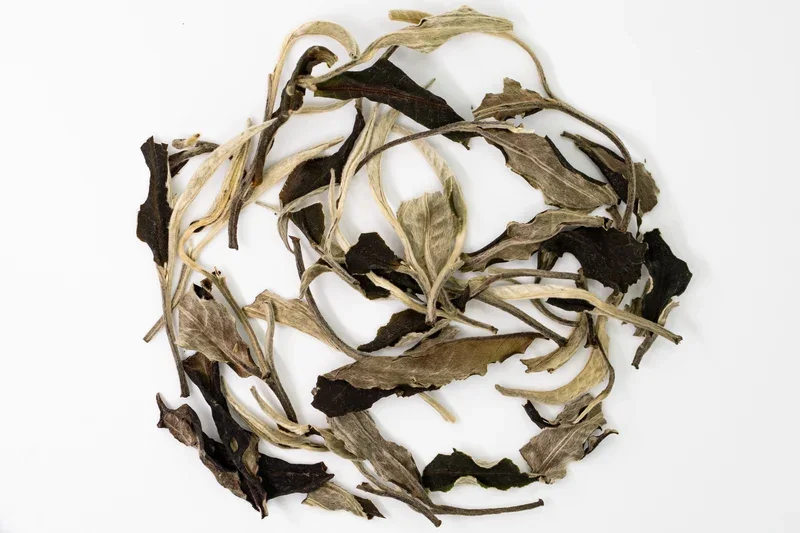
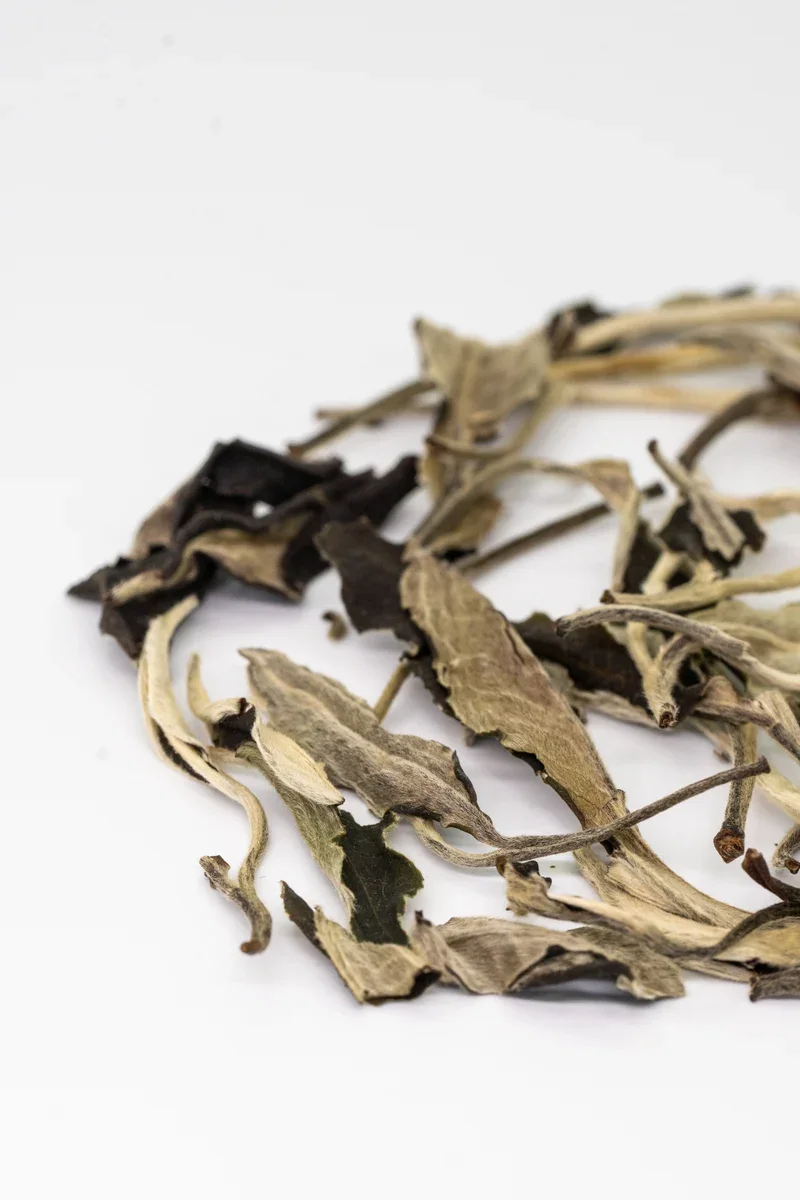
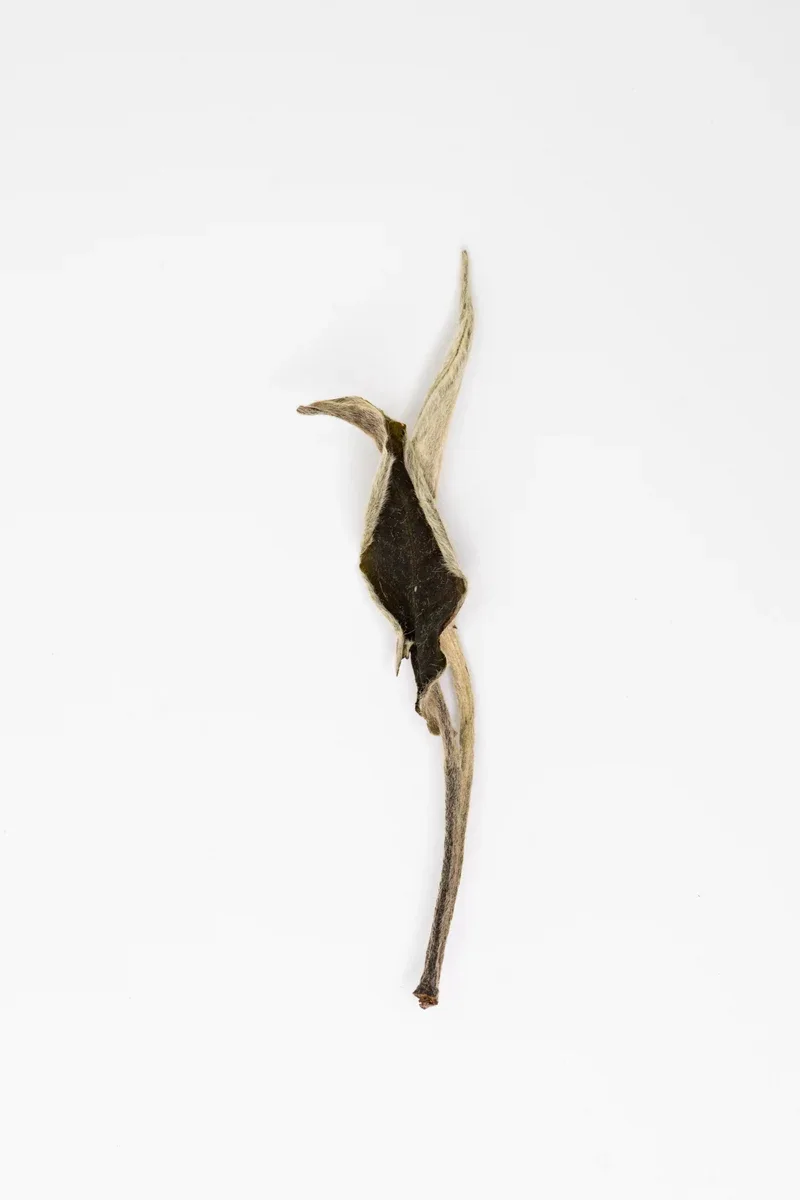
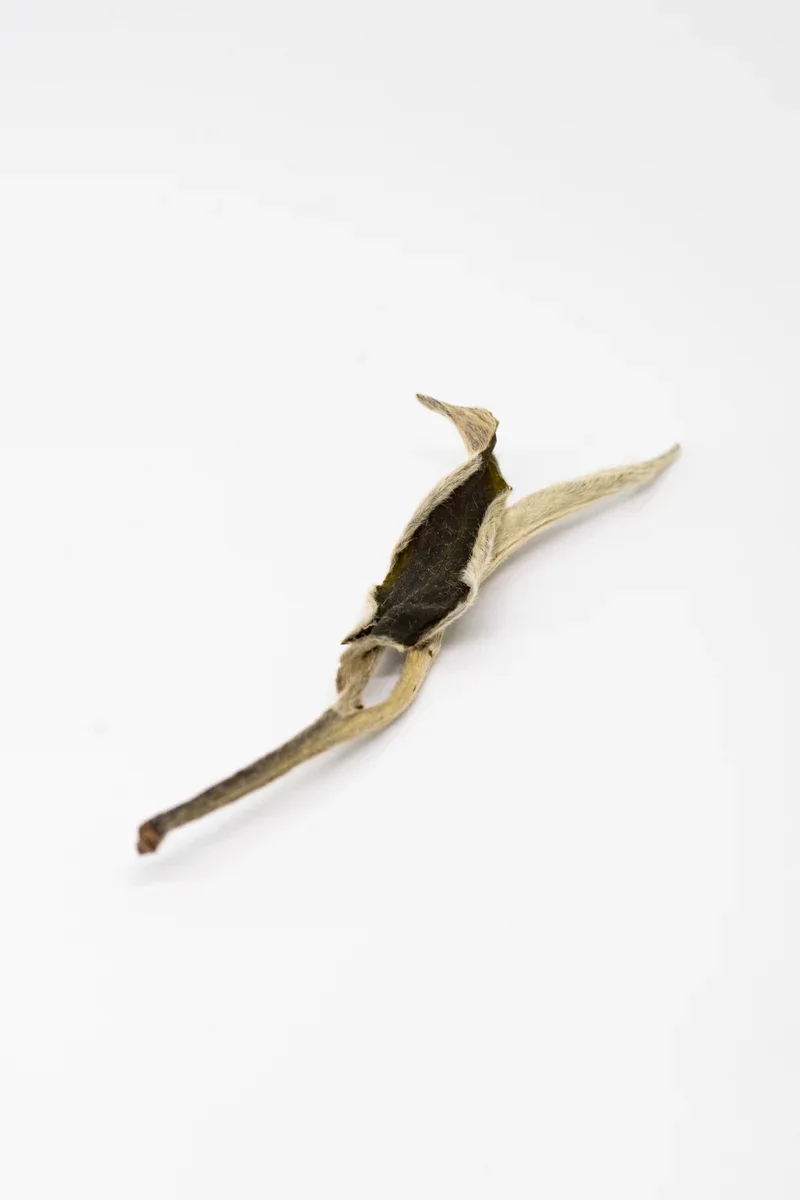
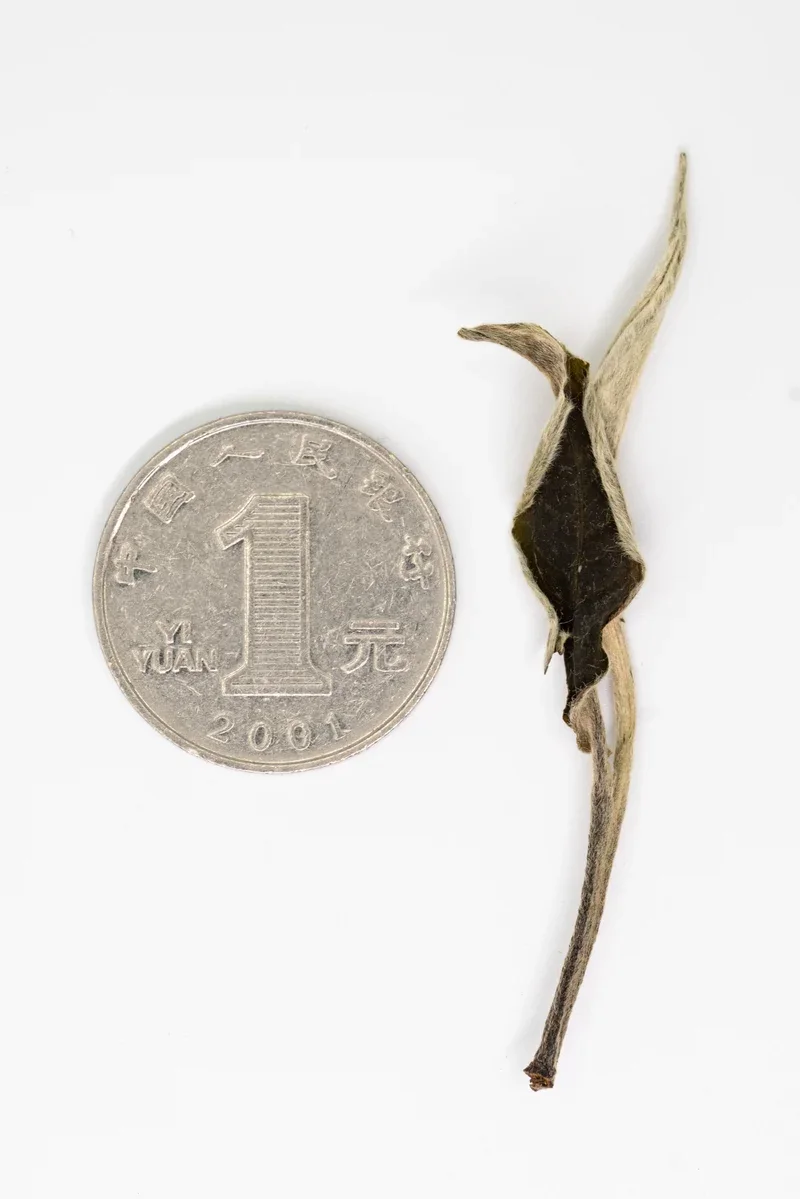
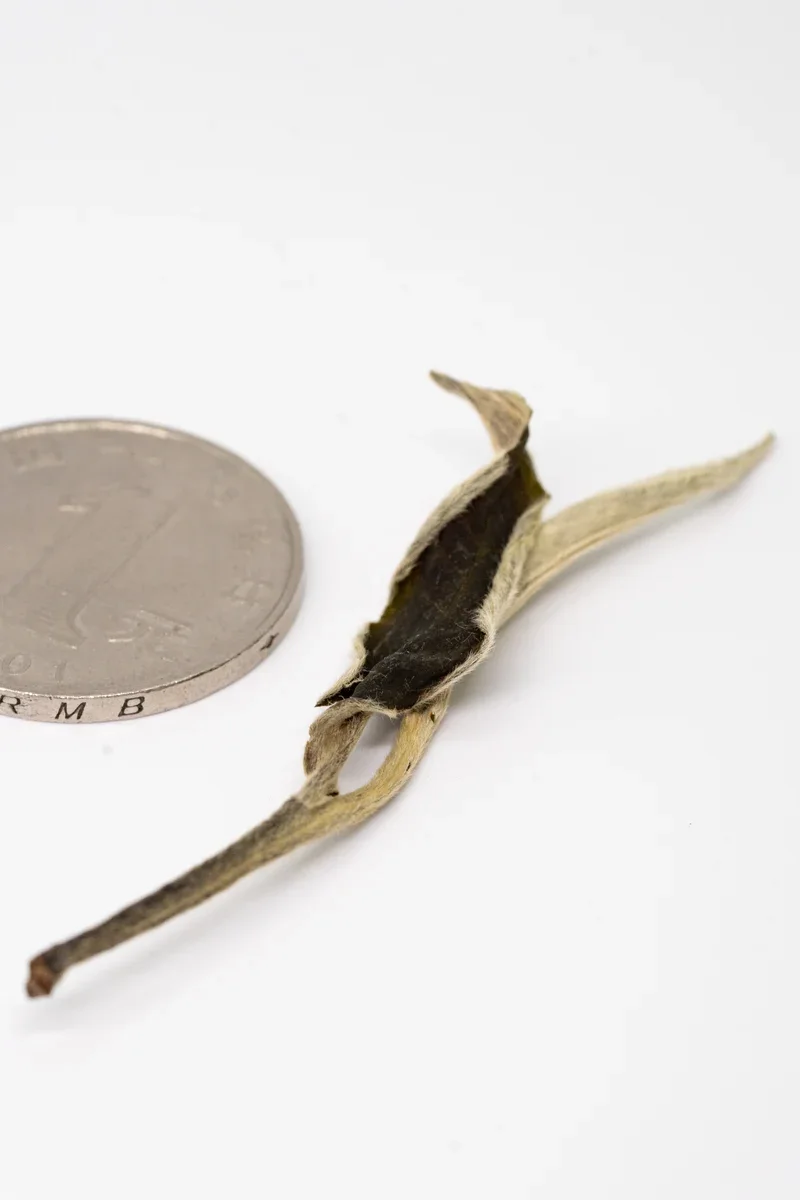
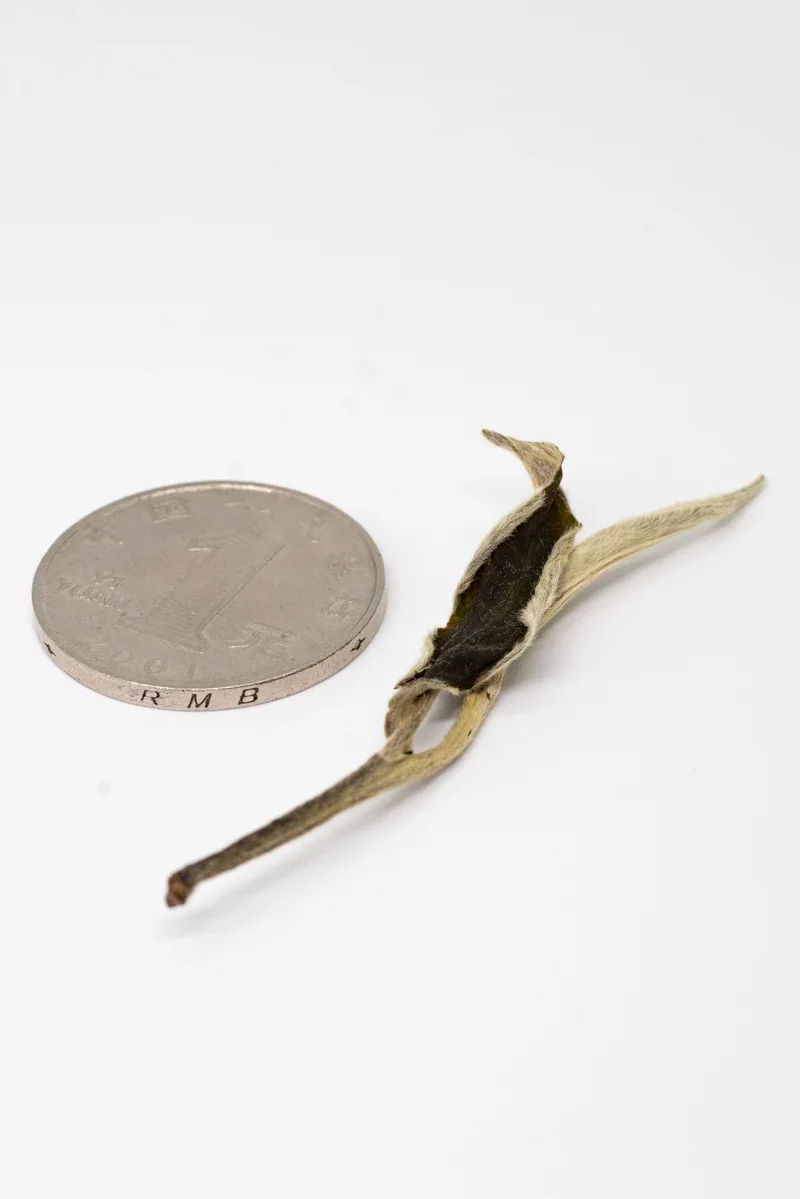
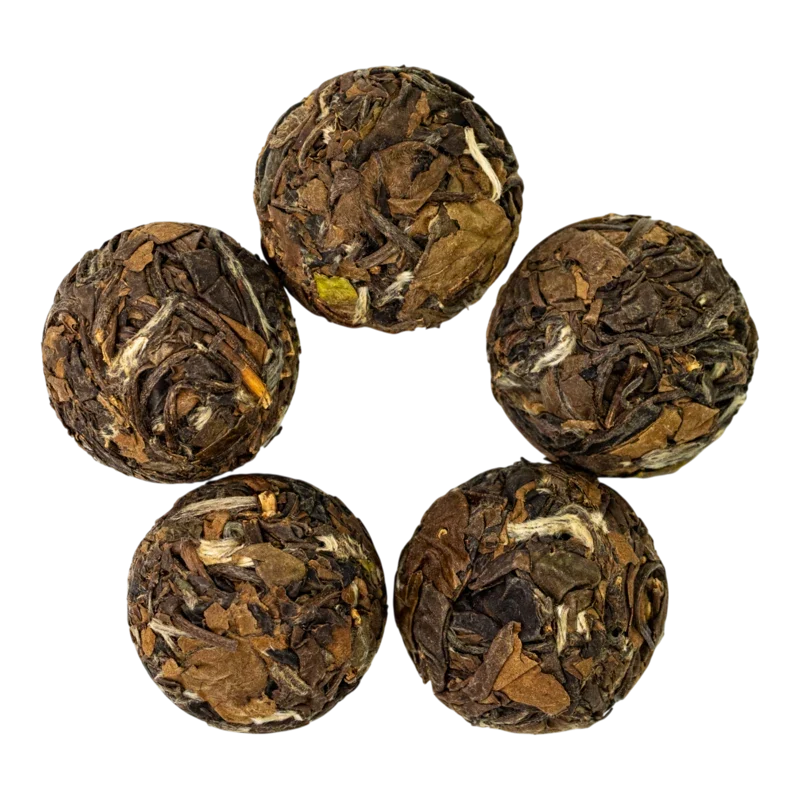
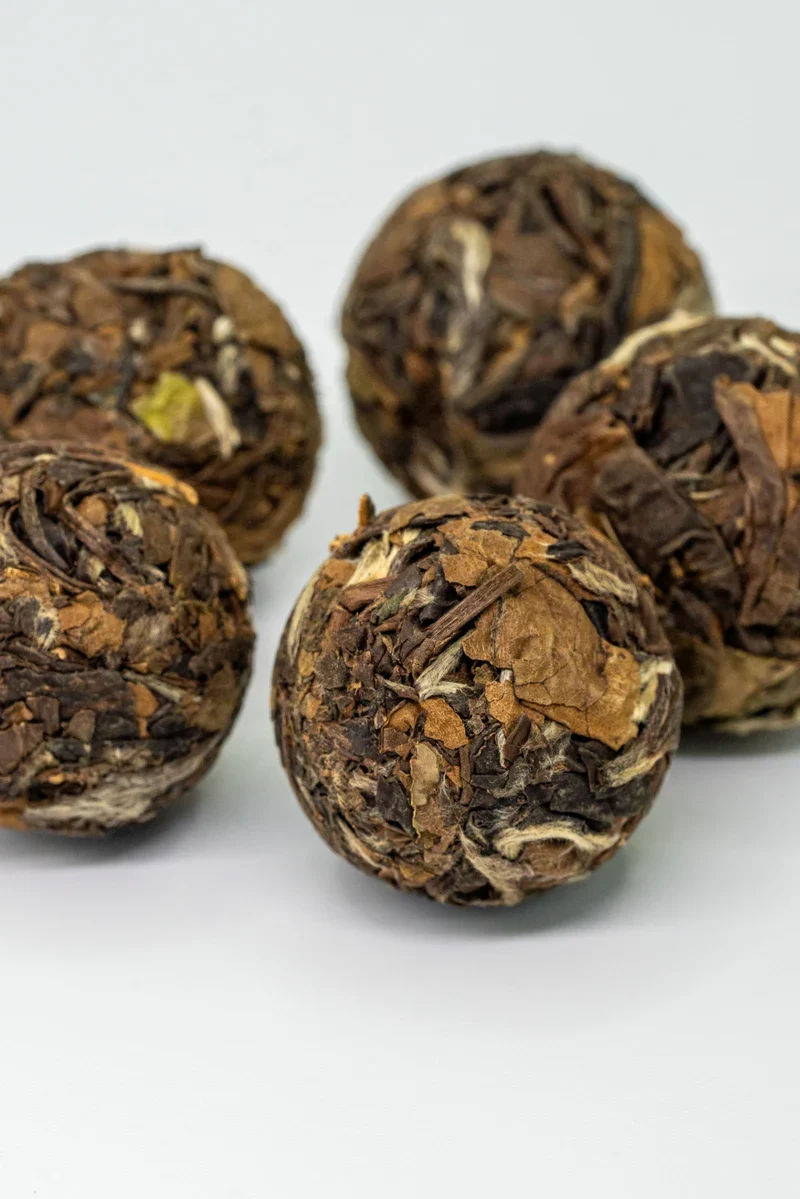
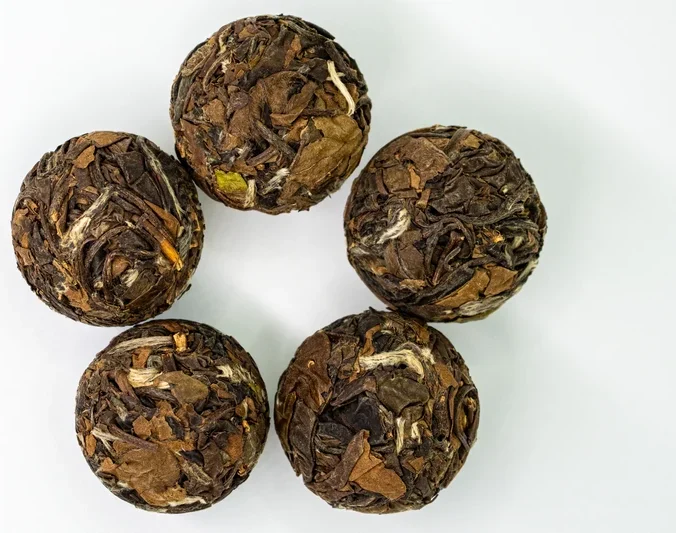
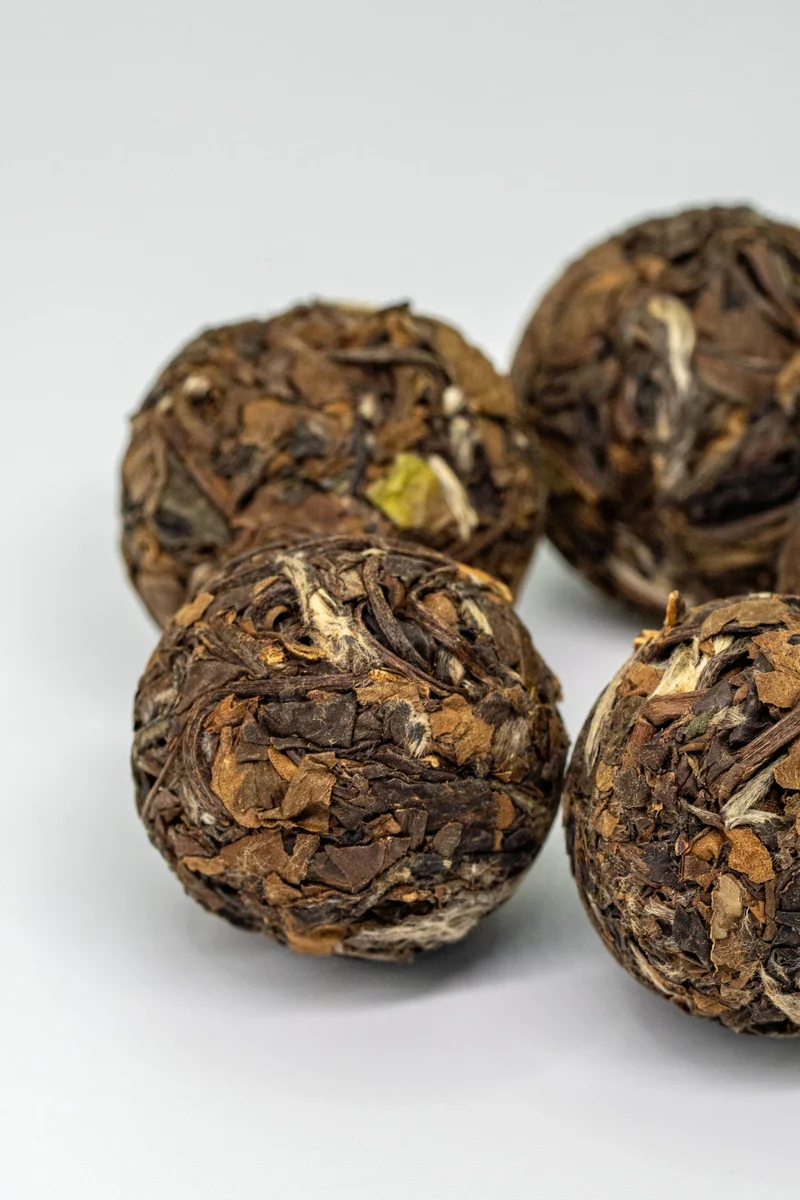
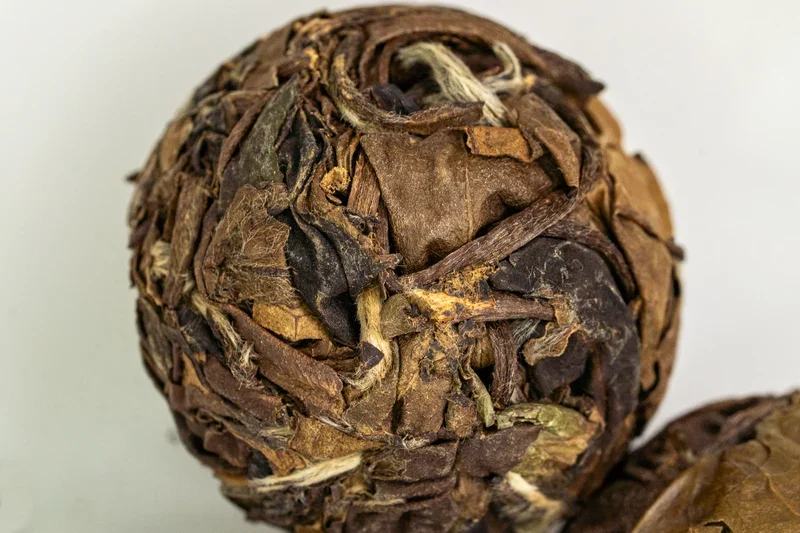
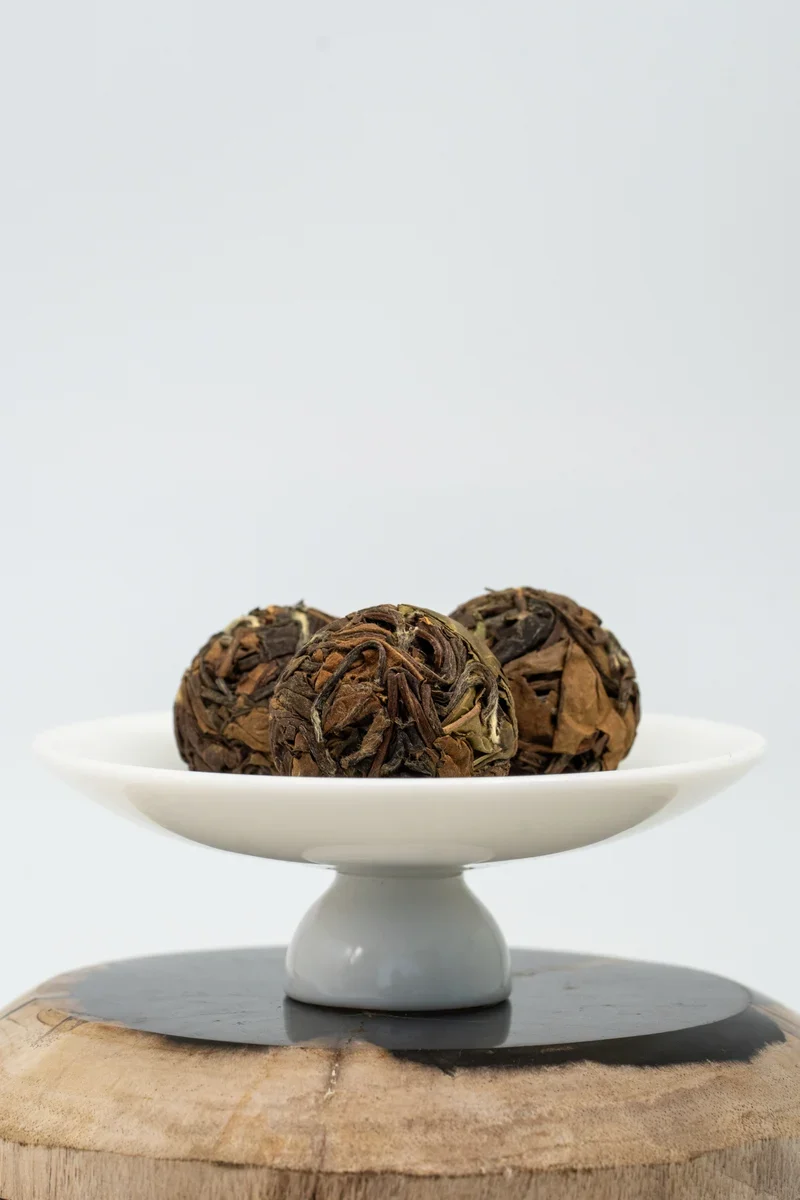
Dry Leaf Appearance: Tightly rolled ball-shaped "pearls" with diameter from 0.8 to 1.5 cm. The surface is densely covered with silvery-white down, giving the pearls their characteristic shimmering silvery appearance. Base color ranges from silvery-green to gray-green with olive tones. Shape is even, round; pearls are tight, do not crumble under light pressure.
Dry Leaf Aroma: Fresh, delicate, sweetish. Floral notes dominate (peony, lily of the valley, honeysuckle) with a honey base and light fruity nuances (apricot, white peach). The aroma is delicate but distinct.
Liquor Aroma: Bright, voluminous, floral-honey, with fruity tones (white peach, ripe melon) and subtle creamy nuances in the first infusions. As infusions develop, gentle sweet notes of dry hay and fresh greenery emerge.
Liquor Color: Light yellow with golden tint, transparent, clear, with pronounced brilliance.
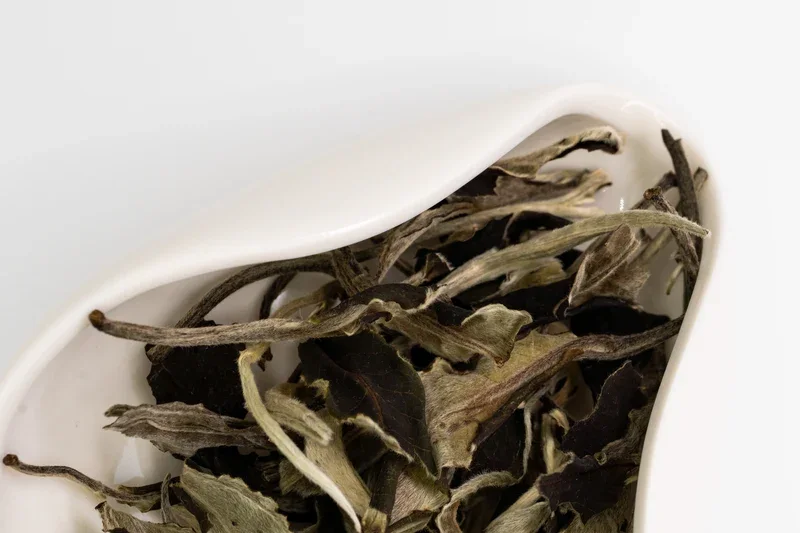
Spent Leaves: After brewing, the pearls gradually unfurl, revealing whole buds and leaves that have retained their shape and are densely covered with silvery down. The sight of the unfurling pearl is an important part of the aesthetic experience. Spent leaf color ranges from light green to gray-green.
Taste: Soft, clean, silky, with pronounced natural sweetness. Body is light, texture smooth and enveloping. The bouquet is dominated by floral notes, honey tones, white peach and melon, with nuances of greenery and barely perceptible creaminess. Astringency is minimal. Aftertaste is long, silky, with honey sweetness and a light refreshing finish.
Alkaloids: Caffeine—2–3% of dry mass (15–25 mg per 150 ml cup with standard brewing). Theobromine and theophylline are also present in small amounts.
Amino Acids: Free amino acid content—3–5% of dry mass, which is one of the highest indicators among all tea types. The main amino acid is L-theanine (L-茶氨酸, L-chá'ānsuan), responsible for sweetness, umami-like mouthfeel softness, and relaxing effect. High L-theanine content is one of the key characteristics of Fuding white teas, due to the genetics of the Da Bai cultivar and early spring harvest.
Thanks to the "don't fry, don't knead" technology (不炒不揉, bù chǎo bù róu), white tea retains active oxidases and polyphenol oxidases, providing potential for gradual flavor development during aging.
Essential Oils: Linalool, geraniol, nerolidol, β-ionone and other aromatic compounds forming the floral-honey profile.
Minerals: Potassium, fluorine, magnesium, zinc, manganese, selenium.
Polyphenols: Total polyphenol content—18–22% of dry mass (higher than most green teas). Main catechins: EGCG (epigallocatechin-3-gallate), EGC (epigallocatechin), ECG (epicatechin-3-gallate). EGCG is the most powerful antioxidant among tea catechins; its content in white tea reaches 50–80 mg/g of dry leaf.
Vitamins: Vitamin C (preserved better than in green teas due to absence of high-temperature processing), B₁, B₂, E.
White tea is recognized as one of the most antioxidant-rich beverages thanks to high content of EGCG and other catechins in native form. Antioxidants neutralize free radicals, protecting cells from oxidative damage and slowing aging processes.
White tea polyphenols stimulate collagen synthesis, protect from UV photodamage, and help maintain skin elasticity. White tea is actively used in the cosmetic industry as a component of anti-aging products.
High L-theanine content provides gentle calming action, relieves stress and anxiety, improves sleep quality without suppressing wakefulness. L-theanine promotes generation of α-brain waves associated with calm concentration.
The synergistic effect of L-theanine and caffeine provides "clean" alertness—improved attention concentration and cognitive functions without nervousness and tremor.
Catechins help reduce LDL cholesterol levels, improve vascular wall elasticity, and provide gentle hypotensive action.
The complex of polyphenols and vitamins supports the body's protective functions, has antibacterial and antiviral properties.
Thanks to light texture, low astringency, and natural sweetness, Baicha Longzhu excellently quenches thirst, especially in cold brewing format.
Active enzymes preserved due to minimal processing may contribute to improved digestive processes.
When brewing using the Gongfu Cha method in a gaiwan, use shorter infusions (15–30 seconds), which allows for up to 7–8 full brewings.
Baicha Longzhu is excellent for cold brewing. Place 1–2 pearls in 500 ml of cold filtered water and steep in the refrigerator for 8–12 hours. The result is a crystal-clear, refreshing beverage with pronounced natural sweetness and floral aroma.
Tea Amount: 1–2 pearls (5–8 g) per 150–200 ml of water. One pearl equals one full portion, which is the main practical advantage of this form.
Teaware: Glass teapot or cup is the best choice, allowing observation of the pearl unfurling process. Gàiwǎn (蓋碗, gàiwǎn) or porcelain teaware also work well. Yixing teapot is not recommended—its porous walls may absorb the delicate aroma.
Water Temperature: 75–85 °C. Hotter water (above 90 °C) will cause the pearl to unfurl too quickly and may "burn" delicate essential oils, making the liquor flat.
Enemies: Excessive humidity (>70%), direct sunlight, sharp foreign odors, temperature fluctuations.
Dry, cool, dark place, airtight container (foil bag, ceramic or glass jar with tight lid), away from foreign odors. Optimal temperature—+5–18 °C. Refrigerator storage in a separate airtight container is acceptable, especially in hot and humid climates.
Like other white teas, Baicha Longzhu has potential for noble aging. The Chinese saying "一年茶,三年药,七年宝" (yī nián chá, sān nián yào, qī nián bǎo—"one year tea, three years medicine, seven years treasure") reflects the traditional belief that white tea becomes more valuable with age. For aging, pearls are stored in non-airtight containers (cardboard, kraft paper) in a dry room at room temperature with minimal ventilation. Over time, the flavor acquires honey-woody, date, and nutty notes.
The tight rolling of the pearl creates a compact structure that better protects the tea from external influences compared to loose white tea, while providing sufficient air contact for slow post-fermentation processes—occupying an intermediate position between loose tea and tightly pressed cakes.
"Silver Needles"—the highest grade of white tea, made exclusively from buds. Has an even more delicate, subtle flavor with sweet nutty notes. Baicha Longzhu made from pure tips approaches Yin Zhen in raw material quality, but the pearl form creates different flavor unfurling dynamics—denser and more concentrated in the first infusions.
"White Peony"—white tea from buds and 1–2 leaves, closest in picking standard to most Baicha Longzhu. Bai Mu Dan flavor is more floral and slightly more astringent, texture less dense. The longzhu format gives similar raw material greater concentration and "body."
Yunnan white tea from large-leaf raw material (C. sinensis var. assamica). Significantly more powerful and dense, with chocolate-honey notes. Yunnan longzhu from white tea exist but have a fundamentally different character—more intense and "dark."
"Longevity Eyebrows"—white tea from more mature leaves, without buds. Coarser, with woody-grassy notes. Longzhu from Shou Mei-level raw material are not produced—delicate, elastic raw material is required for forming.
Specialized tea shops with transparent supply chains and indication of specific production regions.
Pearls should be tightly rolled, even, covered with abundant silvery down, without broken leaves, dust, or foreign inclusions. Loose, uneven pearls are signs of low quality or machine forming.
Dry tea should have a fresh, delicate, sweetish-floral aroma. Musty, sour, or moldy smell indicates storage violations.
Color should be light yellow, transparent, clear. Cloudy, dark, or reddish liquor is a warning sign.
A quality pearl unfurls gradually, revealing whole buds and leaves with preserved down. If contents crumble into small fragments, you have a low-quality product.
No reviews yet. Tell us what you think of this tea.
Rate this tea and share your impressions. We review each submission before publishing it.