Brewing
Gongfu brewing
- Water temperature
- 75 °C
- Tea amount
- 5 g
- Water volume
- 100 ml
- First steep
- 10 s
- Time added per infusion
- 5 s
- Infusions
- 3

Sōngfēng lǜchá
Choose a brewing method. Start with the recommended quantities and time, then adjust to taste.
Brewing
Brewing
Taste
Tea encyclopedia
Category: Historic named tea, named by Emperor Zhu Yuanzhang (1368). Included among the "Ten Famous Teas of China" (全国十大名茶, 1958). Twice laureate of "Excellent Product at Ministerial Level" (部优产品, 1982, 1985). Laureate of Hubei's "Golden Cup Chu Cha" (楚茶杯金奖, 2023). Exported to 10+ countries in Asia and Africa.
Category: Historic named tea, named by Emperor Zhu Yuanzhang (1368). Included among the "Ten Famous Teas of China" (全国十大名茶, 1958). Twice laureate of "Excellent Product at Ministerial Level" (部优产品, 1982, 1985). Laureate of Hubei's "Golden Cup Chu Cha" (楚茶杯金奖, 2023). Exported to 10+ countries in Asia and Africa.
Coordinates: ~29°30′–30°00′ N, 113°30′–114°00′ E (Chibi zone, "golden parallel" 30° N).
Origin: China; Húběi Province (湖北, Húběi); Chìbì City (赤壁市, Chìbì Shì, ancient name—Puqi, 蒲圻), part of Xiánníng Prefecture (咸宁市, Xiánníng Shì). Core production area—Yánglóudòng Town (羊楼洞镇, Yánglóudòng Zhèn), located at the foot of Mount Songfengshan (松峰山), at the junction of Hunan, Hubei, and Jiangxi. Yangloudong—"World's First Tea Town" (世界茶业第一古镇, since 2015), starting point of the Great Tea Road (万里茶道源头).
Type: Green tea (绿茶, lǜchá) with elements of yellow tea processing: the production cycle includes a stage of "初包闷黄" (chūbāo mènhuáng, "initial wrapping for yellowing," 40–48 hours)—a borderline technology between green and yellow tea. Formally classified as green tea. Form—"pine needle" (松针形, sōngzhēn xíng), twisted.
Zhu Yuanzhang's decree of 1391 "罢造龙团,唯采茶芽以进"—one of the most influential documents in tea industry history. It ended the 500-year era of compressed tea and opened the era of loose leaf tea. Yangloudong—one of the places where this transition was first realized.
Karl Marx mentioned Yangloudong brick tea in "On Chinese-Russian Tea Trade." Lenin personally received Yangloudong merchant Liu Junzhou. Songfeng and brick tea—"green and dark twins" of one place.
The Great Tea Road, beginning in Yangloudong, went from Hubei through Hankou, up the Han River to Xiangyang, then through Zhangjiakou (or Baotou) to Mongolia and further—through Kyakhta to Russia, Moscow, St. Petersburg and Europe. Total length—14,000+ km.
During peak period (19th century), tiny Yangloudong (area <2 km²) housed more than 200 tea factories and 40,000 residents—a density of tea business unparalleled in world history. On the Imperial map "Da Qing Huangyu Quantu" (《大清皇舆全图》), Yangloudong is marked in the same font as Hankou and Wuchang—unprecedented honor for a village.
The stage "初包闷黄" (40–48 hours!) relates Songfeng to yellow teas, but here it serves to form chestnut aroma rather than change color. This is a technological "bridge" between green and yellow tea.
Cultural Significance: Songfeng Lü Cha is one of the few teas whose name was bestowed by a dynasty founder. Yangloudong is not merely a production site, but "world tea heritage": its stone streets, along which single-wheeled carts "jigongche" (鸡公车) carrying brick tea rolled for centuries, have entered the preliminary list of objects for nominating the Great Tea Road to UNESCO (万里茶道申遗). Next to the Sōngfēng factory is located the Museum of Chinese Brick Tea (中国青砖茶博物馆) with an area of 2,600 m². Chìbì is the city where the famous Battle of Red Cliffs (赤壁之战, 208 CE) took place, one of the key battles of the Three Kingdoms period, celebrated in Luo Guanzhong's novel. Thus, one city is connected with two of the greatest "battles" in Chinese history: military (208 CE) and tea-related (1391).
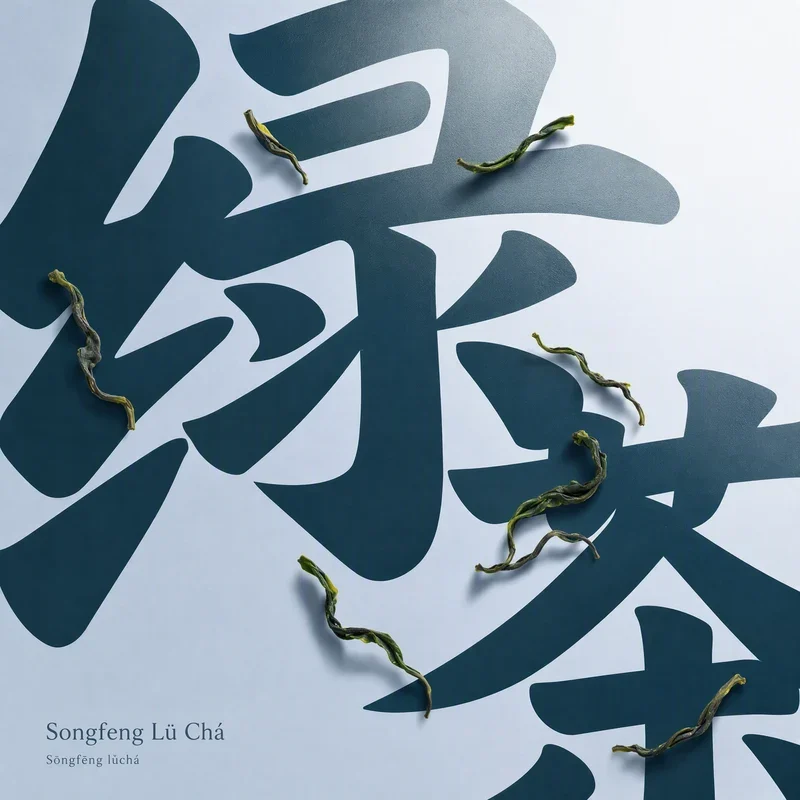
Name Breakdown: 松峰 (Sōngfēng)—"Pine Peak"—a name bestowed upon the mountain and tea personally by Zhu Yuanzhang. 松 (sōng)—pine, symbol of resilience and longevity; 峰 (fēng)—peak, summit; 绿茶 (Lǜchá)—"green tea." Full meaning: "Green Tea of Pine Peak."
Primary—Yánglóudòng Group Variety (羊楼洞群体种, Yánglóudòng Qúntǐzhǒng)—a century-old local medium-small leaf variety of Camellia sinensis var. sinensis. Trees older than 30 years. Additionally—Echa 1 (鄂茶1号, Èchá 1 Hào) and Fúdǐng Dà Bái Chá (福鼎大白茶)—early-ripening clonal varieties with high shoot-forming ability. Weight of 100 shoots "bud + one leaf"—~45 g. Extended tenderness period (持嫩期, chí nèn qī)—one of the characteristics of the Yangloudong variety.
Picking: Spring—from late March to April. The strictest standard of "Nine Prohibitions" (九不采, jiǔ bù cǎi) is applied: do not harvest rainy, dewy, purple, diseased, insect-damaged, deformed, hollow, cracked shoots, and shoots with damaged tips.
Pluck Standard: Premium grade—single buds (≥90%). First grade—bud + one half-opened leaf (≥80%). Second grade—bud + two leaves.
Raw Material: Tender, whole shoots conforming to the "Nine Prohibitions" standard.
Altitude: 300–600 m a.s.l. (southern slope of Mount Songfengshan).
Climate: Northern subtropical zone. Average annual temperature 16.8°C; precipitation 1,560 mm/year; cloudy-foggy days—significant percentage; diffused light—sufficient for stimulating amino acids.
Soil: Yellow-brown loams (黄棕壤), pH 4.5–6.5, enriched with zinc and selenium. Natural irrigation—mountain springs of Songfengshan.
Forest coverage—>72%. Territory certified as "China's Natural Oxygen Bar" (中国天然氧吧). High content of negative ions in the air. Tea gardens surrounded by pine forests—hence the mountain's name. Water supply for tea plantations—from mountain springs flowing down the slopes of Songfengshan, unaffected by anthropogenic impact. Proximity to the Mufushan Range creates a natural climatic barrier, retaining moisture and forming constant fogs—ideal conditions for amino acid accumulation.
Standard.
In ān inclined wok (斜锅, xiéguō)—temperature decreases from 100–120°C to 80°C during the pan-firing process. The inclined wok is a rare technique ensuring gradient treatment: the upper part of the leaf heats more intensely, the lower part more gently.
Stopping thermal treatment before drying.
At 50–60°C.
40–48 hours—key stage! Tea is wrapped in cloth or paper and kept in a warm, humid environment. Microbiological and enzymatic processes form the characteristic chestnut aroma (栗香) and soften astringency. This stage relates Songfeng to yellow teas (Mengding Huang Ya, Junshan Yin Zhen), but here it serves to form aroma rather than change color. This is a technological "bridge" between green and yellow tea.
Fixing the results of the first "yellowing."
20 hours—shorter, for final aroma stabilization.
At 50–55°C, three consecutive heatings—ensure moisture content ≤5% and form "mature chestnut" aroma (熟栗香).
Traditional Yangloudong method: tea is stored in sealed containers with pieces of gypsum that absorb moisture and stabilize the environment. The method ensures exceptional preservation of aroma.
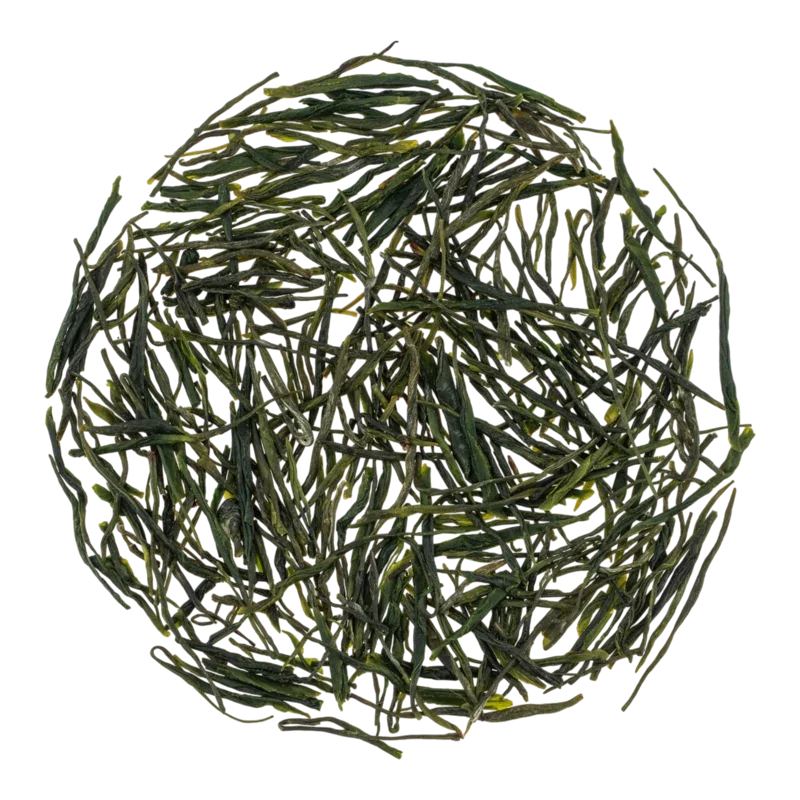
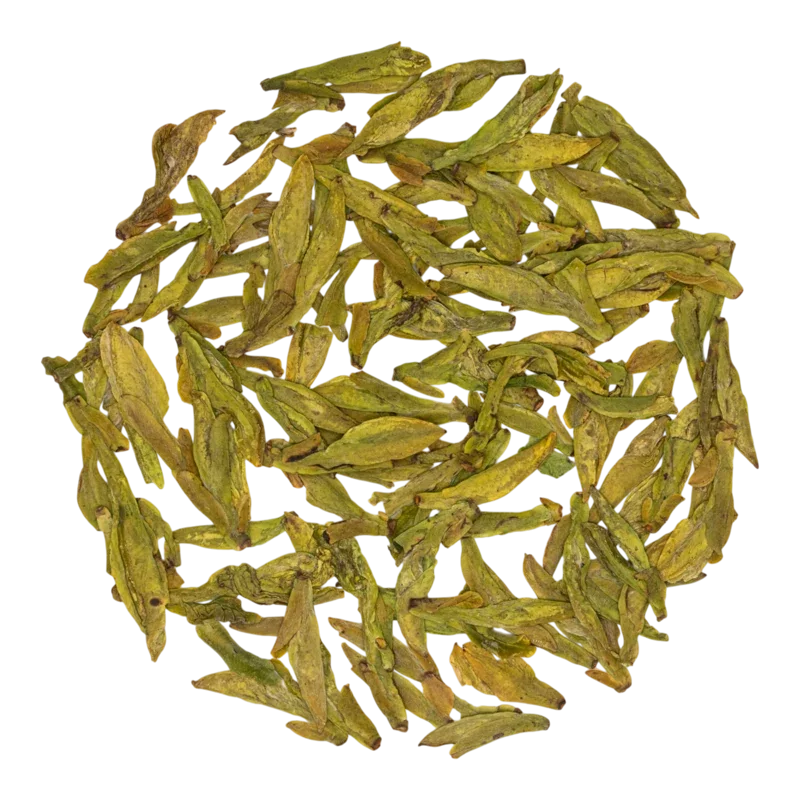
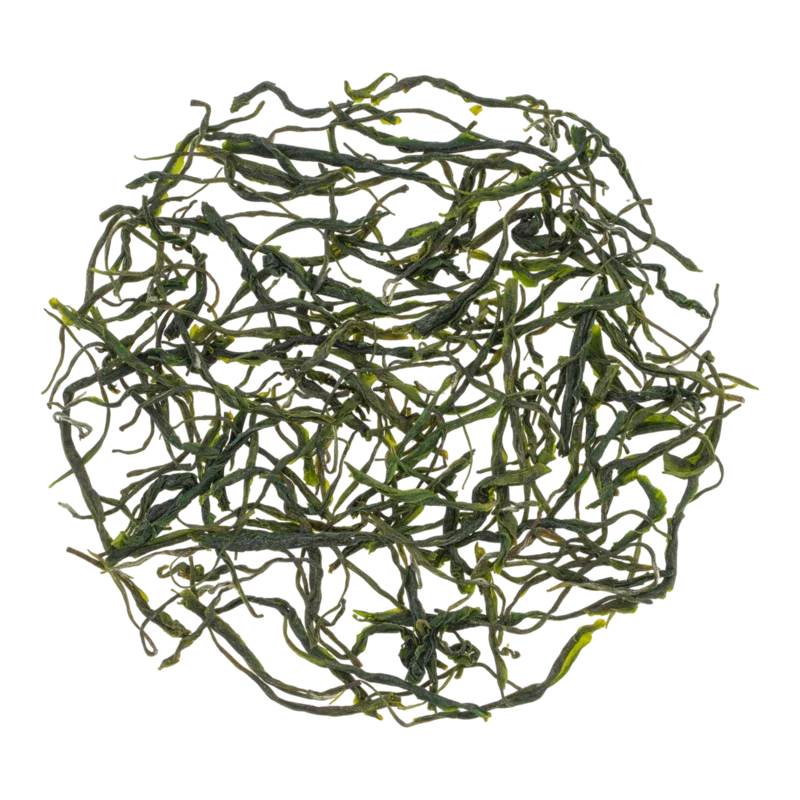
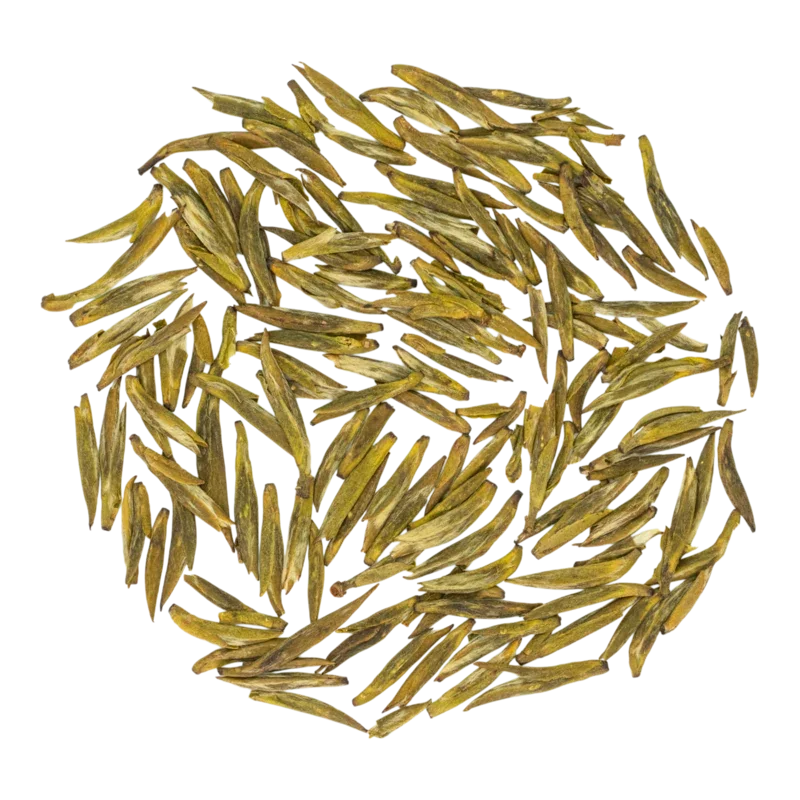
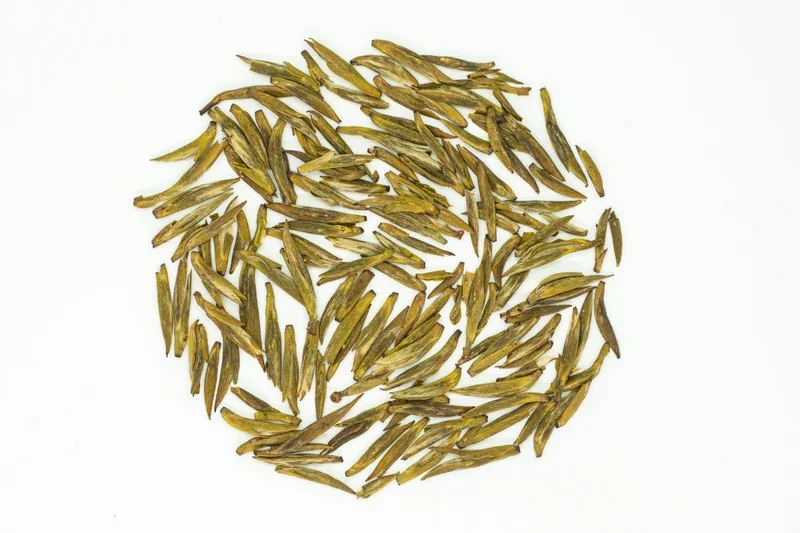
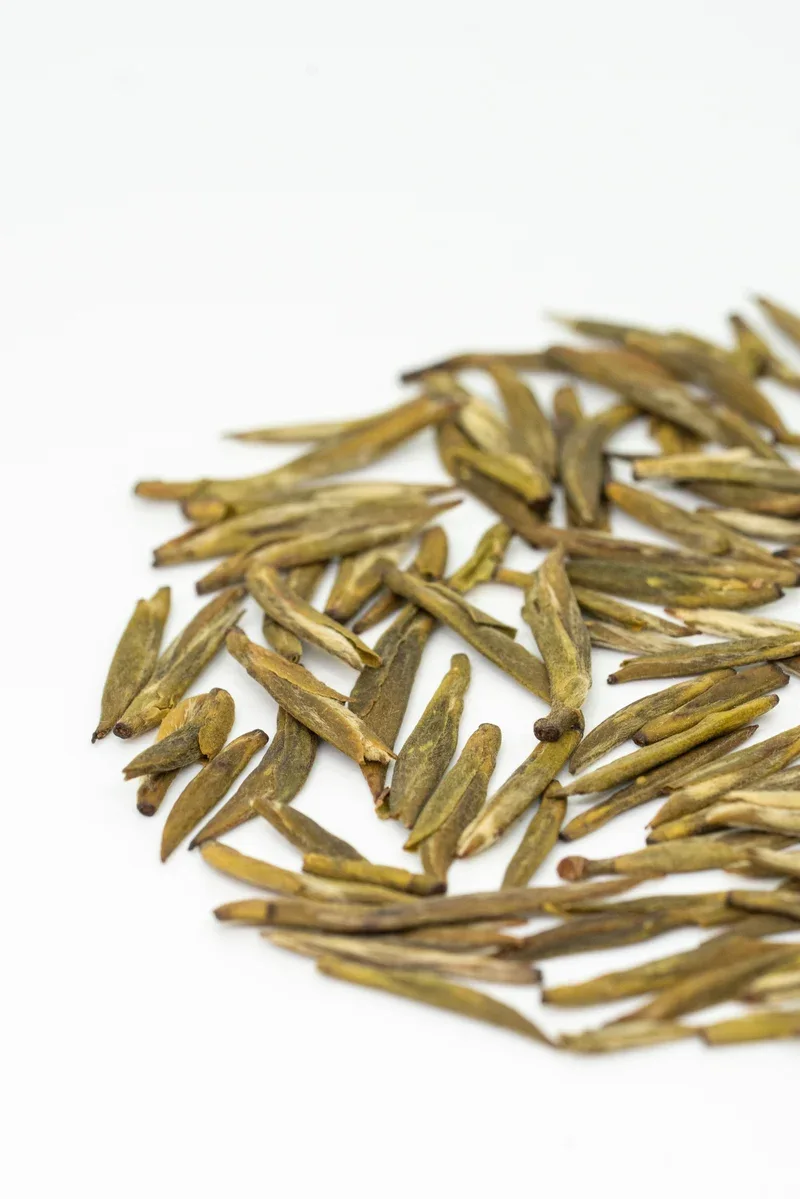
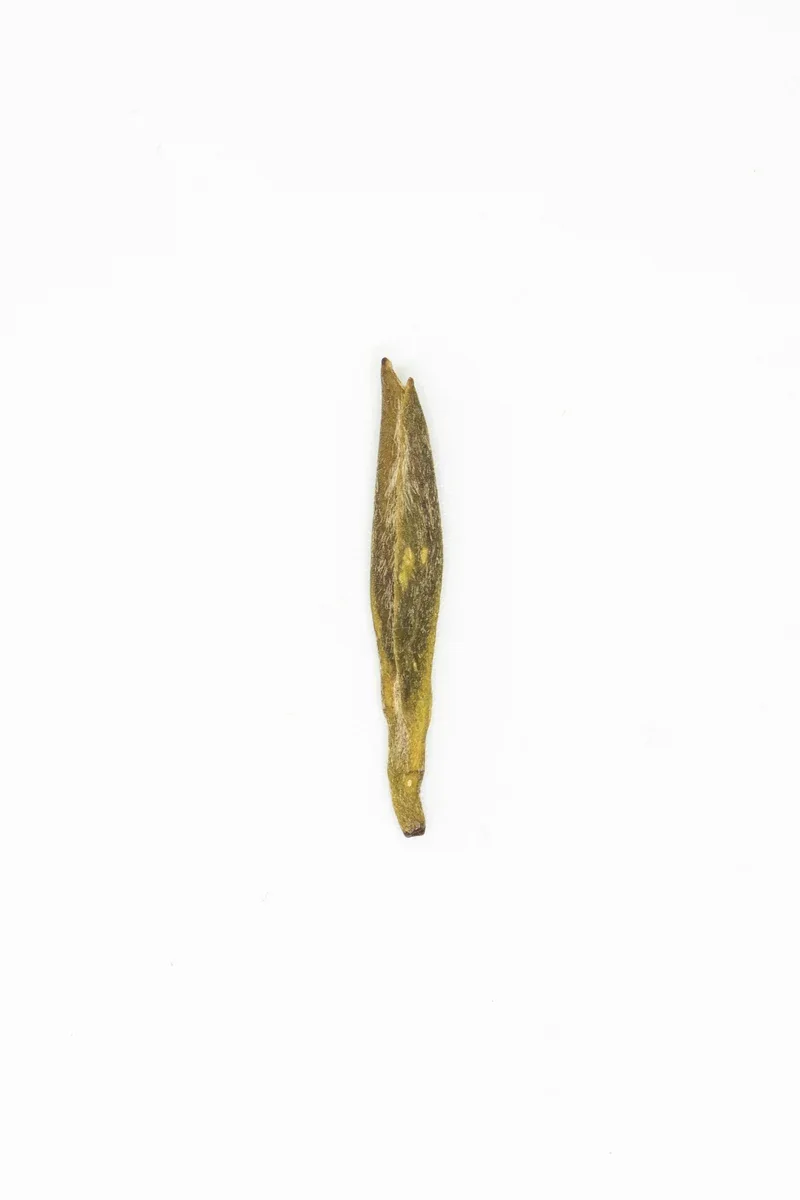
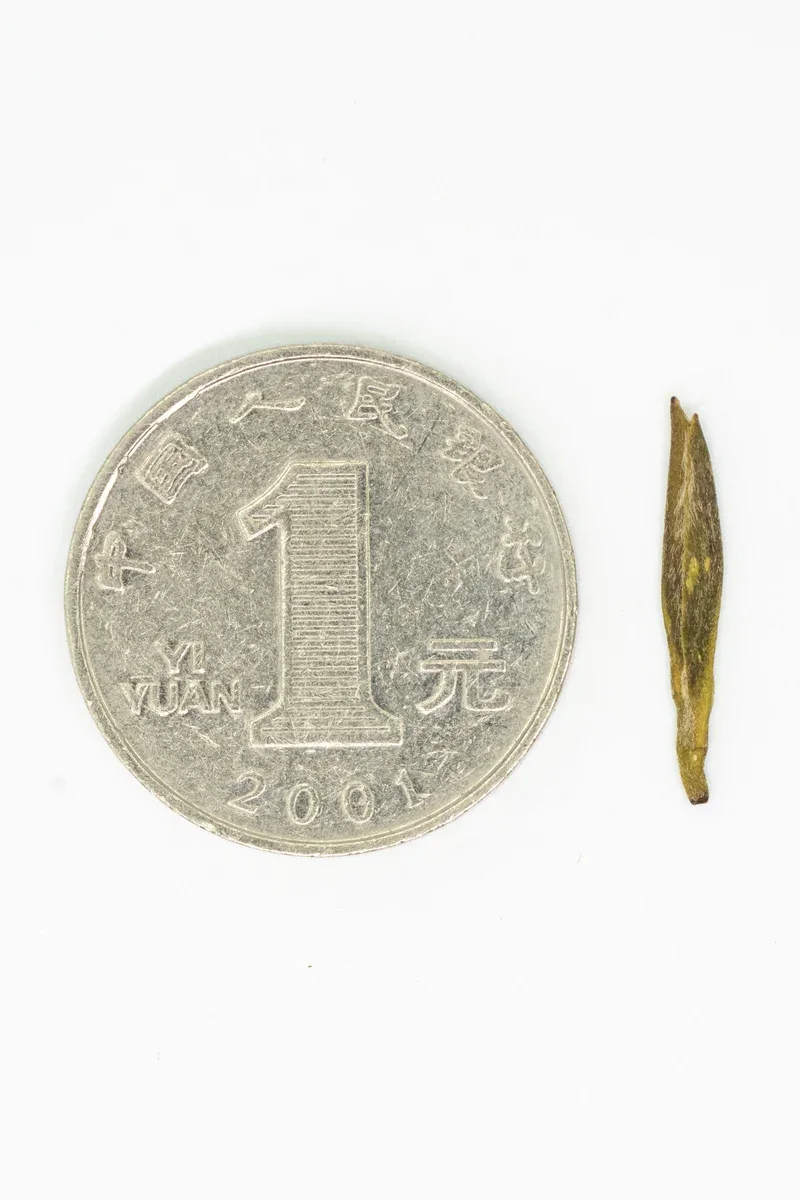
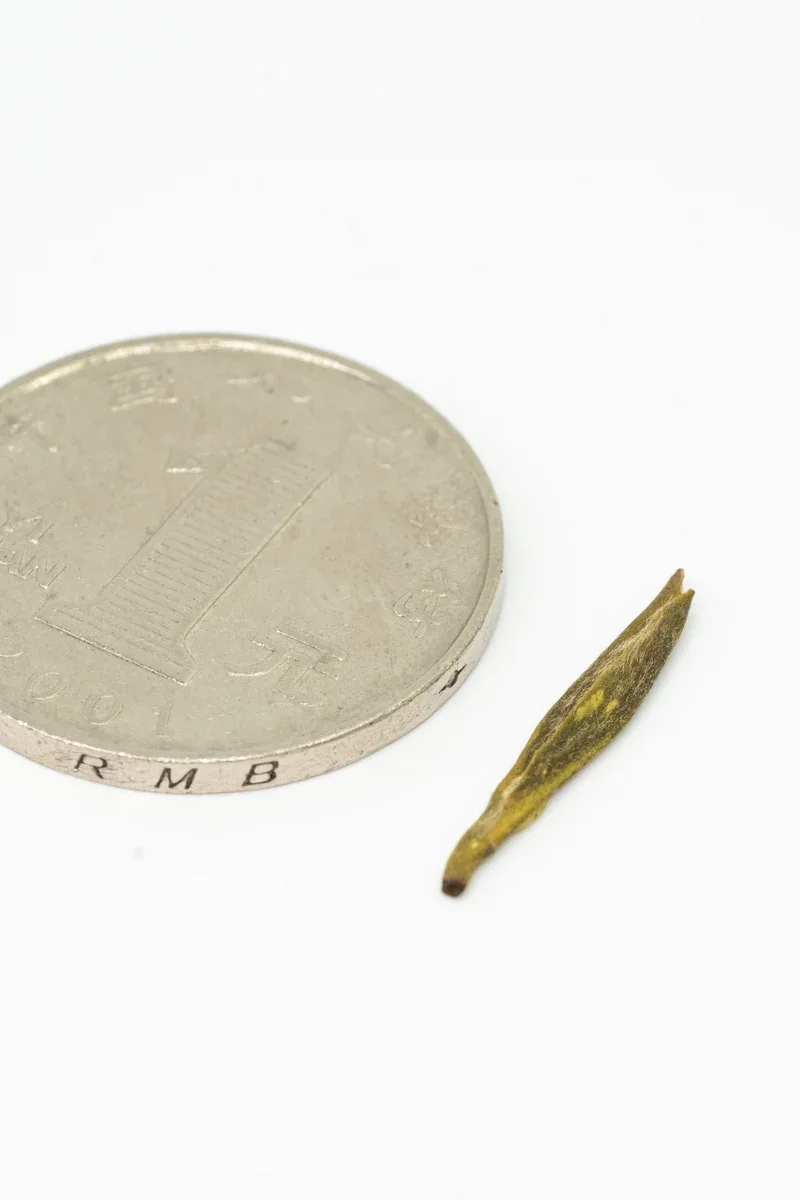
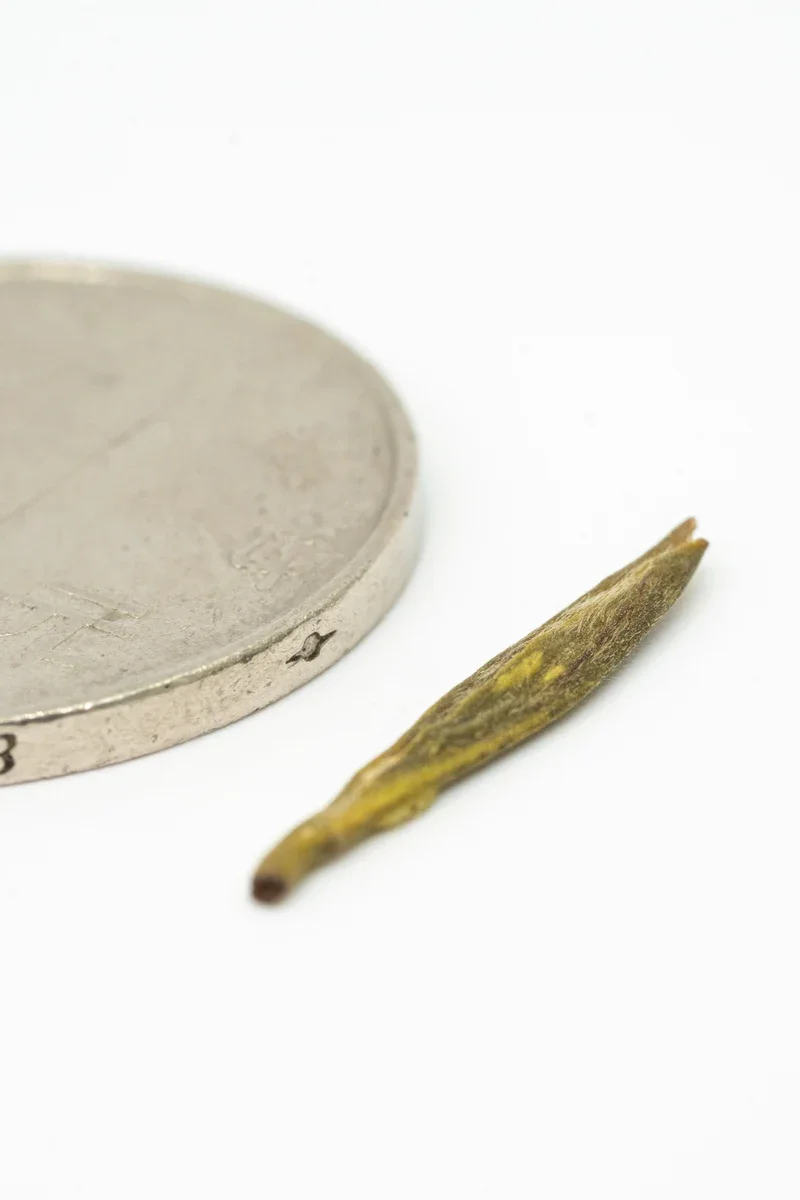
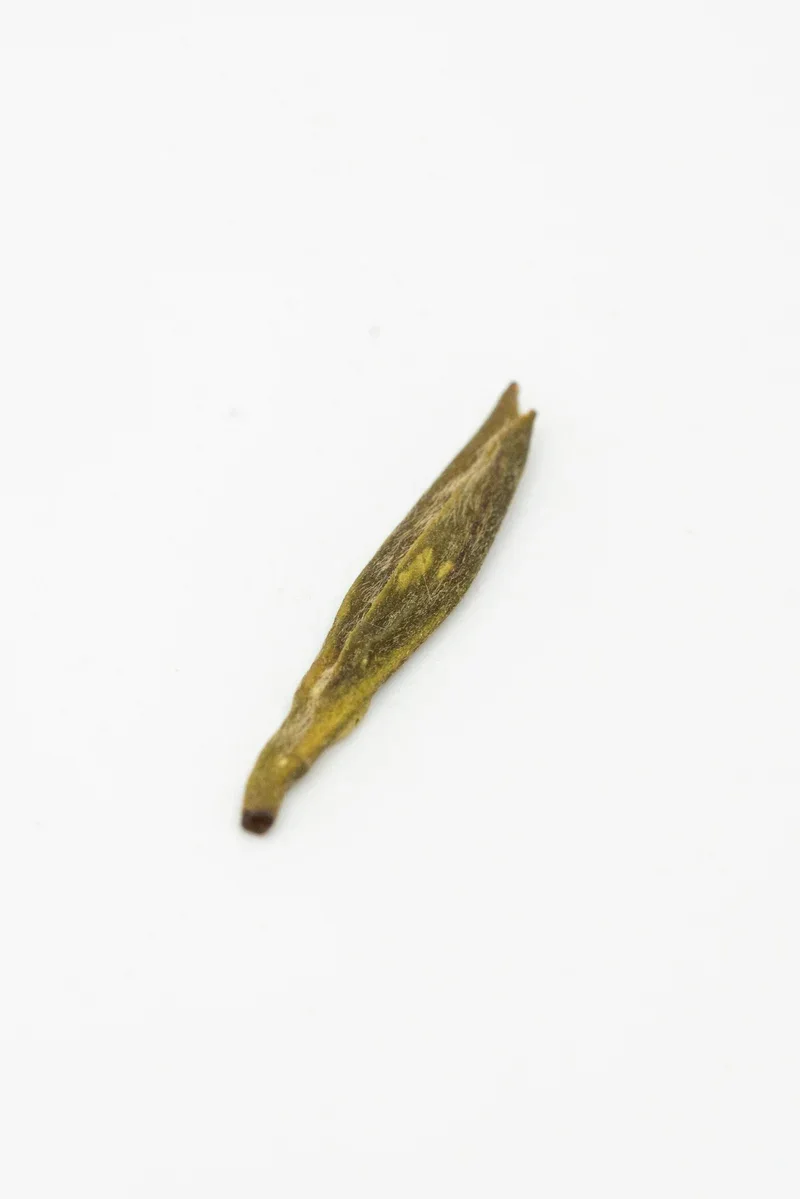
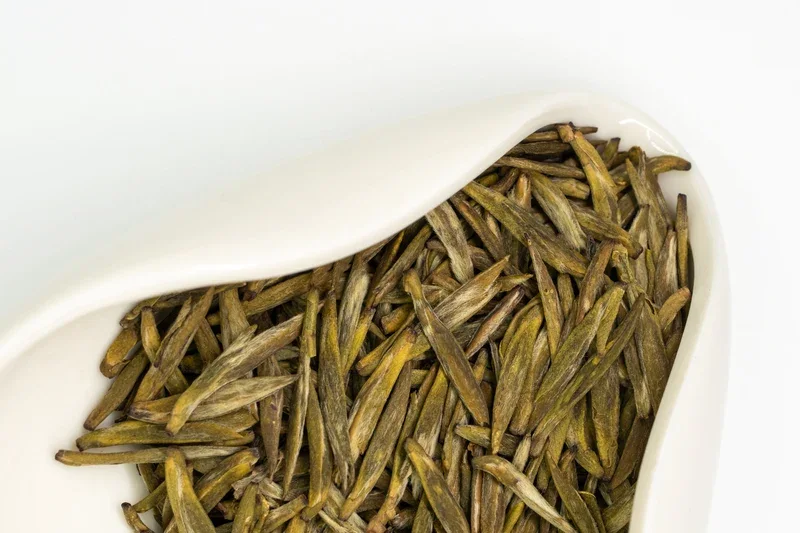
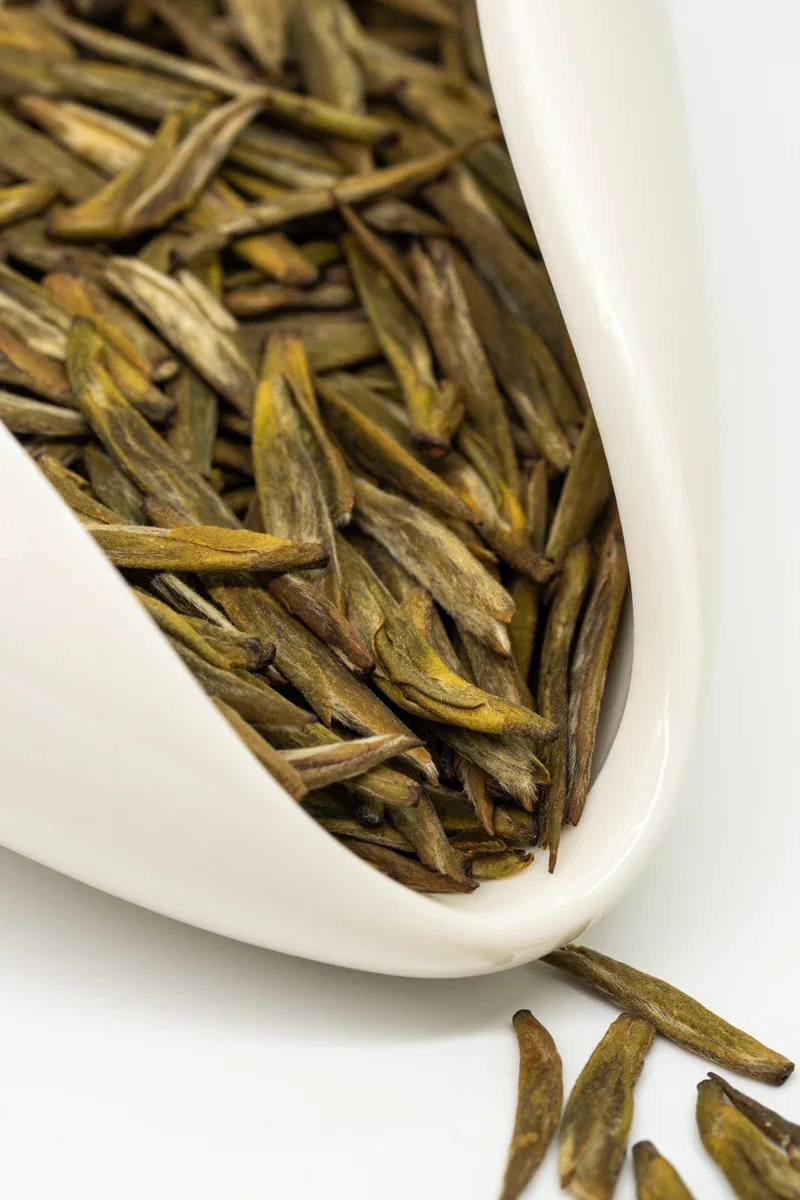
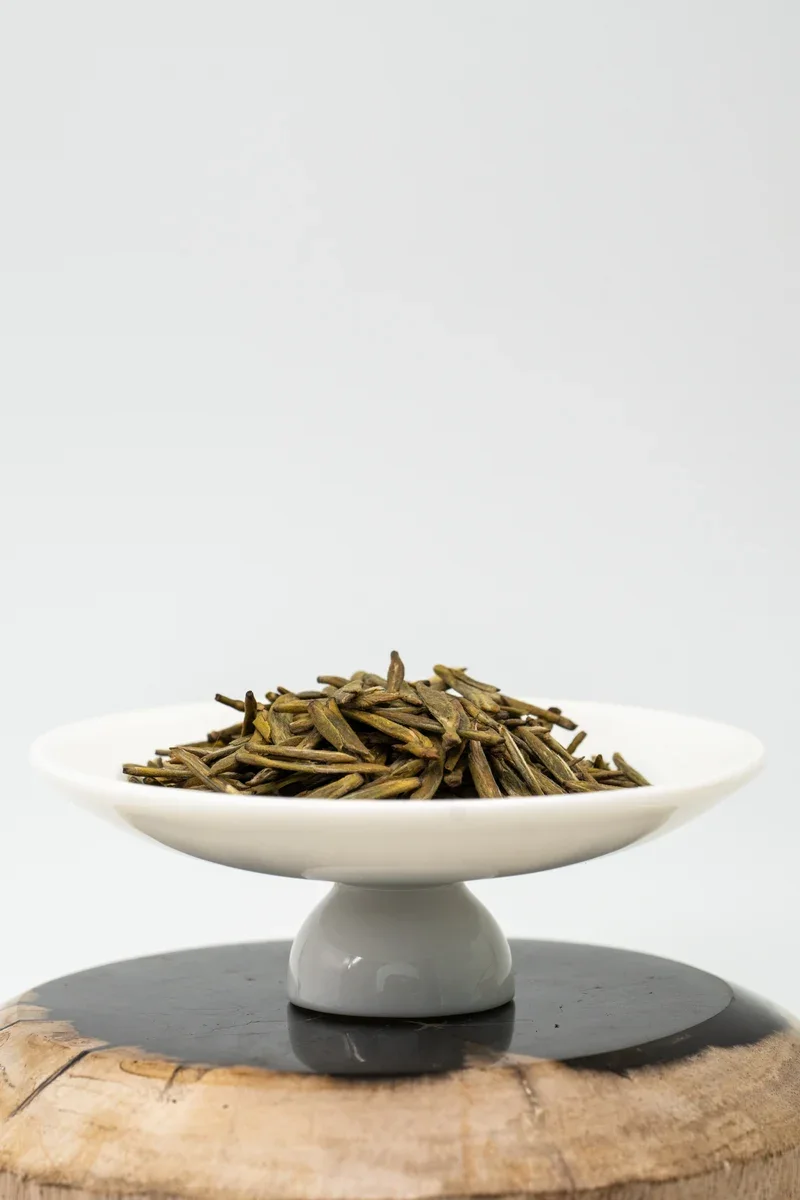
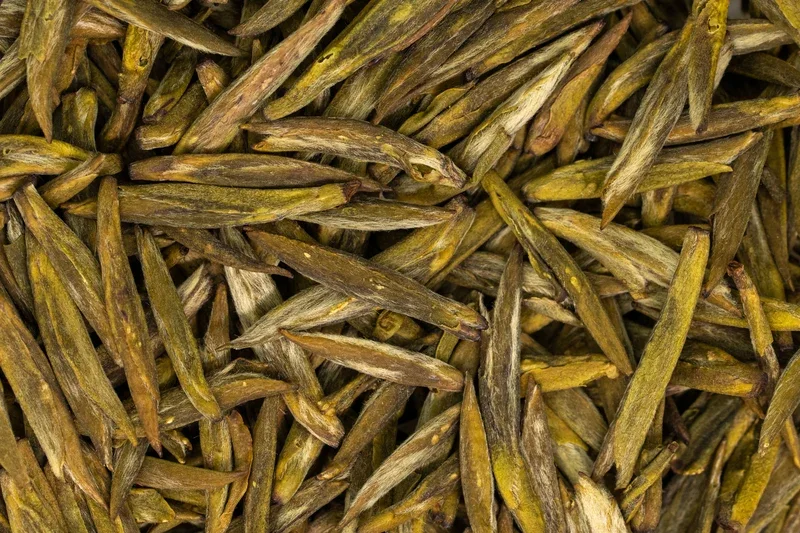
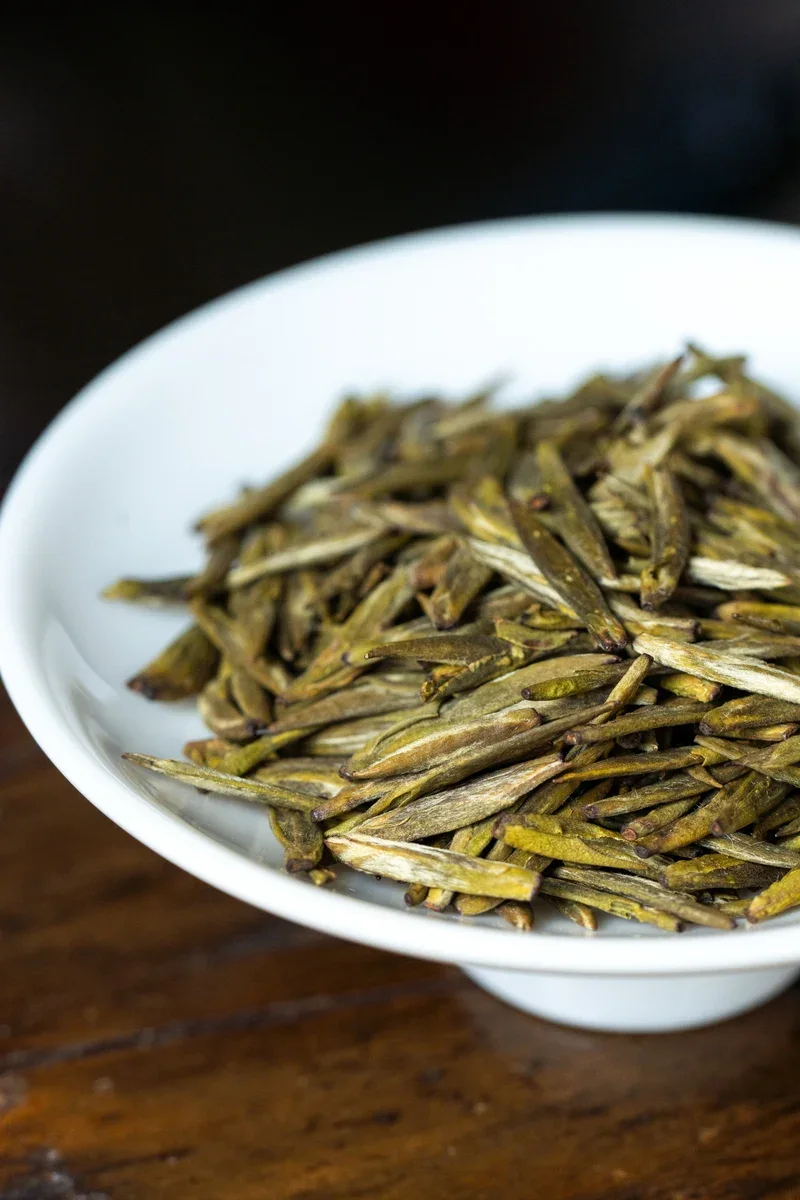
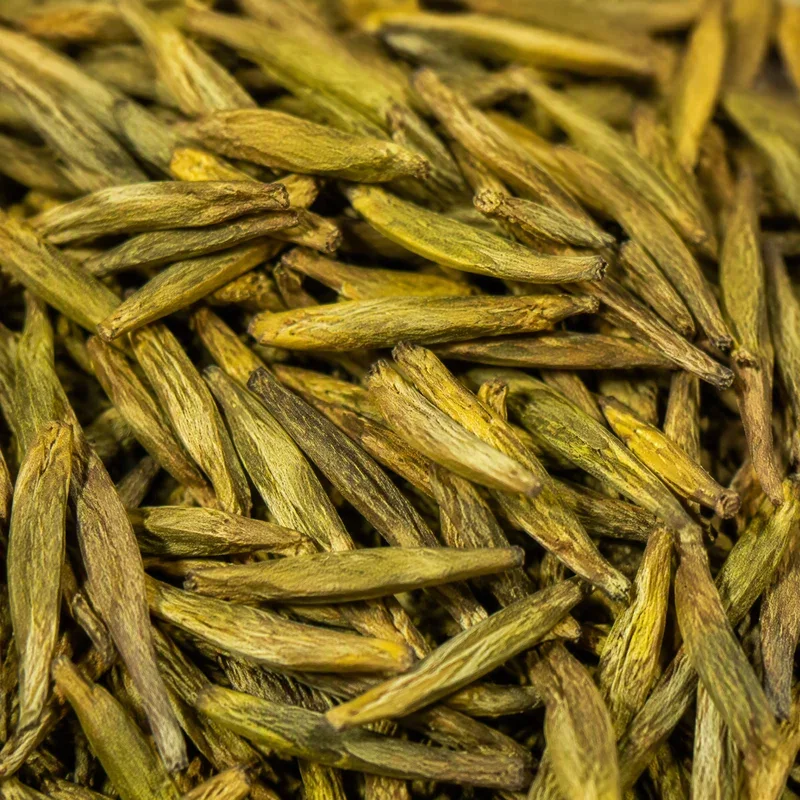
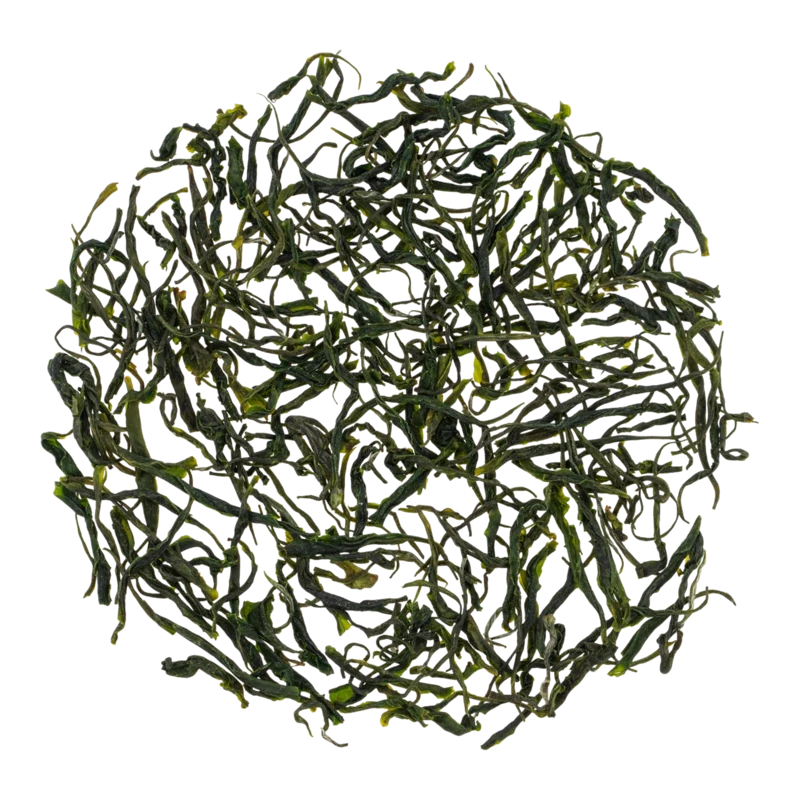
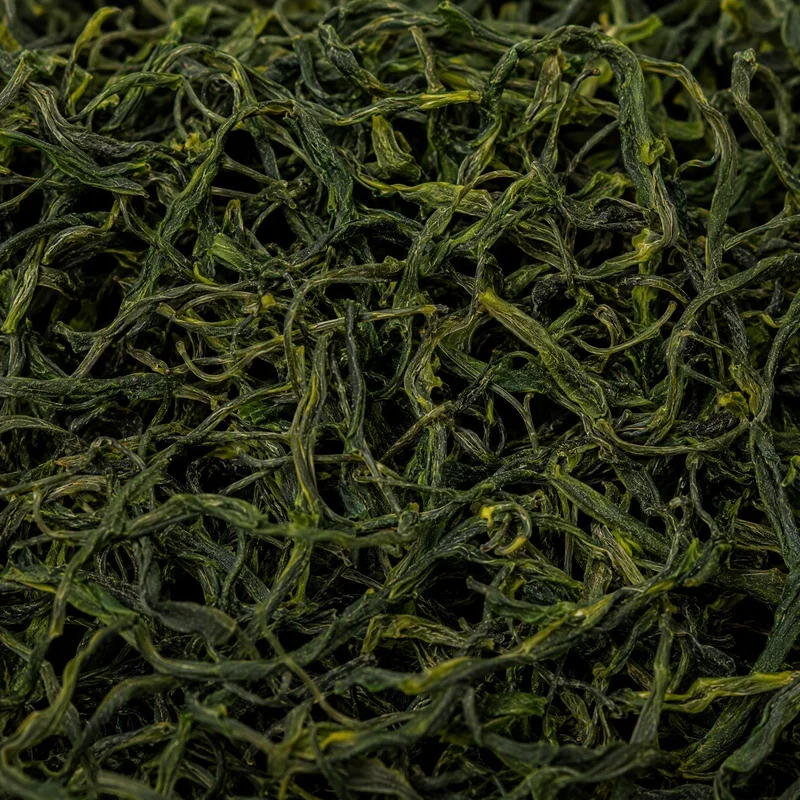
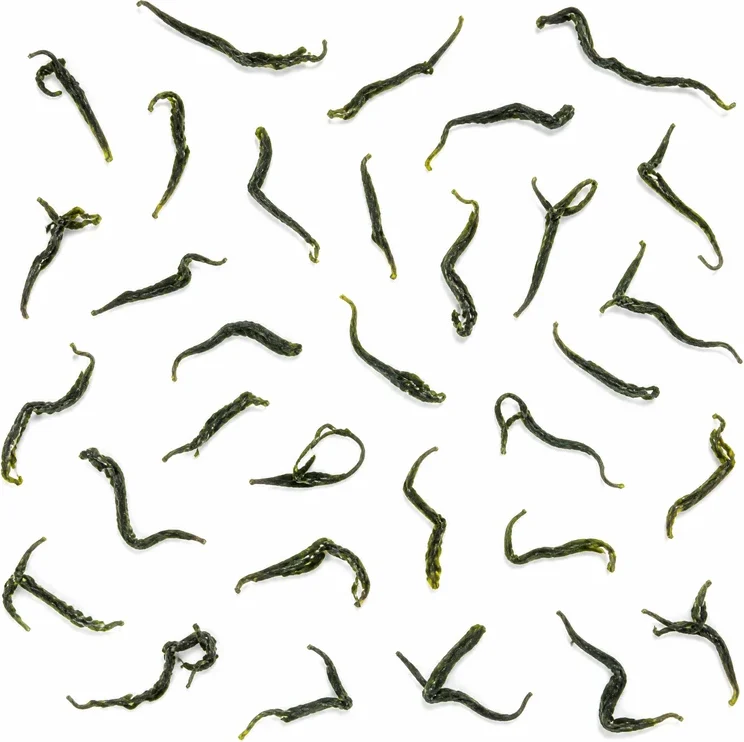
Dry Leaf Appearance: Thin, even, twisted "pine needles" (针芽状, zhēnyá zhuàng), dense and uniform (紧细匀整). Color—emerald green, oily-lustrous (翠绿油润).
Dry Leaf Aroma: Chestnut (栗香, lì xiāng)—dominant note, high and sharp. Clean green (清香)—additional background. "Mature chestnut" (熟栗香)—result of triple final drying.
Liquor Aroma: Chestnut-green, high and stable. Upon cooling—sweetish "bread" notes.
Liquor Color: Transparent, clean and bright (清澈明亮).
5+ infusions for second grade—good indicator, due to high content of water-extractable substances (≥45%). Premium and first grades withstand even more due to concentrated raw material.
Spent Leaves: Tender green, even, fresh and lively (嫩绿匀齐鲜活).
Taste: Fresh (鲜爽) and simultaneously thick and rich (醇厚, chúnhòu)—an unusual combination, atypical for standard green teas and explained by the "闷黄" stage. Viscosity and "body" above average. Lǒng sweet aftertaste (回甘, huígān).
Alkaloids: Caffeine—moderate, providing tonic effect.
Amino Acids: Sufficient level to ensure freshness. L-theanine dominates.
≥45% (premium grade)—one of the highest indicators among green teas, testifying to exceptional "density" of the liquor.
Minerals: Zinc and selenium—geochemical markers of the Mufushan Range. Potassium, manganese, fluorine.
Polyphenols: ≥30% (first grade)—high indicator ensuring powerful antioxidant activity.
Vitamins: Vitamin C, B-group vitamins, vitamin E.
Historic property recorded in the legend of Zhu Yuanzhang: tea relieved stomach pains in soldiers. Polyphenols and tannins stimulate gastrointestinal motility.
Polyphenols (≥30%) provide powerful neutralization of free radicals.
Caffeine + L-theanine—gentle, prolonged vigor.
L-theanine stimulates alpha-wave brain activity.
Listed properties are based on general data and are not medical recommendations. Not recommended to drink on an empty stomach. Fresh tea should be aged 7 days to "release fire." After opening—consume within 10 days.
When pouring, direct the stream along the cup wall (沿杯壁缓流), not into the center—this prevents "knocking off" down and clouding of the liquor.
Process: Pour 1/3 water, add tea, swirl for "aroma awakening" (摇香, yáo xiāng), fill to full volume. Steep 2–3 minutes.
Tea Amount: 3 g per 150 ml (1:50 ratio).
Teaware: Glass tumbler (top-pouring method, 上投法) or white porcelain gaiwan (middle-pouring method, 中投法).
Water Temperature: 80–85°C. Do not use boiling water (>85°C "scalds" leaves and produces cloudy liquor).
Container: Airtight; with traditional method—ceramic jar with pieces of natural gypsum (石膏, shígāo). Gypsum acts as a natural desiccant: its crystalline structure absorbs moisture from the air inside the container, maintaining humidity at a level that prevents oxidation but does not over-dry the tea. This method, developed by Yangloudong tea growers centuries ago, is comparable in effectiveness to modern vacuum packaging.
Light: Complete isolation.
After opening—10 days for maximum aroma. Sealed—up to 12 months.
Temperature: 0–5°C (refrigerator) or traditional gypsum preservation method (石膏贮藏法).
Hubei. Steamed (蒸青), "pine needle" form. Aroma—"marine," without chestnut notes. Songfeng—pan-fired with "yellowing," with pronounced chestnut profile and greater "body." Both—"pine needles," but fundamentally different technologies.
Hubei, Yichang. Flat, pan-fired. Chestnut aroma from bamboo charcoal (三峡辉锅). Songfeng—twisted, chestnut from "yellowing." Both—with "warm" profile, but aroma formation mechanisms differ.
Hubei, Yichang. Classic pan-fired green, twisted form. More "standard" in profile, without "yellowing." Songfeng—with greater "depth" and "thickness" of taste.
Sichuan. Classic yellow tea with full "yellowing." Aroma—"cereal," "bread"; taste—softer and "drier." Songfeng—formally green, with more pronounced "green" freshness, but with chestnut "depth" from partial "yellowing."
No reviews yet. Tell us what you think of this tea.
Rate this tea and share your impressions. We review each submission before publishing it.