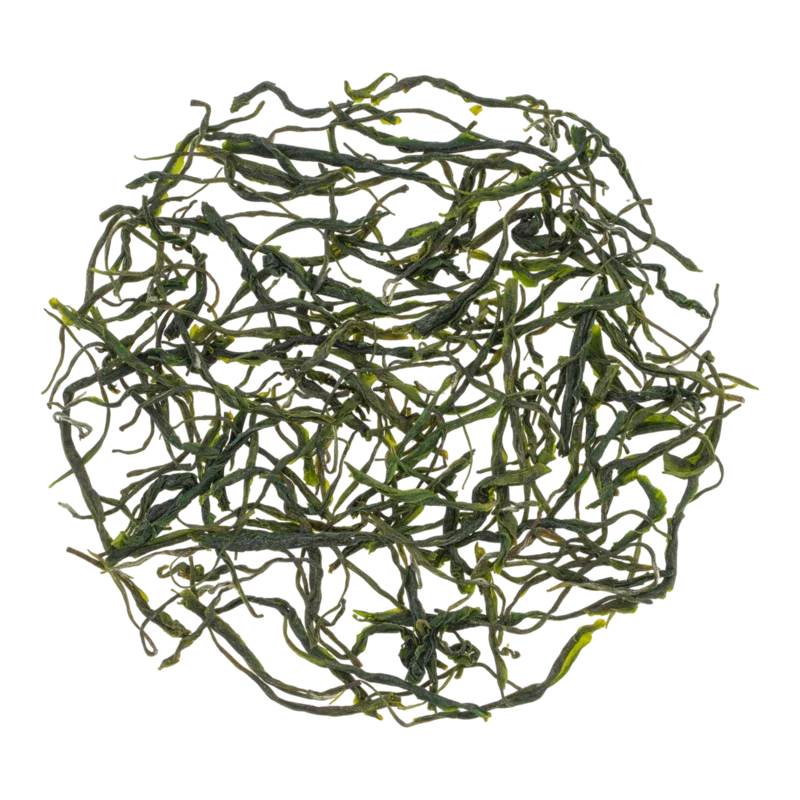
Brewing
Gongfu brewing
- Water temperature
- 80 °C
- Tea amount
- 5 g
- Water volume
- 100 ml
- First steep
- 10 s
- Time added per infusion
- 5 s
- Infusions
- 3

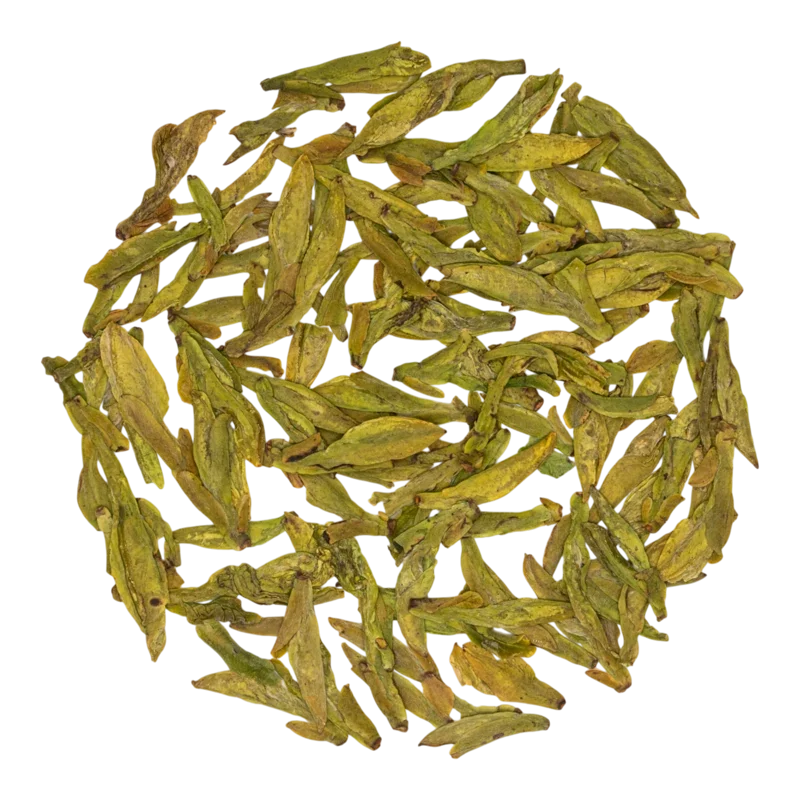
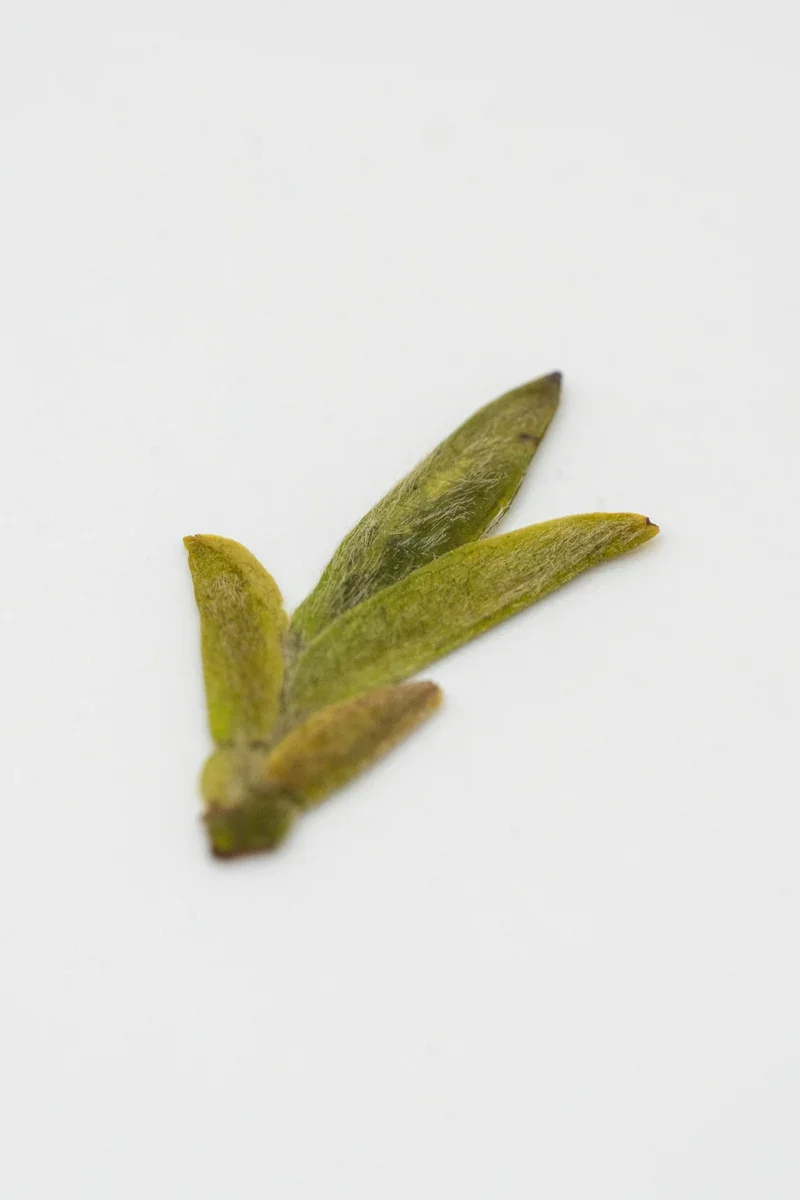
Sānxiá lóng jǐng
Choose a brewing method. Start with the recommended quantities and time, then adjust to taste.
Brewing
Brewing
Taste
Tea encyclopedia
Category: Regional famous tea of Hubei. Flagship product of the "Sanxiacha-gu" program (三峡茶谷, "Tea Valley of the Three Gorges"). Included in the provincial strategy "One Red — One Green" (2025).
Category: Regional famous tea of Hubei. Flagship product of the "Sanxiacha-gu" program (三峡茶谷, "Tea Valley of the Three Gorges"). Included in the provincial strategy "One Red — One Green" (2025).
Coordinates: ~110°–111° E longitude, 30°–31° N latitude (Three Gorges zone, Yichang area).
Origin: China; Húběi Province (湖北, Húběi); Yíchāng City (宜昌市, Yíchāng Shì). Production zone — shores of the Three Gorges reservoir: Yílíng District (夷陵区, Yílíng Qū), Zǐguī County (秭归县, Zǐguī Xiàn) and Wǔfēng County (五峰县, Wǔfēng Xiàn). Quality core — Dèngcūn Township (邓村乡, Dèngcūn Xiāng, distance to the Three Gorges Dam — only 23 km) and Tàipíngxī Town (太平溪镇, Tàipíngxī Zhèn), located on gentle slopes at altitudes of 500–800 m.
Type: Green tea (unoxidized, 绿茶, lǜchá). Kill-green fixation — drum pan-firing (滚筒杀青, gǔntǒng shāqīng). Shape — flat (扁平形, biǎnpíng xíng, "sword blade").
The Three Gorges area is the only tea zone that the author of "The Classic of Tea" rated as "best" (上) in the "southern mountains" (山南) category. This happened after Lu Yu's personal visit to Dengcun in 754 — one of the earliest documented "tea audits" in history.
The core zone of Sanxia Long Jing (Dengcun Township) is located only 23 km from the Three Gorges Dam — the most powerful hydroelectric station on the planet. The reservoir creates a unique microclimate that enhances fogginess.
The great Song literati Ouyang Xiu, who served in Yiling, celebrated local tea in verse — his couplet "Spring-autumn of Chu on western borders, Lu Yu's Tea Classic — first prefecture" is still quoted in every teahouse in Dengcun.
The "Sanxia hui-guo" technology uses precisely bamboo charcoal (竹炭), not wood charcoal. Bamboo burns at a lower and more stable temperature, allowing tea to be warmed more gently and evenly, forming the characteristic chestnut note.
In 2025, Sānxiá Long Jǐng was presented at the Global Tea Congress of Karim (卡利姆全球选茶大会) — an international platform for selecting the world's best teas.
Cultural Significance: Sanxia Long Jing is the embodiment of the concept "Tea Valley of the Three Gorges" (三峡茶谷), a large-scale project to transform Yichang's tea gardens into a tourist and ecological showcase. The tea is directly connected to Dengcun — the first and only township in China to be awarded the title "China's Famous Tea Capital" (中国名茶之乡) at the township level. Dengcun also received the statuses "World Tea Tourism Town" (世界茶旅小镇) and "World Core Zone of High-Quality Green Tea" (世界高品质绿茶核心产区). The proximity of the Three Gorges Dam gives the tea symbolic significance — it is associated with the power and grandeur of the most massive hydroelectric project on the planet.
Name Breakdown: 三峡 (Sānxiá) — Three Gorges, the famous canyon of the Yangtze River, from which the hydroelectric power station of the same name got its name; 龙井 (Lóng Jǐng) — "Dragon Well," a reference to the classic shape of Zhejiang tea, transferred to Hubei raw material. Full meaning: "Long Jing from the Three Gorges" — emphasizes both the famous terroir and technological heritage.
Cultivar: Main — Yíchāng Group Variety (宜昌群体种, Yíchāng Qúntǐzhǒng), a bush medium-leaf variety of Camellia sinensis var. sinensis, one of the first 30 nationally recognized local varieties of China. Distinguished by high amino acid content (up to 5.76% in Dengcun according to data from China's Ministry of Agriculture) and optimal ratio of polyphenols to amino acids. Additionally used is the clonal variety Long Jing 43 (龙井43号, Lóngjǐng 43 Hào) — an early-ripening cultivar providing early spring harvest. Old trees (30+ years) are concentrated in Dengcun; mass of 100 shoots "bud + one leaf" — about 40 g.
Picking: Spring — from late February to April. Most valuable — "mingqian" (明前, míngqián, before Qingming festival), then — "yuqian" (雨前, yǔqián, before Guyu festival). Summer-autumn harvest goes mainly to the mass market.
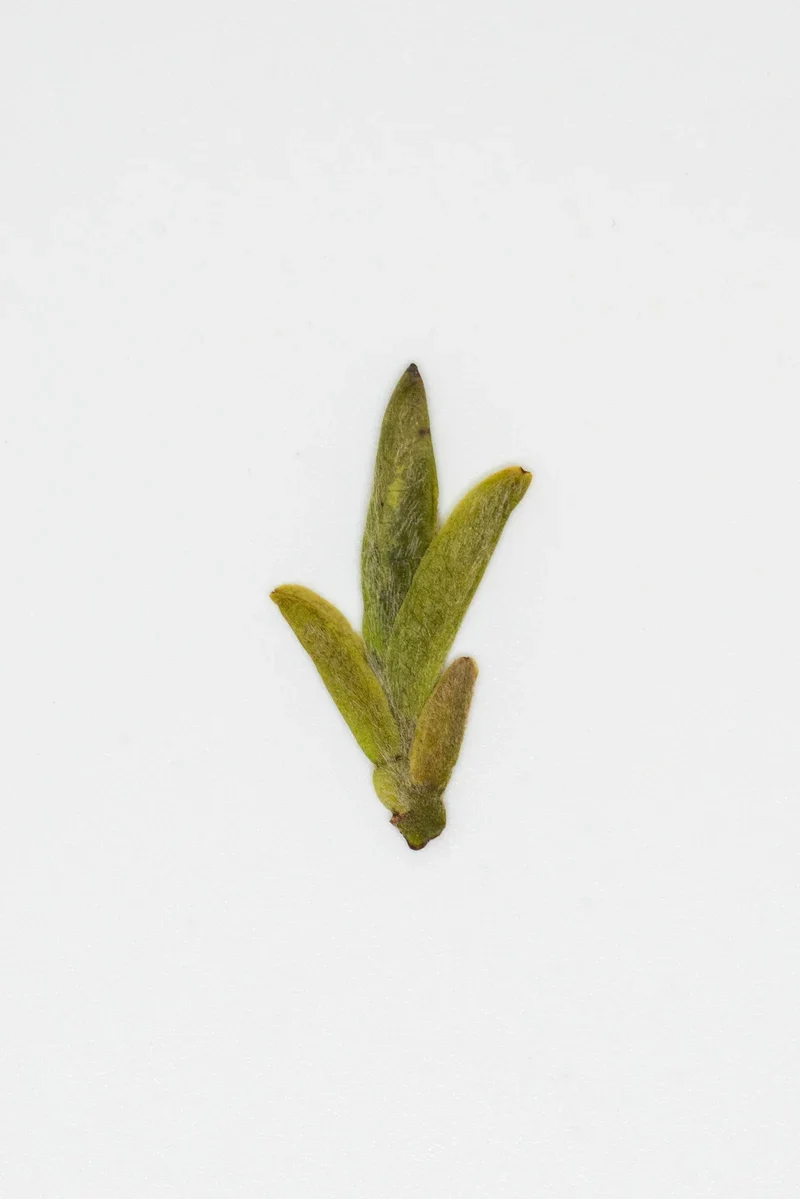
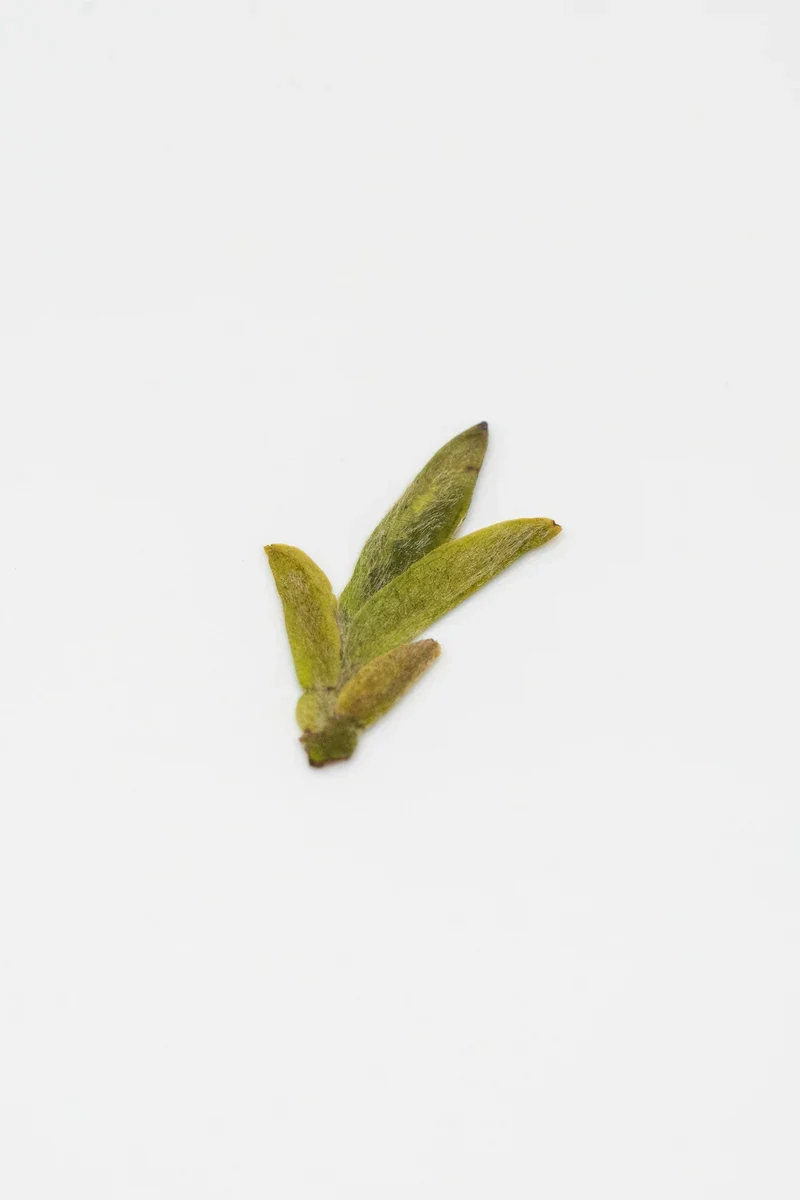
Pluck Standard: Supreme grade (特级) — single buds or bud with one half-opened leaflet (一芽一叶初展); content of pure buds ≥85%, length ≤2.5 cm. First grade — bud with one opened leaflet (一芽一叶开展), ≥80%. Second — bud with two leaflets.
Raw Material: Tender young shoots without mechanical damage and traces of pests. Raw material is processed on the day of harvest.
Altitude: 300–800 m; core zone (Dengcun, Taipingxi) — 500–800 m on gentle slopes directly near the hydroelectric dam.
Climate: Subtropical monsoon. Average annual temperature 16–18°C; precipitation 1000–1200 mm/year; cloudy-foggy days >150 per year. The Three Gorges reservoir creates a powerful microclimatic effect: enhances fog formation, softens daily temperature fluctuations and increases the proportion of diffused light — all this stimulates amino acid accumulation in leaves (spring tea — amino acids ≥2.8%).
Soil: Yellow-brown loams (黄棕壤, huáng zōng rǎng), pH 5.0–6.0, organic matter >1.5%. Soils are enriched with selenium (Se 0.15–0.3 μg/g) and zinc — a consequence of the geochemistry of the rock formations of Xichuan Gorge.
Forest coverage — 65%. Irrigation — Yangtze water system. Industrial pollution is absent; air and water quality meets the highest national standards. Dengcun was awarded the title "World Core Zone of High-Quality Green Tea" (世界高品质绿茶核心产区) by the World Green Tea Association.
Fresh shoots are spread in a thin layer for 2–3 hours in a ventilated room. The brevity of this stage (unlike oolongs) preserves maximum green freshness.
Drum pan-firing at ~200°C. High temperature quickly inactivates enzymes and forms primary roasted notes. The drum method ensures uniformity — the technological base is worked out in the production of the famous Dengcun Green Tea.
Tea buds are pressed into the flat "sword-like" (剑片状, jiànpiàn zhuàng) shape characteristic of Long Jings. Manual techniques borrowed from Xi Hu Long Jing are applied: "grasp" (抓, zhuā), "shake" (抖, dǒu), "toss" (搭, dā).
Stepped — from 80°C at the initial stage to 60°C at the final — for gradual moisture removal without aroma loss.
A unique stage with no analog in Zhejiang technology. Tea is warmed at low temperature over bamboo charcoal (竹炭, zhútan), which forms a soft chestnut profile and "lasting aroma" (香气持久). This technique is considered a proprietary innovation of Hubei masters.
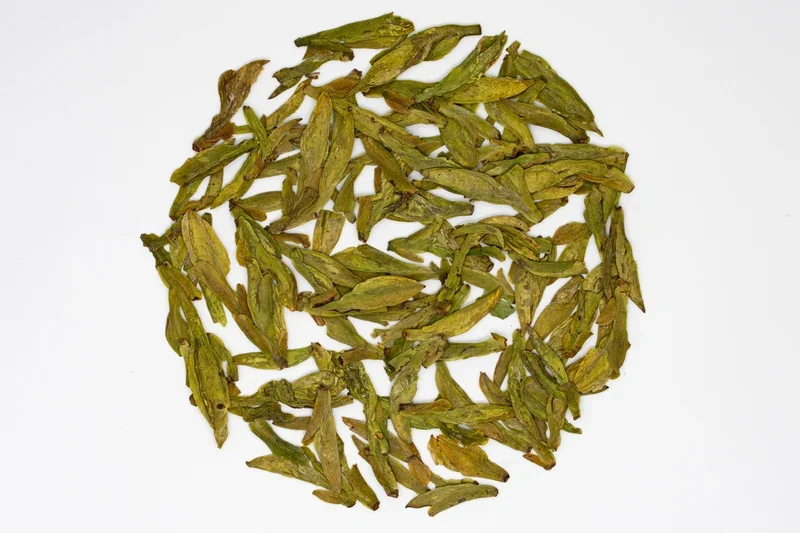
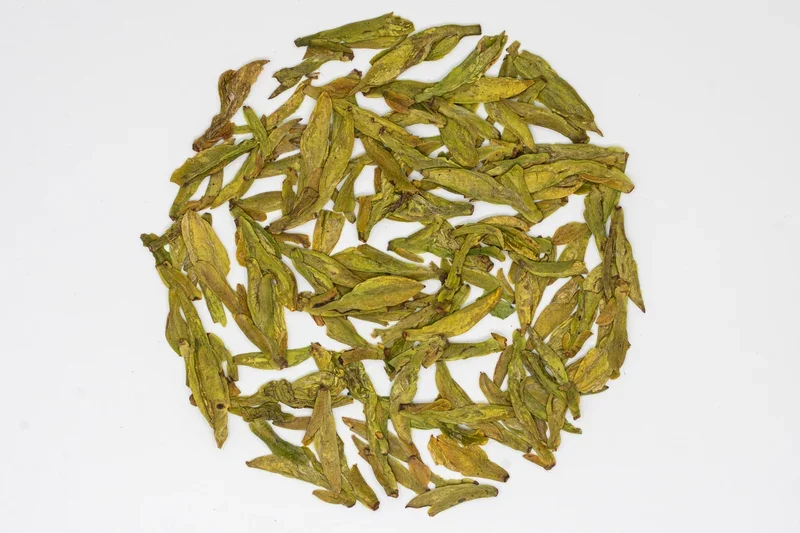
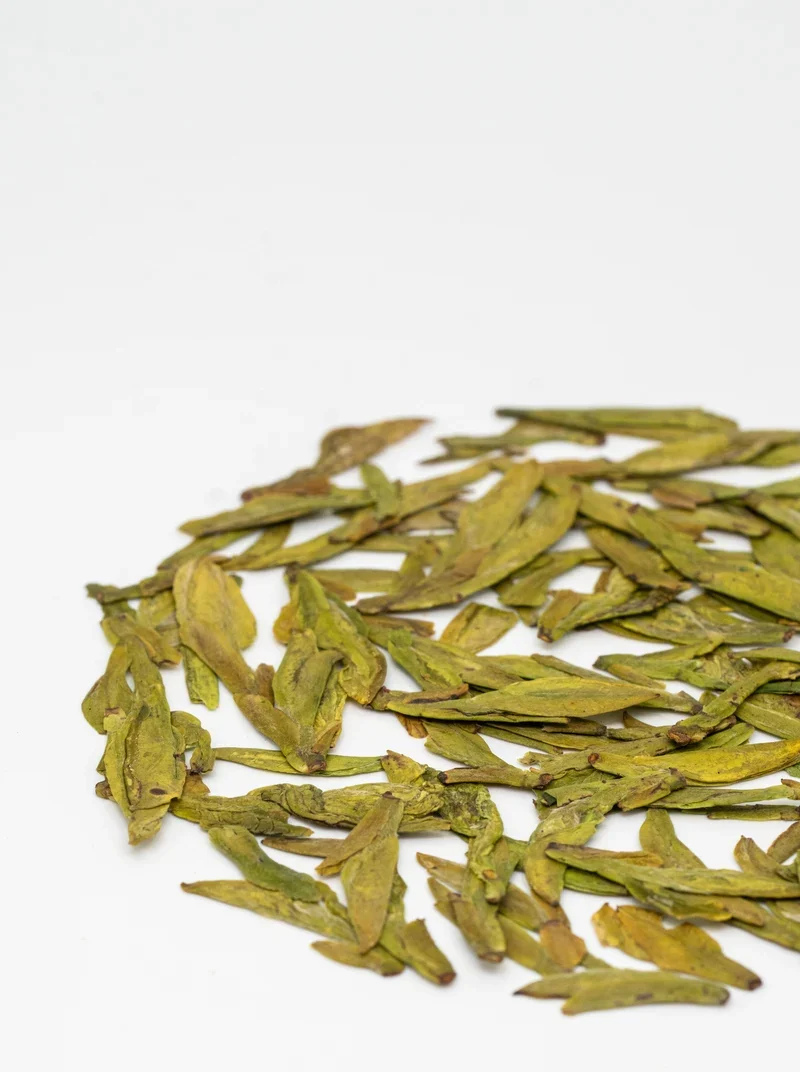
Dry Leaf Appearance: Flat, straight "sword blades" (扁平挺直, biǎnpíng tǐngzhí), emerald-green with noticeable silvery down (翠绿显毫). Shape is even, uniform.
Dry Leaf Aroma: Tender chestnut (嫩栗香, nèn lì xiāng) — dominant note; clean green (清香, qīng xiāng) — spring accent. Chestnut character is more pronounced than in Xi Hu Long Jing — result of "Sanxia hui-guo."
Liquor Aroma: Chestnut-green, high, persistent. With cooling, creamy-sweet nuances appear.
Liquor Color: Tender green, clear and bright (嫩绿清澈明亮).
Spent Leaves: Tender green, buds open as "flowers" (嫩绿成朵), even, lively and uniform (匀齐鲜活).
Taste: Fresh (鲜爽, xiān shuǎng) thanks to high amino acid content. Sweet (甘, gān) — with pronounced returning aftertaste. Body — medium-dense, harmonious (醇, chún), without excessive astringency or wateriness.
Alkaloids: Caffeine in the standard range for green tea; in combination with L-theanine gives the effect of "calm concentration."
Amino Acids: ≥2.8% (spring tea); in Dengcun on old trees — up to 5.76% (data from China's Ministry of Agriculture). L-theanine — main component responsible for freshness and gentle invigoration.
≥42% (supreme grade) — indicator of rich and "dense" liquor.
Minerals: Selenium — 0.15–0.3 μg/g (natural geochemical marker); zinc, potassium, manganese, fluorine (the latter — elevated content, effective for caries prevention).
Polyphenols: 22–25%. Moderate level for green tea, ensuring taste softness without excessive astringency.
Vitamins: Vitamin C, B vitamins (B₁, B₂), vitamin E.
Synergy of caffeine and L-theanine provides gentle concentration enhancement without anxiety.
Polyphenols (22–25%) and selenium jointly neutralize free radicals.
Catechins stimulate fat metabolism.
Elevated fluorine content inhibits cariogenic bacteria activity.
Natural selenium (0.15–0.3 μg/g) — important microelement for thyroid gland, immunity and antioxidant system.
Catechins and vitamin C support vascular elasticity.
L-theanine stimulates alpha-wave brain activity.
Listed properties are based on general data about green tea and are not medical recommendations. Not recommended to drink on empty stomach. Fresh tea should preferably be aged 10 days in a dark place to "shed fire energy" (褪火气). When taking medications — interval of at least 2 hours. Daily norm — no more than 500 ml.
After opening package, store hermetically in refrigerator and consume within 2 months. Do not drink tea left overnight.
Tea Amount: 3 g per 150 ml (1:50 ratio).
Teaware: Glass cup (玻璃杯) — for observing the opening of flat "blades."
Water Temperature: 80–85°C for standard tea; 80°C for supreme grade. Do not use boiling water.
Container: Hermetic vacuum or foil packaging. After opening — double sealing (foil + jar).
Light: Store in complete darkness; light destroys chlorophyll and aroma.
Shelf Life: After opening — no more than 2 months. Sealed — up to 12 months at 0–5°C.
Fresh tea is recommended to be aged 10 days in a dark place at room temperature before first brewing (褪火气, "shedding fire energy").
Temperature: 0–5°C (refrigerator) — mandatory for freshness preservation.
Zhejiang. Standard of "Long Jing" shape. Cultivar Long Jing 43 or Quntijun. Aroma — chestnut-nutty, with "bean" sweetness; taste — more mineral and "dry." Sanxia Long Jing — softer, with more pronounced green freshness and amino acid sweetness, less "roasted."
Zhejiang, Xinchang. Also flat, but from Wuniu-zao or Long Jing 43 cultivar. More "chlorophyll" and "green" in taste, without charcoal chestnut background. Sanxia Long Jing — with deeper, "warmer" aromatic profile due to bamboo charcoal.
Taiwan, Sānxiá District (三峽區). Completely different tea: produced from endemic Taiwanese cultivar Qīng Xīn Gān Zài (青心柑仔), has characteristic "bean-mung" aroma and bright citrus note in aftertaste. Hubei Sanxia Long Jing — more traditional in style, chestnut, close to classic Long Jing.
Same region, same cultivar (Yichang Group Variety), but different shape — twisted, not flat. Typical Hubei "chao-qing" (炒青, pan-fired green). Taste — more "dense" and "full-bodied"; Sanxia Long Jing — more delicate, with emphasis on shape and "blade" aesthetics.
No reviews yet. Tell us what you think of this tea.
Rate this tea and share your impressions. We review each submission before publishing it.