Brewing
Gongfu brewing
- Water temperature
- 75 °C
- Tea amount
- 5 g
- Water volume
- 100 ml
- First steep
- 10 s
- Time added per infusion
- 5 s
- Infusions
- 3

quèshé lǜchá
Choose a brewing method. Start with the recommended quantities and time, then adjust to taste.
Brewing
Brewing
Taste
Tea encyclopedia
Category: Categorical-overview article. "Que She" is a morphological standard for tea leaf shape, not a single product. Belongs to high-quality Chinese green teas; many varieties are included in lists of famous and elite teas of their provinces.
Category: Categorical-overview article. "Que She" is a morphological standard for tea leaf shape, not a single product. Belongs to high-quality Chinese green teas; many varieties are included in lists of famous and elite teas of their provinces.
Meitan Cui Ya / "Meitan Que She" (湄潭翠芽, méitán cuìyá) — the most famous "que she" nationwide. Méitán County (湄潭县), Zūnyì City (遵义市).
Yíbīn Què Shé (宜宾雀舌, yíbīn quèshé), Pújiāng Què Shé (蒲江雀舌, pújiāng quèshé), Méngshān Què Shé (蒙山雀舌, méngshān quèshé), Éméi Què Shé (峨眉雀舌, éméi quèshé).
Jīntán Què Shé (金坛雀舌, jīntán quèshé) — Jintan District, Changzhou City. National geographical indication since 2013.
Various "que she" from Ānjí County (安吉) and other areas.
Wǔyí Què Shé (武夷雀舌, wǔyí quèshé) — special case: this is oolong (岩茶, yánchá), not green tea, but also bears the name "que she."
Coordinates: Vary depending on the specific production region.
Origin: Teas in "que she" form are produced in several key regions:
Type: Green tea (绿茶, lǜchá), unoxidized. Predominantly chǎoqīng (炒青, chǎoqīng) — pan-fired green tea with shaping into the characteristic flat "tongue" form. Individual varieties (Huangshan Mao Feng) belong to hongqing (烘青, hōngqīng) — the type with oven-drying.
In classical Chinese tradition, tea leaves were ranked by four levels: "lian xin" (莲心, lotus heart — single bud), "qi zhang" (旗枪, flag and spear — bud with beginning leaf), "que she" (雀舌, sparrow tongue — bud + one opening leaf) and "ying zhua" (鹰爪, eagle claw — more mature shoot). All four levels — poetic and precise animalistic metaphors.
Brewing Que She in transparent glass is an independent aesthetic ritual. Tiny "tongues" slowly descend, open and "dance" in water, demonstrating tenderness and integrity of raw material.
Sichuan tradition of Yibin Que She production includes rule of "nine prohibitions" during picking (九不采): do not pick in rain, multi-bud, hollow, opened, long, thin, short, pest-damaged and diseased shoots — unprecedented strictness of selection.
Guizhou Meitan Que She (Meitan Cui Ya) in 2011 received highest gold award at International Green Tea Competition (世界绿茶评比), confirming world status of this form.
Wǔyí Què Shé (武夷雀舌) — the only "sparrow tongue" that is not green tea. This is oolong (岩茶, rock tea), originating from vegetative offspring of Dà Hóng Pào (大红袍). Small-leaf, with small planting area and high price, it is the "white crow" among Que She.
Cultural Significance: Que She is a symbol of aesthetic perfection in Chinese tea culture. Observing the opening of tiny "tongues" in a transparent glass is an independent meditative pleasure. Tea in "que she" form was traditionally considered a worthy gift: its miniature beauty, labor-intensive production, and exquisite taste expressed respect for the recipient. The poetic tradition of using the "que she" image in literature — from Liú Yǔxī to Wáng Tingne (汪廷讷, "Jade pot brews 'sparrow tongues,' golden bowl pours 'dragon ball'" — 玉壶烹雀舌,金碗注龙团) — testifies to the enduring status of this form in Chinese culture.
History: The term "que she" as designation for the most tender tea buds is recorded in Chinese texts beginning from the Tāng dynasty (唐, 618–907). Poet Liú Yǔxī (刘禹锡, liú yǔxī) wrote: "Adding coals, I brew 'sparrow tongues'; sprinkling water, I cleanse 'dragon whiskers'" (添炉烹雀舌,洒水浄龙须). Shen Kuo in "Mengxi Bitan" (《梦溪笔谈》, 11th century) explained: "Tea buds in ancient times were called 'que she' and 'mai ke' (麦颗, mài kē, 'grain'), emphasizing their extreme tenderness."
Fúdǐng Dàbáichá (福鼎大白茶, fúdǐng dàbáichá), as well as local Guizhou varieties.
Sichuan medium- and small-leaf varieties (四川中小叶种, sìchuān zhōng-xiǎoyè zhǒng), adapted to early awakening.
Local population varieties (群体种, qúntǐzhǒng), as well as selected cultivars.
Bái Yè Yī Háo (白叶一号, bái yè yī hào, "White Leaf No. 1") — cultivar with low chlorophyll content and high amino acids.
Local Mengding small-leaf varieties.
Cultivar: For producing teas in "que she" form, various cultivars optimal for specific regions are used:
Picking: Early spring — an exceptionally critical period. In Sichuan, harvest may begin as early as late February; in Jiangsu and Zhejiang — mid-March. For highest grades, only pre-Qīngmíng (明前, míngqián) harvest is collected.
Pluck Standard: Single bud (单芽) or bud and one leaf at initial opening stage (一芽一叶初展, yī yá yī yè chūzhǎn). This is a fundamentally high standard, stricter than most green teas. The Sichuan tradition of Yibin Que She prescribes the rule of "nine prohibitions" (九不采, jiǔ bù cǎi): do not pick in rain, multi-bud shoots, hollow buds, opened, too long, thin, short, insect-damaged, and diseased ones.
Raw Material: Exceptionally high. All buds must be full, fresh, uniform in size. Hand-picking is mandatory, as mechanical harvesting does not provide the necessary precision.
Since Que She is produced in various provinces, growing conditions vary significantly:
Guizhou plateau, altitude 500–1200 m. Subtropical monsoon climate, abundant fogs and rains, acidic yellow-red soils. "Black Earth of the South" — one of China's largest tea zones by area (万亩茶海, "Ten-thousand-mu Tea Sea").
Southern Sichuan, one of the country's earliest tea zones. Mild climate, early vegetation awakening, fertile soils. Tea gardens are interplanted with osmanthus and ginkgo, increasing diffused light.
Hilly plain area south of the Yangtze River, 30–300 m. Mild humid climate with clearly defined seasons.
Mountain terroir, 800–1400 m, constant fogs, humid subtropical climate (for details — see article "Meng Ding Mao Feng").
All main Que She production zones are located in the subtropical climate belt, on well-drained, acidic or slightly acidic soils, with sufficient precipitation and high proportion of diffused light. Day-night temperature differences promote amino acid accumulation and formation of delicate aromatic profile.
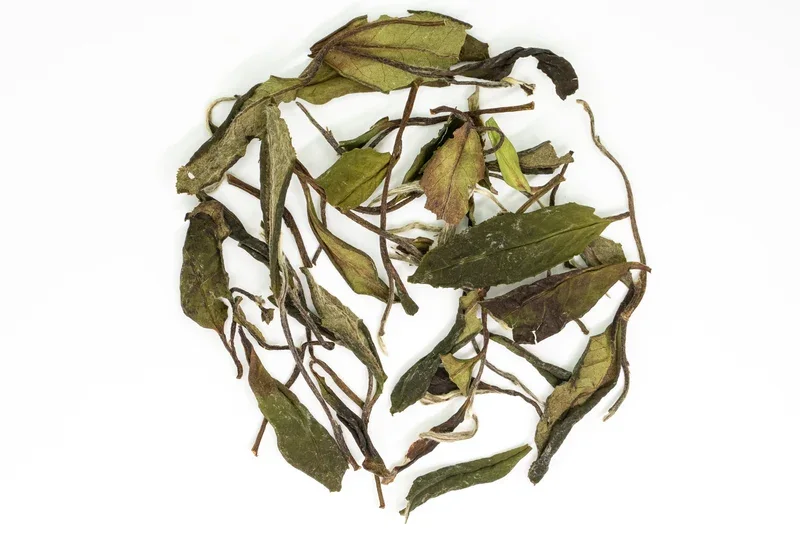
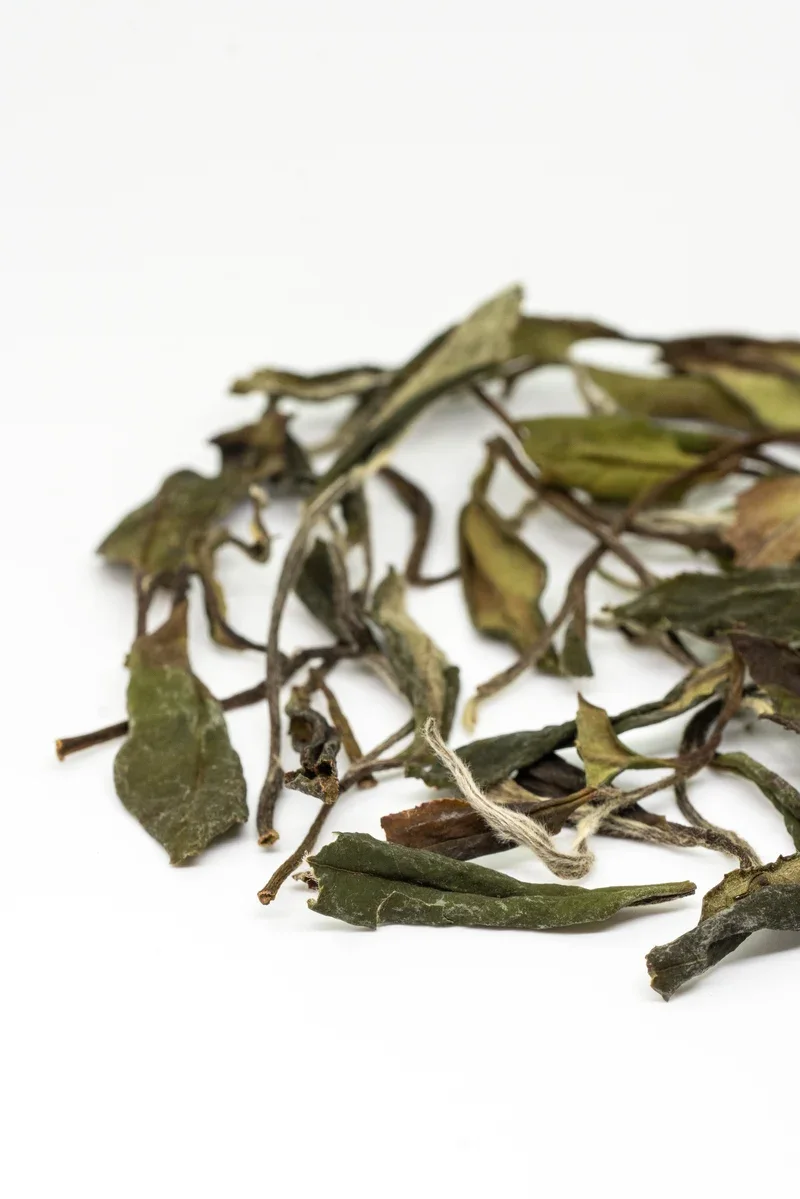
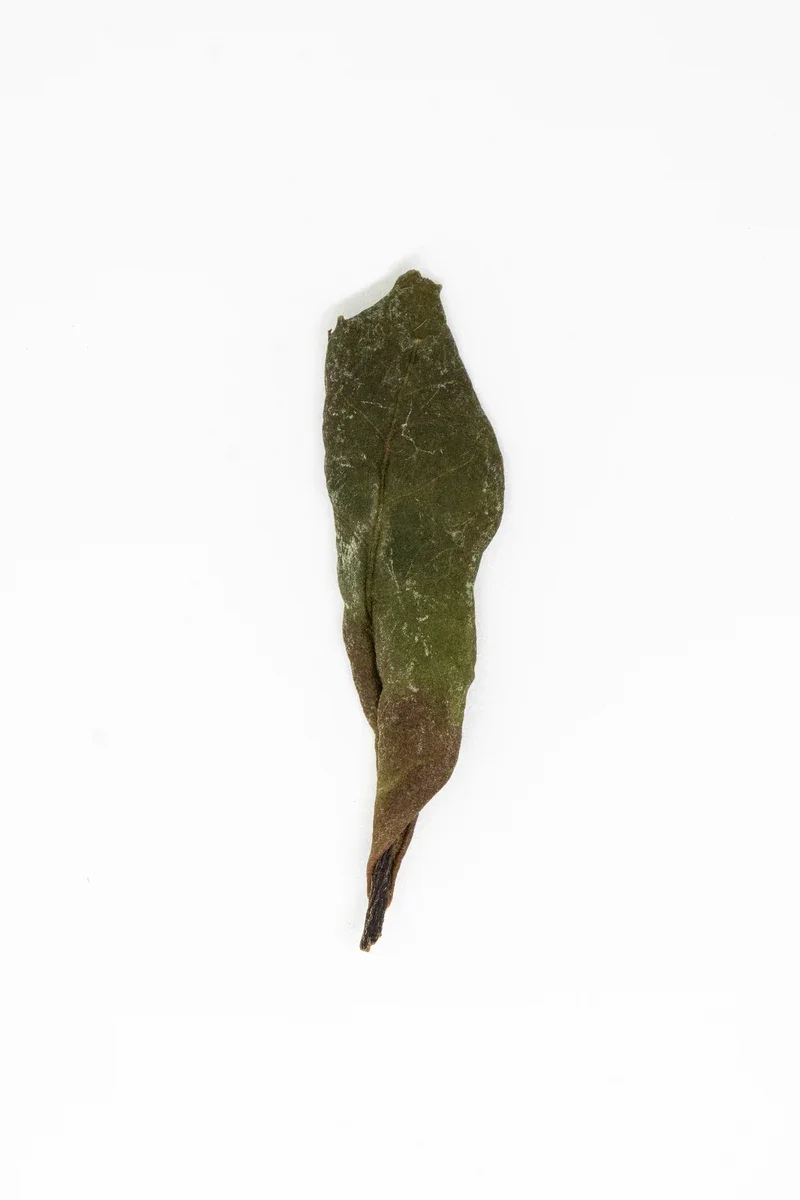
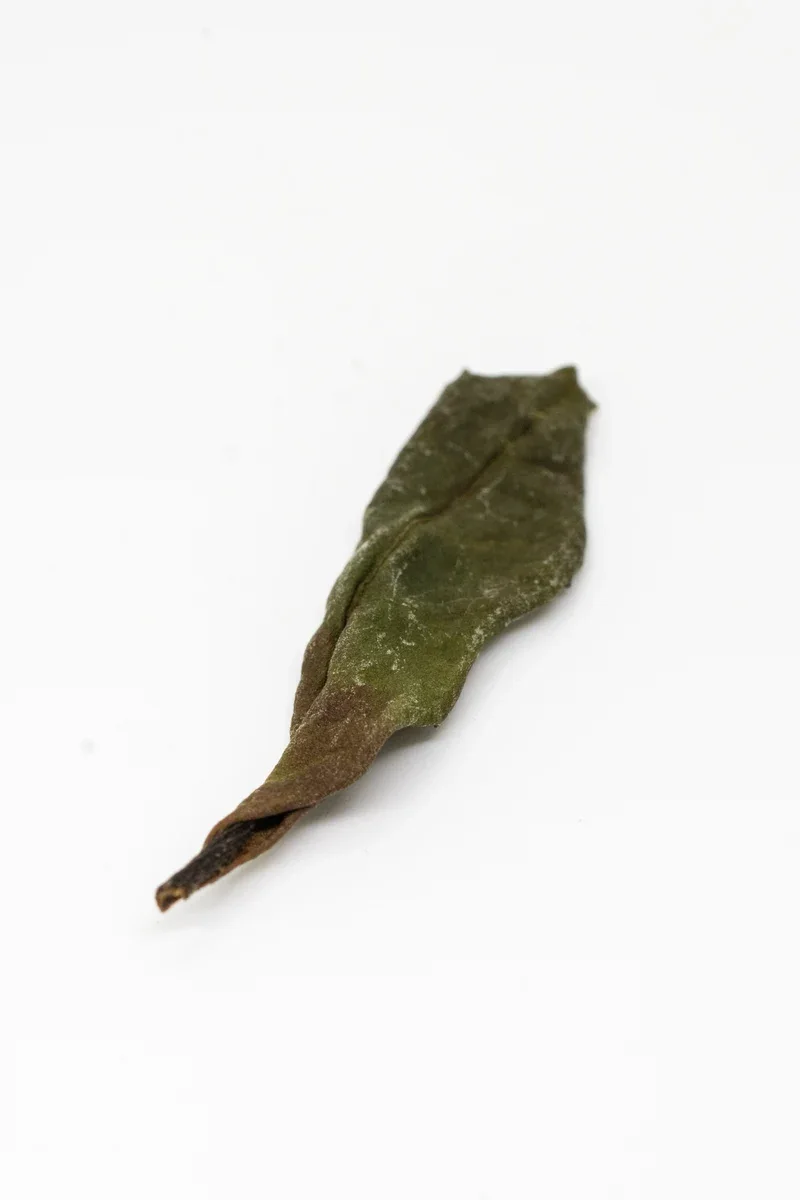
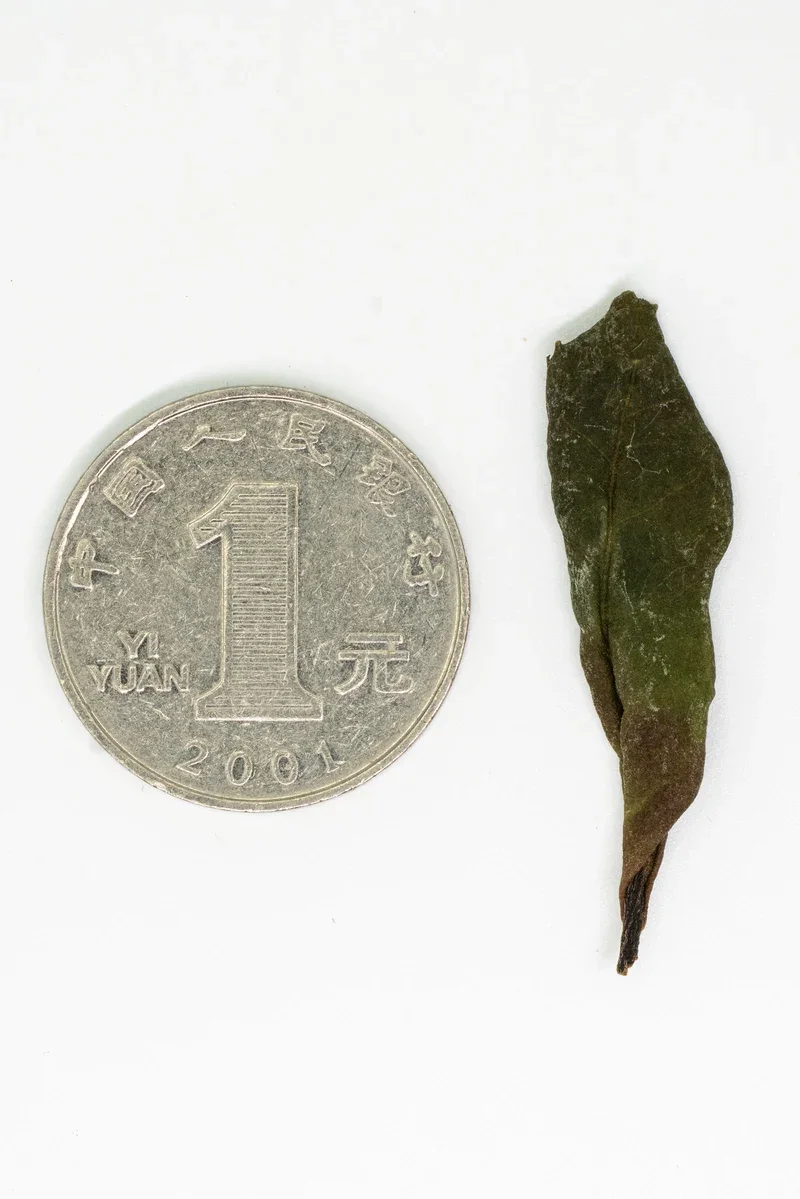
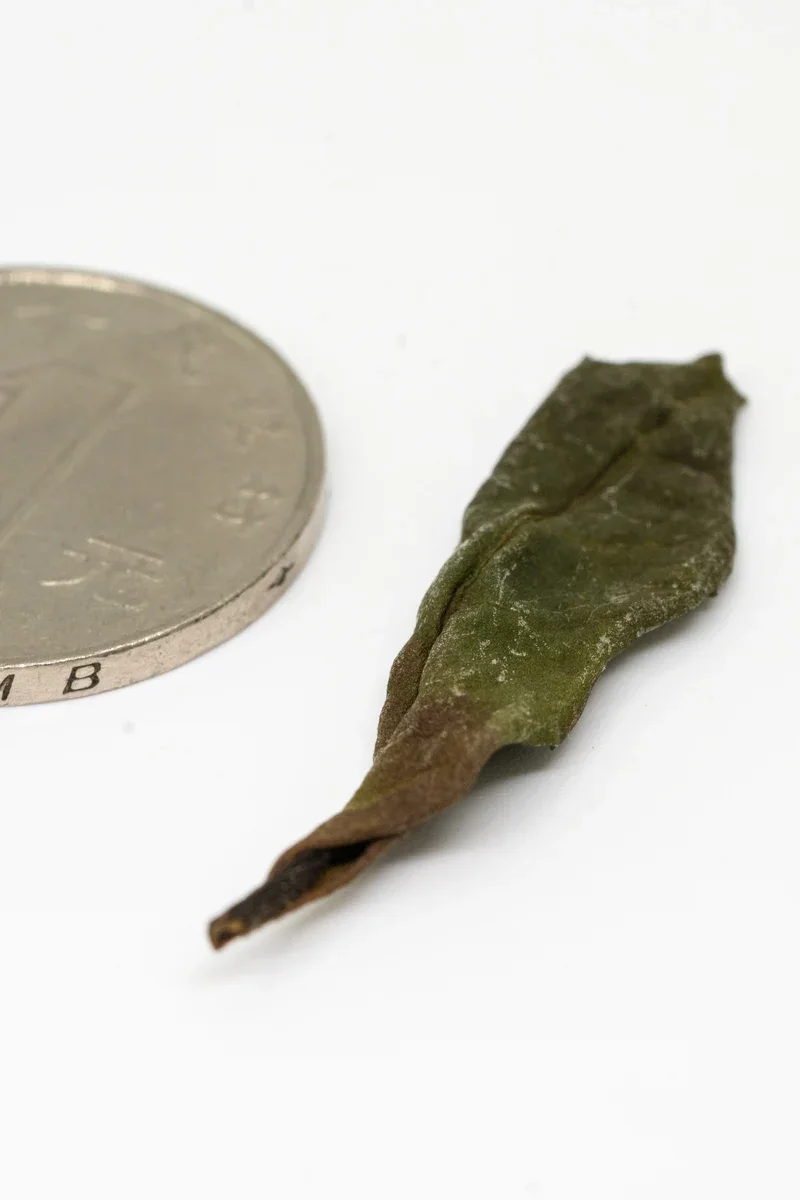
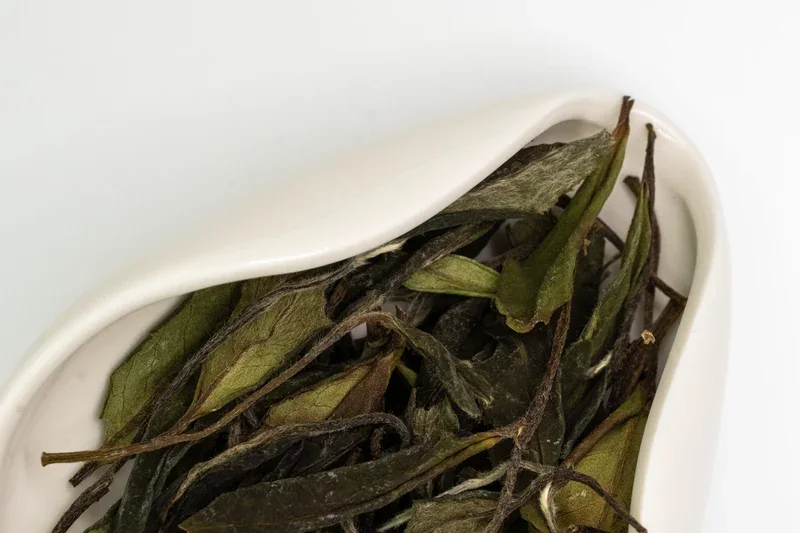
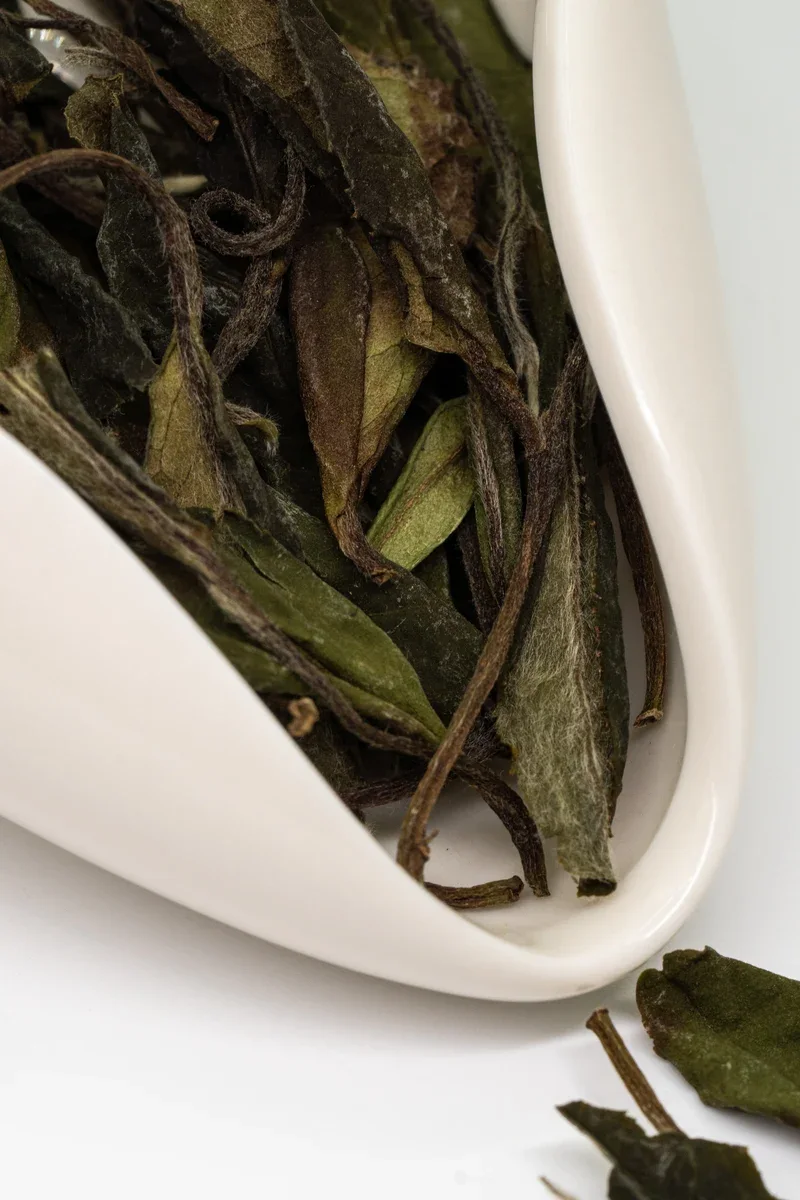
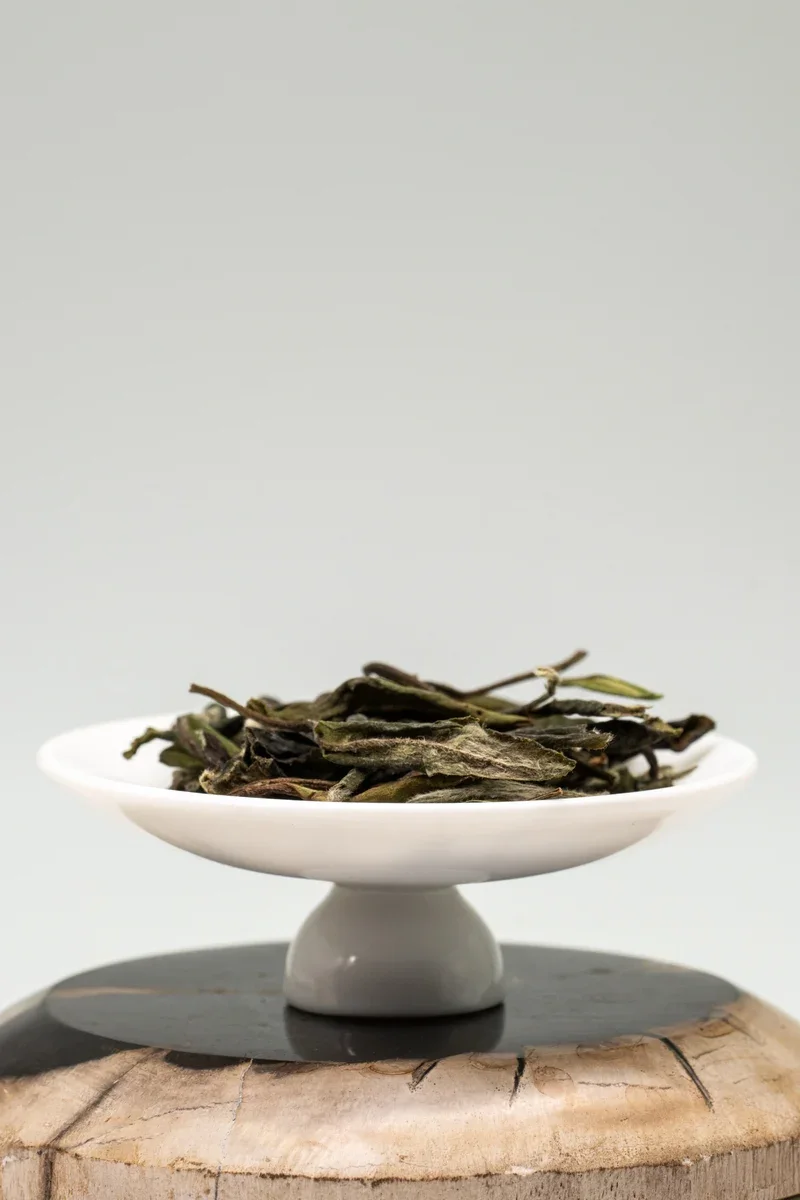
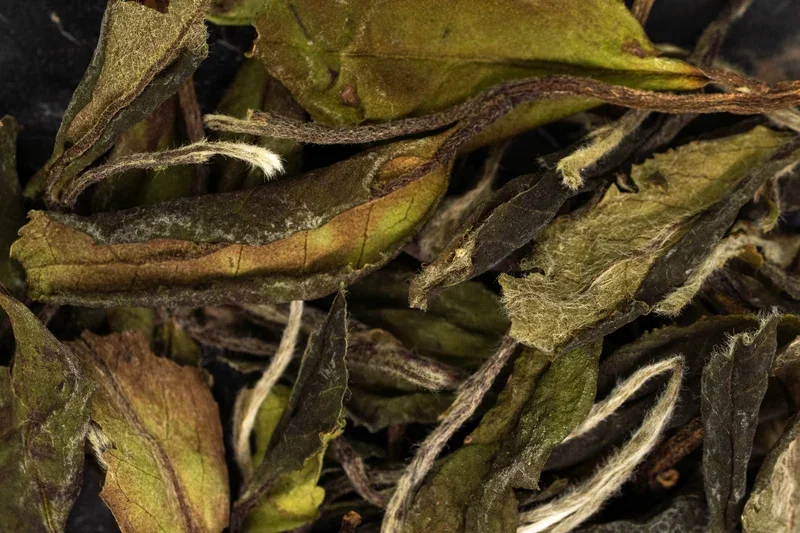
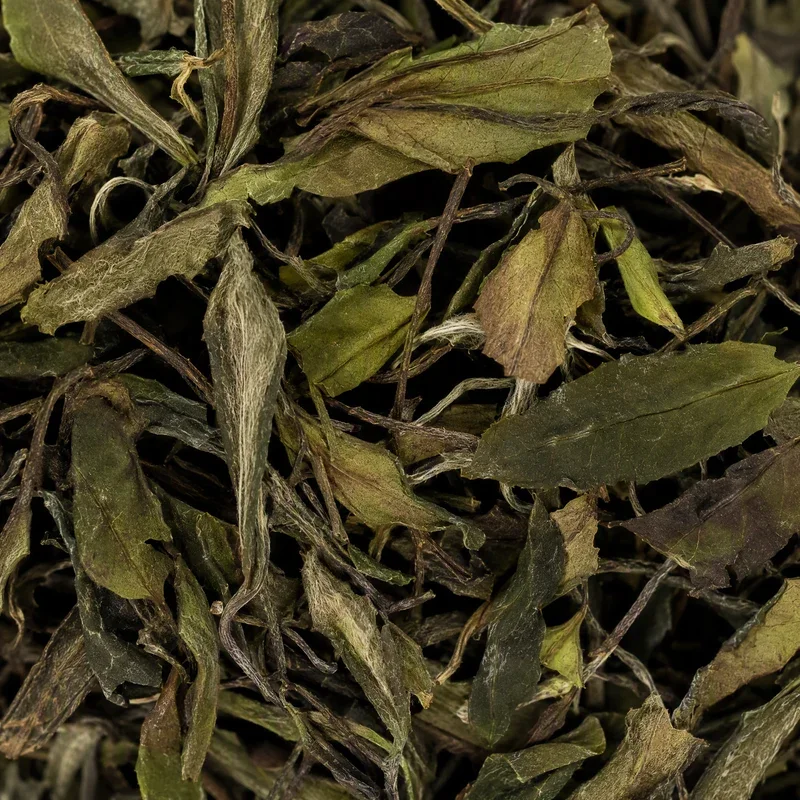
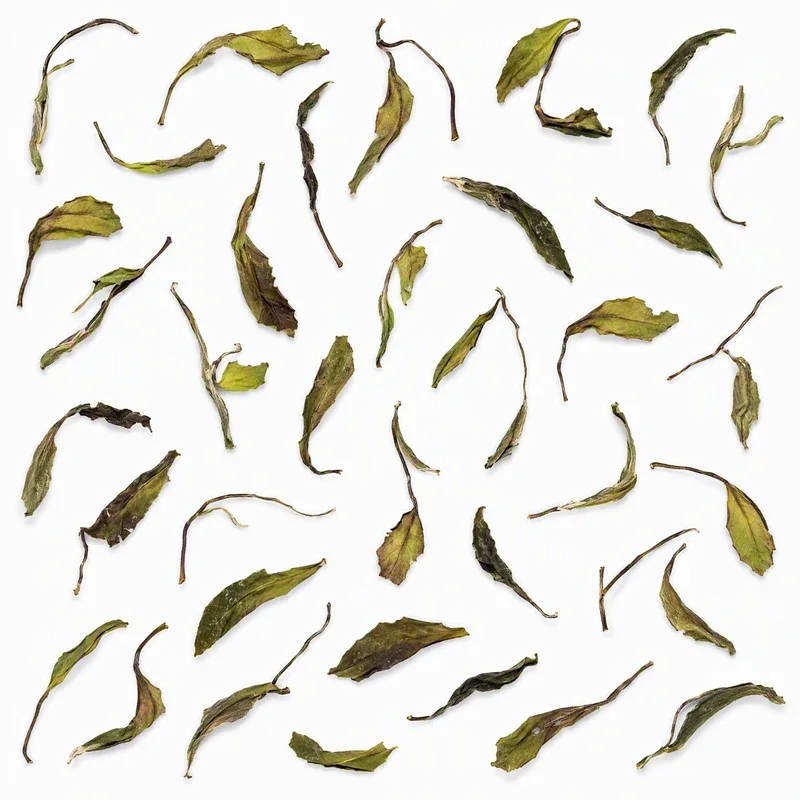
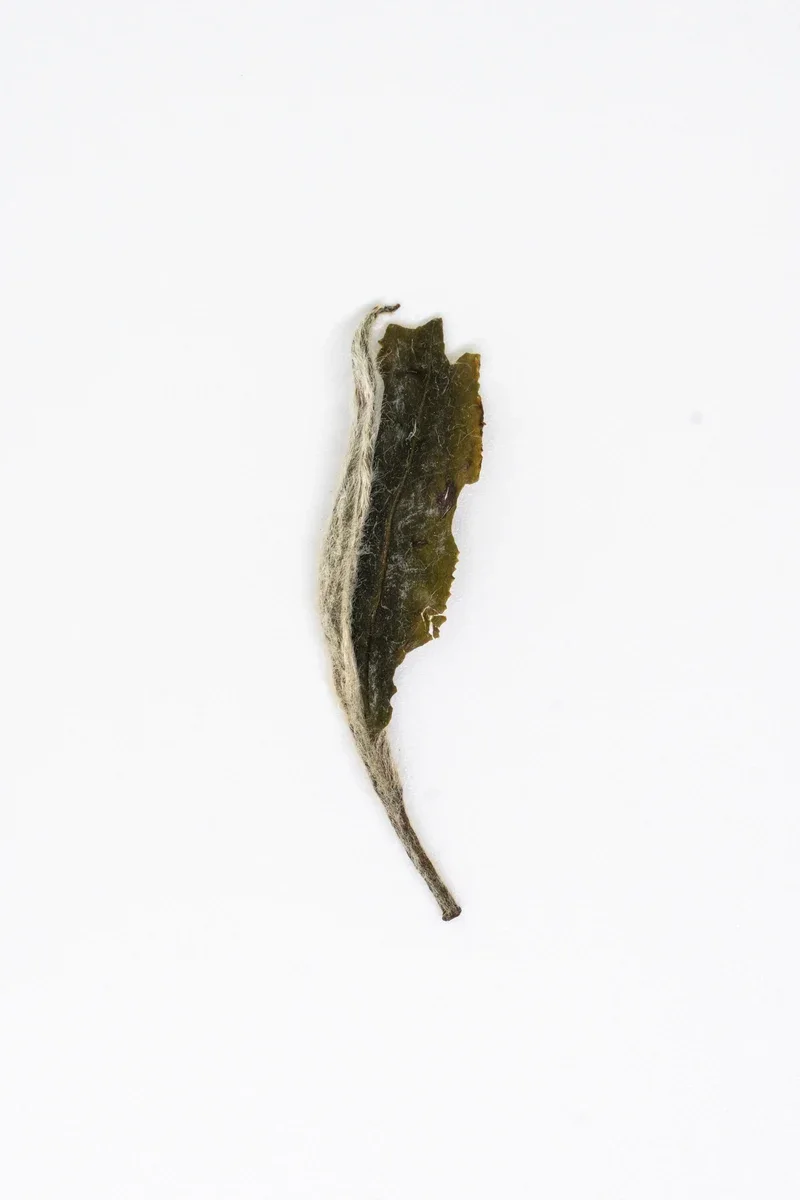
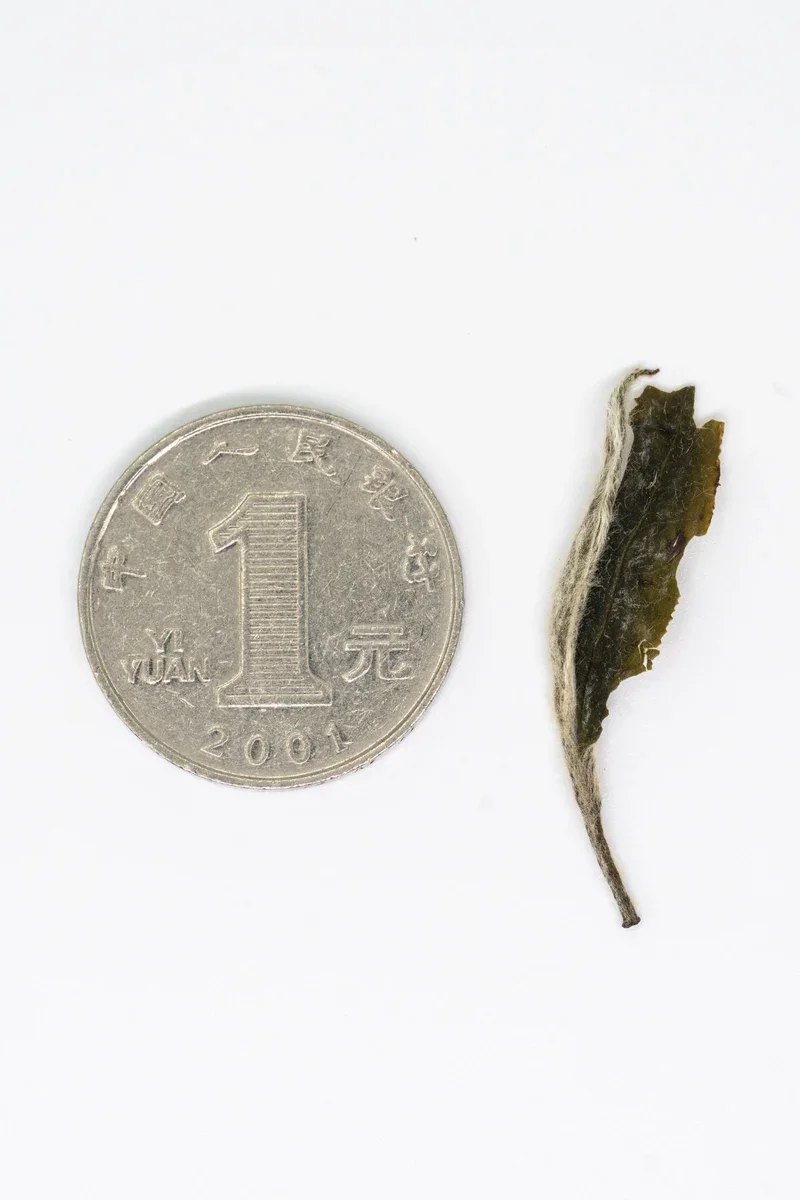
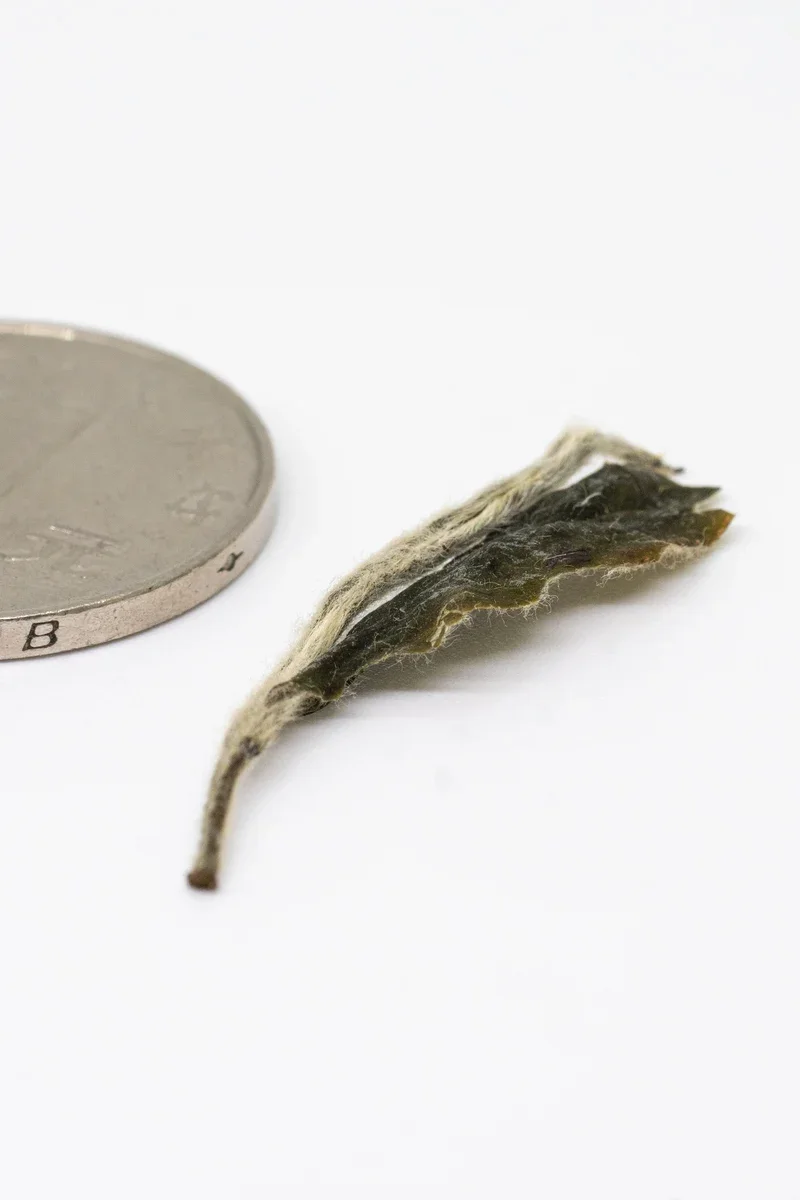
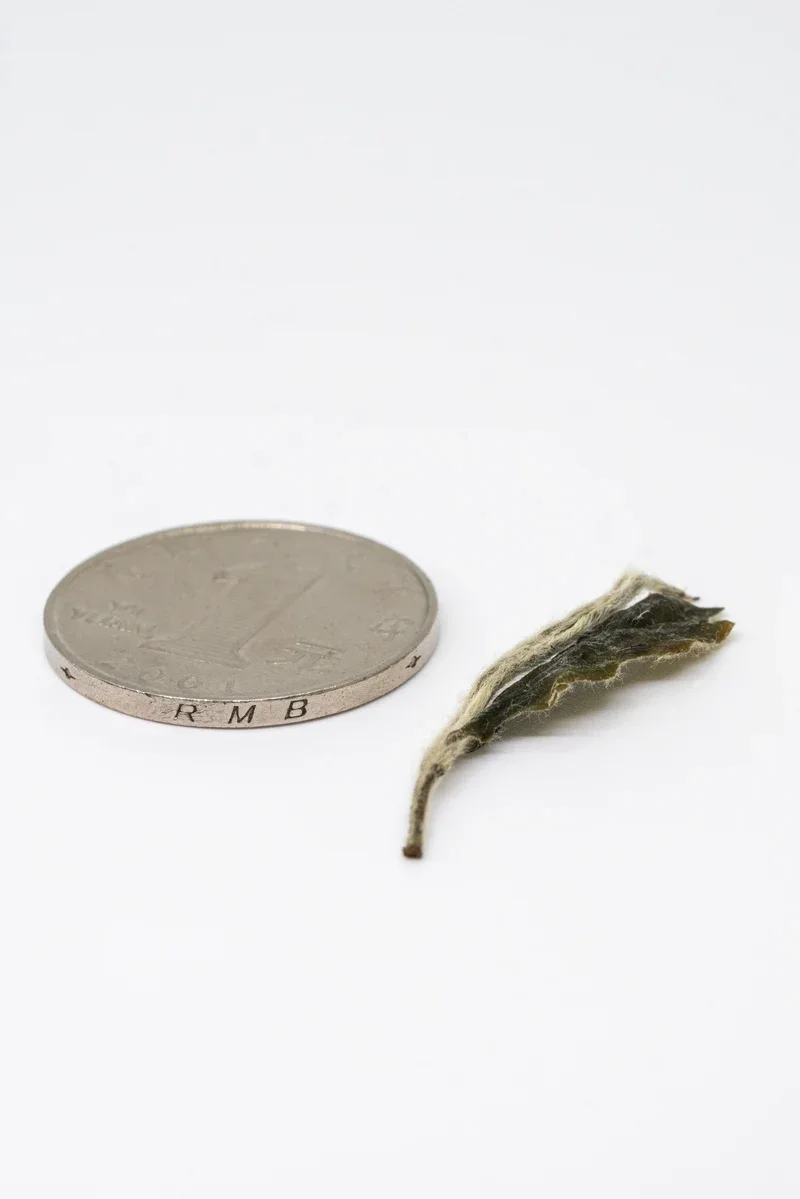
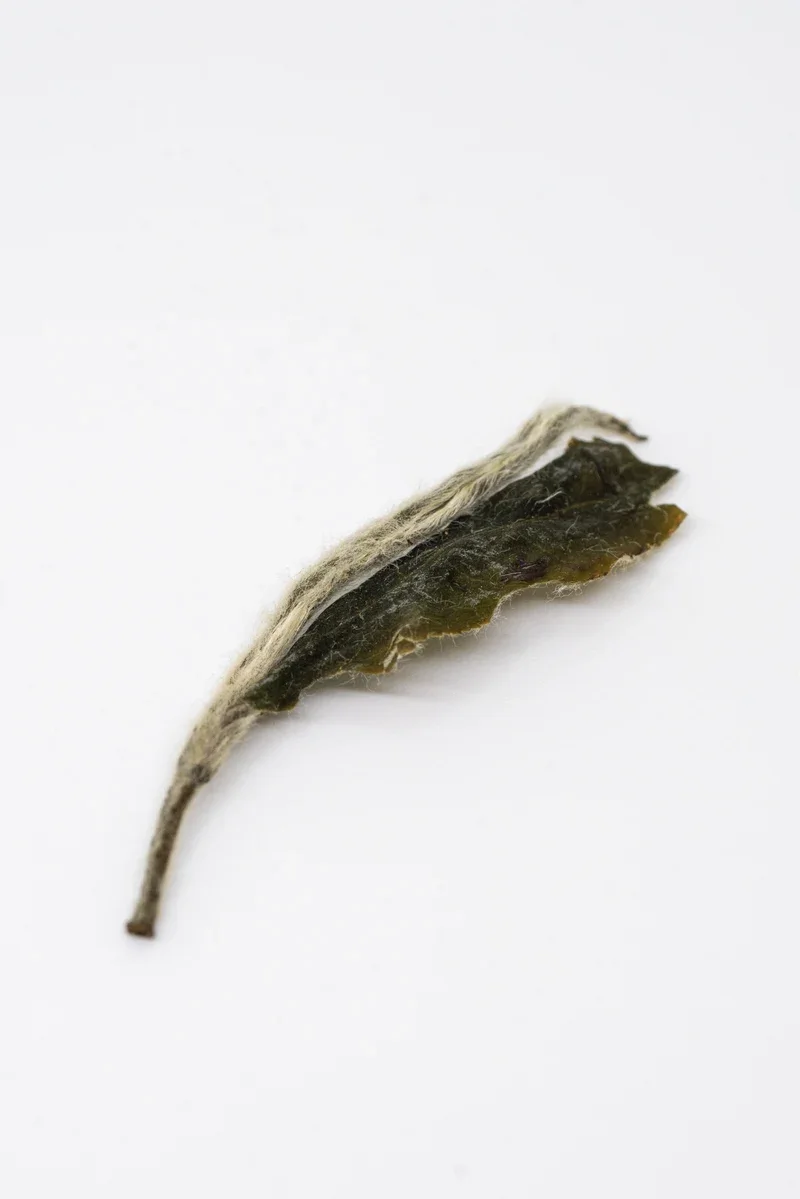
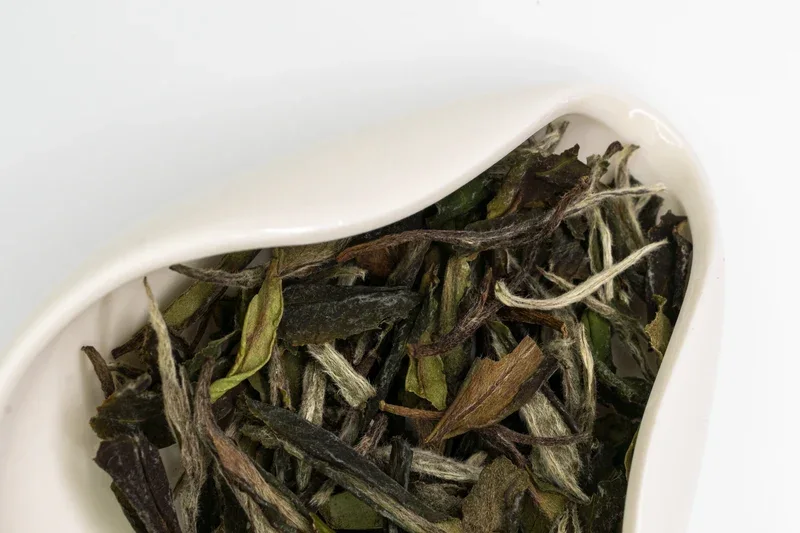
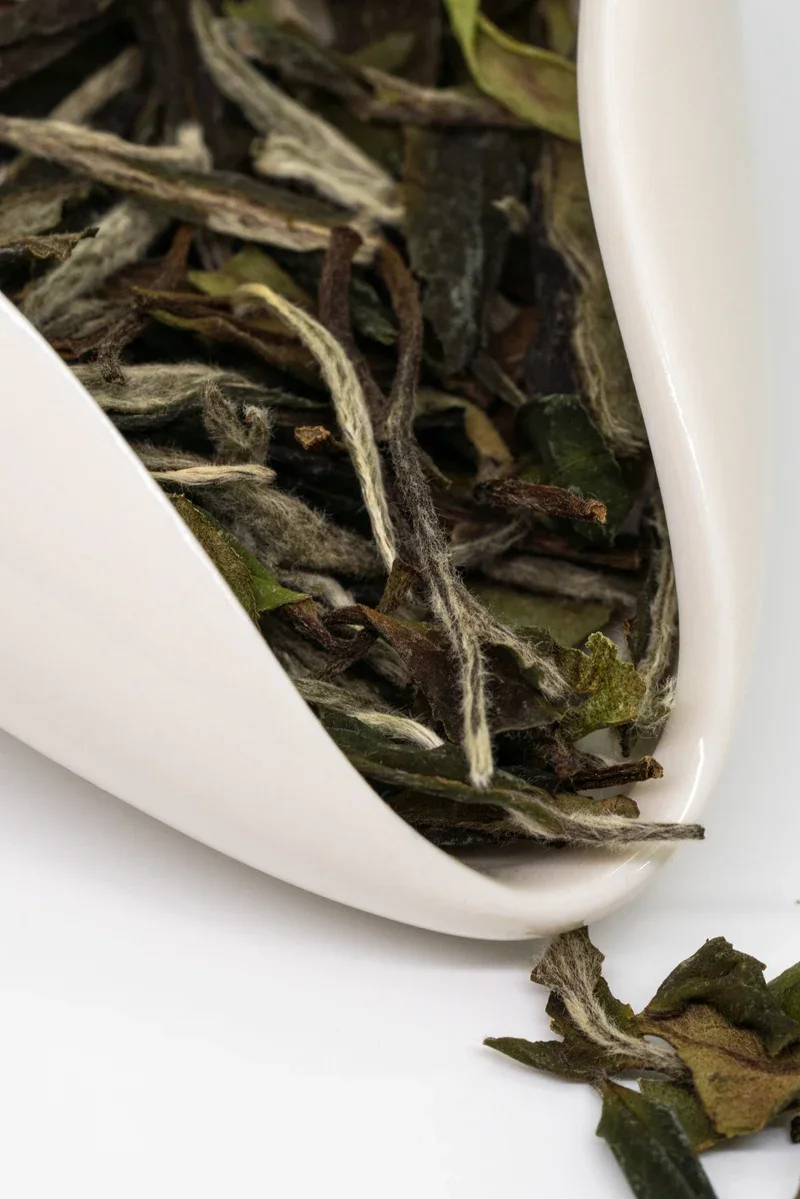
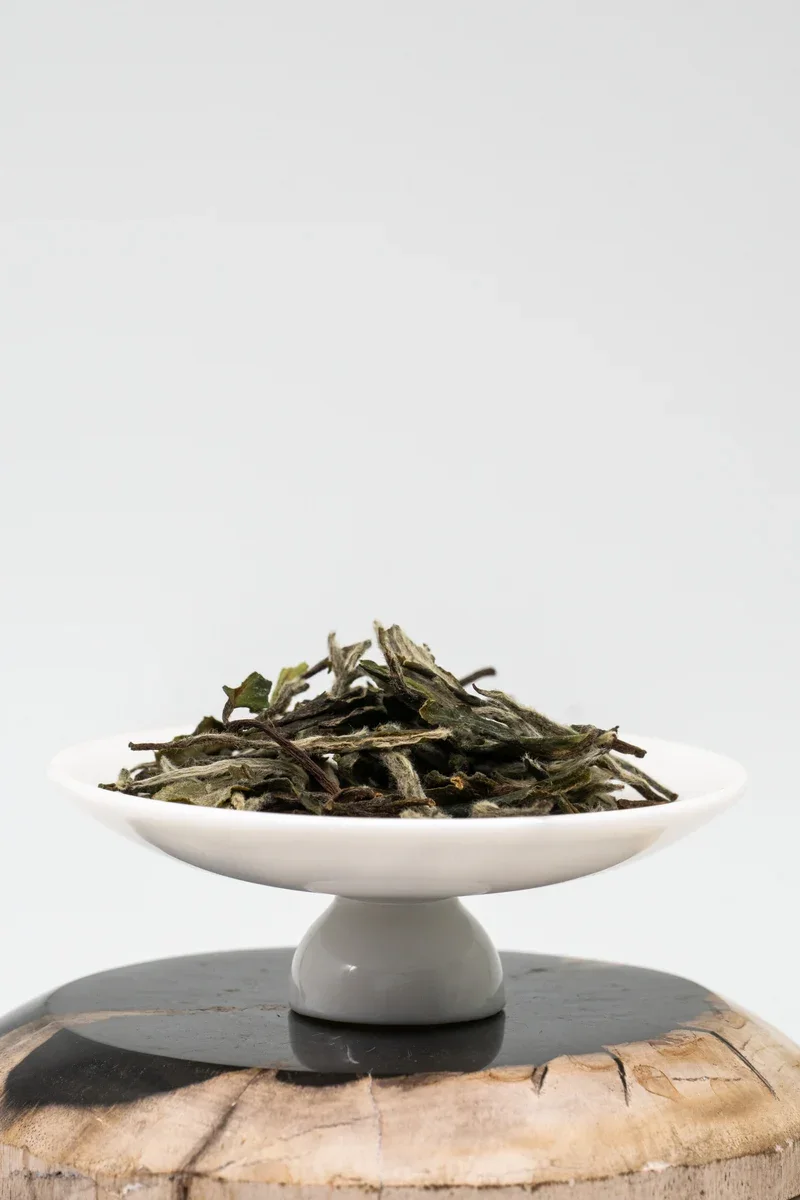
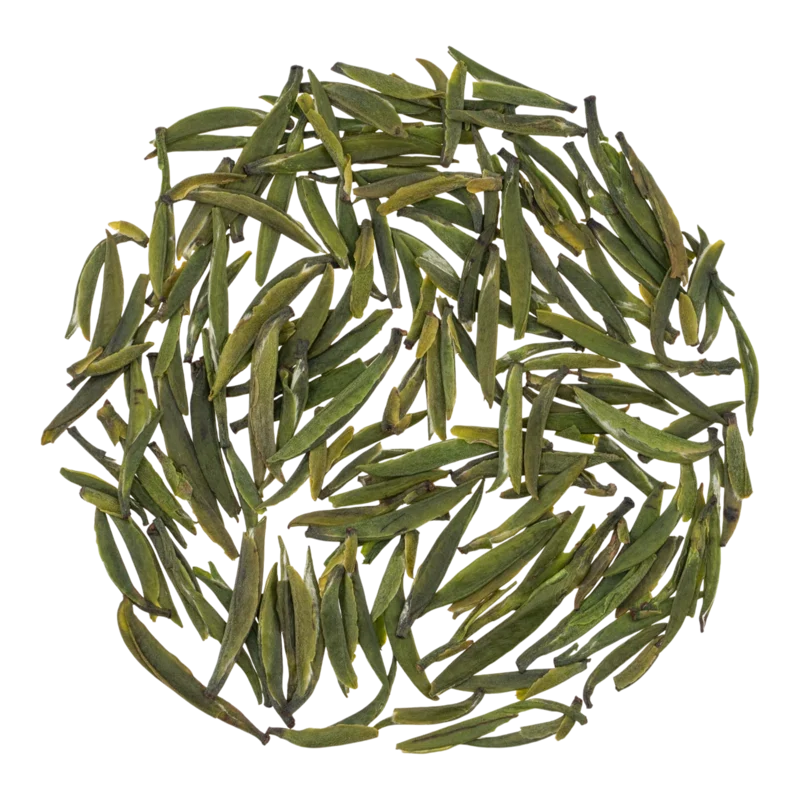
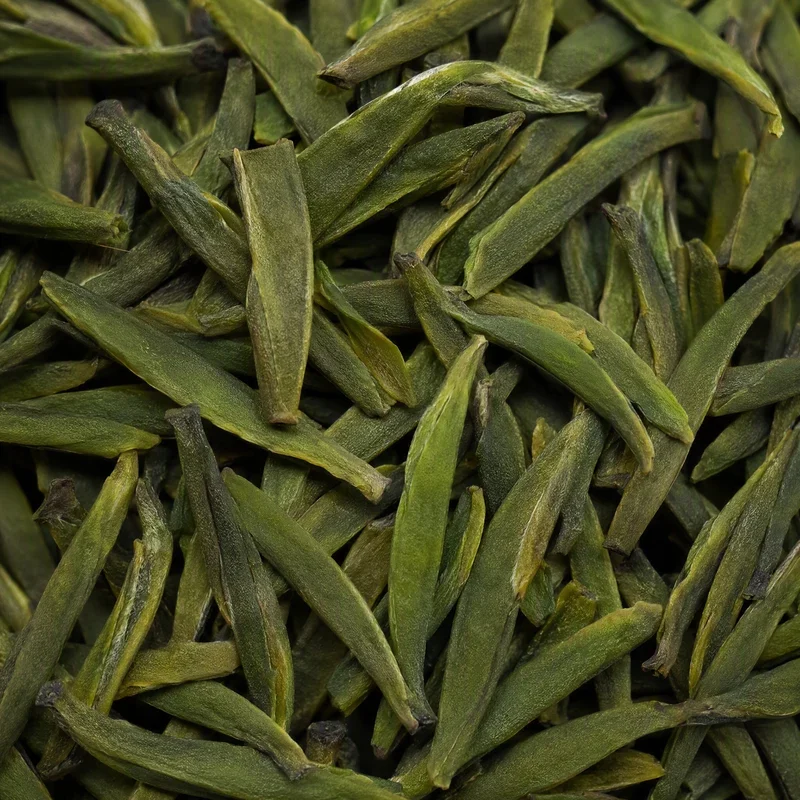
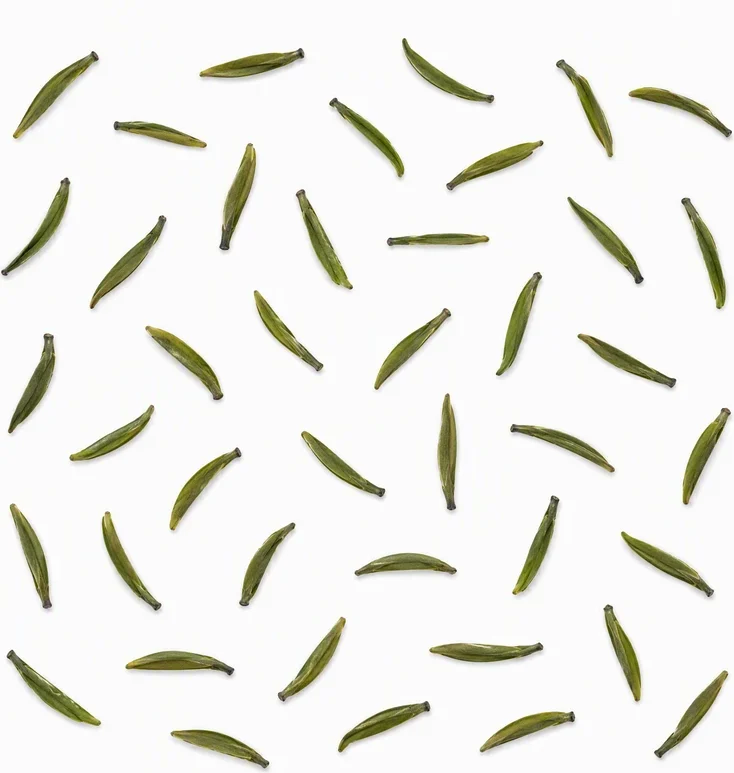
Dry Leaf Appearance: Small, flat (扁平, biǎnpíng), elongated, slightly curved and pointed tea leaves — exact likeness of sparrow tongues. Width 4–5 mm, length 15–20 mm. Color — from light green (tender raw material) to rich dark green, sometimes with silvery down on buds. Tea leaves are whole, even, uniform in size, with minimal broken content. Surface — smooth, with light luster.
Dry Leaf Aroma: Fresh, clean, with notes of spring greenery, light floral tones, sometimes with nutty or chestnut nuance — depending on region and technology. Guizhou Que She has pronounced "millet aroma" (粟香, sùxiāng) with floral undertones; Jiangsu — clean chestnut.
Liquor Aroma: Bright, fresh, with predominance of grassy-floral notes. Clean, "transparent" aroma without heaviness and smokiness. Persistence — medium to high.
Liquor Color: From light green to yellow-green, transparent, clean, with good brightness. Guizhou varieties — bright yellow-green.
Spent Leaves: Whole, elastic, tender green leaves and buds, opened into characteristic "beak shape" (雀嘴形) — bud and leaf slightly separate, forming miniature "open beak." Evenness and tenderness of spent leaves — main quality indicator.
Taste: Soft, tender, refreshing (鲜爽, xiānshuǎng), sweetish, with light, pleasant astringency and long aftertaste. Due to exceptional tenderness of raw material — pronounced "drinkability" and silky texture. Notes of greenery, flowers, fruits, nuts — vary from region to region. Meitan Que She — 醇厚爽口 (chúnhòu shuǎngkǒu) — "mellow and refreshing"; Jintan Que She — with pronounced chestnut note.
Alkaloids: Caffeine — moderate content, typical for tender green tea. Theobromine, theophylline — in trace amounts.
Amino Acids: Increased content — amino acid index of "que she" also exceeds average level of green teas. L-theanine determines characteristic sweetness and "body" of liquor.
Amino acid to polyphenol ratio in "que she" is favorably shifted toward amino acids, which explains softness and absence of sharp bitterness even with slightly over-brewed liquor.
Minerals: Potassium, fluorine, magnesium, zinc.
Polyphenols: Content above average for green teas by 10–15% (according to Baidu Baike data), primarily due to raw material youth. Leading catechin — EGCG.
Vitamins: C (significant content), B group.
High catechin (EGCG) content provides cell protection from oxidative stress and slowing of aging processes.
Balanced combination of caffeine and L-theanine gives smooth concentration rise, calm alertness without anxiety.
Polyphenols and vitamin C contribute to increased resistance to seasonal infections.
Light, tender liquor beneficially affects digestive system without irritating mucosa.
Excellently quenches thirst; ideal for hot weather.
Regular green tea consumption is associated with improved lipid profile indicators.
Green tea antioxidants contribute to maintaining skin tone and clarity.
Tea Amount: 3–5 g per 150–200 ml water.
Teaware: Glass cup (玻璃杯) — for observing the "dance of tongues" (this is one of the main aesthetic pleasures when brewing Que She). Porcelain gaiwan — for fuller aroma development.
Water Temperature: 75–85°C. For teji (single bud) — 70–75°C; for standard "bud + leaf" — 80–85°C. Overheating is inadmissible — it destroys delicate aroma and causes bitterness.
Guizhou, Meitan County. Flagship "que she" of China. Shape — flat, smooth, resembling sunflower seed. Down almost invisible. Color — bright green. Aroma — clean "millet" (粟香) with floral undertones. Taste — full, refreshing, with long sweetness.
Jiangsu, Jintan District. National GI product since 2013. Shape — flat, elongated, even, "like bird's tongue." Color — green with light luster. Aroma — clean, high, with pronounced chestnut tone. Taste — fresh, tender.
Sichuan, Yibin City. One of China's earliest teas — harvest begins mid-February. Shape — flat, even, oily green. Aroma — clean, fresh. Taste — soft, sweetish. Rule of "nine prohibitions" during picking.
Sichuan, Mendingshan Mountain. Elite product of Mengding tea line, often from single buds. Shape — flat, straight, tender green with down. Aroma — delicate, floral-chestnut. Taste — sweet, refined. Historical tribute tea status.
Sichuan, Pujiang County (Chengdu). Mass-market, affordable. Shape — typical "tongue." Taste — clean, refreshing.
Sichuan, Emeishan Mountain. High-altitude terroir (800–1500 m), abundant fogs and snow. Brands "Zhuyeqing" (竹叶青) and "Emei Xue Ya" (峨眉雪芽) — among most promoted in Sichuan. Shape — flat, elongated. Aroma — clean, fresh, with high-altitude notes.
Fujian, Wuyi Mountains. Attention: this is oolong (岩茶), not green tea. Small-leaf variety, originating from Da Hong Pao. Small areas, high price. Aroma — intense floral with mineral undertone; taste — dense, with "岩韵" (yányùn, "rock character").
No reviews yet. Tell us what you think of this tea.
Rate this tea and share your impressions. We review each submission before publishing it.