Brewing
Gongfu brewing
- Water temperature
- 93 °C
- Tea amount
- 5 g
- Water volume
- 100 ml
- First steep
- 10 s
- Time added per infusion
- 5 s
- Infusions
- 4

Qímén jīnzhēn
Choose a brewing method. Start with the recommended quantities and time, then adjust to taste.
Brewing
Brewing
Taste
Tea encyclopedia
Category: Premium Chinese red tea (black tea). One of the "Ten Famous Teas of China" (十大名茶, shí dà míngchá) — as part of the generalized category Qimen Hongcha. Ranks among the world's three most aromatic red teas alongside Indian Darjeeling and Ceylon Uva.
Category: Premium Chinese red tea (black tea). One of the "Ten Famous Teas of China" (十大名茶, shí dà míngchá) — as part of the generalized category Qimen Hongcha. Ranks among the world's three most aromatic red teas alongside Indian Darjeeling and Ceylon Uva.
Coordinates: approximately 29°51′ North latitude, 117°43′ East longitude.
Origin: Qímén County (祁门县, Qímén Xiàn), Huángshān City (黄山市, Huángshān Shì), Ānhuī Province (安徽省, Ānhuī Shěng), PRC. Historically, Qímén Hóngchá production also encompasses Dōngzhì (东至, Dōngzhì), Shítái (石台, Shítái), Yīxiàn (黟县, Yīxiàn) counties in Ānhuī and Fúliáng (浮梁, Fúliáng) in Jiangxi. The terroir core — the so-called "Western Route" (西路, xīlù): villages of Lìkǒu (历口, Lìkǒu), Ruòkēng (箬坑, Ruòkēng), Shǎnlǐ (闪里, Shǎnlǐ), Xin'an (新安, Xīn'ān).
Type: Red tea (black tea) (红茶, hóngchá) — fully oxidized (oxidation degree 80–90%). Belongs to the subgroup Gōngfu Hóngchá (工夫红茶, gōngfu hóngchá) — teas requiring high craftsmanship in production.
Cultural Significance: Qimen Hongcha occupies a unique place in world tea culture. Its incomparable aroma, which received its own name — "Qimenxiang" (祁门香, Qímén xiāng, "Qimen aroma"), is described as a combination of floral (rose, orchid), fruity (apple, apricot) and honey notes. In the 20th century, Keemun became one of the most sought-after teas for British afternoon tea and was repeatedly used as a state gift from China. Jinzhen, thanks to its whole needle-like shape and bright aroma, represents a modern interpretation of this great tradition, designed for connoisseurs who prefer the visual aesthetics of whole leaf.
History: Qímén Hóngchá was created during the reign of Emperor Guāngxù (光绪, Guāngxù) of the Qing dynasty. According to the most widespread version, in 1875, official Yú Gānchén (余干臣, Yú Gānchén), returning from Fujian where he became acquainted with red tea (black tea) technology, adapted it for local raw materials, creating the first batches for export. There is also a version attributing the creation of red tea in this region to Hú Yuánlóng (胡元龙, Hú Yuánlóng) from Guìxī village (贵溪, Guìxī) in 1871. The tea quickly gained recognition in the international market: in 1915 it was awarded a gold medal at the Panama-Pacific International Exposition (巴拿马万国博览会, Bānámǎ Wànguó Bólǎnhuì). The specific variety "Jinzhen" is a product of a later era. The wave of innovations in Qimen tea cultivation began in 1986, when the Qímén Tea Research Institute (祁门茶叶研究所) developed Qímén Xianglo (祁红香螺, Qíhóng Xiāngluó) — tea with spiral rolling. Under the influence of Jin Jun Mei's success in the late 2000s, other "new forms" appeared: Qímén Máofēng (祁红毛峰), and then Jinzhen. In 2020, group standard T/KBTA 0001-2020 "Qimen Hongcha" officially included the "Jinzhen" category in the Qimen red tea classification system.
Name Breakdown: "Qimen" (祁门, Qímén) — name of the county of origin, the obsolete Western transliteration "Keemun" comes from Cantonese pronunciation. "Jin" (金, jīn) — "gold," indicates the golden color of downy buds (tips). "Zhen" (针, zhēn) — "needle," describes the characteristic straight, thin, needle-like shape of finished tea leaves.
Cultivar: Qímén Zhūyè Zhǒng (祁门槠叶种, Qímén Zhūyè Zhǒng) — small-leaf variety of Camellia sinensis var. sinensis, officially recognized as a first-category national tea variety. Bushes reach 2–4 meters in height. Leaves are small (up to 4 cm), dark green, with thin blades. Young shoots and buds are covered with dense silvery-golden down. The cultivar is characterized by high content of aromatic precursors (geraniol, linalool), which forms the famous "Qimenxiang." Besides the main variety, clones derived from it are used: Fuzao-2 (凫早2号, Fú Zǎo 2 Hào) — national variety, and Wancha-4 (皖茶4号, Wǎnchá 4 Hào) — provincial variety.
Picking: For Jinzhen, the highest quality raw material is used — unopened buds (tips) and, in some cases, bud with one young leaf (一芽一叶, yī yá yī yè). The most valuable is the first spring picking (late March — April, before the Qingming festival). Picking is done exclusively by hand. Making 500 g of finished tea may require up to 20,000–30,000 select buds.
Altitude: from 100 to 700 meters above sea level. High-altitude plantations produce more aromatic raw material due to slower growth and greater daily temperature fluctuations.
Climate: Subtropical monsoon. Average annual temperature — 15.6°C, annual precipitation — about 1726 mm (with peak in April–July), air humidity 75–85%. A characteristic feature of the region — few clear days (about 50 per year) with predominance of cloudy (170 days) and foggy-rainy (150 days), creating ideal diffused light. Annual sunshine duration — about 1817 hours.
Soil: Red and yellow soils based on weathered shale rocks, with pH 5.0–6.0, rich in organics and minerals. Good drainage is provided by mountain slopes with gradients up to 30°.
Qimen County and adjacent territories are located in southern Anhui, at the junction of the Huángshān (黄山) and Jiǔhuáshān (九华山) mountain ranges. The most valued raw material comes from the "Western Route" — mountain villages of Likou, Ruokeng, Shanli, Guxi.
Hand picking of early spring buds and young shoots.
Picked buds are spread in a thin layer (about 20 cm) and withered for 12–18 hours at controlled temperature (22–24°C) and humidity (~70%), until they lose about 30% moisture. This activates enzymes and makes the leaf pliable.
Withered buds are gently rolled — by hand or on rollers. Breaking cell walls releases juice and essential oils, starting the oxidation process.
Rolled buds oxidize in a warm (+35…+38°C) and humid (~95%) room for 3–4 hours. The degree of oxidation for Jinzhen is lower than for classic Gongfu — the master stops the process when buds acquire a copper tint and pronounced sweet aroma.
Key and unique stage. Oxidized buds are placed in a heated wok (锅, guō) and hand-rolled into straight, even "needles." Unlike Xianglo, where tea is twisted into spirals, Jinzhen is shaped into straight sticks, which requires considerable physical strength — therefore this work is performed exclusively by male masters. Tea is simultaneously shaped and dried directly in the wok.
Shaped "needles" are dried with hot air at 105–110°C to 3–5% moisture, fixing shape and aroma.
Finished tea is sorted by size, integrity and number of tips.
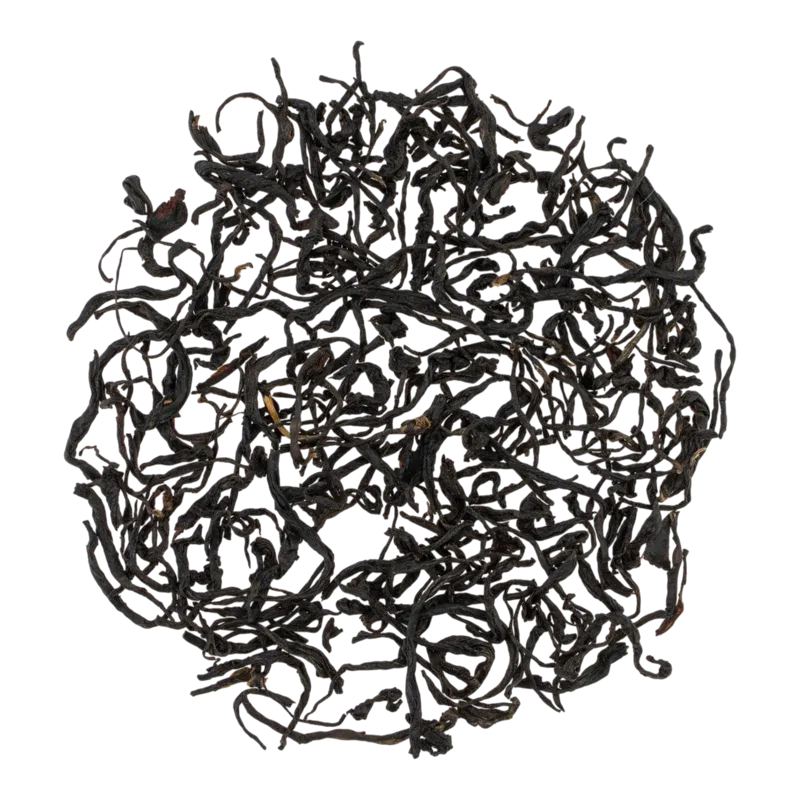
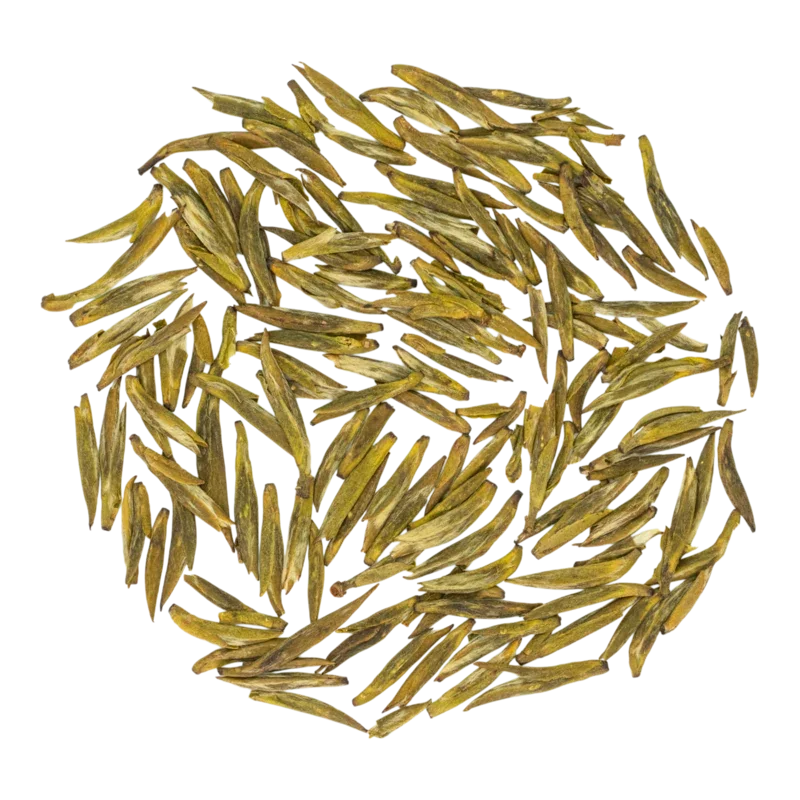
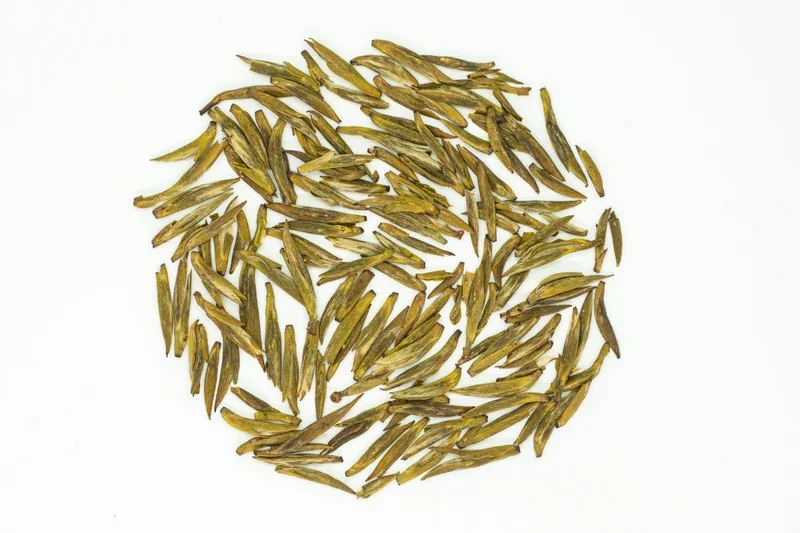
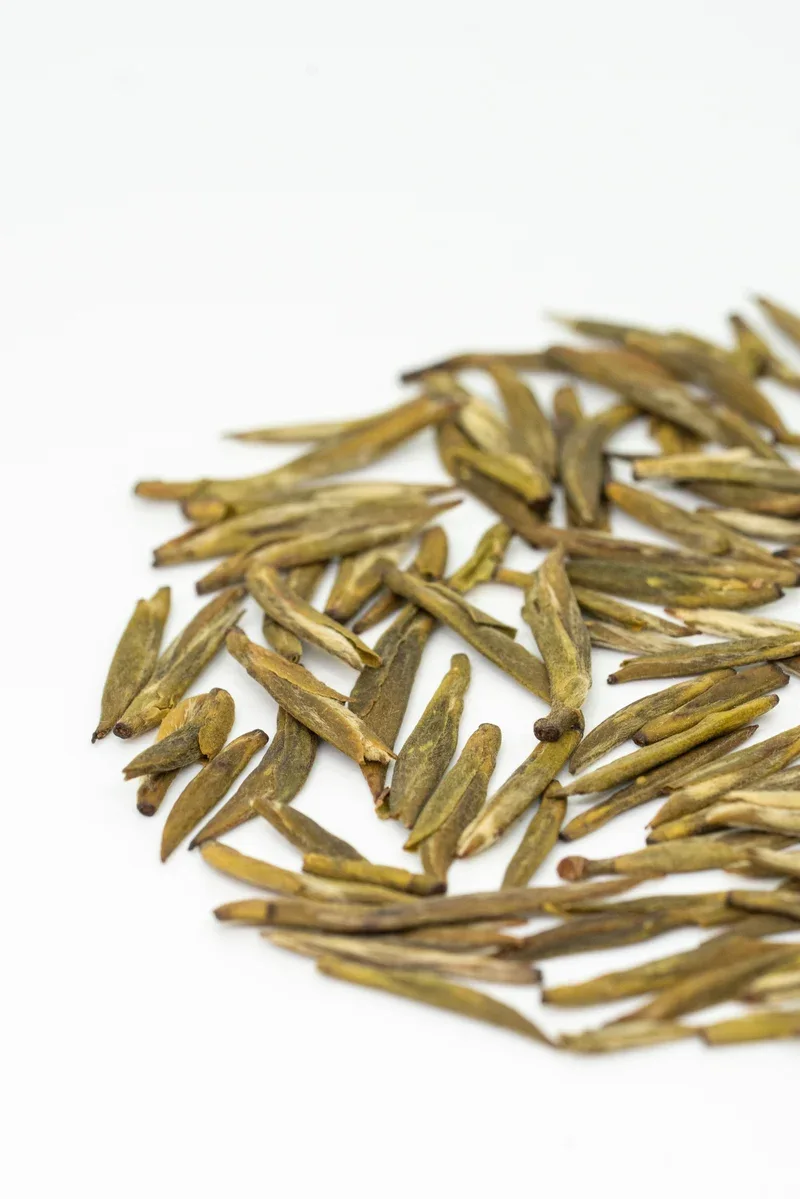
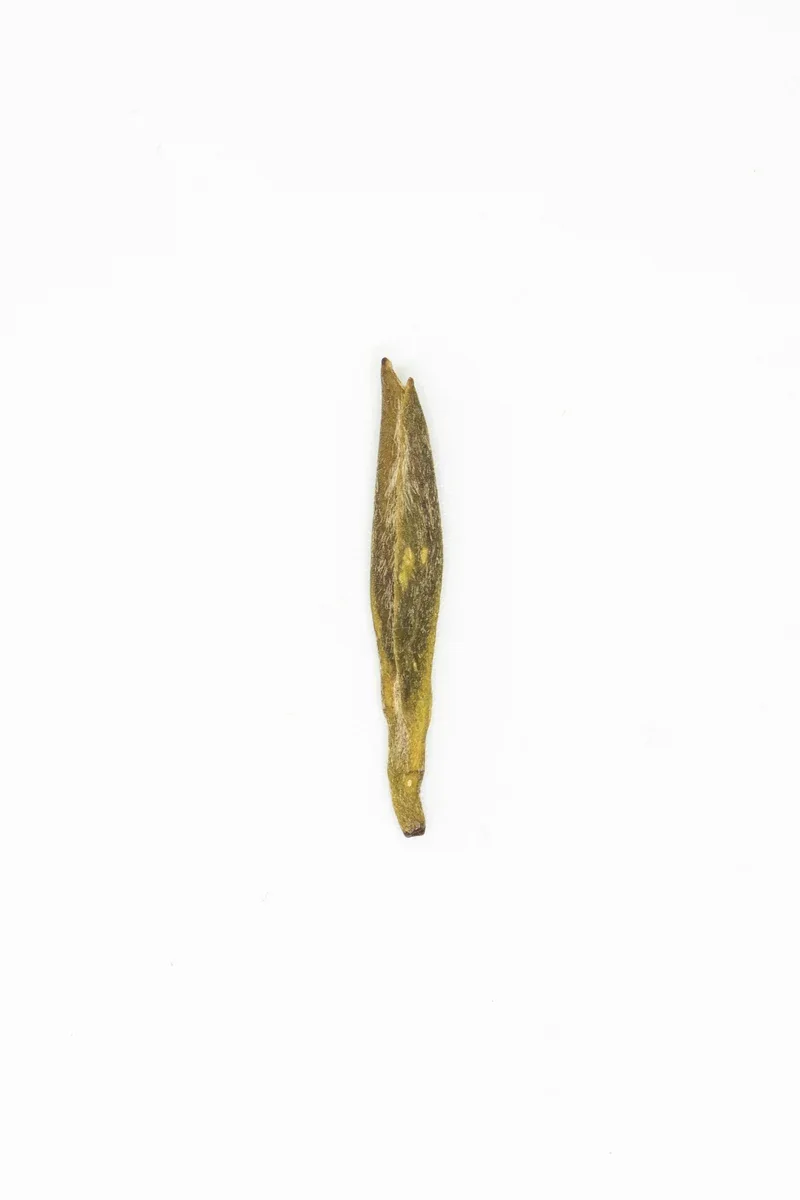
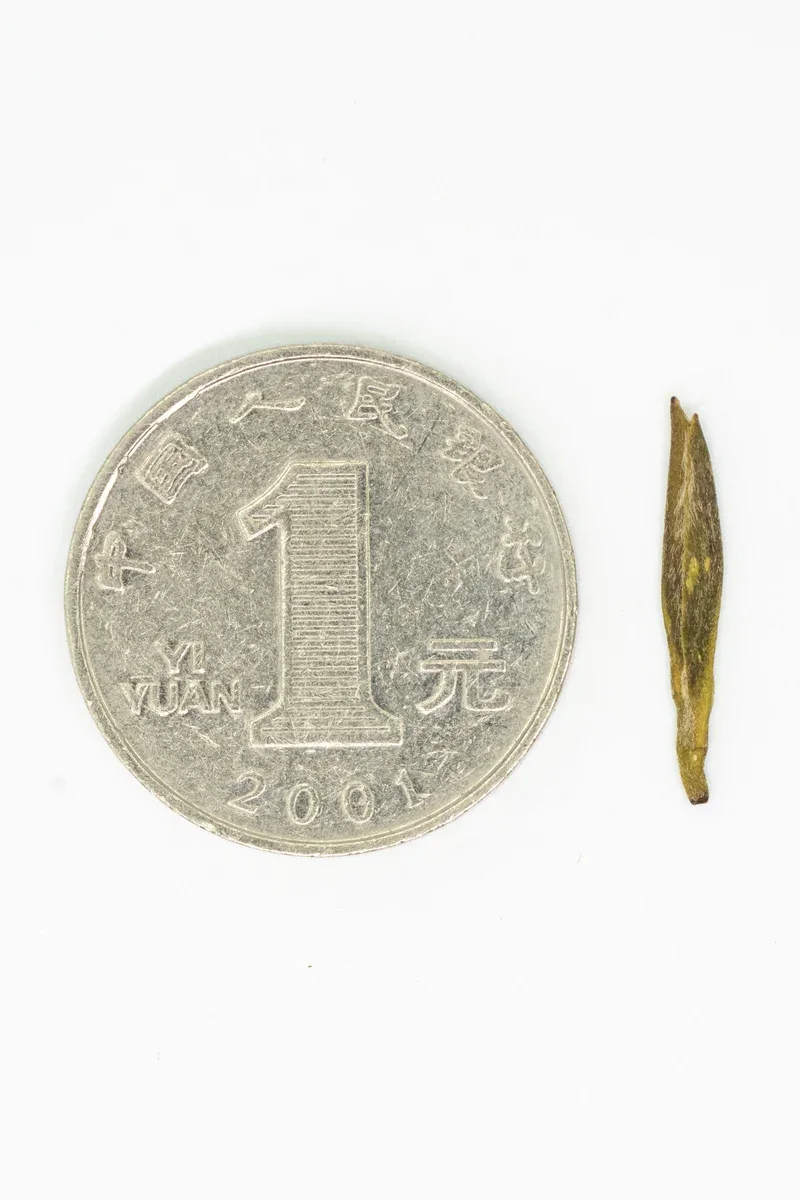
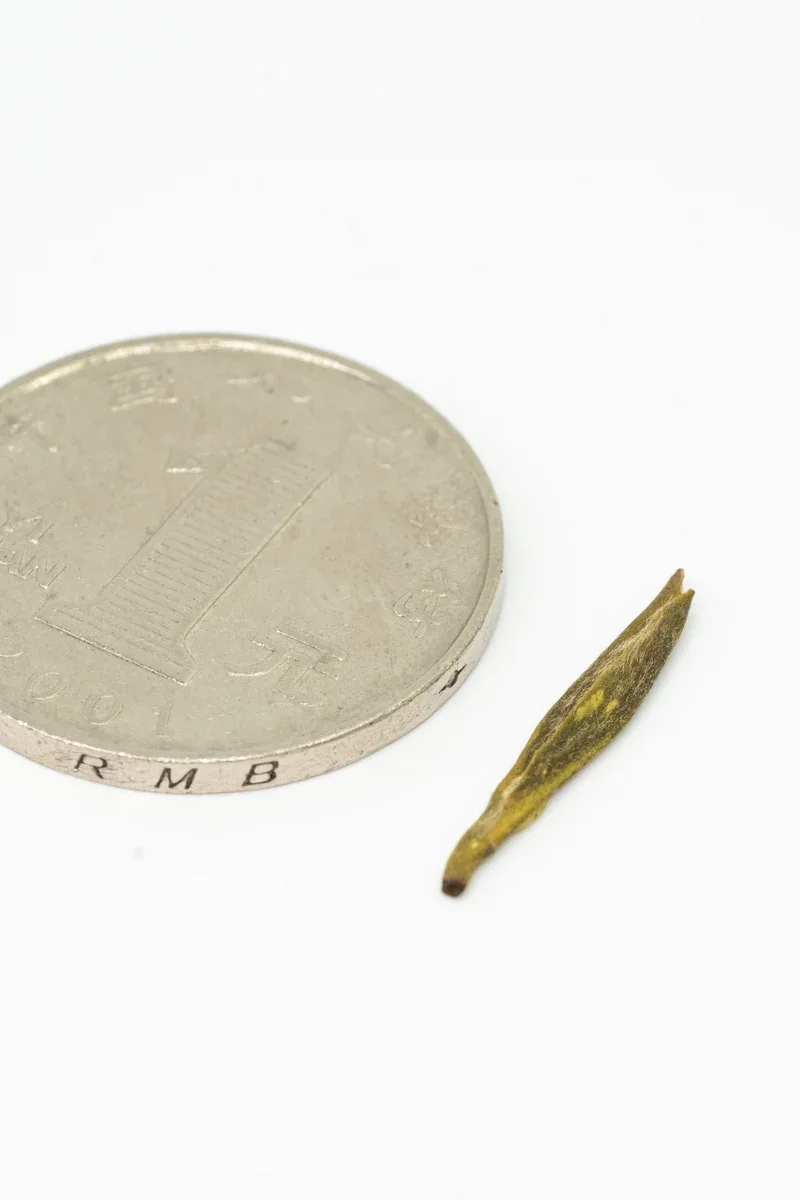
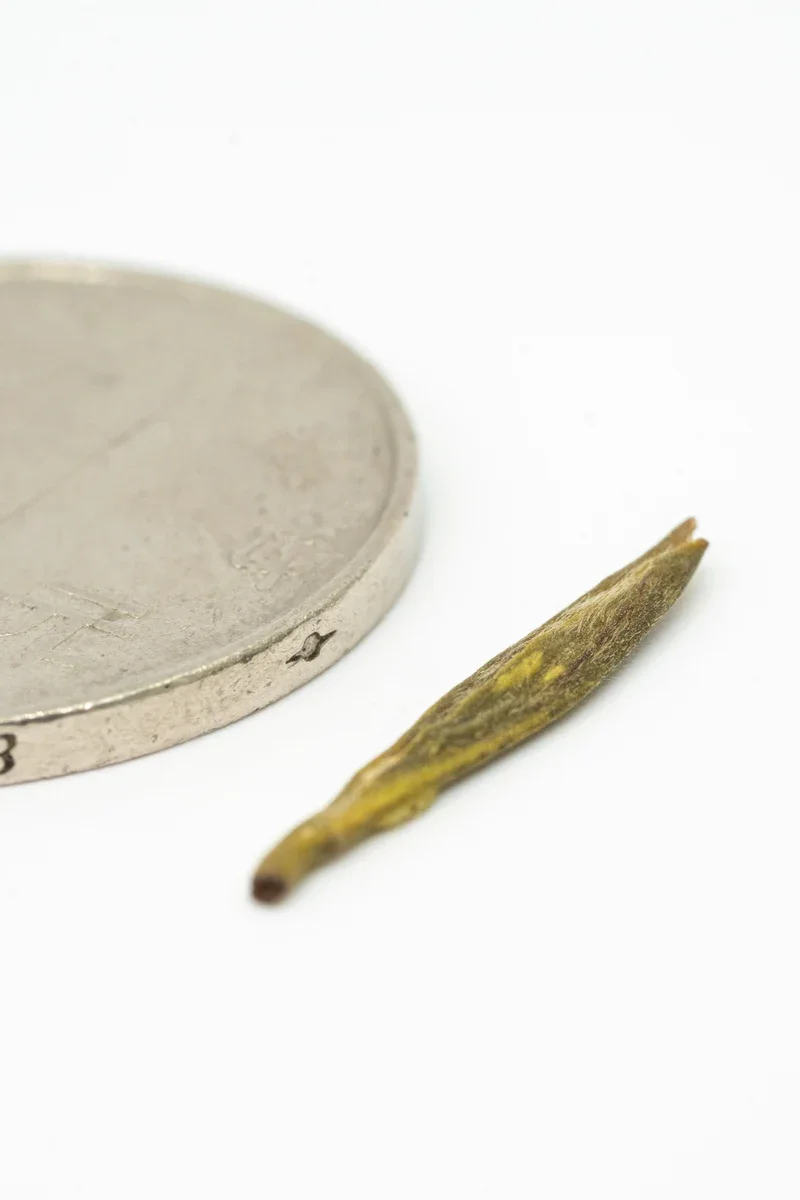
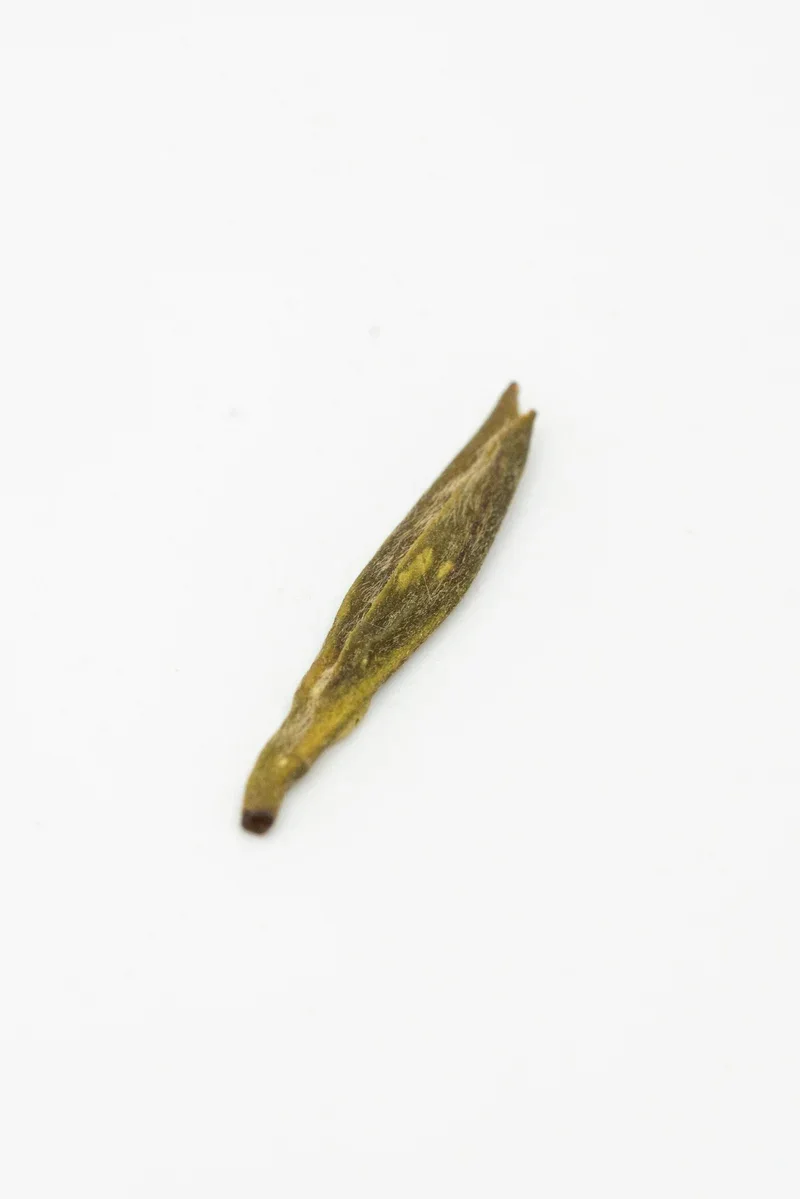
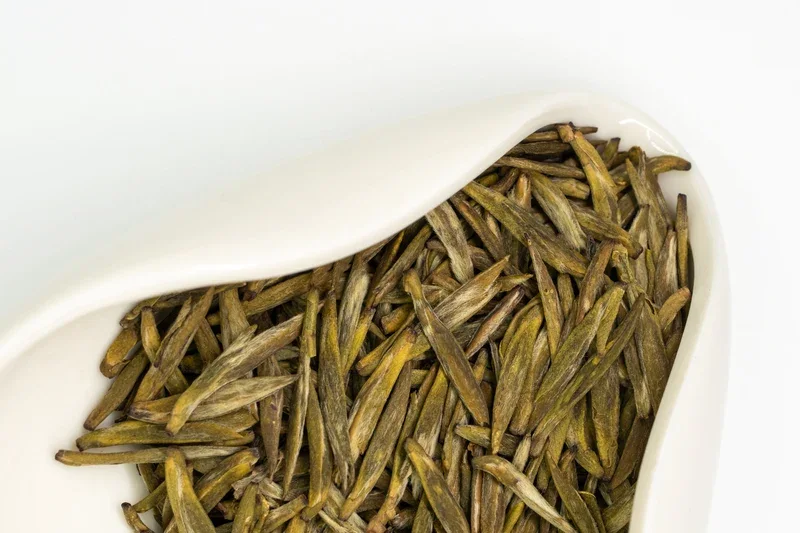
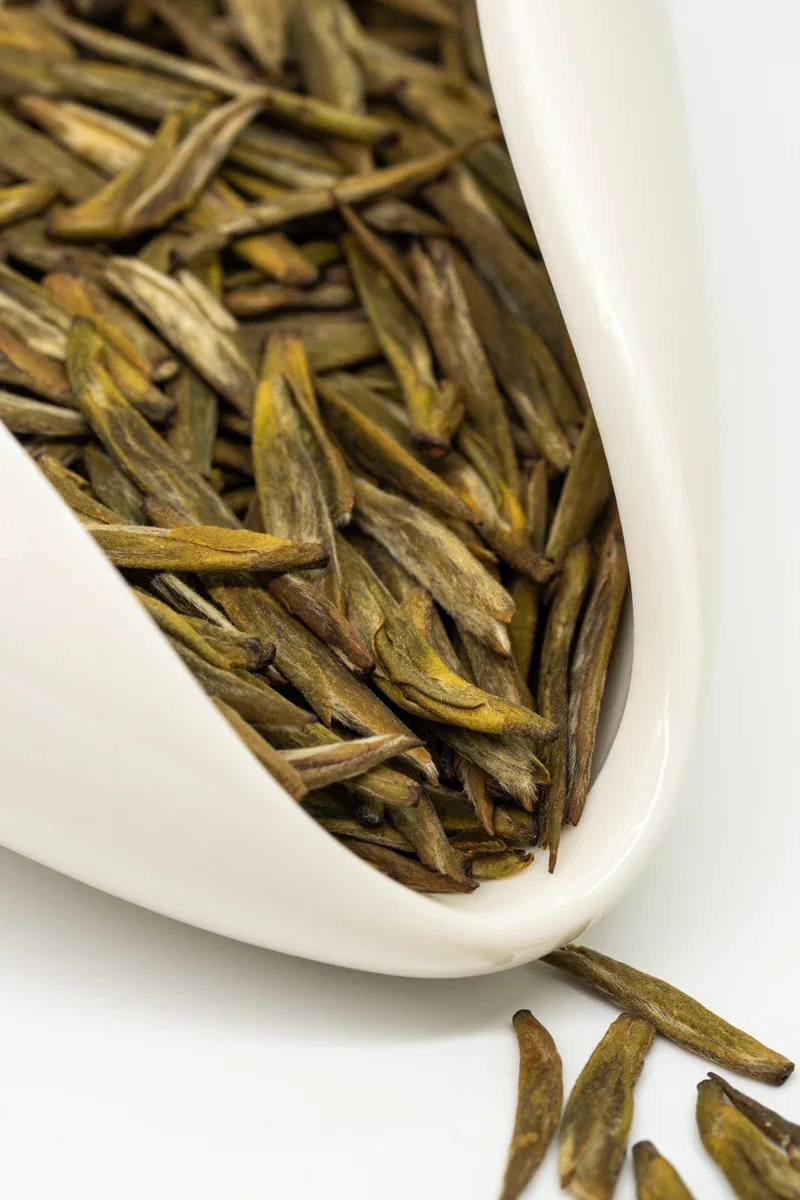
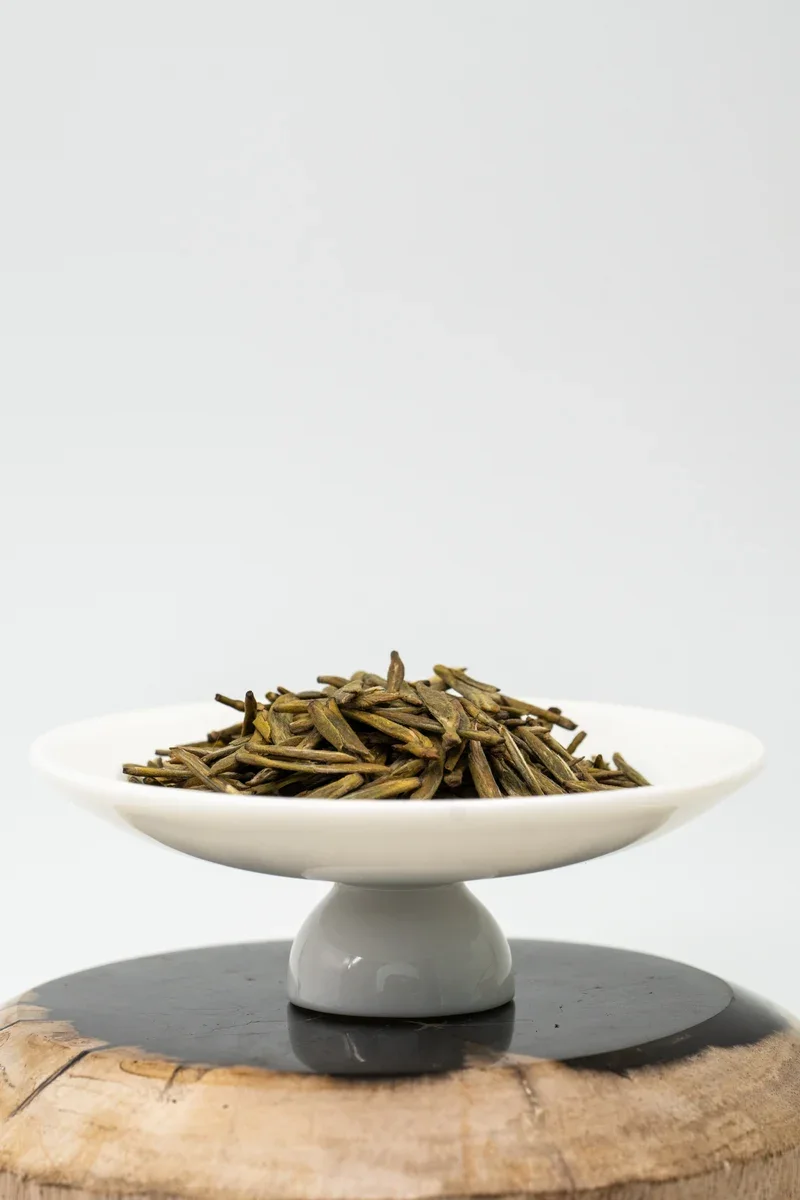
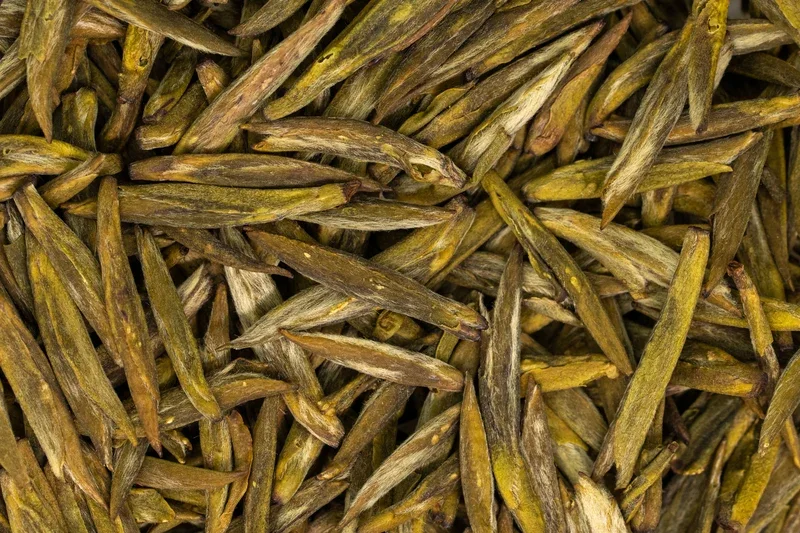
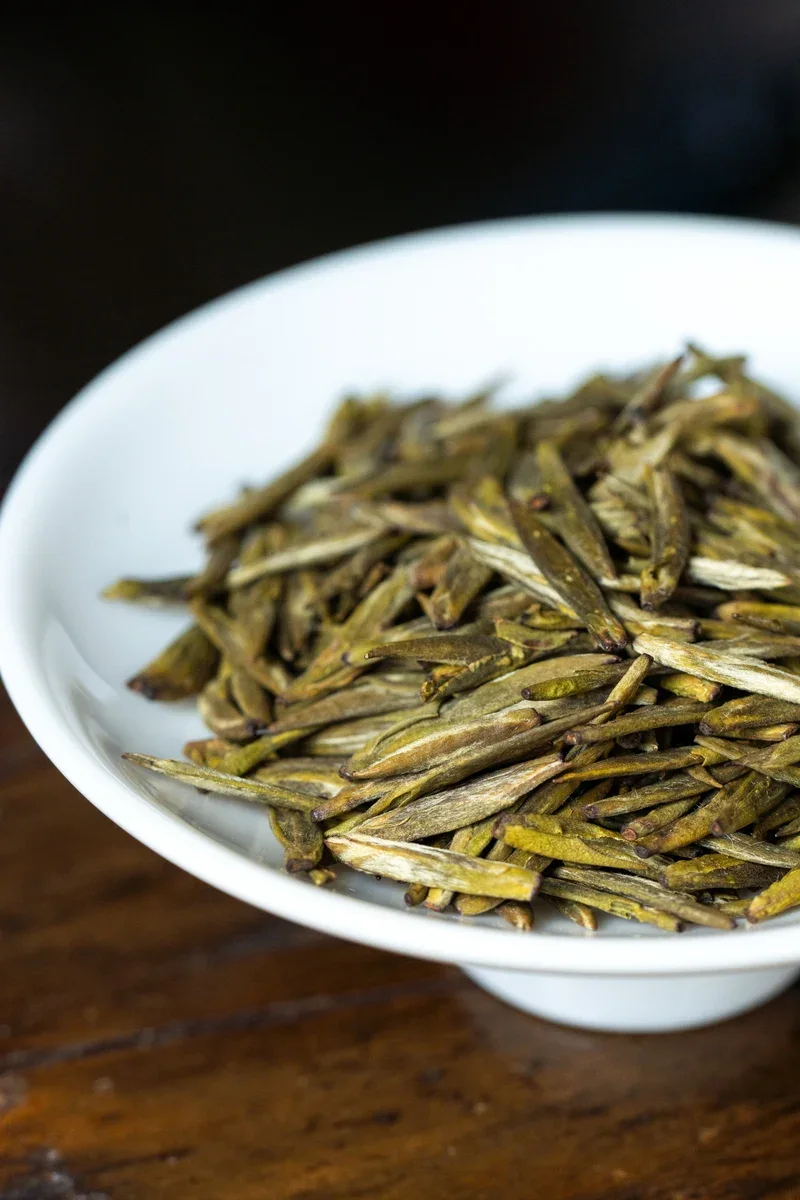
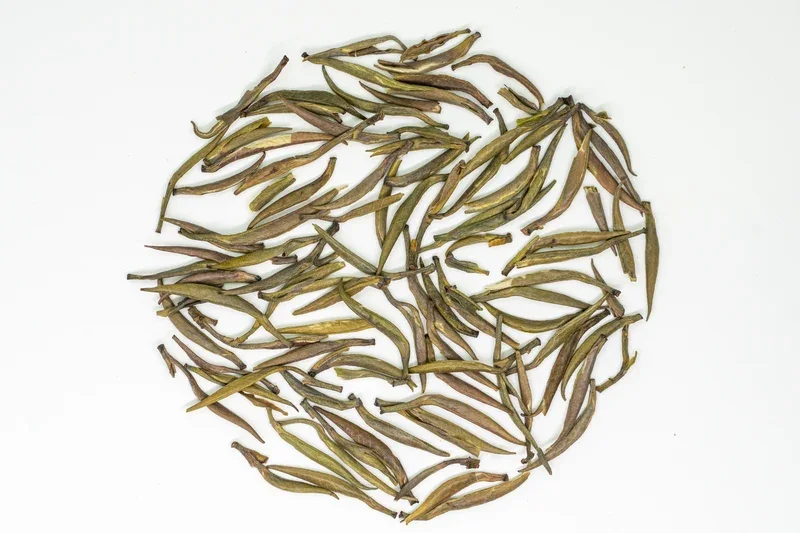
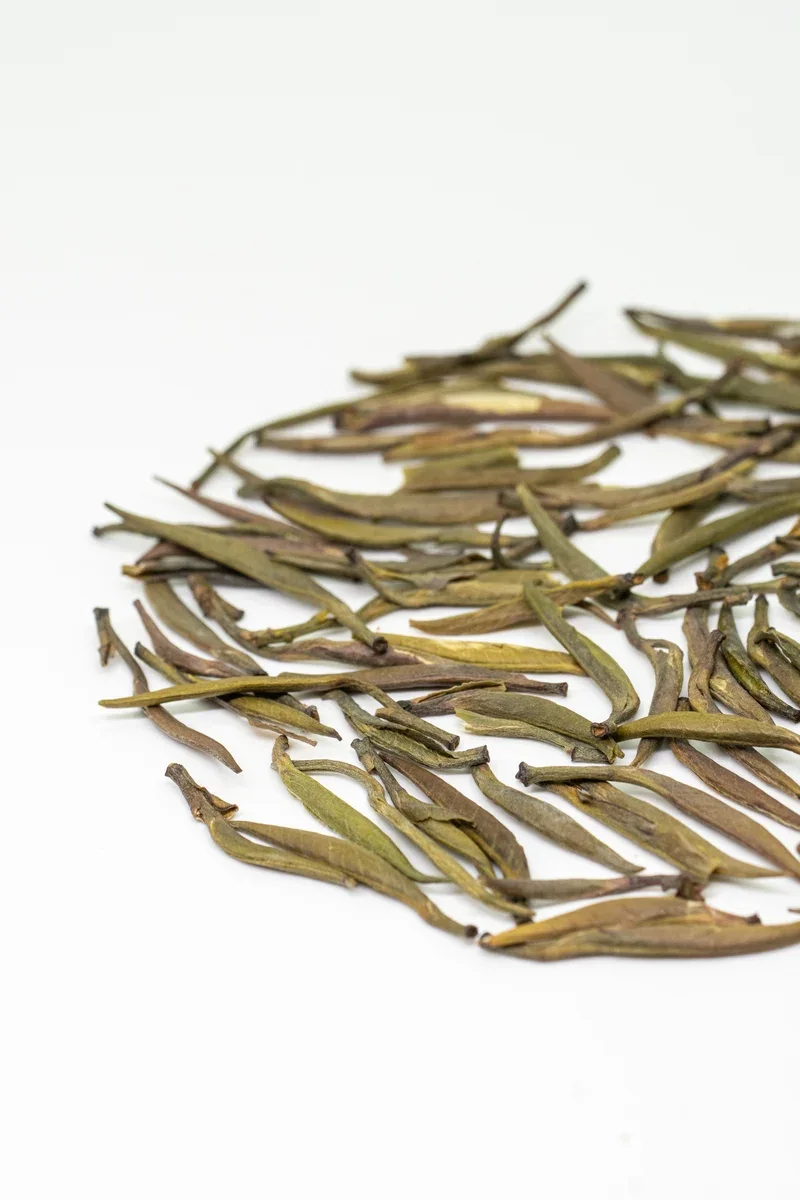
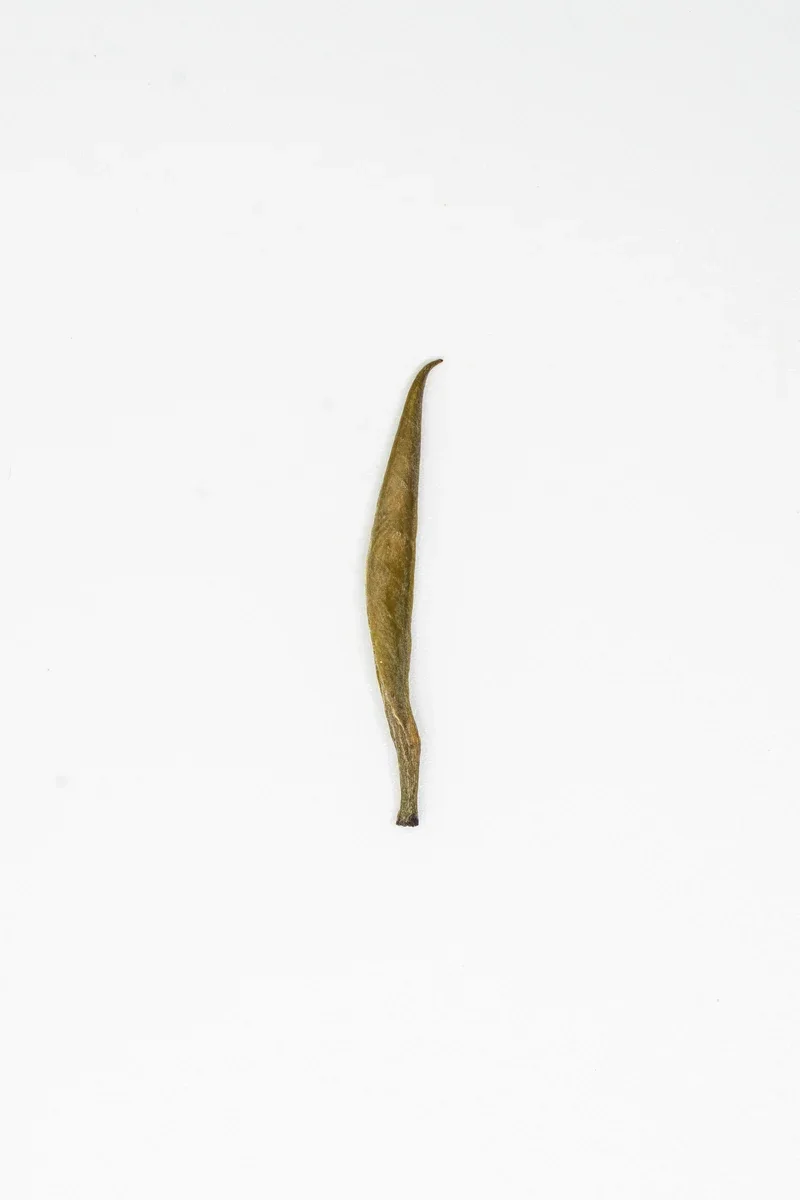
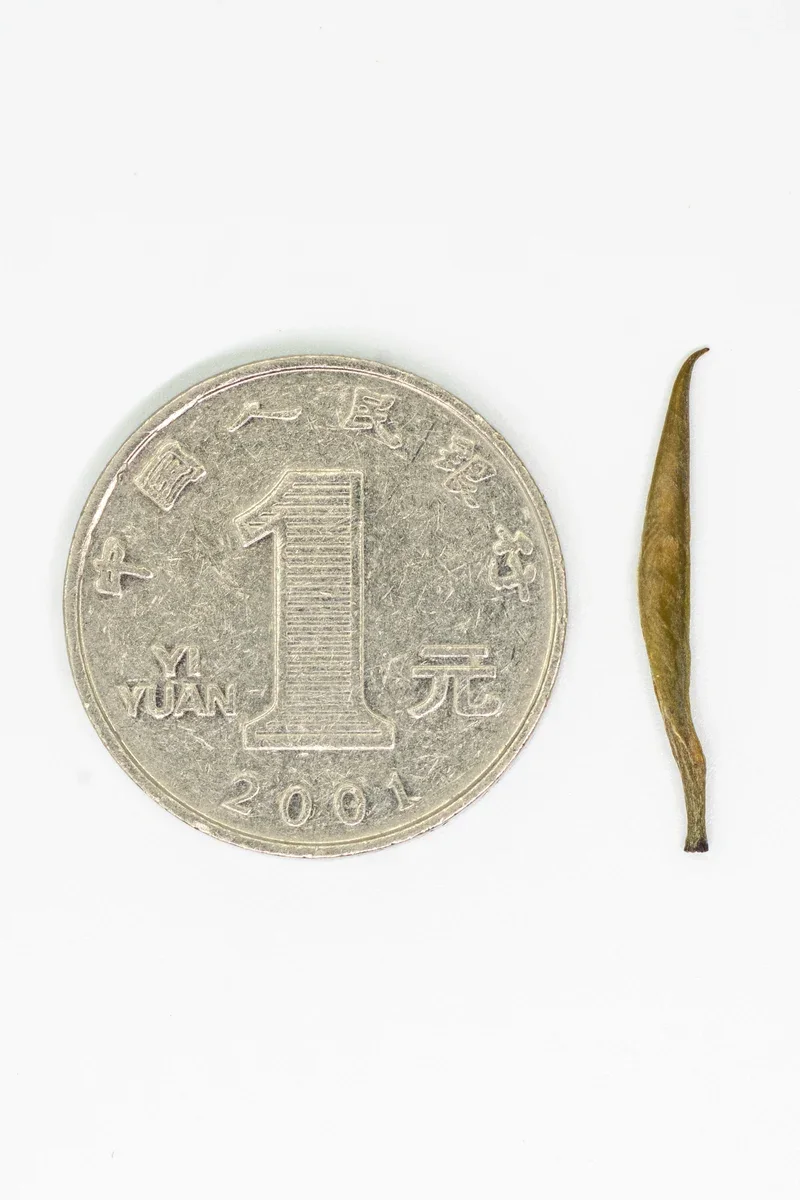
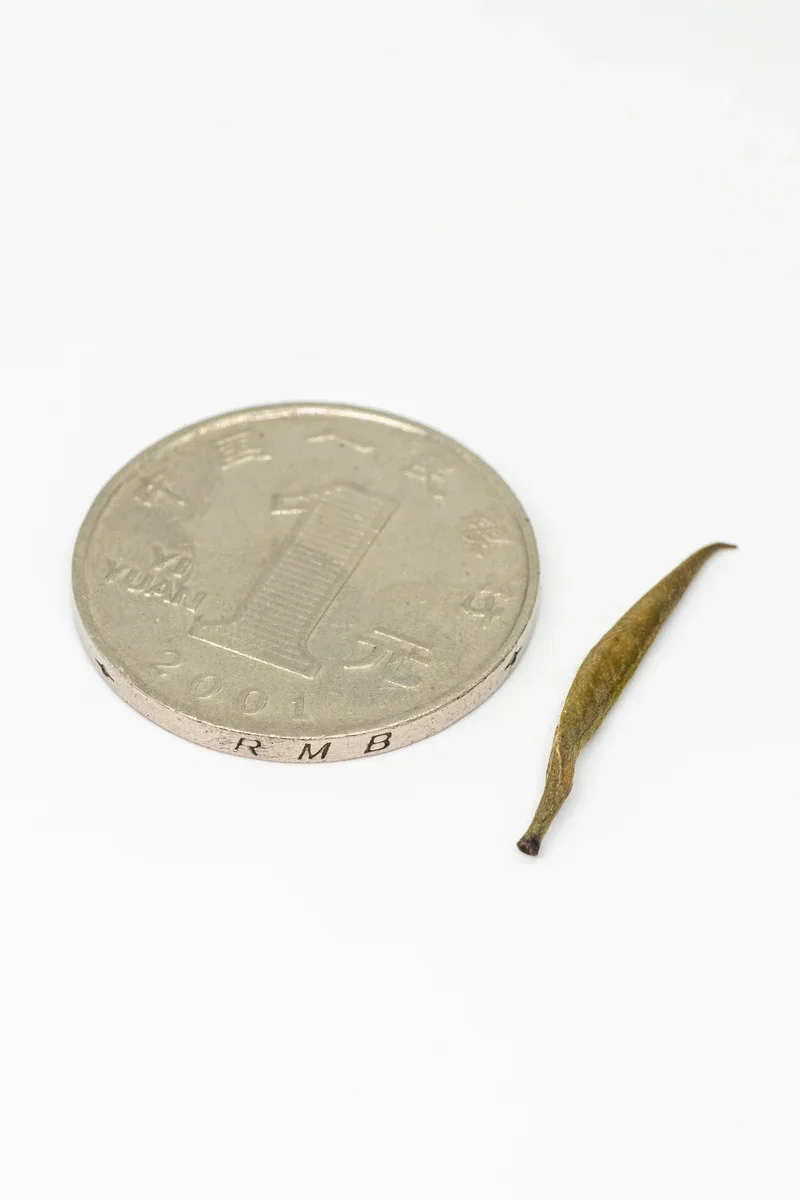
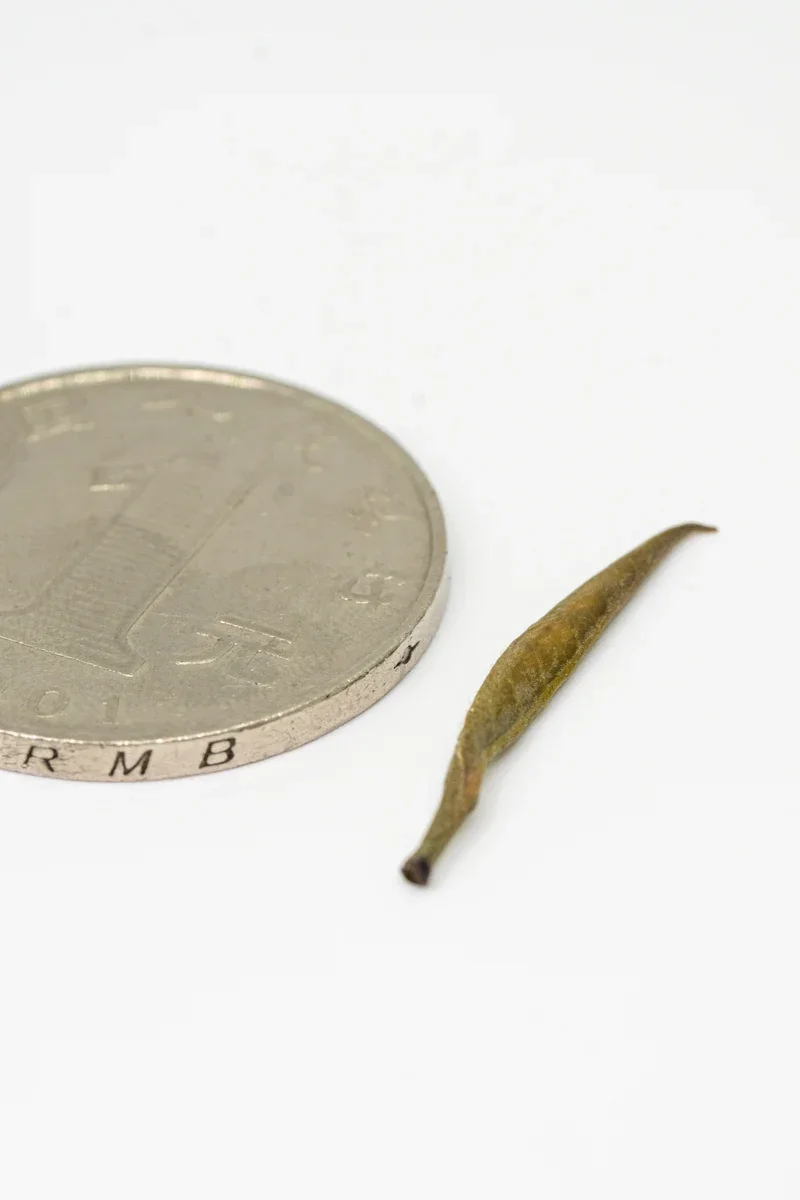
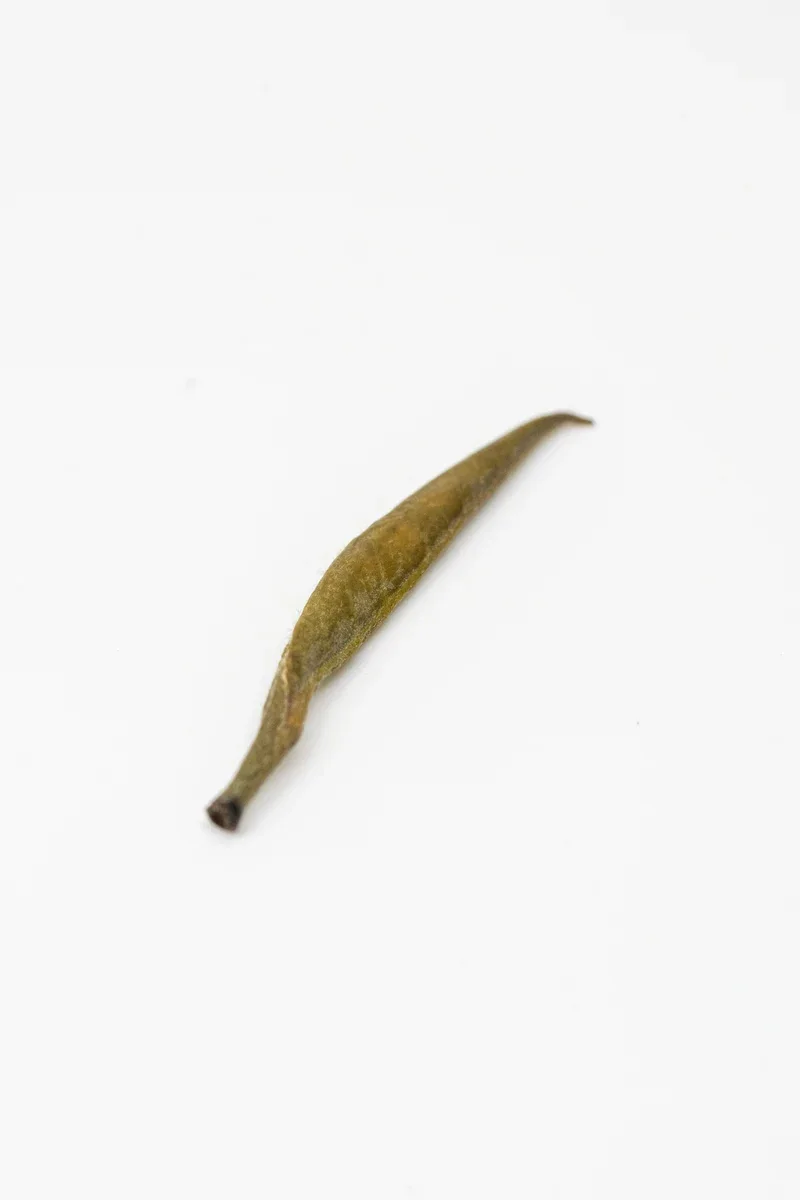
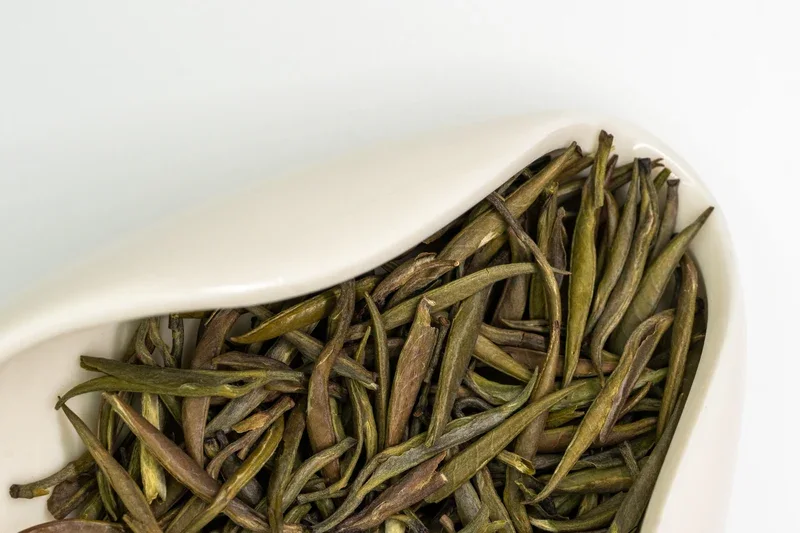
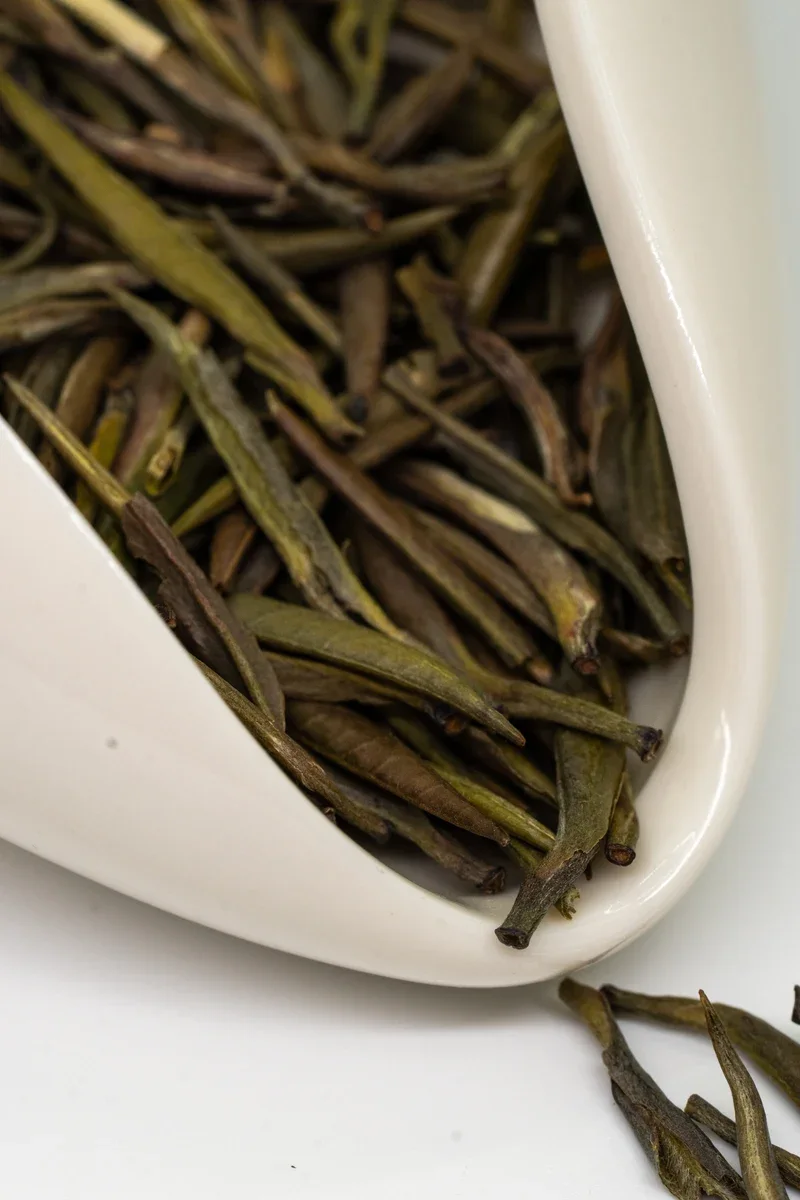
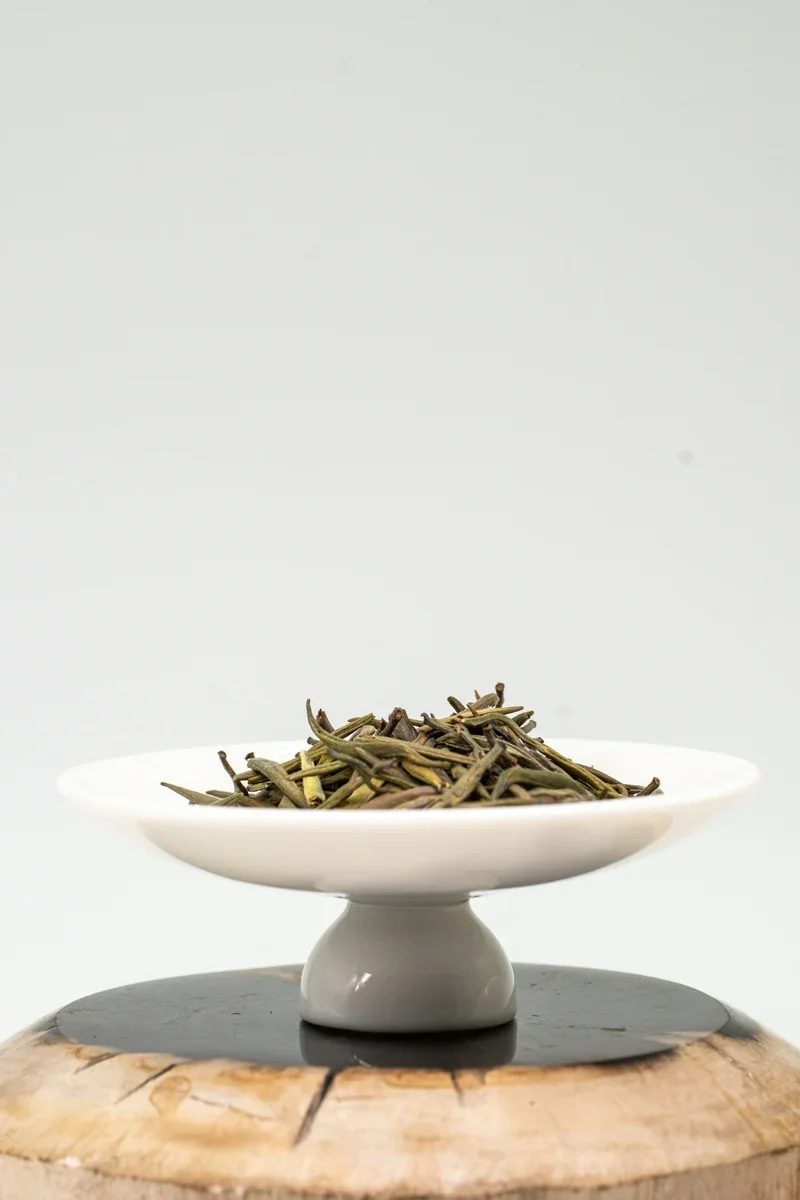
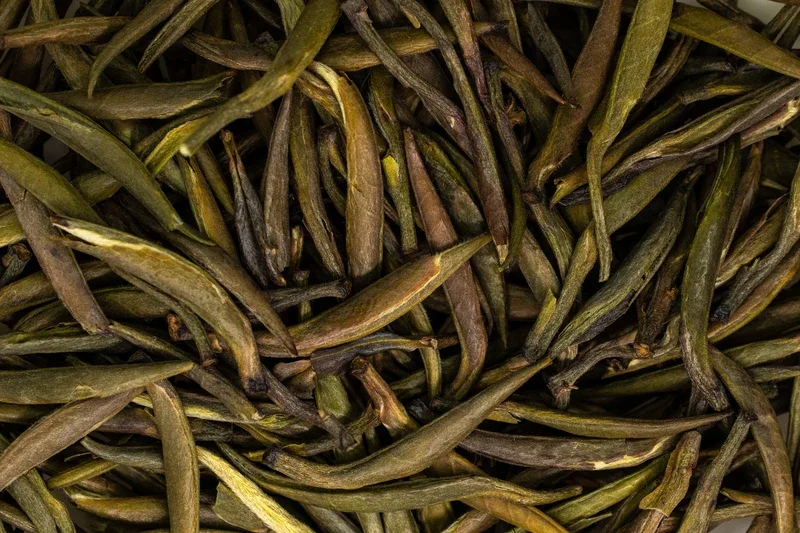
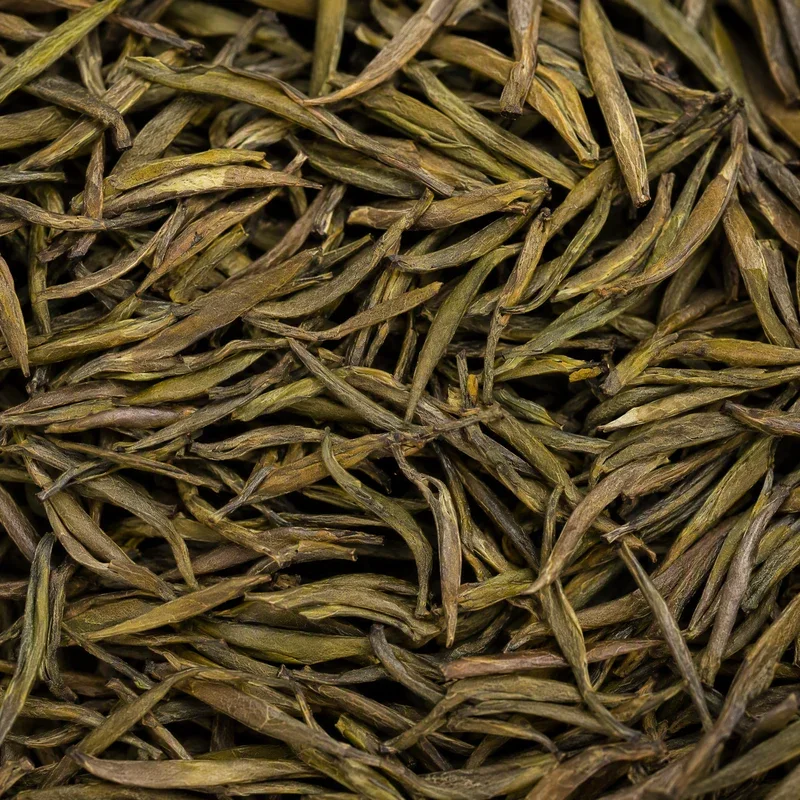
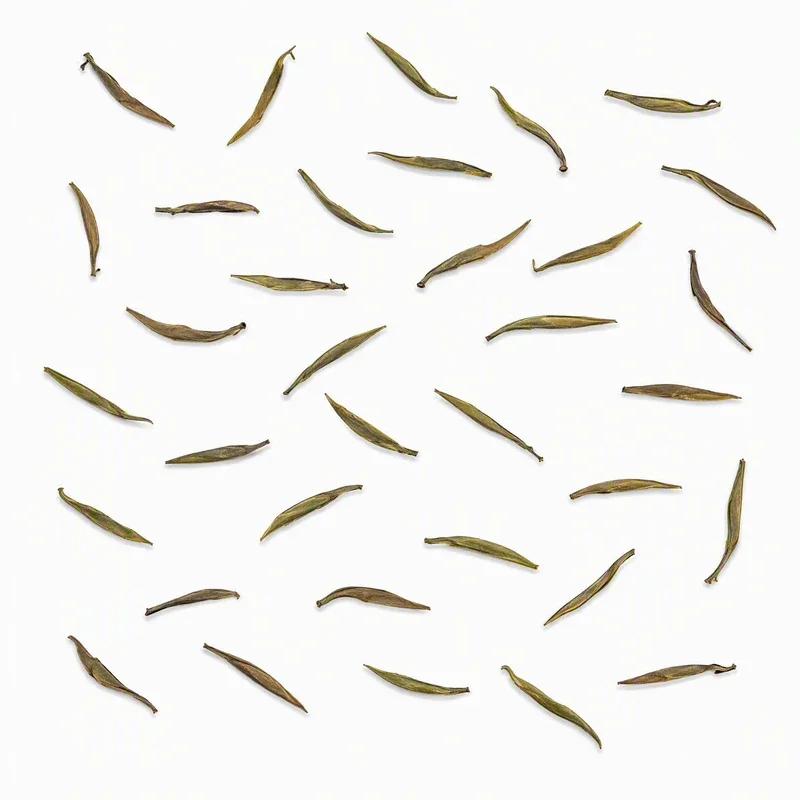
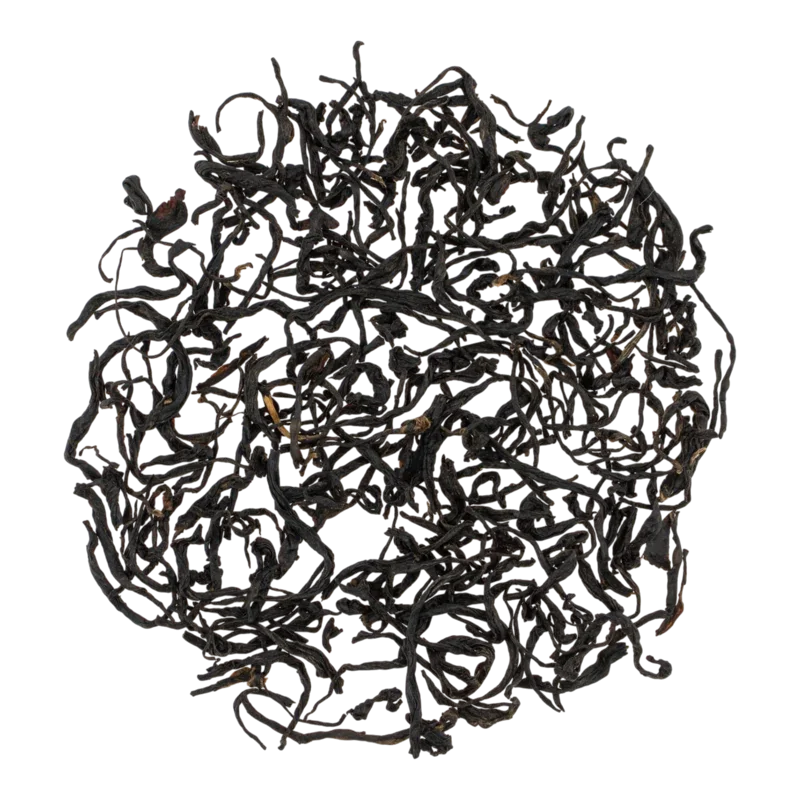
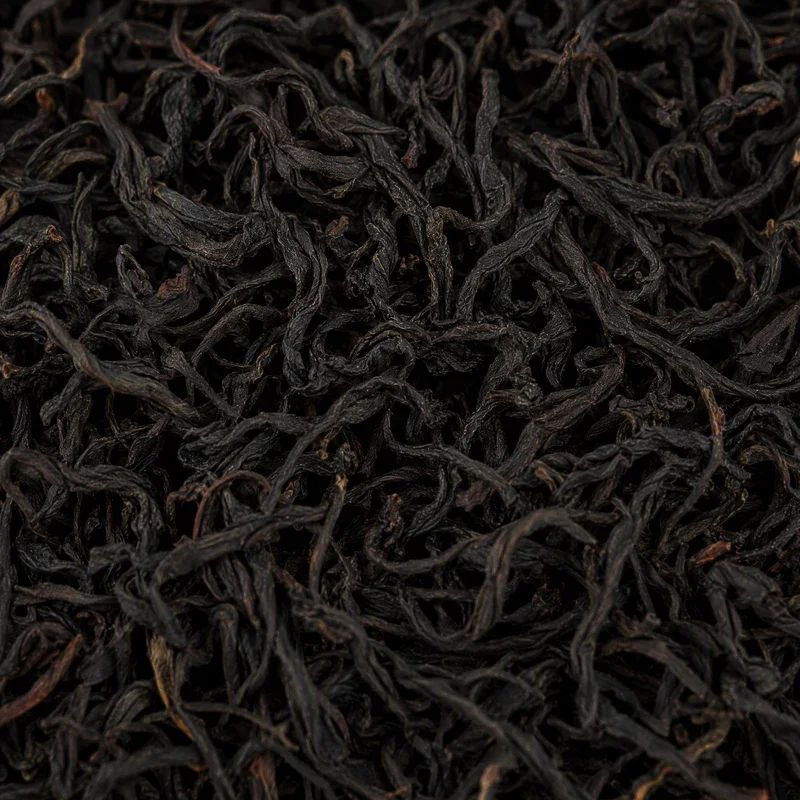
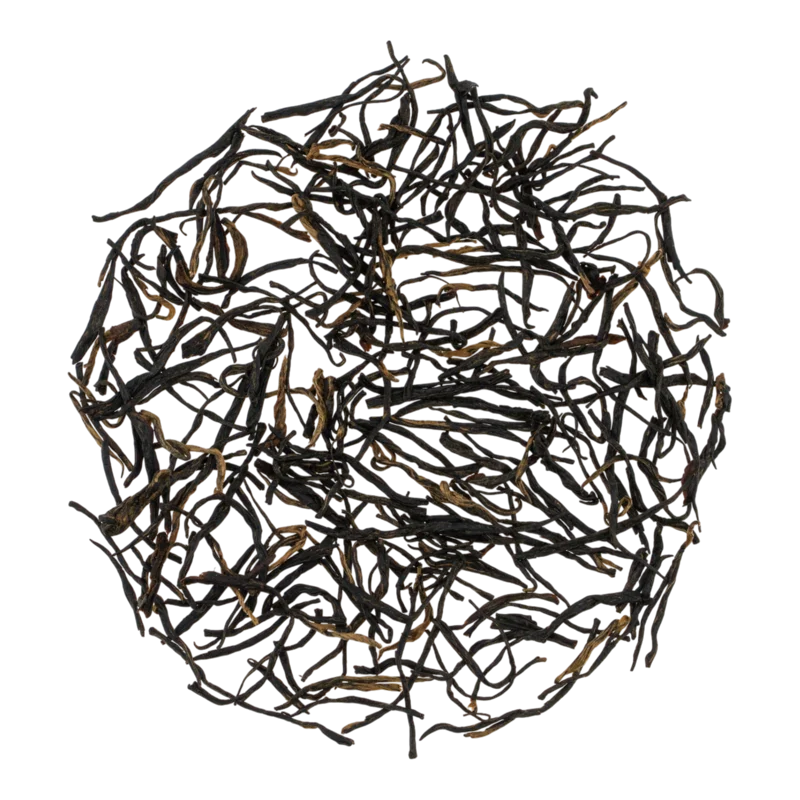
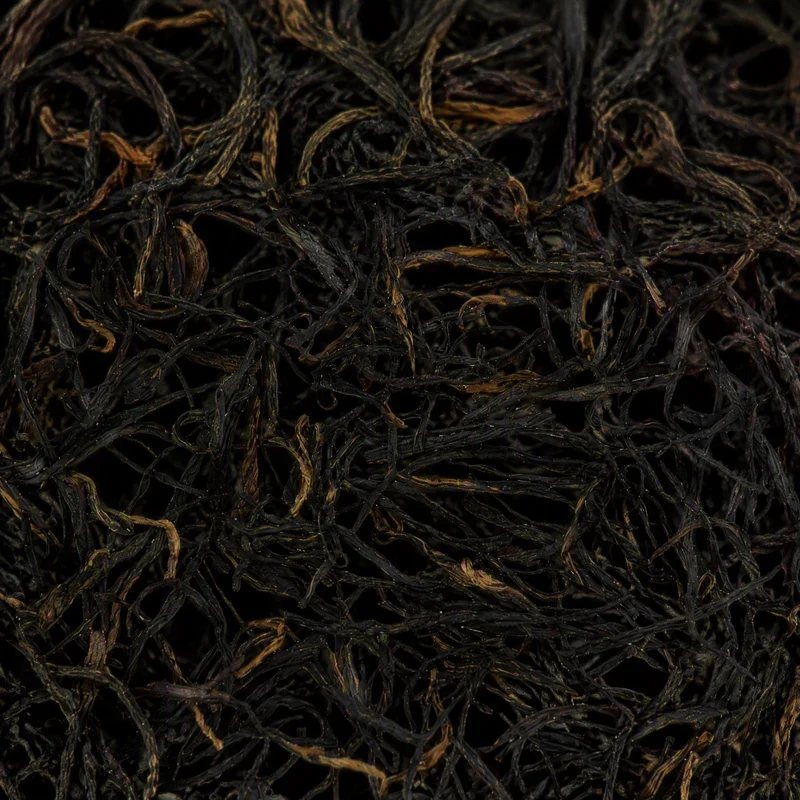
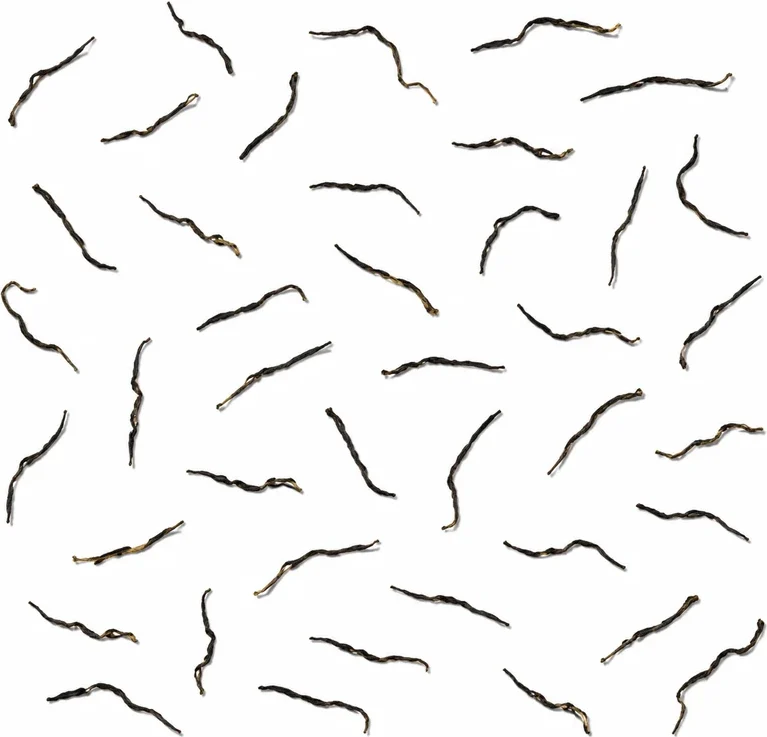
Dry Leaf Appearance: Thin, elegant, straight "needles" 20–25 mm long, dark brown, almost black color, with abundance of golden and reddish downy buds (tips). Tea leaves are even, uniform in size, with characteristic matte luster.
Dry Leaf Aroma: Complex, multifaceted. Characteristic notes of orchid, rose, honey, dried fruits (plum, raisin), with light wine or chocolate undertones. This is the famous "Qimenxiang" — an aroma that cannot be confused with any other tea.
Liquor Aroma: Intense, warm, sweet, with pronounced floral (orchid, jasmine), honey, fruity notes. Compared to classic Gongfu, Jinzhen has brighter and fresher aroma, with clearer floral accents.
Liquor Color: Bright, clear, red-ruby or amber-red with golden tint. A characteristic feature of high-quality Keemun — "golden ring" (金圈, jīnquān) around the edge of the cup.
Spent Leaves: Soft, elastic, whole buds and young leaves of copper-red or brown color, evenly colored.
Taste: Soft, smooth, silky, rich, but without bitterness and excessive astringency. Sweet notes of honey, caramel, dried fruits dominate, sometimes with light berry acidity or chocolate undertones. Aftertaste is long, warming, with honey-floral trail.
Alkaloids: Caffeine — about 3–4% of dry matter (content lower than Assam red teas). Also theobromine and theophylline.
Amino Acids: L-theanine — gives sweetish taste and contributes to mild relaxing effect in combination with caffeine.
High content of polysaccharides and simple sugars — characteristic feature of Qimen red teas, providing natural sweetness of taste.
Essential Oils: Geraniol, linalool, β-ionone, dimethyl sulfide, 2-methylbutanal — form complex aromatic profile. Essential oil content in Zhuye Zhong cultivar is especially high compared to other tea varieties.
Minerals: Potassium, manganese, fluorine, zinc, selenium.
Polyphenols: Theaflavins predominate (give brightness and golden tint to liquor, form "golden ring") and thearubigins (responsible for color depth and taste density). Residual catechins are present.
Vitamins: C, B group, P (rutin), K.
Combination of caffeine and L-theanine provides steady alertness without anxiety — a state called "calm clarity" (清醒, qīngxǐng) in Chinese tea culture.
Theaflavins and thearubigins possess pronounced antioxidant properties, comparable in strength to green tea catechins.
Red tea (black tea) stimulates digestive enzyme production, gently improving peristalsis. Traditionally Keemun is recommended after meals.
Red tea (black tea) belongs to "warm" (温, wēn) beverages in traditional Chinese medicine, making it ideal in cold weather.
Regular consumption may contribute to blood pressure normalization and cholesterol reduction.
Red tea (black tea) polyphenols possess antibacterial properties, traditionally Keemun was used as auxiliary remedy for colds.
Complex action of caffeine, theanine and aromatic compounds positively affects attention concentration and mood.
Tea Amount: 3–5 g per 150–200 ml for European method; 5–7 g per 100–150 ml for flash steeping method (Gongfu Cha, 功夫茶).
Teaware: Porcelain gàiwǎn (盖碗, gàiwǎn) — best choice for Jinzhen: neutral material doesn't absorb aroma and allows full revelation of "Qimenxiang." Yíxīng teapot (宜兴紫砂壶) is also suitable, especially for regular Keemun brewing.
Water Temperature: 90–95°C. Boiling water is not recommended — too high temperature can scald delicate buds and increase astringency.
Container: Airtight, opaque container (metal, ceramic or dark glass).
Shelf Life: With proper storage, tea maintains freshness up to 2 years. Some connoisseurs age Keemun longer: over time bright floral notes give way to deeper, mature tones — such "aged Keemun" (陈年祁红, chénnián Qíhóng) is valued by certain connoisseurs.
Dry, cool place, humidity no more than 40%, away from direct sunlight and strong odor sources.
Classic, traditional form. Complex system of 4 initial processing stages and 13 refinement stages (sorting, sifting, wind separation, blending). Deep, multi-layered aroma, dense and rounded taste. Release conditions — from "礼茶" (Licha — gift tea) and "特茗" (Teming — extra) to 7th grade.
Bud with one leaf, processed by simplified technology without shaping stage — after oxidation leaf is immediately dried. Taste is lighter and fresher, with pronounced delicate sweetness.
Created in 1986. Buds and young leaves are hand-twisted into spirals in heated wok. Bright, floral-fruity aroma, clean and sweet taste.
Tea described in this article. Hand shaping into straight "needles" in wok. Most visually impressive form.
Highest grade, predominantly from tips. Divided into sub-grades A and B.
From earliest spring buds, most delicate in character.
Price Category: Qimen Jinzhen belongs to expensive red tea (black tea) varieties. Cost is due to high raw material quality (exclusively spring picking buds), labor-intensive hand shaping and limited production volume. Premium batch prices can reach $80–120 per 100 g and higher, varying depending on grade, harvest year and producer.
No reviews yet. Tell us what you think of this tea.
Rate this tea and share your impressions. We review each submission before publishing it.