Brewing
Gongfu brewing
- Water temperature
- 92 °C
- Tea amount
- 6 g
- Water volume
- 100 ml
- First steep
- 10 s
- Time added per infusion
- 5 s
- Infusions
- 8

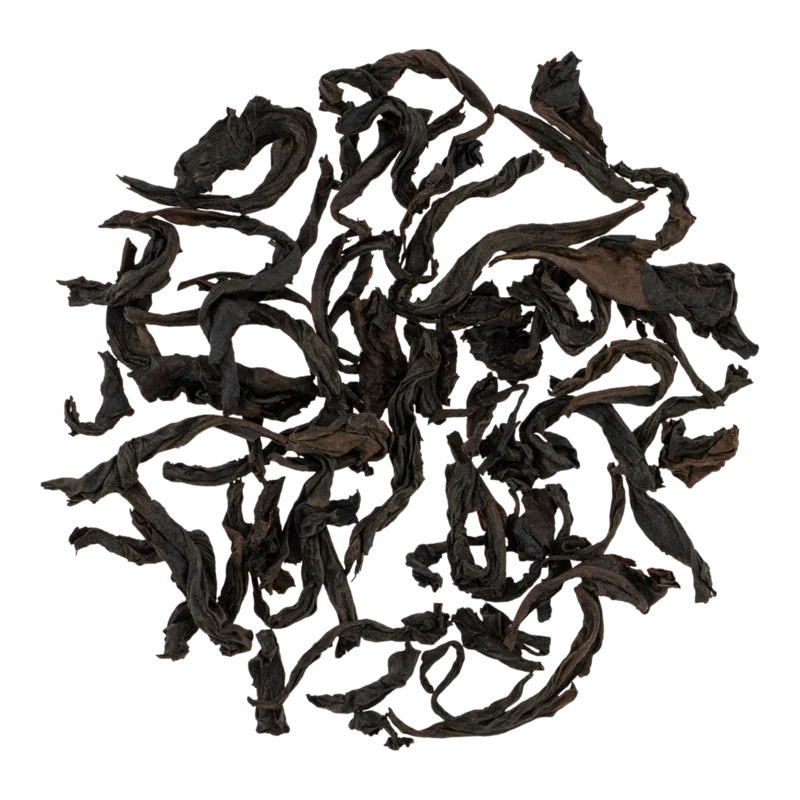
méi zhàn wūlóng
Choose a brewing method. Start with the recommended quantities and time, then adjust to taste.
Brewing
Brewing
Taste
Tea encyclopedia
Category: Fujian oolongs. Two main styles:
Category: Fujian oolongs. Two main styles:
Lútián Township (芦田镇, Lútián Zhèn), Sānyáng Village (三洋村, Sānyáng Cūn), Yinpingshan Mountain (银瓶山, Yínpíng Shān). ~25°05' N, ~117°55' E. Elevation — up to 1411 m.
Northwest Fujian. ~27°43' N, ~117°41' E.
Origin: China, Fújiàn Province (福建, Fújiàn).
Type: Oolong (semi-oxidized tea). Oxidation degree varies in a wide range — from 15% (light Anxi style) to 60–70% (dark Wuyishan yancha), making Mei Zhan one of the most «adaptable» oolongs in China.
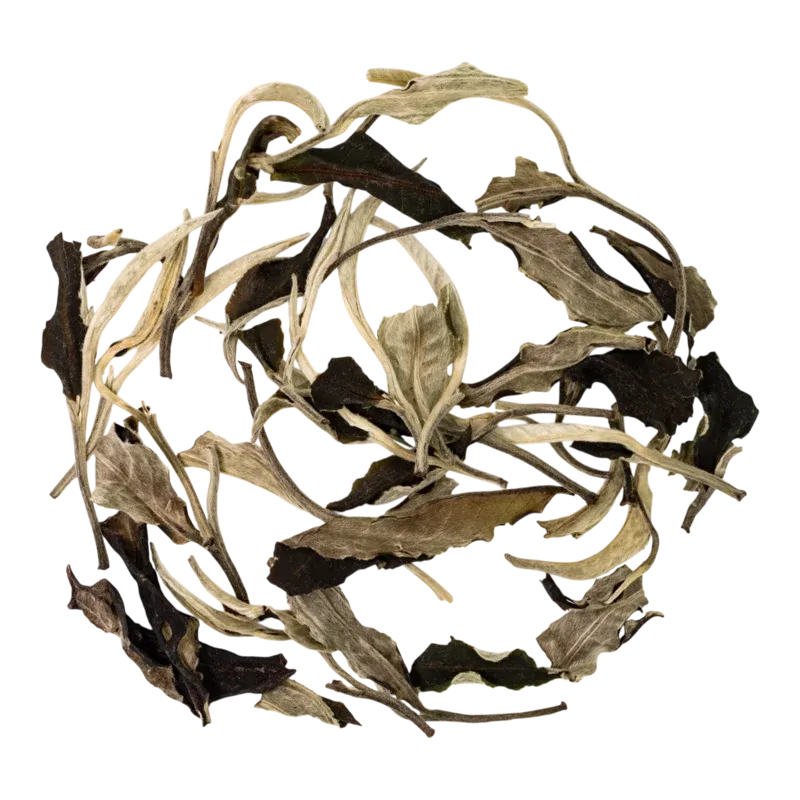
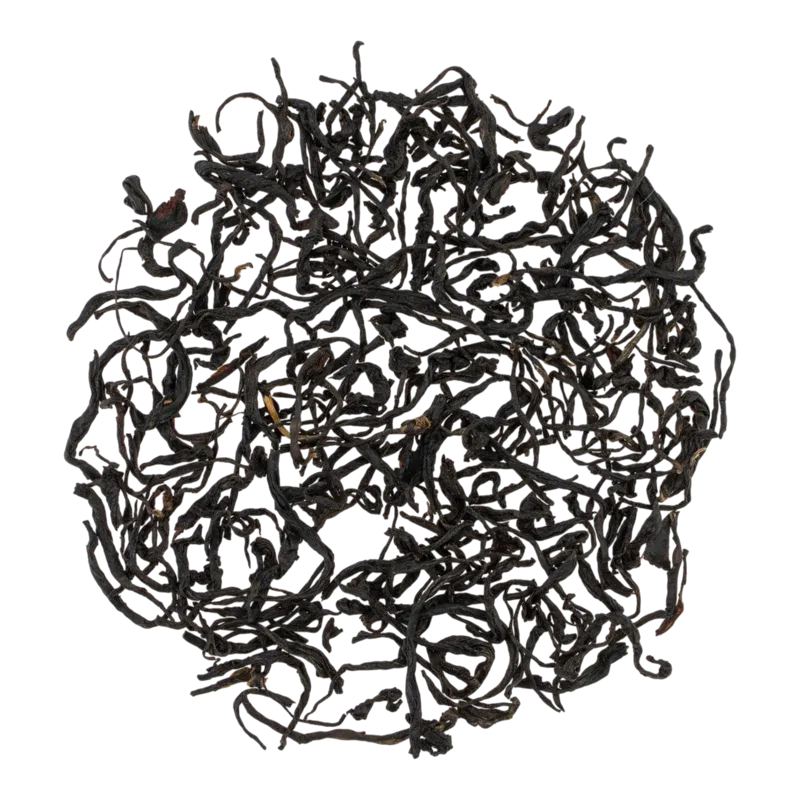
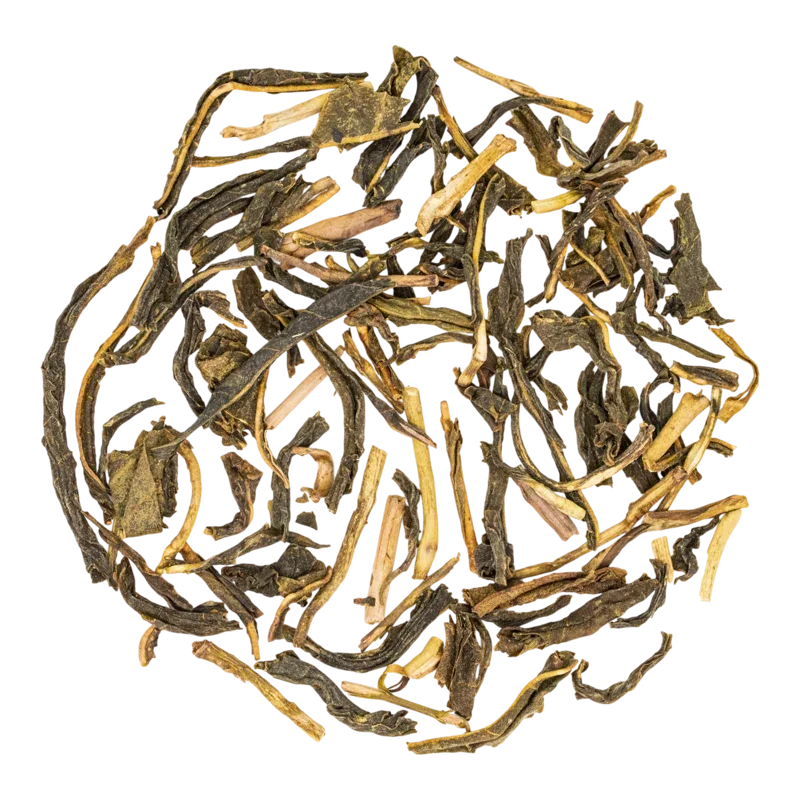
Mei Zhan is used to make oolongs, red teas (Mei Zhan Hong Cha, 梅占红茶 — including Jinjunmei style, 金骏眉), white teas (Mei Zhan Bai Cha) and green teas (Bai Mao Hou, 白毛猴, «White Monkey»). Méi Zhǎn Hóng Chá is considered one of the best raw materials for Báilín Gōngfū (白琳工夫) — classic Fujian red tea.
Cultural Significance: Mei Zhan — one of the six classical Anxi oolong varieties, though less famous than Tiěguānyīn (铁观音). This is «tea for connoisseurs»: less promoted, but highly valued among those seeking pronounced varietal character. In the 1990s, when fashion for Tieguanyin led to mass replanting of tea gardens, Mei Zhan areas in Anxi sharply decreased. Old trees (老枞, lǎocōng) remaining on mountain slopes are now especially highly valued. Wuyishan Mei Zhan — a «quiet favorite» among yancha connoisseurs: its bright varietal character stands out even against the backdrop of powerful Róu Guì (肉桂) and Shuǐ Xiàn (水仙).
History: The Méi Zhǎn cultivar originates from Sānyáng Village (三洋村) in Lútián Township (芦田镇) of Anxi County — a mountainous area with cloudy, misty climate, spring waters and fertile soil, ideally suited for tea cultivation. Two classical legends exist about the origin of Mei Zhan.
High-growing plant — old trees reach 1.6 m height with crown up to 1.1 m. Pronounced trunk, medium-density branching, long internodes (hence the nickname «High-legged Oolong»). Leaves long-elliptical, dark green, glossy, with flat surface and slightly inward-curved edge. Leaf blade thickness above average, texture — dense, brittle. Edge serration — shallow and sparse.
Peak spring picking — mid-April (一芽三叶盛期, period of mass appearance of third leaf). Mei Zhan — late-maturing variety: in Anxi it's picked 7–10 days later than Tieguanyin, giving farmers opportunity to process the main TGY harvest before Mei Zhan season begins. Also picked in summer and autumn.
Cultivar: Méi Zhǎn (梅占) — Camellia sinensis var. sinensis. Asexual (无性系, wúxìngxì) variety, small tree (小乔木, xiǎo qiáomù) with upright trunk. Medium-leaf (中叶类), medium-early (中芽种).
Pluck Standard: Bud + 2–3 upper leaves. For oolongs, tender picking with light withering is recommended (嫩采, 重晒, 轻摇, nèn cǎi, zhòng shài, qīng yáo). Spring picking — most valuable.
Climate: Average annual ~18°C, relative humidity >80%, frequent fogs, diffused light.
Soil: Products of volcanic rock weathering — rich in iron, manganese, zinc. pH 4.5–5.5.
Hilly area of southeastern Fujian. Sanyang Village is located at the foot of Yinpingshan Mountain (1411 m) — one of the highest points in the county.
500–1200 m. Best raw material — from high-altitude gardens on Yinpingshan slopes.
Fresher, purely floral character; medium body; plum note — cleaner and lighter, without mineral heaviness.
Red quartz sandstone Dānxiá (丹霞, Dānxiá), inter-rock valleys and gorges (坑涧, kēngjiàn). Bushes grow in rock crevices and narrow mountain ravines.
300–700 m.
Mineral «rock rhyme» (岩韵, Yán Yùn) — dense body, long aftertaste. Plum-floral aroma acquires «stone» depth with notes of dried fruits and spices.
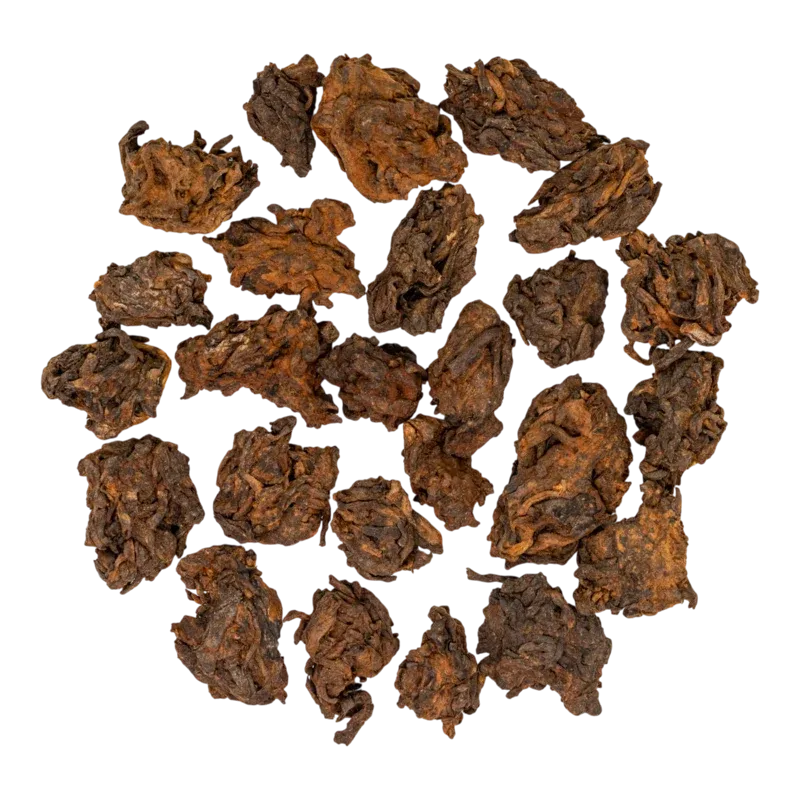
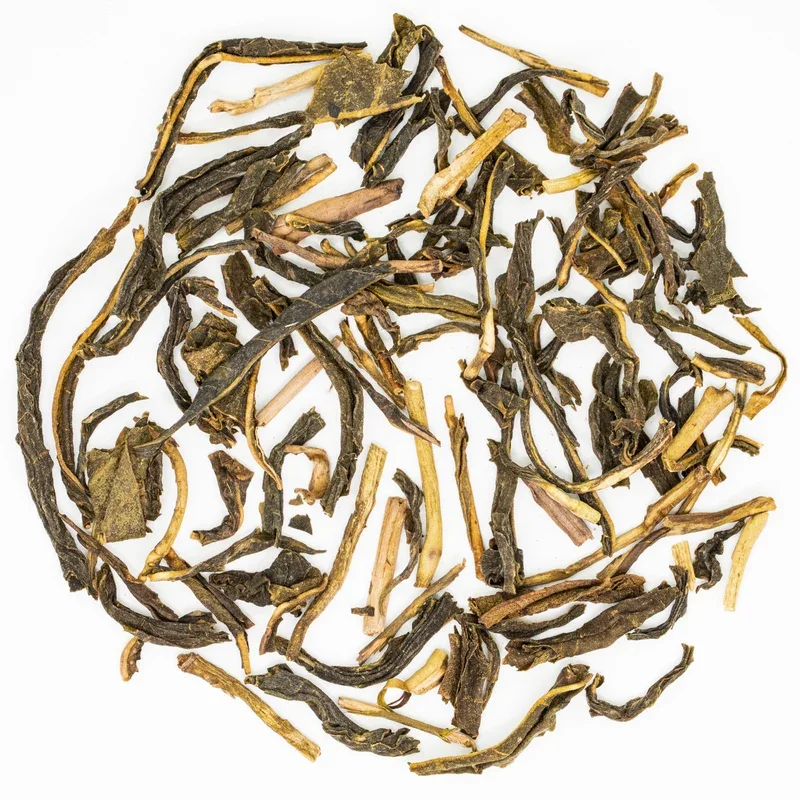
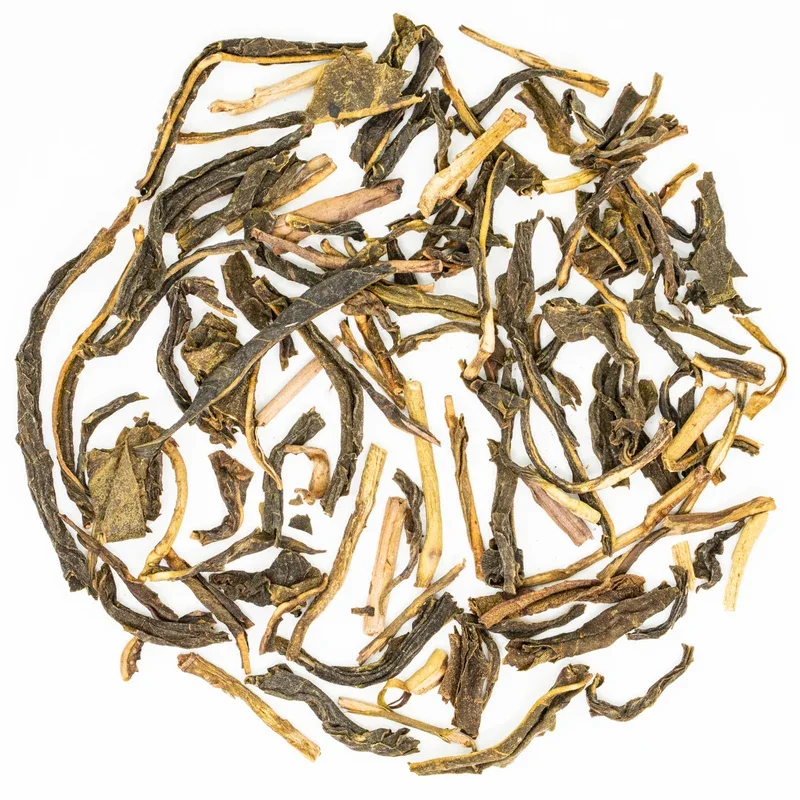
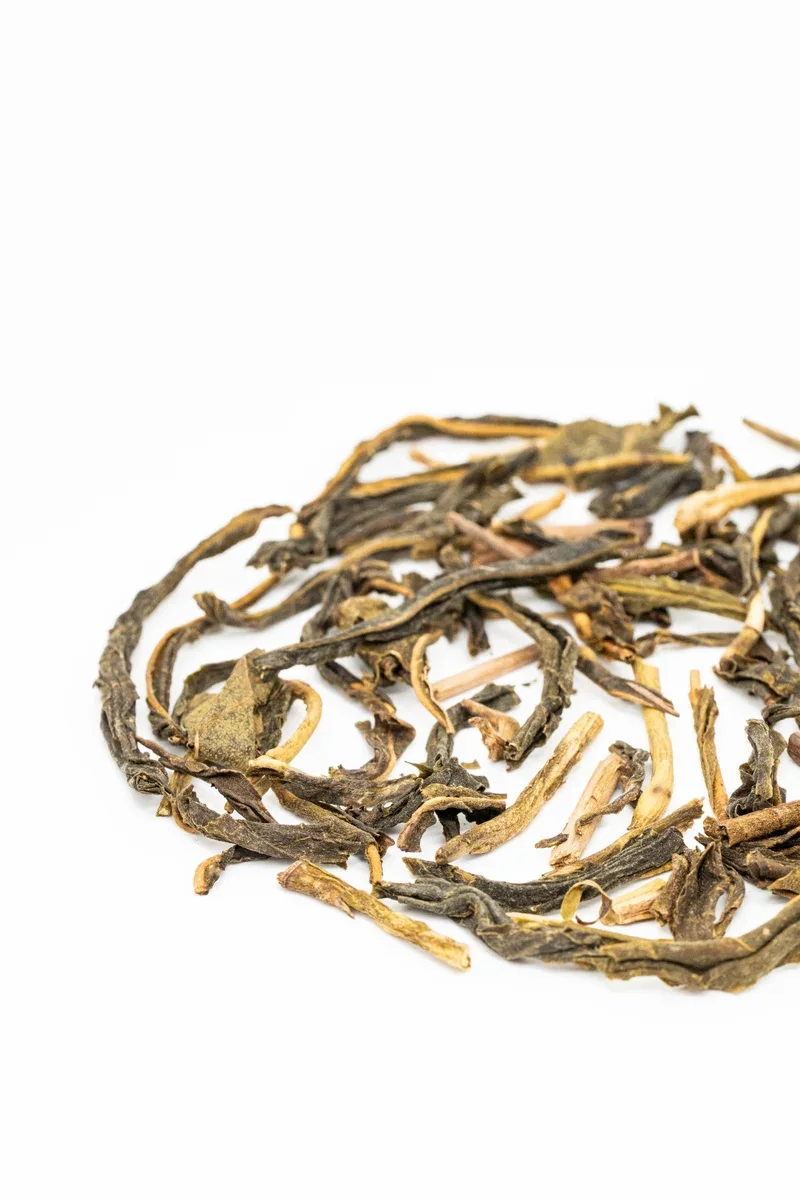
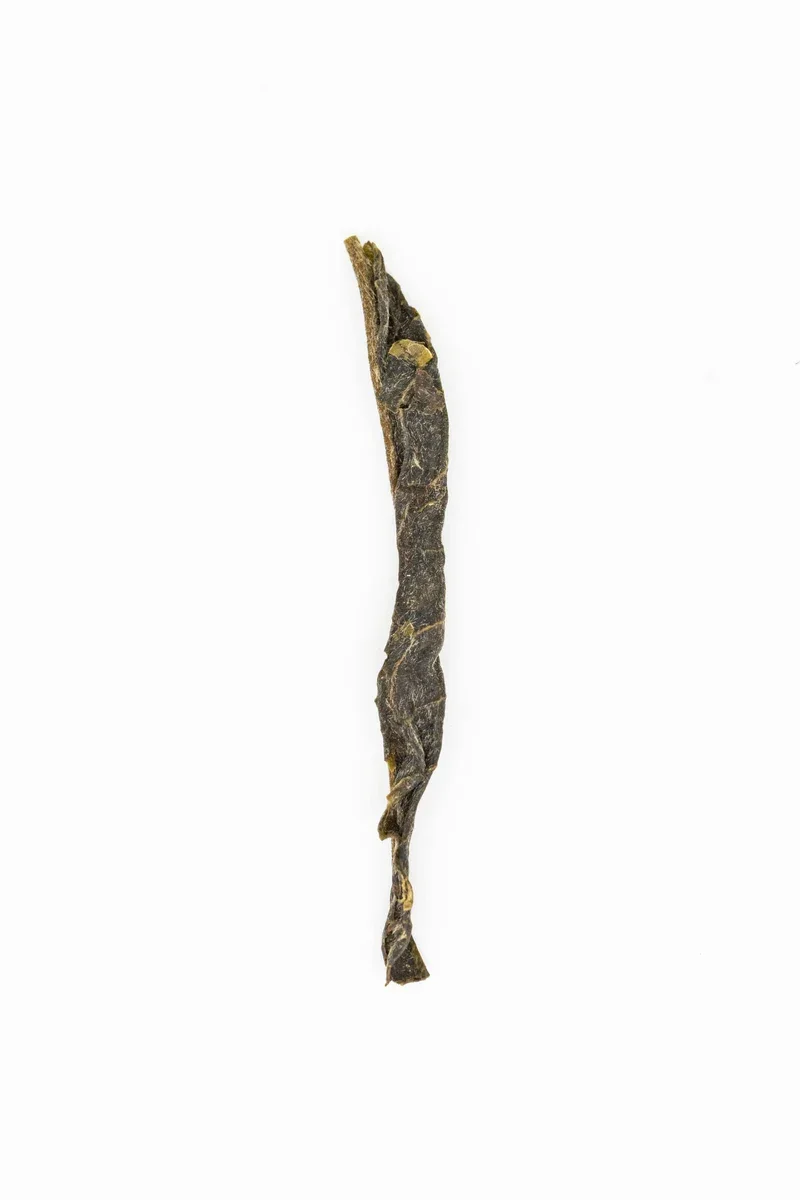
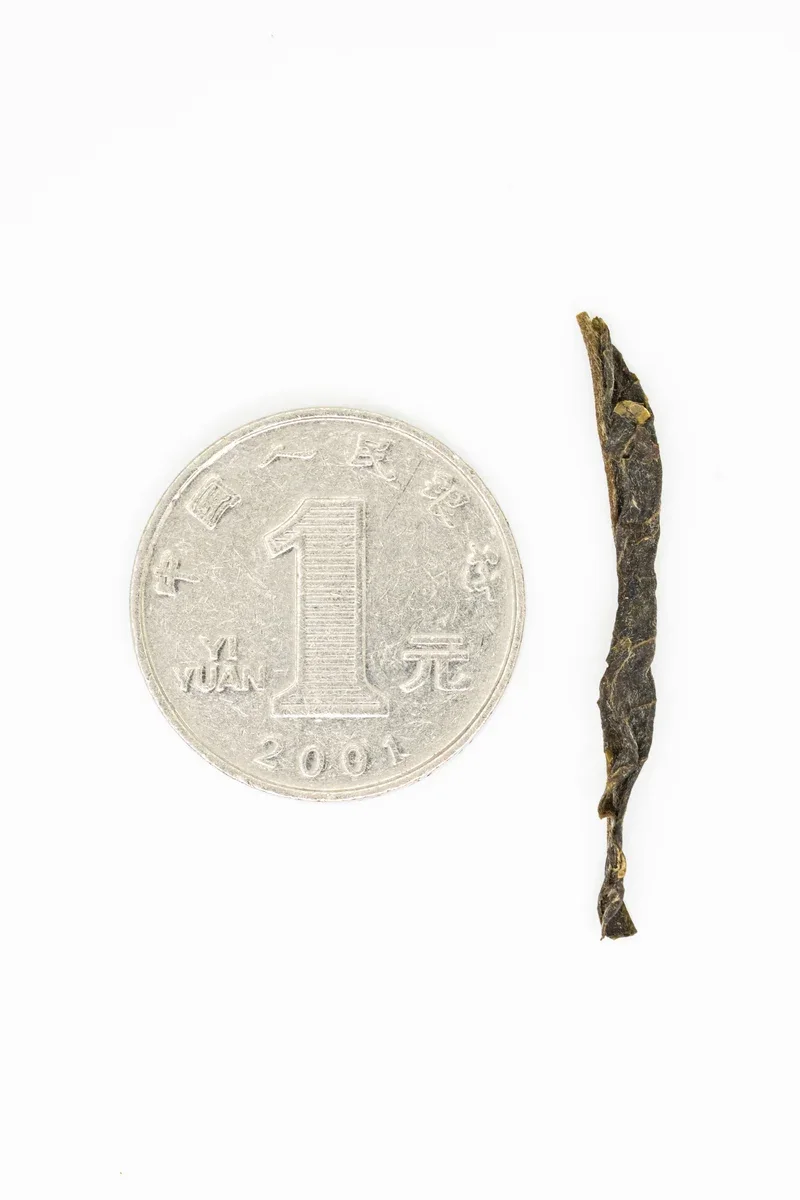
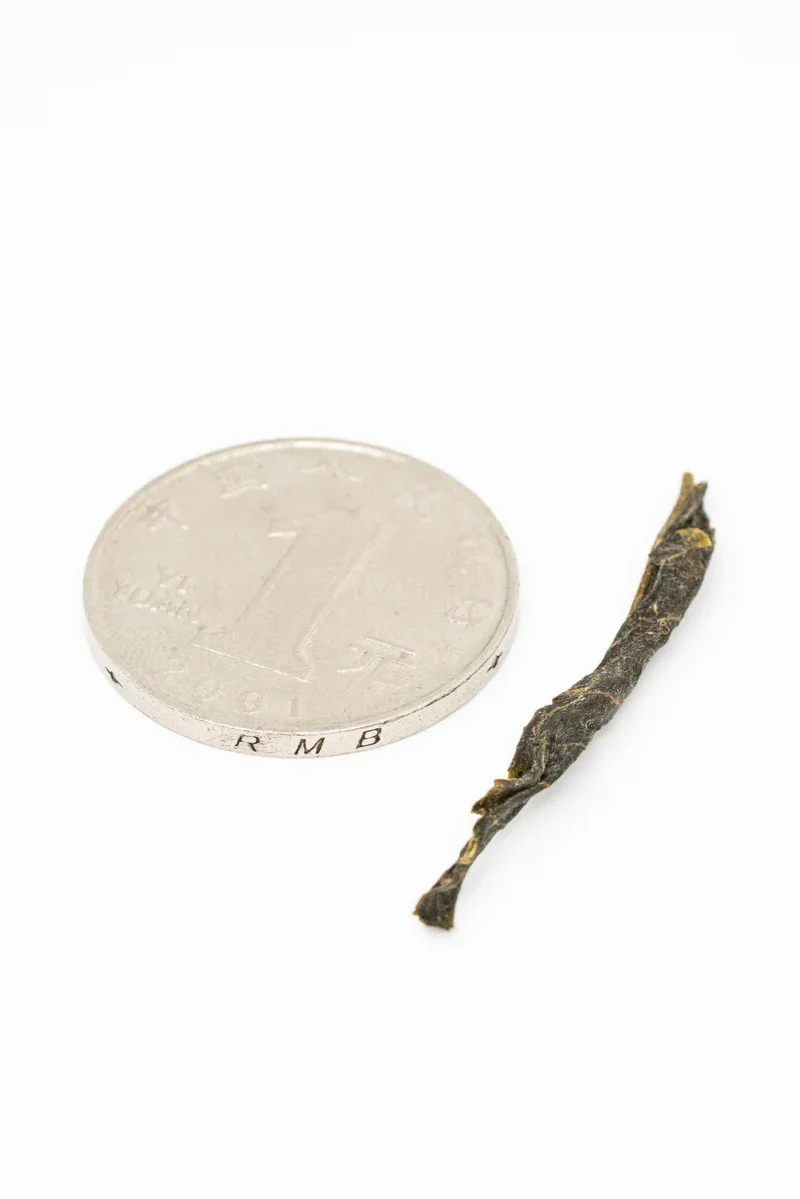
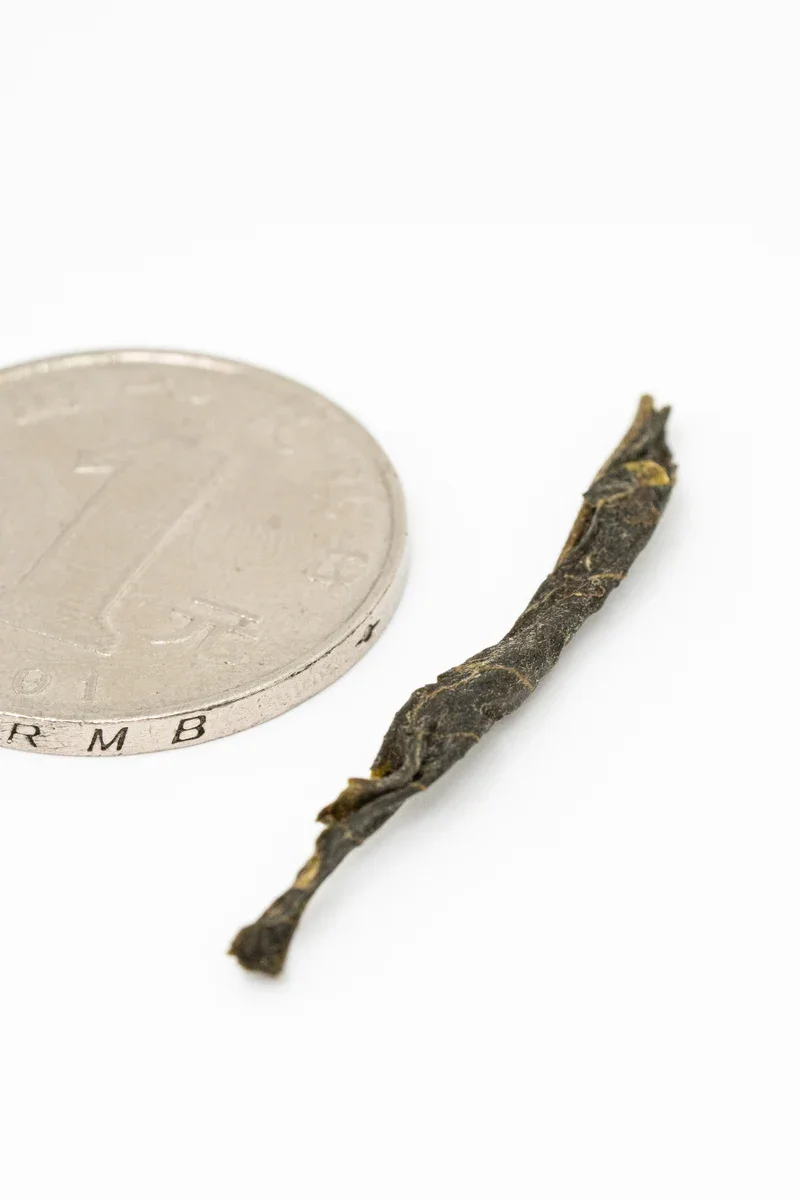
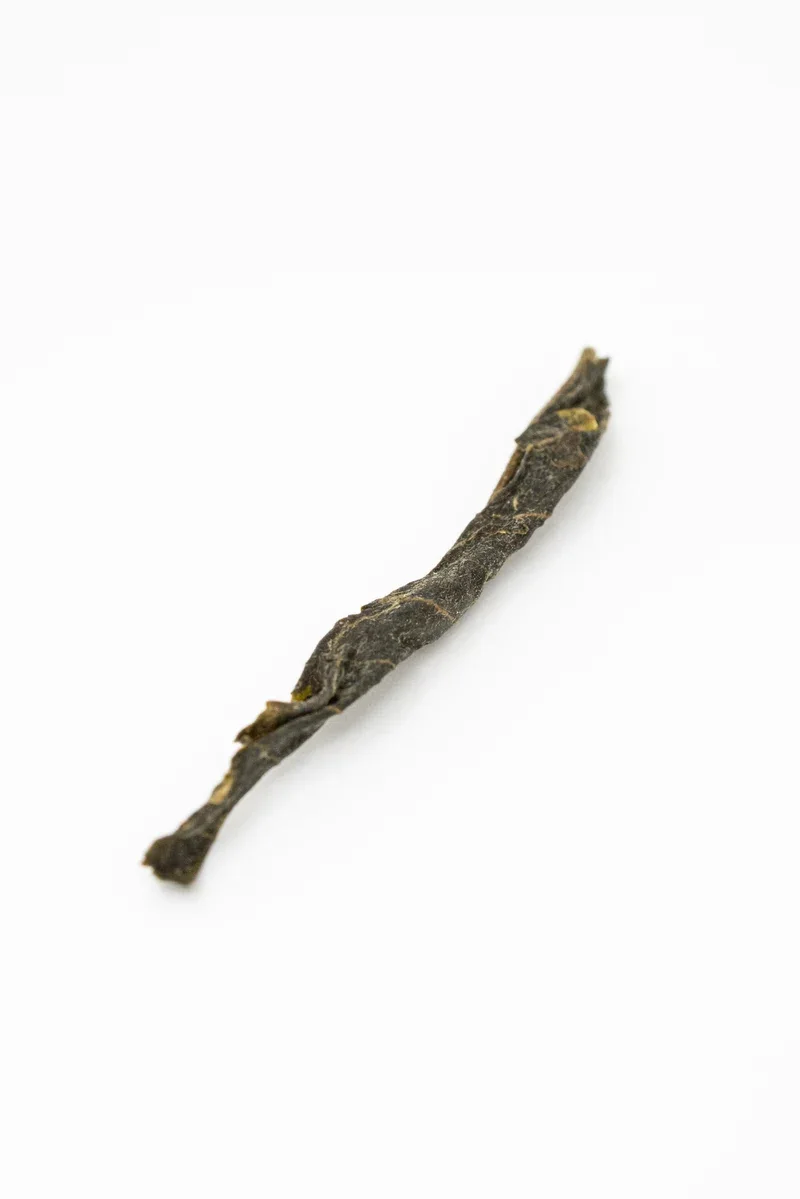
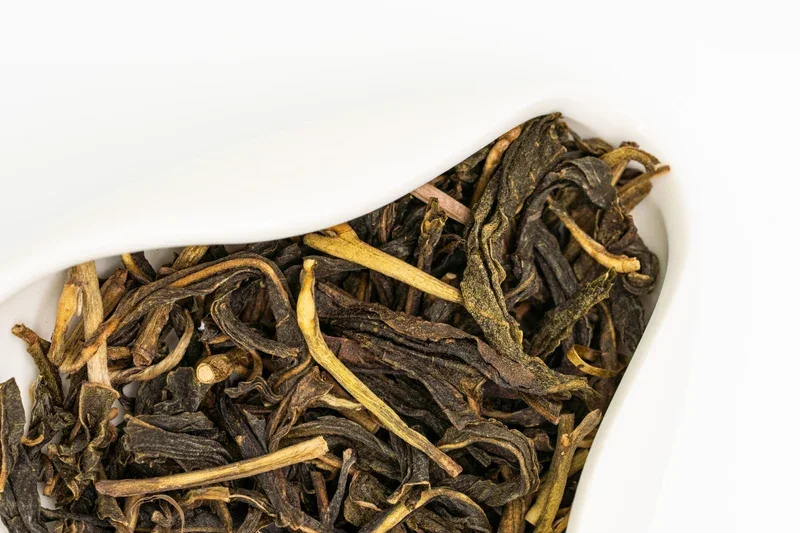
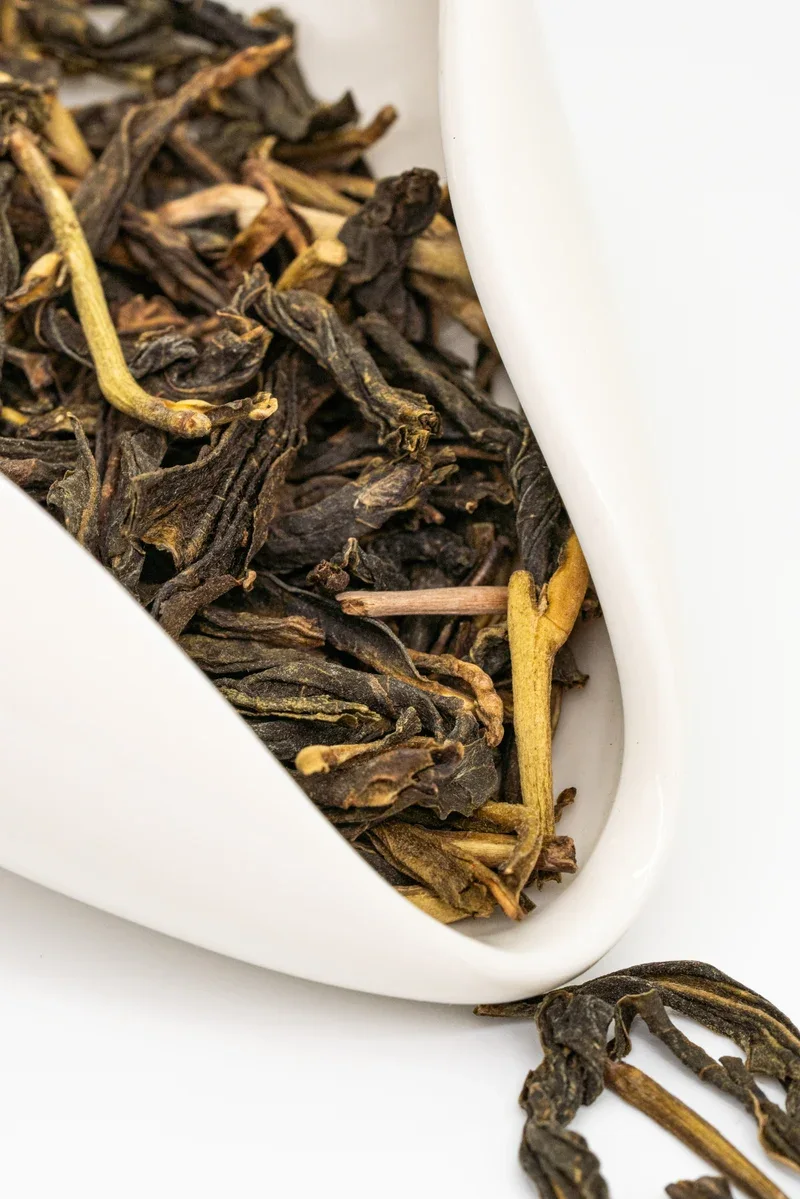
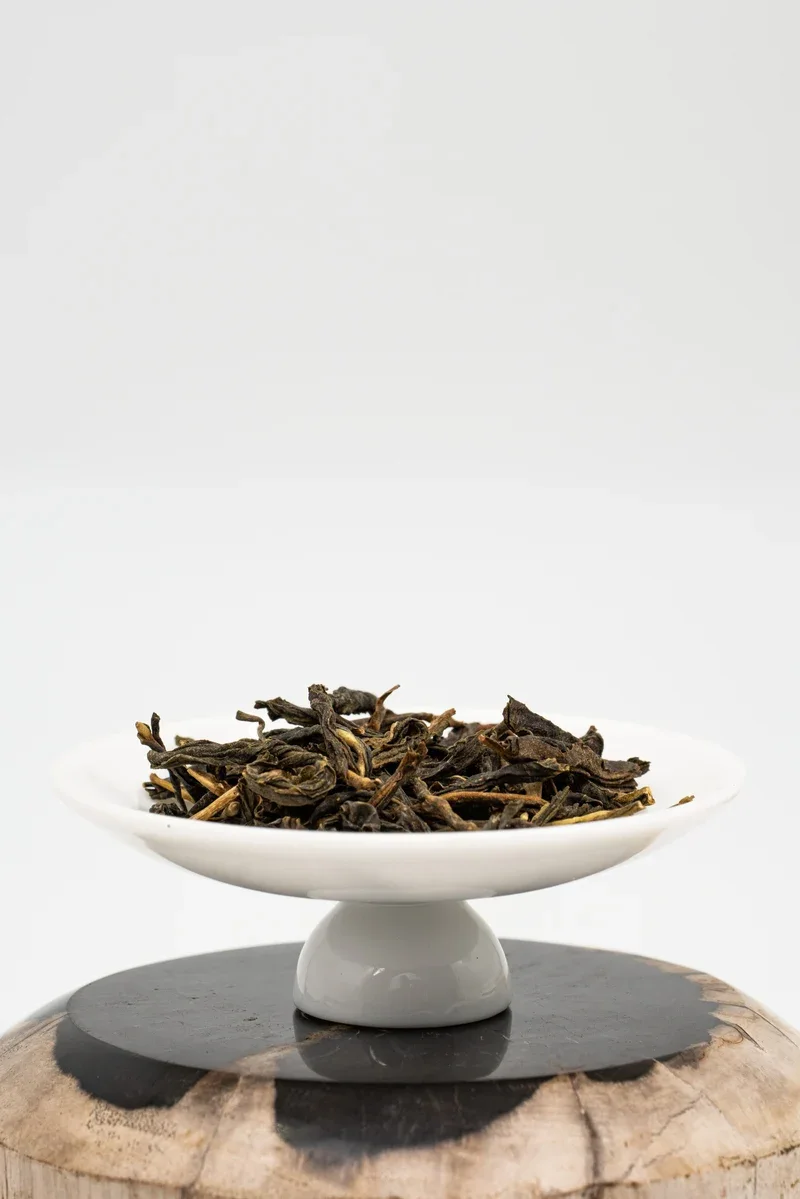
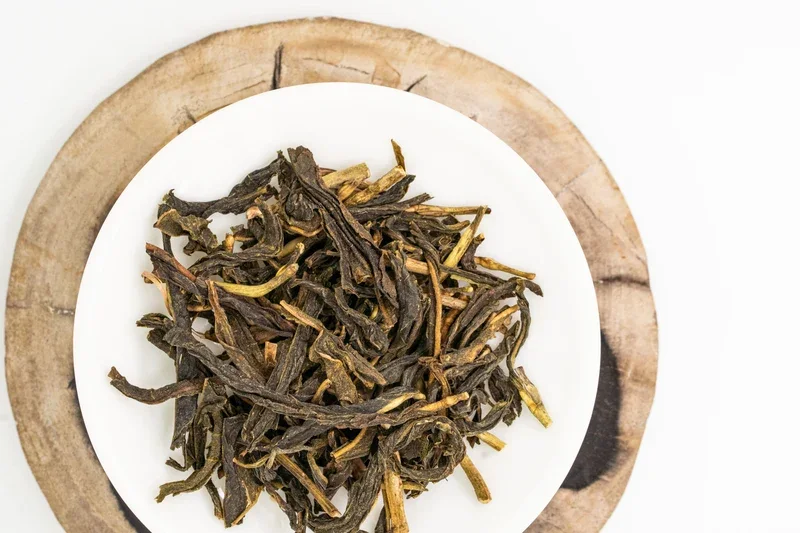
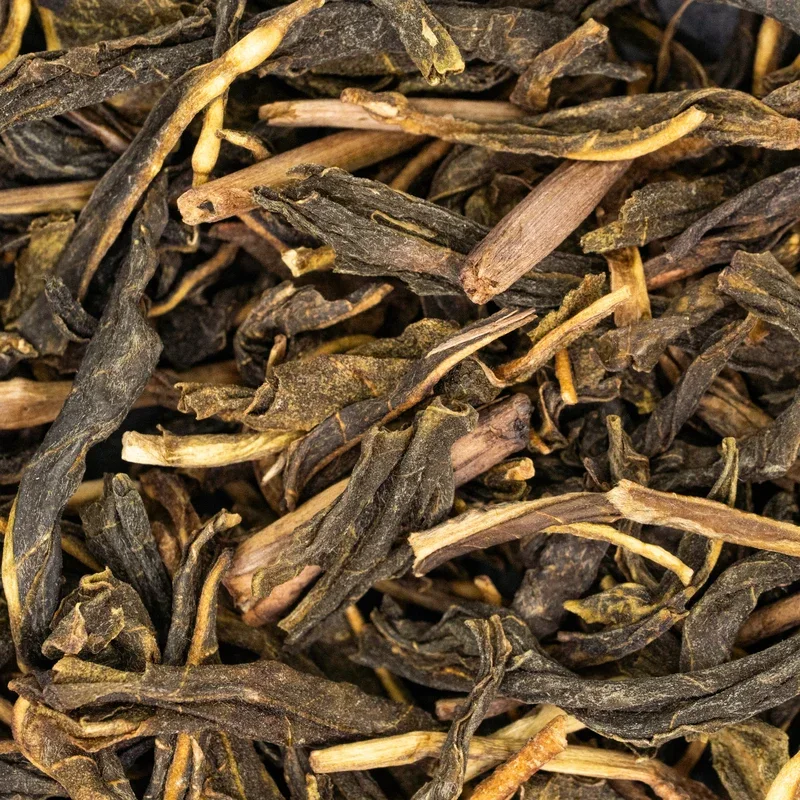
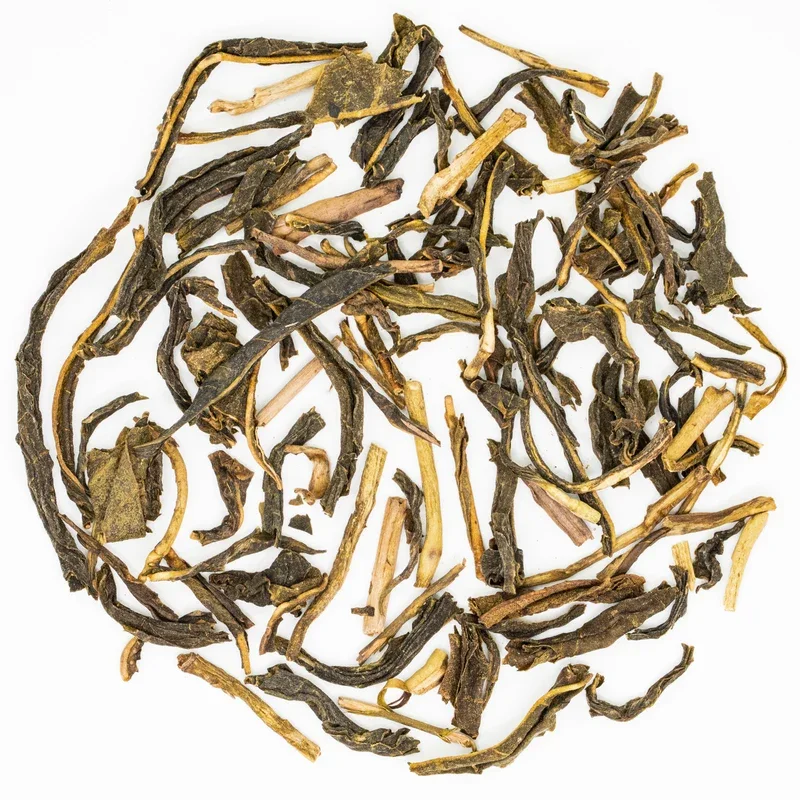
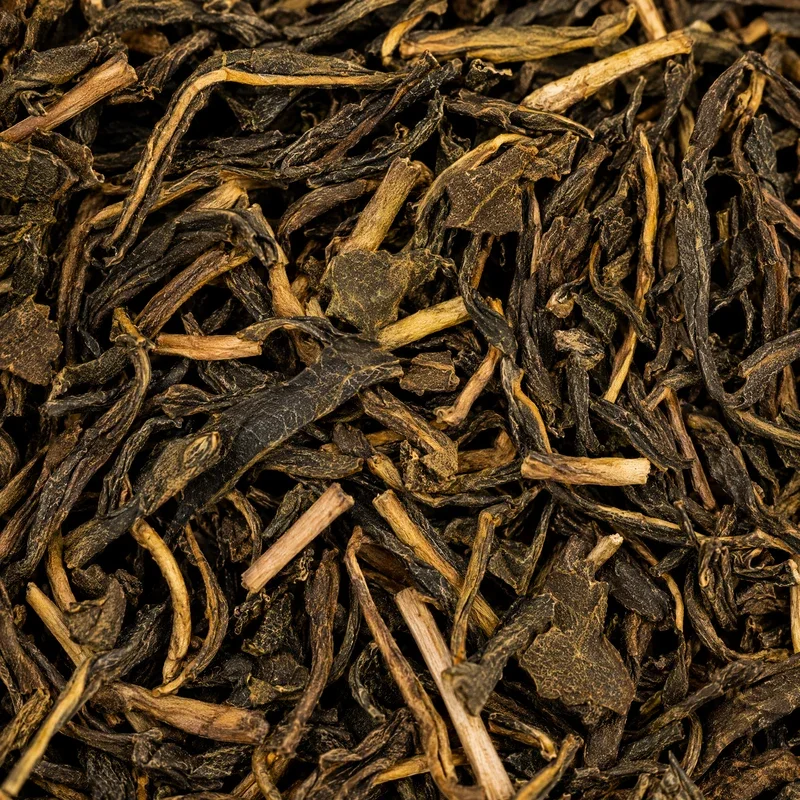
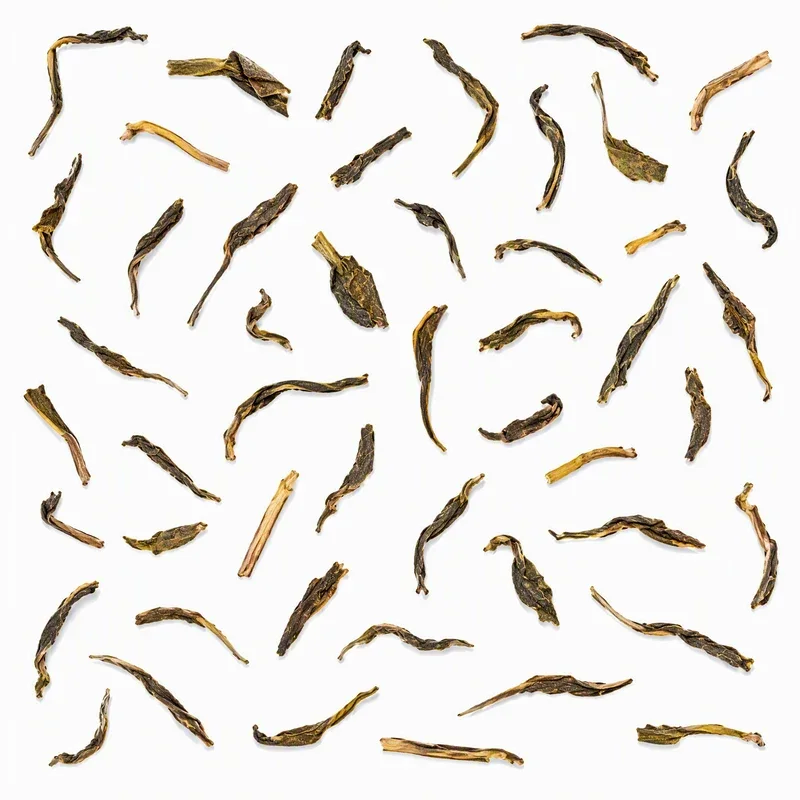
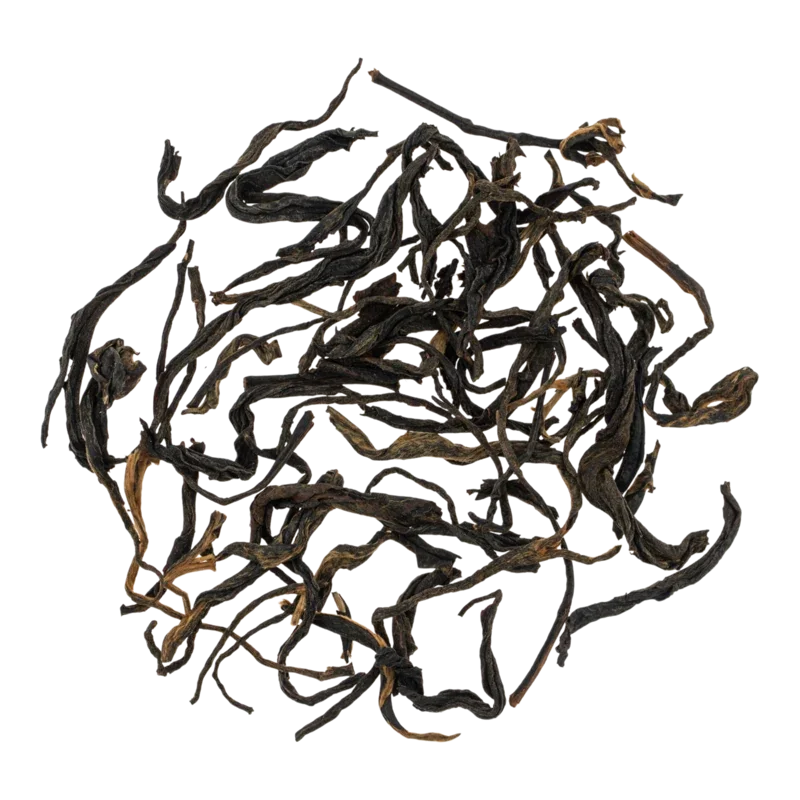
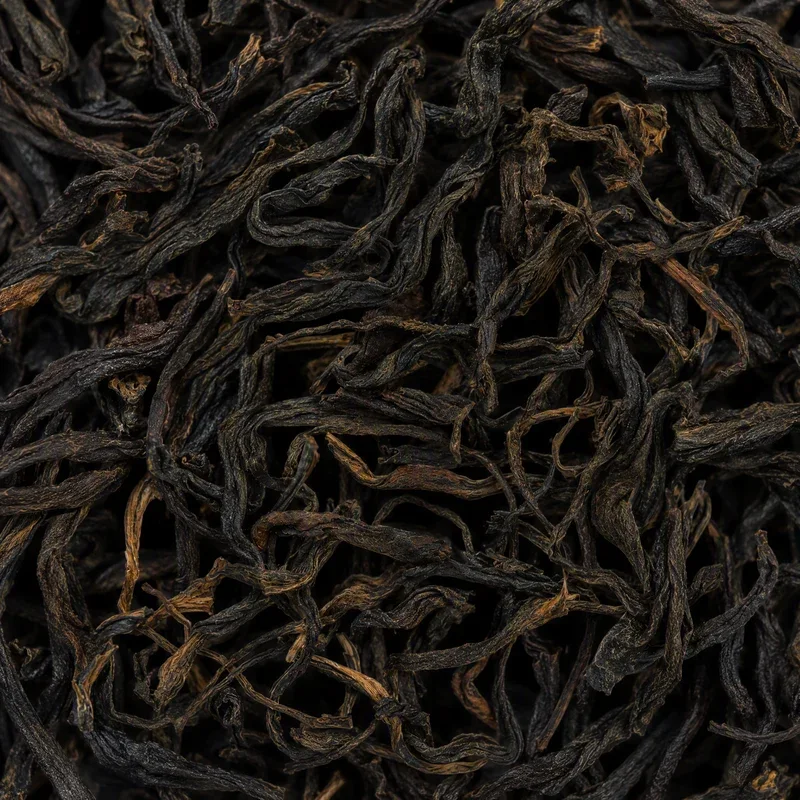
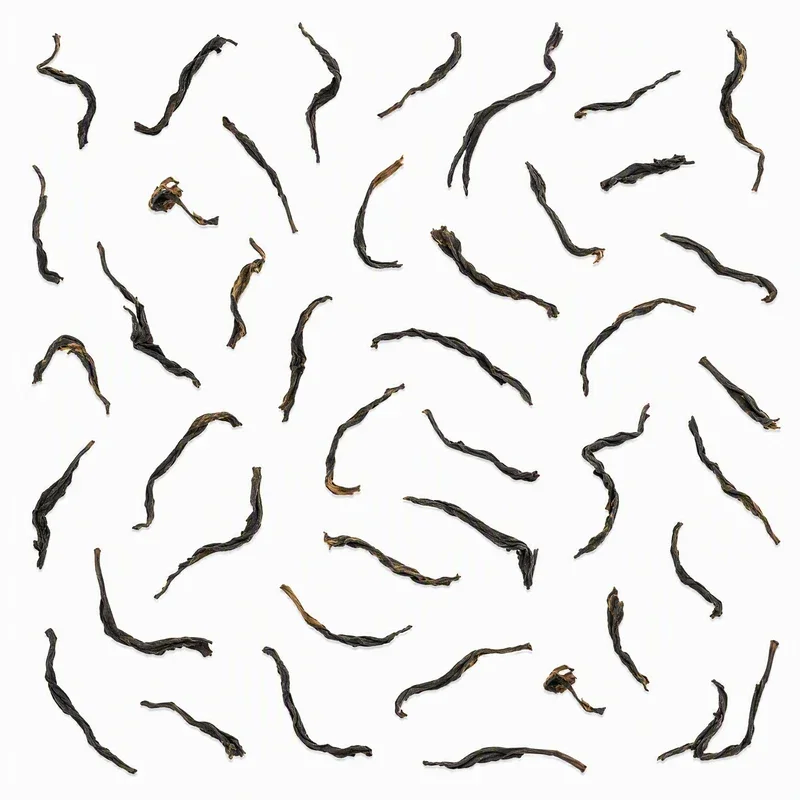
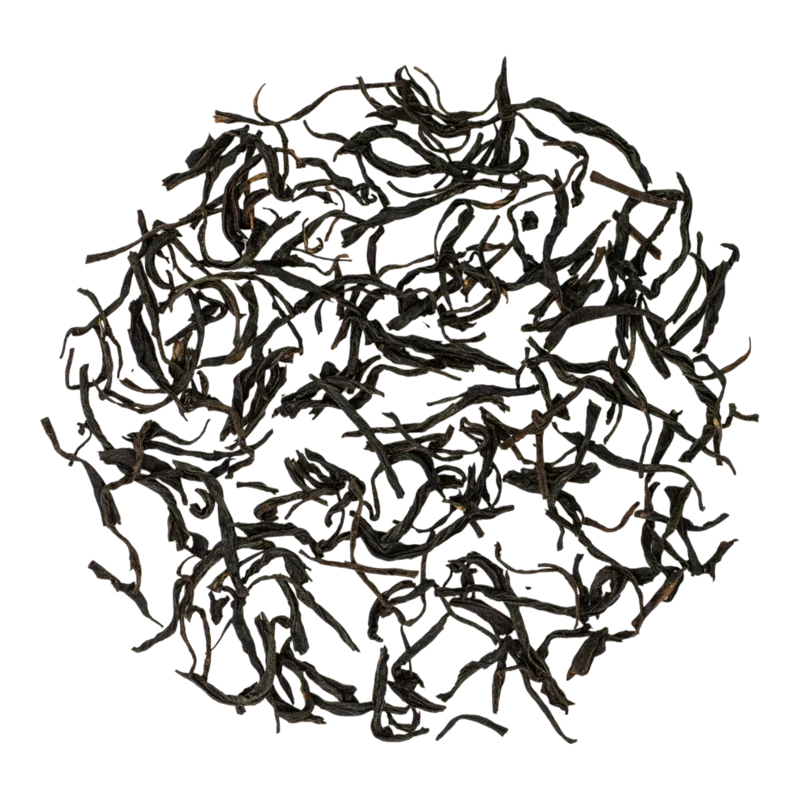
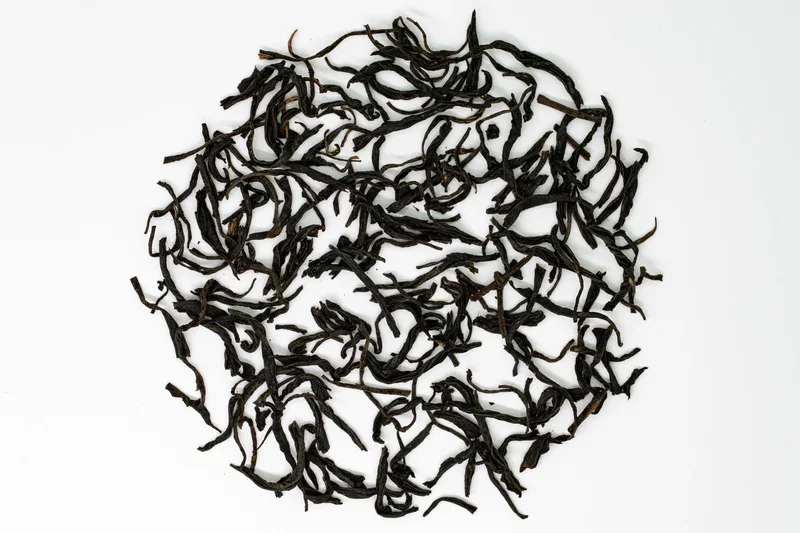
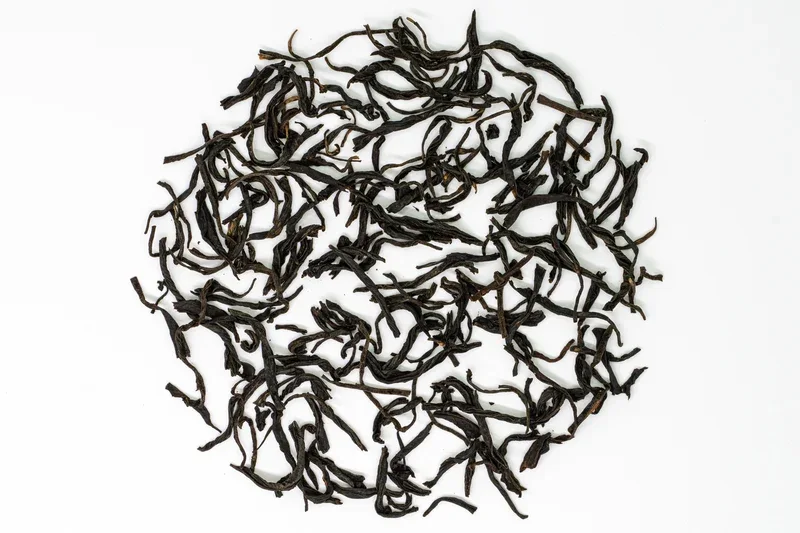
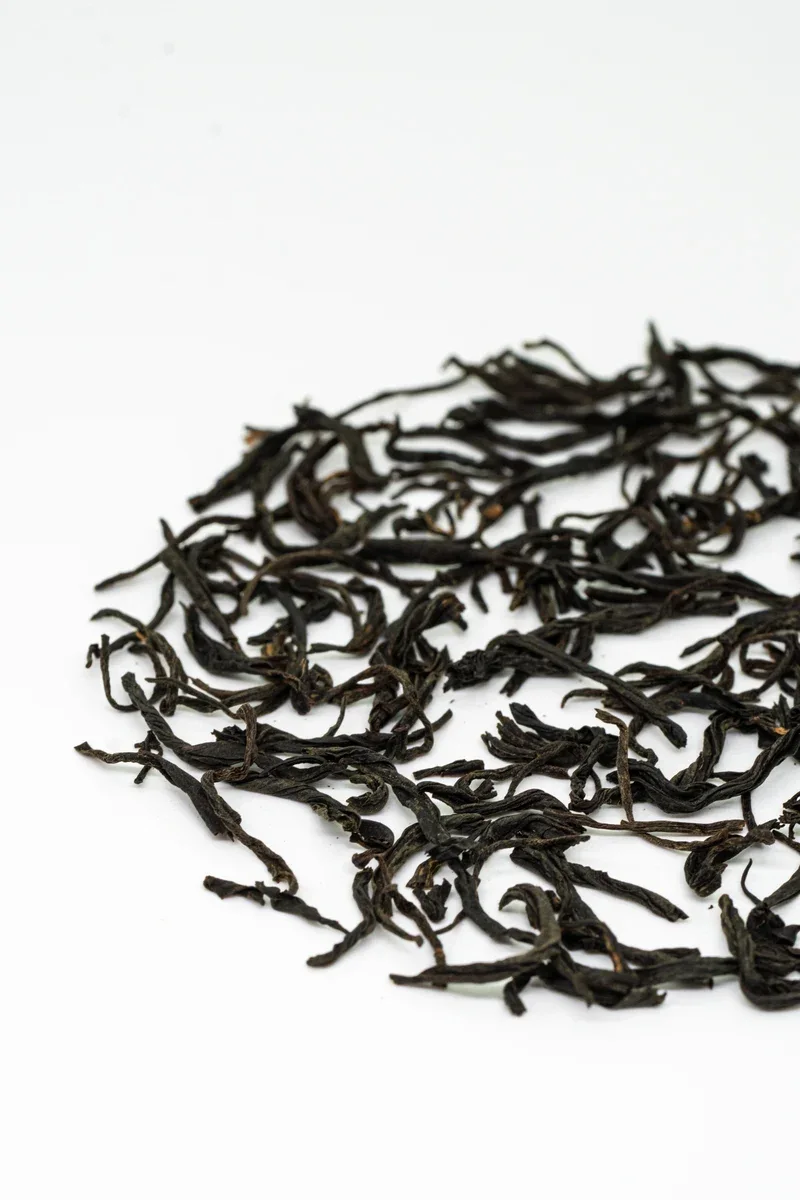
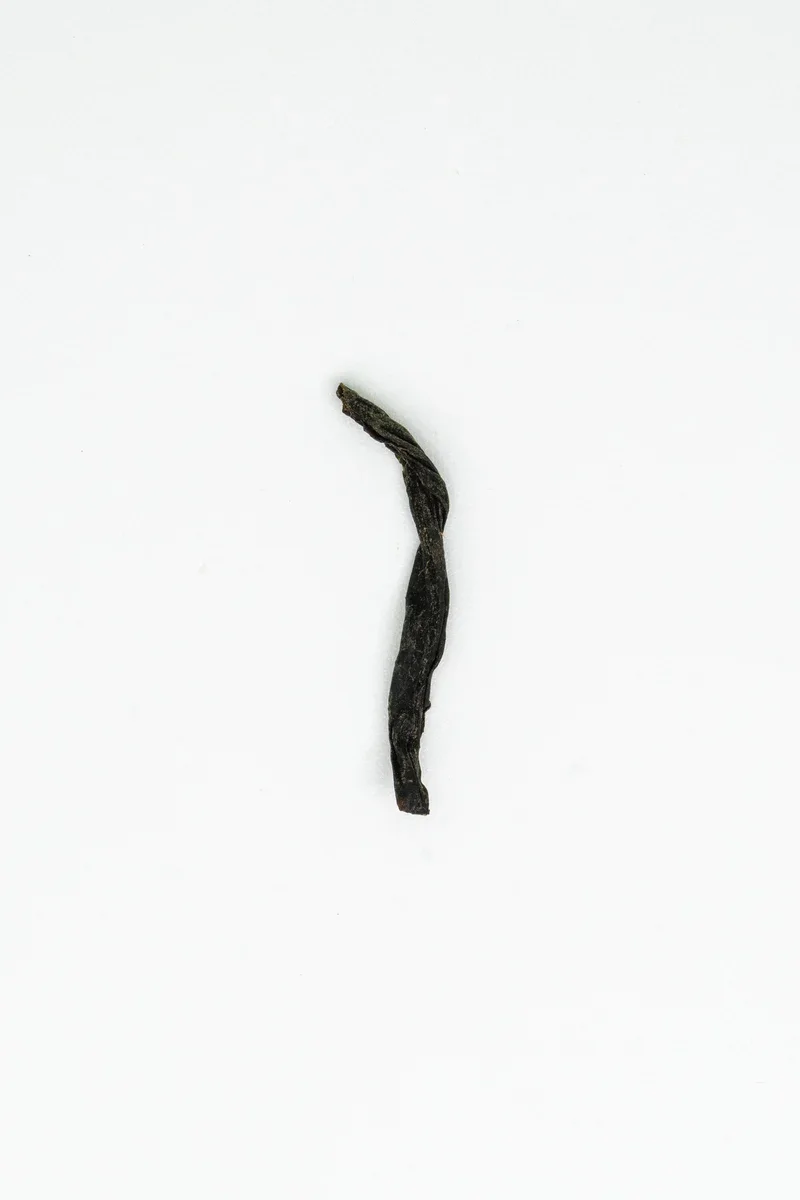
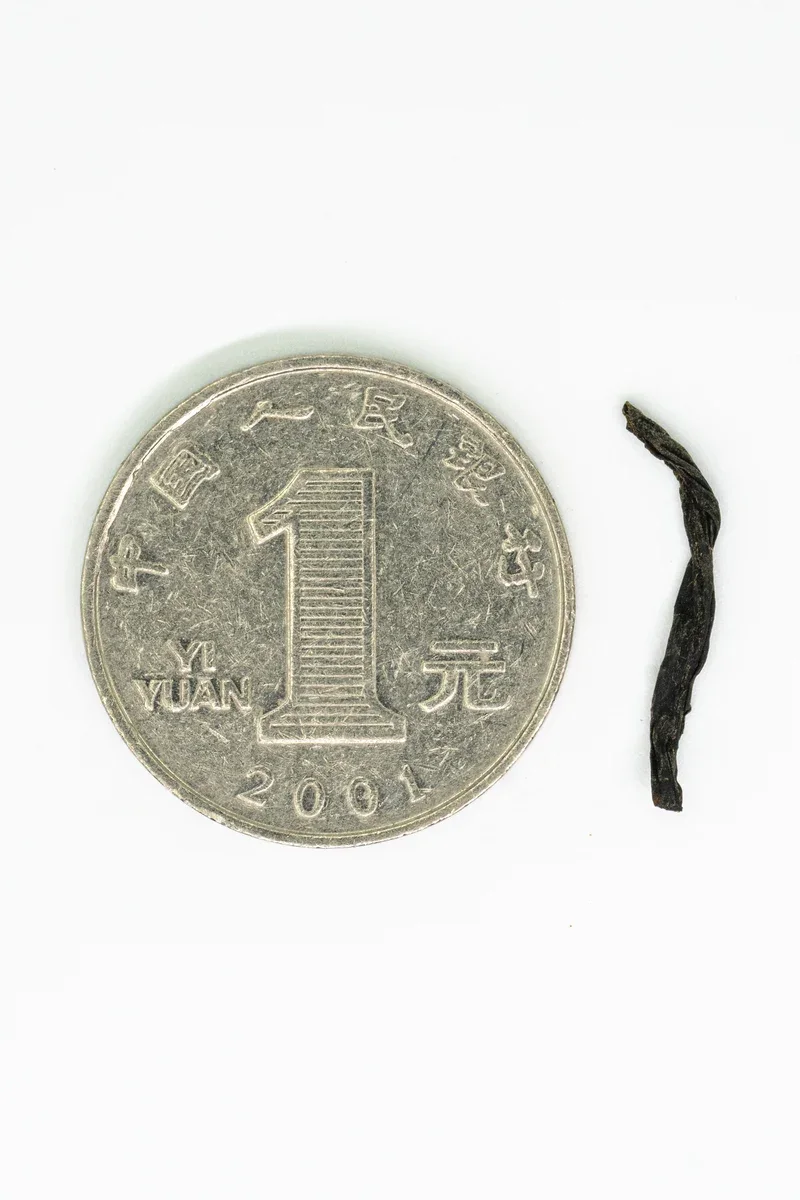
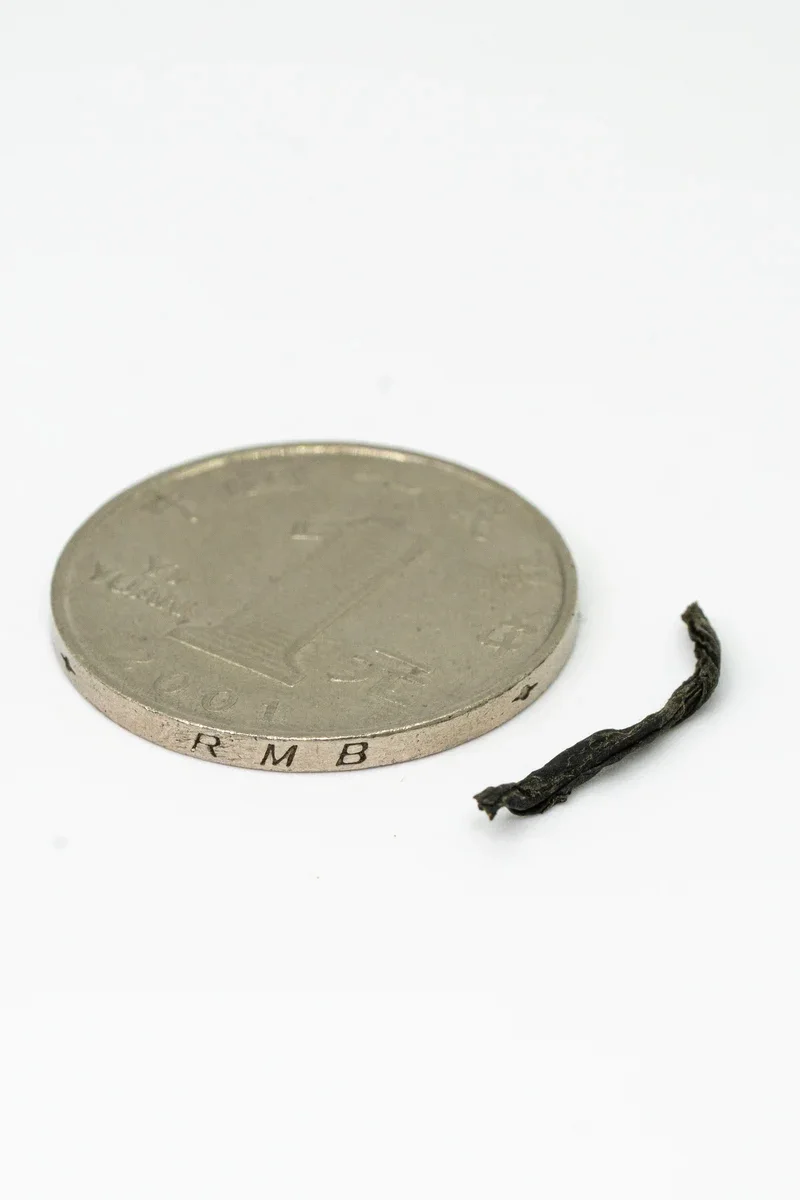
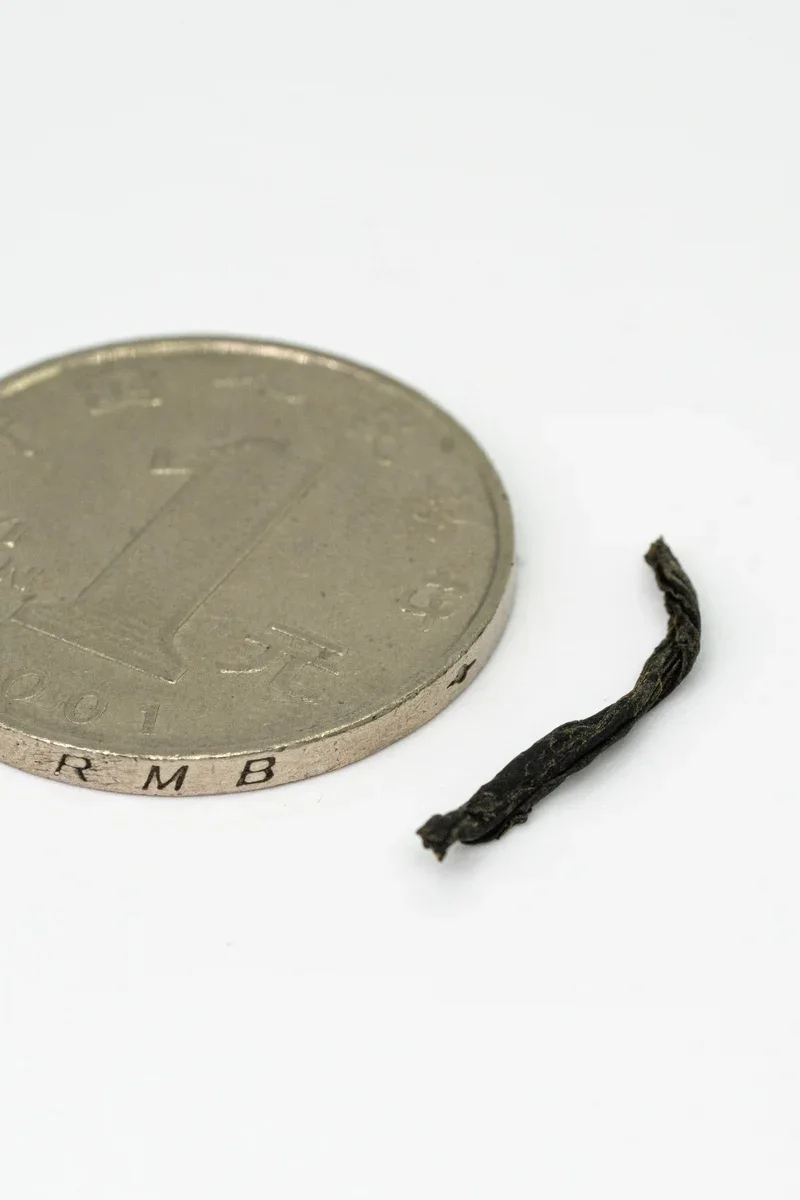
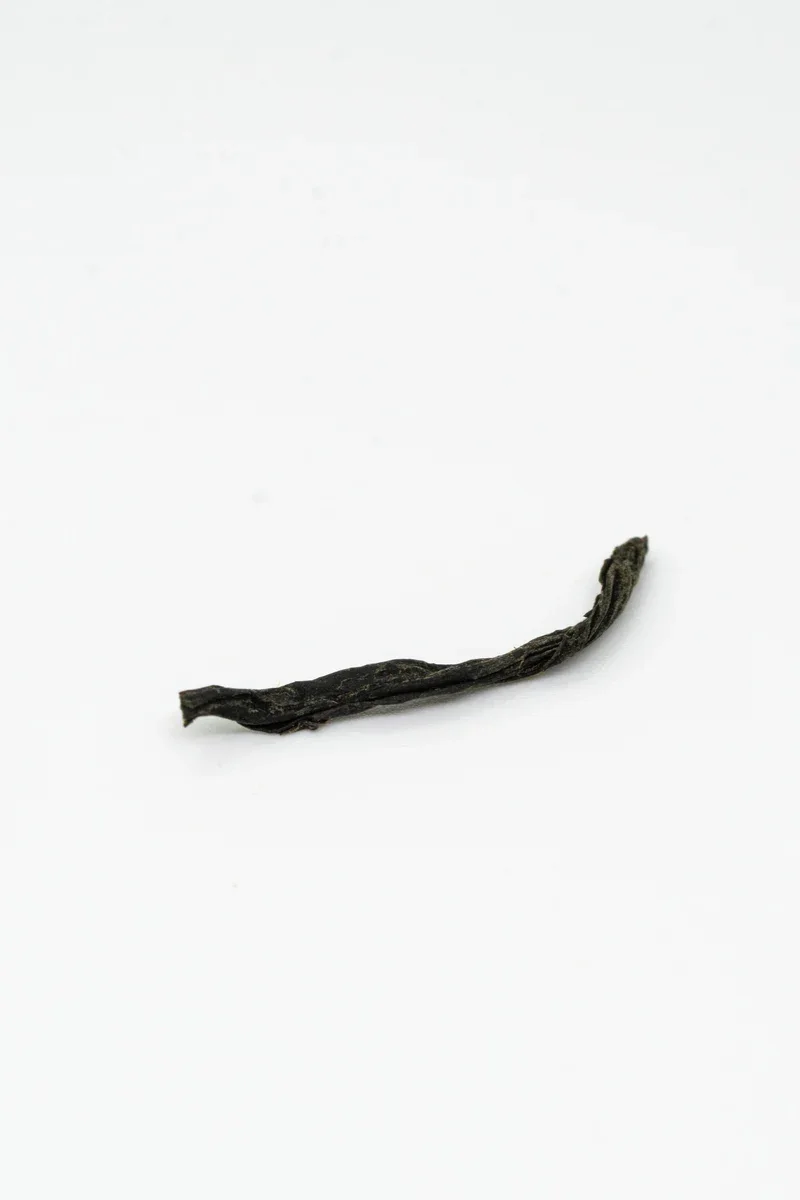
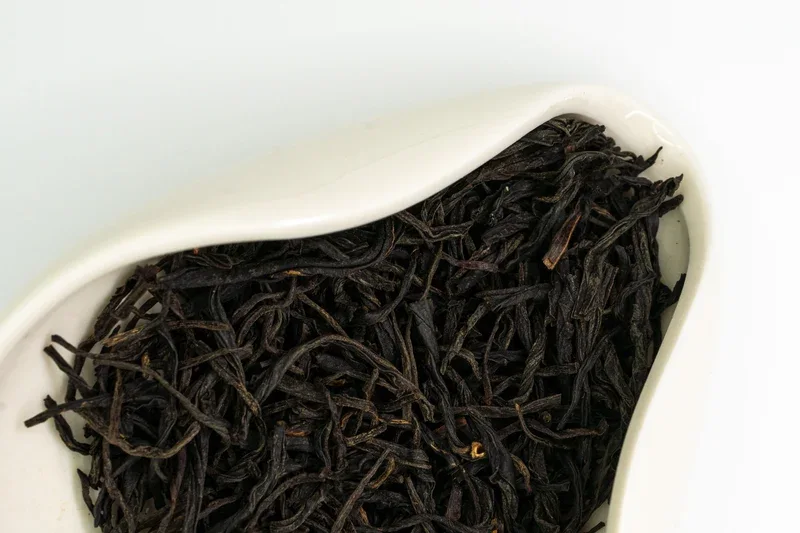
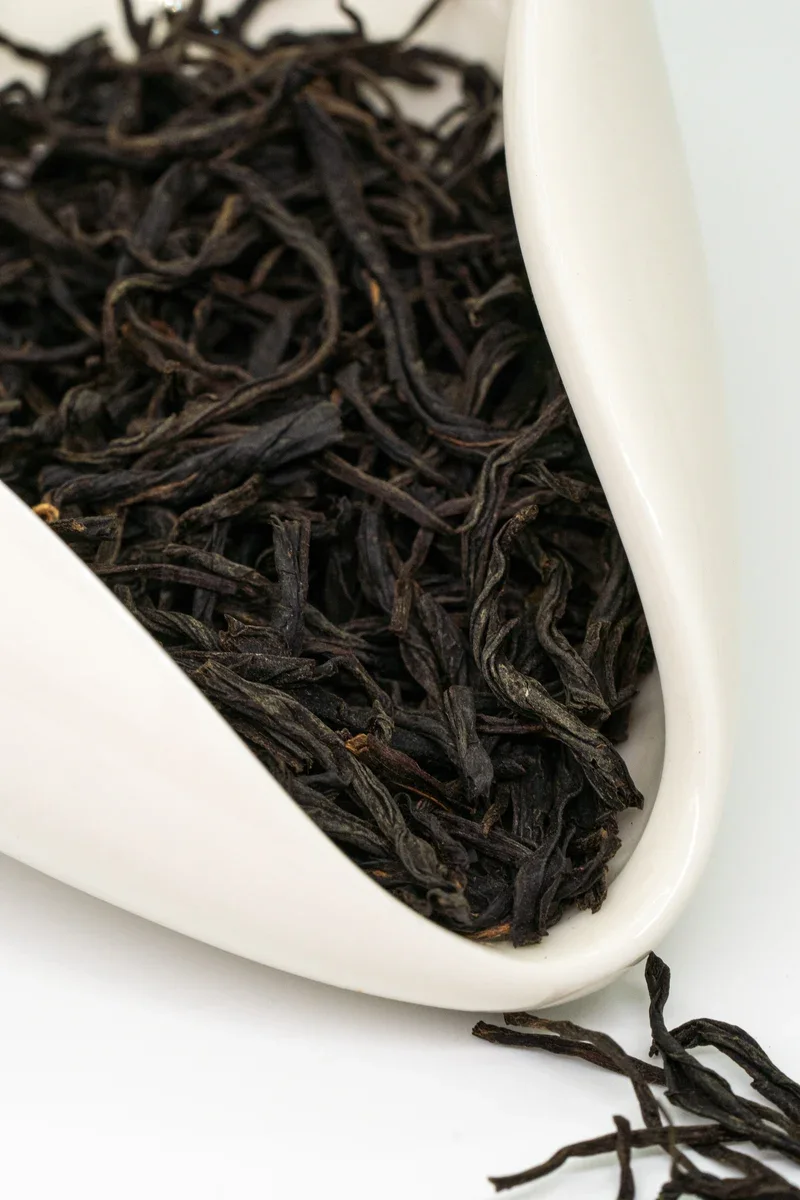
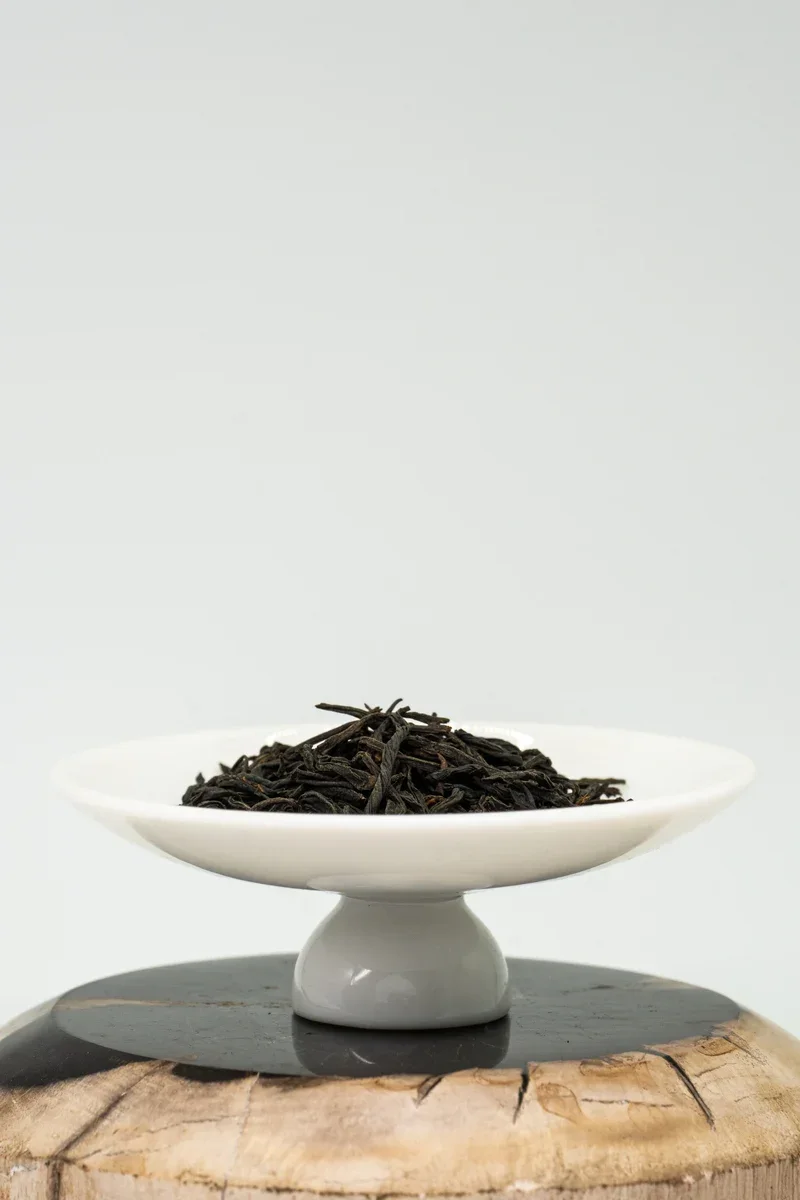
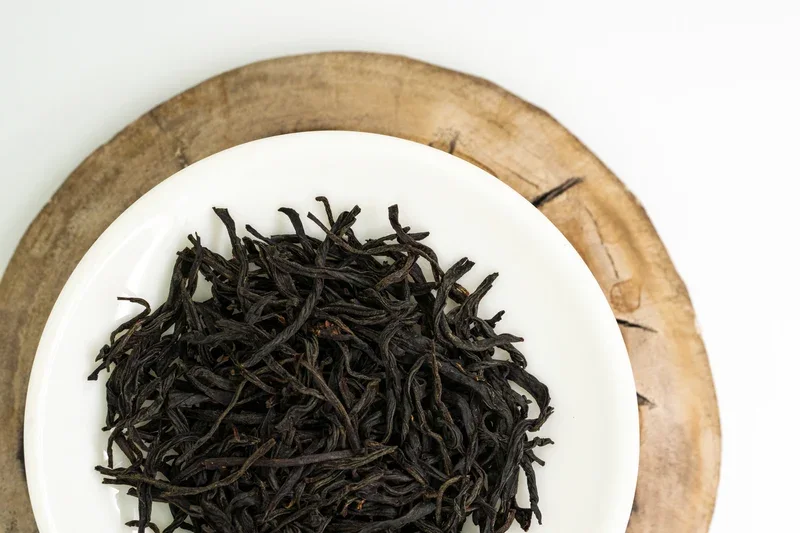
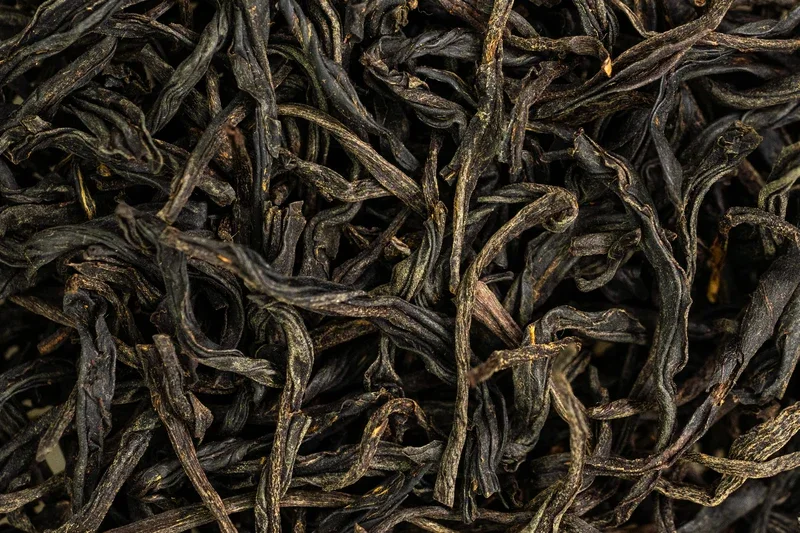
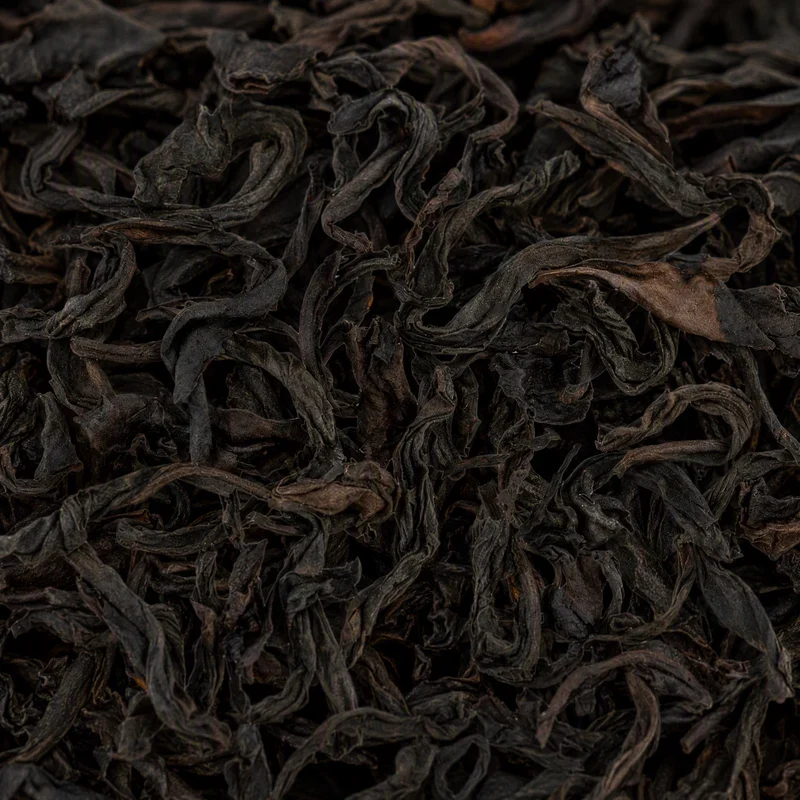
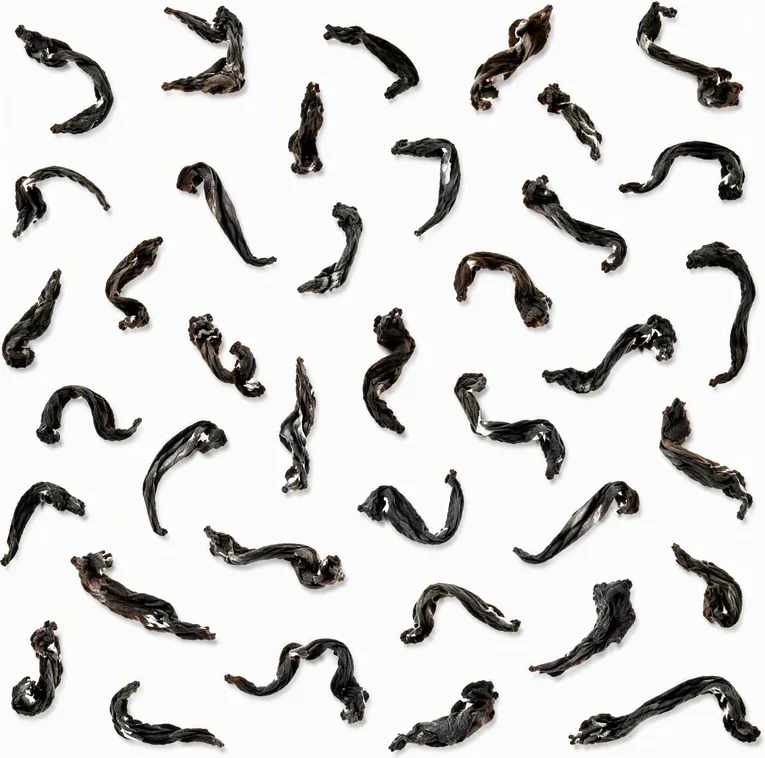
Dry Leaf Appearance: Semi-spherical pellets, green with brownish inclusions. Larger and coarser than Tieguanyin, due to larger leaf and long internodes.
Dry Leaf Aroma: Fresh plum meihua, orchid, peach, light floral honey. Without minerality and smokiness — clean, «sunny» character.
Liquor Aroma: Clear floral-fruity — peach, apricot, acacia honey. Plum note — light, not dark.
Liquor Color: Light yellow, golden-green, clear.
Spent Leaves: Whole green leaves with light reddish edge.
Taste: Soft, sweetish, floral-fruity. Medium body. Light piquancy. Aftertaste — fresh, floral, without mineral heaviness.
Alkaloids: Caffeine — ~4.4% (above average — pronounced stimulating activity). Theobromine and theophylline — in trace amounts.
Amino Acids: ~3.6% of dry mass. L-theanine — main component; responsible for sweetness and relaxing effect.
Essential Oils: High content — key cultivar marker. Benzaldehyde and benzyl alcohol (plum, almond notes), linalool and geraniol (floral), methyl salicylate (freshness, «wintergreen» note). Essential oils form the characteristic «plum» profile that unmistakably distinguishes Mei Zhan from other Fujian oolongs.
Minerals: Potassium, fluorine, magnesium, manganese, zinc. In Wuyishan version — increased iron content due to red sandstone.
Polyphenols: ~27.5% of dry mass — above average among Fujian oolongs. Catechin content — ~18.1%. In Wuyishan version with high oxidation, part of catechins converts to theaflavins and thearubigins, forming taste depth and amber liquor color.
Vitamins: C, B group (B₁, B₂), E, K.
High polyphenol content (27.5%) provides pronounced antioxidant action. In Wuyishan version, theaflavins make additional contribution.
Combination of caffeine (increased content, ~4.4%) and L-theanine provides energetic but not anxious stimulation. L-theanine softens caffeine's excitatory effect and promotes alpha brain wave production.
Wuyishan version, thanks to deeper oxidation and roasting, especially recommended after fatty and heavy food. Anxi version — suitable for daily consumption.
Roasted Wuyishan Mei Zhan — excellent winter tea, warming and relaxing.
Polyphenols help reduce LDL cholesterol levels and strengthen vessel walls.
Plum meihua aroma has calming and aesthetically harmonizing effect — in Chinese tradition, plum aroma is associated with purity and nobility of spirit.
Polyphenols and caffeine promote fat breakdown and metabolic process activation.
Airtight, opaque container (tin can, foil bag), cool dark place. Duration — 12–24 months; after «fire calming» (1–3 months after roasting) tea reaches peak flavor. Re-roasting possible to extend life.
In refrigerator (0–5°C), airtight vacuum packaging, separate from food products. Duration — 6–12 months.
Light, moisture, heat, oxygen, foreign odors.
No reviews yet. Tell us what you think of this tea.
Rate this tea and share your impressions. We review each submission before publishing it.