Brewing
Gongfu brewing
- Water temperature
- 75 °C
- Tea amount
- 5 g
- Water volume
- 100 ml
- First steep
- 10 s
- Time added per infusion
- 5 s
- Infusions
- 3

Líjiāng lǜ luó
Choose a brewing method. Start with the recommended quantities and time, then adjust to taste.
Brewing
Brewing
Taste
Tea encyclopedia
Category: Lesser-known quality green teas of China; regional specialty of Guangxi Zhuang Autonomous Region.
Category: Lesser-known quality green teas of China; regional specialty of Guangxi Zhuang Autonomous Region.
Coordinates: Approximately 25°17′ North latitude, 110°18′ East longitude (Guilin area).
Origin: China, Guǎngxī Zhuāng Autonomous Region (广西壮族自治区, Guǎngxī Zhuàngzú Zìzhìqū), Guìlín City (桂林市, Guìlín Shì). Tea plantations are located in the scenic area along the Lì River (漓江, Líjiāng), predominantly in the vicinity of Guilin and adjacent counties — in the zone of karst landscape characteristic of this region. The Guilin area has long-standing tea cultivation traditions: as early as 1966, the Guilin Tea Experimental Station was established here, which was transformed in 1979 into the Guìlín Tea Science Research Institute (桂林茶叶科学研究所, Guìlín Cháyè Kēxué Yánjiūsuǒ), located on the southwestern slope of Yáo Mountain (尧山, Yáoshān) in the eastern suburbs of Guilin. The institute played a key role in creating a number of regional teas, including Guìlín Máojiān (桂林毛尖), Guìlín Yínzhēn (桂林银针), and Líjiāng Cuiming (漓江翠茗).
Type: Green tea (non-oxidized, 绿茶, lǜchá). Belongs to the category of chaoqing lücha (炒青绿茶, chǎoqīng lǜchá) — green teas that undergo fixation by pan-firing in a wok, followed by rolling into spiral form.
Cultural Significance: Although Lijiang Lü Luo is not among the "Ten Famous Teas of China" (中国十大名茶) and remains a tea of regional significance, it embodies the spirit of Guangxi tea culture — a province that historically yielded to coastal tea regions (Fujian, Zhejiang) in fame but actively develops its own tea industry. Lü Luo is part of the growing portfolio of Guilin specialties promoted in the context of the region's tourist attractiveness: travelers visiting the karst landscapes of the Li River often take local tea home as a souvenir.
History: Lijiang Lü Luo as an independent variety took shape in the second half of the 20th century, presumably in the 1970s–1980s, during the period of active work by the Guangxi Zhuang Tea Science Institute on creating new regional teas. Tea cultivation traditions in Guangxi, however, are significantly older: the province is mentioned in tea chronicles as early as the Tang era (618–907). During the period 1998–2004, new tea products were developed and registered at the Guilin Institute — "Guilin Yinzhen" (桂林银针), "Guilin Sanqing Cha" (桂林三青茶), "Lijiang Cuiming" (漓江翠茗), "Lijiang Baihao" (漓江白毫), as well as varieties "Guixiang-1" (桂香1号) and "Guixiang-2" (桂香2号), which testifies to the purposeful development of a line of Guilin green teas, to which Lü Luo also belongs.
Cultivar: For the production of Lijiang Lü Luo, local and introduced varieties of tea bush (Camellia sinensis var. sinensis) are used, adapted to the subtropical climate of Guangxi. Among the cultivars used on the plantations of the Guilin Tea Institute, Fúyún Liùhào (福云六号, Fúyún Liùhào), Fúyún Qīhào (福云七号, Fúyún Qīhào), Fúdǐng Dàháo (福鼎大毫, Fúdǐng Dàháo) are mentioned — all of them are national standard varieties selected for high content of down (baihao) and suitability for producing quality green teas. Regional varieties may also be used, including descendants of wild tea populations of Guangxi — a province recognized as a secondary center of origin of the tea tree.
Picking: Main harvest is conducted in spring, from late March to mid-April (before and after the Qingming festival, 清明, Qīngmíng), when young shoots are most tender and aromatic.
Pluck Standard: One bud and one-two upper young leaves (一芽一叶 or 一芽二叶, yī yá yī yè / yī yá èr yè). Preference is given to raw material with pronounced silvery down on the buds.
Raw Material: Only fresh, undamaged, uniformly sized shoots are used. The raw material must be juicy and elastic, without mechanical damage and traces of pests.
Altitude: 200–500 meters above sea level. Some plantations associated with the Guilin Tea Institute are located at the foot of Yao Mountain, which reaches a height of about 910 m.
Climate: Subtropical monsoon (亚热带季风气候). Average annual temperature about 19.3°C, average annual precipitation — about 1950 mm. Frost-free period — up to 309 days per year. Relative humidity — 73–79%. The region is characterized by frequent fogs in valleys, mild winters and hot, humid summers. Abundant diffused light due to fogs promotes accumulation of amino acids and reduction of bitterness in tea leaves.
Soil: Red-yellow lateritic soils (赤红壤, chìhóng rǎng) predominate, characteristic of the region, with pH in the range of 4.5–6.5 — optimal for tea bushes. Soils are well-drained, enriched with mineral elements due to weathering of karst rocks, contain elevated concentrations of selenium — a characteristic feature of a number of Guangxi Zhuang tea plantations.
Tea plantations are located in the Li River valley and on the slopes of surrounding karst mountains. The Guilin area is famous for its bizarre limestone peaks, caves, and crystal-clear waters — a landscape that has inspired Chinese artists for millennia. Karst rocks provide natural filtration of groundwater, enriching the soil with minerals.
Hand-picking is conducted in early morning hours when moisture content in shoots is optimal.
Harvested raw material is spread in a thin layer (3–5 cm) on bamboo trays in shade for 2–4 hours. The purpose of this stage is to remove surface moisture, reduce water content in leaves by 10–15% and give them elasticity, facilitating subsequent rolling. During withering, light evaporation of low-boiling components begins, forming prerequisites for aroma development.
Pan-firing in a cast iron wok (锅, guō) or rotary fixator at temperature 200–240°C for 3–5 minutes. This key stage inactivates polyphenol oxidase enzymes, stopping oxidation and preserving the green color of leaves. Simultaneously, the "raw" grassy taste (青草气, qīngcǎo qì) is removed and prerequisites for forming the characteristic aroma of pan-fired green tea are laid.
Central stage determining the characteristic spiral form of Lü Luo. Leaves are rolled by hand or using a tea-rolling machine in circular movements, giving them the form of tight spirals resembling snail shells. During rolling, cell walls are partially destroyed, ensuring intensive extraction of extractive substances during brewing. The operation requires certain skill: pressure must be sufficient to form spirals but not excessive to avoid crushing leaves.
Tea is subjected to hot air drying at temperature 80–110°C until reaching residual moisture of 5–6%. Drying is conducted in one or two stages with intermediate cooling, allowing uniform fixation of form and stabilization of aroma.
Finished tea is sifted, removing tea dust and broken leaves, and sorted by spiral size and number of tips. Higher grades are distinguished by density of rolling, uniformity, and pronounced silvery down.
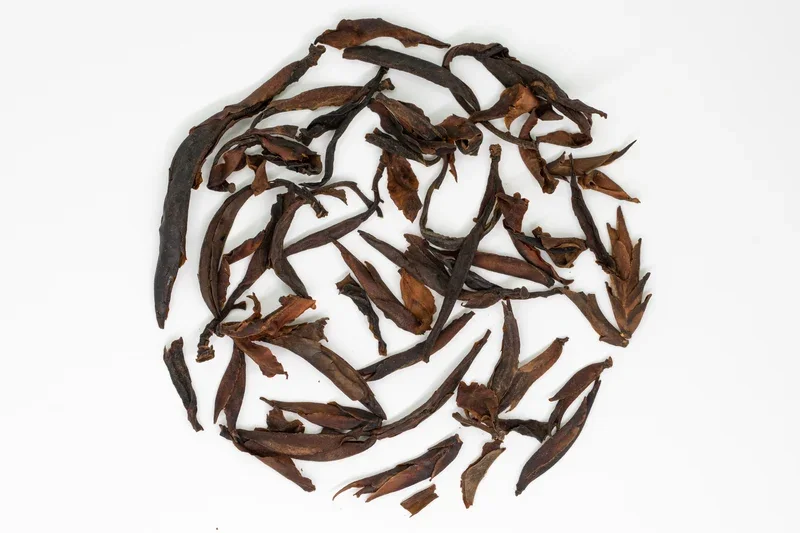
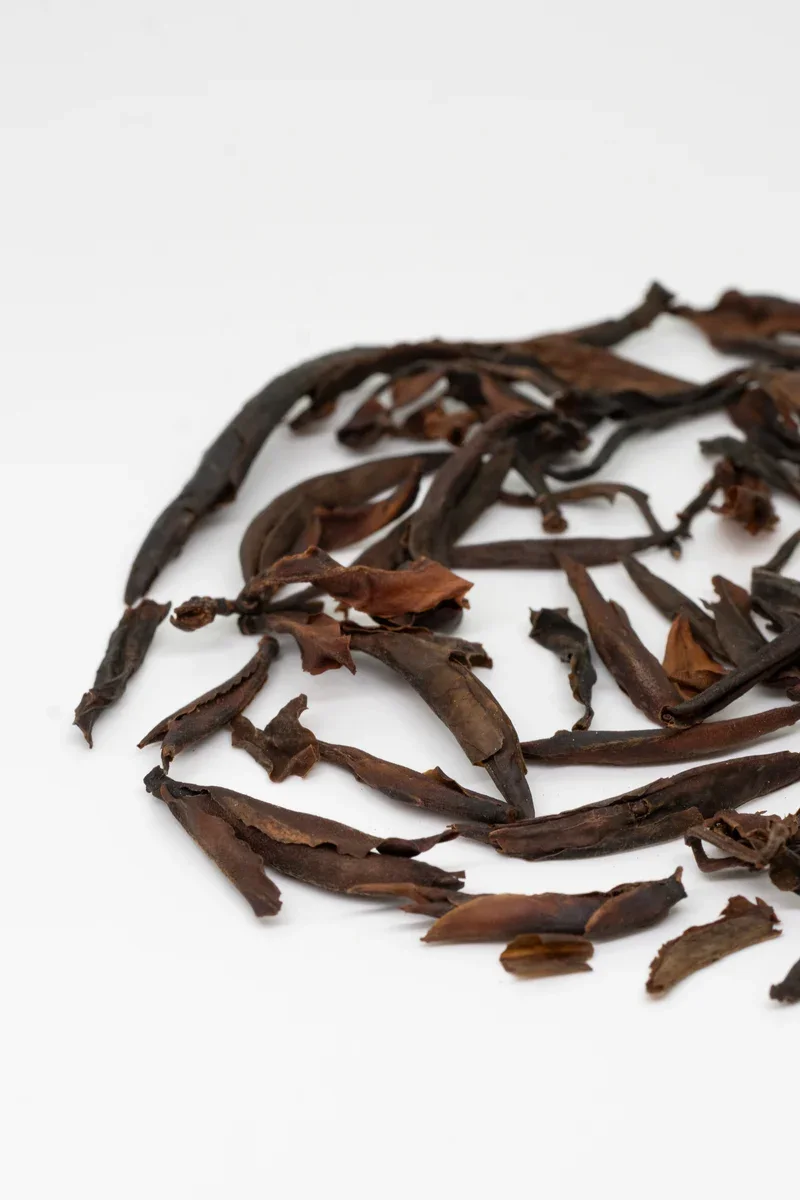
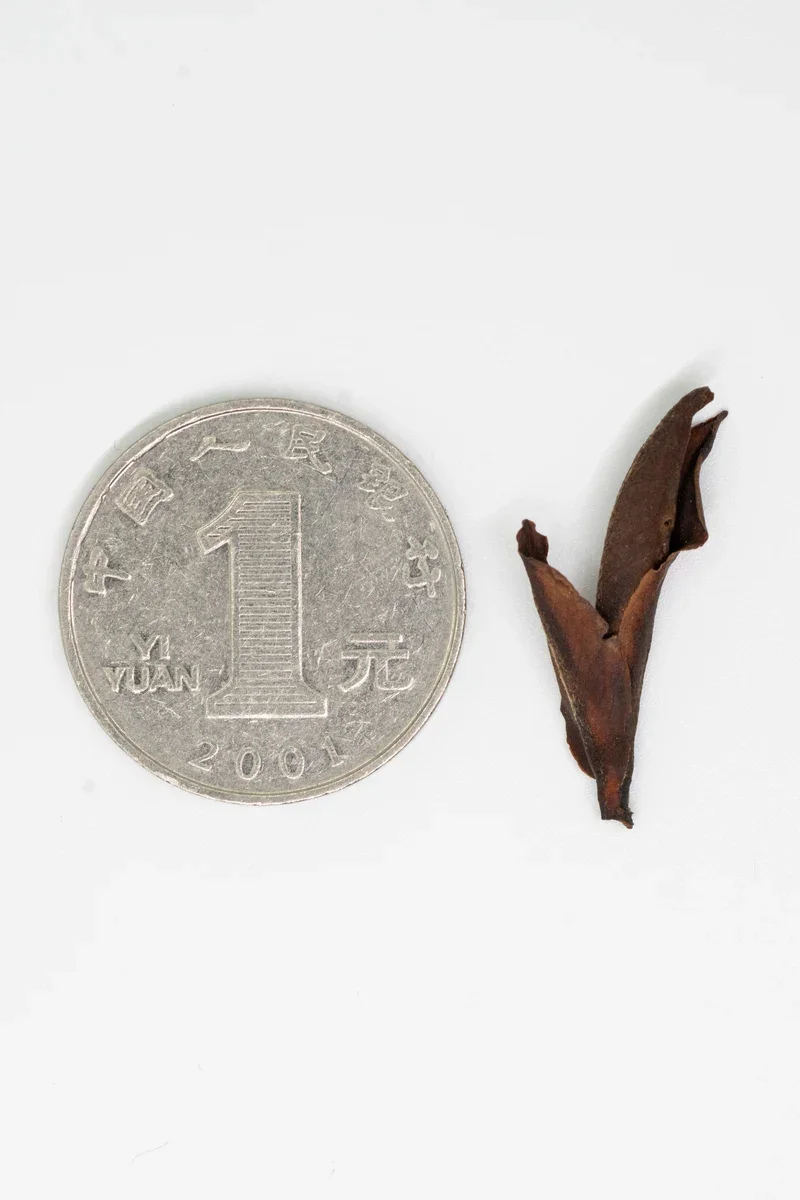
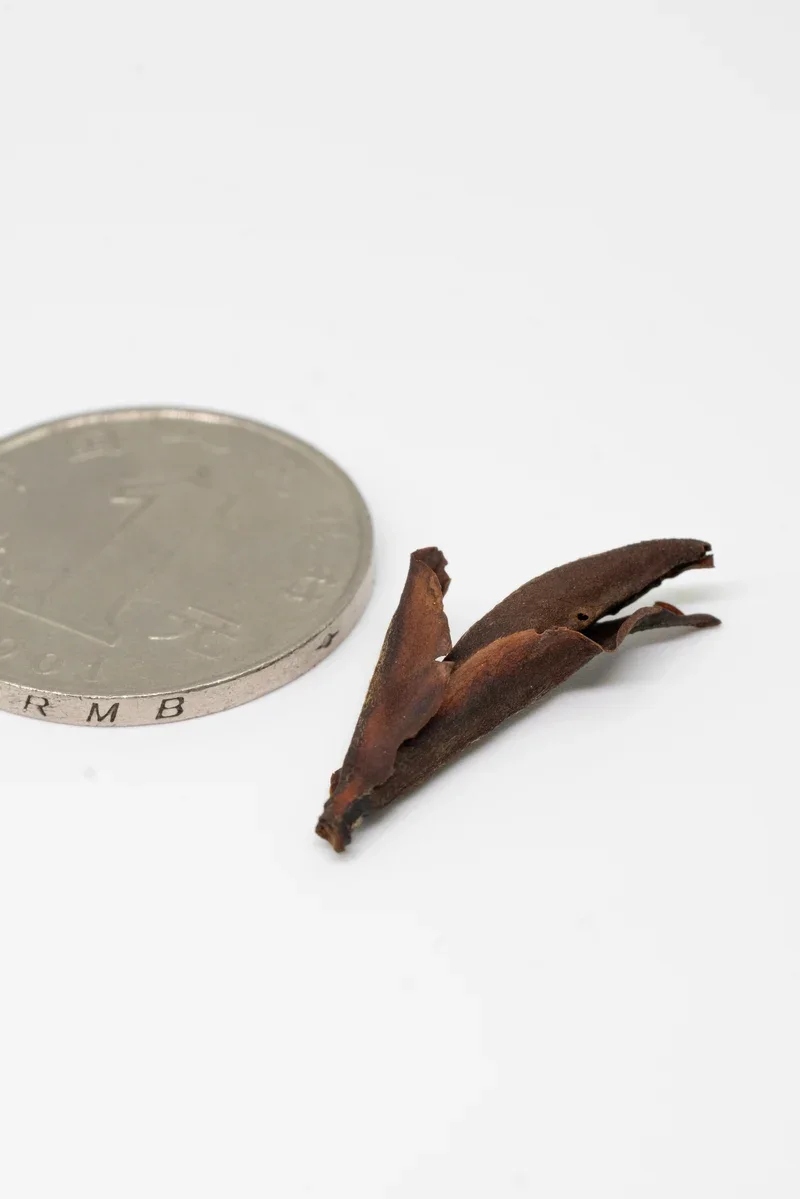
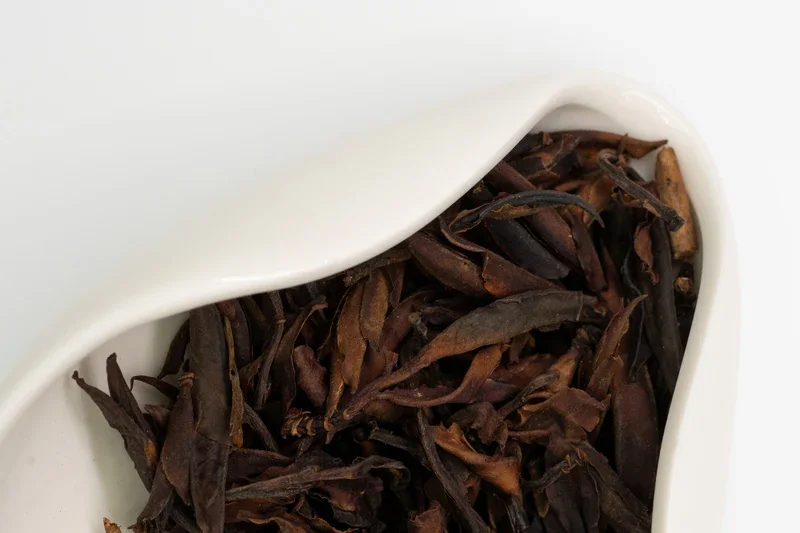
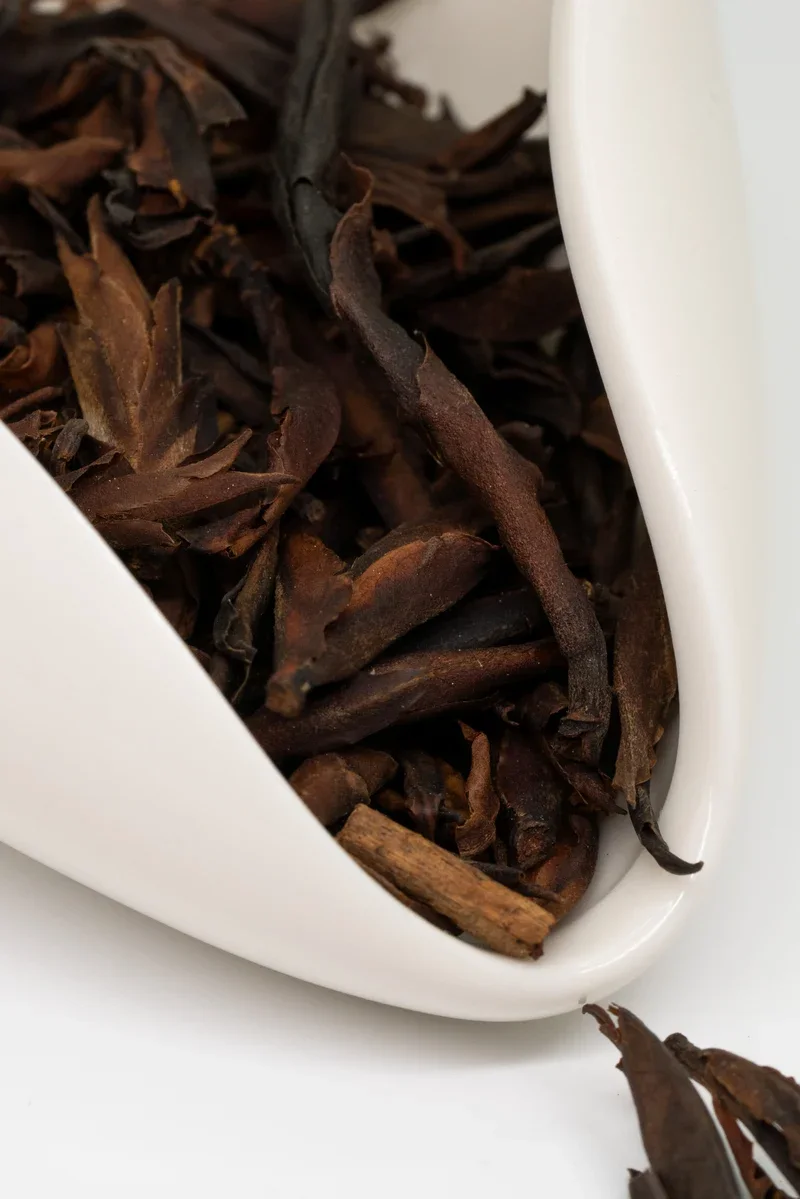
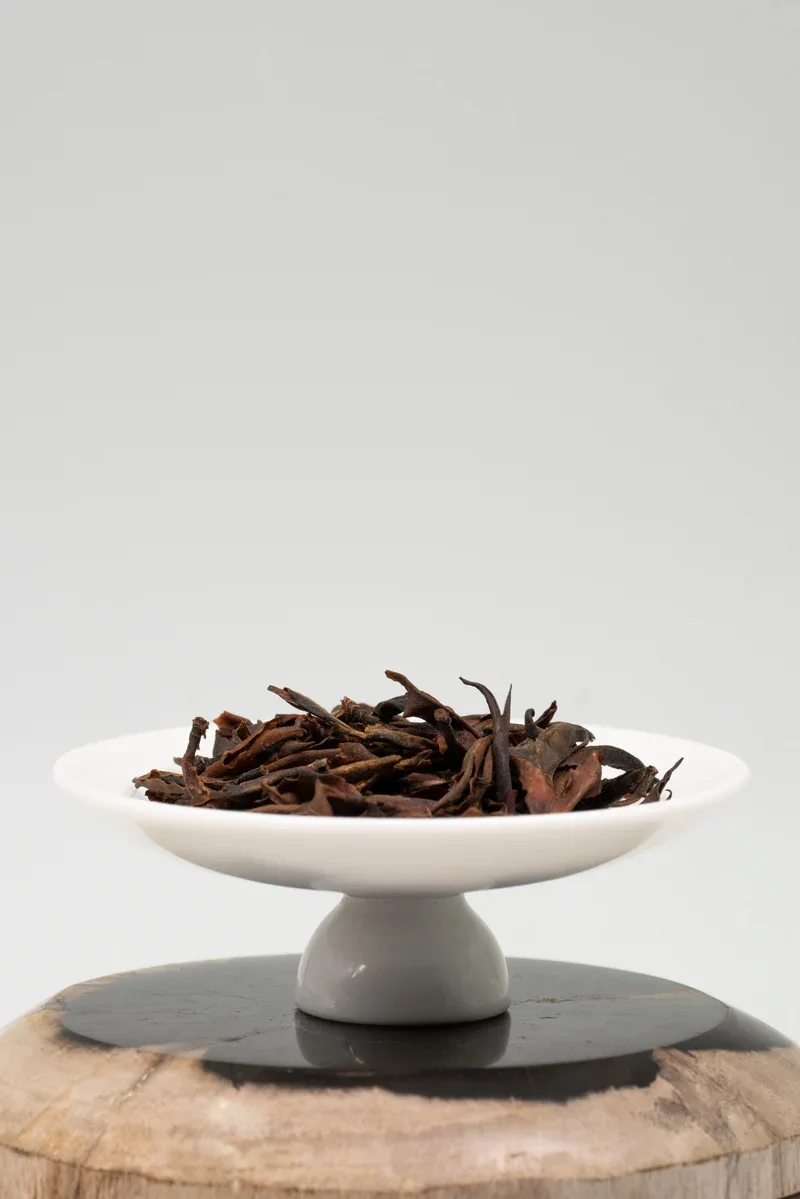
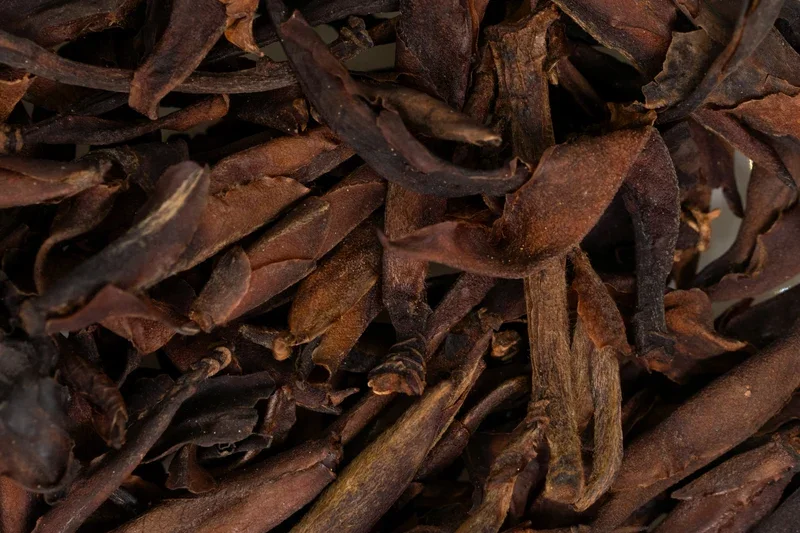
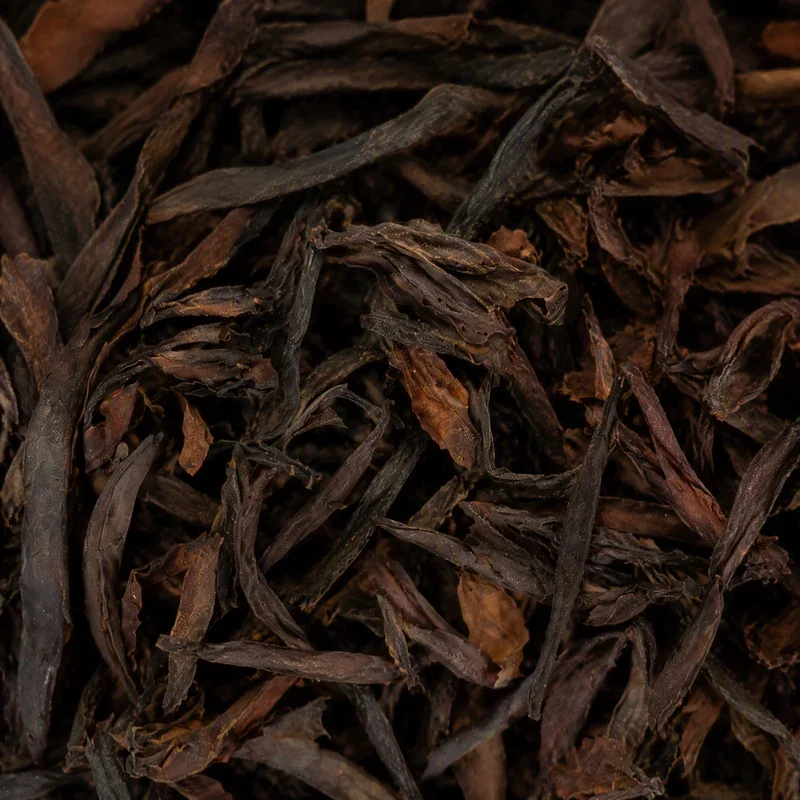
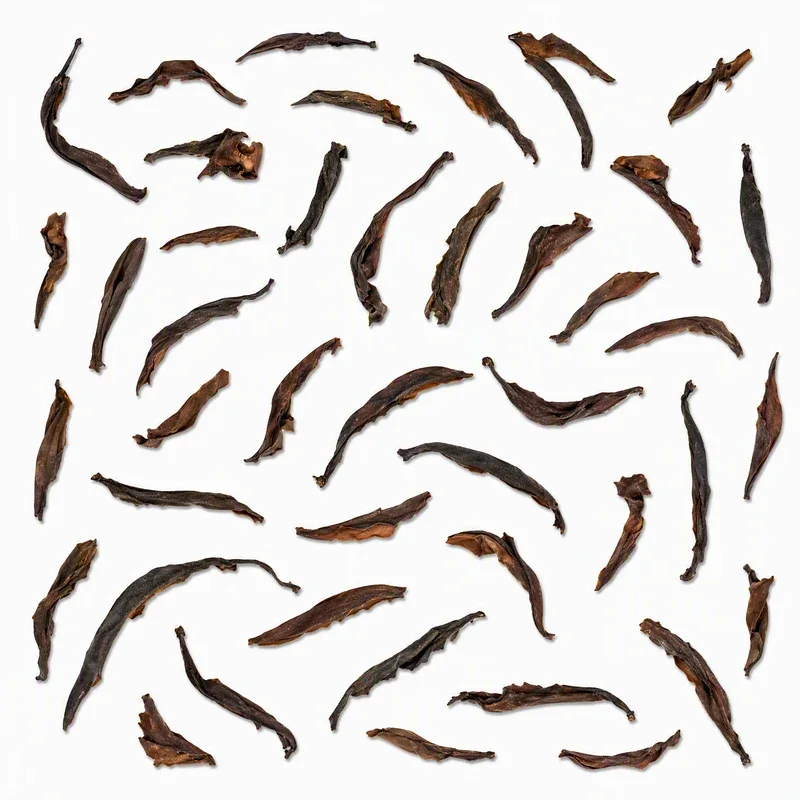
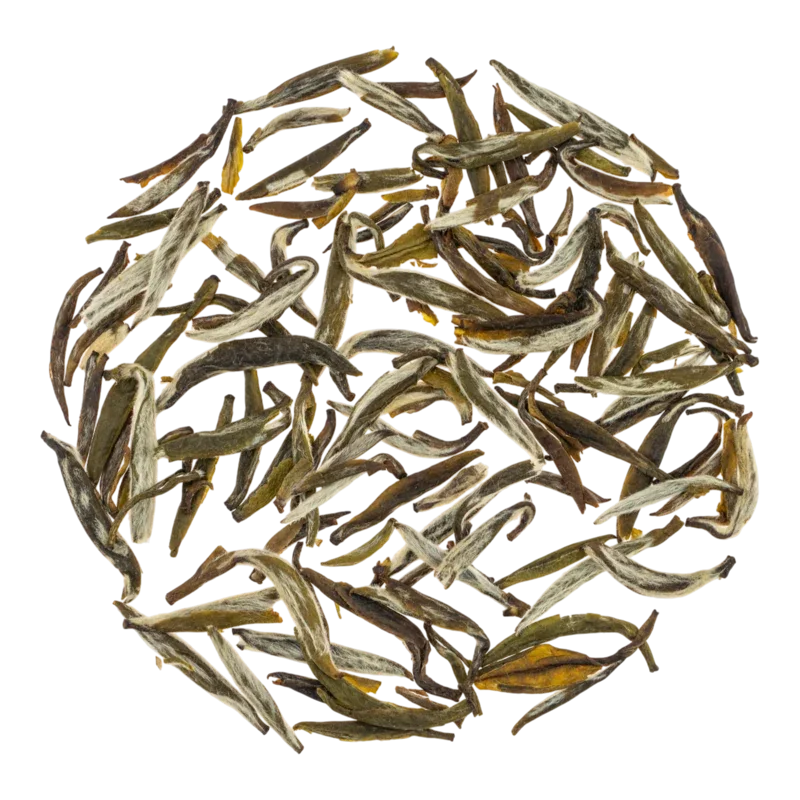
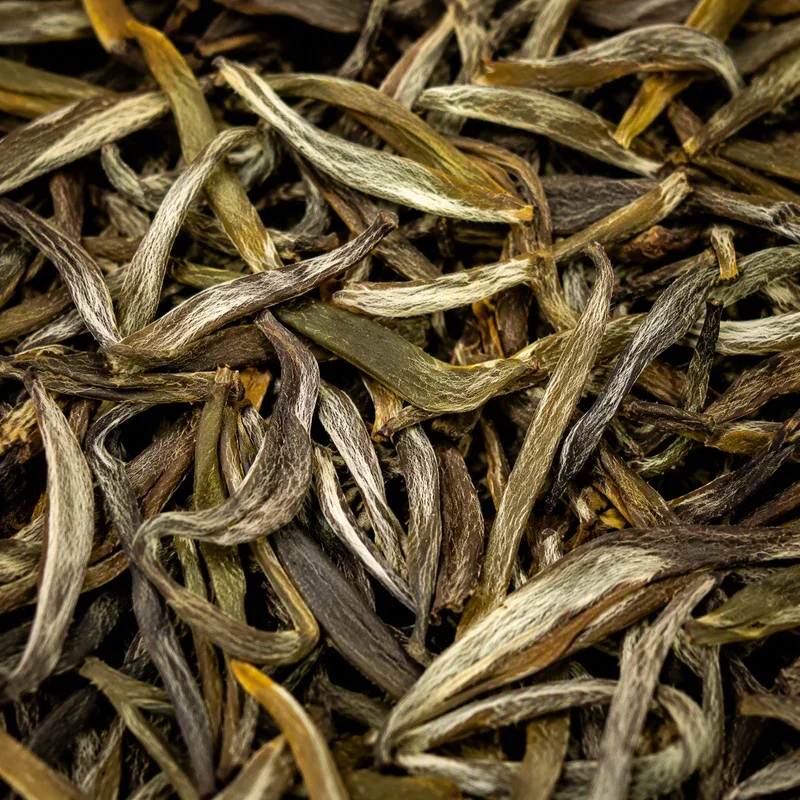
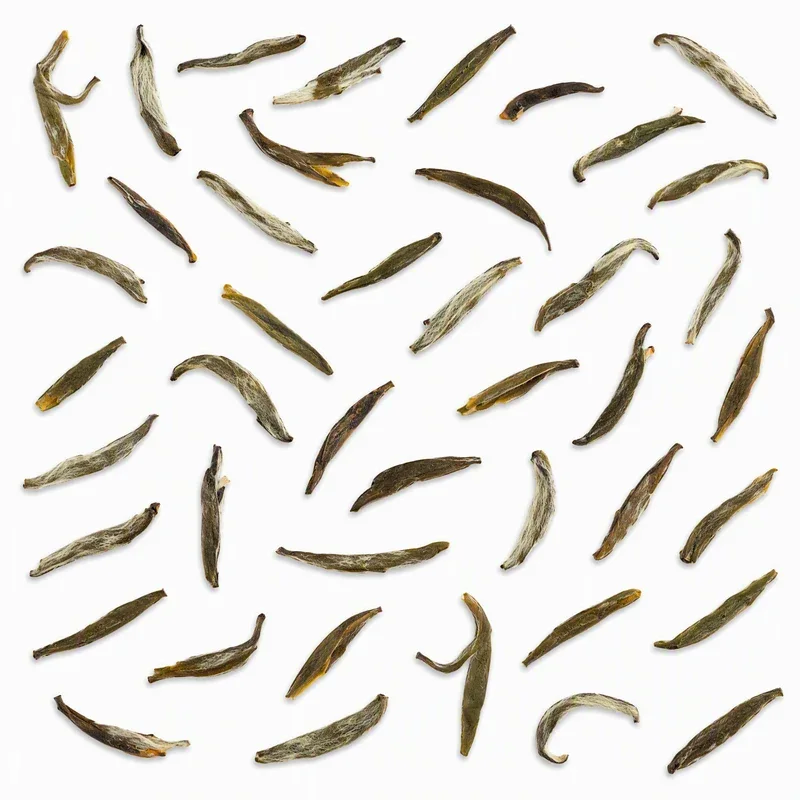
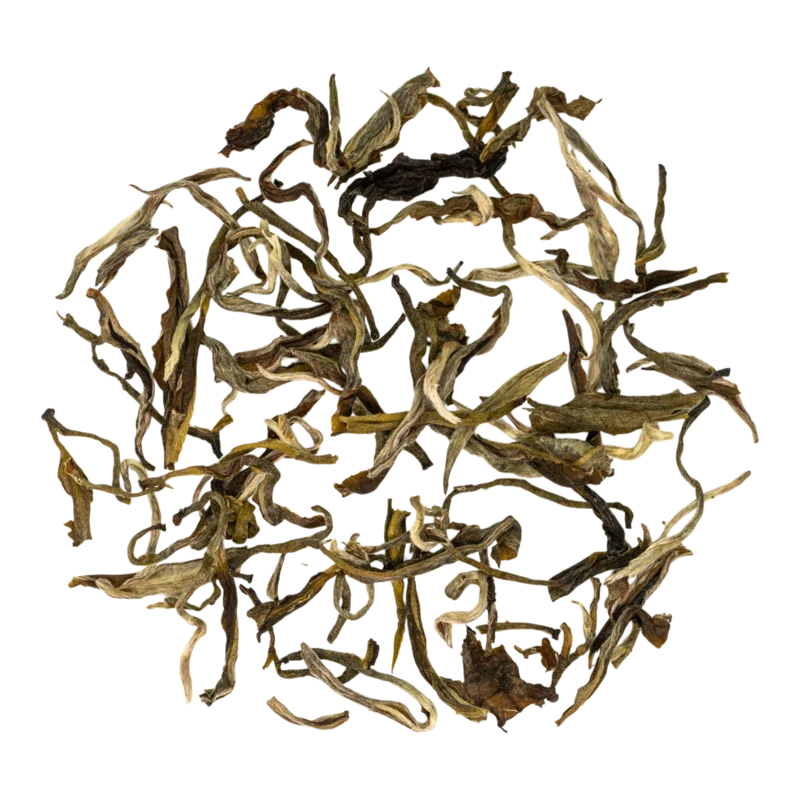
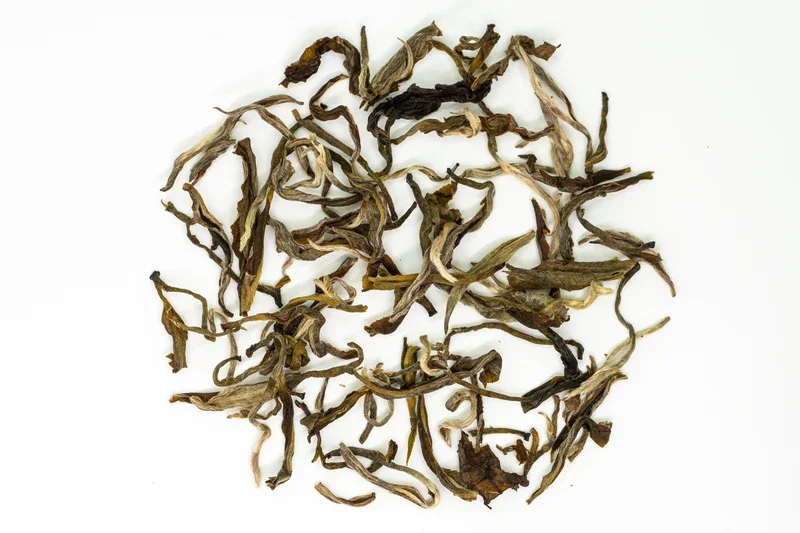
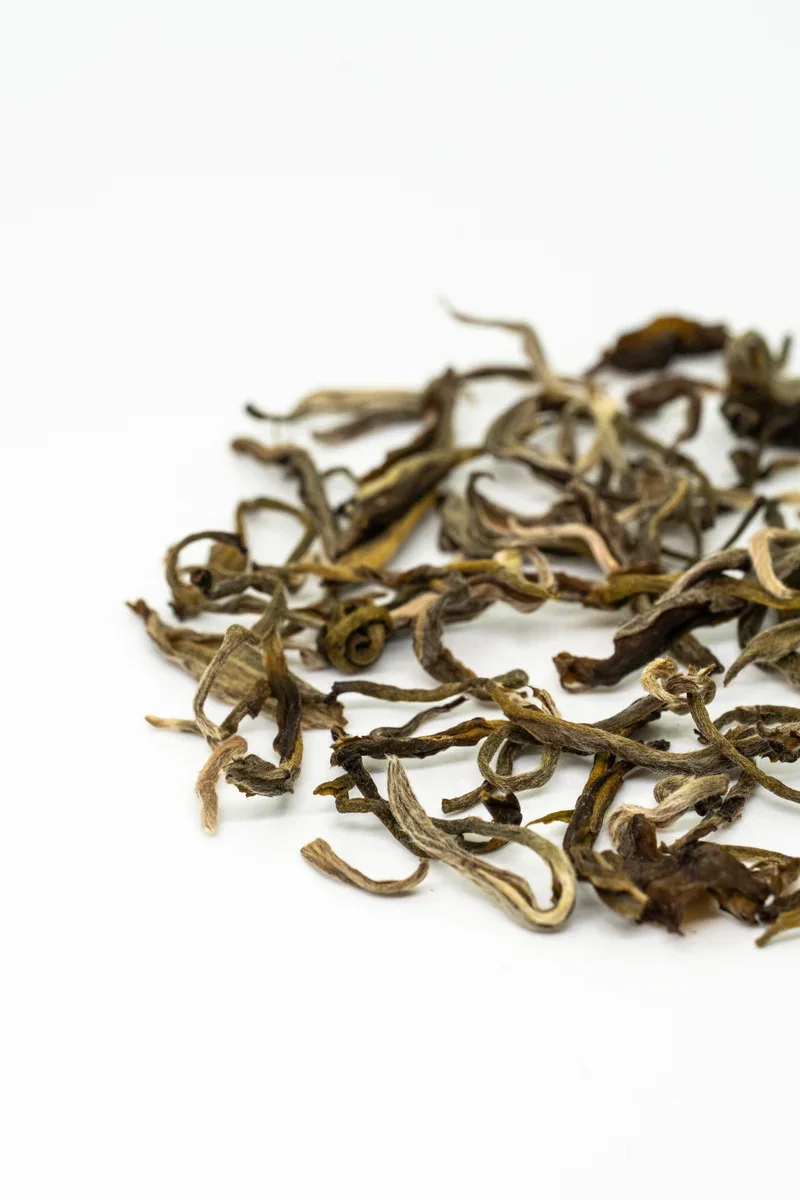
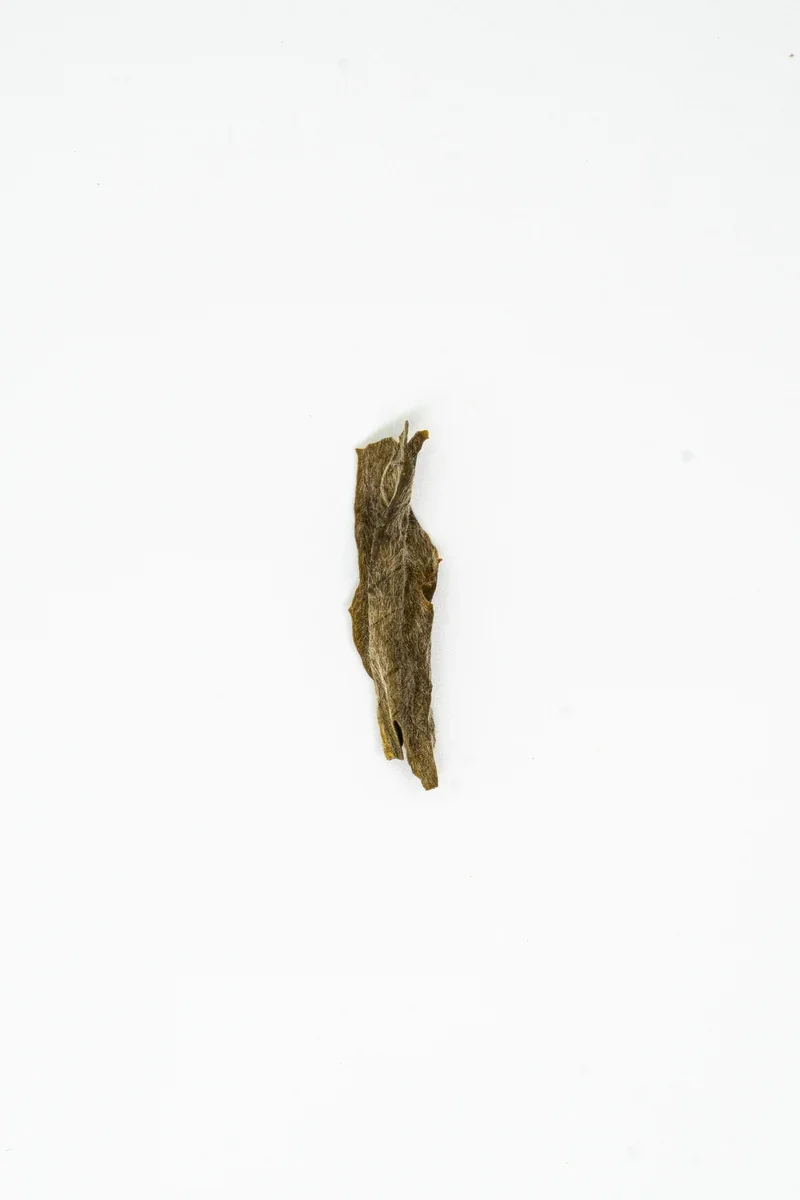
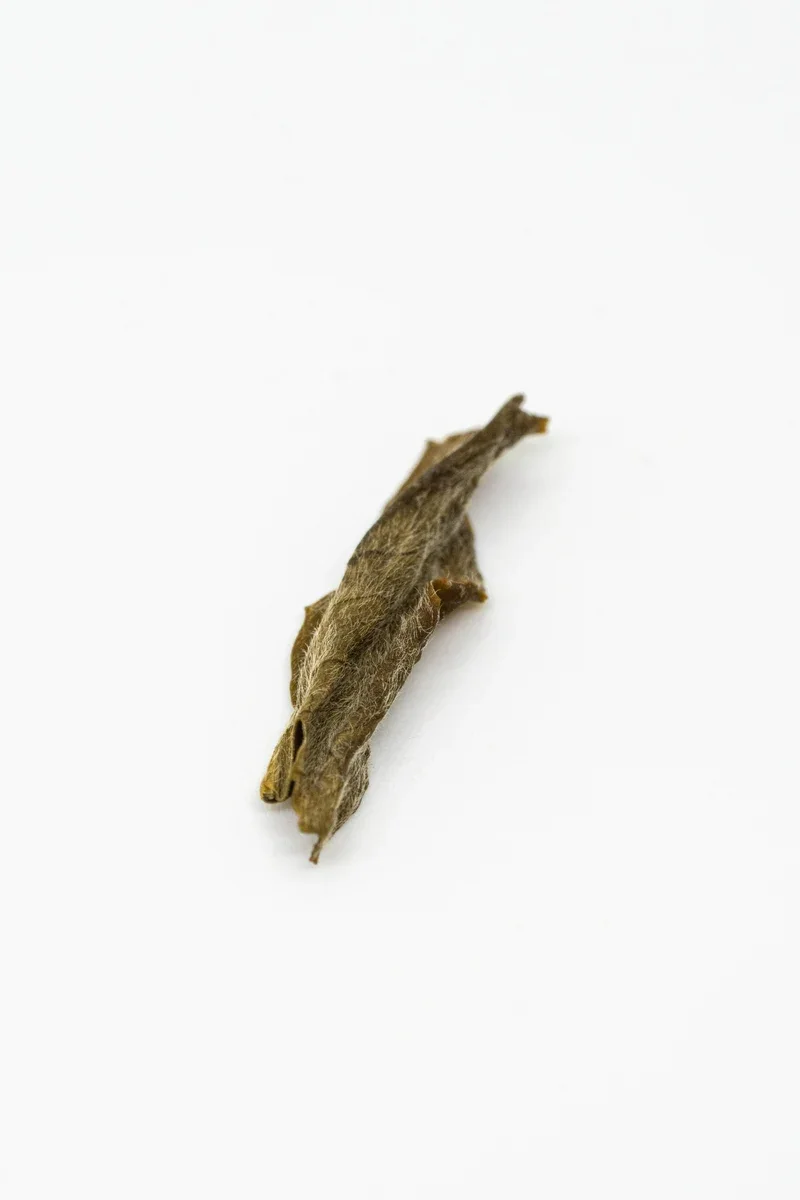
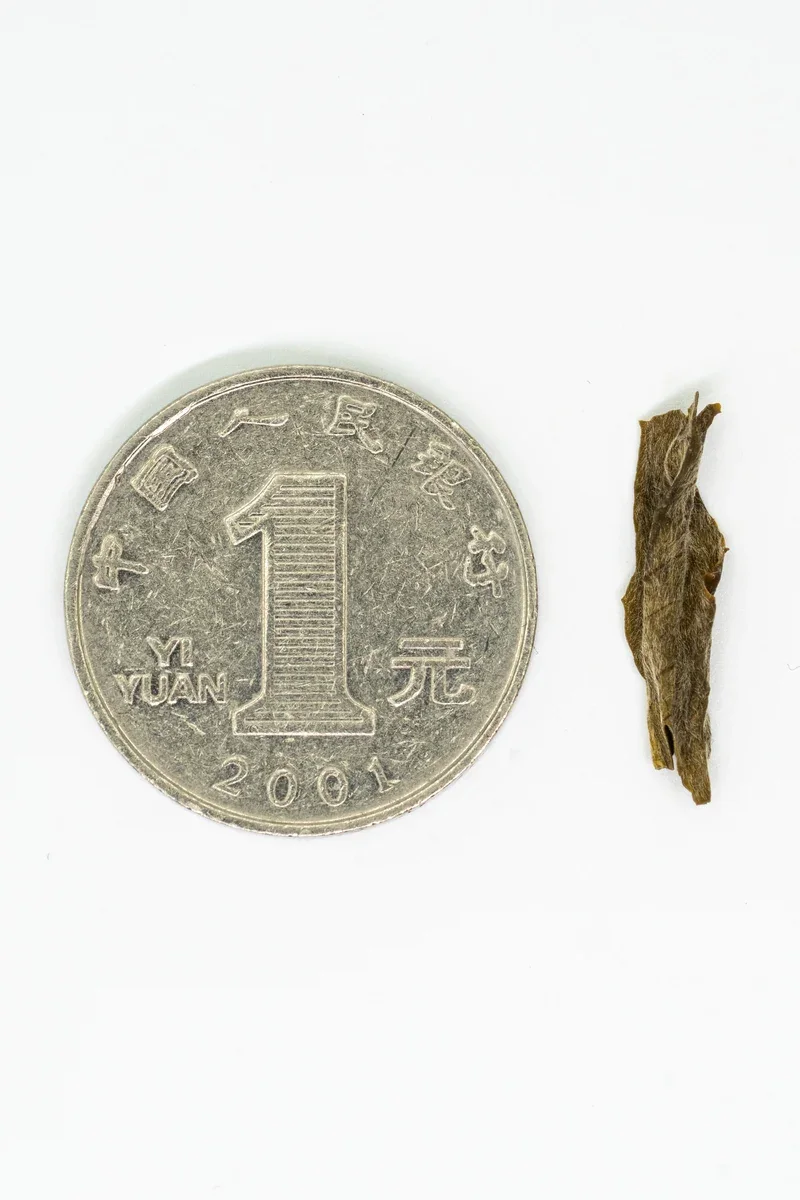
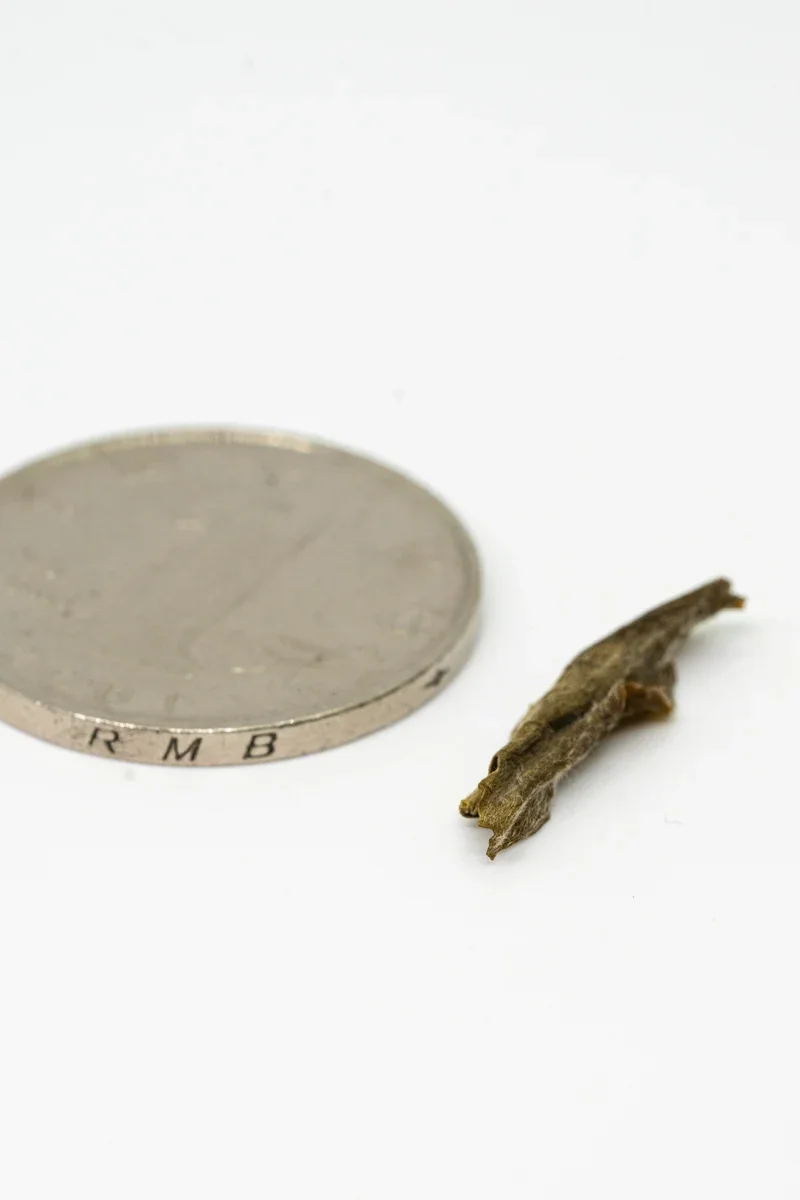
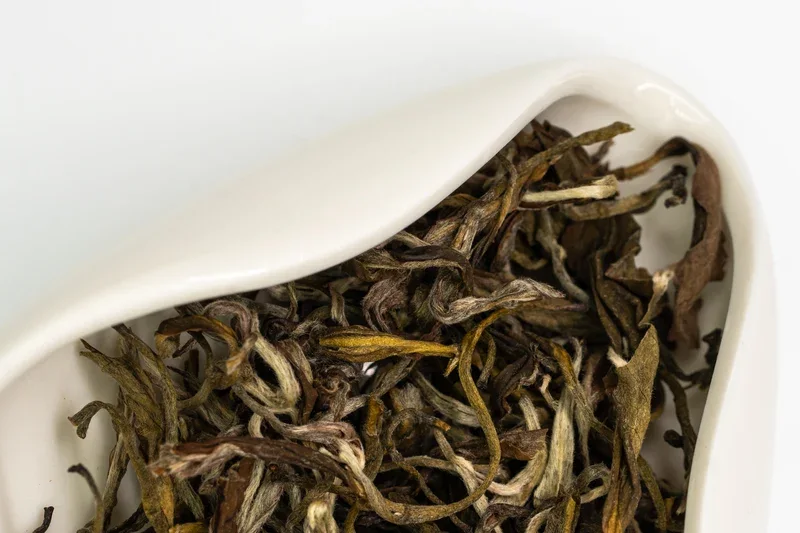
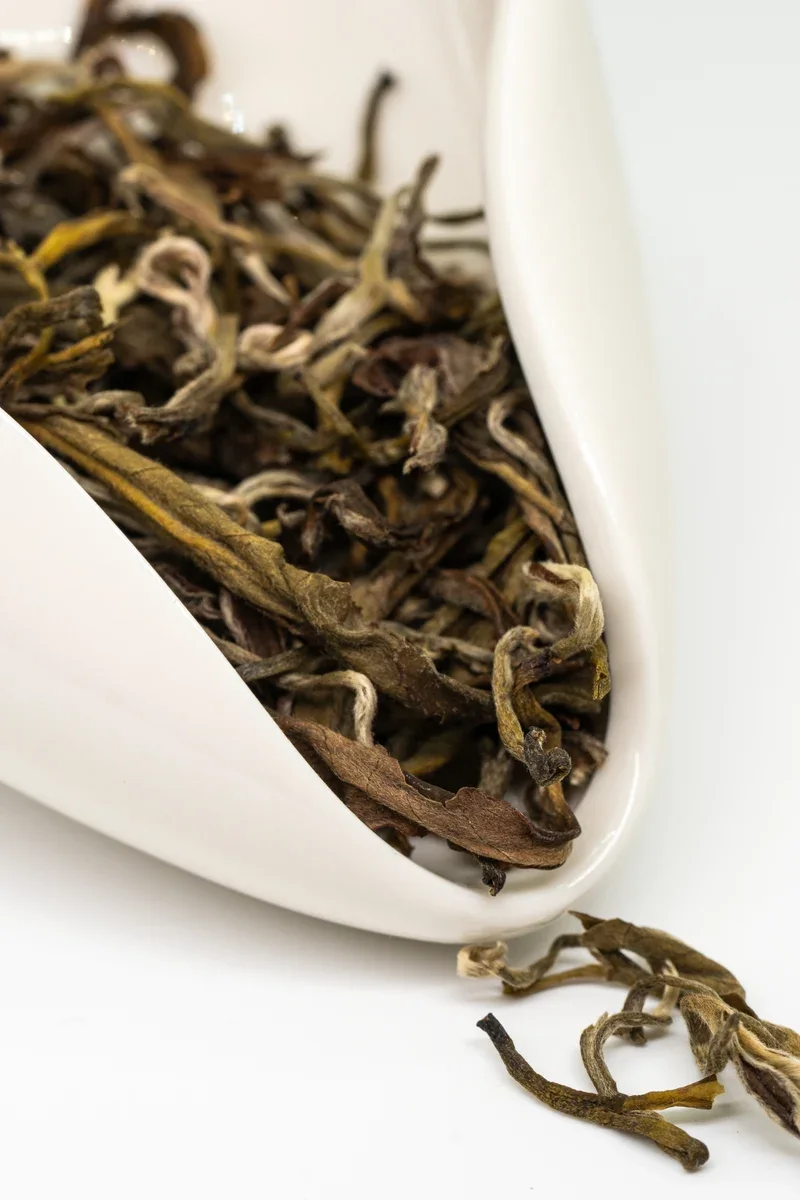
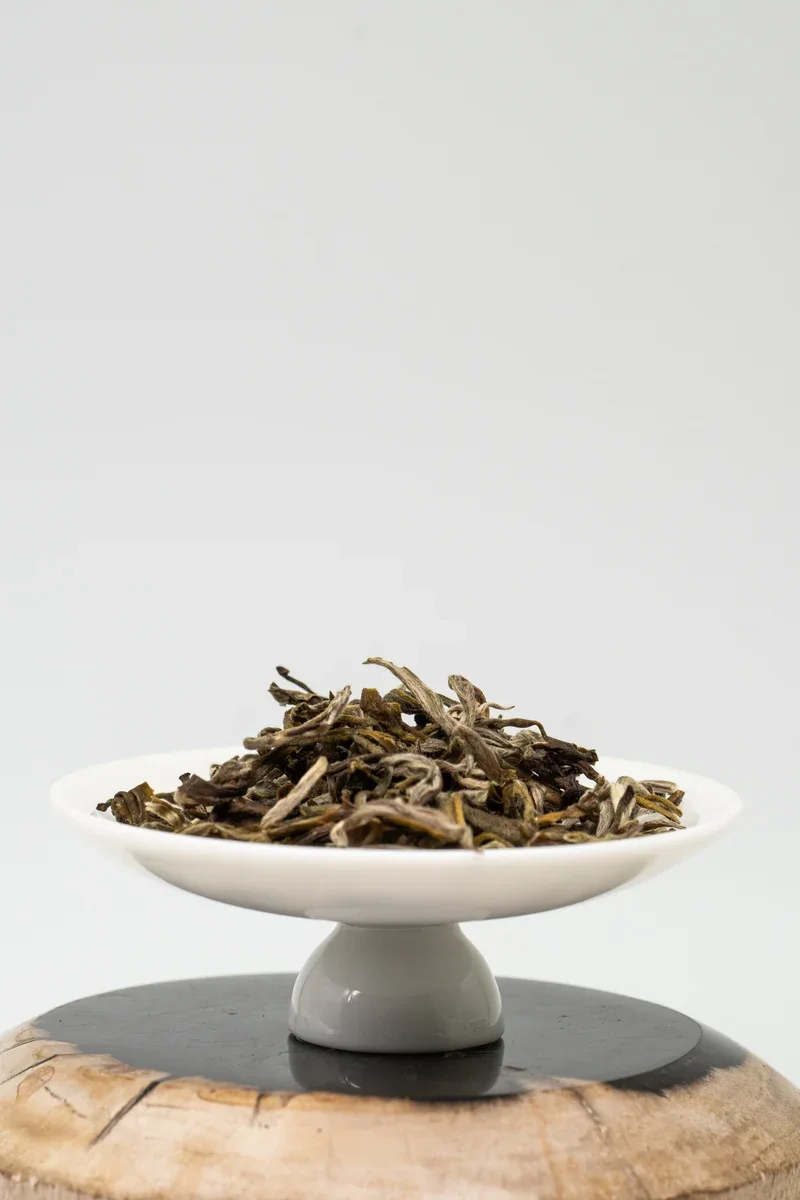
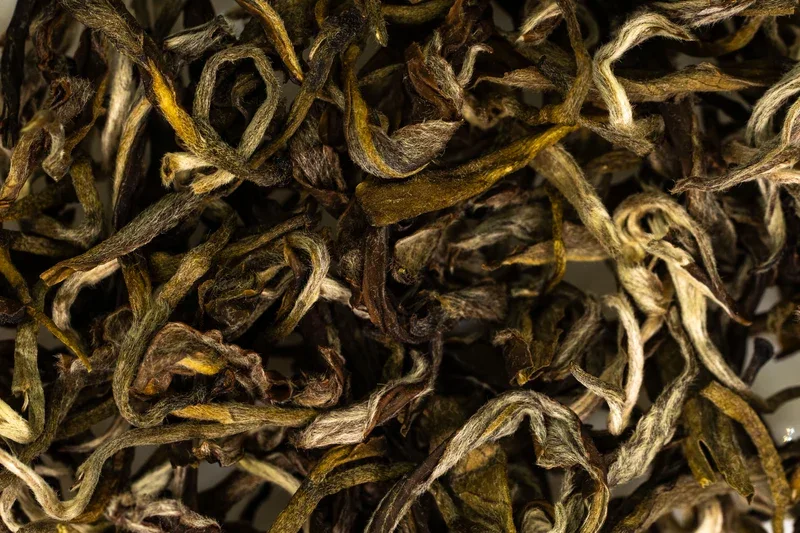
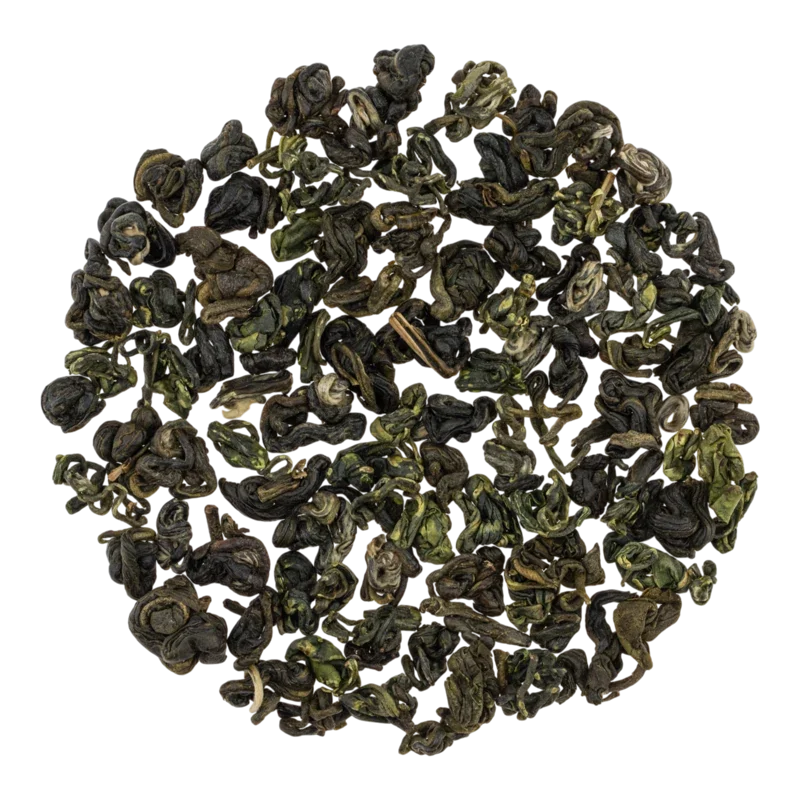
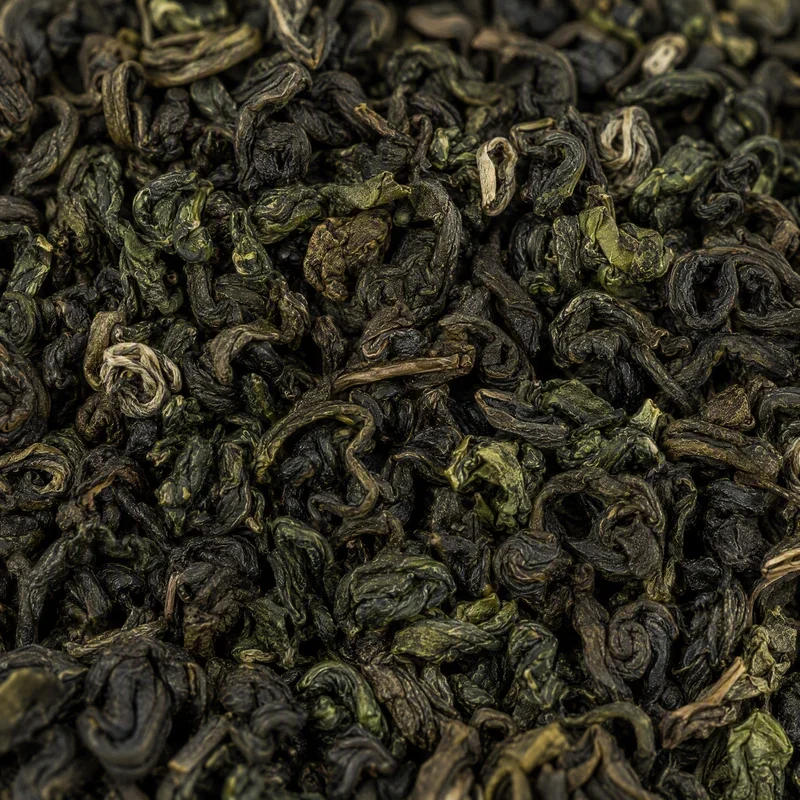
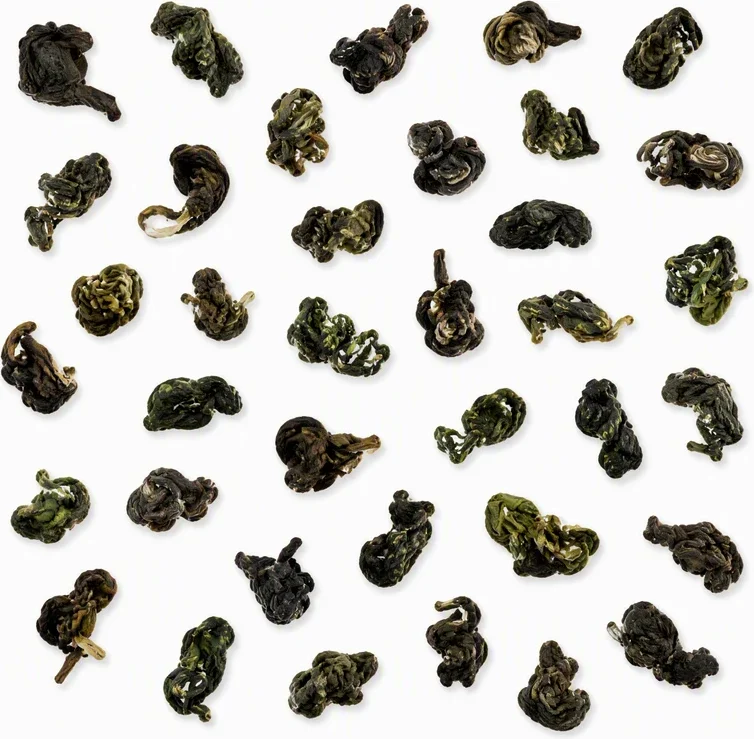
Dry Leaf Appearance: Tightly rolled tea particles of spiral form, resembling small snail shells. Color — dark green with pronounced silvery-white inclusions (tips covered with baihao down). Spirals are compact, uniform in size; quality Lü Luo is distinguished by glossy surface and absence of breakage.
Dry Leaf Aroma: Fresh, with distinct notes of young greenery and field flowers, light nutty and chestnut nuances characteristic of pan-fired green teas.
Liquor Aroma: Bright, clean, revealing primarily in floral-herbal tones. In top notes — freshly cut grass and spring flowers; in middle notes — warm chestnut and slightly creamy shades; in finale — delicate, sweetish aroma reminiscent of young beans.
Liquor Color: Light green with slight yellowish tint, transparent, clean, with pronounced brilliance.
Spent Leaves: Whole, elastic leaves and buds, fully unfolded from spirals, bright green color, retaining structural integrity. Leaf edges are even, without darkening.
Taste: Soft, refreshing, with pronounced natural sweetness (回甘, huígān), light, pleasant astringency and prolonged aftertaste. In the bouquet — notes of fresh greenery, white flowers and light fruity shade. Body of liquor — medium, with silky texture. Bitterness is absent when brewing parameters are observed.
Alkaloids: Caffeine (咖啡碱, kāfēi jiǎn) — approximately 2.5–3.5% of dry mass (about 20–30 mg per 150 ml cup with standard brewing). Theobromine and theophylline are also present in trace amounts.
Amino Acids: Free amino acid content — 2.5–4.0% of dry mass. Key component — L-theanine (L-thianine), comprising up to 50–60% of total amino acids. L-theanine provides the characteristic "umami"-like taste and mild, relaxing effect on the nervous system. The foggy microclimate of the Guilin region promotes increased accumulation of amino acids in tea leaves.
More than 200 identified volatile components, including linalool, geraniol, cis-3-hexenol (responsible for "green" aroma), various aldehydes and terpenes forming the floral-herbal bouquet.
Minerals: Potassium, magnesium, manganese, fluorine, zinc, phosphorus. Considering elevated selenium content in soils of some Guilin plantations, Lü Luo potentially may contain bioavailable selenium — an element with pronounced antioxidant properties.
Polyphenols: Main components — epigallocatechin gallate (EGCG), epicatechin gallate (ECG), epicatechin (EC). Total polyphenol content in quality Guangxi green teas is 18–25% of dry mass. Catechins are powerful antioxidants determining astringency and tannin properties of liquor.
Vitamins: Vitamin C (ascorbic acid) — up to 100–250 mg/100 g dry tea (significantly decreases with prolonged storage and improper brewing); B vitamins (B₁, B₂, B₃), vitamin E, vitamin K.
High catechin content (especially EGCG) provides neutralization of free radicals, protecting cells from oxidative damage and slowing aging processes.
Synergistic action of caffeine and L-theanine provides mild stimulation without sharp excitement peaks — attention and cognitive productivity increase while maintaining calm emotional background.
Regular green tea consumption is associated with lowering LDL cholesterol levels, improving vascular elasticity and normalizing blood pressure.
Polyphenols possess moderate antibacterial action in the gastrointestinal tract and stimulate peristalsis.
Vitamin C, catechins and trace elements (including selenium when present in soil) jointly support immune system functions.
Light, clean taste of Lü Luo and its moderate astringency make this tea an excellent beverage for quenching thirst, especially in hot subtropical season.
Green tea antioxidants contribute to protecting skin from ultraviolet damage and maintaining its tone.
Tea Amount: 3–5 grams per 150–200 ml water (when brewing gongfu method — up to 5 g per 100–120 ml gaiwan).
Teaware: Gàiwǎn (盖碗, gàiwǎn) made of white porcelain — classic option allowing control of extraction and evaluation of lid aroma. Glass cup or glass teapot also work excellently — they allow observation of the aesthetic process of spiral unfolding in water, which is one of the visual merits of this tea.
Water Temperature: 80–85°C. Too hot water destroys the delicate leaf structure and increases bitterness due to excessive catechin extraction.
Famous tea from Jiangsu with similar spiral rolling. Biluochun is distinguished by more intense floral-fruity aroma (due to proximity to fruit trees on Dongting Mountain plantations), higher down density and significantly higher price. Lü Luo is softer, with less pronounced fruitiness, but with characteristic chestnut notes.
With similar spiral form, Dongting Biluochun is produced from small-leaf varieties in proximity to fruit orchards, giving it unique fruity-floral notes. Lü Luo, grown in Guilin's karst landscape, possesses more "mineral" character and pronounced natural sweetness.
Another Guangxi green tea, but with completely different leaf form — straight and thin. Xishan Cha possesses more pronounced floral note (traditionally described as tea with "lotus" aroma in winter harvest). Lü Luo wins due to visual aesthetics of rolled leaf and more balanced, mild taste.
Guangxi green tea from Liucheng County, also with spiral rolling, produced from Fuding Dahao and Fuyun Liuhao cultivars. Very close in technology, but Lüxue is made exclusively from single buds, while Lü Luo allows "bud + 1–2 leaves" standard, giving fuller-bodied liquor.
Despite the name, this is a green tea from Zhejiang with anomalously high amino acid content. Anji Bai Cha has flat leaf form and most delicate, almost colorless liquor. Compared to it, Lü Luo possesses more pronounced "body," astringency and chestnut notes in aroma.
Specialized tea shops in Guilin and Guangxi, as well as reputable online platforms with transparent return conditions.
Authentic Lü Luo has dense, neat spirals of uniform size with noticeable silvery down. Uneven rolling, abundance of breakage and absence of tips are signs of low-quality or counterfeit product.
Dry tea should emit clean, fresh smell with herbal and floral notes. Musty, sour or excessively "roasted" aroma indicates violation of technology or improper storage.
Color should be transparent, light green. Cloudy liquor, dark yellow or brown tint indicate old or spoiled tea.
Price significantly below market average almost always signals substitution or low quality.
No reviews yet. Tell us what you think of this tea.
Rate this tea and share your impressions. We review each submission before publishing it.