Brewing
Gongfu brewing
- Water temperature
- 95 °C
- Tea amount
- 7 g
- Water volume
- 100 ml
- First steep
- 10 s
- Time added per infusion
- 5 s
- Infusions
- 10

Yúnnán yěshēng zǐyá báichá
Choose a brewing method. Start with the recommended quantities and time, then adjust to taste.
Brewing
Brewing
Taste
Tea encyclopedia
Category: Rare artisanal white teas of Yunnan. Not included in the standard Fujian classification (Yinzhen — Mu Dan — Gong Mei — Shou Mei). According to the Yunnan Tea Circulation Association standard T/YNTCA 007-2021 "Yunnan Large-leaf White Tea" (云南大叶种白茶), it belongs to the category of Yunnan white teas from large-leaf varieties.
Category: Rare artisanal white teas of Yunnan. Not included in the standard Fujian classification (Yinzhen — Mu Dan — Gong Mei — Shou Mei). According to the Yunnan Tea Circulation Association standard T/YNTCA 007-2021 "Yunnan Large-leaf White Tea" (云南大叶种白茶), it belongs to the category of Yunnan white teas from large-leaf varieties.
Coordinates: 21°–24° N, 99°–102° E (main tea regions of Yunnan). Elevations 1500–2200 m.
Origin: China, Yúnnán Province (云南省). High-altitude forest regions of Xīshuāngbǎnnà (西双版纳), Líncāng (临沧), Pu'er (普洱). Specific locations: Nannuoshan (南糯山, Nánuò Shān), Jǐnggǔ (景谷, Jǐnggǔ), Bāngwēi (邦崴, Bāngwǎi), Qiānjiāzhài (千家寨, Qiānjiāzhài) and other areas with preserved wild tea forests.
Type: White tea (白茶, báichá) — lightly oxidized. Technology: withering + drying, without kill-green (shaqing) and without rolling.
Cultural Significance: This tea is a symbol of the intersection of ancient wild nature of Yunnan and modern tea craftsmanship. It is valued for its triple uniqueness: wild origin (古树/野生), natural mutation (紫芽) and delicate technology (白茶). For many connoisseurs — one of the "purest" expressions of Yunnan terroir.
Name Breakdown: 云南 (Yúnnán) — province; 野生 (Yěshēng) — "wild"; 紫芽 (Zǐyá) — "purple shoot/bud"; 白茶 (Báichá) — "white tea".
Wild tea trees (乔木, qiáomù) — uncultivated, of seed origin. Height — from 3 to 15+ m, age — from 50 to several hundred years. Deep taproot system provides access to mineral resources of deep soil horizons.
Young shoots (1–3 top leaves and bud) acquire purple or violet color due to increased synthesis of anthocyanins — pigments that protect the plant from intense ultraviolet radiation at elevations of 1500+ m. The mutation is spontaneous and unstable: on one tree purple shoots may appear only in certain seasons or only on certain branches. Mature leaves are green.
Zijuan is a selective clonal cultivar (1985, Yunnan Tea Institute, Nannuoshan → Menghai), medium-leaf, consistently purple (buds, leaves, stems). Wild purple shoot is large-leaf, from trees of various ages and seed origin, purple coloration is unstable and limited to young shoots. Tea from Zijuan is more bitter, with purple liquor; wild purple white is sweeter, with golden-pinkish liquor.
Cultivar: Camellia sinensis var. assamica — Yunnan large-leaf. In some cases — Camellia sinensis var. dehungensis or wild populations not assigned to a specific variety.
Picking: Hand-picked, early spring (April). Unopened buds (芽苞, yá bāo) and 2–3 young leaves with pronounced purple pigmentation are collected. The inaccessibility of wild trees (mountain forests, elevations 1500–2200 m) and scarcity of purple shoots (units per tree) determine extremely low yield.
Altitude: 1500–2200 m. The higher — the more intense UV radiation and the more pronounced purple pigmentation.
Climate: Subtropical monsoon, with pronounced vertical zonation. Average annual temperature 15–20 °C. Precipitation 1200–1800 mm/year. Relative humidity >80%. Fog — more than 200 days per year. Significant diurnal temperature variations (>10 °C) at elevations 1500+ m.
Soil: Deep forest soils (mountain red and yellow soils), rich in organic matter (forest litter), with acidic reaction (pH 4.5–5.5).
High-altitude forest areas of southern and southwestern Yunnan — Xishuangbanna, Lincang, Pu'er. Trees grow under the canopy of tropical or subtropical forest, in an ecosystem with high biodiversity.
Completely "wild" conditions: without fertilizers, pesticides, irrigation. Trees exist in natural forest ecosystem. The Xishuangbanna region is one of 25 global biodiversity "hotspots". Ancient tea forests of Jǐngmài (景迈山) — UNESCO World Heritage site (2023).
Gentle hand-picking of young purple shoots.
Extended — 48–72 hours. Shoots are spread in thin layers on bamboo screens. Predominantly shade (室内) or combined withering is used. Yunnan practice often includes an element of sun-drying (晒青, shài qīng), which gives the tea a characteristic "solar" note. At this stage moisture loss (~30%), light oxidation and aroma formation occur.
Gentle — in sun or at low temperature (~40–50 °C). Residual moisture — 5–6%. Absence of high-temperature fixation (shaqing) — key difference from sheng pu-erh from the same raw material — allows preservation of thermolabile anthocyanins and maximum L-theanine.
Hand selection; removal of damaged shoots.
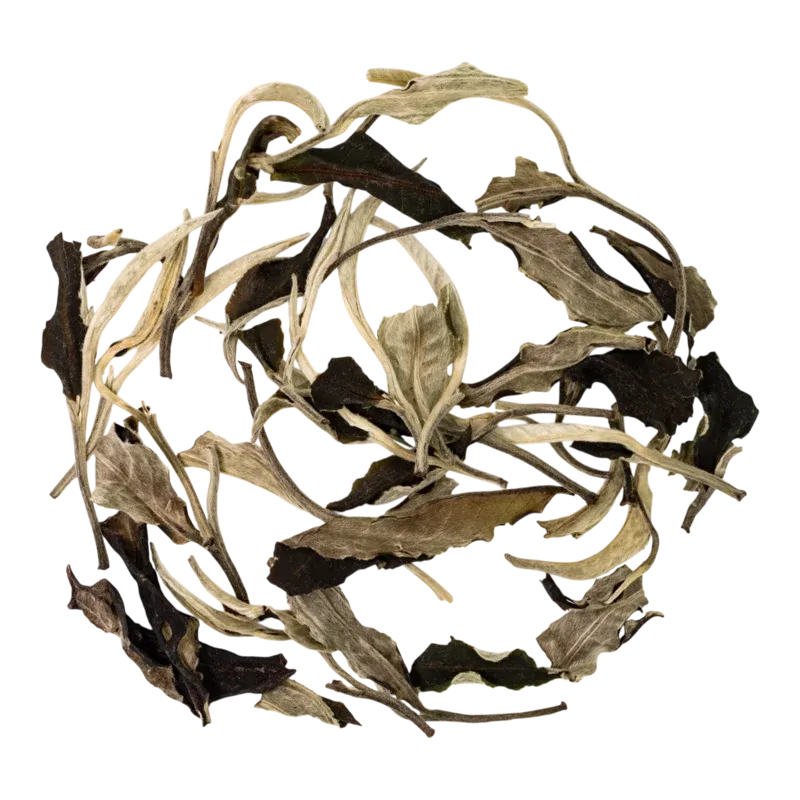
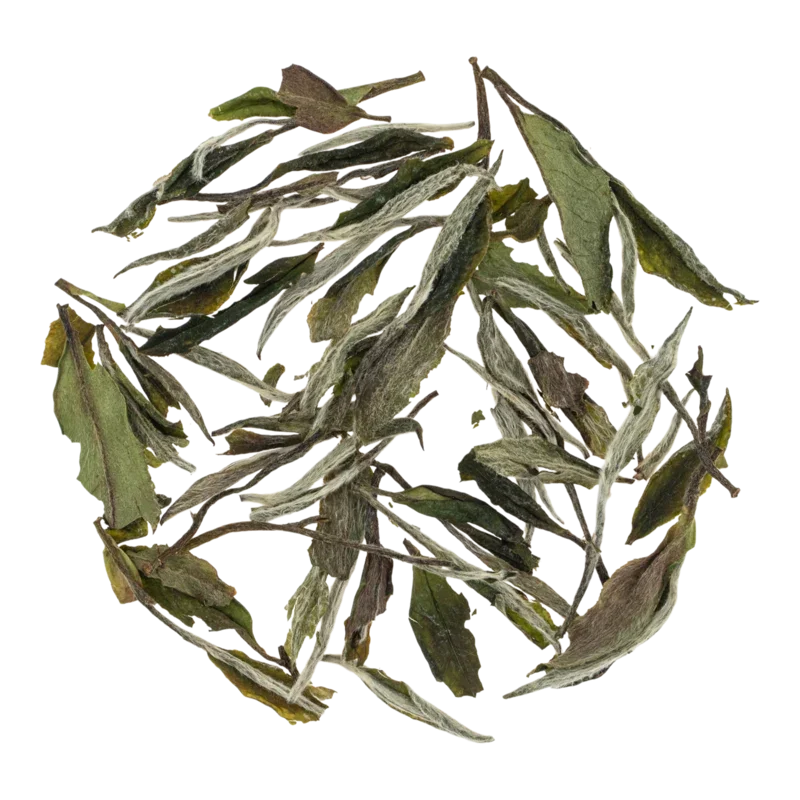
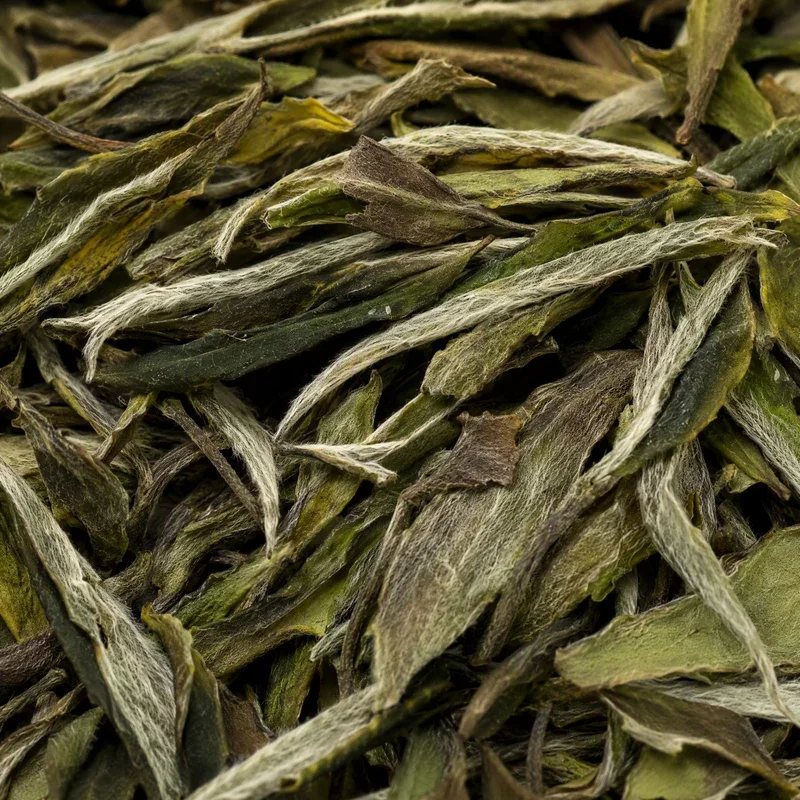
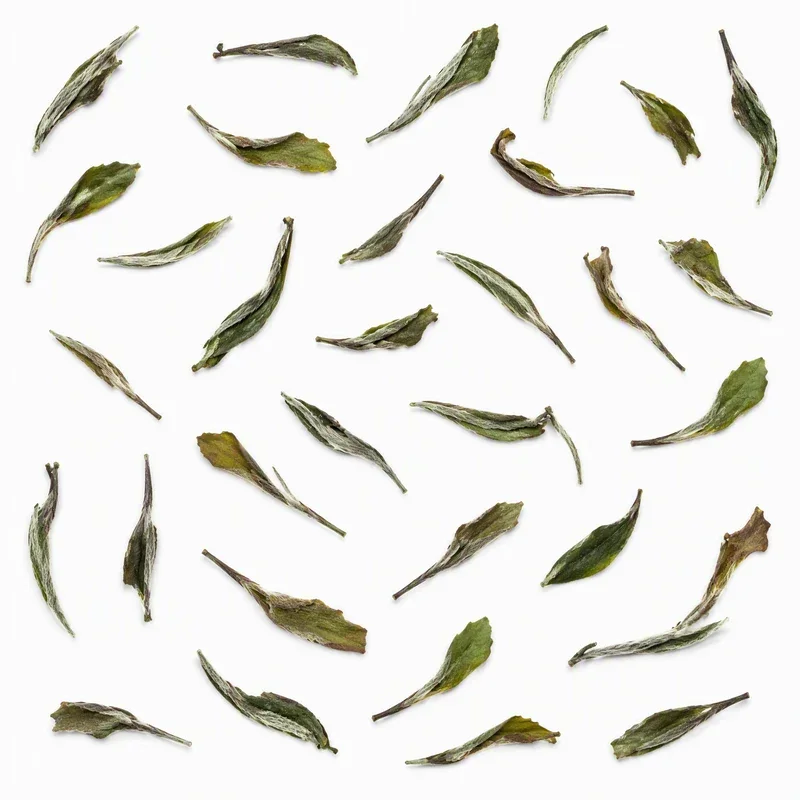
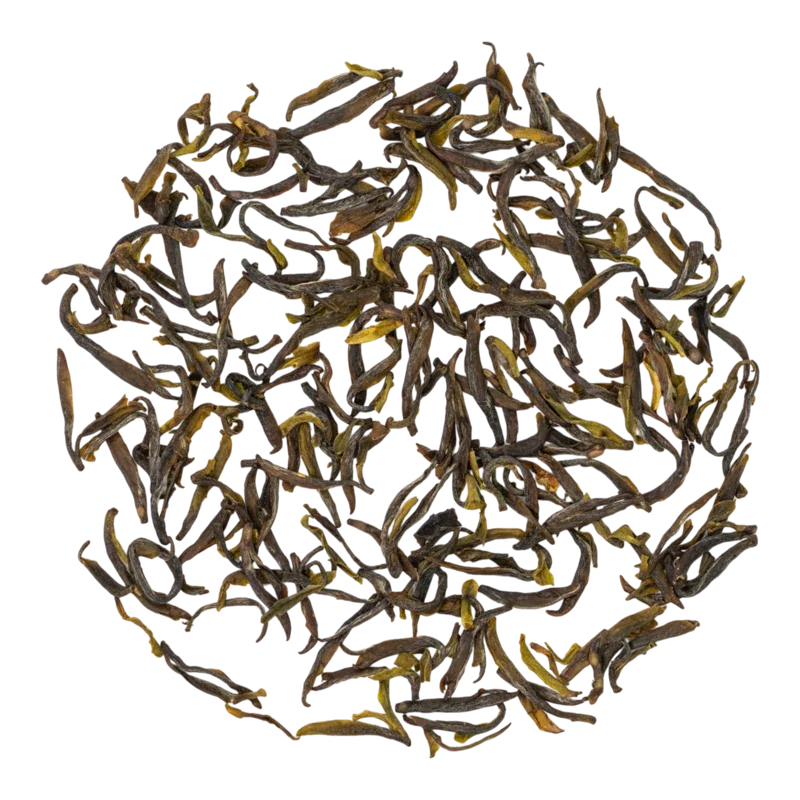
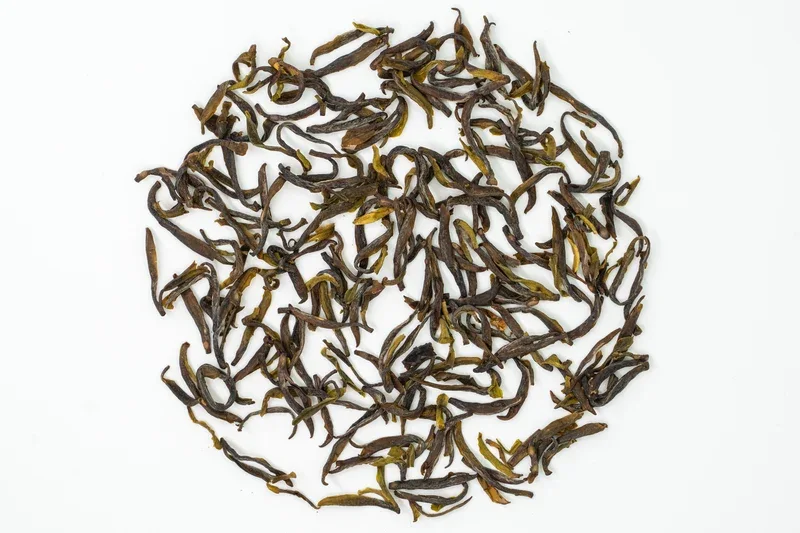
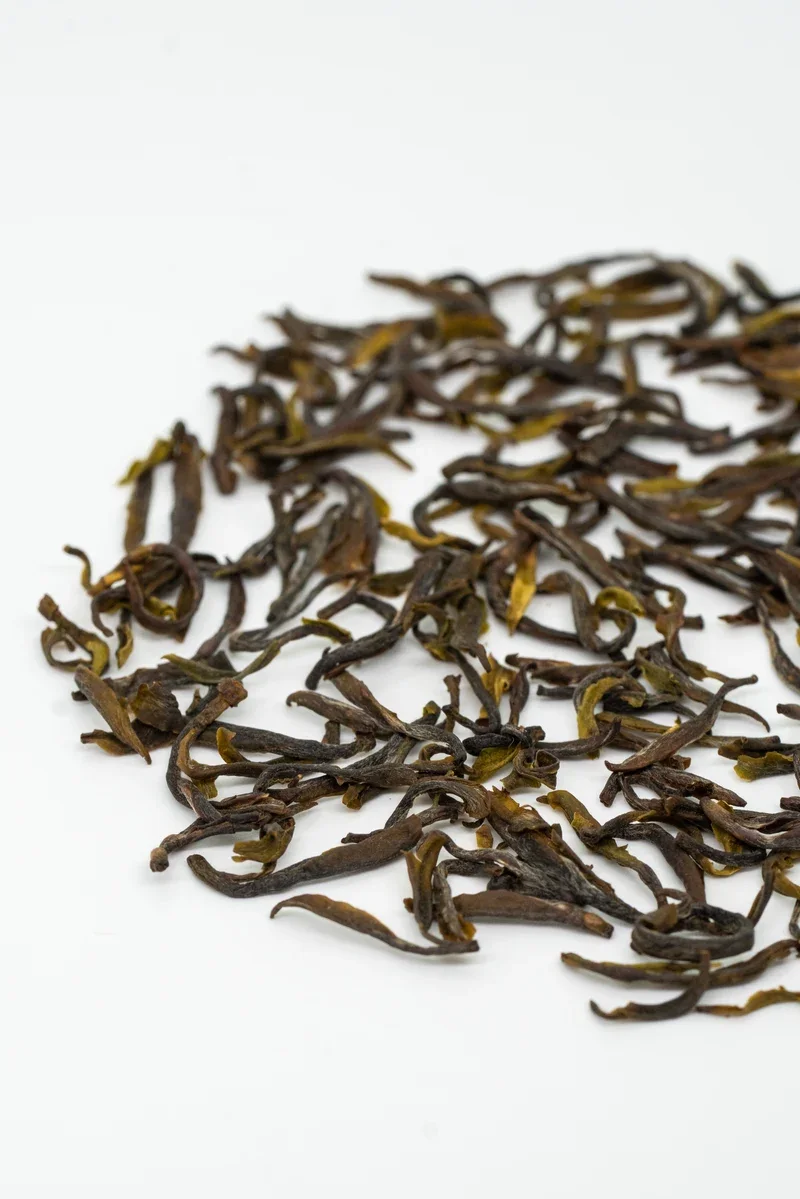
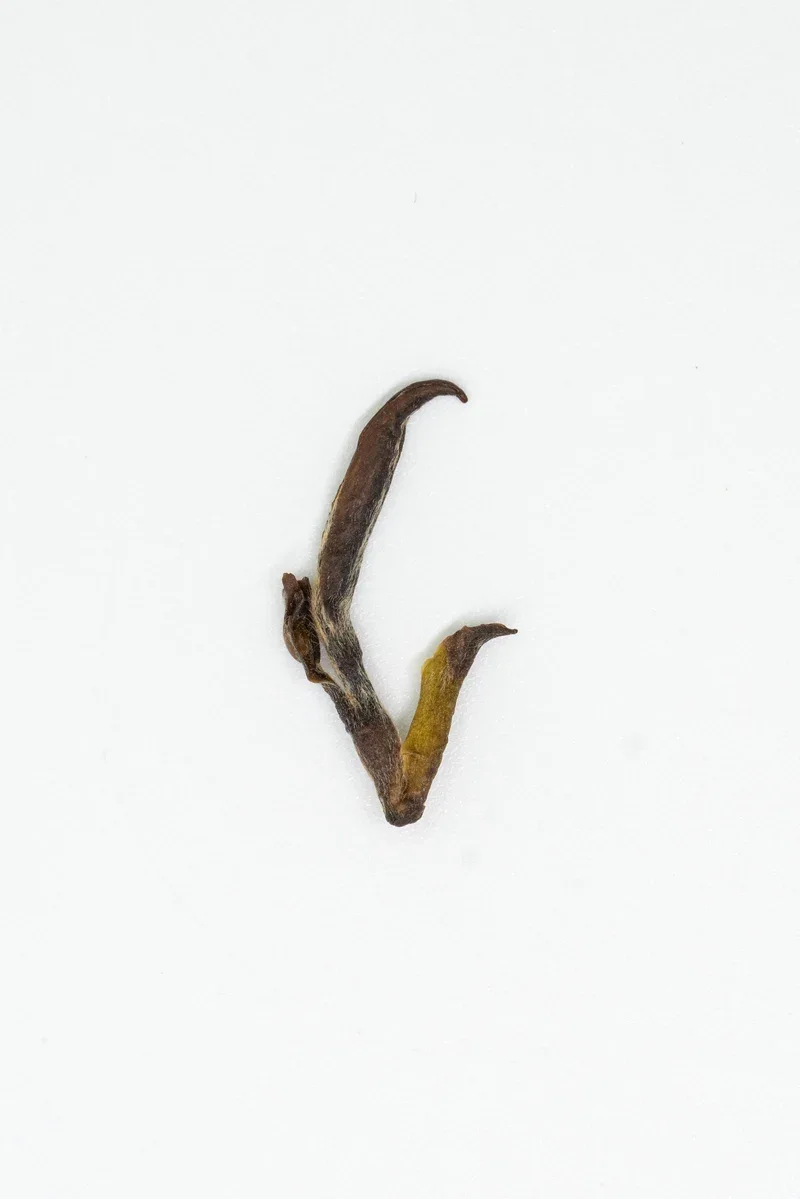
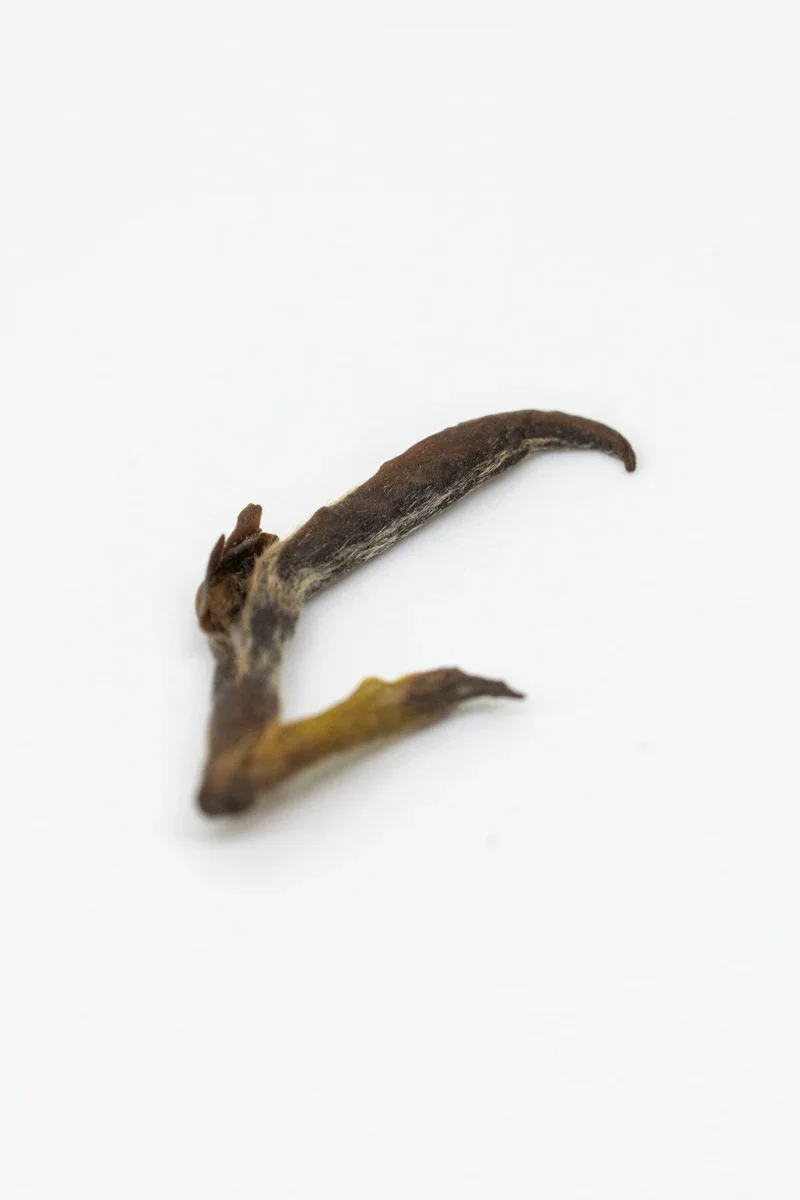
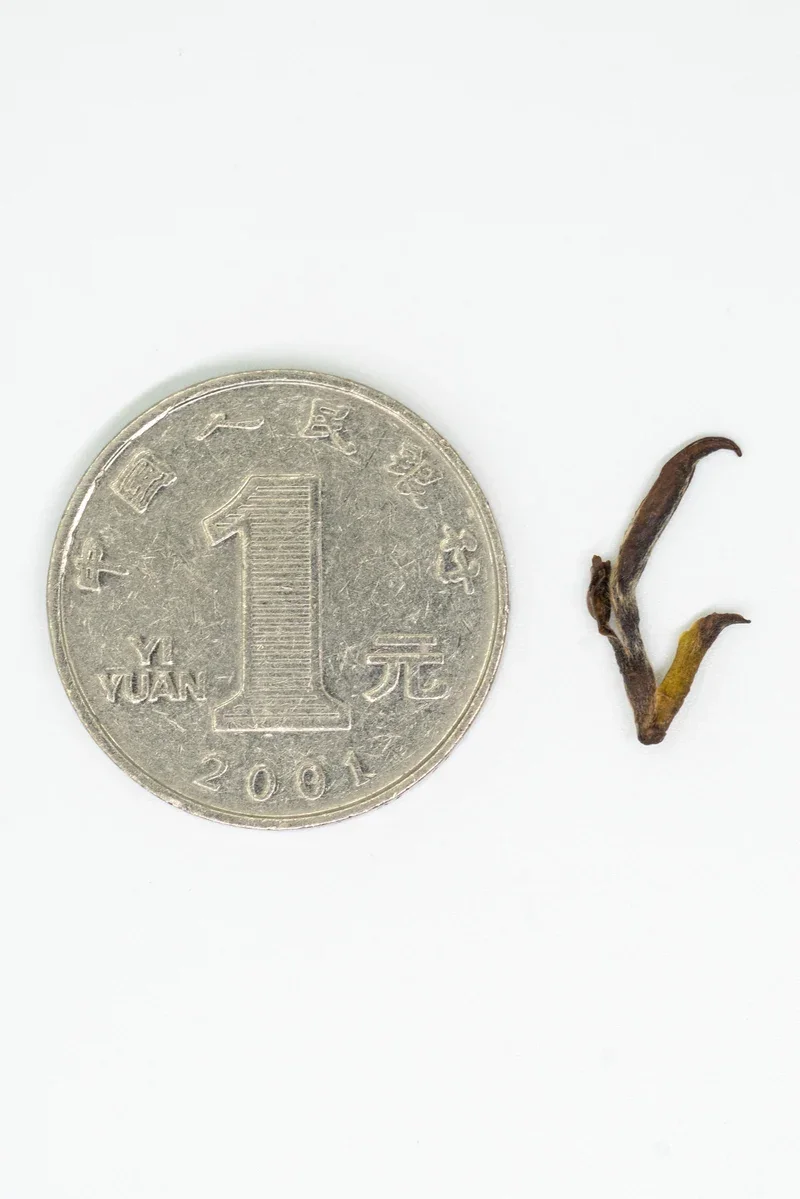
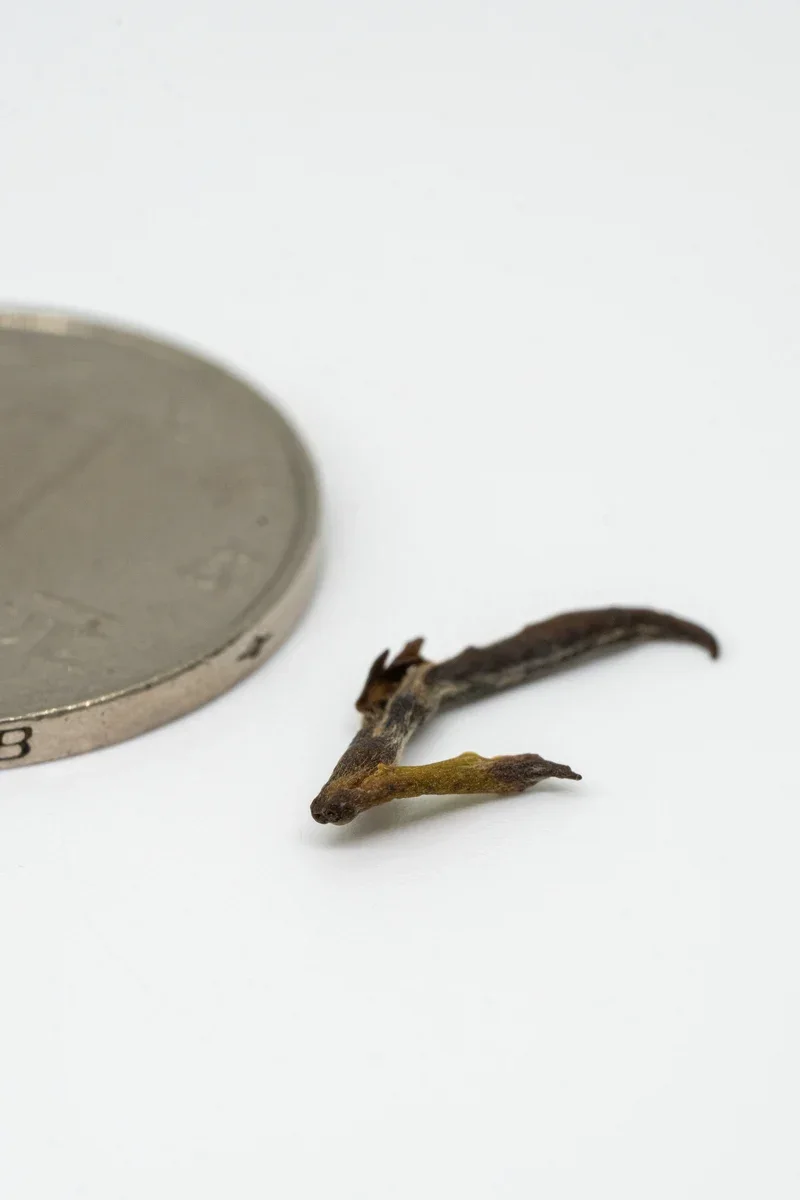
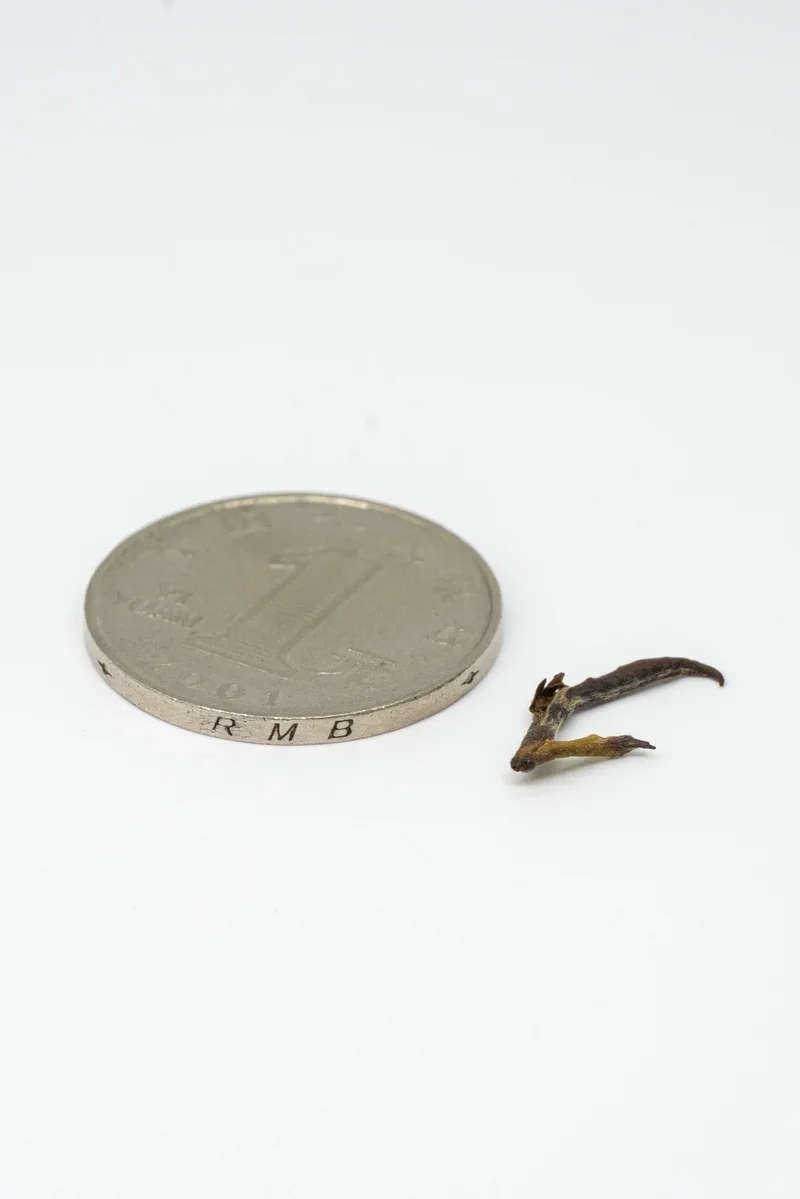
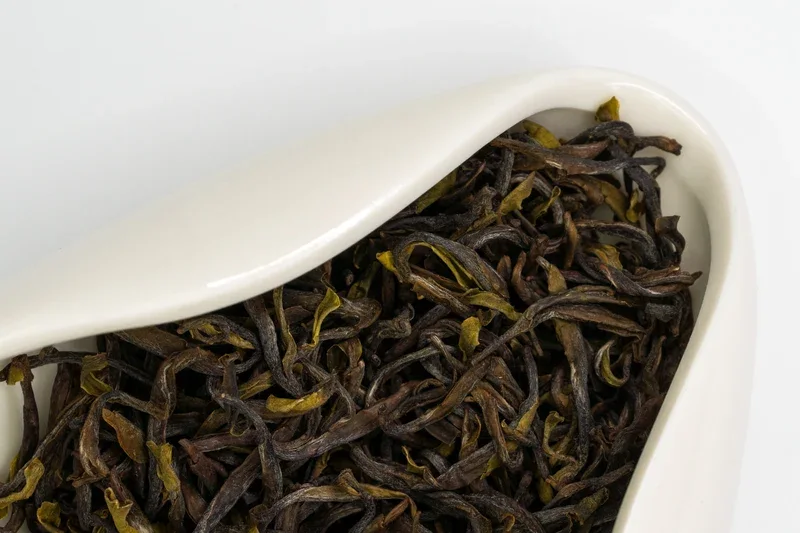
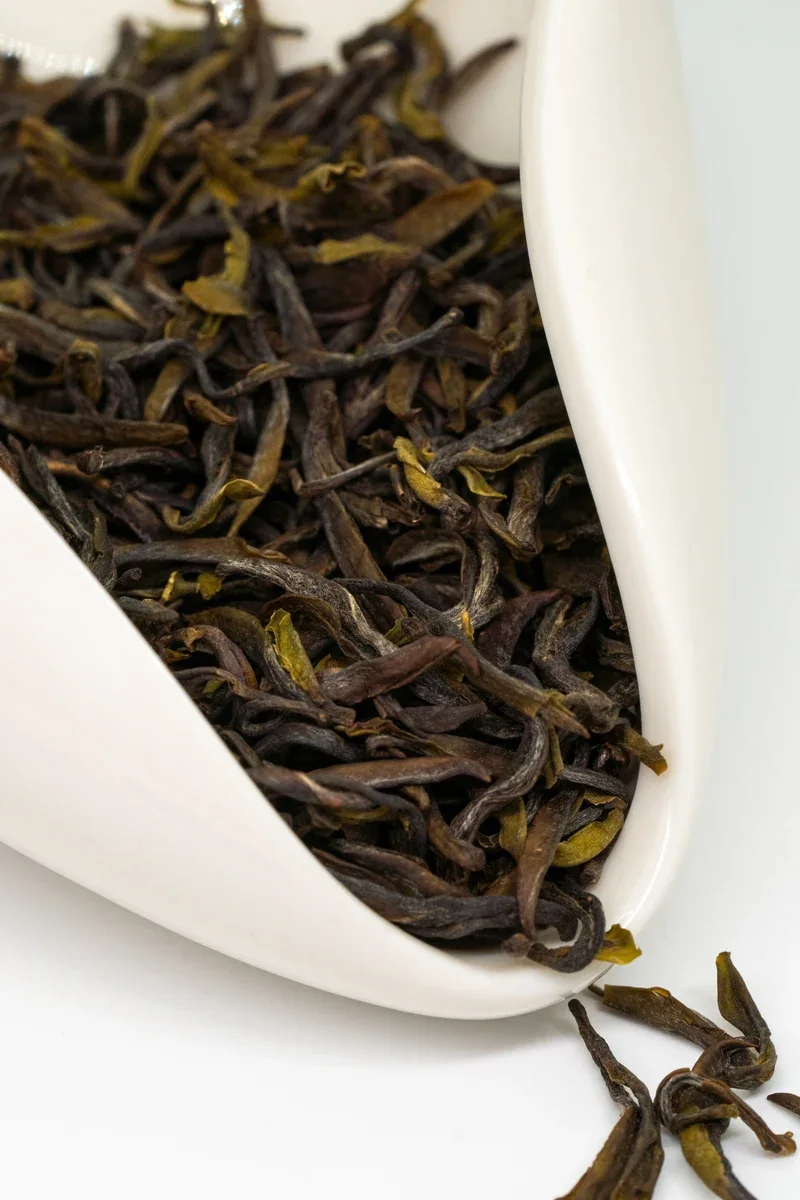
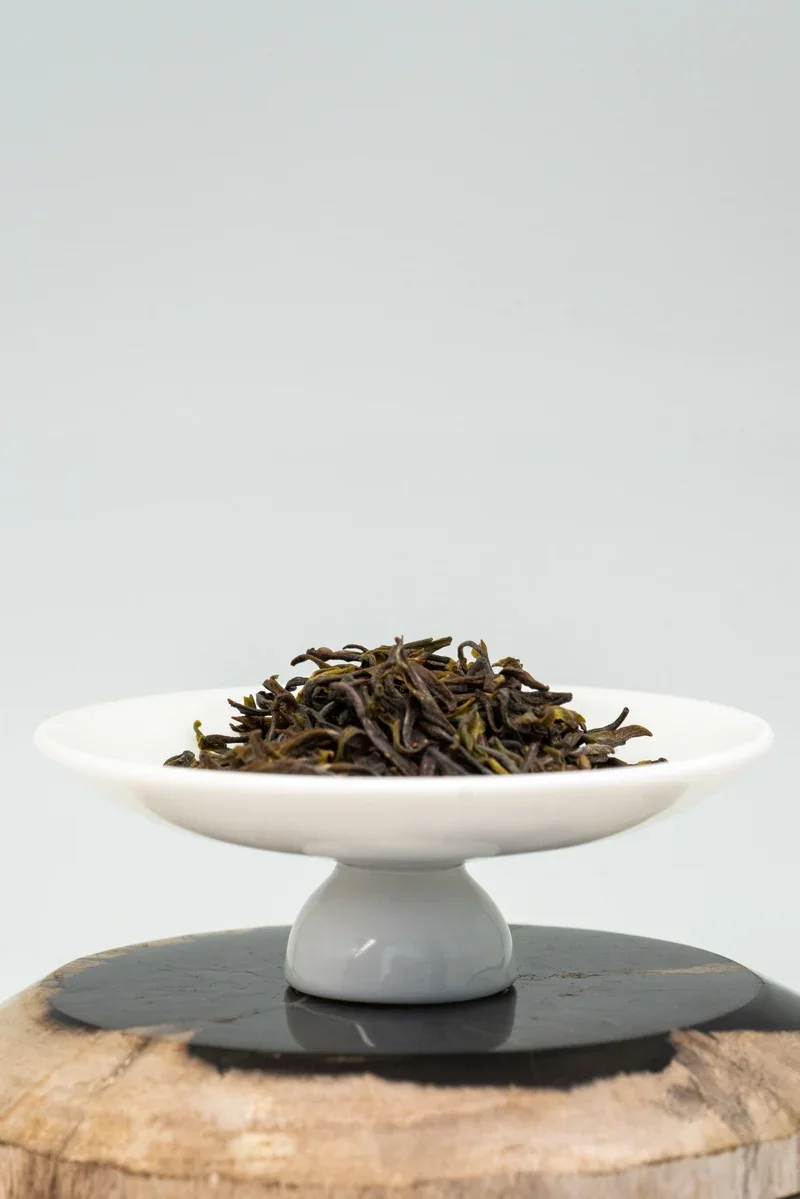
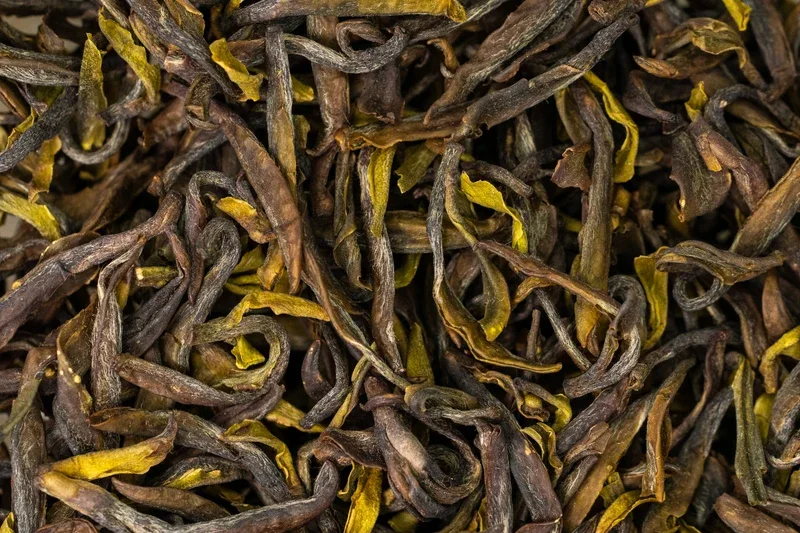
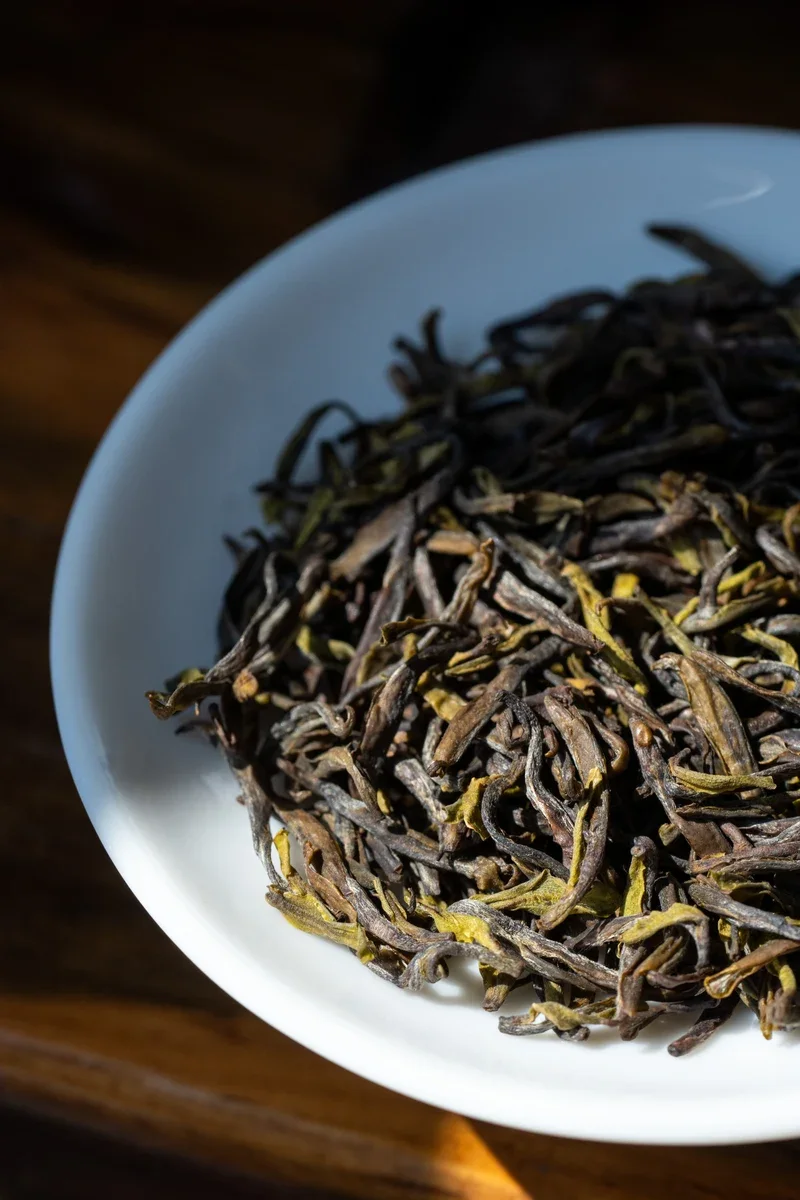
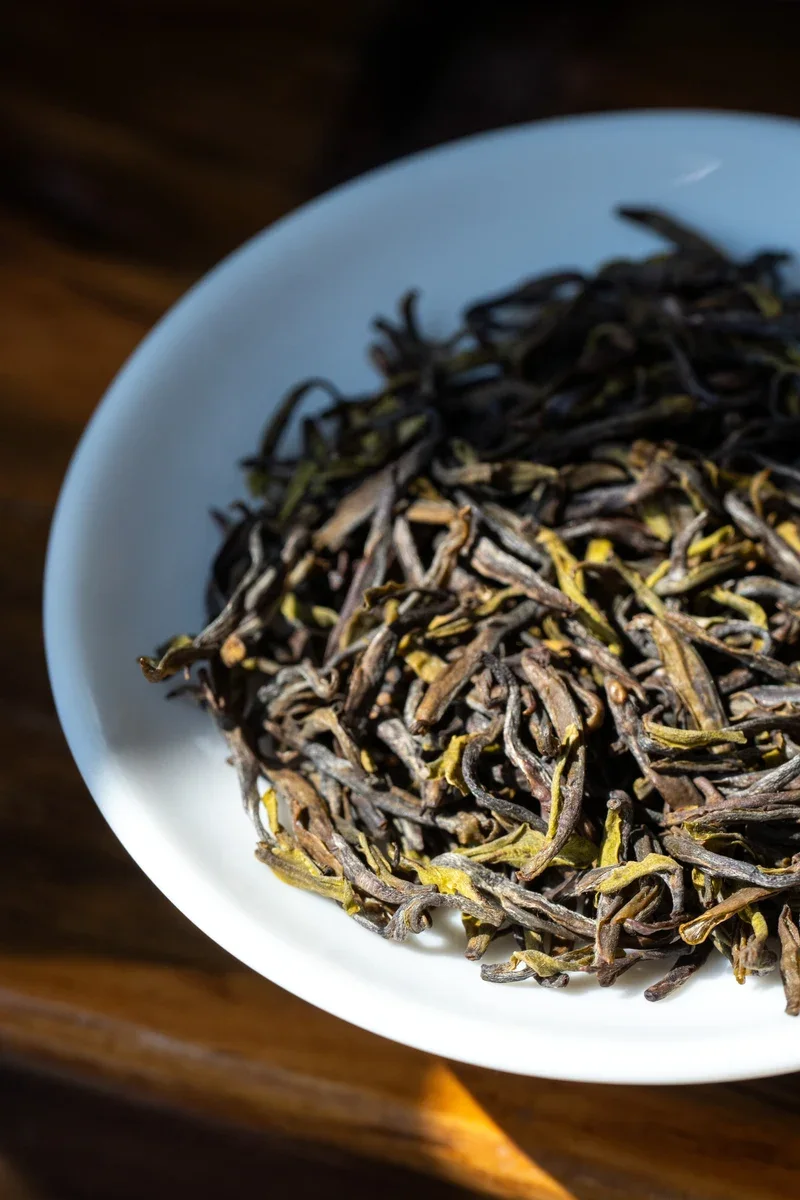
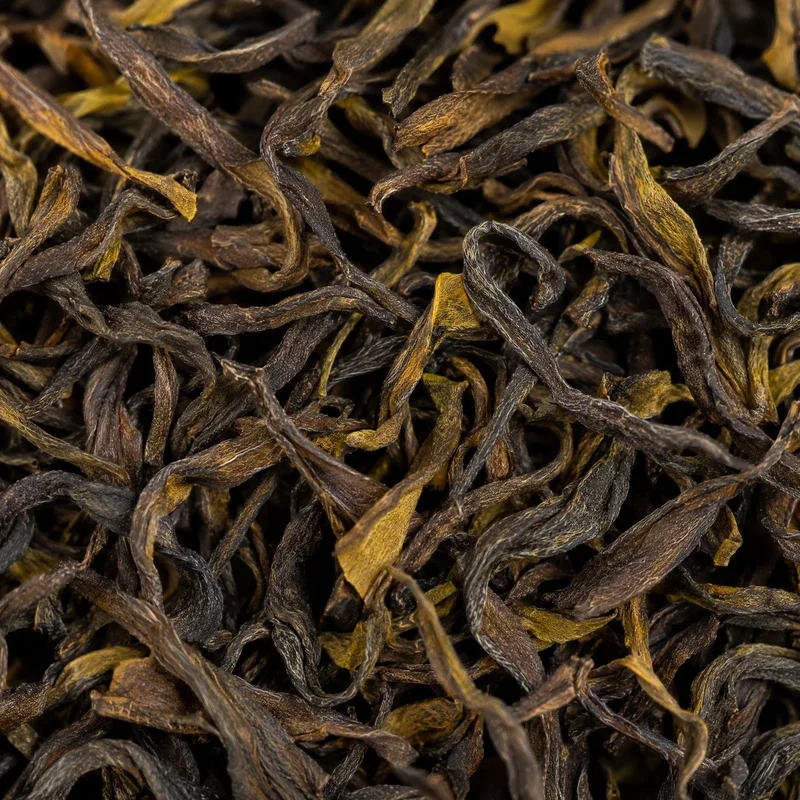
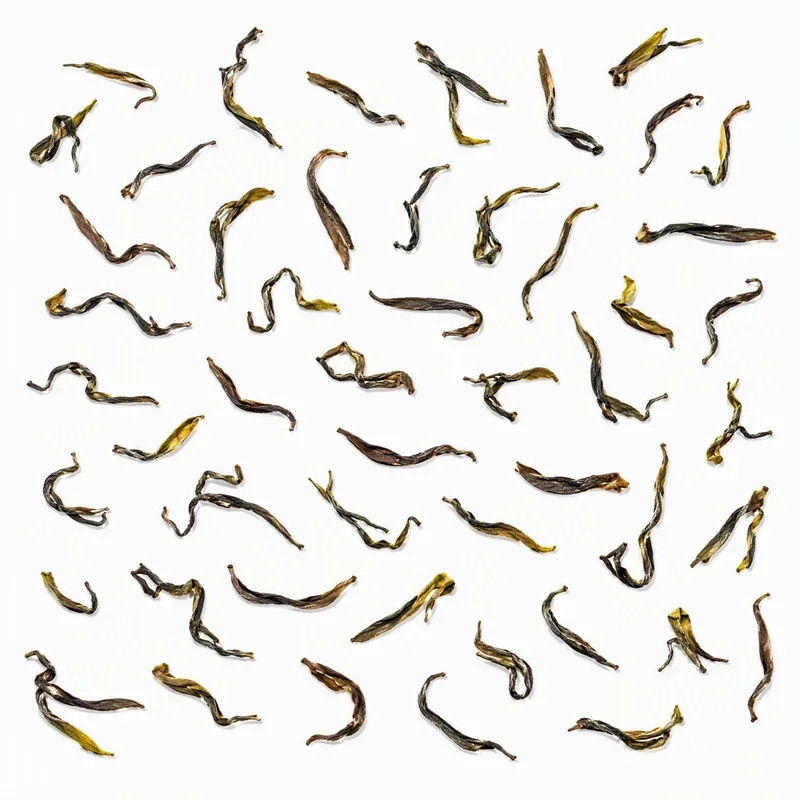
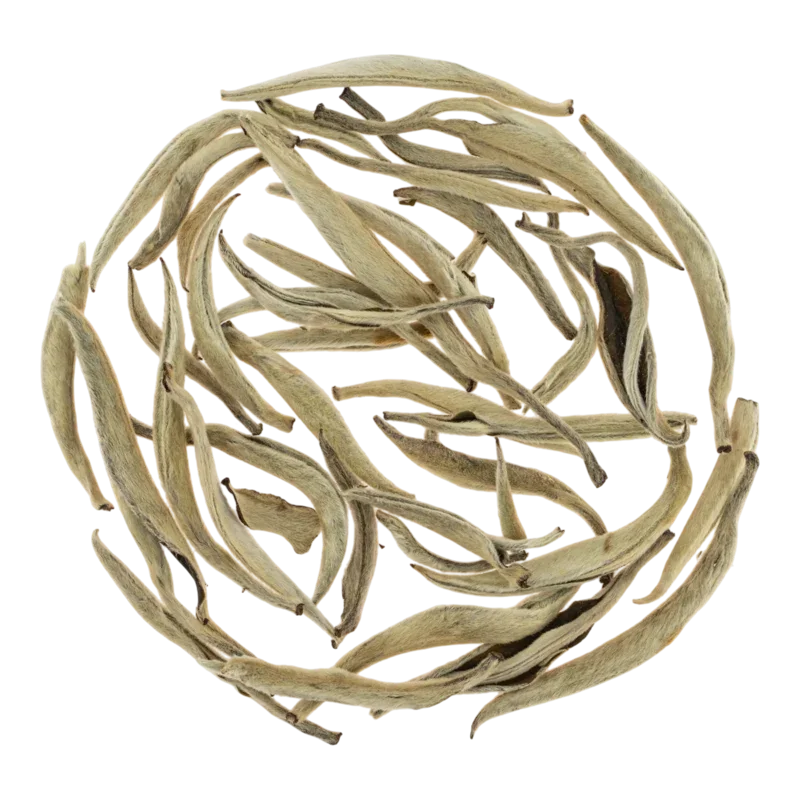
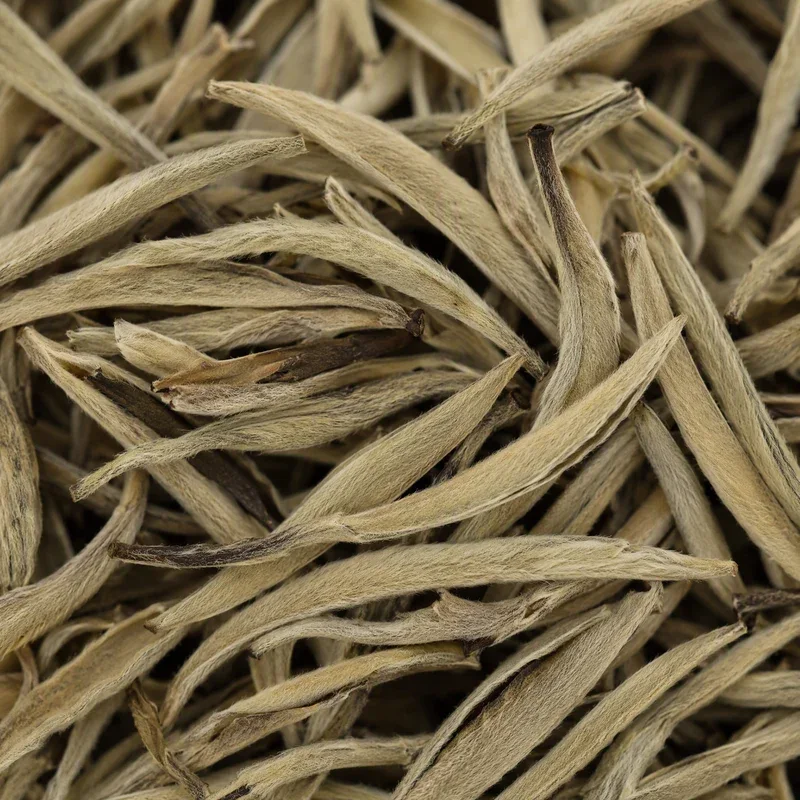
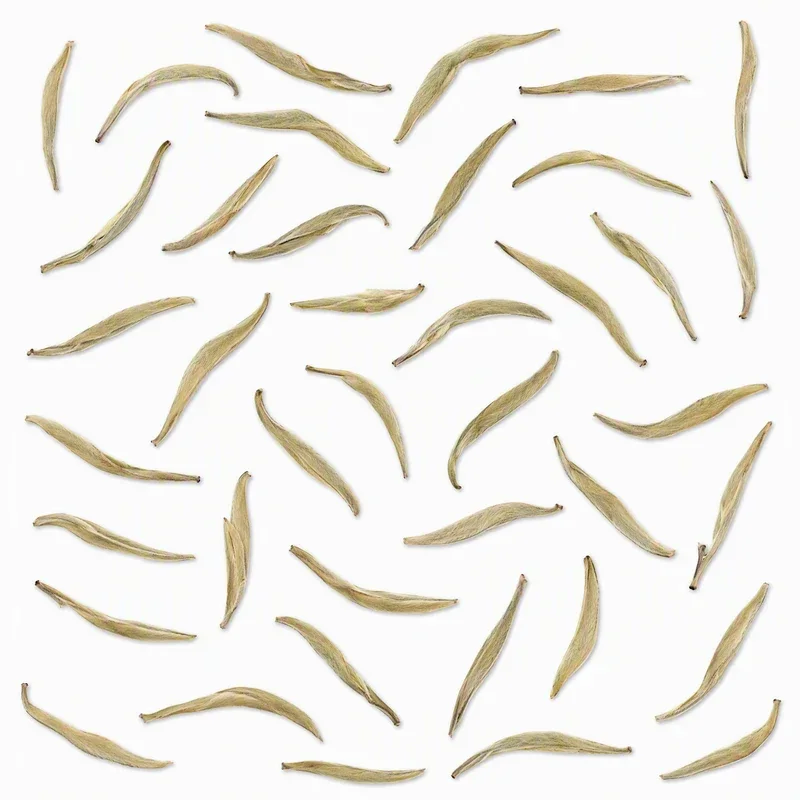
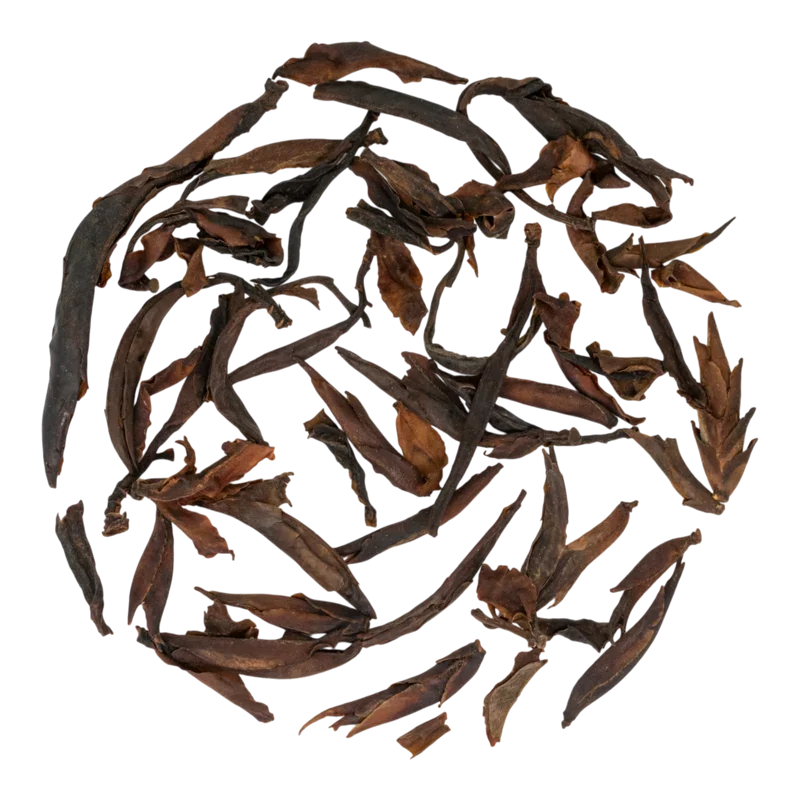
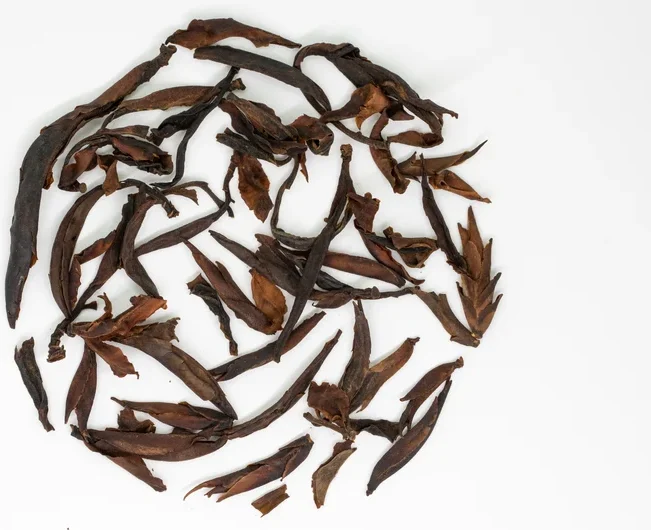
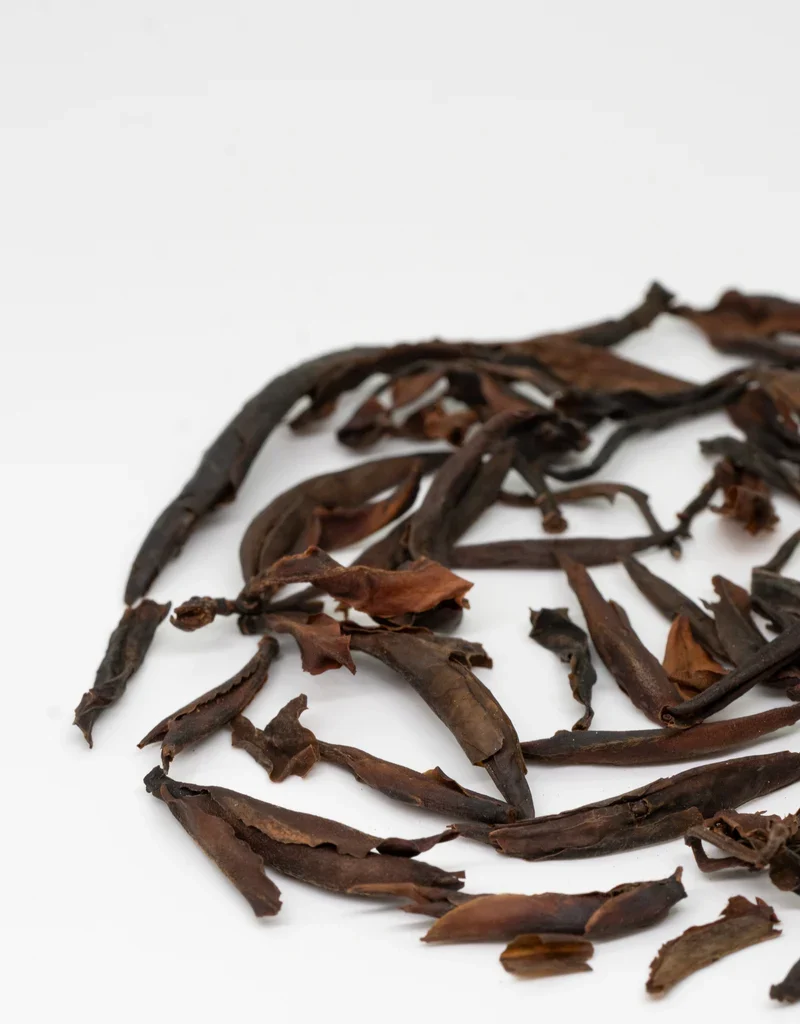
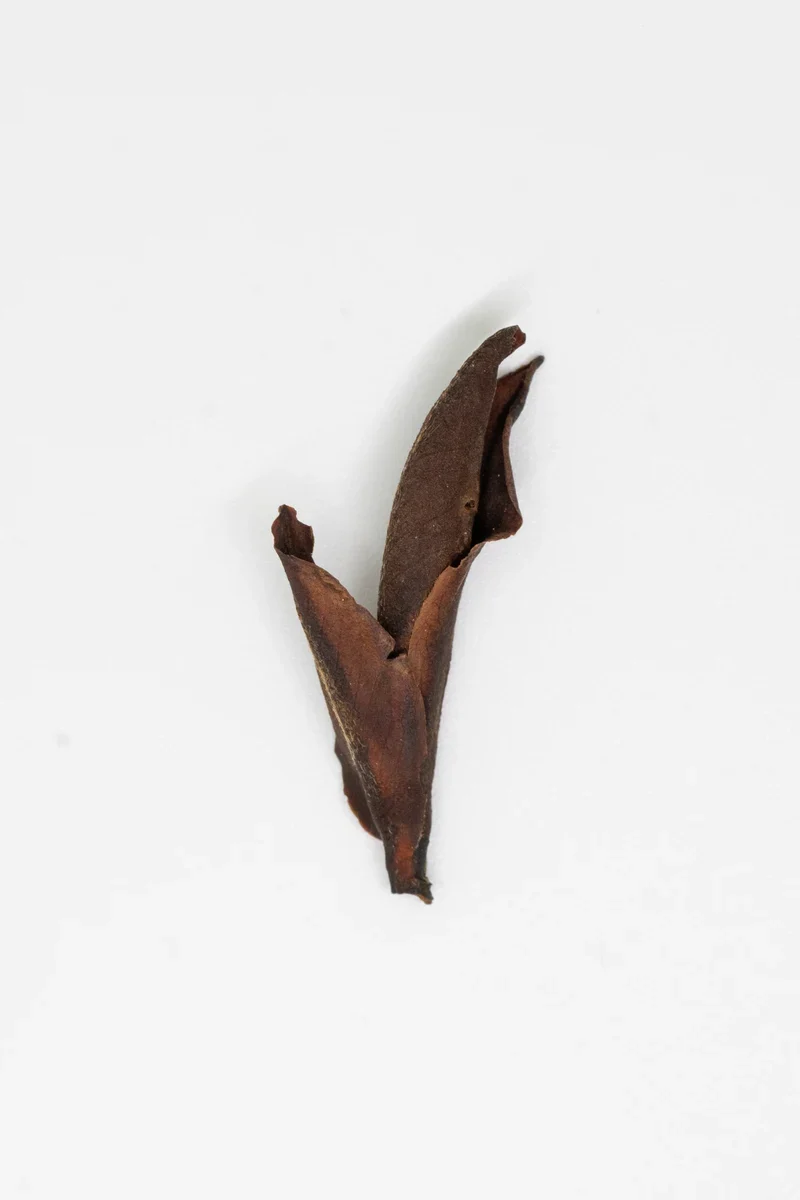
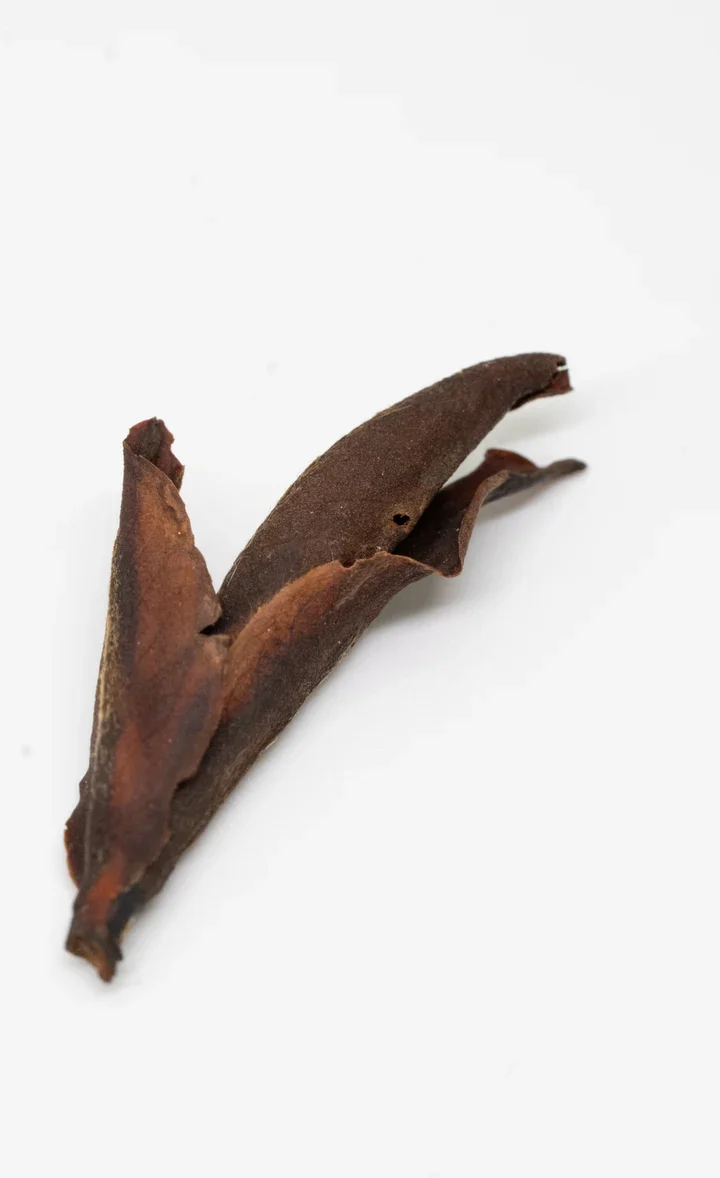
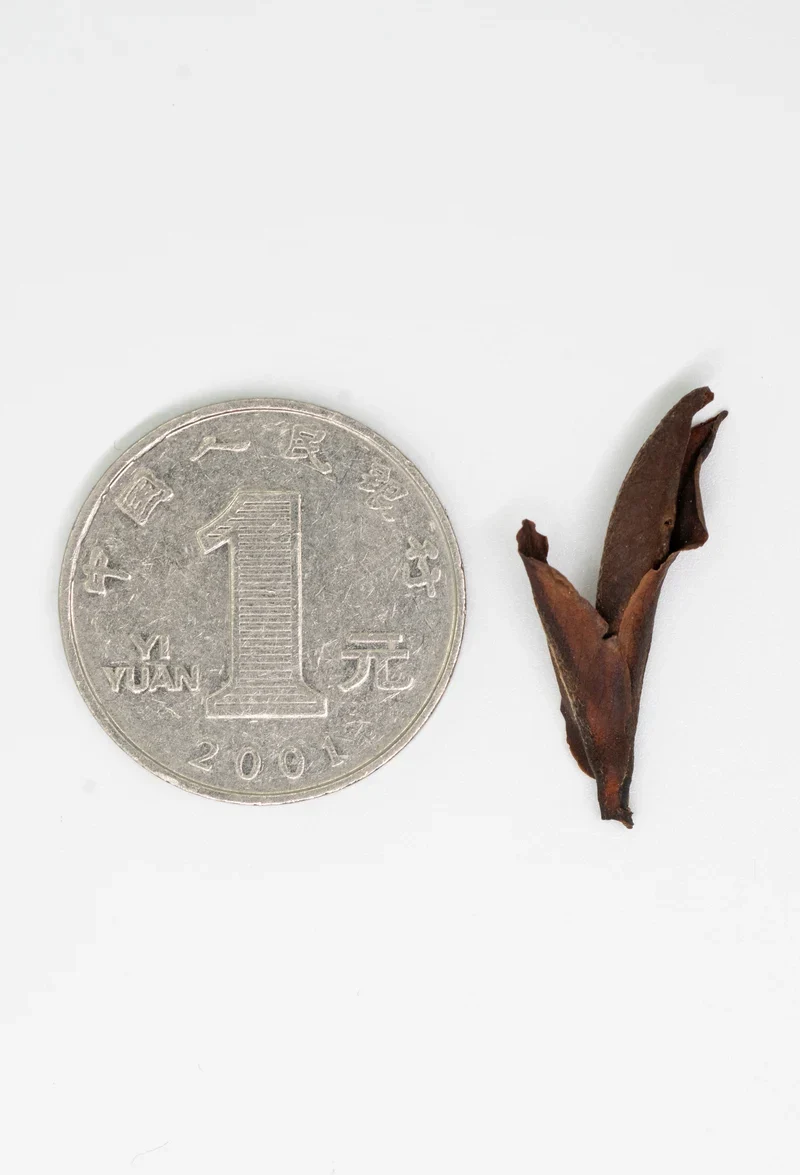
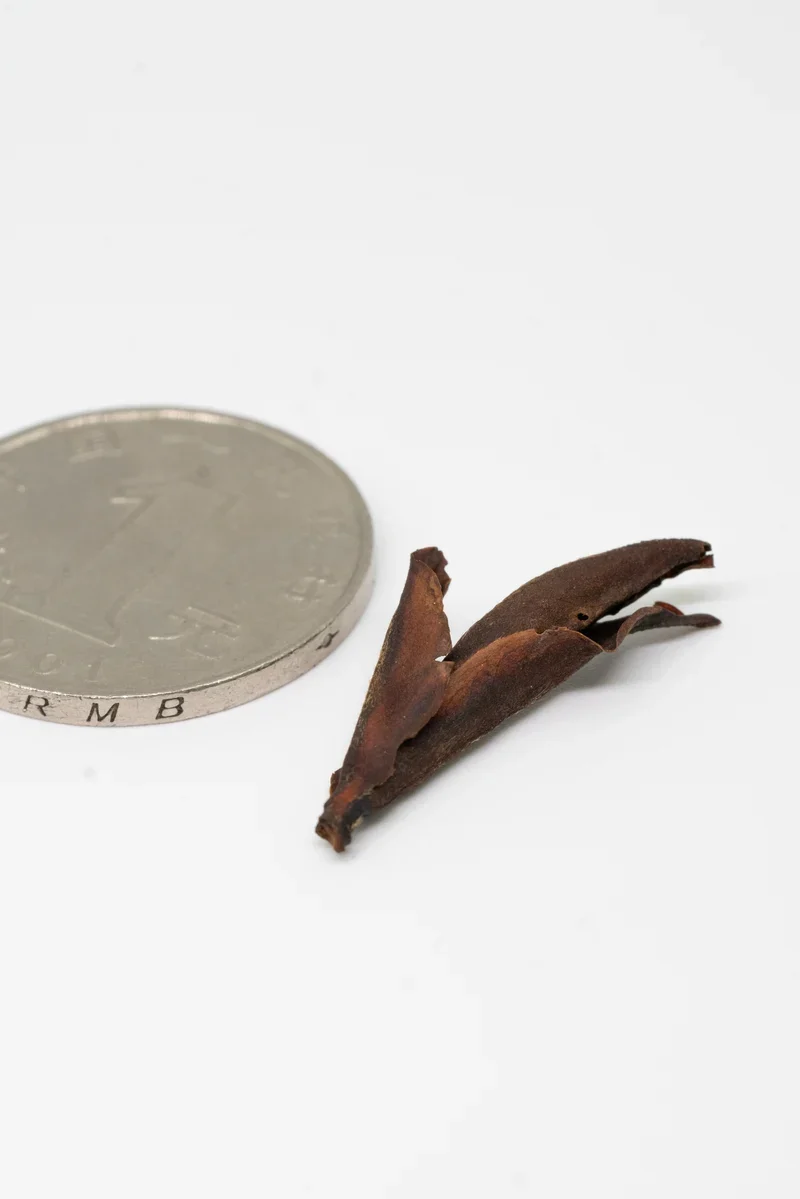
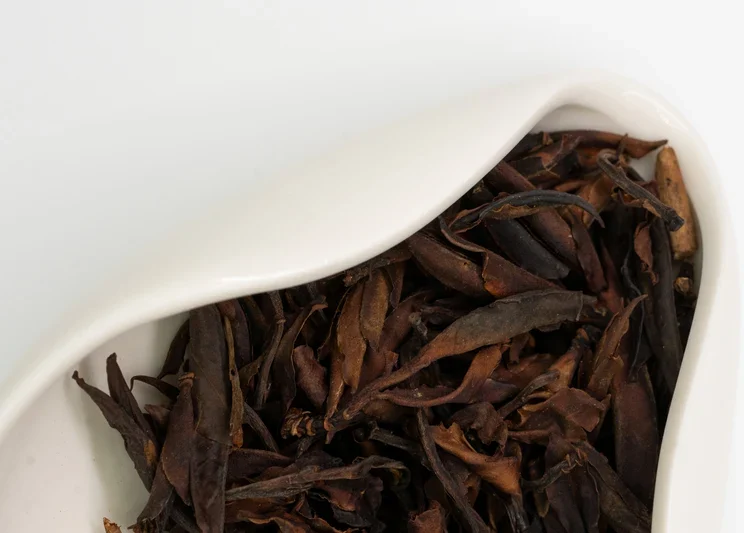
Dry Leaf Appearance: Large, unrolled or slightly twisted shoots. Buds densely covered with silvery down, through which purple tint shows. Leaves — with purple veins or pronounced purple color. Visually — one of the most unusual teas in the world.
Dry Leaf Aroma: Delicate, sweetish, fruity-floral, with characteristic notes of melon, cucumber, sometimes — light berry (blueberry, blackberry) or vanilla nuances.
Liquor Color: From light transparent with slight yellowish tint to golden, sometimes — with barely noticeable pinkish cast (from dissolved anthocyanins). Liquor pH affects color: in weakly acidic medium — pinkish, in neutral — golden.
Spent Leaves: Large, opened shoots with purple tint. Tender, fleshy. Leaf blade size — significantly larger than Fujian white teas.
Taste: Very soft, smooth, silky, without bitterness and astringency. Natural sweetness predominates — melon-like, with tones of ripe stone fruits (apricot, plum). Light minerality. Refreshing, slightly "cooling" aftertaste — "icy sweetness" (冰糖甜, bīngtáng tián), characteristic of the best Yunnan ancient trees.
Amino Acids: Elevated content (~3–5%). L-theanine dominates. Research shows that white tea from purple raw material retains more theanine than green or black tea from the same raw material (时鸿迪 et al.).
1.5–2.0% of dry mass — 5–10 times higher than standard green-leaf teas (~0.01–0.3%). Main ones: cyanidin-3-O-glucoside, delphinidin-3-O-glucoside. Powerful antioxidants with proven cardioprotective and neuroprotective action.
~3–4%. Moderate level.
Hydrolyzable tannins, including specific GHG (galloylated hexoside glycoside) — component found in Yunnan purple teas and possessing potential anti-tumor activity.
Minerals: Potassium, magnesium, manganese, zinc, iron, selenium. Deep root system of wild trees provides access to minerals from deep soil horizons.
Polyphenols: ~25–30% (Yunnan large-leaf is one of the most polyphenol-rich in the world). Catechins: EGCG, ECG, EGC, EC.
Anthocyanins + polyphenols + flavonoids = triple antioxidant complex. Purple teas exceed ordinary green teas in antioxidant activity.
Anthocyanins strengthen vessel walls, improve elasticity, promote normalization of blood pressure. Research by Yunnan Institute of Pharmacology (1991) showed 35.5% blood pressure reduction in experimental animals consuming purple tea.
Anthocyanins cross the blood-brain barrier, protecting nerve cells.
L-theanine + caffeine = calm, focused alertness.
Catechins + anthocyanins possess synergistic anti-inflammatory effect.
Food product, not medicine. With caffeine sensitivity — use caution in evening. 3–5 g/day.
3–5 g per 150–200 ml.
Teaware: Porcelain gaiwan (white porcelain allows evaluation of liquor color and possible pinkish cast). Glass teaware — for visual enjoyment of purple shoots. Yixing teapot acceptable — large-leaf Yunnan raw material is more "durable" than Fujian buds.
Water Temperature: 80–90 °C. Lower (80–85 °C) — emphasizes sweetness; higher (up to 90 °C) — reveals aroma more fully. Boiling water not recommended.
Container: Airtight, opaque — foil packages, ceramics, tin cans.
Enemies: Moisture, light, foreign odors, sharp temperature changes.
Dry, cool, dark place. Acceptable in refrigerator (0–5 °C) for maximum freshness.
White tea from Yunnan large-leaf raw material has excellent aging potential — significantly greater than Fujian Yinzhen. Under proper conditions (18–28 °C, humidity 40–65%, without light and odors) taste evolves from "fresh-fruity" to "honey-date" and further to "medicinal" (药香, yào xiāng) over 10–20+ years.
Standard of "Silver Needles" category — from small-leaf Fuding Da Bai Hao, pure buds. Delicate, "airy", with honey notes. Yunnan purple white — large-leaf, with "body", sweetness and anthocyanin "depth" that Fuding Yinzhen lacks.
Yunnan white tea from C. sinensis var. assamica — but from ordinary (green-leaf) raw material, not purple. More "standard" profile: honey-fruity, without anthocyanin component.
White tea from Zijuan cultivar. More bitter, liquor — pronounced purple. Plantation, clonal raw material. Yunnan wild purple white — sweeter, deeper, more expensive and significantly rarer.
Sheng pu-erh from same purple raw material, but with fixation (shaqing) and rolling. Liquor — golden with ruby tint, taste — more powerful, bitter, "structured". Anthocyanins partially destroyed during shaqing. White tea — softer, sweeter, with better anthocyanin preservation.
Red tea from purple Yunnan raw material. Fully oxidized — anthocyanins practically destroyed, profile — "honey-malty" without purple notes. Completely different product.
wild — large-leaf, only young part of shoot is purple, liquor — golden-pinkish, taste — sweet, powerful; Zijuan — medium-leaf, all parts purple (stem, leaf, bud), liquor — pronounced purple, taste — more bitter.
No reviews yet. Tell us what you think of this tea.
Rate this tea and share your impressions. We review each submission before publishing it.