Brewing
Gongfu brewing
- Water temperature
- 78 °C
- Tea amount
- 5 g
- Water volume
- 100 ml
- First steep
- 10 s
- Time added per infusion
- 5 s
- Infusions
- 4

Hǎimǎ gōng chá
Choose a brewing method. Start with the recommended quantities and time, then adjust to taste.
Brewing
Brewing
Taste
Tea encyclopedia
Category: Historical regional tea of Guizhou. Former imperial court tea of the Qing era. Product with protected geographical indication (2014).
Category: Historical regional tea of Guizhou. Former imperial court tea of the Qing era. Product with protected geographical indication (2014).
Coordinates: Approximately 27° North latitude, 105° East longitude.
Origin: China, Guìzhōu Province (贵州, Guìzhōu), Bìjié City (毕节, Bìjié), Dàfāng County (大方县, Dàfāng Xiàn), Zhúyuán Yī and Miáo Township (竹园彝族苗族乡, Zhúyuán Yízú Miáozú Xiāng), Hǎimǎ Gōng Village (海马宫村, Hǎimǎ Gōng Cūn). The village is located at the foot of Laoying Yán cliff (老鹰岩, "Eagle Rock"), surrounded by primeval forest.
Type: Yellow tea (黄茶, huángchá), lightly oxidized. Belongs to the subcategory "yellow small tea" (黄小茶, huáng xiǎo chá).
Cultural Significance: Haima Gong Cha is a tea of the small peoples of southwestern China. Hǎimǎ Gōng village is populated predominantly by representatives of the Yī (彝族) and Miáo (苗族) peoples. In the Miao language, the tea tree is called "douji" (斗吉, dòu jí). Tea is part of the daily culture of these peoples: it is present at festivals, weddings, funerals, when receiving guests. Haima Gong Cha is one of the few yellow teas carrying not Han but ethnically different cultural tradition, which gives it special value in the context of China's multicultural tea map.
According to oral tradition, tea from Haima Gong Mountain was known as early as the Ming era. Legend connects it with Shé Xiāng fujin (奢香夫人, ~1358–1396) — the famous ruler of the Yī people (彝族, Yízú) in Guizhou Prefecture. She Xiang, a skilled diplomat and builder, according to legend, presented tea from Hǎimǎ Gōng to Emperor Zhú Yuánzhāng (朱元璋), founder of the Ming dynasty. The emperor appreciated the offering, and gratitude was expressed in support for the construction of "Qianzhong postal roads" (黔中驿道), connecting Guizhou with central China. This legend, though lacking solid documentary foundation, is deeply rooted in local cultural memory and symbolizes the role of tea in relations between central authority and southwestern peoples.
Documented history begins with Jiǎn Guìcháo (简贵朝, Jiǎn Guìcháo) — a native of Guìzhōu who served as county magistrate (知县, zhīxiàn) in Wendeng (文登县, Shandong Province). Jian Guichao, fascinated by tea culture during his service in the east, brought tea seeds to his homeland when he returned to Haima Gong for his father's funeral. He planted the seeds, established processing, and created a tea he named "Zhuyeqing" (竹叶青, "Bamboo Leaf Green") — after the color of the liquor, reminiscent of young bamboo. The tea was presented to the governor of Dading Prefecture (大定府, modern Dafang), received high evaluation, and through the chain of official tributes reached the imperial court, after which it became an annual court tribute (岁岁作为贡品).
The "Dading County Gazetteer" (《大定县志》) recorded: "Among teas the best is from Haima Gong, Guowa is second; when first brewed the taste is still astringent, but after two or three steepings it becomes aromatic, therefore near and far compete to buy it, praising it incessantly" (茶叶之佳以海马宫为最,果瓦次之,初泡时其味尚涩,迨泡经两三次其味转香,故远近争购啧啧不置).
Unlike many historical yellow teas, Haima Gong Cha did not experience complete disappearance, although production volumes remained extremely small. The tea continued to be produced in Haima Gong village as a local product. In 2014 it received national geographical indication certification, which gave impetus to production expansion. Nevertheless, Haima Gong Cha remains one of the least known yellow teas in China — a "tea hermit" (茶中隐士), as Chinese authors call it.
Cultivar: Local medium-leaf and small-leaf group population (本地中小群体种, běndì zhōng xiǎo qúntǐ zhǒng). In Miao language — "douji." Characteristic features: abundant pubescence (茸毛多), high "tenderness retention" (持嫩性强, chí nèn xìng qiáng) — ability to maintain softness with relatively late picking. Dark green color of leaves. Well adapted to high-altitude conditions.
Picking: Season — period of Gǔyǔ (谷雨, "Grain Rain," ~April 20) and later. This is noticeably later than most eastern Chinese yellow teas (which are picked before Qingming or before Guyu), explained by the growing altitude (1480–1500 m) and colder climate.
Pluck Standard: First grade — bud with one leaf in initial opening stage (一芽一叶初展). Second grade — bud with two leaves (一芽二叶). Third grade — bud with three leaves (一芽三叶).
Raw Material: Uniformity in size and degree of opening. Abundant pubescence — mandatory sign of quality raw material.
Altitude: 1480–1500 meters above sea level — one of the highest-altitude yellow teas in China. For comparison: Mengding Huang Ya — up to 1450 m, most other yellow teas — significantly lower.
Climate: Average annual temperature ~13°C — significantly cooler than most tea regions in China. Annual precipitation — 1000–1200 mm. Relative humidity ≥80%. Mountains on three sides form a natural "bowl," protecting from cold winds. Constant cloudiness, abundant fogs, high proportion of diffused light.
Soil: Slightly acidic sandy loam soils (微酸性沙壤土) and yellow mountain soils (黄壤, huáng rǎng). Potassium content — up to 127 ppm (high indicator). Rich in organic matter. Underlying rock provides good drainage.
Haima Gong village is located on the eastern slope of the Yunnan-Guizhou Plateau, in a deep mountain gorge at the foot of Laoying Yán cliff (老鹰岩, "Eagle Rock"). The area is part of Bìjié City (毕节) — one of the highest-altitude urban districts in Guizhou. Surroundings — primeval forest forming a natural ecosystem.
Extreme isolation: Haima Gong village was until recently difficult to access, which simultaneously preserved ecological purity and limited the tea's fame. Proximity to primeval forest ensures rich biodiversity and absence of industrial pollutants. Low average annual temperature slows shoot growth, promoting maximum amino acid accumulation — amino acid content in Haima Gong Cha is estimated at 6–9% of dry matter, which is an exceptionally high indicator.
Pan-firing in a flat wok at temperature ~140°C. Manual work.
Light rolling to damage cellular structure and begin forming the characteristic curled shape.
Key stage. The rolled leaf is gathered into tight clumps, wrapped in white cloth (捏团白布包裹) and left for ~24 hours at room temperature. This is significantly longer than most yellow teas (Mengding Huang Ya — 8–12 hours, Mogan Huang Ya — ~40 minutes). Over 24 hours deep yellowing occurs: chlorophyll breaks down, catechins transform, pigments characteristic of yellow tea and sweetness form.
Drying and fixing the intermediate result.
Deepening the shaping.
Another cycle of drying.
Final shaping — giving tight, spiral form (紧结卷曲如螺). Triple rolling is a unique feature of Haima Gong Cha.
Low-temperature, prolonged drying — more than 10 hours on slow fire (文火, wén huǒ). Such duration ensures deep heating and formation of complex aroma.
Removal of foreign inclusions, quality equalization.
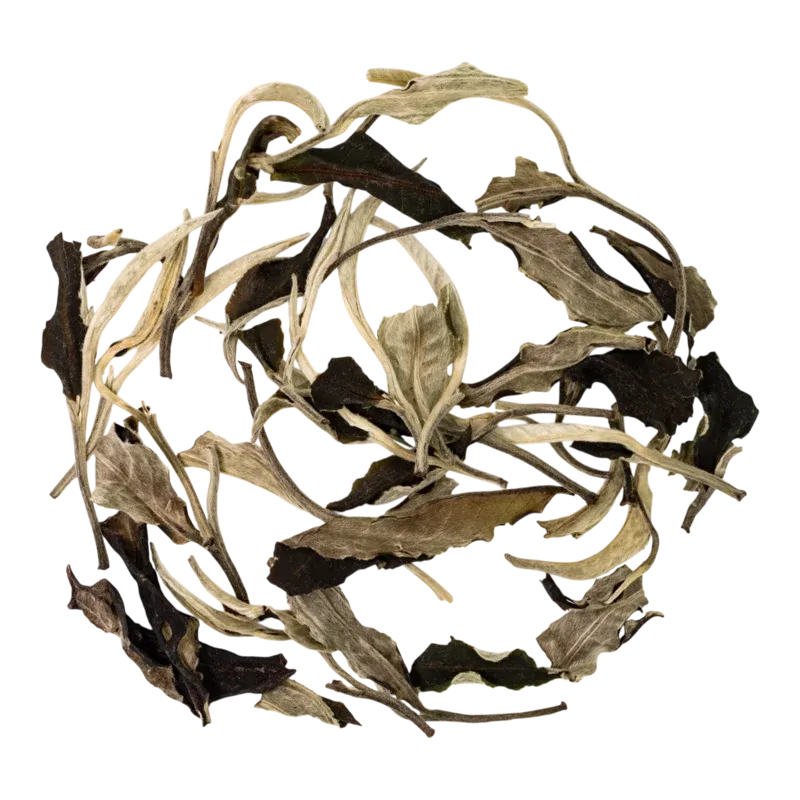
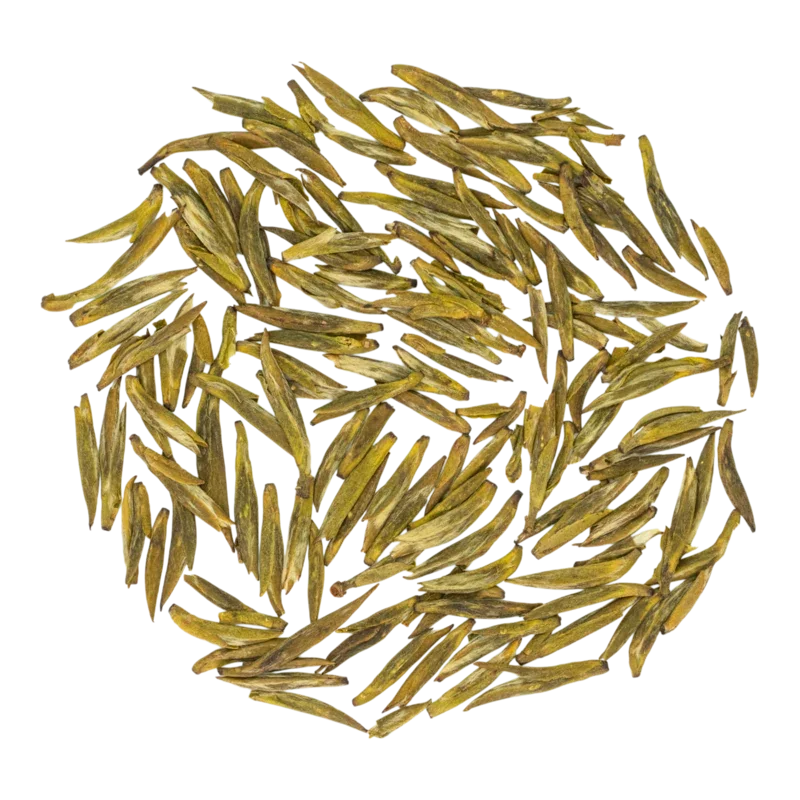
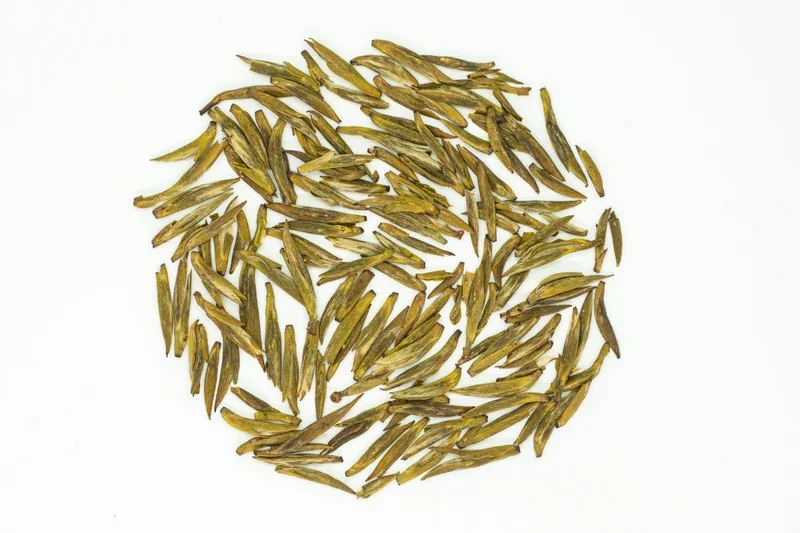
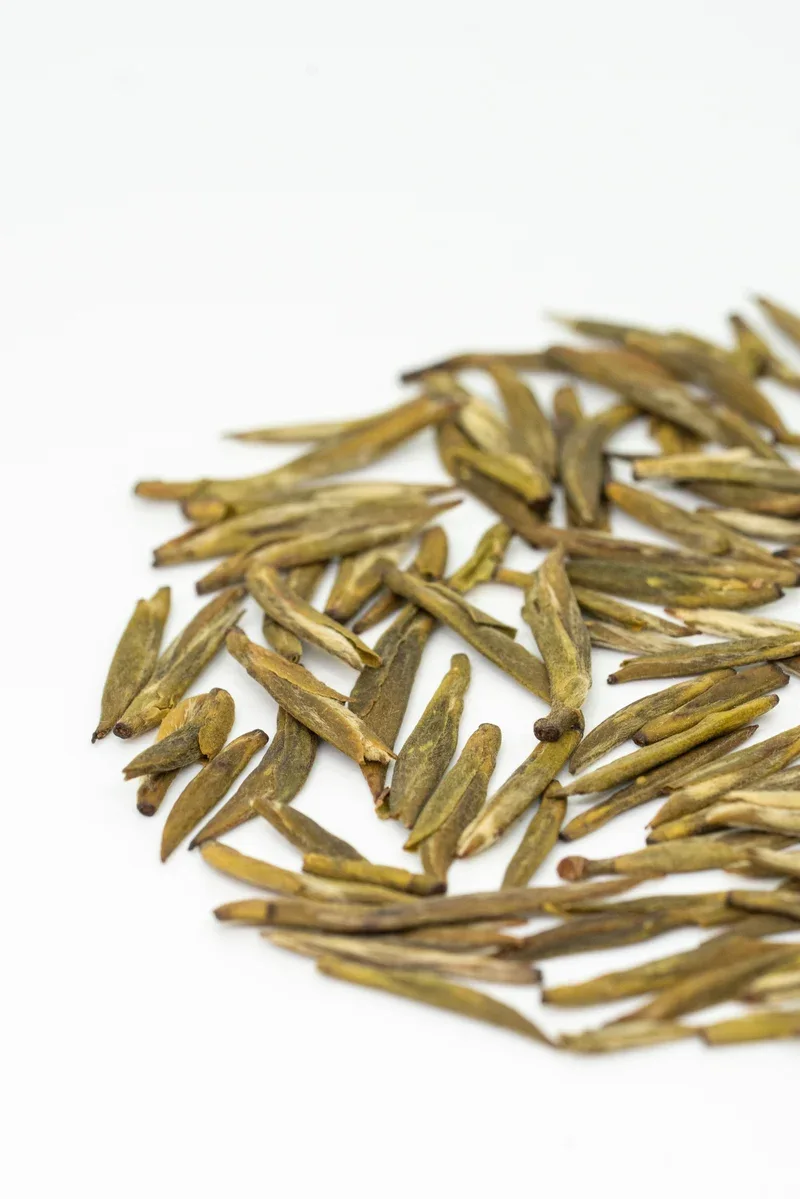
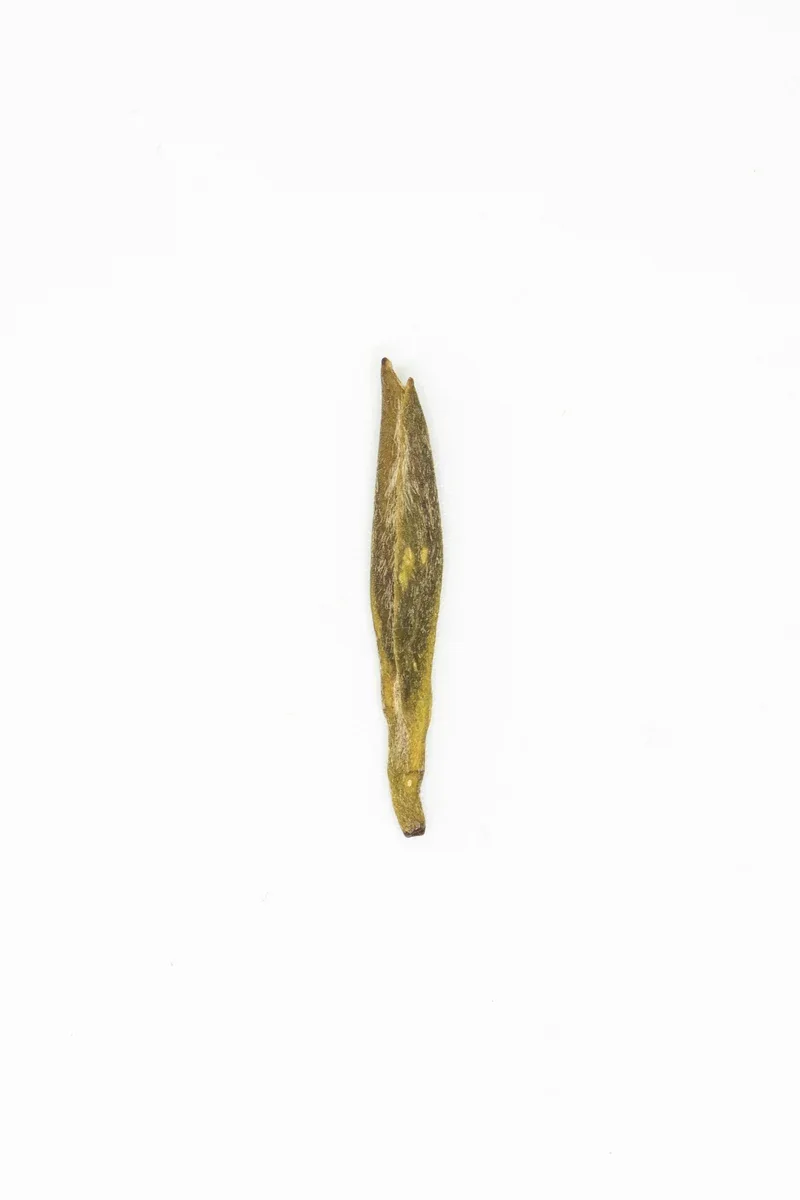
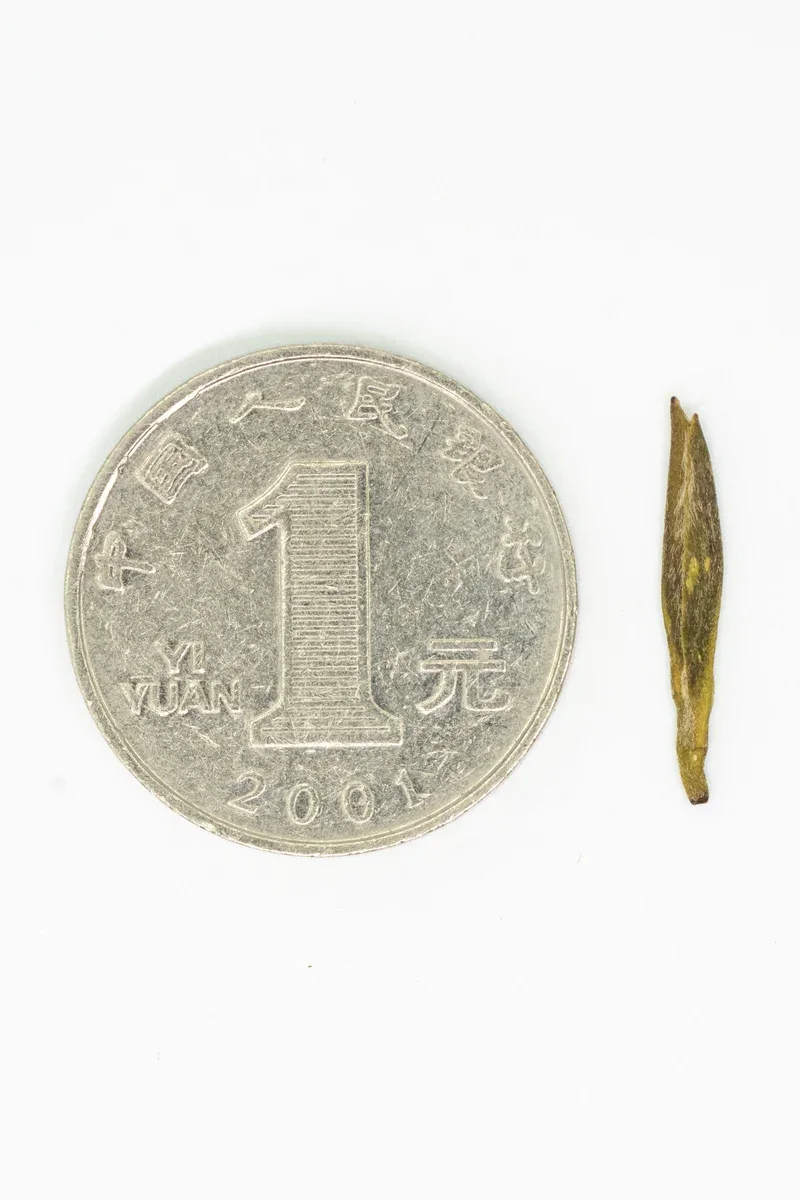
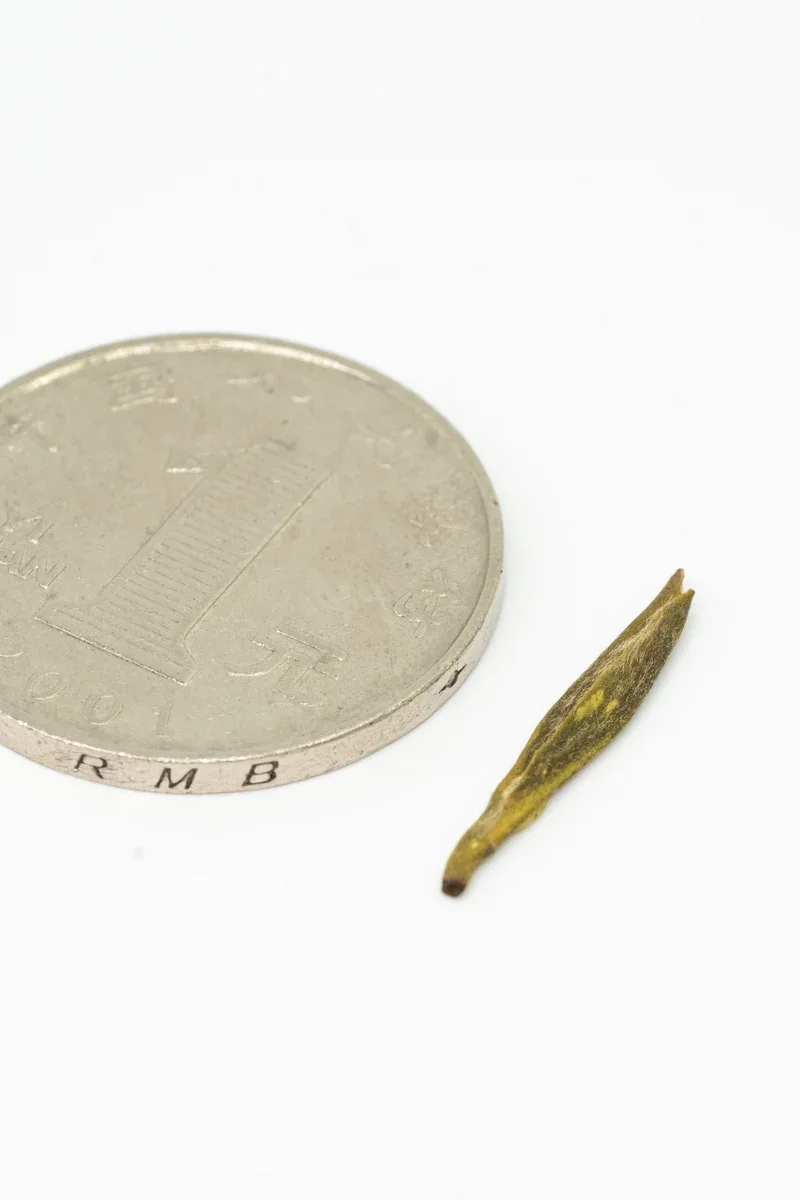
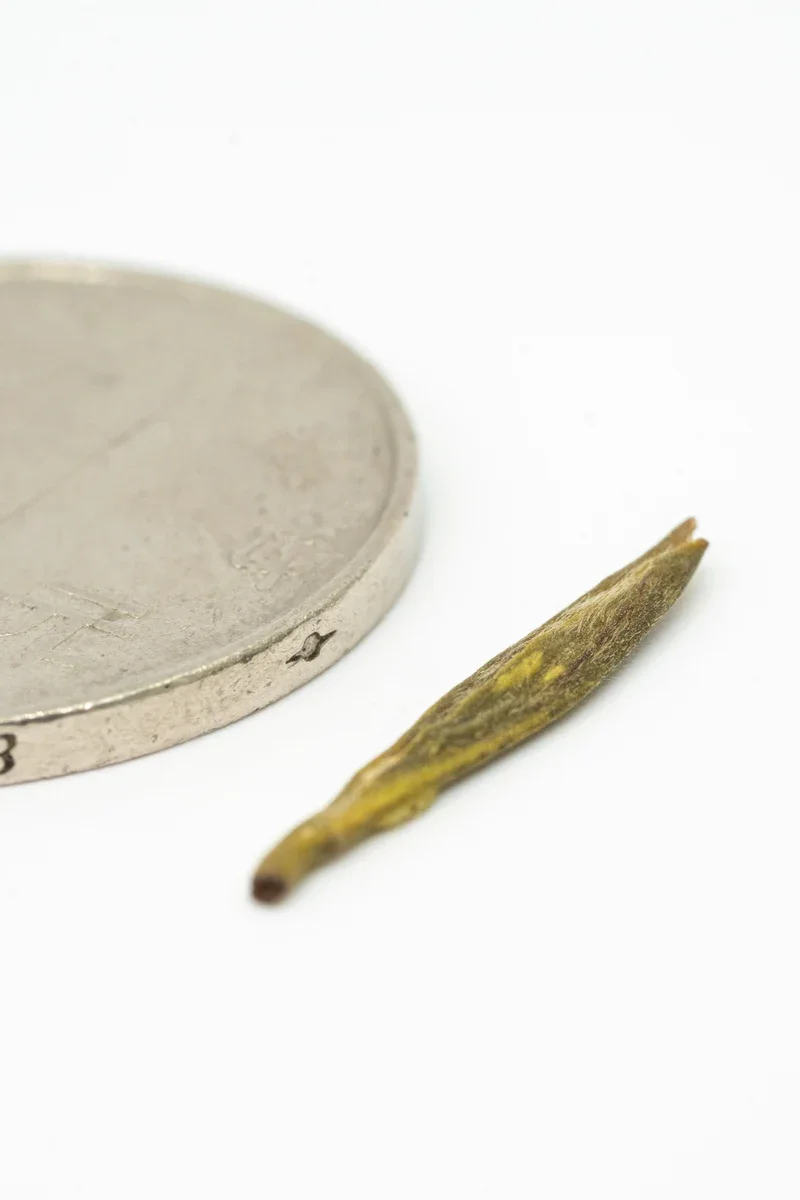
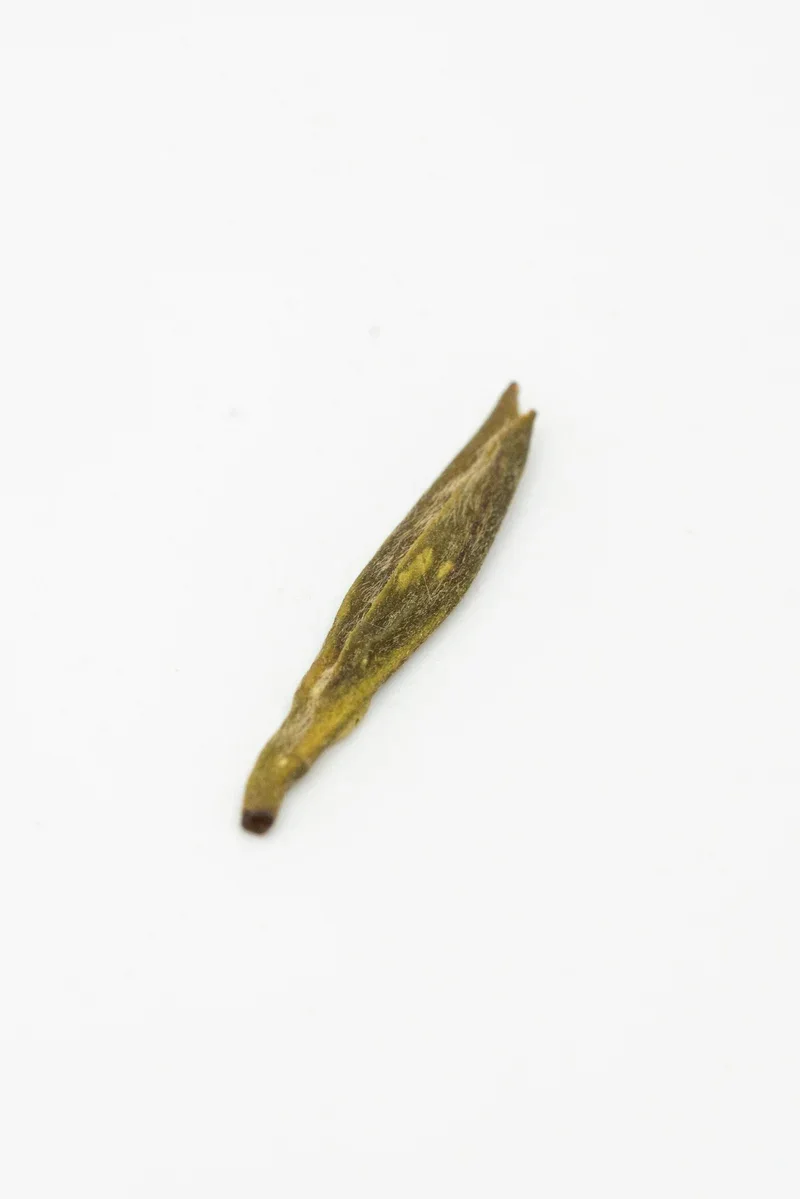
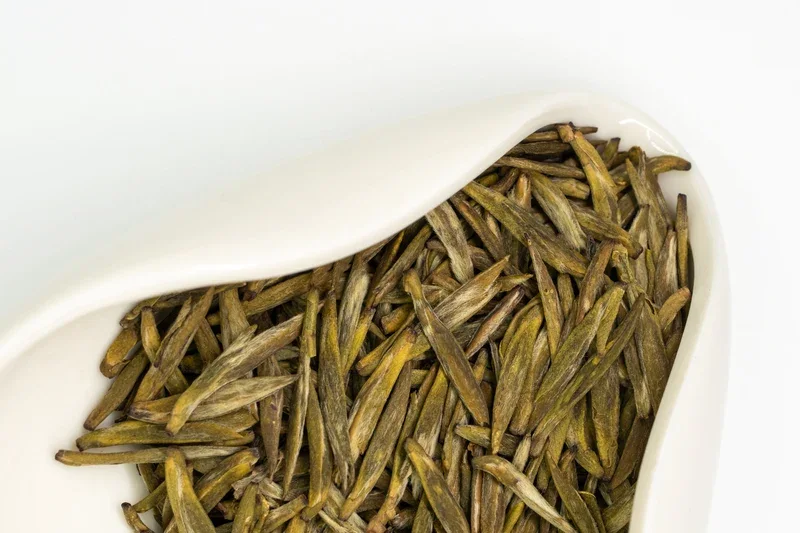
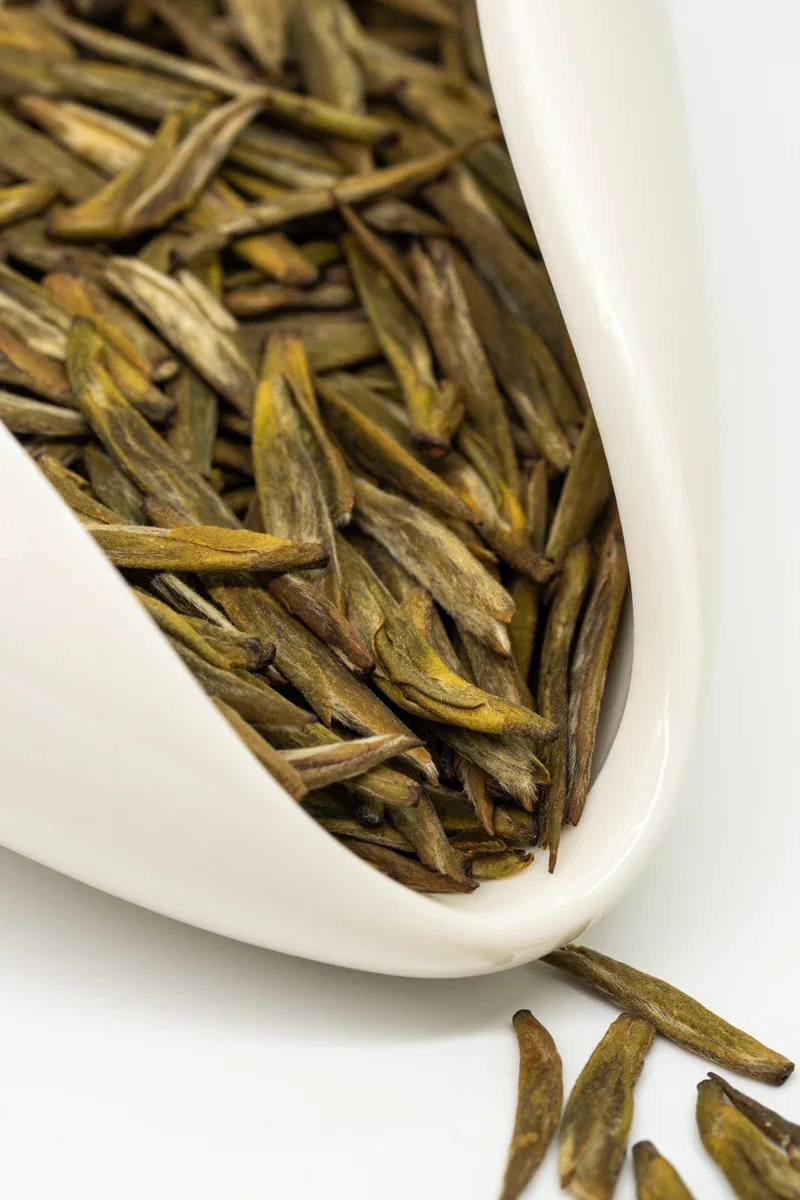
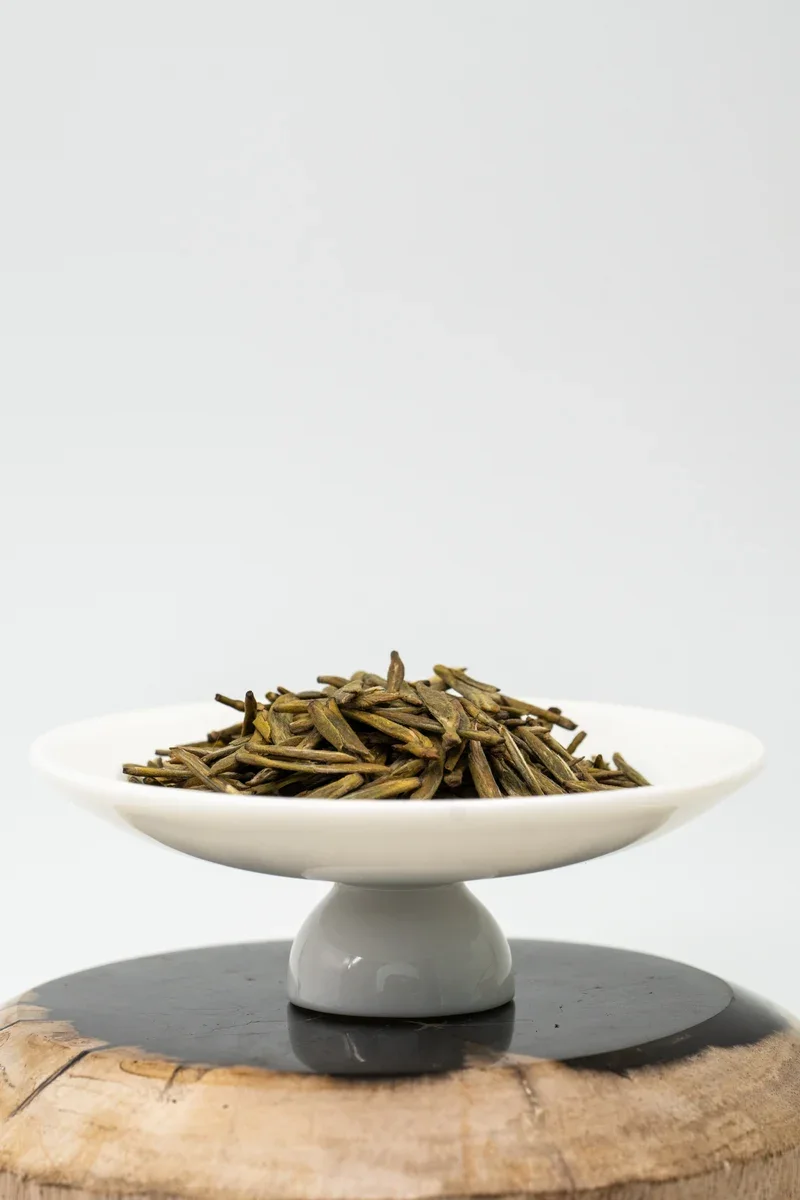
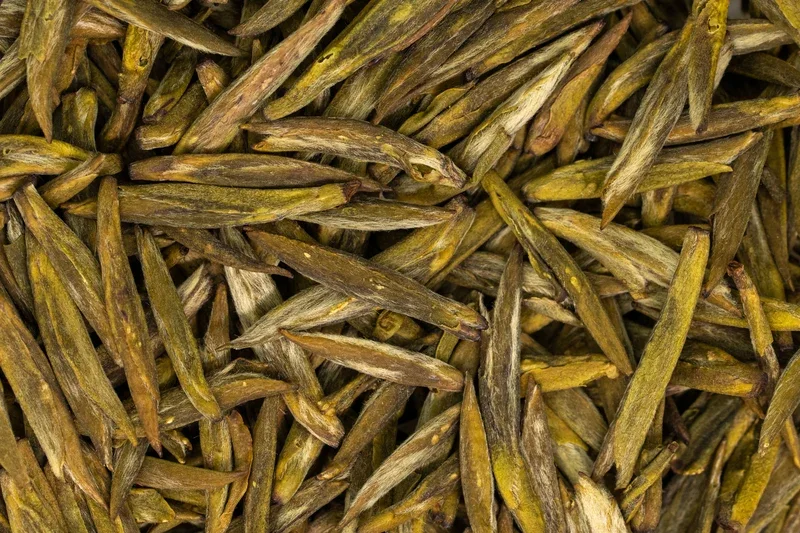
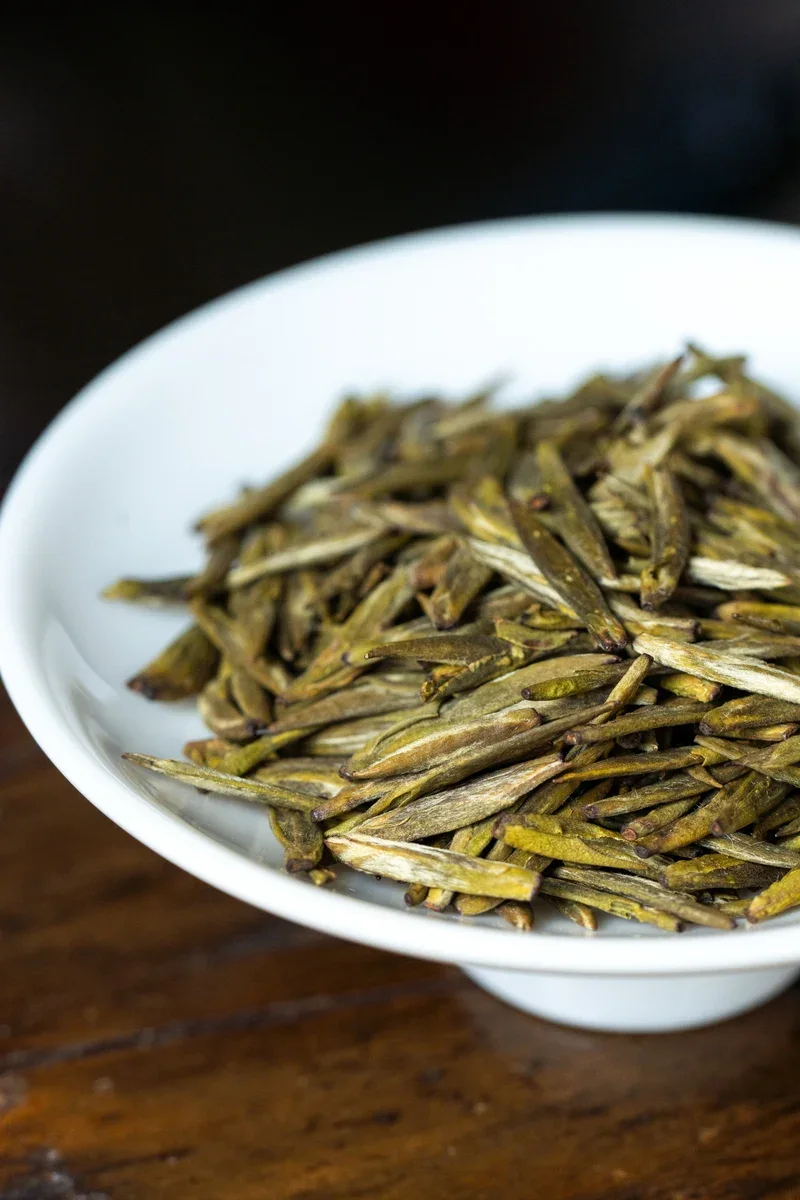
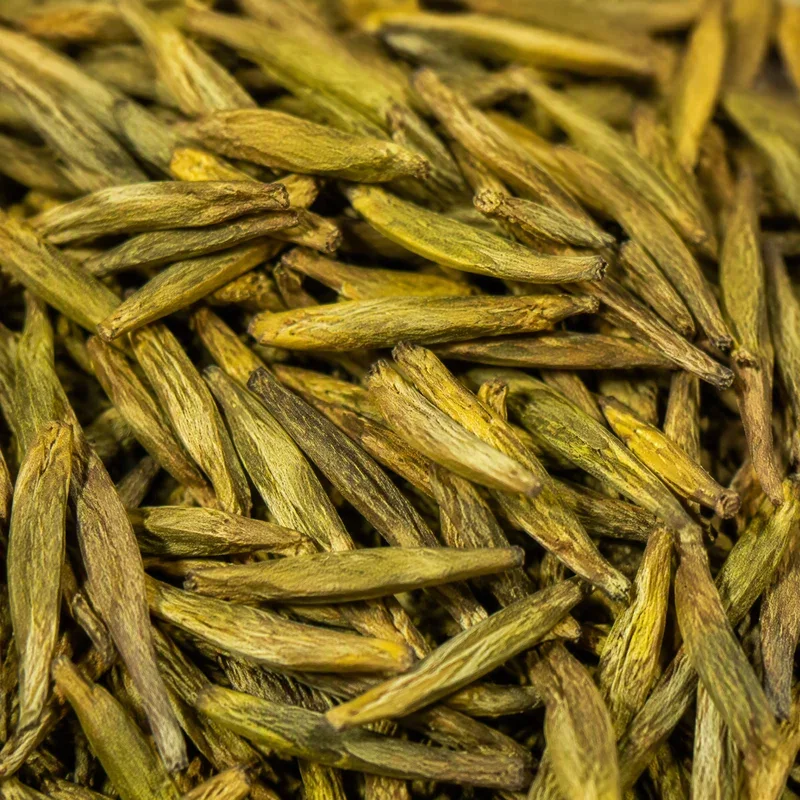
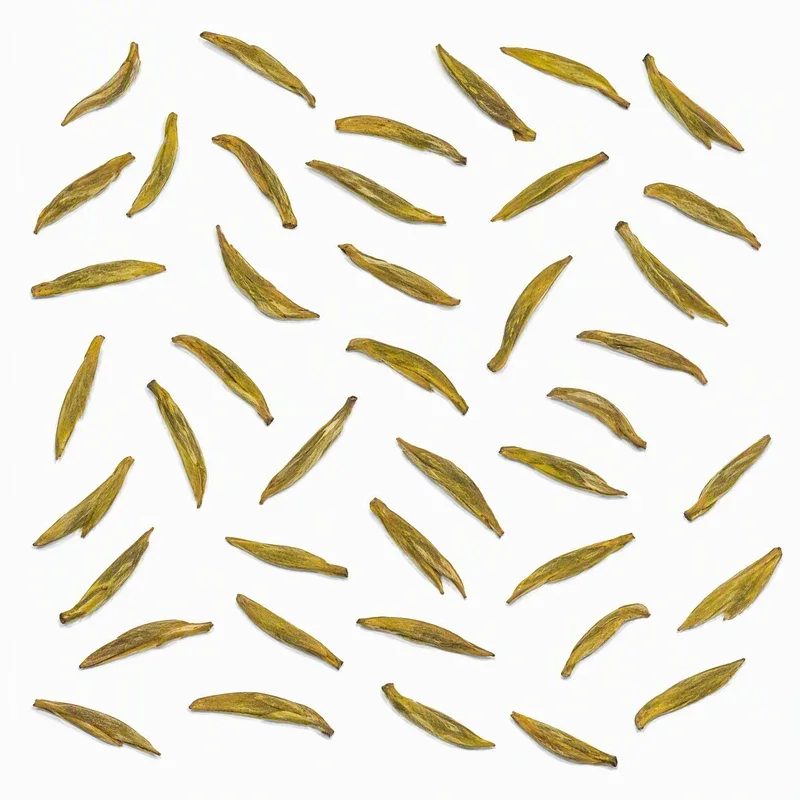
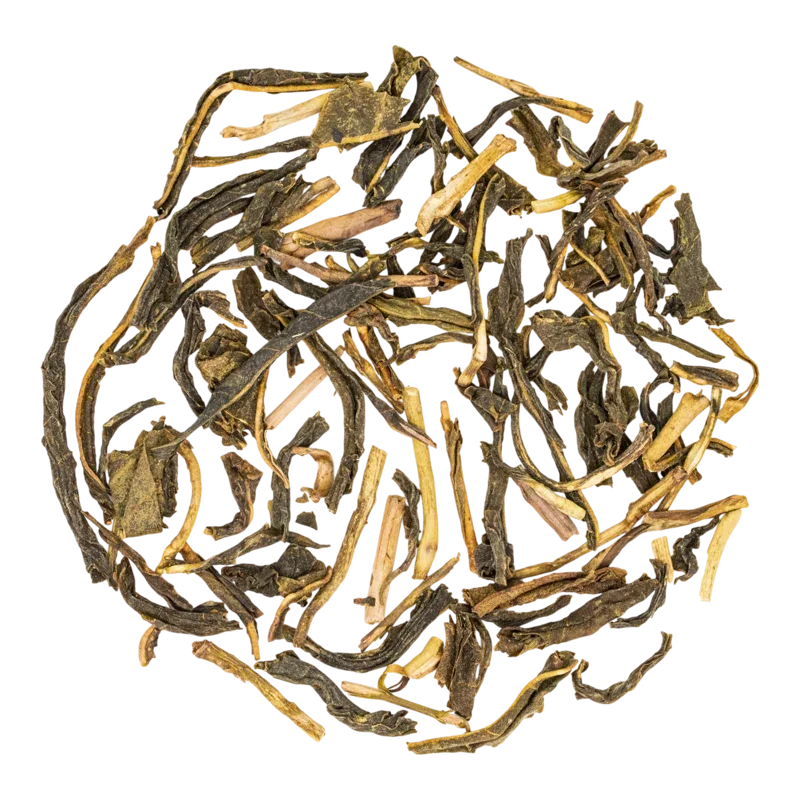
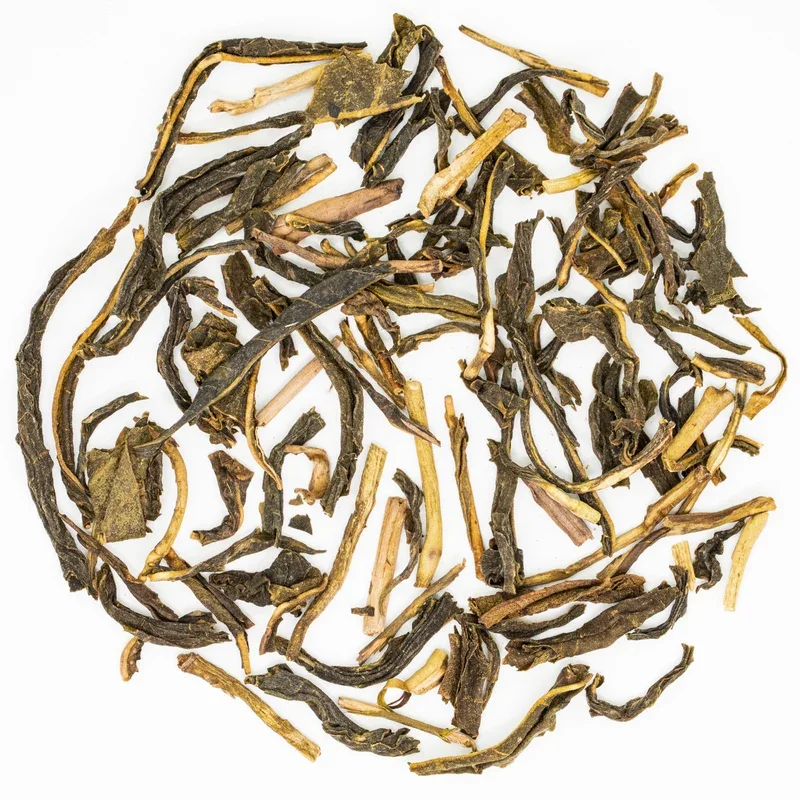
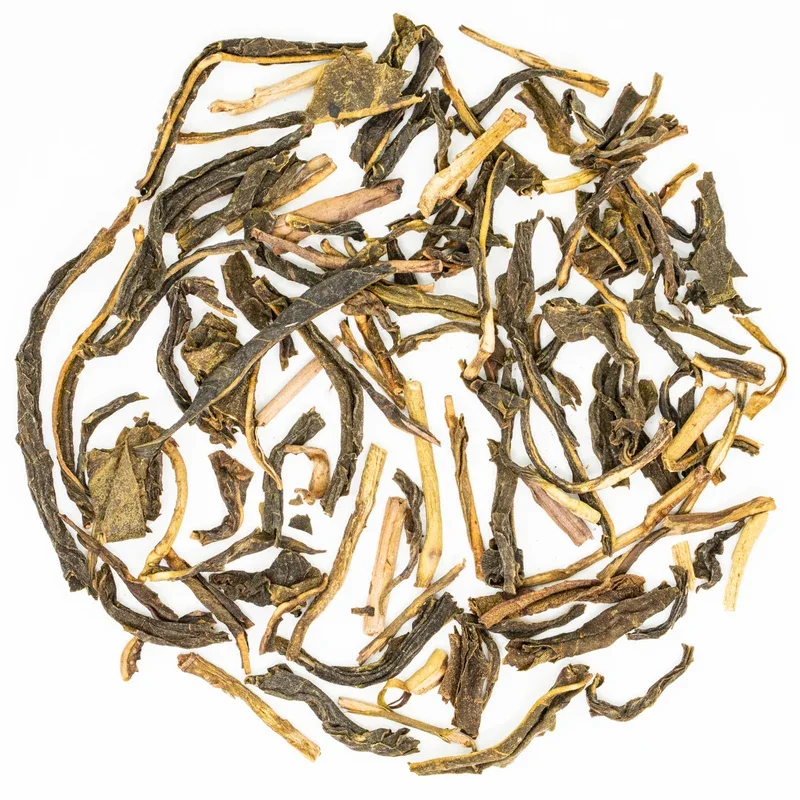
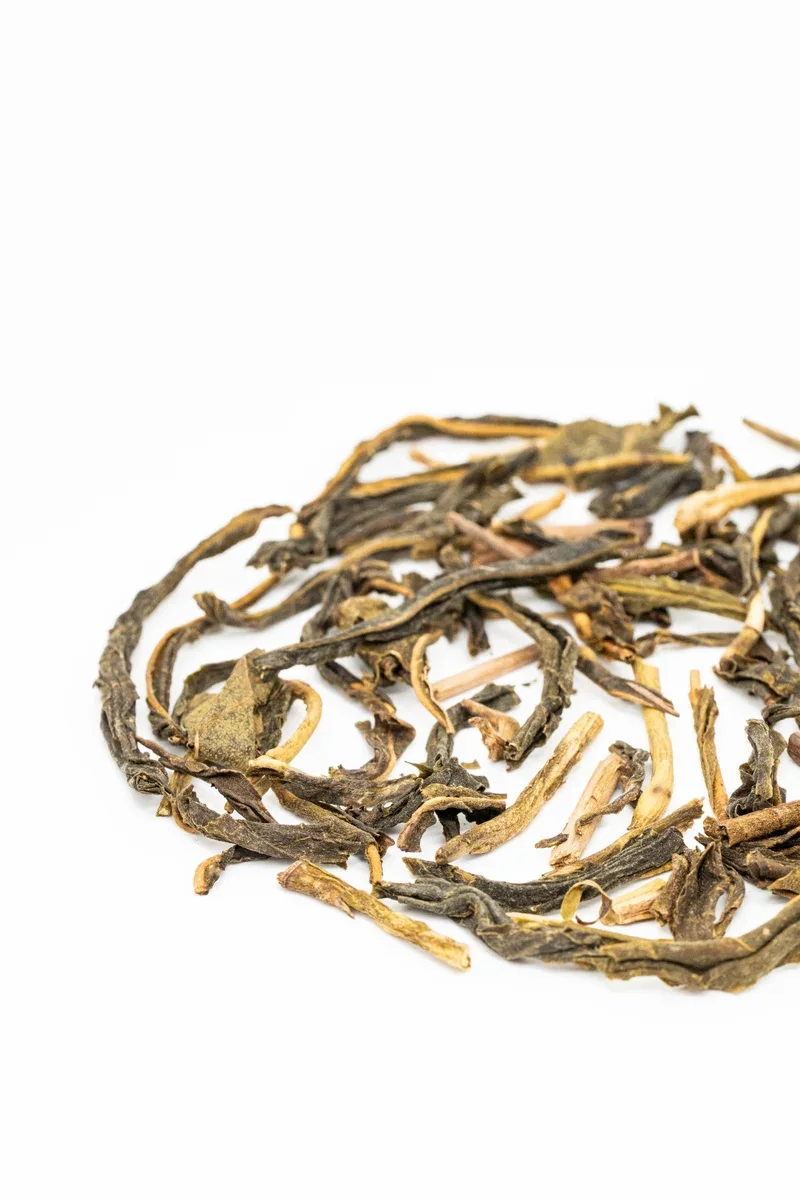
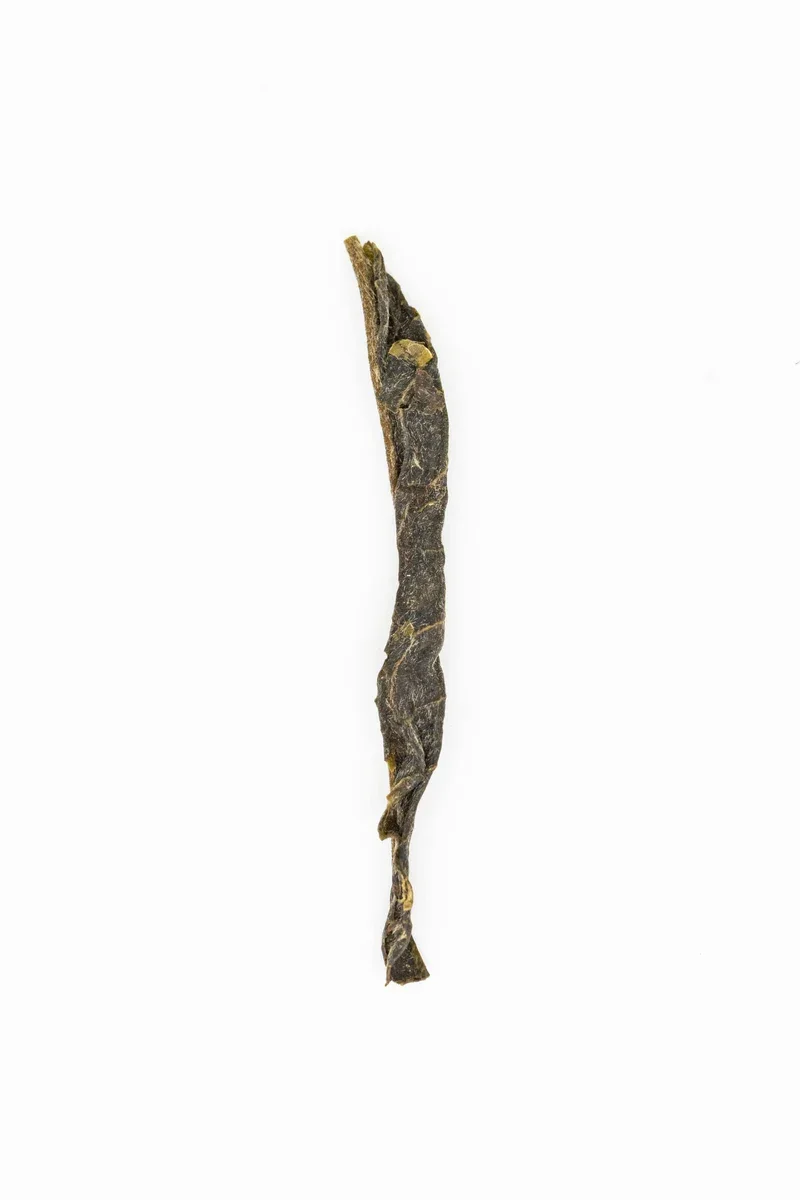
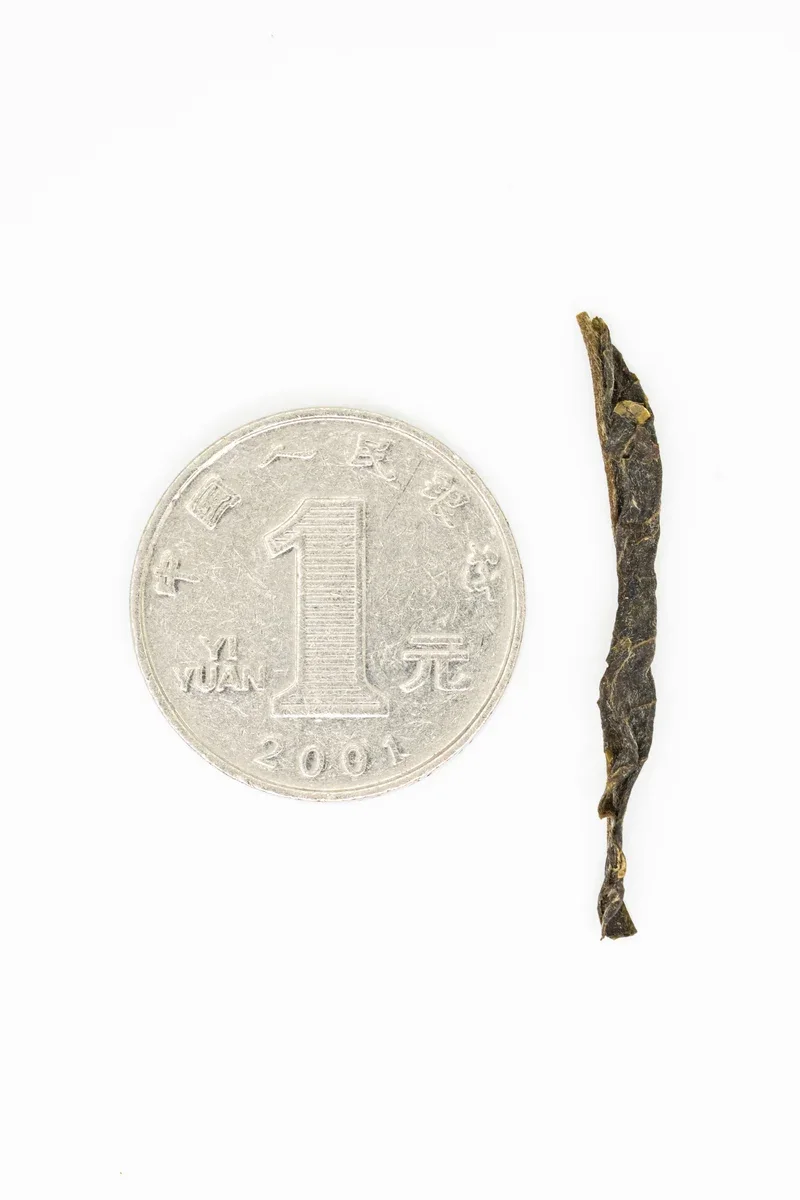
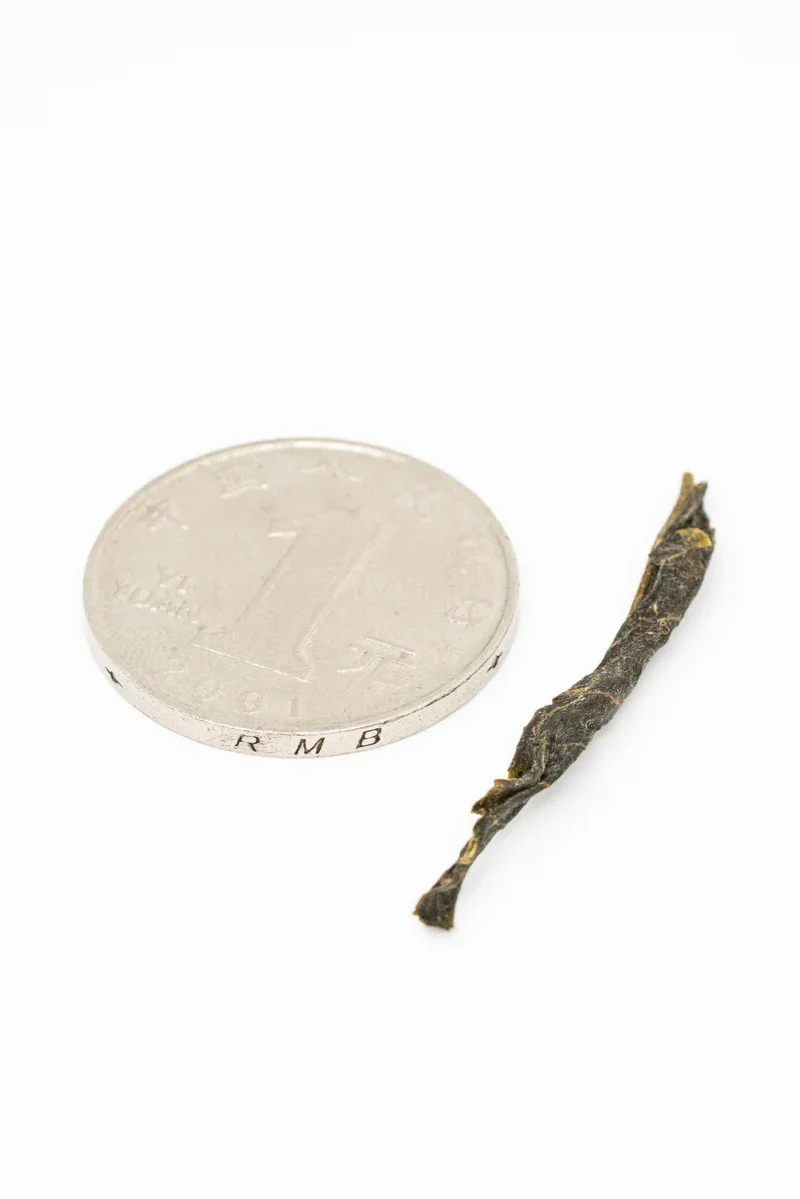
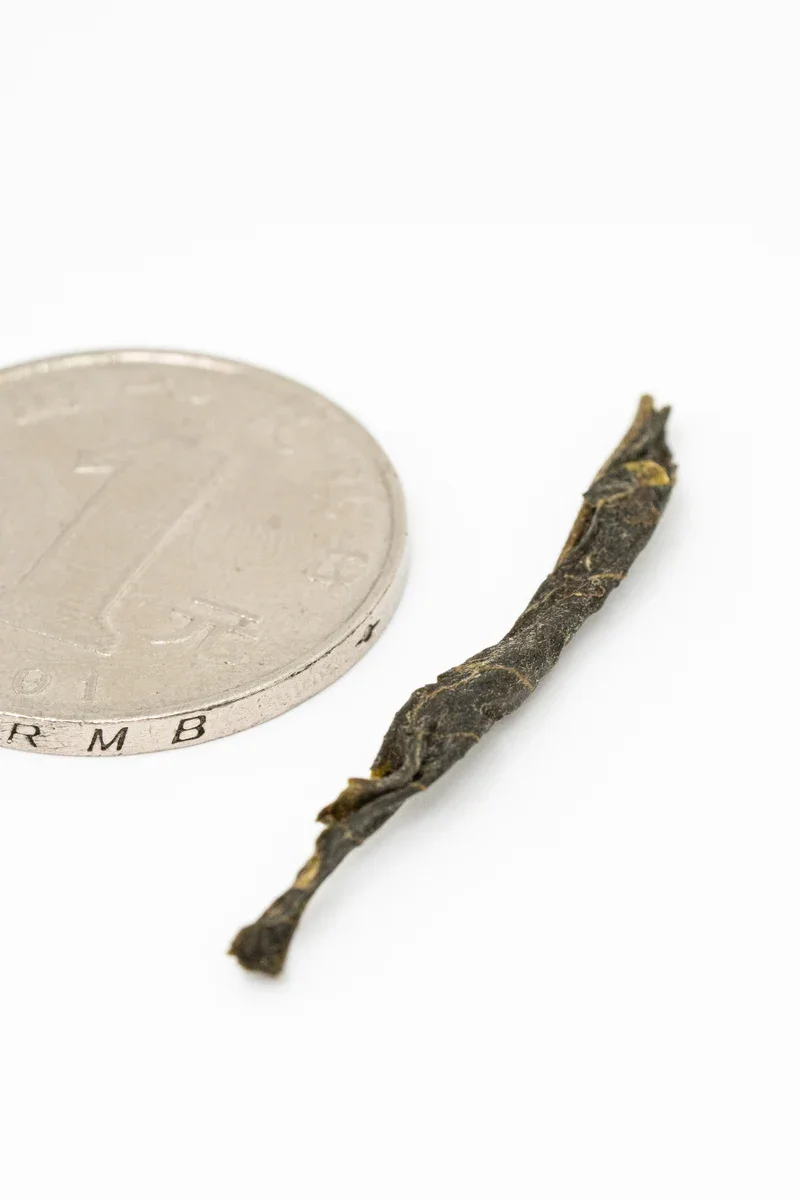
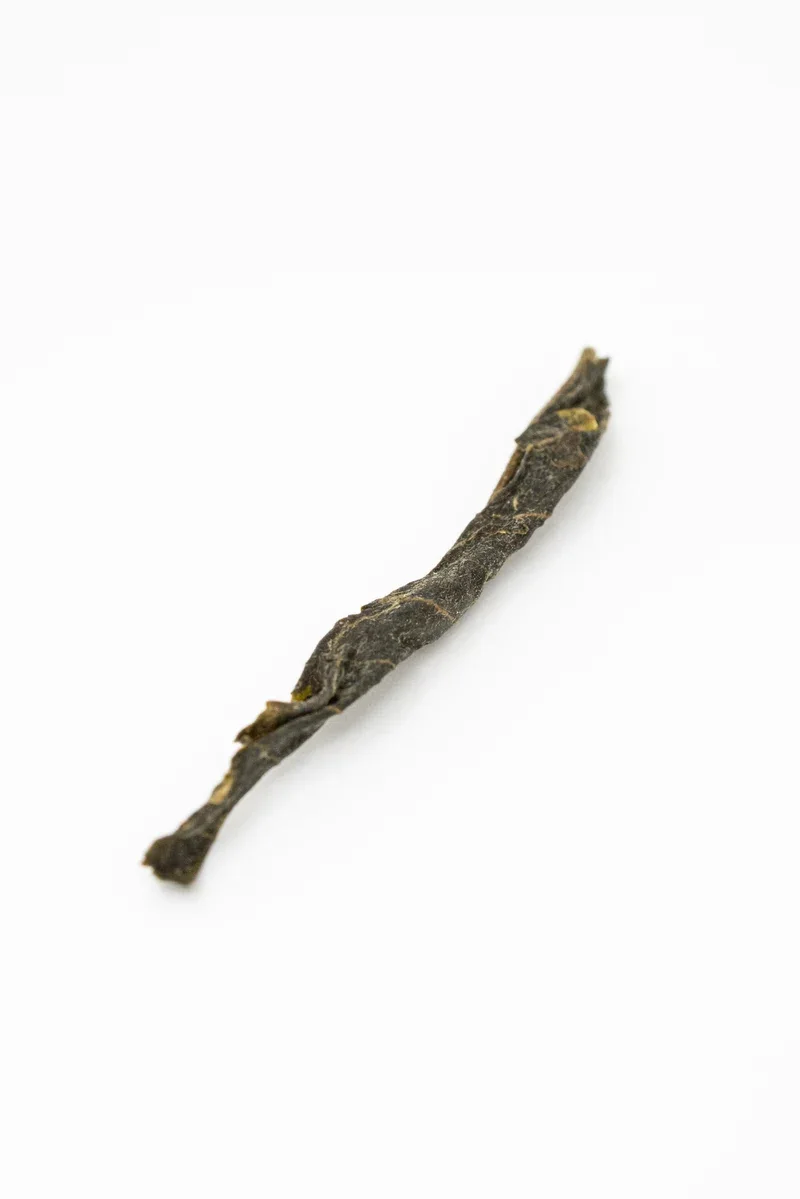
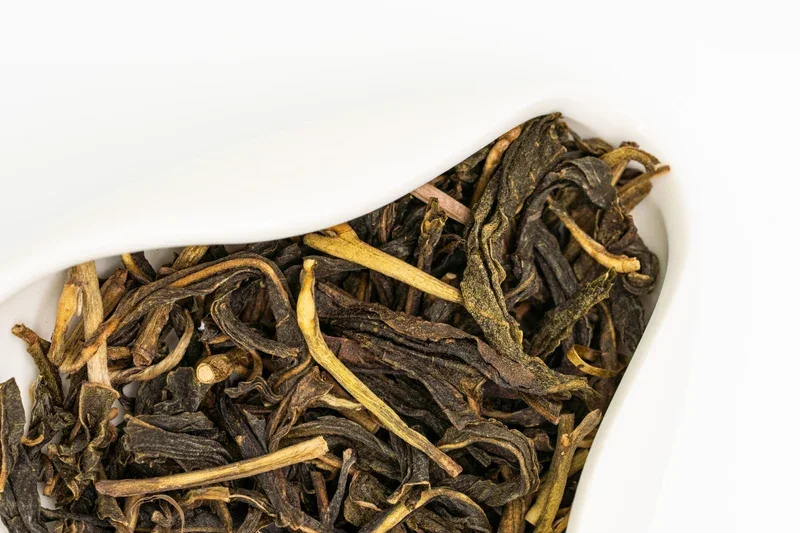
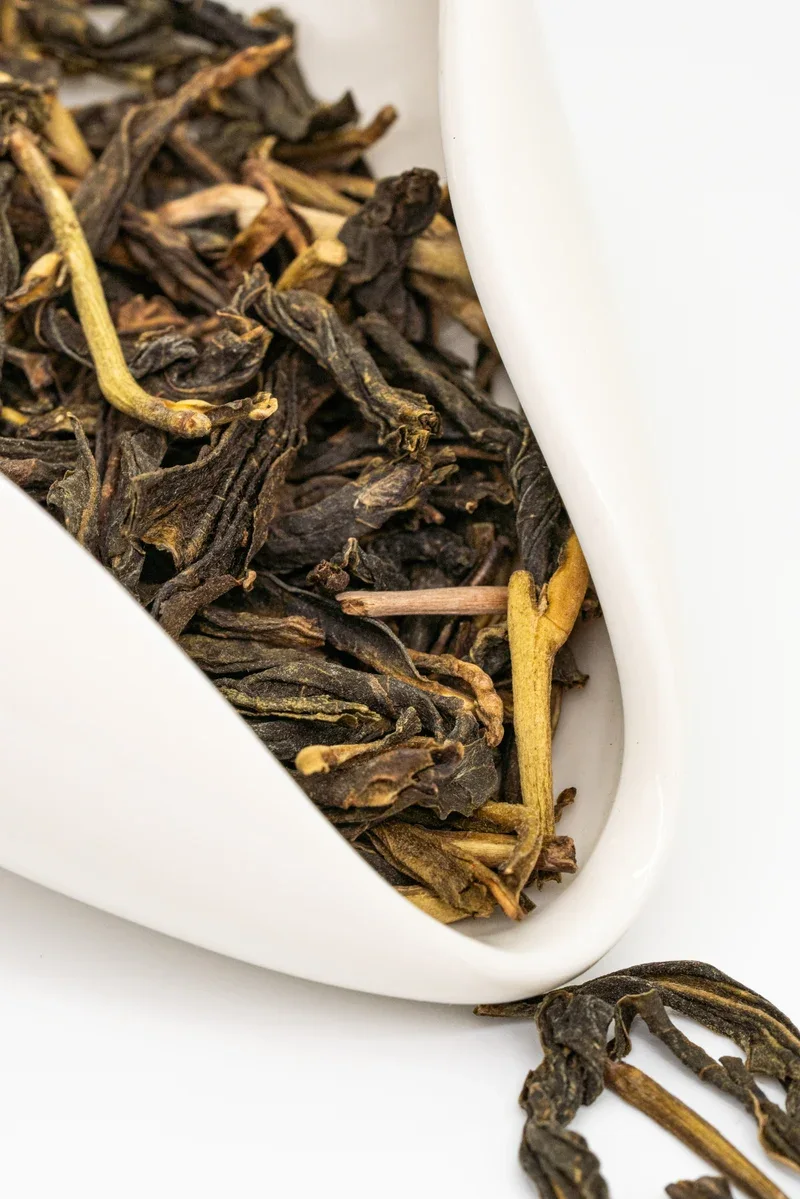
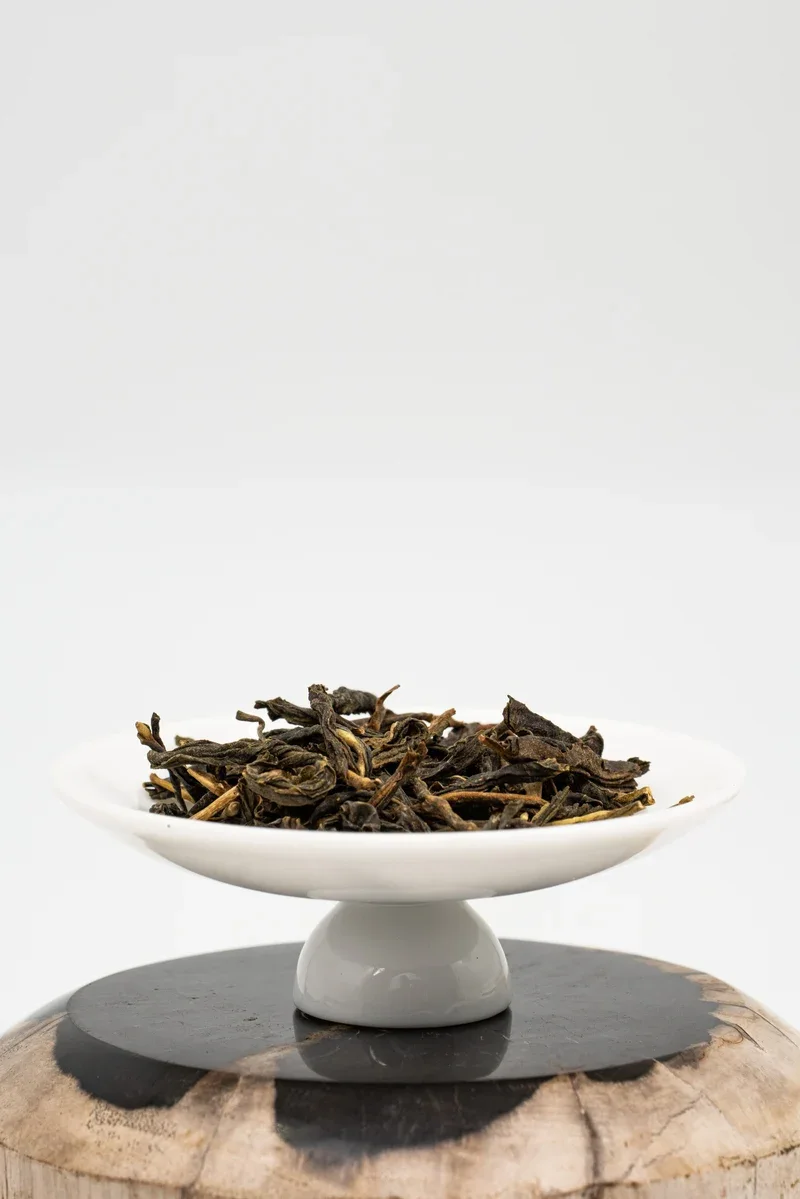
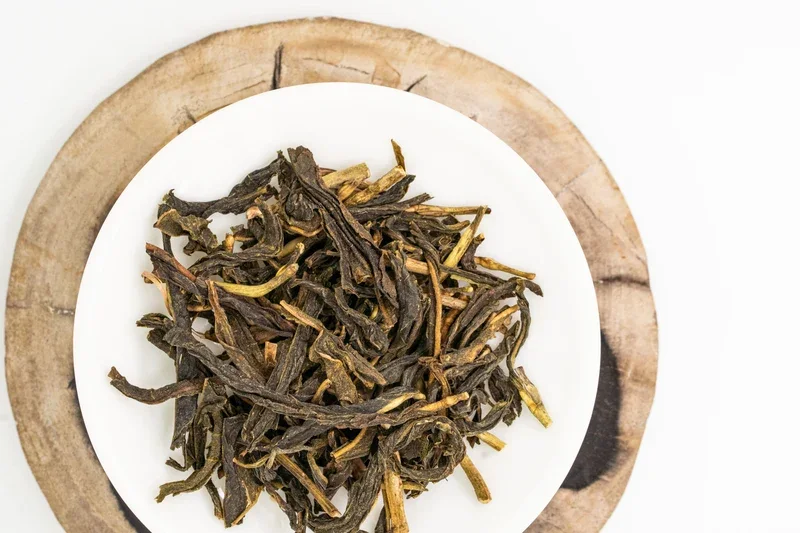
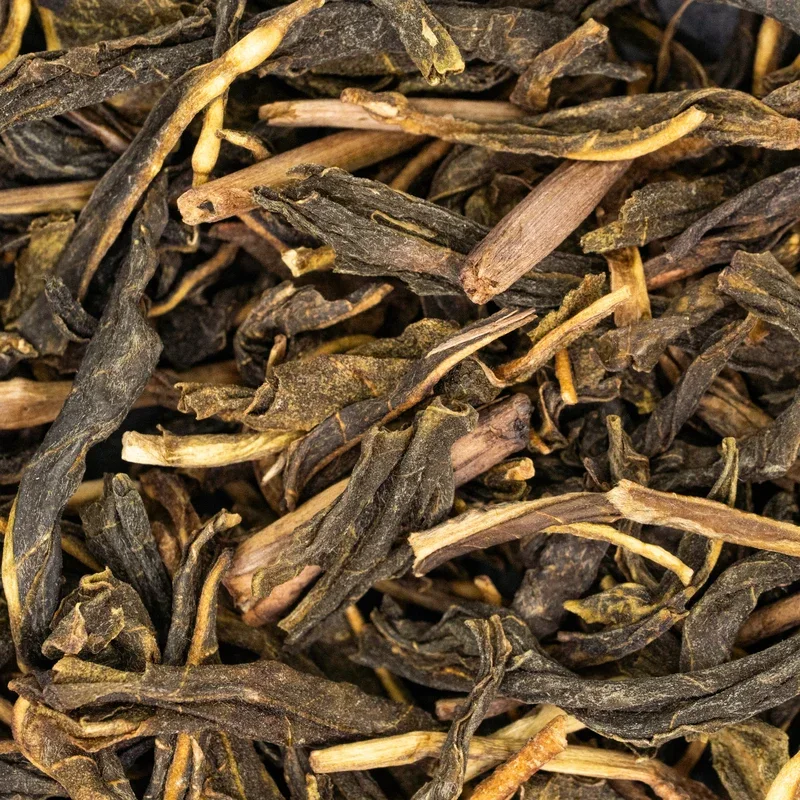
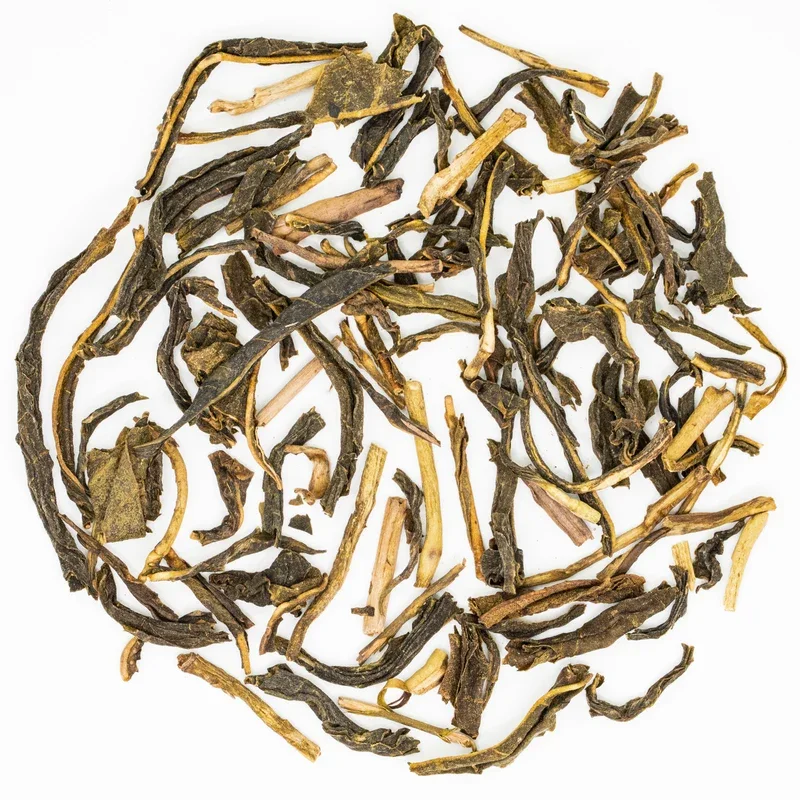
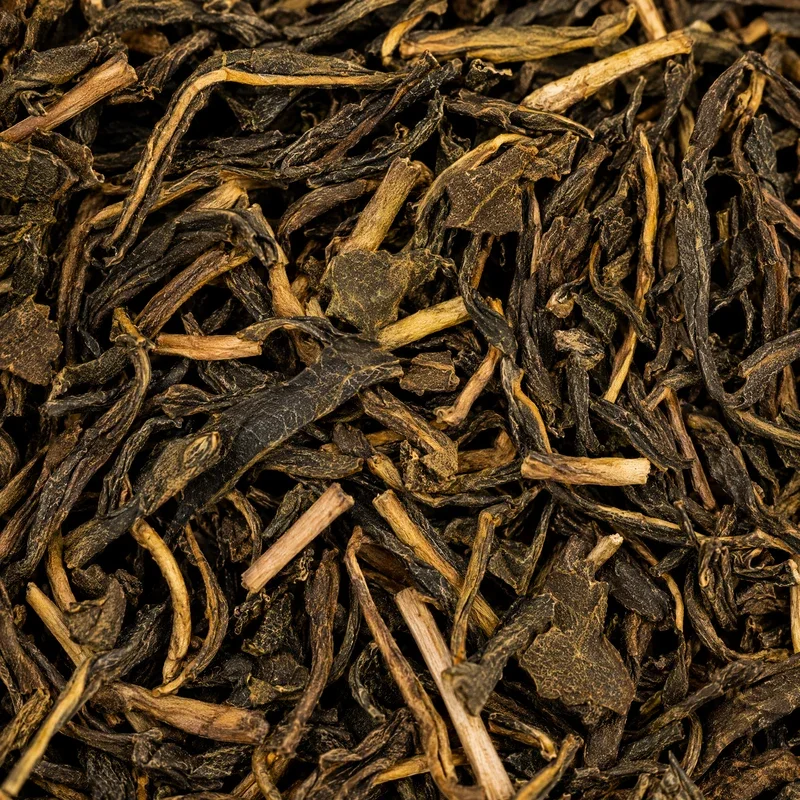
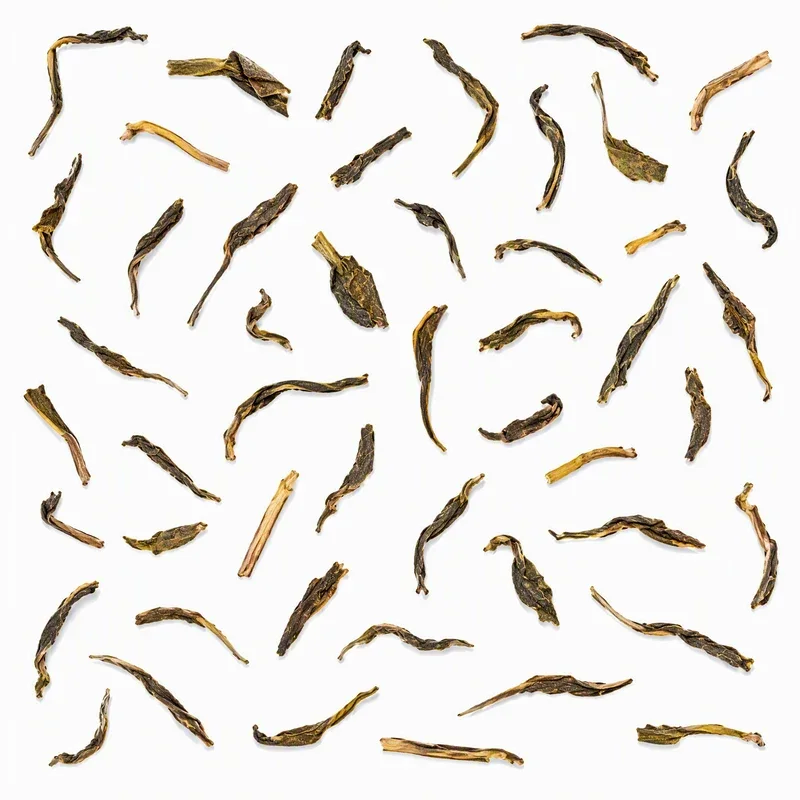
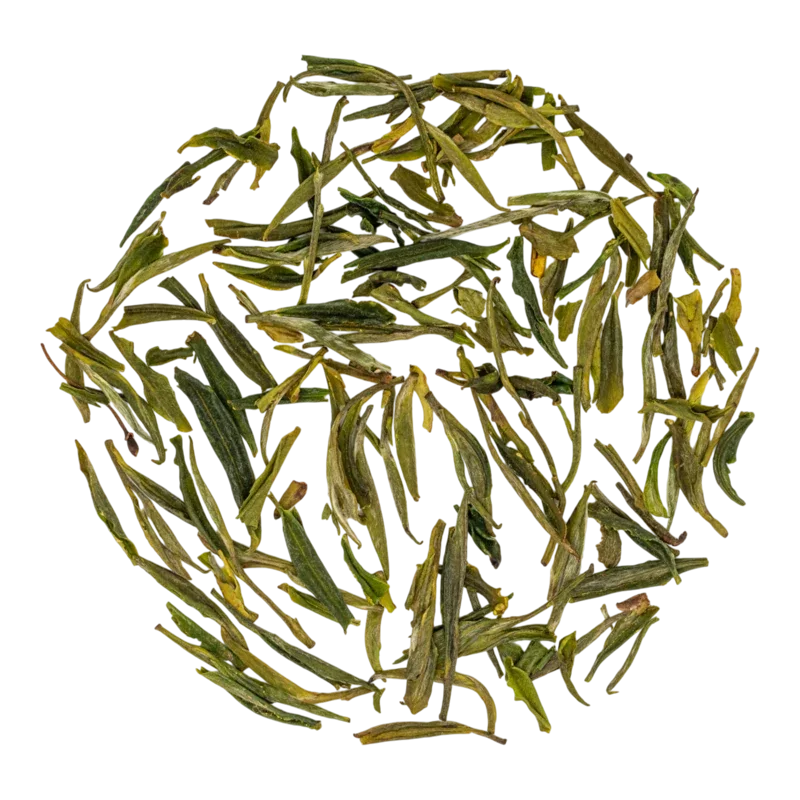
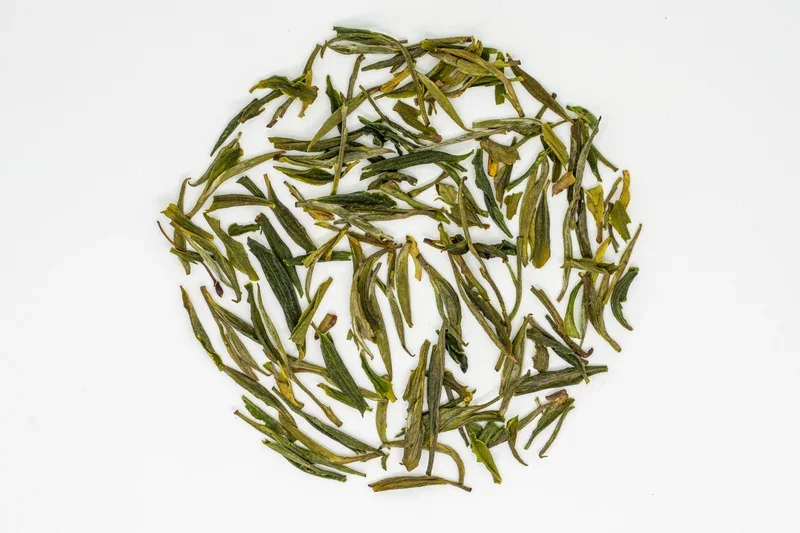
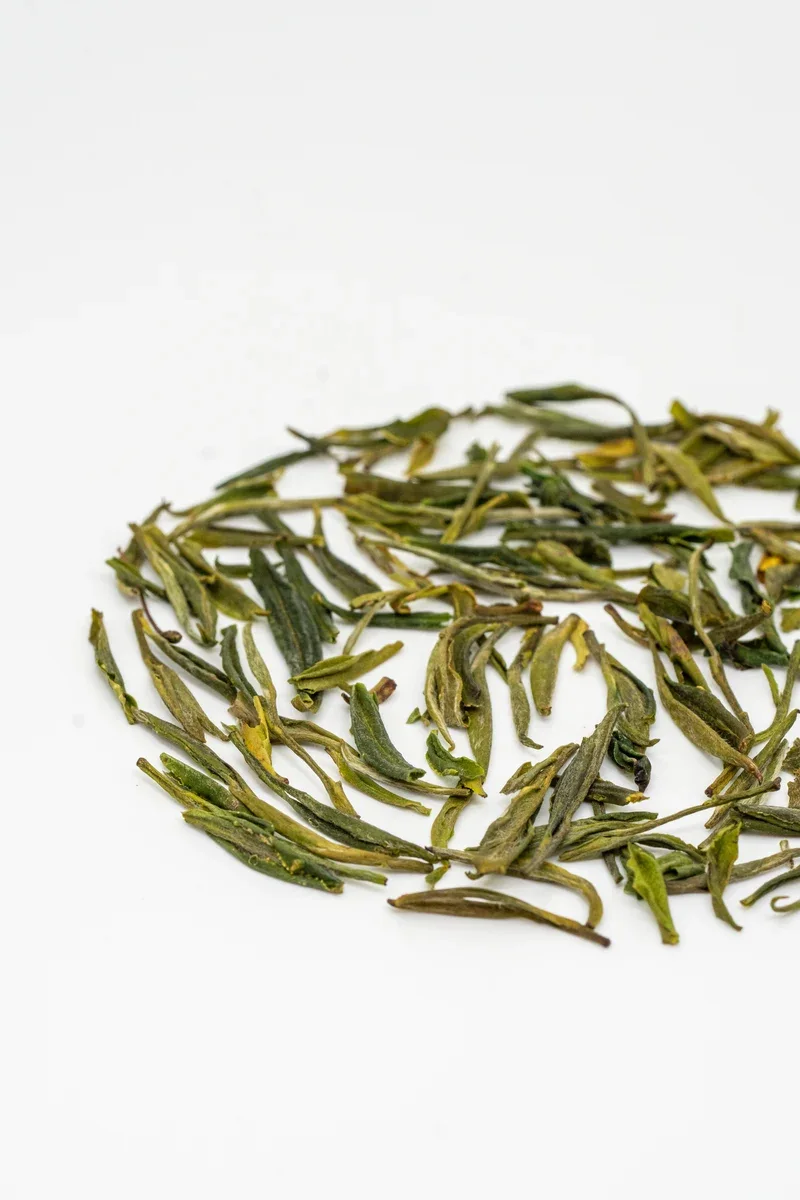
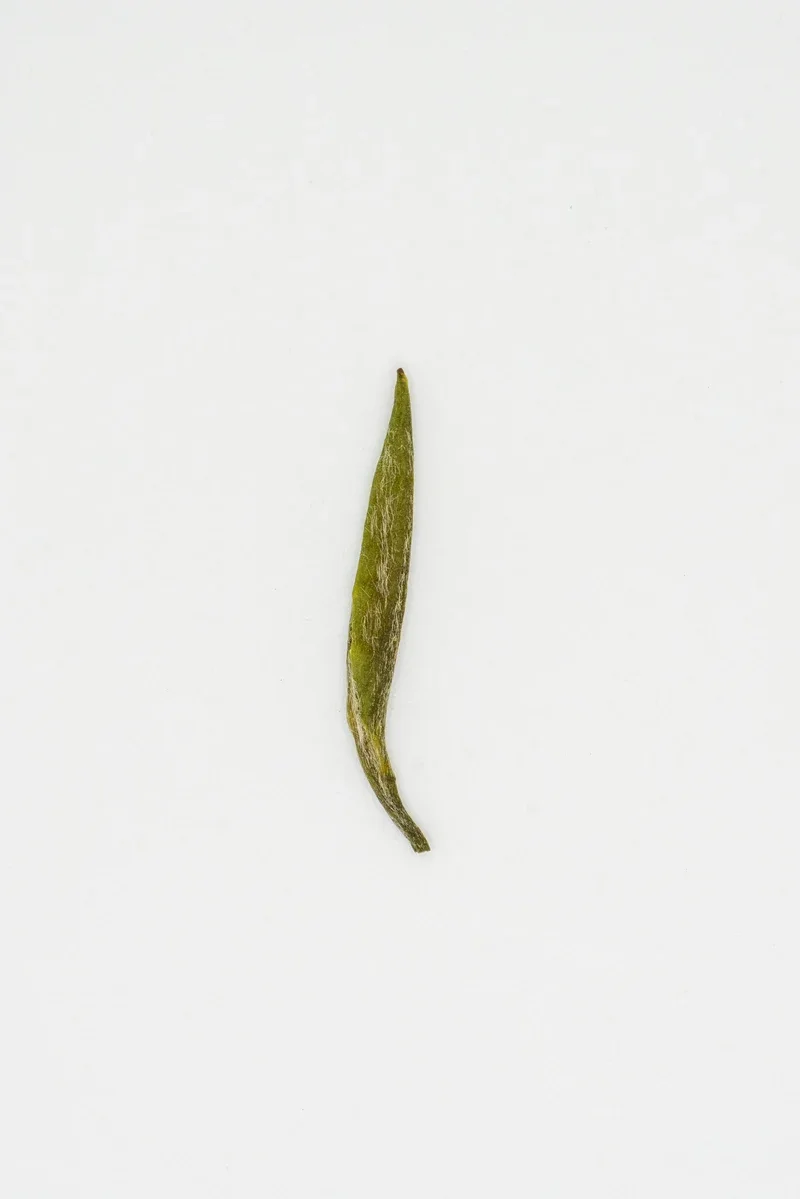
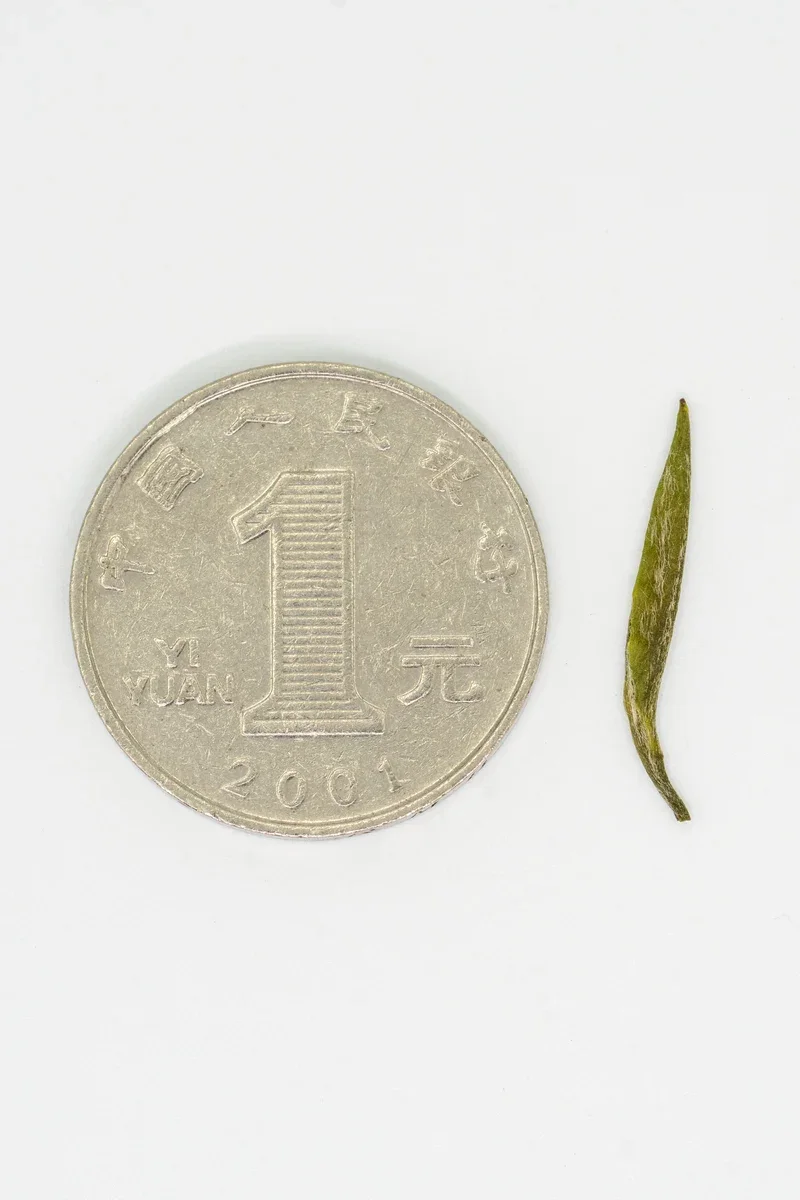
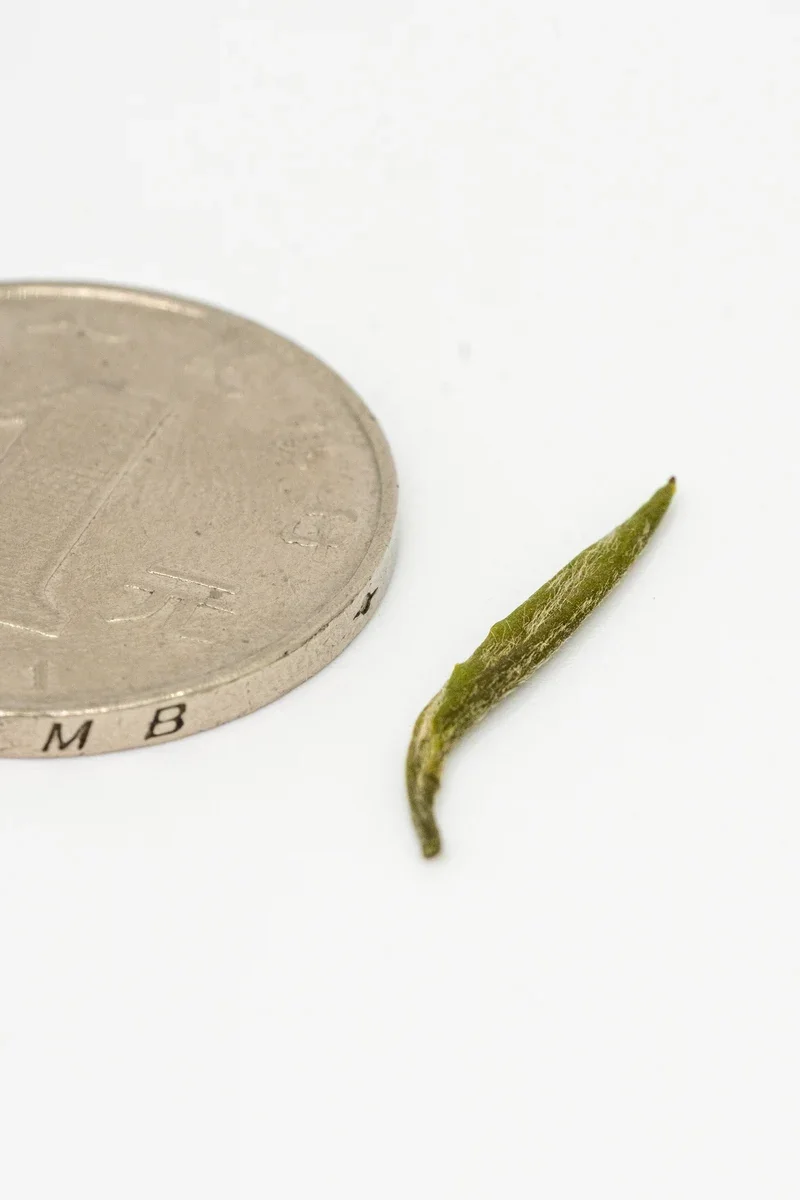
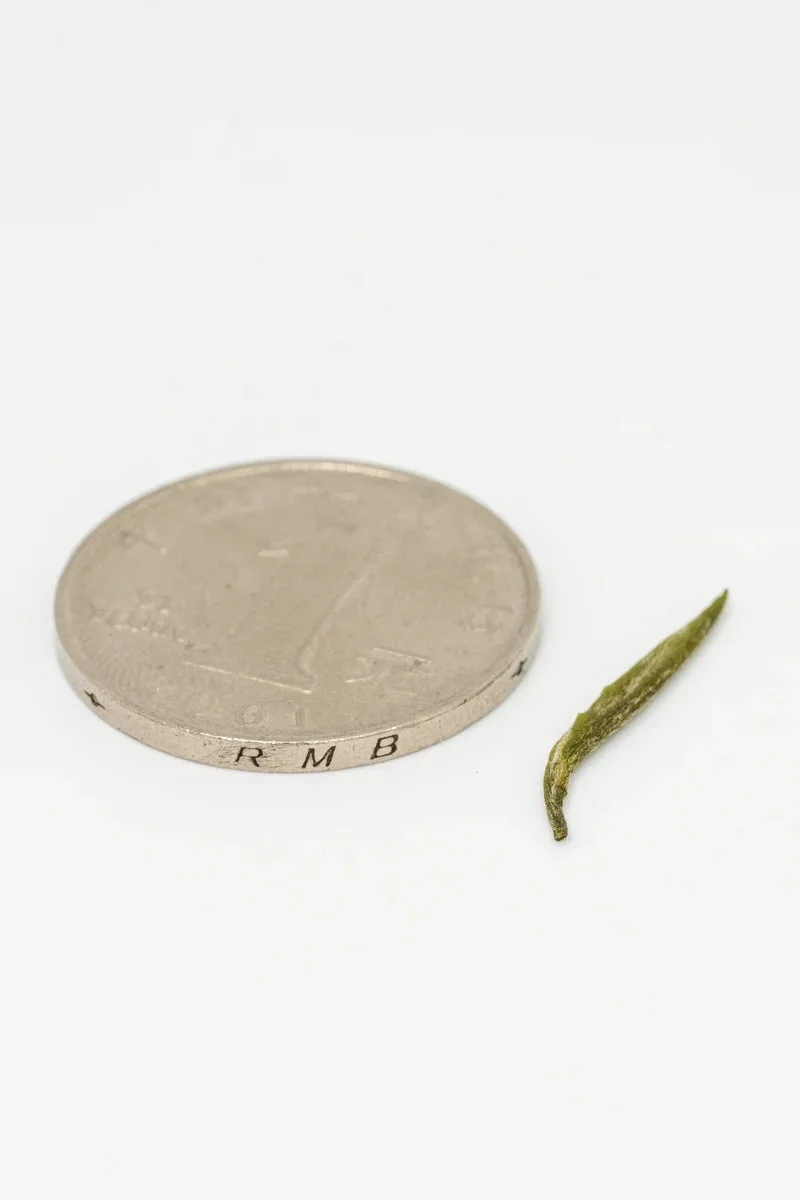
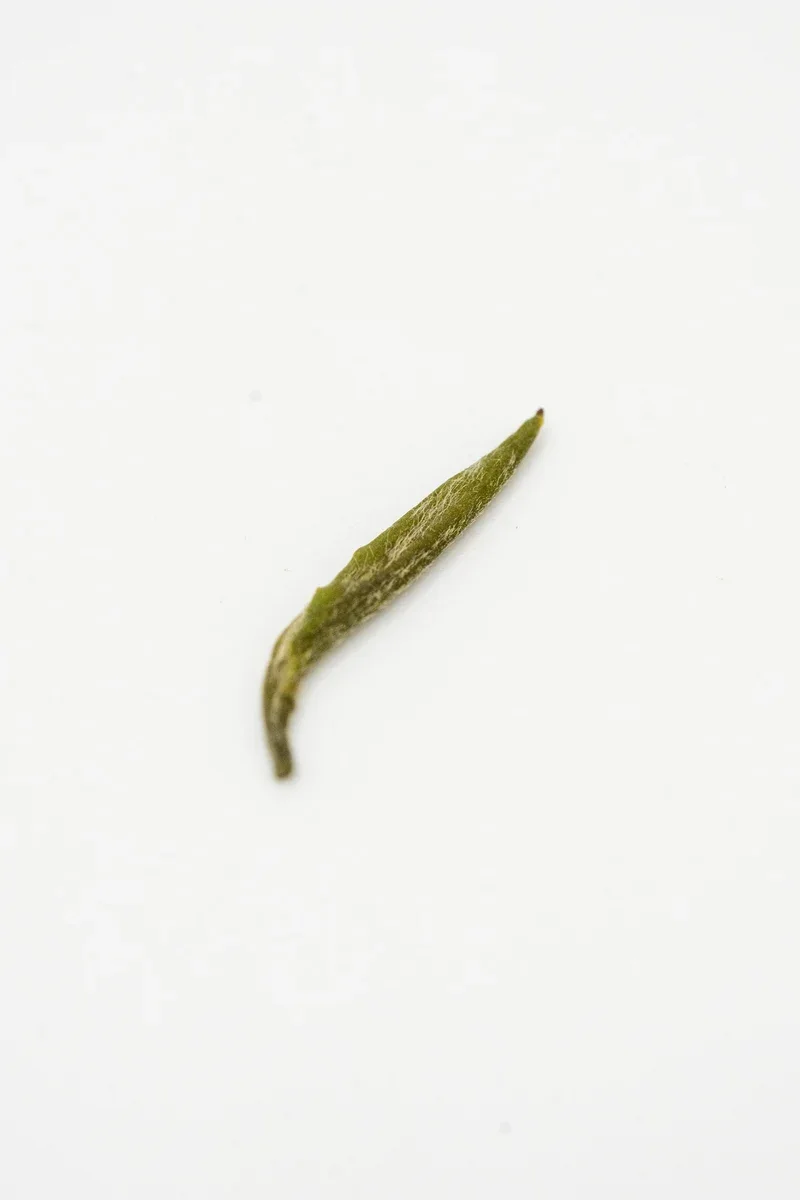
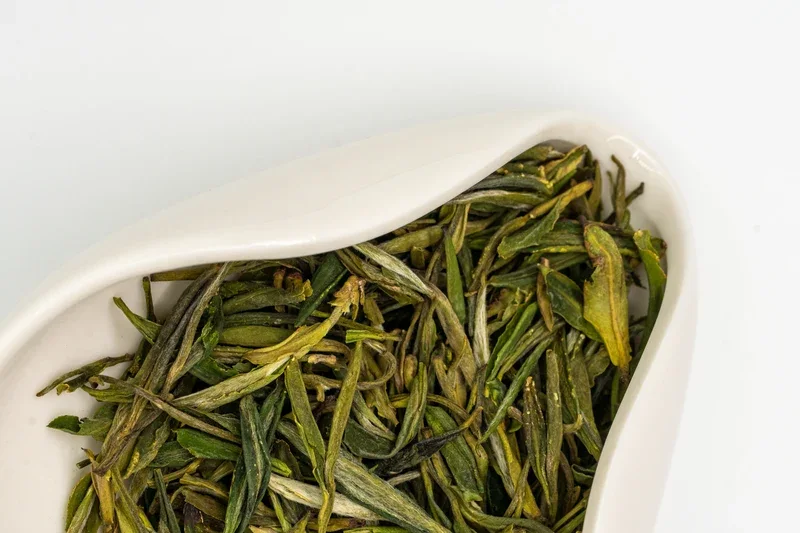
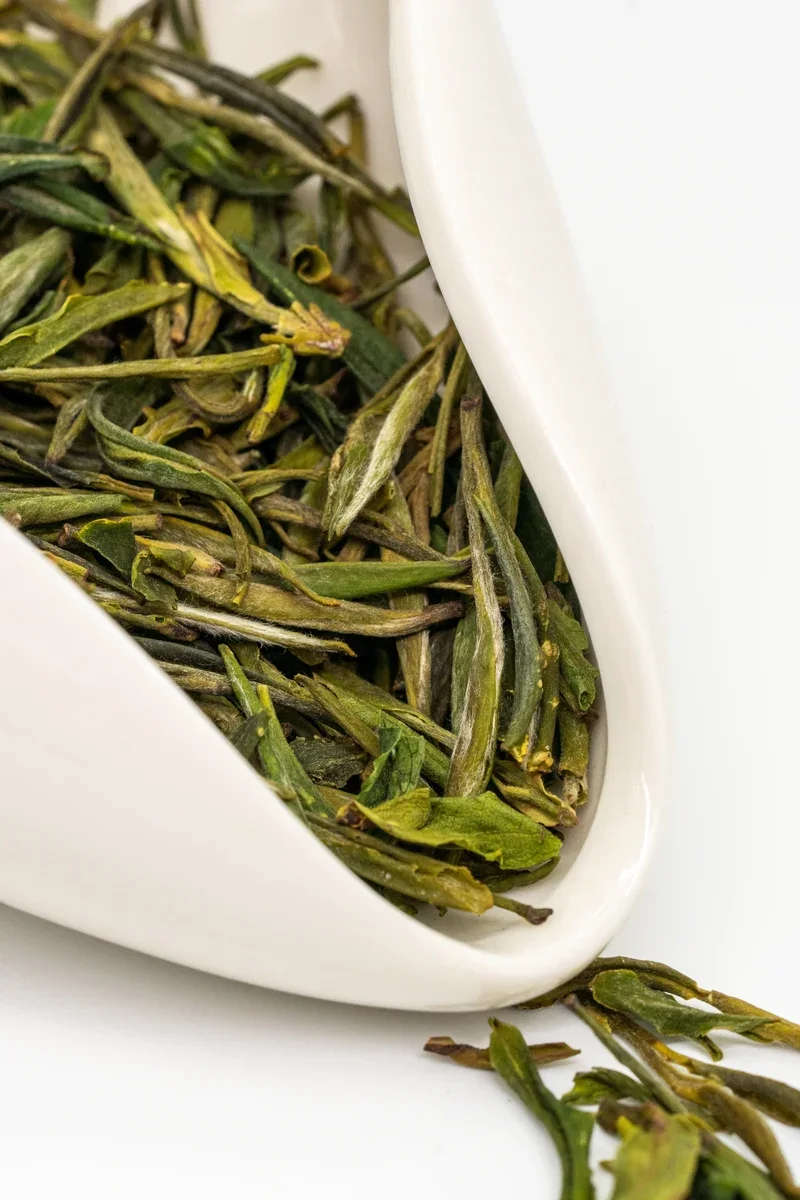
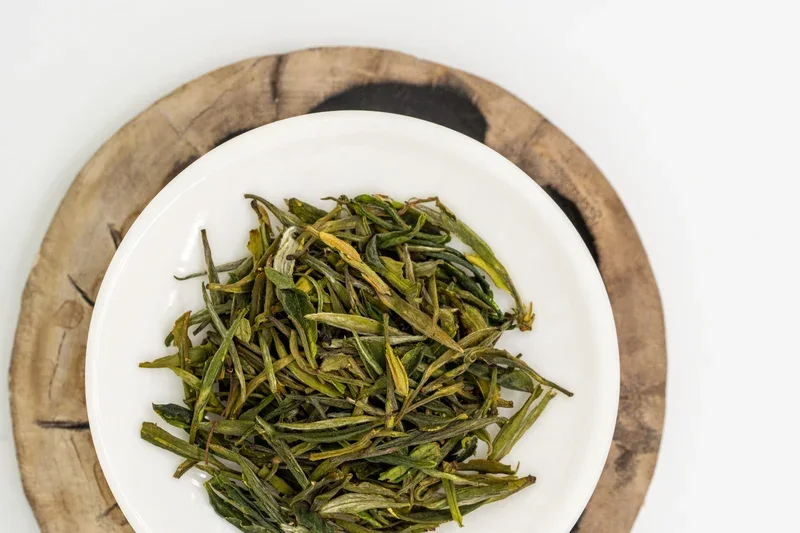
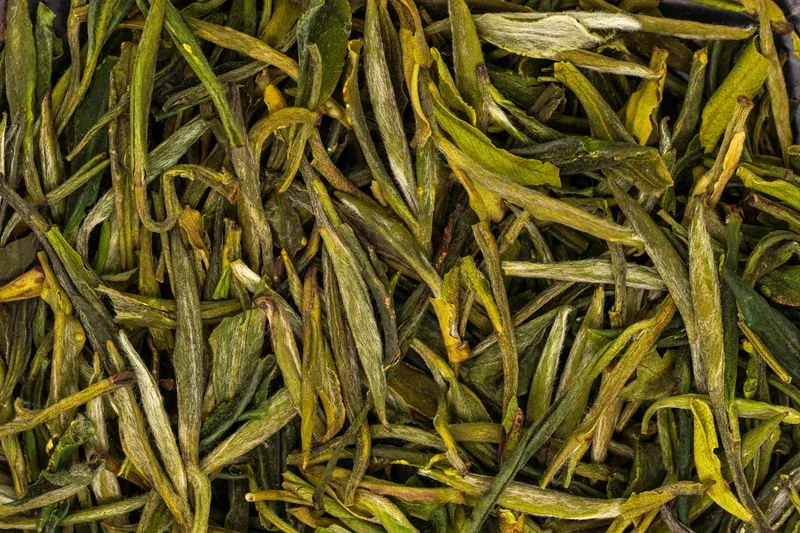
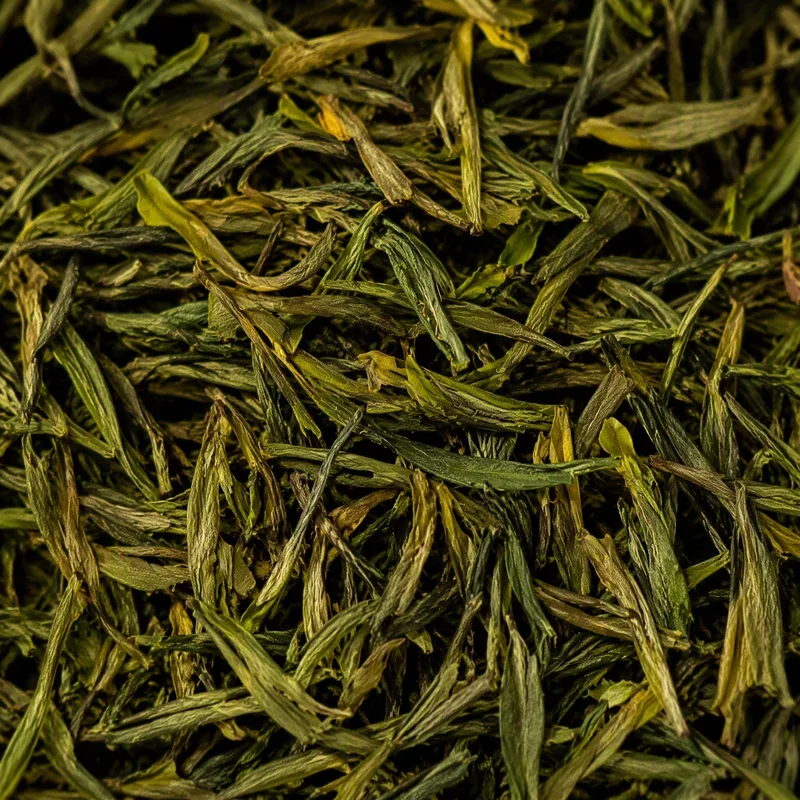
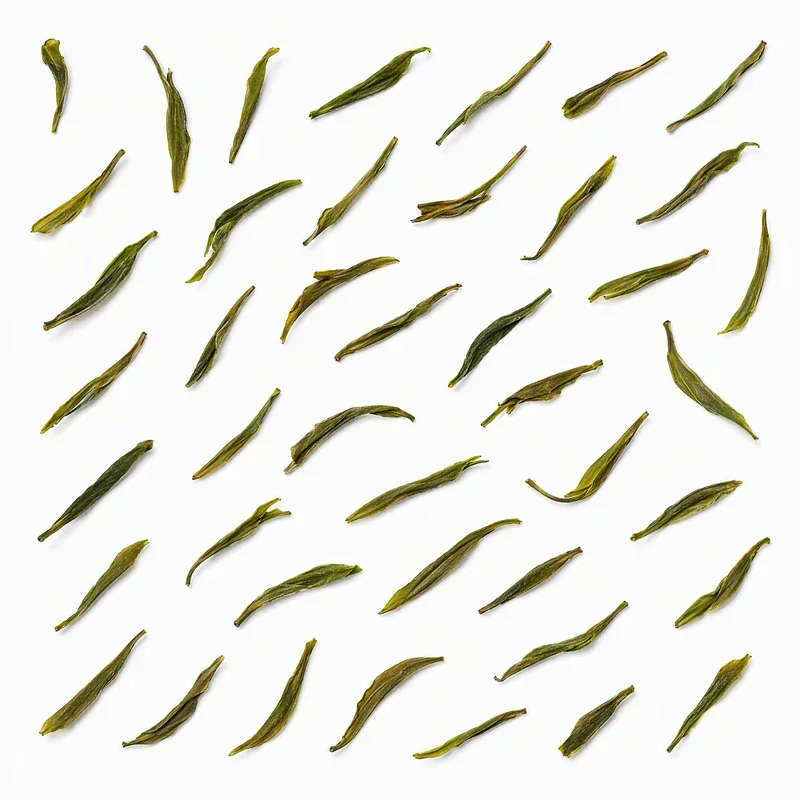
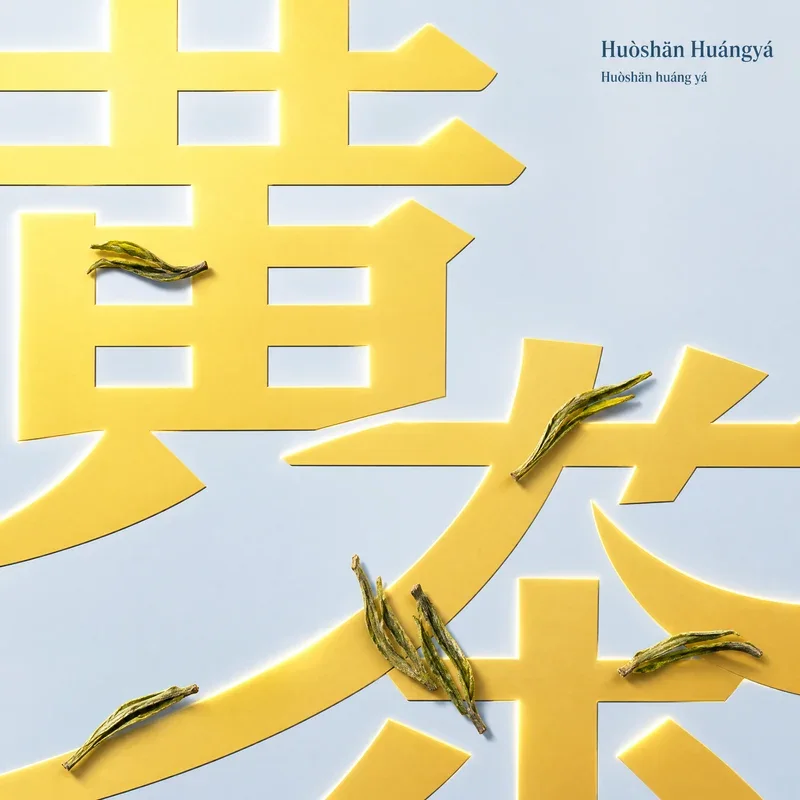
Dry Leaf Appearance: Tightly rolled, curled strands resembling small spirals (紧结卷曲如螺). Abundant silvery pubescence (茸毛显露). Color — dark emerald-green with yellowish tinge (翠绿带黄). In the highest grade, pubescence covers ≥80% of the surface.
Dry Leaf Aroma: Clean, high, with floral and fruity notes. Characteristic quality sign — "lengbeiluxiang" (冷杯留香, "aroma remaining in empty cup"): even after the tea is drunk, aroma persists in the cup for more than 30 minutes.
Liquor Aroma: "Qingxiang" (清香, clean aroma) — main tone. Supported by "huaxiang" (花香, floral) and "guoxiang" (果香, fruity). Multi-layered aromatics, unfolding gradually from steeping to steeping.
Liquor Color: "Huanglü mingliang" (黄绿明亮) — yellow-green, transparent, with clear brightness. Tone closer to "bamboo green" — warmer than green tea, but with less "yellow depth" than Mengding Huang Ya or Pingyang Huang Tang.
Spent Leaves: Tender yellow, elastic, uniform leaves (嫩黄匀整明亮).
Taste: "Chunhou gantian" (醇厚甘甜) — dense, round, sweet-honey. Characteristic feature noted in the "Dading County Gazetteer": first steeping — with light astringency (初泡时其味尚涩), second and third — unfolding of aroma and sweetness fullness (迨泡经两三次其味转香). Aftertaste — prolonged sweet return (回甘持久).
Alkaloids: Caffeine — moderate content. Synergy with high L-theanine content provides pronounced but mild tonic effect.
Amino Acids: 6–9% of dry matter — exceptionally high indicator, one of the record levels among yellow teas. Due to: low average annual temperature (13°C), altitude (1500 m), cloudiness, and genetic features of local cultivar. L-theanine — leading component.
High content — basis of pronounced natural sweetness.
Minerals: Potassium (soils rich in potassium — 127 ppm), zinc, fluorine, magnesium.
Polyphenols: High content, with partial transformation during 24-hour wozhui. Preservation of ≥85% biologically active compounds from original raw material.
Vitamins: Vitamin C, B-group vitamins.
24-hour wozhui generates abundance of digestive enzymes. Haima Gong Cha is traditionally used after heavy meat meals — typical for mountain Yi and Miao peoples.
Record amino acid content (6–9%) provides pronounced calming-focusing effect of L-theanine.
Prolonged wozhui significantly reduces catechin aggressiveness.
Polyphenols (preservation ≥85%) provide powerful antioxidant activity.
Yellow tea is traditionally recommended for excessive fatty food consumption.
Tea Amount: 3 g per 150 ml water.
Teaware: Glass tumbler or white porcelain gaiwan.
Water Temperature: 70–80°C. Low temperature is crucial for Haima Gong Cha: high amino acid content unfolds precisely with delicate brewing, while excessive temperature provokes astringency.
Both are southwestern yellow teas at high altitudes, but similarities end there. Mengding — flat, sword-shaped, chestnut-honey, with "three firings and three sealings"; Haima Gong — rolled, spiral, floral-fruity, with 24-hour wozhui. Mengding — imperial tea with 1169-year court service; Haima Gong — provincial tea with intimate history.
Pingyang — maritime climate, corn aroma, apricot liquor, triple sealing over 72 hours. Haima Gong — high mountains, floral-fruity aroma, yellow-green liquor, one prolonged (24-hour) wozhui. Pingyang "deeper yellow"; Haima Gong — "closer to green."
Both — peripheral yellow teas (Guangdong and Guizhou), both — relatively little known, both — from larger raw material. But Dayeqing — heavy, malty, emphatically "yellow"; Haima Gong — light, floral, with "green" inclination. Haima Gong — significantly more elegant.
Huoshan — mineral, astringent, with "green" character; Haima Gong — sweet, floral, with more pronounced transformation thanks to 24-hour wozhui. Both — "quiet" teas, not claiming primacy, but valued by connoisseurs for depth and sincerity.
No reviews yet. Tell us what you think of this tea.
Rate this tea and share your impressions. We review each submission before publishing it.