Brewing
Gongfu brewing
- Water temperature
- 75 °C
- Tea amount
- 5 g
- Water volume
- 100 ml
- First steep
- 10 s
- Time added per infusion
- 5 s
- Infusions
- 3

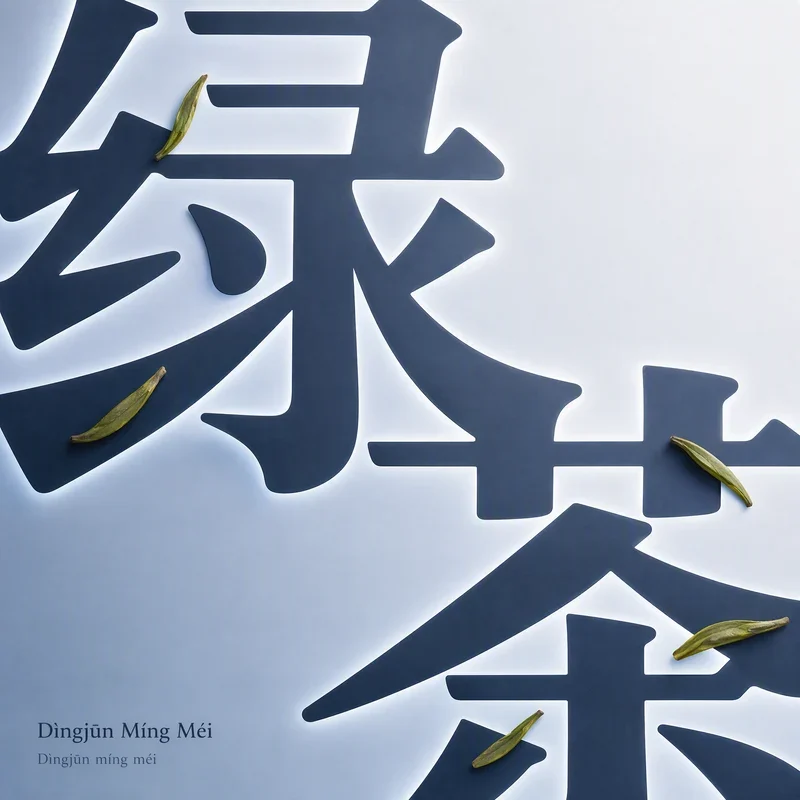
Dìngjūn míng méi
Choose a brewing method. Start with the recommended quantities and time, then adjust to taste.
Brewing
Brewing
Taste
Tea encyclopedia
Category: Core of "Hanzhong Xianhao" (汉中仙毫) — China's geographical indication (国家地理标志保护产品, 2007). One of three main sub-brands of Hanzhong Xianhao (alongside "Wuzi Xianhao" / 午子仙毫 and "Ningqiang Queshe" / 宁强雀舌). "State banquet tea" (国宴用茶, 1996 — served in Zhongnanhai). Gold award at "Lu Yu Cup" competition (陆羽杯, 1992). Gold at Panama International Exhibition 2013 (as part of "Hanzhong Xianhao"). Organic tea — certified by "Zhonglü Huaxia" (中绿华夏) as AA-class green organic product.
Category: Core of "Hanzhong Xianhao" (汉中仙毫) — China's geographical indication (国家地理标志保护产品, 2007). One of three main sub-brands of Hanzhong Xianhao (alongside "Wuzi Xianhao" / 午子仙毫 and "Ningqiang Queshe" / 宁强雀舌). "State banquet tea" (国宴用茶, 1996 — served in Zhongnanhai). Gold award at "Lu Yu Cup" competition (陆羽杯, 1992). Gold at Panama International Exhibition 2013 (as part of "Hanzhong Xianhao"). Organic tea — certified by "Zhonglü Huaxia" (中绿华夏) as AA-class green organic product.
Coordinates: Approximately 33°08′ North latitude, 106°40′ East longitude.
Origin: China, Shaanxi Province (陕西省, Shǎnxī Shěng), Hànzhōng City (汉中市, Hànzhōng Shì), Miǎnxiàn County (勉县, Miǎnxiàn). Tea gardens are located on the slopes of Mount Dìngjūn (定军山, 833 m) and in adjacent gorges of the Qinling range, at altitudes of 800–1380 m.
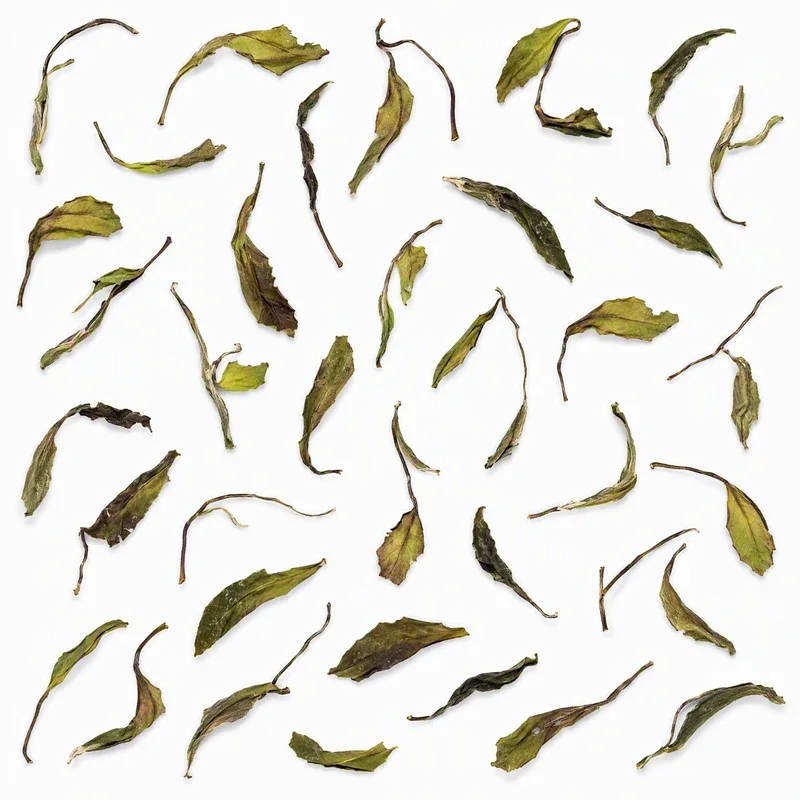
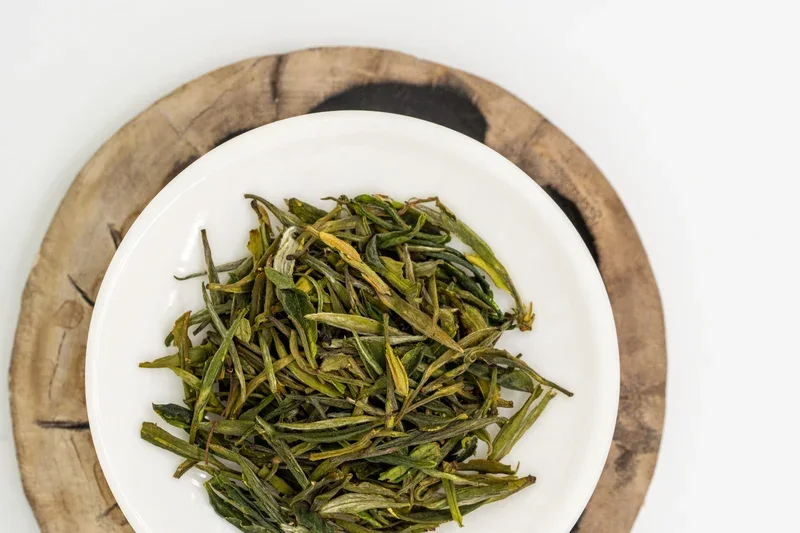
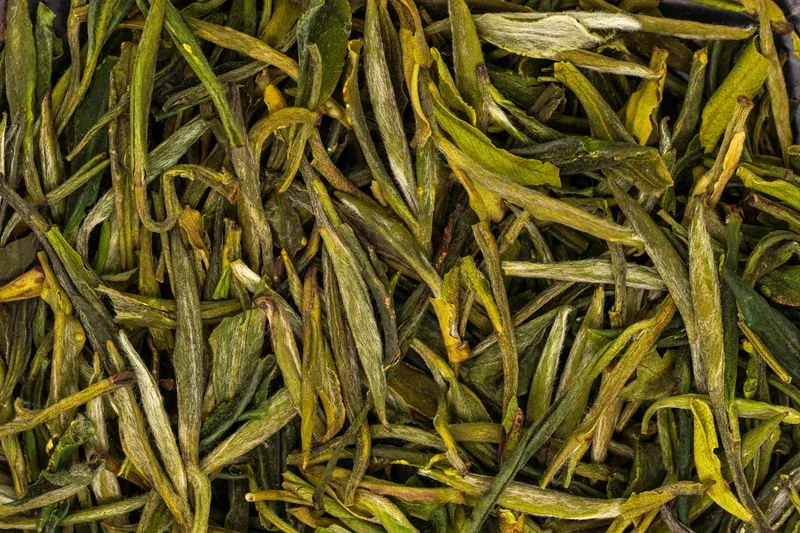
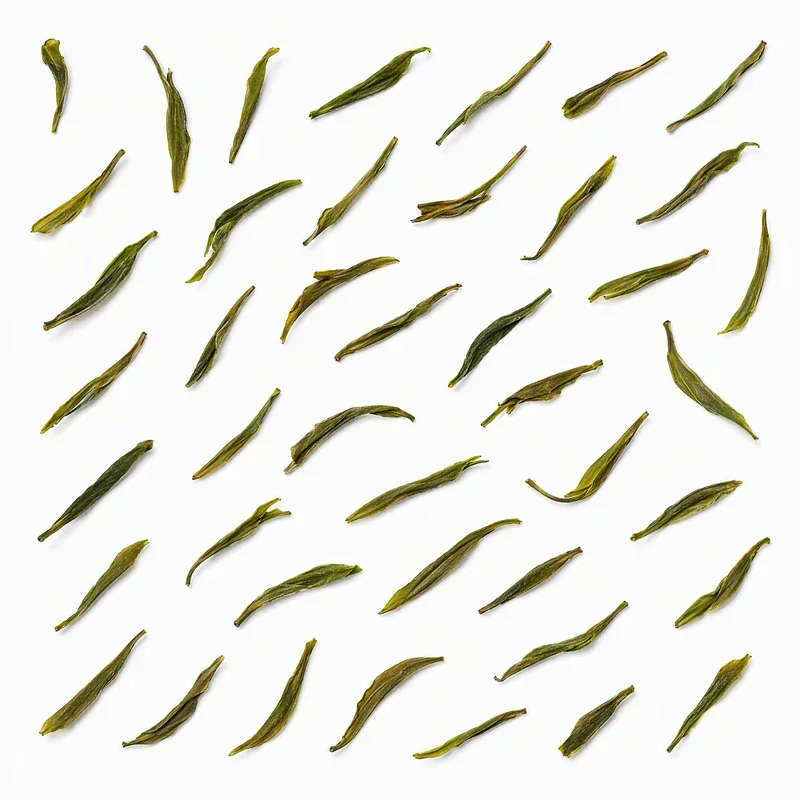
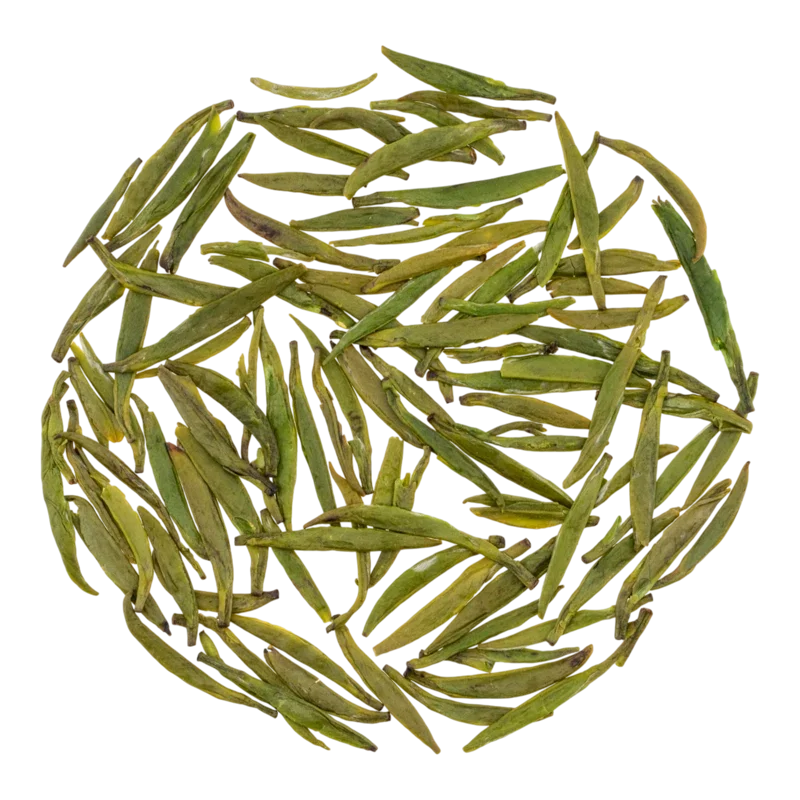
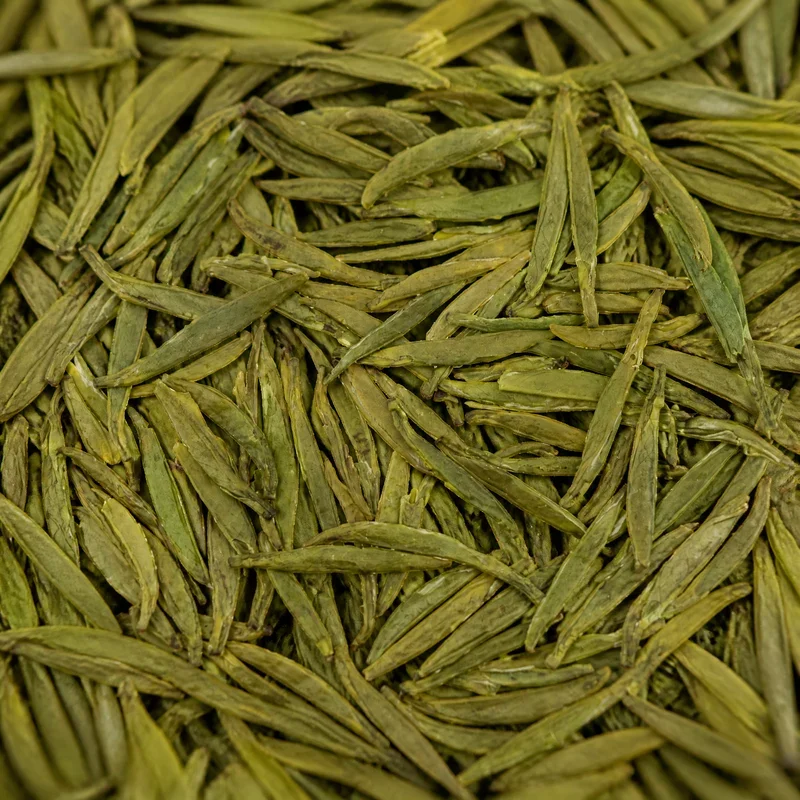
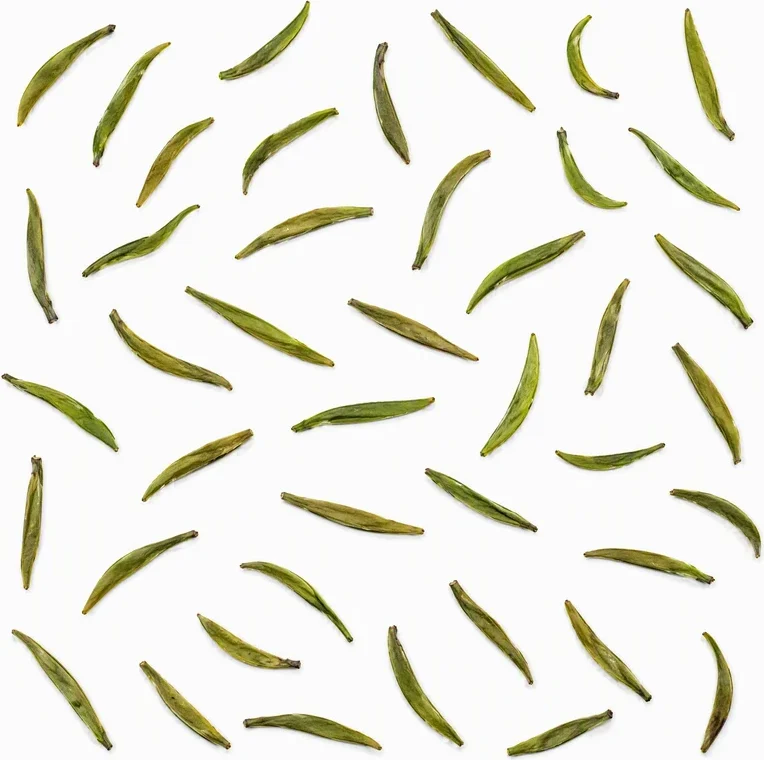
Type: Green tea (绿茶, lǜchá), non-oxidized. Belongs to the conditional category of "conditionally eyebrow-shaped" (眉形) green teas (绿茶), combining pan-firing and hot-air drying (烘炒结合, hōng chǎo jiéhé). Leaf shape — thin, curved, resembling a new moon or maiden's eyebrow.
Cultural Significance: Dingjun Ming Mei — a unique case of tea whose name interweaves the military history of the Three Kingdoms, literary aesthetics, and tea poetics. Mount Dingjun — a first-tier tourist destination in Hanzhong, attracting fans of "Romance of the Three Kingdoms" from all over China and Japan. Tea-tourism routes include visits to Wuhou Temple, Mount Dingjun, tea gardens, and tea processing workshops. Hanzhong as a whole is positioned as "Two-thousand-year Han capital, truly beautiful Hanzhong" (两汉三国、真美汉中).
History: Hanzhong — one of China's most ancient tea regions. According to "Huayang Guozhi" (《华阳国志》, 4th century), as early as the 11th century BCE, tea from the territory of ancient Ba kingdom was supplied to the Zhou court. The toponym "Xixiang Yuetuan" (西乡月团, "Moon Cakes from Xixiang") — presumably one of the first named teas in Chinese history.
Cultivar: Several varieties of Camellia sinensis var. sinensis:
Picking: Late March — early April. Production core — mingqiancha (明前茶). Harvest begins later than in southern provinces — due to high latitude (33° N) and mountainous location, shoots mature more slowly but accumulate more amino acids.
Pluck Standard: Highest grade — one bud with barely opened leaf (一芽一叶初展), proportion ≥95%. Shoots are strictly selected by size and integrity.
Altitude: 800–1380 m. Production core — gorges of Xiaohemiao (小河庙乡) and Dashuya (大树垭) townships, at altitude 1000±200 m.
Climate: Hanzhong — "Northwestern Little Jiangnan" (西北小江南): a strip of subtropical climate protected from northern winds by the Qínlǐng range (秦岭, up to 3767 m) and from southern winds by the Bashan range (巴山). Average annual temperature — ~14°C. Annual precipitation — ~1200 mm. Daily temperature variation — >10°C. Cloudiness and fog — 85% of days per year. Predominance of diffused light.
Soil: Yellow-brown soils and sandy loam (黄棕壤与沙壤土) with pH 4.5–6.0. Organic matter content — >2.5% (notably higher than Hanzhong Xianhao average — >1.5%). Selenium: 0.653–3.853 ppm — one of the highest indicators in the region. Forest cover — 80%.
Territory is part of the watershed basin of the "South-to-North Water Transfer" project (南水北调中线工程). Tea gardens are located far from cities and transport highways. AA-class organic certification.
Late March, hand-picking with grade selection.
Rotary drum at 180–200°C. Rapid enzyme inactivation.
Tossing and sifting (扬簸散热) for rapid cooling.
Formation of basic "eyebrow-shaped" structure.
At ~70°C, "shaking and tossing" method (抖扬).
At ~50°C, formation of final thin curved "eyebrow." Controlled "搓条定型" (rubbing and shape fixation).
At ~60°C, friction to bring white down to the surface.
Charcoal (木炭), 70°C, 1.5 hours. Precisely charcoal drying forms the delicate chestnut aroma and carefully preserves the down.
Liquor Color: Yellow-green, bright and clear (黄绿明亮) — distinctive feature distinguishing Dingjun Ming Mei among the "翠色" (emerald) teas of standard Hanzhong Xianhao.
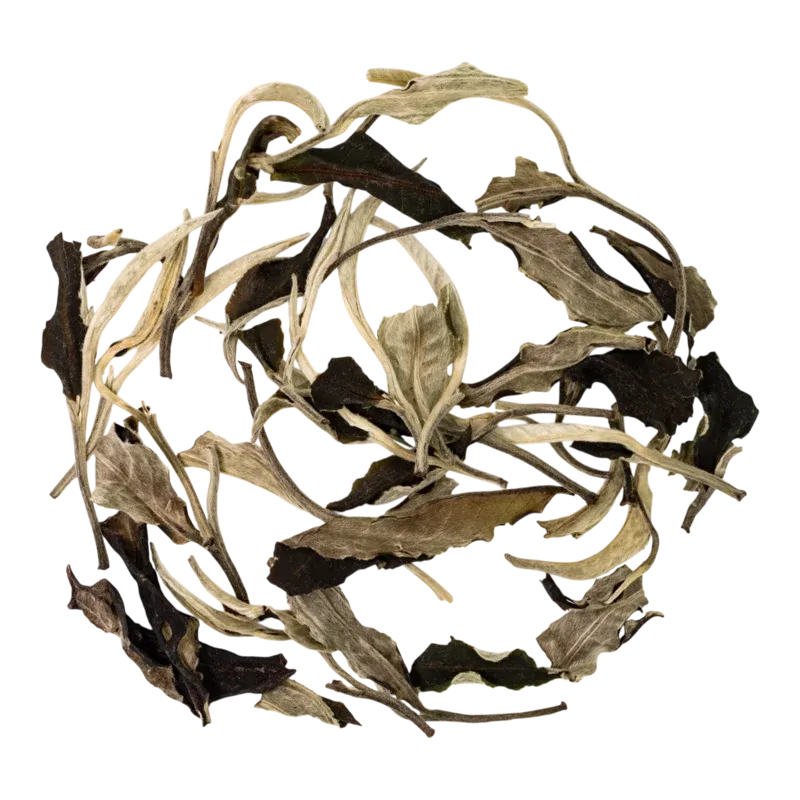
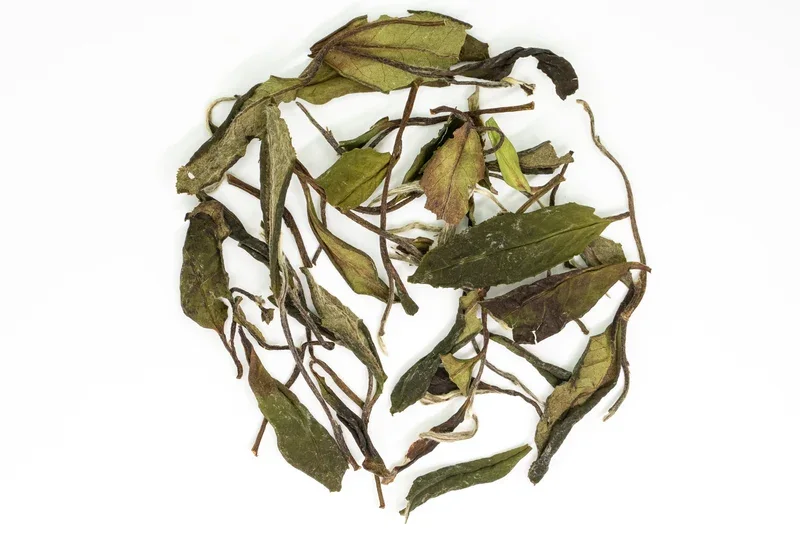
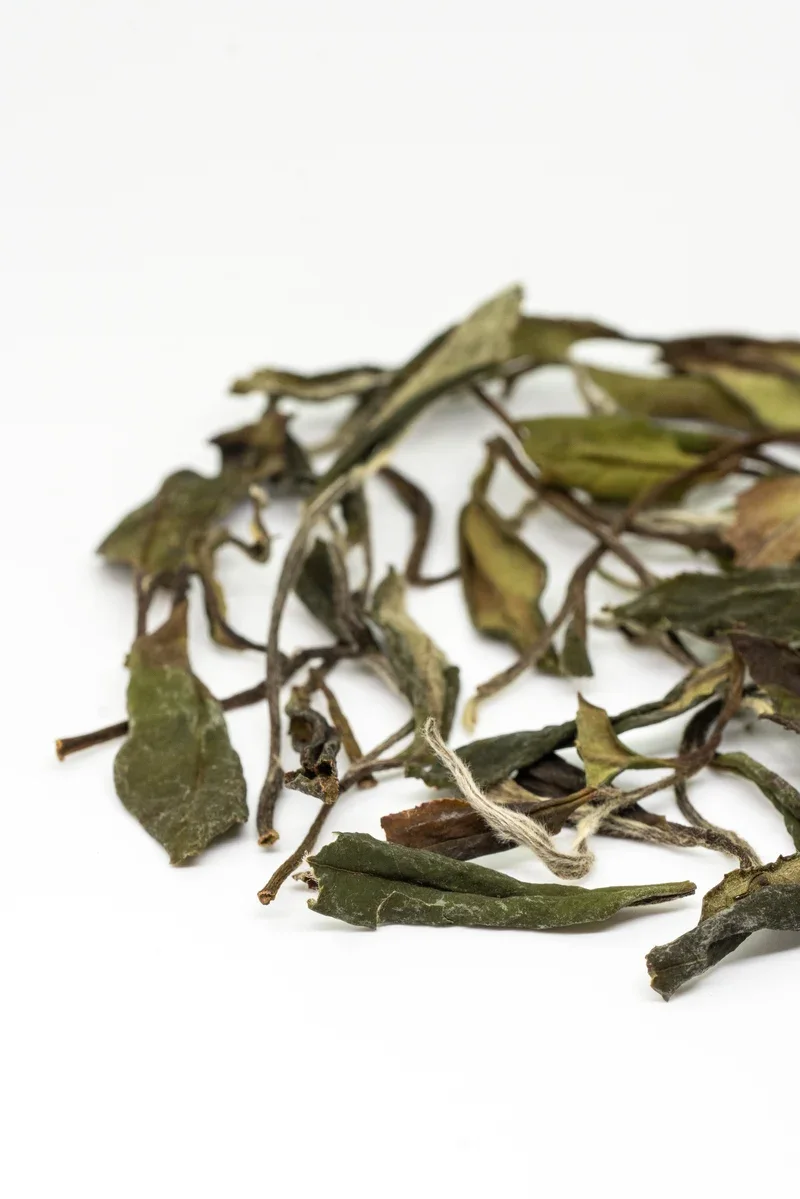
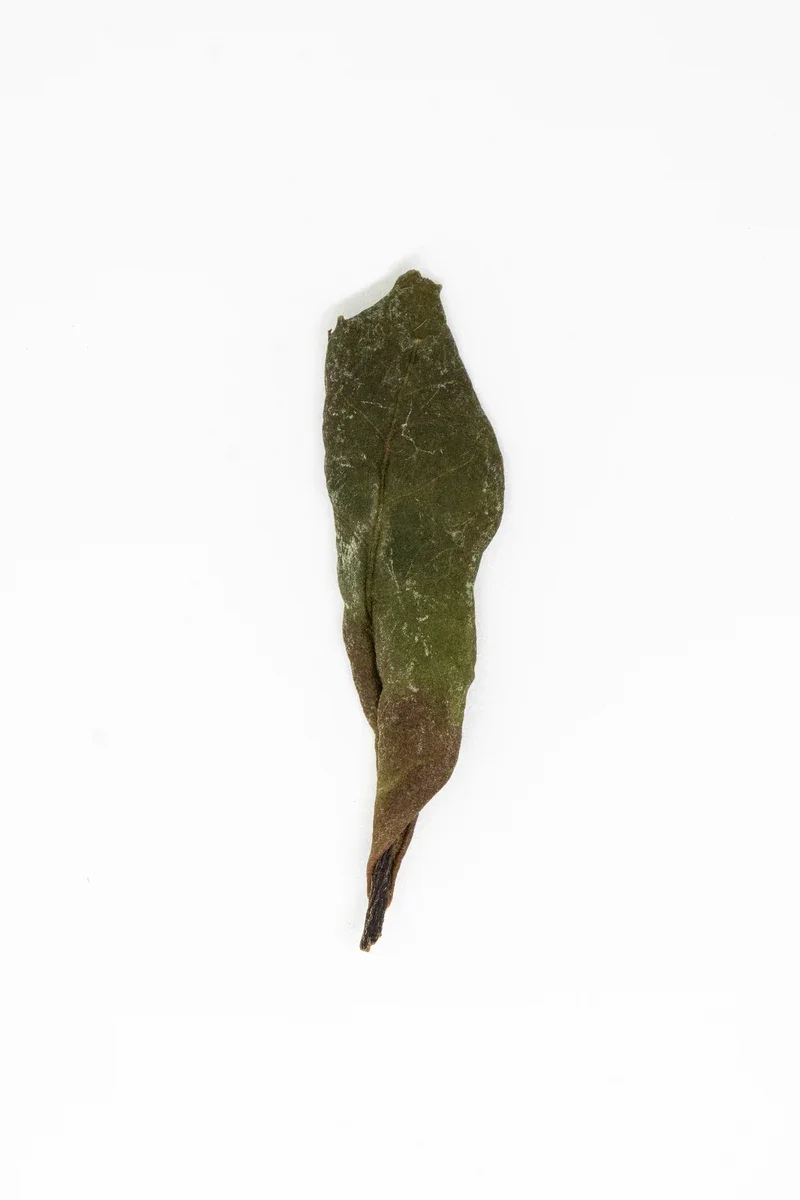
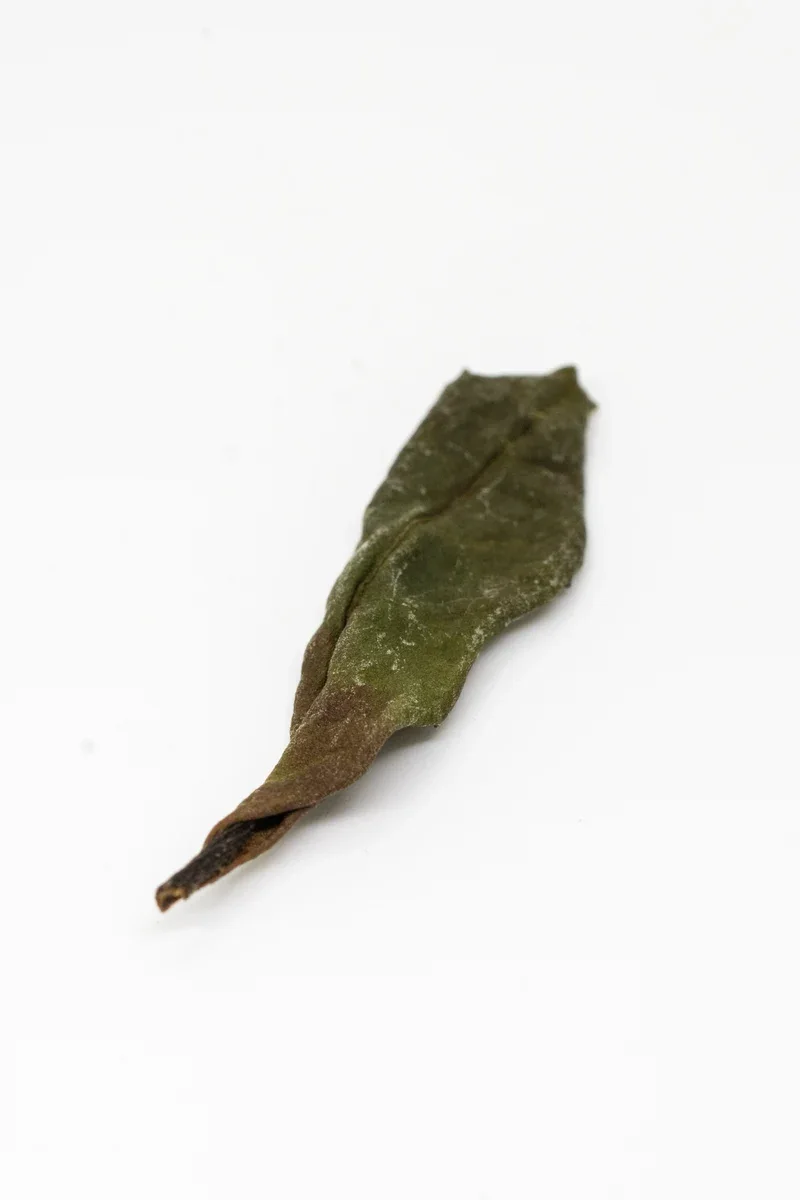
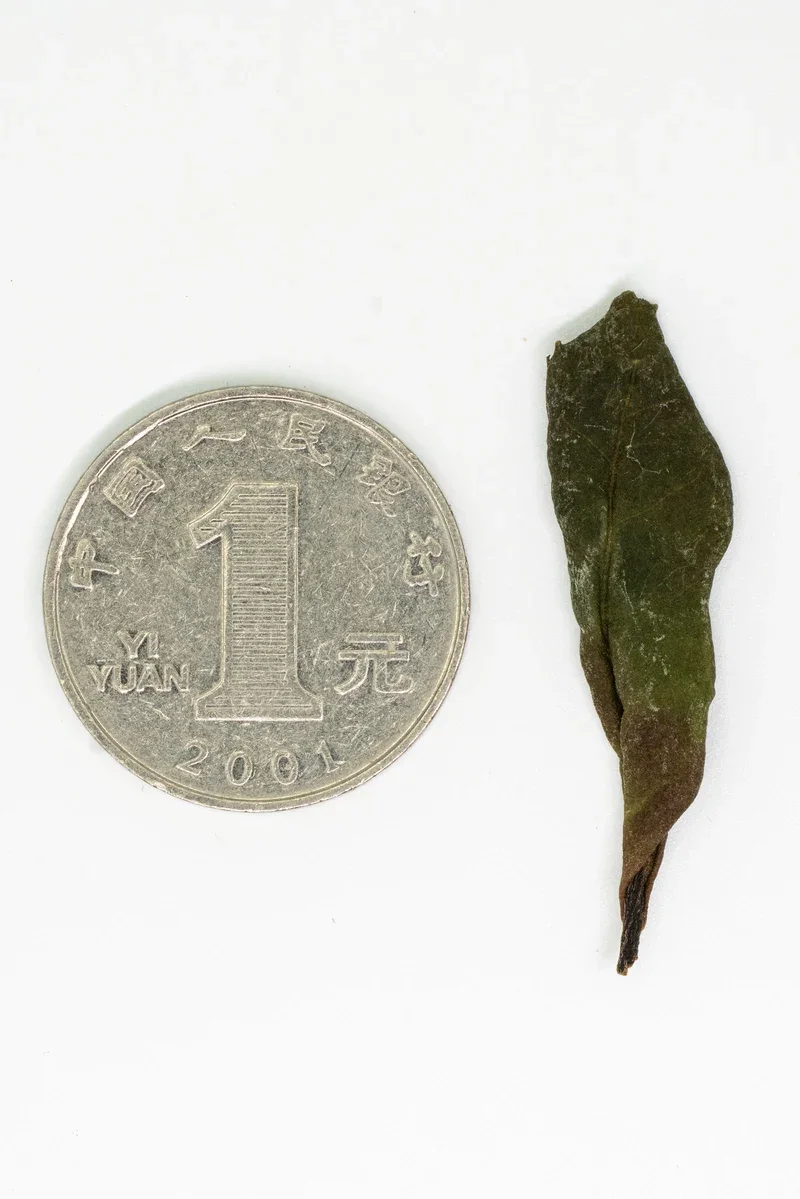
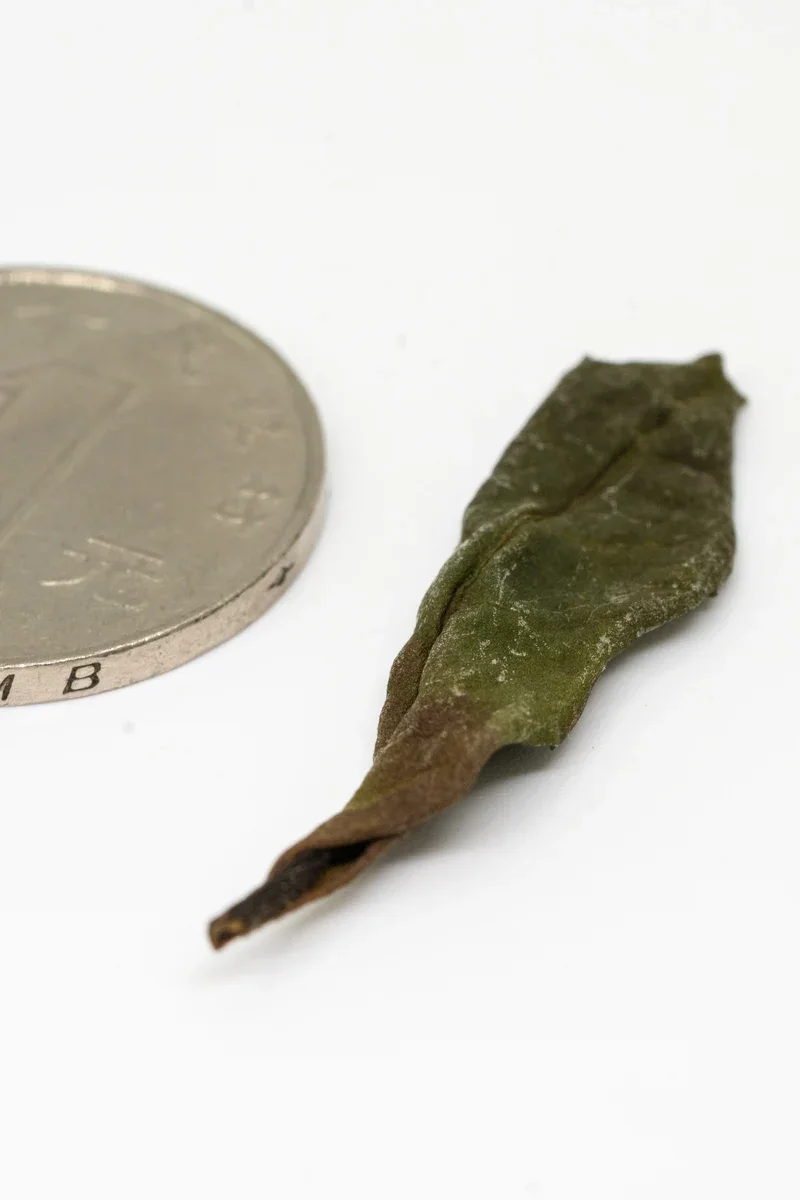
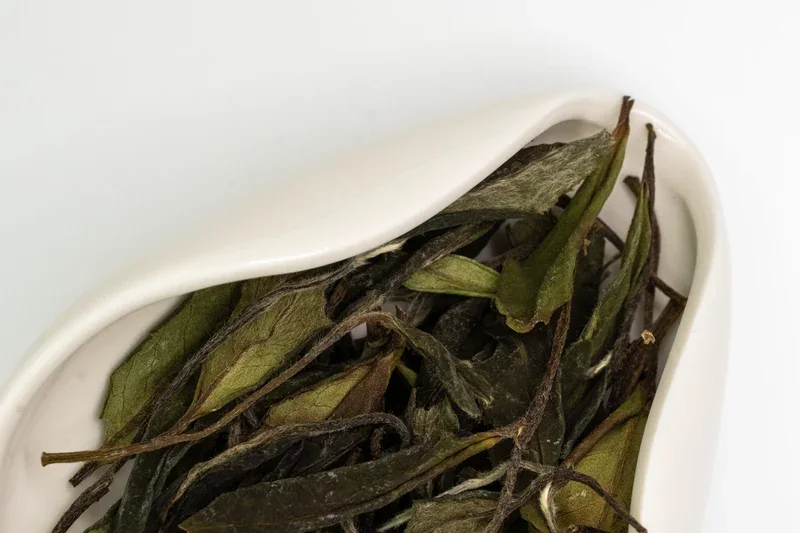
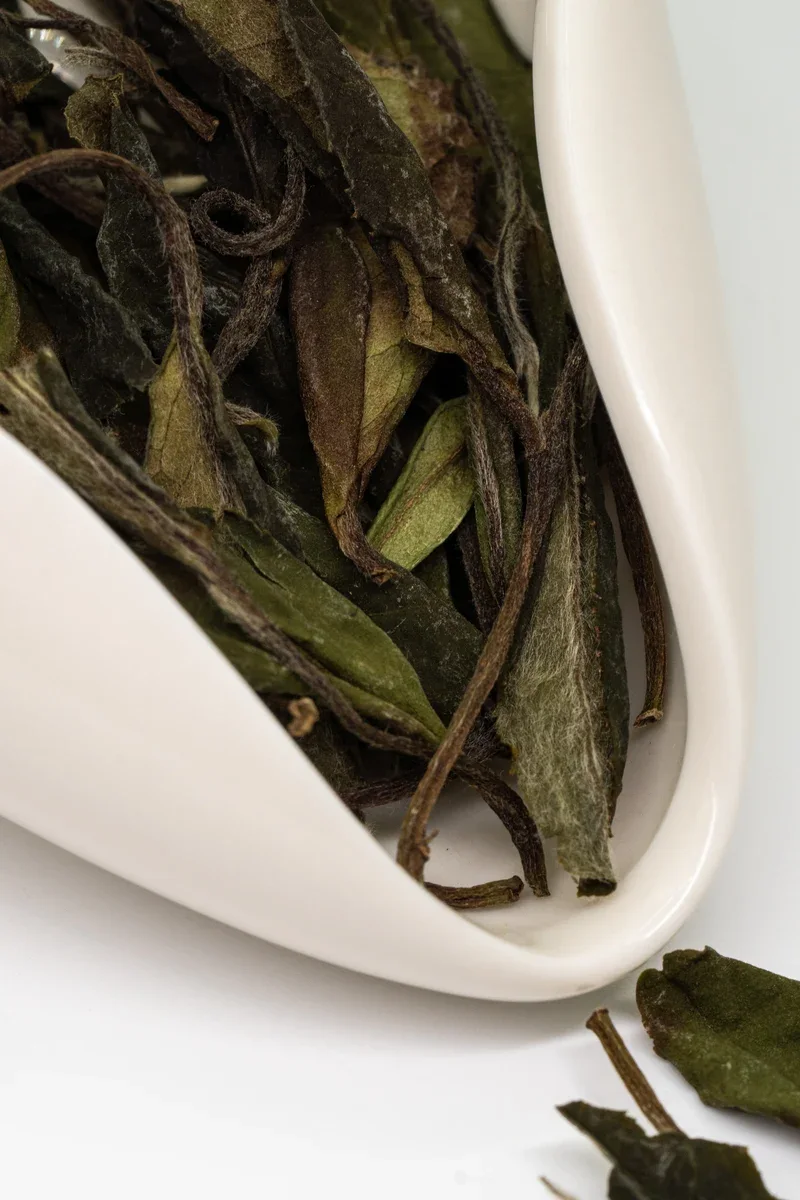
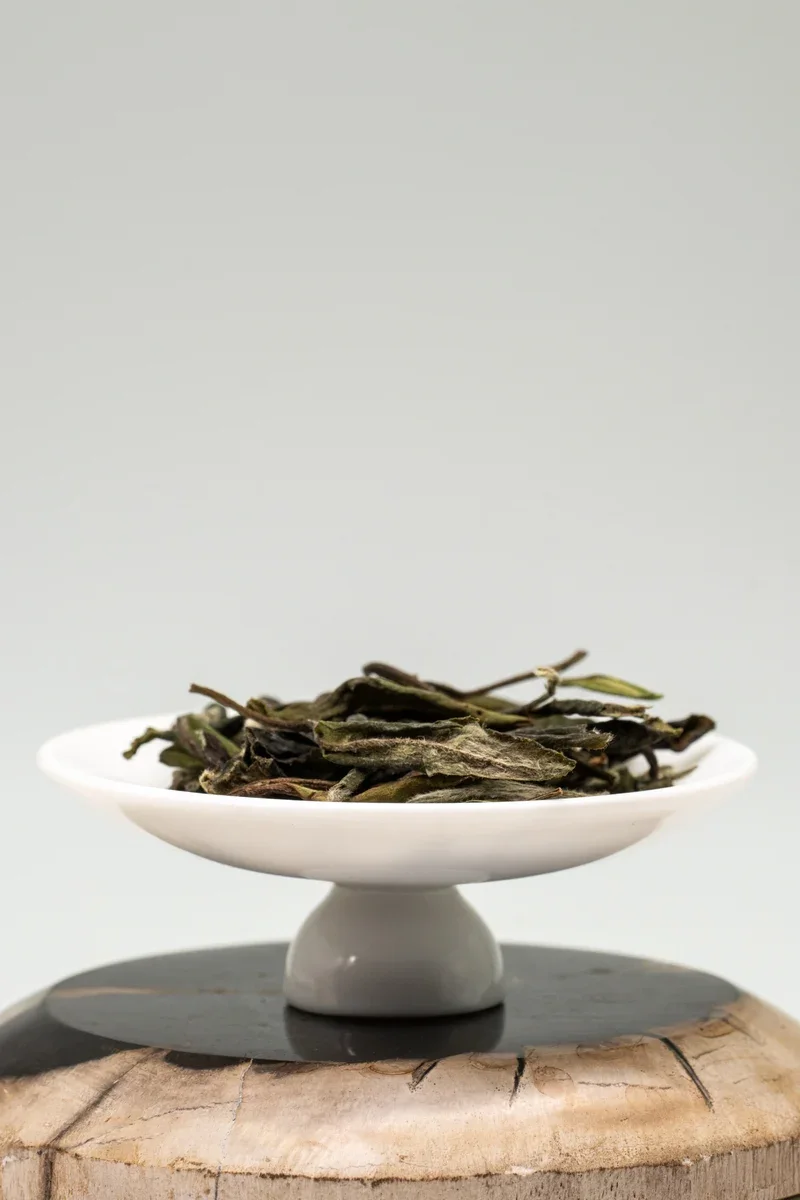
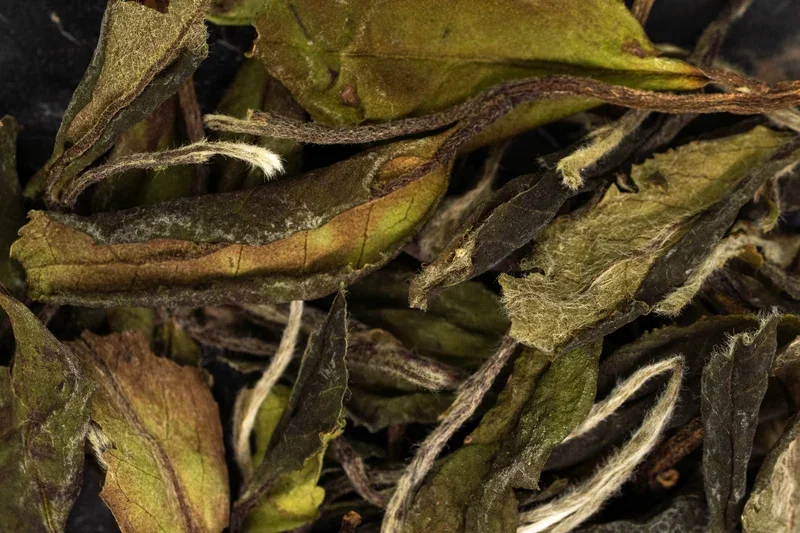
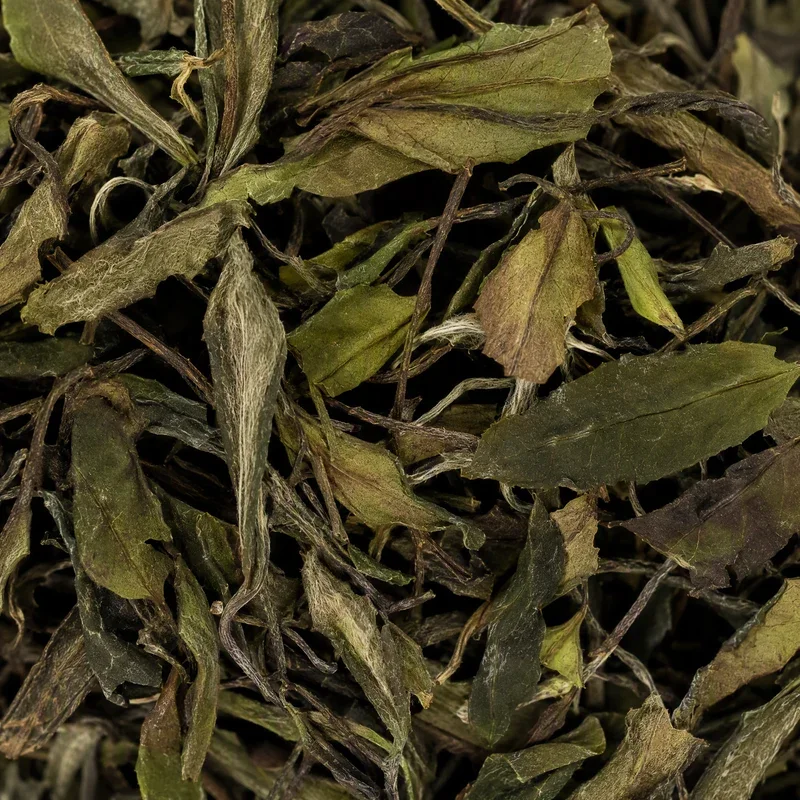
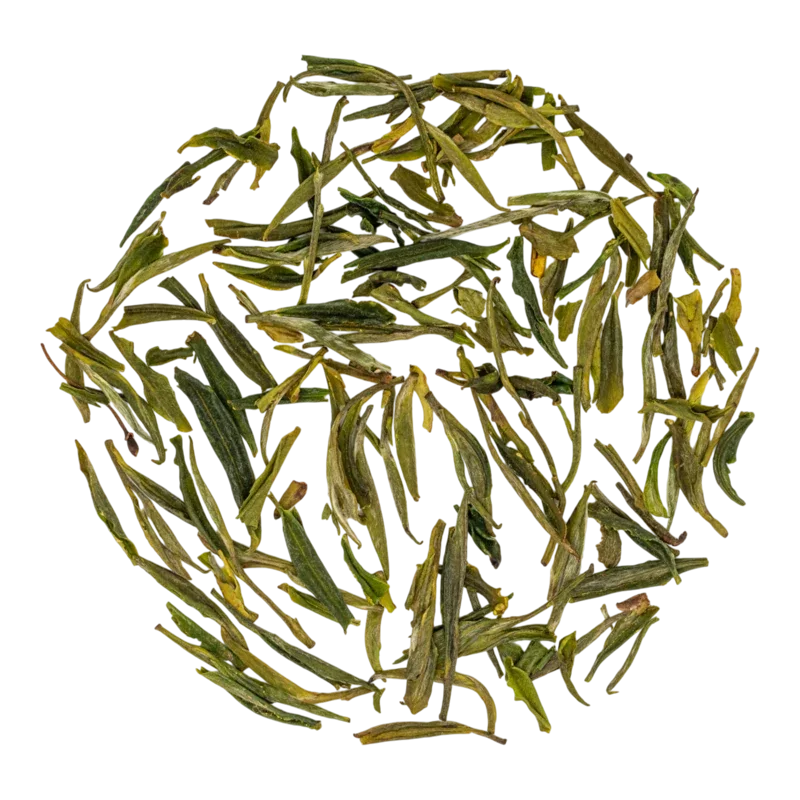
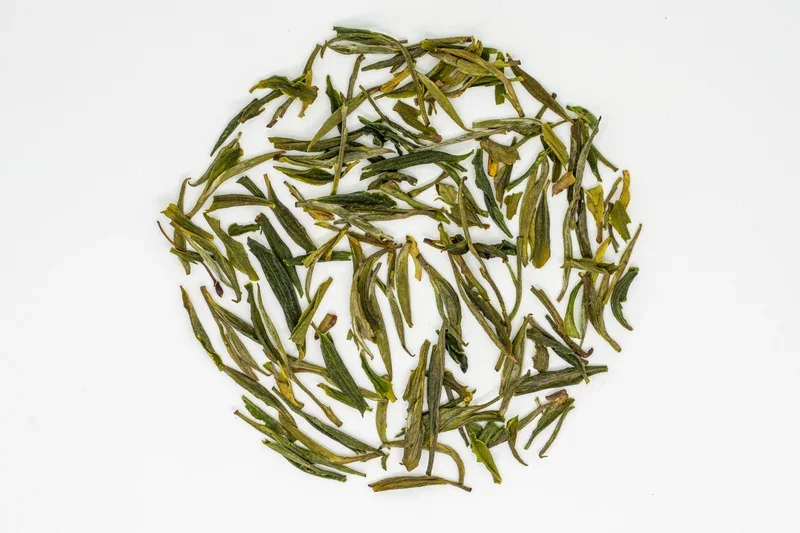
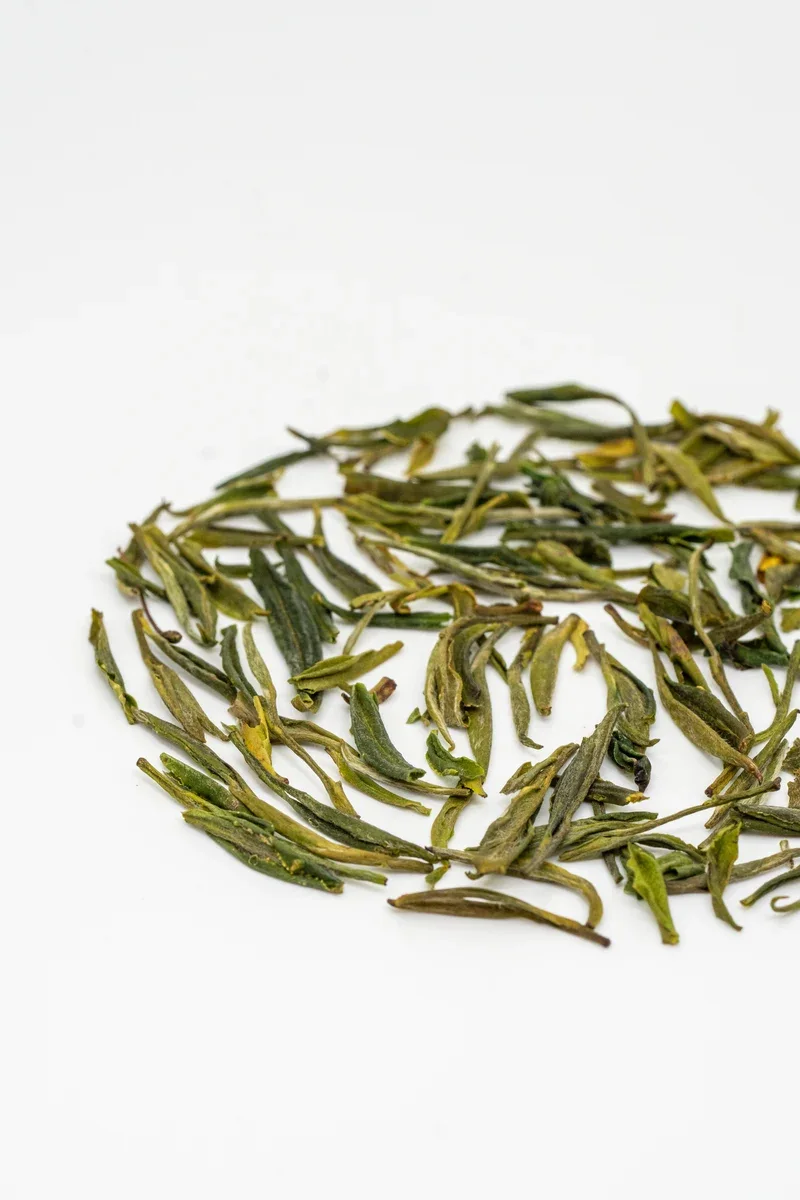
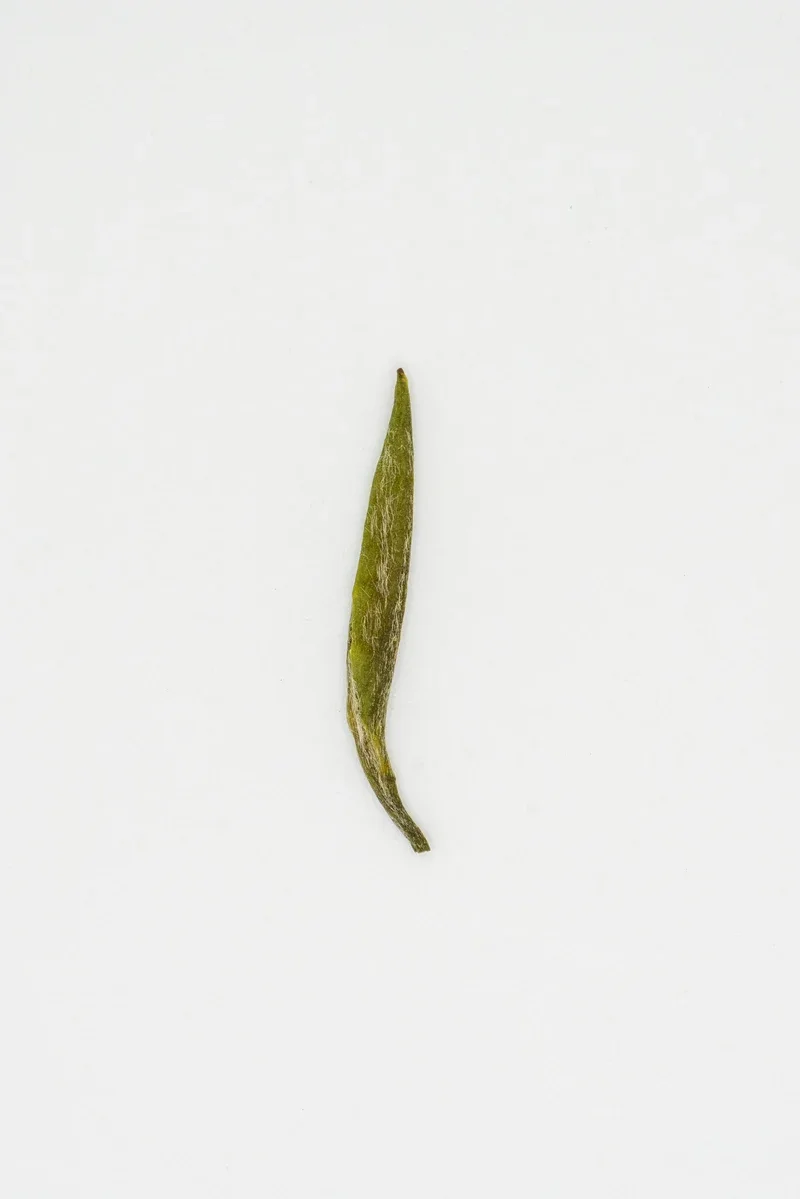
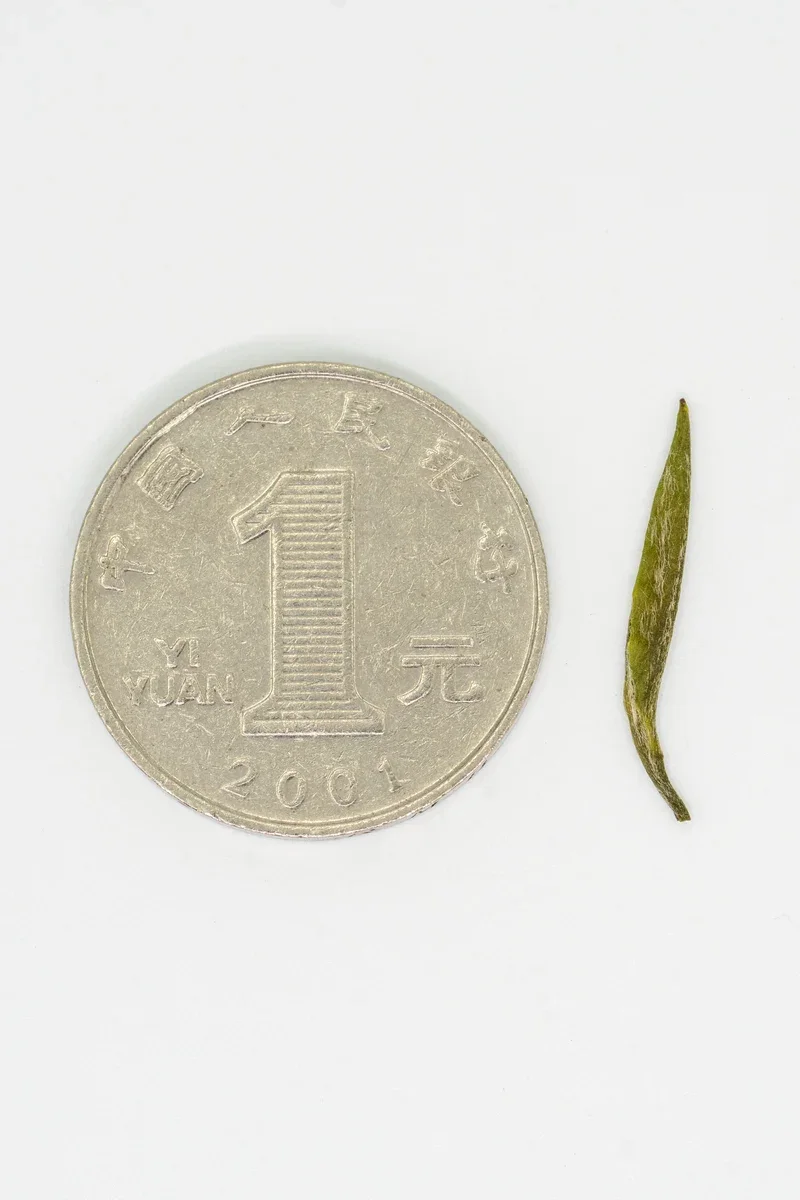
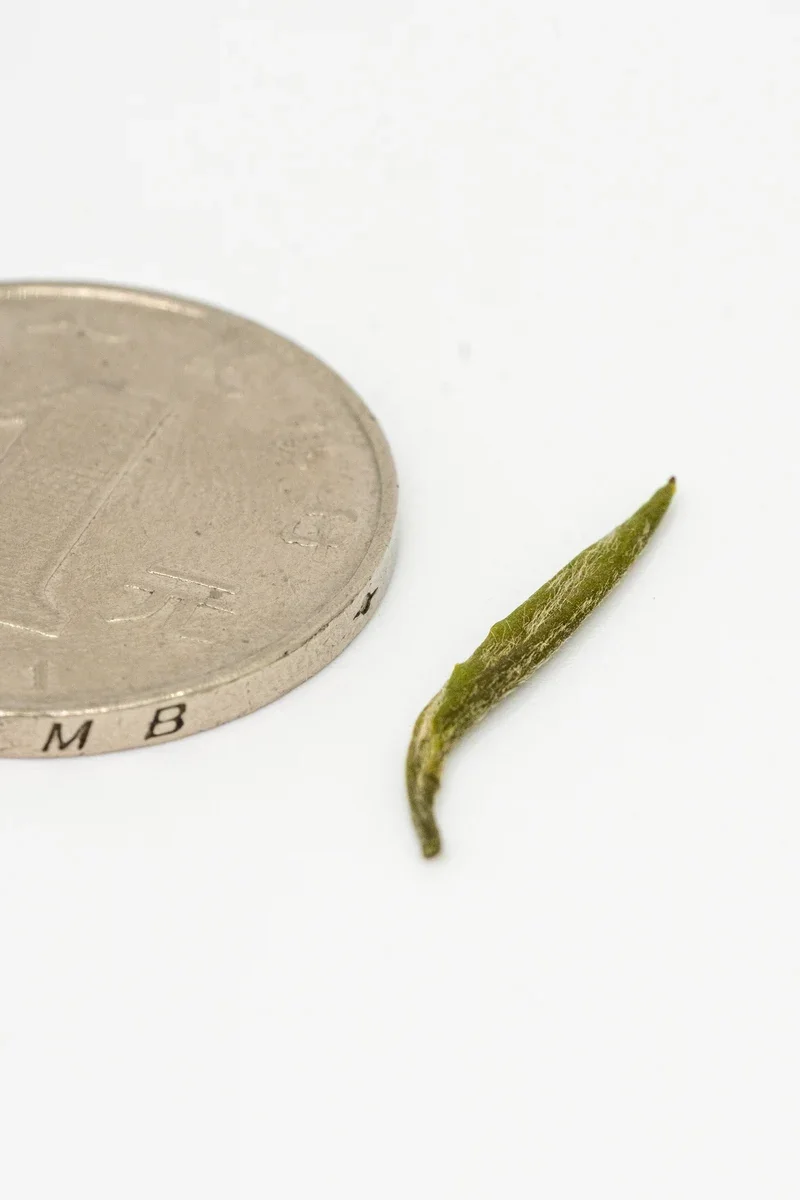
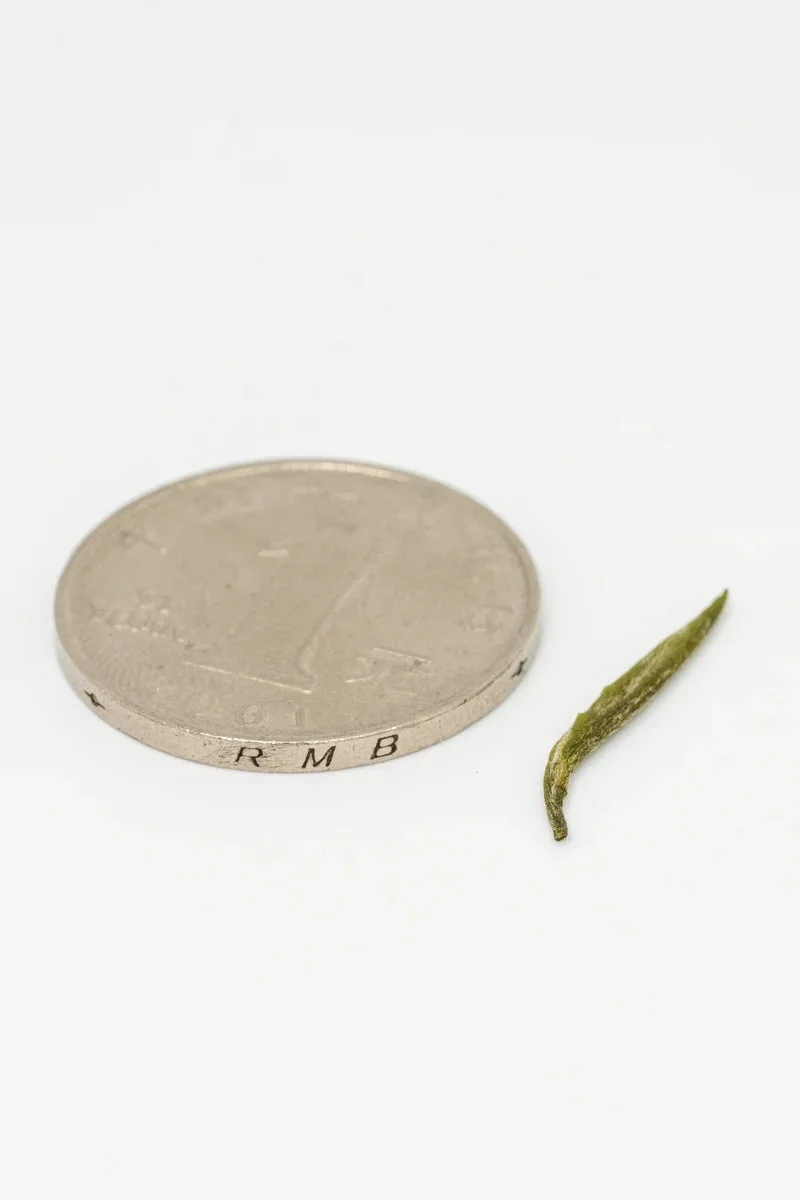
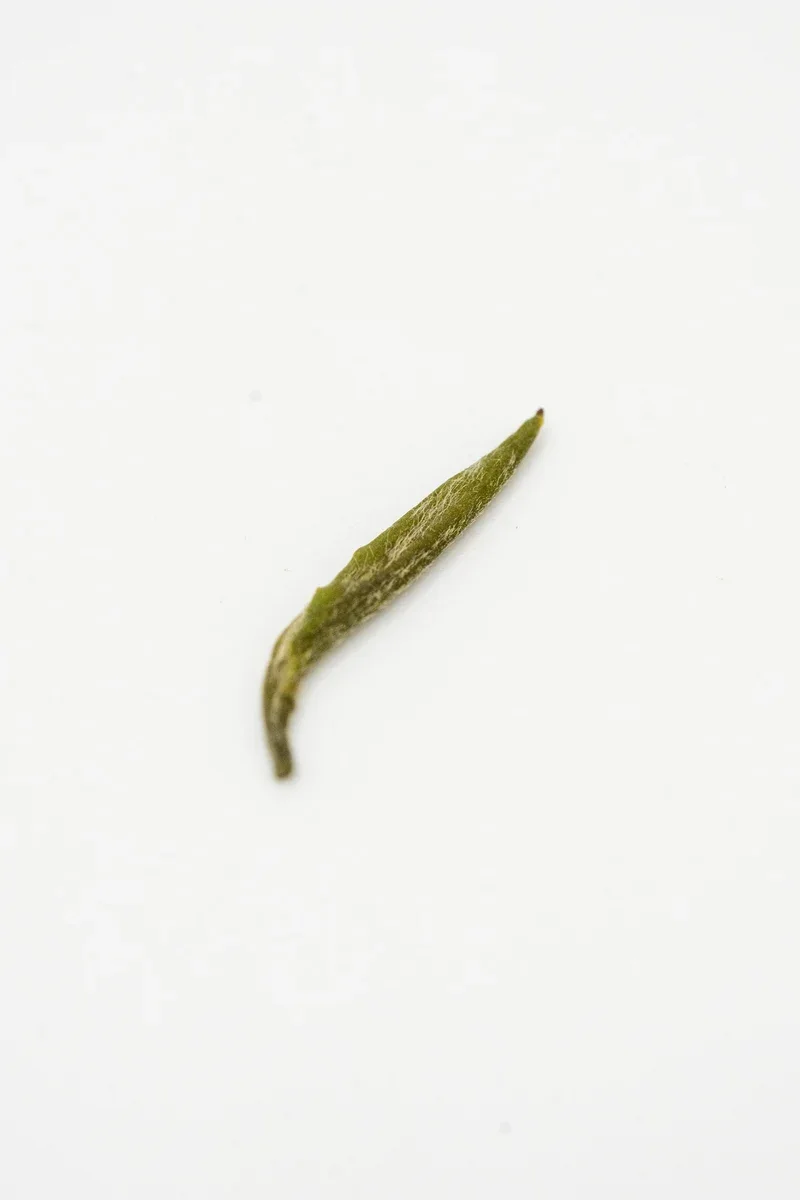
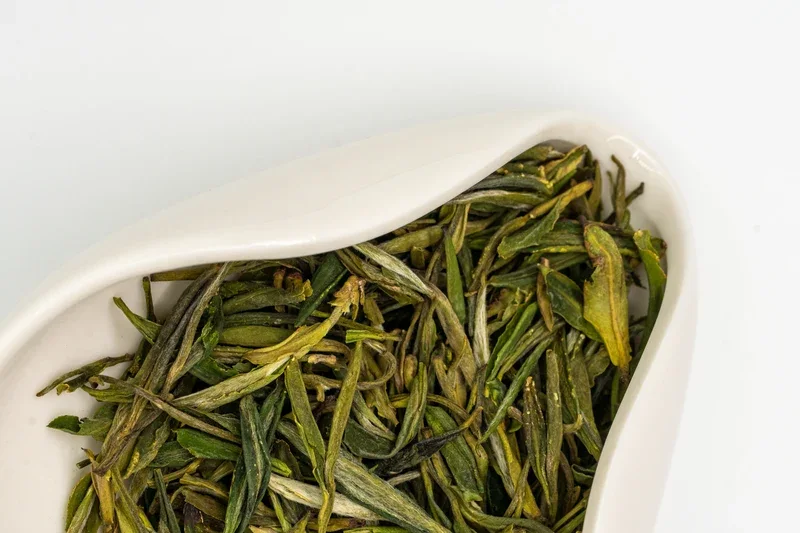
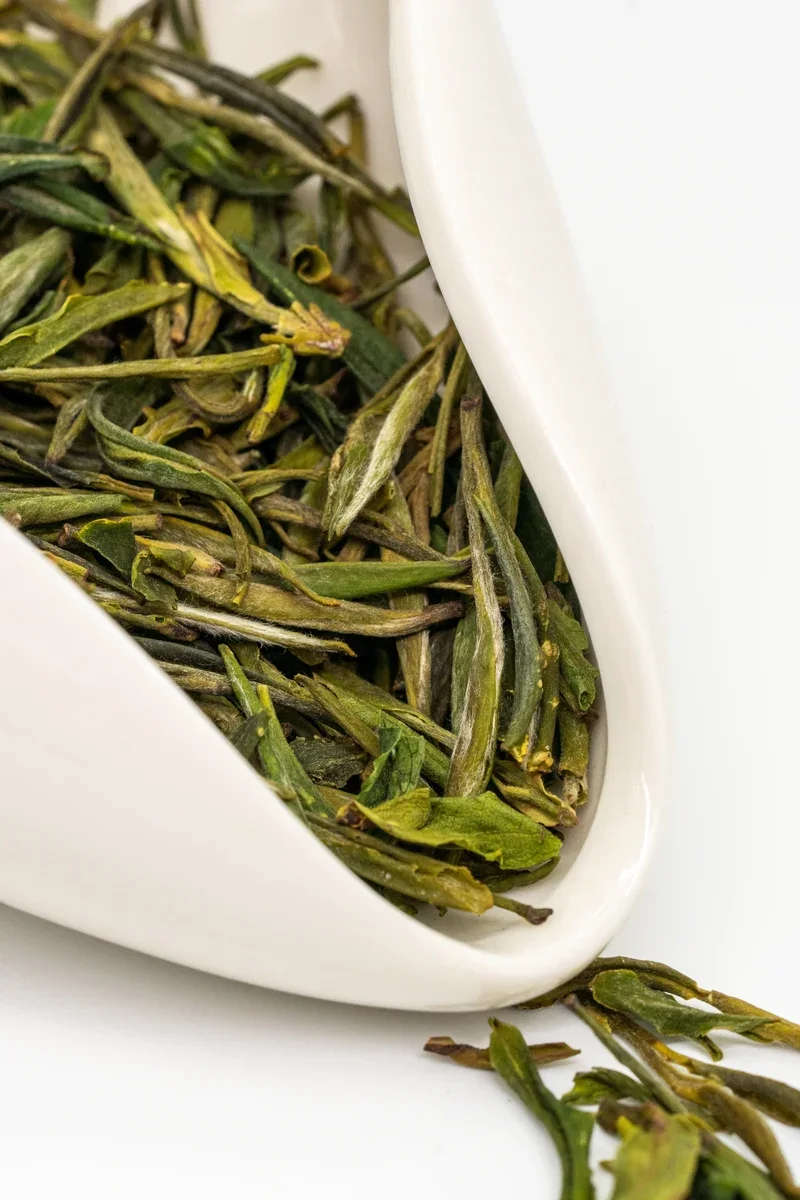
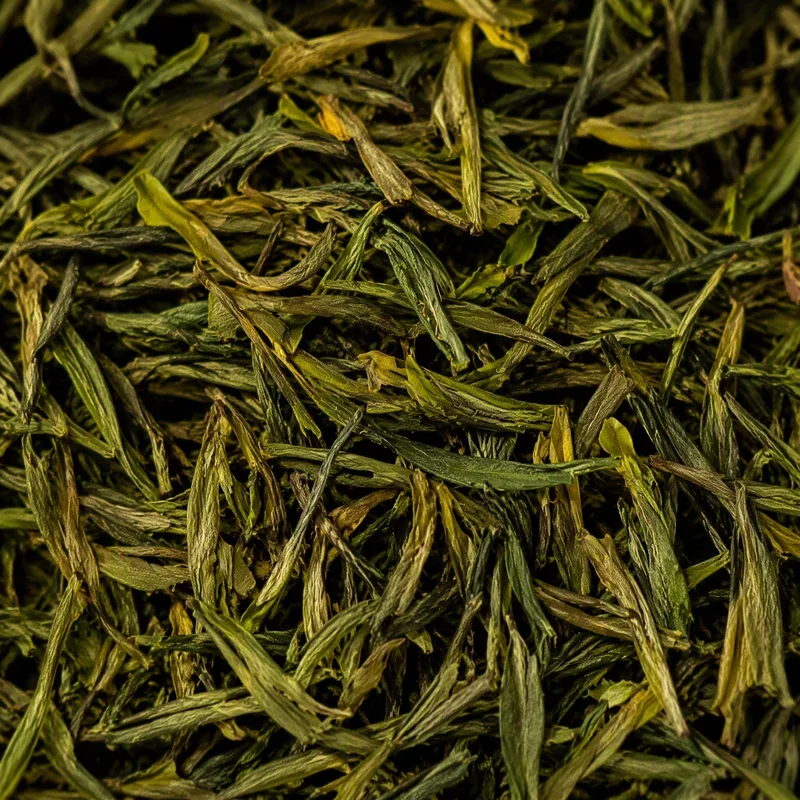
Thin, elegant leaves (细秀匀齐), curved like a new moon (如新月), tender green with silvery down (嫩绿披毫).
Delicate (嫩香), persistent, with chestnut core (栗香浓郁) and light orchid undertones (隐现兰花香).
Spent Leaves: Tender green, uniform, shoots unfold in complete "bouquets" (嫩绿匀整成朵).
Taste: Fresh (鲜醇), brisk (醇爽), with powerful returning sweetness (huí gān) building in waves — "like a spring gushing from stone" (回甘生津如泉涌). Capable of maintaining flavor up to 7 infusions (七泡余韵) — an outstanding indicator.
Amino Acids: 3.56%. Ensure freshness and "briskness."
0.25 mg/kg — 1.3 times higher than Hanzhong Xianhao average. Selenium-rich soils of Dingjun Mountain — natural advantage.
High content (by analogy with general Hanzhong Xianhao standard — ≥44.57%).
~4.4%. Slightly above average — provides noticeable tonic effect.
Polyphenols: ≥30.5% — high indicator, providing dense body and "muscularity" to the liquor.
Vitamins: C, B-group. Minerals: Se, Zn, K, Mg.
Polyphenols ≥30.5% + organic Se.
Caffeine ~4.4% + L-theanine — pronounced but gentle alertness.
0.25 mg/kg — significant source.
Catechins promote cholesterol normalization.
Traditional "cooling" nature of green tea (绿茶).
Also from Hanzhong, Se-enriched. Shape — "sparrow tongue." Dingjun Ming Mei — "eyebrow-shaped." Both — Se-teas, but different shape and micro-region.
Umbrella brand unifying Hanzhong teas. Flat shape, chestnut aroma. Dingjun — one of three sources of this brand.
Shaanxi. Se-enriched, from different district (Southern Shaanxi). Dingjun — from Hanzhong, at the foot of Dingjun Mountain.
75–85°C. For highest grade — 75–80°C.
3–4 g per 150 ml.
Process: Bottom infusion method (下投法). First infusion — 10–15 seconds. Withstands up to 7 infusions — increase time by 5–10 seconds each time.
Teaware: High-transparency glass tumbler — for observing "eyebrow-shaped" leaves standing vertically like pine needles (形似松针耸立). Liquor — yellow-green, with "living" brilliance.
No reviews yet. Tell us what you think of this tea.
Rate this tea and share your impressions. We review each submission before publishing it.