Brewing
Gongfu brewing
- Water temperature
- 75 °C
- Tea amount
- 5 g
- Water volume
- 100 ml
- First steep
- 10 s
- Time added per infusion
- 5 s
- Infusions
- 3

Dǐnggǔ dà fāng
Choose a brewing method. Start with the recommended quantities and time, then adjust to taste.
Brewing
Brewing
Taste
Tea encyclopedia
Alt Names: Lǎozhú Dàfāng (老竹大方, "Dafang from Old Bamboo Ridge") — general name for the entire line; Zhúpù Dàfāng (竹铺大方); Zhūyè Dàfāng (竹叶大方, "Bamboo-leaf Dafang"); Tèsè Dàfāng (铁色大方, "Iron-colored Dafang"); Kaofang (拷方). "Dinggudafang" (顶谷大方) — highest grade of the line.
Alt Names: Lǎozhú Dàfāng (老竹大方, "Dafang from Old Bamboo Ridge") — general name for the entire line; Zhúpù Dàfāng (竹铺大方); Zhūyè Dàfāng (竹叶大方, "Bamboo-leaf Dafang"); Tèsè Dàfāng (铁色大方, "Iron-colored Dafang"); Kaofang (拷方). "Dinggudafang" (顶谷大方) — highest grade of the line.
Category: Famous Teas of China (中国名茶). In 1986 included among state diplomatic teas (国家外交部礼茶). Protected by geographical indication (地理标志). "Progenitor of all flat green teas" (扁形茶鼻祖) — according to Professor Zhǎn Luojiu (詹罗九) from Anhui Agricultural University.
Coordinates: approximately 29°52′ N, 118°52′ E.
Origin: China, Ānhuī Province (安徽省, Ānhuī Shěng), Huángshān City (黄山市, Huángshān Shì), Shè County (歙县, Shè Xiàn). Main production zones: Zhúpù Township (竹铺乡, Zhúpù Xiāng), Sānyáng Town (三阳镇, Sānyáng Zhèn), Jīnchuān Township (金川乡, Jīnchuān Xiāng). The finest tea comes from Laozhulín Ridge (老竹岭, Lǎozhú Lǐng), Dafangshan Mountain (大方山, Dàfāng Shān), and Fuquanshan Mountain (福泉山, Fúquán Shān). The region is located on the border of Anhui and Zhejiang provinces, along the ancient "Huihang Ancient Road" (徽杭古道).
Type: Green tea (绿茶, lǜchá), unfermented. Belongs to the category of chǎoqīng (炒青, chǎoqīng) — pan-fired green teas. Subcategory — flat pan-fired teas (扁形炒青绿茶).
According to Professor Zhan Luojiu and "Handbook of Famous Chinese Teas," Longjing's flat pan-firing technology was borrowed from Dafang. Monk Dafang is indirect "father" of the world's most famous green tea.
Dafang tea appears in "Old History of Five Dynasties" as Liangzhe tribute — more than 1,100 years ago.
Dinggudafang was included among teas presented to foreign delegations on behalf of PRC — alongside Longjing and Biluochun.
Japanese studies showed Dafang surpasses oolong and Tieguanyin in ability to reduce free fatty acid levels — earning it the nickname "减肥之王" ("King of weight loss").
Annual Dinggudafang production volume — about 3 tons. For comparison: Longjing production — thousands of tons. This is one of the rarest famous green teas of China.
This is how modern tea experts call Dafang: tea with thousand-year history that found itself in shadow of its more "promoted" neighbors — Huangshan Maofeng and Taiping Houkui.
Cultural Significance: Dinggudafang is one of the least known to the general public but most significant for Chinese tea history green teas. Professor Zhǎn Luojiu (詹罗九) from Anhui Agricultural University proved that precisely Dafang is the "progenitor of all flat green teas" (扁形茶鼻祖), and the famous Longjing is its "descendant," having adopted the flat pan-firing technology. Authors of the "Handbook of Famous Chinese Teas" (《中国名茶志》) Wáng Zhènhéng (王镇恒) and Wáng Guangzhi (王广智) confirmed: "Longjing most likely arose in the late Ming — early Qing and probably developed by borrowing Dafang's pan-firing technology."
History: The history of Dafang tea spans more than 1,000 years. The earliest mention appears in the "Old History of the Five Dynasties" (《旧五代史》): "In the 1st year of Qianhua [911 CE] in the twelfth month, Liangzhe presented as tribute Dafang tea — 20,000 jin." Thus, already during the Five Dynasties and Ten Kingdoms period (五代十国, 907–960), Dafang tea was tribute tea. However, the modern technology of flat pan-fired Dàfāng is associated with the name of Buddhist monk Dàfāng (大方和尚), who lived during the Míng dynasty (明, 1368–1644). According to the "Records of She County" (《歙县志》): "During the Longqing years [1567–1572], monk Dàfāng lived on Sōngluó Mountain (松萝山) in Xiūníng County (休宁), masterfully produced tea, and the entire prefecture adopted his method." Dafang was a wandering monk who came from Suzhou to Huizhou, where he developed and spread the technology of tea pan-firing (炒青) — which subsequently became the foundation for producing Sōngluó Tea (松萝茶) and Longjing. Official Long Yīng (龙膺), who served in Huīzhōu during the Wànlǐ era (万历, 1573–1620), personally observed the monk's work and described his method in the book "Mengshi" (《蒙史》). Scholar Lì Weizhen (李维桢) in "Praise of Dafang's Image" (《大方象赞》) described the monk: "With beautiful eyebrows and luxuriant beard, soaring like a celestial being."
Cultivar: Zhúpù Zhǒng (竹铺种, Zhúpù Zhǒng) — local population of Camellia sinensis var. sinensis, adapted to the highlands of She County. Spring buds awaken in mid to late March, bud density is high, shoots are short and sturdy, with abundant white down. Leaves are green, cold-resistant. High yield. Tea from Zhúpù Zhǒng is distinguished by characteristic chestnut aroma (板栗香).
Picking: Dinggudafang is harvested before Gǔyǔ (谷雨, ~April 20). Standard Laozhu Dafang — from Gǔyǔ to Lìxià (立夏, ~May 6). Spring harvest is best; summer and autumn are acceptable for ordinary grades.
Pluck Standard: Dinggudafang — one bud with two leaves in initial opening stage (一芽二叶初展). Regular Dafang — one bud with two to three leaves.
Raw Material: Whole, undamaged shoots. Harvest in dry weather. Quick delivery to workshop.
Altitude: 800–1,300+ m above sea level. Best plantations (Laozhulín, Fuquanshan) — at altitudes of 1,000–1,300 m.
Climate: Average annual temperature ~16°C. Precipitation — ~1,800 mm/year. Humidity — 80%+. Frequent morning fogs create natural shading, enhancing accumulation of amino acids and chlorophyll. Cold winters, moderately warm summers. Significant diurnal temperature variation.
Soil: Top layer — black sandy soil (乌沙); middle — red-yellow soils (红黄壤); reaction — weakly acidic. Granite base, rich in minerals (manganese, potassium, zinc). Soils are loose, well-drained, with high organic content.
Northeastern part of the county, on the Anhui-Zhejiang border. Belongs to the Tiānmùshān Range (天目山脉). Qingliangfeng Peak (清凉峰) — 1,787 m. Mountains are steep, valleys deep, streams numerous. Tea bushes grow among rocks, in crevices and mountain valleys.
Hand-picked, early spring.
Brief — 2–4 hours on bamboo trays. Loss of some moisture, beginning of aroma formation.
In heated wok (铁锅) at ~150°C. Enzyme inactivation, prevention of oxidation. Leaves quickly soften, acquire plasticity. Master works with bare hands, controlling temperature tactilely.
Key stage distinguishing Dafang from other green teas. Hot leaves are carefully pressed against wok walls with palms, flattening and smoothing, giving characteristic flat, slightly elongated shape resembling bamboo leaf. Requires highest mastery — overheat = burn, under-press = fail to achieve flat shape.
In several stages at controlled temperature 60–90°C. Traditionally — over charcoal (炭焙), which can impart light "smoky" note. For Dinggudafang, drying is especially delicate — preserving golden tips and chestnut aroma.
Sifting through bamboo sieves, removing stems and small fraction.
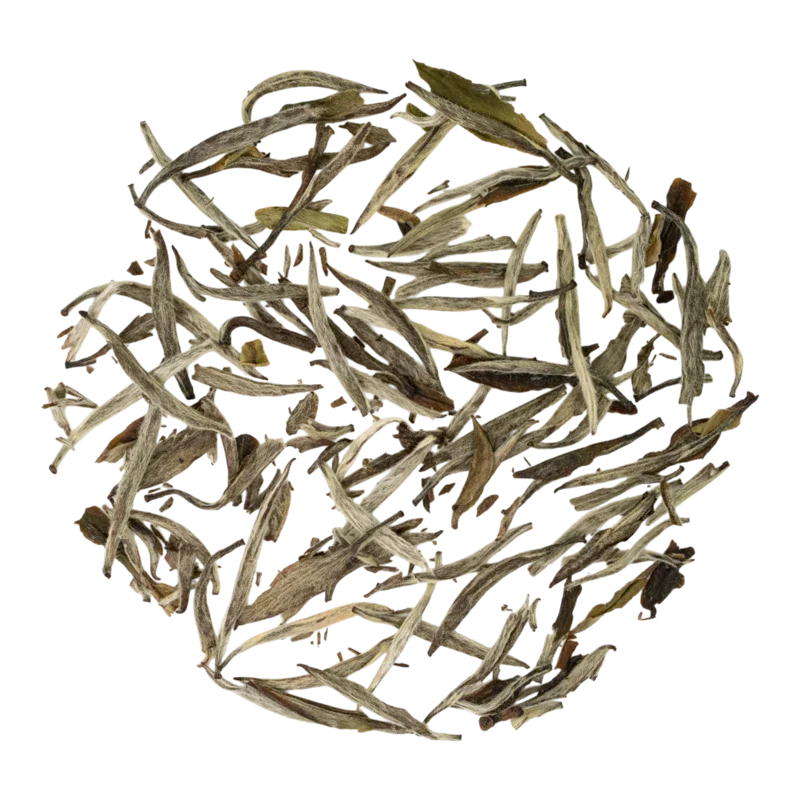
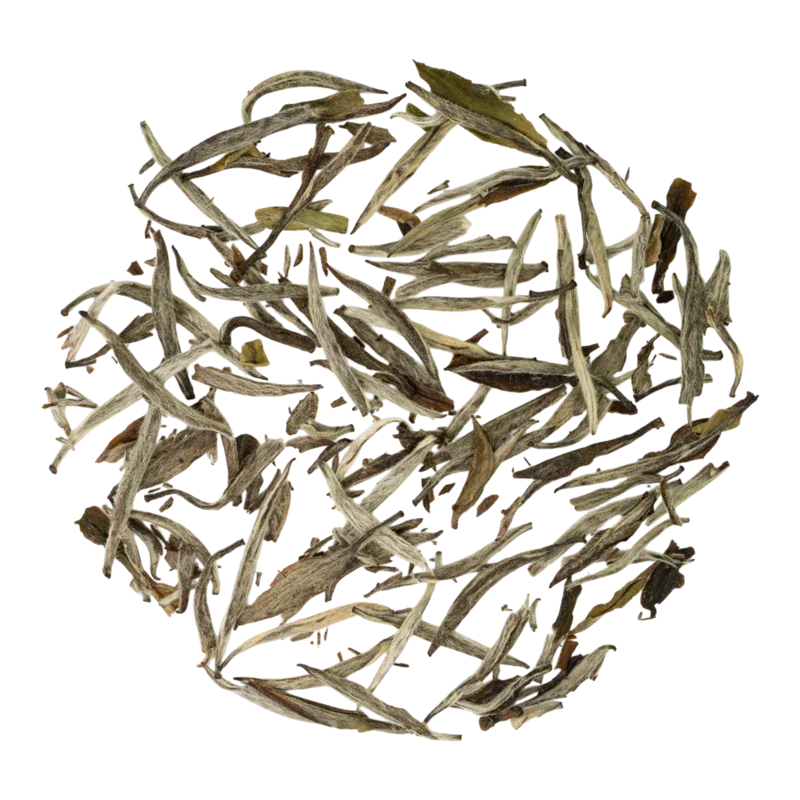
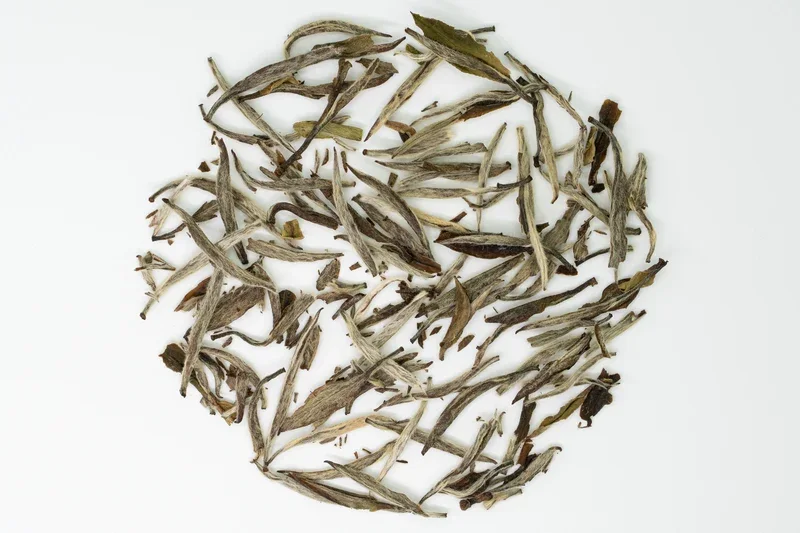
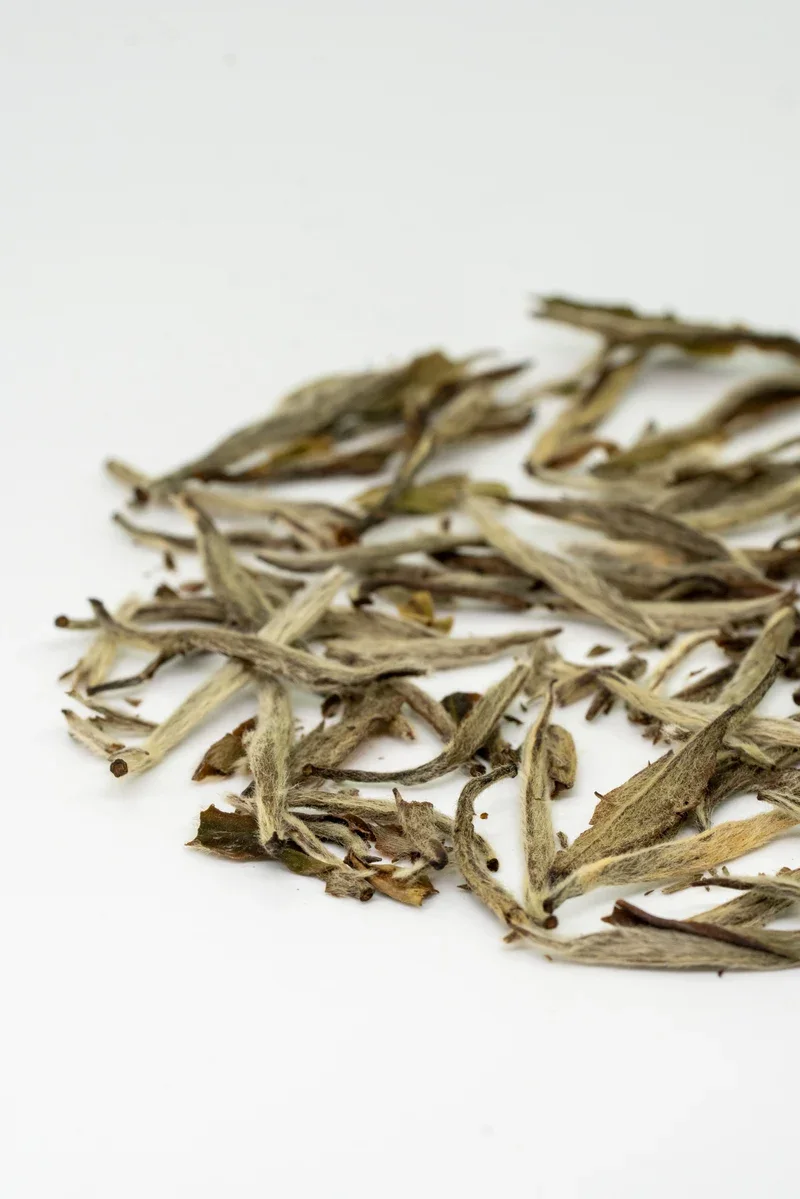
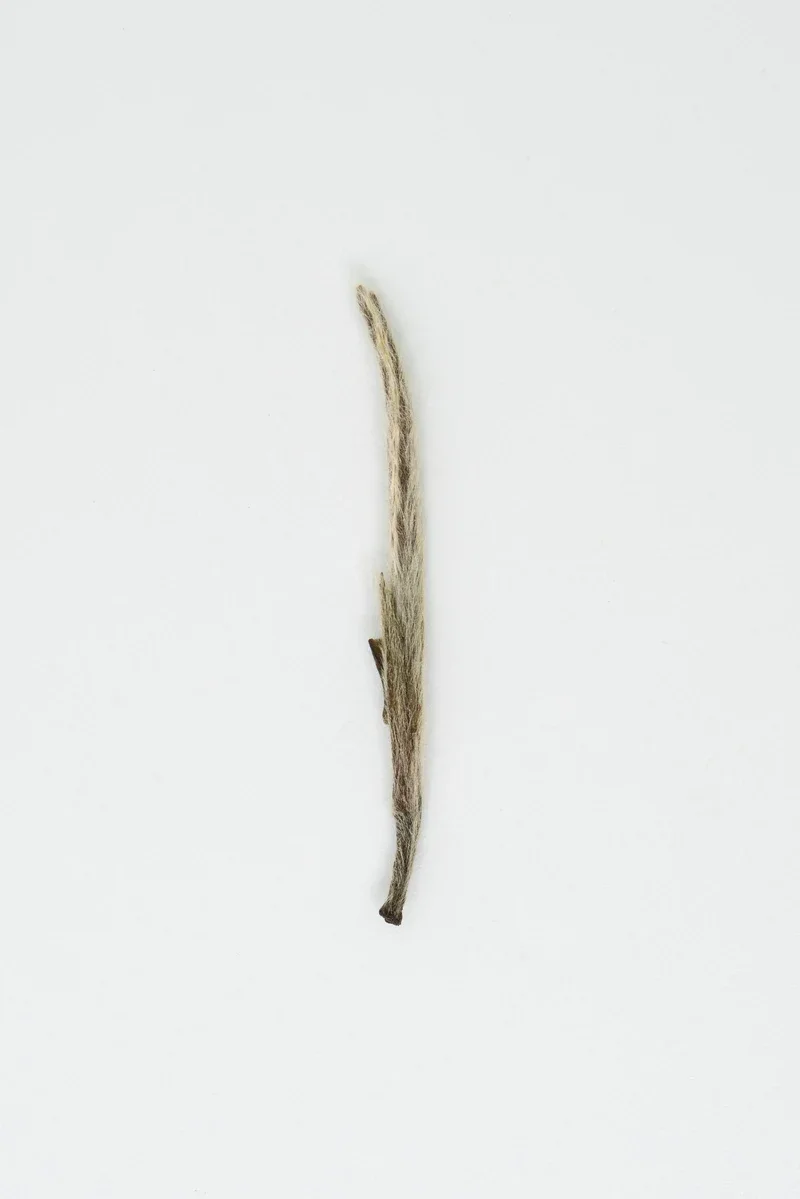
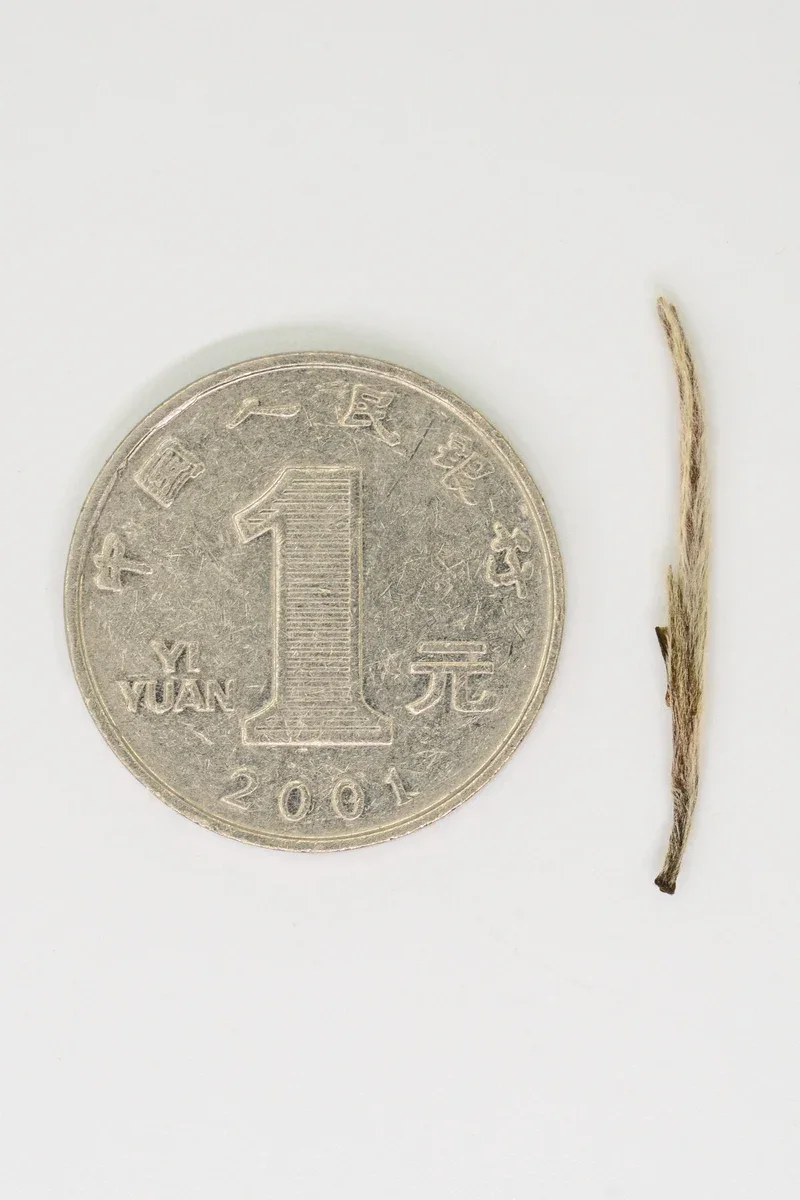
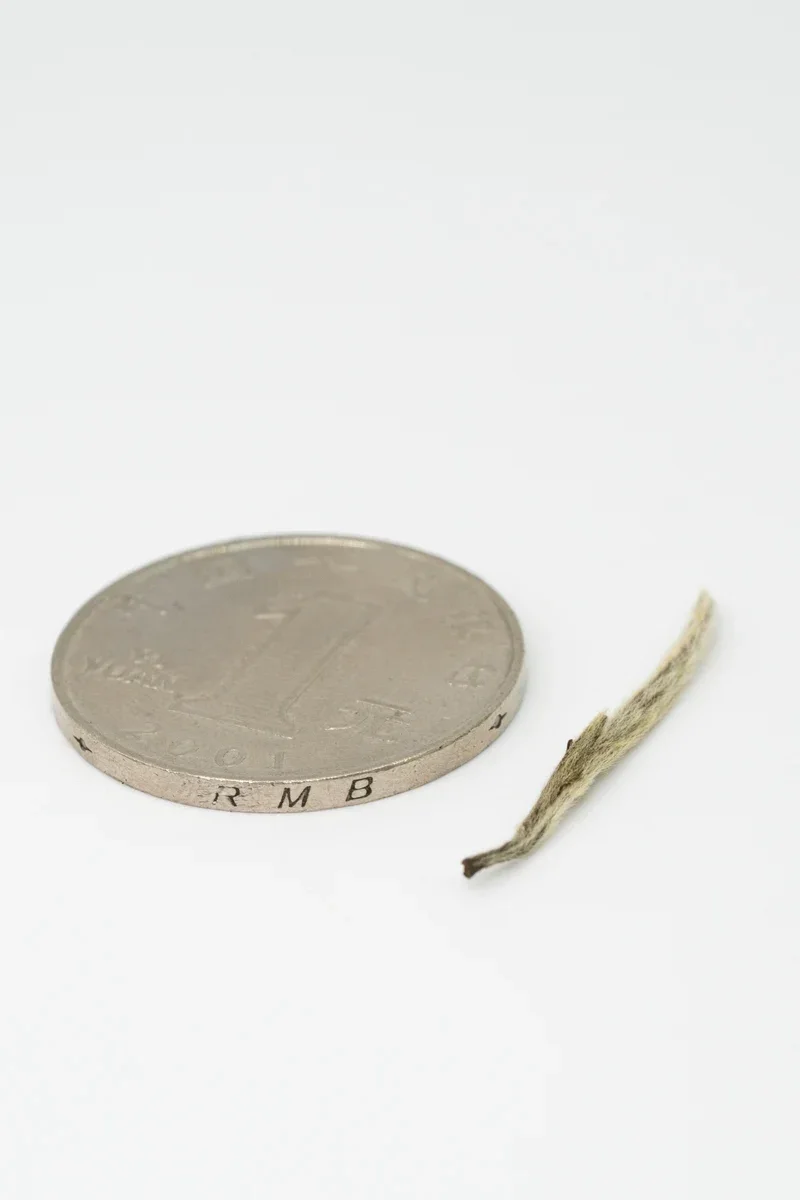
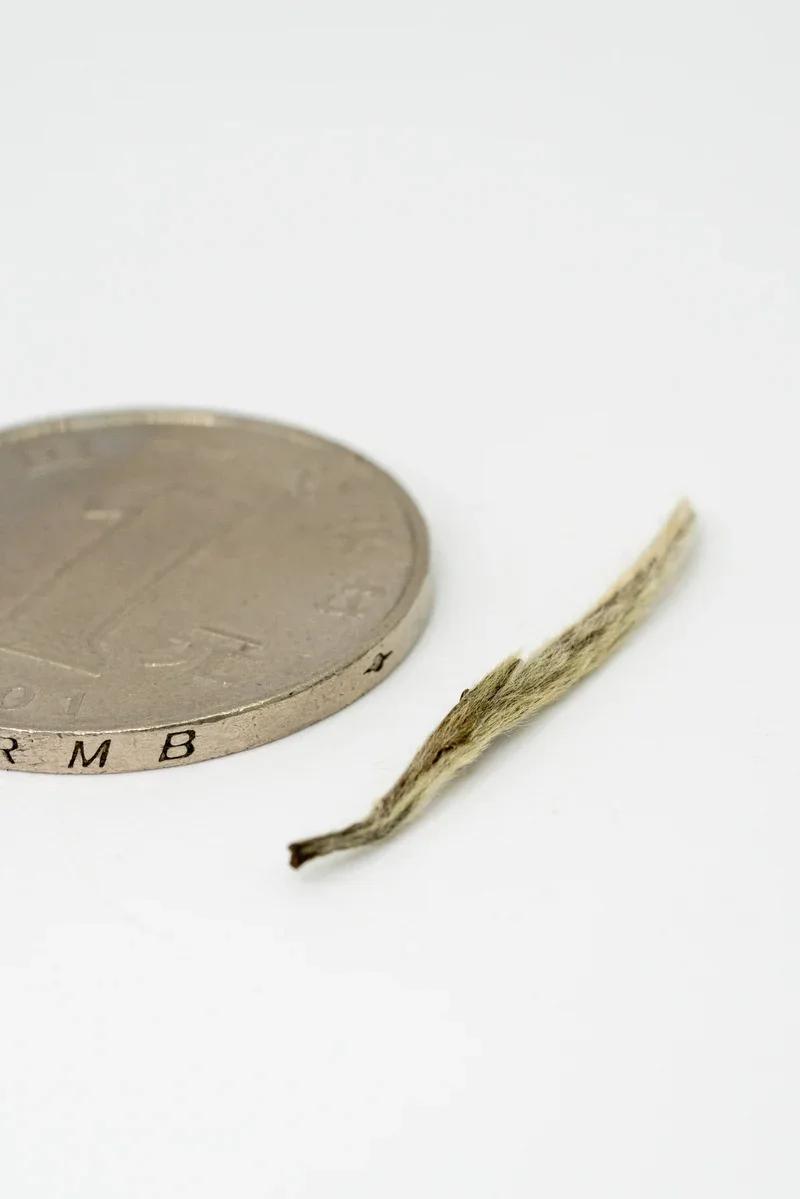
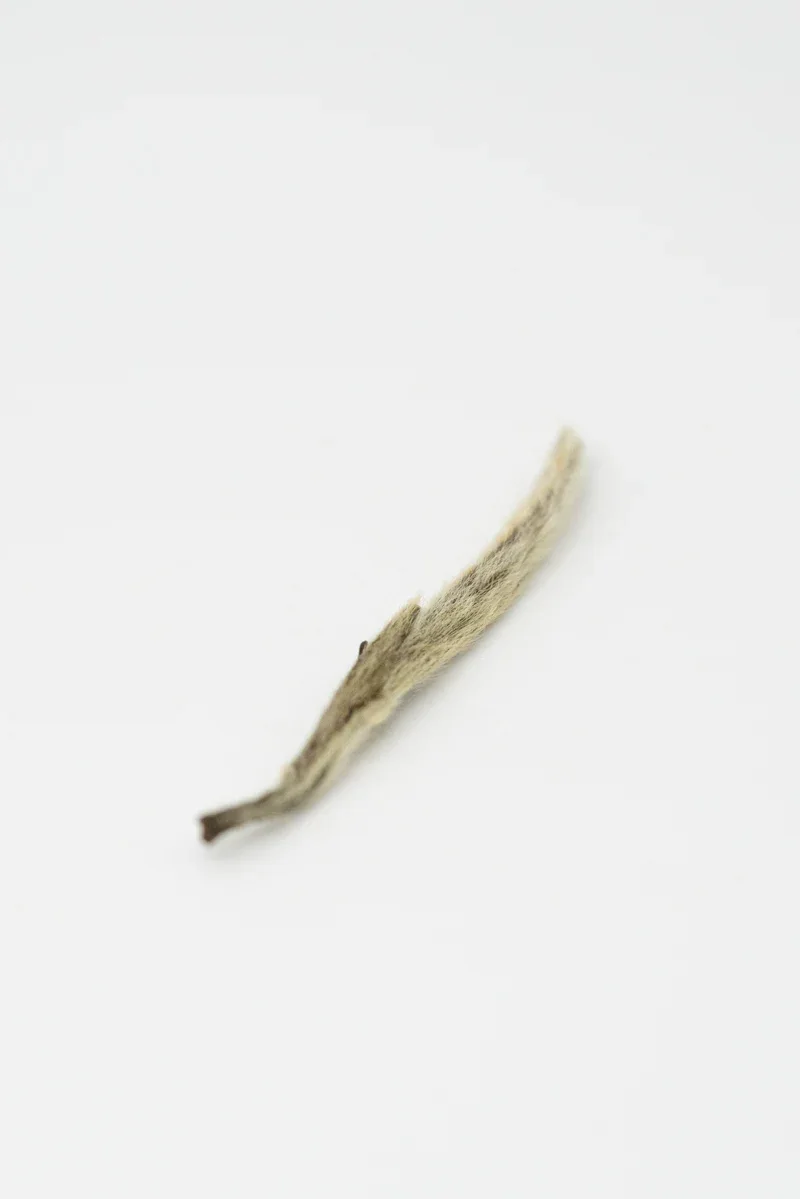
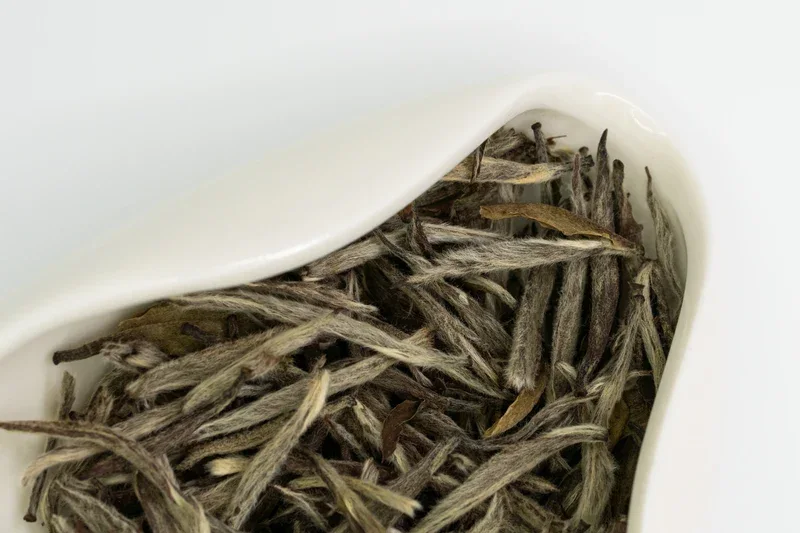
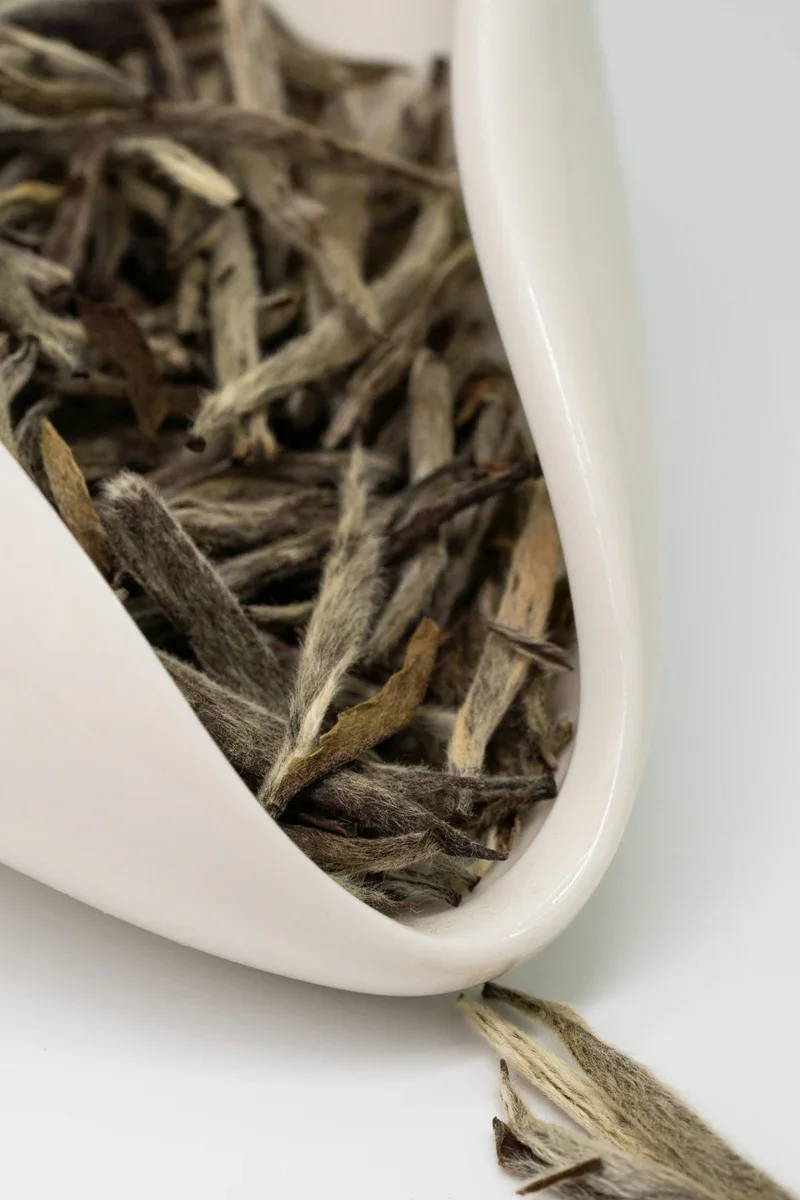
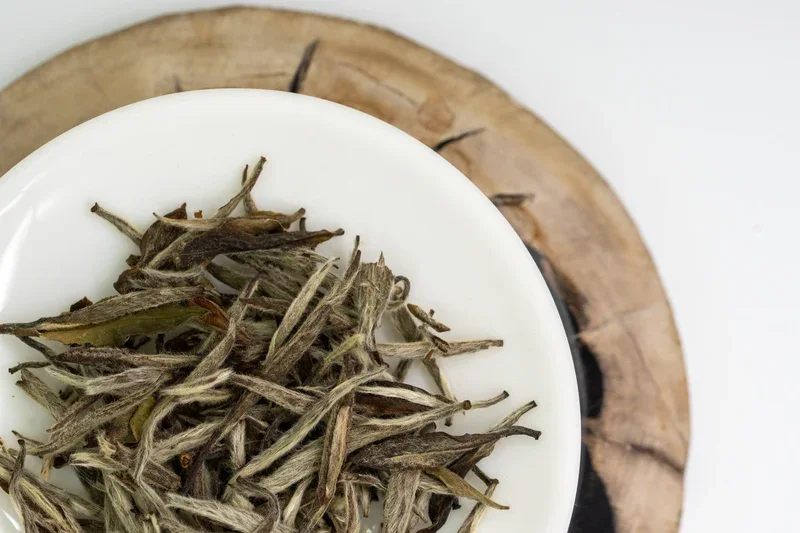
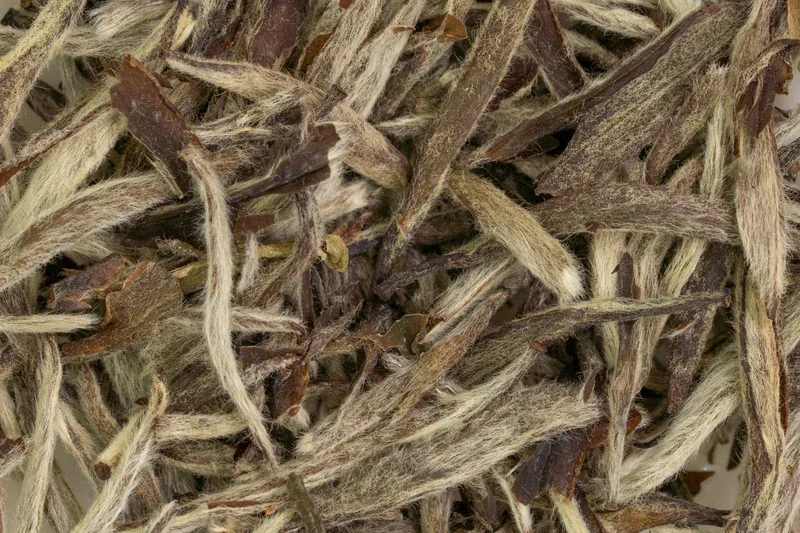
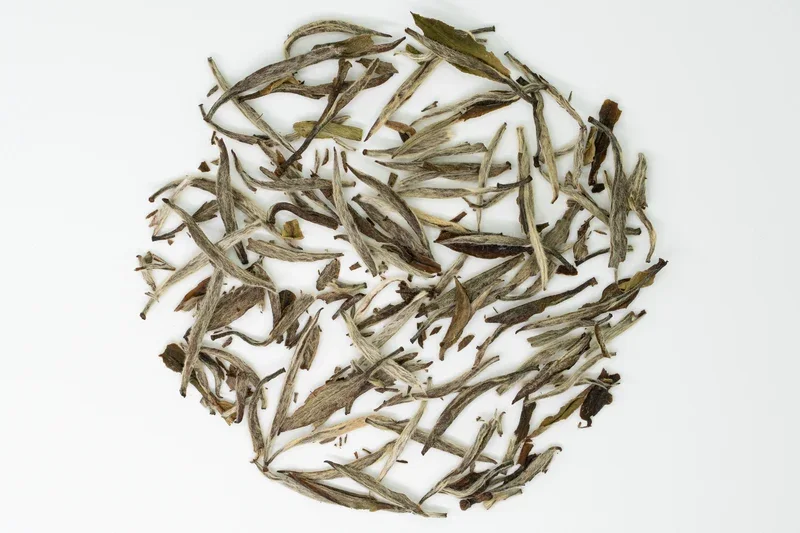
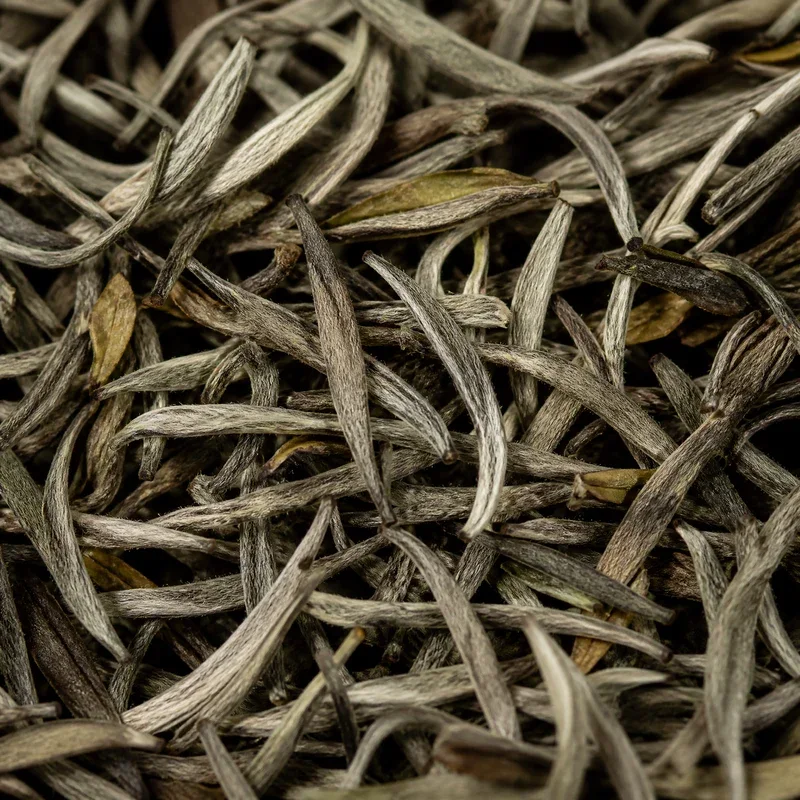
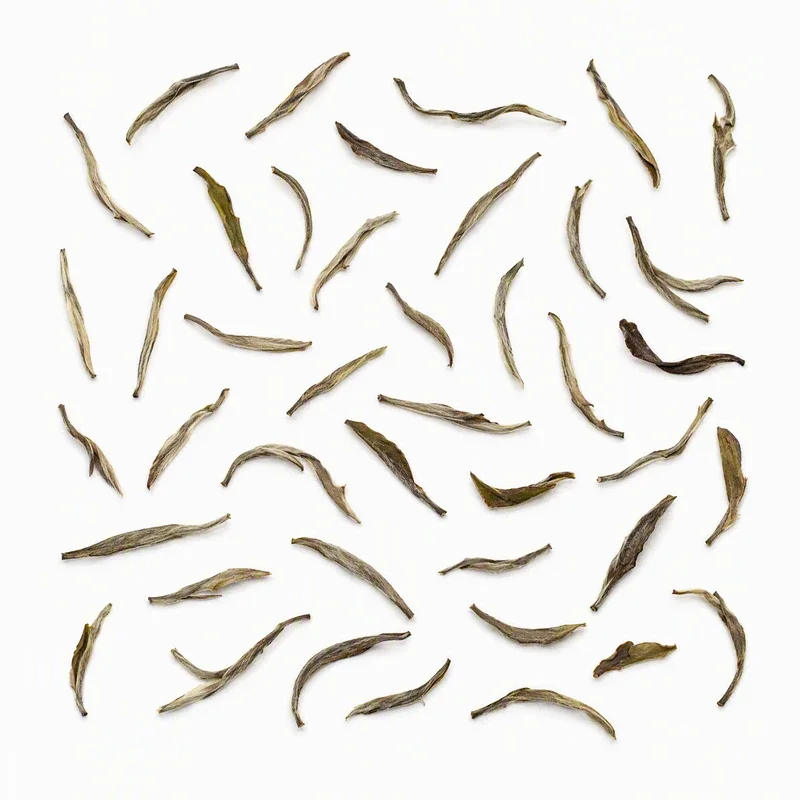
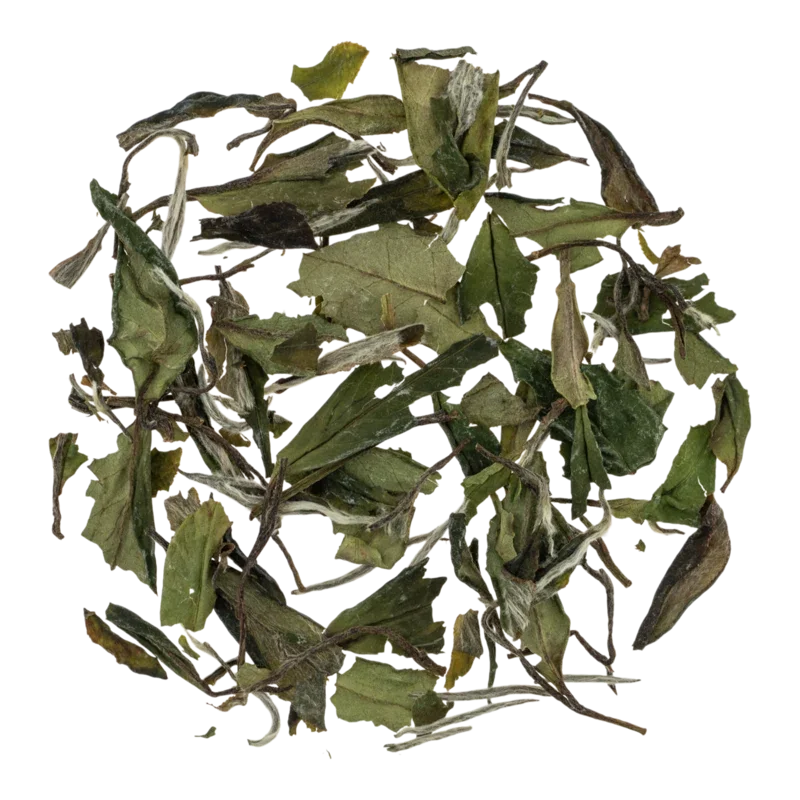
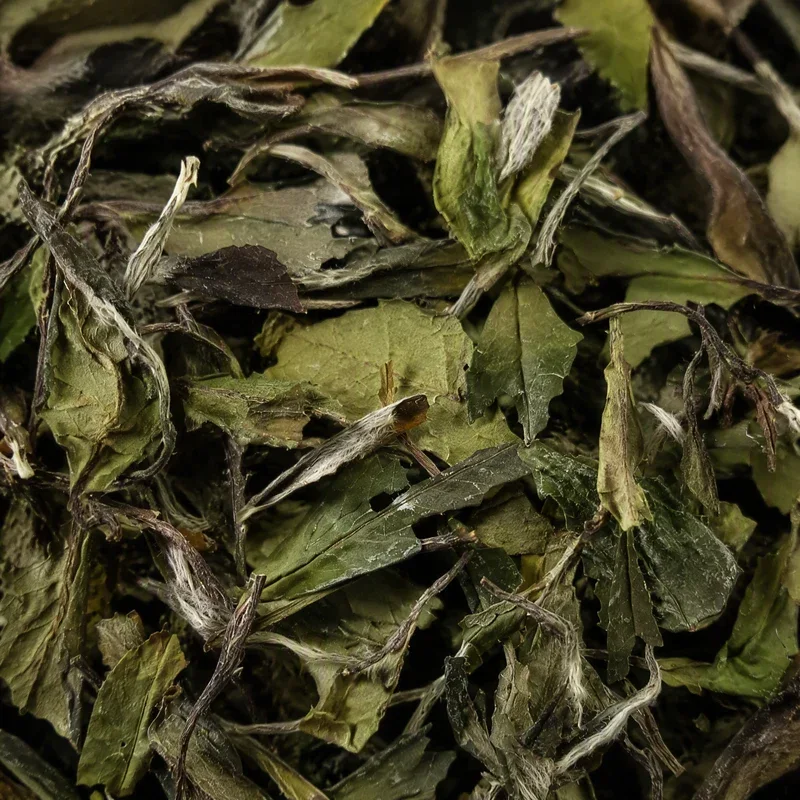
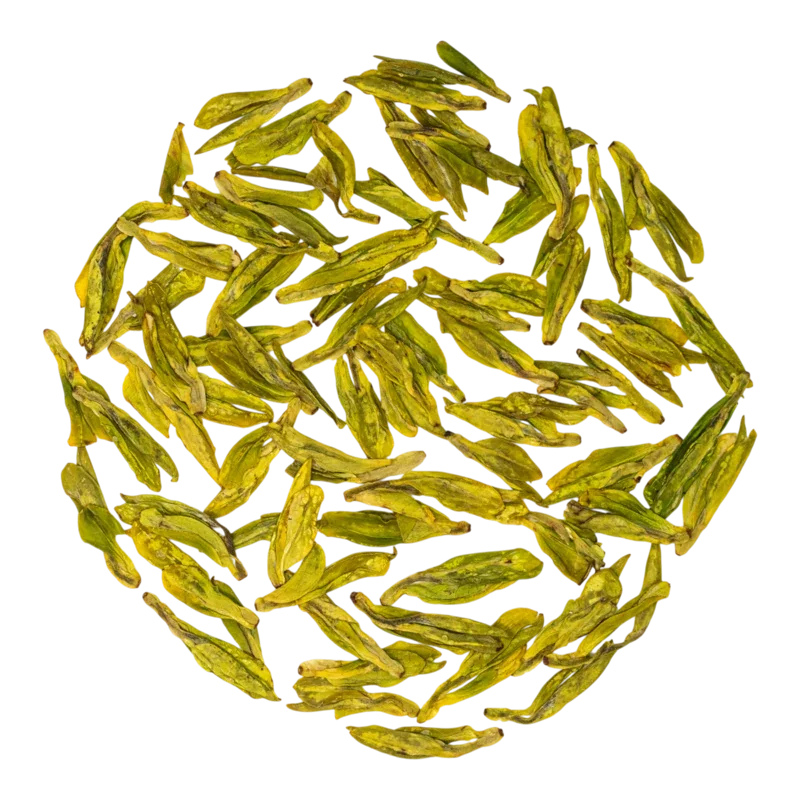
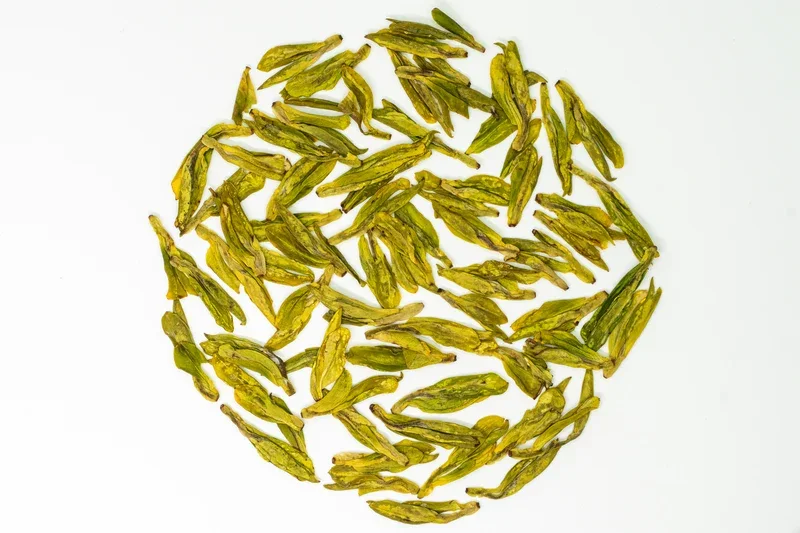
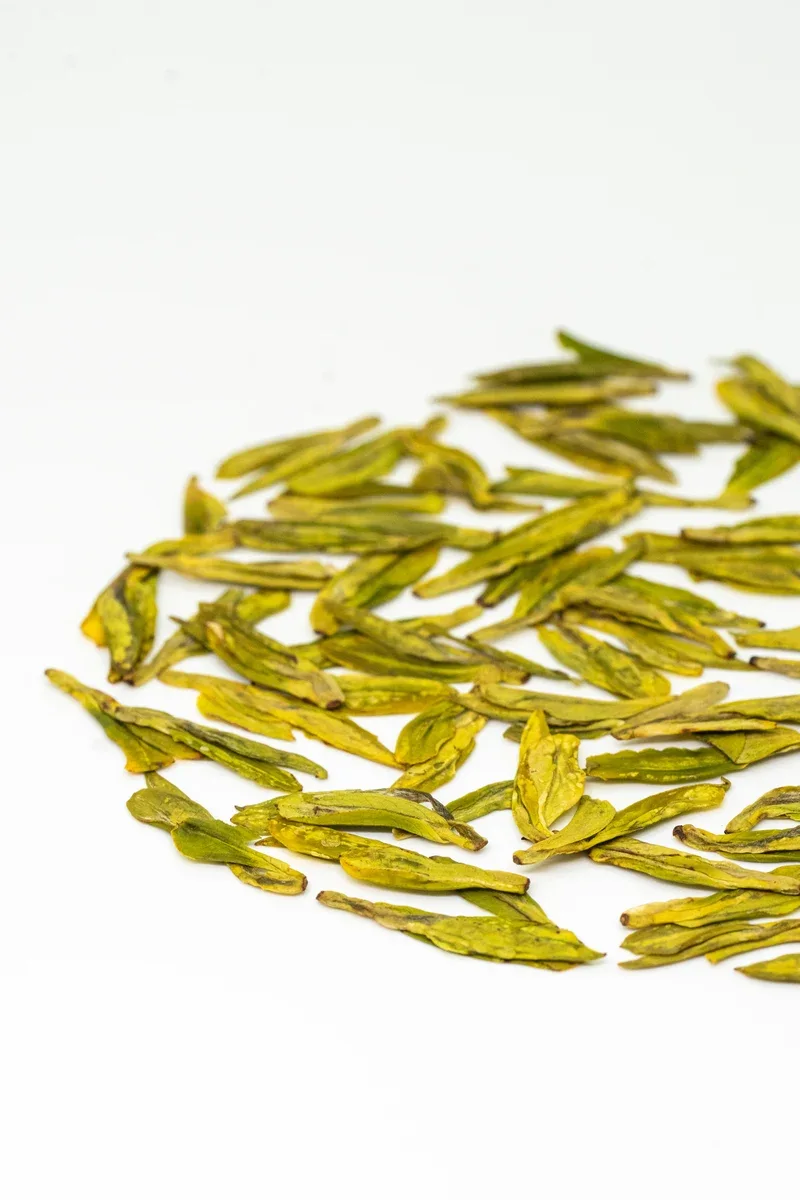
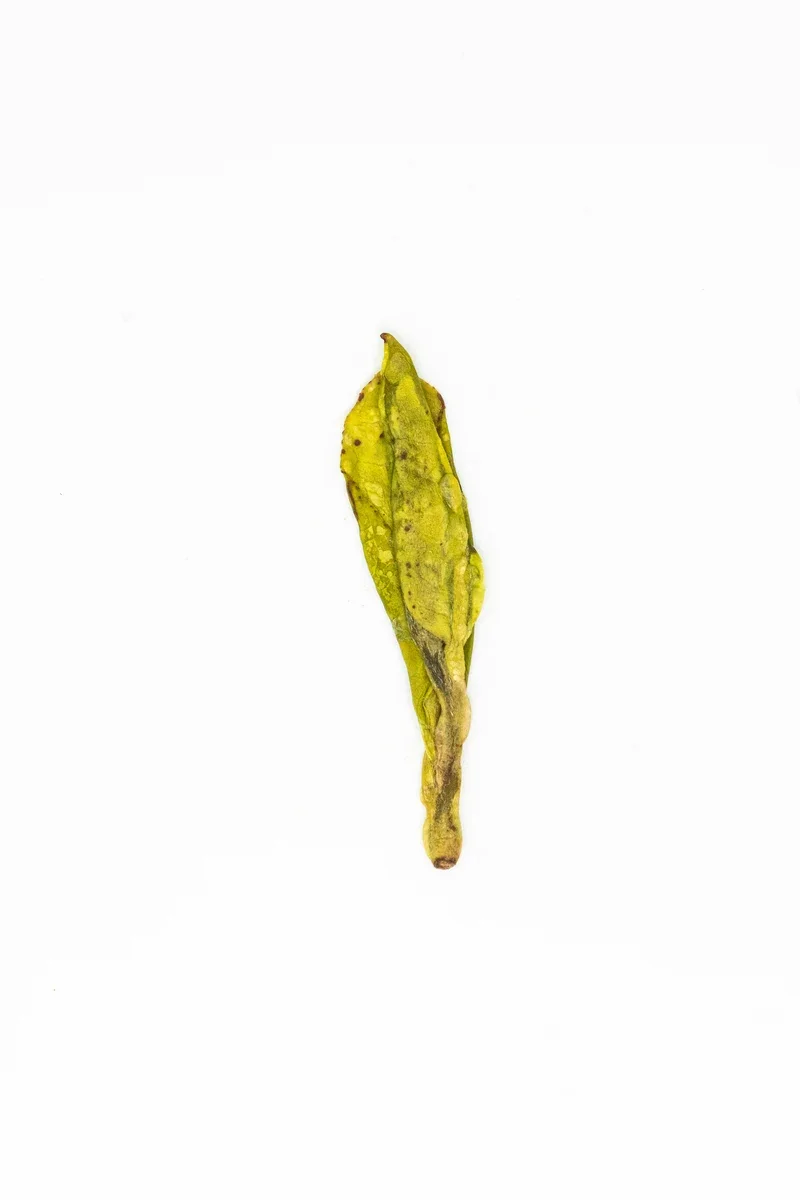
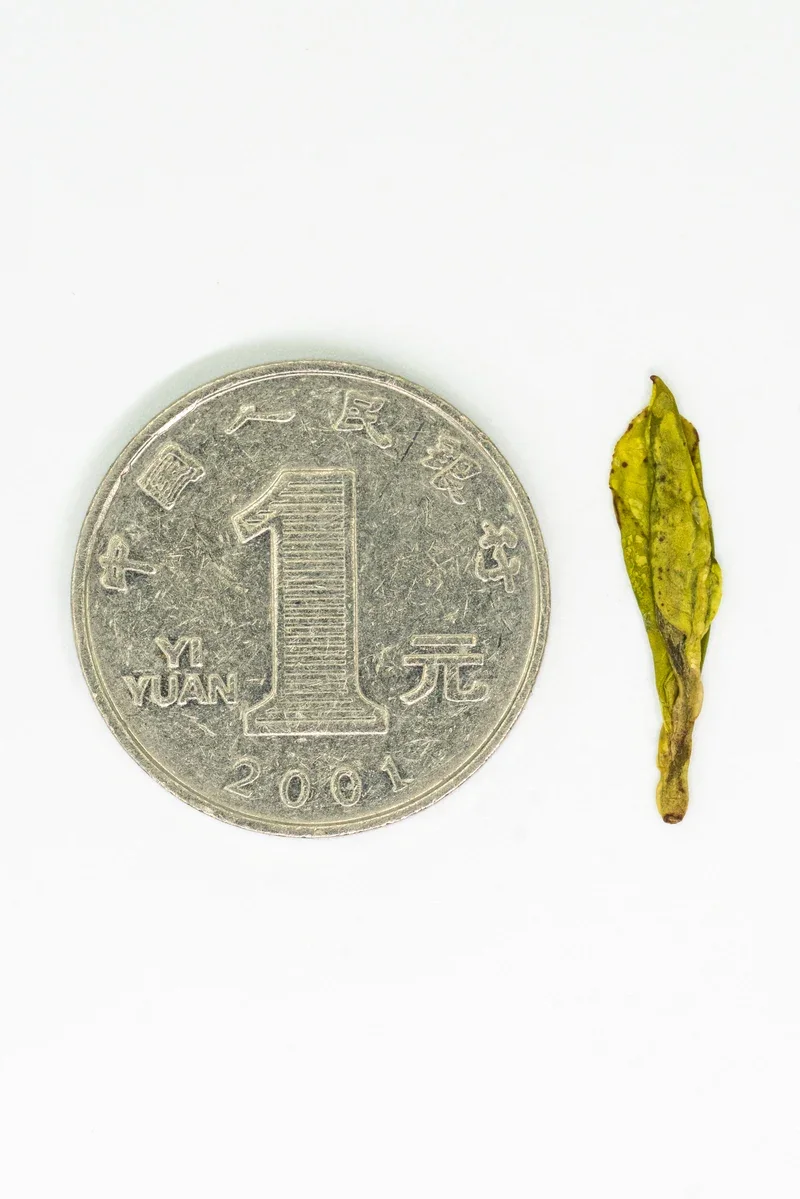
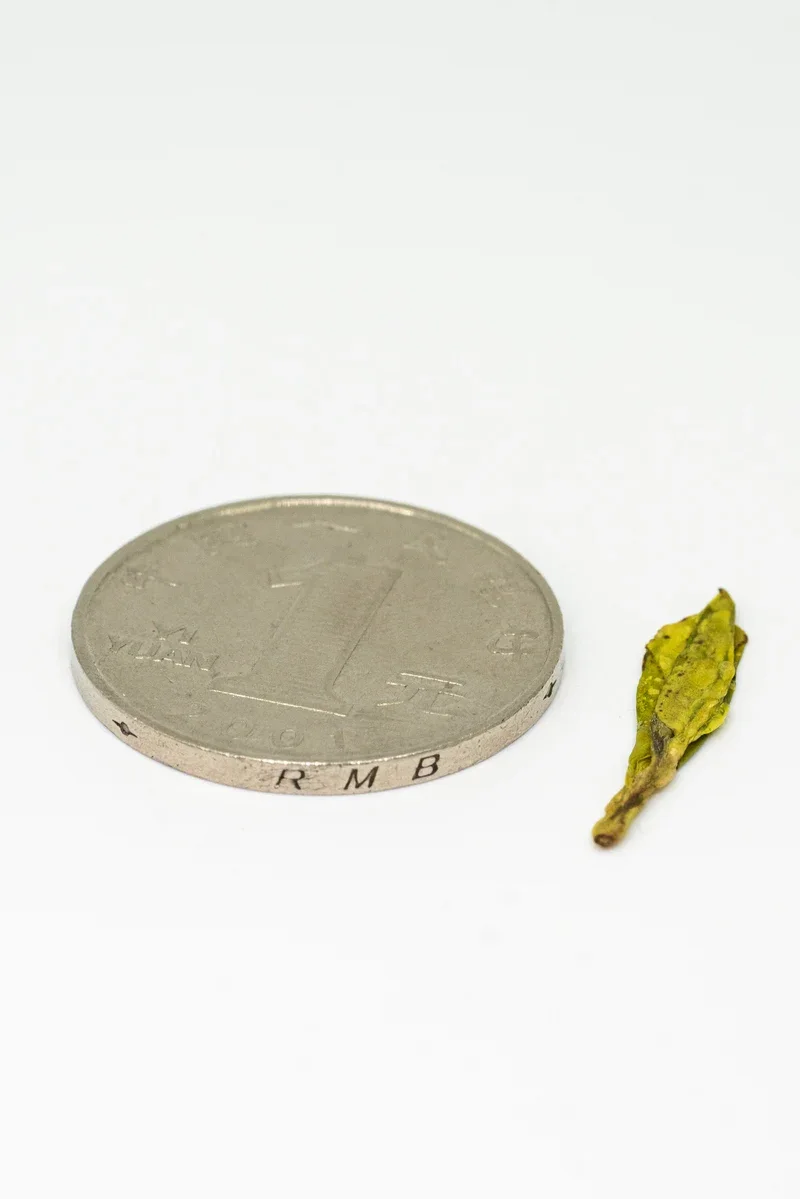
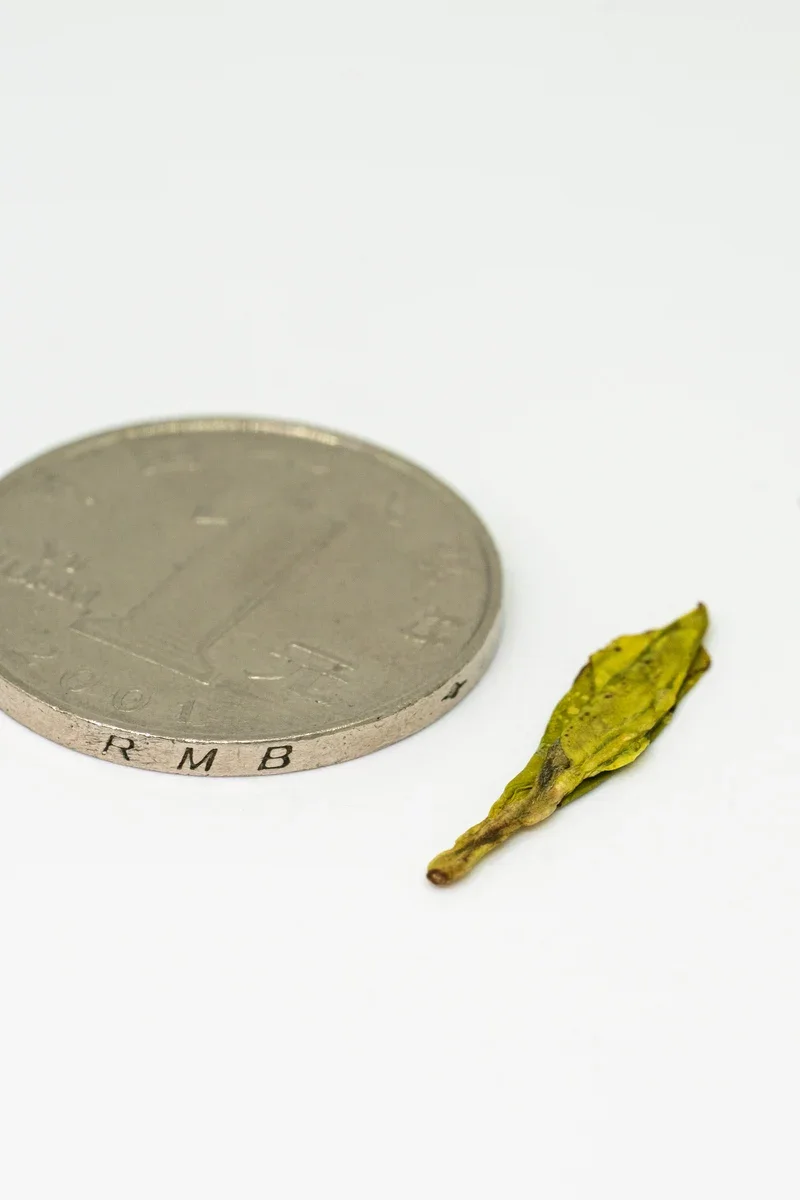
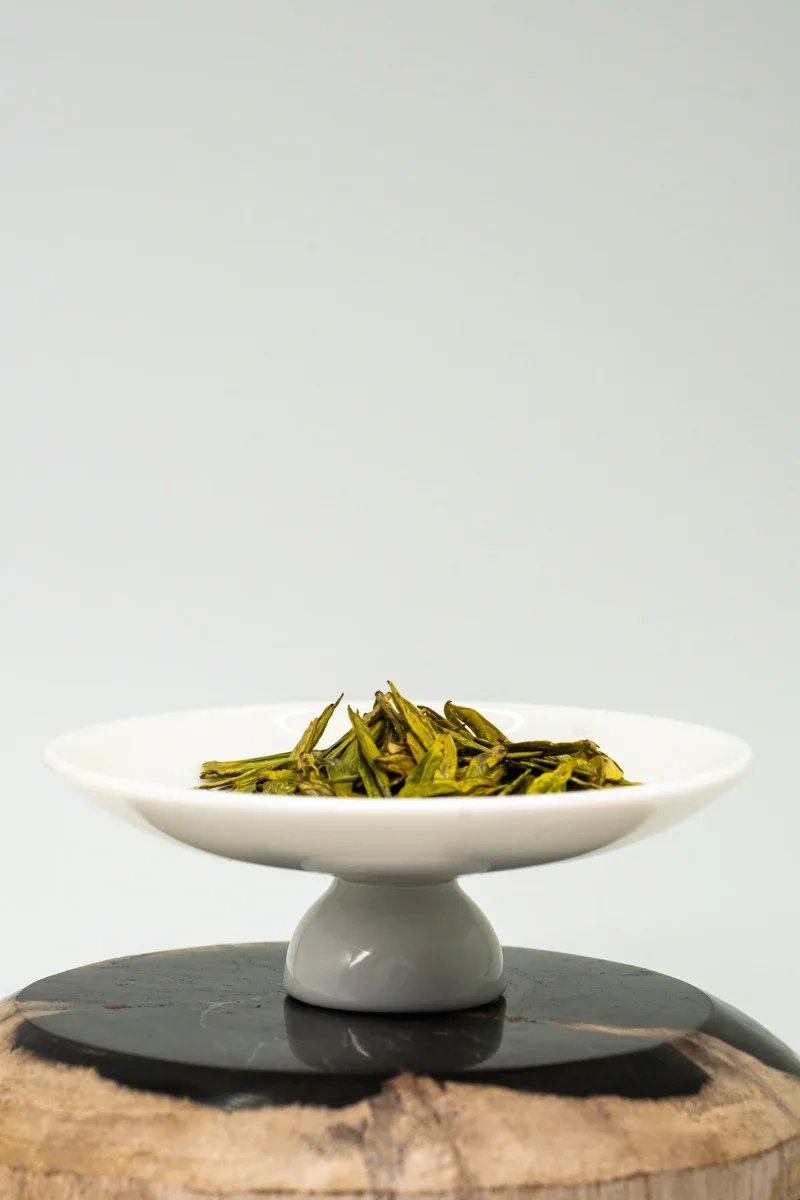
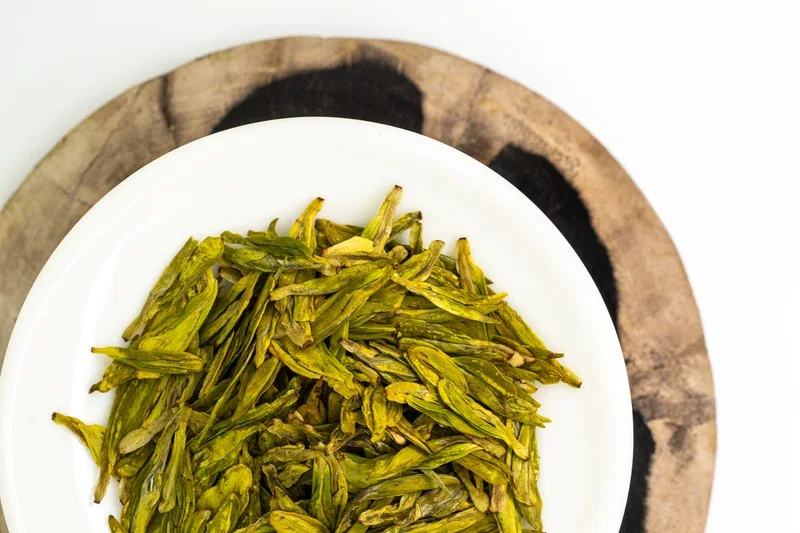
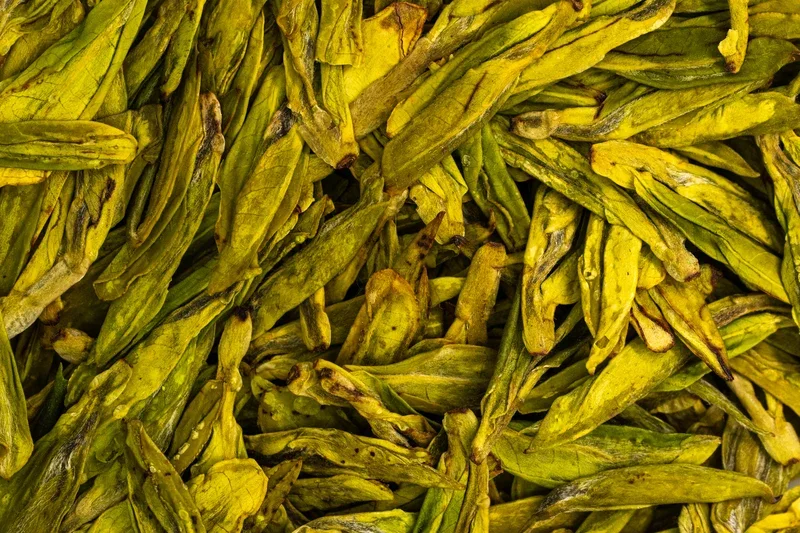
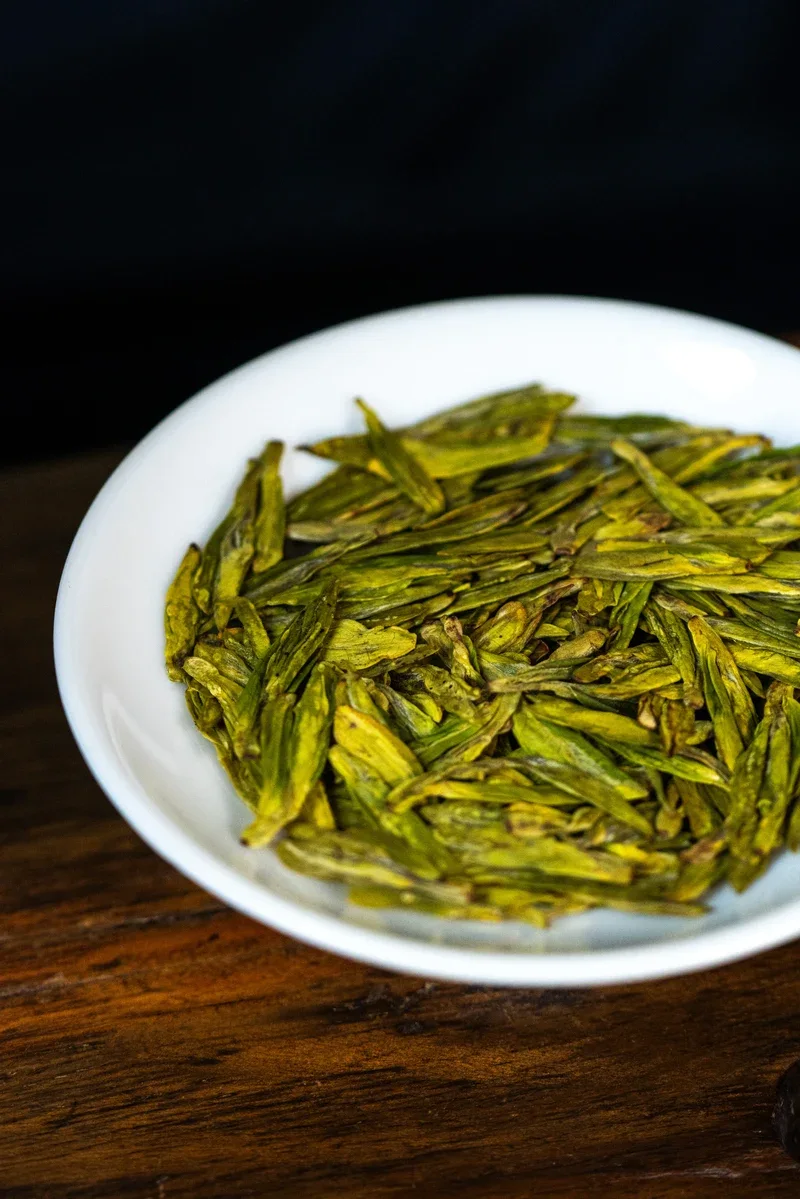
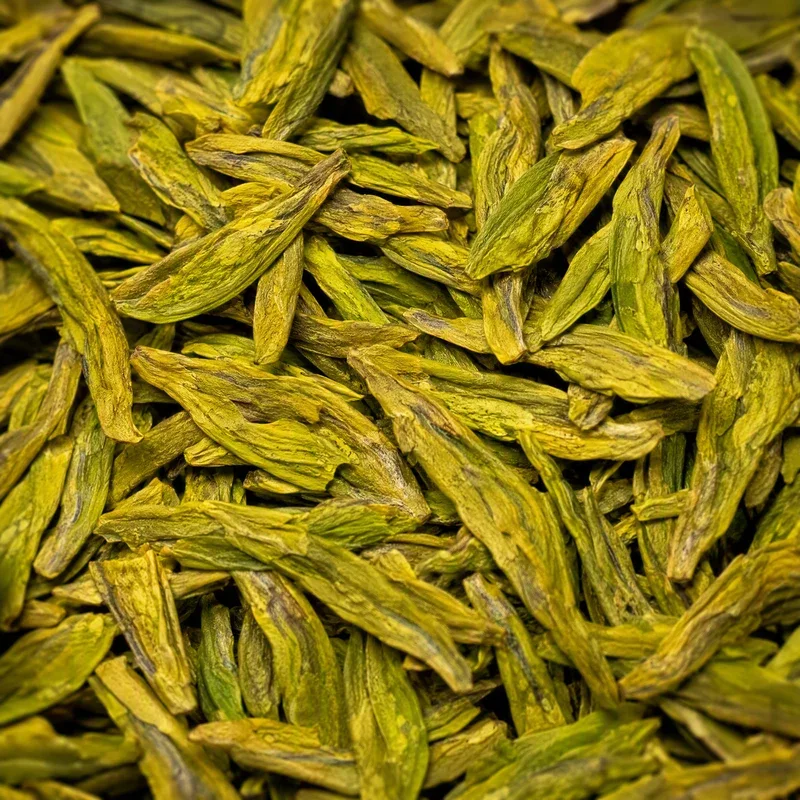
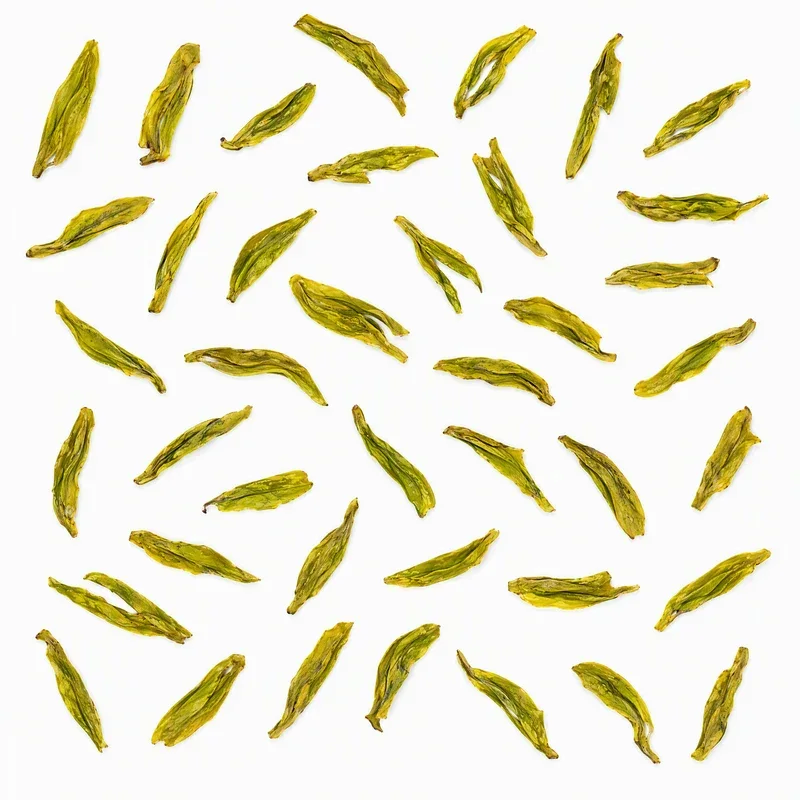
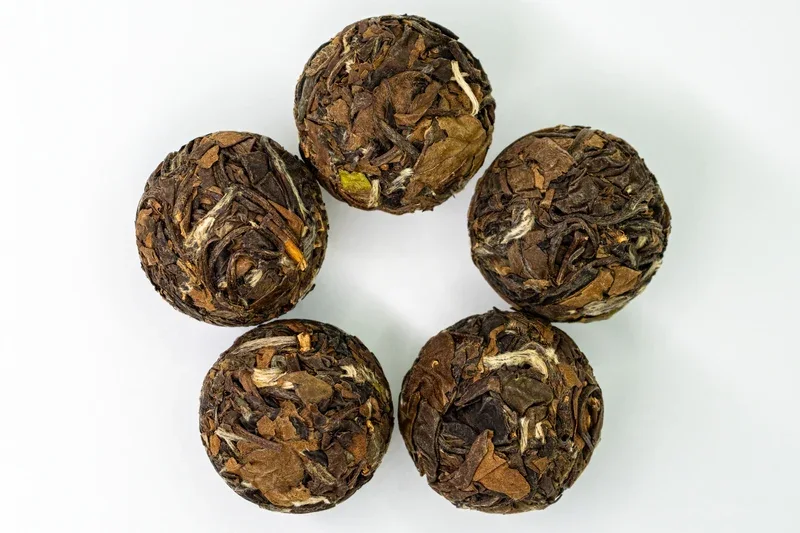
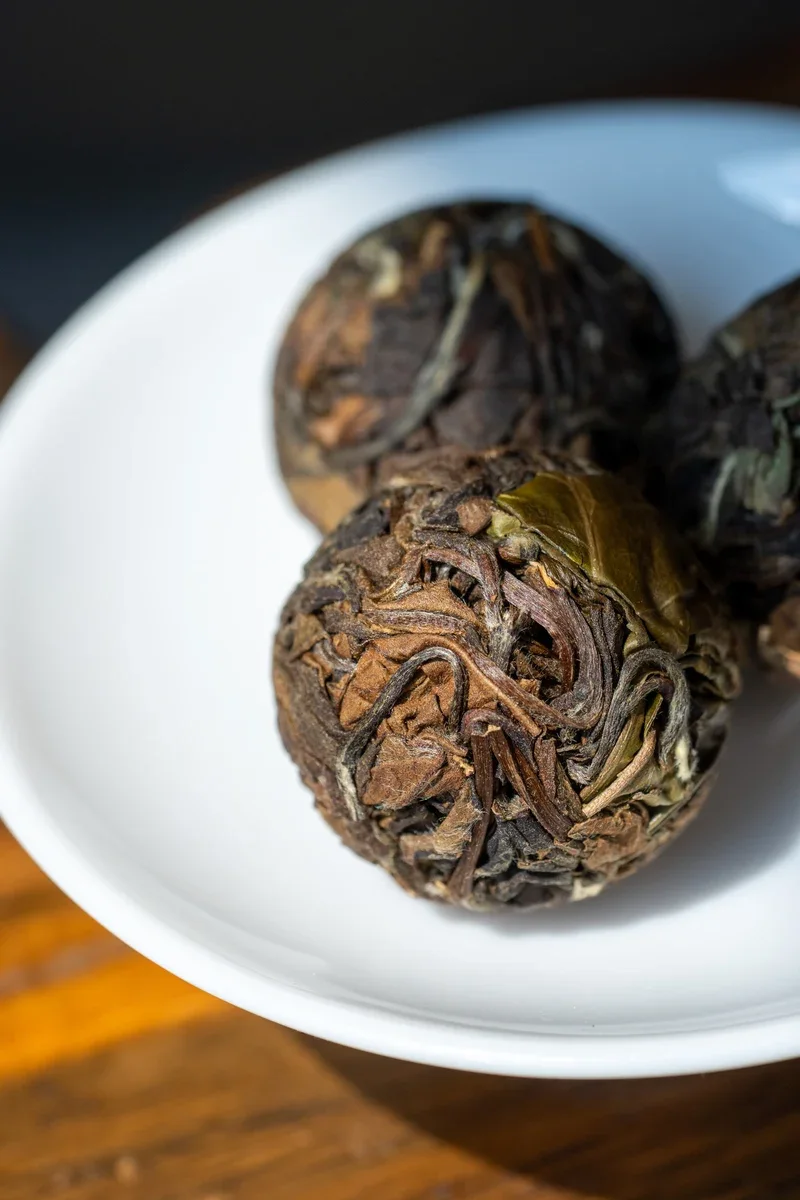
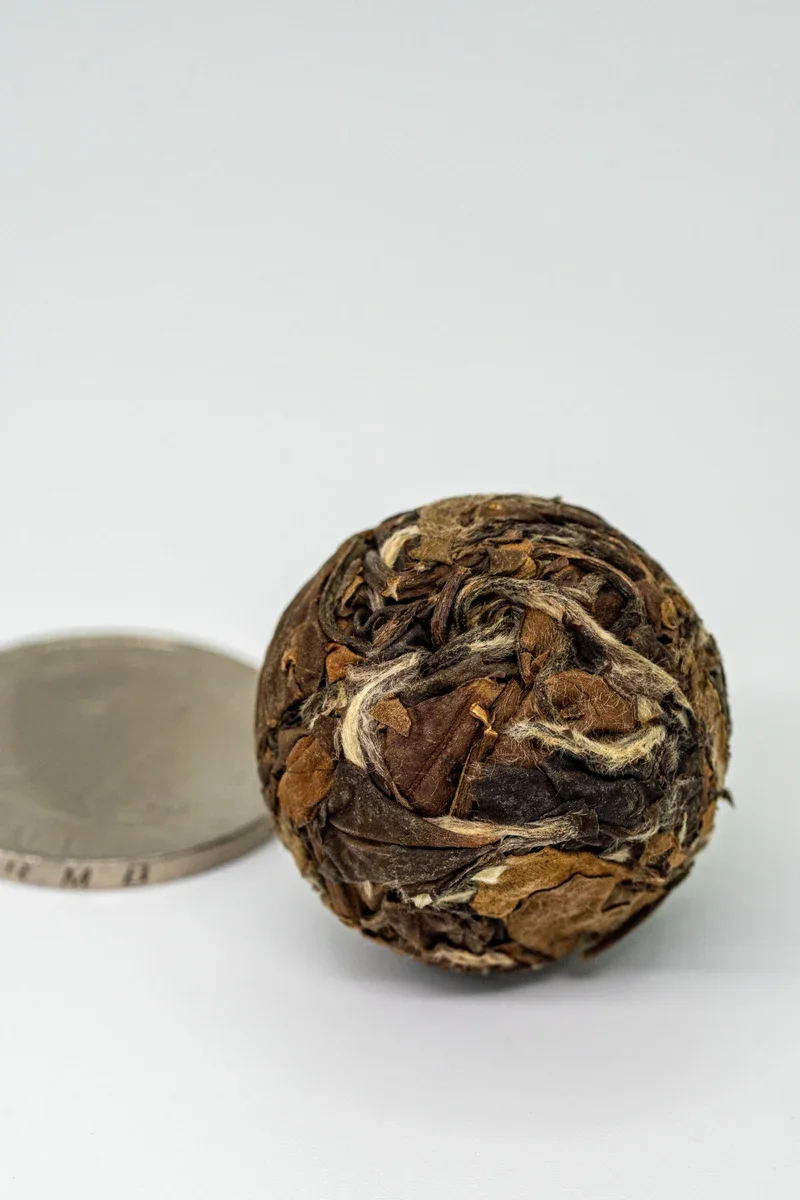
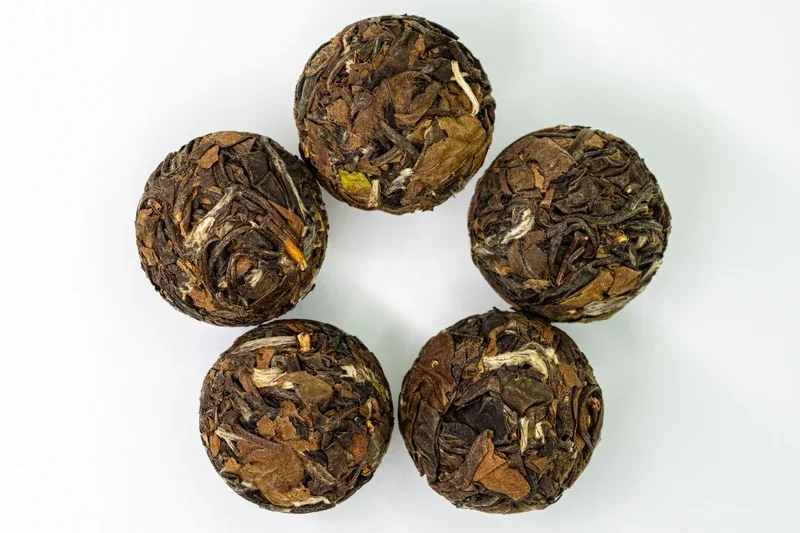
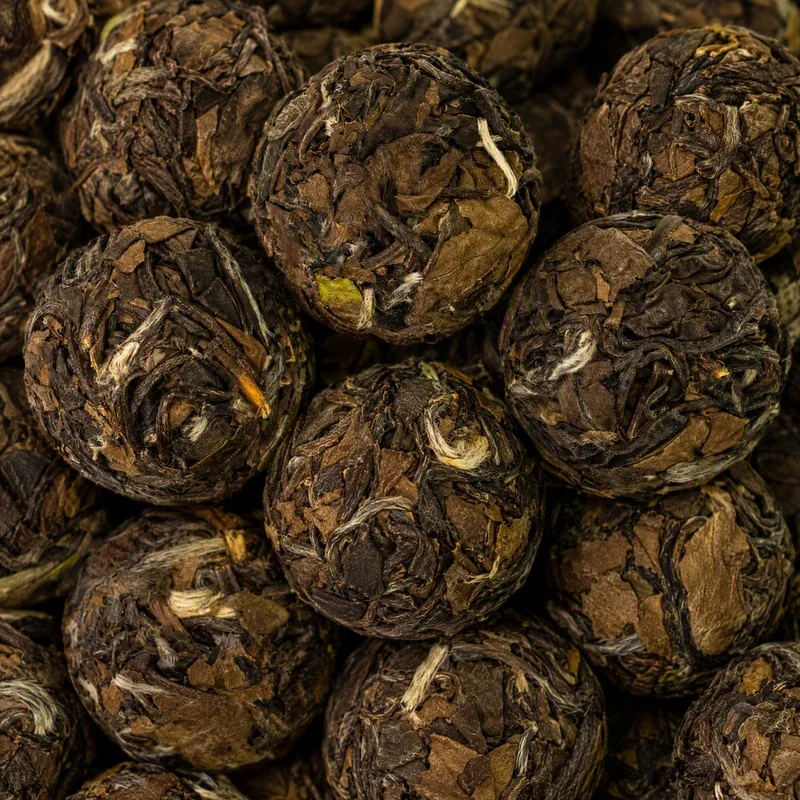
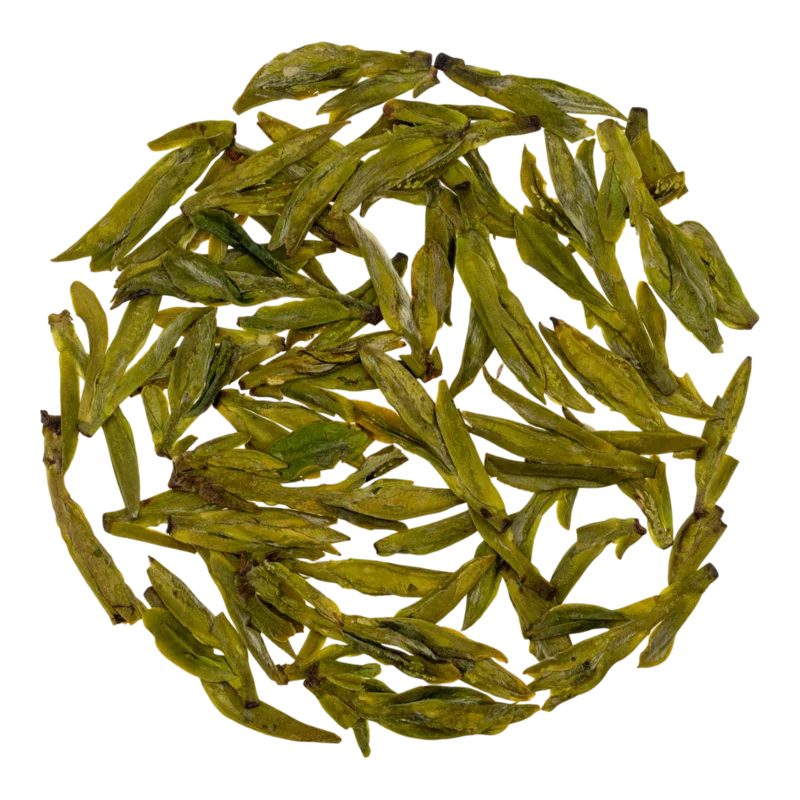
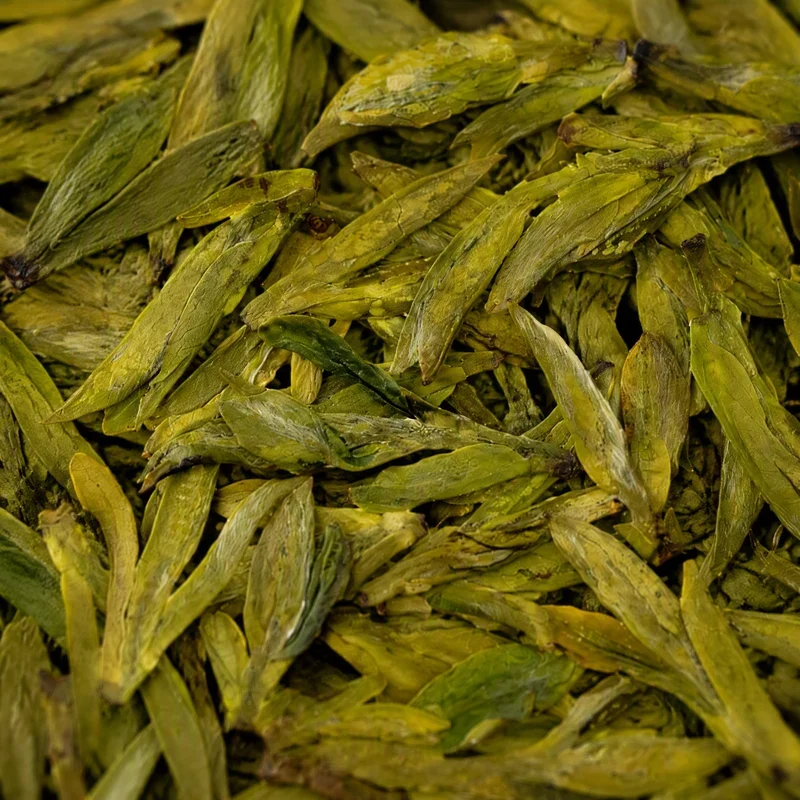
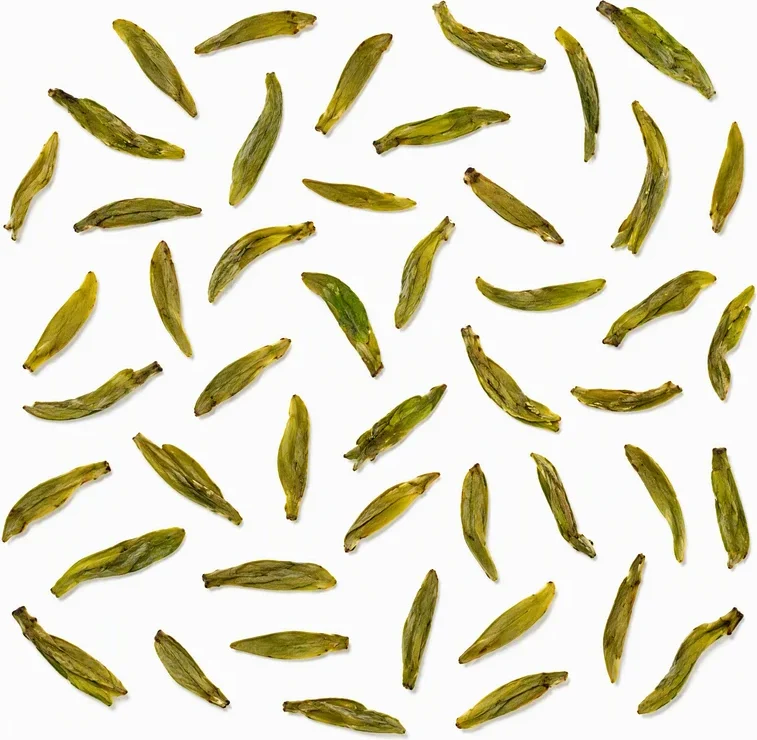
Dry Leaf Appearance: Flat, elongated plates, smooth, even, resembling bamboo leaf. Color — dark green with light yellowish tinge (翠绿微黄). Regular Dafang — dark green to "iron" color (铁色), hence the name "Tese Dafang." Key feature of Dinggudafang: abundance of golden tips (金毫) hidden beneath smooth surface — "bud hidden, not visible" (芽藏而不露).
Dry Leaf Aroma: Characteristic roasted chestnut aroma (板栗香, bǎnlì xiāng) — signature marker of Dafang. High, persistent, with light floral overtones (osmanthus, orchid) and sometimes — barely perceptible smoky note from charcoal drying.
Liquor Aroma: Delicate, chestnut-floral, with nutty notes. High and "long" (香高气长). Best batches have light "almond" trail.
Liquor Color: Clear, light yellow with greenish tinge (清澈微黄). Maintains clarity with multiple brewings.
Spent Leaves: Whole, plump, tender leaves, uniform in size, yellow-green color (肥厚嫩匀).
Taste: Dense, rich, 醇厚爽口 — "thick, mellow and refreshing." Sweet beginning, mild pleasant astringency, light citrus acidity. Aftertaste — long, with chestnut-nutty shades and sweet finish. Compared to Longjing — more "dense" and "deep," with pronounced sweetness.
Alkaloids: Caffeine — moderate content, in tannin-bound form, providing mild and prolonged tonic effect.
Amino Acids: Increased L-theanine content (thanks to high-mountain terroir and abundant fogs). L-theanine provides sweet taste and relaxing effect.
High content — provide rich green leaf color and antioxidant properties.
Complex of pyrazines and Maillard reaction products (formed during pan-firing), responsible for characteristic chestnut aroma.
Minerals: Enriched mineral profile thanks to granite soils: zinc, manganese, potassium, phosphorus, calcium, iron.
Polyphenols: High content of catechins, especially epigallocatechin-3-gallate (EGCG) — most powerful antioxidant. Unfermented processing preserves catechins in native form.
Vitamins: C (high — green tea preserves more vitamin C than red tea), B₁, B₂, E, K, PP.
High EGCG content helps neutralize free radicals, protecting cells from oxidative stress.
Caffeine in tannin-bound form + L-theanine = steady tone without anxiety.
Dafang is historically known as "tea for weight loss" (减肥之王, "king of weight loss") — catechins accelerate metabolism and promote fat oxidation. Japanese studies showed that Dafang surpasses oolong and Tieguanyin in ability to reduce free fatty acid and neutral fat levels.
Catechins improve vascular elasticity, promote cholesterol and blood pressure normalization.
L-theanine improves concentration and memory.
Polyphenols suppress pathogenic microflora, support oral health (tooth enamel strengthening due to fluoride).
Tea Amount: 3–5 g per 150–200 ml water.
Teaware: Glass cup (玻璃杯) — allows observing the "dance" of flat tea leaves gently settling to bottom. Porcelain gaiwan — for more precise extraction control. Small teapot (up to 300 ml).
Water Temperature: 80–85°C. Delicate high-mountain green tea cannot tolerate boiling water — too high temperature will produce bitterness and "cooked" taste.
Container: Airtight, opaque — foil pouch with zip closure, tin can, ceramic vessel.
Enemies: Light, moisture, oxygen, high temperature, foreign odors. Green tea is the most sensitive of all tea types.
Shelf Life: Optimal — up to 12 months. Fresh tea (first 3–6 months) — best chestnut aroma. When stored in refrigerator — up to 18 months.
Dry, cool, dark place, away from foreign odors. For long-term storage — refrigerator (0–5°C) in absolutely airtight packaging (green tea is especially sensitive to oxidation and moisture).
"Descendant" of Dafang. Also flat pan-fired, but from Zhejiang Province. Color — bright green (vs dark green of Dafang). Aroma — beany, grassy (vs chestnut). Taste — more "fresh" and "light"; Dafang is denser, sweeter, with more pronounced aftertaste. Longjing is "extrovert," Dafang is "introvert."
"Neighbor" from Anhui Province. Not flat but twisted; abundance of white tips. Aroma — orchid (vs chestnut). Taste — more "floral" and "airy." Both teas from Huangshan mountains, but completely different in style.
Another Anhui "neighbor." Famous for unusually large, flat leaves with "net pattern." Taste — "orchid and vanilla," body — medium. Dafang is denser, richer, with chestnut-nutty depth.
Unique green tea from leaves only (without buds). Shape — "melon seed." Aroma — fresh, grassy-floral. Taste — more "green" and "refreshing," less "deep" than Dafang.
Dafang's flat shape visually resembles Longjing, but color is darker (dark green with yellowness vs bright light green of Longjing), aroma is chestnut (vs beany/grassy of Longjing), taste is denser and sweeter.
Authentic Dàfāng is from Shé County (歙县), Zhupu, Sanyang, Jinchuan townships. Teas from Sichuan or other provinces sold as "Dafang" are not authentic.
Signature marker. If instead there's "grassy" or "fishy" smell — tea is not from She County or improperly processed.
Authentic Dinggudafang has abundance of golden tips hidden beneath smooth surface (芽藏而不露). Counterfeits lack tips.
No reviews yet. Tell us what you think of this tea.
Rate this tea and share your impressions. We review each submission before publishing it.