Brewing
Gongfu brewing
- Water temperature
- 100 °C
- Tea amount
- 7 g
- Water volume
- 100 ml
- First steep
- 10 s
- Time added per infusion
- 5 s
- Infusions
- 12

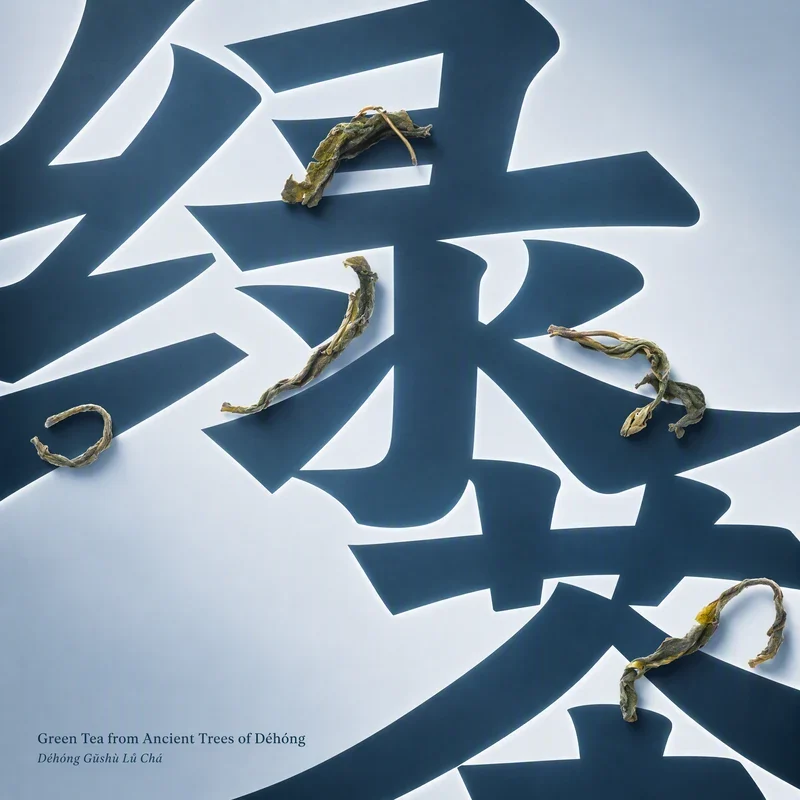
Déhóng Gǔshù Lǜ Chá
Choose a brewing method. Start with the recommended quantities and time, then adjust to taste.
Brewing
Brewing
Taste
Tea encyclopedia
Category: High-quality green tea from ancient trees (古树绿茶, gǔshù lǜ chá). Belongs to rare and small-batch teas of Yunnan, produced outside the main pu-erh paradigm. Classified as Dian Lü (滇绿, Diān Lǜ) — Yunnan green tea.
Category: High-quality green tea from ancient trees (古树绿茶, gǔshù lǜ chá). Belongs to rare and small-batch teas of Yunnan, produced outside the main pu-erh paradigm. Classified as Dian Lü (滇绿, Diān Lǜ) — Yunnan green tea.
Coordinates: Approximate coordinates of the main tea zones of Dehong — 24°00′–25°00′ N, 97°30′–98°40′ E. Altitude of ancient tea tree growth — from 920 to 2700 m above sea level, main plantations — at 1400–1800 m altitude.
Origin: China, Yúnnán Province (云南省, Yúnnán Shěng), Déhóng Dǎi and Jingpo Autonomous Prefecture (德宏傣族景颇族自治州, Déhóng Dǎizú Jǐngpōzú Zìzhìzhōu). Specific production areas: Liánghé County (梁河县, Liánghé Xiàn), Huílóng Village (回龙, Huílóng), as well as Dàchǎng (大厂), Mengga (勐戛), Yingjiang (盈江) counties and Mángshì City (芒市, Mángshì). Tea trees grow on the slopes of the Gāolígòng Mountains (高黎贡山, Gāolígòng Shān), which are part of the historic "Southern Silk Road" (南方丝绸之路) and "Tea Horse Road" (茶马古道, Chámǎ Gǔdào).
Type: Green tea (绿茶, lǜ chá), non-oxidized (0% oxidation). Kill-green method — pan-firing (炒青, chǎo qīng), variety of "moguo cha" (磨锅茶, mó guō chá) — regional technology of firing in cast iron flat-bottom woks, characteristic of Dehong.
Cultural Significance: For the De'ang (德昂族), as well as for the Bùlǎng (布朗族) and other indigenous peoples of Dehong, old tea trees have sacred significance. According to the mythological epic of the De'ang "Dagu Daleng Gelai Biao" (《达古达楞格莱标》), included in 2008 in the registry of intangible cultural heritage of the PRC, "De'ang originated from tea leaves, tea is the root of De'ang" (德昂族是茶叶变的,茶是德昂族的根). Tea permeates all spheres of De'ang life: there are "hospitality tea" (迎客茶), "matchmaking tea" (提亲茶), "reconciliation tea" (道歉茶), "housewarming tea" (建房茶). The De'ang people still plant tea trees around every house, in every village. Traditional "sour tea" of the De'ang (德昂族酸茶, Dé'ángzú Suān Chá) — a fermented tea product with lactic acid bacteria — was included in the registry of national intangible heritage of the PRC in 2021, and in 2022 was included in the UNESCO intangible cultural heritage list as part of "Traditional Chinese tea processing techniques and associated social practices." In the modern context, production of green tea from ancient tree raw material remains niche: about 95% of the harvest from ancient trees of Dehong goes to sheng pu-erh production. Green tea is a conscious choice of few masters seeking to reveal another facet of this raw material.
History: Dehong is located in the very heart of the tea tree origin center — in western Yunnan, at the border with Myanmar. The tea history of this region spans, according to available data, more than 1500 years and is inextricably linked with the De'ang ethnic group (德昂族, Dé'ángzú), whom neighboring peoples historically called "the most ancient tea farmers" (古老的茶农, gǔlǎo de chánóng) and "mother of the tea leaf" (茶叶的母亲, cháyè de mǔqīn). According to data presented in "A Brief History of Ancient Peoples of Yunnan" (《云南各族古代史略》) edited by Professor Mǎ Yáo (马曜), "Bùlǎng and Benglong (崩龙 — former name of De'ang), historically known by the common name Puziman (朴子蛮), were skilled in growing cotton and tea trees; now in Dehong and Xishuangbanna there are thousand-year-old ancient tea trees, which were probably planted by the ancestors of De'ang and Bulang." According to records on the Manjing stele (《芒景木塔石碑》), written in Dai script, tea plantings in this region are documented from 696 CE, giving more than 1300 years of documented tea cultivation history. As early as the Tāng dynasty (唐朝), local tea was mentioned under the name "golden teeth tea" (金齿茶, jīnchǐ chá) — after the name of the local administrative district. According to historians, in the 20th century, after the formation of the PRC, tea plantations in Dehong received new development impetus: in several areas they replaced opium poppy plantings, which became an important socio-economic turning point. The "moguo cha" (磨锅茶) technology
Name Breakdown: "Dehong Gushu Lü Cha" (德宏古树绿茶) — compound descriptive name. "Dehong" (德宏) — name of the prefecture, originating from the Dai language: "de" (德) means "lower," "hong" (宏) — "Nujiang River" (Salween), that is, "land in the lower reaches of Nujiang." "Gushu" (古树) — "old/ancient tree," indicates the age of tea trees (usually from 50 years and older, often several hundred years). "Lü cha" (绿茶) — green tea.
Yunnan large-leaf variety (Camellia sinensis var. assamica), represented by local populations and clonal varieties. Main cultivars: Měngkù Dàyèzhǒng (勐库大叶种, Měngkù Dàyè Zhǒng), Měnghǎi Dàyèzhǒng (勐海大叶种, Měnghǎi Dàyè Zhǒng), Fèngqìng Dàyèzhǒng (凤庆大叶种, Fèngqìng Dàyè Zhǒng). Also found is a special species — "Dehong tea" (德宏茶, Camellia sinensis var. dehungensis), described by botanists as an endemic variety distributed in blocks in western Yunnan.
Tree-form tea bush. Trees from which raw material is collected reach 6–10 meters in height, with trunk diameters up to 40–130 cm (in the oldest specimens — over 1 meter). Age of used trees — from 50 to several hundred years. The most ancient registered trees in Dehong: tea tree in Hebianzhai Village (河边寨) of Mangshi County — trunk diameter 1.26 m, height about 10 m, age over 1000 years; tree in Hehuacun Village (荷花村) of Lianghe County — diameter 1.31 m, age over 700 years. The bark of old trees is often covered with lichens and moss, which is a bioindicator of environmental purity.
Tender flushes — one bud and two young leaves (一芽二叶, yī yá èr yè). The principle of "five don't pick" (五不采) is applied: don't pick damaged, overripe, diseased, insect-eaten, and non-standard sized leaves. Flush length is controlled within 3–6 cm, no more.
Picking: First spring harvest (头春, tóuchūn), usually March–April. Spring harvest provides maximum L-theanine content and minimum astringency.
Altitude: 920–2700 m above sea level; main productive zones — 1400–1800 m.
Climate: Southern subtropical monsoon climate. Average annual temperature 18.3–20.0 °C. Winters are frost-free, summers are not hot. Annual precipitation 1400–1700 mm, with a pronounced wet season (May–October, 88–90% of annual precipitation). Solar radiation is high (137–143 cal/cm²), annual sunshine hours — 2281–2453. Frequent fogs in mountain zones create natural diffused lighting. Annual temperature range is small (11.8–12.8 °C), but diurnal range is significant, which promotes accumulation of aromatic substances.
Soil: Red soils (红壤, hóng rǎng) and yellow-red ferrallitic soils formed on granite rocks predominate. Characterized by: acidic reaction (pH 4.5–5.5), high organic matter content, good aeration and water permeability, rich mineral composition (iron, manganese, zinc). The deep root system of century-old trees penetrates into the parent rock, extracting microelements unavailable to young bushes, which forms the characteristic mineral profile of the tea.
Dehong Dai and Jingpo Autonomous Prefecture is located in the far west of Yunnan, at the junction with Myanmar, in the zone of southern extension of the Héngduàn Mountains (横断山脉, Héngduàn Shānmài). From the east and northeast, the region is protected by the powerful Gāolígòng Mountains (高黎贡山, highest point — Dengyan Mountain, 3404.6 m), which block cold Siberian air masses and create a unique mild microclimate. The total area of ancient tea plantations in Dehong is estimated at approximately 250,000 mu (about 16,700 ha), of which wild-growing constitute about 240,000 mu, and cultivated ancient gardens — about 10,000 mu.
Tea trees grow surrounded by primary broad-leaved and mixed coniferous-deciduous forests, often among wild tropical and subtropical vegetation. Production areas are remote from industrial zones. Tea farms generally adhere to organic farming methods: synthetic fertilizers, pesticides, and growth regulators are not used, although formal certification may be absent. The presence of lichens on tree trunks is a natural indicator of air and environmental purity.
Exclusively hand-picking. Trees 6–10 m high require pickers to climb trunks or use ladders, making the process labor-intensive and limiting volumes.
Picked flushes are spread in thin layers on bamboo trays in shade for brief withering (1–3 hours). Purpose — remove surface moisture and slightly soften leaves, preparing them for firing. Leaves should not begin to oxidize — withering is controlled by aroma and turgor.
Carried out by firing in large cast iron flat-bottom woks (铁锅, tiě guō) or woks (大锅, dà guō) at high temperature (+200…+260 °C). The master manually or using tools stirs the leaves, ensuring even heating. The stage lasts 3–5 minutes and requires high skill: insufficient firing will leave a "green" raw taste, excessive — will give burnt notes. Kill-green inactivates enzymes, stops oxidation, and forms characteristic "roasted" aroma notes — nutty, chestnut, with light smokiness.
After firing, hot leaves are rolled by hand or on special rolling machines. This breaks cell walls, brings juice to the surface, and gives leaves shape. Large-leaf raw material from ancient trees rolls into loose, voluminous strips, unlike tight thin threads of small-leaf green teas.
Final drying with hot air or in sūn (晒干, shài gān) to residual moisture ≤6%. Sun-drying (characteristic of the region) adds softness and may contribute to slight post-transformation during storage — a trait linking this tea with shaiqing maocha (晒青毛茶), raw material for pu-erh.
Removal of stems (茶梗), damaged leaves, and foreign inclusions. Finished tea is calibrated by size and quality.
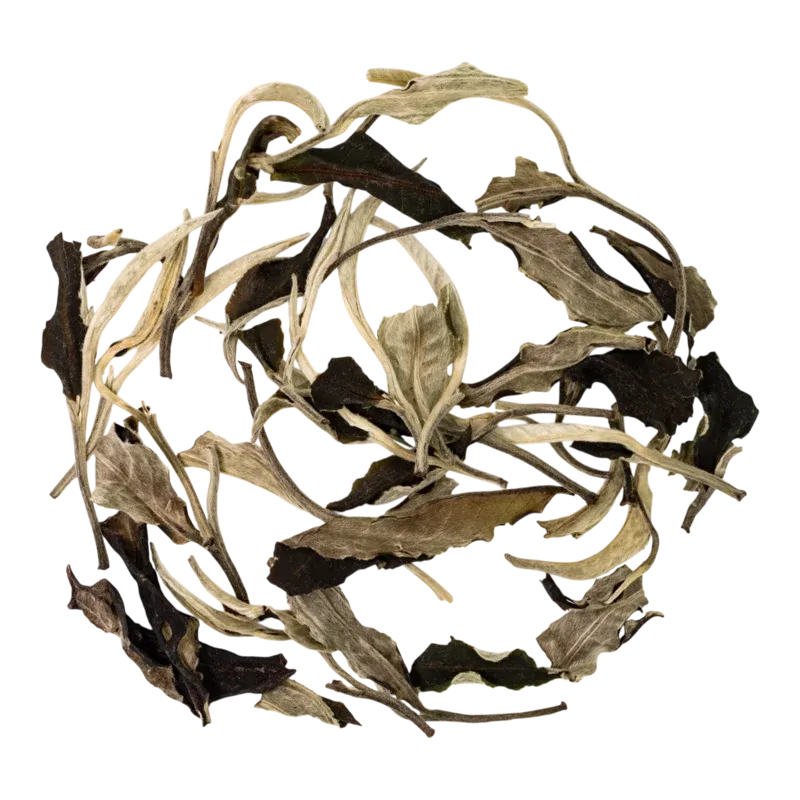
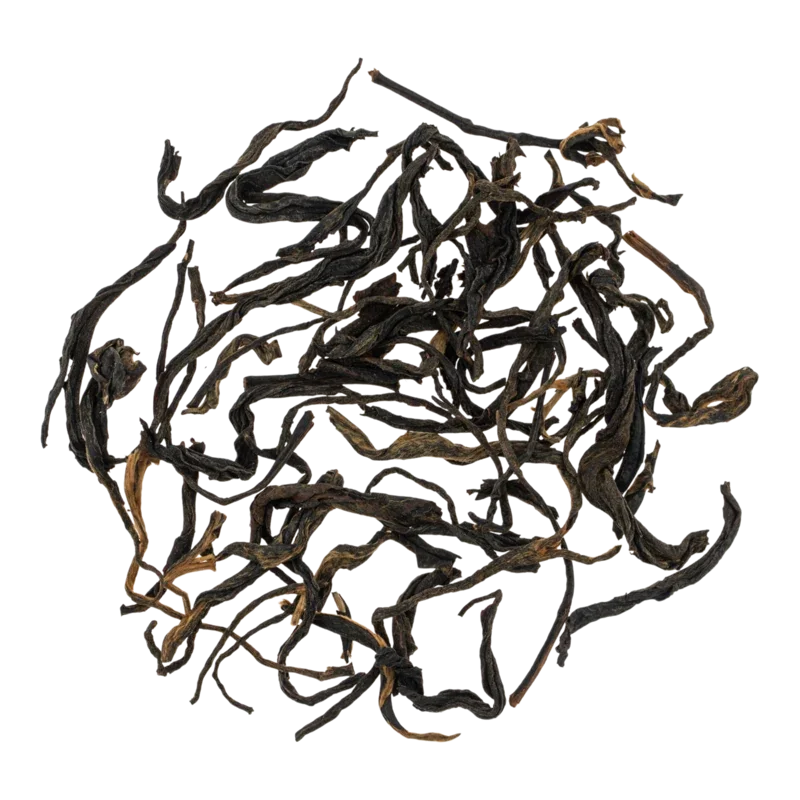
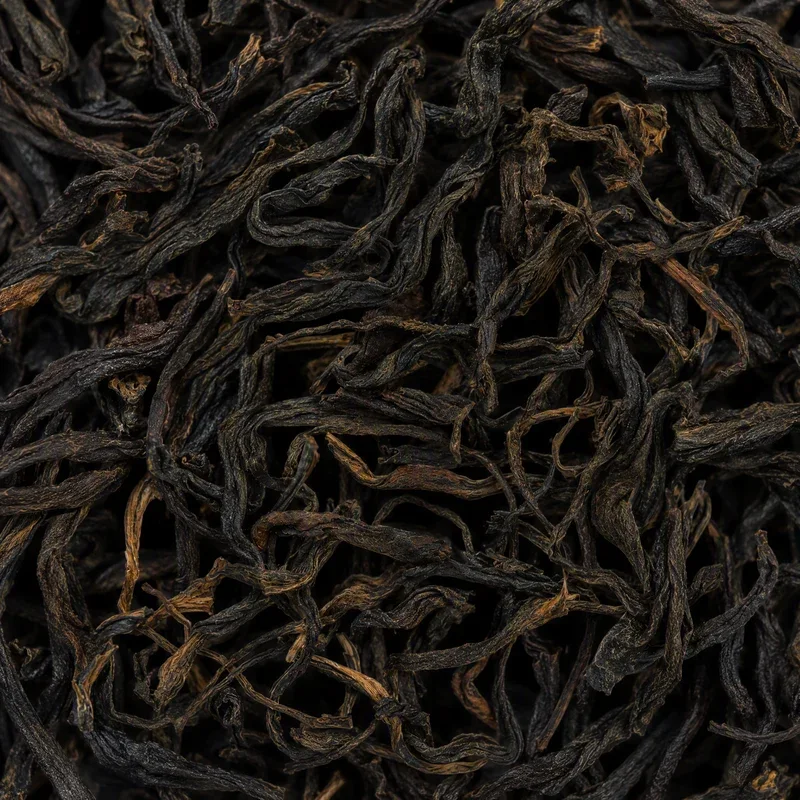
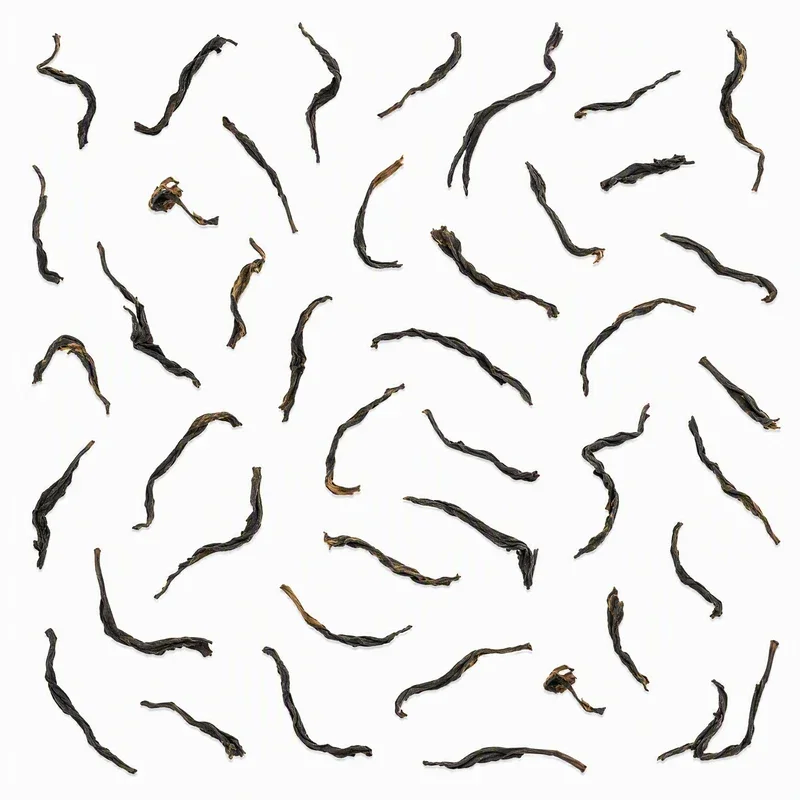
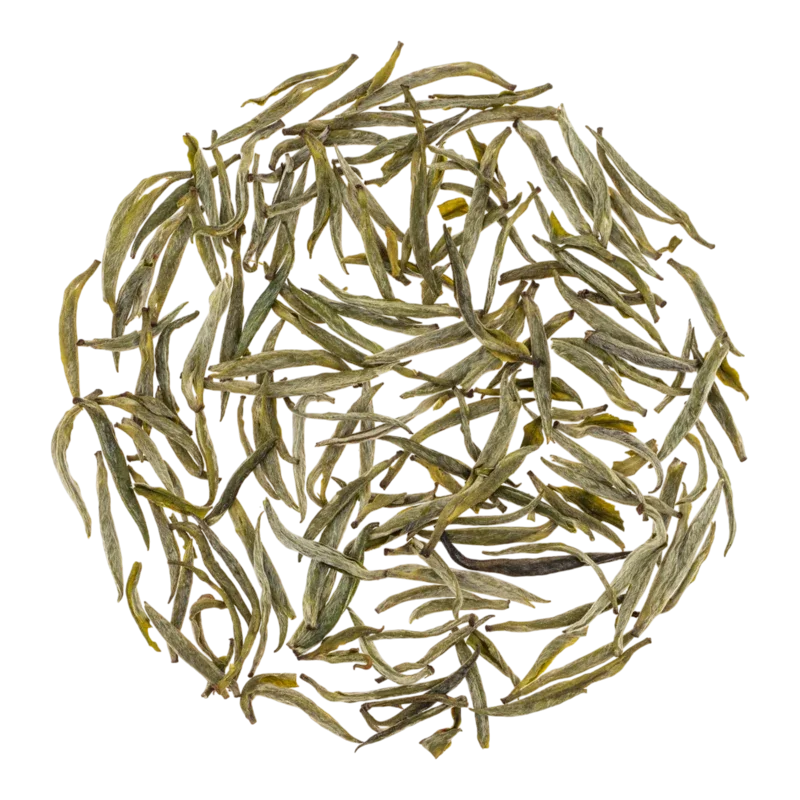
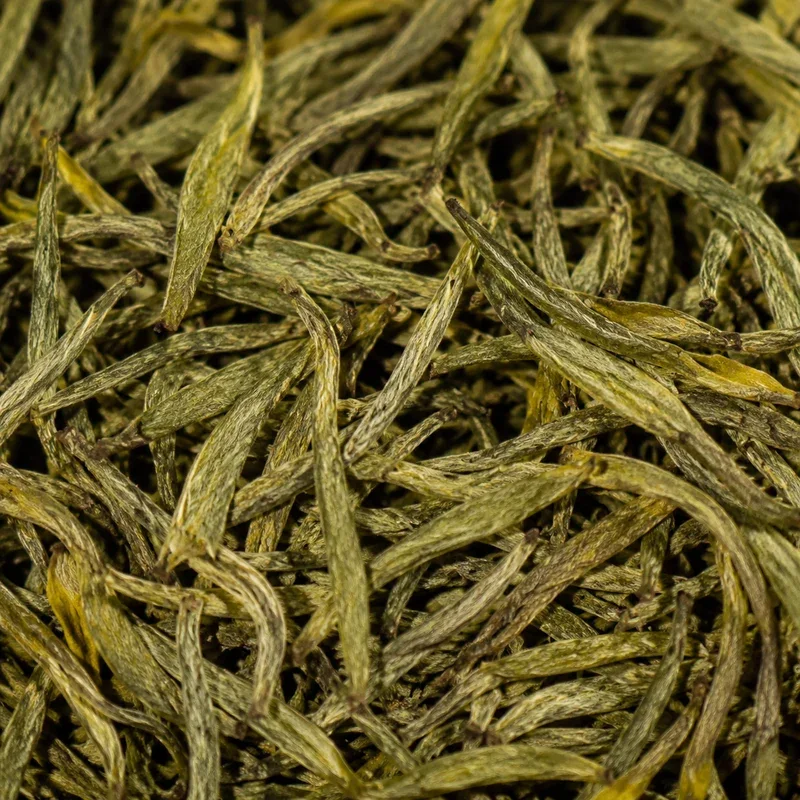
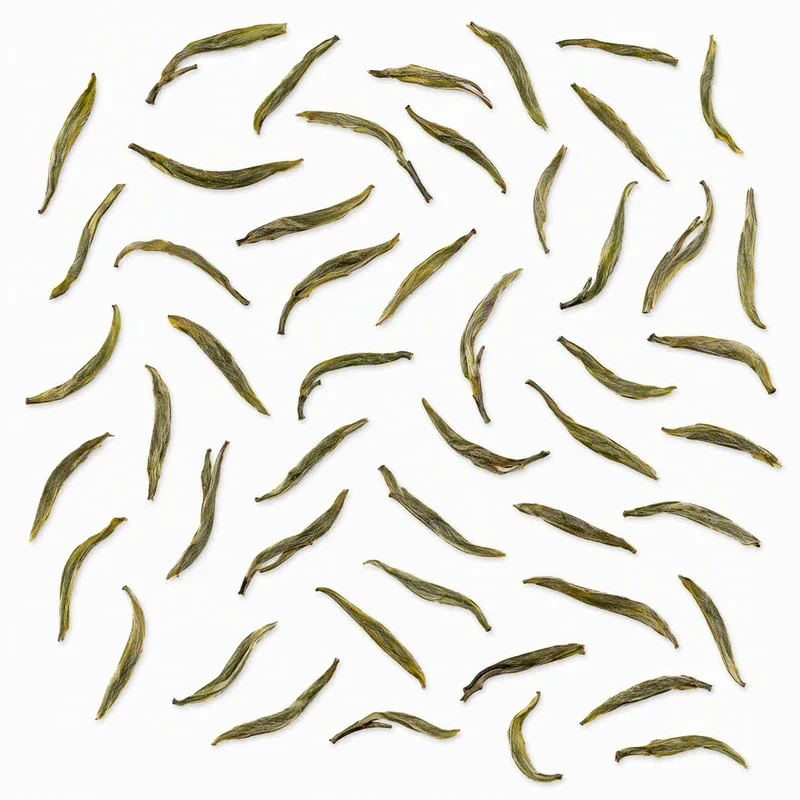
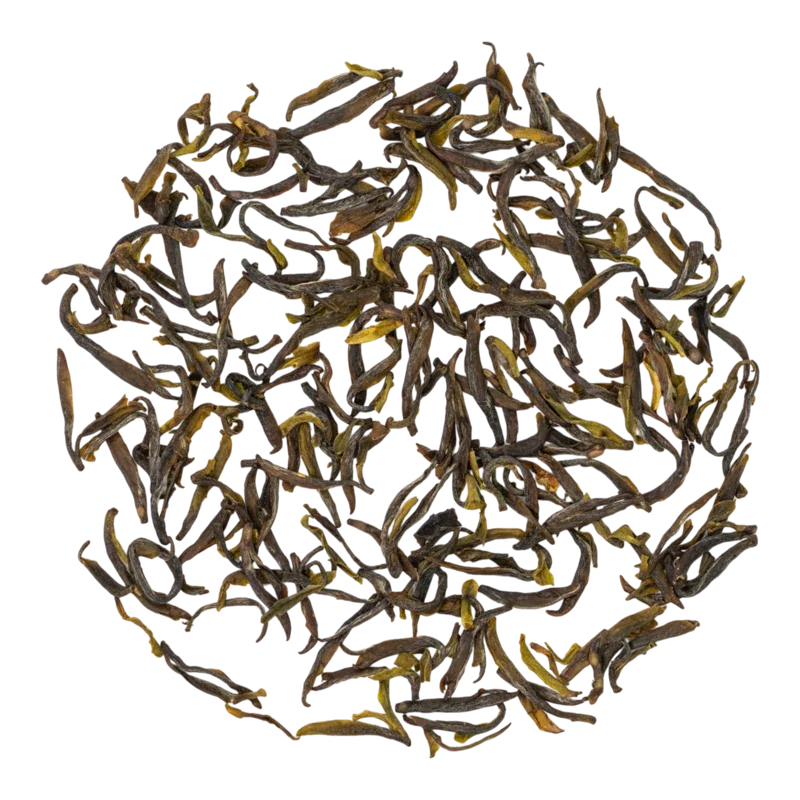
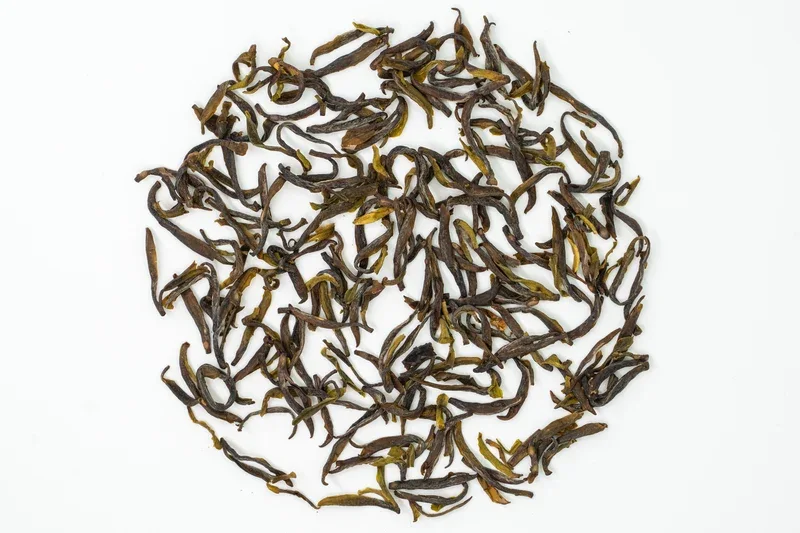
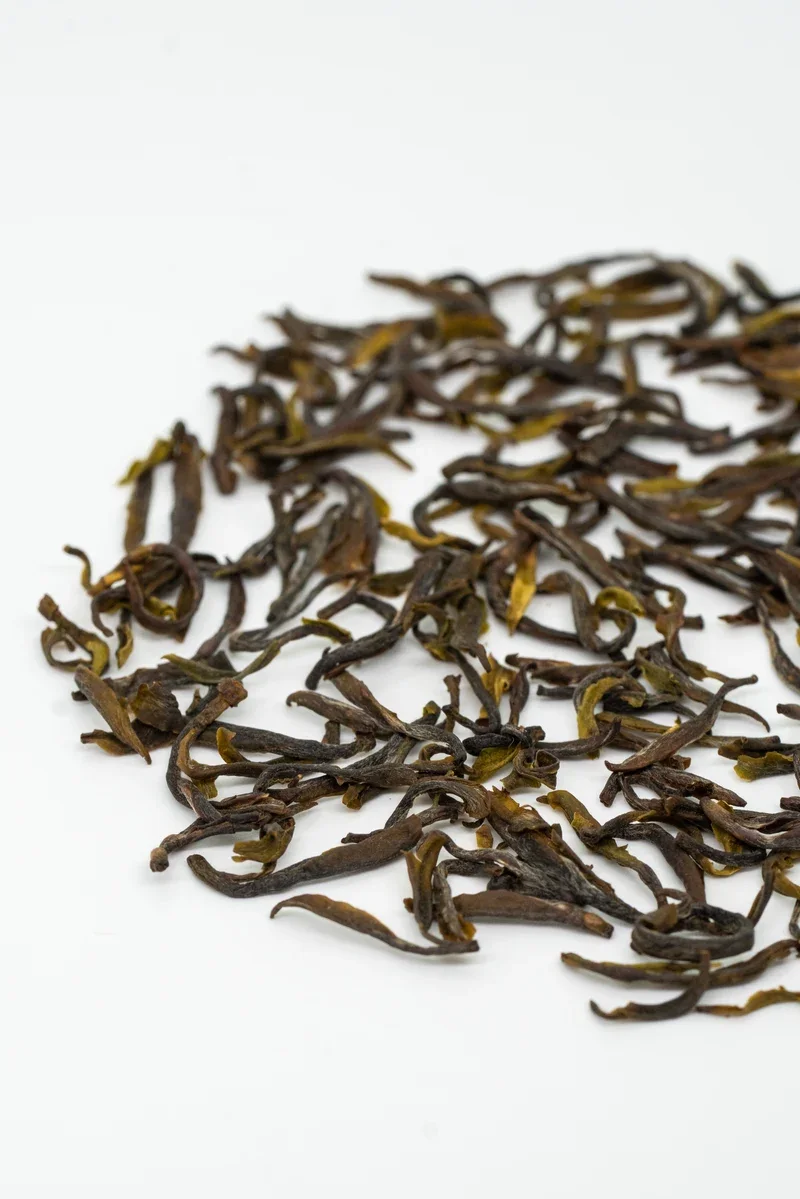
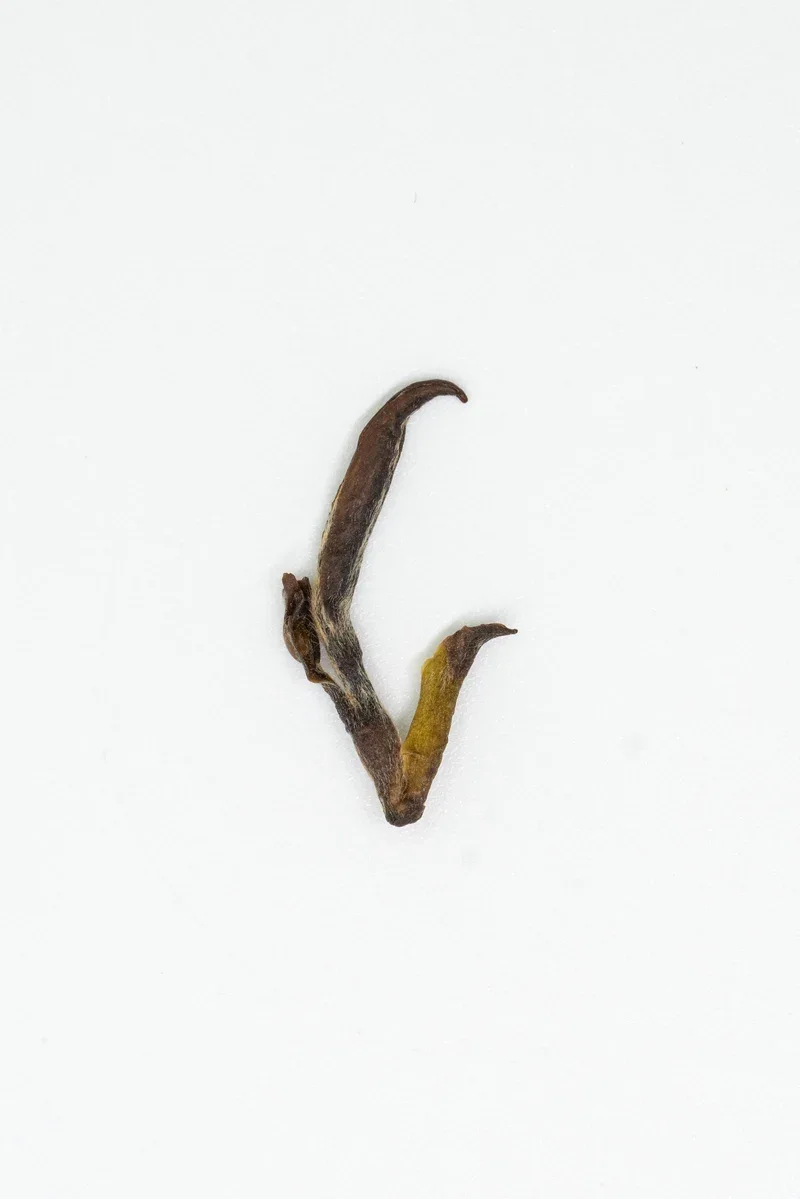
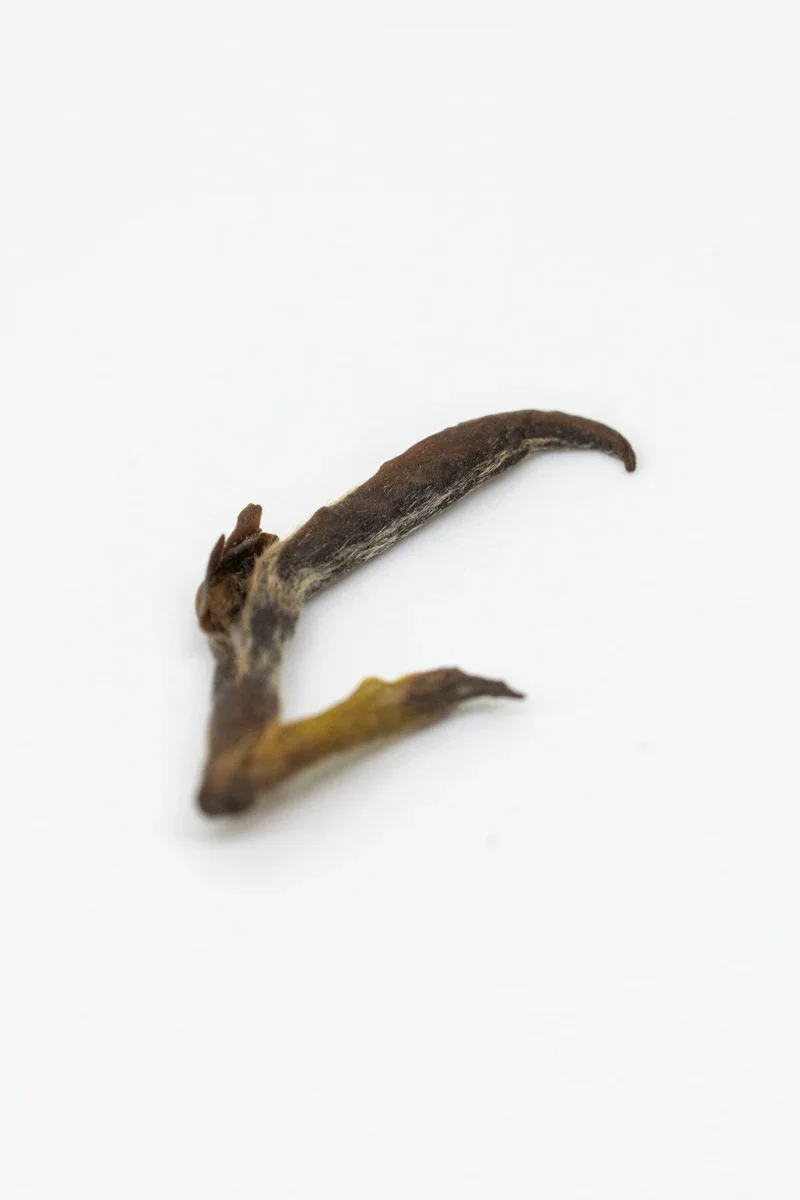
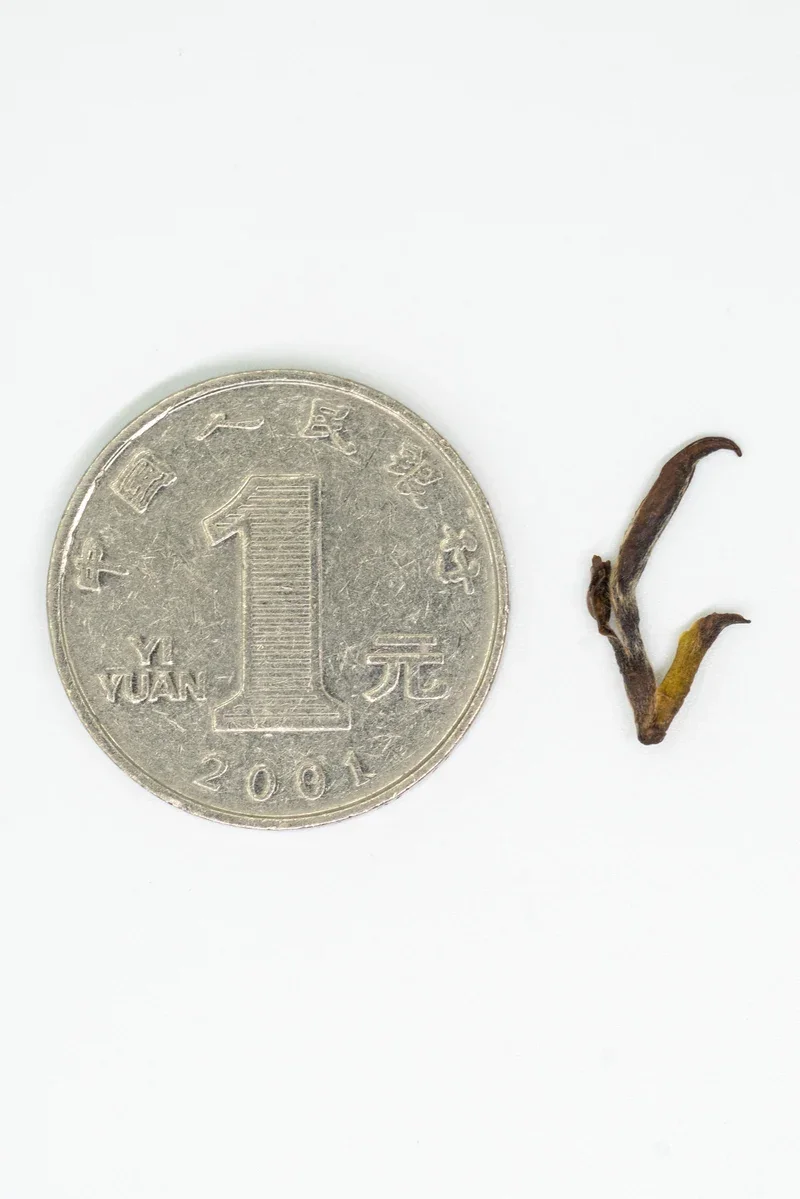
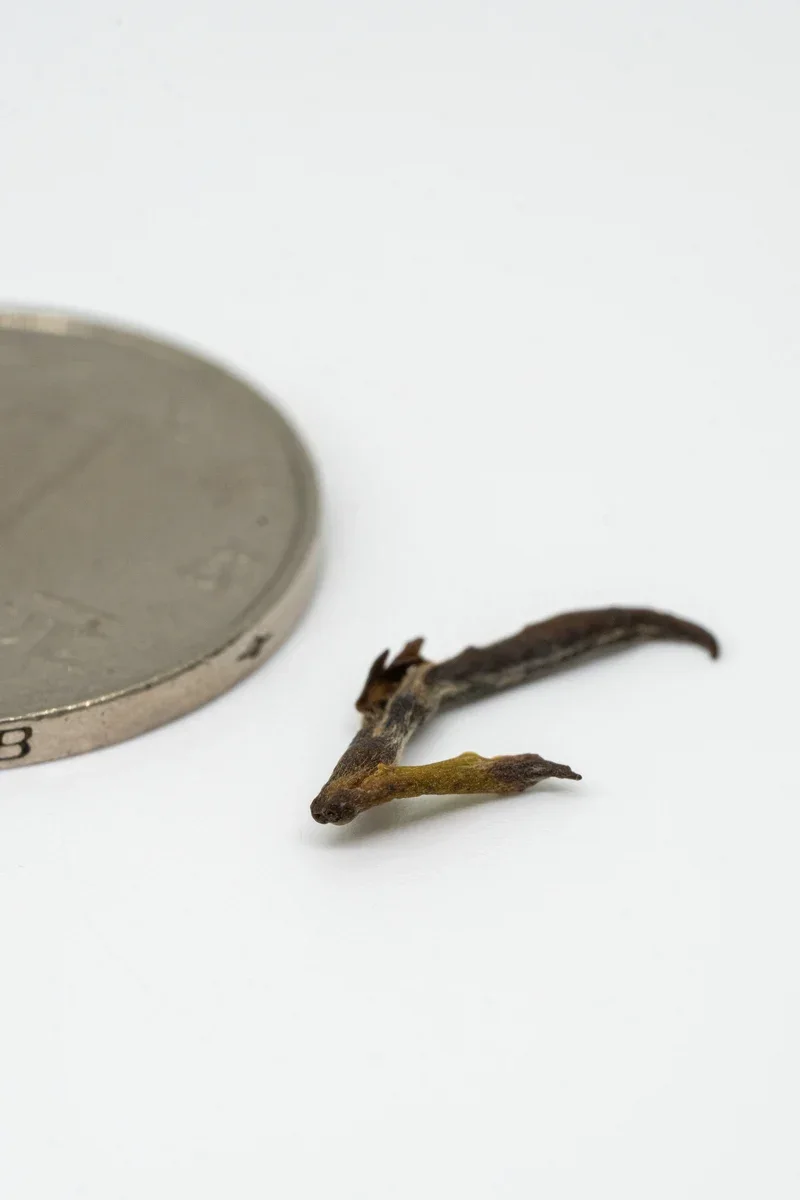
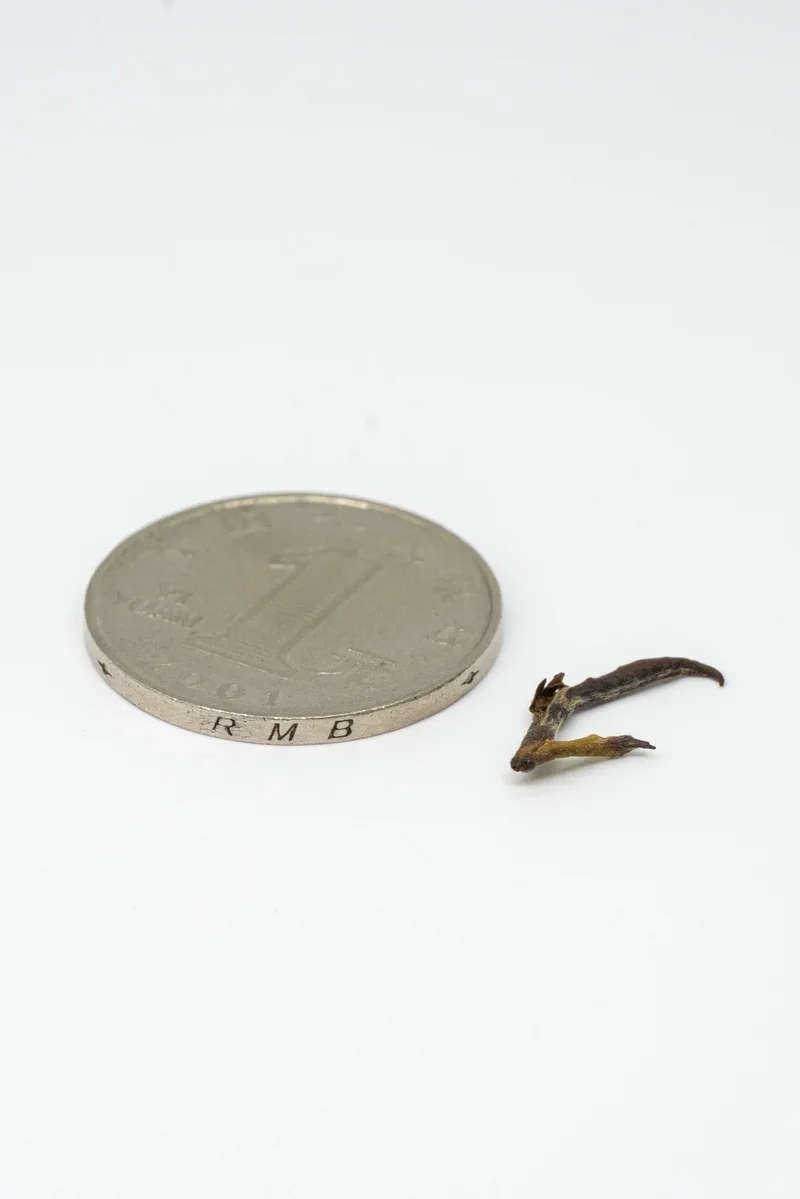
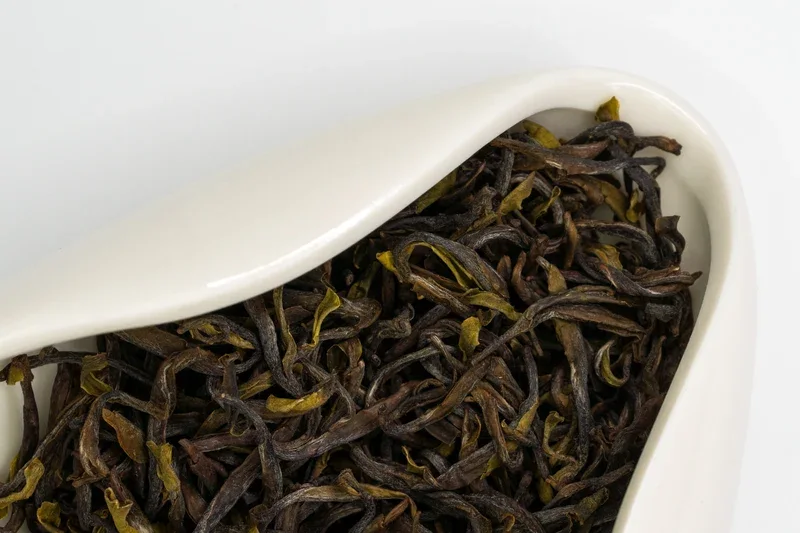
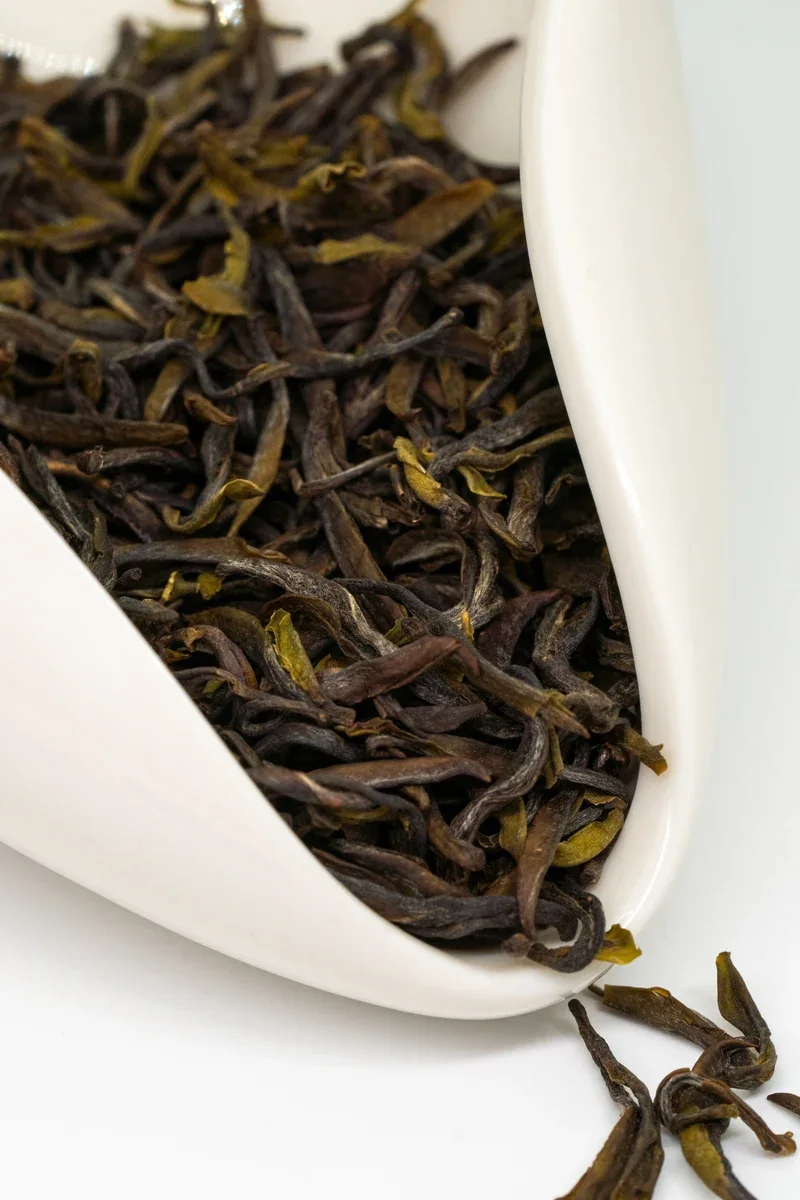
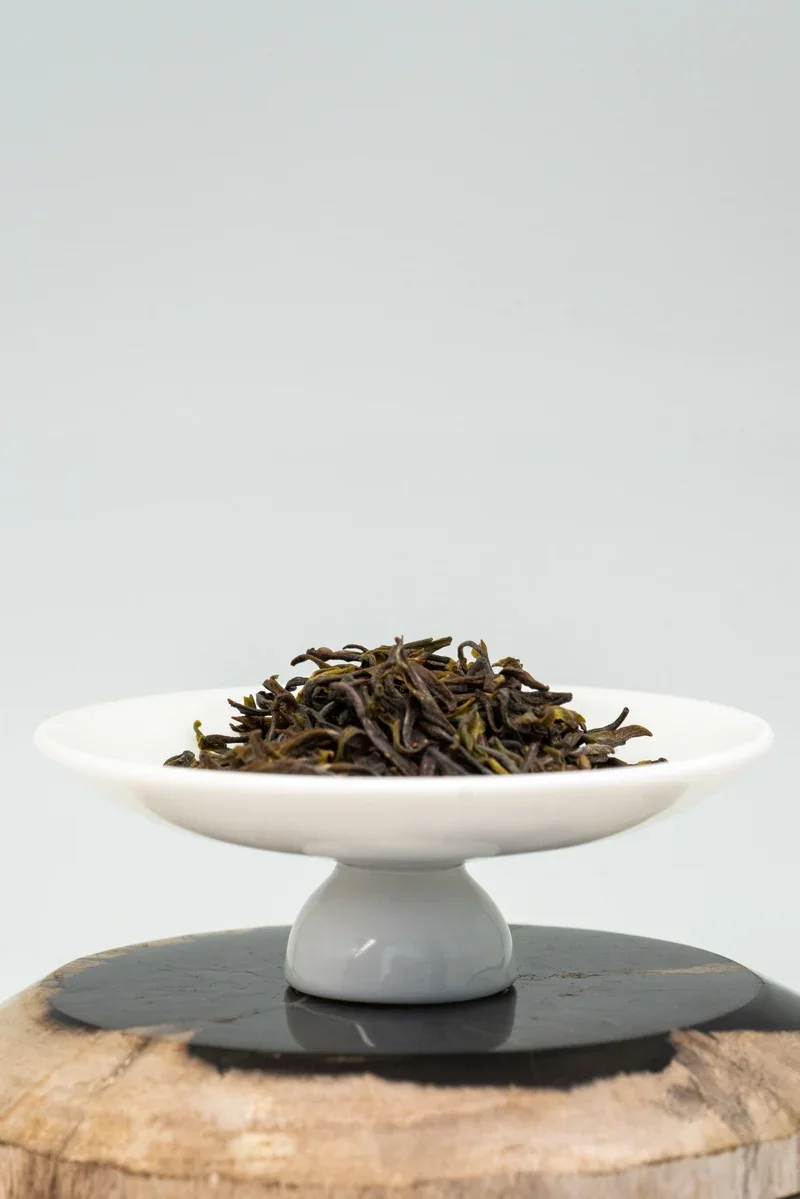
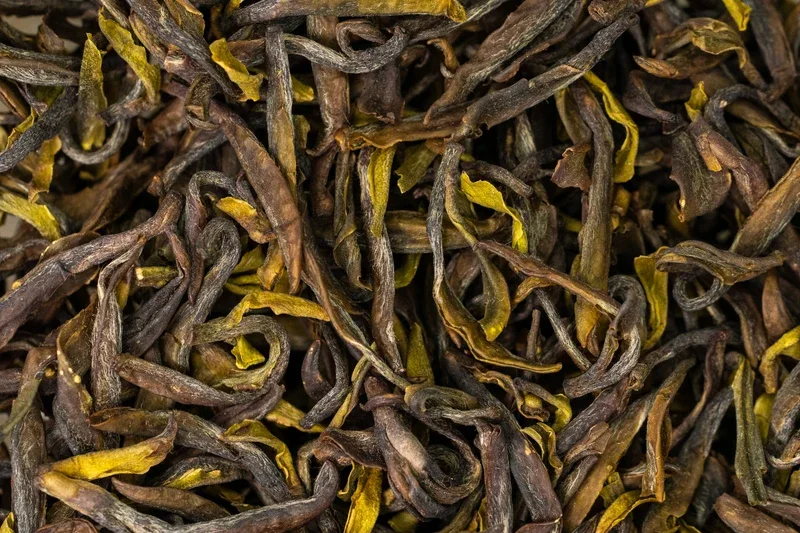
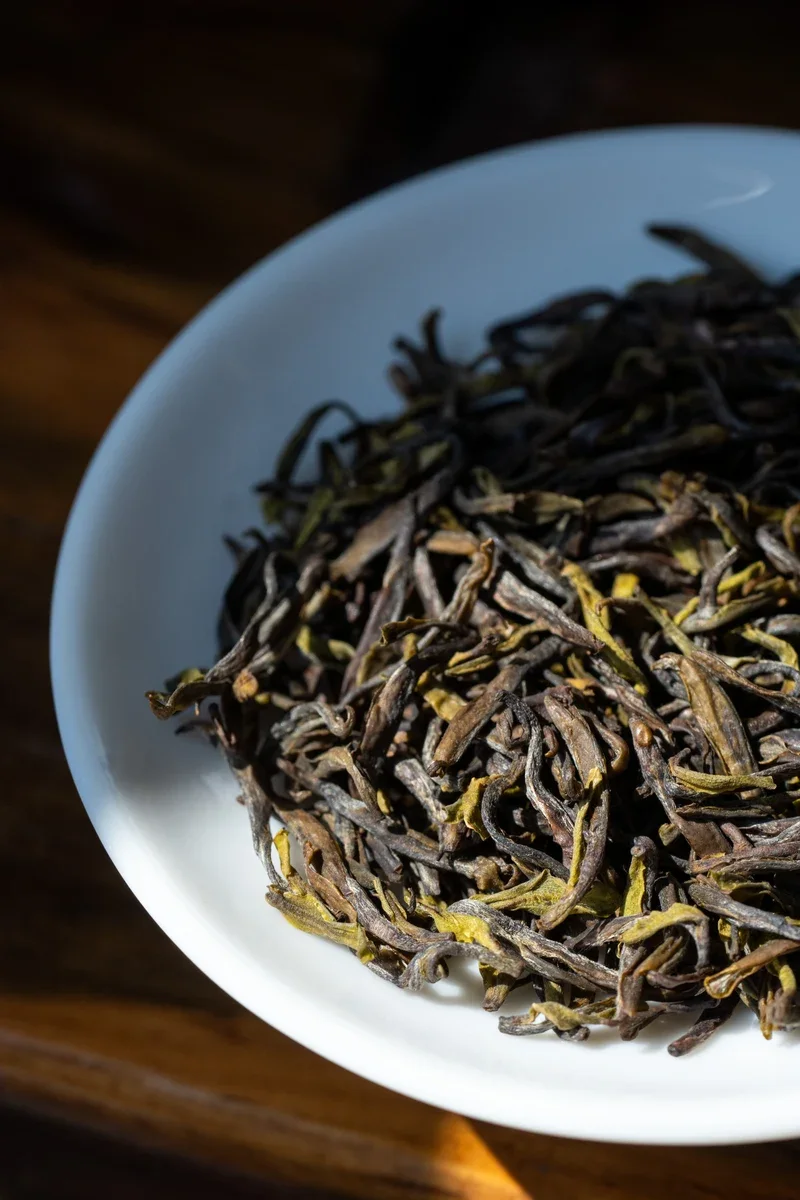
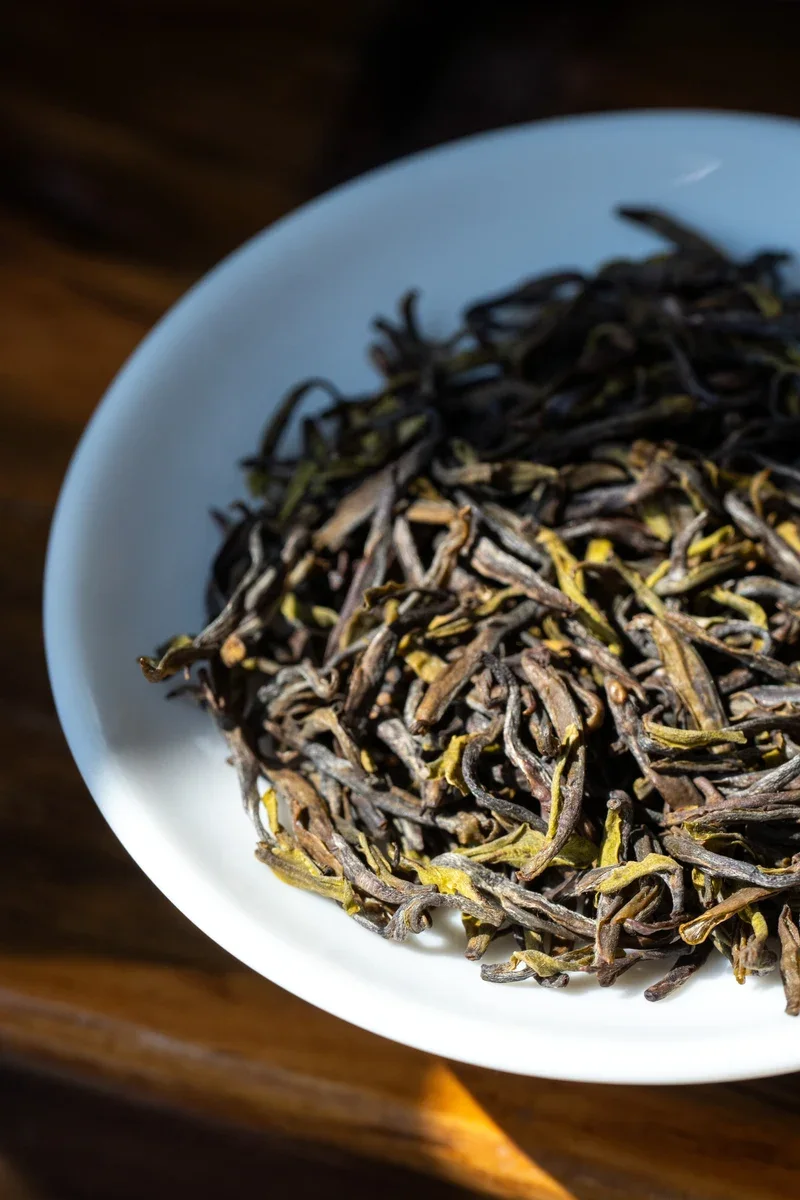
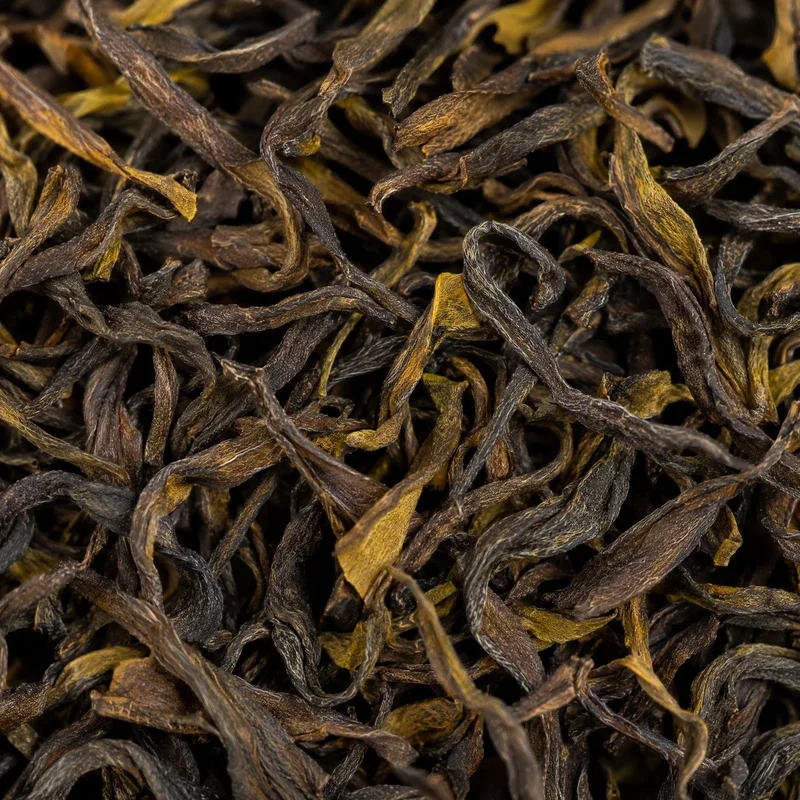
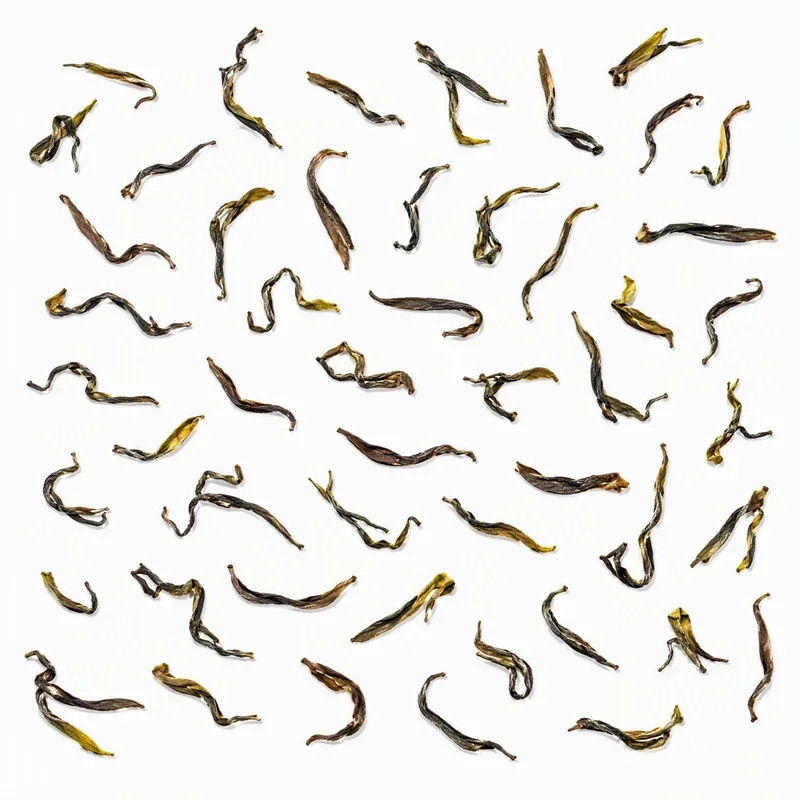
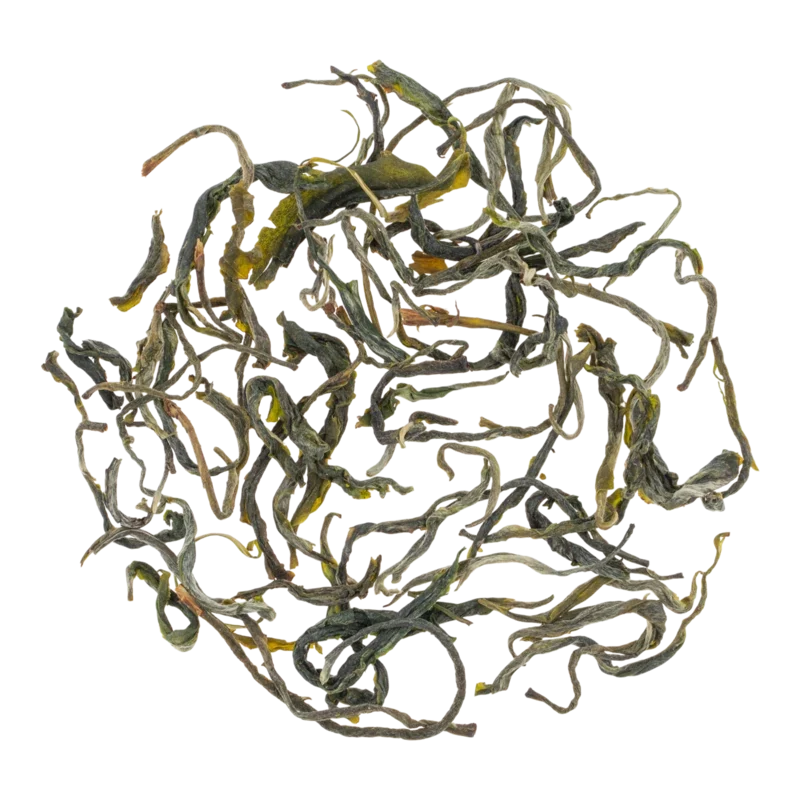
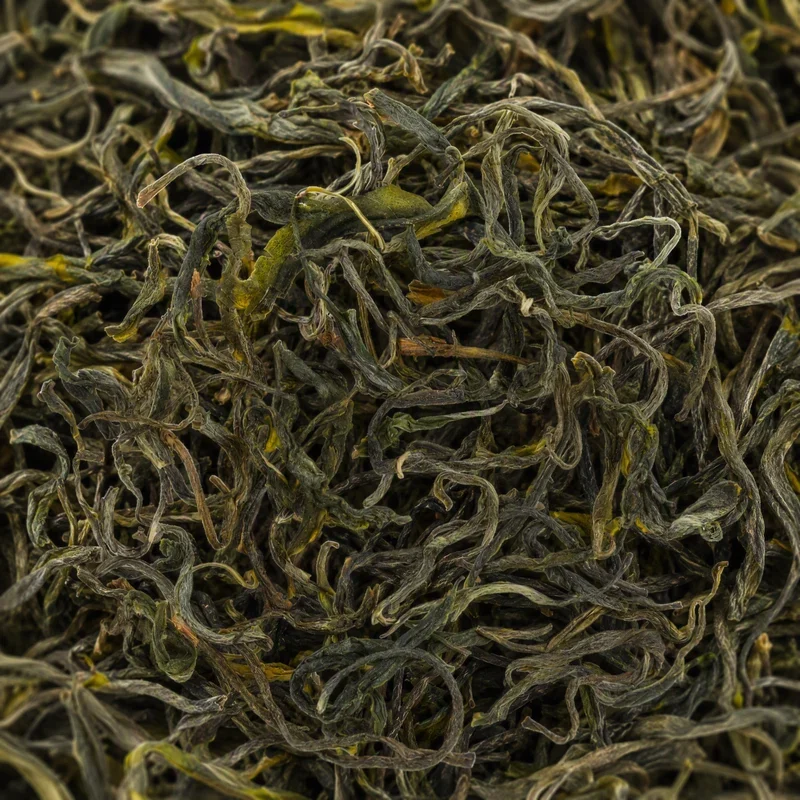
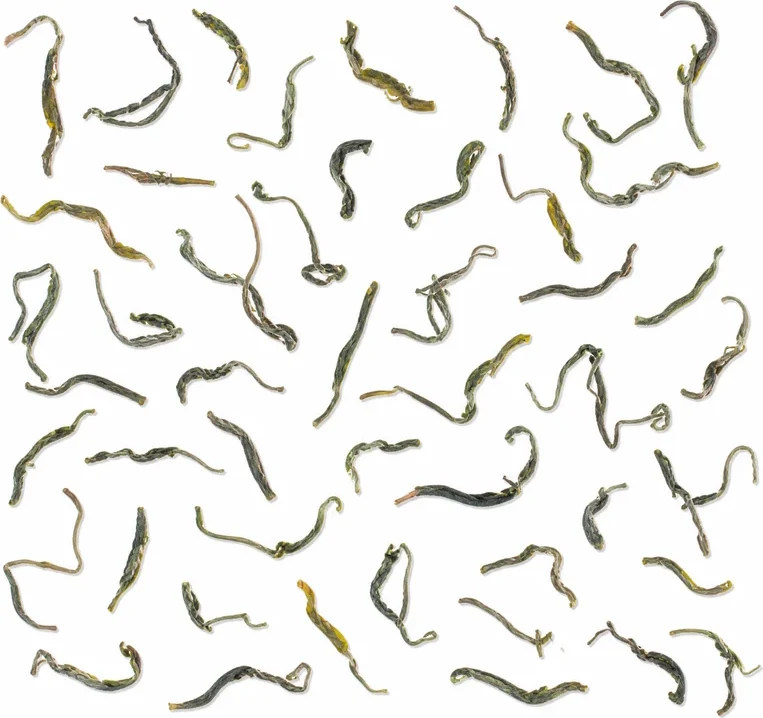
Dry Leaf Appearance: Large, voluminous, loosely twisted leaves of olive-green or dark green color. Tea strips are thick and plump (茶条肥硕, chátiáo féishuò), with noticeable silvery buds (tips). The leaf looks "alive" and voluminous — unlike tightly twisted small-leaf green teas.
Dry Leaf Aroma: Sweet, fruity, with pronounced grassy and floral notes. In the background — warm "roasted" notes: chestnut, walnut, light smoke. Characteristic honey tone, associated with high amino acid content of spring harvest.
Liquor Aroma: Bright, voluminous, developing. In first steeps, fresh grassy and floral notes predominate; from the middle, honey and nutty shades appear; in the finale — light woodiness and minerality.
Liquor Color: Light, clear, yellow-green with golden tint (汤色黄绿明亮). With each subsequent steep may acquire a warmer, more golden tone.
Spent Leaves: Large, elastic, whole leaves of olive or bright green color, well preserving structure. Leaf size — up to 10–15 cm when unfolded — clearly demonstrates the large-leaf nature of the raw material.
Taste: Complex and multi-layered, with pronounced "depth" (厚重, hòuzhòng), characteristic of ancient tree raw material. Initial sweetness (young grass, sweet vegetables) transitions to refreshing astringency and light bitterness, which quickly transforms into prolonged sweet aftertaste (回甘生津, huígān shēngjīn) — a characteristic sign of quality "gushu" raw material. Liquor body — dense, oily. In aftertaste — nutty and honey overtones.
Alkaloids: Caffeine — 3.4–4.7% (34–47 mg/g), which is somewhat higher than in small-leaf green teas, due to the large-leaf nature of the raw material. Theobromine and theophylline are also present.
Amino Acids: Amino acid content — 4.1–5.6% (above average for green teas). L-theanine predominates, providing sweetness, umami, and calming effect. Spring harvest from shaded mountain trees is especially rich in amino acids.
48.2–51.6% — exceptionally high indicator, testifying to tea saturation with soluble substances and its high extractability.
Complex of terpenes, aldehydes, and alcohols, forming characteristic multi-layered aroma with grassy-nutty profile.
Minerals: Increased content of potassium, magnesium, manganese, iron, zinc, and selenium — due to the deep root system of trees penetrating into parent mountain rock.
Polyphenols: According to laboratory studies by Yúnnán Agricultural University (云南农业大学), tea polyphenol content in ancient teas of Dehong is 24.2–38.9%, including high catechin content (EGCG, EGC, ECG). This provides powerful antioxidant potential.
Vitamins: Vitamin C, B-group vitamins, vitamin E.
High polyphenol content (up to 38.9%) and catechins provide cell protection from oxidative stress and free radical impact.
Caffeine combined with L-theanine gives mild, prolonged energy and concentration boost without anxiety and "crash" — this combination is characteristic precisely of teas rich in amino acids.
L-theanine stimulates α-wave production in the brain, promoting relaxed but alert state — "calm clarity."
Green tea polyphenols are associated with improved fat metabolism and glucose level normalization.
Catechins may contribute to lowering "bad" cholesterol (LDL) levels and maintaining vascular elasticity.
Complex of vitamins and minerals supports immune function.
Moderate astringency and polyphenol complex stimulate digestion and may have mild antibacterial action.
Thanks to the deep root system of ancient trees, tea is a source of bioavailable microelements (manganese, zinc, selenium).
3–4 g per 200 ml, temperature 80 °C, steeping 2–3 minutes. Don't oversteep — large-leaf Yunnan tea with prolonged steeping may give excessive astringency.
Tea Amount: 5–7 g per 150 ml water (gaiwan steeping method); 3–4 g per 200 ml (European method). Large, voluminous leaf takes up much space — visually the portion may seem large.
Teaware: Porcelain gàiwǎn (盖碗, gàiwǎn) — optimal choice, allowing control of steeping time and observation of large leaf unfolding. Glass teapot also suitable. Yíxīng teapot (紫砂壶) from porous clay may be used, but consider that it "remembers" aromas — better to dedicate a separate one for green teas.
Water Temperature: 75–85 °C. Large-leaf raw material from ancient trees is more resistant to high temperature than tender small-leaf teas, but boiling water is still undesirable — it will increase bitterness and suppress delicate aromas. Optimum — 80 °C.
Container: Foil vacuum packaging, metal tin with tight lid. Ceramic containers acceptable but must be airtight.
Enemies: Moisture, light, oxygen, heat, foreign odors. Keep away from spices and household chemicals.
Some masters note that Dehong green tea with sun-drying (晒青) can withstand short-term storage (up to 1–2 years) similar to young sheng maocha (生毛茶), slightly evolving in taste — acquiring honey and fruity notes. However, this applies only to "shaiqing" (晒青) version; tea with pan-firing (炒青) should be consumed within 6–12 months for maximum freshness.
Temperature: In dry, cool place at temperature below 25 °C. For long-term storage, refrigerator (0–5 °C) in absolutely airtight container is recommended.
Price Category: Suspiciously low cost (below 100 yuan per 100 g) for tea claimed as "gushu" (古树) practically guarantees fake or raw material substitution.
Purchase from specialized sellers with confirmed tea origin. Ask for information about specific village, plantation, tree age.
Authentic "gushu" tea is distinguished by large, voluminous, thick leaf. Small, tightly twisted leaf — sign of raw material from young bush plantations.
Real ancient tree tea possesses pronounced depth, oily body texture, and long, powerful sweet aftertaste (回甘). Young plantation raw material gives more superficial, light-bodied, and quickly fading taste.
Gushu tea withstands 7–10 steeps, maintaining taste. Young raw material "gives up" after 3–5 steeps.
No reviews yet. Tell us what you think of this tea.
Rate this tea and share your impressions. We review each submission before publishing it.