Brewing
Gongfu brewing
- Water temperature
- 93 °C
- Tea amount
- 5 g
- Water volume
- 100 ml
- First steep
- 10 s
- Time added per infusion
- 5 s
- Infusions
- 4

báimǎ jùn hóng
Choose a brewing method. Start with the recommended quantities and time, then adjust to taste.
Brewing
Brewing
Taste
Tea encyclopedia
Category: Modern artisanal/regional Chinese red teas. Flagship product of the "Baima Ling" (白马岭, báimǎ lǐng) series — a line of high-quality teas from Hainan production.
Category: Modern artisanal/regional Chinese red teas. Flagship product of the "Baima Ling" (白马岭, báimǎ lǐng) series — a line of high-quality teas from Hainan production.
Coordinates: ≈ 19°06' N, 110°06' E.
Origin: China, Hǎinán Province (海南, hǎinán), Qióngzhōng Lì and Miáo Autonomous County (琼中黎族苗族自治县, qióngzhōng lízú miáozú zìzhìxiàn). Produced at the state agricultural enterprise "Wushichanchang" (国营乌石农场, guóyíng wūshí nóngchǎng), located at the foot of the Báimǎ Lǐng ridge in the heart of the Wǔzhǐshān mountain range (五指山, wǔzhǐshān).
Type: Red tea (black tea) (红茶, hóngchá) — fully oxidized tea.
Cultural Significance: Baima Jun Hong became a symbol of the revival of Hainan's tea industry after the crisis of the 1990s-2000s. The story of the tea's creation is inseparably linked with the name of Fú Xiǎoqín (符小琴, fú xiǎoqín) — NPC deputy, National Model Worker and Outstanding Communist Party Member, who led the transformation of the loss-making farm into an exemplary enterprise. The tea embodies the motto "with third-class equipment — first-class product" (三流设备做出一流好茶), which became a legend of Hainan tea making.
History: The history of tea cultivation in the Baima Ling area has ancient roots. According to the "Qiongtai Zhi" (《琼台志·土产》), compiled in the 6th year of the Zhengde era of the Míng dynasty (明正德六年, 1511), tea was already listed among the local products of Hainan Island. The indigenous Lì people (黎族) have long collected wild mountain tea for medicinal purposes, and "tea from Baima Ling" (白马岭茶) along with "water-full tea" (水满茶, shuǐmǎn chá) was considered a model of Hainan's pristine tea. During the Qing period, local tea was classified as imperial tribute (贡品).
Name Breakdown: 白马 (báimǎ) — "white horse," referring to the Báimǎ Lǐng ridge (白马岭) on whose slopes the tea plantations are located. 骏 (jùn) — "noble, thoroughbred steed"; the metaphor refers to the appearance of the finished leaf: fine golden tips on a dark background resemble a bay horse's coat. 红 (hóng) — "red," indicating the tea category. Thus, the full name can be poetically translated as "Red Tea of the Noble Steed from White Horse Mountain."
Cultivar: The raw material base of Baima Jun Hong is unique — it is a blend of three types: (1) second-generation descendants of Hǎinán wild mountain tea (海南原生态野生山茶第二代) — large-leaf form Camellia sinensis var. assamica, adapted to the tropical conditions of the island; (2) Fúdǐng Dà Bái (福鼎大白, fúdǐng dà bái) — high-tip variety from Fujian, contributing sweetness and abundance of golden buds; (3) Qímén cultivars (祁门种), providing characteristic aromatic complexity. The share of local wild raw material comprises about 80%.
Picking: Thanks to Hainan's tropical climate, the picking season lasts up to 10 months per year (from January to October), which significantly exceeds the possibilities of continental tea-producing regions. Hǎinán early spring tea (华夏第一早春茶) reaches the market 2 months earlier than production from Fujian or Zhejiang.
Pluck Standard: For Baima Jun Hong — exclusively buds (单芽, dān yá) from the most tender raw material. For "Baima Jun Hong" (一芽一叶) — bud and one leaf. For "Baima Jun Hong" (一芽二叶) — bud and two leaves (this fraction is also used for red tea "Baima Junhong," 白马君红, with conditionally strip-style rolling).
Raw Material: Fresh, undamaged leaf without mechanical injuries; rapid delivery to the factory to minimize uncontrolled oxidation.
Altitude: The Baima Ling ridge reaches 1264 m above sea level; tea gardens are located at altitudes of 600–1264 m.
Climate: Tropical monsoon, with abundant humidity. Average annual temperature — 22–26 °C. Annual precipitation — 1700–2400 mm. Relative humidity — over 80%. Daily temperature amplitude — 6–11 °C, which promotes accumulation of aromatic substances in the leaf. The Baima Ling area is famous for constant cloudiness and frequent fogs, creating natural diffused lighting — an ideal regime for amino acid synthesis.
Soil: Mountain lateritic and yellow soils of volcanic origin, characterized by increased selenium content (富硒土壤, fù xī tǔrǎng) and high level of organic matter. Selenium is a microelement that enriches the chemical composition of tea and affects its antioxidant properties. Soils are acidic (pH 4.5–5.5), well-drained.
The area "Tianran yangba" (天然氧吧, "natural oxygen bar") — this is how Baima Ling is characterized for its air purity and high concentration of phytoncides surrounded by tropical forest of the Wuzhishan mountain range. Plantations are located in a zone of zero residual pesticide content (all tested batches showed zero level of agrochemical residues).
Hand selection of buds or tender shoots.
Combined: solar micro-withering (日光微凋) followed by processing in an enclosed space. Goal — reducing moisture by 25–30% and activating enzymatic processes.
Destroying the cellular structure of the leaf, releasing juices and forming shape. For Baima Jun Hong, delicate rolling is applied, preserving the integrity of buds.
Key stage, conducted under controlled temperature and increased humidity conditions. This is where the characteristic balance of theaflavins and thearubigins for Baima Jun Hong is formed, ensuring brightness of liquor and richness of taste.
Stopping oxidation and fixing the aromatic profile. Temperature regime is selected to enhance honey-fruit notes.
Separating the finished product by fractions.
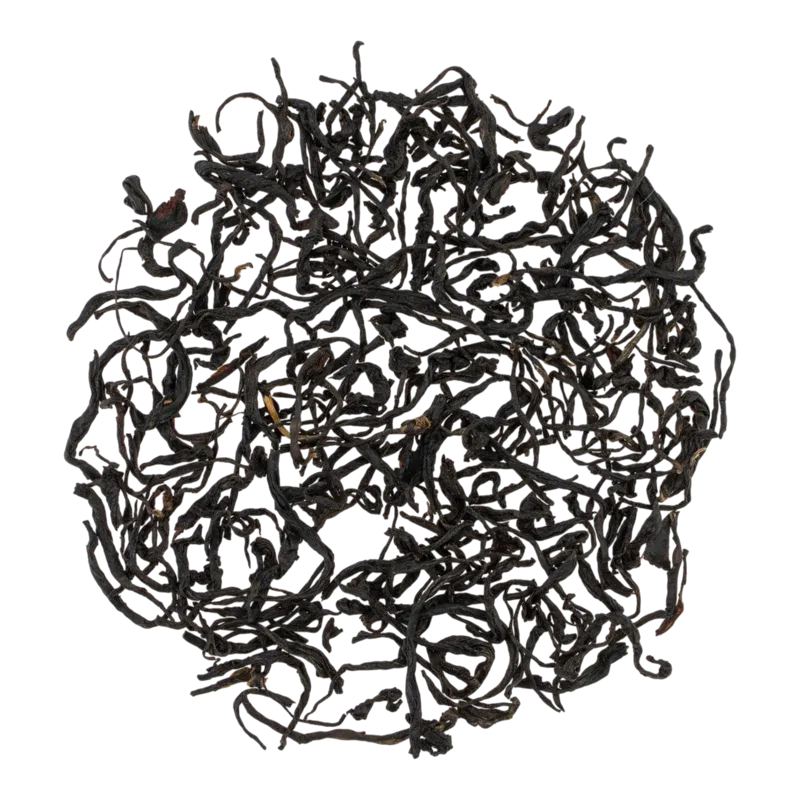
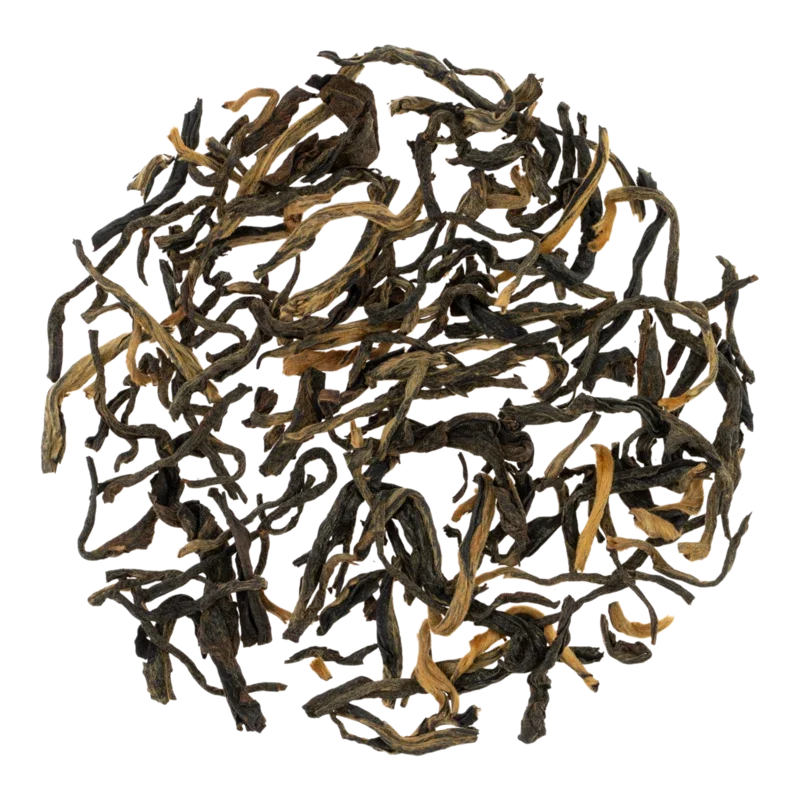
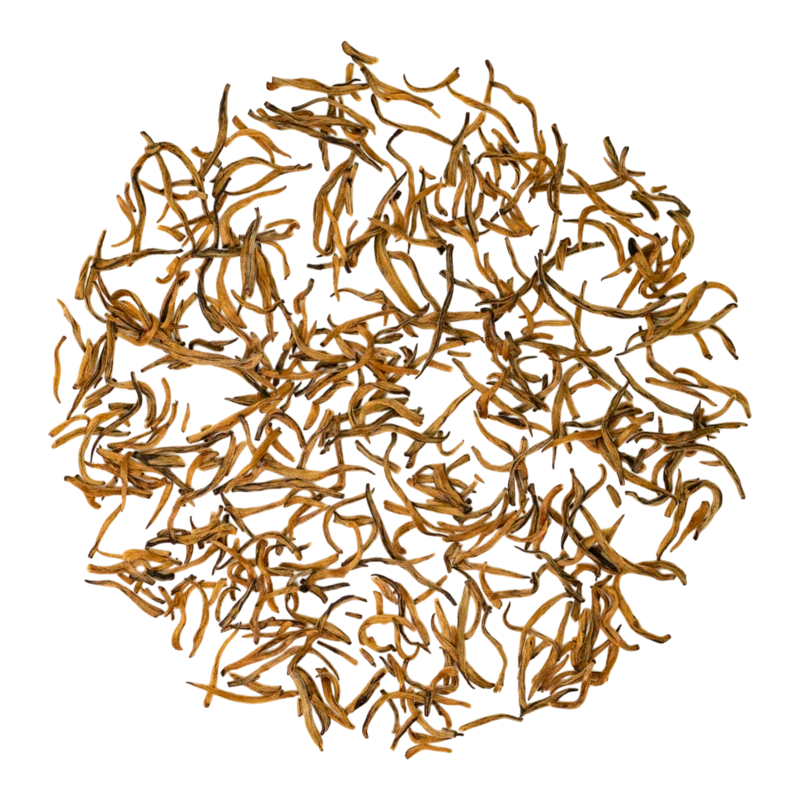
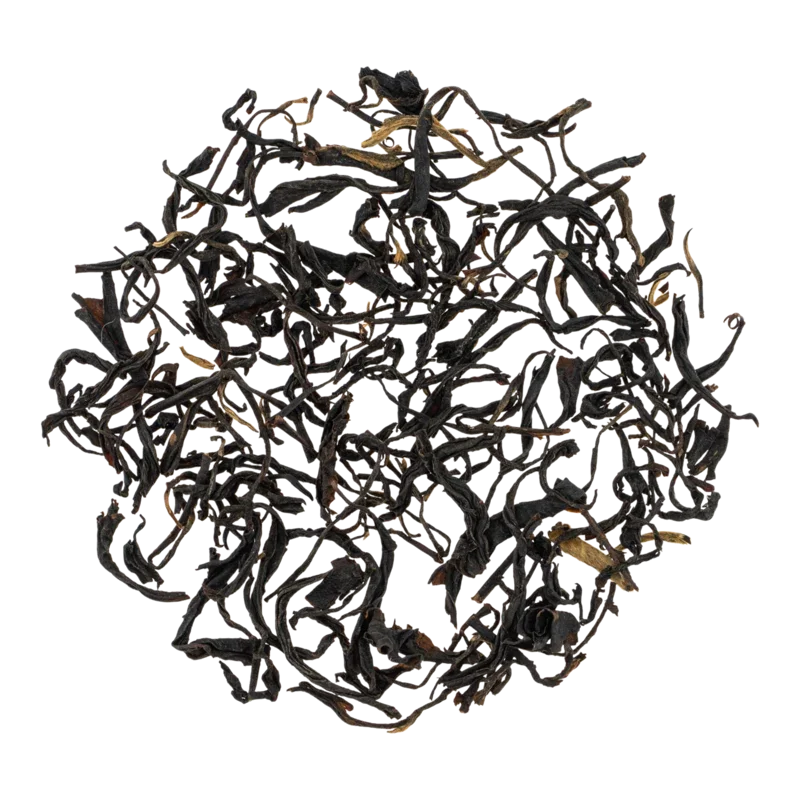
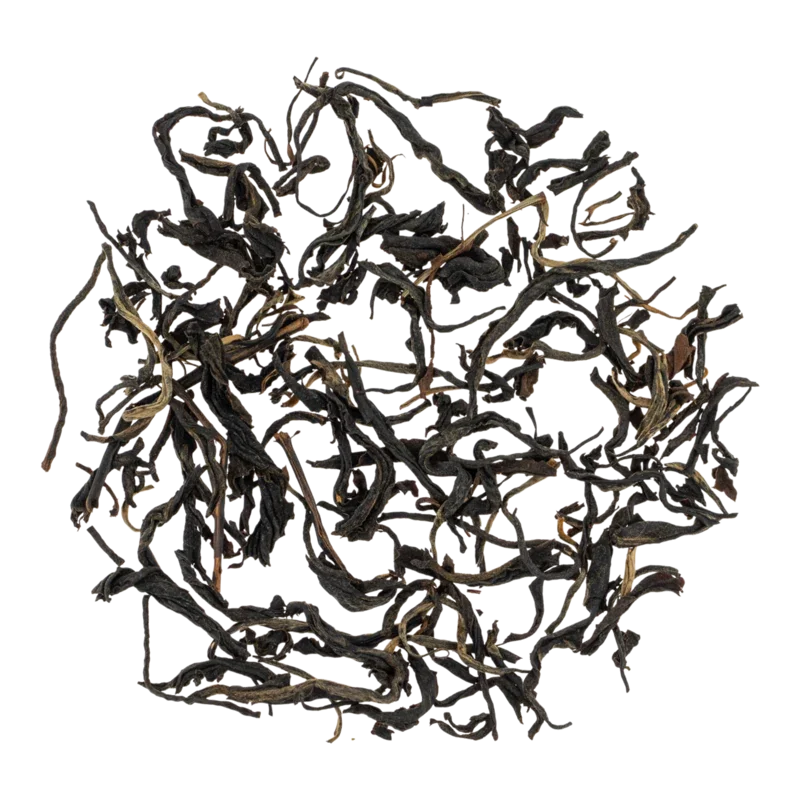
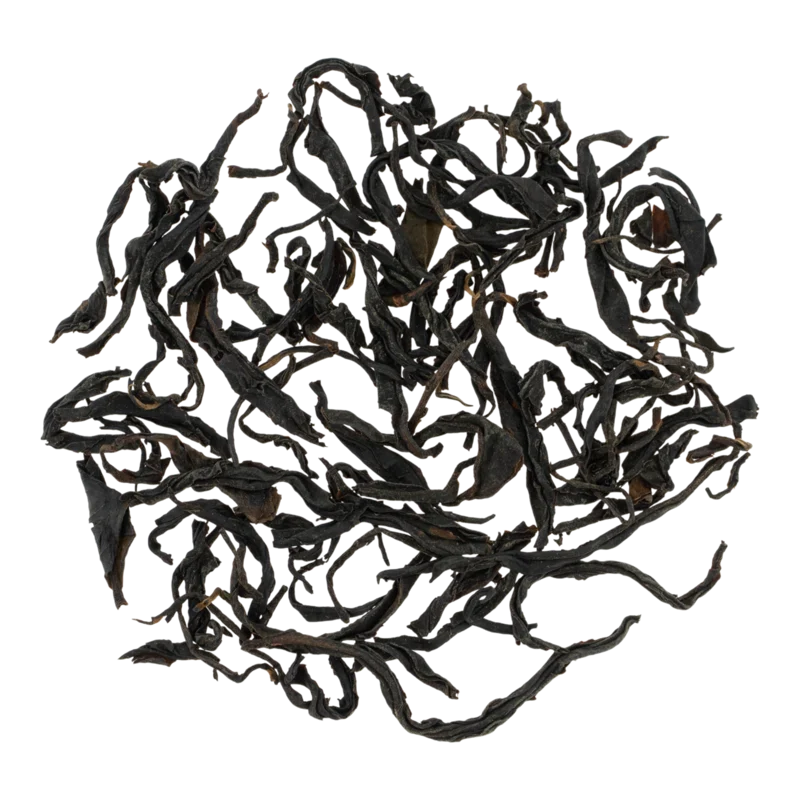
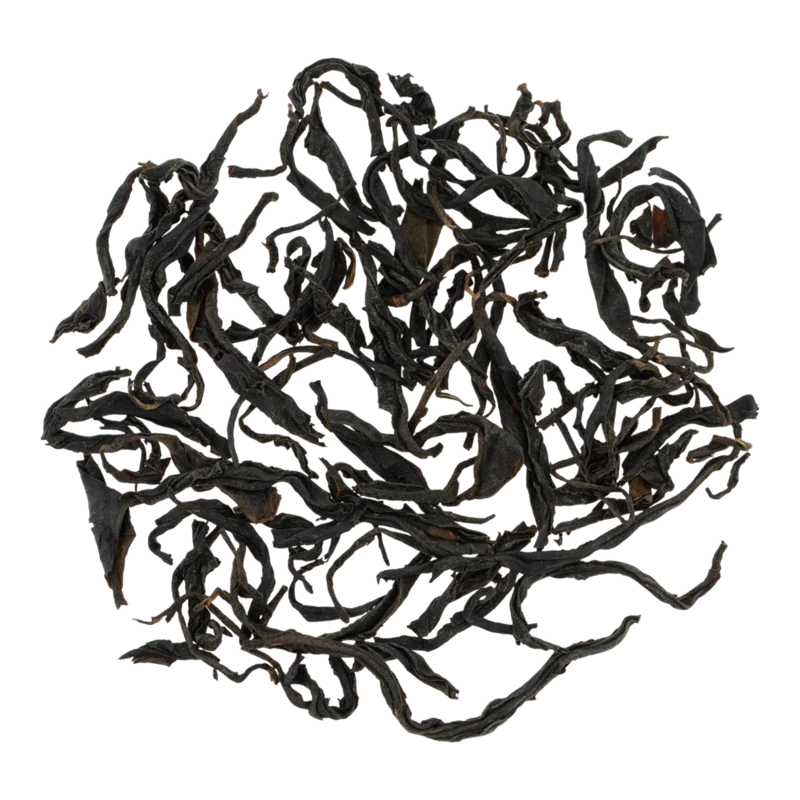
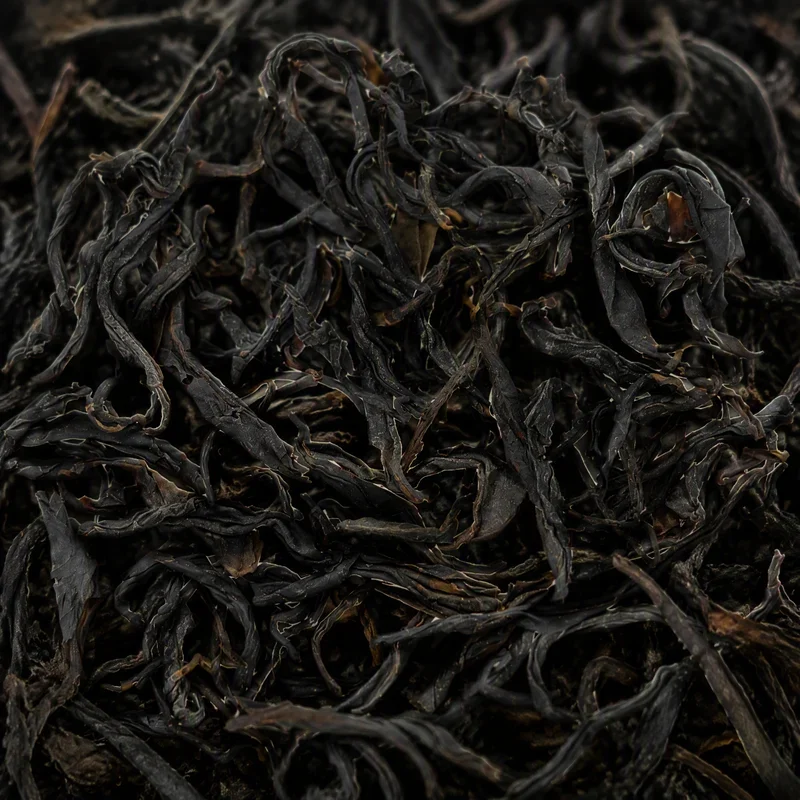
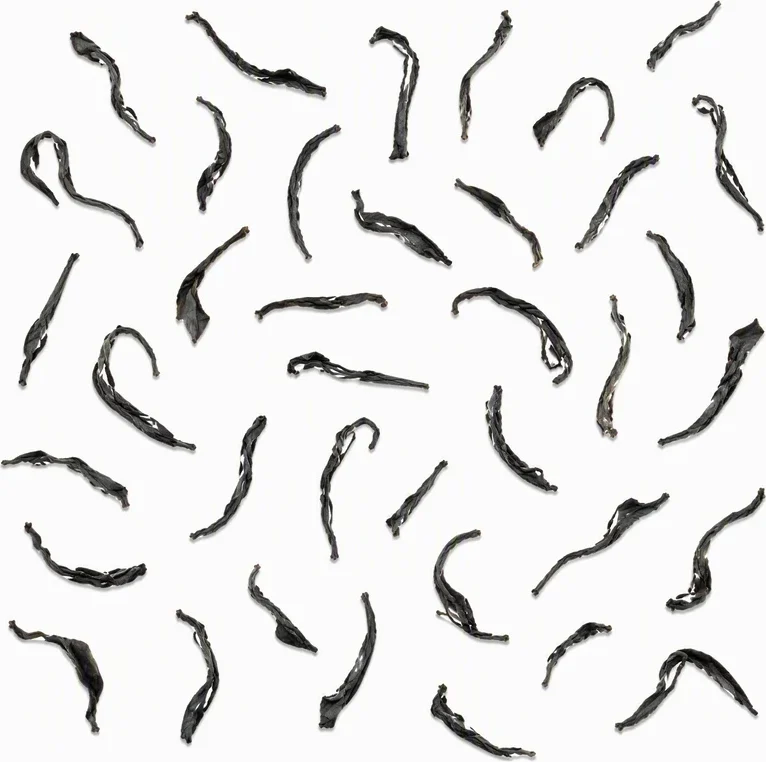
Dry Leaf Appearance: Thin, tightly rolled "needles"; leaf surface is smooth, oily-glossy; abundance of golden tips (金毫). Color — dark chestnut with bronze tint. Each tea particle "conditionally resembles a thin hair of a steed" — precisely this similarity gave the tea its figurative name.
Dry Leaf Aroma: Clean, sweetish, with pronounced notes of honey, flower pollen and light shade of tropical fruits (lychee, longan).
Liquor Aroma: Multi-layered: in first infusions — bright floral-honey wave; in middle ones — fruity tones (ripe peach, apricot) with caramel undertone; in finale — soft woody and nutty shades.
Liquor Color: From red-ruby to orange-amber; bright and clear, "like red agate" (红玛瑙, hóng mǎnǎo). Along the edge of the cup — noticeable golden rim.
Spent Leaves: The leaf opens fully; buds retain golden color, leaf fragments — copper-red, elastic, uniform.
Taste: Sweet, "醇厚" (chúnhòu — rich and thick), with pronounced freshness (鲜爽, xiānshuǎng) and smooth, "silky" texture. Astringency is minimal; aftertaste — long, warming, with notes of honey and light fruity acidity. The tea is distinguished by high brewing resistance.
Alkaloids: Caffeine — approximately 3.5–4.5% (characteristic for large-leaf Hainan teas with high polyphenol content); theobromine, theophylline — in trace amounts.
Amino Acids: Including L-theanine; specific quantitative data were not published, however pronounced sweetness and freshness in taste indicate significant content.
39% — high indicator, testifying to the tea's richness in extractable substances.
1.0% — high level, forming brightness and "liveliness" of liquor.
11.6% — responsible for body density and red shade of liquor.
9.4% — moderate level, not overloading the liquor with "heavy" tones.
Zero content for all tested indicators.
Minerals: Potassium, magnesium, manganese, zinc. Special note should be made of increased selenium (Se) content, due to volcanic selenium-containing soils of the region.
Polyphenols: 23.9% — typical value for Hainan red teas from large-leaf raw material.
Caffeine combined with L-theanine provides prolonged alertness and improved concentration without the characteristic coffee "spike and crash."
High content of polyphenols and theaflavins helps neutralize free radicals. Selenium additionally enhances the body's antioxidant capacity.
Oxidized polyphenols of red tea gently affect the gastric mucosa and promote comfortable digestion after meals.
Regular moderate consumption of red tea is associated with maintaining vascular elasticity; presence of potassium is favorable for normalizing blood pressure.
Studies based on wild Hainan tea indicate its positive influence on brain activity and memory, due to the complex of theanine, polyphenols and microelements.
Presence of low oligosaccharides (低聚果糖, dī jù guǒtáng) in tea from wild Hainan raw material promotes maintenance of healthy intestinal microflora and, indirectly, functional activity of the liver.
The antioxidant complex with regular consumption may contribute to maintaining skin tone and hydration.
Red tea enhances peripheral circulation; Baima Jun Hong is especially pleasant on cool evenings, despite its tropical origin.
Tea Amount: 4–5 g per 100–120 ml (gongfu method); 3 g per 200 ml (European method).
Teaware: Porcelain gàiwǎn (盖碗) — for maximum aroma development; glass teapot — for visual enjoyment of ruby liquor color; tasting cup — for professional evaluation.
Water Temperature: 85–90 °C for grade from pure buds (单芽); 90–95 °C for grade "one bud — one/two leaves."
Container: Airtight, opaque — tin can, vacuum or foil packaging.
Dry, dark place, 15–25 °C, away from strongly scented products. Considering tropical origin and high extract content, tea preserves quality well.
Optimally — within 12–18 months. Quality batches can be stored up to 2–3 years, acquiring a deeper, "rounder" profile.
Yunnan red tea from var. assamica — closest "relative" by raw material type. Dianhong possesses chocolate-honey profile and powerful body. Baima Jun Hong, made from a blend dominated by wild Hainan tea, demonstrates more pronounced freshness (鲜爽) and tropical fruitiness, as well as brighter ruby liquor color.
Premium Wuyi red tea from pure buds. Both teas belong to the highest price segment and both are made from the most tender buds, however Jin Jun Mei creates a more "dry," floral-honey profile, while Baima Jun Hong — more "juicy" and round, with tropical undertone.
General designation of red teas from the Wuzhishan mountain range. Baima Jun Hong is the most premium and recognizable representative of this group, distinguished by original blend recipe and strict picking standard.
Guangdong red tea, also produced from large-leaf raw material in subtropical climate. Common features — dense body and bright liquor, however Ying De tends toward a more "sugary" profile, while Baima Jun Hong stands out with tropical freshness and selenium mineral undertone.
Price Category: High segment of Hainan and general Chinese red teas. Retail price — from ≈194 yuan/50 g (about 3900 yuan/kg) for standard batches to significantly higher prices for competition and gift sets. Limited batches of Baima Jun Hong from pure buds — most expensive.
No reviews yet. Tell us what you think of this tea.
Rate this tea and share your impressions. We review each submission before publishing it.