Brewing
Gongfu brewing
- Water temperature
- 75 °C
- Tea amount
- 5 g
- Water volume
- 100 ml
- First steep
- 10 s
- Time added per infusion
- 5 s
- Infusions
- 3

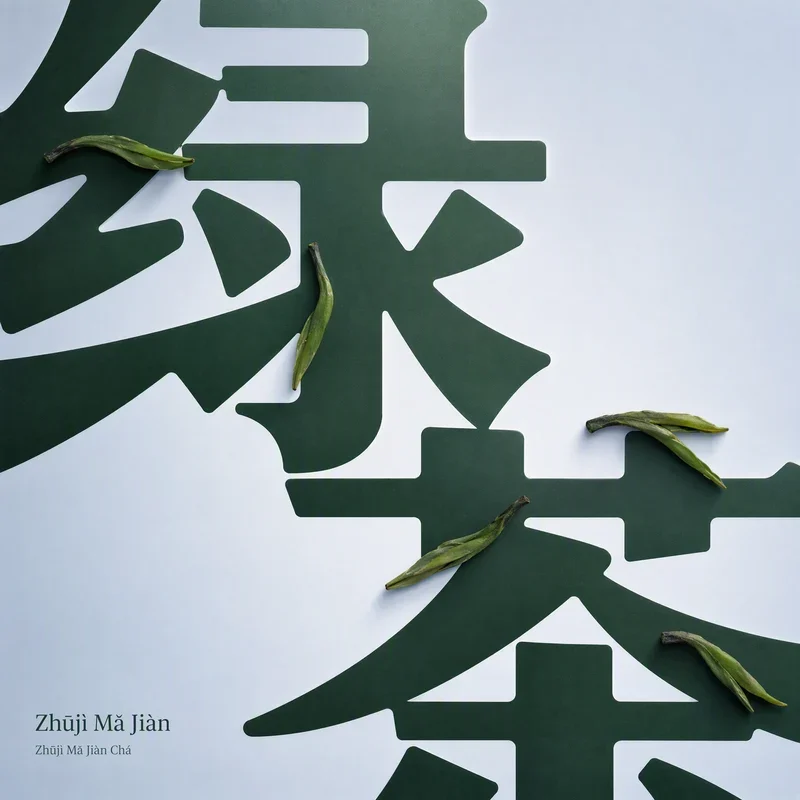
Zhūjì Mǎ Jiàn Chá
Choose a brewing method. Start with the recommended quantities and time, then adjust to taste.
Brewing
Brewing
Taste
Tea encyclopedia
Category: Regional Chinese green teas of needle/sword shape (针形/剑形, zhēn xíng / jiàn xíng).
Category: Regional Chinese green teas of needle/sword shape (针形/剑形, zhēn xíng / jiàn xíng).
Coordinates: approximately 29°35′ North latitude, 119°52′ East longitude.
Origin: China, Zhèjiāng Province (浙江省), Shàoxīng City (绍兴市, Shàoxīng shì), Zhūjì County (诸暨市, Zhūjì shì), Majian Town (马剑镇, Mǎ Jiàn zhèn). The territory is located at the junction of Zhuji, Pújiāng (浦江), Fuyang (富阳), and Tonglu (桐庐) counties.
Type: Green tea (绿茶, lǜchá) — unoxidized. Technologically — combined type "sanhong sichao" (三烘四炒, "three dryings, four pan-firings"), combining hongqing (烘青, hot air drying) and chaoqing (炒青, pan-firing).
Visual phenomenon when straight buds vertically freeze at the bottom of a glass cup, forming a miniature "forest" — unique "calling card" of Ma Jian Cha. To achieve this effect, it's important to use the "top pouring" method (先注水后投茶), strictly control water temperature and tea leaf quality — only even, whole buds can "stand" vertically.
The town name (马剑, "horse and sword") became a full marketing concept — all line brands contain the character "jian" (剑, "sword"): "Ma Jian," "Lüjian," "Gongfu Jian," "Zhujian." This is possibly the only case in Chinese tea cultivation where a toponym became a system-forming element of an entire product series.
Zhūjì is famous as the birthplace of legendary beauty Xǐshí (西施), and the local group quality standard for tea is named "Xishi Shijian" (西施石笕) — linking tea culture with one of the most famous symbols of Chinese beauty.
Since 2000, Ma Jian Cha has been certified as organic tea by the Chinese Academy of Sciences — one of the first Zhejiang teas to receive this status. Water conservation regime of the territory and complete abandonment of chemical fertilizers make this tea a model of ecological tea cultivation.
Peak Sanjiejian (三界尖, "Point of Three Boundaries"), at whose foot the best tea bushes grow, is the convergence point of three counties: Zhuji, Pujiang, and Fuyang. The peak's name literally reflects its geographical position.
Cultural Significance: Zhūjì is the birthplace of the legendary beauty Xǐshí (西施, Xī Shī), one of the "four great beauties of Ancient China," as well as the world's largest center for freshwater pearl trade. Ma Jian tea, with its spectacular form and visual brewing, fits into the aesthetic culture of Zhuji, where beauty of form is valued equally with quality of content. The region is also part of the "Zhuji green tea" zone — one of three key tea clusters in the county alongside "Shijian Cha" (石笕茶) and "Yuezhou Long Jing" (越州龙井).
History: Ma Jian Cha is a new generation tea, created by Zhuji tea farmers in the 1990s during the wave of "tea renaissance" in Zhejiang Province, when dozens of counties began developing their own famous teas. The Majian area, located in the mountains at the junction of four counties, had long been famous for wild tea trees, but until the end of the 20th century, local tea cultivation remained natural and artisanal. In 1999, samples were sent to the Tea Quality Control Center under the Ministry of Agriculture of the PRC (农业部茶叶质量监督检验测试中心), which concluded: "good quality, possesses the style of famous tea" (品质良好,具名茶风格). In the same year, the tea passed provincial certification as a new product. In 2000, the Tea Research Institute of the Chinese Academy of Sciences (中国科学院茶叶研究所) certified it as organic tea — recognition of the highest level for a young brand. In 2004, the product was recognized as safe at the national level (全国无公害产品产地) and received the status of "green product" of Zhèjiāng Province (浙江省绿色产品产地). In 2005, the trademark "Yunjian" (云剑, "Cloud Sword") was awarded the title "Famous Trademark" (著名商标). Since the 2010s, the line has expanded: in addition to the original "Ma Jian Cha," there appeared "Lüjian Cha" (绿剑茶, "Green Sword"), "Gongfu Jian" (功夫剑, "Masterful Sword"), "Zhujian Cha" (竹剑茶, "Bamboo Sword"). In 2023, Ma Jian Cha was among the winners of the "Golden Award for Premium Famous Teas of Zhejiang Province" (浙江精品名茶金奖), cementing its place among the best green teas of th
Name Breakdown: "Majian" (马剑) — the name of the town, literally "horse and sword." The word "jian" (剑, "sword") itself became the defining motif for the entire line: the shape of tea leaves resembling a sword blade, brands with the character "jian" in the name, and even the quality standard "Xishi Shijian" (西施石笕), referring to the legend of the beauty Xishi, a native of Zhuji.
Cultivar: Local population variety (本地群体种, běndì qúntǐ zhǒng) of bush type, belonging to Camellia sinensis var. sinensis. Heterogeneous population, propagated by seeds, adapted to high-mountain conditions of Longmenshan.
Picking: Spring picking — primary. Only shoots in the stage of "bud with one leaf in initial opening stage" (一芽一叶初展). Picking is done exclusively by hand, from 9:00 to 16:00, in dry weather. Diseased, purple, and damaged shoots are not picked.
Pluck Standard: Gòngyá (贡芽, "tribute bud") — ≥ 95% single buds; Yùyá (玉芽, "jade bud") — bud with one leaf; Yunya (云芽, "cloud bud") and Xiùyá (秀芽, "elegant bud") — everyday grades.
Raw Material: Shoots must be of uniform length, with dense buds and even silvery down. High amino acid content in spring picking is ensured by mountain misty microclimate and absence of chemical fertilizers.
Altitude: 600–1000 m — core productive zone, concentrated in the high-mountain cloud belt of the Longmenshan Range. The representative site is considered to be the Jiulingshan tea garden (九灵山, Jiǔlíng shān).
Climate: Subtropical monsoon with mountain modifier. Average annual temperature 16–20 °C. Humidity ≥ 75%. Number of foggy days > 200 per year. Significant diurnal temperature variations promote amino acid accumulation, while diffused light (漫射光), refracted through cloud cover and tree canopies, stimulates synthesis of aromatic compounds and L-theanine. In spring, mountain valleys fill with dense fog that does not dissipate until noon — it is under these conditions that the most tender first shoots with maximum sweetness concentration are formed.
Soil: Red-yellow soils (红黄壤, hóng huáng rǎng), acidic reaction (pH 4.5–6.0), with high organic matter content. Tea gardens are fertilized exclusively with organic matter — compost and manure (农家肥); use of chemical fertilizers and pesticides is prohibited. The territory belongs to a water conservation zone.
Majian Town is located at the foot of the Longmenshan Range (龙门山脉, Lóngmén shānmài), whose main peak — Sanjiejian (三界尖, Sānjiè jiān) — exceeds 1000 m. The mountains form a natural barrier, protecting tea gardens from cold northern winds.
The territory belongs to a water conservation zone with strict ecological regulation. Tea gardens are irrigated by mountain spring waters flowing from the Longmenshan Range. Mixed forests grow around tea plantations — oaks, pines, bamboo — creating a favorable microclimate and natural protection from pests. Complete abandonment of chemical fertilizers and pesticides since the tea's creation in the 1990s made Ma Jian one of the first "green" tea products of Zhejiang.
Hand picking strictly by grade.
Spreading fresh leaves in a thin layer on bamboo screens in a cool, ventilated room. Partial moisture evaporation and beginning of aroma formation.
First pan-firing at high temperature. Deactivation of oxidative enzymes, fixing green color, prevention of oxidation.
Light mechanical processing to break cell walls and give initial shape.
First cycle of hot air drying for rapid moisture reduction.
Second cycle — fixing intermediate result.
Key stage — mechanical and manual shaping to give each tea leaf the characteristic straight, slightly flattened "sword-like" shape.
Final drying at controlled temperature until moisture content ≤ 5% is achieved.
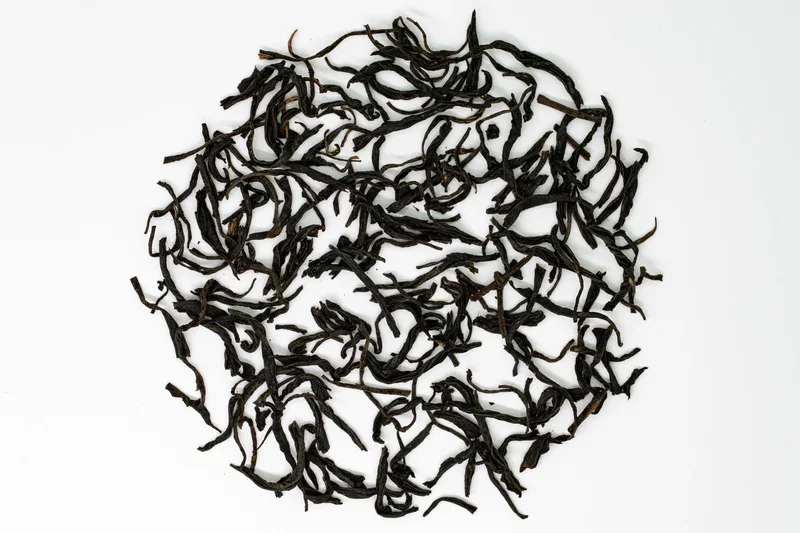
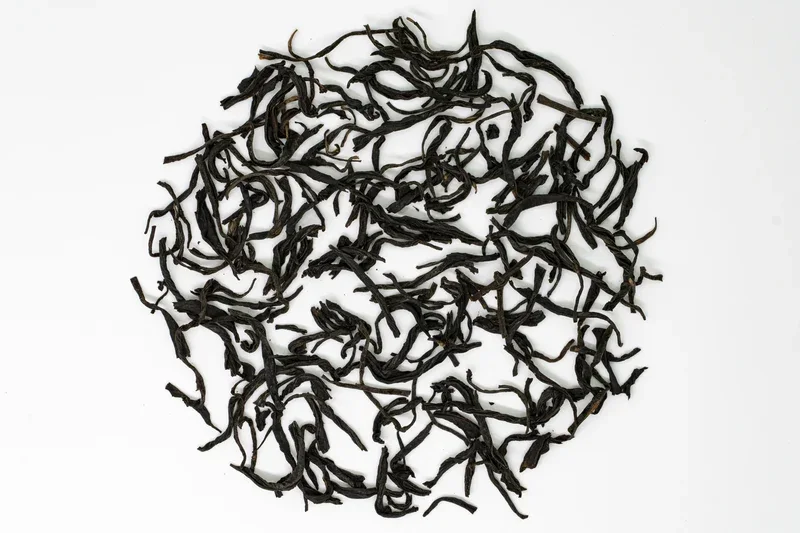
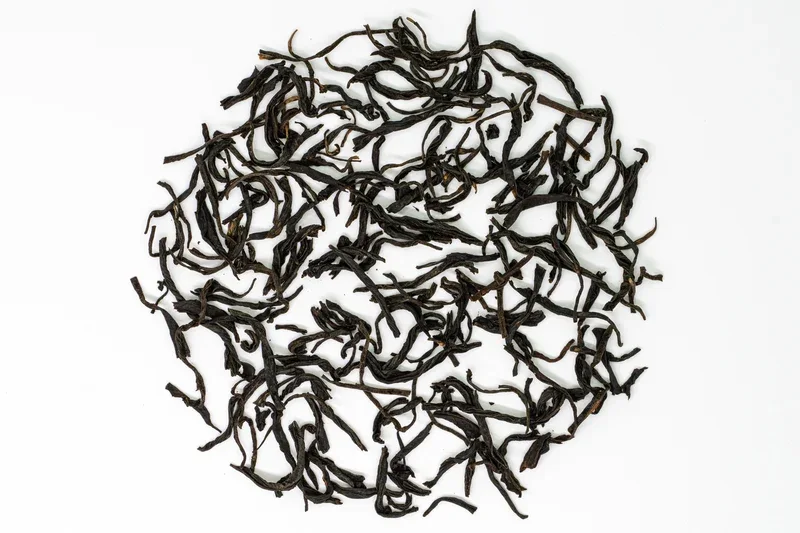
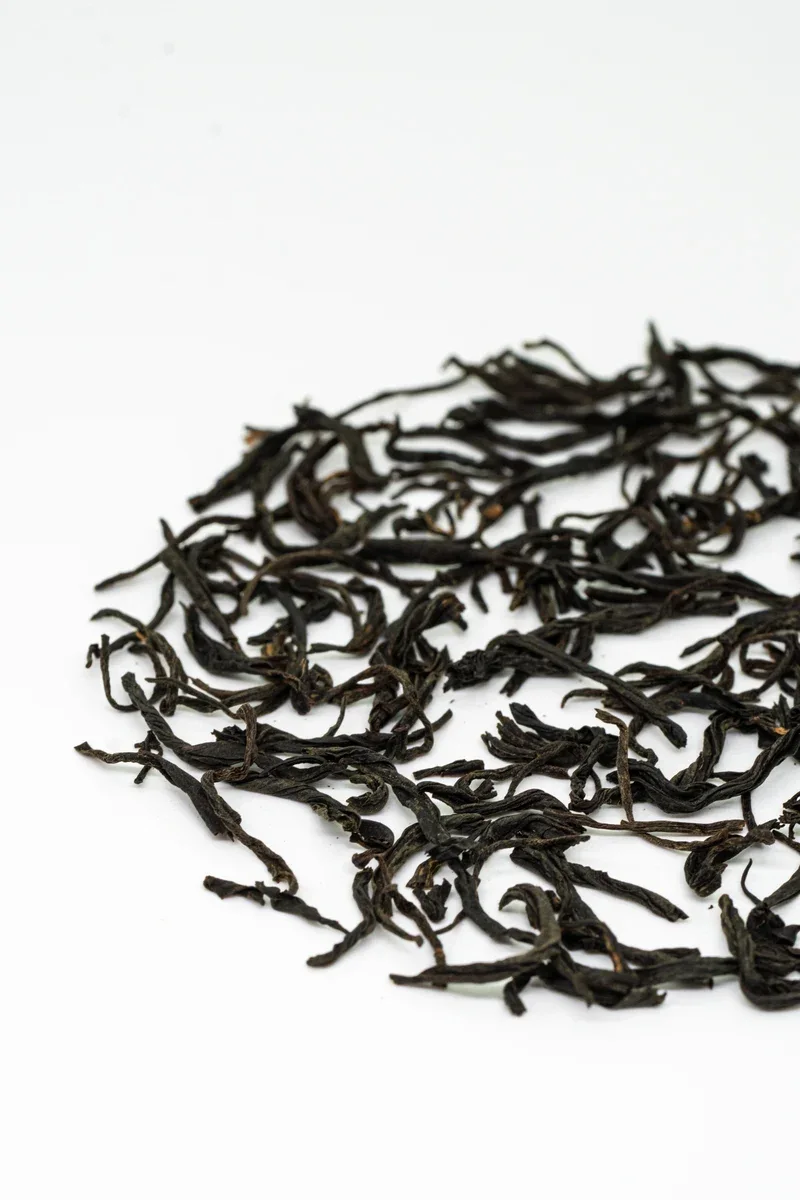
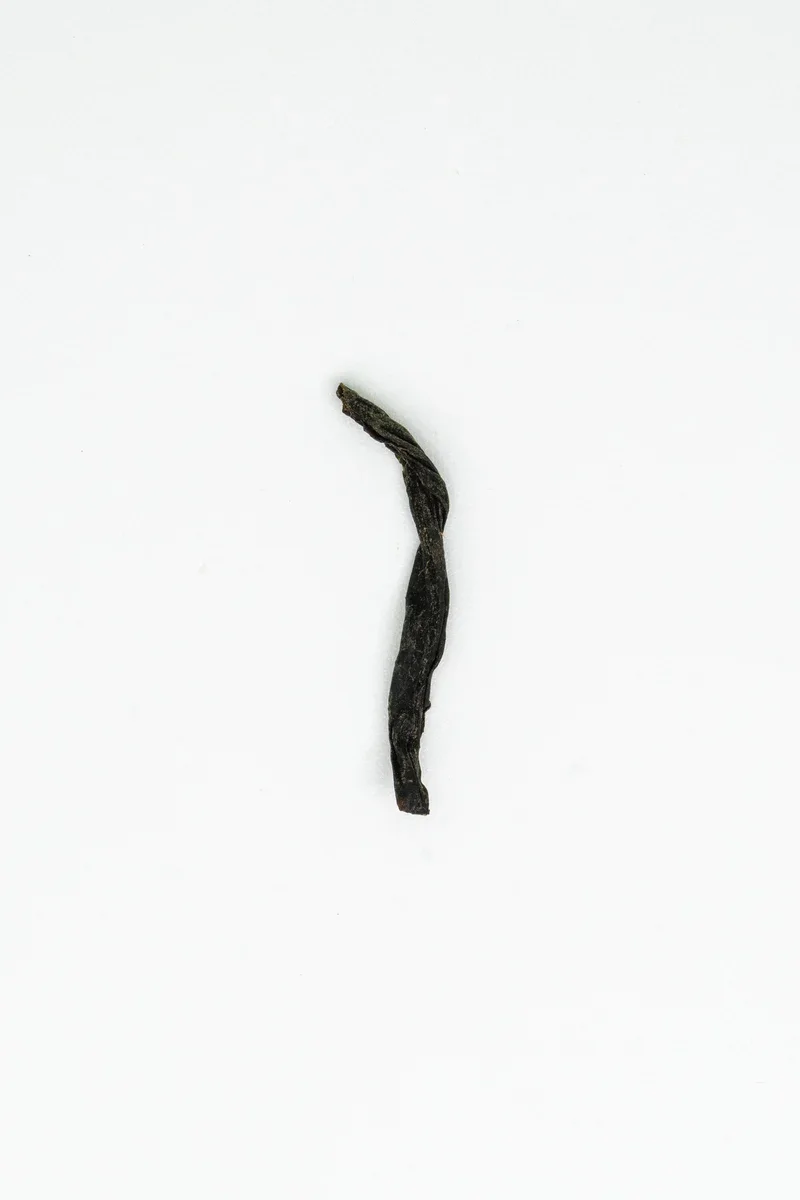
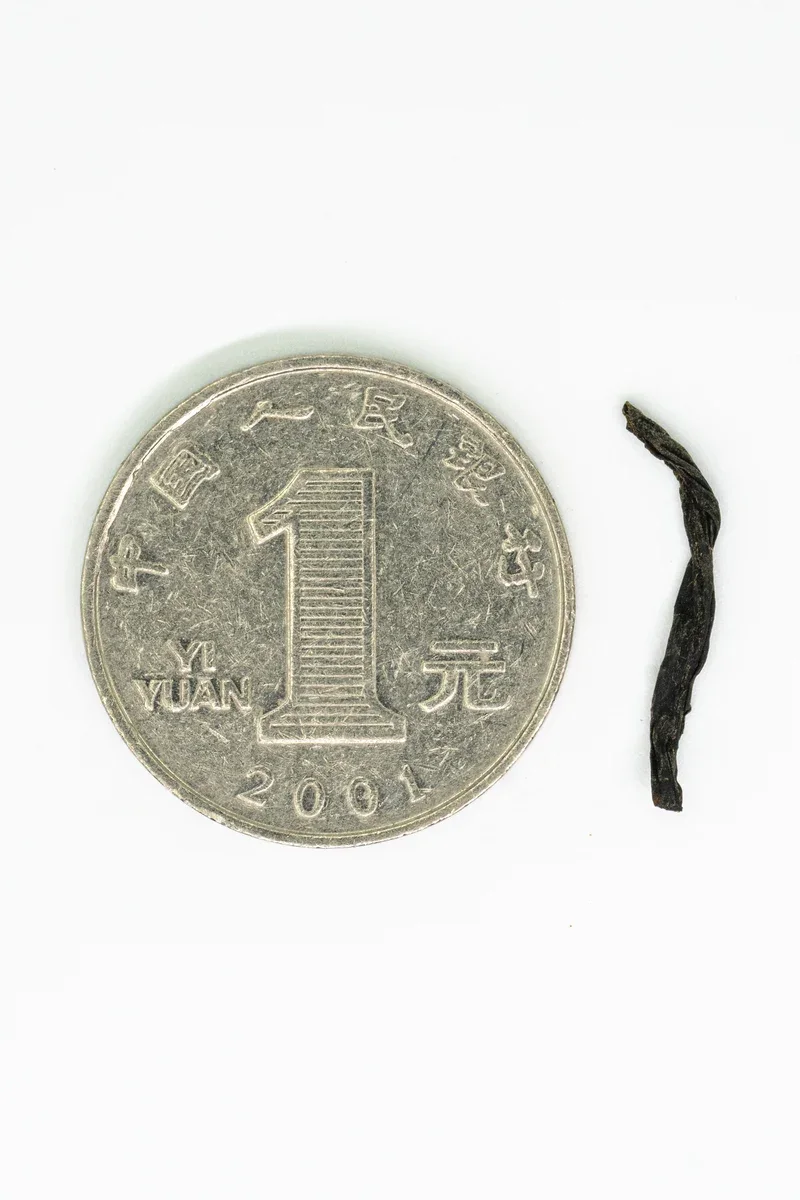
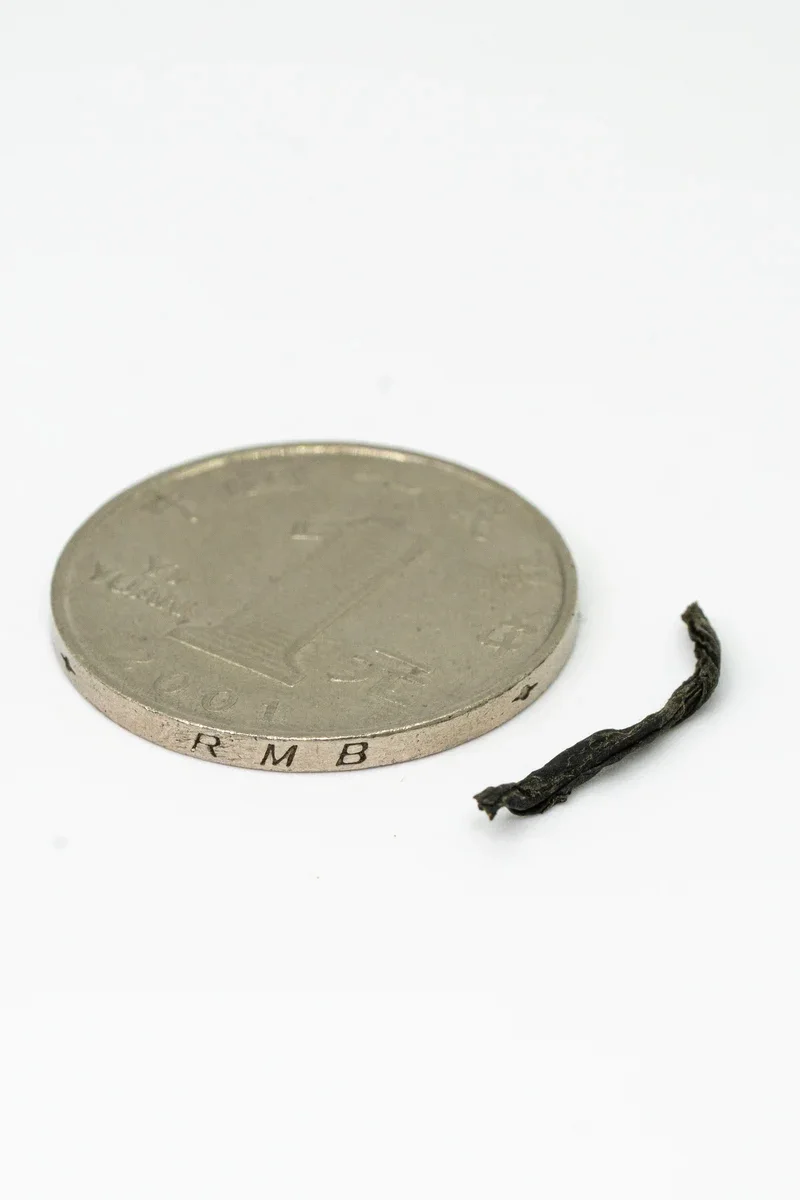
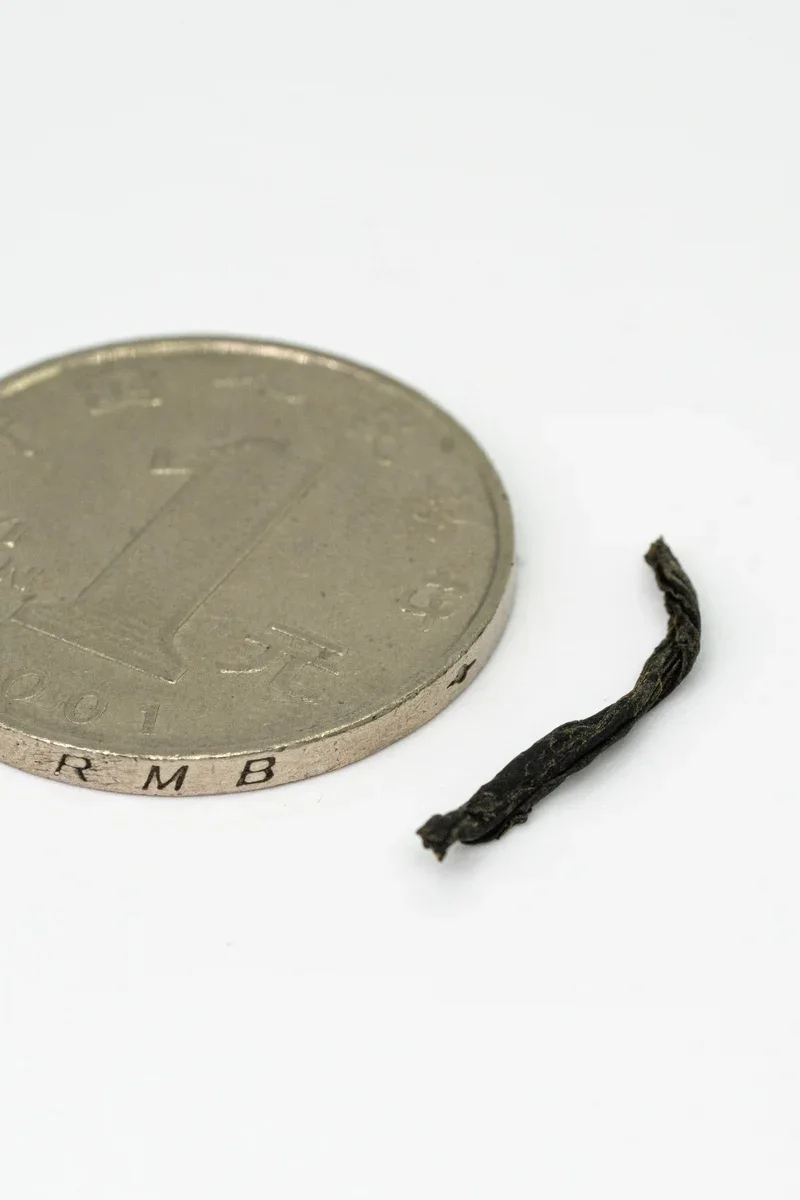
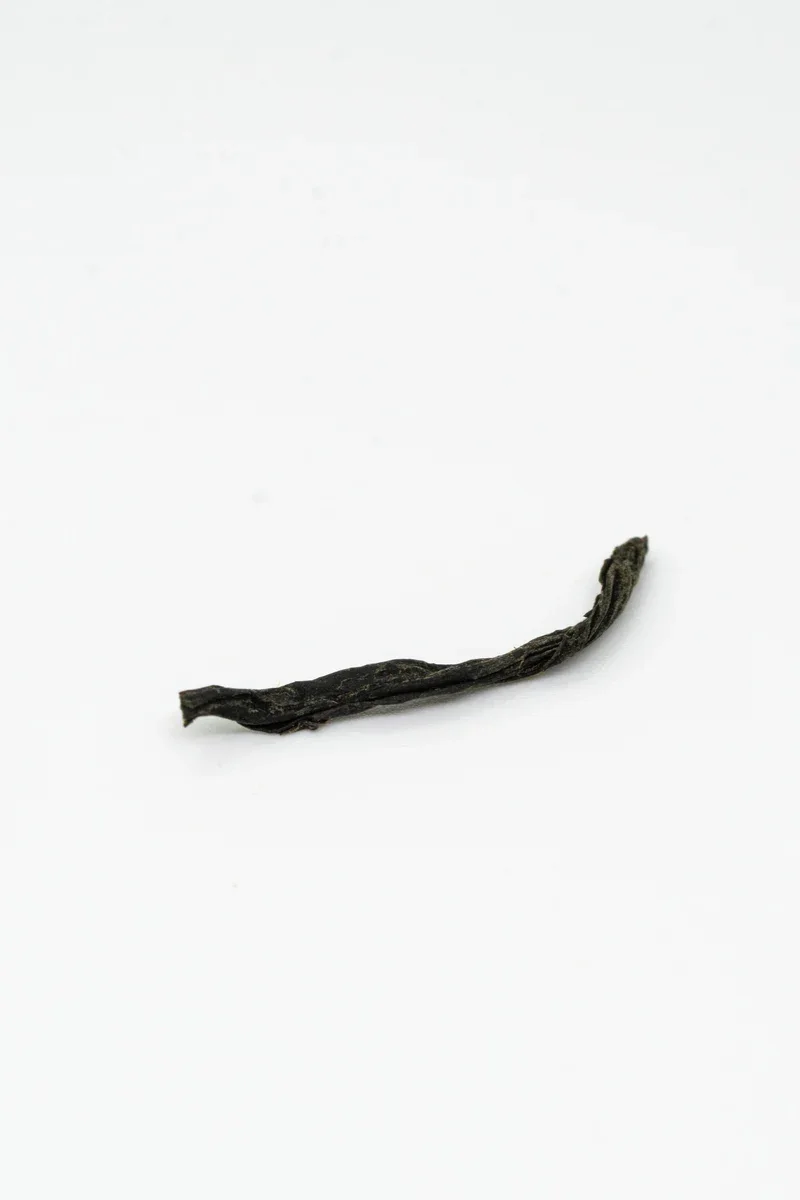
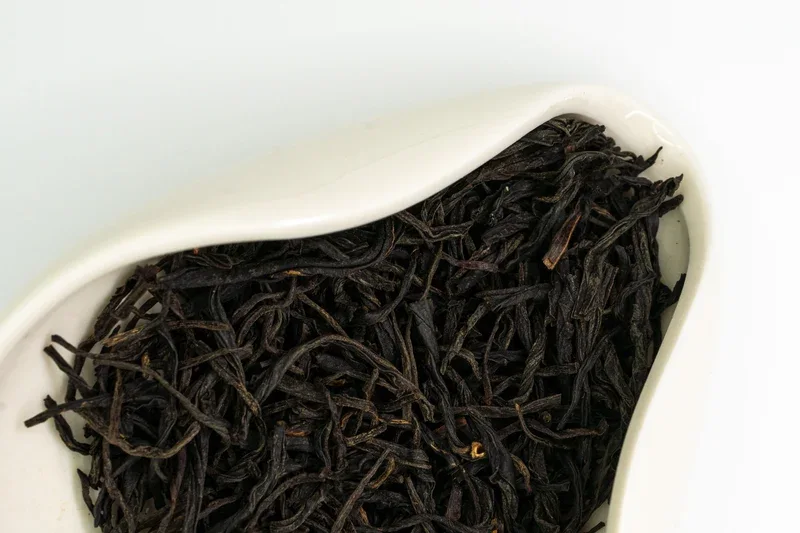
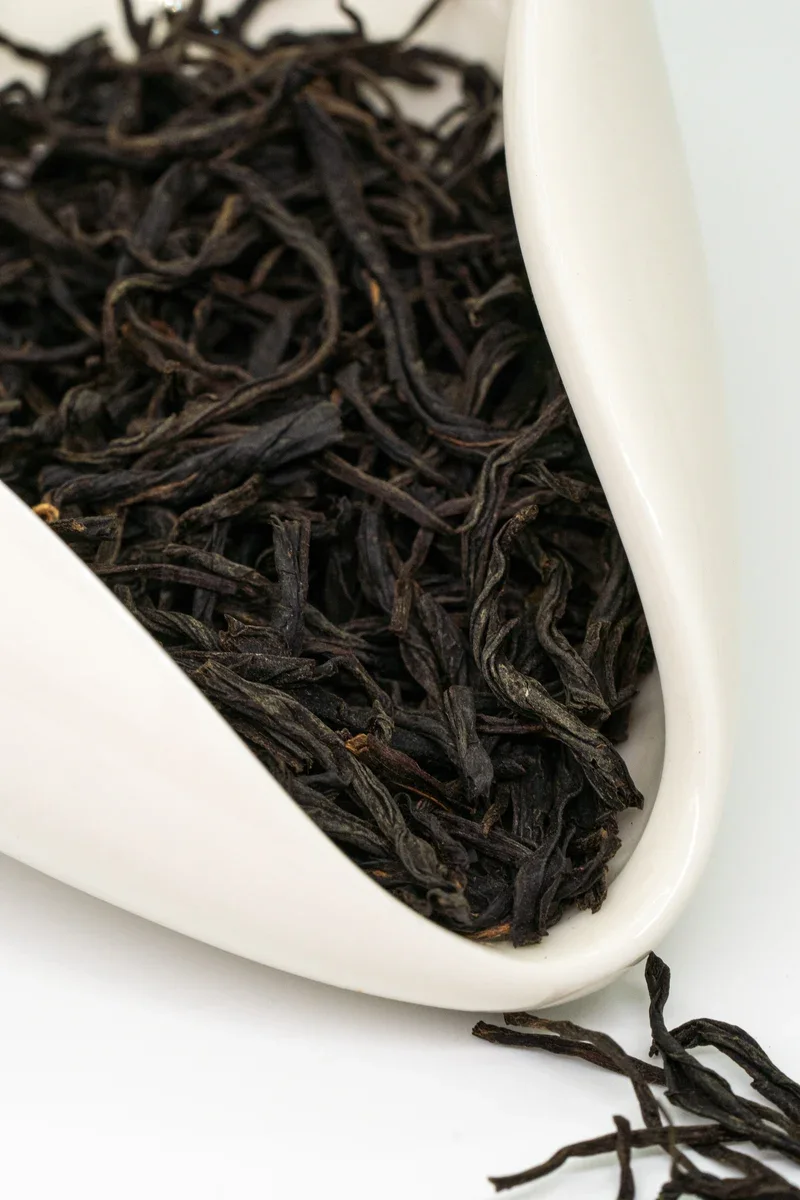
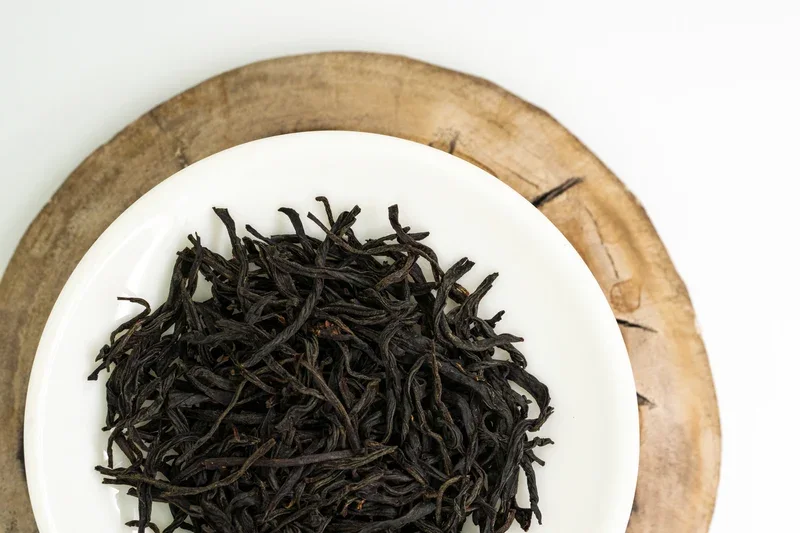
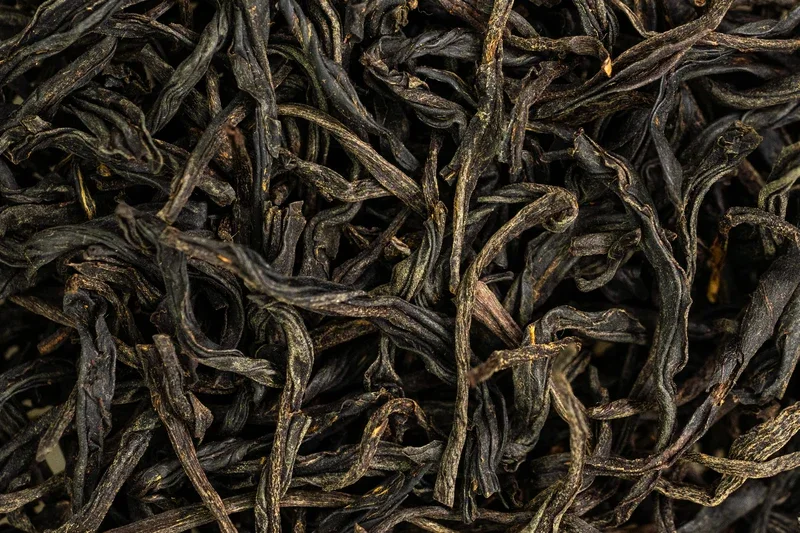
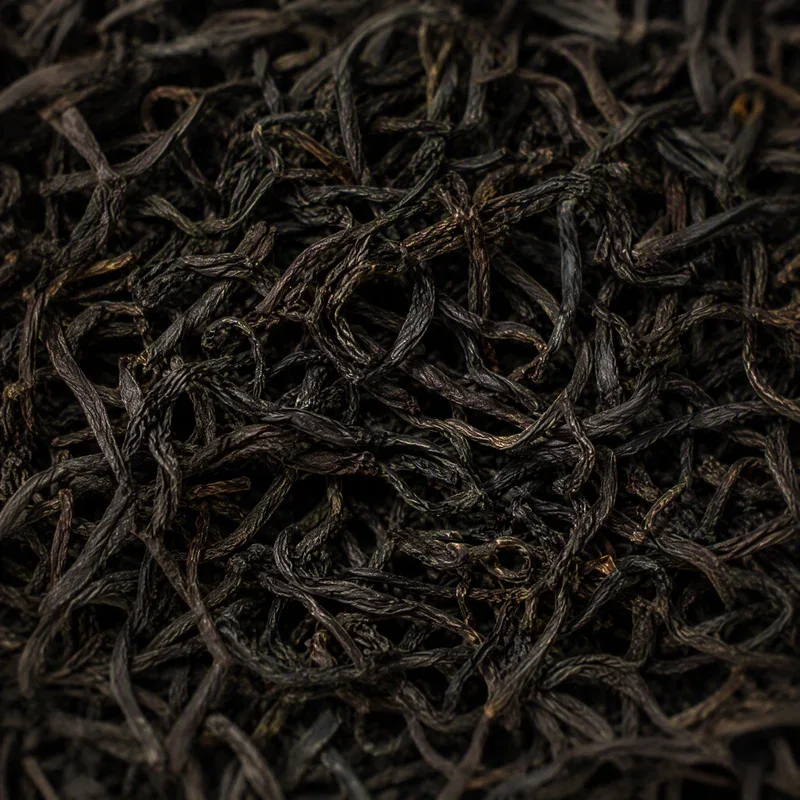
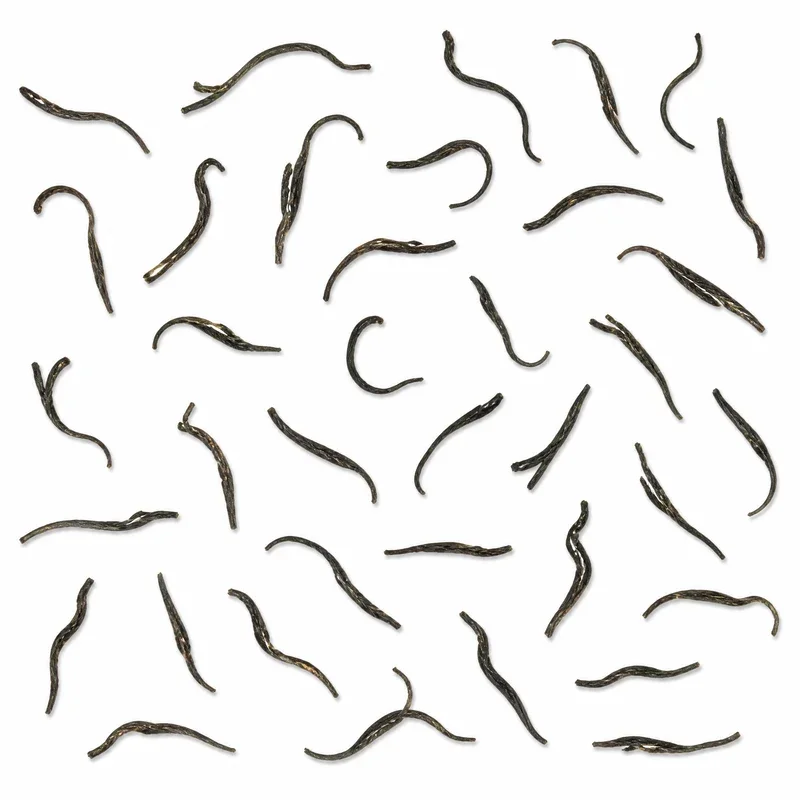
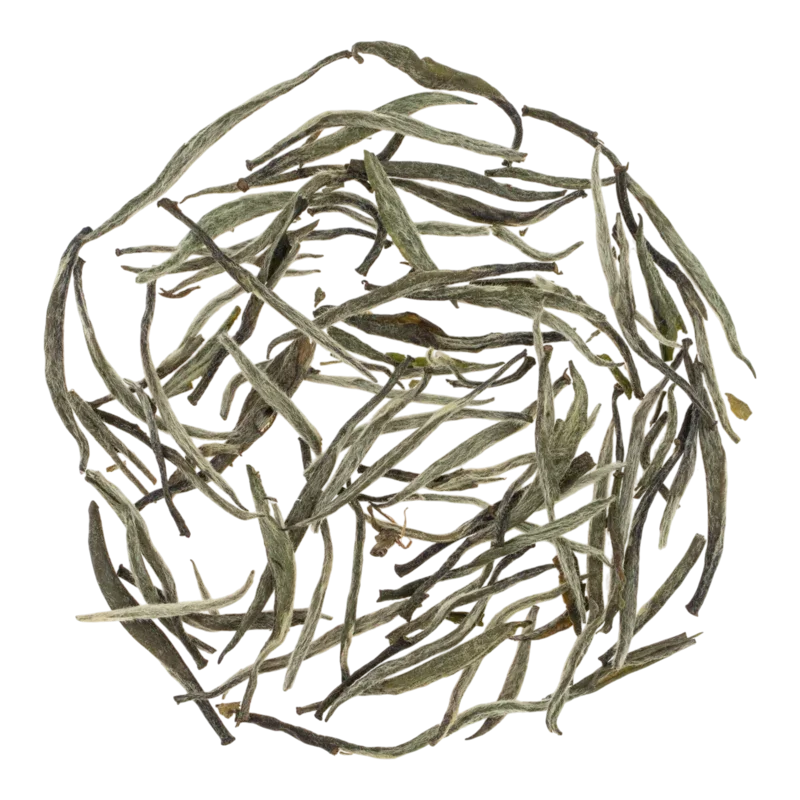
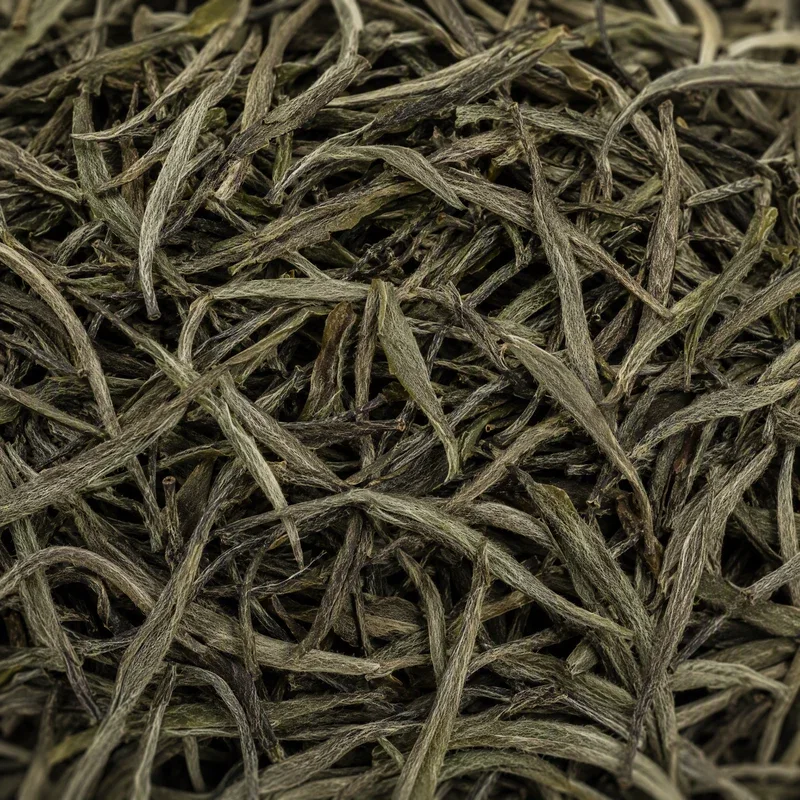
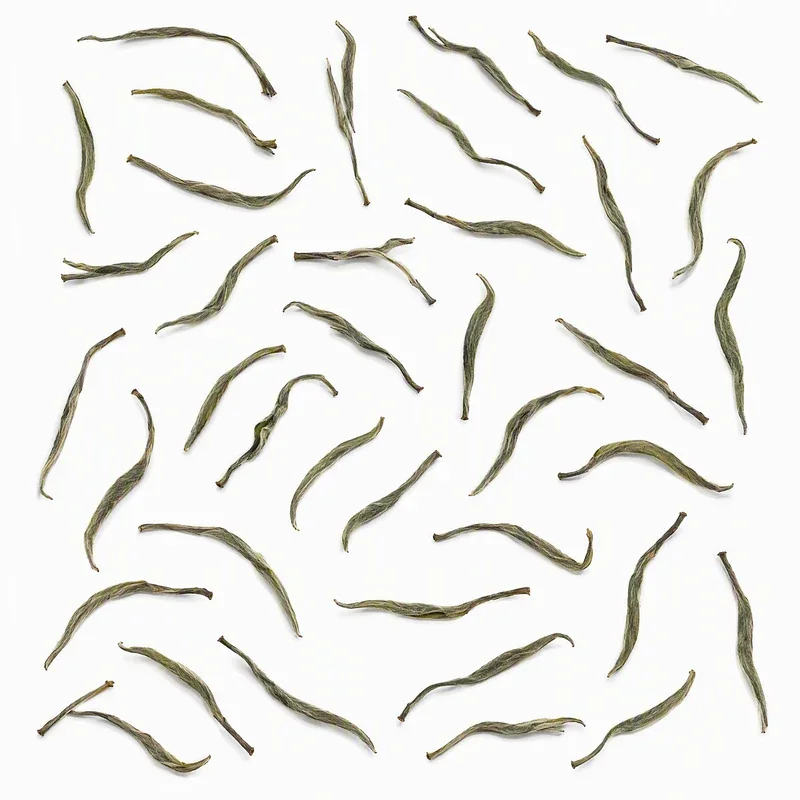
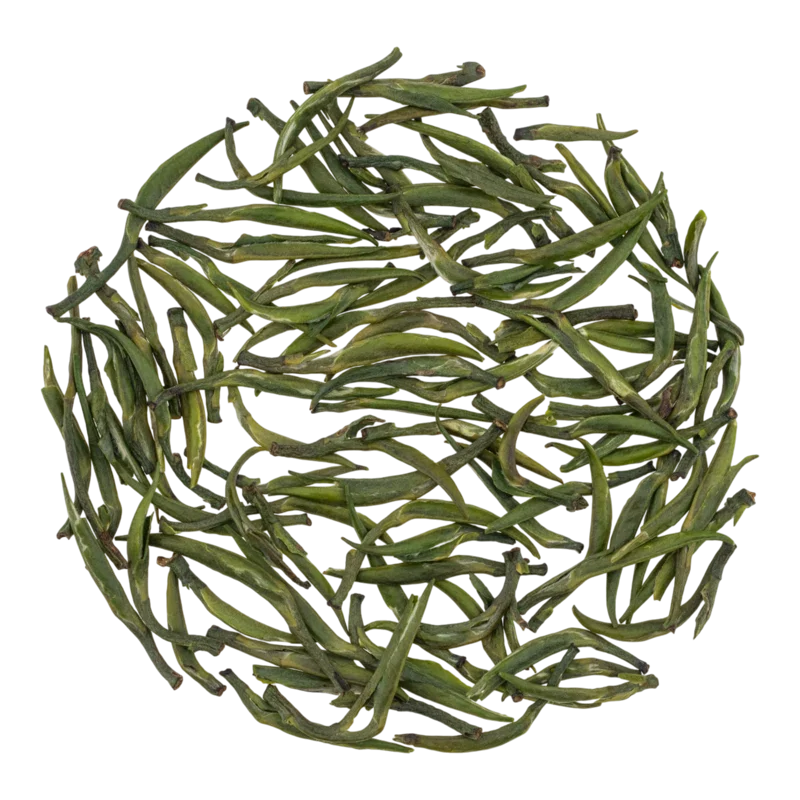
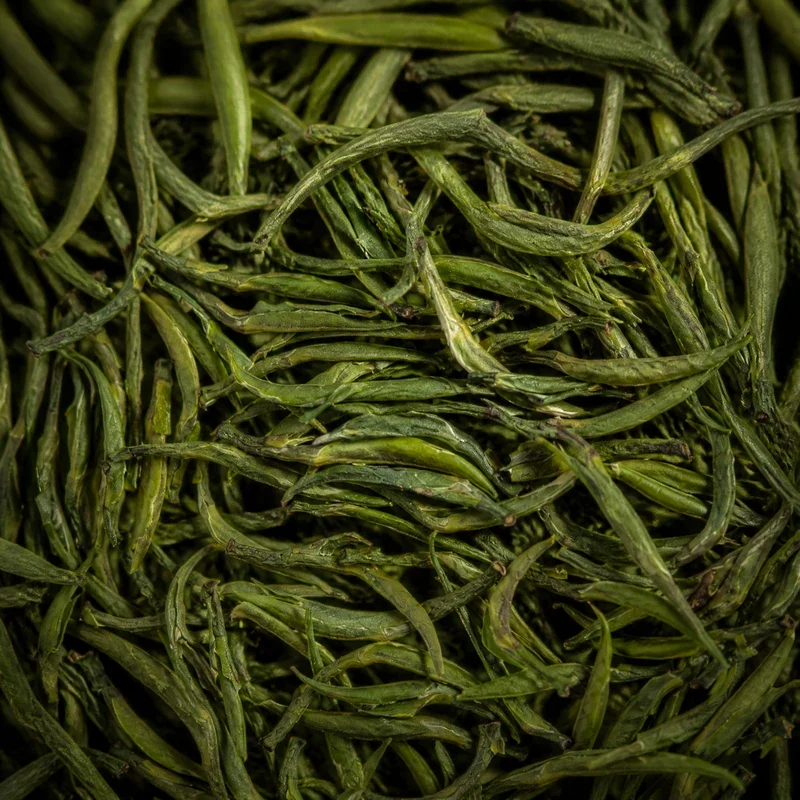
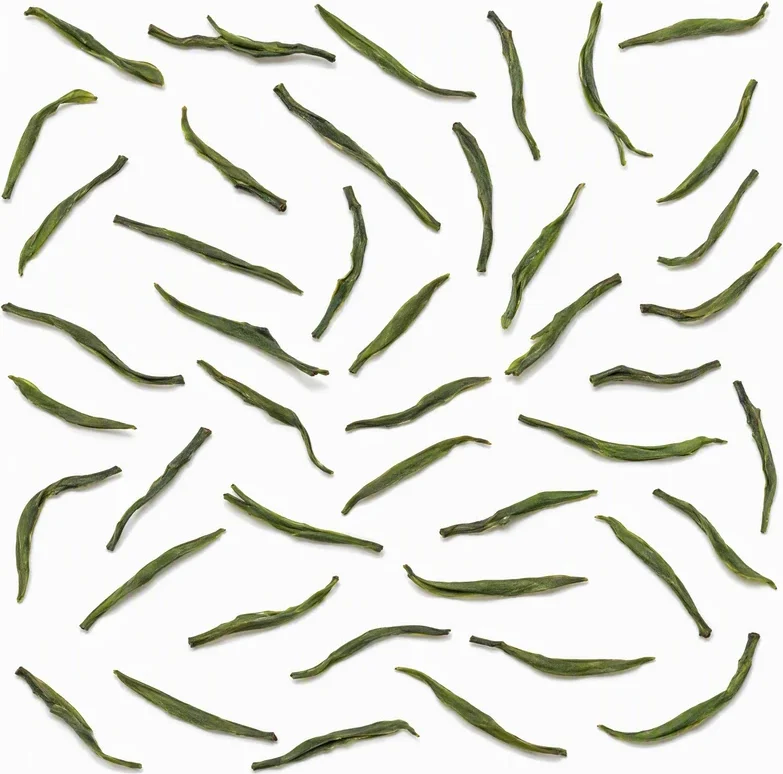
Dry Leaf Appearance: Straight, slightly flattened tea leaves resembling miniature swords (形如剑锋). Color — tender green with silvery sheen, barely visible down creates shimmer (银翠交辉). Grade "Lüjian" (绿剑) is distinguished by particularly straight, vertical form, resembling a green blade.
Dry Leaf Aroma: Chestnut (栗香) — main note; fresh clean "qingxiang" (清香) — in new tea; light "charcoal" shade (火香, huǒ xiāng) — in samples with deeper roasting.
Liquor Aroma: Clean and delicate (清纯), with persistent chestnut background. Unfolds gradually — from light grassy notes to warm sweetness.
Liquor Color: Clean, transparent, bright (清澈明亮) — from tender green to light yellow depending on grade.
Spent Leaves: Tender, uniform, bright green. Main feature — when brewed in a glass cup, buds vertically descend point-down, creating the effect of an "underwater forest" (海底森林, hǎidǐ sēnlín) — the visual "calling card" of this tea.
Taste: Fresh and mildly sweet (鲜醇甘美). Amino acid dominance ensures pronounced natural sweetness. Light astringency quickly dissolves (微涩速化), giving way to prolonged sweet aftertaste. Bitterness is minimal.
Alkaloids: Caffeine — approximately 3–4%, characteristic level for small-leaf Zhejiang varieties. Theobromine and theophylline — in trace amounts. Caffeine combined with L-theanine provides mild stimulating effect.
Amino Acids: Elevated content (approximately 3.5–5%) thanks to mountain misty microclimate and diffused lighting. L-theanine — dominant amino acid, forming freshness and natural sweetness.
High level (≥ 36%), ensuring density and richness of liquor.
Essential Oils: Methylpyrazines (chestnut notes, formed during pan-firing), linalool, geraniol (floral nuances).
Minerals: Potassium, calcium, magnesium, manganese, zinc, fluorine. Mineral profile is determined by acidic red-yellow soils of the Longmenshan mountain range.
Polyphenols: Approximately 16–20% — typical range for small-leaf green teas from high-mountain Zhejiang regions. Main components — catechins (EGCG, EC, ECg), providing mild astringency and antioxidant properties.
Vitamins: Vitamin C, B-group vitamins (B₁, B₂, niacin), folic acid — typical set for lightly oxidized green teas.
Catechins (primarily EGCG) effectively bind free radicals, contributing to slowing cellular aging processes.
L-theanine in synergy with caffeine provides a state of "calm alertness" — mental clarity without nervousness.
Catechins promote fat breakdown and cholesterol level normalization.
Traditionally recommended in hot season — promotes thermoregulation and thirst quenching.
Polyphenols stimulate digestive enzyme secretion, ease digestion of fatty foods.
Complex of vitamins C, B-group, and minerals (zinc, manganese) supports body's protective functions.
Polyphenols suppress pathogenic microflora growth, promoting oral health.
L-theanine stimulates brain alpha-wave generation, improving concentration and relaxed attention.
Tea Amount: 3 g per 150 ml (1:50 ratio).
Teaware: Glass cup (玻璃杯) — ideal choice for observing the "underwater forest" phenomenon; gaiwan (盖碗) with 100–120 ml capacity.
Water Temperature: 80–85 °C. Temperature above 85 °C disrupts freshness and provokes bitterness.
Container: Airtight vacuum foil bags or tin cans with tight lids. Light and oxygen are the main enemies.
Enemies: Light, moisture, high temperature, foreign odors, oxygen.
6–12 months. After opening package, recommended to consume within 7 days to preserve aroma. New tea is recommended to be kept in a dark cool place for several days to "shed fire" (褪火).
Temperature: Refrigerator at 0–5 °C — optimal for preserving freshness and color.
Price Category: Highest grade "Gongya" (贡芽) — from 2000 yuan / jin (≈ 500 g) — collector level. "Yuya" (玉芽) — 1000–1500 yuan / jin. "Yunya" (云芽) — 500–800 yuan / jin. "Xiuya" (秀芽) — 300–500 yuan / jin — everyday grade with good price/quality ratio. Price is determined by share of manual labor, raw material grade, and limited high-mountain plots.
No reviews yet. Tell us what you think of this tea.
Rate this tea and share your impressions. We review each submission before publishing it.