Brewing
Gongfu brewing
- Water temperature
- 75 °C
- Tea amount
- 5 g
- Water volume
- 100 ml
- First steep
- 10 s
- Time added per infusion
- 5 s
- Infusions
- 3

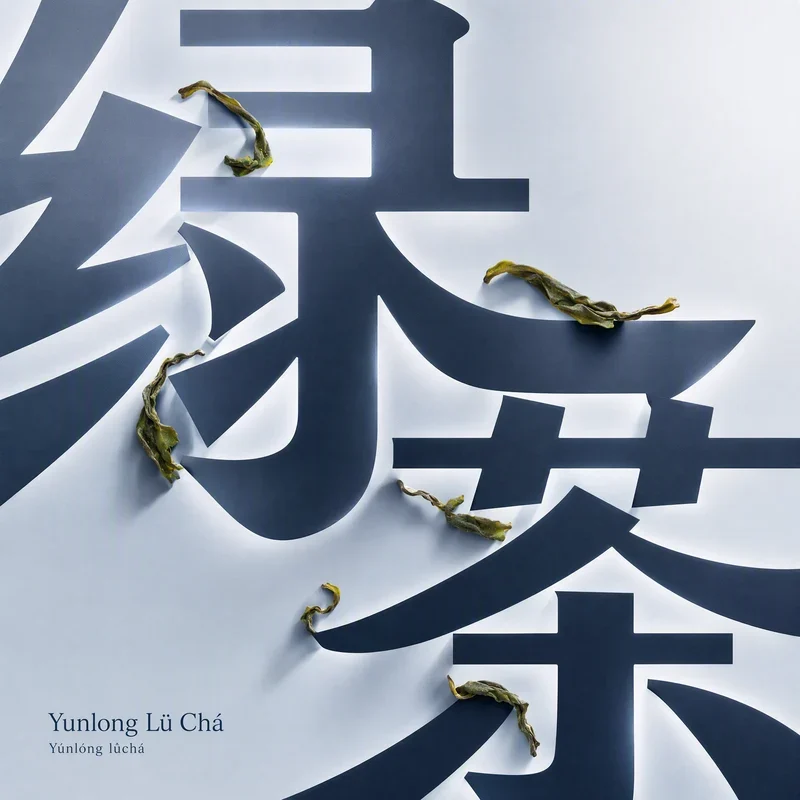
Yúnlóng lǜchá
Choose a brewing method. Start with the recommended quantities and time, then adjust to taste.
Brewing
Brewing
Taste
Tea encyclopedia
Category: Chinese regional green teas; Yunnan large-leaf green tea (云南大叶种绿茶, Yúnnán dàyèzhǒng lǜchá). Product with protected geographical indication of the PRC.
Category: Chinese regional green teas; Yunnan large-leaf green tea (云南大叶种绿茶, Yúnnán dàyèzhǒng lǜchá). Product with protected geographical indication of the PRC.
Coordinates: 98°52′–99°46′ East longitude, 25°28′–26°23′ North latitude.
Origin: China, Yúnnán Province (云南省, Yúnnán shěng), Dàlǐ Bái Autonomous Prefecture (大理白族自治州, Dàlǐ Báizú Zìzhìzhōu), Yúnlóng County (云龙县, Yúnlóng xiàn). Production encompasses 11 townships and villages: Nuòdèng (诺邓镇, Nuòdèng zhèn), Gōngguǒqiáo (功果桥镇, Gōngguǒqiáo zhèn), Cáojiàn (漕涧镇, Cáojiàn zhèn), Báishí (白石镇, Báishí zhèn), Bǎofēng (宝丰乡, Bǎofēng xiāng), Miáowěi (苗尾乡, Miáowěi xiāng), Jiǎncáo (检槽乡, Jiǎncáo xiāng), Chángxīn (长新乡, Chángxīn xiāng), Guānpíng (关坪乡, Guānpíng xiāng), Tuánjié (团结乡, Tuánjié xiāng), and Mínjiàn (民建乡, Mínjiàn xiāng).
Type: Green tea (绿茶, lǜchá) — unfermented; oxidation level minimal (less than 5%). Technology — pan-firing (炒青, chǎoqīng).
Cultivar: The foundation consists of Yunnan large-leaf populations (云南大叶种群体, Yúnnán dàyèzhǒng qúntǐ) — of seed (有性系, yǒuxìng xì) origin. Key clonal varieties: Yúnkàng series (云抗系列, Yúnkàng xìliè) and Fóxiāng series (佛香系列, Fóxiāng xìliè) — vegetatively propagated elite cultivars. Also represented are local old trees (古茶树, gǔcháshù), especially in the core of the Dashantou plantation. All cultivars belong to Camellia sinensis var. assamica — the large-leaf variety typical of Yunnan.
Picking: Spring harvest (春茶, chūnchá) — primary and most valuable; begins immediately after Qīngmíng (清明, Qīngmíng, early April). Summer and autumn harvests are also produced.
Pluck Standard: For spring tea: bud with two to three leaves (一芽二叶至一芽三叶, yī yá èr yè zhì yī yá sān yè). Requirement: even, uniform shoots, proportional ratio of bud to leaves. "Fish leaves" (鱼叶, yúyè), leaves picked in rain, "paired" leaves (对夹叶, duìjiā yè), diseased, frost-damaged, or "purple" shoots are not permitted.
Raw Material: Fresh leaves are placed in bamboo baskets (竹篓, zhúlǒu) — use of polyethylene bags is excluded to avoid steaming. Tea polyphenol content ≥ 25.0%, amino acids ≥ 4.0%.
Altitude: 1800–2600 m above sea level — one of the highest tea regions in China. The core of the Dashantou plantation in Baofeng — 2400–2500 m.
Soil: Yellow-brown mountain soils (黄棕壤, huáng zōng rǎng) with acidic reaction (pH 4.5–6.0), deep fertile layer, excellent drainage, and high organic matter content (≥ 6.01%). Soils are enriched with microelements — selenium (Se) and zinc (Zn). Forest cover in the production core zone exceeds 70%. The core is a water conservation area; use of chemical fertilizers and pesticides is prohibited.
Yúnlóng County is located in the longitudinal valley of the Láncāng River (澜沧江纵谷区, Láncāngjiāng zònggǔ qū) — the upper reaches of the Mekong — in western Yunnan. Deep gorges, steep slopes, and seven water systems (including the Lancang River and Bi River, 沘江) form a unique microclimate. Average annual temperature 16.2°C, relative humidity ≥ 75%, number of foggy days over 200 per year. Significant diurnal temperature variation promotes accumulation of amino acids and aromatic compounds.
Warm and humid air masses rising from the Lancang River gorge compensate for altitude-related temperature decrease, while abundant diffused light (漫射光, mànshè guāng) stimulates amino acid biosynthesis. As a result, even at 2500 m altitude, amino acid content in spring leaves reaches ≥ 4.0%.
Hand picking, standard — bud with 2–3 leaves. Bamboo baskets.
Fresh leaves are spread on bamboo screens for 4–6 hours to evaporate excess moisture and begin initial aromatization.
High-temperature pan-firing using the "tossing" method (高温抛炒, gāowēn pāochǎo). Inactivates enzymes, preserves green color, and "seals in" chestnut aroma.
Mechanical or manual; forms the tight twist characteristic of the style. Breaks down cellular structure for even extraction.
Combined "pan-firing + drying" method at temperature ≤ 60°C. Fixes shape, establishes aromatic profile — primarily the chestnut note.
Separation into fractions by size and shape, removal of defective leaves and stems.
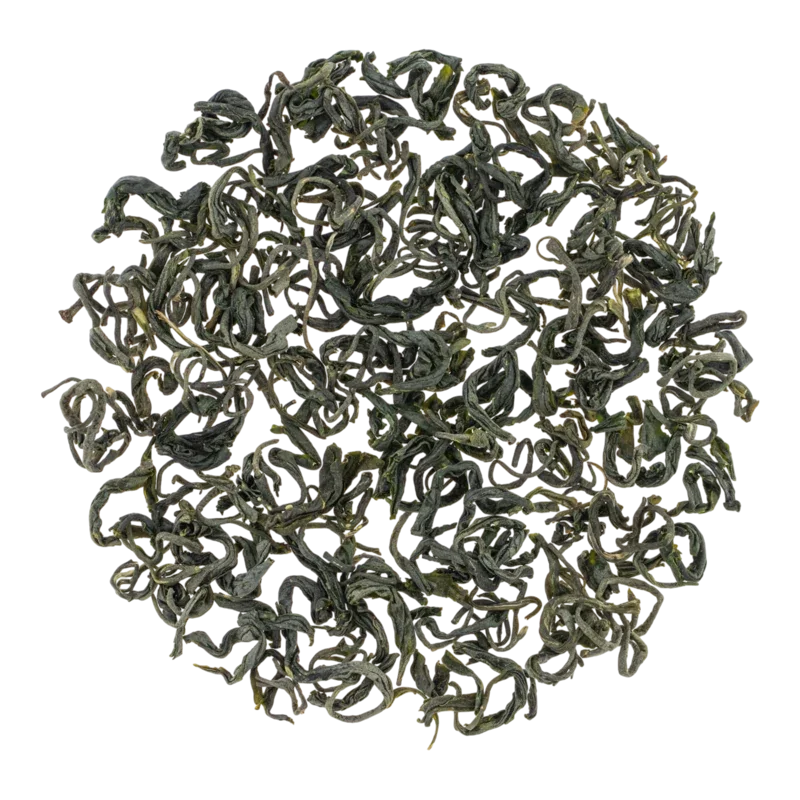
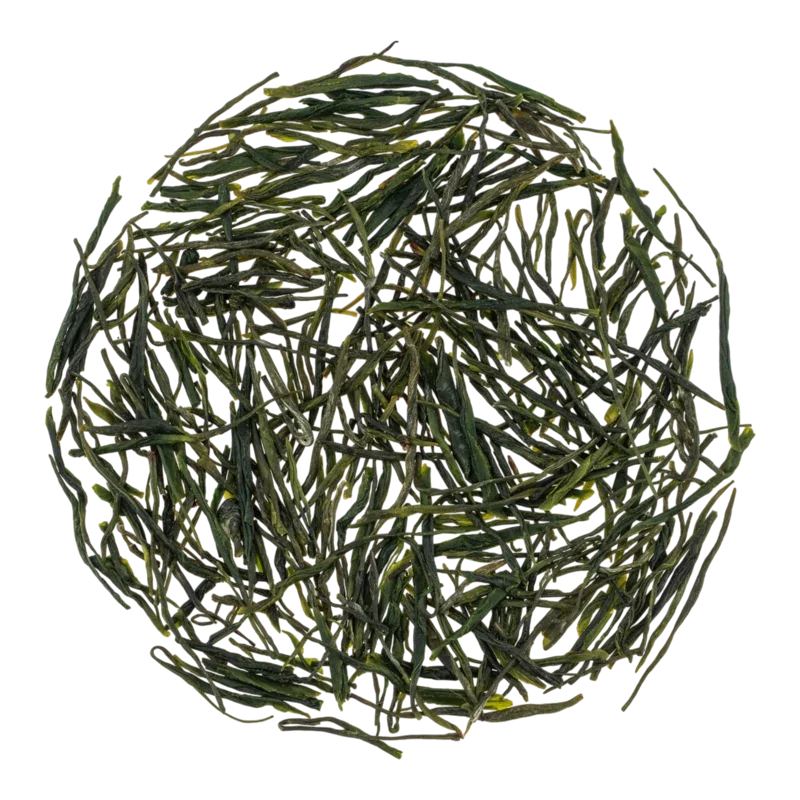
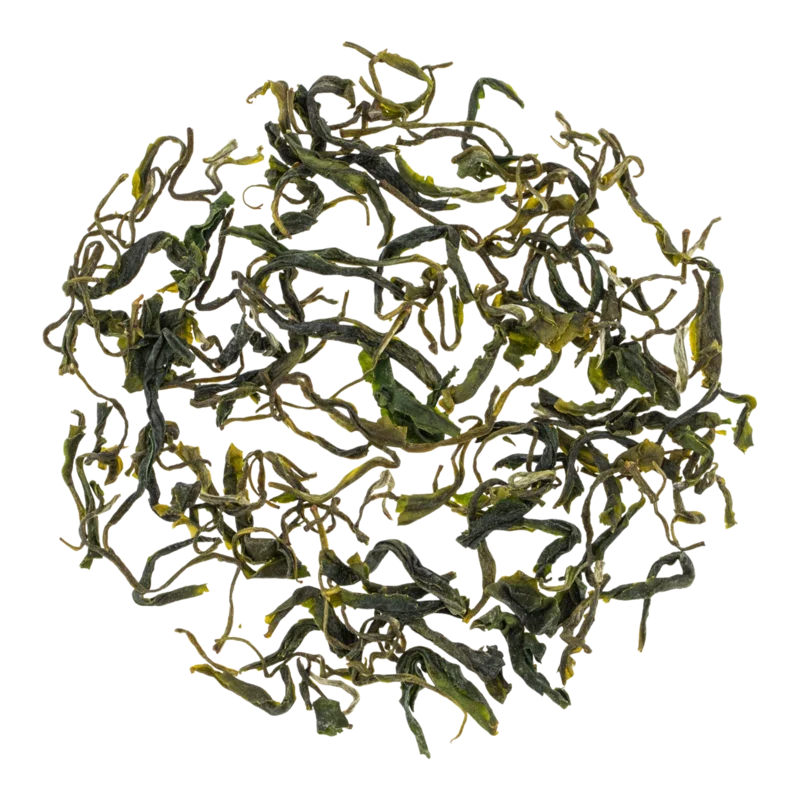
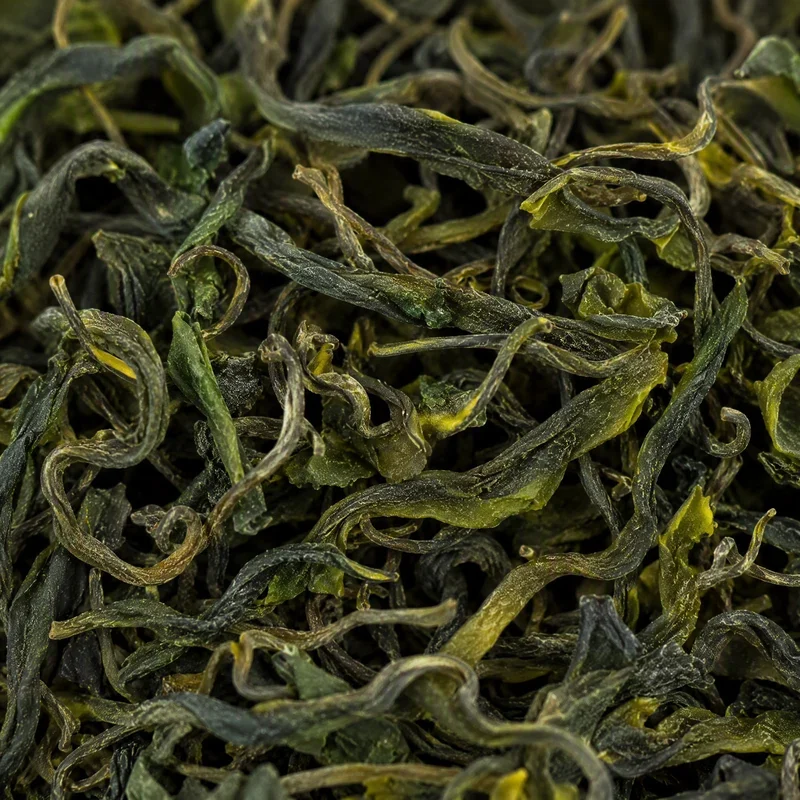
Dry Leaf Appearance: Two main subtypes. Spiral-shaped (螺形, luóxíng): tight, weighty, twisted in spirals, glossy, with green tint — characteristic of special grade. Straight-shaped (条形, tiáoxíng): robust, even, grayish-green with noticeable silvery "bloom" (灰绿上霜, huīlǜ shàngshuāng) — characteristic of first and second grades.
Dry Leaf Aroma: Pronounced, clean, with chestnut base. In higher grades — with floral-fruity overtones.
Liquor Aroma: Persistent roasted chestnut aroma (熟板栗香, shú bǎnlì xiāng) — the main marker of the style. High, lasting, with light floral and fruity tones in the top notes (especially in tea from the Dashantou core).
Liquor Color: Pale green, transparent, bright (汤色淡绿清澈明亮, tāngsè dànlǜ qīngchè míngliàng).
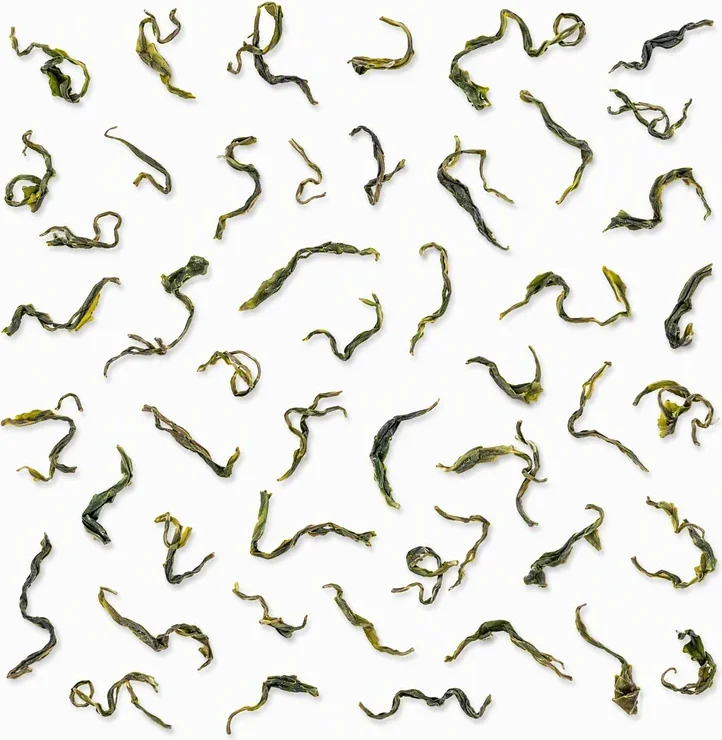
Spent Leaves: Intact, even leaves, tender green, lively and elastic (叶底完整匀整、嫩绿鲜活, yèdǐ wánzhěng yúnzhěng, nènlǜ xiānhuó).
Taste: Rich, mellow (浓醇, nóngchún), simultaneously fresh and brisk (鲜爽, xiānshuǎng), with pronounced and lasting returning sweetness (回甘, huígān). Bitterness and astringency are balanced and quickly transform into sweetness. The sensation of dense "body" is due to high extractable matter content (≥ 44.0%) — a characteristic feature of Yunnan large-leaf teas.
Alkaloids: Caffeine (咖啡碱, kāfēijiǎn) ≥ 2.0%. Theobromine and theophylline — in trace amounts.
Amino Acids: ≥ 4.0% (total sum), L-theanine (茶氨酸, cháānsuān) ≥ 1.9%. High amino acid level with simultaneously high polyphenols — a rare combination forming the characteristic balance of "richness + freshness." Due to extreme altitude and abundant diffused light.
≥ 44.0% — exceptionally high indicator explaining the dense body of the liquor and excellent resistance to multiple brewings.
Minerals: Potassium, manganese, selenium (Se), zinc (Zn) — due to geochemistry of mountain soils. Fluorine — promotes dental health.
Polyphenols: ≥ 25.0% — significantly higher than most small-leaf green teas. Explained by belonging to the large-leaf variety var. assamica, genetically predisposed to polyphenol accumulation. Provides powerful antioxidant action.
Vitamins: Vitamin C is preserved in significant quantity thanks to gentle drying at ≤ 60°C. Also present are vitamins B₁, B₂, E, β-carotene.
Polyphenol content ≥ 25% provides one of the highest among green teas effectiveness in neutralizing free radicals.
Caffeine (≥ 2.0%) increases concentration and mental clarity; in combination with L-theanine the effect is gentle and prolonged, without "caffeine crash."
Polyphenols stimulate GI tract peristalsis, reduce bloating, aid in fatty food digestion.
Catechins accelerate fat breakdown, may contribute to lipid profile normalization.
L-theanine (≥ 1.9%) promotes relaxation without drowsiness, improves memory and attention.
Natural enrichment with selenium and zinc supports immune system and antioxidant protection.
Fluorine suppresses growth of cariogenic bacteria.
Catechins and theaflavins promote vascular wall elasticity and may contribute to blood pressure normalization with regular consumption.
Tea Amount: 3 g per 150 ml (1:50) for glass method; 5–7 g per gaiwan 100–120 ml for gongfu.
Teaware: Glass tumbler (for visual observation of leaf unfurling), white porcelain gaiwan (盖碗, gàiwǎn), small Yixing teapot.
Water Temperature: 80–85°C. Do not use boiling water above 85°C — destroys L-theanine, loses freshness, develops bitterness.
Shelf Life: Maximum expressiveness — first 6–12 months after production. Fresh tea is recommended to be aged 15 days in a dark place to remove "fire energy" (褪火气, tuì huǒqì). After opening package — consume within 7 days.
Airtight containers (vacuum bags, foil bags, tin cans). Away from light, moisture, heat, and foreign odors.
Temperature: Optimally — refrigerator, 0–5°C.
Green tea from Fujian; small-leaf (var. sinensis), altitude 500+ m. Lighter body, delicate chestnut-floral aroma. Yunlong Lü Cha — significantly denser and more powerful thanks to large-leaf raw material and extreme altitude.
Steamed (蒸青) green tea from Hubei; pronounced marine-grassy profile, high umami. Yunlong Lü Cha — pan-fired, with chestnut dominance and more "dry" aroma character.
General category of Yunnan green teas. Yunlong Lü Cha stands out with extreme plantation altitude and unique microclimate of the Lancang River gorge, forming a balance of polyphenols and amino acids unavailable to lowland Yunnan green teas.
"Cloudy" green tea from Jiangxi; altitude 800–1200 m, small-leaf, light and floral. Yunlong Lü Cha — 1000 m higher, large-leaf, denser and more astringent, with pronounced returning sweetness (回甘, huígān).
Similar altitude range, but different cultivars (Qing Xin, TTES №12/13), different technology. Yunlong Lü Cha — more powerful and "drier" due to the large-leaf nature of Yunnan bushes.
No reviews yet. Tell us what you think of this tea.
Rate this tea and share your impressions. We review each submission before publishing it.