Brewing
Gongfu brewing
- Water temperature
- 93 °C
- Tea amount
- 5 g
- Water volume
- 100 ml
- First steep
- 10 s
- Time added per infusion
- 5 s
- Infusions
- 4

wū niú zǎo hóng chá
Choose a brewing method. Start with the recommended quantities and time, then adjust to taste.
Brewing
Brewing
Taste
Tea encyclopedia
Category: High-quality red teas of Zhejiang Province. Belongs to gōngfū red teas (工夫红茶, gōngfū hóngchá).
Category: High-quality red teas of Zhejiang Province. Belongs to gōngfū red teas (工夫红茶, gōngfū hóngchá).
Coordinates: Approximately 28°09' North latitude, 120°41' East longitude (Yongjiia County, Wu Niu area).
Origin: China, Zhèjiāng Province (浙江省, Zhèjiāng Shěng), Wēnzhōu City (温州市, Wēnzhōu Shì), Yongjiia County (永嘉县, Yǒngjiā Xiàn). The historical homeland of the cultivar is Wu Niu Township (now Wu Niu Street) (乌牛街道, Wū Niú Jiēdào, formerly — 乌牛镇, Wū Niú Zhèn) and adjacent territories of Luōdōng (罗东乡, Luōdōng Xiāng). Currently, production has spread throughout Yongjiia County and several adjacent districts of Wenzhou City. It should be noted that the Wu Niu Zao cultivar is actively cultivated far beyond Yongjiia — the total planting area across China exceeds 1,000,000 mu (approximately 67,000 hectares), however authentic "Yongjiia" tea with original terroir is produced precisely in Yongjiia County.
Type: Red tea (black tea) (红茶, hóngchá) — fully oxidized. By European classification — black tea. Oxidation level — 90–100%.
Wu Niu Zao is one of the earliest-maturing cultivars in the country. When Longjing plantations in Hangzhou still sleep under winter cover, active harvesting is already underway in Yongjiia. Local saying states: "Longjing is good, but not as early as Wu Niu" (龙井虽好,不如乌牛早).
Wu Niu Zao has an unusual biological feature — the bush flowers abundantly but does not form viable seeds. Reproduction is possible only vegetatively (by cuttings), making it dependent on human intervention.
Thanks to its early maturity and excellent agronomic qualities, Wu Niu Zao has spread far beyond Yongjiia — its total planting area across China exceeds 1,000,000 mu (about 67,000 hectares). However, tea produced outside Yongjiia cannot be called "永嘉乌牛早" and generally is inferior to the original in quality.
Tea leaves from the first harvest of 2025 were sold at 330 yuan per jin — the highest indicator in the entire observation history since 1985, reflecting growing demand and premium status of early tea.
Yongjiia County is located on the banks of the famous Nanxi River, sung by poet Xiè Língyún (谢灵运, 385–433) — the "father" of landscape poetry in China. The name "Yongjiia" (永嘉) itself means "eternally beautiful" — a poetic description of local waters.
Cultural Significance: Wu Niu Zao is a local treasure of Yongjiia County and the entire Wenzhou district. It is the "golden leaf" (金叶, jīnyè) of the region, the foundation of the tea economy: according to 2024–2025 data, the planting area in Yongjiia comprises 4.6–4.8 thousand mu (about 3,100 hectares), annual production volume exceeds 750 tons, with more than 50 enterprises and 500 tea-growing families engaged in the industry. The emergence of the red version became an important step in product diversification and production season extension.
History: The Wu Niu Zao cultivar has more than 300 years of history. According to local chronicles and Baidu Baike data, about 200 years ago, a certain Jīn Zéhóng (金则洪, Jīn Zéhóng) from Lóngtóu Village (龙头村, Lóngtóu Cūn) in Ōuběi Town (瓯北镇, Ōuběi Zhèn), returning from a New Year visit to relatives, noticed on the Changjialing mountain ridge (长夹岭, Chángjiā Lǐng), between Banling (半岭) and Lingxia (岭下) villages, a wild tea bush of extraordinary vigor that had already sprouted long before other bushes. Jin dug it up with a clump of earth and transplanted it to his place. Subsequently, this bush gave rise to the entire Wu Niu Zao population. Since the tea could be harvested by "Chunfen" (春分, spring equinox) — 15 days earlier than other varieties — it was named "Wu Niu Zao" after the place of discovery. For a long time, the variety was known as "Lingxia Cha" (岭下茶, "tea from below the mountain").
Main distinguishing feature. Buds begin to open in late February — early March, when the average daily temperature stably exceeds 8°C. This is 15–30 days earlier than most other cultivars, including Longjing No. 43 and Anji Bai Cha. Vegetative activity begins when winter cover has not yet been removed from West Lake Longjing plantations.
Medium-sized, oval-shaped. Young shoots are tender green with light pubescence.
Early Wu Niu Zao raw material is distinguished by elevated amino acid content — 4.2–5.3% dry mass (according to National Specification for Protected Designation of Origin Products). This is one of the highest figures among green and red teas, determining the characteristic sweetness and mildness of taste.
Vegetative (by cuttings). Interesting biological feature — Wu Niu Zao flowers but does not form viable seeds, making exclusively vegetative reproduction the only method of propagation.
Shrub-type (灌木型), medium-height, with dense crown and high shoot-forming ability.
Cultivar: Wū Niú Zǎo (乌牛早, Wū Niú Zǎo), also known as Jiaming No. 1 (嘉茗1号, Jiāmíng Yī Hào). Belongs to Camellia sinensis var. sinensis — the small-leaf subspecies. Main botanical characteristics:
Picking: Ultra-early spring — late February — early April. All commercial Wu Niu Zao tea is harvested before "Qingming" (清明, April 5) — this is one of the few teas whose production falls entirely within the "pre-Qingming" category (明前茶, míngqián chá). The harvest period comprises only 40–50 days.
Pluck Standard: For red tea — bud and one–two upper leaves (一芽一二葉). For highest grades — only bud and one leaf. Hand-picking is mandatory. To produce 500 g of highest-grade tea requires about 22,000 buds.
Raw Material: Exceptionally high. Only the youngest, most tender, undamaged shoots, harvested in dry weather. Early harvest ensures maximum amino acid concentration and minimum catechin content, determining the mild, "bitterness-free" profile.
Altitude: 50–600 meters above sea level. Main plantations are located on gentle hills and low mountains along the Nanxi River flow. This is significantly lower than most "mountain" teas, however precisely the mild coastal climate ensures ultra-early vegetation onset.
Climate: Subtropical monsoon with pronounced coastal influence. Average annual temperature — 18.3°C, which is one of the highest indicators among Zhejiang tea regions. Mild winters — average temperature of the coldest month — 8.1°C, which is critically important for early tea bud awakening. Frost-free period — 282 days. Annual precipitation — 1,500–2,000 mm. High humidity, abundant spring rains, and early warming form a unique "ultra-early" microclimate. Proximity to the East China Sea moderates diurnal temperature amplitudes.
Soil: Red and yellow-red lateritic soils, rich in organic matter and minerals. Well-drained, slightly acidic (pH 4.5–5.5), with sufficient phosphorus and potassium content.
Located in the eastern part of Zhejiang Province, in the lower reaches of the Nánxī River (楠溪江, Nánxī Jiāng) — a tributary of the Oujiang. Terrain is hilly and low-mountainous, with abundant rivers and streams. Nanxi River is a famous river included among China's national scenic areas (国家级风景区), known for its exceptional purity, rocky shallows, and bamboo groves along the banks.
Exclusively hand-picked. Standard — "bud + one–two leaves." Picking in morning hours, after dew dries, in dry weather.
Harvested shoots are spread in thin layers (no more than 1 kg/m²) on bamboo trays in shaded pavilions or well-ventilated rooms. Duration — 10–16 hours. Early raw material requires special care — excessive withering can lead to loss of delicate aromas. Goal — reduce leaf moisture to 60–64%, initiate initial oxidation, and soften tissues for rolling.
Conducted gently, in gentle mode, to preserve bud integrity and prevent excessive release of bitter components. Leaves are given the characteristic form of thin "eyebrows" (眉形, méi xíng) or slightly curved strips.
Rolled leaves are placed in fermentation rooms at 24–28°C temperature and 90–95% humidity. Duration — 3–5 hours. The master controls the process by color change (from greenish-golden to copper-red), aroma (appearance of honey-fruity tones), and tactile sensations. Due to low catechin content in early raw material, fermentation proceeds gently, forming an especially tender and sweet profile.
Gentle drying at relatively low temperature — primary at 90–100°C, final at 70–85°C — for maximum preservation of delicate aroma. Residual moisture — 4–5%. Some producers apply prolonged low-temperature drying (慢烘, màn hōng), allowing development of additional honey and malt notes.
Finished tea is sorted by fractions: tips, whole leaf, broken leaf. The quantity of golden tips is a key grade marker.
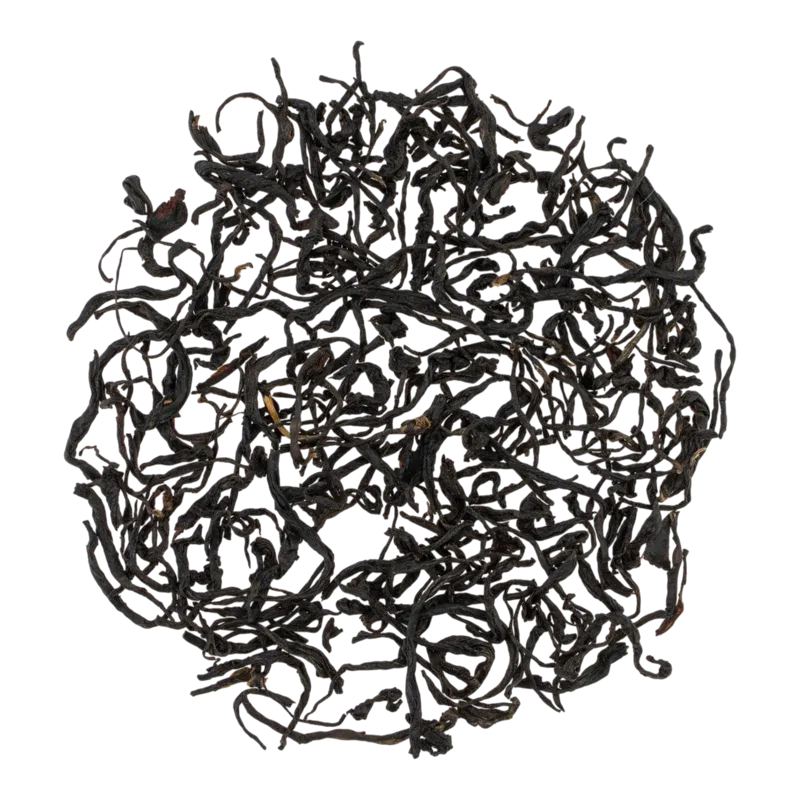
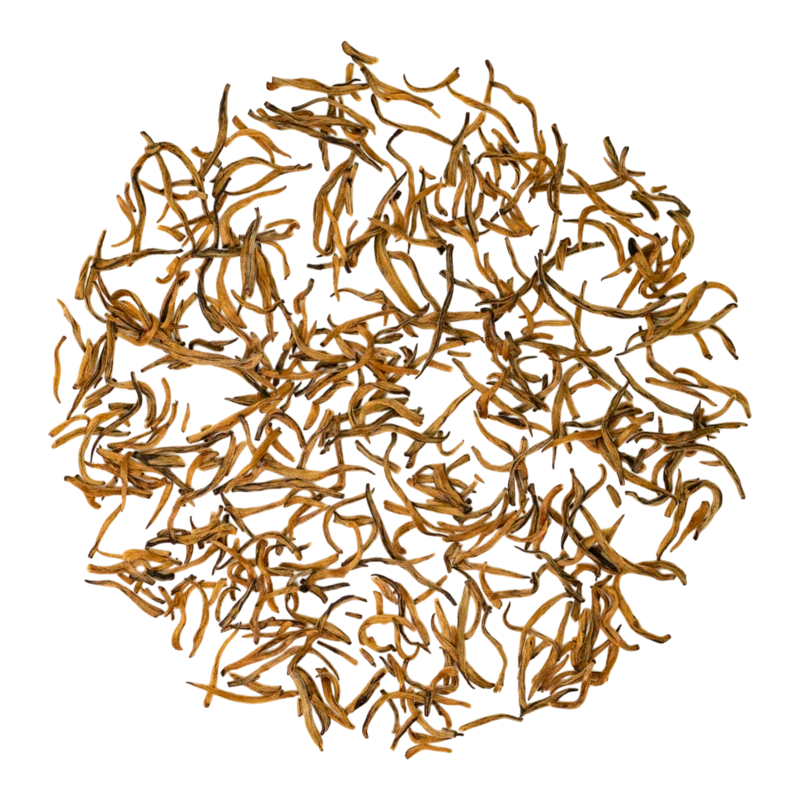
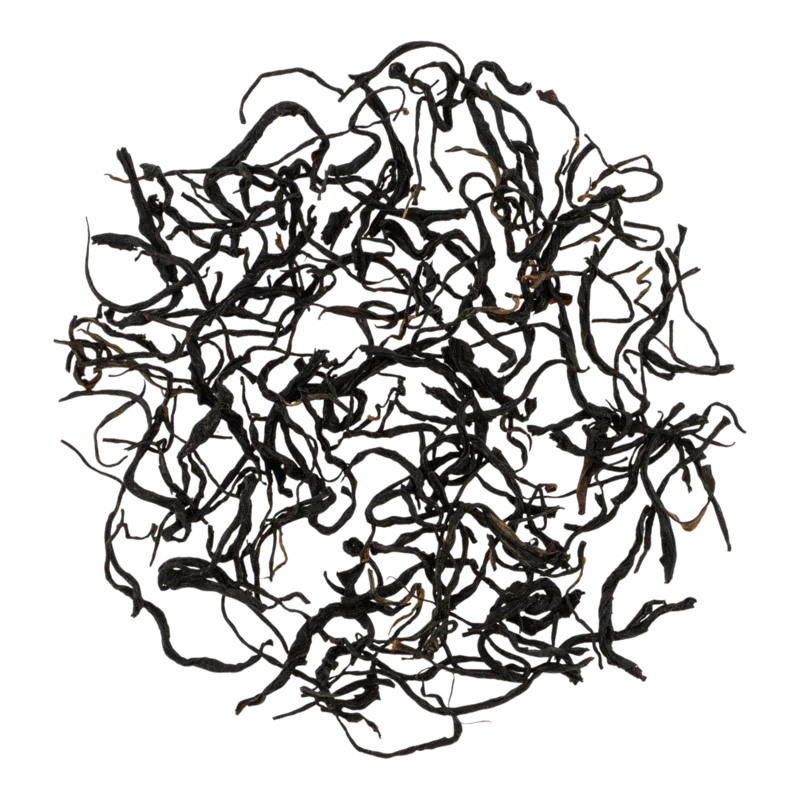
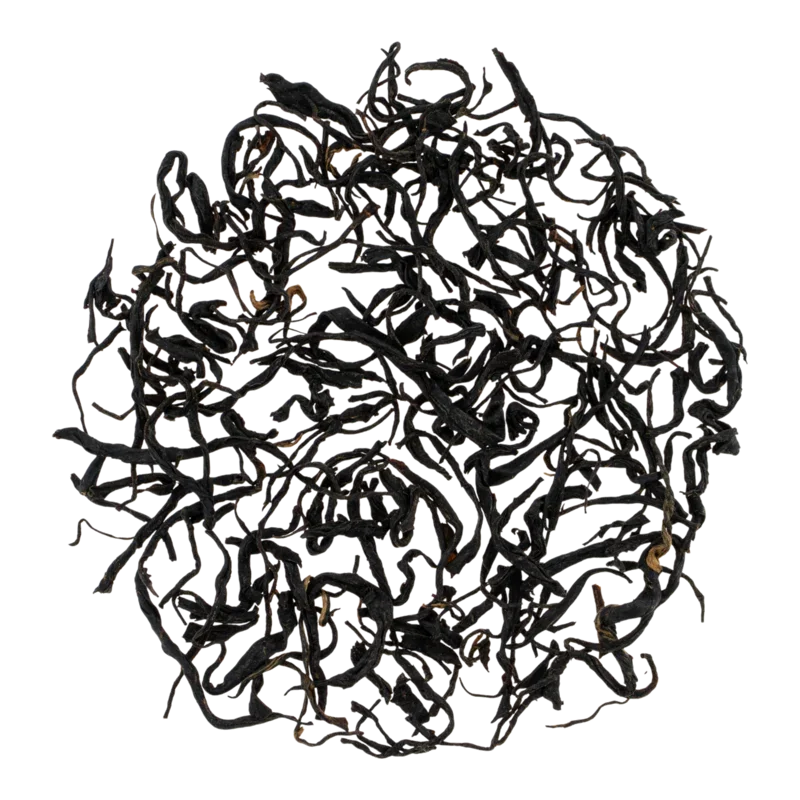
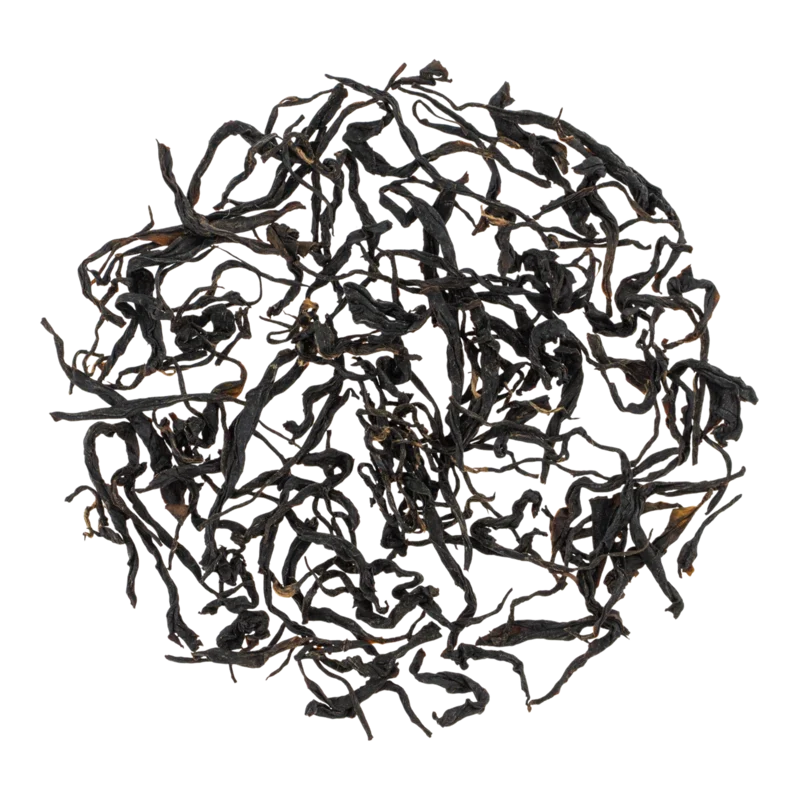
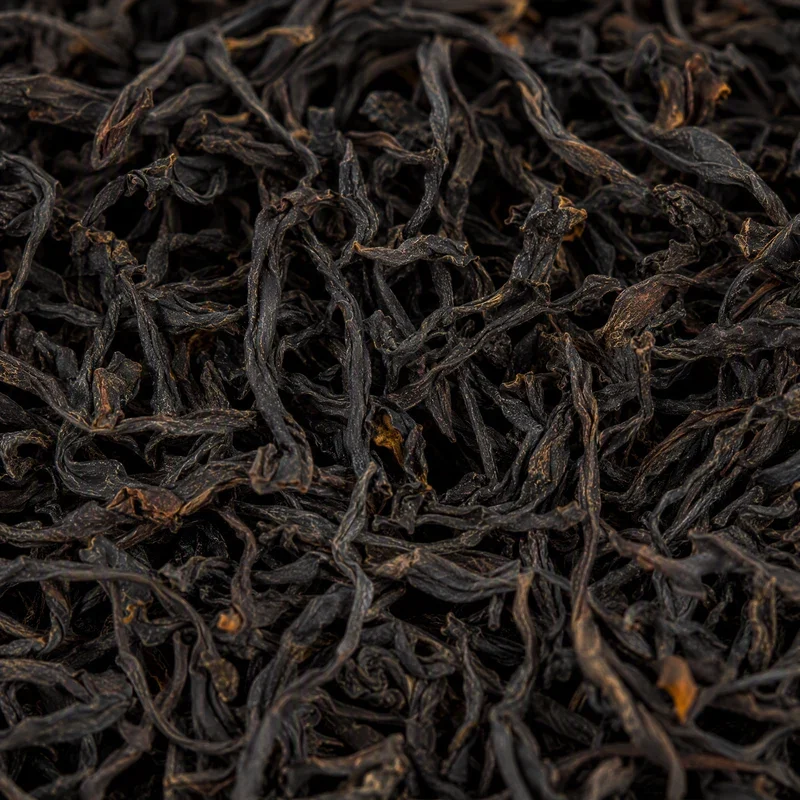
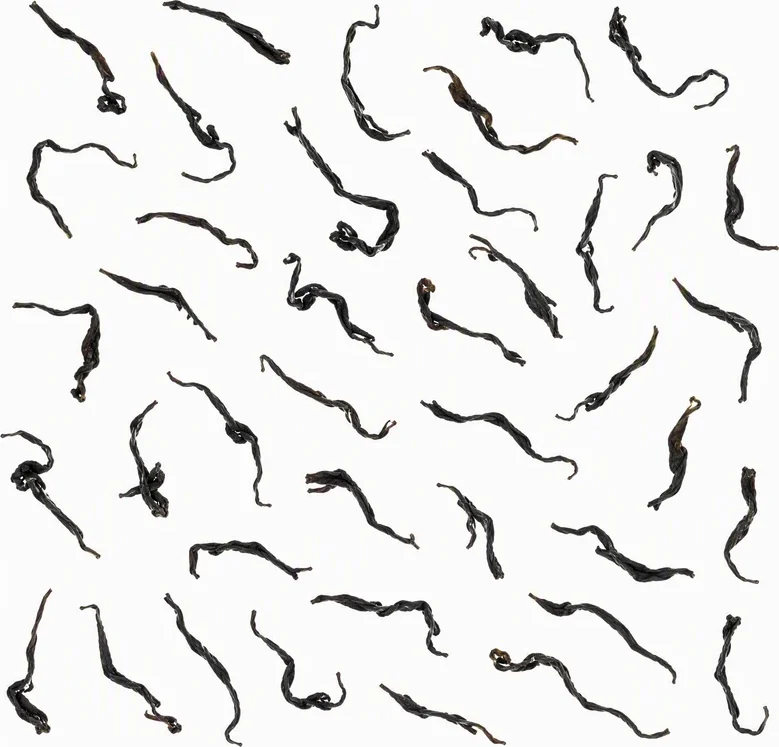
Dry Leaf Appearance: Thin, tightly rolled tea particles in the form of "eyebrows" or slightly curved strips. Color — from dark brown to almost black, with abundance of golden and reddish tips (the higher the grade — the more tips). Leaf is even, uniform in size, without large breakage.
Dry Leaf Aroma: Rich, clean, sweet. Honey, malt, dried fruit notes (dried apple, apricot) dominate. Light floral nuances and warm chocolate undertones are present. The aroma is very characteristic and "clean," without any extraneous tones.
Liquor Aroma: Bright, enveloping, multi-layered. Dominance — honey-malt complex with undertones of dried fruits, caramel, and flowers. Light fruity acidity may appear, enhancing freshness of perception. Aroma is persistent, holds well in the cup.
Liquor Color: Amber-red to red-brown, transparent, clean, with deep luster. Under good lighting demonstrates warm, "honey" shades.
Spent Leaves: Whole, elastic, evenly opened leaves of reddish-brown color with bronze undertone. Tips — golden-orange. Uniformity, tenderness, and leaf integrity are indicators of high processing quality.
Taste: Full-bodied, velvety, with pronounced natural sweetness and practically complete absence of bitterness — this is the main calling card of Wu Niu Zao Hong Cha, due to high amino acid content and low catechin content in early raw material. In the bouquet — honey, malt, dried fruits (apple, prunes), caramel, light spicy and floral nuances. Astringency is minimal, transitioning to long, sweet aftertaste (回甘). Texture — smooth, enveloping.
Alkaloids: Caffeine — about 3.4% dry mass (according to data for green Wu Niu Zao), which is somewhat higher than average for green teas. Theobromine and theophylline — in smaller quantities.
Amino Acids: One of the highest concentrations among Chinese red teas. In Wu Niu Zao green tea, amino acid content comprises 4.2–5.3% dry mass. During full oxidation, part of the amino acids transforms, but their final level in red tea remains high (≈3–4.5%), conditioning pronounced sweetness and taste mildness. L-theanine is the dominant amino acid.
High content, ensuring smooth, enveloping liquor texture.
Essential Oils: Rich complex of volatile aromatic compounds forming the characteristic honey-malt-fruity aroma. Early harvest and gentle processing preserve delicate floral components.
Minerals: Potassium, magnesium, manganese, fluorine, zinc, iron.
Polyphenols: Tea polyphenol content in the green version — 17.6–29.5% (according to National Specification data). During full oxidation, catechins transform into theaflavins and thearubigins. Relatively low initial polyphenol level (compared to summer or autumn raw material) ensures mild, "bitterness-free" character of red tea.
Vitamins: B₁, B₂, C (in limited quantity), E, K.
High L-theanine content combined with caffeine provides balanced tonic effect — vigor without nervousness, mental clarity without excitement. Ideal tea for morning and daytime.
Like all red teas, Wu Niu Zao Hong Cha has "warm" nature, improves circulation and warms in cool weather.
Theaflavins and thearubigins provide pronounced antioxidant activity, contributing to cell protection from oxidative damage.
Stimulates digestive enzyme secretion, facilitates digestion of fatty and protein foods. Mild, non-acidic profile makes this tea comfortable even for sensitive stomachs.
Red tea polyphenols contribute to lipid metabolism normalization, LDL cholesterol reduction, and vascular elasticity maintenance.
Antibacterial and antiviral properties of tea polyphenols support the body's protective mechanisms, which is especially valuable in early spring period.
High L-theanine content promotes relaxation, anxiety reduction, and mood improvement. Mild, "bitterness-free" taste creates feelings of comfort and coziness.
2–3 g per 200 ml, temperature 90°C, steeping time — 2–3 minutes. Do not oversteep — although Wu Niu Zao Hong Cha forgives mistakes better than many red teas, prolonged extraction can still extract astringent notes.
Tea Amount: 3–5 g per 150 ml water (gongfu method); 2–3 g per 200 ml (European method).
Teaware: Porcelain gàiwǎn (蓋碗) or glass teapot — for evaluating bright liquor color. Yíxīng teapot (紫砂壺) also suitable, adding roundness. Glass cup (玻璃杯, bōli bēi) — minimalist option for simple brewing.
Water Temperature: 85–93°C. For early tender raw material, boiling water (100°C) is not recommended — this can enhance weak astringency and "burn" delicate aromas.
Container: Airtight tin or ceramic jar; foil bag with zip closure. For long-term storage, vacuum packaging is recommended.
Enemies: Moisture, light, high temperature, foreign odors, oxygen.
Shelf Life: 12–24 months under proper conditions. Red tea from early raw material is especially good in the first 6–12 months, when the aromatic profile is most vibrant. Does not require refrigerator storage (unlike green Wu Niu Zao).
Dry, cool, dark place. Temperature — no higher than 25°C. Away from strong odor sources.
Elite red tea from buds, produced in Tongmu. Significantly more refined and complex, with honey-floral-chocolate profile and highest price. Wu Niu Zao Hong Cha is brighter and more straightforward, with emphasis on malt and dried fruits, more accessible in price.
"Keemun aroma" — more floral, "perfumery," with pronounced orchid and honey notes. Wu Niu Zao Hong Cha is more malty and "warm," with emphasis on dried fruits and caramel. Qi Men has more pronounced astringency.
Classic smoked Xiao Zhong fundamentally differs with smoky aroma, absent in Wu Niu Zao. Unsmoked Xiao Zhong versions are closer in profile but possess more pronounced "rock" character and minerality.
Yunnan red teas are significantly more astringent, powerful, and spicy, with chocolate-nutty notes and dense body. Wu Niu Zao Hong Cha is softer, sweeter, and more delicate, with fruity-honey character.
Another red tea from Zhejiang (Hangzhou area). More refined, floral, with characteristic "plum" note. Wu Niu Zao Hong Cha is richer, sweeter, with more pronounced honey-malt profile.
Look for tea marked "永嘉乌牛早" — geographical trademark. Wu Niu Zao tea from other regions (Sichuan, Guizhou, Anhui) may bear the same varietal name but is inferior in quality and taste profile.
Authentic Wu Niu Zao Hong Cha is "pre-Qingming" tea (before April 5). If tea is offered as "Wu Niu Zao" but dated May or later — this is reason for doubt.
Neat "eyebrows" with golden tips, uniform in size. Abundance of breakage, dust, non-uniformity — signs of low quality.
Main marker of quality Wu Niu Zao Hong Cha — natural sweetness and practically complete absence of bitterness. Pronounced bitterness or astringent astringency indicates late raw material or improper processing.
Spring tea of highest quality cannot be cheap — hand-picking 22,000 buds for 500 g of tea explains premium pricing.
No reviews yet. Tell us what you think of this tea.
Rate this tea and share your impressions. We review each submission before publishing it.