Brewing
Gongfu brewing
- Water temperature
- 92 °C
- Tea amount
- 6 g
- Water volume
- 100 ml
- First steep
- 10 s
- Time added per infusion
- 5 s
- Infusions
- 8

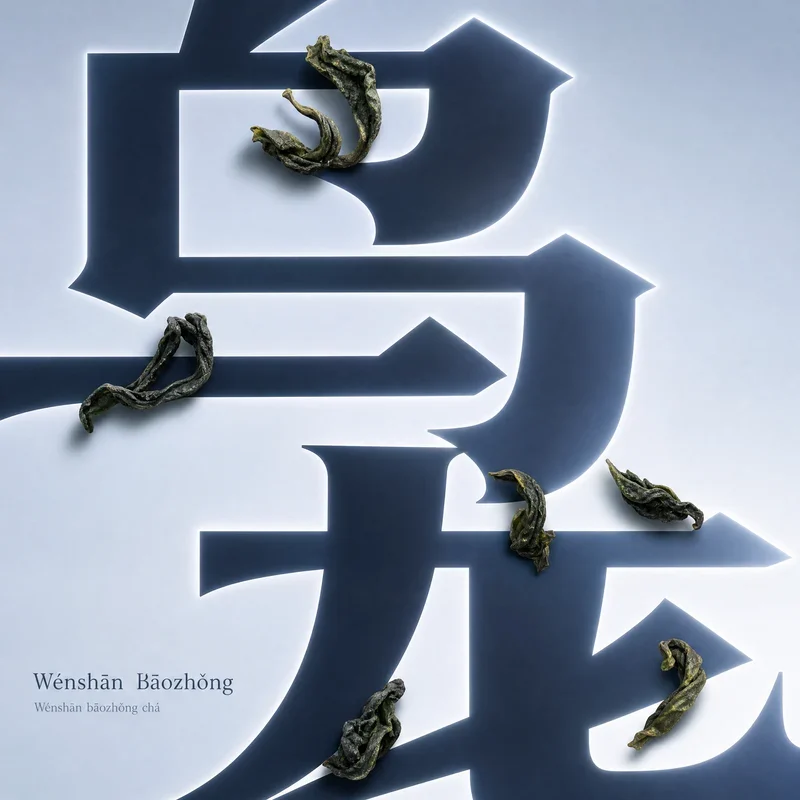
Wénshān bāozhǒng chá
Choose a brewing method. Start with the recommended quantities and time, then adjust to taste.
Brewing
Brewing
Taste
Tea encyclopedia
Alt Names: Pouchong / Paochung — English transliteration variants; in colloquial speech in Taiwan sometimes "清茶" (Qīngchá, "pure tea").
Alt Names: Pouchong / Paochung — English transliteration variants; in colloquial speech in Taiwan sometimes "清茶" (Qīngchá, "pure tea").
Category: Taiwanese oolongs; lightly oxidized oolongs of northern Taiwan. Included in the official list of "Ten Famous Teas of Taiwan" (臺灣十大名茶, Táiwān Shí Dà Míng Chá).
Coordinates: Approximately 24°56′ N, 121°42′ E (center of Pinglin District).
Origin: Táiwān (臺灣, Táiwān), Wénshān region (文山, Wénshān) — historical collective name for tea districts encompassing: Pínglín District (坪林區, Pínglín Qū) of New Taipei City (新北市, Xīnběi Shì) — the main production center, accounting for more than 90% of total output; Shídìng District (石碇區, Shídìng Qū), Shēnkēng District (深坑區, Shēnkēng Qū), Xīndiàn District (新店區, Xīndiàn Qū), Xízhǐ District (汐止區, Xízhǐ Qū) and Píngxī District (平溪區, Píngxī Qū) of New Taipei City; Wénshān District (文山區, Wénshān Qū, including Muzha and Jingmei) and Nángǎng District (南港區, Nángǎng Qū) within the administrative boundaries of Taipei (臺北市, Táiběi Shì). Total area of tea plantations in the region — approximately 2,300 hectares. The technology historically traces back to Ānxī County (安溪, Ānxī) of Fujian Province.
Type: Oolong (青茶, qīngchá) — semi-oxidized tea. Wenshan Baozhong belongs to the subgroup of lightly oxidized strip-style oolongs (條型烏龍, tiáo xíng wūlóng). Base raw material is oxidized 7–15% (in modern style more often 8–12%, historically — up to 20–25%). According to Taiwanese classification, Baozhong is often distinguished as an independent category, separate from ball-shaped oolongs. The processing style predates the appearance of ball-shaped rolling in Taiwan and traces back to early Fujian techniques. In roasted versions (焙火包種, bèihuǒ bāozhǒng), the final degree of oxidation can reach 35–40%.
Cultural Significance: In Taiwanese tea tradition, Baozhong firmly occupies the niche of refined, "meditative" tea — its soft, non-catechin profile allows for multi-hour sessions in gongfu tea technique (功夫茶, gōngfuchá) without palate fatigue. The tea is associated with hospitality and northern Taiwanese identity. It is often given as an exquisite gift and used during family gatherings and business negotiations. The annual Wénshān Bāozhǒng competition (文山包種茶比賽) determines quality standards and is one of the oldest tea competitions on the island: the Pinglin Farmers' Association holds it twice a year (spring and winter), accepting up to 1,500 tea samples per session. The Tea Museum in Pínglín (坪林茶業博物館, Pínglín Cháyè Bówùguǎn) — one of the world's largest tea museums — is significantly devoted to the history and production of Baozhong. Notably, Baozhong accounts for less than 2% of all Taiwanese tea production, making it relatively rare even in the domestic market.
History: The roots of Baozhong trace back to Fujian. About 150 years ago, a native of Ānxī County (安溪縣, Ānxī Xiàn) in Fújiàn Province named Wáng Yìchéng (王義程, Wáng Yìchéng) created a special method of processing local tea, reproducing the techniques of producing Wǔyí oolongs (武夷茶, Wǔyí chá). The distinctive feature was strip-style rolling — leaves were not rolled into balls but remained in the form of long ribbons. The finished tea was packaged in square sheets of paper from Fujian, four liang (兩, liǎng, about 150 g) per packet — hence the name "packaged variety."
Name Breakdown: "Baozhong" (包種, Bāozhǒng) — literally "packaged variety/type." The character "包" (bāo) — "to wrap, package," "種" (zhǒng) — "variety, type." The most common etymological version connects "種" with the Minnan nickname for the Qing Xin Oolong cultivar — "種仔" (Chǒng-á). Buyers would say: "Package me some Chong-a-cha!" — hence "packaged tea of the chong variety" transformed into "baozhong." There is also a folk reinterpreted form: "包中" (bāo zhōng) — "sure to pass the exam / win," making the tea a traditional gift before entrance examinations. The prefix "Wenshan" (文山 — literally "Literary Mountains," "mountains of scholars") traces back to the Japanese administrative county Wenshan-gun (文山郡), under whose administration the producing districts were located during the colonial period.
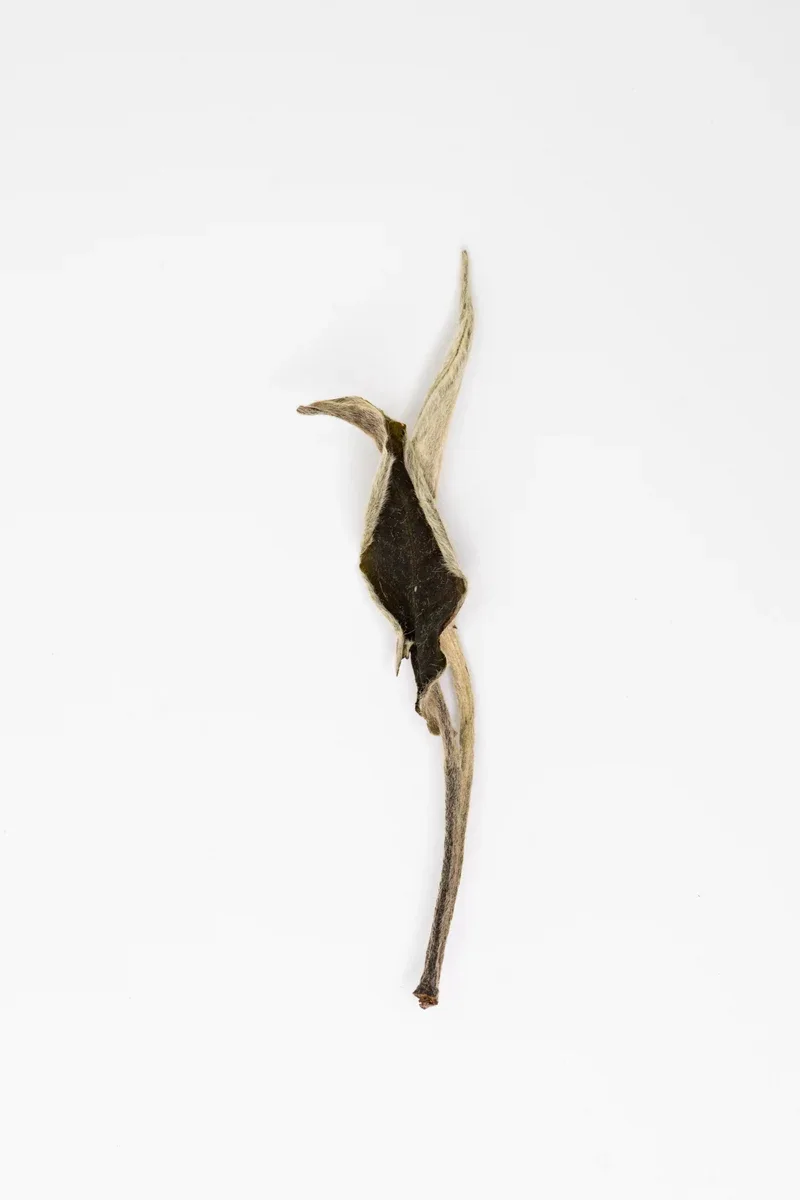
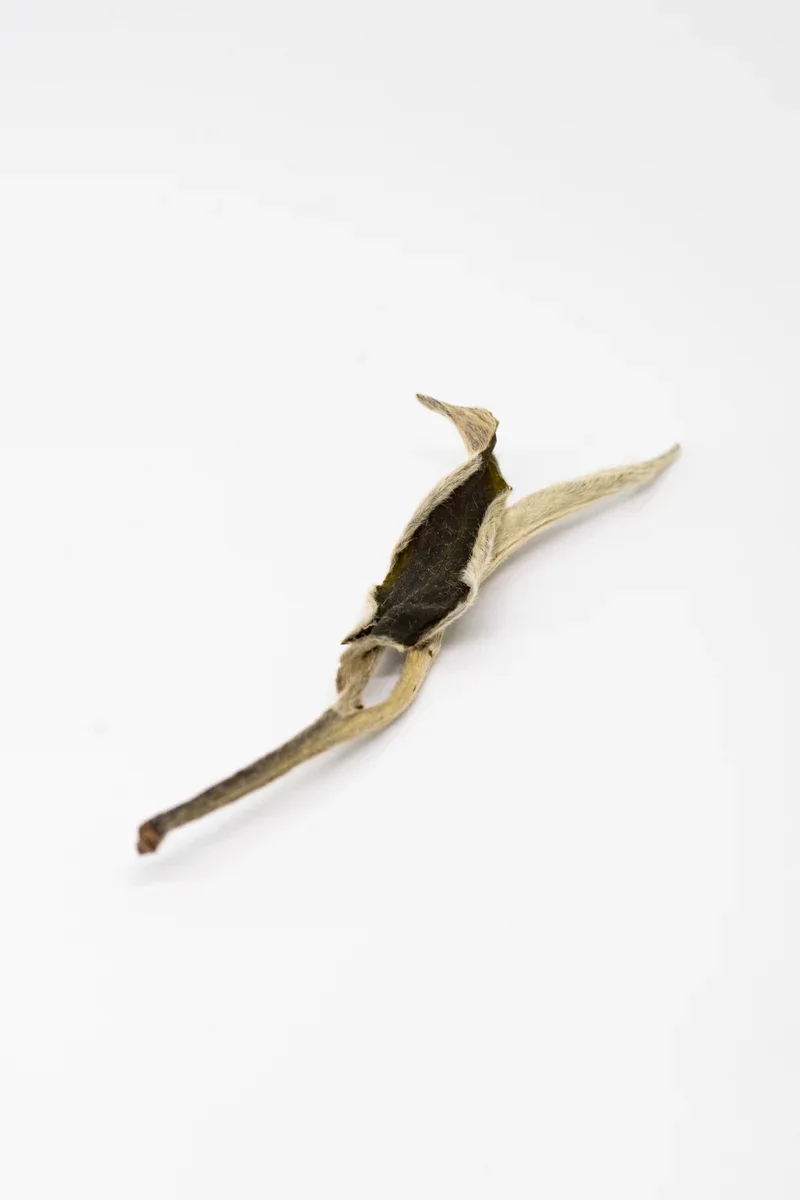
Medium-height shrub with flexible stems. Leaves are oblong-elliptical, 7–9 cm long, 3–3.5 cm wide, with serrated edges and well-defined veins. Leaf surface is slightly glossy, young shoots are covered with silvery trichomes (down). The bush tends to slow growth in conditions of high humidity and fog, which promotes accumulation of aromatic compounds. In conditions of low mountains of northern Taiwan (300–800 m), the leaf blade is thinner and more delicate than in high-mountain specimens, which determines the delicacy and "airiness" of Baozhong.
Cultivar: The main cultivar is Qīng Xīn Oolong (青心烏龍, Qīngxīn Wūlóng — "Green Heart Oolong"), locally called "Zhong-zi" (種仔, Zhǒng-zǐ — "Seedling" or "Original variety"). Belongs to the species Camellia sinensis var. sinensis, originates from Jian'ou (建甌, Jiàn'ōu), Fujian Province. This is an ancient Taiwanese tea bush, most widespread on the island, valued for naturally high aromaticity and ability to convey the finest nuances of terroir. Besides the main variety, Taiwanese hybrids are permitted: Taicha No. 12 (臺茶12號, "Jin Xuan," 金萱, Jīn Xuān) — produces a more affordable product with notably higher yield — and Taicha No. 13 (臺茶13號, "Cui Yu," 翠玉, Cuì Yù).
Picking: Tea is harvested four times a year, however spring (春茶, chūnchá, late March — April) and winter (冬茶, dōngchá, October — November) harvests are considered the best in quality. The harvest standard for high-quality Baozhong is "one bud and two-three leaves" (一心二葉 / 三葉, yī xīn èr/sān yè). Preference is given to mature but still soft leaves (對口葉, duìkǒu yè): overripe and excessively tender raw material are equally undesirable. Flush length — no more than 4–5 cm. Predominantly hand-picking (手採, shǒu cǎi); commercial batches are often harvested mechanically in small series.
Raw Material: Leaves must be whole, without mechanical damage. Maximum concentration of aromatic oils is achieved when harvesting in morning hours after dew dries. On Pinglin plantations, low-growing bush management is practiced (crown height below an adult's knee), which, according to local tea growers, improves quality, although it significantly reduces yield and shortens the economic life of the bush.
Altitude: 300–800 meters above sea level — low and medium mountain zone, which distinguishes Baozhong from high-mountain oolongs (1,000+ m).
Climate: Subtropical humid: average annual temperature about 18°C, annual precipitation — about 2,800 mm. Characterized by frequent fog, high air humidity and diffused light, slowing shoot growth and promoting accumulation of aromatic compounds and amino acids. Daily temperature fluctuations — 5–10°C. The Běishì River (北勢溪) and its tributaries form the characteristic microclimate of valleys: morning fogs rise from the water and envelop plantations, creating a natural "filter" for sunlight.
Soil: Predominantly red and yellow soils with acidic reaction (pH 4.5–5.5), rich in organic matter. The terrain creates natural drainage. Location in the water protection zone limits the use of chemical fertilizers and pesticides, which de facto approaches organic conditions.
The heart of production is the mountainous Pínglín District (坪林區), located in the foothills of Taiwan's Central Mountain Range, approximately 30 km southeast of Taipei. Local tea growers often call Pinglin the "tea capital of Wenshan." About three-quarters of the region's area consists of hills and mountain slopes. Pínglín is located in the water protection zone of Fěicuì Reservoir (翡翠水庫, Fěicuì Shuǐkù) — the main source of drinking water for seven-million Taipei, which limits industrial development and maintains ecological purity of tea plantations. More than 80% of Pinglin's population is employed in the tea industry.
Ecological agricultural techniques are widespread in Pinglin: organic fertilizers (compost based on rice husks, green manure), minimal chemical protection. Many farms are family-owned, passed down through generations (fourth-fifth generation farmers). Baozhong production in Pinglin is built on the principle "from field to packaging in one hands": the tea-growing family independently performs all stages — from cultivation and harvesting to withering, fixation, rolling, drying and packaging.
Hand or mechanized harvest of tender flushes.
Freshly picked leaves are spread in a thin layer (~2–3 cm) on bamboo trays under direct sunlight for 30–60 minutes to evaporate 15–20% moisture. In cloudy weather, hot-air withering is used. Duration is carefully controlled — excessive withering triggers excessive oxidation.
Leaves are moved indoors with temperature 22–25°C and humidity 70–75%. At regular intervals they are gently shaken or turned by hand (輕搖, qīng yáo). Baozhong is characterized by precisely "soft" shaking technology — significantly more delicate than ball-shaped oolongs. Fine mechanical damage to leaf edges triggers controlled oxidation to 7–15%, which is visually tracked by color change of edges from green to amber.
Brief heating of leaves at 260–300°C in a drum oven to inactivate enzymes (polyphenol oxidase and peroxidase) and stop oxidation.
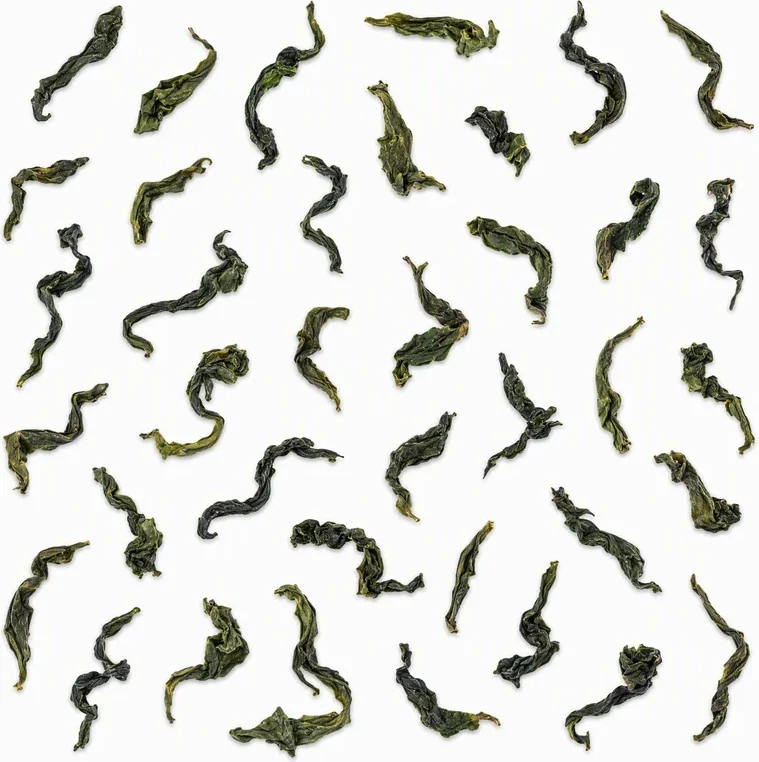
Light longitudinal rolling, giving leaves the characteristic form of long strips (條型, tiáo xíng). This is a fundamental difference of Baozhong from "ball" type oolongs (球型, qiú xíng): leaves are not pressed by cloth rolling method (布揉, bù róu), but only slightly curled, preserving greater structural integrity. The open form ensures faster and more complete aroma release during brewing.
Stuck leaves are carefully separated for uniform drying.
Moisture removal in drying chambers at ~100–110°C to moisture content about 5–6%. For unroasted style (清香型) roasting is not applied or ultra-light convection drying is conducted — the goal is maximum preservation of fresh floral character.
Conducted on charcoal (木炭, mùtàn) or in electric roasting ovens in two stages. First phase at 75–85°C for 40–50 minutes — activation of Maillard reaction, formation of nutty and bread notes. Second phase at 100–115°C for 15–25 minutes — caramelization of sugars, deepening of warm tones. Between stages tea is left to "rest" (退火, tuìhuǒ) for uniform heat redistribution. After roasting, aging of at least 60–90 days is recommended for flavor harmonization.
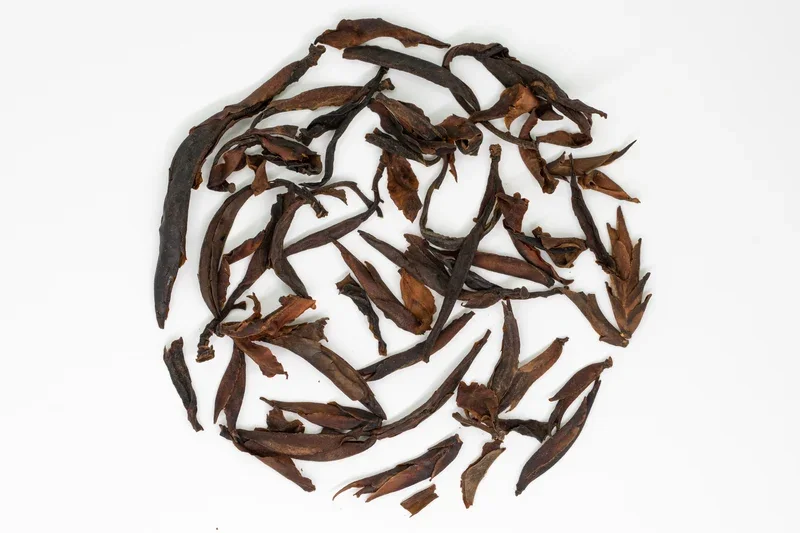
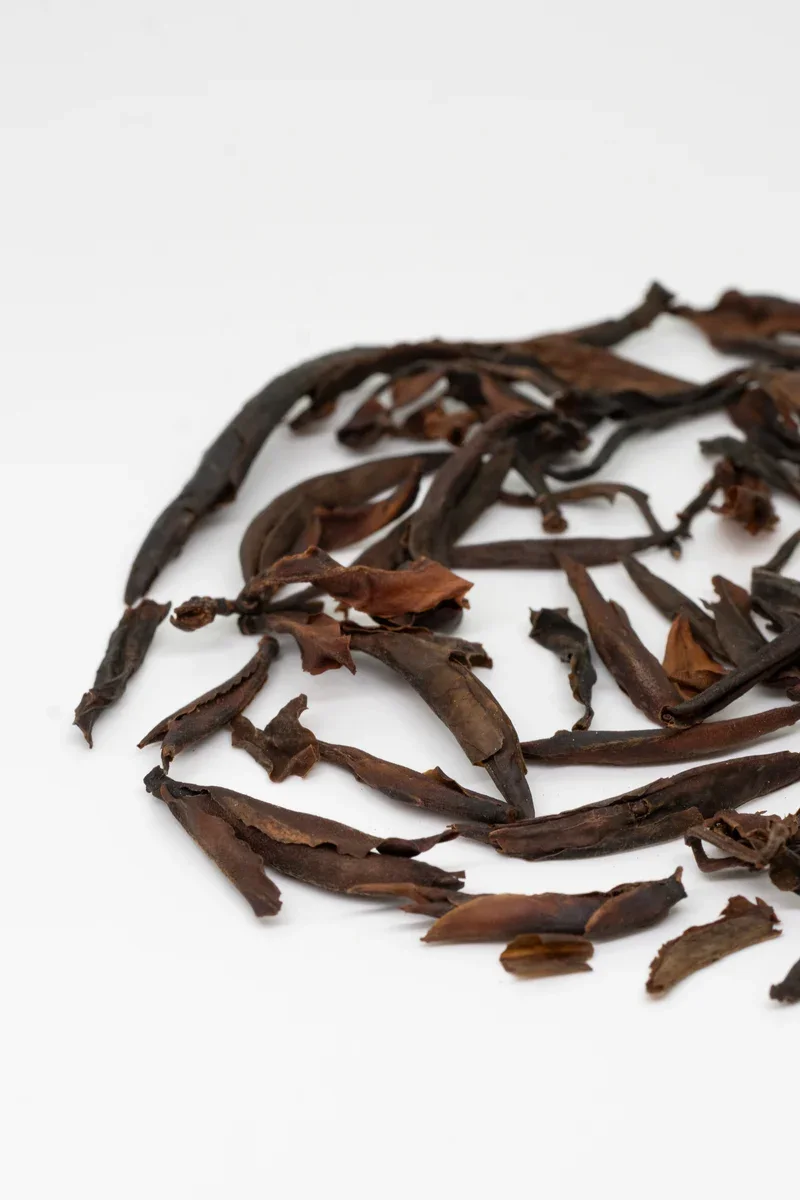
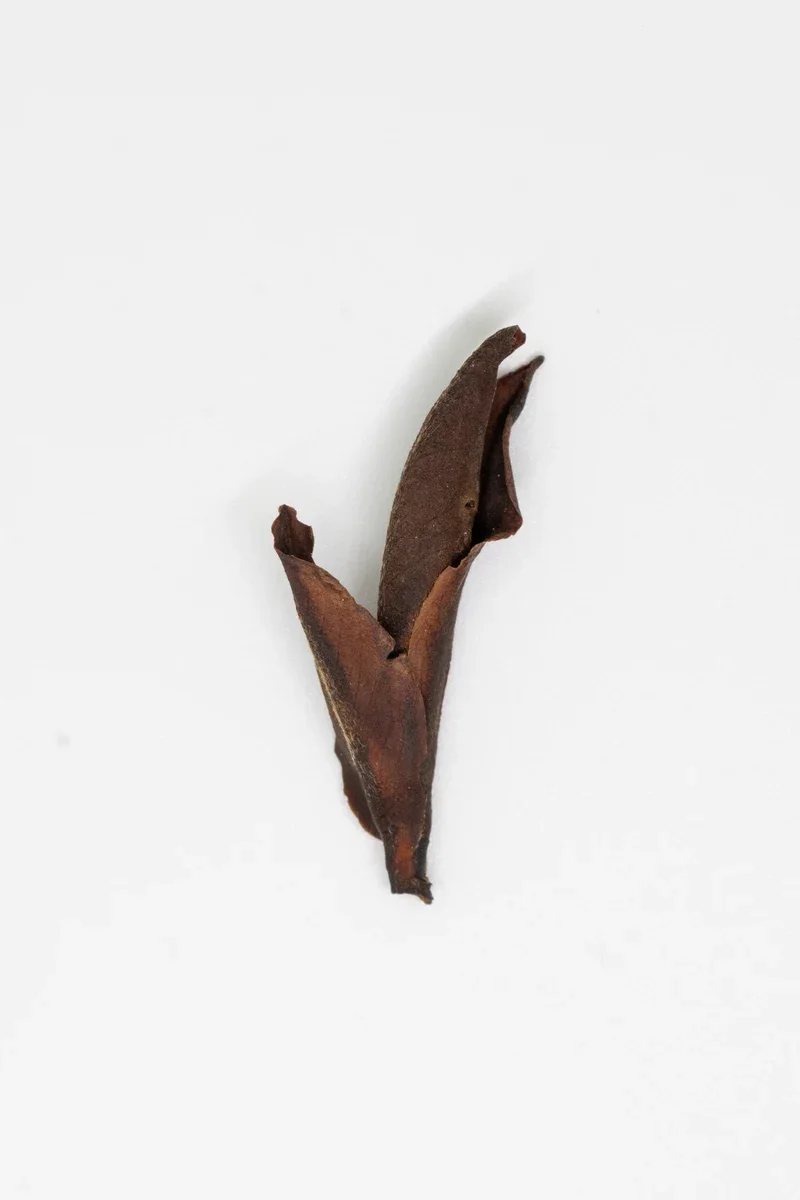
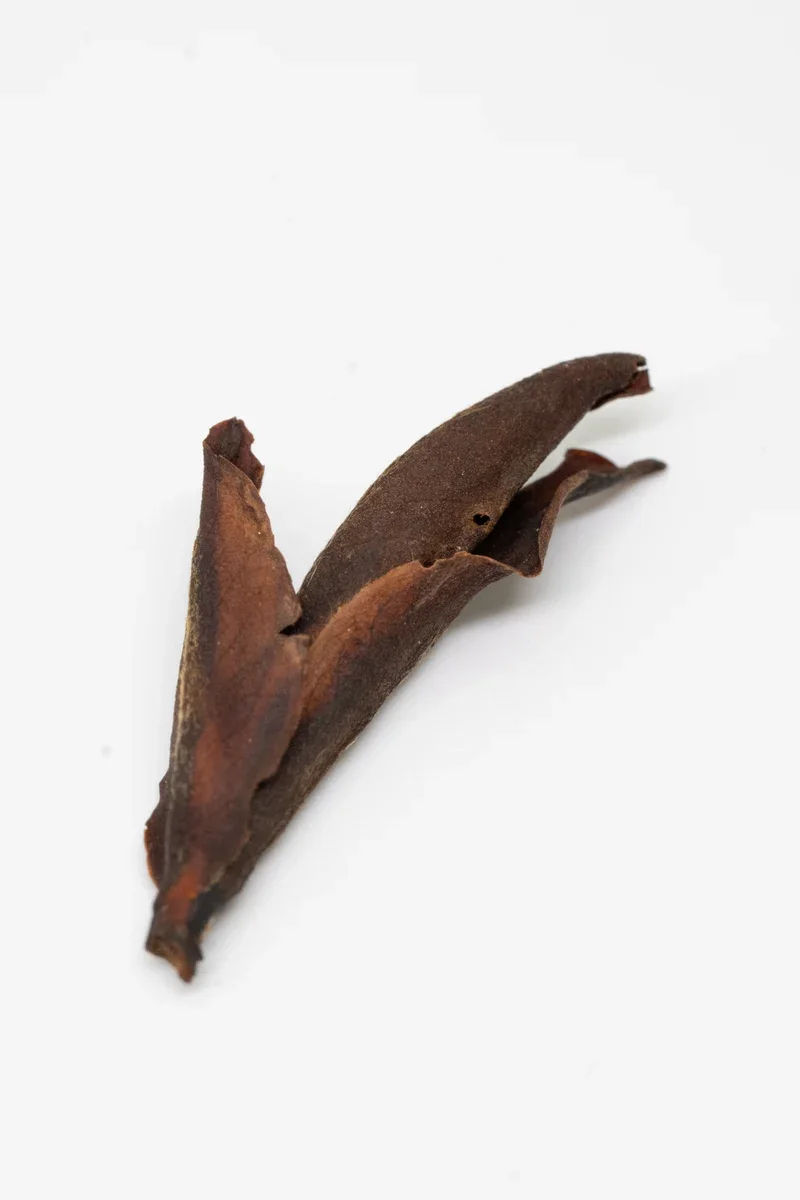
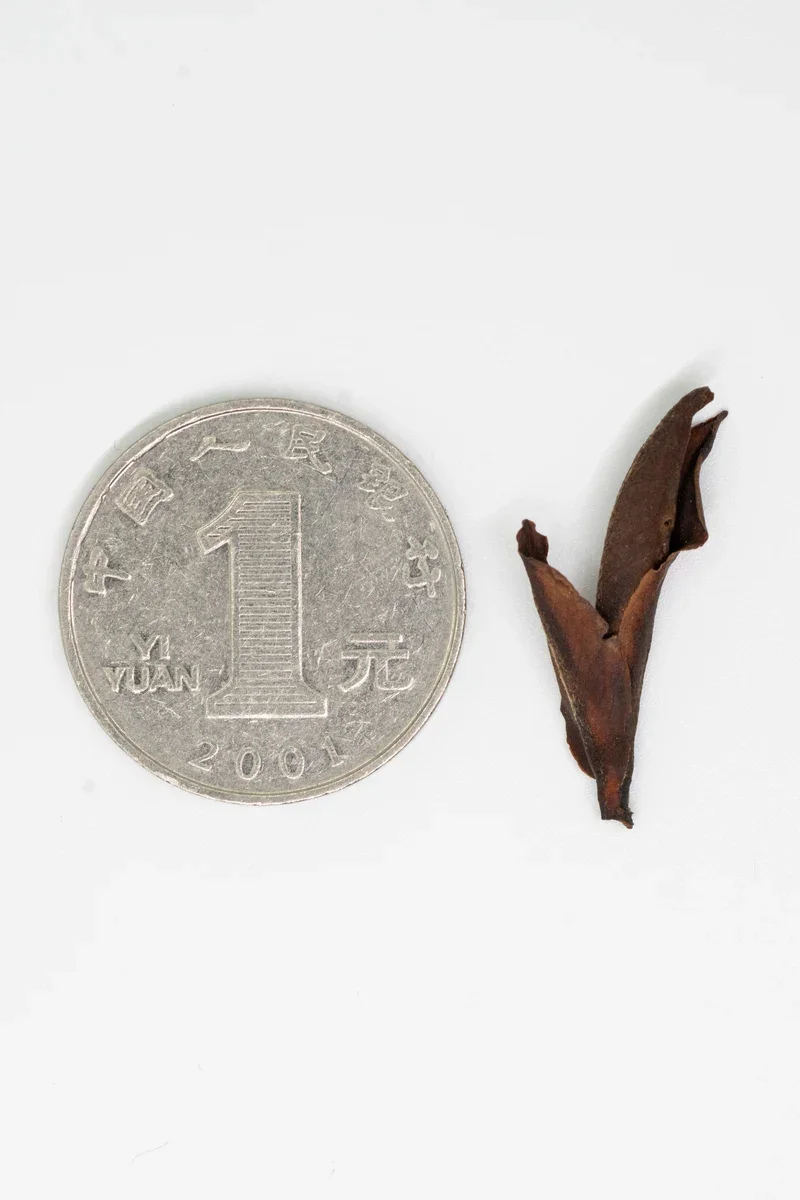
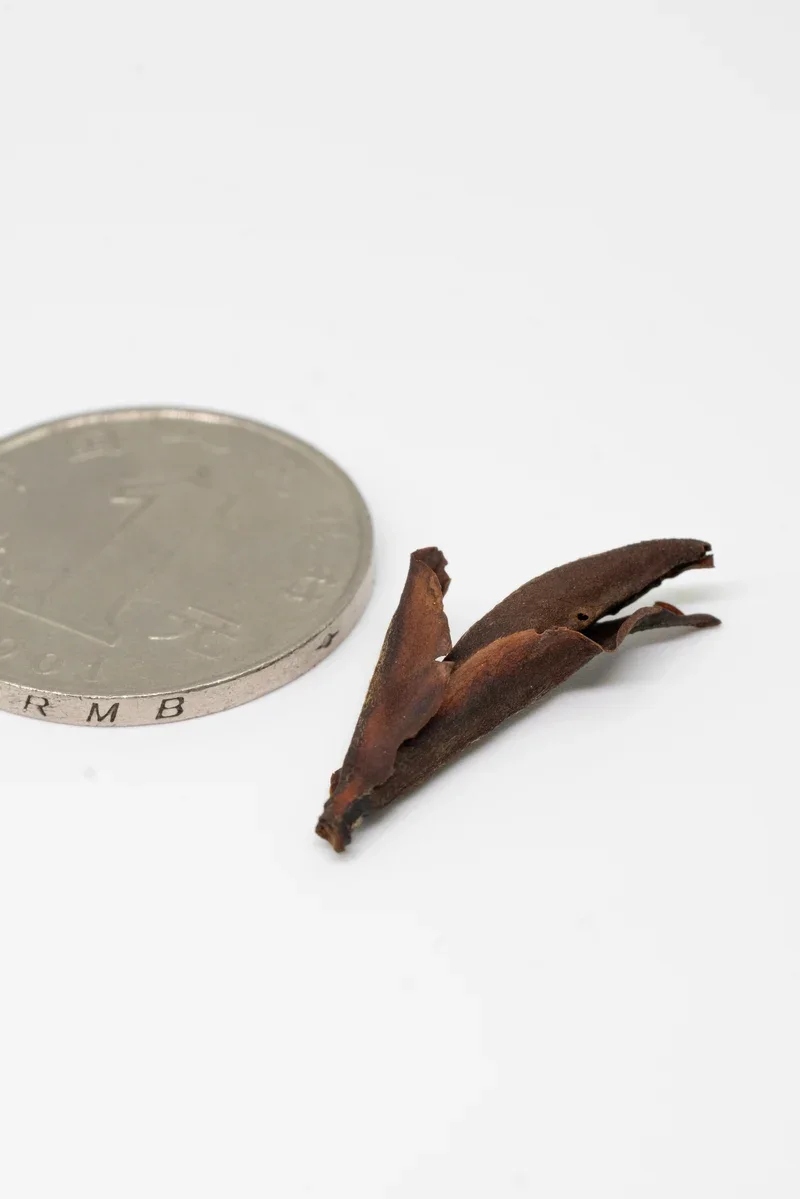
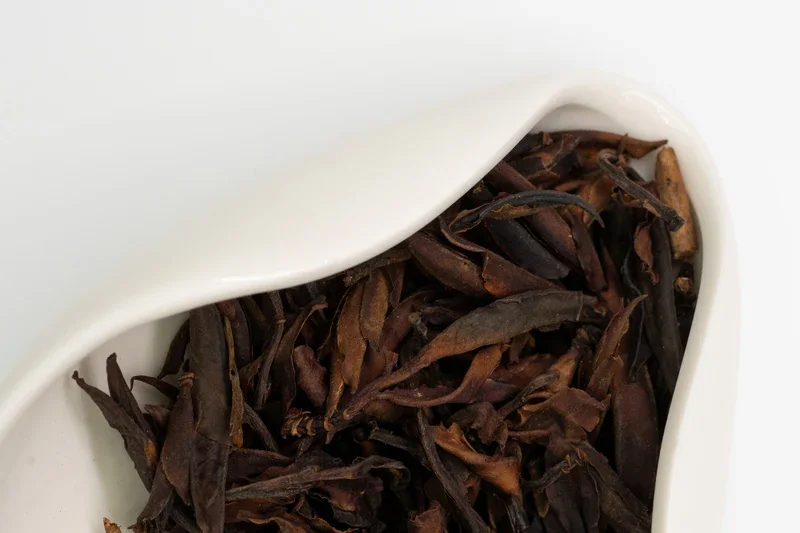
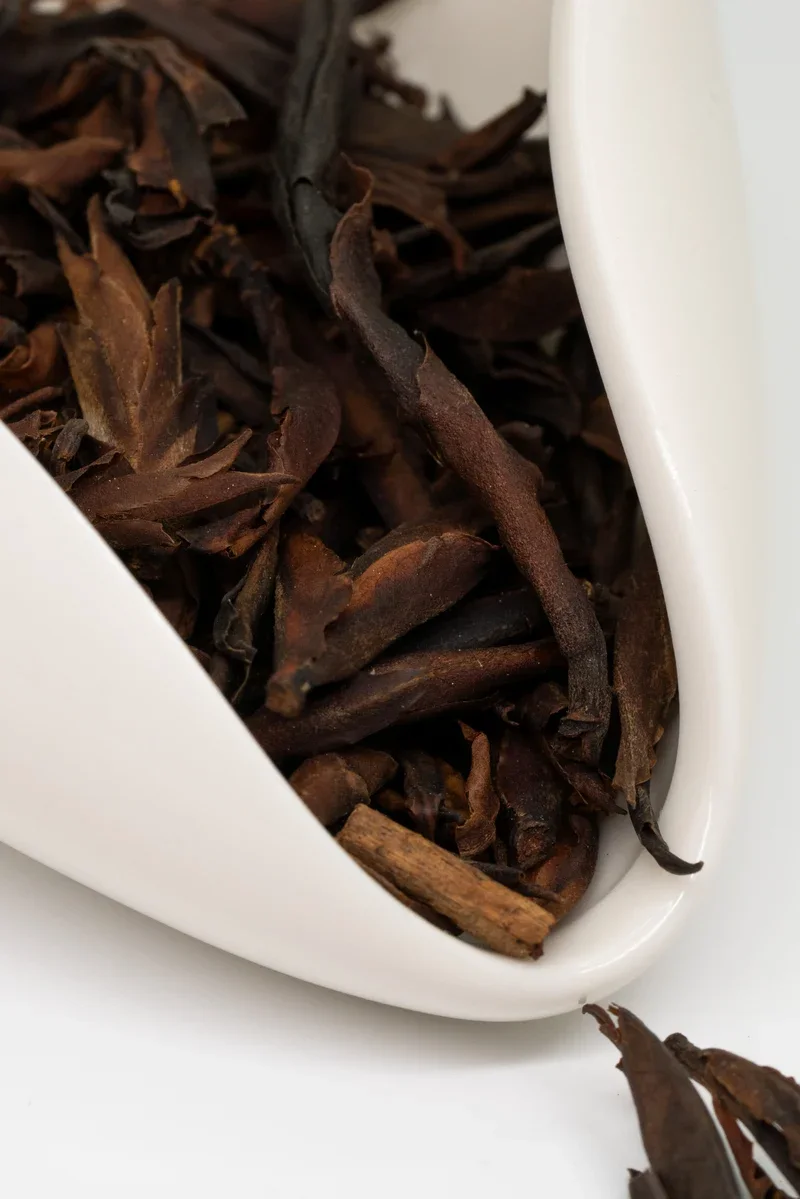
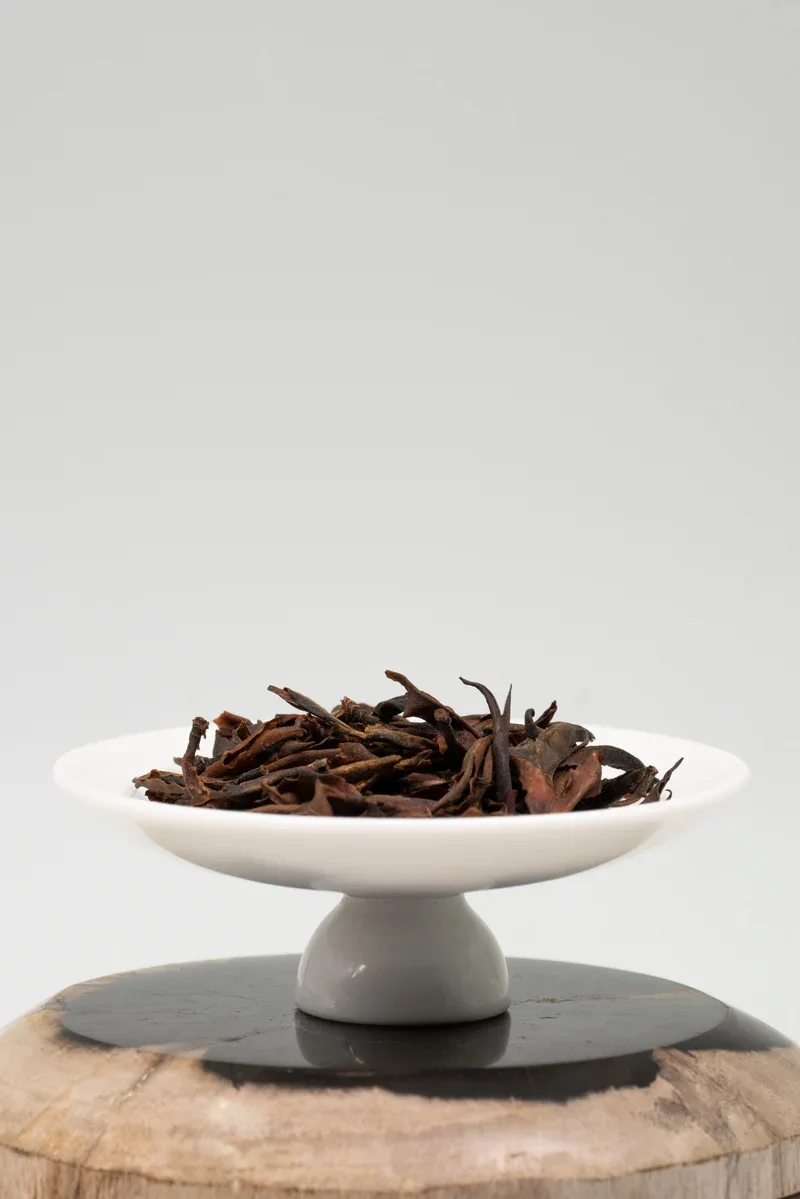
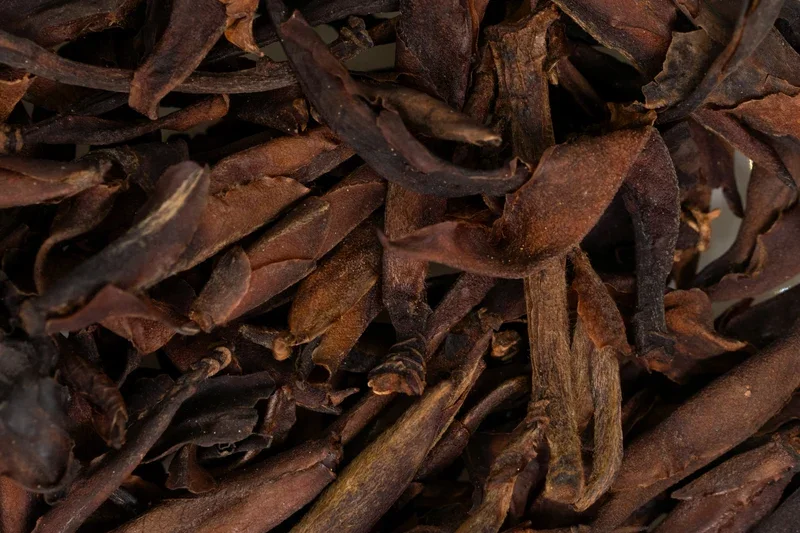
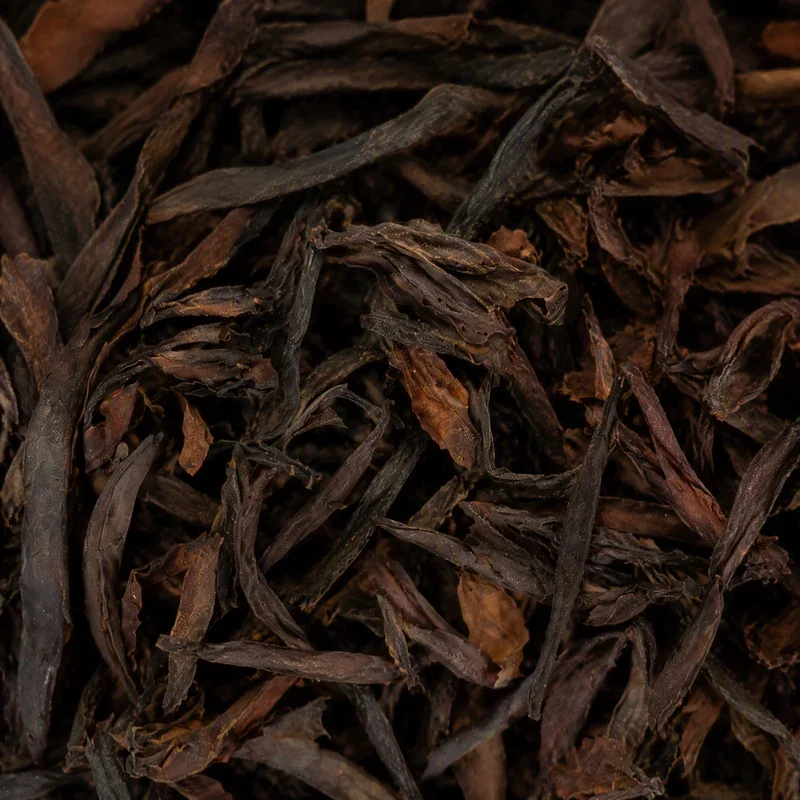
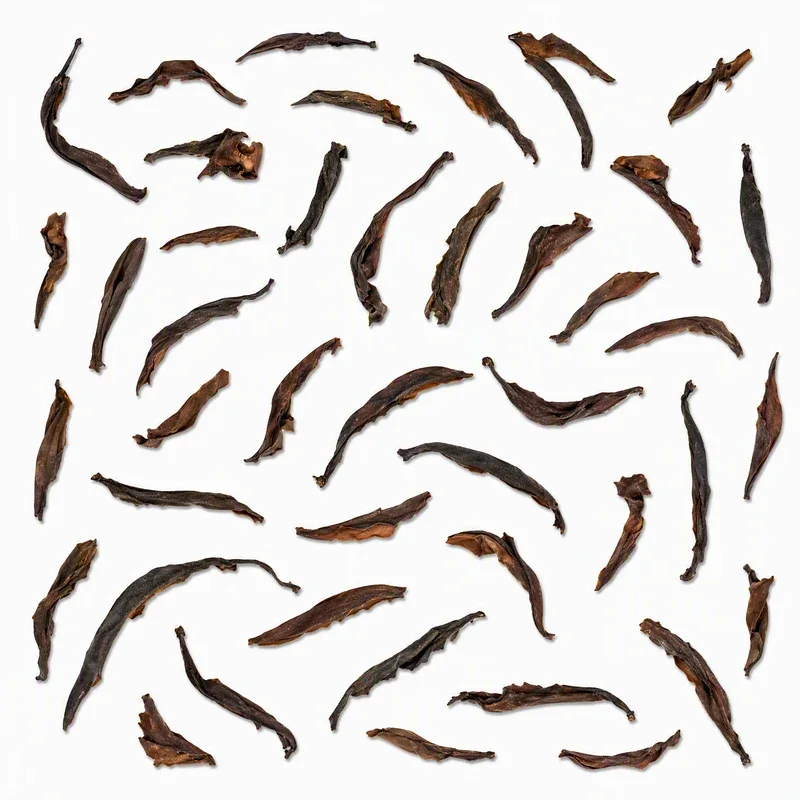
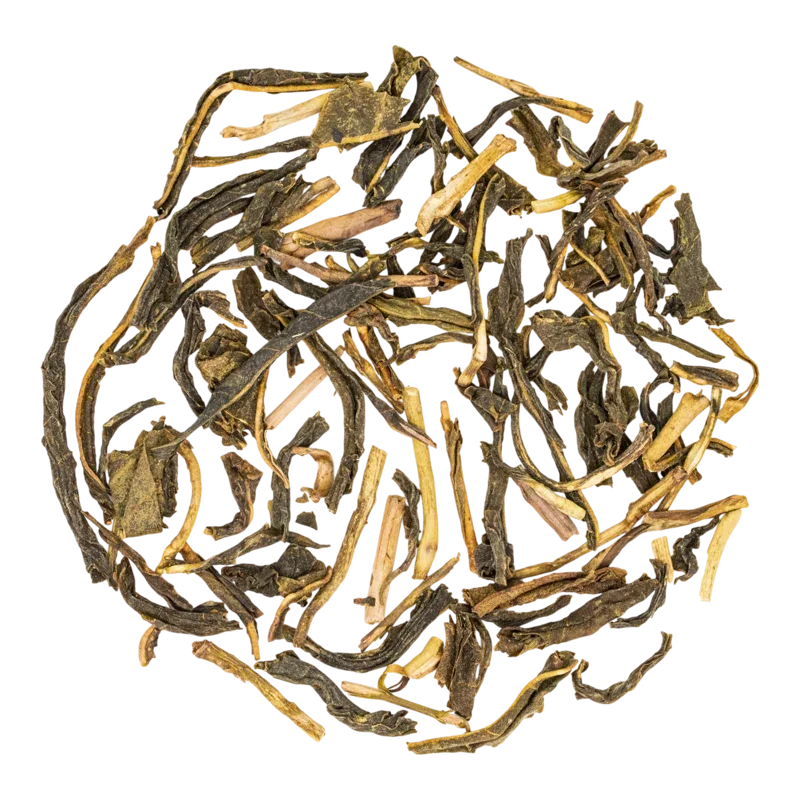
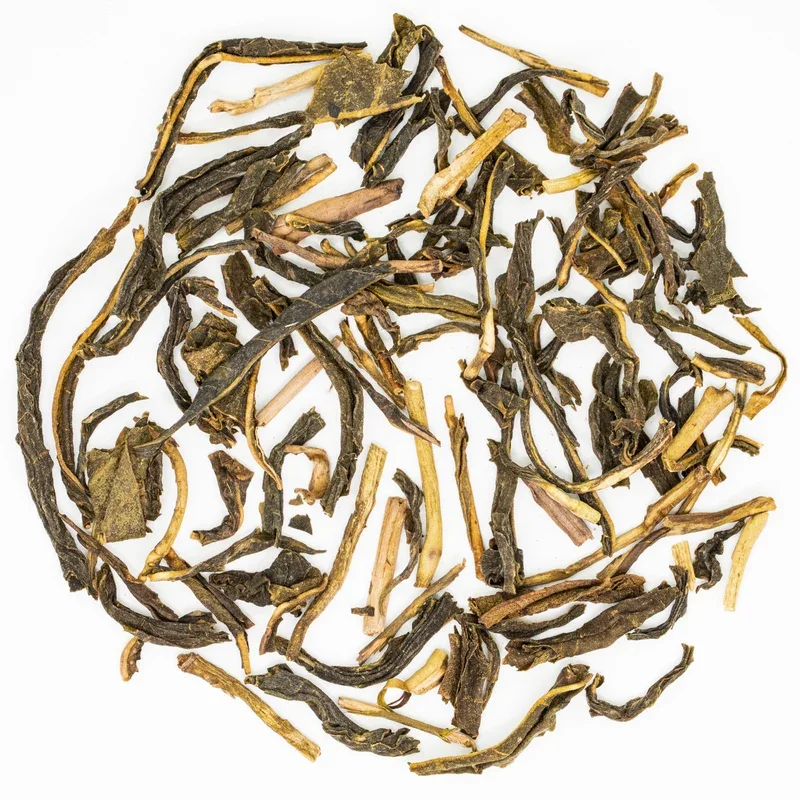
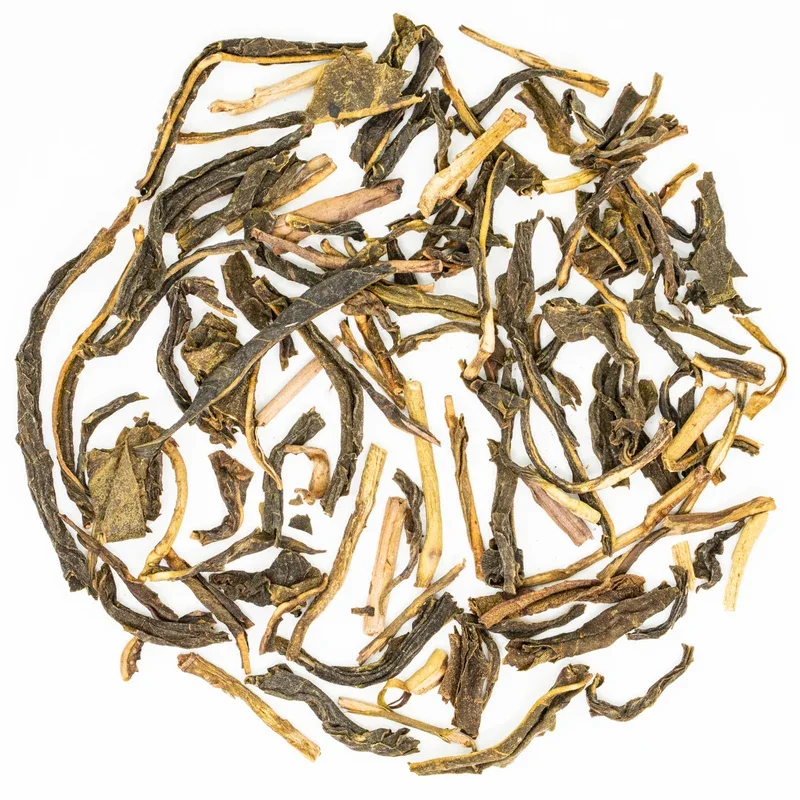
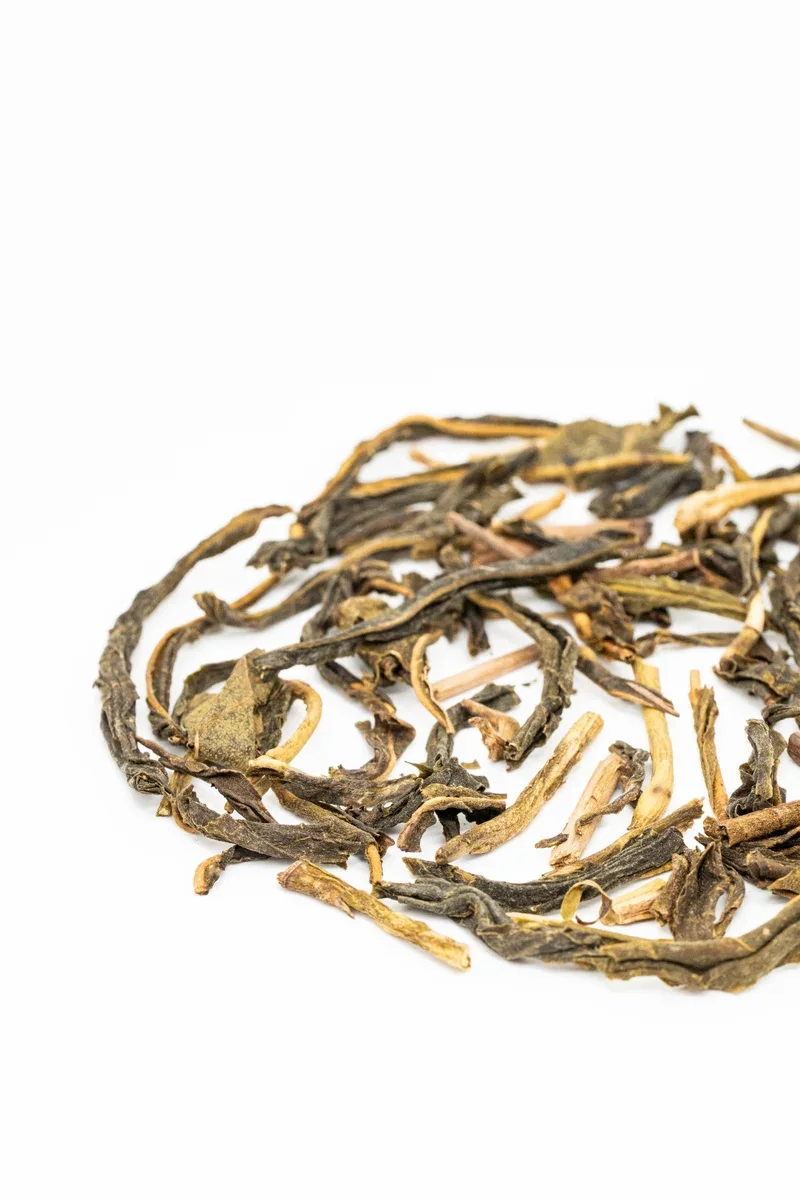
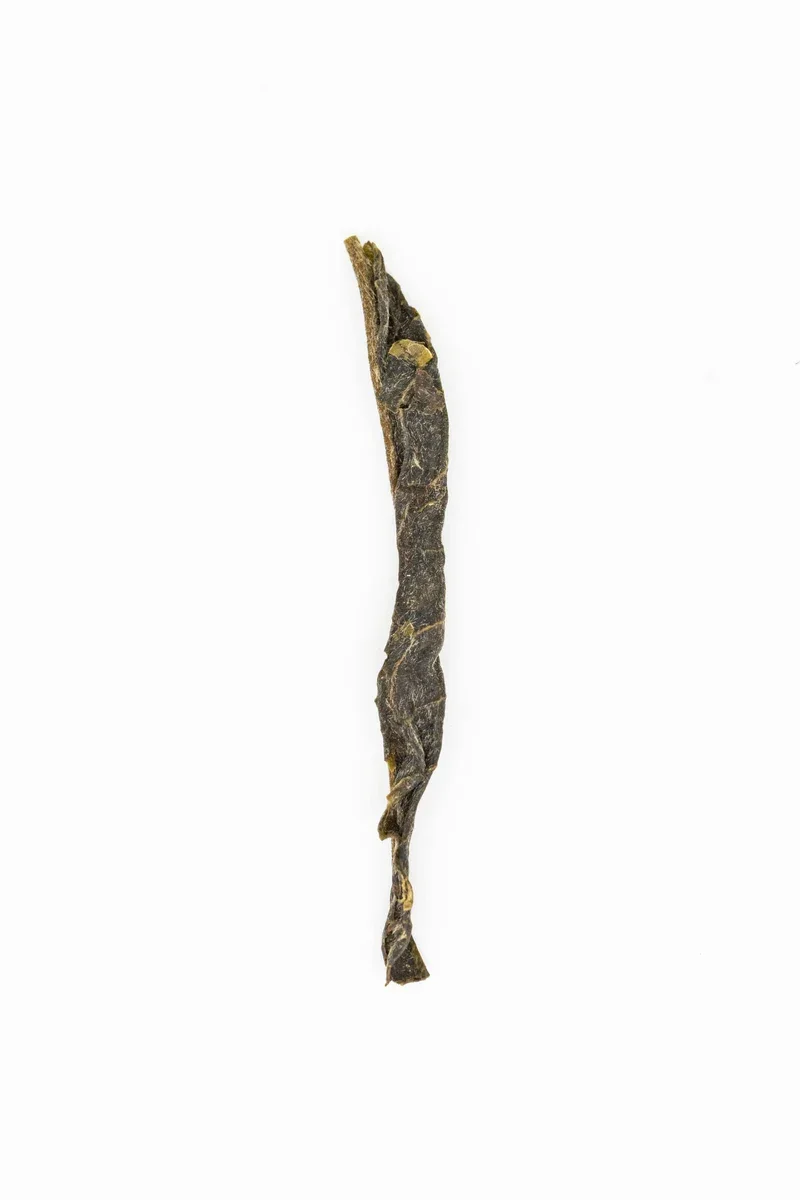
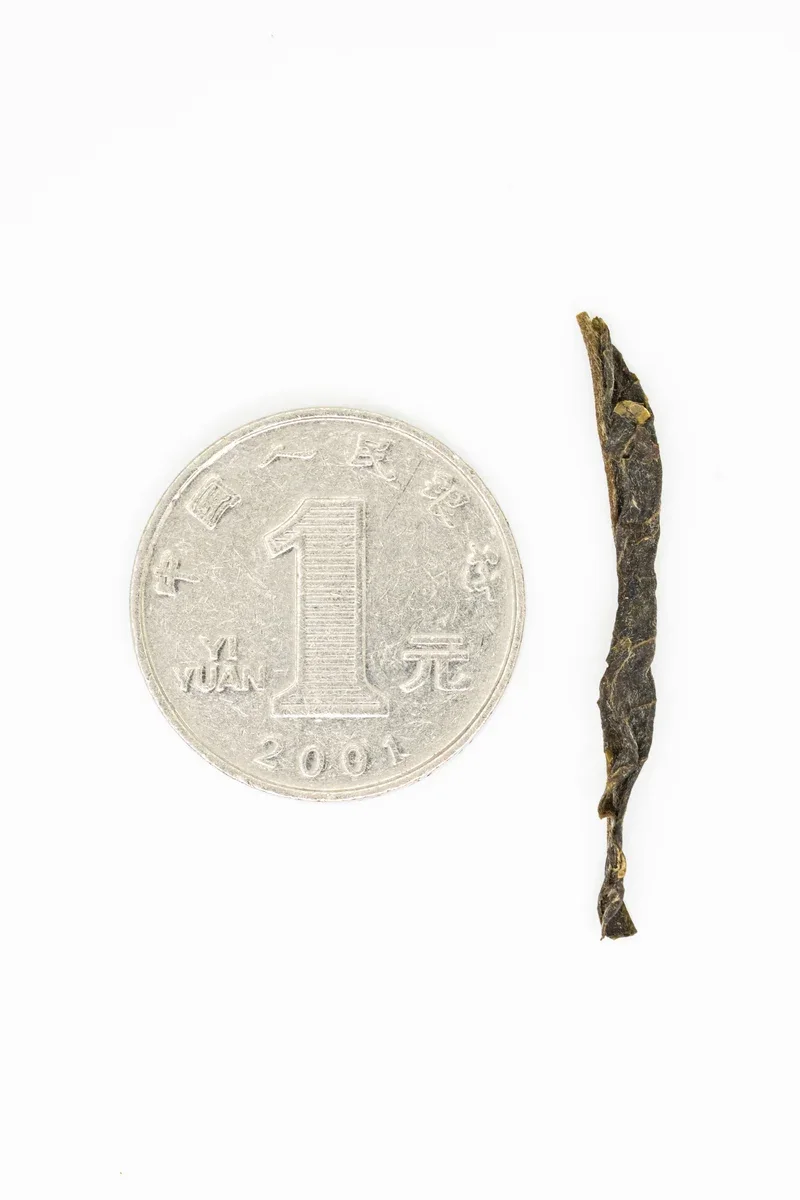
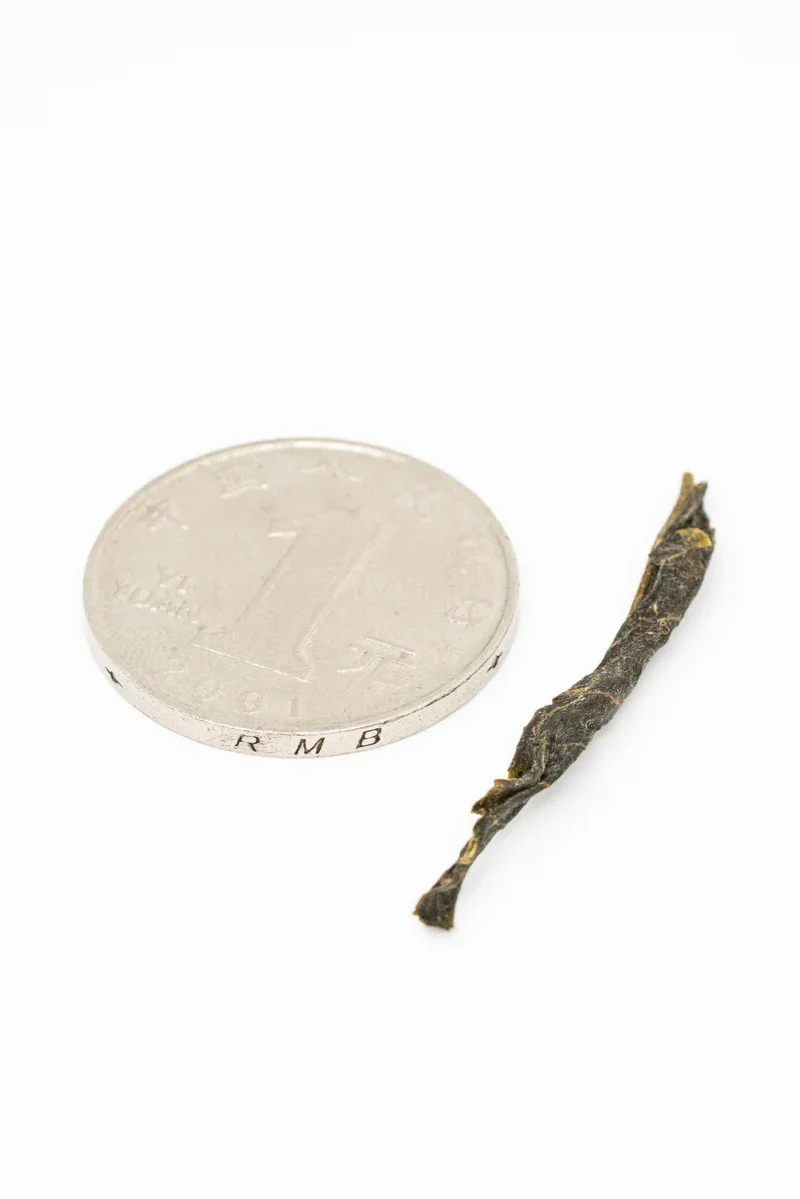
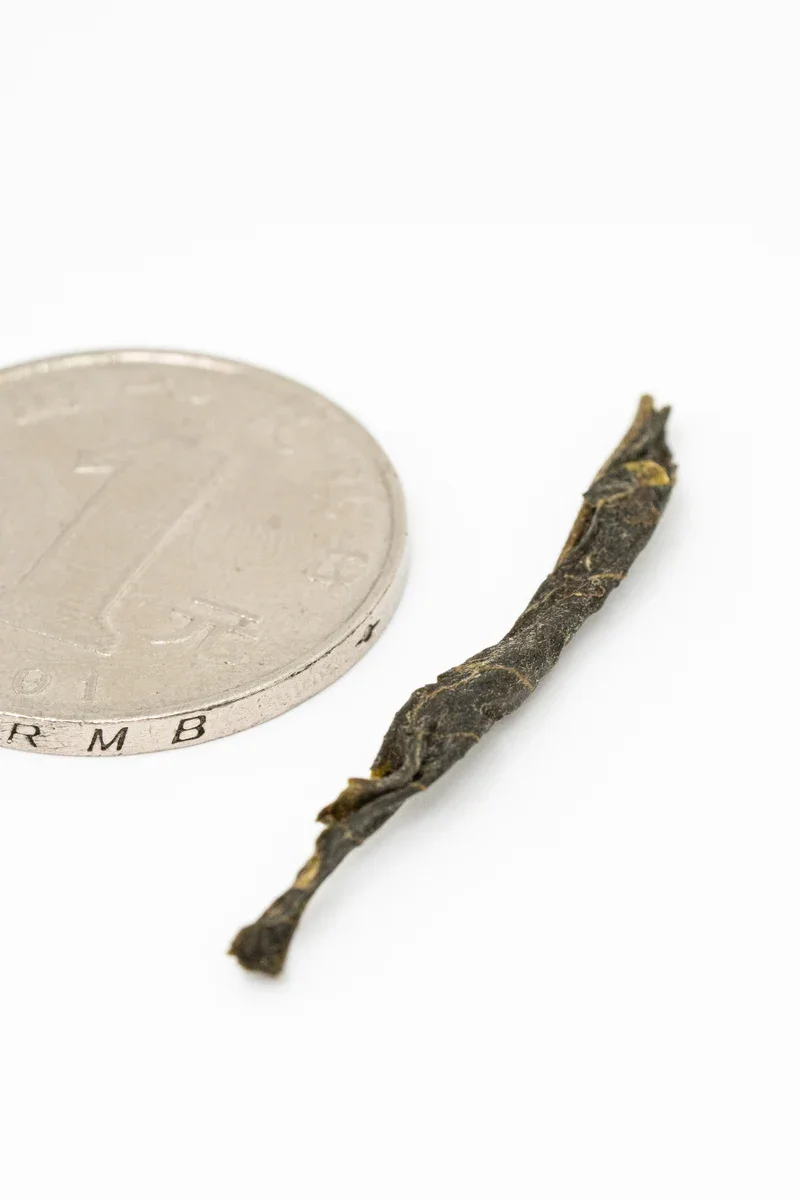
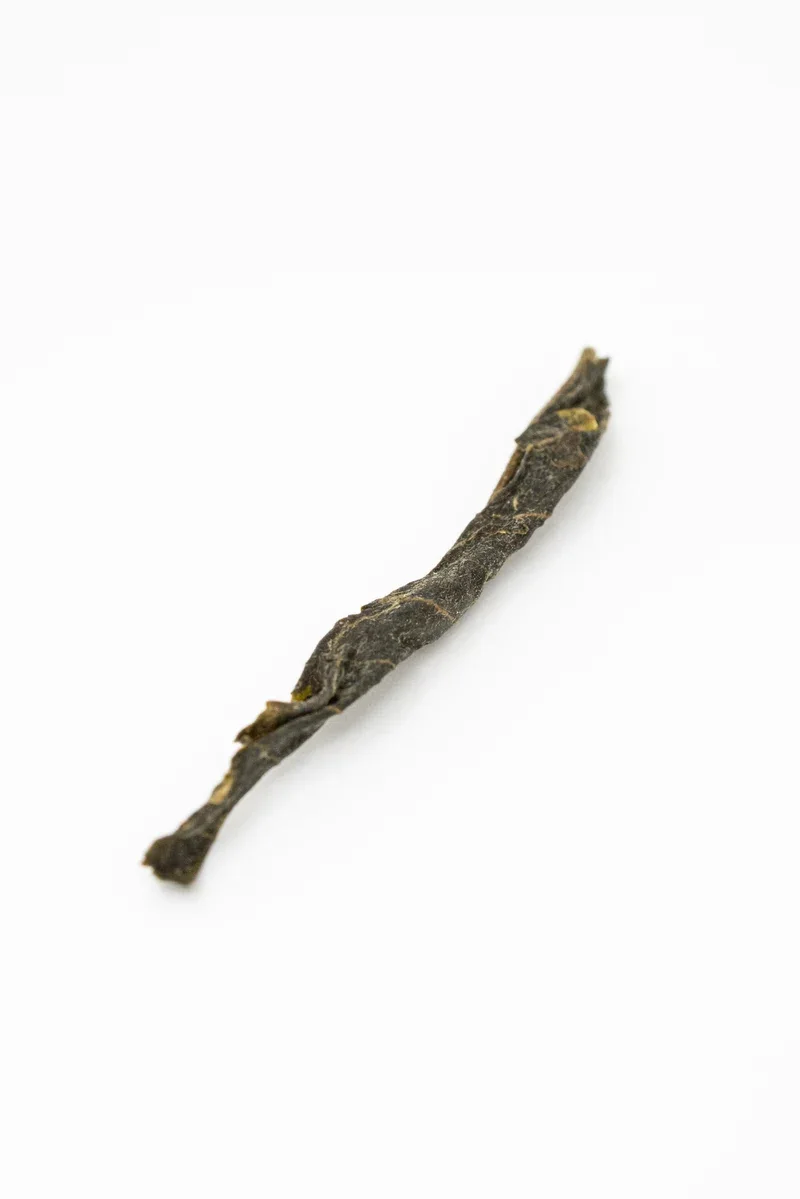
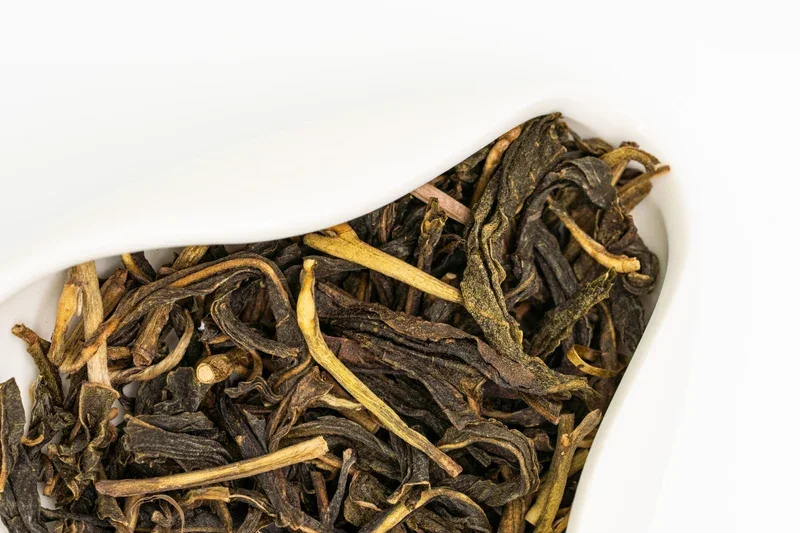
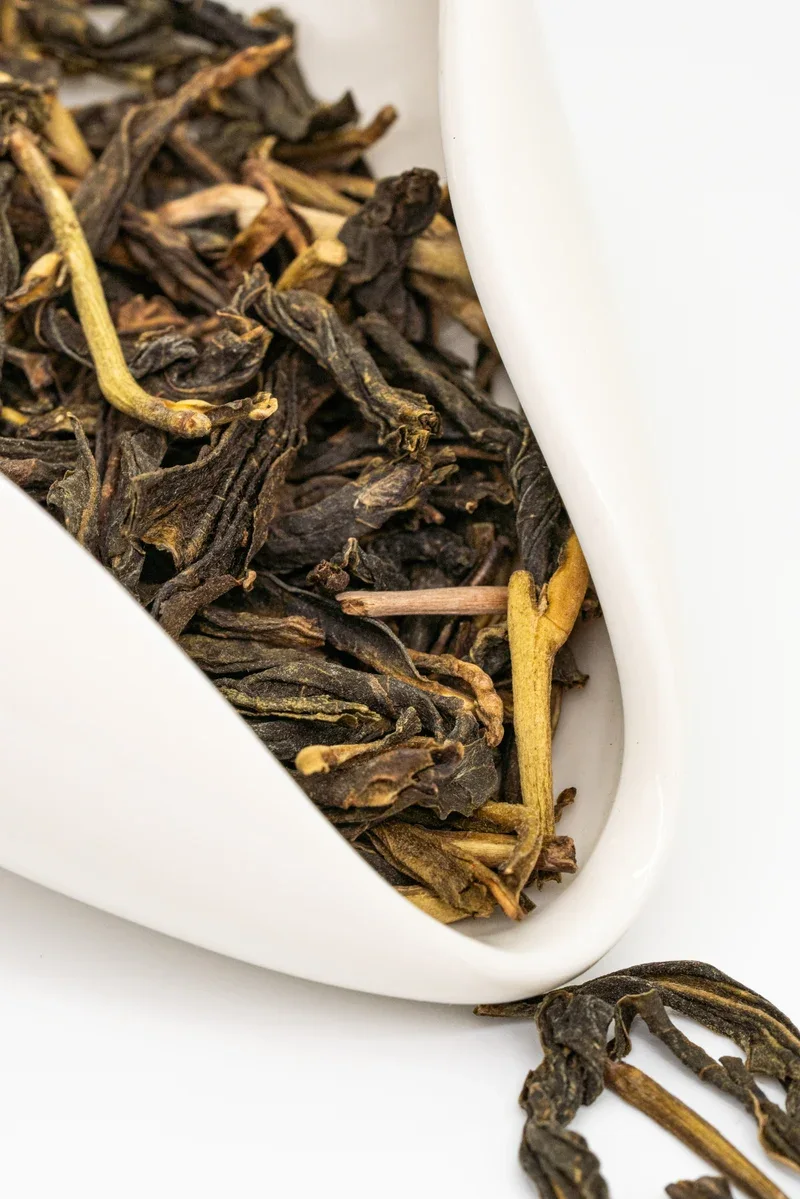
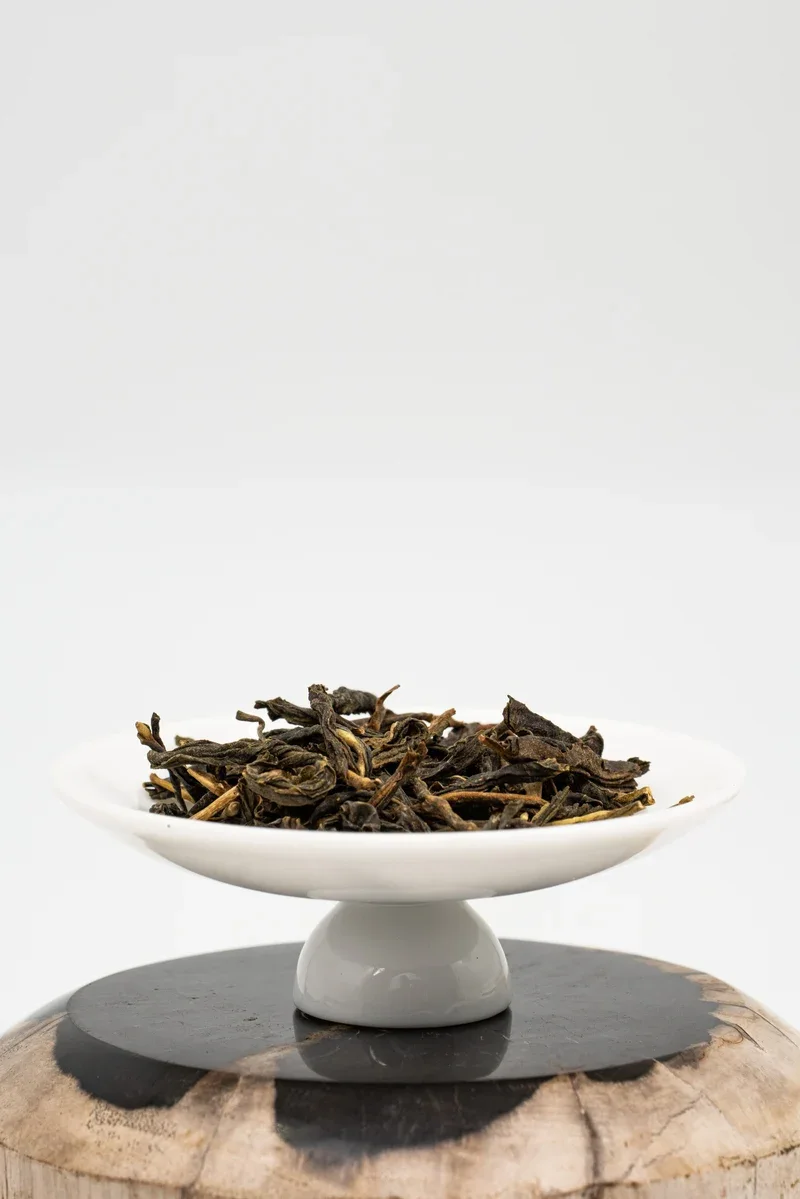
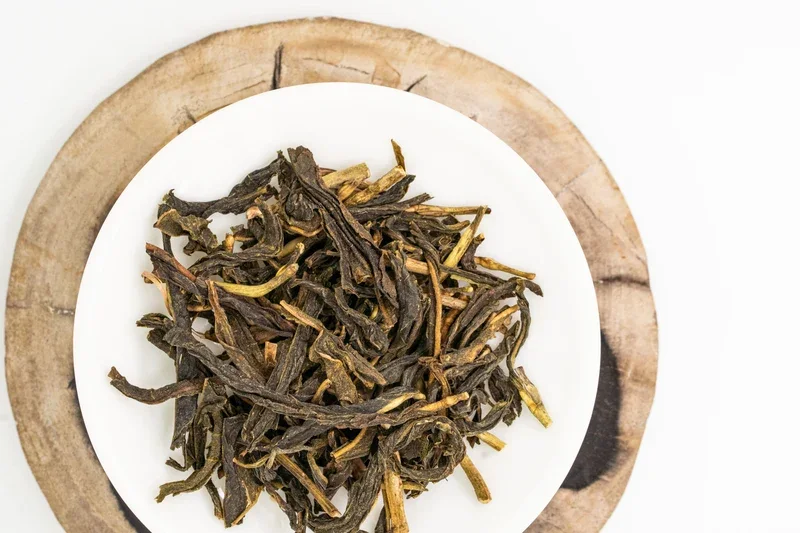
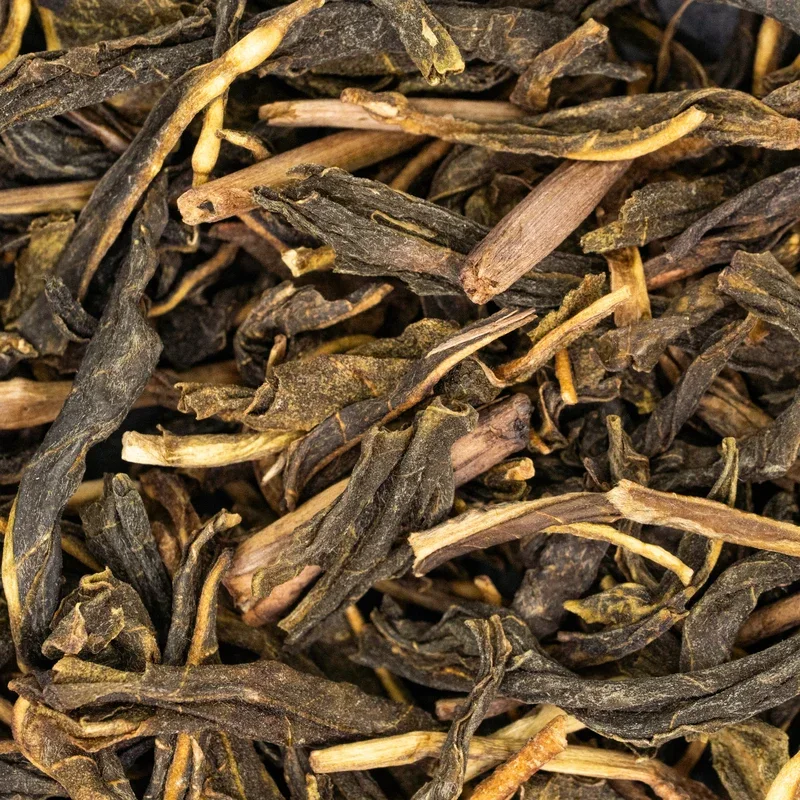
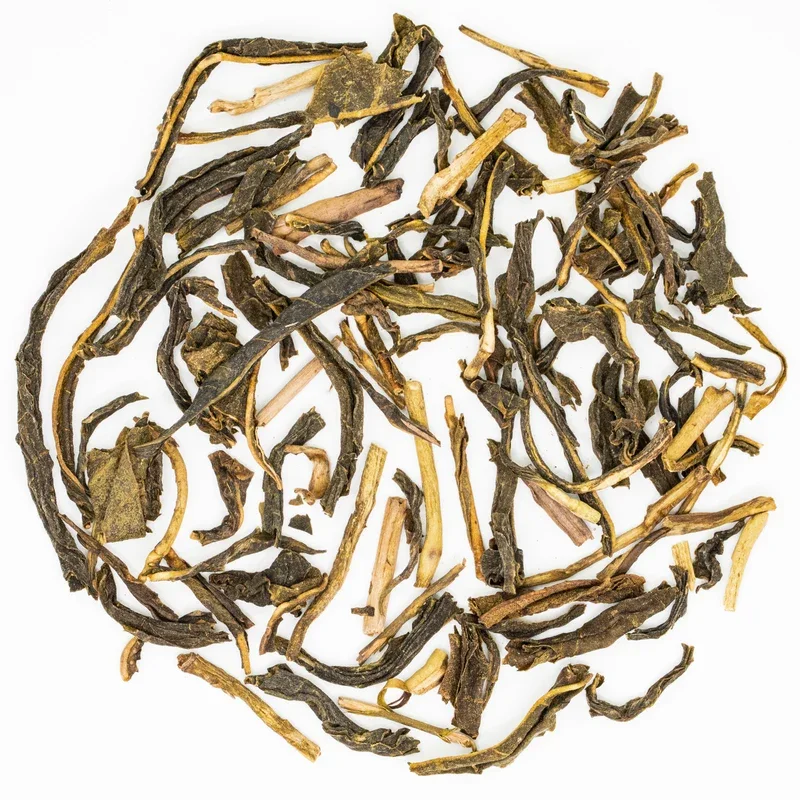
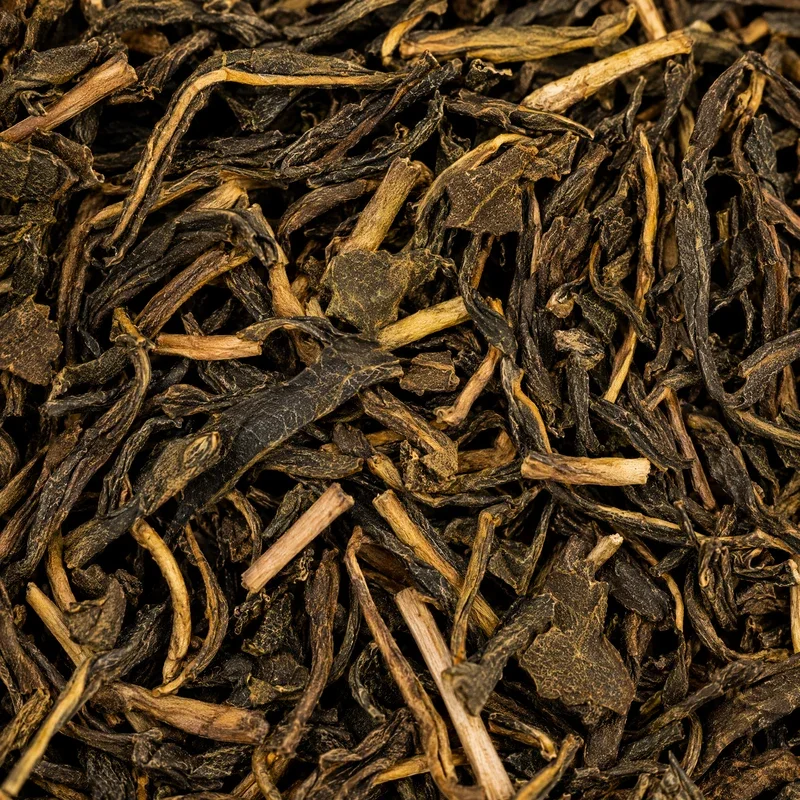
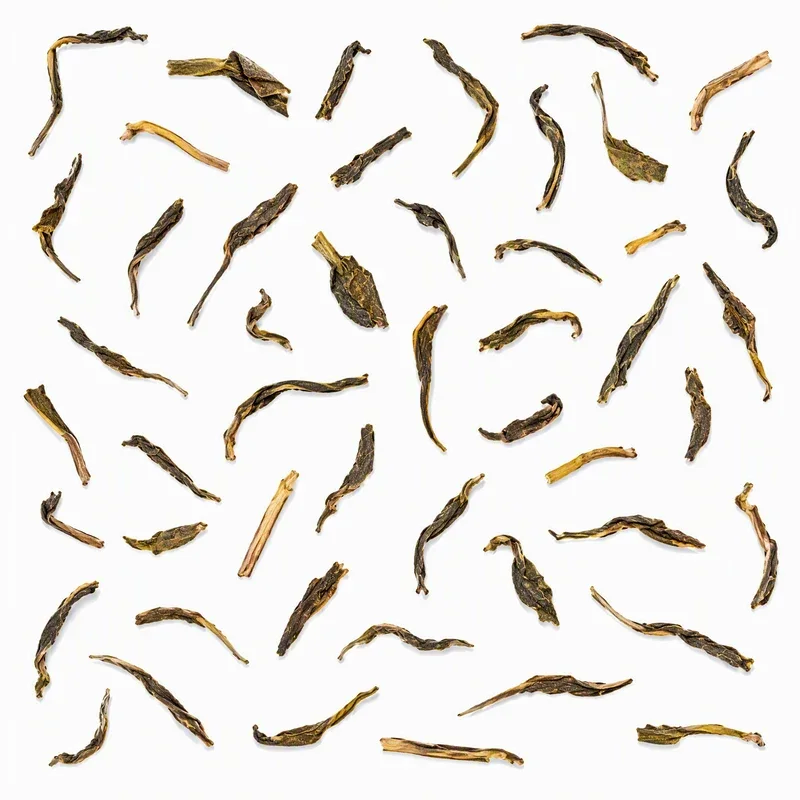
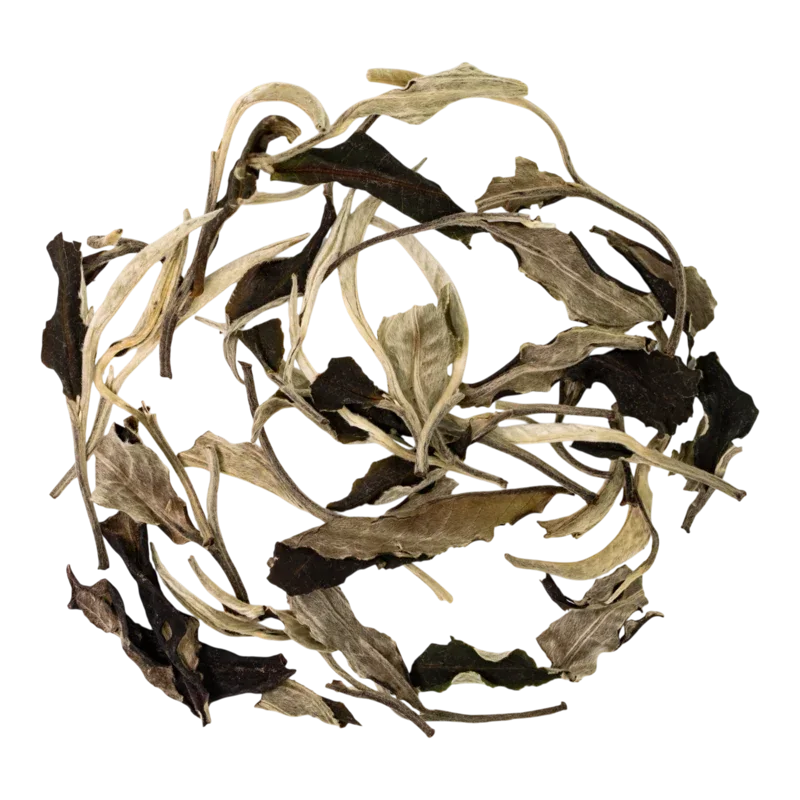
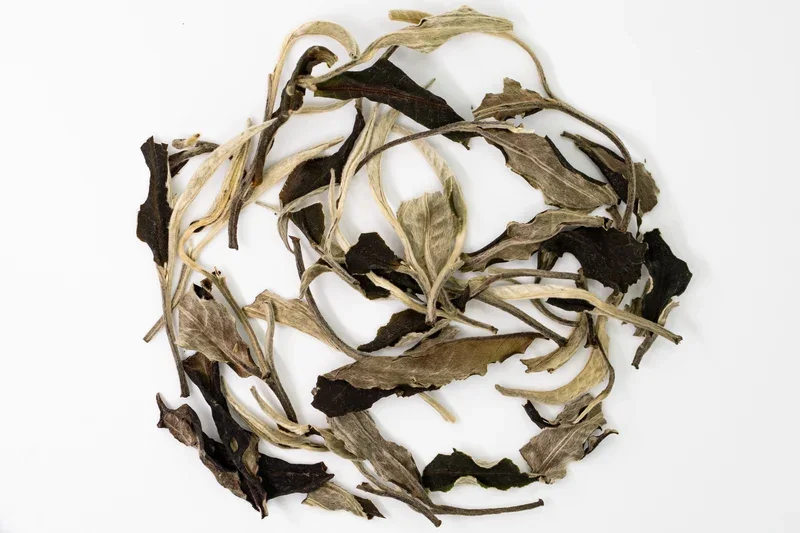
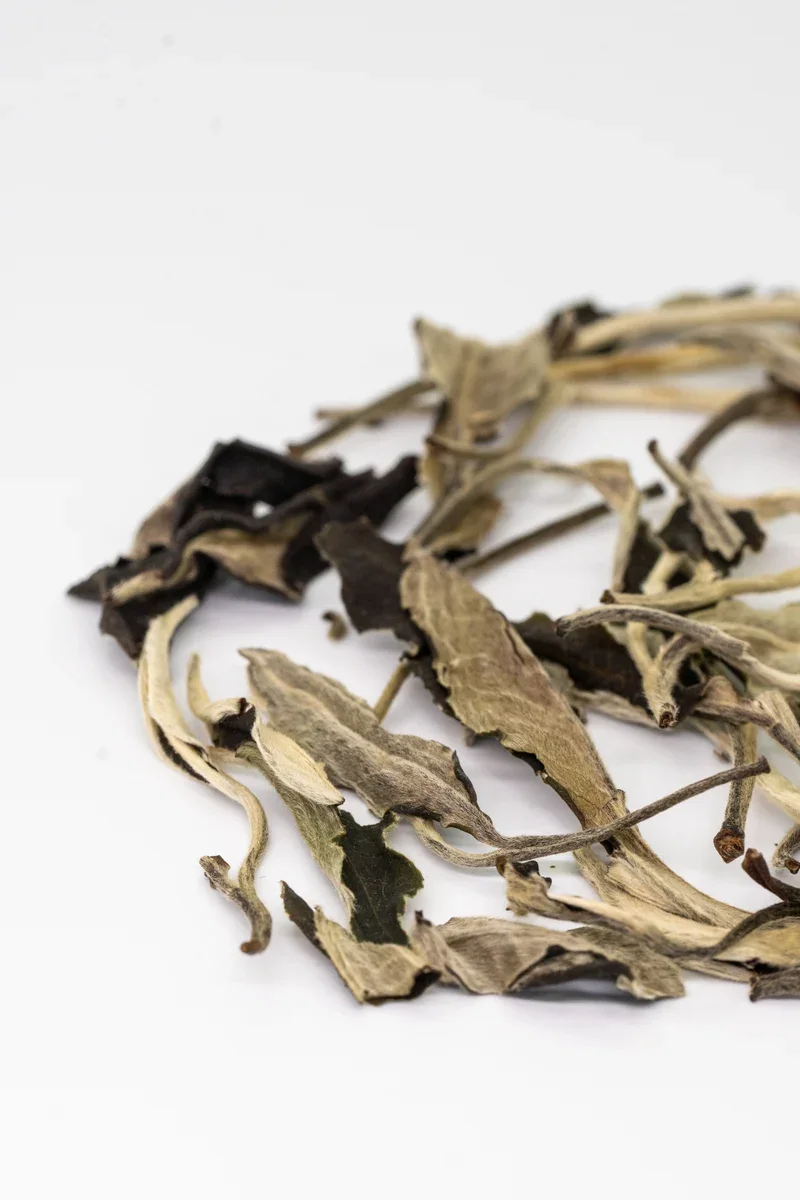
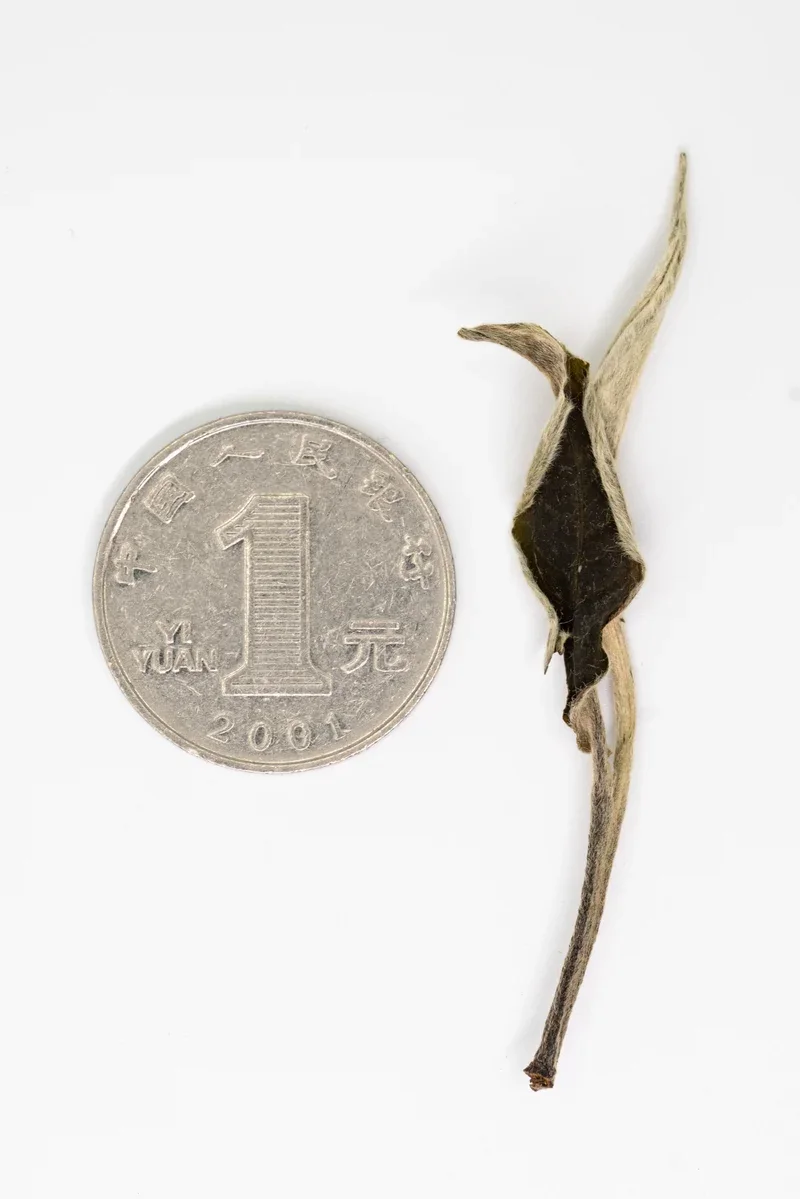
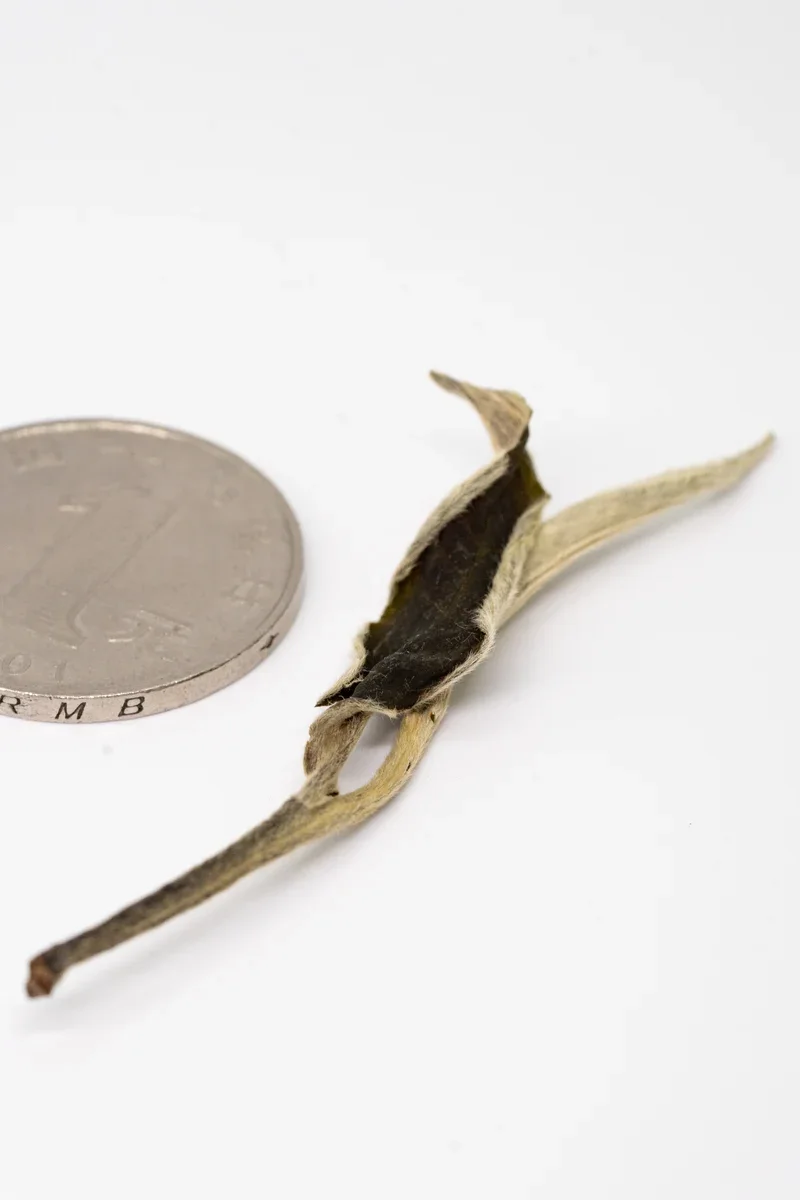
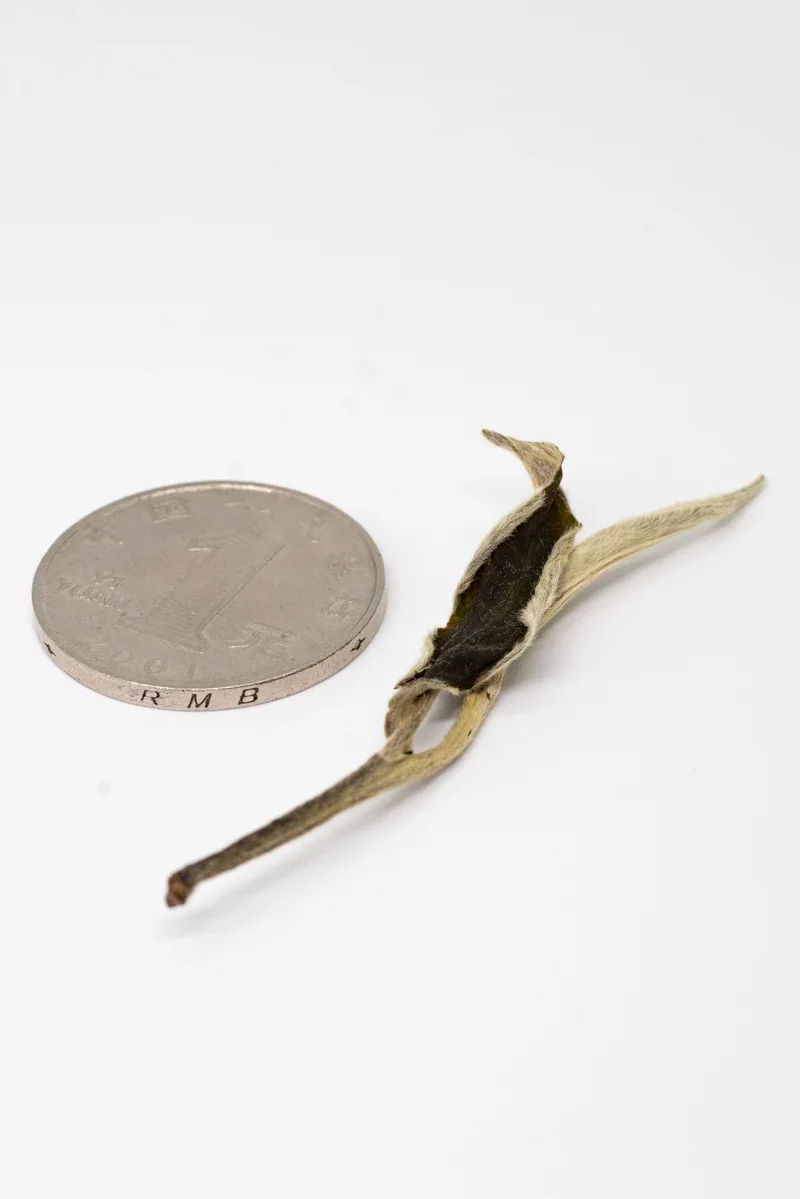
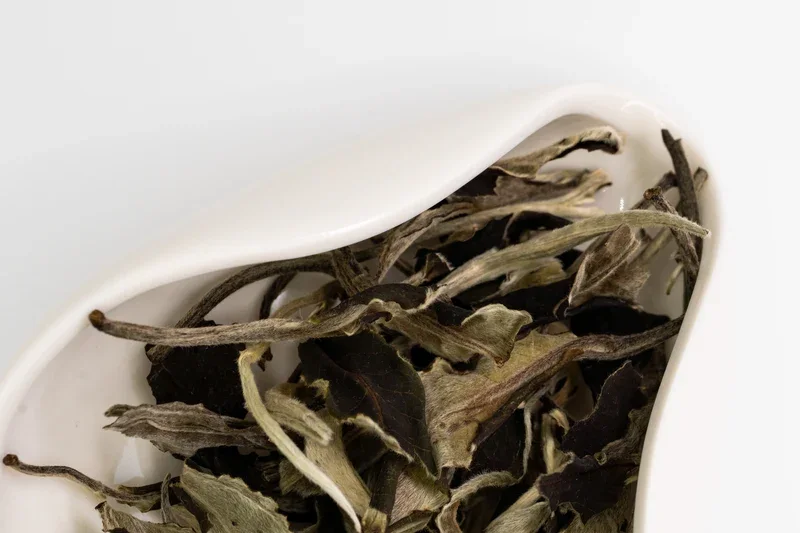
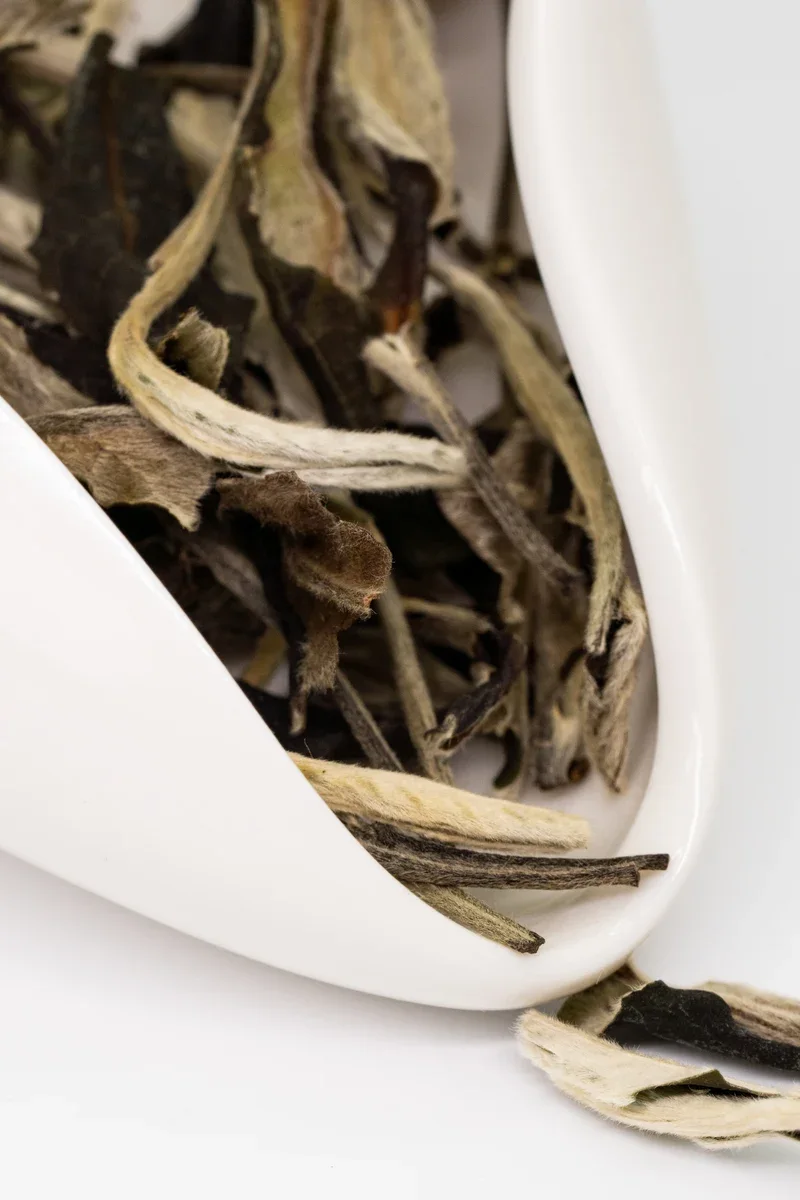
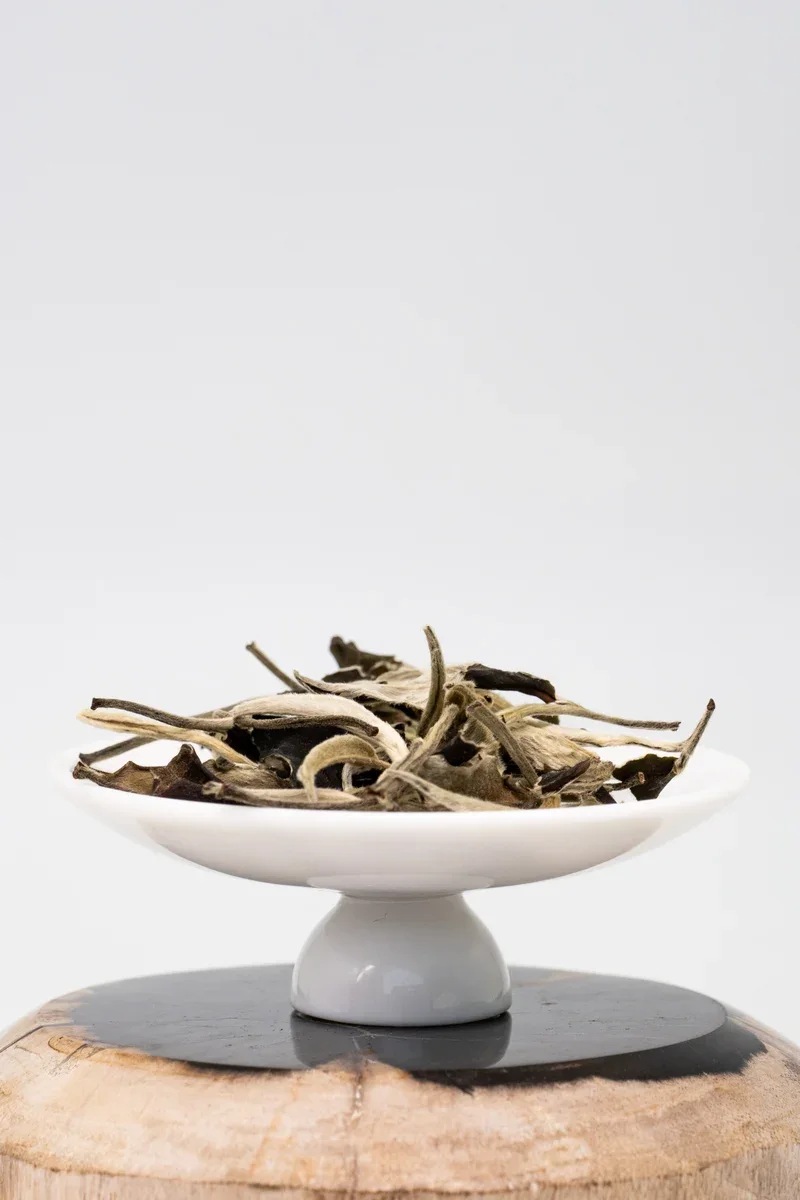
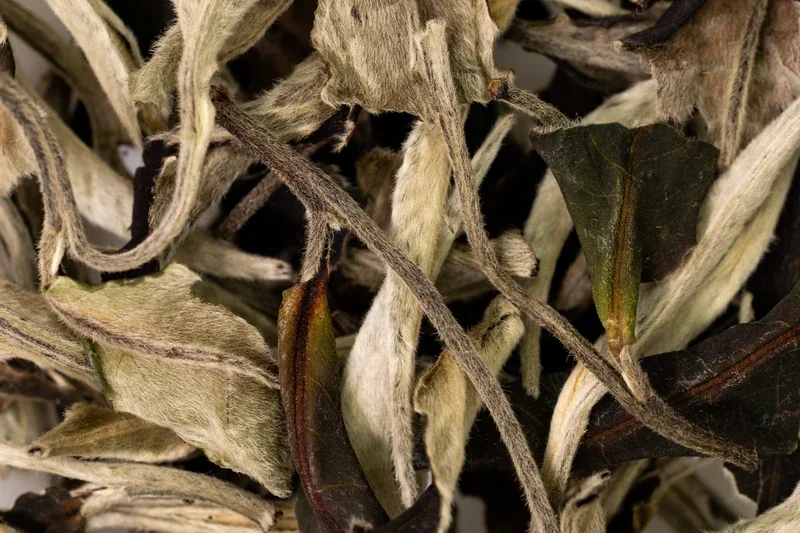
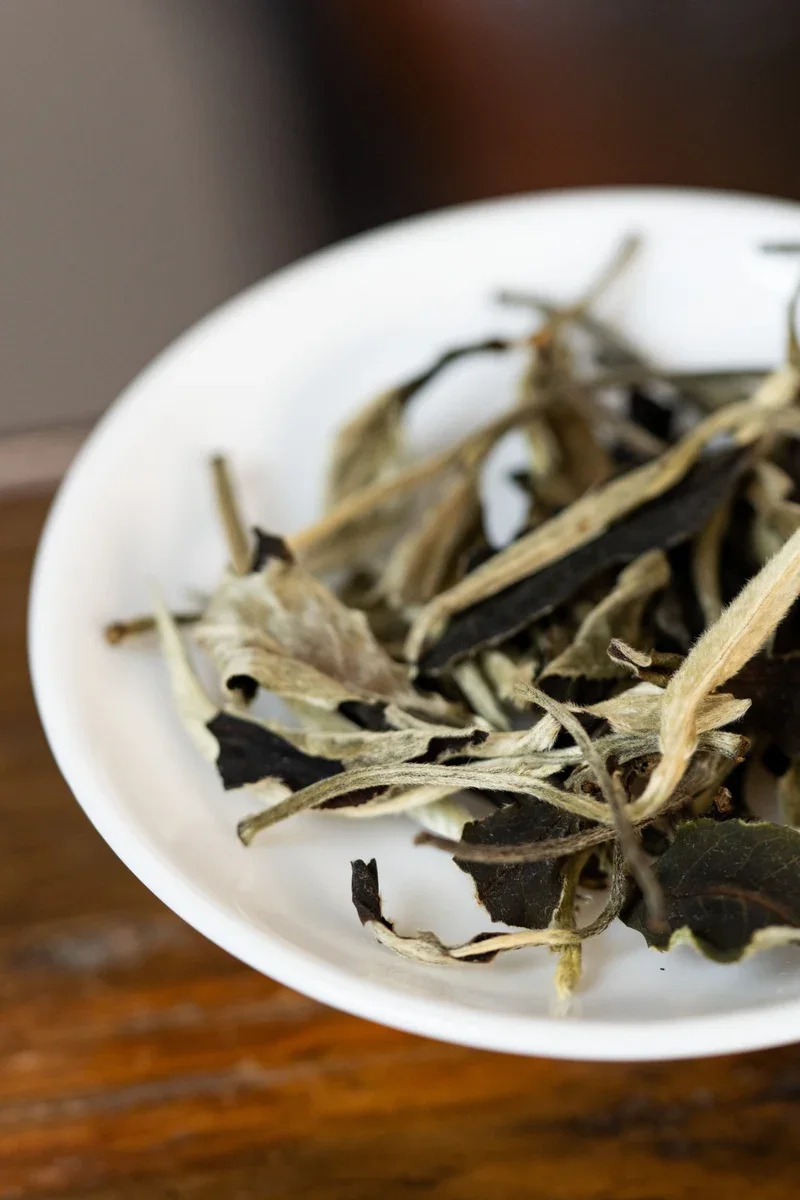
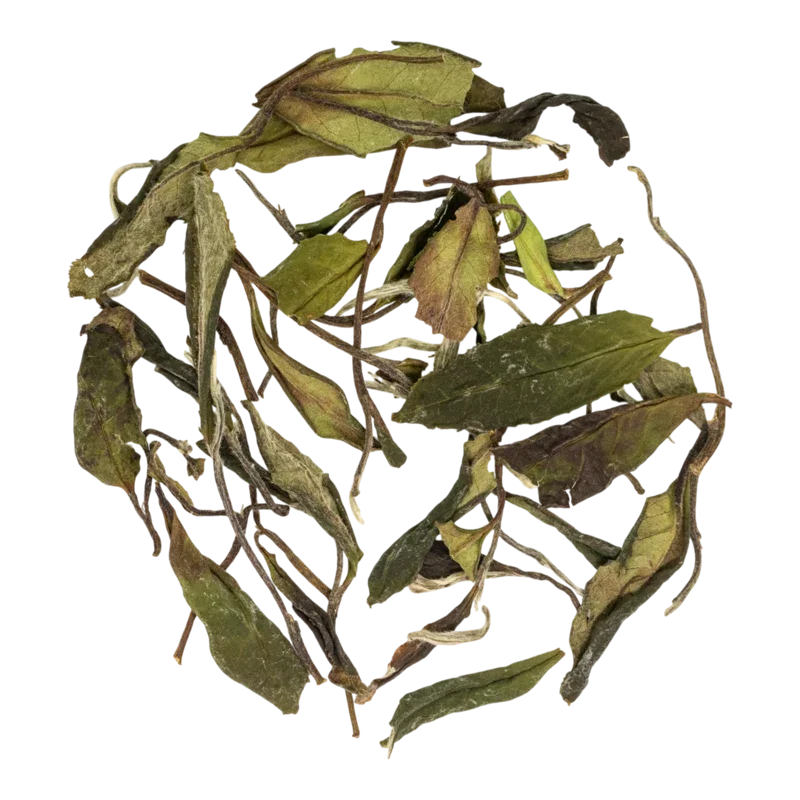
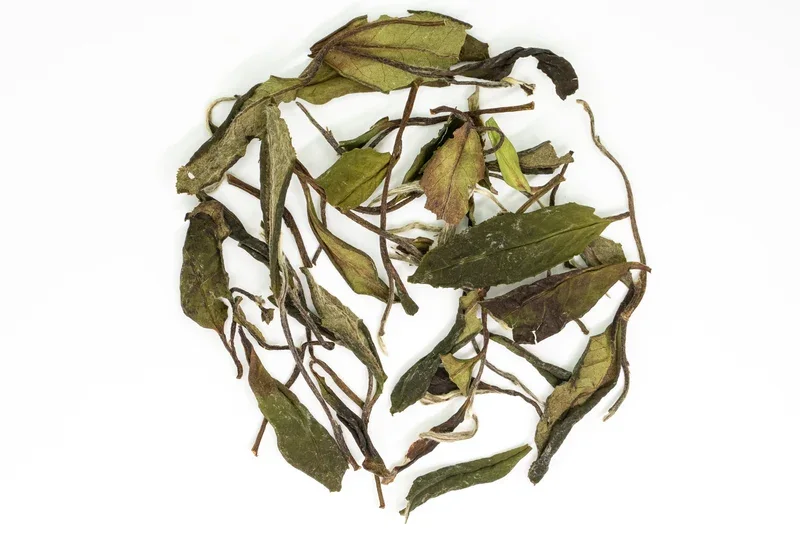
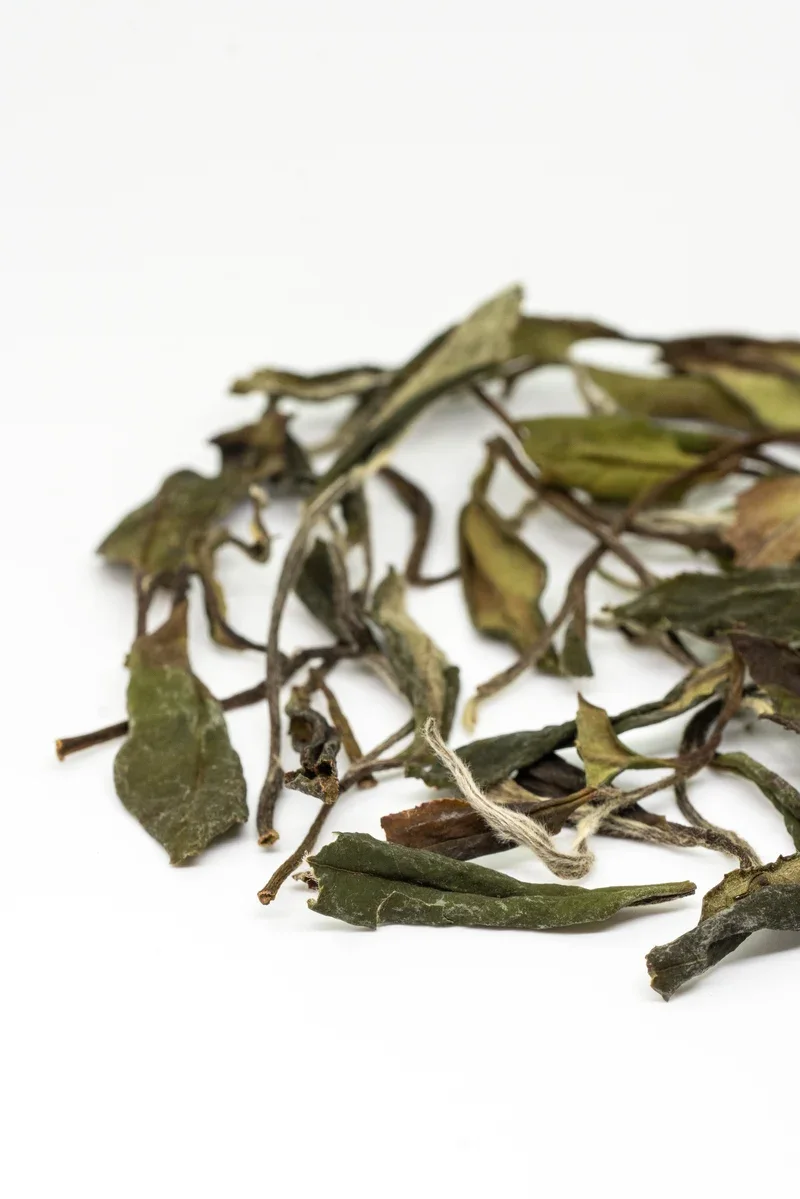
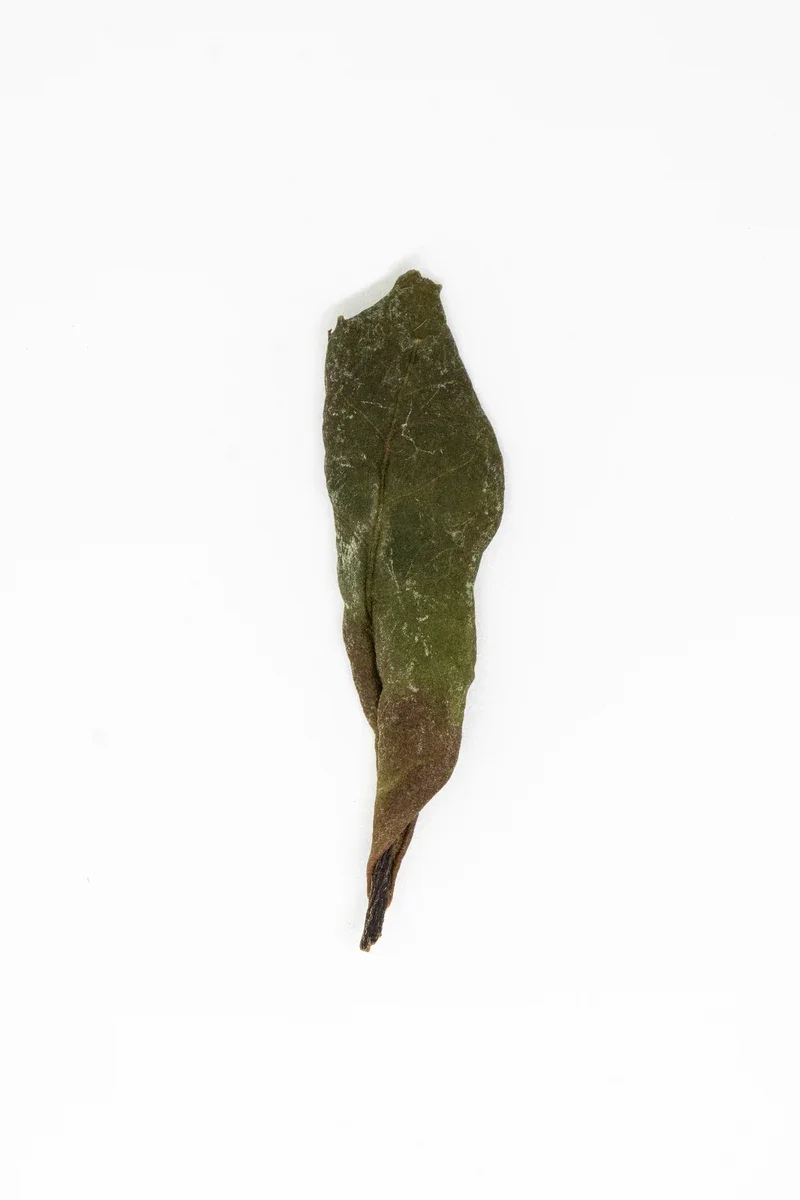
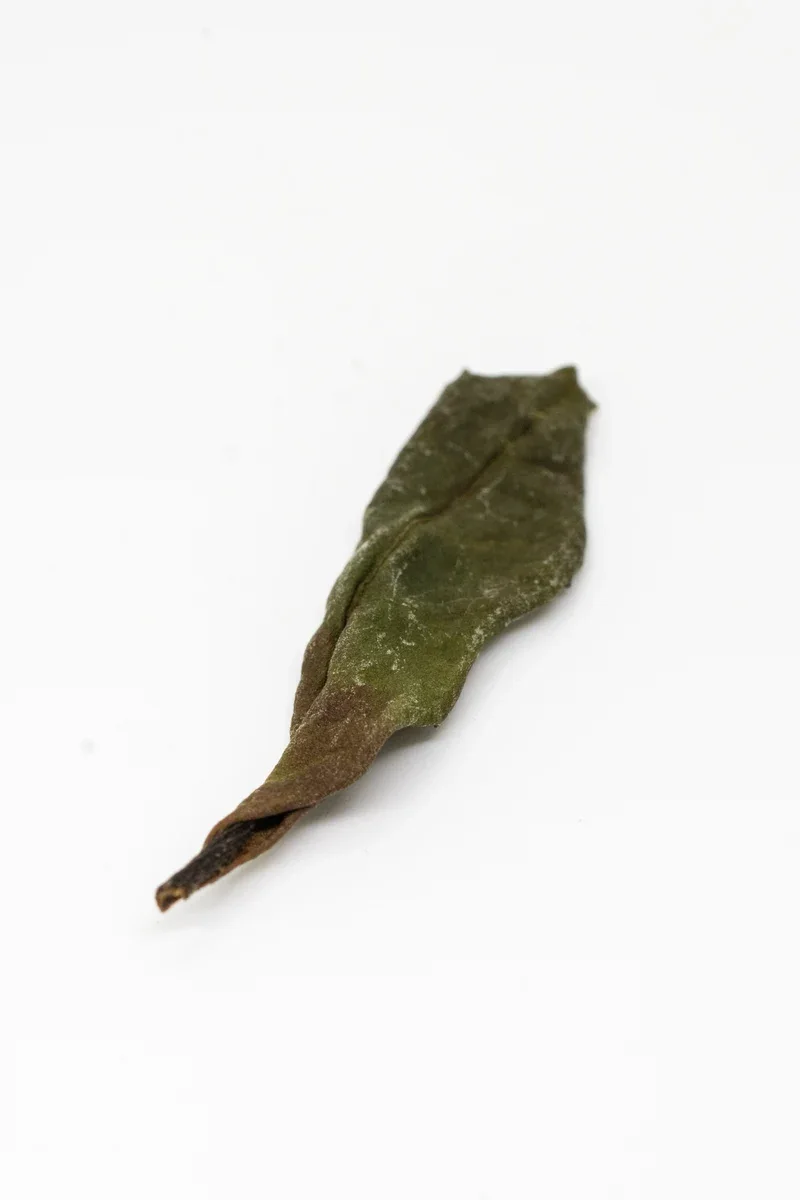
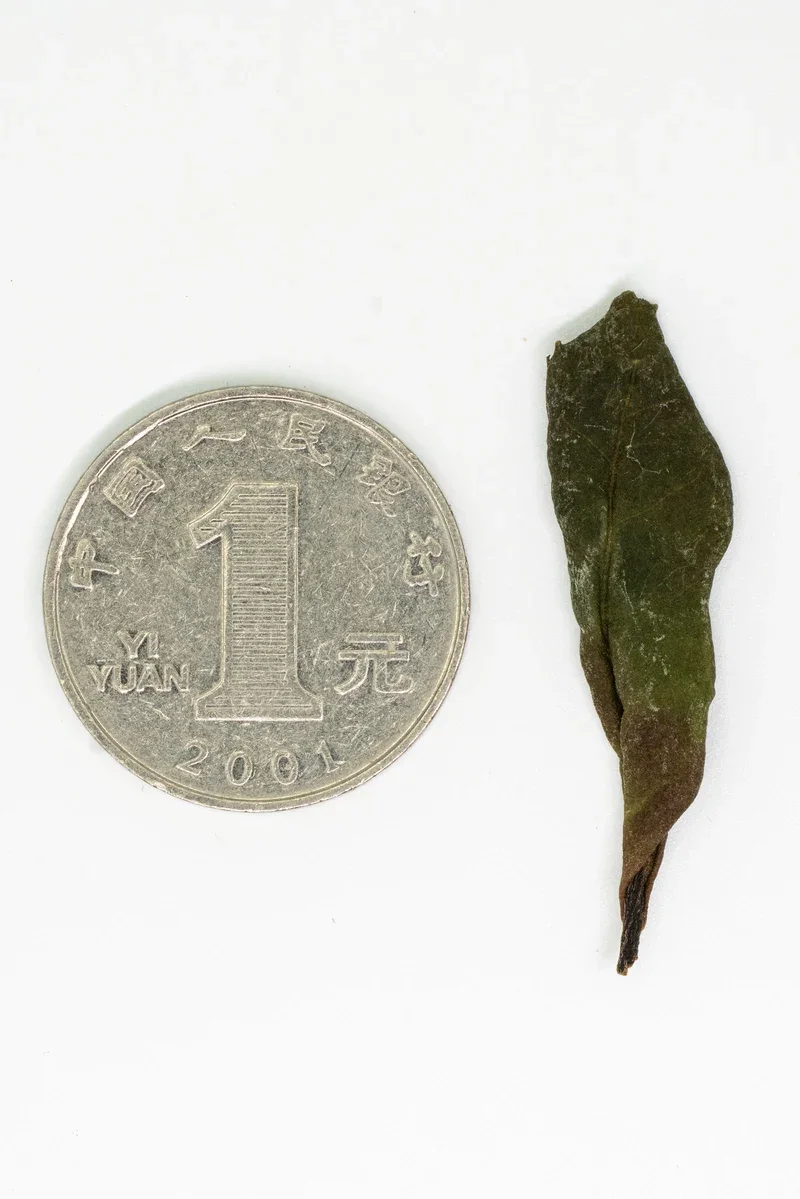
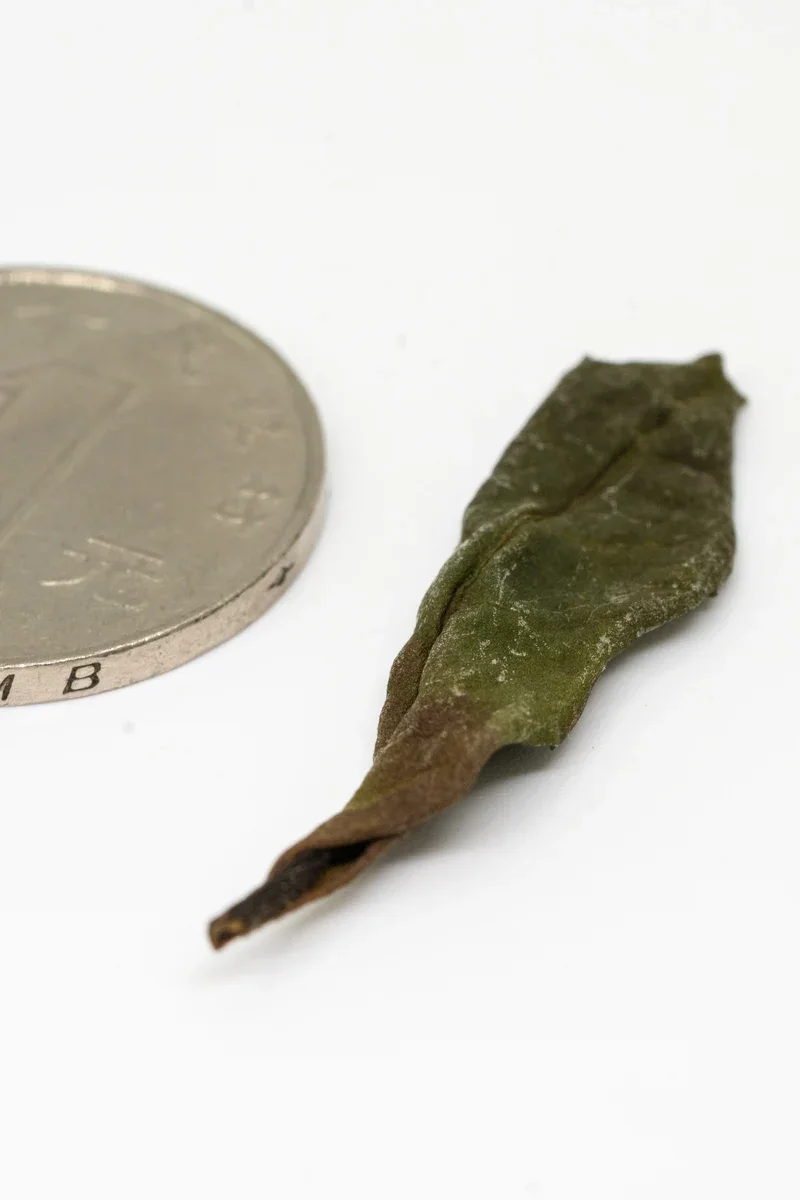
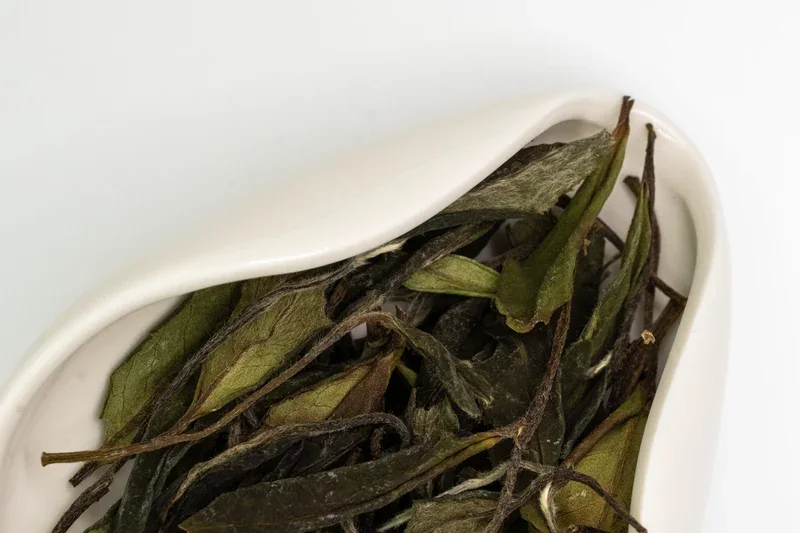
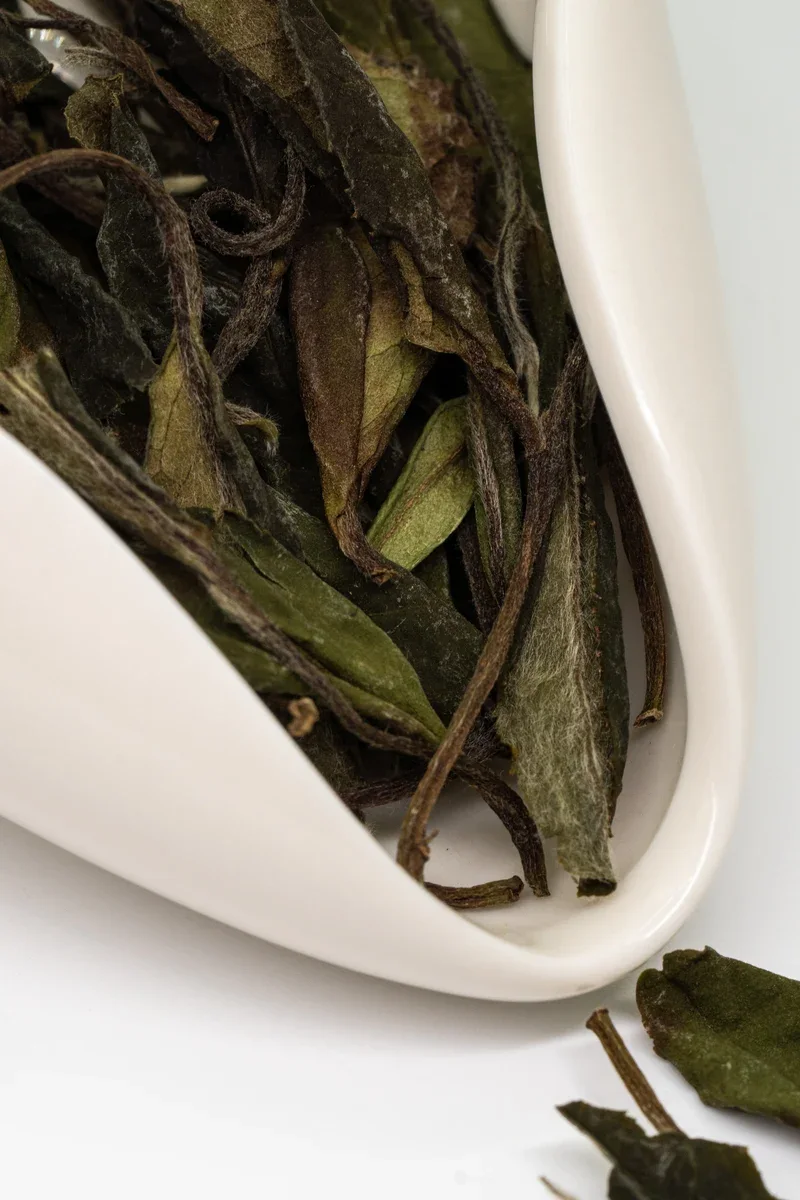
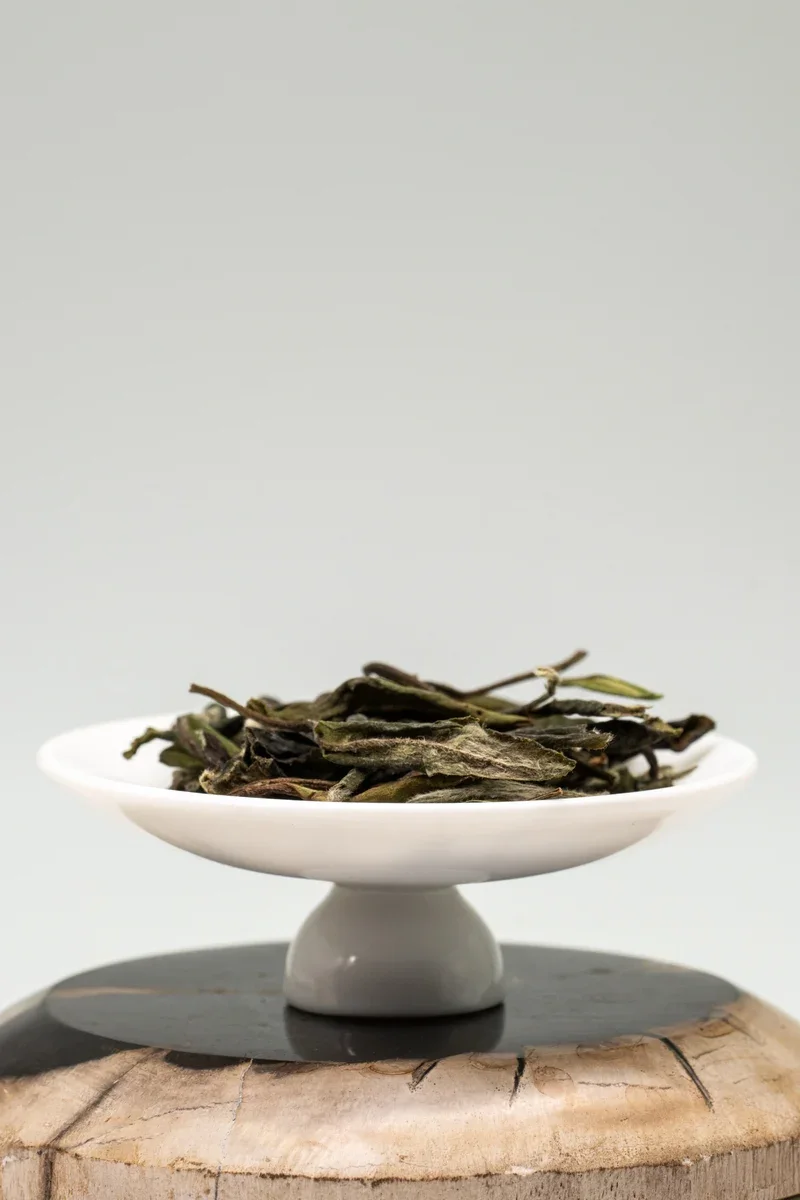
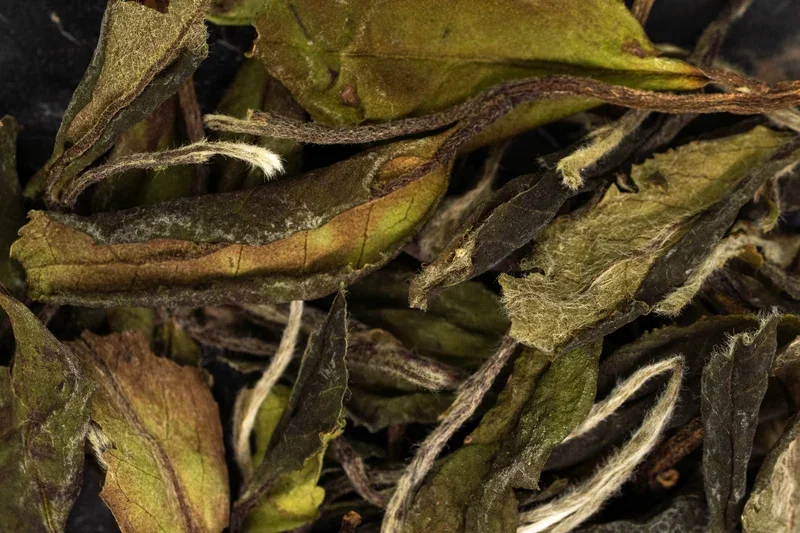
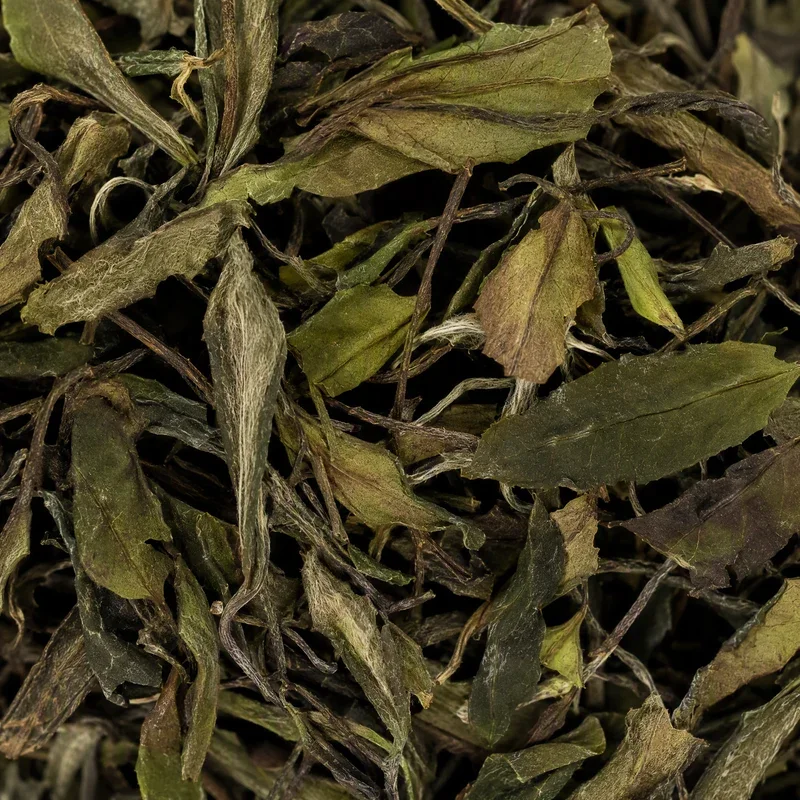
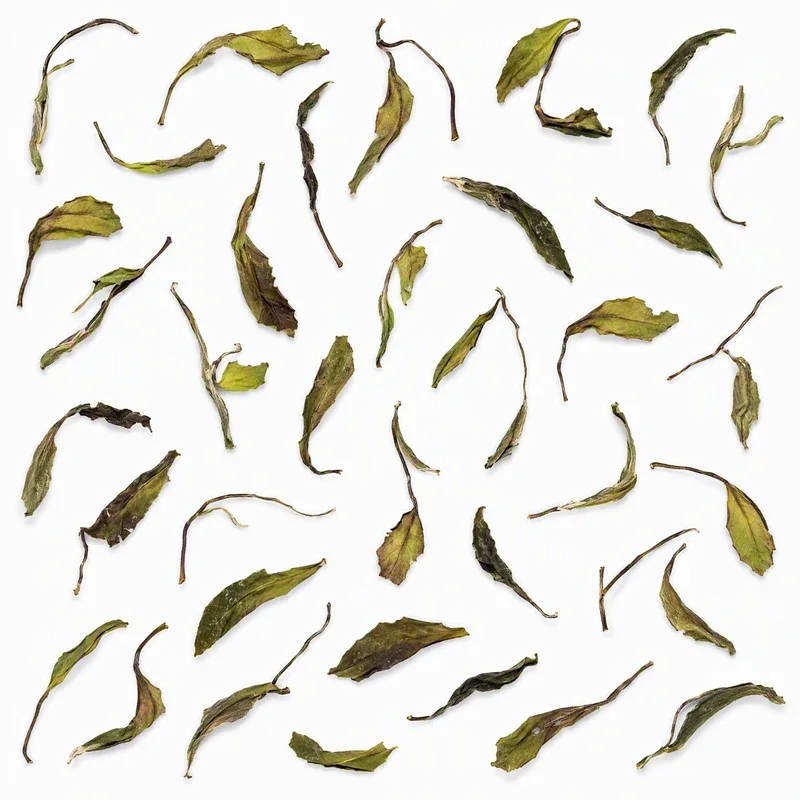
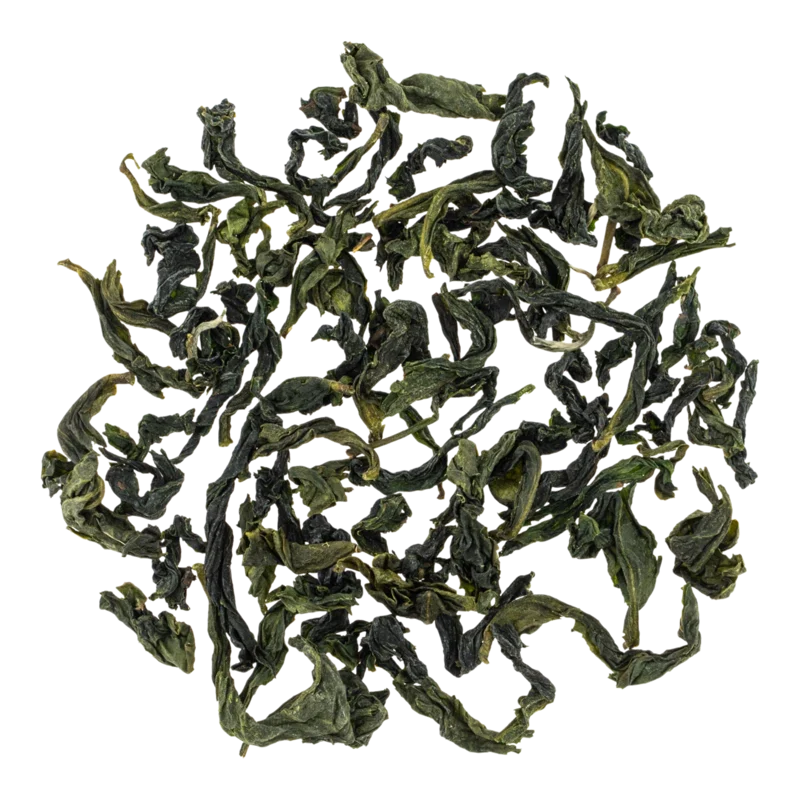
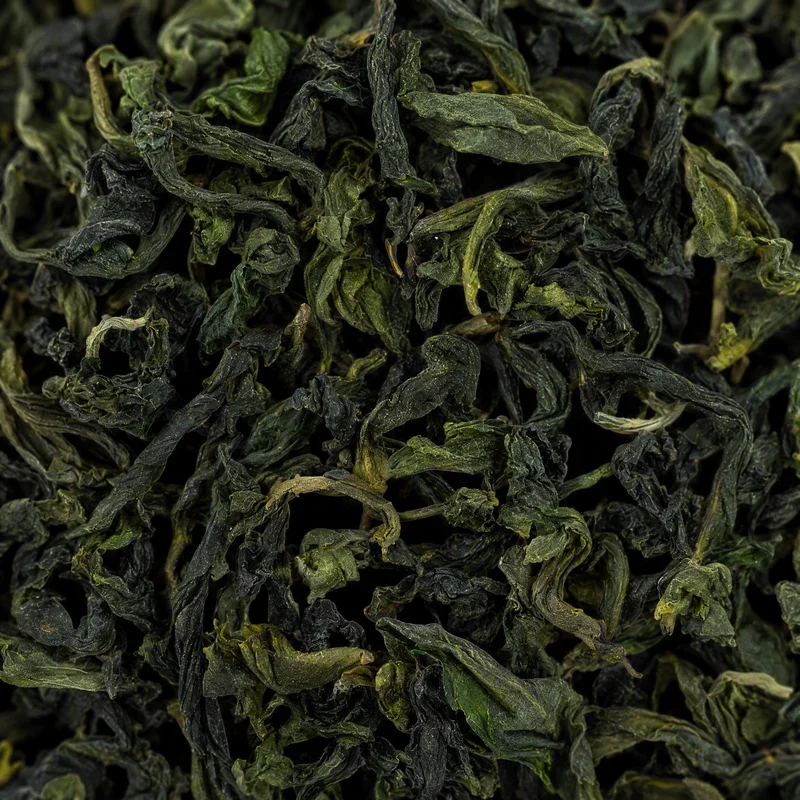
Dry Leaf Appearance: Long (4–6 cm), tightly twisted strips of dark green color with light steel or olive tint. Compared to unroasted variant, leaves are darker and have more pronounced gloss.
Dry Leaf Aroma: Warm, multi-layered: at the base — floral foundation (orchid, gardenia), over which hang delicate notes of roasted grain, walnut and light caramel. When warming the vessel, honey accent is added.
Liquor Aroma: Warm notes of vanilla and roasted nut; in the cup the floral base returns with accents of honey and ripe peach. Characterized by long, softly fading aftertaste.
Liquor Color: Clear, light amber or golden-yellow (蜜黃色, mì huáng sè). With intensive roasting, transition to more saturated amber is possible.
Spent Leaves: Leaves unfold evenly, acquiring yellow-green color with brownish edges. Leaf blade is soft, integral.
Taste: Silky, without bitterness. First sip — floral and honey tones; in mid-palate — light oiliness; finish — creamy-almond, sweetish. Roasting adds caramel and nutty accents, not overwhelming but enveloping the natural florality.
Alkaloids: Caffeine — about 15–25 mg per cup (150 ml) with standard brewing, somewhat lower than green and red teas (black tea). Trace amounts of theobromine and theophylline are present.
Amino Acids: Characteristic feature of Baozhong — high content of free amino acids, primarily L-theanine (茶氨酸, cháānsuān): in high-quality raw material from Pinglin it reaches 2–3% of dry leaf mass. L-theanine determines characteristic sweetness of liquor and has synergistic mildly tonic effect with caffeine. High L-theanine/caffeine ratio conditions smooth, non-categorical impact on the organism.
Exceptionally rich profile of volatile substances — key merit of Baozhong. Floral profile is formed by linalool and its oxides, geraniol, benzyl alcohol, nerolidol, cis-3-hexenol (fresh greenery), benzyl acetate (jasmine) and indole (floral in low concentrations). In roasted versions, pyrazines (2-ethylpyrazine, 2,6-dimethylpyrazine) and furan compounds are added to the natural floral base, forming warm nutty and bread notes.
Give liquor characteristic smoothness and sweetness.
Minerals: Potassium, magnesium, manganese, fluorine, zinc, calcium. Mineral composition is determined by mountain soils of northern Taiwan and gives liquor characteristic mineral accents.
Polyphenols: Moderate content — about 16–20 mg/g, lower than green teas. Catechins are represented predominantly by EGCG (epigallocatechin gallate, ~12% of total polyphenols), EGC, EC and ECG. Minimal oxidation preserves a significant portion of catechins, bringing Baozhong close to green tea in antioxidant profile. During roasting, part of catechins transforms into theaflavins (~0.8 mg/g) and thearubigins, forming golden tint of liquor and velvety texture; simultaneously new antioxidant compounds form — products of Maillard reaction.
Vitamins: Vitamins C, B₁, B₂, B₆, PP (nicotinic acid); small amount of vitamin E.
Combination of L-theanine and caffeine in proportions characteristic of Baozhong provides mental clarity and concentration without anxiety — so-called "calm alertness." L-theanine stimulates production of alpha brain waves, promoting a state of relaxed focus.
Polyphenols (catechins, theaflavins) neutralize free radicals. By catechin level, unroasted Baozhong is closer to green tea than to medium-oxidized oolongs. Measured antioxidant activity value — about 3,500 μmol TE/g (ORAC method). In roasted versions, Maillard reaction products additionally contribute to antioxidant potential.
Data from several studies indicate correlation of regular oolong consumption with lowering LDL cholesterol levels and normalizing blood pressure.
Oolong polyphenols can increase tissue insulin sensitivity and reduce postprandial blood glucose levels, making Baozhong potentially beneficial for metabolic syndrome.
Moderate catechin content and low liquor acidity provide mild antibacterial action without irritating gastric mucosa.
Fluorine and catechins suppress activity of cariogenic bacteria.
Antioxidants slow photoaging processes, neutralizing free radicals induced by UV radiation.
L-theanine reduces cortisol levels and promotes improved sleep quality when consumed in the first half of the day.
Second "pillar" of Taiwanese tea culture, originating from Dongding Mountain in Nantou County. Ball-shaped rolling, oxidation 25–40%, traditional charcoal roasting. Taste is denser, with pronounced caramel and burnt sugar notes. Aftertaste — characteristic "throat response" (喉韻, hóu yùn), longer than Baozhong. Baozhong is its antipode: strip-style, minimally oxidized, airy.
High-mountain ball-shaped oolongs (Alishan, Lishan, Shan Lin Xi) with oxidation 15–25%. Denser texture and pronounced sweetness; milky, creamy profile. Baozhong — lighter, fresher, more aromatic, but less "oily."
Historical ancestor of Taiwanese. Mainland Baozhong is generally more oxidized and roasted; Taiwanese evolved toward maximum lightness and florality.
Medium-oxidized (30–50%) ball-shaped oolong from Fujian. Profile — roasted nut, cut grass, umami; amber liquor. Significantly more intense and astringent than Baozhong.
Baozhong approaches green tea in oxidation degree, however the stirring stage (搖青, yáoqīng) creates fundamental difference — directed oxidation along leaf edges forms characteristic oolong depth and "body," absent in green teas.
Tea Amount: 5–6 g per 150 ml.
Teaware: Porcelain gaiwan or porcelain teapot. Yixing clay is also suitable — especially hongni (紅泥, hóng ní) and zhuni (朱泥, zhū ní) varieties. Traditional Taiwanese set includes aroma cup (聞香杯, wén xiāng bēi) and drinking cup (品茗杯, pǐn míng bēi).
Water Temperature: 90–95°C. Fresh, soft water with neutral pH is recommended.
Enemies: Moisture, high temperature, foreign odors and direct light. Do not store near coffee, spices and flavored teas.
Most sensitive to storage conditions among oolongs. Store exclusively in vacuum or hermetically sealed opaque packaging. Optimal temperature — cool place (up to 15°C) or refrigerator (5–10°C). Before opening, keep chilled package at room temperature 20–30 minutes to prevent condensation. Humidity — no more than 50%. Shelf life in sealed vacuum packaging — up to 18–24 months; after opening — consume within 2–3 months. Modern ultra-light Baozhong is not intended for long-term aging.
Significantly more stable than unroasted. Optimal container — hermetic opaque stainless steel container, vacuum packaging with inner aluminum foil layer or tightly closed tin can. Store in dry, cool (14 ± 2°C), dark place; humidity less than 50%. Shelf life — up to 18–24 months. First 1–3 months after roasting, aroma has pronounced "fire flavor" accent (火味, huǒ wèi); after rest it smooths out, revealing more delicate floral-nutty bouquet. Some connoisseurs specially age roasted Baozhong 90+ days before first opening.
Musty, moldy smell; white coating on leaves; loss of aroma when warming teaware.
Price Category: Cost is determined by season (spring — more expensive), cultivar (Qing Xin Oolong — more expensive than Taicha No. 12 by about one-third to half), plantation altitude, harvest method and grade. Approximate prices (in Taiwan dollars per Taiwan jin / 600 g): summer tea — 300–1,000 TWD; autumn — 600–1,200 TWD; spring and winter — 800–2,000 TWD; competition lots (比賽茶, bǐsài chá) — 5–10 times more expensive than standard. In international trade: standard batches — 80–150 USD/kg; premium spring Qing Xin — 250–600 USD/kg; prize lots — up to several thousand USD/kg.
No reviews yet. Tell us what you think of this tea.
Rate this tea and share your impressions. We review each submission before publishing it.